

Crochet styles changed everything for a lot of natural hair women — and that’s not an overstatement. Before crochet techniques became widely known outside of professional circles, getting textured extension styles meant sitting in a chair for eight to ten hours while someone braided or twisted every individual section from scratch. Crochet cut that time in half, sometimes more. And for afro hair types, crochet styles for afro hair are particularly well-suited because the extension hair options specifically designed for kinky, coily, and 4C textures have expanded dramatically over the years.
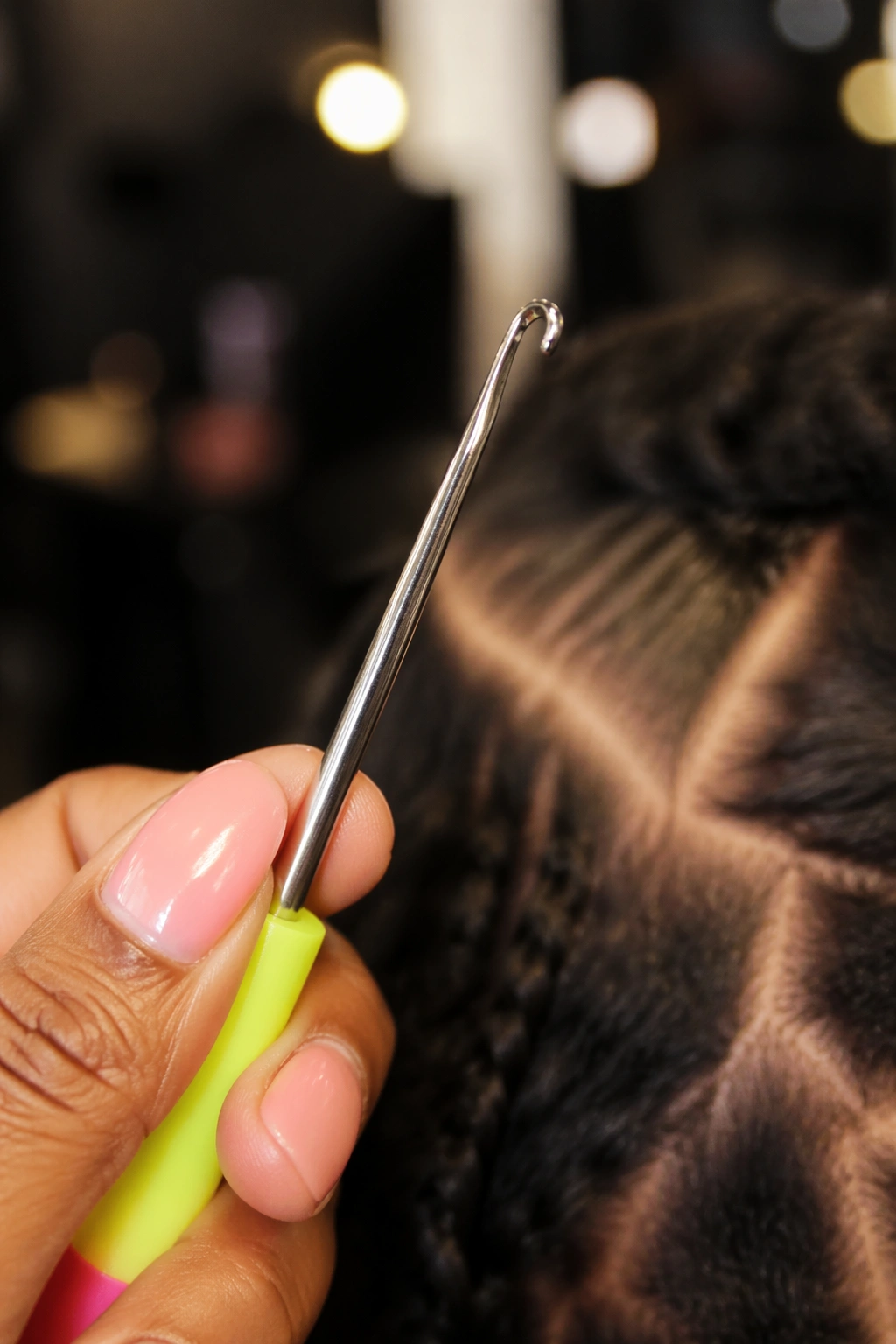
The crochet method uses a latch hook tool to pull extension hair through braided cornrows on the scalp. The cornrows provide the structural base, and the extension loops through each row using the hook. What you’re actually styling is the extension hair, not your natural hair directly. Your natural hair stays neatly cornrowed underneath for the entire wear period, which means minimal manipulation and, if the installation is done correctly, zero tension on your edges.
This protective quality is the reason crochet has become such a go-to for people doing length retention work. Your natural hair is essentially resting while you still get to enjoy a full, styled look on top.
Understanding Afro Hair Types and How They Affect Crochet Style Choice
Type 4 hair — which encompasses 4A, 4B, and 4C — has specific needs that affect which crochet extension hair will blend and which will look visually wrong. The rule of thumb is simple: the tighter your natural curl pattern, the coarser and more kinky your extension hair needs to be for a seamless blend.
4A hair has a defined S-curl about the width of a crochet needle. Extensions with a loose Afro kinky texture or a soft coil will blend well. You have more flexibility than tighter textures do.
4B hair has a less defined curl, more of a tight Z-shape. Afro kinky or coily crochet extensions that mimic that Z-pattern are the best match. Avoid anything with a uniform, polished spiral — it won’t integrate.
4C hair has the tightest coil pattern and the least shine. For 4C hair specifically, coarse kinky extension hair — the type that feels almost wool-like — blends most naturally at the root line. The moment the extension texture is shinier or more defined than your natural texture, the blend breaks down and the installation reads as fake.
None of this means you’re limited to only extensions that match your pattern exactly. Contrast can be intentional — stretching your 4C into a looser extension texture creates a deliberate style choice. But if blending is the goal, match the coarseness first.
The Cornrow Foundation: Why Your Base Matters More Than the Extension
Most of the skill in a good crochet installation lives in the cornrow base, not in the crochet technique itself. The crochet hook work is straightforward. What you do underneath — the size of the cornrows, their direction, their tension — determines how the finished style lays, how long it lasts, and whether your natural hair comes out healthy.
Cornrow size should match your desired density. Small cornrows — the width of a pencil — create a dense extension base that allows for thick, full styles. Larger cornrows are faster to braid but allow fewer crochet insertion points, which can lead to a flat, sparse look in the finished style.
Direction matters for the part line. If you want your finished crochet style to part in the middle, the cornrows on either side of center should run away from that middle line. If you want a side-swept look, angle the cornrows accordingly. The crochet extension follows the direction of the row it’s attached to, so your styling decisions start at the cornrow stage.
Tension is the most critical variable. Braids should be firm but your scalp should feel no pulling, no tightness, no burning. If you can see the skin pulling between rows — that white, stressed-looking skin — the braids are too tight, and wearing a style on that base for four to six weeks will cause real damage.
Tools You Need for Crochet Installation
The latch hook is the central tool, and the quality matters more than you’d think. A cheap plastic latch hook bends under pressure, which slows you down and makes the process frustrating. A metal latch hook with a smooth closure mechanism lets you work efficiently without snagging the extension hair or damaging your cornrows.
Beyond the hook, you need:
- A rat-tail comb for clean cornrow parting
- Hair clips to section the hair you’re not currently working
- Scissors to trim extension loops or ends
- Edge gel for the hairline (apply before you crochet the front rows)
- Mousse or a light foam to define the extension texture once installed
For styles that need to be set — like twists or curls that you want to dry into a particular shape — a spray bottle with water and a portable hooded dryer are useful but not strictly required.
How to Choose the Right Extension Hair
The crochet extension hair market is large enough to be genuinely confusing. Here’s what to actually pay attention to:
Fiber type: Most crochet hair is kanekalon or a similar synthetic. Kanekalon is lightweight and heat-tolerant to about 350°F (but always test a small strand first). Some premium lines offer human hair or human hair blends, which behave more naturally but cost significantly more.
Pre-looped vs. bulk: Pre-looped crochet hair comes with loops already formed at the top of each bundle — you attach them directly without folding. Bulk hair requires you to fold each piece yourself before inserting. Pre-looped is faster. Bulk gives you more control over loop size and density.
Pack count: Most styles require 5 to 8 packs for a full head. Styles with very short extension hair (like TWA textures) need fewer. Long, voluminous styles need more.
Brand consistency: Within one installation, all packs should be from the same brand and lot number. Different lots can have slight color or texture variations that show up in the finished style.
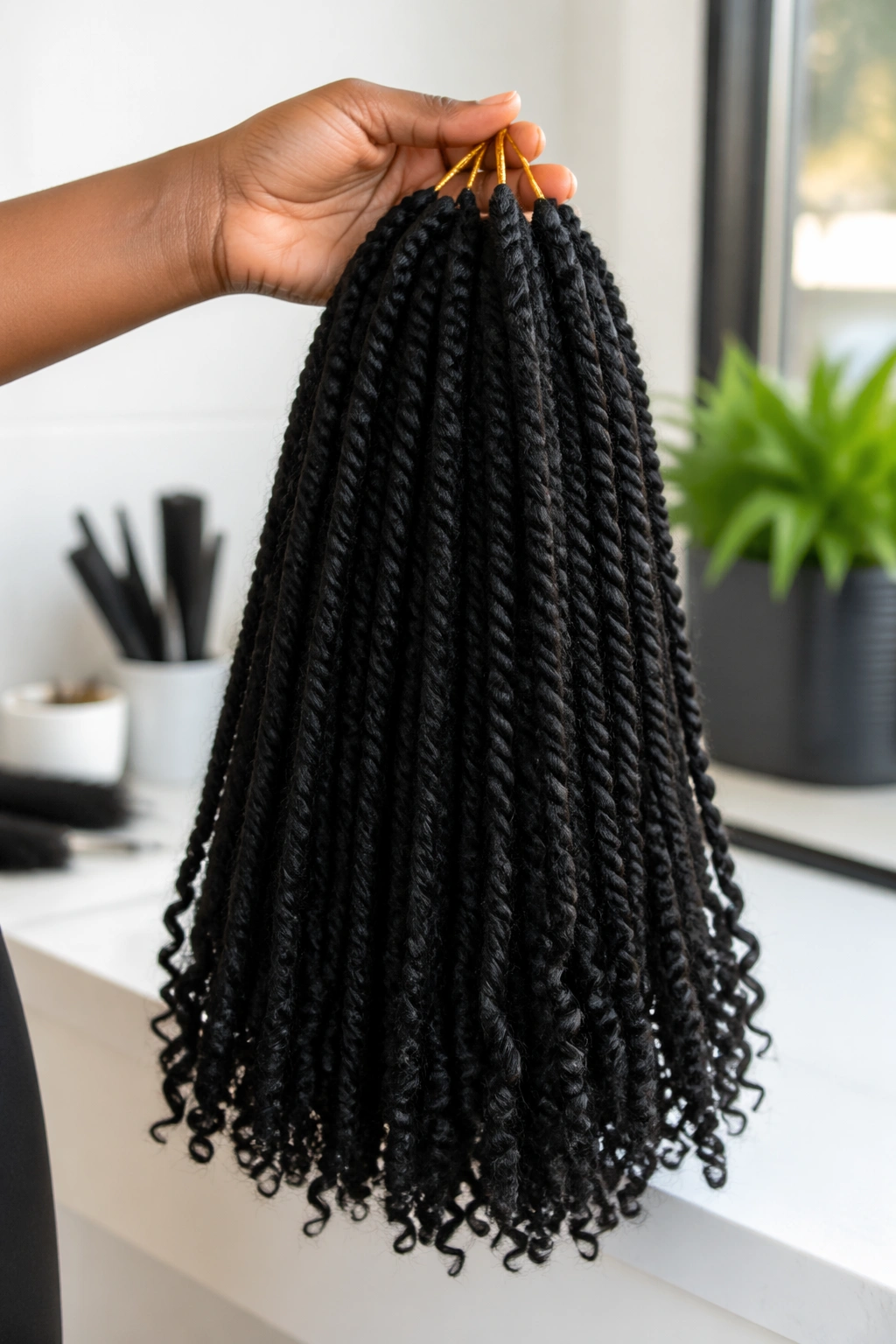
1. Afro Kinky Crochet Twists
The most natural-looking crochet style for Type 4 hair — full stop. Afro kinky crochet twists use a pre-twisted extension bundle with a coarse, matte texture that sits at essentially the same visual register as natural 4C hair. They don’t catch the light. They don’t have a synthetic sheen. When they’re installed in medium-length sections, the overall look is of a full head of two-strand twists that just happen to be waist-length.
Why It Works
The coarse fiber grips the cornrow base securely, which means these twists don’t slide or shift during wear. They also stay frizz-free longer than smoother textures because the crimp pattern doesn’t catch wind and separate the way defined curls do.
One installation note: check the direction your pre-twisted bundles spiral. All the bundles in one pack should spiral the same way. Mixing clockwise and counter-clockwise bundles in one install creates visible inconsistency.
Tip: Seal the end of each crochet loop under the cornrow with an extra pass of the hook to prevent any bundles from slipping loose over the first week of wear.
2. Crochet Faux Locs
Crochet faux locs deliver the look of mature dreadlocks without the time commitment of growing or actually forming locs. Each extension piece is a pre-made faux loc — a rigid or semi-rigid synthetic tube with a wrapped texture — that you attach via the crochet method to cornrow rows.
Unlike traditional hand-wrapped faux locs, where each individual loc is wrapped around a braid using meters of hair, crochet faux locs are pre-formed. Installation takes two to three hours instead of eight to ten.
What to Watch For
Crochet faux locs are heavier than most other styles because each extension piece contains a lot of material. Long lengths — past the shoulder — can cause scalp fatigue after several hours of wear. Medium length, around collarbone to armpit, balances impact and comfort well.
The loc texture also varies by brand. Some have a tight, smooth wrap that looks like mature locs. Others are slightly fluffier, looking more like starter locs. Choose based on the specific look you’re after, not just brand name.
3. Spring Twist Crochet Hair
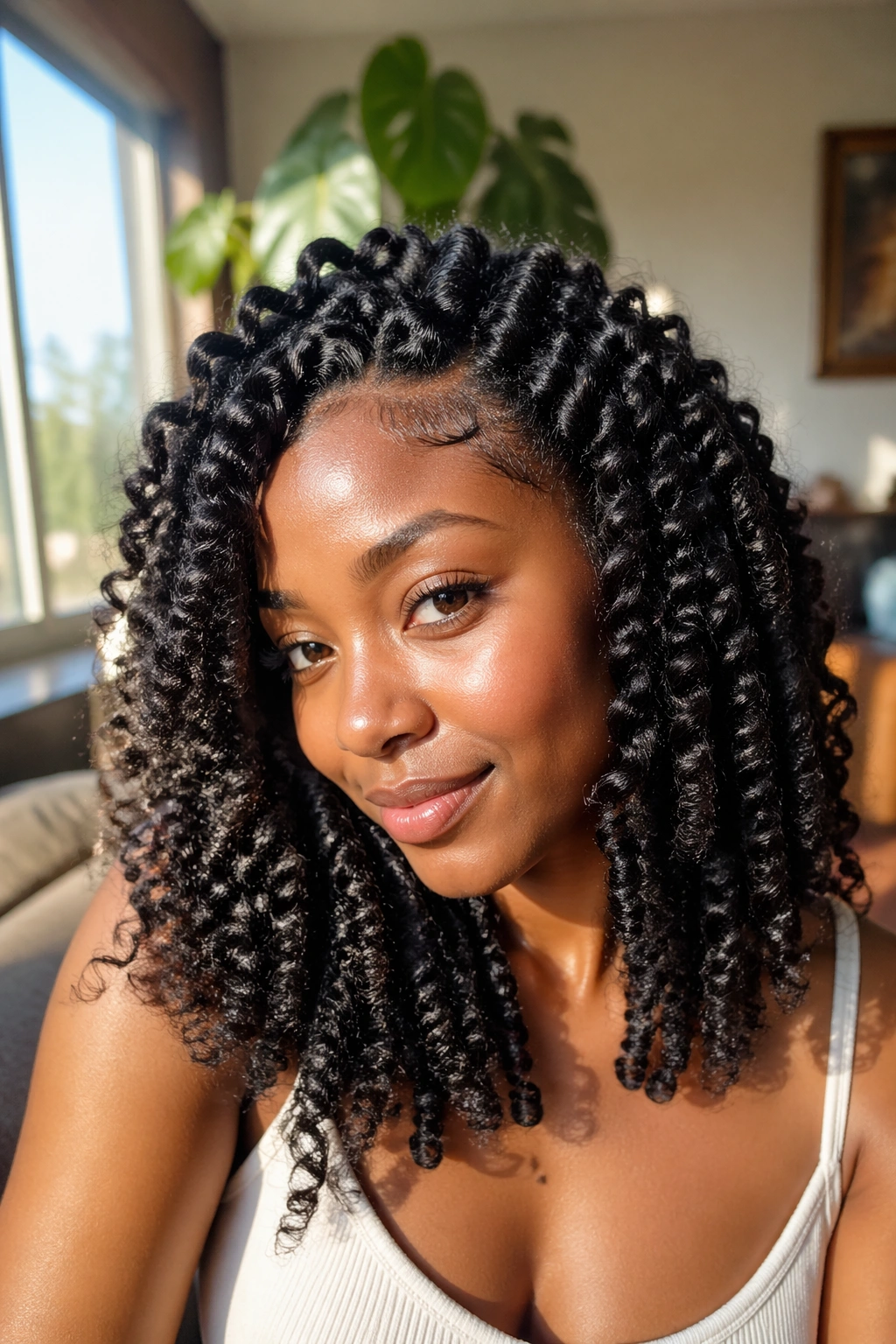
Spring twists are one of those styles that looks complex but installs relatively quickly. The extension hair for spring twists is a pre-separated, lightweight fiber that has a springy, loose coil built into it — not a tight crimp, but an open, bouncy spiral. When installed, spring twists move with every head movement, giving a lively, three-dimensional quality to the style.
Unlike heavier Marley fiber twists, spring twists feel incredibly light on the scalp. You can install more of them in the same time because each bundle uses less fiber.
The spring texture does frizz faster than coarser fibers, especially in humidity. This isn’t a dealbreaker — the frizz is soft and integrates into the look rather than looking messy — but if you’re in a very humid climate, expect a shorter neat period before the style starts to look lived-in.
4. Passion Twist Crochet Style
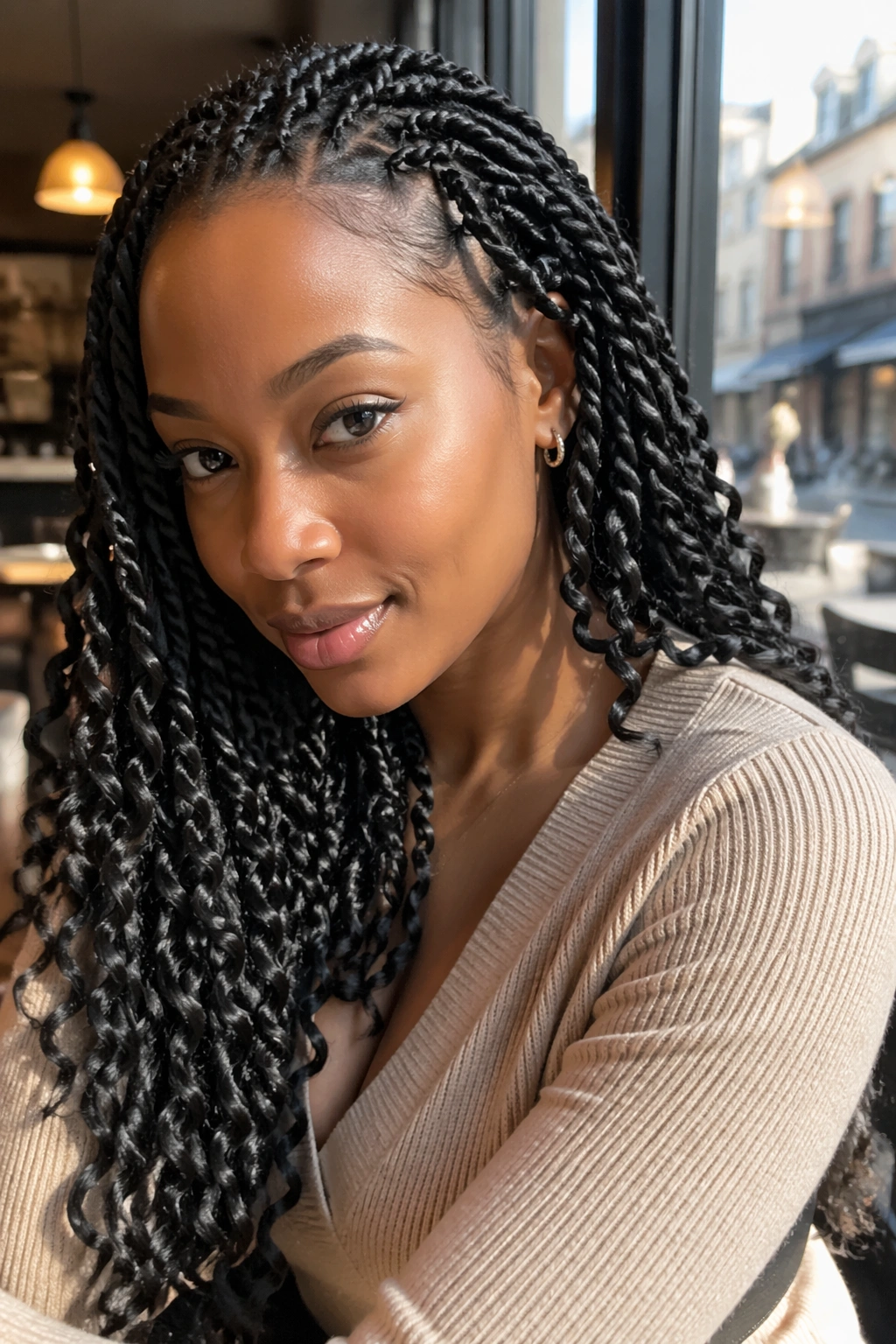
Passion twists use water wave hair or a similar open-curl extension fiber, crocheted through cornrows and then twisted loosely into individual sections. The result is a wet-look, defined twist with a wide, open spiral at the end that looks like a stretched-out natural coil.
What separates passion twists from spring twists is the finish. Spring twists look matte and natural. Passion twists have a slightly glossy, defined curl that photographs dramatically well and looks polished even without any additional styling.
For afro hair types, passion twists blend best when the root section is kept tight and the curl only opens up below the ear level. This way, the natural-looking root transitions smoothly into the styled extension curl without an obvious line.
5. Butterfly Locs Crochet Style
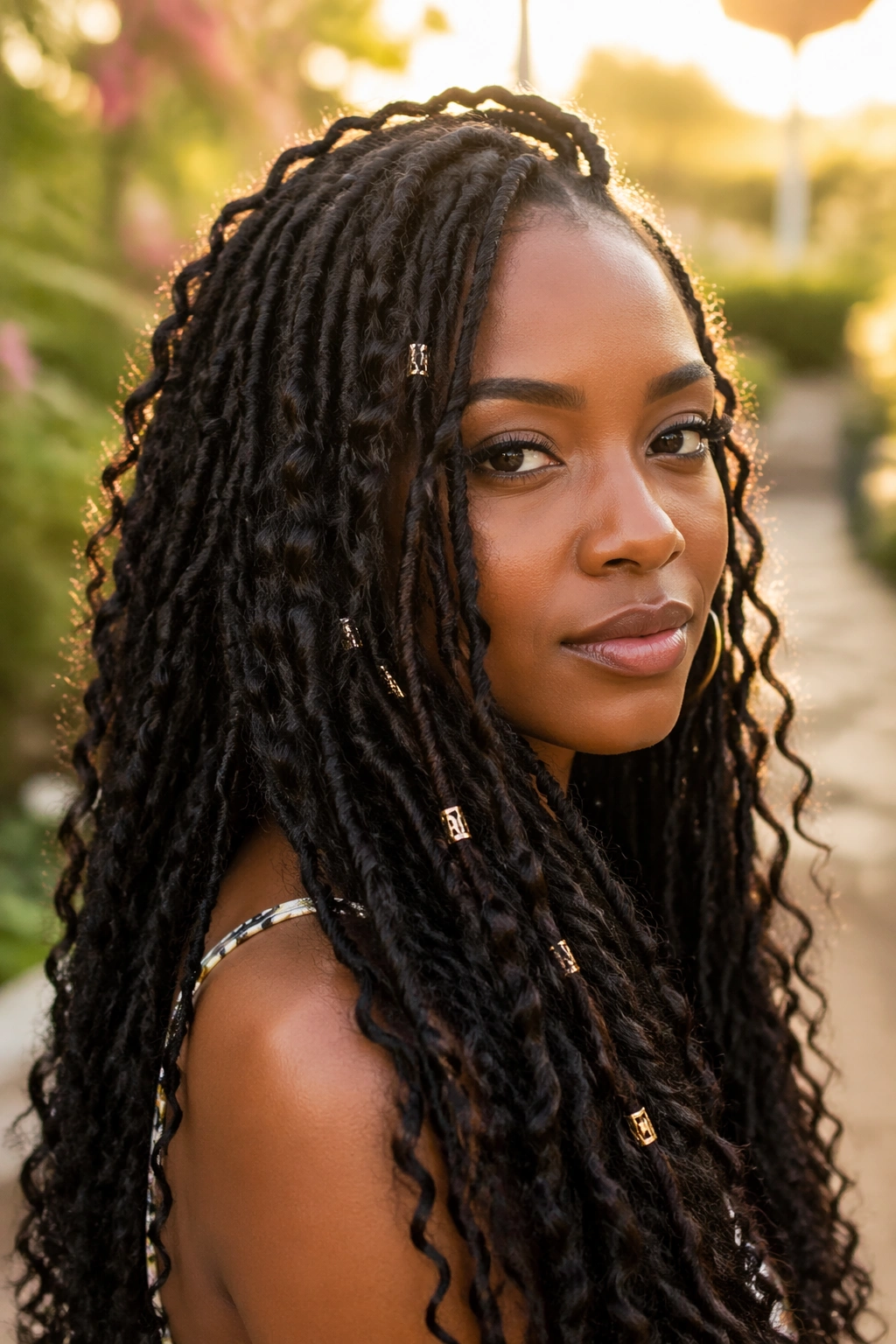
Butterfly locs are the distressed, bohemian cousin of faux locs. The wrapping is deliberately imperfect — loose loops of fiber wrap around a braid base, with intentional gaps and overlaps that create a textured, feathery look along the length of each loc. Up close, the texture looks almost like wrapped straw. From a few feet away, it reads like a very full, bohemian faux loc style.
For Type 4 hair, butterfly locs are particularly flattering because the distressed texture mirrors the natural visual texture of kinky, coily hair — it doesn’t look incongruously smooth or polished against your roots.
Installation using the crochet method is faster than hand-wrapping, though butterfly locs still take longer than simpler twist styles. Expect four to six hours for a full head at medium length.
6. Goddess Faux Locs Crochet
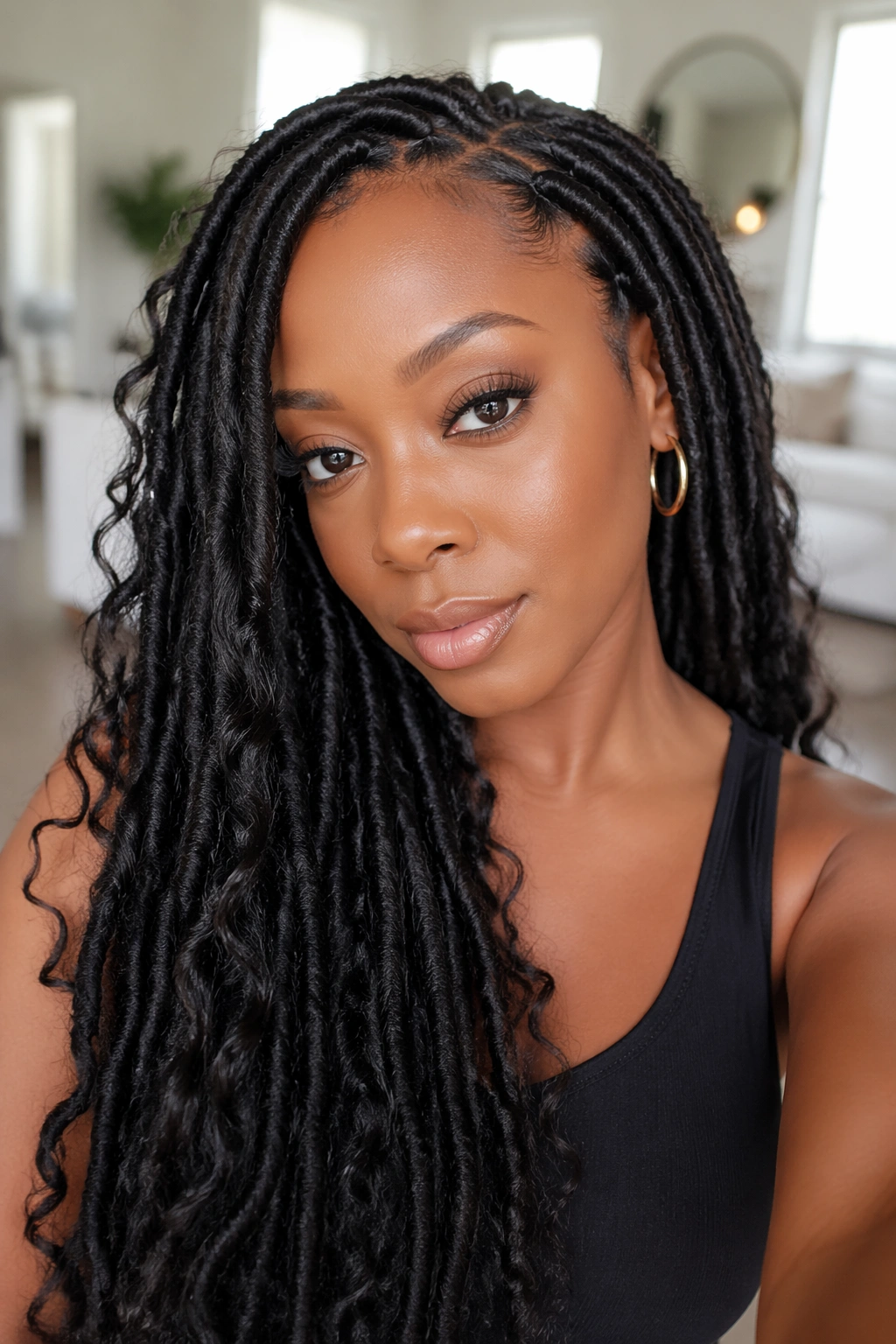
Goddess faux locs add a flowing, wavy fiber into the wrapping of each loc, so pieces of wavy or curly hair peek out from the body of each loc at intervals. The overall look is more romantic and textured than standard faux locs — every loc has a softness to it, with visible curly tendrils hanging off the sides.
This is a style that photographs particularly well. The curly pieces catch light and movement in a way that straight faux locs don’t, and the overall silhouette is voluminous and lively.
The goddess look works best at medium to long lengths, where the wavy pieces have room to show. Very short goddess locs tend to look busy rather than textured.
7. Crochet Box Braids
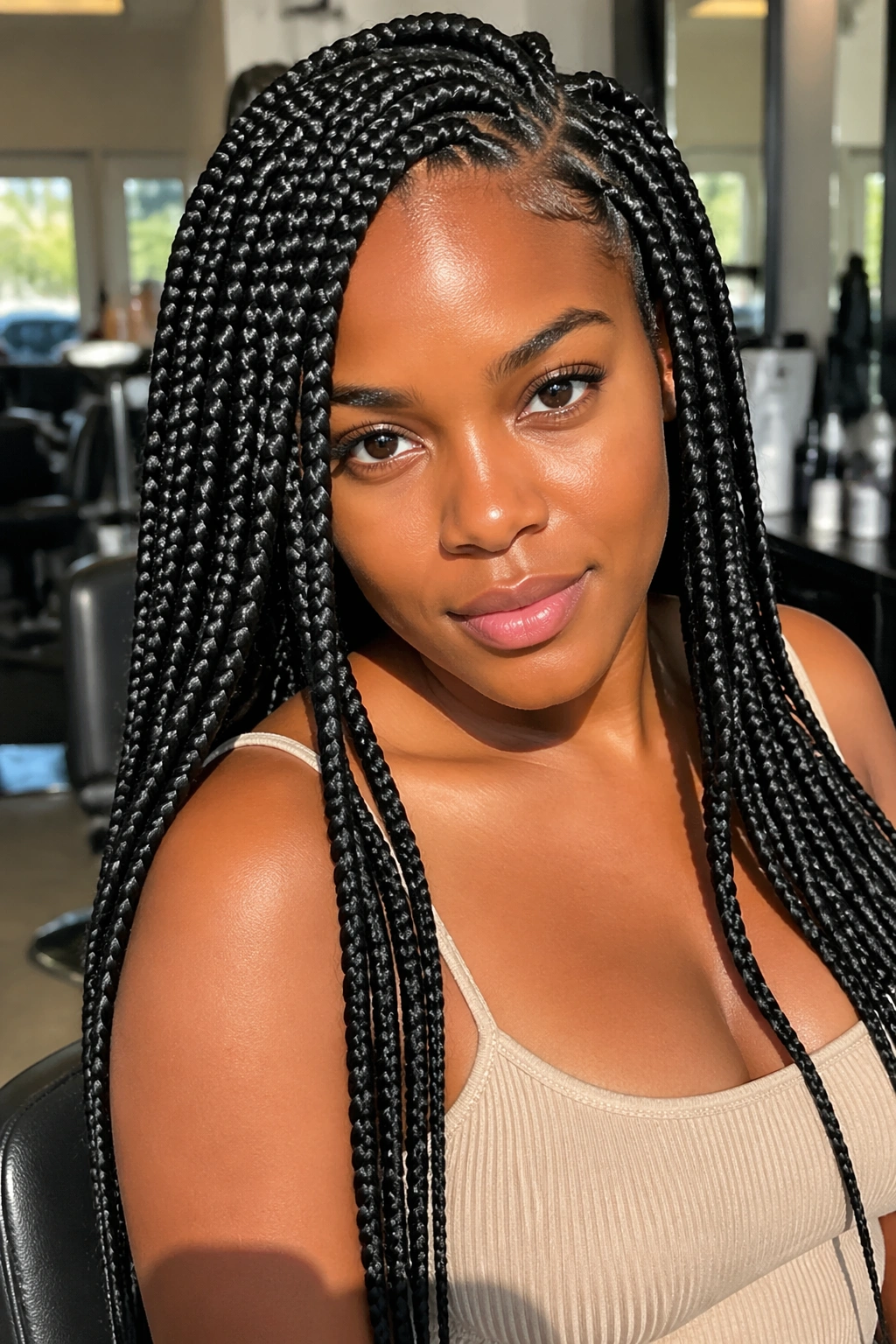
Crochet box braids use pre-braided extension hair — single braids that are already braided at the factory — and attach them to cornrows using the crochet hook. The finished look is identical to hand-braided box braids. The install time is a fraction of traditional box braids.
For afro hair types, the blend depends heavily on the fiber. Kanekalon braids tend to be smoother and shinier than natural 4C hair, which creates a visible difference at the root line. Choosing a Marley-blend braid extension or using an afro kinky fiber that’s been pre-braided will create a more seamless root blend.
The style holds the same way as hand-braided box braids and lasts similarly — 4 to 6 weeks with proper care.
8. Crochet Cornrows with Afro Puff
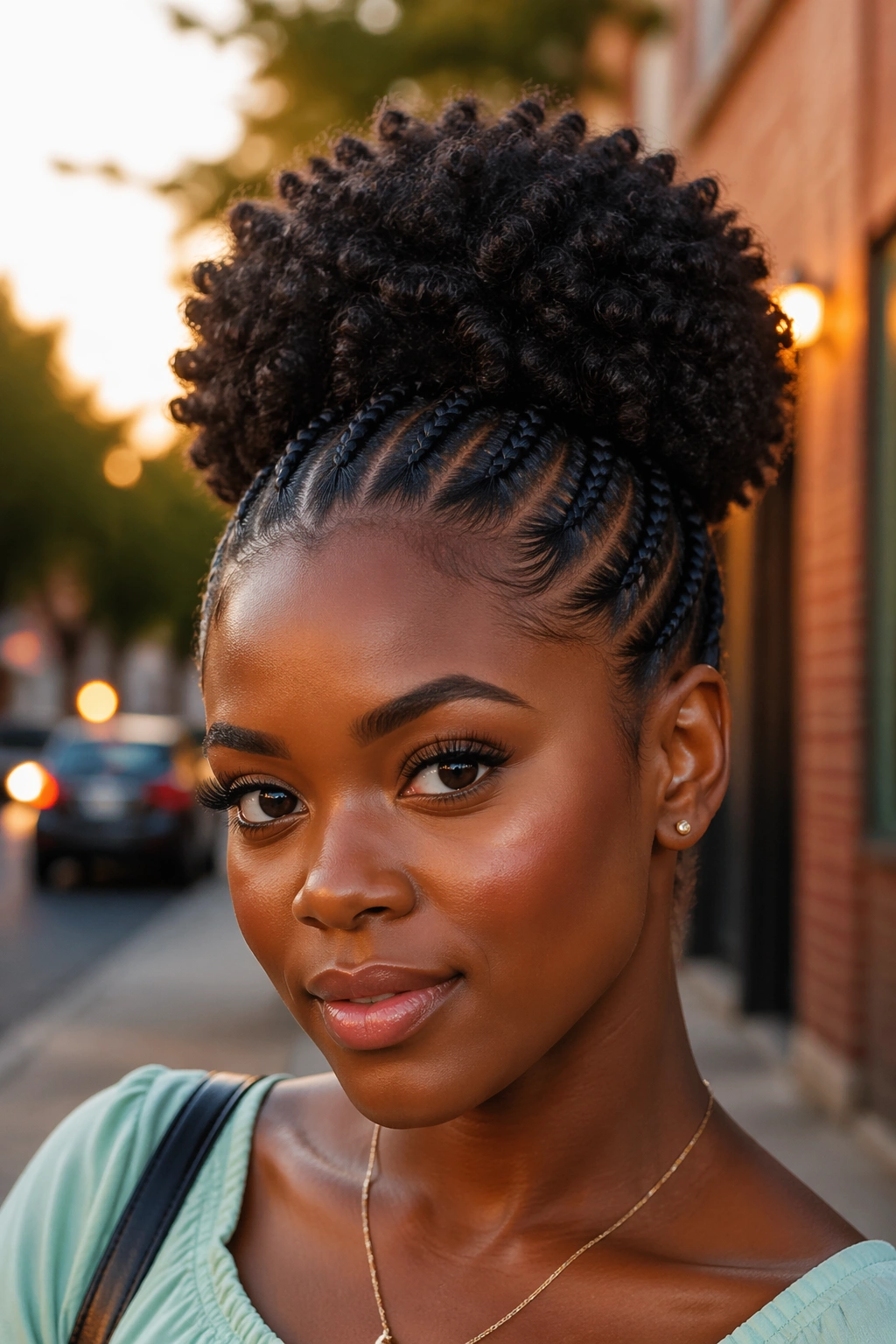
This style combines the installed cornrow base with a free-standing afro puff. The cornrows run from the front hairline to about three-quarters of the way back, then the remaining hair at the crown is released from its braid, fluffed out into a rounded puff, and left free. Crochet hair is added along the cornrow rows only — the puff is entirely your natural hair.
The result is a two-texture look: structured, neat rows in the front and sides, and a natural free puff at the crown. It’s a style that honors both the installed and the natural.
9. Crochet Locs with Curly Ends
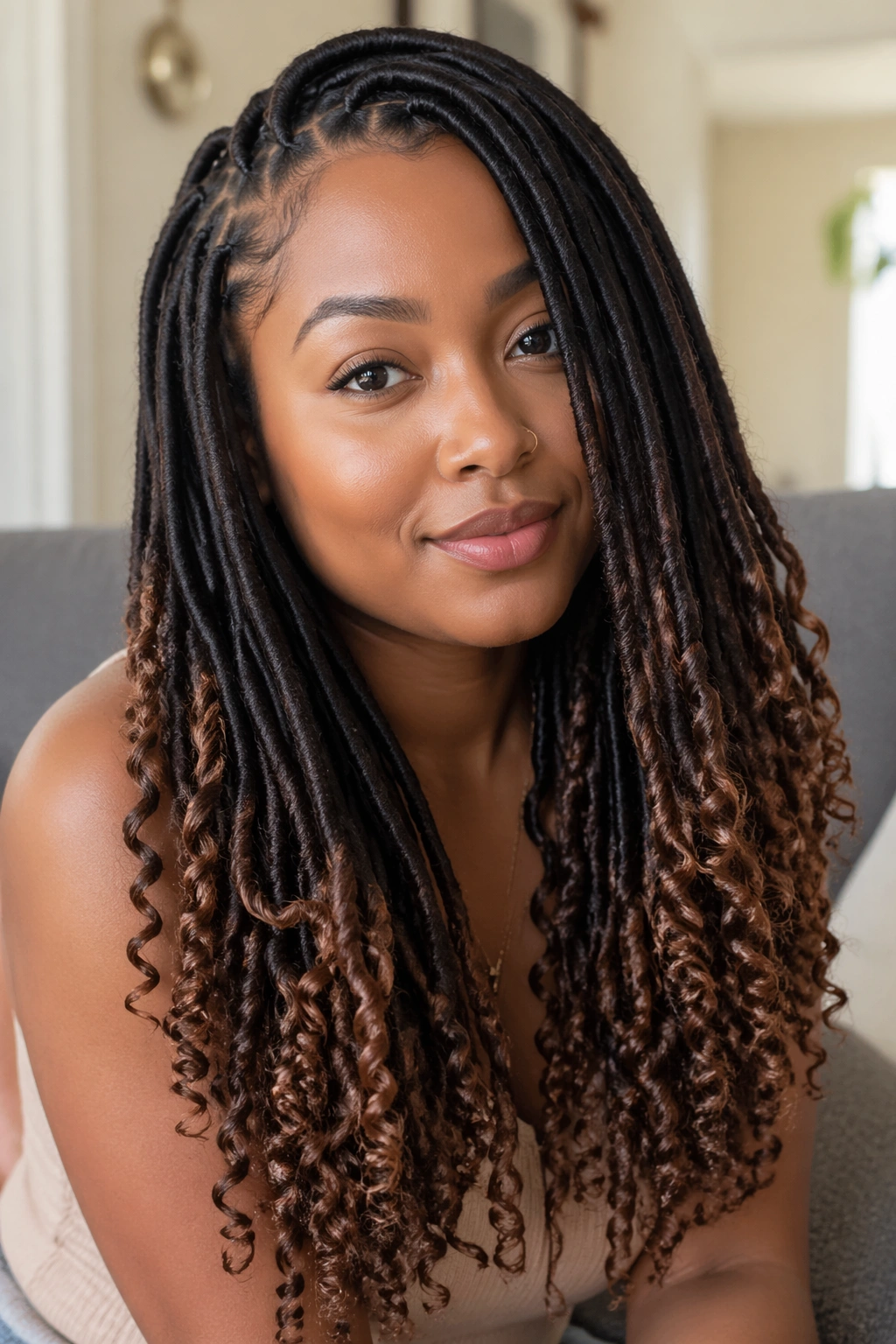
Standard faux locs have tapered or straight ends. This variation adds a curly extension to the bottom of each loc — you install the faux loc as usual, then crochet a small section of curly extension fiber through the tip of the loc so it hangs loose as a defined curl below the loc’s end.
The curly ends give each loc a bohemian, unfinished quality that reads as natural and effortless. It’s a small addition that significantly changes the overall feel of the style.
10. TWA Crochet Style (Teeny Weeny Afro)
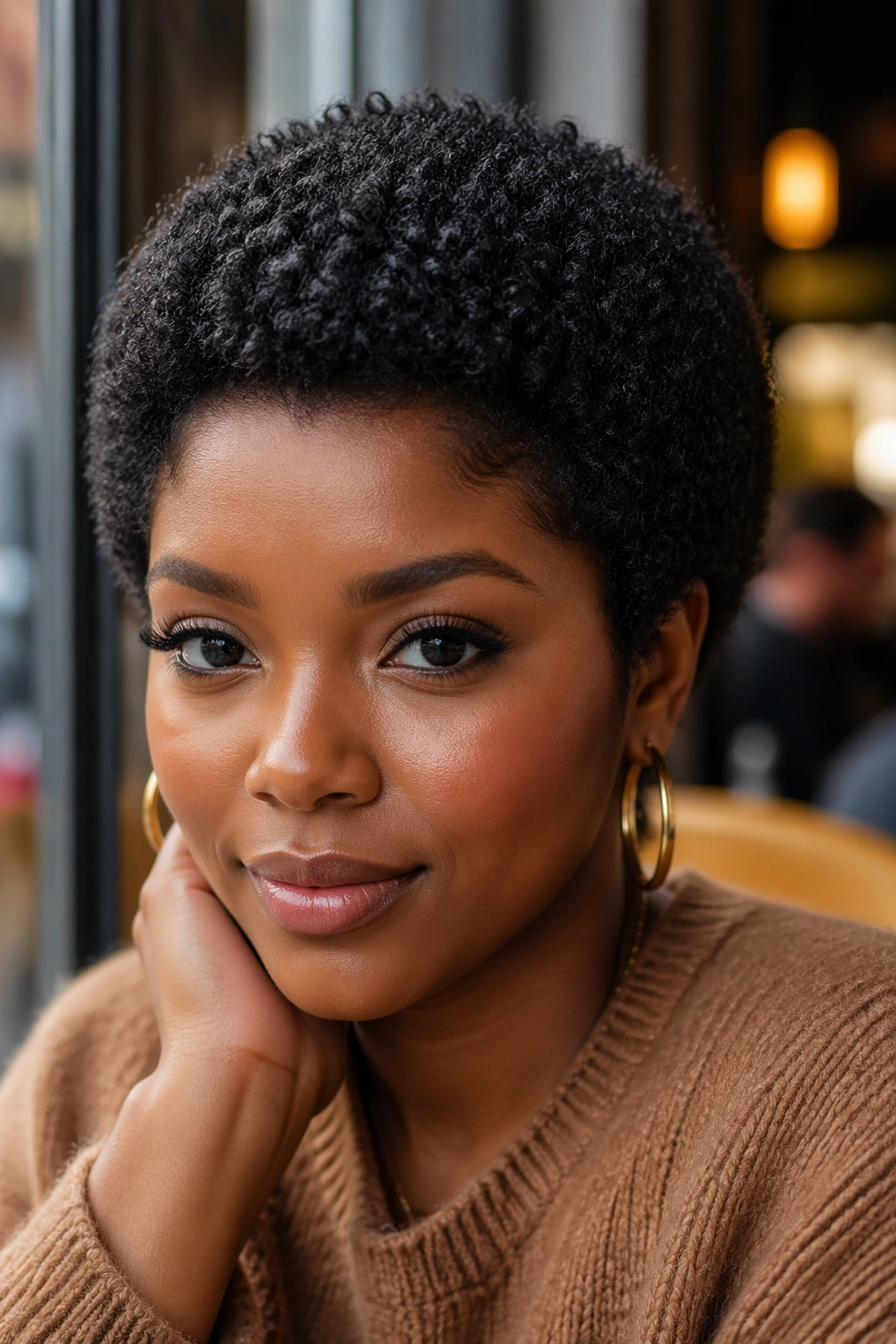
For women who want the look of a short natural afro without the commitment of cutting their hair, TWA crochet styles use very short, tightly coiled extension hair installed close to the scalp. The extension pieces are small — just a few inches long — and they’re distributed densely throughout the cornrow base so the scalp doesn’t show.
The result is a full, rounded natural-looking afro that you can style like your own natural hair — pick it out for volume, twist sections for definition, or add an accessory.
For this style specifically, a very small latch hook creates cleaner insertions through dense, short cornrow rows.
11. Crochet Marley Twists Updo
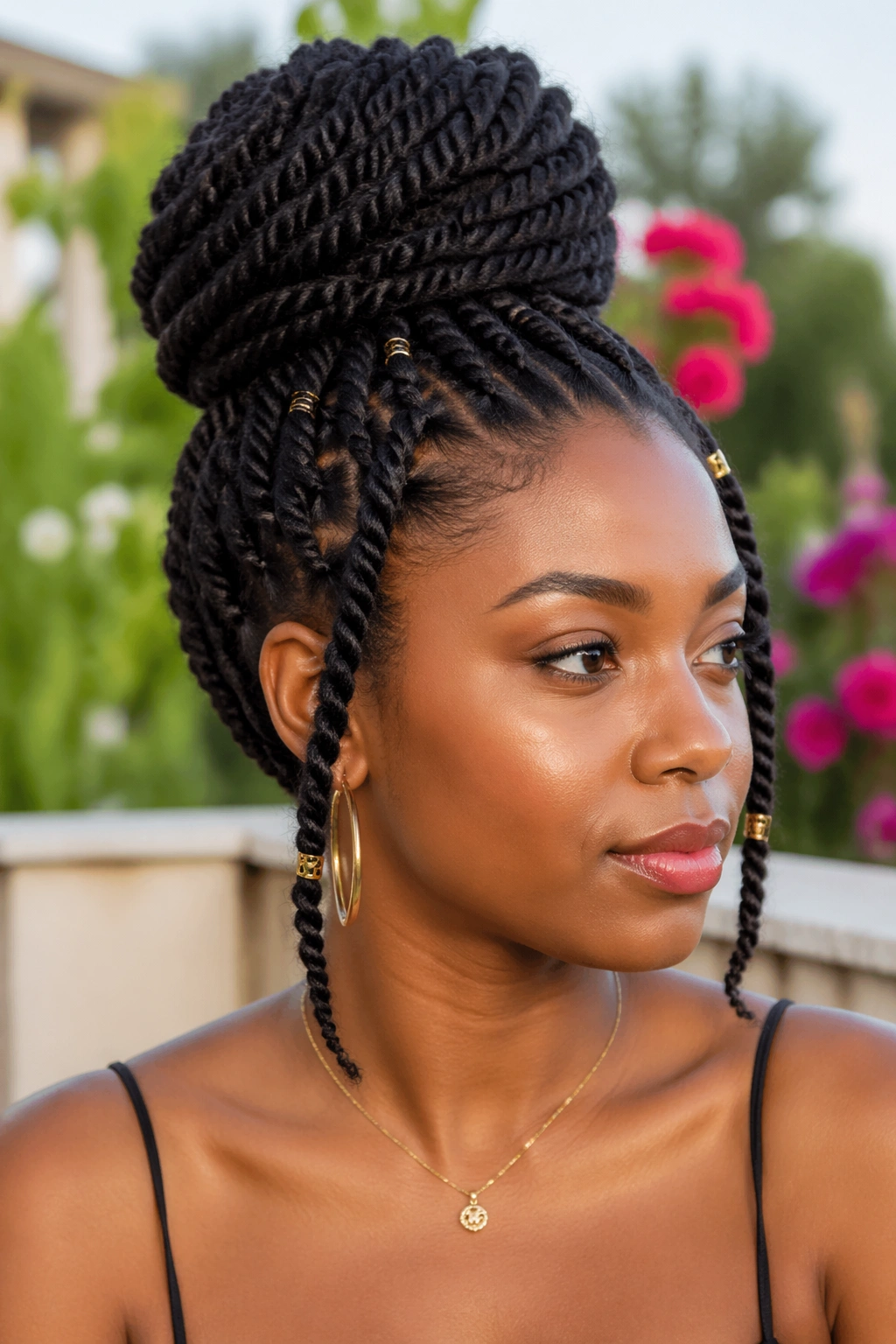
Install medium-length Marley twist crochet hair throughout, then gather the entire style into an updo — either a high bun, a twisted knot, or a gathered French roll pinned at the back. The Marley texture holds the gathered shape well because the coarse fiber grips itself and doesn’t slip.
This is a practical style for heat: updos keep the hair off your neck and, when worn with crochet hair, still look intentional and polished rather than sloppy.
12. Jumbo Crochet Twists
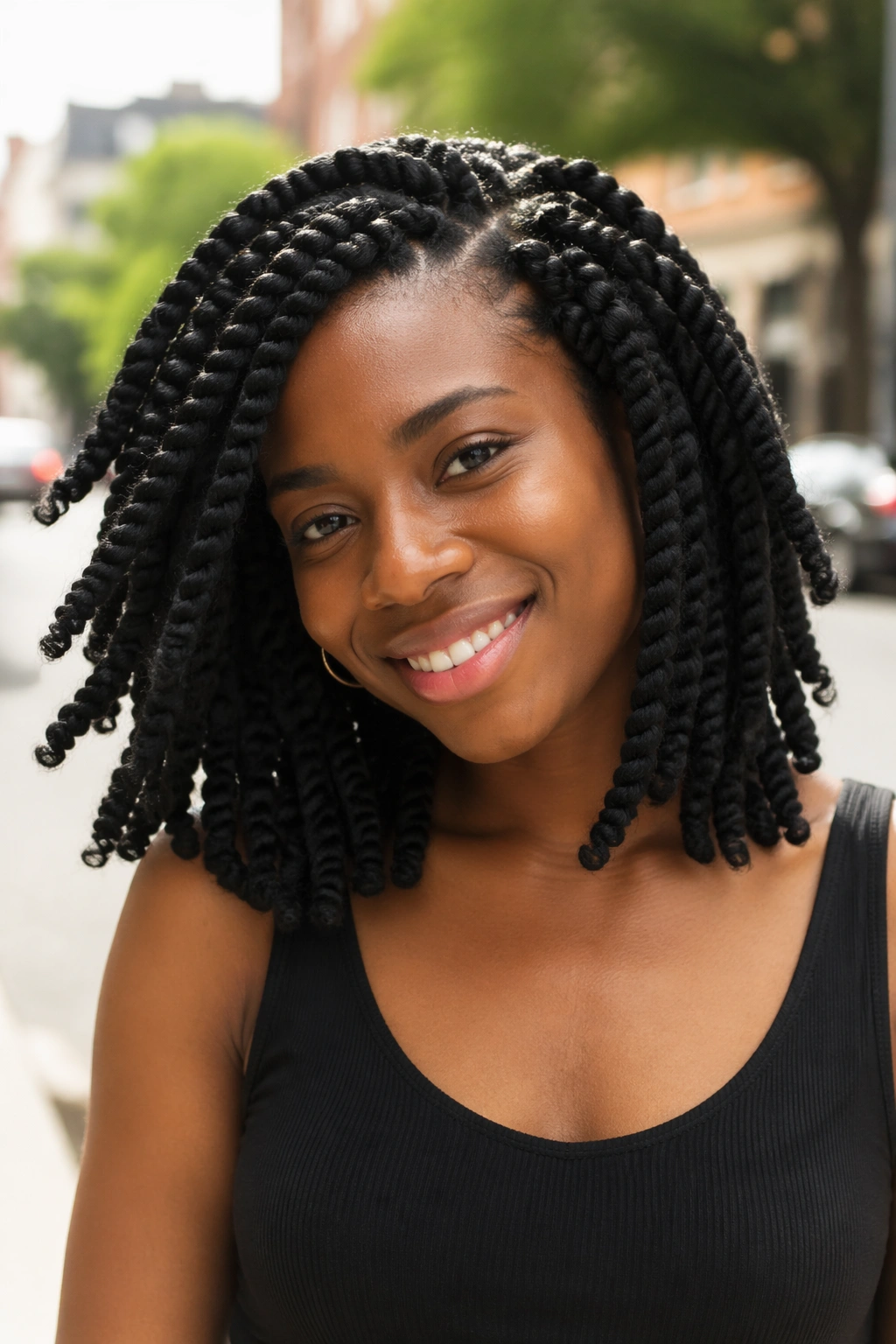
Use significantly more extension fiber per crochet insertion to create thick, bold twists. Jumbo crochet twists are faster to install than standard-sized ones because fewer insertions are needed for a full head. Each twist is roughly thumb-width or thicker.
The visual impact is bold and structured. Jumbo twists move with authority. At shoulder length or just below, they have a gorgeous swing. Keep in mind that very long jumbo twists get heavy — collarbone length is a comfortable sweet spot for most people.
13. Crochet Braids with a Middle Part
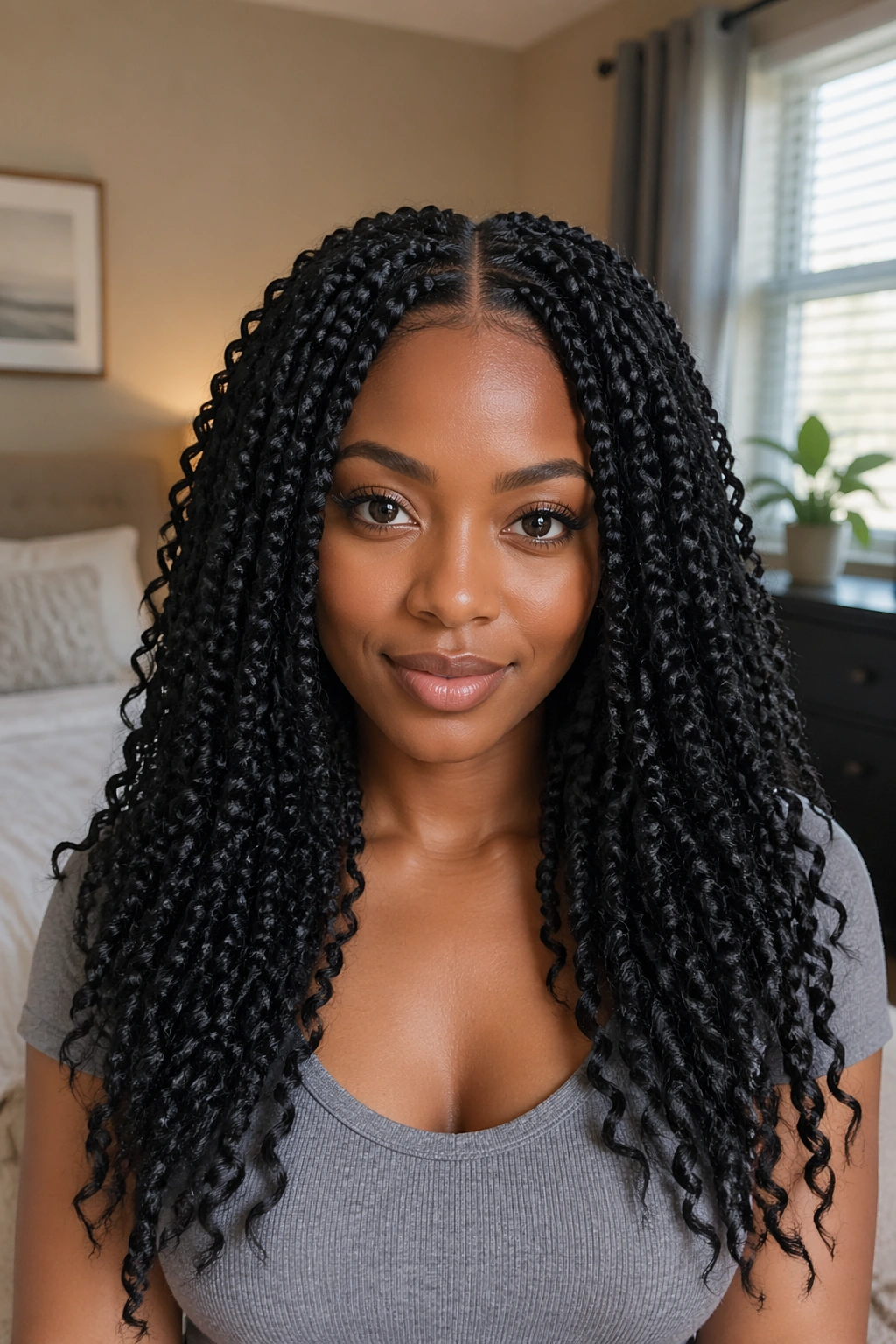
The cornrow direction determines the part, so for a true middle part, you braid the cornrows running from the center outward on both sides. When you install crochet braids or twists into this base, the finished style falls naturally away from the center, creating a clean middle part.
This works beautifully for styles like straight crochet braids or silky crochet hair. For kinky or coily extension types, the middle part reads more as a natural division than a sharp geometric line, which suits the texture.
14. Loc Bun with Crochet Faux Locs
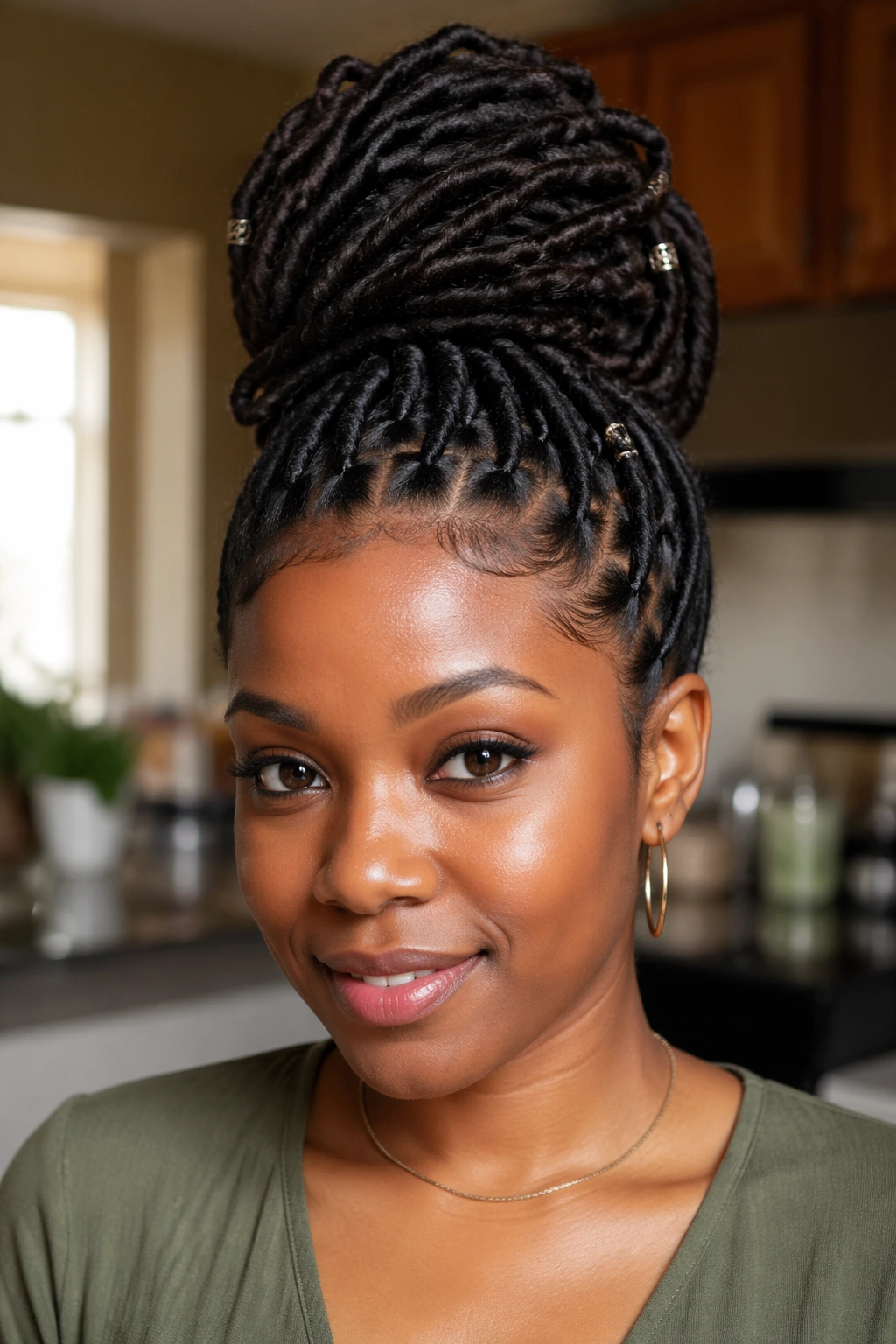
Install full-length faux locs via crochet, then gather the entire installation into a bun. Faux loc buns are distinctive because of the texture — the loc surface catches light differently than smooth hair, and the gathered shape reads as substantial and sculptural.
A high bun sits at the very crown and gives a dramatic height to the overall silhouette. A low bun at the nape is sleeker, more classic.
15. Crochet Senegalese Twists
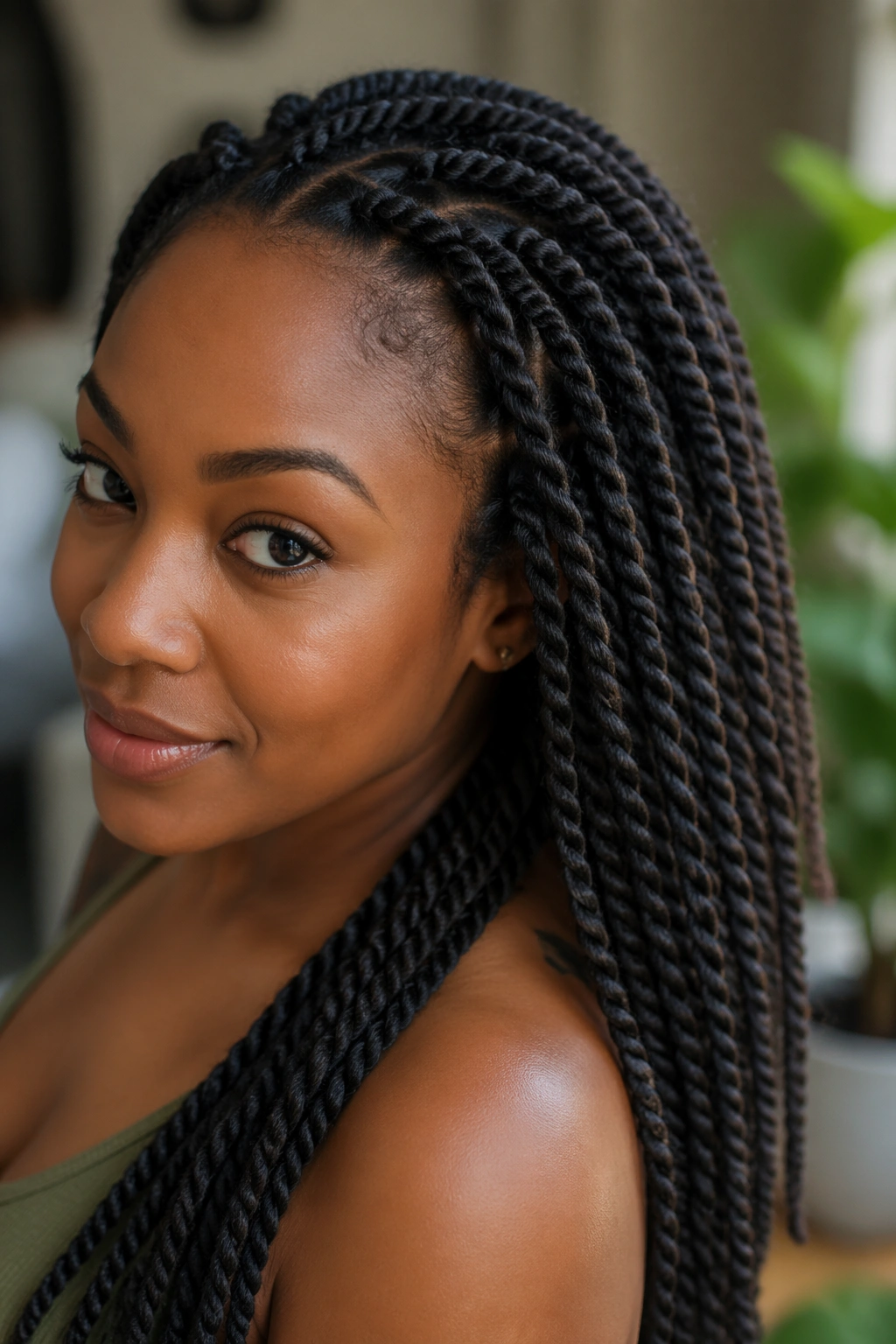
Senegalese twists are slightly different from standard two-strand twists — they’re smoother, with a rounder, more uniform spiral. Pre-made Senegalese twist extension hair is available and designed for crochet installation. The extension bundles are already twisted in the classic tight rope pattern.
For Type 4 hair, using a darker Senegalese twist extension with a matte finish creates a better blend than the standard silky kanekalon version of this style. Look specifically for “afro” or “kinky” Senegalese twist extension hair.
16. Crochet Micro Twists
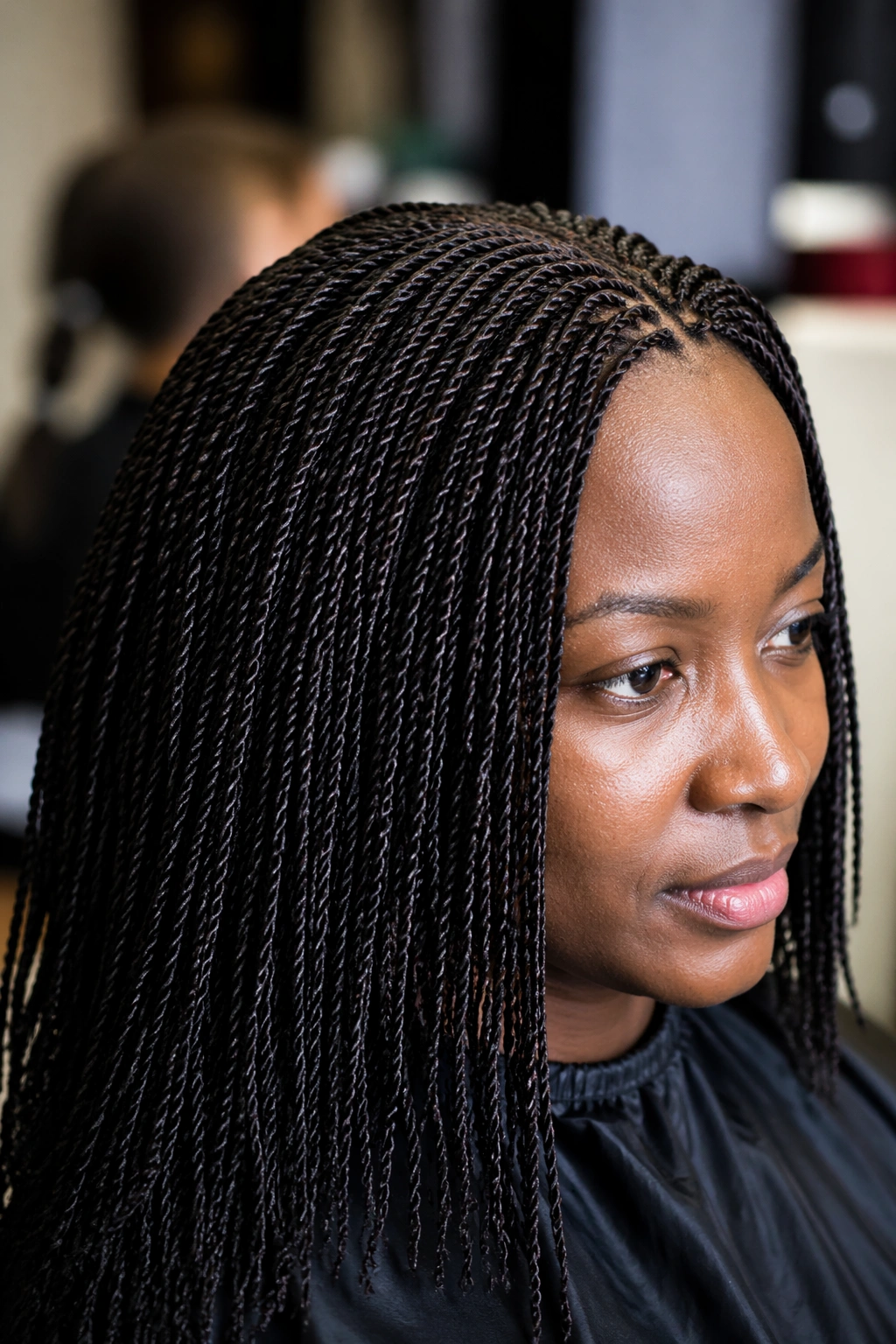
Micro twists via crochet technique use very thin pre-made twist extensions that install through the cornrow base the same way larger twists do. The finished style looks like hundreds of tiny, individual twists.
Installation time for micro twists is longer than large or medium styles — expect five to seven hours — but the wear period is also significantly longer. Micro twists can look neat and fresh for six to eight weeks with proper nightly care.
17. Bohemian Crochet Box Braids
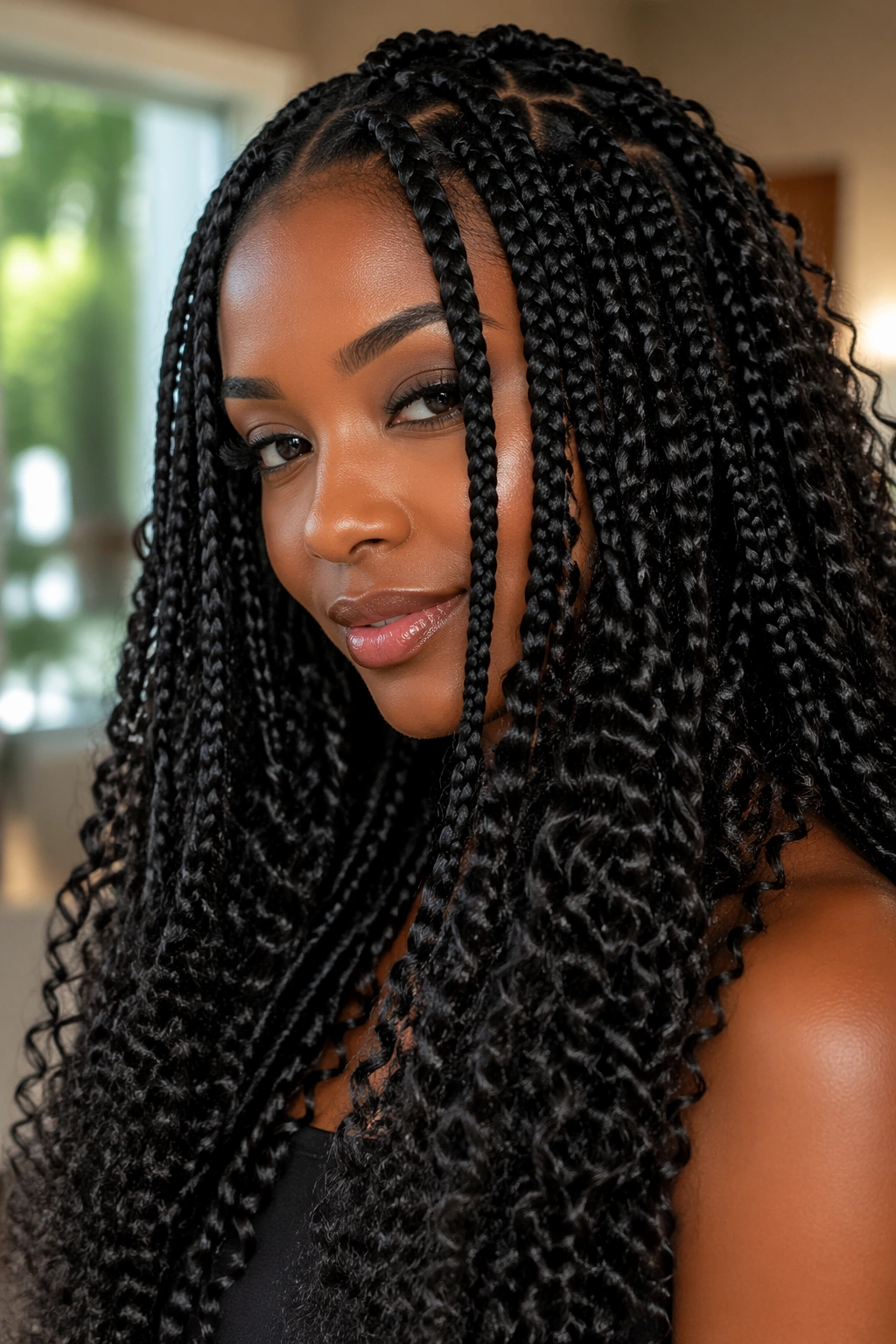
Bohemian box braids add curly or wavy extension hair into the braid extension partway down the length, creating loose, flowing pieces that emerge from each braid. The overall look is a blend of structured braid and free-flowing curl — half organized, half wild.
For Type 4 hair, the bohemian addition works best when the curly pieces are a tight coil rather than a loose wave. Tight curly extensions blend with the braid fiber instead of looking like two completely separate textures stuck together.
18. Crochet Afro Kinky Curls
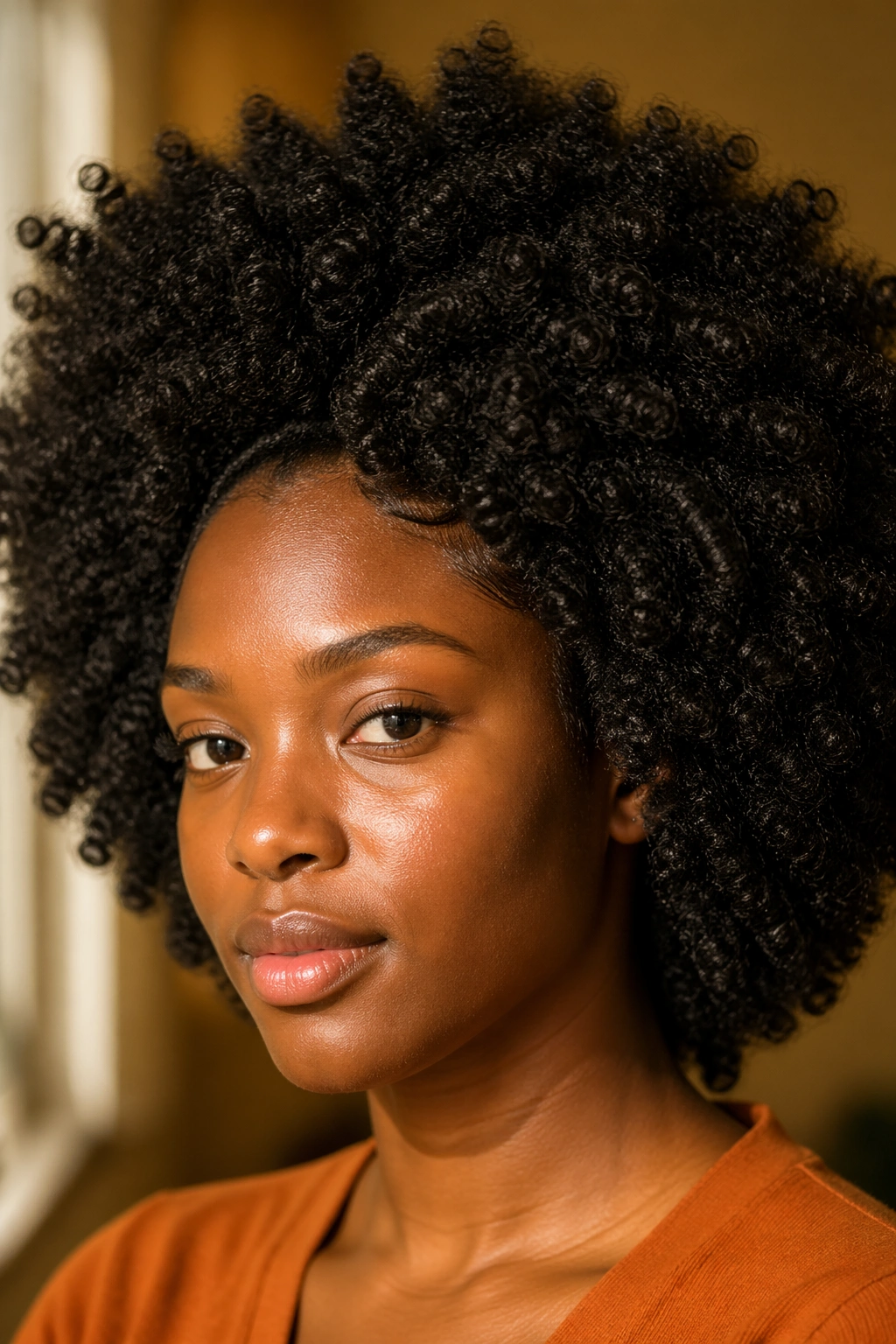
Short, tight kinky curl extension hair installed densely across the entire cornrow base creates a full Afro look that mimics natural 4B or 4C hair at its most voluminous. This isn’t a twist or a loc or a braid — it’s just curls, dense and tight, covering the entire head in an even, rounded shape.
Pick the style out with an Afro pick for maximum volume. Leave it as-installed for a tighter, denser look.
19. Crochet Goddess Braids
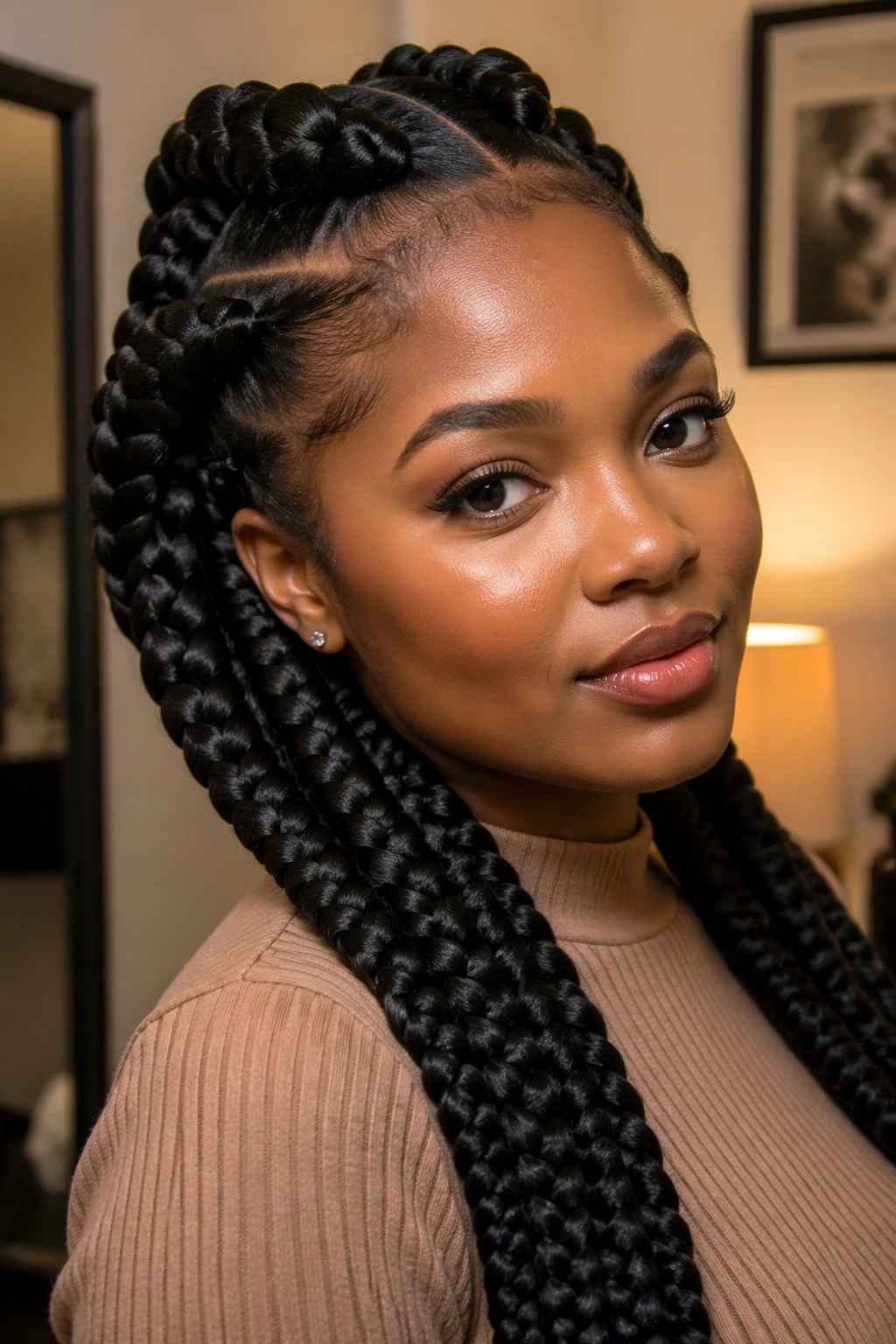
Goddess braids are large, chunky braids — much bigger than box braids — that sit raised off the scalp. For a crochet version, the extension bundles used are bulkier than standard crochet braid hair, and they’re installed so the braid itself is voluminous and three-dimensional.
Only a few large goddess braids are needed for a full head — sometimes as few as four to six. The cornrow base for goddess braids uses fewer but wider rows to match.
20. Straight Back Crochet Cornrow Style
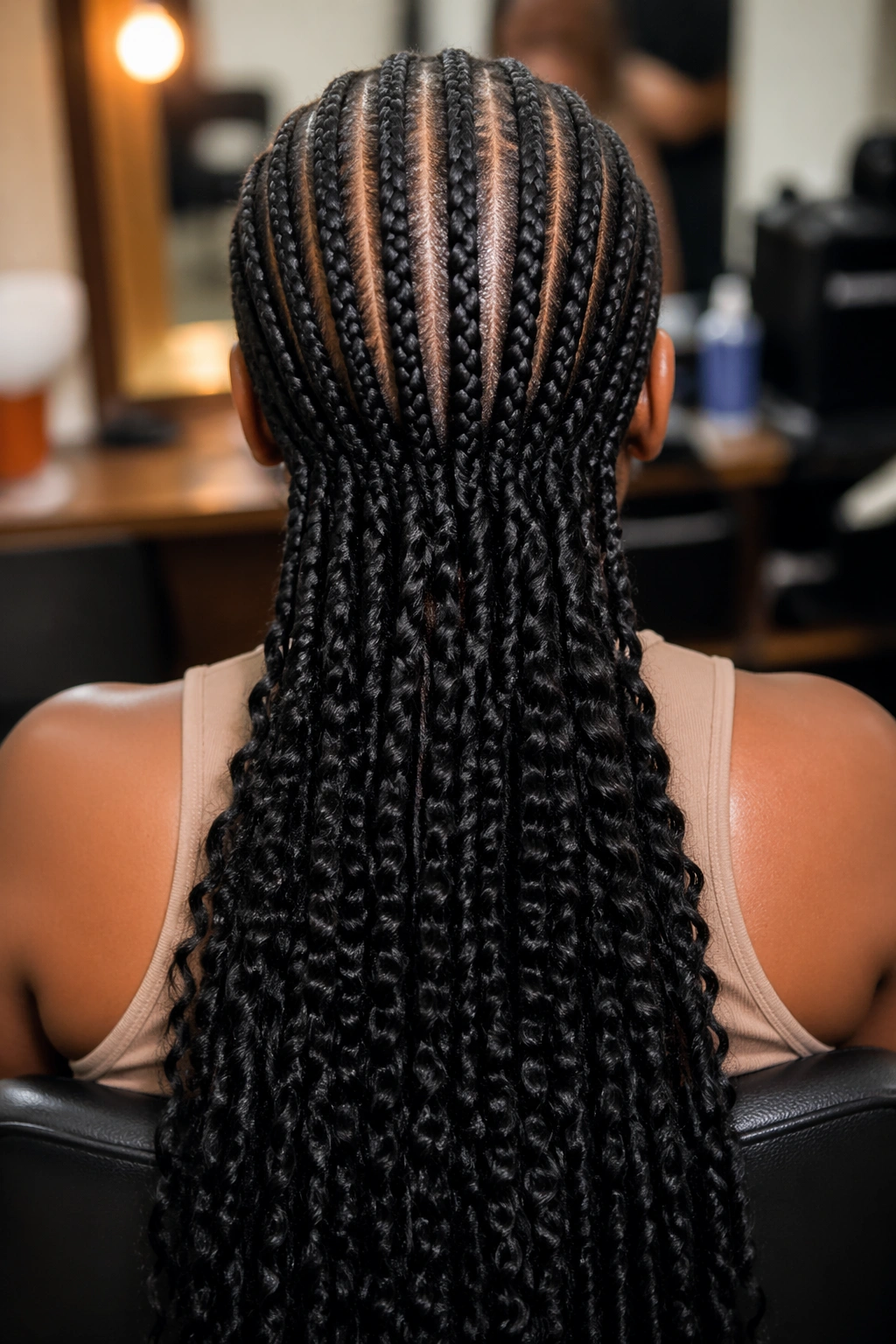
Cornrows run straight back from the front hairline to the nape, and the crochet extension hair installed into them hangs down the back from each row. The extension hair itself can be kinky, coily, or twisted — but the foundation of the style is those straight parallel rows.
This is a clean, graphic look. The rows are visible and structural. The extension texture adds softness that balances the geometry.
21. Double-Strand Crochet Twists
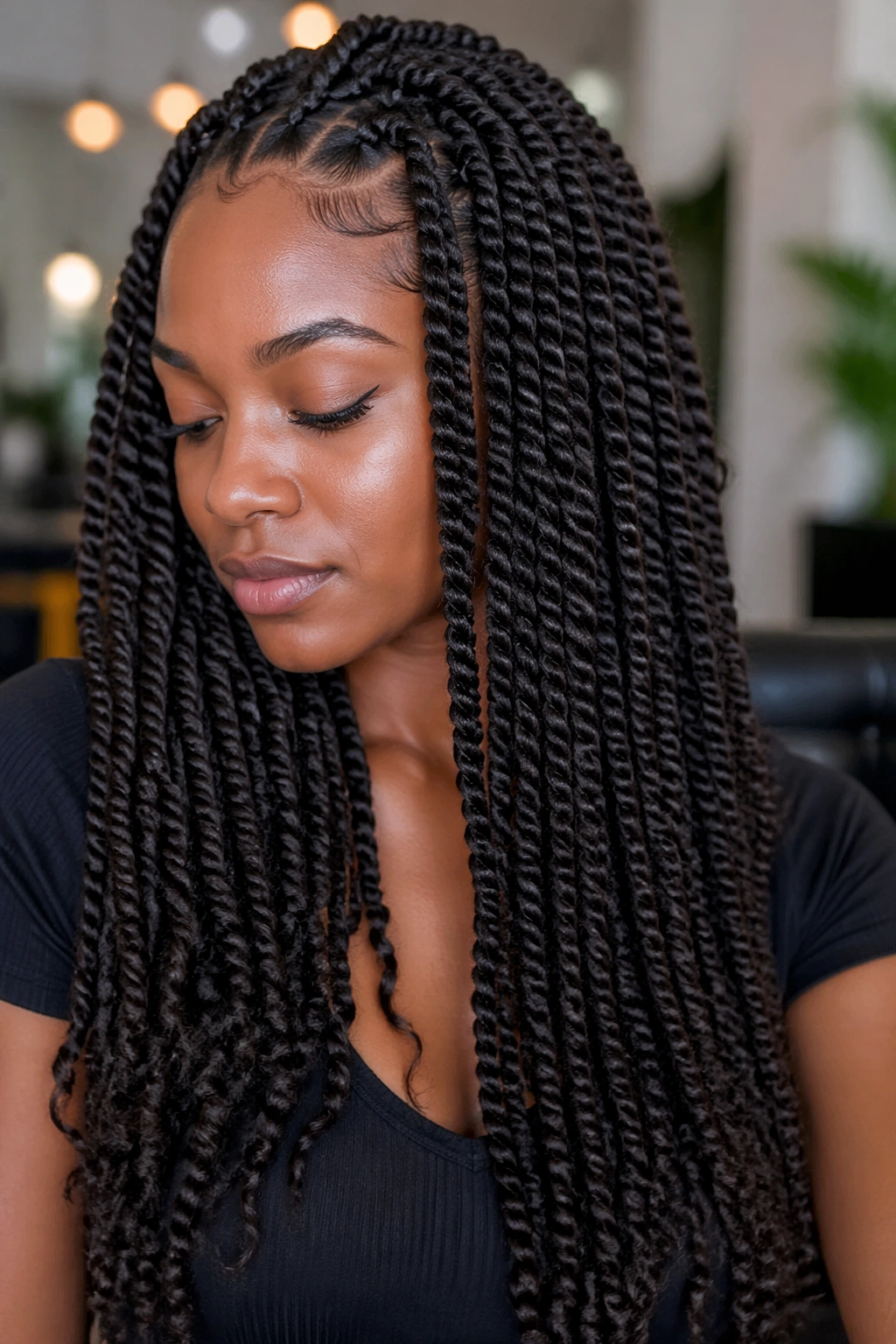
Instead of one extension bundle per crochet insertion, use two bundles simultaneously. Fold both together over the hook and pull them through the cornrow in one pass. The resulting twist is naturally fuller, denser, and slightly longer because both bundles twist together after installation.
This technique works best with thinner extension bundles — if you use thick pre-made twists in pairs, each section becomes very heavy.
22. Protective Up-Style with Crochet Kinky Hair
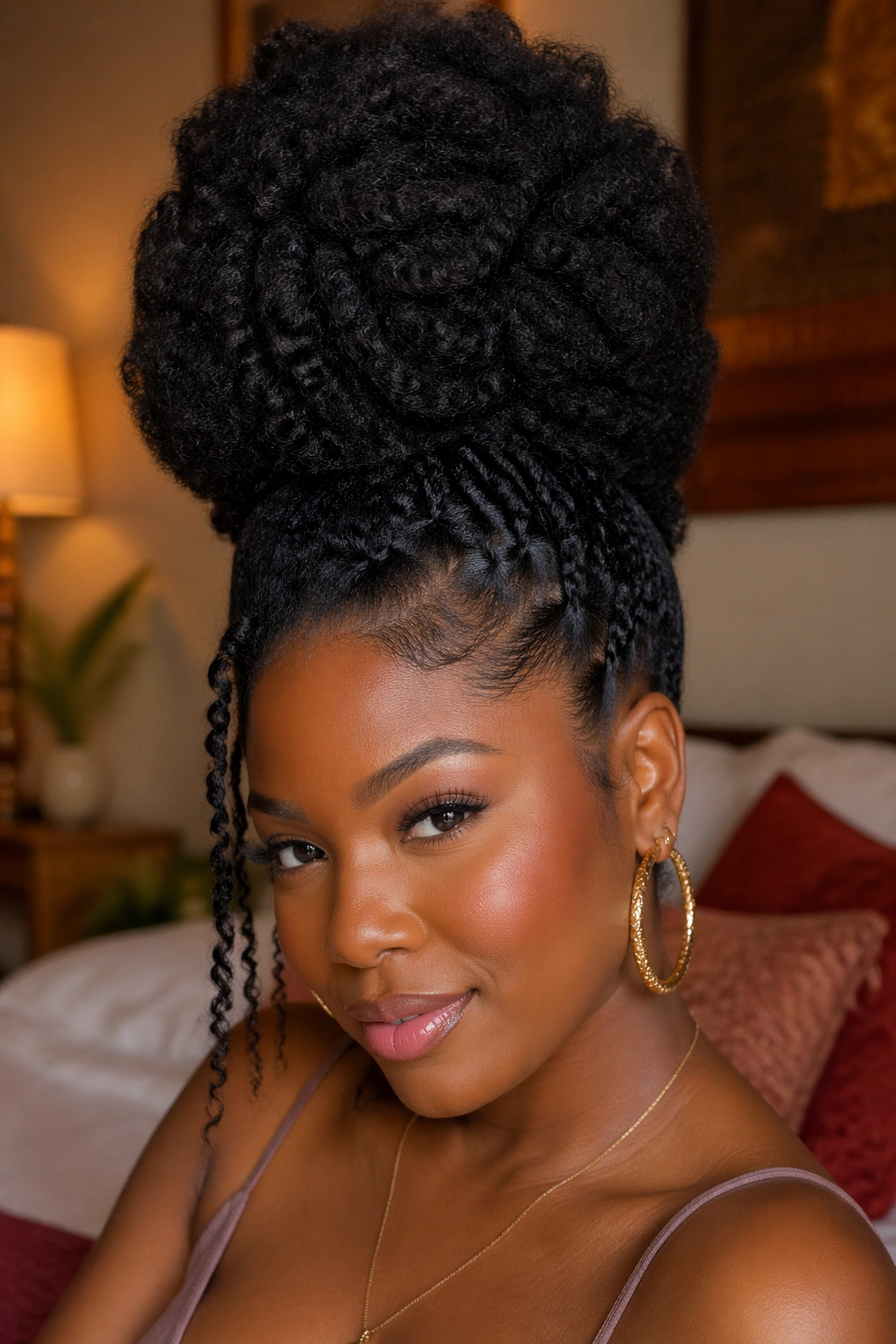
Install your crochet kinky hair in a downward pattern, then gather the entire style into a high, gravity-defying updo that puts all the volume above your head rather than hanging down. The kinky extension texture allows the updo to hold its shape without pins because the fiber grips itself.
Think a textured, angular top bun or an asymmetrical gathered knot. Both are genuinely wearable and hold for a full day.
23. Crochet Freeform Twist Style
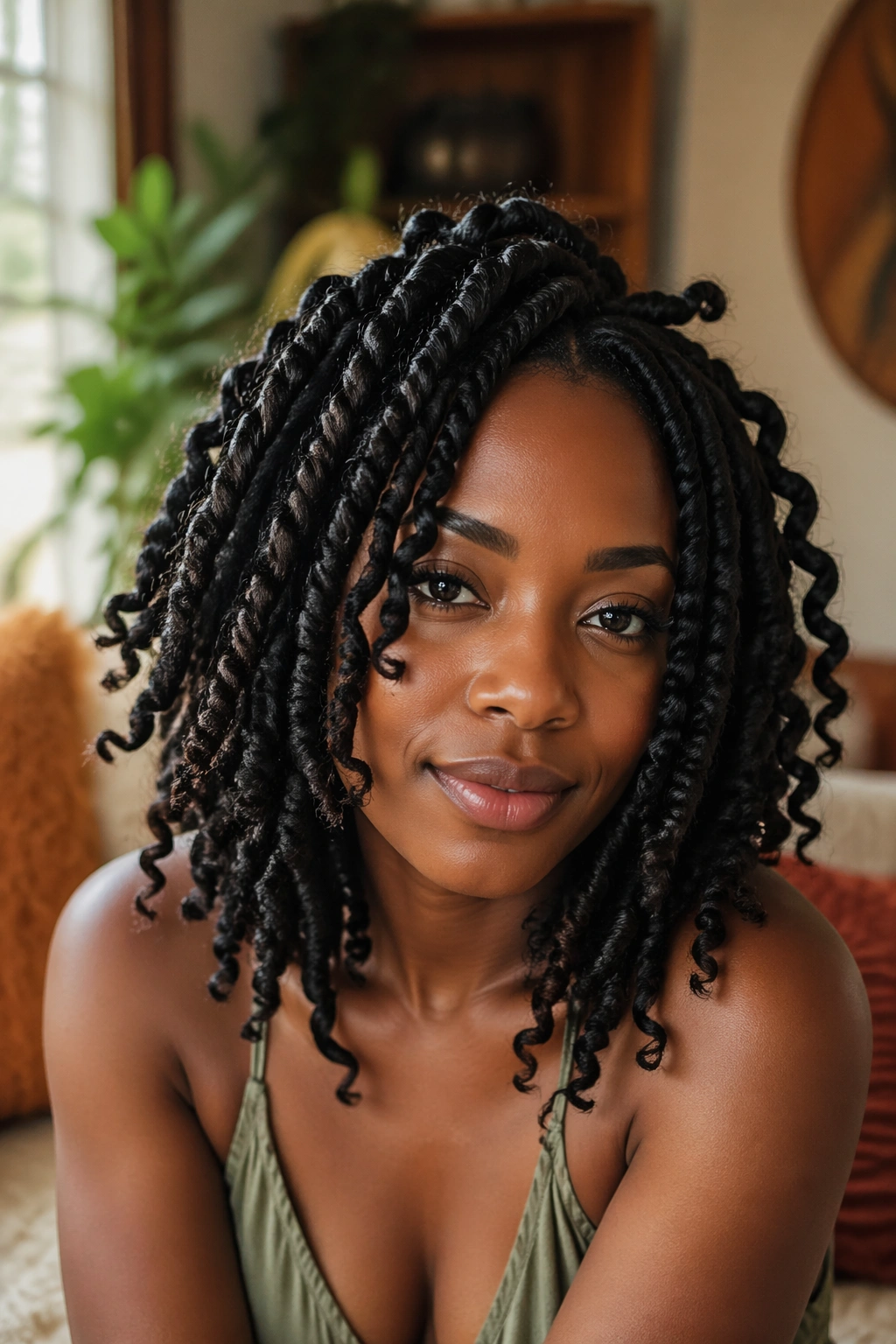
No clean parts. No uniform tension. No consistent sizing. Freeform crochet twists use the extension hair installed organically — varying thicknesses, varying insertion points — to create a natural, almost-grown look. Some sections will be thicker. Some thinner. Some insertions are close together. Others are spread out.
The result is a style that looks intentionally lived-in from day one, rather than manicured. It’s a specific aesthetic that suits bohemian or earthy styling preferences.
24. Color-Blocked Crochet Style
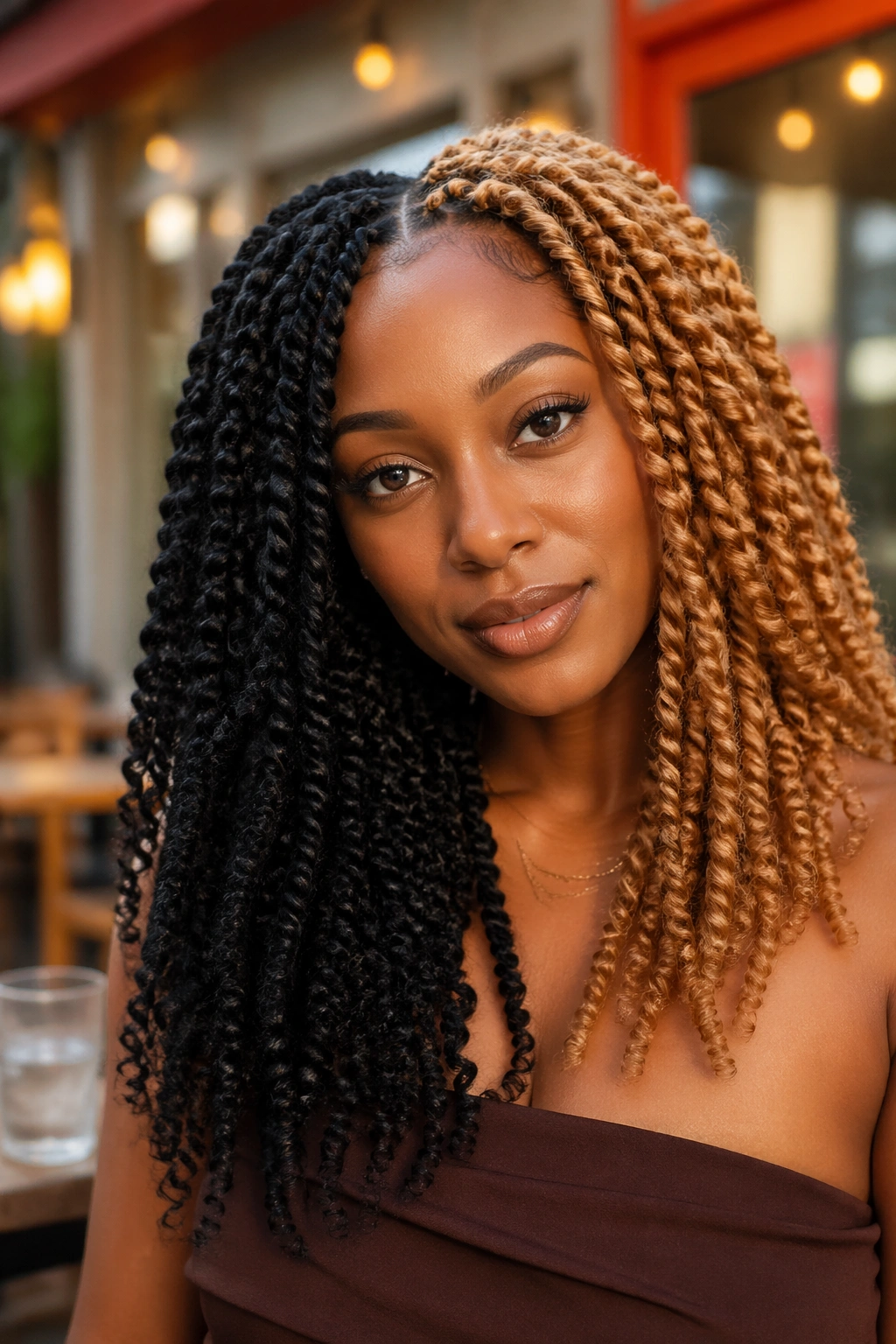
Divide your head into deliberate sections — front half and back half, or left side and right side — and use a different extension color in each section. For example, dark brown crochet kinky twists in the front and honey blonde in the back. Or black locs on the left and burgundy locs on the right.
The color blocking is bold and unmistakable. This is not a subtle style choice. But done well, color-blocked crochet looks editorial and intentional — not accidental or mismatched.
Keep the texture consistent across both sections even when the color changes. Switching both color and texture creates too many competing visual elements.
Maintaining Crochet Styles on Afro Hair
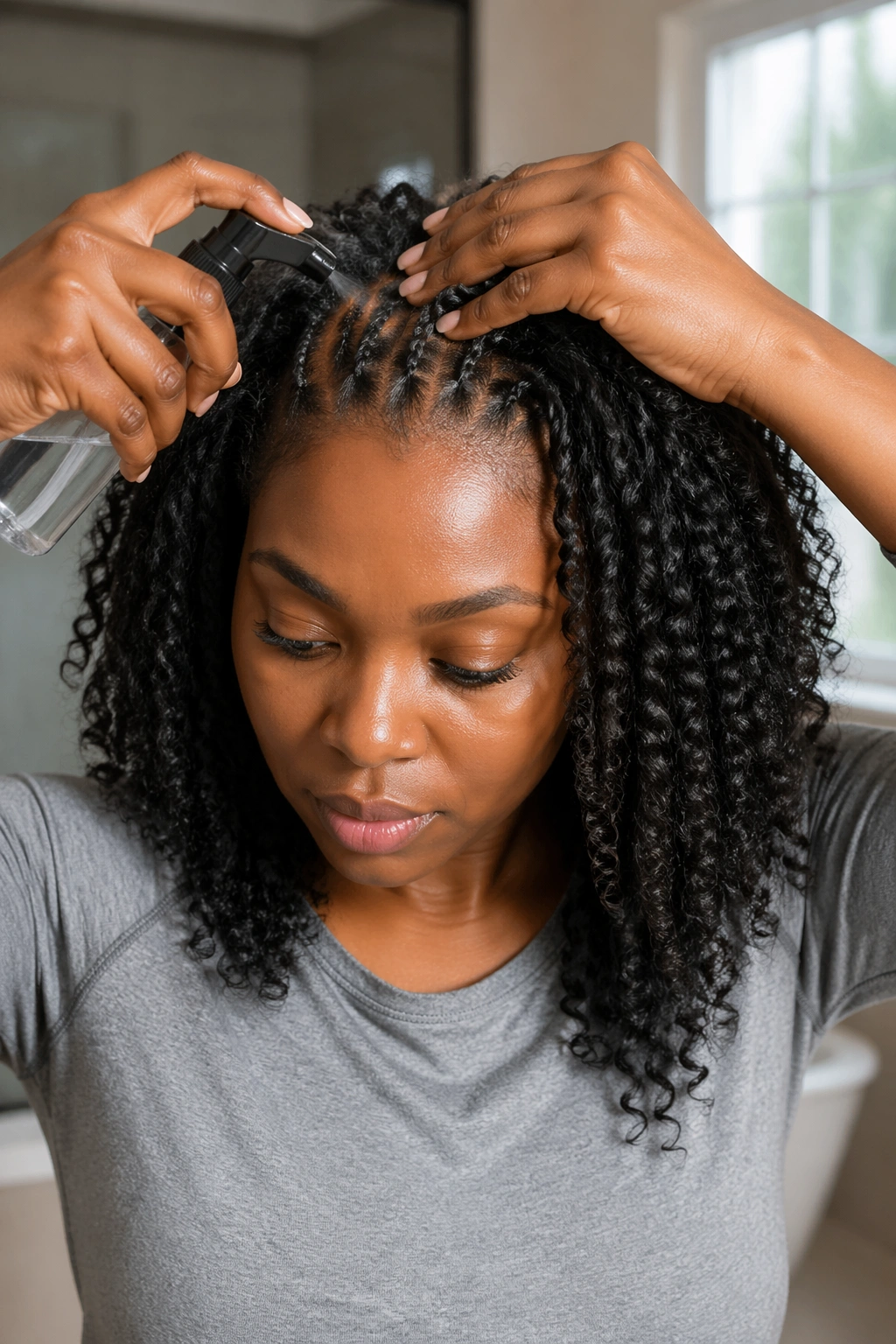
Your scalp still needs regular attention during crochet wear. The cornrows underneath aren’t visible, but they’re there, and sebum buildup along each row causes itching and can lead to scalp inflammation over time.
Dilute a few drops of tea tree oil into your spray bottle of water — roughly 5 drops per 8 ounces — and spray the mixture along each cornrow row every few days. Tea tree is antimicrobial without being harsh or stripping. Let it sit for a minute, then follow with a light spray of plain water to dilute it further.
Don’t overwet your crochet extensions. Synthetic fiber takes a long time to dry and can smell musty if it stays damp for more than a few hours. If you want to refresh your style, mist the extension hair lightly with water and let it air dry completely before covering or wrapping.
How to Remove Crochet Hair Without Losing Your Braids
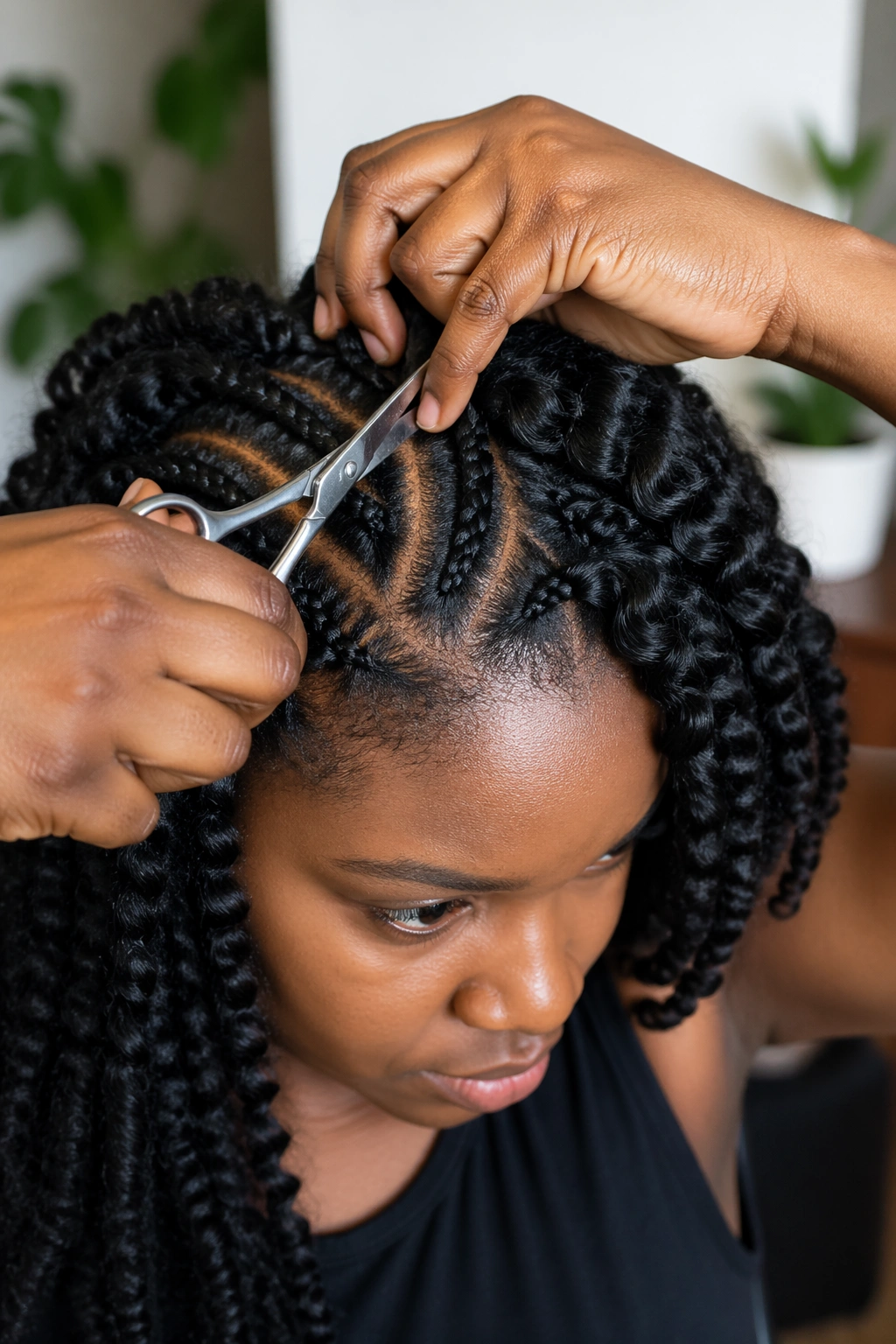
The removal process is faster than with individual styles because the cornrow base stays intact. Cut the crochet loops near the base — scissors or a seam ripper both work — then slide the extension hair off each row. You’ll be left with just your cornrows.
At this point, you can either re-braid the cornrows for a fresh crochet install or take them down entirely for a wash day. If the cornrows still look and feel clean, you can do a second crochet style right over them, saving two to three hours of braiding time.
Common Crochet Mistakes Worth Avoiding
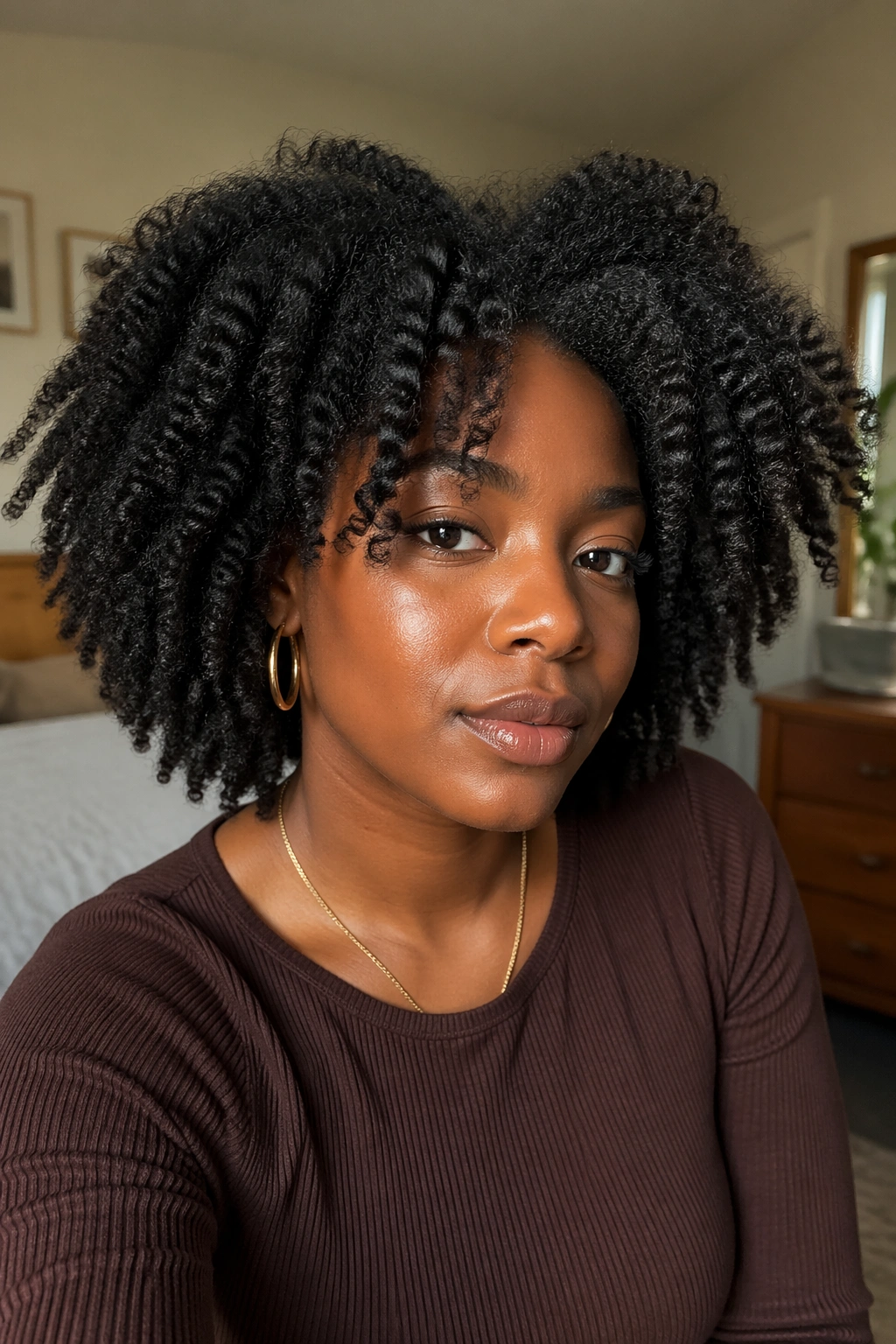
The most frequent issue is inserting the crochet hook through the cornrow in the wrong spot — through the center of a braid stitch rather than underneath the row — which creates weak insertion points that slide along the braid instead of staying put. Go underneath the entire cornrow, not through it.
Second most common: using too much extension hair per insertion in an attempt to add fullness faster. This creates lumpy, uneven texture at the base of each section. Consistent, moderate amounts per insertion and more insertions overall is always better than fewer, heavier passes.
Third: skipping the edge gel step. The crochet rows closest to your hairline determine whether the entire style looks intentional or sloppy. Lay those edges before you start crocheting the front rows, and the finished style will look polished from the very first day.
How to Style Crochet Hair After Installation
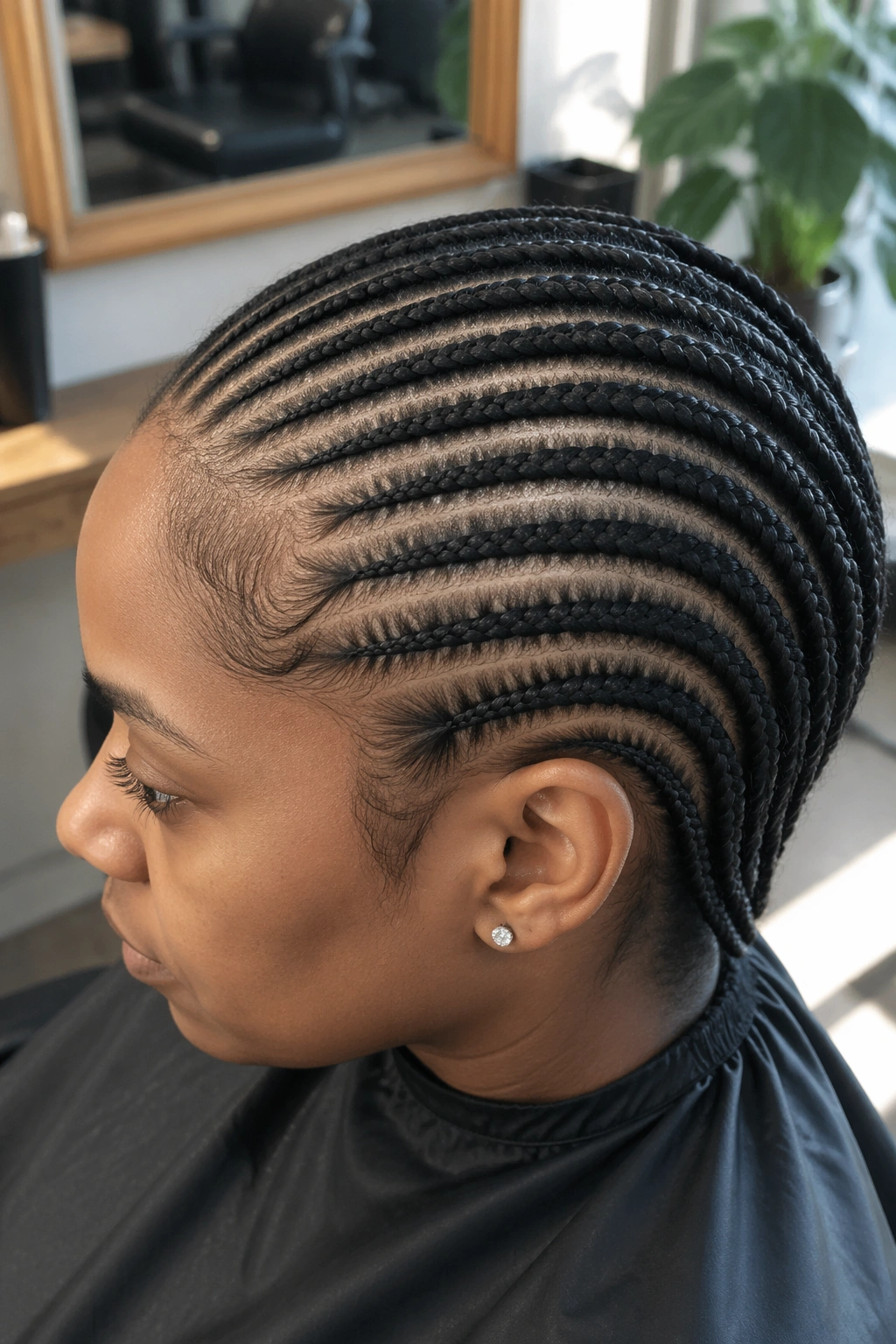
One of the underappreciated things about crochet styles is how much styling room you have after the installation is done. You’re not locked into the look that comes off the hook. The extension hair, because it’s essentially loose, can be gathered, pinned, wrapped, and shaped the same way any other hair can.
For crochet twists or locs, a simple half-up bun is the easiest post-install style. Gather the top half of your extensions with a wide satin scrunchie, pile them at the crown, and let the bottom half hang. Done in about two minutes and it genuinely changes the visual register of the style.
For crochet kinky curls or afro textures, use a wide-tooth pick or an Afro pick to gently expand the shape into a rounder, fuller silhouette. Start at the perimeter and work inward. The extension hair will hold the picked-out shape better than natural hair because it doesn’t have the same shrinkage tendencies.
For any crochet style that has individual pieces — twists, locs, braids — you can gather all extensions into a high ponytail and secure it loosely for a completely different look. Or sweep all the extensions to one side for an asymmetrical drape that reads as styled rather than casual.
The key in all of these variations is to work gently. Crochet extensions are attached only at the loop point on the cornrow — they can pull free if you apply too much force while manipulating.
Washing Crochet Styles Without Ruining the Installation
Washing a crochet style is possible and, after two to three weeks, necessary. The approach is different from washing loose natural hair — you’re not lathering the extensions, you’re cleaning the scalp.
Fill a spray bottle with water and a few drops of a mild, sulfate-free shampoo. Shake gently to mix without creating too much foam. Part the extension hair along each cornrow to expose the braid row underneath and spray the diluted shampoo directly onto the cornrow. Massage gently with your fingertips — not nails, not a brush, just the soft pads of your fingers.
Rinse by spraying clean water along the same parts until all the shampoo is gone. You’ll know the shampoo is fully rinsed when the water runs clear.
After rinsing, apply a light leave-in conditioner along the same parts — a water-based formula, not a heavy cream — and gently press the parts back together. Don’t rub or scrub the extension hair. Let the extensions air dry for two to three hours. If you’re in a hurry, a hooded dryer set to low heat for 30 minutes works.
This wash method works because it targets the scalp — where the sebum and product buildup actually live — without saturating the extension hair to the point where it takes all day to dry or starts to smell musty.
Protecting Your Edges During Crochet Wear
Cornrows are tight by nature. Combined with the crochet extensions pulling slightly at each insertion point, the front hairline and edges experience more tension during crochet styles than the middle of the head.
Before installing the front cornrow rows, apply a light scalp oil — sweet almond oil, jojoba, or a dedicated edge growth oil — to the front hairline and massage for two minutes. Do this again every three days during the wear period. The massage increases blood circulation to the follicles along the hairline and the oil provides barrier protection.
Watch for any cornrow rows near the front that start feeling tight or tender. If a row that felt comfortable during installation now feels like it’s pulling, it’s been on too long. Front rows tend to tighten as the braided hair underneath grows out — the new growth gets compressed by the cornrow and the tension increases gradually.
If you notice your edges looking thinner or feeling sensitive, take the style down at that point rather than pushing the wear period further. Edge health is long-term. An extra two weeks in a crochet style isn’t worth permanent hairline thinning.
When to Try Crochet for the First Time
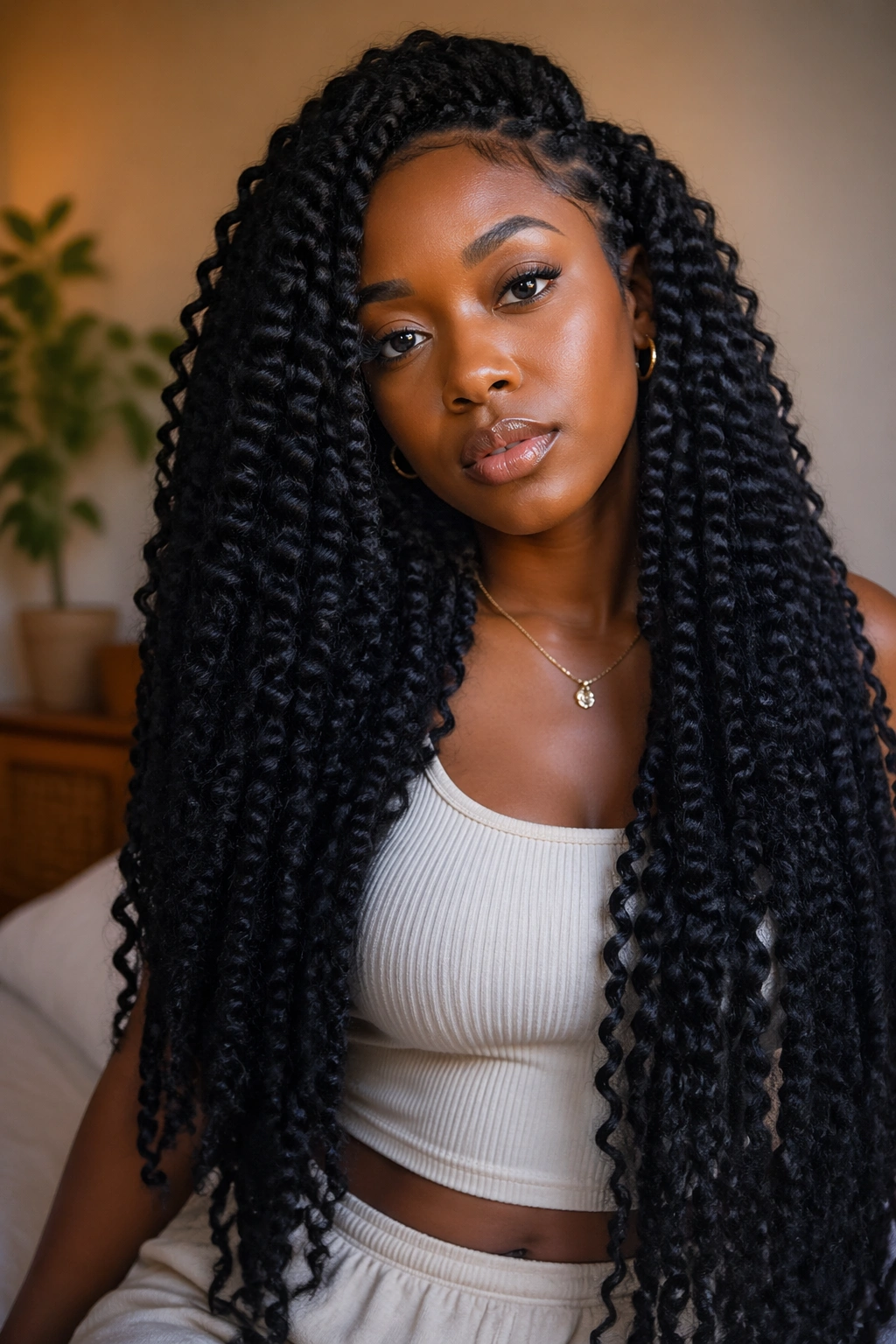
If you’ve never done crochet before, start with a simple style — afro kinky twists or spring twists — rather than an elaborate faux loc or goddess braid setup. The simpler styles install more quickly and the technique is easier to learn on your first attempt.
You can install crochet styles on yourself at home once you’ve learned the basic cornrow technique and the latch hook motion. Most people need one practice session to get the hook direction and the loop size right, and then subsequent installations become progressively faster.
Alternatively, a first-time crochet installation with a professional braider while you watch and ask questions is genuinely worthwhile. Seeing how the hook goes underneath the cornrow rather than through it, how much extension fiber to use per insertion, and how to keep the density consistent throughout — these are much easier to understand by watching than by reading a description.
The style is forgiving for beginners. Even slightly uneven density becomes less obvious once the full head is installed and the extensions settle into their natural hang.
Why Crochet Stays One of the Best Protective Options
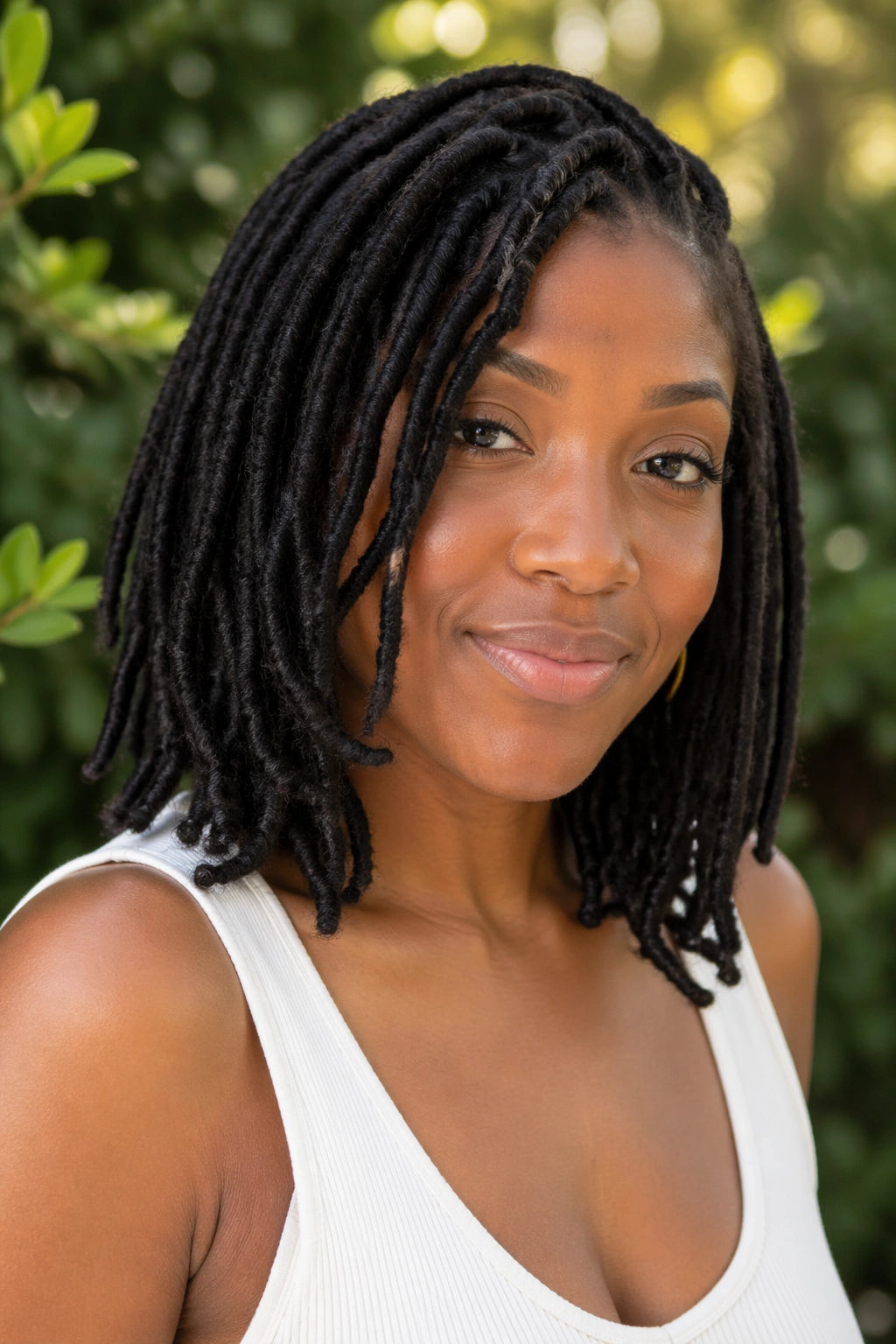
Crochet styles have kept their position as a reliable protective choice because they solve a real problem efficiently. They protect the natural hair underneath. They reduce daily manipulation. They last for weeks. They look styled without requiring daily effort. And the range of extension styles available — from tight kinky curls to flowing locs to defined twists — means there’s a crochet option for nearly every aesthetic preference.
The installation is also less expensive than many alternatives when you’re paying a professional. Because the braider is working only on the cornrow base — not individual braids throughout the entire head — the skilled labor time is significantly shorter. The extension hair cost is on the moderate end too, with most full-head installs requiring five to eight packs of crochet extension hair at a reasonable cost per pack.
For women who wear protective styles regularly, crochet techniques represent a strong balance of protective benefit, aesthetic range, and practical value. It’s not a shortcut. It’s a genuinely well-designed system for wearing extensions on afro hair types with maximum health benefit and minimum installation hassle.