



Easy ponytails for weddings can look cleaner, fresher, and more expensive than a fussier updo when the part is sharp, the base is wrapped, and the ends are finished on purpose. That’s the part people miss. A ponytail is only “simple” when it’s thrown together; when it’s shaped well, it reads polished in a way that feels almost suspiciously effortless.
They solve a very practical problem, too. Earrings need room. Veils need a place to sit. Necklines need to stay visible, especially with off-the-shoulder, square, or halter dresses. And if the room is warm or the day gets long, a ponytail usually survives better than a style with twelve hidden pins and a prayer.
Hair type matters more than most bridal inspiration boards admit. Fine hair wants lift at the crown and a little texture before it’s gathered. Thick hair needs sectioning and a strong elastic. Curly hair looks best when the curl pattern is respected instead of brushed into a puff you’ll spend the whole night fighting.
The styles below stay bridal, not gym-class. Some are sleek. Some are soft and a little undone. All of them can be done without turning the morning into a production.
1. Sleek Low Ponytail
A sleek low ponytail is the closest thing to a white shirt in wedding hair: plain on paper, sharp in real life. The trick is making the surface look smooth without flattening every bit of movement out of it. Start with a center part or a deep side part, then brush the hair back with a boar-bristle brush and a small amount of smoothing cream.
The base should sit just above the nape, not halfway up the head. That low placement keeps the style calm and elegant, especially with satin, crepe, or heavily detailed dresses. Wrap a thin strand of hair around the elastic and pin it underneath. Small move. Big payoff.
If your hair frizzes easily, mist a little anti-humidity spray over the top before you gather it. If it’s fine, clip the crown flat for five minutes before you secure the ponytail. That tiny bit of cooling time helps the shape stay put.
2. Satin Ribbon Low Ponytail
A satin ribbon can do a lot of heavy lifting. It softens the look instantly, and it gives a simple ponytail that wedding feeling without needing curls, braids, or a dozen pins. I like this version when the dress already has texture or a strong neckline, because the ribbon brings in romance without competing.
Choose a ribbon that’s at least 1 inch wide so it reads clearly in photos. Narrow ribbon can disappear into the hair. Tie it around a low ponytail after you’ve wrapped the elastic, then let the ends hang long enough to brush the shoulder blades. Keep the bow neat, not bulky.
If the fabric of your dress is matte, satin ribbon gives a nice contrast. If the dress is glossy already, try a softer silk ribbon or even a velvet one for colder-weather ceremonies.
3. Soft Wave Ponytail With Face-Framing Pieces
Why does this style keep showing up in bridal inspiration? Because it works on a lot of face shapes and it gives movement without making the hair look overdone. The face-framing pieces matter here. They soften the jawline, and they keep the ponytail from feeling too pulled back.
How to Style It
Curl the hair with a 1.25-inch barrel, then brush the curls out gently so they turn into loose waves. Leave two front sections out before you gather the rest into a mid-height ponytail. Those pieces should start around the cheekbone and fall in a soft bend, not a tight ringlet.
A light mist of flexible hairspray is enough. Too much, and the waves go stiff. Too little, and they collapse before the first dance.
4. Bubble Ponytail With Pearls
A bubble ponytail sounds playful, but with pearl ties or tiny pearl pins, it can feel surprisingly dressed up. The shape is simple: secure the ponytail, add small elastics every 2 to 3 inches, then tug each section outward just enough to create round “bubbles.” That’s it.
The wedding version works best when the bubbles are neat and evenly spaced. Don’t over-fluff them. You want a soft shape, not a cartoon one. Adding a pearl at each elastic or tucking pearl pins between the sections keeps the style in bridal territory.
This is a smart choice for medium to long hair that needs structure. It also keeps thick hair from looking like one heavy rope. And if the gown has clean lines, the bubble shape gives the hair a little visual interest without stealing attention from the dress.
5. Braided Crown Into a Ponytail
A braided crown into a ponytail gives you that “I had this done professionally” feeling, even though the steps are not complicated. Braid each side from the temple or just behind the ear, then bring both braids toward the back and join them into a low ponytail.
The braids do two useful things. They keep shorter layers tucked away, and they make the back of the style look finished from every angle. That matters at weddings, because people are going to see you from behind a lot more than they think they will.
Use this one if you like a boho dress, a lace back, or a garden setting. A little texture spray before braiding helps the pieces hold without slipping out.
6. Twisted Low Ponytail
Twisted styles are the quiet overachievers of wedding hair. This low ponytail uses two rope twists from each side of the head, tucked back and secured at the nape, which gives the style structure without requiring actual braiding skill.
It’s a good option when time is short and your hands are not interested in learning anything new. Twist each side tightly enough that it holds, but not so tight that it digs into the scalp. Once the twists meet at the back, gather everything into a low ponytail and wrap the elastic with a small section of hair.
This looks especially good on straight or slightly wavy hair, because the clean lines of the twist show up clearly. A little shine spray on the finished style gives the whole thing a softer, more formal finish.
7. High Gloss Bridal Ponytail
A high ponytail can look bridal if the finish is polished enough. That’s the whole game. Pull the hair up at the crown, smooth the sides tightly, and use a second elastic underneath if the hair is thick or heavy. A clip-in ponytail piece can help here, but it’s not mandatory.
The crown should look sleek, not scraped. Leave a little height at the top so the head shape stays flattering. Then curl the tail in large sections with a 1.5-inch iron and brush them into a glossy, blended wave. Think shine, not stiffness.
This style works well with statement earrings and dresses that show off the shoulders. It feels modern, and it gives the face a lifted look that photographs nicely from the side.
8. Side-Swept Ponytail
What makes a side-swept ponytail feel special is the angle. Instead of sitting dead center, the ponytail rests over one shoulder, which creates a soft line that flatters asymmetrical dresses and dramatic earrings.
Start with a deep side part. Gather the hair low, but pull it slightly behind one ear before securing it. The front can stay smooth, or you can leave a few bends around the temples so it doesn’t look too rigid. The ponytail itself can be straight, waved, or curled, depending on how formal you want the final look to feel.
I like this style when the dress already has movement in the skirt. The hair echoes that energy. It’s simple, but not plain, and there’s a nice old-Hollywood feel to it when the ends are brushed out.
9. Curly Ponytail With Defined Ends
Curly hair does not need to be smoothed into something else. That’s a waste of good texture. A curly ponytail keeps the pattern intact, then shapes it so the curl definition shows from root to tip.
Refresh the curls with a little water, leave-in conditioner, and a dime-sized amount of styling gel, then diffuse on low heat until the hair is dry. Gather it gently at the crown or at the nape, depending on how formal you want the silhouette. Avoid brushing the curls out before you secure them.
What to Watch For
- Use a soft elastic that won’t snag the curl pattern.
- Keep one or two curls loose near the hairline for softness.
- Pin any frizz at the base instead of loading the whole head with spray.
- Let the ends stay springy, not crunchy.
10. Low Ponytail With a Hair Vine
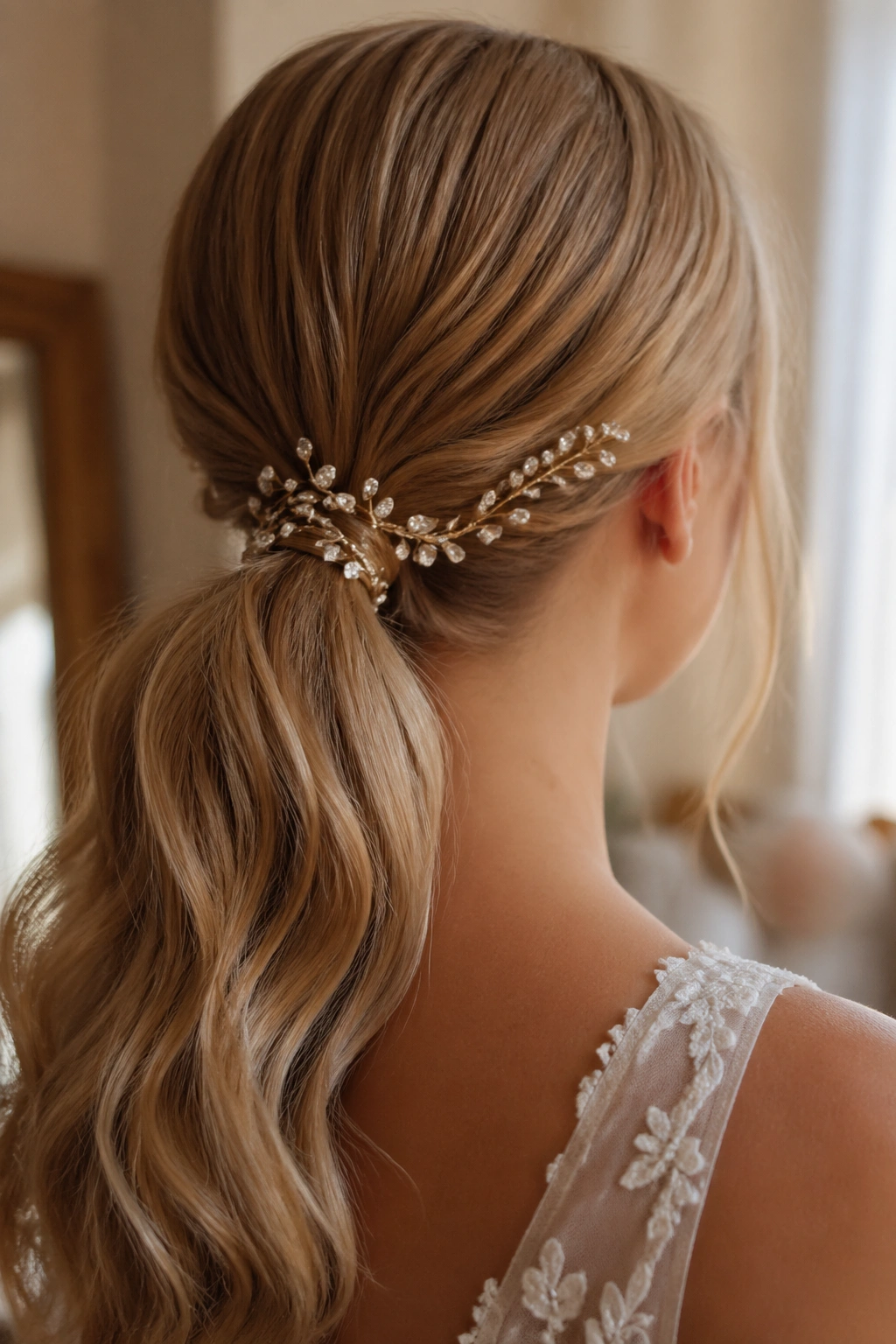
A hair vine changes the mood fast. A plain low ponytail becomes bridal the second a vine curves around the base or trails along one side of the style. The rest of the hair can stay simple, which is why I like this version so much.
Secure the ponytail first, then wrap the vine around the elastic or thread it through the wrapped section. If the vine has combs on both ends, tuck them into the sides of the ponytail base so they don’t show. Keep the movement gentle; a hair vine should look placed, not pinned down like hardware.
This style works beautifully with lace, tulle, or dresses that have soft beading. It also lets you skip extra accessories elsewhere. One focal point is enough.
11. Mini-Braid Accent Ponytail
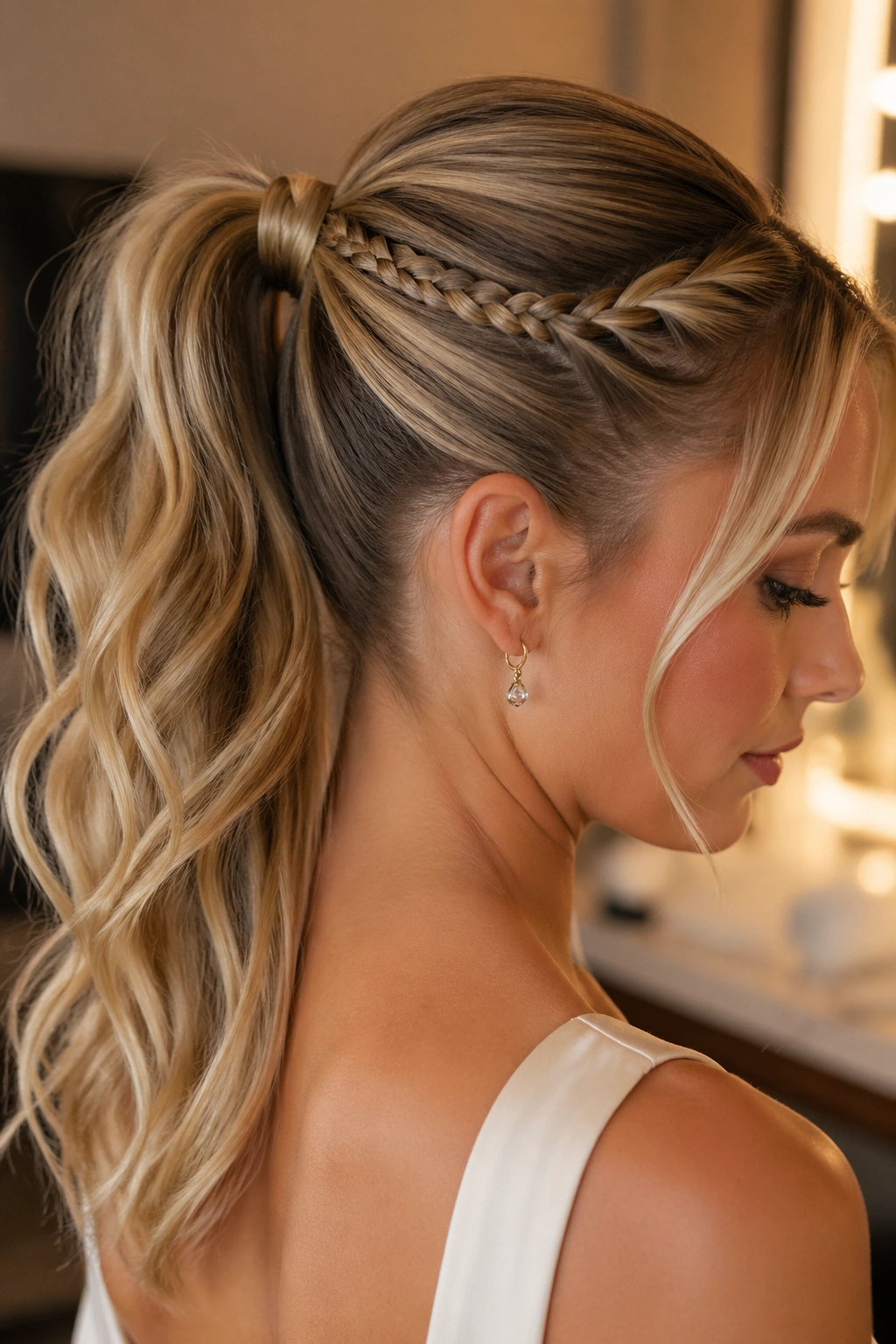
Tiny braids can do more than people think. A single micro-braid along the hairline or a small braid tucked under the base of the ponytail adds detail without turning the style into a full braid look. That makes it handy for bridesmaids, guests, or brides who want a little texture but not a lot of fuss.
The easiest version is one small braid from above the temple, wrapped back and hidden in the ponytail base. Another option is to braid a thin section from each side and let the braids disappear into the tail. Either way, the braid gives the style a handmade feel.
This is a good style for hair that’s medium length or a little layered. The braid catches the eye, and the ponytail keeps the rest of the hair under control. Clean. Simple. Effective.
12. Textured Ponytail for Natural Curls
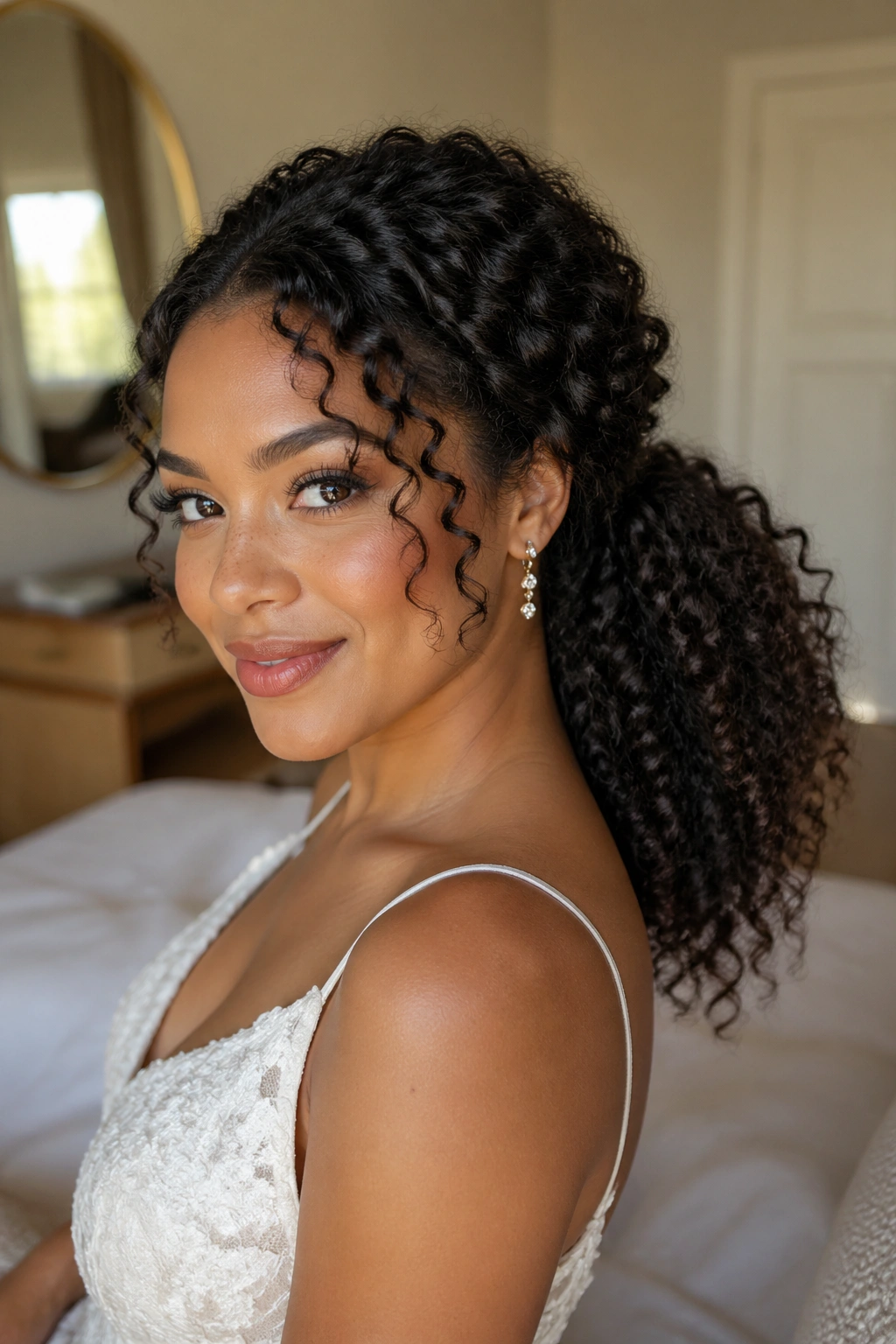
Can a ponytail still feel formal when the texture is loose and natural? Absolutely, if the shape is intentional. For natural curls, the trick is to build shape without crushing the curl pattern at the roots.
How to Get the Shape
Use a curl cream or mousse on damp hair, then dry with a diffuser or let it air-dry if the curl pattern holds well. Once the curls are set, separate them lightly with oiled fingers. Gather the hair low or mid-height, but don’t pull too tight at the front.
A little volume at the crown keeps the silhouette from looking flat. Leave a few curls free around the face, especially if the dress neckline is high or structured. The result feels soft and real, which is often better than trying to force a slick finish onto curls that don’t want it.
13. Romantic Low Knot Ponytail Hybrid
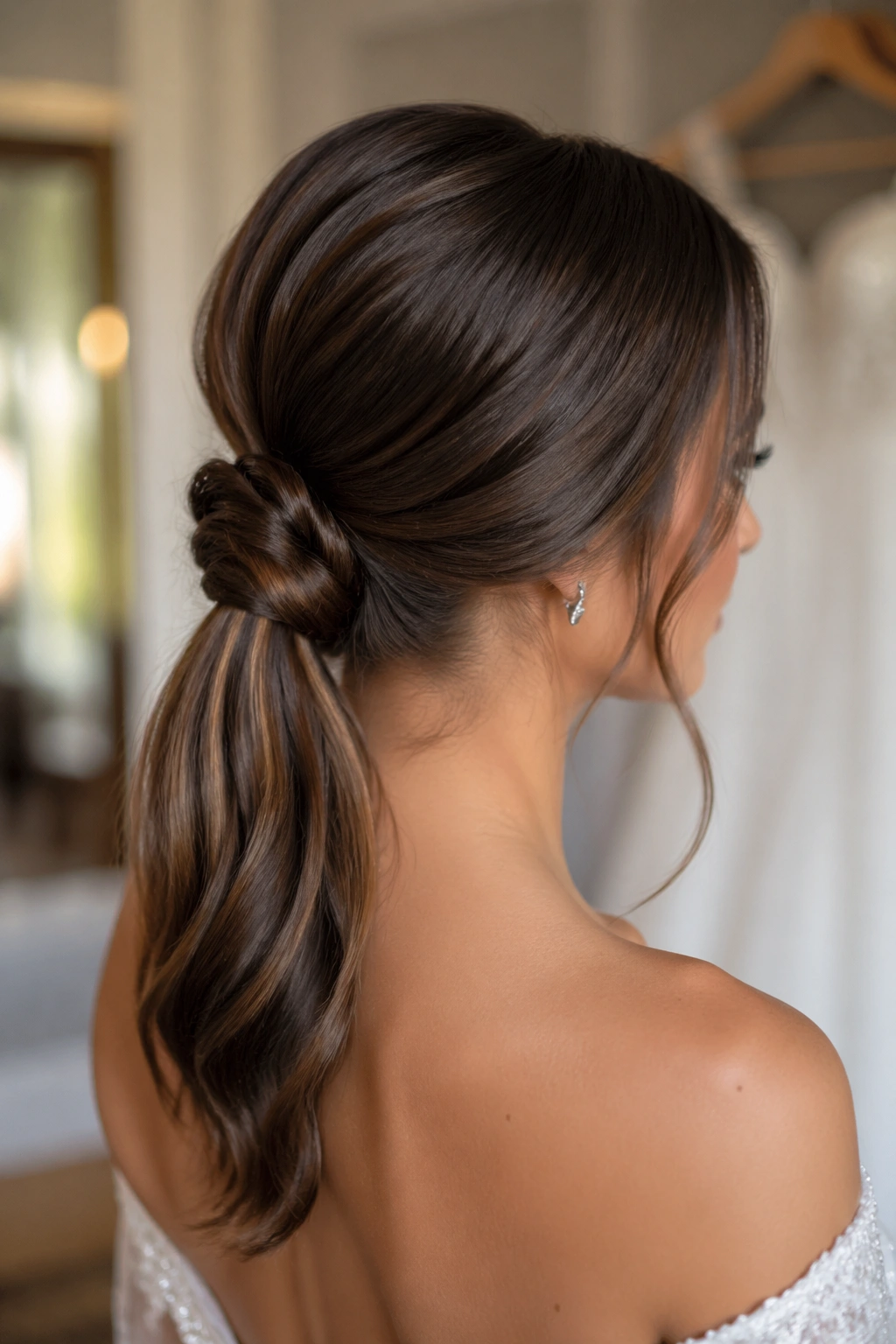
This one sits halfway between a ponytail and an updo, which is exactly why it works. You gather the hair low, loop it through the elastic once, and leave the ends tucked in a soft knot instead of pulling them all the way through.
The shape is gentle, not stiff. It gives a little fullness at the nape and keeps the ends controlled, which is useful if you want the polish of an updo without the weight of a full bun. It’s also a smart choice when the dress has a detailed back, because the hairstyle stays low and unobtrusive.
A few loose strands near the ears keep it from feeling severe. If you want extra softness, curl the leftover ends before tucking them in. Small change. Different mood.
14. Half-Up Ponytail
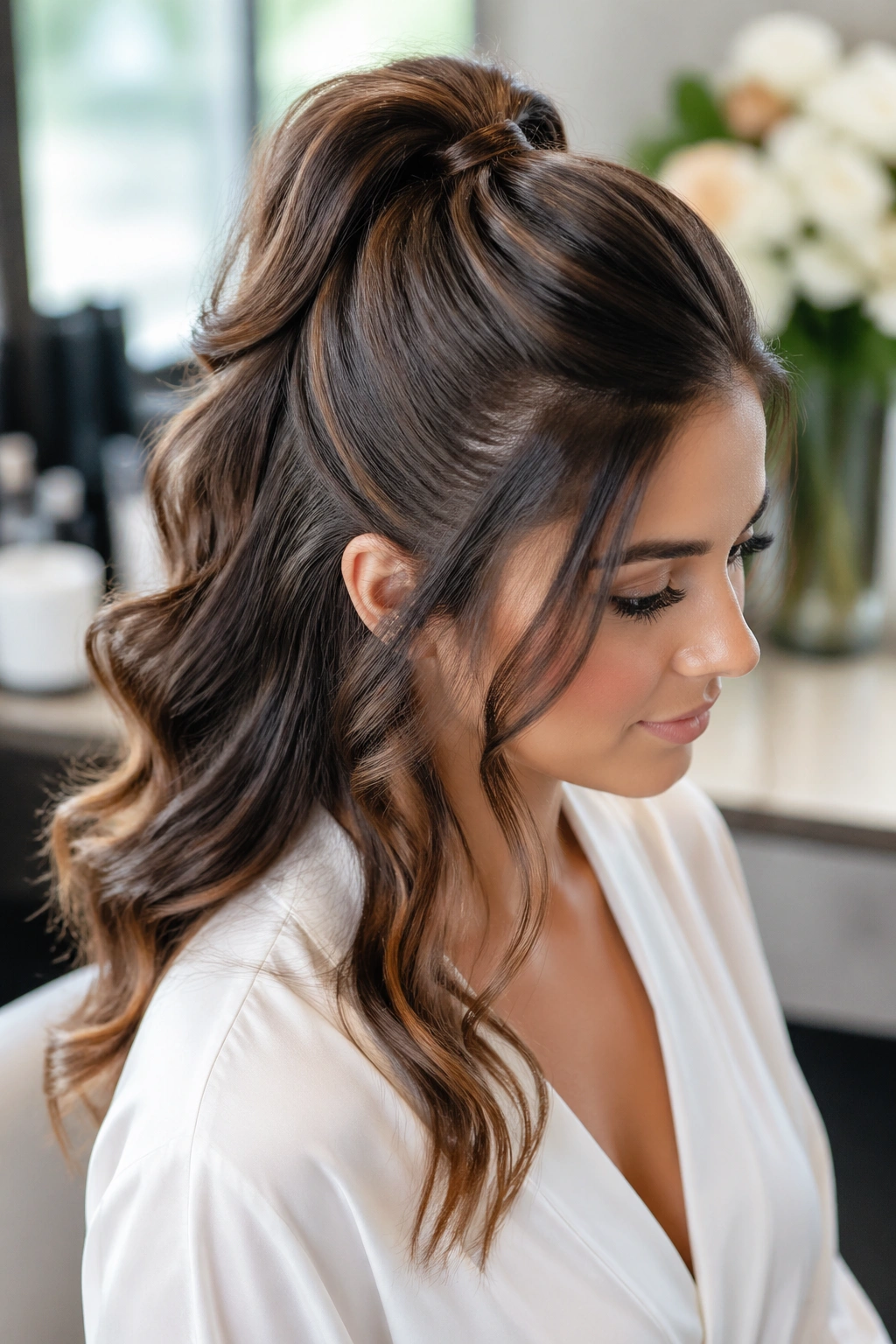
A half-up ponytail gives you the lift of an upstyle and the softness of loose hair, and that balance can be ideal for weddings that call for something relaxed but still neat. It’s especially nice for shoulder-length hair that might feel swallowed by a full low ponytail.
Why It Works
The top section gets pulled up and away from the face, which opens the features and gives a little height at the crown. The rest stays loose, so the hair still moves. That combination works well with curls, soft waves, or even a straight finish if the ends are beveled.
Keep the gathered section smooth, then curl the lower half in medium sections. A small accessory at the half-up base — a comb, a pin cluster, a tiny bow — is enough. Too many extras and the style starts to drift away from easy.
15. Inverted Ponytail Twist
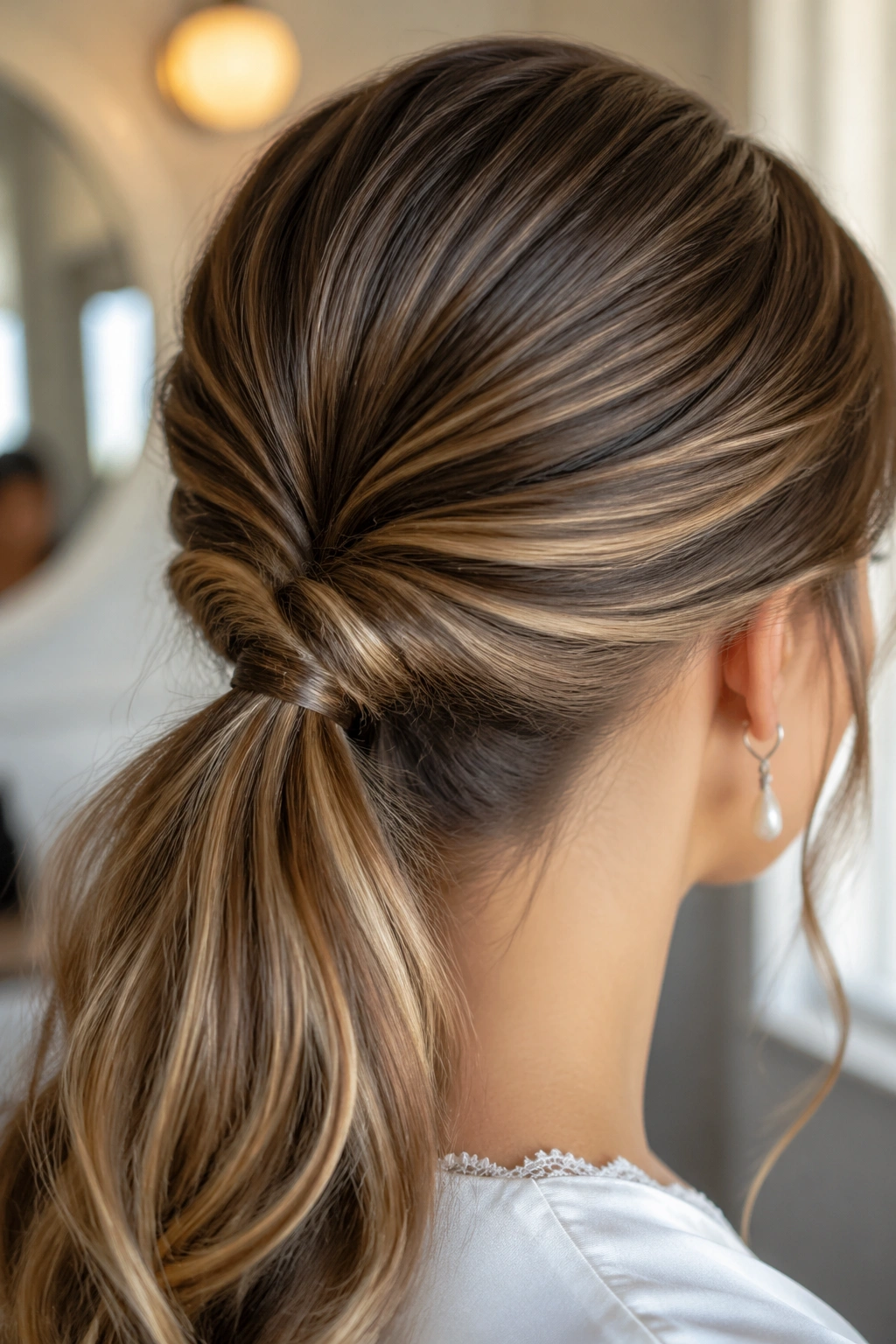
The topsy-tail trick is older than some wedding trends, and I still like it. Pull the hair into a low or mid ponytail, split the hair just above the elastic, and flip the ponytail through the opening. That small twist adds shape at the base without requiring a braid or knot.
It’s an excellent move for hair that feels too plain when pulled back. The twist creates a little visual lift, and it works well with fine hair because it gives the illusion of more structure. Use a smooth strand to wrap the elastic after the flip if you want the finish to look cleaner.
The style can stay sleek or be loosened a bit for softness. Either way, the result looks more involved than it really is, which is the kind of trick I always appreciate on a wedding morning.
16. Fishtail-Braided Ponytail
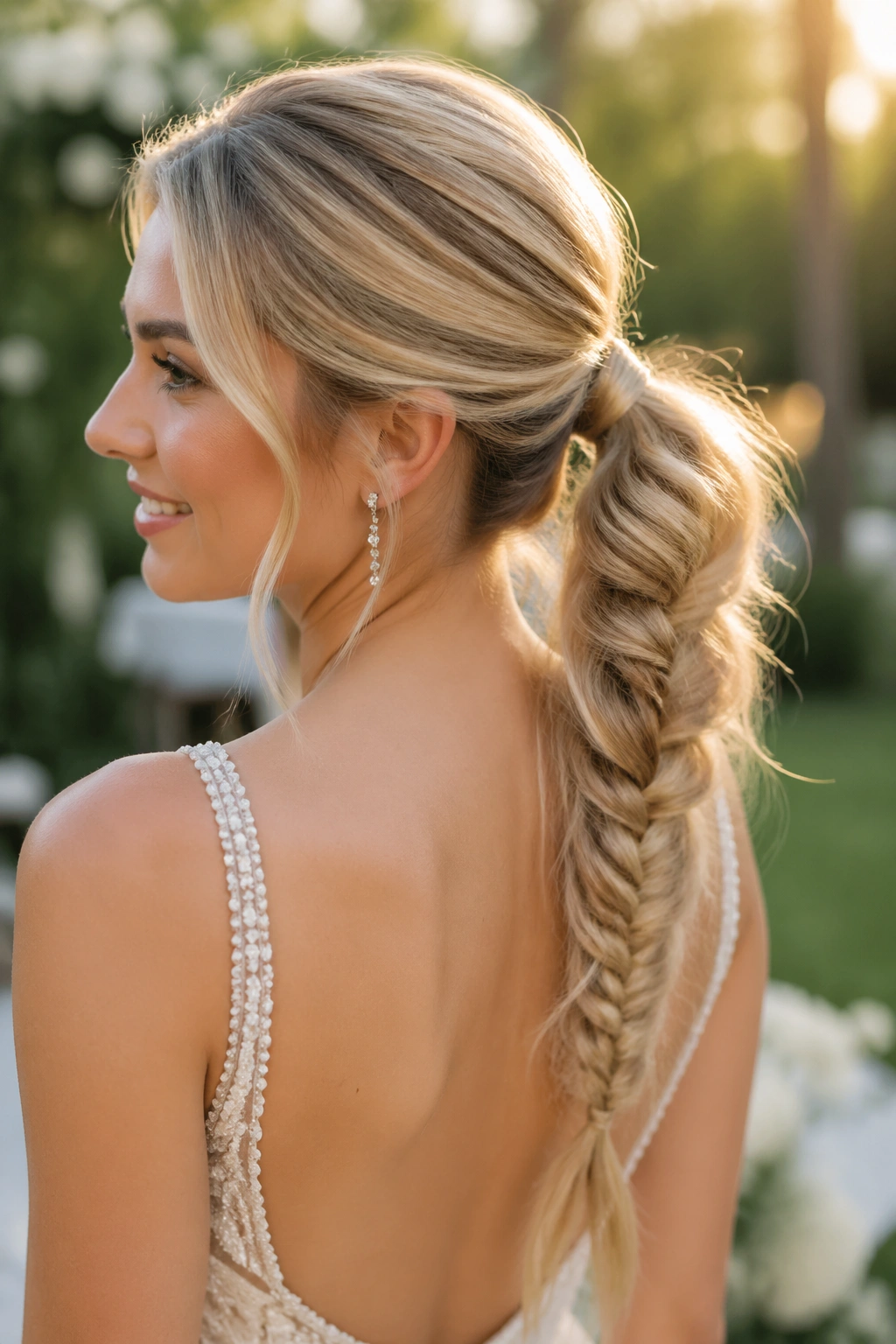
A fishtail braid has a dressed-up feel that a regular three-strand braid doesn’t always give. Once the hair is secured in a ponytail, braid the tail into a fishtail and pancake the sides slightly so the braid looks full and textured.
This is one of those styles that looks more difficult than it is. The braid itself can be loose and imperfect; in fact, a slightly undone fishtail often looks better for weddings than a super-tight one. The key is keeping the crown smooth so the texture stays focused in the tail.
It’s a strong option for boho dresses, outdoor ceremonies, or anyone who wants texture without curls everywhere. A few face-framing pieces help soften the look, especially if the braid is thick.
17. Bow-Tied Ponytail
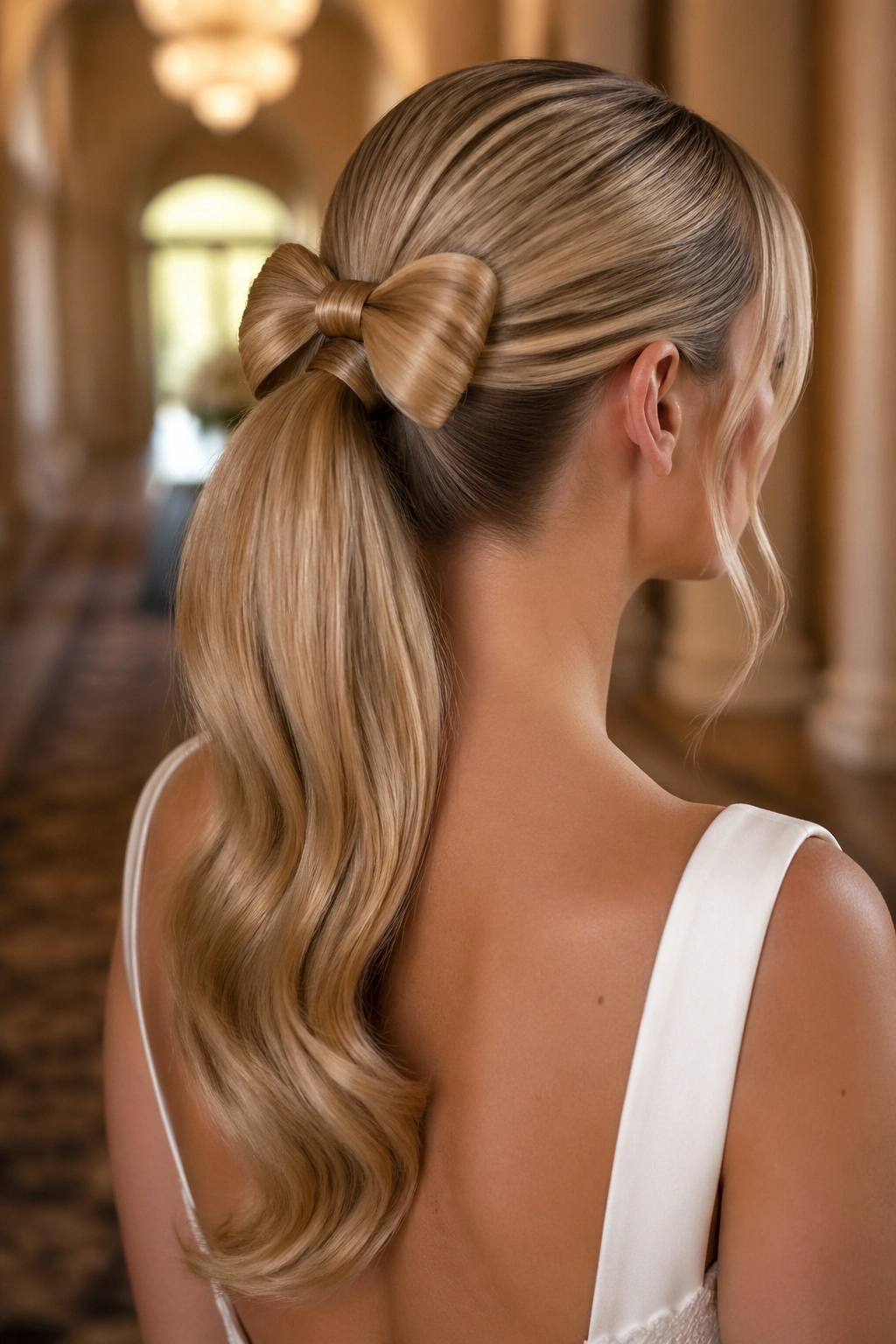
A hair bow can be sweet in a very adult way when the rest of the styling stays clean. The ponytail should be smooth at the base, with the bow sitting just above or wrapped around the elastic so it feels intentional, not costume-like.
Choose the scale carefully. A large bow needs a simple dress and simple jewelry. A smaller bow can handle a bit more detail. Satin reads formal, velvet feels richer, and sheer ribbon gives the whole style a softer edge. Let the tail fall straight or in loose curls, depending on how much movement you want.
This one works best when the wedding look leans romantic instead of dramatic. It’s a style with personality. Not loud. Just enough.
18. Messy-Chic Low Ponytail
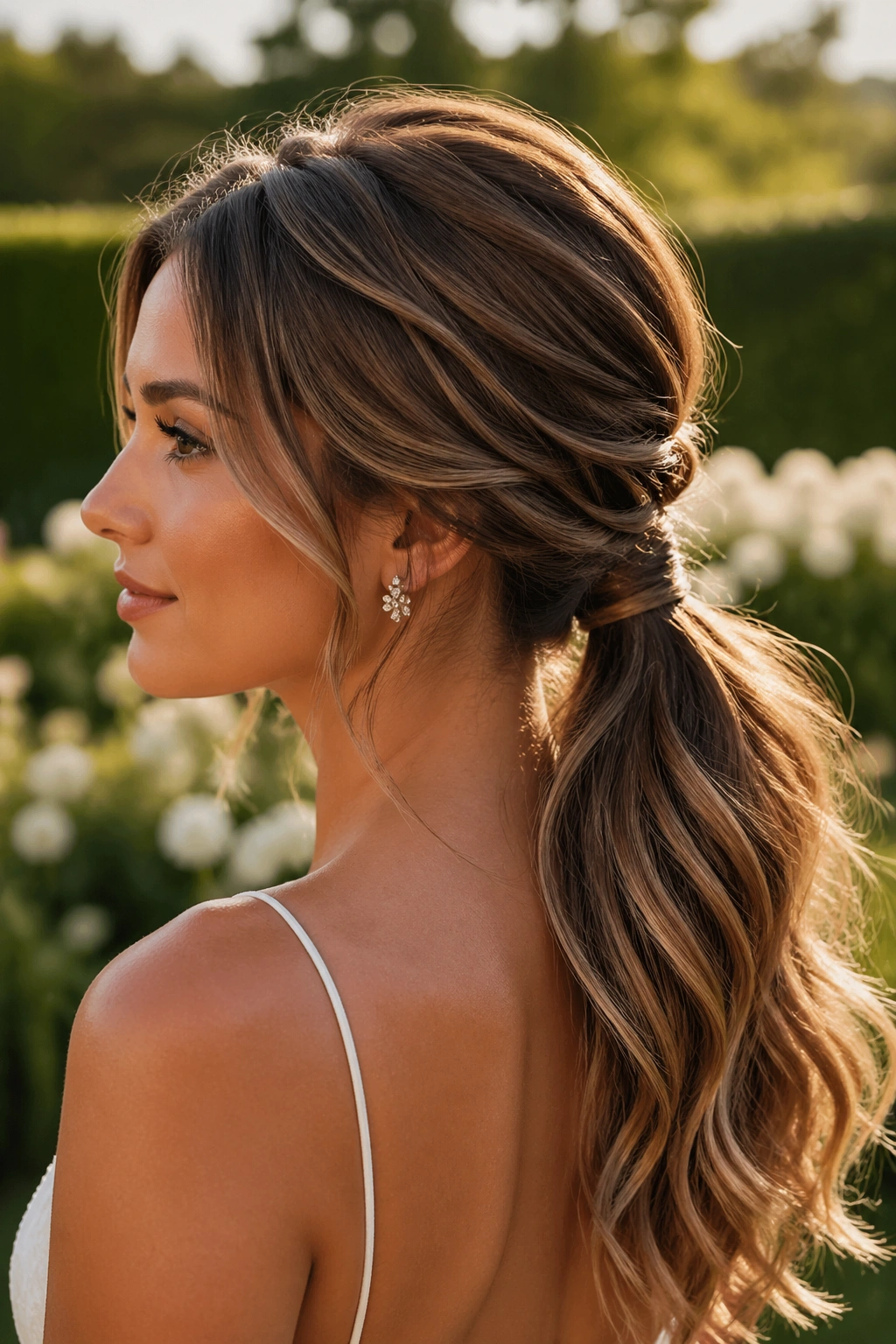
Messy-chic sounds vague until you see the difference between “undone on purpose” and “I ran out of time.” A real wedding version keeps the crown soft, the ponytail low, and the ends styled with enough care that the whole thing still looks deliberate.
Start with texture spray or light wave first. Then leave a few small pieces around the hairline, especially near the ears and temples. Don’t over-pull them. The shape should feel relaxed, not fallen apart. Finish the tail with brushed-out waves or loose bends so the ends have some polish.
This is a favorite for outdoor weddings and dresses with lace or chiffon, because the hair feels easy next to softer fabrics. The mistake to avoid is making the base too messy. The base still needs control.
19. Old-Hollywood Side Ponytail
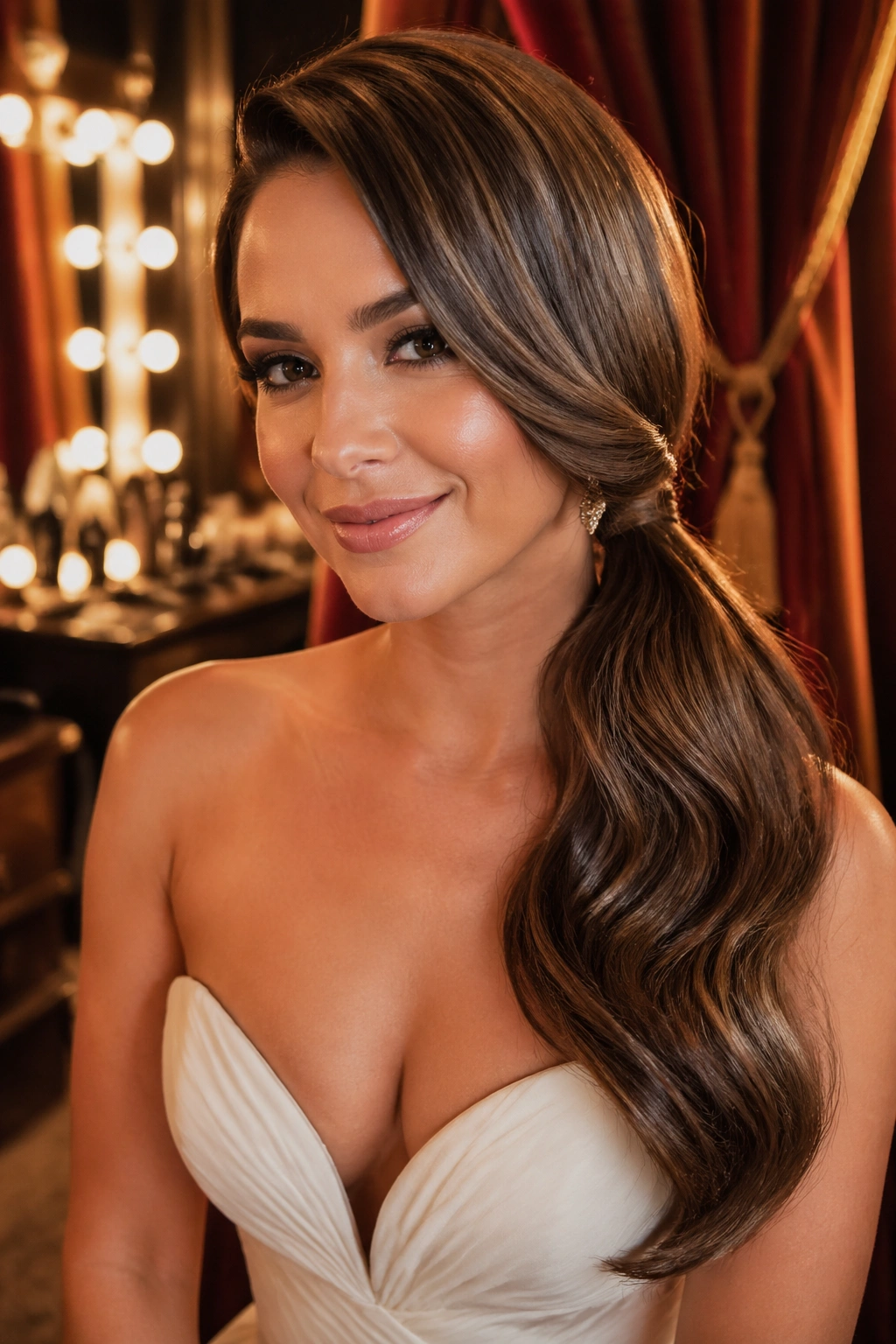
What makes this style different from a regular side ponytail is the wave pattern. You want large, smooth, brushed-out waves that sit neatly over one shoulder, almost like they’re posing for their own photo. Deep side part. Soft bend. No frizz at the top.
Use a 1.5-inch iron or hot rollers for the base shape, then brush the curls into soft S-waves. The ponytail sits low and to one side, with the front sections tucked back just enough to keep the profile clean. A shine spray helps, but don’t drown the hair in product.
This style loves red lipstick, bold earrings, and satin gowns. It has drama, but not chaos. That’s the sweet spot.
20. Sleek High Ponytail
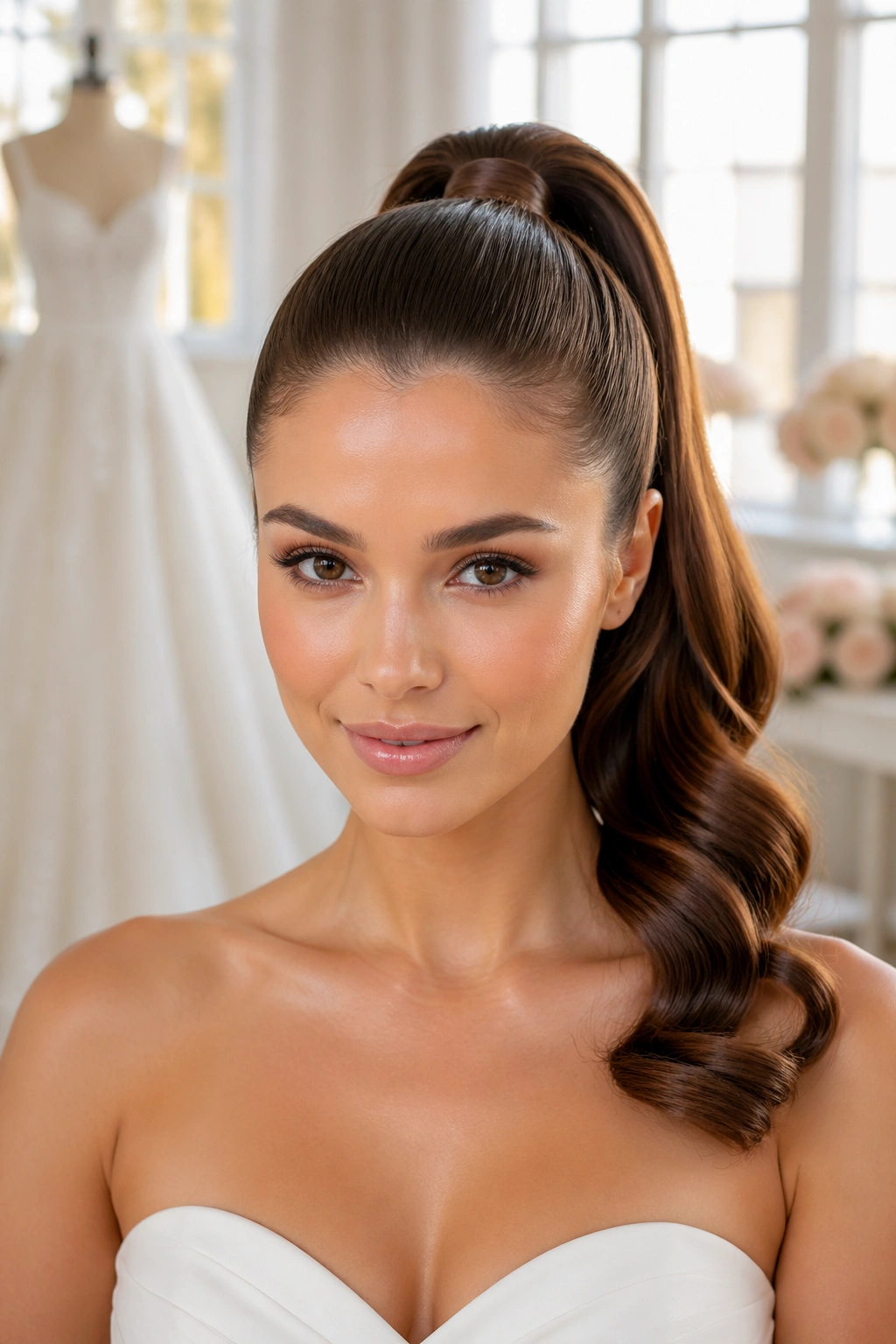
A high ponytail can be bridal when the finish is clean and the volume is controlled. Lift the pony to the crown, smooth the front with a fine brush, and secure it tightly with two elastics if the hair is heavy. If the tail looks thin, add a clip-in piece or wrap extra hair around the base.
The shape should rise from the face, not sit too far back. A little height at the crown makes the style flattering and keeps the line elegant. Curl the tail in big sections, then brush the curls together so they read as glossy waves instead of separate ringlets.
This works especially well with strapless, off-the-shoulder, or square-neck dresses. It also keeps the neck open, which is practical when the day gets long.
21. Low Ponytail With Veil Placement
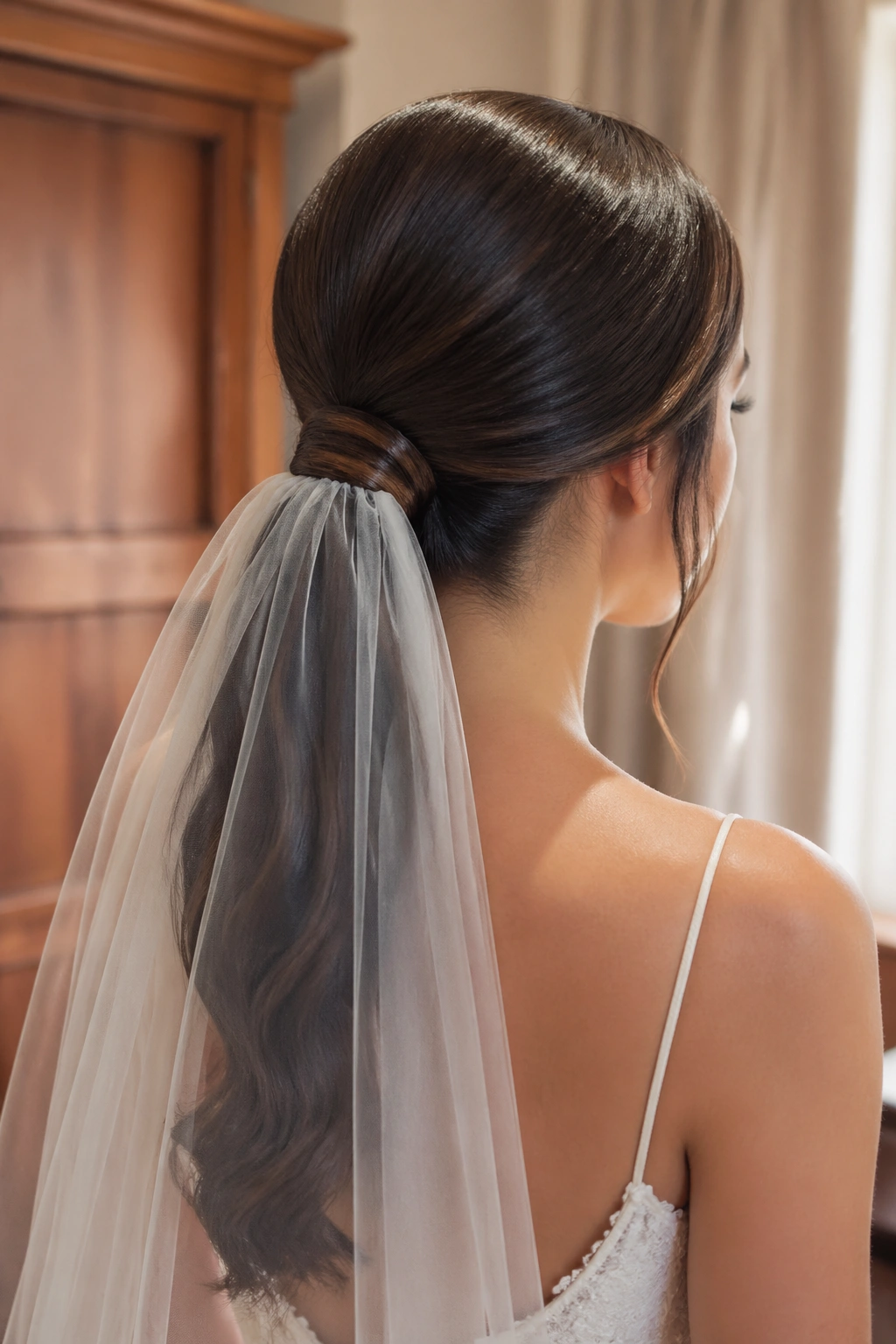
A veil needs somewhere steady to sit, and a low ponytail gives it that anchor point. The base should be smooth and secure before the veil goes in. If the ponytail is wrapped with hair, even better, because the pins can hide under the wrap.
Place the veil comb just above or just below the ponytail base, depending on the length of the veil and the shape of the dress back. Use two or three hidden bobby pins to reinforce it. Don’t rely on the veil comb alone, especially if the hair is fine or silky.
Veil Notes That Save Time
- A low ponytail sits comfortably under most veil lengths.
- A wrapped base hides the attachment point.
- A soft wave tail keeps the veil from looking rigid.
- Test the placement before the final spray goes on.
22. Ponytail With Soft Backcombing
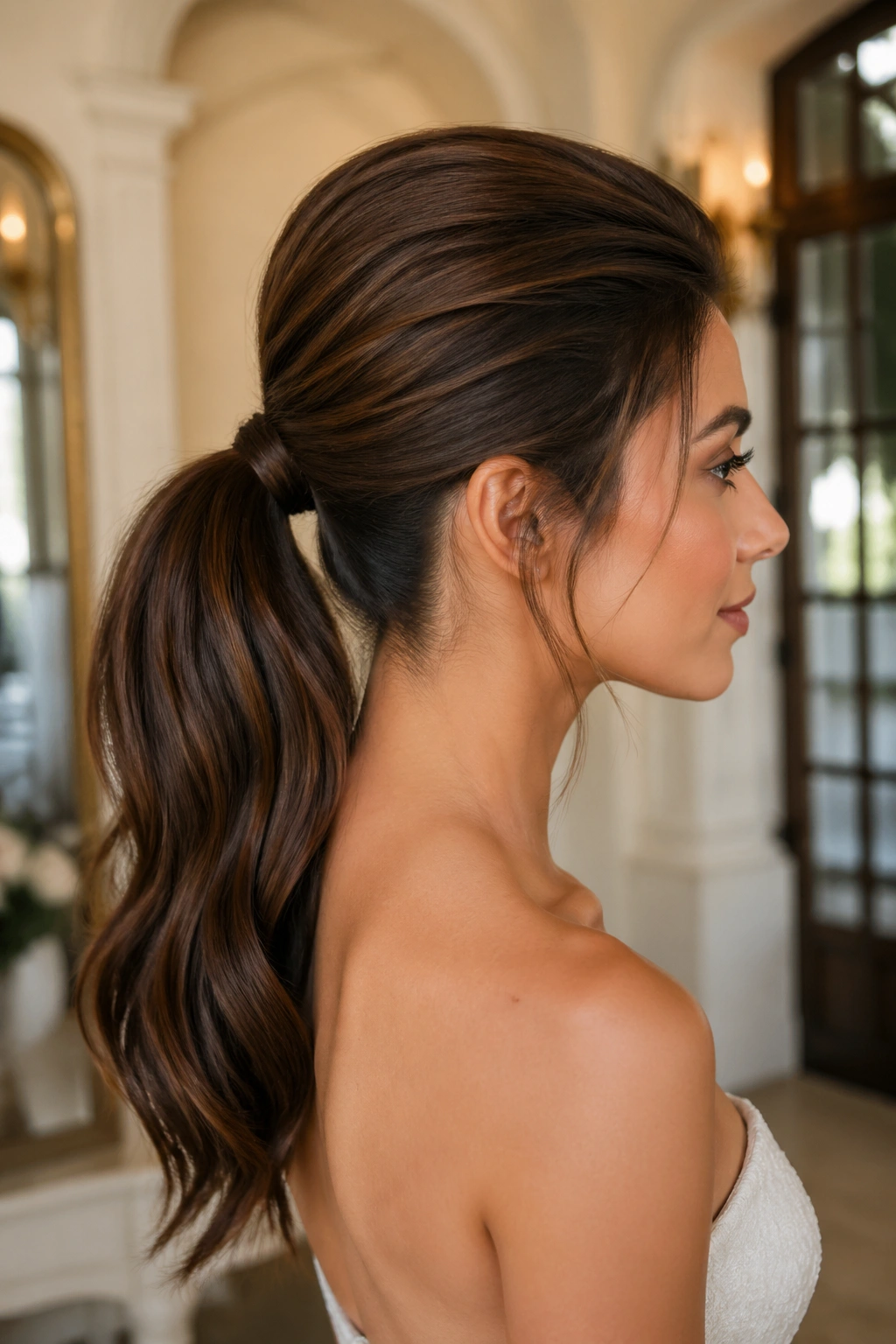
Flat roots can make even a pretty ponytail look sleepy. A little backcombing at the crown fixes that fast. The trick is to tease only the area that needs lift — usually the top 2 inches of hair — then smooth the surface layer over it so the hair still looks clean.
A tail comb works better than a brush for this. Lightly backcomb the section closest to the crown, then mist it with flexible spray before you gather the ponytail. The volume should feel soft, not helmet-like. That balance matters.
I like this style when the dress has structure. A blazer-style suit, a square neckline, or a sharp satin gown can all handle a bit of crown height. It gives the whole look shape without needing curls everywhere.
23. Scarf-Wrapped Ponytail
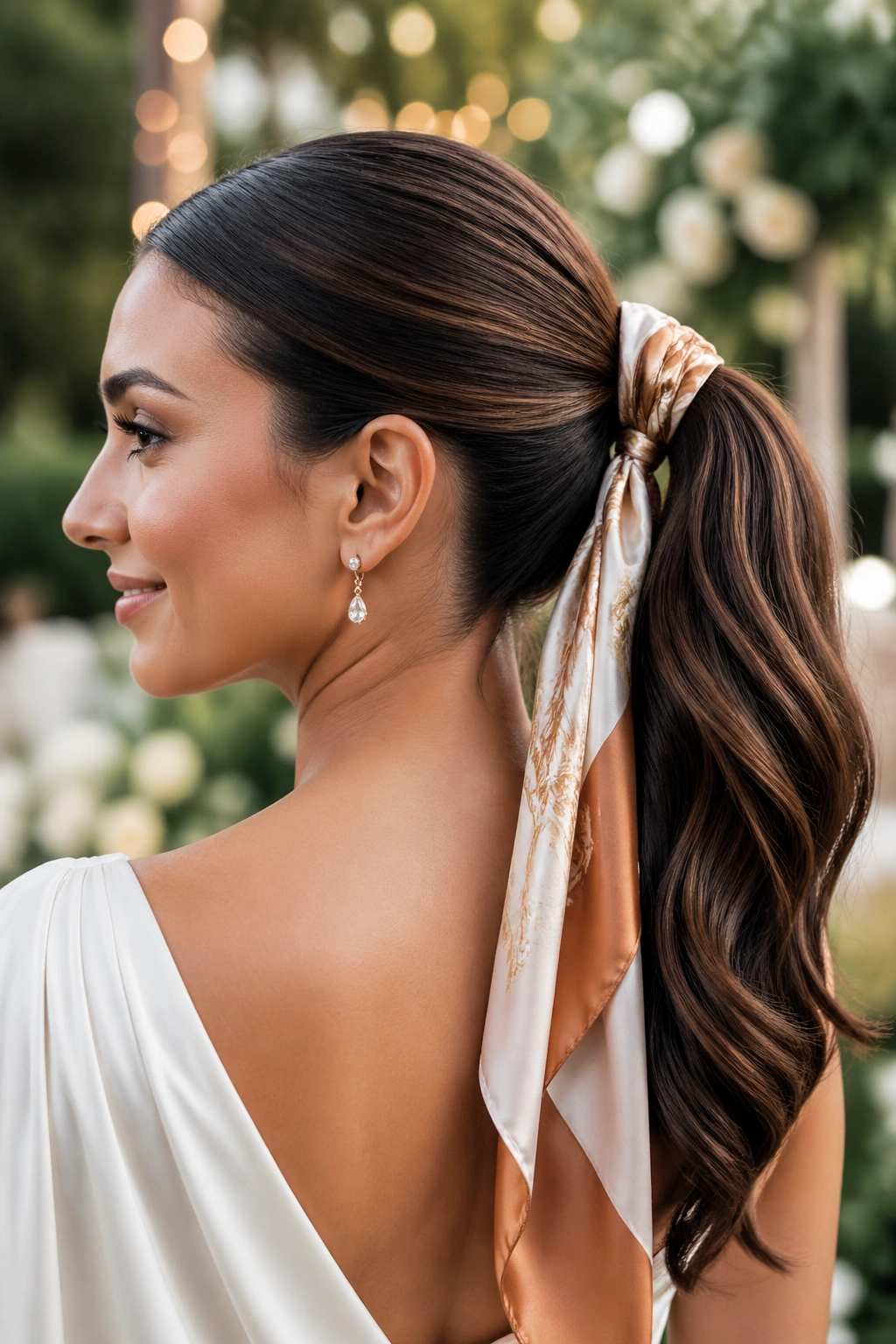
A silk scarf turns a plain ponytail into something with personality. Wrap it around the base, tie it in a knot, or weave it through the ponytail itself if you want a longer trail of color and movement. Keep the rest of the hair simple so the scarf gets to be the point.
This style is especially nice for smaller ceremonies, rehearsal dinners, or weddings that lean a little more relaxed and personal. It works with straight hair, waves, and even curly texture. The scarf should feel like part of the outfit, not an afterthought.
Choose a fabric that holds a knot without sliding. Silk looks lush, but it can be slippery; a silk-blend or satin with a little body is easier to manage. One good knot beats three nervous ones.
24. Double-Twist Ponytail
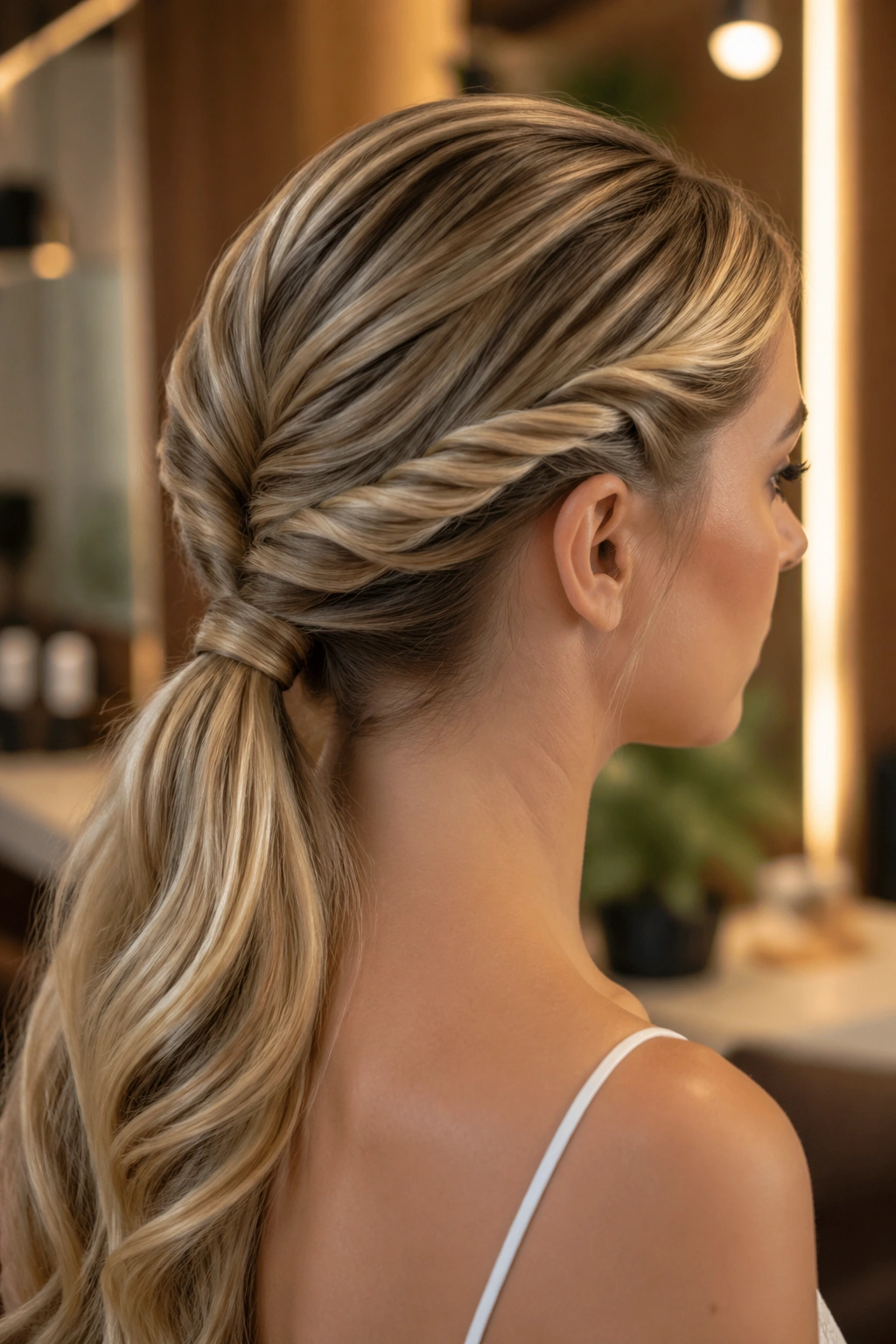
Two twists, one ponytail, no panic. That’s the appeal here. Take a section from each side of the head, twist them back toward the center, and secure everything into a ponytail at the nape or slightly above it.
The Shape to Aim For
The twists should sit close to the head and create a clean line toward the back. If they puff out too much, the style starts looking bulky. Once the ponytail is secured, you can leave the tail straight, curled, or waved.
This one is useful for medium-length hair and for anyone who wants something polished without spending half an hour braiding. It also plays nicely with small earrings and dresses that already have a lot going on at the bodice. The hair stays neat. The outfit stays in charge.
25. Pearl-Pinned Ponytail
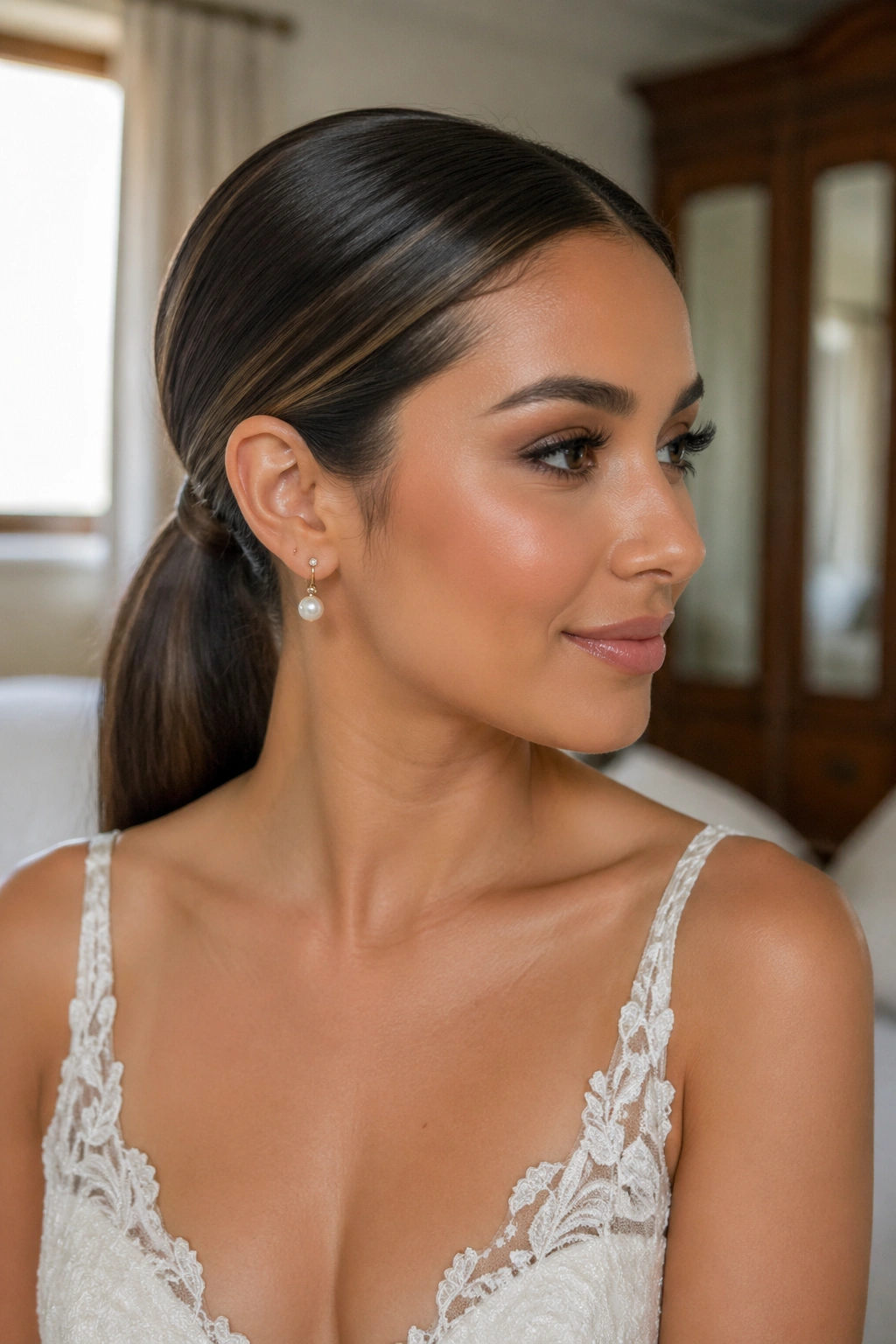
Pearl pins are the fastest way to make a ponytail feel special. Scatter them around the base, line them along one side, or cluster three near the wrap for a little sparkle. You do not need many. Five to eight pins is usually enough unless the dress is very plain.
The ponytail itself can stay simple — low, soft, or lightly waved. That’s the point. The pearl detail does the visual work, and the hair just needs to support it. Use pins with secure backs so they don’t slide around once the hair starts moving.
This is one of my favorite easy wedding ponytails because it scales up or down. A few pearls can feel almost delicate. A fuller cluster can read a little more formal. Either way, the look stays clean.
26. Rope-Braid Ponytail
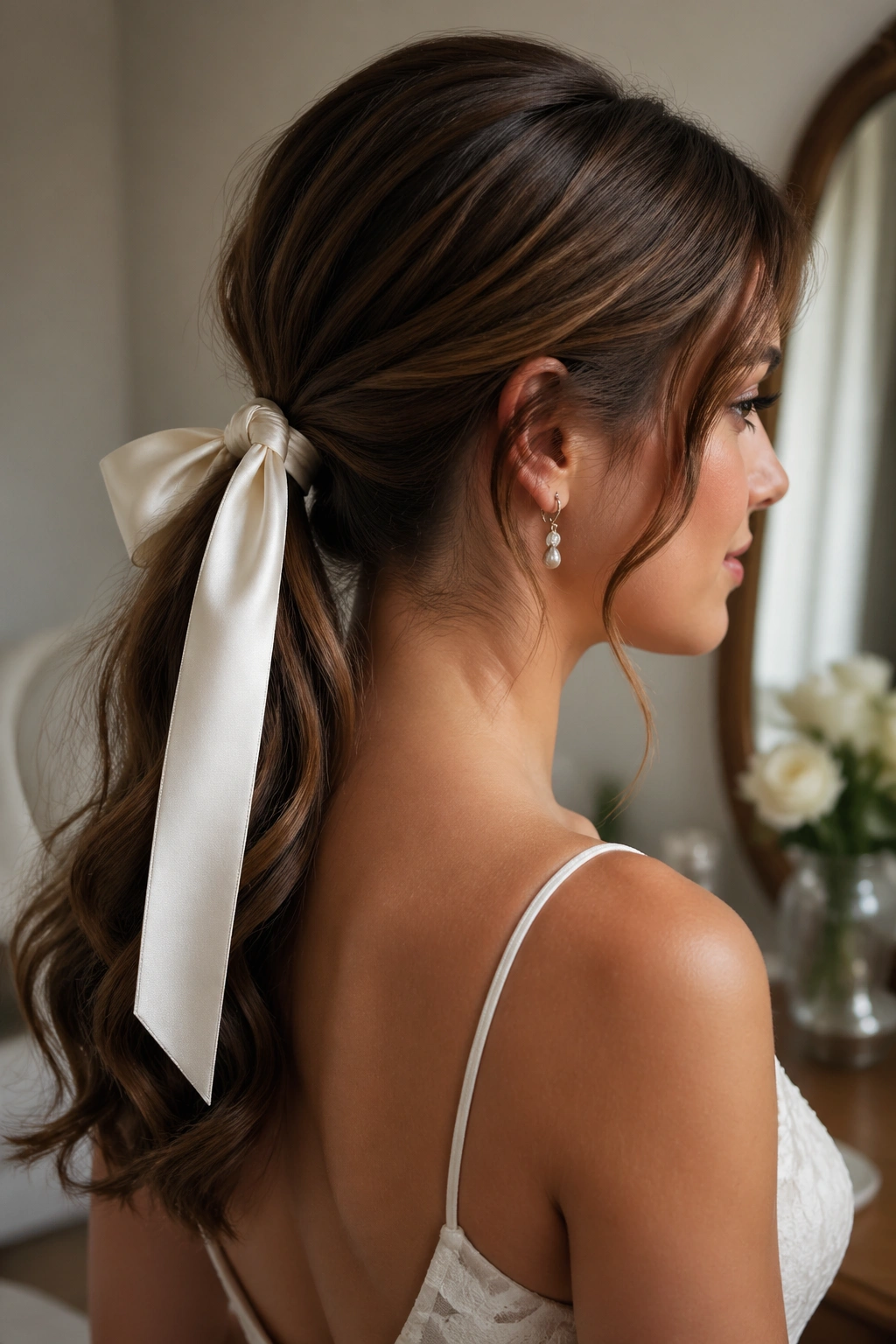
A rope braid is easier than a fishtail and faster than a full braid, which makes it a sensible choice for a wedding morning. Split the ponytail into two sections, twist each section in the same direction, then wrap them around each other in the opposite direction. The braid tightens itself as you go.
That makes it useful for slippery hair, especially if the tail needs to hold for several hours. It also looks good when slightly loosened, because the twists create a nice pattern down the length of the ponytail. Keep the crown smooth so the texture stays concentrated in the tail.
A rope braid works with veils, hair vines, and even small floral pins. It has enough detail to look intentional, but not enough to feel fussy.
27. Cascading Curl Ponytail
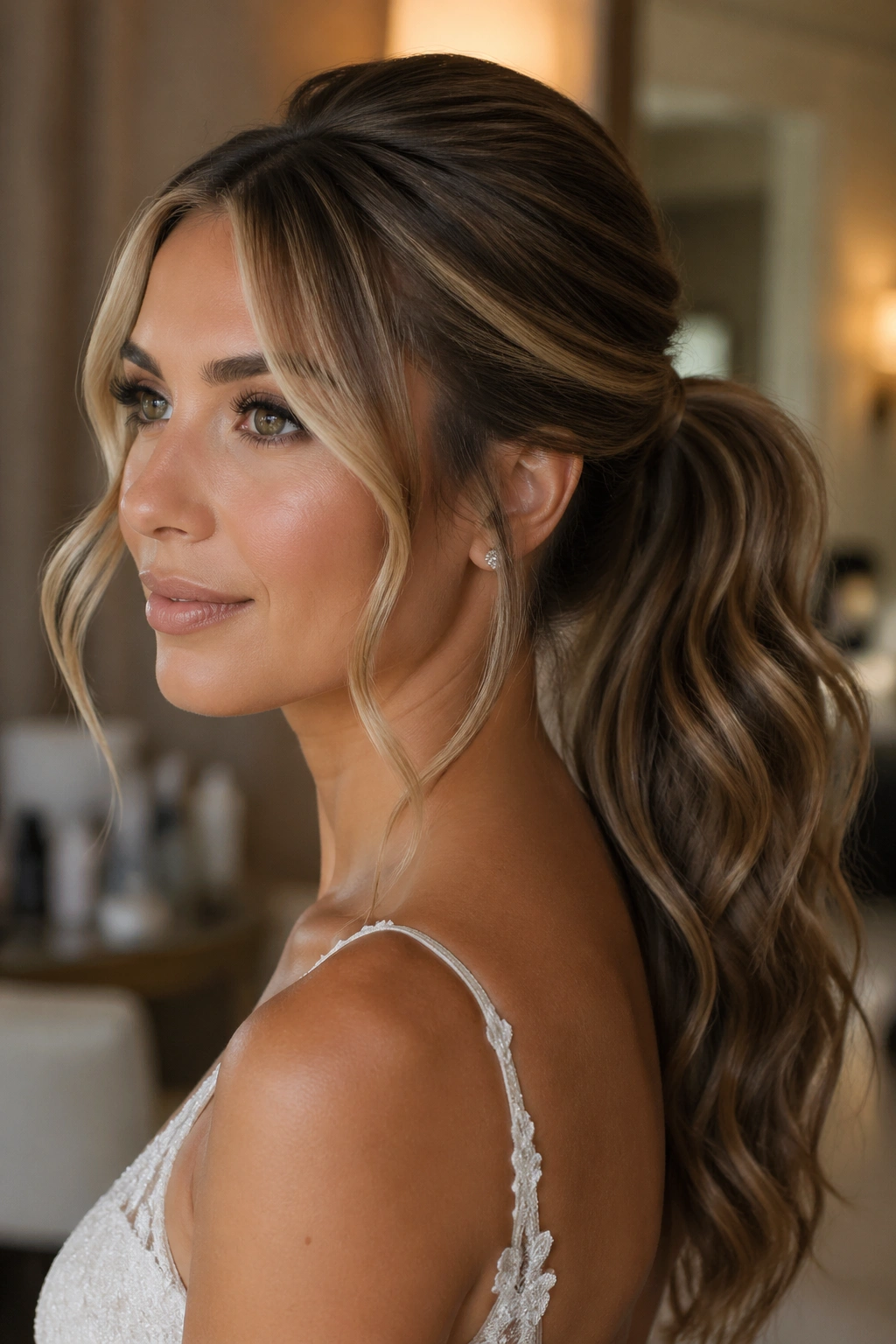
Big curls in a ponytail never go out of style. The key is making the curls look layered and full, not sprayed into one hard shape. Curl the hair in sections with a 1.25-inch or 1.5-inch iron, pin the curls while they cool, then brush them out lightly so they fall together.
Gather the ponytail at the mid-back of the head or a little lower, depending on how formal the dress feels. The tail should have body from top to bottom, almost like a waterfall of curls. If the hair is fine, a few hidden pins under the crown help support the shape.
This is the style for someone who wants softness and movement more than sharp lines. It feels romantic without becoming sugary.
28. Low Ponytail With Tucked Ends
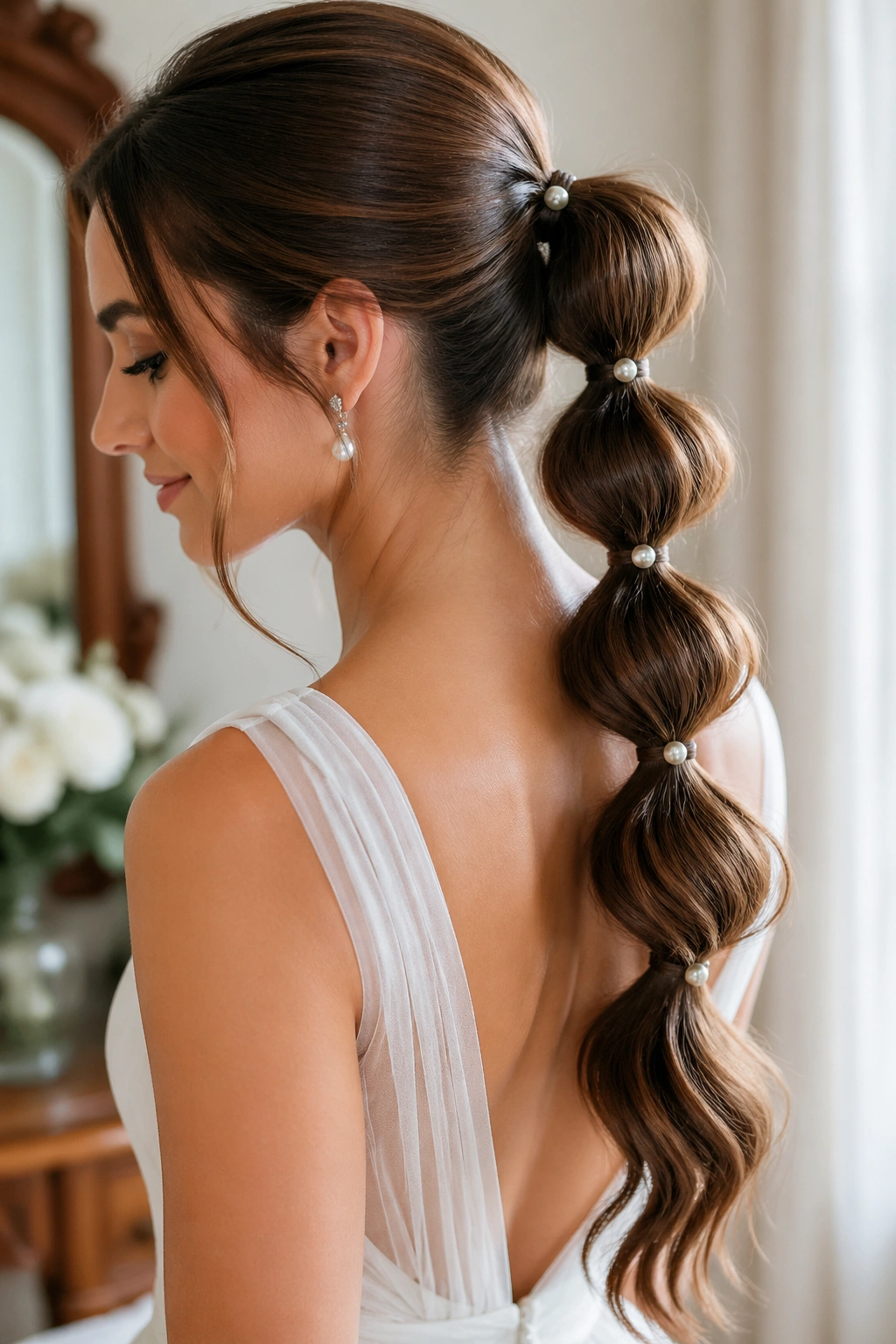
A tucked-end ponytail has the polished feeling of an updo, but it’s easier to create and usually more comfortable to wear. After securing the ponytail low, fold the length upward or inward and pin the ends underneath so the tail disappears into a soft roll.
The shape should sit close to the head. A slight bend at the ends makes it look softer, and a wrapped base keeps the elastic hidden. This style works especially well with medium-length hair, since the tuck doesn’t need too much bulk.
It’s a nice choice when the dress back is detailed and you don’t want hair competing with it. The result is neat, secure, and elegant without feeling stiff.
29. Voluminous Ponytail for Thick Hair
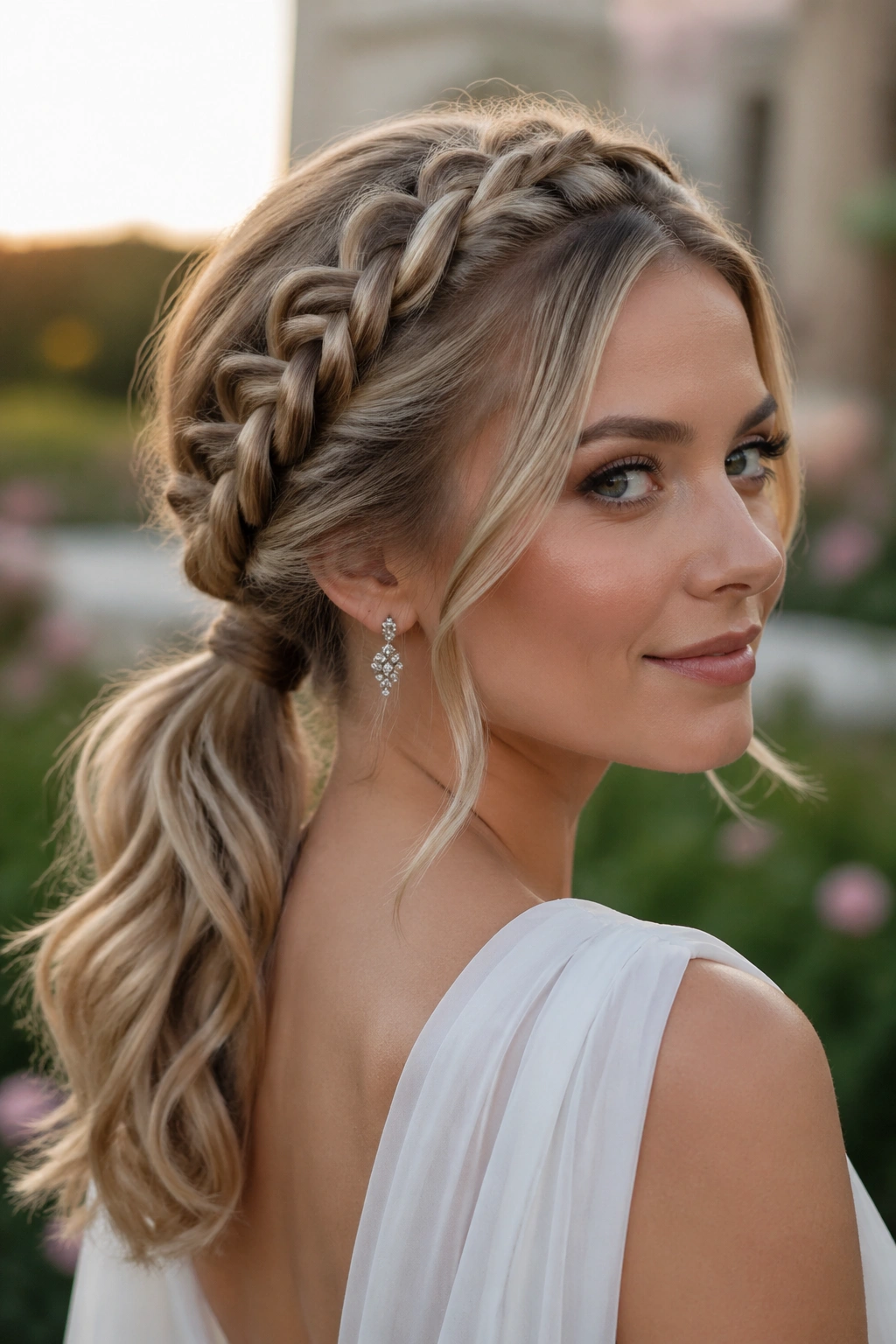
Thick hair can make a ponytail look heavy if you gather everything into one spot without planning. Split the hair into two sections — a top ponytail and a lower ponytail right beneath it — then combine them so the weight is distributed. That gives the style lift without pulling the crown down.
Why It Helps
The double-base method keeps the ponytail from sagging by the end of the night. It also makes the pony look fuller at the top, which can be useful if the gown has a dramatic neckline or if the hair needs extra height to balance the face. A wrapped base hides the extra elastic.
This approach is practical, not fussy. Thick hair usually needs structure more than decoration, and this gives it exactly that.
30. Ponytail for Shorter Hair With Extensions
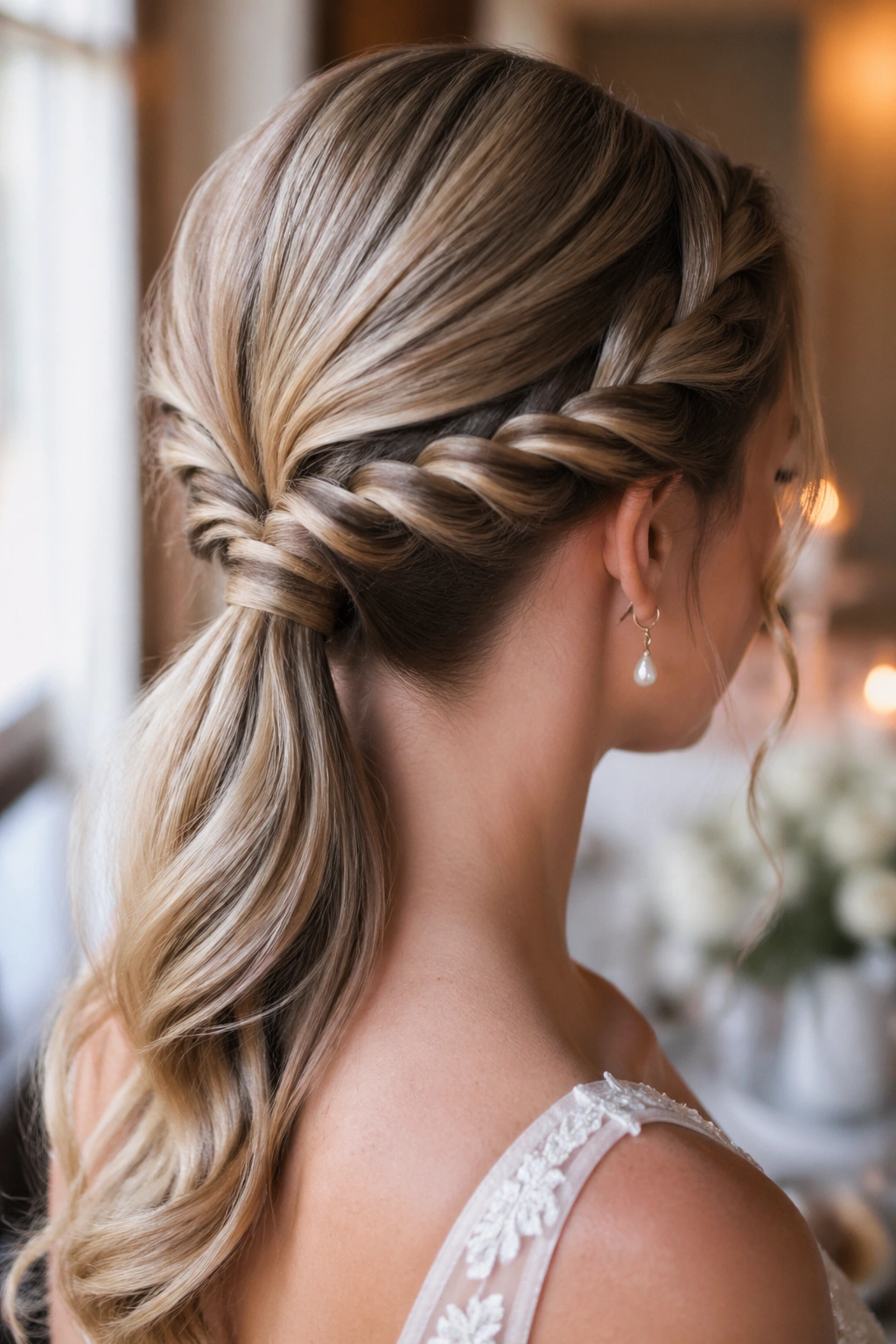
Can shorter hair still do a wedding ponytail? Yes, and clip-in extensions make the difference. The goal is to blend the natural hair into the added length without showing where one ends and the other begins.
Start by curling both your hair and the extension pieces in the same direction. Secure the natural hair in a small ponytail or half-ponytail, then place the extension piece above or around it, depending on the style. The top layer should cover the attachment points completely. A little backcombing at the base helps keep everything hidden.
What to Use
- Clip-in ponytail extensions or a small weft.
- 1 to 2 inches of extra curl around the face.
- A fine-tooth comb for blending the top layer.
- Strong pins if the hair is very fine.
31. Curly Ponytail With Frizz Control
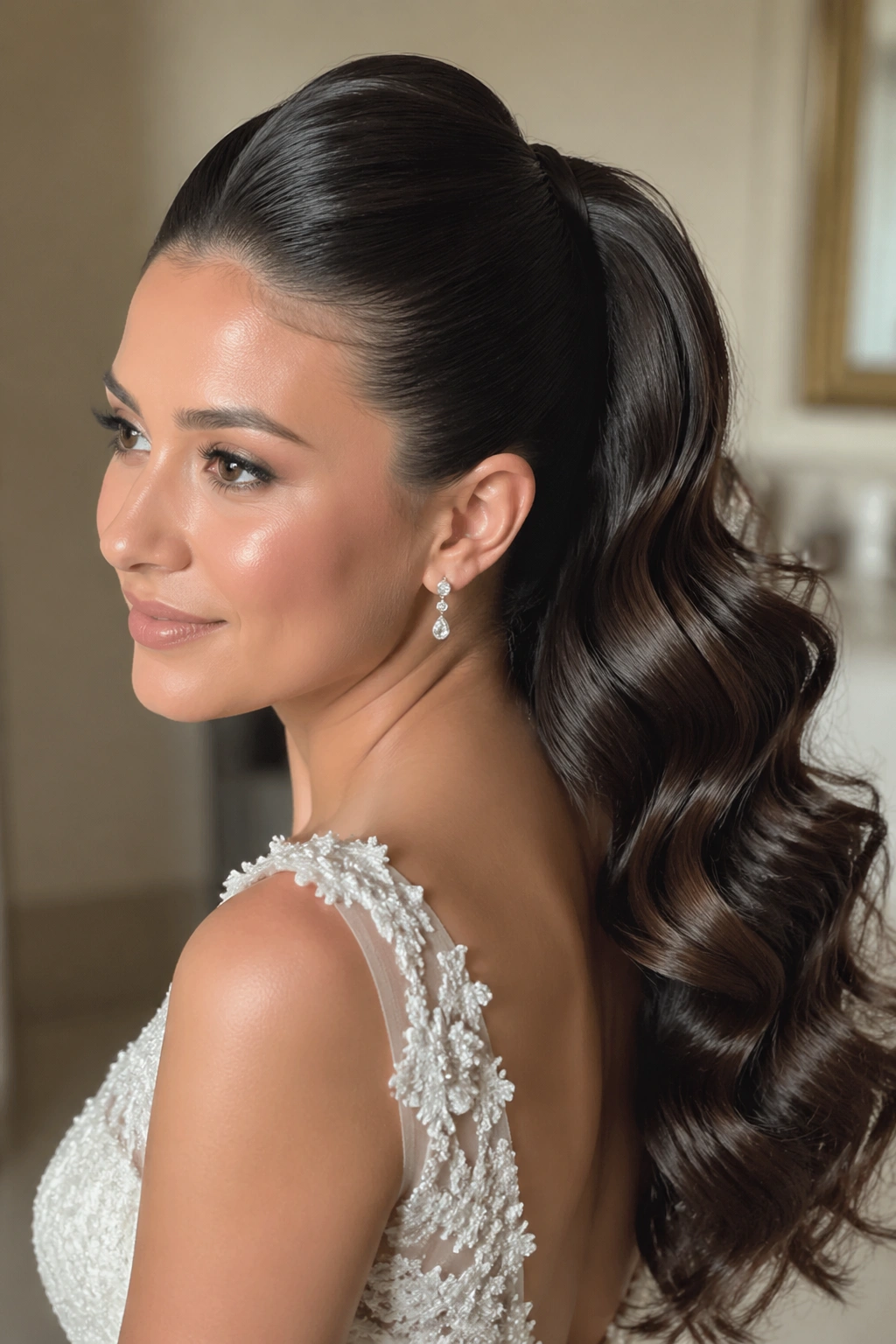
A curly ponytail can fall apart fast if the products are wrong. Too much oil and the curls limp out. Too little hold and the frizz wins. The middle ground is a leave-in conditioner, a soft mousse, and a gel or cream that defines without making the hair stiff.
Set the curls fully before gathering them. That part matters. If the hair is even a little damp, the shape will swell and the frizz will show through later. Once dry, gather the curls gently and pin anything fuzzy around the base instead of brushing the whole head into submission.
This style works especially well for outdoor ceremonies or humid venues because the curl pattern becomes the point. It does not try to fight the hair. It lets the hair do its own job, which is usually smarter.
32. Minimalist Wedding Ponytail
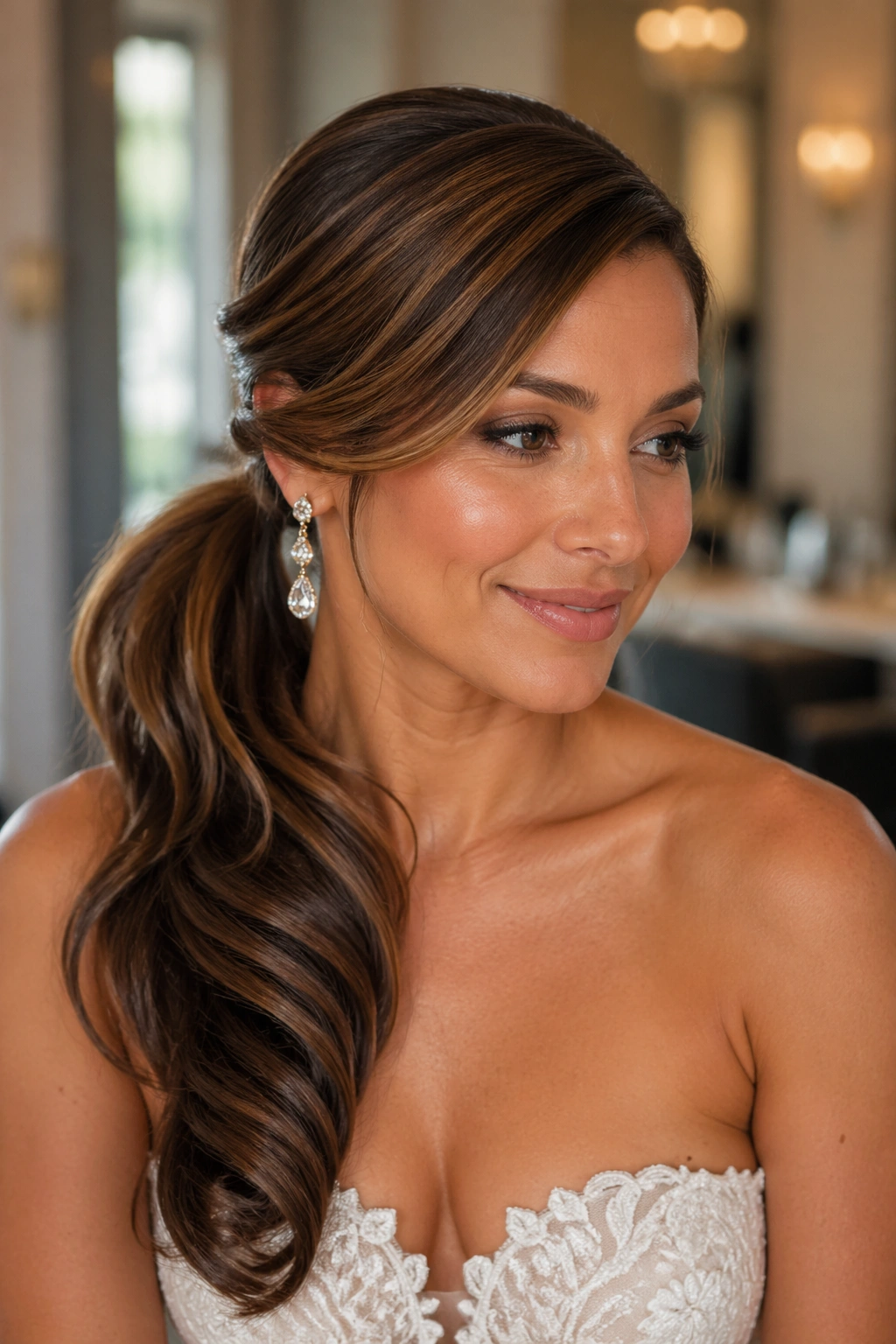
Sometimes the cleanest style is the strongest one. A minimalist wedding ponytail strips the look down to its essentials: a sharp part, a smooth base, and one small detail, usually a pin or a thin wrap. That restraint can feel expensive in the best way.
Keep the finish tidy and the shape close to the head. If the hair is straight, a subtle bevel at the ends keeps it from looking flat. If it’s wavy, smooth the crown and let the natural texture live in the tail. Either way, the style should feel deliberate from a distance and precise up close.
This one works well with very detailed dresses, strong jewelry, or brides who don’t want hair competing for attention. There’s no extra fluff here. That’s the charm.
33. The Soft Bridal Ponytail That Goes With Anything
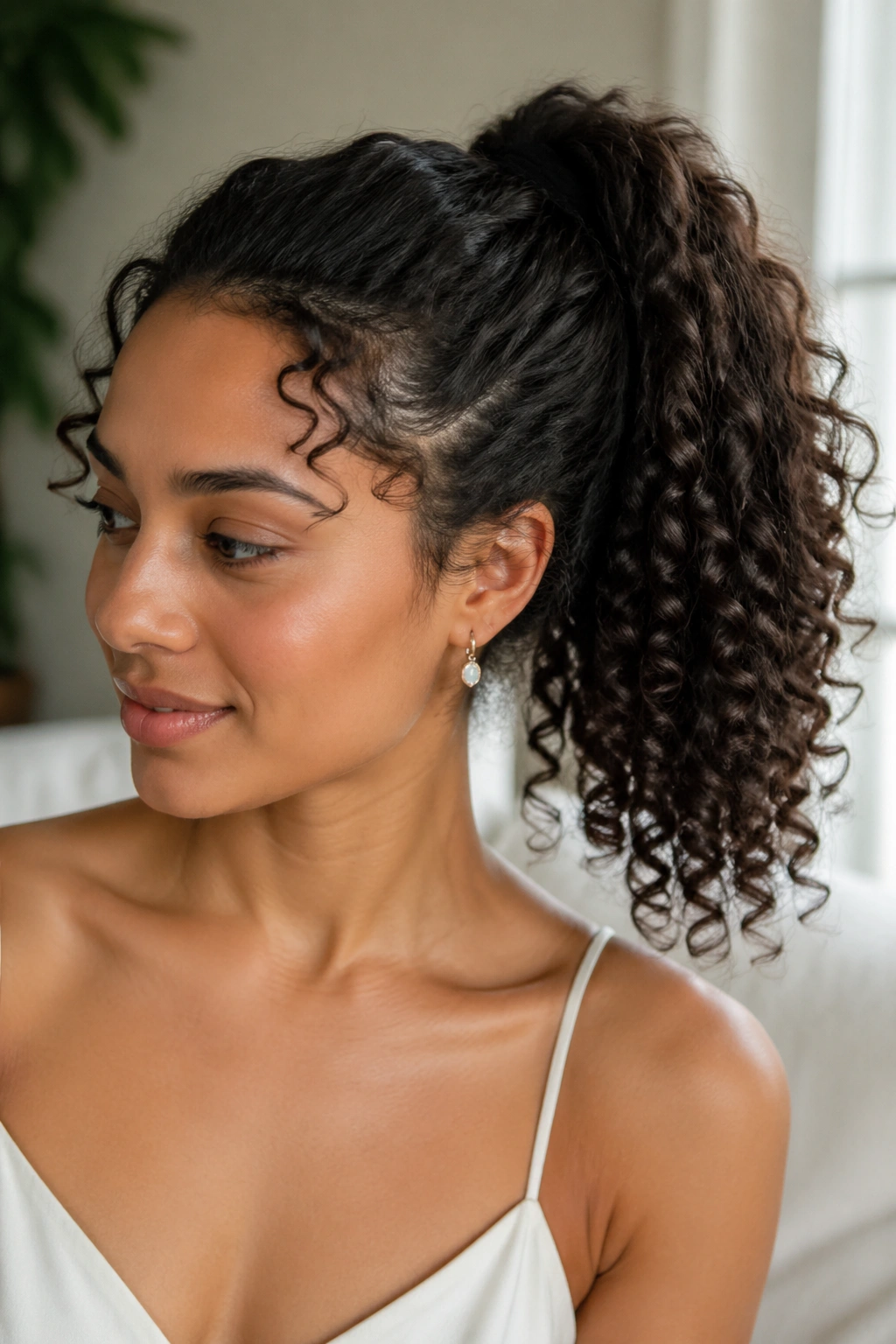
The easiest style to trust is the one that doesn’t argue with the dress. A soft bridal ponytail sits low, stays clean at the crown, and lets the lengths fall in loose bends or brushed-out curls. It can be wrapped with hair, tied with a small ribbon, or finished with one pin at the base.
How to Keep It Balanced
Leave a little movement near the face. Keep the base tight enough to last. Finish the tail so it looks touched, not stiff. If the neckline is busy, keep the ponytail quieter. If the dress is plain, let the tail have more wave and body.
This is the version I would hand to someone who wants one hairstyle that won’t fight the veil, the earrings, the weather, or the dress back. Simple is not the same thing as plain. When the shape is right, a ponytail can carry the whole look without asking for much else.
