



The best braided ponytails for prom do one thing especially well: they stay put after dinner, the group photos, and the dance floor.
That sounds basic, but it matters.
A plain ponytail can sag by the second song. A braid gives the style grip, shape, and a little attitude, which is exactly what formal hair should do when you want to move, laugh, and not think about a mirror every ten minutes. It also solves a sneaky prom problem: hair that looks fine in front often does nothing for the back of a dress. A braided ponytail opens that space up and lets the neckline, earrings, and makeup breathe.
I also love how forgiving this category is. Fine hair can get more body from a pull-through braid. Thick hair can be controlled with a Dutch braid or cornrow detail. Curly hair can be stretched at the crown and left full through the tail. Straight hair can go sleek and glossy, which always photographs with more polish than people expect.
The best part is the range. Some of these styles feel sharp and sculpted. Others are softer, with loose pieces around the face and a little movement in the tail. Start with the one that matches your neckline, then build the rest of the look around it.
1. High Dutch Braid Ponytail
The high Dutch braid is the style I’d pick first if the dress has a clean neckline and you want the hair to look lifted. A Dutch braid sits on top of the hair instead of sinking into it, so the braid reads clearly from across a room. That raised texture gives the whole ponytail more shape.
Pull the hair tight at the crown, braid straight back from the hairline, then gather everything into a high ponytail at the crown or just above it. Use a smoothing cream on the roots and a small boar-bristle brush if flyaways drive you crazy. If the hair is silky, tease the ponytail base once before tying it off.
This one suits square, oval, and round face shapes because it adds height without making the style feel stiff. It also keeps the front clean, which I like when the dress already has lace, beading, or a busy bodice.
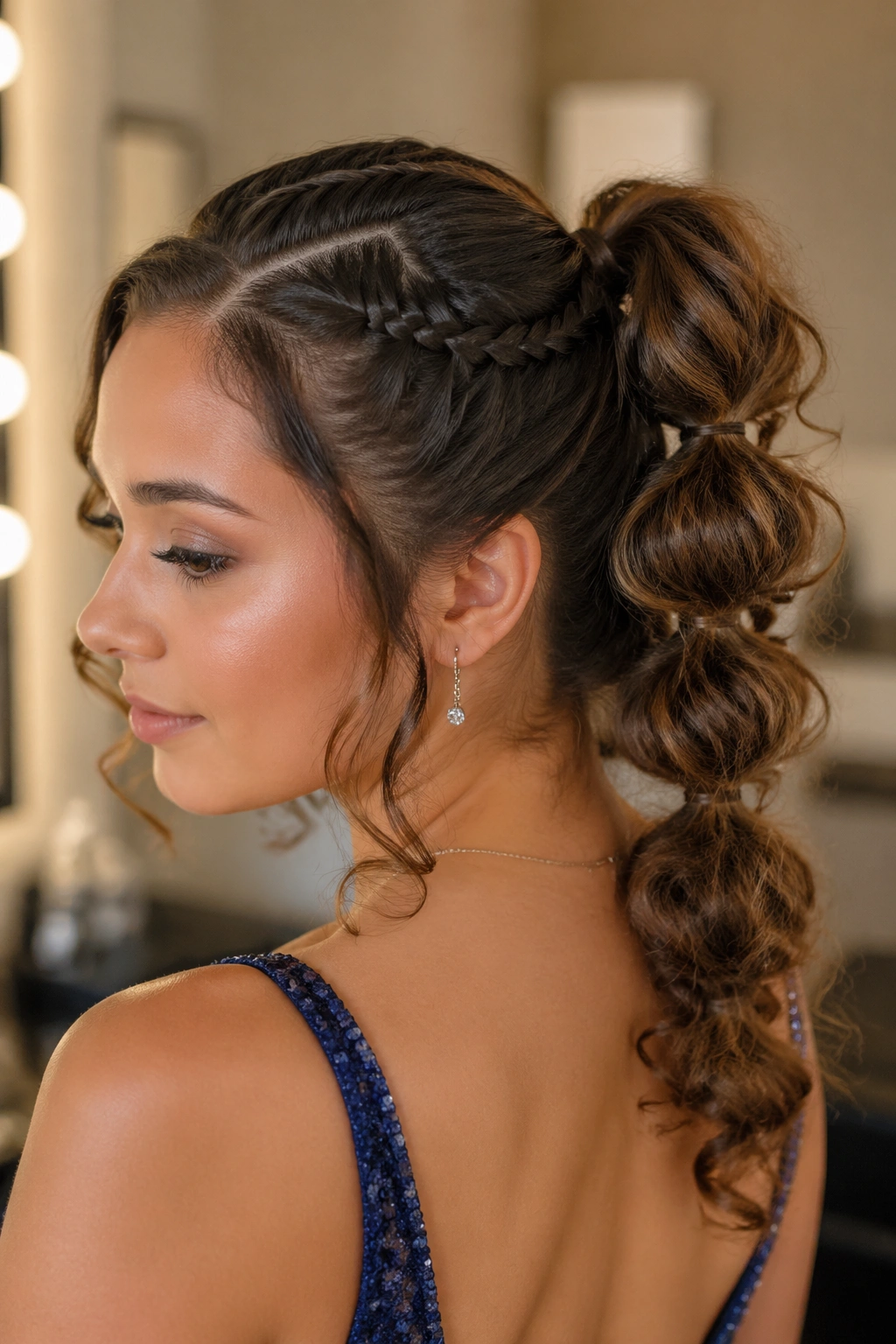
2. Curly Bubble Ponytail With a Side Braid
Want a ponytail that still looks full in photos even if your hair is shoulder length? This is the one. The bubble shape gives the tail body, and the small side braid keeps the front from feeling too plain. It’s playful, but not childish. Big difference.
Why it holds up
The bubble sections create the illusion of more length and thickness. A thin clear elastic every 2 to 3 inches makes each “bubble” read clearly, especially if you gently pull the hair between ties. The side braid does the quiet work here; it frames the face and gives the style a finished edge.
How to style it
- Curl the tail with a 1-inch iron before tying it into bubbles.
- Braid a 1-inch section at one temple and pin it back toward the ponytail base.
- Space clear elastics evenly so each bubble looks the same size.
- Tug each bubble outward with your fingers until it feels soft, not puffy in a random way.
Use this with strapless dresses, satin gowns, or anything that needs a little movement.
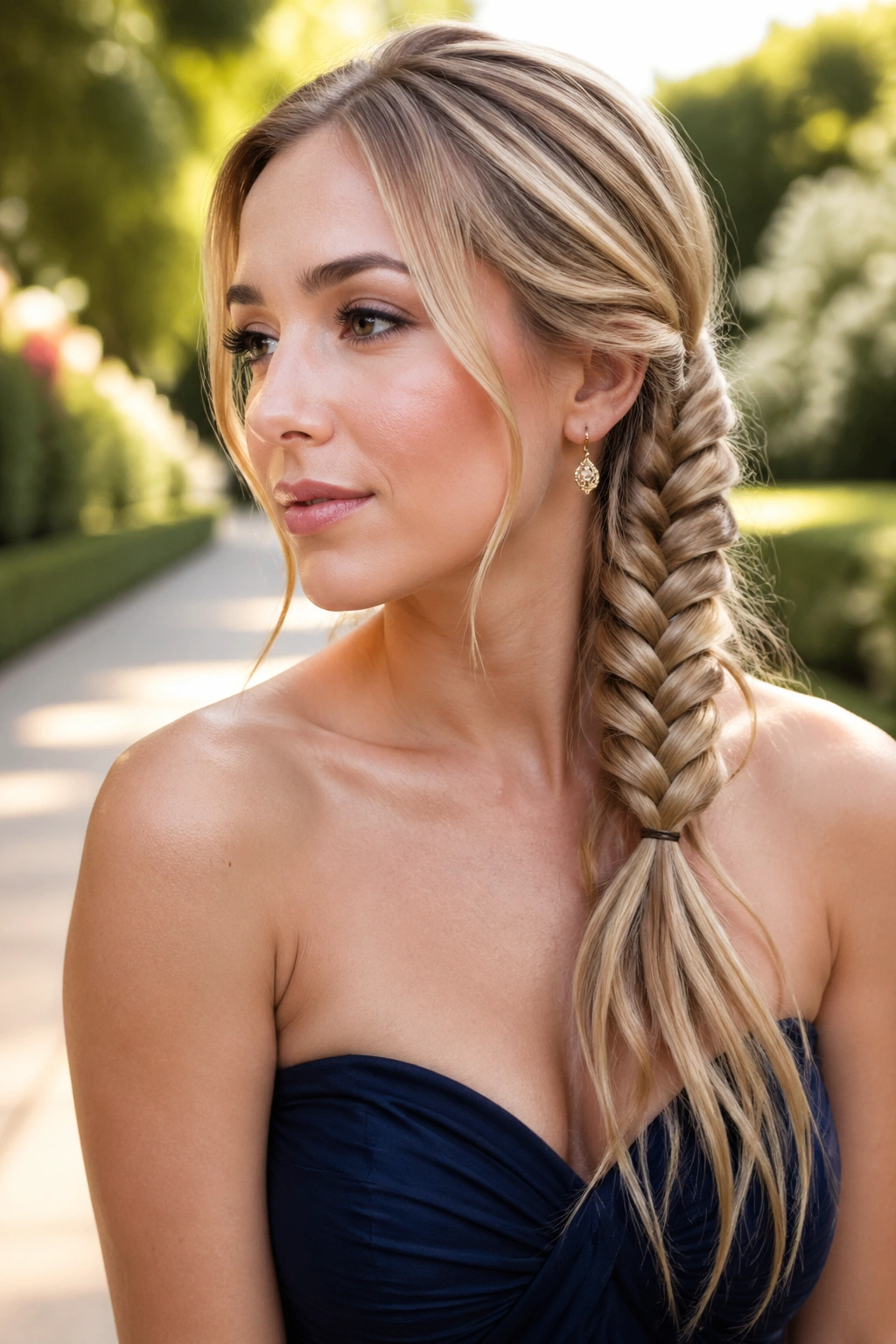
3. Low Side Fishtail Ponytail
A low side fishtail ponytail has a softer feel than most prom styles, and that’s exactly why it works. It sits over one shoulder, shows the back of the dress, and keeps the hair from fighting with a statement necklace. The braid detail looks intricate, but it doesn’t need to be perfect to look expensive.
Start with a deep side part, braid the hair loosely into a fishtail at the nape, then sweep the finished ponytail over one shoulder. Mist the mid-lengths with texture spray before braiding if your hair is too clean; a fishtail slips fast on freshly washed hair. A little grip helps the braid keep its shape.
This is a smart option for one-shoulder dresses and gowns with open backs. It also works if you want the hair down around the collarbone without leaving it loose and flat. The shape is romantic, but it still feels controlled.
4. Crown Braid Into a Soft Low Ponytail
A crown braid changes the whole mood of a low ponytail. Instead of sitting there as a simple tie-back, the style gets a frame around the head, which gives it that formal, lifted look people usually want for prom. It’s elegant without feeling too rigid.
Braid from one temple across the top of the head and around toward the other side, then gather the remaining hair into a low ponytail at the nape. Leave the tail softly waved, not stick-straight. A 1.25-inch curling iron or wand is a better choice here than a small barrel, because you want the movement to look loose, not ringleted.
If the braid feels too heavy, keep it to the top layer only. That small adjustment makes the style lighter and easier to wear all night. It’s one of those looks that quietly does a lot.
5. Double Dutch Braids Into One Ponytail
This one has more structure than people expect, which is why I like it for longer dances and packed schedules. Two Dutch braids, one on each side, feed into a single ponytail at the back. The look is clean, strong, and a little dramatic in the best way.
Part the hair down the middle, braid each side tightly along the scalp, then secure both braids together with a ponytail elastic at the nape or mid-crown. The braids give the style a built-in anchor, so it stays in place longer than a loose braid wrapped into a ponytail. Do not start too far back if you want the front to look balanced; the braid lines should be visible from the temples.
This is a good match for structured dresses, satin, crepe, or anything with sharp seams. It also works well for thicker hair because the two braids help control bulk instead of fighting it.
6. Sleek Wrapped Ponytail With a Tiny Accent Braid
Minimalists usually like this style for a reason: it looks expensive without asking for a lot of decoration. The ponytail itself stays sleek, the base is wrapped with a strand of hair, and a tiny braid tucked near the part gives just enough detail to keep it from feeling plain.
Quick styling notes
- Smooth the roots with gel or cream before you brush the hair back.
- Braid a thin section, about the width of a pencil, near the temple.
- Wrap a 1-inch strand around the elastic and pin it underneath.
- Keep the tail straight, or curl just the last 3 to 4 inches for movement.
The real charm here is restraint. One small braid, one clean wrap, and that’s enough. It’s a smart option if the dress already has sparkle and you do not want the hair competing with it.
7. Messy Textured Braided Ponytail
Messy is not sloppy. That matters. A textured braided ponytail looks best when the roots have a little lift, the braid is gently loosened, and the tail has enough movement to feel alive when you turn your head. It’s a softer, more relaxed prom look, which can be a relief if you hate anything too polished.
Start by curling the hair in mixed directions with a 1-inch iron. Then mist it with texturizing spray, braid loosely at the back or side, and pull pieces free around the crown with your fingers. Use a light hand when pancaking the braid; pull too hard and it starts looking frayed instead of romantic.
This style is especially good with chiffon, tulle, or dresses that have soft drape. It also flatters hair that is layered, because the loose pieces add movement instead of fighting the cut.
8. Rope-Braid High Ponytail
A rope braid is one of those styles people assume is complicated. It is not. Twist two sections, cross them, and you’ve got a sleek braid with a spiraled look that feels a little different from the usual three-strand version. That twist gives the ponytail a glossy, pulled-together finish.
I like this in a high ponytail because the shape stays visible from every angle. Pull the hair into a high base, divide the tail into two equal sections, twist each section in the same direction, then wrap them around each other in the opposite direction. Secure the end with a clear elastic. Keep tension even from top to bottom so the rope pattern doesn’t loosen halfway down.
This style works best on straightened or stretched hair, but you can curl the ends for a softer finish. It pairs nicely with dresses that have sharp necklines or clean lines, because the braid adds texture without clutter.
9. Waterfall Braid Ponytail
A waterfall braid sounds fussy, but on prom hair it reads like soft detail done on purpose. The braid lets a few strands drop through as you work across the head, which creates that flowing effect before everything gets gathered into a ponytail. It’s a good choice when you want the front of the style to look lighter.
Where it shines
The braid sits neatly along one side or across the back, then the rest of the hair drops into a low or mid ponytail. This gives you movement near the face and body through the tail, which is a nice mix for long gowns. A waterfall braid also works well if you want to show off color dimension, because the woven pieces catch highlights in a very natural way.
How to wear it
- Keep the braid loose enough that the dropped strands fall cleanly.
- Curl the ponytail in medium sections so the ends do not look stringy.
- Pin the braid with 2 or 3 hidden bobby pins before tying the tail.
- Leave a few face pieces loose if the neckline is simple.
10. Ribbon-Woven Ponytail
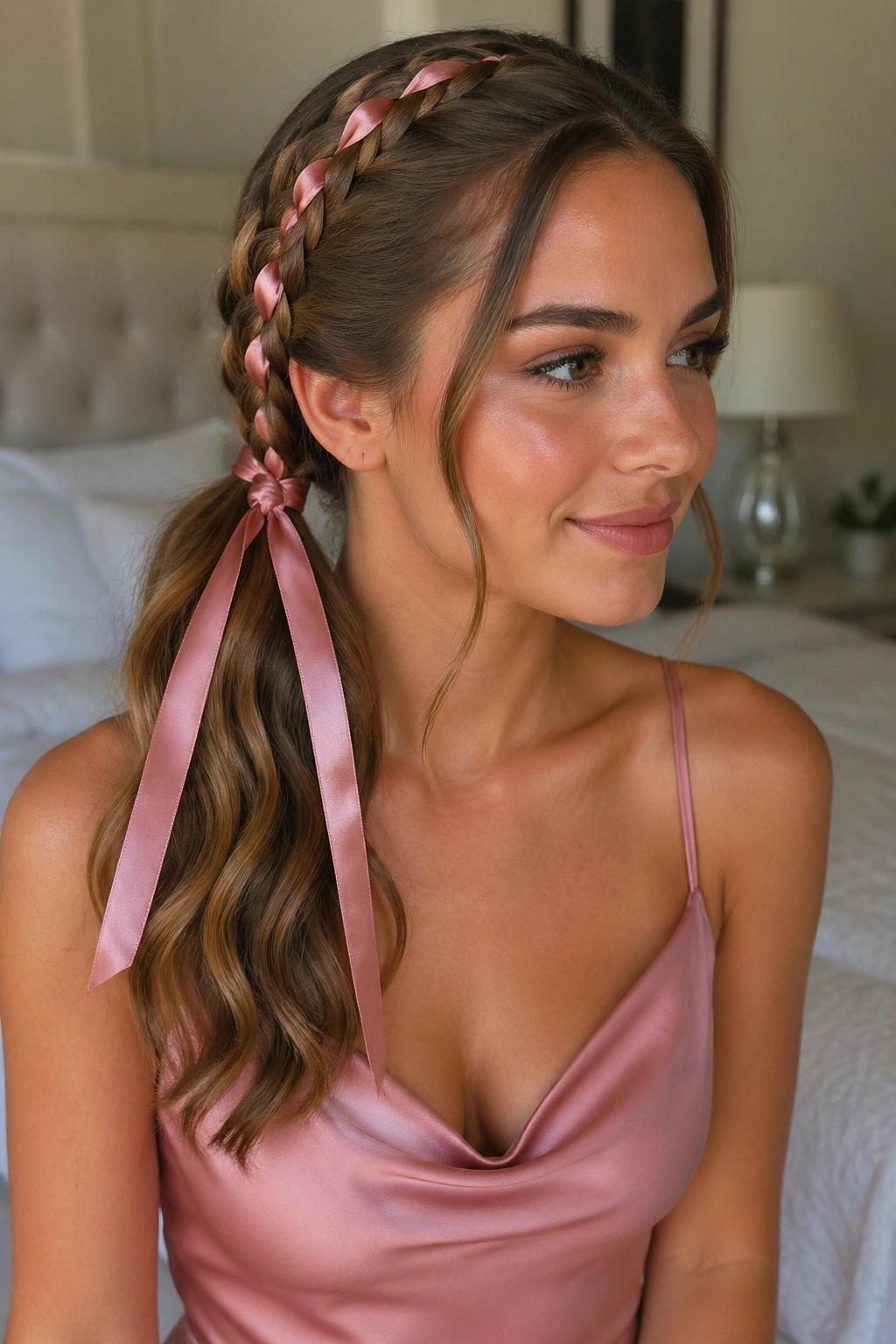
Ribbon changes the mood fast. A satin ribbon threaded through a braid or tied around the base of a ponytail makes the style feel more intentional, and it’s one of the easiest ways to echo dress color without matching it too hard. You only need a strip about 1/2 inch to 3/4 inch wide.
Weave the ribbon into a side braid, a fishtail, or even a simple three-strand braid, then let the ends trail a little below the elastic. Choose a ribbon with enough body to hold shape; flimsy ribbon collapses and looks limp by the end of the night. Grosgrain works better than slippery satin if the hair is very smooth.
This is the kind of detail that looks understated from a distance and more thoughtful up close. If the dress has a bow, a sash, or soft color accents, the ribbon ties everything together without screaming for attention.
11. Half-Up Braided Ponytail With Loose Length
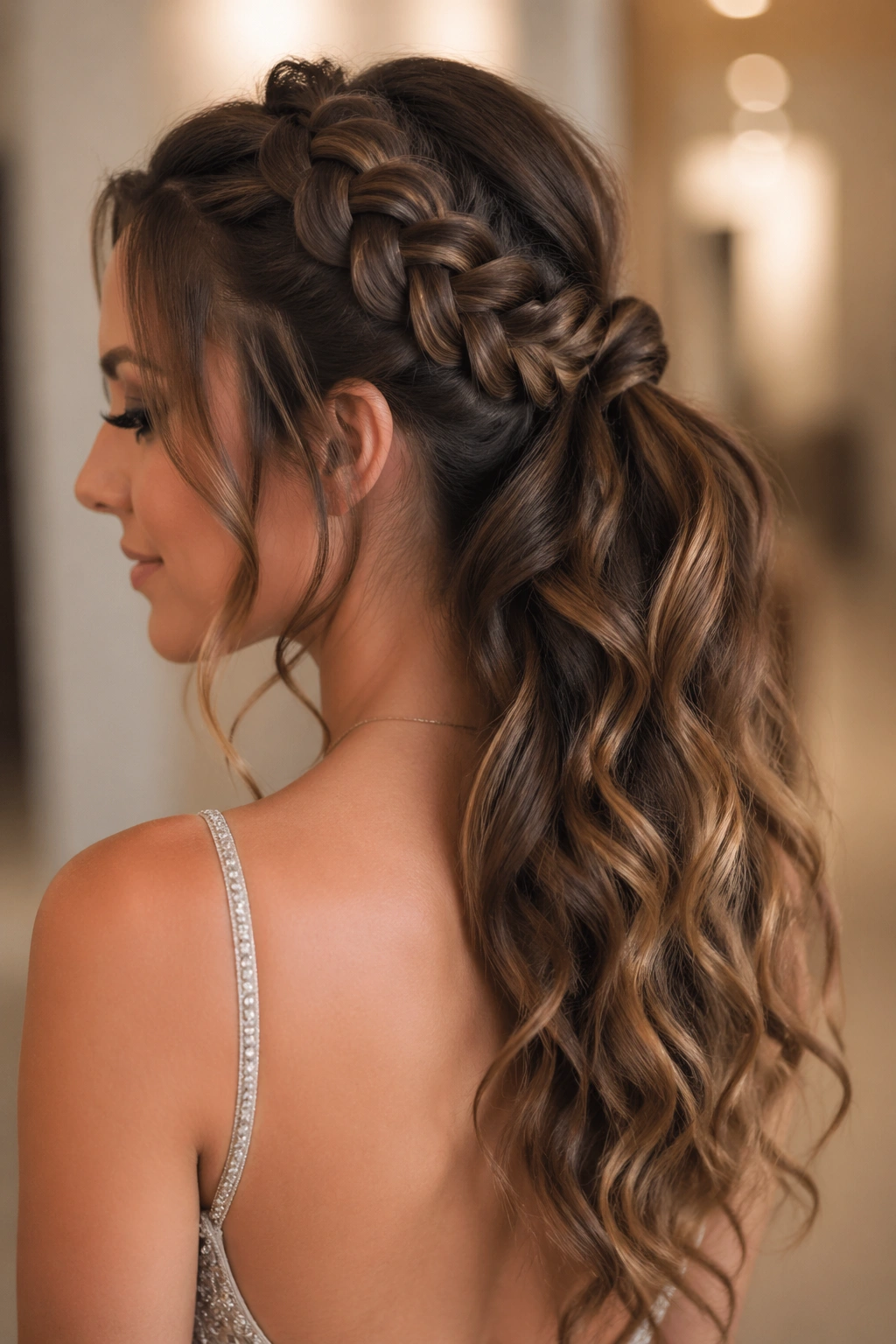
If you want hair off your face but still want the length to show, this is a strong option. A half-up braided ponytail gives you the best of both worlds: structure at the crown and soft length through the rest of the hair. It’s less formal than a full updo, which is exactly why a lot of people love it.
Braid the top section from temple to temple, or twist in a small Dutch braid on each side, then gather the upper half into a ponytail while leaving the bottom half flowing. Curl the loose length in large sections so it matches the soft top. Do not over-tease the crown; the style loses its clean shape fast if the top gets too puffy.
This one works well with dresses that have open backs, low necklines, or thin straps. It also suits anyone who wants a lighter feel around the neck while still keeping the front pulled away.
12. Side-Swept Braided Ponytail
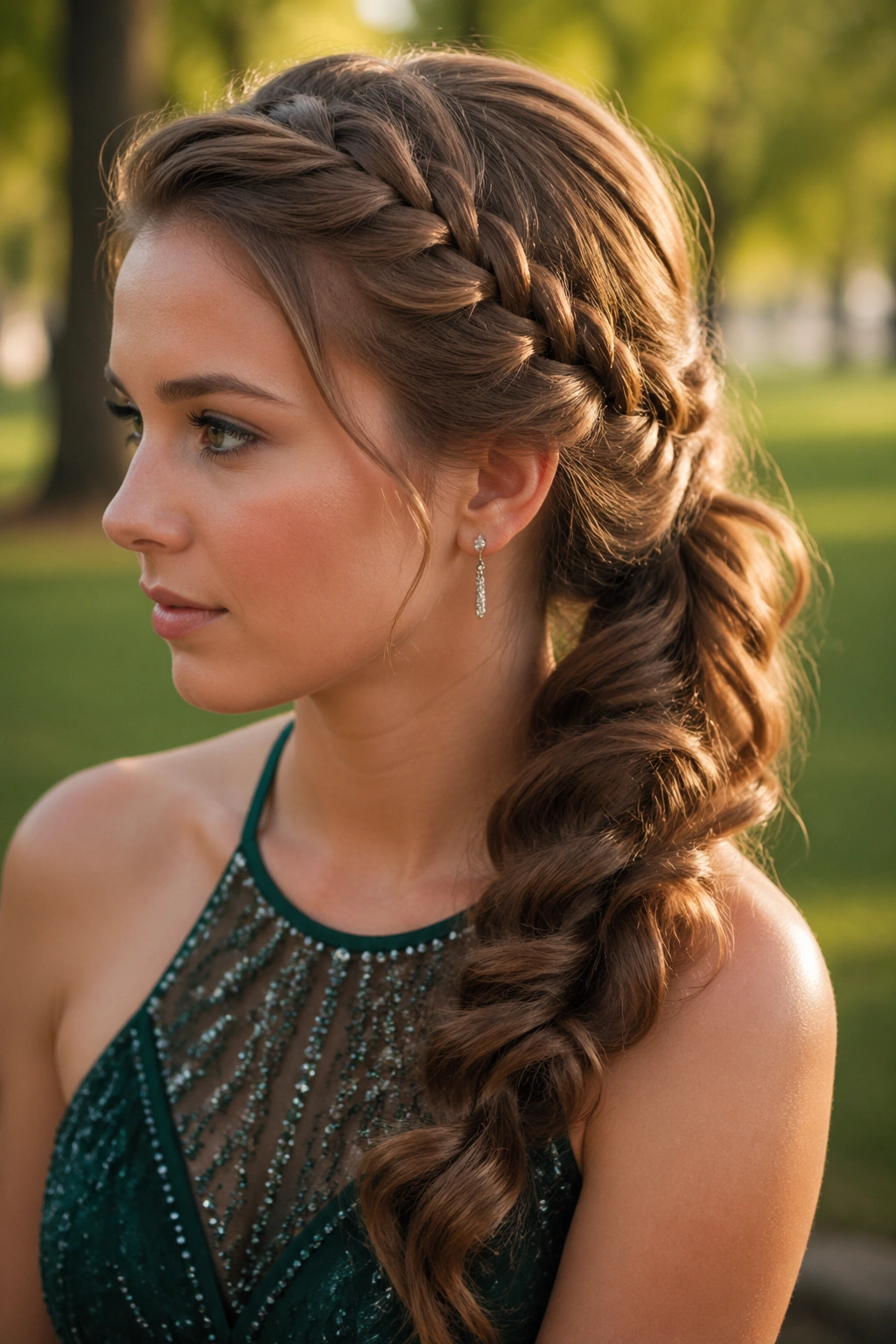
A side-swept braided ponytail changes the balance of the whole look. Instead of sitting down the center or high on the crown, the ponytail falls over one shoulder and the braid guides the eye diagonally across the head. That diagonal line is flattering and a little more interesting than a straight-back style.
Start with a side part, braid a section from the heavier side toward the back, then sweep all the hair over the same shoulder. The braid can be French, Dutch, or fishtail depending on how much texture you want. A side-swept style looks especially good when one shoulder of the dress carries detail and the other side needs to stay open.
Keep the roots smooth with a light pomade or cream. The ponytail can be curled or left in a polished wave pattern, but it should always fall in one clear direction. Otherwise the shape gets muddy.
13. Pull-Through Braid Ponytail
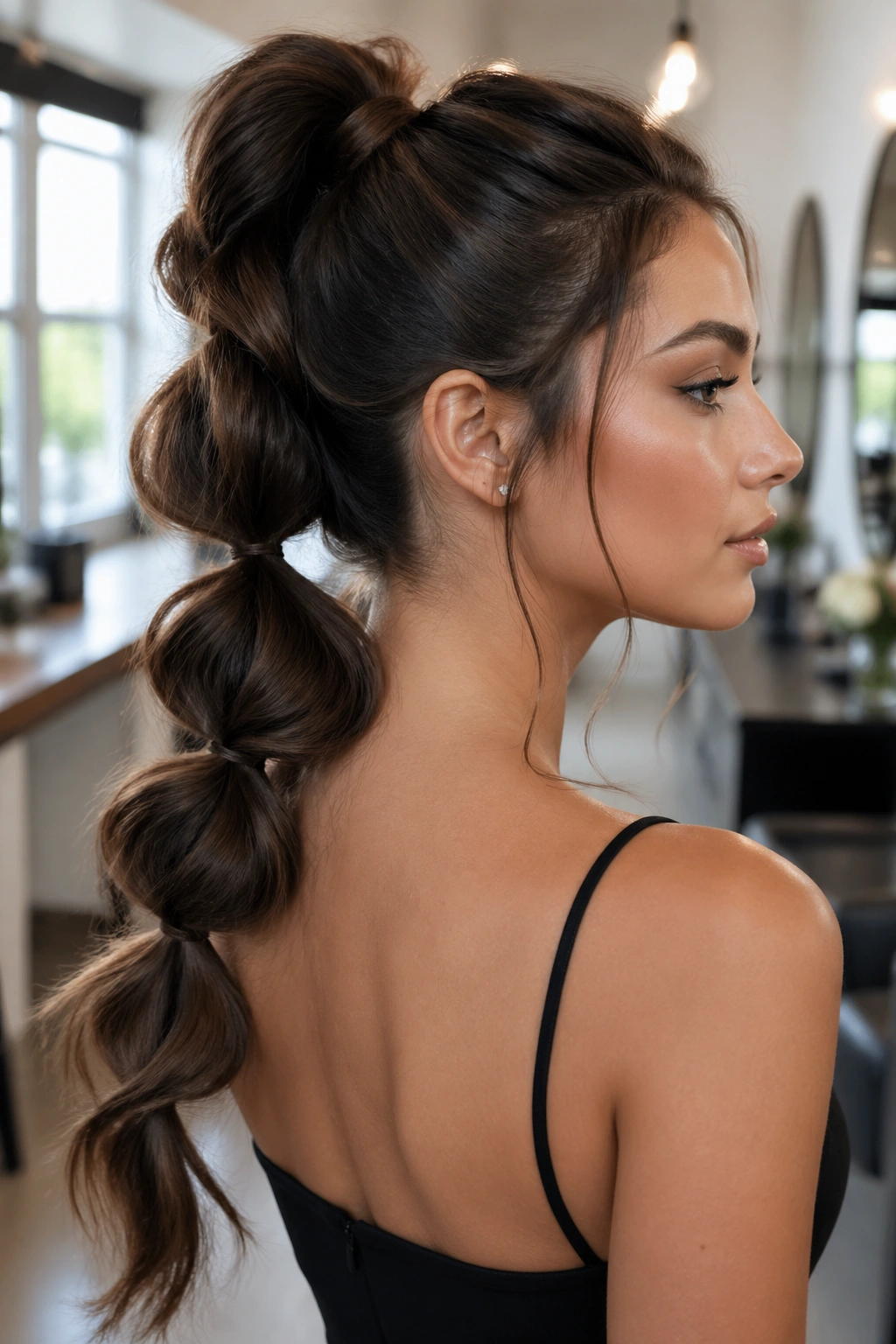
If fullness is the goal, the pull-through braid is hard to beat. It builds volume by stacking ponytail sections on top of one another, so the finished braid looks thick even if the natural hair is fine. That makes it a smart prom choice when you want a more dramatic braid without using a ton of teasing.
What makes it different
Unlike a three-strand braid, the pull-through version uses a series of ponytails. Each section gets split, wrapped around the next tie, and pulled outward so the braid looks layered and plush. It reads almost sculptural when done well.
How to get the shape
- Tie the first section at the crown with a clear elastic.
- Add a second ponytail directly underneath it.
- Split the top ponytail in two and wrap each half around the second tie.
- Repeat down the length, then tug each loop until it feels even.
This style is especially useful for medium or fine hair because it gives the ponytail a much bigger silhouette without needing a ton of product.
14. Milkmaid-Inspired Braided Ponytail
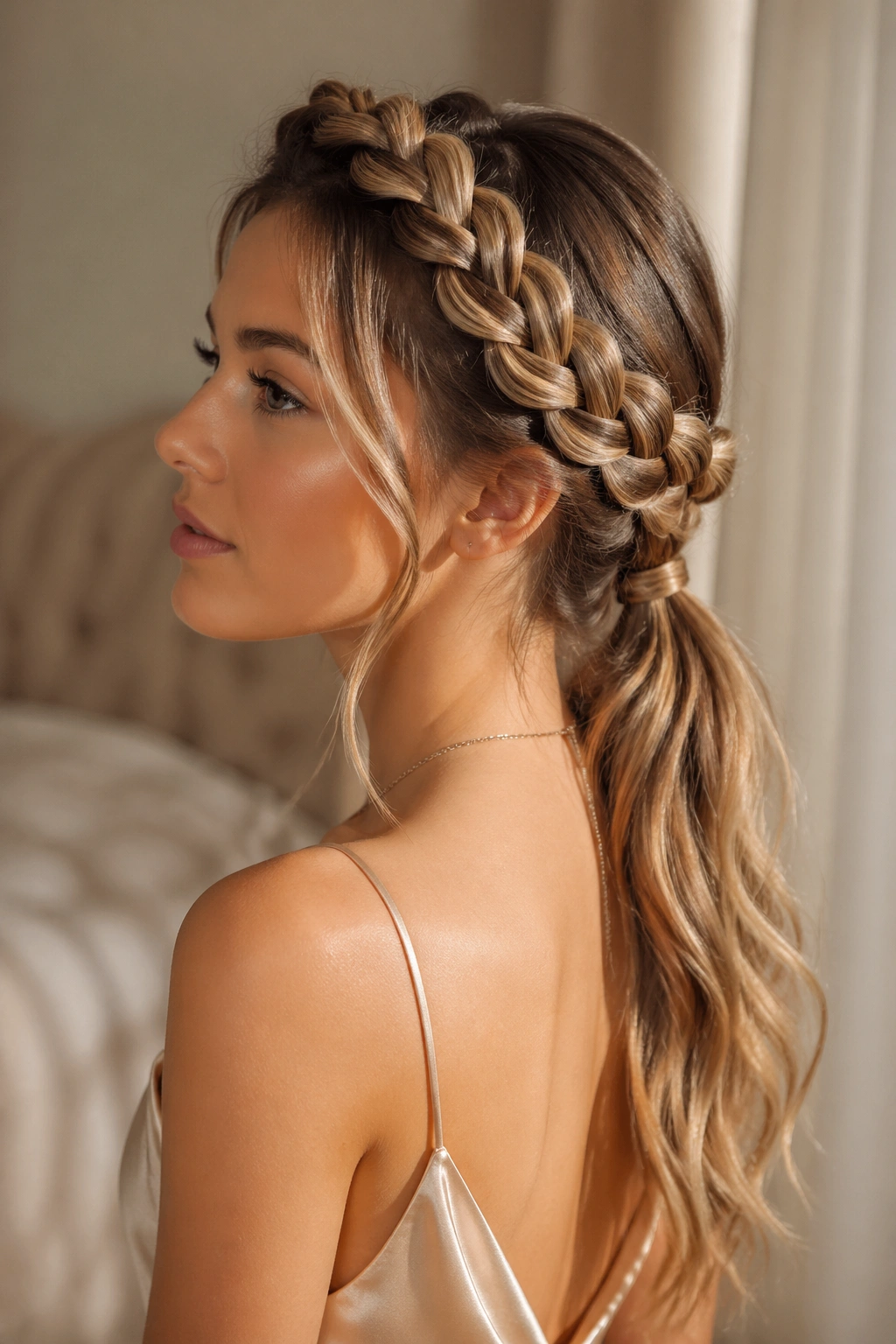
This one has a quieter kind of elegance. Instead of a hard line through the middle, the hair wraps around the head in a braid or two braided sections that meet at the back, then drops into a low ponytail. It feels vintage in the best way, like something that belongs with satin, pearls, and a gown that moves softly when you walk.
A softer crown line
The milkmaid shape keeps the front neat while still giving the braid room to show. It works especially well if you want to frame the hairline without pulling everything tight. Leave the braid a little loose and pin it with crossed bobby pins under the meeting point so it holds.
Best dress pairings
- Backless gowns that need a clean top line
- Dresses with lace or floral embroidery
- Square necklines that already have a strong shape
- Soft chiffon or tulle styles that move easily
It’s a lovely choice if you want romance without extra curls everywhere.
15. Braided Ponytail With Face-Framing Tendrils
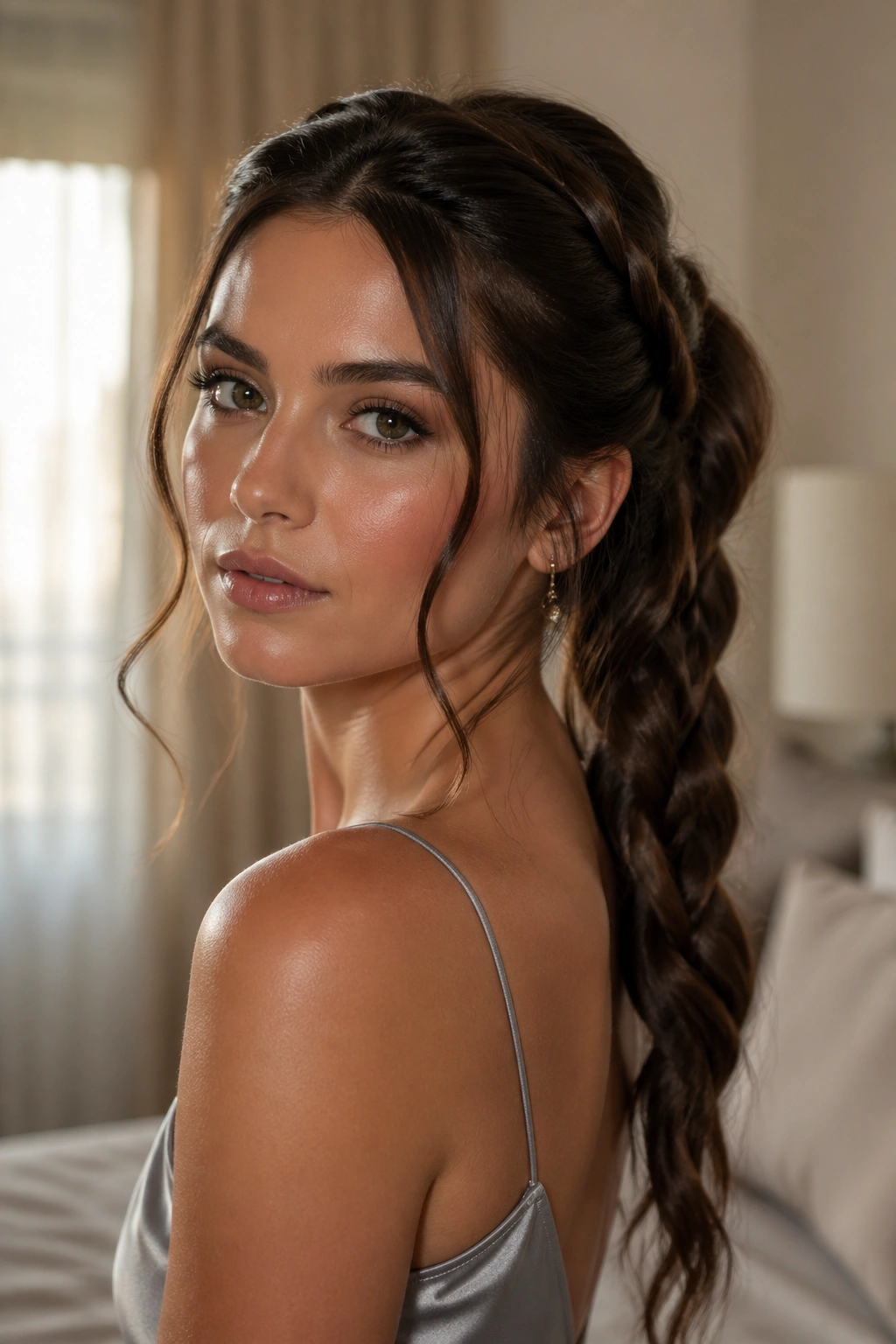
Some prom looks are about drama. This one is about softness. A braided ponytail with face-framing tendrils keeps the hair off the neck and shoulders while leaving a few slim pieces around the face so the whole style feels less severe. It’s a small change, but it changes the mood a lot.
Leave two tendrils about 1/2 inch wide near the temples before braiding the rest back into a ponytail. Curl those pieces away from the face with a 1-inch iron, then shape the ponytail itself with loose waves or a soft braid. Keep the tendrils separate from the braid at the start; if they get pulled in too early, the effect disappears.
This works well for anyone who feels best with some hair around the cheekbones. It also helps balance stronger makeup, especially a sharper liner or a darker lip.
16. Sleek Low Ponytail With Cornrow Detail
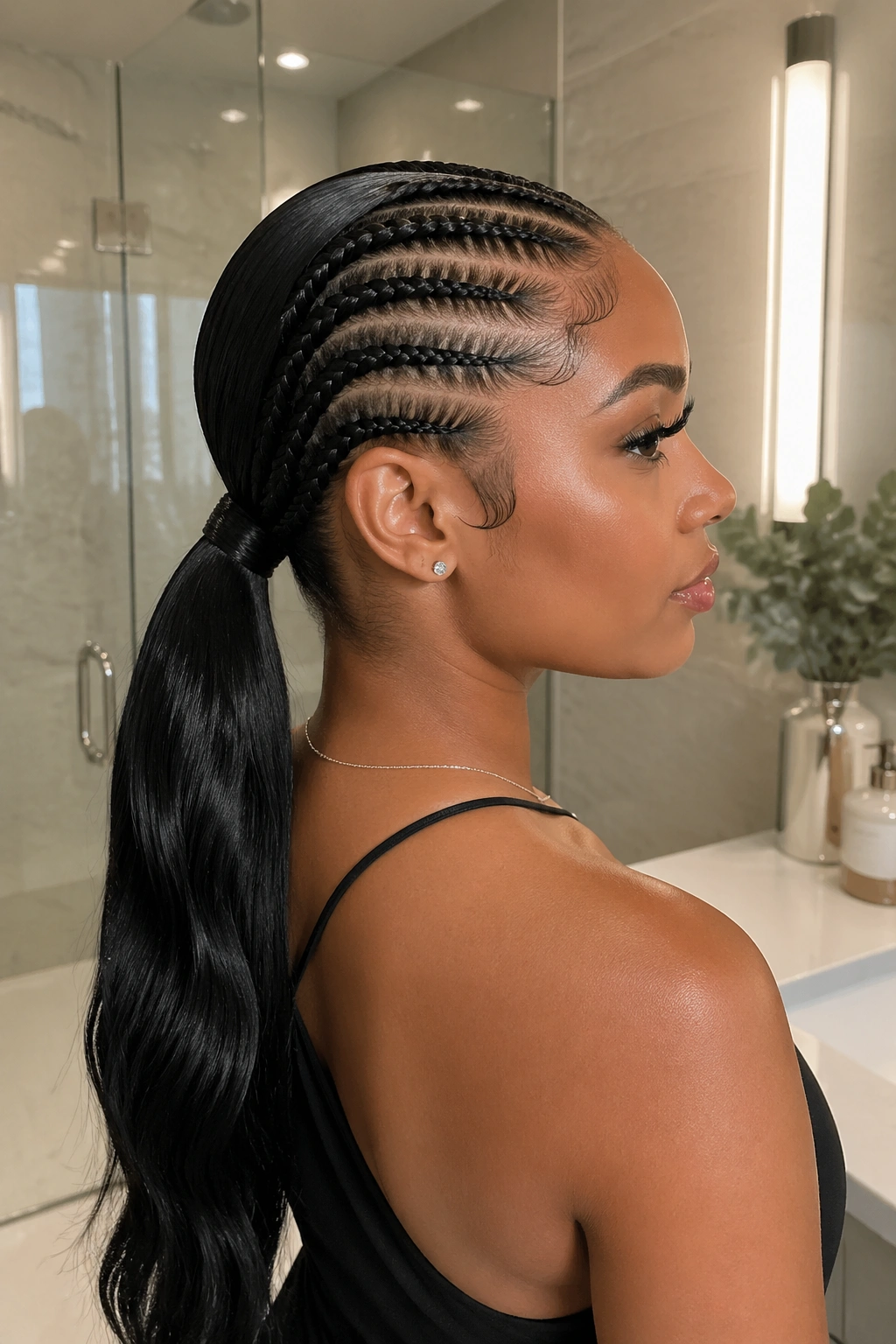
A low ponytail with cornrow detail brings a sharper edge to prom hair, and I mean that in a good way. Small braids at the front or along the sides create pattern and hold, then the rest of the hair drops into a smooth low ponytail. It looks deliberate from every angle.
Use narrow sections, about 1/4 to 1/2 inch wide, and braid them close to the scalp before gathering the rest into a nape-level ponytail. Keep the ponytail sleek with gel or styling cream, then wrap the base with a thin strand if you want a cleaner finish. Do not pull the cornrows too tight; the style should feel secure, not tense.
This is a strong option for natural hair, protective styling, or anyone who wants the front to stay neat all night. Add statement earrings and the whole thing snaps into place.
17. Hidden Braid Base With Soft Waves
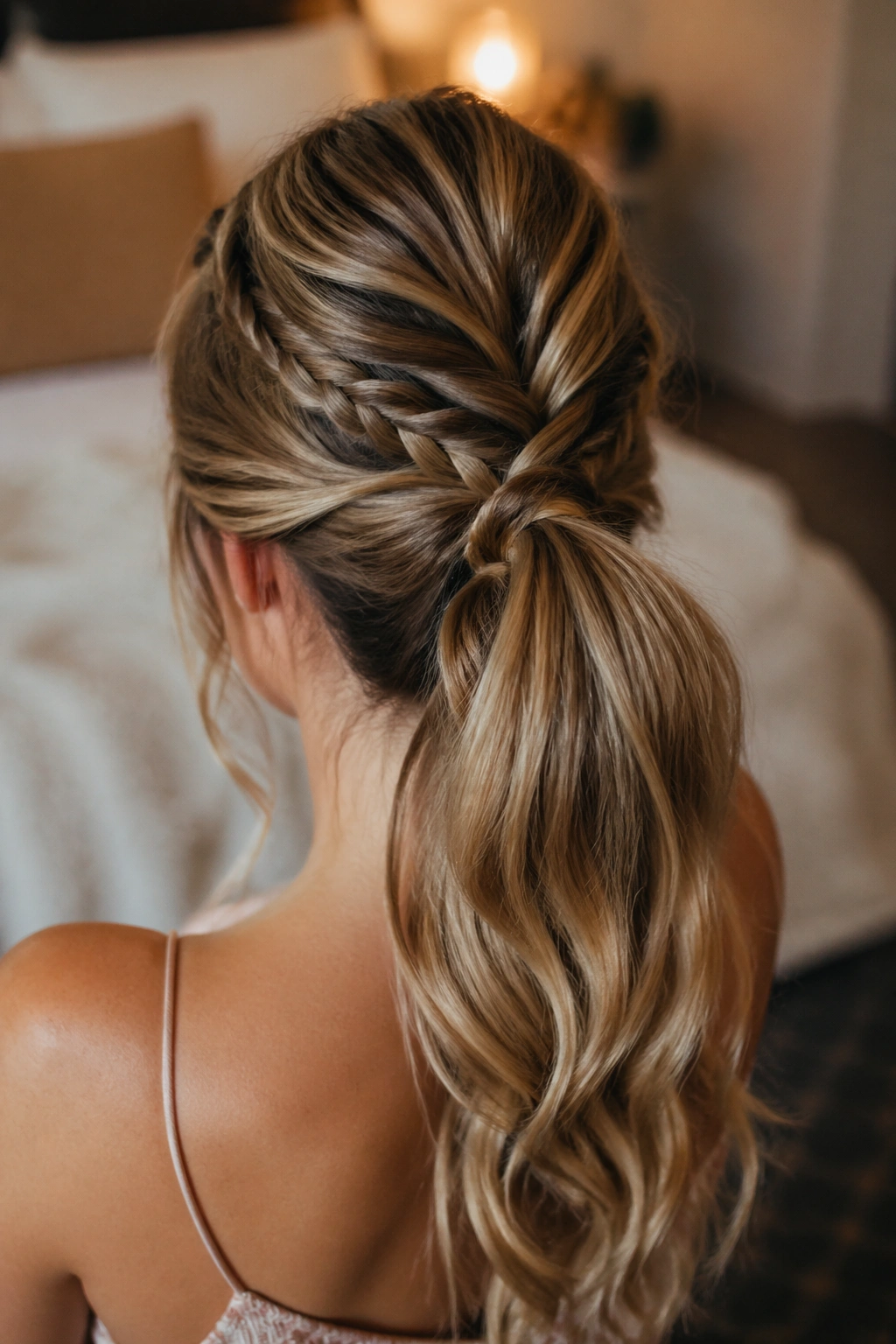
Not every braid needs to shout. Sometimes the smartest move is to hide the braid at the base of the ponytail and let the waves do most of the talking. That’s what makes this style so appealing. The braid gives structure underneath, but from the outside you mostly see movement and softness.
Braid a small section underneath the top layer, then gather the rest into a mid or low ponytail. Curl the tail in large sections and brush it out lightly so the waves fall in soft ribbons instead of separate curls. The hidden braid should sit flat against the scalp; if it puffs up, the seam shows and the trick is gone.
This style is ideal for beaded dresses or gowns with a lot of texture already, because it adds interest without making the hair compete with the outfit. It also works for people who want the comfort of a ponytail and the polish of an updo.
18. High Ponytail With Mermaid Braid Length
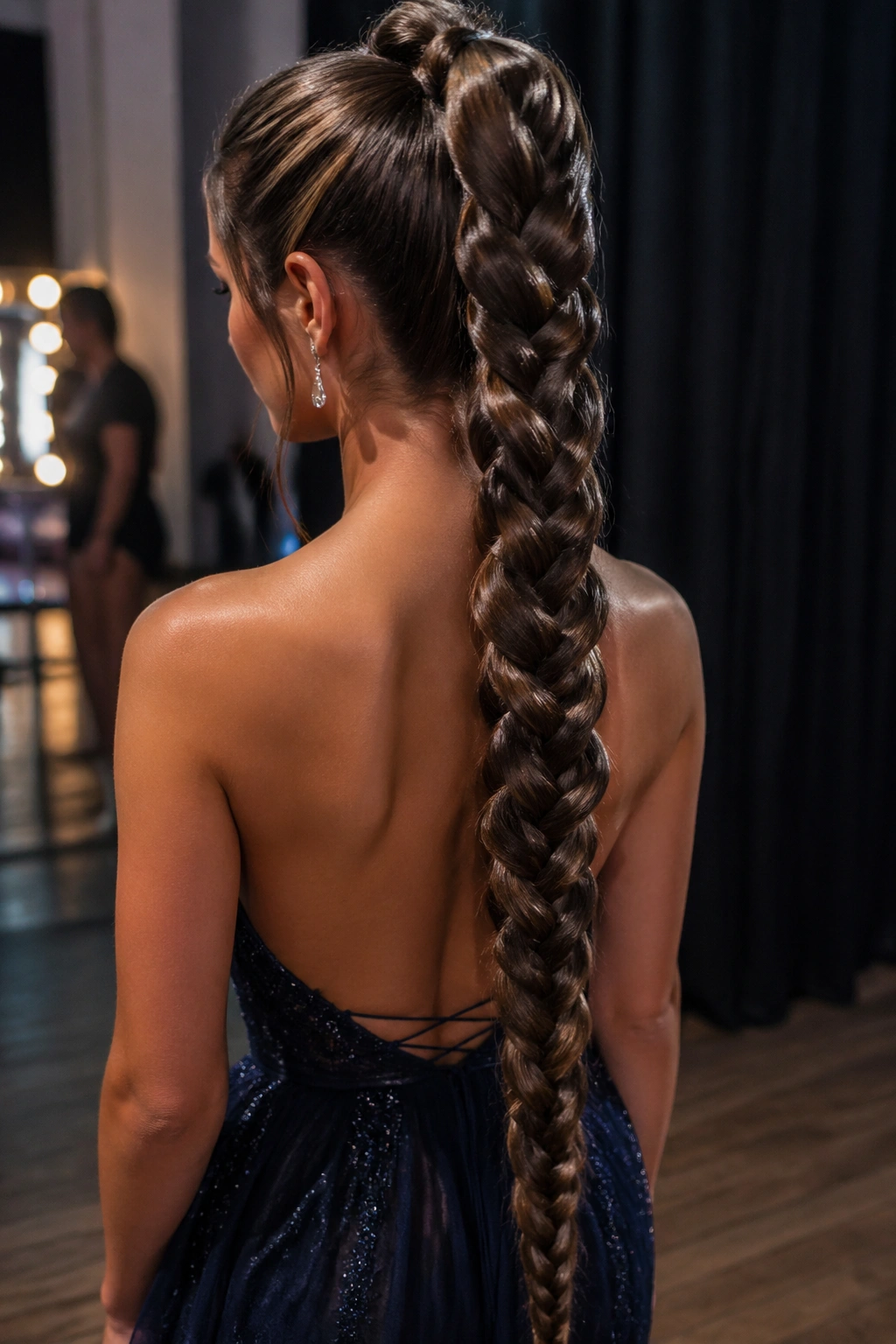
This is the one for long hair and even longer extensions. A high ponytail with mermaid braid length keeps the crown sleek and lets the braid fall down the back in a thick, dramatic line. It has a little stage energy, which feels right for prom.
How to build the length
Start with a high ponytail at the crown, smooth the base with a brush, then add clip-in extensions if the hair needs help reaching the right fullness. Braid the tail loosely, then gently pull apart each section so the braid looks wide and soft. Use 4 to 6 clear elastics down the length if the hair is slippery, especially if the braid needs to survive hours of dancing.
Best details to add
- Curl the very ends so they do not look blunt.
- Leave the crown sleek for contrast.
- Use shine spray on the braid only, not the roots.
- Add one small accessory near the base if the dress is simple.
The whole effect is bold, but it still feels formal.
19. Braided Wrap Low Ponytail
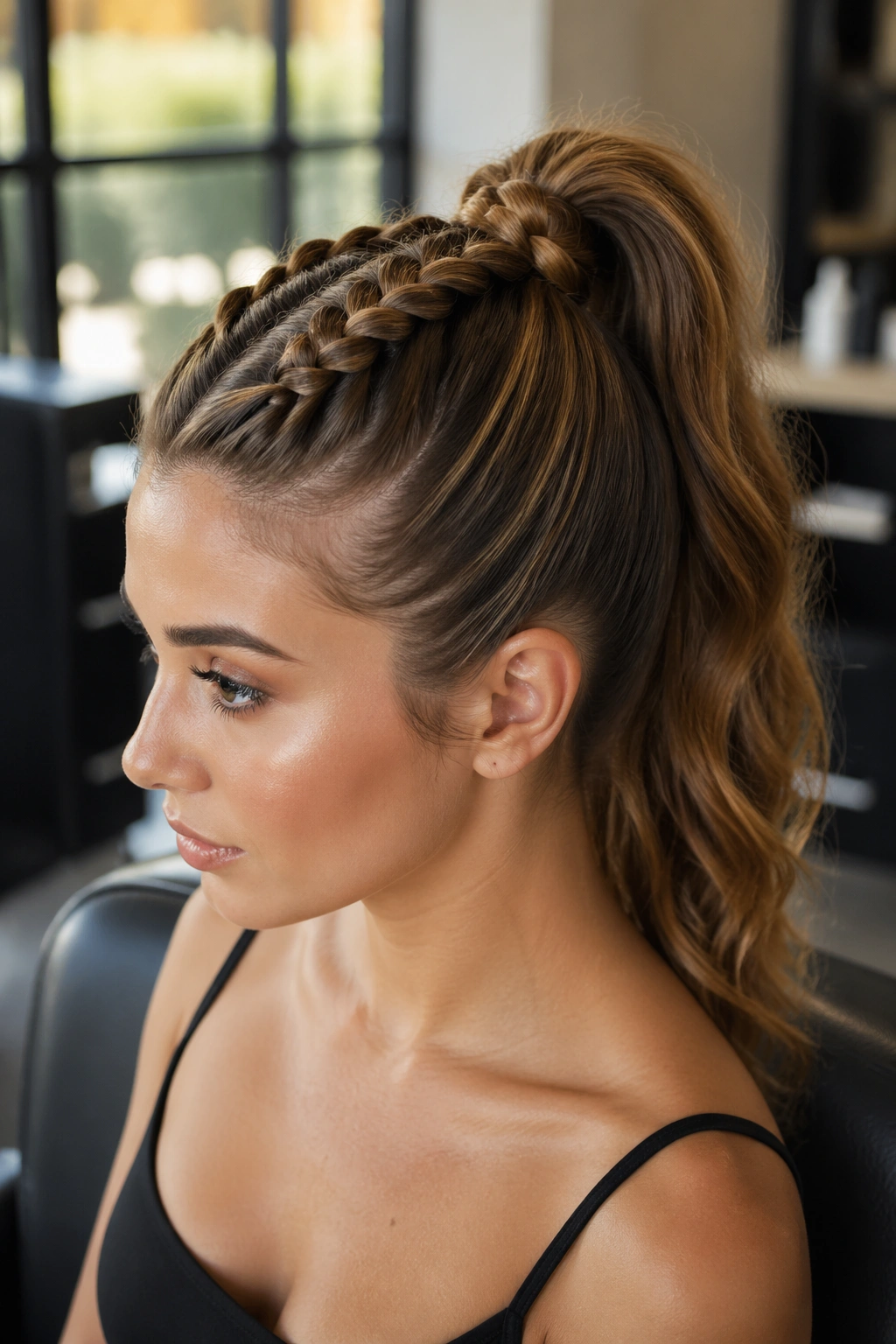
The easiest styles are sometimes the nicest. A braided wrap low ponytail keeps the look clean and classic: ponytail at the nape, braid wrapped around the elastic, and just enough texture in the body to keep it from looking flat. That’s all it needs.
A side braid or a small braid from the back can be wrapped around the base and pinned underneath with two crossed bobby pins. Keep the rest of the tail smooth or softly waved. Use a narrow braid, about 1 inch wide, so the wrap doesn’t look bulky at the base. Thick wraps can crowd the nape and start looking heavy.
This is the right choice when the dress already has a lot going on, especially if there’s beading, sequins, or a big neckline detail. The hair supports the outfit instead of competing with it. Clean. Easy to wear. Hard to mess up.
20. Pearl-Pinned Braided Ponytail
Pearls turn a braid into something dressier fast, but only if you keep the placement controlled. A few pearl pins tucked into the braid or along the base of the ponytail can give the style a formal finish without making it look overdecorated.
Braid the hair first, then pin 3 to 7 small pearls along one side of the braid or scatter them near the elastic. Keep the spacing uneven on purpose if you want the look to feel more natural and less like a row of stickers. Too many pearls in one spot make the braid look crowded.
This style works with satin, tulle, and gowns that already have some shine. It’s especially good if the jewelry is simple, because the pearls create their own focal point. One strong accessory is enough here. More starts to feel busy.
21. Curled Ponytail With Mini Braid Stack
A mini braid stack gives a ponytail detail without taking over the entire head. Think of 2 or 3 small braids placed at the crown, temple, or just above the ear, then gathered into a curled ponytail that carries the rest of the look. It’s subtle, but not bland.
The small braids should be narrow, around 1/2 inch wide, and placed close enough together that they read as a group. Curl the ponytail in medium sections so the shape feels soft around the braids. If your hair is thick, pin the braids flat before gathering the tail; otherwise the base gets lumpy.
This is one of those styles that works well for people who like detail but do not want the whole hairstyle to be the main event. It plays nicely with dresses that have texture in the fabric, because it adds pattern without too much volume.
22. Zigzag Part Braided Ponytail
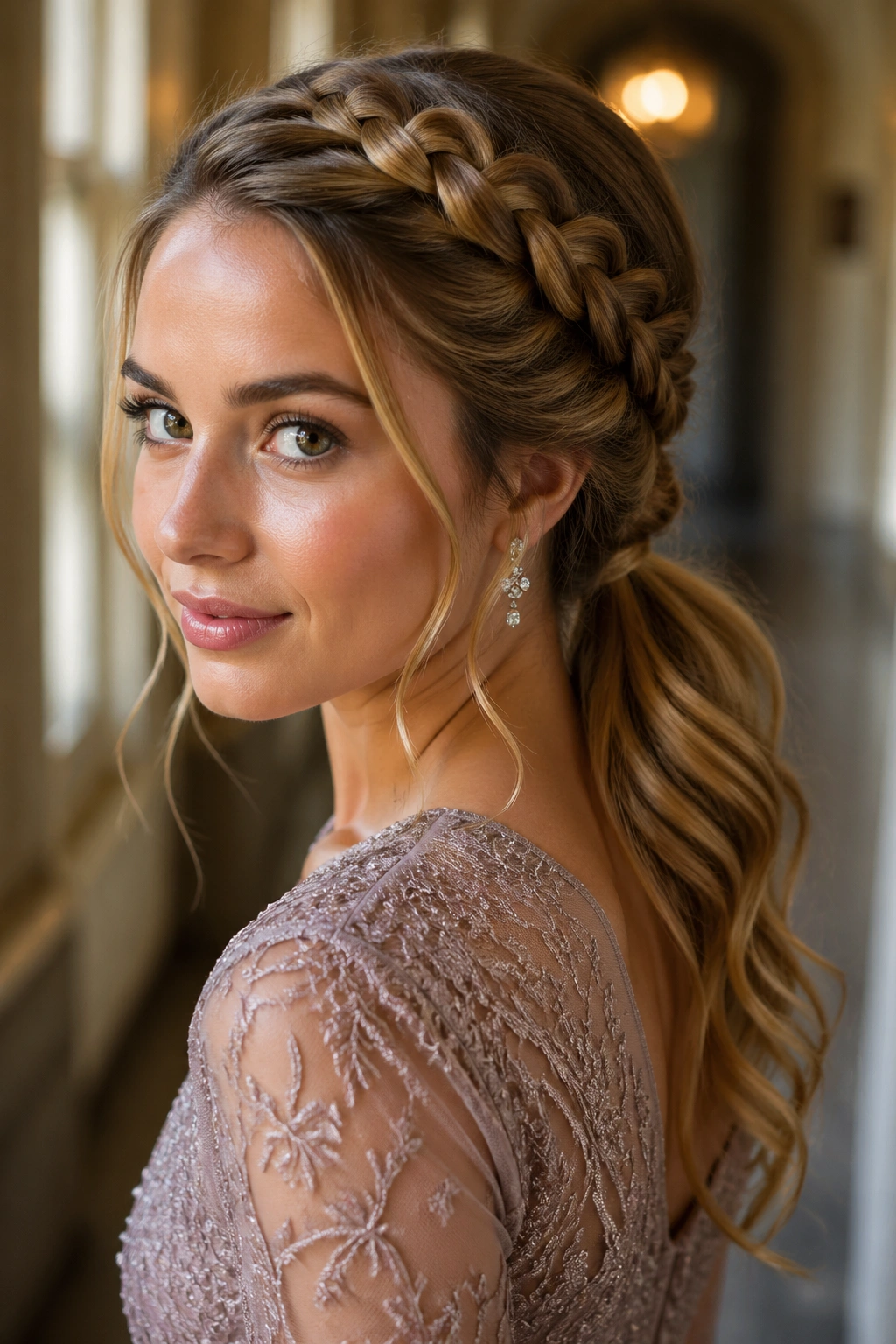
A zigzag part can change a simple ponytail into something sharper and more playful. The part itself becomes the first detail people notice, which makes the rest of the braid feel even more intentional. It’s a small move, but it gives the style a graphic edge.
The part matters more than you think
Use a rat-tail comb and create the zigzag before you add any product. Once the part is clean, braid the hair into a high or low ponytail, depending on the neckline of the dress. The braid can be French or Dutch; the key is the part, not the braid type. Keep the zigzag shallow and even so it reads as design, not confusion.
Who it suits
- Straight hair that needs a little structure
- Minimal dresses that need one sharp detail
- People who like clean lines over loose softness
- Hair that holds parting well with a bit of gel
This style has a little attitude, and that’s a nice change from all the softer prom options.
23. Extra-Long Bubble Braid Ponytail
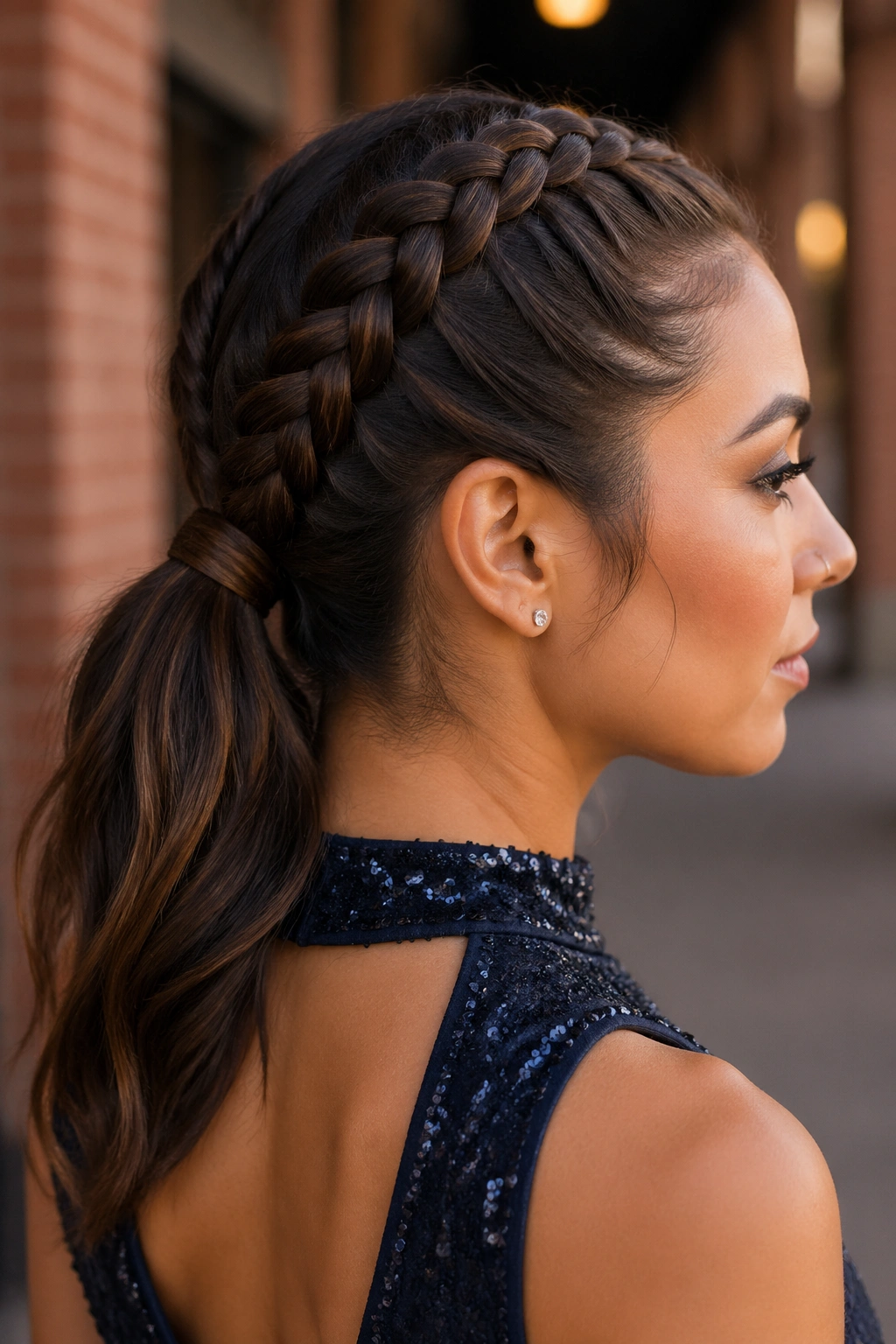
If dramatic length is the goal, this is the one that leans into it. An extra-long bubble braid ponytail looks bold from the side and even bolder from the back, especially if you use extensions to build the tail. Each bubble gives the braid a rounded, sculpted shape that feels modern without losing its formal edge.
Build the ponytail first, then add clear elastics every 2 to 3 inches down the length. Pull each section outward until it feels full, not stiff. If the hair is too short for the bubble pattern to hold, clip-ins save the whole style. Without enough length, the bubbles collapse and the tail starts looking chopped up.
This style works well with clean gowns, satin slips, or dresses that need a stronger hair silhouette. It is not a quiet look. That is the point. Some prom hair should show up in the room before you do.
24. Twisted Crown Ponytail Combo
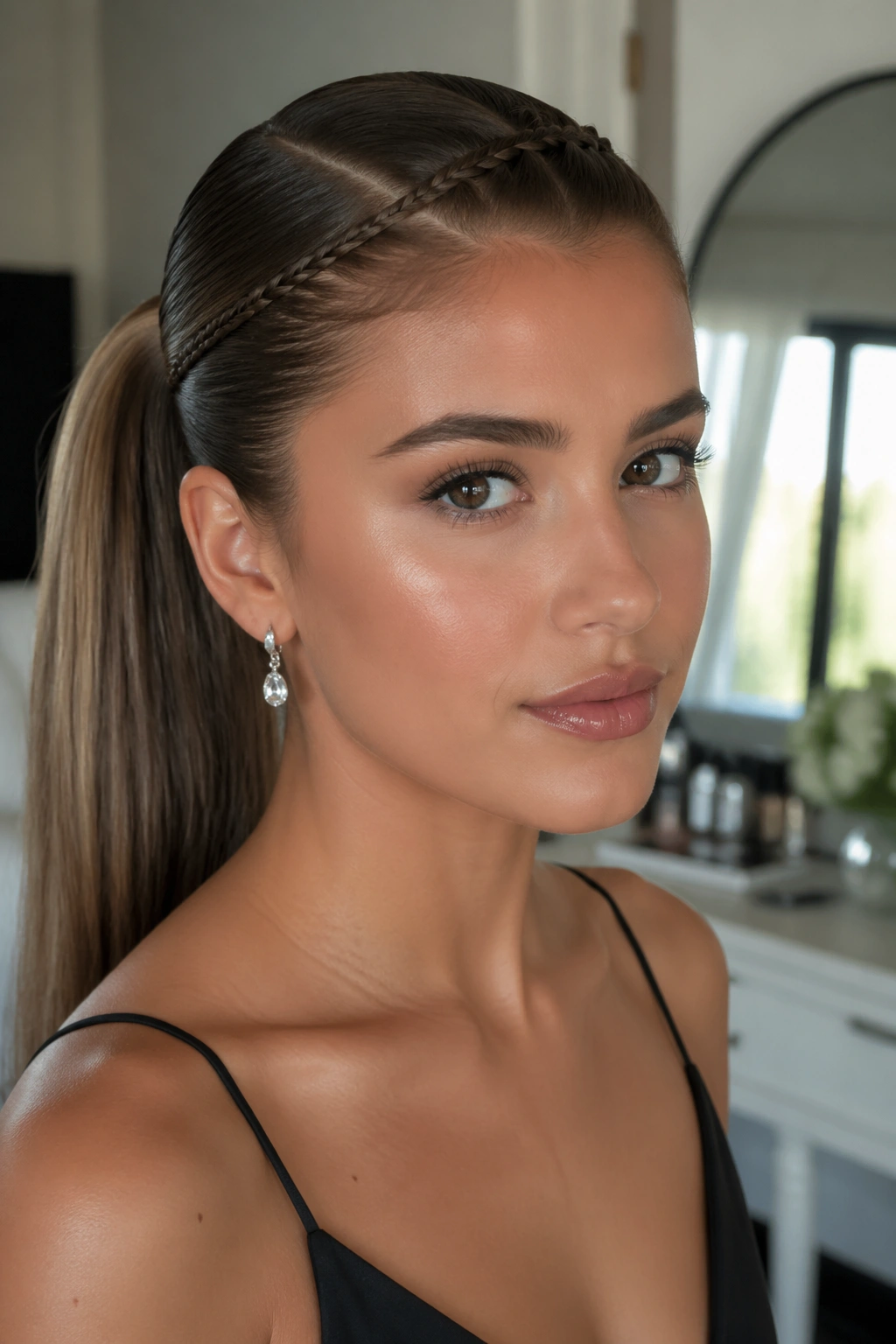
A twisted crown ponytail combo gives you braid-like structure without the same tight feel. Two sections are twisted back from the hairline, crossed or pinned at the crown, and gathered into a ponytail. The result is softer than a braid, which makes this a nice choice if you want polish without a lot of detail in the front.
Why twist instead of braid
Twists sit flatter than braids and often feel lighter at the temples. That matters if your hair is thick or if you do not love the feel of a fully braided crown. The style still keeps hair away from the face, but it looks smoother and less busy than a classic plait.
How to keep it neat
- Use a light styling cream on each twisted section.
- Pin the twists under the ponytail base, not on top of it.
- Curl the ponytail in large waves so the top and bottom textures match.
- Leave the crown taut, but not pulled tight against the scalp.
It’s a practical choice that still looks special in photographs.
25. French Braid Into a Loose Ponytail
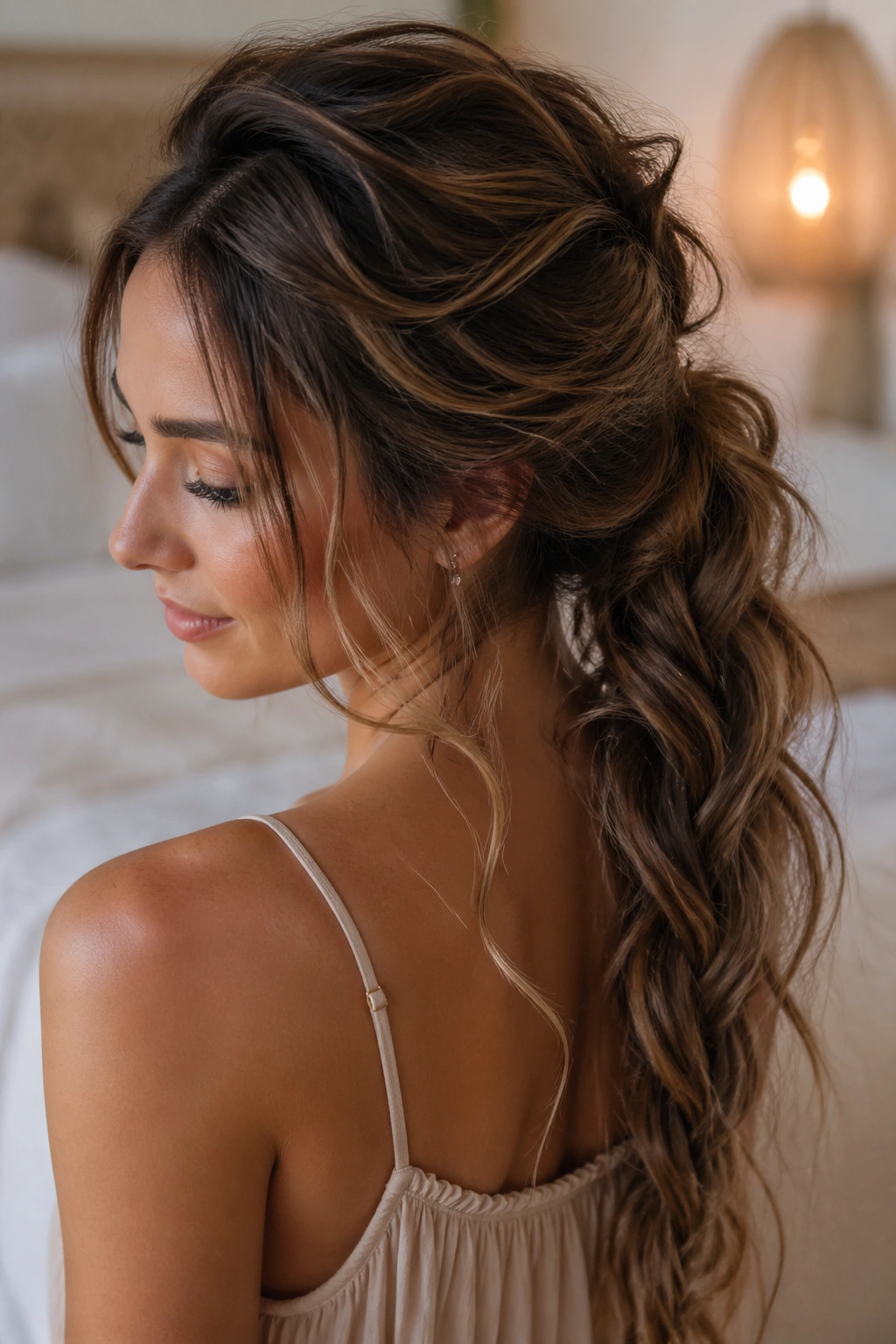
The French braid into a loose ponytail is the kind of style that works because it never tries too hard. The braid starts at the hairline, stays close to the scalp, and then opens into a softer ponytail at the back. It gives the front control and the tail movement.
French braids lie flatter than Dutch braids, which makes this one a little quieter and a little more classic. That flatter shape is helpful when the dress already has volume. Curl the ponytail in 1-inch sections after braiding so the finish has softness instead of a stiff drop.
This style is especially nice for medium-length hair, because the braid helps the tail feel fuller than it really is. If you want something formal but not fussy, this is a strong place to land.
26. Gold-Accessorized Braided Ponytail
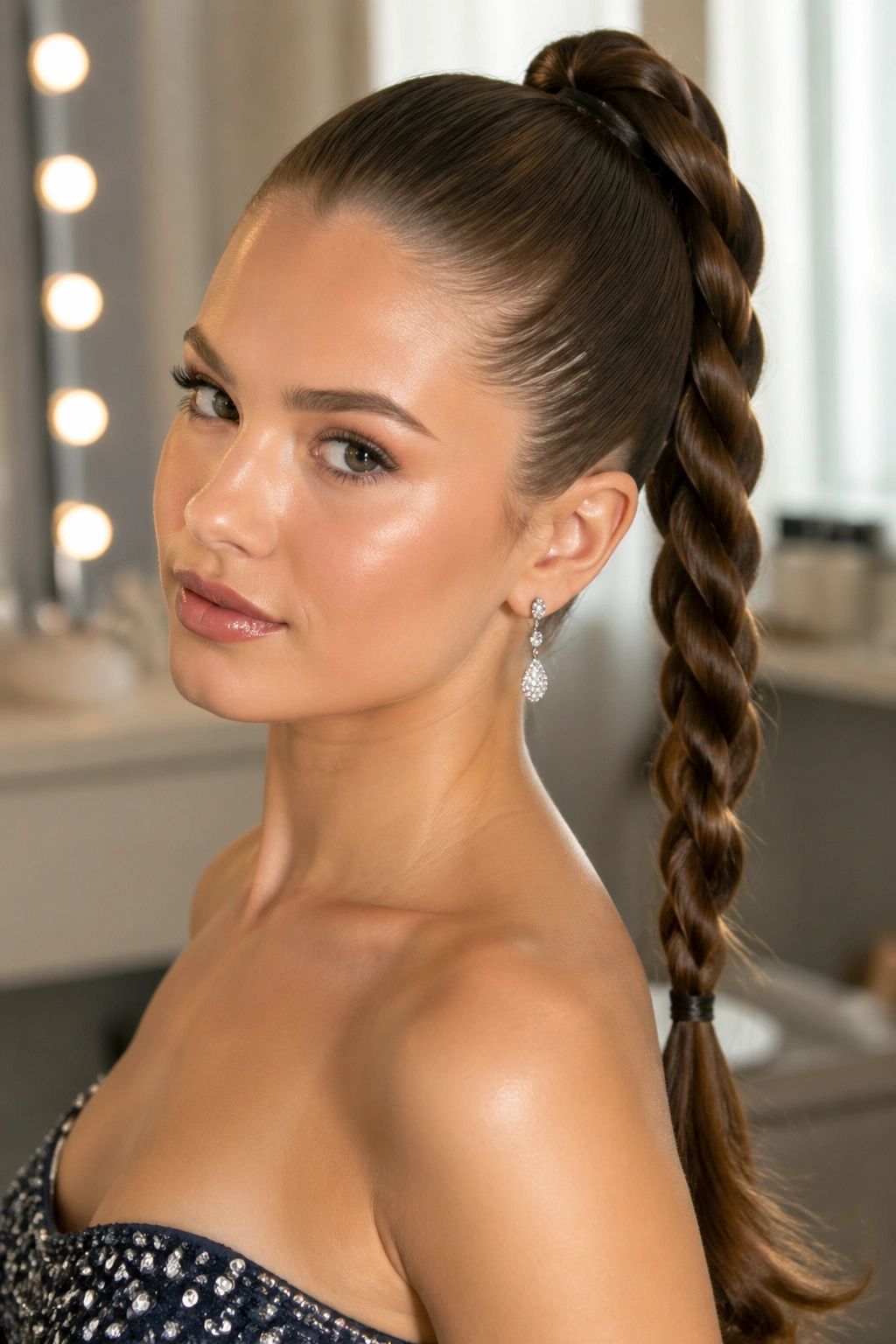
Gold accessories can change the tone of a braided ponytail fast. A few cuffs, pins, or a thin gold ribbon turn the braid into something dressier and a little more intentional. I prefer a small number of pieces. Too many and the braid starts to feel crowded.
Choose one area to highlight: the base, the length, or one side near the face. That keeps the eye moving without making the style noisy. Warm gold looks especially good against deep brunettes, rich reds, and dark hair with shine spray. On lighter hair, the contrast can be softer, so the placement matters even more.
This is the right move if the dress has metallic details or if the jewelry is already warm-toned. Keep the braid itself simple. Let the accessory do the talking, not the other way around.
27. Romantic Low Ponytail With Loose Braid Ends
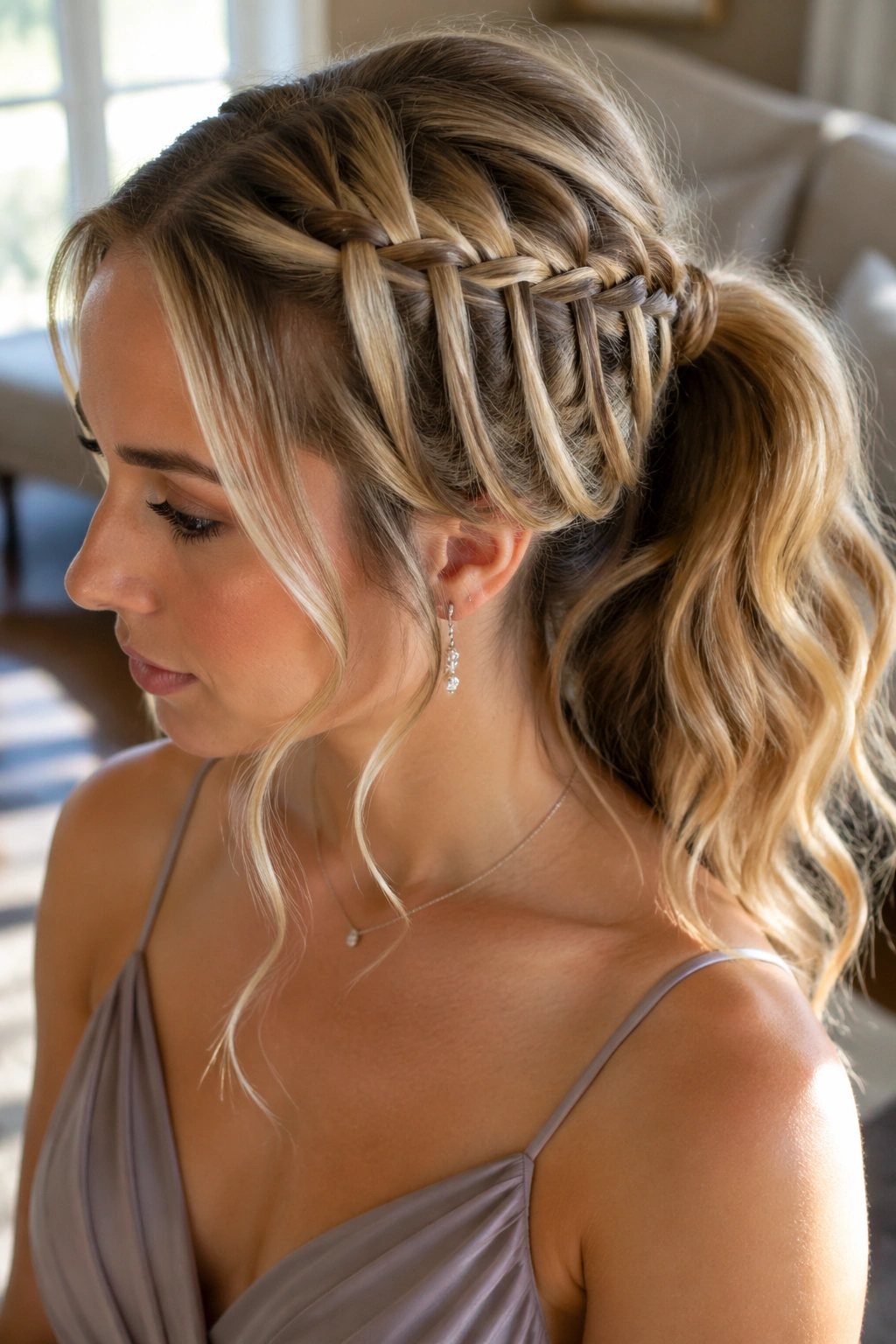
If you want the softest finish in the whole set, this is the one I’d hand to you last. A romantic low ponytail with loose braid ends starts structured at the top, then loosens toward the bottom so the braid fades into soft texture instead of ending in a hard line. It feels gentle, and that matters more than people admit.
Braid the hair only partway down, secure it low at the nape, and leave the ends wavy or lightly curled. Pull a few thin pieces around the face and keep the nape neat so the style does not drift into undone territory. The balance is the whole trick: tidy enough for prom, soft enough to feel like you.
This is the one that works when you want the hair to look romantic rather than sharp. It sits nicely with lace, chiffon, satin, and dresses that already have a dreamy shape. And if you ask me, that softness is usually what makes a style stick in memory.
