



Brown ponytails for curly hair have a sweet spot that straight styles rarely hit. The color gives the shape more depth, and curls keep the ponytail from looking flat or fussy.
That is the part people miss. A ponytail on curls does not need to be pin-straight at the crown to look polished. Sometimes the best version is a high puff with a wrapped base; sometimes it is a low ponytail with a few face-framing pieces and a clean part that lets the texture do the work.
Brown tones change the mood fast. Chocolate, chestnut, mocha, caramel, espresso — each one shifts the feel of the style, even when the ponytail itself is simple. Warm brown reads soft and rich. Cool ash-brown feels sharper. Either way, curly hair gives the shade something to bounce off, which is why these styles can look finished with surprisingly little effort.
The real trick is choosing the right placement for your curl pattern and your length. High, low, side-swept, braided, bubbled, or wrapped — the shape matters, but so does how your curls behave once they dry. Some styles want a firm gel and a brush. Others look better with a light hand, a satin tie, and a few loose curls left alone.
1. Honey Brown High Puff Ponytail
A honey brown high puff is one of those styles that looks bigger than the work it takes to do it. The warm brown shade gives the curls a soft glow, and the high placement lifts the whole face without trying too hard.
I like this style on tight curls and coils because it celebrates shrinkage instead of fighting it. Smooth the front with a little gel, gather the hair high, then let the puff stay full and springy. If your hair is thick, a wide elastic or a puff cuff is easier than wrapping the base three times and pulling the whole thing too tight.
Keep the edges neat, but do not overdo the brushing. The point is height, shape, and texture. Not helmet hair.
2. Sleek Chestnut Low Ponytail
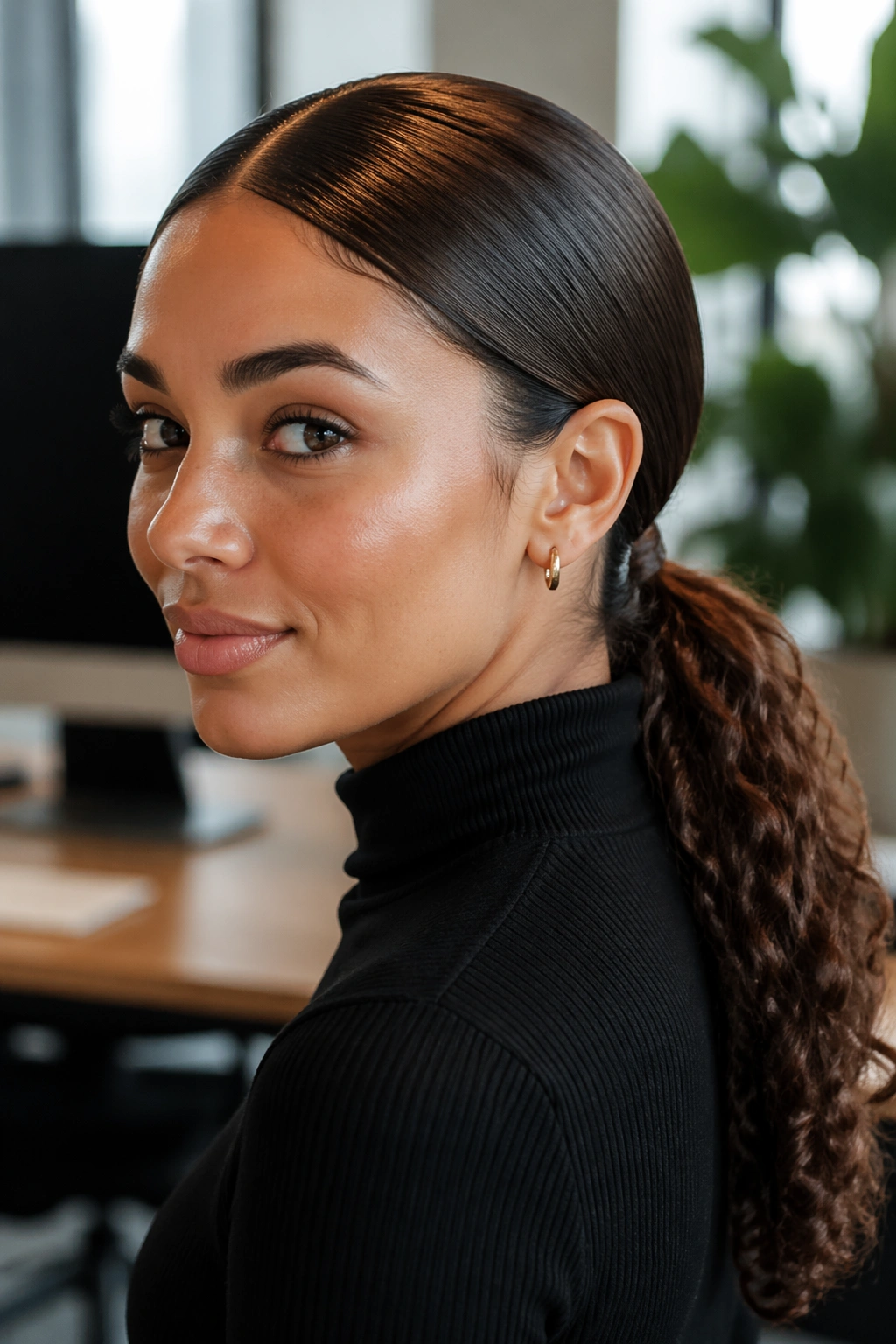
Want a ponytail that stays neat all day but still lets your curls show up at the ends? A chestnut low ponytail does exactly that.
Why It Works
The low placement keeps tension down, which helps if your scalp gets sore from high styles. Chestnut brown also reads rich in low light and soft in bright light, so the ponytail has depth even when the shape is simple.
How to Style It
- Part the hair cleanly down the middle or slightly off-center.
- Brush the crown with a soft-bristle brush and a firm-hold gel.
- Gather the ponytail at the nape, not mid-neck.
- Leave the ends curly, or twist the last 2 to 3 inches for extra control.
A low ponytail like this works especially well for workdays, dinner plans, or any time you want your curls to look disciplined without looking stiff.
3. Mocha Bubble Ponytail
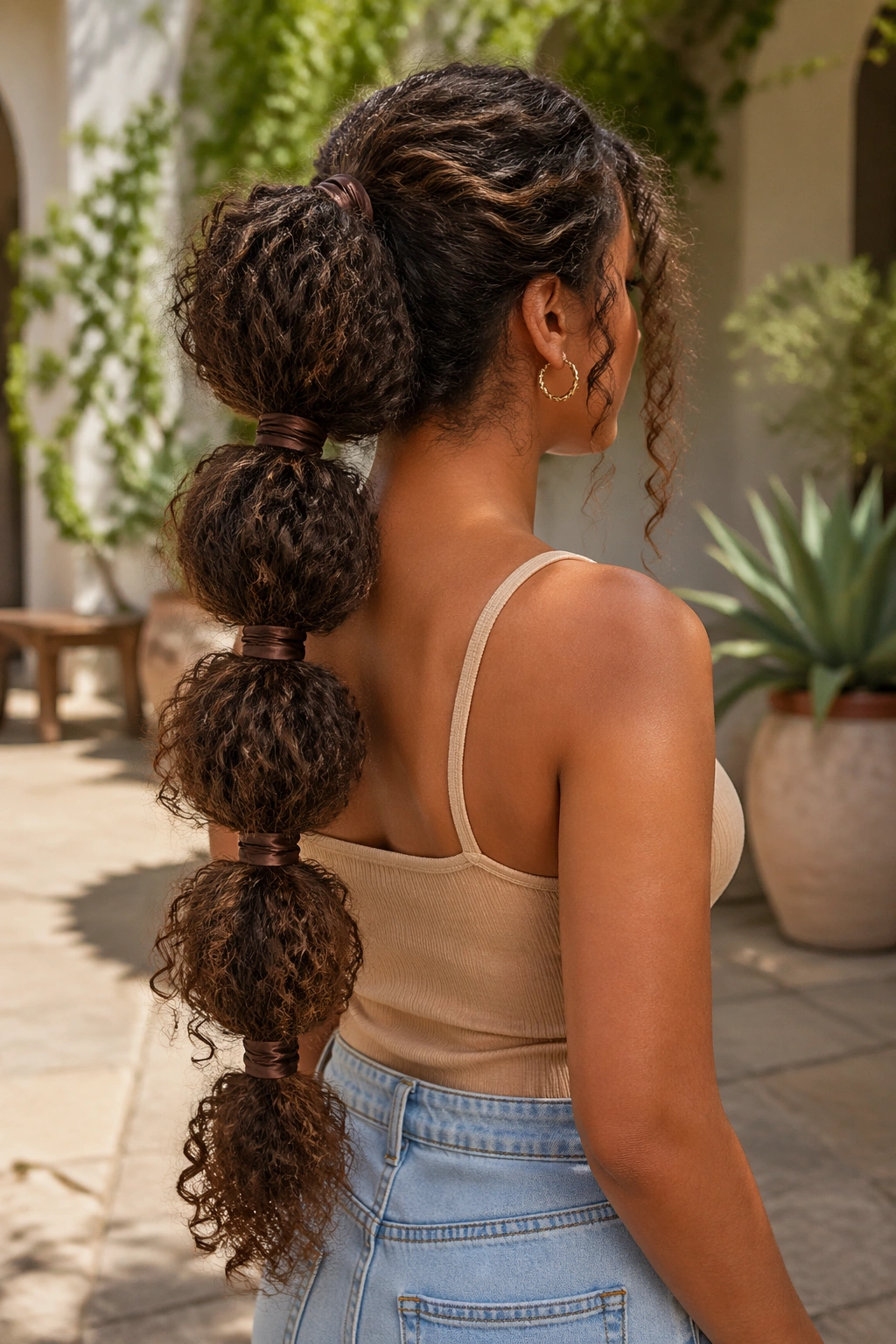
A bubble ponytail is the easiest way to make curly hair look styled on purpose. Mocha brown gives each section more dimension, so the “bubbles” read clearly instead of blending into one thick rope.
Picture this: a ponytail tied at the back or slightly high, then divided into sections with small elastics every 3 or 4 inches. After each tie, gently tug the hair between elastics so the sections puff out. That puff is the whole point.
Use satin-covered elastics if your hair slips a lot. Plain tight bands can snag curls and leave dents that do not always disappear.
This style is good when you want movement but do not want to spend forever on a blowout or flat iron finish. It has shape. It has rhythm. And it works with the curl pattern instead of flattening it.
4. Caramel Side Ponytail
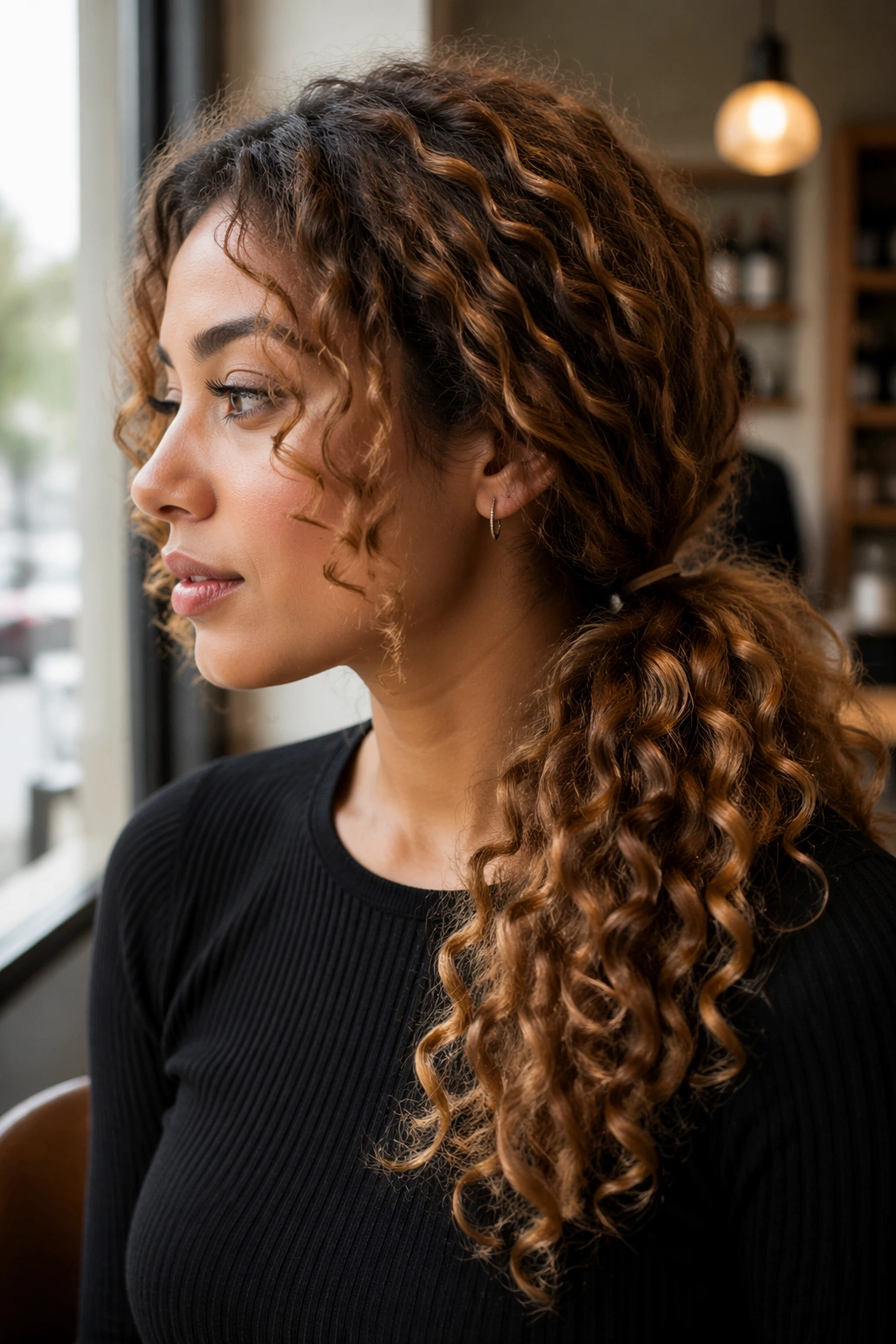
A side ponytail changes the whole face shape in a way a center ponytail never quite can. Caramel brown makes the style feel lighter, especially when a few curls fall forward near the cheek.
The side placement works well if you like volume at the crown but want the ponytail to sit a little softer. Gather the hair just behind one ear, secure it low or mid-height, then leave the opposite side with a little lift. That imbalance is what makes it interesting.
Do not brush every curl into obedience. Leave some texture near the part and around the front. A side ponytail looks best when it feels like it belongs to curly hair, not when it is pretending to be straight hair in a hurry.
5. Chocolate Brown Crown-Braid Ponytail
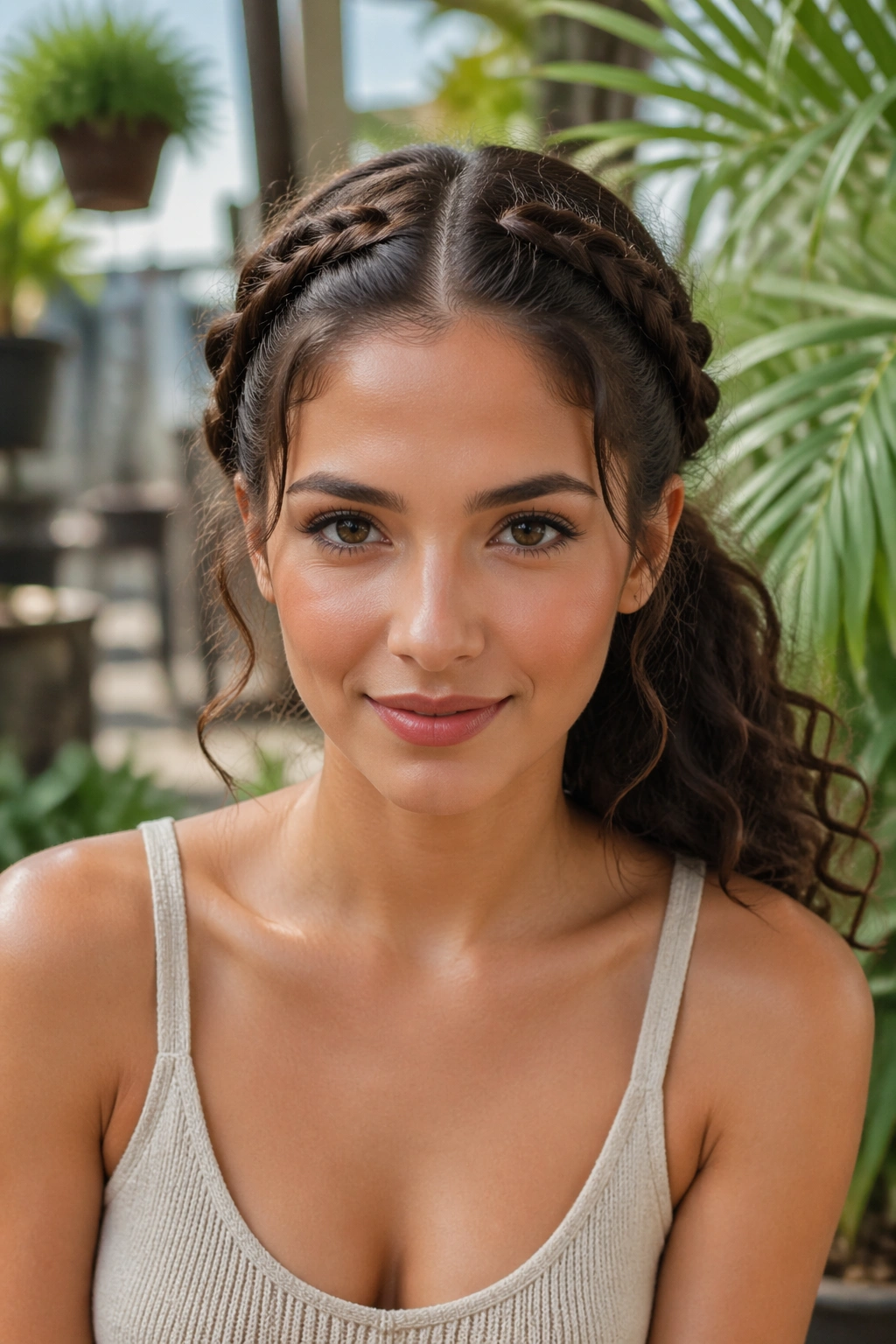
Chocolate brown hair and a braided crown are a strong pair. The braid gives structure, and the ponytail keeps the style from feeling too formal.
This is the one I reach for when the front needs to stay put. Braid across the hairline or along both temples, then gather the rest into a mid or low ponytail. The braid does two jobs at once: it controls frizz and adds shape around the face.
The ends can stay curly, stretched, or lightly twisted, depending on how much length you want to show. A little mousse at the ponytail ends helps if your curls separate too fast.
It is a smart style for humid weather, busy days, and anyone who wants a ponytail that still looks like it was planned, not thrown together.
6. Cinnamon Twist-Back Ponytail
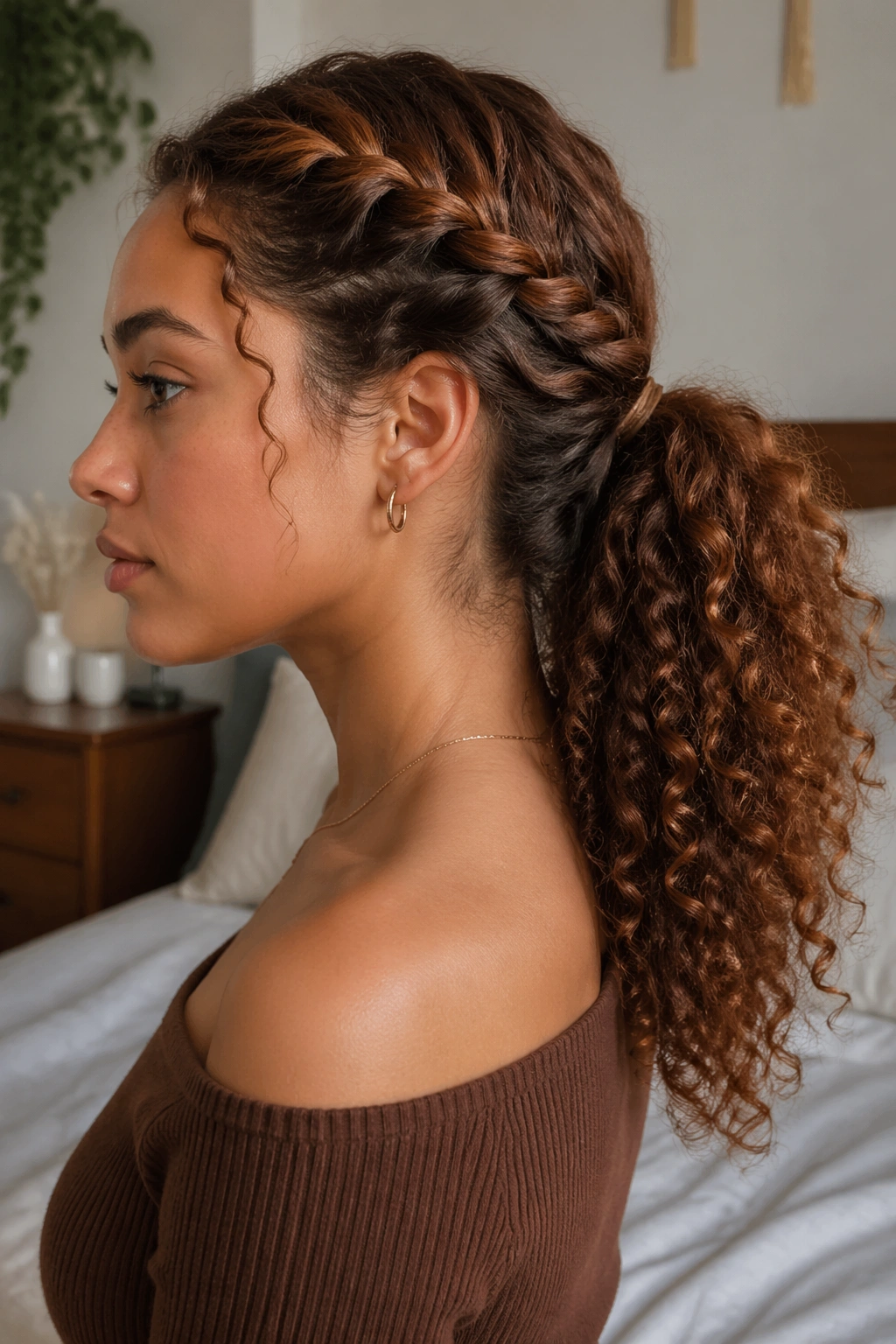
Twist-back styles are underrated. They look intricate, but the mechanics are simple: two flat twists or rope twists start near the temples and feed into a ponytail at the back.
Why It Works
Cinnamon brown gives the twists more contrast than a flat dark shade would. The twisted sections become visible from the front, which matters because curly hair can hide detail once it expands.
How to Wear It
- Section the front into 2 or 4 parts.
- Apply a light cream or gel to each section.
- Twist toward the back, keeping the tension even.
- Gather the remaining hair into a ponytail at the nape or mid-head.
This style is friendly to shorter curly hair, too, because the twists help pull the front back even if the ponytail itself is not long. It is tidy, but not severe. That balance is why it keeps getting worn.
7. Espresso High Ponytail with Defined Ringlets
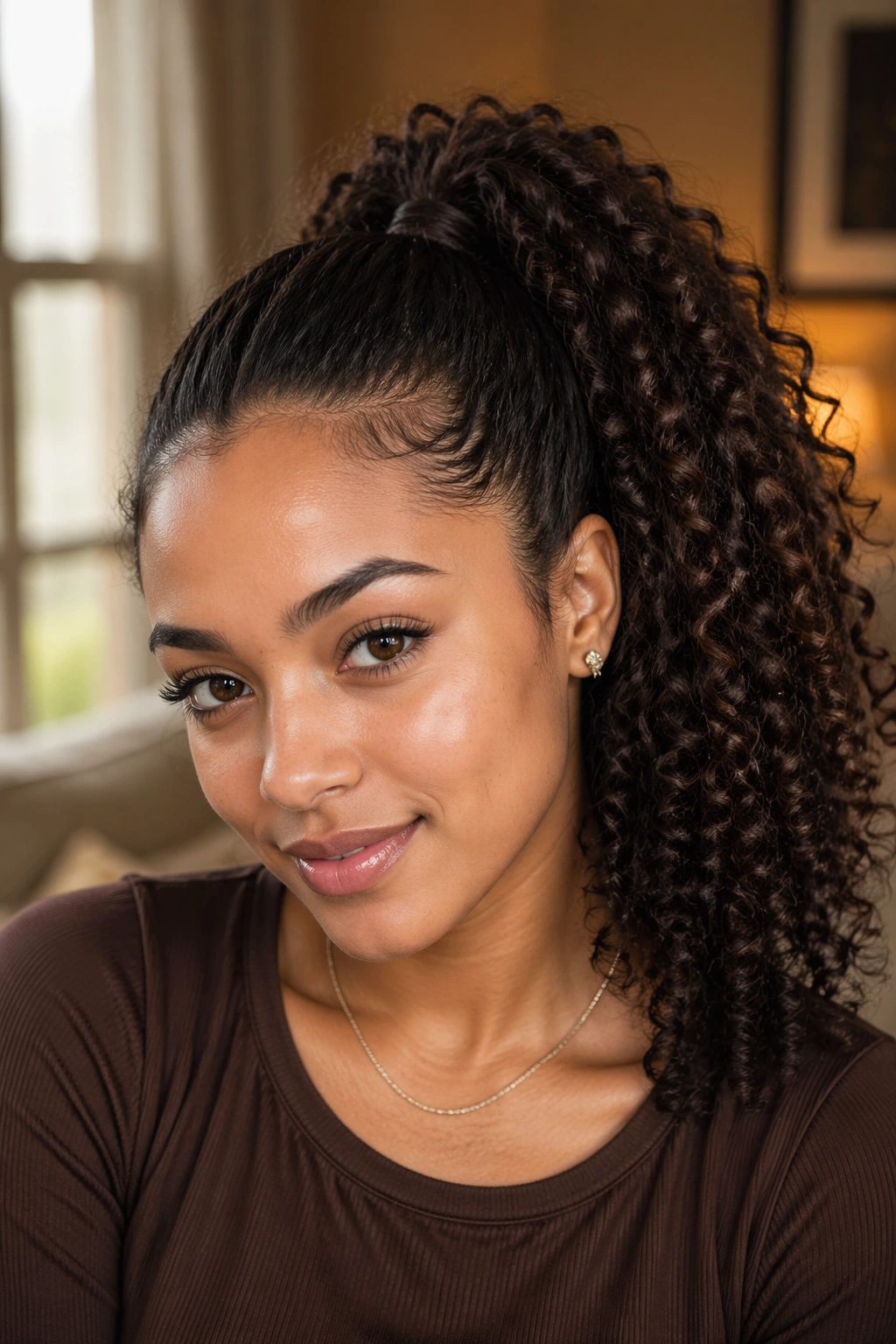
Espresso brown has a crisp, deep look that makes defined curls stand out. Put that shade in a high ponytail and the whole style sharpens up fast.
The key here is not to brush the life out of the curls. Smooth the roots, yes. Polish the crown, absolutely. But leave the ponytail length with definition, whether that means natural ringlets, finger coils, or curled ends set with a wand. If you flatten the tail too much, the style loses the point.
A narrow brush and a firm gel are your friends here. So is a small section of hair wrapped around the base to hide the elastic. That tiny move makes the ponytail look finished, not improvised.
This one has more attitude than the low versions. It lifts the face and makes the curls feel on display.
8. Bronze Half-Up Ponytail
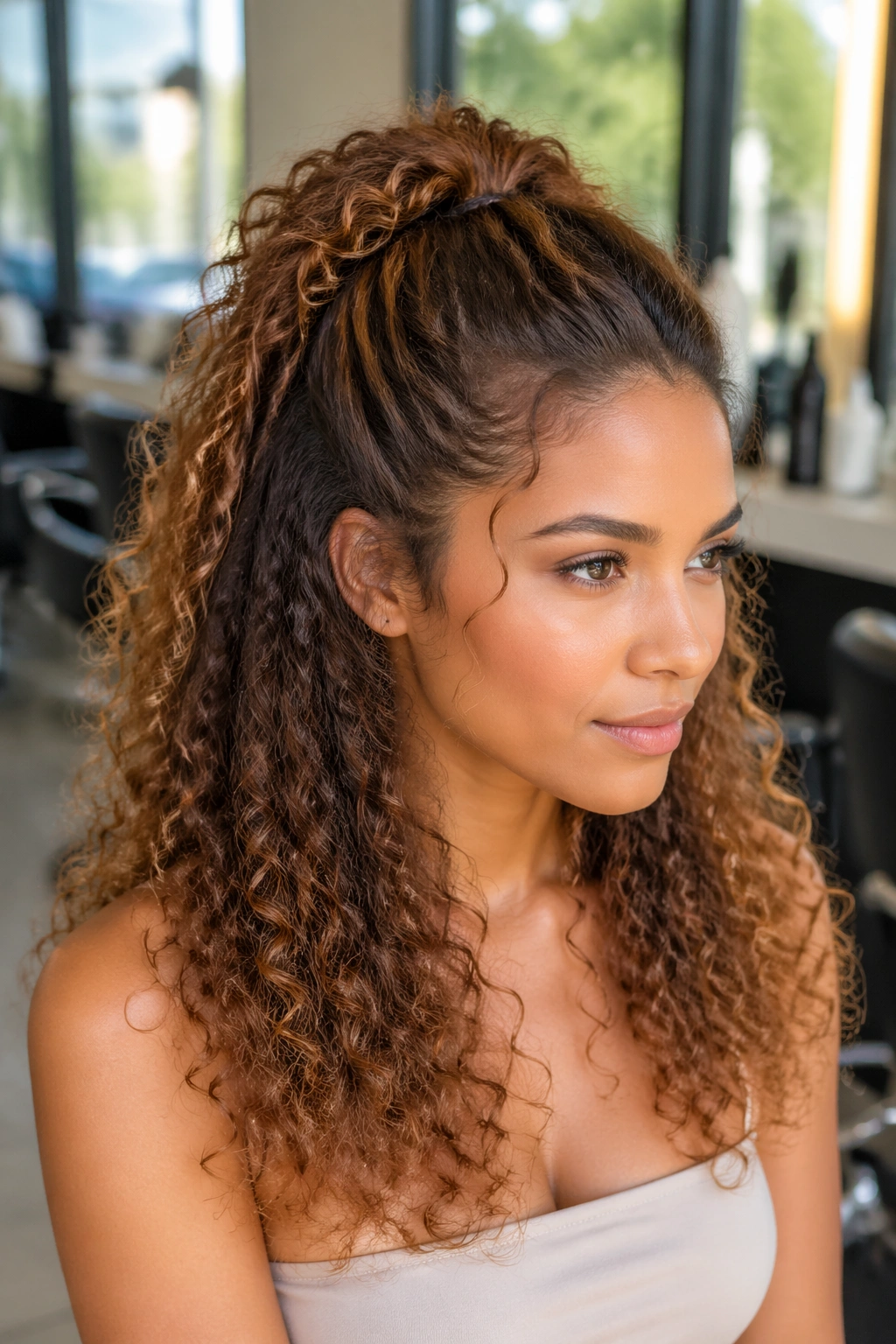
Why choose between wearing your curls down and tying them up? A bronze half-up ponytail lets you do both.
The top section gets pulled back and secured high or mid-high, while the lower curls stay loose. That means less hair in your face, but you still keep the fullness that curly hair gives you. Bronze brown adds warmth and makes the upper section stand out without looking harsh.
Best For
- Thick curls that need a little control at the crown
- Medium-length hair that feels too short for a full ponytail
- Days when you want lift but not a tight pull at the scalp
A half-up style also works well when your roots need refreshing but the rest of your hair still looks good. You fix the part, smooth the top, and let the lower half do its own thing. Easy. Smart, too.
9. Maple Wrapped Ponytail
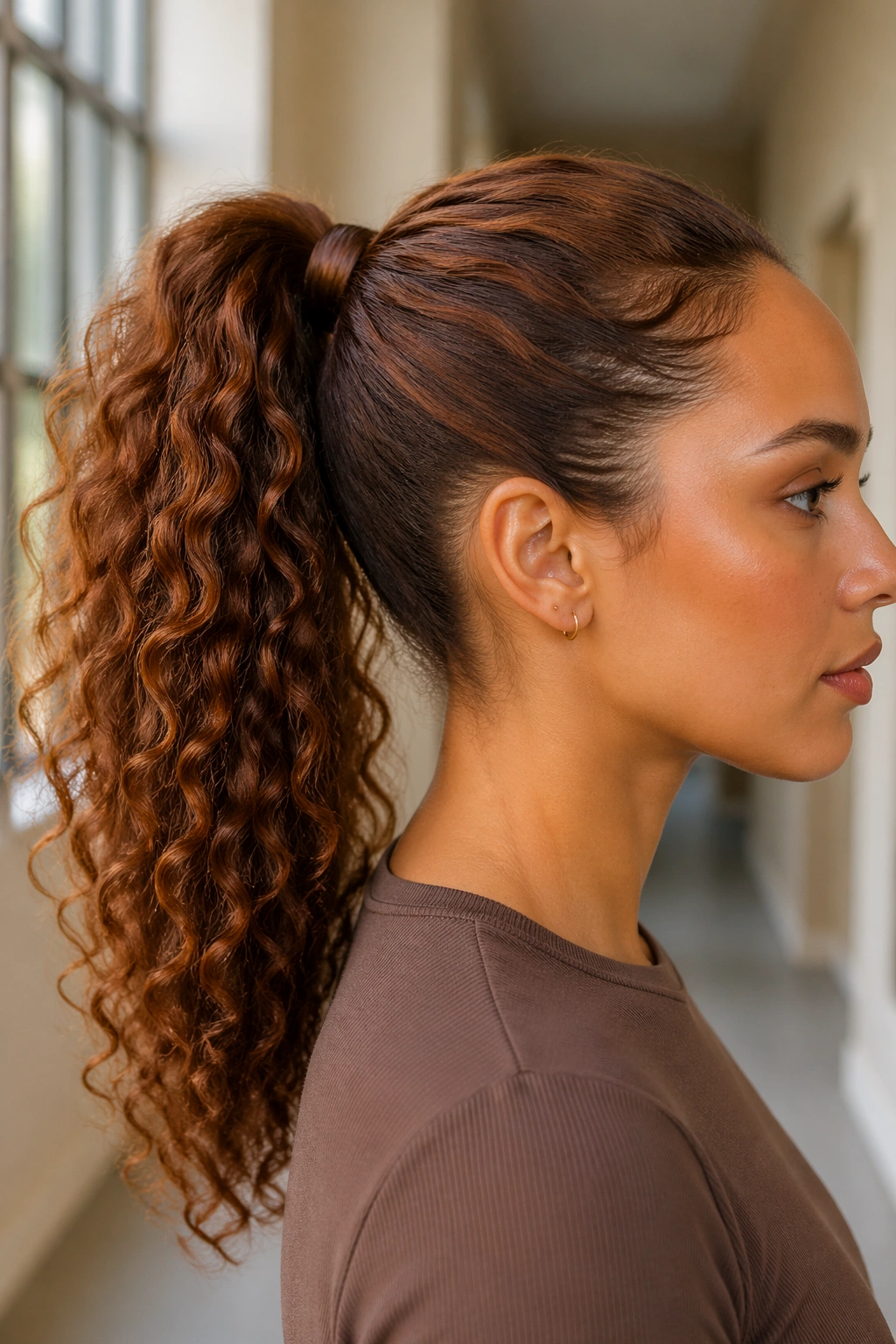
A wrapped ponytail base is a small detail, but it changes the whole finish. Maple brown makes that detail pop because the wrap looks intentional instead of hidden in a dark blur.
The idea is simple. After you secure the ponytail, take a thin curl, braid, or twisted strand and wrap it around the elastic. Pin the end underneath with a bobby pin. That is it. The style instantly looks more polished.
This works with high, low, and mid ponytails, but I like it best when the hair has some volume at the crown. A flat base can make the wrap feel too precious. A little lift balances it out.
If you only borrow one trick from this whole list, borrow this one. It is fast, cheap, and it makes a ponytail look like you meant every part of it.
10. Mahogany Braided Ponytail
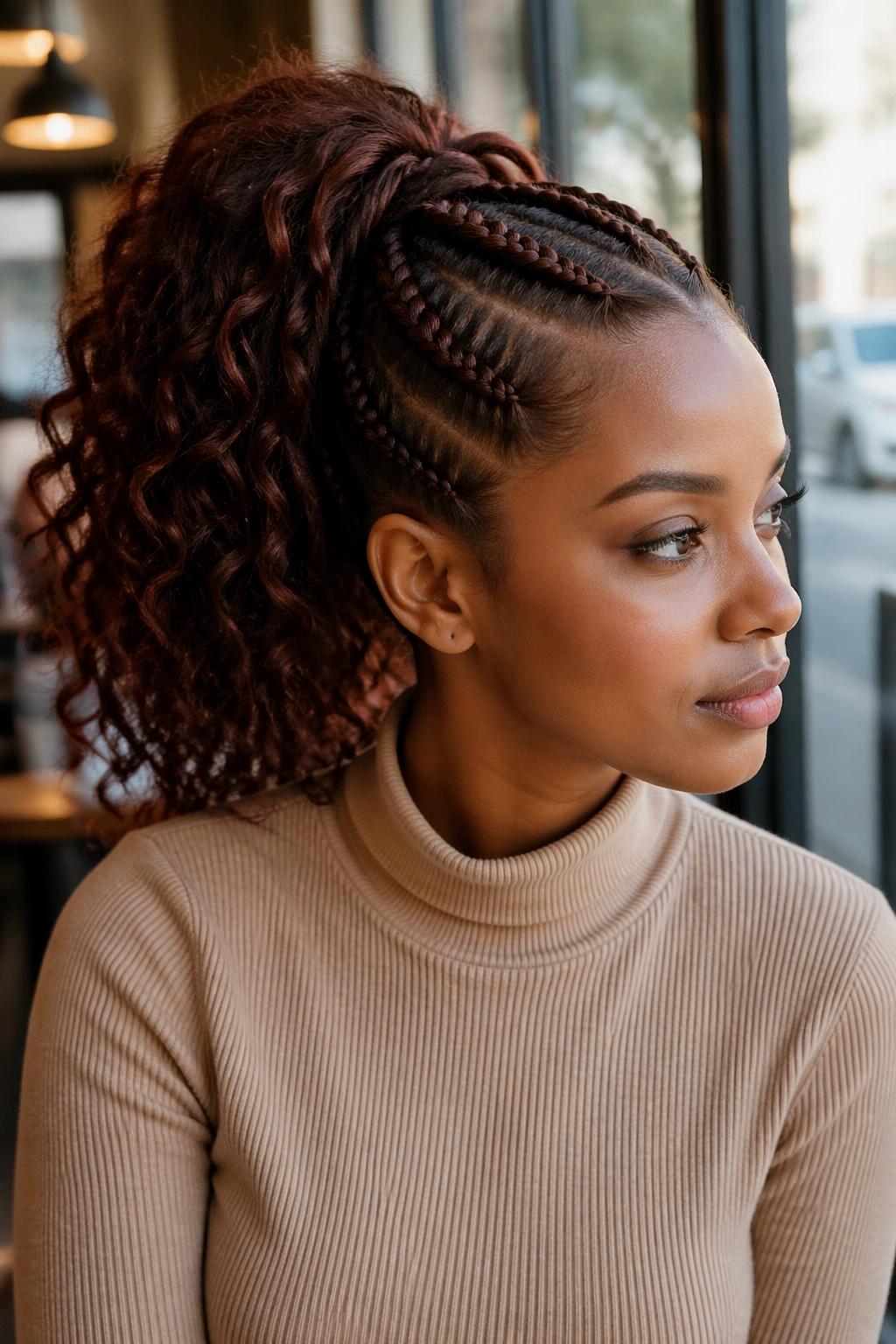
Mahogany brown gives a braided ponytail real depth. The color is rich enough to show the braid pattern, but dark enough to keep the look grounded.
This style is part braid, part ponytail, and that split is what makes it useful. Braid the front or the top in sections, then gather the rest into a ponytail and let the ends stay curly or lightly stretched. You get order at the crown and movement at the back.
A little braiding gel helps if your curls are prone to frizz at the root. Use only enough to smooth the sections. Too much product makes the braid look wet in a way that is harder to fix later.
It is a strong pick for long wear. The braided top keeps the shape steady, even when the rest of the hair loosens a bit over time.
11. Ash Brown Side-Part Ponytail
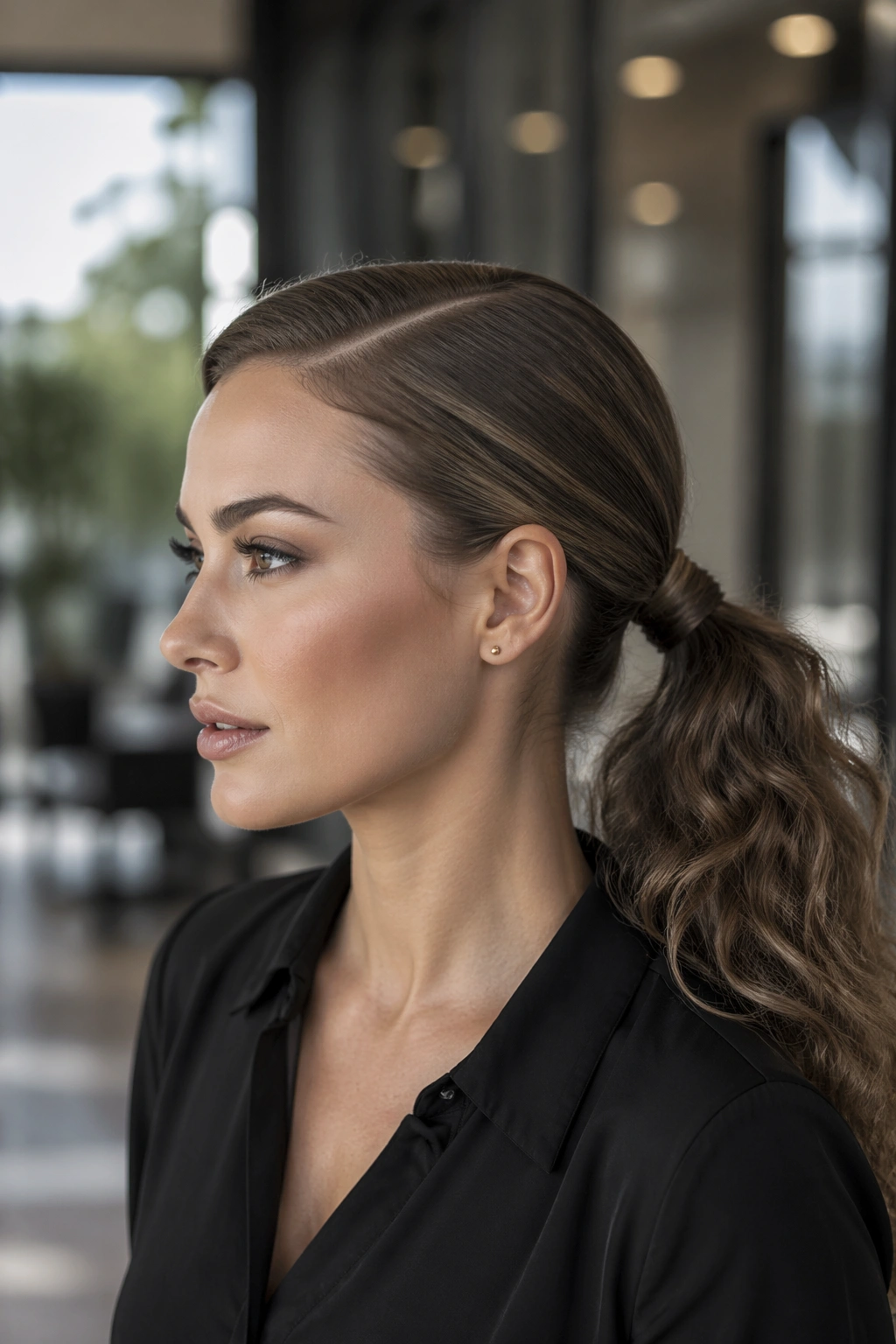
Ash brown changes the mood of curly hair in a subtle but noticeable way. The cooler tone makes a side part feel sharper, and the ponytail reads a little cleaner overall.
This version works best if you like contrast. Deep side part. Sleek crown. Curly ponytail at the back or just behind one shoulder. That combination keeps the style from drifting into plain territory.
What Makes It Different
Ash tones can make the hair look less warm and a little more tailored. That matters if you usually wear golden or reddish browns and want a quieter finish for once.
One Thing to Watch
Cool-toned brown can look flat if the styling is sloppy. You need a neat part, smooth roots, and some definition in the tail itself. Otherwise the color loses its edge.
It is a good style for interviews, events, or any day when you want to look composed without wearing a stiff updo.
12. Toffee Curly Ponytail with Face-Framing Pieces
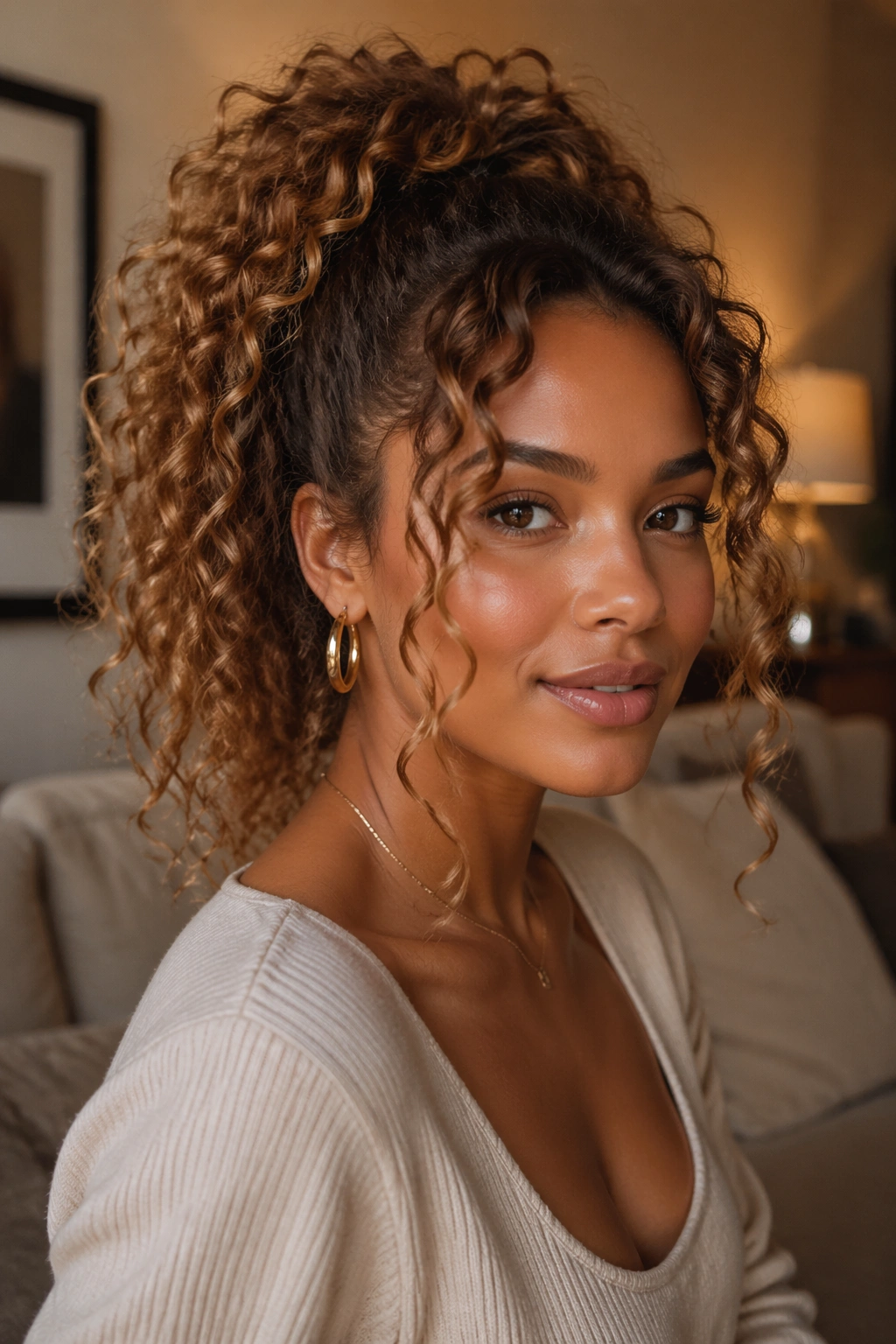
Toffee brown has that soft, wearable warmth that flatters curly hair fast. Add a few face-framing pieces, and the ponytail suddenly feels lighter around the face.
Why This Style Flatters So Many Faces
The loose front pieces break up the line from forehead to ponytail. That means less harshness, especially if your curls are dense or your features are sharp. The shape softens round faces, balances longer faces, and makes the whole style feel less pulled back.
How to Get the Front Right
- Leave out two pieces near the temples.
- Aim for pieces that hit around the cheekbone or jaw.
- Define them with a little cream or finger-coiling if needed.
- Keep the rest of the ponytail smooth or softly textured.
Do not make the front pieces too short. That is where this style goes wrong. A tiny fringe can fight the rest of the ponytail and sit in awkward places all day.
13. Dark Brown Side-Swoop Ponytail
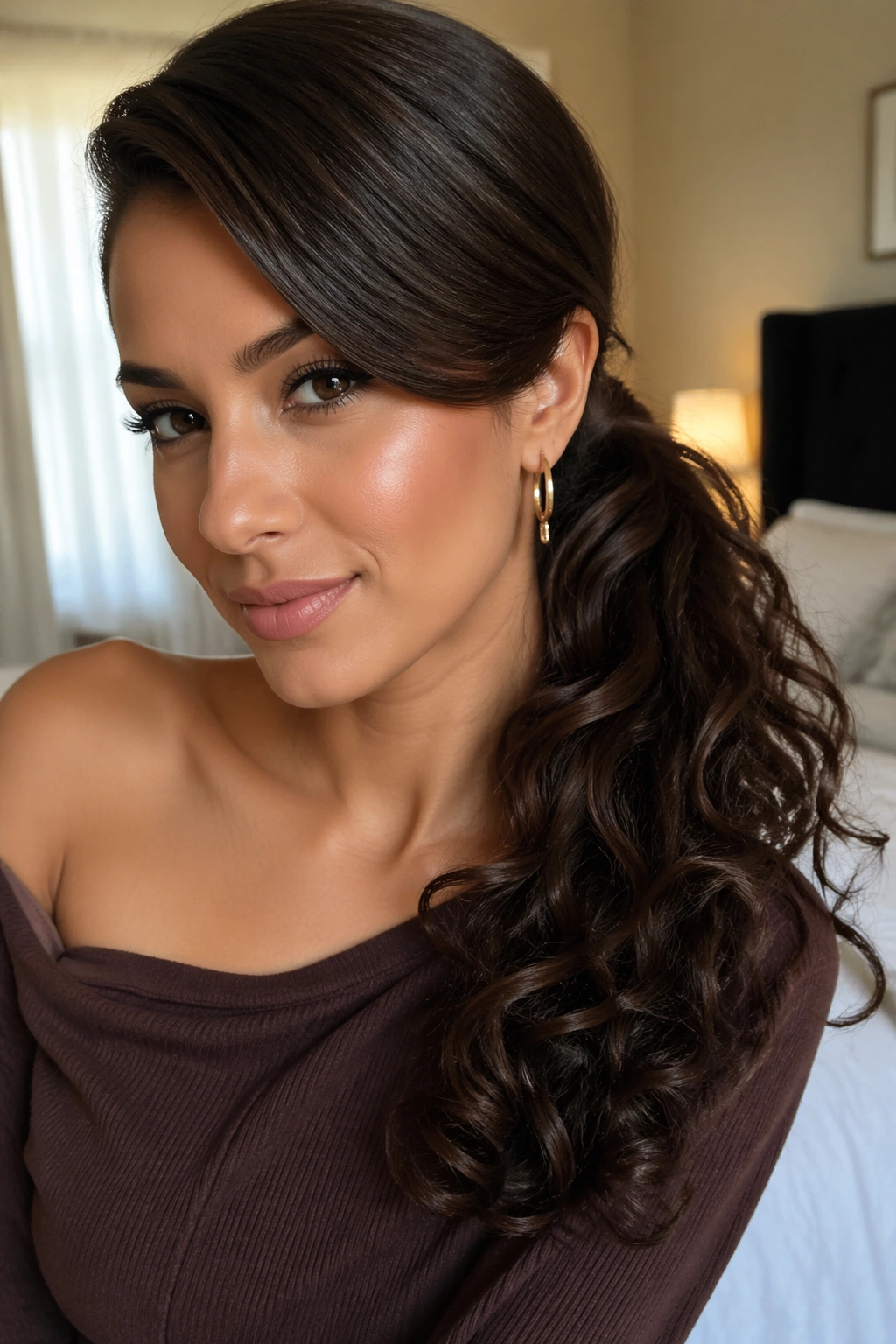
A side-swoop ponytail has drama without needing a lot of extra work. Dark brown hair gives the swoop a strong line, especially if the front section is sleek and the ponytail stays full.
The swoop can be as simple as a deep side part and a brushed front section that travels across the forehead before joining the ponytail. Or you can pin one side lower and let the front fall naturally toward the ear. Either way, the shape feels deliberate.
I like this style when the hairline needs a little control but I do not want a fully slicked style. It keeps some softness near the face, and that matters. Too much product can make curly hair feel hard, which is never the goal.
A side-swoop ponytail looks especially good with gold hoops, a clean neckline, and a satin scarf tied low at the base if you want extra polish.
14. Latte Low Puff Ponytail
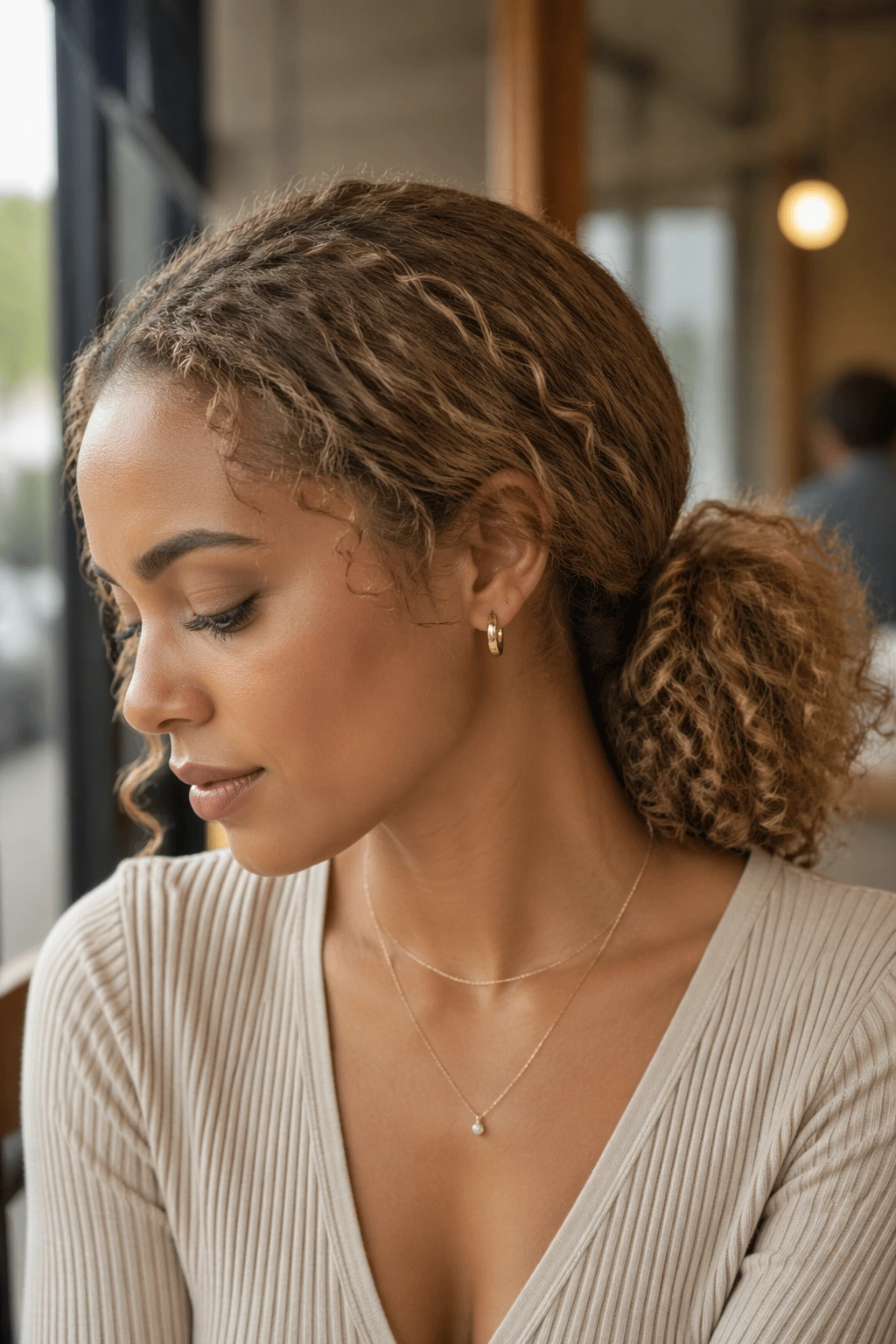
Latte brown suits a low puff because the whole style feels soft from the start. There is no need to force it into a rigid shape.
A low puff ponytail works well when your curls are stretched, second-day, or somewhere between defined and fluffy. Pull the hair back low, but keep enough looseness that the curls can sit naturally. If you have thicker hair, use a puff cuff or a wide band so you are not dragging on the scalp.
Best part: it takes about 10 minutes once you know your part.
Best for: coils, tight curls, and medium-density hair that needs a low-tension style.
Watch for: brushing too much at the crown. That is how you end up with puff at the front and flatness at the back. Not a good look.
This one is casual, but not sloppy. That is its strength.
15. Auburn-Brown Twisted Ponytail
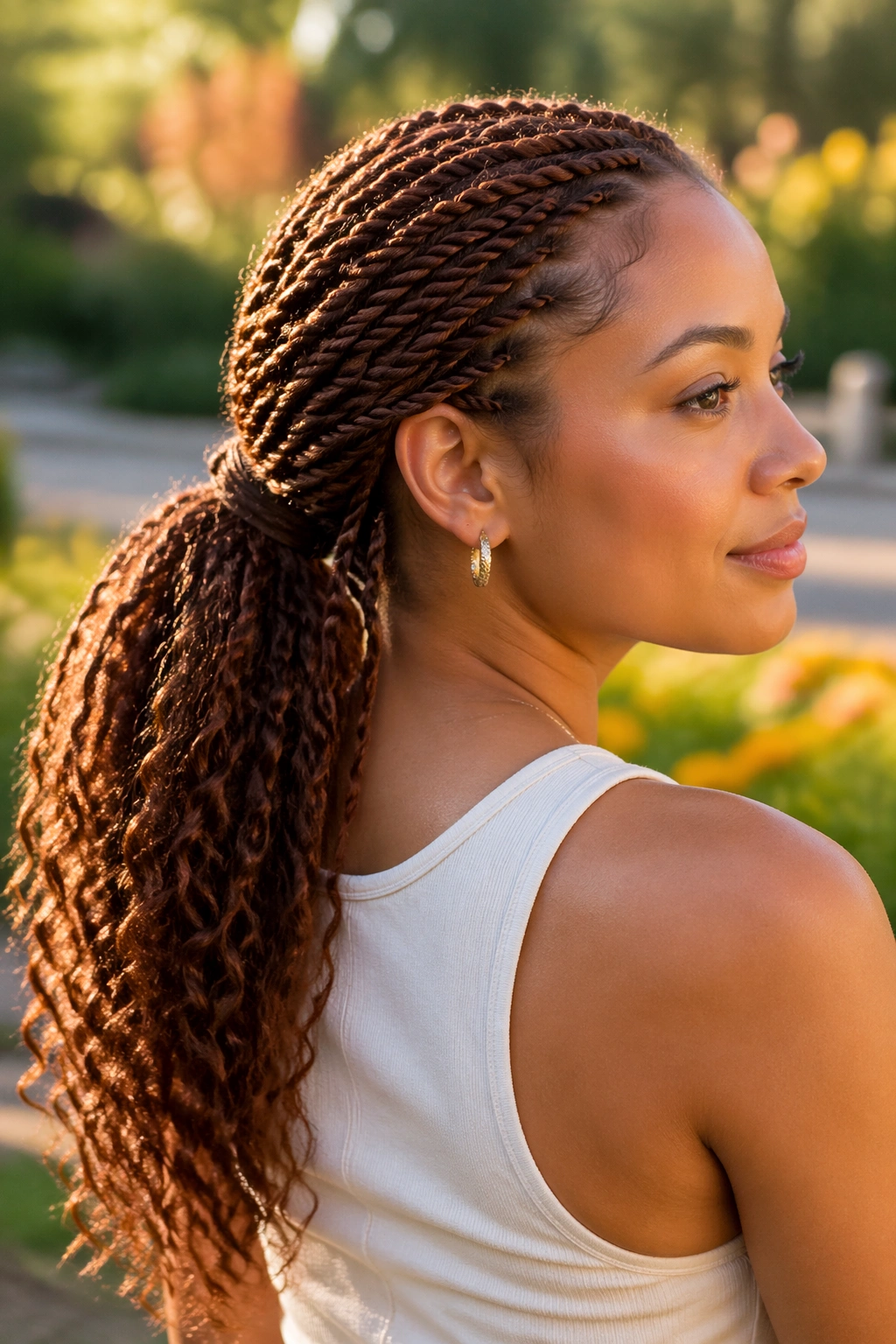
Auburn-brown brings a little red warmth into the mix, and on curly hair that warmth can make the texture look even livelier. A twisted ponytail uses that color shift well because the twists catch light at different angles.
This style usually starts with two-strand twists or chunky rope twists pulled back from the front and sides. The rest is gathered into a ponytail, low or mid-height, depending on how much lift you want. The contrast between the twisted top and the loose tail keeps the style from feeling flat.
It is a nice choice when you want warm color without leaning all the way into copper. Auburn brown reads softer than red, but it still gives the curls some energy.
If your hair is layered, leave the shortest layers alone rather than forcing them into the ponytail too tightly. A few escaped curls can look better than a too-tight pull.
16. Cocoa Rope-Braid Ponytail
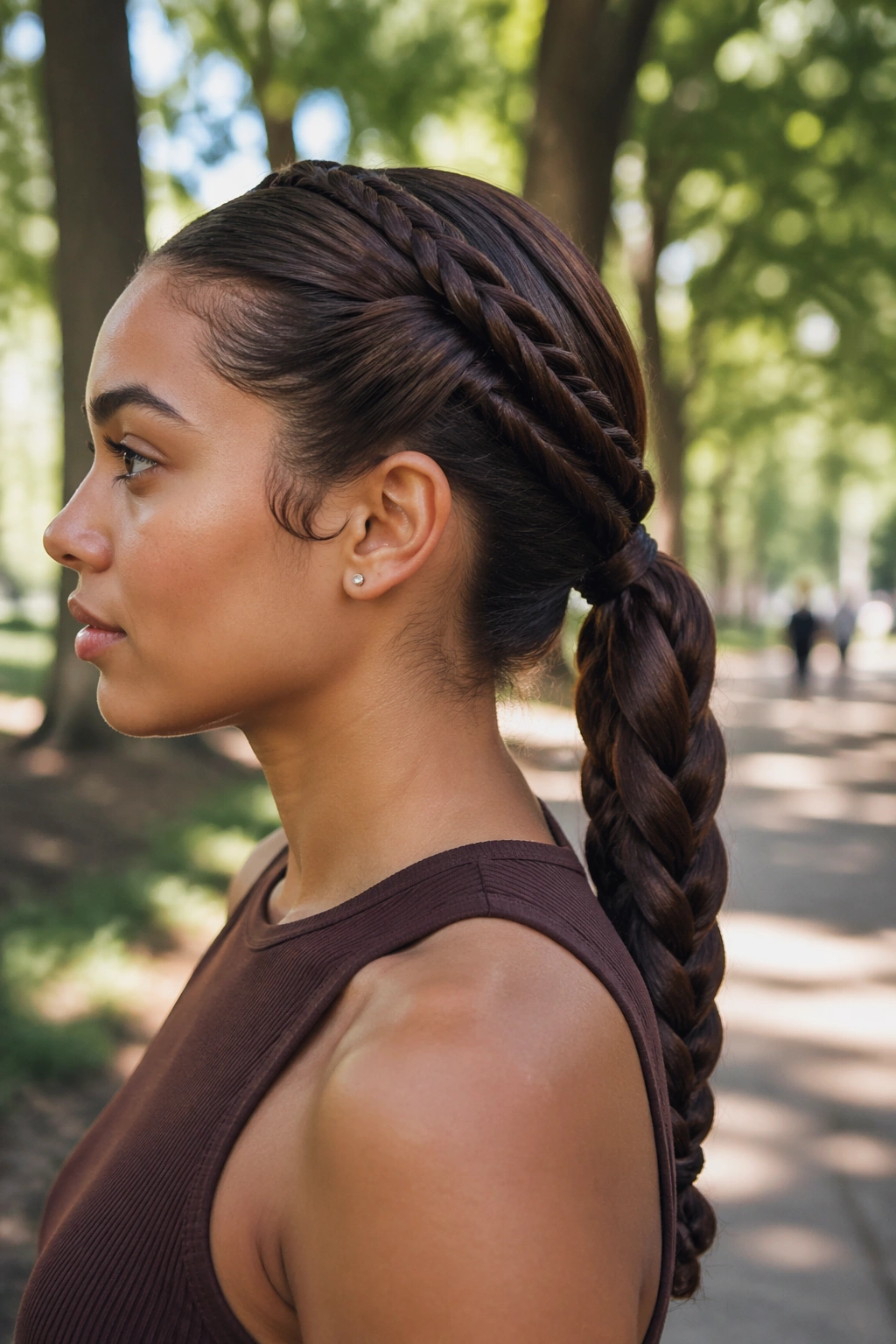
Cocoa brown and rope braids go together in a way that feels almost too easy. The shade is deep enough to show the braid lines, and the braid itself holds up better than loose twisting if your hair slips.
Why Rope Braids Help
A rope braid is made by twisting two sections in the same direction, then wrapping them around each other in the opposite direction. That cross-tension makes the style hold better than a soft two-strand twist for many curl patterns.
How to Wear It
- Prep the hair with leave-in and a light cream.
- Divide the ponytail into 2 equal sections.
- Twist each section clockwise.
- Wrap them together counterclockwise until the ends hold.
This style is especially handy for thick hair, long hair, or days when you need the ponytail to stay tidy through a lot of movement. It looks neat without being fussy. And that is a good combination.
17. Chestnut Ponytail with Scarf
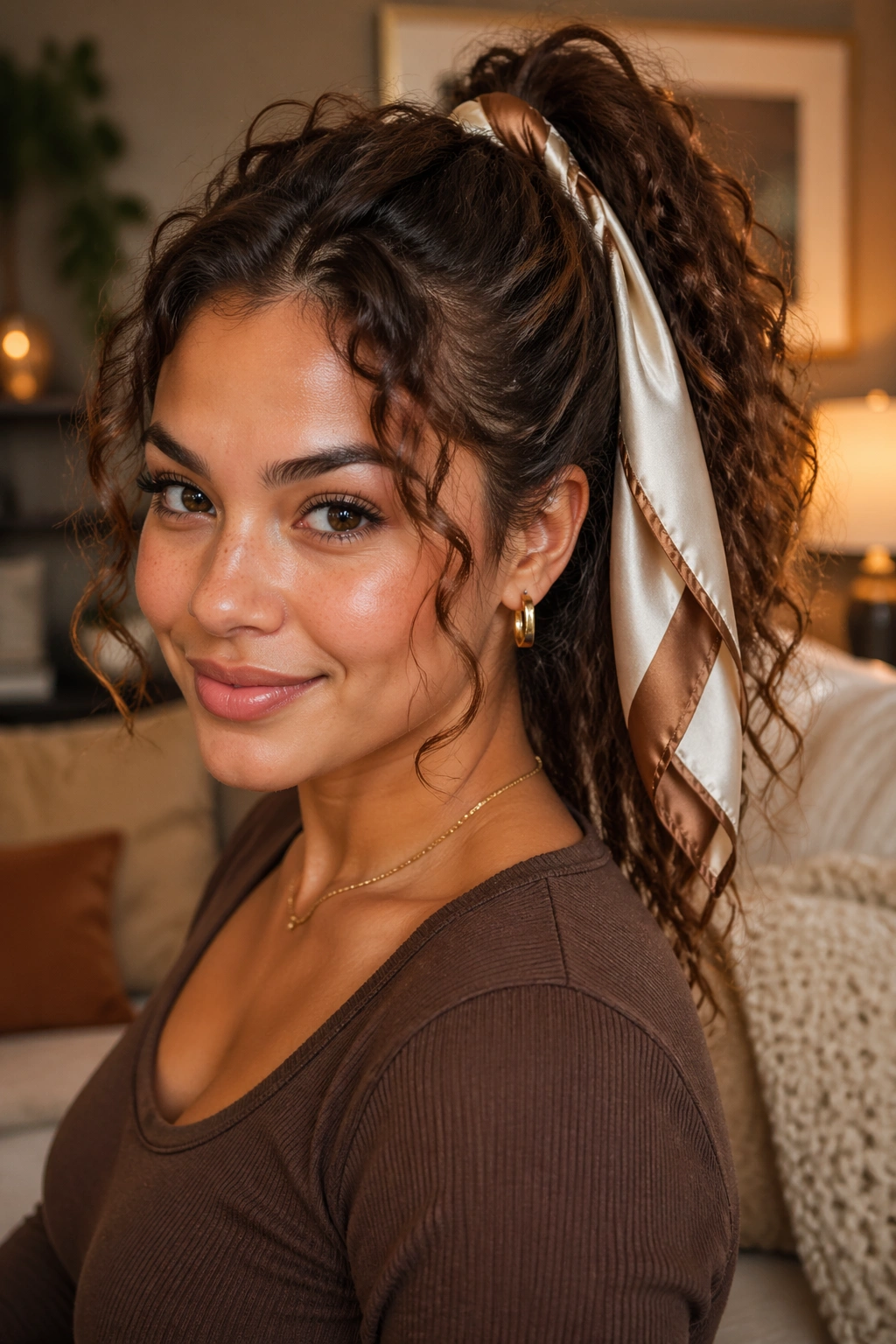
A scarf can do more for a ponytail than people give it credit for. Chestnut brown hair plus a satin or silk scarf creates a look that feels finished, even if the ponytail underneath is simple.
The scarf can be tied around the base, woven through the ponytail, or left in a loose knot for a softer feel. Choose silk or satin if you can. Cotton can pull moisture from the hair and rough up the ends.
This is a smart option when the hair needs protection as much as styling. The scarf hides a frizzy band, covers a rough elastic, and adds color without asking the hair to do extra work.
It also helps on low-energy mornings. Sometimes you do not want to build a whole style. You want one good tie and one good accessory. This is that kind of day.
18. Warm Brown Pineapple Ponytail
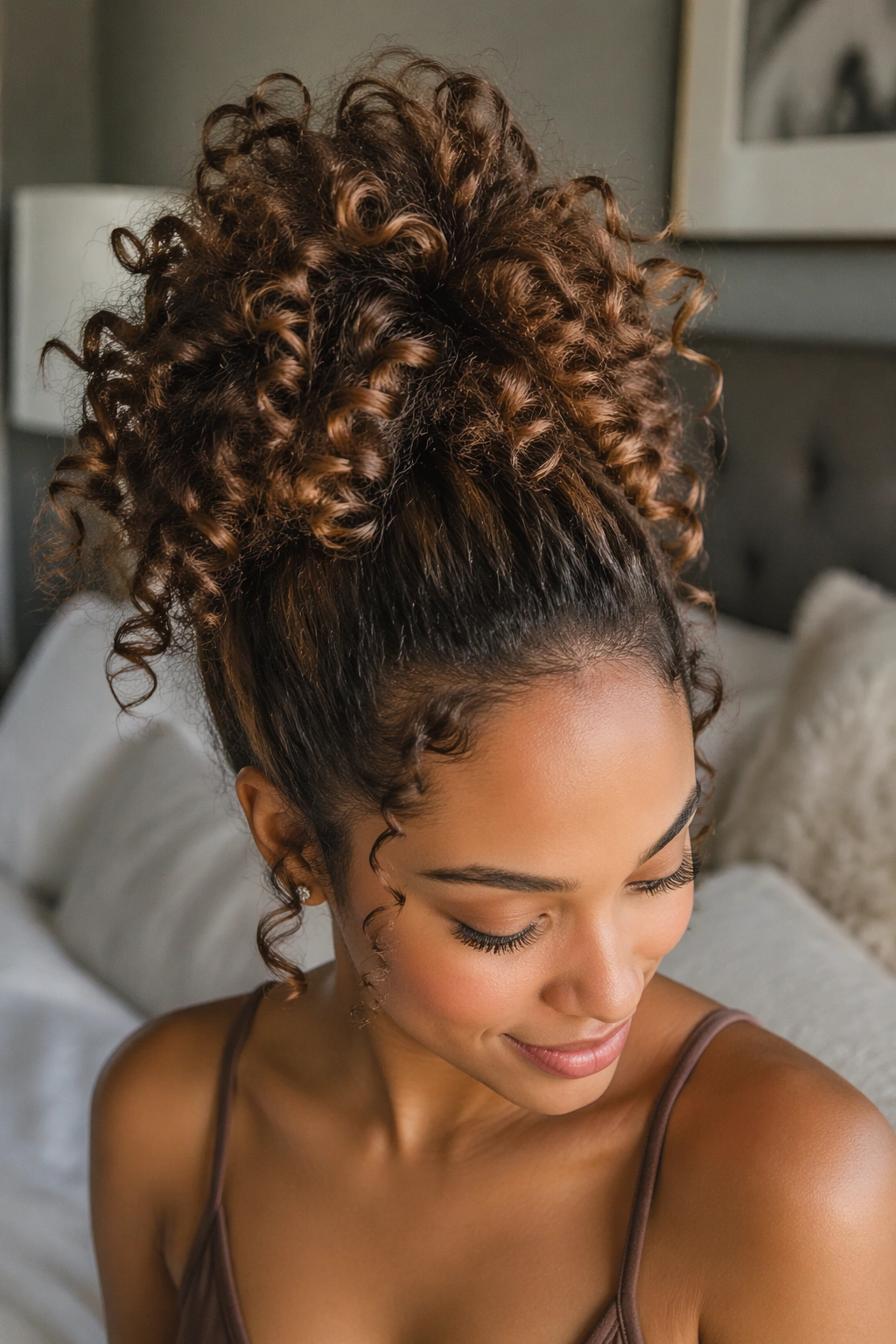
A pineapple ponytail keeps the curls high and loose, which is why it works so well for curly hair. Warm brown shades make that shape look rich instead of accidental.
The pony sits high on the crown, but it should not be pulled so tight that the curls get stretched flat. Use a soft scrunchie, gather the hair gently, and leave the ends free to bloom. If your curls are long enough, the tail can fall to one side with a soft curve. If they are shorter, the puff will sit more upright. Both are fine.
This style is especially useful if you need a quick refresh after sleeping on a silk pillowcase. You can shake out the roots, mist the length lightly, and pin a few front pieces if needed.
No heavy structure here. That is the charm.
19. Deep Mocha Bubble Ponytail
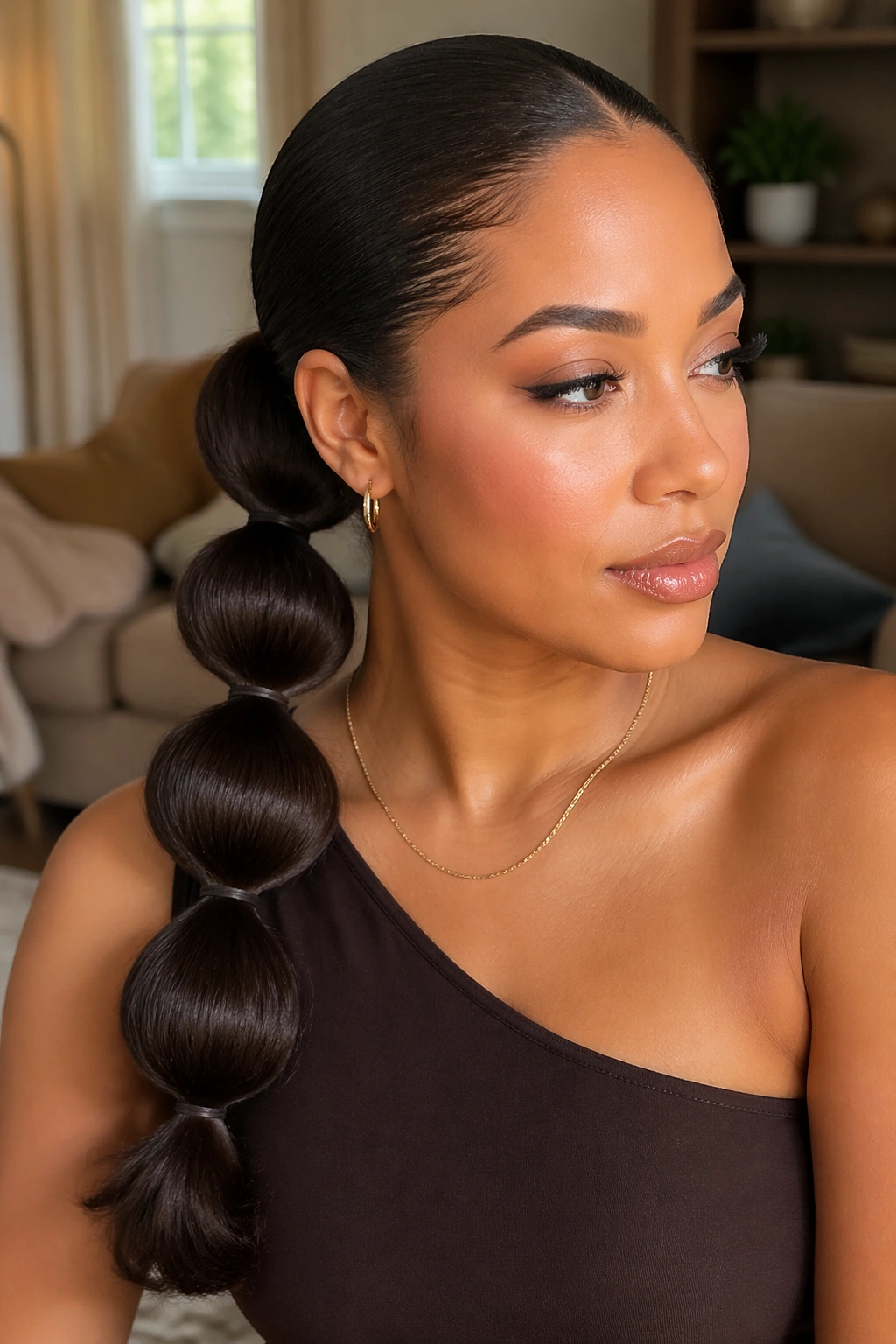
Deep mocha brown gives a bubble ponytail a more polished edge than a lighter shade would. The dark tone makes the sections look fuller, which is a nice trick if your hair is long but not extremely thick.
This version sits lower and cleaner than the more playful bubble styles. Secure the base, add elastics at steady intervals, then gently tug each section until it rounds out. Keep the tension even. If one bubble is larger than the others, the whole style starts to look lopsided.
A small amount of shine serum on the ends can help, but keep it away from the roots if your hair gets oily fast. The bubbles should look soft, not greasy.
I like this as a dressier take on the bubble ponytail. It still has personality. It just reads a little more intentional.
20. Brown Ponytail with Curly Bangs
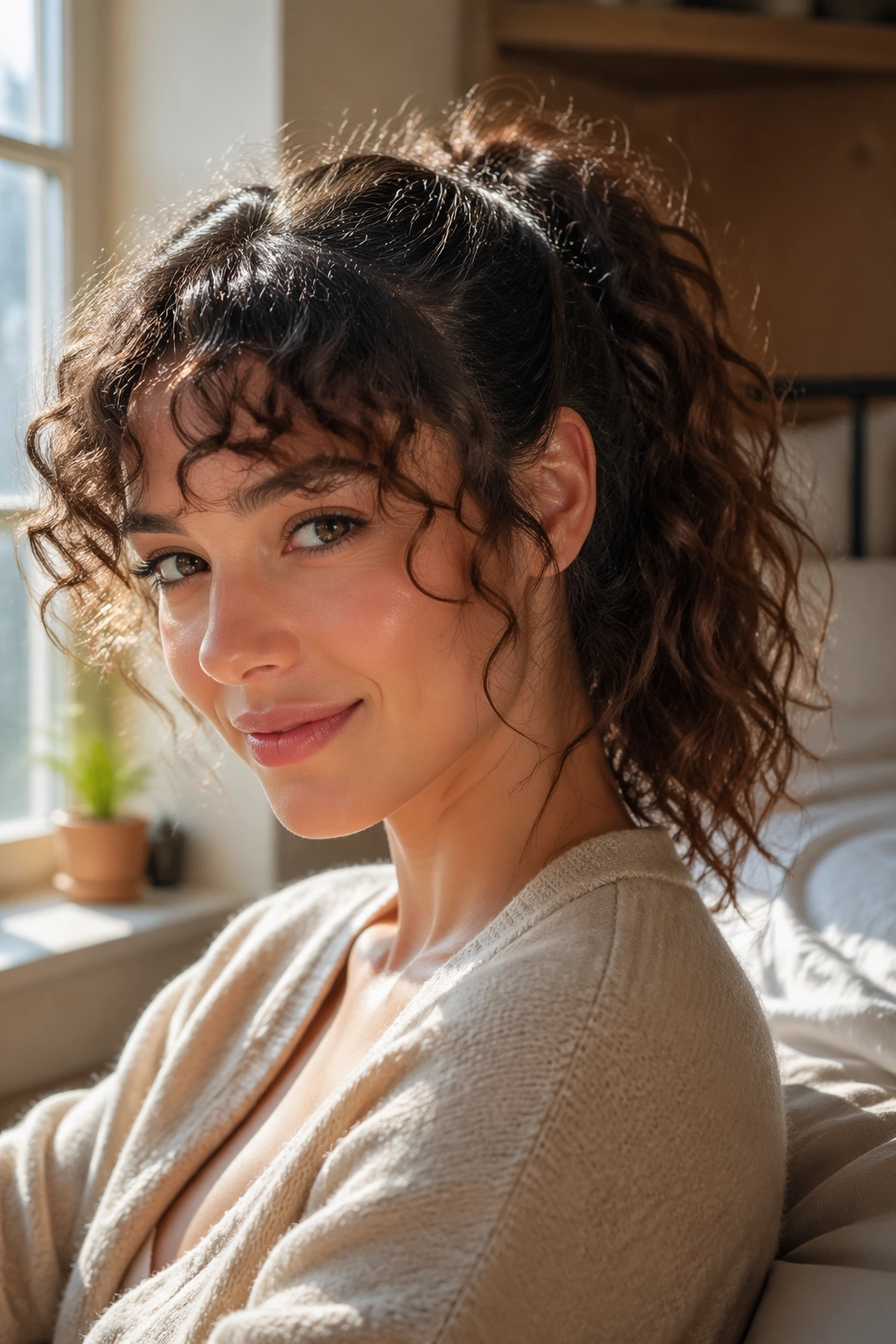
Curly bangs change everything. Once you leave that fringe out, the ponytail feels lighter, younger, and a lot less severe.
The Shape to Aim For
Keep the bangs long enough to sit around the eyebrows or just below them when dry. Curly hair shrinks, and a fringe that looks long enough while wet can surprise you in the morning. The ponytail itself can sit mid or high, depending on how much face coverage you want.
How to Keep It Balanced
- Define the bangs with a small amount of cream or gel.
- Do not separate the curls too much.
- Let the ponytail stay fuller so the fringe has something to contrast with.
- Trim the bangs in their natural curl pattern, not straightened.
This style works because it breaks the forehead line and makes the ponytail feel softer. It is a good one if you want movement around the face without pulling everything back.
21. Soft Layered Brown Ponytail
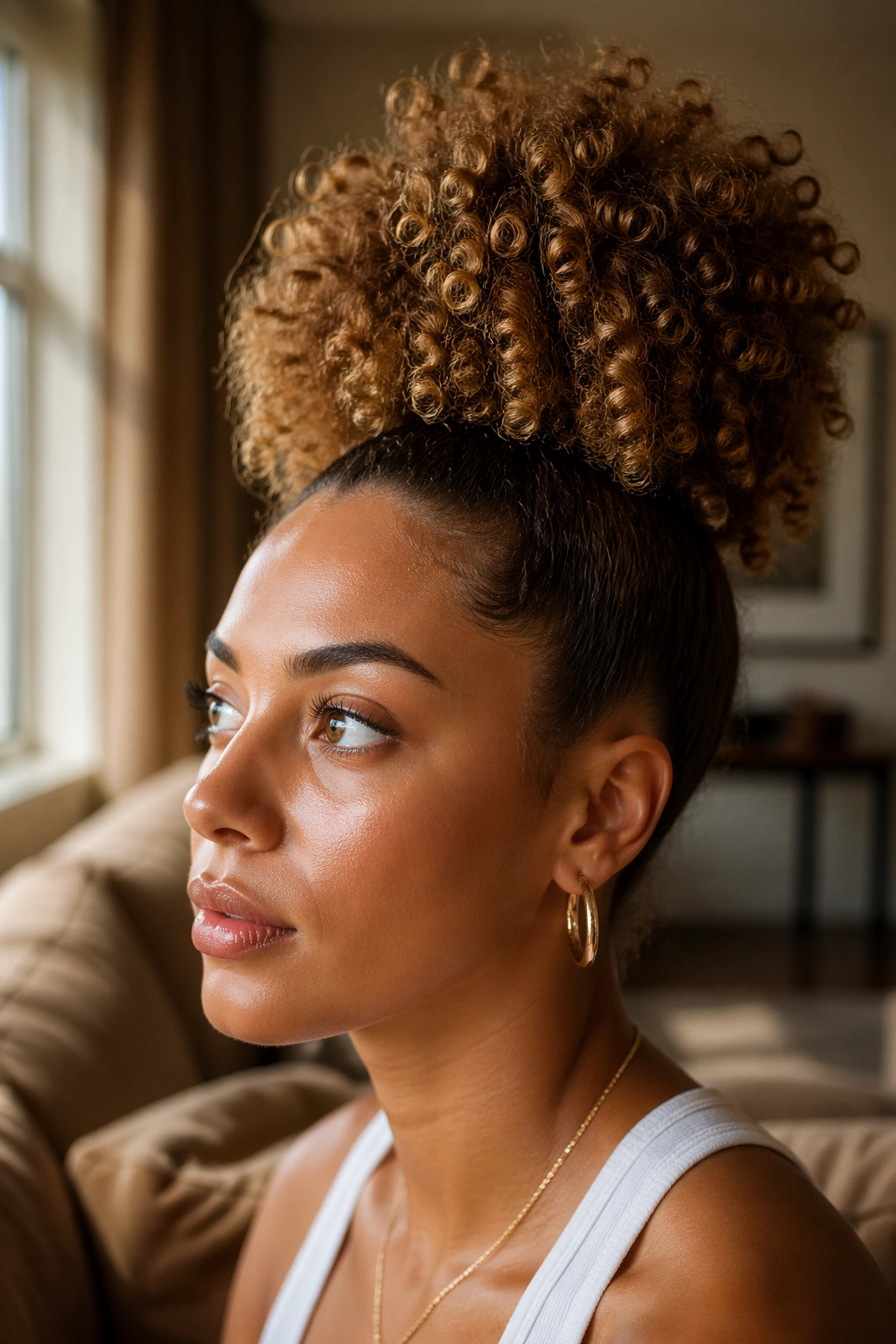
A layered brown ponytail is the style I would hand to someone who wants one dependable option and does not want to fuss with it every day. Layers stop the ponytail from turning into one heavy block, which matters a lot with curly hair.
The shape depends on your cut, but the idea stays the same: keep some height at the crown, let the layers fall naturally, and avoid yanking every strand into the elastic. A few loose pieces near the temples or nape make the style look lived in instead of overworked.
Best tip: use a wide-tooth comb or your fingers for the final gather if your curls are already defined. A brush can flatten the very movement that makes the ponytail worth wearing.
If you only want one brown ponytail to keep in rotation, make it this one. It works for errands, dinners, school runs, and the days when you need your hair to behave without looking bored.
