
Some hairstyles ask for perfect symmetry. Side ponytails with bangs do the opposite, and that is why they work so well. A ponytail pulled to one side softens the shape of the face, while the bangs control where the eye lands first. Together, they can read polished, playful, romantic, or a little bit edgy without needing a complicated set of tools.
The real magic is in the details. A side part that sits half an inch farther over. A ponytail anchored just behind the ear instead of at the nape. A fringe that is blown forward for three minutes too long, or smoothed back too much. Those tiny choices change the whole mood, and once you notice them, you start seeing how much shape a simple side ponytail can carry.
A 1-inch curling iron, a fine-tooth comb, a soft boar-bristle brush, and a few bobby pins do more work here than a drawer full of random products. Bangs need their own treatment, too. Blunt bangs want tension and precision, curtain bangs want movement, wispy bangs want air, and curly bangs want restraint. Get that part right, and the ponytail stops looking like an afterthought.
The 25 looks below cover sleek, messy, braided, curly, formal, and everyday versions, so you can match the style to your hair texture instead of fighting it. Some take five minutes. Some need a few extra pins and a little patience. Start with the one that sounds most like your hair, and the rest gets easier fast.
1. Sleek Low Side Ponytail With Side-Swept Bangs
This is the version I reach for when the outfit is doing a lot of work and the hair needs to stay clean. A low side ponytail with side-swept bangs looks tidy without feeling stiff, especially when the crown is brushed flat and the fringe moves in one smooth line across the forehead.
Why It Works
The angle of the bang softens the face, while the low placement keeps the ponytail calm and controlled. If your hair puffs up at the roots, a pea-sized bit of smoothing cream at the hairline helps a lot. Keep the bangs slightly curved with a round brush, then let the ends fall naturally so they do not look overstyled.
- Best on straight or softly wavy hair
- Use a clear elastic, then wrap a small strand around it
- Mist the bangs from about 10 inches away with light-hold spray
Tiny fix: slide one bobby pin under the ponytail base if it starts drifting lower on one side.
2. Textured Side Ponytail With Curtain Bangs
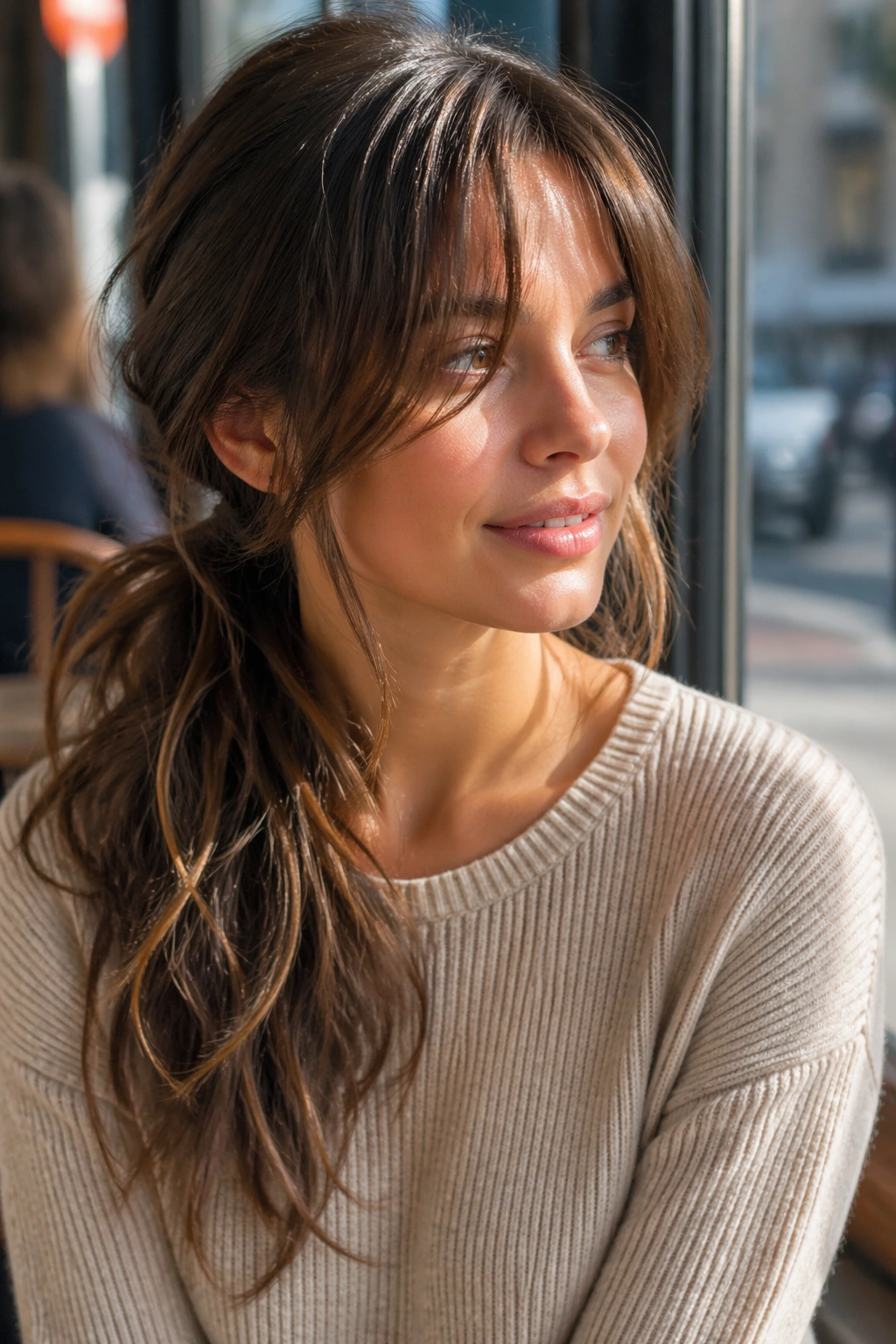
Why does this pairing work so well? Because curtain bangs already carry movement, and a textured side ponytail gives them somewhere to land. The style looks relaxed by design, which means you do not have to smooth every strand into place. That alone makes it easier to wear for an entire day.
I like this one on medium-length hair with a bit of bend in it. A 1.25-inch curling iron gives the mid-lengths enough shape, but leave the ends a little straighter so the ponytail does not turn into a puffball. Spray a light texturizing mist at the crown, then use your fingers instead of a brush when you gather the hair to the side. That keeps the finish soft, not fluffy.
Curtain bangs should be opened just enough to frame the eyes. Too much separation and they start to look thin. Too little and they sit flat against the forehead, which kills the shape.
3. High Side Ponytail With Blunt Bangs
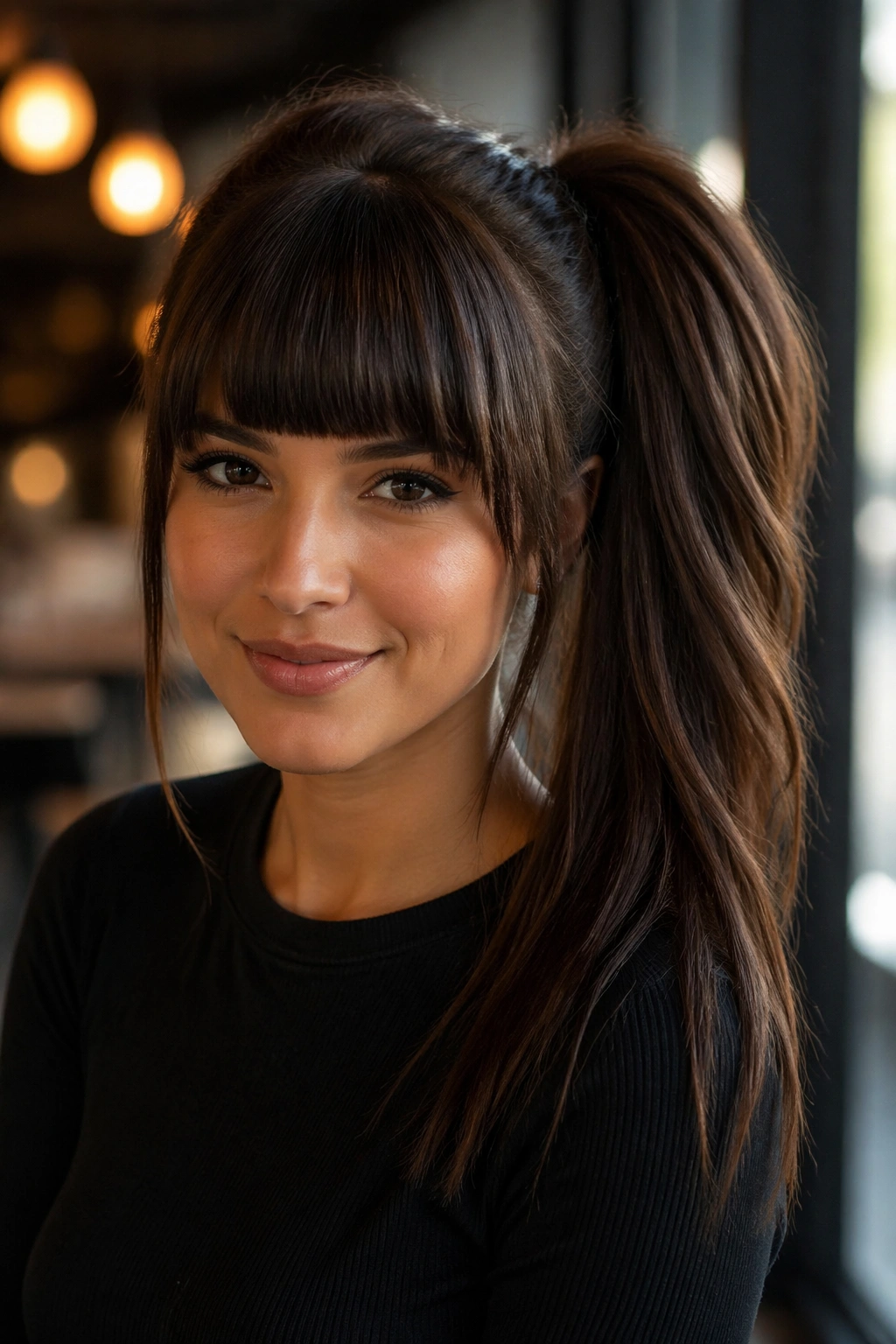
Blunt bangs are not too strong for a side ponytail. They can be the whole point. A high side ponytail gives you lift, and the blunt fringe gives that lift something sharp to sit against. The contrast is the draw here, and it looks especially good when the crown has a little height.
How to Keep the Line Clean
Start by blow-drying the bangs straight with a small round brush, then cool them in place with the dryer on low for a few seconds. That little step helps them stay put instead of splitting apart halfway through the day. Pull the ponytail high on one side, a touch above the ear, and smooth the crown with a soft brush so the top reads sleek rather than flat.
- Works well with thick straight hair
- Use a strong elastic, not a thin one that slips
- Keep the ponytail ends polished with serum, not heavy cream
If the bangs start to separate, do not keep brushing them. Press them back into shape with your fingertips and a whisper of hairspray.
4. Braided Side Ponytail With Wispy Bangs
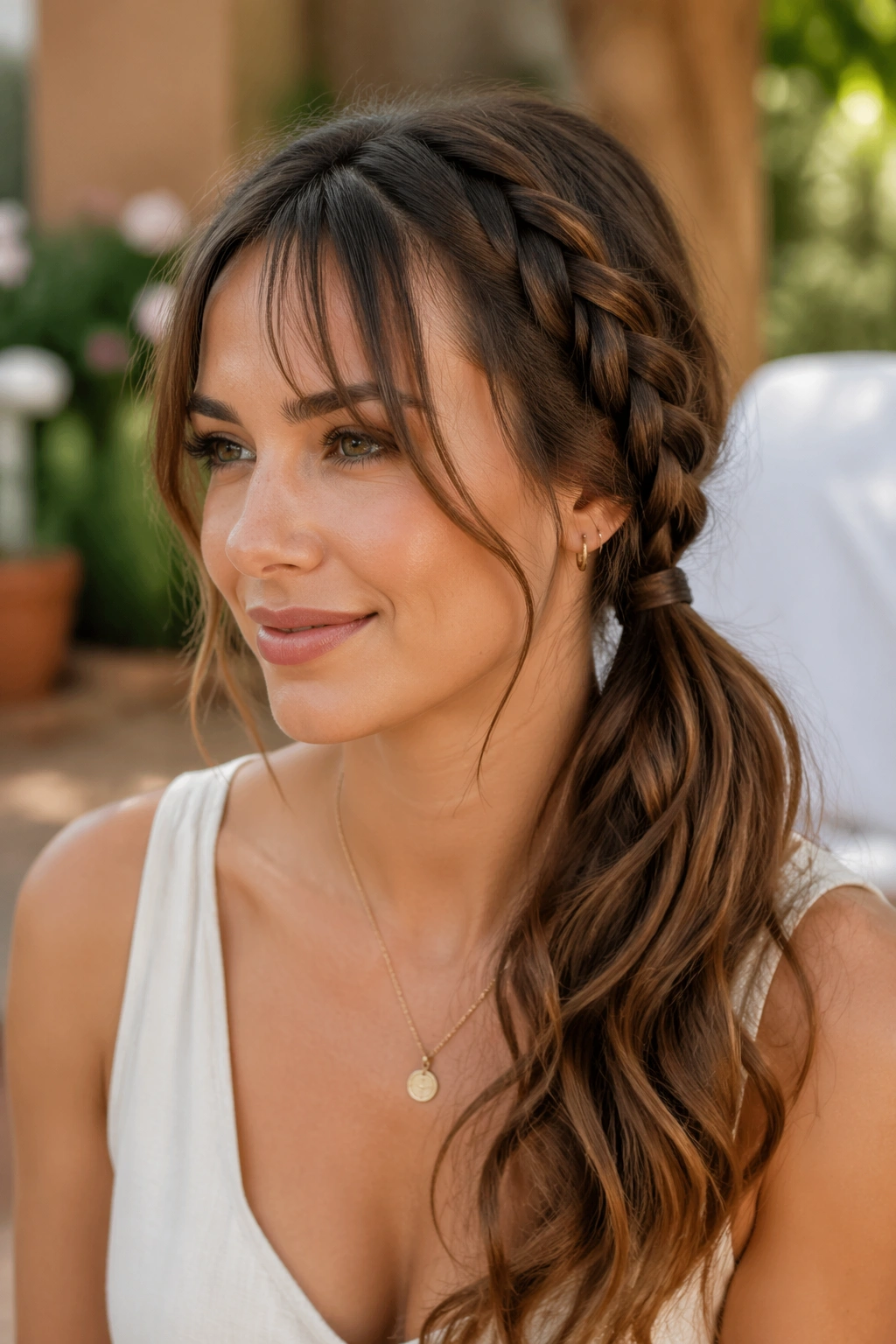
A small braid at the front changes the whole story. This version feels a little more finished than a plain side ponytail, but the wispy bangs keep it from getting too serious. It is a good choice when you want the hair to look deliberate without looking fussy.
Start the braid at the temple or just behind the hairline, then feed it into the side ponytail. A simple three-strand braid is enough; you do not need an elaborate pattern. The wispy fringe should stay light and broken up, which means a tiny bit of paste or wax on the very tips can help it move instead of frizz.
This one is especially useful on second-day hair. The slight grit gives the braid grip, and the softer bangs stop the style from feeling heavy around the face. It is a nice balance, and a practical one.
5. Curly Side Ponytail With Curly Bangs
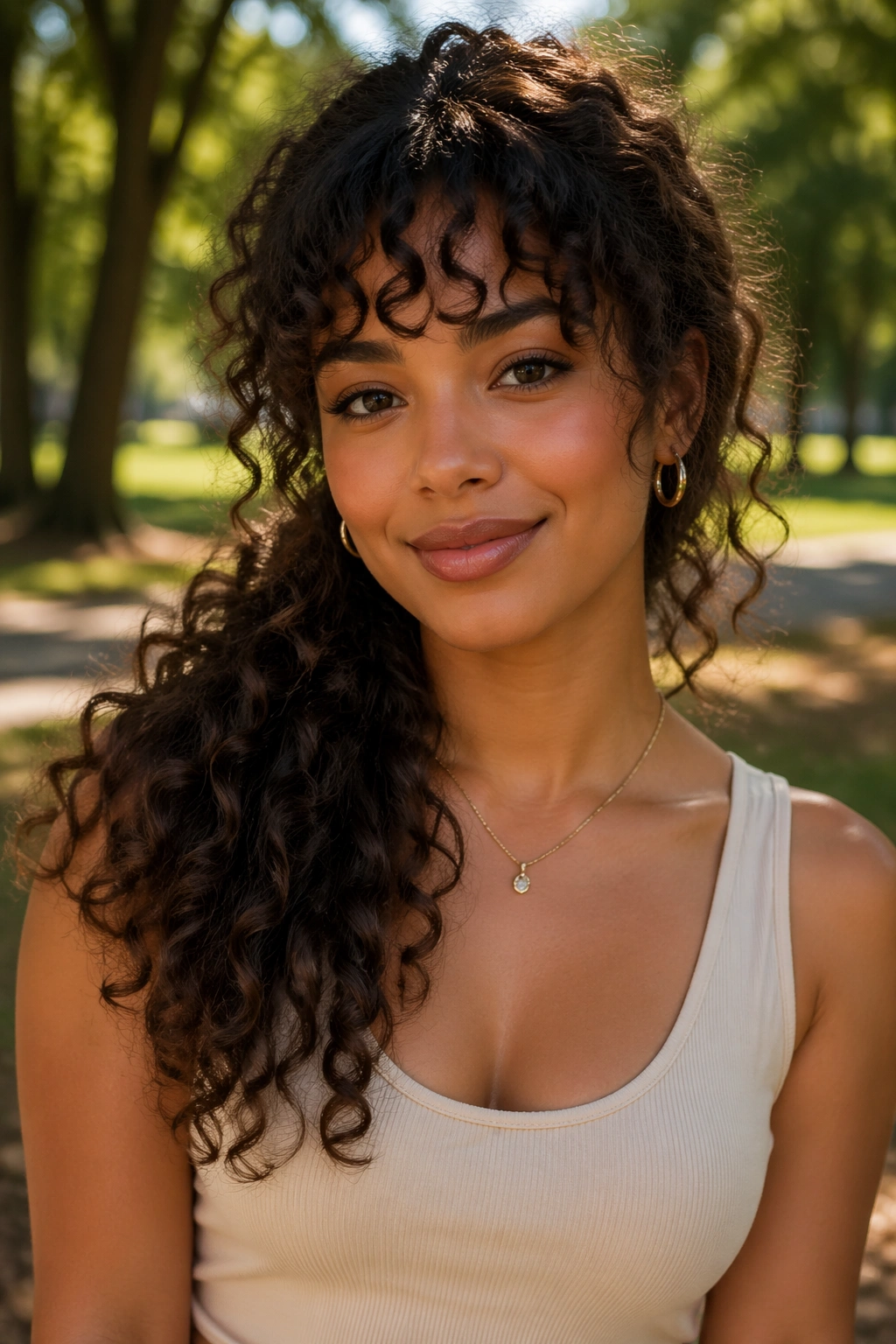
There is a springy, easy rhythm to this style when the curl pattern is left alone. A curly side ponytail with curly bangs works because the shape stays honest. You are not forcing the bangs to behave like straight hair, and the ponytail gets to look full instead of flattened.
The key is moisture. Use curl cream on damp hair, then scrunch in gel from mid-length to ends. Diffuse the bangs on low heat, but stop before they are bone dry; a little softness keeps them from sticking up like a shelf. Gather the ponytail to one side with your hands, not a brush, so the curls keep their shape.
I would skip heavy oils here. They tend to collapse the front first, and then the whole style loses energy. Better to keep the bangs springy and the ponytail defined.
6. Bubble Side Ponytail With Long Bangs
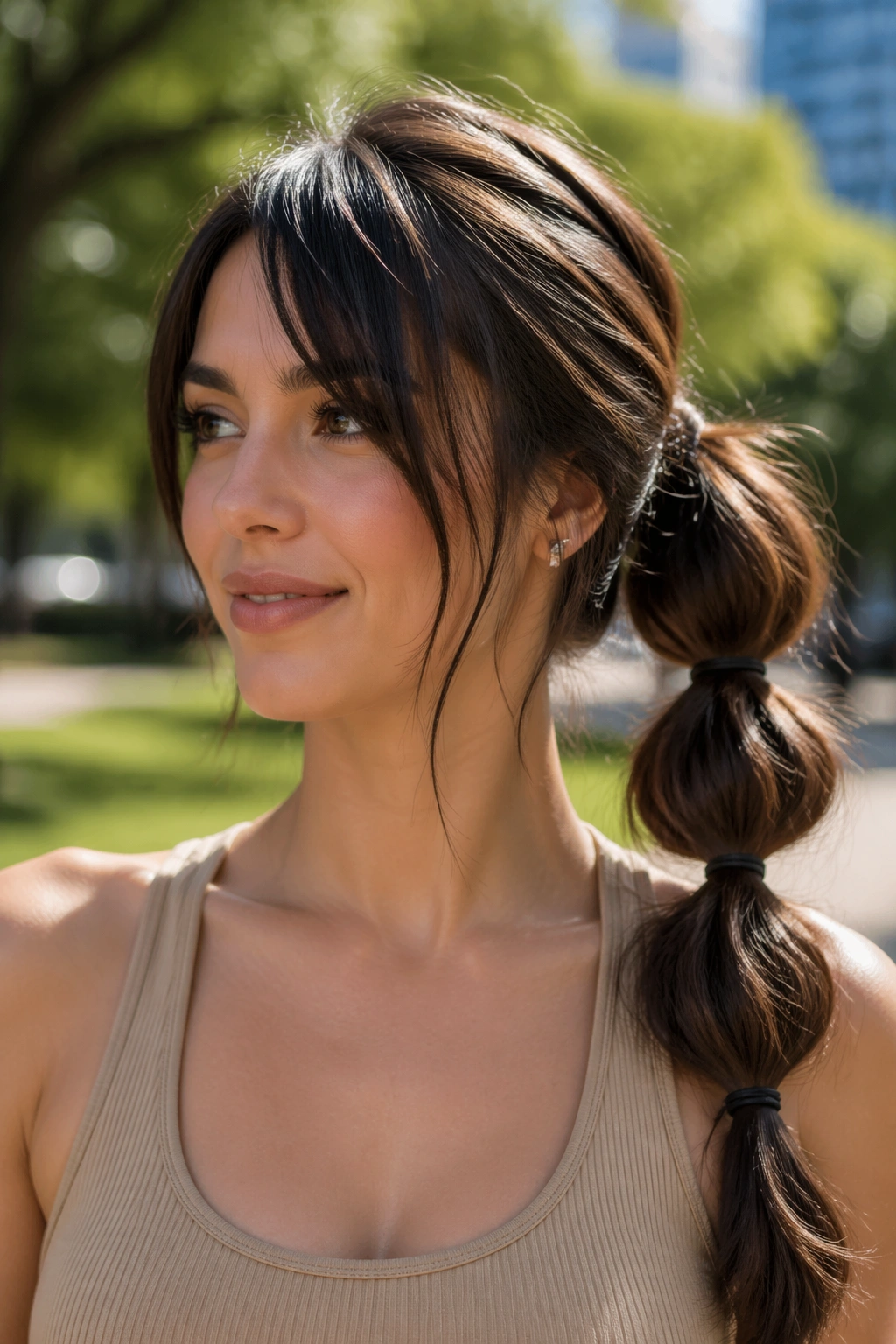
I like bubble ponytails when the ponytail itself should do the talking. Move the base to one side, tie the hair with an elastic, then add more elastics every 2 to 3 inches down the length. Gently tug each section outward so it rounds into a soft bubble instead of hanging straight.
Long bangs balance the shape well because they keep the front from feeling too playful. Blow them smooth with a paddle brush, or let them sit slightly bent if you want the style to feel less formal. The important thing is that the bangs stay streamlined while the ponytail gets all the dimension.
This version is good for hair that needs a little visual lift without actual teasing. The bubbles create that effect on their own. You get structure, and you get movement. Not a bad deal.
7. Messy Side Ponytail With Face-Framing Bangs
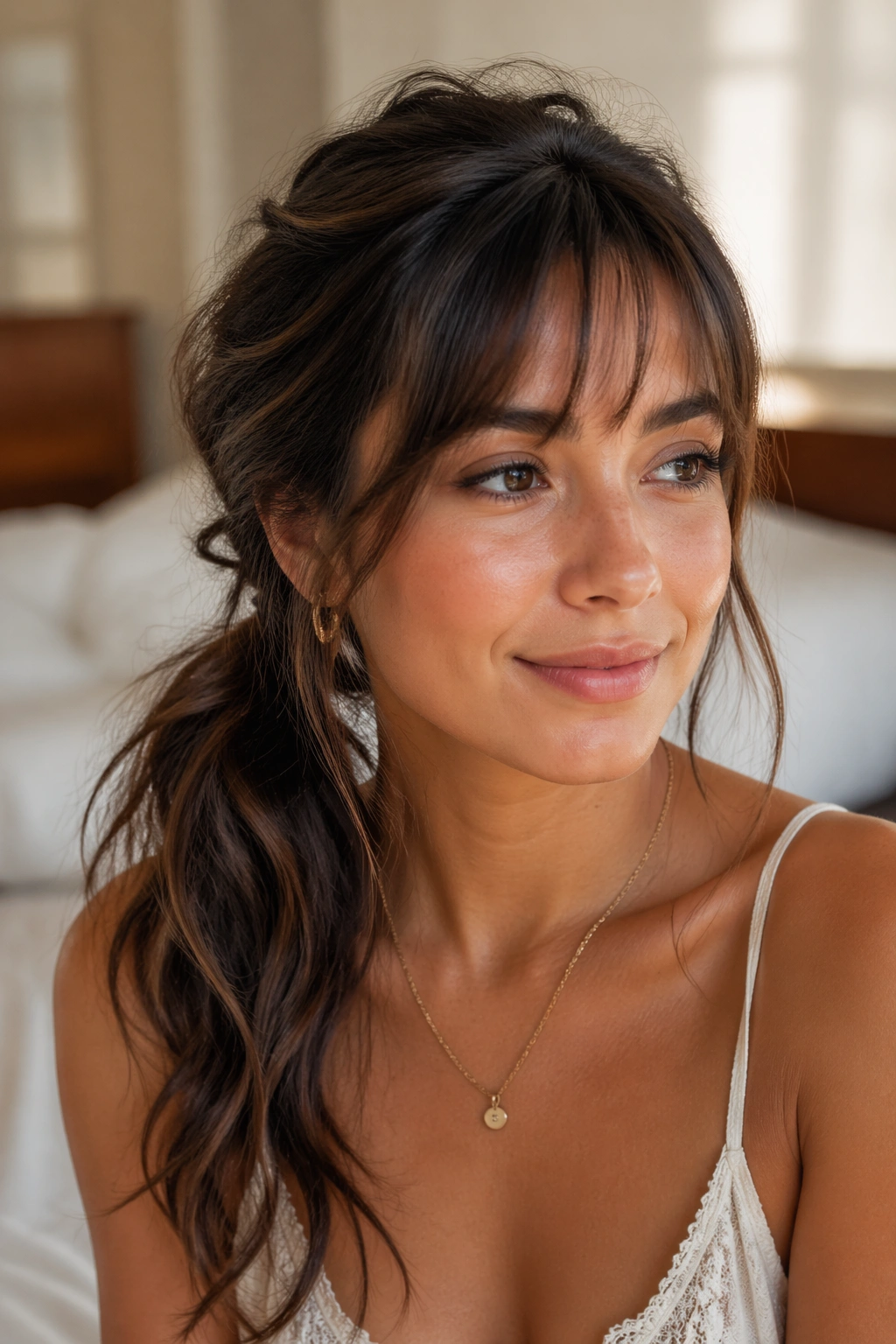
A messy side ponytail only looks messy when the front is ignored. If you leave a few face-framing pieces and keep the bangs soft, the whole style feels intentional instead of rushed. The trick is to create looseness where the eye lands first and let the ponytail stay slightly undone.
What to Leave Loose
Take a few thin pieces from the hairline before you tie the ponytail. Keep them narrow, about the width of a pencil, so they look delicate and not stringy. Then rough up the crown with texturizing spray, using your fingertips to lift the roots before you secure the elastic.
- Best with medium to long layers
- Use a matte spray if your hair slips easily
- Leave the bangs slightly bent, not fully curled
One sentence matters here: do not over-brush the front. That is what turns a relaxed side ponytail into a flat one.
8. Twisted Side Ponytail With Feathered Bangs
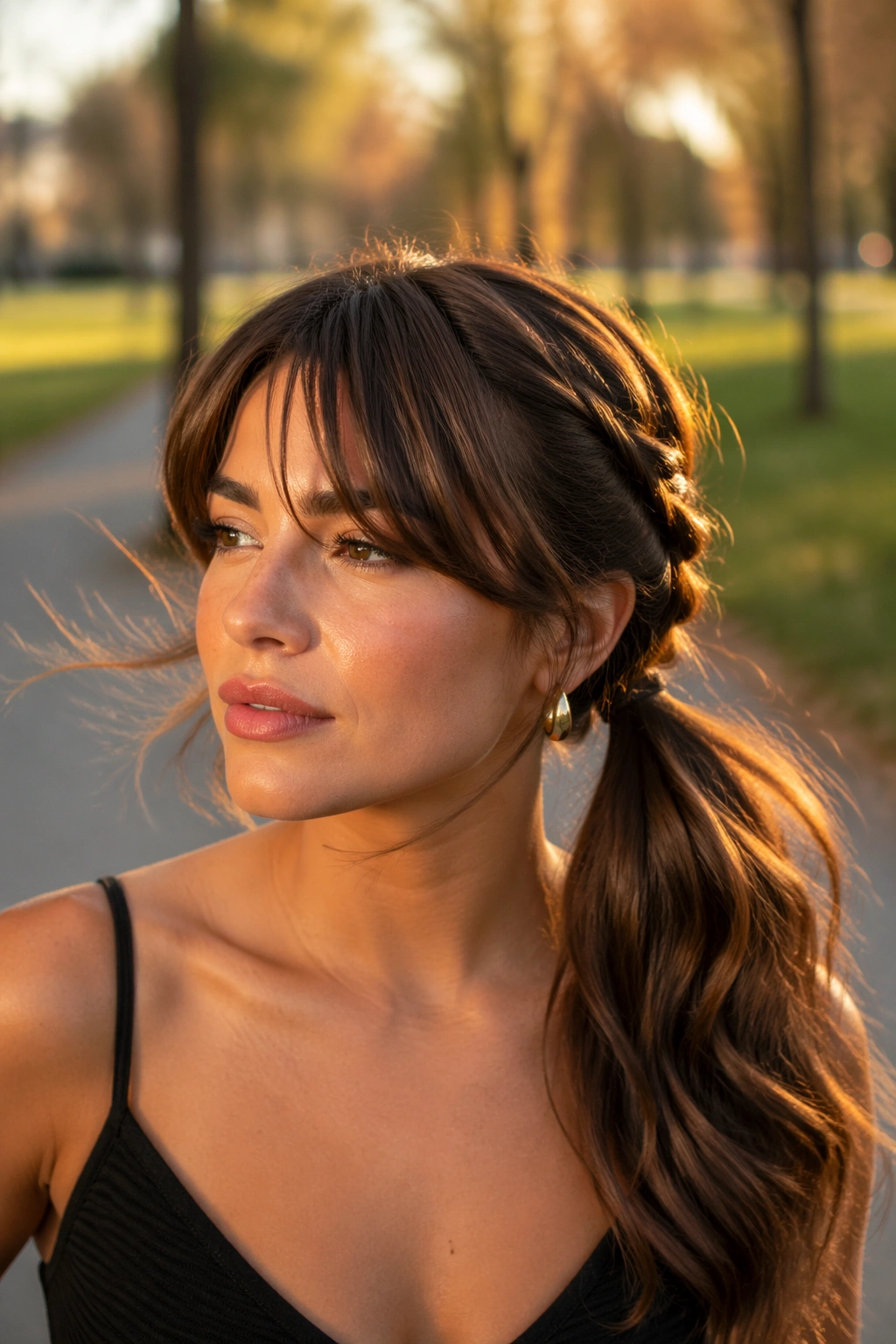
Two quick rope twists can change the whole shape. Start by twisting a small section from each side of the face back toward one ear, then gather both twists into the side ponytail. Feathered bangs fit this look because they echo the light, broken movement of the twists.
I like this style when the hair has layers that need a job. The twists help tuck shorter pieces into the shape, and the feathered fringe stops the face from feeling boxed in. A tiny bit of cream on the very ends of the bangs helps them separate cleanly instead of clumping.
This is one of those styles that looks more complicated than it is. It is not hard. It just has a bit of choreography, and the result feels nicer than a plain tie.
9. Glam Side Ponytail With Deep Side Part and Sweeping Bangs
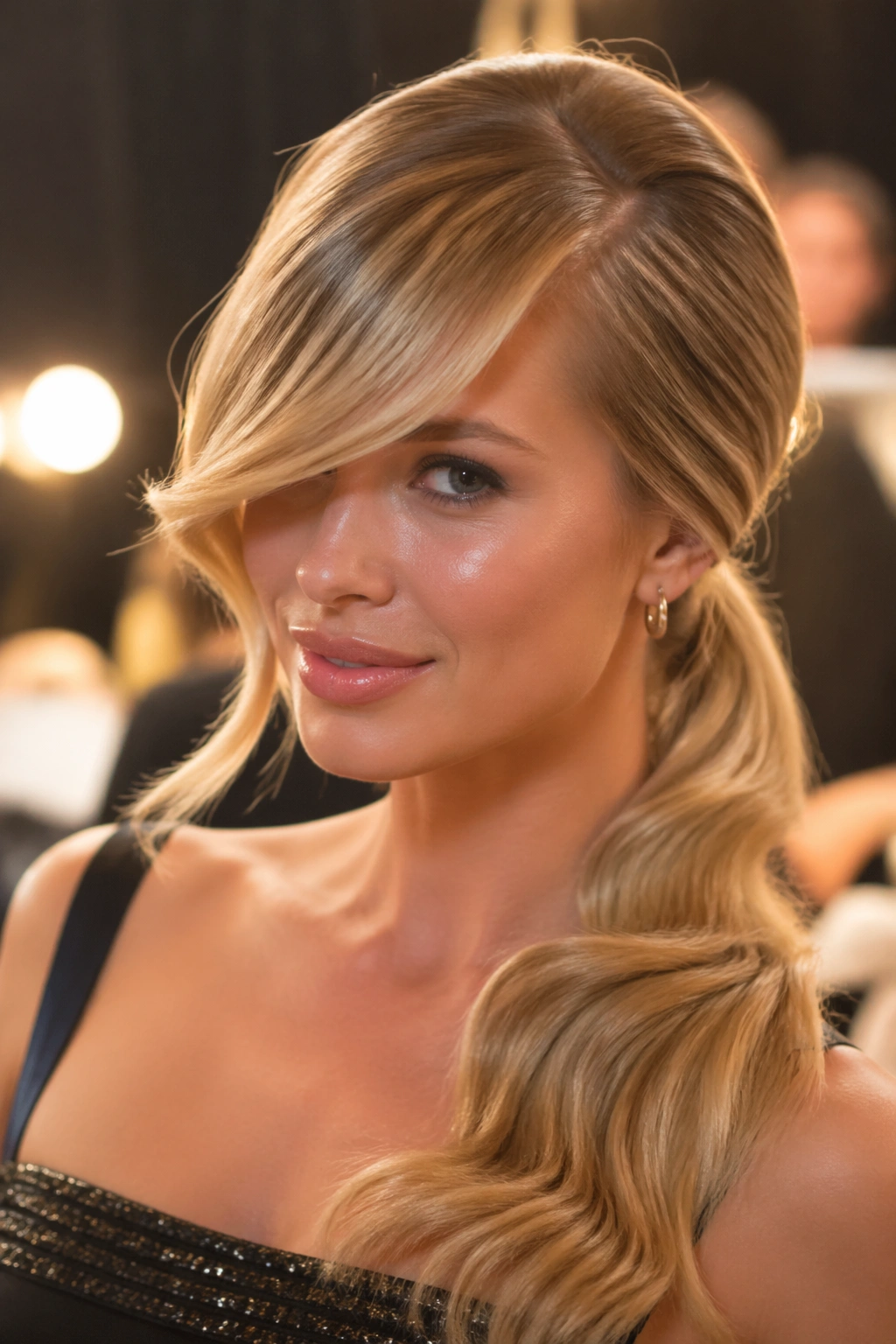
Want a side ponytail that reads evening instead of casual? Go deep with the side part and keep the crown smooth. A glam side ponytail with sweeping bangs works because the front creates drama before the ponytail even gets a chance.
The bangs should curve across the face, not sit in a hard block. A large round brush or a medium hot roller gives them that shape without making them puff up. Through the ponytail itself, use a barrel iron or rollers to build a soft wave from mid-length down. The ends can stay slightly loose, which keeps the style from looking too formal or too frozen.
Shine spray helps here, but use it lightly. Too much and the hair starts looking greasy at the roots, which defeats the clean line you just built. One soft mist is enough.
10. Sporty Side Ponytail With Mini Side Bangs
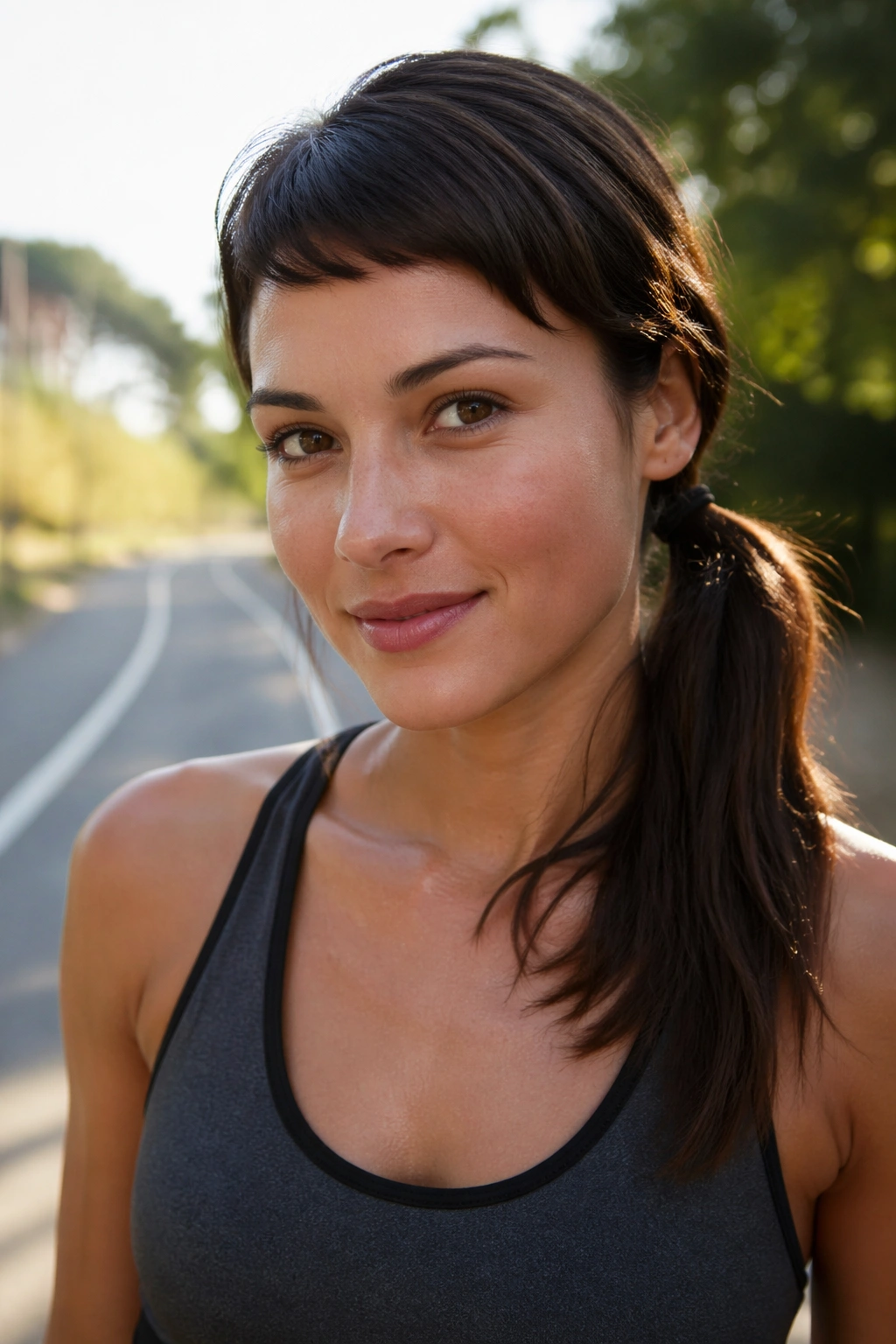
A sporty side ponytail needs to stay put, plain and simple. Mini side bangs make that easier because they are short enough to move out of the eyes, but still long enough to soften the front. This is the version you wear when you want your hair to behave through errands, movement, or a long day out.
Tie the ponytail low and to one side, then secure it with a second elastic if your hair is thick or slippery. A small amount of dry shampoo at the roots helps the bangs sit better and gives the crown a little grip. If the fringe is extra short, smooth it sideways with a fingertip and let it fall where it wants to.
This is not the style for heavy product or a lot of teasing. Keep it simple. The whole point is a neat shape that does not need checking every ten minutes.
11. Side Ponytail With Ribbon Tie and Airy Bangs
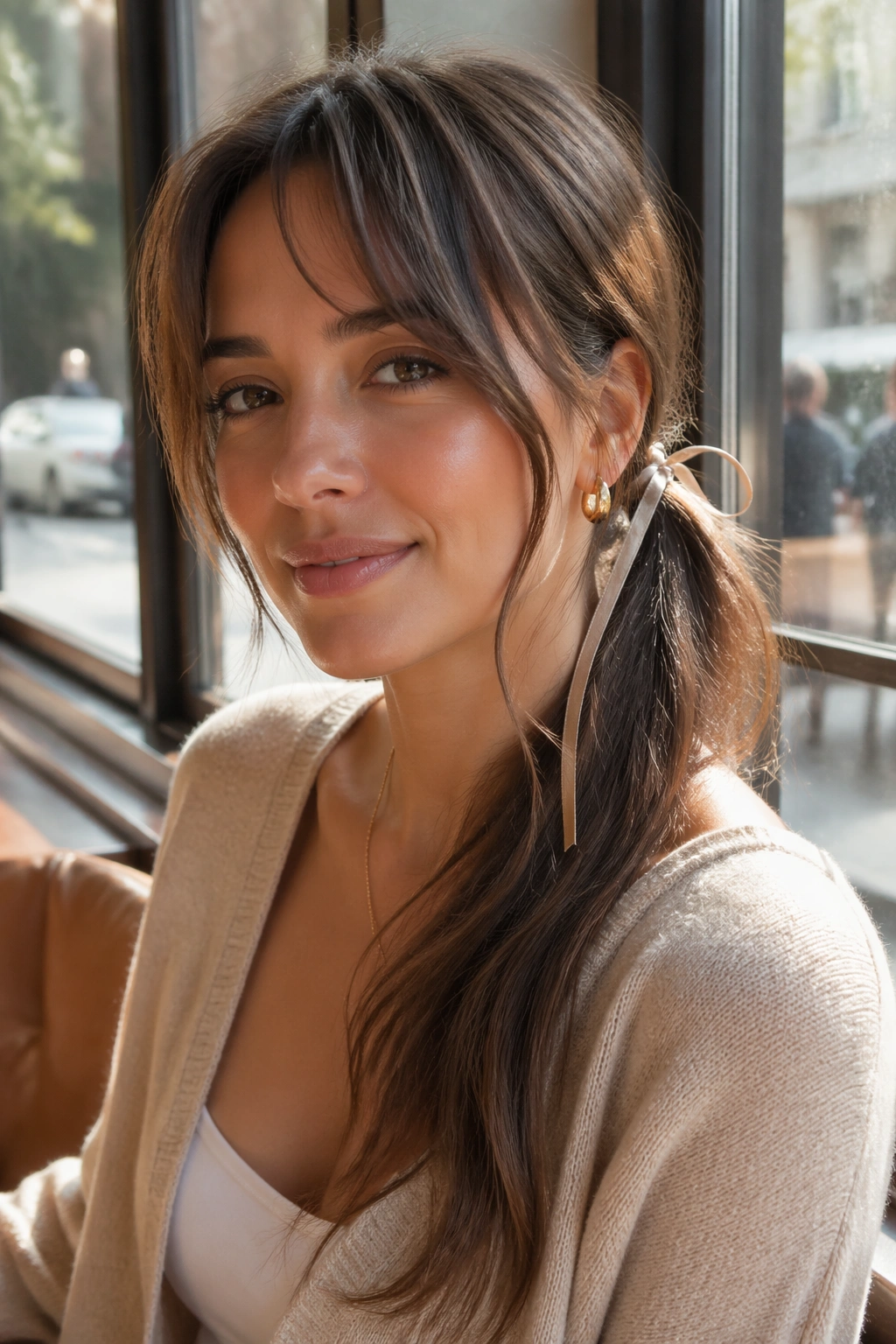
Tie a narrow ribbon around a side ponytail and the whole look changes. The hair suddenly feels softer, a little more finished, and much less like it was done in a hurry. Airy bangs are the right match because they keep the front light while the ribbon gives you the visual anchor.
Silk or satin works best if you want the ribbon to slide cleanly without tugging the hair. Tie it over the elastic, not instead of it, unless your hair is very fine and easy to hold. Let the ribbon tails hang long or knot them into a small bow if you want the finish to feel sweeter.
I would keep the bangs separated just enough to show movement, not enough to look wispy in a thin way. That little balance keeps the style from tipping into costume territory.
12. Wrapped Side Ponytail With Polished Bangs
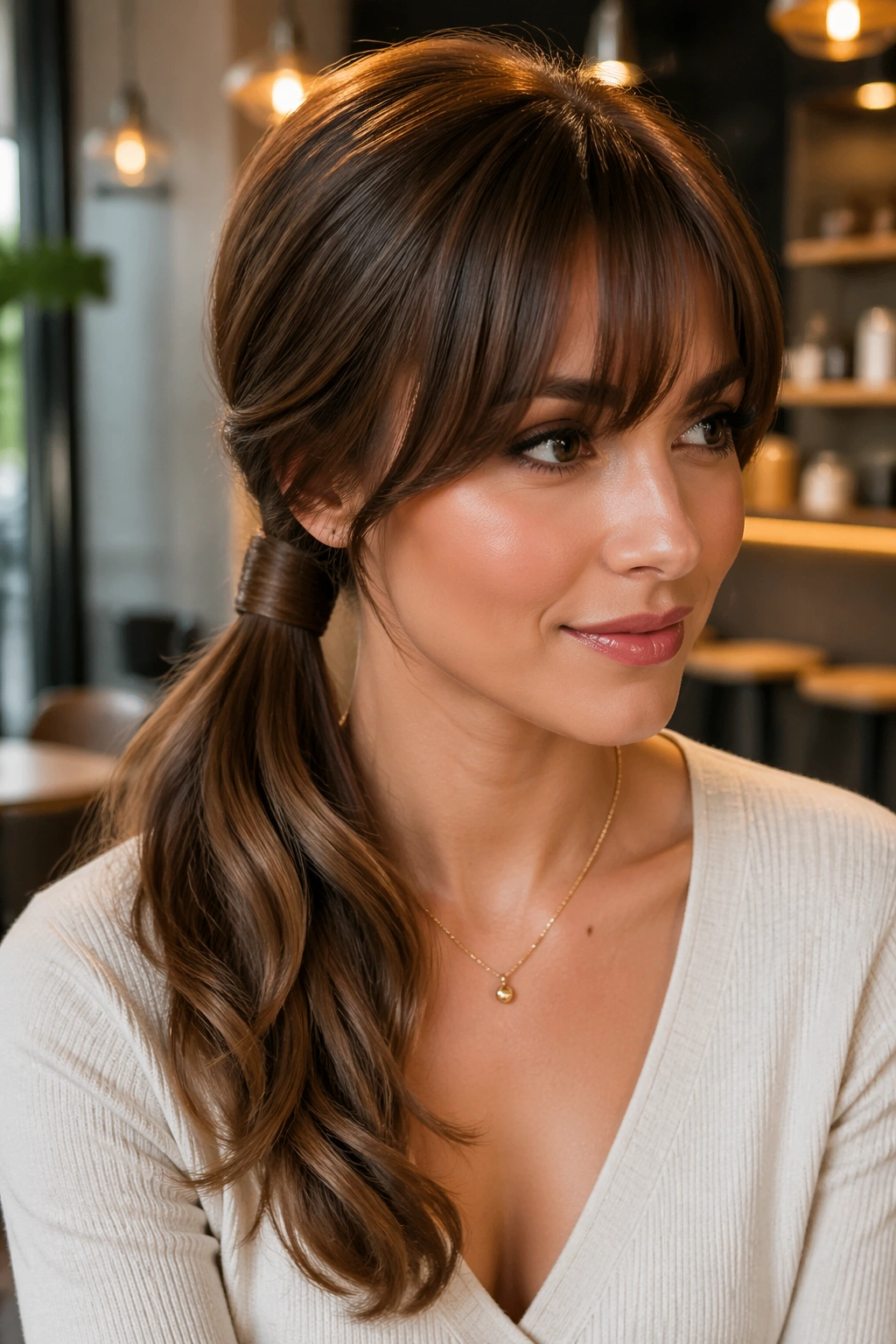
A wrapped side ponytail is one of those small upgrades that makes a plain style look cared for. Hide the elastic with a strand of hair, and suddenly the ponytail has a cleaner base and a more finished shape. Pair it with polished bangs, and the whole look becomes quietly sharp.
The bangs should be smoothed with a round brush, then set with cool air so they hold the curve. Pull the ponytail to one side and wrap a half-inch strand around the elastic, tucking the end underneath with a bobby pin. That tiny detail matters more than people think. It keeps the base from looking random, especially if the rest of the hair is smooth.
This version is good for work, dinners, or any day when you want hair that looks deliberate without trying too hard. I am a fan of that balance.
13. Side Ponytail With Dutch Braid Crown and Bangs
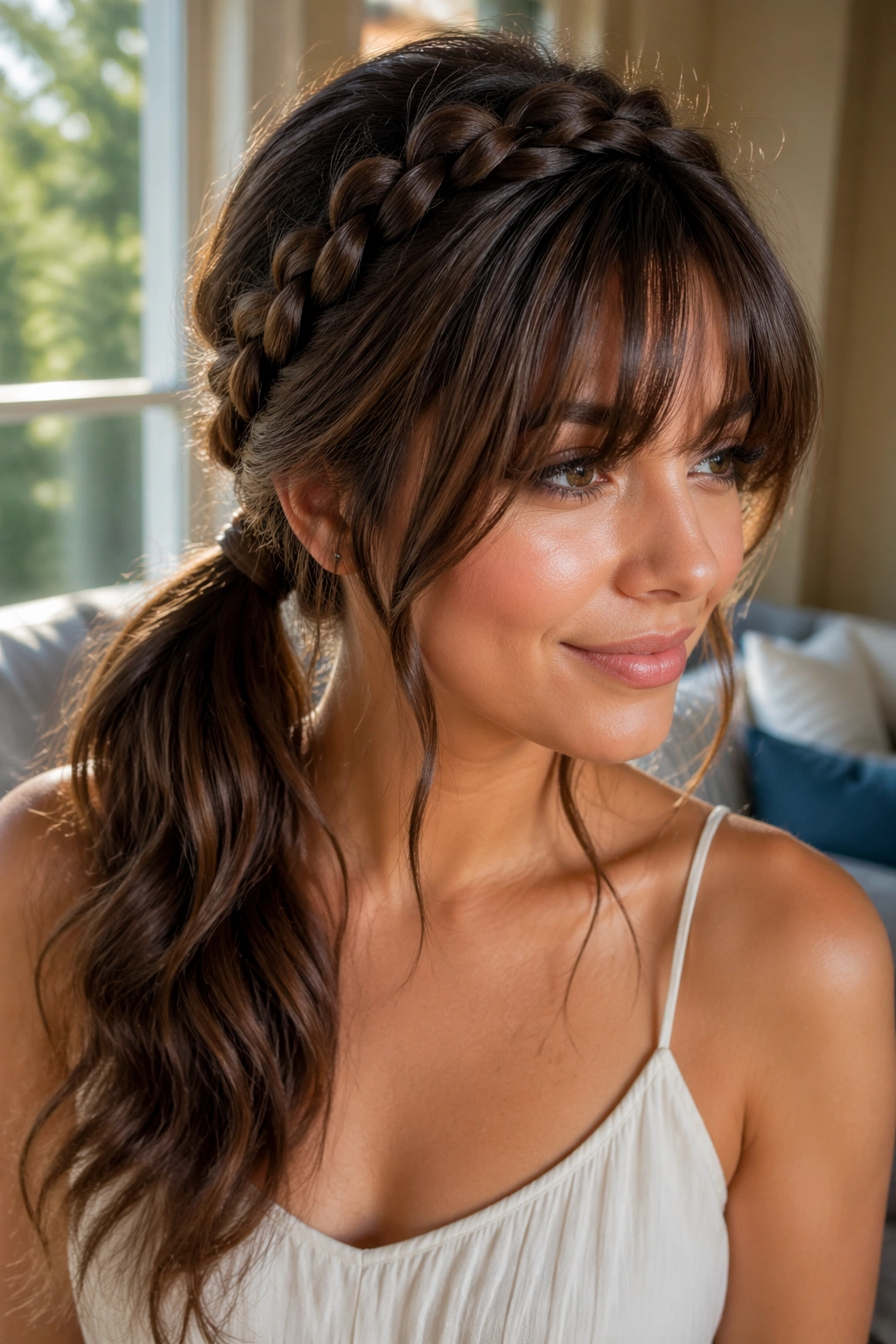
A Dutch braid across the crown gives the side ponytail some structure. The braid sits on top of the hair instead of disappearing into it, so the front reads more architectural. Bangs soften that structure and keep the style from looking too rigid.
How to Keep the Braid Neat
Start the braid at the temple and work it back toward the opposite side, then stop once you reach the point where the ponytail will sit. Keep each section the same width — about half an inch is a good target — if you want the braid to look even. A little grip spray at the roots helps the braid stay crisp.
- Best on hair with a day of natural oil
- Use small elastics at the end of the braid
- Smooth the bangs separately before tying the ponytail
The braid gives the style shape. The bangs give it softness. That combination is what makes it interesting.
14. Side Ponytail for Short Hair With Choppy Bangs
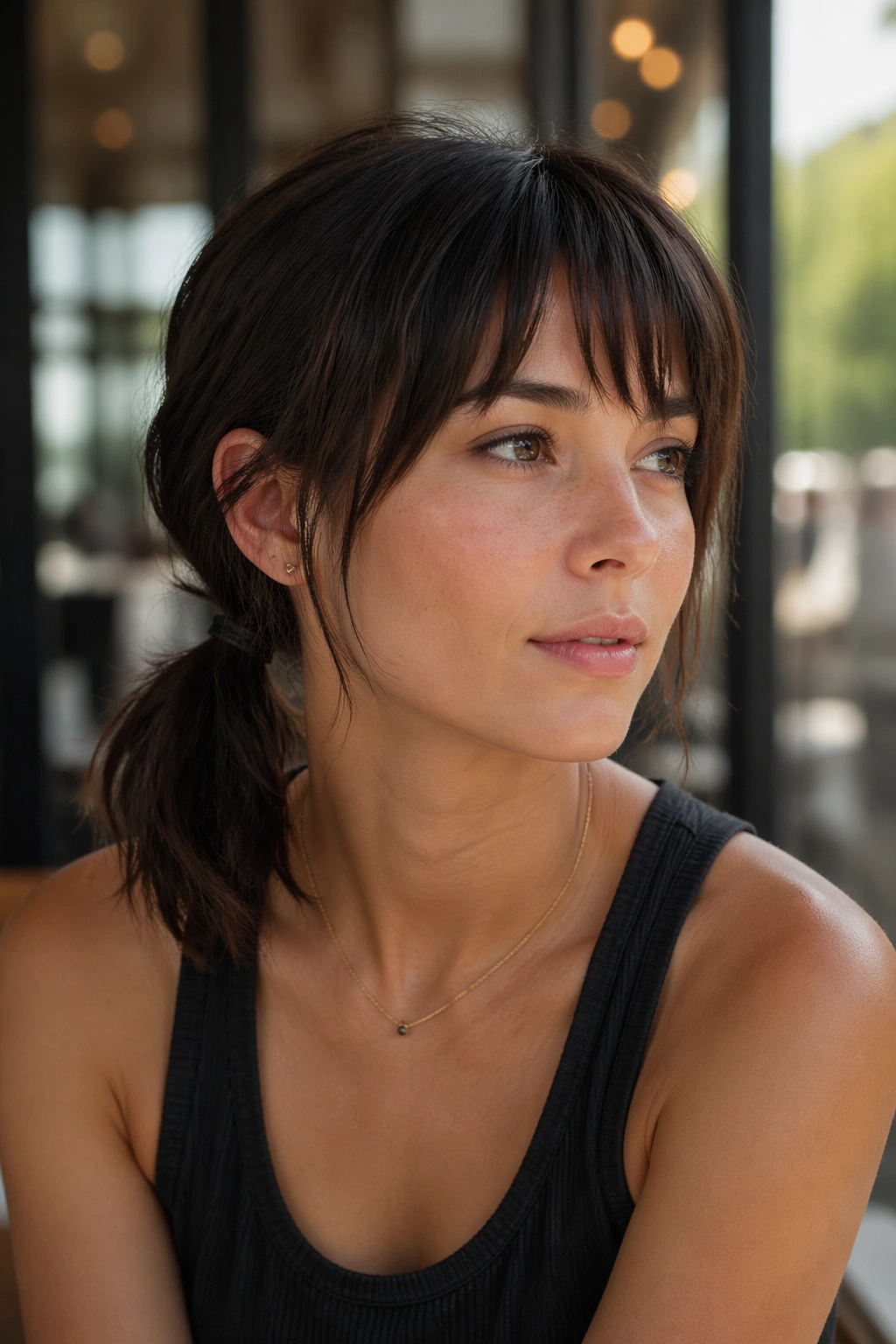
Short hair can do a side ponytail better than people expect. You just need to stop thinking of it as a full ponytail and start thinking of it as a controlled sweep. Choppy bangs make that easier because they add edge up front while the side pull keeps the back tidy.
A bob or lob length usually needs a small amount of bending at the ends so the pieces do not stick straight out of the elastic. Use a texture paste or light wax on the choppy fringe and on any shorter layers that refuse to join the ponytail. If the back is too short to tie fully, pin it into a small side knot instead. The look still counts.
This one is especially good when you want movement without much length. It feels fresh because the haircut does half the work for you.
15. Romantic Side Ponytail With Soft Waves and Curtain Bangs
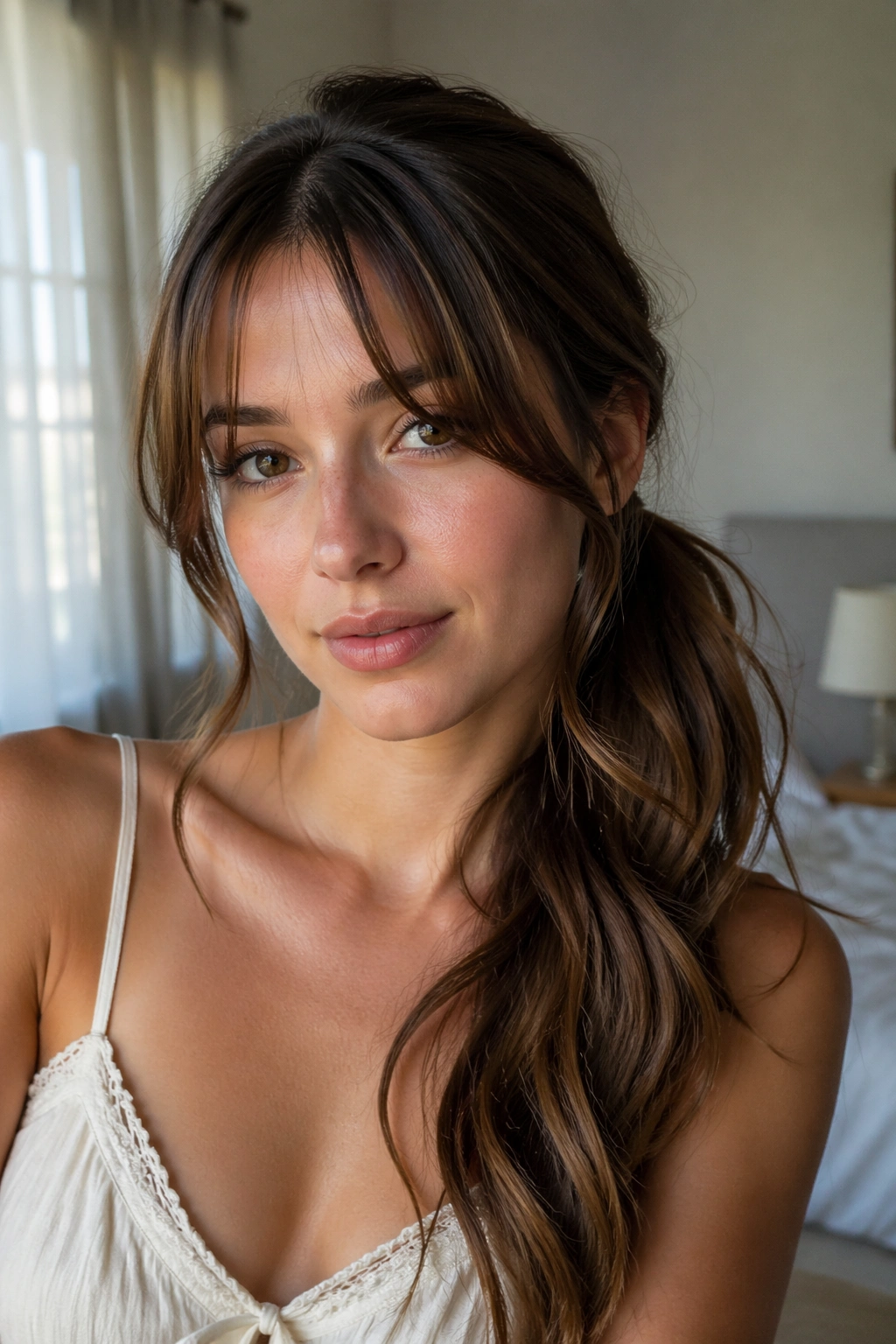
Why does this version feel softer than a regular low ponytail? Because the waves start low and the curtain bangs open the face instead of closing it in. The result has a gentle curve from top to bottom, and that curve is what makes it romantic.
Use a 1.25-inch iron to shape loose waves through the ponytail, leaving the ends slightly undone. The bangs should be blown away from the center, then allowed to fall back naturally so they split just enough to frame the cheeks. Keep the crown smooth, but not tight. A little give at the roots makes the whole style feel easier.
This is a nice choice for dinners, showers, or days when you want your hair to look flattering without looking overly styled. It sits in that sweet spot between casual and dressed up.
16. Side Ponytail for Thick Hair With Layered Bangs
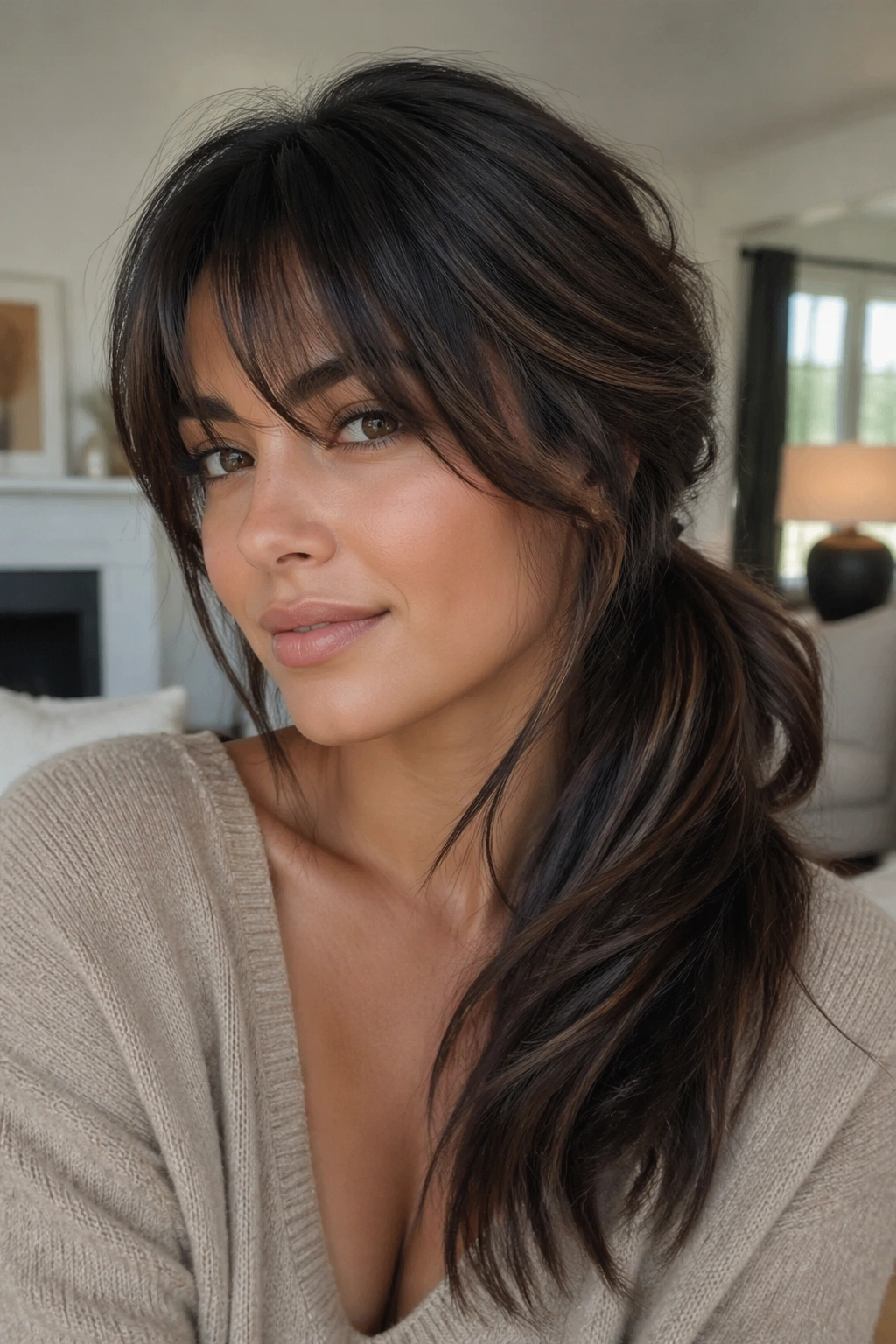
If your hair feels heavy by noon, this is the version that behaves. Thick hair needs control at the base and movement at the front, and layered bangs help solve the second part without making the first one harder. The ponytail can sit lower and still look full.
I would split the hair into two sections before tying it to the side if the weight keeps pulling everything flat. Secure the top half first, then add the lower section into the same elastic. That little trick helps the ponytail sit better and keeps the base from sagging. Layered bangs should be dried in sections so the shortest pieces do not flip awkwardly.
This style does not need a ton of teasing. Thick hair already brings volume. The job is to shape it, not inflate it.
17. Side Ponytail for Fine Hair With Lifted Crown and Wispy Bangs
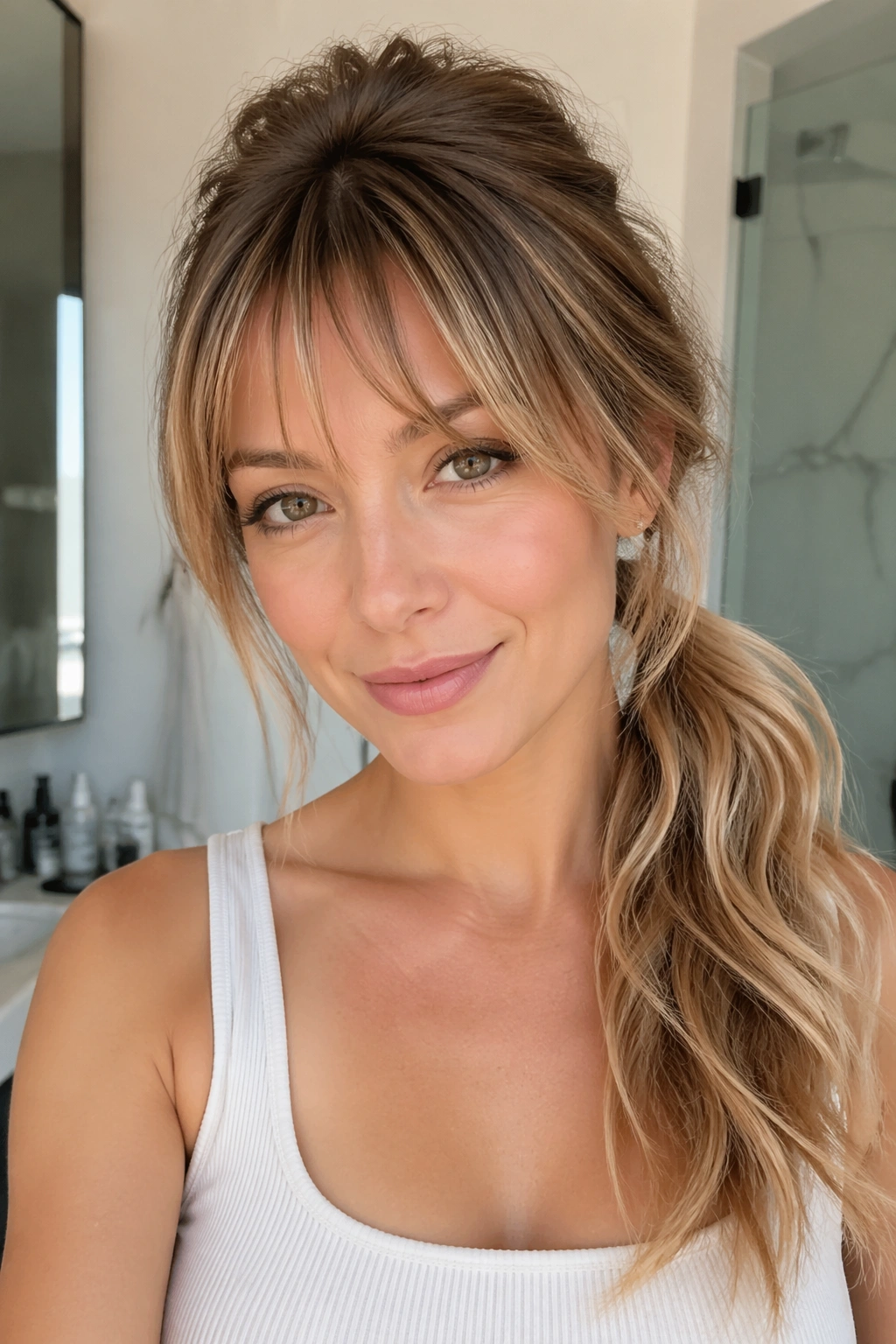
Fine hair benefits from shape that starts at the roots. A lifted crown gives the side ponytail more presence, and wispy bangs keep the front from feeling heavy or flat. Without that lift, the style can disappear against the head in a way that is hard to fix later.
Dry shampoo at the roots helps, even on clean hair. Backcomb one-inch sections at the crown, then brush the very top layer gently so the teasing stays hidden. Pull the ponytail to the side and pin the underside once if you need more support. Wispy bangs should stay soft and a little separated, which keeps the face open.
One thing to skip: too much oil near the fringe. Fine hair shows it fast, and the bangs are usually the first place to go limp.
18. Side Ponytail With a Braid Accent and Blunt-Cut Bangs
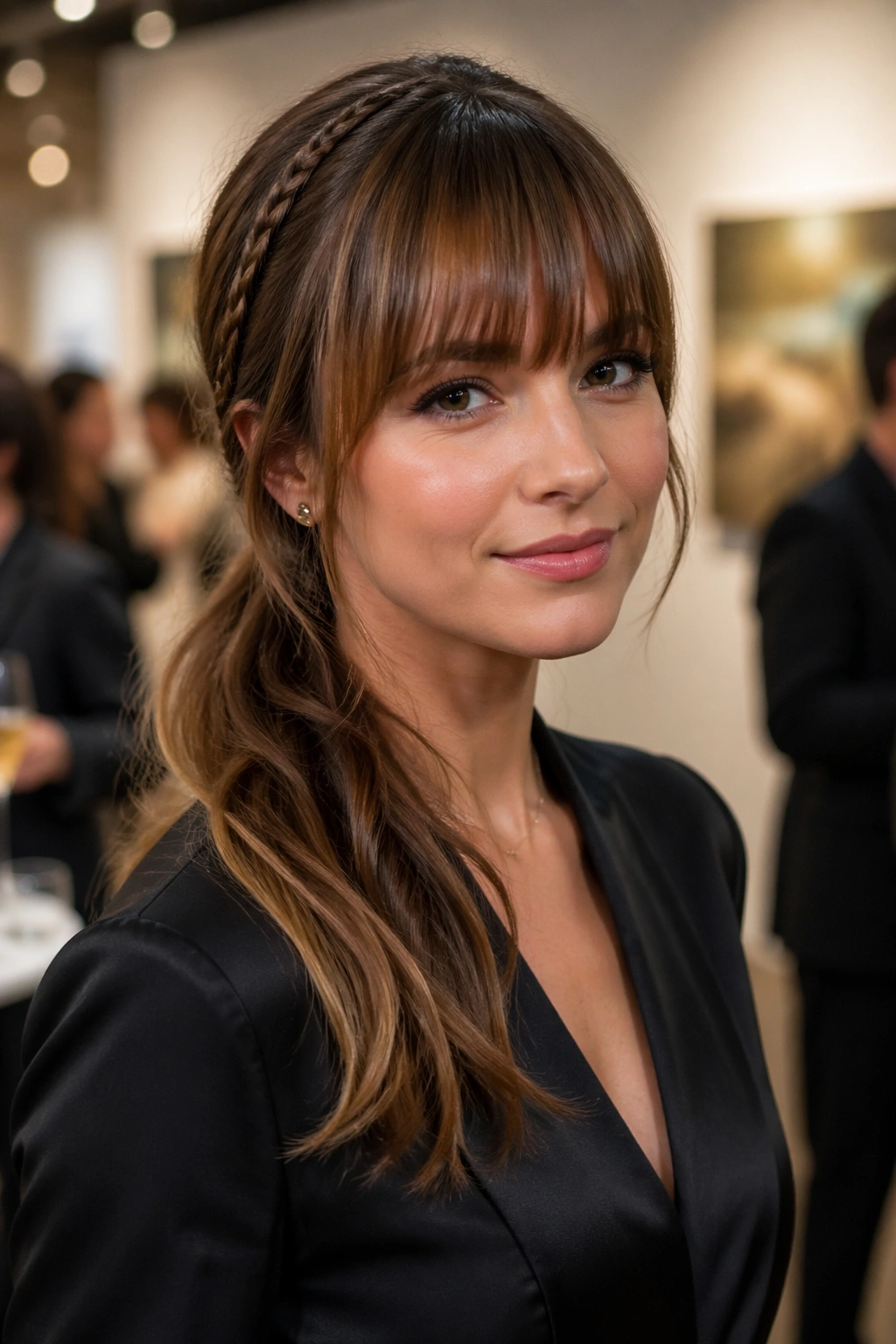
A single braid accent is enough here. You do not need a full braided crown or a row of tiny plaits. One slim braid near the part or temple gives the ponytail texture, and blunt-cut bangs bring the shape back down to earth.
Unlike all-over braids, this version keeps most of the length loose. That matters if you like the polish of straight bangs but still want something visual happening in the back. It is a clean compromise. The braid adds detail, the bangs add structure, and the side ponytail keeps the whole thing from feeling stiff.
This style works well when you want a little edge without spending forever in front of the mirror. I would pick it for a dinner, a gallery opening, or any day when plain hair feels too plain.
19. Side Ponytail With Flipped Ends and 1960s-Inspired Bangs
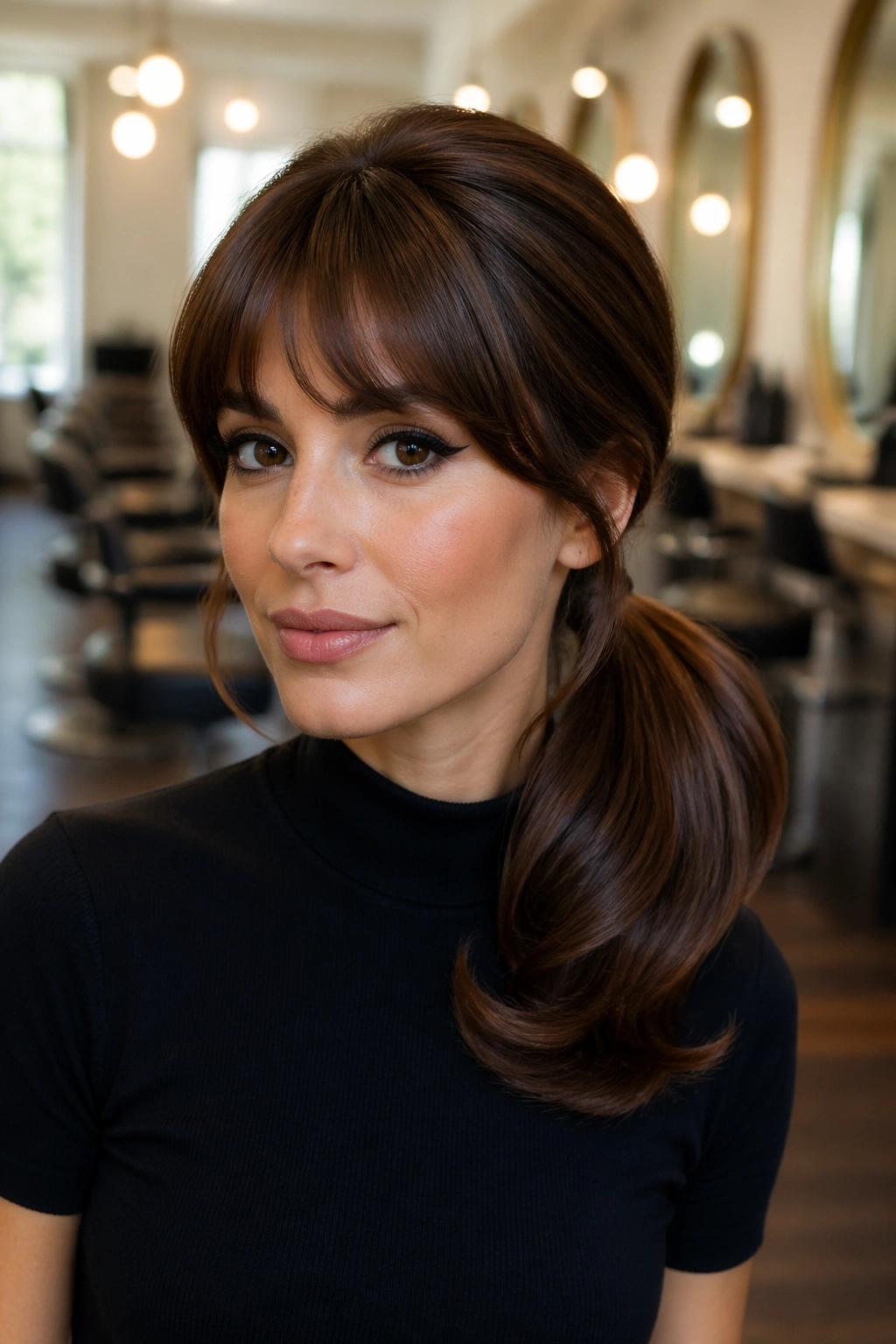
There is a crispness to this look that makes it stand out fast. The bangs curve with intention, the ponytail sits smooth, and the ends flip out or under just enough to nod at that old-school shape without turning into a costume. It is cleaner than people expect, and that is the appeal.
Quick Shape Check
Use a medium round brush or a roller brush to bend the bangs, then set them with cool air before touching the rest of the hair. Give the ponytail ends a soft flip with a flat iron or a large brush, not a tight curl. The result should feel controlled, not shellacked.
- Best with shoulder-length to long hair
- Keep the crown sleek
- Use a light mist of spray, not a hard shell of it
This is one of those styles that looks sharp in motion. Sitting still, it is nice. Walking into a room, it gets better.
20. Side Ponytail With Sculpted Volume and Side-Swept Fringe
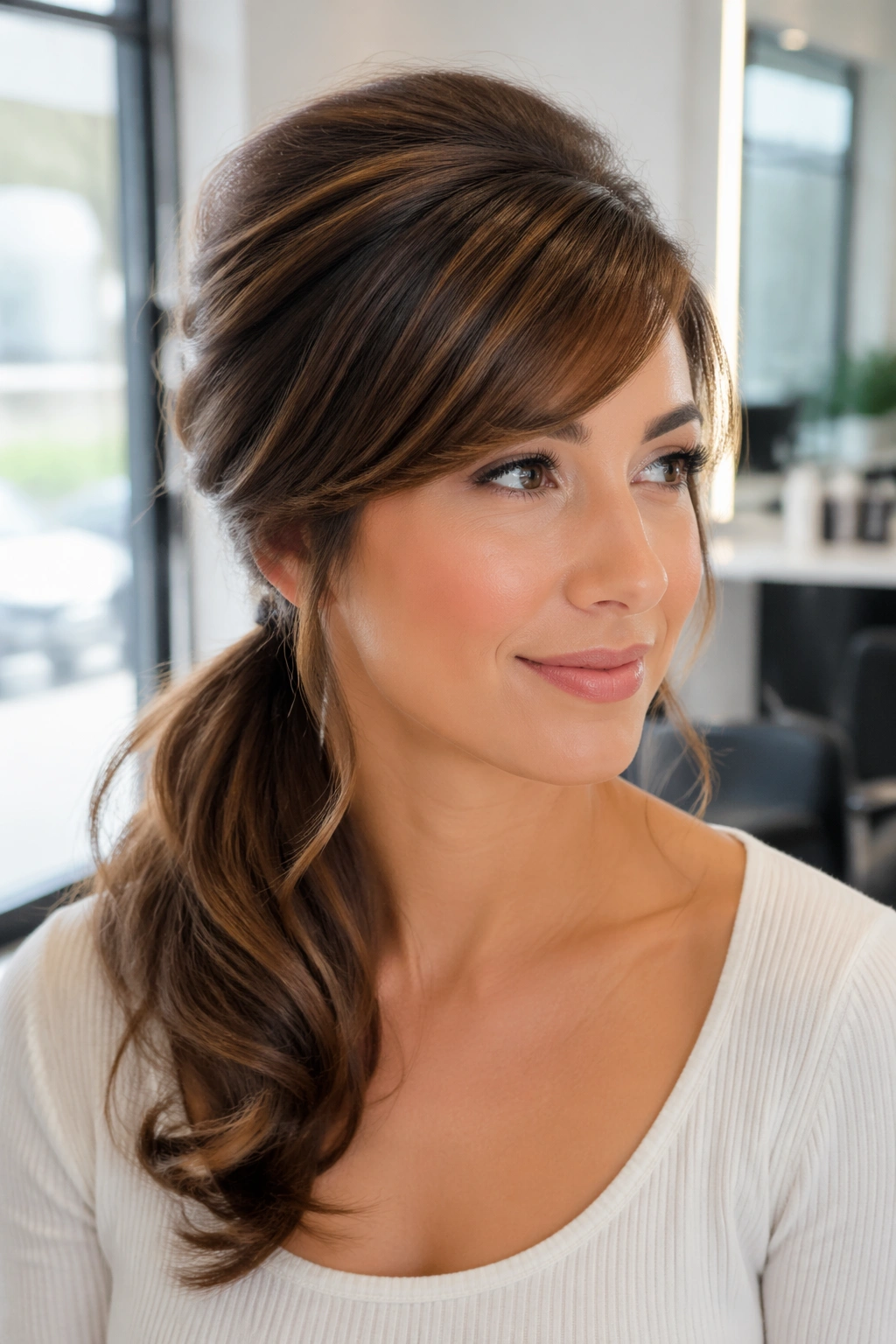
What makes this version different is the lift at the top. A sculpted crown changes the profile of the whole hairstyle, so the side ponytail looks intentional from the first glance. Side-swept fringe helps bridge the height at the top with the softness of the ponytail.
A velcro roller at the crown for ten or fifteen minutes can make a bigger difference than a lot of teasing. So can a blow-dry brush, used upward at the roots and then rolled back. The fringe should sweep across the forehead in one clean line, not split into little pieces. If the lift starts to collapse, pin the top from underneath instead of adding more spray.
This is a strong choice when you want height without a teased mess. Clean volume beats sticky volume every time.
21. Side Ponytail With Scarf Tie and Soft Bangs
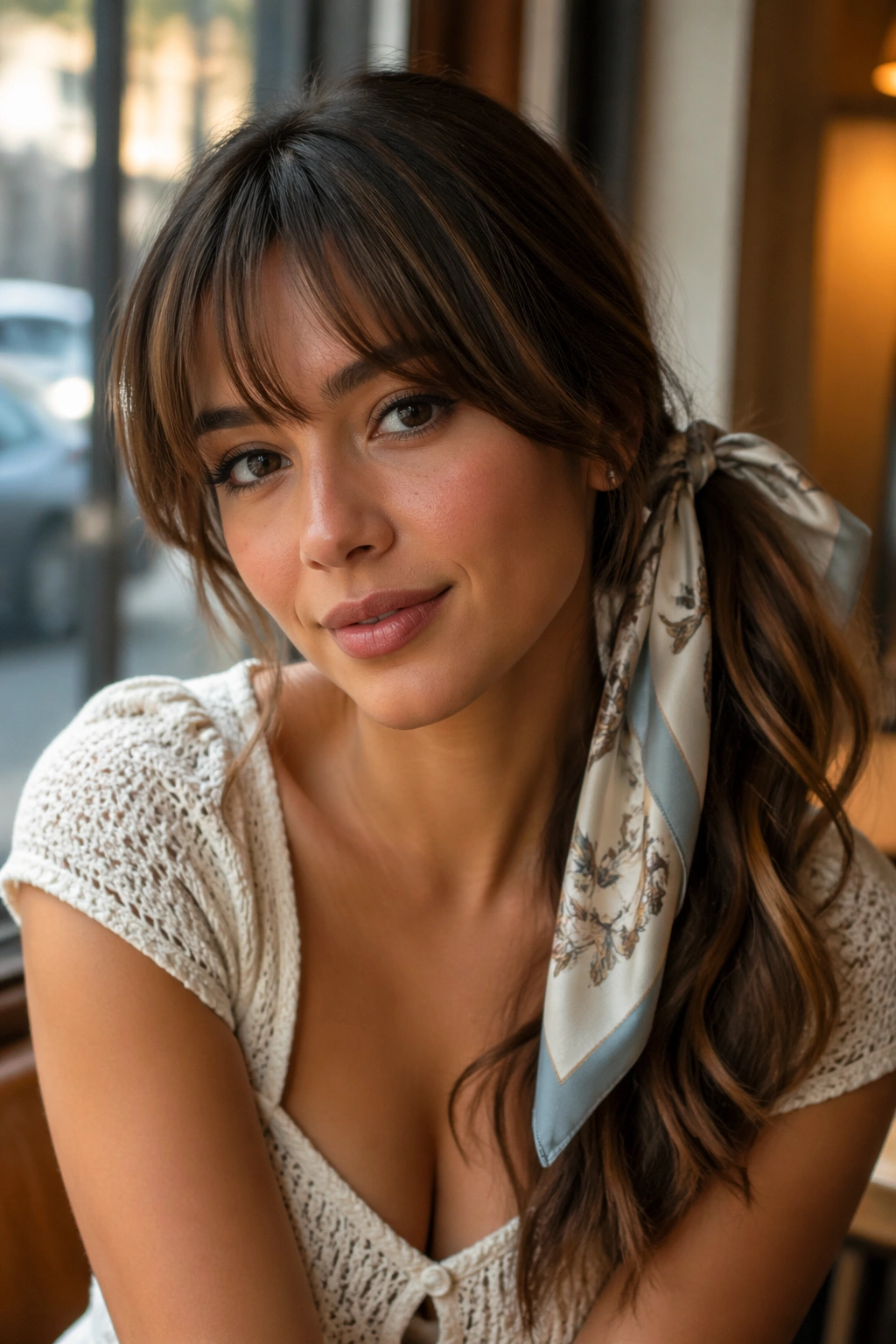
Tie a narrow scarf around a side ponytail and the style changes instantly. It feels more finished, a little more playful, and much less ordinary. Soft bangs keep the look from becoming too busy, which is important because the scarf already brings enough visual weight.
A silk scarf about 20 to 24 inches long works well because it ties cleanly and does not fight the hair. Knot it over the elastic and let the ends fall down the side of the ponytail. If the scarf is patterned, keep the bangs plain and gently separated. If the scarf is solid, the bangs can carry a little more movement.
This is one of those small-effort, high-return styles. It looks like you had a plan, even when you only had five spare minutes.
22. Side Ponytail With Micro Braid Detail and Longer Bangs
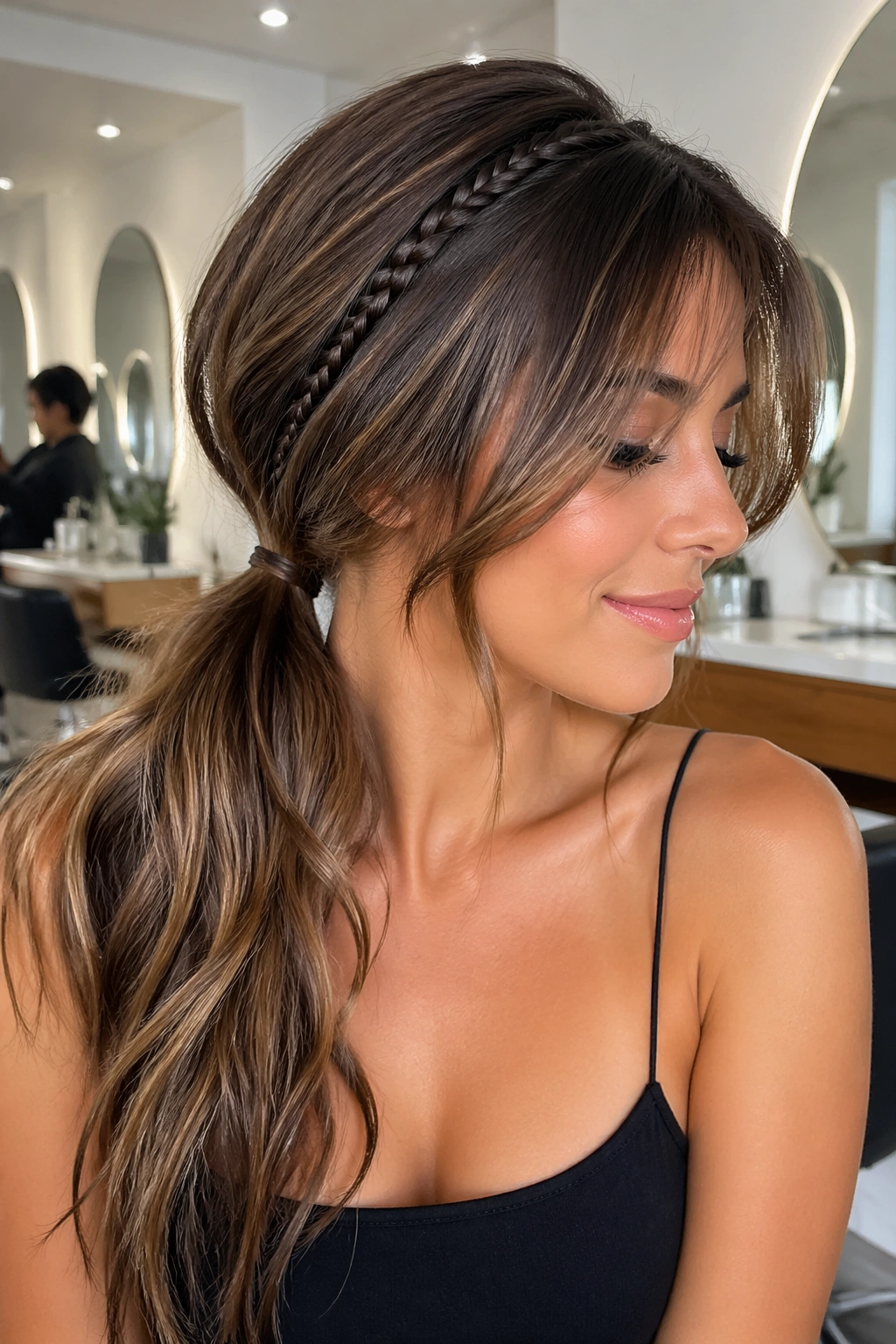
A micro braid is the subtle cousin of the full braid accent. It adds interest near the hairline without taking over the whole style, which is useful when you want the bangs to stay the main feature. Longer bangs balance that tiny detail and keep the front feeling soft.
The braid can sit along the part, run behind one ear, or tuck into the ponytail base. Keep it narrow, about the width of a shoelace, so it reads as detail and not decoration overload. Longer bangs should be shaped with a brush first, then finger-separated at the end. That keeps them from looking too thick against the braid.
This is the kind of style I like on days when plain hair feels boring but a big braid feels like too much work. It sits in the middle, which is often where the best ideas live.
23. Side Ponytail for Natural Curls and Shape-Friendly Bangs
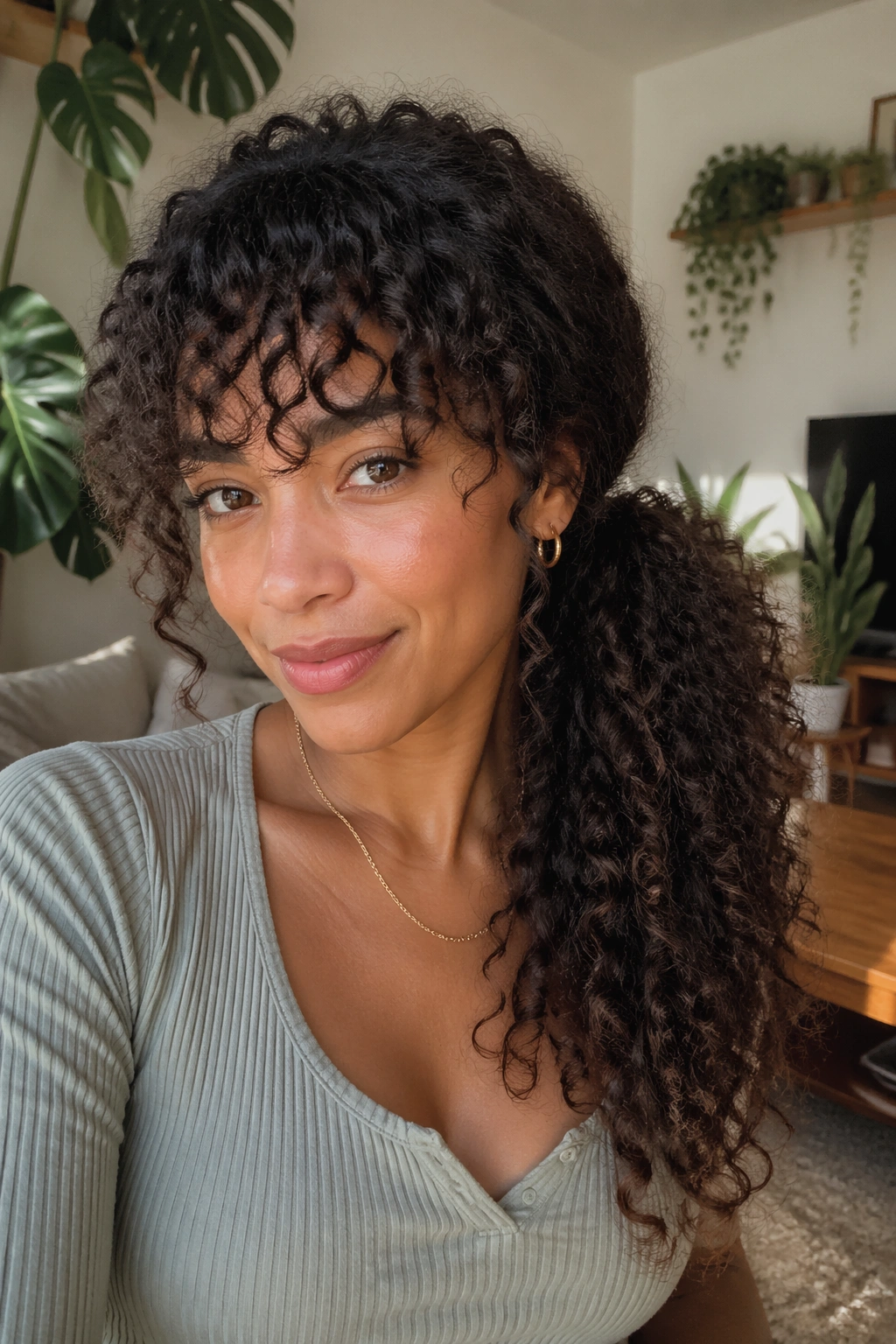
Natural curls look best here when the haircut does some of the work. Shape-friendly bangs are cut to follow the curl pattern instead of fighting it, which means they sit in a way that feels intentional once they dry. The side ponytail then gathers the rest of the curls without flattening the front.
Work in curl cream and gel while the hair is damp, then diffuse on low heat or let it air-dry until the bangs are almost set. Clip the roots of the bangs upward for a few minutes if they want to stick to the forehead. That creates a little lift and keeps the shape from collapsing. Gather the ponytail gently to the side so the curls keep their spring.
One useful habit: leave a little more length in the bangs than you think you need. Curl shrinkage is real, and short bangs can jump higher than expected.
24. Formal Side Ponytail With Polished Waves and Arched Bangs
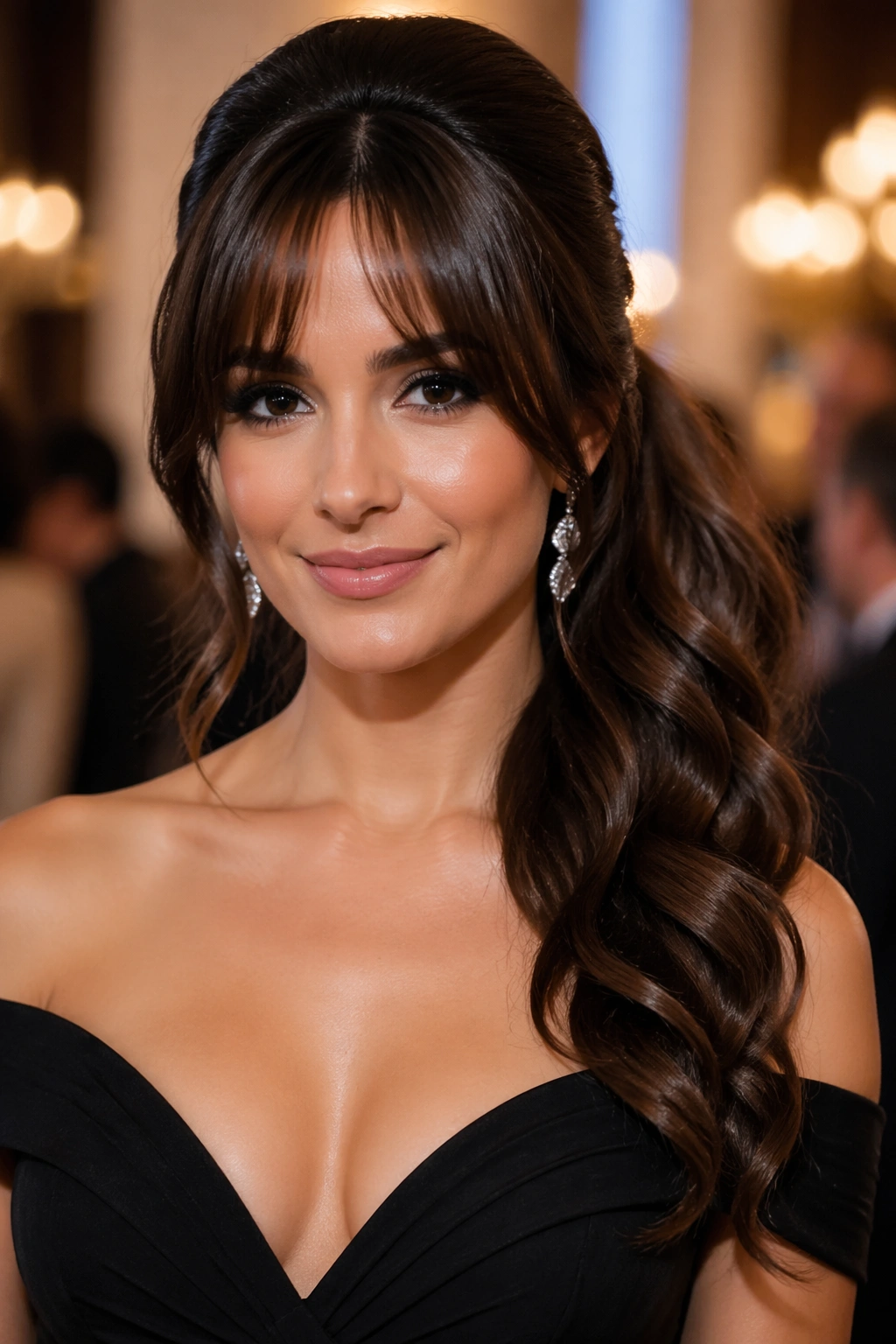
This is the dressy version. The crown is smooth, the waves are even, and the bangs curve with a soft arch that opens the face without stealing focus from the rest of the style. A formal side ponytail like this works because every part looks deliberate.
Where It Shines
Use a smooth blowout at the roots, then add uniform waves through the ponytail with a medium barrel iron. The bangs should be rounded with a brush and set while they are still warm so they hold that gentle arc. A gloss spray on the ends gives the waves a neat finish without making them greasy.
This style is strong enough for weddings, dinners, or any event where you want your hair to stay in place and still look like hair. Not helmet hair. Just polished, calm, and done.
25. Casual Side Ponytail With Barely-There Wave and Airy Bangs
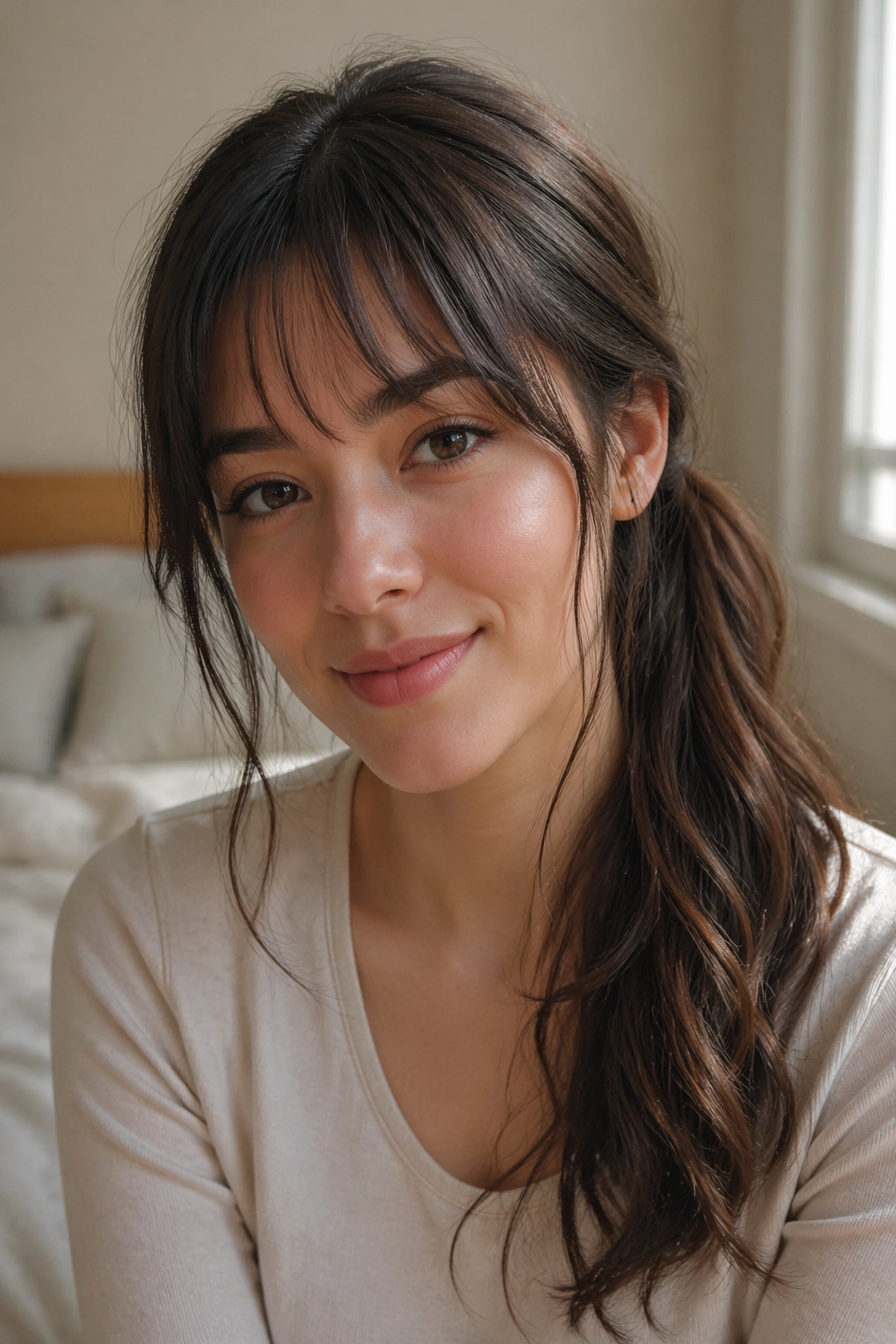
What should you do on a day when your hair needs to look tidy fast? Keep the wave soft and the bangs light. A casual side ponytail with barely-there texture is the one I reach for when I want the face to stay open and the whole style to be easy to wear.
Use your hands to gather the hair to one side, then add a single bend through the lengths with a curling iron only if the ends need it. The bangs should feel airy, not fussy, so separate them with your fingers rather than a comb. If the style starts to look too plain, pull one small piece loose near the cheek and leave it there. That tiny move changes the mood more than people expect.
It is simple. That is the point. Some days call for a hairstyle that behaves and gets out of the way.
Final Thoughts
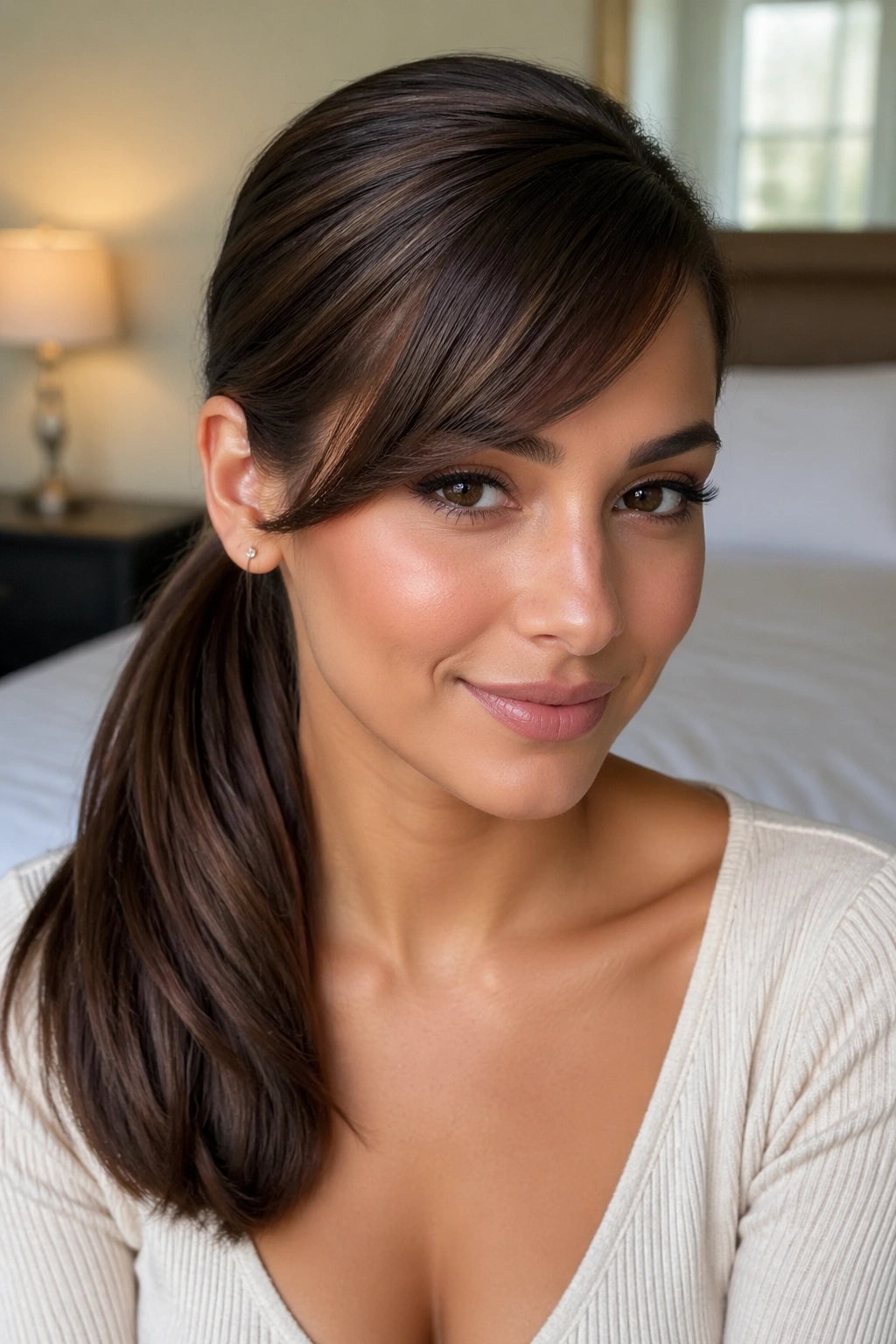
Side ponytails with bangs work because they give you two jobs to solve at once: shape and balance. The bangs set the tone near the face, and the ponytail controls the silhouette from the side. When those two pieces agree with each other, the style looks finished even if the steps were simple.
The biggest mistake is treating the bangs like an add-on. They are not. A blunt fringe, a curtain fringe, a wispy fringe, or a curly fringe can change the whole read of the ponytail, and each one asks for a slightly different hand.
If a side ponytail feels flat, move the elastic half an inch, check the profile in a mirror, and pin the underside once. That tiny adjustment fixes more hairstyles than any fancy product ever does.