A good ponytail can make long brown hair look expensive without trying too hard. A bad one just looks dragged back and pinned in place, which is a shame when the length has so much to work with.
Brown ponytails for long hair have a built-in advantage: the color already gives you depth, shine, and soft contrast. Chocolate reads rich, chestnut feels warm, espresso looks sharp, and caramel ribbons break up the weight of long lengths without any dramatic dye job.
The catch is that long hair is heavy. It pulls at the crown, eats volume, and exposes every weak elastic if you don’t build the style with a little care. That’s why the best versions are not just “hair tied back.” They’re shaped on purpose.
Some days you want sleek. Some days you want texture. And sometimes you want a ponytail that can survive errands, dinner, and a windy walk without falling apart. That range is where brown hair really earns its keep.
1. Sleek Brown Ponytail With a High Lift
A high ponytail on long brown hair can look crisp and expensive when the crown stays smooth and the tail stays glossy. The whole point is contrast: tight at the top, full through the lengths, and clean enough that the brown shade reads almost lacquered.
How to keep the crown from collapsing
Pull the hair up with a boar-bristle brush, not just your hands. That gives you control over the surface, especially if your hair is layered or has a little wave that likes to spring loose at the temples.
For extra lift, use the old two-elastic trick. Make a small ponytail at the crown, then gather the rest of the hair into that same tie a little lower. The shape sits higher and lasts longer. If your hair is heavy, one elastic usually gives up early.
- Best on straight or softly wavy hair
- Works well with espresso, dark chocolate, and walnut brown
- A pea-sized drop of shine serum keeps the tail from looking dry
- Good for gym-to-dinner hair that still needs polish
Tip: Wrap a thin strand of hair around the elastic and pin the end underneath with a bobby pin. It takes thirty seconds and makes the whole style look finished.
2. Chestnut Low Ponytail With a Wrapped Base
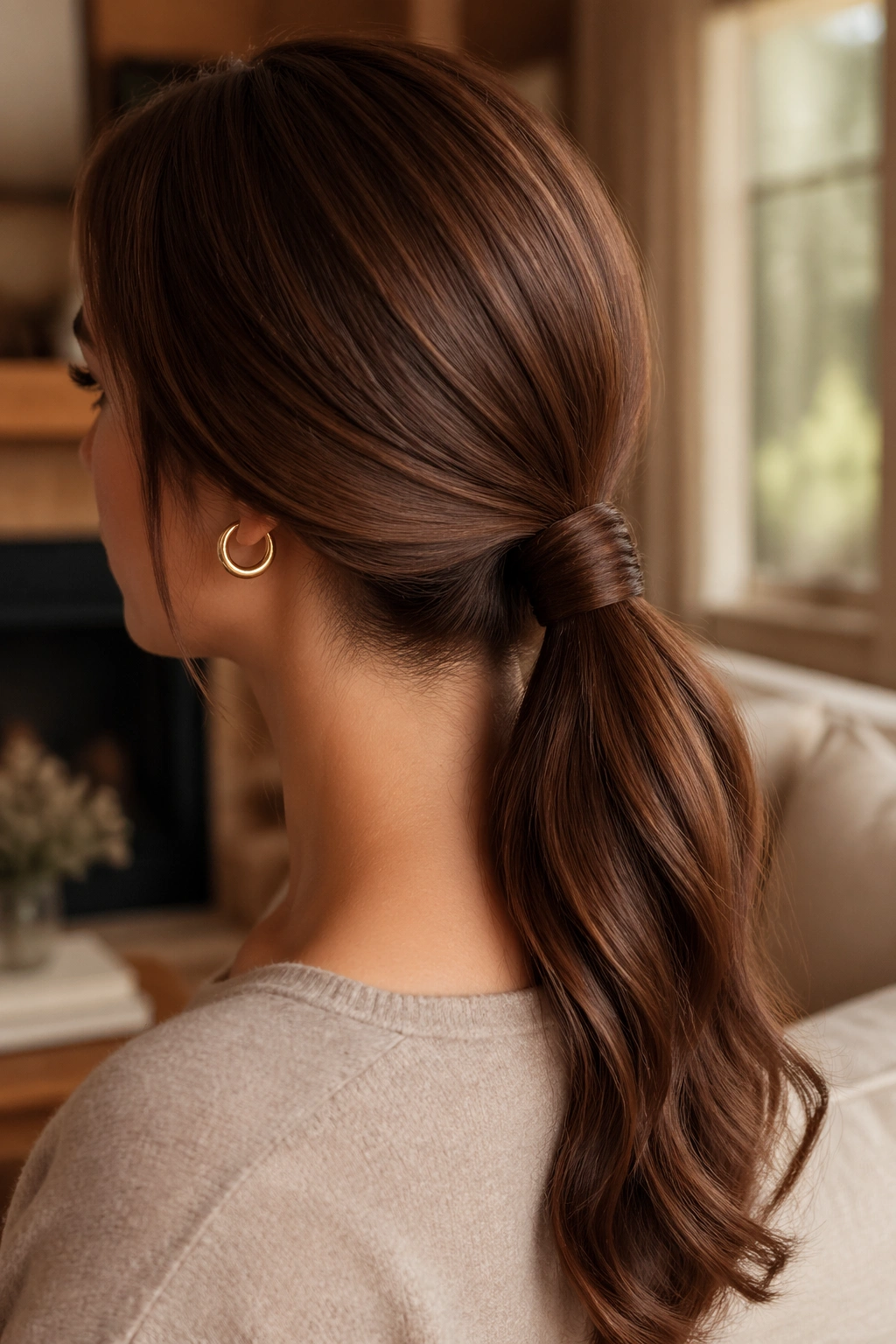
This is the ponytail I reach for when I want the color to do the talking. A low ponytail sits close to the nape, which means the brown tone stays in view instead of disappearing into a high, tight knot of hair.
Chestnut brown works especially well here because the warm undertones show up in the smooth bend of the tail. If your hair has subtle highlights, a low placement lets them catch the light as the ponytail moves. That little swing matters more than people think.
Keep the base neat, then wrap a section of hair around the elastic. You can leave the ends straight for a clean look or add a single bend with a flat iron if the tail needs more life. Straight ends can look too severe on very long hair.
This style is calm, not boring. There’s a difference.
3. Caramel-Highlighted Wave Ponytail
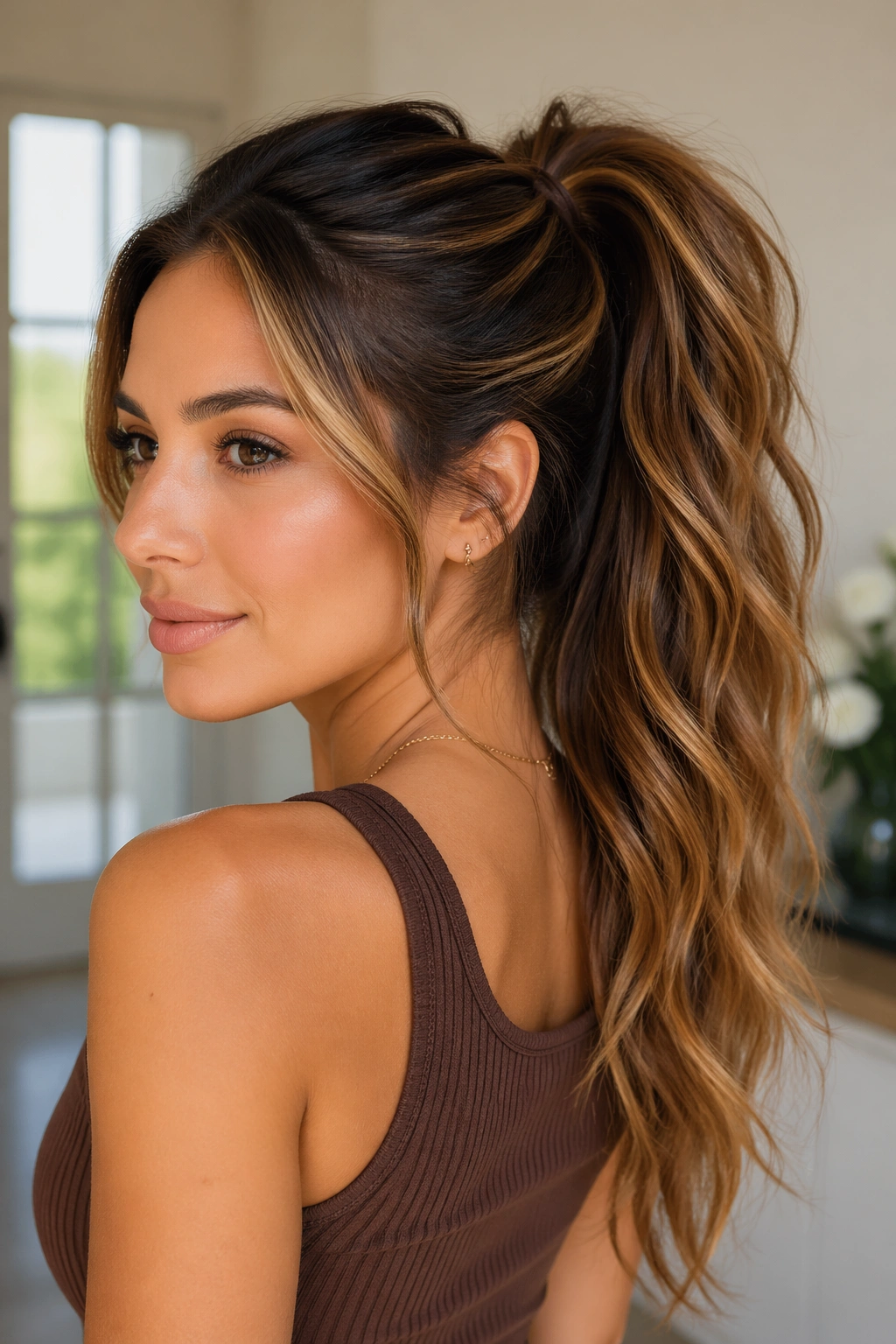
Why do caramel highlights look richer in a ponytail than when the hair is worn loose? Because the waves separate the color into ribbons instead of letting it sit as one flat mass.
Long brown hair with caramel pieces needs movement. If the hair is only lightly waved, the highlights show in big, soft bands; if it’s brushed out too much, the color gets muddy. A loose ponytail keeps just enough texture to show the contrast without turning the whole thing into a frizz cloud.
How to use it
Curl mid-lengths with a 1-inch iron, then brush them out once they’ve cooled. Gather the ponytail low or mid-height, and tug a few face pieces free. You want the wave pattern to be soft enough that it still moves, not glued into place.
A little texture spray at the ends helps the shape last. So does avoiding fresh conditioner right at the root. Too much slip near the scalp makes the ponytail slide down by lunch.
4. Bubble Ponytail in Deep Mocha Brown
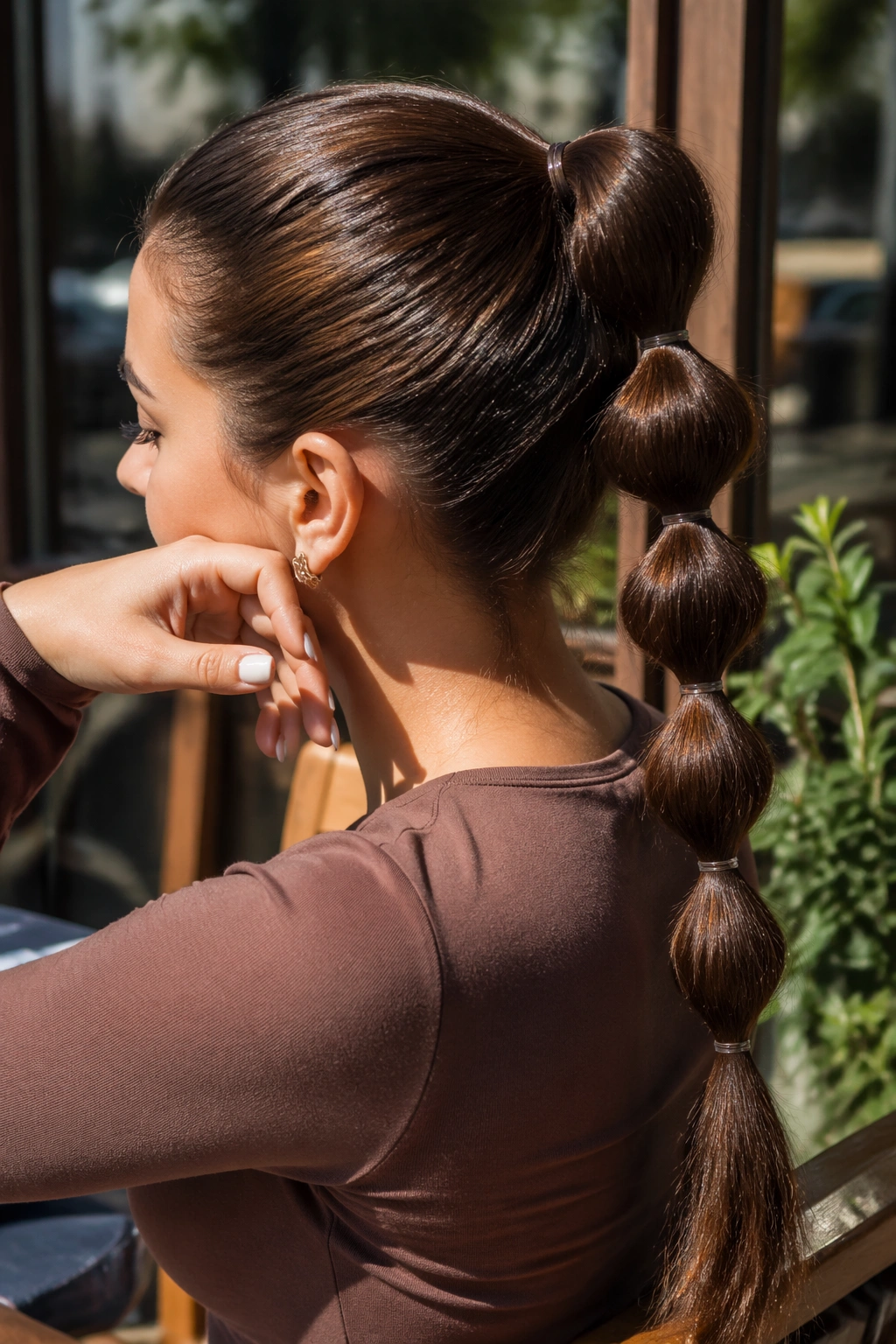
If you need a ponytail that stays interesting all day, the bubble version is hard to beat. On deep mocha brown hair, each “bubble” becomes a visible shape instead of just a cute detail, which is why this style works better on long hair than on short lengths.
The trick is spacing. Use clear elastics every 2 to 3 inches down the tail, then gently tug each section outward until it rounds. Do not yank the sections hard. You’re building shape, not trying to make them puff out like balloons.
- Start with a smooth base at the crown
- Use 4 to 6 small elastics, depending on length
- Tug from the sides of each section, not the center
- Mist with light-hold spray after shaping
This is one of those styles that looks playful without getting messy. It also hides limp ends better than most ponytail styles do.
5. Braided-Basis Ponytail for Long Brown Hair
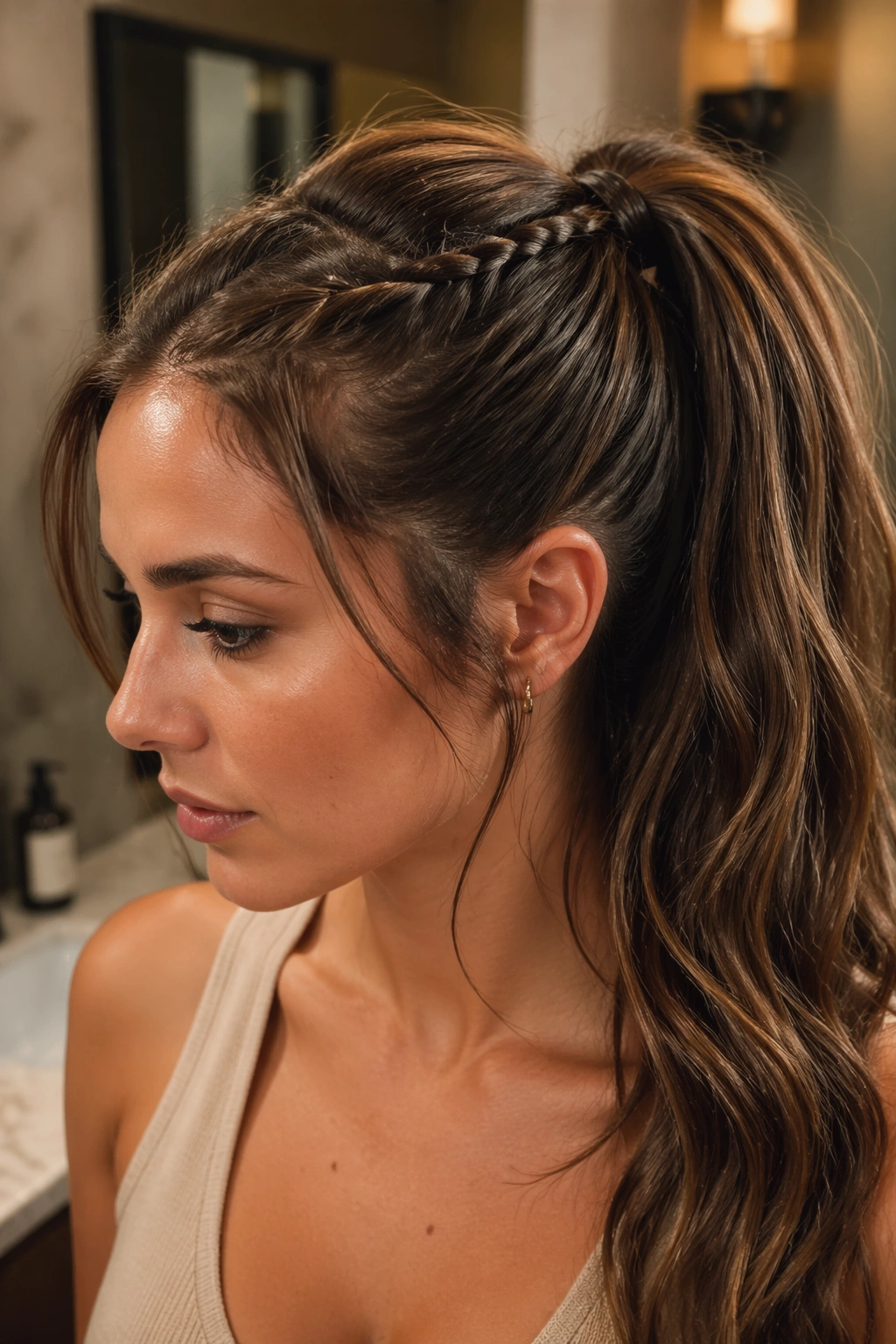
A little braid at the base gives long brown hair grip, and grip matters more than glamour sometimes. The braid keeps the ponytail from slipping, which is a small practical detail that saves you from tugging at it every hour.
I like this style because it looks detailed without asking for a full braiding session. You can braid a small section from the front hairline to the back, then gather everything into a ponytail, or braid a strip just above the elastic and let it disappear into the tail. Either way, the brown color makes the texture easy to see.
Chocolate and cinnamon tones show every twist. That is the whole charm. The braid gives the base a handmade look, while the length stays loose and soft. On long hair, the contrast between the neat braid and the flowing tail makes the style feel finished even if the rest of your outfit is casual.
A tiny braid can carry a lot of visual weight. Weirdly enough, that is why it works.
6. Espresso Brown Ponytail With a Lifted Crown
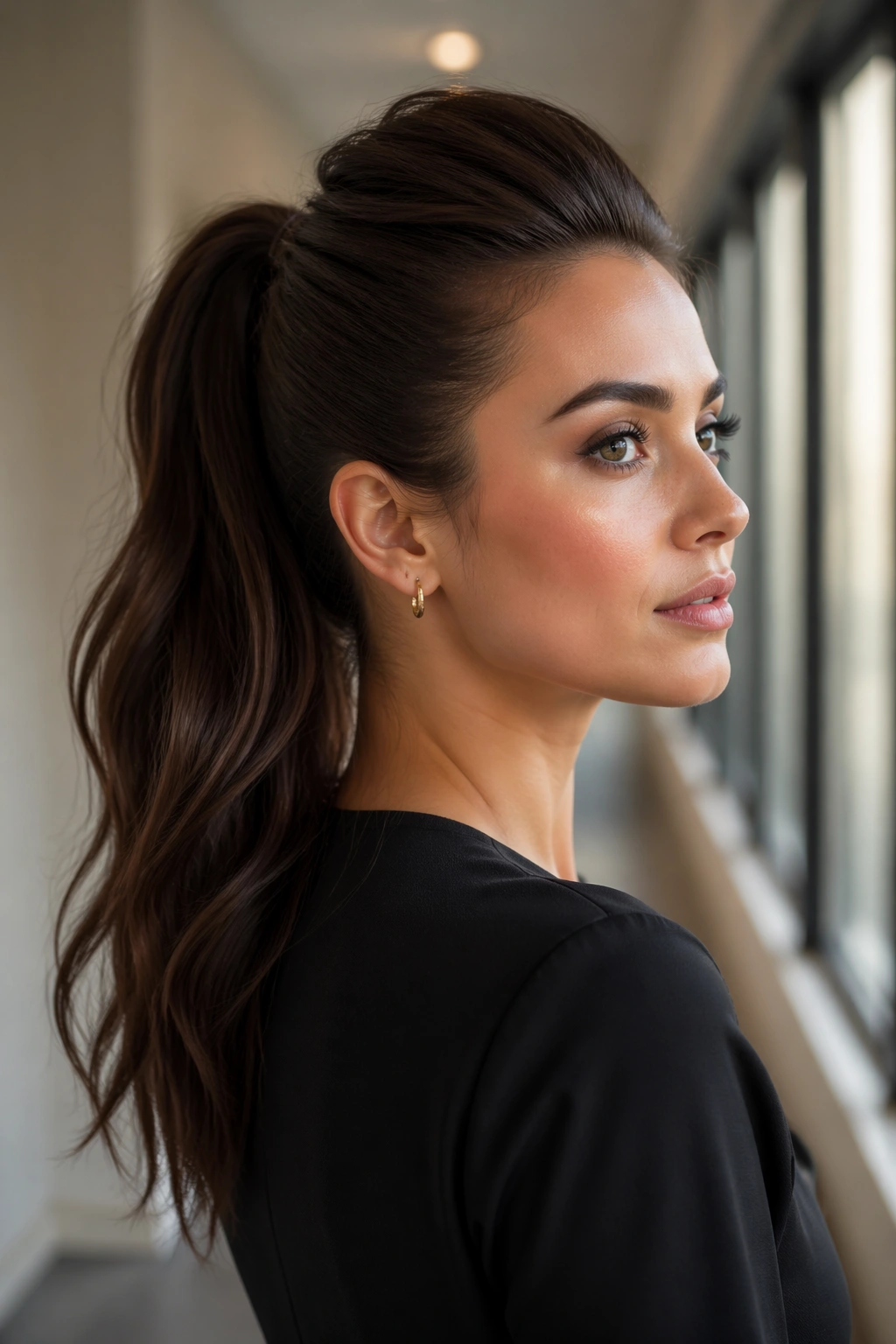
Unlike a low ponytail, this one is about vertical line. The crown gets height, the ponytail starts high enough to lift the face, and the espresso brown shade makes the whole style look sharper than a lighter, more faded brown would.
This style is a good choice when long hair feels too flat at the roots. A little root spray, a quick backcomb at the crown, and a firm elastic make the base sit where you want it. If your hair is thick, clip the crown section up while you gather the rest underneath. That makes the lift easier to control.
Who does it suit best? People with heavy hair, rounder face shapes, or anyone who wants a cleaner profile from the side. It also helps if your layers are long enough to stay in the tail instead of peeling out around the temples.
For me, this is the brown ponytail that looks the most intentional. Not fancy. Intentional. Big difference.
7. Soft Side Ponytail With Face-Framing Pieces
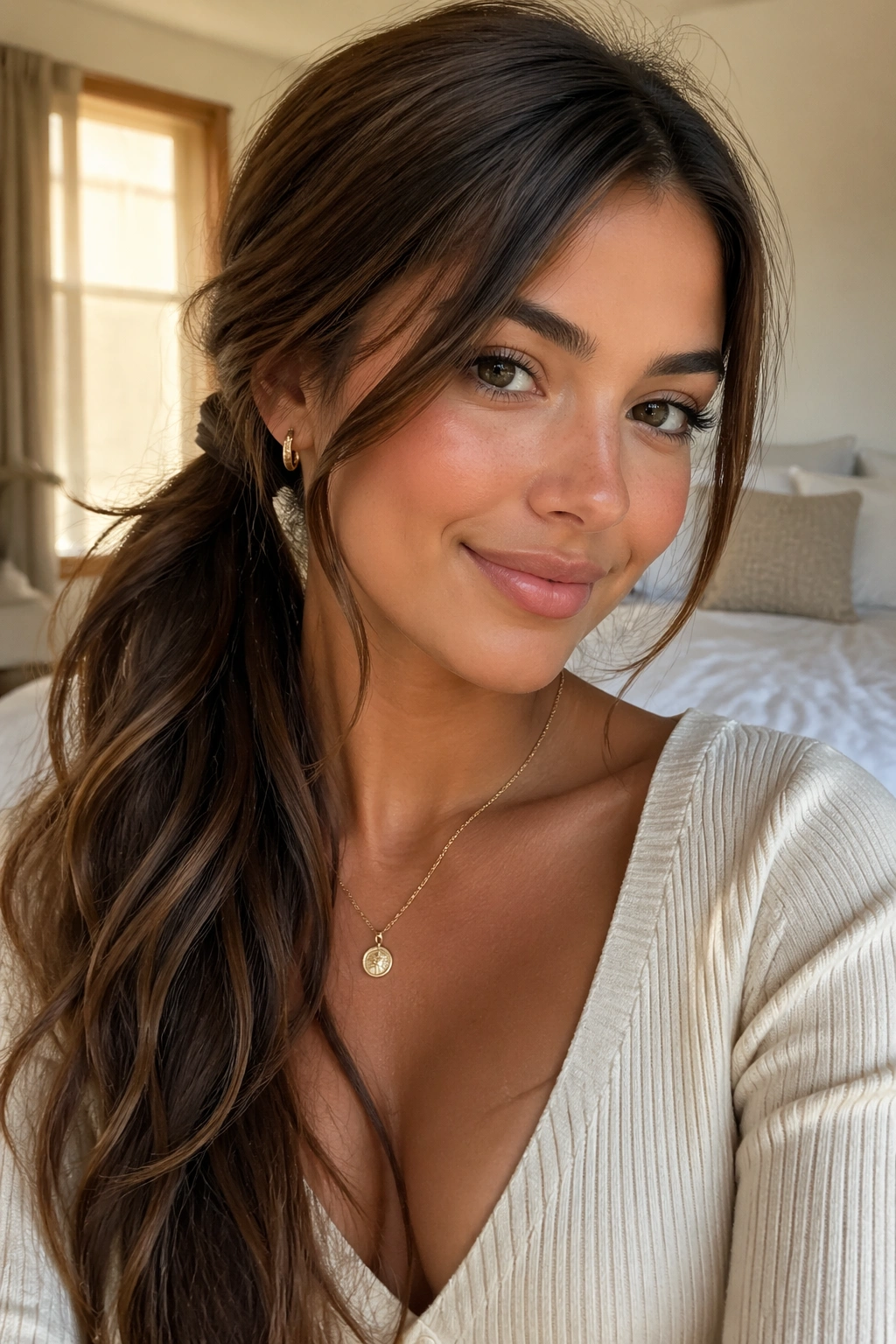
A side ponytail can be surprisingly flattering on long brown hair because it breaks the straight vertical line and lets the length fall over one shoulder. That shift makes the whole style feel softer, which is useful if you wear your hair up a lot and want something less severe.
What makes it softer
The face-framing pieces matter more than the side placement. Leave out a thin section near each temple, then curl those pieces away from the face with a 1-inch iron. The curve should stop around the cheekbone or jaw, not hang like a curtain.
A low side ponytail works best when the elastic sits just behind one ear, not all the way down at the shoulder. Pull the hair over lightly so the base stays smooth, then use a small clip or pin underneath if your hair keeps sliding back.
- Best with layered brown hair
- Good for weddings, dinners, and dressier days
- Looks better with soft waves than with pin-straight lengths
- A satin ribbon can make the base feel less plain
The whole point is movement, not symmetry.
8. Rope-Braid Ponytail
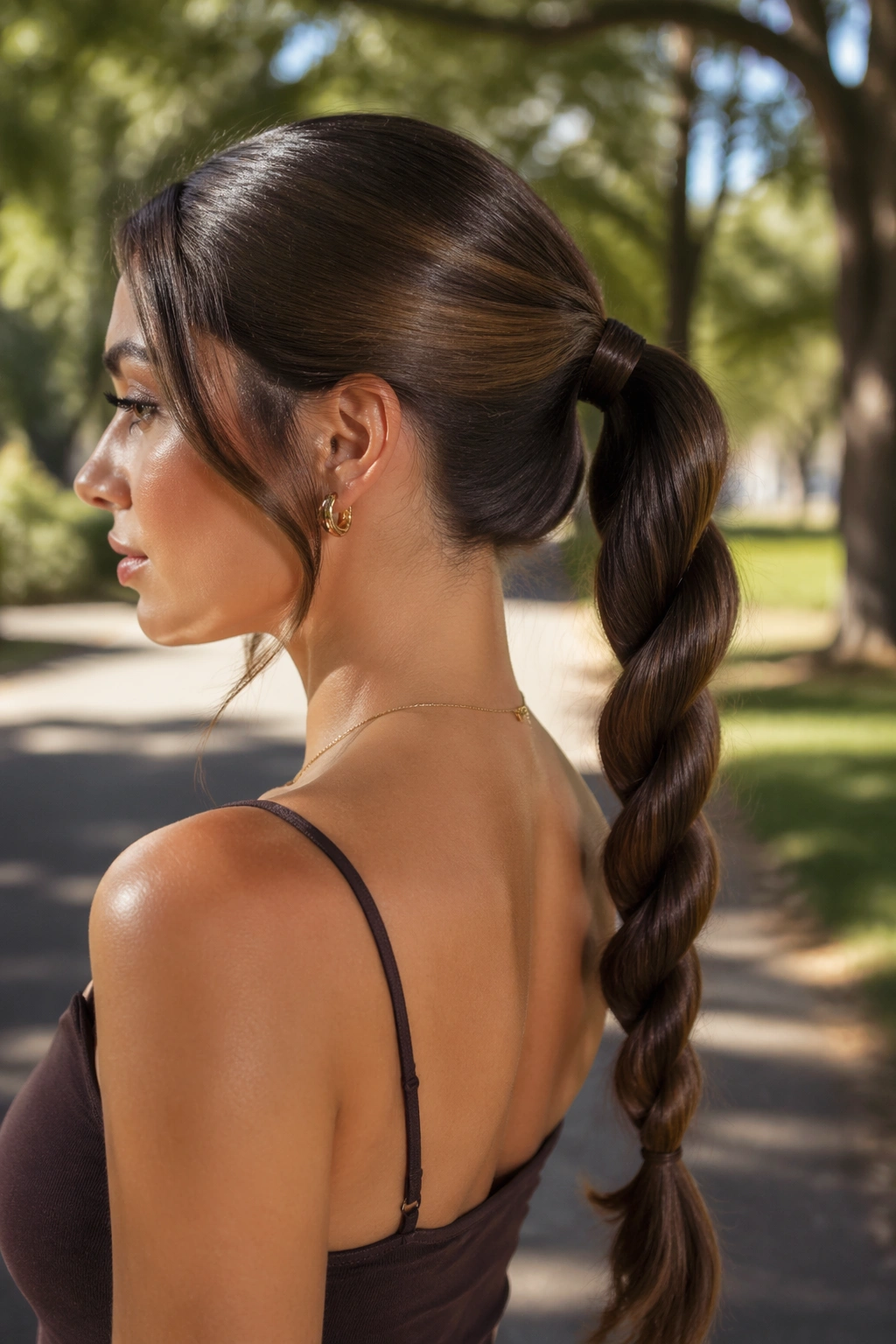
A rope-braid ponytail is one of those styles that looks more complicated than it is. You split the tail into two sections, twist them in the same direction, then twist them around each other in the opposite direction. That’s it. The result is tidy, glossy, and a little sculptural.
On long brown hair, the rope braid shows off shine because the twists catch light at different angles. It also behaves better than a loose tail when the air is damp or the hair has a bit of friction from layers. The structure keeps everything contained.
Use a snag-free elastic at the base, then divide the ponytail evenly. Keep tension even as you twist, or the braid will wobble and unravel by the ends. A small clear tie at the bottom helps lock it in place.
This style feels cleaner than a regular braid and less precious than a polished twist. That’s why it gets worn more than people expect.
9. Half-Up Ponytail With Long Brown Ends
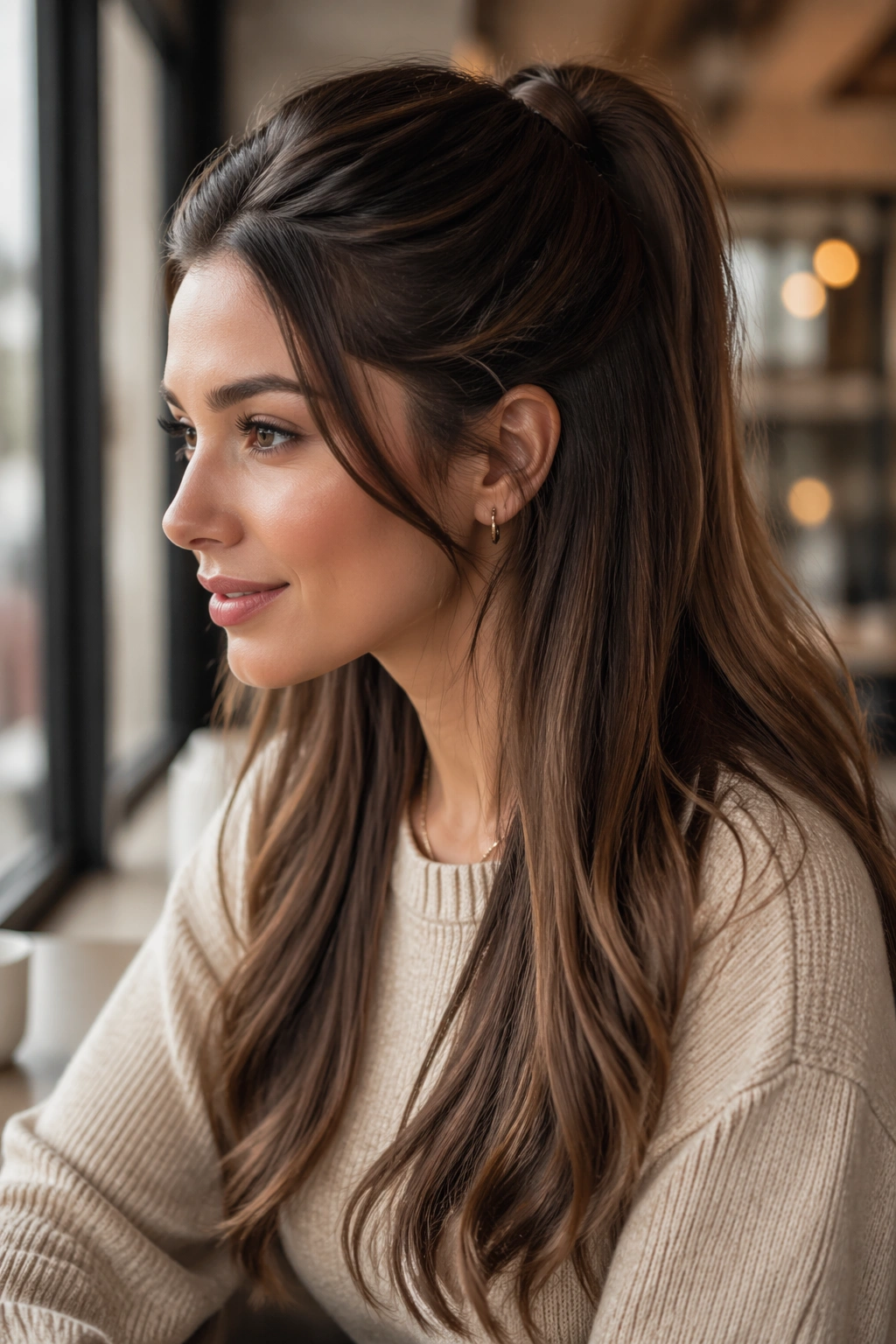
Can a half-up ponytail still count when the lengths stay down? Absolutely. On long brown hair, it often looks better than a full ponytail because it gives you lift at the crown without taking away the weight and movement of the rest of the hair.
The top section should come from the temples and crown, not from the very front hairline only. If you grab too little hair, the style looks skinny. If you grab too much, it starts to feel like a full ponytail with extra steps.
How to keep the top section balanced
Use your thumbs to trace a clean line from above each ear to the back of the crown. Secure that section with a small elastic, then gently pinch the crown upward for shape. The bottom half should stay loose and brushed through.
I like this for brown hair with subtle highlights because the top lift makes the shade look deeper at the roots and lighter through the ends. That depth is the whole point.
10. Crimped Ponytail With Dimension
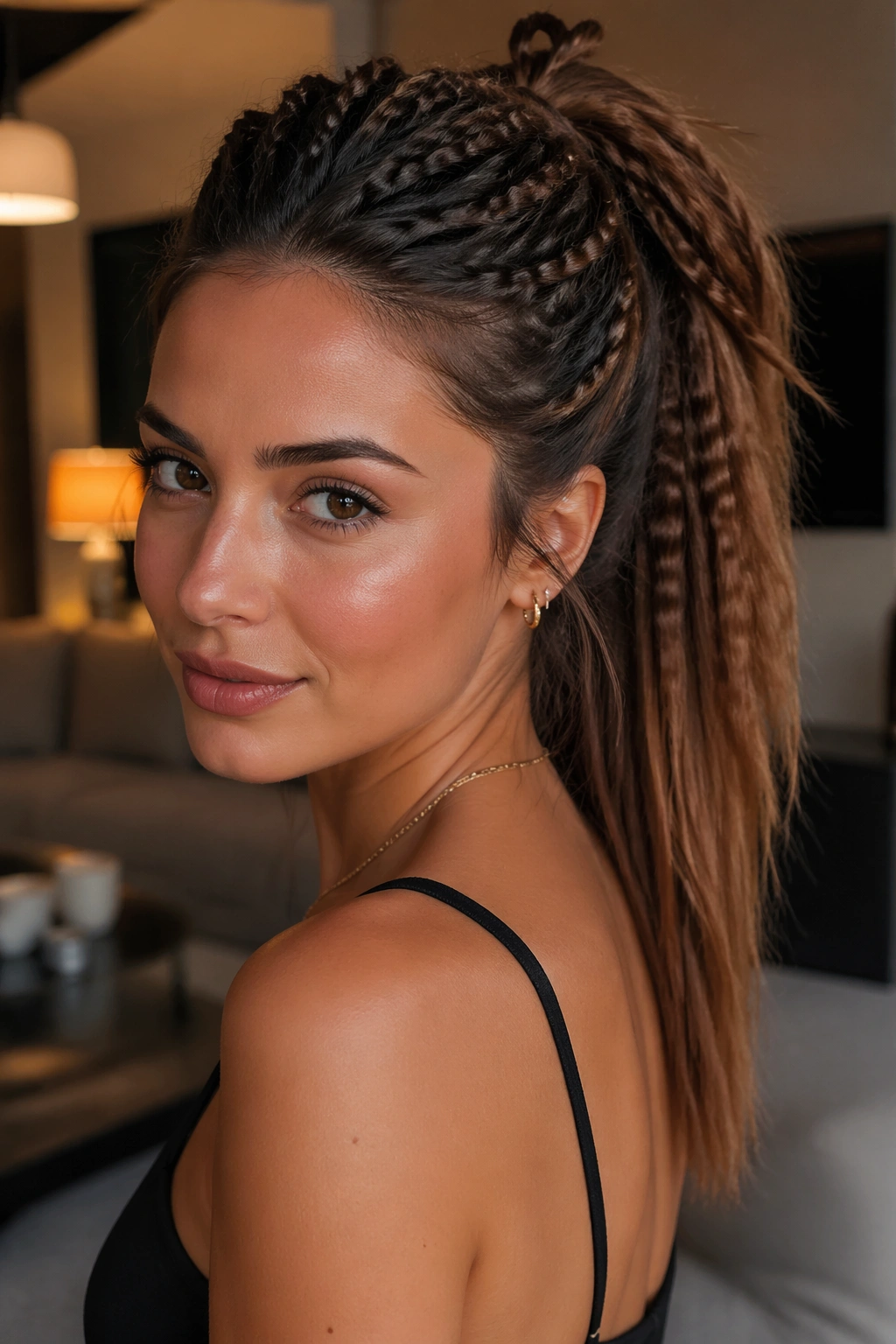
A plain long brown ponytail can look one-note when the hair is very smooth. Crimping fixes that fast, and you do not need to crimp every inch to get the effect.
Focus on the mid-lengths and top half of the tail. Leave the ends softer so the style still moves. If you’ve got a crimp iron, use it in small sections; if not, sleeping in tight braids overnight can give you a similar rough texture, though the pattern will be looser.
- Best for straight brown hair that needs body
- Use heat protectant before any hot tool
- Brush lightly after crimping if you want a softer finish
- Works well with mocha and ash-brown shades
The best part is the way the color changes. Crimped texture breaks up brown hair into shiny ridges and shadows, which gives the ponytail much more depth than a smooth tail ever could. It looks fuller without pretending to be thick hair.
11. Low Ponytail With a Twisted Knot
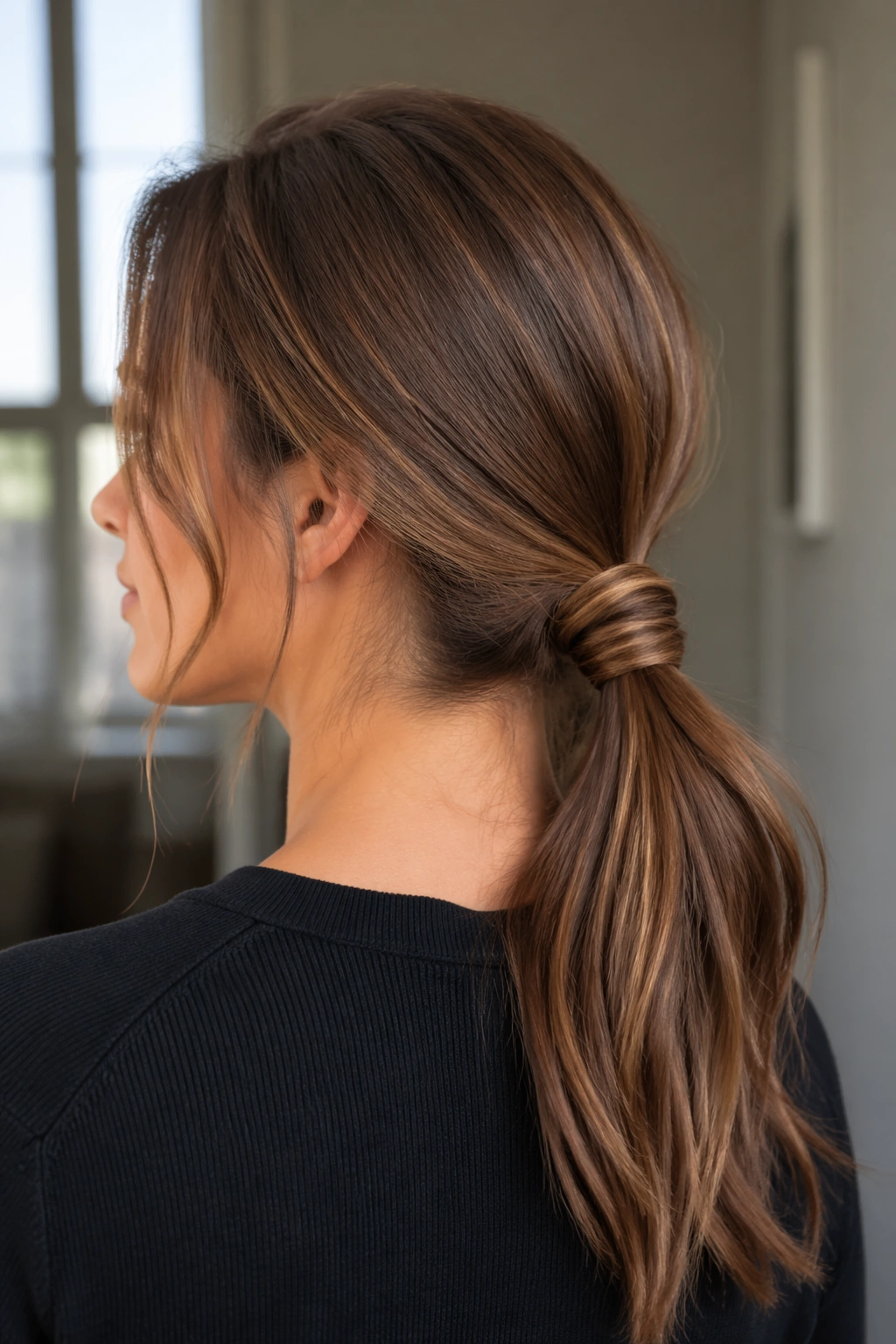
A twisted-knot ponytail sits somewhere between polished and easygoing, which is probably why it works on long brown hair so often. You twist two side sections back toward the nape, tie them together, and let the rest hang low and relaxed.
The knot gives the base a built-in detail, so you don’t need a clip or ribbon unless you want one. On medium-thick hair, the twist holds its shape well. On very fine hair, it benefits from a little dry shampoo at the roots first so the sections have more grip.
I like this one when the hair has a soft wave. The twist keeps the top neat, but the tail still has a loose, touchable feel. If your ends are blunt, add one bend with a curling iron so the bottom doesn’t feel too heavy.
There’s something nice about a style that looks done without looking formal. This is that style.
12. Curly Ponytail With a Clean Hairline
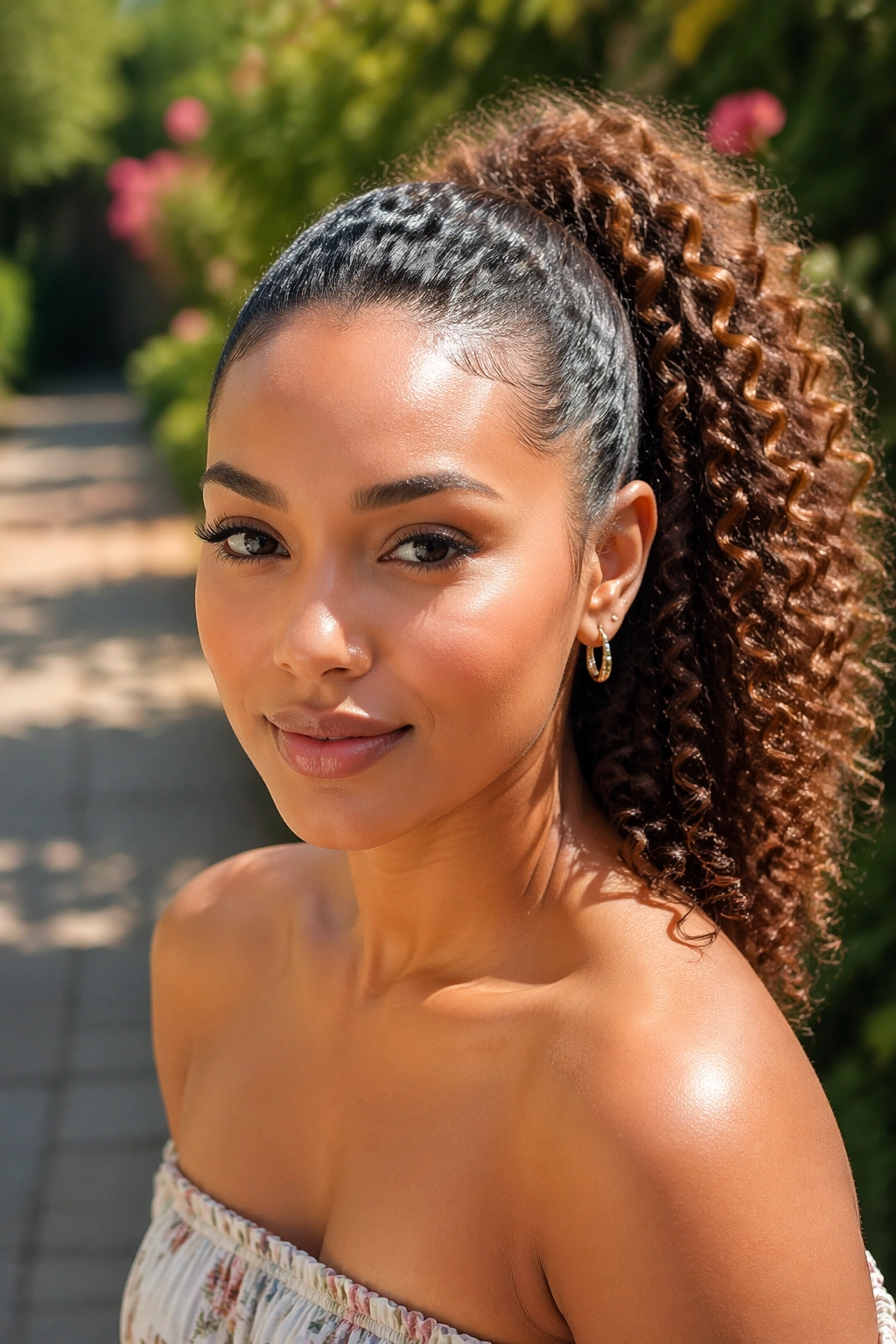
Natural curls change the whole ponytail conversation. Instead of forcing the hair flat, this style keeps the hairline neat and lets the curls do the work through the tail, which is where long brown hair gets its best shape anyway.
A clean hairline matters here because curls can make the base look fuzzy fast. Brush the top smooth with a soft bristle brush, secure the ponytail where the head naturally wants to hold it, then preserve the curl pattern in the lengths. If you pull the curls too tight, they lose bounce and the ponytail turns into a dense rope.
This style suits brown hair with dimension because curls show both sheen and shade shift. Chestnut looks warmer. Dark mocha looks richer. Caramel highlights pop more because every curl catches light differently.
No need to overcomplicate it. Curly ponytails look best when you stop before they get overworked.
13. Center-Part Brown Ponytail With Mirror Shine
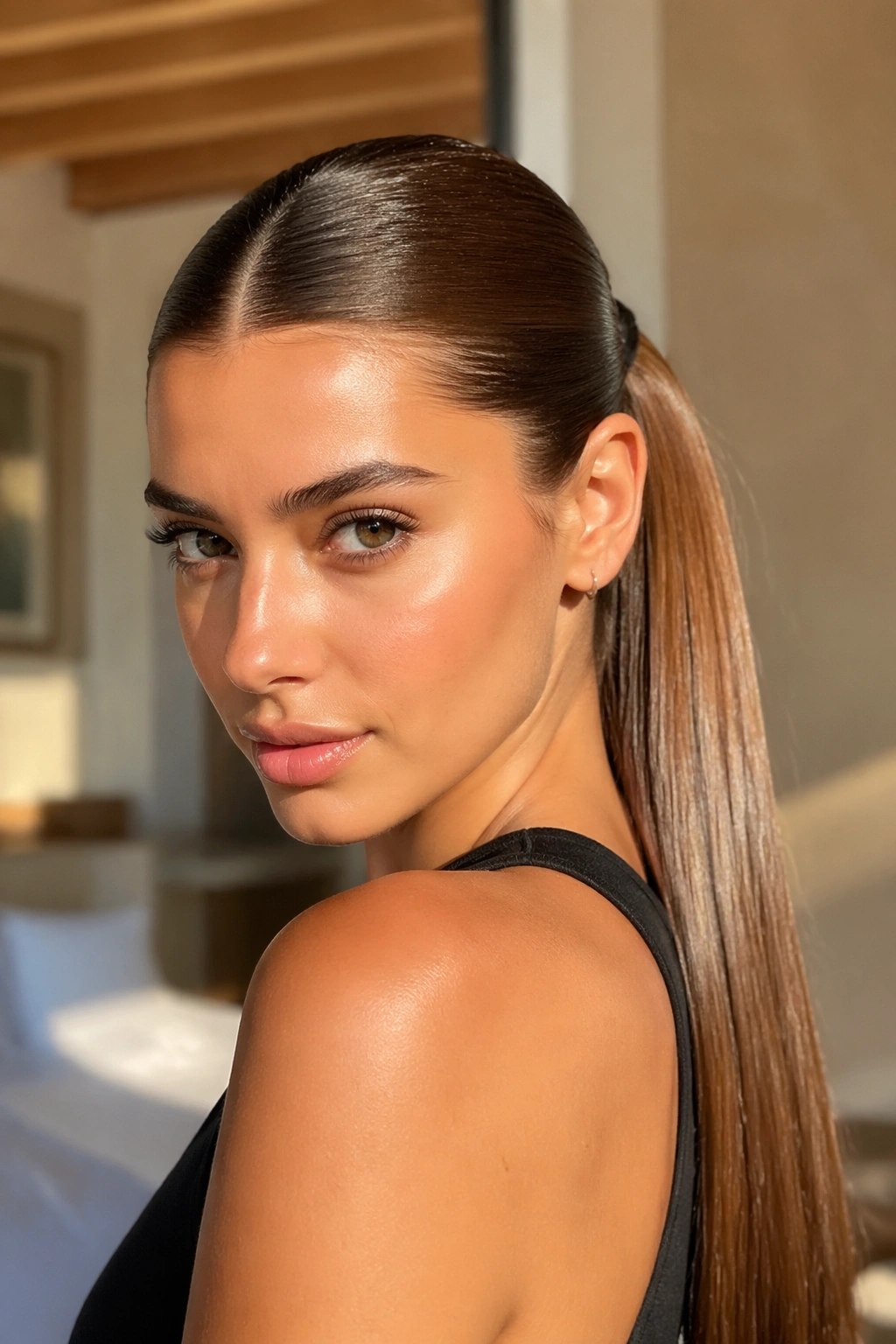
A center part can make a brown ponytail look striking in the plainest way possible. It creates a straight line through the front, which makes the rest of the hair look even smoother, especially if the lengths are long enough to swing.
Why it works
The center part puts equal pressure on both sides of the head, so the ponytail feels balanced instead of lopsided. That symmetry lets the shine show up more clearly, which is where brown hair often looks its best. A little serum on the surface and a soft brush through the tail can make the finish almost reflective.
Use this when you want a controlled look with no visible fuss. If your part tends to wander, set it with the tip of a comb while the hair is slightly damp. Once the ponytail is tied, smooth the top again with your palms, not a heavy layer of product.
A center-part brown ponytail is simple, but simple is not the same as plain. The finish does the talking.
14. Romantic Ponytail With a Ribbon Tie
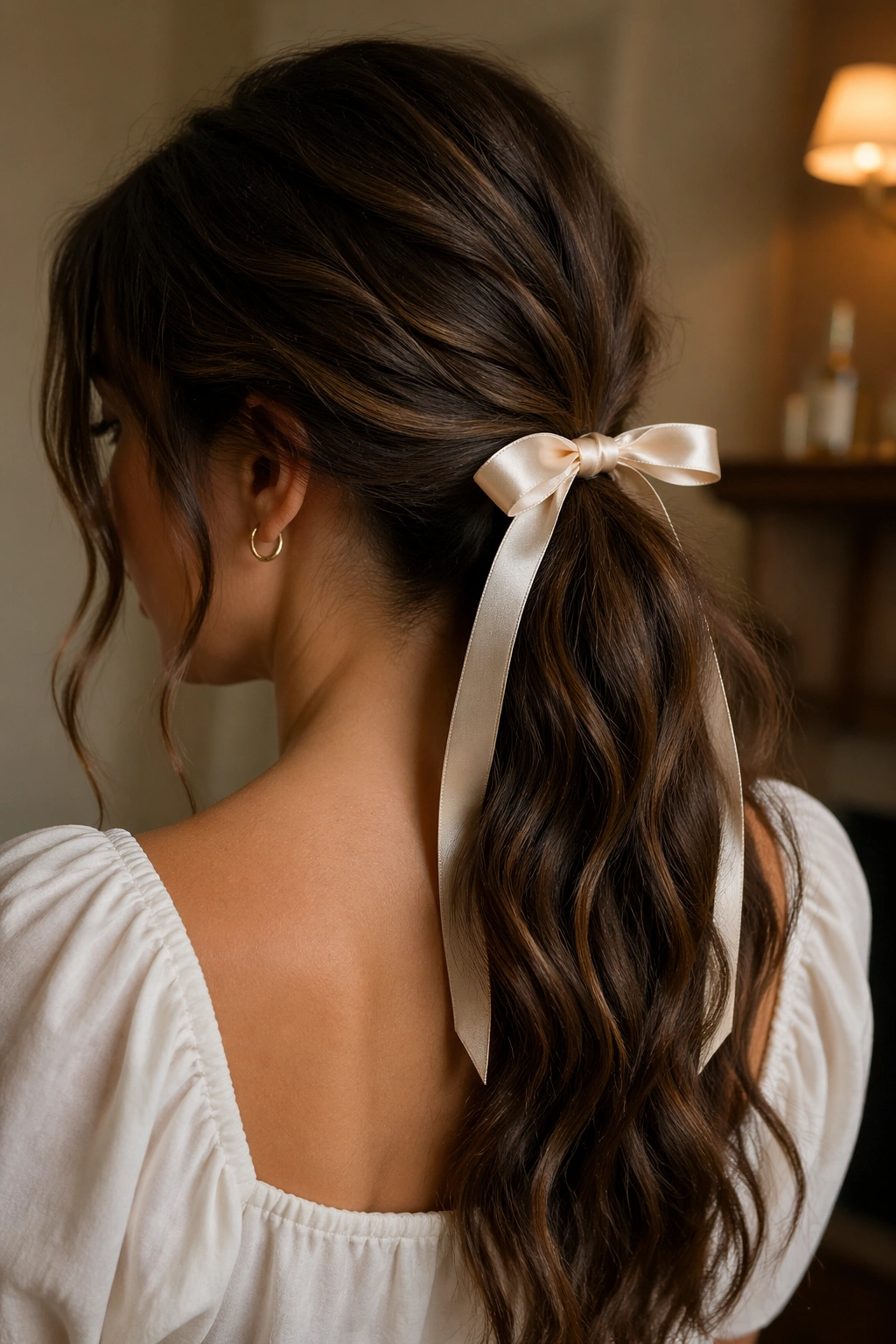
A ribbon changes a ponytail faster than almost anything else. On long brown hair, it adds contrast without fighting the color, which is why a satin ribbon in black, taupe, deep green, or burgundy often looks better than something loud.
The hair itself can stay soft and loose. Think brushed waves, a low or mid ponytail, and a tie that sits just below the elastic so the ribbon tails hang down the back. If your hair is very thick, choose a wider ribbon; narrow ribbons can disappear into the ponytail.
I prefer this style when the outfit needs one gentle detail and nothing more. A ribbon softens the hard line of an elastic, and the brown color behind it keeps the whole thing grounded. It’s an easy way to make a practical hairstyle feel dressed up.
Satin works because it slips less and looks smoother against long hair. Cheap ribbon can fray fast. Skip that.
15. Double-Wrapped Ponytail for Thick Hair
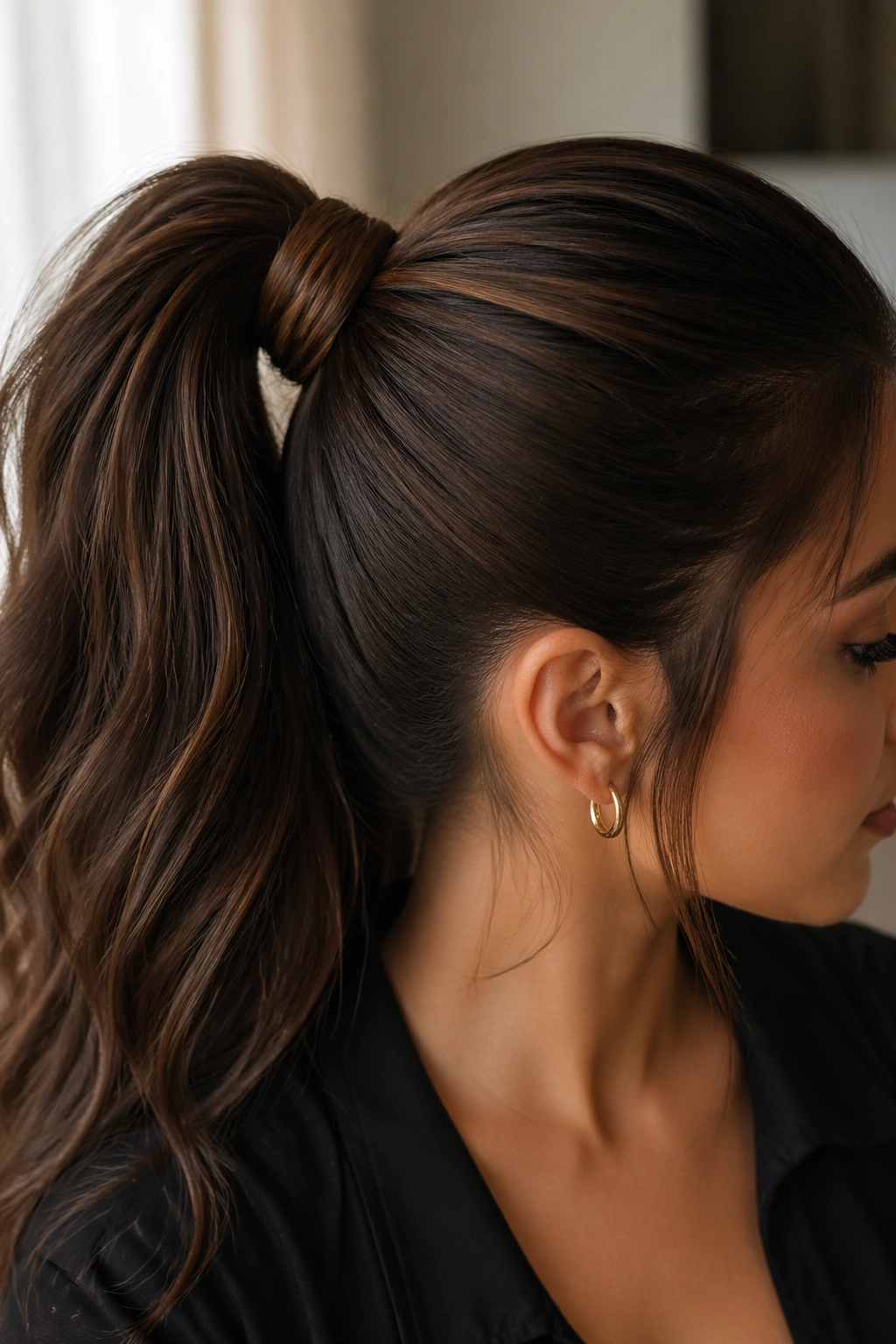
If your ponytail feels heavy by noon, this is the fix that keeps showing up for a reason. A double-wrapped ponytail uses two ties or a stacked structure to support long, dense hair without letting the base drag downward.
You can make the top half into a small ponytail first, then gather the rest into it. Or you can wrap a second strand of hair around the base after the elastic is secure. Both methods give the ponytail more hold, which matters when the hair is long enough to pull on itself.
- Best for thick, heavy brown hair
- Use two elastics that match your hair color
- Pin the wrap from underneath so it does not poke out
- Works well for shoulder-lifting volume and cleaner posture at the base
The result is not flashy. It’s practical, and that is why it matters. Heavy hair needs support, not more decoration.
16. Sporty Long Ponytail With Elastic Segments
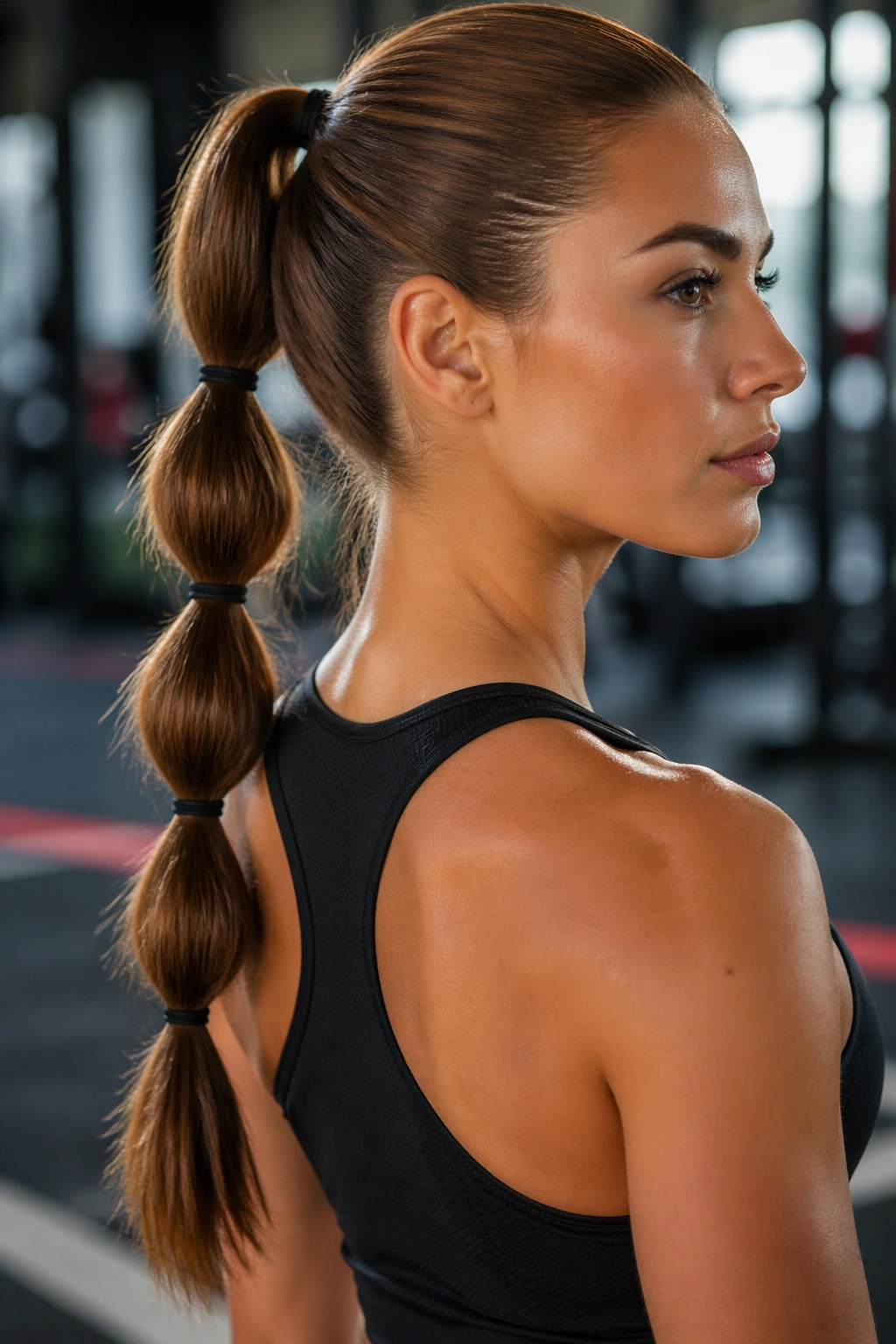
A sporty segmented ponytail keeps long brown hair under control while still looking deliberate. Instead of one loose tail, you add several elastics down the length so the ponytail stays compact and doesn’t snag as easily during movement.
What makes it different from a bubble ponytail is the tension. The segments stay flatter and closer to the hair, so it reads athletic instead of playful. I like this style for gym days, travel days, or any time you need your hair to stay put without a lot of extra brushing.
Use three to five elastics, depending on length. Space them evenly, around 4 inches apart, and smooth each section before tying the next one. If your hair is layered, a little leave-in cream on the ends keeps the pieces from fraying.
Brown hair looks especially good in this setup because the segments create visible bands of shade and shine. It turns plain length into structure.
17. Tousled Ponytail With Curtain Bangs
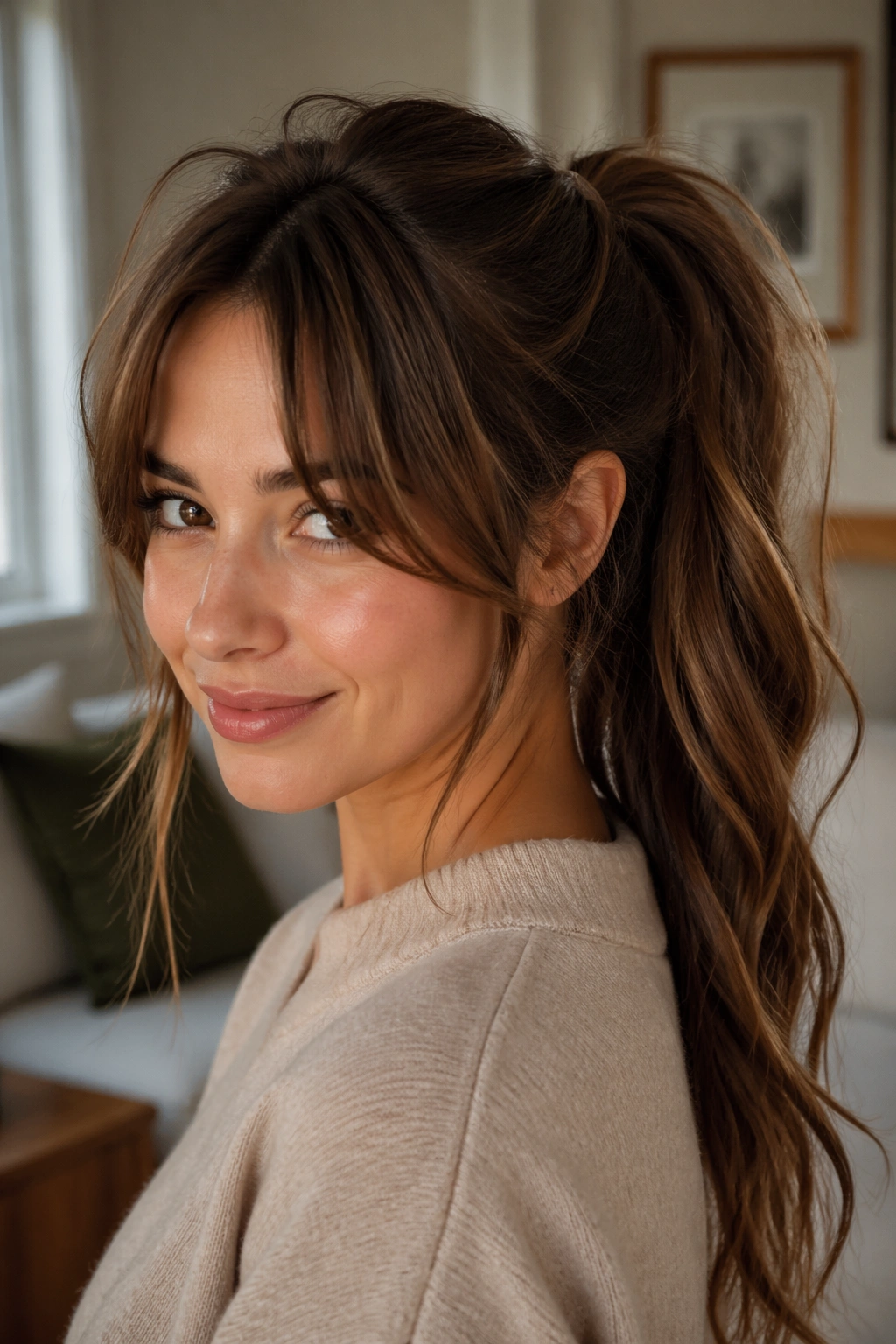
A tousled ponytail works when you want your long brown hair to look lived-in instead of polished to the bone. Curtain bangs help because they soften the front, frame the face, and keep the style from looking like everything was pulled straight back in a hurry.
The key is restraint. Leave the bangs loose, then gather the rest of the hair into a mid or low ponytail with a little bend at the crown. Use a texturizing spray before tying if your hair is too slippery, especially if it’s fine and straight. That gives the style enough hold to keep its shape.
I like a soft wave through the tail here. It makes the bangs and ponytail feel connected instead of separate. If the ends are too tidy, the style loses that easy look and starts to feel overly arranged.
This is one of those styles that looks better after a few minutes of wear. It settles into itself.
18. Braided Side Ponytail
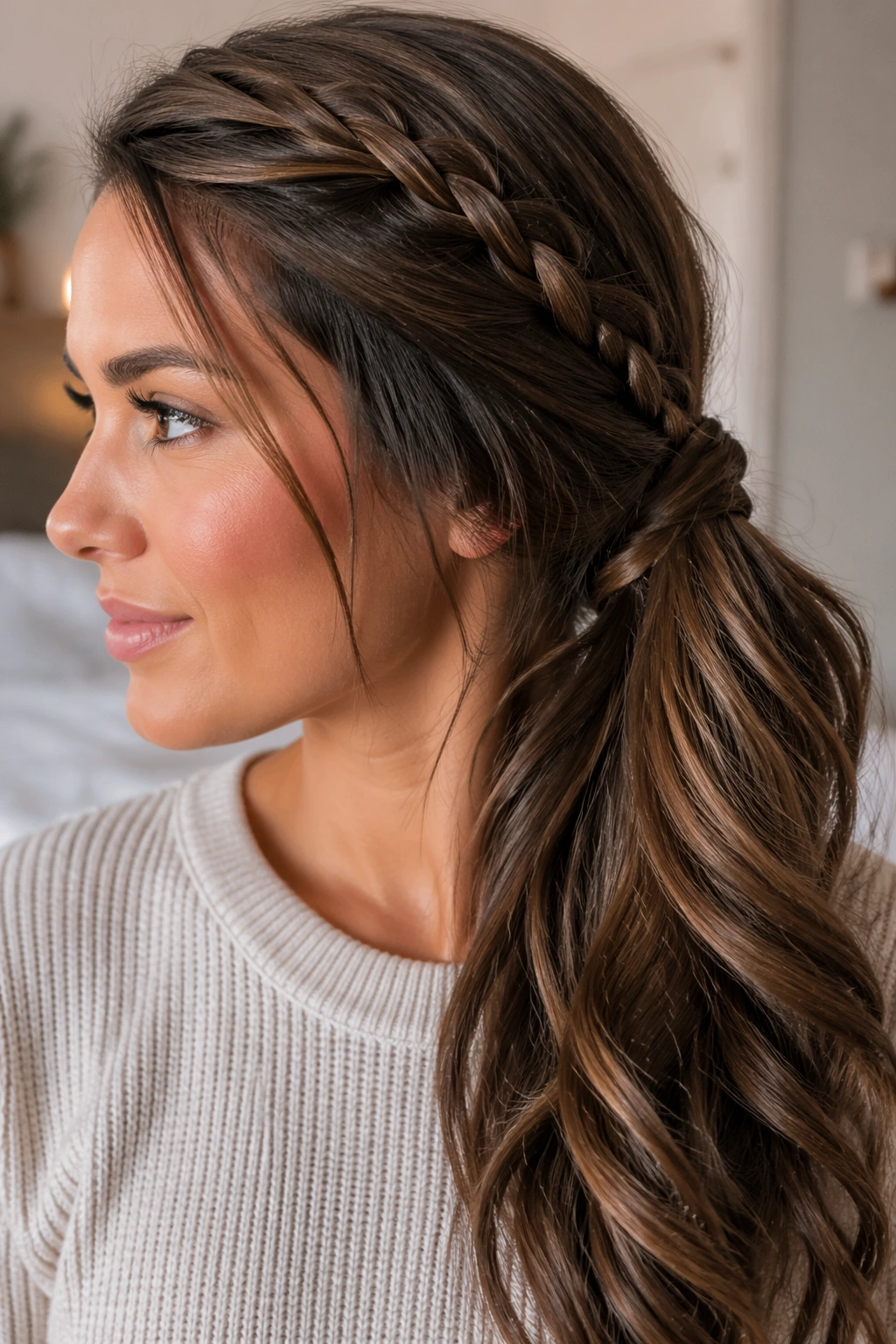
A side braid is one thing. A side ponytail with braid detail is another. The difference is in the shape: the ponytail stays loose and long, but the braid tucks the front or base into something that feels finished.
On long brown hair, the side placement lets the tail drape across one shoulder, which is useful if you want the length visible. A small braid at the top or along one side also creates texture without forcing the whole ponytail into a full braided style.
This works especially well when the hair has a slight wave or a few layers. A flat, pin-straight side ponytail can feel heavy, but a braid gives it movement. If you want the braid to show clearly, keep it tight and small; if you want it softer, pull it out a little after tying.
It’s a little more interesting than a basic side ponytail, and not nearly as fussy as it sounds.
19. High Ponytail With Flipped Ends
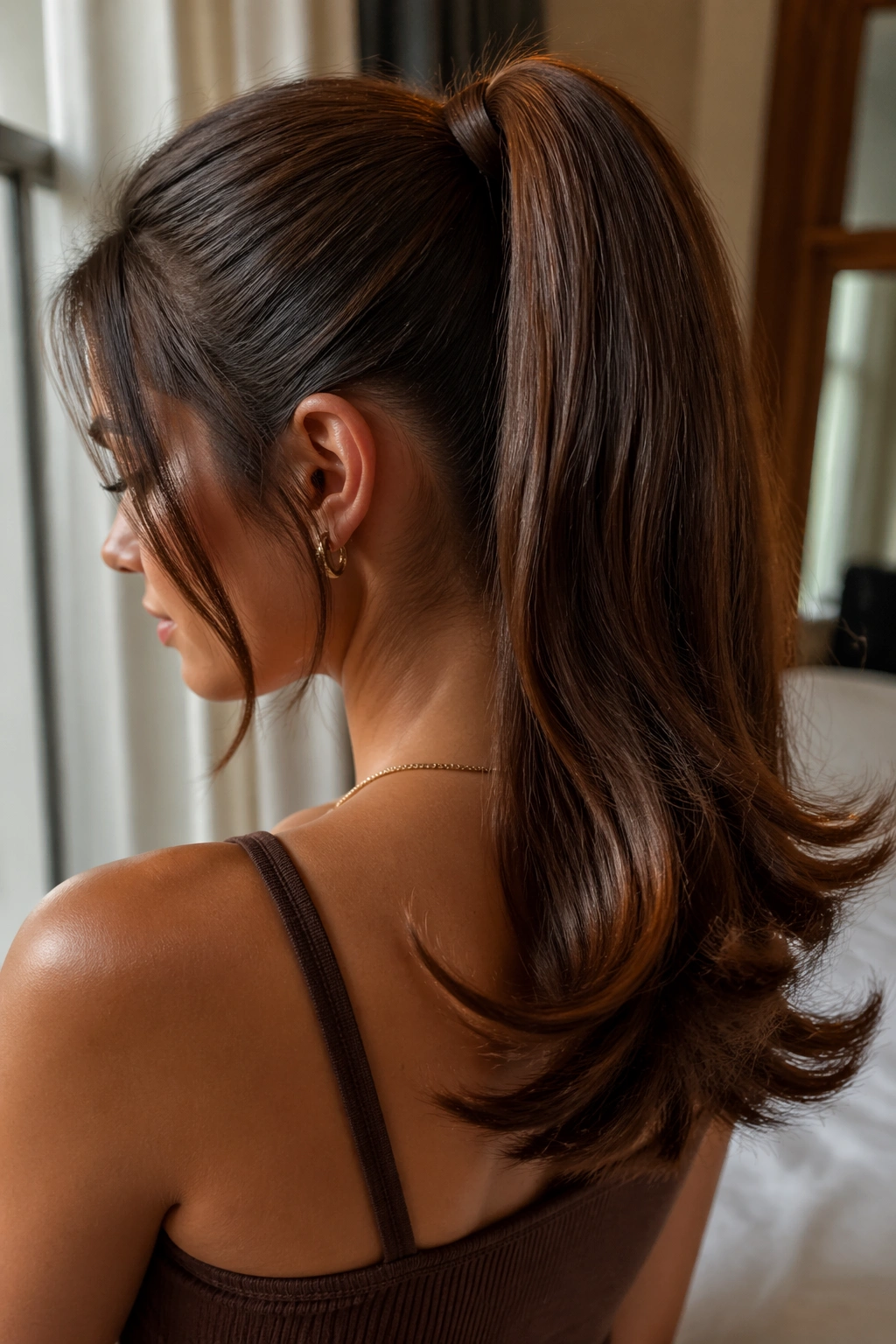
What makes a flipped-end ponytail different from a regular high ponytail? The ending shape. Instead of letting the lengths fall straight, you bend the ends outward or under so the tail has a bit of bounce.
That little finish changes the mood of the whole style. On long brown hair, flipped ends show off the cut, keep the tail from looking too severe, and make the ponytail feel a touch retro without turning it into a costume. You can flip the ends with a round brush and blow dryer or with a flat iron if you’re careful.
How to get the flip to hold
Set the ponytail first, then work only on the last 4 to 6 inches. Curl the ends around the brush or clamp them lightly with the iron and turn the tool away from the face. Let the ends cool in that shape before touching them.
It sounds small. It matters a lot. The finish at the bottom decides whether the style feels ordinary or styled.
20. Low Ponytail With Soft Crown Volume
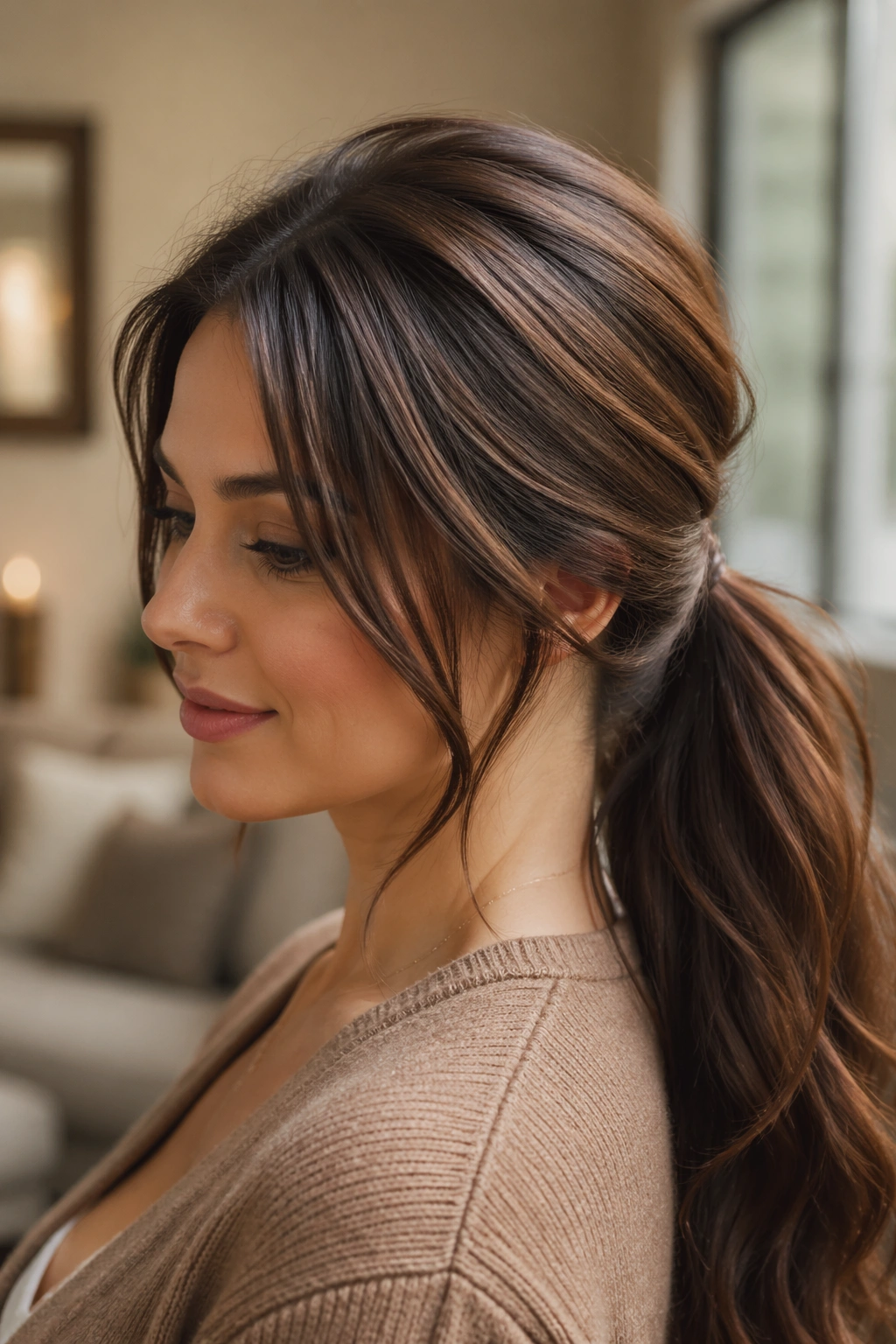
A low ponytail with a little crown volume is the easiest way to make long brown hair look fuller without making it stiff. Instead of pressing everything flat, you keep a soft lift at the top and let the ponytail rest low and smooth.
This is the version I like for finer hair, because a flat crown makes the ponytail look thinner than it really is. A little teasing at the roots, followed by a light brush over the top, gives the style structure without visible knots. If your hair is thick, the same trick softens the base and keeps it from looking severe.
Brown hair benefits from this shape because the lifted crown catches light and the low tail keeps the color deep. The whole silhouette feels easy on the eyes. Not too tight. Not too loose.
It is also one of the more forgiving styles after a long day. The shape softens instead of collapsing.
21. Glossy Statement Ponytail for Special Events
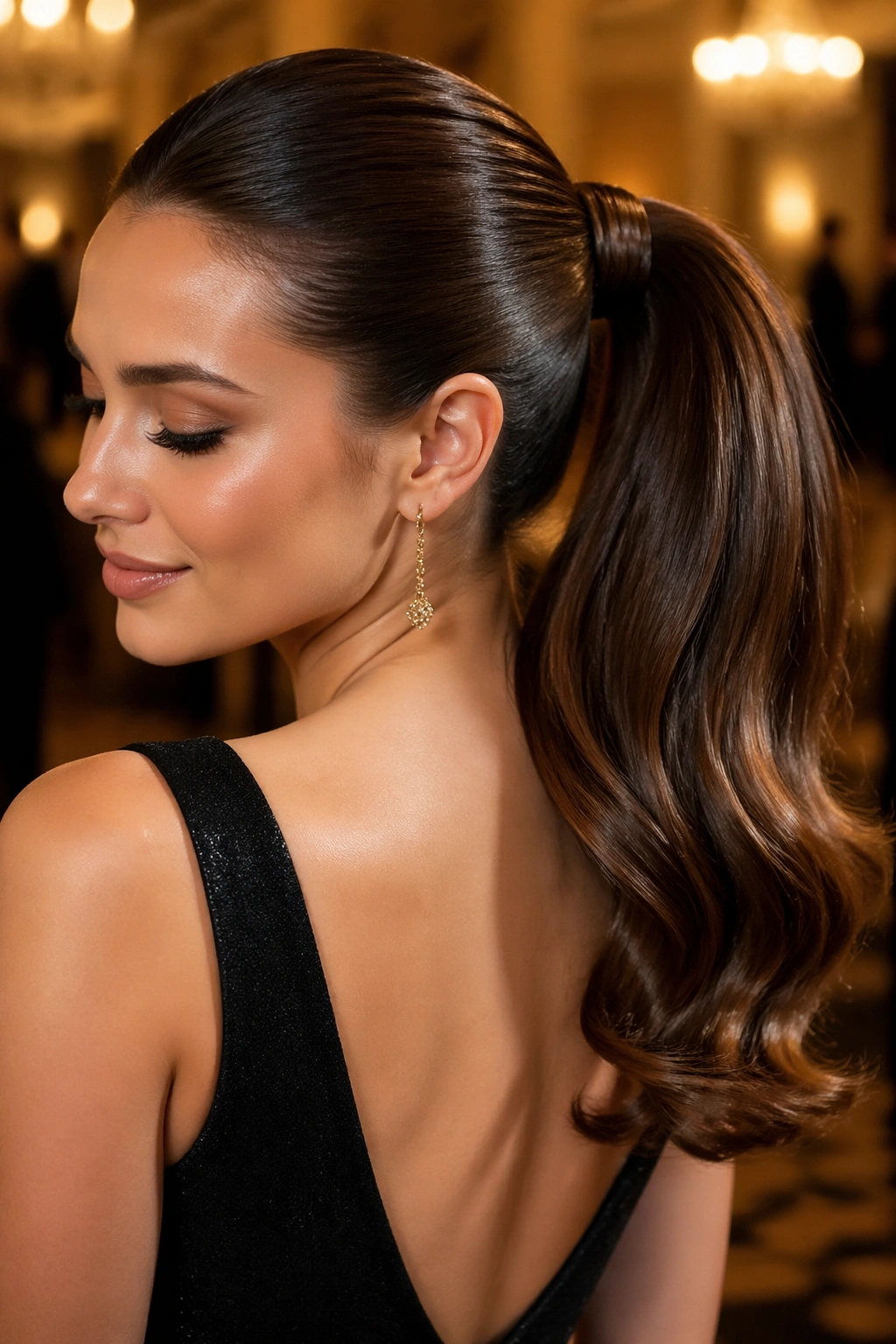
A statement ponytail is less about one trick and more about finish. On long brown hair, that means a clean base, smooth length, and enough gloss that the color looks rich from every angle.
The best versions use a firm hold at the crown, a strand wrapped around the elastic, and a tail that has either a soft wave or a polished bend through the last third. I lean toward this style for evenings, photos, and dressed-up events because it gives long hair presence without blocking the neckline of a dress or blouse.
Brown tones matter here. A deep brunette reads dramatic under shine spray, while chestnut and caramel look softer and warmer. If your hair tends to frizz, use a tiny amount of serum on the mid-lengths and then leave the ends alone. Too much product at the bottom makes the tail look greasy instead of glossy.
This is the ponytail that looks calm from a distance and carefully built up close. That’s exactly the point.
The Bottom Line
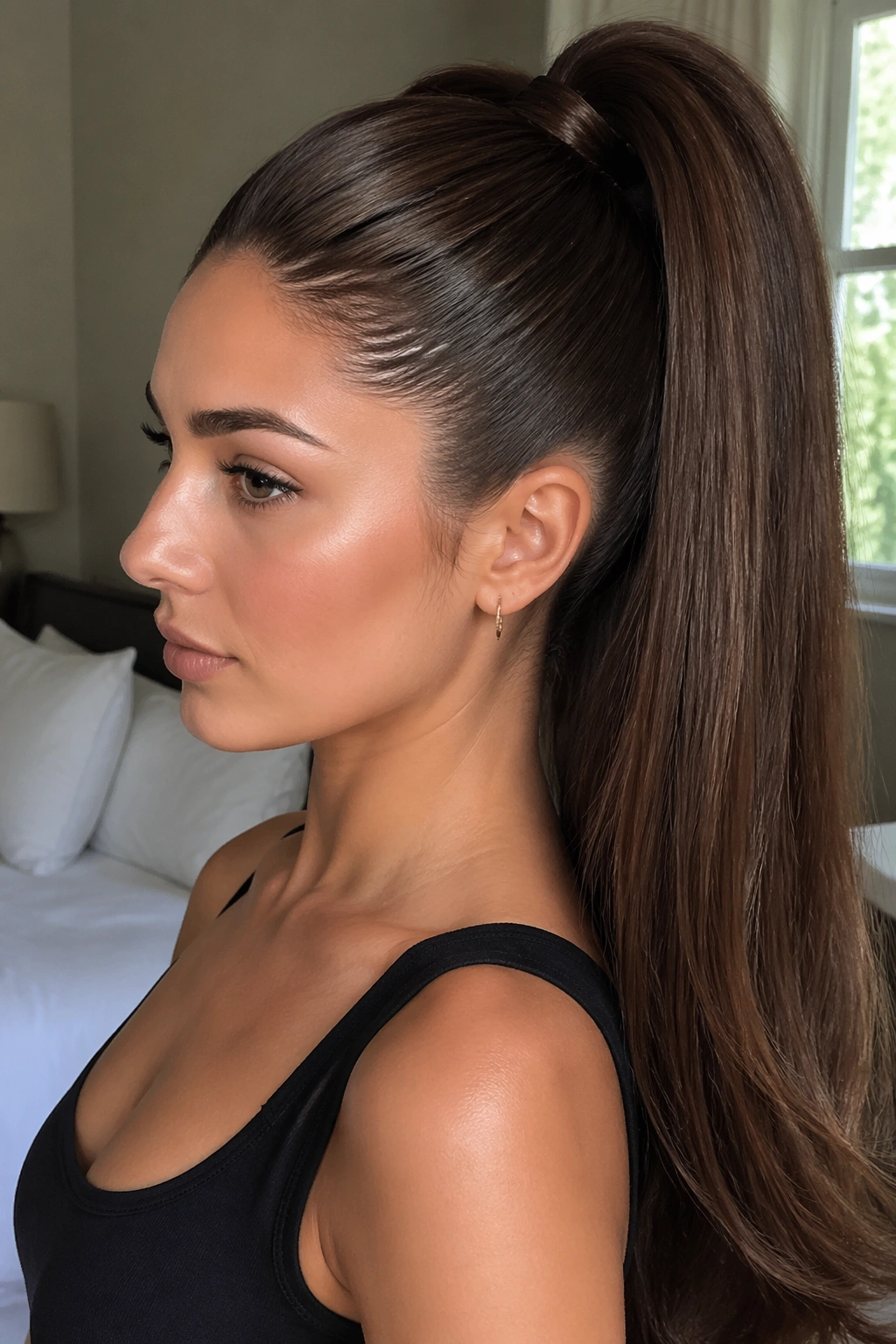
Brown ponytails for long hair work best when you treat the base and the tail as separate jobs. The base needs control. The tail needs shape. When those two things line up, even the simplest ponytail looks more considered than most updos that take twice as long.
The color helps more than people give it credit for. Dark brown shows shine, chestnut softens edges, and caramel pieces break up weight in a way that makes long hair look lighter on the eye. That means a small change — a ribbon, a twist, a braid, a cleaner part — can make a much bigger difference than another handful of spray.
If your hair is thick, support the base with two elastics or a stacked tie. If it’s fine, build a little lift at the crown before you smooth anything down. That single choice usually decides whether the ponytail holds its shape for an hour or for the rest of the day.