



Caramel highlights on curly natural hair are one of those looks that make people stop and ask what you did differently. The warmth of caramel against dark natural hair creates a sun-kissed dimension that flat, single-process color can never replicate — and on curly hair, that dimension is amplified by every twist of the coil, every bounce of the spiral. Caramel highlights on curly natural hair have a staying power in popularity that isn’t trend-driven. It’s because they genuinely work, on almost every skin tone and curl pattern.
Why Caramel Highlights Work So Well on Natural Hair
The secret is contrast — but not the jarring, harsh contrast of bleach-blonde on black hair. Caramel sits in that sweet spot where it’s light enough to be clearly visible against dark brown or black natural hair, but warm enough to never look fake, cold, or out of place. It has golden and amber undertones that naturally harmonize with a wide range of skin tones, particularly the warm brown, golden, and reddish-brown complexions that are most common among Black women.
On curly hair specifically, highlights have an effect that’s unlike anything they do on straight hair. When you paint color onto a curl and release it, that color lives on the outer face of the curl — the part that faces outward as the coil wraps around itself. This means your highlights show at their brightest when the curl is illuminated, and they’re less visible in shadow. As you move, as the light shifts, as you turn your head, the highlights reveal themselves differently. It’s genuinely dynamic. No Instagram filter required.
Another reason caramel works so well on natural hair is that the warm shade is forgiving of imperfect fade. As caramel highlights grow out or lose their intensity, they shift through warm honey, golden brown, and finally blend back into the natural base. That fade is beautiful at every stage — there’s no awkward, brassy, or jarring transition to manage.
Understanding the Spectrum of Caramel
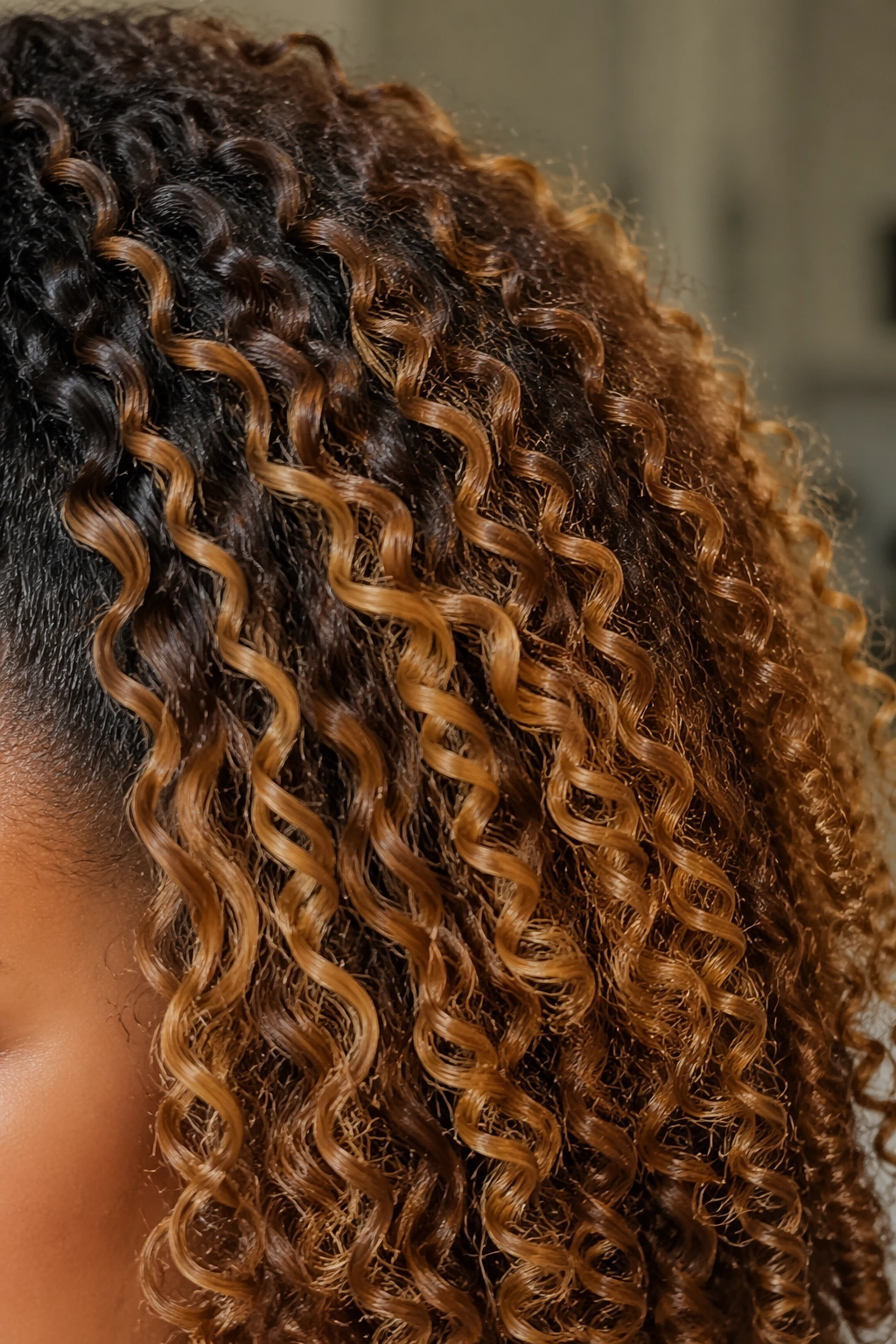
Caramel is not one shade. It’s a range of warm browns and ambers that spans from a light honey-gold all the way to a deep, rich toffee. Where your highlights land on that spectrum matters — and it should be chosen based on your natural hair color, your skin tone, and how much contrast you want.
Honey caramel is the lightest end of the spectrum — blonde-adjacent, with more gold than brown. It creates the most visible contrast on dark natural hair and requires the most lightening to achieve. It looks particularly luminous on medium brown skin with warm undertones.
True caramel sits in the middle — warm, amber-brown, instantly recognizable as caramel. It reads as natural and sun-kissed and works on a wide range of complexions. It requires moderate lightening and is one of the more achievable caramel shades for natural hair without excessive processing.
Toffee and dark caramel are the deepest end of the spectrum — barely lighter than a medium brown natural base. They create subtle, tonal highlights that add dimension without obvious contrast. These are the most low-maintenance caramel highlights and the least damaging, but they require the closest hair color match to the natural base for the depth to make sense.
How Much Lightening Does Caramel Require?
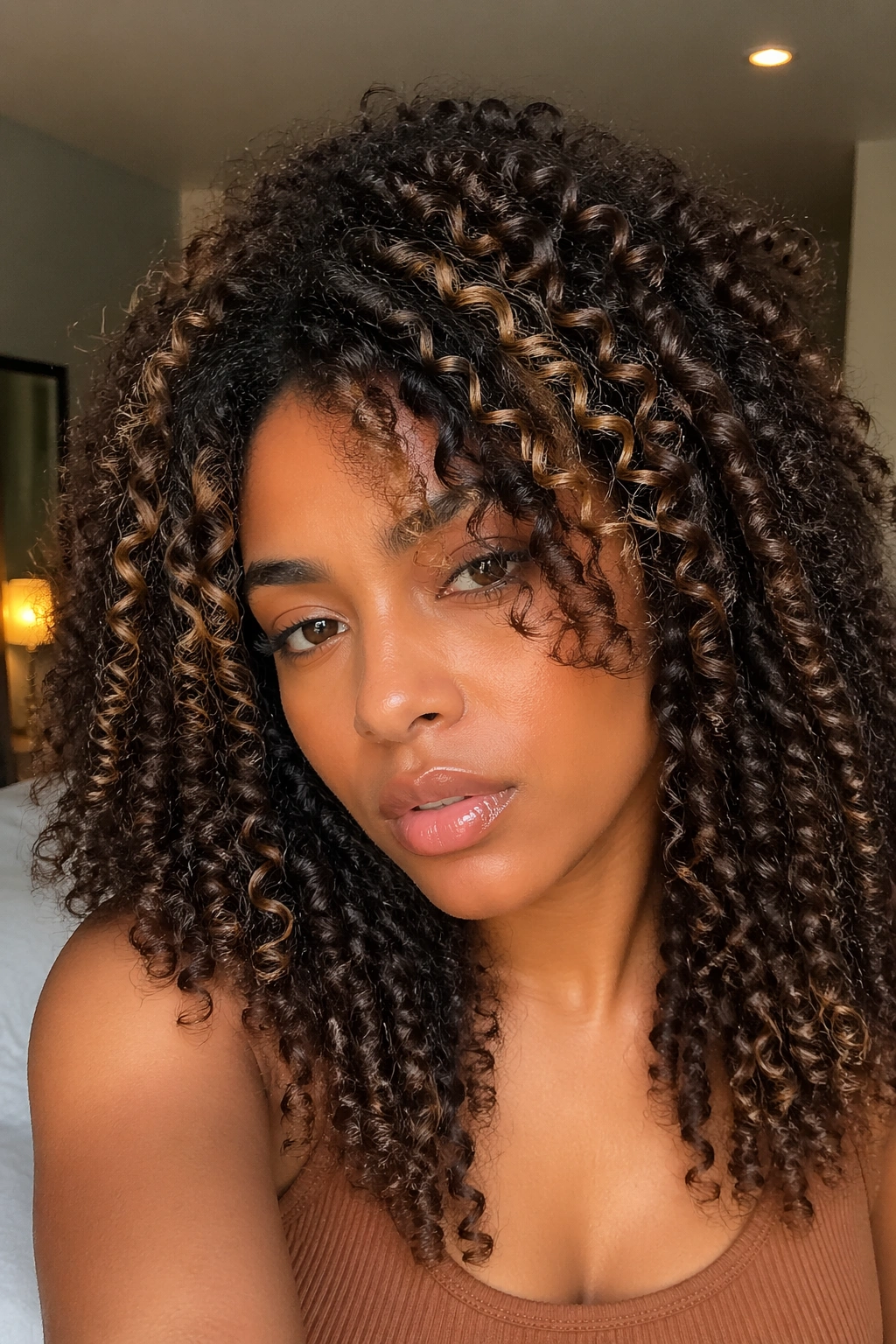
This is the practical question that everything else hangs on. Caramel highlights require the underlying hair to be lifted (lightened) before the caramel tone is applied. How much lift you need depends on where you’re starting from and which shade of caramel you want.
On black natural hair (Level 1), getting to a true caramel typically means lifting four to five levels — significant lightening that requires bleach and multiple sessions if done safely on natural hair. On dark brown natural hair (Levels 2-3), you might only need to lift two to three levels, which is more achievable in a single session with less damage risk.
Single-process caramel toners can add warmth and caramel tones to dark natural hair without bleach — but the effect is subtle and primarily visible in direct light. Think iridescent warmth rather than clear caramel streaks. For a more obvious highlight effect, some lightening is necessary.
Partial highlighting — only lightening a selection of strands rather than all your hair — is the gentler approach. Instead of processing every strand, the colorist selects specific sections (often the top layer, the face-framing pieces, and the outermost curls) for lightening and color. This distributes the chemical stress across fewer strands, preserving the integrity of the rest of your natural hair.
Balayage vs. Foil Highlights for Curly Natural Hair
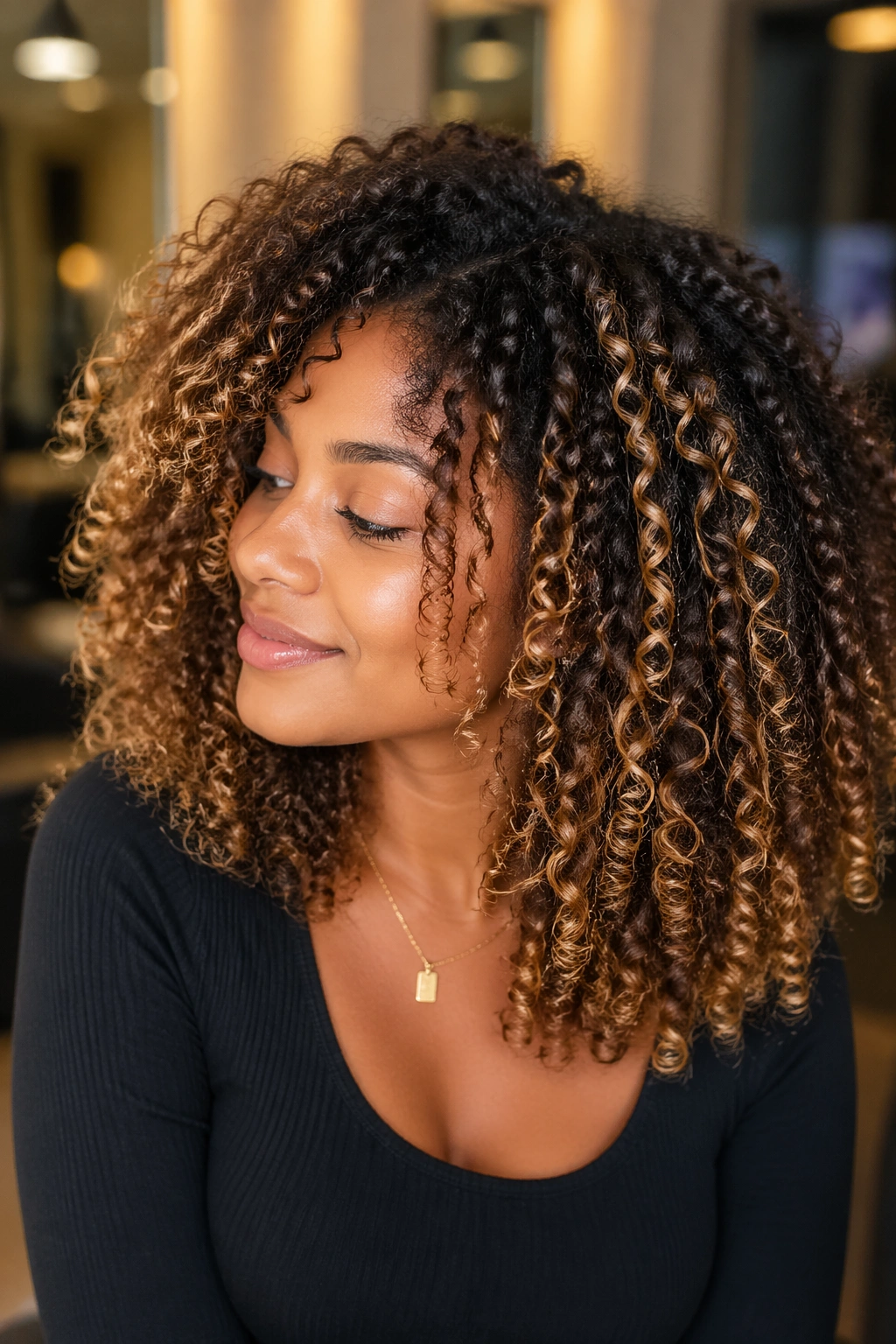
These are the two main techniques, and they produce different results on curly hair.
Balayage is freehand painting — color is swept onto sections without foils. The result is soft, graduated, and organic-looking. On curly natural hair, balayage creates a sun-kissed effect where highlights concentrate toward the ends and the most exposed parts of each curl. The transitions are soft. It’s the technique that looks most like natural lightening.
Foil highlights isolate specific sections of hair in foil before applying lightener. This gives the colorist more control and creates more precise, defined highlights with clearer contrast between highlighted and non-highlighted sections. On curly hair, foil highlights can look slightly more constructed than balayage — you may see more defined streaks of caramel rather than a soft glow.
Neither technique is objectively better — they suit different goals. If you want a lived-in, natural look, balayage is usually the recommendation. If you want clear, defined highlights with more visible contrast, foils deliver that. Many colorists who specialize in natural hair use a combination — foils for the top sections where more lift is needed, balayage for the mid-lengths and ends where a softer effect suits the movement of the curls.
How to Maintain Caramel Highlights on Natural Hair
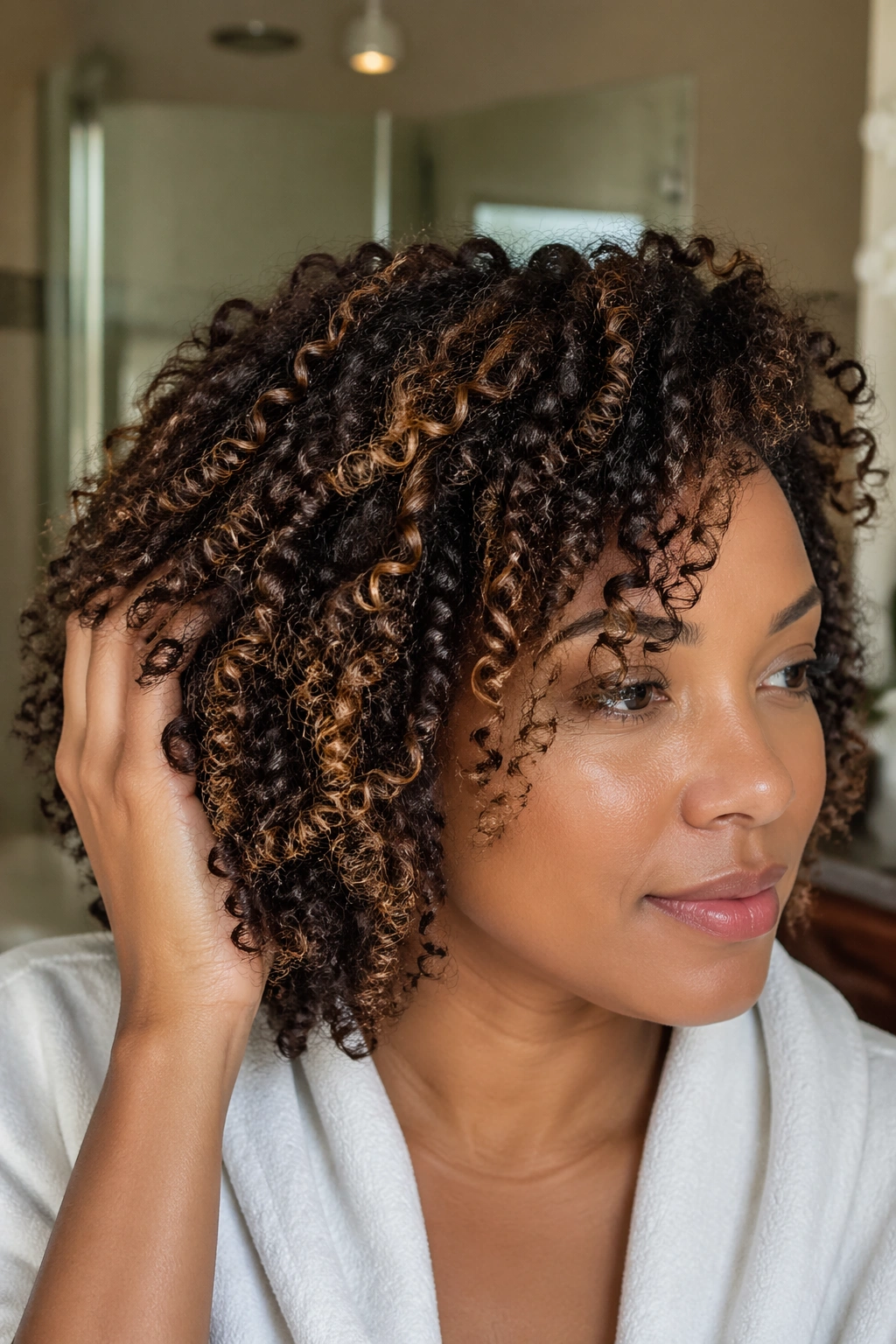
Highlighted natural hair has specific needs that go beyond standard natural hair care. The lightened sections of the hair are more porous — they’ve had their cuticle opened during the lightening process, which means they absorb moisture quickly but also lose it quickly. They’re also more susceptible to dryness and breakage than the unlightened sections.
Sulfate-free shampoo is non-negotiable. Sulfates strip color, and they’re particularly harsh on already-porous highlighted hair. A gentle, moisturizing cleansing shampoo or co-wash is the right choice.
Deep conditioning is more important post-highlights than it was before. Do it every wash day — not occasionally, not when you remember, but consistently. Protein treatments once a month can help strengthen lightened strands. Between deep conditioners, seal your highlighted ends with a light oil (argan, jojoba, or sweet almond are all good choices) to slow down moisture loss.
Caramel highlights will shift warm over time. As the color fades and the underlying warm tones peek through, you may notice your caramel starting to look more orange or brassy than golden brown. A toning shampoo or mask with a blue or purple tint can neutralize this brassiness and keep your highlights looking clean. Use it once every two to three washes.
1. Sun-Kissed Caramel on 4C Natural Hair
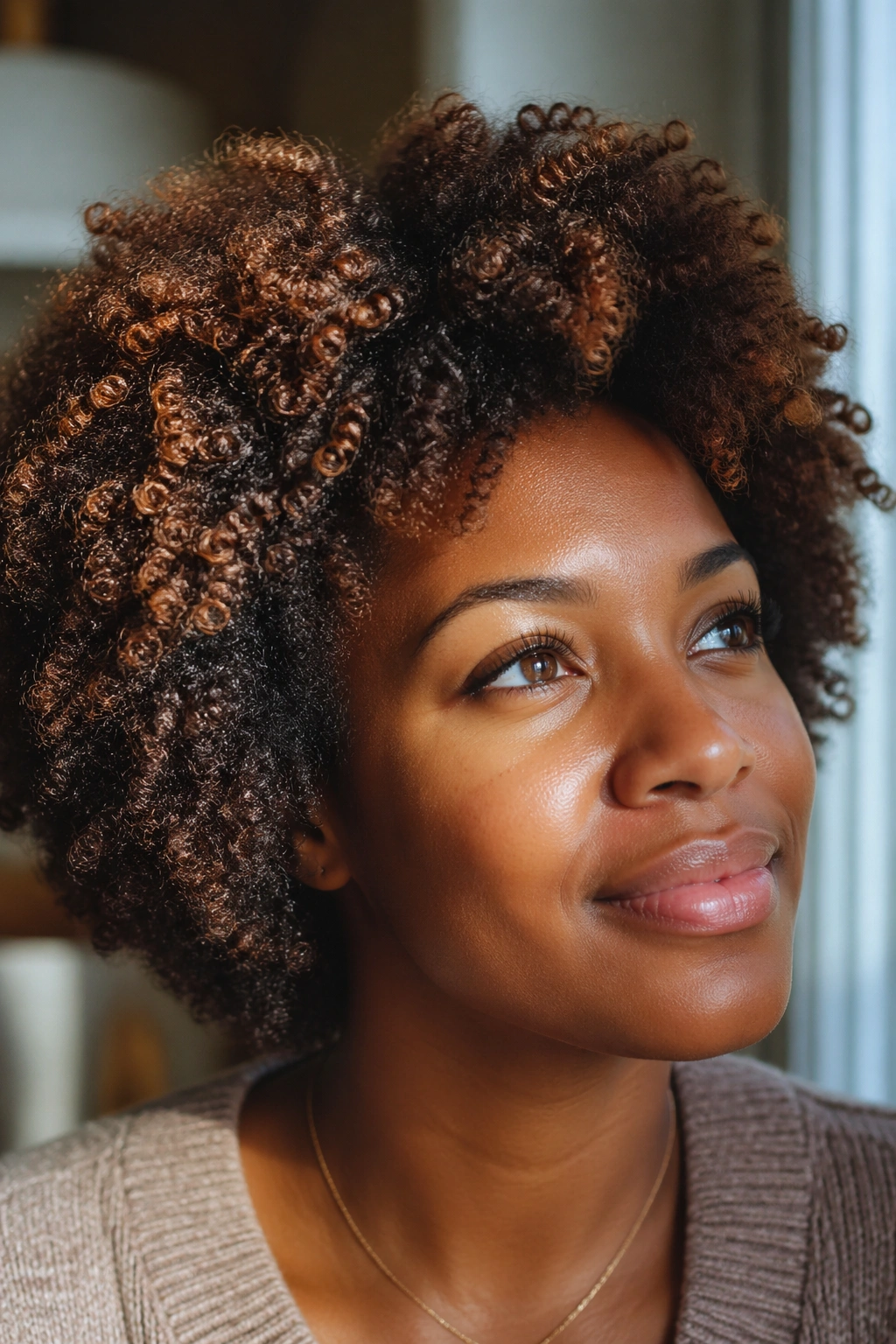
4C hair has the tightest coil pattern and the most shrinkage of all curl types, which means caramel highlights appear as a consistent warm glow rather than distinct streaks. The color distributes across the shrunk coils in a way that looks like your hair has been kissed by sunlight throughout — no specific section stands out as “highlighted,” but the whole head has warmth and dimension that plain dark 4C hair doesn’t.
What to Expect
- Highlights are visible mainly on the outer layer of the fro or style
- Stretched 4C hair (in puffs, pineapple styles, or stretched sets) shows more distinct highlights
- The warmth of caramel against very dark 4C coils creates strong contrast in good lighting
- Semi-permanent caramel toners can create this effect without any lifting on 4C hair — worth trying before committing to bleach
2. Caramel Balayage on 3B Spirals
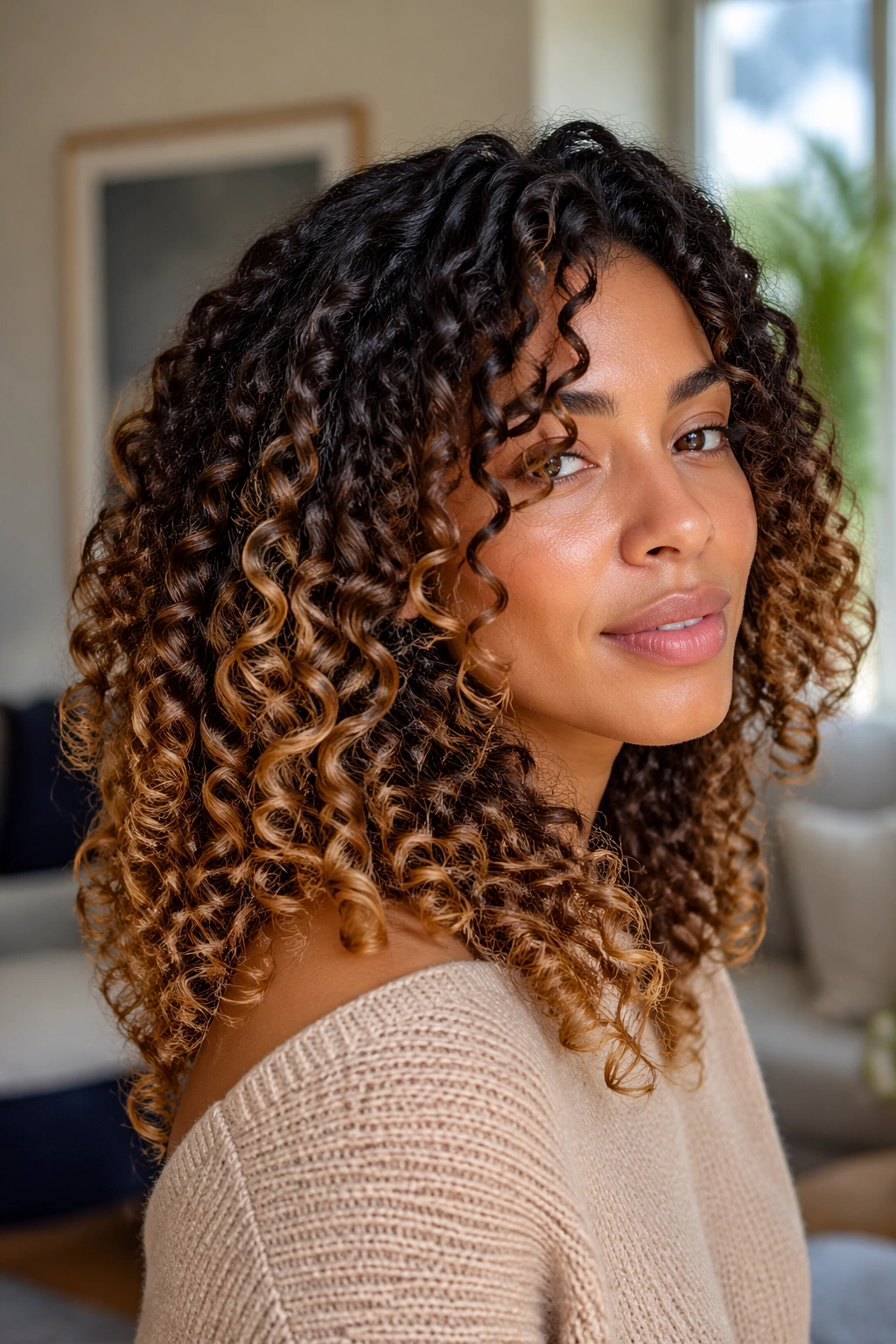
3B curls have a defined spiral pattern with medium density — enough structure to show highlight placement clearly while still having the movement and bounce to make balayage look organic. Caramel applied from mid-length to the ends of 3B spirals creates a luminous gradient that follows the twist of each spiral.
Bold fact: 3B hair is often the curl type that photographs caramel highlights the best — the spiral structure creates highlights and shadows on the curl that make the caramel appear to glow from within. Every scroll-stopping coil photo you’ve seen with caramel highlights is probably 3B or 3C.
The technique: leave the top layer and root area dark, focus caramel on the sections that fall around your face and the outer layer of your curl cloud. The result looks like you spent a summer outdoors.
3. Chunky Caramel Highlights for Bold Contrast
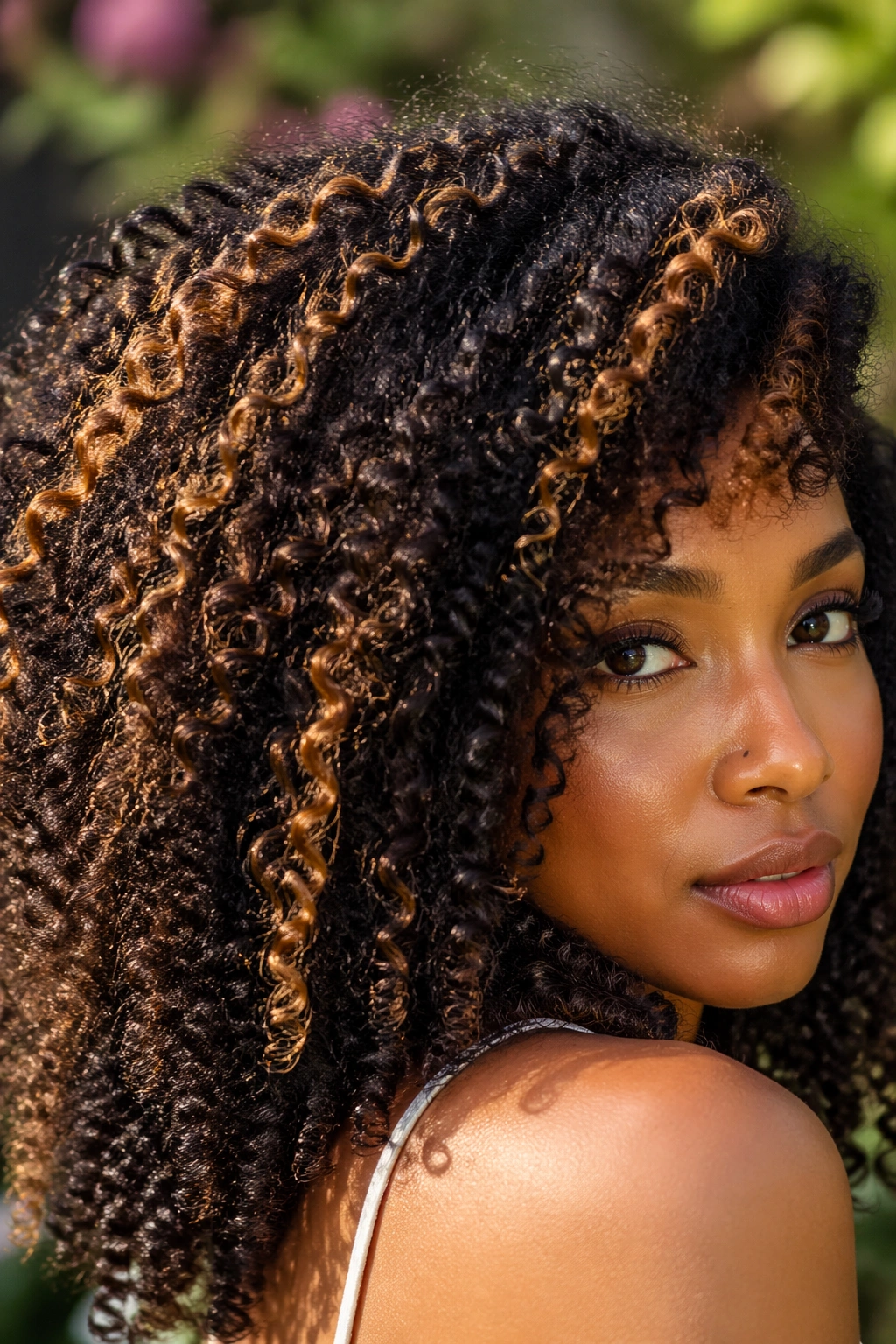
Not all highlights need to be fine and subtle. Chunky caramel highlights — wide sections of color applied through the hair — create a bolder, more graphic look. On curly natural hair, wide highlights create visible rivers of caramel flowing through the curl pattern.
This was a defining look of the early 2000s that’s cycling back, but the difference is in how it’s done on natural hair. The chunkiness isn’t uniform or stiff — it’s applied to naturally separated sections of curly hair, so the edges are organic and the overall effect is bold but not harsh.
Who it suits: women who want their highlights to be a clear, unmistakable statement rather than a subtle enhancement.
4. Caramel Money Piece on Natural Hair
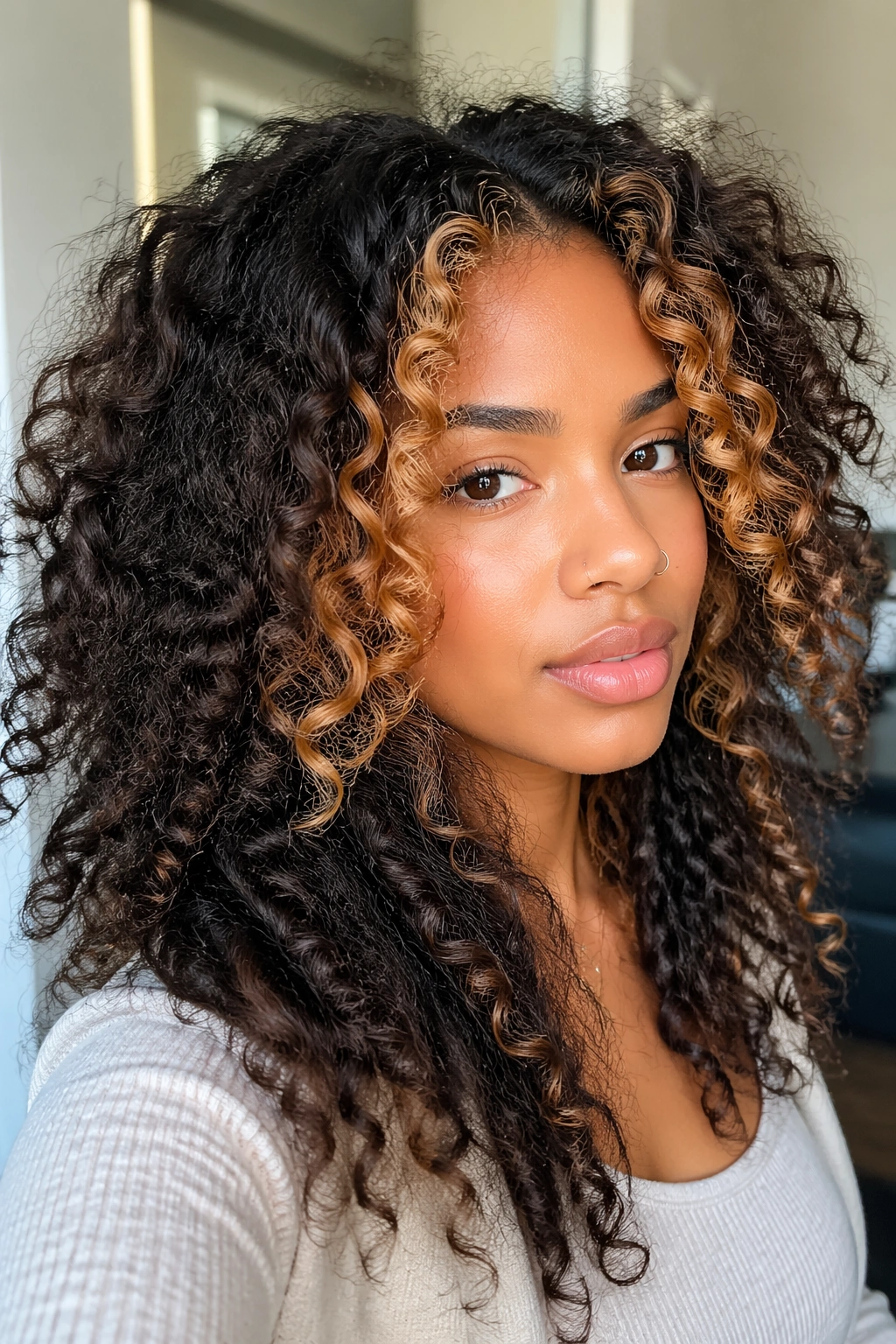
The money piece is that face-framing section — two panels of highlight at the very front of the hair, around the face. For curly natural hair, a caramel money piece means those front curls that frame your face are several shades lighter and warmer than the rest of your hair.
It’s high-impact with low coverage. The colorist treats two sections — sometimes four inches wide, sometimes narrower — and leaves everything else untouched. On a wash-and-go or a puff, those front pieces immediately draw the eye and create a natural spotlight effect on your face.
The face-framing warm tones complement a wider range of complexions than cooler highlight shades. Caramel specifically is warm enough to harmonize with golden, warm brown, and even deep ebony skin tones without ever looking harsh or cold.
5. Caramel Highlights on Natural Hair Locs
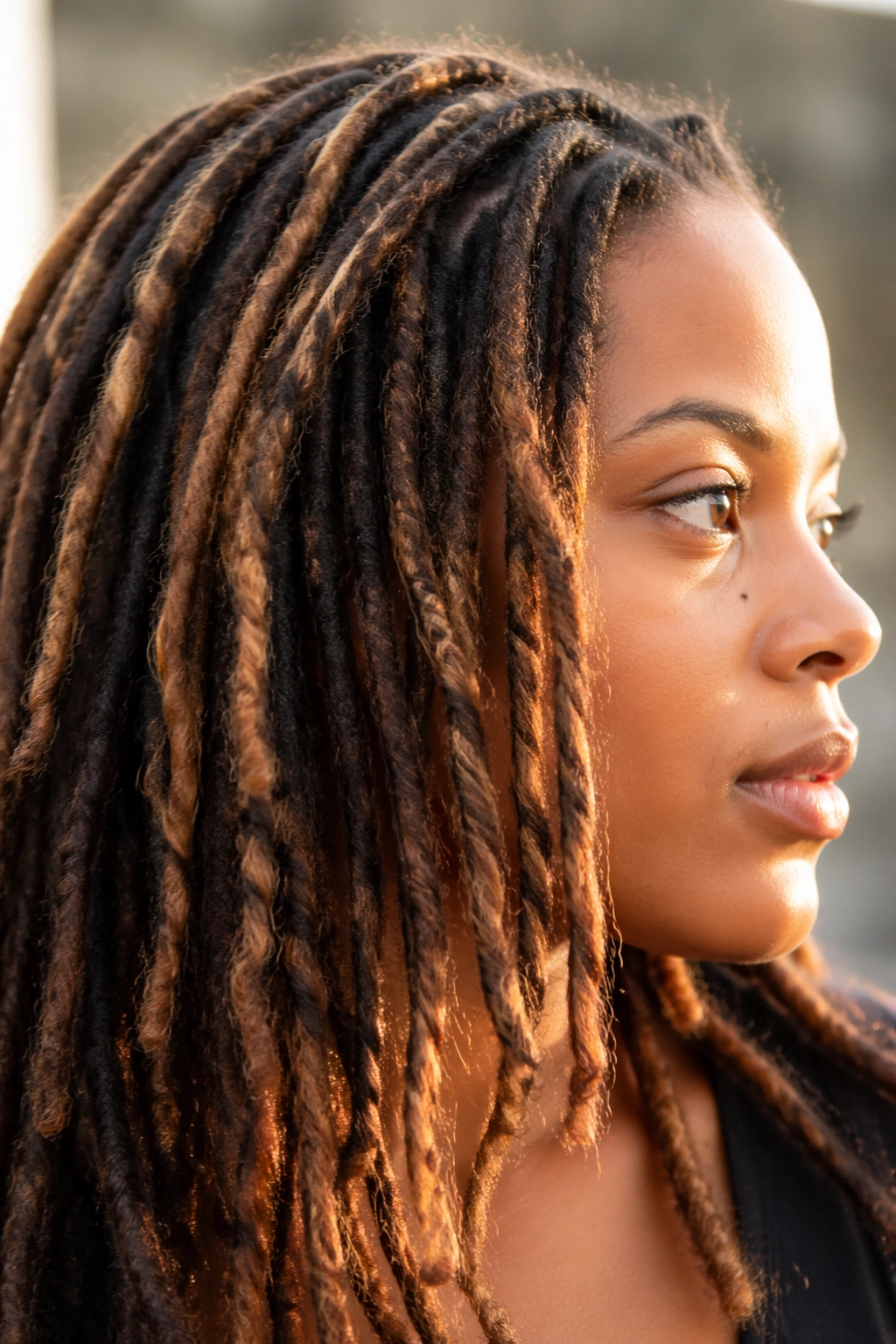
Locs are a uniquely receptive canvas for caramel highlights because the compressed, matted structure of the loc absorbs color differently at the surface versus the core. Surface application of caramel lightener and tone creates a highlight effect that sits on the outside of the loc — which means every loc appears to have a warm outer glow without the color penetrating all the way through.
Application Specifics
- Highlights are typically applied to mature, sealed locs (not new growth)
- The colorist selects specific locs rather than treating all of them
- Caramel highlights at the tips create an ombré effect on locs
- Mid-shaft application creates a banded look — dark root, caramel middle, dark tip
6. Honey Caramel Highlights on Dark Brown Natural Hair
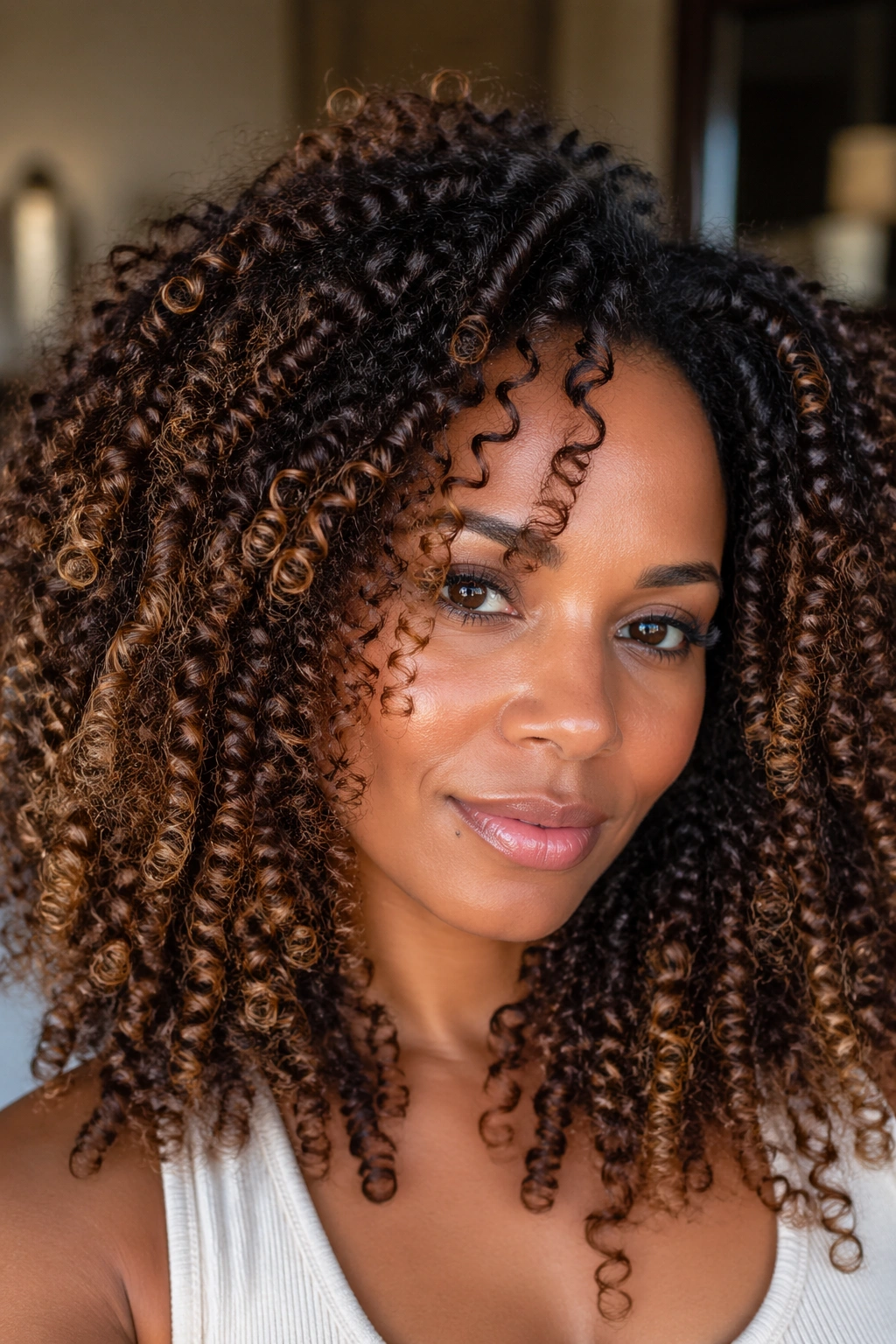
The most natural-looking caramel highlight is honey caramel applied to dark brown (Level 3-4) natural hair. The starting point is dark enough to make the highlights visible, but light enough that you don’t need extreme lightening to get caramel to show. The result is a rich, multi-tonal look where the hair appears to have natural variation — like it just grew that way.
This is the sweet spot for women who want highlights that don’t look obviously colored. If someone has to get close to see that you’ve done anything, that’s often the best compliment a colorist can receive.
7. Caramel Highlight Pops on a Twist-Out
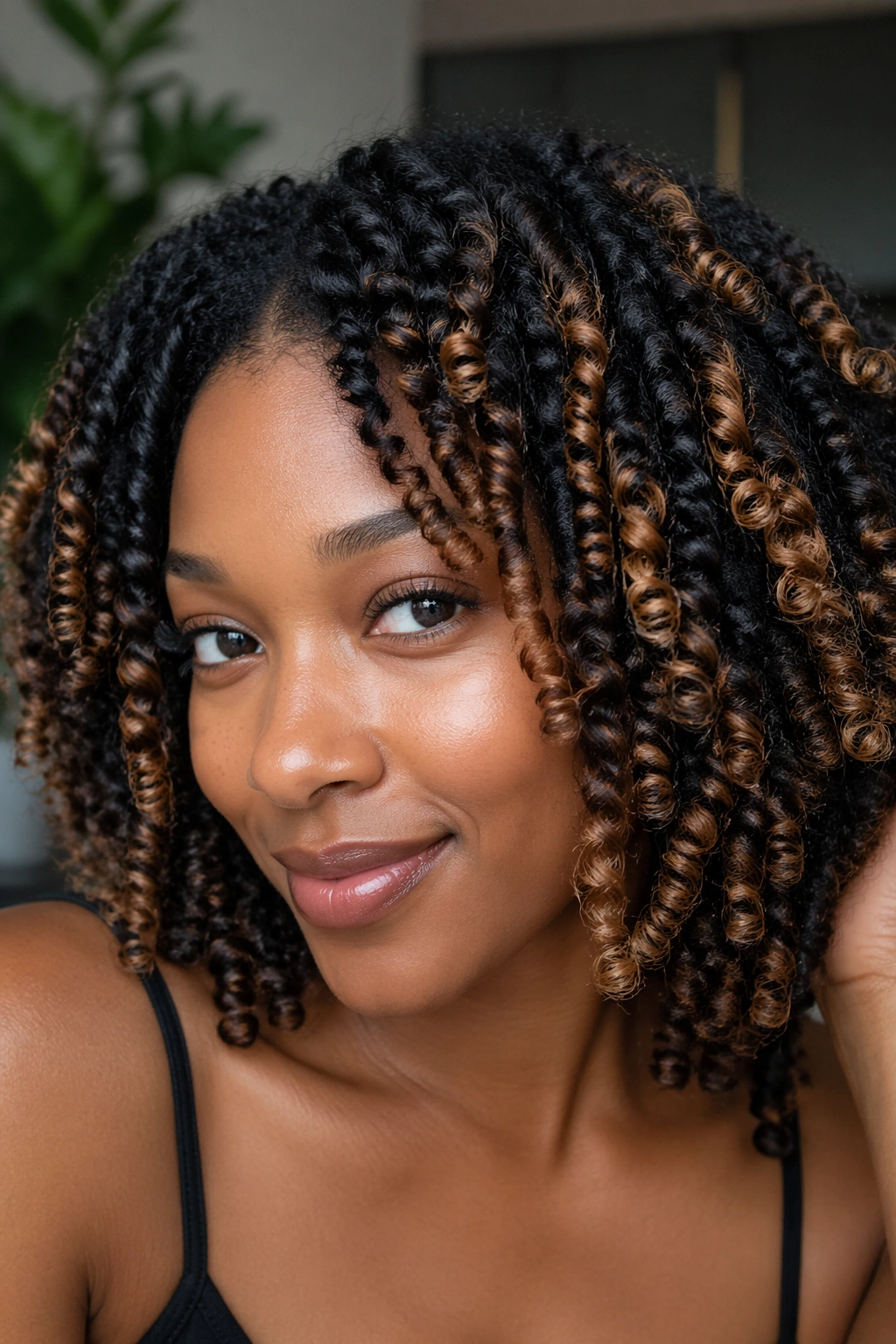
A twist-out reveals distinct, separated sections of hair — and if those sections have been highlighted, the twist-out showcases the color in a specific, structured way. Caramel pops appear at regular intervals through the style, following the pattern of the twist-out rather than sitting randomly.
This creates a look that’s different from wearing your hair in a wash-and-go. The twist-out’s definition means you can see each highlighted strand clearly, rather than having them blend into the overall volume. It’s like the style and the color are in collaboration.
8. Caramel Ombré on Natural Hair
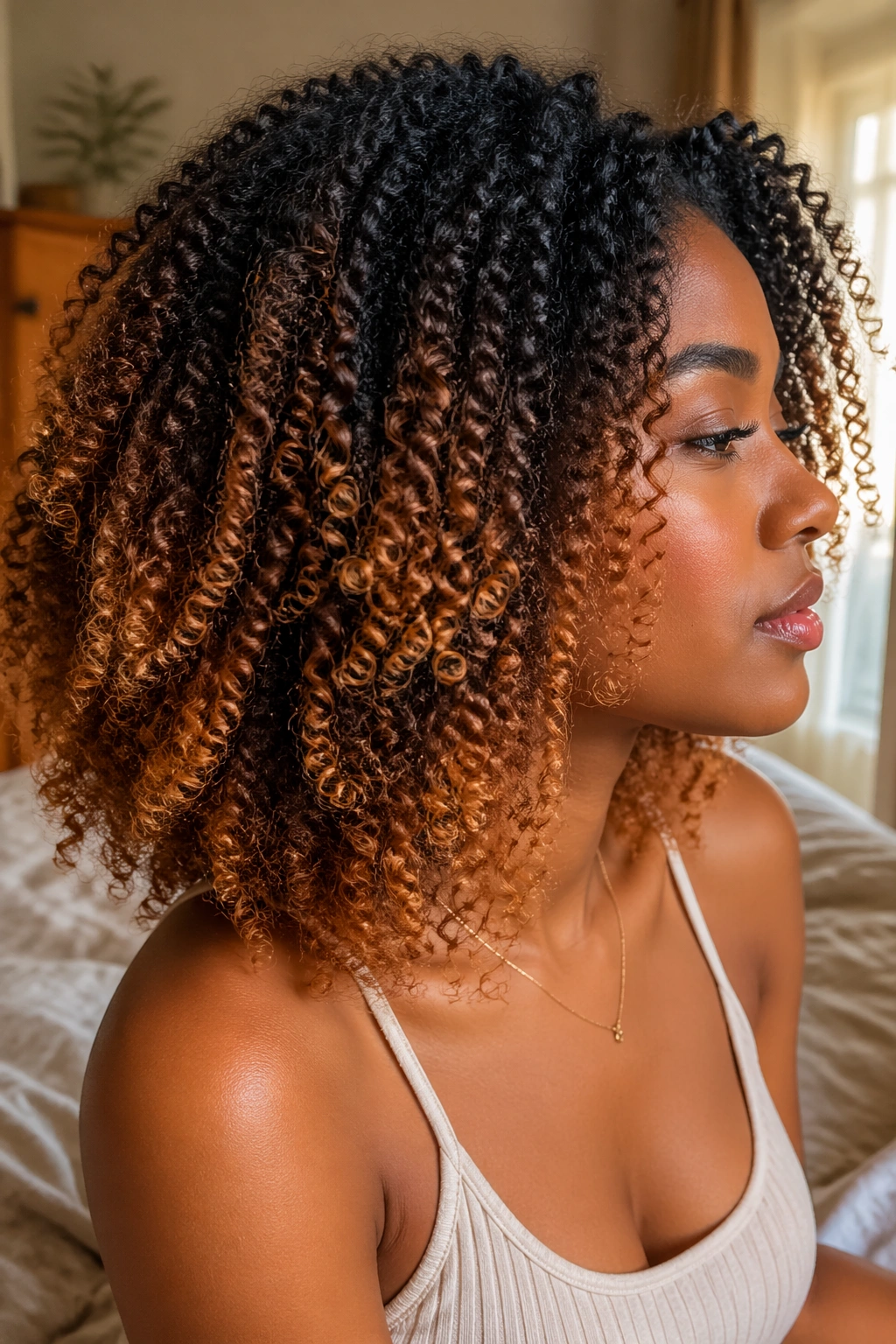
Ombré is the gradient cousin of highlights — instead of painted sections, the entire lower half of the hair transitions from dark at the roots to caramel at the ends. On natural curly hair, ombré creates a dramatic but harmonious color shift that emphasizes length.
Because natural hair tends to have the most shrinkage at the roots and stretches more toward the ends, ombré works with that natural structure. The dark roots have that signature root volume and definition, while the stretched, caramel ends catch light as they move.
9. Caramel Highlights on Box Braids
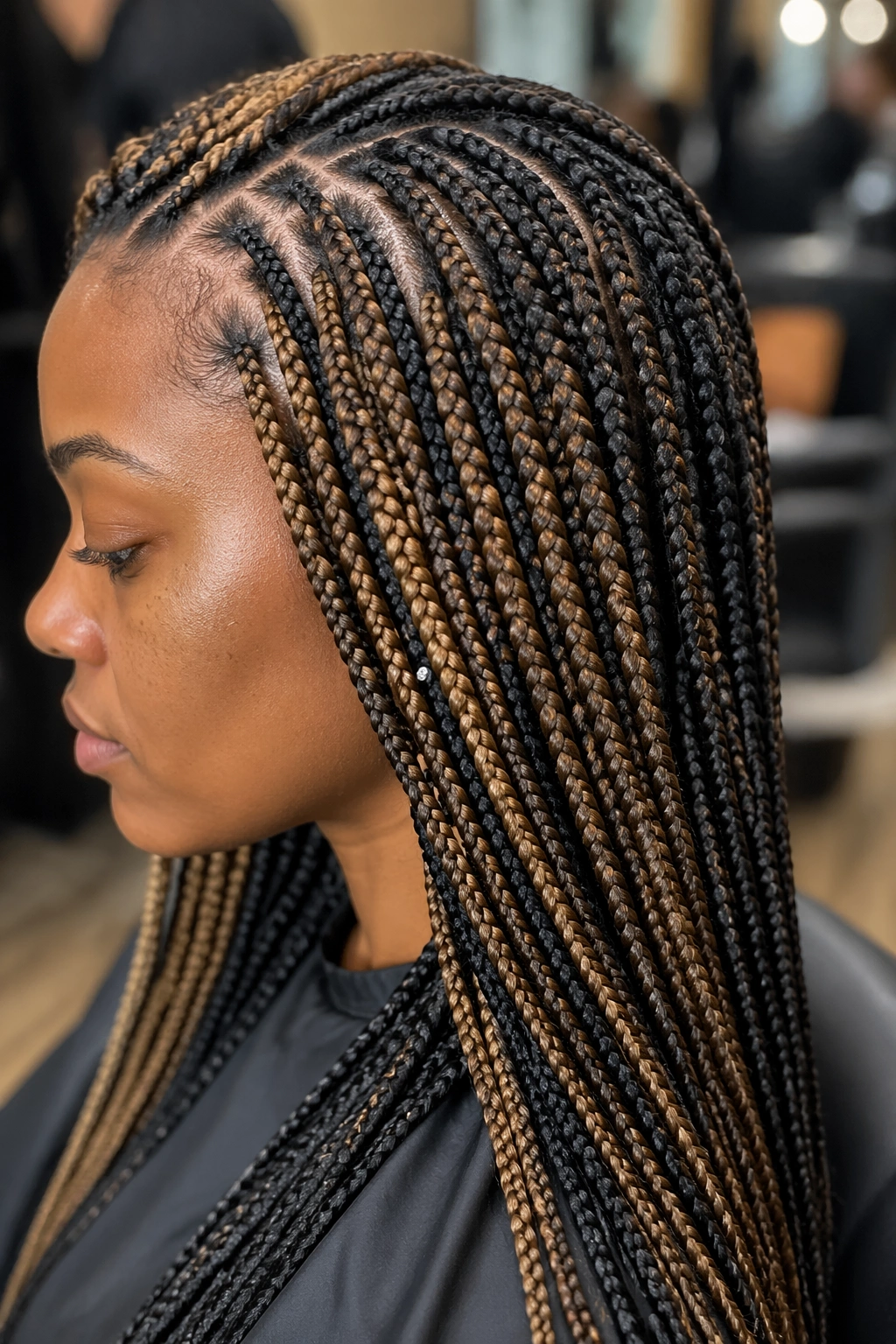
Box braids give you a two-part option for caramel highlights: color your natural hair before installing braids, or add pre-highlighted or ombré braid extension hair in caramel shades.
The first option — coloring your hair first — means your natural caramel highlights will show at the base of each braid before the extension hair takes over. It’s subtle but beautiful, especially if you part your braids to show the highlighted roots.
The second option — using caramel-tipped extension hair — creates a cleaner, more uniform ombré that runs from the roots through the entire braid. It’s a bolder, more intentional look.
10. Caramel Highlights on Short Natural Hair
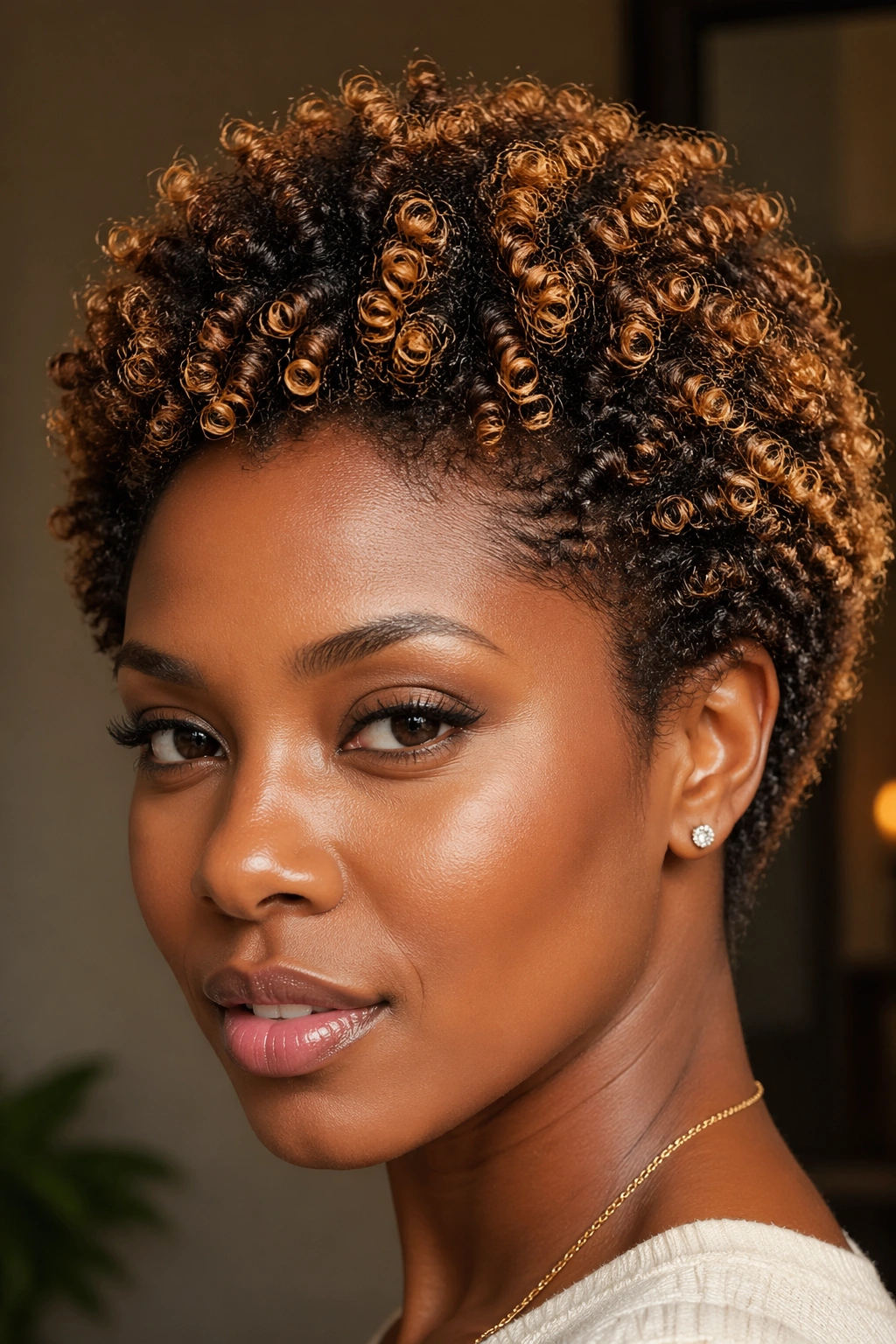
Short natural hair — a TWA, a short wash-and-go, or a defined mini-fro — benefits from caramel highlights differently than longer hair does. Instead of streaks or a gradient, caramel on short natural hair creates dimension within the overall shape.
The highlights appear at the perimeter and the outer surface of the fro, creating a halo of warmth around the shape of the natural. It emphasizes the silhouette, which is a beautiful effect on short styles where the shape itself is the main visual statement.
11. Toffee Highlights for a Subtle Look
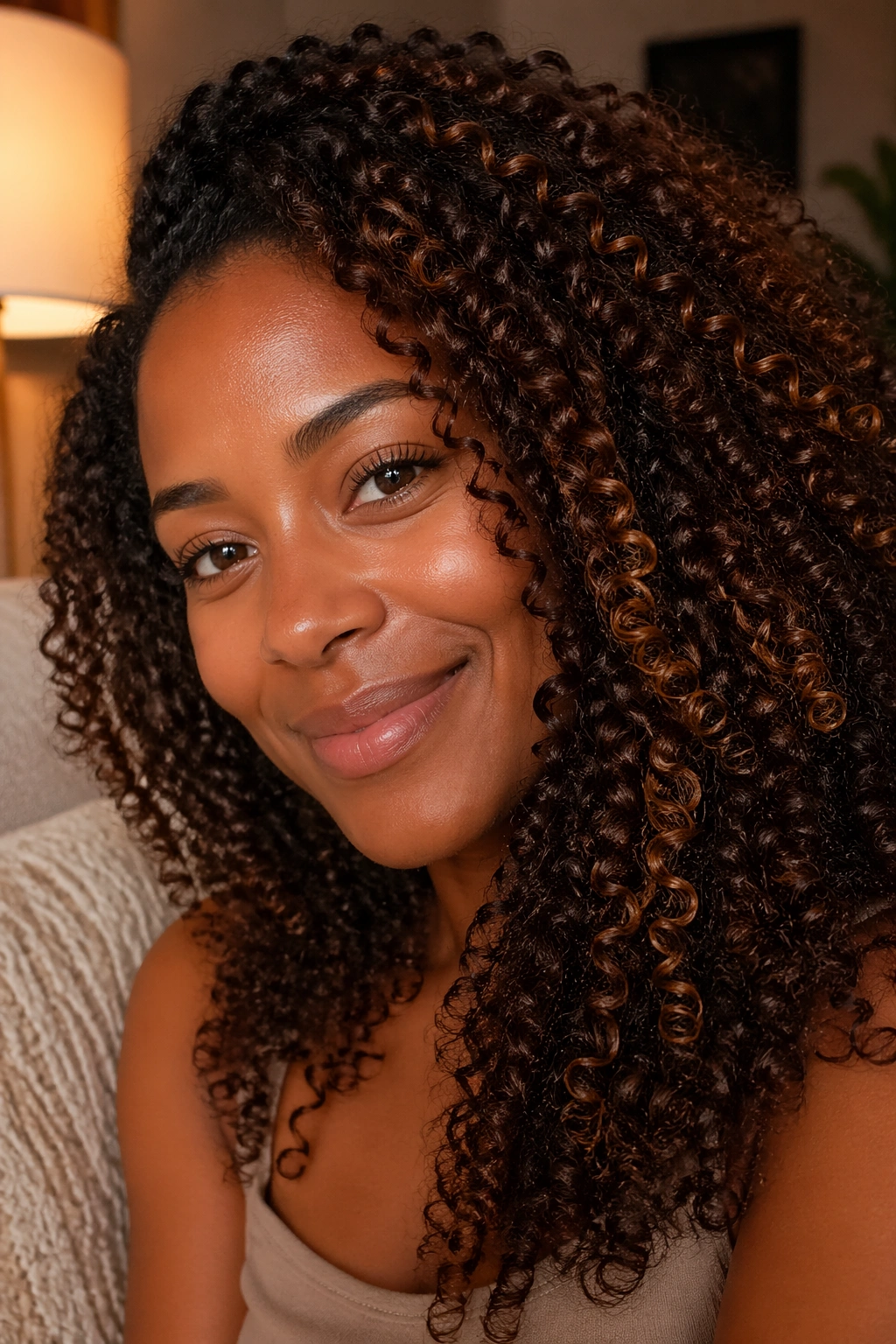
Toffee is a darker caramel — still warm, still amber-brown, but only slightly lighter than a medium-dark brown natural base. On natural hair with a warm brown base (Levels 3-4), toffee highlights create a tonal, dimensional look that’s very subtle — you might not immediately identify it as “highlights,” but you’d notice the hair looks richer and more alive than a flat, single color.
It’s the highlight for people who are hesitant. Low commitment, low damage, but genuinely enhances the natural color in a way that makes the hair look healthy and three-dimensional.
12. Caramel and Copper Blend on Natural Hair
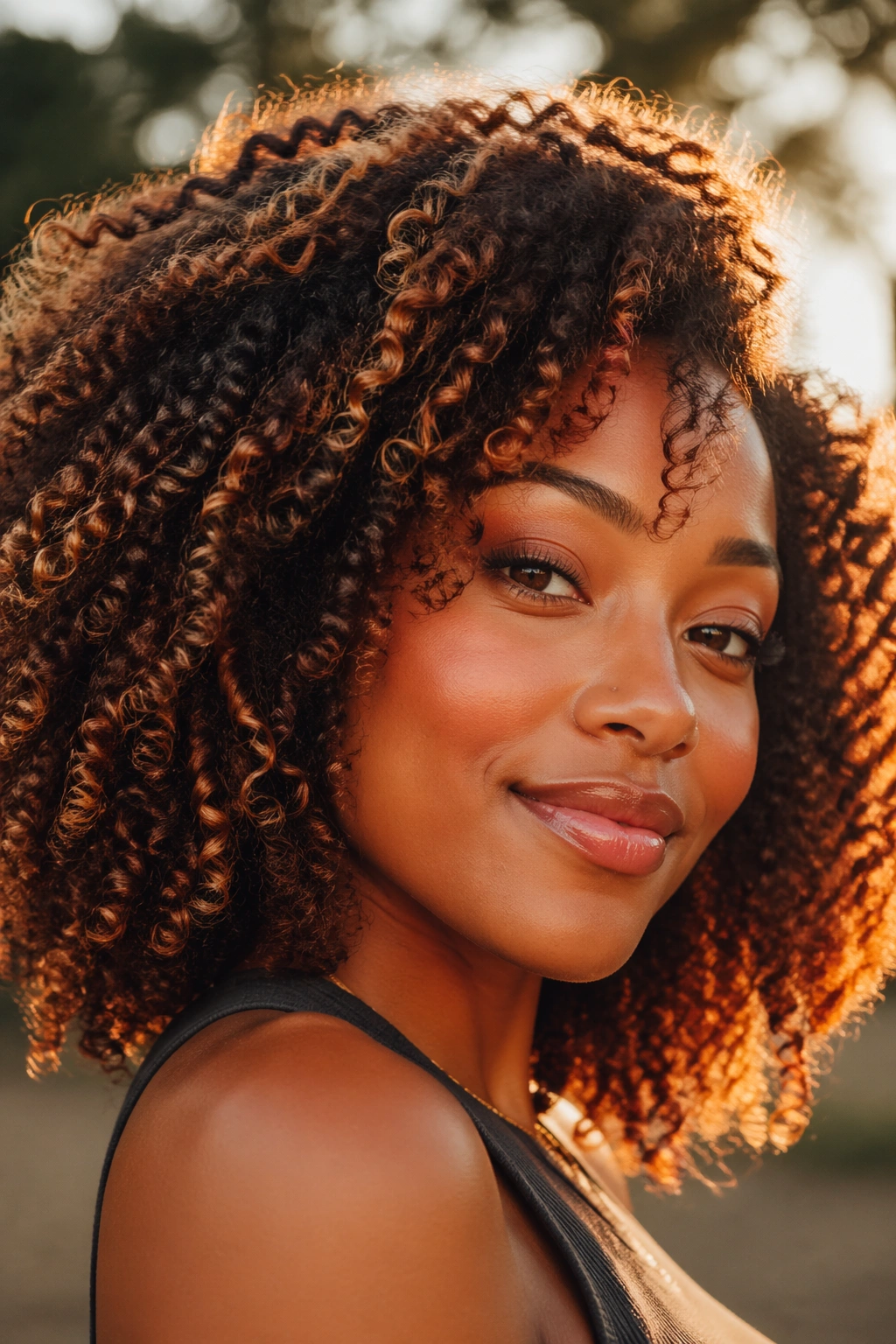
Mixing caramel with copper — a more vivid, orange-warm shade — creates a highlight combination that’s rich, warm, and complex. Copper and caramel are neighbors on the warm spectrum, so they blend naturally, but copper adds a brightness and vibrancy that straight caramel doesn’t have.
On natural hair with warm or golden undertones, a caramel-copper blend looks sun-drenched and bold. The orange warmth of copper, softened by caramel, prevents either shade from being overwhelming.
Who it suits: warm and golden complexions that can carry the intense warmth of copper without it washing them out.
13. Caramel Highlights With Natural Gray
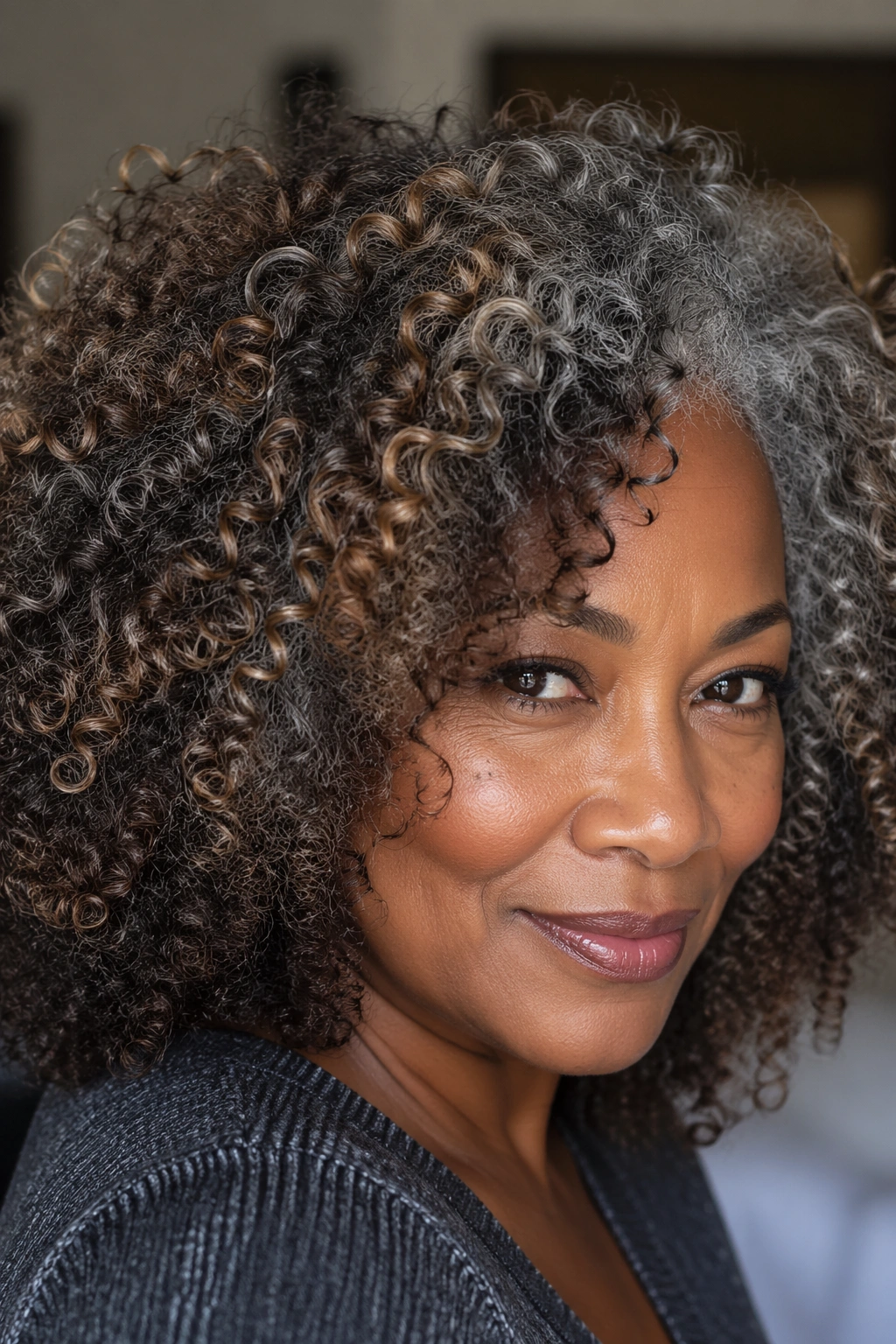
Natural gray hair — particularly in the salt-and-pepper transition stage — takes caramel highlights beautifully. The gray sections are more porous and absorb color more readily than pigmented hair, which means caramel can show up more vividly on gray strands than on dark ones.
The combination of warm caramel, natural gray, and dark brown creates a multi-tonal look that reads as sophisticated and intentional. It’s not trying to hide the gray — it’s incorporating it into a richer color story. That confidence is part of what makes it look so good.
14. Caramel Highlights on Natural Hair Treated With Henna
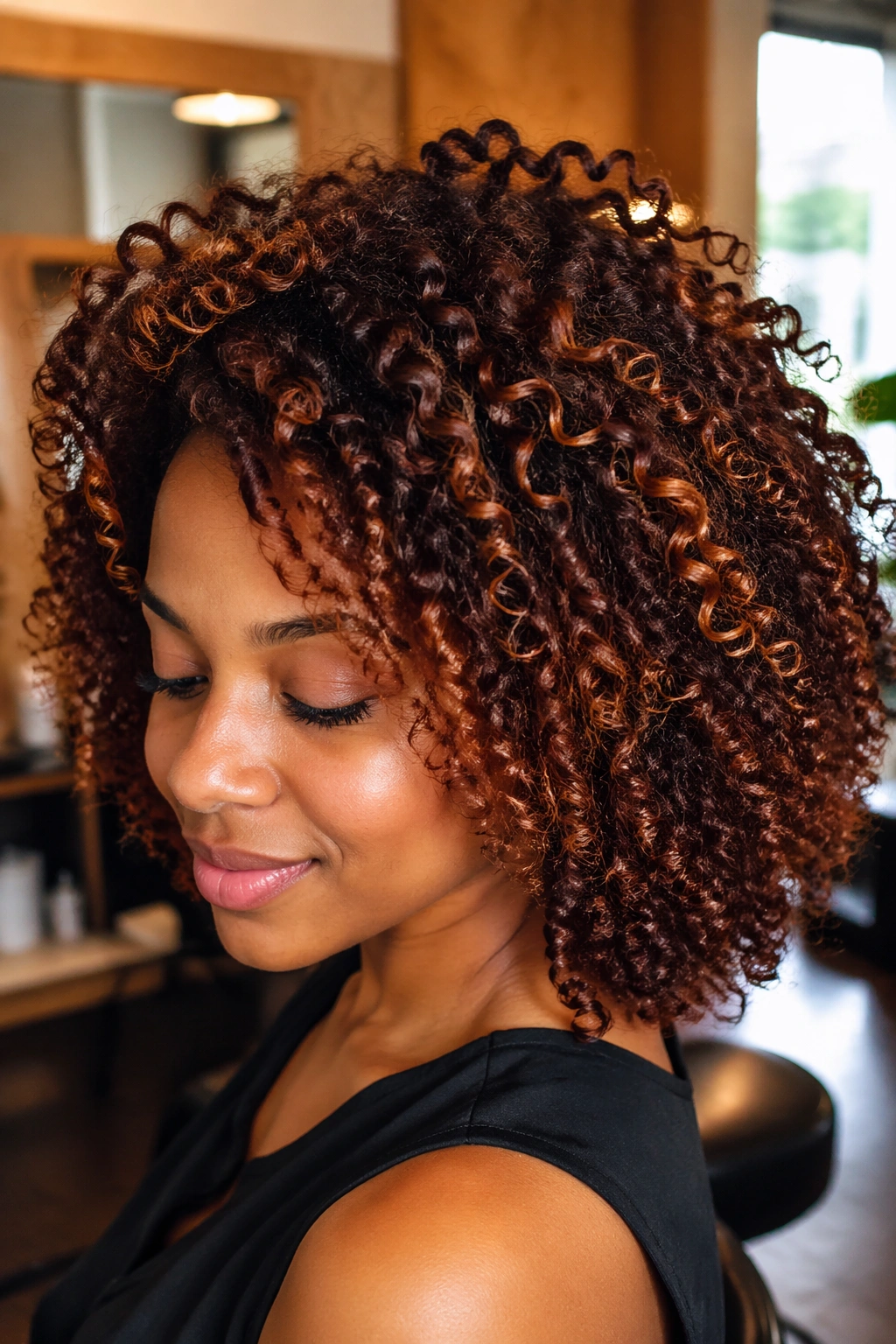
Henna-treated natural hair has a warm, reddish-brown base that’s different from chemically untreated hair. The combination of henna’s red warmth with caramel highlights creates a layered, complex color that shifts between auburn, caramel, and red depending on the light.
An important note: henna can react unpredictably with chemical lighteners. If you’re considering caramel highlights on henna-treated hair, you need a colorist who has experience with this combination. Strand test first, always.
15. Babylights Caramel on Natural Hair
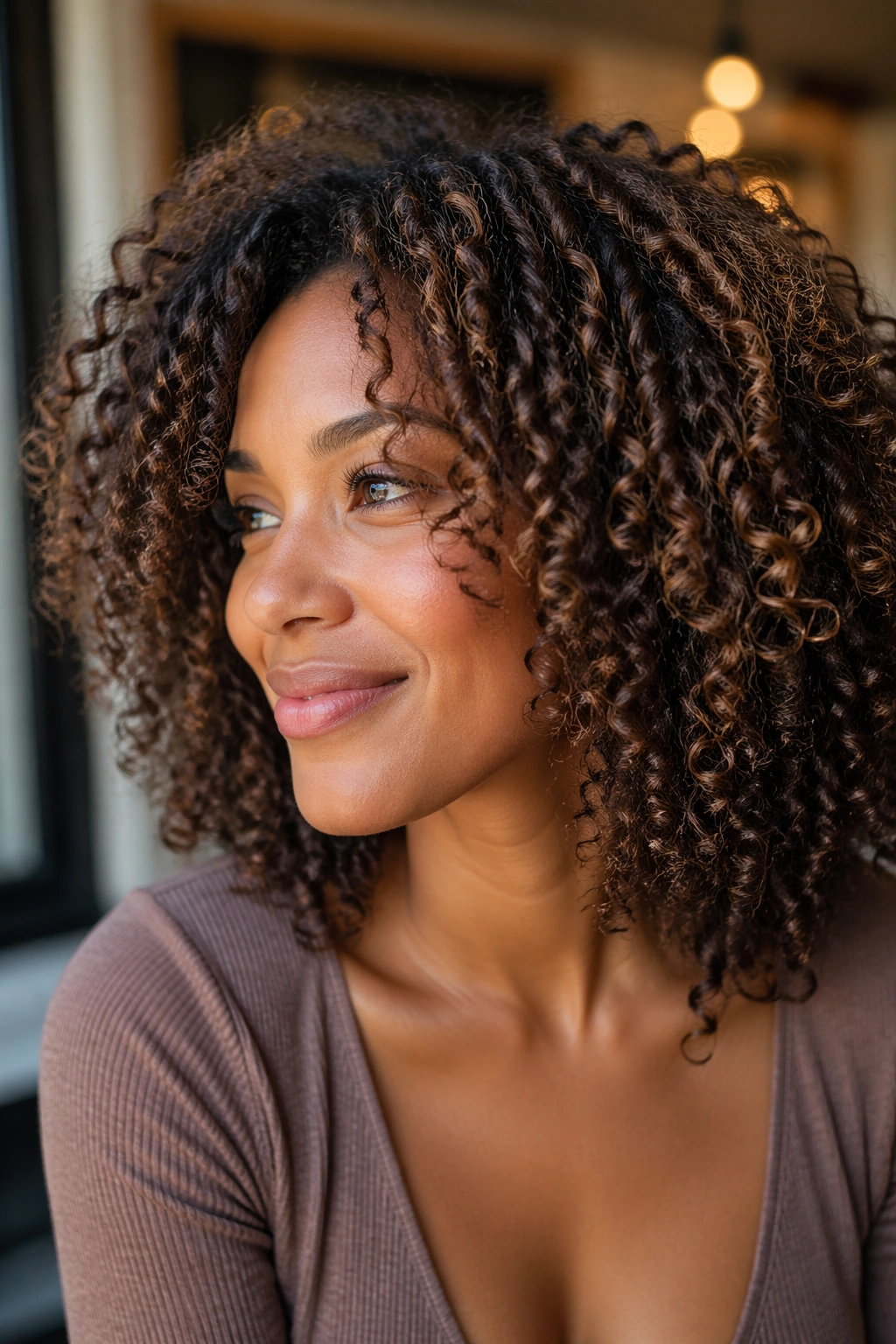
Babylights are the finest, most subtle highlights available — thin sections of hair barely wider than a few strands, lifted and toned to a soft caramel. On natural curly hair, babylights create the most diffuse, natural-looking color effect. There are no clear streaks, no obvious sections — just an overall warmth and dimension that looks like your natural hair color has its own internal light source.
This technique takes the longest to apply (there are a lot of sections to paint) but the result is worth it if subtlety and naturalness are your goals.
16. Caramel Highlights on Natural Hair After Heat Damage
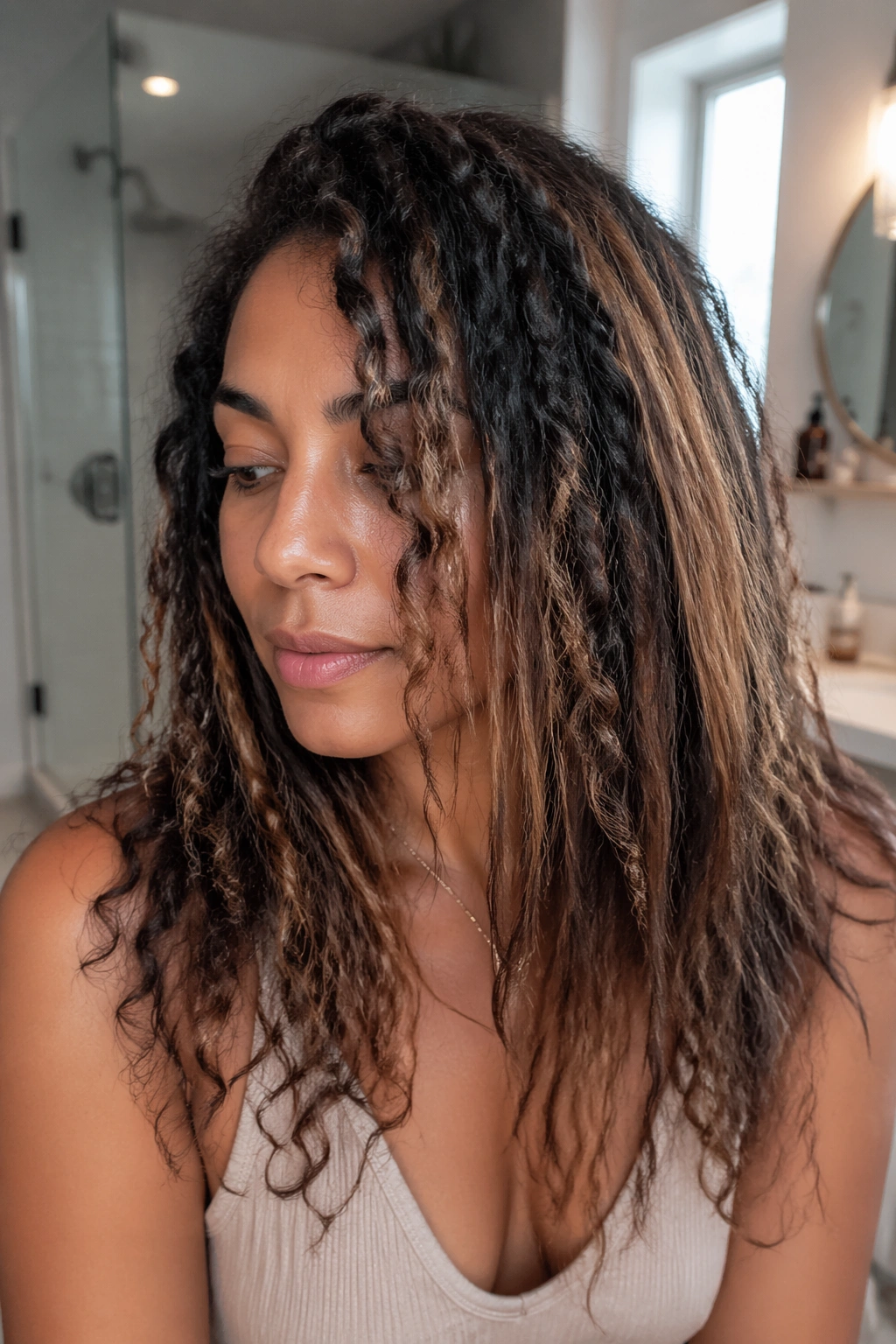
Heat-damaged natural hair has a compromised curl pattern — some sections may be looser or straighter than your natural curl, and the hair may already be drier and more porous than healthy natural hair. Adding chemical highlights on top of heat damage is possible but requires careful assessment.
A good colorist will identify which sections are most compromised and avoid over-processing them. Partial highlights that avoid the most damaged areas, combined with intensive treatment plans, can work — but the priority has to be restoring hair health first. Color after health, not before.
17. Two-Toned Caramel: Face Frame Plus Back
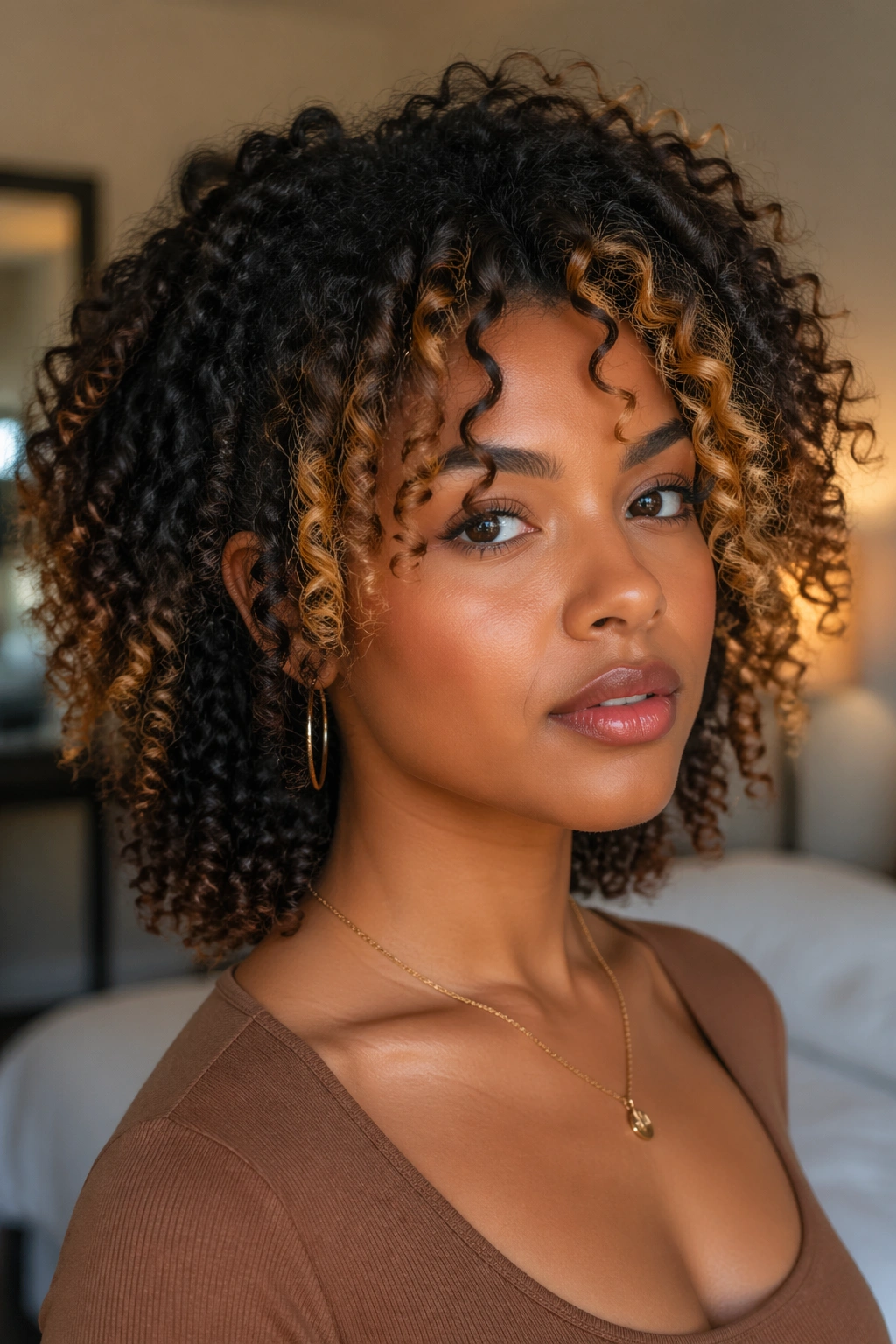
Instead of applying highlights all over, concentrate them entirely on the face-framing sections at the front AND a few sections at the back of the head — with the sides left dark. This creates an interesting visual effect where the front curls are warm and highlighted, the back curls have caramel peeking through, but the sides create a frame of darker hair between them.
It’s an unexpected placement that avoids the uniform, all-over look and creates something more architectural.
18. Caramel Highlights on Natural Hair Protective Styles
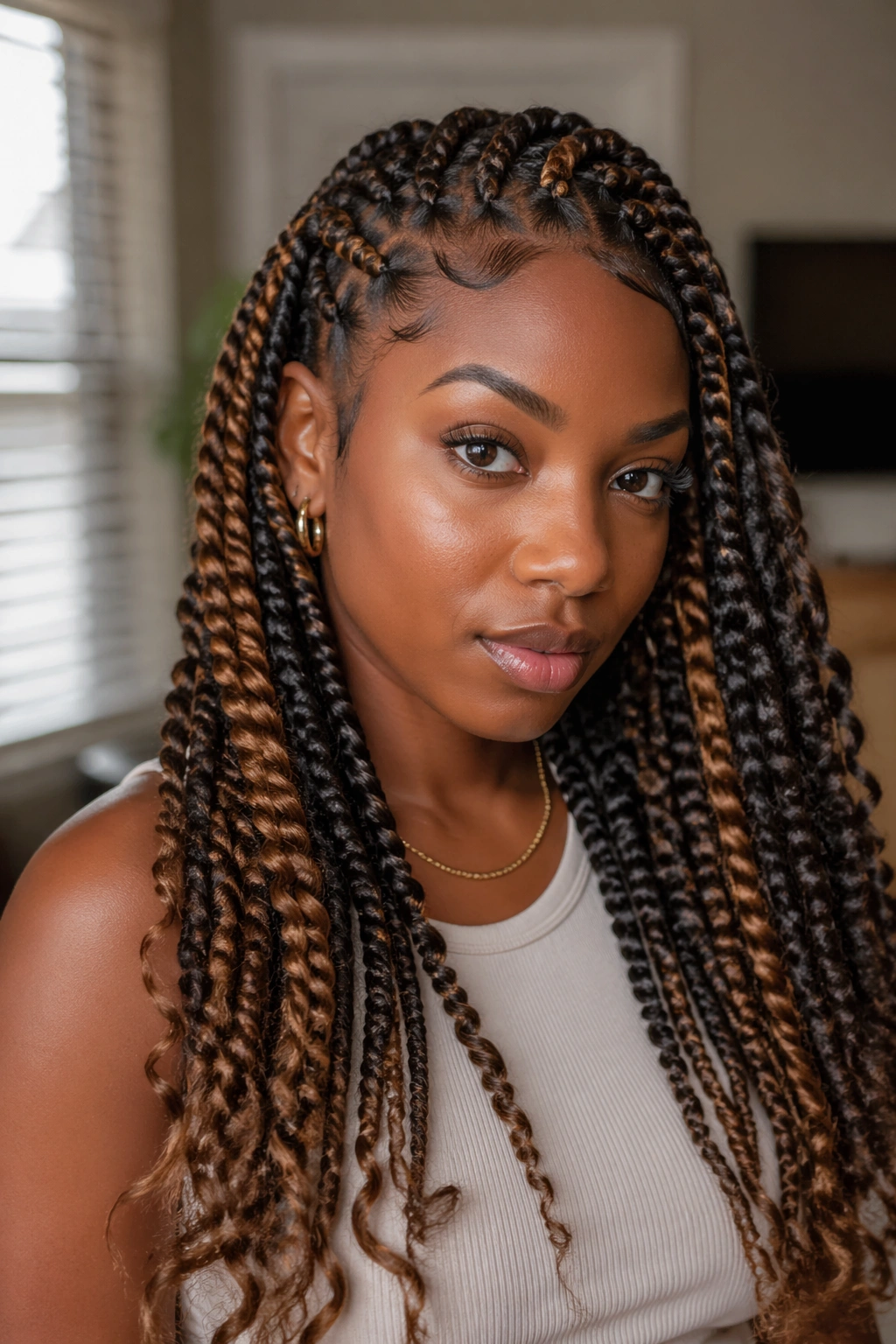
Here’s a direction most people don’t consider: if you do your caramel highlights and then install a protective style (braids, twists, faux locs), the highlights work double duty. They protect inside the style while you wear it, and when you take the style down — weeks or months later — the highlights are ready to show off, possibly with even better definition from the time spent in a protective style.
Benefits of This Approach
- Color is protected inside the braids — less environmental fading
- The months between installations act as a rest period for chemically treated strands
- When the style comes down, the highlights look fresh because they haven’t been manipulated
19. Copper-Caramel Highlights for Deeper Skin Tones
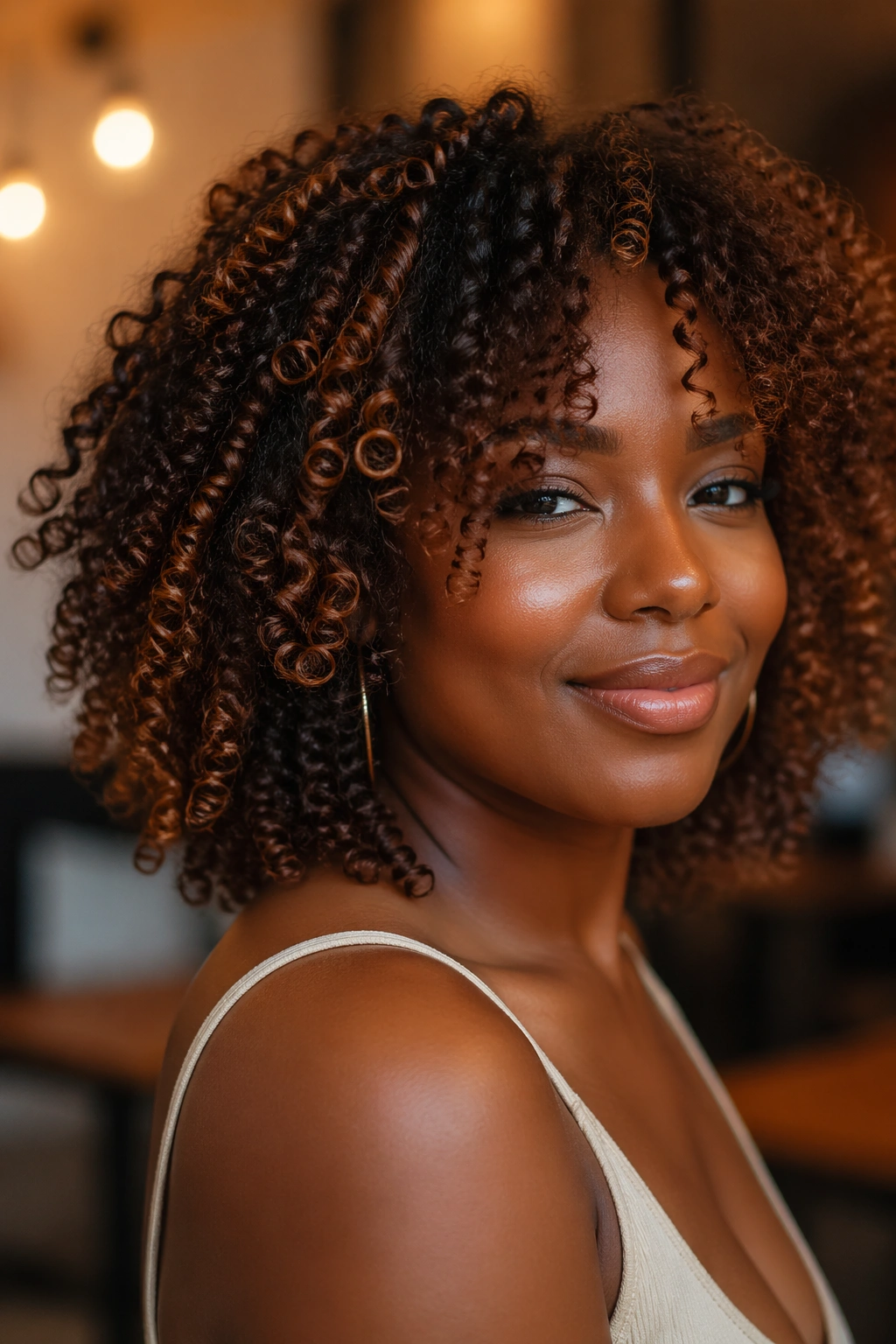
Deeper, ebony, and rich brown skin tones are sometimes told to avoid very light or cool highlights. Caramel avoids that problem entirely — but for the deepest complexions, going slightly warmer with copper-caramel (rather than pale honey caramel) creates a look that’s harmonious rather than jarring.
The deeper warmth of copper-caramel sits closer to the warm undertones common in darker skin tones, creating a natural-looking enhancement rather than high contrast. It’s a highlight that looks like it belongs there — not like it was added from outside.
20. Caramel Ombré on Twist-Outs or Braid-Outs
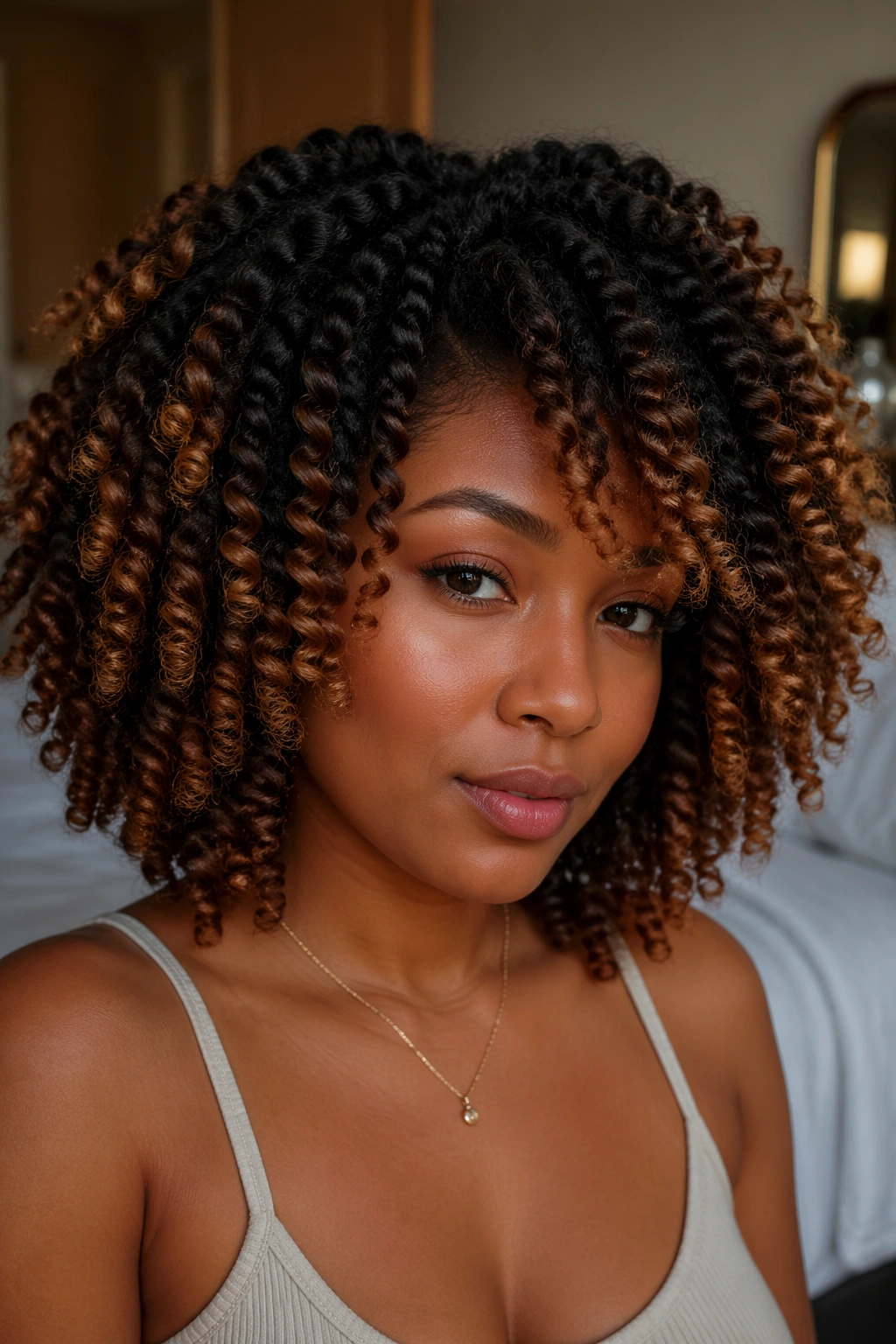
Wearing a twist-out or braid-out with caramel ombré is a specific kind of visual delight. The consistent pattern of the twist-out means the color ombré moves in the same direction on every section — dark at the root-side of each wave, caramel at the tip-side. The entire style has a directional warmth to it that you only get with this combination.
Set your braid-out or twist-out the night before, apply your usual product, sleep on a satin pillowcase, and in the morning release into a style where the color and the pattern work together. That’s what a good highlight does — it works with your style choices, not against them.
21. Caramel Balayage on Waist-Length Natural Hair
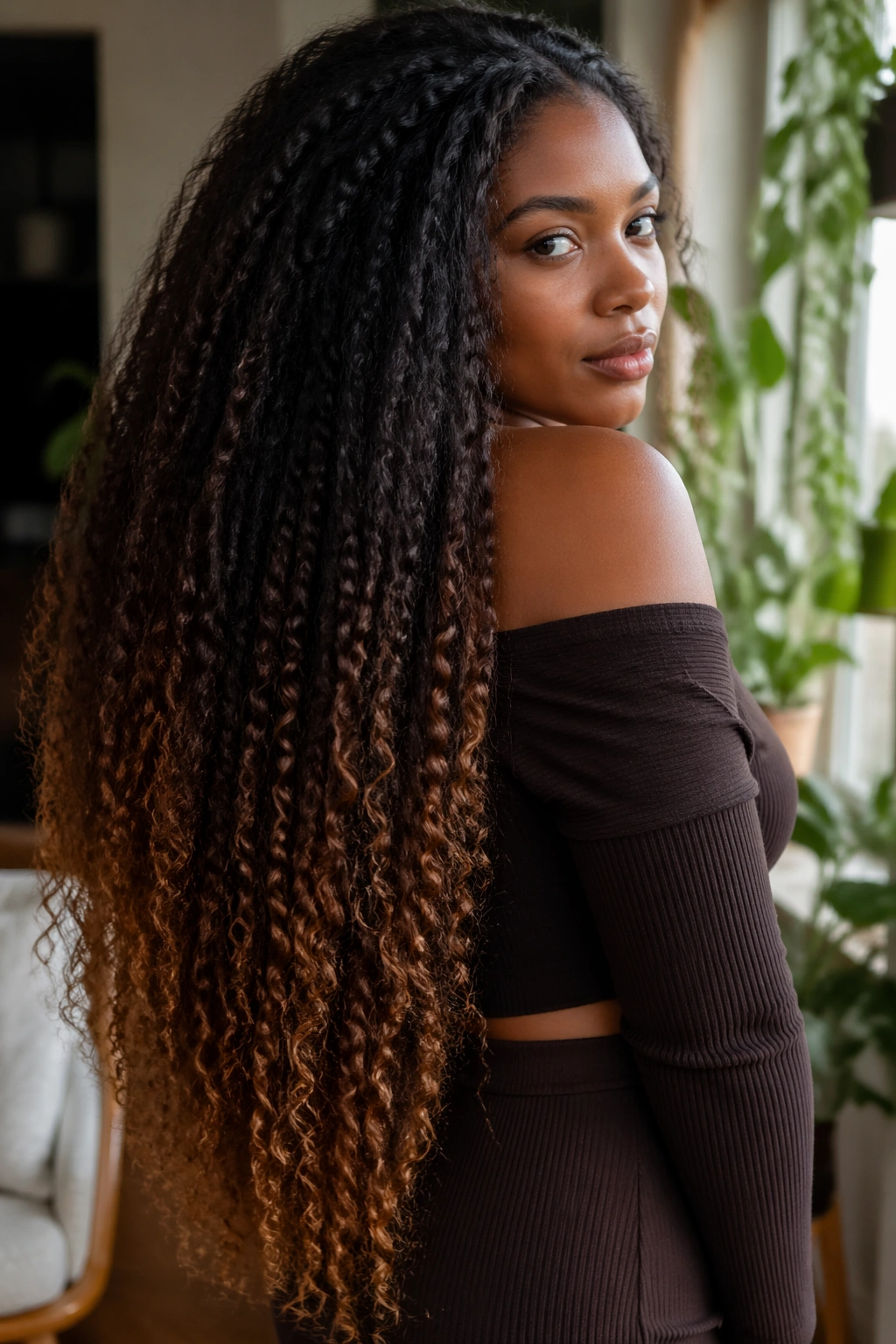
Long natural hair and caramel balayage are a particularly striking combination because the length means the color has maximum distance to travel. Caramel concentrated at the ends — waist-length or hip-length ends — creates a dramatic gradient that takes your breath away when the hair moves.
Maintaining color health on very long natural hair requires consistent trims to prevent split ends from traveling up highlighted strands, and intensive deep conditioning at every wash. Long highlighted natural hair is a commitment, but the visual payoff is hard to match.
22. Caramel Highlights as a Refresh After Previous Color
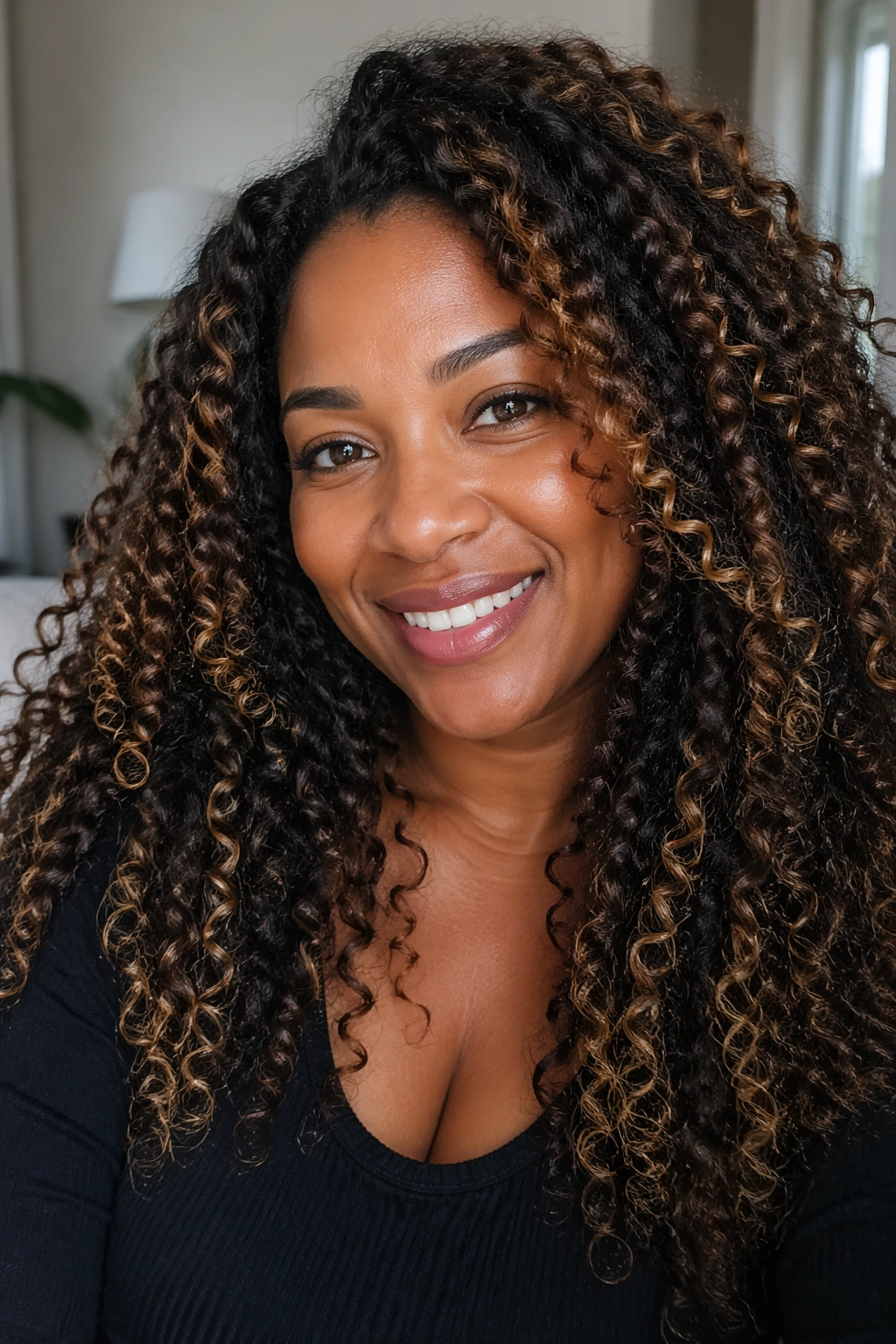
If you’ve had color before — even if it’s grown out, faded, or just feels stale — caramel highlights can refresh and update the look without starting completely from scratch. A colorist can work with what’s already in your hair, painting fresh caramel over the existing color, over the grown-out sections, and into the new growth areas to create something that feels new.
This is one of caramel’s most practical advantages: it plays well with others. It integrates with previous color, it blends with natural bases, and it fades beautifully. You rarely end up with caramel highlights that look like a mistake, even as they age.
Building a Long-Term Color Relationship With Your Hair
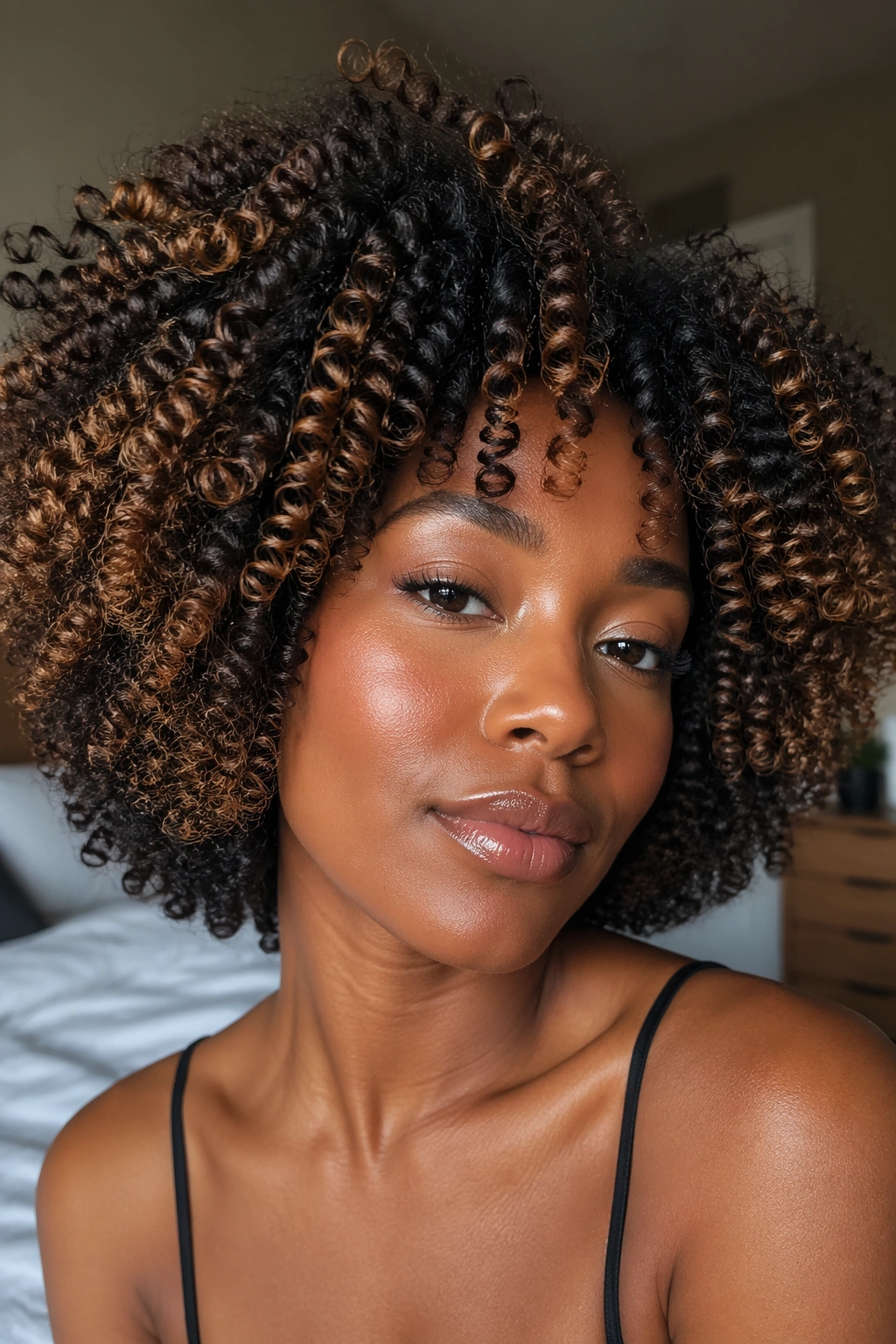
Caramel highlights done well aren’t a one-time event. They’re the start of a color relationship that evolves with your hair’s needs, your lifestyle, and your personal style. Most people refresh caramel highlights every three to five months — more frequently for a bright, high-contrast look, less for a subtle tonal effect.
Between appointments, your job is maintenance: sulfate-free washing, consistent deep conditioning, protein treatments as needed, and a quality leave-in. Keep your trim schedule even when you’re growing your hair — taking off split ends every eight to ten weeks prevents breakage from traveling up the highlighted strands.
The more consistently you maintain your highlighted natural hair, the longer each color service lasts and the healthier your hair stays through the coloring cycle. Caramel highlights on curly natural hair are one of the most rewarding color investments you can make — but they reward the hair owners who take care of their investment.
