

A perfectly executed ponytail is the closest thing to a non-surgical facelift. There is something about the tension, the height, and the swing of a high-sitting tail that instantly changes your posture and your confidence. But let’s be honest: relying solely on your own hair to achieve that full, swingy, dramatic ponytail often ends in disappointment. If your hair is fine, thinning at the edges, or just doesn’t have the length to provide that thick, lush silhouette, you know exactly what I’m talking about. You end up with a wispy, sad-looking tail that refuses to behave.
That is where weave extensions come into play. Adding track hair or a drawstring attachment isn’t just about length; it is about building a foundation that supports volume. When you get the base right—and when you choose the right texture—you aren’t just wearing a hairstyle. You are wearing an architectural piece that commands attention. Whether you want sleek and professional or voluminous and curly, the trick is in the preparation of your natural hair and the strategic placement of your extensions.
We are moving past the days of thin, stringy ponytails that look like an afterthought. Today, we are looking at how to build density from the ground up, ensuring your ponytail looks thick from the root to the very ends. It is all about the technique, the tension, and the texture. If you are tired of your ponytails falling flat by lunchtime, consider this your masterclass in creating the kind of volume that stays put.
1. The Classic Sleek High Pony with Deep Wave Bundles
This is the gold standard for a reason. You start by slicking your natural hair back into a tight base, using plenty of edge control to ensure not a single strand is out of place. The secret here isn’t the slicking—it’s the hair you choose to attach.
Why Deep Wave Works
Deep wave textures carry more internal volume than straight bundles. Because each strand has a consistent, tight S-pattern, the hair occupies more space. When you wrap these bundles around your base, you aren’t just adding length; you are creating a cloud of curls that looks dense and expensive.
Application Tip
Do not just wrap the track around once. You want to build a conical shape at the base. Start by securing your base, then wrap the first layer of weft close to the scalp. Each subsequent wrap should be slightly higher than the last. This creates a “stacked” effect, which forces the ponytail to stand up and out rather than drooping down against your neck.
2. Boho-Chic Braided Base with Loose Curly Extensions
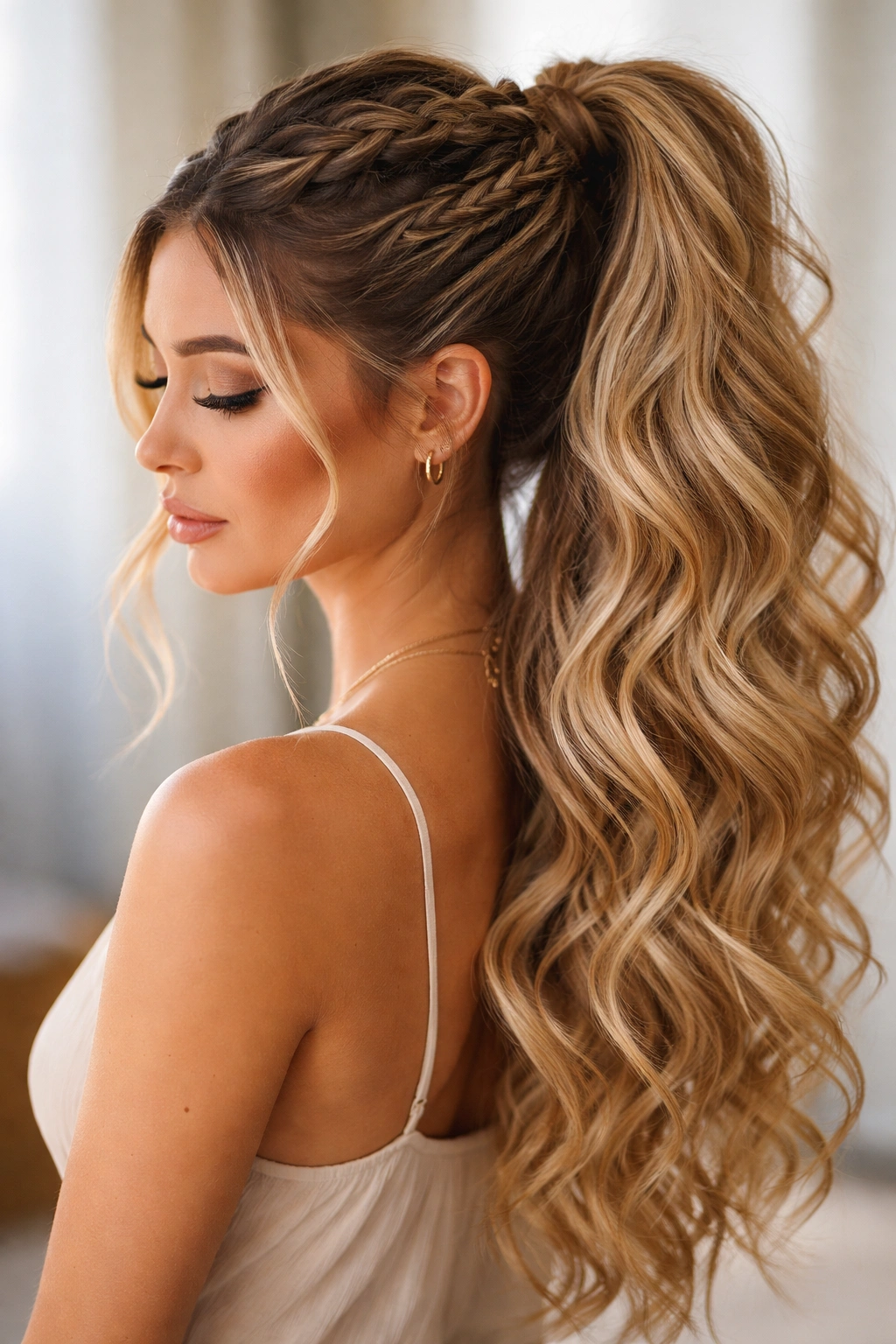
Sometimes a ponytail needs a little texture at the roots to make it look interesting. Instead of slicking your hair straight back, try incorporating a Dutch braid or a series of thin feed-in braids leading into the ponytail. This adds a layer of visual interest that a standard sleek pony lacks.
The Contrast Factor
When you combine a tight, intricate braid pattern at the scalp with long, loose curly extensions, you create a beautiful juxtaposition. The neatness of the braids highlights the wildness of the loose curls. It feels effortless and intentional all at once.
Maintaining the Texture
Loose curls are notorious for tangling near the nape of the neck. To keep the look fresh, apply a light, water-based curl mousse before you leave the house. Avoid heavy oils. They will weigh the curls down and make the weave look greasy by the end of the day. You want bounce, not weight.
3. The Dramatic Crimped Ponytail with Extra-Long Weave
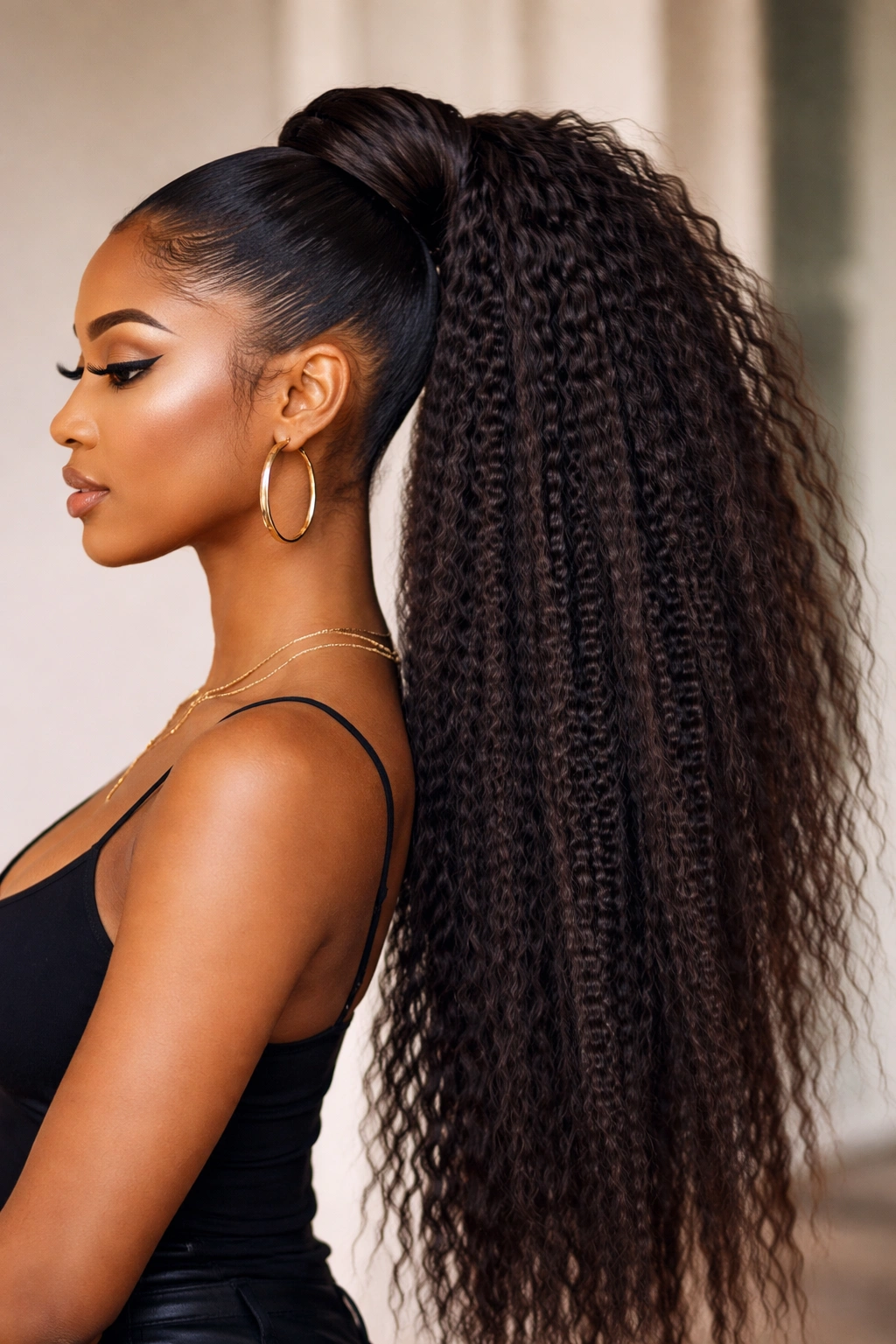
Crimping is back, and it is a massive opportunity for volume. If you have ever felt like your ponytail was too thin, crimping the extensions before installation will triple the visual density instantly. It changes the geometry of the hair strands, making them appear thicker.
How to Achieve the Look
Use a three-barrel crimping iron on your bundles before you attach them to your ponytail base. Do not crimp the hair once it is already attached to your head; it is too difficult to get to the roots. Prep the bundles first, then apply.
Managing the Weight
Because crimped hair is so voluminous, it can be heavy. Use a sturdy hair tie with a hook or a very thick elastic band to secure your base. If the base isn’t solid, the weight of the crimped hair will pull your natural hair and cause the ponytail to slide down.
4. Side-Swept Romantic Pony with Body Wave Texture
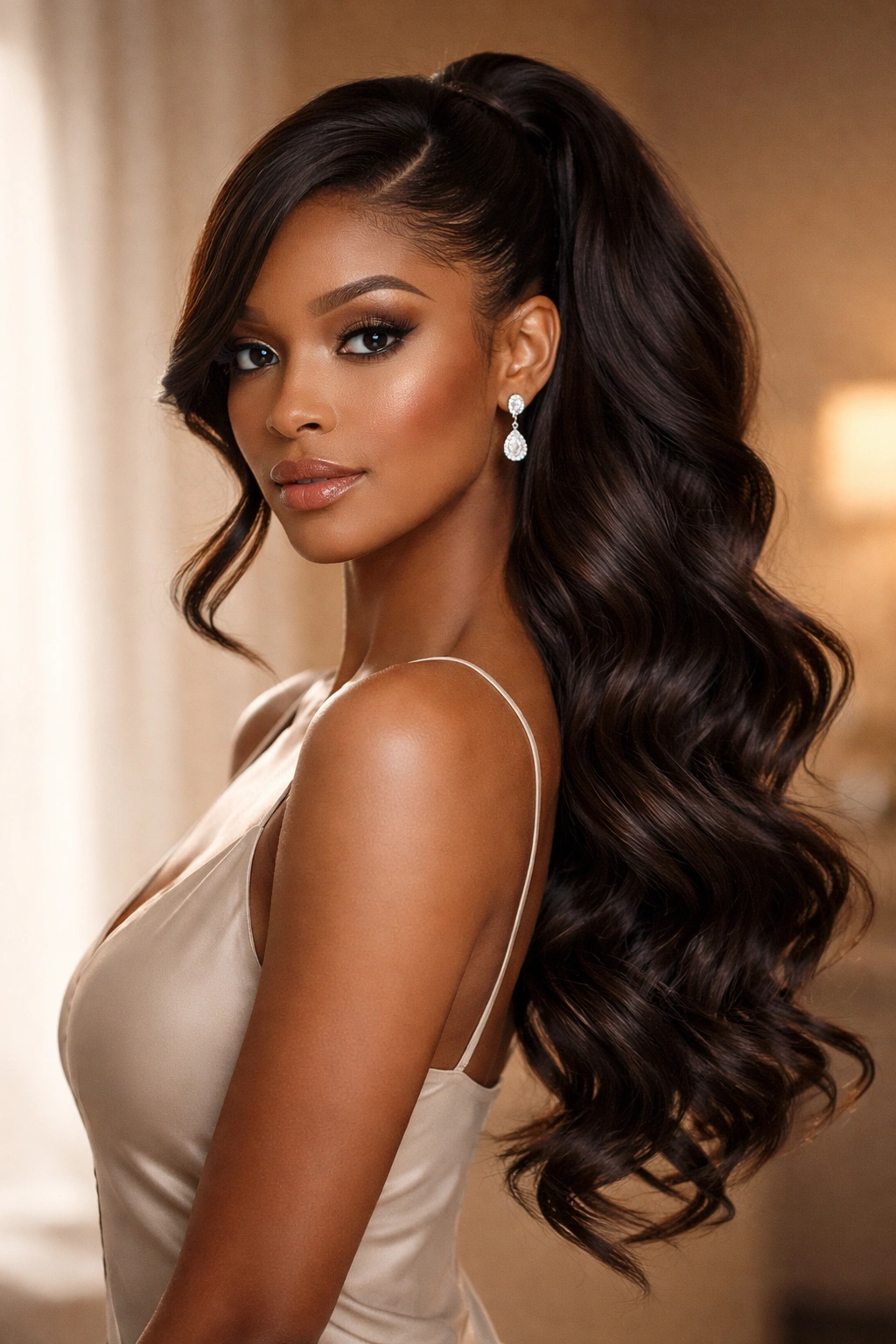
A side-swept ponytail offers a softer, more romantic vibe than a standard high pony. It frames the face differently and works incredibly well for formal events or just when you want to feel a bit more elegant. The key is in the transition from the scalp to the side.
Managing the Bend
When you pull your hair to the side, you create a natural bend in the hair strands. Using body wave bundles here is essential because they are forgiving. If the hair moves or shifts, the waves mask any imperfections in the track placement.
Pro-Tip for Longevity
Use a strong-hold setting spray on the area where your natural hair meets the extension track. This prevents the hair from lifting or “gapping” as you move your head throughout the day. You want the weave and your natural hair to behave as one unit.
5. The Half-Up, Half-Down Weave Ponytail
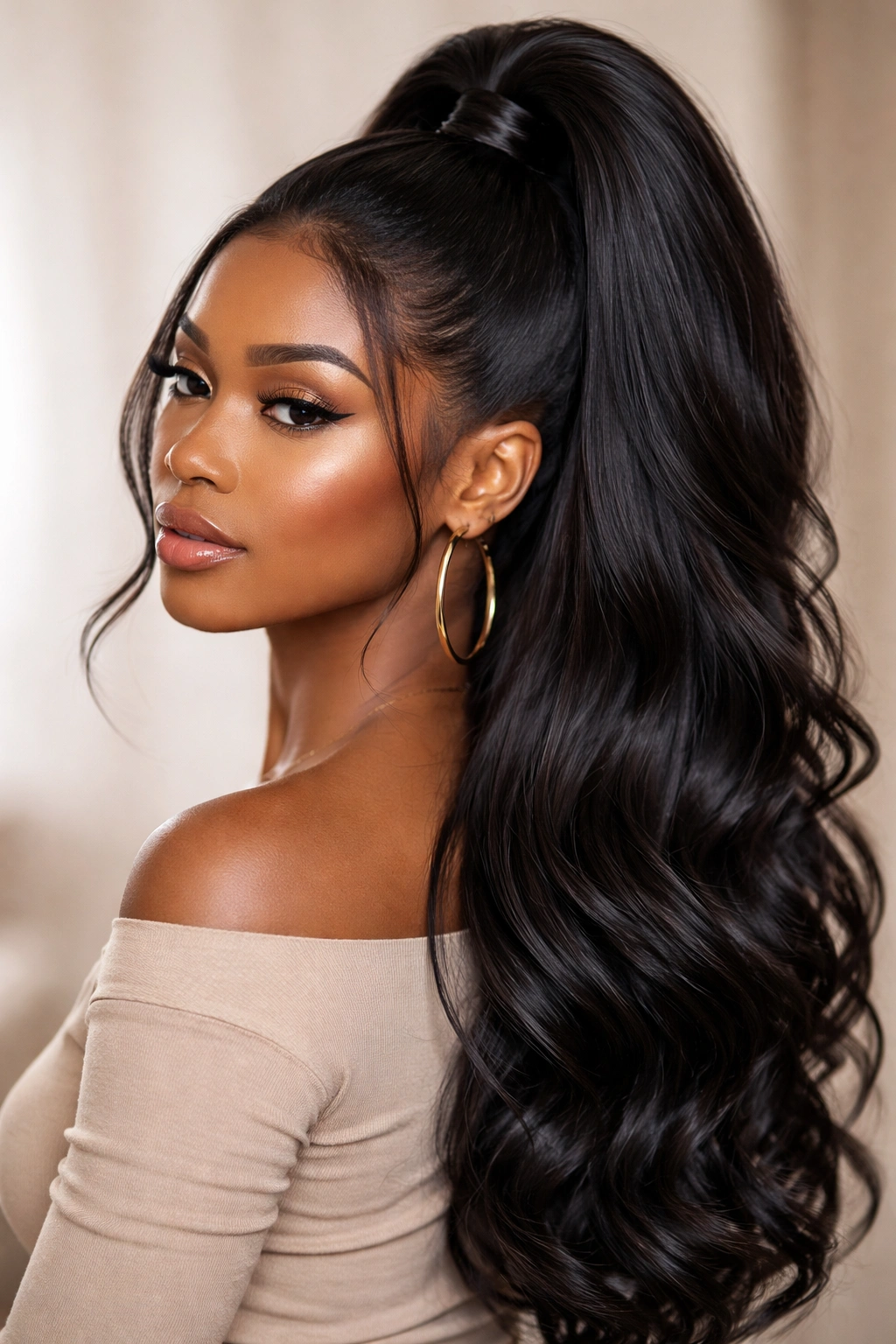
This style gives you the best of both worlds: the length of a full head of hair and the clean, lifted look of a ponytail. It is a fantastic option if you want to wear your hair down but still want that “snatched” feeling at the temples.
The Secret to the Blend
The most common mistake people make with this style is not blending the texture of the ponytail with the hair that is left down. Make sure your leave-out or your frontal matches the curl pattern of your bundles. If your natural hair is straight and your extensions are wavy, you must use a wand to match the pattern before you style.
Why This Style Adds Volume
Because you are only pulling up the top half of your hair, the bottom half adds a significant amount of weight and fullness to the overall silhouette. It makes the ponytail look like it is growing out of a much thicker head of hair than you actually have.
6. High-Volume Kinky Curly Drawstring Pony
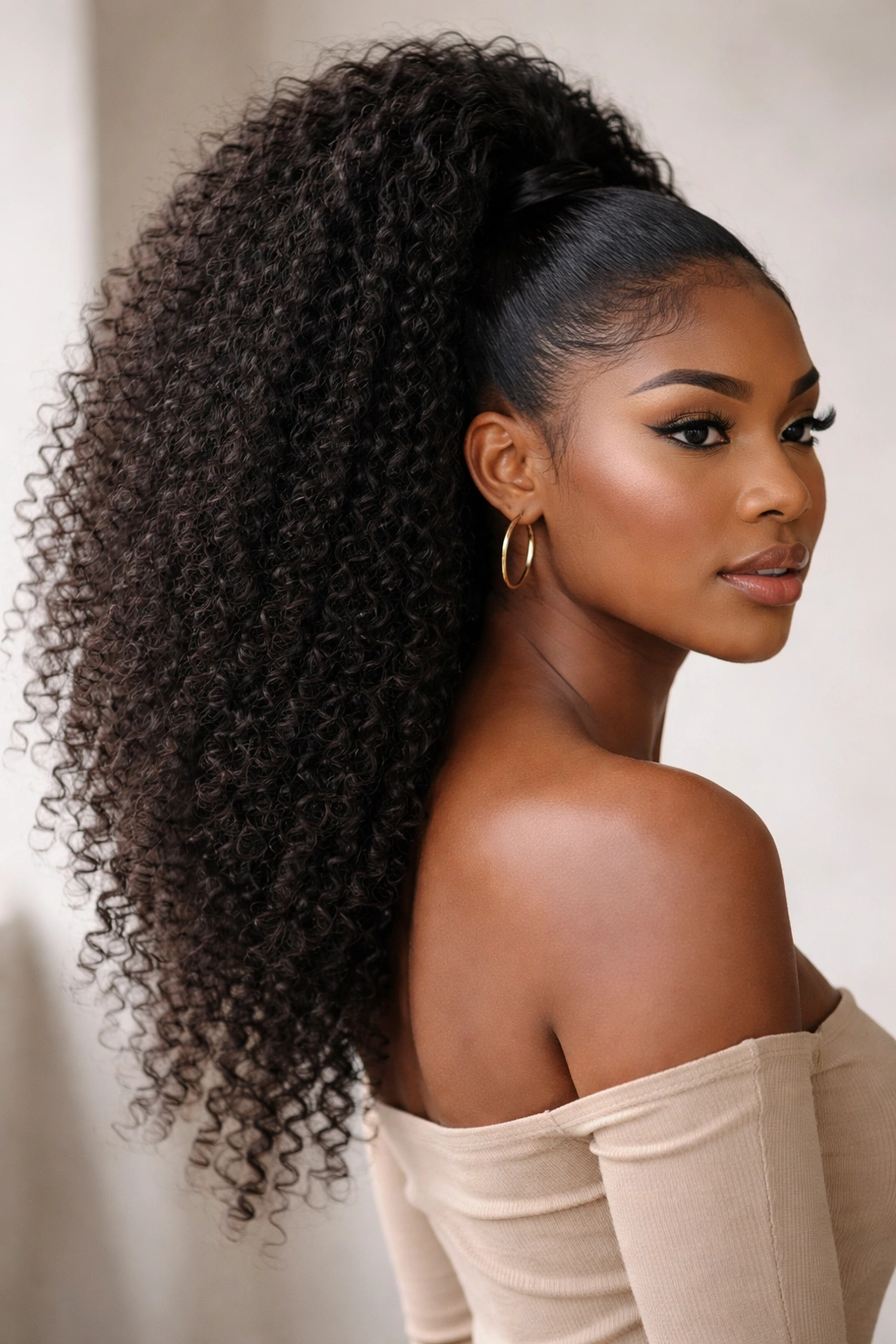
If you want the ultimate volume without the fuss of sewing tracks, the kinky curly drawstring pony is your best friend. It is a hair hack that works in five minutes flat. The texture here is crucial; it mimics 4C hair perfectly.
Why It Looks So Real
The matte finish of kinky curly hair makes it look much more realistic than the shiny, synthetic-looking bundles. Because the curl pattern is tight, it naturally resists gravity, which means your ponytail will stand tall and proud without needing gallons of hairspray.
Care Instructions
These pieces can be thirsty. Keep a spray bottle of water mixed with a leave-in conditioner handy. If the ends start to look a little fuzzy, just mist them lightly and fluff them with your fingers. Do not use a comb. Combs will turn this beautiful texture into a frizzy mess.
7. The Sleek Low Pony with Straight Weave Wrap
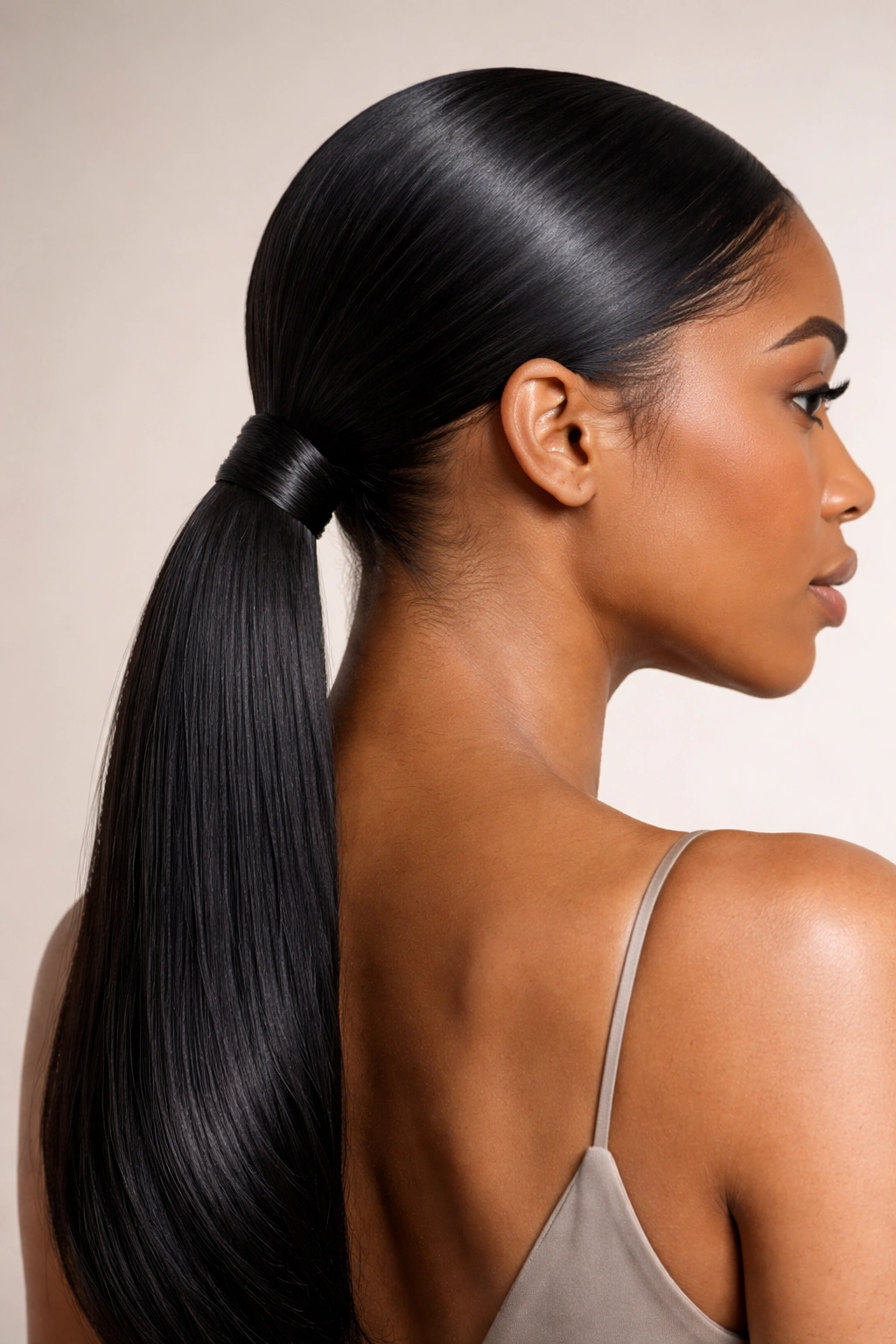
There is something undeniably sophisticated about a low ponytail that sits right at the nape of the neck. It is the style of choice for runway models and high-fashion editorial shoots. It is clean, sharp, and entirely focused on the silhouette.
The Wrap Technique
To get that “expensive” look, you must hide the hair tie. Take a small section of the weave hair, wrap it around the base until the elastic is completely covered, and secure it with a small, invisible bobby pin. This detail elevates the entire look from “gym hair” to “red carpet.”
Smoothing the Base
Use a boar bristle brush and a dab of styling pomade to get your natural hair perfectly flat against your scalp. If you have flyaways, do not try to comb them down with a regular plastic comb. Use the palm of your hand and a little bit of hairspray to press them down. The heat from your hand helps the product settle the hair.
8. Modern Bubble Ponytail with Added Length
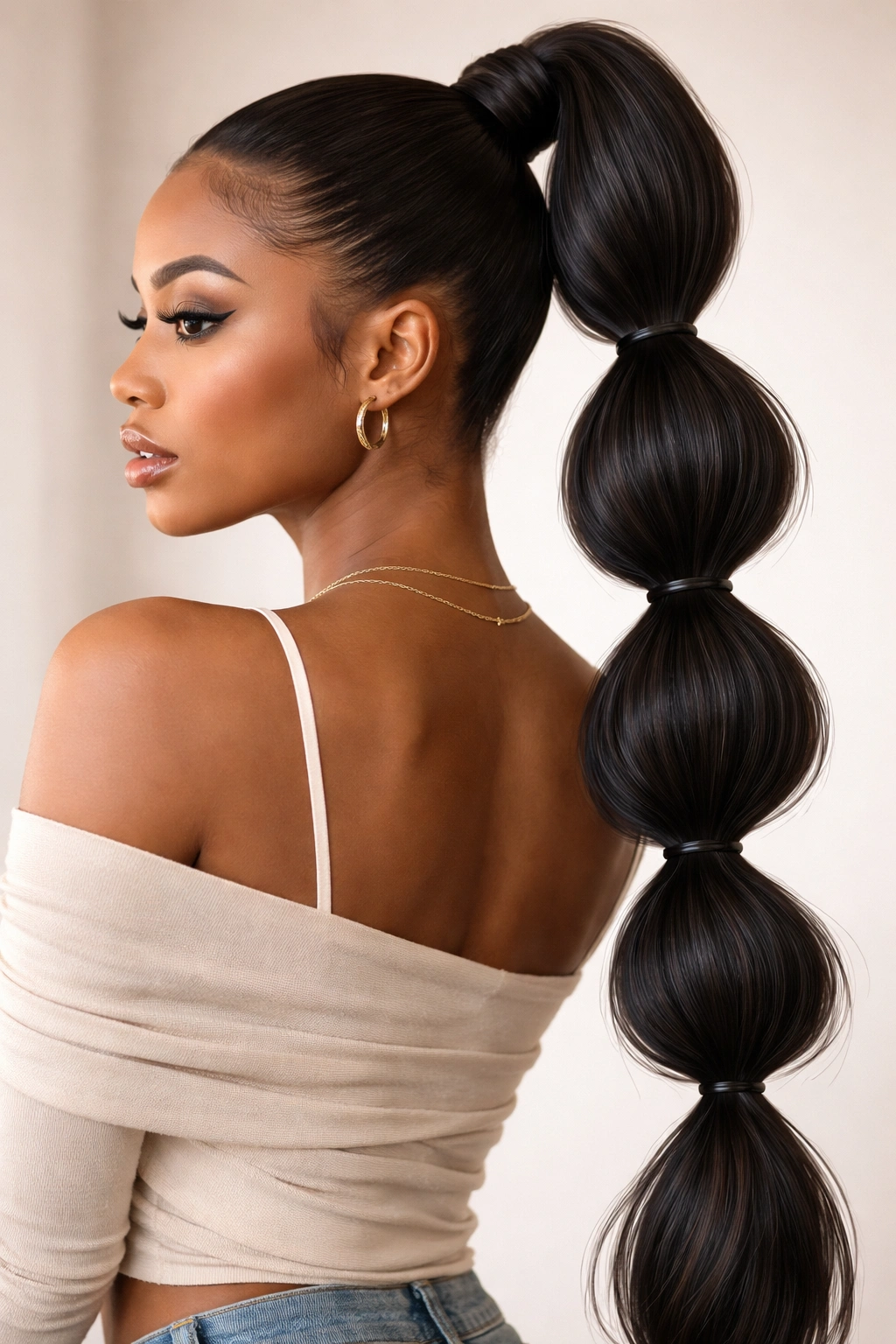
The bubble ponytail has transitioned from a playground style to a legitimate fashion statement. The trick to making it look adult and voluminous is adding weave before you start “bubbling” the hair. You need the extra length to create those distinct, round sections.
Creating the Bubbles
After you secure your high, long ponytail, place small, clear elastic bands every two to three inches down the length of the hair. Once the band is secure, use your fingers to gently pull and “fluff” the hair between the bands. This creates that round, bubble-like shape.
Adding Volume
If your hair is thin, the bubbles will look small and sad. By adding a high-quality straight weave ponytail extension, you have more hair to “fluff.” The more hair you have in each section, the larger and more dramatic your bubbles will be.
9. The Messy Textured Top-Knot Ponytail
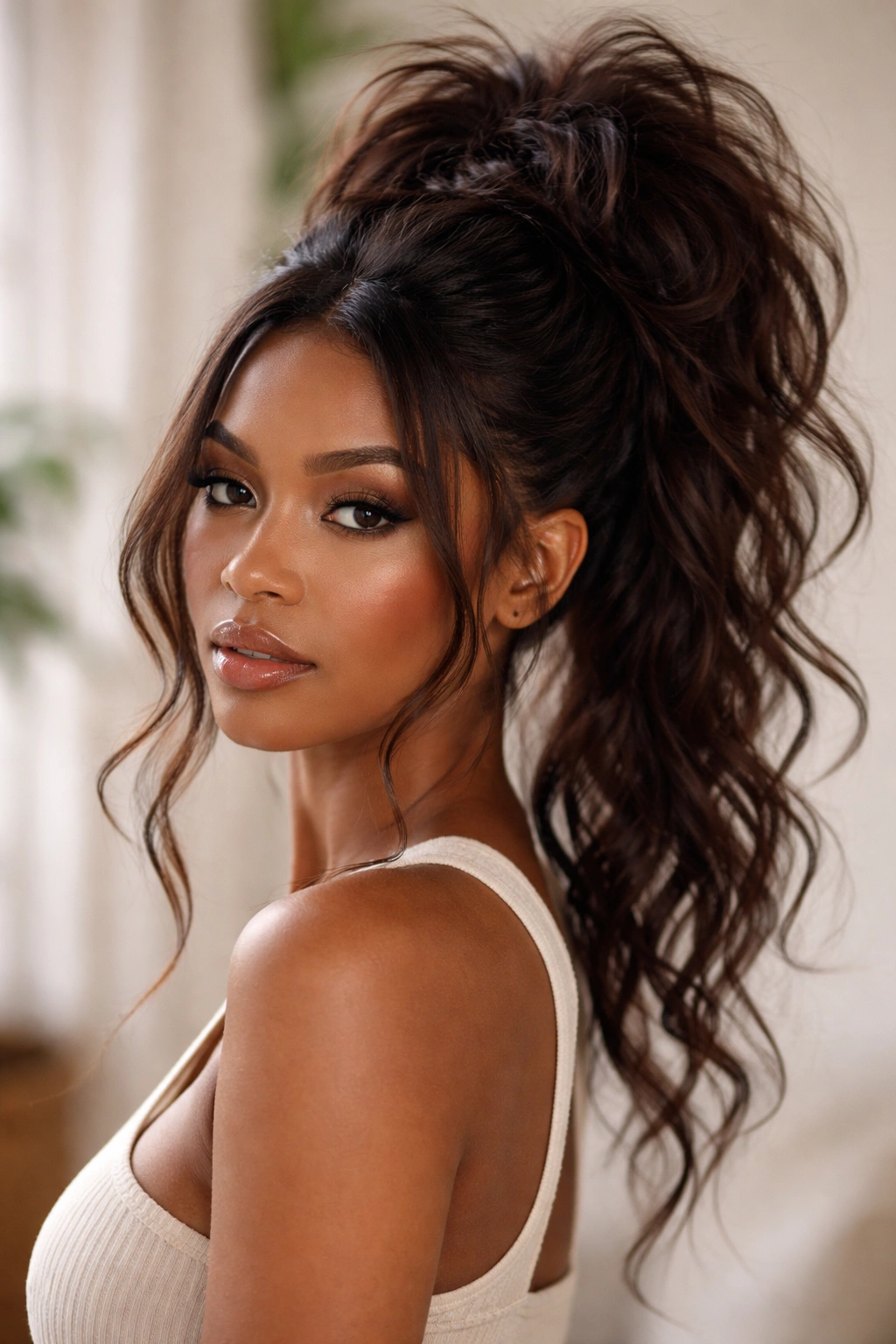
This is the “I woke up like this” look, but curated. It combines a high ponytail with a loose, messy bun at the crown. It is a fantastic way to disguise the fact that you might not have had time to wash your hair, while still looking styled.
Building the Shape
Start with a high ponytail and secure it. Then, take the length of the ponytail and wrap it loosely around the base, pinning it in place, but leave some of the ends loose to frame your face. The weave adds the necessary volume to make the bun look substantial rather than tiny.
Styling for Texture
Use a dry texturizing spray before you start pinning. This gives your hair grip. If the hair is too silky or slippery, the bun will slide out or unravel. You want the hair to have a bit of a “grit” to it so it stays exactly where you place it.
10. The Wrapped-Base Sleek Ponytail
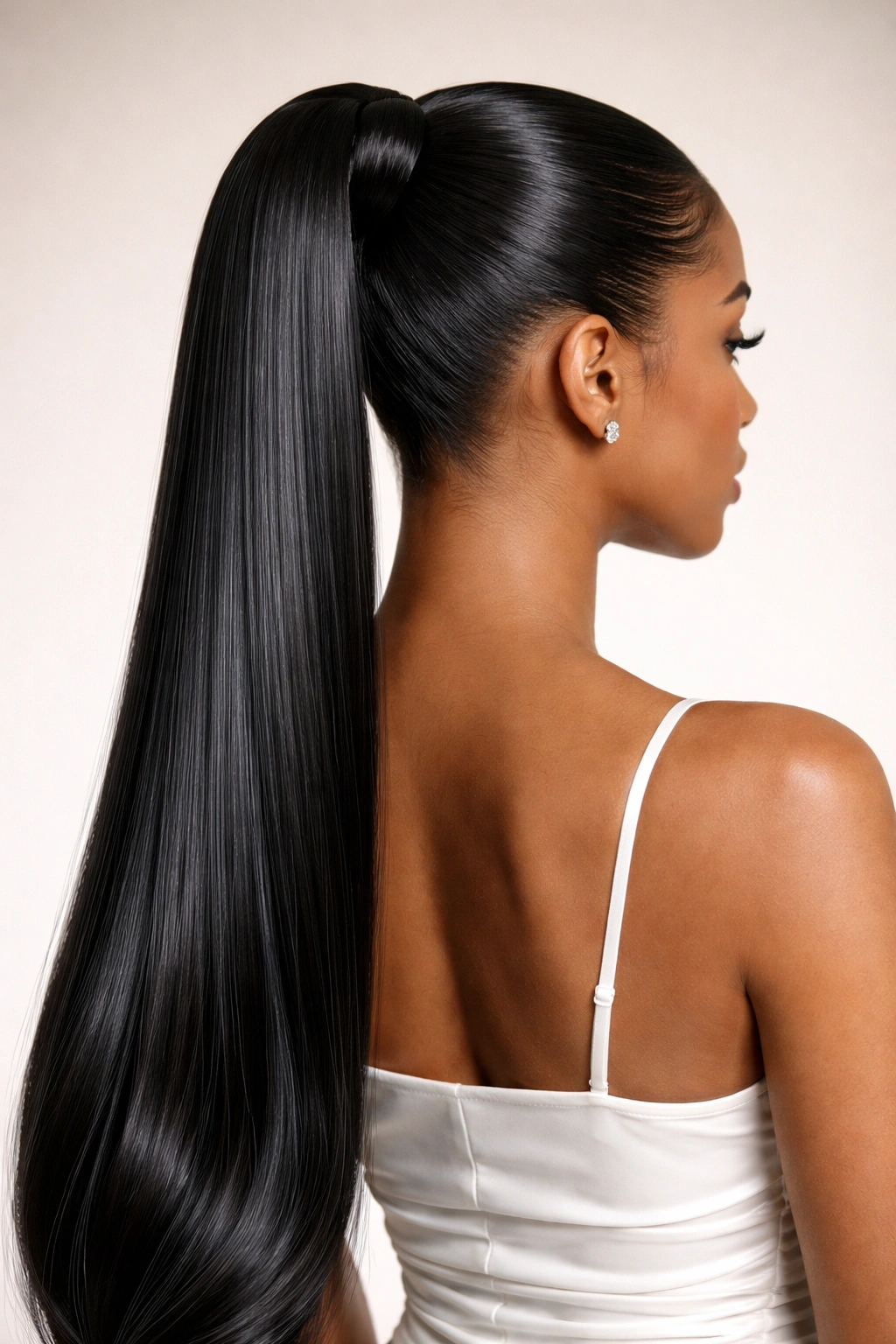
This style is defined by a very long, very smooth wrap at the base. Instead of just a simple lock of hair covering the band, you wrap a significant portion of the base to create an elongated, cylindrical look that adds a futuristic touch.
Precision is Key
The transition from the slicked-back head to the ponytail must be seamless. If you have a bump or a ridge where the ponytail starts, the look is ruined. Use a fine-tooth comb to ensure your hair is pulled perfectly smooth before you secure the base.
Achieving the High Shine
For this look, shine is non-negotiable. Finish the style with a lightweight shine spray that contains silk proteins or argan oil. It gives the hair that liquid-glass appearance that defines this specific style.
11. Two-Tone Ombré Voluminous Ponytail
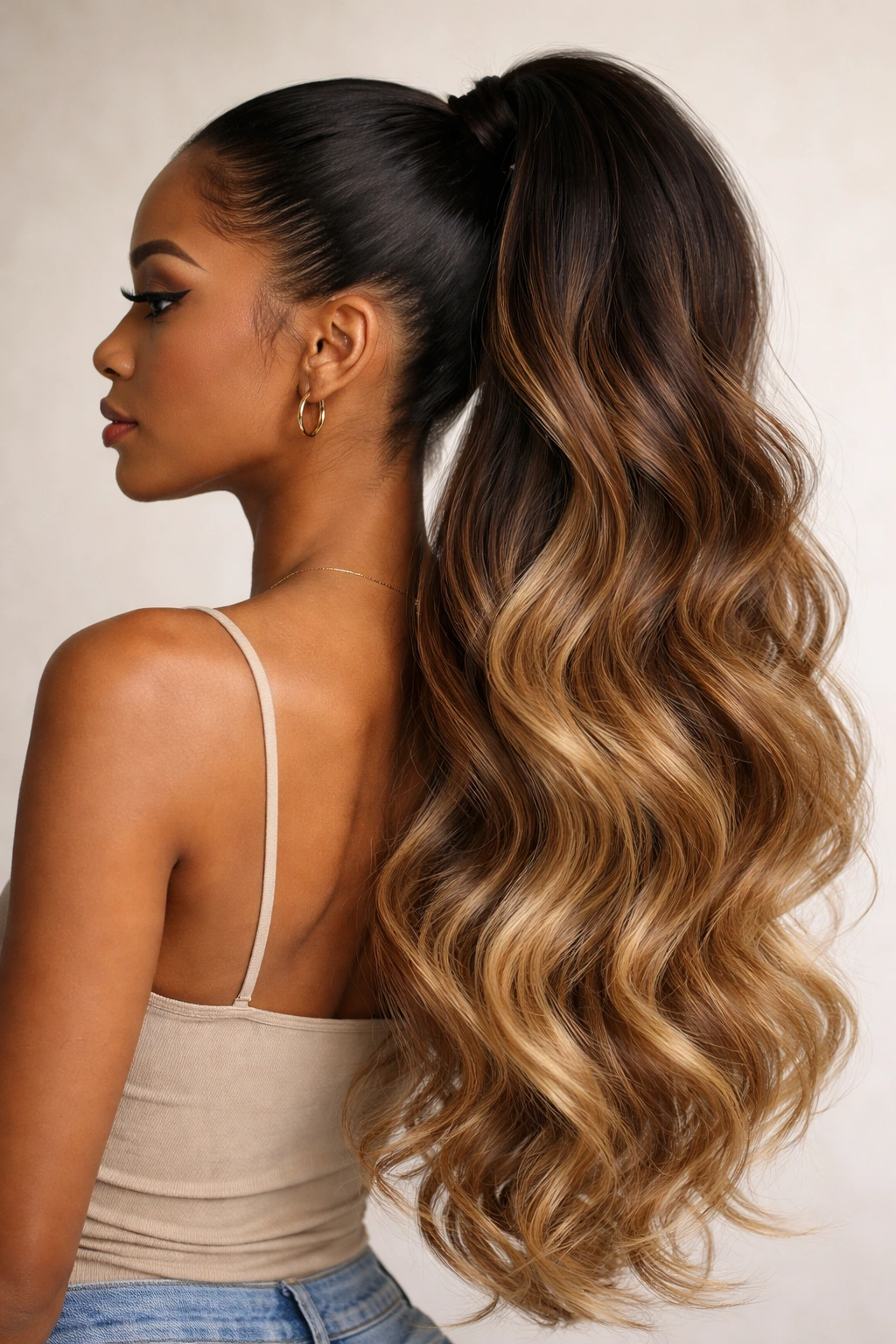
Color can create the illusion of volume. When you have a dark base and a lighter tail—or even a subtle balayage—the contrast draws the eye and makes the ponytail appear multi-dimensional. It isn’t just about the hair; it’s about the depth of color.
Strategic Color Placement
If you are using clip-in extensions or a weave ponytail, choose one that has a natural-looking transition. Avoid anything with a harsh, blocky line where the colors meet. You want the color to melt into the length.
Managing Maintenance
Color-treated or multi-tone extensions can get dry faster than virgin hair. Use a deep conditioning treatment on the extensions before you style them. It keeps the hair supple, which helps the different colors blend together smoothly when the ponytail moves.
12. The Victorian-Inspired Braided Wrap Pony
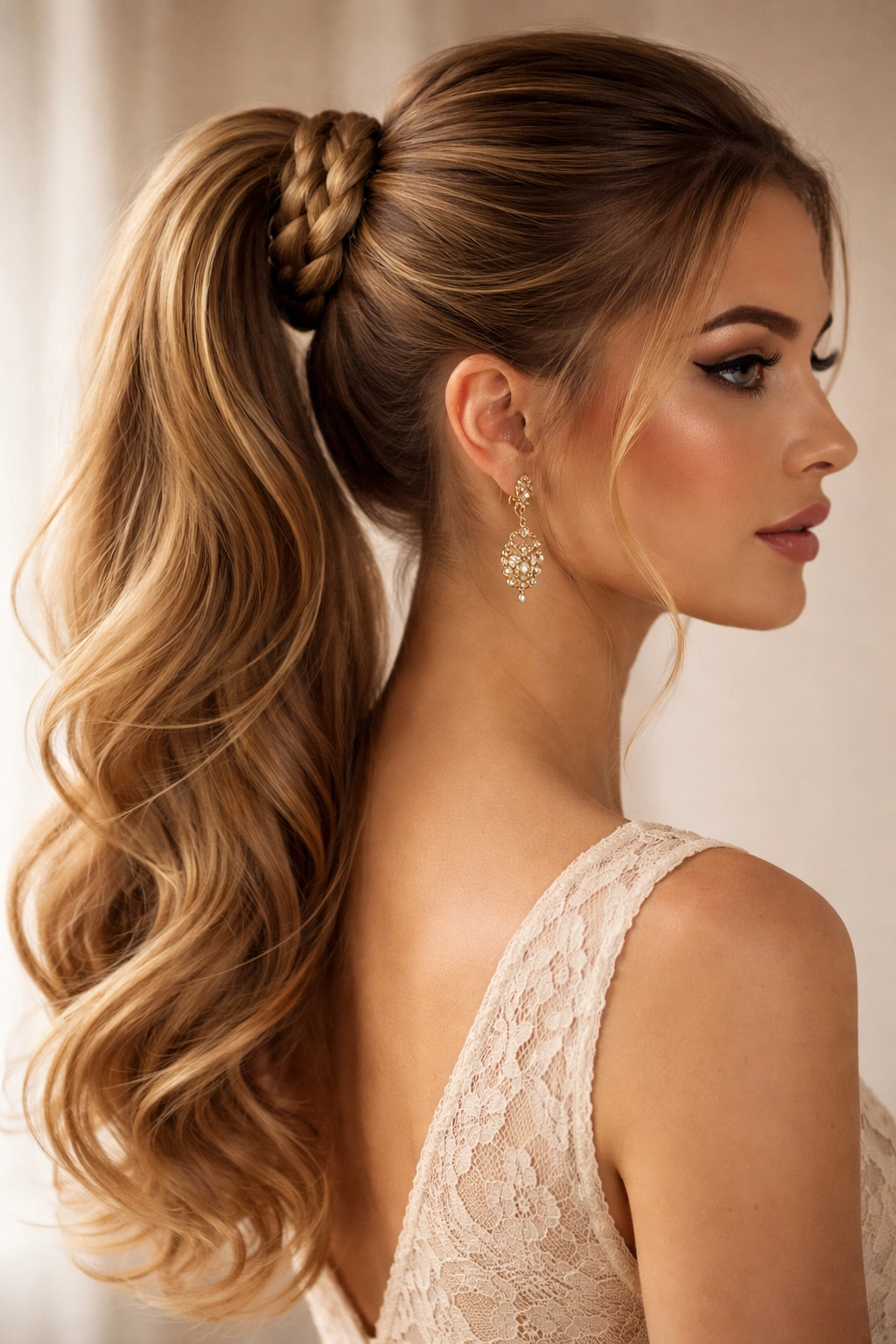
This look is about adding an intricate, vintage-inspired braid that wraps around the base of the ponytail. It is sophisticated, detailed, and incredibly secure. It looks like it took hours, even if you’ve mastered the technique.
How to Style
Secure your base, then take a thick section of the weave hair and braid it. Wrap that braid around the base of the ponytail, pinning it as you go. It’s a great way to add volume to the root area, making the base look thicker and more deliberate.
Choosing the Braid
You can do a standard three-strand braid, or for more drama, try a fishtail or a Dutch braid. The wider the braid, the more volume you add to the base of the ponytail. It changes the proportions of your head in a very flattering way.
13. The Retro 90s High Pony with Flipped Ends
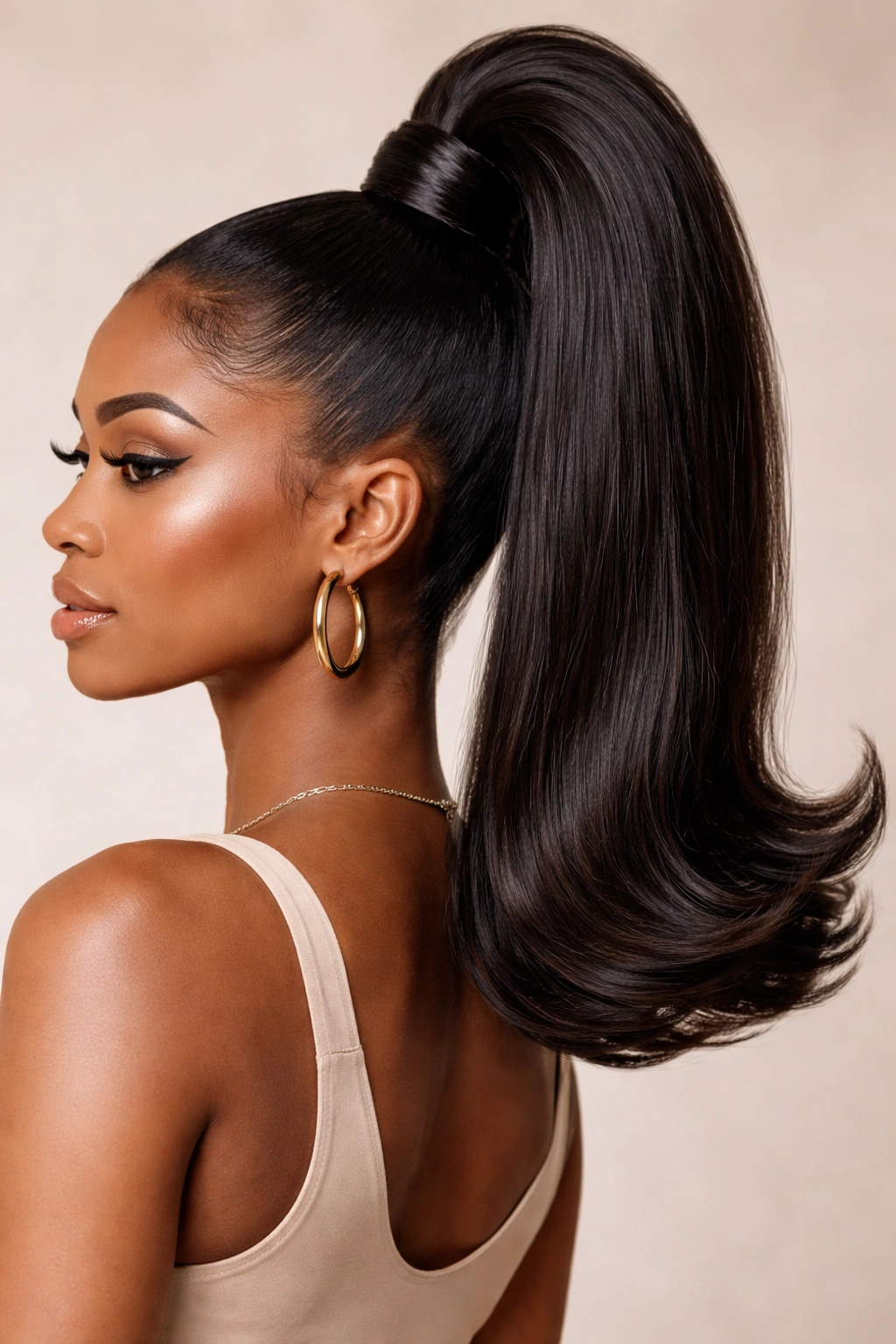
The 90s flipped-end look is back, and it requires a significant amount of volume to look correct. If the ends are thin, the flip looks like a mistake. With a weave ponytail, you can create the thick, blunt ends necessary to carry that bold outward curve.
Styling the Flip
After you have attached your long, straight weave, use a large-barrel curling iron or a round brush and blow dryer to flip the ends outward rather than inward. The outward flip creates a wide, bell-like shape that feels very vintage and high-fashion.
Holding the Flip
Use a flexible-hold hairspray on the ends. If you use a stiff, “crunchy” hairspray, the flip will look plastic. You want movement. The hair should bounce when you walk.
14. Voluminous Yaki-Texture Ponytail
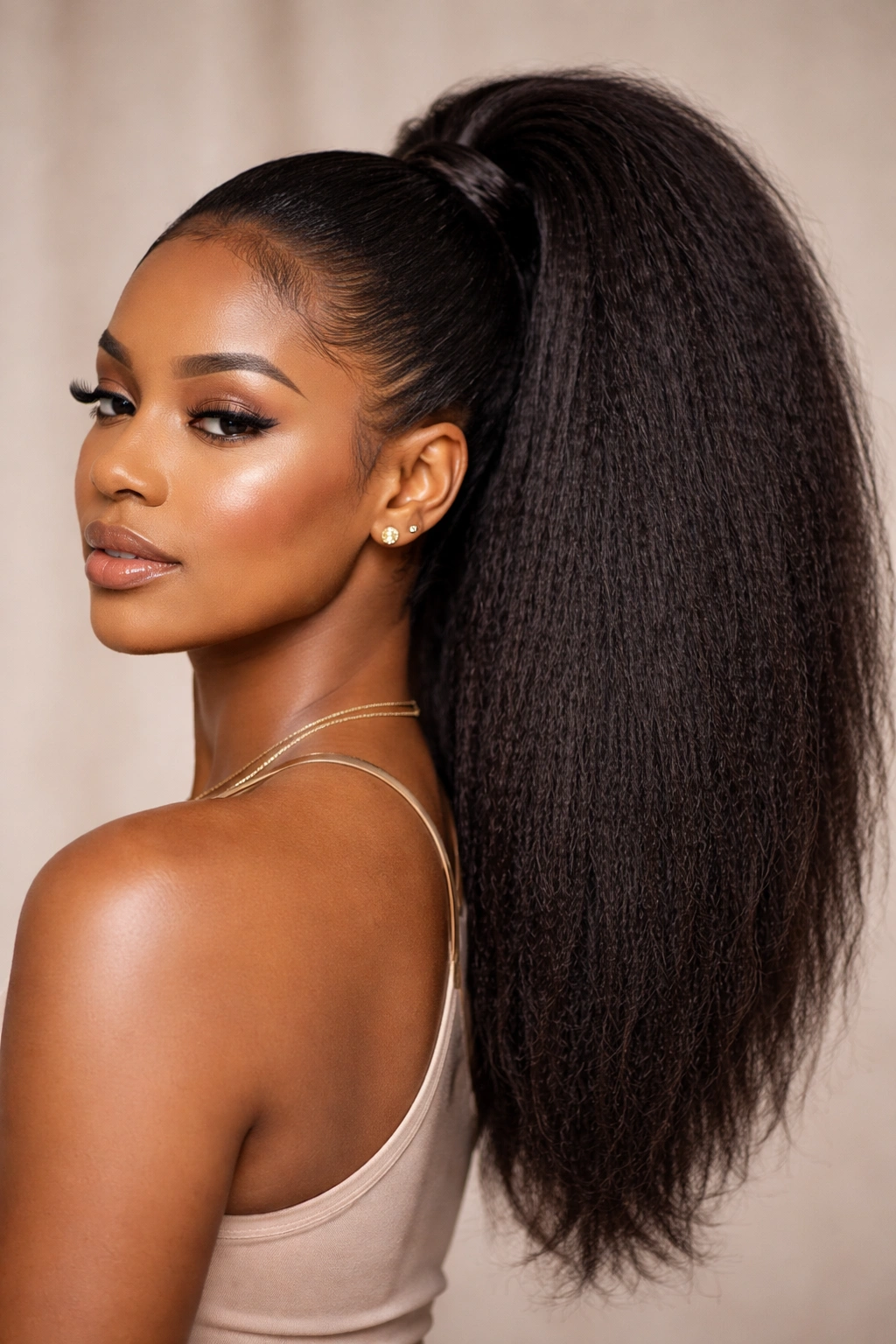
Yaki texture mimics relaxed African American hair. It is not bone-straight; it has a slight, subtle kink that makes it look like it grew out of your scalp. This is arguably the most natural-looking weave texture for those who want a straight style without the “fake” shine.
Why It Adds Volume
Yaki hair is naturally coarser than standard straight hair. It has more friction, which means the strands sit further apart. This creates natural, built-in volume that stays consistent from root to tip. You don’t need to tease it; the texture does the work for you.
Styling Versatility
Because Yaki hair is coarser, it holds heat styles beautifully. You can wand it, crimp it, or roller set it, and the style will last for days. It is the most robust texture you can choose for a daily, go-to ponytail.
15. The Waterfall Braided-Crown Ponytail
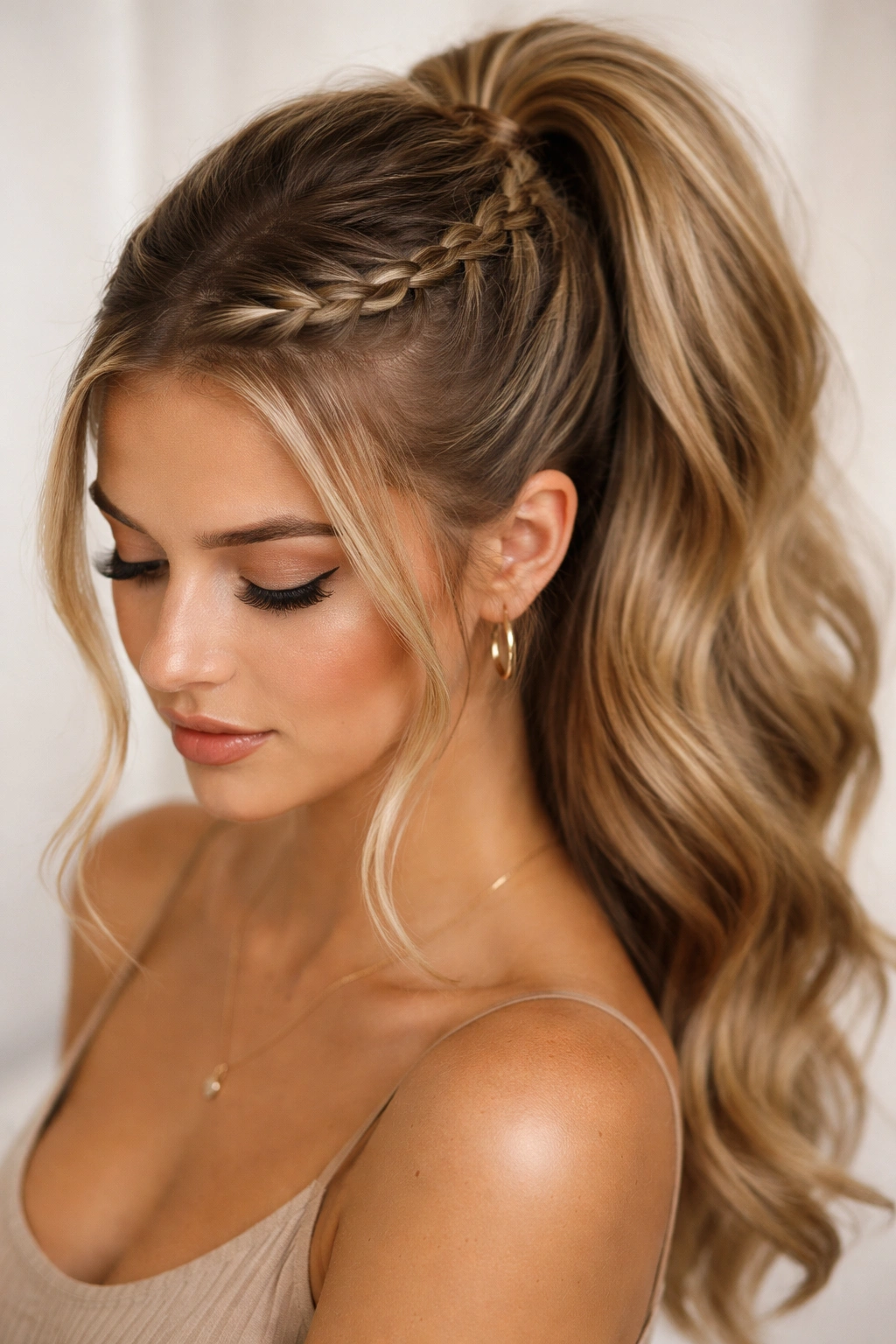
This style incorporates a braid that starts at the front hairline and “waterfalls” back into the ponytail. It is a stunning look that keeps hair off your face while adding a soft, feminine detail to the top of your head.
The Braid Connection
The braid serves as a buffer between your hairline and the ponytail base. If your edges are a bit thin, this style is a lifesaver because the braid creates a soft focus around the face, drawing attention away from the temples and toward the style itself.
Integration Tip
When you finish the braid, incorporate the tail of the braid into the ponytail base. Do not tuck it away; let it wrap around the ponytail along with the other hair. It adds another layer of texture to the base, making the whole ponytail feel integrated and complete.
16. The Sleek-to-Curly Contrast Ponytail
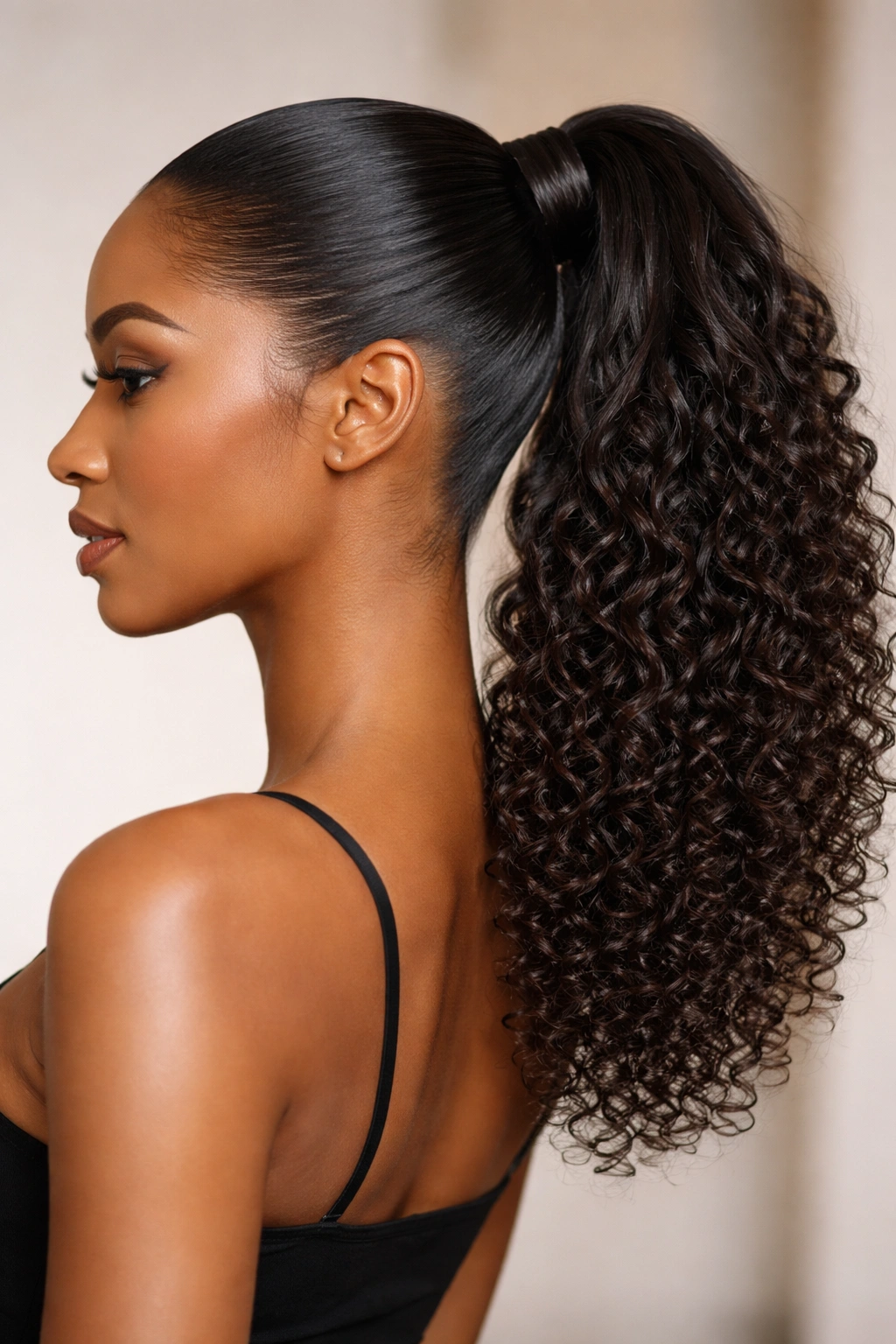
This style features a super-sleek, tight, straight base that suddenly bursts into tight, defined curls at the ponytail. It is a dramatic contrast that works perfectly for anyone who loves high-impact, editorial-style hair.
Executing the Transition
The key here is the point of attachment. You need a very strong, distinct tie-off point where the sleek hair ends and the curly extension begins. Some people use a decorative cuff or a wrap of hair to mark this transition.
Selecting the Curl
For this look, you want a very defined curl—think wand curls or spiral curls. A loose wave won’t provide enough contrast against the straight base. You want the transition to be sharp and deliberate, not blurry or accidental.
17. The Textured Afro-Puff Drawstring Pony
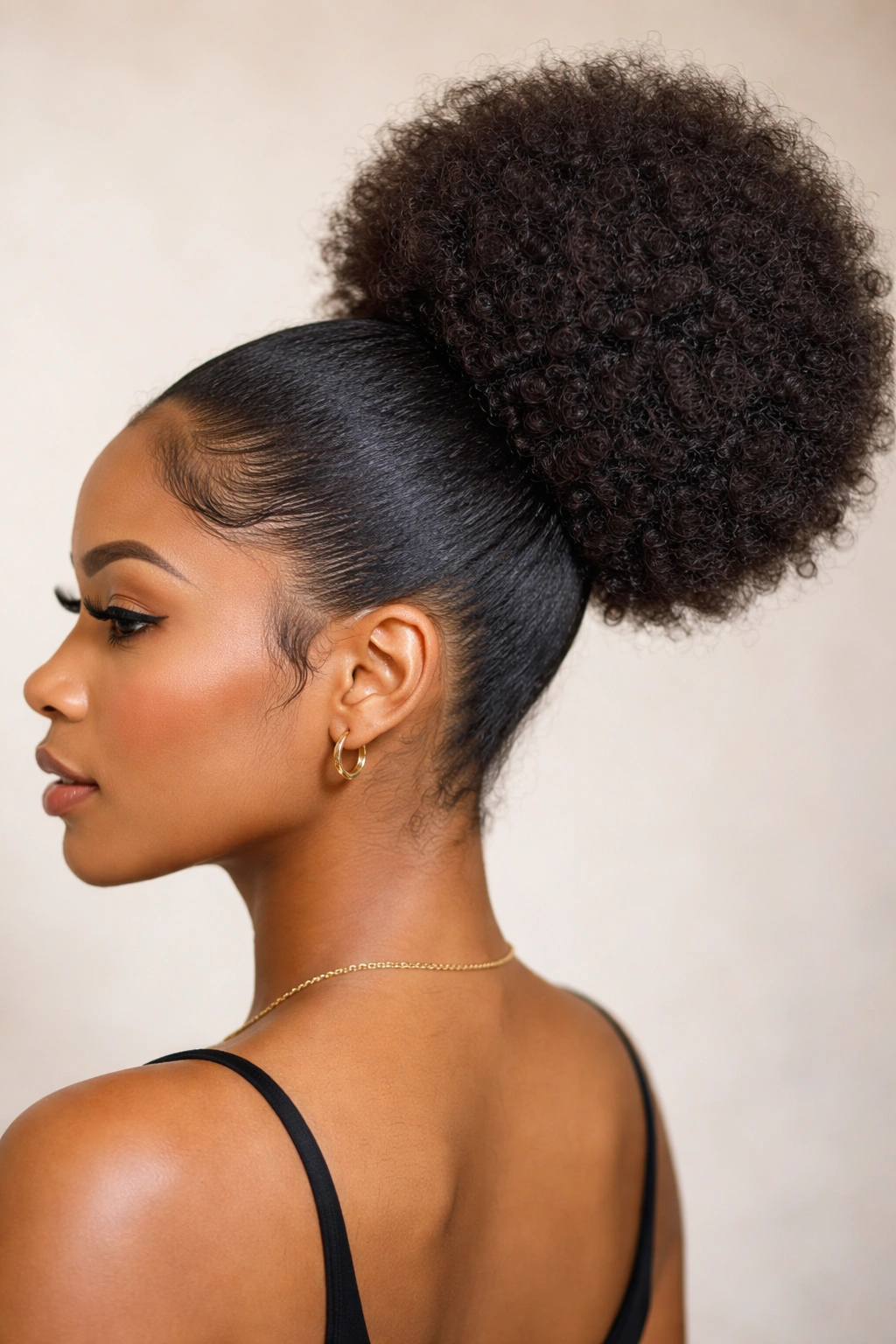
The Afro-puff is a timeless, regal style, but it can be difficult to achieve if your hair isn’t long or dense enough to create a “full” puff. A kinky-texture drawstring extension allows you to achieve the perfect, round shape instantly.
Shaping the Puff
Do not just pull the drawstring and leave it. Take the time to fluff the hair out with a hair pick. You want to shape it into a perfect circle, working from the outside in. The more you pick it out, the more voluminous and “expensive” the puff will look.
Securing the Base
Since these pieces can be heavy, use the small combs attached to the drawstring piece to anchor them securely into your base braid pattern. Do not rely solely on the drawstring tension; it will eventually slip off your head. The anchor combs are the real secret to all-day hold.
18. The Twisted Rope-Braid Ponytail
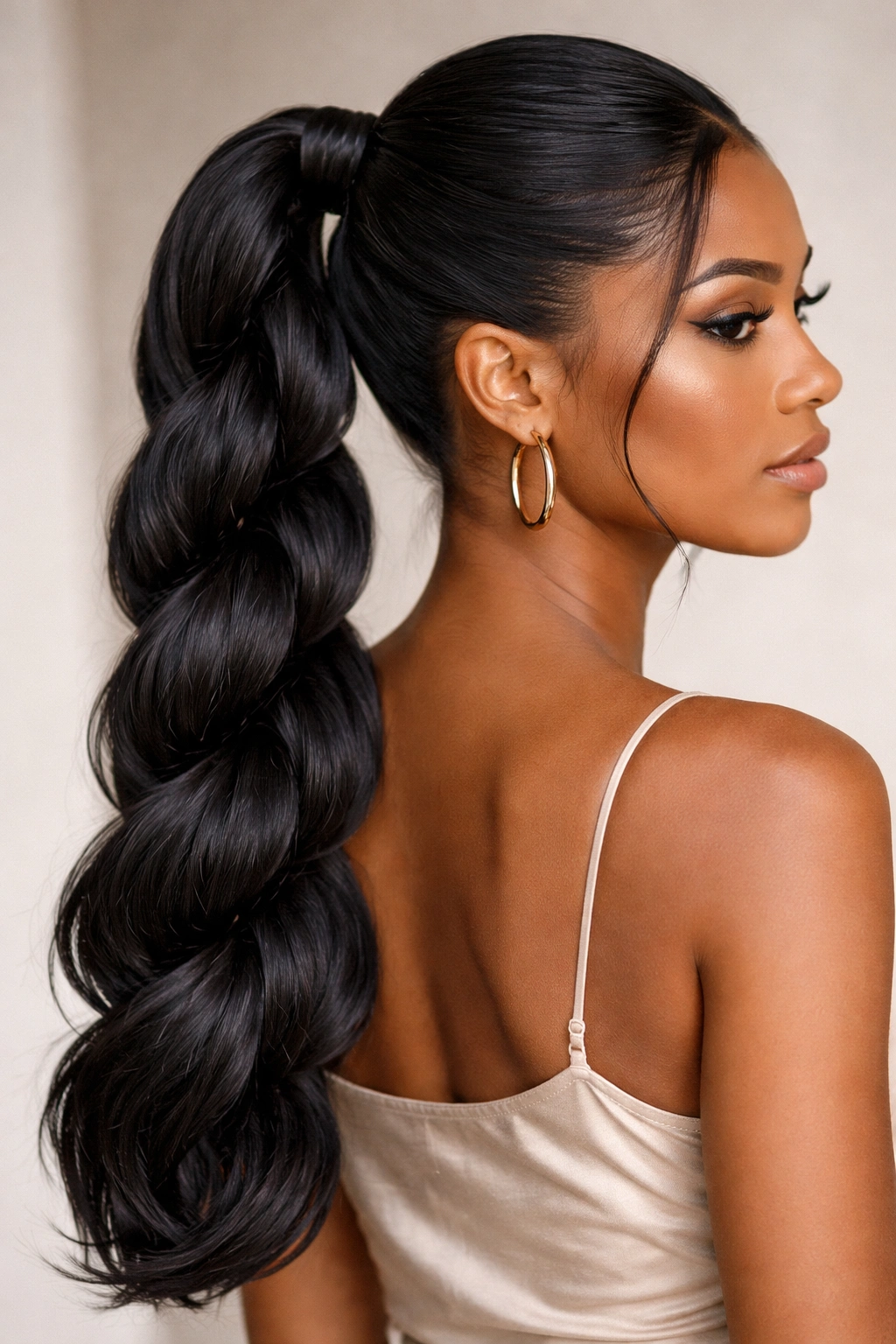
If you want a ponytail that is entirely contained and polished, the twisted rope braid is the answer. It is essentially a ponytail that has been divided into two sections, twisted, and then wrapped around each other.
The Volume Hack
To make a rope braid look good, you need a lot of hair. If you have thin hair, a rope braid will look like a sad little string. Using a weave ponytail gives you the density to create a thick, substantial rope that looks like a piece of art.
Texture Matters
Rope braids hold better in textured hair than in bone-straight, silky hair. If you are using straight weave, add some dry shampoo or texturizing spray before you twist. It creates the necessary grip to keep the twists tight and uniform.
19. The Sleek Low Ponytail with Soft Waves
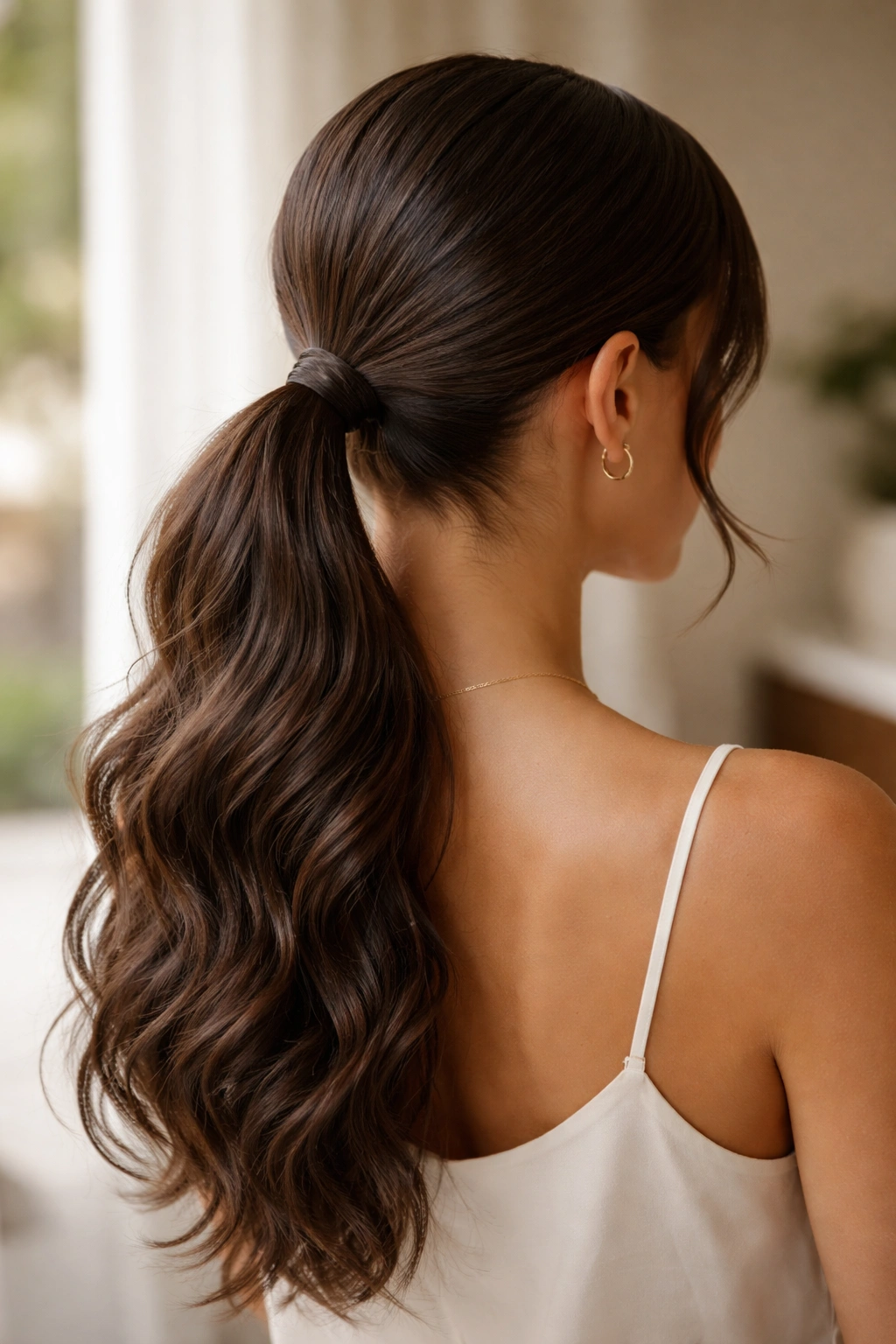
This is the “Saturday Brunch” version of the sleek ponytail. It’s pulled back neatly at the nape, but the length is styled with loose, beachy waves that add movement and softness to the overall look.
Achieving the Wave
Don’t use a curling iron. Instead, braid the ponytail while it is damp, let it dry, and then undo the braids. This creates a natural, lived-in wave pattern that looks soft and fluffy rather than “done.”
Styling the Base
Keep the base very tight. The contrast between the severe, tight base and the soft, wavy length is what makes this style so chic. If the base is loose, the look just becomes messy. Keep the scalp area pristine.
20. The Bohemian Messy Bun-Pony Hybrid
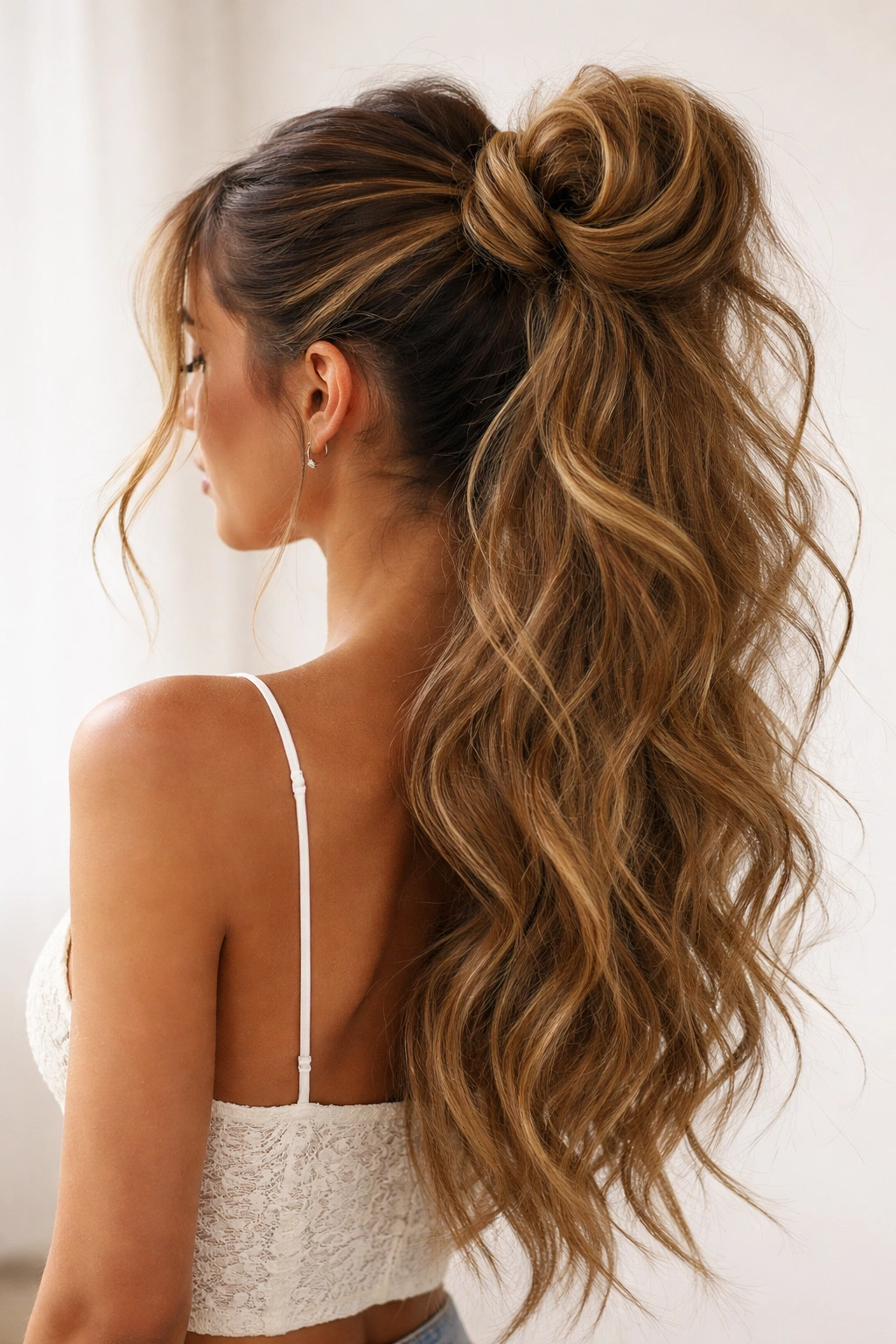
Sometimes you want a ponytail, but you also want the height of a bun. This hybrid style involves pulling your hair into a high pony, then pulling the hair halfway through the elastic on the last loop to create a loop-bun with ends left out.
The Extension Advantage
This style is notoriously difficult with short hair because the “ends” left out look wispy. When you use a long weave ponytail extension, those ends become long, beautiful ribbons of hair that hang down and add incredible volume.
Customizing the Volume
You can control the size of the bun. Pulling it tighter makes it smaller and neater. Pulling it looser makes it larger and more “Boho.” Play with the shape until it complements your face shape.
21. The Extra-Long Sleek Ponytail with Tapered Ends
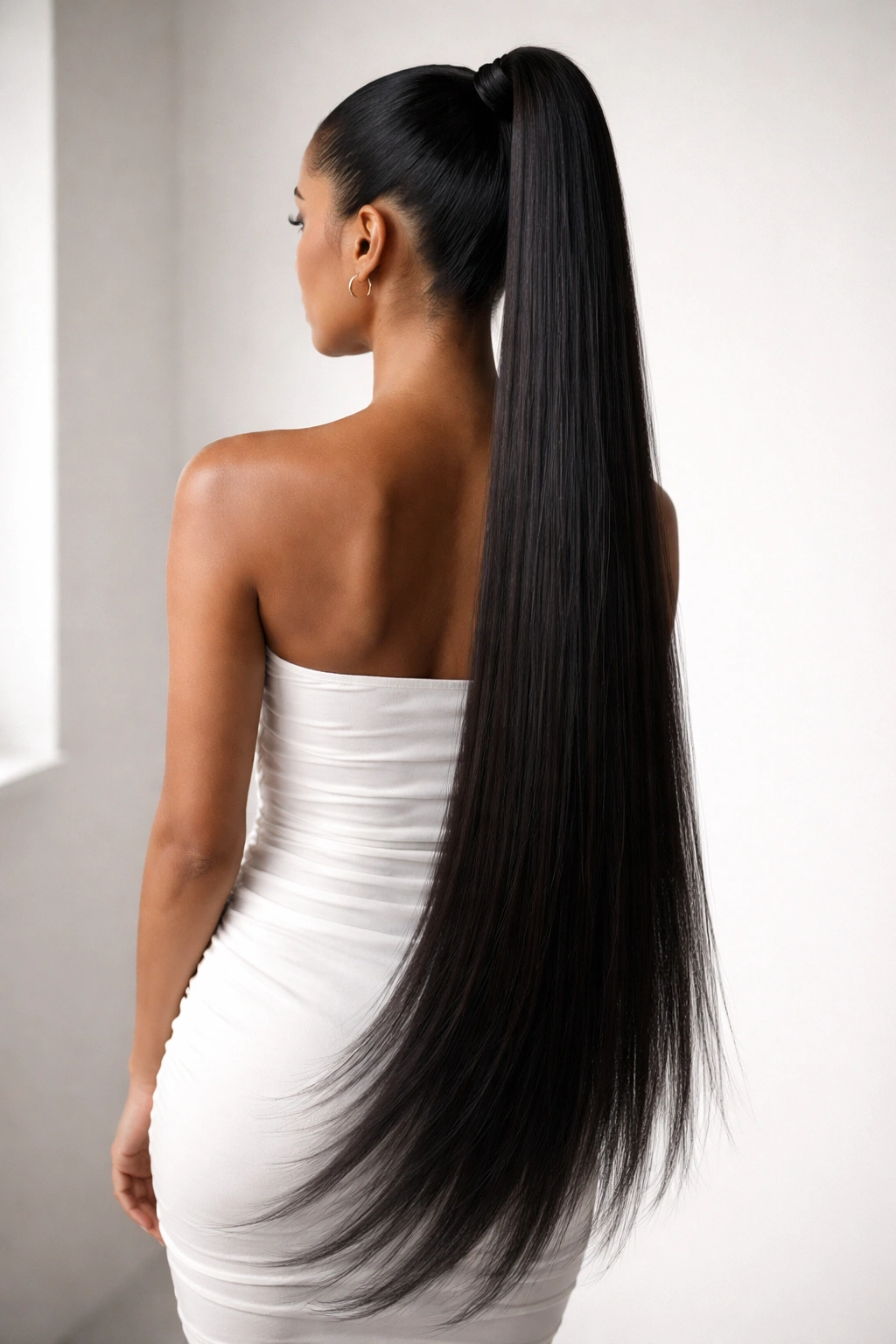
This is the ultimate “Rapunzel” ponytail. It is sleek, it is poker-straight, and it is significantly longer than natural hair allows. The key here is the taper. The hair should look thinner at the very tips, which makes the length look more realistic.
The Tapering Technique
If you are buying a long ponytail extension, it is often blunt-cut at the ends. Take a pair of thinning shears and gently feather the last two inches of the hair. This removes the “wiggy” look of a thick, blunt, unnatural end and makes it look like real, healthy human hair that naturally tapers.
Maintaining the Straightness
For this style, frizz is the enemy. Use a flat iron to get the hair pin-straight, but be careful with the temperature. High heat can melt synthetic extensions or damage human hair weave. Use a heat protectant spray—always—and run the iron through in one smooth, continuous motion. Do not stop in the middle, or you will create a kink.
Final Thoughts
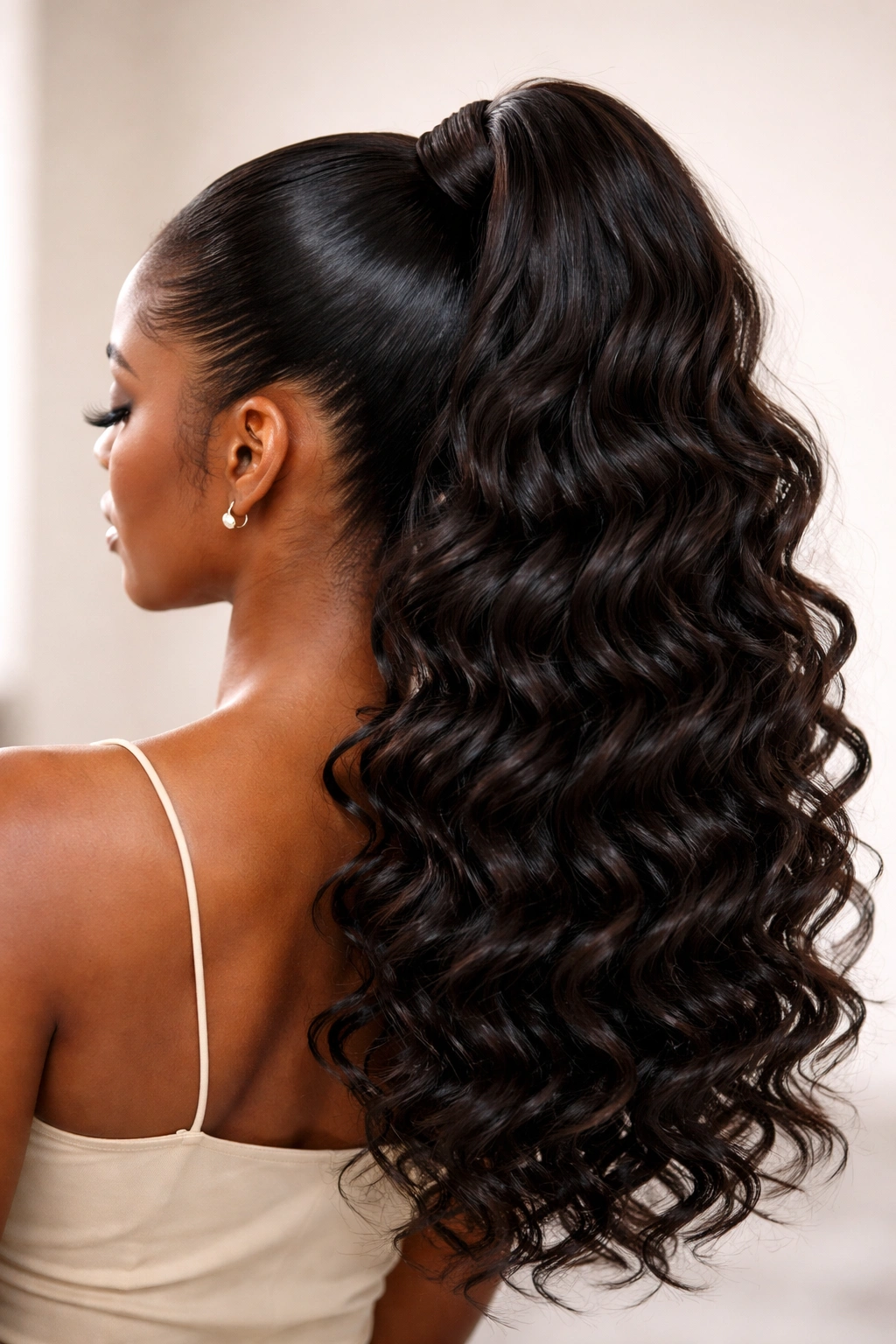
Building a voluminous ponytail is less about having perfect hair and more about having the right strategy. Whether you choose a drawstring piece, a sew-in track, or clip-ins, the goal is always to create a base that can support the extra weight. Never underestimate the importance of your base braids—they are the skeleton of your hairstyle. If the skeleton is weak, the hairstyle will fail.
Take your time with the wrapping and pinning. A ponytail is a structural style, and like any structure, the details matter. Keep your tools clean, invest in high-quality hair, and don’t be afraid to add more volume than you think you need. You can always tone it down, but you can’t easily add more once the style is finished. A great ponytail changes how you carry yourself. Wear it with confidence.