



Butterfly cornrows take the standard cornrow base and add wispy, loose pieces of curly or wavy hair pulled out from the braids at intervals. The look mimics the soft fluttering of butterfly wings — hence the name — and gives the install a romantic, undone quality that stricter cornrow styles don’t have. Butterfly cornrow styles work because they bridge two worlds: the structure and protection of cornrows, and the softness and movement of loose curls. The result reads as effortless even though the technique requires real skill to execute well.
The style had a specific viral moment when content creators began pulling curls through finished cornrows to create the wispy effect, and the look quickly spread across hair platforms. What started as a styling tweak has matured into a full category of installs with their own techniques, tools, and variations. Butterfly cornrows now appear at weddings, at festivals, on red carpets, and in everyday wear — they translate across formality levels in a way few cornrow categories do.
How Butterfly Cornrows Differ from Standard Cornrows
The fundamental difference is the curls. Standard cornrows are tight, sleek, and uniform along the length of the braid. Butterfly cornrows include intentional pieces of curly hair pulled out of the braid at regular intervals — usually every inch or two — that hang free and create a wispy, layered visual.
Those curls aren’t accidents. They’re installed deliberately during the braiding process, either by leaving small sections of curly hair unbraided as the braider works, or by adding curly hair extensions that get pulled out after the braid is complete.
The Two Main Methods of Installing the Curls
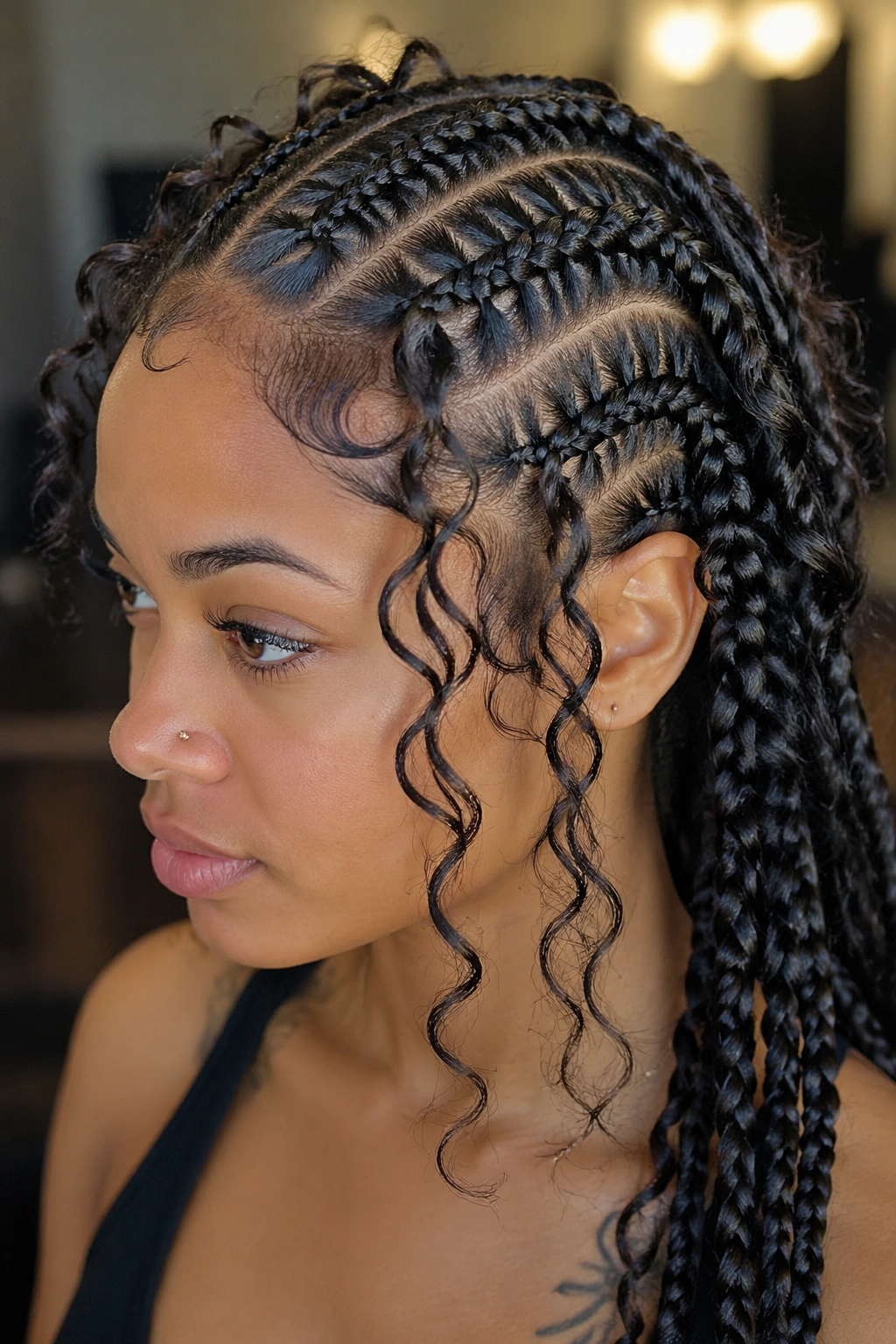
Method one: leave curly natural hair unbraided in small wisps every inch or so as the cornrow progresses. Pull those wisps out and let them flutter free.
Method two: braid in pieces of curly extension hair (water wave, deep wave, or kinky curly textures) and pull those out at intervals. The extension version gives more curls than natural hair alone usually allows.
Both methods work. The choice depends on how dense you want the curl effect and how much length you want to add.
Tools That Make the Style Possible
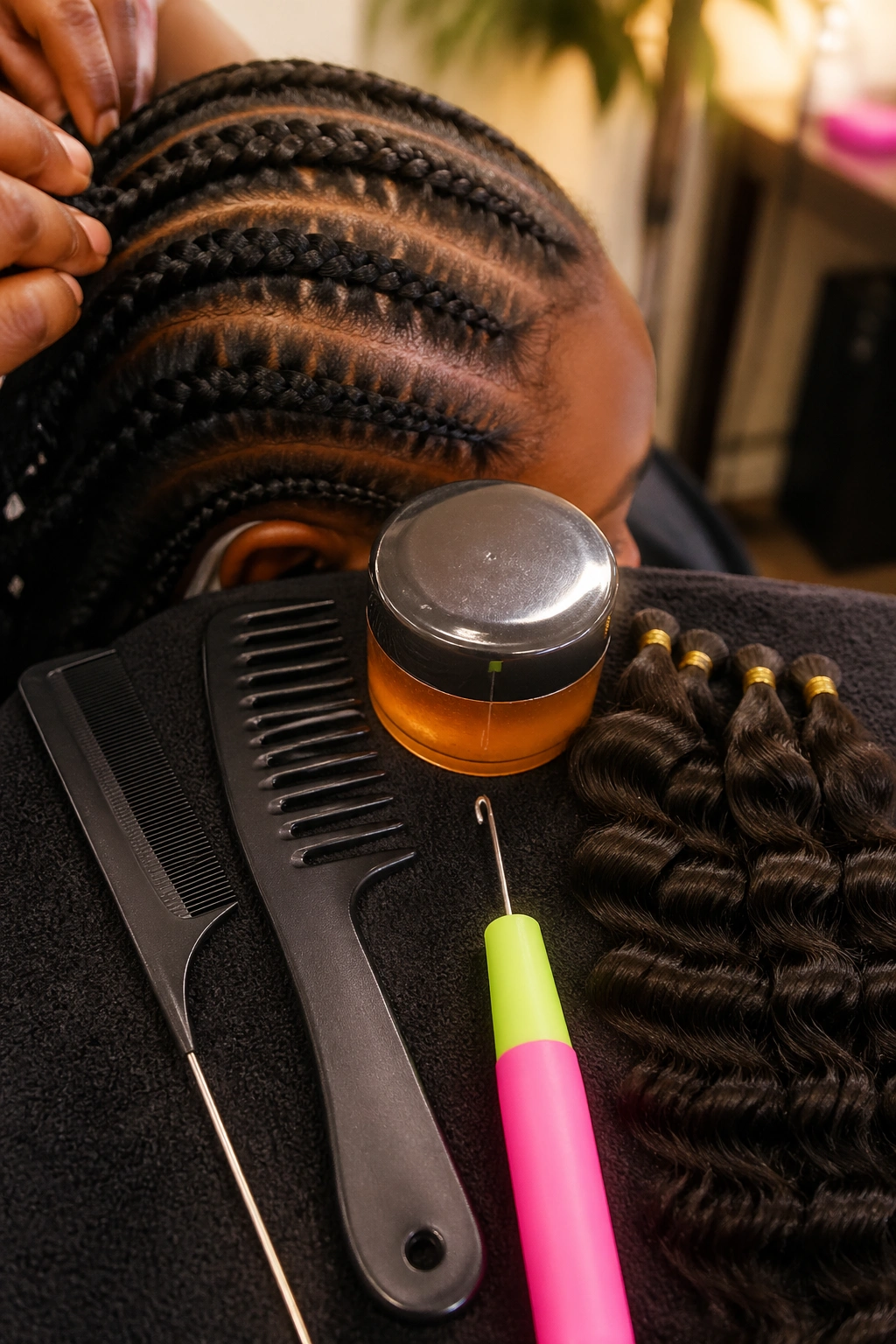
- Standard cornrow braiding tools: rat-tail comb, edge gel, kanekalon if needed.
- Pre-curled extension hair: water wave, deep wave, or kinky curly bundles.
- A small crochet hook for pulling curls through finished braids.
- A wide-tooth comb for separating the curls after install.
- Light hair oil for defining the curls.
Tip: Pre-curled extension hair varies in quality. Cheap options unravel within a week. Mid-range water wave bundles hold their pattern through the install lifespan if you don’t over-comb them.
Prep for Butterfly Cornrows
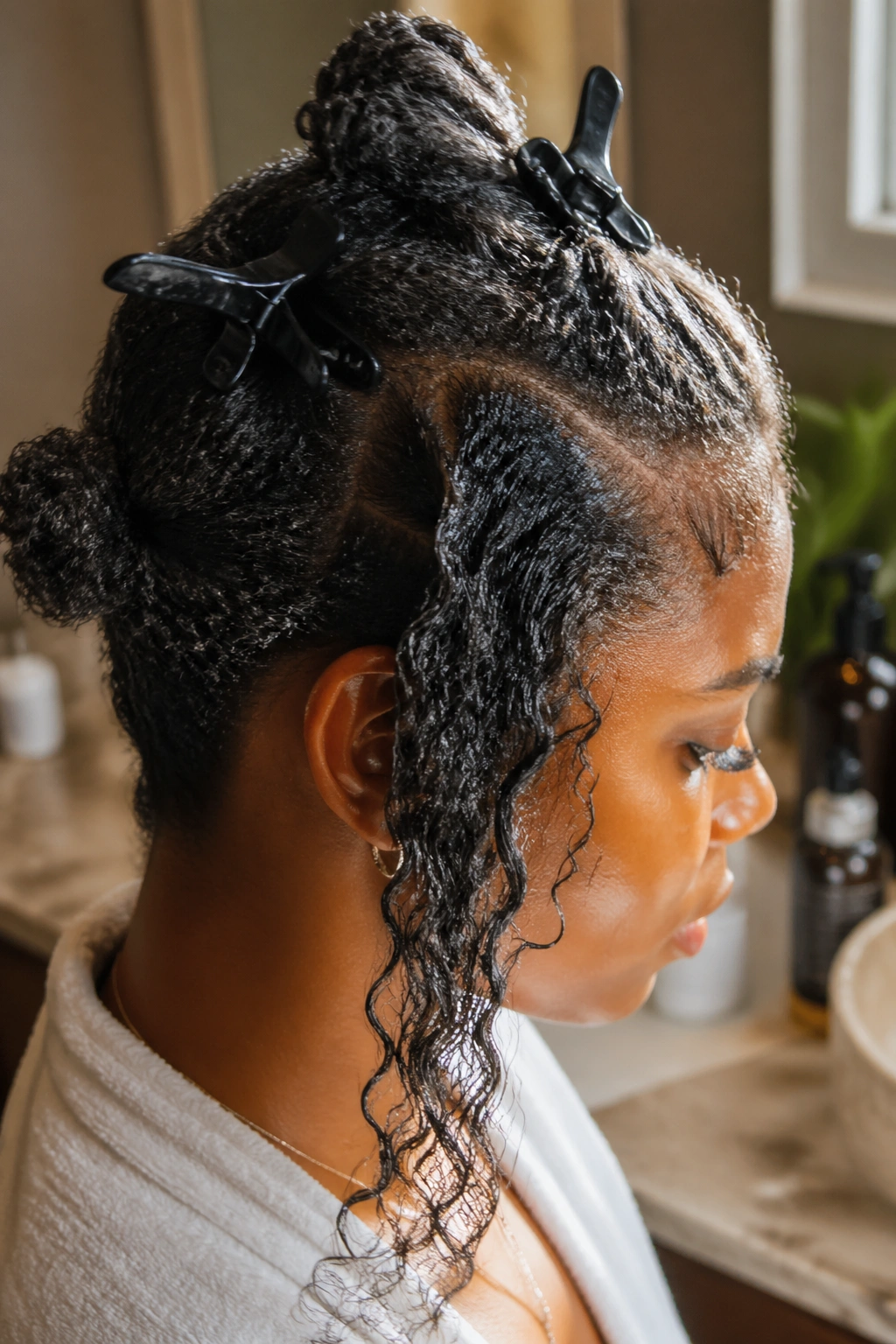
Standard cornrow prep applies — wash, deep condition, stretch, leave-in. The curl-pulling step doesn’t change the foundation work.
The one extra consideration: if you’re using natural hair for the wisps rather than extensions, your hair needs to be moisturized enough that the curls hold their shape after being pulled. Dry, brittle natural hair pulled out of a braid lays limp instead of fluttering. A defining cream applied during prep helps the wisps hold their curl pattern.
How Long Butterfly Cornrows Last
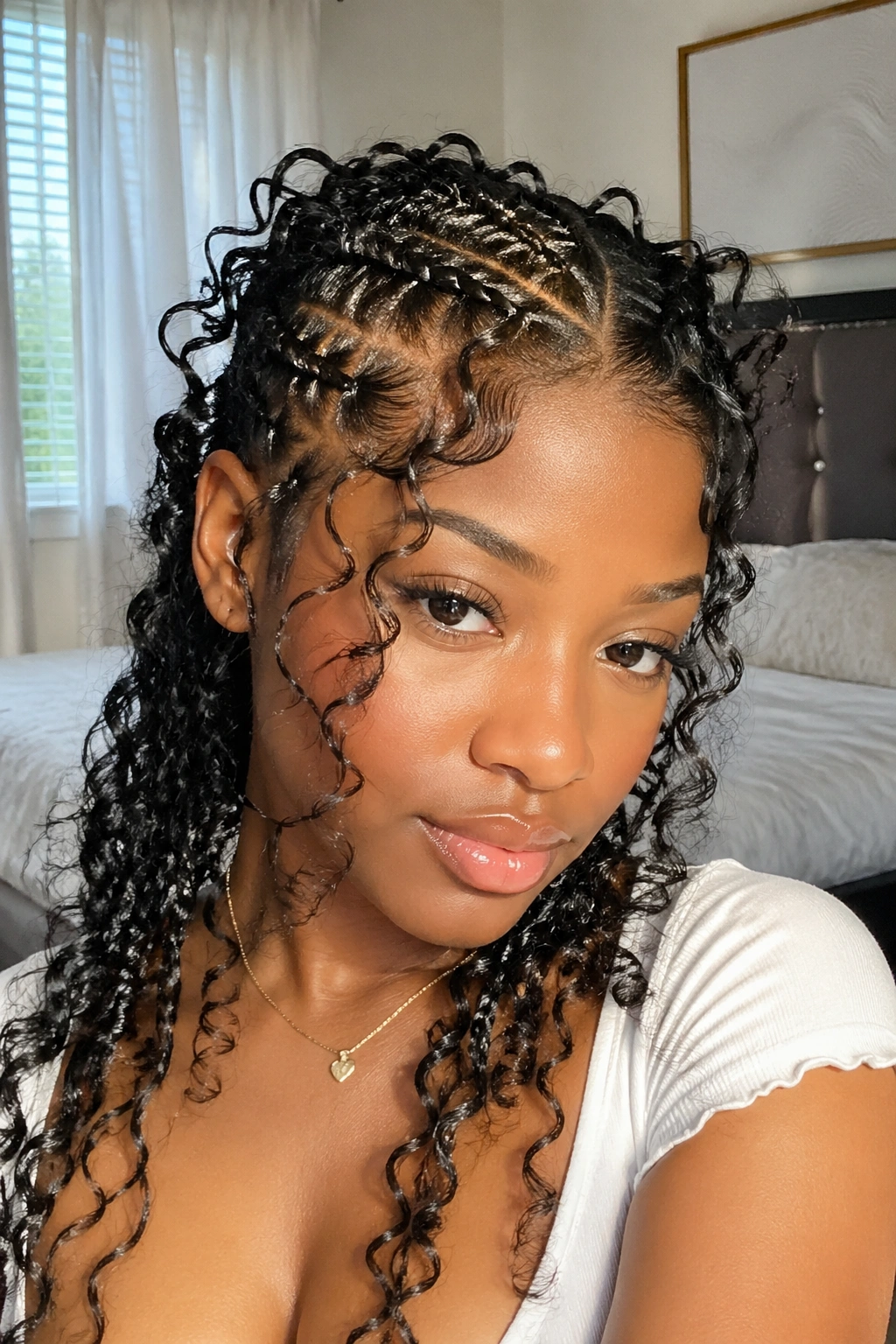
Two to three weeks is realistic. The braids themselves last as long as standard cornrows, but the curl pieces start to look matted and fuzzy after about ten days. By day fourteen, you’re either accepting a softer, less defined look or refreshing the curls with steam.
Past three weeks, the curls have lost most of their definition and the style reads tired. That’s takedown time.
When the Style Doesn’t Work
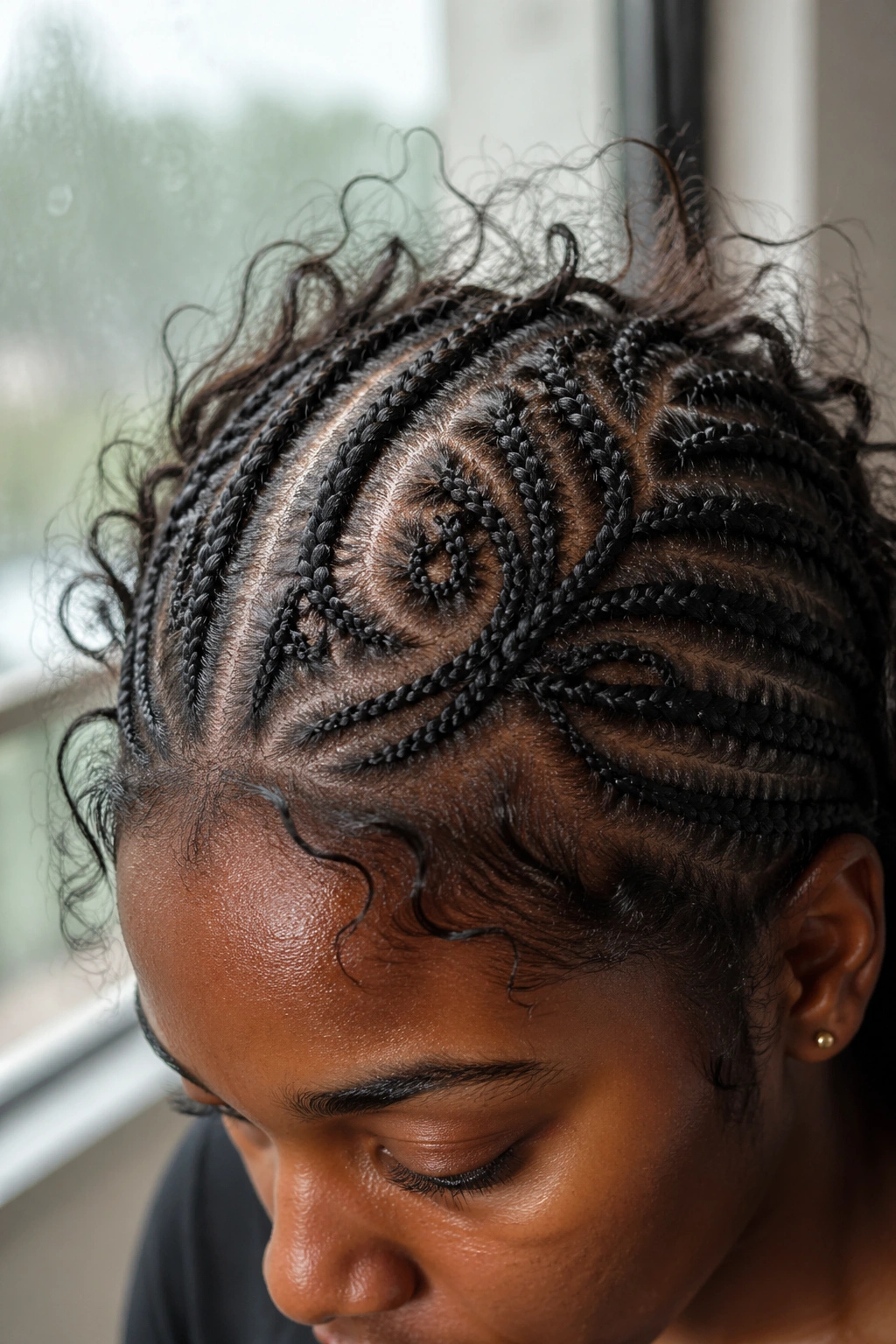
Skip butterfly cornrows if you’re going to be in heavy rain or humidity for the duration of the install. Pre-curled extensions and humidity don’t mix — the curls go limp and fuzz heavily.
Also skip if you can’t tolerate fly-aways. The wisps look intentional only when the rest of the install is sleek. A frizzy braid base with frizzy curls reads chaotic rather than designed.
1. Classic Straight-Back Butterfly
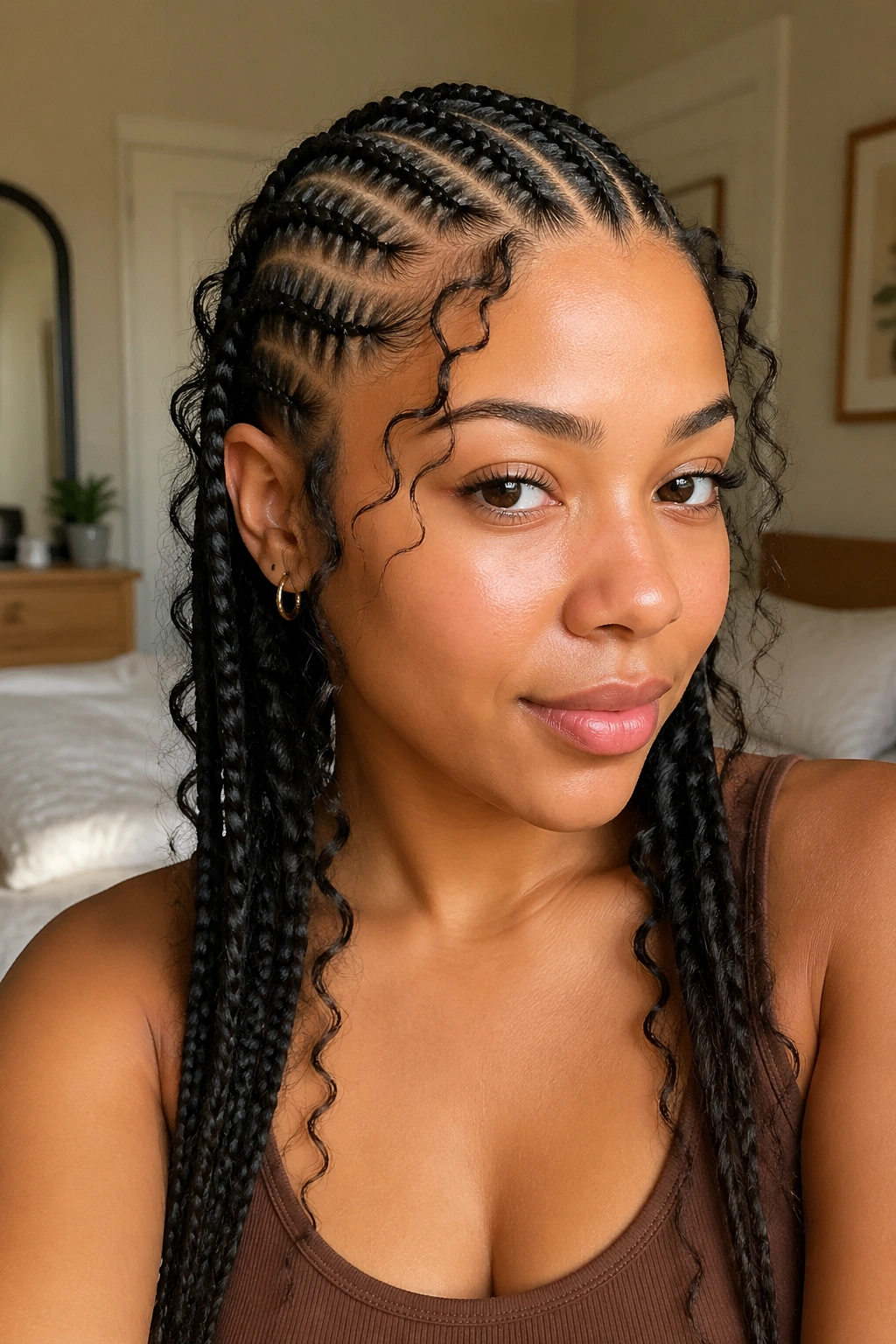
Standard straight-back cornrows with curly wisps pulled out at one-inch intervals along each braid. The simplest butterfly style and the one I’d recommend for a first install.
Why It Works
The straight-back base is familiar territory for most braiders. Adding the butterfly element doesn’t change the install fundamentals — it just adds a step at the end.
- Install time: 3-4 hours.
- Lasts: 2-3 weeks.
- Best for: any occasion, casual to formal.
Tip: Pull the wisps in alternating directions — left, right, left, right — to create movement variety along each braid.
2. Side-Sweep Butterfly Lemonade
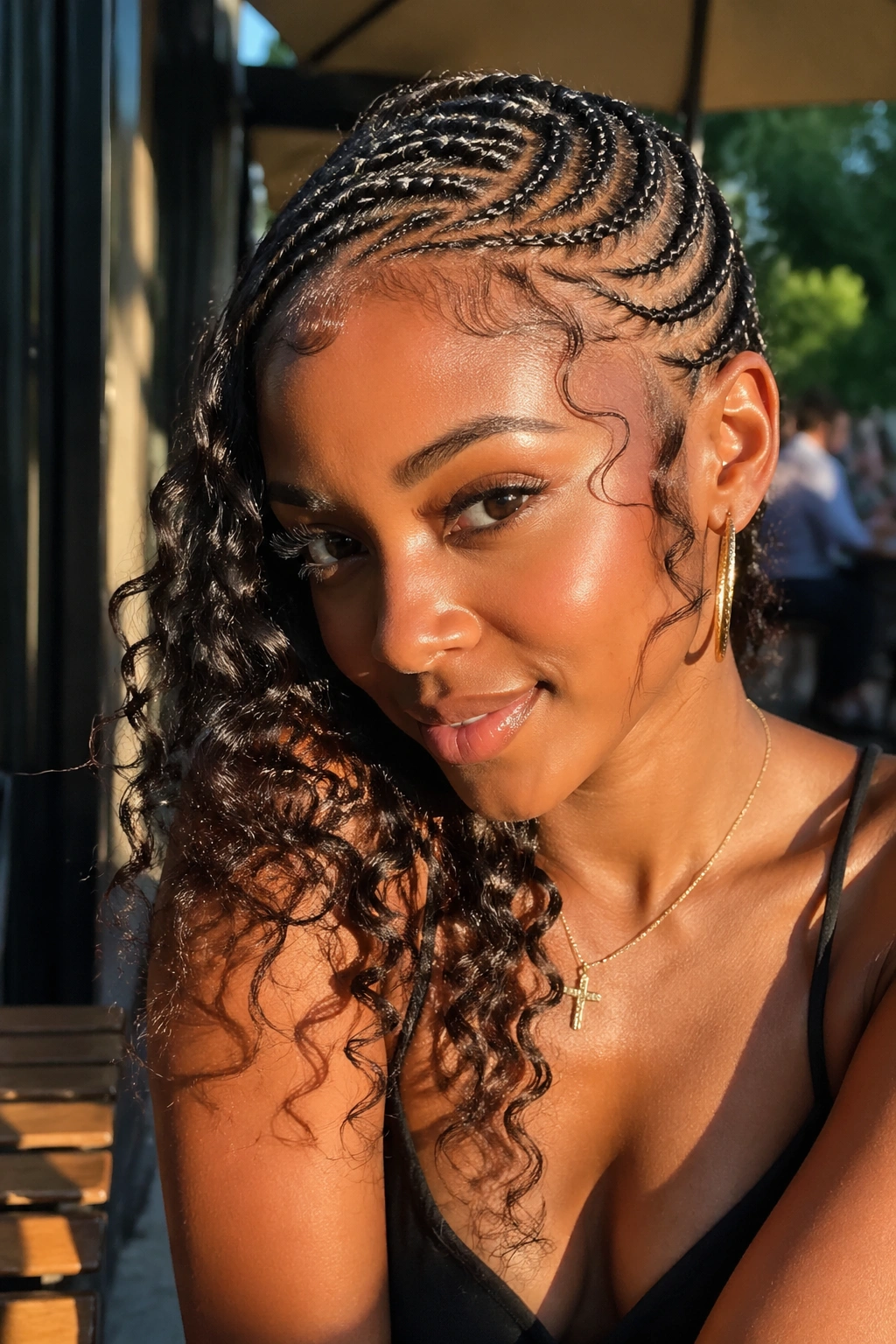
Lemonade-style side-swept cornrows with butterfly curl pieces pulled out along the sweep. The combination of dramatic side-sweep and soft fluttering curls is one of the most photographed butterfly variations.
The curls hang along the same side as the sweep direction, doubling the visual weight on that side. Flattering for face shapes that need width on one side.
3. Butterfly Cornrows with Bun
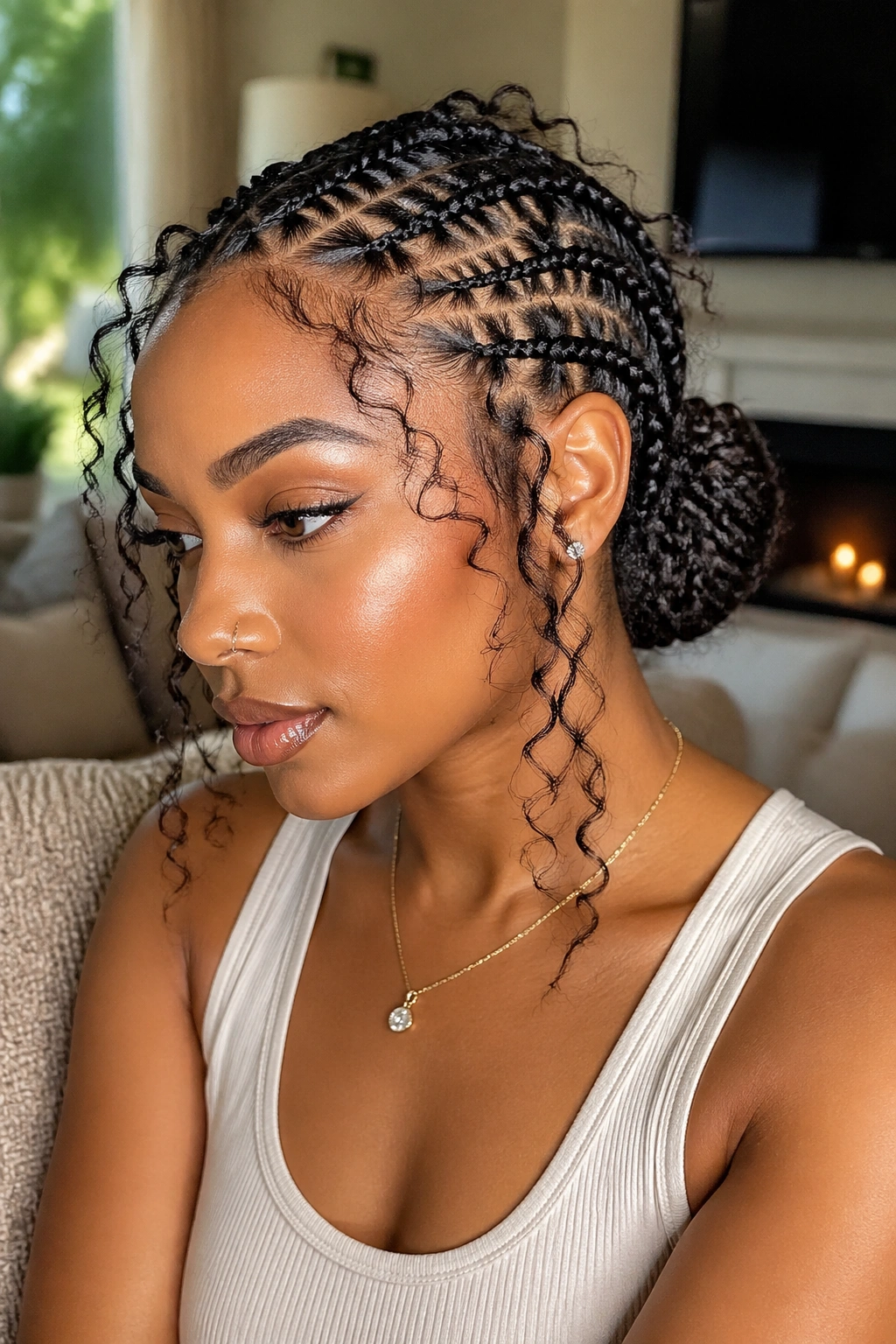
Butterfly cornrows that gather into a low bun at the back. The braids are visible from the front and sides; the bun anchors the back. Curl wisps hang along the lengths between the hairline and the bun.
The bun can be sleek or messy. Messy buns echo the wispy curls; sleek buns contrast with them. Both work; pick the mood you want.
4. Half-Up Butterfly
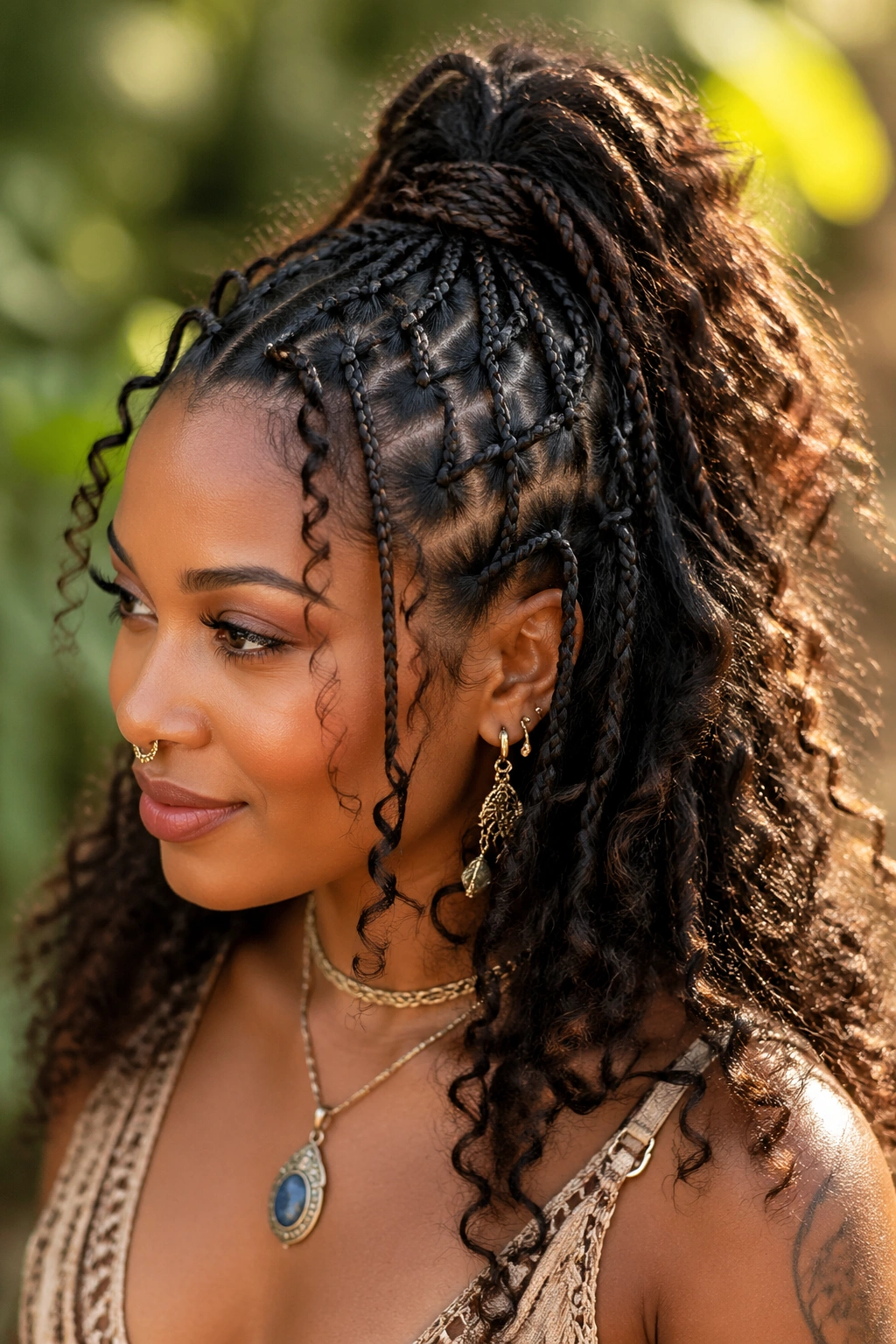
The top half of the head has butterfly cornrows pulled into a half-up ponytail or bun. The bottom half flows free as natural curls or extensions.
Hybrid silhouette. Reads more boho than a full butterfly install. Good for festival looks, beach weddings, casual weekends.
5. Butterfly Cornrows with Curly Ponytail
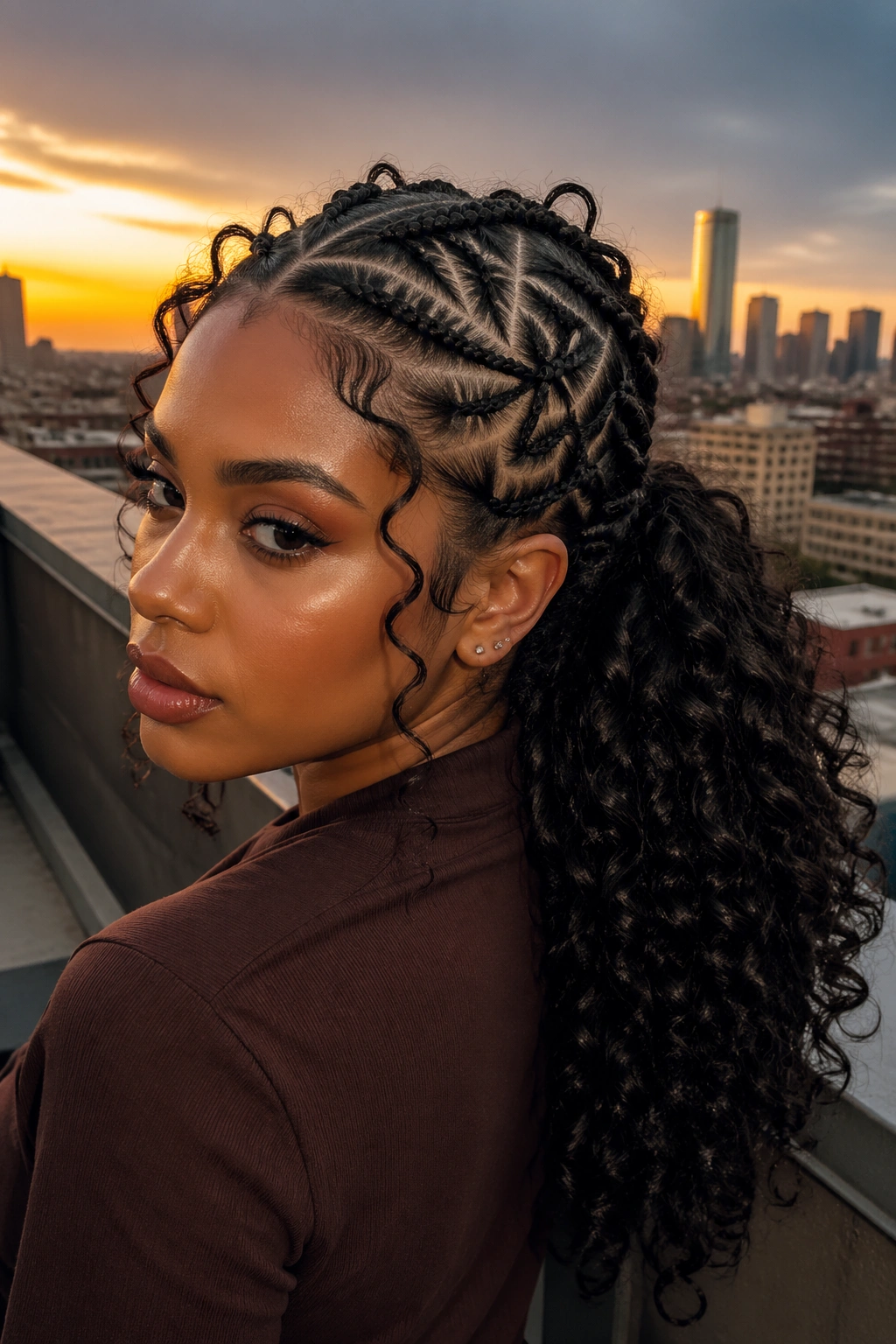
All braids gather into a high or low curly ponytail. The base of the install has butterfly wisps along the cornrows; the ponytail itself is full curls.
The continuity from cornrowed wisps to ponytail curls reads as one cohesive piece rather than two separate styles.
6. Butterfly Crown Braid
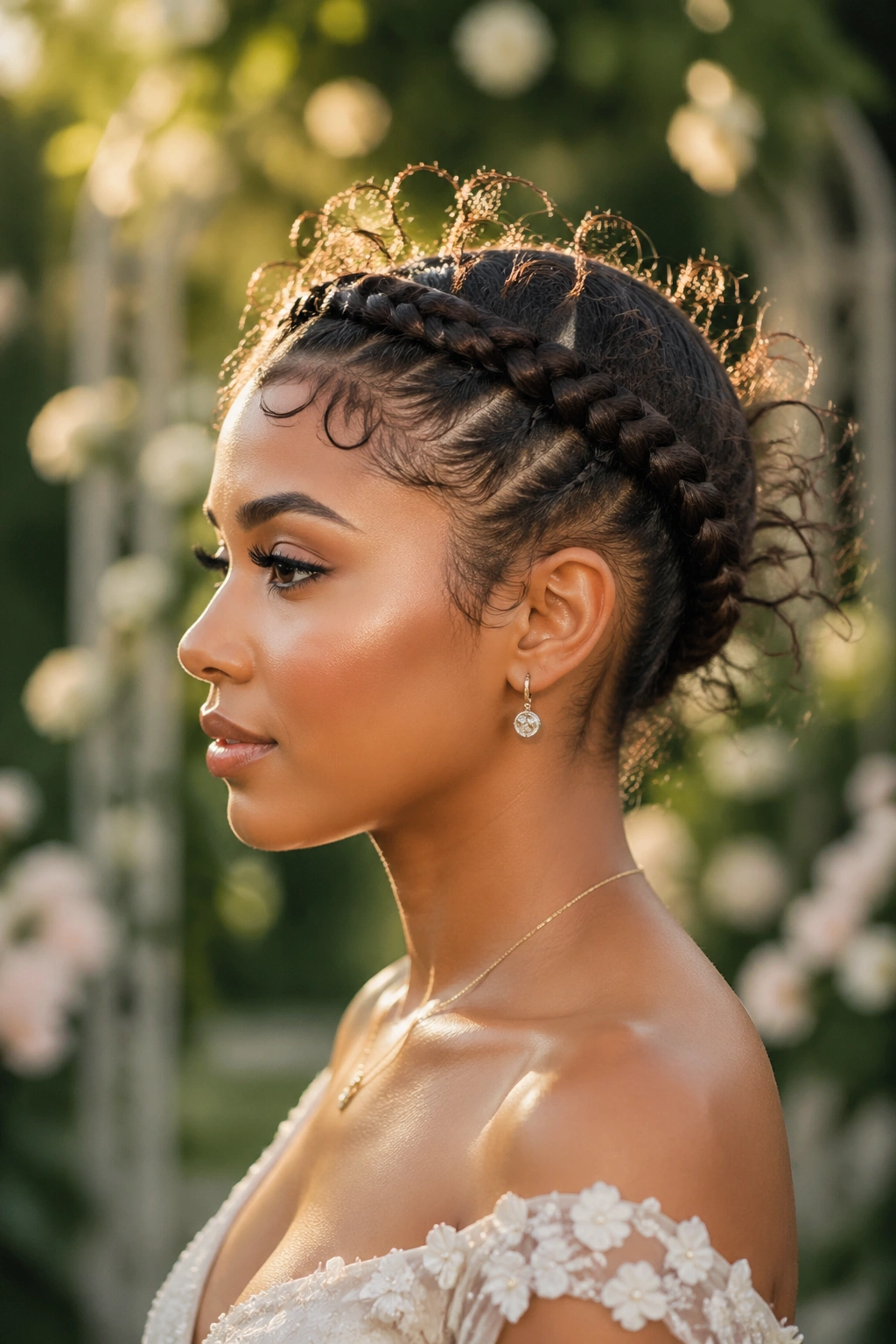
A single butterfly cornrow wraps around the head like a crown. The wispy curls flutter outward from the crown line, creating a halo effect.
How to Style It
- Section a continuous strip from one ear, around the crown, to the other ear.
- Cornrow that strip with butterfly curls pulled out every inch.
- Style the rest of the hair as desired — flat-twisted, free, or pulled into a bun under the crown.
- Lay edges below the crown line.
Tip: The crown braid version photographs best in profile. Capture both sides for wedding or event photography.
7. Butterfly Cornrows with Side Bang
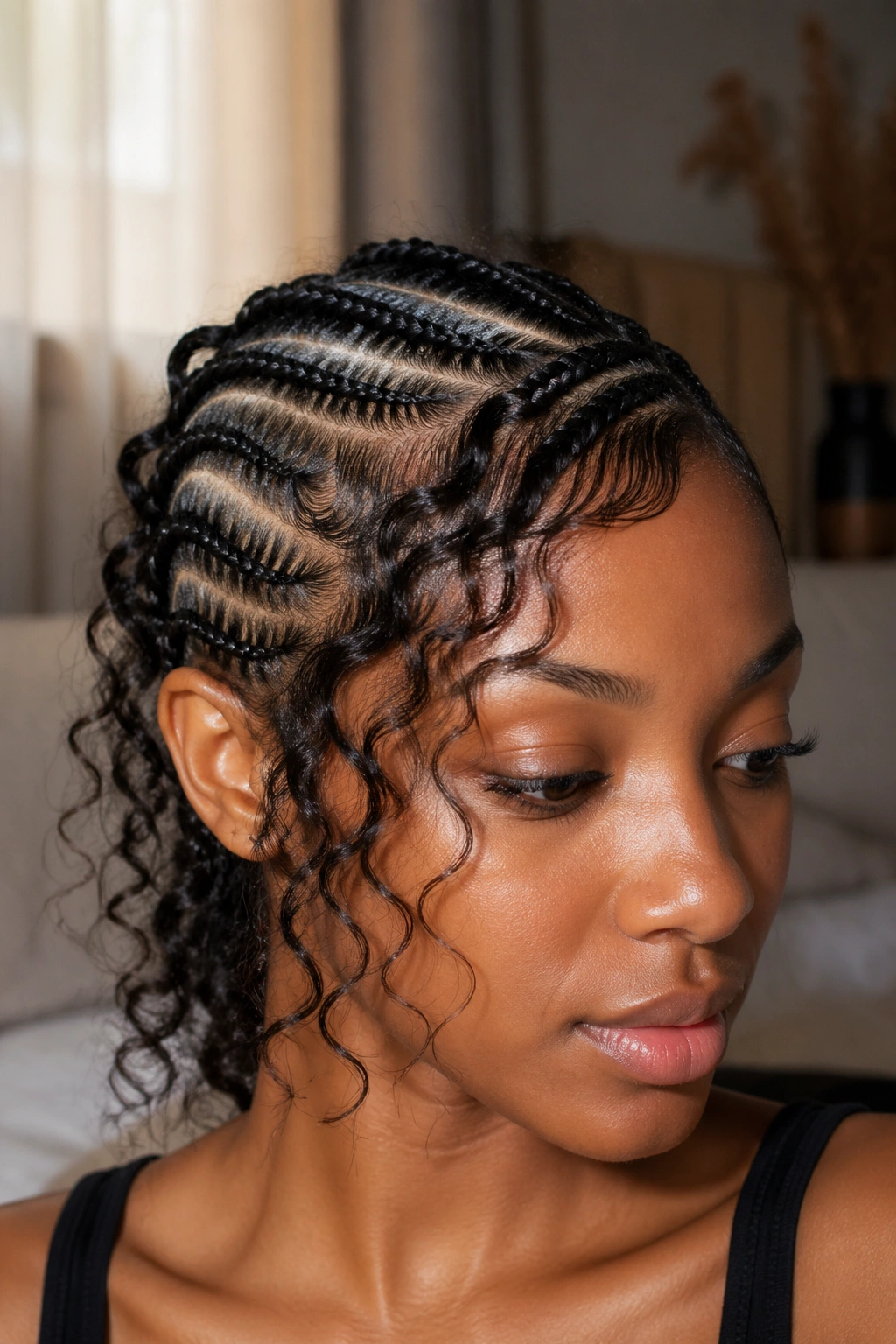
A swooped bang at the front, butterfly cornrows running back from the rest of the hairline. The bang frames the face; the wispy curls frame everything else.
The bang adds softness to the face that complements the soft butterfly curls behind. Coordinated softness across the install.
8. Mini Butterfly Cornrows
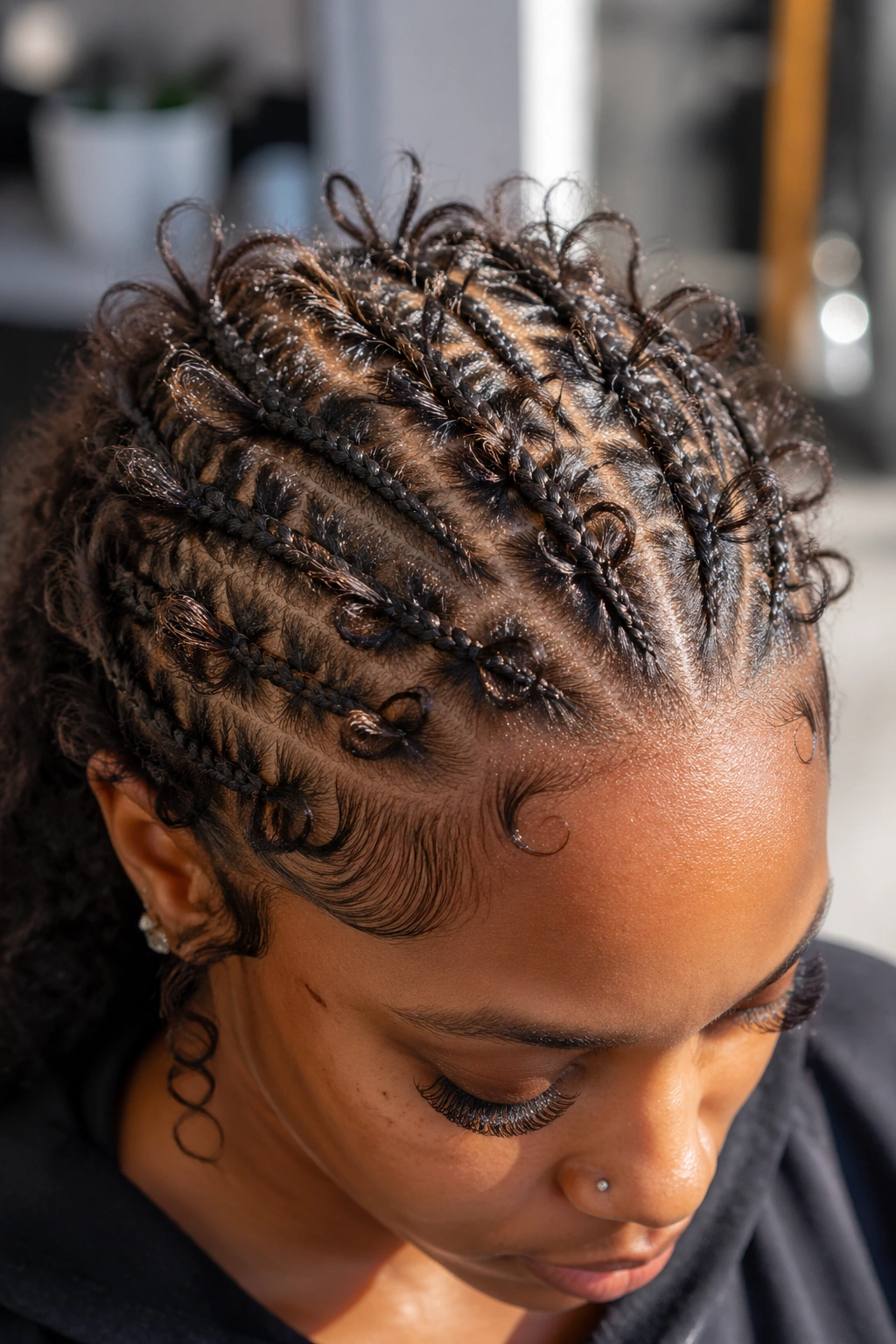
Very fine, thin butterfly cornrows installed across the entire head. Each braid is small, but the cumulative effect of dozens of butterfly wisps creates a dense, romantic visual.
Time-intensive install. Expect 6-8 hours for a full head. Lasts longer than thick butterfly cornrows because thin braids resist loosening.
9. Butterfly Cornrows with Beads
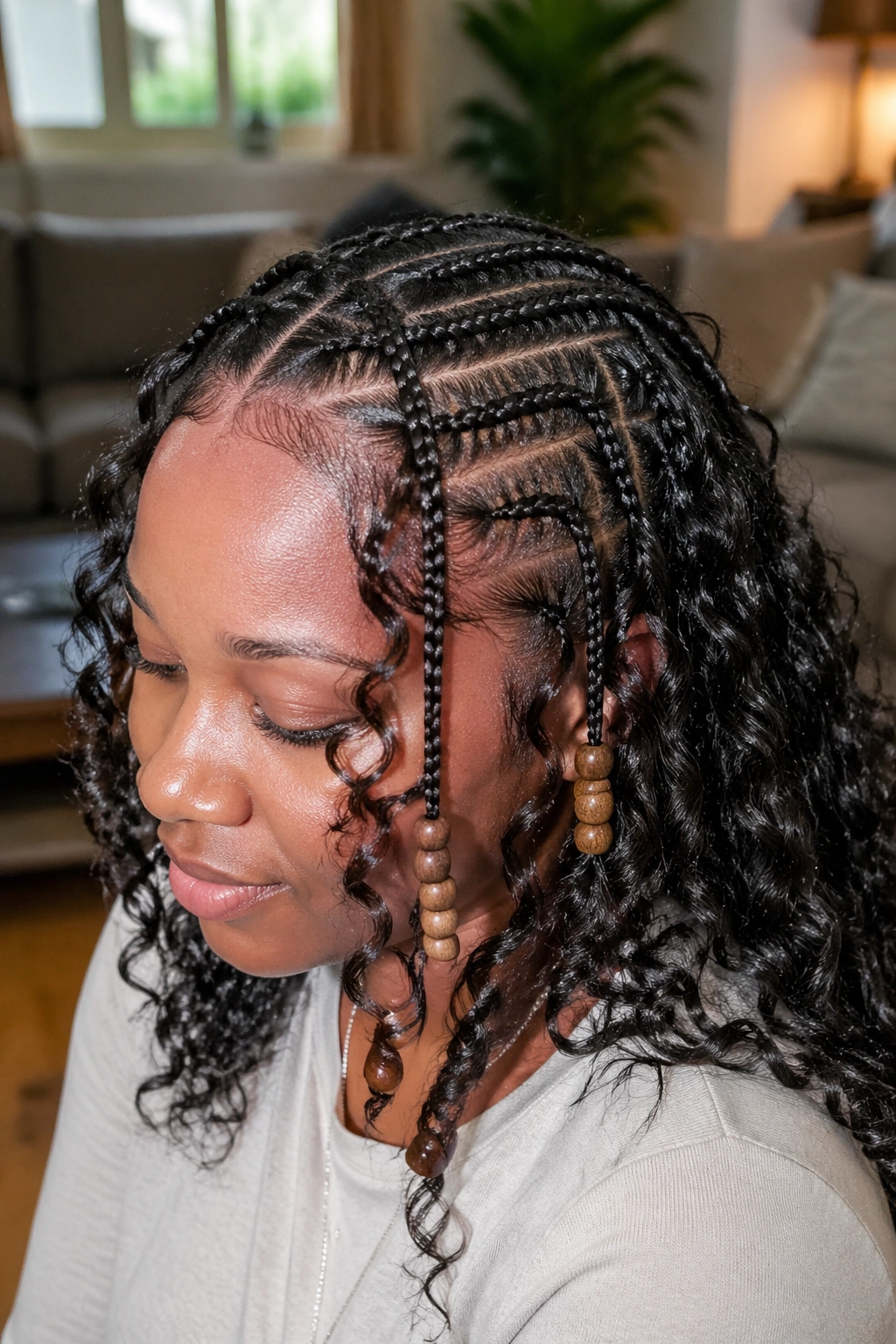
Wooden or wood-tone beads threaded onto select braids, with butterfly curls along the rest of the install. The beads add weight and texture; the curls add softness.
Use beads sparingly — maybe 4-6 cornrows out of the whole install get beaded. Too many beads compete with the curl visual.
10. Butterfly Lemonade with Curly Ends
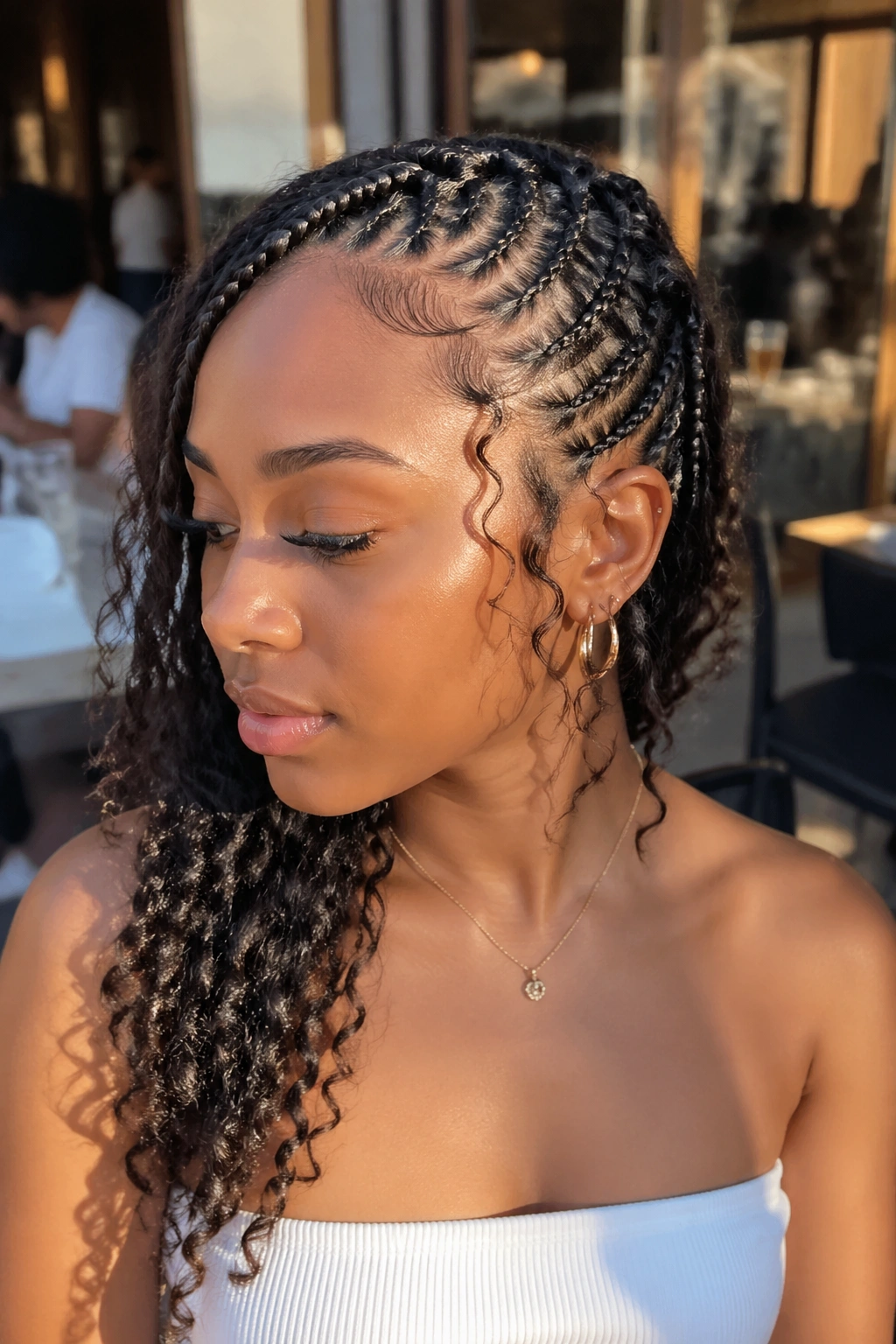
Side-swept lemonade base, butterfly wisps along the sweep, and curly ends rather than straight extension tails. Triple curl elements working together.
This is the variation I’d recommend for someone who wants maximum softness and minimum severity. It’s the least cornrow-looking cornrow style I know.
11. Boho Butterfly with Loose Front
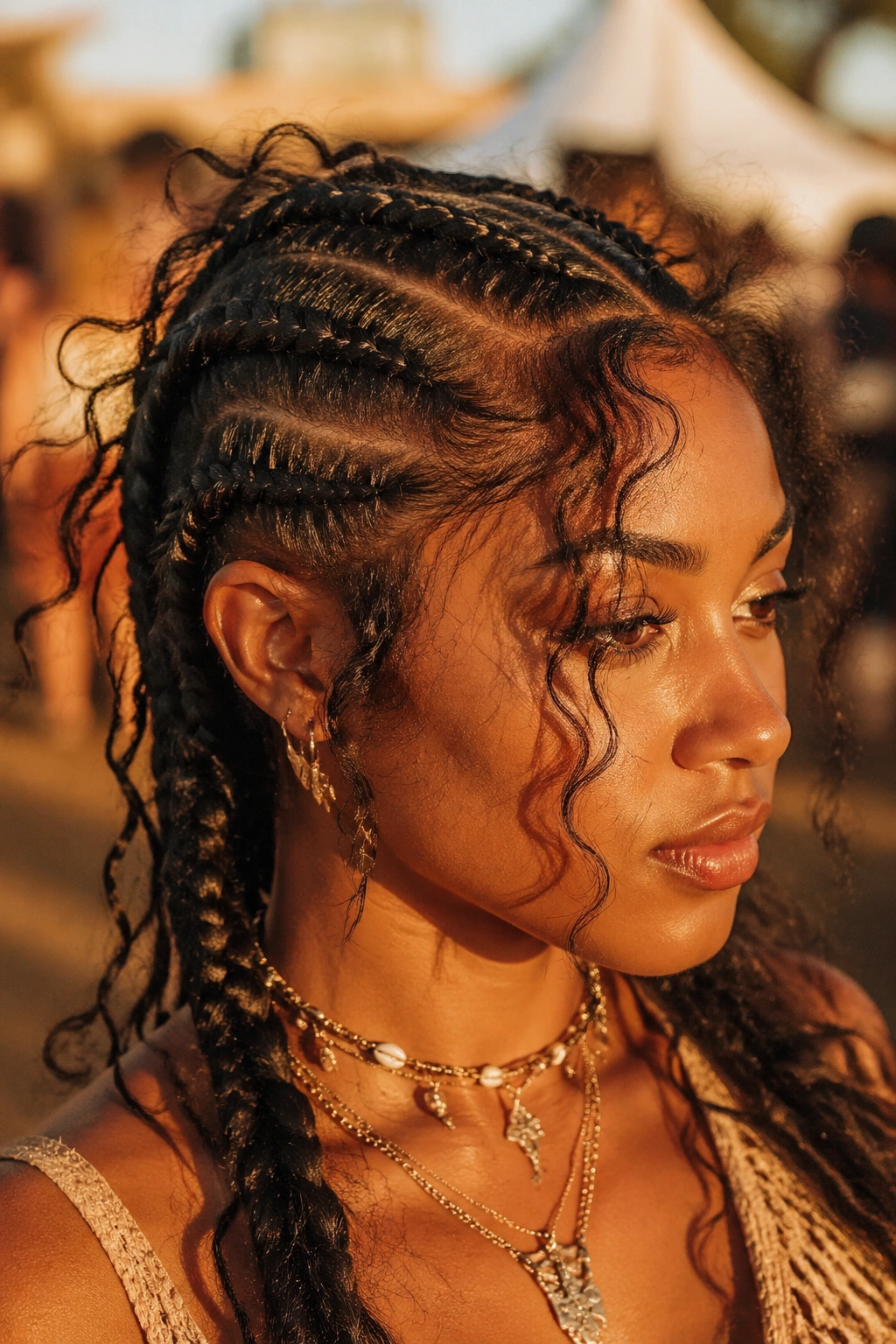
A loose front section — natural curls or pre-curled extensions — left out across the forehead. Butterfly cornrows behind the loose front. The loose front acts as a soft fringe; the cornrows are the structure behind.
Reads bohemian, dreamy, festival-ready.
12. Butterfly Cornrows in Low Pigtails
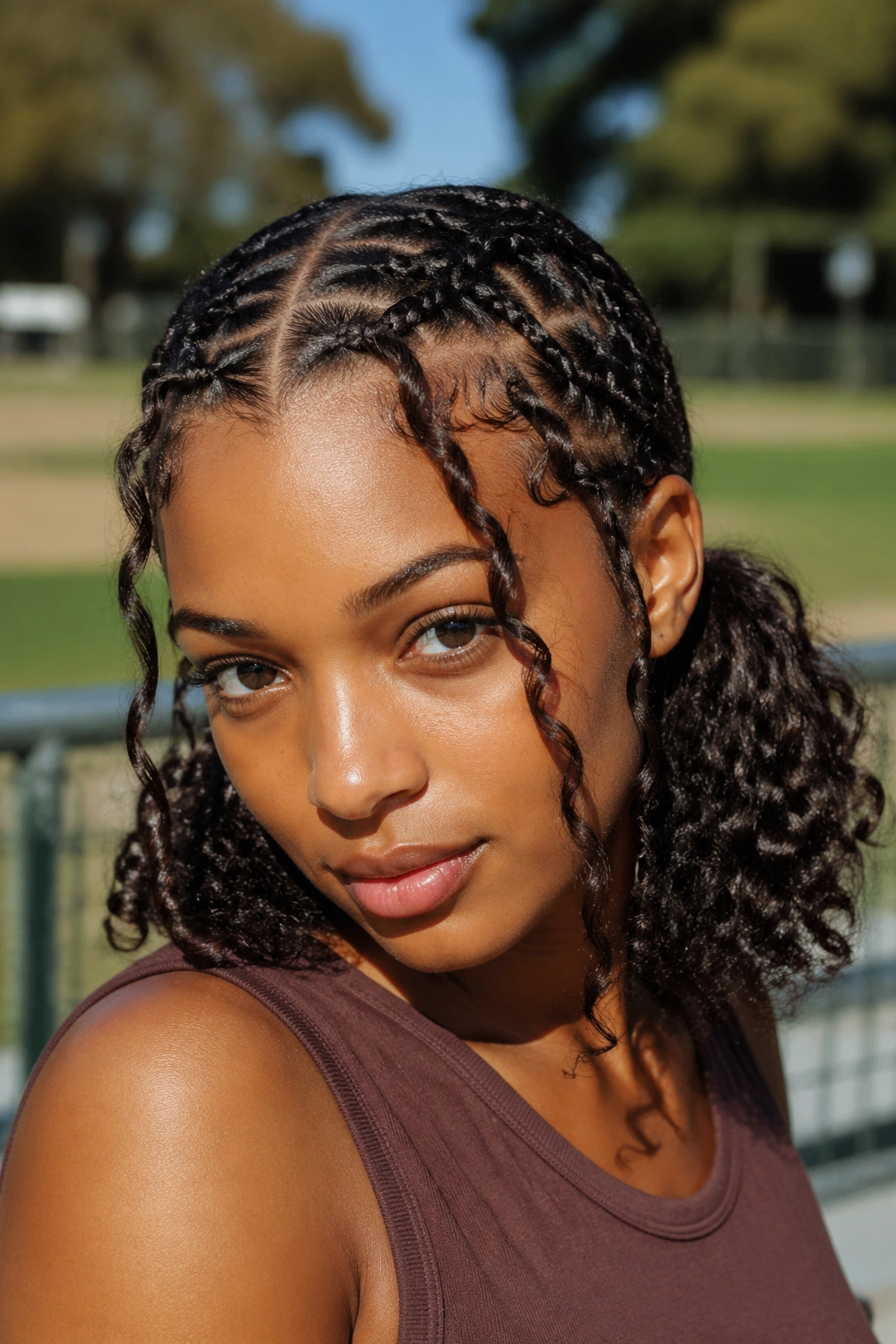
Two side parts split the head, with butterfly cornrows on each side gathering into low pigtails behind the ears. Curl wisps hang between the cornrows and the pigtails.
Throwback silhouette with a soft modern finish. Good for younger women, weekends, vacation wear.
13. Butterfly Cornrows with Top Knot
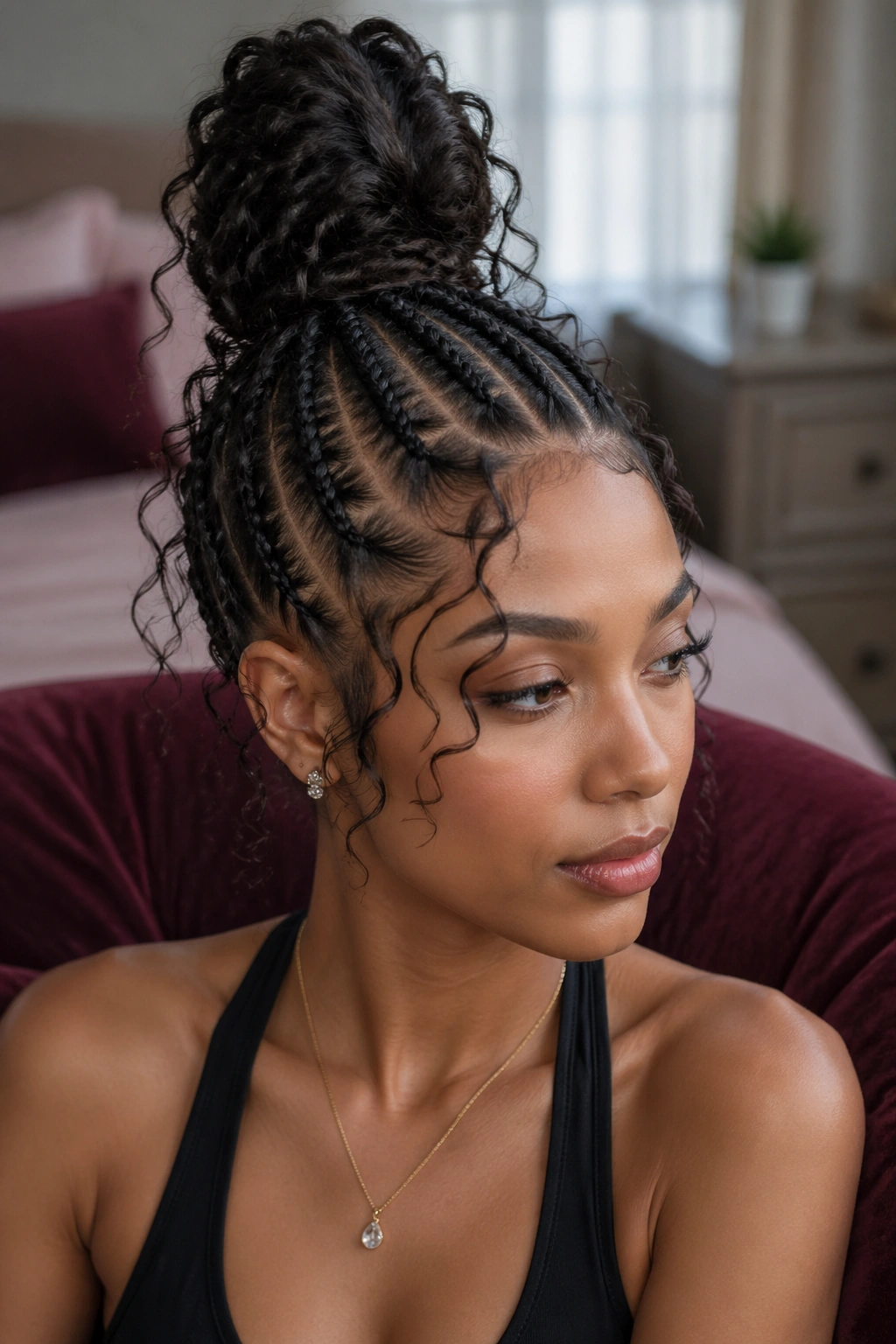
Butterfly cornrows feeding upward into a high top knot at the crown. Curl wisps spill out along the cornrowed sections.
The top knot contains the bulk; the wisps add texture below it. Vertical silhouette that elongates the face.
14. Curved-Part Butterfly
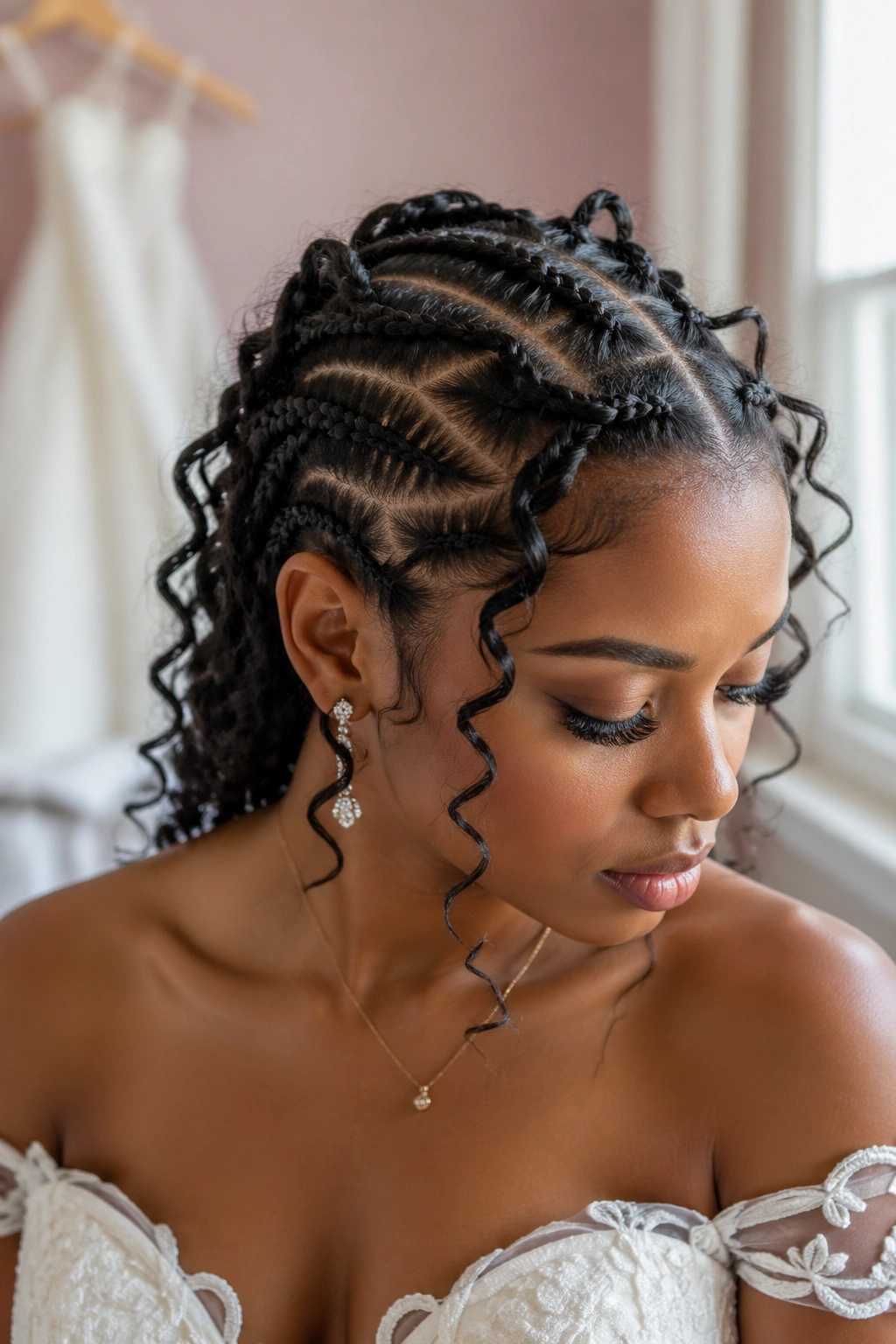
Curved partings between the cornrows instead of straight ones, with butterfly curls along the curved braids. The curves add motion to the parting; the curls add motion to the sections between.
What Makes It Different
Most butterfly installs use straight parts and rely on the curls for visual interest. Curved-part butterfly doubles down on softness — both the parts and the curls move.
- Install time: 4-5 hours.
- Lasts: 2-3 weeks.
- Best for: bridal hair, formal events, photoshoots.
Tip: The curves should all flow in the same general direction. Curves going every which way read chaotic.
15. Butterfly Cornrows with Color Pop
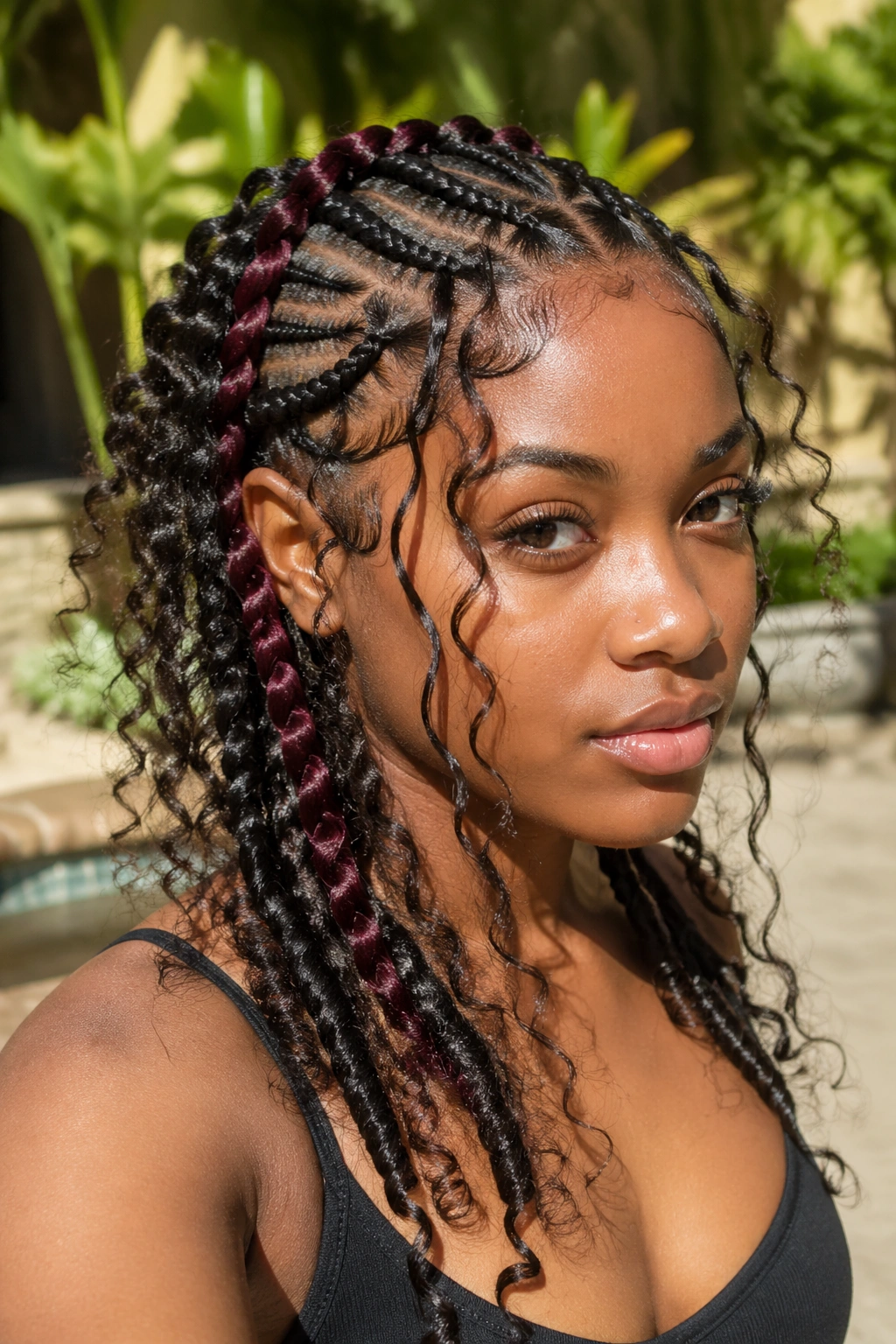
A single colored cornrow — burgundy, rose gold, copper — among otherwise natural-colored butterfly cornrows. The colored braid stands out without dominating.
Subtle introduction of color. Good for women curious about colored kanekalon but not ready to commit to a full colored install.
16. Butterfly Stitch Cornrows
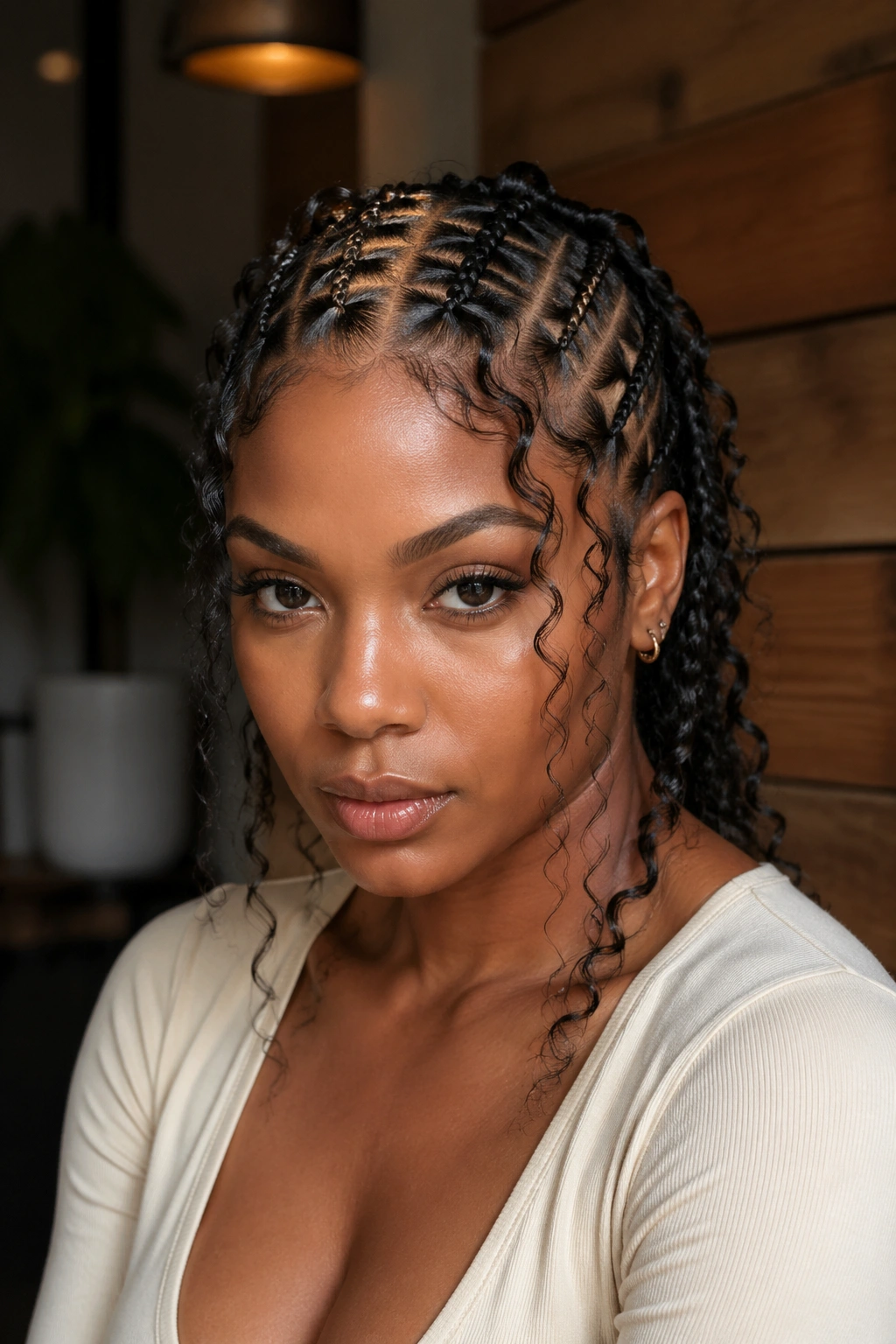
Butterfly cornrows with stitch braiding instead of standard. The horizontal stitch bumps run between the wispy curls, adding two textural elements per braid.
Demanding install. Stitch braiding alone takes time. Adding butterfly elements doubles the work.
The result is exceptional. Stitches show structure; butterflies show softness. The contrast within a single braid reads as designed precision.
17. Butterfly Cornrows with Two Long Braids
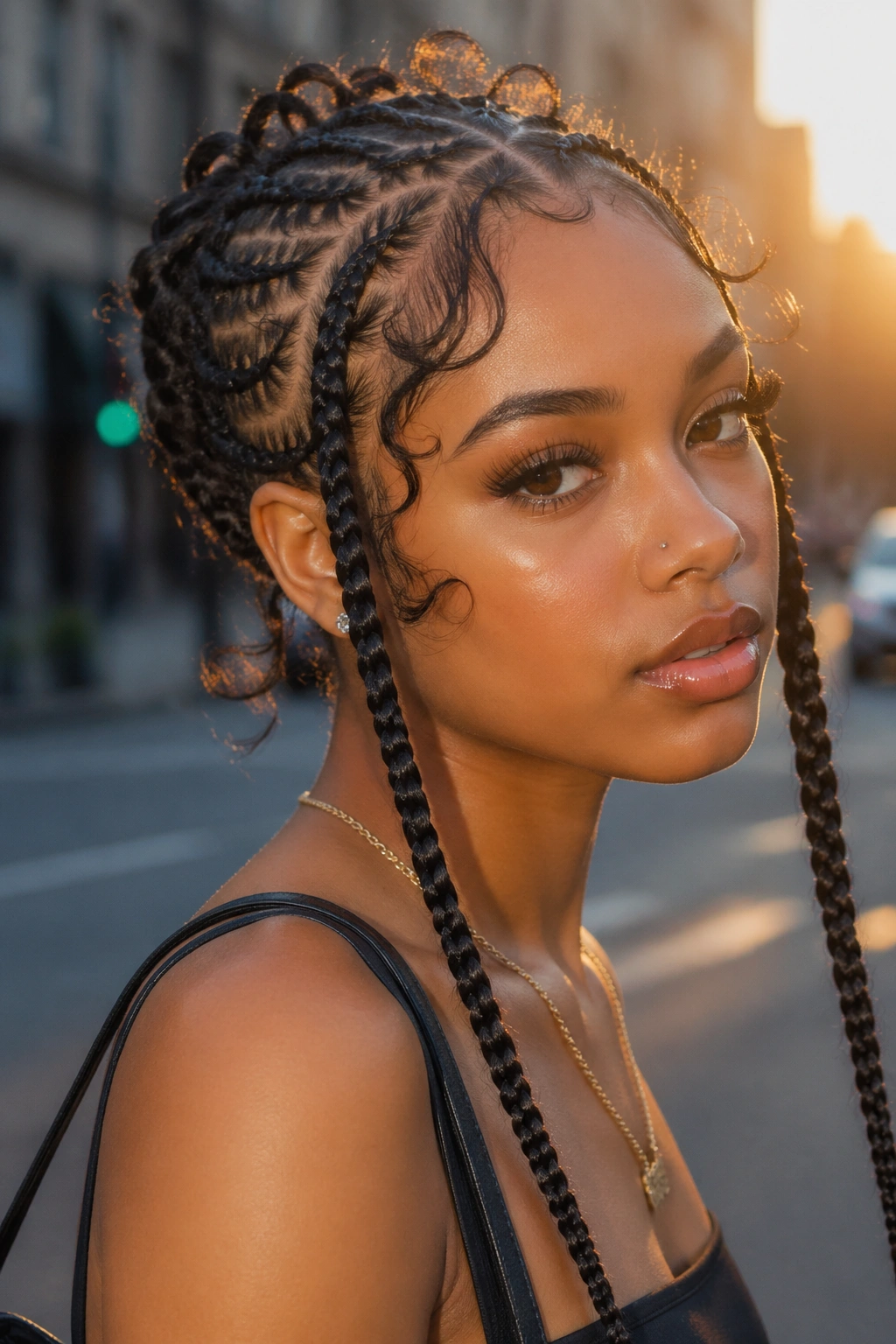
Most of the head is in butterfly cornrows. Two long braids — usually at the temples — extend dramatically beyond the rest. The long braids draw the eye downward; the butterfly wisps add texture across the rest.
Statement style. Reads bold and architectural.
18. Butterfly Cornrows with Hair Cuffs
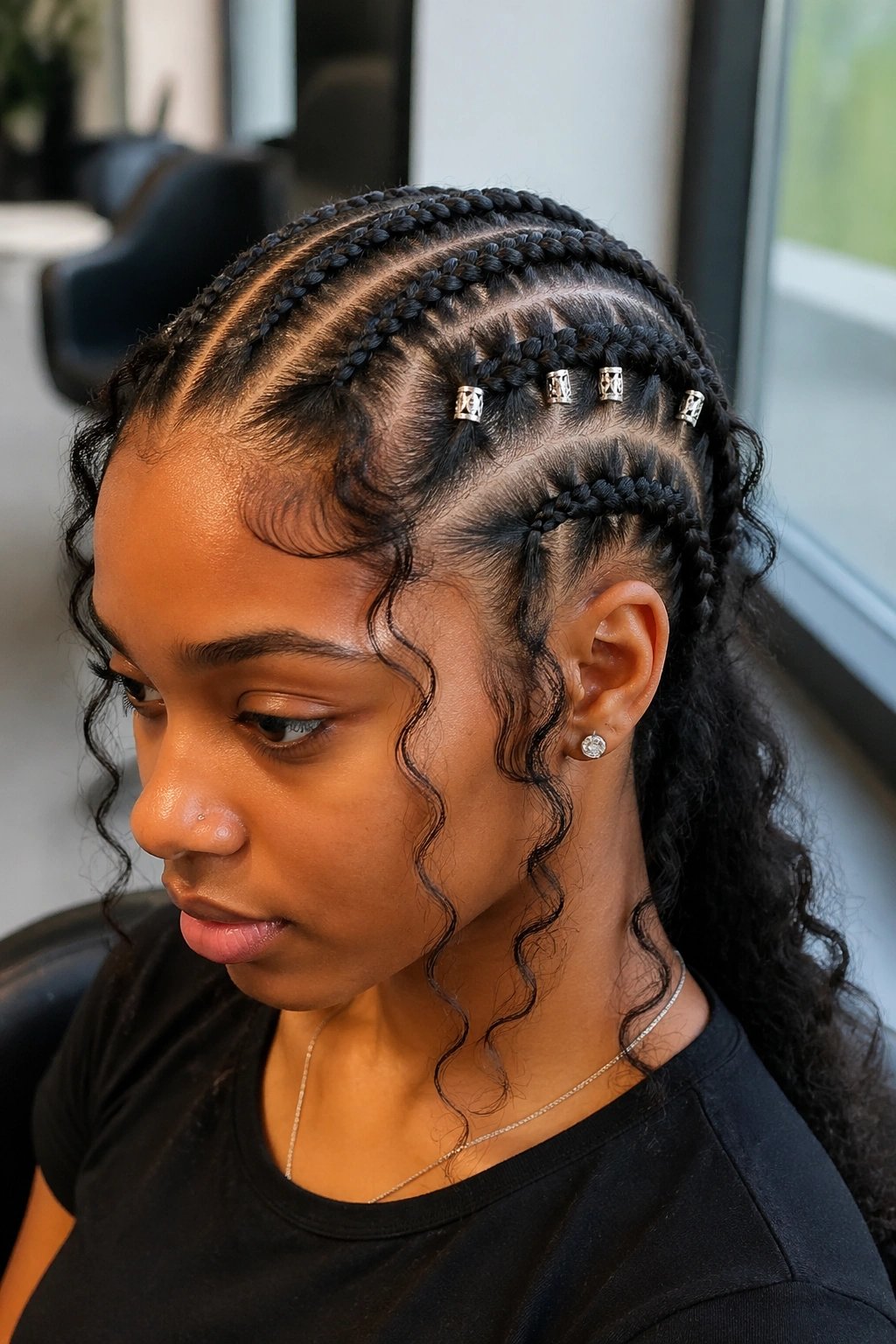
Small metal cuffs slid onto select butterfly cornrows. The metal contrasts with the soft curls, creating a balance of hard and soft.
Cuff placement matters. One cuff per braided section, placed at the same height across all braids, reads designed. Cuffs scattered randomly read messy.
19. Half-Side Butterfly
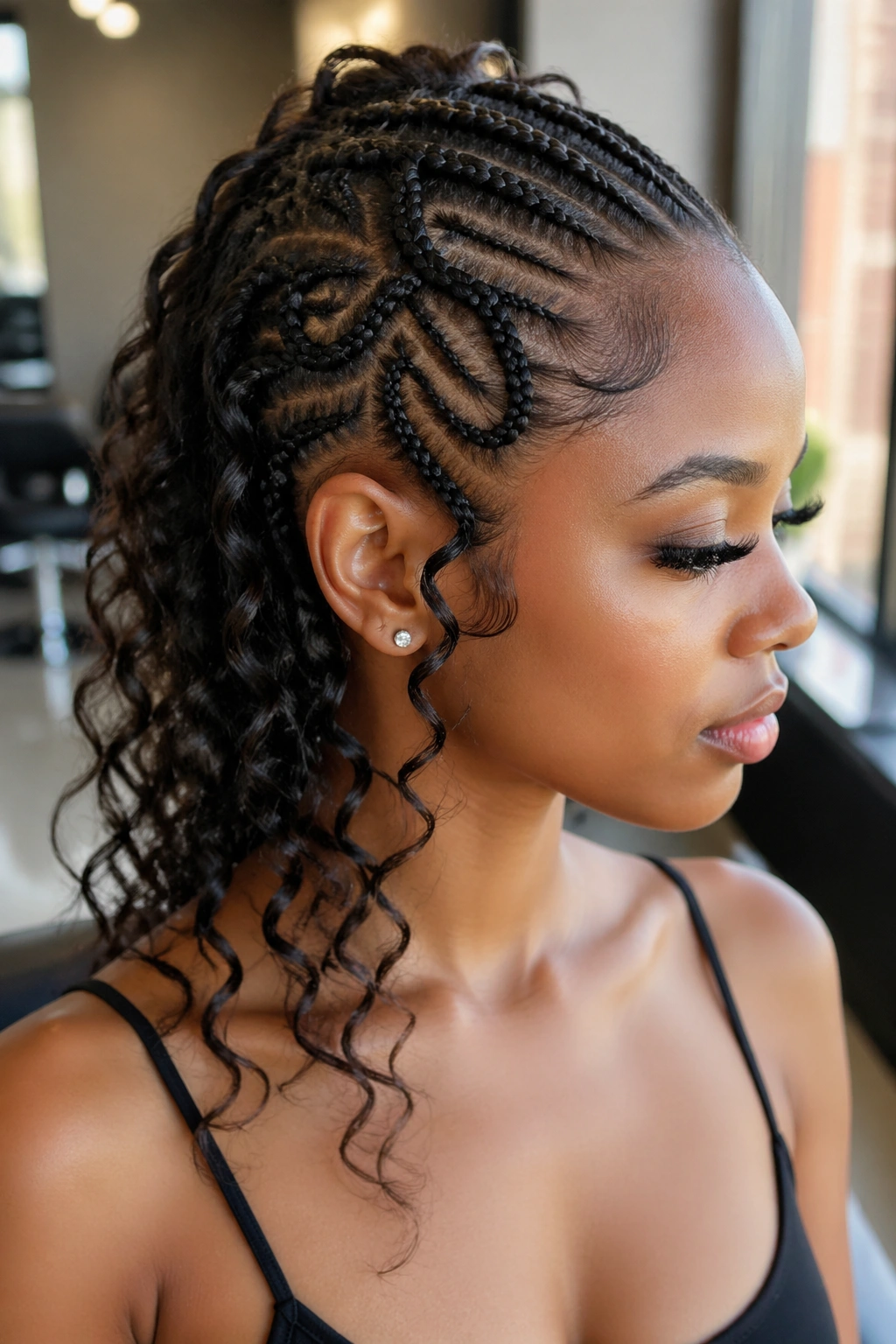
Only one side of the head has butterfly cornrows; the other side has standard sleek cornrows. The asymmetry within the install is the design feature.
Pick the side. The butterfly side becomes the photographed side. Make sure that’s your stronger profile.
20. Butterfly Cornrows with Curly Bangs
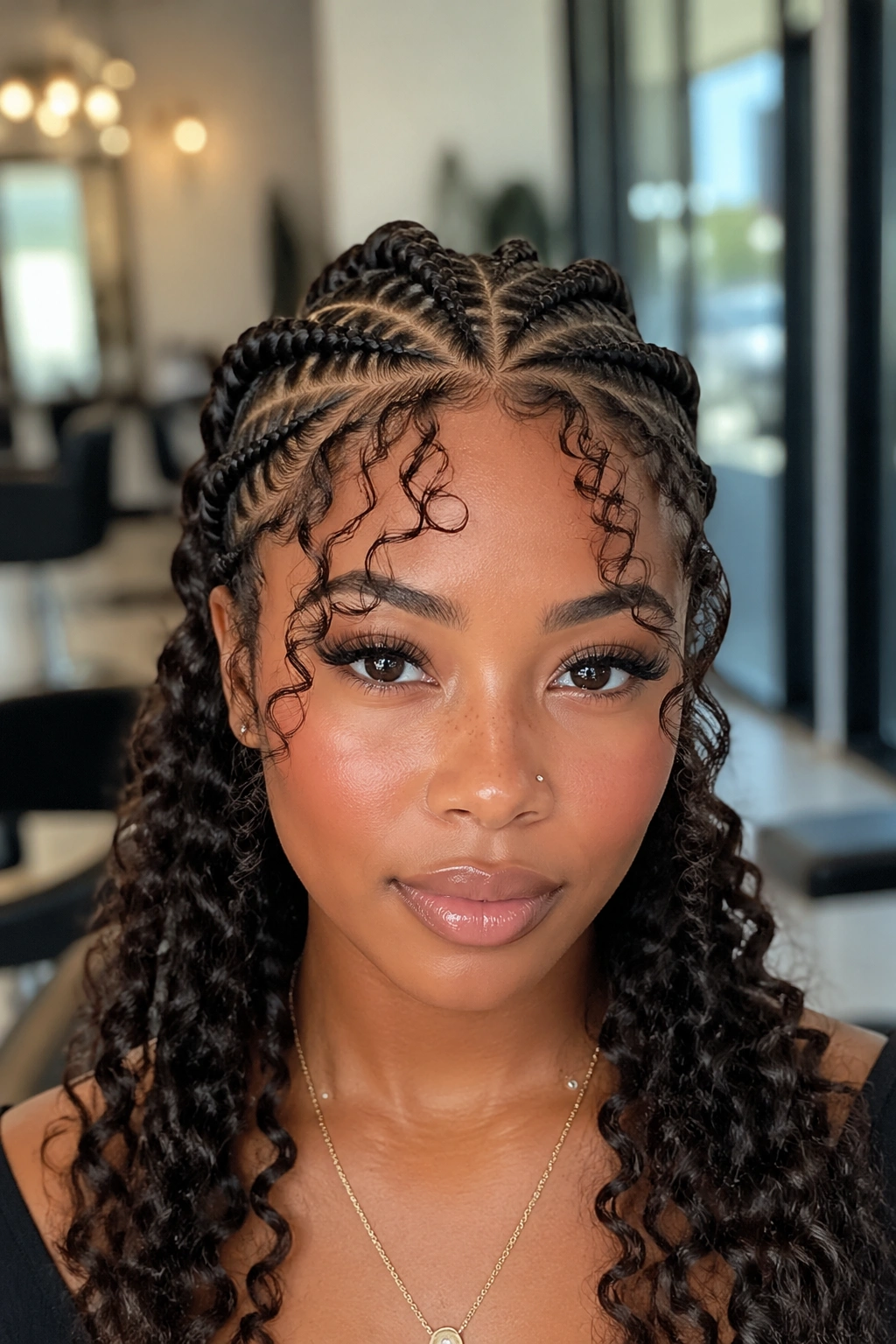
A curly bang section across the forehead, butterfly cornrows behind. The bang and the wisps echo each other in texture; the cornrows hold the structure.
A more curl-forward version of the swooped bang variation.
21. Butterfly Cornrows with Wrapped Tail
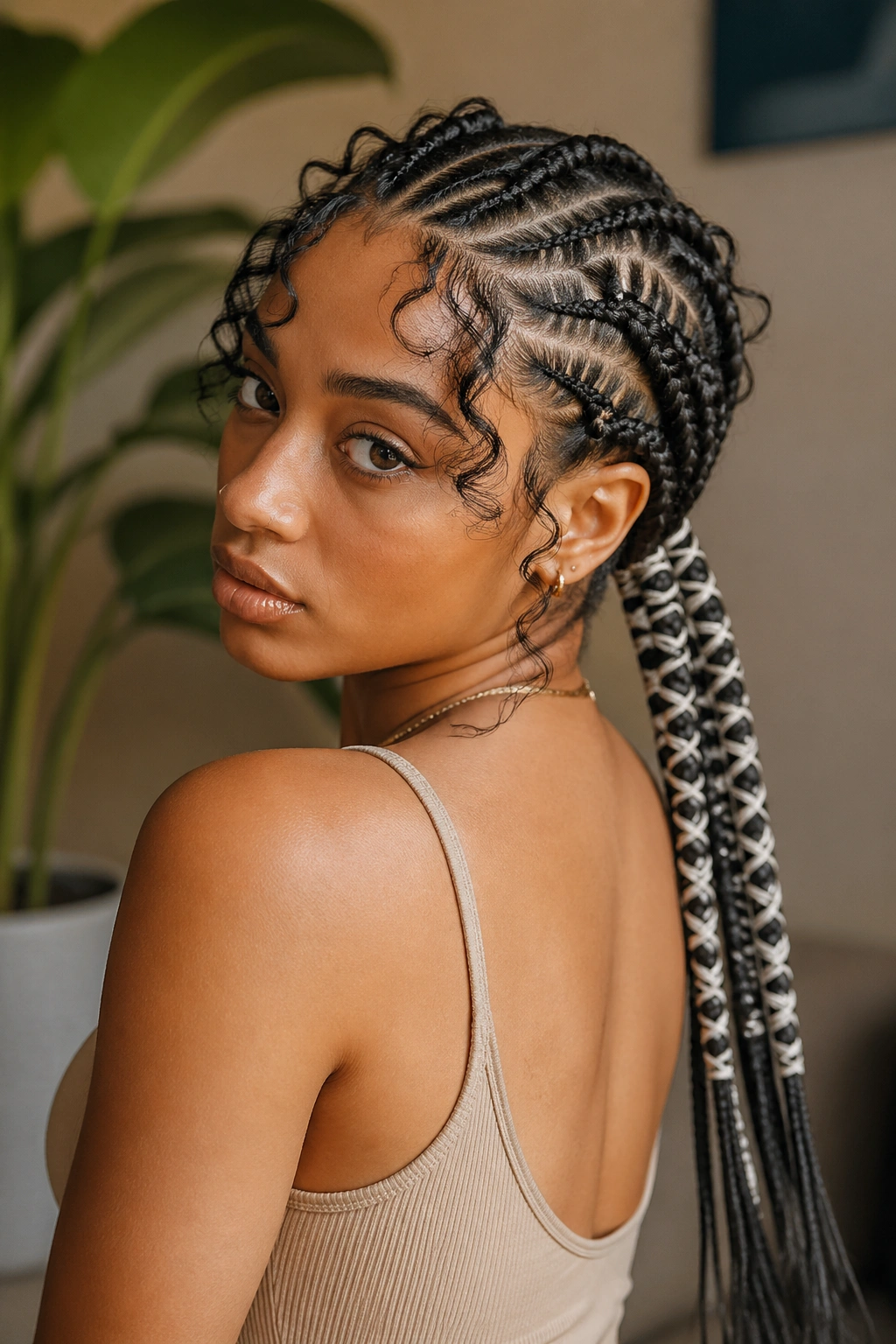
The cornrows feed into long tails at the back. The tails are wrapped — either with thread, ribbon, or complementary kanekalon — creating a wrapped section that contrasts the wispy butterfly curls along the install.
Who This Is For
Anyone who wants a dramatic finishing detail without disrupting the soft butterfly aesthetic. The wrapped tails read as deliberate design rather than added accessory.
- Wrap length: 6-12 inches at the tail end.
- Material: matte thread reads earthy; satin ribbon reads glamorous.
- Maintenance: re-wrap if the wrap loosens during the install.
Tip: Wrapping should start where the cornrow ends — not midway down the braid. Wrapping over braid creates a bumpy transition.
22. Butterfly Cornrows with Curly Top Crown
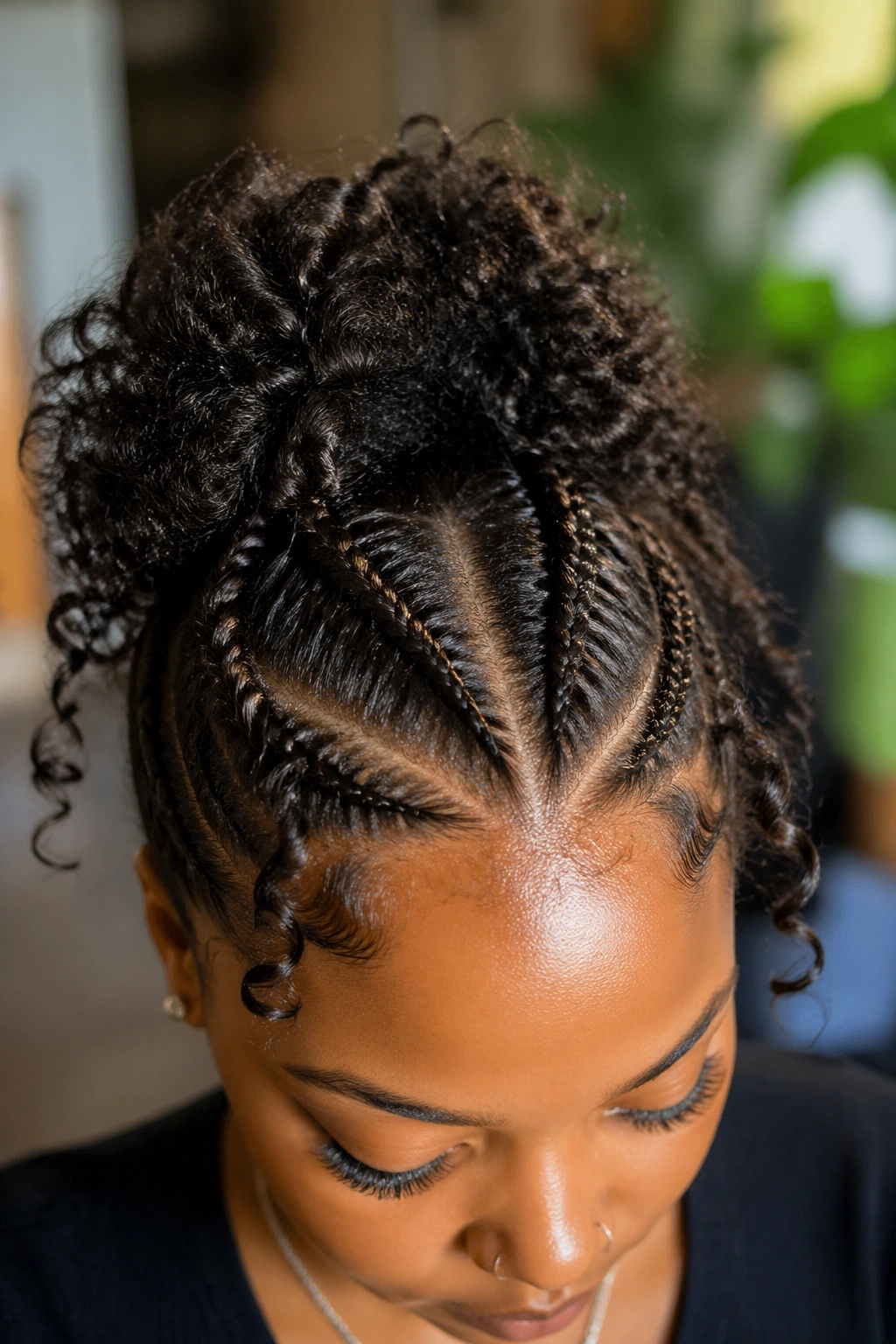
The crown of the head has butterfly cornrows feeding into a fluffy curly puff at the top. The puff is natural hair pulled up; the surrounding cornrows have the butterfly wisps.
The crown puff plus the wispy cornrows create a soft, romantic silhouette that reads young, fresh, and full of texture.
This is one of my favorite ways to wear butterfly cornrows when I want the install to feel alive rather than sculpted.
Maintenance for Butterfly Cornrows
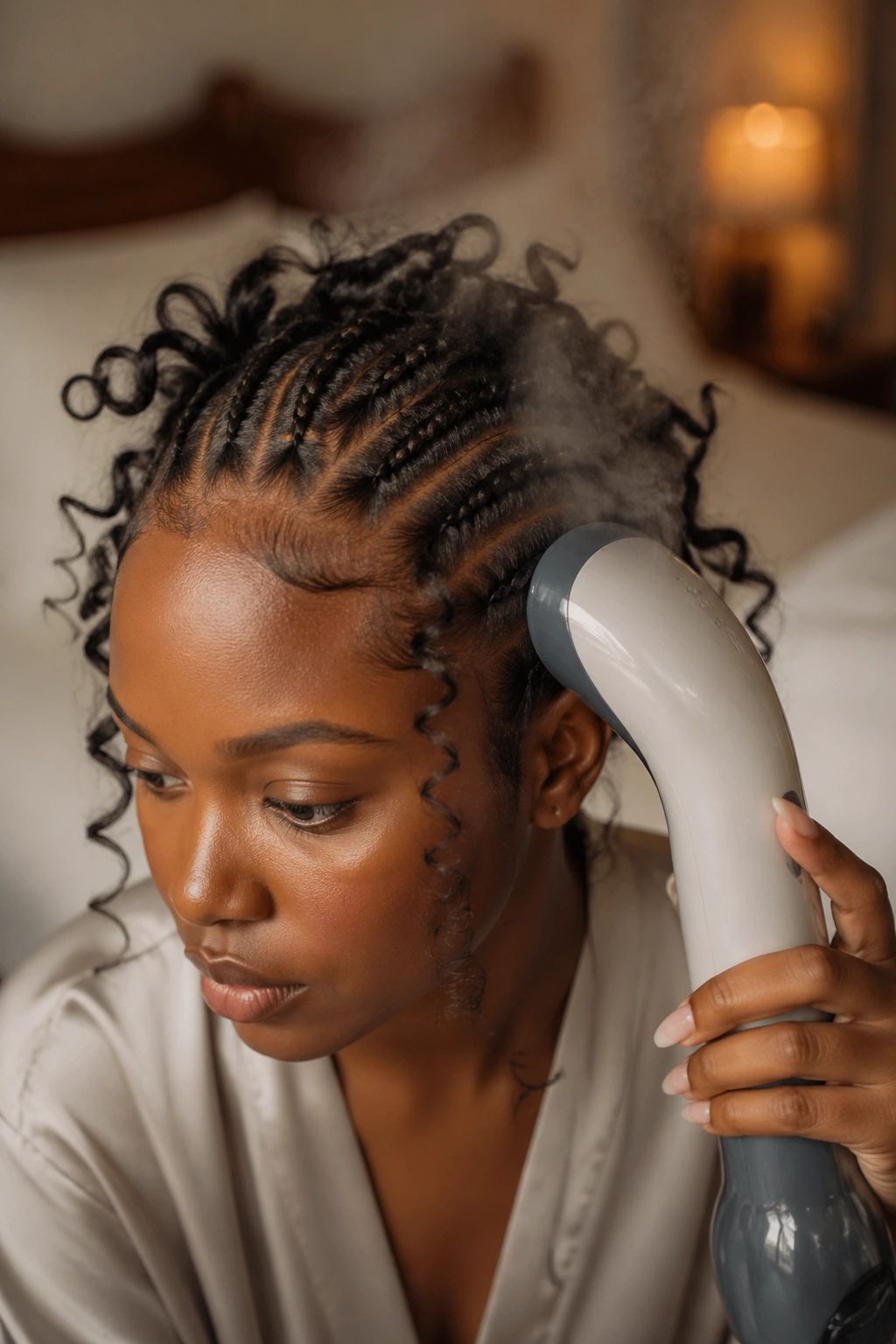
Wispy curls need care that flat braids don’t. The curls fuzz and tangle if you sleep on them flat. Wear a satin bonnet large enough to contain both the cornrows and the curls without compressing them.
A silk pillowcase as backup for nights the bonnet slips off.
A light steam from a handheld steamer every 5-7 days re-defines the curls. Hold the steamer 6 inches away and let the steam settle into the curls for 30-60 seconds per section.
Curl Care for the Wispy Pieces
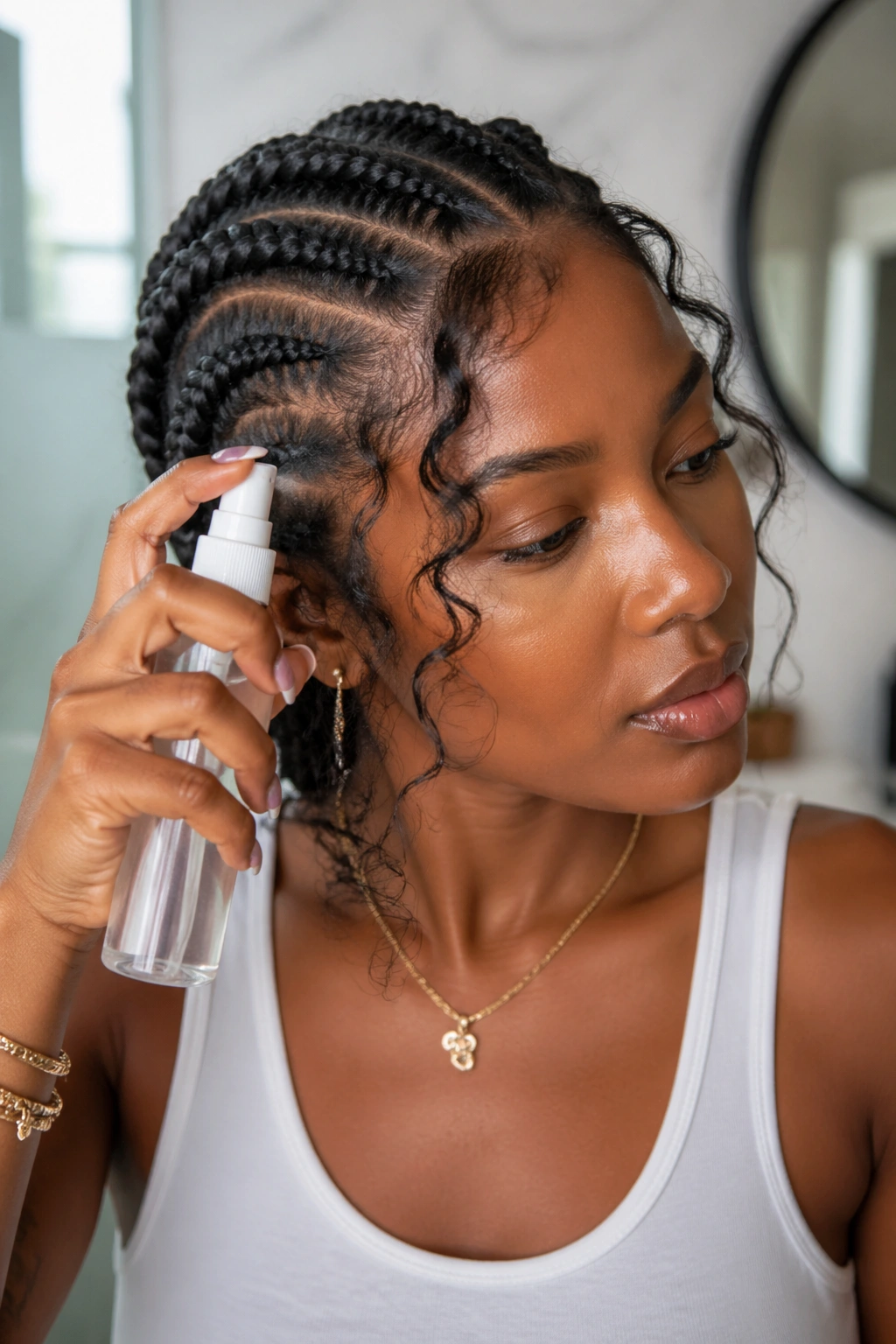
The wispy curls dry out faster than the braids. A light leave-in spray every 2-3 days keeps them defined.
Don’t use heavy butters or creams on the curls. They weigh the wisps down and turn the soft butterfly look into a heavy, clumped one.
If the curls go limp before the install lifespan ends, a quick re-curling with flexi-rods at the wisp ends restores definition. About 30 minutes of work for a refresh that buys another week of wear.
Edge Care for the Frame
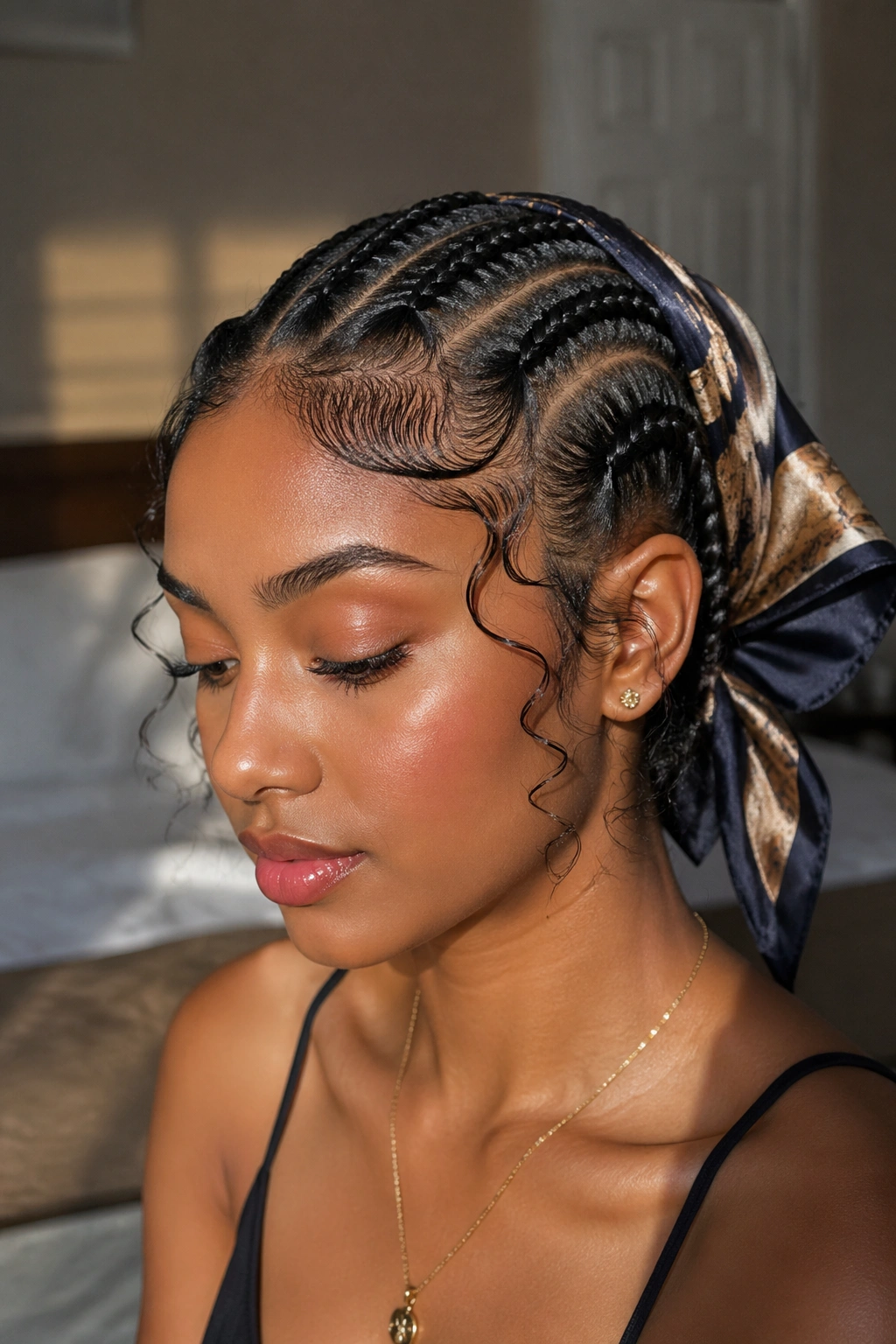
Butterfly cornrows live or die by the edge work. The wispy curls are forgiving of imperfection; the hairline isn’t.
Lay edges every 3-4 days. Use minimal gel. Tie down with a silk scarf for 15-30 minutes after laying.
Touch up baby hairs as needed without re-laying the whole hairline. Maintenance, not redo.
Takedown for Butterfly Installs
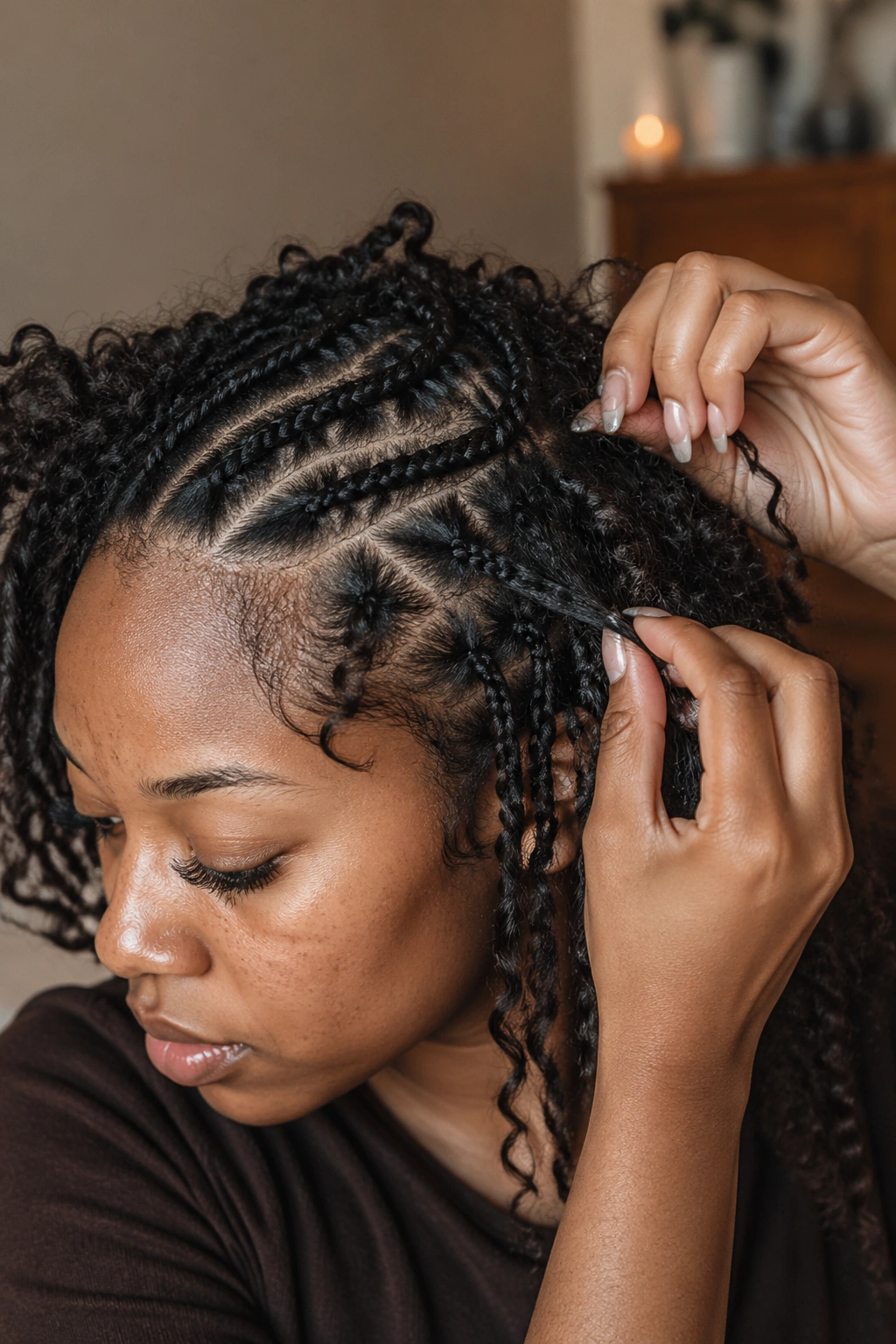
The curl pieces add a step to takedown. Before unraveling each braid, gently pull the curl wisps free from the braid completely so they don’t get tangled in the unraveling process.
Then proceed with standard cornrow takedown — saturate, unravel from the tail up, finger-detangle, then comb.
The extension curls can usually be saved and reused if you’ve taken care of them. Detangle gently, wash with a sulfate-free shampoo, and store flat for next time.
Picking the Right Butterfly Style for You
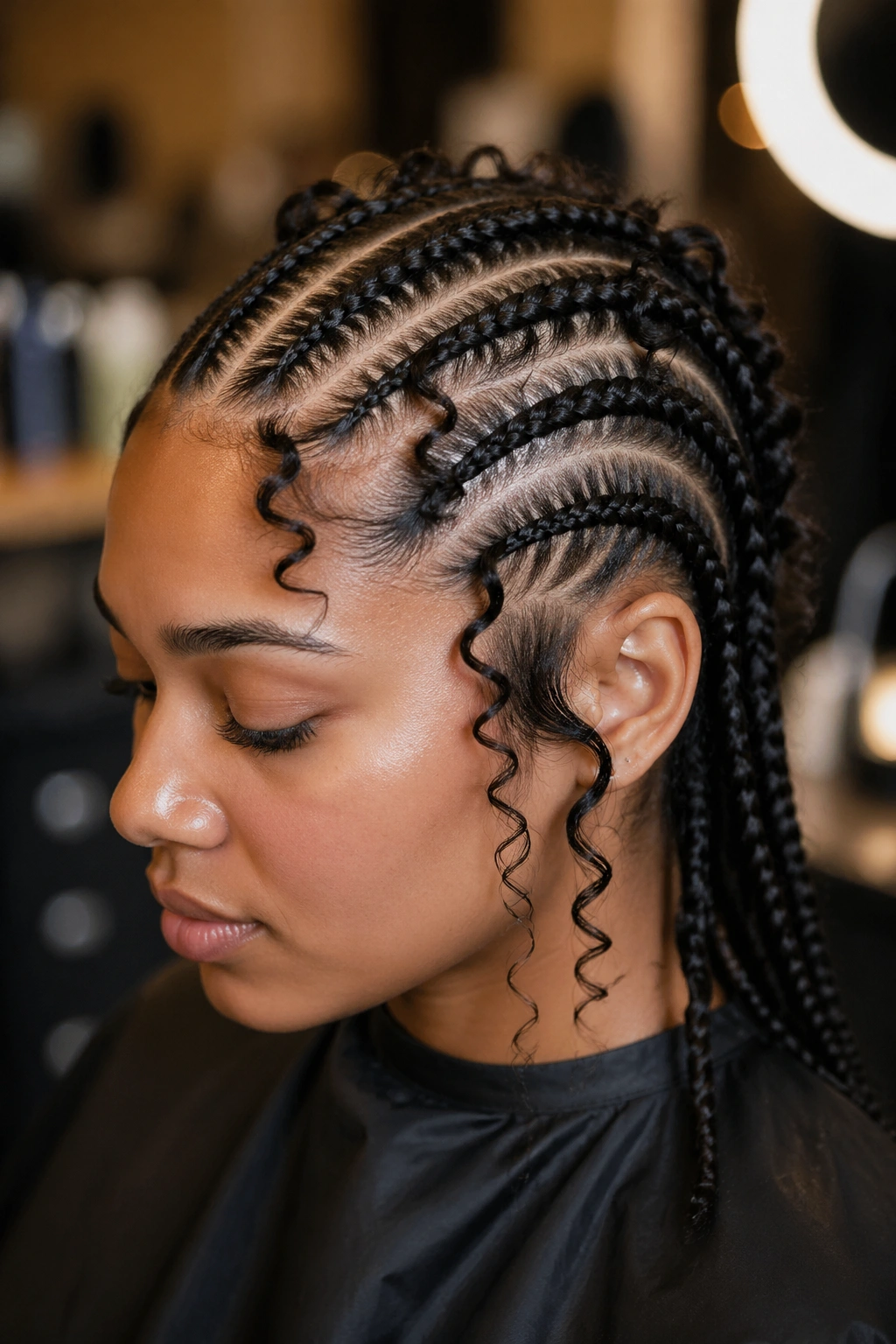
Hair length matters less than texture preference. Almost any butterfly variation works on natural hair from TWA to waist-length, as long as you’re using extension curls for the wisps. Natural-hair-only wisps need at least shoulder-length hair to be visible.
Lifestyle filters the choice. Active lifestyles favor butterfly cornrows in low buns or pigtails — silhouettes that bundle the wisps to one place. Sedentary lifestyles can wear loose butterfly cornrows that let the wisps move freely.
Face shape filters more. Round faces benefit from vertical butterfly variations like the top knot version. Long faces balance with horizontal silhouettes like low pigtails. Oval faces wear any version. Square faces soften with the boho front-loose variation.
Pick the style that matches the texture you want most days. Butterfly cornrows aren’t for those who want sleek hair. They’re for those who want soft, lived-in, wispy hair that still has cornrow structure underneath. Once you pick that aesthetic, the variations narrow to the right one for your hair and your week.
