



Blonde cornrows hit different. The contrast between deep skin tones and warm, sun-bleached blonde reads like a styling choice that was made on purpose — never accidental. Whether you’re going honey, platinum, ash, or strawberry, the right blonde shade can make a cornrow style look more expensive than it actually was.
The catch? Blonde isn’t one color. It’s a spectrum, and picking the wrong tone for your skin can wash you out instead of lift you. Picking the right one makes you glow.
These 22 blonde cornrow styles cover the full range — from subtle honey highlights woven through the braids to full platinum installs that command attention from across the room. Each style focuses on a specific blonde approach so you can find the one that matches your vibe and your maintenance tolerance.
How Blonde Reads Against Different Skin Undertones
Blonde isn’t universally flattering — but the right blonde for your undertone definitely is. Three undertone categories shape which blonde works:
- Cool undertones: ash blonde, platinum, icy white, beige
- Warm undertones: honey, caramel, butter, golden, strawberry
- Neutral undertones: most blondes work, with honey-beige being the safest middle ground
Test your undertone by looking at the veins on the inside of your wrist in natural light. Blue veins = cool. Greenish veins = warm. A mix of both = neutral.
Get the undertone match right and your face brightens. Get it wrong and your skin can look gray, sallow, or ashy under the blonde.
Pre-Bleached vs. Self-Bleached Kanekalon
You have two paths to blonde cornrows. The smart one and the painful one.
The smart one: buy pre-colored blonde kanekalon. The color is locked in during manufacturing. It won’t bleed, fade quickly, or damage your natural hair.
The painful one: buy black or brown kanekalon and bleach it yourself. You’ll spend hours on the process, get inconsistent results, and the synthetic fibers will be more brittle afterward. There’s no good reason to do this when pre-colored blonde packs are widely available.
For natural hair color in the cornrows themselves, deciding whether to pre-lighten your real hair is a much bigger conversation. Most people get the blonde look entirely through colored kanekalon — your natural hair stays its original color, and the blonde extensions blend the two.
Skin Tone, Color, and Brand Matter
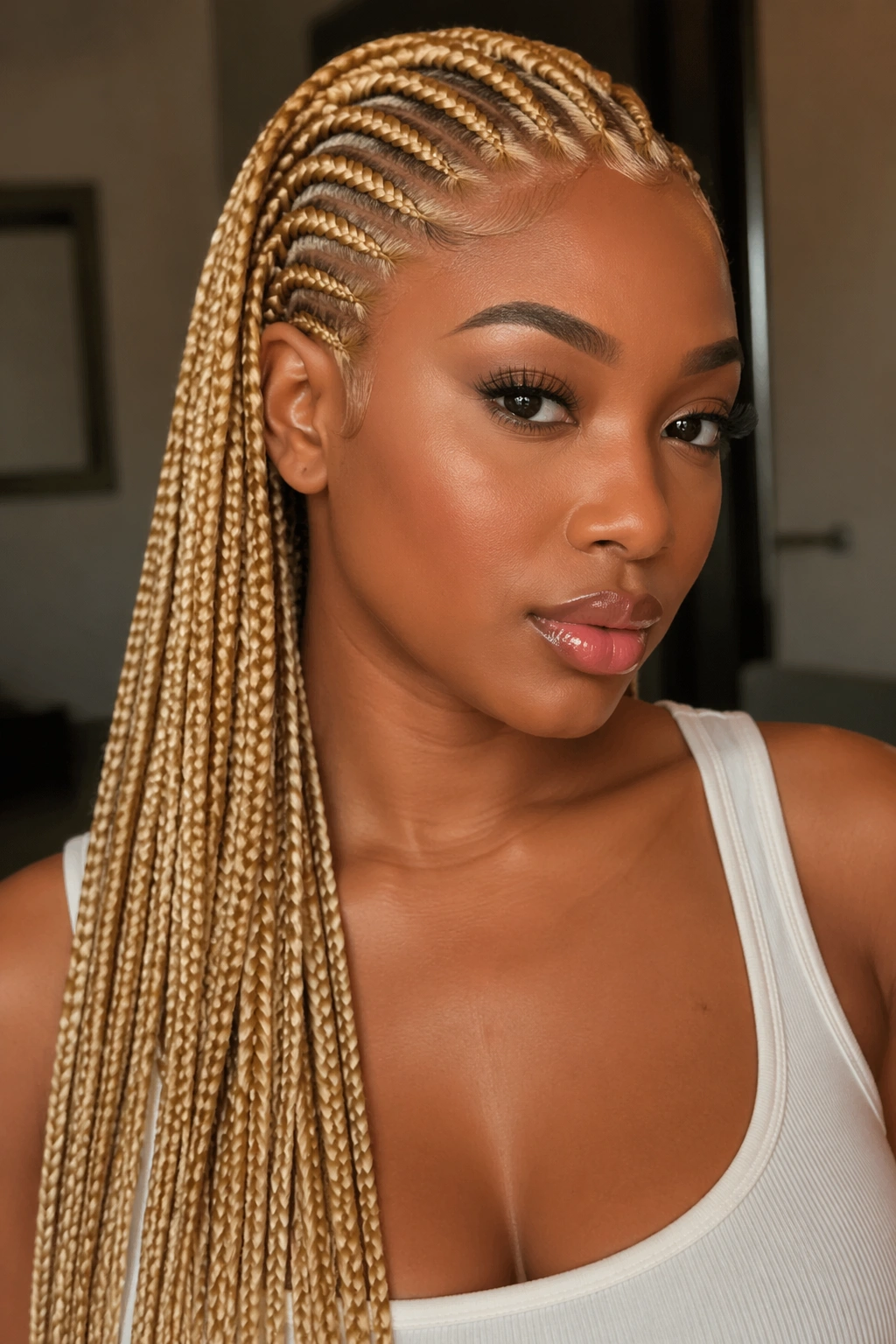
Cheap blonde kanekalon often reads brassy. Better-quality packs deliver truer blondes that don’t shift orange after a week of sun exposure.
Brands like X-Pression, Outre, and Sensationnel offer reliable blonde tones. Look for color codes: 613 for true blonde, 27 for honey, 30 for warm chestnut blonde, F1B/27 for ombre dark roots into blonde.
Buy 1-2 extra packs beyond what your braider says they need. Running out of a specific blonde dye lot mid-install means a visible color shift in the finished braids.
Care for Blonde Synthetic Hair
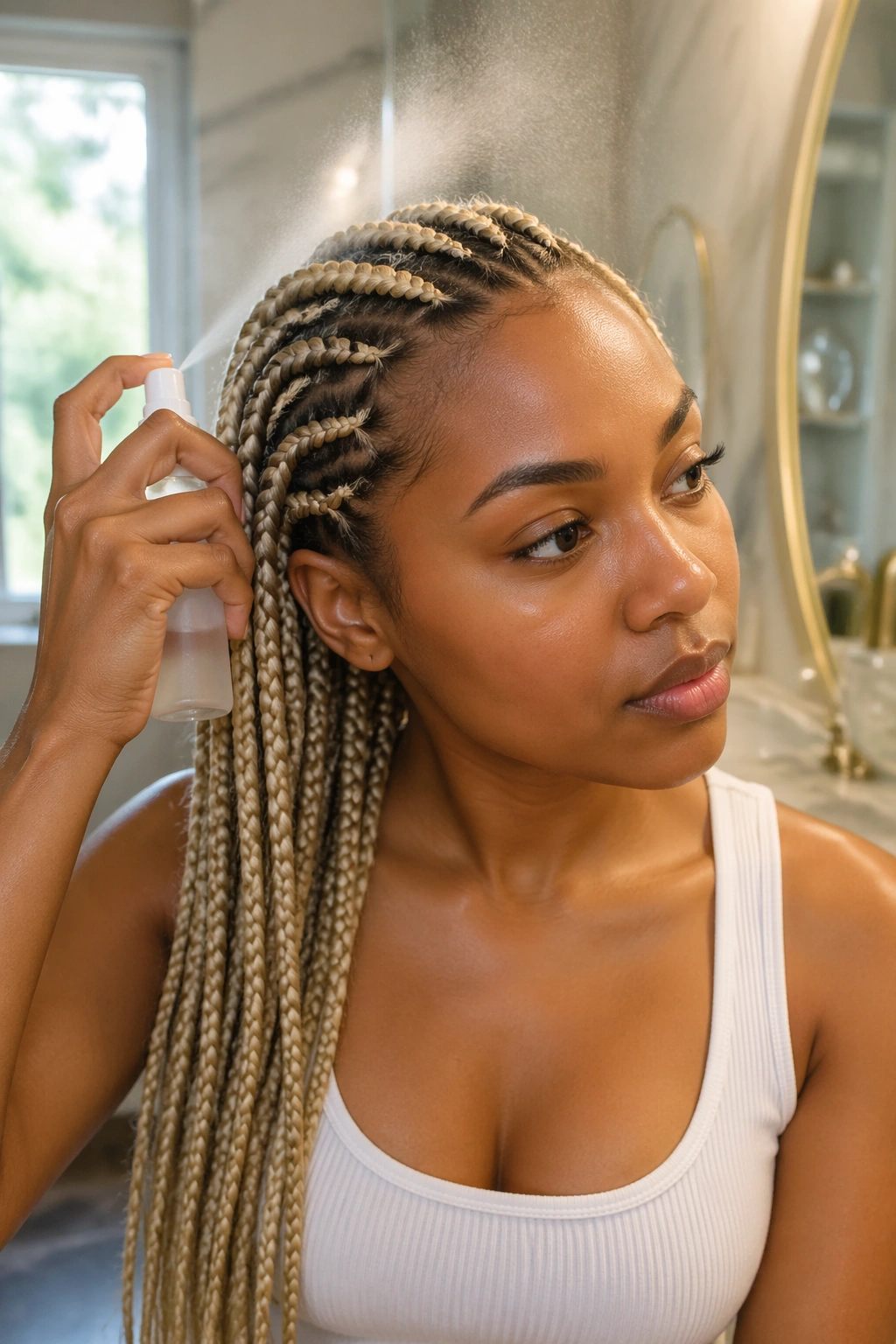
Synthetic blonde fades and discolors faster than darker shades. Three things accelerate the discoloration: chlorine, sweat, and sunlight.
A leave-in spray with UV protection helps. Rinse the braids with cool fresh water immediately after pool or beach exposure. Wash the scalp regularly so sweat doesn’t sit against the kanekalon.
Avoid heavy butters near the braid lengths — they yellow the blonde over time, especially shea butter. Stick to clear or light-colored oils on the braid shafts.
1. Honey Blonde Lemonade Braids
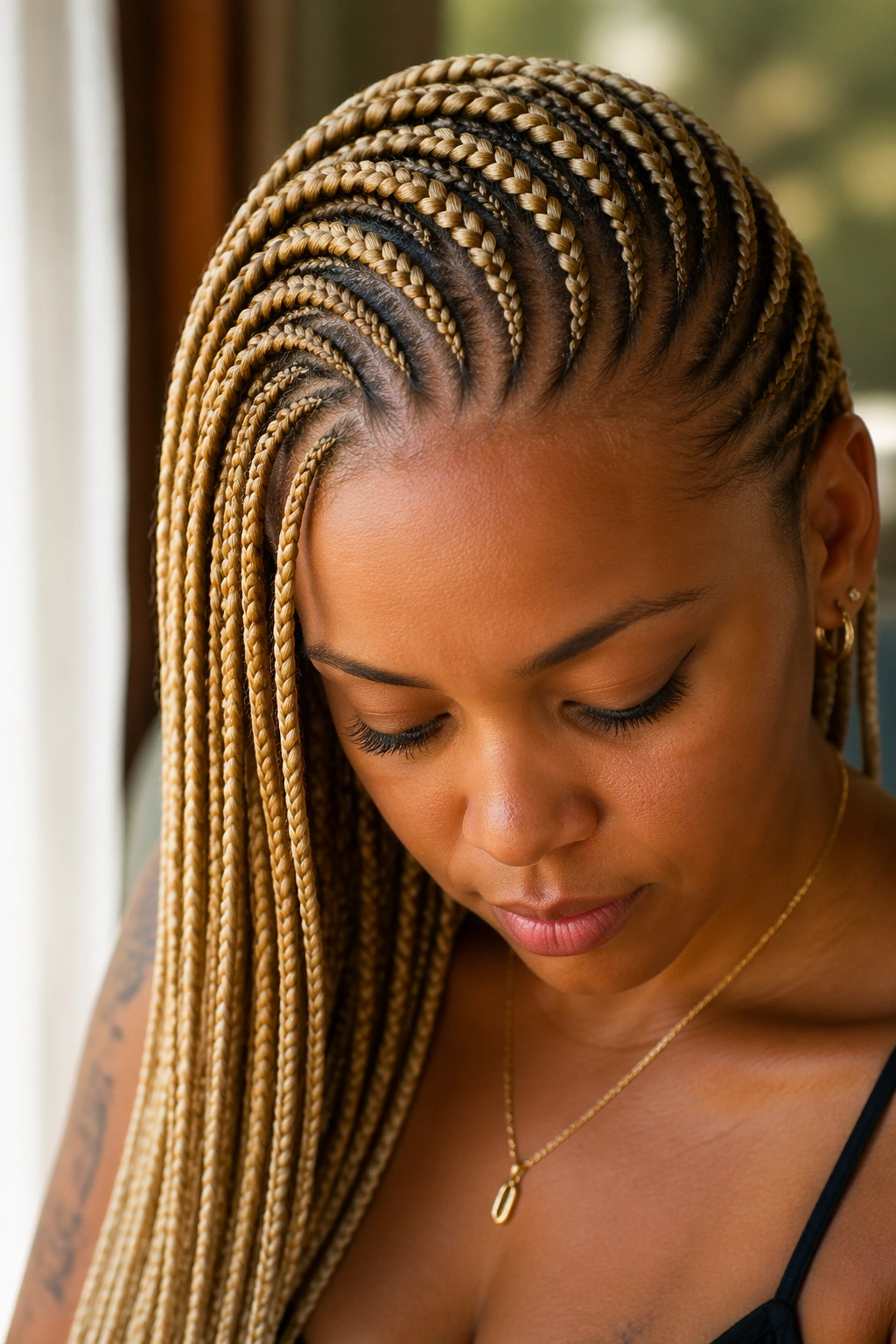
Warm honey-toned cornrows all sweeping to one side. The honey shade is forgiving on most skin tones because it carries enough warmth to play well with both olive and deep complexions.
Why Honey Is the Easiest Blonde Entry Point
- Warm enough that even cool undertones don’t get washed out
- Doesn’t require regular toning to stay looking fresh
- Photographs evenly under most light conditions
- Easier on the eye than ultra-bright platinum
Tip: Pair with bronze or copper jewelry. Silver jewelry fights with the warmth and looks slightly off.
2. Platinum Knotless Cornrows
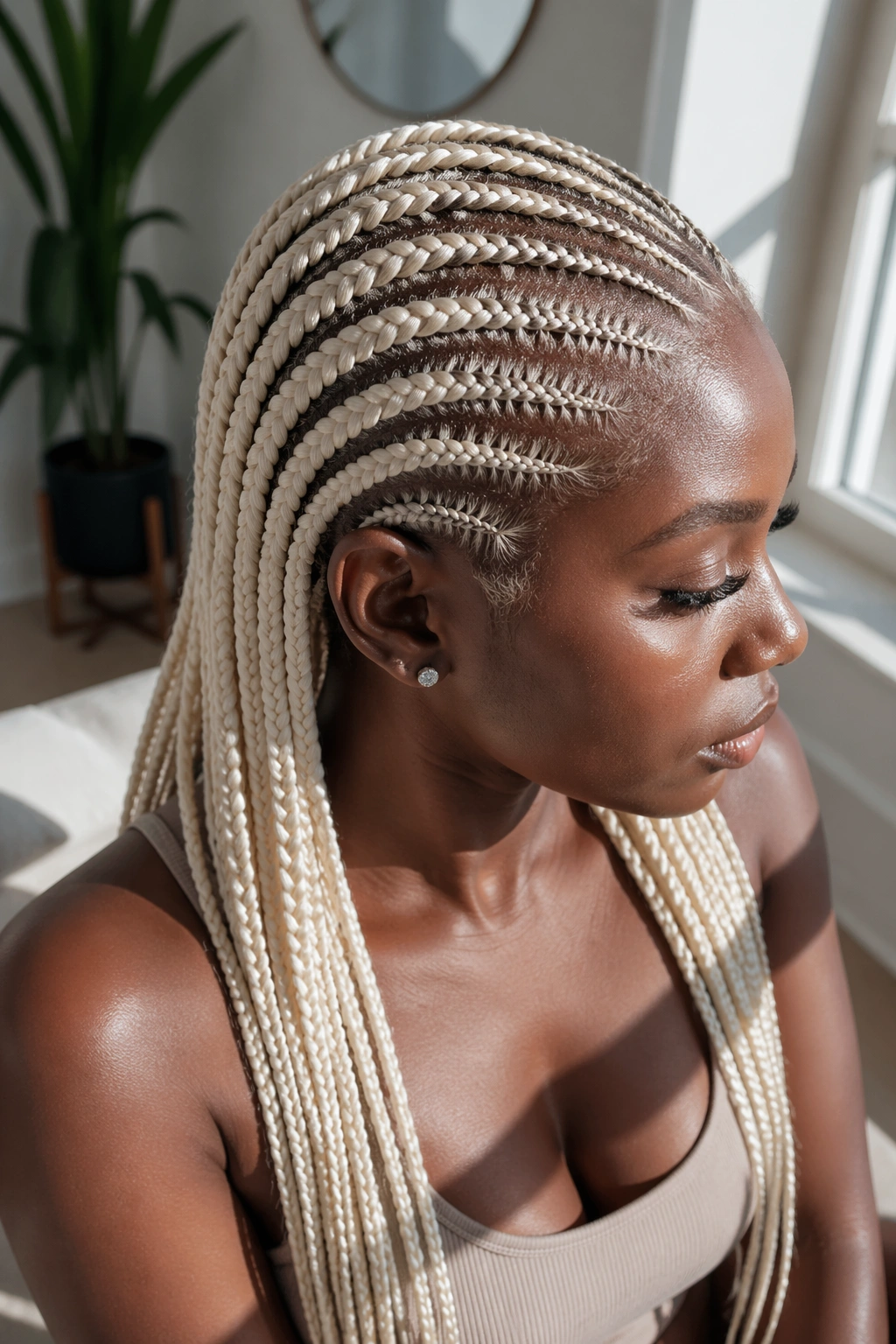
Cool, icy platinum cornrows installed knotless for a softer hairline. The platinum shade contrasts dramatically with deep skin and demands attention.
Platinum requires confidence. It’s the boldest blonde choice and reads the most editorial.
Stick to platinum-specific kanekalon (color code 1001 or 60). Lower-quality packs labeled “platinum” often have yellow undertones that read brassy under indoor lighting.
3. Ombre Black-to-Blonde Cornrows
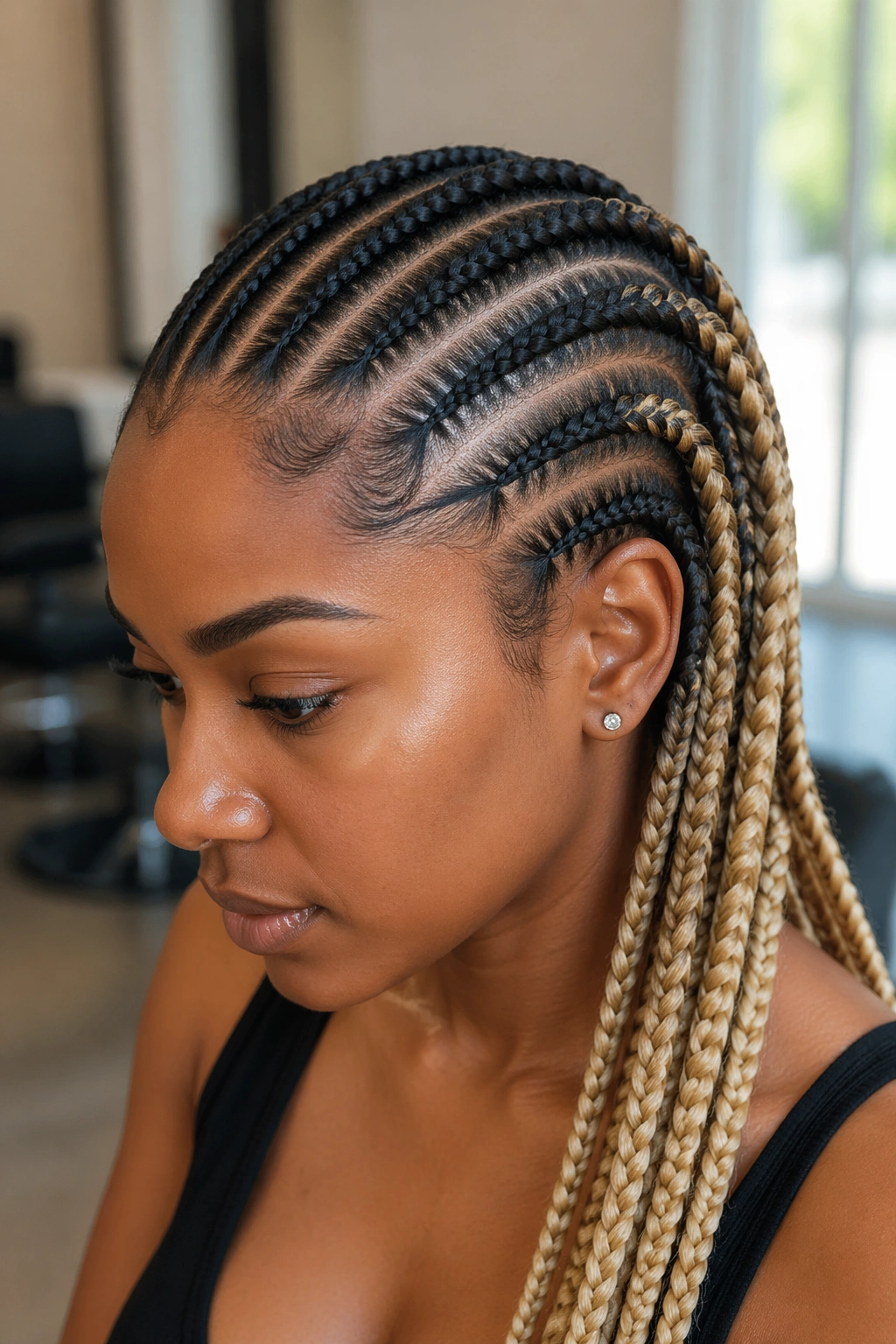
The cornrows start black at the roots, transition to a darker blonde mid-shaft, and end in lighter blonde at the tips. The gradient creates a sun-kissed effect without committing to all-over color.
Ombre kanekalon comes pre-blended in sets. Look for color codes like 1B/27/30 (black to honey to warm blonde) or 1B/613 (black to bright blonde).
This is the lowest-maintenance blonde option because the roots are already dark — you don’t have to worry about regrowth showing.
4. Strawberry Blonde Tribal Cornrows
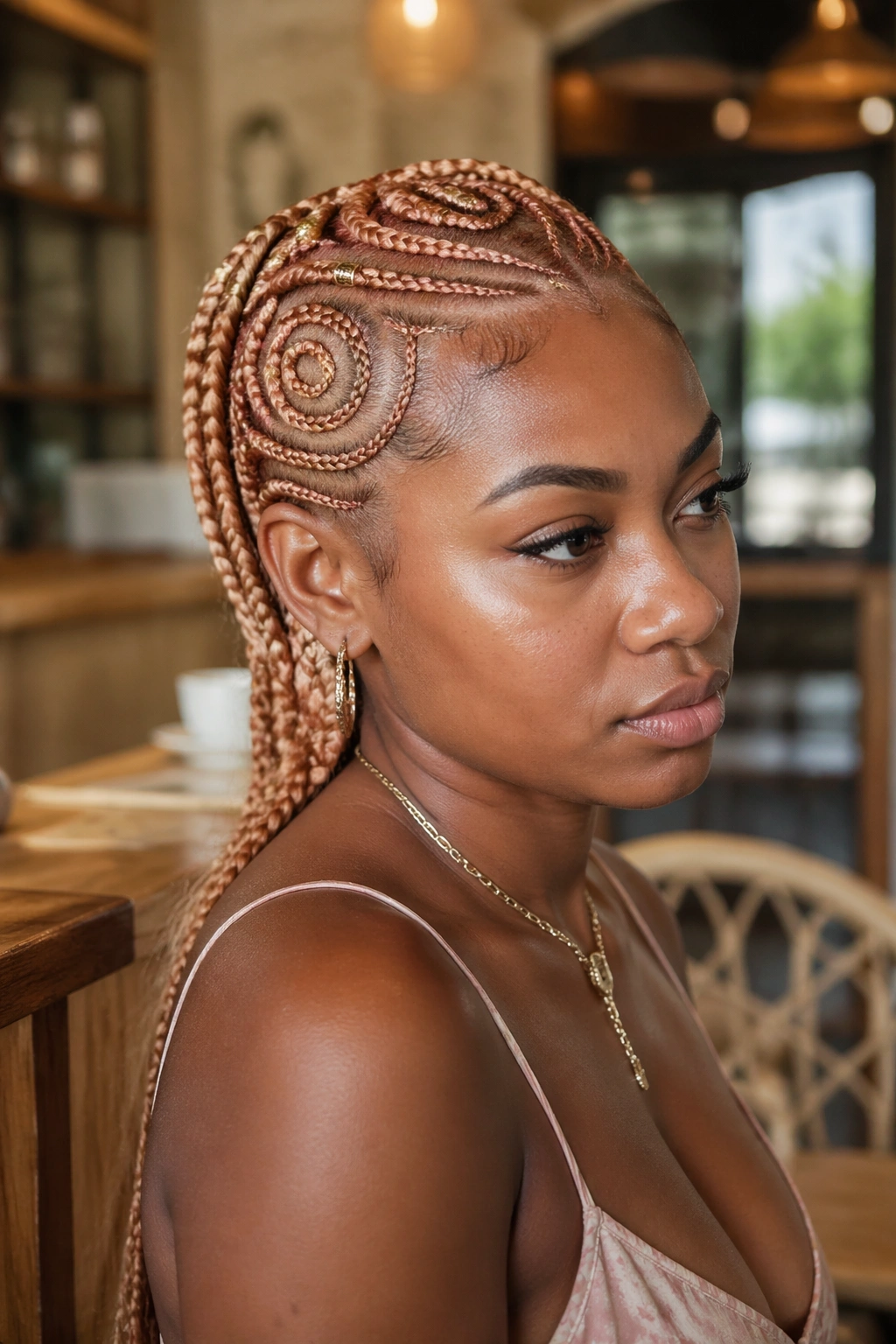
Warm strawberry blonde — that copper-meets-pink shade — works on tribal cornrow patterns. The slight pink undertone in strawberry softens the geometric sharpness of tribal parts.
Best on warm undertones. On cool undertones, strawberry can read too pink and clash.
Add a few accent beads in matte gold to bridge the warm tones.
5. Ash Blonde Side Part Braids
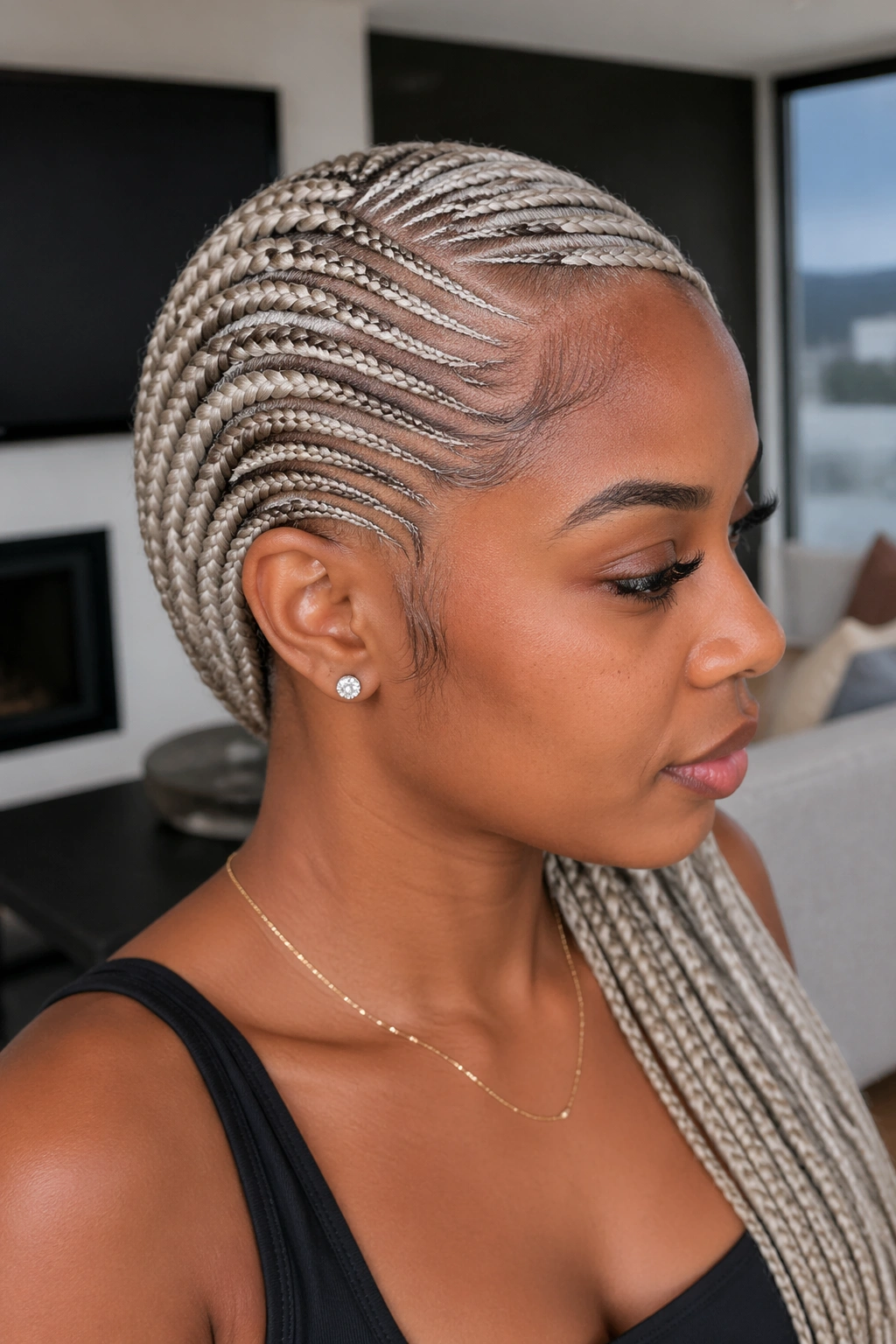
Cool, gray-toned ash blonde with a deep side part. The ash shade has zero warmth — almost a smoky gray-blonde — and reads modern and high-fashion.
Ash blonde is unforgiving. It looks incredible on cool undertones and washes out warm undertones into gray. Know which you are before committing.
The deep side part adds asymmetric drama that complements the cool color.
6. Caramel Highlights in Black Cornrows
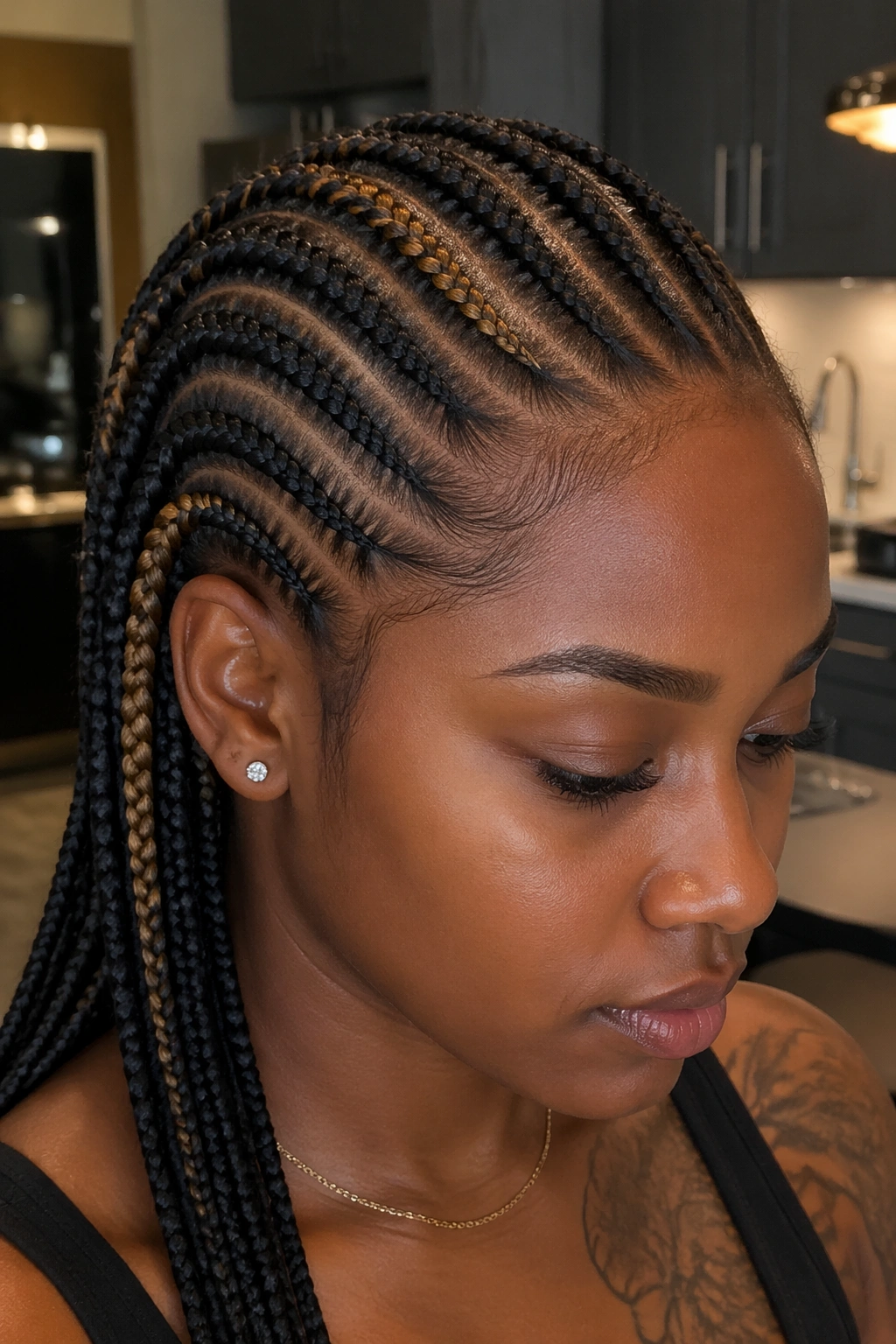
The base is natural black. Just 4-6 cornrows out of the full set are caramel-blonde, scattered through the head as highlights. The contrast creates dimension without going full blonde.
Best entry point for someone hesitant about all-over blonde. You get the look, you stay closer to your natural color, and removing the blonde later is as simple as taking those few braids out.
Place caramel braids asymmetrically — three on one side, two on the other, one in the middle. Symmetric placement reads stripey instead of natural.
7. Butter Blonde Goddess Cornrows
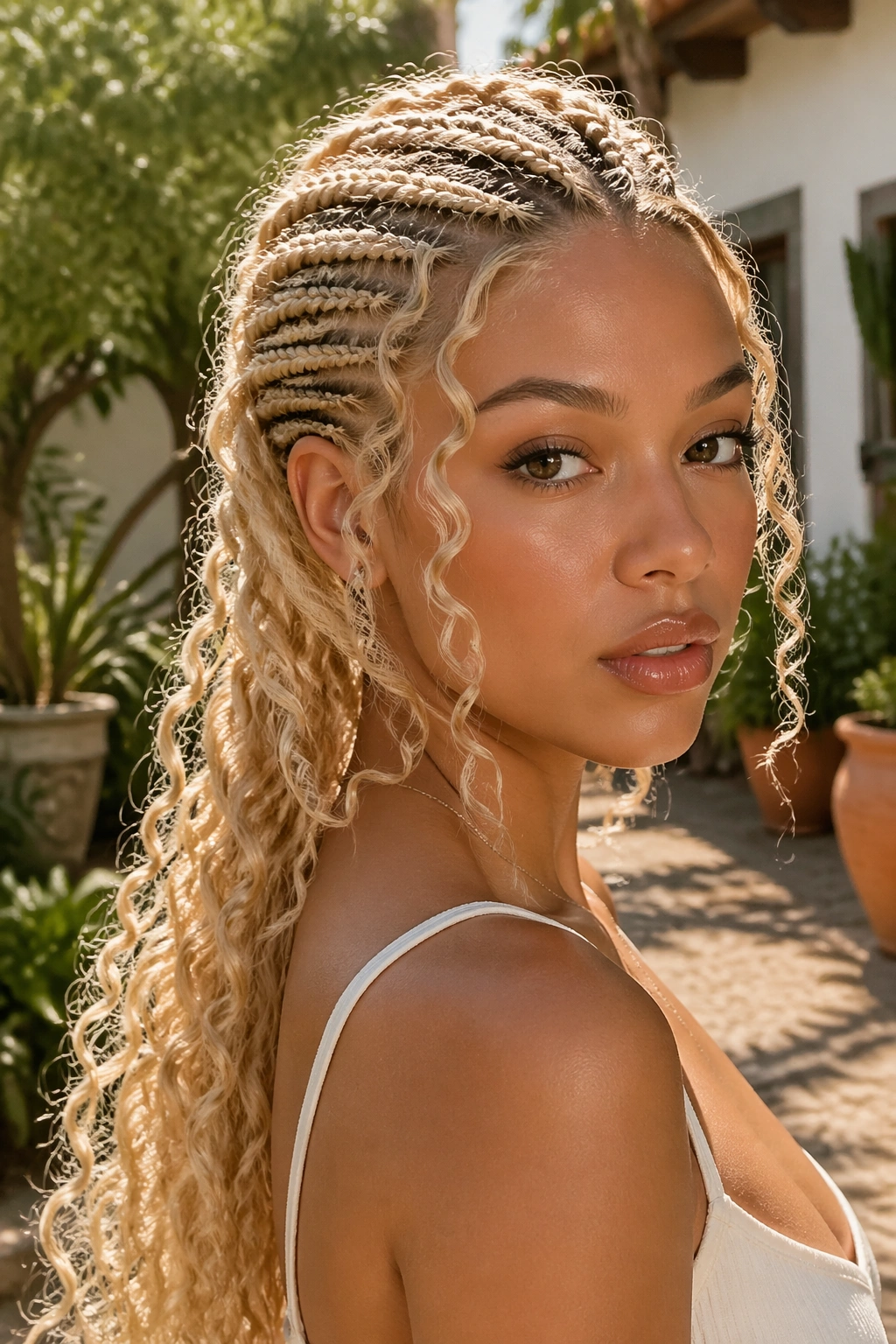
Soft butter blonde — a pale, creamy yellow-blonde — at the cornrow base, transitioning into curly butter-blonde ends. The whole style reads romantic and warm.
Butter is between honey and platinum. More yellow than honey, less white than platinum. Works on most warm undertones and some neutrals.
Add face-framing curls pulled out at the temples.
8. Bleach Blonde Crown With Dark Sides
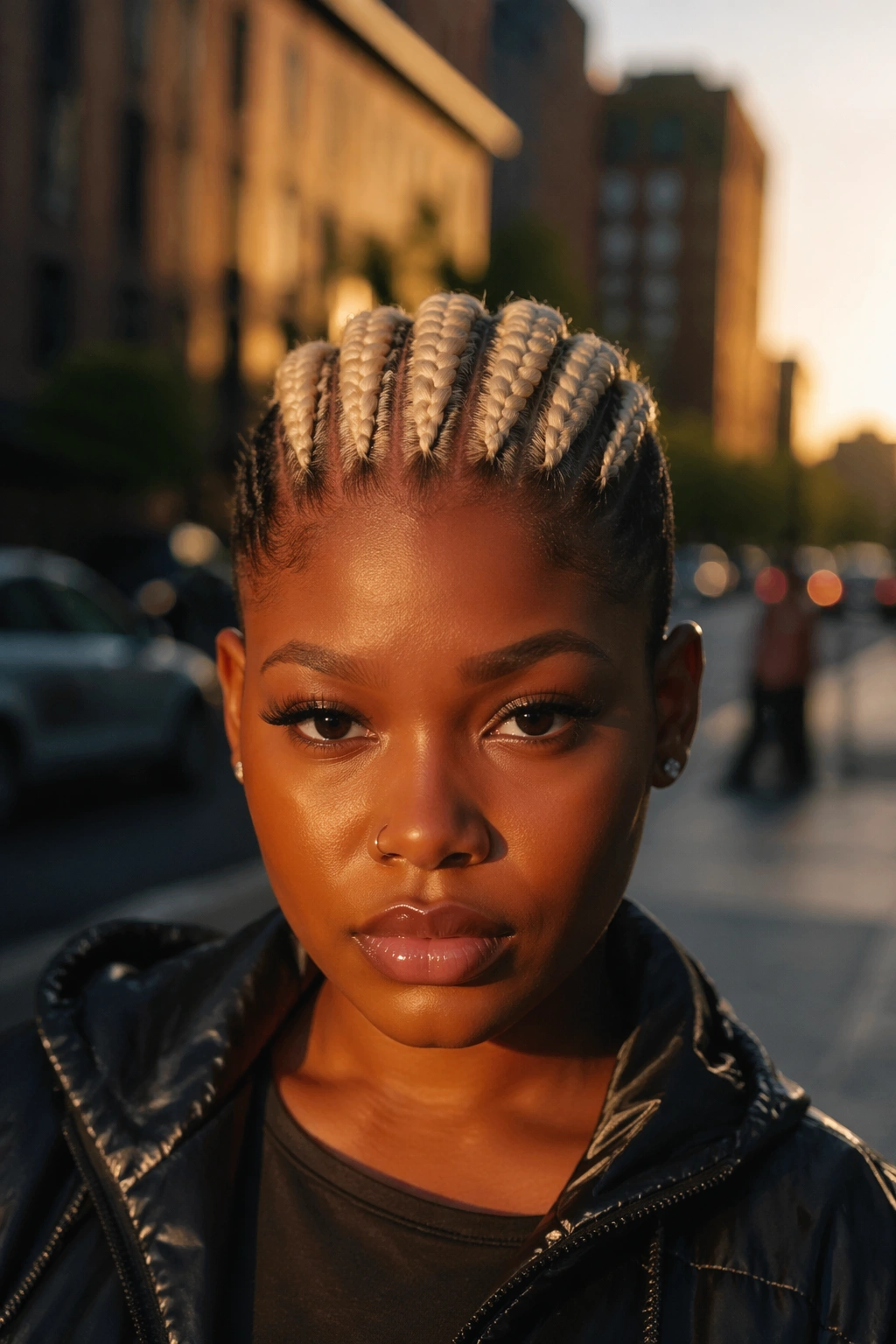
The middle strip of cornrows running front to back is bleach blonde. The sides are natural black. The look is reverse-mohawk — light on top, dark on the sides.
A bold style. Reads punk-meets-tribal.
The transition between blonde and black has to be sharp. A blurry transition undermines the whole effect.
9. Money Piece Blonde Cornrows
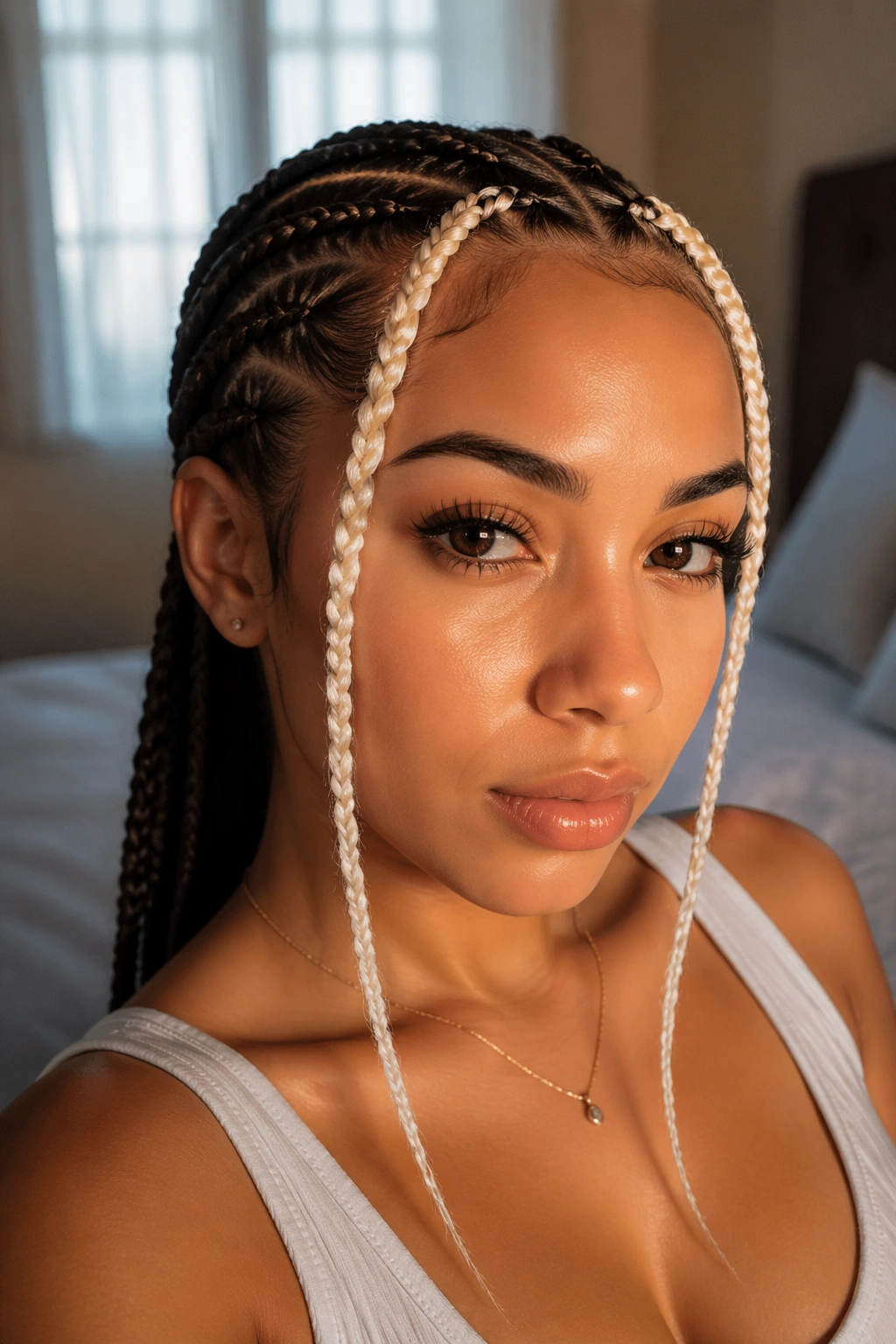
The bulk of the head is natural color, but the front two cornrows framing the face are bright blonde. The contrast frames and brightens the face without committing to full blonde.
A money piece works on every face shape. It immediately draws attention to the eyes and cheekbones.
Use the brightest blonde you can — pale platinum or bright honey. Subtle blonde here gets lost.
10. Honey and Platinum Mixed Cornrows
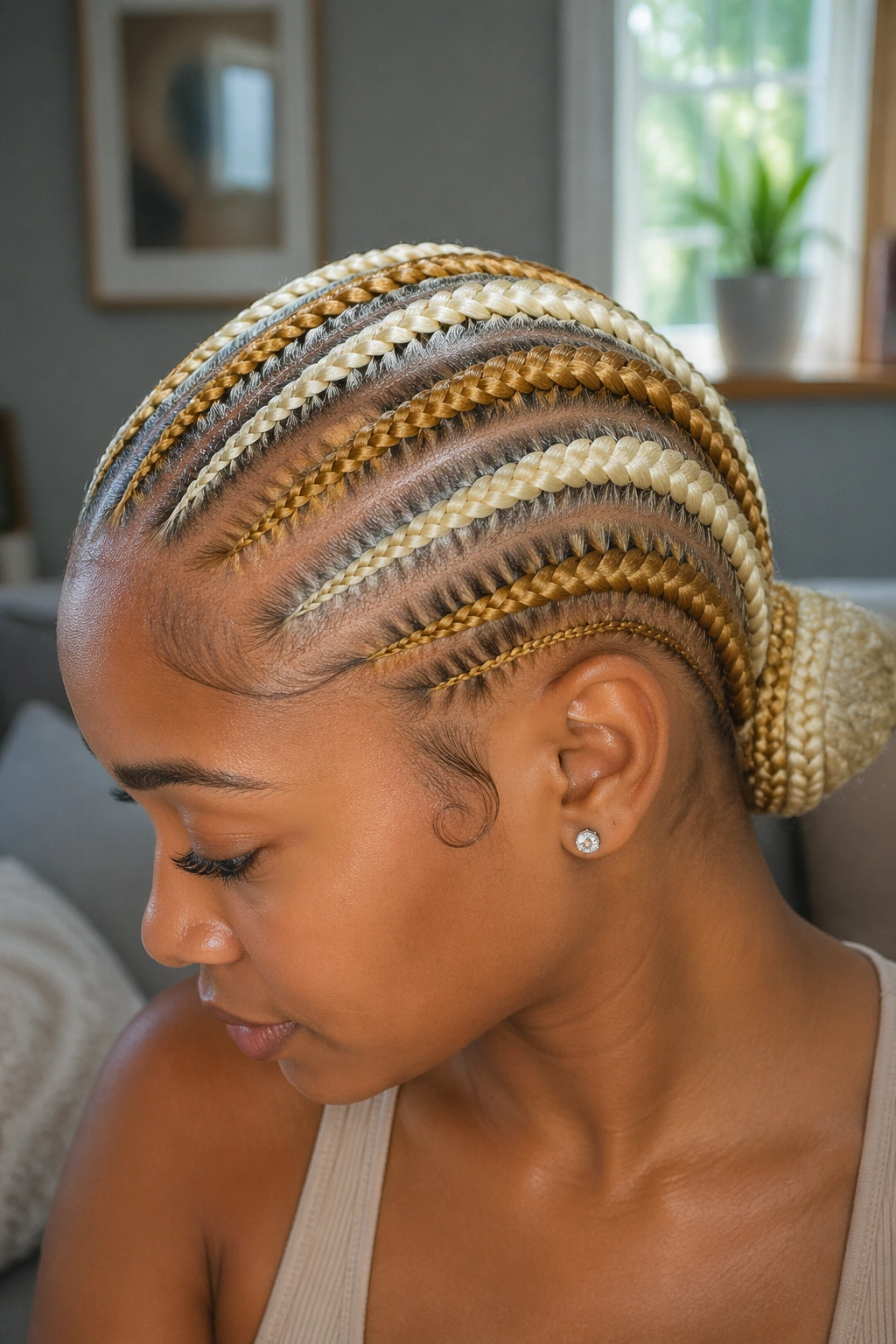
A mix of honey blonde and platinum cornrows alternating across the head. The two shades create dimension that flat single-tone blonde can’t match.
The trick is the proportion. About 60% honey to 40% platinum reads warm. Inverse the ratio and it reads cool.
Pick which one dominates based on your undertone, then use the other as accent.
11. Auburn-Tinted Blonde Cornrows
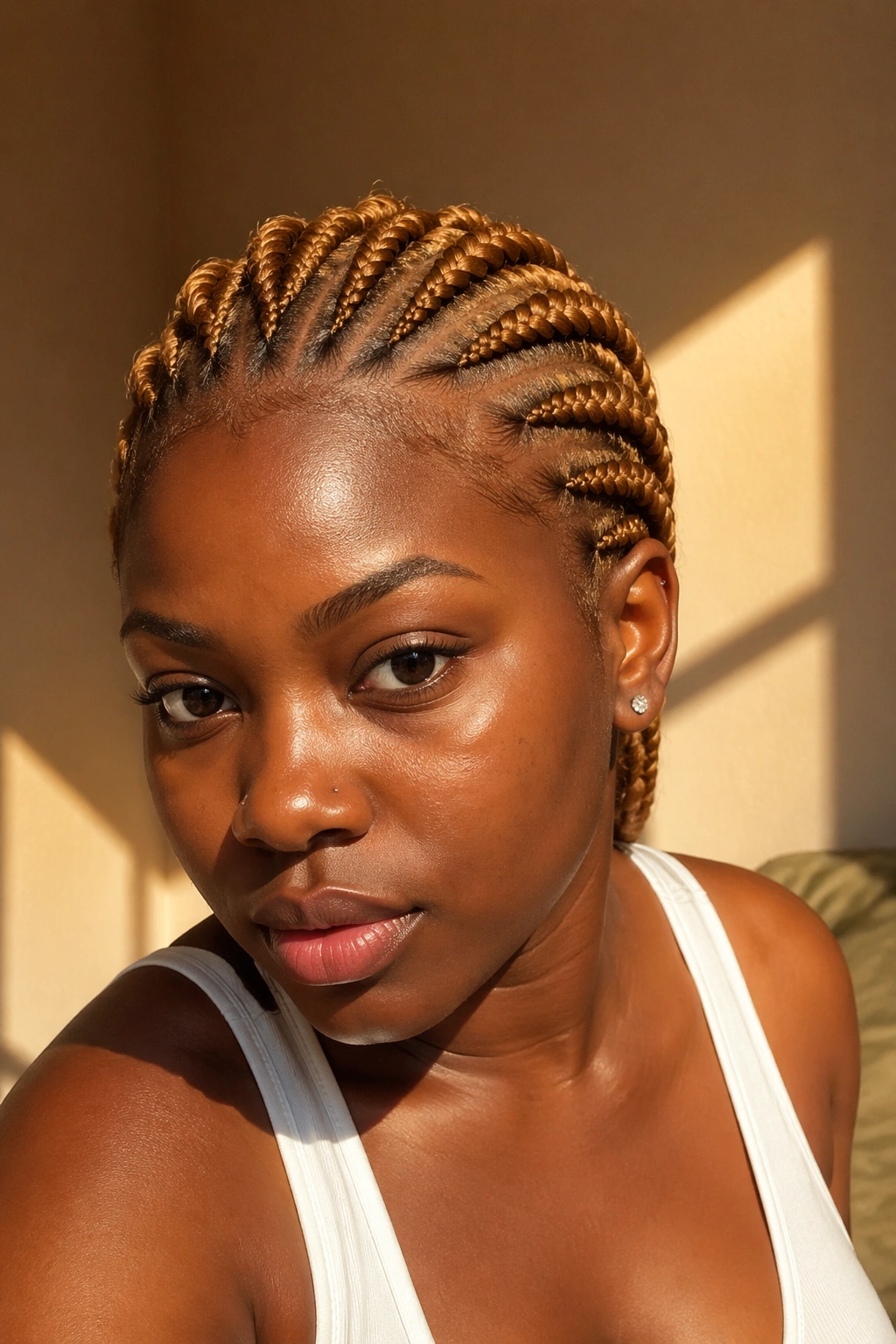
Blonde with rust-red undertones — a bridge between strawberry blonde and copper. Falls in the warmest end of the blonde spectrum.
Spectacular against deep skin tones with warm undertones. The auburn-tinted blonde has enough red to flatter without being full red.
Pre-colored kanekalon in this exact shade can be hard to find. Look for color code 350 or “warm honey copper” labels.
12. Bright Yellow Blonde Cornrows
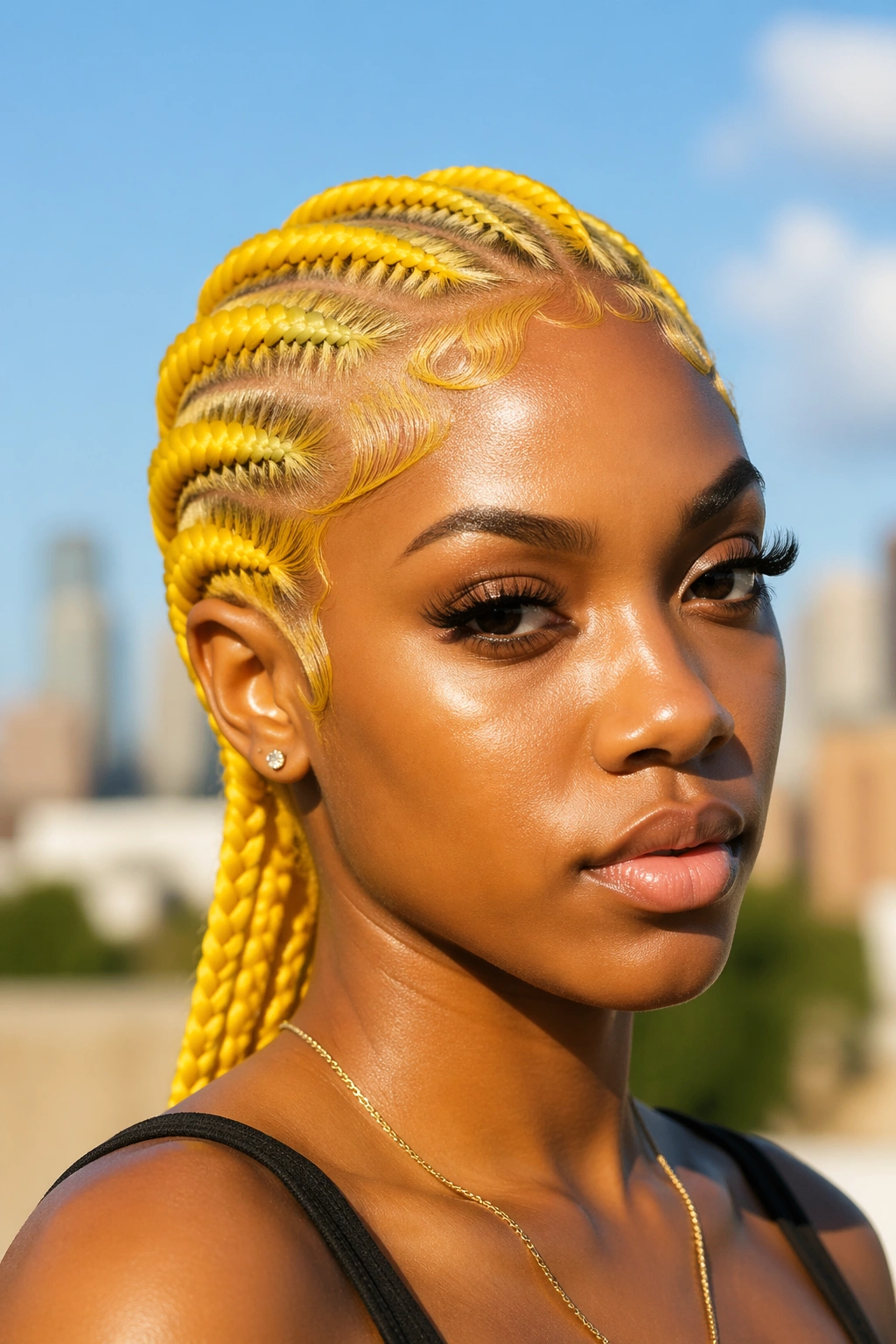
Bold, almost-canary yellow-blonde. The brightest of the bright. Reads playful, statement-making, and unmistakably intentional.
Not subtle. Not for everyone.
Best worn for festivals, photoshoots, summer events, or anywhere you want the hair to be the loudest thing in the room.
13. Beige Blonde Half-Up Style
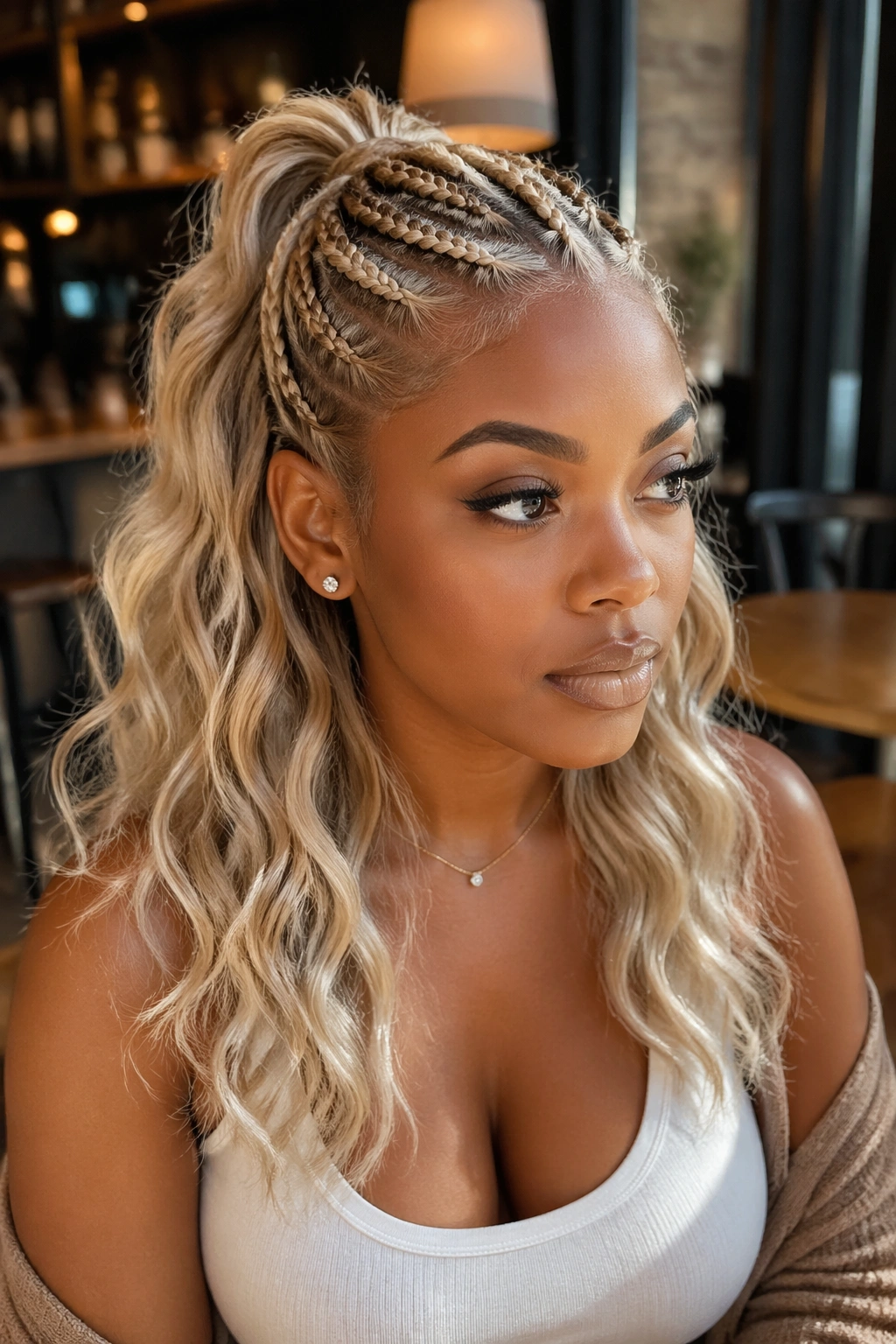
Soft beige blonde — that neutral, slightly muted tone between ash and honey — with the top half cornrowed and the bottom half flowing loose as wavy ends.
Beige is the most universally flattering blonde. It carries enough warmth not to wash out cool undertones, but enough neutrality not to clash with warm ones.
Wedding-ready. Date-night-ready. Job-interview-ready.
14. Rose Gold Blonde Braids
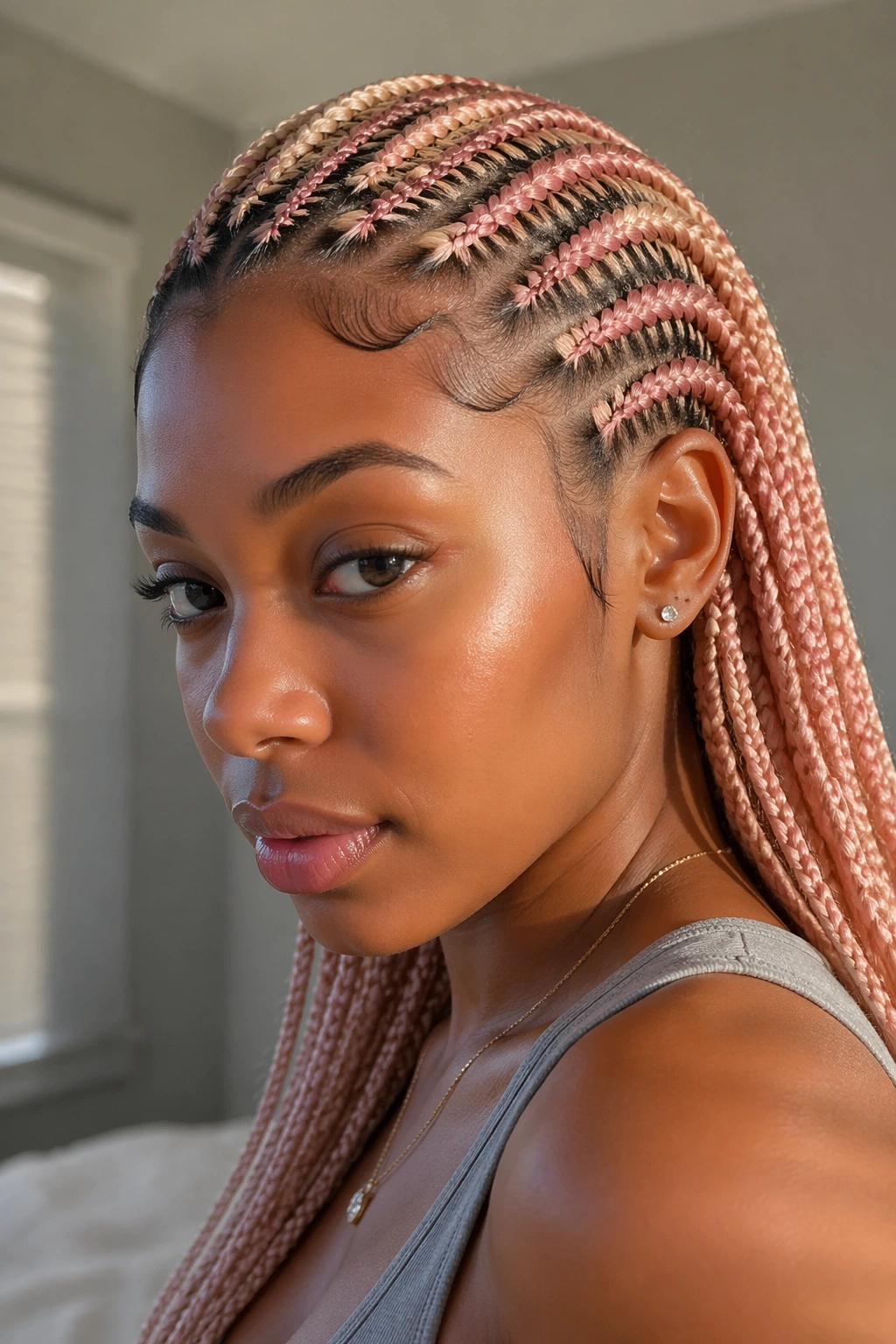
Rose gold blonde — that pink-meets-blonde-meets-gold shade — on cornrows. The pink undertone reads romantic and slightly trendy.
Pre-colored rose gold kanekalon comes in different intensities. Soft rose gold (more blonde, less pink) works for everyday. Vivid rose gold (more pink) works for events.
Pair with gold or rose-gold jewelry to coordinate.
15. Frosted Tip Blonde Cornrows
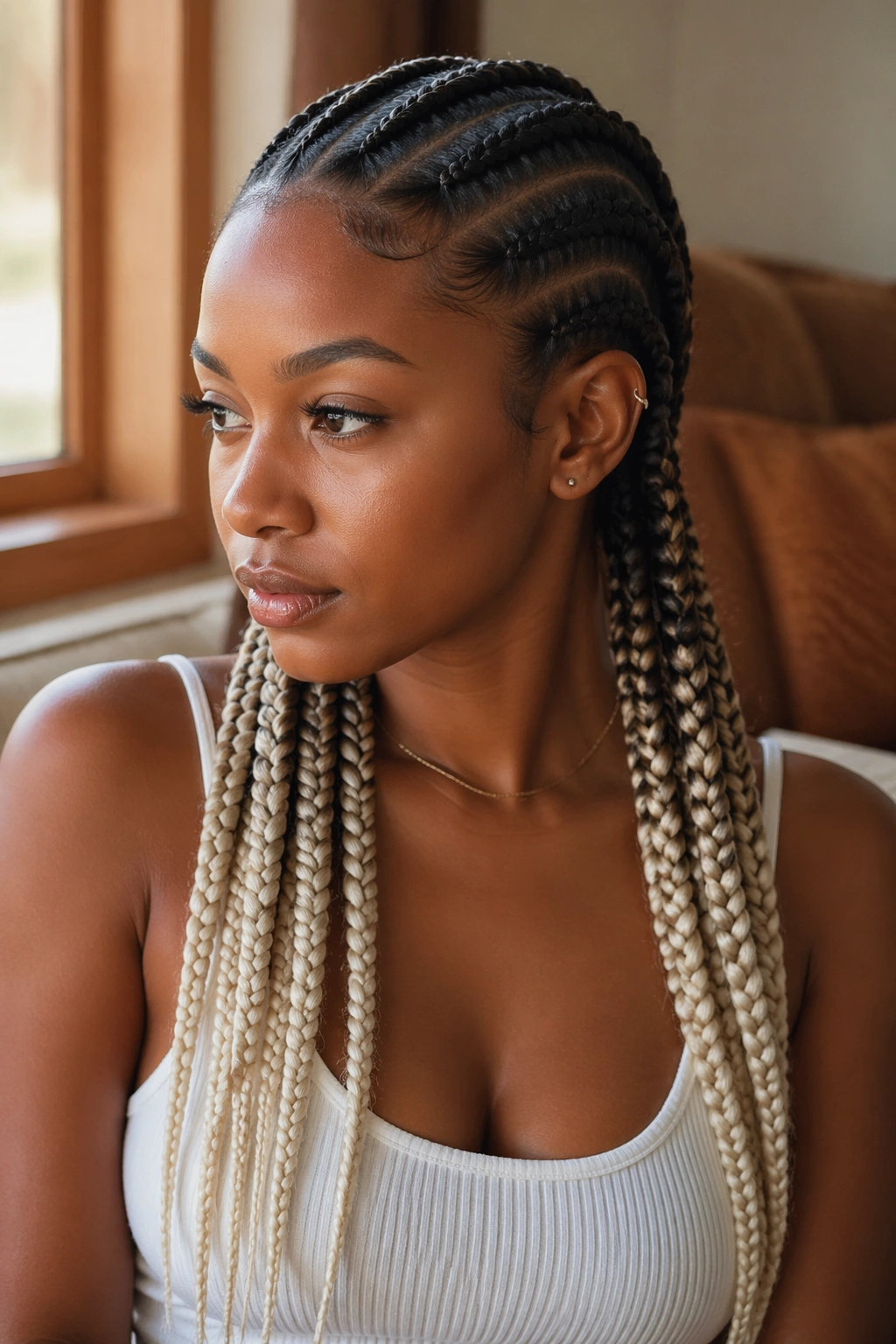
Natural-color cornrows at the base, with the bottom 6-12 inches transitioning to bright frosty blonde. Like a dipped paintbrush effect.
Faster install because most of the kanekalon is dark — only the tips need to be light. Cheaper too, since less blonde kanekalon is required.
Looks especially good on long cornrow styles where the blonde tips have room to breathe.
16. Dirty Blonde Cornrows With Dark Roots
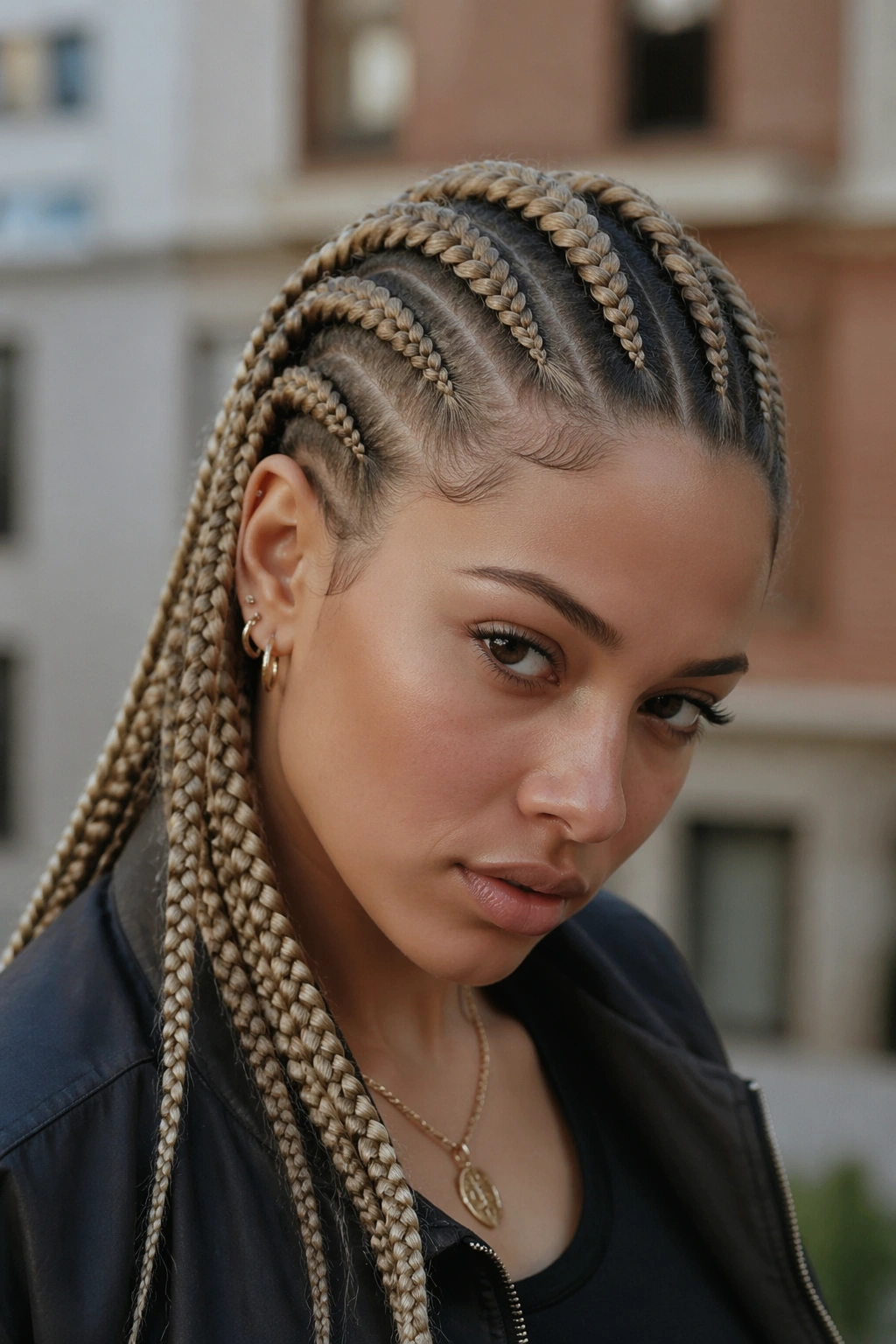
Dirty blonde — a darker, somewhat dingy blonde with brown undertones — installed with intentionally dark roots. The roots-and-blonde combo reads grunge-cool.
Dirty blonde flatters more skin tones than bright blonde. Less commitment, less maintenance, less drama.
Best on cool or neutral undertones.
17. Champagne Blonde With Beaded Ends
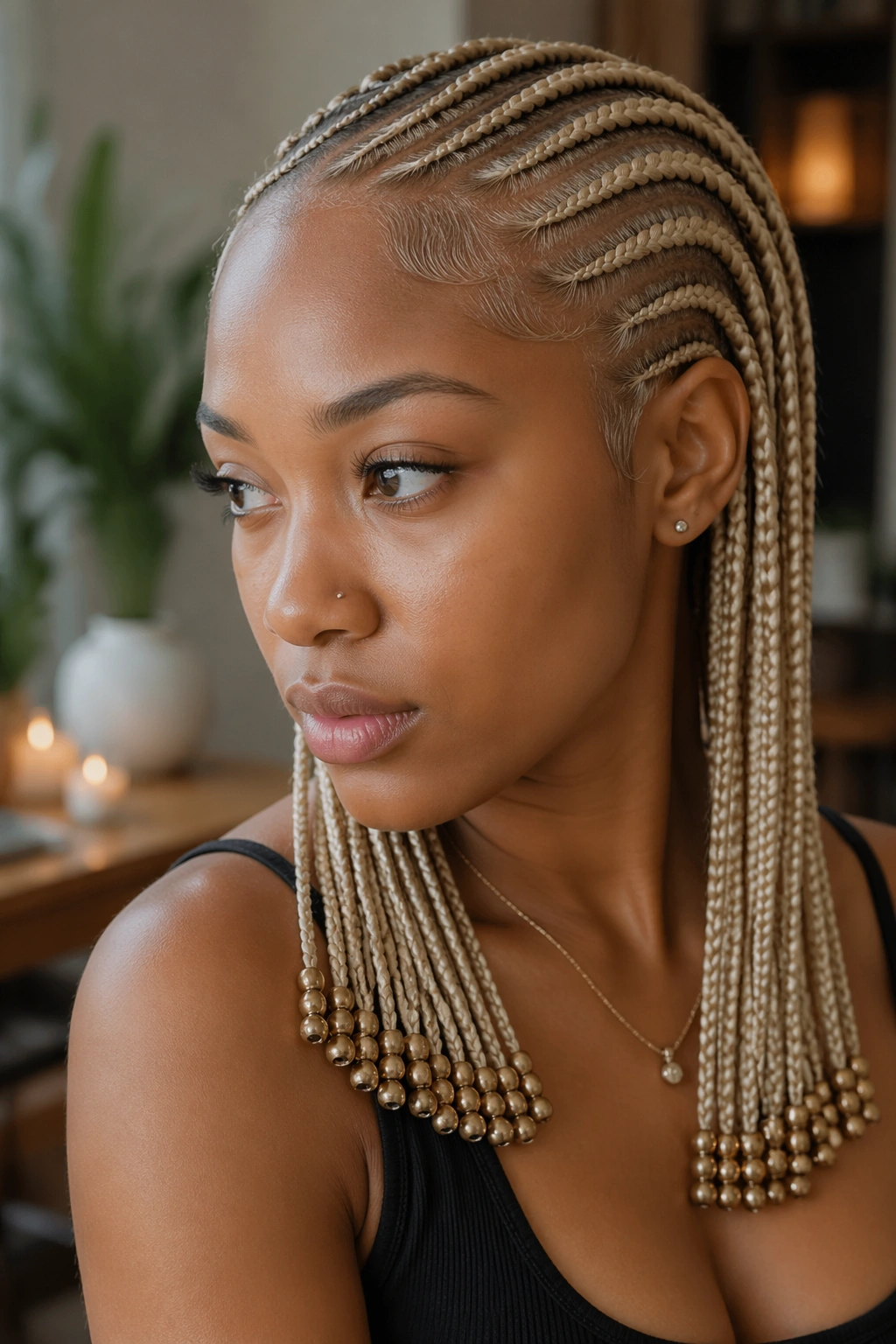
Pale champagne blonde — between platinum and honey — with small gold beads at the braid ends. The beads echo the champagne color and tie everything together.
Champagne is sophisticated. Reads expensive even on simple cornrow patterns.
Use brass or matte gold beads. Shiny gold can look cheap.
18. Ash Blonde Mohawk Cornrows
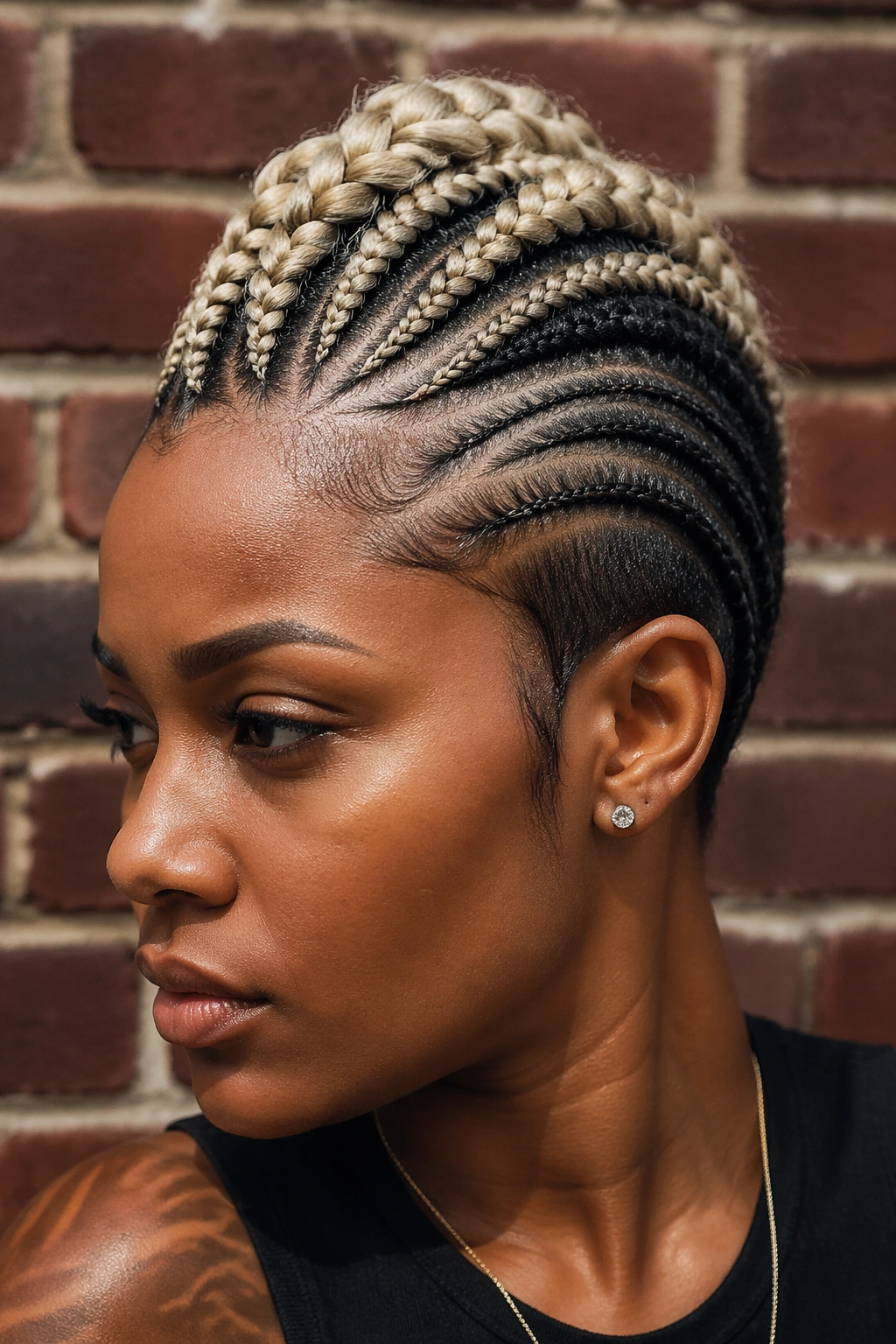
Cool ash blonde cornrows in a mohawk strip down the center, with sides slicked flat in the natural dark color. The contrast between cool blonde top and dark sides reads sharp and architectural.
Ash blonde mohawks photograph stunningly. The cool tone and graphic shape combine into something almost sculptural.
For cool undertones only.
19. Ginger Blonde Goddess Style
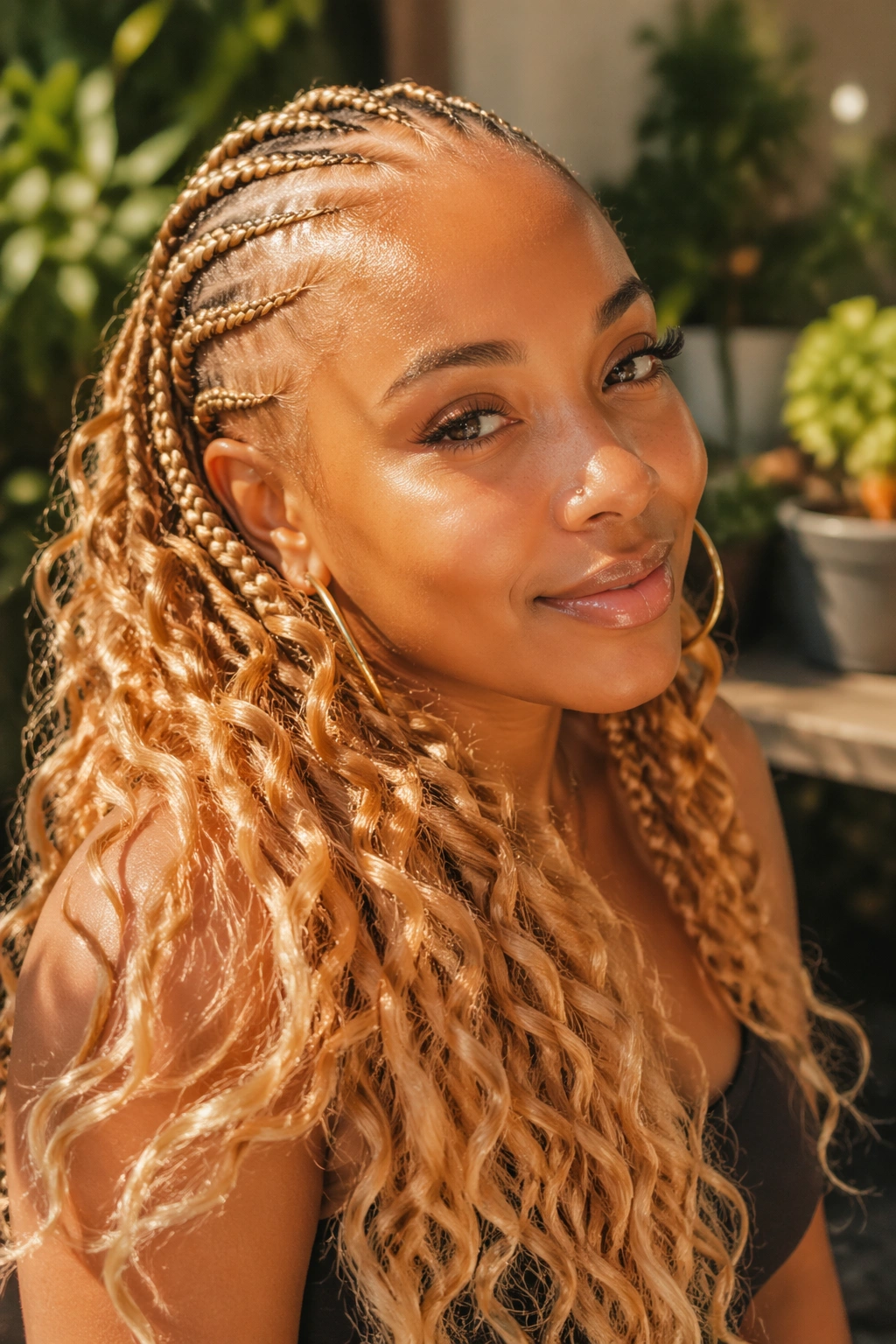
Ginger blonde — that warm, copper-laced blonde with strong red undertones — in a goddess style with curly ends. The warm color makes the curls look like firelit waves.
Ginger blonde flatters warm undertones beautifully and looks autumnal year-round.
Avoid pairing with bright red lipstick — the colors compete. Try a brown-red or mauve lip instead.
20. Two-Tone Blonde Sectioned Cornrows
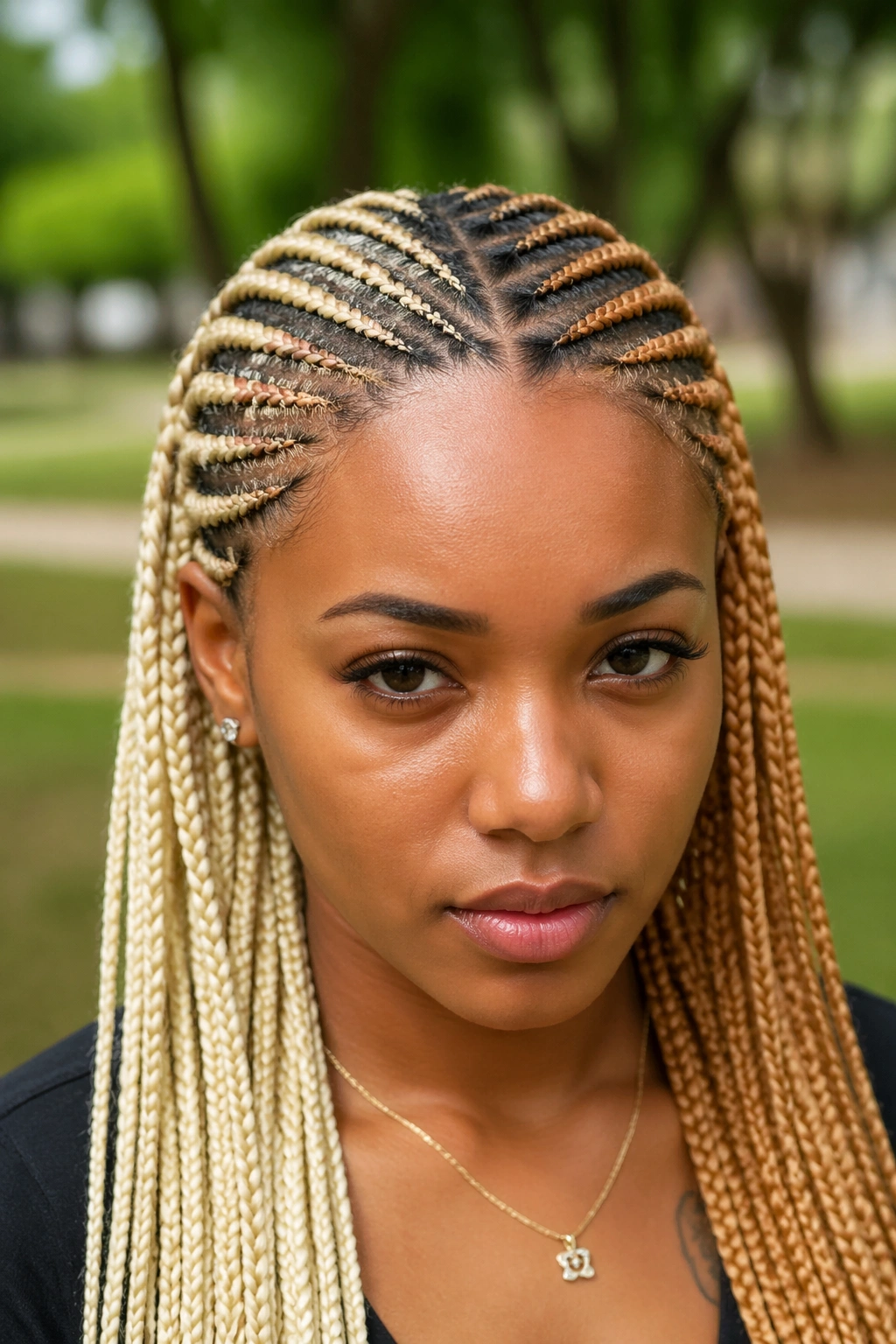
The head is divided into sections, each section in a different blonde tone. Could be honey on the right side, platinum on the left, with dark roots throughout.
The sectioning needs to be clean — straight visible parts dividing the color zones. Mushy transitions ruin the effect.
A creative styling approach. Reads art-school confident.
21. Pearl Blonde Crown Braids
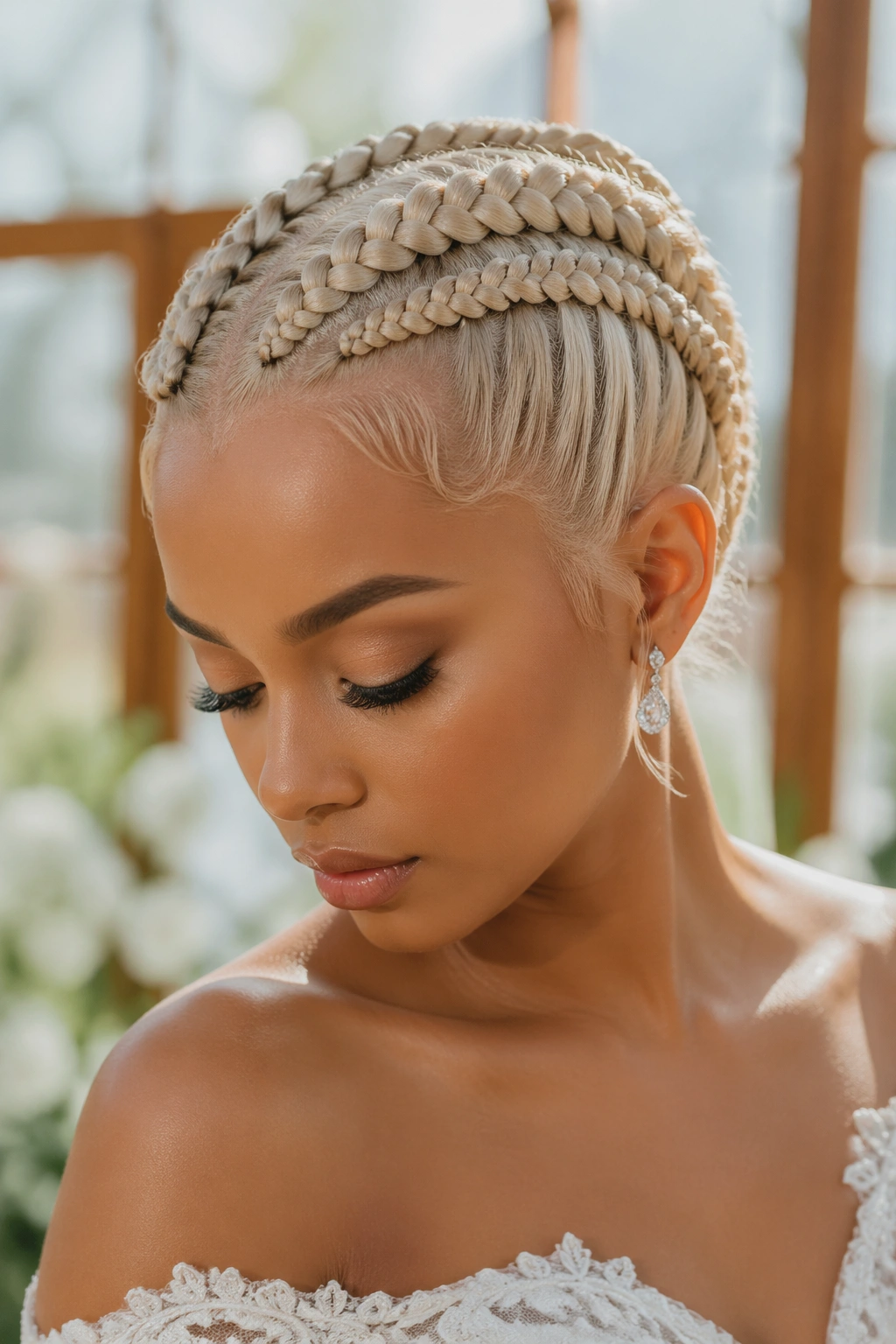
The palest, most ethereal blonde — pearl blonde — wrapped around the head as crown braids. Almost-white, with slight cool undertones.
Bridal styling. Wedding photoshoots. Galas.
Pearl blonde requires perfect lighting to look its best. Under fluorescent lights it can read sickly. Plan accordingly for events.
22. Streaked Blonde Cornrows
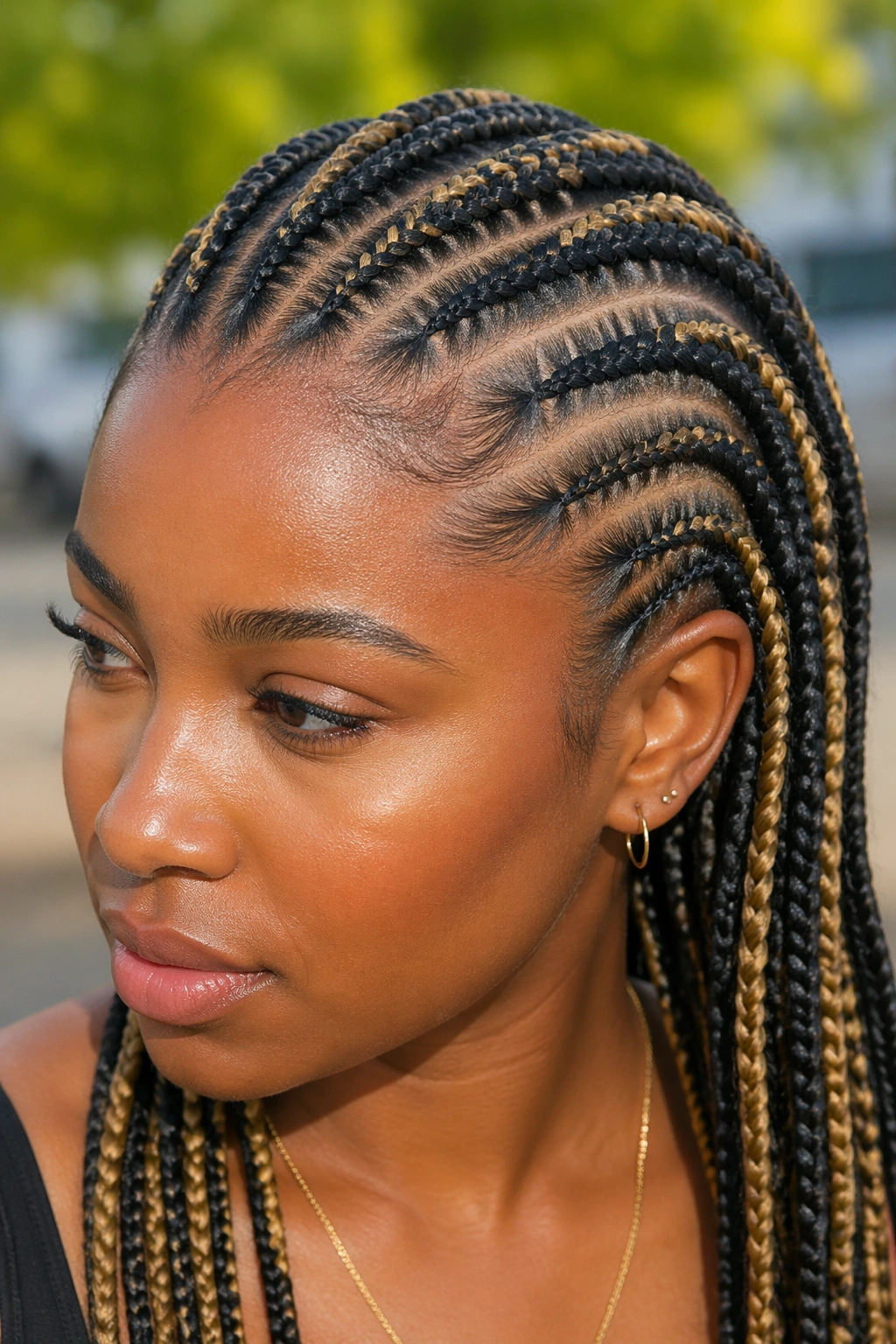
Random thin blonde streaks woven into otherwise natural cornrows. Not full blonde braids — just streaks of color within otherwise dark braids.
The streaks happen during installation. The braider weaves a few strands of blonde kanekalon into specific braids alongside the natural color.
Subtle, modern, and doesn’t read as fully committed to blonde. Easier to grow out and remove than full blonde installs.
Caring for Blonde Cornrows
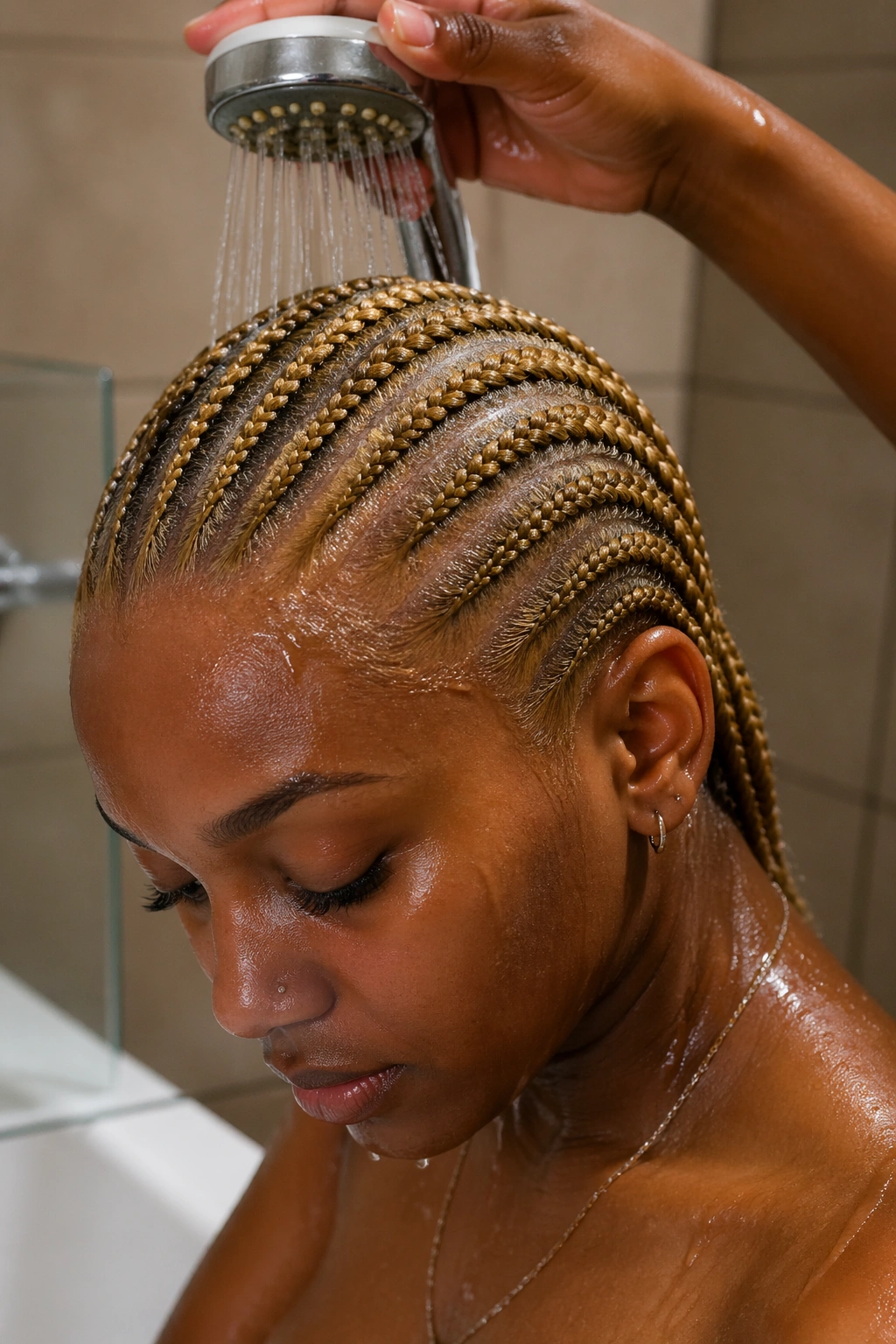
Blonde fades. That’s just chemistry. But there’s a lot you can do to slow it down.
Wash with sulfate-free shampoo only. Sulfates strip color from synthetic kanekalon faster than they strip color from real hair. A clarifying wash once a month is fine; weekly clarifying is not.
Use cool water for rinses. Hot water opens up the synthetic fiber structure and accelerates color loss.
A blue or purple shampoo every 2-3 weeks helps neutralize brassiness in cool blondes (ash, platinum). Skip the toning shampoo on warm blondes (honey, butter, caramel) — toning makes warm blondes look gray.
Protecting Blonde From Sun and Sweat
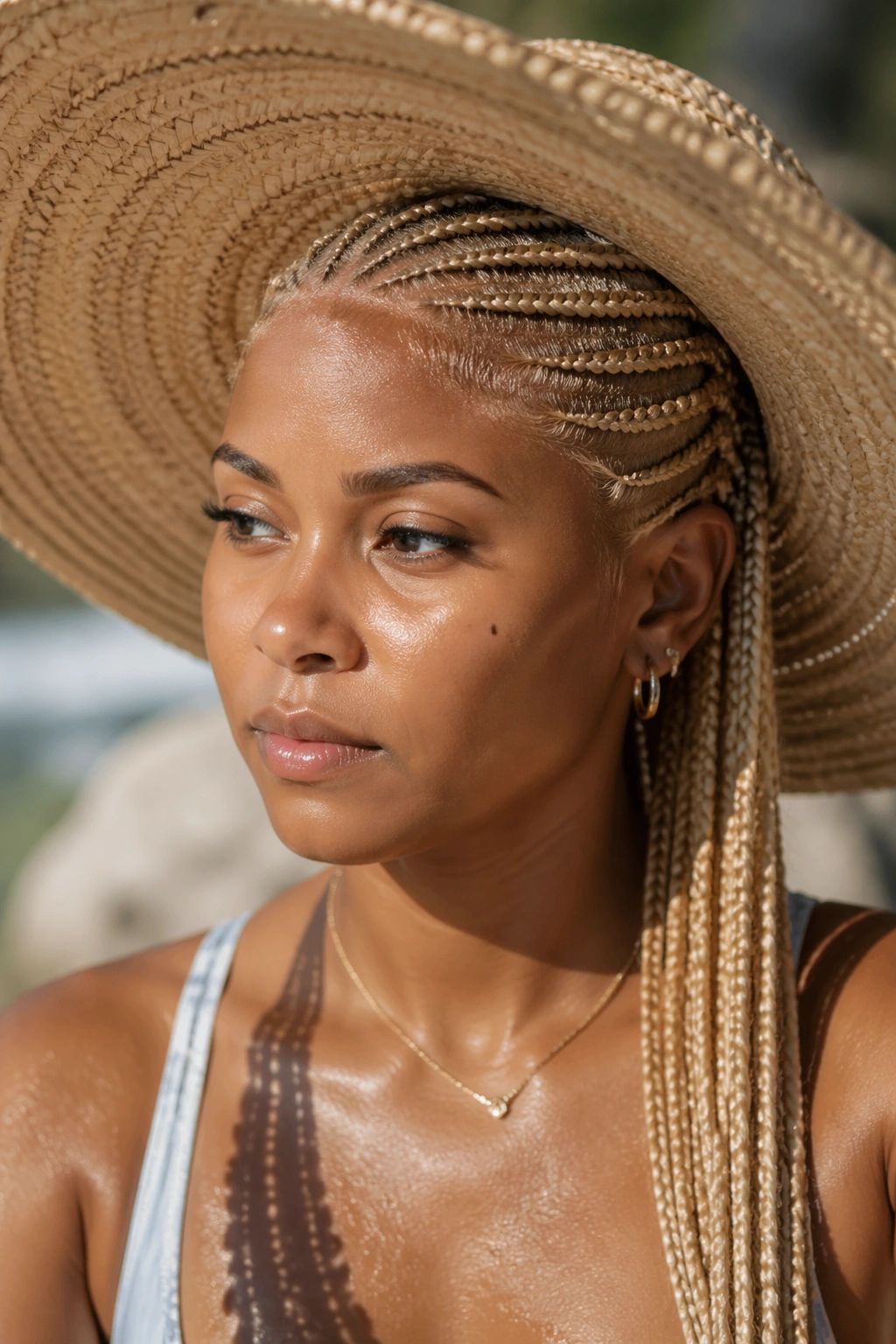
UV breaks down synthetic color the same way it breaks down real hair color. Wear a wide-brimmed hat in direct sun, especially in summer. Spritz a UV-protective hair spray on the braids before going outside.
Sweat is acidic and accelerates yellowing in cool blondes. Rinse the scalp with cool water after workouts. Don’t let sweat sit against the kanekalon for hours.
Pool chlorine is the worst. It turns platinum greenish within one swim. Rinse with fresh water immediately after the pool, then apply a leave-in conditioner to coat the braids.
Sleeping in Blonde Cornrows
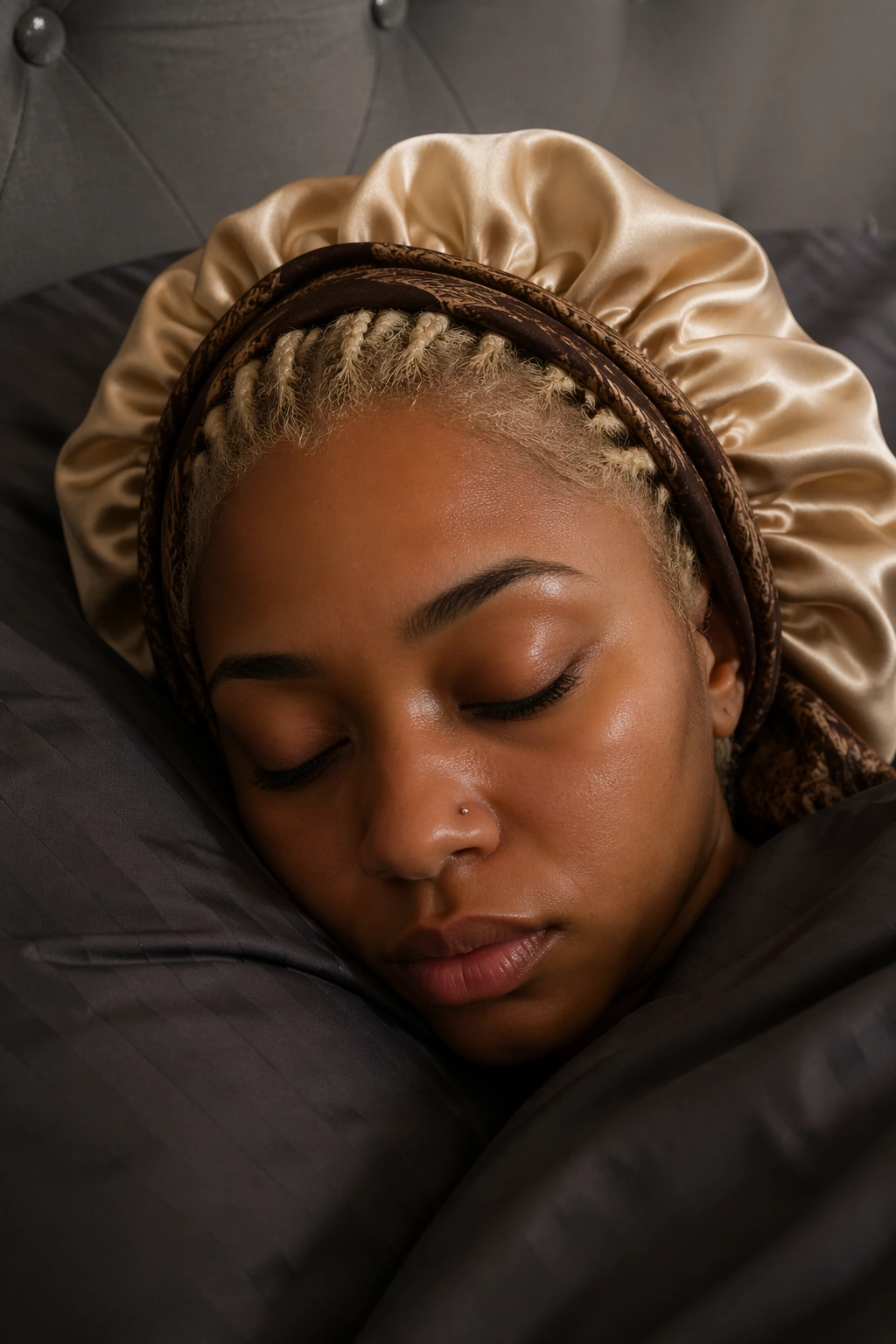
A satin bonnet is mandatory. Cotton pillowcases create friction that fluffs the blonde fibers, making them look fuzzy and faded faster than they should.
Long blonde styles benefit from being loosely wrapped in a silk scarf inside the bonnet. The scarf keeps the lengths together so they don’t tangle against the bonnet’s interior.
Avoid sleeping with damp blonde braids. The combination of moisture, friction, and heat from your scalp causes mildew or odor over a few nights.
Refreshing Blonde Color Mid-Wear
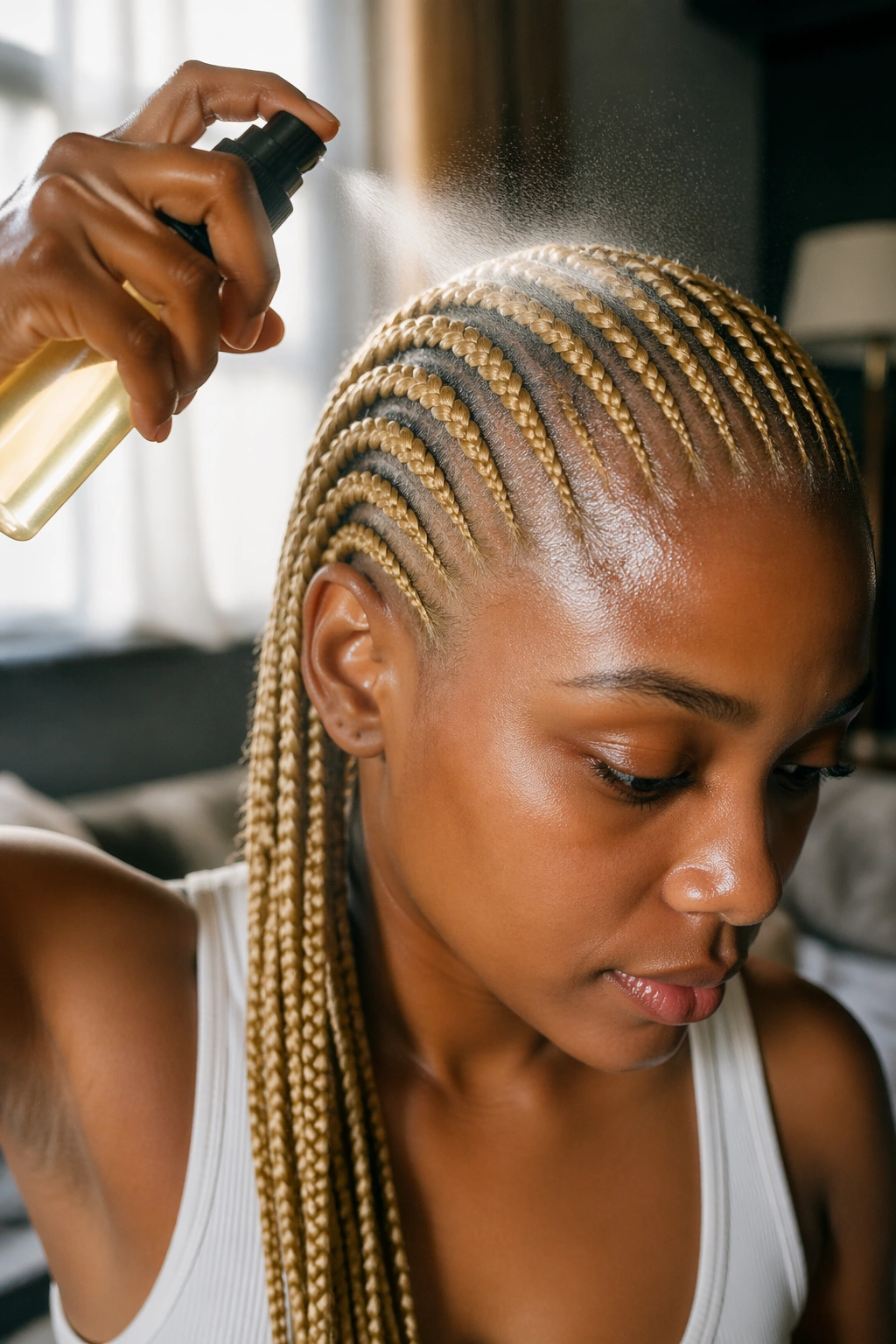
If your blonde starts looking dull or flat by week 3-4, a few tricks revive it.
A water-and-leave-in spray brings back shine instantly. Just enough moisture to perk up the fibers.
For dramatic refresh, a temporary spray-on color (matched to your blonde) can re-tint faded sections. Don’t use permanent hair color on synthetic fiber — you’ll damage the kanekalon and possibly your scalp.
A light coating of clear shine spray (the kind made for braids) gives the blonde renewed luminosity for a few hours.
When the Blonde Has Faded Past Saving
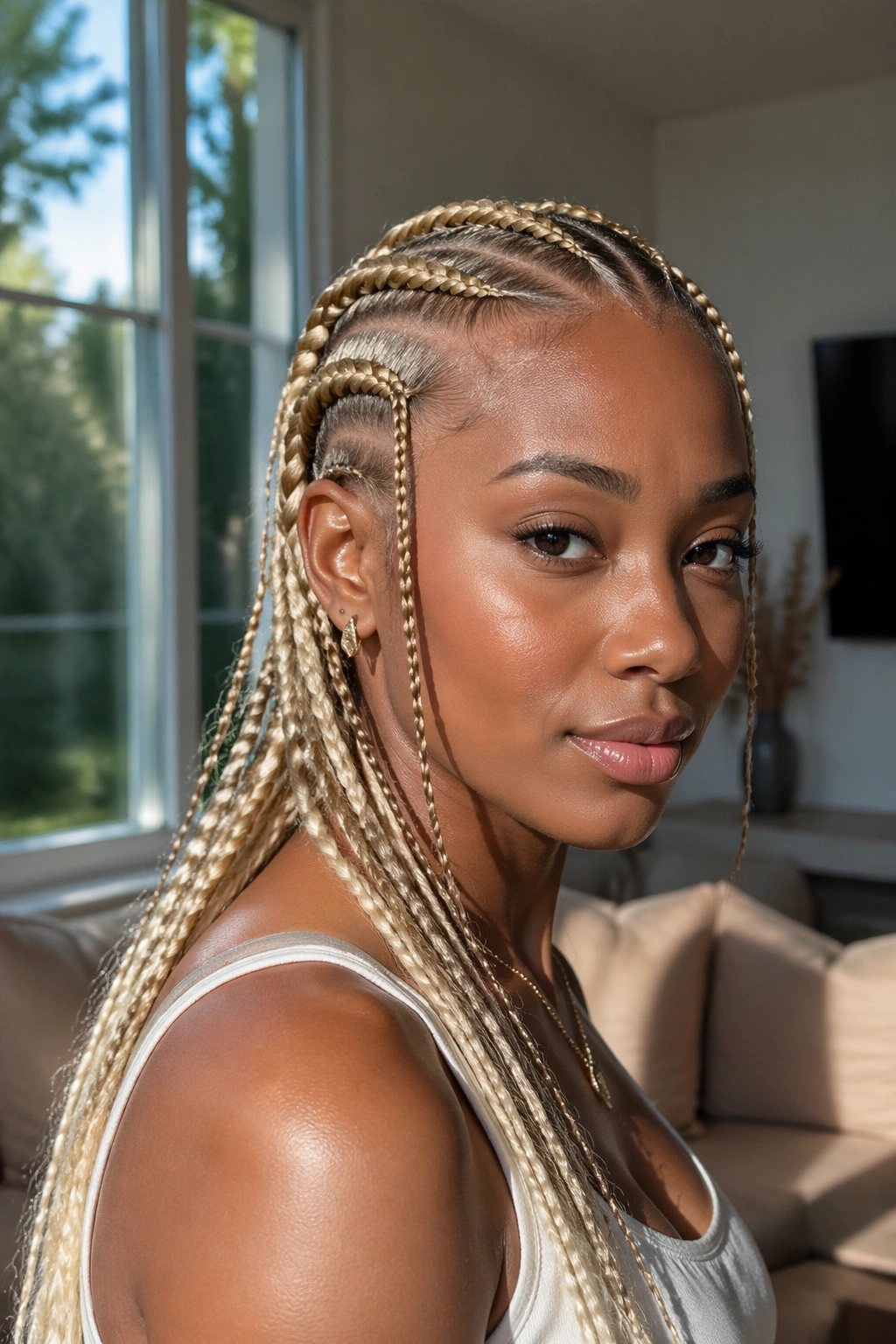
Blonde cornrows usually look their best for 4-5 weeks. By week 6, even the most carefully maintained blonde will look noticeably faded compared to install day.
That’s your cue. Take them down, give your scalp a few days to breathe, and reinstall with fresh kanekalon if you want to keep the style.
Trying to push blonde cornrows past 6-7 weeks rarely ends well. The fade becomes obvious to everyone but you, and you risk looking like you stopped caring.
Choosing Your Blonde Shade Confidently
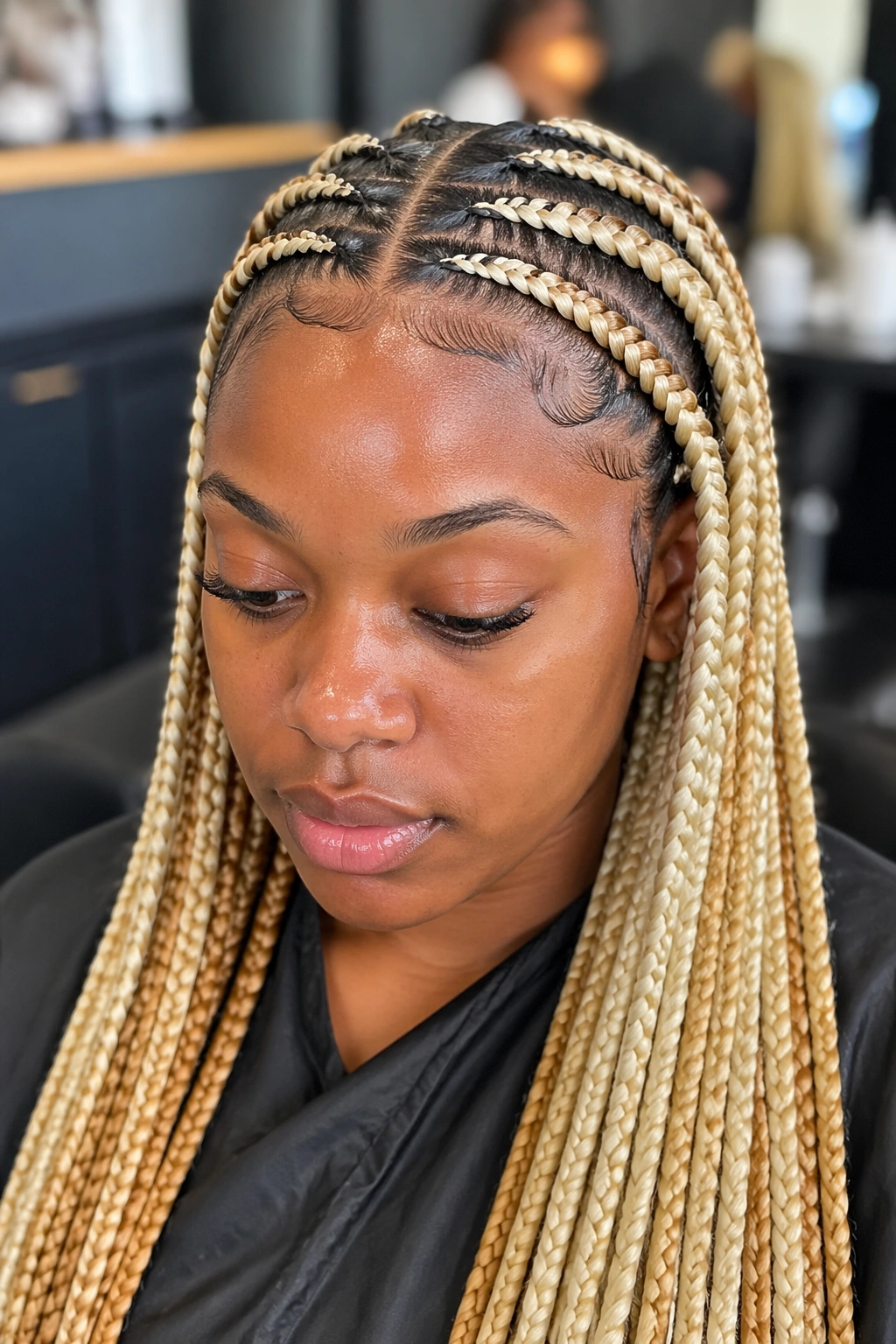
Blonde isn’t a single decision — it’s a series of small ones. Undertone first. Then intensity (subtle highlights to full bleach). Then specific shade within that intensity. Then style (braid pattern, length, finish).
If you’ve never worn blonde cornrows, start with money piece or ombre. Both let you test how blonde reads on your skin without full commitment. If you love it, scale up to all-over color next install.
If you’ve worn blonde before and loved it, push the boundary next time. A new shade. A bolder blonde. A different blonde-and-pattern combination.
The right blonde cornrow style doesn’t just look good. It looks like the version of you that’s most fully turned up.
