



Needle cornrows for kids have a soft spot in my hair routine because they solve a problem most parents face: how to give a child a protective style that lasts more than a few days without putting too much tension on a young scalp. The needle technique uses a fine crochet hook or a literal beading needle to weave hair into precise, slim cornrow patterns that lie flat against the scalp without the bulk of standard braids. For little girls with tender heads, fine textures, or short natural hair that struggles with thicker braiding, needle cornrows are one of the most forgiving styles available — they hold their shape, protect the ends, and let scalps breathe in a way chunkier installs don’t.
Kids have different hair priorities than grown women. Comfort is non-negotiable. Tension that an adult might tolerate can have a child crying in the chair within minutes. Lifestyle matters too — kids run, swim, sleep funny, sweat heavily, and don’t think twice about pulling at their own hair. A needle cornrow style for a child needs to survive all of that and still look cute on Monday morning.
What Makes Needle Cornrows Different from Standard Cornrows
The needle technique uses a small crochet hook (size 0.5mm to 0.75mm) or a long beading needle to thread tiny sections of hair through previously braided segments. The result is a pattern of cornrows that look like they were stitched onto the scalp — incredibly precise, very slim, and lying perfectly flat without the volume that traditional under-hand or over-hand braiding creates.
For kids, this matters because the technique requires far less pulling. The braider isn’t yanking three strands tight in opposite directions. They’re guiding a hook gently through pre-set sections. Less yanking means less crying, less scalp soreness, and fewer broken hairs at the root.
Why This Style Suits Children Specifically
Kid-friendly hair styles need to check several boxes that adult styles don’t. They need to be quick (most kids cap out at 90-120 minutes of sitting). They need to be light (heavy installs cause headaches in small heads). They need to last (parents don’t have time to redo hair every three days). And they need to be comfortable to sleep in.
Needle cornrows hit all four. Install times run shorter than full feed-ins. The braids weigh almost nothing because there’s minimal extension hair added. They last 1-3 weeks with proper care. And the flat profile lies smooth against a pillow without poking the scalp.
Tools You Need for Kid-Friendly Needle Cornrows
- Crochet hook size 0.5mm to 0.75mm (smaller for finer hair).
- Long beading needle as a backup option.
- Rat-tail comb with a smooth metal tip.
- Spray bottle with water and a few drops of conditioner.
- Pre-stretched kanekalon, very small bundles.
- Kid-safe edge gel — water-based, no alcohol.
- Soft satin scrunchies for sectioning.
- A small mirror at the child’s eye level so they can see what’s happening.
Tip: Let the child hold a fidget toy, watch a favorite show on a tablet, or have a favorite snack during the install. The braider has more freedom to work when the child isn’t squirming with boredom.
Prep Work That Saves Tears
Detangle the night before, never the day of. Tangled hair plus a long install equals a bad memory the child will resist next time you try to braid.
Wash with a tear-free shampoo or a gentle sulfate-free option made for kids. Deep condition with a moisturizing mask, leave on for 15-20 minutes during a bath, rinse fully. Once dry, stretch the hair with chunky two-strand twists overnight or band it into stretched sections.
Day of, work in small clean sections, use a mister bottle to keep the hair pliable, and let the child take breaks when they need them.
How Long They Should Last on a Child
One to three weeks. I’d cap it at three for any child under twelve. Kids’ scalps need air and movement. Past three weeks, lint and dust collect at the parts, the scalp itches, and the style needs to come down.
Two weeks is the sweet spot for school-age kids. Long enough to make the install worth the time. Short enough to avoid the buildup that comes with longer wear.
When to Skip Needle Cornrows
Don’t try this style on a child who can’t sit still for at least 90 minutes. The needle technique is precise; rushed installs look uneven. Don’t try it on a child with a sore scalp from a previous install — the scalp needs healing time. And skip it if the child’s natural hair is in active transition or breakage. Trim and treat first.
1. Simple Three-Braid Needle Style
Three slim needle cornrows running straight back from the hairline to the nape. The simplest version of the style and the one I’d start any first-time needle install with.
Why It Works
Three braids means three parts. The child can sit through the install in under an hour. The look reads neat without being ornate. Easy to refresh, easy to take down.
- Install time: 45-60 minutes.
- Lasts: 1-2 weeks.
- Best for: school days, sports practices, hot weather.
Tip: Tie a small satin ribbon at the bottom of each braid for a finished look that suits younger kids.
2. Heart-Shape Parted Needle Cornrows
A heart shape at the front of the head, with needle cornrows feeding from the heart’s outline back to a low ponytail or bun. The heart adds whimsy without much extra install time.
The heart needs to be drawn cleanly with the comb tip before braiding starts. Once the parts are in, the needle work goes quickly because the technique is so precise.
A great Valentine’s Day style or birthday-week hairstyle. Reads sweet without going overboard.
3. Needle Cornrows with Beads
Small plastic beads in pastels or primary colors threaded onto the ends of the cornrows. Kids love beads. They click when the child moves and add visual interest that tiny hands can fidget with.
Use beads that are large enough to be safe (no swallowing risk) and secured with a rubber band or elastic stopper at the bottom.
Stick to plastic beads for kids — wooden ones can splinter, and metal ones can crack against teeth or floors.
4. Side-Swept Mini Lemonade
A child-friendly version of the lemonade style. Needle cornrows sweep to one side and end at shoulder length or shorter. No long extensions, no waist-length tails, just a clean sideways flow.
The style flatters most face shapes and gives little girls a chance to feel grown-up without committing to long, heavy braids.
5. Needle Cornrows in Box Pattern
The head is sectioned into squares or rectangles, and each box contains its own short needle cornrow. The geometric look is structured and easy to maintain.
Best for kids with very short natural hair — the box pattern doesn’t require length to look complete.
6. Halo Crown Braid
A single needle cornrow wraps around the entire head like a crown, starting and ending at the same point behind one ear. The rest of the hair can be left natural in the center, or also needled for a fuller look.
Who This Is For
The halo crown suits kids with shoulder-length to long natural hair. The hair needs enough length to wrap fully around the head without breaking the line.
- Install time: 60-90 minutes.
- Lasts: 1-2 weeks.
- Best for: birthday parties, recitals, school photos.
The crown reads princess-y without being costume-y. A real win for kids who love feeling fancy.
7. Two-Pigtail Needle Cornrows
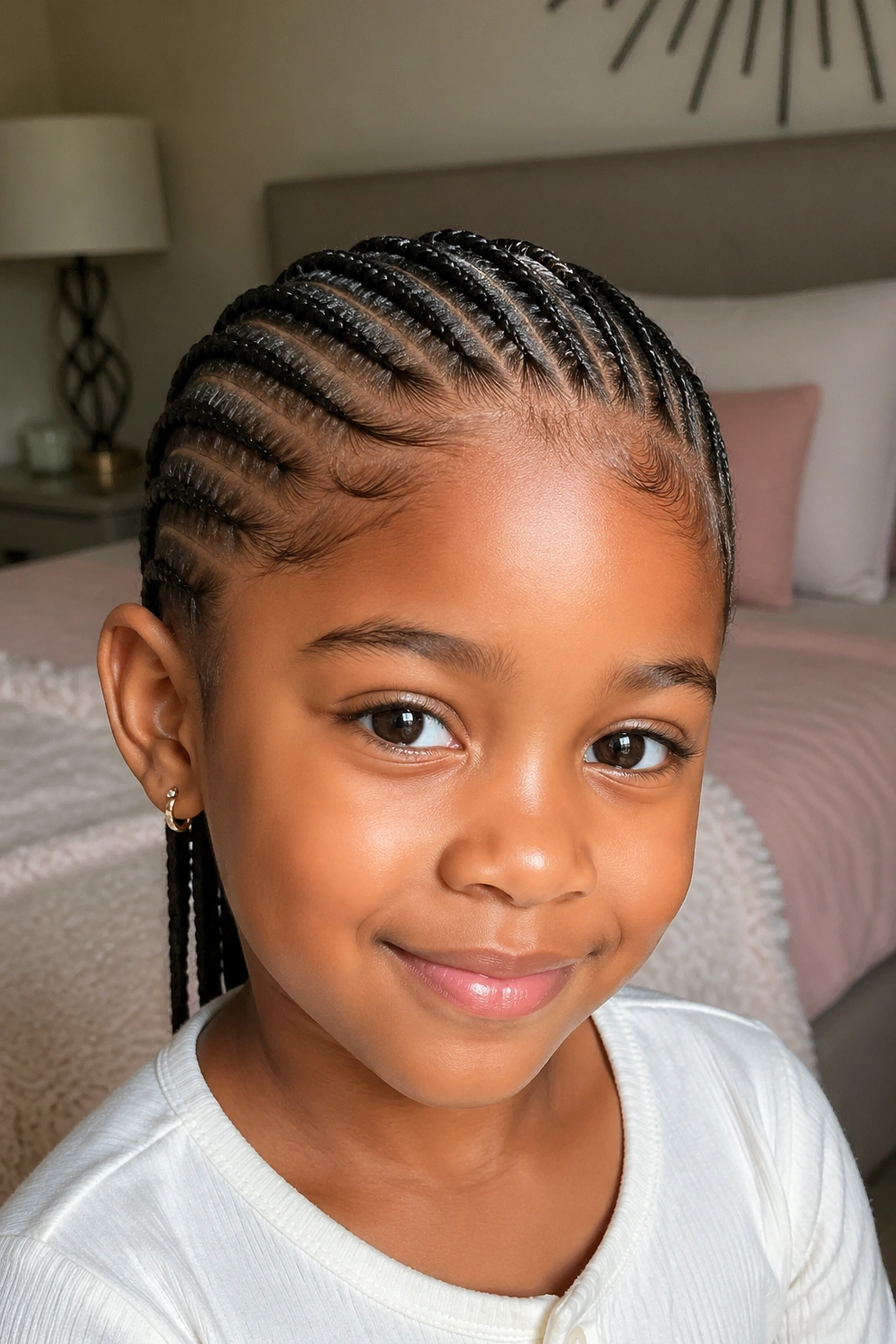
A center part splits the head, and each side has 3-4 needle cornrows that gather into a low pigtail with a satin scrunchie or beaded clip. Classic kid silhouette.
The pigtails can hang straight, be curled with flexi-rods, or finished with bows. Versatile across moods and occasions.
8. Star-Shaped Parting
Five-point star at the front or crown of the head, with needle cornrows feeding from each point back to a central gathering at the nape.
Asks a lot of the braider. Stars are harder to part cleanly than hearts or circles. Worth it for special occasions.
The child usually loves it because it feels like a secret design only seen from above. School photo season favorite.
9. Needle Cornrows with Curly Puff
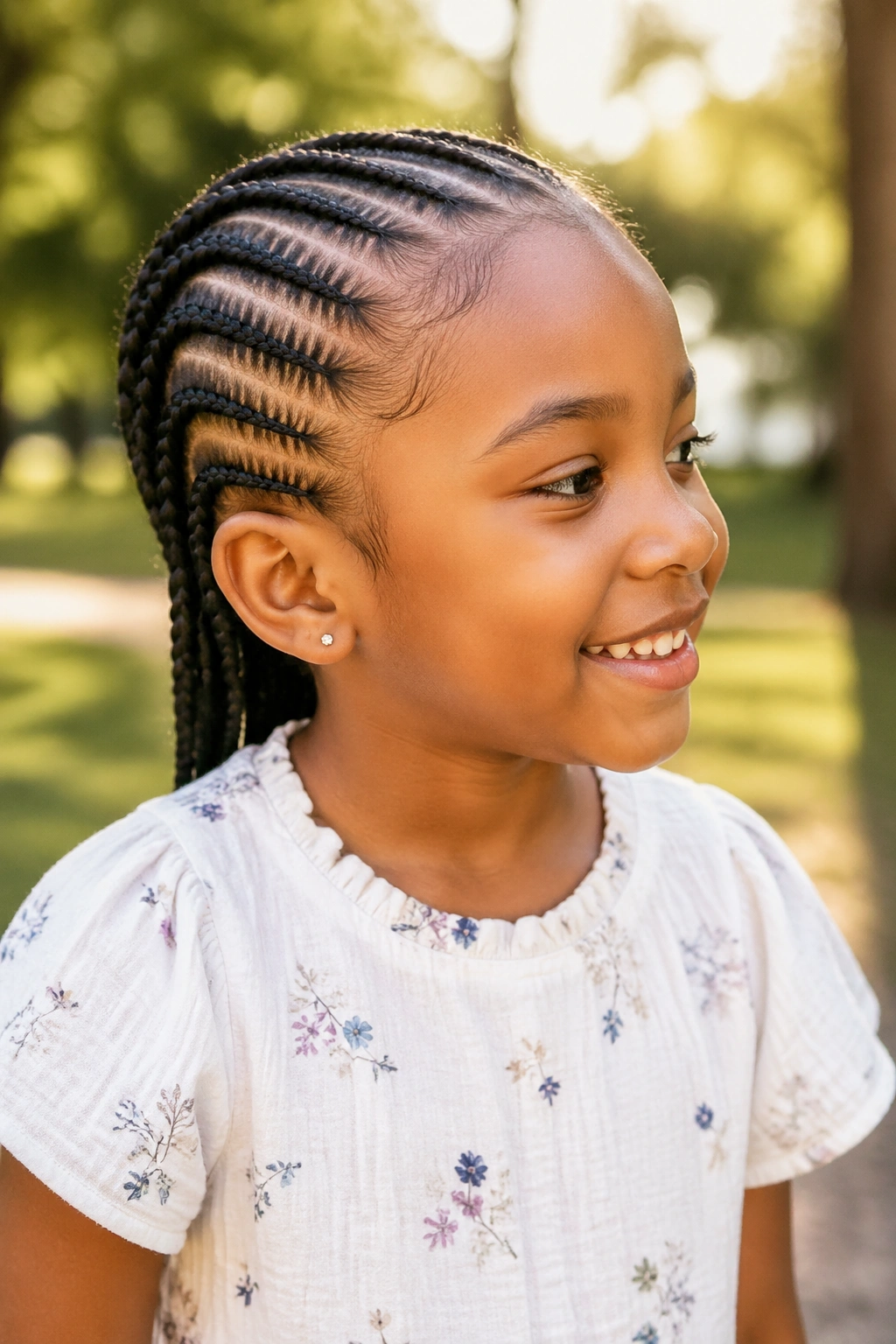
The crown of the head has needle cornrows feeding into a high puff of natural hair on top. The puff is the natural hair pulled up and secured into a ball, like a soft pom-pom.
The combination — sleek braids below, fluffy puff above — flatters round little faces beautifully.
10. Zigzag Parted Mini Needle
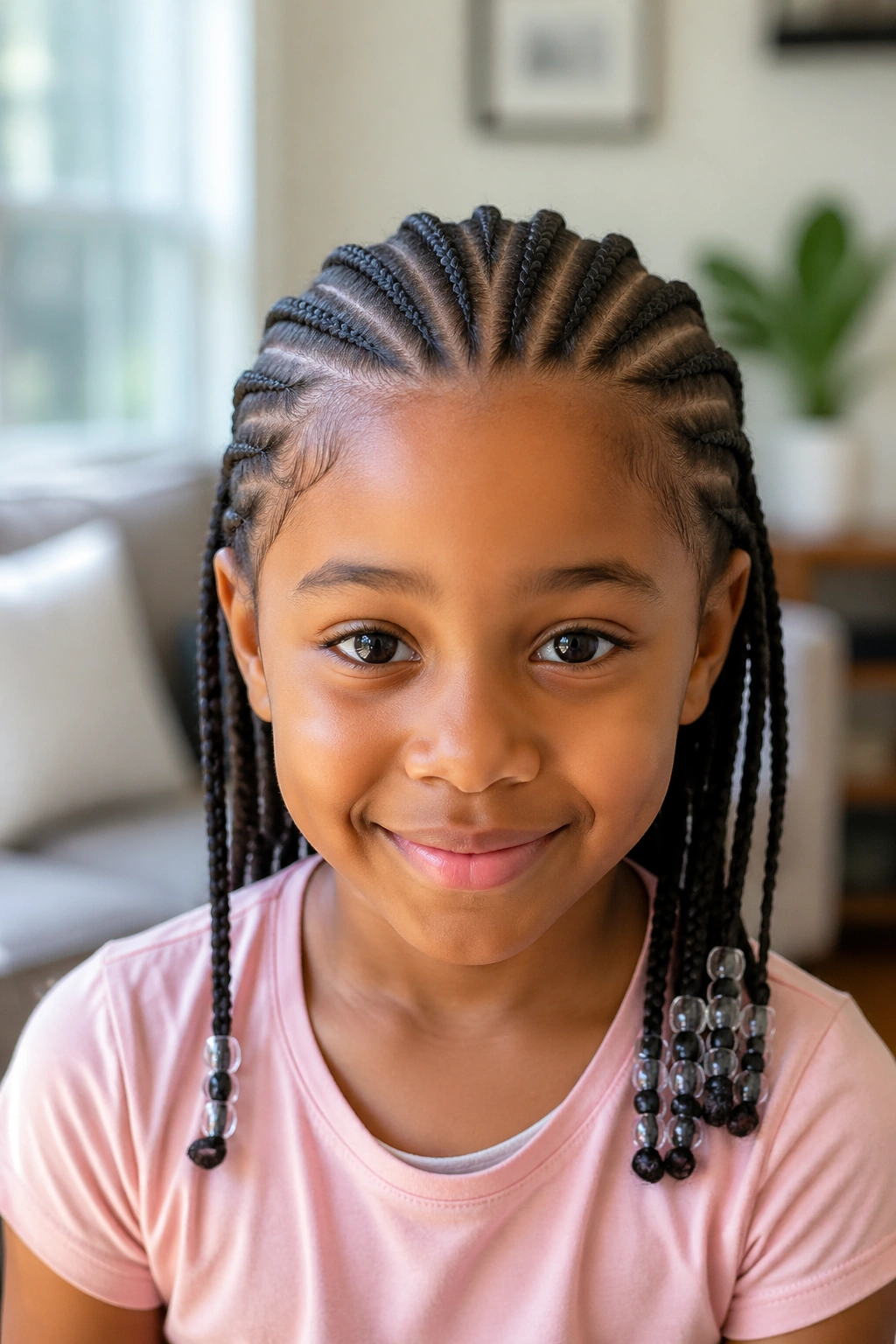
Zigzag parts at the front of the hairline, transitioning to straight parts behind. The zigzags add playful angles without making the whole head busy.
Best with 4-5 cornrows total. Too many braids dilute the zigzag.
11. Single Front Cornrow with Loose Back
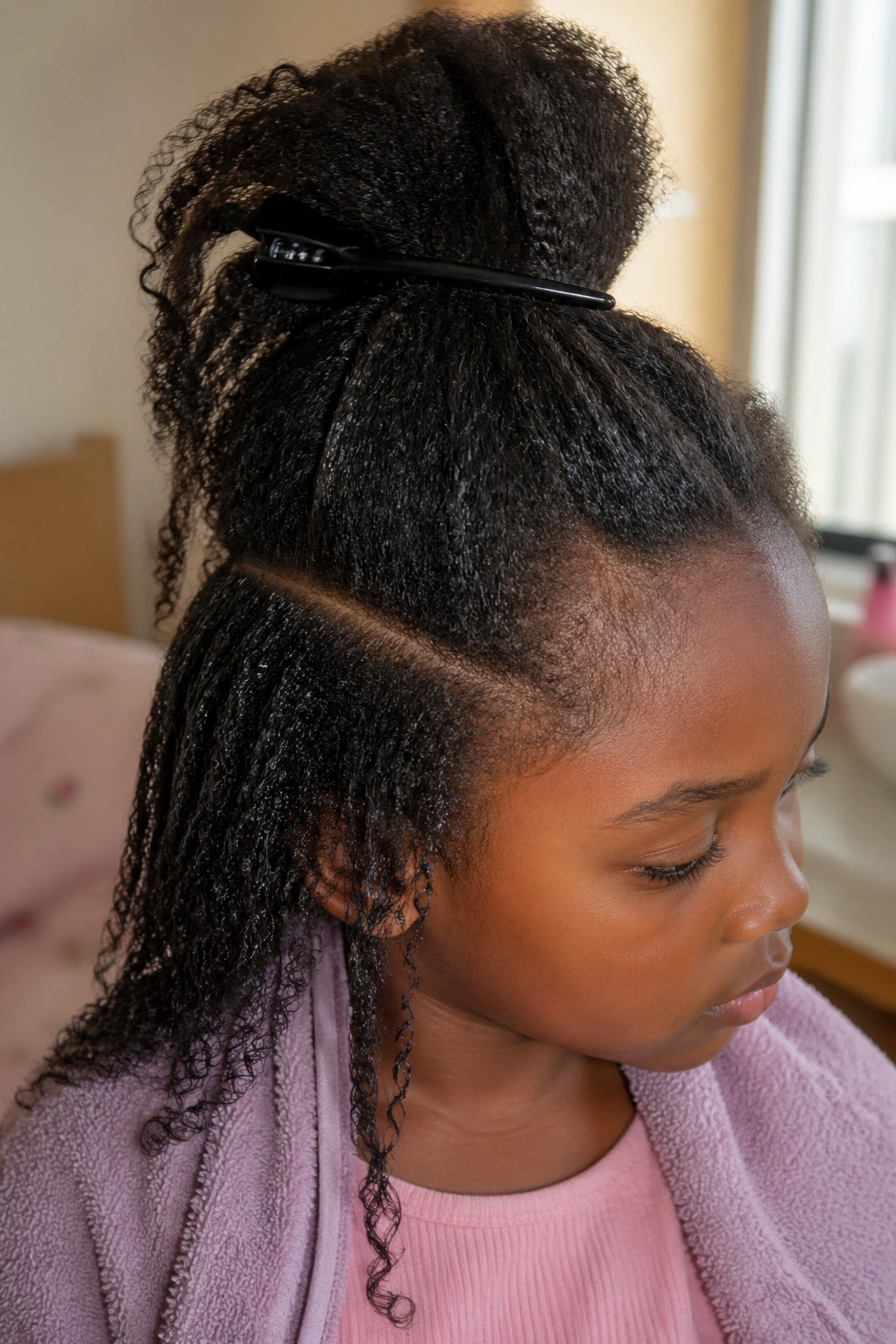
One large needle cornrow runs from the forehead straight back to the crown. The rest of the hair behind is loose, twisted, or puffed.
A halfway style for kids who can’t sit through a full install. Or for between-style refreshes when full braids would be too much.
12. Side Cornrow Braid Headband
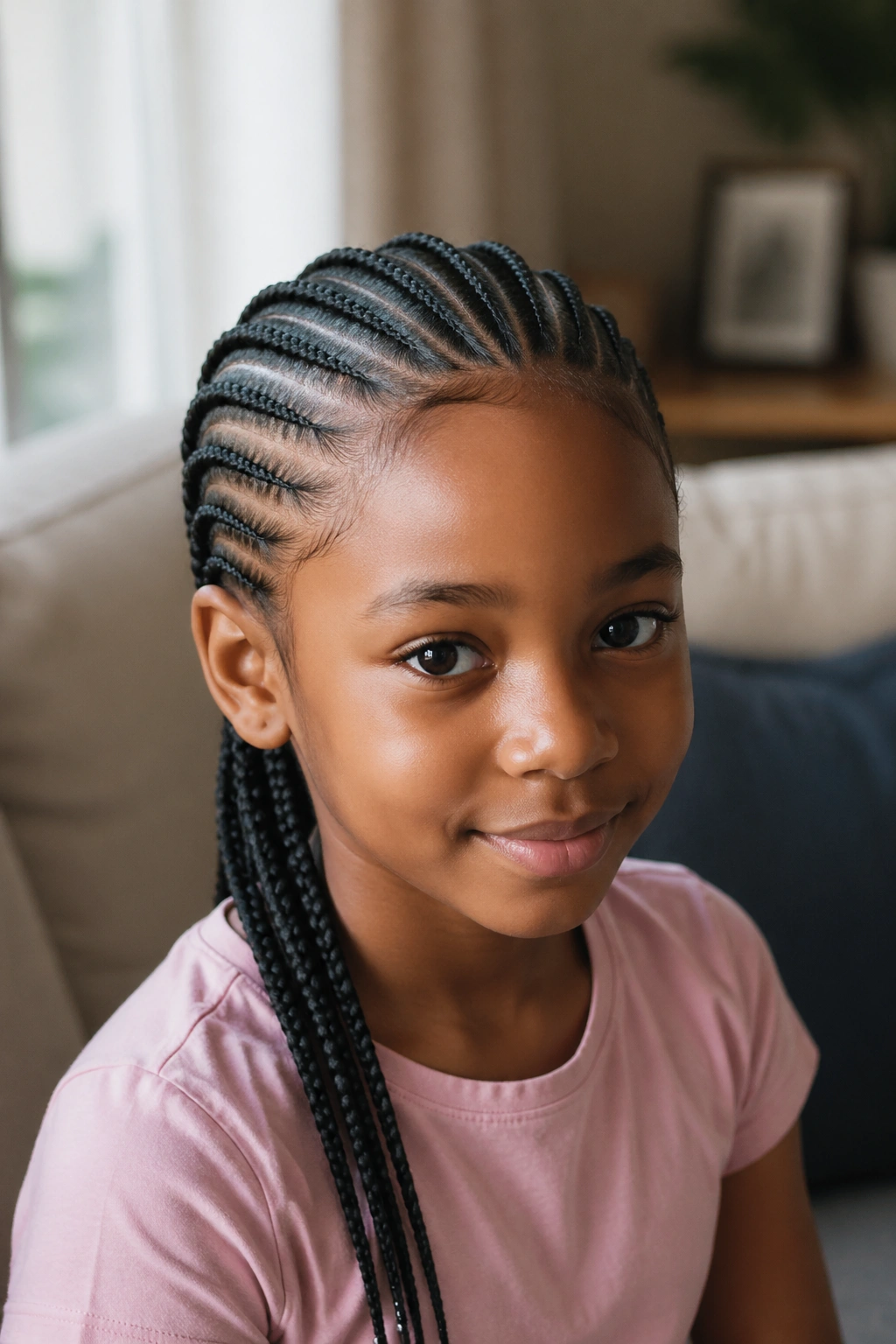
A single needle cornrow runs across the head like a headband, from one ear to the other. The rest of the hair is left out — natural curls, twists, or a puff.
Reads casual and easy. Great for everyday wear or weekend playdates.
13. Low Bun with Needle Cornrows
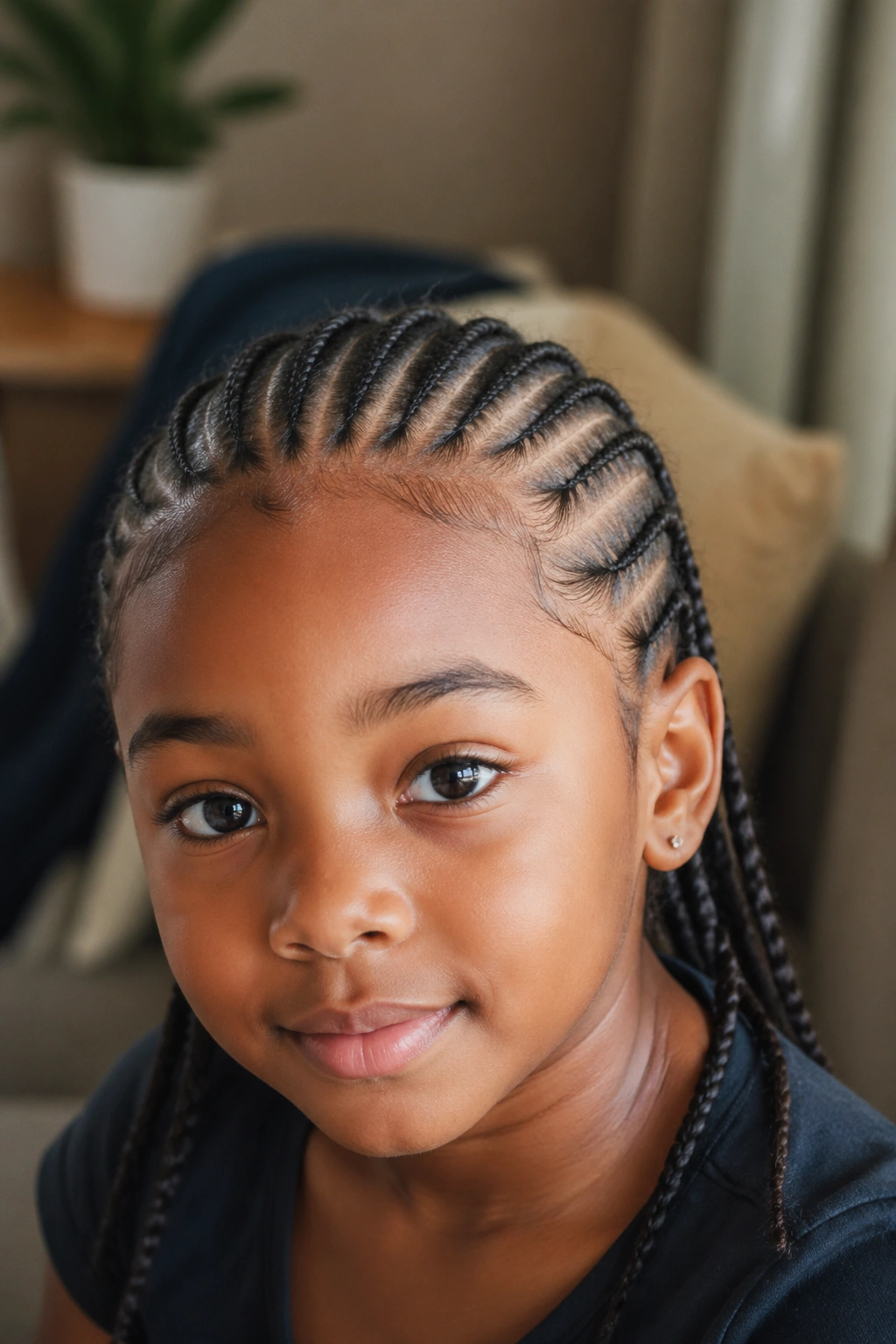
Four needle cornrows running back from the hairline to a small low bun at the nape. Cute, polished, and lasts well.
How to Style It
- Part the hair into 4 even sections, all running back.
- Install needle cornrows from front to back.
- Gather all tails at the nape and twist into a small bun.
- Secure with bobby pins covered with a small satin scrunchie.
- Add a bow if the occasion calls for it.
Tip: The bun should be small and low for kids — high or large buns put more weight on the scalp than necessary.
14. Cornrows with Loose Front Bang
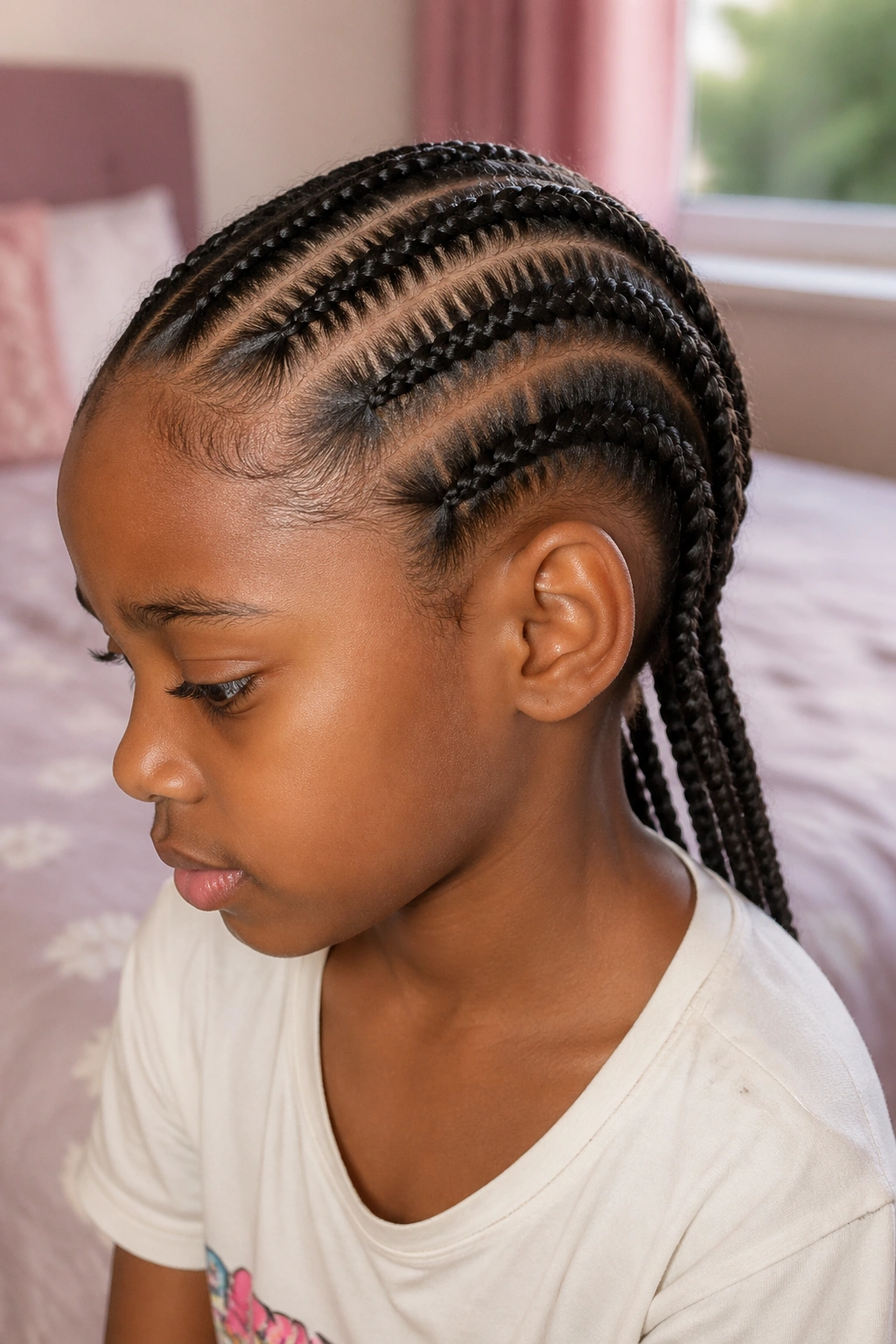
Needle cornrows starting an inch back from the hairline, with the front section left as a soft bang. The bang can be styled to one side or trimmed straight across.
Good for kids who don’t like having their hair pulled tight at the very front of the hairline. The loose bang releases tension where it tends to hurt most.
15. Curved Side-Sweep Needle
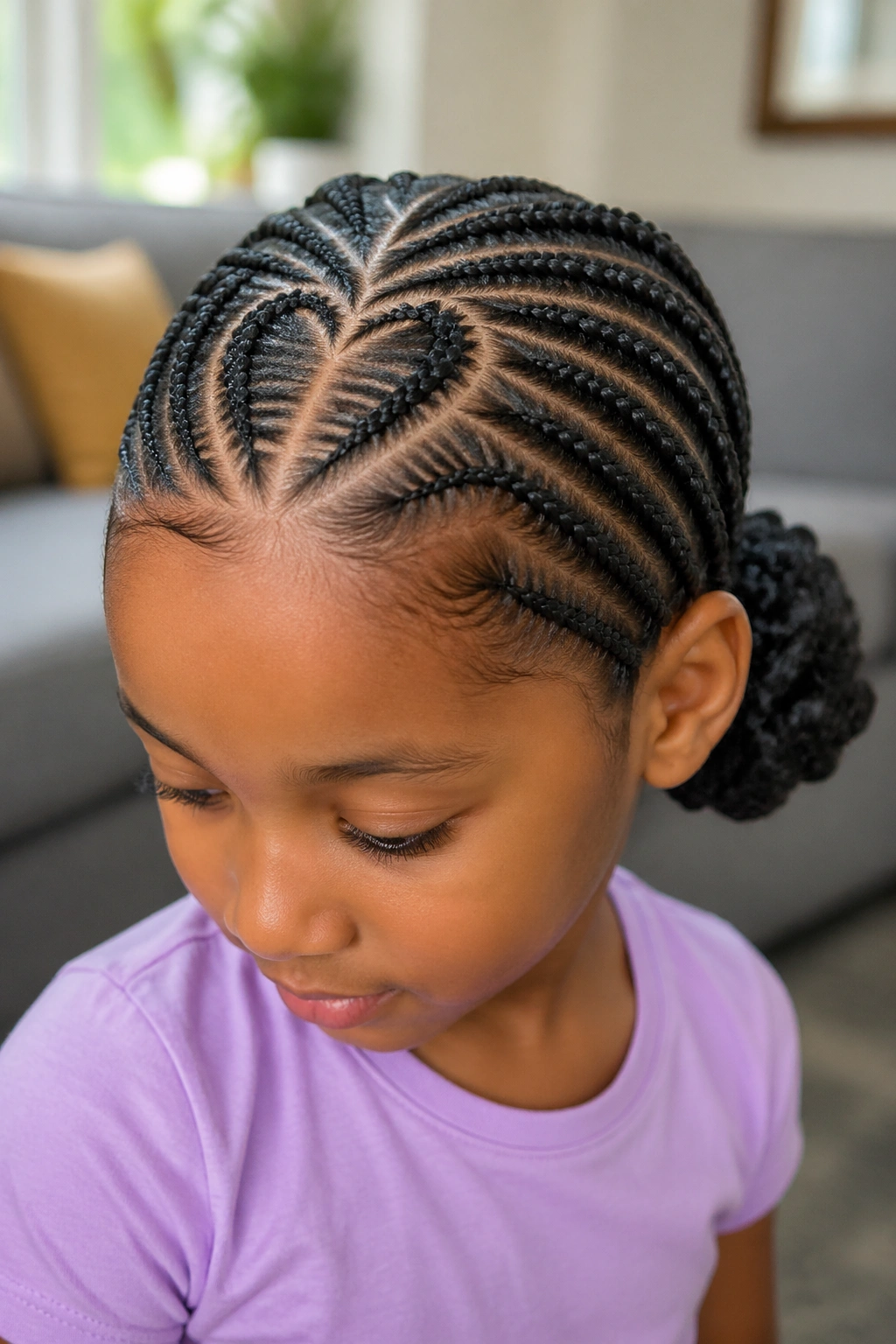
Needle cornrows that curve in gentle arcs from one side of the head to the other, rather than running in straight diagonal lines. The curves add motion to a flat install.
Curves take longer to part than straight lines. Allow extra install time.
16. Front Crown with Free Back
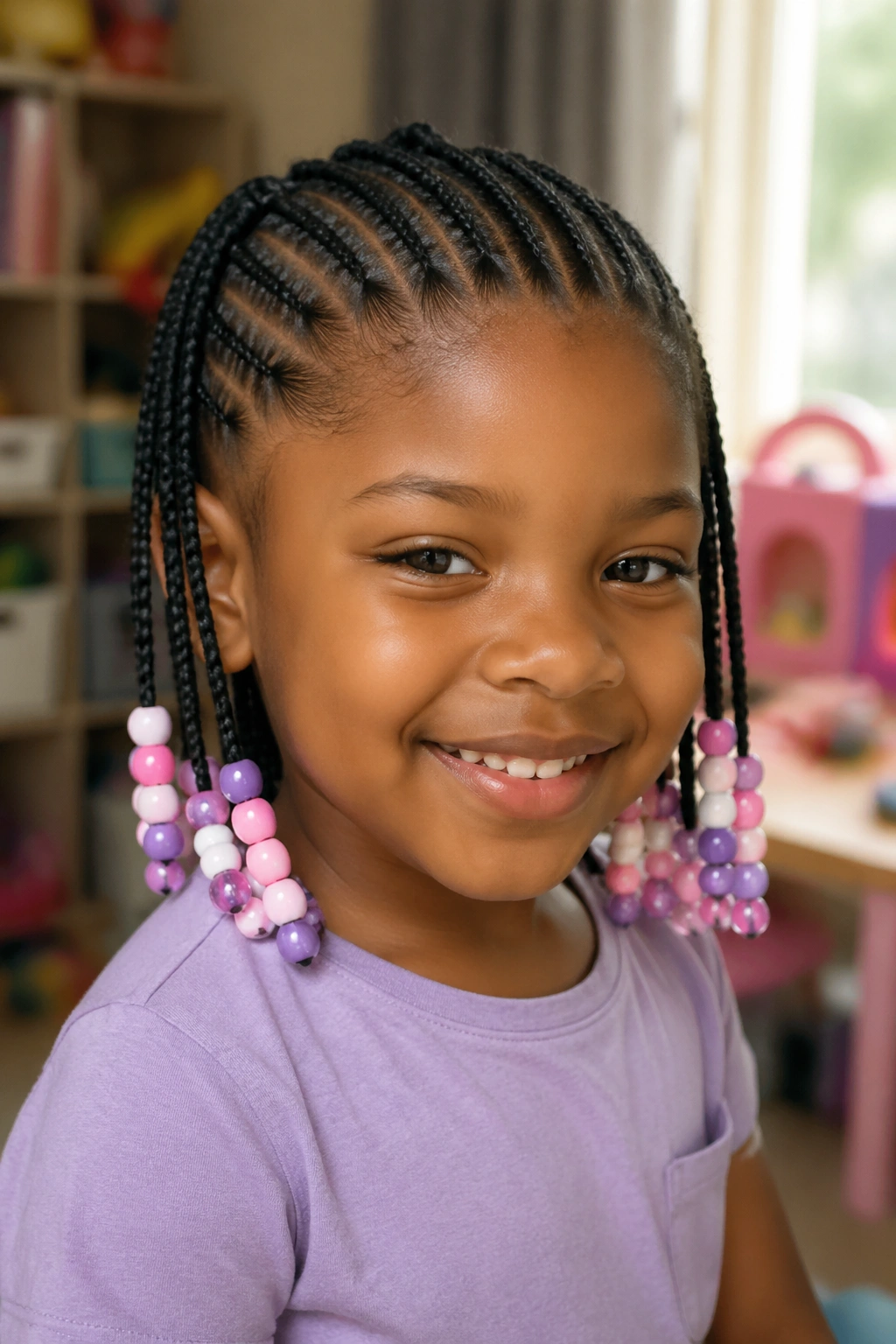
Cornrows from the front hairline to the crown, with the back of the head left as natural hair pulled into a small puff or low ponytail. Half protective, half free.
Lets the child wear their natural hair partially while protecting the front from styling stress.
17. Needle Cornrows with Ribbon Wrap
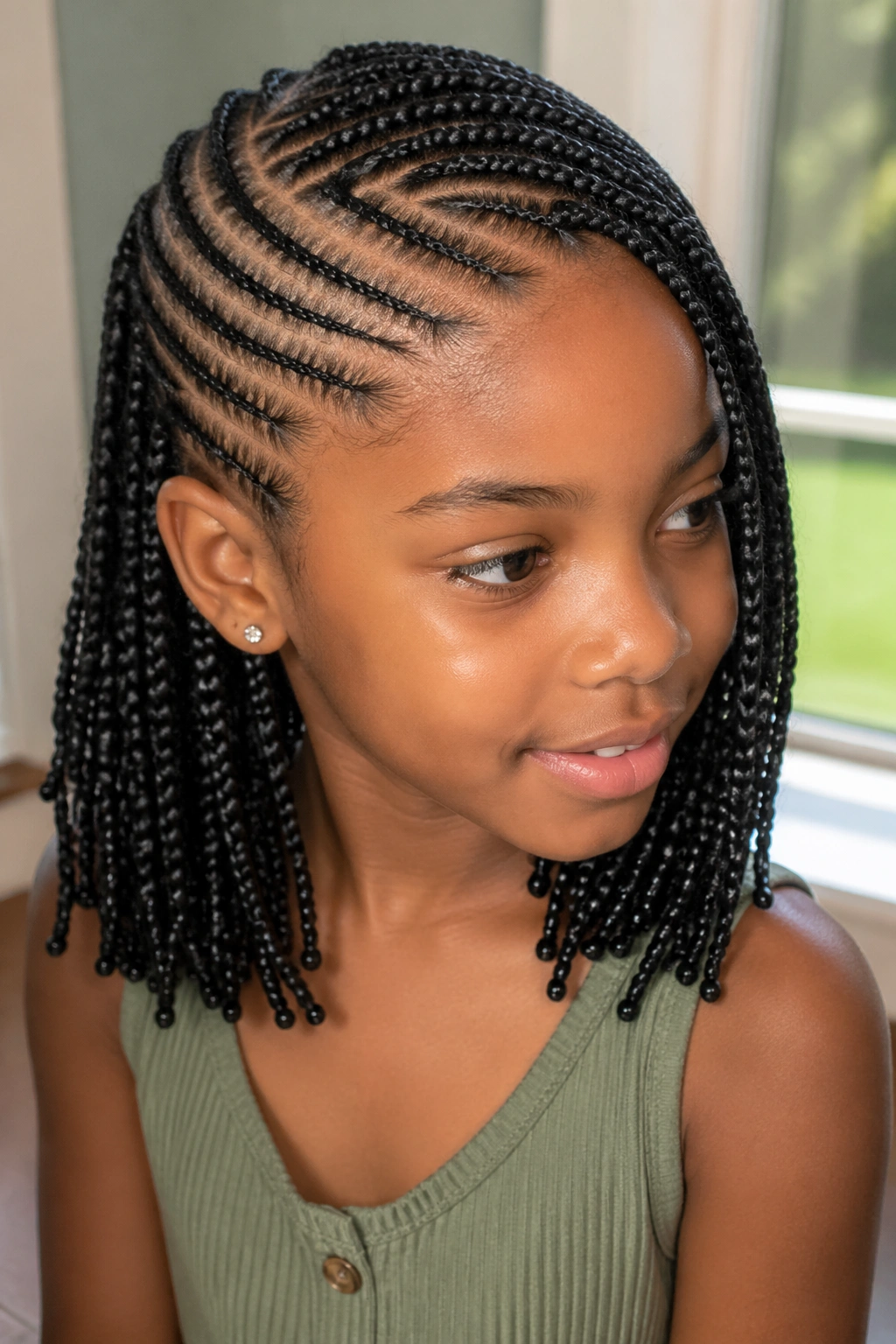
A satin ribbon woven through one or two needle cornrows along the install. The ribbon is secured at the top and bottom with small knots.
Pick ribbon colors that match school uniforms, holiday themes, or favorite colors. Easy way to personalize the look.
18. Diamond-Shape Parted Style
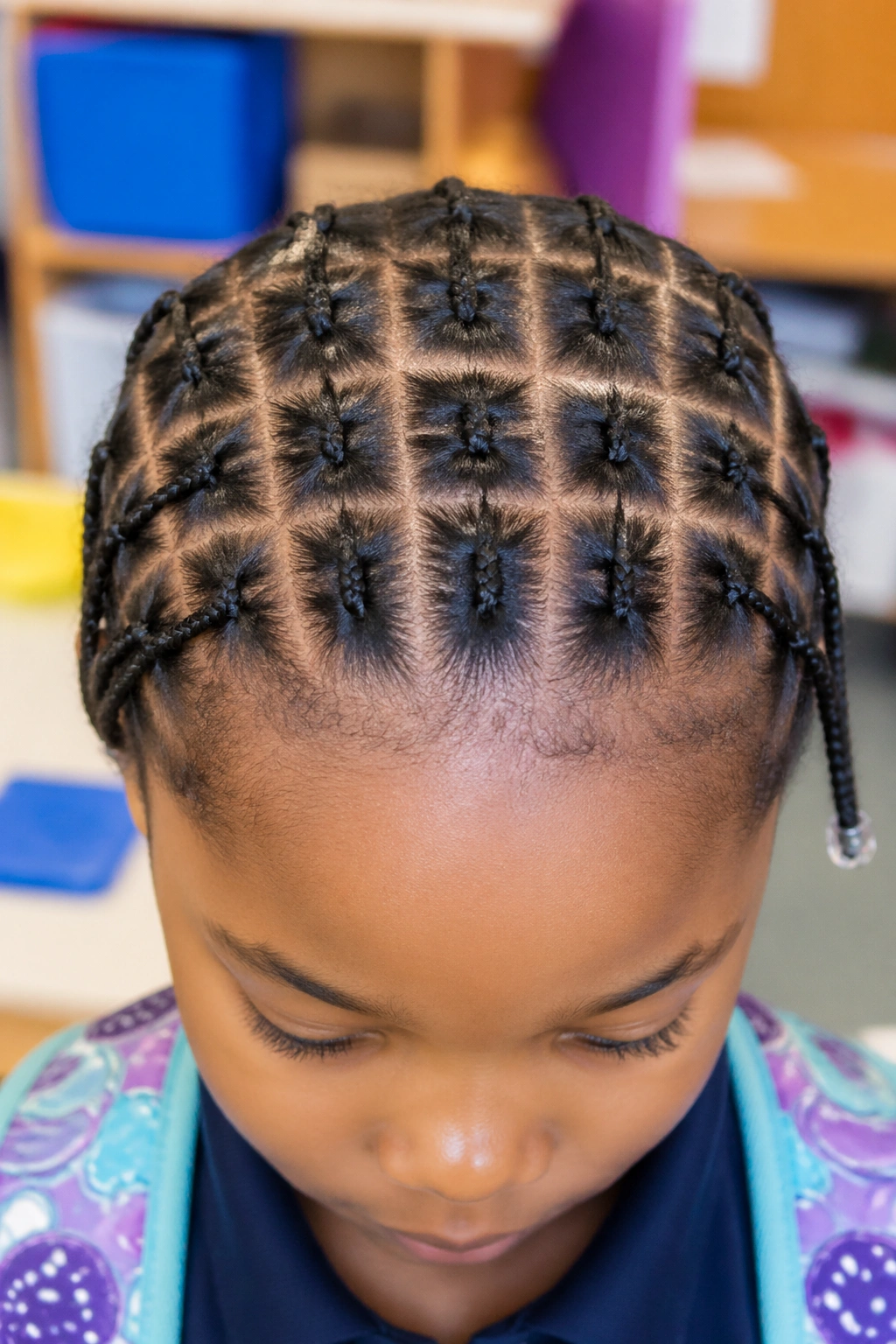
Diamond shapes at the crown or front of the hairline form the parting pattern. Needle cornrows feed from each diamond’s edges back to a low ponytail.
Geometric and modern. Different from the more common heart or star patterns.
19. Six Side-Cornrows to a Side Pony
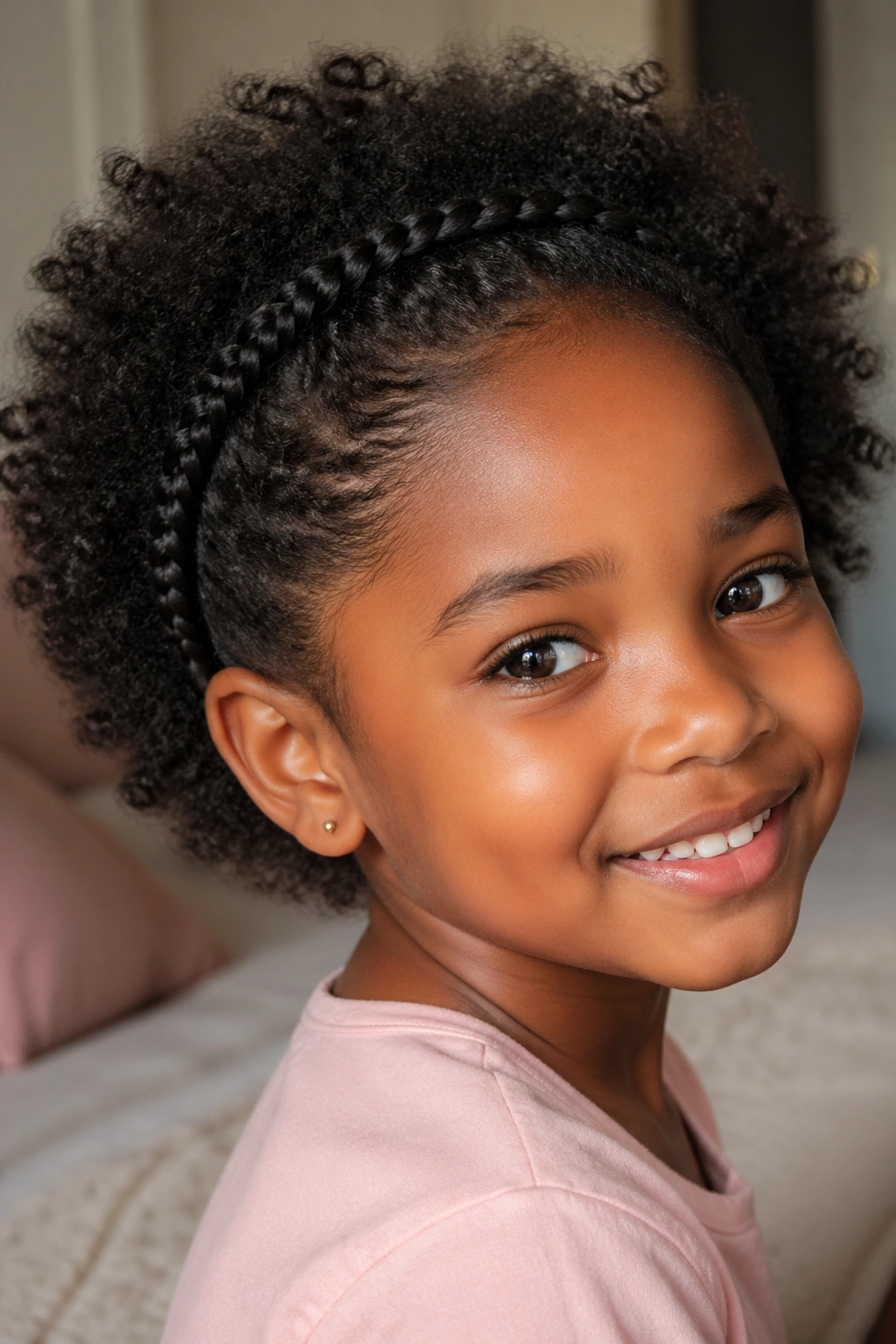
Six fine needle cornrows all sweep to one side and gather into a pony behind one ear. The mini lemonade with structure.
Lasts well because the pony bundle keeps the braid ends from being pulled at by the child during the day.
20. Needle Cornrows with Twisted Crown
Needle cornrows on the lower two-thirds of the head, with the top crown left out and twisted into flat twists or chunky two-strand twists. The texture variety reads playful.
What Makes It Different
Most kid styles commit to one technique throughout. This one mixes braids and twists for visual texture variation.
- Install time: 90-120 minutes.
- Lasts: 1-2 weeks.
- Best for: kids who get bored of looking the same all the time.
Tip: Keep the twisted section moisturized with a light leave-in spray. Twists dry out faster than braids.
21. Mini Cornrows with Hair Cuffs
A few small gold or silver cuffs slid onto the needle cornrows for sparkle. Cuffs are great for kids because they can be removed and replaced without redoing the whole install.
Limit to 3-4 cuffs total per install. More than that becomes heavy for a small head.
22. Needle Cornrows in a Ponytail Drape
All the needle cornrows gather at the back of the crown into a high ponytail that drapes down. The ponytail can be curled, beaded, or wrapped.
Great for active kids — the ponytail keeps everything off the neck and out of the face.
The ponytail can be repositioned during the install lifespan — high one day, low the next, side the next. Maximum versatility from one install.
Maintenance for Kid Needle Cornrows
The bonnet is non-negotiable. Get a cute one — superhero print, princess pattern, favorite character — that the child will actually wear willingly. Plain satin bonnets get rejected by toddlers; themed ones get accepted.
A satin pillowcase as backup. Many kids pull bonnets off in their sleep. The pillowcase catches the slack.
A light braid spray every 2-3 days. One mister bottle of water plus a teaspoon of leave-in conditioner — that’s all the daily product the child needs.
Scalp Care for Young Heads
Kids’ scalps are sensitive. Adult oils can be too heavy or too tingly.
Use a kid-friendly hair oil — sweet almond, jojoba, or a designed-for-kids blend. Apply with fingertips along the parts twice a week. Massage gently, don’t scrub.
If the child complains of itch, check for product buildup before assuming it’s irritation. A diluted apple cider vinegar rinse (1 tablespoon ACV in 2 cups water) sprayed on the parts can settle things down.
Takedown Without Trauma
Kids hate slow processes. Make the takedown a special moment — favorite snack, favorite show, special bath afterward.
Soak each braid with conditioner before unraveling. Work from the bottom of the braid up. Don’t pull. Don’t tug. Slow, gentle, methodical.
Wash and deep condition immediately after takedown. The hair has been in one shape for weeks; it needs moisture and movement to recover.
Picking the Right Style for Your Kid’s Lifestyle
Active kids — soccer, dance, swimming — need styles that bundle the hair tightly. Ponytails, low buns, side braids that don’t swing into faces.
Quiet kids — readers, artists — can wear anything. Even longer styles work because they aren’t whipping around.
Sensitive scalps need fewer braids and looser tension. Three big needle cornrows beat ten tiny ones every time.
Picky kids deserve input. Show them three options. Let them pick. A child who chose their own hair will sit through the install with less drama than one who had it imposed.
The goal is a style the child loves wearing, the parent loves looking at, and the scalp stays healthy under. Get those three aligned and the install is a success — no matter which of the 22 styles you pick.
