



Twenty braids sits at an interesting point on the cornrow spectrum. Not the minimalist three or four bold cornrows that read as graphic statement pieces. Not the hundred-plus micro cornrows that blur into a single texture. Twenty is specific. Twenty has weight. Twenty fills the head with detail while keeping each individual braid visible enough to contribute to the overall pattern.
For Black women, the twenty-braid count hits a sweet spot. Dense enough to look full and intentional. Light enough that install times stay reasonable. Varied enough that the patterns, angles, and finishing touches can shift dramatically from style to style without losing the underlying count.
There’s also a mathematical elegance to twenty. It divides evenly into tens, fives, fours, and twos — which means symmetrical designs come together naturally. Ten on each side of a center part. Five in each quadrant. Four rows of five. The structural possibilities are wide.
Below are twenty-two different cornrow styles built around the twenty-braid count. Some are classic. Some bend conventions. Pick what feels right for where you are.
Why Exactly Twenty Braids
There’s no universal rule that a cornrow set must hit a specific count, but twenty has practical advantages over other numbers.
Ten cornrows often feel sparse on an average head size, especially for women with thick density hair. The parts are wide, the scalp shows through, and the finished look reads as loose rather than dense. Thirty cornrows tip into territory where install times climb past four hours and the individual braid thickness becomes small enough that scalp sensitivity increases.
Twenty splits the difference. Each braid is substantial — roughly a quarter-inch thick on average density hair — and the parts stay narrow enough to feel dense without being cramped. Install times land around two to three hours for skilled braiders. Maintenance is manageable. Wear life is typically three to four weeks before the new growth starts to obscure the parts.
It’s also a count that photographs well. Enough braids for detail. Few enough that the pattern remains readable.
Prep Work That Actually Pays Off
Prep for a twenty-braid set is essentially the same as any cornrow install, but the count means slightly more care in two specific areas — parting accuracy and scalp condition.
Wash with a clarifying shampoo two days before the appointment. The cuticle needs time to settle after a clarify, and installing on freshly washed hair makes the braid harder to grip. Follow with a moisturizing conditioner and a lightweight leave-in.
Stretch the hair fully. Blow-drying on warm, banding overnight, or African threading all work. With twenty braids, uneven shrinkage creates uneven parts, which will be visible in a way that wider-part styles don’t expose.
Trim split ends. Twenty medium-thin cornrows pull consistently across the head, and split ends under that kind of tension get worse. A small trim before install pays off in retention after takedown.
The Tools That Make Twenty Feasible
Installing twenty braids requires slightly different preparation than a simpler five or six-back style.
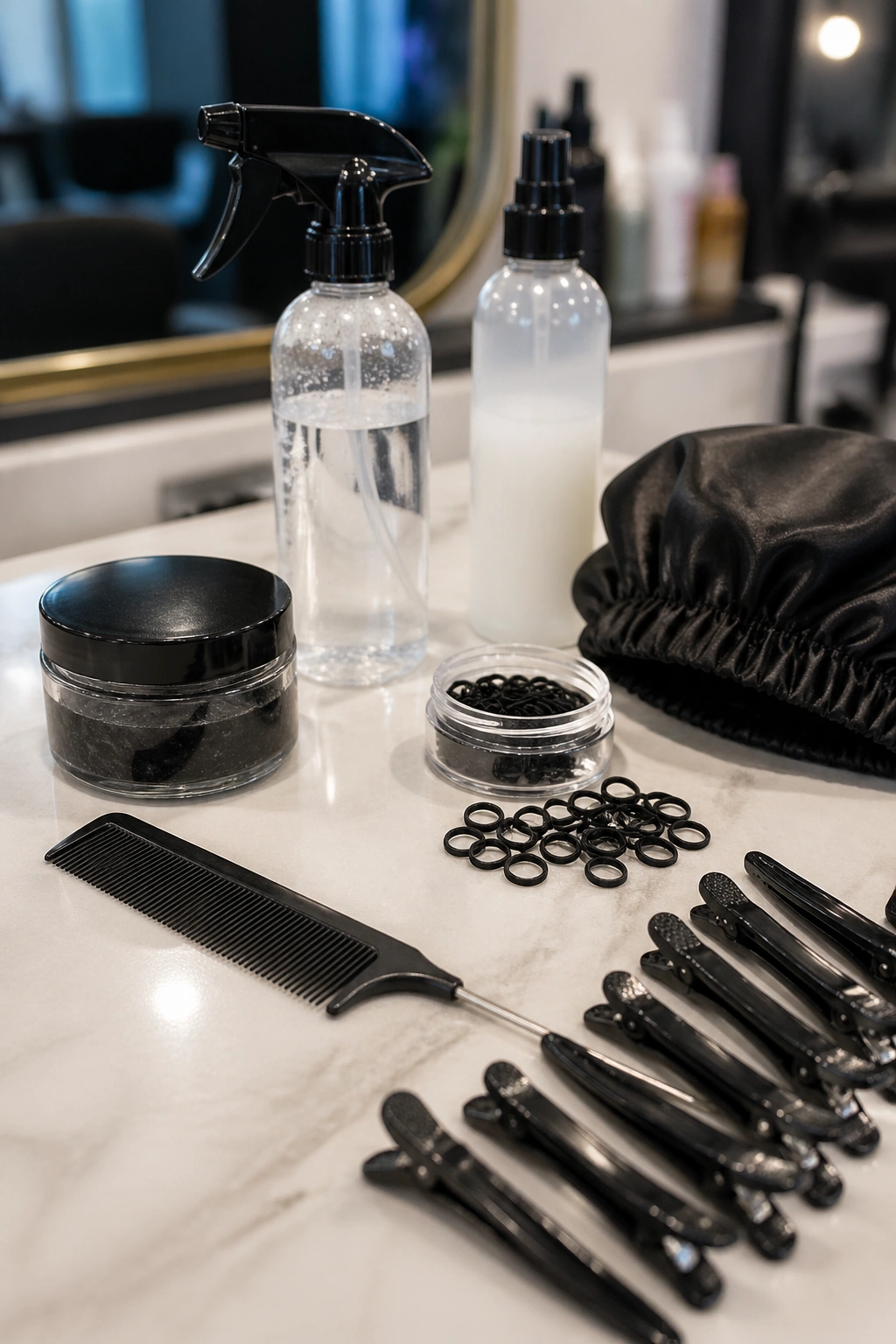
- A rat-tail comb with a fine-toothed end and a metal tail. Essential for clean, narrow parts.
- Section clips — at least twelve. Twenty braids means you’ll have many separate sections to manage as work progresses.
- A spray bottle with water and leave-in for smoothing.
- Pre-stretched braiding hair if extensions are part of the plan.
- Edge gel for hairline detail.
- Small elastics for securing tail ends.
- A bonnet for night protection.
The section clips get overlooked but they matter. Keeping twenty sections organized across a two-to-three-hour install requires actual tools. Fingers and loose hair lead to tangles.
The Parting Strategy That Separates Clean From Messy
Twenty braids can look either beautifully precise or disappointingly uneven depending almost entirely on how the parting is planned before the first braid starts.
A skilled braider will map the whole head before beginning — imagining where each of the twenty braids will start at the hairline and where each will end at the nape. This planning stage prevents the common problem of running out of scalp space before all twenty braids are accounted for, which leads to squished parts at the back of the head.
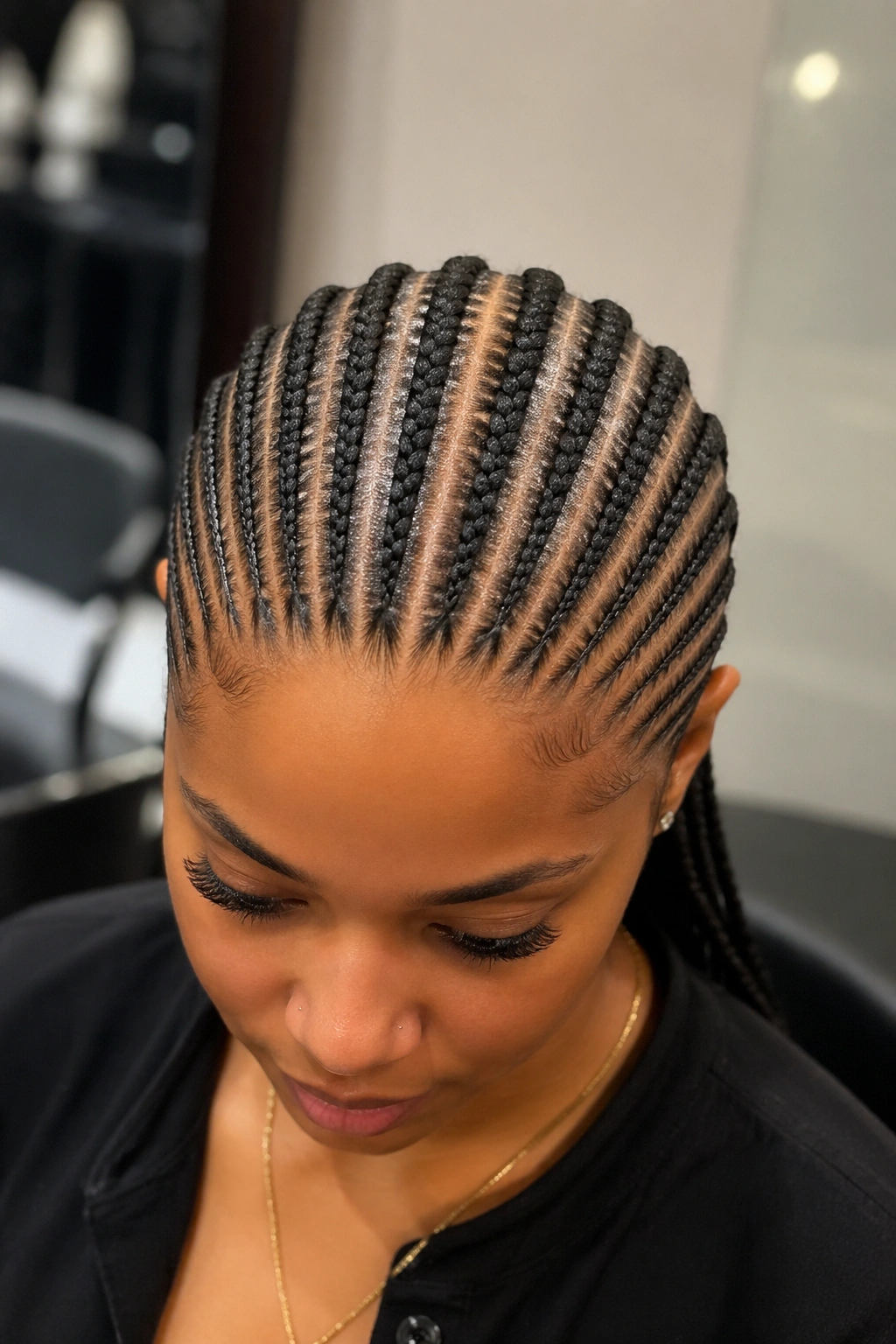
For a standard straight-back twenty, the front hairline should show ten visible cornrow starts across its width. The back nape should show ten visible cornrow endings across its width. That symmetry signals intentional design rather than braiding-as-you-go.
If your braider doesn’t appear to plan before braiding, ask. It’s a polite question and a good one. The answer tells you a lot about the finished result you can expect.
A Quick Note on Head Shape and Count Fit
Twenty braids work beautifully on average to larger head sizes. On very petite heads, twenty can feel cramped. On very large heads, twenty can feel sparse.
If you’re unsure whether twenty fits your head, ask your braider for an honest assessment. A good braider has installed enough sets on enough head sizes to know whether twenty will land right. They might suggest eighteen or twenty-four based on actual measurement of your specific scalp.
The count isn’t sacred. It’s a starting point. Adjustments based on fit create better final results than rigid adherence to a target number.
1. Twenty Straight-Backs With Equal Spacing
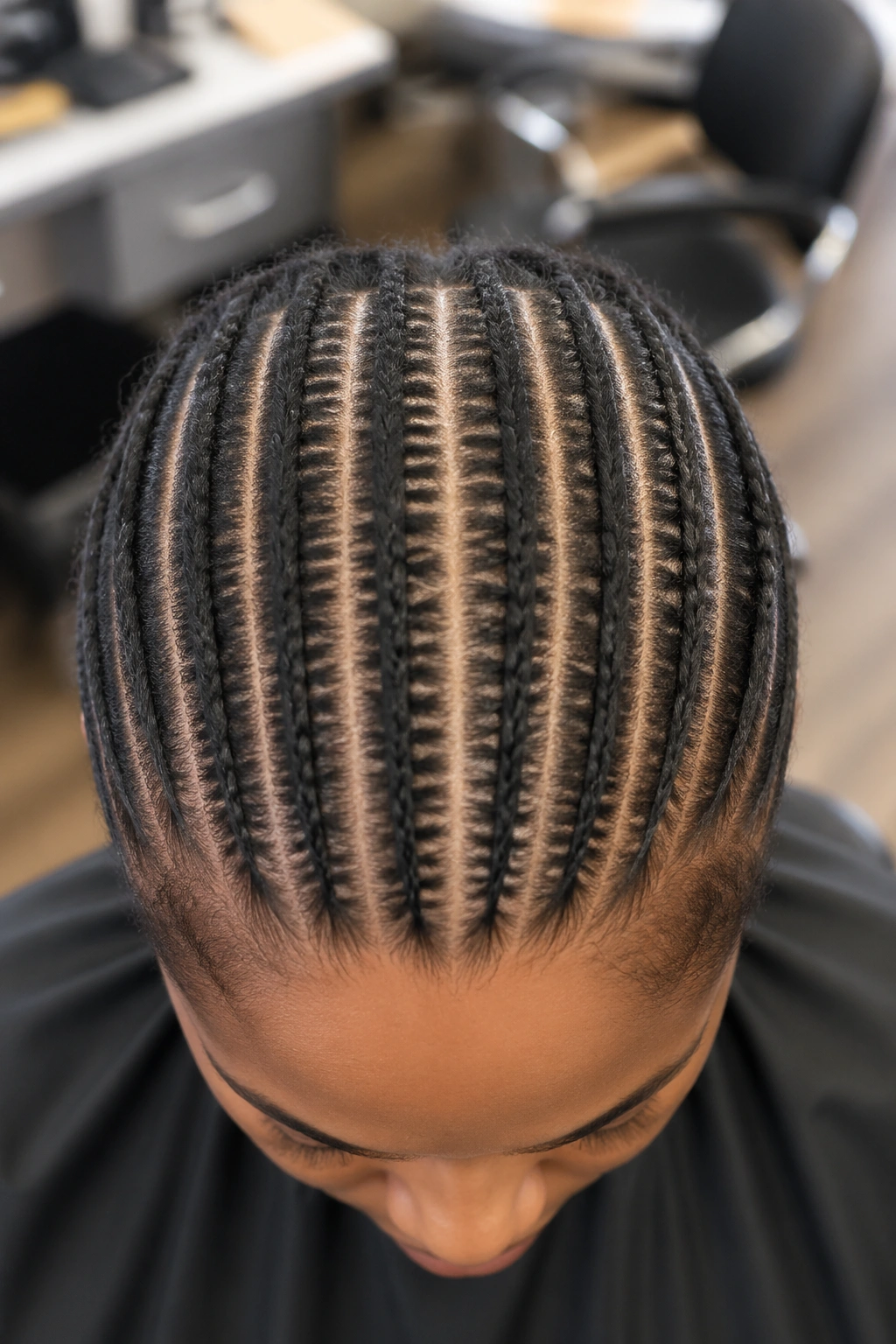
The baseline. Twenty cornrows running parallel from the front hairline to the nape, evenly spaced across the scalp.
Why It Works
Equal spacing and parallel direction are the simplest possible cornrow configuration, and there’s a reason the style has endured for generations. It flatters every face shape. It works for every occasion. It’s low-maintenance during wear and straightforward to take down.
- Takes 2.5-3 hours to install
- Lasts 3-4 weeks with proper care
- Works without extensions on medium-density hair
- Minimalist enough for professional settings, structured enough for formal events
Tip: Ask for the center part to be slightly wider than the others — about a quarter-inch. The widened center part creates a subtle focal point and makes the symmetry read more clearly.
2. Ten-Plus-Ten With Center Part
Ten cornrows on each side of a sharp center part, each side running from the top of the part to the nape.
This configuration emphasizes the center part itself. Instead of cornrows traveling parallel across the entire head, the parts converge at the top middle, then diverge as they travel back. The result looks more like two mirrored sets of ten rather than one set of twenty.
The center part needs to be laser-straight for this style to work. Any wobble in the part kills the symmetry. Experienced braiders use the bridge of the nose as their alignment reference, parting from the forehead to the nape with the comb held perfectly vertical.
Pair with a single accent — a small jeweled clip at the very top of the part or a delicate gold chain laid along it. The accent completes the symmetry.
3. Twenty Thin Cornrows with Side Part
Twenty narrow cornrows with a deep side part about two inches from center, creating an asymmetric distribution — fewer cornrows on the smaller side, more on the larger side.
The asymmetric count is what makes this style interesting. Instead of ten-and-ten, you get something like thirteen on the heavier side and seven on the lighter side. The visual weight is off-center, which creates movement.
This style suits anyone who finds symmetric styles too static. The off-balance quality reads as styled and intentional rather than messy.
Expect 3 hours to install. The thinner cornrows demand precision at every stitch.
4. Twenty with Curved Side Paths
Twenty cornrows where the side braids curve inward toward the center rather than running straight back.
The curves add fluid motion to what could otherwise be a geometric grid. The front cornrows on each side start near the hairline, then gradually curve toward the crown before continuing straight to the nape. The effect is of hair that moves naturally rather than sitting in rigid parallel lines.
Curved cornrows take longer. Budget 3.5 hours for a twenty-braid set with curved sides. The braider has to plan each curve path and execute it consistently across both sides for symmetry.
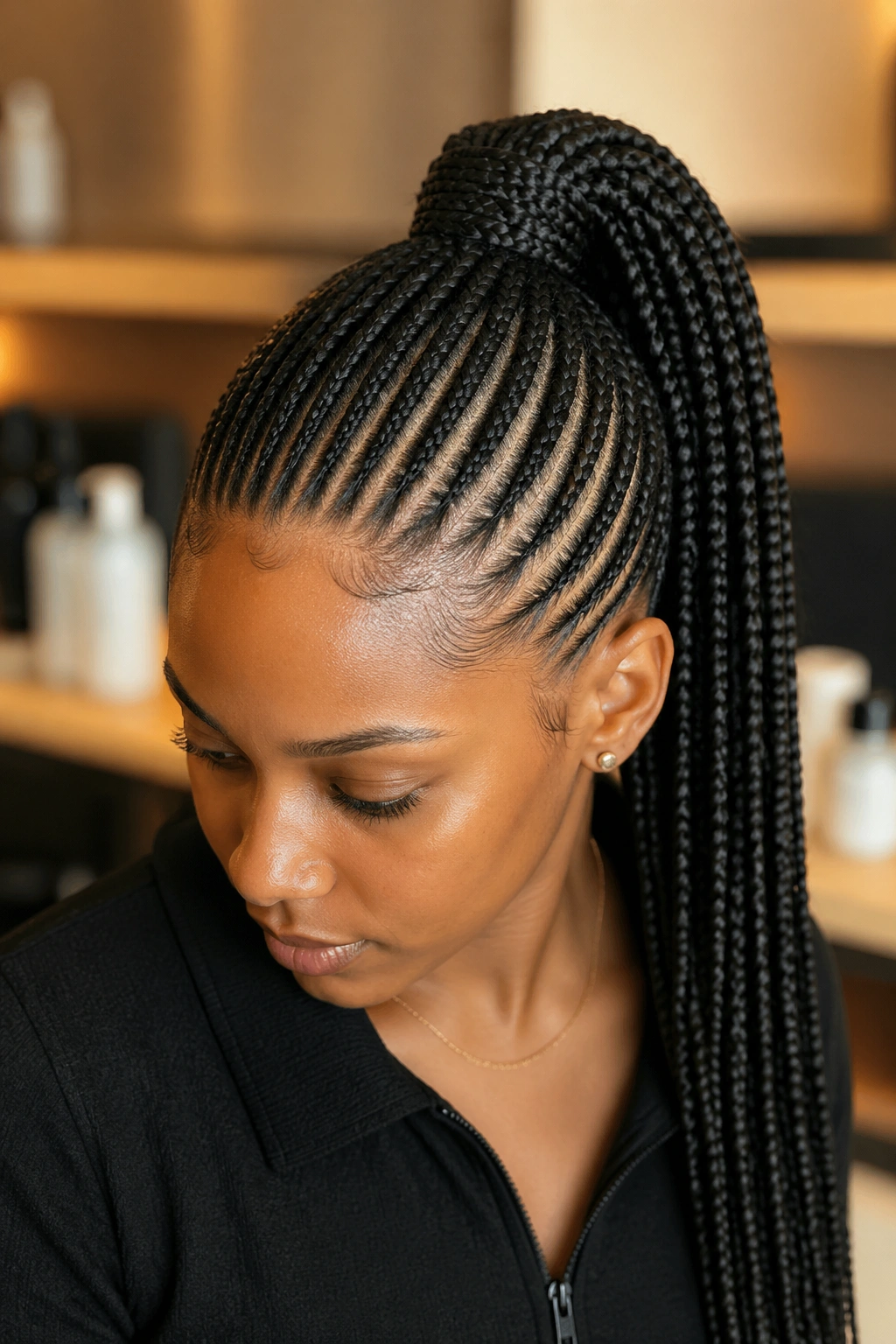
5. Twenty with High Ponytail Finish
Bold claim: A twenty-braid set gathered into a single high ponytail is one of the most polished protective styles available. The density of twenty braids creates a full, heavy ponytail that looks intentional and sculpted. The cornrowed scalp stays sleek. The pony cascades down the back in a controlled waterfall of braid tails.
The pony placement sits about halfway between the crown and the top of the head. Higher and it pulls the edges painfully. Lower and it loses drama.
This is the style that carries you from work to wedding to photoshoot without changing a thing. Low-maintenance during wear, high-impact in appearance.
6. Twenty with Zigzag Parts
Twenty cornrows where the parts between braids follow zigzag patterns rather than straight lines.
The braids themselves go straight back, but the scalp between them shows clean zigzag paths. The effect is subtle from a distance and striking up close. It turns the scalp parts into a design element.
Not every braider does zigzag parts with confidence. Ask to see specific examples of zigzag part work before booking.
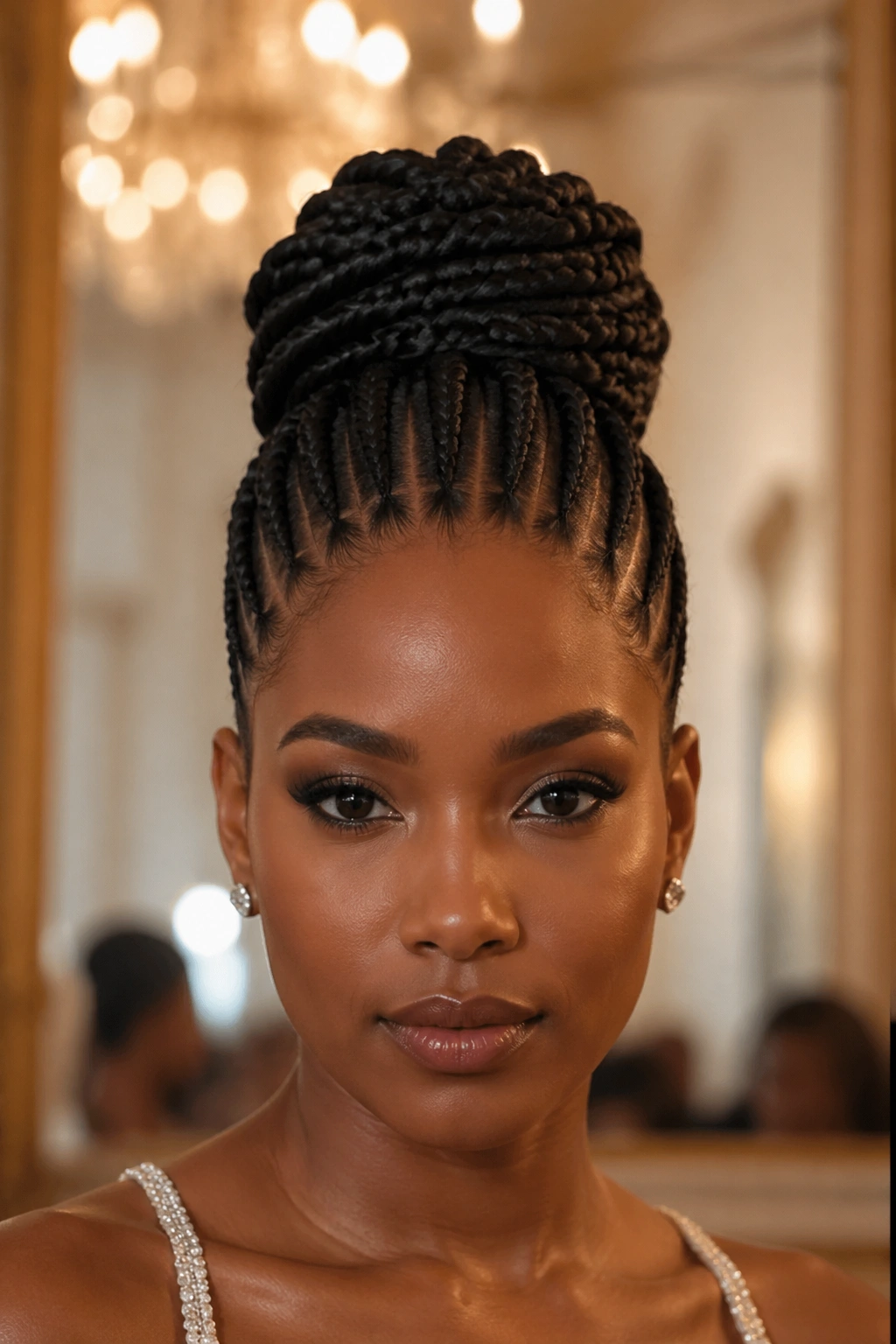
7. Twenty Cornrows in a Beehive Updo
Twenty cornrows braided down, then the tails wrapped and pinned into a tall beehive-shaped updo at the crown.
How to Style It
The beehive is a shape, not just a placement. The tails are coiled around a foundation — either padded with a small hair donut or built from the braids themselves — to create a rounded, elevated silhouette at the top of the head.
This is formal event hair. Weddings, galas, red-carpet appearances. The install takes the same three hours as a regular twenty-braid set, but the styling step adds another thirty to forty-five minutes.
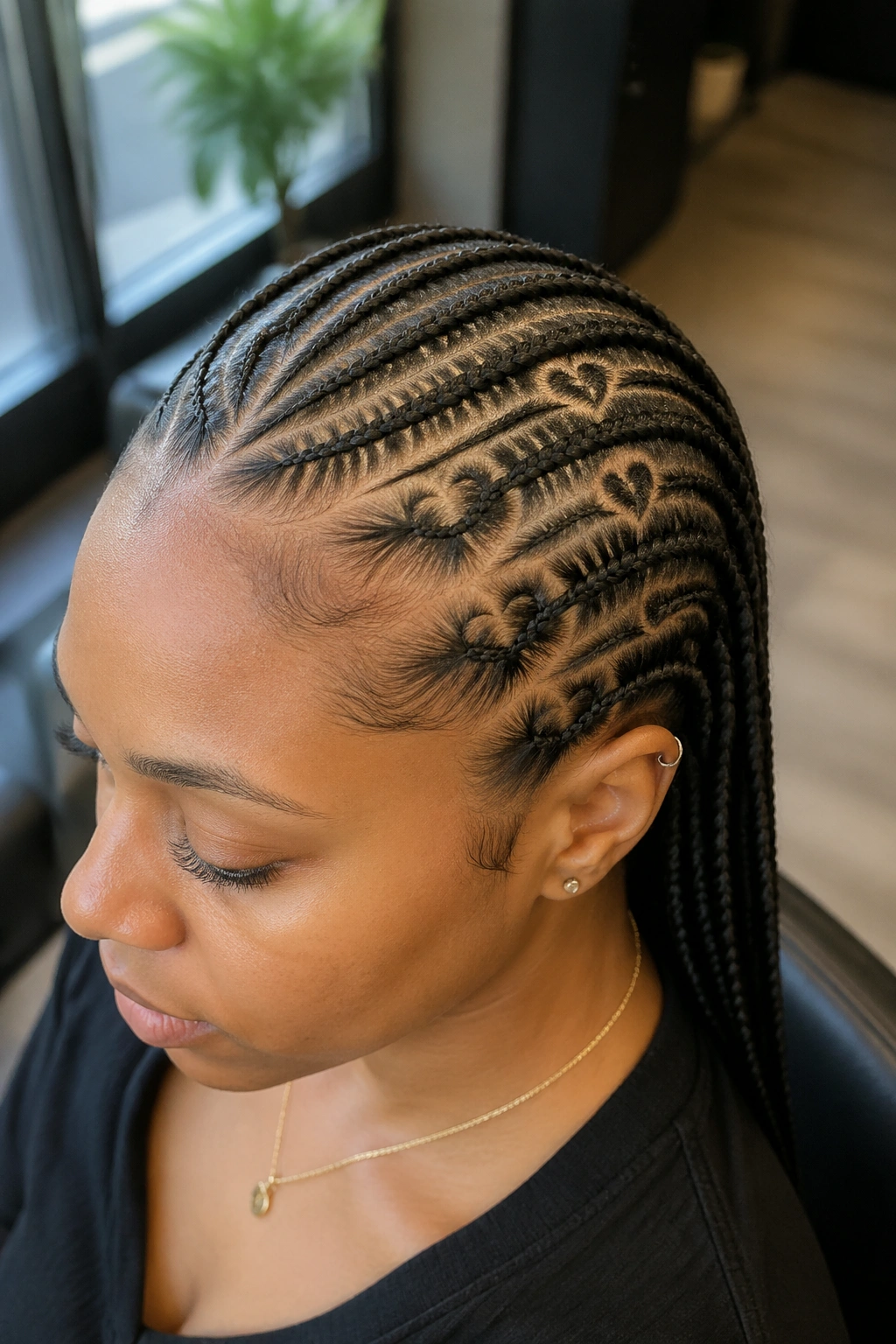
8. Twenty with Heart-Shaped Parts
The parts between braids curve inward toward each other at specific points, creating heart silhouettes scattered throughout the pattern.
This level of part work is design as much as braiding. The hearts can be placed strategically — three hearts down the center of the head, or two hearts behind each ear — or scattered organically across the scalp.
The style requires a braider skilled in shaped parts. It’s worth asking about before booking. A plain braider will produce straight parts no matter what you request.
9. Twenty Cornrows with Graduated Thickness
Twenty braids where the central cornrows are thicker than the side cornrows, creating a graduated effect.
The thickness variation draws the eye toward the center of the head. The outermost cornrows, near the temples, are the thinnest — maybe an eighth of an inch. The cornrows closest to a center part can be a quarter-inch or slightly larger. The graduation happens symmetrically on both sides.
This style works particularly well for round faces. The thicker center emphasizes vertical lines, which elongates the face.
10. Twenty with Beaded Tail Tips
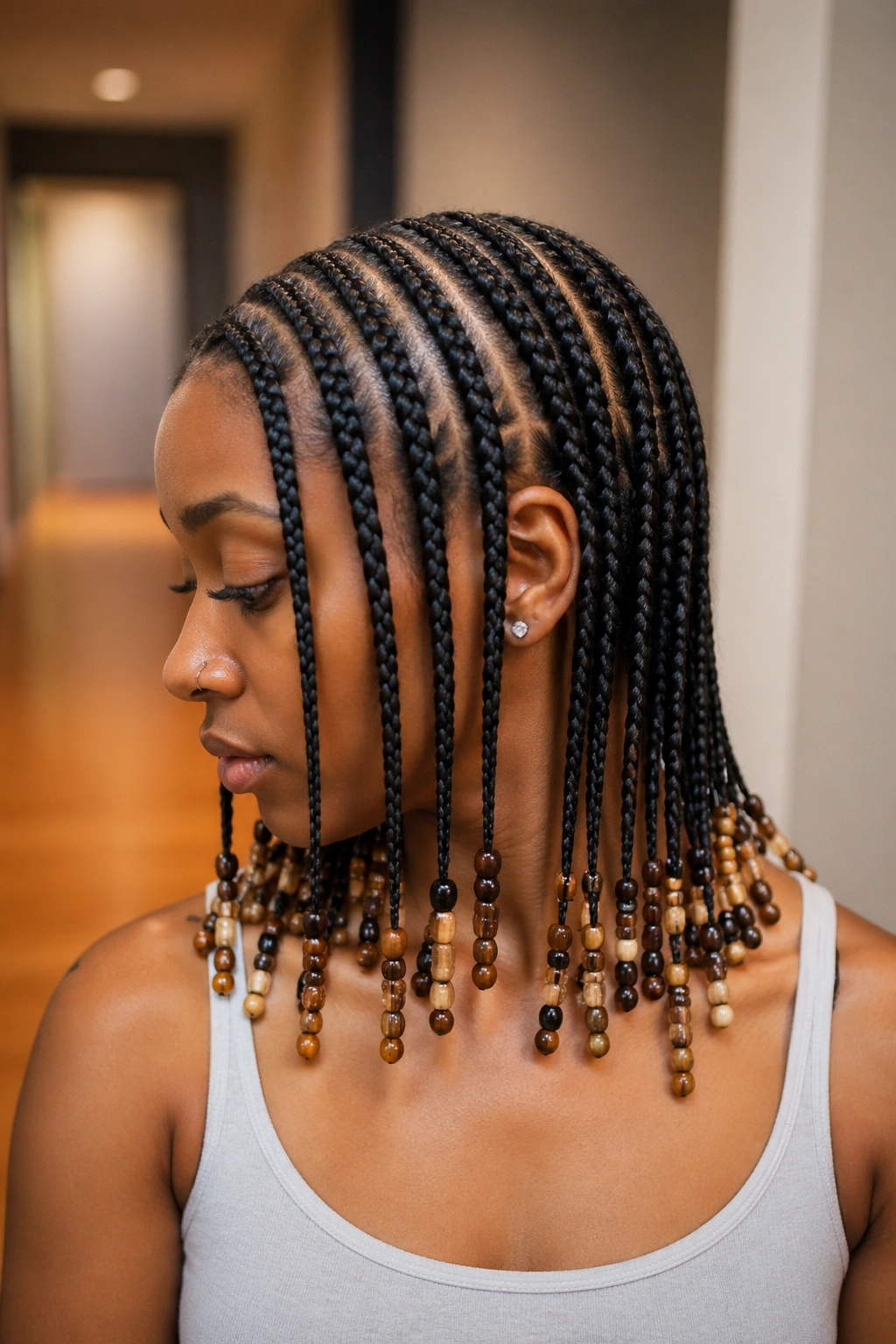
A standard twenty-braid set with one or two beads at the tail of each cornrow.
Beads at the tips add movement and sound. With twenty braids, the aggregate effect is significant — twenty sources of small motion as you walk or turn your head. Choose beads that coordinate rather than identical — slight variations in size or tone add visual interest.
The beads should be secured with small elastics that match the hair color. Visible bands detract from the clean look.
11. Twenty Cornrows with Central Large Braid
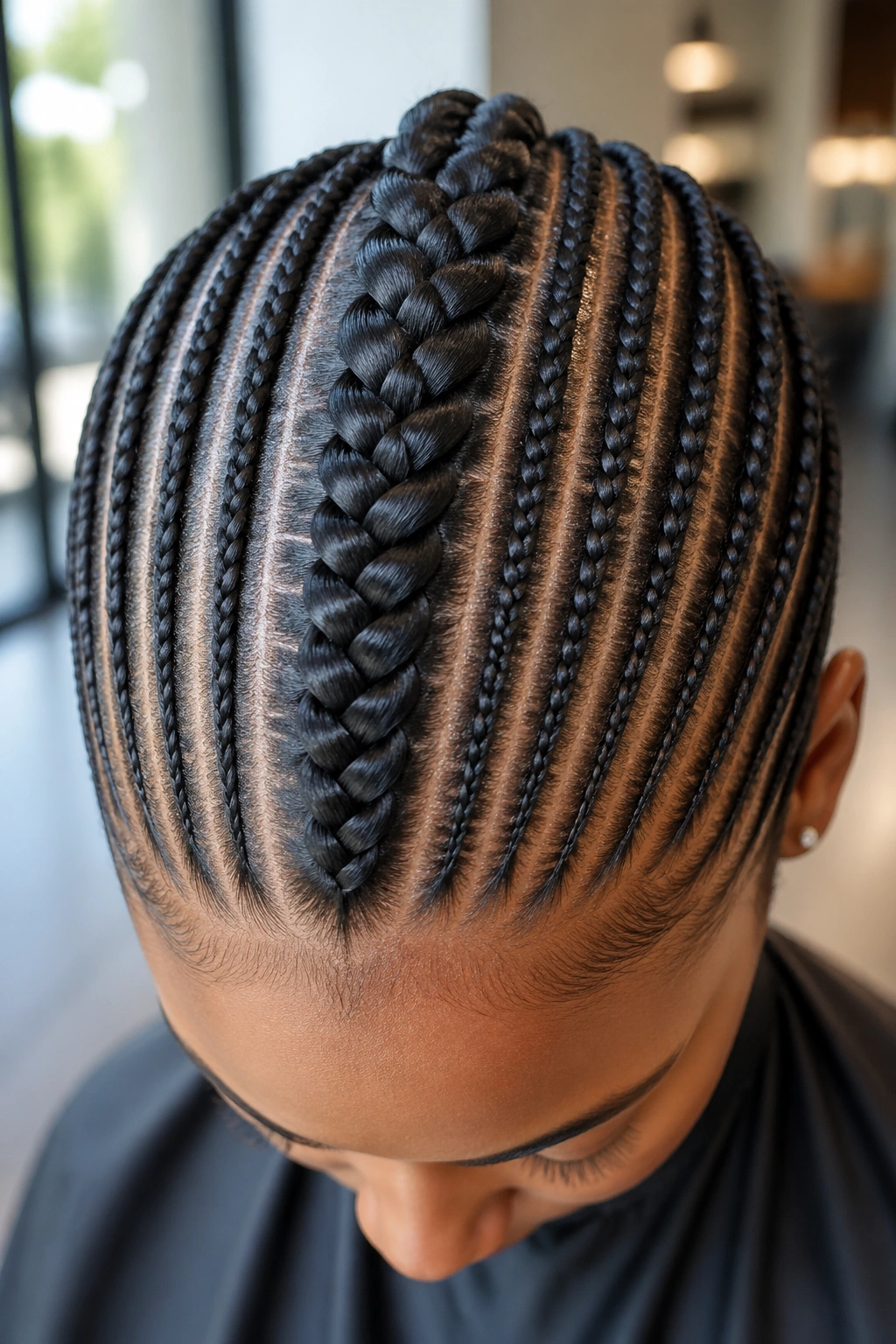
Nineteen standard-thickness cornrows plus one dramatically thicker cornrow running down the center of the head.
The central thick cornrow acts as a focal piece. It can be twice or three times the thickness of the others, which makes it unmistakable against the backdrop of the nineteen standard braids.
This style requires a braider who can maintain consistent thickness across the nineteen standard cornrows while also executing the single oversized central one. Less experienced braiders may produce thickness inconsistencies across the standard set.
12. Twenty with Color-Blocked Sections
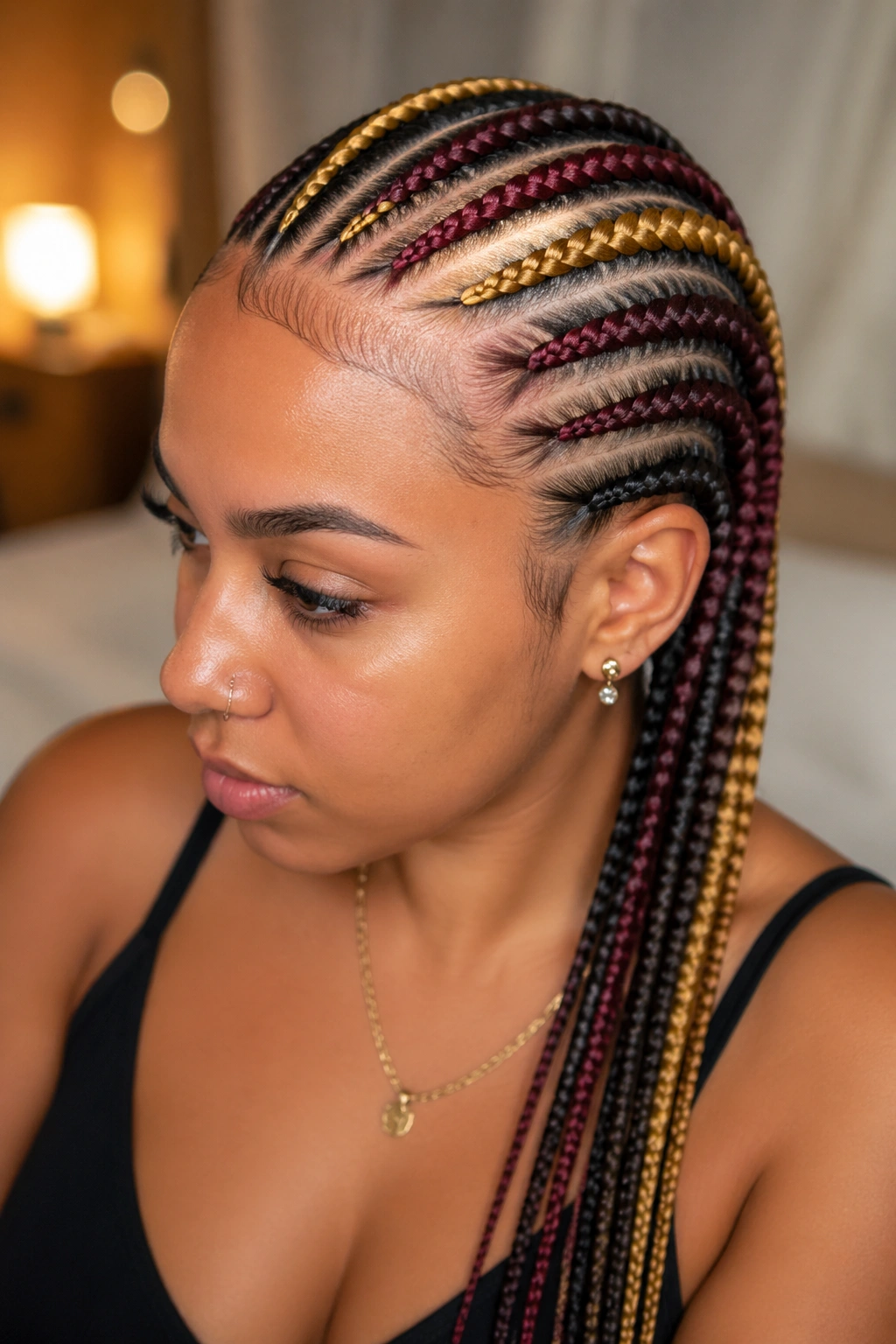
Twenty cornrows where specific sections are done with colored braiding hair while others stay natural color.
The configuration can vary. Some women choose to color the central ten cornrows while leaving the sides natural. Others color every other cornrow for a striped effect. Others color only the three or four frontmost cornrows while leaving the rest natural.
The color placement should match your overall aesthetic. Subtle variations — burgundy woven into black — work for professional settings. Bright variations — blonde, blue, red — suit more casual or artistic environments.
13. Twenty Cornrows with Exposed Scalp Detail
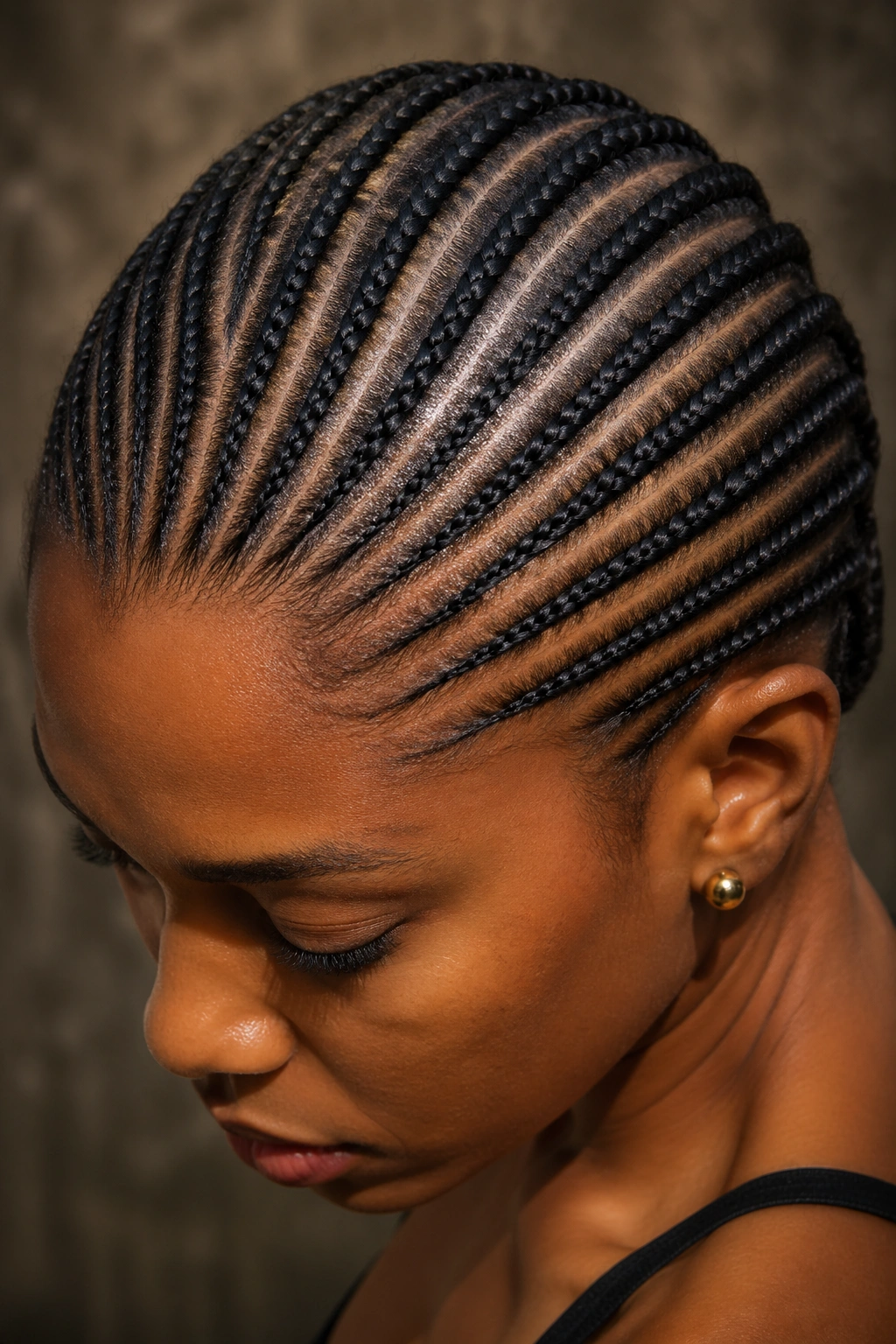
Twenty thinner cornrows with wider-than-usual parts between them, intentionally exposing more scalp as part of the design.
This reverses the usual cornrow goal of dense, full coverage. Instead, the wider parts become graphic elements — bold lines of exposed scalp between each braid — that contribute to the overall visual.
The style suits bold aesthetic preferences. It reads as modern, architectural, and confident rather than traditional.
14. Twenty Braids with Faux Bangs
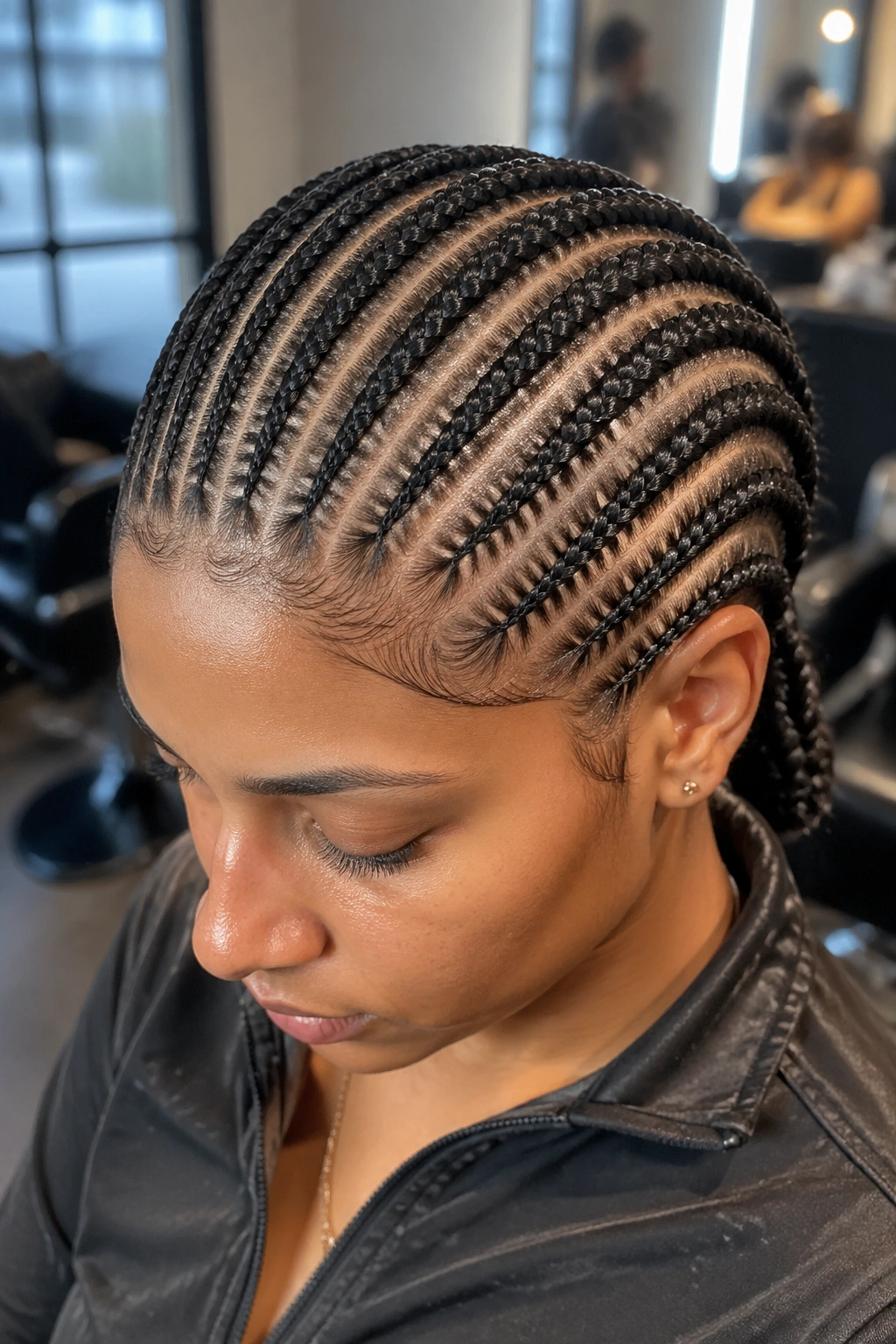
Twenty cornrows with a few sections of the front pulled forward and styled into a short “bang” effect.
The bang can be braided cornrow-style lying flat across the forehead, or left as natural hair styled forward with a curl cream. The rest of the twenty cornrows run back in standard fashion.
This hybrid works for anyone whose face benefits from forehead coverage. Pair with bold brows and statement lips for a styled overall look.
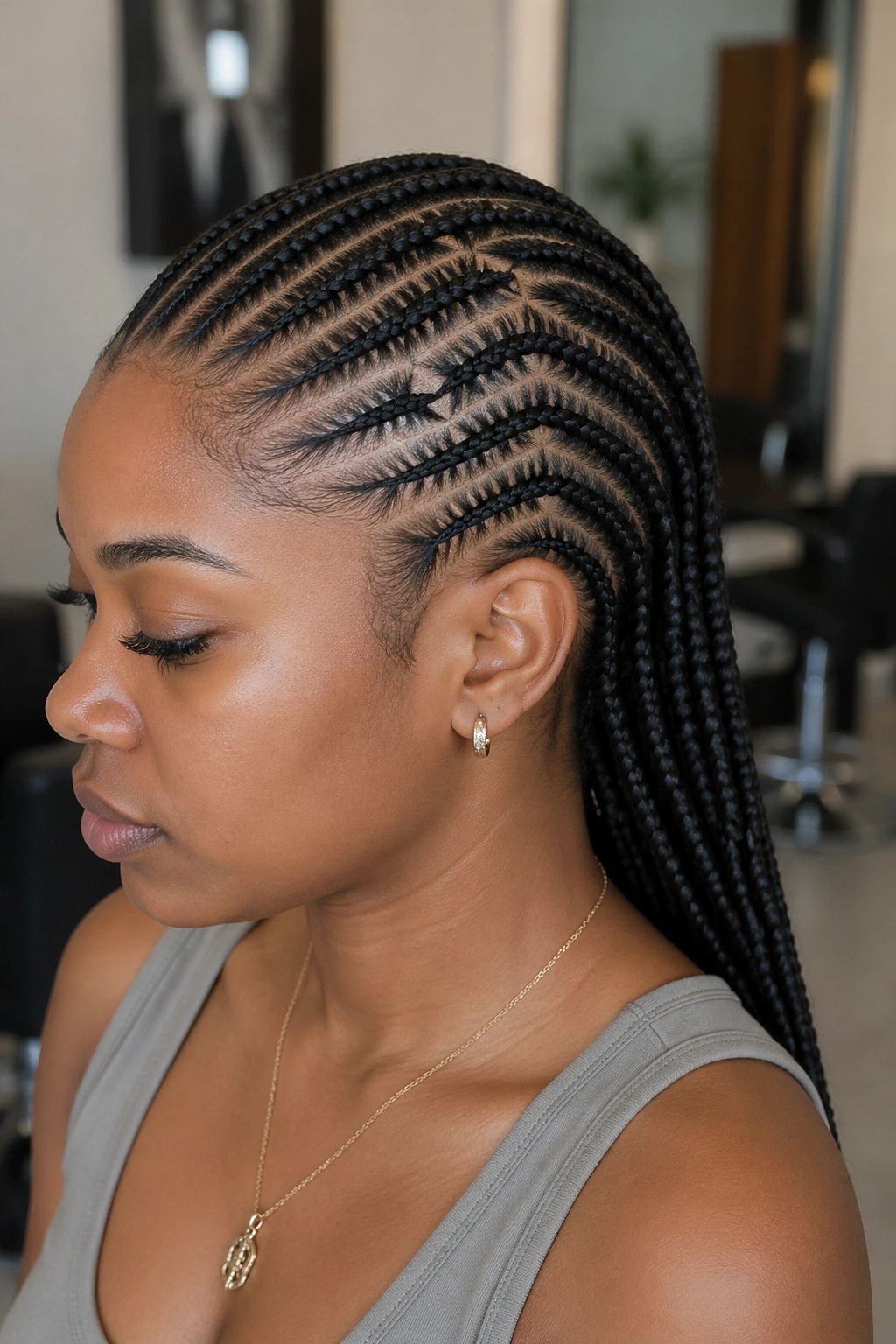
15. Twenty with Diagonal Placement
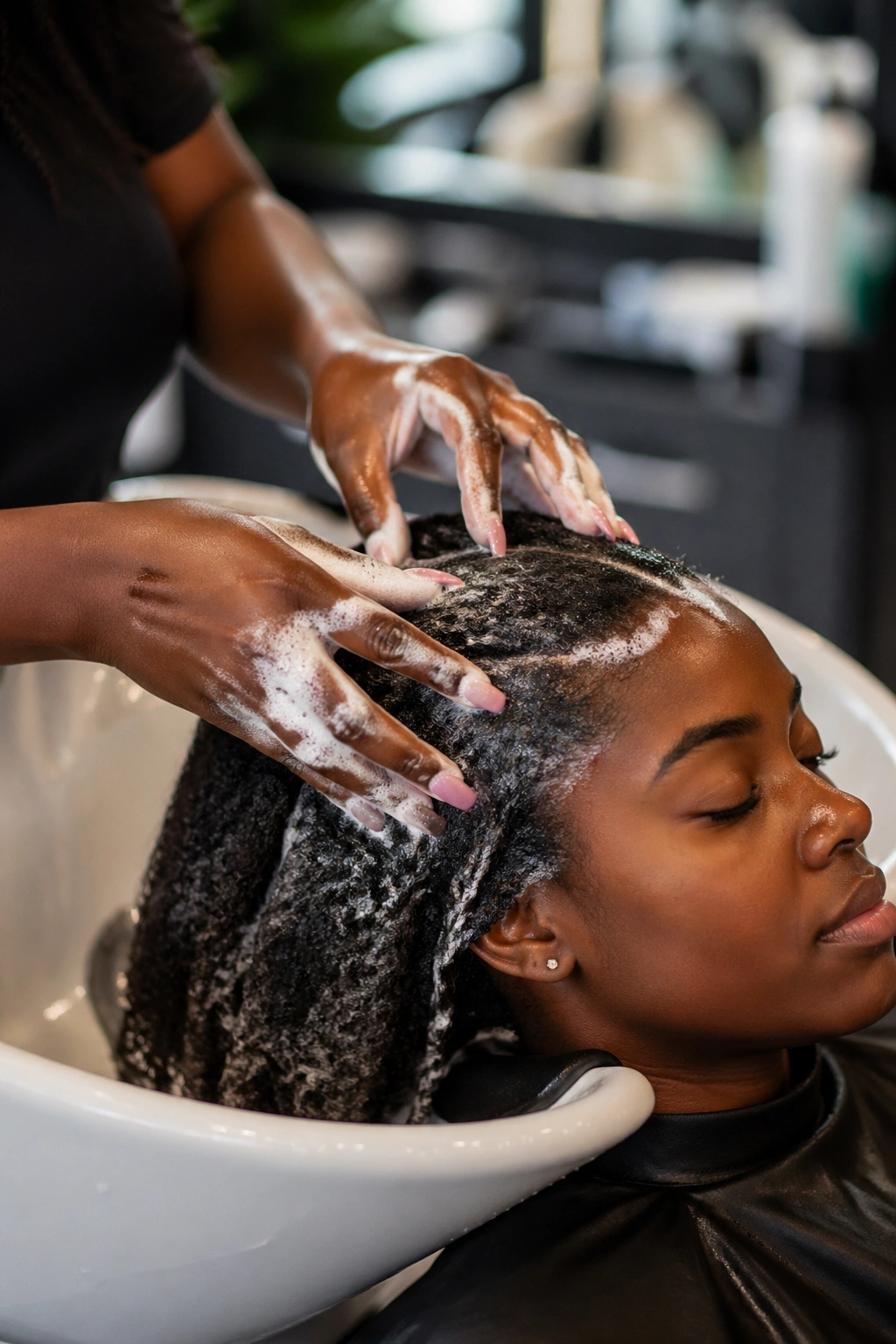
All twenty cornrows angled diagonally across the head from one side to the other, rather than running straight front-to-back.
The diagonal creates dynamic movement. The cornrows sweep across the scalp like choreography. This style is popular for events where you want obvious drama in the hair.
Ask for the diagonal angle to be consistent across all twenty cornrows. A braider who drifts in angle mid-head will produce an uneven final look.
16. Twenty Cornrows with Cuffed Details
Twenty cornrows with metal cuffs placed along the length at varying heights — some near the top, some in the middle, some at the tail.
The varied cuff placement creates a rhythmic pattern across the braids. Avoid placing all cuffs at the same height across every braid — the uniform line looks too styled. Stagger placements for a more styled-artist feel.
Gold, silver, or rose gold cuffs all work. Mixing metals creates an eclectic look that reads as deliberately curated.
17. Twenty with Side-Swept Finish
Twenty cornrows styled so all the tails sweep to one side, creating an asymmetric waterfall of braid tails over one shoulder.
Why It Works
The side-sweep is a classic glamour move. All twenty tails gathered in one direction create a dramatic line of braided hair cascading over the shoulder. The opposite side of the neck stays exposed, which lengthens it visually.
This style is photograph-friendly for formal events. The tails can be left loose or lightly gathered with a single clasp near where they fall on the shoulder.
18. Twenty Braids with Central Cornrow Crown
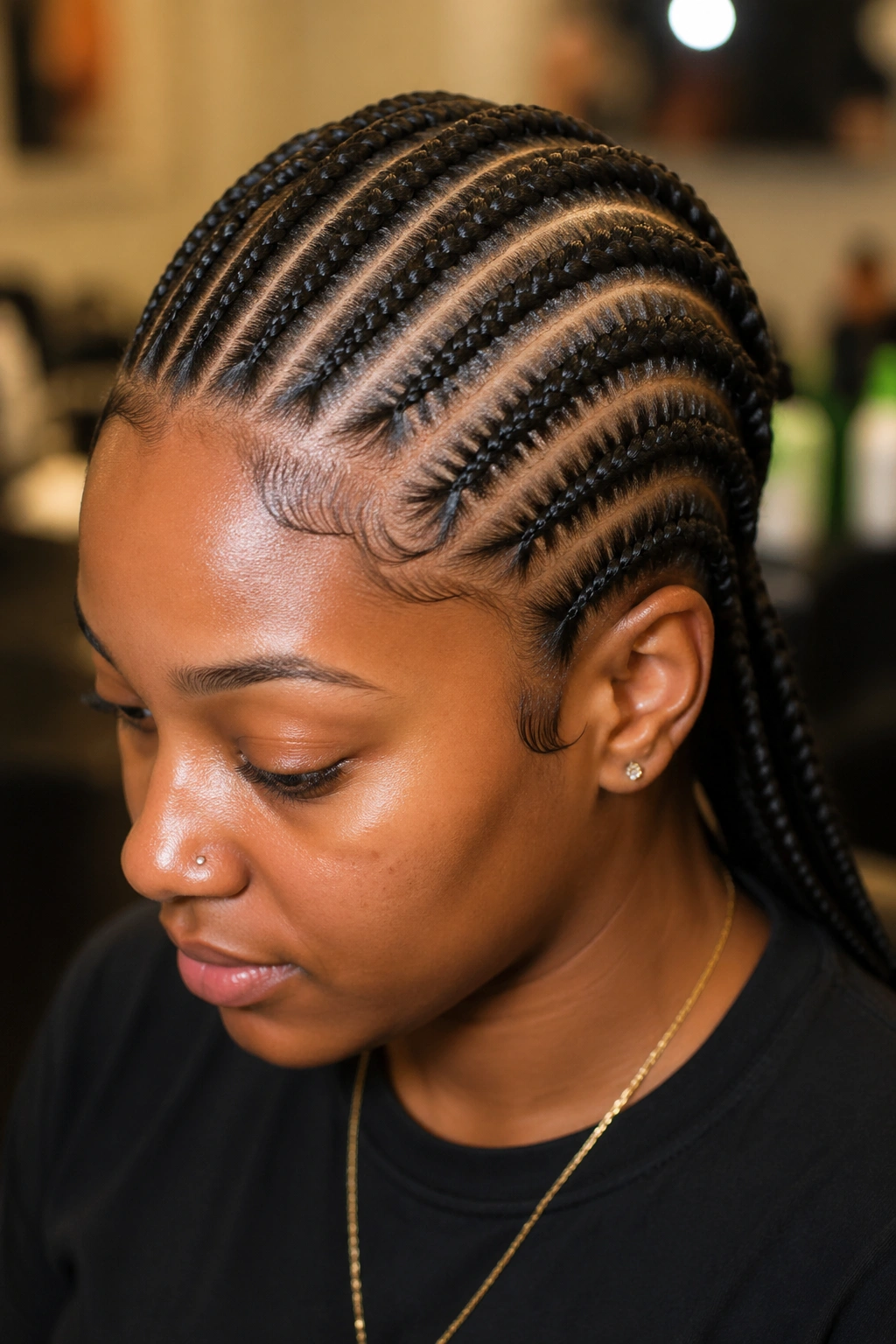
Twenty cornrows arranged so that a central crown of braided hair forms at the top of the head, with the remaining braids radiating outward from that crown.
The crown is a raised or flat section of braided hair at the very top. It can be the gathering point where multiple braids meet, or a separate braid that runs horizontally across the top while the others run vertically around it.
This style reads as regal. It photographs beautifully for formal events and feels architectural when worn.
19. Twenty Cornrows With Thread Wrapping
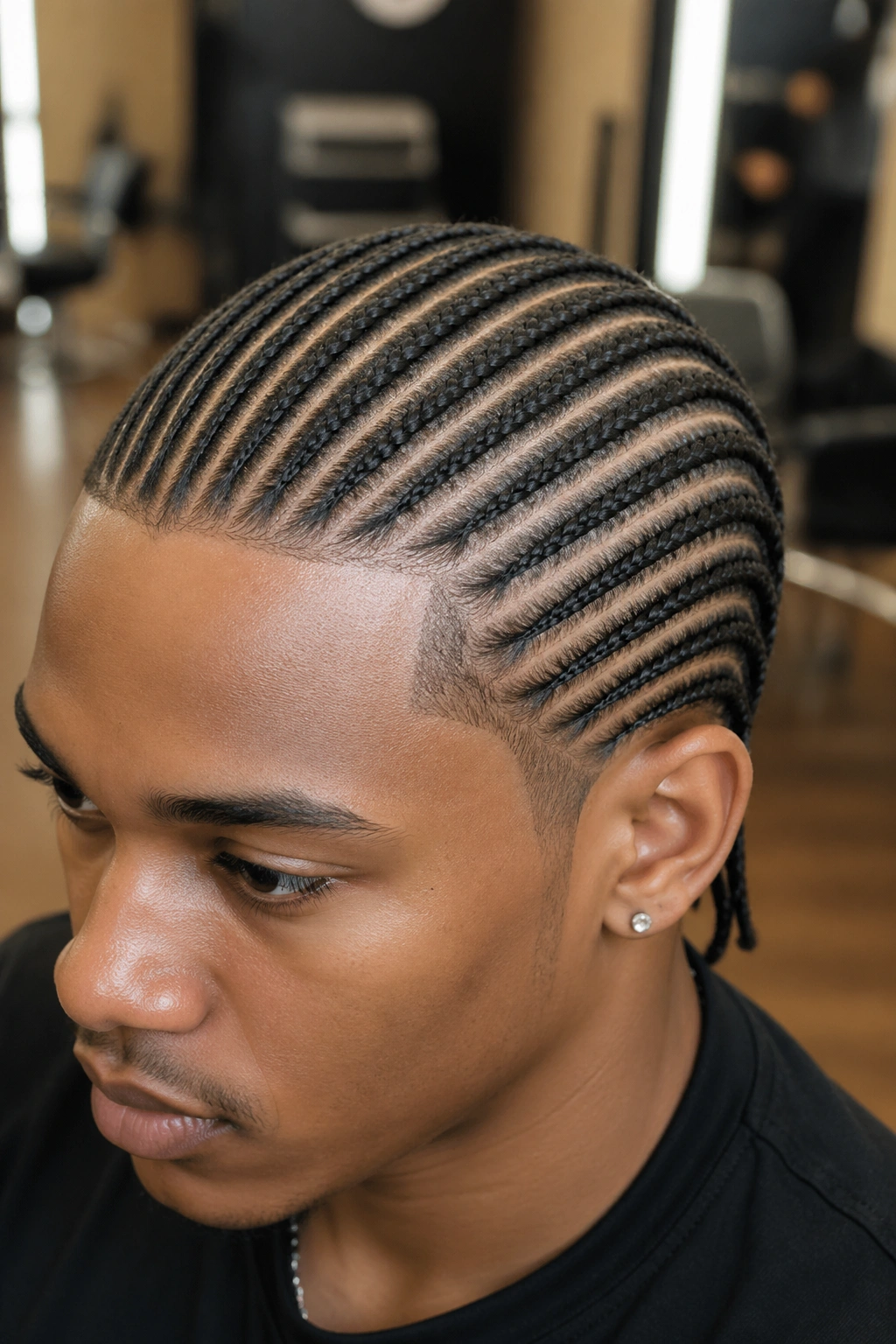
Twenty cornrows where several of the braids are wrapped with colored thread along their length.
Thread wrapping uses embroidery floss or cord in various colors. The thread is tightly wound around a section of braid, secured at each end, creating a ribbon-like accent along the braid.
Choose thread colors that coordinate with your outfit or accessories. Gold thread adds warmth. Black thread deepens the look. Bright colors — turquoise, scarlet, emerald — create a visual moment.
20. Twenty with Fringe of Baby Hair
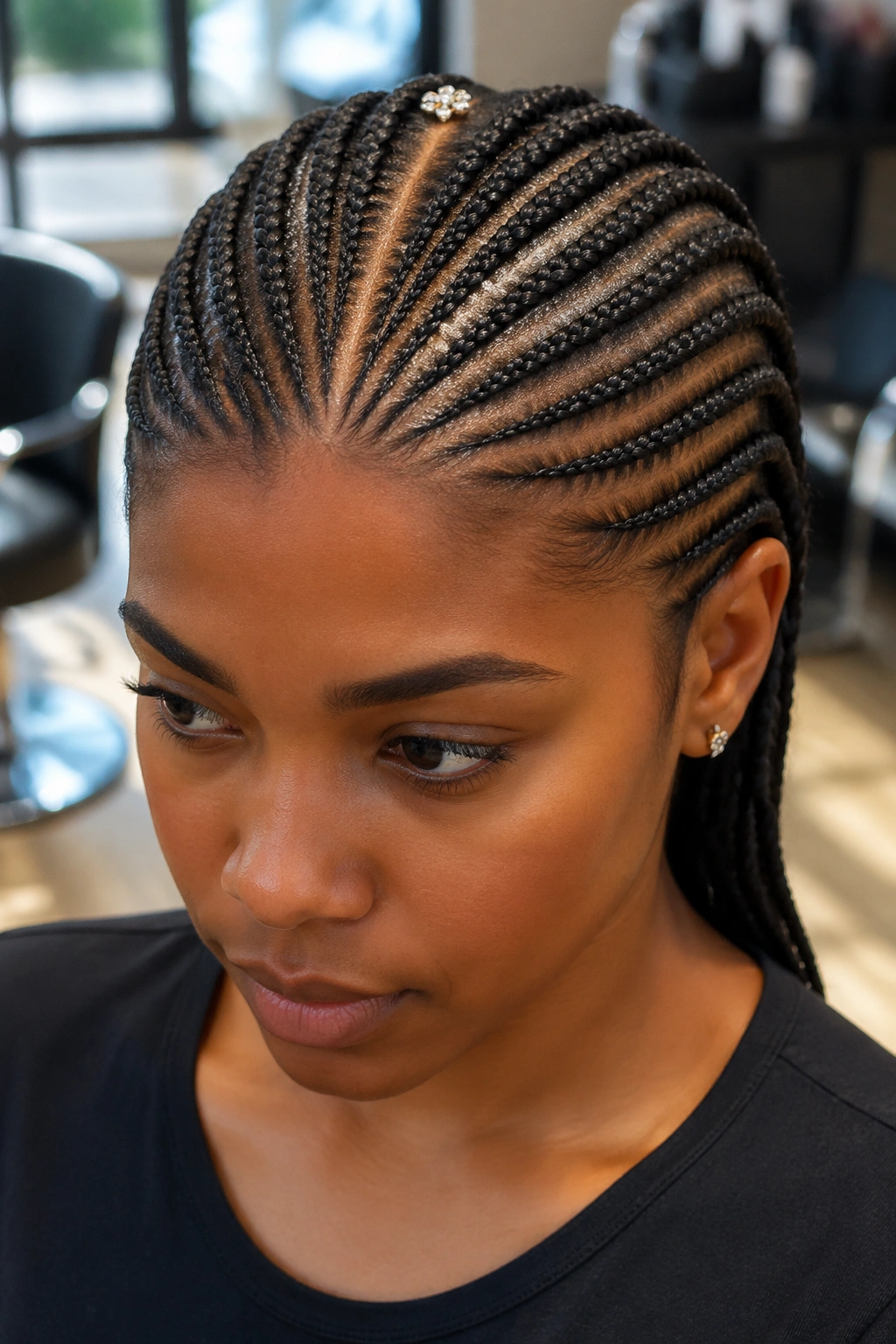
A standard twenty-braid set with exaggerated baby hair styling along the front hairline — swirls, points, or loops laid in edge gel.
The edge work is the finishing element. The twenty cornrows create the base; the edges finish the look. Skilled edge artists can add twenty to thirty minutes of styling on top of the braid install.
Photographs beautifully. The edges catch light and add dimension to the clean braided base.
21. Twenty Cornrows With Wet Look
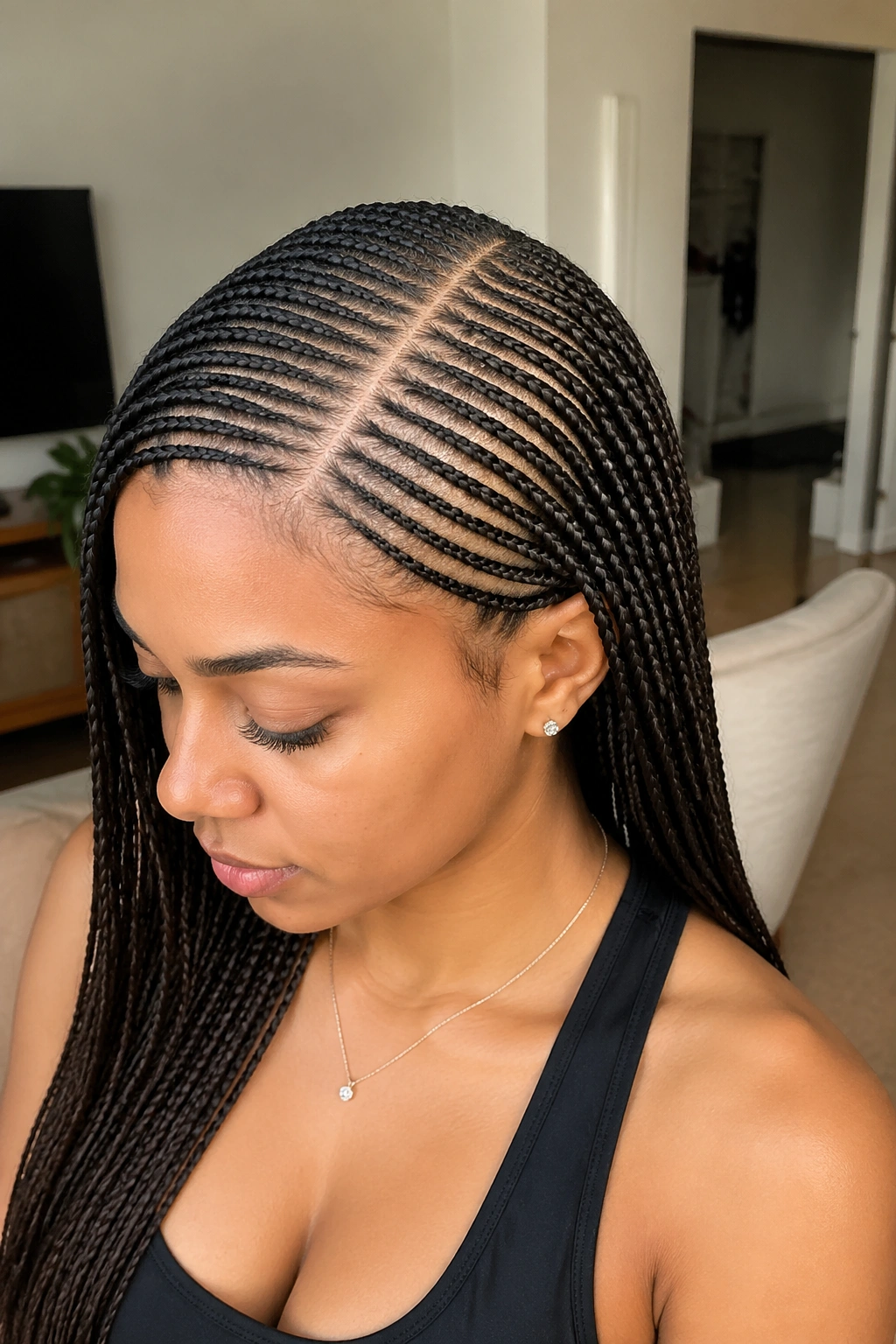
Twenty cornrows styled with a gel or pomade that creates a high-shine, wet-looking finish across the entire scalp.
The wet look is retro and striking. The gel should be applied at install and reapplied every few days to maintain the shine. Light gels work better than heavy ones — heavy products look matte and crusty rather than wet and glossy.
The style suits formal events particularly well. The gleam catches photographic light and adds drama.
22. Twenty with Asymmetric Design
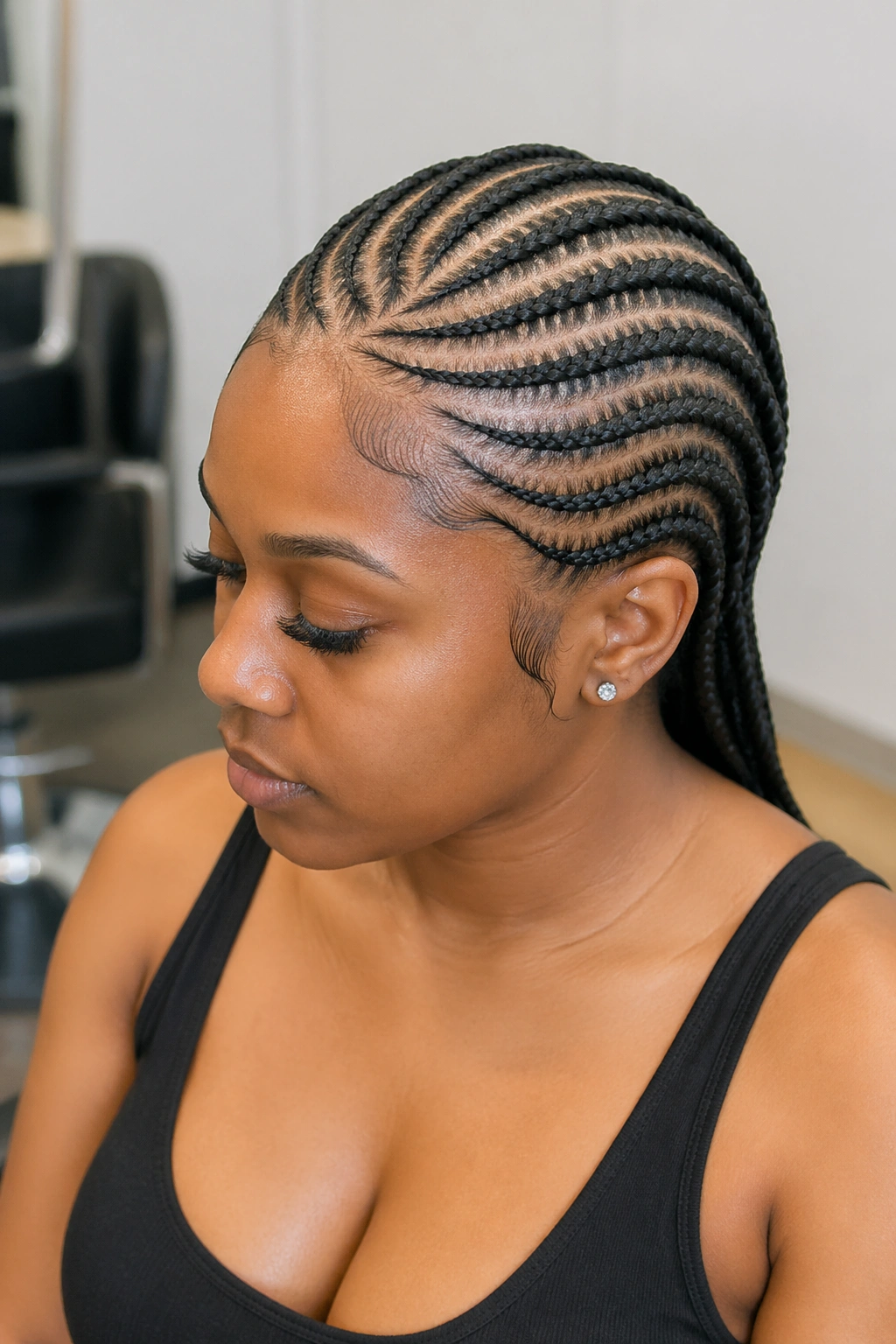
A twenty-braid set where the configuration is deliberately asymmetric — different patterns, thicknesses, or angles on each side of the head.
Bold claim: Asymmetric twenty-braid styles signal a particular kind of confidence. There’s no rule or convention being followed — the design is invented for the specific install, and the braider has to execute the vision.
The asymmetry can be subtle (thirteen on one side, seven on the other with different angles) or dramatic (straight-backs on one side, curved paths on the other). Either way, the style reads as artistic rather than conventional.
Ask your braider for creative freedom within the twenty-braid count. The results are often better than any specific Pinterest reference.
Maintenance That Extends the Style’s Life
Twenty cornrows protected properly can hit four weeks of solid wear. Protected poorly, they start looking fuzzy by week two.
Sleep with a satin bonnet. Every single night. No exceptions. A cotton pillowcase destroys cornrow definition faster than almost any other factor.
Beyond the bonnet, apply a light oil to the scalp every two to three days using a pointed applicator. Focus on the exposed part lines, not the braids themselves. Jojoba, sweet almond, or grapeseed are the lightest options and cause the least buildup.
If you exercise heavily, rinse the scalp with a witch hazel and water mix (50/50) after sweating to prevent buildup from crystallizing on the scalp.
Scalp Care During the Wear Period
With twenty braids, tension is distributed across the scalp rather than concentrated in fewer sections. That distribution is generally gentler, but doesn’t eliminate the need for active scalp care.
Apply light oil to the scalp every two to three days. Focus on the front hairline, where tension runs highest, and the temples, which tend to dry first.
Avoid heavy butters and thick creams. They build up under the braids, attract lint, and muddy the clean part lines within a week.
If you notice itching that doesn’t respond to oil or witch hazel, consider that the install may have been too tight. Tight installs cause persistent irritation that products can’t fix. Take-down is the solution.
Taking Down Twenty Cornrows
Take-down deserves patience. With twenty braids, the temptation is to rush — it’s more braids than a simpler set, which means more time. But rushing costs retention.
Mist each cornrow with a water and leave-in mix. Let it sit ten minutes to soften buildup. Start unraveling from the tail up, using fingers rather than tools. Separate shed hair from each cornrow before moving to the next.
Finger-detangle, then wide-tooth comb, then detangling brush. Always bottom-up. After all cornrows are out, do a clarifying wash, deep condition, and give the hair a week off before the next install.
Picking the Right Twenty-Braid Style for You
The twenty-count is versatile, but specific variations suit different situations better.
For professional environments, go with clean, classic configurations. Twenty straight-backs or ten-plus-ten with center part are the safest choices. They’re polished without being flashy.
For events and photo opportunities, choose styles with dimension. High ponytail finish, beehive updo, side-swept styles all photograph dramatically.
For active lifestyles, skip the beads, cuffs, and elaborate styling. A plain twenty-braid set with a simple pony or bun handles gym sessions and daily movement better than fussy variations.
For creative expression, explore asymmetric designs, color-blocking, and pattern work. The twenty-braid count gives enough real estate for genuine creativity.
Mistakes That Shorten the Style’s Life
Common pitfalls.
- Sleeping without a bonnet. Destroys definition within days.
- Installing on improperly stretched hair. Creates uneven parts that read messy.
- Using heavy products under the braids. Muddies parts and causes itching.
- Wearing the style past four weeks. The braids mat at the roots and take-down becomes a nightmare.
- Choosing a braider who rushes. Twenty braids take time — a braider who completes it in ninety minutes has cut corners somewhere.
- Skipping night moisturization. Dryness leads to itching, which leads to scratching, which leads to lifting.
- Taking down too aggressively. Breakage during take-down is preventable with patience.
Twenty cornrows is a count worth mastering. The math works for symmetry. The density reads as intentional. The wear life is strong when the daily care is maintained. Pick the variation that fits your situation, install with a skilled braider, and protect the investment through simple nightly habits. The style will carry you through weeks of wear with consistent polish.
