



Cornrow ponytails are the protective style that solved my “what do I do with my hair today” problem. One install, and you have a style that lasts for weeks while looking polished from morning to night. Cornrow ponytails for Black women hit the rare combination of practical and elegant — protective enough to give your natural hair a real break, structured enough to wear to a wedding, sleek enough to wear to a board meeting. The sculpted braids leading into a single dramatic gather is one of the most flattering hair silhouettes there is.
I’ve been wearing cornrow ponytails on and off for years. Each version teaches you something different. The high pony lifts your face but pulls hard at the temples. The low pony is gentler on the scalp but doesn’t have the same dramatic profile. The side pony is editorial and feminine but requires a confident asymmetric face shape. There’s a cornrow ponytail for every mood, every face, every event.
The technique itself is more nuanced than people realize. The cornrows aren’t just running back and ending — they’re directing the eye toward the gather point. The way each row curves and arrives at the ponytail base affects the entire silhouette. A skilled braider plans the path of every row to converge cleanly at the chosen gather point, whether that’s the crown, the nape, behind the ear, or somewhere asymmetric.
What follows is 22 distinct cornrow ponytail styles. Different gather positions. Different cornrow patterns. Different ponytail finishes — straight kanekalon, curly extensions, wrapped buns disguised as ponytails. Each one stands on its own merit. Before getting into them, some context worth having.
Why Cornrow Ponytails Flatter Almost Every Face
The pulling-back effect of cornrows combined with the lift of a ponytail creates what photographers call “facial elevation” — your features pull slightly upward, the cheekbones become more prominent, and the jawline reads sharper. It’s why models so often wear sleek pulled-back styles for editorial work.
The ponytail itself adds visual length. For shorter faces, this can elongate the head shape in a flattering way. For longer faces, the pony placement and length need more thought to avoid stretching the face further.
The cornrows frame the face in clean lines. Unlike loose hair around the face, cornrows create geometric structure that complements feature symmetry.
Picking the Right Gather Position
The position of the ponytail dramatically changes the look.
High at the crown — youthful, dramatic, lifts the face most. Best for casual, athletic, or fashion-forward looks.
Mid-height at the back of the head — balanced, classic, suits most occasions.
Low at the nape — sophisticated, formal, gentlest on the scalp. Best for professional and elegant settings.
Side at the ear — editorial, asymmetric, makes a statement. Best for occasions where you want to stand out.
Above one ear (high side) — bold and modern.
Each position has its strengths. The right one depends on the occasion and your face shape.
Tools and Hair for the Pony Itself
The ponytail extension is its own choice. Options:
Real human hair extensions for the most natural, flexible look.
Kanekalon braided into the cornrows for a uniform, smooth pony.
Curly synthetic extensions for a textured, voluminous tail.
Wavy extensions for a soft, romantic look.
Each comes in lengths from 14 inches to 30+ inches. Match the length to the occasion — longer for formal, shorter for casual.
Tension Awareness
Cornrow ponytails concentrate tension at the gather point more than other cornrow styles. The braids pull from all directions toward one location, which puts pressure on the surrounding scalp.
Ask your braider to keep front edges loose. The hairline can suffer if pulled too tight at the gather. A slight loosening of the temple cornrows distributes the pressure.
If you wear cornrow ponytails frequently, alternate gather positions across installs. Wearing only high ponytails repeatedly wears down the crown area. Mixing positions spreads the load.
1. Sleek High Cornrow Ponytail
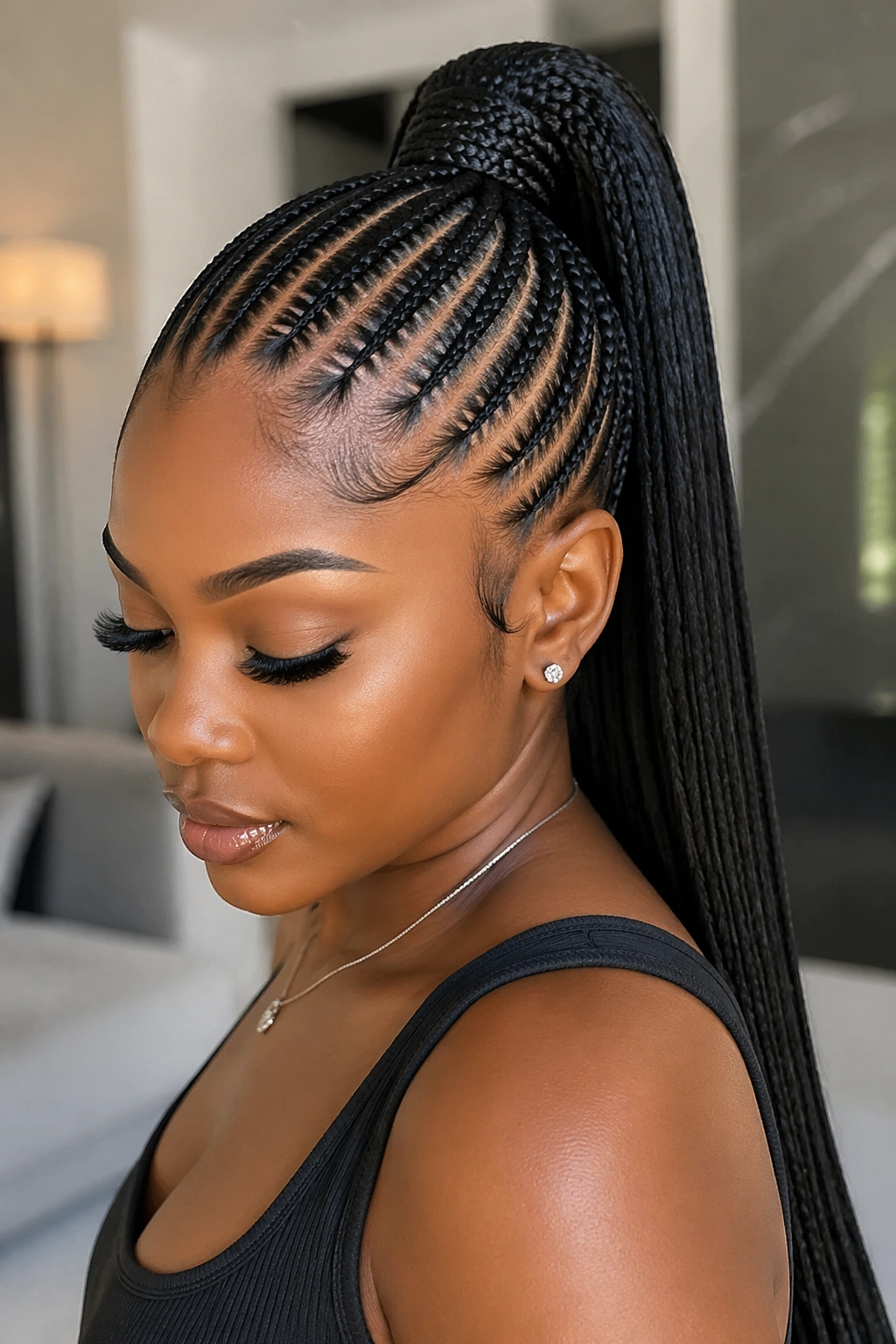
The classic version. 10-12 cornrows running straight back from the hairline and gathering at the crown into a high ponytail. The pony itself is sleek and falls in a single smooth length to mid-back or below.
Why It Works
- Most flattering silhouette for almost every face shape
- Reads as polished without being formal
- Easy to wear from morning to night
- Lasts 4-6 weeks with care
Pro tip: ask for the gather to sit slightly forward of your true crown point. A pony at the actual crown can look stubby in profile. A slightly forward gather looks balanced.
2. Low Cornrow Ponytail at the Nape
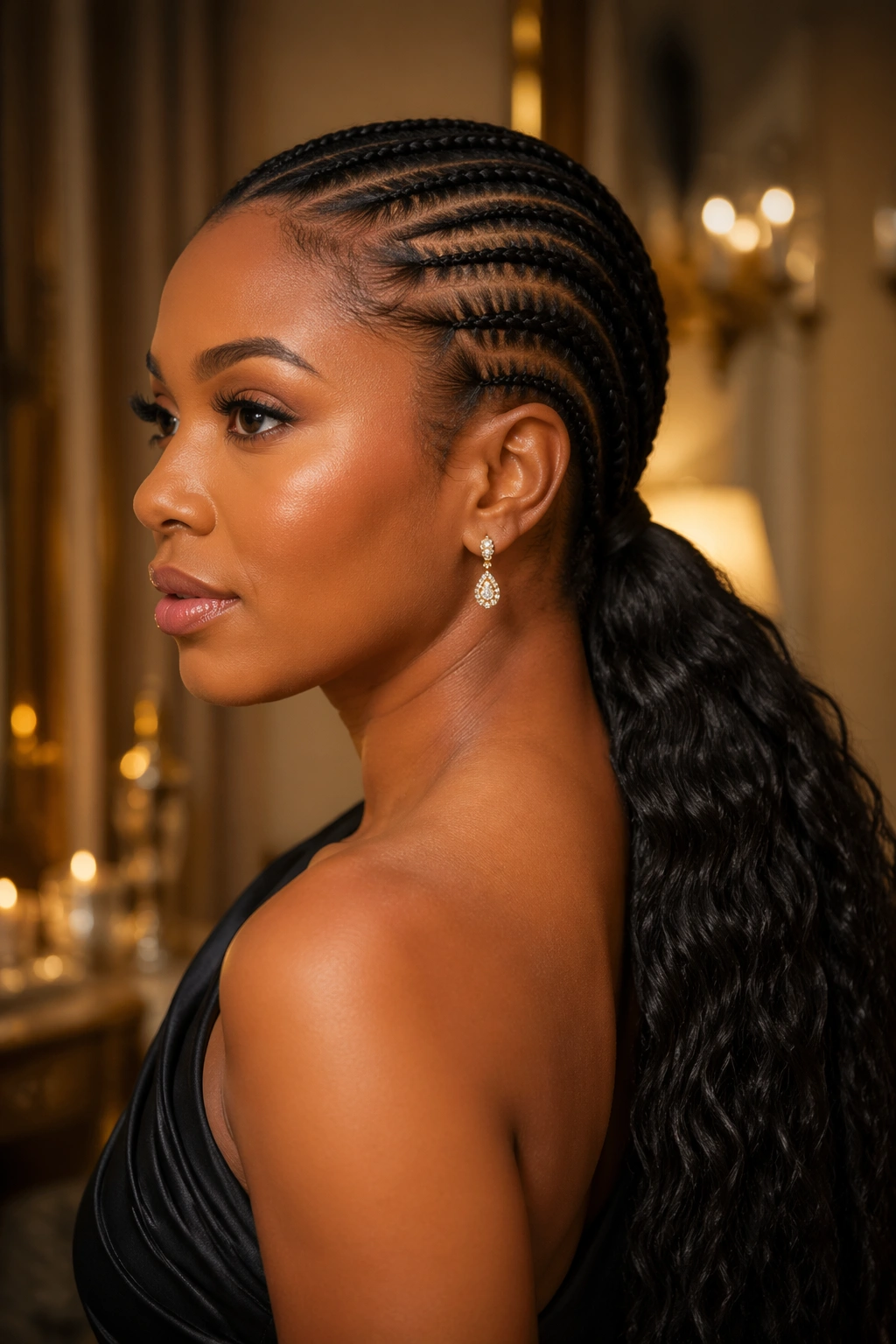
Same cornrow setup as the high version, but gathering at the very base of the neck. The lower position reads as sophisticated and works for formal settings.
Unlike the high pony, this version doesn’t lift the face. It frames it. The features stay in their natural position while the gathered length cascades down the back.
Best for events with high collars or jewelry that sits at the neck — a low pony doesn’t compete with neckline detail.
The low position is gentlest on the scalp. If you have sensitive edges or have been wearing tight styles recently, this is the move.
3. Side Cornrow Ponytail Behind One Ear
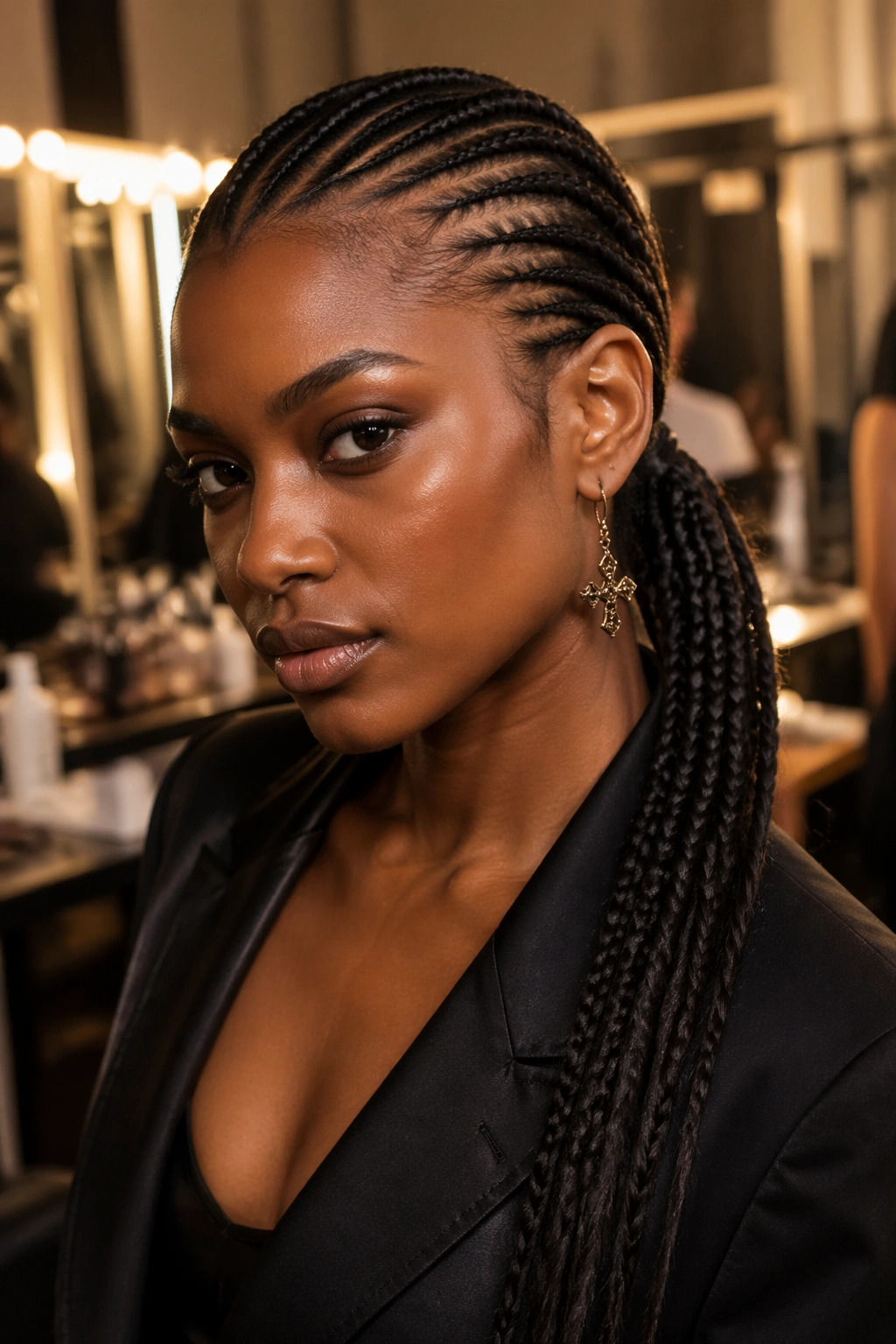
All cornrows curving to one side and gathering at a point behind one ear. The pony falls forward over one shoulder rather than down the back.
The side gather is dramatic and editorial. It works best for special occasions where you want a statement profile.
The asymmetry needs commitment from your braider. The cornrows on the side opposite the gather travel further across the head than those on the gather side. The braider needs to plan path lengths.
4. Half-Up Cornrow Ponytail
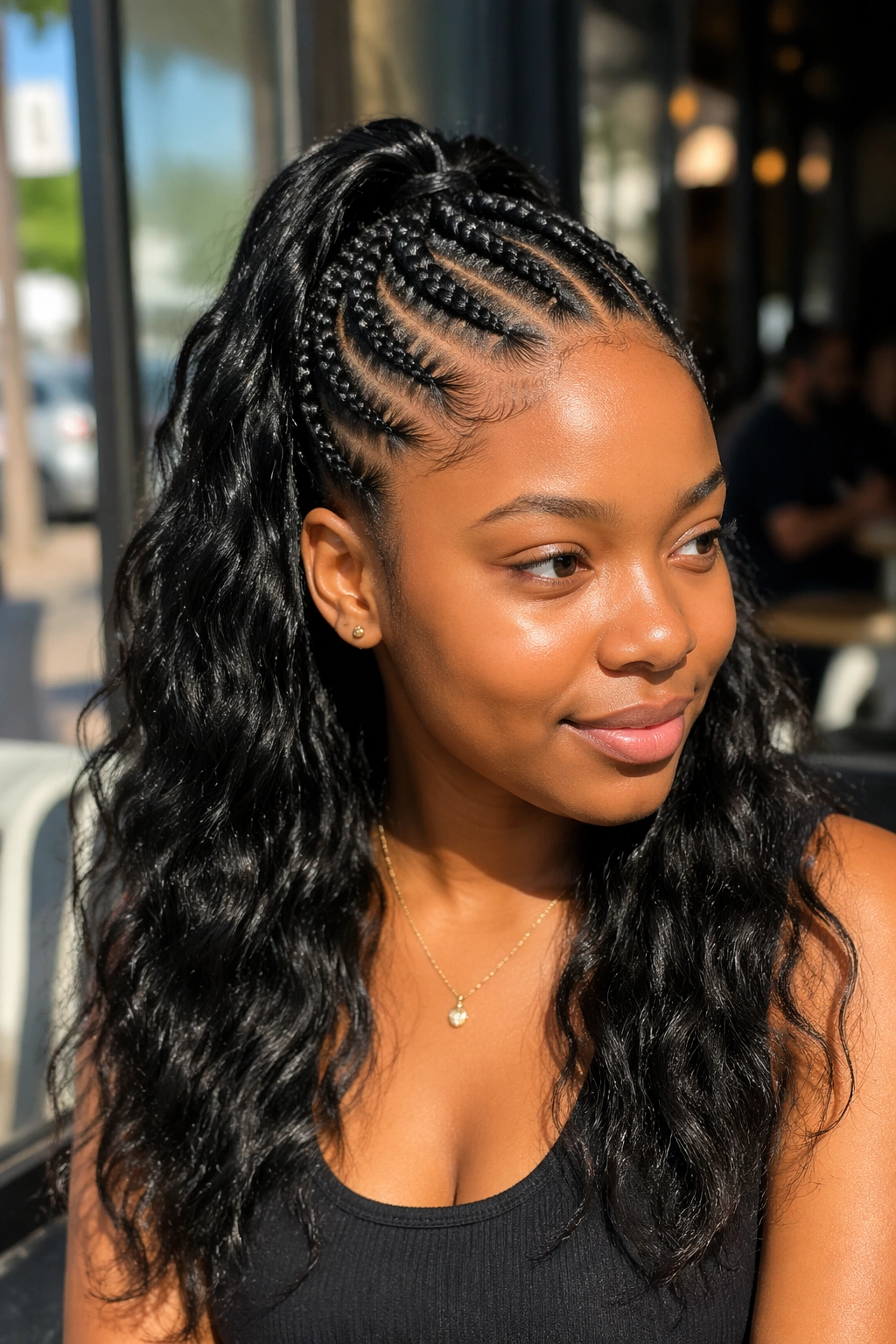
Front cornrows gathered at the crown into a half-up ponytail, while the back hair flows loose or is braided separately. The half-up style gives the face the lift of a pony without committing to a full updo.
The half-up version is youthful and softer than full ponytails. Good for casual settings, dates, daytime events.
The transition between the gathered cornrows and the loose back needs to be clean. A skilled braider creates a smooth termination point that doesn’t show obvious “this is where the cornrows stop.”
5. Cornrow Ponytail with a Side Swept Bang
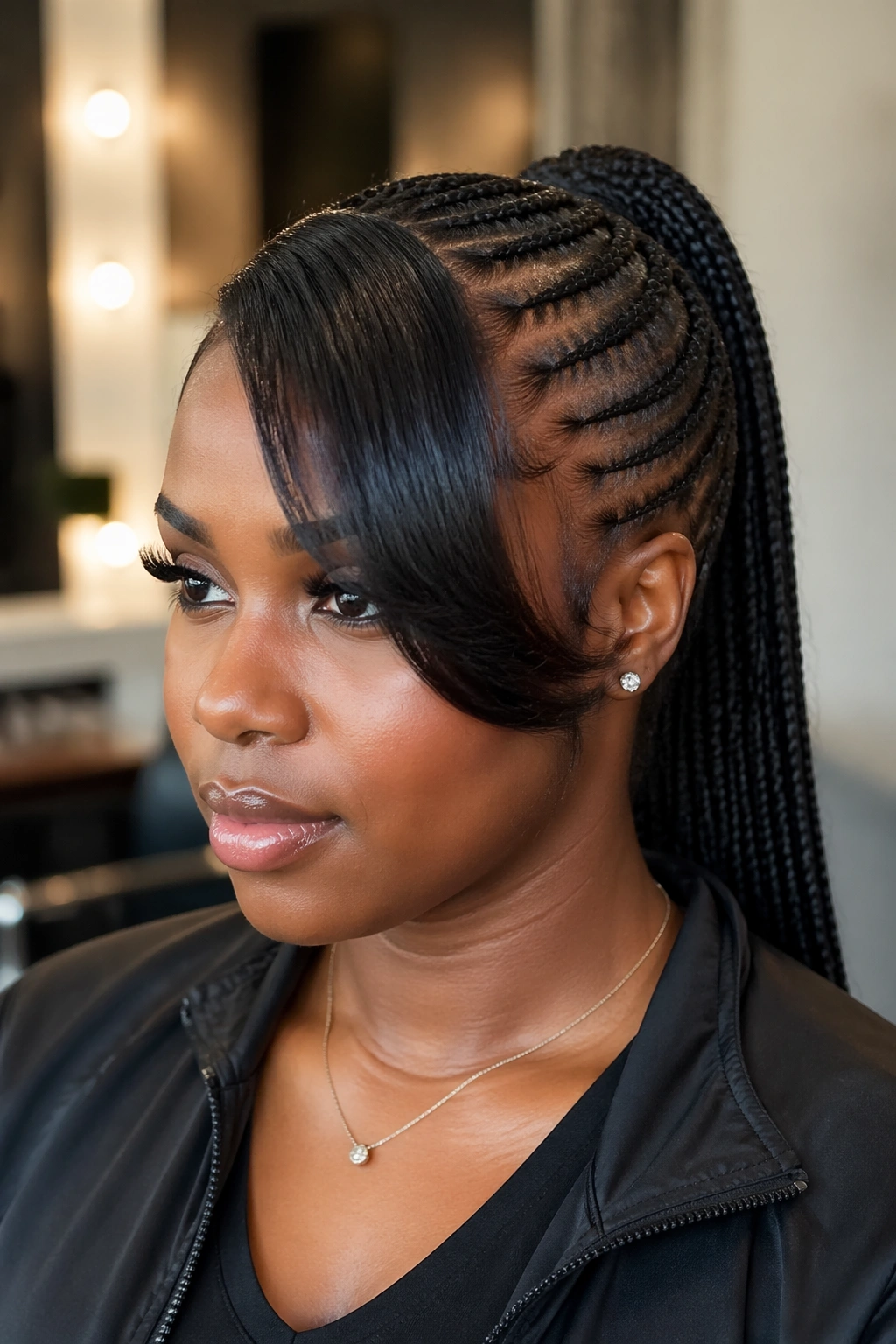
The main cornrows gather into a back ponytail, but a section at the front is left out and styled as a side-swept bang draping across the forehead.
The bang adds softness and feminine framing to the otherwise structured cornrow style. It’s particularly flattering for high foreheads.
The bang needs daily styling. A flat iron, blow dryer with round brush, or overnight silk wrap maintains the swept shape.
6. Cornrow Ponytail with Kanekalon Wrapped Base
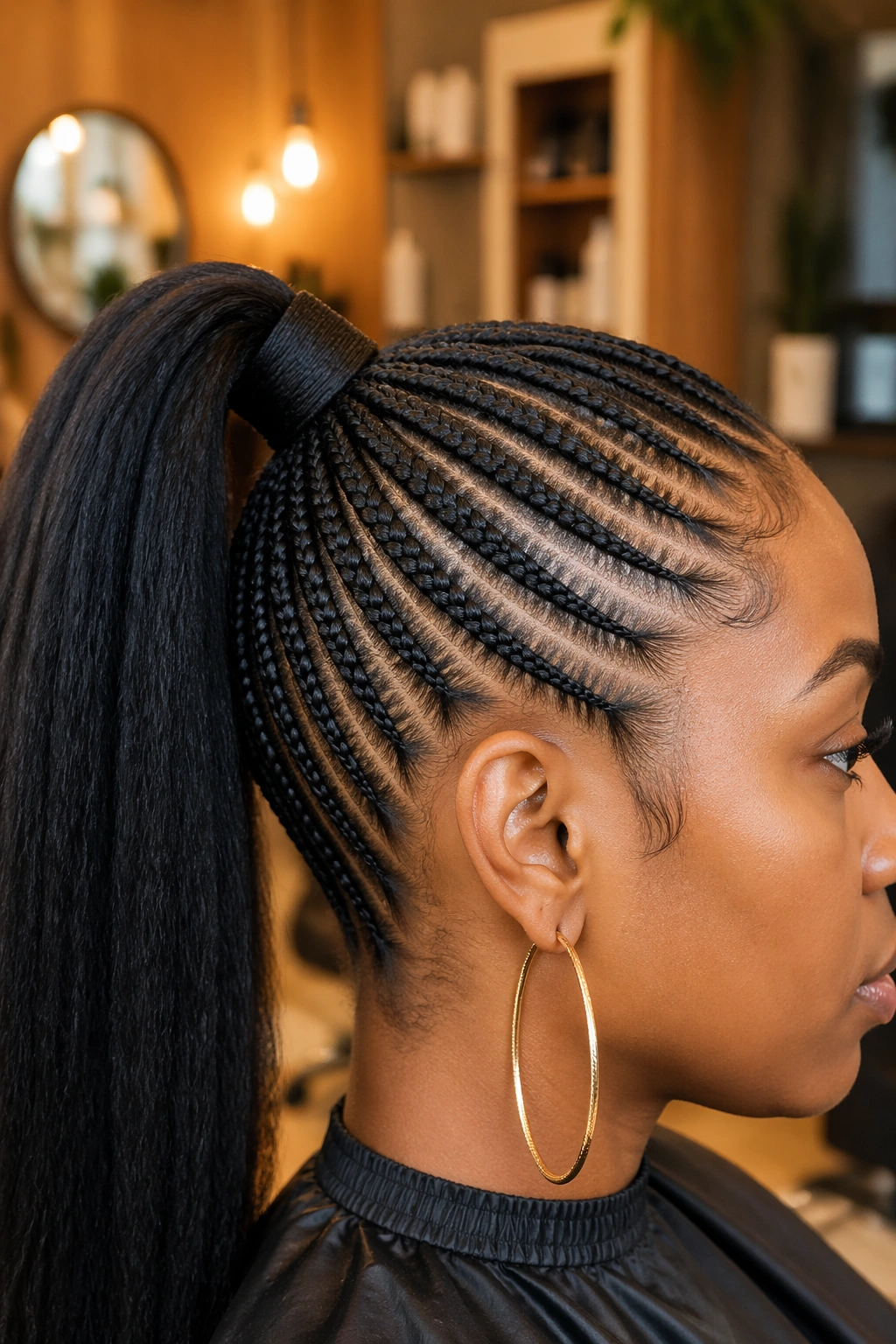
A standard cornrow ponytail where the gather point is wrapped tightly with a piece of kanekalon to hide the elastic and create a smooth, finished base. No visible bands.
This is a small detail that elevates the entire style. Visible elastic at a ponytail base reads as casual or rushed. A wrapped base reads as intentional and finished.
The wrap takes about 5 extra minutes at install. Worth every minute.
7. Cornrow Ponytail with Curly Extension
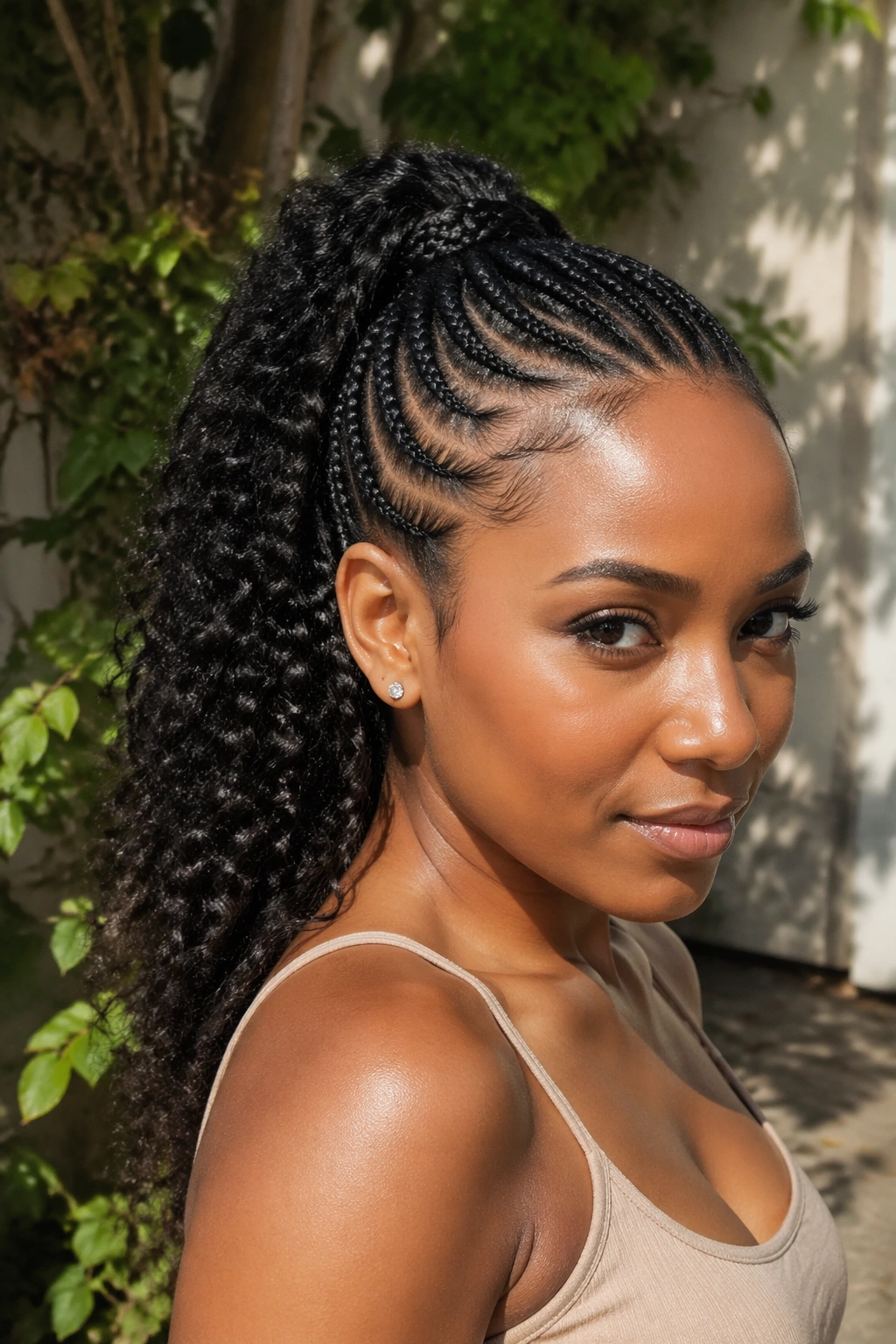
The cornrows are sleek and structured, but the ponytail itself is curly — loose curls, tight coils, or beachy waves. The texture contrast between the smooth cornrows and curly tail creates visual interest.
The curly extension can be human hair or curly kanekalon. Pre-curled extensions are widely available.
Best for casual to semi-formal settings. The curly tail keeps the look from reading too sleek or severe.
8. Cornrow Ponytail with Beaded Cornrows
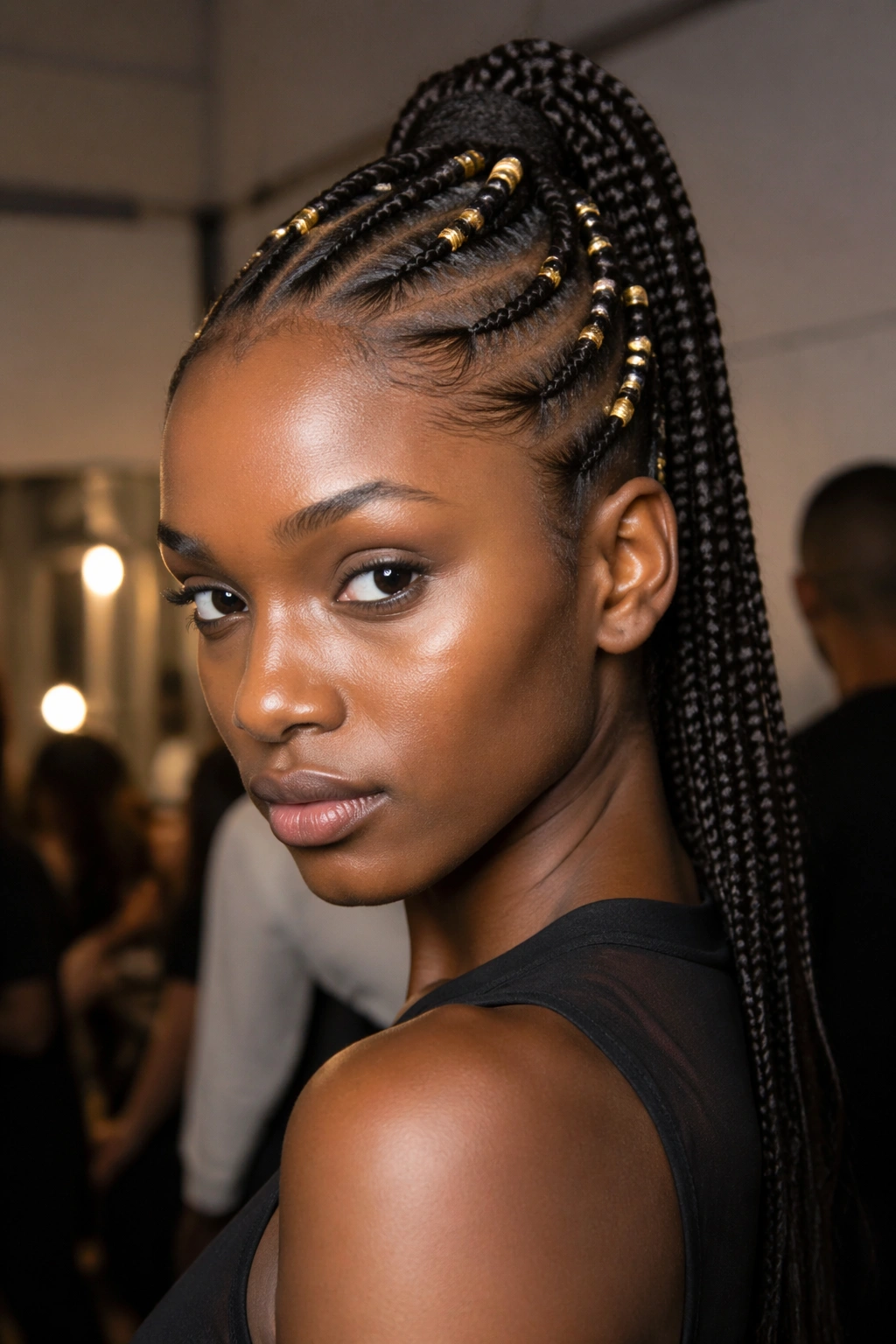
Cornrows leading into a ponytail, but with small beads woven into several of the cornrow rows along the way. The beads add cultural and decorative weight without changing the basic structure.
Choose bead colors that complement the ponytail extension color. Wooden beads with dark hair extensions, metallic beads with lighter ombre extensions.
The beads add slight sound when you move. The auditory aspect is part of the experience — some find it pleasant, some find it distracting.
9. Cornrow Ponytail with a Bold Center Part
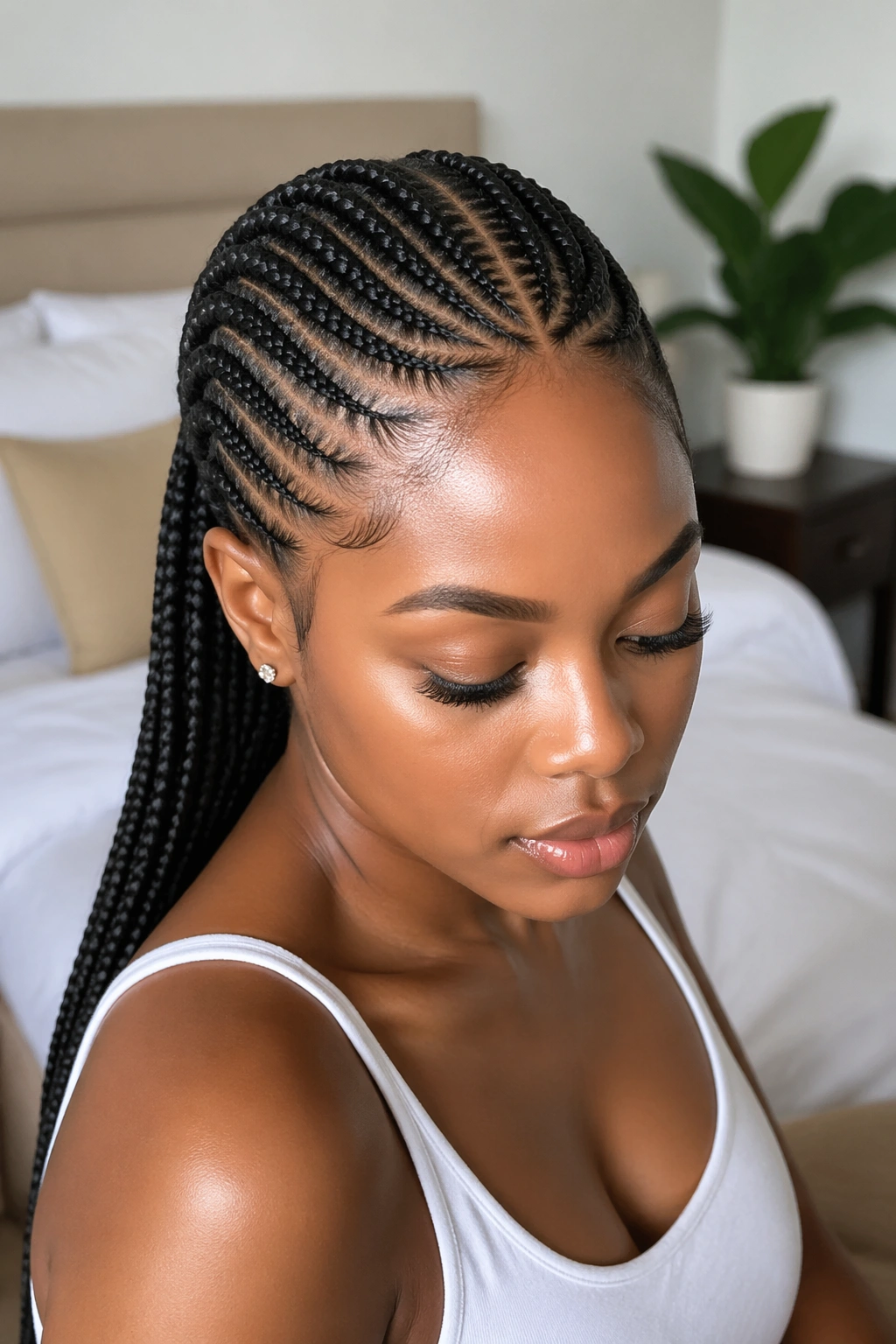
The cornrows divided down a sharp center part, with all rows on each side curving back to gather into a single ponytail behind the head. The center part adds a graphic vertical line to the otherwise gathered style.
Best for face shapes with central symmetry. Slight asymmetries get magnified by a center part.
The center part needs maintenance. A small dab of gel along the part line every 3-4 days keeps it crisp.
10. Multiple Cornrow Ponytails (Two or Three)
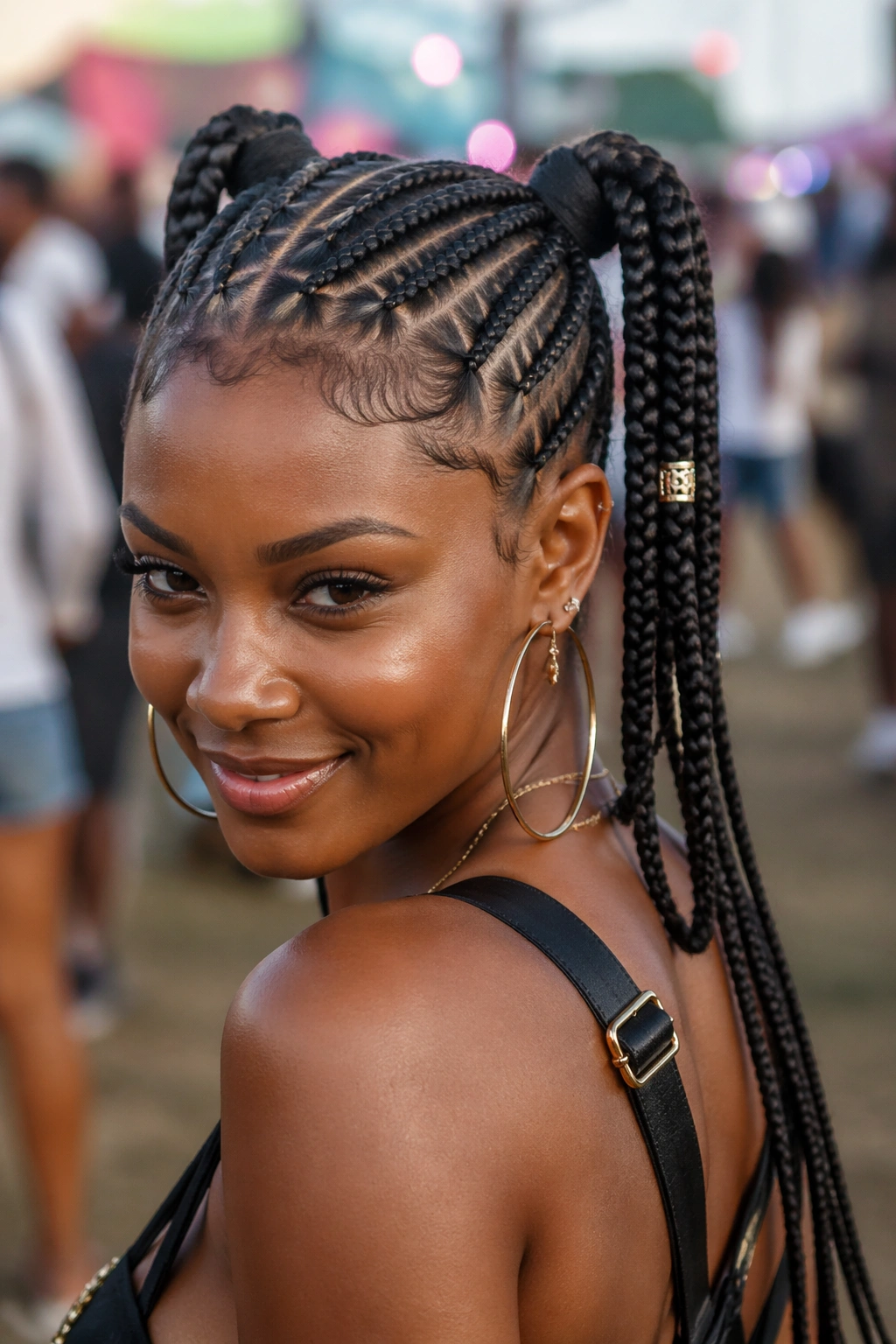
Instead of one gather point, two or three smaller ponytails distributed across the head. Two pigtail-style ponies on either side. Three ponies in a vertical line down the back.
Multiple ponytails read youthful and playful. Best for casual settings, festivals, dance performances.
The challenge is making each pony look intentional rather than uneven. The braider needs to plan precisely where each pony lands.
11. Cornrow Ponytail with Ombre Extensions
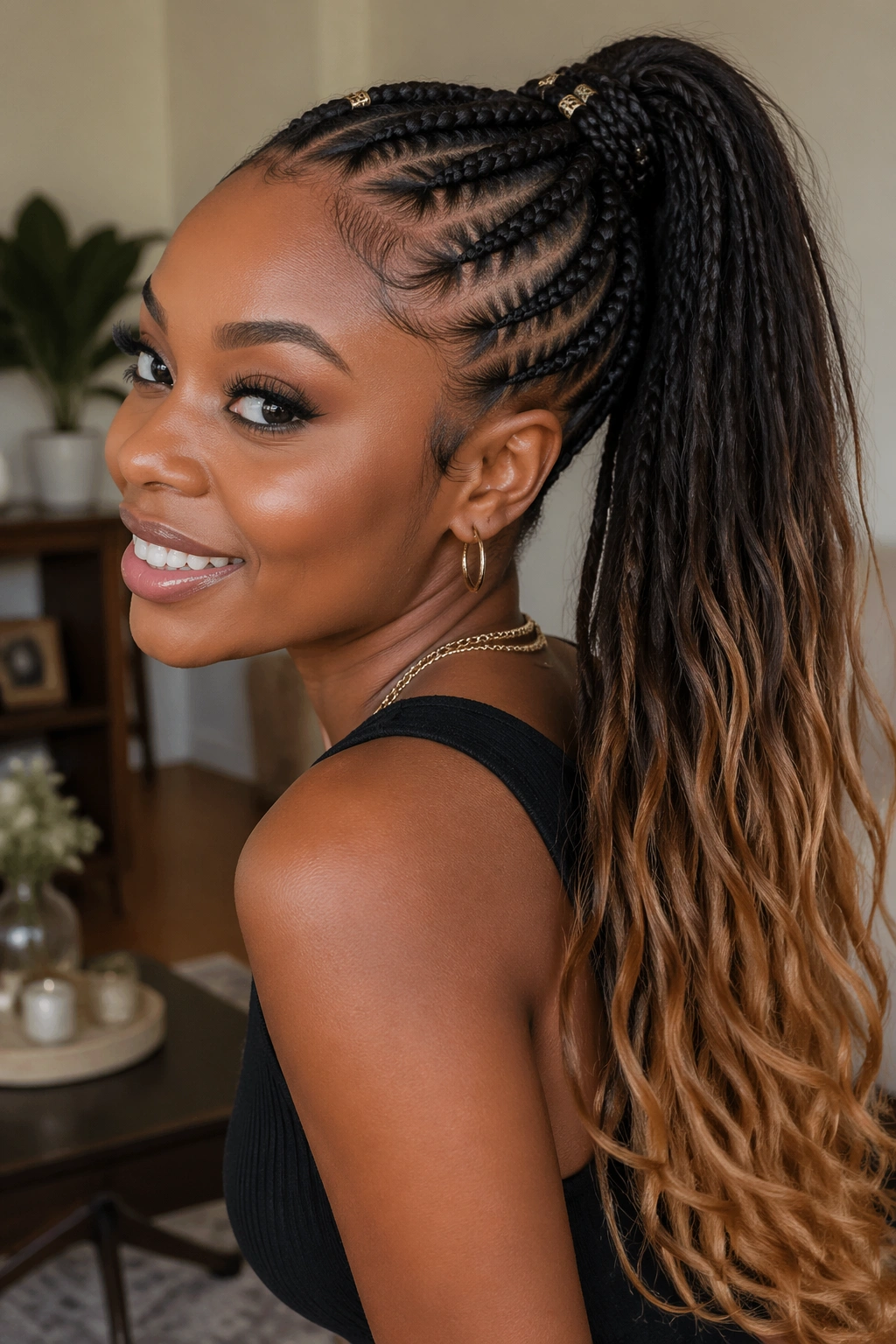
A standard cornrow ponytail with the extension hair in an ombre gradient — dark at the base transitioning to lighter at the tips. Popular gradients include black-to-honey, dark brown-to-copper, and black-to-platinum.
The gradient is most visible when the ponytail moves. Static, the color reads as multi-tonal. In motion, the gradient shows clearly.
This style adds color drama without any actual dye on your natural hair.
12. Cornrow Ponytail with a Top Knot Bun
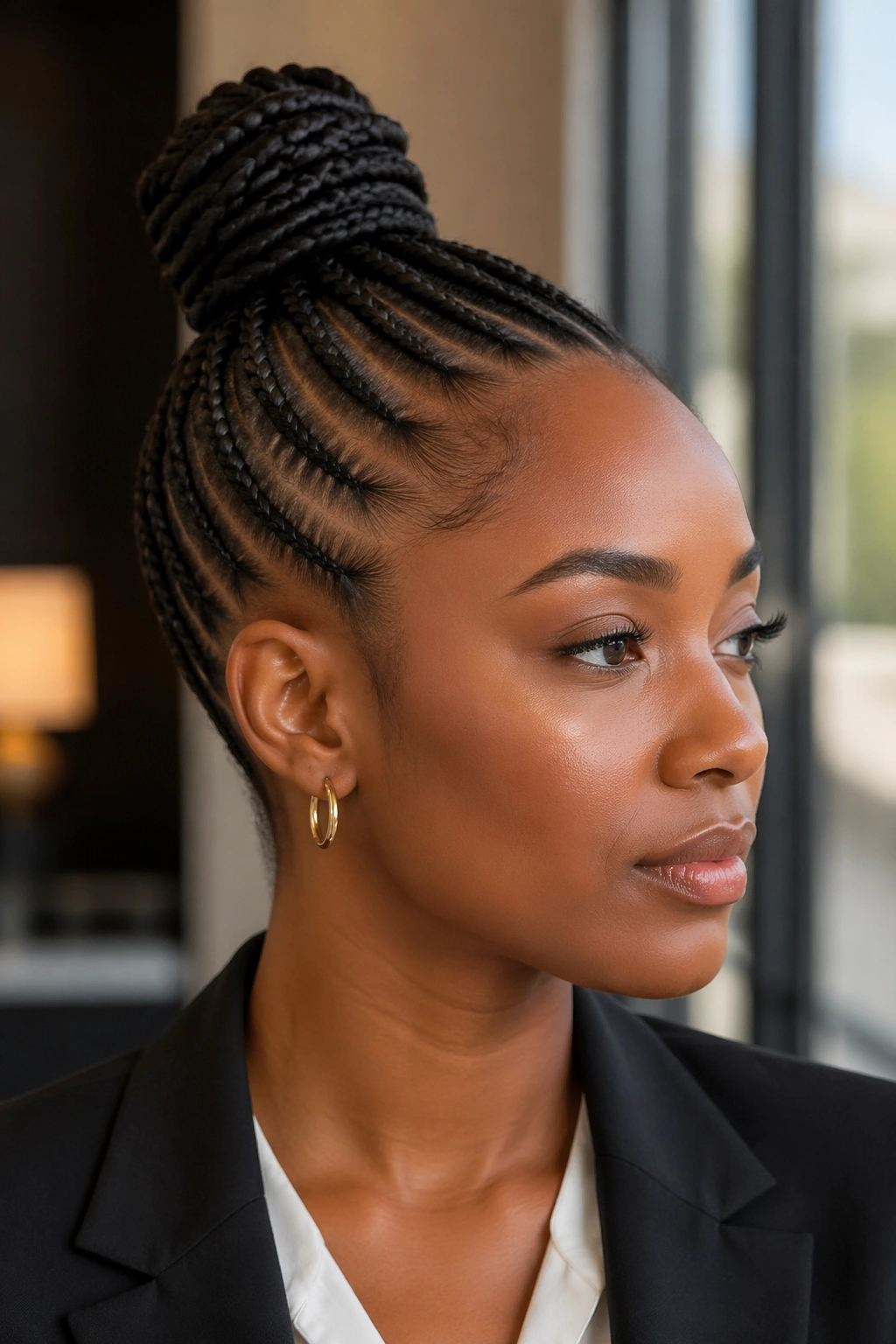
The cornrows lead into a high gather, but instead of a flowing ponytail, the gathered hair is wrapped into a top knot bun. The bun replaces the tail.
This is a hybrid look — cornrows-into-bun rather than cornrows-into-pony — but the construction is so similar that it deserves inclusion.
Top knots read as polished and confident. Best for formal and professional settings.
13. Cornrow Ponytail with a Bantu Knot Crown
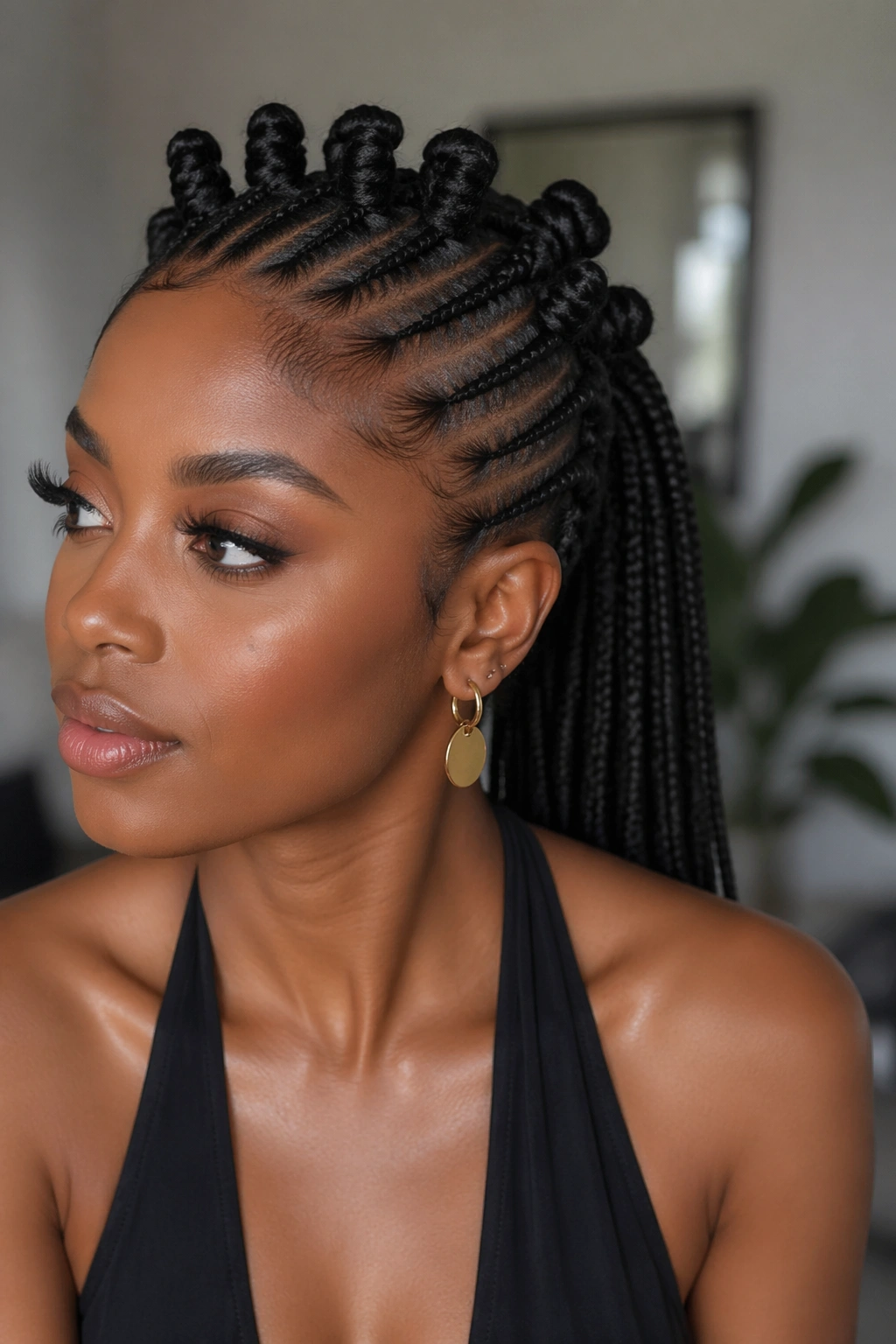
Front cornrows gather into a series of small bantu knots arranged in a crown across the top of the head, while back cornrows continue into a ponytail behind. The combination of bantu knots and cornrow pony creates a layered, textured look.
The bantu knots add cultural weight and dimension. They also stretch the hair underneath, giving you crimped texture when the style is eventually undone.
14. Cornrow Ponytail with a Wavy Extension and Side Sweep
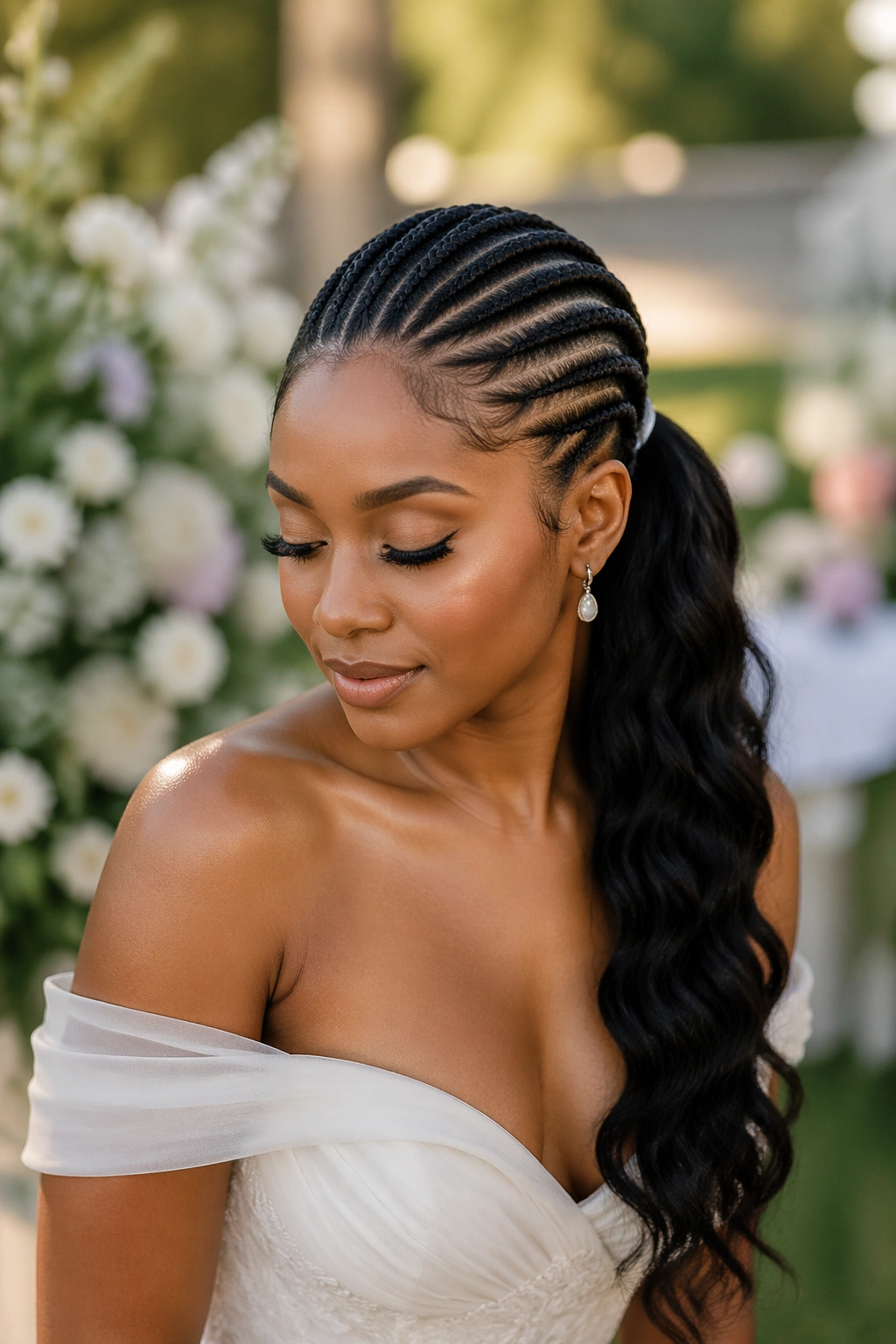
The cornrows curve to one side and the ponytail falls in a soft S-curve over one shoulder, ending in wavy extension hair. The side direction combined with the wavy texture creates a romantic, flowing silhouette.
Best for weddings, dates, and occasions where you want soft femininity.
The wavy extension needs occasional refreshing — a curl spray or light reapplication of texturizing product.
15. Cornrow Ponytail with a Decorative Headband
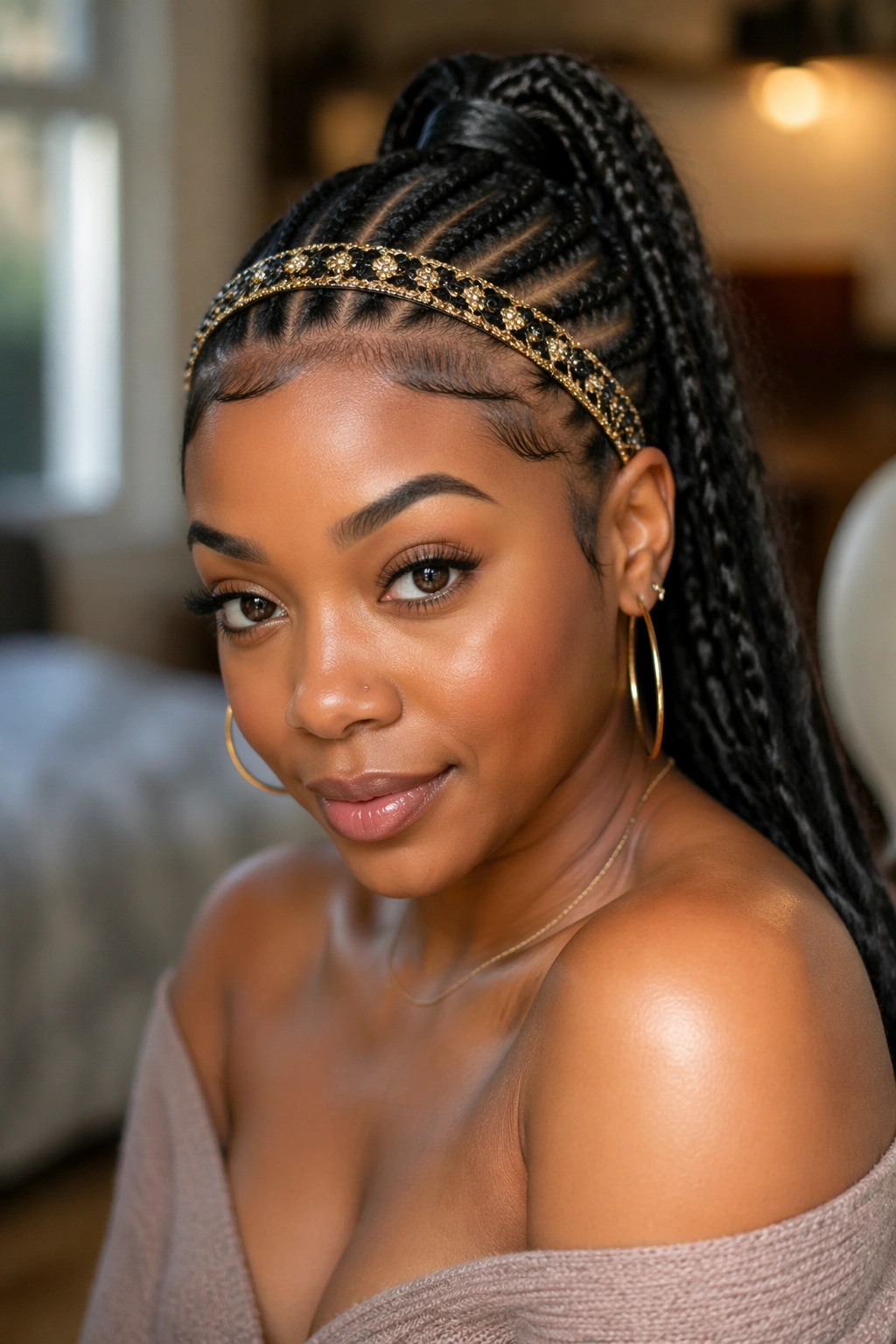
A cornrow ponytail paired with a decorative headband — metallic, fabric, or beaded — worn at the front hairline. The band complements the gathered structure with a horizontal accent.
Choose a band that matches the formality of your outfit. Metallic for evening, fabric for daytime, beaded for cultural occasions.
The band can be tucked subtly under the front cornrows or worn boldly on top depending on preference.
16. Cornrow Ponytail with Asymmetric Cornrow Counts
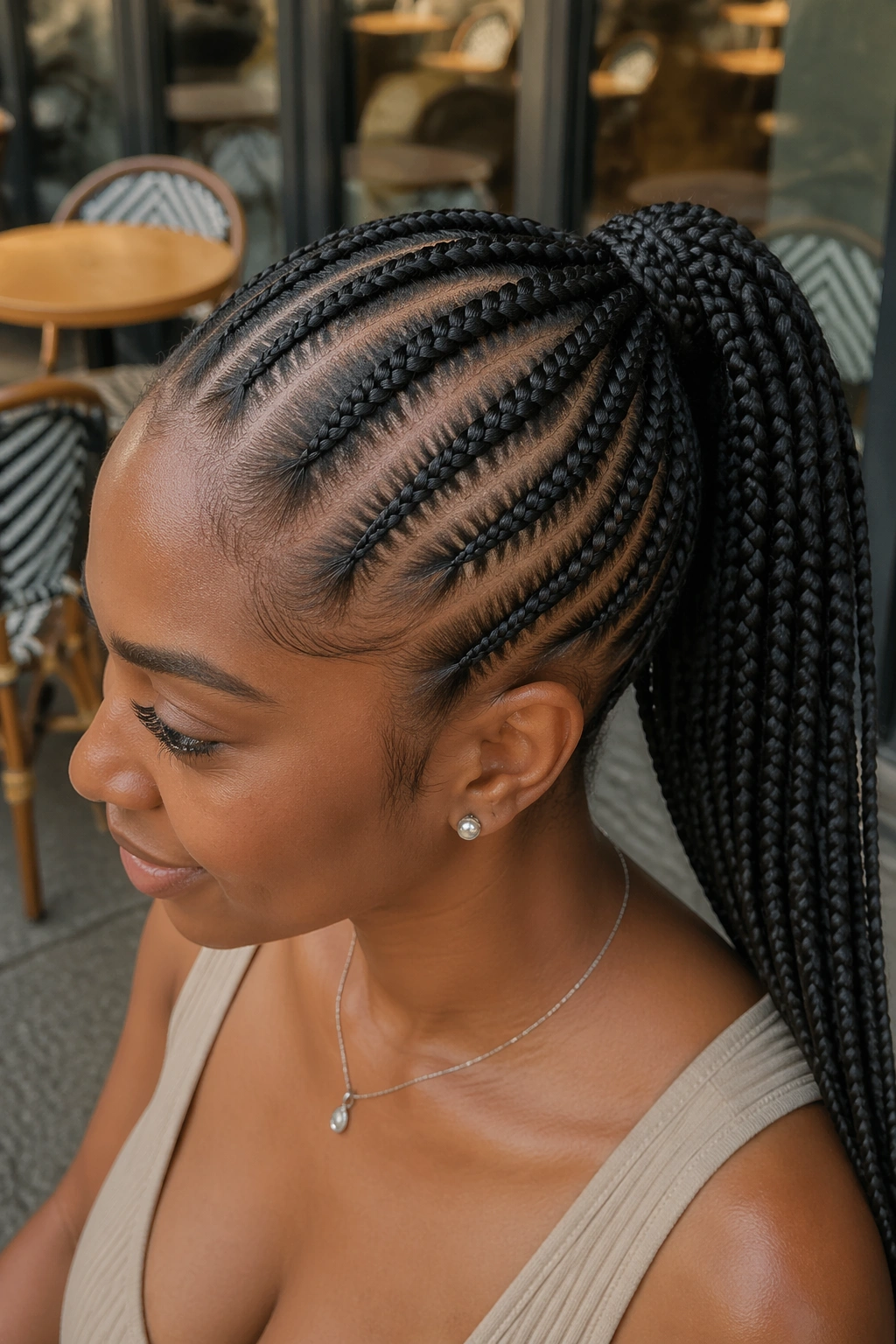
Three cornrows on one side of the head and seven on the other, all gathering at a central back ponytail. The asymmetric cornrow counts create visual interest without changing the gather point.
This is a subtle styling choice — most people won’t notice the count asymmetry consciously, but they’ll feel that something interesting is happening.
The denser side has more visual weight. Position it on whichever side of your face you want to emphasize.
17. Cornrow Ponytail with a Long Sweeping Bang
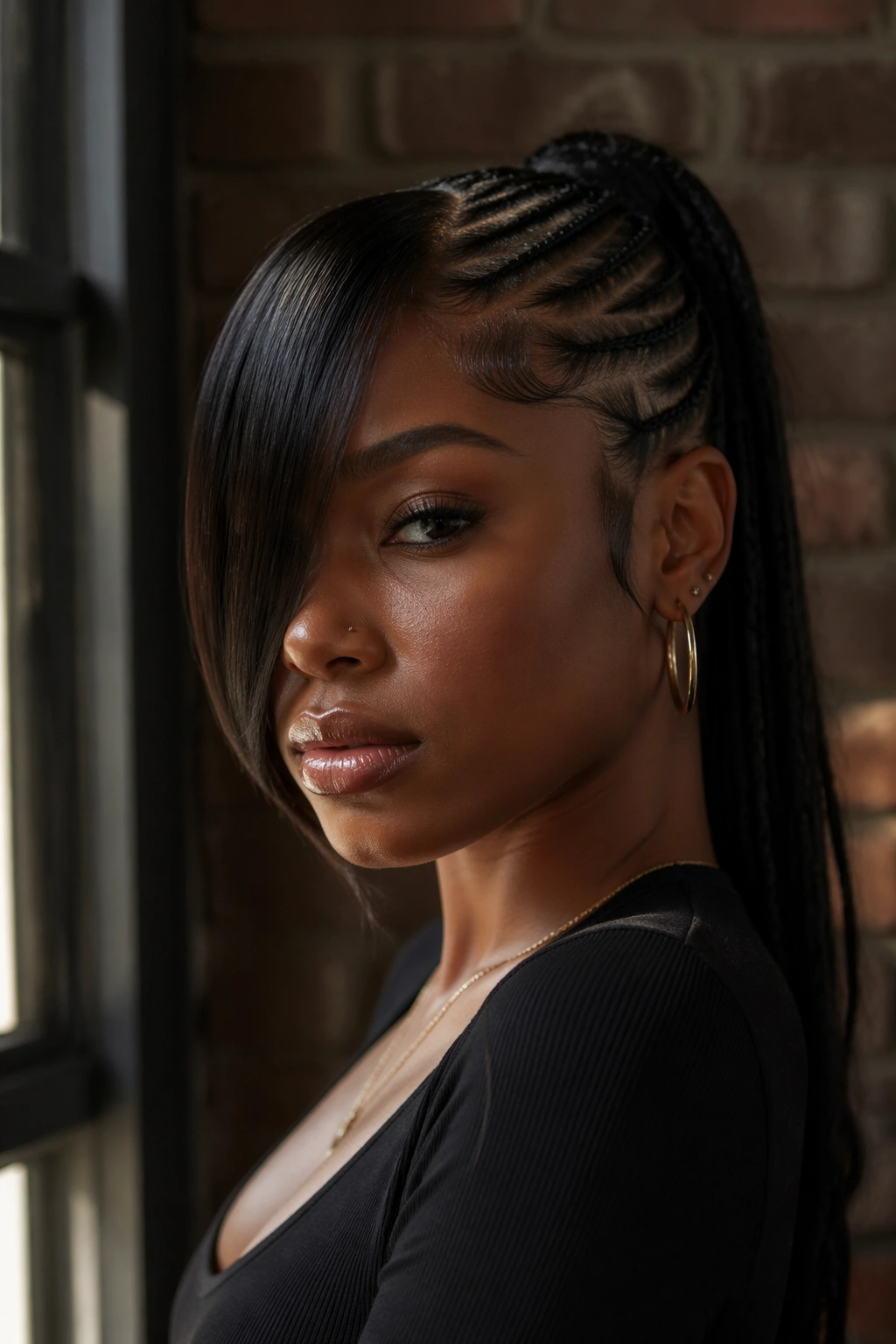
A cornrow ponytail with a long, dramatic side-swept bang that reaches the cheekbone or below. The bang is more substantial than a typical fringe — it’s a feature.
The long bang can be left as natural texture or styled smooth. Both readings work.
This is a moody, editorial look. Best for photoshoots, dramatic events, or moments when you want to feel mysterious.
18. Cornrow Ponytail in a Crown Style
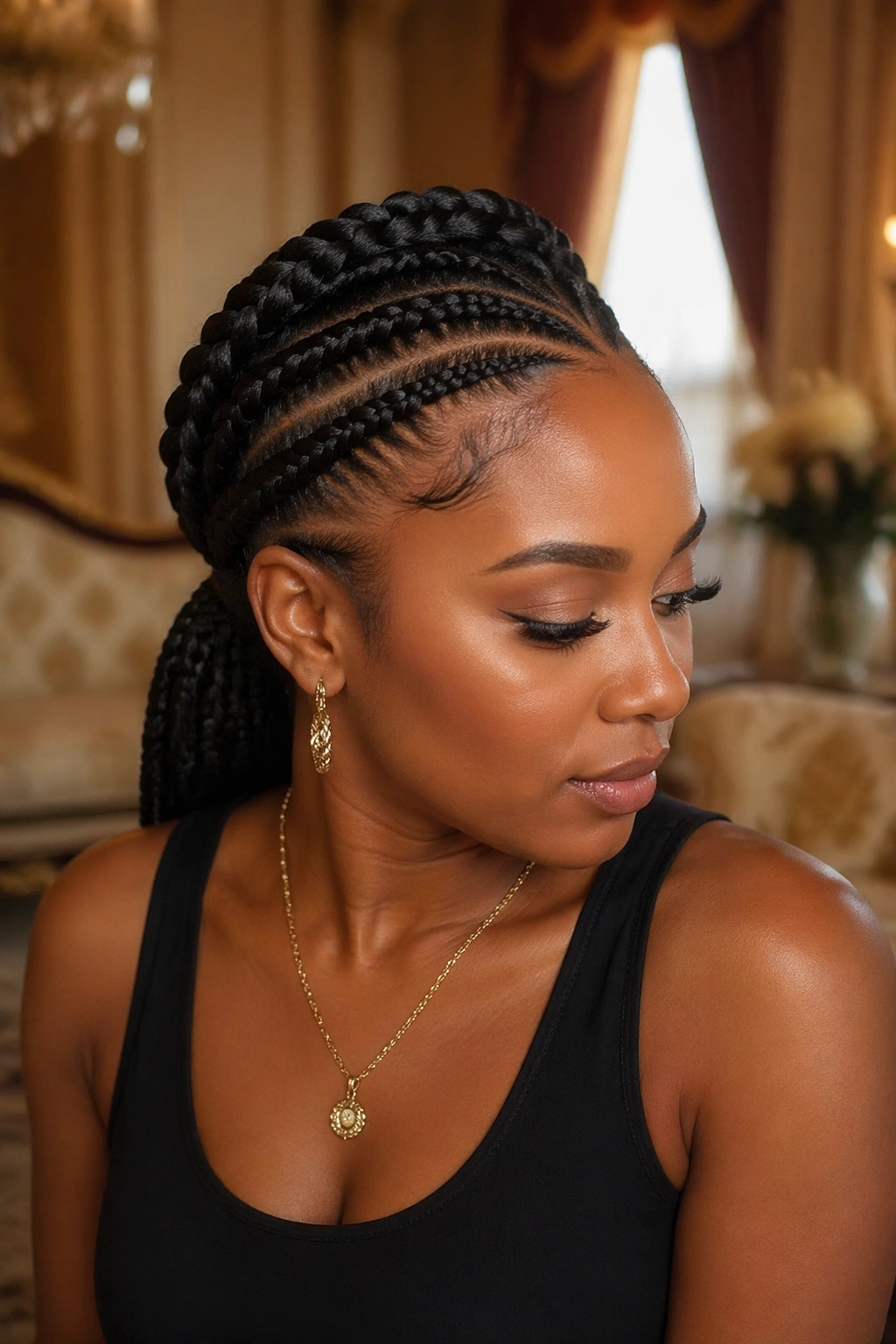
The cornrows wrap around the head in a crown configuration before gathering at the back into a low ponytail. The crown wrap creates a horizontal band of braids around the head before the vertical pull of the ponytail.
This style is regal in feel. The crown adds a ceremonial quality that pairs with formal wear.
Skilled braiders can integrate the crown wrap so it looks like a single continuous design rather than a separate element.
19. Cornrow Ponytail with a Geometric Front Pattern
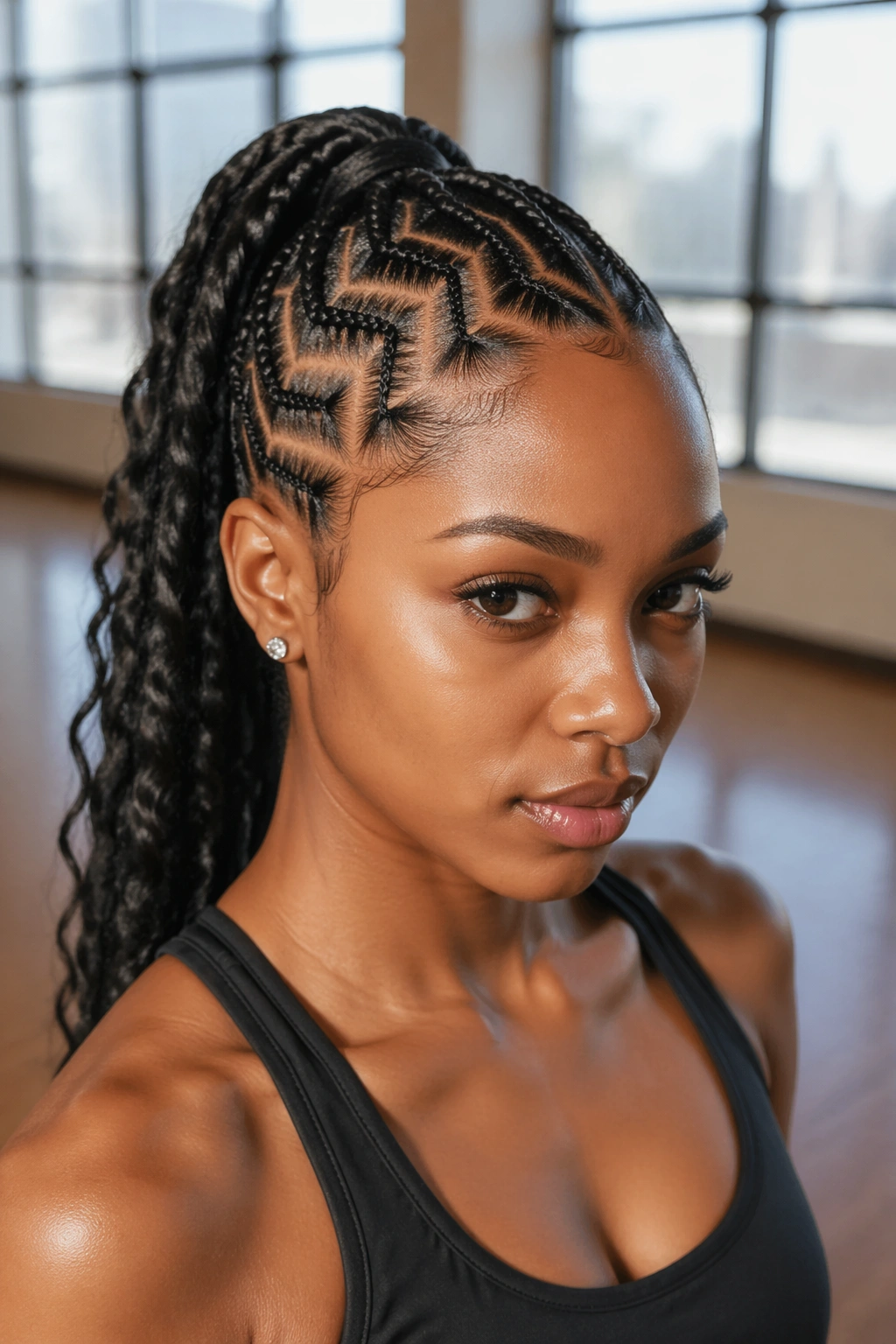
Standard cornrows gathering into a back ponytail, but the front 4-5 cornrows form a geometric design — chevrons, diagonal lines, or a triangular pattern — before joining the rest. The front pattern is the design feature.
The geometric front turns a standard cornrow ponytail into a styled, intentional look. It signals that the install was about more than just convenience.
The geometric work adds 30-45 minutes to the install. Worth it for events where the style itself is part of your statement.
20. Cornrow Ponytail with a High Loop Bun
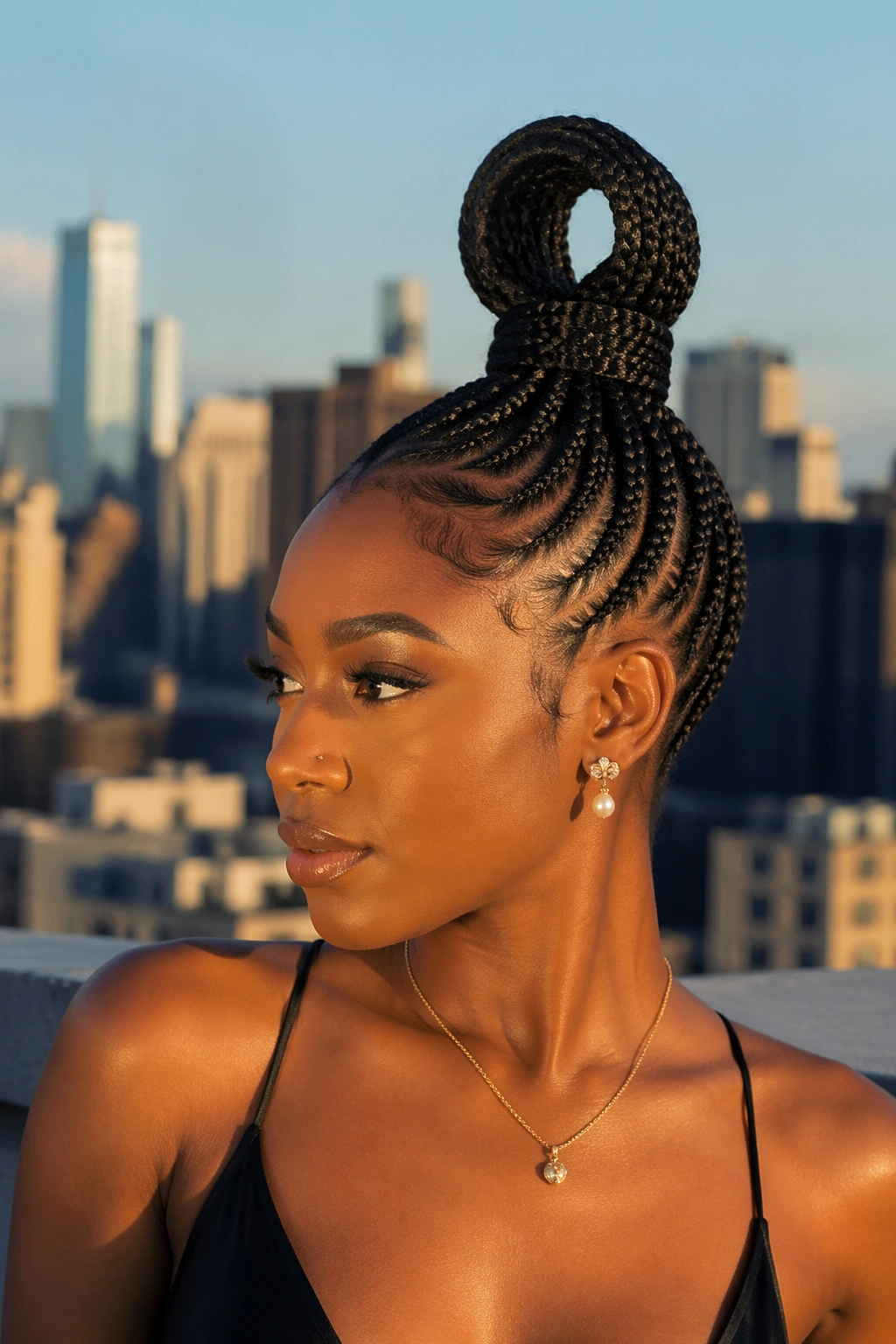
The cornrows gather at the high crown, but instead of falling as a ponytail, the gathered hair loops back over itself and tucks into the gather point to form a loop bun. The loop creates a sculptural shape rather than a flowing tail.
Loop buns are striking from every angle. The shape catches light and creates dimensional shadow.
This styling works best with kanekalon or stiff extensions that hold the loop shape. Soft hair flops out of the loop.
21. Cornrow Ponytail with Color-Block Sections
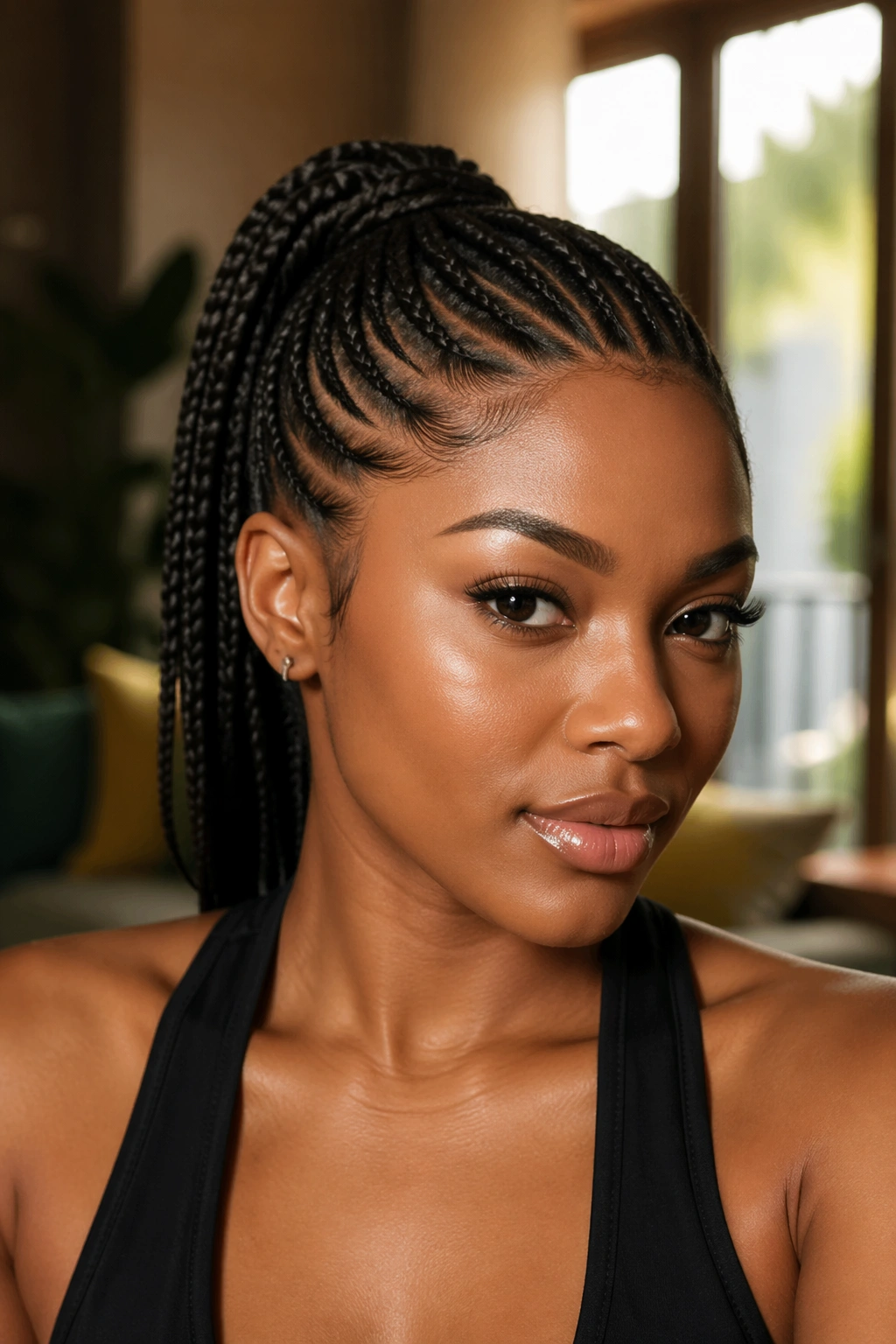
The cornrows divided into three vertical sections by color — the center section in your natural color, and the two outer sections in contrasting colors like burgundy or honey. The ponytail at the back shows all three colors blended.
This is a bold, color-forward style. Best for those who want statement color without dyeing their natural hair.
The blending in the ponytail creates a marbled effect that reads as deliberately designed.
22. Cornrow Ponytail with a Wrap-Around Braid Around the Pony Base
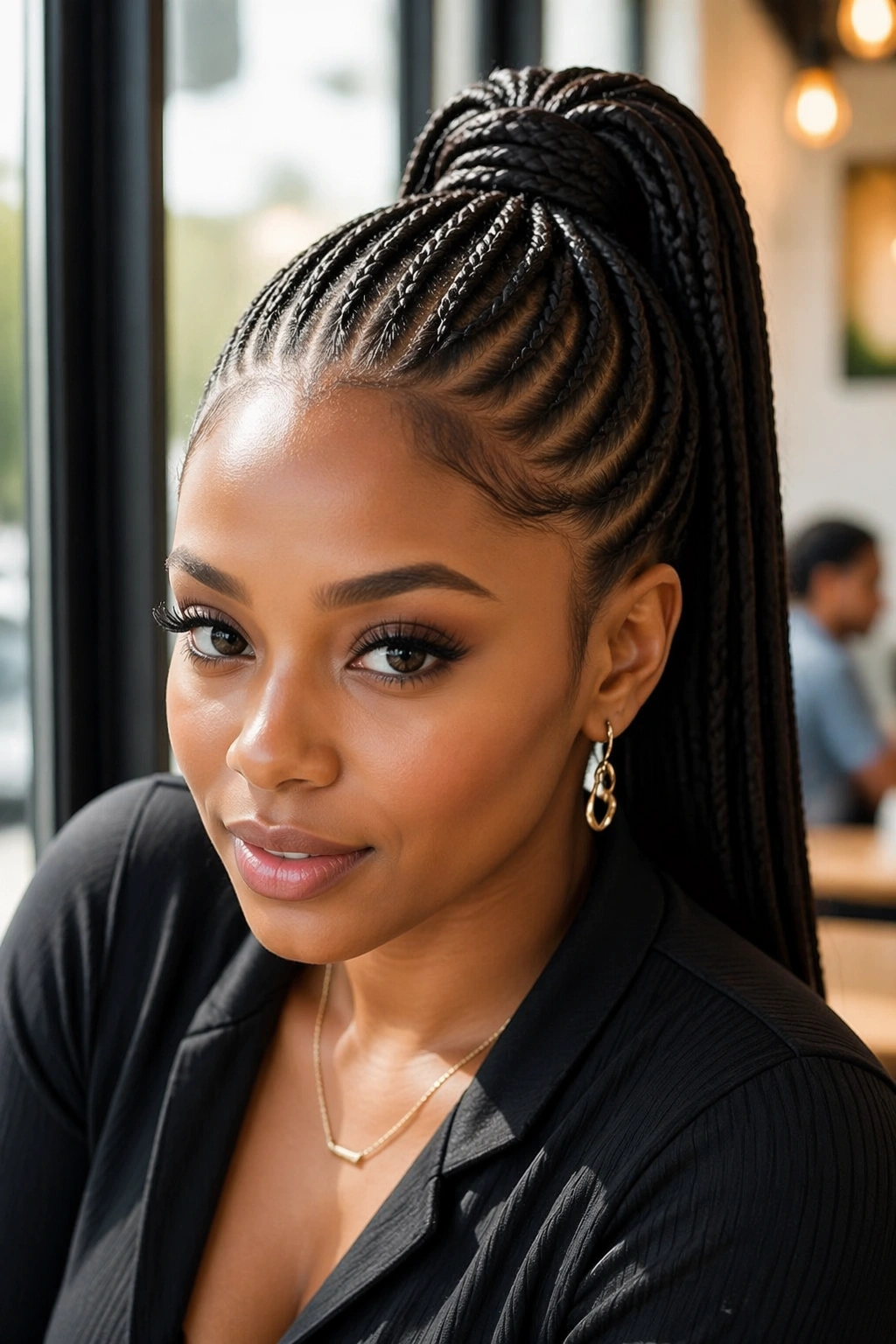
A cornrow ponytail finished with an additional thin braid wrapped around the base of the ponytail. The wrap-around braid hides the elastic and adds a decorative element to the gather point.
This is the most polished finishing technique for a cornrow pony. It transforms a standard pony into a couture-feeling style.
The wrap-around braid uses about 6 inches of one of the existing cornrows or a separate small braid attached at the base.
Maintaining a Cornrow Ponytail
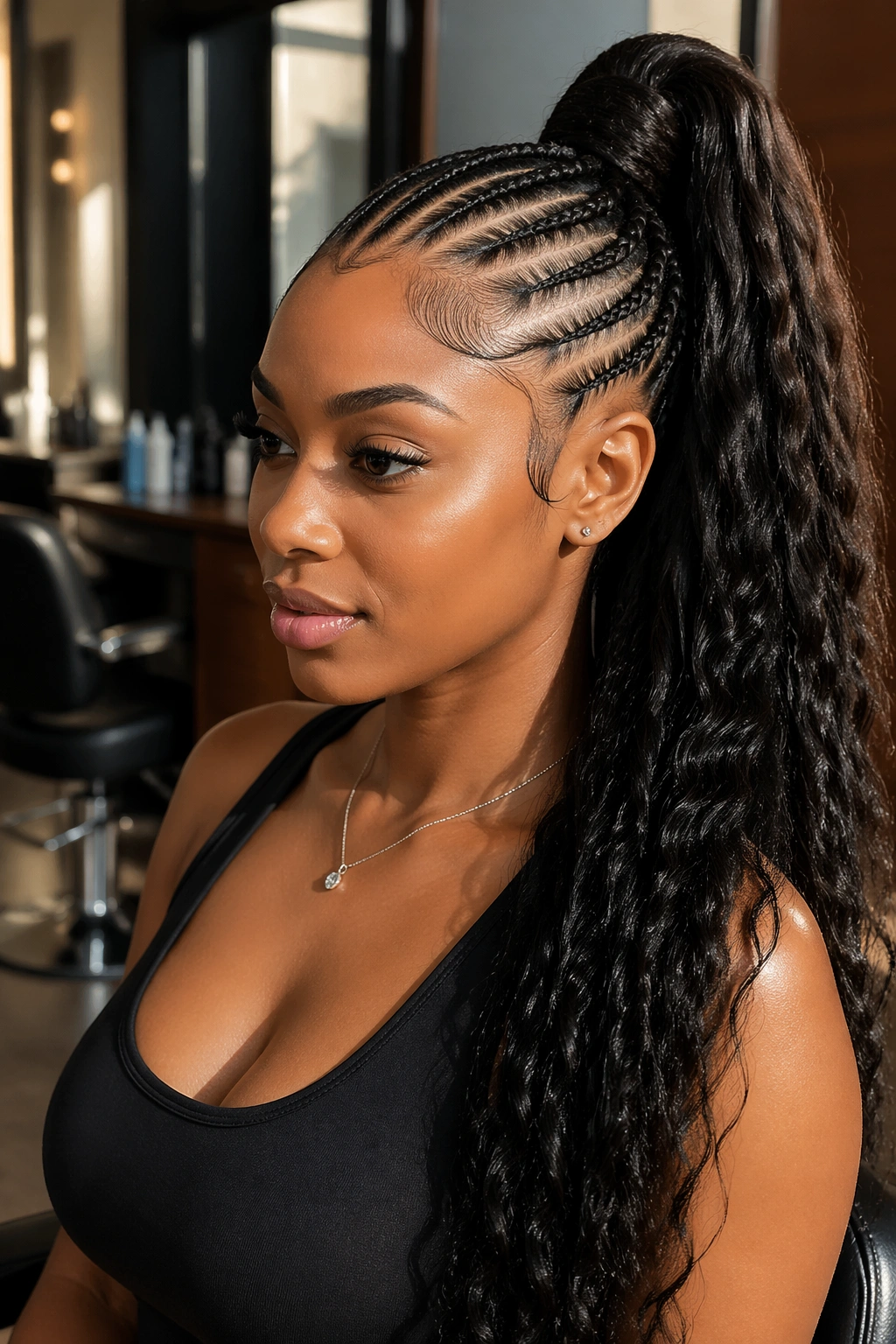
The ponytail extension and the cornrows have different maintenance needs.
Cornrows: satin bonnet at night, light scalp oil every 3-4 days, edge gel touch-ups weekly.
Ponytail extension: gentle brushing with a wide-tooth comb (only if the extension is meant for brushing — synthetic extensions vary), moisture spray for human hair extensions, no heat tools unless specifically rated heat-safe.
The gather point is a high-stress zone. Check it regularly for any loosening of the wrap or fraying of the elastic. Re-secure as needed.
Sleeping with a Cornrow Ponytail
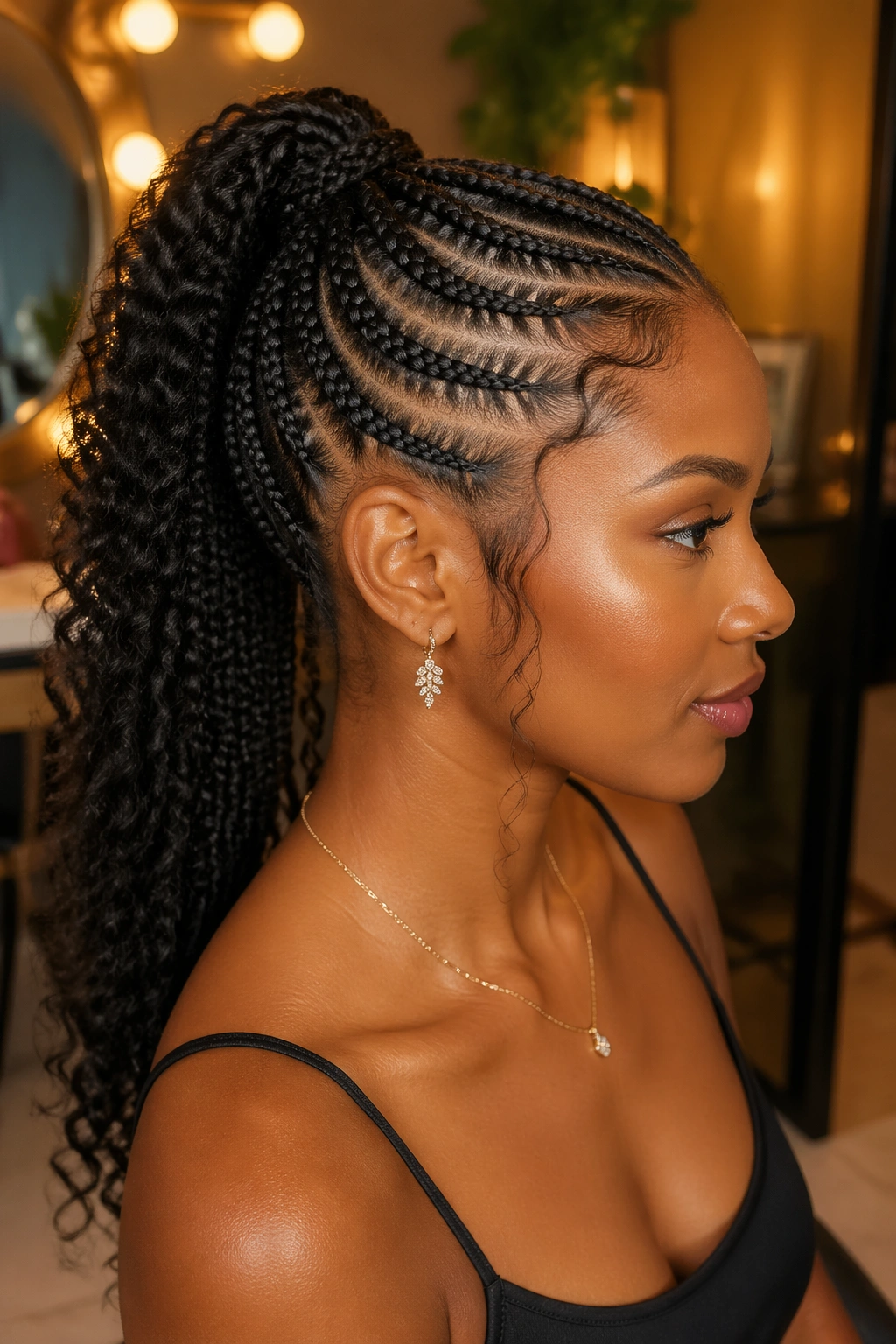
The ponytail extension can be problematic for sleep. A long pony tangles around your head as you turn.
Solutions: braid the ponytail loosely before bed and tuck it inside the bonnet. Or use a silk pillowcase plus a satin bonnet for double protection. Or sleep with the ponytail draped over the side of the pillow rather than under your head.
Avoid sleeping with the ponytail under your body weight — this matts the extension and can pull at the gather point.
Washing a Cornrow Ponytail
Wash the cornrow base every 7-10 days. Apply diluted shampoo to the scalp through the parts. Rinse with cool water.
If the extension is human hair, wash it separately with appropriate products. Synthetic extensions usually don’t need shampooing — a gentle rinse with diluted apple cider vinegar refreshes them.
Dry the cornrows thoroughly before sleeping. Damp braids under a bonnet mildew quickly.
Refreshing the Style Mid-Install
Cornrow ponytails benefit from periodic refreshes during the install lifespan.
Week 2: re-lay the front edges with fresh gel.
Week 3: re-wrap the ponytail base if the wrap is loosening.
Week 4: spritz the cornrows with a light moisture spray and re-bonnet immediately.
These small refreshes extend the polished look from 3 weeks to 5-6 weeks.
Taking Down a Cornrow Ponytail
The takedown order matters. First, remove the ponytail extension if it’s a separate piece. Untie or unwrap the elastic carefully.
Then unbraid the cornrows starting from the back. Apply conditioner generously. Work slowly.
The gather point area needs special attention — the hair has been pulled in multiple directions for weeks and may be slightly tangled.
Plan 90 minutes for full takedown. Don’t rush.
Common Mistakes That Ruin Cornrow Ponytails
Choosing the wrong gather position for your face shape. A high pony on a long face elongates further. A low pony on a round face can read flat. Match position to features.
Using too-cheap extension hair. The pony is the focal point. Cheap hair looks cheap from across the room.
Skipping the wrap on the gather base. Visible elastic ruins the polish.
Forgetting maintenance on the extension. The cornrows can look fresh while the extension looks tangled and old.
Wearing the same gather position install after install. This concentrates wear on one zone of your scalp. Rotate.
Cornrow ponytails are the most versatile cornrow style category because the gather point and extension type create thousands of variations from the same basic concept. Pick the gather position based on your face and the occasion, pick the extension based on the mood you want, and the style does the rest.
