



Pink cornrows are a statement before you even speak. Whether it’s a soft rose blush running through a few sections or a bold bubblegum head-to-toe, the color reads confident, intentional, and unapologetically present. I’ve worn pink in cornrows through every shade — from blush to magenta — and the lessons are consistent. The color shifts how the braid pattern reads. The right shade flatters skin tones in ways neutral colors don’t. And the wrong product can fade pink into orange faster than you’d believe.
This is a working guide to twenty-two pink cornrow styles, each with a different angle on how the color shows up. Some lean dramatic. Some lean subtle. All of them are worth considering depending on the mood you’re chasing.
Why Pink Hits Differently in Cornrows
Pink is one of the few colors that reads differently depending on shade and placement. Pastel pink looks dreamy and romantic. Hot pink looks bold and rebellious. Magenta sits in between — sophisticated but unmissable.
In cornrows specifically, pink shows the braid pattern more sharply than darker colors. Black braids hide some texture in shadow. Pink reflects light along every stitch. The pattern becomes part of the color story.
Pink also frames skin tones flatteringly. Warm pinks like coral and peach suit warm undertones. Cool pinks like rose and blush suit cool undertones. Hot pinks work across most skin tones because of their saturation.
Choosing the Right Shade of Pink
Not every pink is a friend. Some shades read costumey on natural hair. Others look effortless.
Soft blush, the palest version, fades quickly but reads sophisticated. Cotton candy is a slightly darker pastel — more visible, slightly playful. Bubblegum is the all-American hot pink — saturated and brave. Magenta leans purple and reads more polished. Dusty rose is a muted, mature option.
Test a small section first if you can. Salons often have sample swatches. Hold the swatch against your face and check the mirror in different light.
Pink Hair Options for Cornrows
You can get pink into your braids through three main paths.
Pre-colored synthetic hair is the easiest. Brands like Xpression, Sensationnel, and Rastafri carry packs in dozens of pink shades. The color is locked in. Just install.
Dyed natural hair gives the most authentic look but requires the most commitment. Bleach, then color, then maintain. Pink fades out of natural hair in 4 to 6 weeks for semi-permanent dyes.
Color-tied extensions are a third option — adding pre-colored hair into a section without using it for the whole install. Less commitment, less coverage, more flexibility.
Prep for Pink Installs
Pre-colored synthetic hair doesn’t need any color prep. Just wash and detangle your natural hair as you would for any install.
If you’re using human hair extensions and dyeing them, do the dyeing before the install. Bleach the hair, condition it heavily, then apply your color. Let everything dry completely before braiding.
For natural hair color jobs, follow the dye instructions exactly. Bleach destroys hair if left on too long. A salon visit is worth the cost for first-timers.
Tools and Products
- Pre-colored or dyed hair (4 to 6 packs depending on length)
- Edge gel matched to your hair color, not the pink (clear is safest)
- Color-safe shampoo for maintenance
- Sulfate-free conditioner
- A satin pillowcase to prevent color transfer to bedding
Skip white pillowcases the first few nights — pink can rub off slightly while the color settles.
1. Soft Blush Pink All Over
Why It Works
A full head of soft blush pink in straight-back cornrows is the most wearable version of this color category. It reads romantic without going full pastel commitment.
- Use a single shade throughout — no streaking, no ombre
- Choose a wash-out tone if you’re nervous; permanent color is a longer commitment
- Pair with neutral edge gel to keep focus on the color
Tip: Soft blush photographs lighter than it looks in person. Account for that if you’re picking a shade for a photo shoot.
2. Hot Pink with Black Roots
A black-to-pink ombre keeps the natural color at the scalp and bursts into hot pink at the ends. The transition gives depth and softens the boldness of the pink.
The transition point usually sits 6 to 8 inches down from the scalp. Below that, the hair is fully pink. Above, fully black.
This style suits people who want the drama of hot pink without committing to it from the scalp. The black roots also extend the wear time — you don’t see grow-out as quickly.
3. Pink Highlights in Black Cornrows
Streaks of pink woven through otherwise black cornrows. The pink shows in 3 to 5 sections, evenly spaced or grouped to one side.
The streaks should be visible but not overwhelming. About 20% pink, 80% black is the right ratio. More pink starts to look like an all-pink style with poorly-blended sections.
For a stronger effect, place the pink streaks at the front so they frame the face.
4. Two-Tone Pink Color Block
Half the head is one shade of pink, the other half is a different shade. Usually a darker pink on top and a lighter pink at the ends, or split right down the center part.
The split-down-the-middle version is bolder. Each side of the head shows a different color, with no blending. People notice immediately.
Top-and-bottom blocks read more subtle. The transition can be sharp or gradient depending on preference.
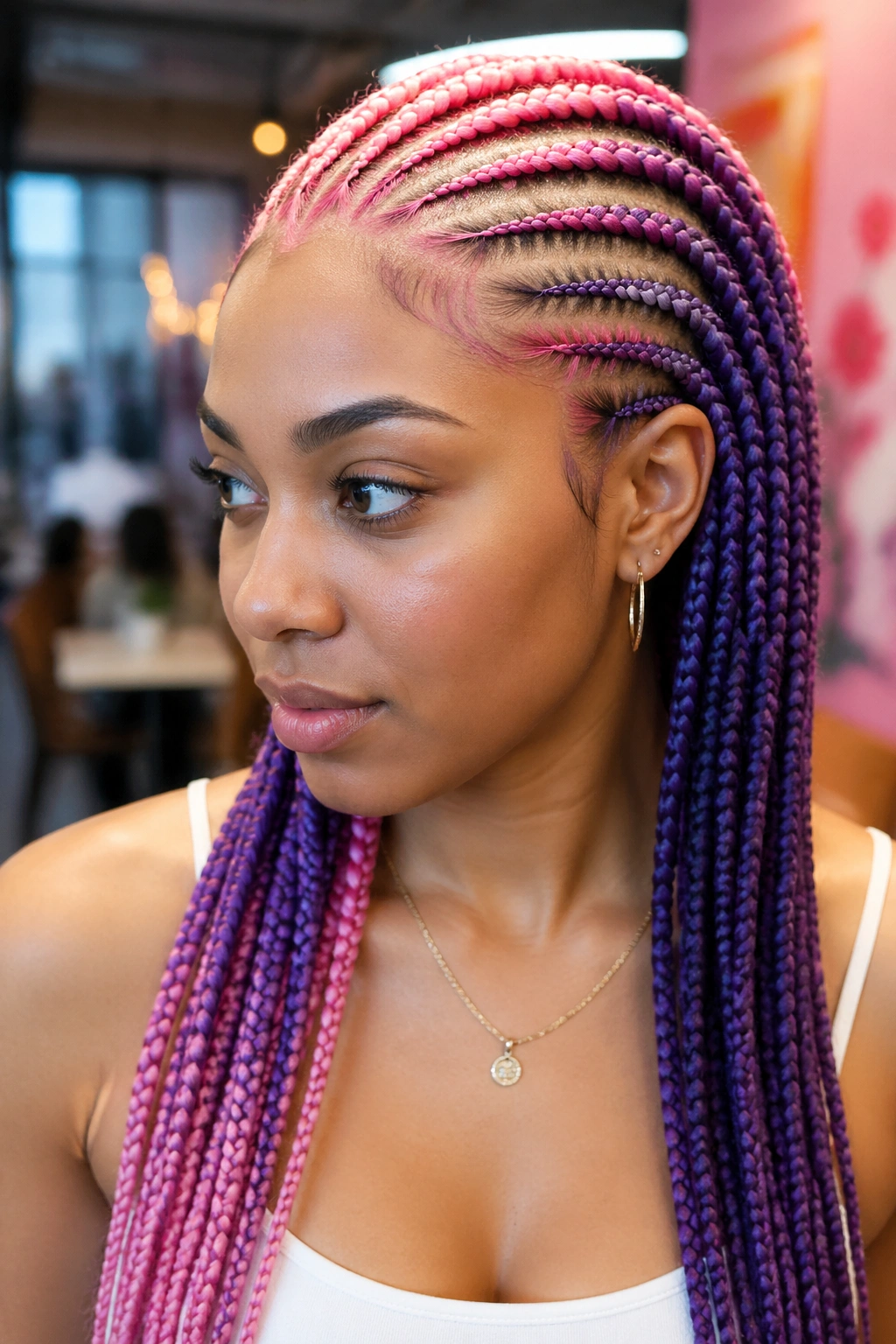
5. Pink and Purple Mix
What Makes It Different
Pink and purple are color cousins. They blend smoothly without clashing. A mix of magenta pink and dusty purple braids creates a complex color story.
The braids alternate — pink, purple, pink, purple — across the head. Or the front sections are pink and the back sections are purple. Both layouts work.
Who This Is For
Anyone who loves color but wants more visual depth than a single shade. The mix reads as artistic rather than committed-to-one-look.
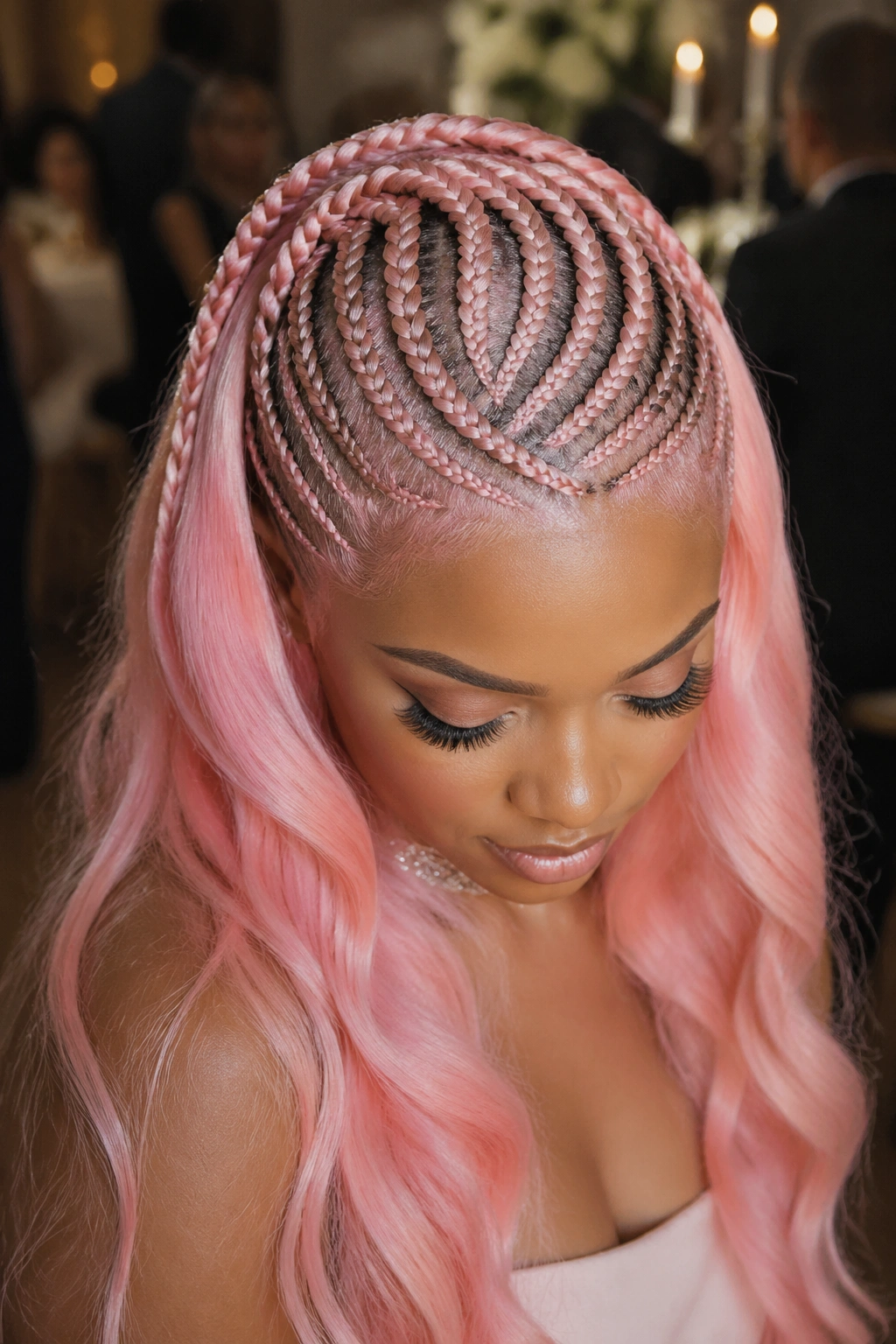
6. Pastel Pink with Cornrow Crown
A crown of cornrows at the top of the head, with the rest of the hair flowing free in pastel pink. The crown is structured. The flowing hair softens the shape.
The cornrow crown can run in any pattern — circular halo, geometric shape, simple rows. The pink color makes the pattern more visible than it would be in black hair.
This is a great option for events where you want both polish and softness in one look.
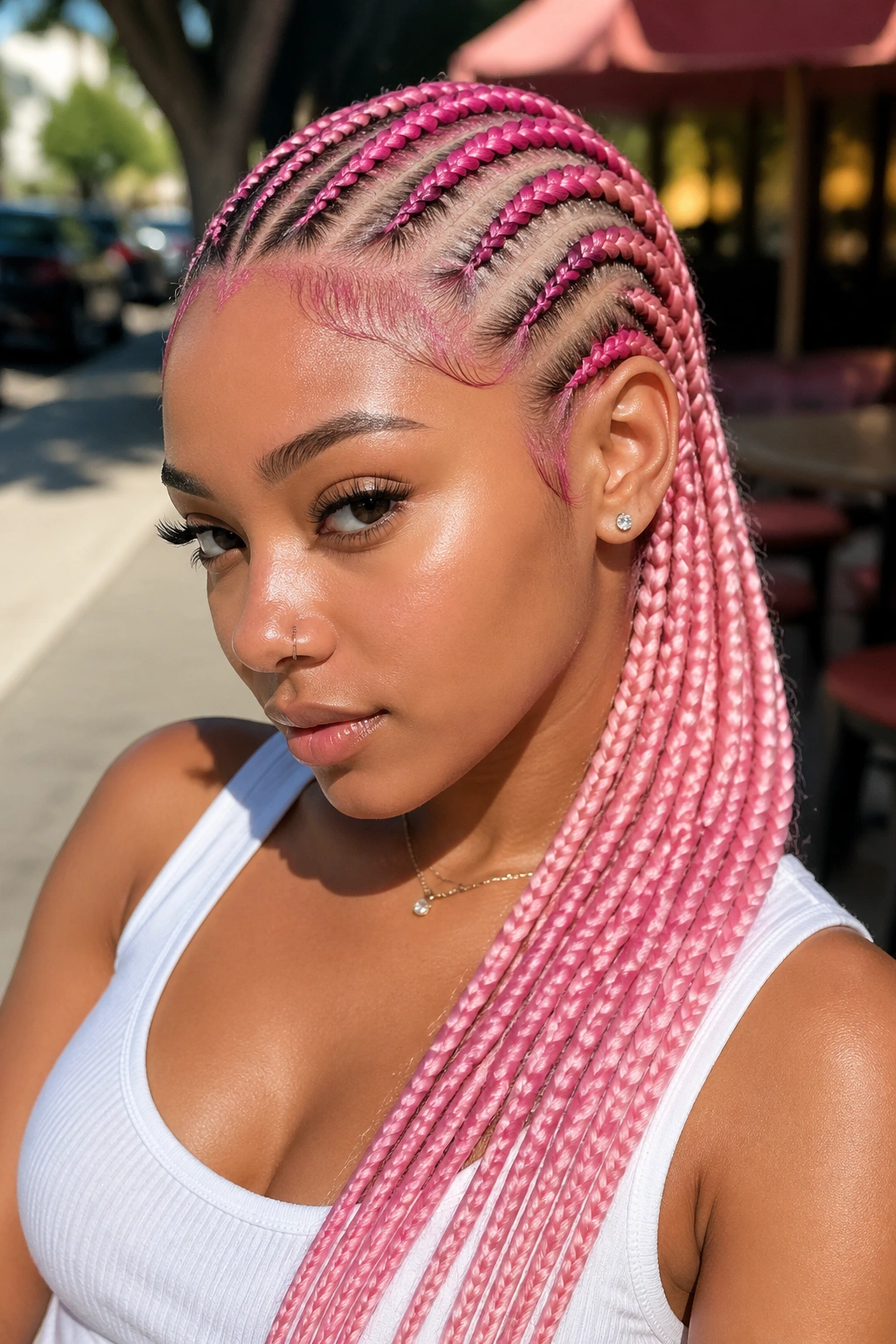
7. Pink Lemonade Braids
The classic lemonade pattern — diagonal cornrows angling from one side of the part to the opposite shoulder. In pink, the diagonal lines pop more than in any other color.
The angled pattern combined with bright pink reads bold and unmissable. It’s a head-turning style.
The pink shade matters here. Hot pink amplifies the boldness. Soft pink keeps it dreamy. Magenta sits between.
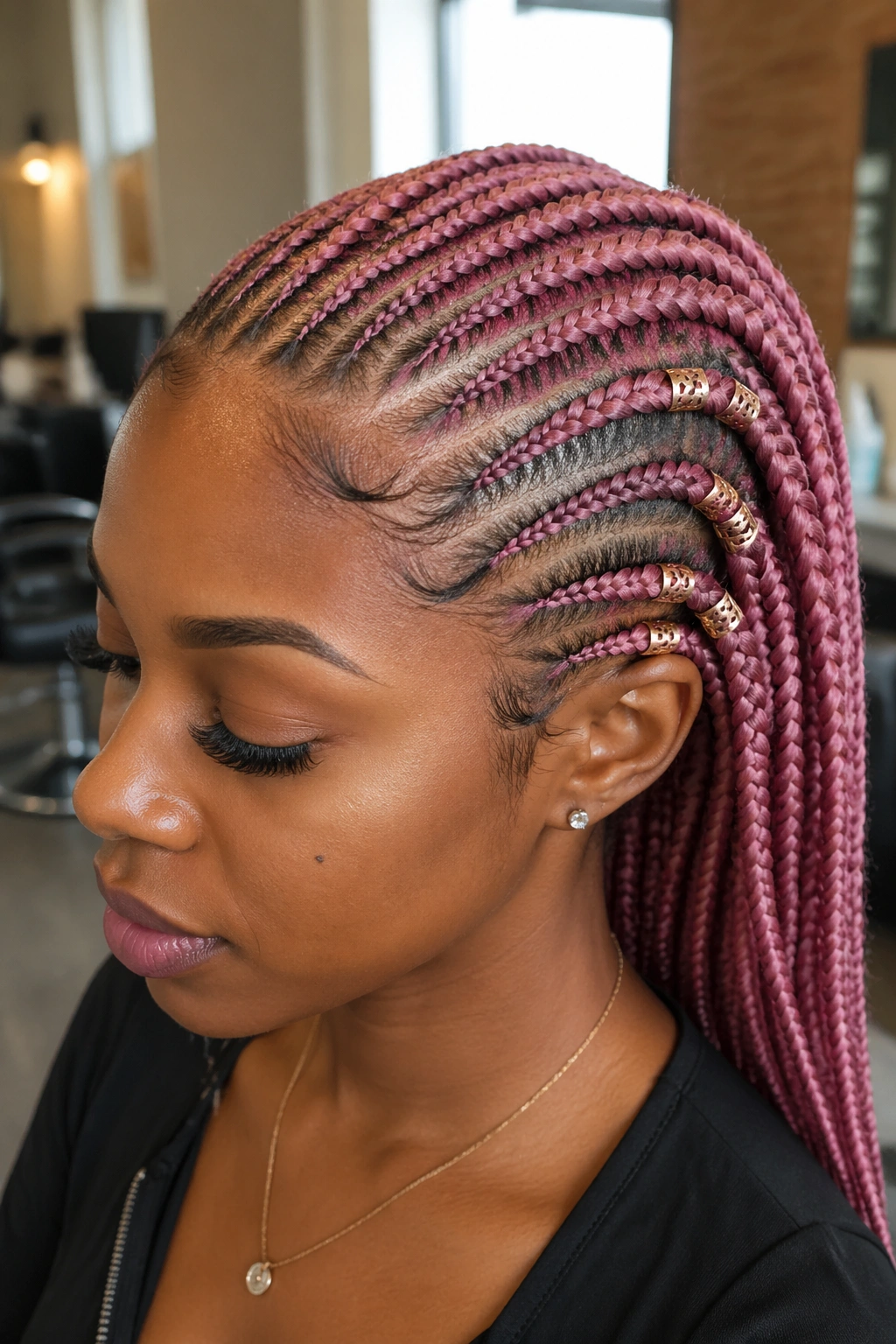
8. Pink Cornrows with Rose Gold Cuffs
Rose gold cuffs on pink cornrows match the color family — rose gold has pink undertones — for a cohesive metallic accent. The cuffs catch light and add texture.
Three to five cuffs across the head is the right count. Cluster them on one side for asymmetric visual interest, or spread them evenly for symmetry.
The cuffs sit best at the mid-length of each braid. Close to the scalp they crowd. Close to the ends they slide off.
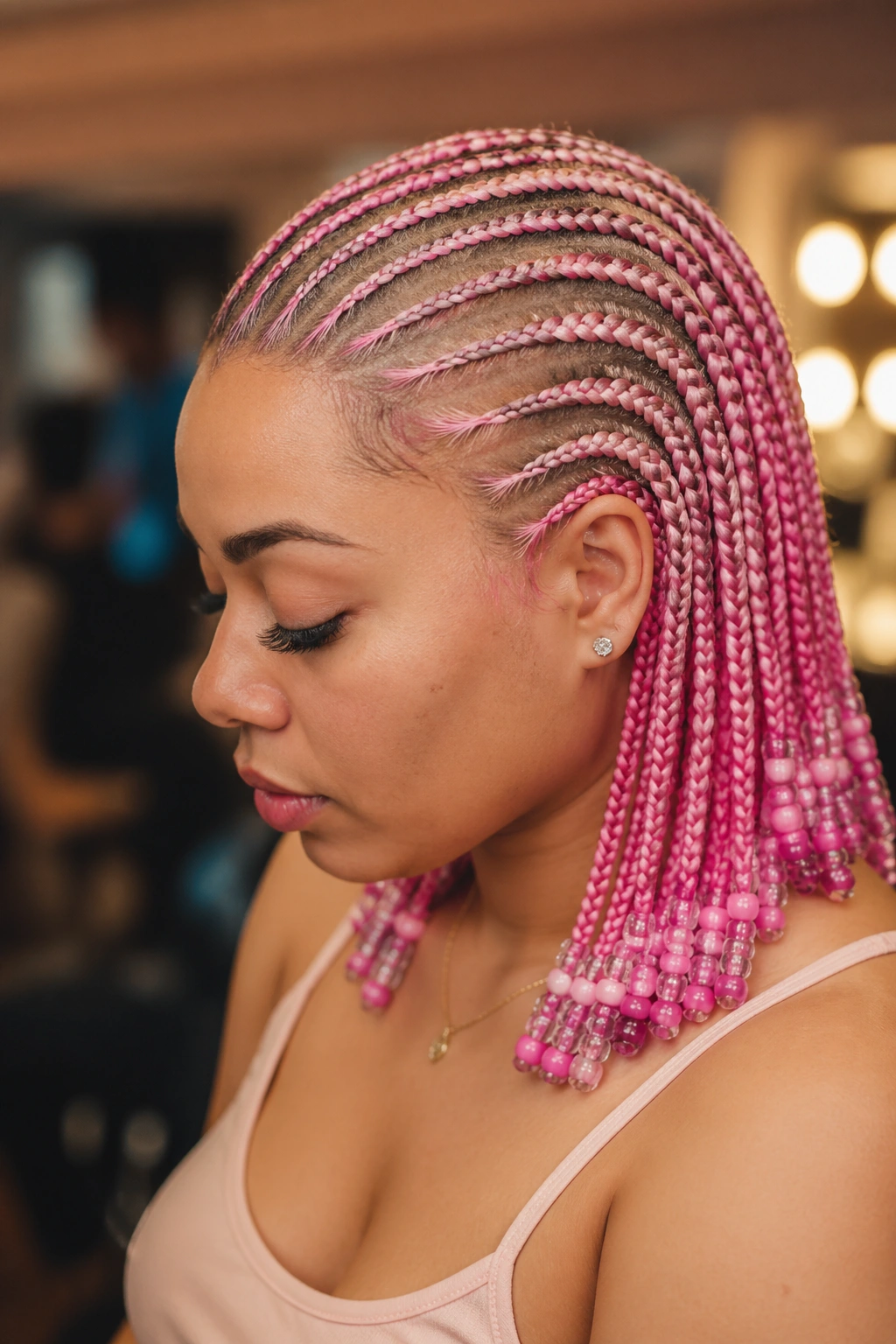
9. Pink Cornrows with Beaded Ends
Pink beads on pink cornrows tone-on-tone. The beads add weight and sound without changing the color story.
Use small beads — 6 to 8 mm. Mix two or three pink shades for depth. Lighter pink beads at the top, darker at the bottom, creates a gradient effect.
For more contrast, use clear or white beads. They show against the pink without competing.
10. Pink and Black Cornrows in Sections
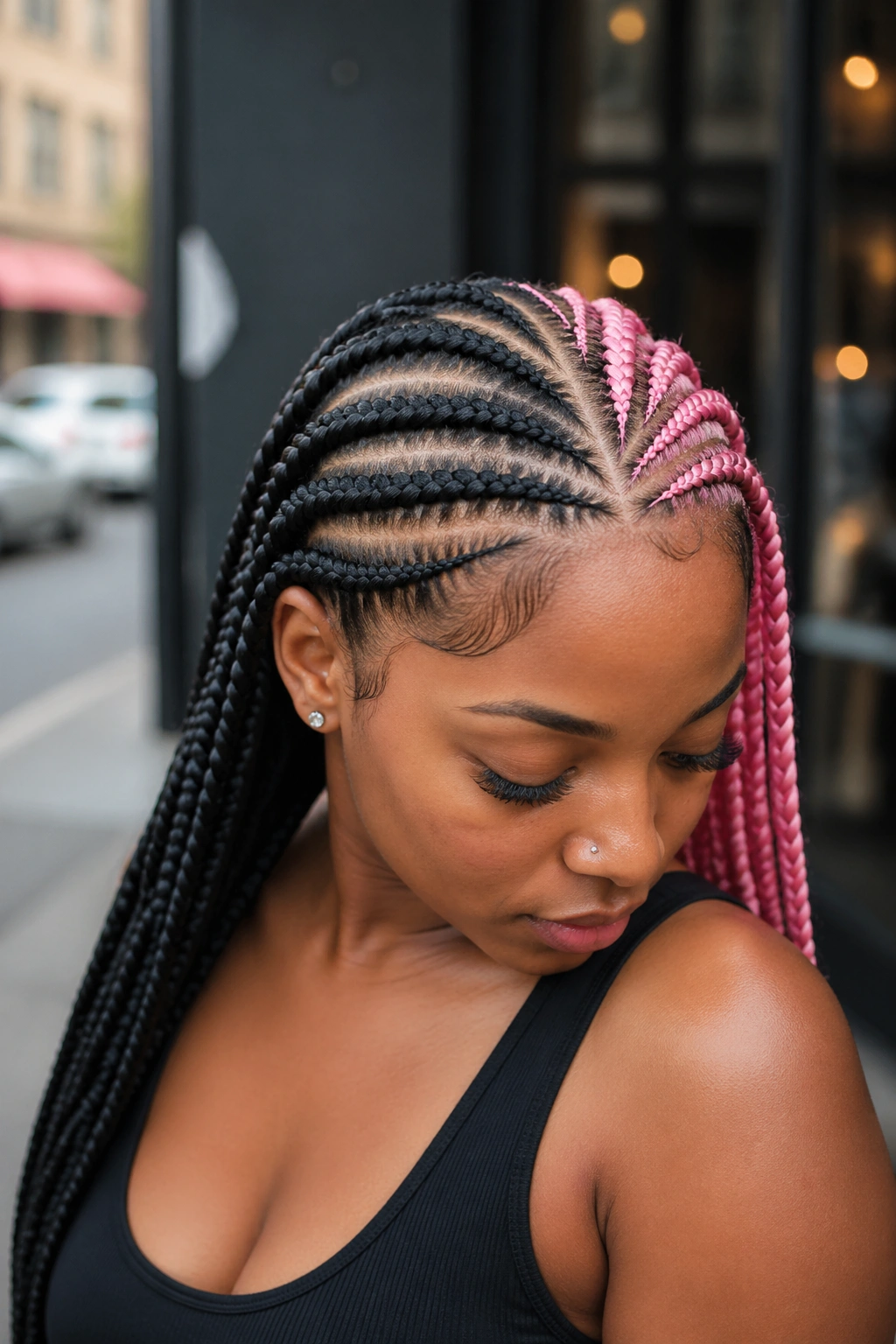
Different sections of the head wear different colors. The front might be black, the back pink. Or it could be split by ear — left side black, right side pink. Or alternating rows.
The clear divisions create a graphic, almost geometric look. Show reference photos to your braider. Communicate clearly which sections get which color.
This style suits people who love color but want to break it up rather than wear it all over.
11. Magenta Cornrows with Side Sweep
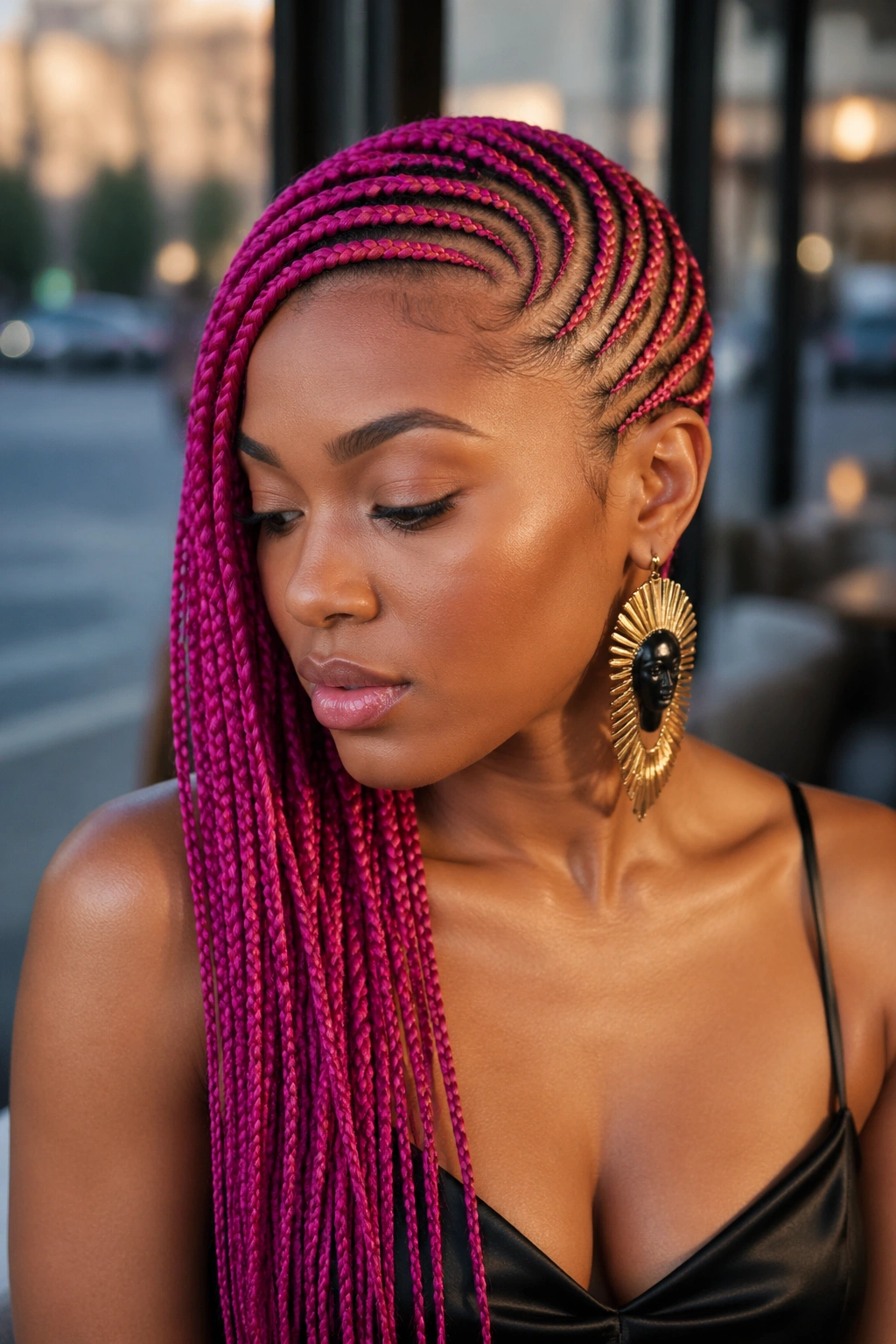
What if a single bold color is paired with an asymmetric pattern? Magenta in a side-swept cornrow style creates angles that the color makes more visible.
The cornrows angle from one temple to the opposite shoulder. The magenta color highlights every angle. The sweep frames the face with color.
How to Wear It
Pair with a single statement earring on the swept-away side. Let the color and the asymmetric face reveal do the work.
12. Pink Cornrows with Curled Ends
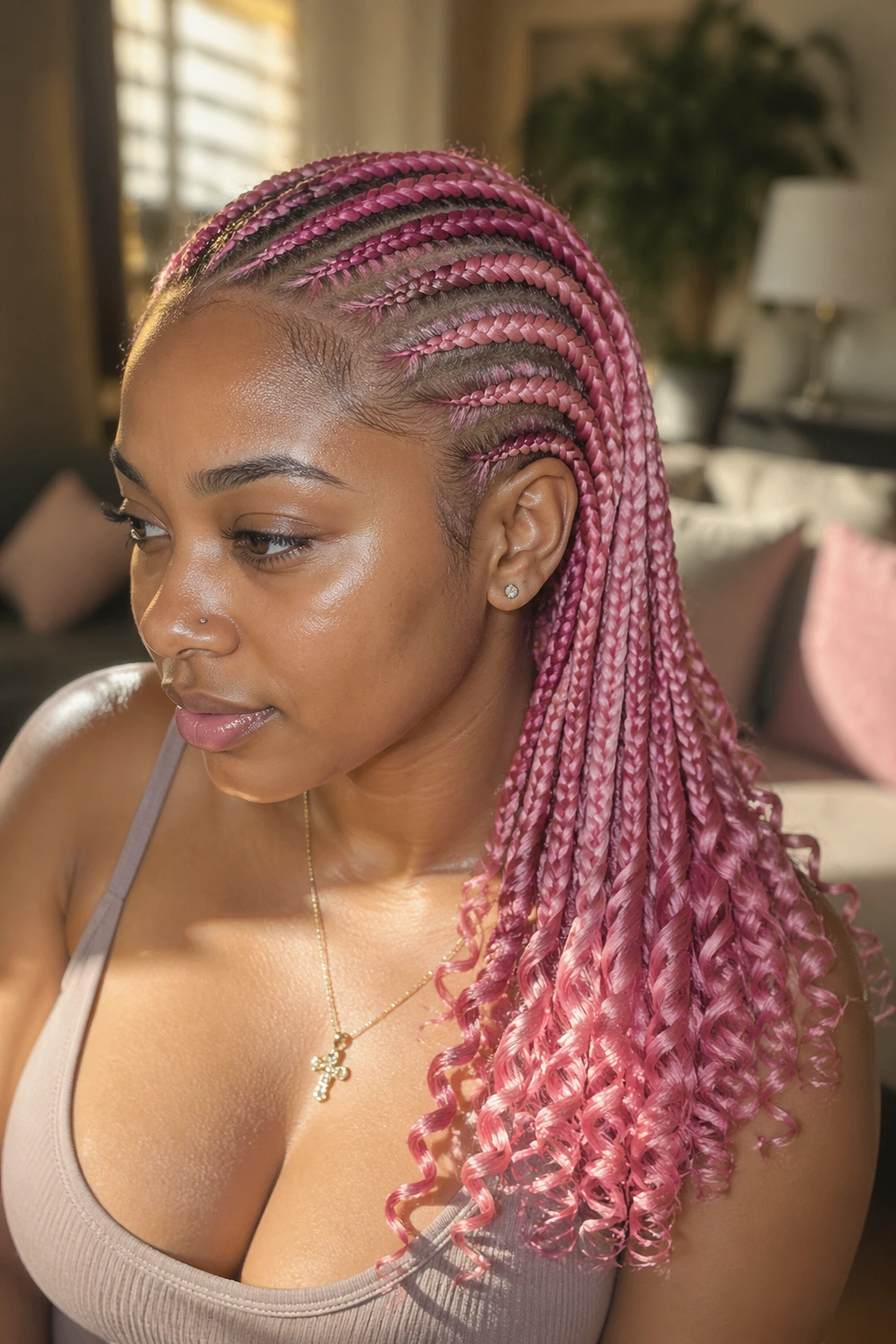
Pink cornrows ending in soft curls add texture to the color. The curls catch light differently than the flat braid section, creating dimension.
The curls can be tight ringlets, loose spirals, or beach waves. Tighter curls amplify the color. Looser curls let it flow more.
A curl-defining cream that’s color-safe is essential. Some products dull pink. Read labels.
13. Cotton Candy Pink with Heart Parts
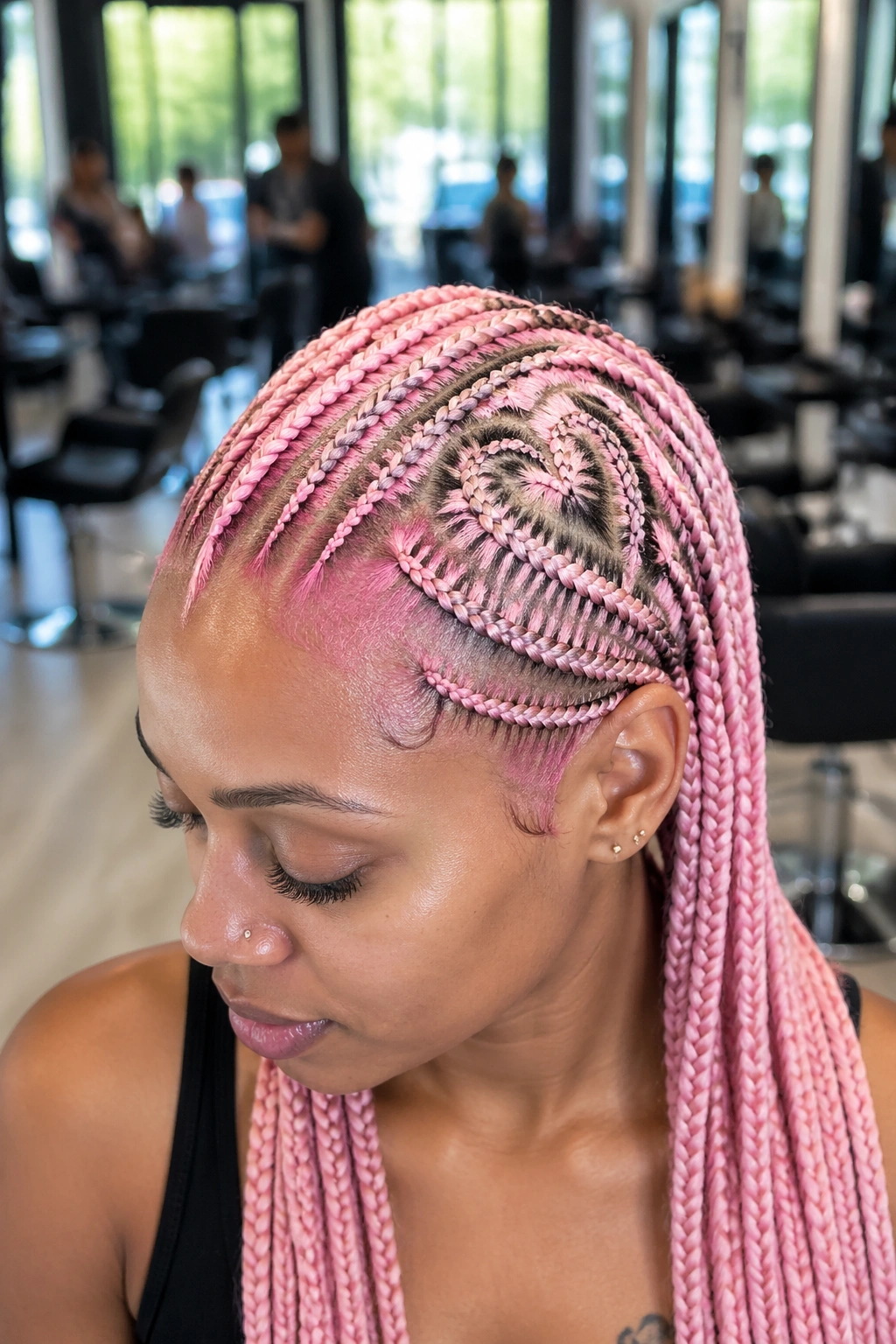
Cotton candy pink in cornrows with heart-shaped parts at the crown. The shape parts add detail without competing with the color.
The heart parts sit on the top of the head where they’re most visible. They’re small — about 2 inches across — and tucked between cornrow sections.
This style reads playful but not childish. The cotton candy color has a slight maturity in cornrows that the same color in pigtails or buns doesn’t have.
14. Pink Cornrows with Geometric Pattern
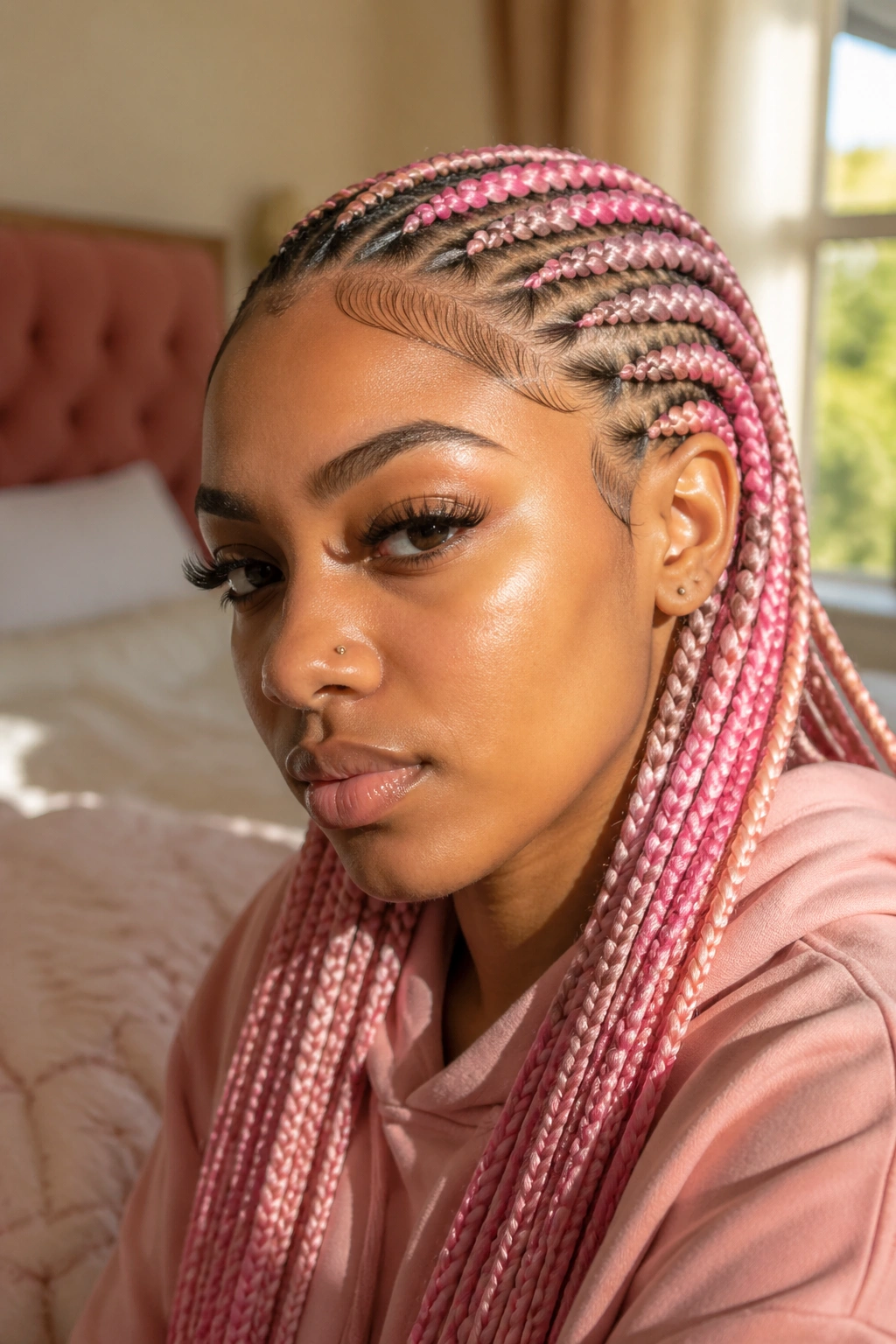
A geometric pattern — triangles, diamonds, kites — in pink cornrows. The color makes the geometry more visible than in dark hair.
Three to four geometric shapes is the limit. More starts to look chaotic. The shapes should be evenly spaced or clearly grouped.
The pink amplifies the artistic side of the install. It feels intentional and considered.
15. Pink Tips on Black Cornrows
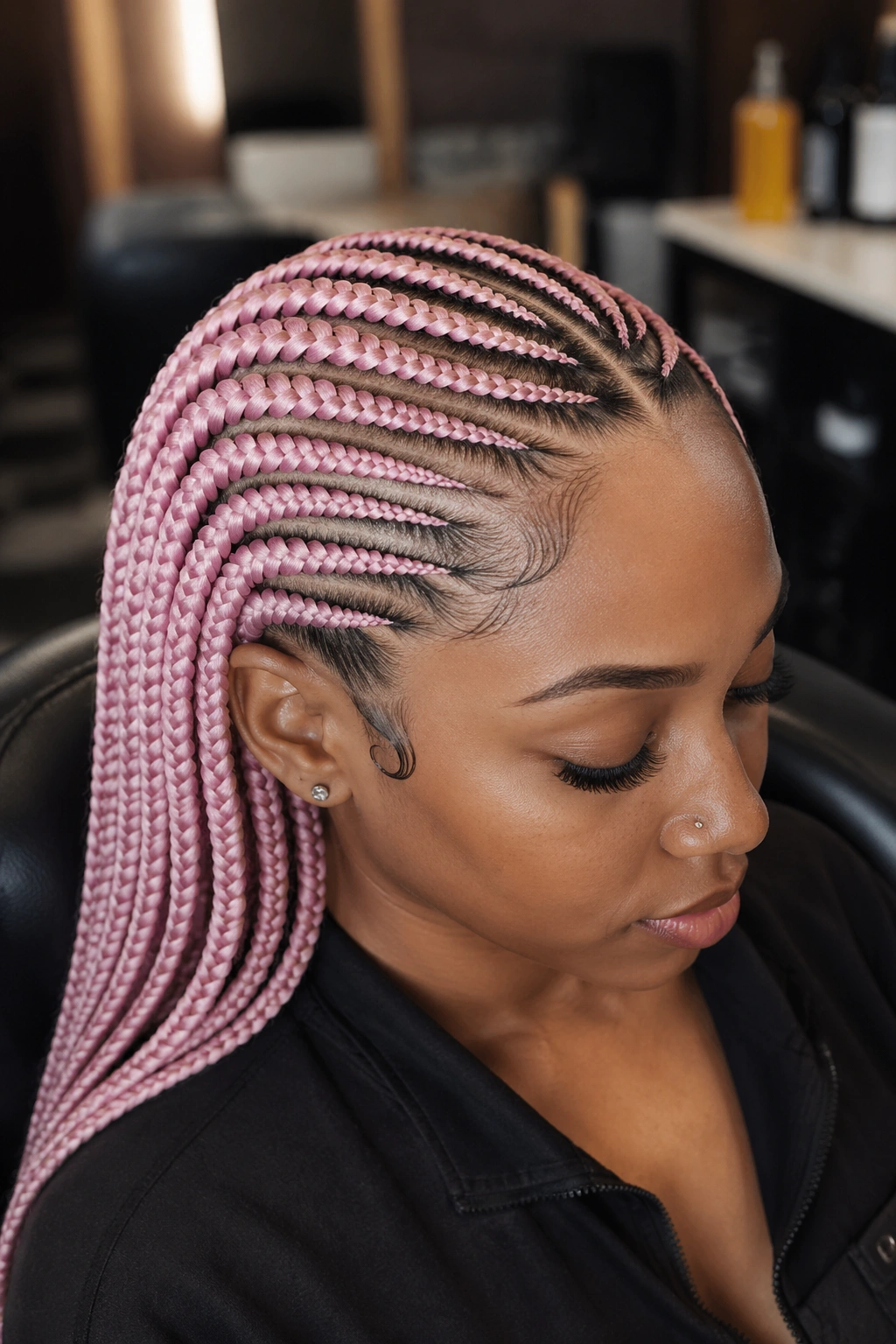
Black cornrows with just the tips dyed pink. The pink section is short — maybe the last 2 to 3 inches of each braid. The rest stays black.
This is the lowest-commitment way to wear pink in cornrows. The color shows only at the bottom. The rest reads as a standard black install.
A great option for people whose dress codes or workplaces don’t allow more visible color.
16. Pink and White Cornrows in Stripes
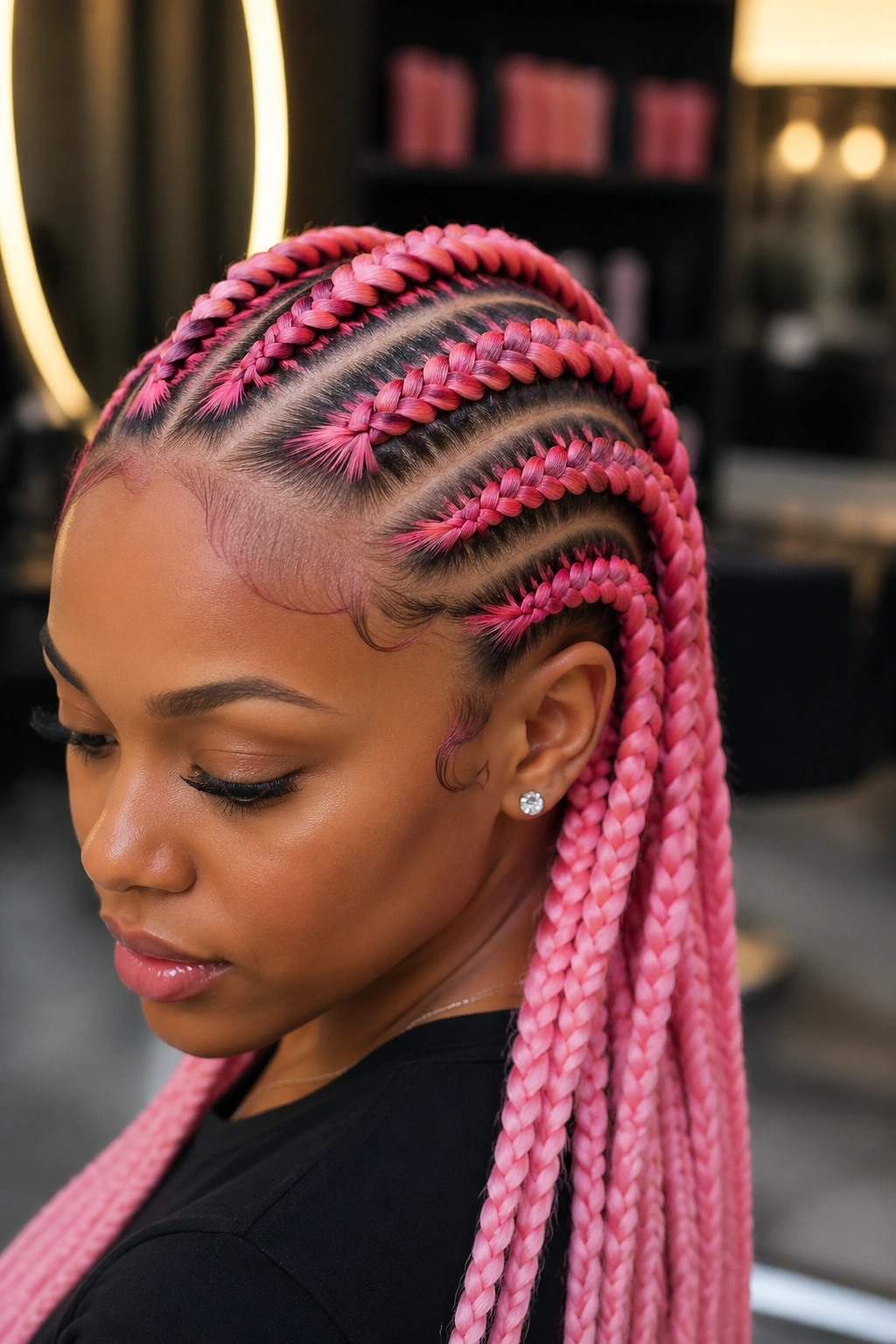
White and pink alternate in stripes across the head. The contrast is bold and graphic.
White hair packs are widely available. They look fresh against pink. The stripes can be thin (alternating each braid) or chunky (groups of 3 to 4 braids per color).
The challenge is keeping the white sections white. They yellow over time with product buildup. Use clarifying products carefully.
17. Pink Cornrows with Bohemian Curl Drape
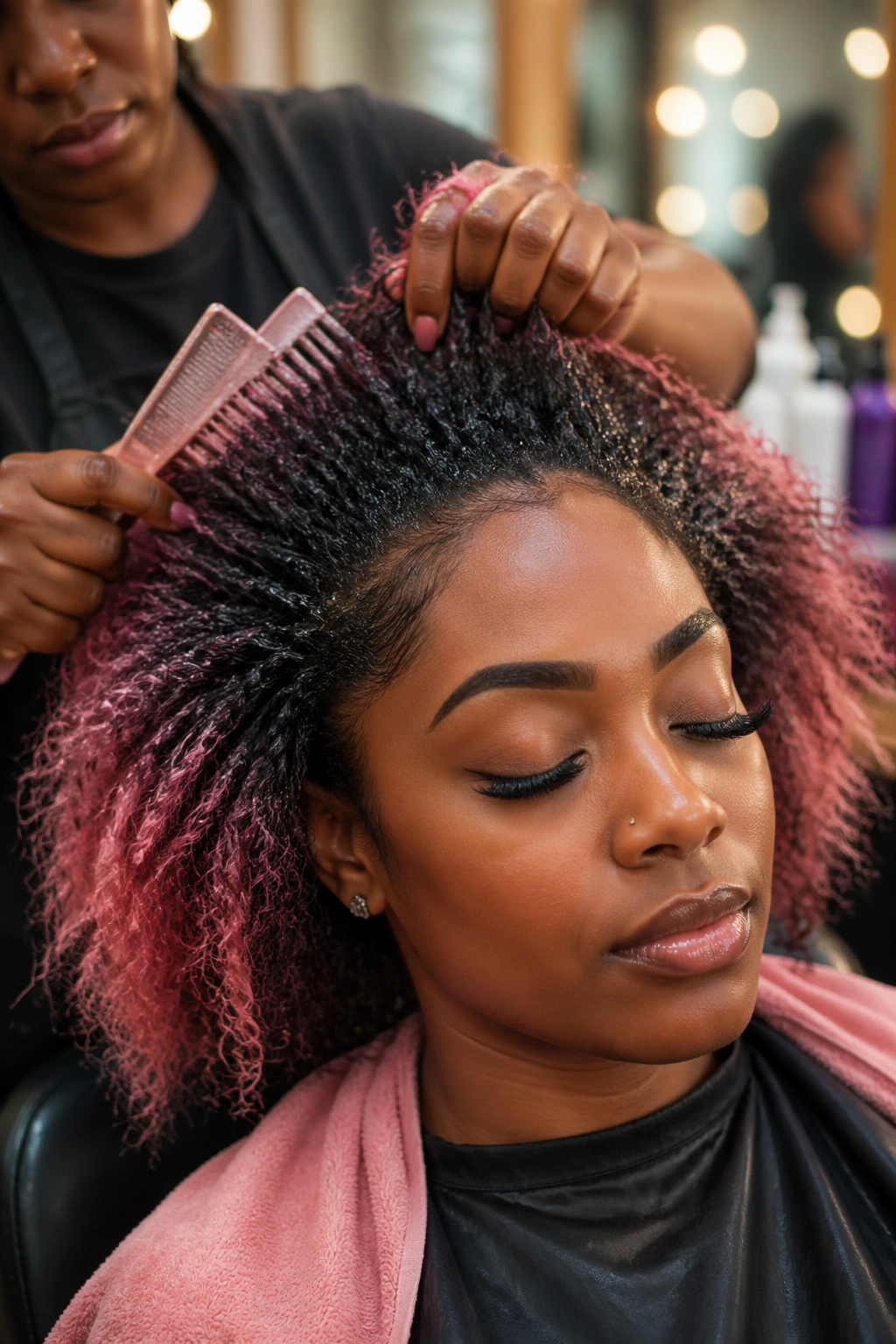
Bohemian-style pink cornrows with loose, undone curls draping over the install. The curls aren’t braided in — they’re added as accent pieces or left as the natural texture of the connected hair.
The wavy texture softens the color. Pink in a structured cornrow can feel intense. Pink with bohemian wave reads relaxed.
This is a summer-festival kind of style. Casual, beautiful, and conversation-starting.
18. Soft Pink Cornrows with Half Bun
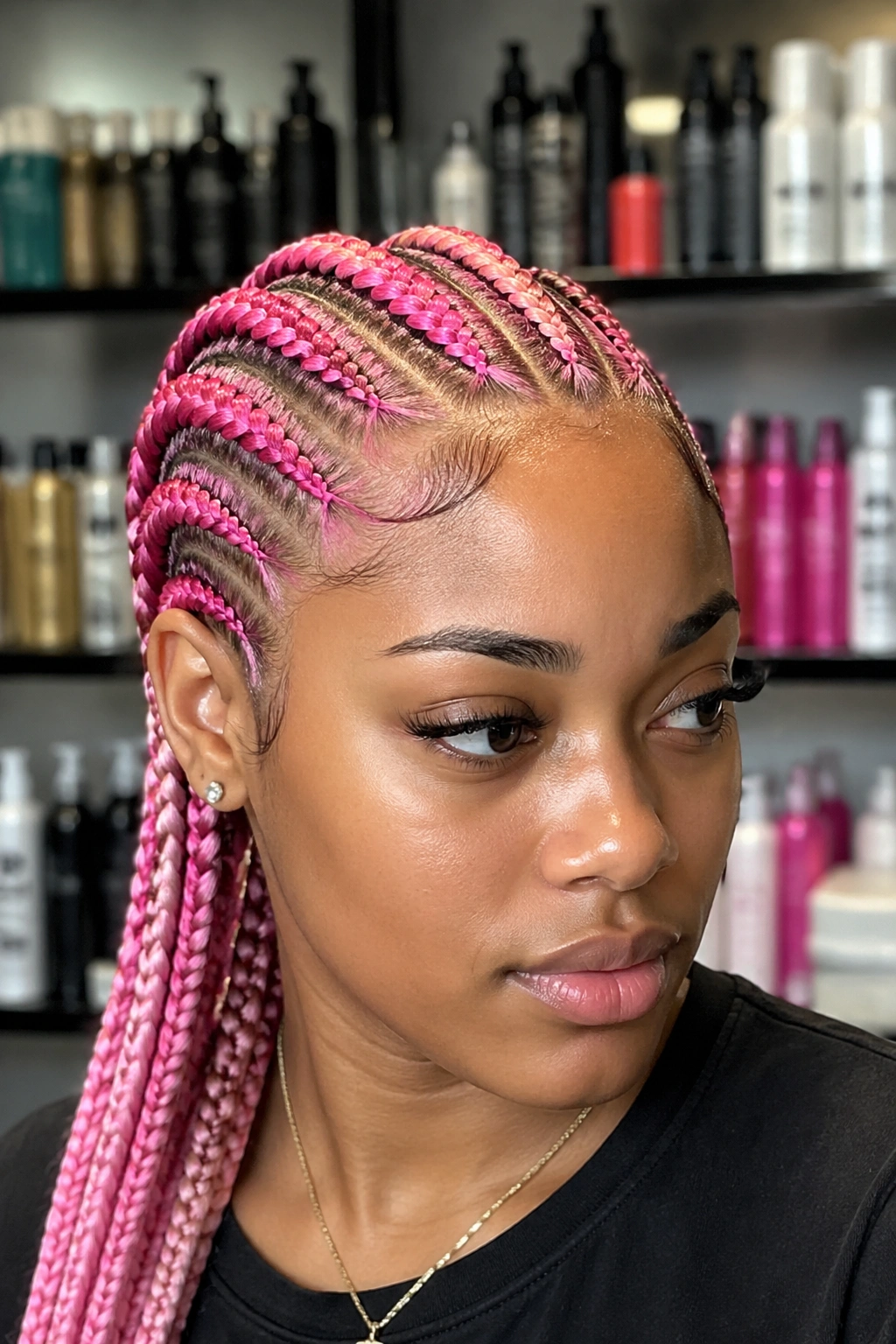
The cornrows pull the front half of the hair into a high half-bun. The back half hangs down loose. All in soft pink.
The half-bun sits at the crown. It can be a small, sleek knot or a fuller, messier bun. The down section flows past the shoulders.
The soft pink keeps the look romantic. Hot pink in this style would feel more rebellious.
19. Pink Cornrows with Star Burst Crown
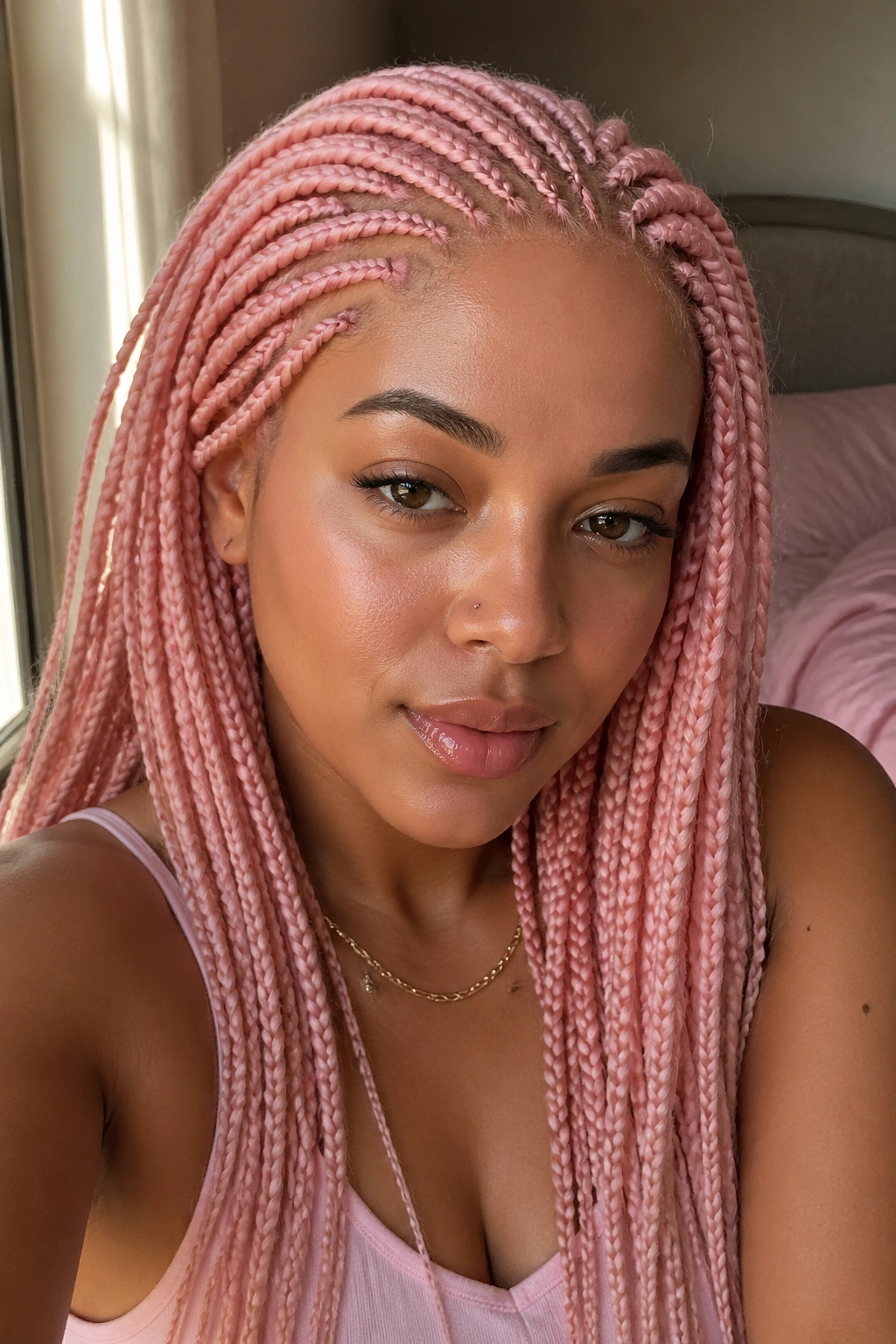
A star burst part at the crown — multiple cornrows radiating out from a single point — in pink. The radiating pattern is more visible in pink than in dark colors.
The star burst sits at the top back of the head. The cornrows radiate outward from the center point, traveling toward the hairline or the nape.
This is a sophisticated detail that pays off when people see the top of the head.
20. Coral Pink with Ombre to Blonde
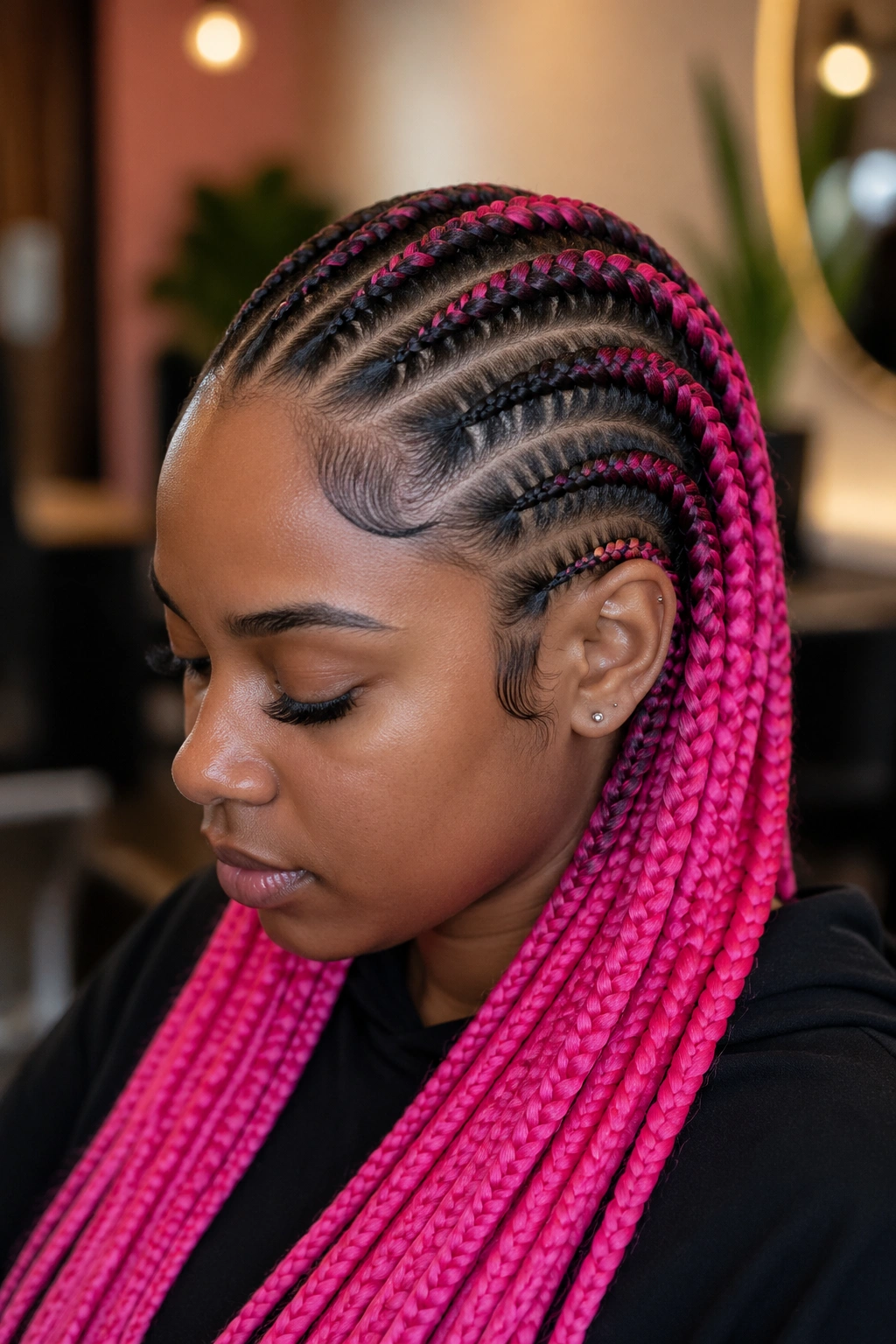
A coral pink at the scalp transitioning to blonde at the ends. The warmer pink suits the blonde transition. The colors flow into each other.
The transition point sits about halfway down the braid. Above, full coral. Below, blonde. The middle section blends.
This is one of the more demanding color jobs. A salon does it cleaner than a home dye attempt.
21. Pink Cornrows with Bun and Cascade
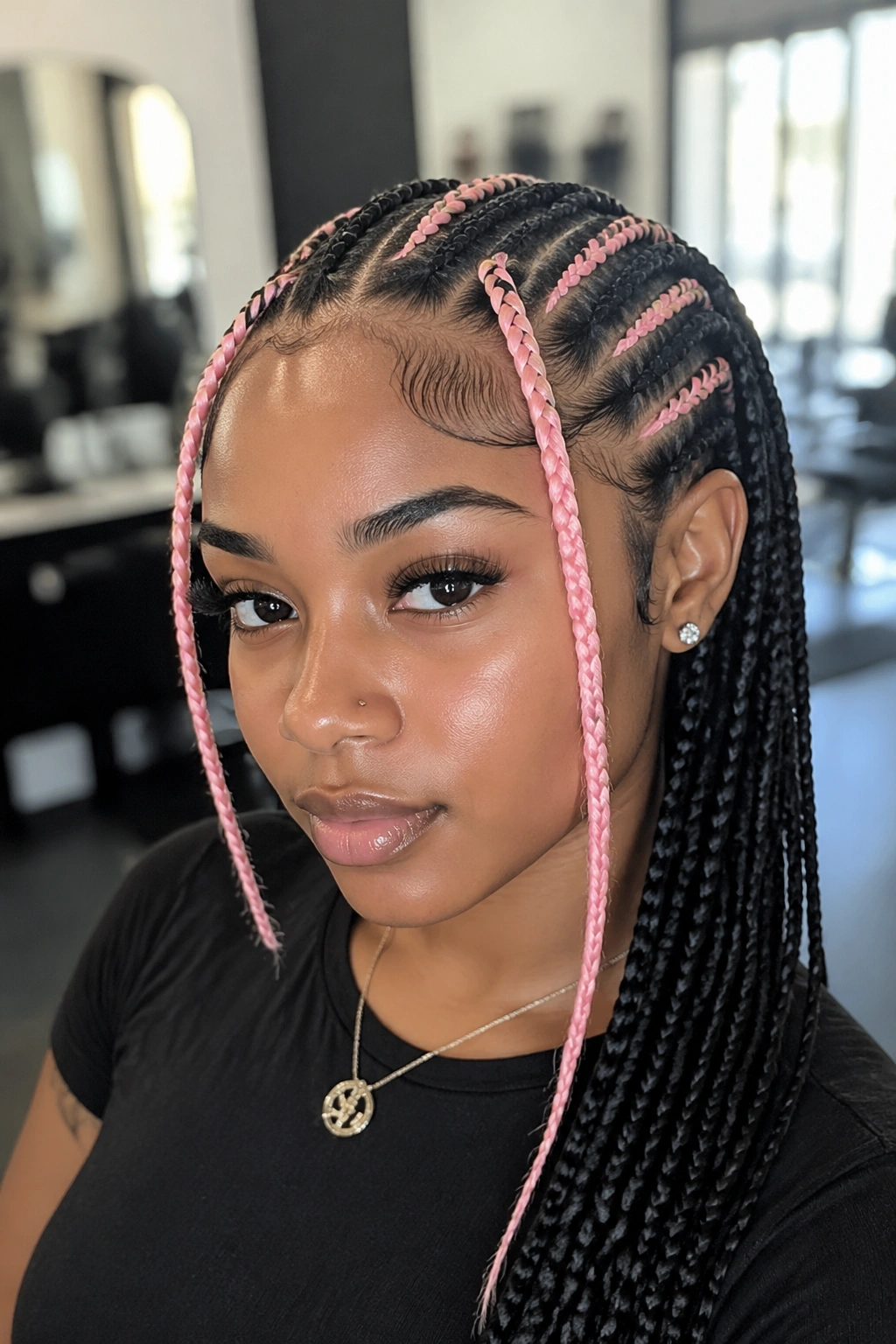
A high bun made entirely of pink cornrows, with extra pink hair cascading down from the bun. The bun anchors the look. The cascade adds drama.
The bun can be tight and sleek or full and rounded. The cascade flows down to the mid-back or longer.
This is an event-style. Wedding guest, gala, performance — places where the look needs to make an impact.
22. Pink Cornrows with Bold Edge Gel Pattern
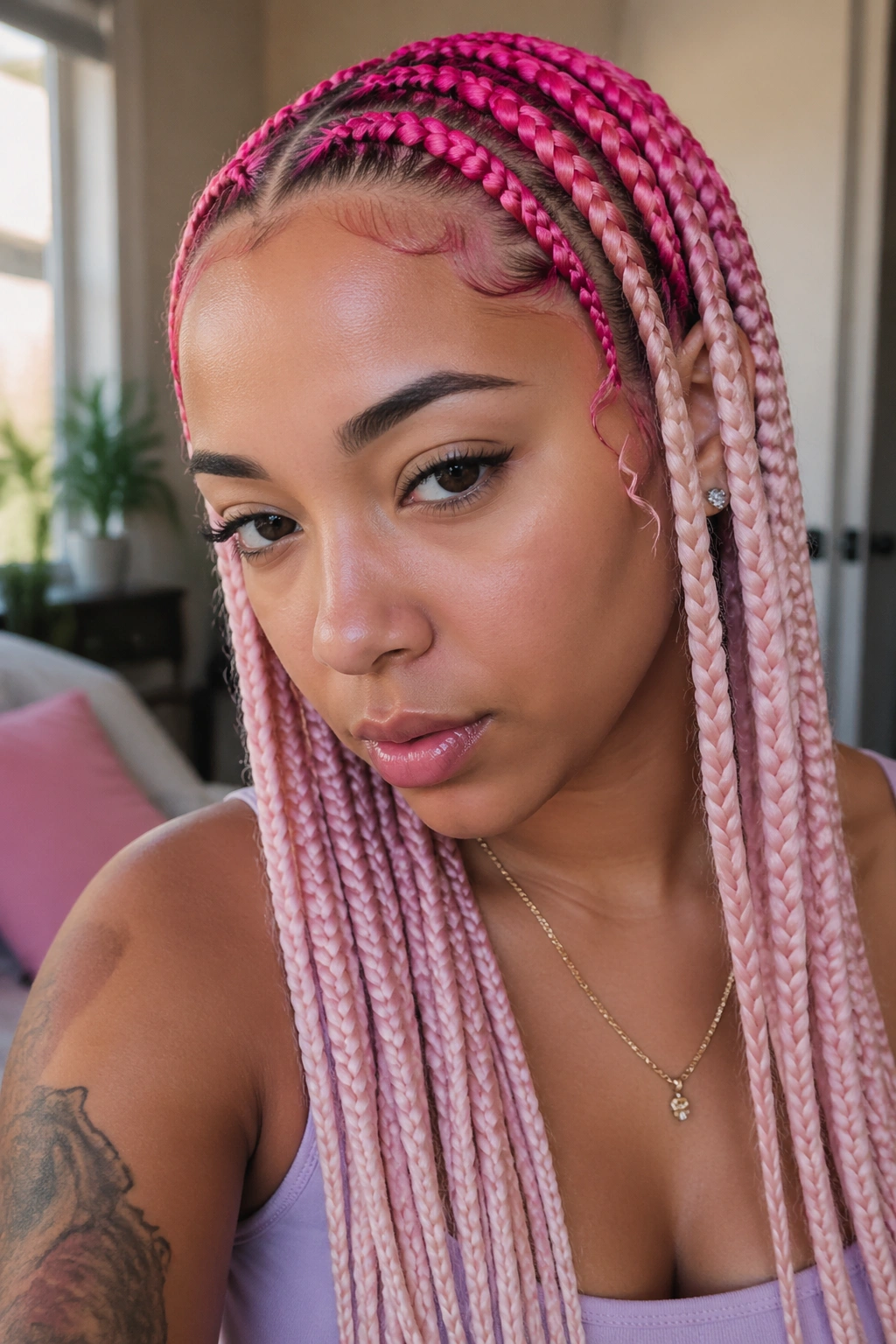
The hair color is pink, and the edge gel work is also pink — but in a contrasting shade. Hot pink edges on soft pink cornrows, or magenta edges on bubblegum.
The two-tone effect concentrates color at the hairline, where the eye lands first. The edges become a frame for the rest of the install.
Use a colored edge gel from a brand like Ebin or As I Am. Apply with a small brush for control.
Caring for Pink Cornrows
Pink is the most fade-prone color category in synthetic and natural hair. Care matters more than with other colors.
- Wash less frequently — once every 7 to 10 days at most
- Use sulfate-free, color-safe shampoo
- Cool water washes only; hot water strips color
- Apply leave-in conditioner with UV protection if you’re outside often
Sun is the biggest fade culprit. Direct sunlight for hours bleaches pink toward orange. A wide-brimmed hat or scarf helps on long sun days.
Maintaining Color Vibrance
Refresh pink color through deposit-only color treatments. Brands like Overtone and Arctic Fox make pink-depositing conditioners that add color back without bleaching.
Apply the deposit treatment every 2 to 3 weeks during a long install. Leave on for 20 to 30 minutes per the brand’s instructions. Rinse with cool water.
The color won’t look as fresh as day one. But it stays in the pink family rather than fading toward gray or orange.
Sleep and Daily Wear
A satin pillowcase prevents color transfer to bedding and reduces friction that fades color. Cotton pillowcases pull color out faster.
Avoid hats and scarves with rough interiors. Friction fades color. Silk-lined or satin-lined headwear is the safer choice.
If you sweat at the gym, rinse the install with cool water afterward. Sweat salt sets into the hair and can dull color over time.
Picking the Right Style for You
Skin tone, face shape, and color tolerance all factor in.
- Warm undertones suit coral, peach, and warm rose pinks
- Cool undertones pair with blush, magenta, and cool rose pinks
- Olive undertones can carry both warm and cool pinks well
- Hot pink works across most skin tones because the saturation overrides undertone
Face shape matters less for color choice than for braid pattern. Pick the shape based on the cornrow style, not the color.
Color tolerance is personal. Some people love going full bold. Others want subtle hints. Both are valid. Don’t force yourself into a style that feels too loud or too quiet for your comfort zone.
Mistakes That Ruin Pink Installs
Hot water washing fades color fast. Cool or lukewarm only.
Sulfate shampoo strips color. Read labels carefully. Some shampoos labeled “color-safe” still contain sulfates.
Skipping the deposit treatment lets color fade past the point of recovery. Add it to your routine from week two onward.
Heavy oils on pink hair turn the color dull. Use lightweight oils sparingly. Argan and grapeseed are good choices.
Ignoring the install while caring only for the color is a common error. The cornrows themselves need scalp care, edge maintenance, and sleep protection. Don’t let the color steal all your attention from the basic upkeep.
Pink cornrows are one of the most expressive ways to wear protective styles. The color reads bold or soft depending on shade, layout, and pairing. Choose the version that matches the energy you want to bring. Care for it. And enjoy the comments — there will be many.
