

Straight back cornrows on natural hair are the foundation. Every other braided style builds on this template. If you can do straight backs well — clean parts, even tension, smooth lines from hairline to nape — you can do almost anything else.
Working with natural hair changes the equation. There’s no slick relaxed texture to braid through. The coils want to spring up, the parts want to fuzz, and the scalp wants its space. None of that’s a problem. It just means the technique has to respect what the hair is.
These 22 styles cover every variation of the straight-back cornrow that works on natural hair — from minimalist 5-braid sets to dense 30-braid micro arrangements, with extensions and without, with curls and without, sleek and unfinished. Pick the one that fits your hair density, your patience, and the look you want.
Why Straight-Back Cornrows Suit Natural Hair
Natural hair — particularly Type 4 textures with their tight coils and zigzag pattern — responds well to braided styles because braiding mimics the natural way coils stretch and lock into formation. The strands grip each other naturally, which means cornrows installed on natural hair often last longer than cornrows installed on relaxed hair.
Natural hair also benefits from the protection cornrows provide. The ends — which are the oldest and most fragile part of any strand — get tucked into the braid where they’re shielded from daily friction.
Straight backs in particular work because they follow the natural growth direction of hair from front to back. There’s no fighting against the hair’s natural fall.
The simplicity of straight backs also makes them an ideal showcase for natural hair texture. There’s no design distraction. Just clean lines and the rich quality of your natural strands.
Natural Hair Prep Before Cornrowing
The single biggest factor in how well cornrows turn out on natural hair is prep. Skipped prep equals frustrated braider, painful install, and a style that fuzzes within a week.
Wash with a clarifying shampoo to strip product buildup. Built-up products on natural hair create slipping that braiders fight.
Deep condition for at least 45 minutes with a moisturizing protein-balanced treatment. Well-conditioned natural hair is more pliable and easier to braid.
Stretch the hair before the appointment. Options:
- Blow-dry on low heat with a tension method (using your hands, not a brush)
- Banding — sectioning damp hair and wrapping with elastics every inch to stretch as it dries
- African threading — wrapping sections of damp hair tightly with thread
- Twist-out and stretch — a mild twist-out done overnight stretches the hair while preserving curl pattern
Whatever method you use, hair should be visibly elongated — not fully straight, but no longer in its shrunken state.
Skip leave-in conditioner the day of install. Slick hair is hard to grip.
Lightly oil the scalp the night before, not the morning of. Jojoba or argan oil works well.
Why 4C Hair Needs Different Prep
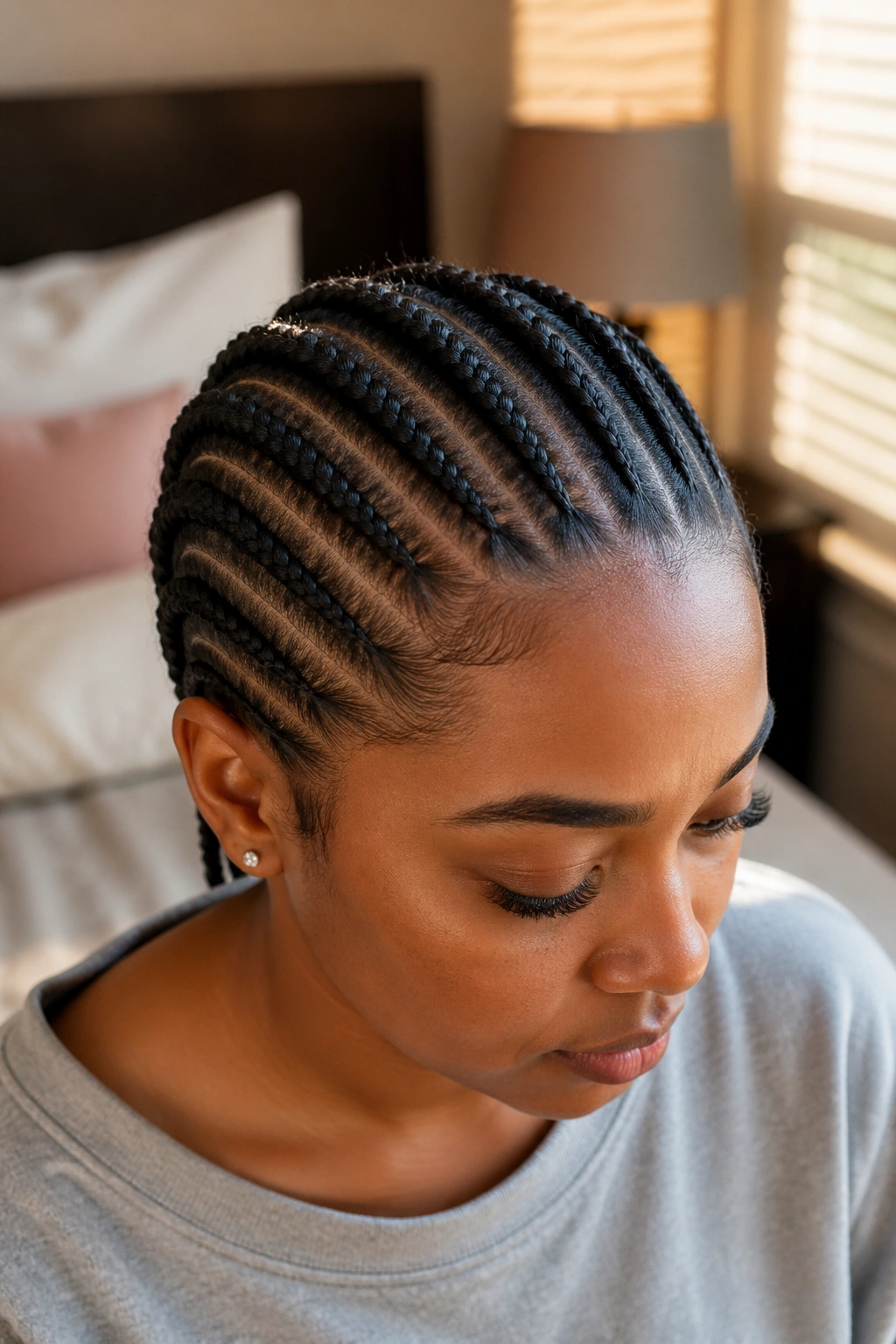
Type 4C hair — the tightest coil pattern — shrinks up to 75% of its actual length. That means hair that measures 12 inches when stretched might appear 3 inches when shrunken.
If your braider tries to cornrow 4C hair without stretching it first, the parts won’t read clearly, the braids won’t lay flat, and the install will take twice as long.
For 4C hair specifically:
- Stretch using a low-heat blowout for the cleanest results
- Apply a small amount of styling foam at the roots before braiding
- Plan for slightly longer install time even with stretching
Tools for Natural Hair Cornrows
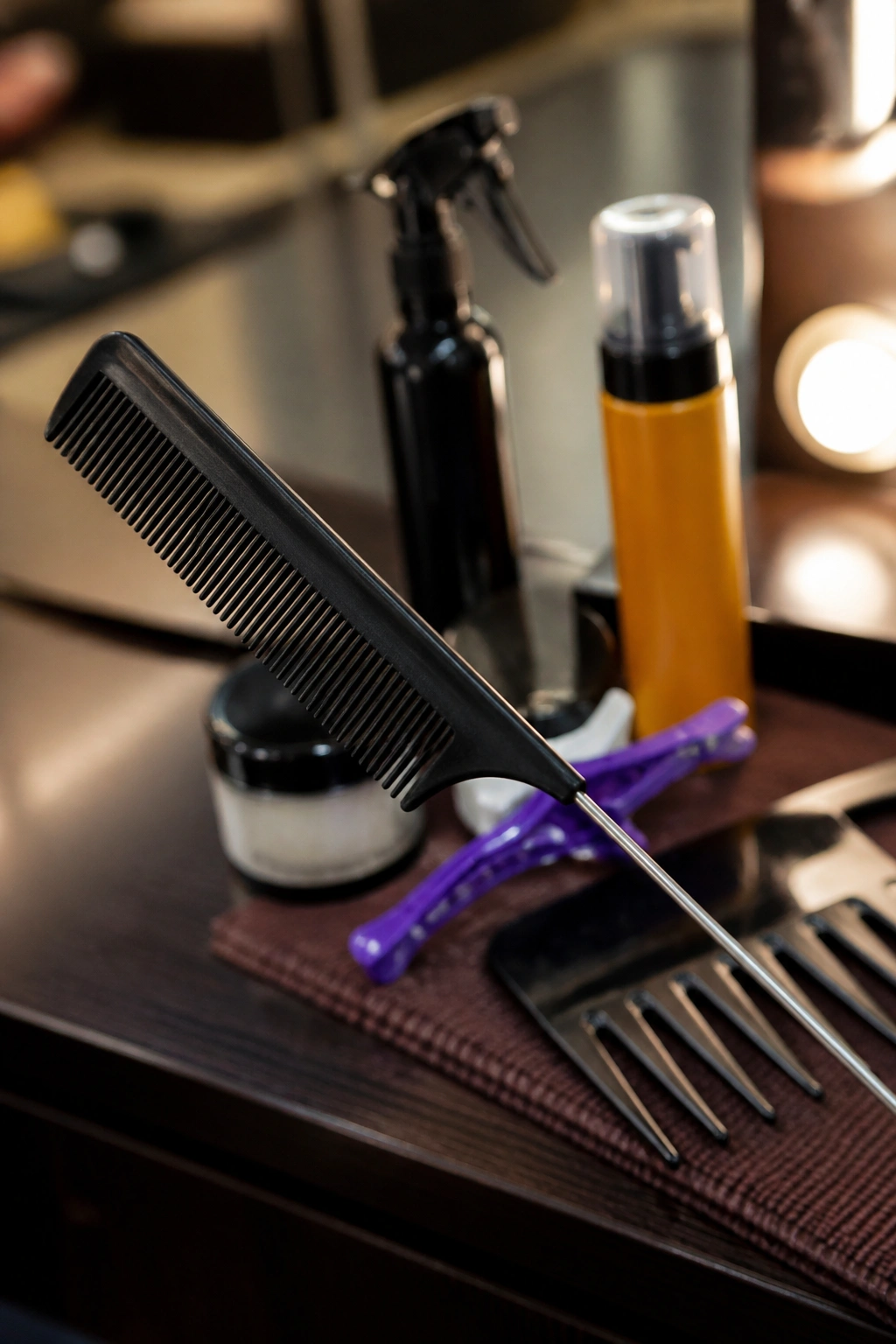
Rat-tail comb with a long metal tip. The metal tip cuts through dense natural hair to make clean parts.
Wide-tooth comb for detangling sections before braiding.
Duckbill clips to hold sections out of the way.
Edge gel designed for natural hair — usually with a thicker hold than gels for relaxed hair.
Foam mousse or curl-defining cream for managing frizz during install.
Spray bottle with water and a few drops of oil for re-moisturizing dry sections during the install.
Should You Add Extensions?
Natural hair cornrows can be done with your own hair only or with kanekalon extensions added.
Without extensions: The braids end at whatever length your hair naturally reaches. The look is more compact and authentic to your hair’s natural length.
With extensions: The braids extend past your natural length. The look is longer, fuller, and often heavier.
For straight-back cornrows on natural hair, the choice is personal. Both look great. Extensions add weight and require more careful tension management; natural-only braids are lighter but limited in length.
If you choose extensions, pre-stretched kanekalon in a color matching your natural hair gives the most seamless look.
How Long Cornrows Last on Natural Hair
A well-installed straight-back cornrow set on natural hair lasts 4-6 weeks. The factors:
- Tension at install (too tight = early lift, too loose = early frizz)
- Sleep care (satin or silk, not cotton)
- Scalp moisture routine (every 3-4 days, light oil)
- New growth rate (varies by individual)
Pushing past 6 weeks isn’t advised. New growth at the parts becomes visually obvious and creates tension on the natural hair where it meets the older braid.
1. Five Thick Straight Back Cornrows
Five evenly spaced cornrows running from the front hairline directly to the nape. Each braid is about 1.5 inches wide at the base — substantial, easy to braid, easy to wear.
Why It Works
- Quick install at about 90 minutes for a skilled braider
- Low maintenance, comfortable for sleeping
- Suitable for natural hair of any length
- Reads clean and timeless
Tip: Ask for parts that are slightly thinner at the temples than at the back for a flattering shape.
2. Seven Medium Straight Back Cornrows
Seven cornrows about 1 inch wide at the base, running straight from front to back. The middle ground — more visual interest than 5 braids, less commitment than 10+.
This is the most common straight-back cornrow count. It balances install time, longevity, and aesthetic.
Seven is also the magic number for face shapes — three braids on each side of one center braid creates symmetrical framing.
3. Ten Small Straight Back Cornrows
Ten cornrows about 3/4 inch wide running from hairline to nape. The denser braid count creates a more refined look.
Install runs about 3 hours. The result lasts a full 5-6 weeks with proper care.
Ten braids works particularly well on dense natural hair because there’s enough hair per braid to keep them looking full without overpacking.
4. Twelve to Fifteen Tiny Straight Back Cornrows
Twelve to fifteen small cornrows running straight back. Each braid is half-an-inch wide or less. The look is dense, refined, and detailed.
This is for women who want maximum cornrow definition without going to micro size. Install is 4-5 hours.
The dense braid count makes this a strong protective option. More braids means more surface area protected.
5. Three Thick Straight Back Cornrows
Just three cornrows. Each one chunky — about 2 inches wide at the base. Simple, bold, and surprisingly elegant.
This style strips cornrows down to their essence. Three braids, three lines, done.
It works especially well on shorter natural hair because the chunky braid size makes the most of limited hair length.
Install is fast — under an hour for a skilled braider. Longevity is moderate; chunky braids can lift sooner than denser arrangements.
6. Straight Back Cornrows With Center Part
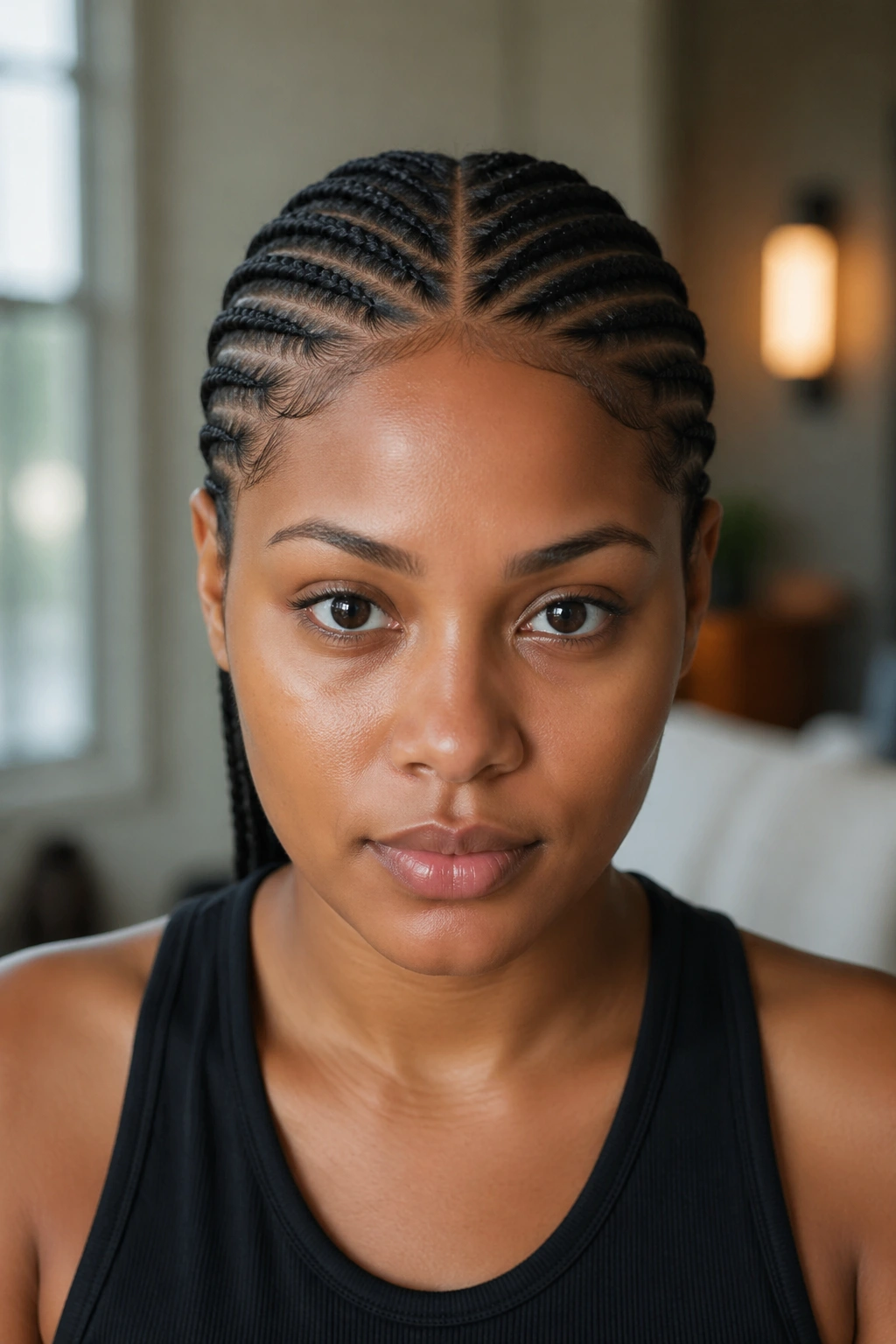
Cornrows running straight back, divided down the middle by a clean center part. Half the braids on each side. The center part is the visual anchor.
Center parts work for symmetrical faces and for women with strong central features. They emphasize whatever’s already there.
The center part should be ruler-straight. A wavy or wandering center part draws the eye in the wrong way.
Tip: Apply a thin line of edge gel along the center part to keep it sharp throughout the style’s life.
7. Straight Back Cornrows With Side Part
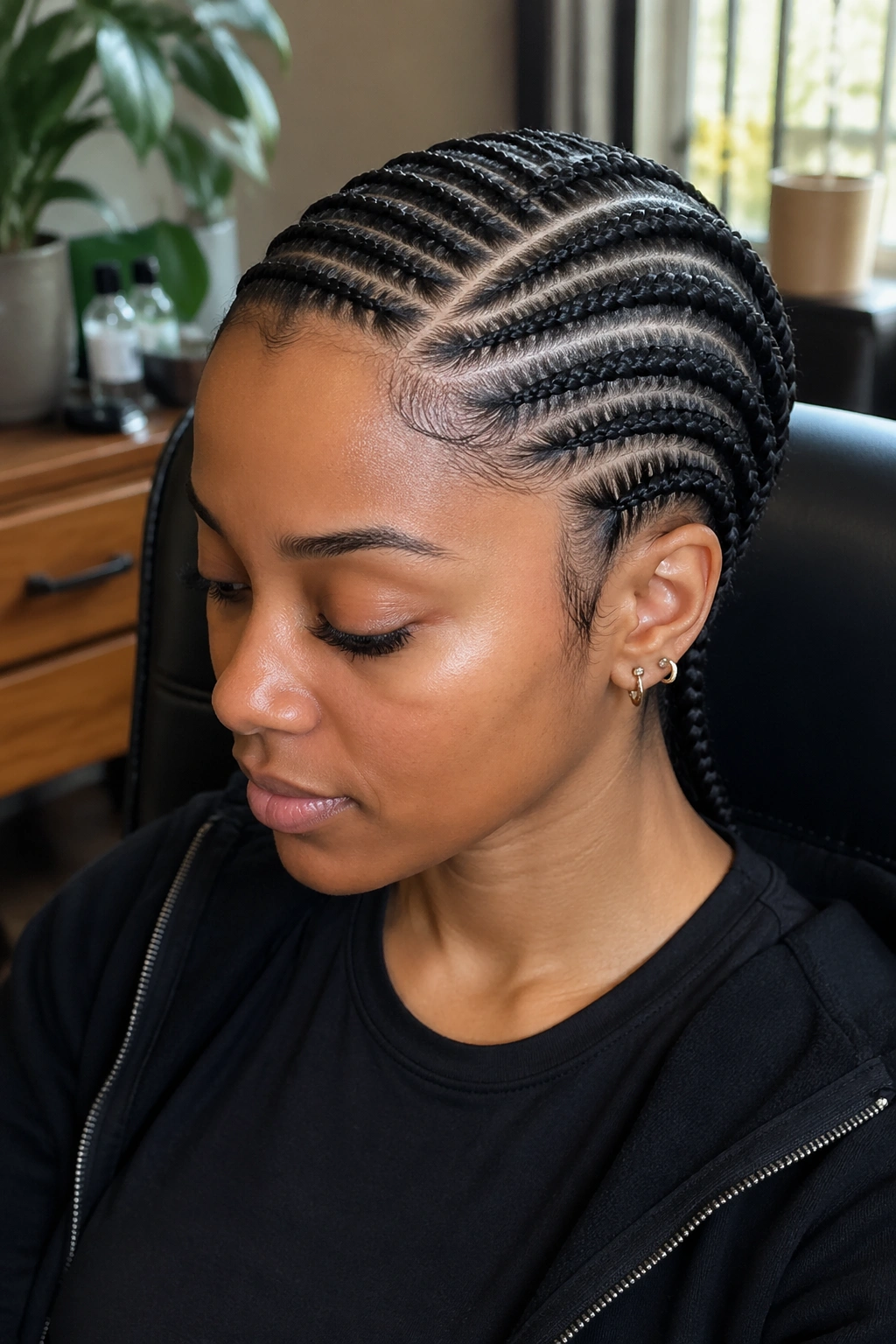
Cornrows running straight back, but the entire set is parted on one side rather than down the middle. The side part creates an asymmetric front that flatters most faces.
Choose the side based on how your hair naturally falls. Most people part on one side more cleanly than the other.
Side parts slim round faces and add interest to oval faces.
8. Stitch Braid Style Straight Backs
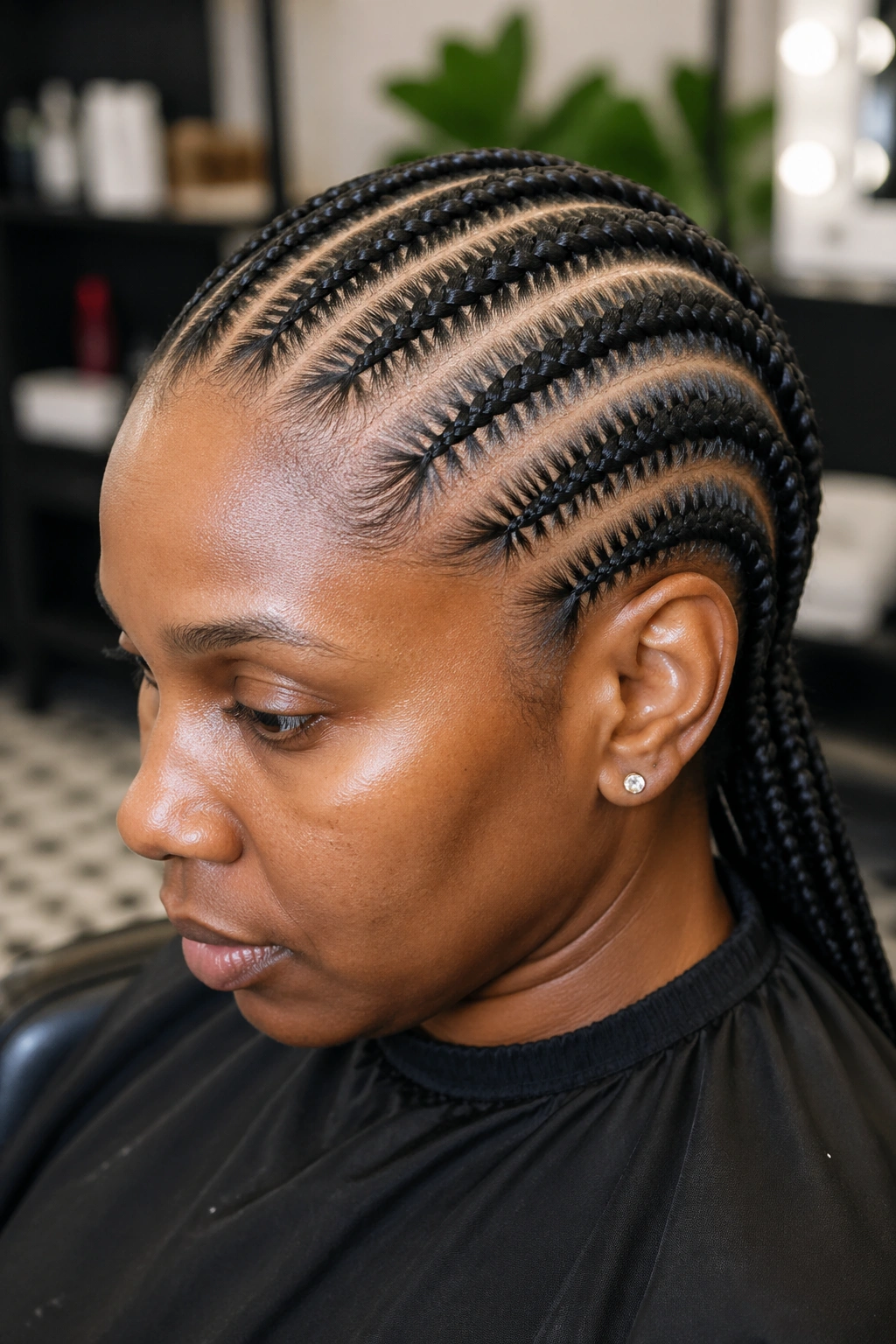
Stitch braids are a more recent style of cornrow where each braid has tiny visible “stitches” along the length — accomplished by the braider partitioning very thin sections during the braiding process.
Stitch braids on natural hair show off the precision of the work. The visible stitches add a graphic, almost embroidered quality to the braid.
This style requires a skilled braider. Stitch braids done poorly look messy rather than precise.
Install is longer than standard straight backs — about 4-5 hours for a full head.
9. Straight Back Cornrows With Edges Slicked
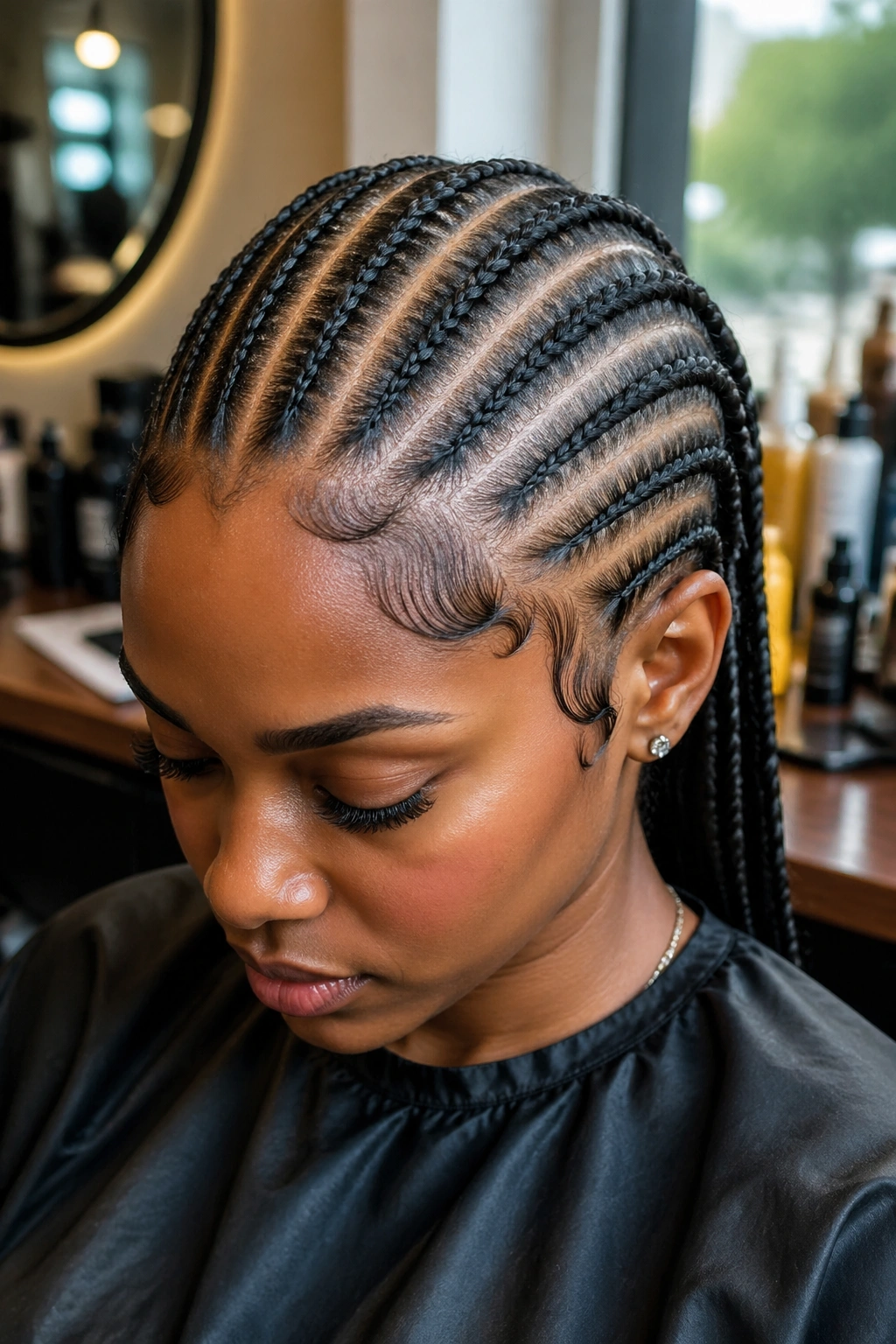
Standard straight back cornrows on natural hair, with the front hairline edges slicked into intricate edge designs — swirls, curves, or geometric patterns.
The edge work elevates basic cornrows into a finished, polished look. Edges become a small art piece on their own.
This style requires daily edge maintenance. Edges blur within 3-5 days even with careful sleep care.
How to Style It
- Use a stiff edge gel with strong hold
- Apply with a clean toothbrush or edge brush for fine control
- Refresh every 3-4 days with a damp brush and small dab of fresh gel
- Sleep with a silk scarf wrapped specifically over the edges
Tip: Edge designs photograph stunningly. Take photos right after install before any blurring occurs.
10. Straight Back Cornrows Into Loose Tips
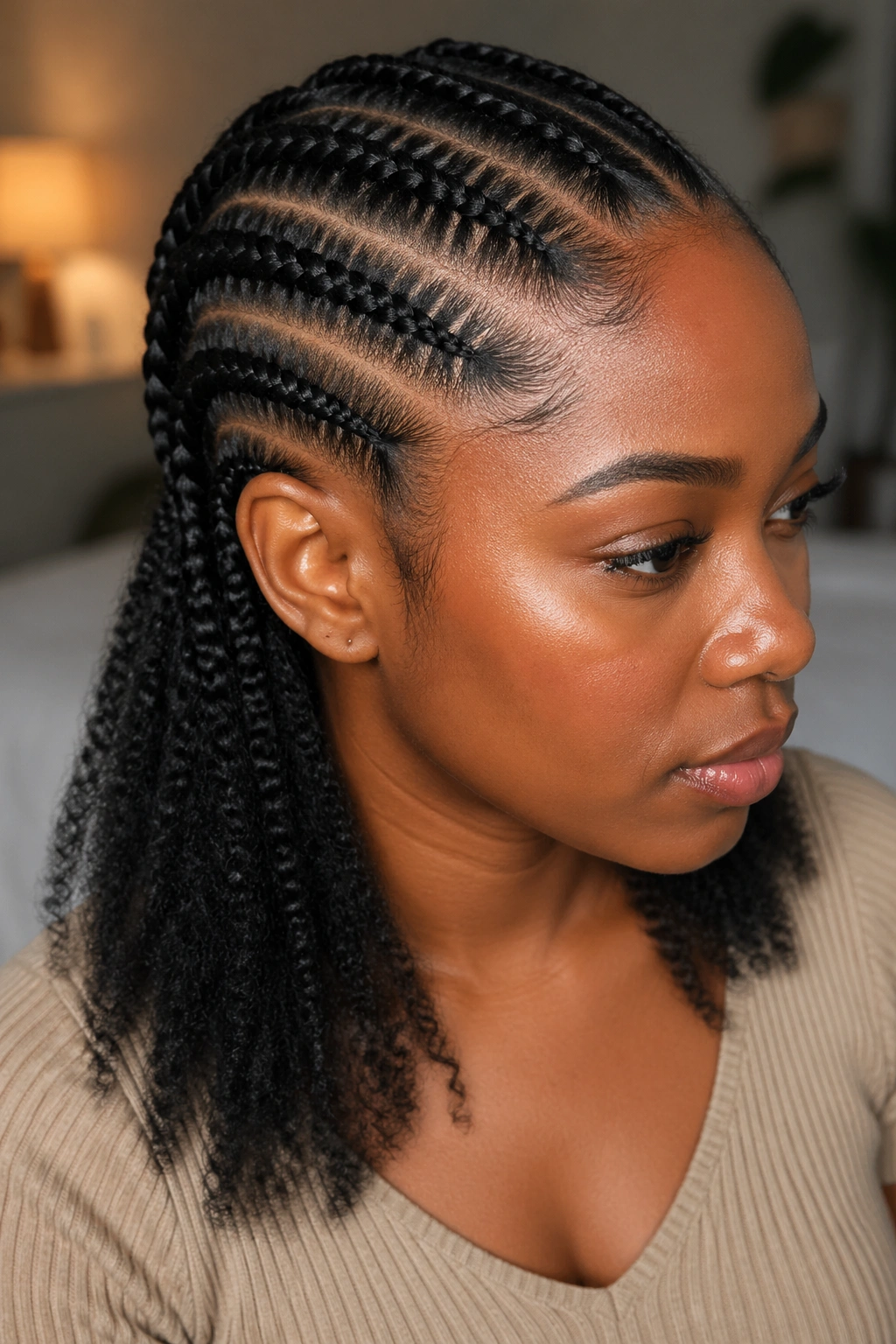
Cornrows are braided to about 4 inches above your natural hair length, then the remaining hair is left loose at the ends — no extension, no rubber band, just natural hair released.
This shows off your natural texture in a measured way. The cornrows provide structure; the loose tips show off your curls.
This works only on hair with enough length to leave loose ends visible. Hair under 4 inches won’t accommodate this style.
11. Straight Back Cornrows With Twist Out Tips
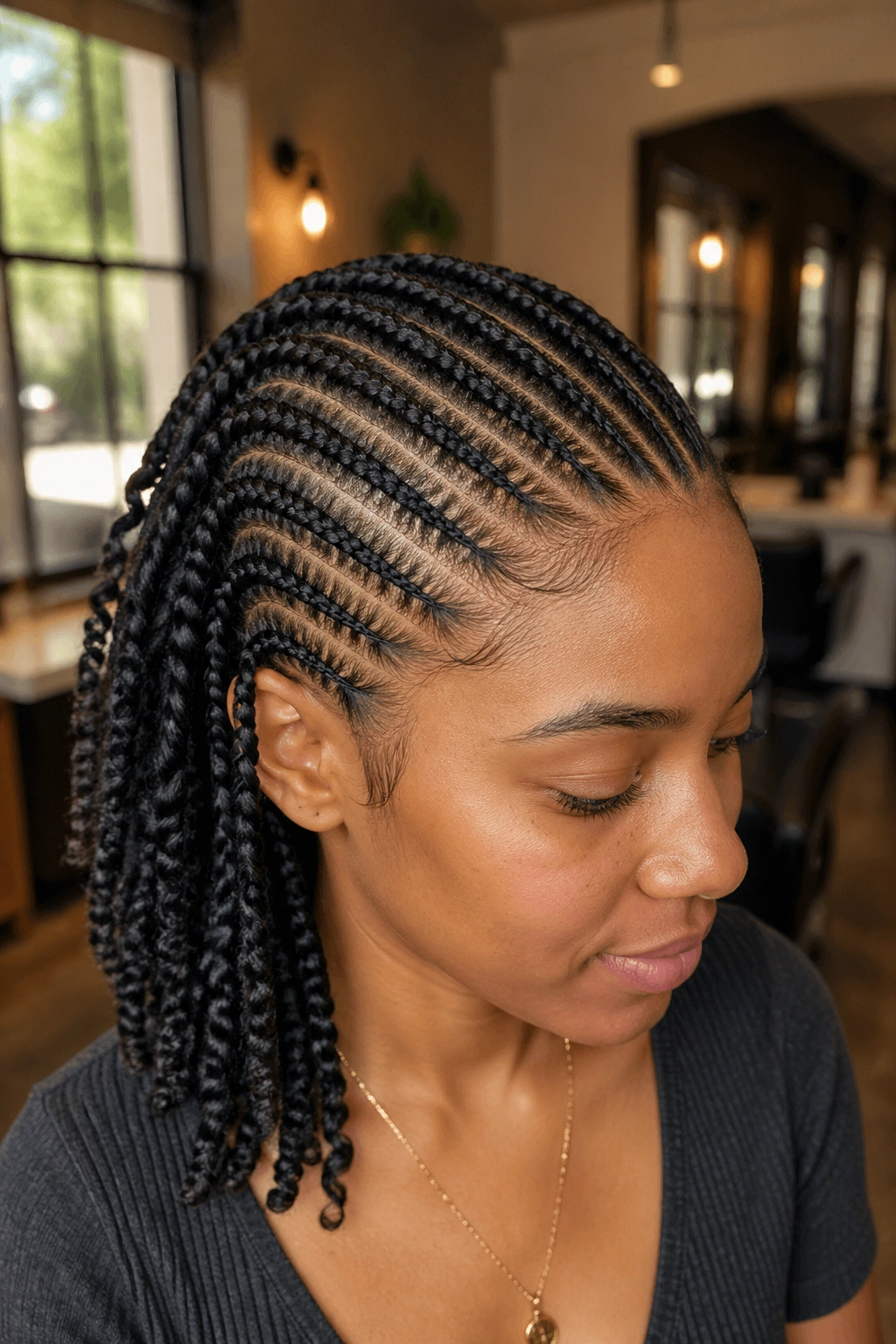
Cornrows transition into twisted tips at the ends. Each braid releases into a two-strand twist for the last 4-6 inches.
The twisted tips add visual texture. They also protect the ends better than fully loose tips do.
Twists can be released for a curly tip finish or kept twisted for a sleeker look.
12. Straight Back Cornrows With Pulled Edges
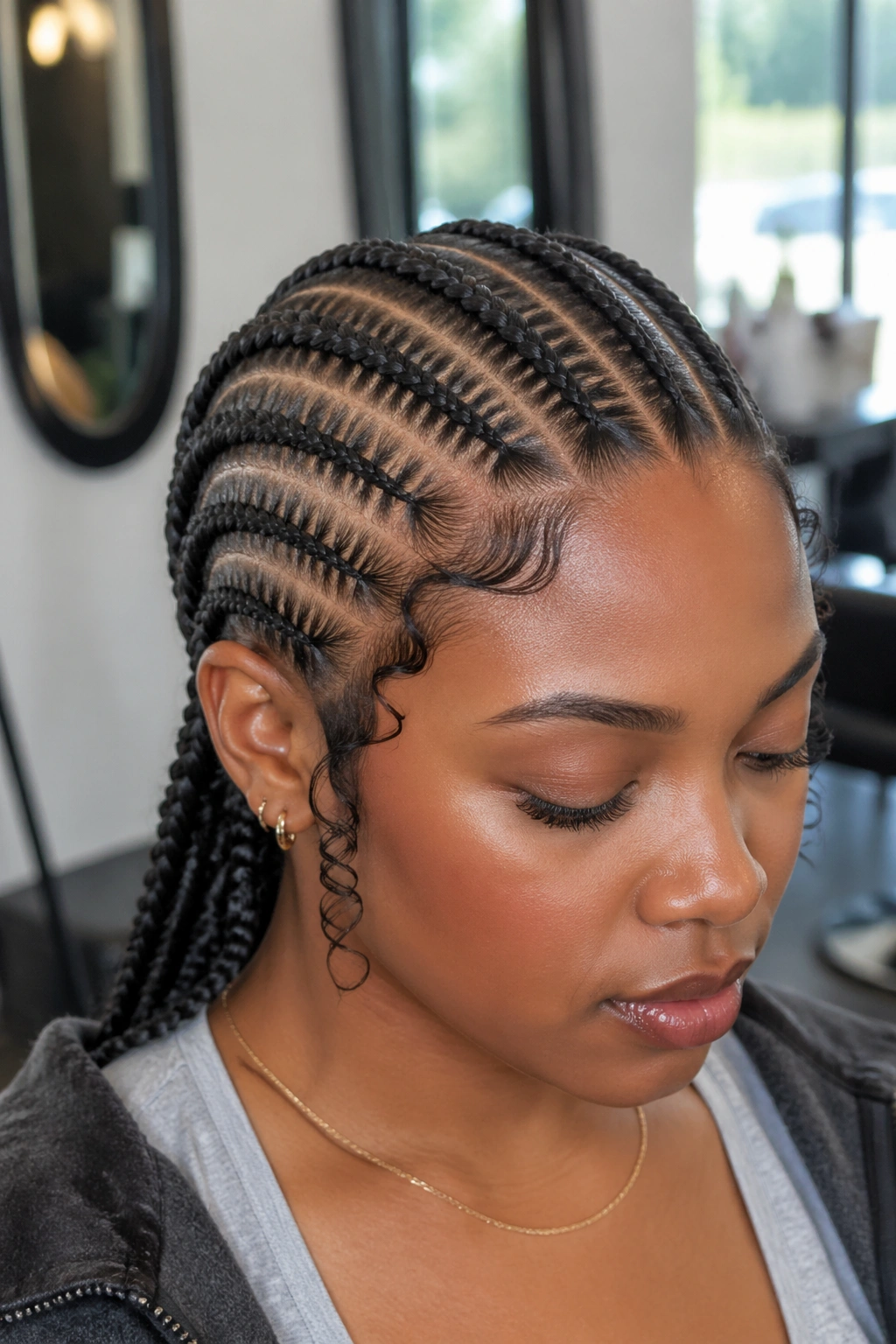
Standard straight back cornrows, but the front hairline includes “pulled” or “swooped” edges — meaning small curly pieces of natural hair are left out at the temples and styled to frame the face.
The pulled pieces soften the otherwise-graphic cornrow line. They add organic motion to a structured style.
The pieces should be small — just a few coils. Pulling out too much hair defeats the protective purpose of the braids.
13. Straight Back Cornrows With Tinted Ends
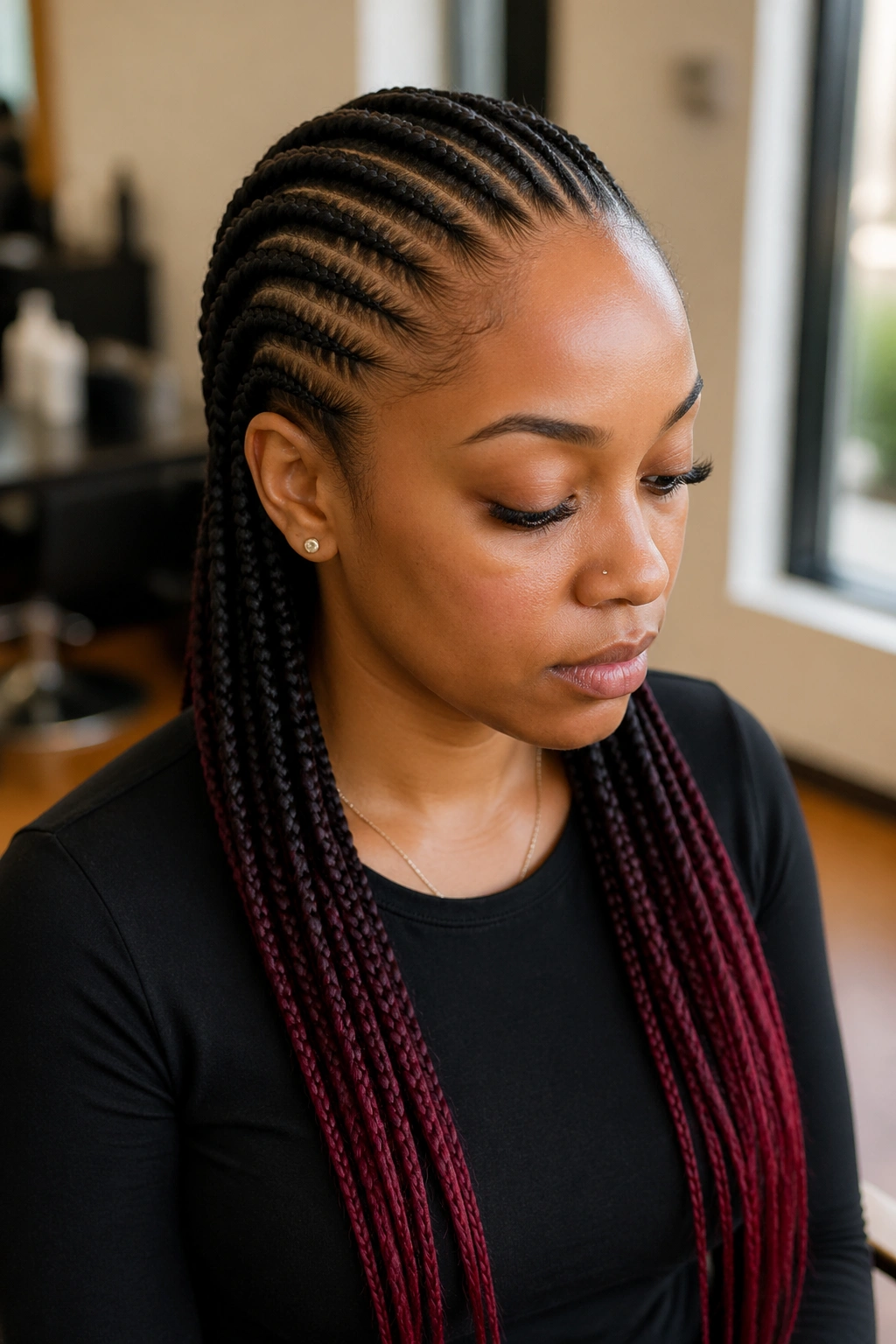
Cornrows in natural color with the ends tinted a contrasting color — burgundy, copper, or honey blonde. The color appears only in the bottom 3-6 inches.
This is achieved by braiding tinted kanekalon into the bottom portion of the braid as a feed-in.
The color choice should complement your skin undertone. Warm tones suit honey, copper, and warm red. Cool tones suit ash brown, burgundy, and cool red.
Tip: Choose a color that’s visible but not so bright it competes with your natural hair color above. Tonal contrast works better than color contrast.
14. Straight Back Cornrows With Goddess-Style Loose Hair
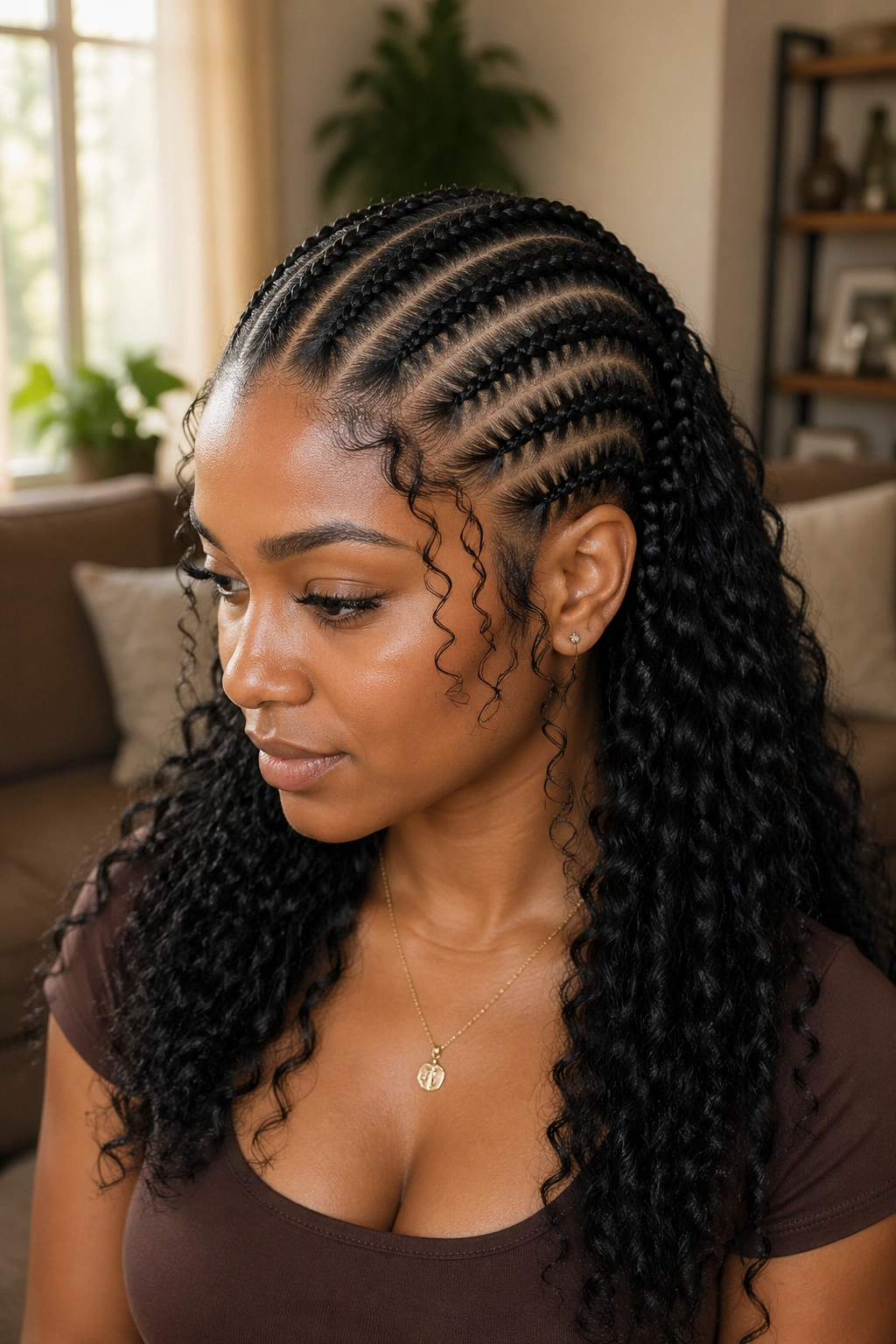
Goddess braids are a variation where loose pieces of curly hair are deliberately left out throughout the cornrows for a softer, more romantic effect.
The goddess style works on natural hair specifically because the loose pieces need to have natural curl pattern — synthetic loose pieces look obviously fake.
Each braid has 2-4 small loose curls escaping along its length, distributed throughout. The look is intentional disarray.
This is a great choice for women who want braids without the severe, graphic feel of clean cornrows.
15. Straight Back Cornrows Pulled Into Low Bun
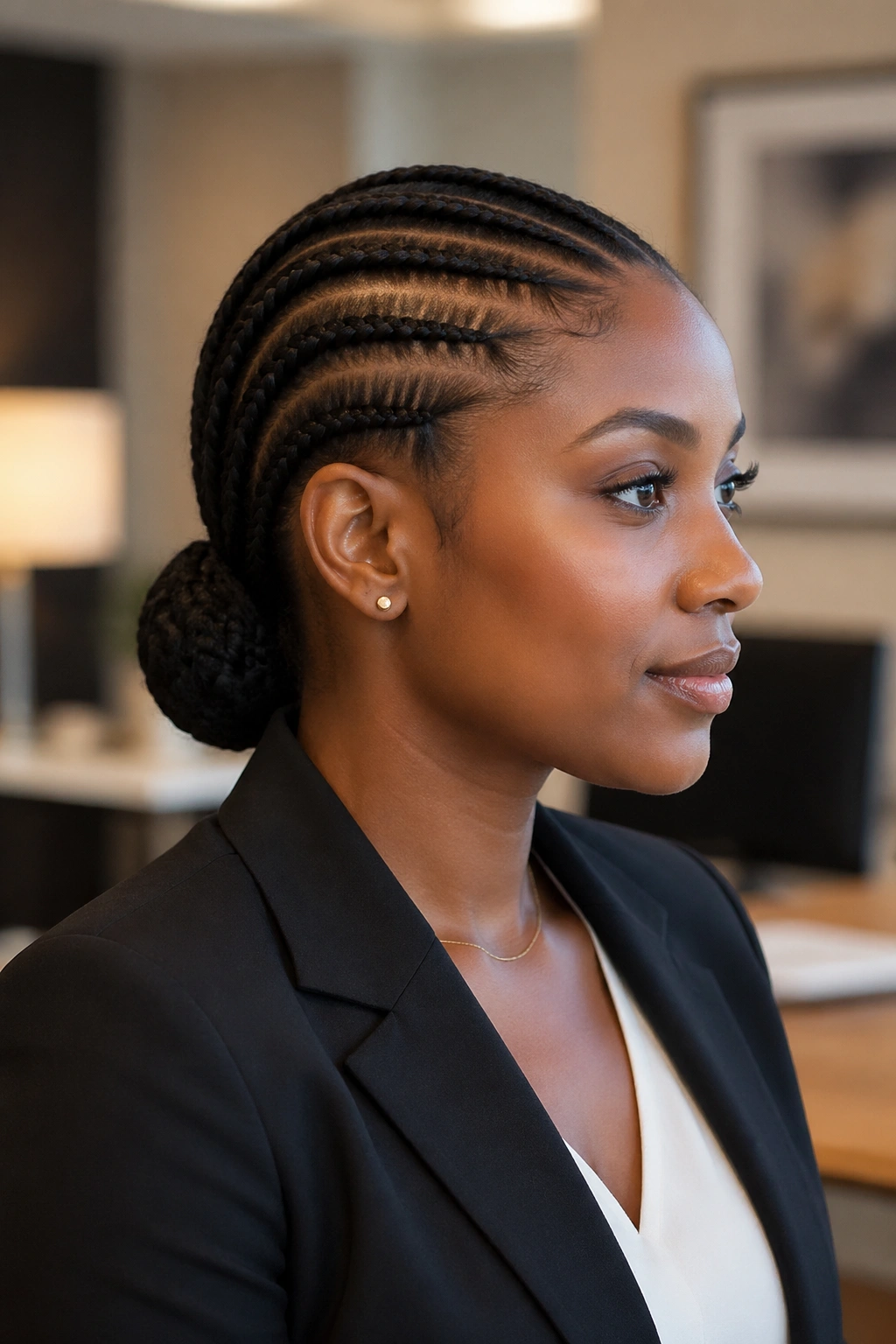
All cornrows feed into a low bun at the nape. The braids are clean and straight from the front hairline to the nape, then they wrap or coil into a sleek bun.
The bun keeps the ends protected and tidy. It’s also office-appropriate, formal-event-appropriate, and generally polished.
Bun sizes vary. Smaller buns suit petite faces; larger buns balance stronger features.
16. Straight Back Cornrows Pulled Into High Ponytail
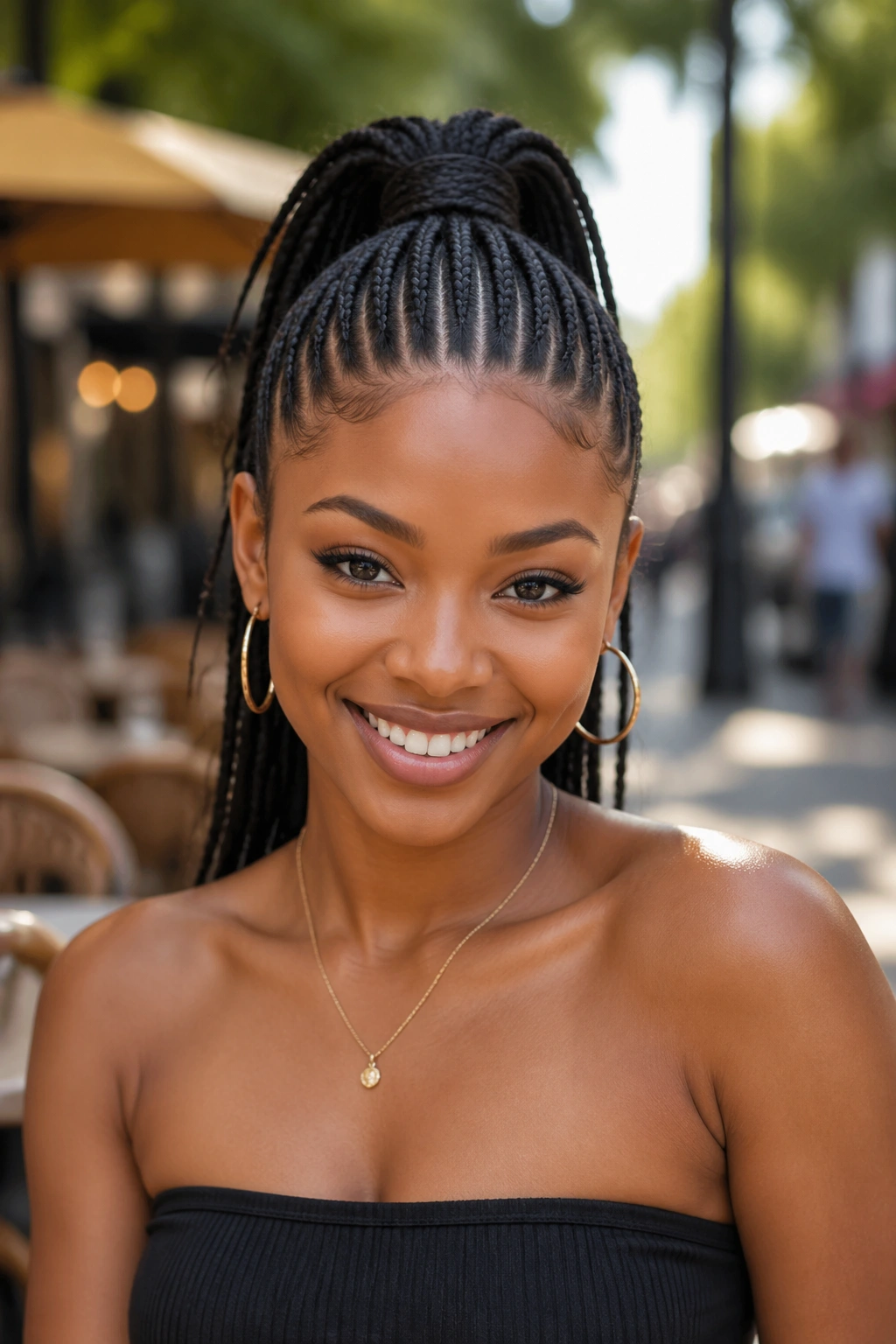
Cornrows feed into a high ponytail at the crown. The high gather lifts the face and elongates the silhouette.
This is a celebratory style. It reads festive, energetic, and youthful.
The high ponytail puts maximum tension on the scalp. Wear it for short stretches and switch to a low ponytail for sleep and long days.
17. Straight Back Cornrows With Fulani Center Braid
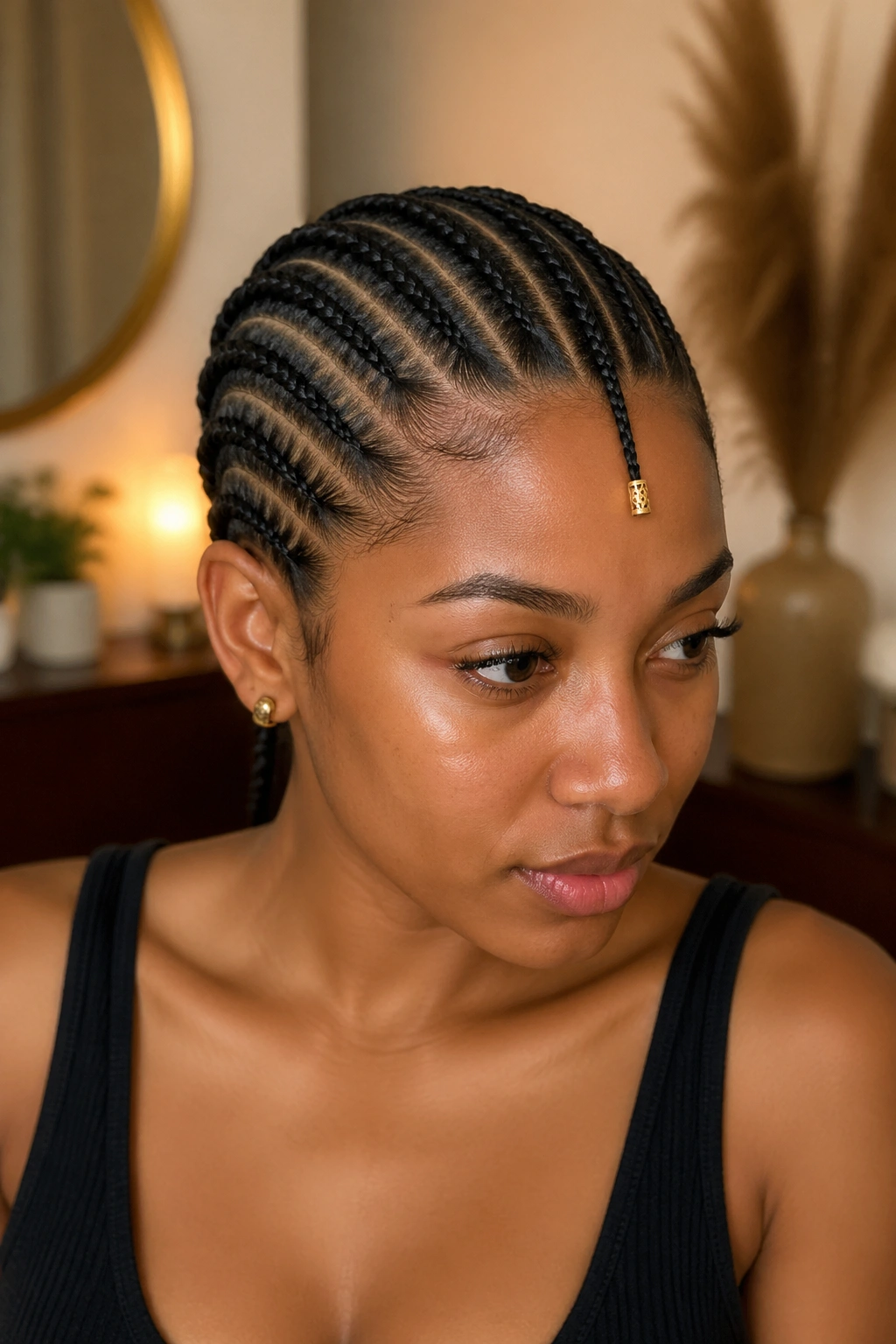
Standard straight back cornrows, plus a single thin braid running down the center of the forehead from the hairline. The center forehead braid is the signature element of Fulani styling.
The center braid traditionally includes a gold accent — a ring, charm, or beaded tip. This honors the Fulani tradition this style references.
Wear with awareness of the cultural origin. This is a style with deep roots in West African traditions.
18. Straight Back Cornrows With Bead Tip Accents
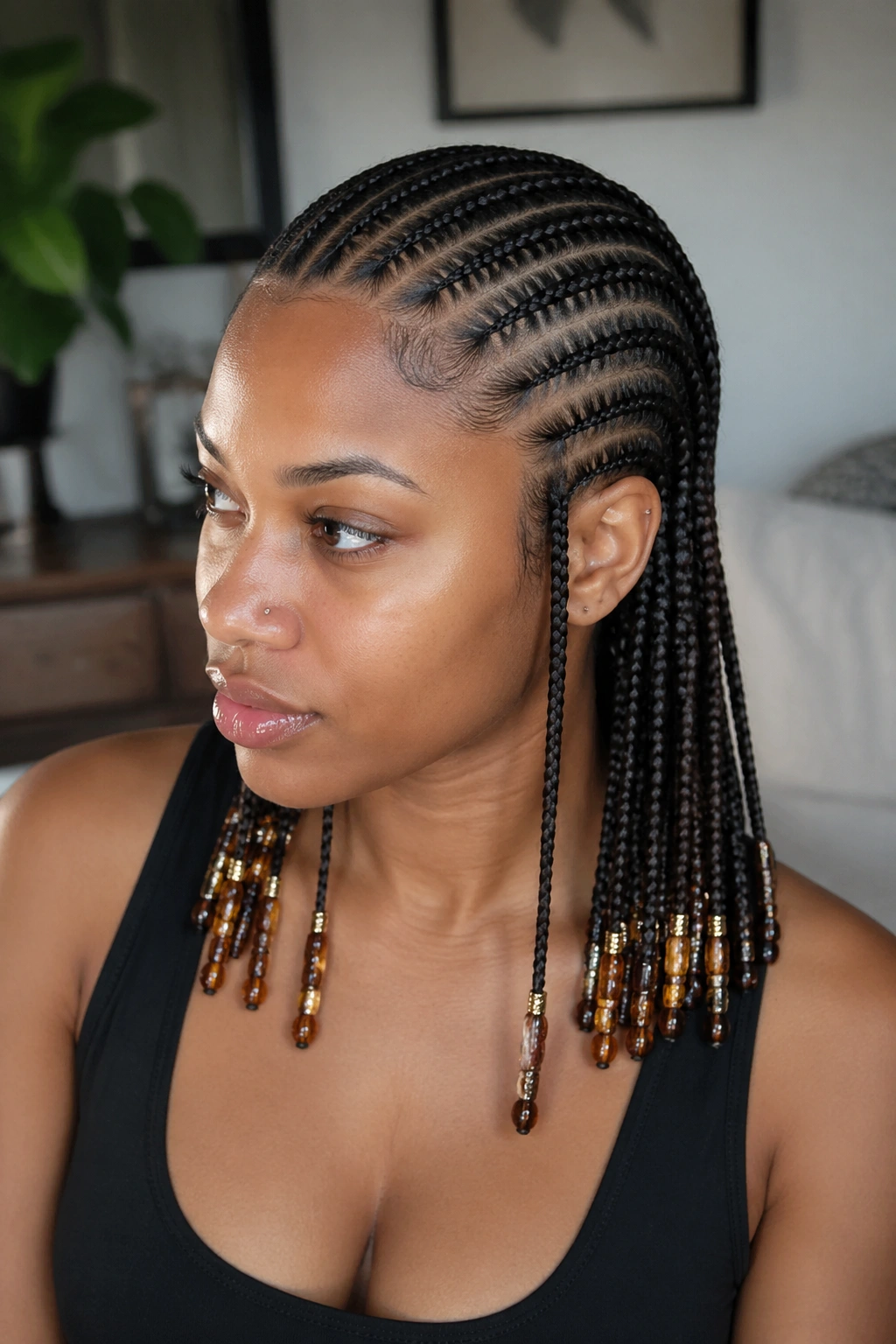
Standard straight back cornrows on natural hair, with 3-5 beads at each braid tip. The beads can be wooden, glass, metal, or stone.
Beads add weight and movement to the braid ends. They also signal intentionality — these are styled, not just braided.
For natural hair without extensions, choose lightweight beads. Heavy beads on natural hair tips can pull and damage the strands.
19. Straight Back Cornrows With Clear Coiled Ends
Cornrows are braided to the end of your natural hair length, then the very tips are coiled with finger curling and sealed with a small dab of curl-defining gel for a clean finish.
The coiled ends look polished and intentional. They also stay protected from daily friction.
This works only on natural hair. Synthetic kanekalon doesn’t coil the same way.
Maintenance Notes
- Refresh the coiled ends every 5-7 days with a tiny amount of gel
- Don’t recoil too tightly — over-coiling can damage the hair tips
- Sleep with a satin scarf to preserve the coil definition
Tip: A small drop of jojoba oil on each coiled tip adds shine without weighing the coil down.
20. Straight Back Cornrows With Defined Hairline Edges
Cornrows that start with carefully shaped hairline edges — a clean line all the way around. The edges are sculpted with edge gel into a precise hairline.
This is straight backs with extra polish. The cleaned hairline reads as deliberate and refined.
Edge maintenance is constant. Plan for daily edge touchups.
21. Straight Back Cornrows With Loose Sides
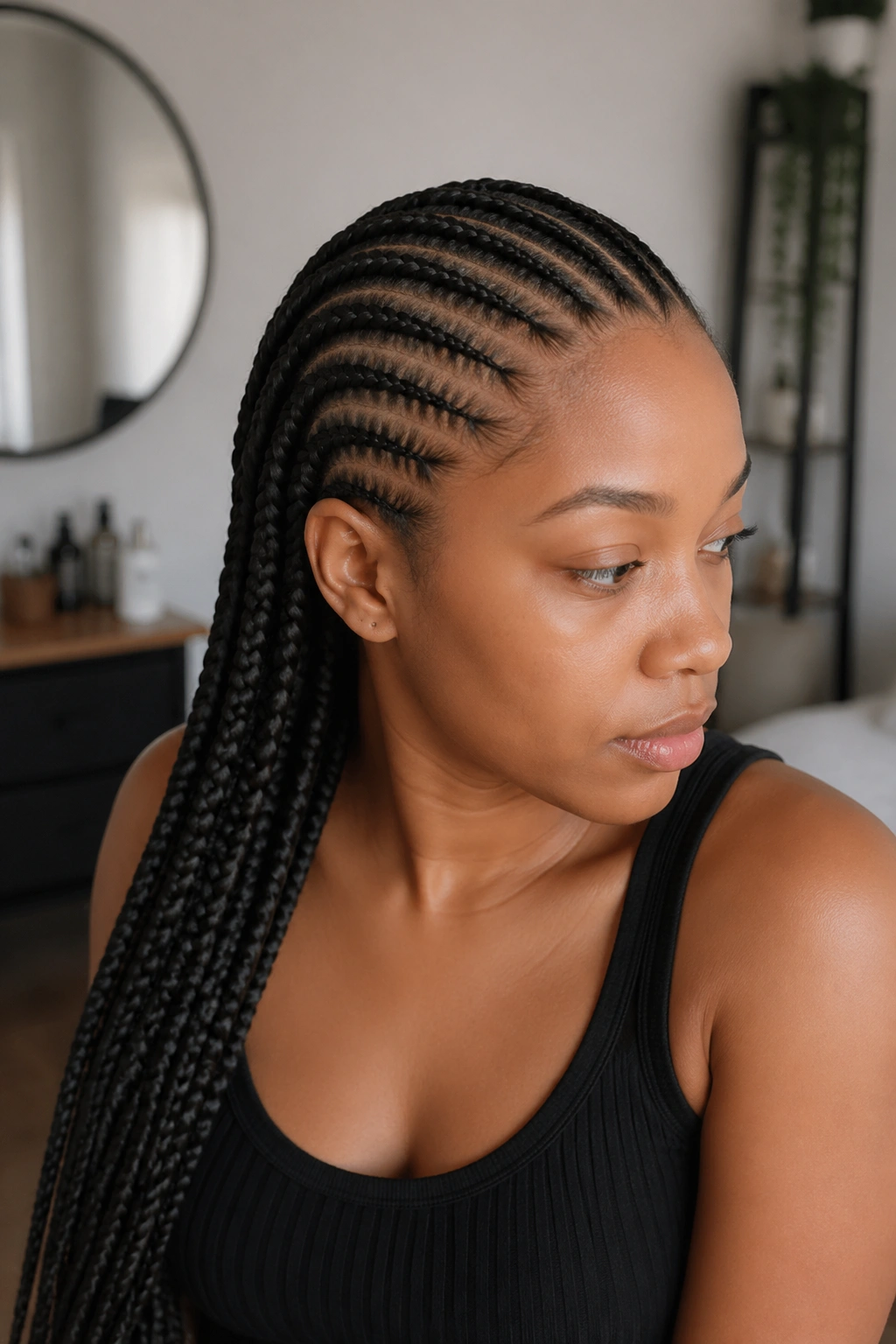
The center of the head has straight back cornrows, and the sides have loose natural hair styled around the cornrowed center.
This is essentially a half-cornrow style with the cornrows running down the middle rather than across the top.
It creates a strong visual line down the center of the head while leaving the sides soft.
22. Straight Back Cornrows With Two-Tone Color Block
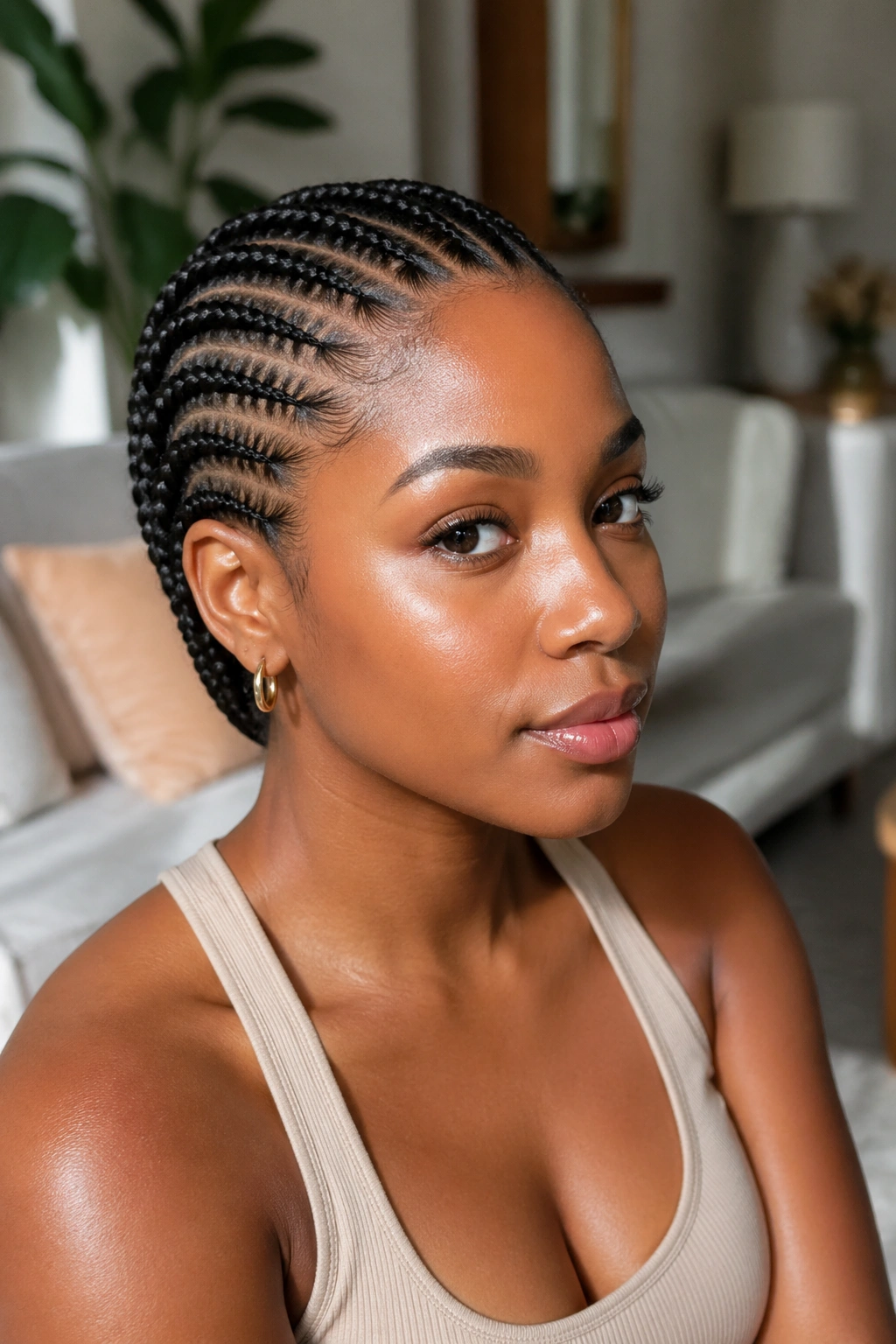
Cornrows are braided in your natural color, but kanekalon in a contrasting color is fed in halfway down each braid — creating a clean color transition that runs across the entire head.
The transition point should be uniform across all braids. The color block reads as intentional rather than accidental.
Most popular color blocks: natural-to-honey, natural-to-burgundy, natural-to-platinum.
Tip: Match the transition height to your jawline. The color block sitting at jaw level frames the face naturally.
Cornrow Care for Natural Hair
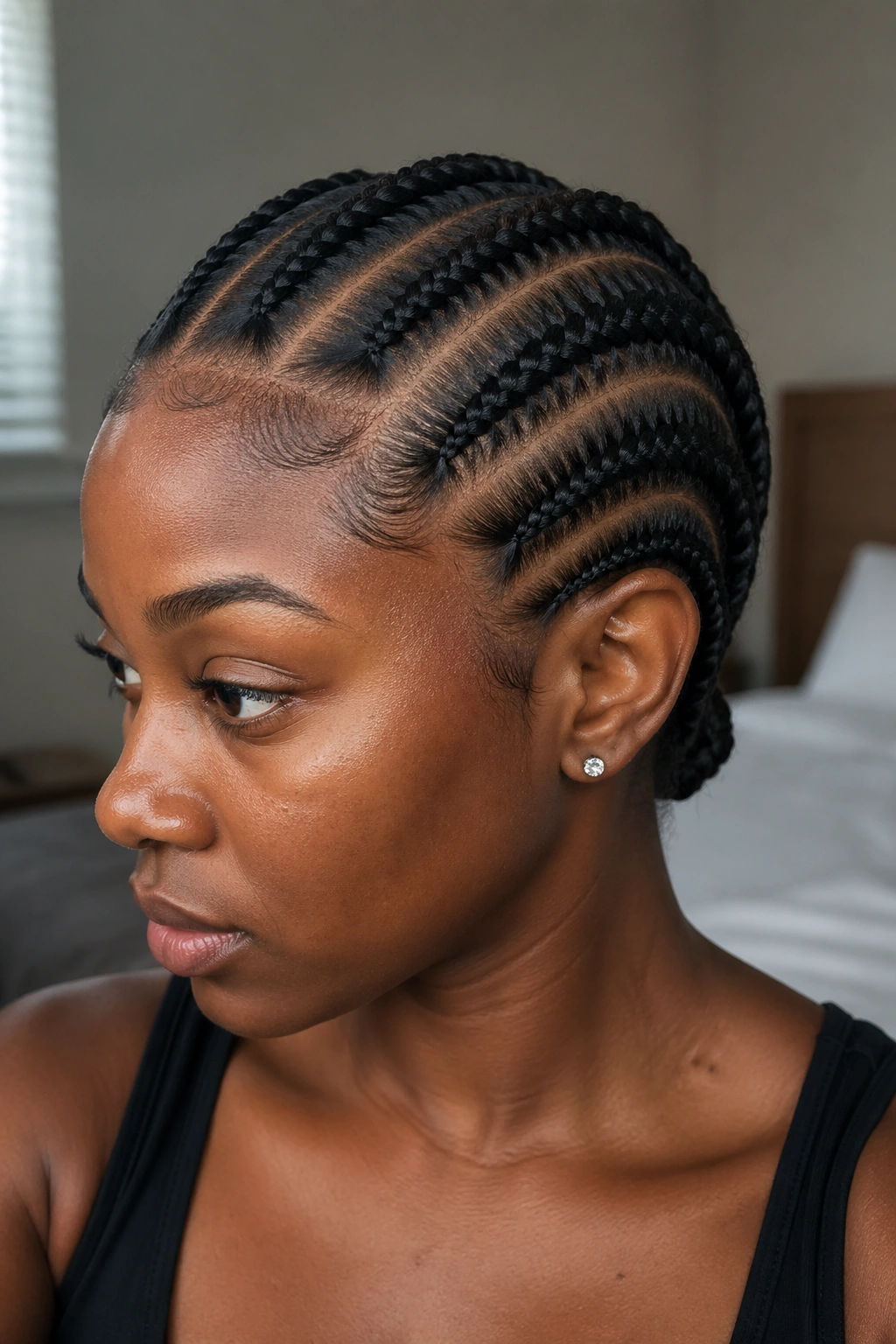
Natural hair under cornrows needs ongoing care to stay healthy through the style’s life.
Scalp moisturizer every 3-4 days. A light oil — jojoba, argan, grapeseed — applied directly to the scalp at the parts. Heavy oils like coconut can clog pores under braids.
Spray refresh every 2-3 days. Diluted leave-in conditioner in a small spray bottle, misted onto the scalp and braids.
Edge maintenance twice a week. Light gel application to keep baby hairs in place.
Satin scarf or bonnet every night. This is the single biggest factor in cornrow longevity.
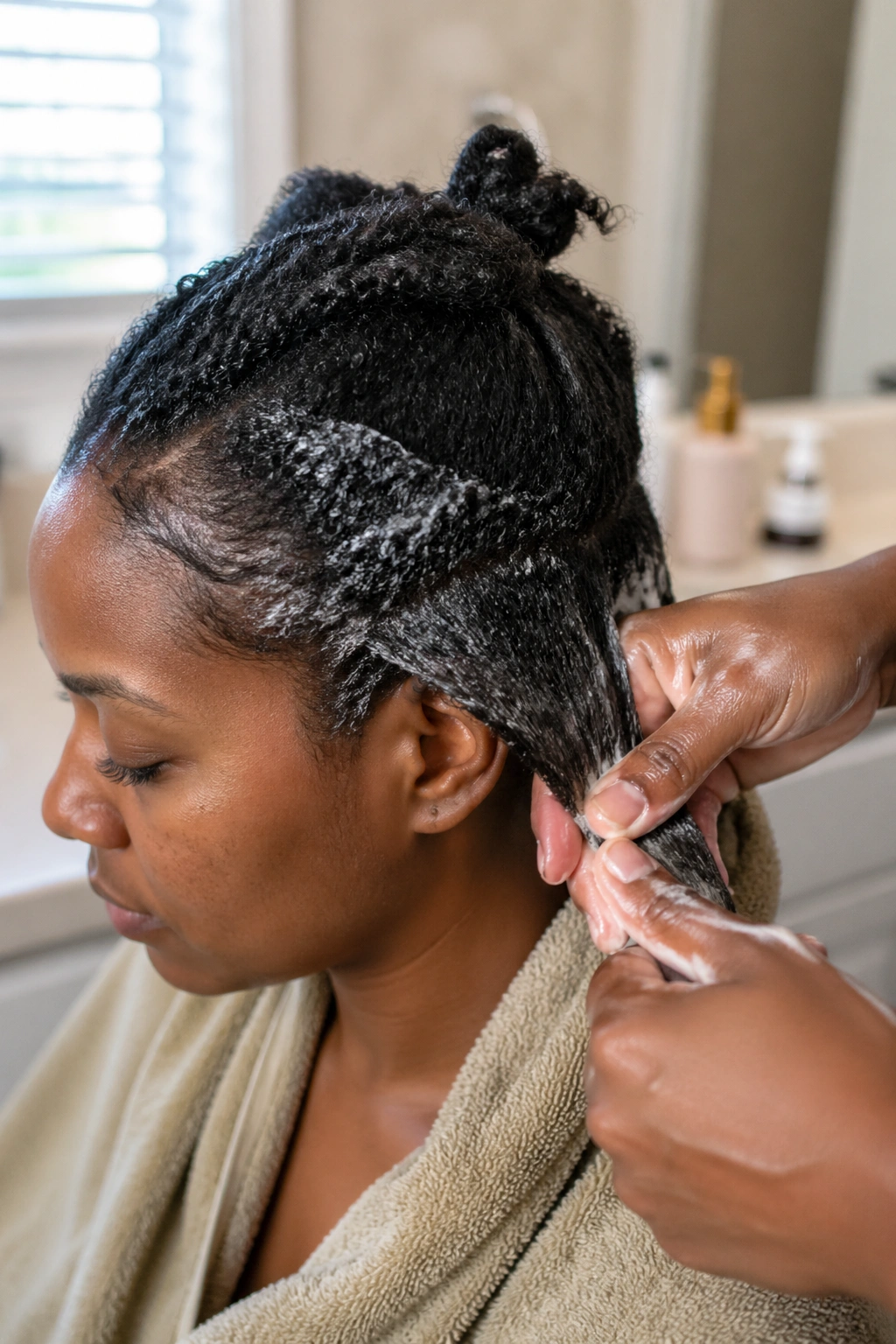
Washing Cornrows on Natural Hair
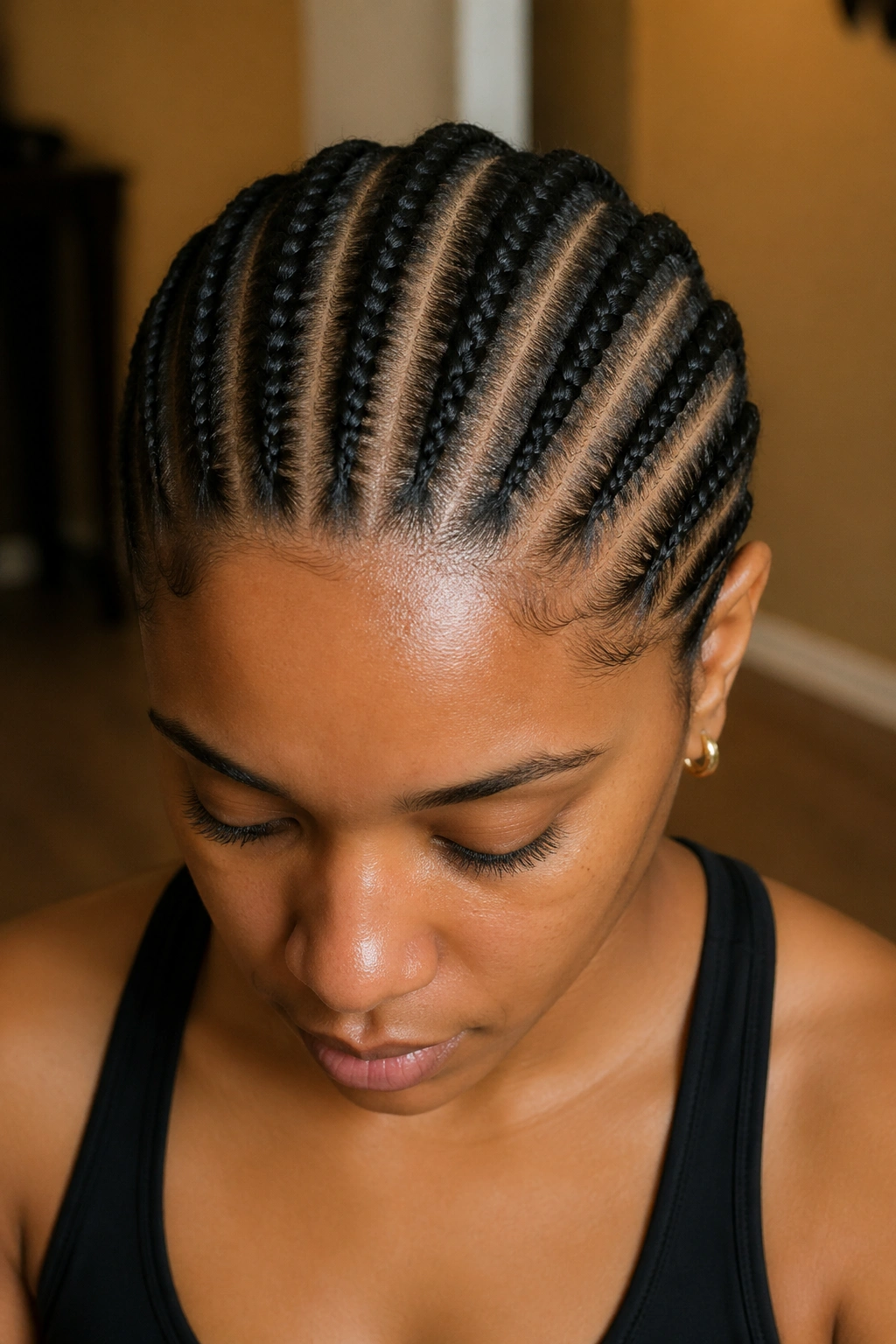
Wash every 7-14 days. Frequency depends on your scalp type, activity level, and how much product you use.
Dilute sulfate-free shampoo 50/50 with water in a squeeze bottle. Apply directly to the scalp at the parts. Massage with fingertips — never aggressive scrubbing.
Rinse with warm water from scalp to ends. Don’t flip your head upside down or scrub the braids themselves.
Skip conditioner on the braids if you have extensions. If you’re working with natural hair only, a small amount of conditioner can be applied with caution.
Pat dry with a microfiber towel. Air dry for 2-3 hours before applying any products.
Scalp Care During Long-Wear Cornrow Styles
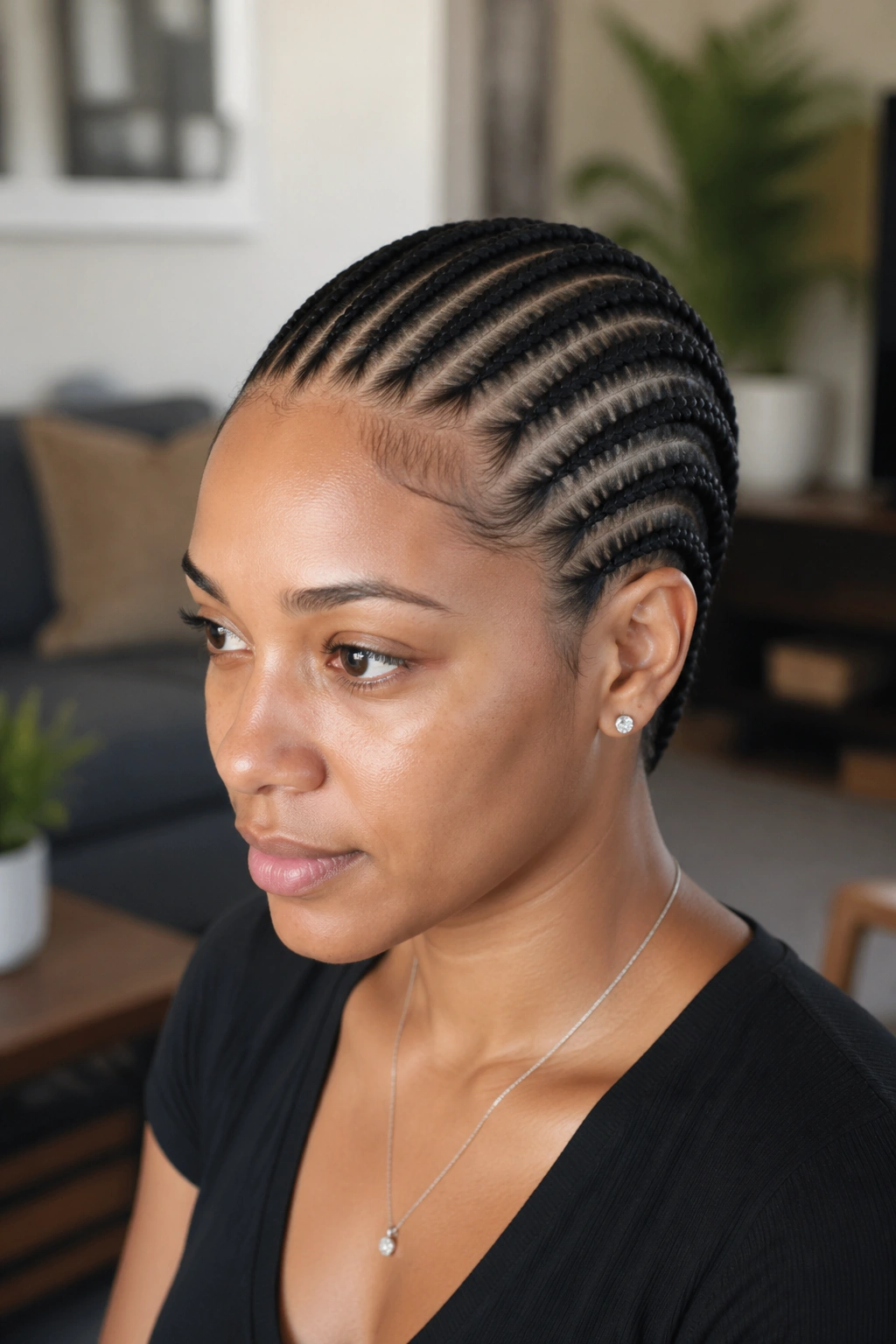
The scalp under cornrows can get dry, itchy, or oily depending on your skin type. Different scalp types need different care.
Dry scalp: Light oil every 2-3 days. Avoid heavy butters that clog pores.
Oily scalp: Witch hazel astringent applied with a cotton swab between washes. Reduces oil without disturbing braids.
Itchy scalp: Diluted apple cider vinegar spray (1:4 with water) once a week. Cuts buildup without stripping.
Flaky scalp: Tea tree oil mixed with jojoba (1 drop tea tree per teaspoon of jojoba), applied to flaky areas.
Tip: Notice persistent scalp irritation in the first 48 hours of a new install? The braids are too tight. Ask your braider to loosen.
Taking Down Cornrows on Natural Hair
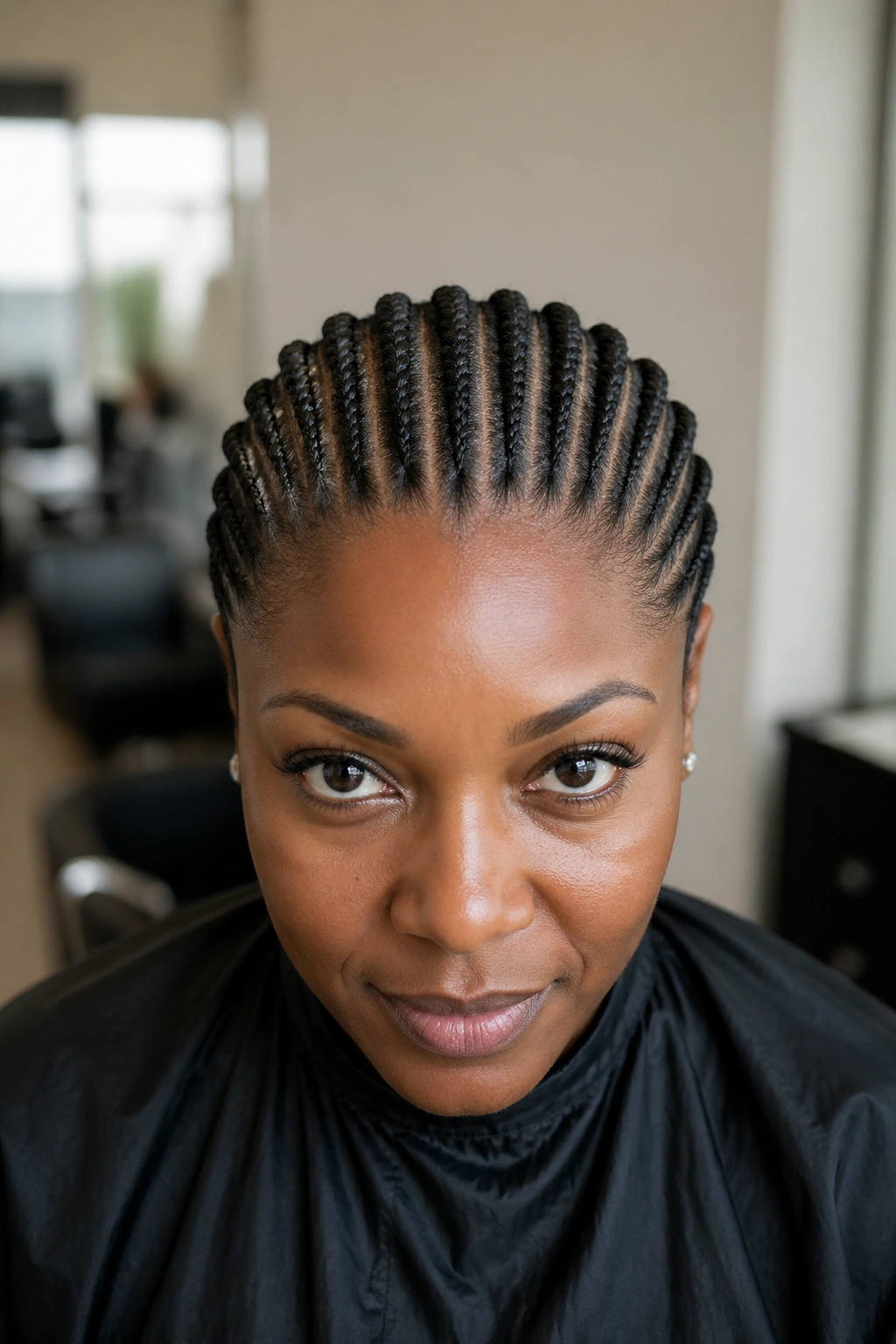
Natural hair takedown is gentler than synthetic takedown but still requires care.
Spray the entire head with detangling spray diluted 50/50 with water. Let it sit for 10 minutes.
Use the pointed end of a rat-tail comb to unravel each braid from the tip. Don’t pull or yank.
Once unraveled, finger-detangle each section to remove shed hairs. Natural hair sheds 80-100 strands per day; over 4 weeks, that’s roughly 2,400-2,800 shed strands waiting in the braid base.
Wash with a clarifying shampoo. Deep condition for 30+ minutes.
Give the scalp 5-7 days of rest before the next protective style.
Common Mistakes With Natural Hair Cornrows
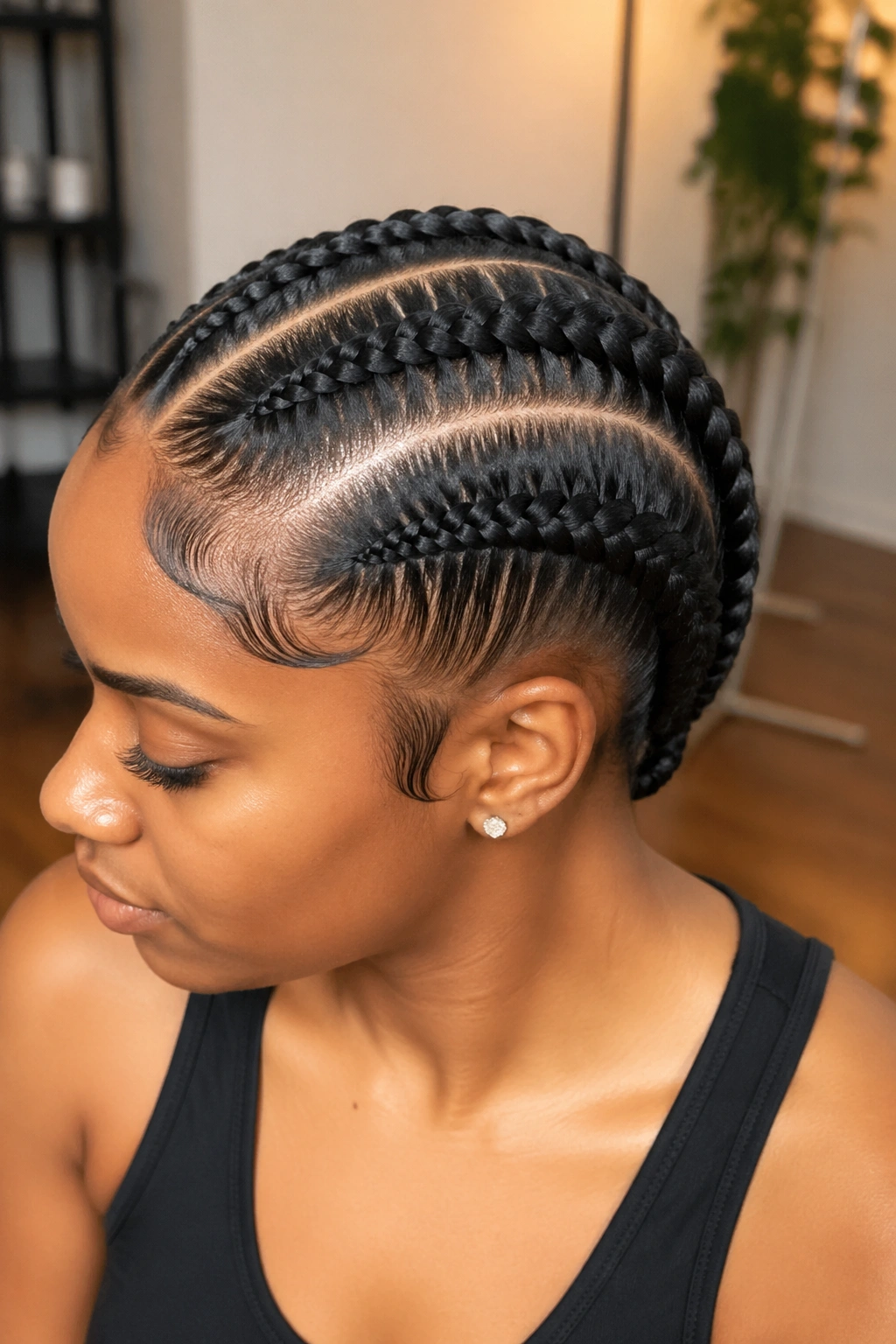
Skipping the stretching step before installation. Shrunken natural hair doesn’t braid cleanly.
Using too much product at install. Slick hair is hard to grip; the cornrows won’t be tight.
Choosing extensions that are too heavy. Heavy kanekalon on natural hair causes tension at the roots and can lead to thinning.
Tight installation. Pain in the first 48 hours means the braids are too tight. Loosen before damage occurs.
Skipping satin sleep care. Cotton pillowcases destroy braid edges within a week.
Ignoring the scalp moisture routine. Dry scalp under braids leads to flaking, itching, and breakage.
And the last thing — straight back cornrows are a foundational style. They’re not just a starting point for braiding; they’re a finished style on their own. A clean set of straight backs on well-cared-for natural hair is one of the most powerful and timeless looks available. Don’t underestimate the simple version. Sometimes simple is exactly right.