
Afro punk street style is one of the most honest fashion subcultures that exists. It doesn’t ask permission. It doesn’t look for approval in trend reports or runway shows. Afro punk as a style language grew out of a specific refusal — the refusal to accept that Blackness and punk aesthetics were somehow separate conversations, the refusal to exist only in one cultural lane, the refusal to shrink. And that energy has never been contained to festival grounds or concert venues. Afro punk street style looks for women have spilled into daily life: the grocery run, the commute, the Sunday afternoon, the first date.
This is street style in the truest sense — the art of getting dressed for the world as your own stage, where the audience is whoever happens to be standing on the corner when you walk by.
What makes afro punk distinct from general punk is the way it centers Blackness not as an addition to a white-originated aesthetic, but as a lens that completely transforms it. Natural hair — afros, locs, twists, braids — isn’t an accessory in this context. It’s the power source. Platform boots aren’t a costume choice. They’re a statement about how much vertical space you’re entitled to take up. And the layers of contradiction — soft and hard, decorated and deconstructed, feminine and fierce — are the point, not the accident.
Understanding the Core Afro Punk Aesthetic Language
Afro punk style pulls from multiple visual traditions at once: Black street fashion and its history of opulent self-expression, punk’s love of deconstruction and hardware, hip-hop’s relationship with volume and logo, and West African and diasporic aesthetics built around pattern, color, and adornment. None of these sources cancel the others. They coexist, and the coexistence is the look.
Color is handled more boldly in afro punk than in traditional punk. Monochrome black is a starting point, not a conclusion. Vivid color — rust orange, deep plum, electric teal, fire-engine red — gets layered with or against the black base. Prints enter the equation too: kente-inspired patterns, traditional African wax prints, and graphic tees exist in the same wardrobe as ripped fishnets and chain belts.
Hardware is present but it functions differently. Rather than signaling danger or rebellion the way it does in traditional punk, hardware in afro punk styling is more decorative — chains used as jewelry, grommets as pattern detail, studs as surface interest rather than armor.
Building an Afro Punk Wardrobe Foundation
You don’t need to buy an entirely new wardrobe to incorporate this aesthetic. The foundation pieces are things you may already own or can find affordably at thrift stores and vintage markets, which is where most of the best afro punk looks actually start.
The base layer: Dark denim — either super-skinny or wide-leg, depending on your silhouette preference — works for bottoms. Black cargo pants with multiple pockets. A vintage band tee, preferably slightly too large. A simple black bodysuit. A fitted black turtleneck. These are all starting points.
The hardware layer: A chain belt, either attached to pants or worn separate. Chunky black or silver boots with significant sole — platform combat boots are the classic choice. A studded bag or crossbody.
The statement piece: Every outfit needs one element that demands attention. This might be a leather jacket with hand-painted detail. An oversized graphic element. A dramatic head covering or accessory. A printed skirt in bold kente colors worn with a punk base. The statement piece is where the look becomes specifically yours.
Hair as the Central Element in Afro Punk Looks
Natural hair in afro punk styling isn’t groomed for approval — it’s grown, styled, and adorned for maximum visual impact. The afro shape itself — that spherical crown — is a punk statement without needing any accessories, because its very presence insists on visibility in spaces and aesthetics that historically tried to exclude it.
Large gold hoop earrings against a tight afro, colored sections of locs, twists adorned with gold cuffs, a shaved side with a prominent natural texture on the other — these are all afro punk hair choices that make the hair as deliberate and statement-making as any piece of clothing.
Accessorizing the hair is a major element too: chains, safety pins, feathers, cowrie shells, and decorative picks all appear in afro punk hairstyling. The hair becomes jewelry.
Shopping and Building the Aesthetic on Any Budget
Thrifting is the most afro punk way to shop — both in terms of sustainability and in terms of the unpredictability that comes from vintage and secondhand finds. Band tees, leather jackets, chain belts, and platform boots all appear regularly at secondhand stores at a fraction of original retail price.
Online thrift platforms allow you to search for specific items, which helps when you’re looking for a very specific jacket style or boot height. Local consignment shops often have better-quality vintage leather goods than online platforms.
For African print fabrics and traditional textiles, look for African fabric shops in your city or online suppliers who work directly with makers. These fabrics are almost always less expensive than Western equivalents and the quality is frequently better.
The most important element of afro punk style is conviction, not cost. A three-dollar thrifted denim jacket with hand-drawn graffiti on the back is more afro punk than a two-hundred-dollar designer version.
1. Platform Combat Boots and Oversize Denim
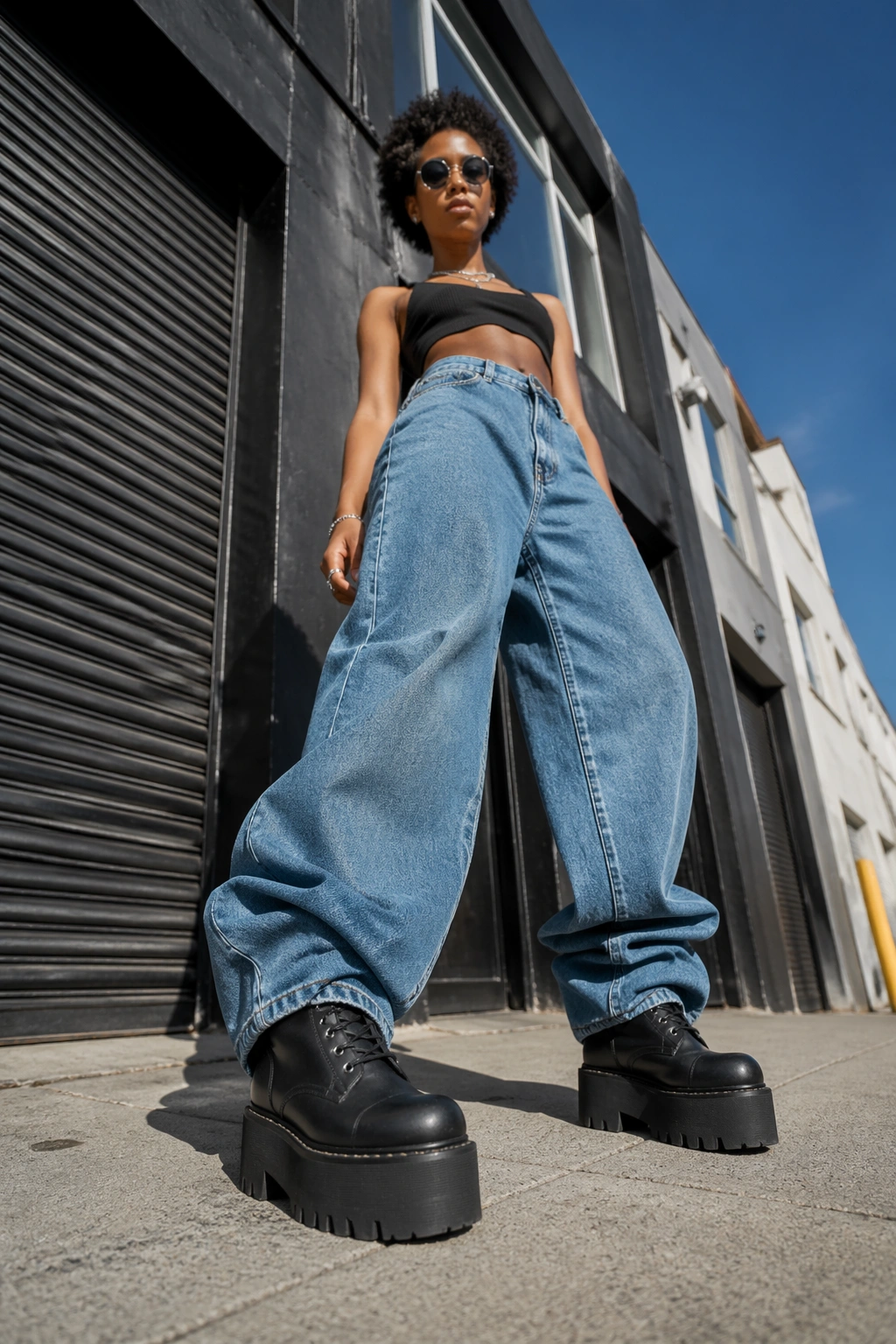
The entry point for a lot of afro punk wardrobes. Platform combat boots — thick-soled, ankle-length, often with exposed lacing — paired with oversize straight-leg denim that’s either slightly worn or deliberately distressed. The boot extends the leg line and creates a visual weight at the bottom that balances the volume of wide denim without looking overwhelmed.
What Makes It Different
The silhouette here is about mass at the bottom and looseness at the top. Wear the denim with a fitted black ribbed tank or a cropped band tee — something that doesn’t add more volume — and let the boots and the hair do the talking. A large afro or a high twisted bun completes the vertical line.
The platform elevates the whole look literally. There’s something intentional about being taller than you would naturally be — it occupies space differently.
2. Leather Jacket with African Print Skirt
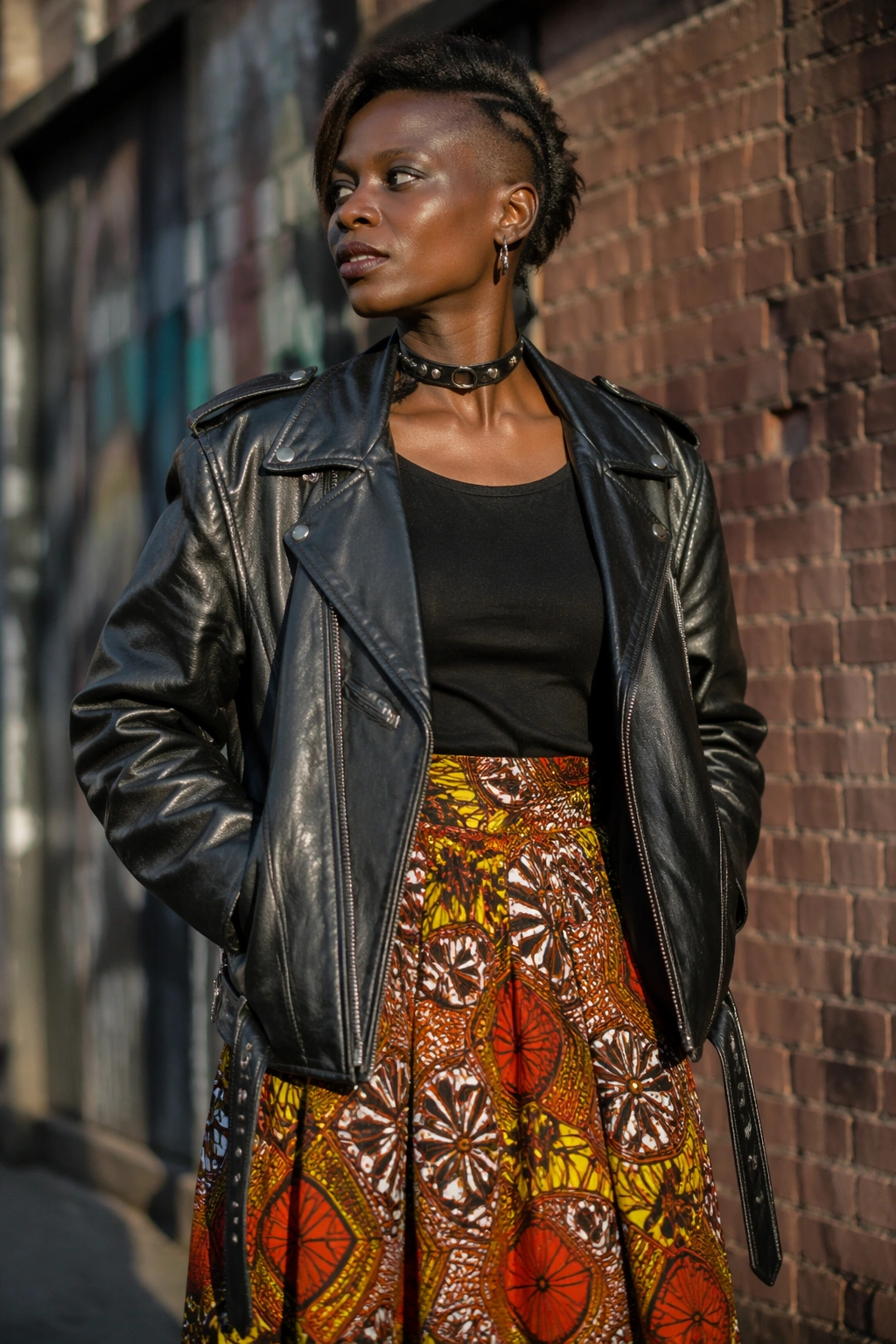
The contradiction is the point. A structured black leather jacket — slightly too large, worn open — over a tiered or A-line midi skirt in a bold African wax print. The jacket is hard and dark. The skirt is vibrant and soft. The combination says something more complex than either piece would say alone.
Boots work here. So do chunky sandals with socks in the warmer months — it keeps the look from tipping too far into conventional. The hair for this look can be anything from a high puff to long locs, but the more volume the better.
3. Deconstructed Blazer and Bike Shorts
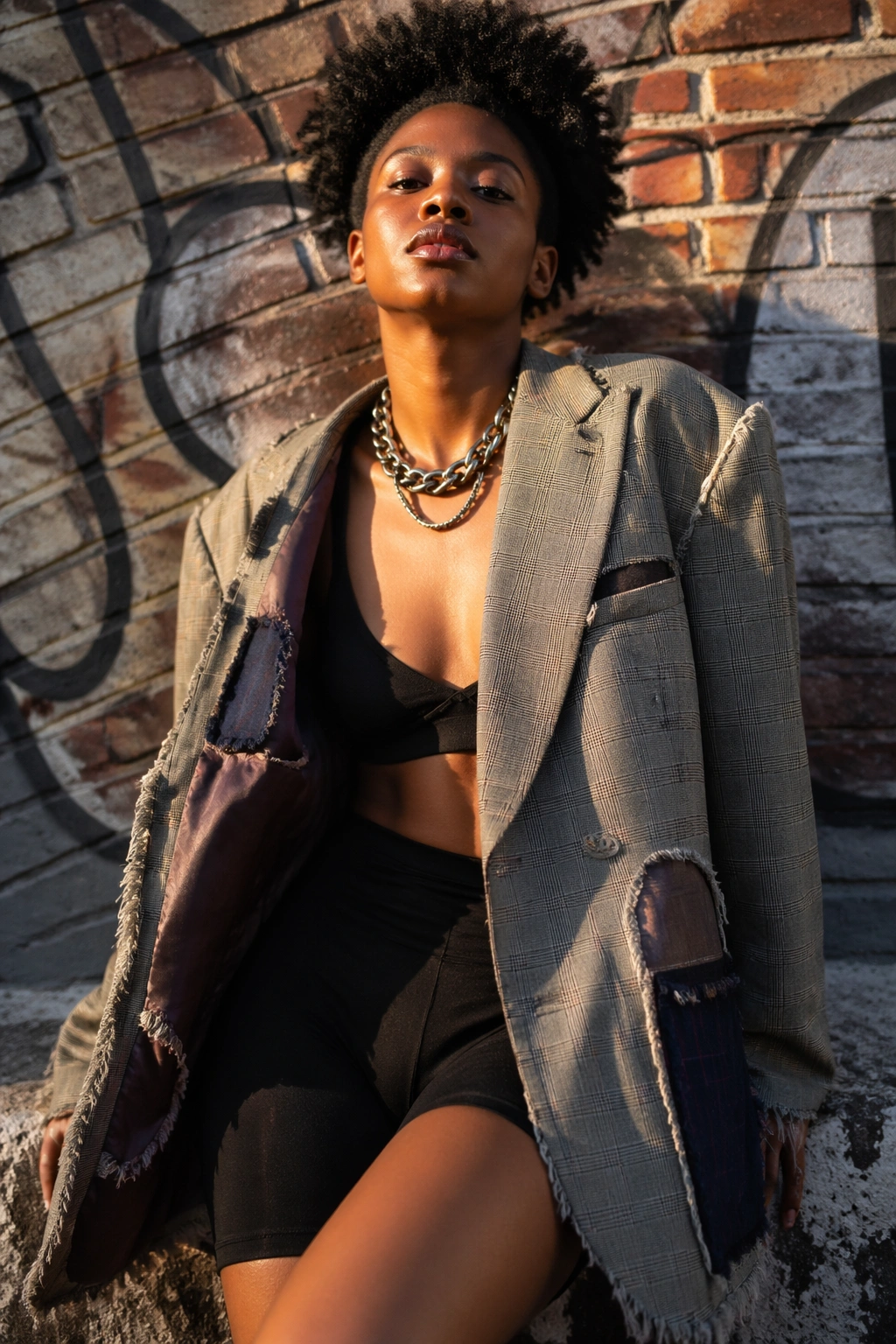
An oversized blazer — the kind you can find at any thrift store, ideally in a plaid or a textured fabric — worn over black bike shorts. The blazer might be structured in silhouette but have distressed elements: visible lining, removed buttons, a fraying collar, or hand-added graffiti patches on the lapels.
Bike shorts underneath mean the look has movement and practicality without the stuffiness of a full trouser. Black tights beneath the shorts extend the leg line into the boot or sneaker.
The Catch
This look can tip into generically blazer-over-shorts without something to give it edge. It needs either the distressed detail on the blazer, or the hair, or a strong accessory — a large chain necklace, an oversized ring, a hardware-heavy bag — to read as afro punk rather than just “casual office.”
4. Graphic Tee Tied at the Waist Over Plaid
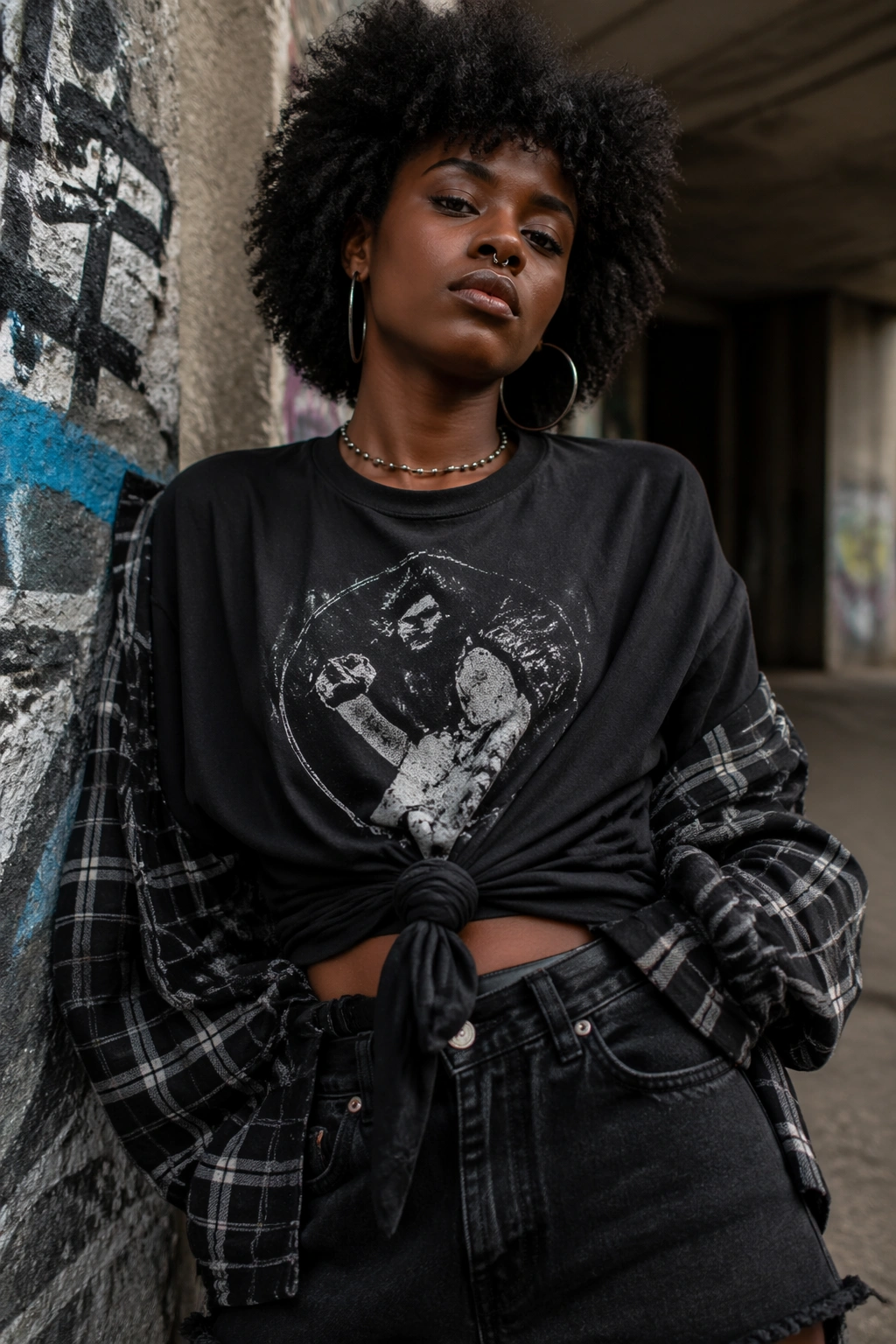
Take an oversized band or graphic tee — preferably from a Black artist or a cultural graphic — and knot it at the front hem so the shirt becomes cropped and the knot creates a point of visual interest at the center. Layer this over a plaid button-up shirt that’s left completely open and falls past the hips. Let the plaid sleeves hang. Let the hems layer.
The layering creates visual depth — you see the plaid through the knot and sleeves, the graphic across the chest, and the tee’s fabric against the skin where the shirt is open. Wide-leg pants or a leather mini works underneath.
5. Head Wrap and Hardware Chain Look
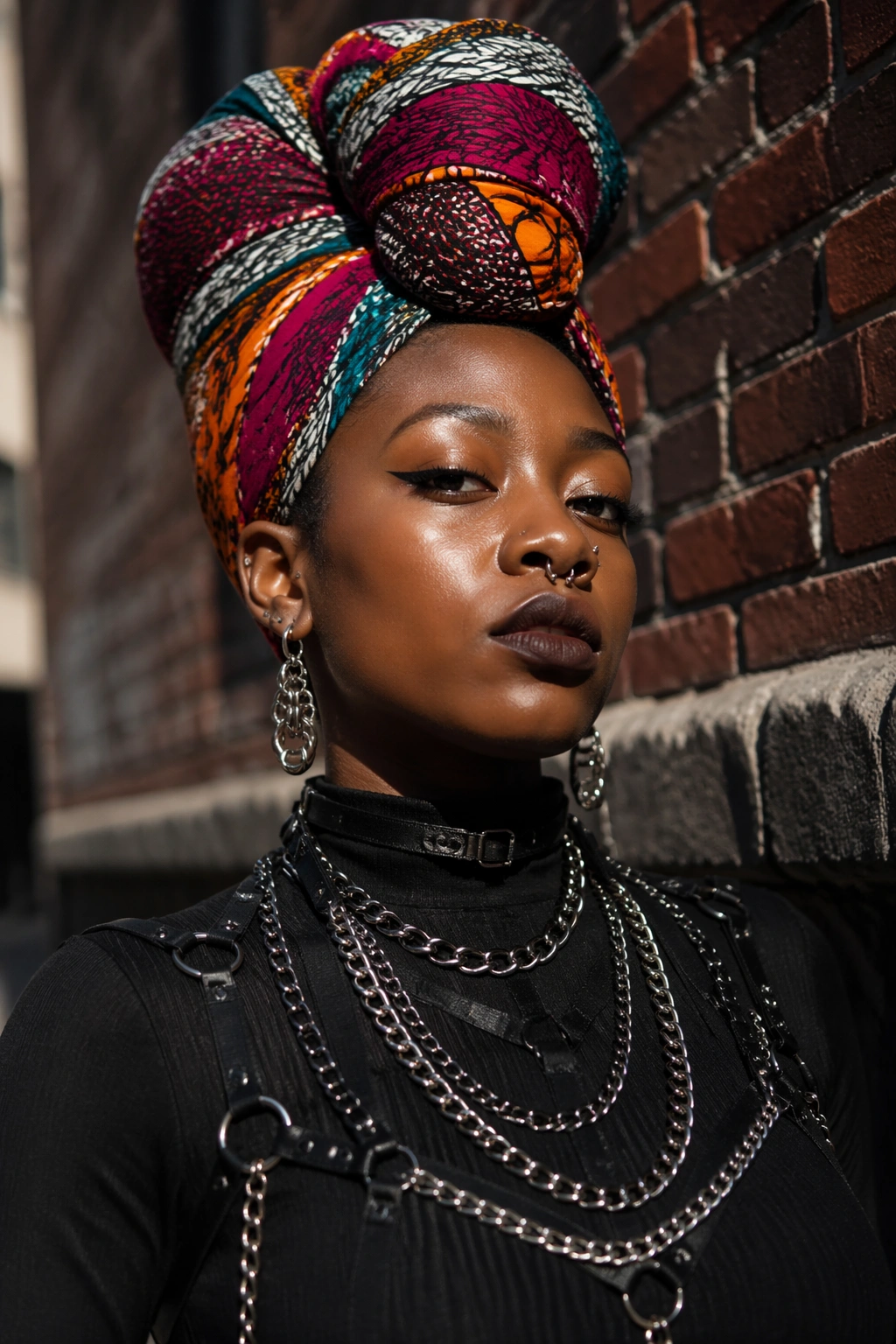
A boldly colored or patterned head wrap — tied into a high, dramatic shape at the crown — paired with a simple all-black outfit loaded with chain hardware. The chains can be worn as jewelry (several at varying lengths), as a belt, as a crossbody bag strap, or all three at once.
The head wrap is the statement. The black outfit is the frame. The chains add industrial edge without competing with the color and pattern of the wrap. This combination is particularly striking with natural coils or twists framing the face below the wrap’s bottom edge.
6. Distressed Denim and Corset Top
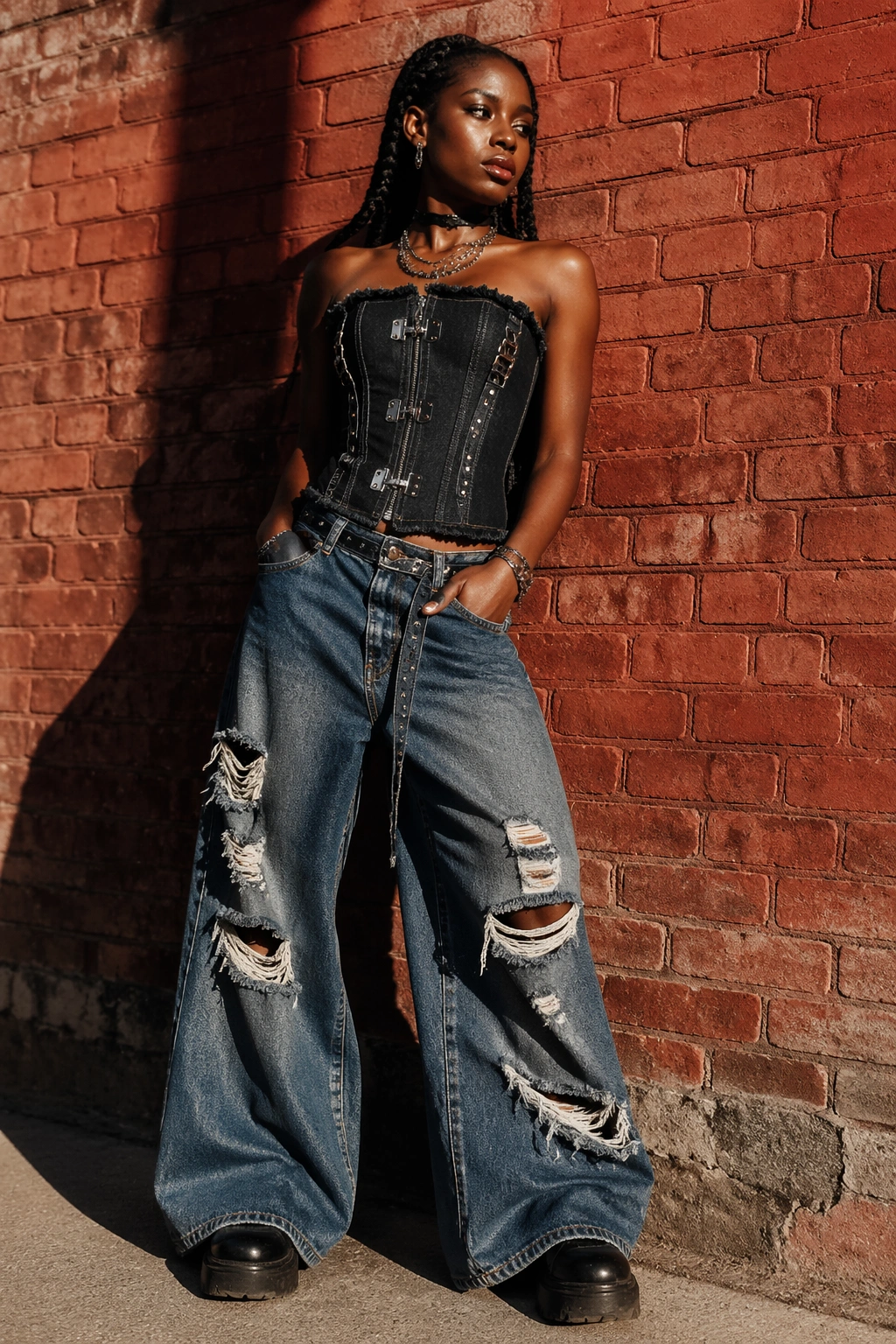
A corset-style top — either a true corseted bodice or a structured boned piece — over distressed, ripped wide-leg jeans. The corset creates a silhouette that’s simultaneously vintage and aggressive; the distressed denim brings it back to street level.
For afro punk purposes, choose a corset with visible hardware — metal buckles, thick lacing, grommets — rather than a delicate lingerie-style piece. Black or deep red leather look corsets hit the right register. Pair with ankle boots or platform sneakers.
7. Sheer Layer Over Band Tee
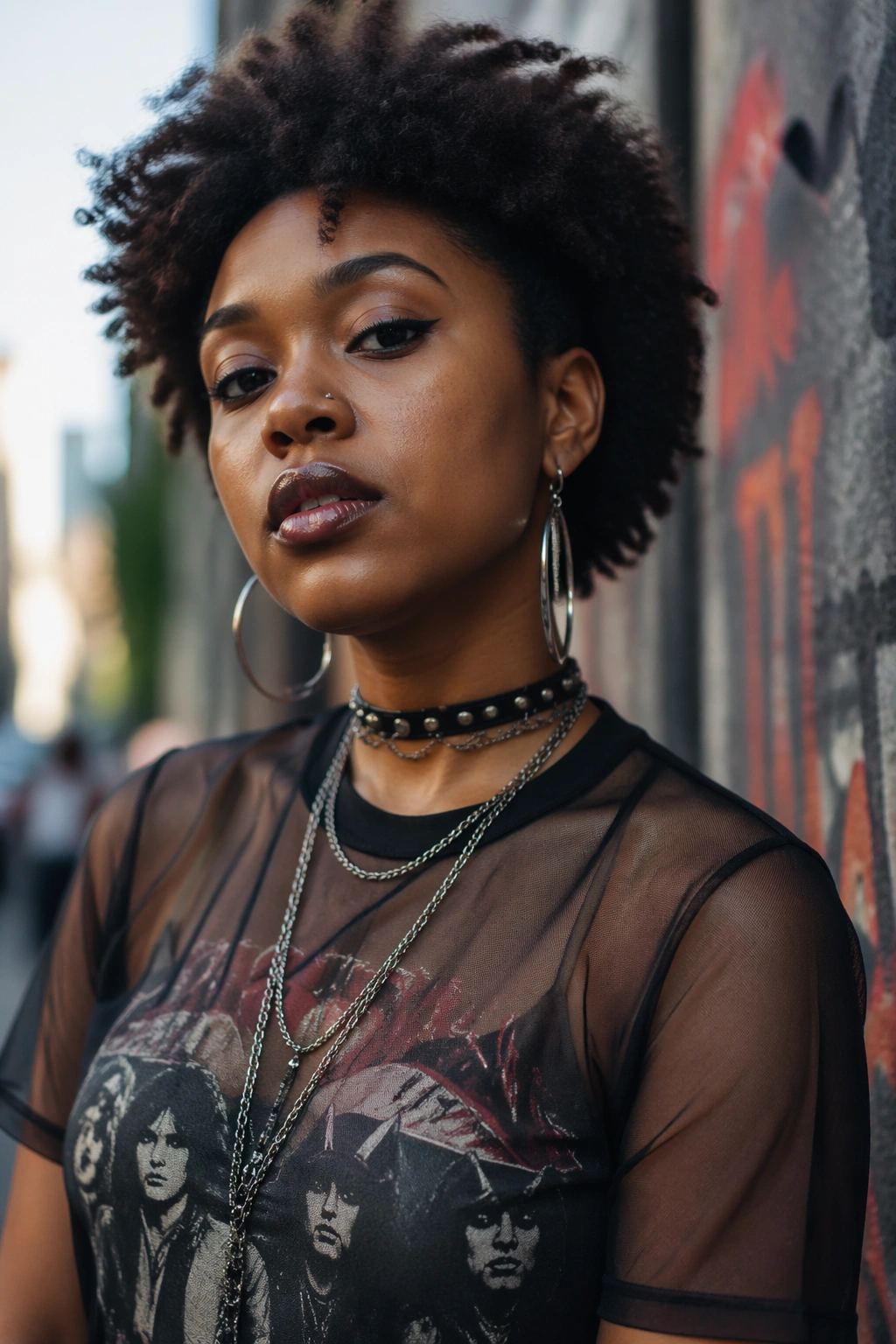
A sheer black mesh or organza top worn as a layer over a graphic or band tee creates the kind of visual complexity that’s easy to execute but looks intentional and considered. The sheer layer adds texture and interest — it catches light differently than the opaque tee underneath — while the graphic still reads through the fabric.
Full-length sheer skirts work by the same logic: worn over solid shorts or a slip, they add softness and movement to a look that might otherwise be entirely angular.
8. Maxi Skirt with Chains and Combat Boots
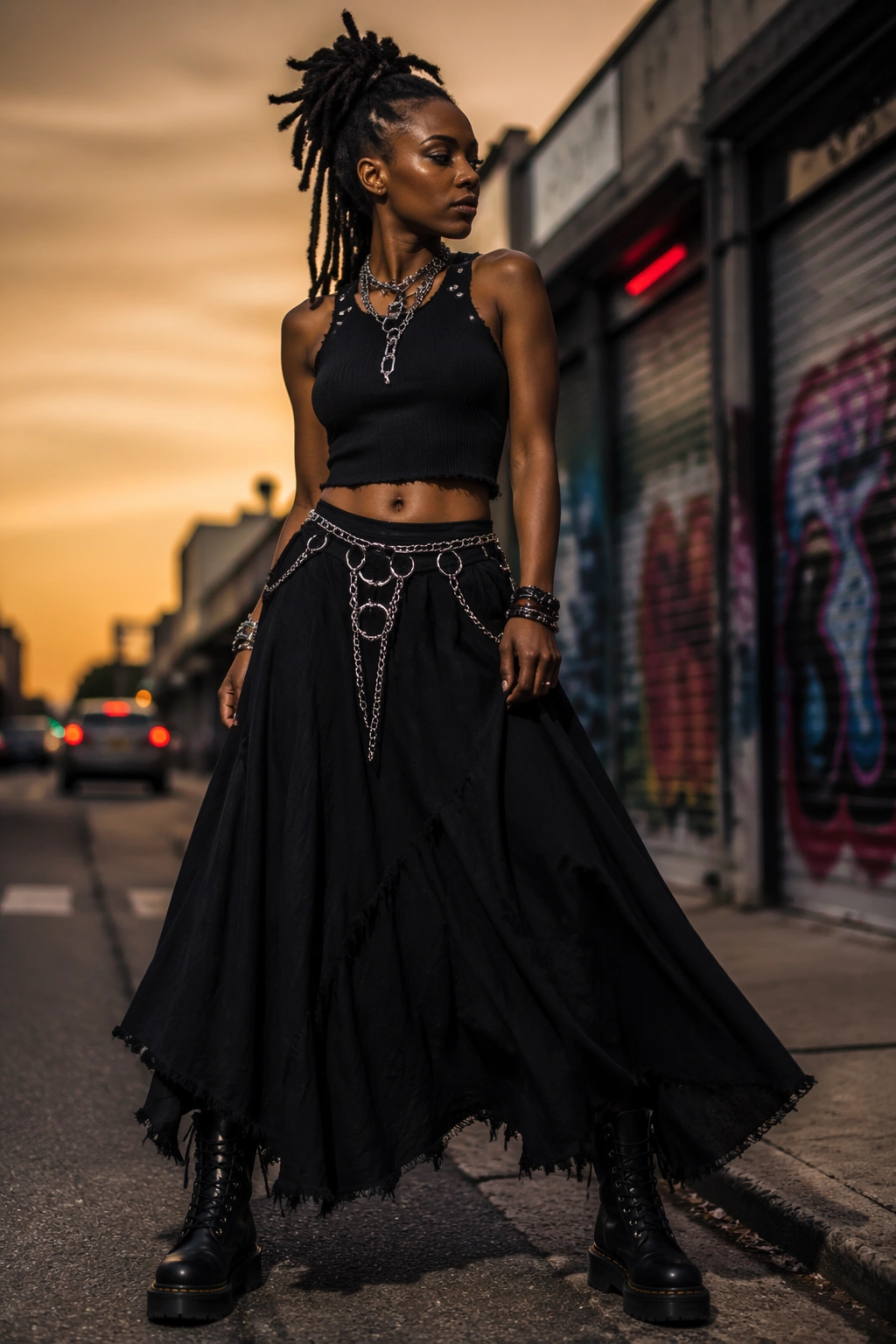
A long, flowing maxi skirt — either a solid dark color or a bold African print — paired with chunky combat boots that show beneath the hem, and several chain accessories at the waist and neck. The soft, sweeping maxi creates a deliberate conflict with the heavy boots and industrial hardware.
This is one of the more maximalist looks on this list and it requires confidence to wear in full. The boot visible beneath the hem is the signature detail — choose a boot with significant sole height so it reads clearly even at floor-level.
9. Printed Blazer as the Entire Statement
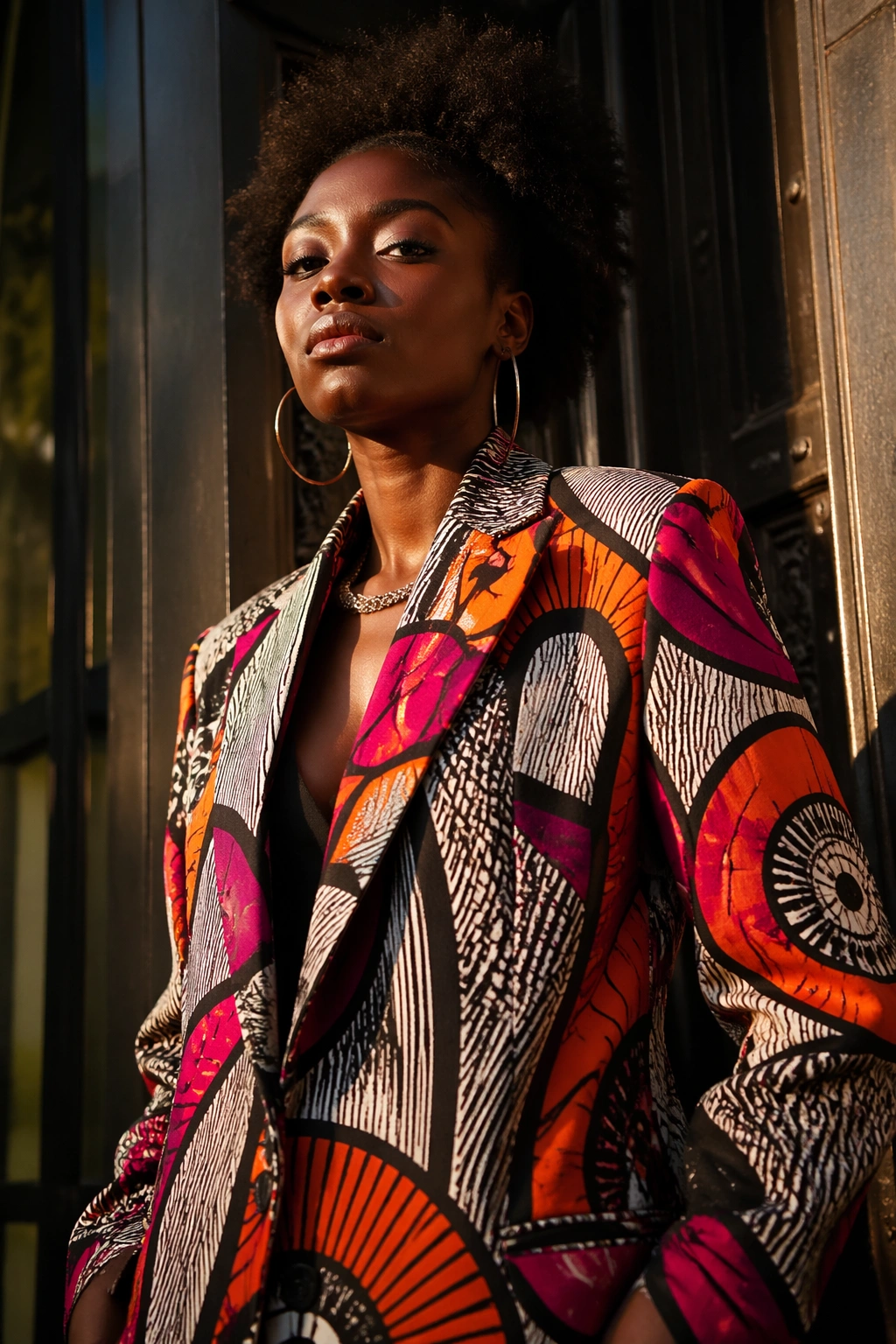
Instead of using a basic blazer as a layer, lead with a printed one — a bold kente pattern, a hand-painted design, a statement graphic — and let it dictate the entire look. Everything else goes quiet: plain black trousers or dark denim, a simple black underlayer, minimal accessories beyond one or two rings.
The printed blazer is the outfit. You’re wearing one piece that does everything.
10. Oversized Hoodie with Tulle Skirt
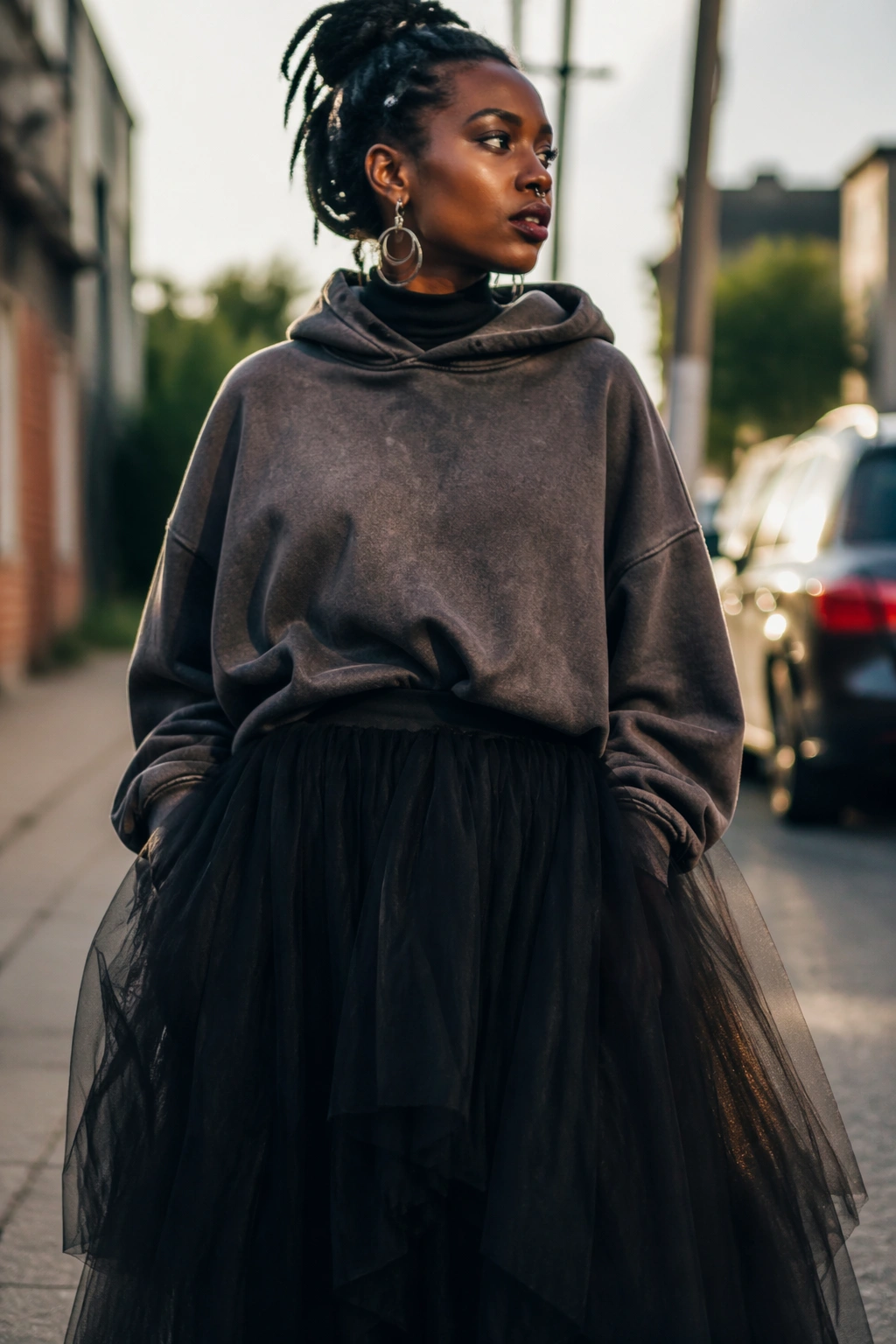
Soft and hard again. A large, slightly worn or deliberately faded hoodie — ideally with a graphic or text — tucked loosely into the waistband of a voluminous tulle skirt. The tulle can be black for a gothic register, deep burgundy or forest green for something richer, or a bright unexpected color.
The contrast between the casual fabric of the hoodie and the theatrical volume of the tulle is the entire premise. Finish with platform boots or chunky sneakers. Do not overthink this look — its strength is in the apparent casualness of the hoodie against the drama of the skirt volume.
11. Monochrome Black with a Single Bold Color Piece
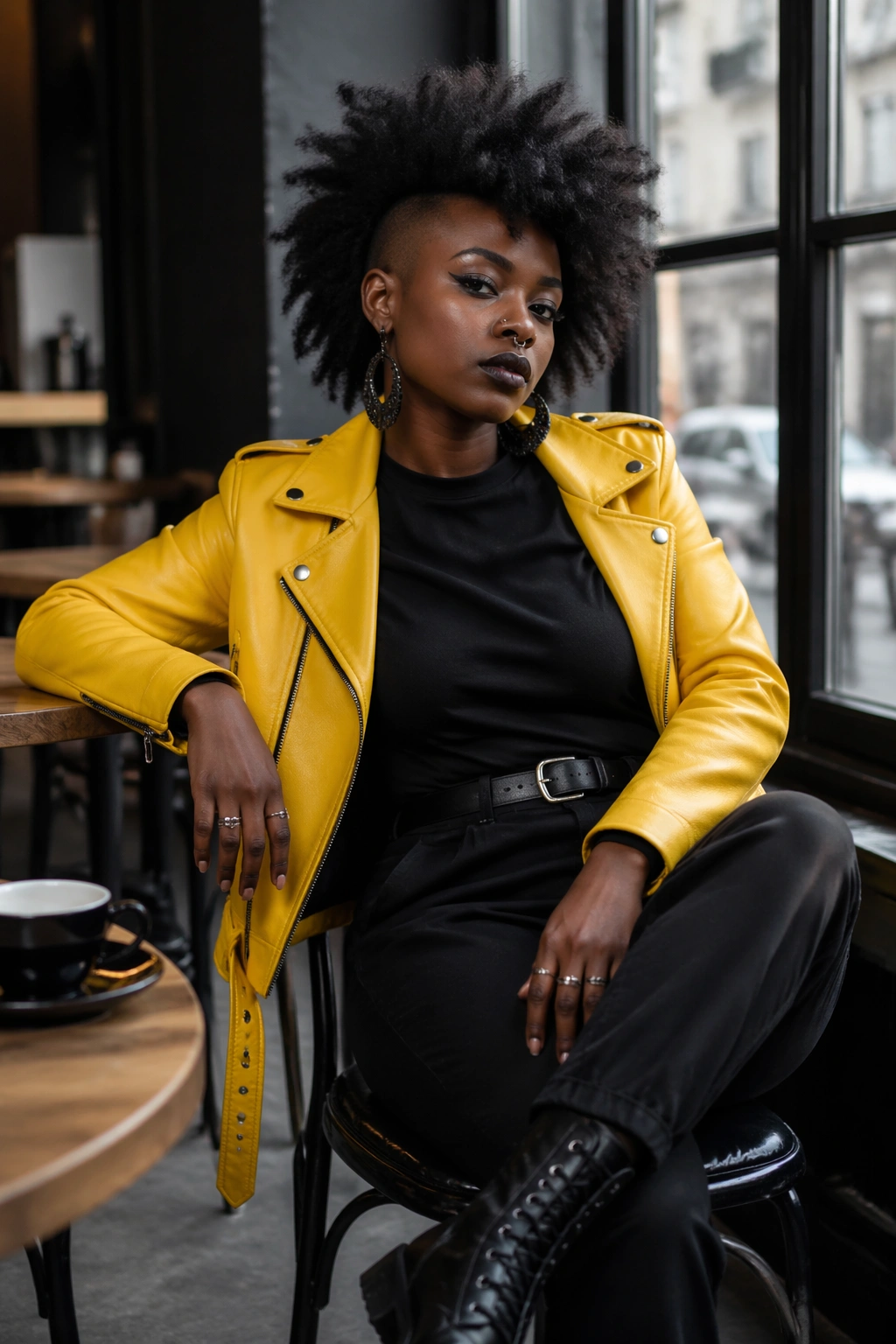
An entirely black outfit — black tee, black trousers, black boots — serves as the foundation, and one single piece in a vivid, assertive color sits on top of it. A canary yellow leather jacket. A fire-engine red bucket hat. A cobalt blue bag. The color piece reads with absolute clarity against the black background.
This approach works because the black does all the heavy lifting of making the look coherent. The color piece becomes unavoidable.
12. Vintage Band Tee Dress
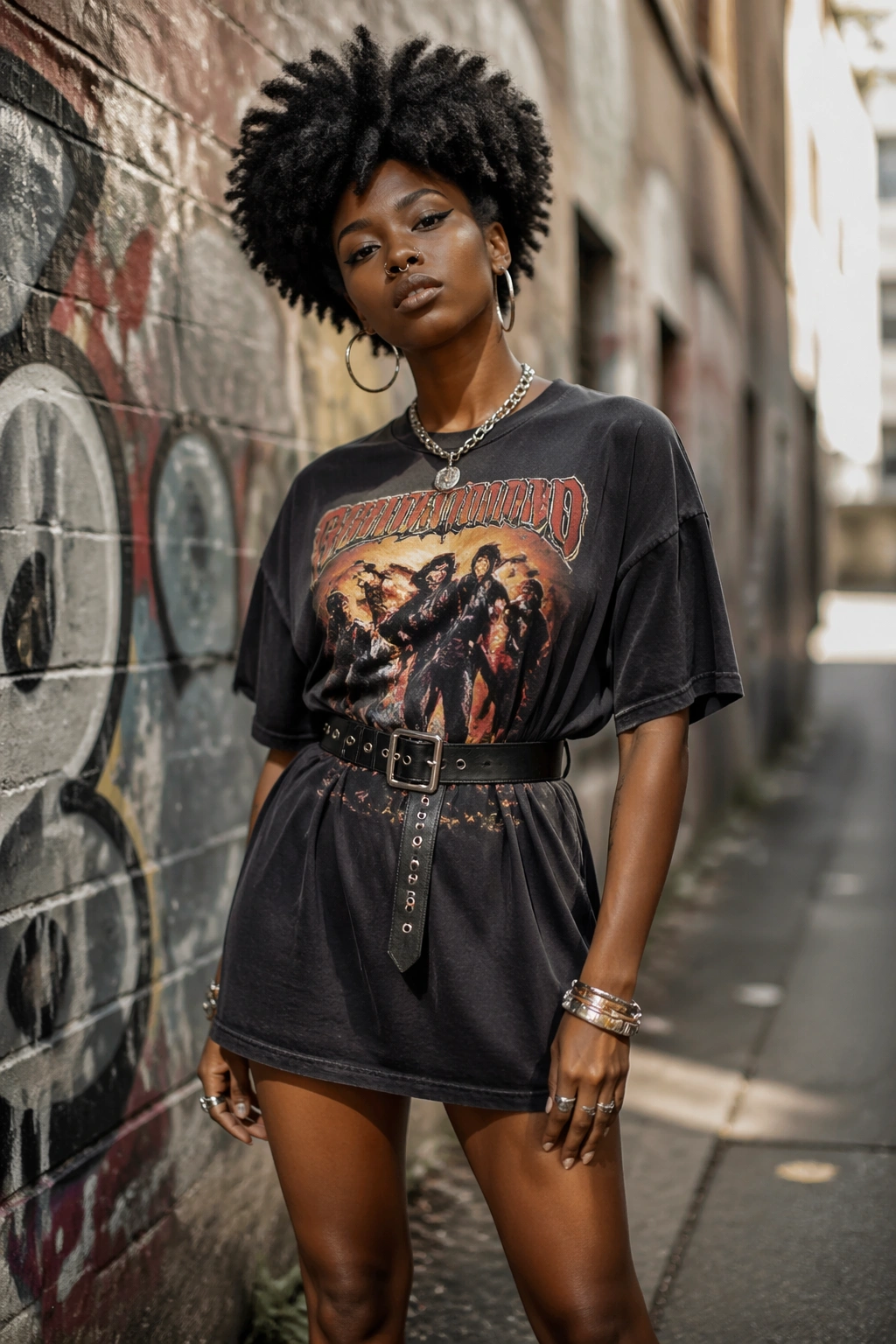
A vintage band tee — worn as a dress by itself if it’s long enough, or as a mini dress if the proportions work — cinched with a wide belt or a chain belt at the waist. The tee-as-dress is a specific kind of effortlessness that reads well in afro punk styling because it’s simultaneously casual and deliberate.
The key is the proportions. The tee needs to be genuinely oversized — something that fits like a dress, not just a long shirt. And the belt needs to be substantial enough to read as a styling choice rather than an afterthought.
13. Denim Vest with Patches and Natural Hair
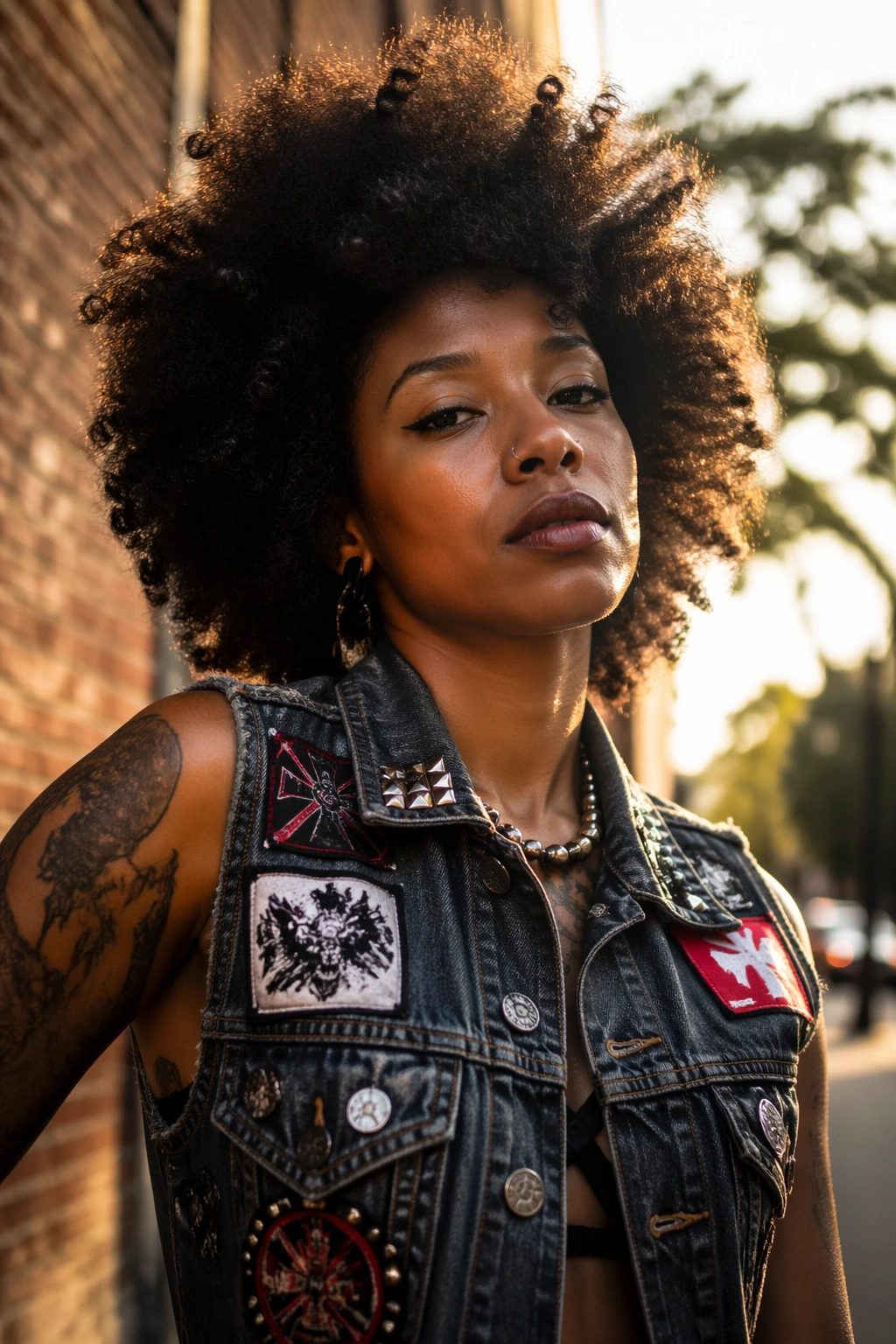
A sleeveless denim vest — either a repurposed denim jacket with the sleeves cut off, or a purpose-bought vest — covered in patches, pins, and embroidered or painted additions. This is the most literally punk element in afro punk dressing: the battle vest tradition, where the garment becomes a biography of your references and affiliations.
What makes this specifically afro punk is what’s on the patches. Black cultural icons. Natural hair affirmations. Afrofuturist imagery. Pan-African colors. The vest is still a collection of references — just a different collection than you’d see on a white punk vest from the 1980s.
14. Leather Trousers with a Cropped Kente Jacket
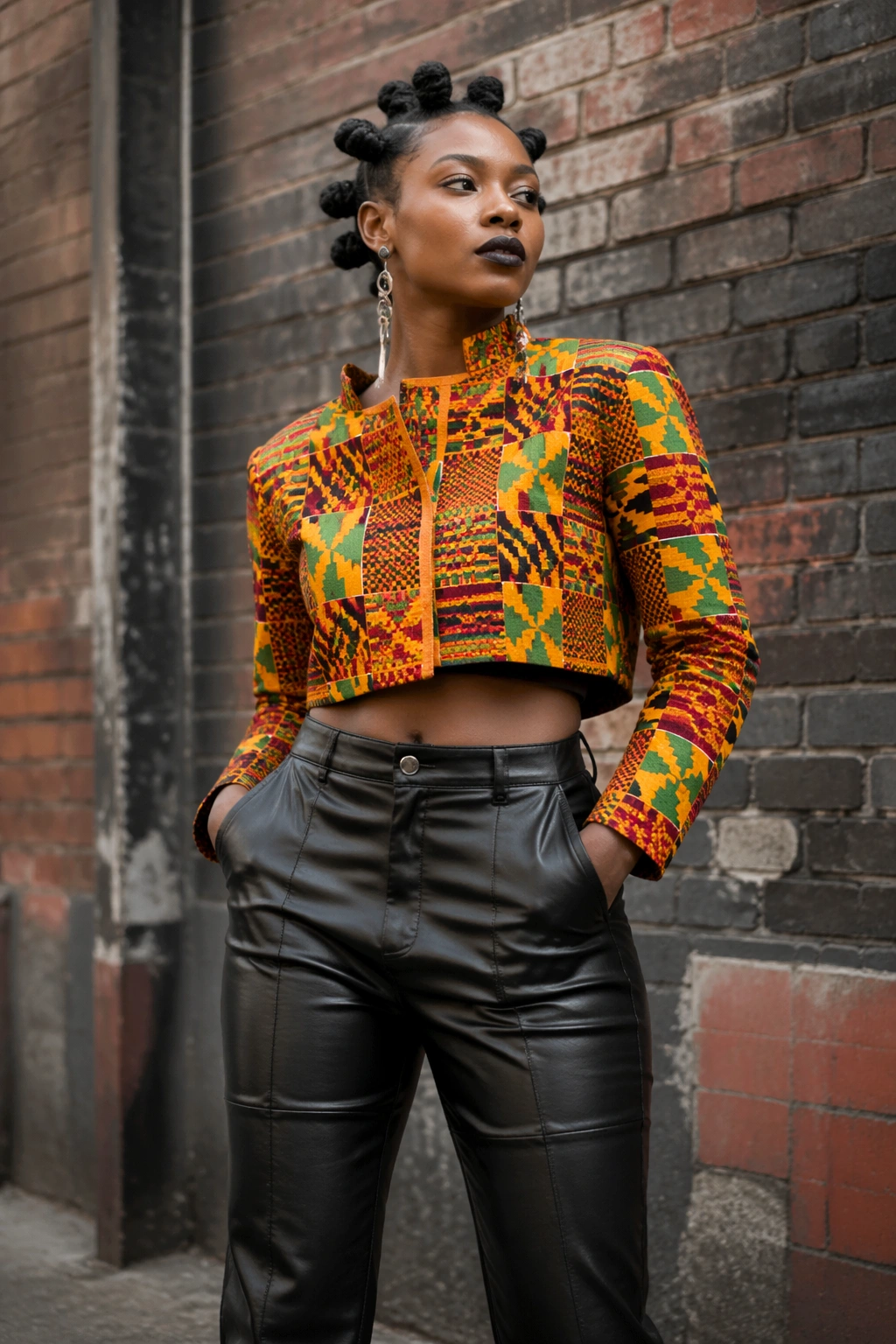
Leather or faux-leather trousers in black with a short, structured jacket made from kente or a bold African wax print fabric. The jacket might be a traditional-cut piece, or it might be a Western jacket style made from African fabric. Either works.
The leather makes the bottom half industrial and sleek. The kente jacket adds cultural identity, warmth, and color without needing anything else in the outfit to compete.
15. Layered Necklaces and a Plain Black Dress
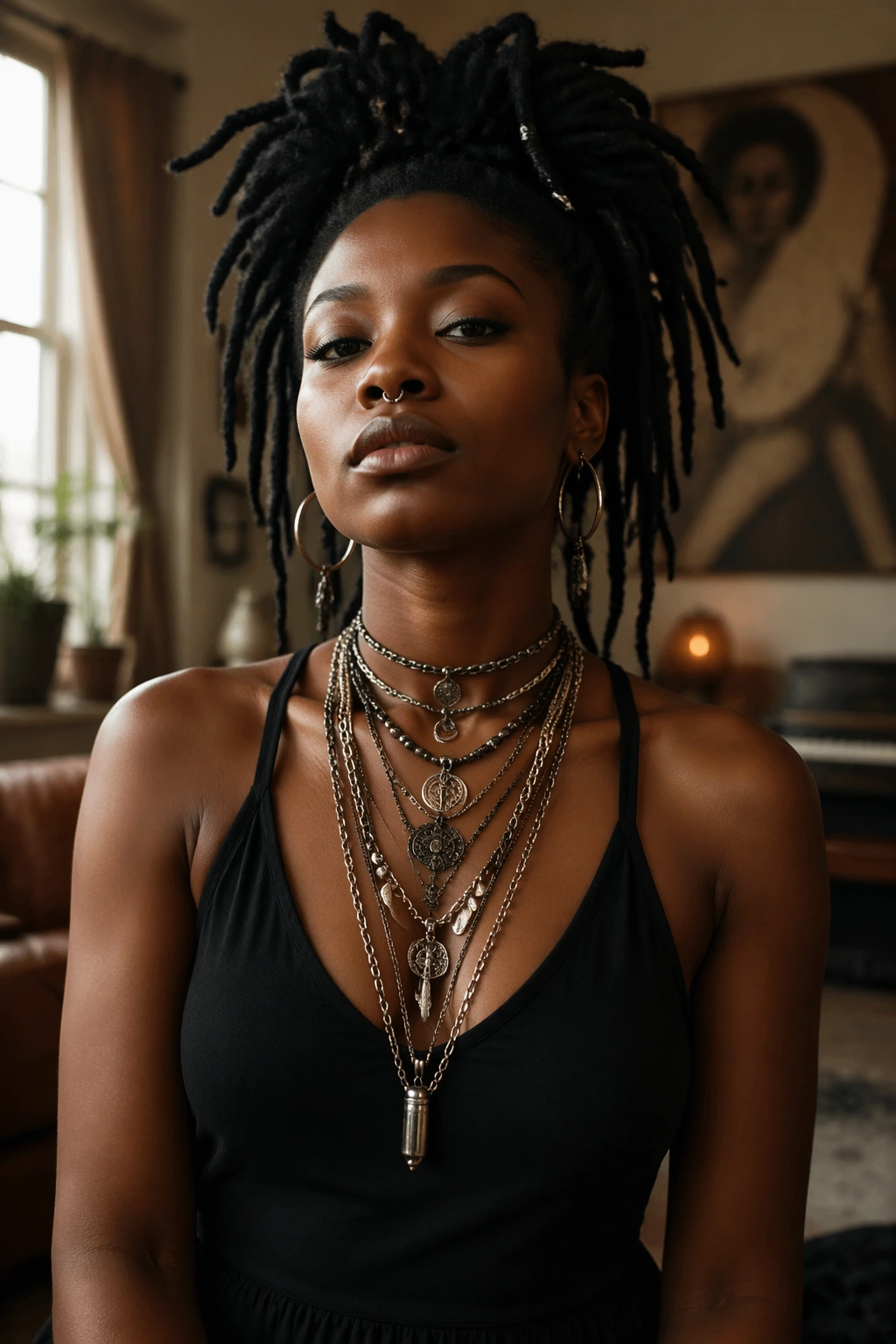
Sometimes the accessories are the entire look. A plain, fitted or slightly oversized black dress — jersey or crepe, nothing structured — and then layer five to eight necklaces: some fine and gold, some thick chain, some with pendants, at varying lengths so they cascade across the chest in layers.
The look requires committing to the layering. Two necklaces over a plain dress just looks unfinished. Seven or eight creates the maximalism that reads as intentional.
Locs or large coily twists bring the textured density overhead that matches the jewelry density at the chest.
16. Head Scarf Turban with Tailored Separates
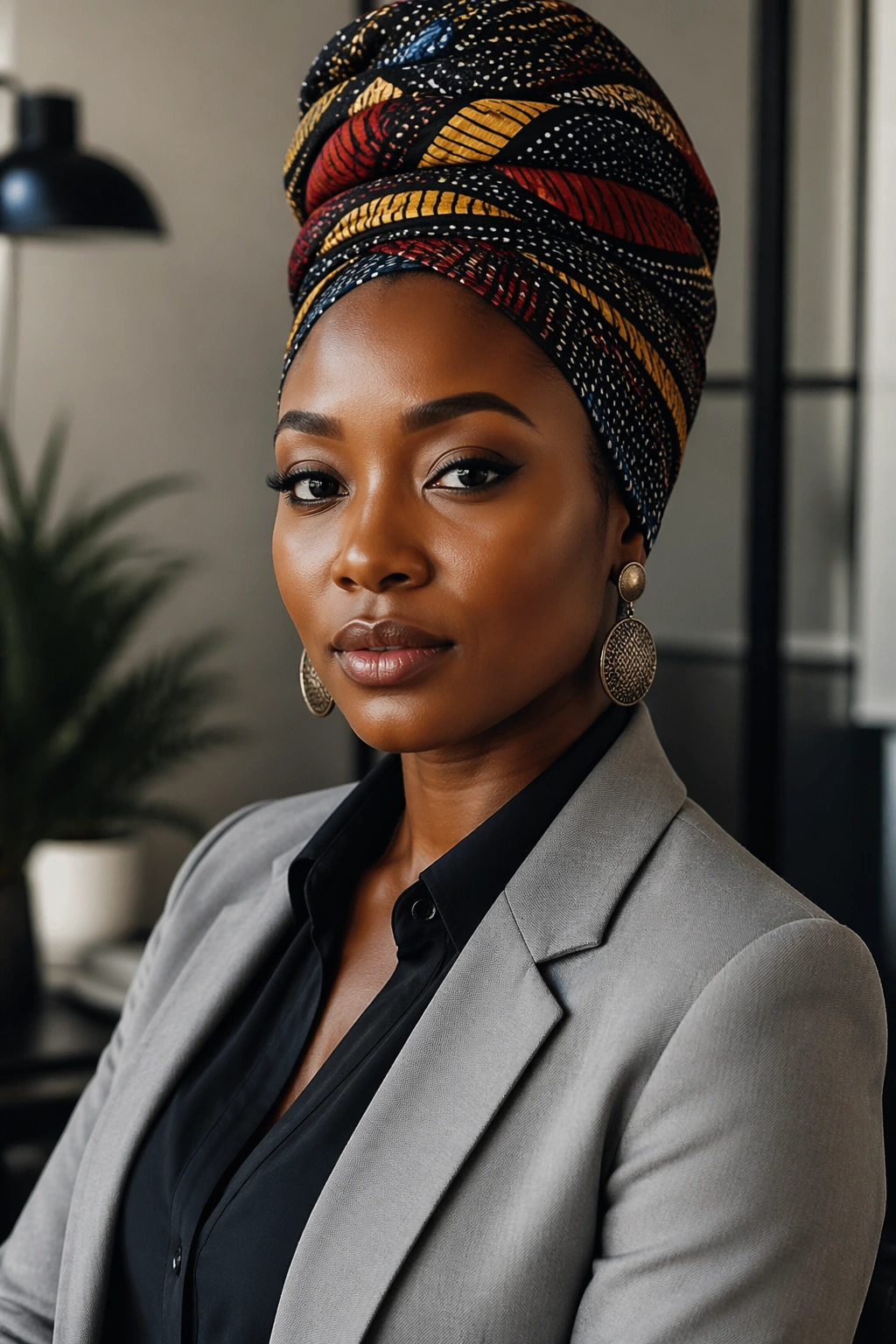
A tightly wound fabric turban — tied high and dramatically, in a kente or ankara print — with tailored separates underneath: high-waisted trousers in a structured fabric, a simple fitted top, clean shoes. The entire afro punk energy lives in the turban; everything else is deliberately clean.
This is an afro punk look that works in professional settings without requiring any code-switching. The turban is unapologetically expressive. The separates are unimpeachably tailored.
17. Fishnet Tights with Mini Skirt and Structured Blazer
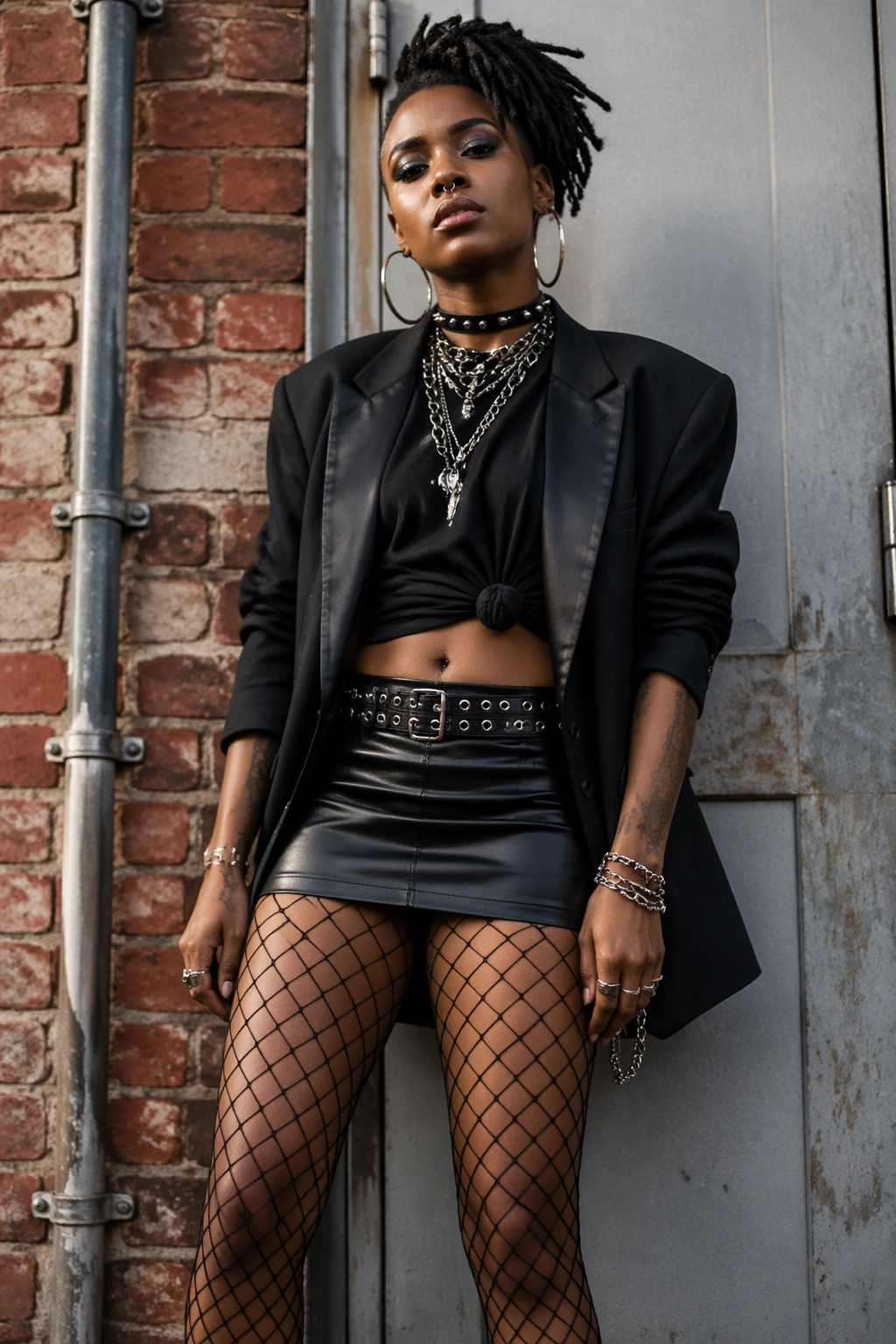
A structured blazer — significant shoulder, clean lapels, buttoned — over a bodysuit or fitted top, with a very short mini skirt and fishnet tights. The blazer provides formality. The mini and fishnets provide the contradiction.
For afro punk purposes, the blazer should be either oversized or otherwise unconventional: a textured fabric, an unexpected color, or distressed in some way. A perfect, corporate blazer without any variation tilts the look away from the aesthetic.
18. Jumpsuit with Boot and Jewelry Layering
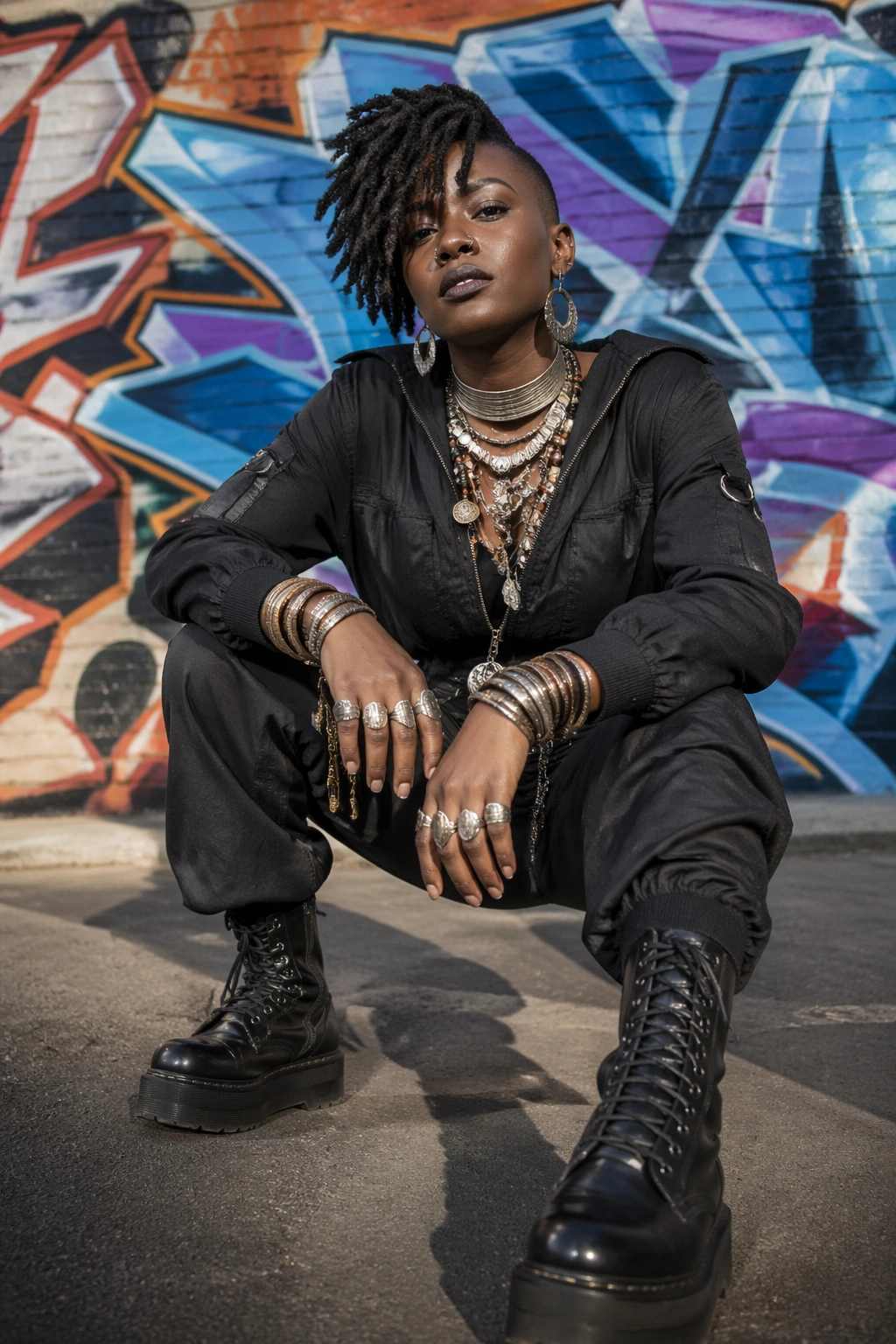
A utilitarian jumpsuit — wide-leg, straight-cut, ideally in black denim or a canvas fabric — with platform boots and elaborate jewelry layering. The jumpsuit is one piece, which makes the proportion decisions easy. The investment is in what sits above and below it: the boots at the bottom, the jewelry stacked up top.
Jumpsuits are practical for street-level dressing. They move well. They stay organized. They’re genuinely comfortable for long days. In afro punk styling, the utilitarian nature of the jumpsuit is an asset, not a limitation.
19. Paint-Splattered Denim and a Leather Corset
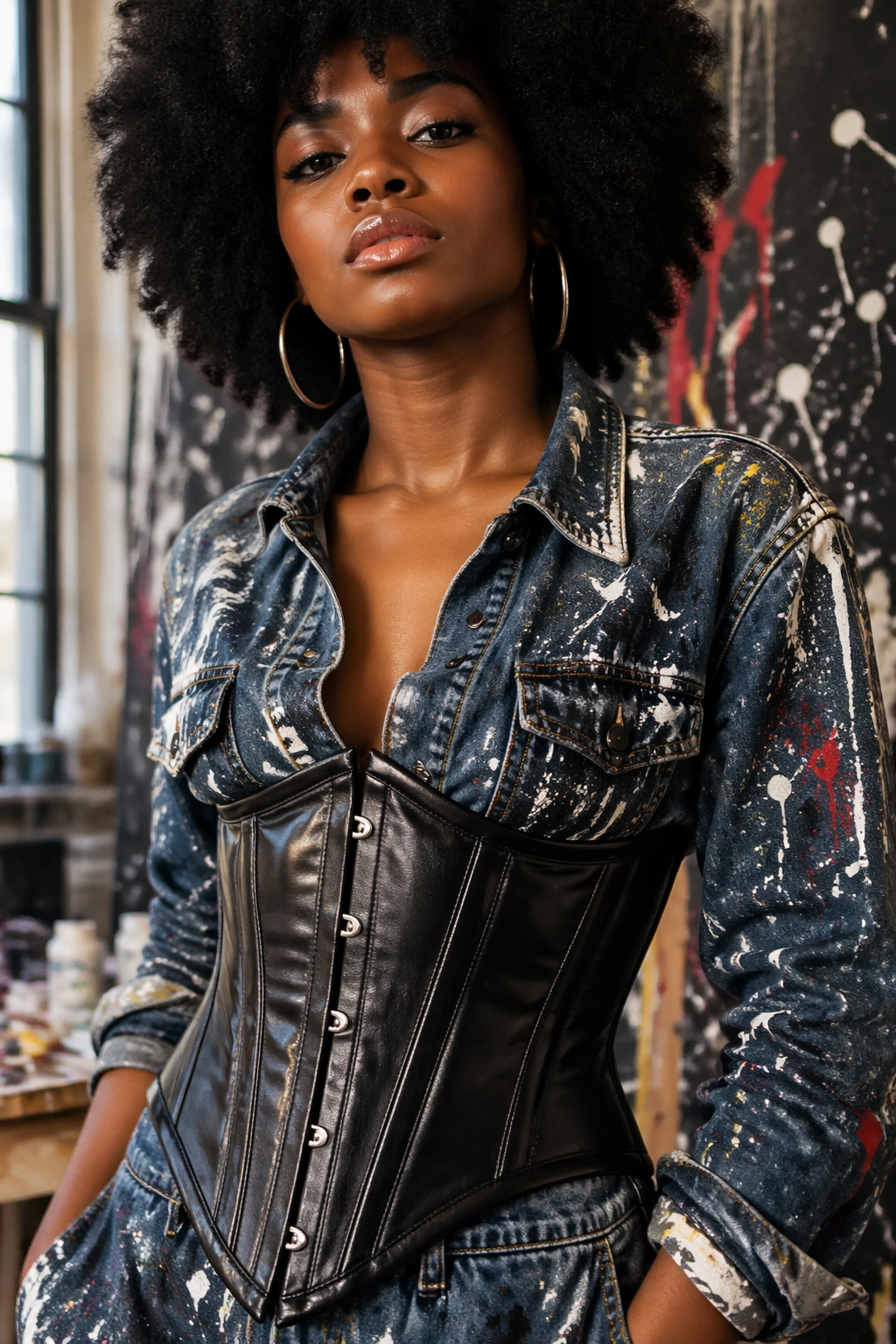
Paint-splattered clothing has a specific energy — it suggests work, creation, presence in a studio or a process. White paint splatter on dark denim reads differently than tie-dye; it’s less decorative and more accidental, more authentic-looking.
A leather corset over a paint-splattered denim jacket and matching jeans creates a complete look — the artifice of the corset structure against the deliberate imperfection of the paint detail.
20. Cropped Bomber and Wide-Leg Pants
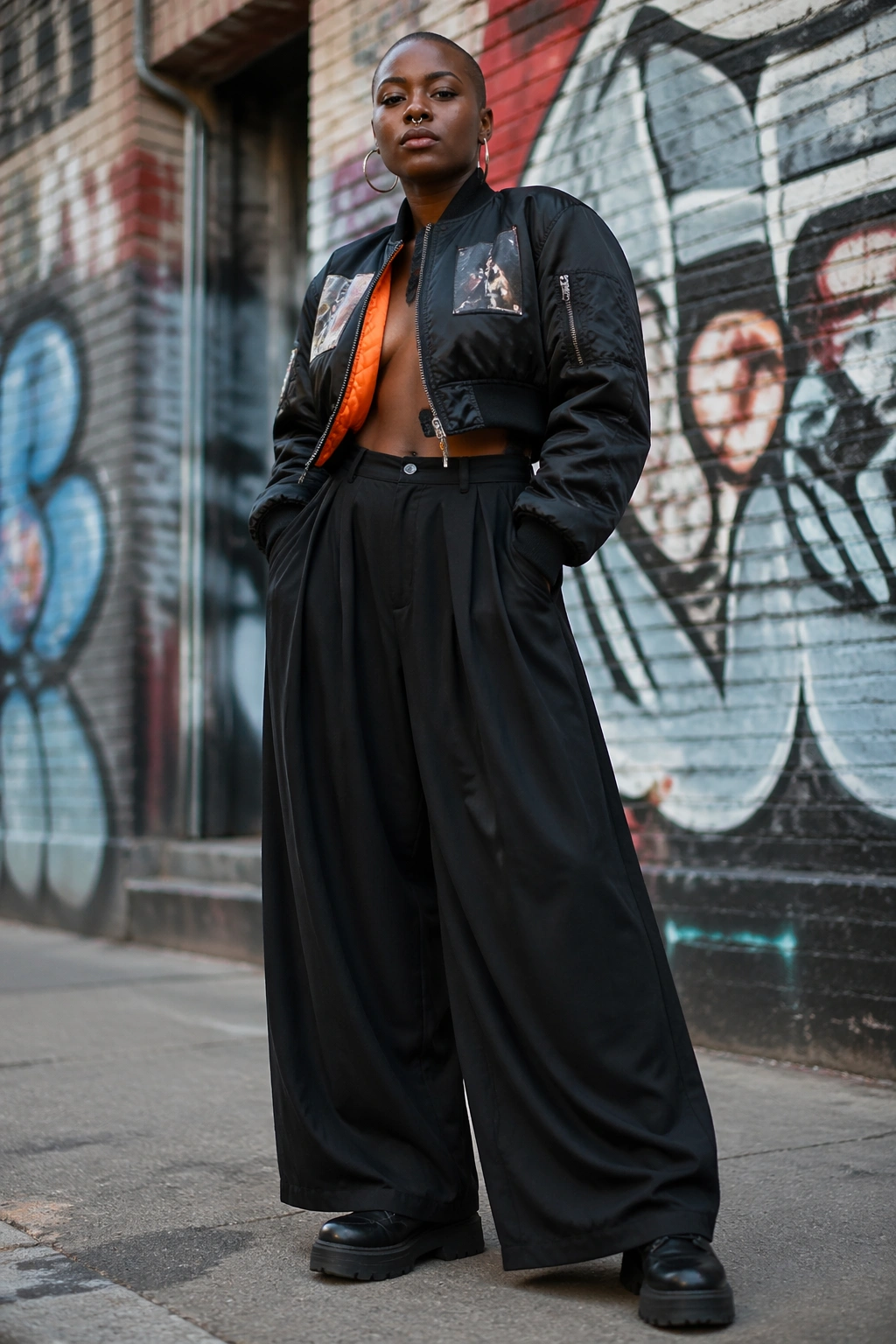
A short bomber jacket — ideally with some surface interest like a printed lining visible at the cuffs, or a patch on the back — over a wide, flowing trouser. The bomber creates a horizontal line at the waist; the wide-leg pants fall in a column beneath it. The silhouette is wide at the top and wide at the bottom, which reads as intentionally maximalist.
Black boots anchor the wide-leg trouser. Without the boot, the look floats; the boot gives it a foundation.
21. Bucket Hat with Chain Detail
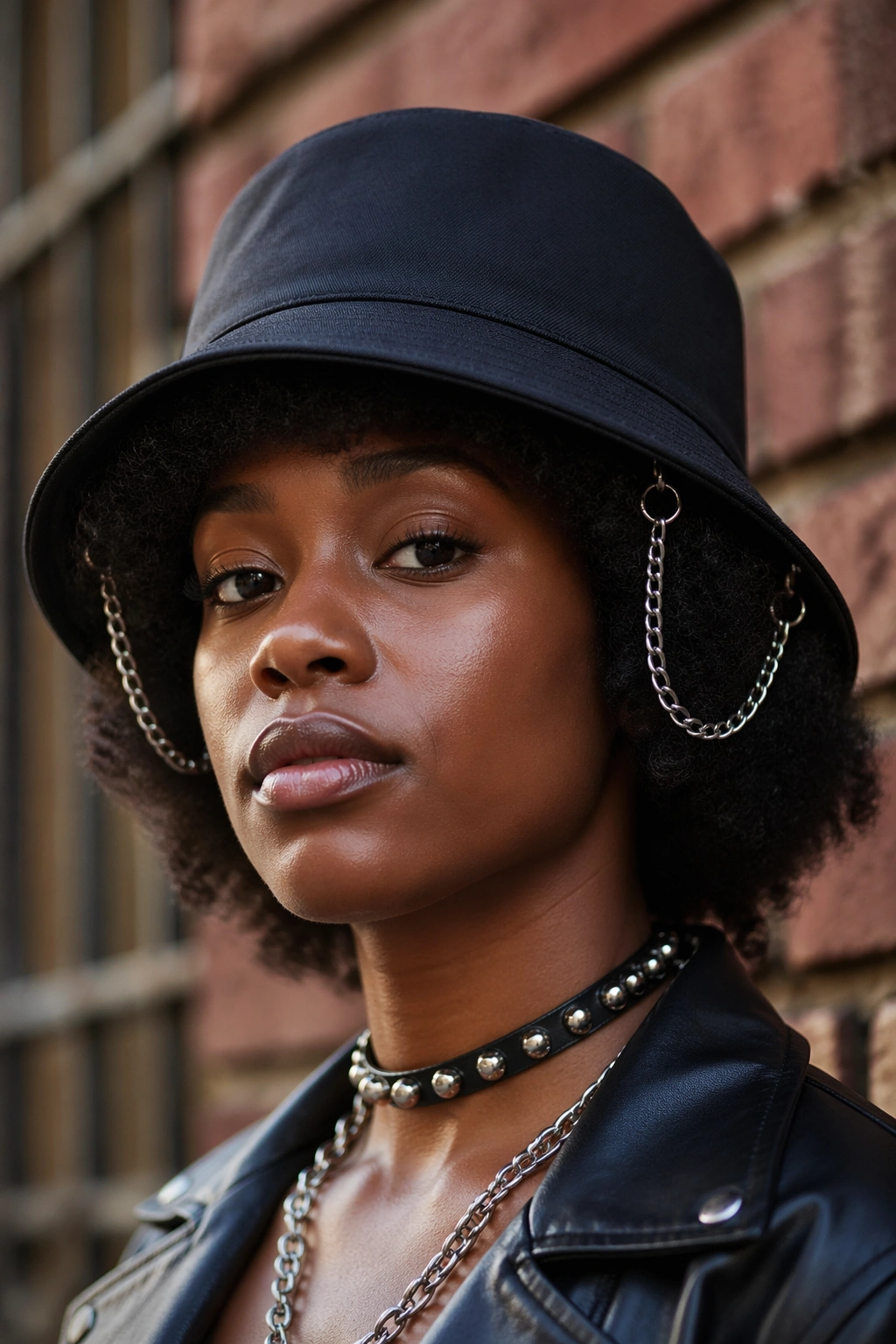
A structured bucket hat — either solid black or in a bold print — worn over a medium-sized afro or with natural locs tucked beneath its brim. The bucket hat is simultaneously relaxed and deliberate; it functions as a head covering but has strong aesthetic history in Black street culture.
Chain accessories below the hat’s brim — at the ears, around the neck — connect the hat to the punk register without the hat itself needing to be studded or distressed.
22. Asymmetrical Hemline with Boots
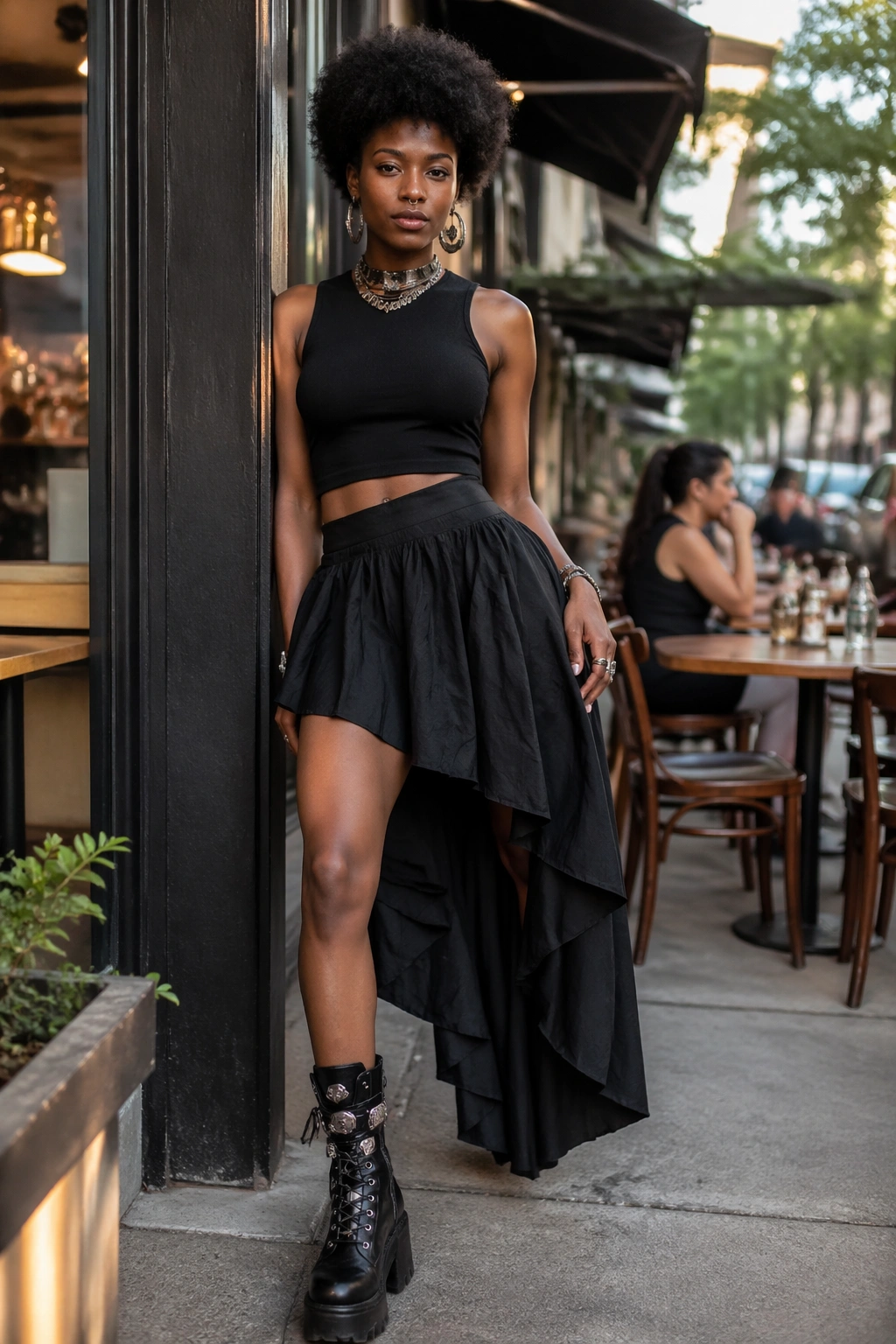
An asymmetrical skirt or dress — where one side hits significantly higher than the other — creates a geometry that reads as intentional and unconventional. The hem differential draws attention and frames the boot on the shorter side.
Pair with a simple fitted top above and a substantial boot that reads clearly on the short side of the hem. The visual effect is clean but unexpected.
23. Full Color Clash from Head to Toe
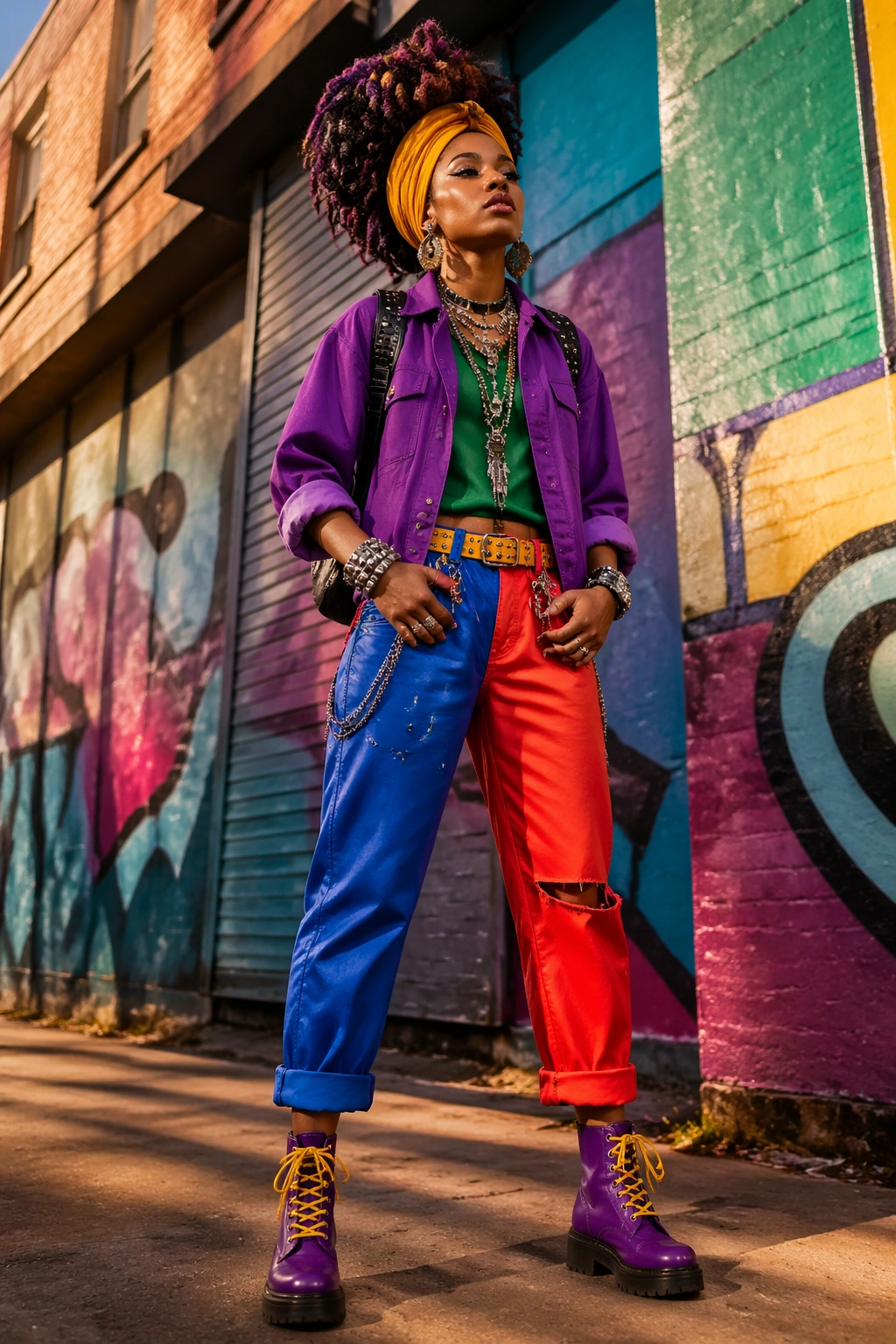
The most fearless approach to afro punk street style: wear multiple bold, non-traditionally matching colors in a single outfit. Rust orange and deep purple. Vivid teal and bright yellow. Burgundy and cobalt. Colors that technically clash or create high visual tension.
The key to making this work rather than look accidental is wearing each color in a complete section — a full top in one color, a full bottom in another — rather than mixing them in small scattered pieces. The contrast reads as bold rather than confused when each color has its own territory.
This look requires an equally bold hair choice. A large afro in natural color, or colored locs, or a dramatic headwrap all provide the visual weight overhead to match the outfit’s intensity.
Building Your Own Afro Punk Identity
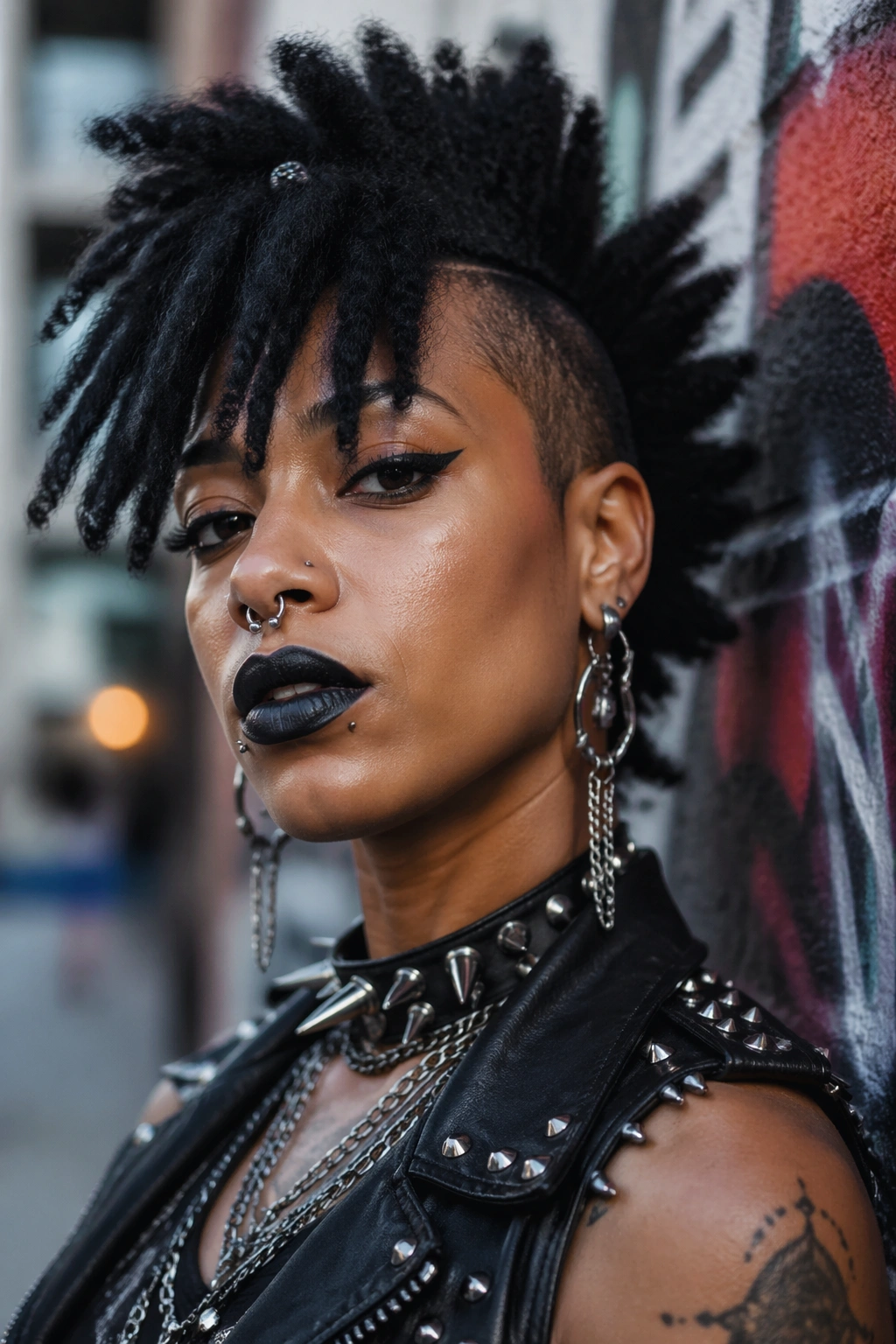
Afro punk style is at its best when it’s genuinely personal — when the pieces you choose tell something true about who you are and what you reference. Borrowing the exact look from another person is just cosplay, and cosplay isn’t the point. The point is the creative process of assembling your identity through what you wear and how you wear it.
Start with what you already own and like. What draws you? The hardware? The prints? The volume? The contradiction of textures? Follow that instinct and build outward from it. Add one new element at a time rather than replacing your entire wardrobe at once.
Look at the work of Black artists, photographers, and stylists who work within this aesthetic — not to copy but to understand the range of what’s possible. Afro punk style has been documented broadly and there are decades of visual references available across music, fashion photography, and street style coverage.
Afro Punk Hair Styling for Everyday Street Looks
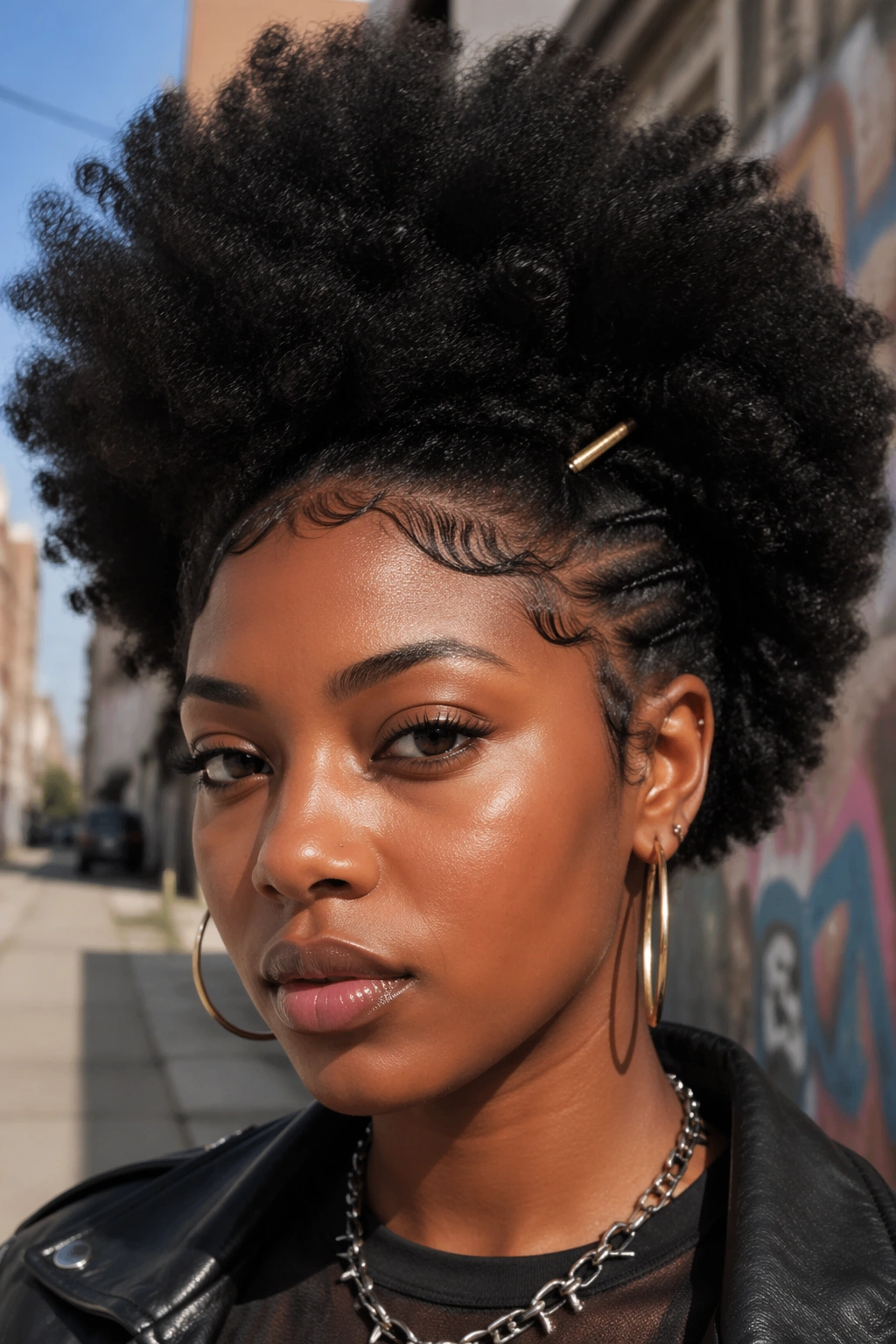
Not every afro punk hair moment needs an elaborate installation. A well-maintained natural afro — picked out for volume, edges laid with gel, maybe a single gold pin or pick left visible in the style — is a complete afro punk look on its own. A high puff with a chain wrapped around it twice. A simple twist-out with an oversized hoop earring. A single loc wrapped in copper thread.
The hair works hardest in this aesthetic when it’s clearly natural, clearly cared for, and clearly not trying to minimize itself. Volume is its own statement. Shrinkage is not a problem to be solved.
Wearing Afro Punk Style With Confidence
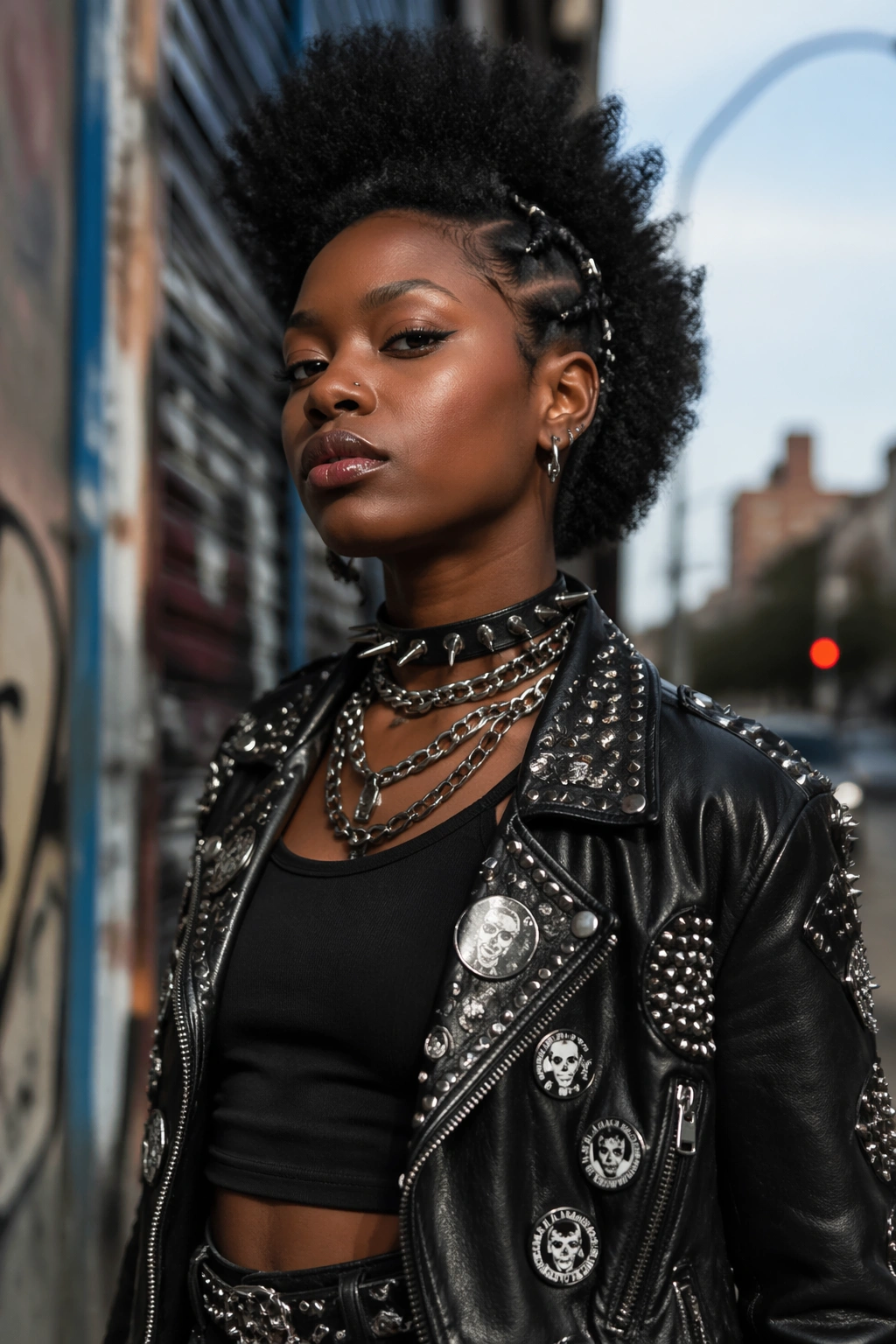
The biggest barrier to wearing bold, expressive street style isn’t access to the pieces — it’s the internal dialogue about whether you have the right to take up this much visual space. The answer is yes. Always yes. Afro punk as a movement and as an aesthetic was built precisely on the assertion that Black women have the right to be big, loud, complex, and unapologetically themselves in any space they enter.
Wear the look like you put it together with intention. Move through it comfortably. Don’t qualify it with apologies or explanations. The confidence of wearing it is part of the look itself — it’s the one element that can’t be thrifted, bought, or installed. It can only be practiced until it becomes second nature.
How Afro Punk Intersects with Sustainable Fashion
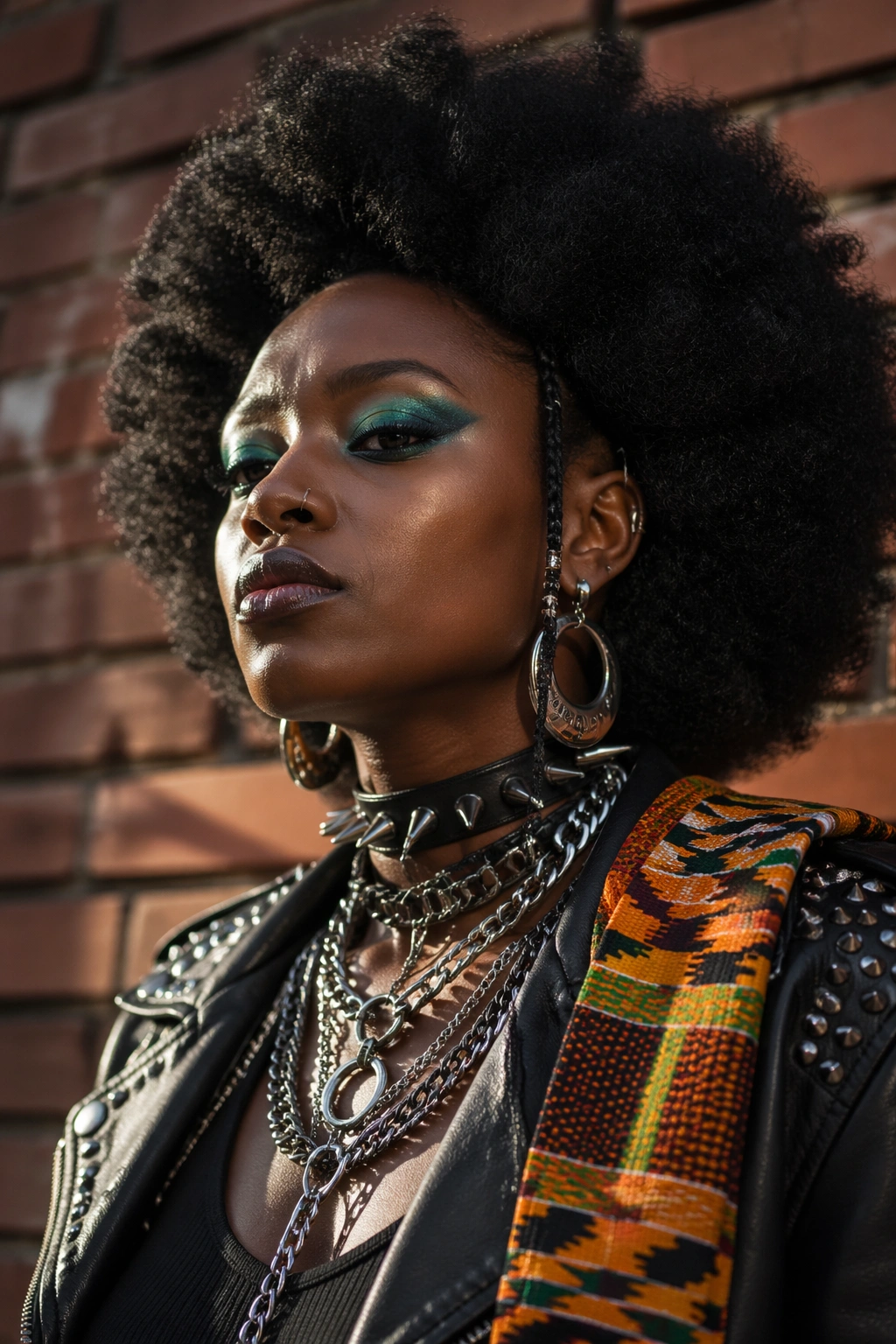
Thrift shopping is the most practical entry point into afro punk style, but it’s worth understanding why it aligns so well with this aesthetic on a philosophical level beyond just cost. Punk as a broader tradition has always had an anti-commercial bent — rejecting the idea that your identity should be purchased from a corporation at a markup. Afro punk extends this, adding the dimension of rejecting the idea that Black style needs to be validated by mainstream fashion gatekeepers before it counts as valuable.
Shopping secondhand puts money directly into local economies — consignment stores, estate sales, thrift shops run by community organizations — rather than into fast fashion supply chains. It means that the interesting, textured, one-of-a-kind pieces that make afro punk outfits genuinely distinct aren’t mass-produced. You can’t walk into a store and buy someone else’s exact look.
The DIY element matters too. Customizing a thrifted jacket with paint or patches. Repurposing a skirt into a top. Cutting a maxi dress into a mini and using the cut fabric for something else. These acts of transformation are themselves expressions of afro punk creativity — the same impulse that produced natural hair adornment traditions and handmade textiles across generations.
Mixing Prints in Afro Punk Styling
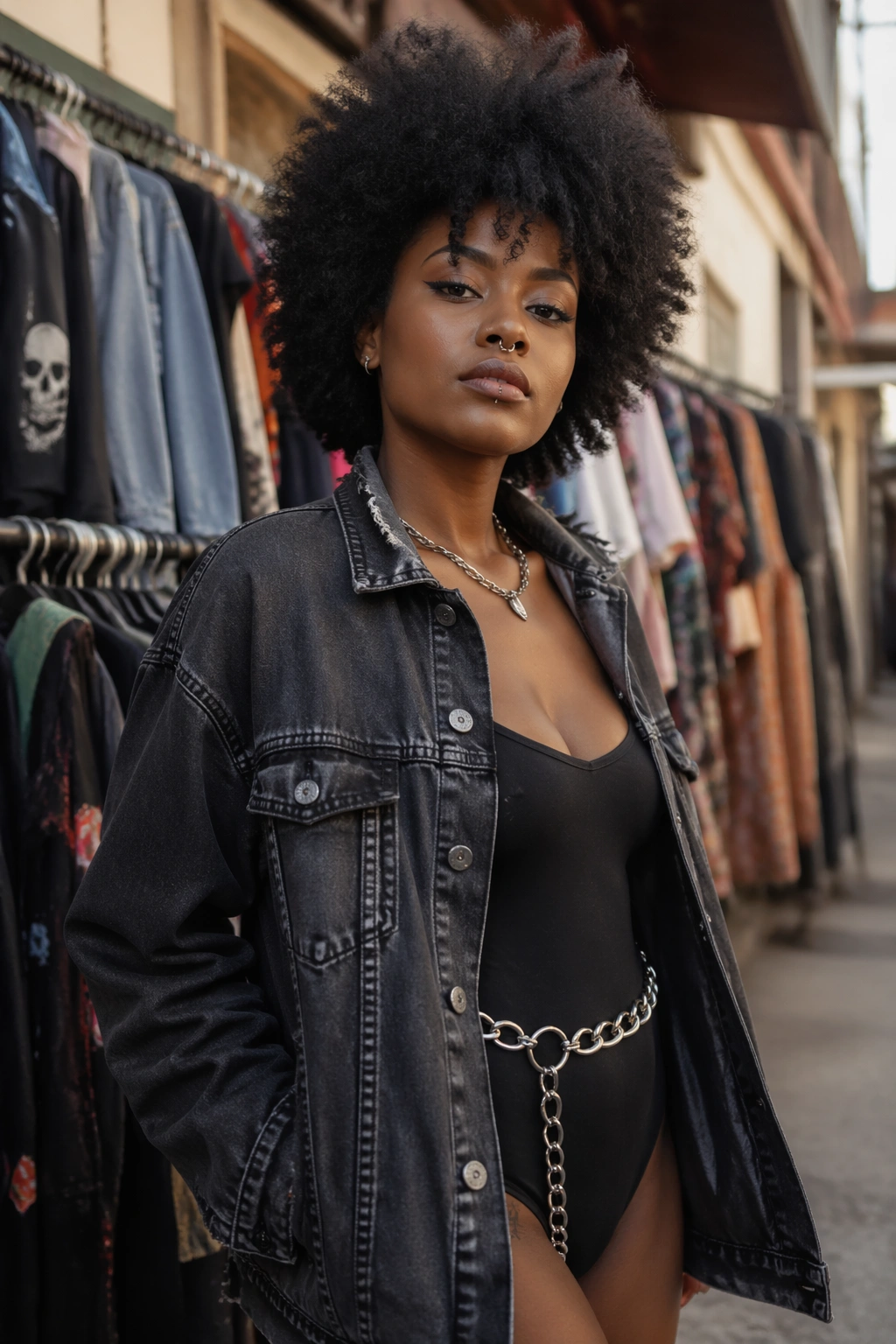
Mixing prints is one of the most visually exciting elements of afro punk style when done deliberately, and one of the most visually chaotic when done carelessly. The difference is usually in the scale of the prints rather than the specific patterns.
Mixing a small geometric print with a large floral, or a wide stripe with a fine leopard spot, works because the scale creates a natural visual hierarchy — your eye moves between them in a predictable order. Mixing two similarly-scaled busy prints competes for the same visual space and reads as unintentional.
Color is the other organizing principle for mixed prints. If both prints share at least one color — even a background shade — they’ll feel like they belong together even when the patterns are completely different. A navy and rust kente paired with a navy and white polka dot creates cohesion through the shared navy, even though the two patterns have nothing else in common.
For afro punk purposes, the bolder the scale of the print mixing, the better. Small, subtle pattern mixing reads as mainstream fashion rule-breaking. Big, unapologetic print mixing reads as a statement.
Afro Punk Makeup Looks That Complete the Style
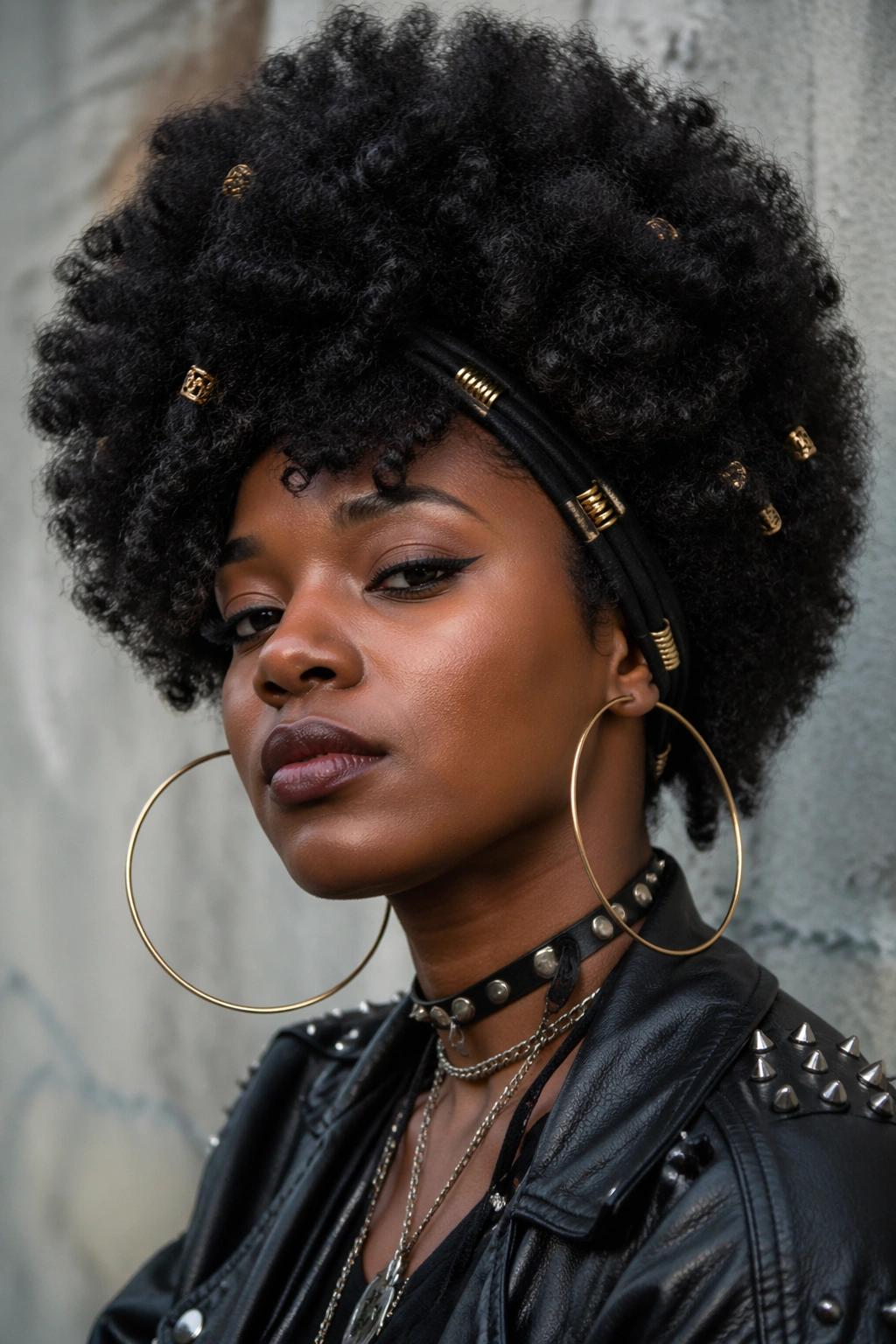
Afro punk street style and deliberately expressive makeup are natural partners. The same aesthetic language that shapes the clothing — contradiction, maximalism, cultural layering — translates directly to the face.
Bold lip is the fastest way to add an afro punk register to any outfit. Deep burgundy, vivid orange, bright yellow, and pure black lip are all authentic to this aesthetic. Combined with a strong brow and minimal eye makeup, a bold lip reads as intentional rather than overdone.
Eye makeup in afro punk styling often goes graphic rather than blended. A sharp, extended cat eye in black. A geometric shape of color — a block of cobalt or rust — on the lid or under the eye. Rhinestones placed deliberately at the corner of the eye or along the brow bone. These graphic applications pair better with the bold, geometric visual language of afro punk styling than soft, smoky blends do.
Skin-focused makeup — dewy foundation, minimal coverage, a luminous highlighter at the high points — works too. The face doesn’t always need to be a competing canvas. Sometimes the most effective choice is clear skin that lets the hair and clothing do the heavy lifting.
Dressing for Weather Without Losing the Aesthetic
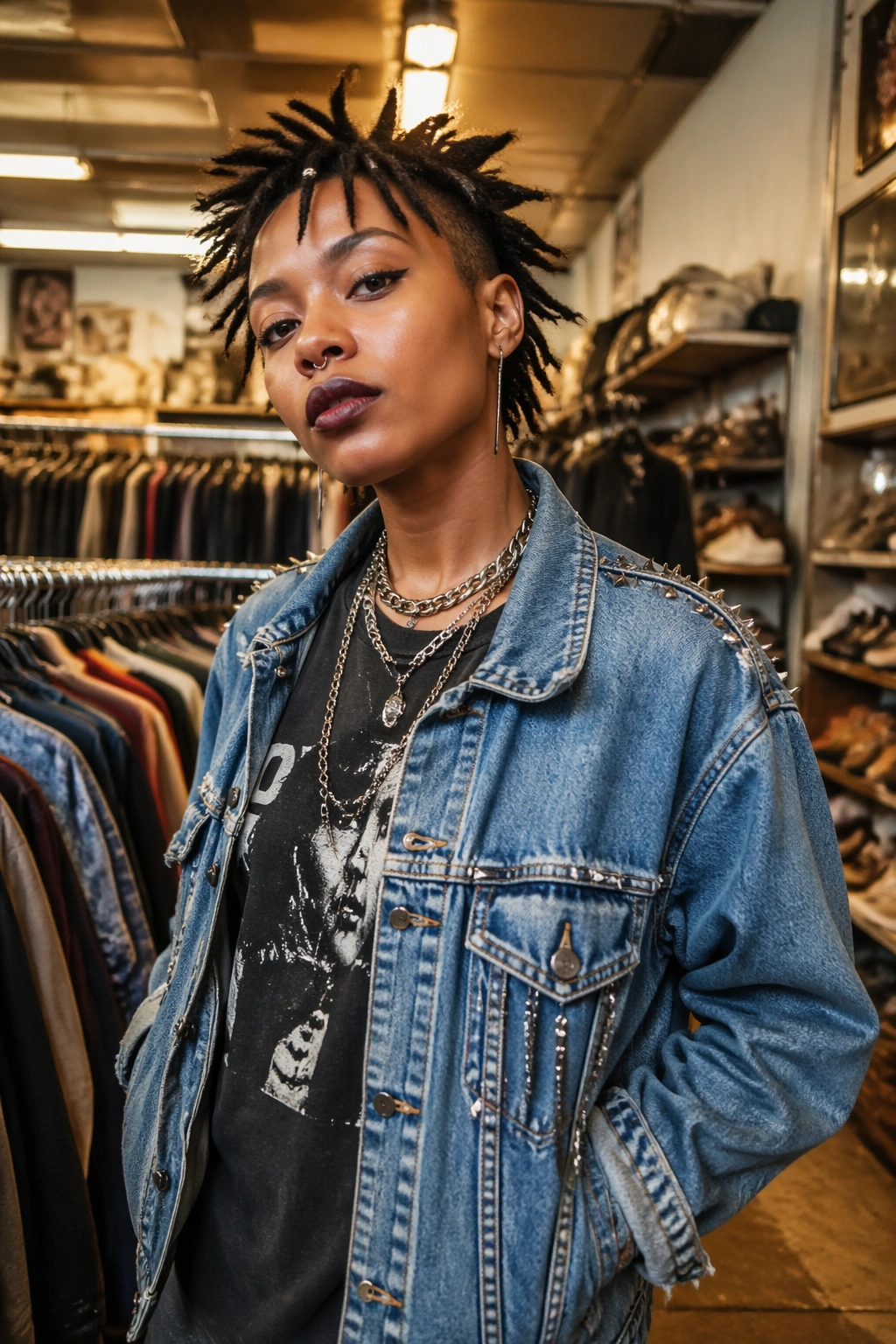
Afro punk style doesn’t hibernate in cold months, and it doesn’t disappear in hot ones. Adapting the aesthetic across weather conditions is a practical skill worth developing.
Cold weather creates an opportunity for layering that actually enriches the afro punk look. A shearling or faux fur coat over a leather jacket over a graphic tee creates exactly the kind of textural layering that suits the aesthetic. Chunky oversized scarves in bold prints or solid jewel tones add to the visual density rather than hiding it. Tights and high boots close up the silhouette in a way that works well with the aesthetic’s love of leg coverage.
Hot weather calls for a different approach but not a less intentional one. Lightweight linen or cotton in bold prints — not sheer, not clingy, but breezy — keeps the body cool without sacrificing the visual impact. A sleeveless linen maxi in a saturated color paired with platform sandals instead of boots reads as afro punk in a summer register. Open-back tops in bold textures, cropped pieces with high-waisted bottoms that create an air gap — all of these manage heat while maintaining the aesthetic.
The one constant across seasons: the hair. Natural volume doesn’t change with the weather. The hair is the throughline that makes any adapted outfit read as a coherent aesthetic identity rather than just functional dressing.
The History Behind the Aesthetic
Afro punk as a named movement and cultural gathering emerged in the early 2000s, but its roots extend much further. The refusal to accept rigid genre or cultural categories — to insist that Blackness was compatible with music, fashion, and visual cultures that the mainstream insisted were white spaces — has a history that goes back through the decades.
Black punk musicians and artists were present at the emergence of punk itself. Black style has always incorporated the subversive alongside the opulent, the handmade alongside the high-fashion, the traditional alongside the contemporary. What the afro punk movement did was name and celebrate the combination rather than treating it as a contradiction that needed to be resolved.
The fashion that emerged from this community drew from all of these lineages simultaneously. It borrowed punk’s relationship with hardware, deconstruction, and DIY. It kept Black fashion’s insistence on adornment, cultural reference, and self-creation as identity. And it refused the idea that natural afro hair was anything other than a powerful visual anchor for all of it.
Understanding this history doesn’t make the style more complicated to wear. But it does make the wearing of it more meaningful — each outfit choice becomes part of a conversation that has been happening across generations and continents, and that continues in every sidewalk and subway car and corner store where someone who looks like you shows up fully dressed as themselves.