



Big curls for Black women with natural hair carry a kind of beauty that goes far beyond aesthetics. They’re a statement of identity, a celebration of texture, and — for many women — a daily act of self-love that took years to fully embrace. Getting those curls to look the way you picture them in your head, though? That part takes knowledge, the right technique, and a whole lot of patience with your hair’s unique personality.
What Makes Big Curls Work on Natural Black Hair
Natural Black hair spans an enormous range of textures — from loose, wavy spirals to tight, dense coils that defy gravity — and each type has its own formula for achieving big, defined curls. The mistake most people make when they first go natural is treating their hair like a single category when it’s anything but. Your curl pattern, porosity, density, and strand thickness all interact to determine what products, application methods, and styling techniques will actually work for you.
Big curls for Black women with natural hair aren’t a one-size-fits-all situation. A method that produces glorious, bouncy coils on 3c hair might leave 4c hair looking dry and undefined. Understanding your specific texture is the foundation of every successful curl style, and it’s worth spending a few wash days experimenting rather than endlessly chasing a result your hair may never naturally produce.
The good news? Every natural texture can achieve some version of big, voluminous curls. It’s just about finding the right path.
Understanding Curl Porosity Before You Style
Porosity might be the single most important factor in how your curls behave — and it’s dramatically underappreciated in most hair care conversations. Porosity refers to your hair’s ability to absorb and retain moisture, and it determines which products will work, how quickly your hair dries, and how long your style will hold.
Low porosity hair has tightly closed cuticles that resist absorbing water and product. If water beads on your hair before soaking in, or if your hair takes ages to get fully wet in the shower, you’re probably low porosity. Low porosity hair does best with lightweight, water-based products. Heavy butters and oils tend to sit on the surface rather than penetrating the shaft, leaving hair feeling greasy without being moisturized.
High porosity hair has lifted or damaged cuticles that absorb moisture quickly but lose it just as fast. High porosity hair often feels dry even right after styling and is prone to frizz in humidity. If this is you, you’ll benefit from heavier sealers and protein treatments to help close the cuticle and lock in moisture.
Medium porosity — the hair most tutorials seem to assume you have — is the easiest to work with, responds well to most products, and holds styles reliably. If you’re not sure where you fall, do a simple float test: drop a clean strand of hair in a glass of water. If it floats, you’re likely low porosity. If it sinks quickly, you’re probably high porosity.
The LOC and LCO Methods for Maximum Moisture
If you’re serious about big curls for Black natural hair, the LOC or LCO method isn’t optional — it’s foundational. These layering techniques ensure your hair gets deep moisture that actually stays in your strands long enough to matter.
LOC stands for Liquid, Oil, Cream. You apply a water-based leave-in (liquid), then seal with an oil, then add your curl cream on top. This order works particularly well for high porosity hair, where the oil layer acts as a barrier between the water and the outside air.
LCO flips the oil and cream: Liquid, Cream, Oil. This order is often better for low porosity hair, because applying the cream before the oil helps the water-based product penetrate more fully before being sealed.
Neither method is universally better — it depends entirely on your hair. Try both over consecutive wash days and see which one leaves your curls feeling softer, more defined, and more hydrated the next morning. Your hair will make the answer pretty clear.
Protective Styling Between Big Curl Days
One of the ways to ensure your big curls look their best when you do style them is to treat your hair well when you don’t. Protective styling — braids, twists, flat twists, updos — reduces daily manipulation, locks in moisture, and gives your hair a chance to rest between styling sessions. Over time, protective styling improves overall hair health, which directly translates to better curl definition and retention when you wear your hair out.
That said, protective styling done wrong can cause more harm than good. Styles that are too tight stress your hairline and can lead to traction alopecia. Leaving braids or twists in too long — more than 6-8 weeks — allows for matting, buildup, and potential breakage when you try to take them down. And putting your hair away in a protective style without properly moisturizing it first just locks dryness in rather than keeping moisture in.
The sweet spot is alternating between big curl styles and protective styles, keeping your scalp clean, your hair moisturized, and your ends protected without neglecting your hair’s health in the process.
Tools That Make a Real Difference
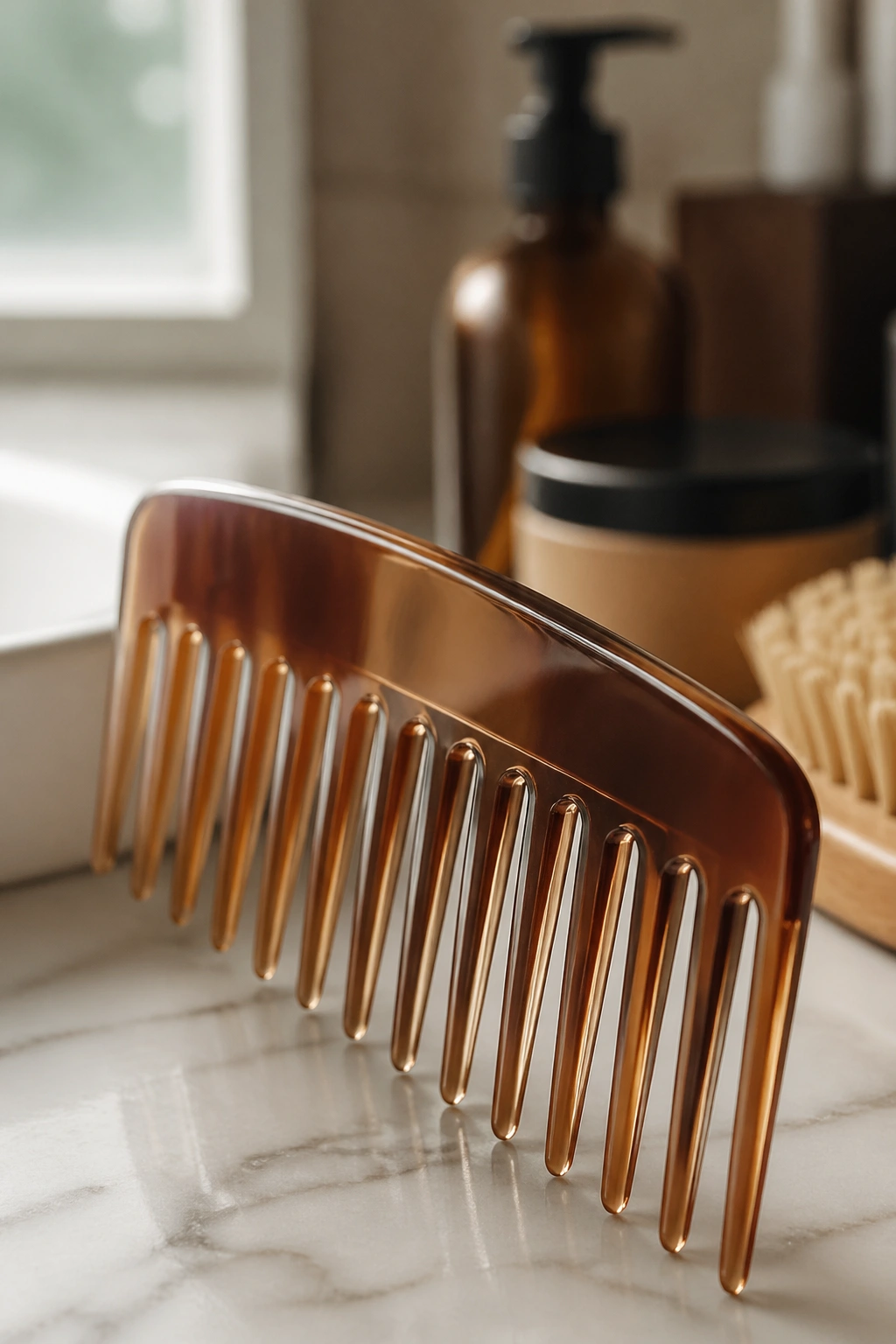
The tools you use matter almost as much as the products. The wrong tool can undo everything your products are trying to accomplish. A wide-tooth comb is non-negotiable for detangling — fine-tooth combs cause breakage on natural hair, full stop. Use it on wet, conditioned hair only, working from tip to root to remove tangles without ripping through them.
A diffuser attachment for your blow dryer is a worthwhile investment if you’re serious about big curl styles. It distributes heat evenly across a wider area, which means less frizz-inducing direct heat and more even drying that preserves your curl pattern. Look for a diffuser with a bowl shape that can cup and lift your curls rather than blow them around.
Microfiber towels and old T-shirts are genuinely better than regular terry cloth towels for drying natural hair. The rough texture of terry cloth creates friction that disrupts your curl clumps and introduces frizz before you’ve even started styling. A gentle scrunch with a T-shirt or microfiber cloth removes enough water without roughing up your cuticle.
1. Classic Wash-and-Go Curls
The wash-and-go is the benchmark for big curls on natural Black hair — the style that every natural eventually circles back to, even after years of experimenting with other methods. Getting it right is less about finding the perfect product and more about mastering the application technique.
Work in sections on dripping wet hair. Never let your hair start to dry before you’re done applying product — once it’s even slightly dry, you’ve lost the window for clean curl clumping. Apply your leave-in first, then your curl cream or gel, distributing it evenly from root to tip. Use a raking motion to work the product through, then gently cup your curls upward with your palm to encourage them to clump together.
Getting Maximum Definition
- Apply products in the shower while still under the water stream
- Scrunch upward with a microfiber towel to remove excess water without disrupting curls
- Diffuse with a bowl diffuser on medium heat, low airflow, starting at the roots
- Scrunch out the cast completely once dry — this is what gives you the softness
Key insight: The “wet cast” that forms when gel dries is your friend during the drying process. Don’t try to soften your curls before they’re fully dry — you’ll just get frizz. Wait for 100% dry, then scrunch.
2. Flexi Rod Set
Flexi rods give you predictable, consistent curls every single time — and that’s what makes them so popular. Unlike wash-and-go results that can vary based on humidity, product distribution, and how long your hair took to dry, a flexi rod set produces the same beautiful result whether it’s summer or winter.
Choose your rod size based on the curl you want. Thick rods create loose, voluminous curls. Thin rods create tight, defined coils. For maximum volume and a glamorous, big curl look, go with the larger rods or alternate between two sizes for a more natural-looking mix.
Apply a setting mousse or lotion to damp sections before rolling, and make sure each section is fully coated. Roll from tip to root, bending the rod to secure. Let your hair dry completely before removing — rushing this step leads to frizz and lost definition. Separate the curls slowly with oiled fingers.
3. Bantu Knot-Out
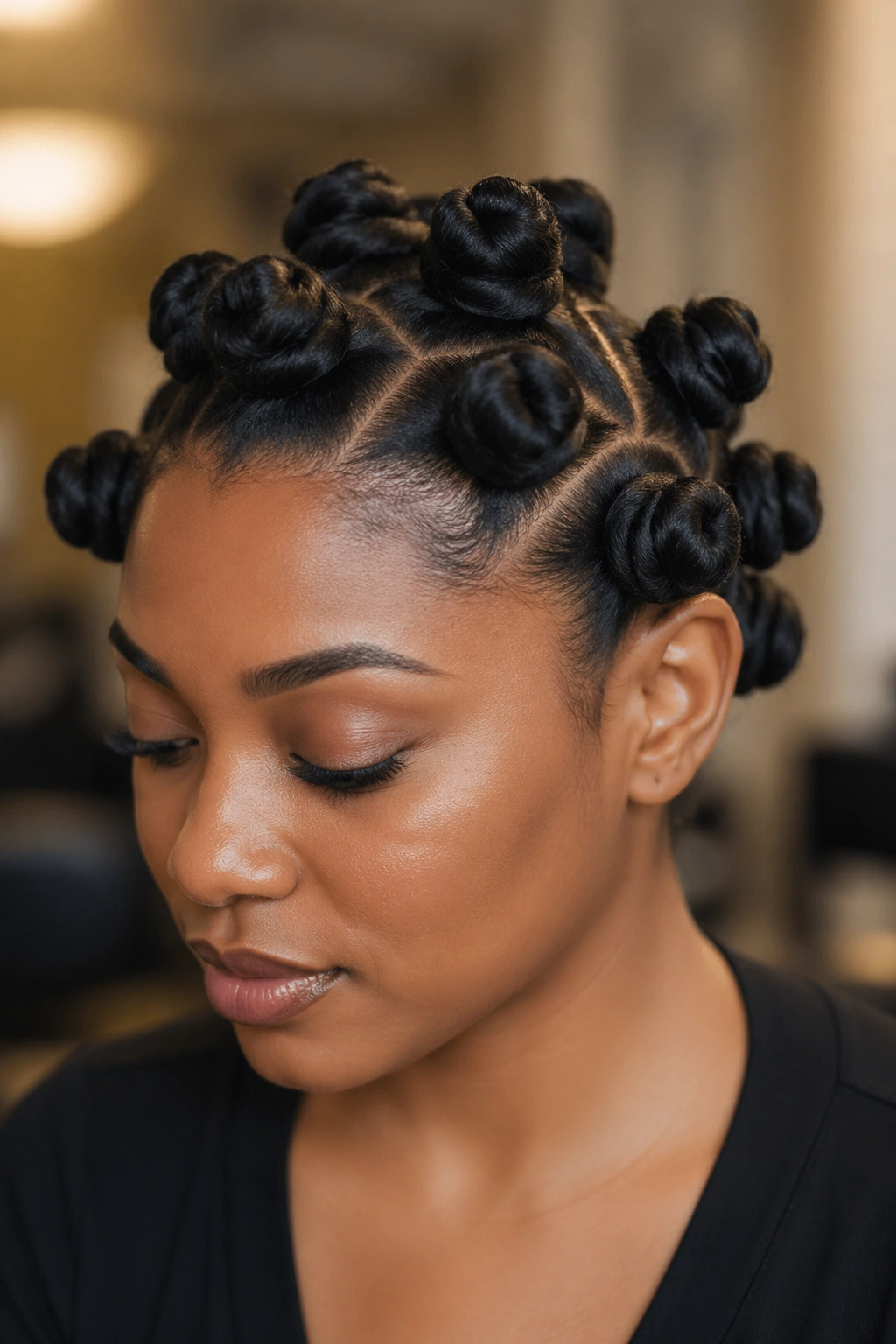
Ask any experienced natural about the bantu knot-out and you’ll get one of two reactions: pure devotion or total frustration. The difference almost always comes down to execution, and specifically to the crime of unraveling the knots before the hair is fully dry.
When a bantu knot-out is done right, the result is extraordinary — full, romantic curls with a distinctive spiral that can last for days. Section your hair, apply a generous amount of curl cream to each section, two-strand twist it briefly, then coil it around itself at the base into a flat knot. Secure by tucking the end under the knot. Leave overnight. Unravel gently starting from the tip of the knot, and pull apart with oiled hands for volume.
The bigger your knots, the looser and larger your final curl. Smaller knots produce tighter, more coiled results. Both are beautiful — it’s just a matter of the look you’re going for.
4. Large Roller Set
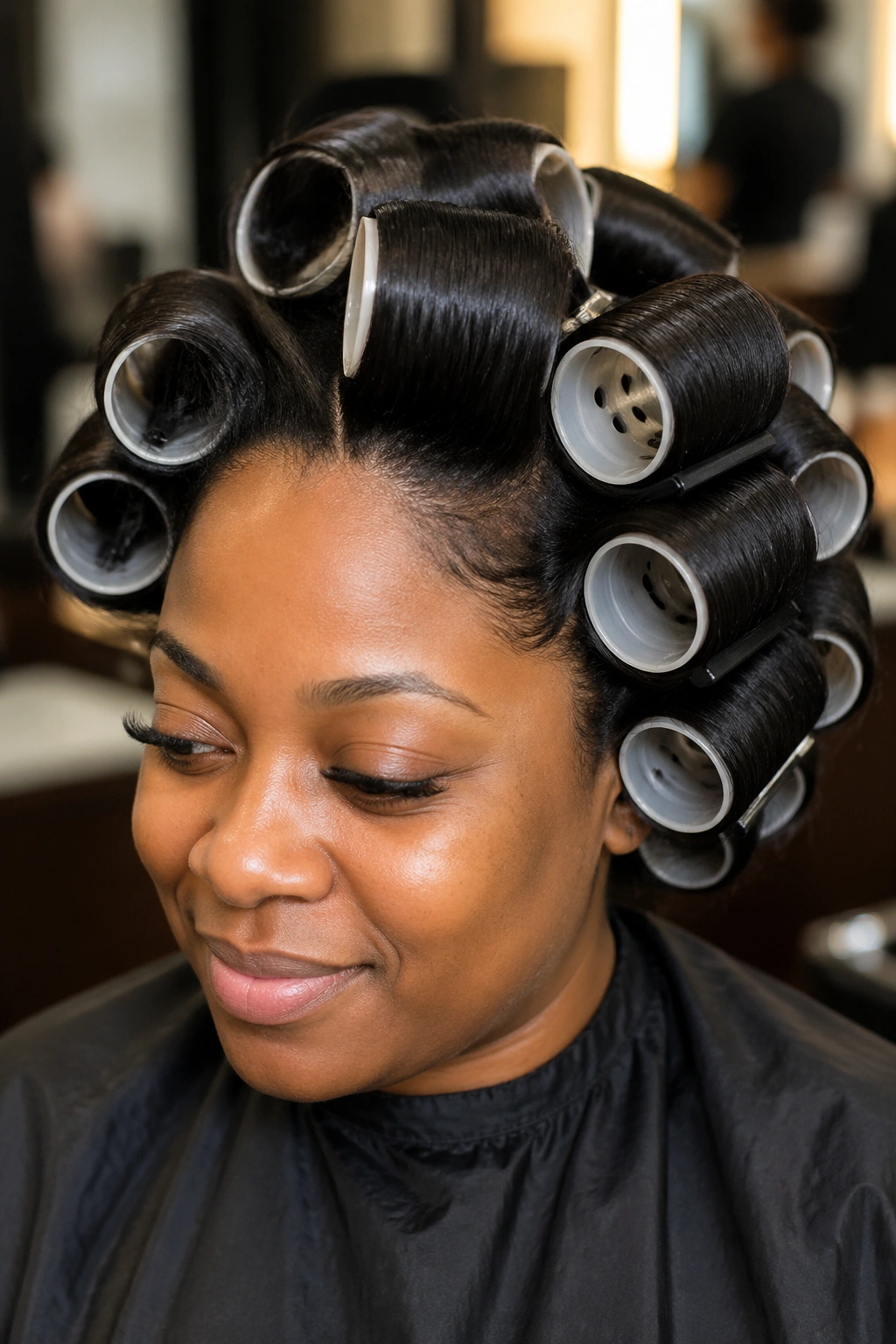
Setting natural hair on large, smooth rollers under a hooded dryer is one of those old-school techniques that never stopped working. The consistent tension of the roller, combined with the even heat of a hooded dryer, produces big, smooth, polished curls that look almost editorial in their precision.
Apply a setting lotion or curl cream to each damp section before rolling. Roll from tip to root, pinning each roller securely. Sit under a hooded dryer for 30-45 minutes, or let your hair air-dry on the rollers overnight. When you remove them, your curls should be sleek at the root, defined through the mid-length, and bouncy at the ends.
Shake your head to loosen the style, then separate with your fingers — never a comb — for volume. A roller set can last a full week with proper nighttime care.
5. Twist-Out Curls
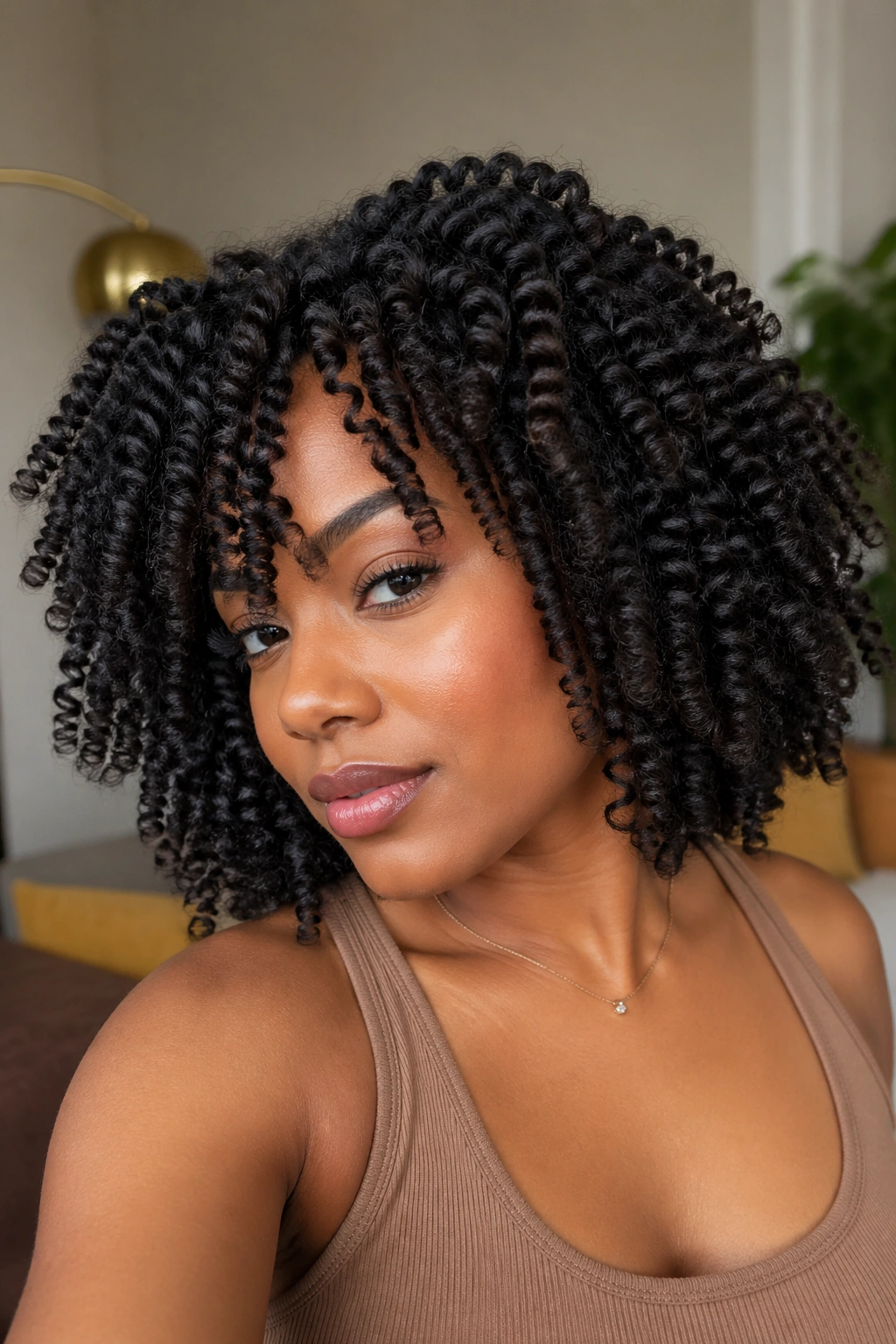
The two-strand twist-out remains one of the most reliable ways to get defined big curls on natural hair across virtually every texture. It’s forgiving, it’s customizable, and the results can be dialed up or down in terms of volume and definition just by changing how much you separate the twists afterward.
Create your twists on freshly washed, conditioned, product-coated hair. Section size controls everything — bigger sections mean bigger, looser curls. Smaller sections produce tighter definition. Let the twists dry completely before touching them (this is the step most people rush, and it’s why their twist-outs frizz). Unravel by unwinding from tip to root, then use your fingertips to pull each curl apart slowly.
The more you separate, the bigger and fluffier the result. Stop before it starts to look frizzy — there’s a sweet spot that’s different for every hair type.
6. Chunky Braid-Out
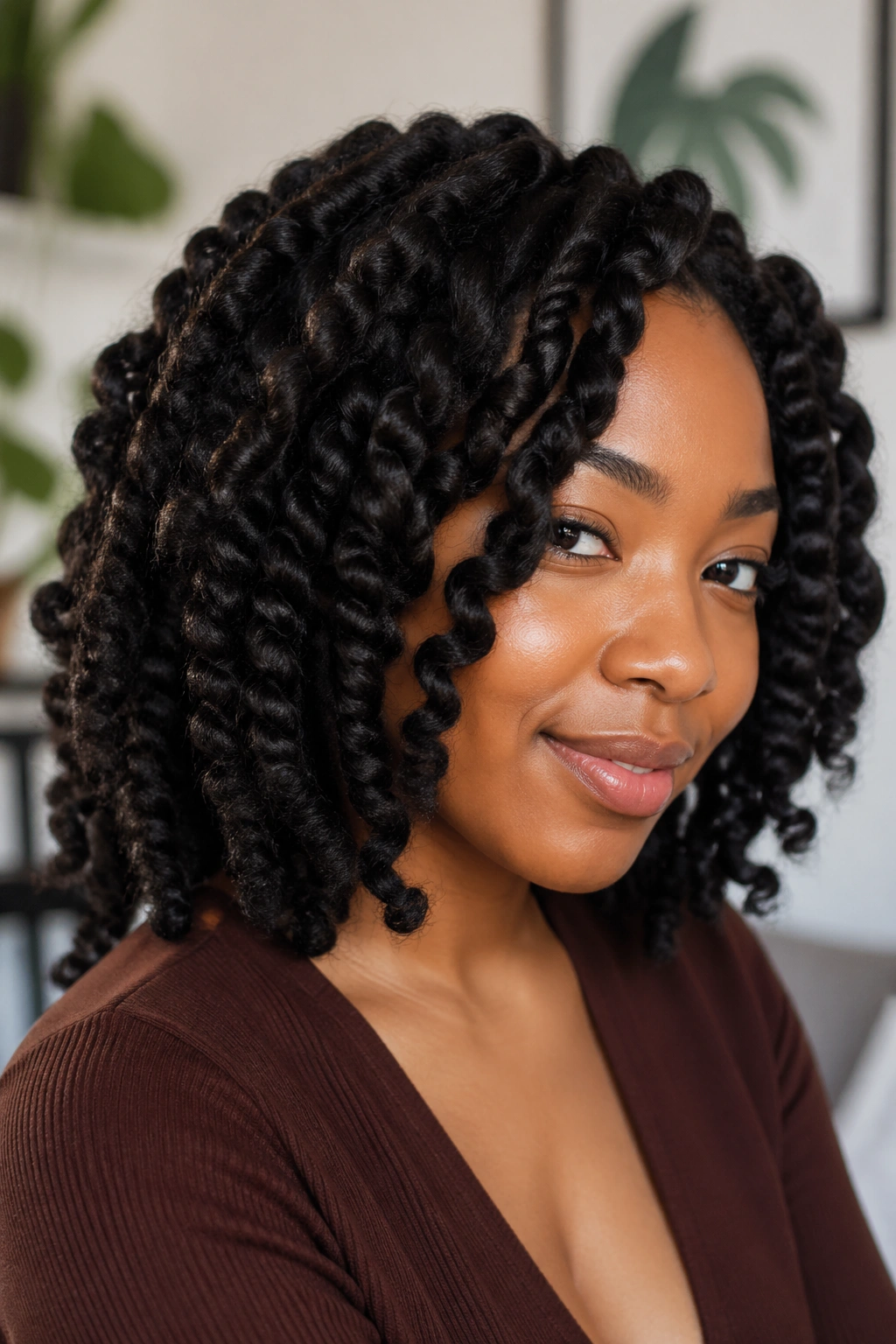
The braid-out produces a different curl texture than the twist-out — slightly more angular, with a distinctive wave pattern that’s particularly beautiful on 4b and 4c hair types that can sometimes struggle with twist-out definition.
Braid your hair in large sections to get a big, bold result. Apply your curl butter or styler before braiding, working it through each section thoroughly. Braid tightly and evenly from root to tip, then secure the end. Let dry fully overnight. When you unravel in the morning, you’ll find a textured, wavy-curly pattern that’s distinct from a twist-out — more angular, with its own unique beauty.
Separate generously with oiled hands for maximum volume. The braid-out tends to hold its pattern slightly longer than a twist-out, making it a great option for week-long styling.
7. Perm Rod Spiral Curls
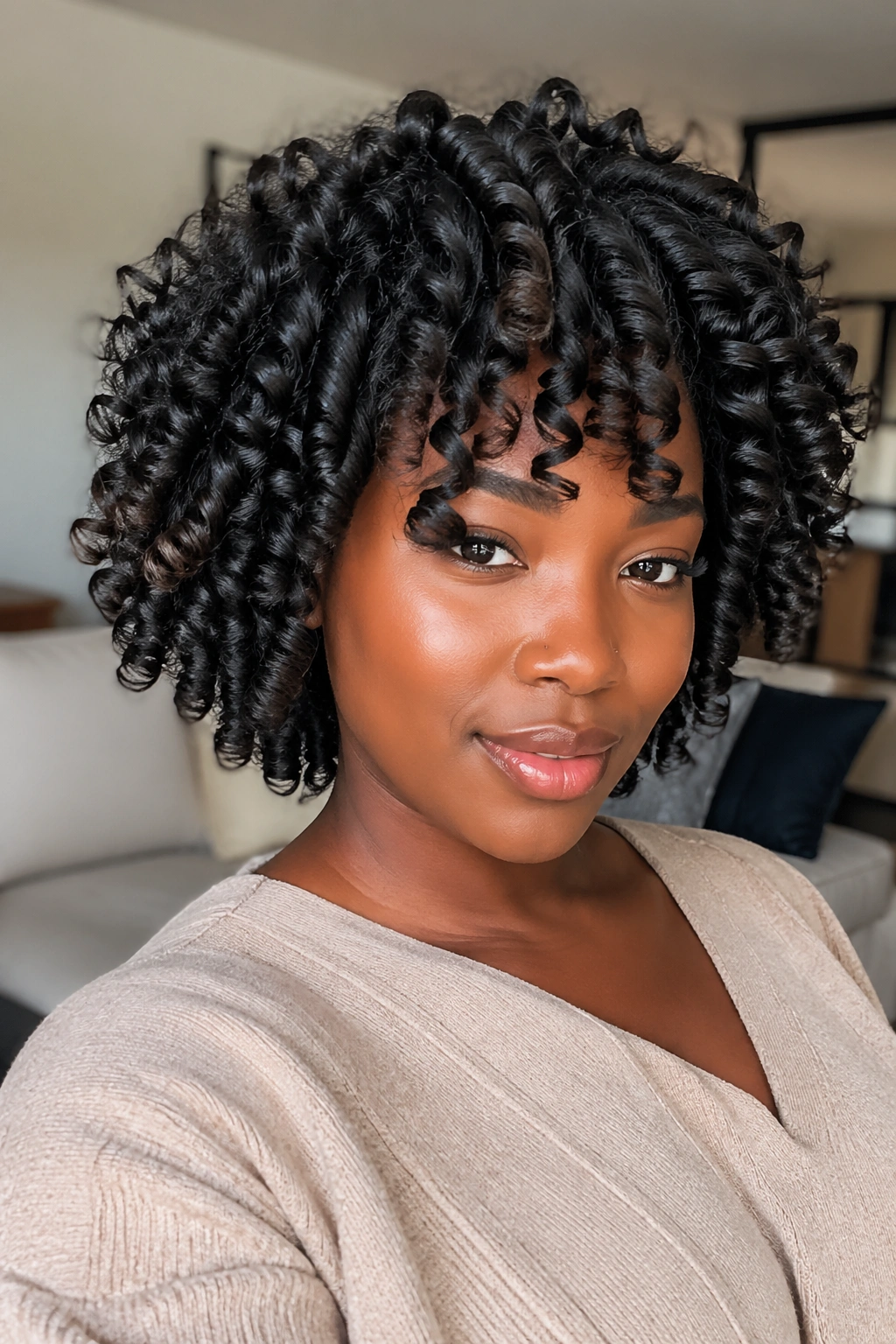
Perm rods produce one of the most stunning curl patterns achievable on natural hair without any heat at all — tight, bouncy spirals that cluster together and create extraordinary volume when separated. On 4a and 4b textures especially, perm rods create curls that look like they came from a professional salon.
The smaller the rod, the tighter the spiral. For big curls, use the larger pink or blue perm rods. Apply a holding mousse or setting lotion to small, damp sections, then roll each section from tip to root, allowing the natural curl to coil around the rod. Sit under a hooded dryer until completely dry (rushing this leads to frizz and lost curl), then carefully remove each rod and separate gently.
A perm rod set done right lasts an entire week. Your biggest job after that is just maintaining it at night with a satin bonnet.
8. Finger Coil Fro
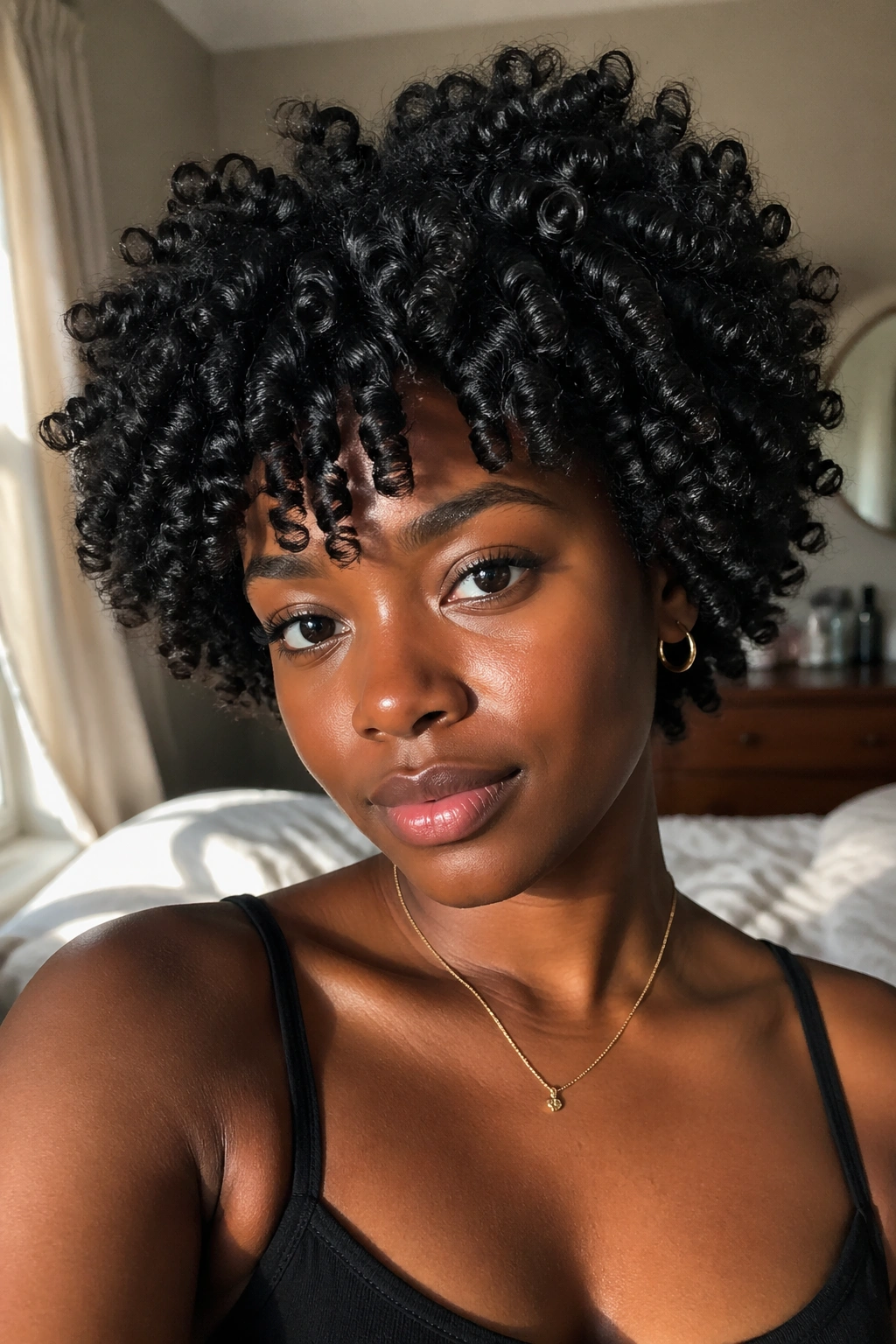
Finger coils create the most perfectly round, defined curls possible — each one an individual work of art that, when combined with a full head of them, creates a halo of spectacular definition that’s genuinely hard to achieve with any other technique.
The process is slow and methodical. Working on soaking wet, product-coated hair, take a small section and wrap it around your pointer finger, coiling it from root to tip in a single direction. Slide your finger out and let the coil spring naturally. Repeat across your entire head — expect this to take two to three hours for a full head. Air-dry or diffuse on low heat, and don’t touch the coils until fully dry.
Once dry, you can leave them perfectly defined for a sleek, polished look, or gently pull them apart for a bigger, curly afro effect. Both options are stunning.
9. Afro with Defined Curl Clusters
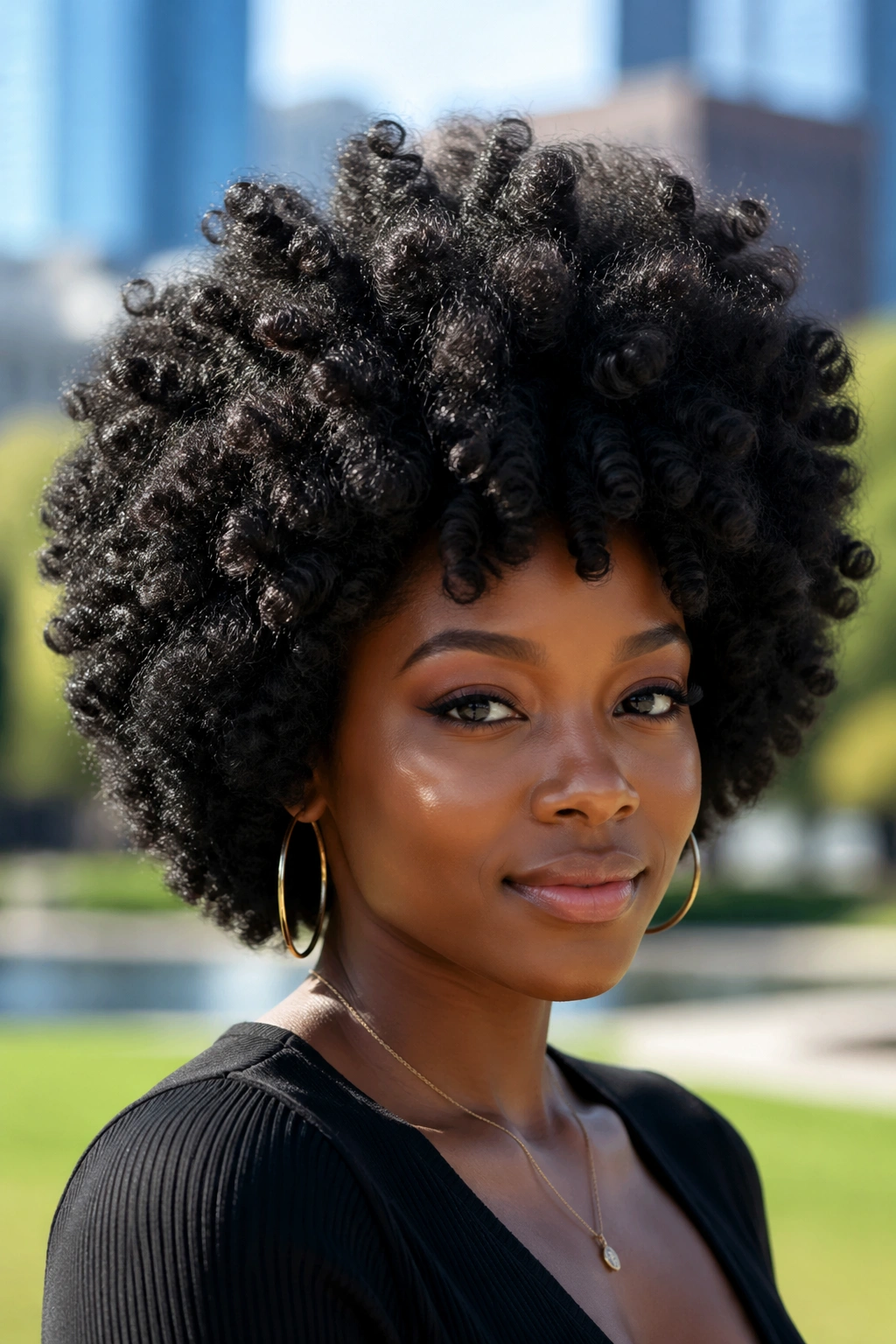
Sometimes the best big curl style is simply letting your natural afro bloom in its full glory, with the focus on keeping the individual curl clusters visible rather than picking the hair out into a completely undefined fro.
After washing and deep conditioning, apply your leave-in and a light curl cream, working in small sections to encourage your natural curl clumps to stay together. Let your hair air-dry without touching it, then use your fingers — not a comb or pick — to gently lift the root area for volume while keeping the curl clusters intact in the mid-lengths and ends.
The result is a full, rounded afro that retains natural curl definition throughout, which gives it depth and texture that a fully picked-out afro doesn’t always have.
10. Half-Up Curly Crown
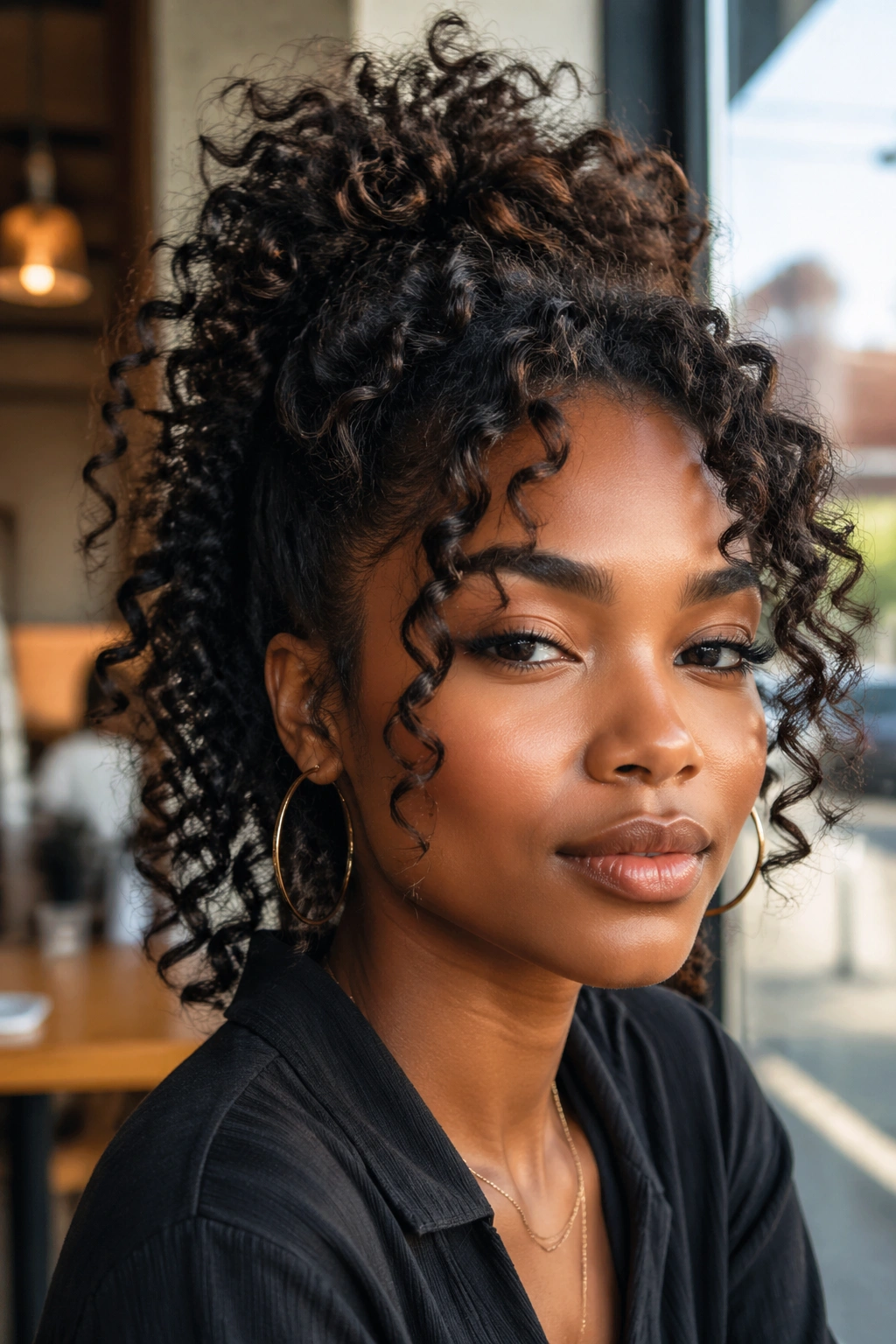
A half-up, half-down style with the crown curls piled high creates a dramatic silhouette that’s equal parts playful and sophisticated. This is a go-to style for days when you want some hair off your face but don’t want to sacrifice your curl showcase.
After defining your curls with your preferred method, gather the top half into a loose, high bun or puff, securing with a satin scrunchie. Deliberately loosen the bun so the curls in the crown section spill out and around rather than sitting flat. Leave the rest of your curls flowing freely below.
The contrast between the gathered crown and the loose, flowing curls below is incredibly striking — and it takes about 90 seconds to create.
11. Curly High Puff
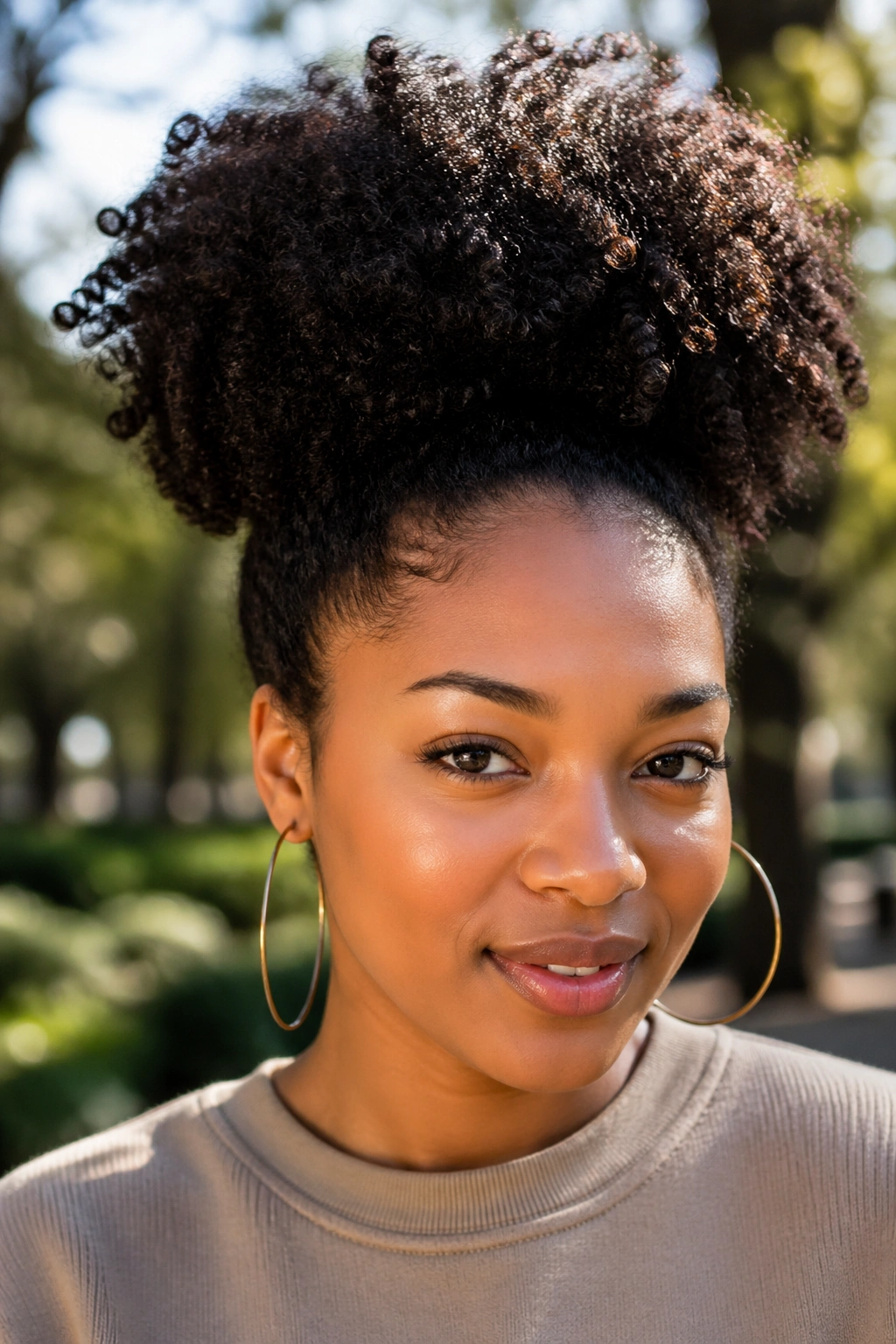
The high puff is a natural hair icon — simple, beautiful, and endlessly flattering. When your curls are fully defined and you gather them into a high puff at the crown of your head, the volume and texture of your natural hair becomes the entire focus of the style.
Use a large, soft satin scrunchie to gather your hair at the very top of your head. The higher and looser the placement, the more dramatic the silhouette. Don’t pull the puff too tight — you want volume, not a flat ball. Once secured, gently pull sections of the puff outward and upward with your fingers to create fullness.
Smooth your edges for a polished contrast with the voluminous puff, or leave them natural for a more relaxed, carefree vibe.
12. Shingled Wash-and-Go
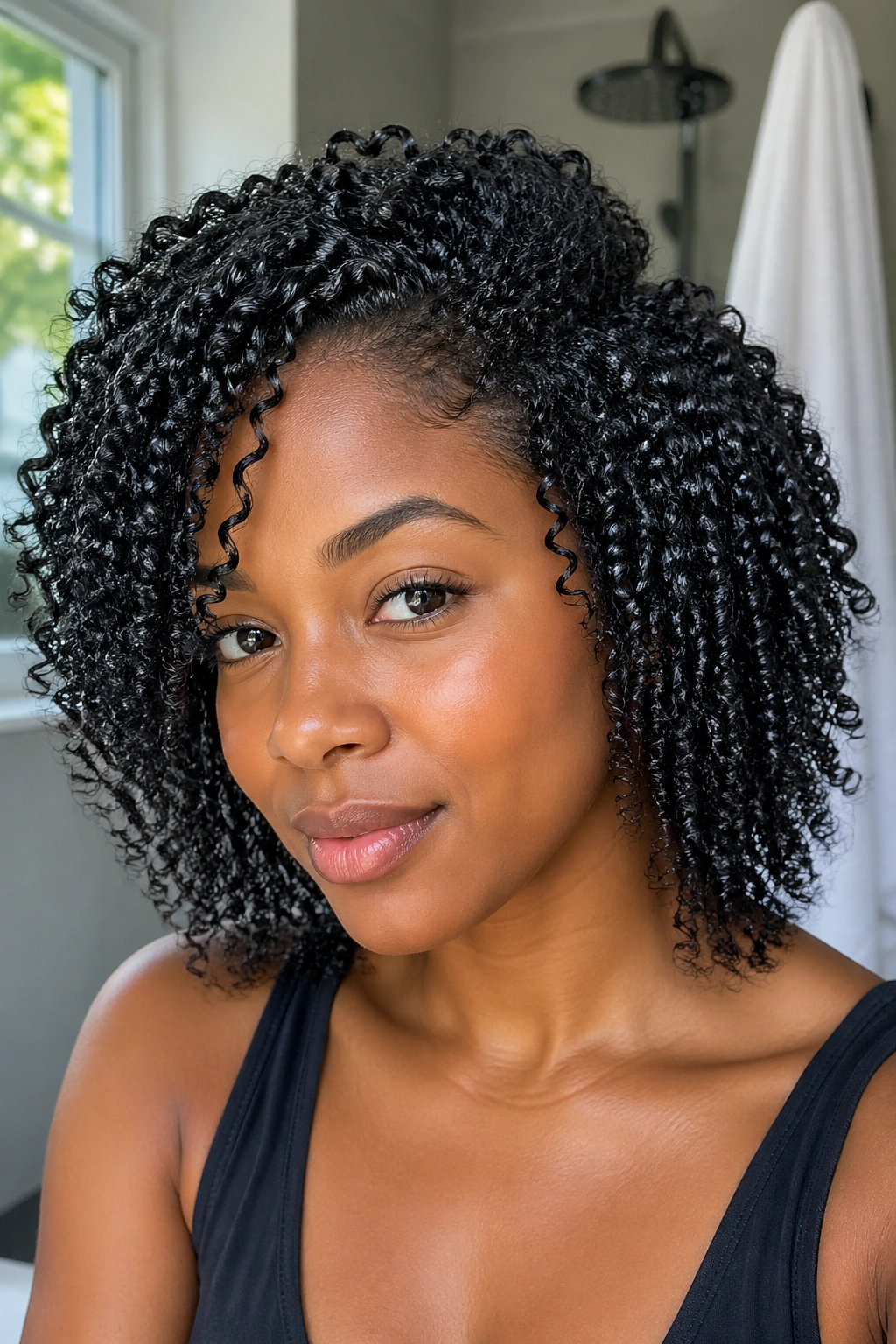
Shingling is a product application technique, not a style in itself — but it produces such a specific and stunning result that it deserves its own entry. It’s the method of smoothing each small section of hair strand by strand while applying product, encouraging maximum curl definition and clumping without any tools.
On soaking wet hair, take a small section and apply your leave-in and gel. Instead of raking through, smooth the product downward along the hair in small, deliberate strokes, working around the section from all angles. You’re essentially coating every individual strand and guiding the curls to clump together. The process is time-consuming but produces a wash-and-go with extraordinarily defined, uniform curls.
13. Straw Set Spirals
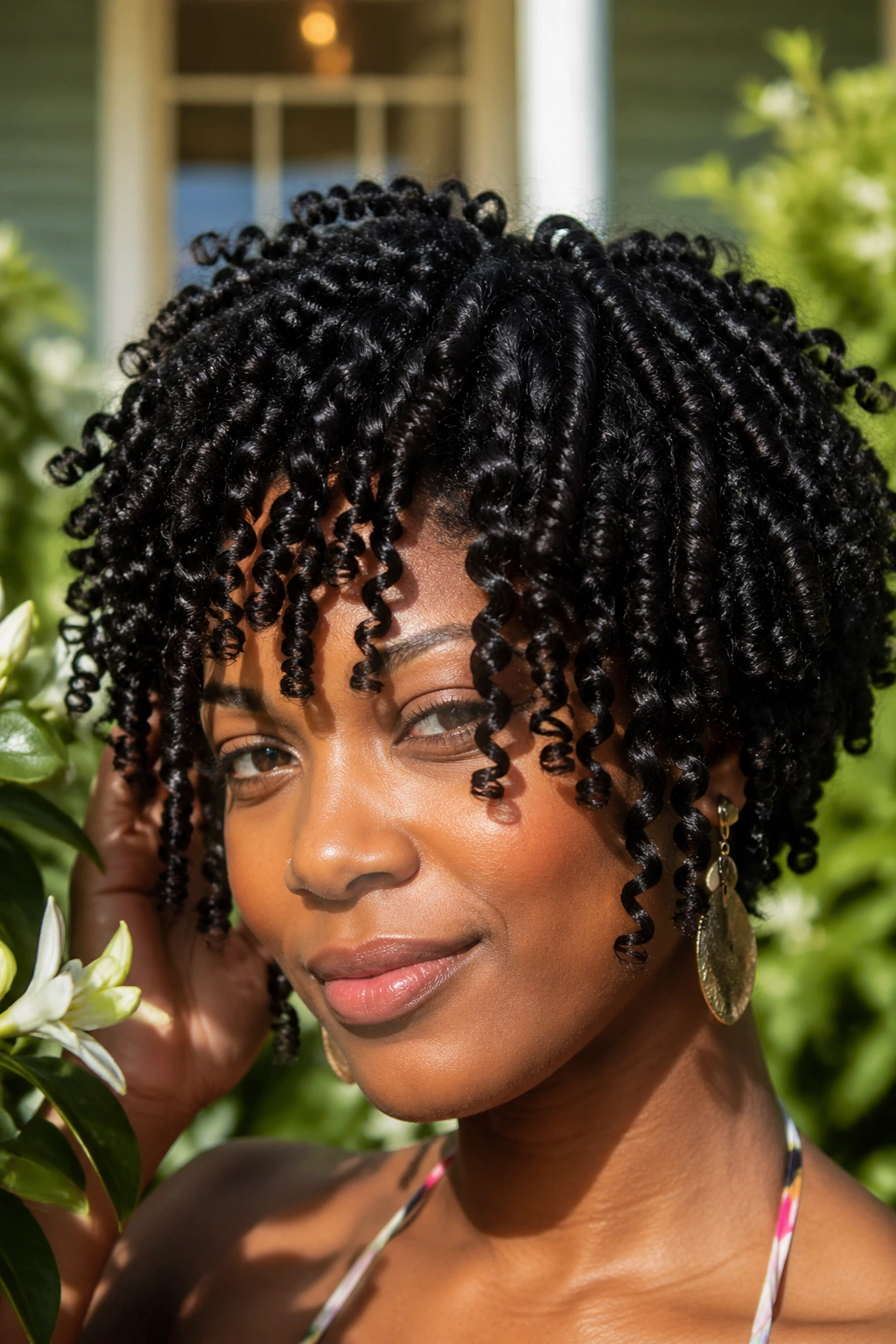
Straw sets are the endgame for defined spiral curls — the style that makes strangers stop you on the street to ask if that’s your natural hair. Using actual drinking straws as tiny rollers, a straw set creates pencil-thin spirals that group together in stunning clusters.
Work on damp hair, applying a holding mousse to each section before wrapping it around a straw from tip to root and folding the ends to secure. The process takes a while — plan for at least two to three hours — but the payoff is extraordinary. Dry under a hooded dryer or overnight. Remove straws carefully and separate gently with oiled fingers.
14. Side-Swept Big Curls
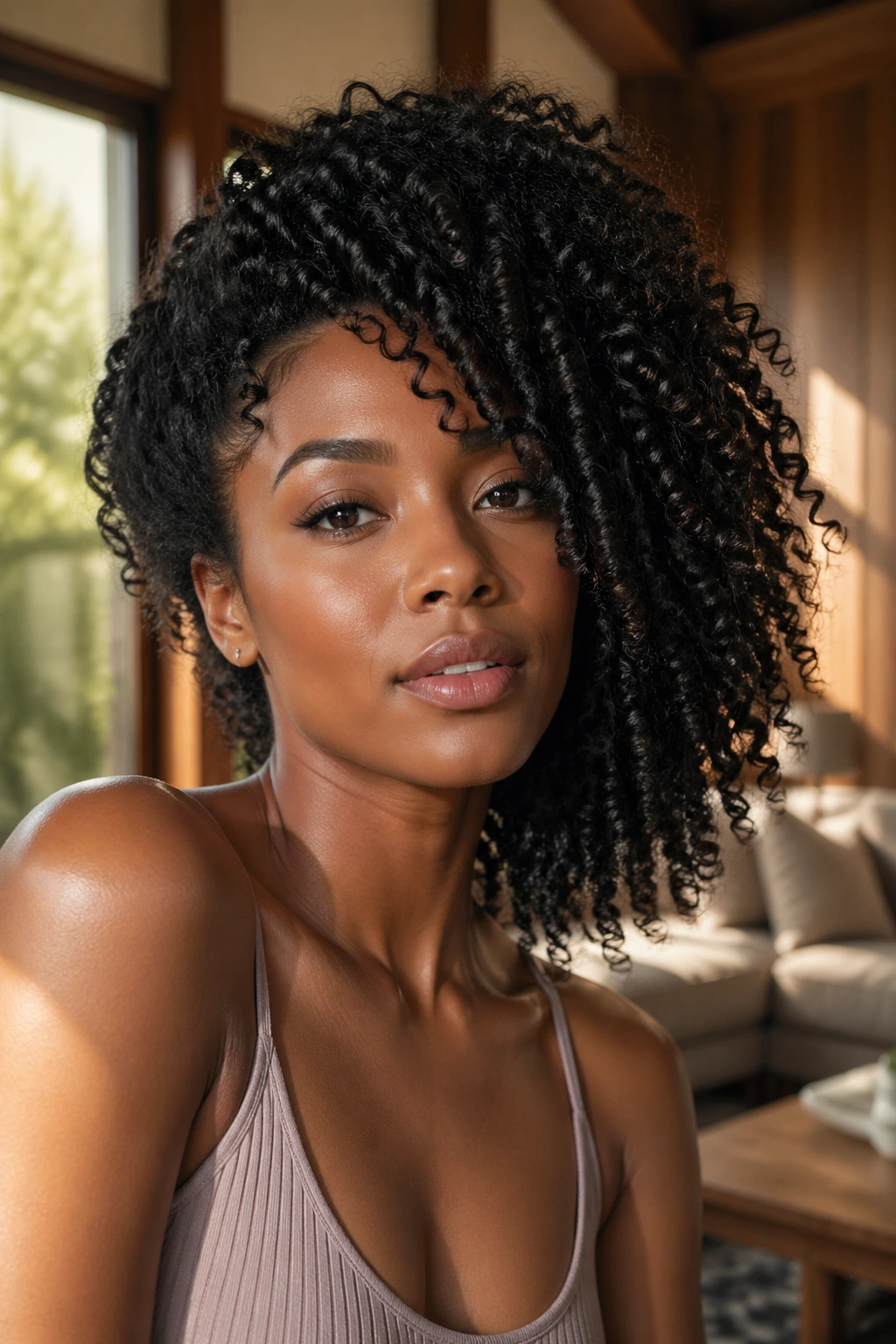
Asymmetry does something incredible for big curly styles — it transforms a voluminous head of curls into a deliberately styled look that feels editorial and intentional. The side sweep moves the bulk of your curls dramatically to one side for a striking silhouette.
After defining your curls, use your fingers to direct the majority of them to one side of your face. Pin the opposite side with a stylish barrette or flat twist it back close to your head. The remaining curls on your dominant side should be at their fullest and most defined. Shake your head slightly to let the curls settle naturally to that side.
15. Rod Set with Defined Sections
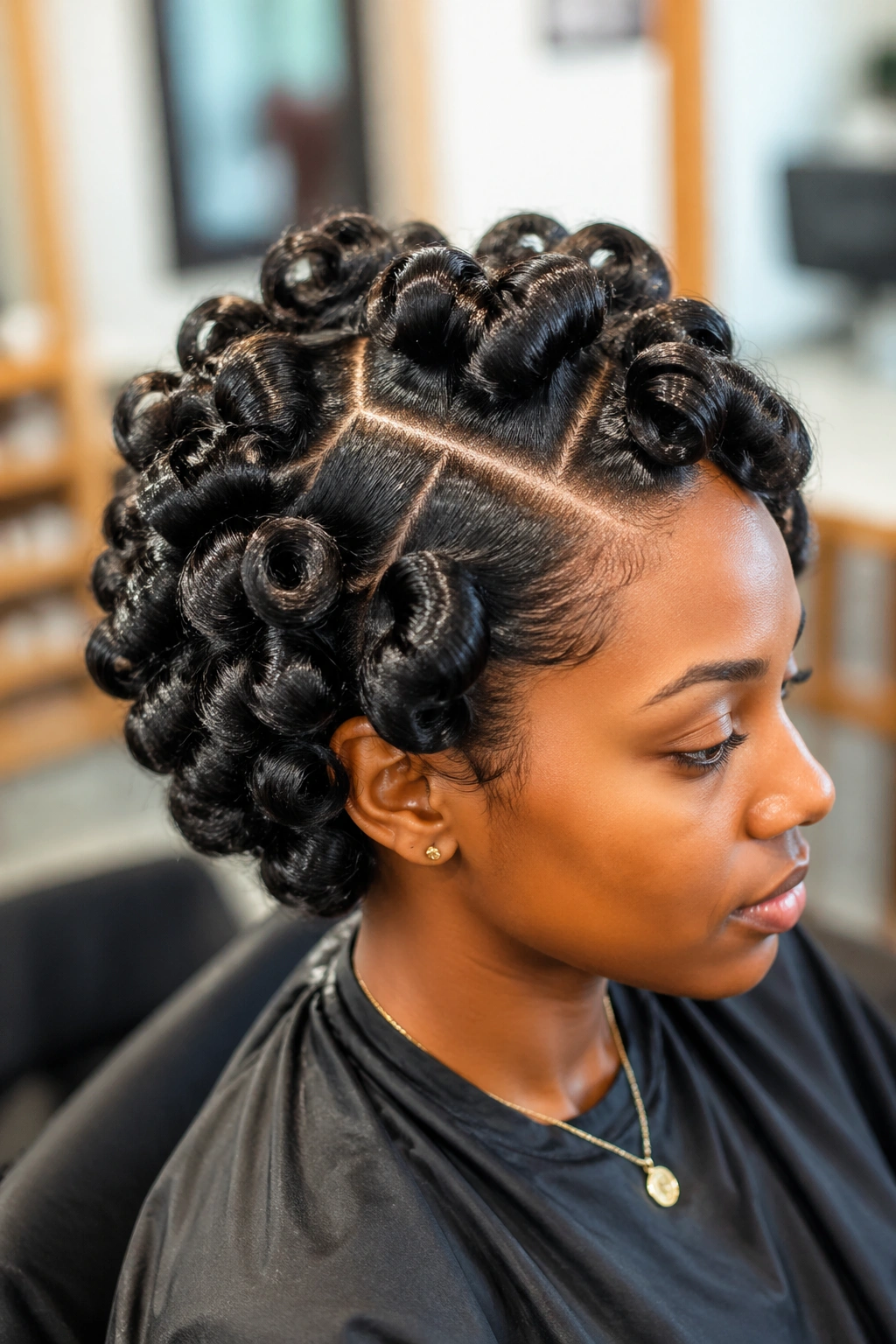
Taking a flexi rod or perm rod set and adding defined part lines creates a style that looks professionally done. The clean sections add structure to what can sometimes feel like a messy, all-over style.
Part your hair into neat sections before setting your rods — a zig-zag part down the center, clean side parts, whatever geometry appeals to you. Rod each section separately, keeping the parting visible. When you take the rods down, those clean parts give the finished style a polished, intentional quality that a randomly sectioned set can’t quite match.
16. Curly Mohawk
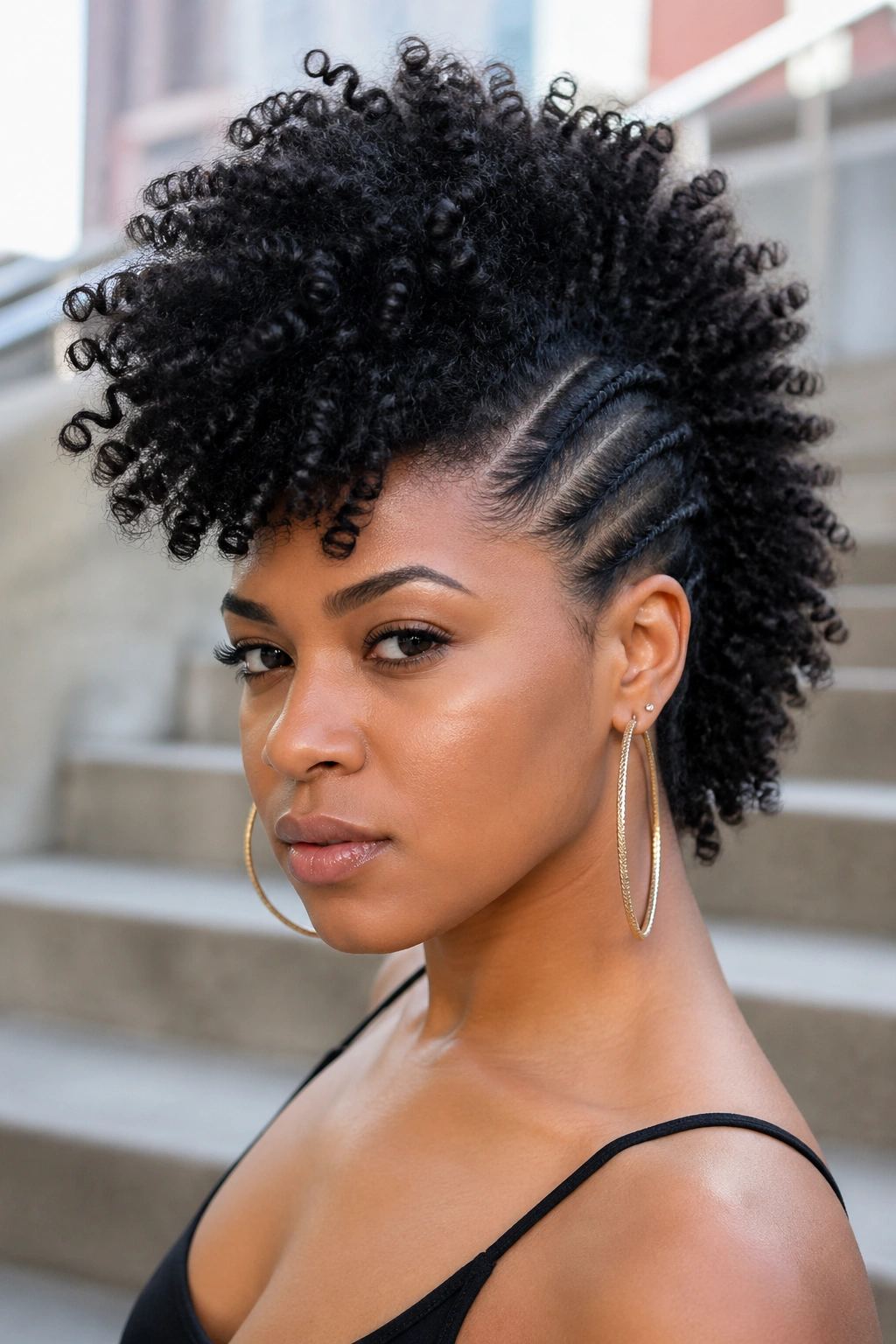
The curly mohawk is bold, beautiful, and makes zero apologies. It pairs the sleek, directional structure of a mohawk silhouette with the natural volume and texture of your curls — and the result is a look that commands attention.
Smooth or flat-twist the hair on each side of your head to lay it flat against your scalp, directing everything toward the center. The curls at the center-top of your head should be as big and full as possible — diffused, fluffed, and lifted at the roots. The stark contrast between the flat sides and the voluminous center is what makes this style so dramatically striking.
17. Stretched Twist-Out
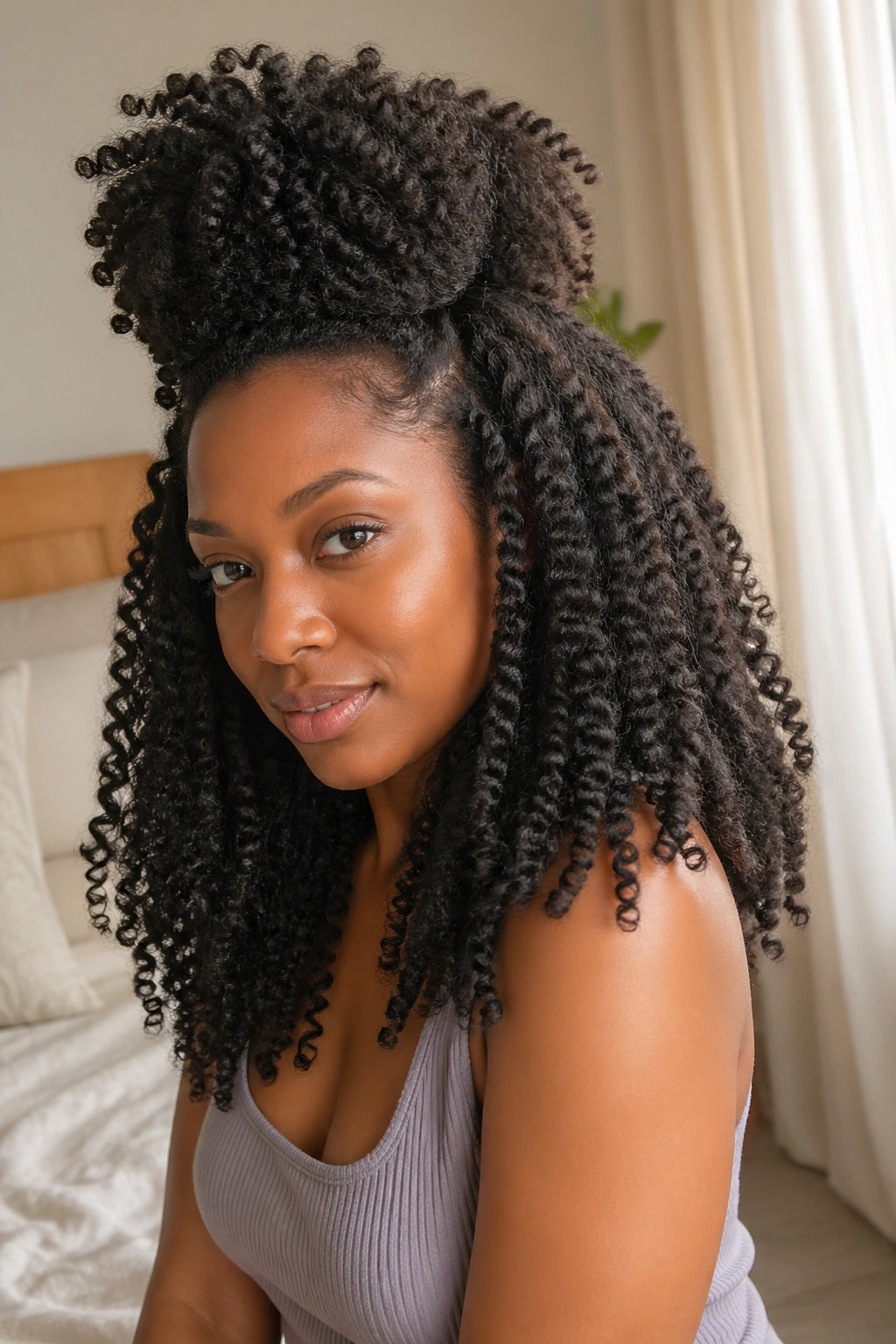
A stretched twist-out is what you reach for when you love the definition of a twist-out but want significantly more length and volume. The stretching process reduces shrinkage during drying so that when you unravel your twists, the curls hang lower and fuller than they would without any intervention.
After installing your twists, put on a large satin bonnet and let them air-dry partially. Then, before they’re completely dry, gently stretch them by gathering the twists loosely and securing them at the top of your head in a loose puff. Let them finish drying in this stretched position. When you unravel, your curls will have significantly more length while still maintaining definition.
18. Curly Tendrils and Updo
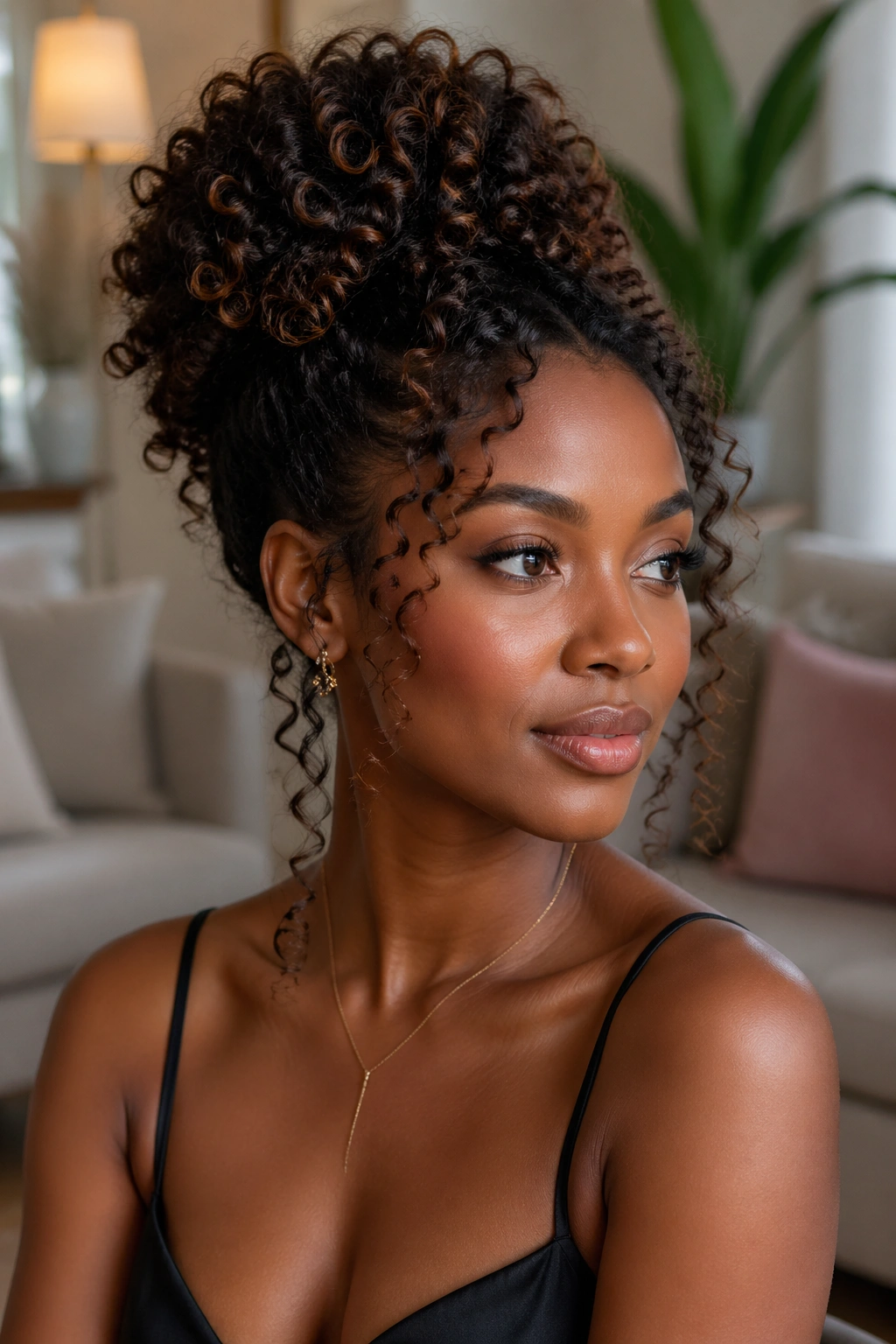
An updo with deliberately released curly tendrils is one of the most flattering and elegant styles for natural hair. It gives you the practicality of having your hair up while still showing off your curl pattern in a way that feels both intentional and effortlessly beautiful.
Pin or tuck the majority of your defined curls up into a loose, curly bun or updo. Then, release a few sections around your hairline — at the temples, nape, and sides — to hang as defined curl tendrils. Use a little extra product or coil them around your finger to ensure they stay defined rather than frizzing.
19. Defined 4C Wash-and-Go
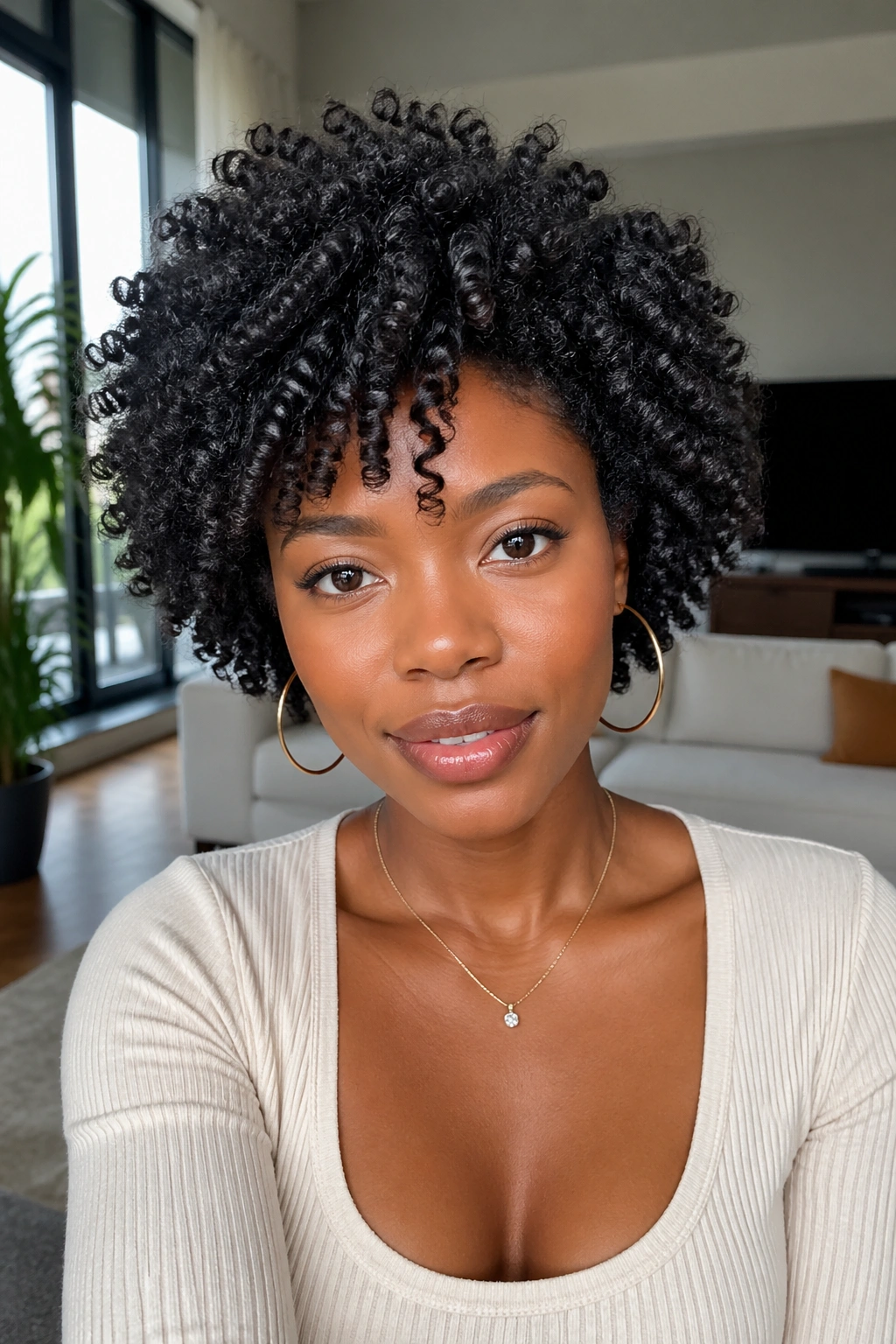
The 4C wash-and-go gets a bad reputation in the natural hair world as being “impossible” — and that’s simply not true. What it is, honestly, is different. The technique and approach are different from what works on looser textures, but the results can be absolutely stunning.
Shingling or the smoothing technique works best for 4C wash-and-gos. Rake and smooth your product through small sections on dripping wet hair, encouraging the natural curl clusters to clump together. Use a heavier cream or custard for 4C hair rather than a light mousse. Let it air-dry undisturbed, or diffuse on the lowest heat setting. The result is a big, defined, soft afro with visible curl definition throughout.
20. Braidout Afro
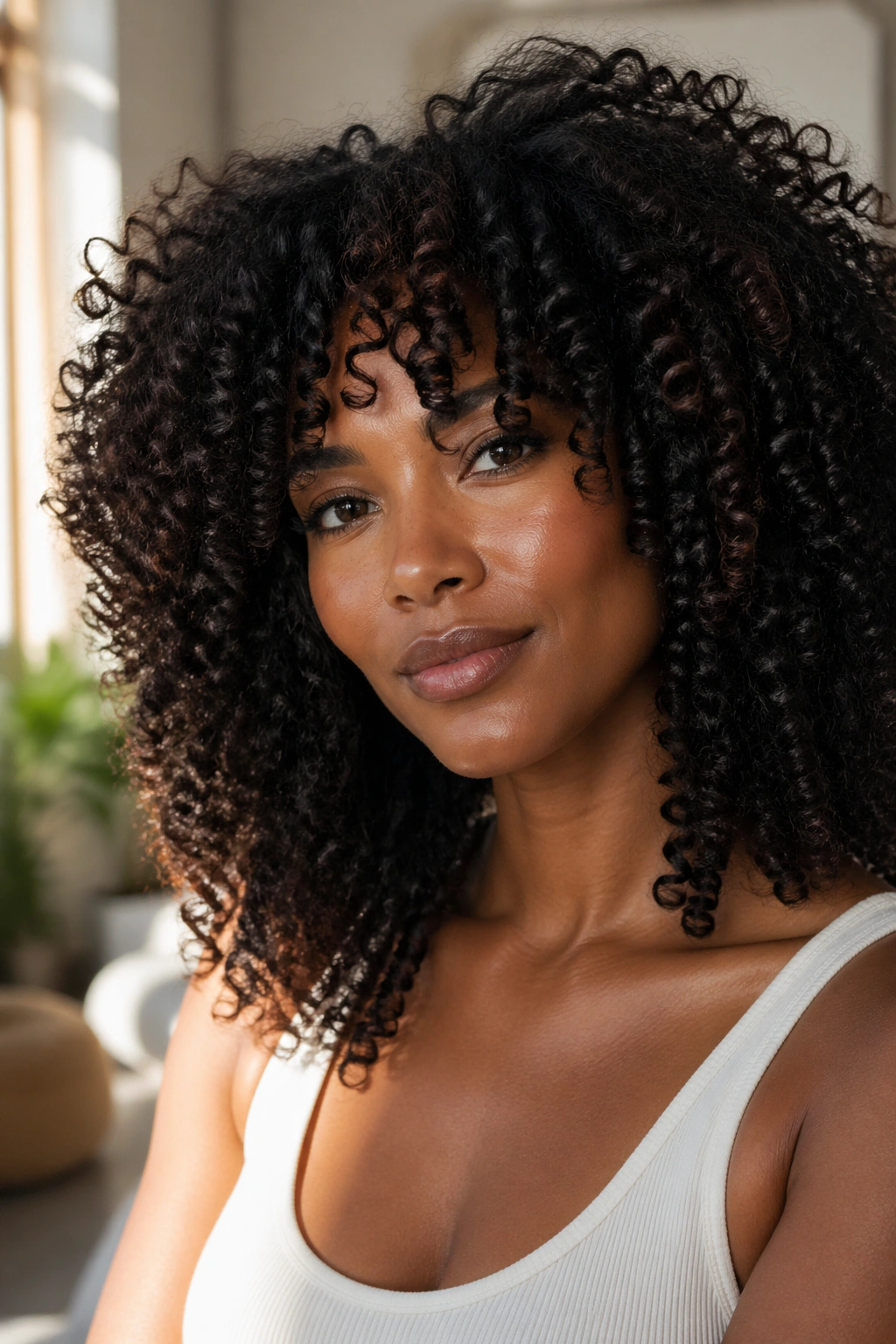
A braidout allowed to fully air out and then separated for maximum volume creates a beautiful, textured afro that retains the distinctive angular wave of the braid pattern. This is one of the best styles for 4b and 4c hair types who want big, full volume with a hint of texture.
Braid your hair in however many sections produces the wave size you want, let the braids dry completely, then unravel and separate aggressively with oiled hands. Use an afro pick to lift the roots and create a full, rounded shape. The result is a textured, full afro with a distinct wave pattern running through it — beautiful, bold, and unmistakably natural.
21. Curly Ponytail with Volume
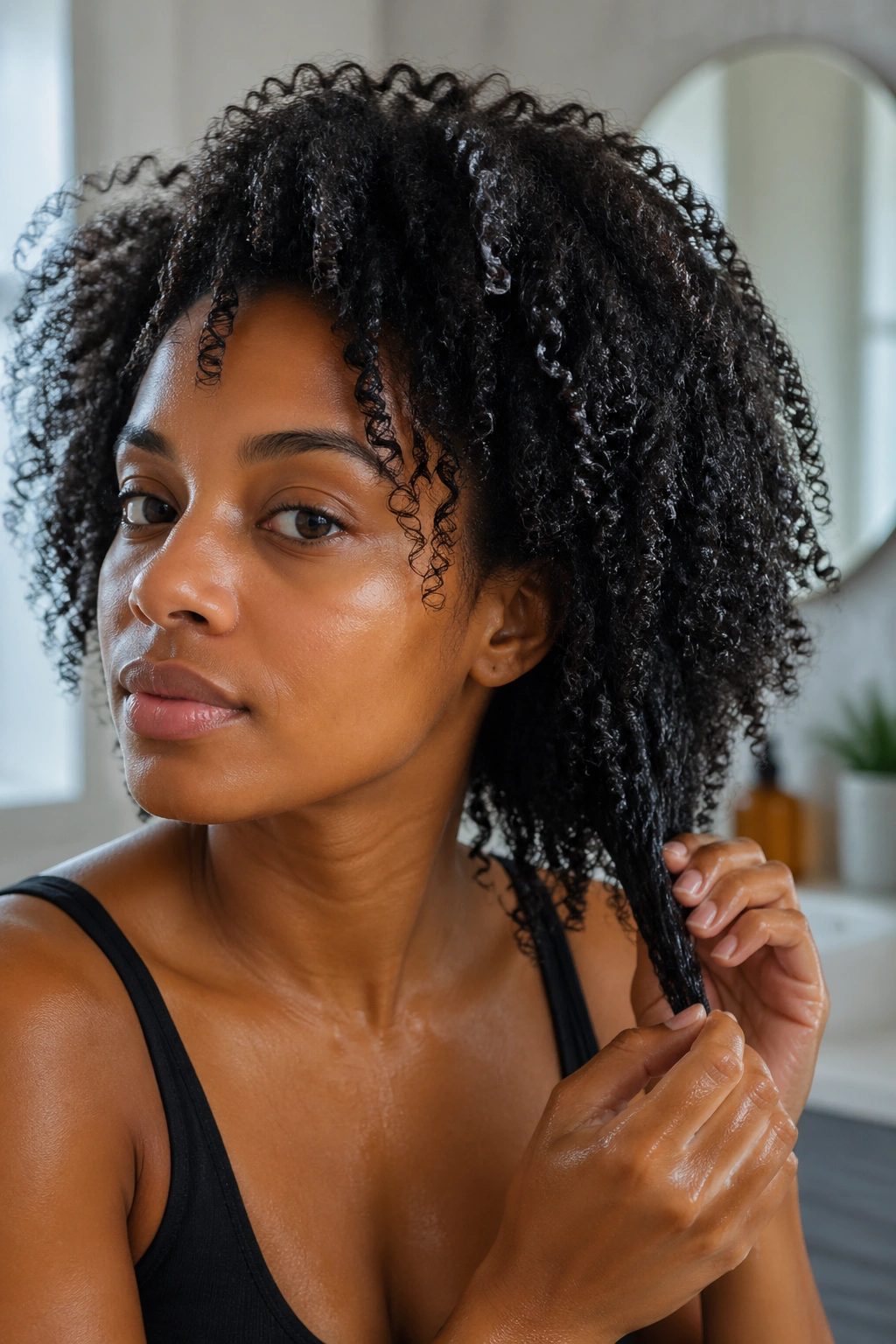
A curly ponytail done right is absolutely a statement look — not a throwaway style. The secret is volume: gathering your curls into a ponytail that’s bursting with fullness rather than lying flat and limp.
Gather your defined curls into a high ponytail using a large, soft scrunchie. Once secured, use your fingers to pull the ponytail upward and outward in every direction to maximize volume. Wrap one small curl section around the base to cover the scrunchie. Smooth your edges or leave them for a more natural finish. The result should look like an explosion of gorgeous curls contained (barely) at the top of your head.
22. Heat-Free Heatless Big Curls
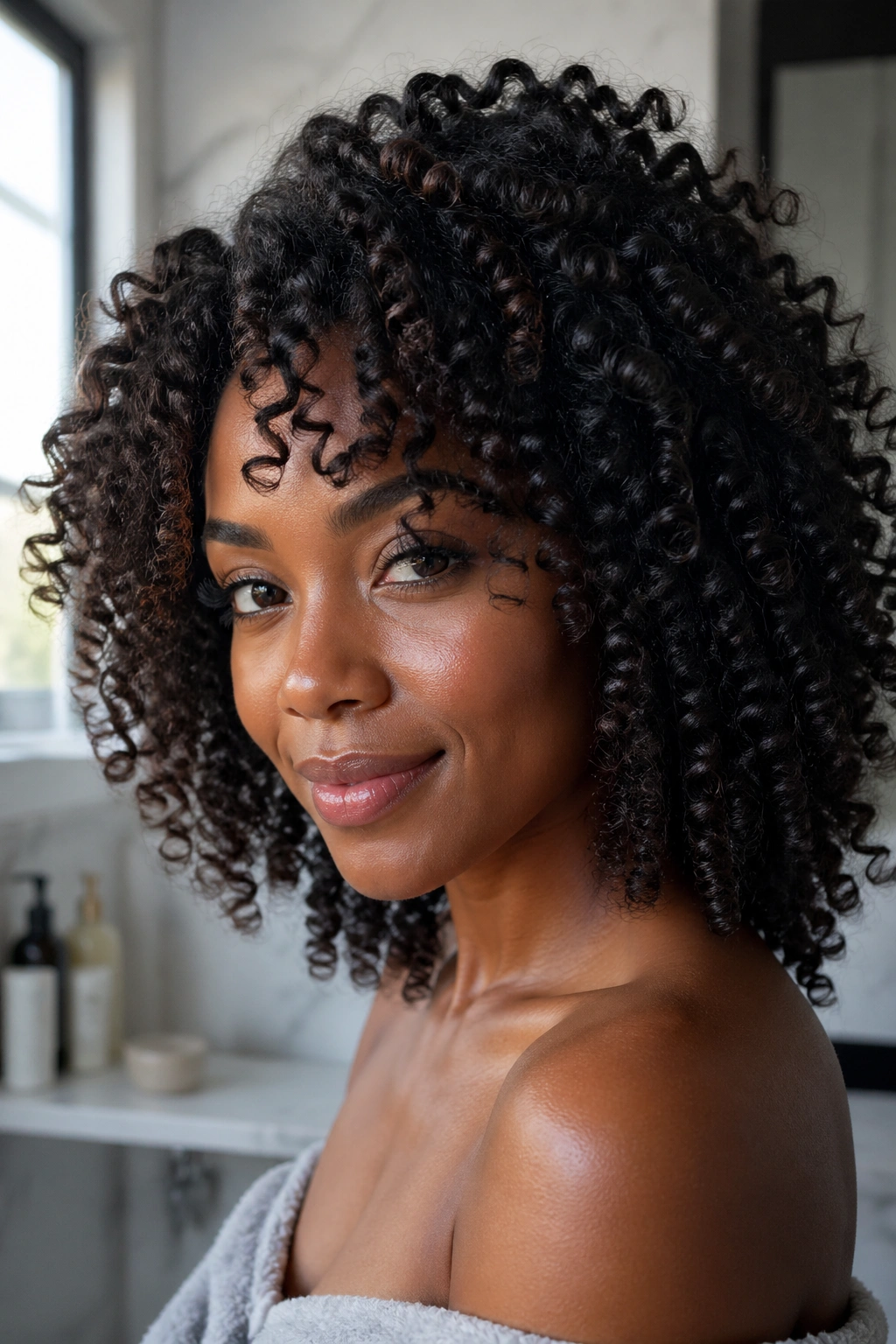
Heatless styling methods are the backbone of healthy natural hair care because they allow you to achieve a variety of curl styles without exposing your strands to heat damage. Over time, reducing heat use improves your hair’s elasticity, shine, and overall health — which makes future curl styles look even better.
Rotate through different heatless methods — bantu knot-outs, twist-outs, flexi rod sets, straw sets — rather than defaulting to the same one every wash day. Different methods produce different textures and patterns, which also helps prevent your hair from becoming “trained” into one shape. Variety keeps your curl styles fresh and gives your hair different experiences that benefit it in different ways.
23. Big Curls with Accessories
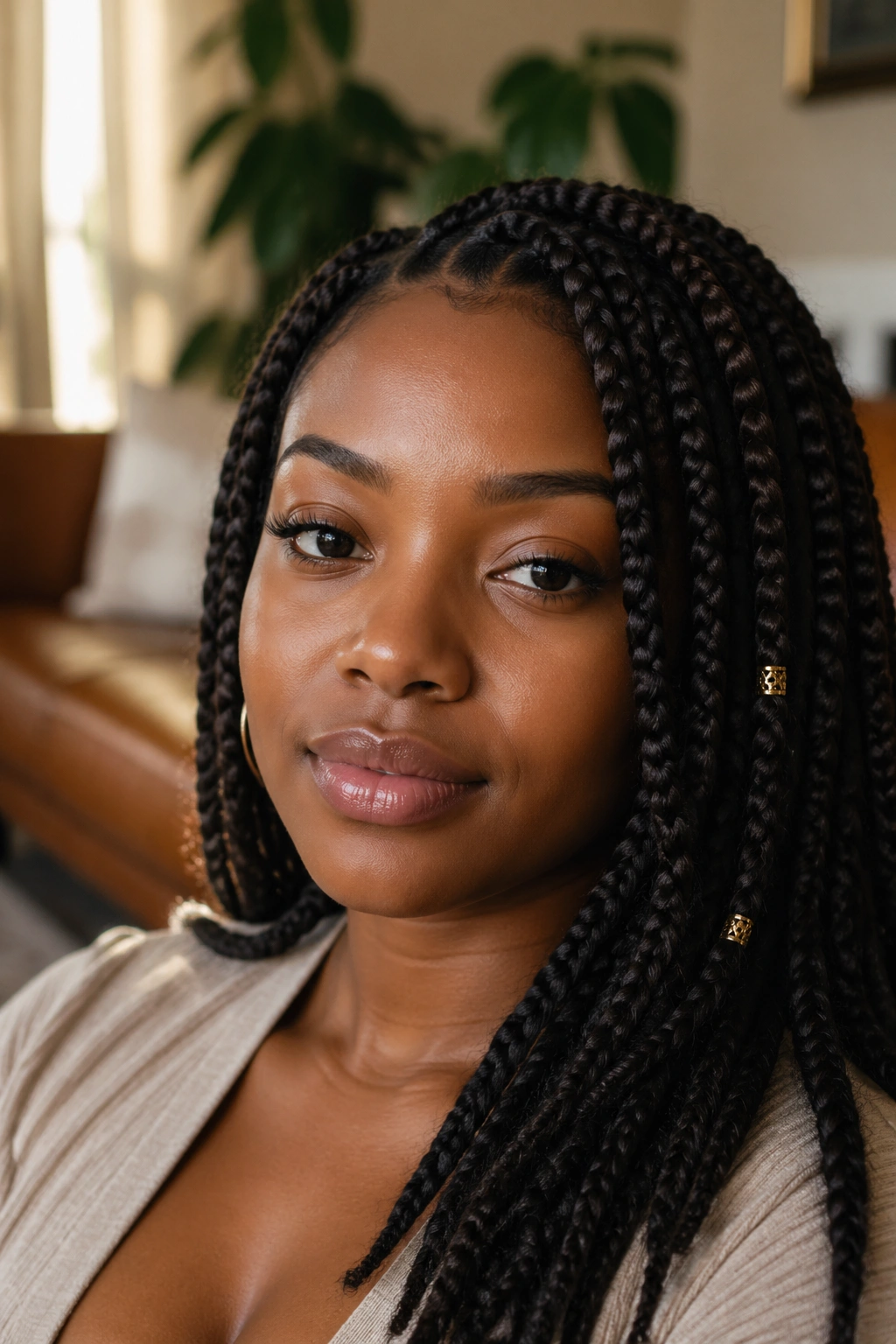
Sometimes the biggest upgrade to a big curl style isn’t a new technique — it’s an accessory. Natural hair and statement accessories are a match made in heaven. A head full of beautiful curls paired with the right embellishment becomes something genuinely spectacular.
Wide satin headbands add elegance and also keep your curls away from your face without distorting them. Large, embellished barrettes clipped at the side or back of your curls add personality. Silk scarves tied as headbands or wrapped around a puff are endlessly versatile. Decorative pins scattered throughout your curls look like they took an hour and actually take about two minutes.
The key is choosing accessories that complement your curl pattern rather than competing with it. Let your curls be the main event — the accessories are supporting cast.
How Long Big Curl Styles Last on Natural Hair
One of the most practical questions about big curl styles is how long they actually last — and the honest answer is: it depends entirely on how well you maintain them at night. Without nighttime protection, even the most perfectly executed curl style will look rough by morning two.
Nighttime maintenance is simple but non-negotiable. Before bed, gather your curls loosely into a pineapple (a very loose, high ponytail at the very top of your head) using a satin scrunchie. This keeps the curls from being crushed against your pillow. Cover with a satin bonnet or sleep on a satin pillowcase. In the morning, release the pineapple and let the curls fall naturally — they’ll bounce back to near their original shape.
Most big curl styles on natural hair last three to five days with good nighttime care. Rod sets and roller sets often last even longer — up to a week. Wash-and-gos tend to have the shortest lifespan, typically two to three days before they need refreshing.
Refreshing Curls for Days-Old Styles
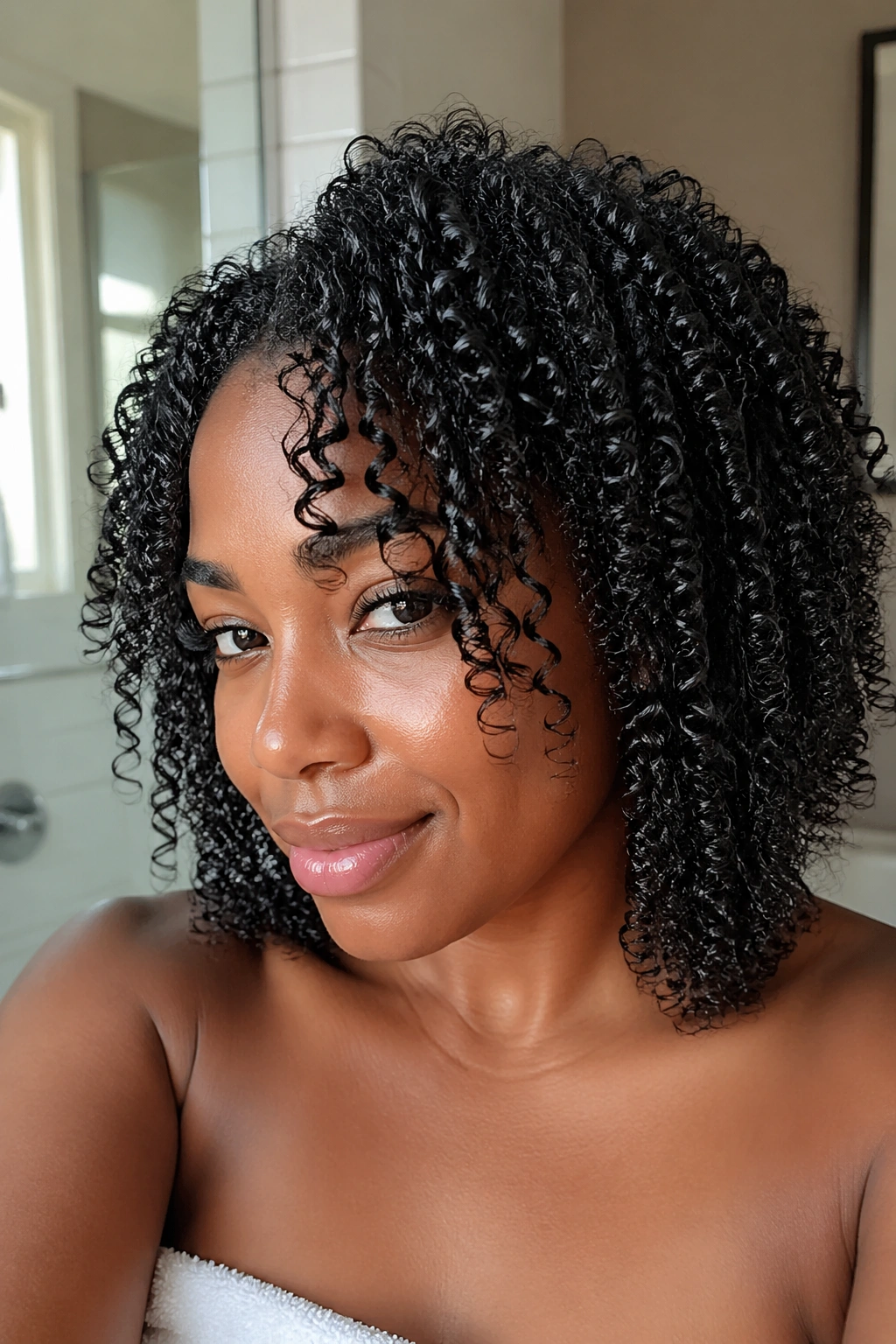
Day two and day three big curl refreshes are an art form worth mastering. The goal is to revive the shape and definition of your curls without fully restyling your hair from scratch.
Mix water and a small amount of your leave-in conditioner in a spray bottle. Lightly mist each section — not dripping wet, just enough to reactivate the product already in your hair. Scrunch upward gently. For extra definition on sections that have lost their shape, add a tiny amount of the gel or cream you originally used, working it through the damp hair and scrunching again.
Diffuse on low heat for a few minutes if you want your style to dry faster, or let it air-dry. The key is patience — scrunching while hair is still wet, then leaving it alone until it’s dry again. Touching your hair while it’s damp mid-refresh is the number one way to turn a good refresh into a frizzy disaster.
Building Curl Confidence
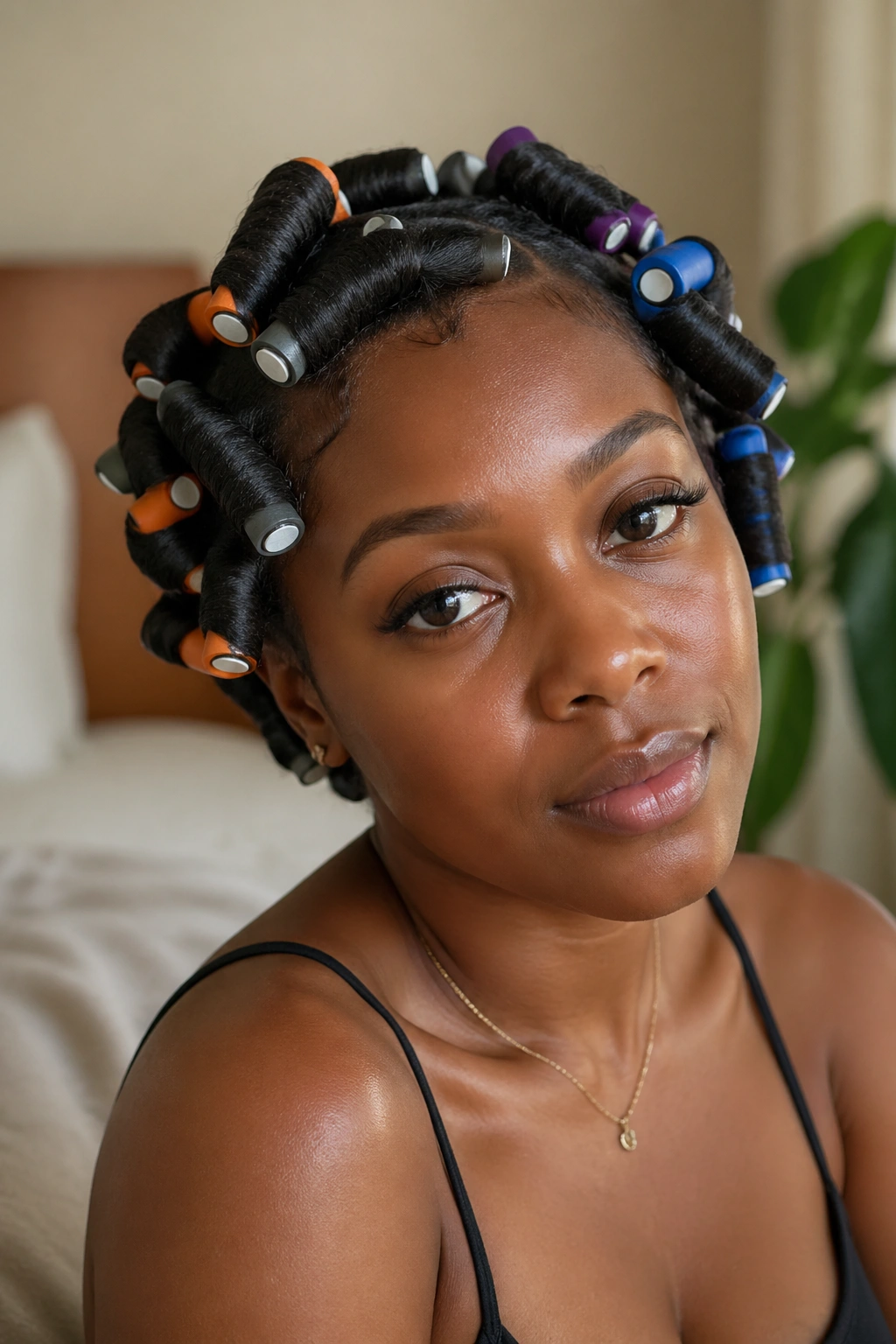
Learning to love and master big curls for Black women with natural hair is genuinely a journey — and that word isn’t an exaggeration. Many women spend months or even years figuring out what works for their specific texture, learning to read what their hair needs, and building the confidence to wear their natural curls without second-guessing themselves.
Give yourself grace during that process. Some wash days are going to be bad hair days, and that’s not a reflection of your hair or your technique — it’s just the reality of working with living, breathing, texture-rich natural hair that responds to weather, hydration levels, stress, and a dozen other factors outside your control.
But when you find the right method, the right products, and the right mindset? Big curls on natural Black hair are some of the most spectacular hair in the world. And wearing them is something worth every step of the journey it took to get there.
