



A side ponytail has a sneaky advantage: on long hair, it looks styled even when the actual setup takes ten minutes.
The shape does the heavy lifting. Long hair has weight, and weight changes everything — a pony can droop, split, or slide if the anchor sits in the wrong spot. Move it a little higher and the style feels playful. Drop it lower and it turns softer, neater, and a little more grown-up.
That range is why side ponytails keep working. They suit straight hair, waves, curls, layers, and that second-day texture that refuses to behave in a normal middle part. Some versions are sleek enough for a blazer. Others want a ribbon, a braid, or a few face-framing pieces left loose on purpose. The trick is not forcing long hair into one shape. It’s choosing a side ponytail that lets the length do what it already wants to do.
1. Sleek Low Side Ponytail for Long Hair
A sleek low side ponytail is the version I reach for when hair needs to look calm and controlled. It sits low near the nape, shifts to one side, and keeps every strand tucked in close so the finish reads clean instead of fussy.
Start with a light smoothing cream or serum, then brush the hair toward the side you want the ponytail to sit on. A fine-tooth comb helps at the front, but a boar bristle brush gives the base that flat, polished shape people notice first. Use less product than you think — long hair can look greasy fast if you coat the top layer.
One small move makes a big difference: tilt your head slightly toward the ponytail side while you gather the hair. That keeps the opposite side smooth and stops the nape from bubbling up. Wrap a thin strand around the elastic if you want it to look finished, not rushed. One neat wrap is enough.
2. Soft Curled Side Ponytail with Face-Softening Ends
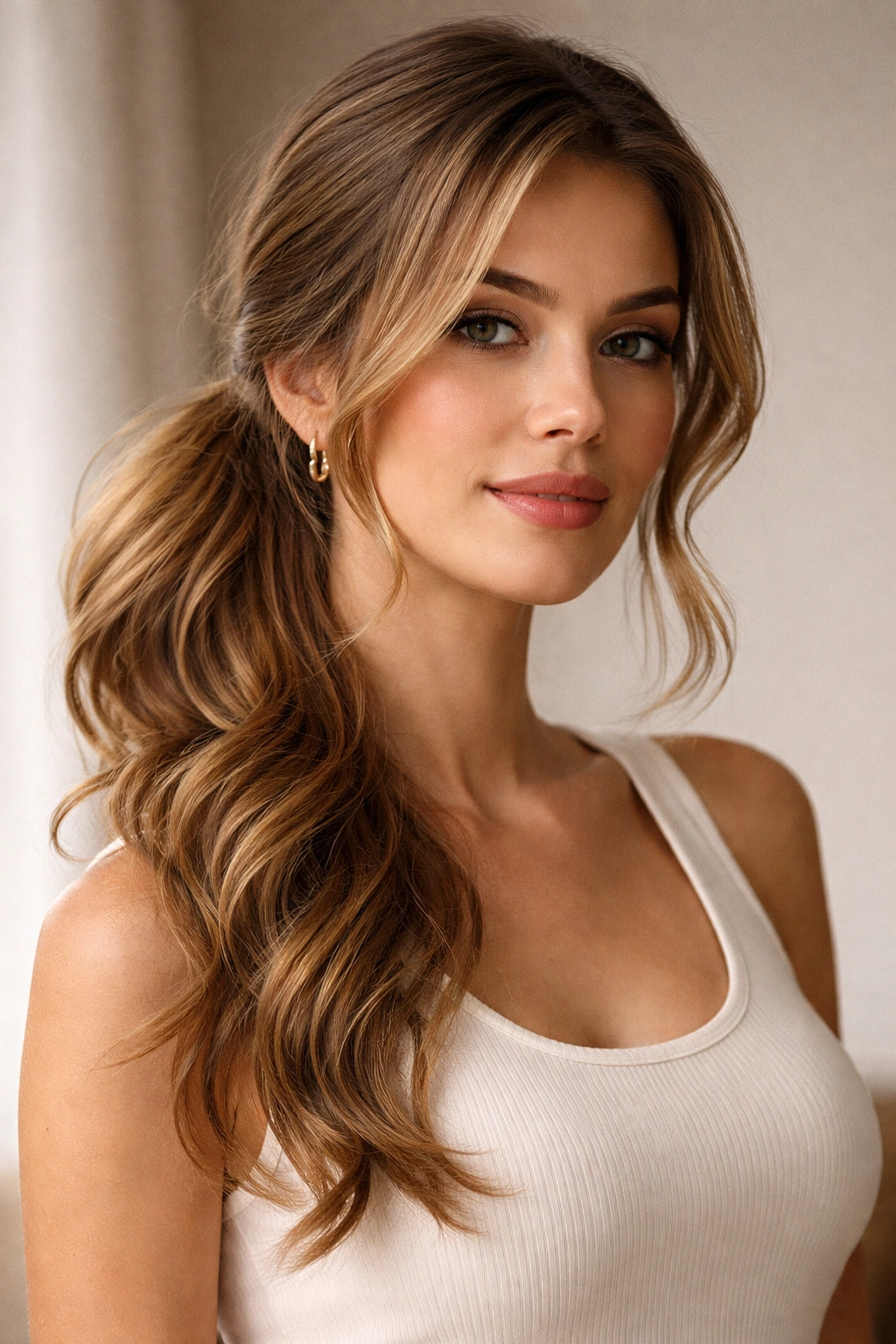
Why does this version feel so easy to wear? Because the curls do half the styling for you. A soft curled side ponytail looks best when the ends fall in loose bends rather than tight ringlets, especially on long hair that needs movement.
Use a 1¼-inch curling iron, take sections about 1 to 1½ inches wide, and curl away from the face on the pieces that sit closest to your cheekbones. Leave the ends a touch straighter if you want the ponytail to look modern instead of prom-heavy. After the curls cool, run your fingers through them once. Not a brush. A brush can make the whole shape puff out in the wrong way.
How to soften the curl
A light mist of flexible-hold hairspray is enough. If the hair is thick, pin the ponytail in place first, then curl the loose tail once it’s secured. That keeps the curl pattern from collapsing under its own weight.
This style is good when you want long hair to feel softer around the face without losing length. It also hides uneven layers nicely. A little bend goes a long way.
3. Bubble Side Ponytail with Even Segments
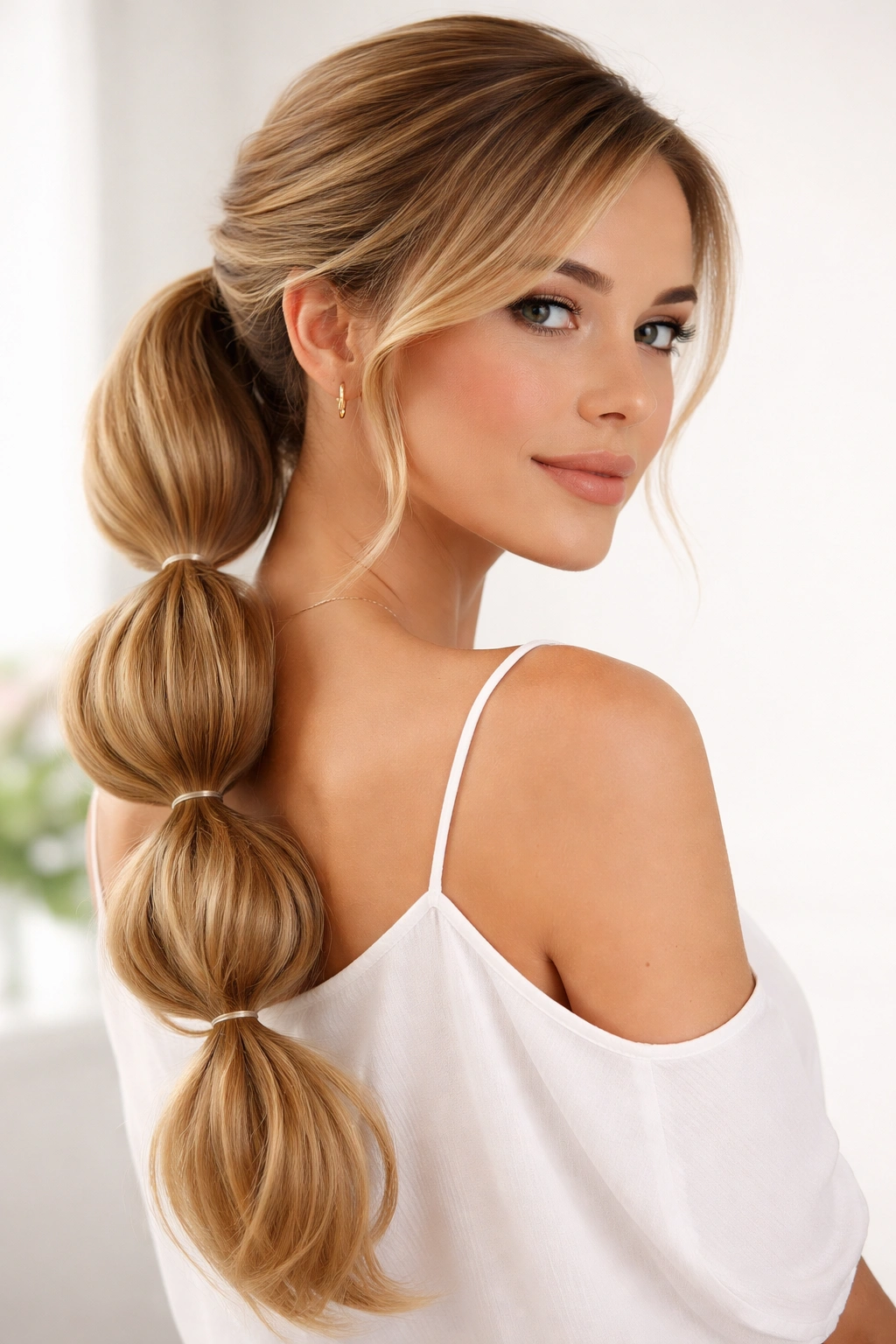
A bubble side ponytail is the answer when you want something playful that still holds up through a long day. It looks more complicated than it is, which is part of the fun. On long hair, the bubbles have enough length to stay round instead of collapsing into weird little dents.
Secure the ponytail on one side, then add clear elastics every 2 to 3 inches down the length. Gently tug each section outward between the ties so it balloons a little. The key is to keep the spacing even; uneven gaps make the whole style look accidental. Tiny clear elastics work better than thick black ones because they disappear into the hair.
- Keep the first bubble slightly larger than the rest.
- Pull only the outer edges of each section, not the middle.
- Finish with a drop of serum on the last 2 inches if the ends frizz.
It works especially well on thick long hair because the shape stays visible. Fine hair can do it too, but you’ll want a little texture spray first so the bubbles hold their shape.
4. Braided Side Ponytail That Keeps Layers in Line
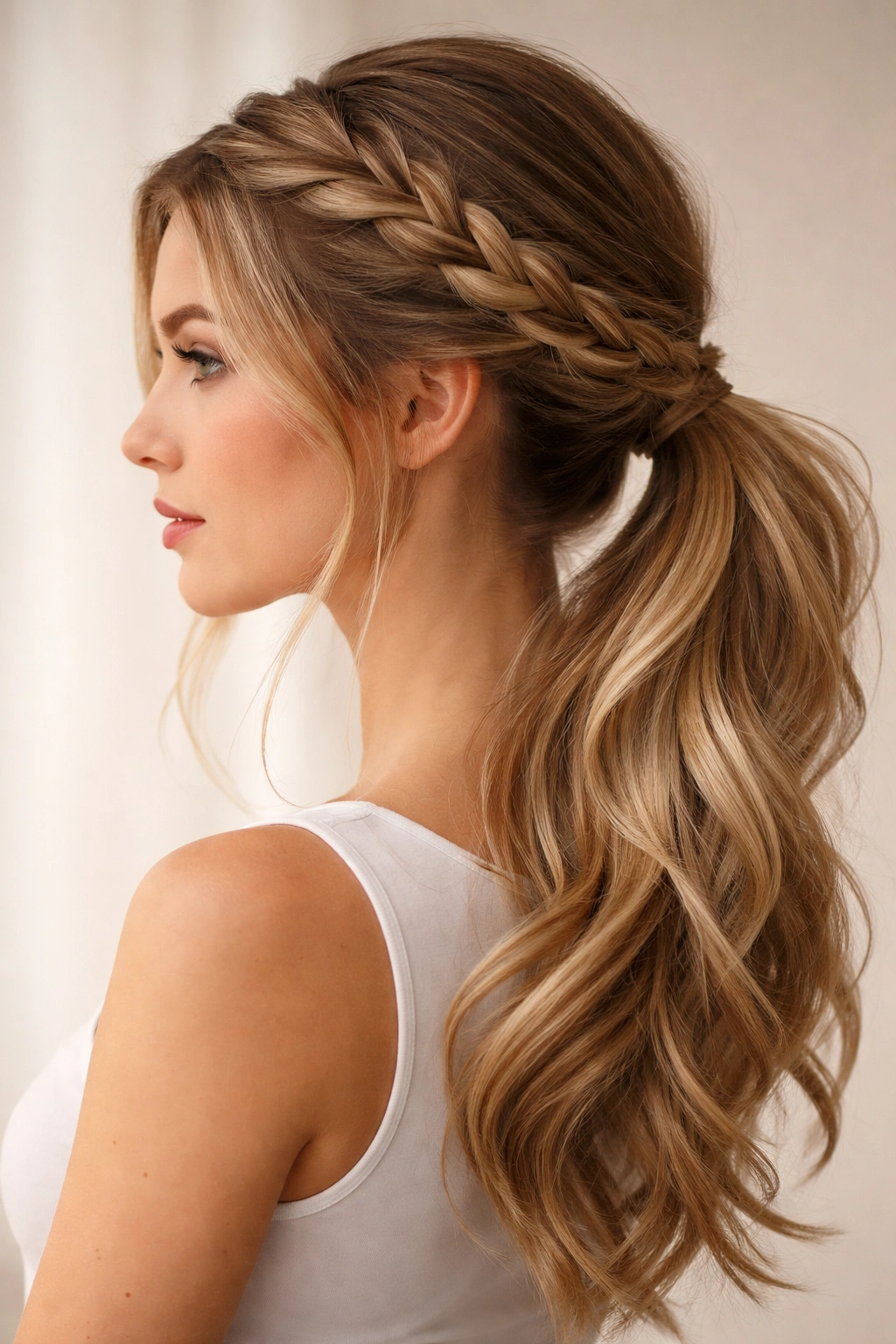
Braids and long hair are old friends. Put them together in a side ponytail and the result is tidy without feeling severe. This version is especially handy when layers keep slipping out of a regular ponytail and making the ends look thin.
You can braid the hair after gathering it to the side, or braid a section from the temple into the ponytail base first. The first option feels easier. The second looks more deliberate. I prefer the second when the hair is slippery, because the braid gives the elastic something to grip.
What makes it hold
A dab of texture powder at the roots helps, but don’t overdo it or the braid gets dusty and rough. If the strands keep sliding, mist the lengths with dry shampoo before braiding, then pinch the braid edges outward with your fingers. That gives the braid more width and makes the side sweep show better.
This is one of those styles that looks casual in a good way. Not messy. Just relaxed. It’s a smart pick for layered long hair because the braid keeps the shorter pieces from escaping every five minutes.
5. Wrapped-Base Side Ponytail with a Hidden Elastic
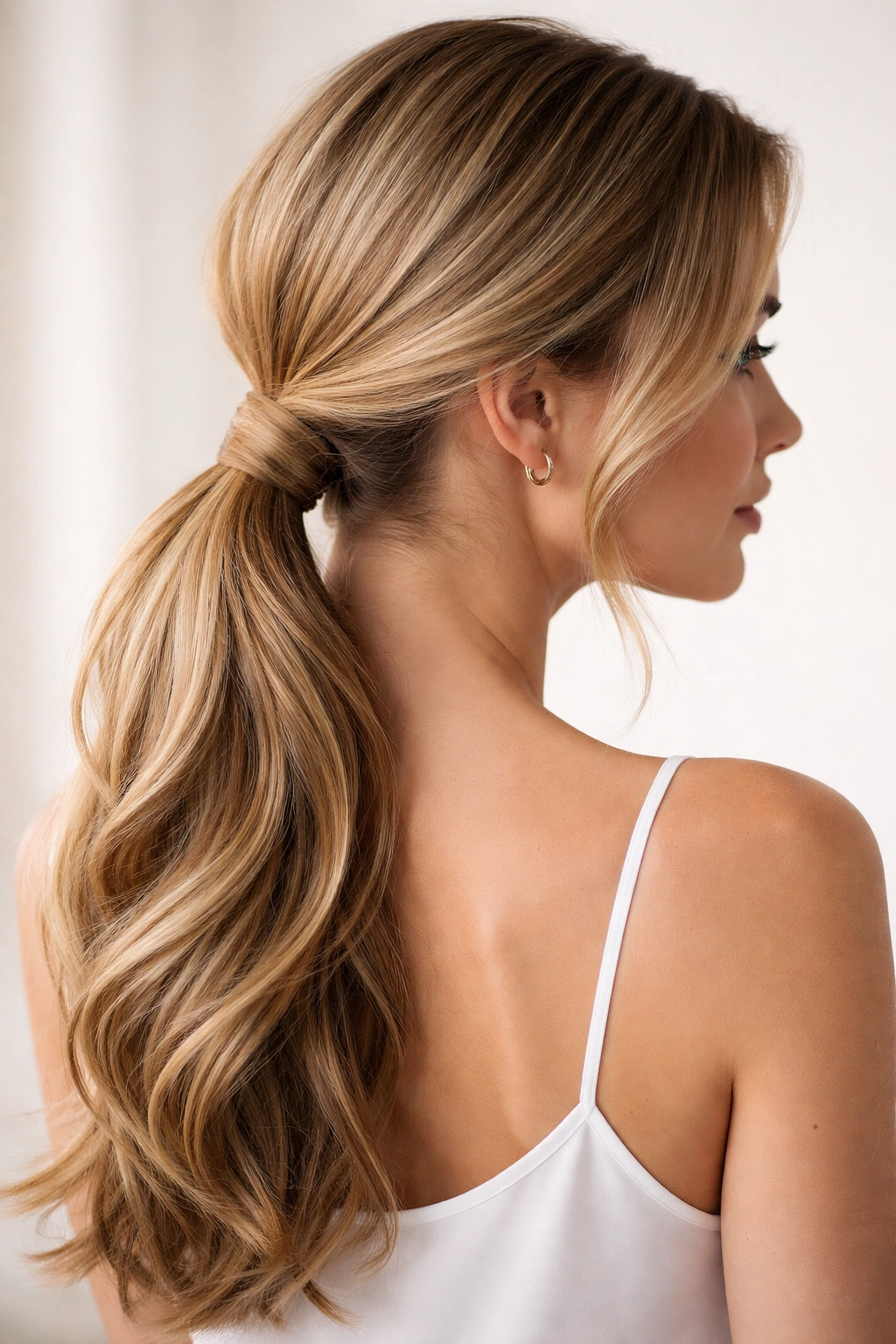
A wrapped-base side ponytail is the cleanest way to hide the tie and make the whole style look more finished. No bow, no scarf, no extra decoration. Just hair wrapped around the elastic so the base disappears.
Gather the hair to one side and secure it with a strong elastic. Take a thin strand from underneath the ponytail, smooth it flat, and wrap it around the base until the elastic is covered. Pin the end underneath with a bobby pin. A single pin is usually enough if the wrap is tight, but long or slippery hair may need two crossed pins.
The style reads polished because the eye doesn’t stop at the tie. It moves straight into the ponytail itself. That matters on long hair, where a bulky elastic can break up the line and make the style feel heavier than it should. If you want a cleaner finish, spray the wrapped strand lightly before you wind it around. It will stay smoother and lie flatter against the base.
6. High Side Ponytail with Crown Lift
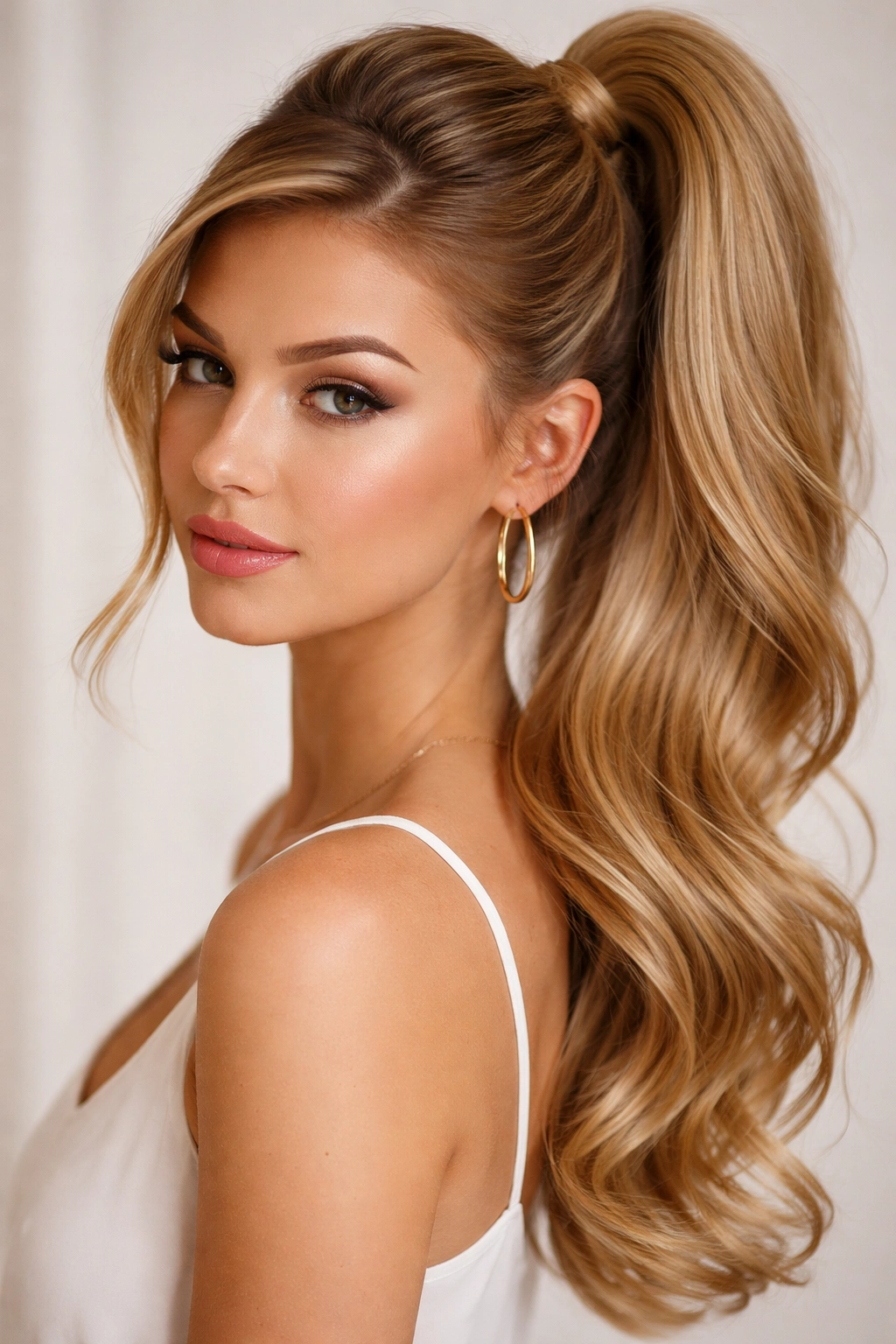
A high side ponytail has more attitude than the low versions. It sits up near the top of the head on one side, which gives long hair a little bounce and keeps the look from sinking into the shoulders.
Backcomb the crown very lightly, just at the roots, then smooth the top layer over it so the lift stays hidden. If you tease too aggressively, the crown will look frizzy instead of full. Pull the hair to one side and secure it high enough that the ponytail clears the shoulder line. That placement matters. Too low, and it turns flat. Too high, and it starts looking awkward.
I like this one with curled ends or flipped ends because the height at the base makes the length feel more dramatic. It works especially well if your hair naturally falls flat at the roots. A little lift near the crown changes the whole profile.
7. Side Ponytail with Loose Face-Framing Pieces
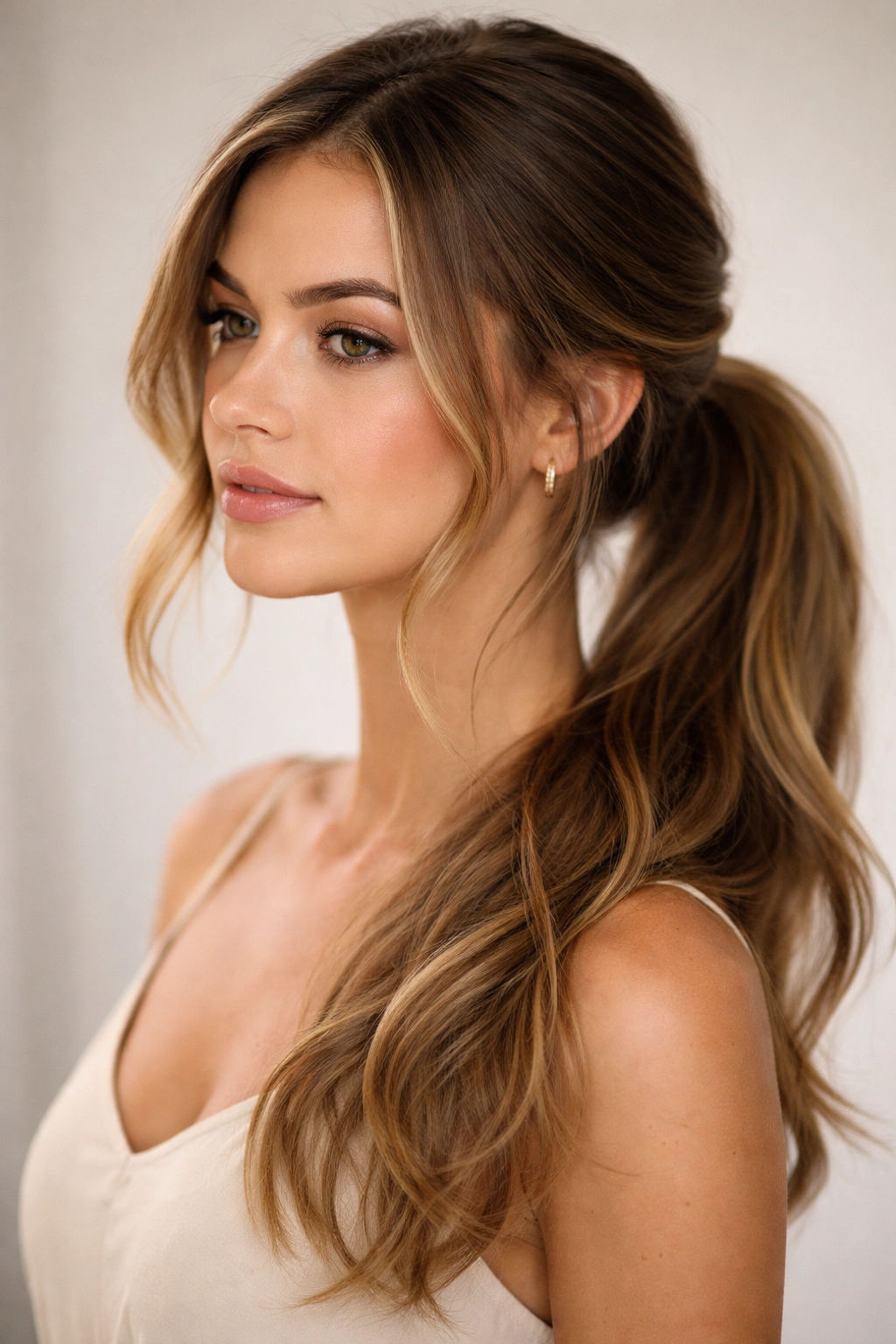
Some styles are about restraint. This is one of them. Leaving a few face-framing pieces out of a side ponytail softens the whole look and keeps long hair from feeling pulled back too tightly.
Take out one piece on each side before you gather the ponytail, and keep them fairly small — about ½ to 1 inch wide is enough for most faces. Curl the pieces away from the face with a medium iron, then let them cool before touching them. If you brush them too soon, they lose the shape and hang straight in a way that looks unfinished.
The ponytail itself can be sleek or wavy. I prefer a low anchor for this style because the loose strands sit better against the cheek and jaw. It’s one of the easiest side ponytails for long hair when you want something softer than a full updo but still want your hair off your neck. A tiny amount of shine spray on the front pieces is enough. Too much, and they stick to your skin.
8. Fishtail Side Ponytail with a Full Tail
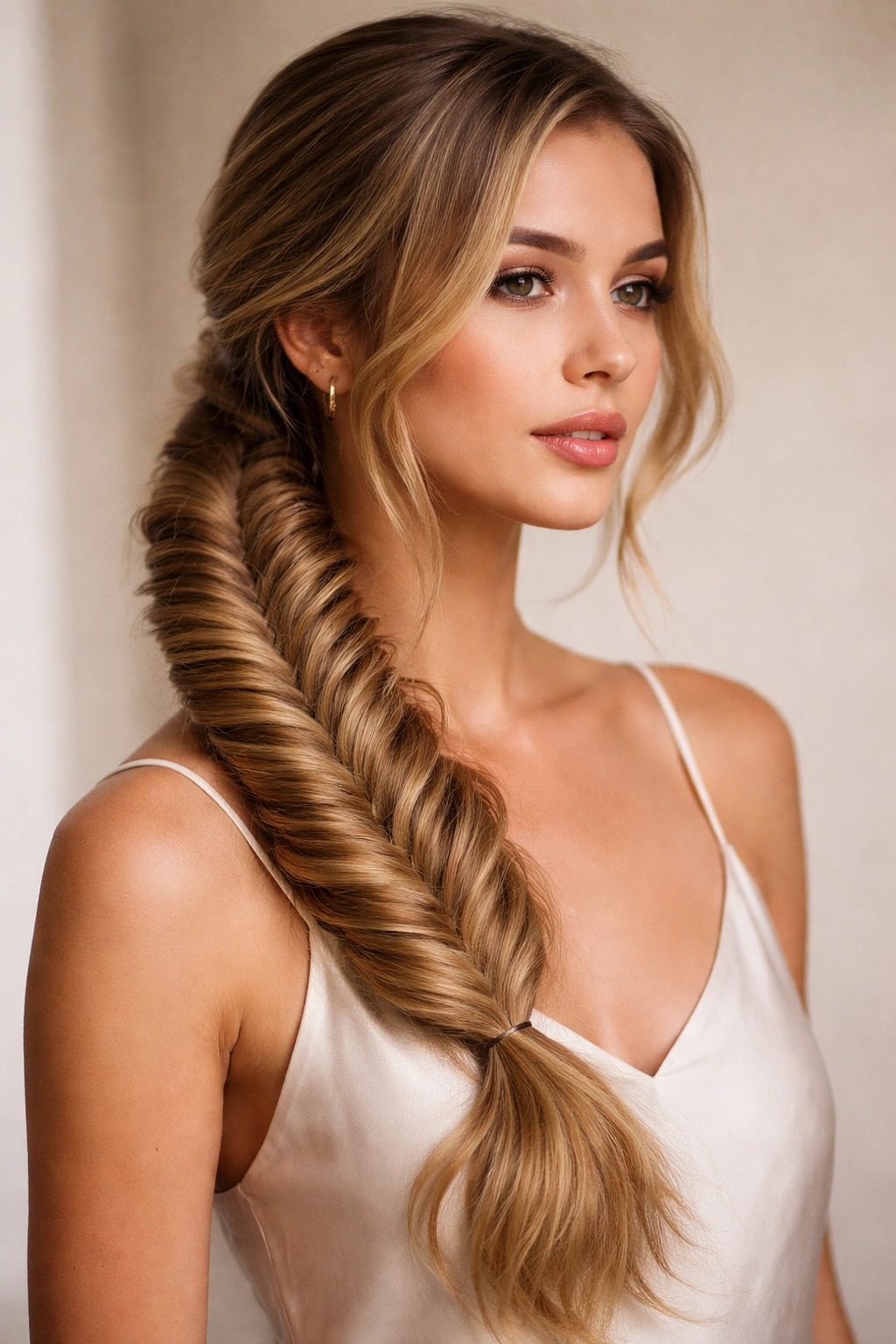
A fishtail braid gives long hair that dense, woven look that regular braids can’t quite match. On a side ponytail, it feels a little more dressed up and a little less predictable.
Start with the hair gathered to one side and split it into two sections. Then take a small piece from the outside of the left section, cross it over, and add it to the right section. Repeat on the other side. Keep the pieces small if you want the braid to look tight and detailed. If you want a chunkier version, take larger sections and tug the finished braid outward afterward.
How to keep the braid from going flat
A fishtail can collapse if the hair is too silky. Texture spray helps, and so does braiding on hair that isn’t freshly washed. A little grip makes a huge difference. Once the braid is done, pancake it gently by pulling at the edges with your fingers. Don’t yank the center apart or the shape gets messy fast.
This style is a good fit for long hair because the length shows off every woven step. The tail ends up looking rich and full, which is half the appeal.
9. Ribbon-Tied Side Ponytail with a Soft Bow
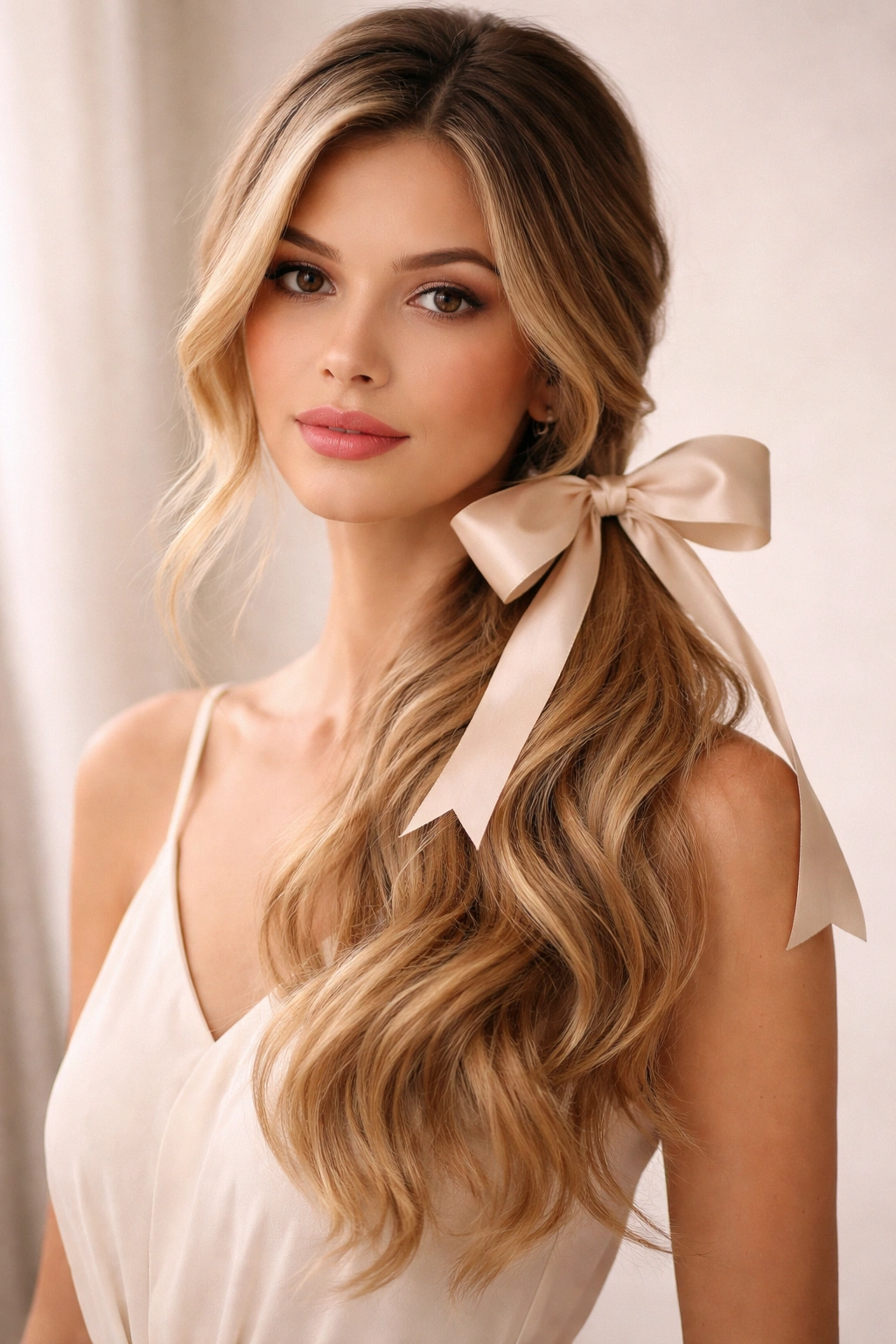
A ribbon changes the mood fast. The ponytail can be simple, but the ribbon makes it feel softer and more thoughtful, which is why this version works so well with long hair that already has a lot of movement.
Pick a ribbon that matches the weight of the hair. Silk and satin slide prettily but can loosen, so they’re better for a light bow or a wrap over an elastic. Velvet holds more securely and gives the style a richer look in person. Tie the ribbon just below the elastic or replace the elastic with a wide ribbon if your hair isn’t too heavy.
This isn’t the place for a tiny, fussy bow that disappears into the length. Go a little wider. Long hair can carry it. The ribbon should be visible from the front and the side, or it starts to feel like an afterthought. I like this most with soft waves and a low side ponytail. It has a gentle, old-school charm without looking costume-y.
10. Twisted Side Ponytail with Rope Details
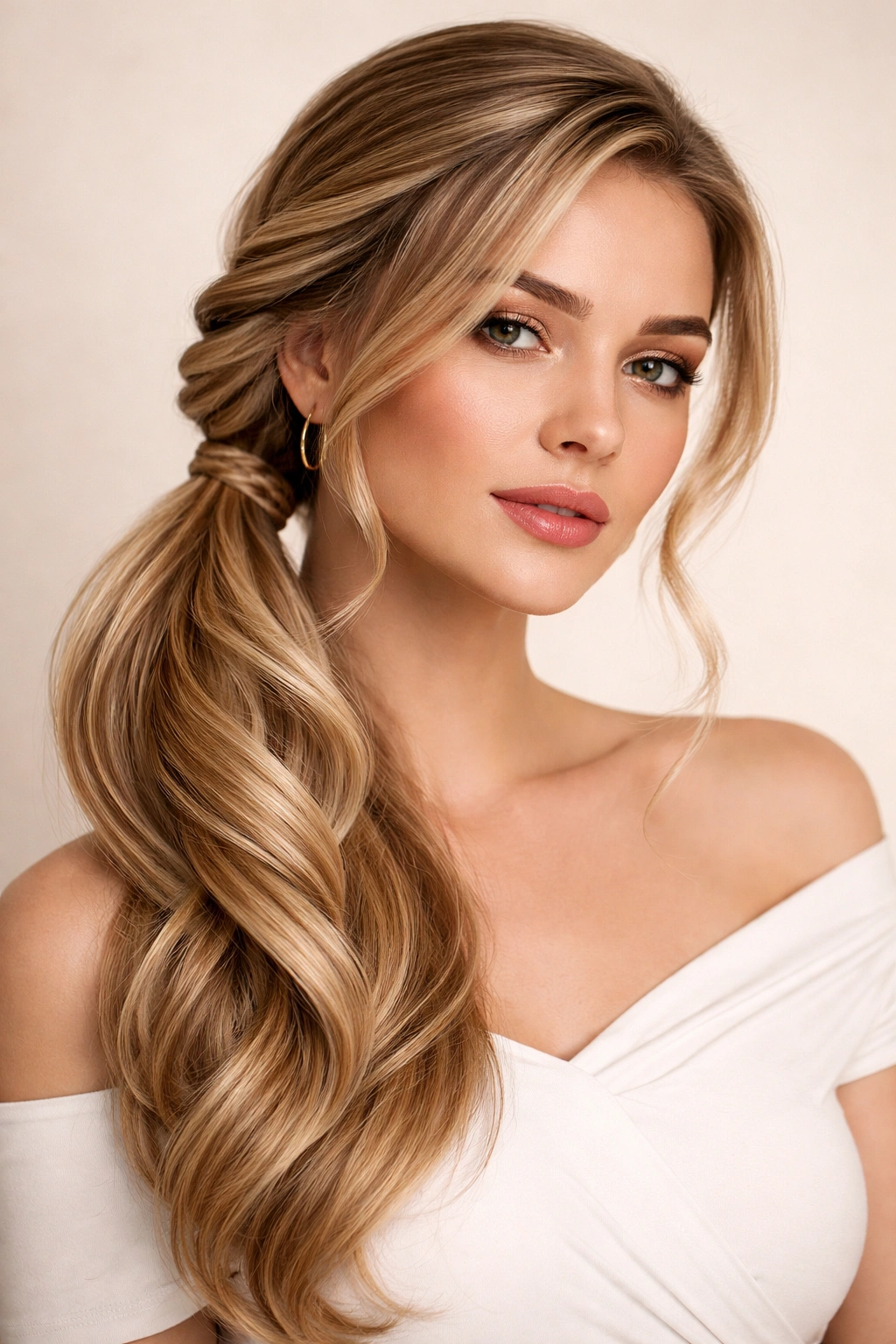
A twisted side ponytail is one of those styles that looks more involved than it actually is. The rope-like sections create shape fast, and long hair gives the twists enough length to show off the texture.
Split the front into two sections on each side, twist each one backward, and bring them together at the side where the ponytail will sit. Secure everything with an elastic, then let the tail fall loose or twist it a bit more for extra definition. Keep the twists snug at the base so they don’t unravel before you reach the elastic.
- Twist each section in the same direction before combining them.
- Pin the crossed sections if your hair is layered or slippery.
- Smooth the ends with a tiny bit of cream, not heavy oil.
This style works when you want detail without a braid. It’s a good middle ground between polished and relaxed, and it’s forgiving on long hair that has layers around the face.
11. Tousled Side Ponytail for Thick Hair
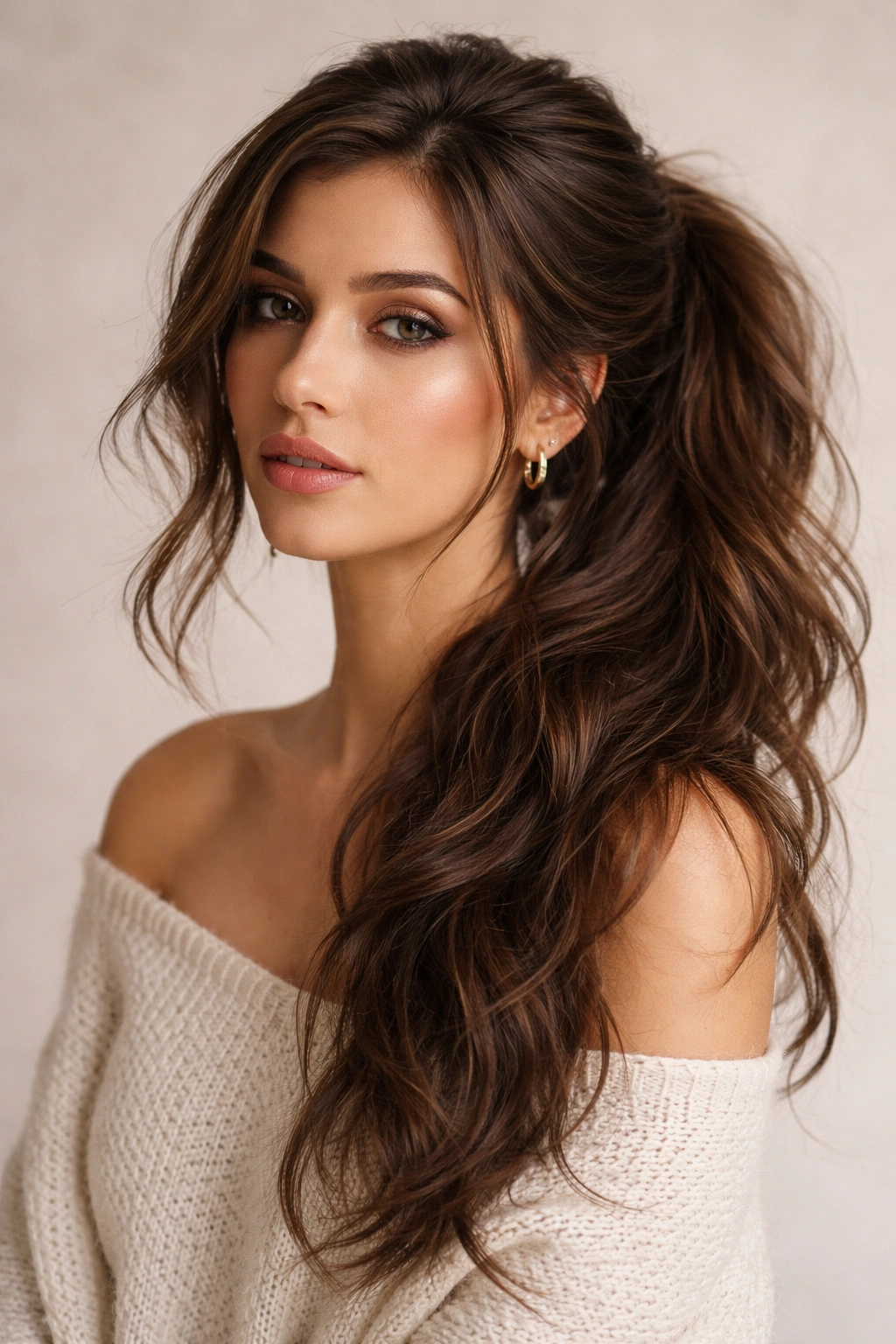
Thick hair needs room, and a tousled side ponytail gives it that. If you try to smooth every strand into submission, the style gets bulky fast. A little looseness is the point.
Start with dry shampoo or texture spray at the roots, then gather the hair loosely to one side. Use your hands first, brush second. A brush can pull too much tension into the base and make the ponytail puff out on the opposite side. Leave the crown a little undone, then pull a few strands free near the temples for softness.
The tail itself should feel airy, not packed tight. If the hair is very heavy, use a second elastic underneath the first one for support. That extra anchor keeps the ponytail from slipping lower as the day goes on. This style is especially good on thick long hair because the natural volume does half the work. You’re not fighting the density. You’re letting it spill in a controlled way.
12. Crown-Braided Side Ponytail
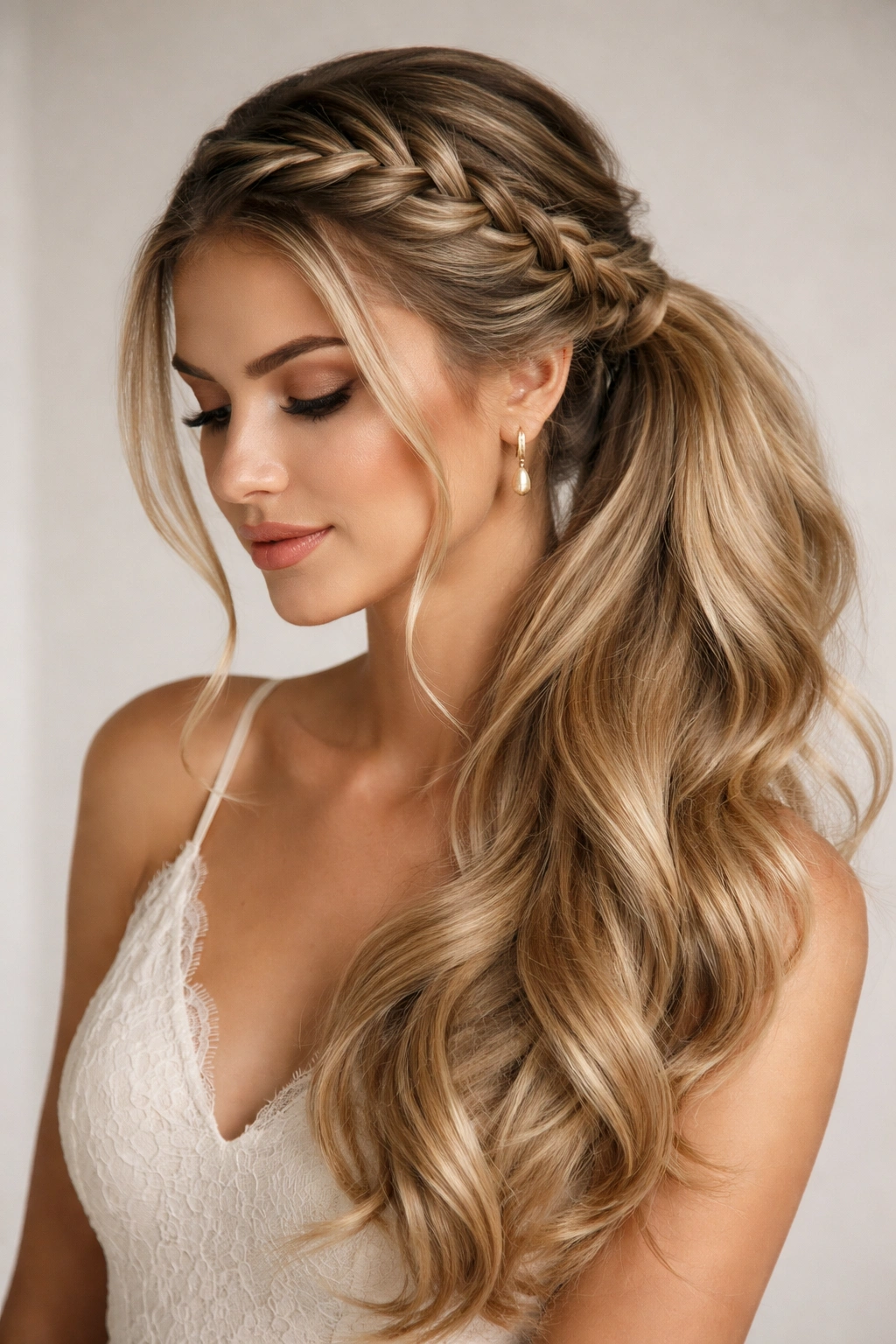
A crown braid leading into a side ponytail gives long hair that wrapped-around look without needing a full updo. It’s neat along the hairline and then softer once it falls into the ponytail, which is a nice contrast.
Braid a section from one side of the crown across the top of the head, keeping the braid close to the scalp. Once it reaches the opposite side, gather the remaining hair into a side ponytail and secure it beneath the braid’s end. Dutch braids show up more clearly than French braids here, so I usually prefer Dutch if the hair is dark or very thick.
Where it sits best
This style looks strongest when the braid starts just above the temple and sweeps around the top third of the head. Too low, and it loses the crown effect. Too high, and it starts feeling detached from the ponytail below.
A crown-braided side ponytail is useful on long hair because it keeps the top smooth while leaving the length free. That balance is hard to beat when you want detail up front and movement in back.
13. Deep-Side-Part Low Side Ponytail for Long Hair
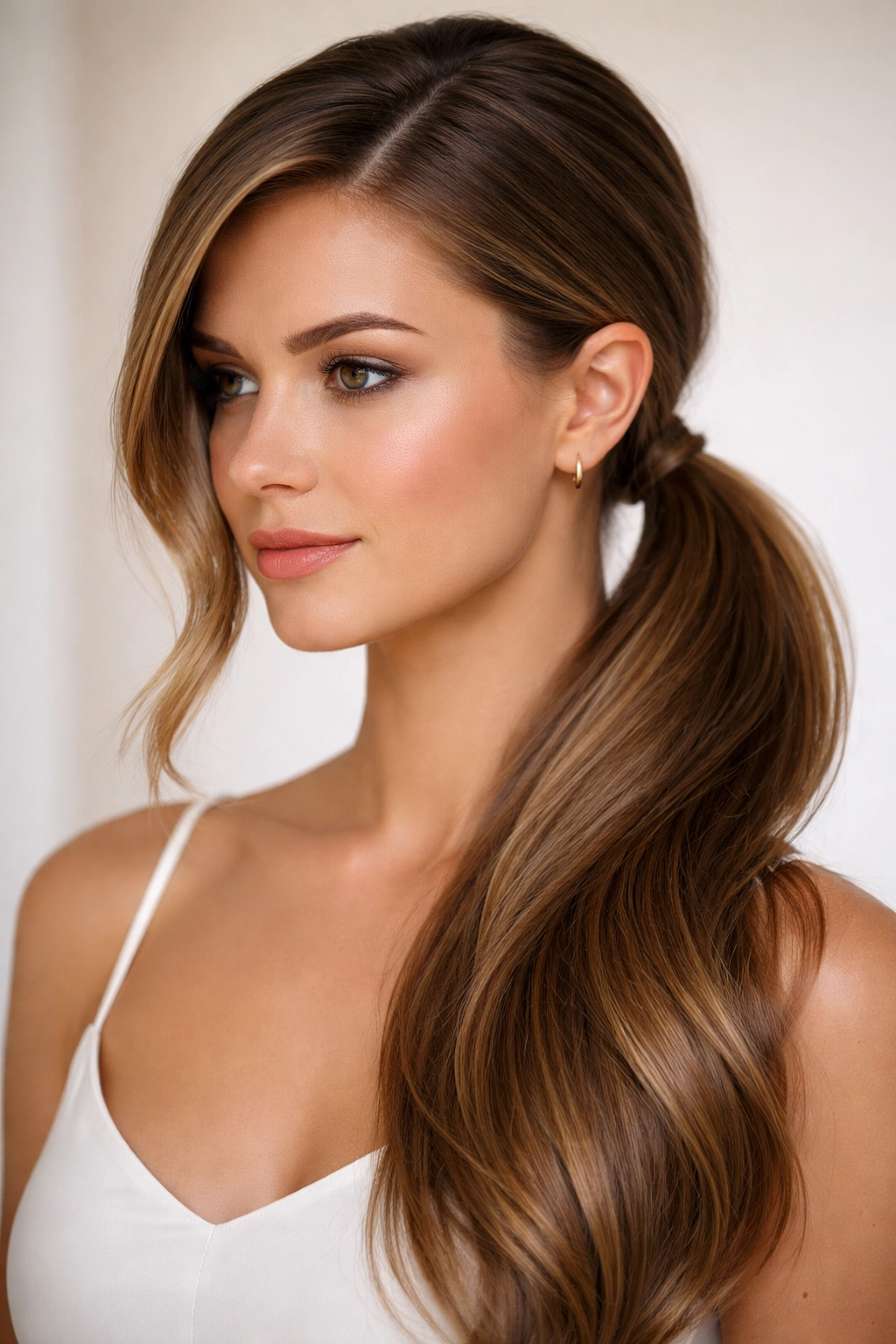
A deep side part changes the whole energy of a ponytail. It creates a strong front sweep, then the low side anchor keeps the shape grounded and elegant. On long hair, that contrast is especially clean.
Use a tail comb to draw the part far over, then smooth the heavier side back toward the ponytail base. A touch of gel or edge control along the part line keeps the front tidy, but don’t load it up so much that the roots look wet. The style works best when the part is crisp and the lengths stay soft.
This is one of my favorites for straight or gently waved hair because the part itself does most of the styling work. The ponytail doesn’t need extra braids or accessories to feel intentional. It just needs a clean sweep and a good anchor point. If the hair is layered, tuck the shorter front pieces behind the ear for a second before pinning them back. That tiny pause helps the shape settle where you want it.
14. Retro Flipped Side Ponytail
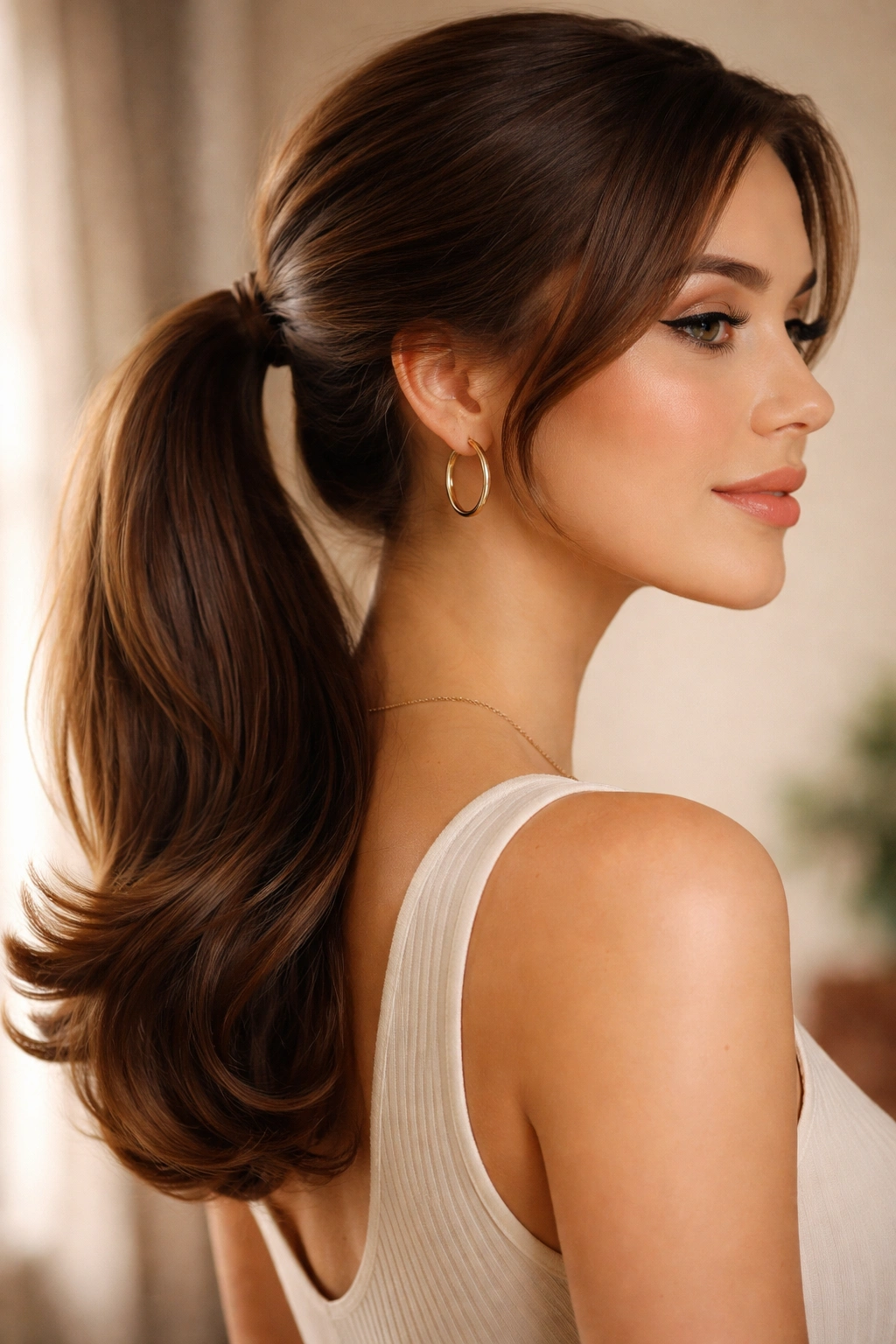
A flipped side ponytail brings back that polished, playful shape where the ends curl outward instead of hanging straight down. On long hair, the flip gives the style a bit of lift at the bottom, which keeps it from looking too heavy.
Blow-dry with a round brush or use a flat iron to bend the ends outward. You do not need a full curl. A soft flip of 1 to 2 inches at the ends is enough. Keep the top smooth and the base low on one side so the shape feels deliberate. The vibe is retro, yes, but not costume retro. More like someone spent five extra minutes and knew exactly where to stop.
I like this with a side part and a bit of shine spray on the lengths. That combination makes the flip show up from the front, not just when you turn your head. If your hair is very straight, a little mousse at the roots before drying will help the style keep its shape instead of sliding flat by lunchtime.
15. Mini Accent Braid Side Ponytail
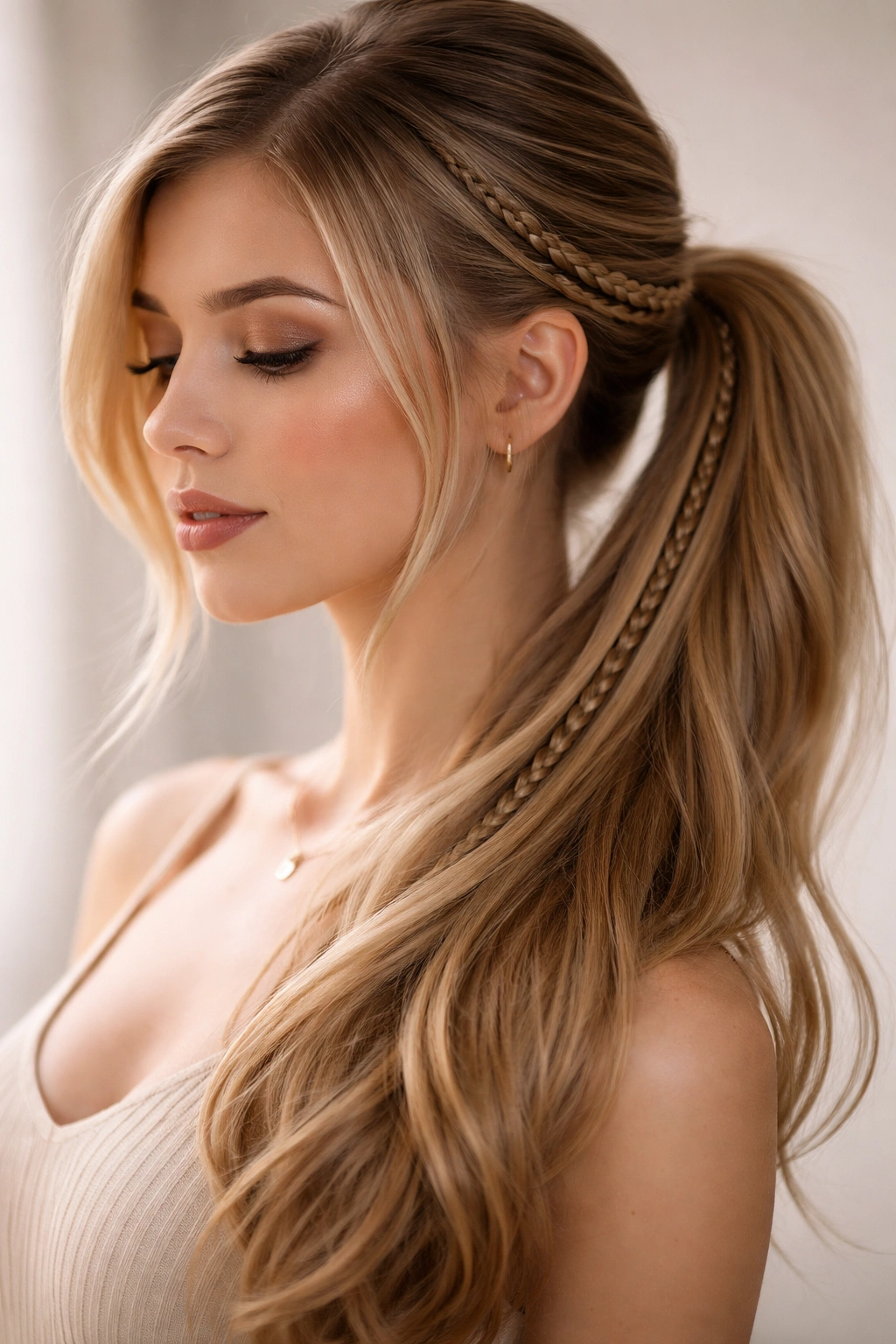
A few skinny braids can do a lot. You do not need a whole braided hairstyle to get texture into a side ponytail for long hair. Two or three mini braids tucked into the front section are enough to make the style feel more detailed.
Braid small pieces near the temple or just behind the ear, then gather the rest of the hair into a side ponytail. Leave the mini braids visible along the top or weave them into the base if you want them to disappear into the ponytail itself. The point is contrast: smooth lengths, tiny woven accents, and a clean elastic holding the whole thing together.
- Keep the accent braids narrow, about pencil-width.
- Secure the ends with tiny elastics so they don’t unravel.
- Curl the tail lightly if you want the braid detail to stand out more.
This style works because it gives long hair something to look at without changing the whole structure. It’s a nice fix when plain ponytails feel too bare.
16. Formal Curled Side Ponytail
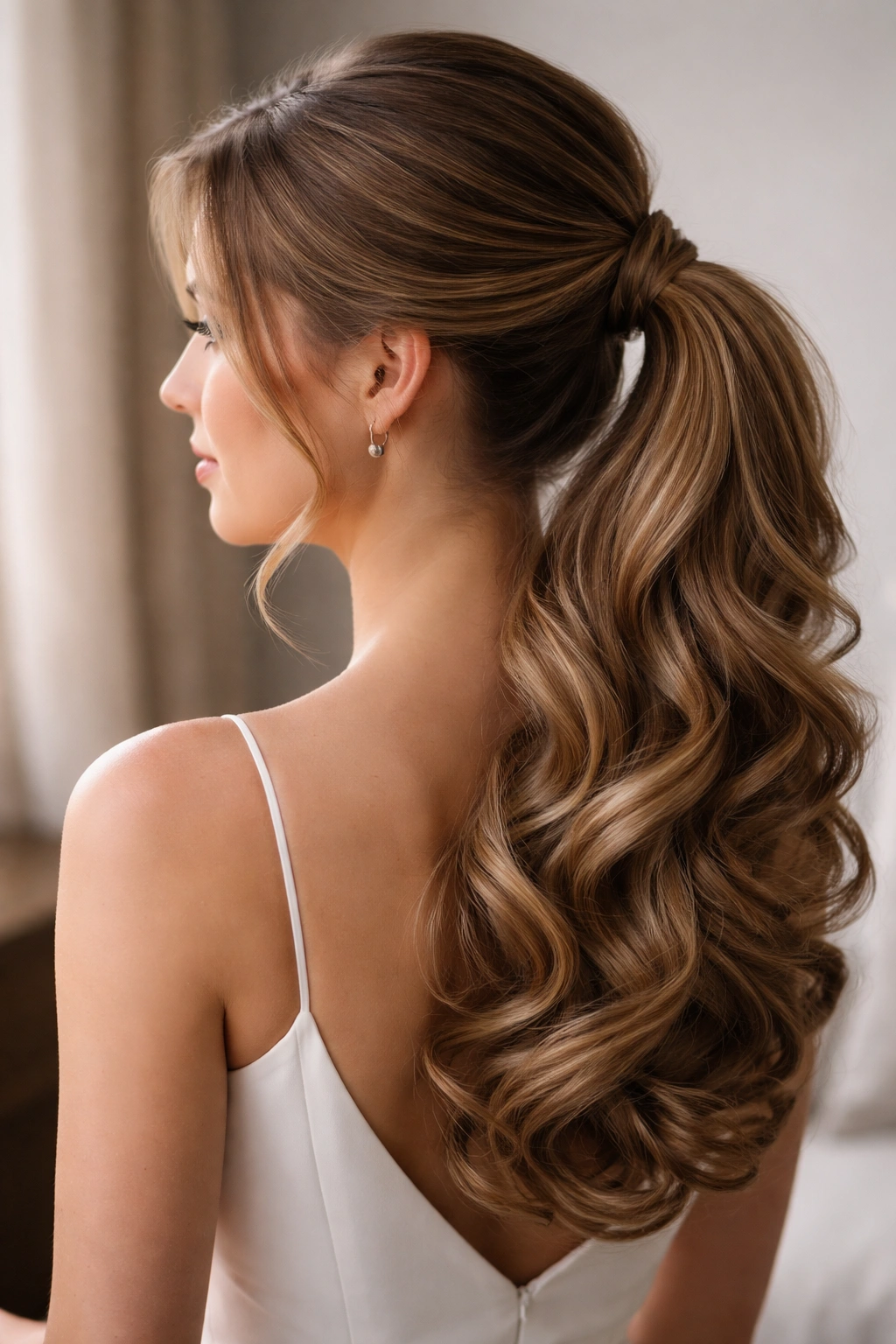
A formal side ponytail should look controlled from the base and rich at the ends. That’s the balance. Too sleek, and it feels plain. Too loose, and it loses the dressed-up finish.
Set the hair in medium curls, then let them cool completely before moving them. Pin the curls up for a few minutes if the hair is long and heavy; that helps them stay springy once you brush them out. Gather the hair to one side at a low or mid-low point, and smooth the top layer with a soft brush. The base should be tidy, not puffed.
I like this version for weddings, parties, or any setting where long hair needs to look intentional from every angle. A side ponytail gives the curls a place to fall, so they don’t spread out across the back like they might in a loose style. A strong-hold spray at the underside of the ponytail keeps the curls from sagging, while the top stays touchable.
17. Side Ponytail for Layered Hair
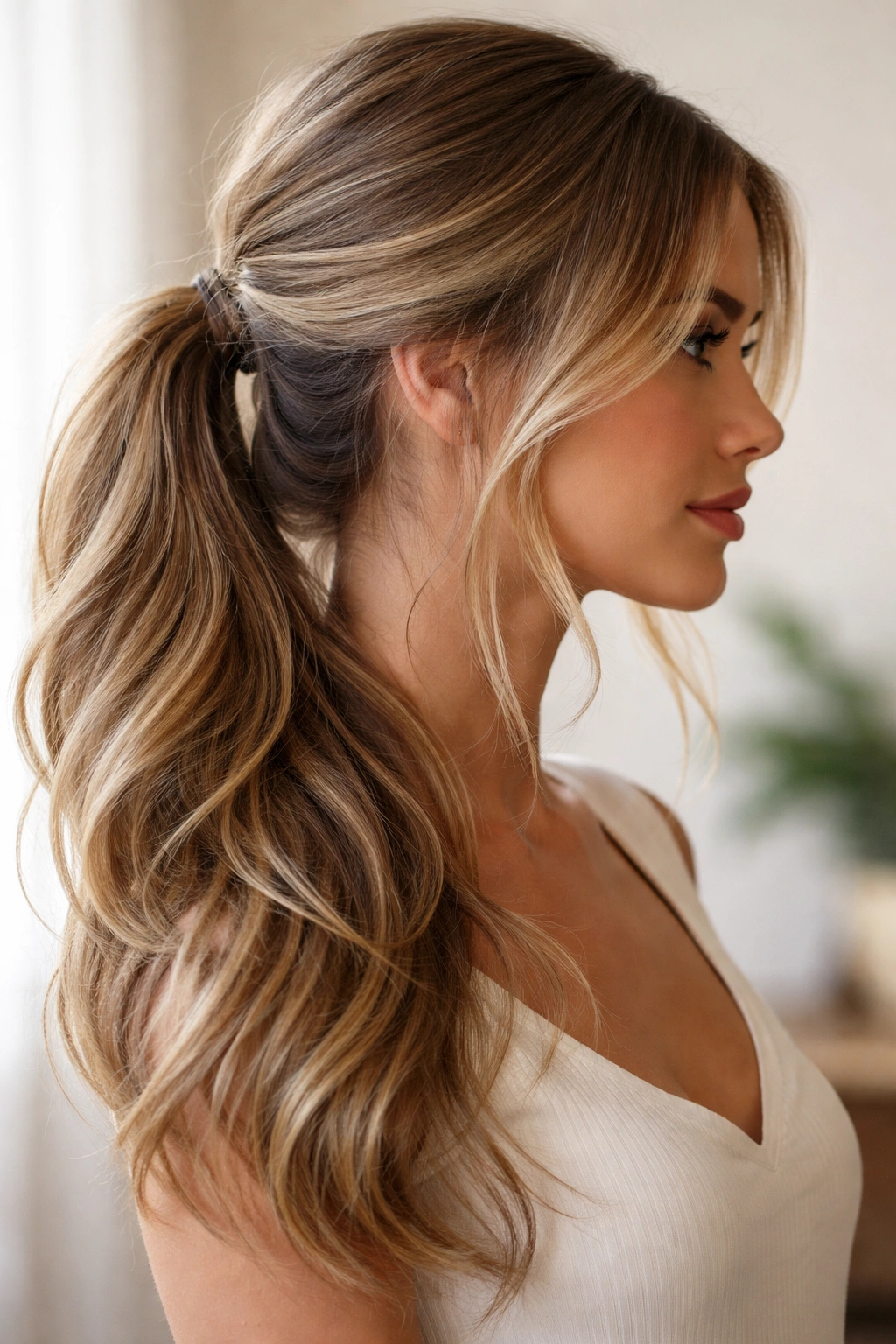
Layered hair can make ponytails tricky. The shorter pieces want to escape, the face-framing sections want to fall forward, and the whole style can look thinner than it really is. A side ponytail gives those layers a better home.
Instead of forcing every piece into the same line, let the layers fall in a staggered shape. Gather the longest section into the elastic first, then smooth the top over it and tuck the shorter pieces into the base with a few discreet pins if needed. If the layers are very short, curl them inward around the face so they blend into the style instead of fighting it.
What matters here is balance, not perfection. Long layered hair looks better when the ponytail has some movement at the top and a little unevenness through the tail. Flat, tight side ponytails can make layers look chopped off. Softer versions let the cut breathe.
18. Scarf-Wrapped Side Ponytail
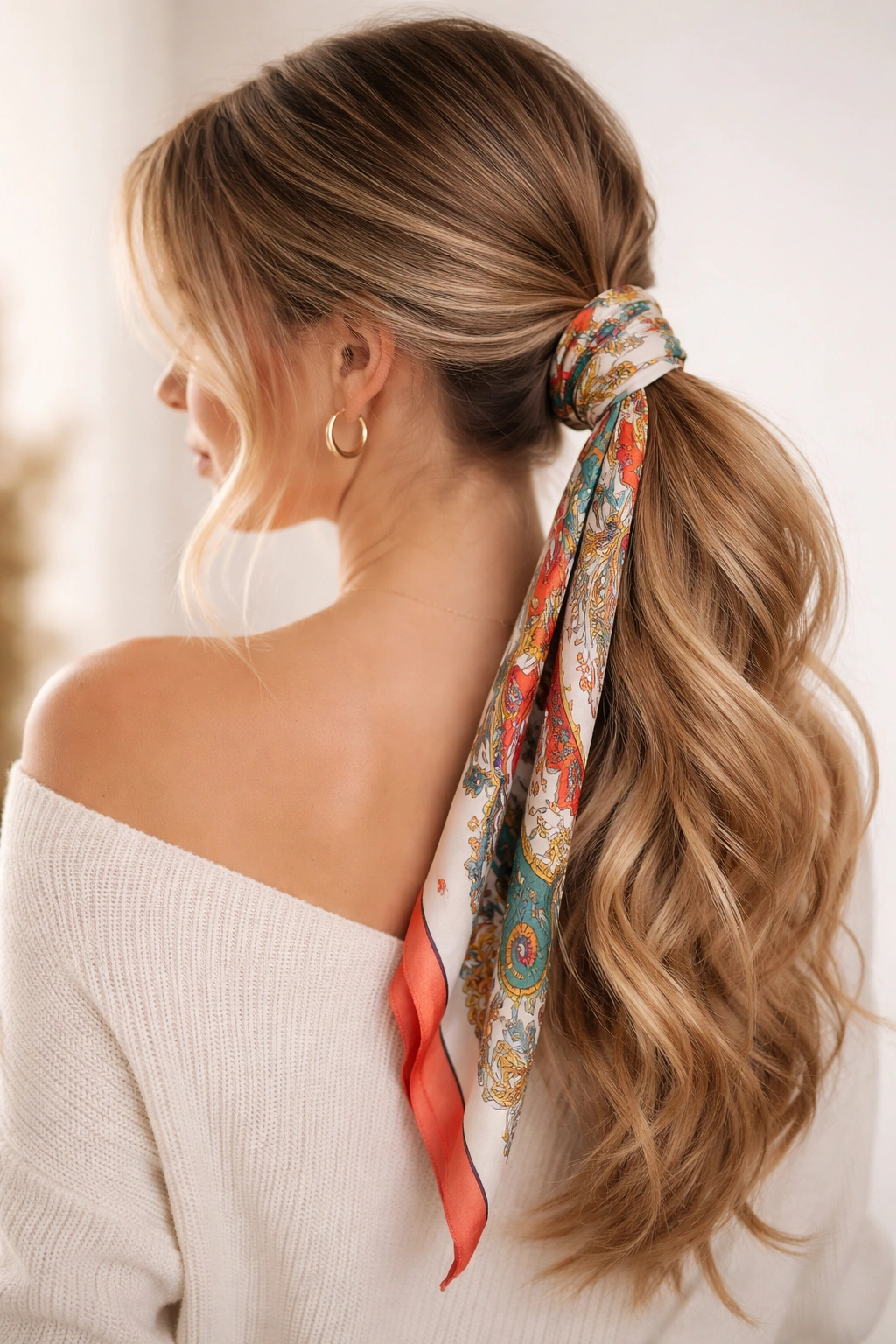
A scarf wrapped around a side ponytail does two jobs at once: it hides the elastic and adds color or pattern. For long hair, that little fabric strip can be enough to turn a plain style into something that looks put together on purpose.
Pick a square scarf in silk, cotton, or a silk blend, then fold it into a long strip if needed. Tie it around the base of the ponytail, or wrap it down a few inches into the tail and knot it underneath. If the scarf is slippery, secure the ponytail with a regular elastic first and use the scarf as the visible layer on top.
Choosing the right scarf
Thin scarves work well on finer hair because they don’t add too much bulk at the base. Thicker scarves stand up better on dense long hair. If the print is loud, keep the ponytail shape simple. If the scarf is plain, the braid, waves, or curls can do more of the talking.
This style is easy to like because it changes the mood without changing the structure. That’s useful on days when your hair is cooperating, but not enough for anything fussy.
19. Teased-Crown Side Ponytail
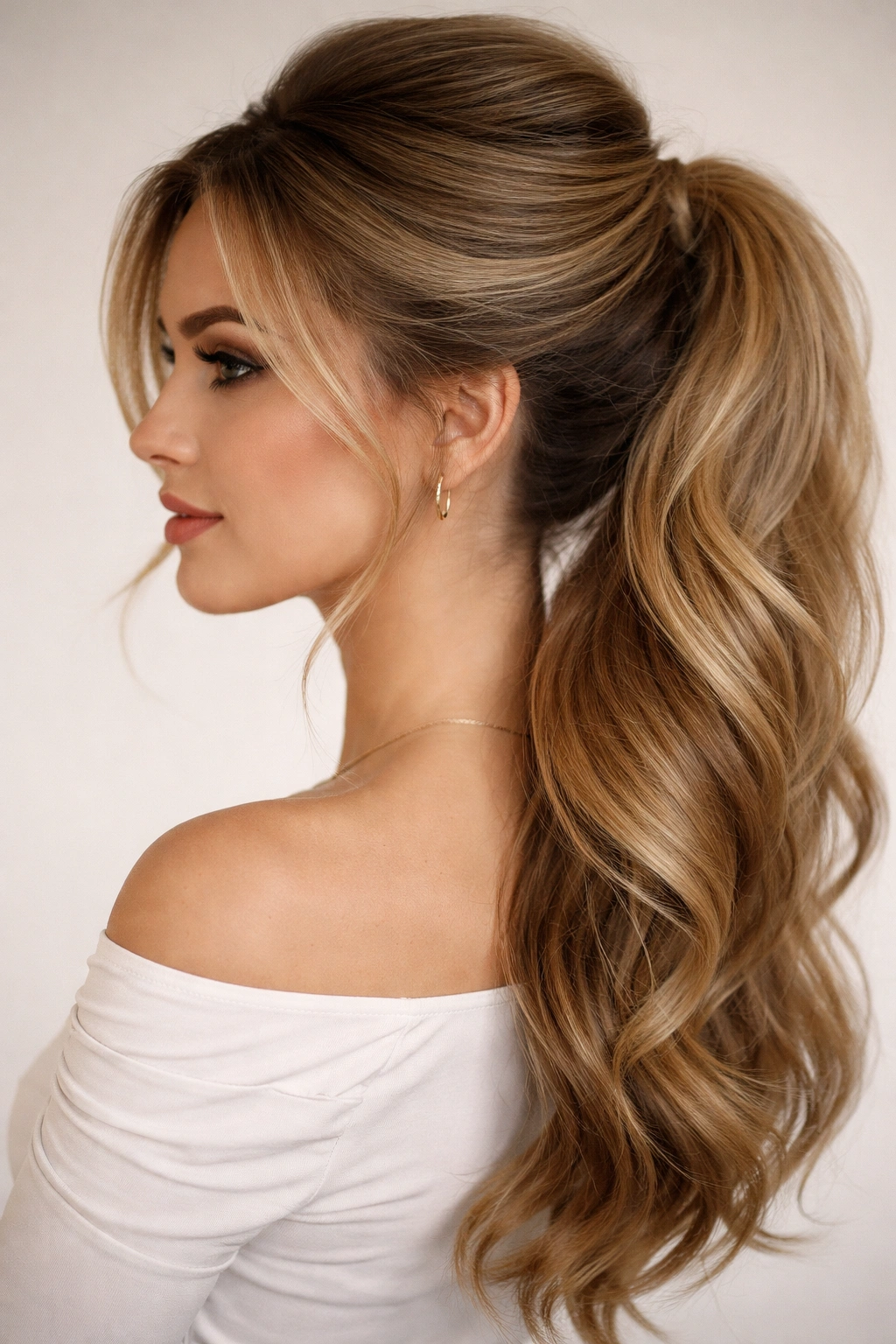
Teasing gets a bad reputation because people often overdo it. A little crown lift, though, can make a side ponytail look fuller and keep long hair from collapsing backward.
Lift a thin section at the crown and backcomb underneath it with a fine comb, using short strokes close to the roots. Smooth the top layer over the teased area so the texture stays hidden. Then pull the hair into a side ponytail and secure it low or mid-low. The result should look like natural fullness, not a helmet.
This version is good for long hair that sits flat at the scalp or drops straight down the back with no shape. The lift makes the side sweep feel more three-dimensional. Do not brush the crown hard after teasing — that wipes out the support you just built. A light smoothing pass with your hands is enough.
20. Loose Knotted Side Ponytail
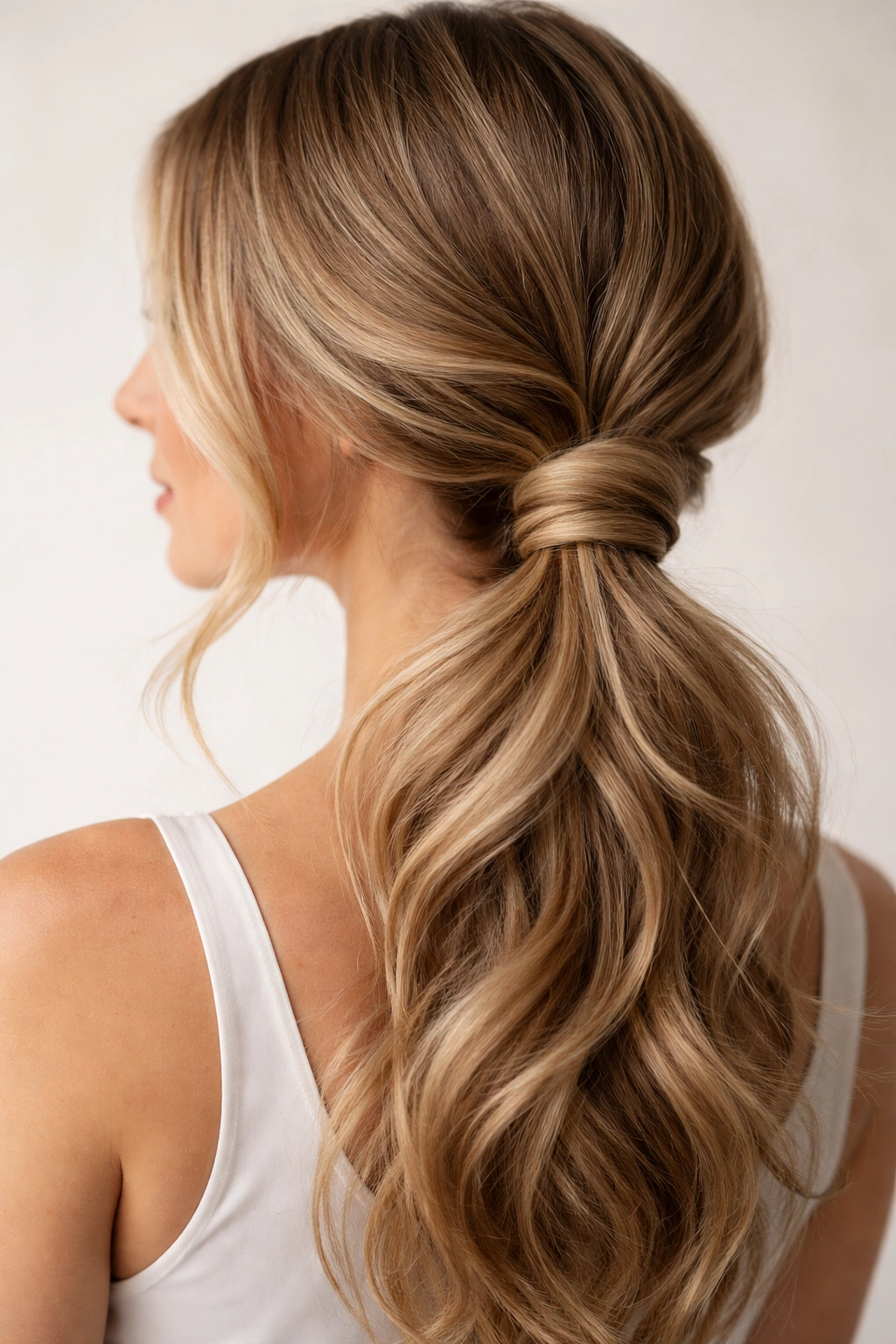
A knotted side ponytail gives long hair a little surprise. Instead of relying on braids or ribbons, it uses the hair itself to create the detail. That keeps the style modern and slightly undone.
Split the hair into two sections, cross them over each other as if you’re tying a soft knot, and secure them with a small elastic underneath the knot if the hair is heavy. You can repeat the knot once more if the length is extra long, but stop before it starts looking bulky. The knot should read as a shape, not a wad.
This works especially well on textured long hair because the knot holds better when the strands have a bit of grip. Straight, slippery hair may need light texturizing spray first. The charm here is the casual structure. It looks like you cared, but not too much. That’s harder to fake than it sounds.
21. Multiple-Elastic Side Ponytail
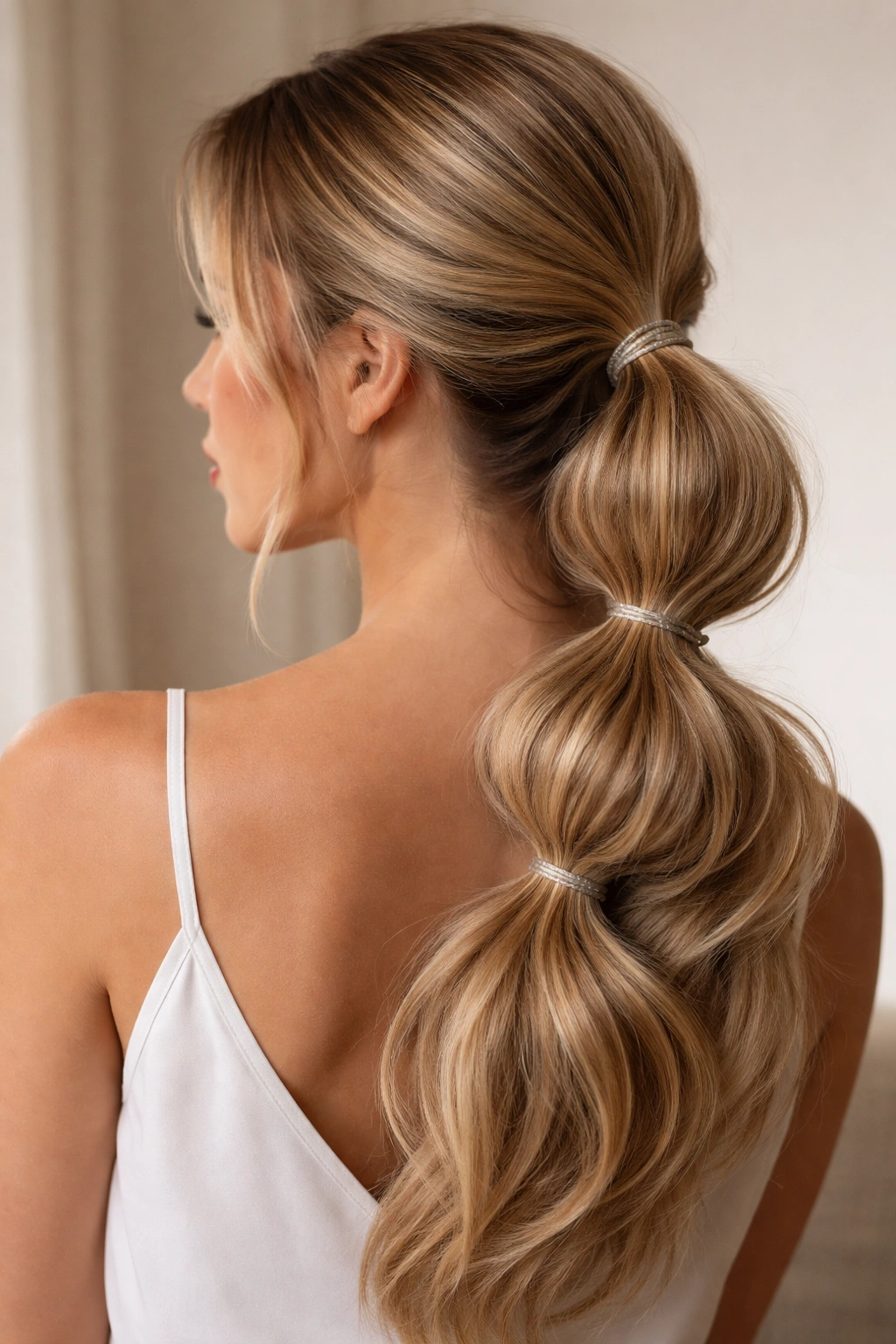
A multiple-elastic side ponytail is a segmented style that keeps long hair neat while still showing off the length. It’s a little sporty, a little polished, and much easier to keep together than a plain loose tail when the hair is very heavy.
Secure the side ponytail first, then add elastics every 2 to 4 inches down the tail, depending on how long the hair is. After each elastic, gently tug the section between ties so the tail looks fuller. If you want a sleek version, keep the segments tight. If you want a softer one, pull them wider and let a few strands escape.
- Use clear elastics if the tail is glossy or highlighted.
- Make the top segment the fullest.
- Keep the bottom section smaller so the shape tapers naturally.
This style is useful on long hair because it manages weight without chopping the length into a blunt line. The segments give the eye a rhythm to follow.
22. Waterfall Braid Side Ponytail
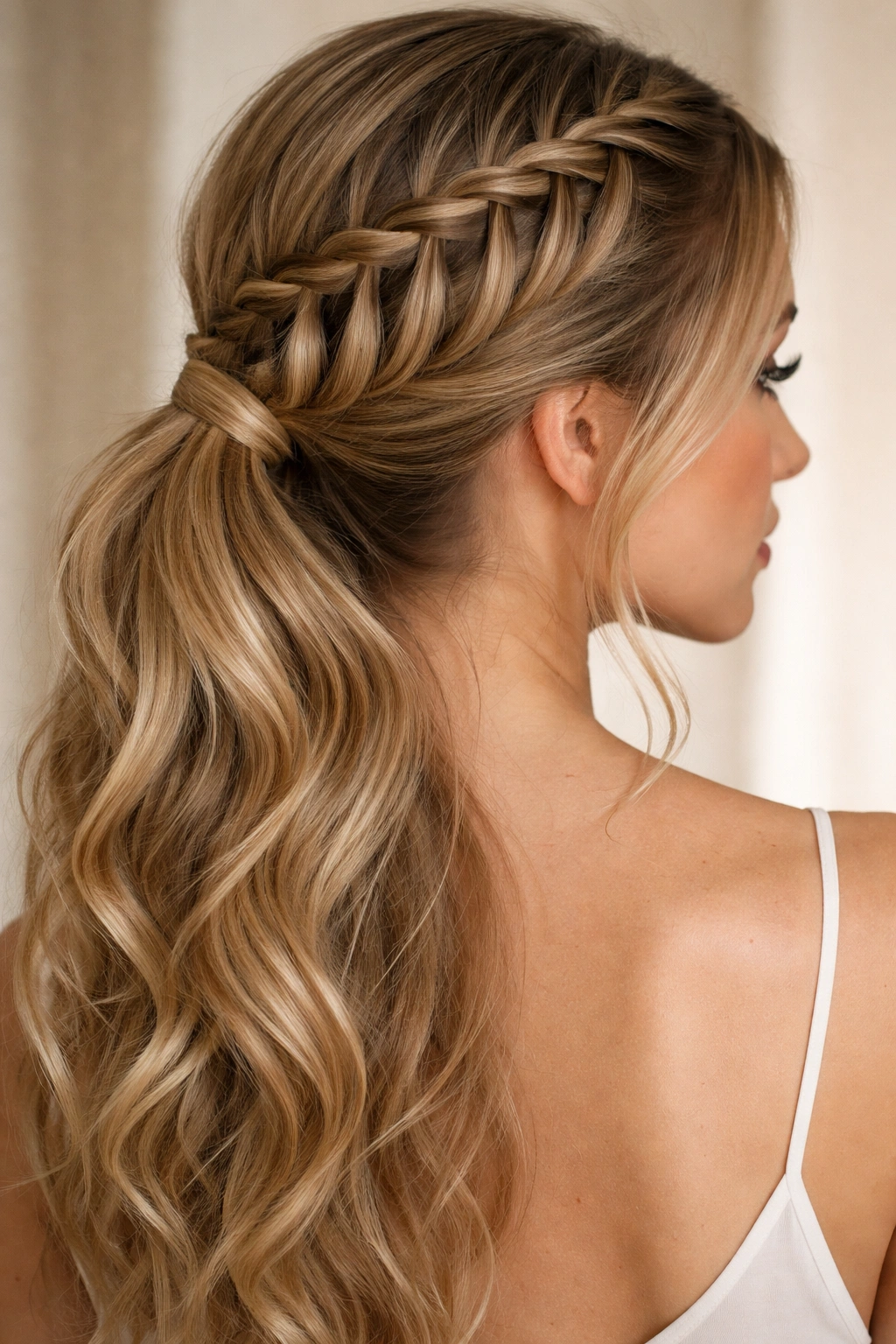
A waterfall braid brings a softer frame to a side ponytail. The braid lets pieces drop through as you move across the head, which creates a light, flowing look that suits long hair especially well.
Start at the side with the deepest part of the hairline, braid across the top, and let one strand fall through each time you cross over. Once you reach the point where you want the ponytail, gather the rest of the hair to that side and secure it. The braid should feel airy. If it gets too tight, the waterfall effect disappears.
Keeping the braid from collapsing
The trick is to hold the braid close to the head without pulling the sections so hard that the hairline looks pinched. A few small pins under the braid can help if the hair is very silky. Curling the tail afterward gives the whole style a softer finish, which matters because the braid itself is already a focal point.
This is a good option when you want long hair to look romantic without turning the whole head into a braid. The ponytail keeps it grounded.
23. Messy Side Ponytail for Casual Days
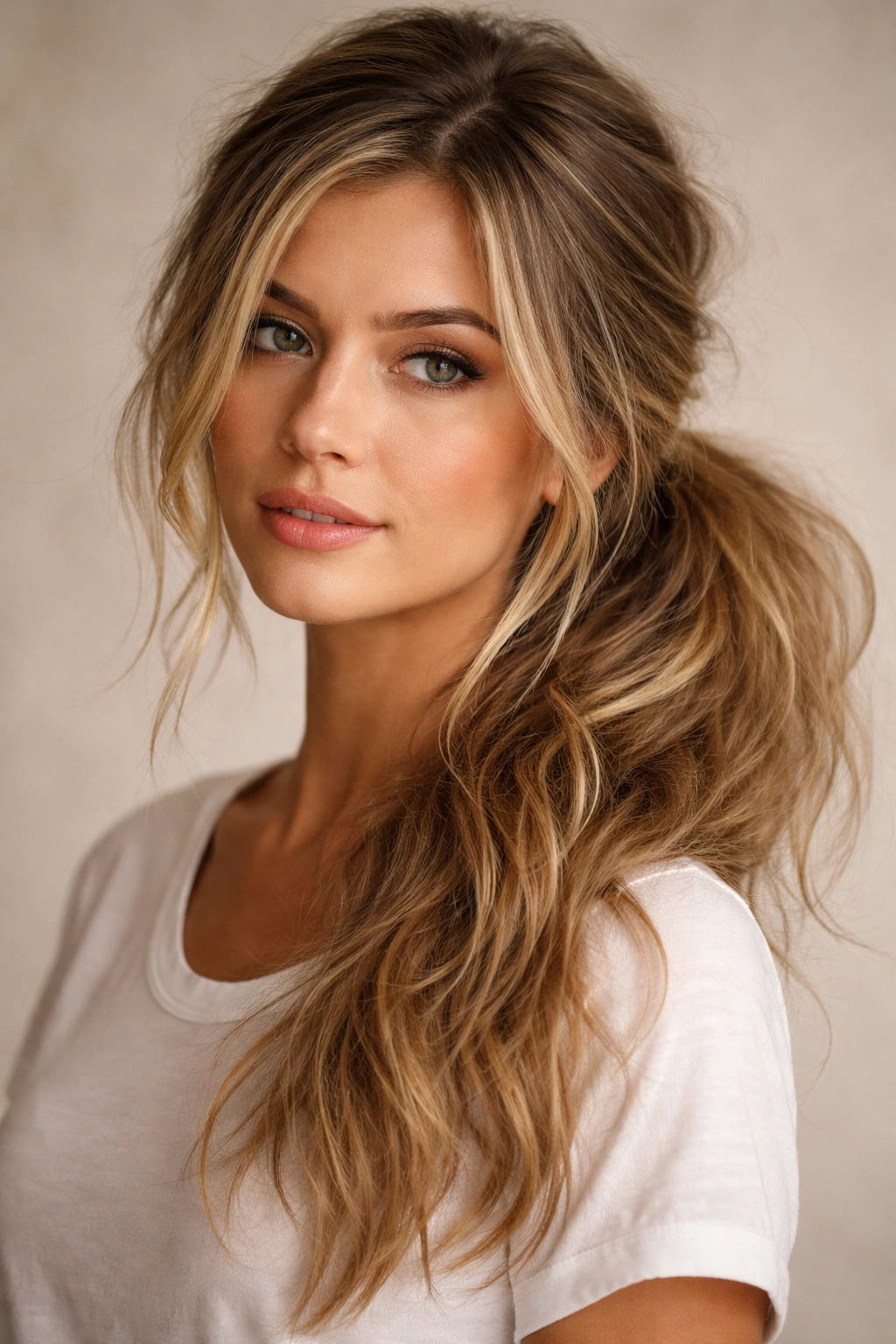
A messy side ponytail works because it refuses to look overthought. On days when long hair feels too heavy or too flat, a rougher texture can actually look better than a polished one.
Use dry shampoo or texture spray at the roots, flip the hair to one side, and secure it loosely. Pull a few pieces at the crown, leave a couple of face-framing strands out, and tug the ponytail apart with your fingers so it feels piece-y instead of stiff. That’s the difference between messy and neglected. One is deliberate. The other is not.
This style is happiest on second-day hair. Freshly washed hair can slip too much, especially if it’s fine or very straight. If the tail falls flat, twist it once before securing it. That tiny move adds bend and helps the style hold its shape without making it look formal.
24. Glam Side Ponytail with Extra-Long Curls
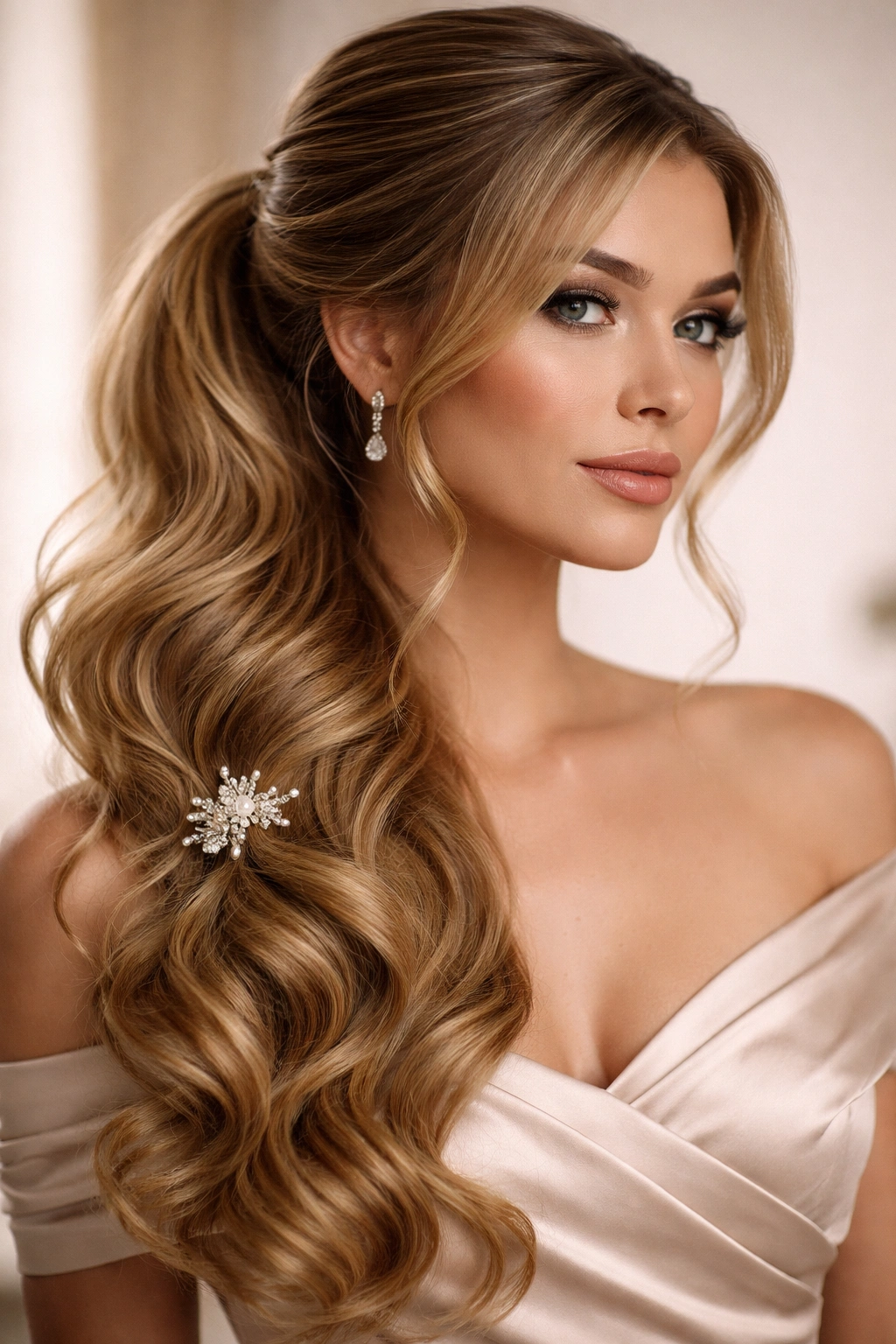
A glam side ponytail wants scale. Long hair gives you that scale naturally, so use it. Big curls, a little shine, and a side sweep create a style that feels made for evenings, photos, or any moment when plain hair would look underdressed.
Set the hair in large curls, about 1 to 1½ inches wide, and let them cool in clips if you want the shape to last longer. Gather the hair to one side, but don’t crush the crown flat. A slight lift keeps the style from looking too heavy. A decorative pin near the base works well here, though it should support the look rather than sit on top of it like a sticker.
- Clip curls until they’re fully cool.
- Smooth the top with a soft brush and a small amount of serum.
- Finish the tail with flexible-hold spray so the curls still move.
This version suits long hair because the length makes the curls feel lush instead of cramped. It has presence.
25. The Side Ponytail for Long Hair You Can Wear Anywhere
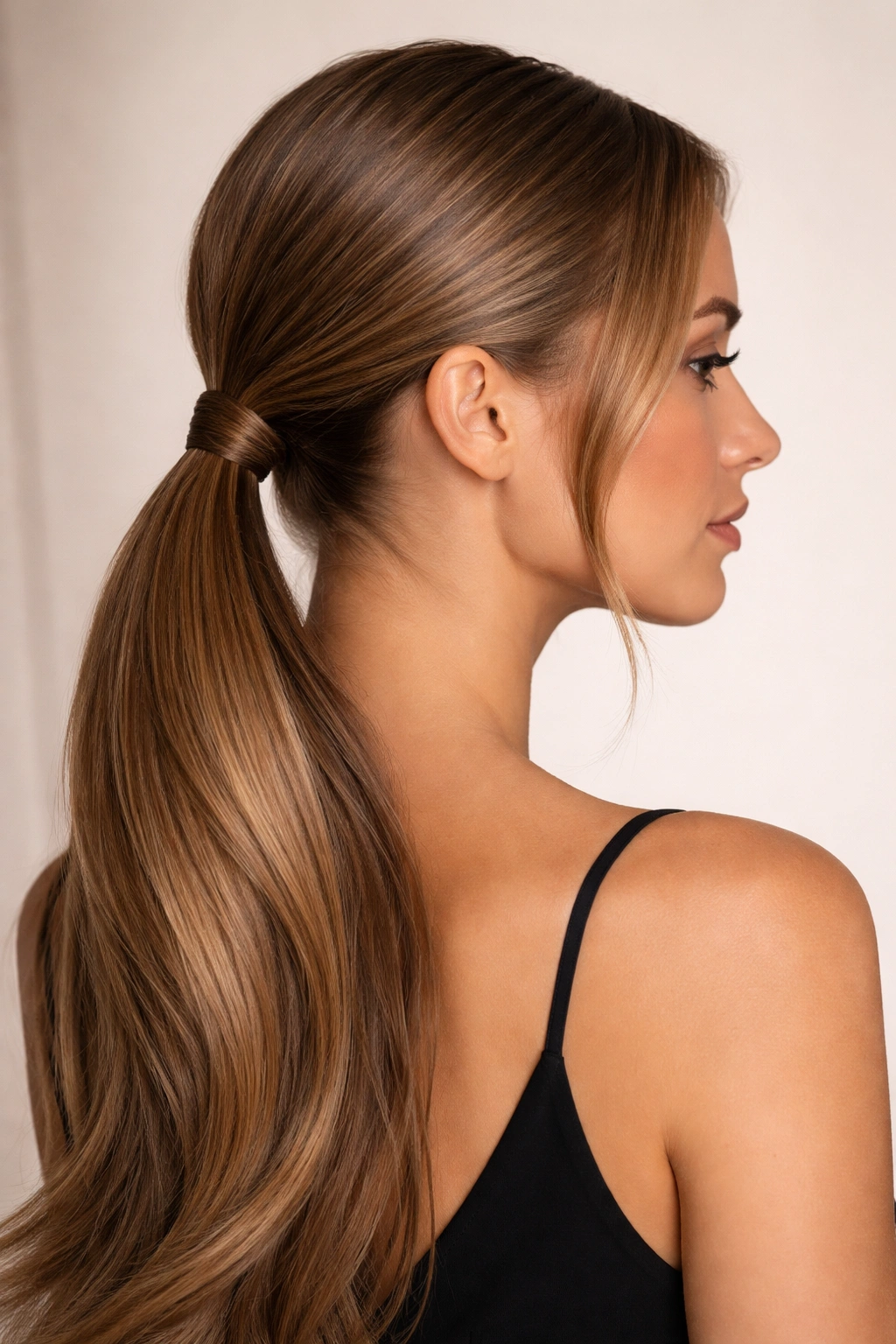
A good everyday side ponytail sits somewhere between polished and easy. That’s the version most people end up wearing again and again, because it works whether the day calls for jeans, a dress, or a late errand run with dry shampoo in your bag.
Keep the base low, sweep the hair to one side, and choose one finish: smooth, waved, or lightly curled. Don’t pile on every trick at once. A simple side part, a clean elastic, and one wrapped strand around the base are enough for most long hair. If the hair is layered, leave a couple of pieces loose at the front. If it is very thick, pin the underside of the ponytail for support before you walk out the door.
The nicest thing about this style is how little it demands. It can be quiet. It can be dressed up. It can survive a full day without turning into a puffball if you anchor it properly at the start. That’s the charm of side ponytails for long hair: they give you shape, movement, and just enough attitude to look intentional without making the whole thing a production.
