

Some hairstyles behave like good infrastructure: they keep hair out of the way, hold up under real life, and still look finished when you stop fussing with them. That is the appeal of cornrow ponytails for natural hair. They give you structure at the scalp, movement at the back, and a lot less daily handling than loose styles that demand detangling every morning.
The best part is not even the polished look. It is the practicality. A well-made cornrow ponytail can protect your ends, keep shrinkage under control, and make wash day less of a wrestling match. But the details matter. Tight braids, sloppy parting, and a ponytail pulled too high can turn a good style into a headache, sometimes literally.
There is also more room for personality than people give these styles credit for. Cornrows can be straight, curved, stitched, zig-zagged, split down the center, swept to one side, fed into jumbo braids, or gathered into a low tail that looks quietly sharp. Same category. Totally different mood.
The right version depends on your hair density, how much length you have to work with, and how much time you are willing to sit while someone parts and braids. Some styles are quick and blunt. Others take patience. All of them can work on natural hair when the tension is kept sensible and the base is clean and neat. The first style starts with the classic.
1. Classic High Cornrow Ponytail for Natural Hair
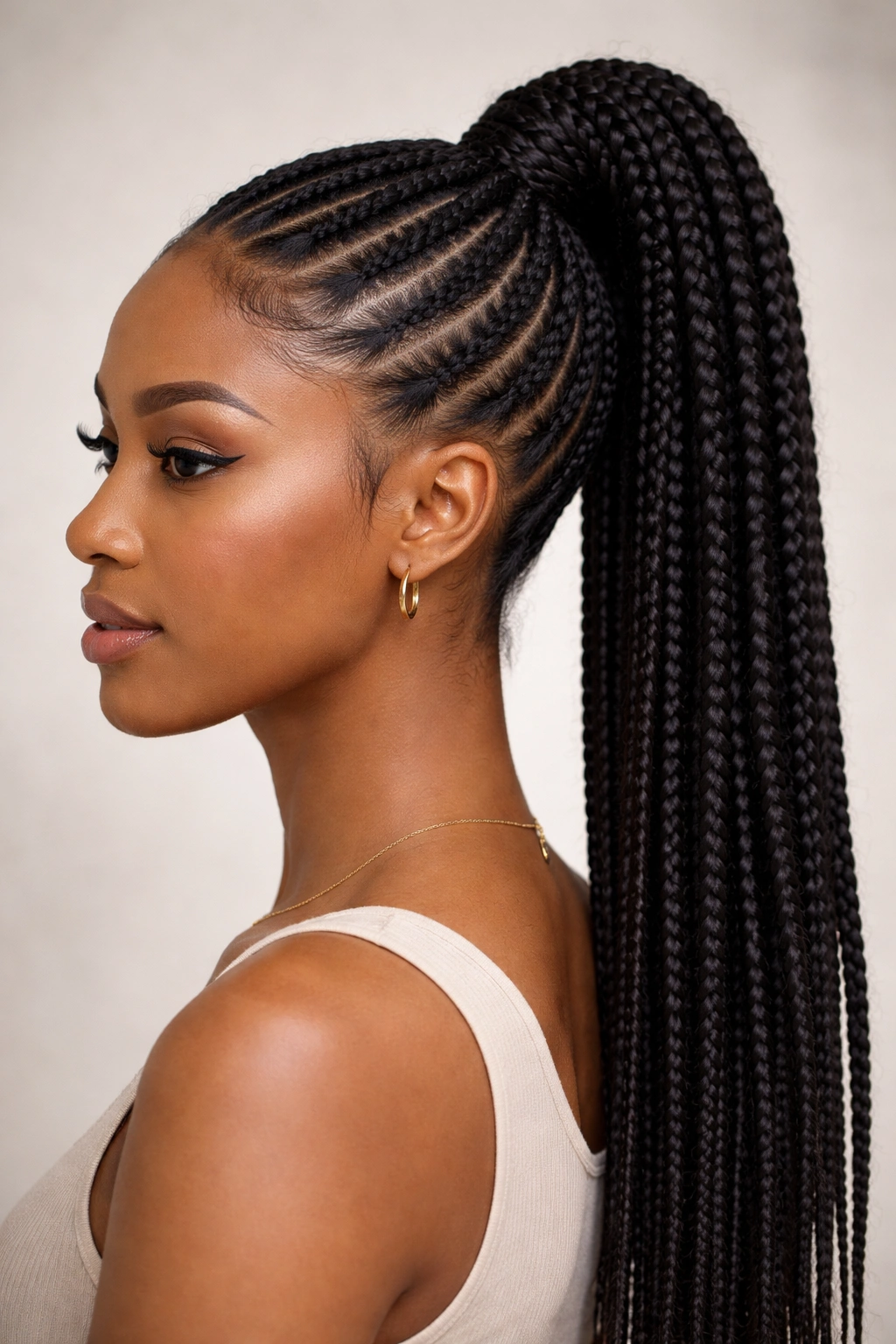
The classic high ponytail is the style people picture first for a reason. It lifts the face, clears the neck, and gives the braids a little drama without needing extra decoration. On tightly coiled hair, that height also helps the ponytail sit where it can actually be seen instead of disappearing into the crown.
Why It Works
A high ponytail changes the whole line of the head. The braids draw the eye upward, then the tail drops down with a bit of swing. That shape works especially well when the hair on top is dense and you want the style to feel tidy rather than bulky.
- Best for medium to long natural hair
- Works well with 6 to 10 straight-back cornrows
- Needs a firm, padded hair tie or braid wrap
- Looks best when the front hairline is smoothed before braiding
Tip: ask for the ponytail base to sit high, but not so high that it pulls at your edges.
A classic high ponytail is also one of the easiest styles to dress up. Add a braid cuff, wrap one braid around the base, or leave the end as one long plait. It does not need much help. It already has shape.
2. Sleek Low Cornrow Ponytail
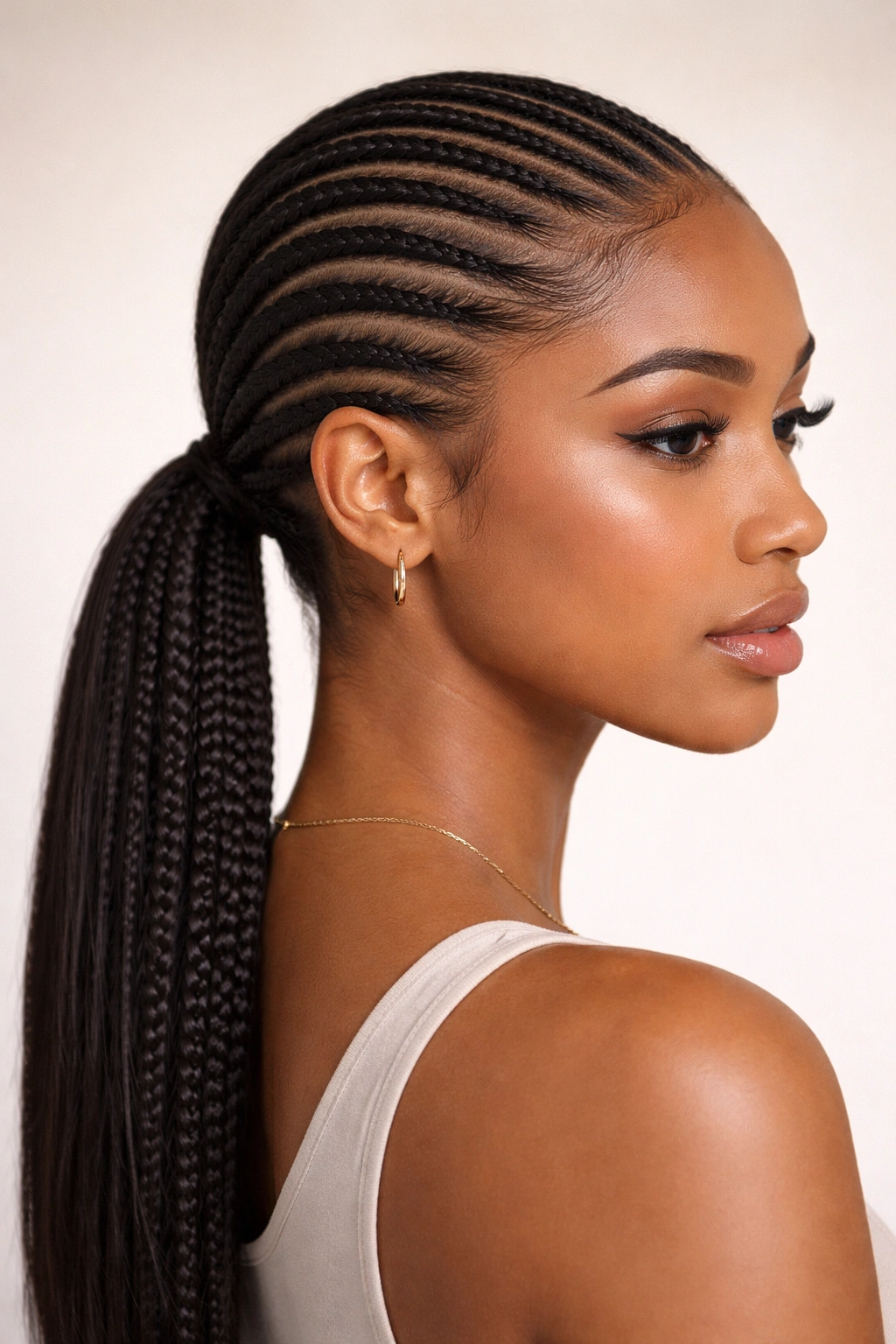
Low ponytails are the most forgiving version of this style. They put less pressure on the hairline, feel easier to wear all day, and look neat even when the braids are simple. If the high ponytail feels a little too loud for your taste, the low version gives you the same clean finish with less fuss.
The charm is in the calmness of it. The braids lie closer to the scalp, the ponytail rests at the nape, and the whole style has a grounded look that works for work, errands, dinner, or a day when you want your hair to stay put and stop asking for attention.
This is a smart choice for finer natural hair too, especially if you do not want a heavy ponytail tugging at the back. Keep the parting neat and the braid sizes even. That alone carries the style a long way.
3. Side-Swept Cornrow Ponytail
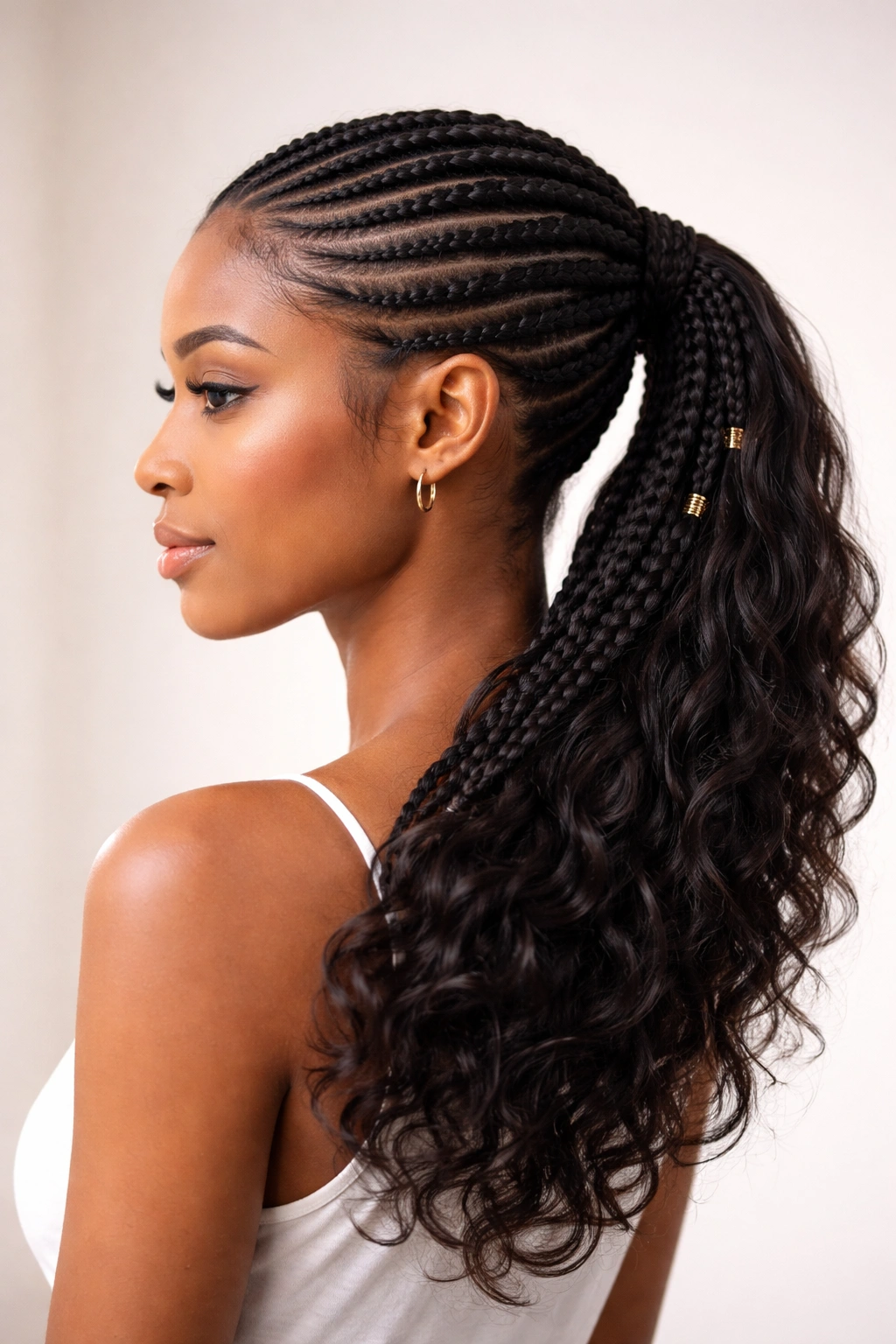
Why does a side-swept ponytail feel softer than a center-part version? Because the eye follows the curve. The braids move diagonally, which breaks up the symmetry and makes the style feel a little more relaxed right away.
How to Wear It
Side-swept cornrows work well when you want the ponytail to sit over one shoulder instead of down the back. That gives you movement without needing loose hair everywhere. It also helps if your face is round or square and you want the braids to create a longer line.
The parting can be subtle or dramatic. Some people like one deep side part with all the braids flowing into a single ponytail. Others braid from the temple toward the crown, then gather everything just behind the ear. Both work.
A side-swept finish is also a nice fix when the back of the head is the area you want to keep simple. No need for a fancy pattern there. Let the front do the talking.
4. Curved Cornrow Ponytail with Flowing Parts
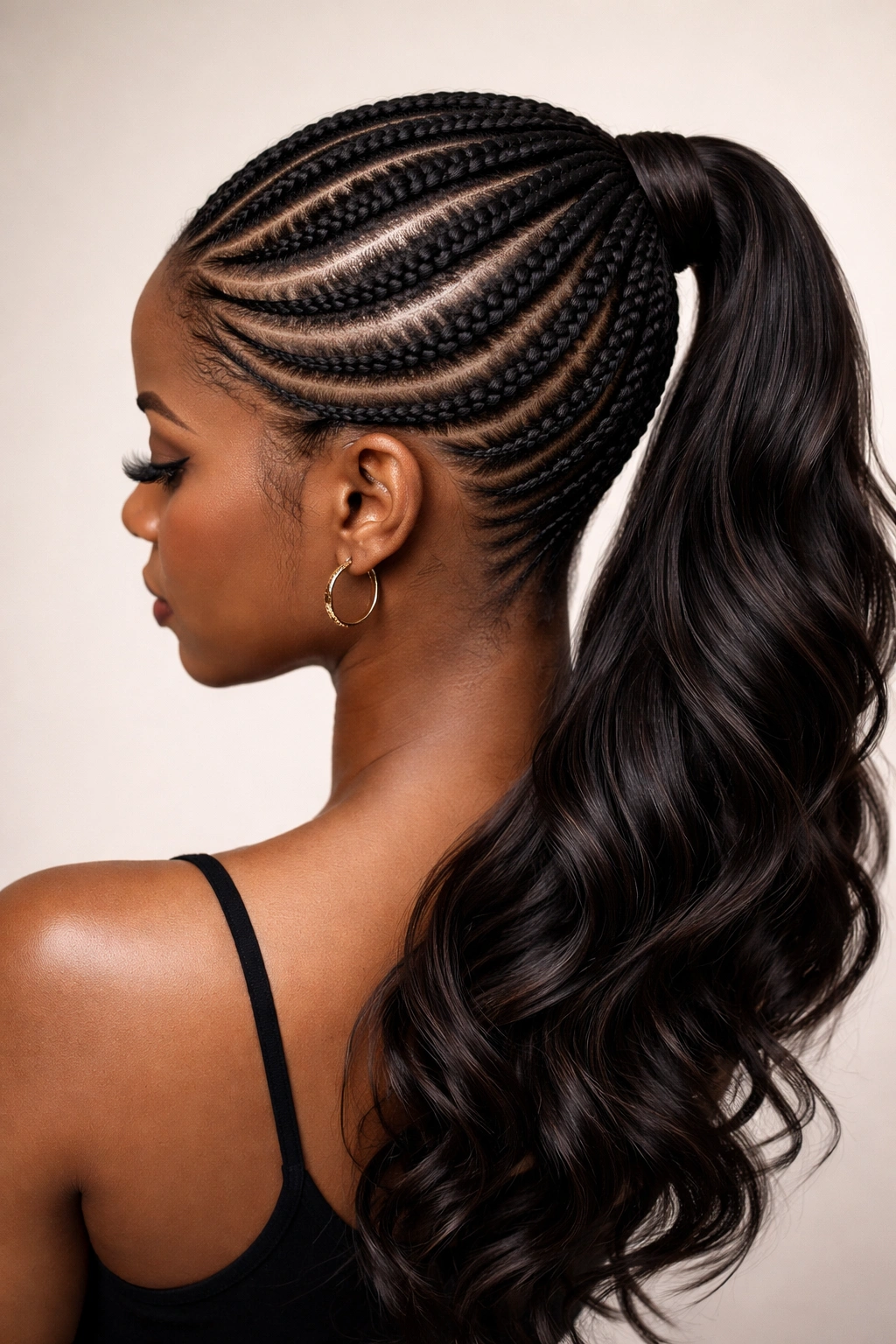
I always think of curved cornrows as the style you choose when straight lines feel too severe. The parts bend around the head instead of cutting across it, so the whole look has more motion before the ponytail even starts.
A stylist with a good eye can make the braids follow the shape of your head in a way that looks almost sculpted. That matters. Curves soften the style, especially on tighter coils where a rigid part can sometimes make the design feel boxy.
- Curved rows look best on medium to thick natural hair
- They need clean sectioning, or the shape gets muddy fast
- A rat-tail comb helps, but patient parting helps more
- Small mousse after braiding keeps the surface tidy
The ponytail can be high or low. I like it low when the curves are the star and high when you want the back to feel more playful. Either way, the parting is what people notice first.
5. Feed-In Cornrow Ponytail
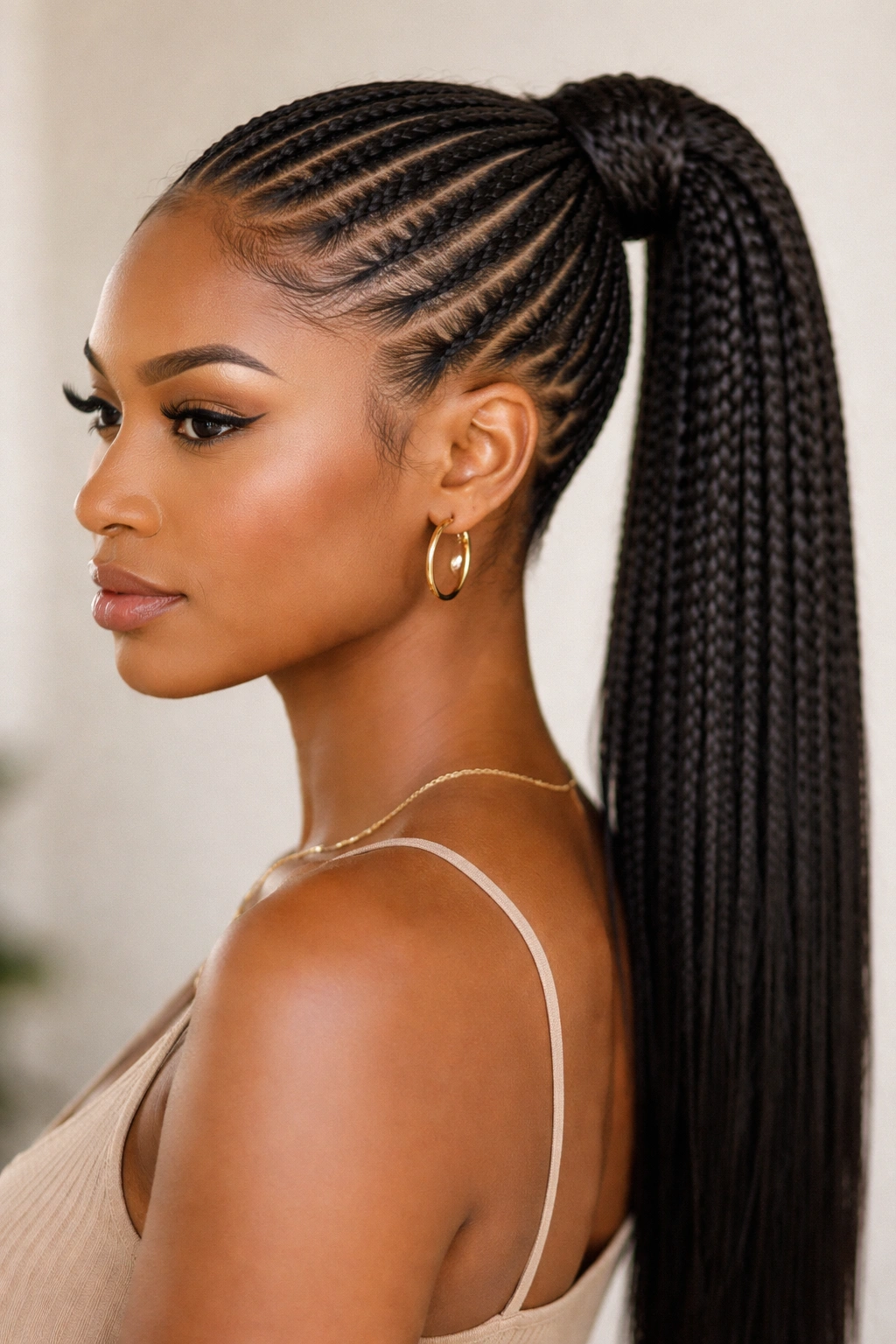
Feed-in braids are one of the cleanest ways to build a ponytail because the braid starts slim and grows gradually as hair is added. That slower build keeps the front of the style from looking bulky. It also gives the ponytail a smoother, more natural start at the scalp.
The beauty of this style is in the control. You can make the braids look almost seamless, especially if the added hair is matched well. The tail can be one long braid, a set of several braids gathered together, or a braided bundle wrapped with one extra strand. There is room to play.
This style is a good pick when you want a sleek profile but do not want the heaviness that sometimes comes with large feed-ins. The trick is to keep the feed-ins even. If one braid gets much thicker than the others, the ponytail starts to tilt visually, and that is annoying.
6. Stitch Braid Ponytail
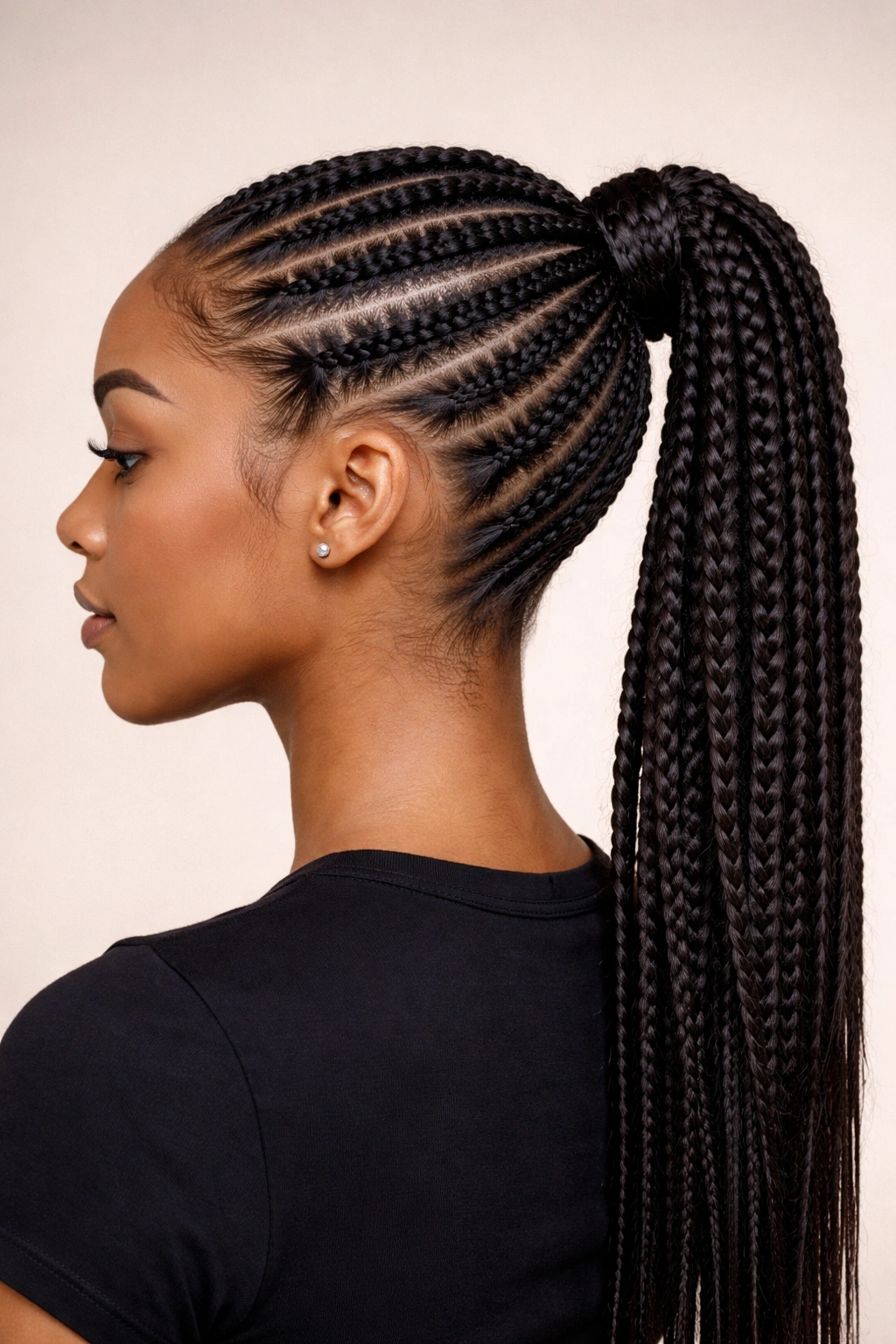
Unlike looser cornrow patterns, stitch braids have those crisp, visible ridges that read from across the room. They look sharp because the sections are defined with a tight, repeated motion. If you like structure, this one delivers it without apology.
The stitch effect works especially well in a ponytail because the clean lines stay visible right up until the braids gather at the back. That makes the style feel more architectural than soft. Some people want that. I do, on days when my hair needs to look deliberate instead of romantic.
This style suits thick natural hair and medium extensions nicely, though it can be heavy if the braids are made too large. Keep the rows close enough together to show the pattern, but not so tight that the scalp feels tender for days. There is a line there. Cross it and you will know.
7. Jumbo Cornrow Ponytail
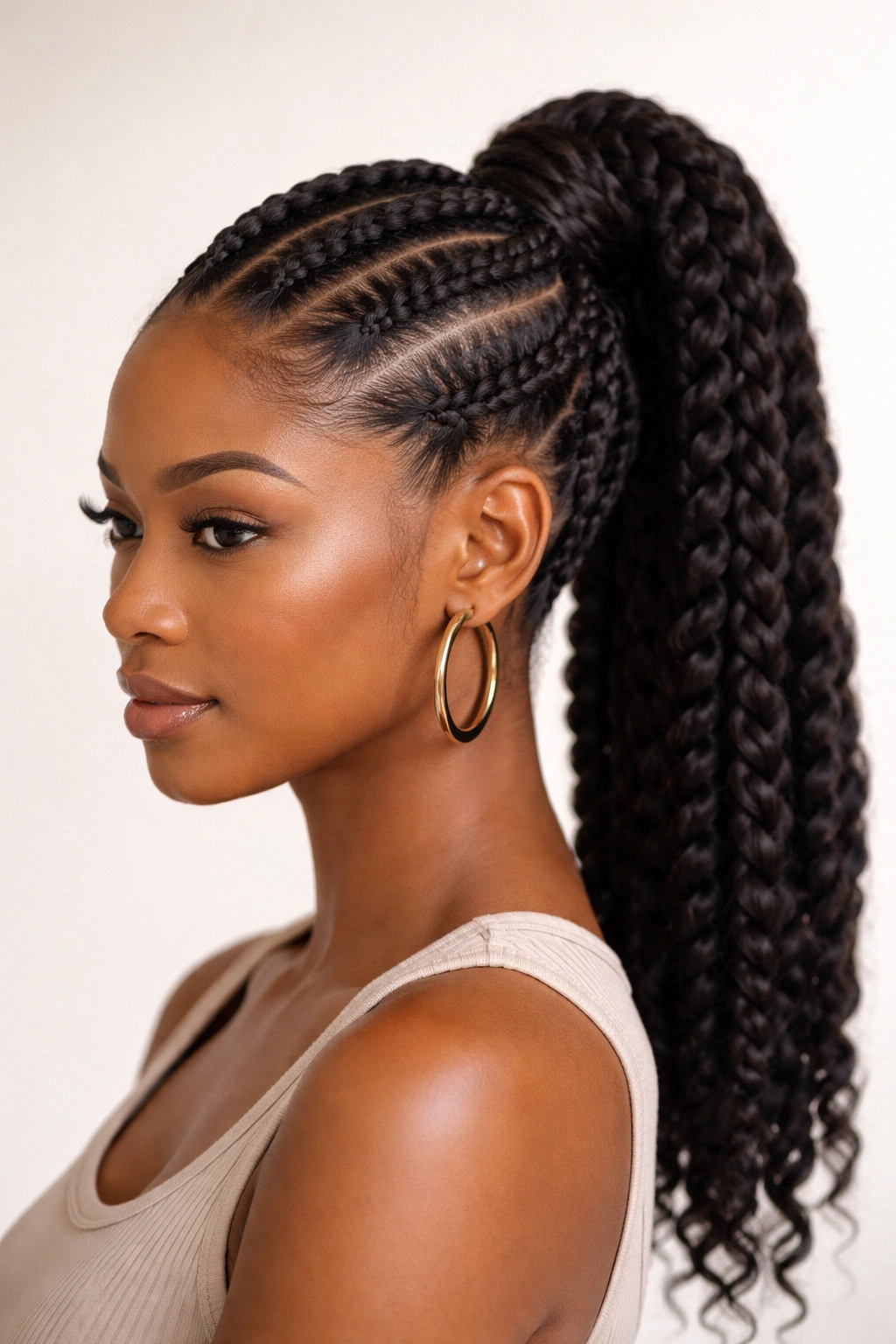
Big braids change the whole mood. A jumbo cornrow ponytail looks confident in a way that smaller braids do not; it makes the style read faster and cuts the styling time down a bit, which is never a bad trade.
What Makes the Shape Work
A jumbo ponytail needs balance. If the braids are too few, the scalp shows more than you may want. If they are too many, the style loses the impact that makes jumbo braids worth doing in the first place. Three to six large rows often hit the sweet spot.
- Good for thick hair that can hold a heavier base
- Faster to install than micro braids
- Easier to wash and dry than tiny braids
- Best when the parting is clean and the size stays consistent
Best move: wrap one braid around the elastic so the ponytail base looks finished instead of tied on.
Jumbo styles also age well over several days. They usually frizz less at the roots because there are fewer parts to fuzz up. That alone makes them a smart pick if you do not want to touch your hair every morning.
8. Micro Cornrow Ponytail
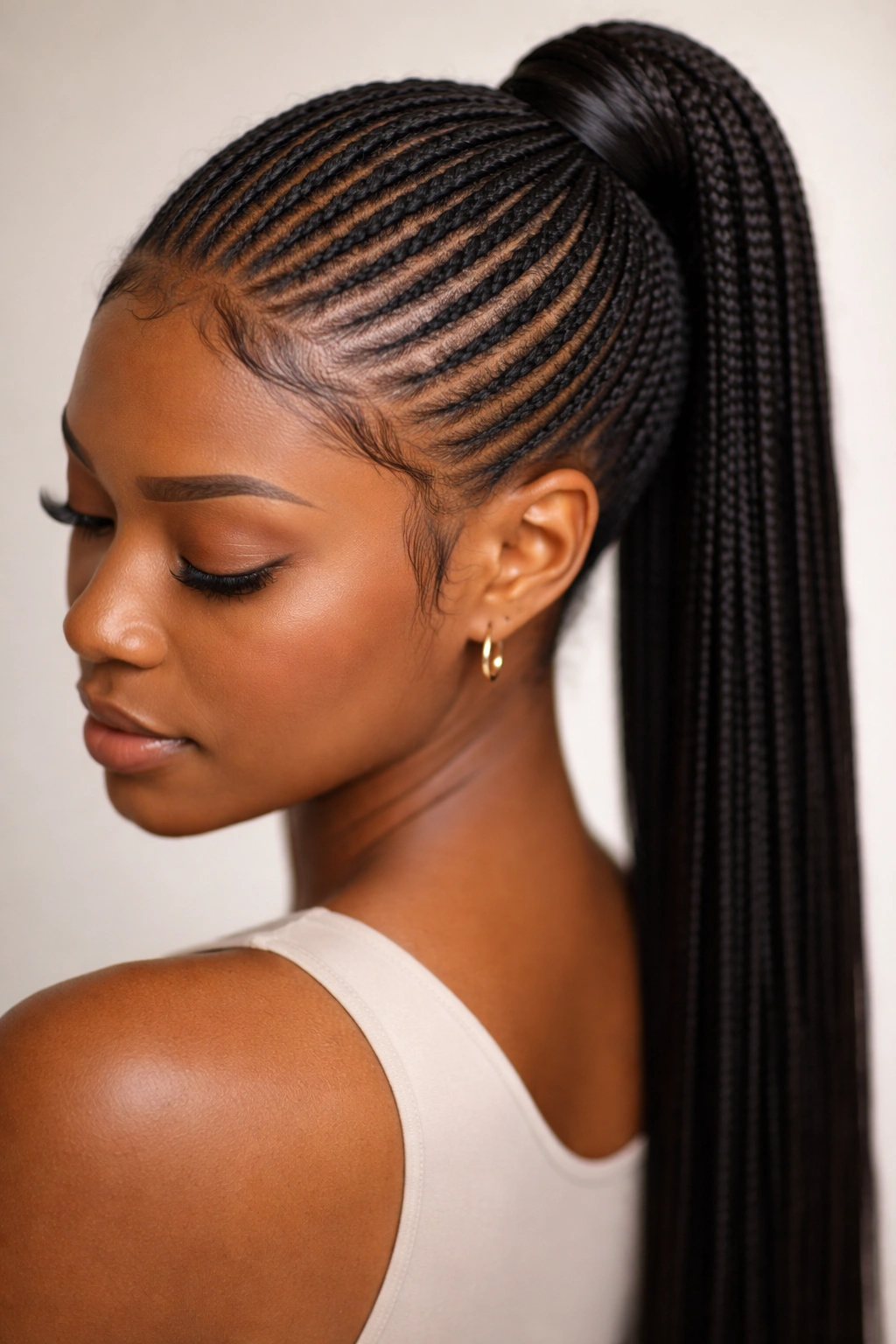
Can tiny braids make a ponytail feel lighter? Yes, and that is exactly why people keep returning to this style. Micro cornrows spread the hair more evenly across the scalp, so the weight of the ponytail is distributed in a softer way.
The trade-off is time. This is not the quick chair session. Micro braids take patience, and the cleaner the lines are, the better the style looks. But the payoff is a ponytail with a lot of movement and a finer, more detailed finish.
How to Keep It Practical
Micro cornrows work best when the hair has been stretched first. Blow-dried on low heat, banded, or carefully blown out, the hair is easier to part cleanly. If the hair is too shrunken, the sections can swell and the ponytail loses that neat little grid.
This style is worth it when you want a long wear time and do not mind a longer install. It also looks good with beads or cuffs, though honestly it does not need them.
9. Cornrow Mohawk Ponytail
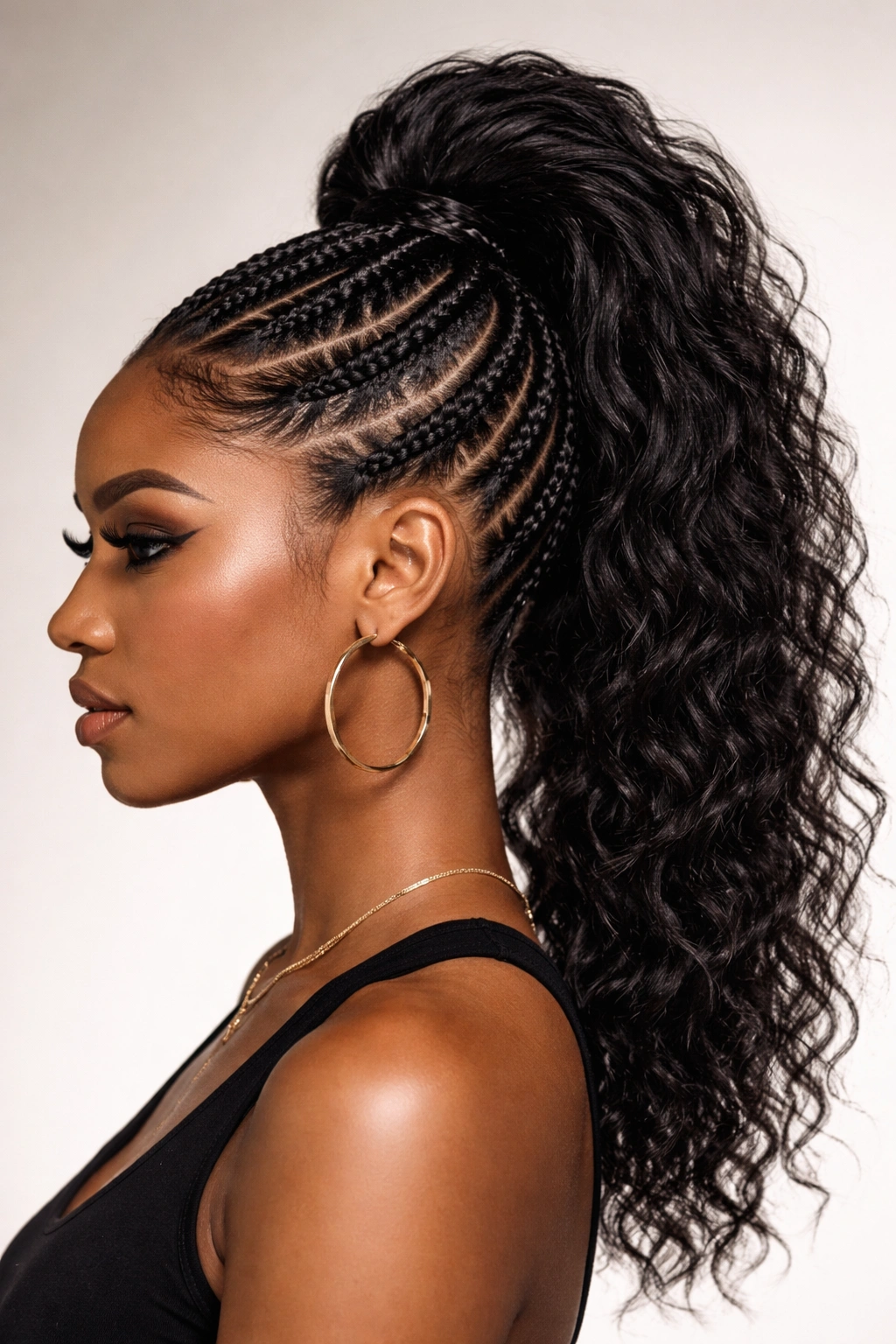
A mohawk ponytail is for the days when you want the braids to feel bold before the tail even starts. The sides are braided tight, the center section carries the shape, and the ponytail rises like a ridge down the head.
That center emphasis makes the style feel strong and sporty. It is also practical for anyone who wants the sides neat but still wants height. The ponytail can sit at the crown or drop into a mid-back tail, depending on how much lift you want.
- Great for tapered cuts or faded sides
- Makes a strong shape on oval and heart-shaped faces
- Works with one thick center cornrow or several narrow rows
- Can be worn with a braided tail or a puffier extension piece
A mohawk ponytail is not subtle. That is the point. If you want a style that reads fast and holds its shape, this one does the job.
10. Bubble Ponytail with Cornrow Base
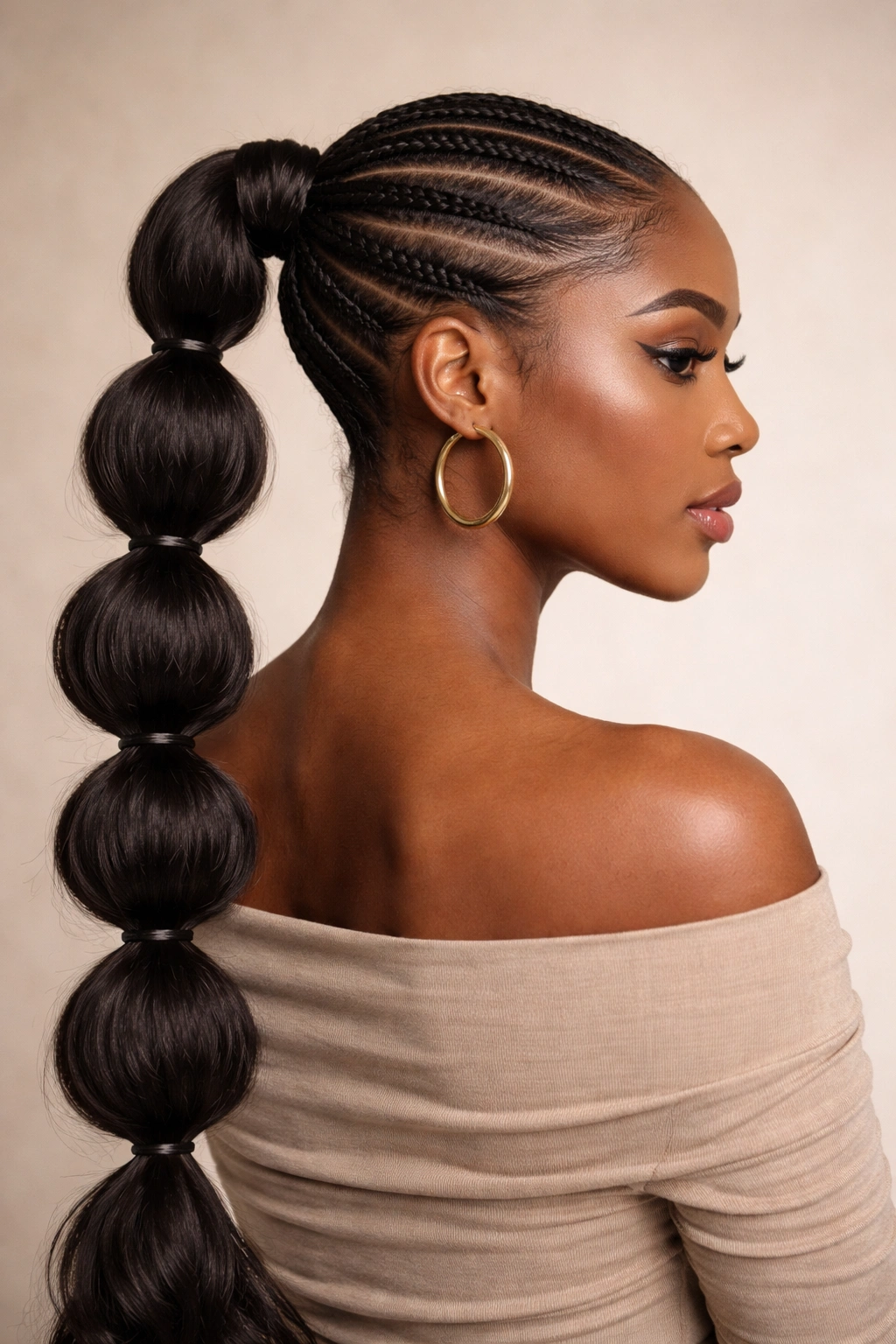
A bubble ponytail gives you something a plain braid does not: sections of movement. The cornrow base keeps everything clean at the scalp, then the ponytail is tied off at intervals so it forms round, puffed-out segments.
It is a good style when you want the hair to look playful without falling apart. The bubbles can be spaced evenly, or you can make the top section larger and the lower ones smaller. That changes the rhythm of the style more than people expect.
This one works especially well with added hair because the bubbles need length to read clearly. Use clear elastics if you want the sections to stand out, or wrap each tie with a small strip of hair to hide the bands. Both choices work. The second one just looks more finished.
11. Braided Ponytail with Curly Ends
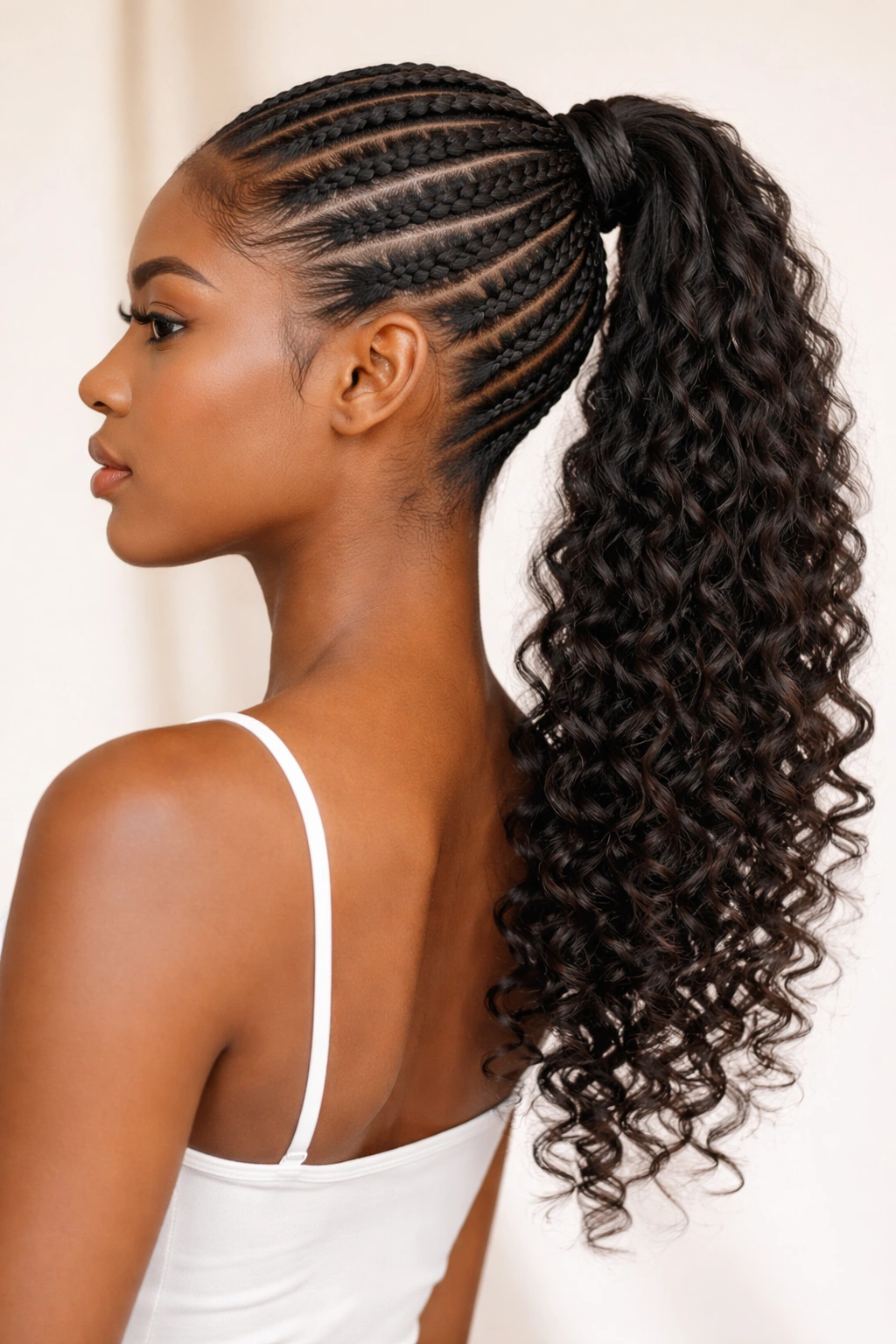
Braids with curly ends always soften the whole look. A straight braid can feel neat and severe; curly ends bring in movement, air, and a little looseness at the finish. The contrast is what makes this version stand out.
Compared with a fully braided tail, the curly finish reads less formal and a bit more playful. It is also easier to style into a shoulder-sweeping ponytail because the ends do some of the visual work for you. If your natural hair already has texture, this can be a very good match.
Use flexi rods, perm rods, or pre-curled extension hair if you want the ends to hold their shape. Small curls look fuller, while larger curls feel softer and less busy. I prefer the bigger ones when the braids are already detailed at the scalp.
12. Deep Side-Part Cornrow Ponytail
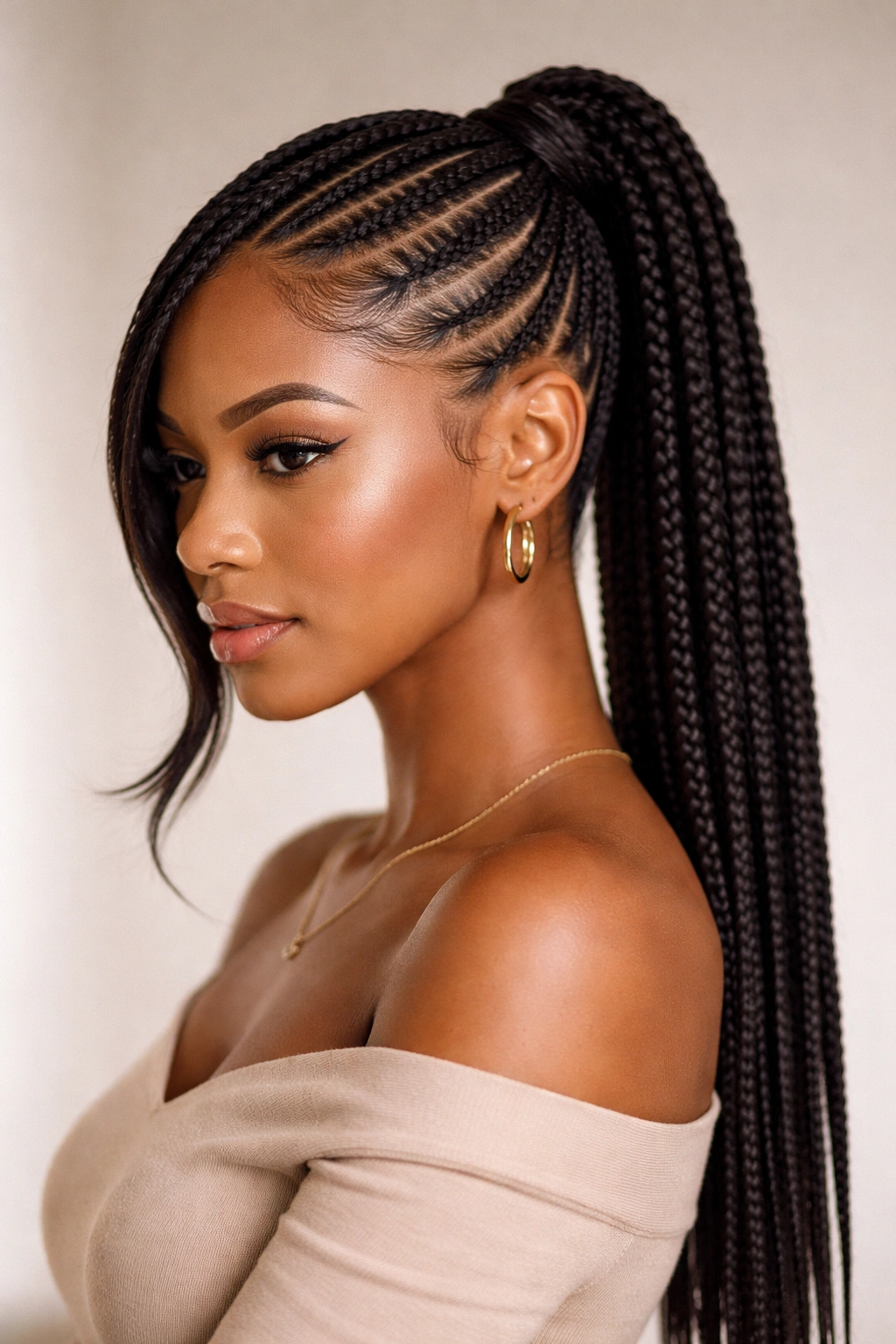
A deep side part changes the mood before the ponytail even appears. It pushes the hair into a cleaner, more asymmetrical line, and that line is flattering in a sneaky way. It pulls attention to the eyes and cheekbones without needing extra styling.
The best part about this style is how simple the braids can be once the part is right. You do not need a lot of design work. One strong part, neat straight-back cornrows, and a gathered ponytail are enough. Sometimes restraint is the better move.
This is a strong choice if you wear a lot of statement earrings. The side part gives the face a frame, and the ponytail clears space around the neck and shoulders. It feels polished, but not fussy.
13. Half-Up Cornrow Ponytail
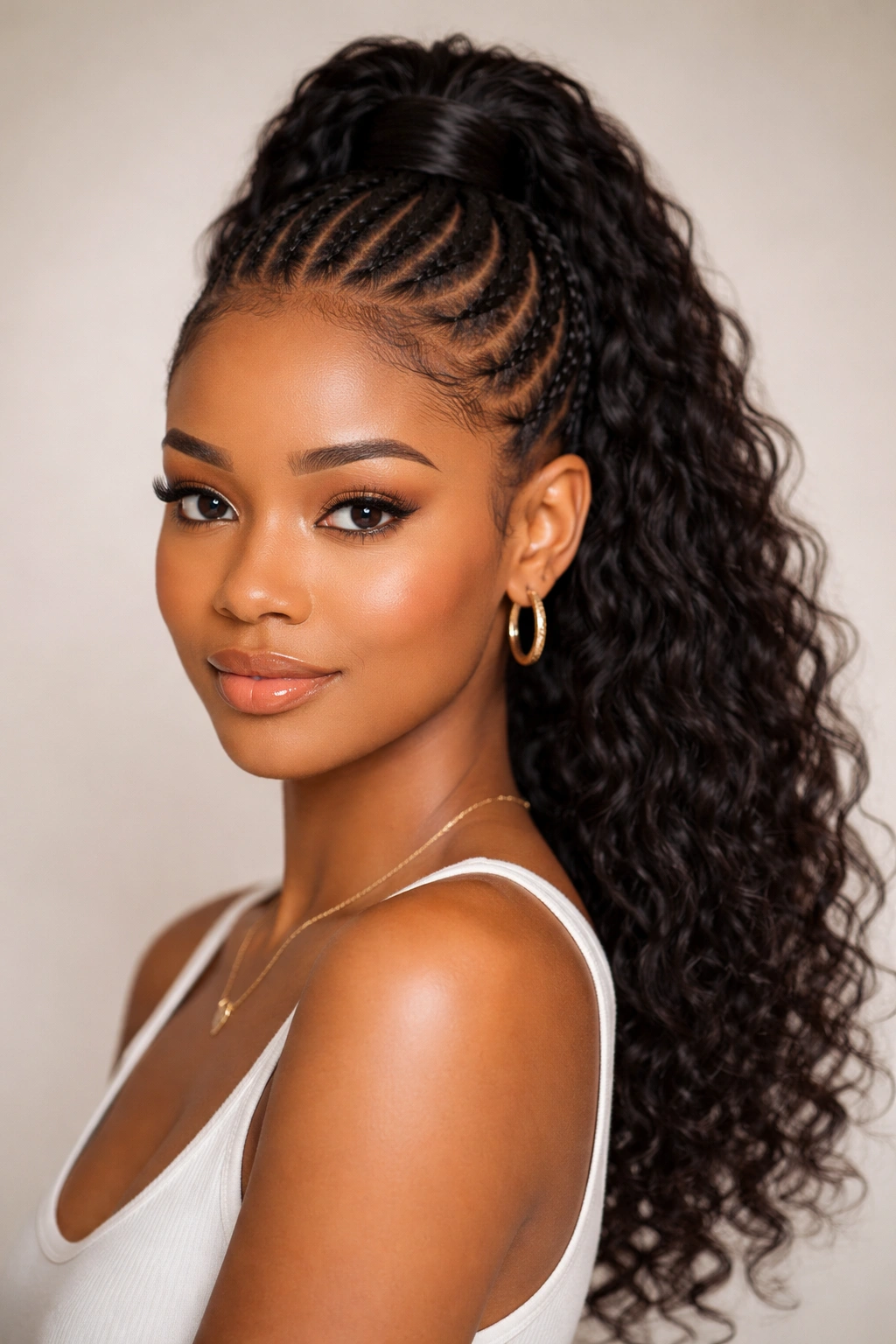
Can a ponytail still count if only the top half of the hair is gathered? Absolutely. Half-up cornrow ponytails are one of the easiest ways to keep length visible while still getting the scalp neat and the crown under control.
When It Makes Sense
This style is especially useful if your hair is very long or if you want to keep some weight off your neck without losing the volume of the loose length underneath. The top cornrows can feed into a small ponytail, while the rest of the hair stays free.
That split makes the style feel less committed, which is not a bad thing. Some days you want order at the top and softness everywhere else.
- Good for medium to long natural hair
- Works with a small top knot ponytail too
- Keeps the style cooler around the nape
- Lets you show off length without tying up all of it
A half-up version also gives you more room to play with accessories. A small scarf, a few cuffs, or a wrapped base can make the top section feel deliberate instead of like an afterthought.
14. Wrapped-Base Cornrow Ponytail
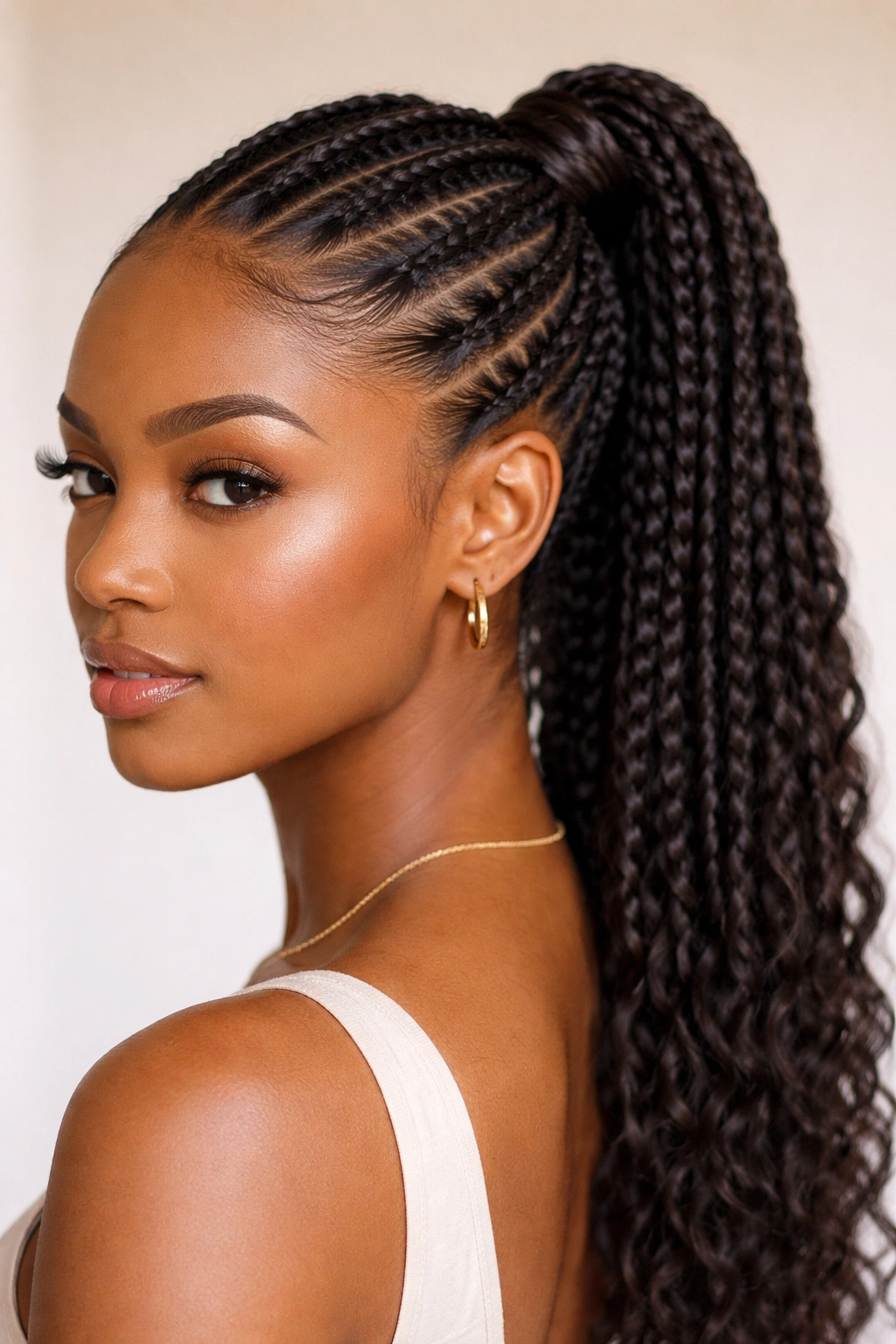
A wrapped base is one of those small details that makes the whole style look more finished. You hide the elastic or hair tie by winding a braid or section of hair around it, and suddenly the ponytail looks built instead of tied on.
I like this version when the braids are otherwise simple. It gives you one clean focal point. You do not need a fancy part or a complicated pattern if the base itself looks sharp.
What to Watch For
The wrap should be snug, but not so tight that it distorts the braid underneath. If the wrap is too thick, it can make the base lumpy. Thin, even wrapping is the goal here.
This style works well for work settings, events, and any day when you want the ponytail to read a little more intentional. It also hides the practical side of the style, which I appreciate more than I probably should.
15. Triangle-Part Cornrow Ponytail
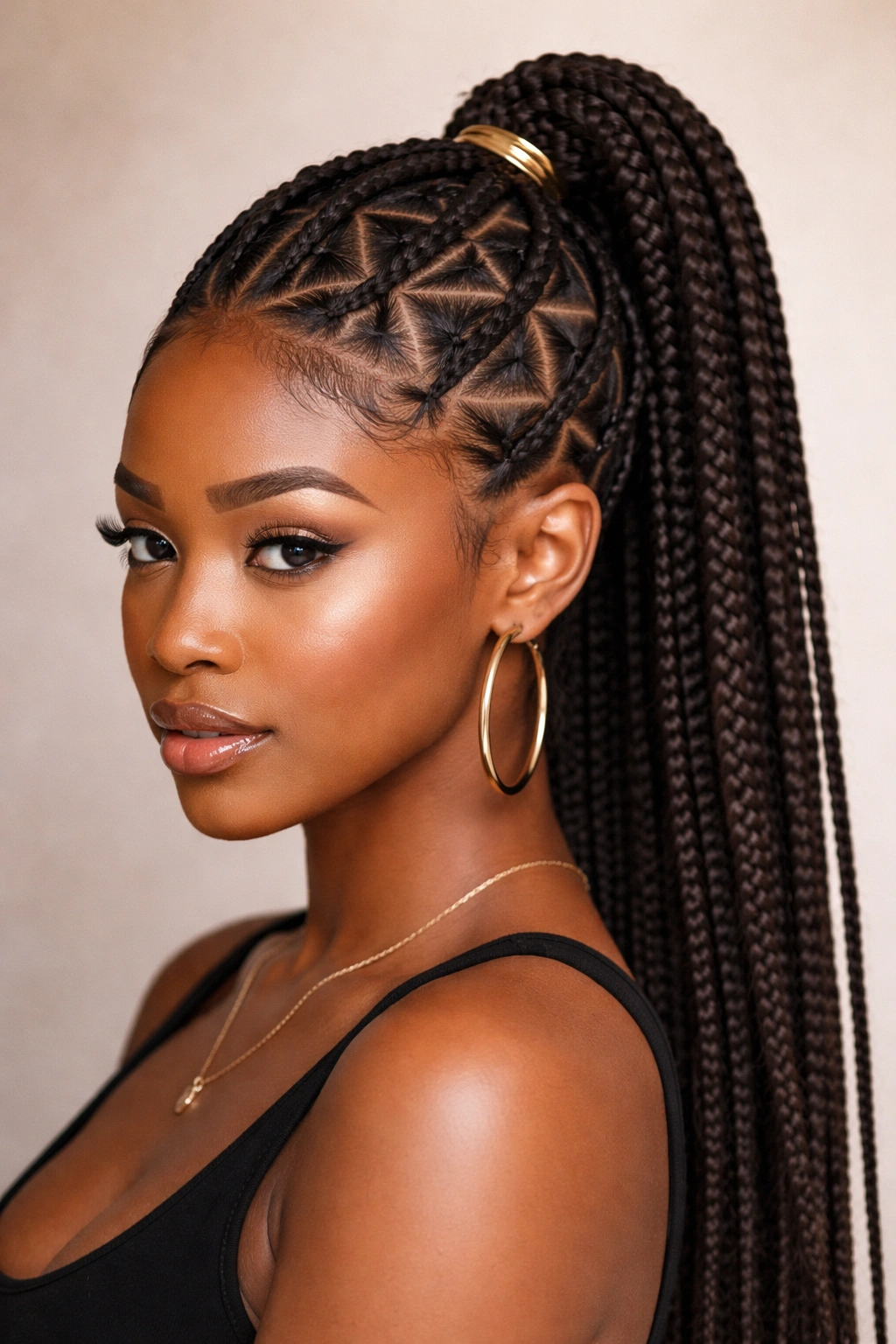
Triangle parts change the texture of the whole style before a single braid goes in. Instead of the usual rectangular sections, the scalp pattern forms small geometric shapes that catch the eye even when the ponytail itself is simple.
That little switch matters. It gives the style more edge and makes the ponytail look less standard without making it hard to wear. Triangle parts are especially useful if you want a basic braid pattern but do not want the result to feel ordinary.
They also work well on medium-density hair because the shape helps distribute the look of the braids across the scalp. A few big triangles can feel bold. Smaller ones feel more detailed. Choose based on how busy you want the style to look.
16. Zig-Zag Part Cornrow Ponytail
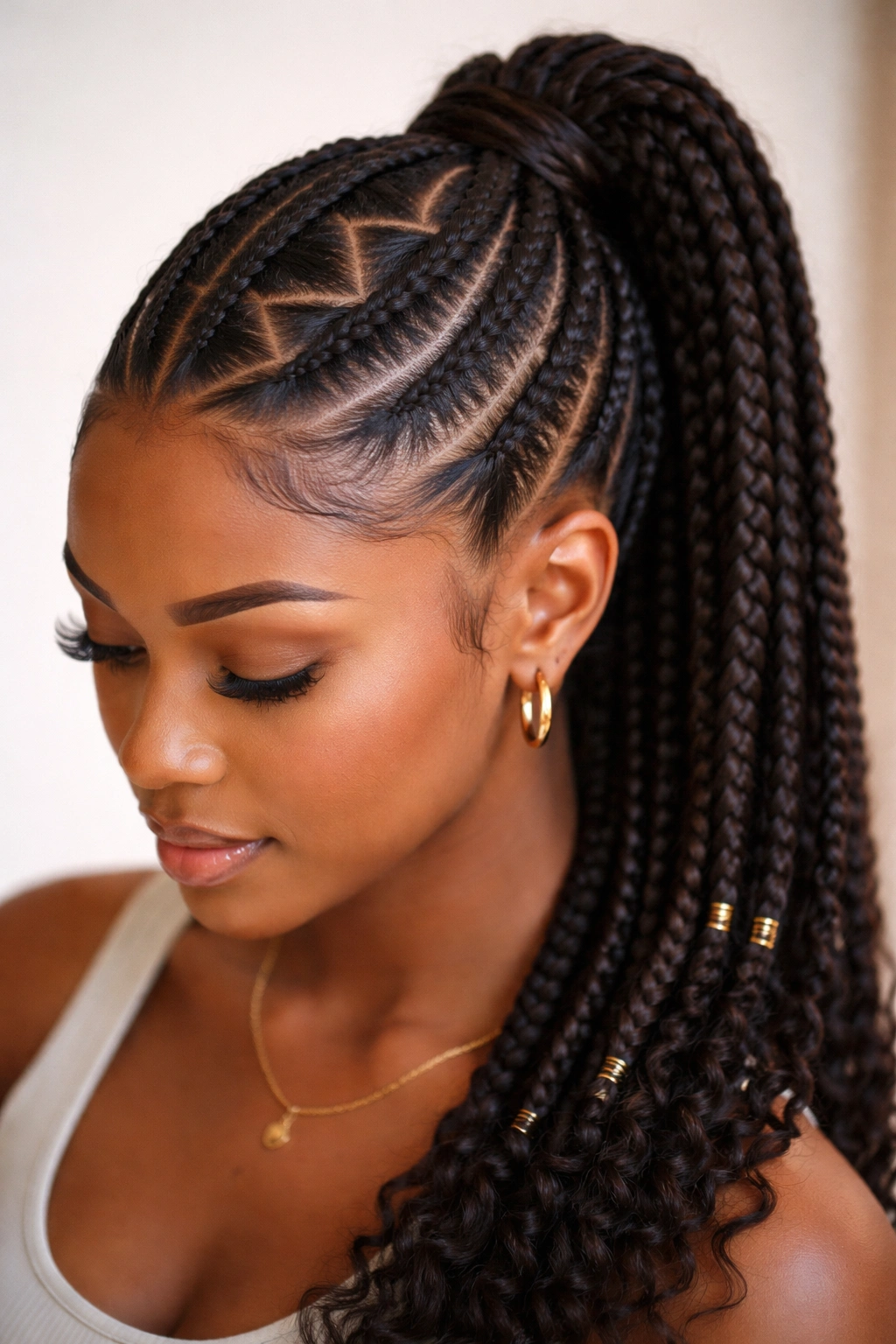
Straight parts are clean. Zig-zag parts are lively.
That is the easiest way to think about this style. The zig-zag line makes the scalp design feel less rigid, and it adds movement before the ponytail even starts. If you like styles that look a little more playful, this one is a good fit.
What Makes It Different
The pattern works best when the braids themselves are not too thick. Too much bulk can hide the parting, and then the whole point is lost. Keep the braids medium in size so the zig-zag shape stays visible from the front and sides.
This style is a nice option for younger wearers, but it does not have to read youthful. On the right face shape, with a neat ponytail and polished edges, it looks sharp and grown.
A small amount of mousse after braiding helps the parting stay crisp. Not soaked. Just enough to calm the flyaways.
17. Heart-Part Cornrow Ponytail
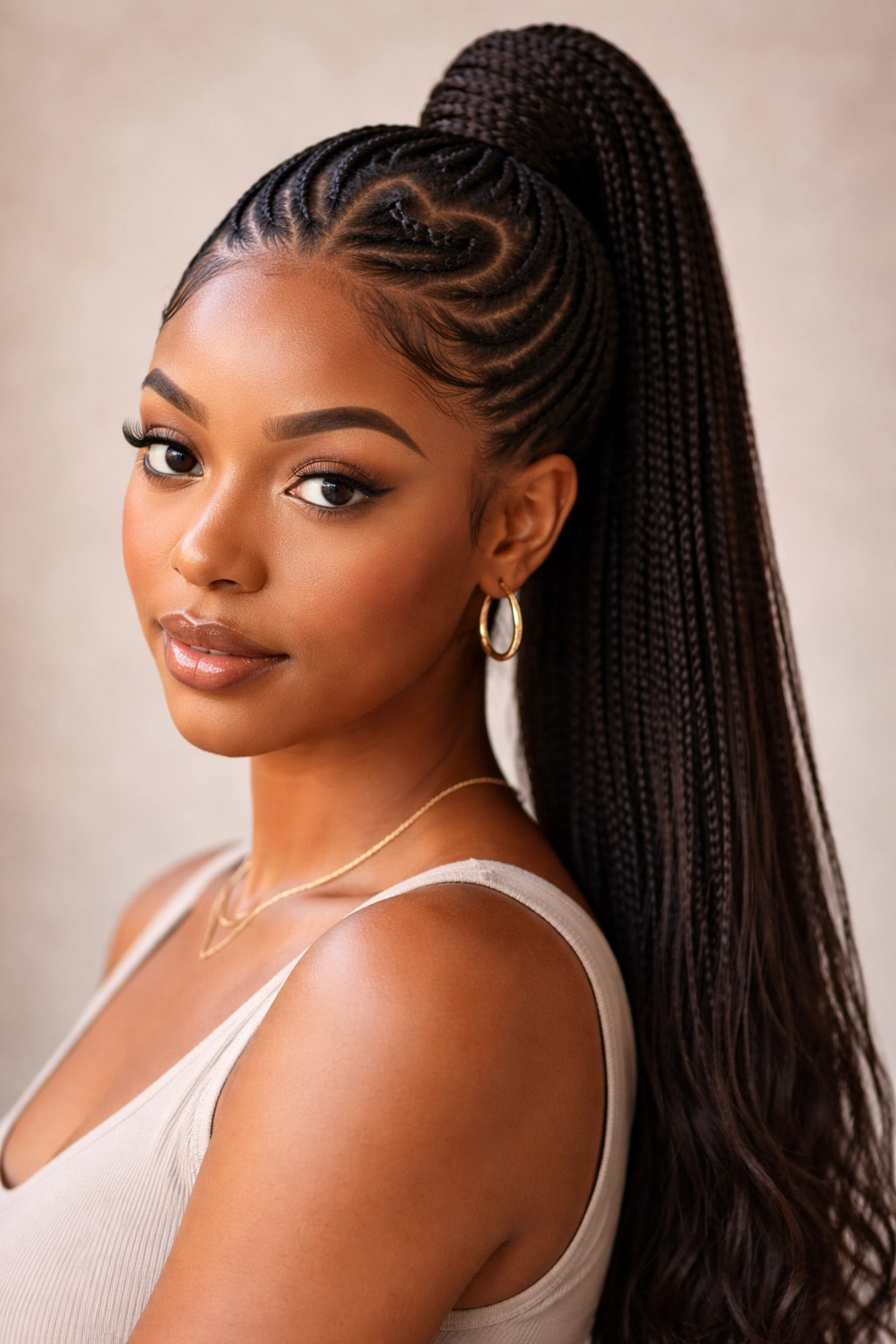
Heart parts are the decorative choice in the bunch, and I mean that in the best way. They are the sort of detail people notice if they are looking closely, which makes them ideal when you want the style to feel thoughtful without adding beads or color.
The heart shape usually sits near the top or side of the head, where it can be seen before the ponytail pulls everything back. That placement matters. A hidden heart part is a waste of good braiding.
This style suits special occasions, school events, photos, or any day when you want a little extra personality in the parts themselves. It is still a ponytail, still practical, still easy to wear. It just has a softer, more playful front end.
18. Beaded Cornrow Ponytail
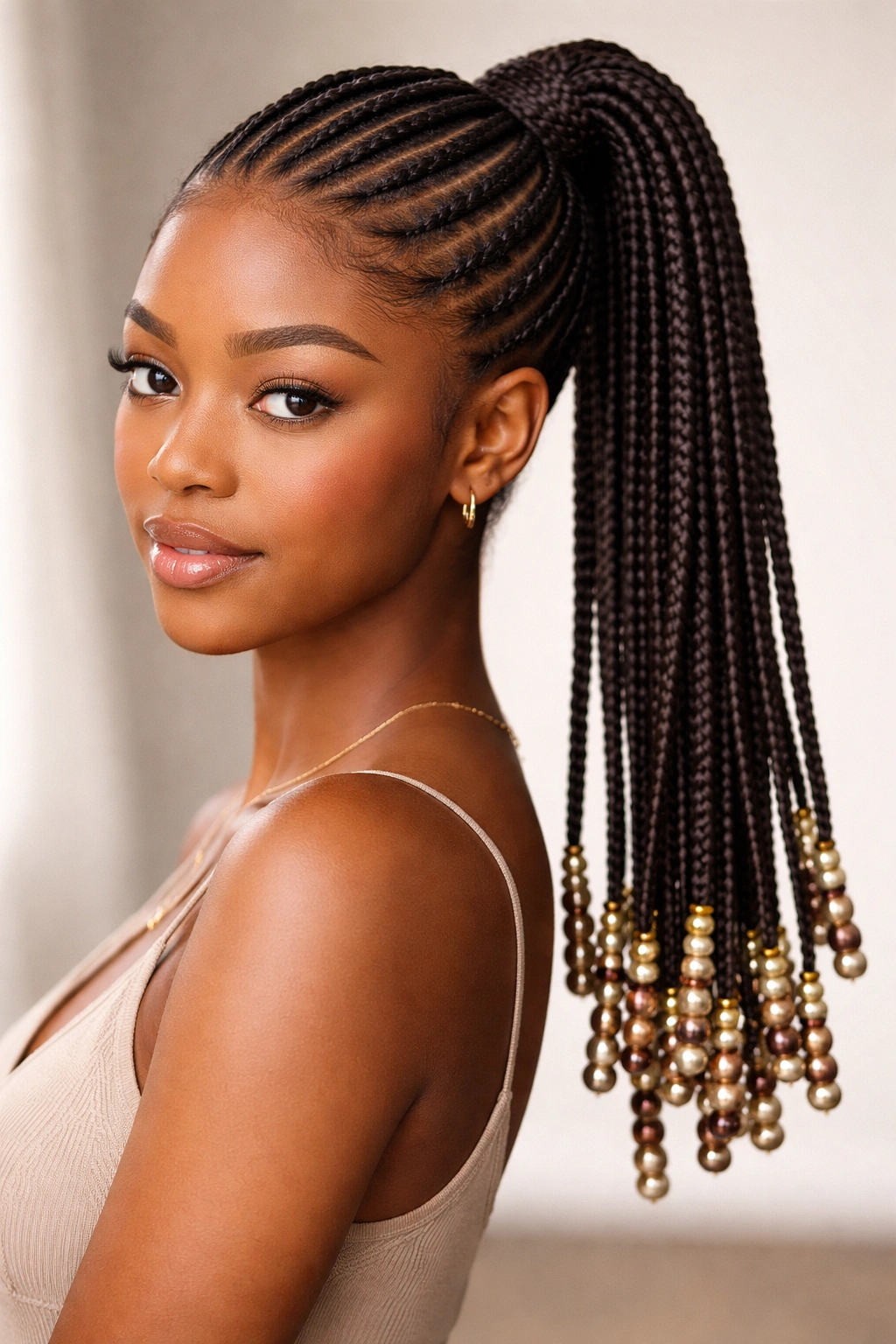
Do beads belong on a ponytail? They do when you want movement and sound and a little bit of weight at the ends. Beads are not mandatory, but they can change the personality of the style fast.
The key is restraint. Too many beads, or beads that are too large, can pull on the ponytail and make it feel heavier than it should. A few well-placed beads near the ends often look better than loading the whole braid with hardware.
How to Keep Beads Comfortable
Choose beads that are smooth inside, so they slide on without snagging the braid. Plastic, wood, and metal all work, but the fit matters more than the material. Tight beads stay put. Loose ones clatter around and irritate the ends.
This is a strong style for kids, festivals, and anyone who likes a bit of movement in their hair. It is not the quietest look in the room. That is part of the charm.
19. Feed-In Stitch Combo Ponytail
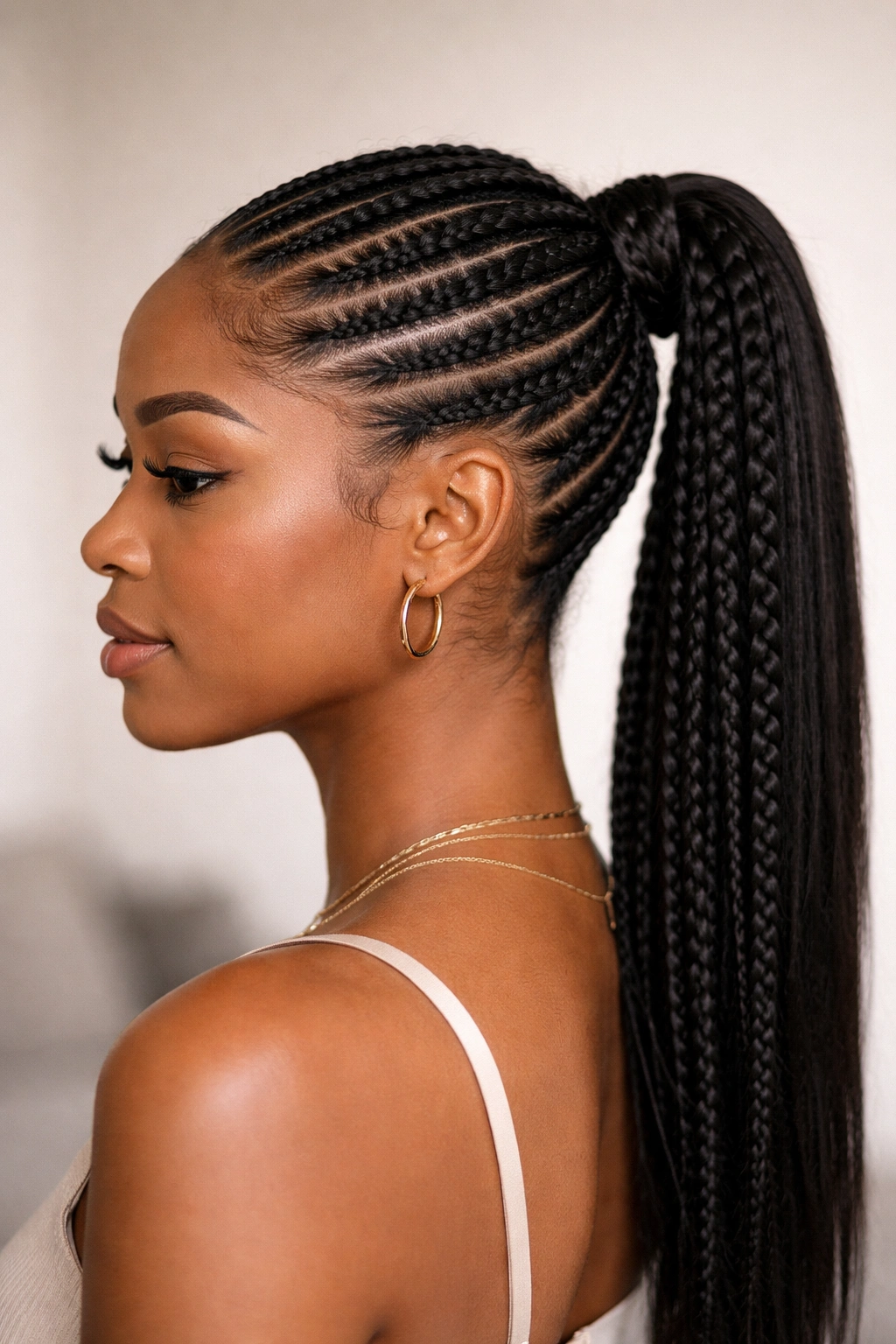
This is the style for people who want structure and softness at the same time. Feed-in braids give the base a smoother start, while the stitch effect keeps the rows defined. Together, they make a ponytail that looks clean without feeling flat.
The combo works because the two techniques solve different problems. Feed-ins reduce bulk at the scalp. Stitch braids make the pattern visible. Put them together and the result has both control and detail, which is harder to pull off than it sounds.
How to Get the Most From It
Keep the braid size consistent from the crown to the ponytail base. If the front rows are too thin and the back rows get chunky, the style loses its rhythm. A little symmetry goes a long way here.
This style suits natural hair that can hold shape well and people who want a finish that feels a step sharper than standard straight-backs. It is polished, but not stiff.
20. Low Nape Cornrow Ponytail
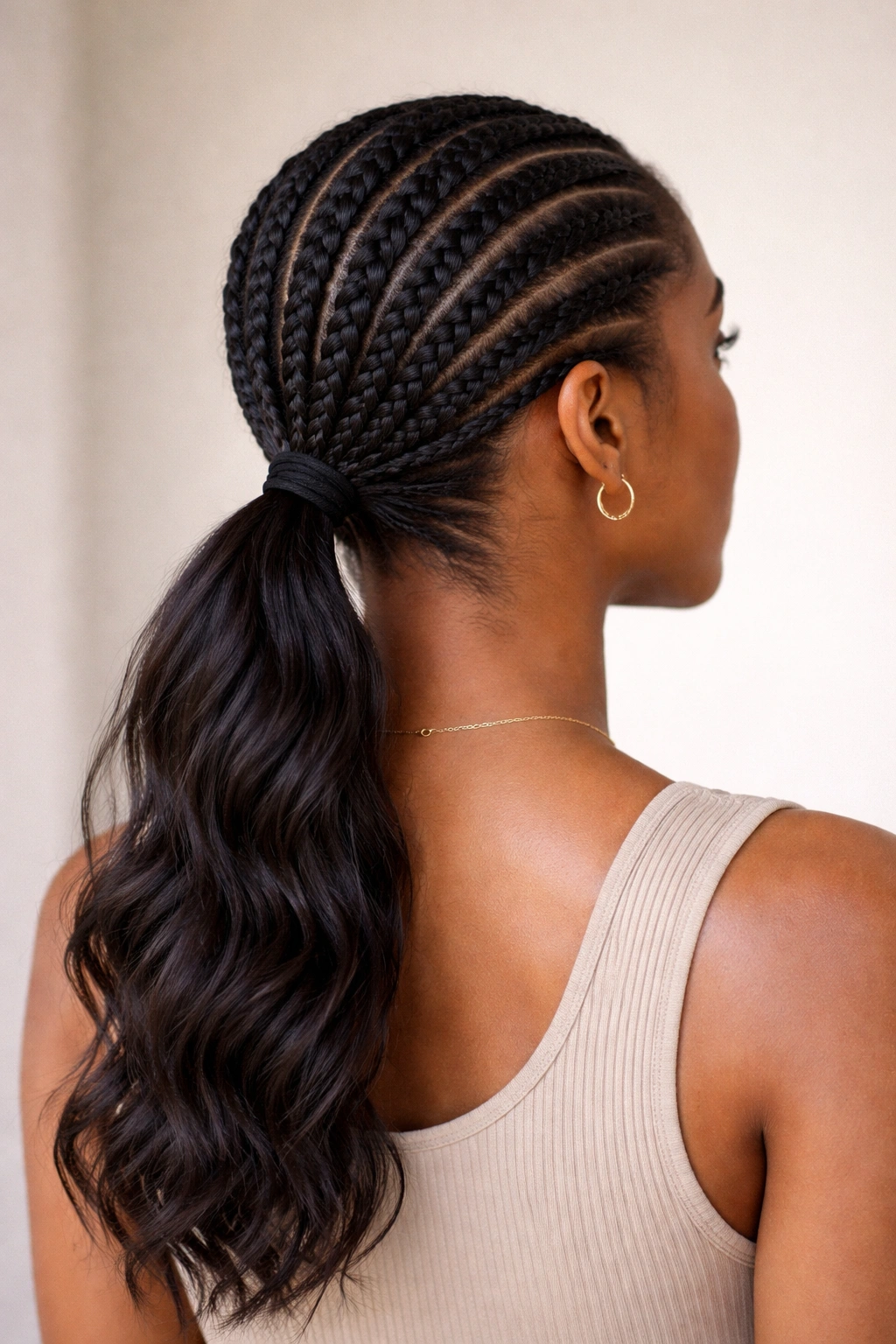
A low nape ponytail is the style I reach for when I want my hair to stay out of the way without feeling pinned up tight. It sits low, hugs the neck, and makes long days easier because the weight stays closer to the body.
That lower placement is kinder to the hairline too. You are not pulling the front braids up and back as much, so the tension tends to feel more manageable. On days when your scalp wants peace, this style respects that.
- Good for gym days and travel
- Easier to sleep in than high styles
- Looks neat under hats and scarves
- Works with a wrapped base or a single long braid
This is not the loudest ponytail on the list. It is one of the most wearable, though, and that matters more in real life than people admit.
21. Extended-Length Cornrow Ponytail
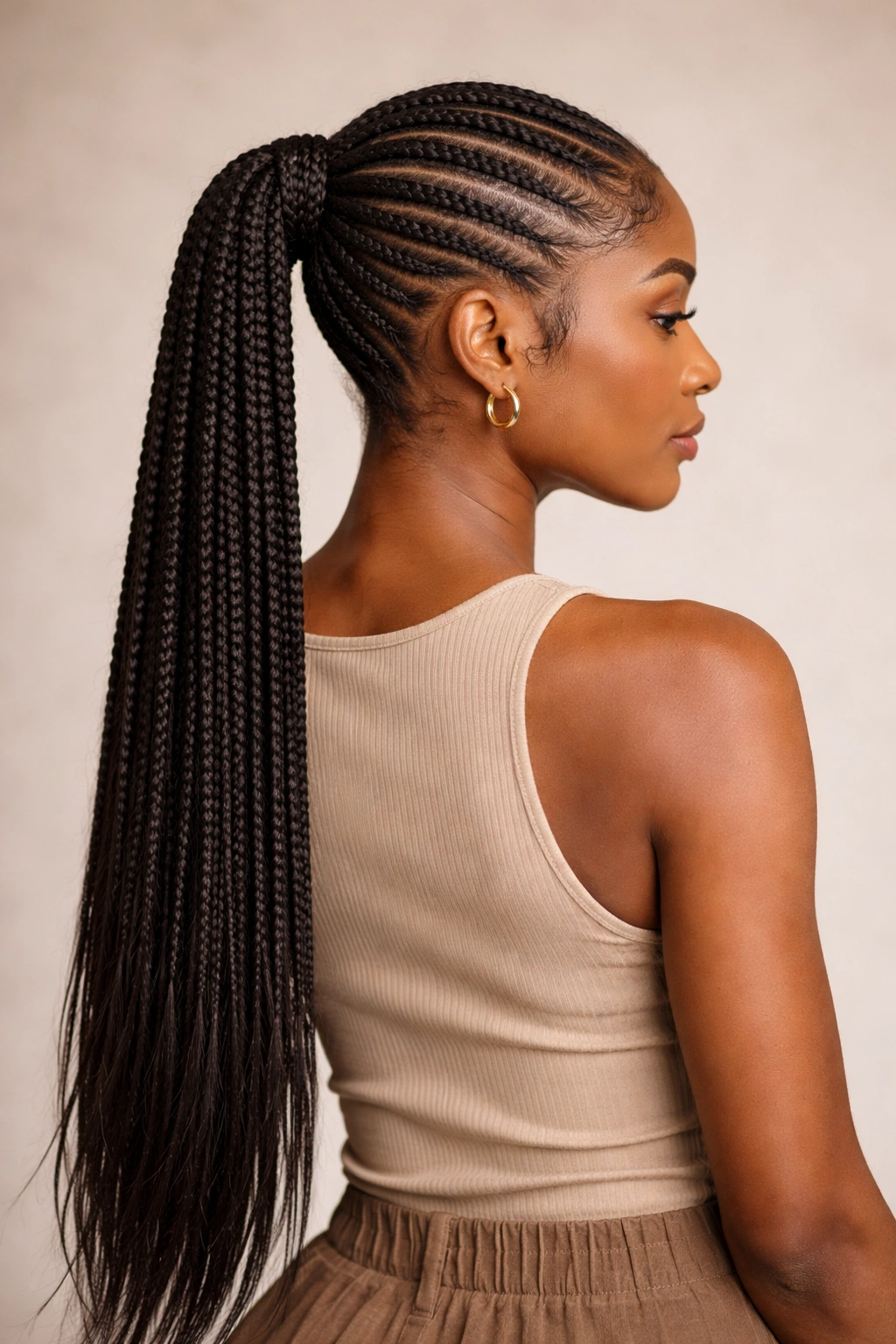
A long, extended ponytail can be gorgeous, but it changes the practical side of the style. More length means more swing, more visual impact, and more weight. If your own hair is short or mid-length, added extensions can help the ponytail read the way you want.
Compared with a natural-length tail, the extended version gives you more room for braids that fall past the shoulders or even down the back. It photographs as a long line. It also needs better balance at the base so it does not feel dragged down by the weight.
Choose this version if you want drama and do not mind a little extra upkeep. The longer the ponytail, the more important it becomes to secure it well at night and keep the base from frizzing.
22. Two-Tone Cornrow Ponytail
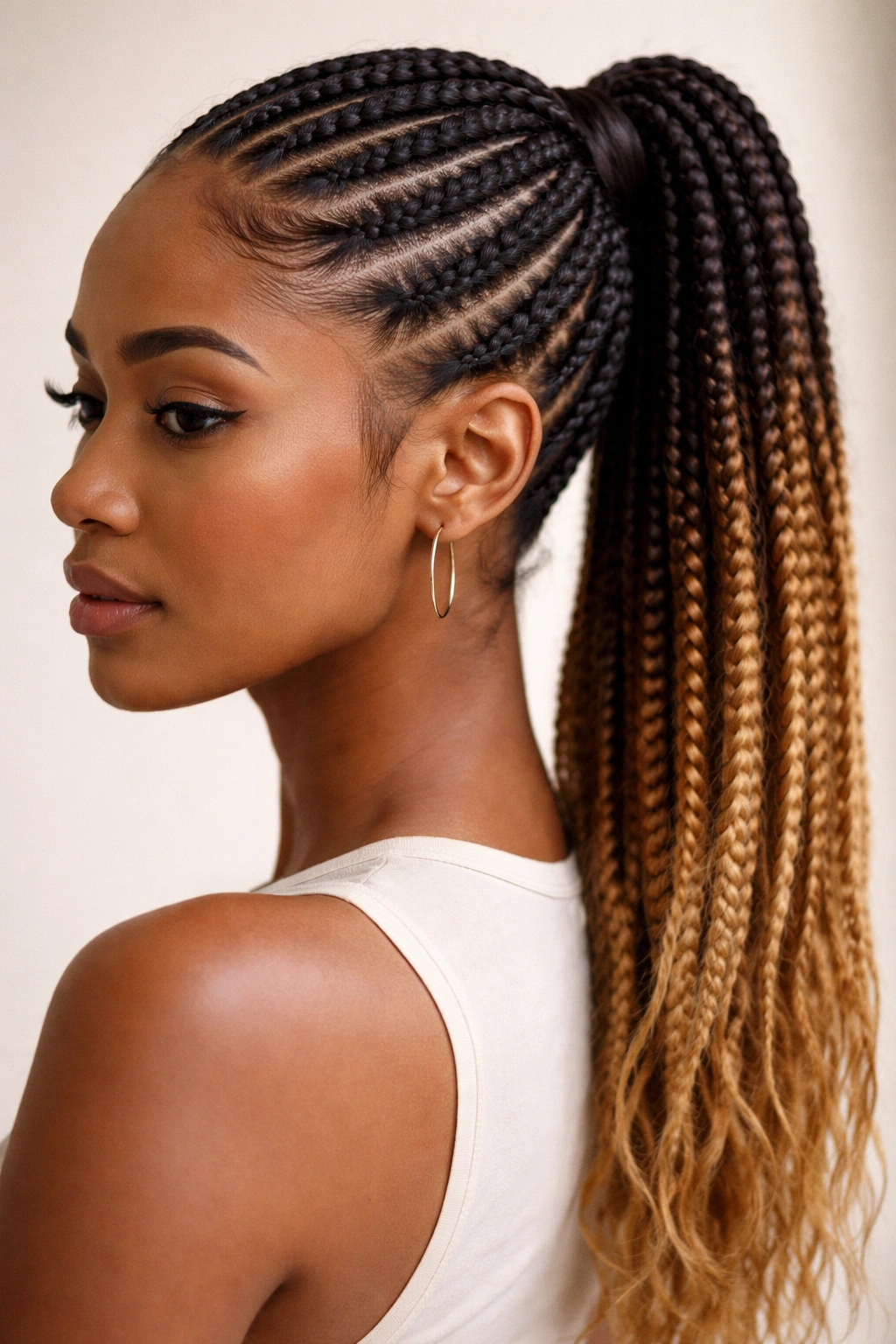
Color changes the whole conversation. A two-tone cornrow ponytail lets the braid pattern stay simple while the color shift does the work. Dark roots fading into honey brown, black mixed with burgundy, or a single contrasting color woven through the tail can all change the mood fast.
The trick is not to overcomplicate the pattern. When the color is already carrying part of the visual load, the parts and braid shapes can stay clean. That keeps the style from turning messy. You want contrast, not confusion.
This is a smart option when you want the ponytail to look more styled without adding beads or a lot of hardware. Color gives the eye something to follow. The braids do not have to shout.
23. Low Side Cornrow Ponytail
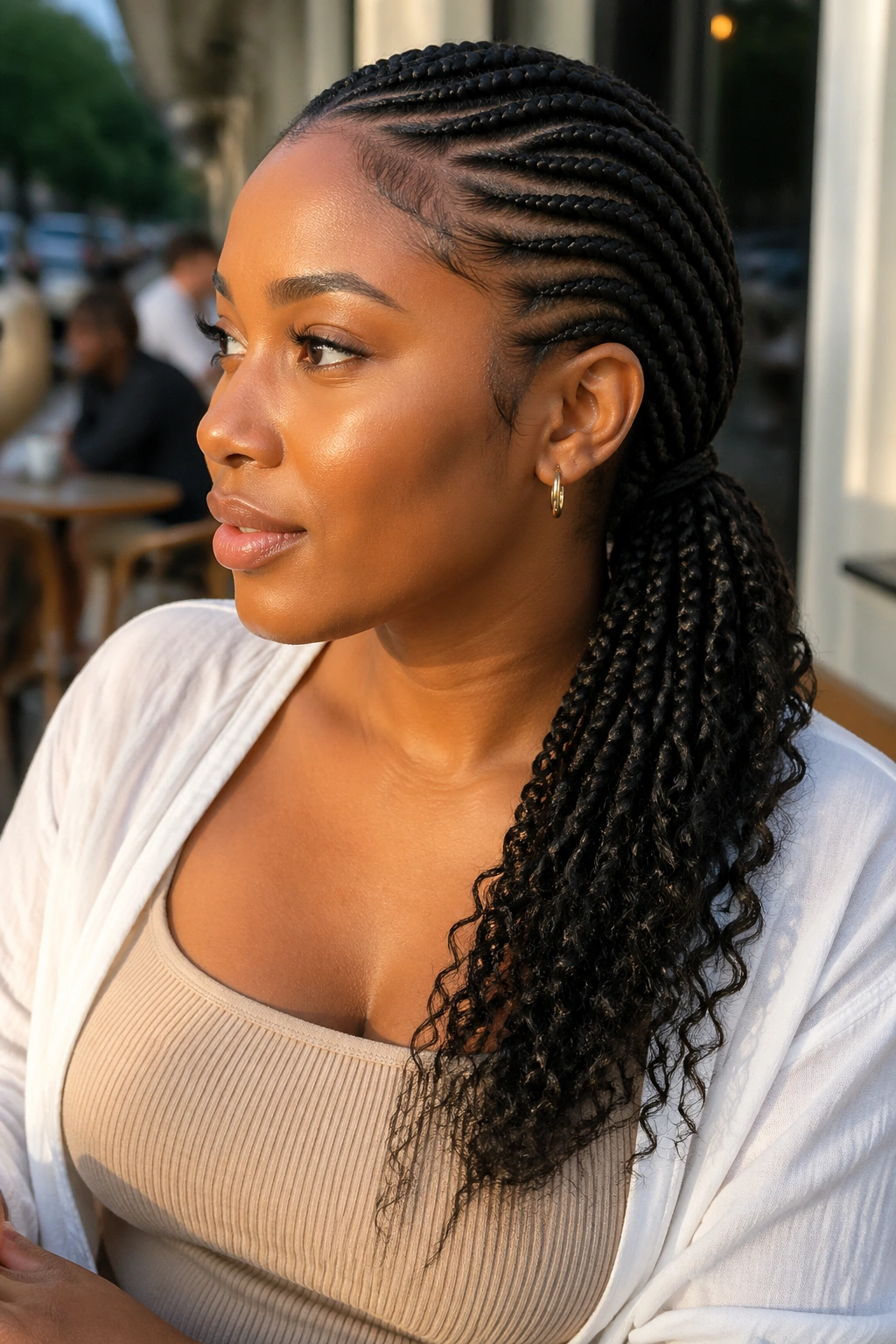
A low side ponytail has the kind of quiet confidence that works in almost any setting. The cornrows sweep toward one side, the ponytail settles near the shoulder, and the whole style feels controlled without looking severe.
I like this one because it avoids the stiffness that some center-part styles can have. The diagonal line softens the face, the low placement keeps tension down, and the side finish makes the ponytail feel intentional even when the braids themselves are simple.
It is also one of the easiest versions to live with for a full day. Sunglasses do not fight it. Collars do not fight it. If you wear earrings, the style leaves room for them instead of crowding them out. That sounds small, but small things decide whether a hairstyle feels good after lunch.
A low side cornrow ponytail is the kind of style you can keep returning to because it solves more problems than it creates. And that, honestly, is what makes a braid style worth keeping around.