



Crown braids for curly natural hair are one of those styles that feel ceremonial every single time you wear them. There’s something about having braids arranged around the perimeter of your head — pinned, draped, or woven into a crown — that makes even a regular Tuesday feel elevated. For Black women with natural curls, the crown braid style brings together the protective qualities of braiding and the regal visual impact of an updo in a combination that’s hard to beat. Your edges get protected, your length gets showcased, and the overall effect reads as deliberately beautiful in a way that requires very little explanation.
What Crown Braids Are and Why They Work on Natural Hair
A crown braid is any braided style where the braid or braids encircle the head in a ring or arc — like an actual crown resting on the head. The braids might be cornrowed around the perimeter, or individually braided sections might be pinned up in a circular arrangement, or a single long braid might be draped and pinned into a crown shape. There are multiple techniques, but the defining characteristic is that the hair frames the head from above rather than hanging down below.
On natural hair specifically, crown braids work beautifully because the natural texture and coil of Black women’s hair means the braids have enough structure to hold a pinned arrangement without slipping. Curl patterns from 3c through 4c all provide enough grip that the braid can be pinned into place with fewer pins than straight hair would require. And the texture of natural hair means that any curls or coily sections left free — around the face, at the nape, at the crown — look intentional and beautiful rather than stray or unkempt.
Crown braids are also an excellent choice for hair that’s going through a transition — between two protective styles, or in a phase where the hair is being grown out — because the upward arrangement hides the root area and showcases the braid length rather than the new growth.
Understanding the Different Crown Braid Techniques
Not all crown braids are made the same way, and understanding the different methods helps you choose the one that works best for your hair length, texture, and comfort level.
Pinned individual braids in a crown arrangement — this is the most accessible method, especially if you already have individual braids or box braids installed. You simply gather sections of your braids, pin them up and around the head in a circular arrangement, and secure each section with hair pins. The braids themselves are the crown; pinning is just positioning.
Two French or Dutch braids pinned into a crown — starting with two braids (one on each side of the head), you braid from the front toward the back, then each braid crosses to the opposite side and is pinned into place. The two braids create a continuous-looking crown when pinned correctly.
Single long braid wrapped into a crown — one very long braid, either a single large braid or a rope twist, is wound around the head in a circular arrangement and secured. This works best with longer natural hair or with added extension to get the necessary length.
Cornrowed crown — cornrows braided around the perimeter of the head in a circular or arching pattern, lying flat against the scalp. This is the most permanent and the most polished version — the crown is literally part of the scalp pattern.
How Curl Pattern Affects Crown Braids
Your specific curl pattern affects which crown braid method will work best and how the finished style will look.
4c hair has the most shrinkage, which means if you’re working with your own natural hair (no extension added), the length appears shorter when curled than when stretched. Crown braids on 4c hair with no extension tend to sit close to the head rather than arching high. The texture is incredibly rich, though — the braid structure has amazing grip and the style holds beautifully. Adding extension hair gives you more length to work with and creates a more dramatic crown shape.
4a and 4b hair sits in the middle ground — enough definition that single braids have visible coil texture, enough shrinkage that styling with added hair makes the style more dramatic. The coil pattern on loose sections left free looks particularly beautiful against the structured crown braid.
3c and 4a hair often produces the most naturally elongated crown braid because the looser curl pattern means less shrinkage. The braids can be longer without adding extension, and any loose curls left free at the crown or along the face are visually defined rather than fully coiled up.
Regardless of curl pattern, the crown braid style is achievable. The approach just adjusts based on what your hair does naturally.
Hair Length Requirements and How to Work Around Them
Crown braids are generally easiest with hair that has 4 or more inches of length from root to tip in its stretched state. Shorter hair can work, but the crown will sit closer to the scalp and the overall silhouette will be different — more like a tight halo than an arching crown.
If your hair isn’t quite long enough for the style you’re envisioning, adding extension hair is the simplest solution. Even a modest amount of extension gives you the extra length needed to complete the crown arrangement properly.
The other workaround for shorter hair: choose a different crown braid method. Cornrowed crowns work at shorter lengths because the braid lies flat against the head rather than needing to arch away from it. A cornrow crown on short natural hair can look absolutely stunning.
Accessories and Products for Crown Braids
The right accessories transform a nice crown braid into a truly memorable style.
Bobby pins and hair pins are essential for any pinned crown arrangement. Use pins that closely match your hair color (or the extension color if you’re using added hair) so they blend in rather than standing out. Crisscross pins for better hold — two pins in opposite directions at each securing point.
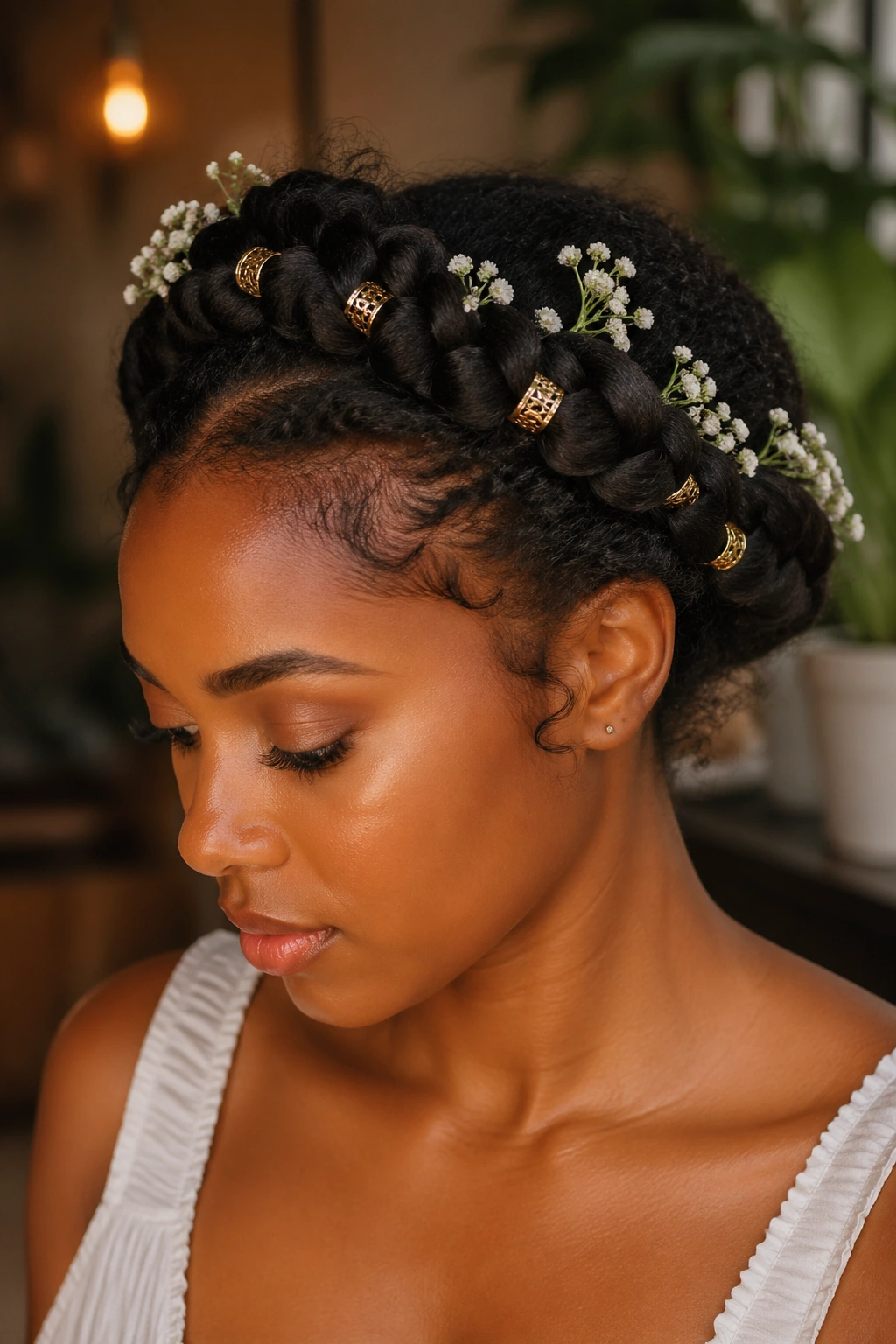
Flowers — real or silk — tucked into crown braids are a genuinely beautiful touch for special occasions. Small flowers scattered throughout look romantic and fresh; a cluster of larger flowers at one side creates a focal point.
Gold cuffs and rings on individual braids that are part of the crown add a regal, luxe quality. Position them along the sections of braid that are most visible from the front.
Edge control for laying down the hairline before pinning. A smooth, laid hairline makes the crown braid look more polished and intentional. A medium-hold edge control applied with a soft brush and then covered with a silk or satin scarf for a few minutes while you work gives the best results.
1. Single Large Crown Braid on Natural 4c Hair
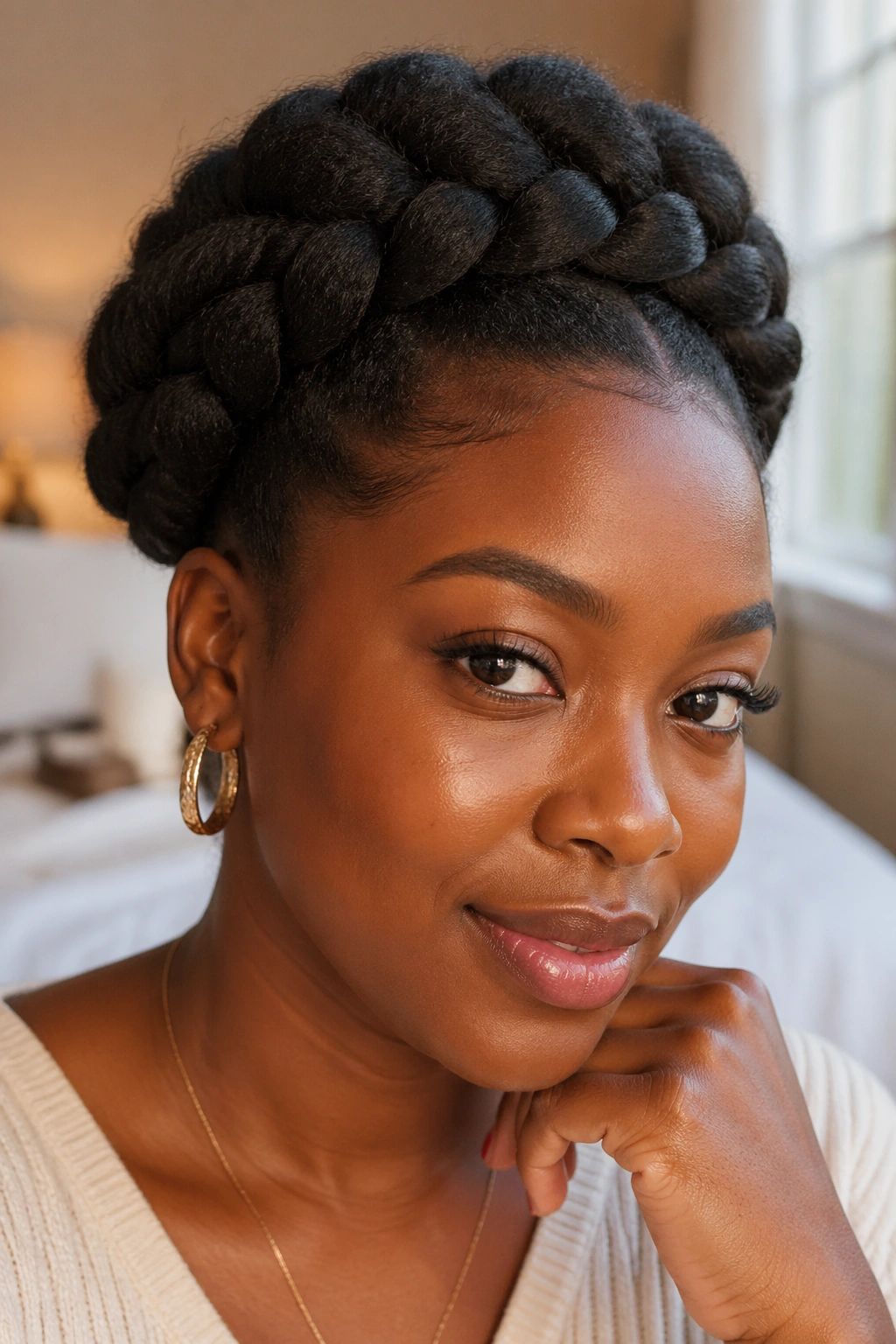
One long, thick braid wound around the head in a crown arrangement is possibly the most dramatic interpretation of this style. When that braid is made with natural 4c hair — or with extension that matches the texture — the crown has real volume and presence.
The thickness matters here. A very thin braid wound around the head in a crown looks delicate and can appear sparse. A substantial braid — thumb-width or wider — sits on the head with authority and creates a silhouette that genuinely reads as crown-like.
How to Get This Look
Start by gathering all your hair to one side and braiding it into a single large braid (add extension hair if needed for length). Once the braid is complete, wrap it around the perimeter of the head starting at the hairline, securing sections of the braid with hair pins as you go. The end of the braid should tuck underneath itself at the finishing point. Lay your edges with edge control before or after the crown is pinned.
2. Two Dutch Braids Pinned Into a Crown
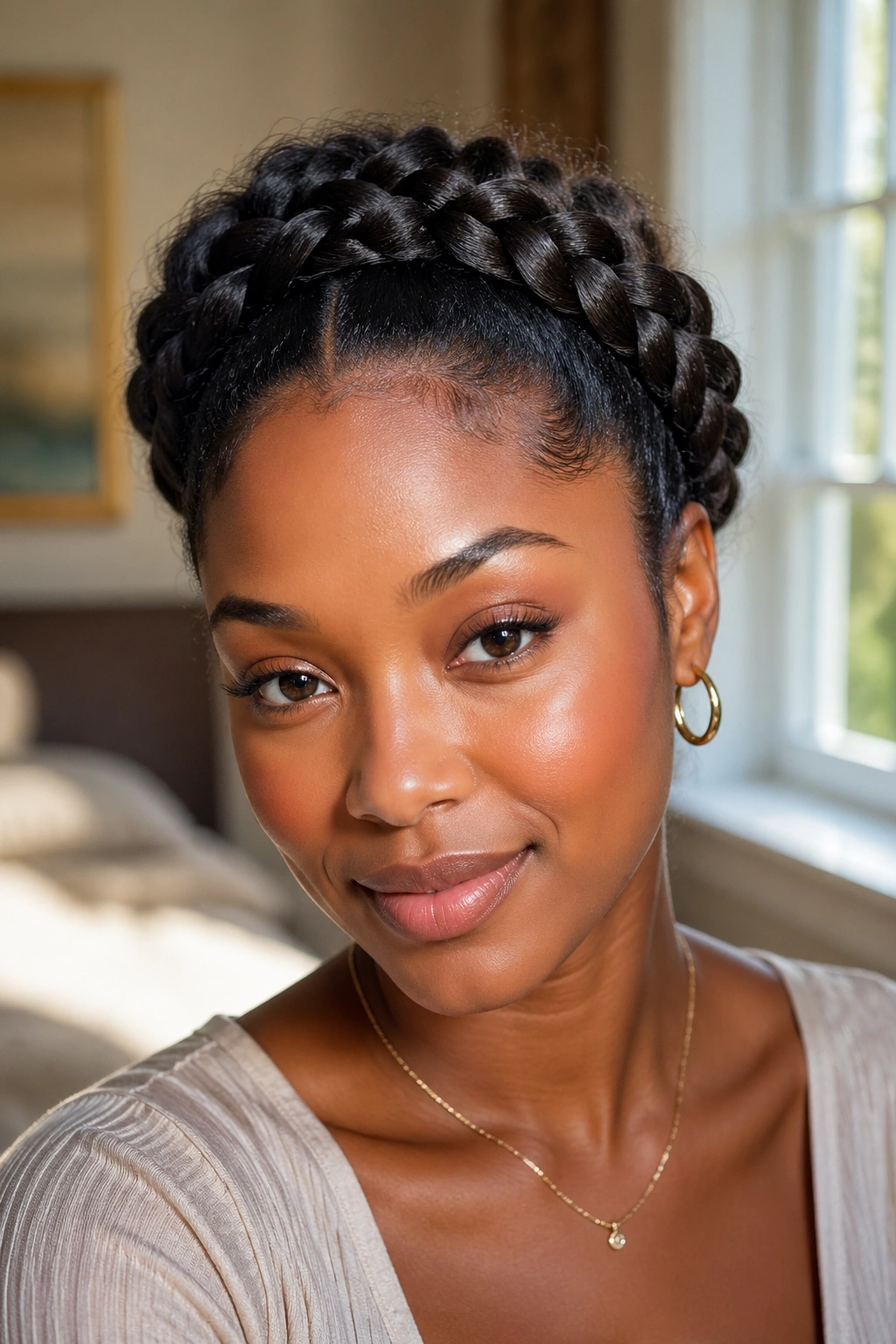
Two Dutch braids — where the strands cross under rather than over, creating a raised, three-dimensional braid — sit high and visible on the scalp. When each braid is formed on one side of the head and then pinned across to the other side, they create an interlocking crown arrangement.
Dutch braids have more visual presence than French braids because the raised braid body stands away from the scalp. In a crown arrangement, this means the crown itself has dimension — it arcs above the head rather than sitting flat against it.
This technique works particularly well on natural hair because the texture provides grip that keeps the braid in the raised position without needing heavy product or excessive pinning.
3. Cornrowed Crown With Loose Curly Top
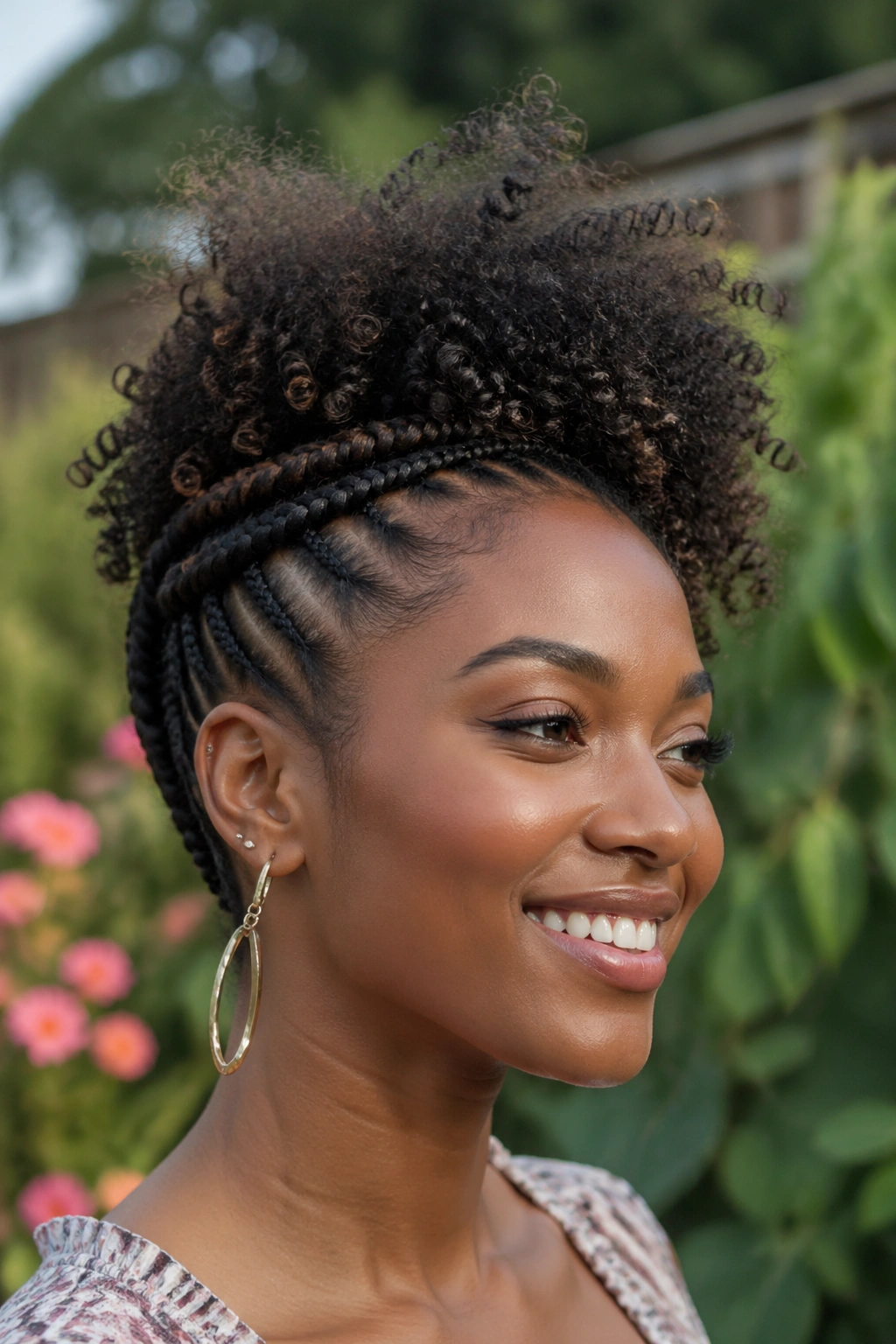
Cornrowing around the perimeter of the head — all braids going in a circular direction — while leaving the top section of hair completely free in its natural curl state creates a stunning contrast. The perimeter is structured and polished; the crown is wild and free.
The loose curly top section on natural hair — whether it’s a wash-and-go curl, a puff, or defined twists — becomes the focal point of the style because it’s surrounded by the structured cornrow frame beneath it. The crown of curls reads as intentionally highlighted by the braided border around it.
This is a genuinely accessible style because the cornrows around the perimeter are simpler to do (or have done) than complex crown arrangements, and the top can be styled in whatever way your natural hair looks its best.
4. Braided Crown With Face-Framing Curls
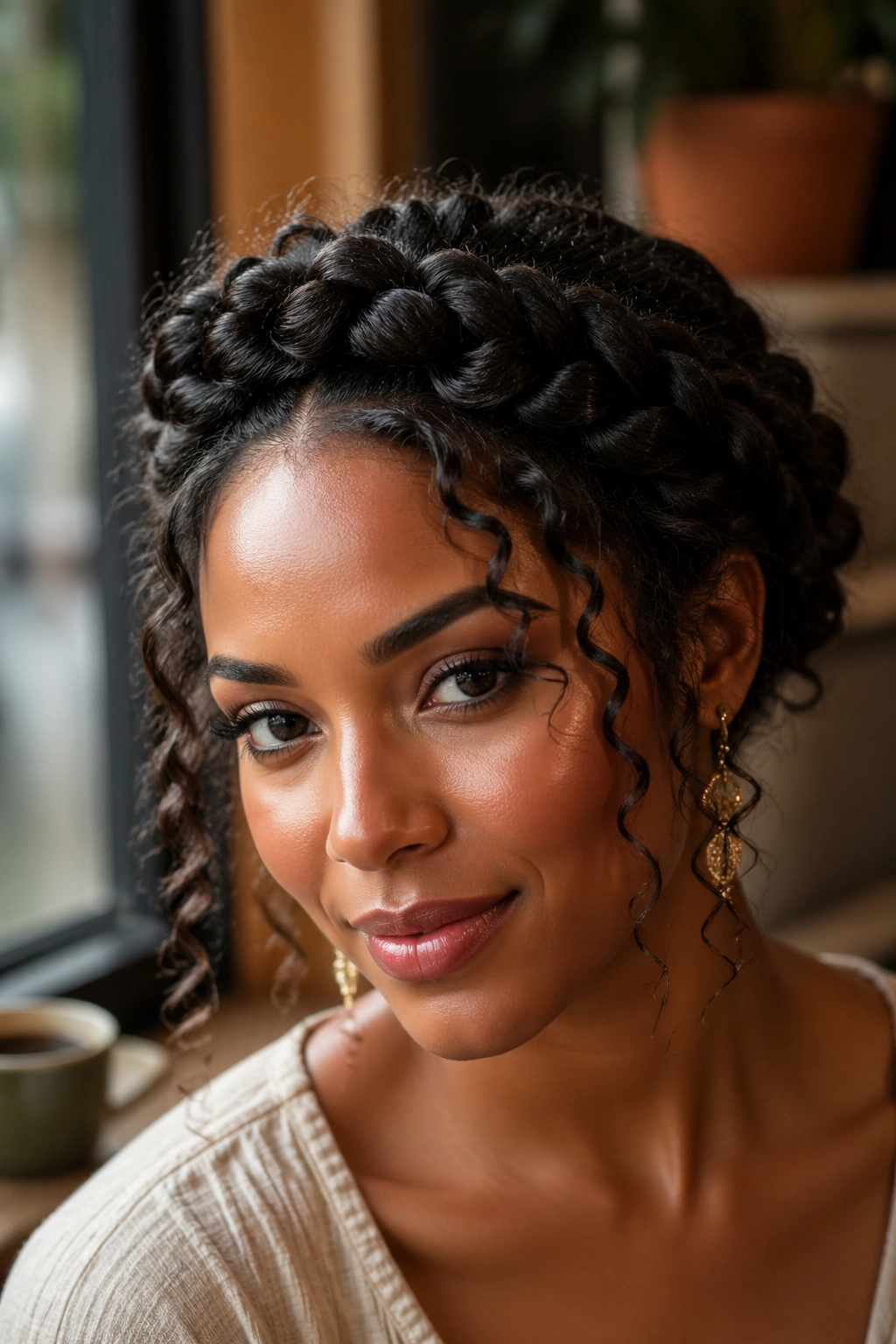
A crown braid that incorporates face-framing elements — leaving some braids or curly sections loose along the hairline to drape alongside the face — has a significantly different quality than a crown that’s fully pinned up with nothing left free.
The face-framing sections do essential visual work. They soften the jaw, draw attention to the eyes, and give the overall style a more romantic, less severe quality. Without them, a crown braid can look beautiful but sometimes stern. With them, the style opens up and becomes warm.
How to Get This Look
Before pinning the crown arrangement, deliberately leave several braids or twists at the temples and around the ears loose. Pin everything else up into the crown. Then arrange the loose face-framing sections — these can be finger-curled, left in their braid pattern, or simply coaxed into a flattering curve against the cheek.
5. Mini Braids Crown for a Lighter Feel
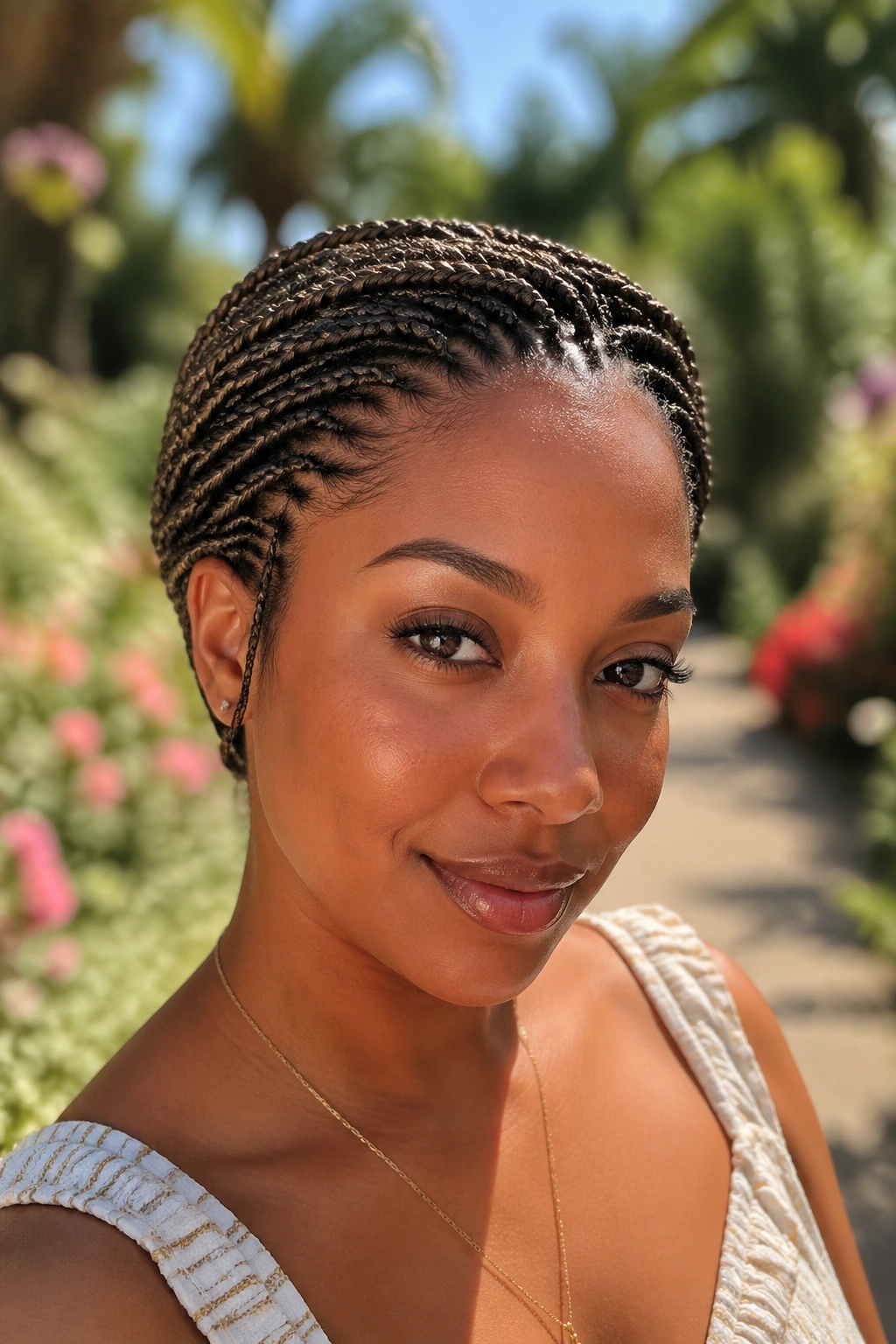
Doing a crown with mini braids — pencil-width or smaller — rather than a single large braid or medium-sized braids gives the crown a different visual quality. Many small braids arranged in a crown create a textured, detailed halo effect rather than the bold statement of a single thick braid.
Mini braid crowns are particularly beautiful because the individual braids catch light differently at different angles, creating a shifting, dimensional quality as you move. No two viewing angles look exactly the same.
This approach also requires less length because you’re working with many small braids rather than trying to get one long braid to stretch all the way around the head.
6. Crown Braid With Bun
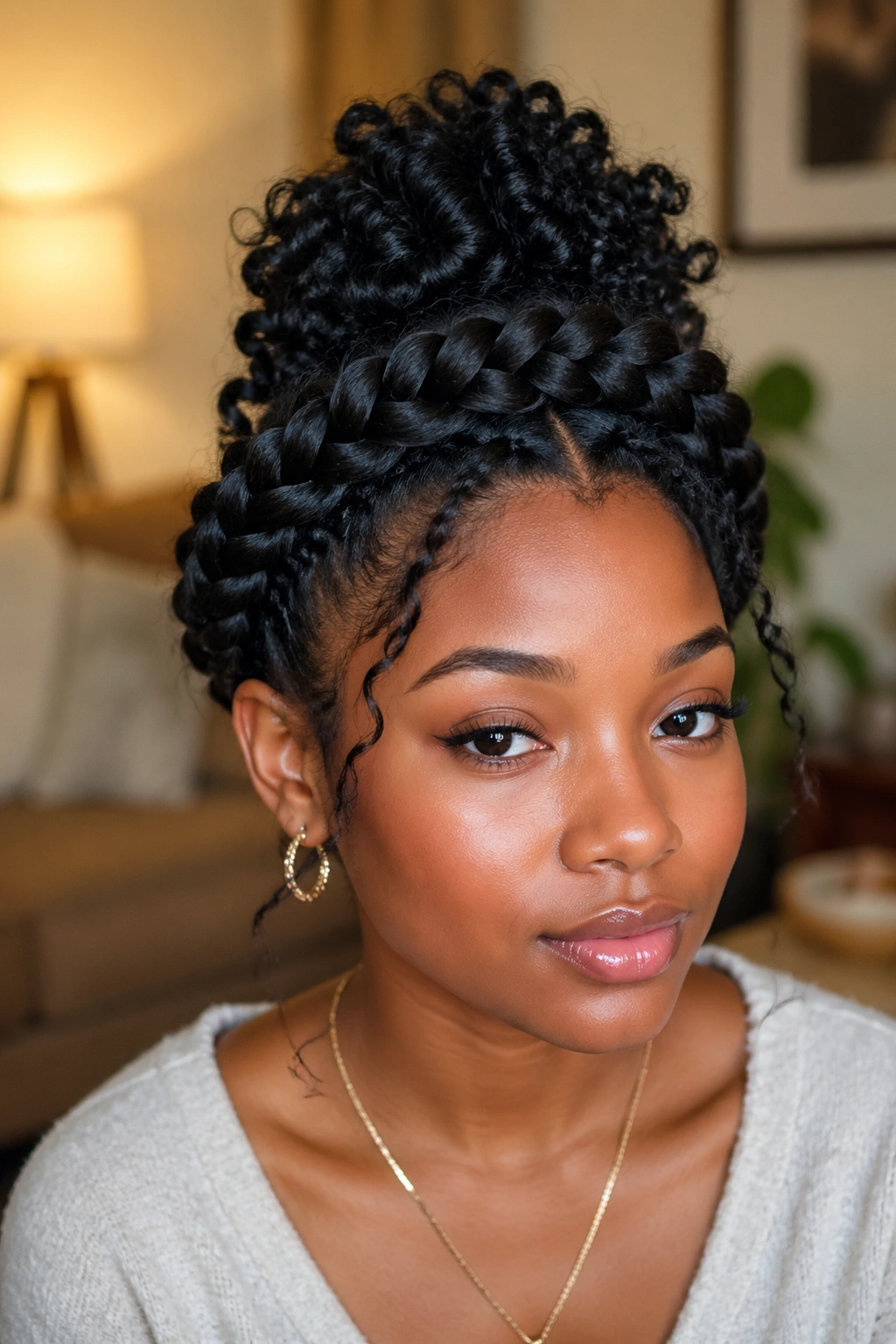
Pinning braids into a crown arrangement around the head while also gathering some into a bun at the center top creates a style that has both a halo and a focal point. The crown frames the head; the bun at the top provides a center of interest.
This works particularly beautifully when the bun incorporates curly elements — curly ends or loose curly sections peeking out from the bun structure give it a natural, textured quality. The overall silhouette from above looks like a flower — the bun at the center, the crown braids radiating outward.
7. Loose Crown Braid With Tendrils at the Nape
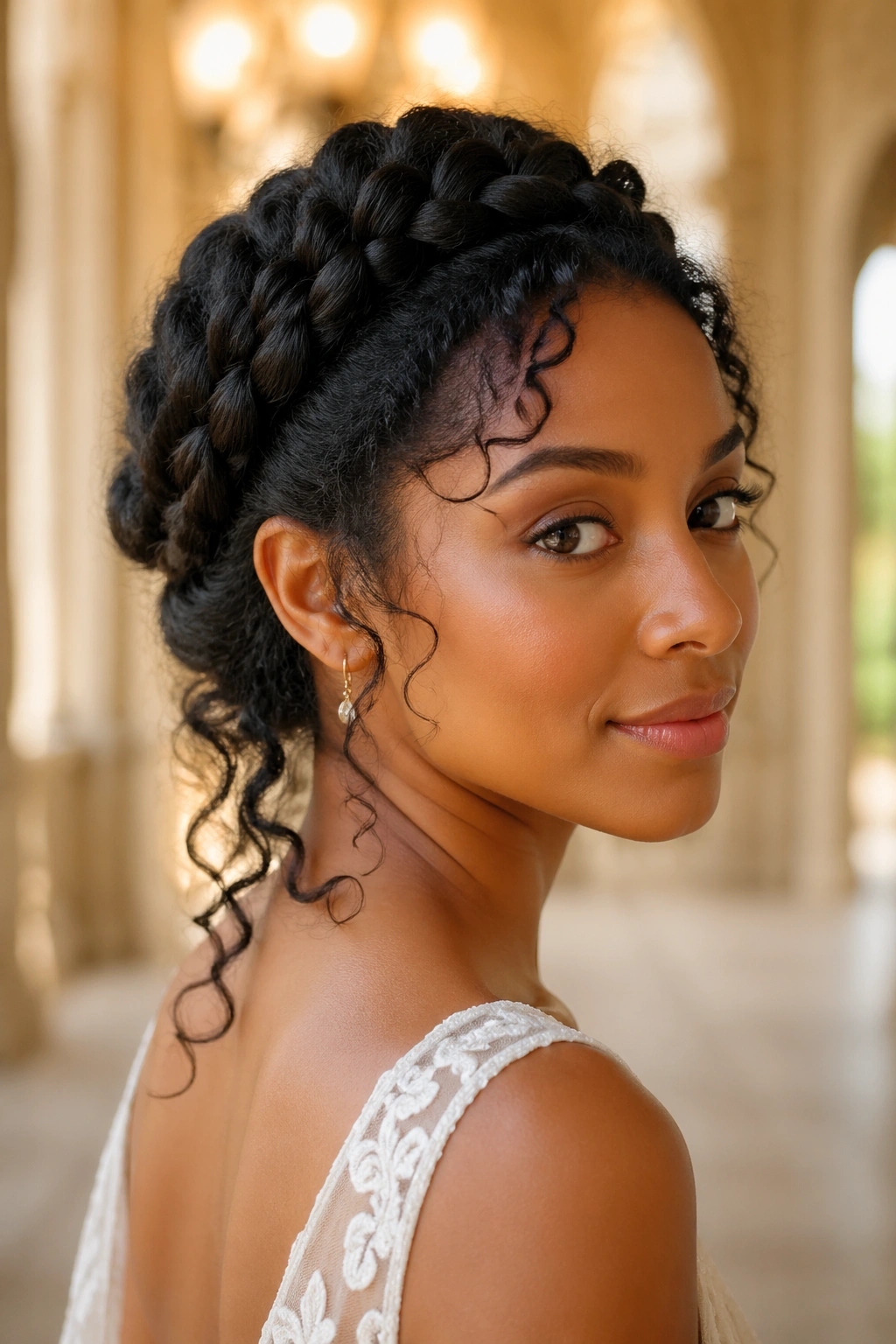
Most crown braids are pinned fairly tightly against the head. A loose interpretation — where the crown arrangement has some give and arch to it, not pressing flat against the skull — has a more romantic, less architectural quality.
Loose crown braids work particularly well when combined with small tendrils left free at the nape. Those nape tendrils — whether in their natural curl state or lightly defined with product — create a soft transition between the pinned crown above and the neck below.
This is the version of the crown braid that works best for formal occasions like weddings or celebrations, where you want the style to look intentionally beautiful rather than severely styled.
8. Crown Braids With Beads and Cowrie Shells
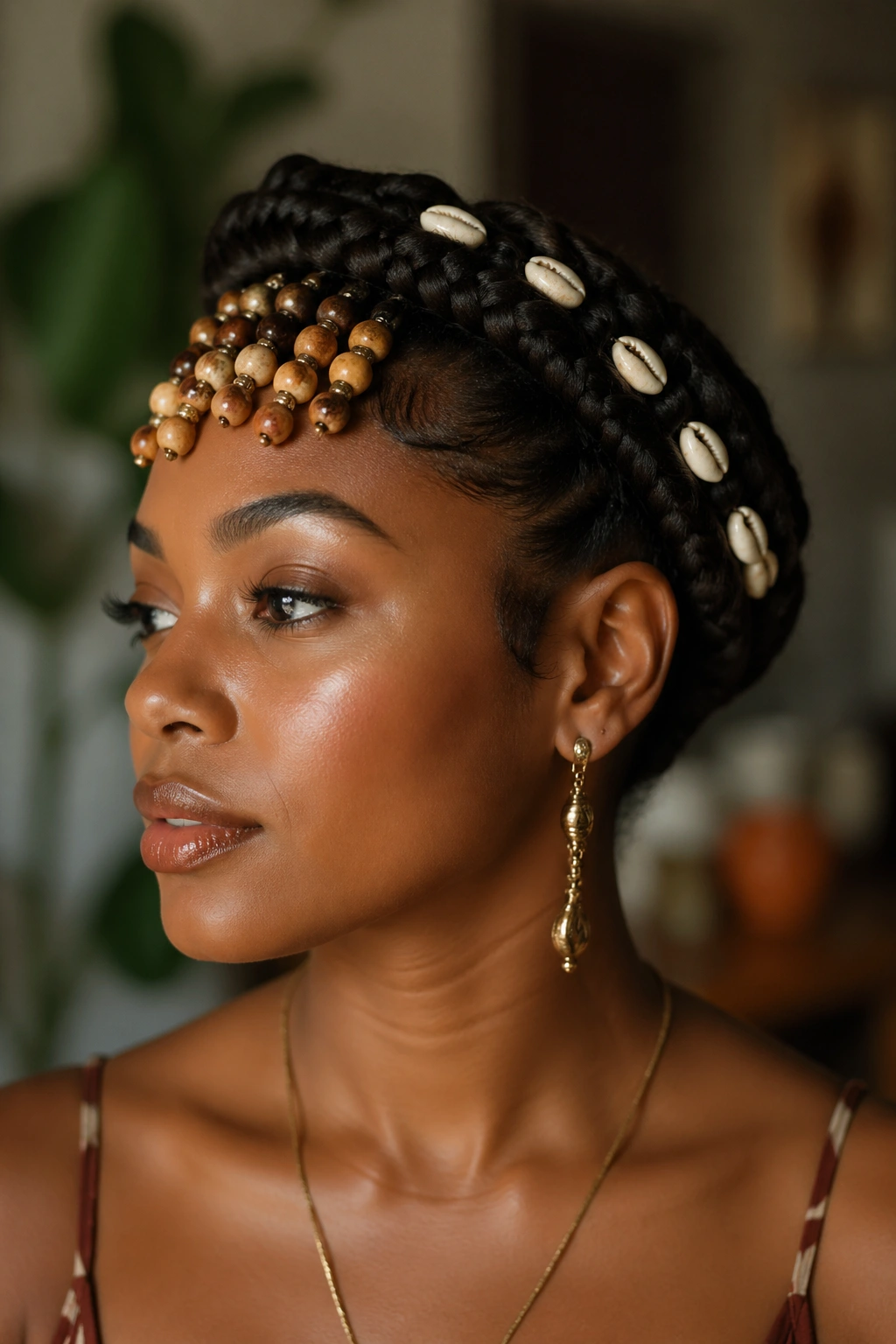
Adorning a crown braid with beads and cowrie shells adds cultural richness and visual depth that transforms a hairstyle into something more meaningful. The crown shape already carries royal associations; beads and cowries deepen that resonance.
Positioning the accessories thoughtfully is important. Beads clustered at the front of the crown — where they’ll be most visible face-on — create maximum impact. A few cowrie shells scattered along the sides add depth. Avoid loading the back of the crown with heavy accessories that won’t be seen most of the time.
Gold and warm-toned accessories look best against dark natural hair. Silver reads more contemporary and editorial.
9. Goddess Crown Braids With Curls Throughout
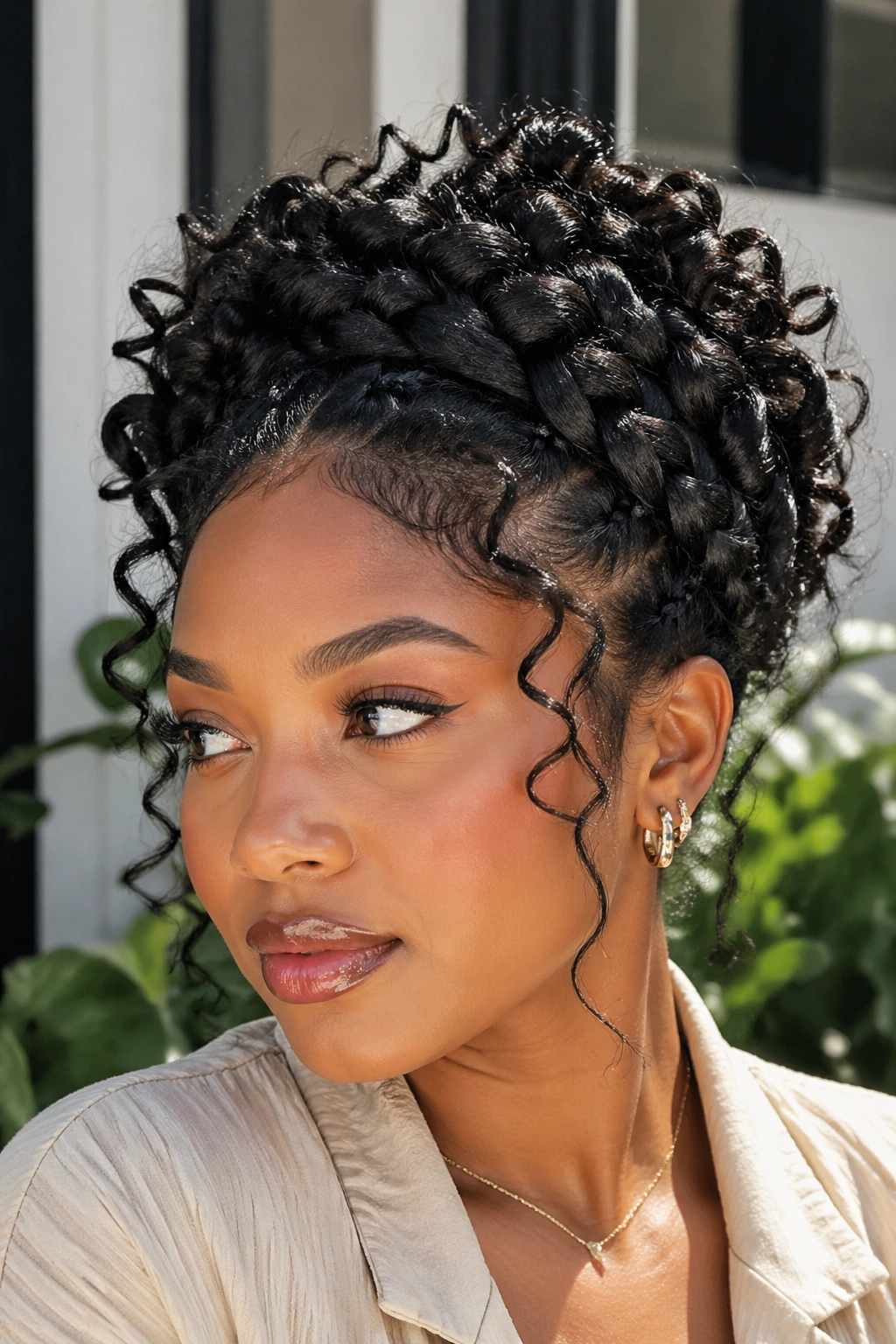
Goddess braids — thick, flat braids that stay close to the scalp — arranged in a crown pattern create one of the most regal-looking natural hair styles. When those goddess braids have loose curly extension fiber looped through them — creating the appearance of curls erupting from the braid — the style reaches full goddess level.
The curls intertwined in goddess crown braids add softness and movement to a style that could otherwise look very solid and structured. The combination of flat, smooth braid and loose, airy curl creates a beautiful tension.
10. Fulani-Inspired Crown With Cultural Accessories
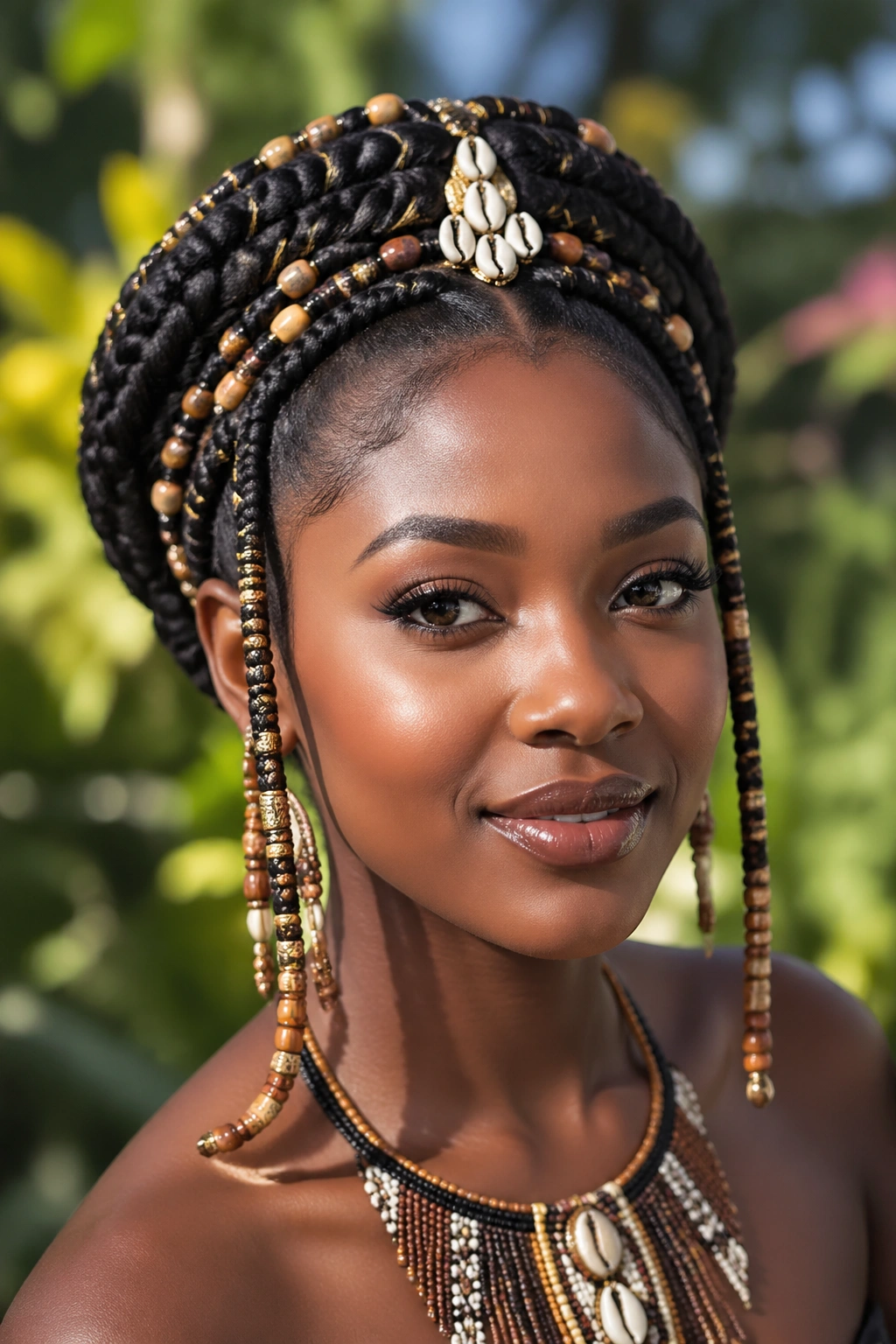
Fulani braiding traditions include elaborate use of beads, cowrie shells, and gold thread in braided styles. A crown braid arrangement that incorporates these Fulani-inspired elements honors that tradition while creating a style that’s personal and modern.
A crown braid with a center front cornrow running forward, beads placed at braid junctions, and cowrie shells at the crown’s highest point creates a culturally resonant style that is also simply beautiful. The accessories aren’t decoration for its own sake — they’re part of a long tradition of adorning natural hair with meaning.
11. Half-Crown With Hair Down
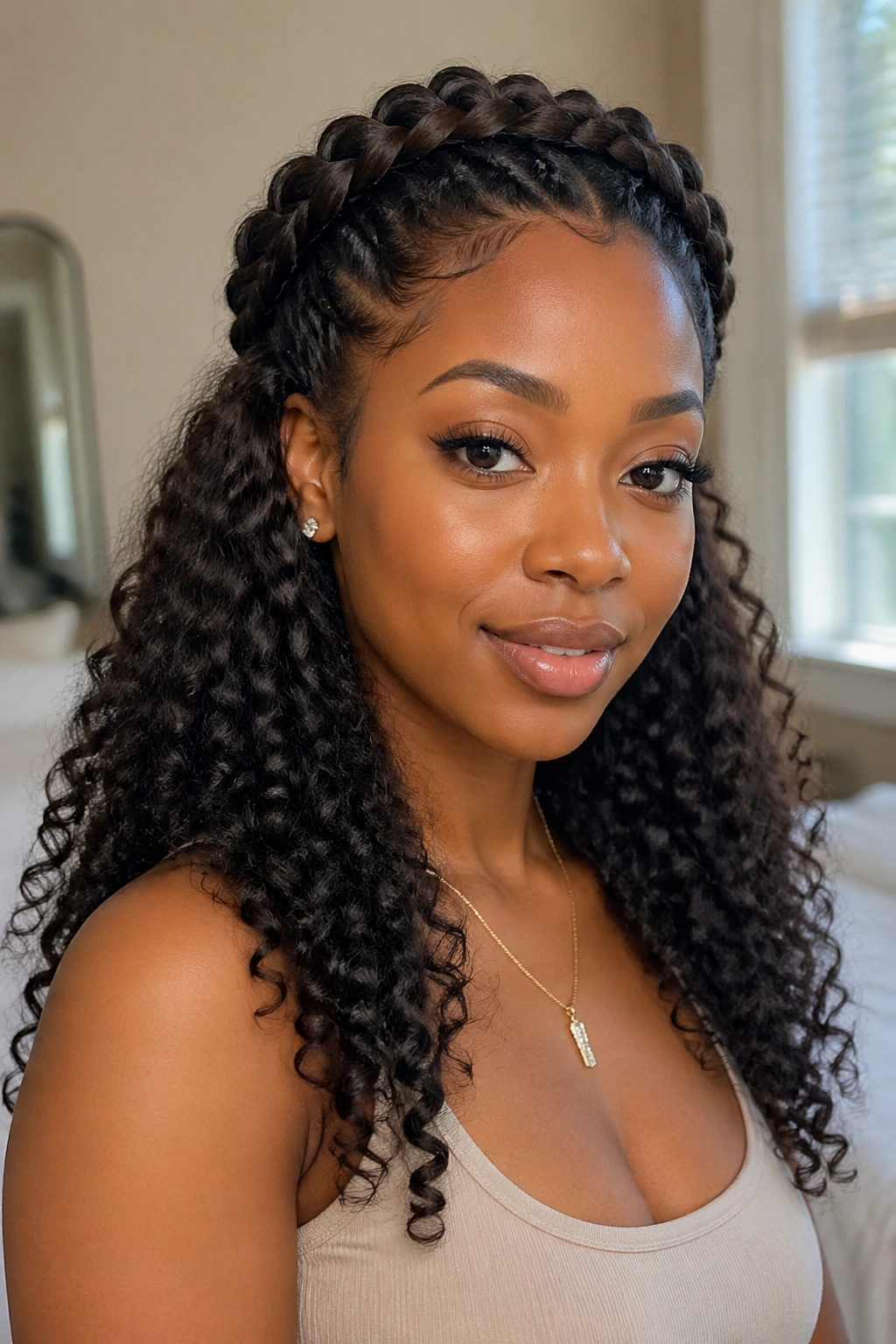
A half-crown — where only the front half or two-thirds of the head is gathered into the crown arrangement while the back is left hanging — is a versatile middle ground between a full updo and wearing hair completely down.
This style is often easier to achieve independently than a full crown because you’re only pinning one section of hair rather than arranging all of it. And the hanging section — whether in braids, twists, or loose curly natural hair — adds length and movement that a full updo sacrifices.
The half-crown looks especially striking when the hanging section has a different texture than the braided crown — for example, a cornrowed crown at the front and loose curly natural hair hanging at the back.
12. Stacked Crown Braid for Extra Height
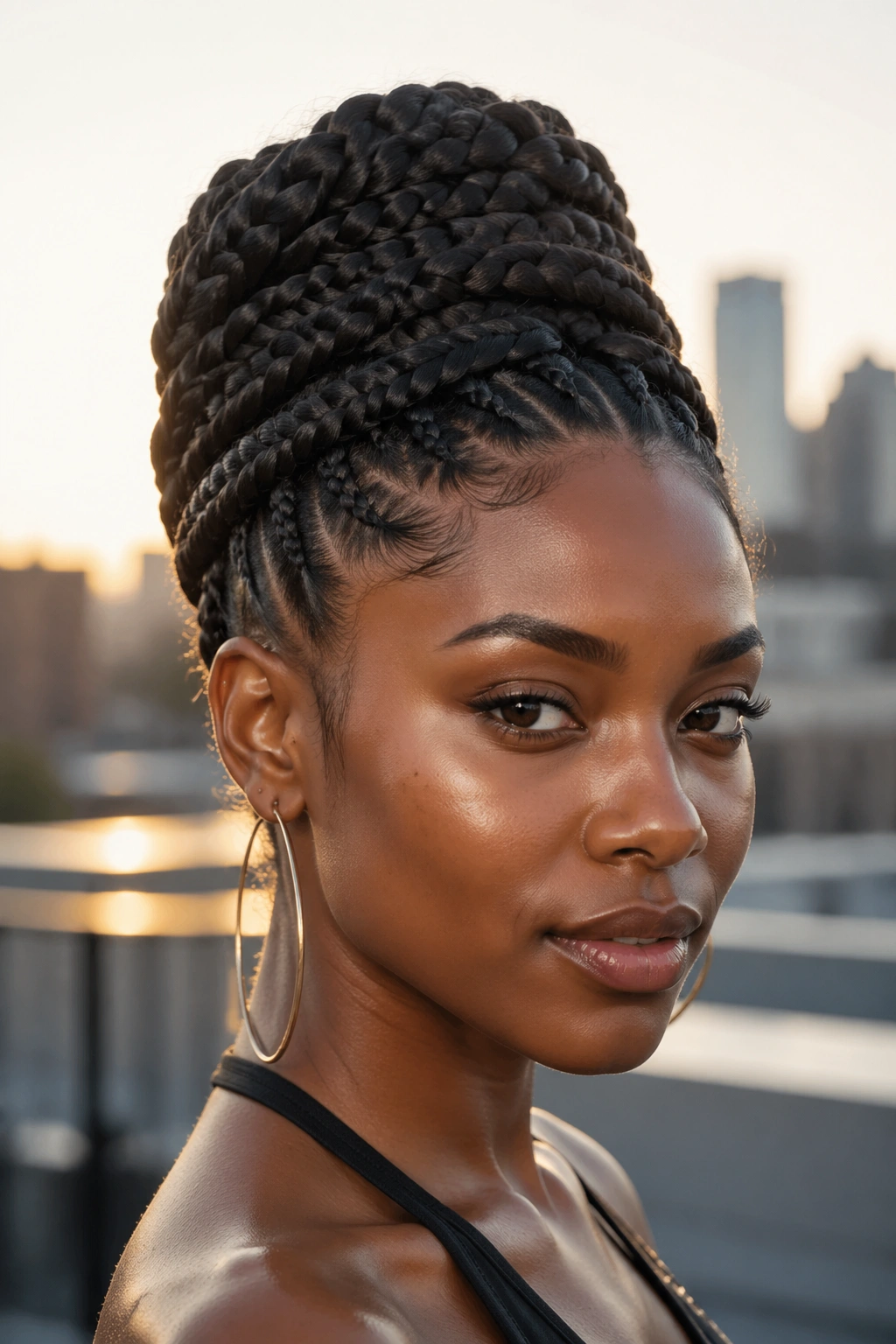
A stacked crown braid achieves more height than a flat crown arrangement by coiling the braid or pinning braids in layers rather than a single flat ring. The result is a crown that genuinely appears to be stacked — multiple braid layers building upward from the base of the arrangement.
This is a bolder, more dramatic interpretation that photographs beautifully from any angle. It requires more braid length (or more extension length) because you need enough braid to create multiple layers of the crown.
How to Get This Look
Pin the first layer of the crown braid in a ring around the head. Take the remaining braid length, fold it back upward, and pin a second layer directly on top of the first, building height with each additional fold of braid. Three or four layers create a genuinely tall crown shape.
13. Crown Braids With Natural Puff at the Top
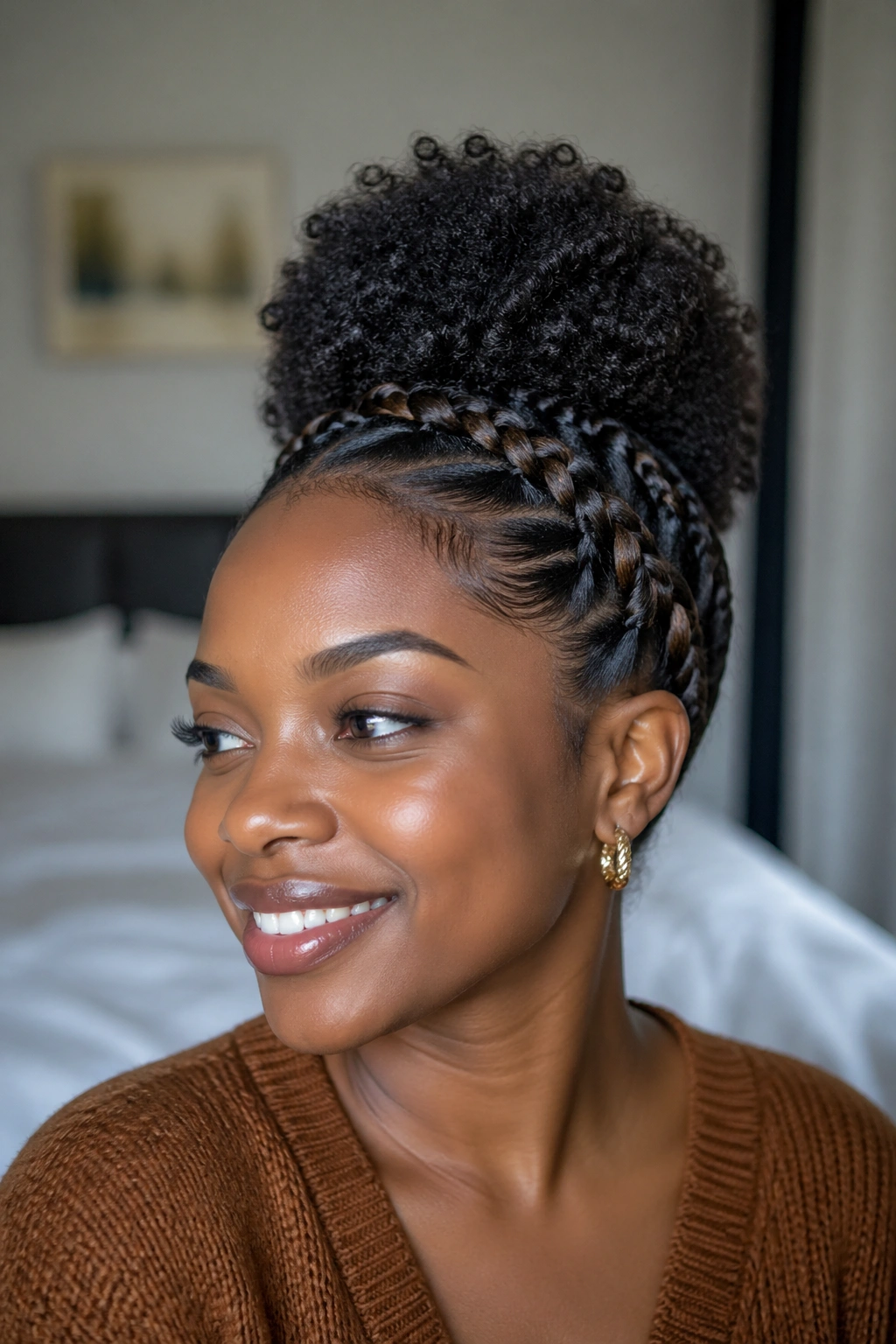
Braiding sections around the sides and back into a crown arrangement while leaving the very top section in a natural puff combines two of the most classic Black hair styles in one. The cornrow or braid sides give structure and define the silhouette from the sides; the natural puff at the top adds volume and celebrates natural texture.
The key is proportional balance. The height of the puff should be roughly consistent with the arc of the crown braids — too much puff and the crown braids become visually irrelevant; too little puff and the style looks like an unfinished crown with a bit of escaped hair.
14. Crown Braid for Short Natural Hair
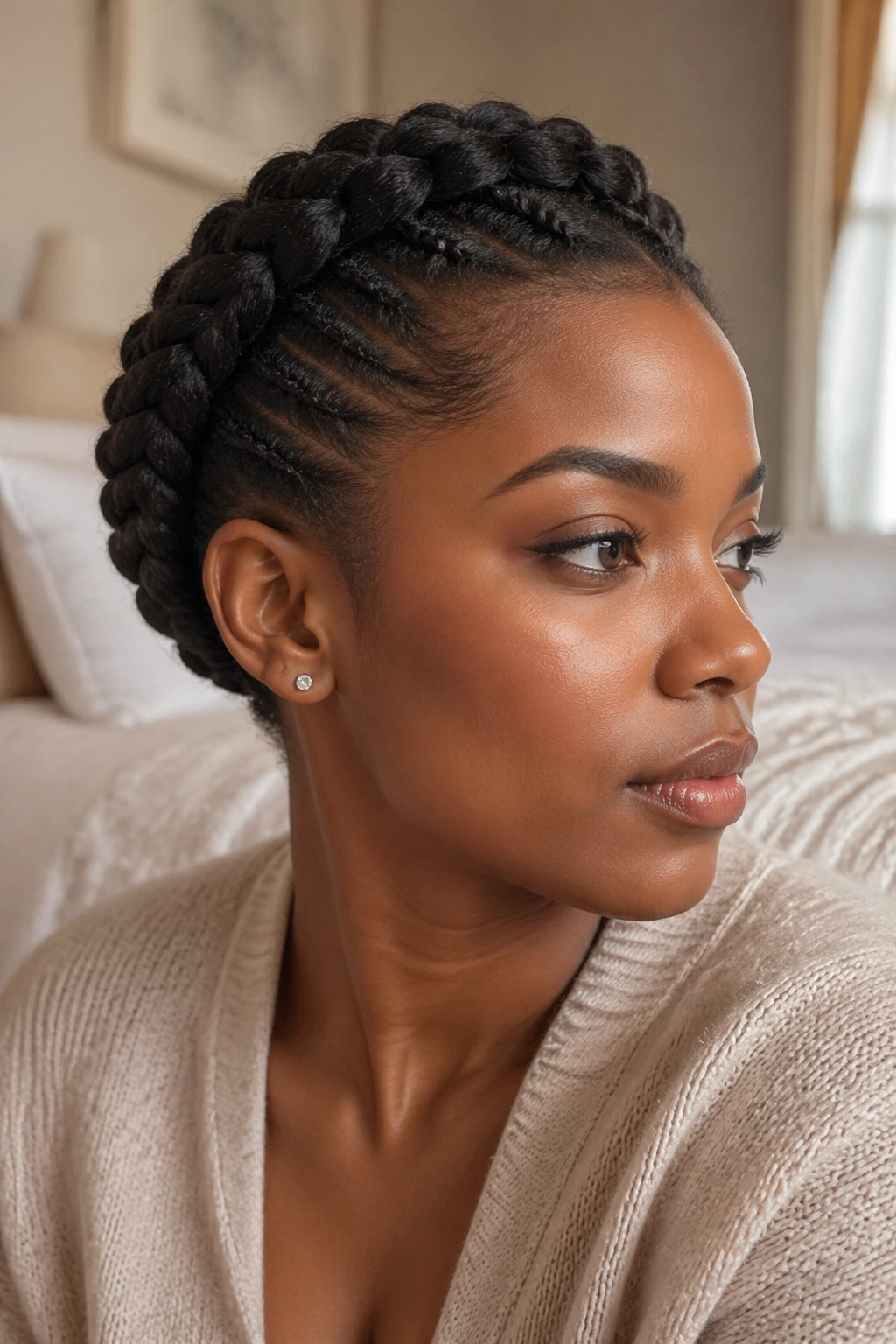
Shorter natural hair — 2-5 inches in stretched length — can still achieve a crown braid look, just with different execution than longer hair styles.
Cornrow crown techniques work at shorter lengths because the braids lie flat and don’t need to travel far to complete the crown circuit. A halo-style cornrow that goes all the way around the perimeter of the head looks stunning even on shorter natural hair, particularly when the braiding is neat and even.
For women who want more height and drama with shorter hair: adding extension in small amounts to the cornrow braiding gives extra length to work with while the overall styling still uses your natural hair as the base.
15. Crown Braid Updo for Natural Hair in a Wedding
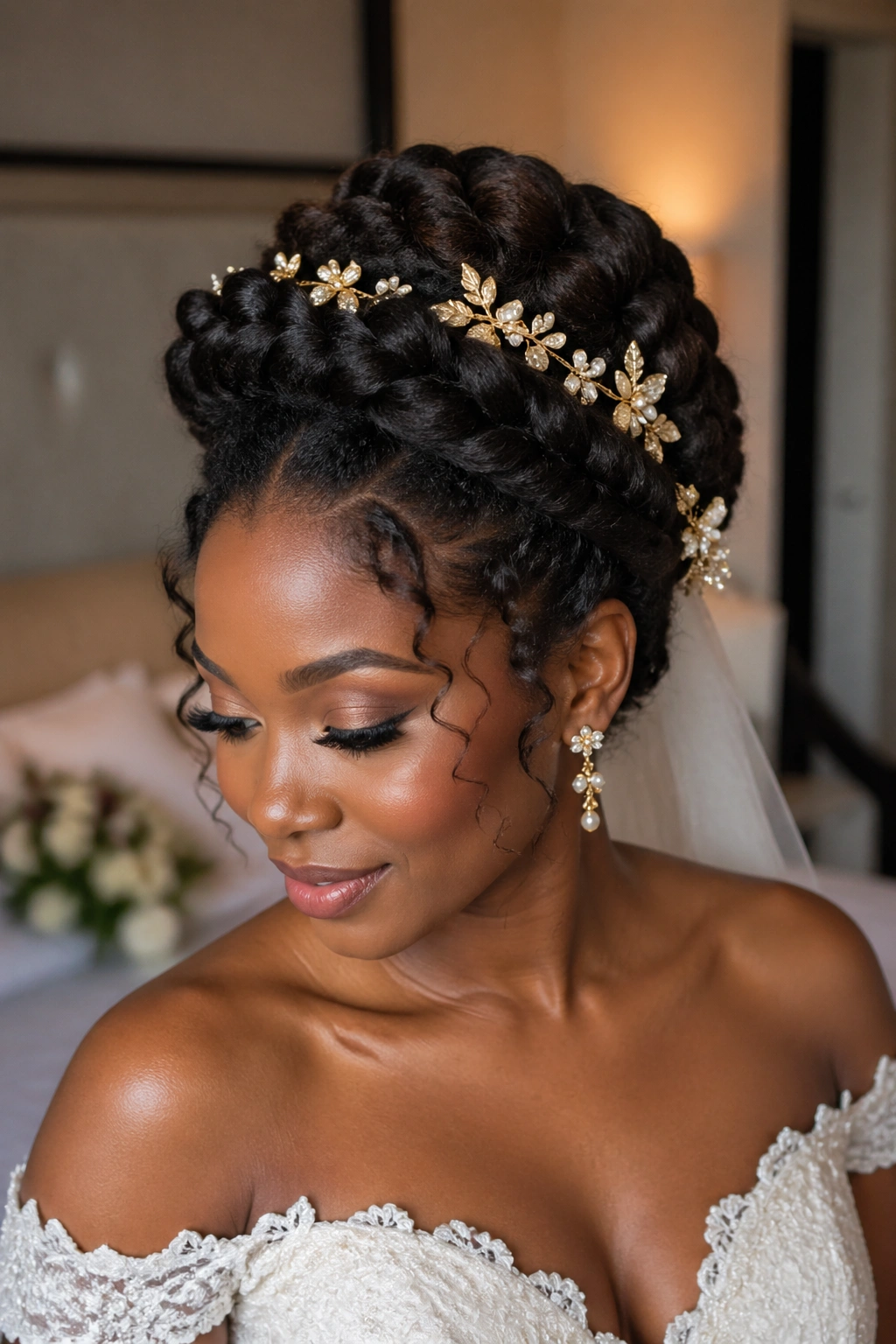
The crown braid is arguably the most bridal of all natural hair updo styles. It’s regal, it’s timeless, and it photographs from every angle without a single bad shot. For natural hair specifically, a crown braid updo is a meaningful style choice — it celebrates the natural texture rather than hiding or altering it.
For bridal crown braids: choose the most elaborate technique your hair length allows. Add extension for extra length and drama if needed. Incorporate meaningful accessories — fresh flowers, gold cuffs, family heirloom hair accessories. Have the style installed the day before or morning of the event (not too fresh, so it has time to settle) and sleep in a satin bonnet the night before to protect the style.
16. Crown Cornrows With Exposed Natural Texture
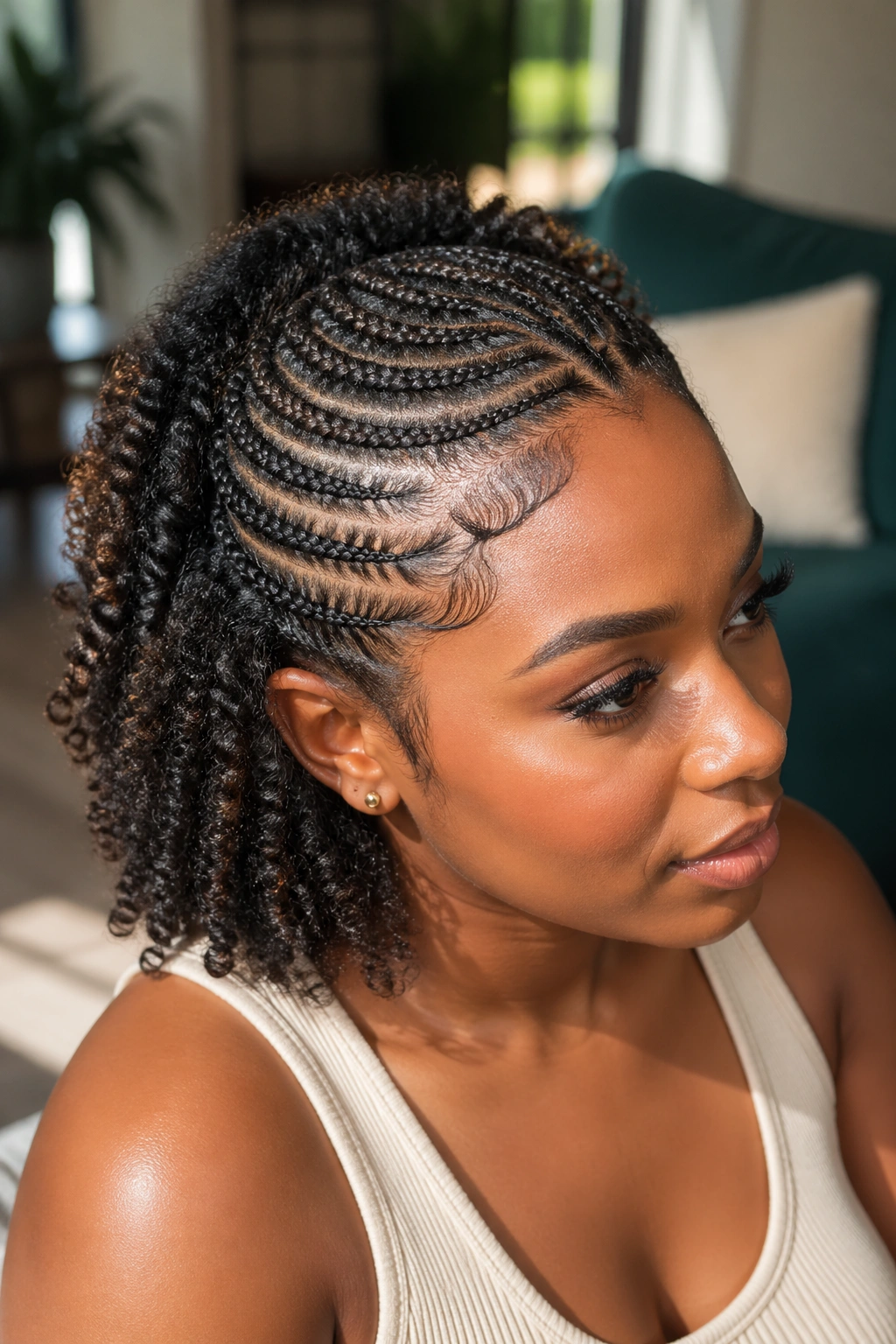
Cornrowing all your hair in a crown pattern — meaning all rows go in a circular direction around the head — while leaving the very ends free and curly creates a style where the geometric scalp pattern and the natural curl texture coexist. The cornrows are graphic and precise; the freed curl ends at the tips of each cornrow create softness at the points.
This style is beautiful for natural hair because it shows the scalp work (always a flex with clean, precise cornrow parts) while also displaying natural curl texture. Two aspects of natural hair identity celebrated at once.
17. Crown Braid With Metallic Accessories for a Festival Look
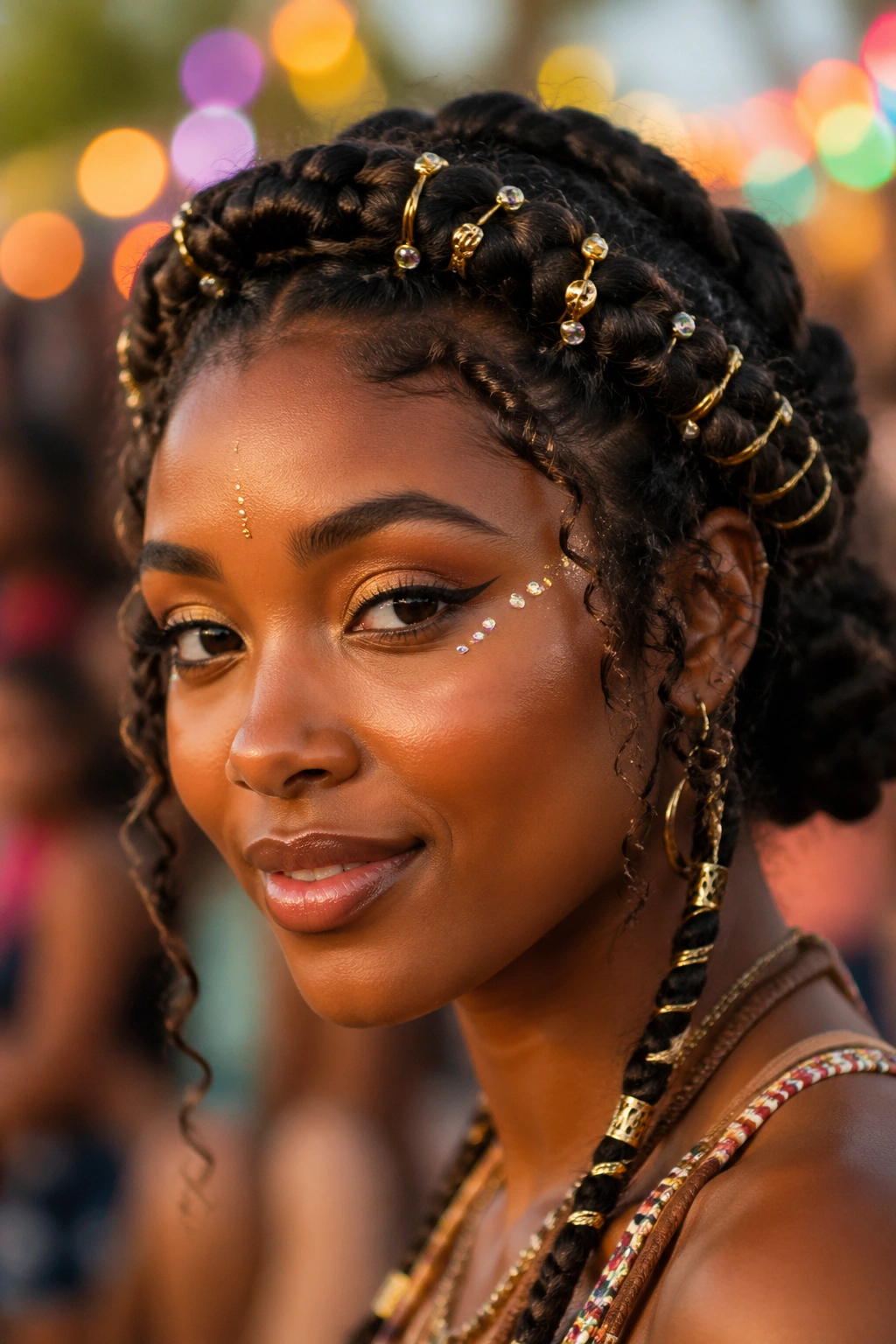
The festival aesthetic — playful, bold, maximal — translates beautifully to crown braids. Gold metallic thread wrapped around sections of the crown braid, combined with colorful beads, feathers, or crystal pins, creates a crown braid that reads as costume art rather than daily styling.
For festivals and events where creative expression in hair is welcome: layer accessories generously. Thread metallic wire through sections of braid, add multiple types of beads, incorporate dried flowers or fabric elements. The crown braid structure provides the scaffolding; the accessories tell the story.
18. Box Braids Crown for Extended Wear
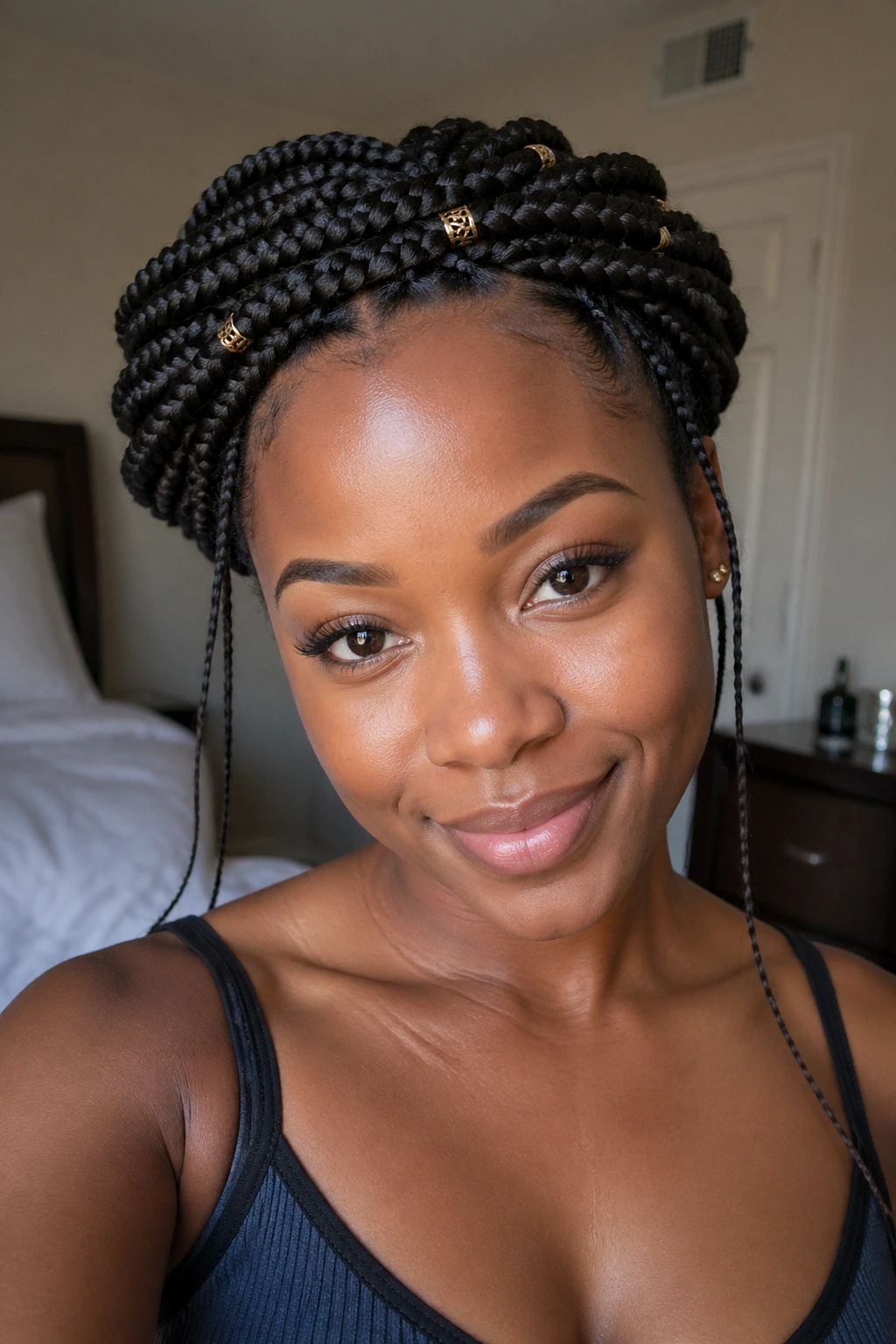
If you already have box braids installed, creating a crown arrangement is simply a matter of gathering and pinning — no new braiding required. This makes the crown arrangement accessible any day during the life of your box braid installation.
Box braid crowns look slightly different from cornrow or single-braid crowns because the individual braids create more visible texture and irregularity in the crown ring. Rather than a smooth, continuous braid ring, you see the individual braid sections crossing and pinning over each other. This irregularity is visually interesting rather than flawed.
19. Protective Crown Braid for Work and Professional Settings
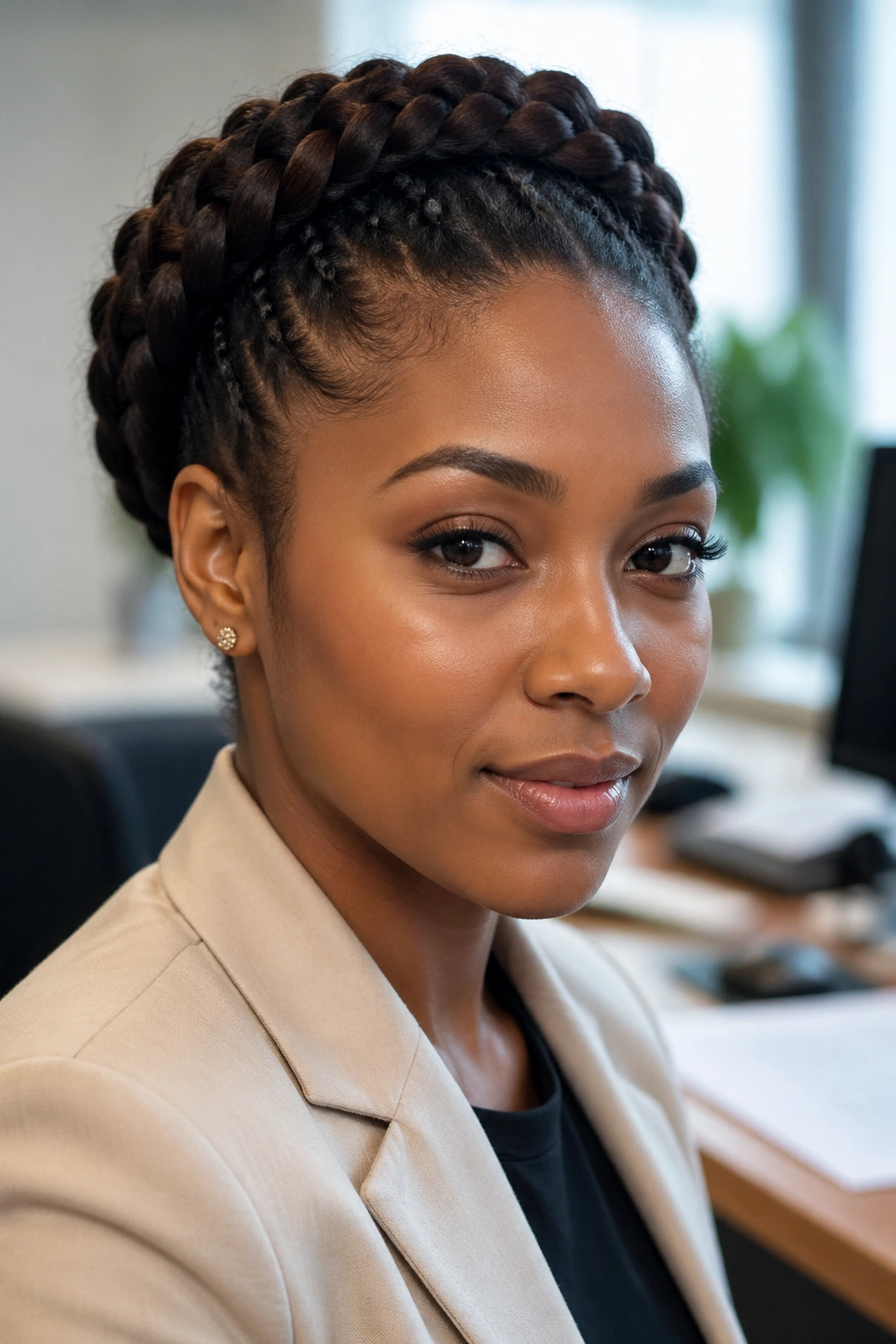
Crown braids are one of the most professional-looking natural hairstyles available. The updo nature means hair is contained and away from the face; the intentional structure signals grooming and care. For Black women navigating workplaces that have historically had biased views of natural hair, the crown braid is a style that’s hard to argue against aesthetically.
This shouldn’t be necessary — all natural hair styles are professional — but the practical reality is that crown braids tend to face less scrutiny in traditional professional settings than more expansive natural styles. Knowing that gives you the freedom to choose the crown braid when you want it, not because you feel forced into it.
20. Crown Braid Combining Two Different Braid Textures
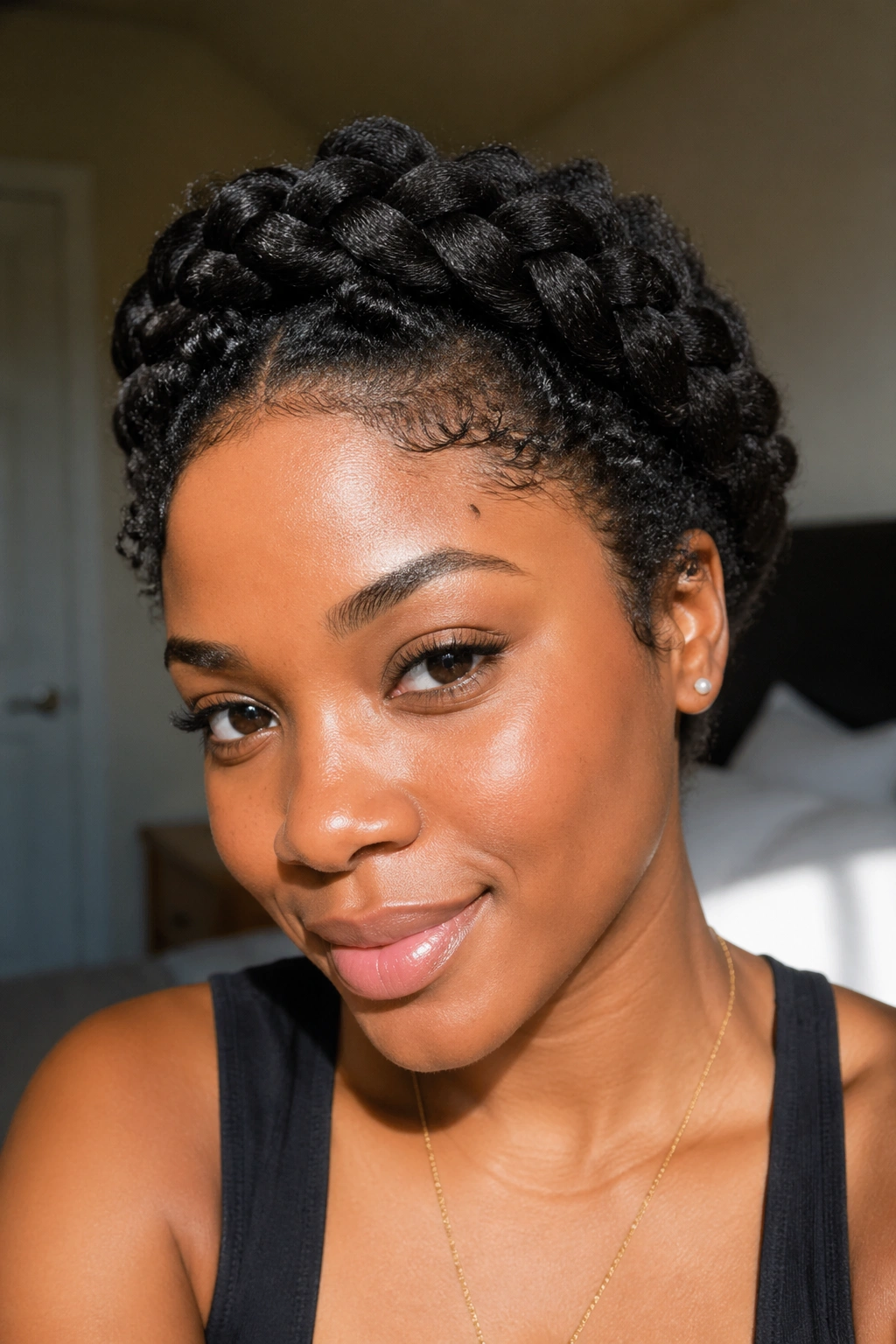
Using two different braid techniques or extension textures in the same crown creates a mixed-media effect that’s genuinely artistic. For example: smooth, flat cornrows on one side of the crown and twisted rope twists on the other. Or smooth extension braiding on the front arc and textured natural-hair sections on the back.
The contrast between textures in the crown is a more advanced styling choice that requires planning — you need to think about how the two textures will interact and where the transition will sit for maximum visual impact. But when done well, it produces a style that’s unique and entirely your own.
21. Crown Braid Preserved Overnight
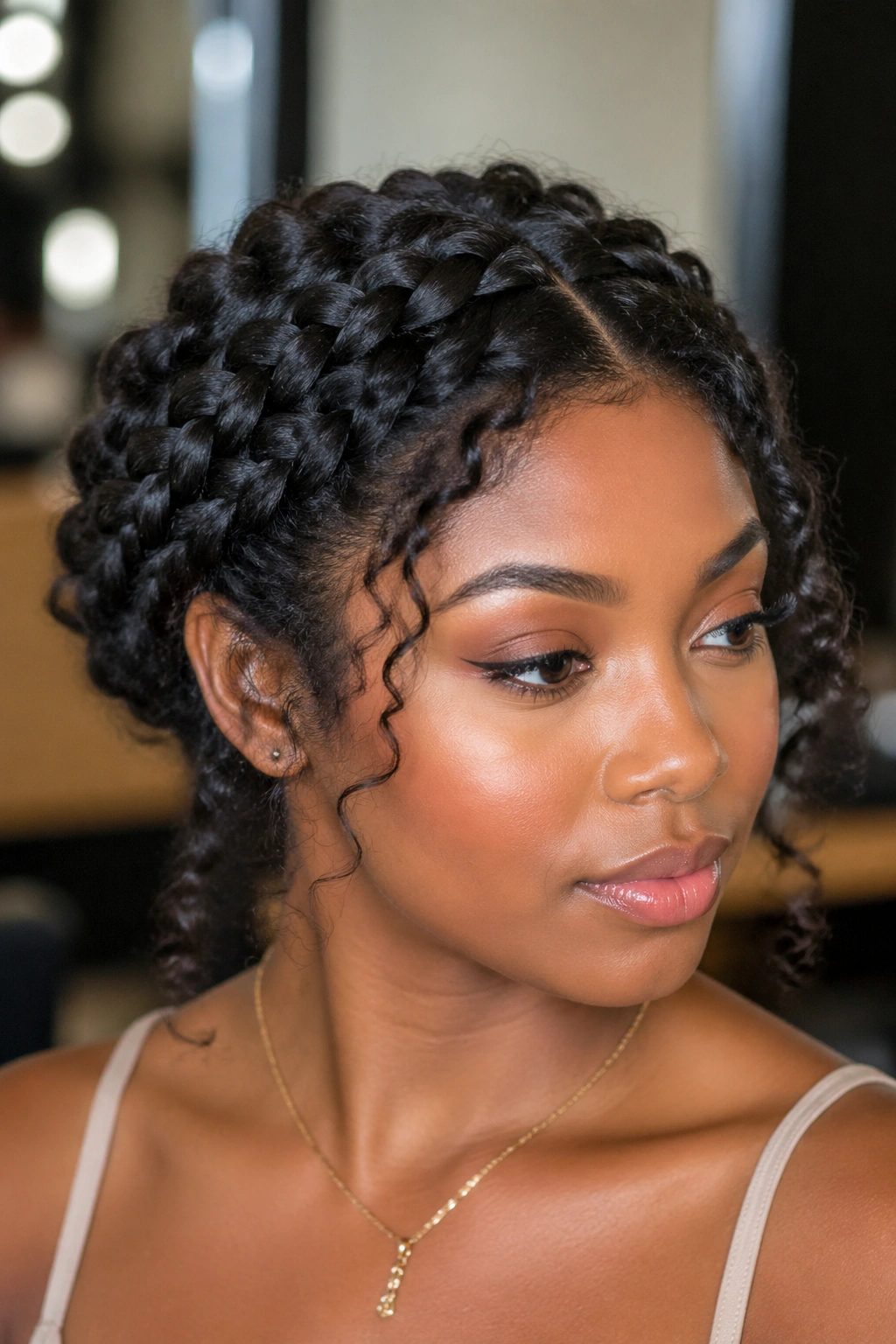
A crown braid is a style worth preserving carefully because the installation can be complex and the visual payoff is high. Sleeping carefully extends the style’s life significantly.
The best overnight protection: a large, loose satin bonnet that covers the entire crown arrangement without pressing it flat. If the crown is quite tall and the bonnet can’t cover it fully without distorting the shape, use a satin scarf instead — wrap the scarf around the perimeter of the crown loosely, leaving the top free, and tie it at the nape rather than at the top where the braid is sitting.
Don’t sleep directly on the crown without protection. The friction of a cotton or even regular satin pillowcase is enough to frizz the braid sections and loosen the pins overnight.
22. Crown Braid for Natural Hair Graduation and Celebration
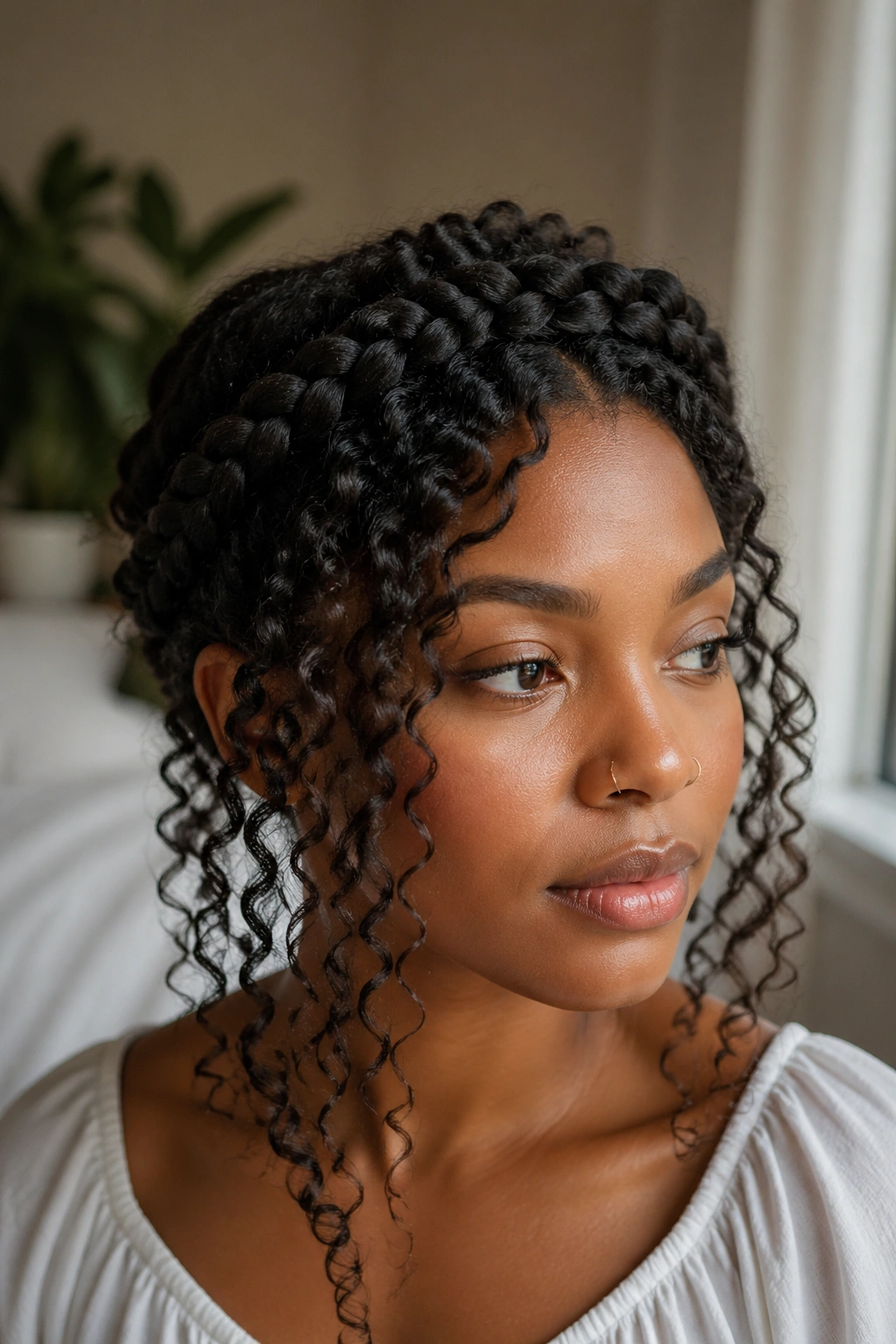
Graduations, birthdays, anniversary celebrations, and milestone moments call for hairstyles that feel significant. The crown braid — especially on natural hair that took time and care to grow and cultivate — carries that significance naturally.
Wearing your natural hair in a crown arrangement on a celebration day is a statement: I am celebrating myself and my hair is part of that celebration. The style doesn’t need explanation. It speaks.
For milestone events: go with a more elaborate version of the crown braid than you’d wear daily. Add accessories, spend more time on the edges, incorporate flowers or meaningful jewelry. Let the hair be as ceremonial as the occasion.
23. Crown Braids — Building a Personal Signature Style
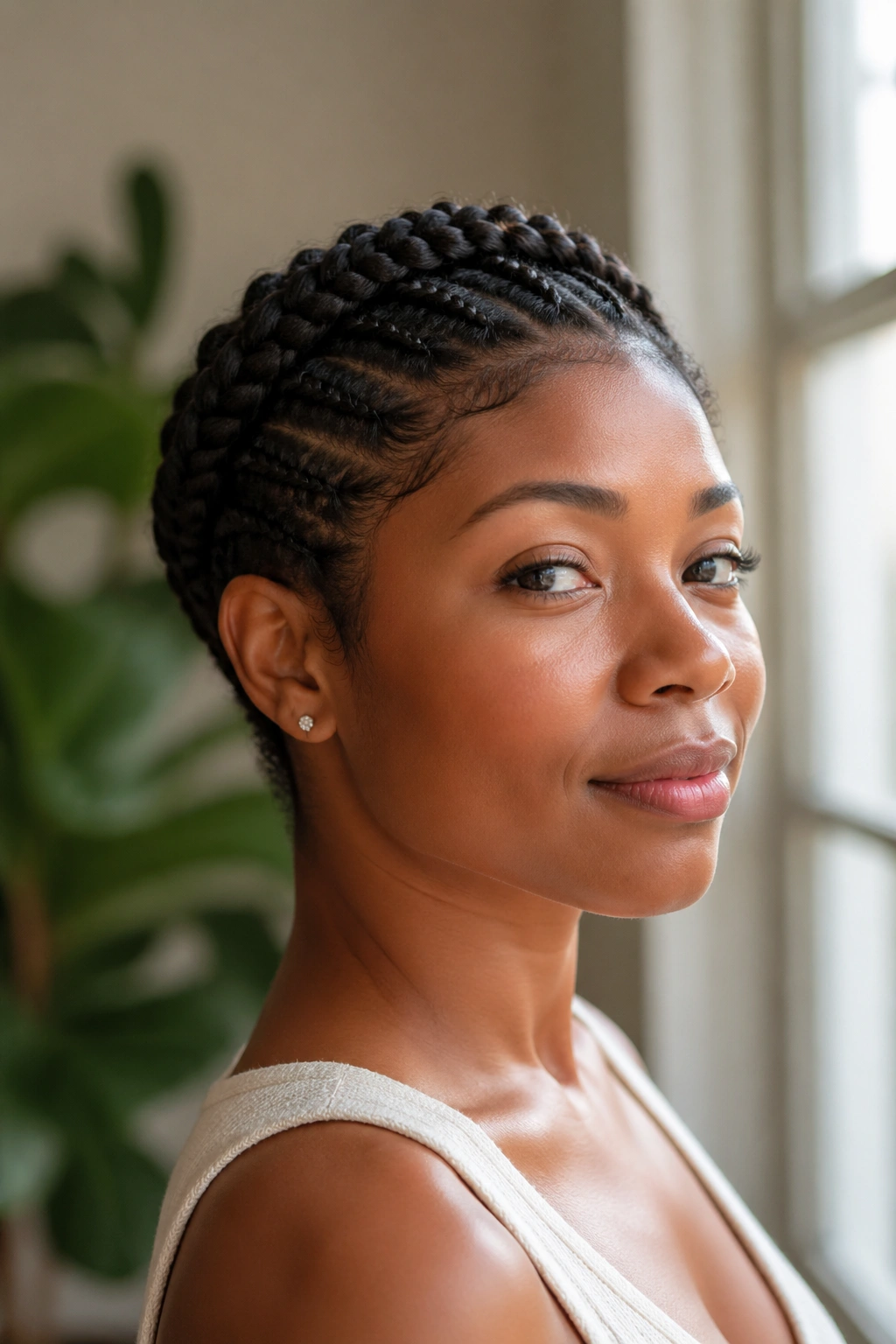
The most interesting crown braid variations come from women who take the basic concept and make it their own. The crown shape is a template — a starting point, not a destination.
Your personal signature might be a specific accessory you return to: always gold cuffs, always fresh flowers, always one particular bead pattern. It might be a specific technique: always Dutch braids, always goddess braids, always the combination of cornrow sides and natural puff top. Or it might be a consistent finishing touch: always face-framing curls at the temples, always a specific edge pattern, always a particular way of pinning the crown that’s become yours.
The crown braid, more than most styles, rewards personalization. Because the crown shape is so visually recognizable, any deliberate divergence from the standard version becomes a statement. Make it yours. Build the style that when people see it, they think of you.
Maintaining Crown Braids Between Wears
The scalp is the area that needs the most attention when crown braids are worn regularly. Any time hair is pinned tightly upward, the scalp in that area gets less circulation and natural oil distribution. Between crown braid wears, give your scalp a focused massage with a light oil — jojoba, rosehip, or a dedicated scalp oil — to encourage blood flow and keep the scalp moisturized.
Give your hairline particular attention. The spots where the crown braid sits closest to the hairline — typically the nape and temples — are the most vulnerable to tension-related thinning if the style is repeatedly installed too tightly. Make sure the crown braid always has some give; you should be able to slip a finger under it easily when pinned.
