



A loose side ponytail can save a flat hair day faster than almost anything else, and the reason is simple: it moves the shape of the hair off center without asking for a perfect blowout. The style feels casual because it leaves room for bends, flyaways, and a little softness around the face. That softness is the whole trick.
The best versions are never pulled so tight that the scalp looks shiny or the tail hangs like a rope. They sit a little lower, usually just behind the ear or near the nape, and they keep enough slack at the crown that the style still moves when you turn your head. A good side ponytail looks like you made one small decision and stopped there. That’s why it works.
Tight is the enemy.
Hair that’s a little lived-in tends to behave better here. Day-old texture, a mist of dry shampoo, or a quick pass with a curling wand can give the ponytail grip without making it stiff. Straight hair, curls, waves, short layers, thick lengths — all of them can work. The only real mistake is trying to make the style too polished too fast.
1. Soft Low Side Ponytail
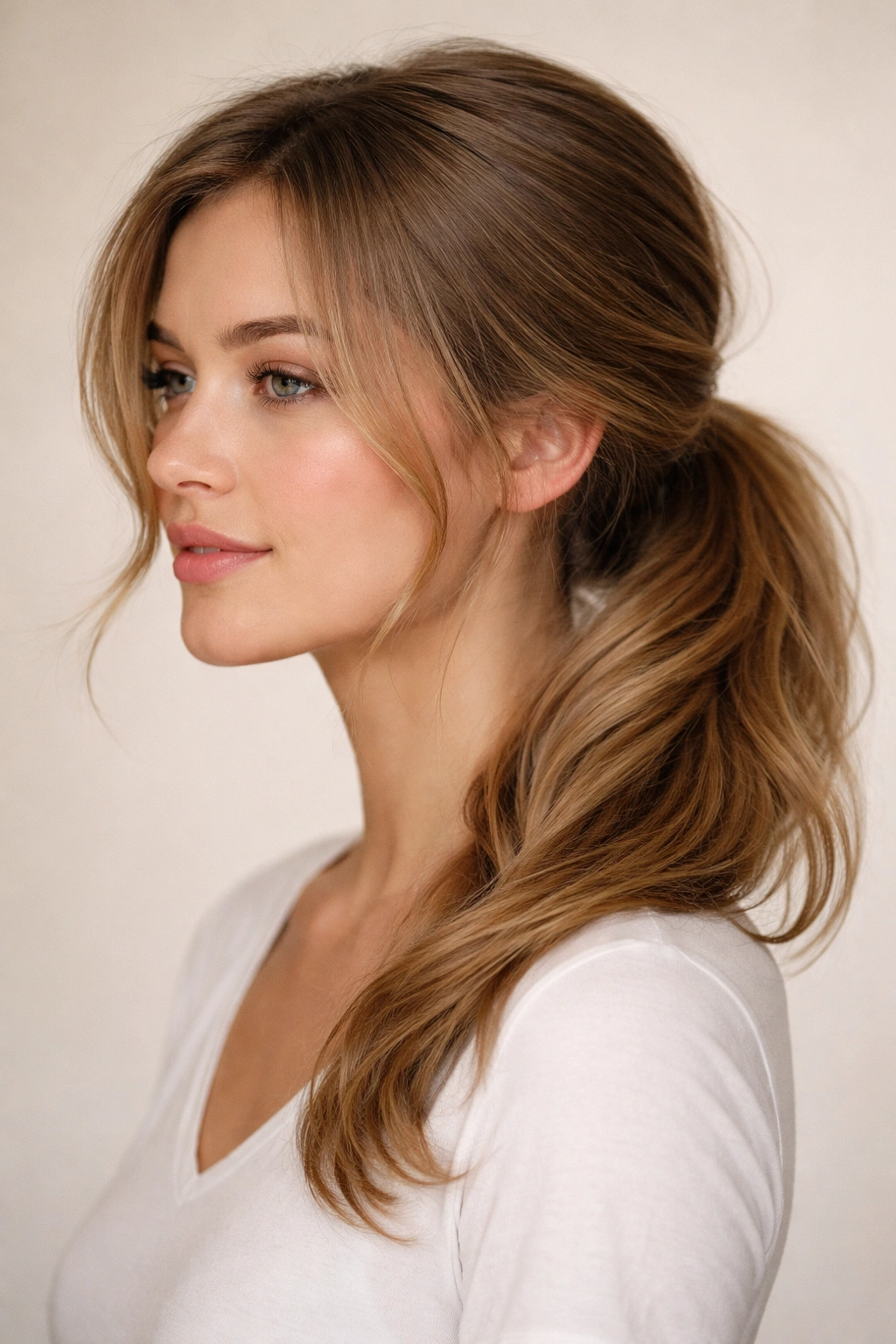
This is the one I reach for when hair needs to look clean, but not overworked. A soft low side ponytail sits just below the ear, with the tail resting against one shoulder instead of hanging straight down the back. It’s casual in the easiest way possible. No drama. No fuss.
Keep the crown loose and the elastic low enough that the ponytail doesn’t fight your jawline. If the top feels flat, lift the hair at the roots with your fingers before tying it off. That tiny bit of air around the scalp changes everything.
A few pieces can escape near the temples. Let them. They keep the style from looking too “done,” which is exactly what makes the ponytail wearable with a T-shirt, denim jacket, or even a sweater that’s doing most of the style work for you.
2. Face-Framing Side Ponytail
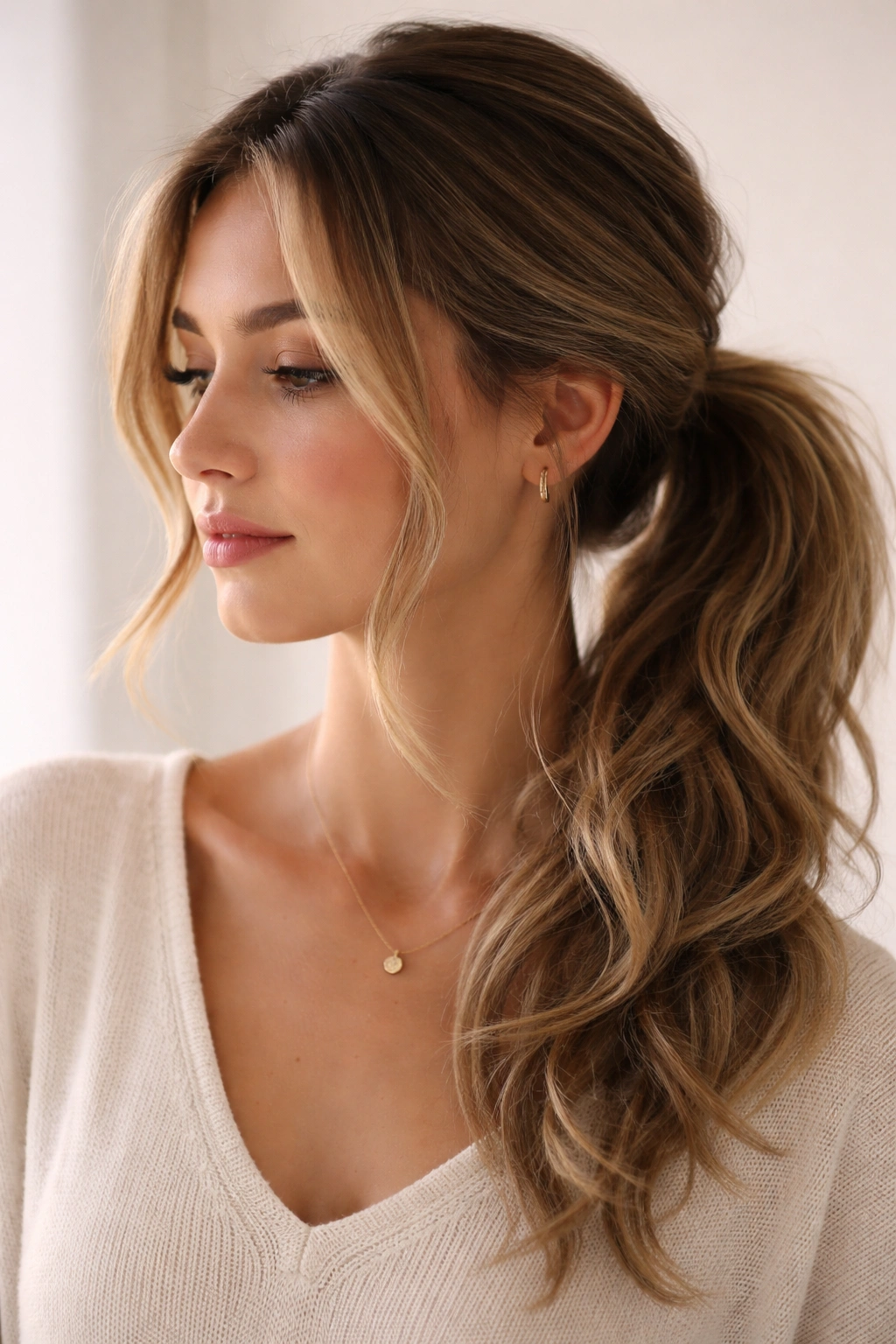
Face-framing pieces make this style feel softer in seconds. I’m talking about the strands that brush the cheekbones, not long curtain bangs that need their own styling routine. Pull the ponytail to one side, then leave a thin section loose on each side of the face. Those pieces break up the shape and keep the look from feeling severe.
Why It Works
The side placement already creates a diagonal line, and the loose front pieces make that line feel relaxed instead of sharp. If your hair is straight, give the front pieces a slight bend with a 1-inch curling wand, turning the iron away from the face for just 5 to 8 seconds. If your hair is wavy, finger-twist those pieces while they’re still damp and let them dry that way.
A satin scrunchie or a simple elastic both work here.
The accessory should support the style, not steal it.
3. Wavy Side Ponytail
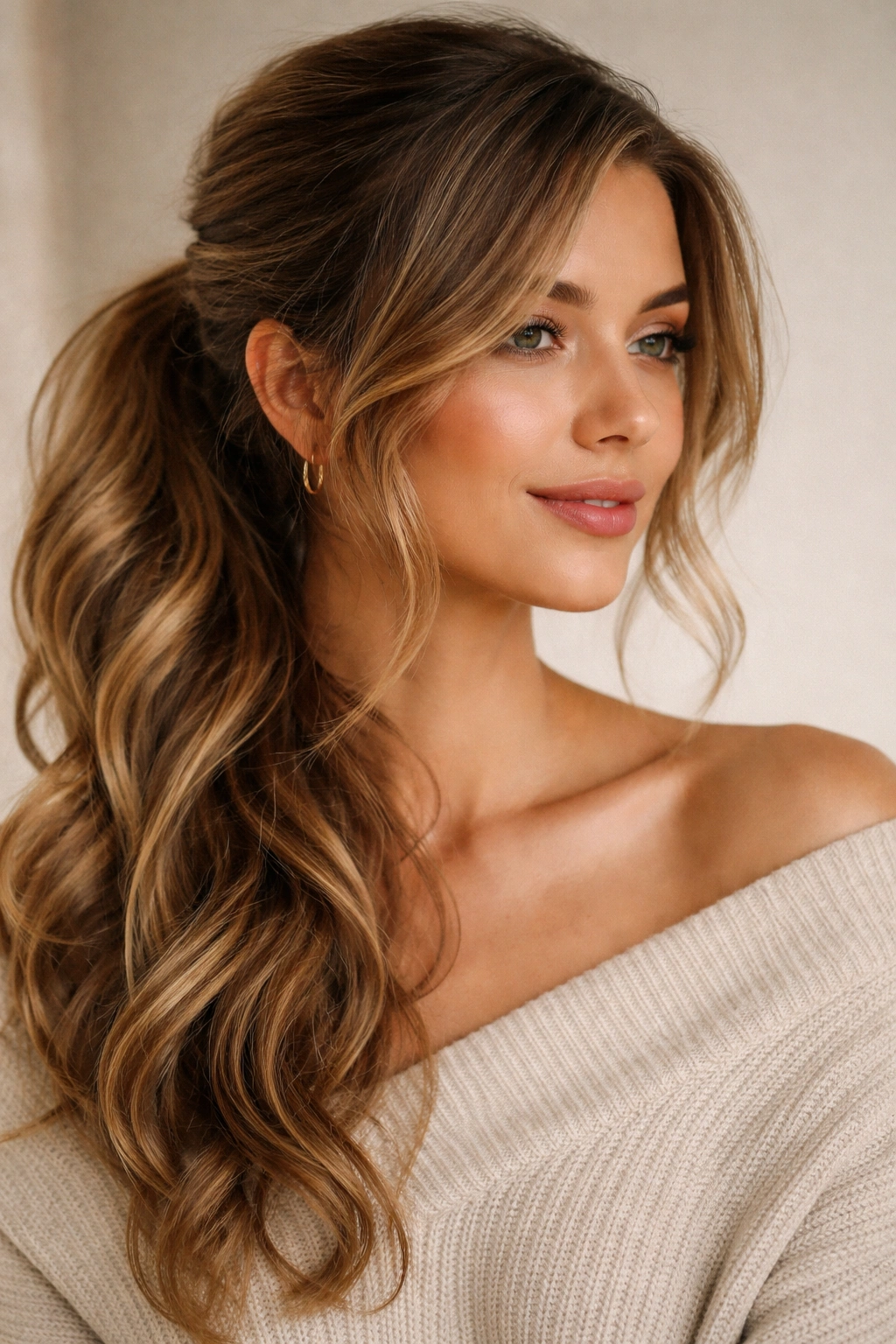
What gives a wavy side ponytail its charm? Movement. That’s it. The shape doesn’t need to be neat as long as the waves flow from the crown into the tail with a little bend and a little messiness. It feels easy, which is why it looks so good on ordinary days.
How to Shape the Bend
Start with hair that has been rough-dried or loosely curled. Pull it over one shoulder, then gather it low and off to the side without brushing the wave pattern out. If the ends are too straight, wrap only the last 2 to 3 inches of the tail around a curling iron for a soft finish. That tiny detail stops the ponytail from looking unfinished.
A light mist of texture spray at the mid-lengths helps the waves hold shape without becoming crunchy. I like this version because it looks better after an hour than it does in the first mirror check. It settles in. That’s the appeal.
4. Sleek Top, Loose Tail
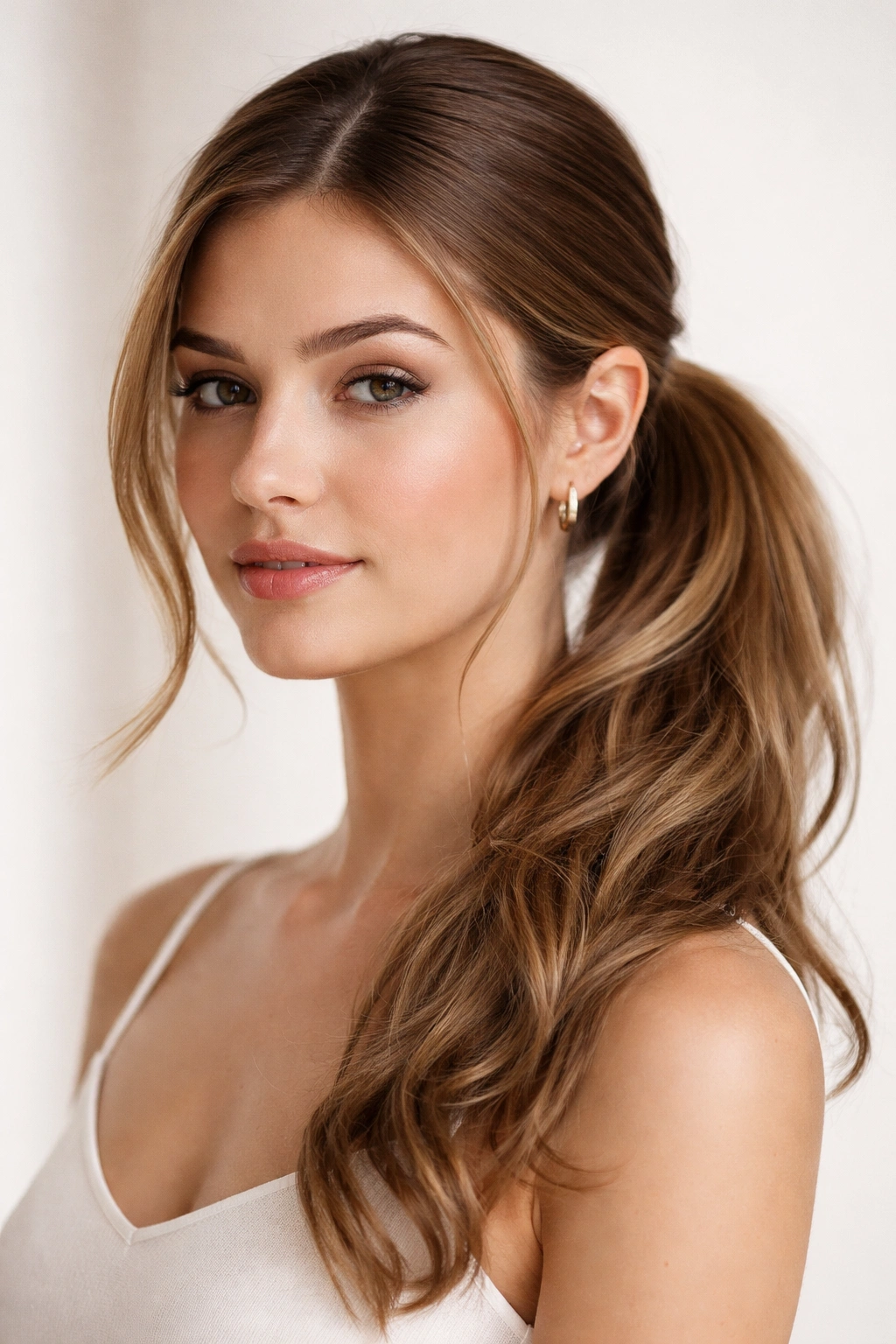
A side ponytail does not have to be messy to feel casual. A sleek top with a loose tail gives you the neatness of a brushed crown and the easy movement of a relaxed finish. The contrast is the whole point.
Brush the top smooth with a boar-bristle brush or a dense paddle brush, but stop once the hair lies flat. Don’t drag it so tight that the part line looks harsh. Tie the ponytail to one side, then stop fussing. The tail can stay slightly bent, a little puffy at the ends, or softly waved.
The style works especially well with medium-thick hair because the clean top controls bulk while the loose tail keeps the shape from going stiff. Use a pea-sized amount of smoothing cream on the crown only. Too much product near the tail will make it collapse, and nobody needs that.
5. Braided Crown Side Ponytail
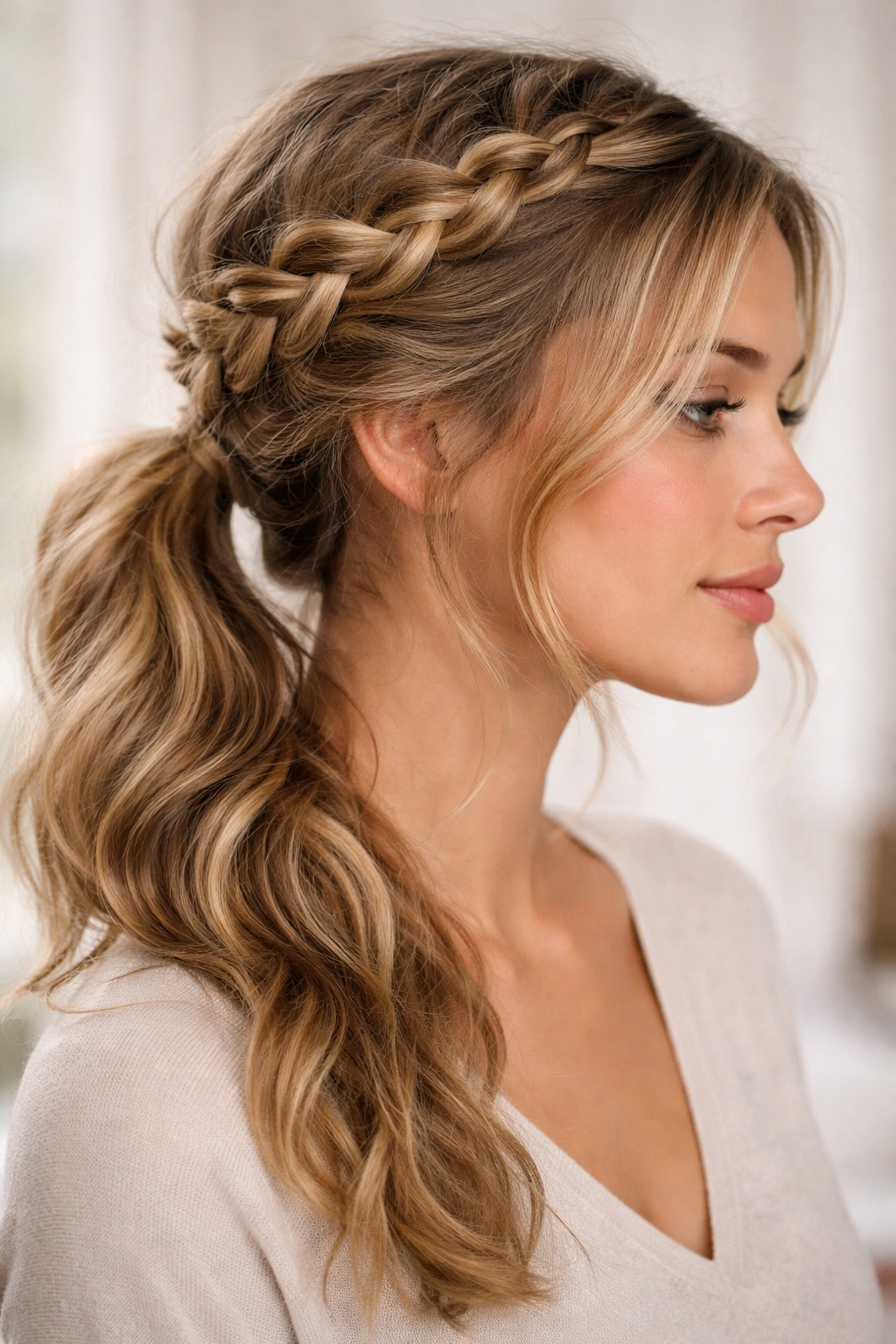
A tiny braid at the crown changes the whole mood. Instead of relying on accessories, the hair itself gives you a little structure before it drops into the side ponytail. That’s useful if you want something casual with a touch more detail.
Take a 1-inch section from one temple and braid it back toward the opposite side, then secure it with the rest of the hair near the ear. A single braid is enough. Two braids can start to feel busy, and this style works better when it stays easy to read.
Best For
- Medium to long hair that can hold a small braid without slipping.
- Hair with some grip, whether from natural texture or a bit of dry shampoo.
- People who want one detail near the face and nothing else.
Keep the braid loose. If you pinch it too hard, the crown stops feeling soft, and the ponytail loses that casual edge.
6. Bubble Side Ponytail
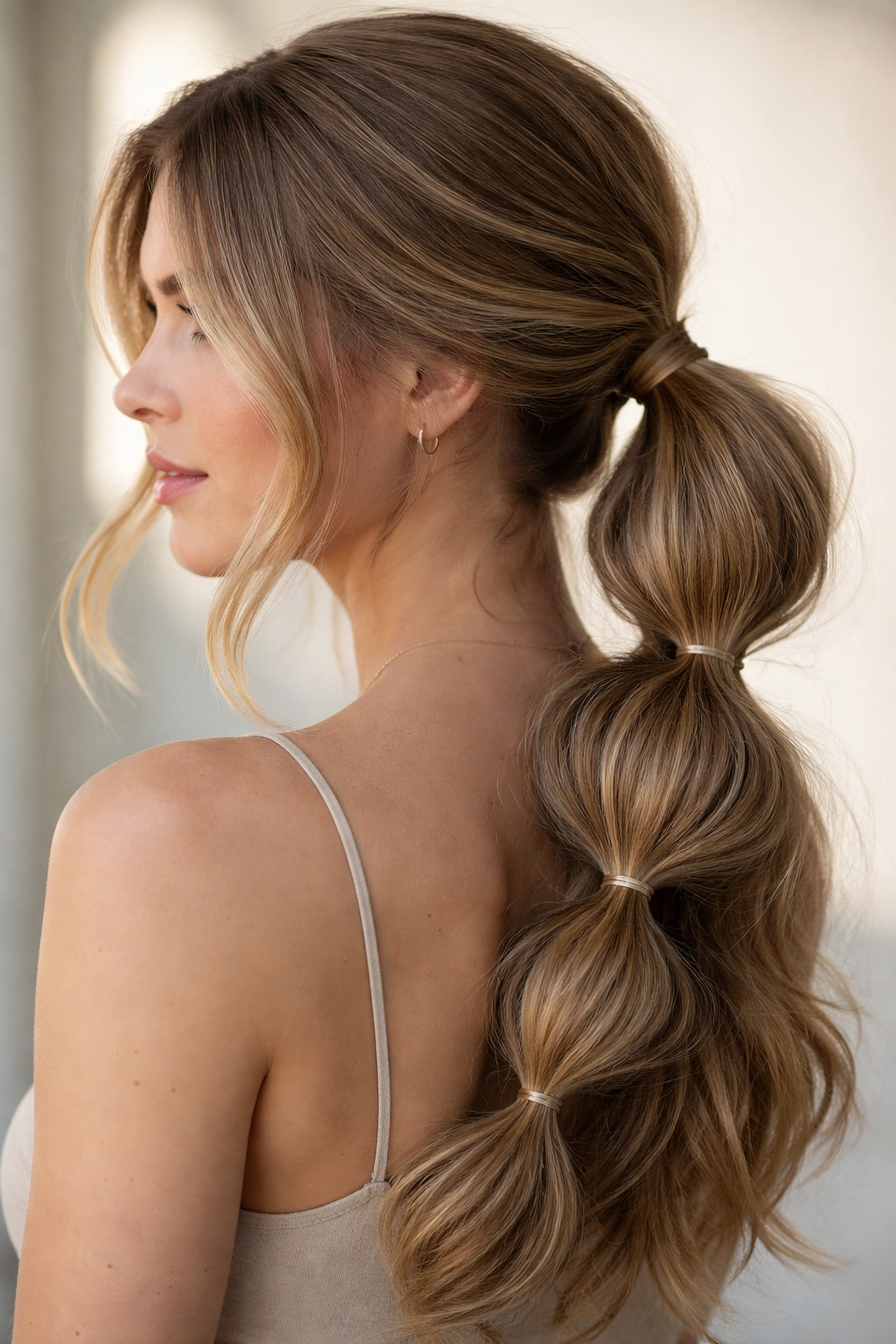
Bubble ponytails can look playful without feeling childish. The side version is especially good when you want movement and shape, but you do not want a full braid. Tie the ponytail off with one elastic, then add more elastics every 2 to 3 inches down the tail. Tug each section gently so it rounds into a bubble.
The side placement softens the look right away. It stops the bubbles from reading too sporty. A few face-framing strands make it even easier to wear during the day, especially if the bubbles are loose enough to move when you walk.
I’d keep this style for medium or long hair. Shorter hair can do it too, but the bubbles need enough length between elastics to show their shape. A tiny bit of hairspray at the ends helps the tail stay rounded, though you want more hold than stiffness. That balance matters.
7. Textured Side Ponytail
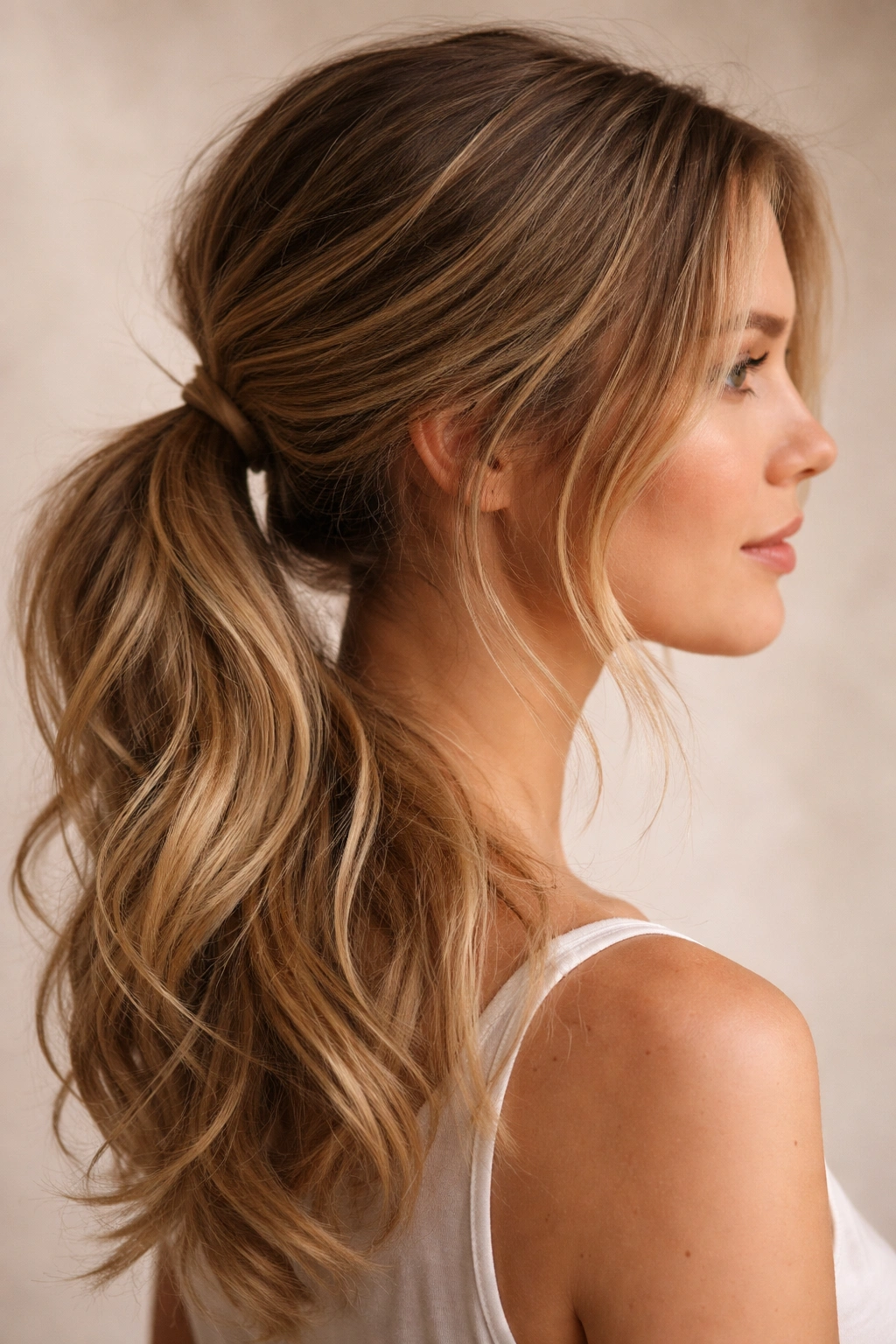
What makes a textured side ponytail feel so easy? The roughness. Not frizz, not chaos — texture. A bit of grip at the roots and a little separation through the lengths can turn plain hair into something that looks styled without looking polished.
What to Watch For
If your hair is very clean, spray dry shampoo at the roots and massage it in with your fingertips. Then mist a texture spray through the mid-lengths before gathering everything to one side. Use your hands instead of a brush. A brush tends to smooth the personality right out of the style.
This version is especially good for fine hair because the extra grit helps the ponytail hold its shape. You can twist a small section from underneath before tying it off if you want more thickness. I do that a lot. It adds body without making the ponytail look fake, which is the line you want to stay on.
8. Messy Side Ponytail With a Scrunchie
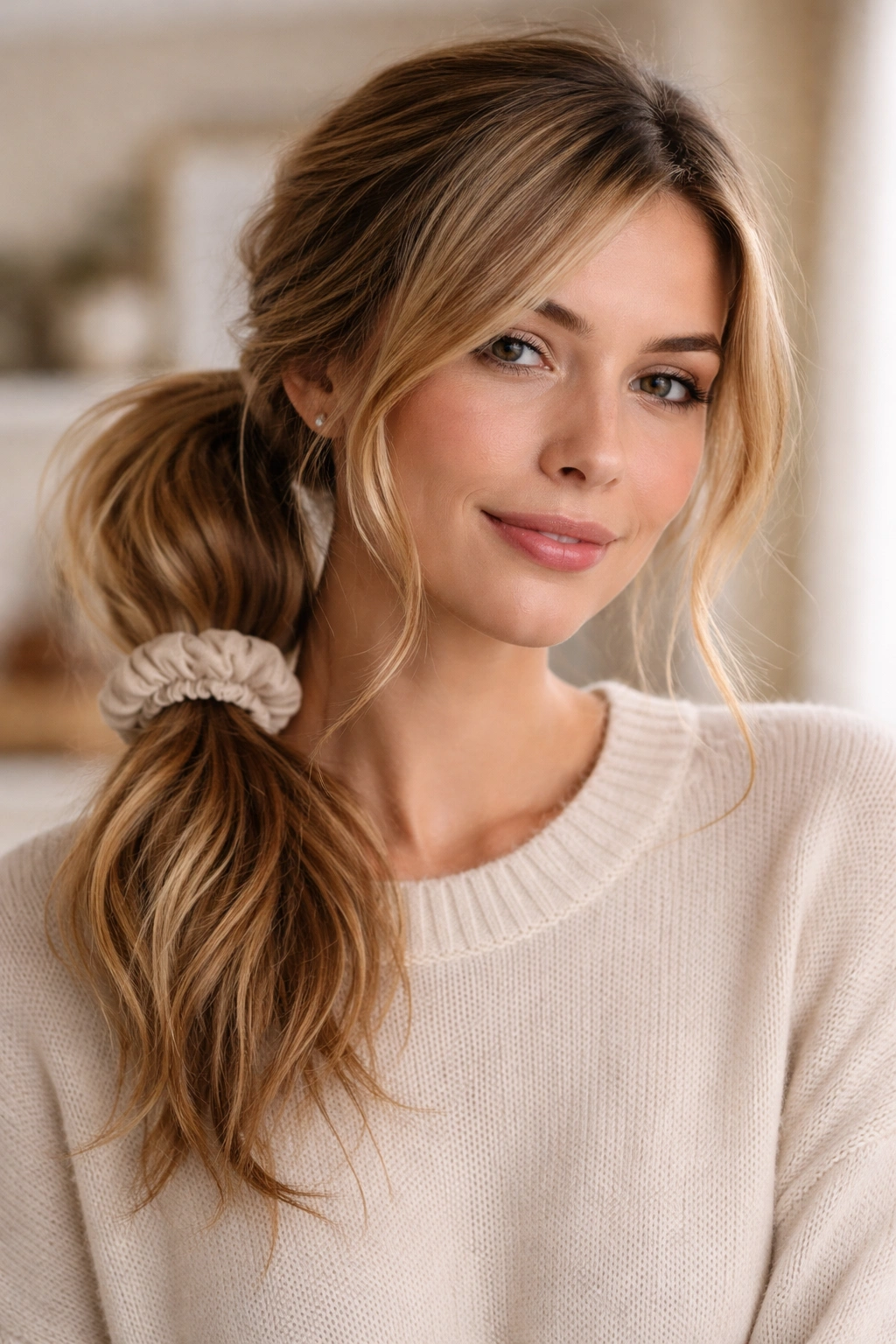
A messy side ponytail with a scrunchie feels like the hair equivalent of your favorite soft sweatshirt. It’s relaxed, a little imperfect, and easy to wear with almost anything. The scrunchie keeps the style from looking too serious, especially when the hair itself has a bit of bend.
Start by gathering the hair loosely to one side, then twist once before looping the scrunchie around it. That one twist adds shape without pulling the style tight. Leave a few shorter pieces around the ears and temples if they naturally fall out. Do not force them back in.
A cotton scrunchie makes the style feel more casual, while velvet or satin softens the whole thing a little more. I like a medium-sized scrunchie here, not one of the oversized fluffy ones that can swallow fine hair. Keep the tail loose and stop adjusting it. The charm comes from the almost-undone finish.
9. Ribbon-Tied Side Ponytail
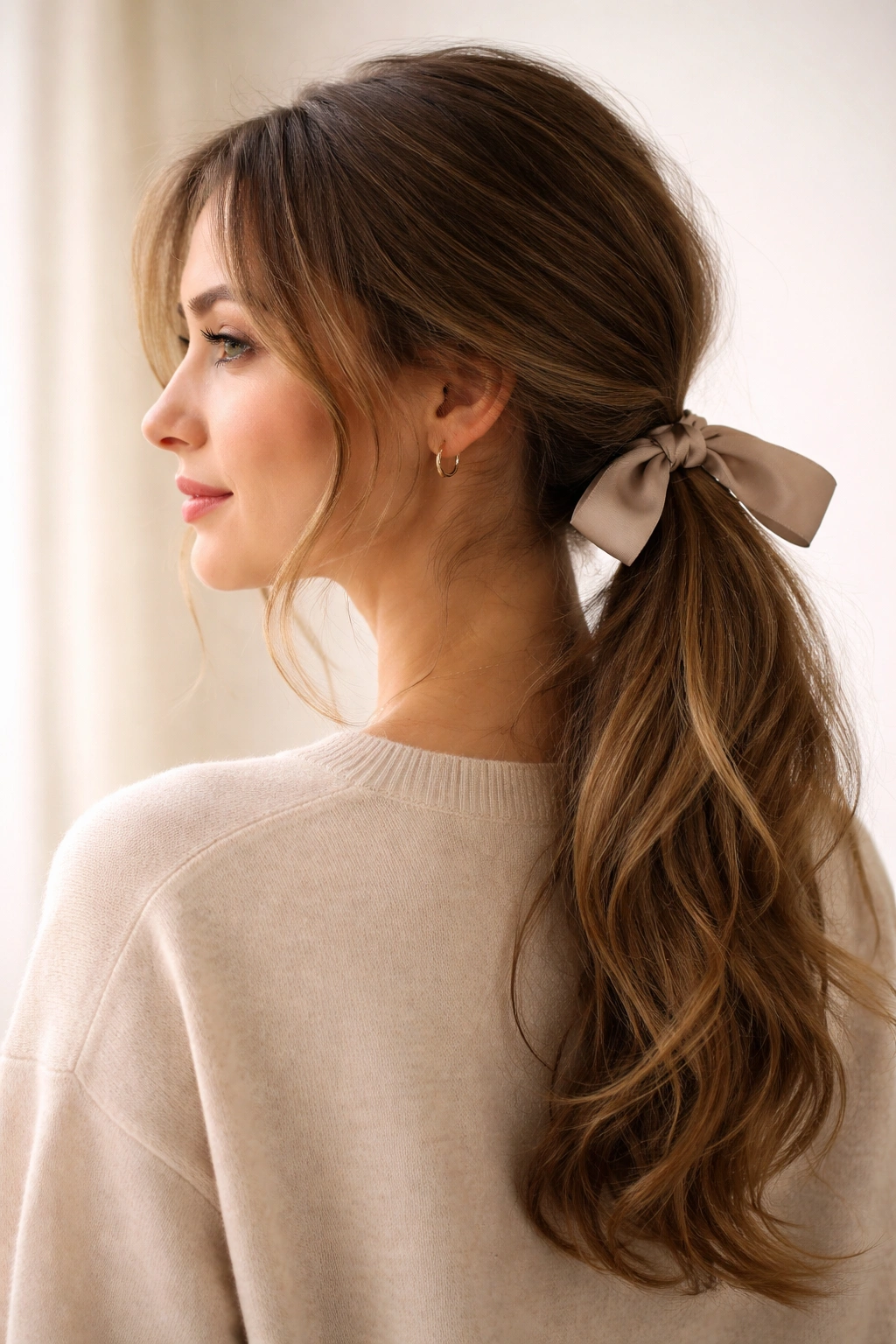
A ribbon can shift a side ponytail from plain to soft and pretty with almost no effort. The trick is choosing a ribbon that feels like part of the hair, not a holiday package. Narrow satin, grosgrain, or velvet all work if the color sits close to the outfit or picks up one tone from it.
Tie the ponytail first with a small elastic, then wrap the ribbon around the base and let the tails fall long or short, depending on what you like. I prefer the knot slightly under the ponytail so the bow doesn’t sit awkwardly on top of the shoulder. That tiny placement detail matters more than most people think.
The style reads casual when the ribbon looks a little soft and the ponytail itself stays loose. If the hair is too smooth, pull a few strands free around the face. A ribbon can look precious fast. Those little imperfections keep it grounded.
10. Side Ponytail for Short Hair
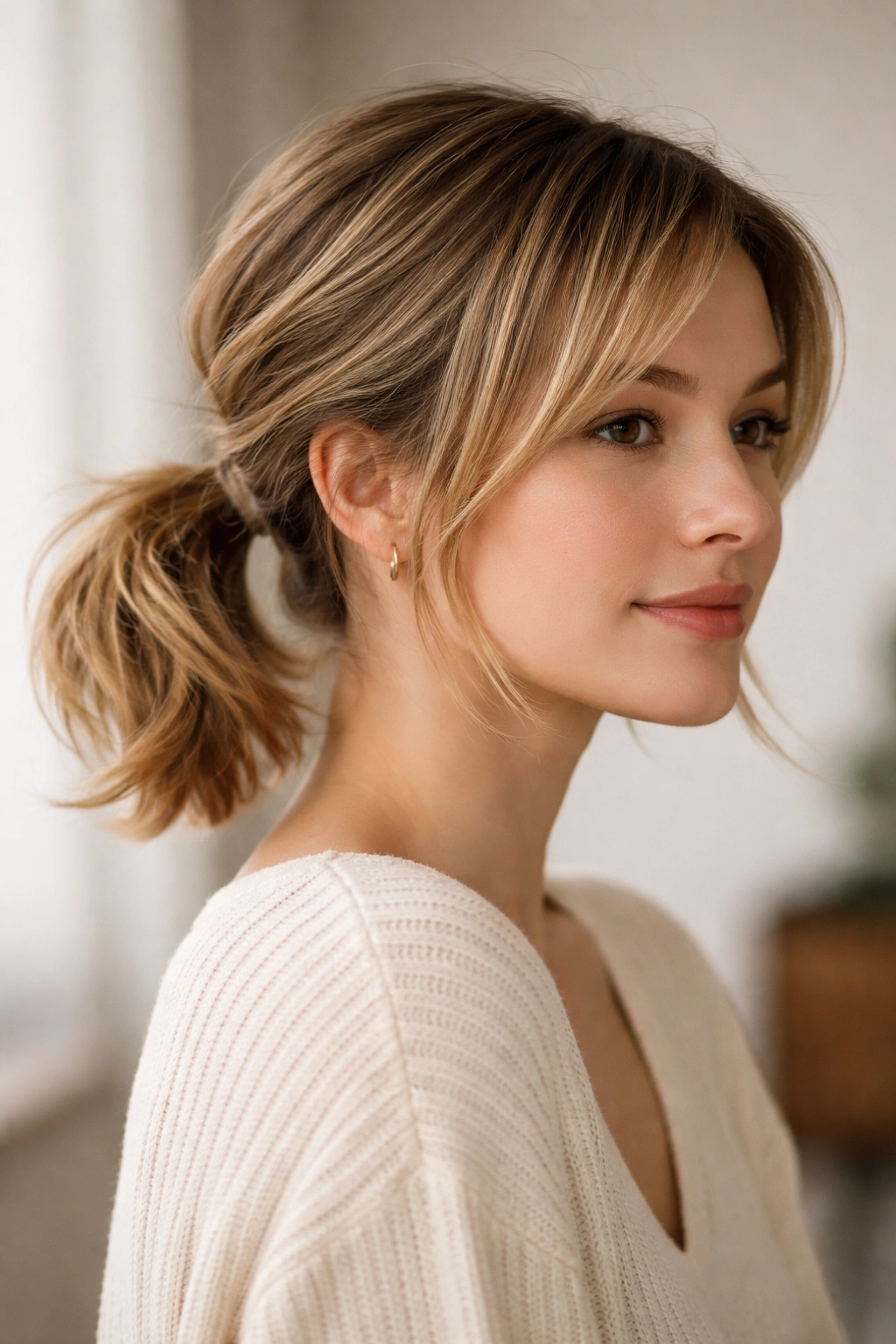
Short hair can do a side ponytail, and it does not need to be long to work. If the hair reaches the jaw or just below it, you can still gather enough to make a small, loose ponytail near the ear. The shape ends up softer and more modern than many people expect.
Use a small elastic and pin the shorter layers underneath with bobby pins if they refuse to stay put. A little texture spray helps the layers grip each other. If the ends are too short to swing, let them stick out a bit. That airy, broken edge makes the style feel intentional instead of forced.
This version is especially good when you want your face open but do not want to blow-dry every layer into place. The ponytail can sit low and off to the side, with the front pieces tucked loosely behind one ear. Simple. Useful. Done.
11. Curly Side Ponytail
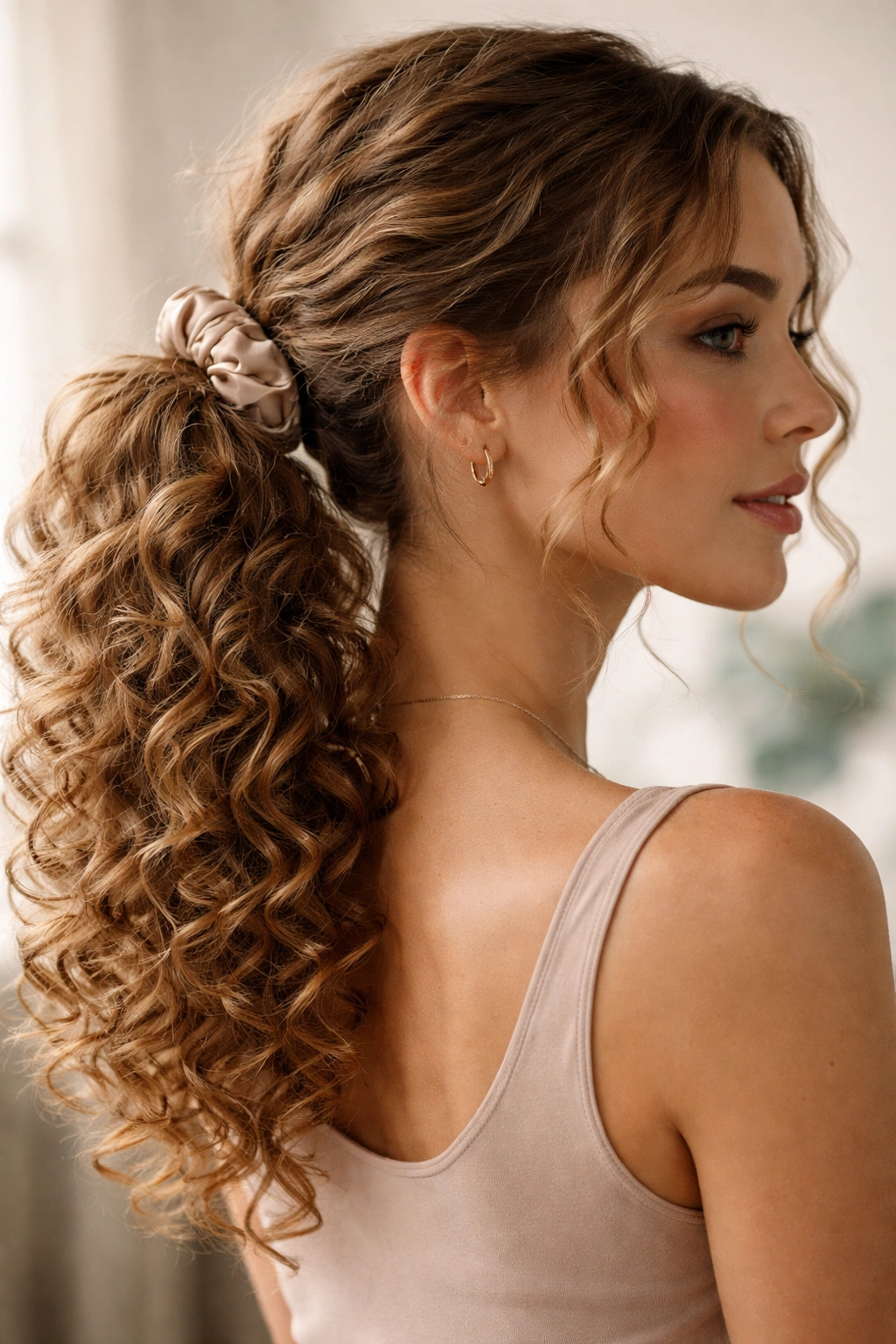
Curly hair wants room. That is the first rule here, and it matters more than the ponytail itself. A curly side ponytail looks best when the curls are allowed to stack softly instead of being squeezed into a tight band that flattens the pattern.
Work a curl cream or leave-in through damp hair, then gather it loosely to one side with your fingers. If the roots need a little lift, pinch them at the crown instead of brushing them flat. Let a few curls hang free around the temples. Those curls are part of the style, not a mistake.
A satin scrunchie or soft elastic is kinder than a hard band. Tight elastics can stretch the curl pattern at the base and make the ponytail look snatched in the wrong way. Keep the tail full and touchable. A curly side ponytail should bounce when you move.
12. Twisted Side Ponytail
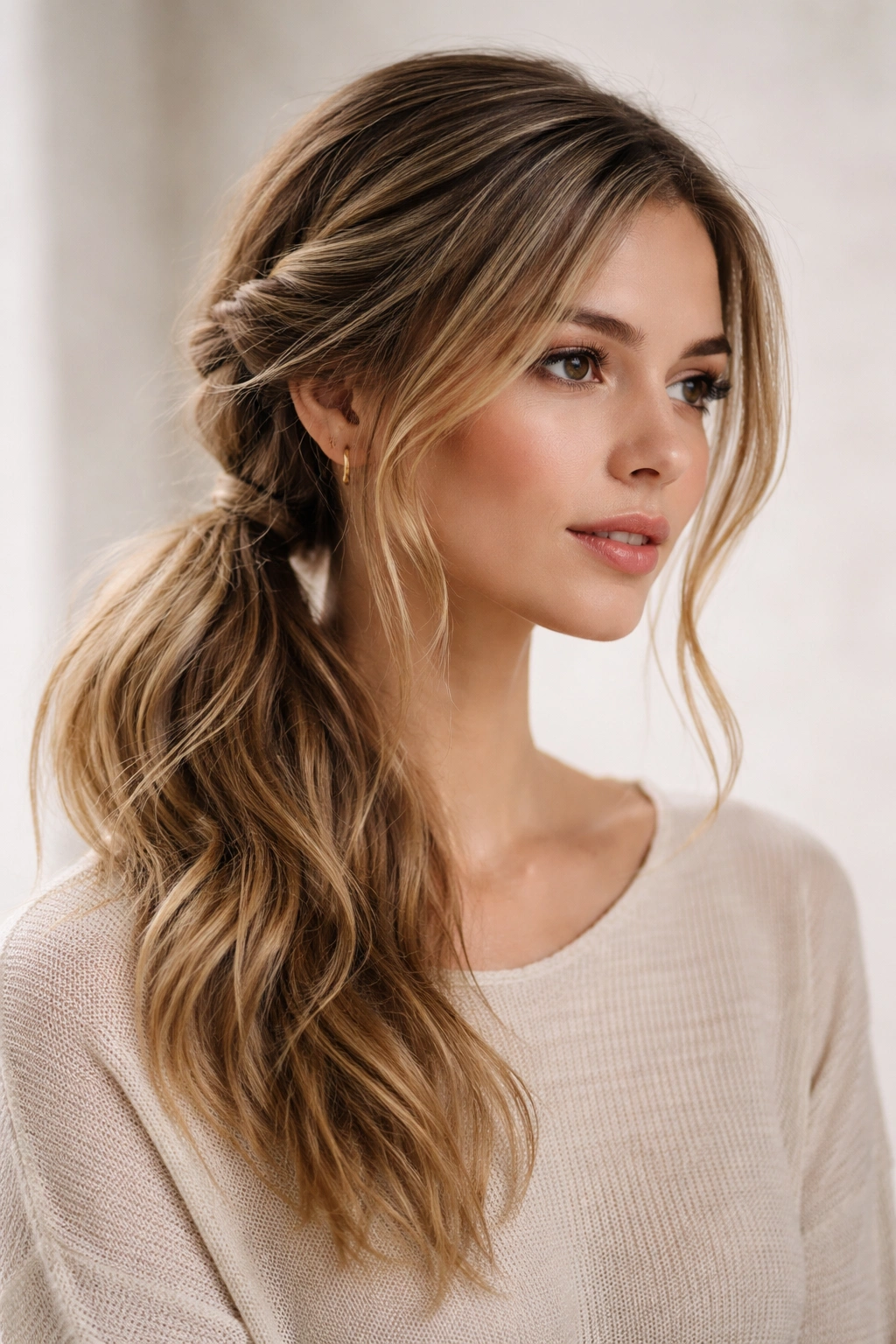
Two small twists can do a lot of work here. Instead of braiding the front, twist the hair from each temple back toward the side where the ponytail will sit, then secure everything together. The result looks finished, but not fussy.
Two Twists Make the Difference
- Take a 2-inch section from one side and twist it away from the face.
- Do the same on the other side, keeping the tension light.
- Bring both twists together at the side of the head and tie the ponytail beneath them.
- Tug gently on the twists after they’re secured so they look soft, not tight.
This style is good when you want the front to stay put without heavy hairspray. It also works well on medium-length hair because the twists create a little detail even if the tail is simple. I like the fact that it looks more involved than it is. A lot of good hair does.
13. Hidden Elastic Side Ponytail
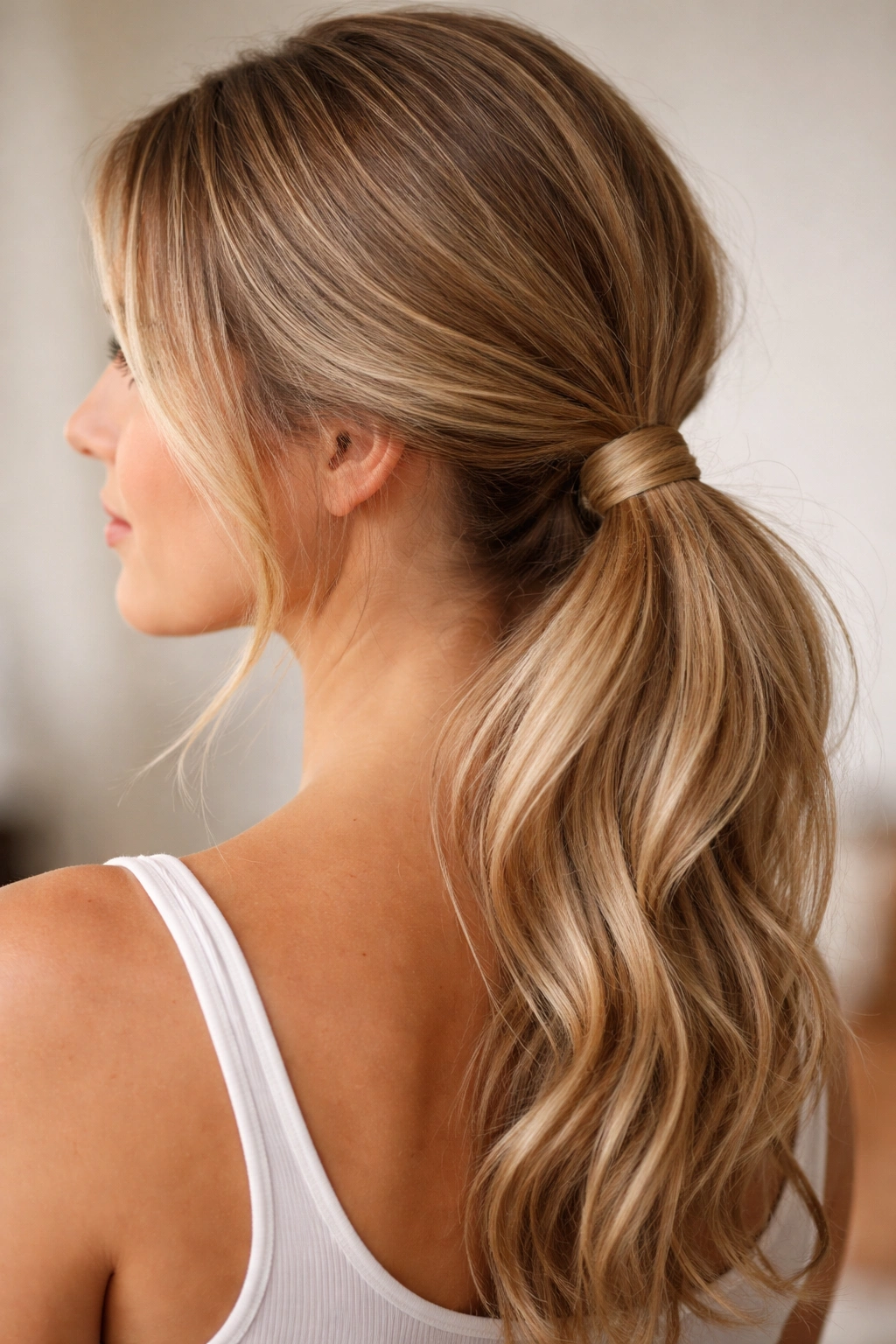
Hiding the elastic changes the whole read of the style. The ponytail stays casual, but the base looks cleaner, which makes the hair seem a little more deliberate without becoming stiff. A thin strand from underneath the ponytail is all you need.
After tying the hair off, grab a small piece from the tail, wrap it around the elastic, and pin the end underneath with a bobby pin. Keep the wrap flat against the base so it doesn’t puff out. If the strand is too thick, it starts looking bulky. Better to use less hair and pin it well.
This version is especially nice if you like loose side ponytails but hate seeing the elastic in every mirror. It works with straight, wavy, or curly hair. The style does not need much else. Sometimes the smallest fix is the one that makes the ponytail look finished.
14. Deep Side-Part Side Ponytail
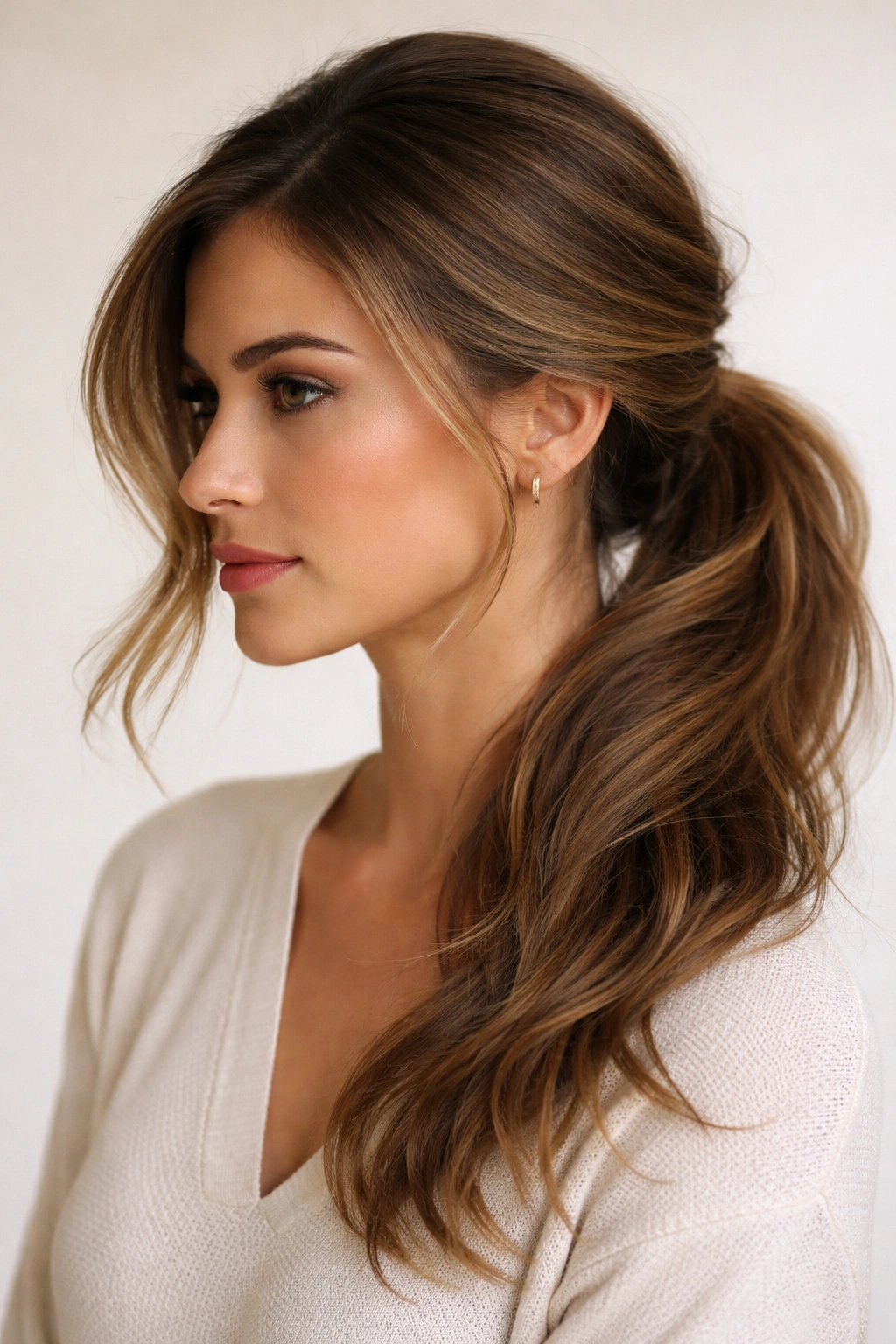
A deep side part gives this ponytail a little attitude without turning it into a formal style. The part line creates volume on one side and a softer fall on the other, which suits the off-center placement of the ponytail perfectly.
Why does it work so well? Because the part gives the eye a place to travel before it reaches the ponytail. That makes the whole hairstyle feel balanced, even when the hair is sitting to one side. If your roots fall flat, lift them a little at the part with the tip of a comb and a puff of dry shampoo.
Keep the ponytail low and loose so the part remains the main feature. A middle part with a side ponytail can work, but the deep side part has more shape and a little more movement around the face. It’s a good choice when you want something casual that still looks thought through.
15. Low-at-the-Nape Side Ponytail
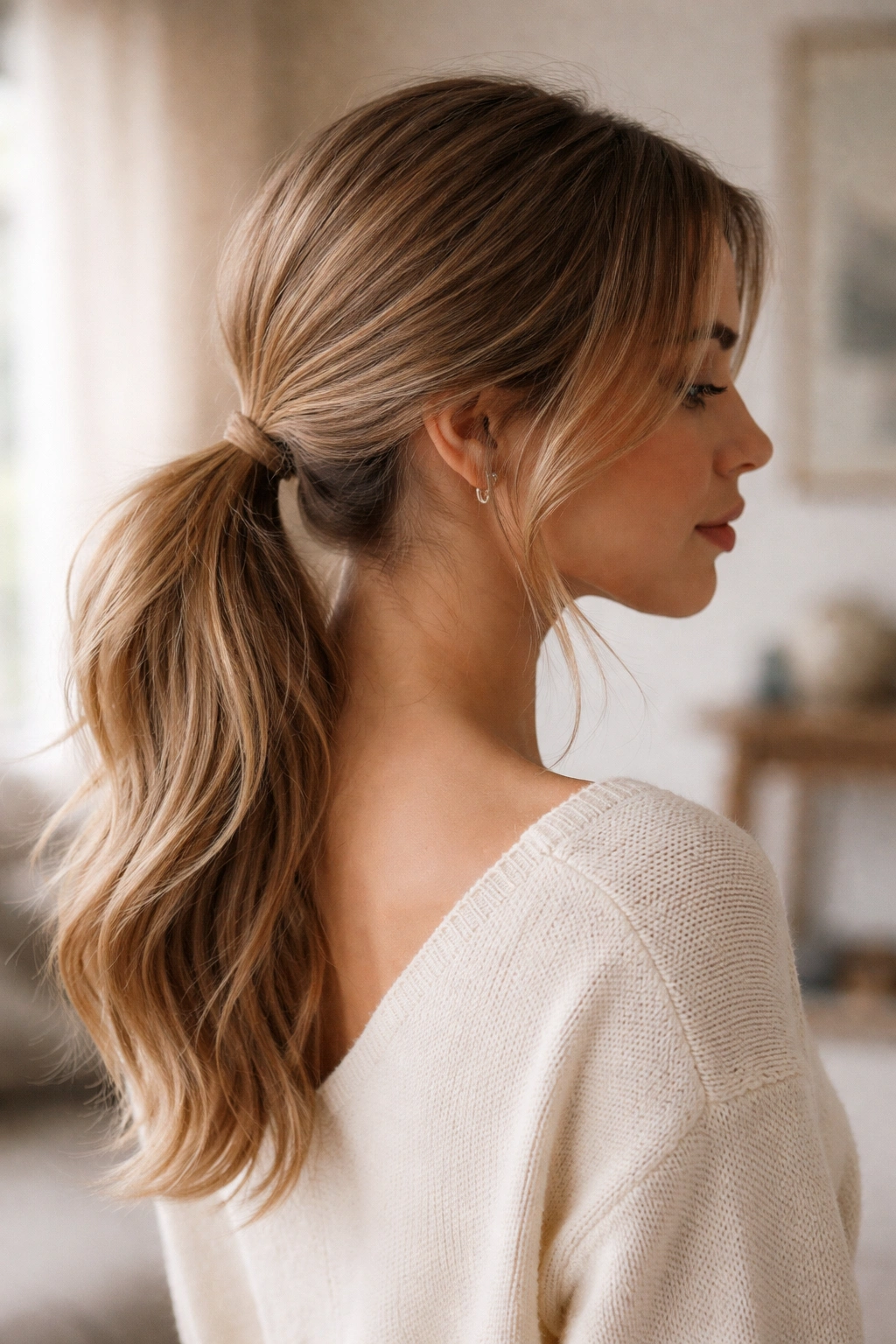
Lower placement makes the ponytail feel softer right away. A low-at-the-nape side ponytail sits closer to the neck, which makes it less sporty and more relaxed. It also keeps the hair from bunching awkwardly at the side of the head, which can happen when the ponytail sits too high.
The easiest way to wear it is to gather the hair just behind one ear and slightly below the nape line. Let the tail fall over the shoulder or rest against the back of a sweater. If you’re wearing a scarf, coat collar, or high-neck top, this placement keeps the hairstyle from getting trapped under fabric.
This version works well on days when the hair has a little movement but not enough to wear loose. A few bends through the ends are enough. A low side ponytail doesn’t need volume to feel soft — it needs space. That’s the part most people miss.
16. Fishtail Side Ponytail
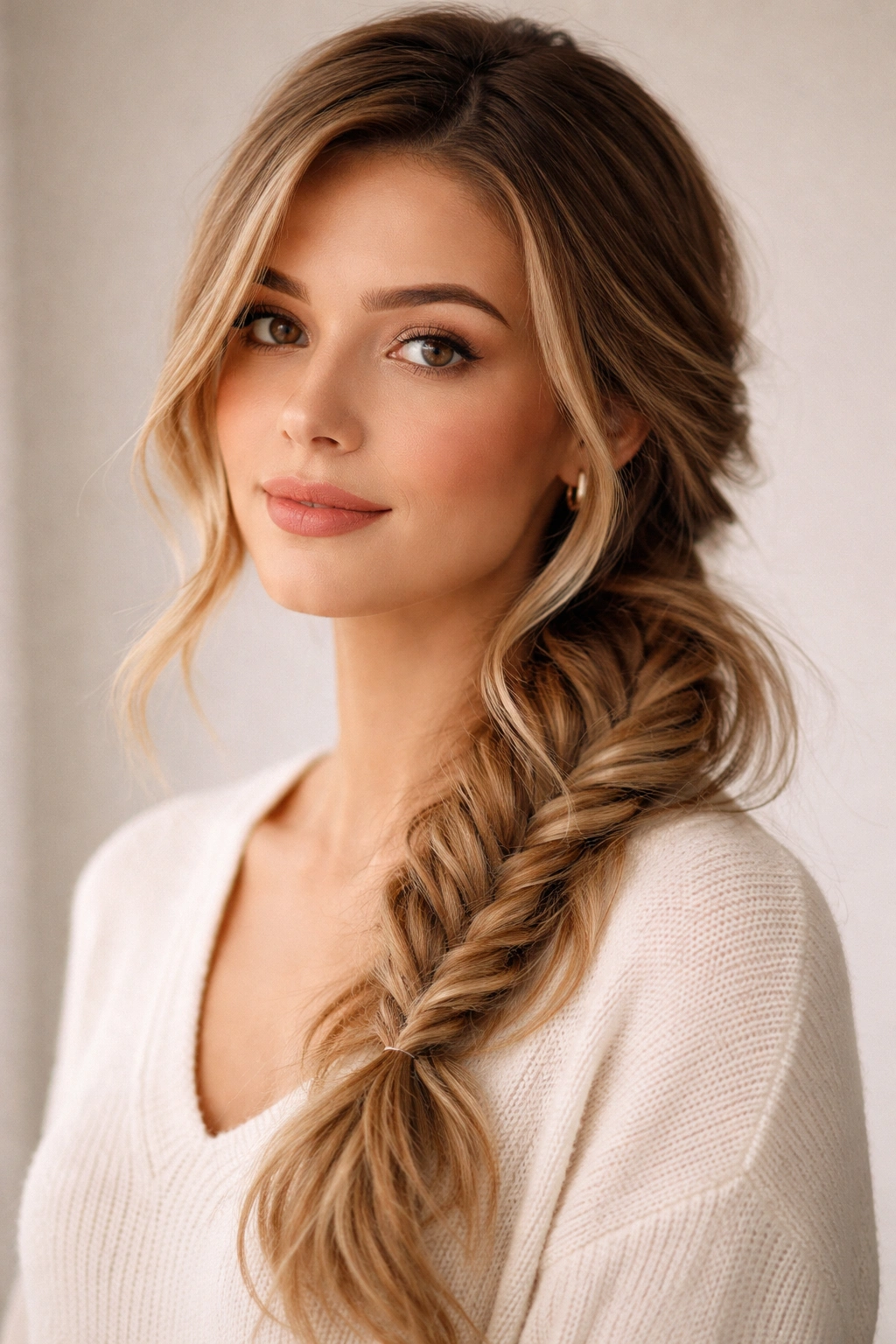
A fishtail braid gives a side ponytail a bit of texture without turning it into a heavy braid style. If the braid is kept loose, it reads casual instead of formal. That matters. Pull it too tight and the whole thing starts to feel like a school dance hairstyle.
Begin the ponytail at one side, then fishtail only part of the length or go all the way to the ends if your hair is long enough. The braid looks best when the sections are small and the finished plait is gently tugged apart. You want visible texture, not a hard little rope.
I like this version on hair that has some natural grit because the braid holds easier and the strands stay in place. A little texture spray at the tail helps. If the braid feels too neat, pull a few strands from the sides of the plait. That softens it fast.
17. Rope-Braid Side Ponytail
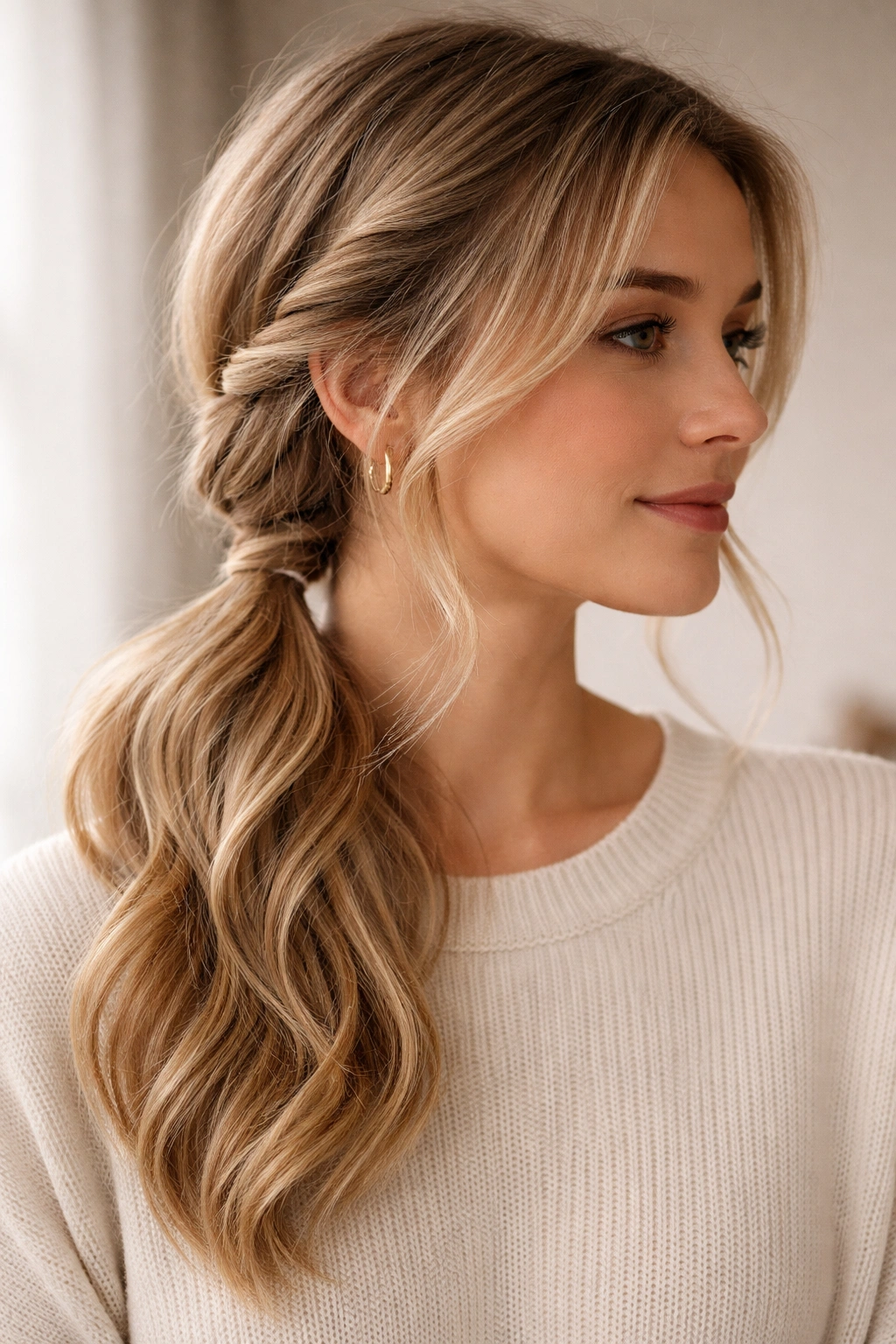
Rope braids are underrated in side ponytails. They’re faster than many people expect, and the twist pattern gives the tail a neat spiral that still feels relaxed. If you have medium to long hair, this is one of the easiest ways to add detail without spending much time.
Split the ponytail into two sections, twist both sections in the same direction, then cross them over each other in the opposite direction. That opposite motion is what holds the rope braid together. Keep the tension even. If one section is looser than the other, the braid gets lopsided fast.
This style works well when you want the ponytail to stay out of the way but still look finished from the back and side. It’s also a nice choice for day-old hair, since the braid grips better on hair that isn’t slippery. A small elastic at the end is enough. No need to overbuild it.
18. Flipped-End Side Ponytail
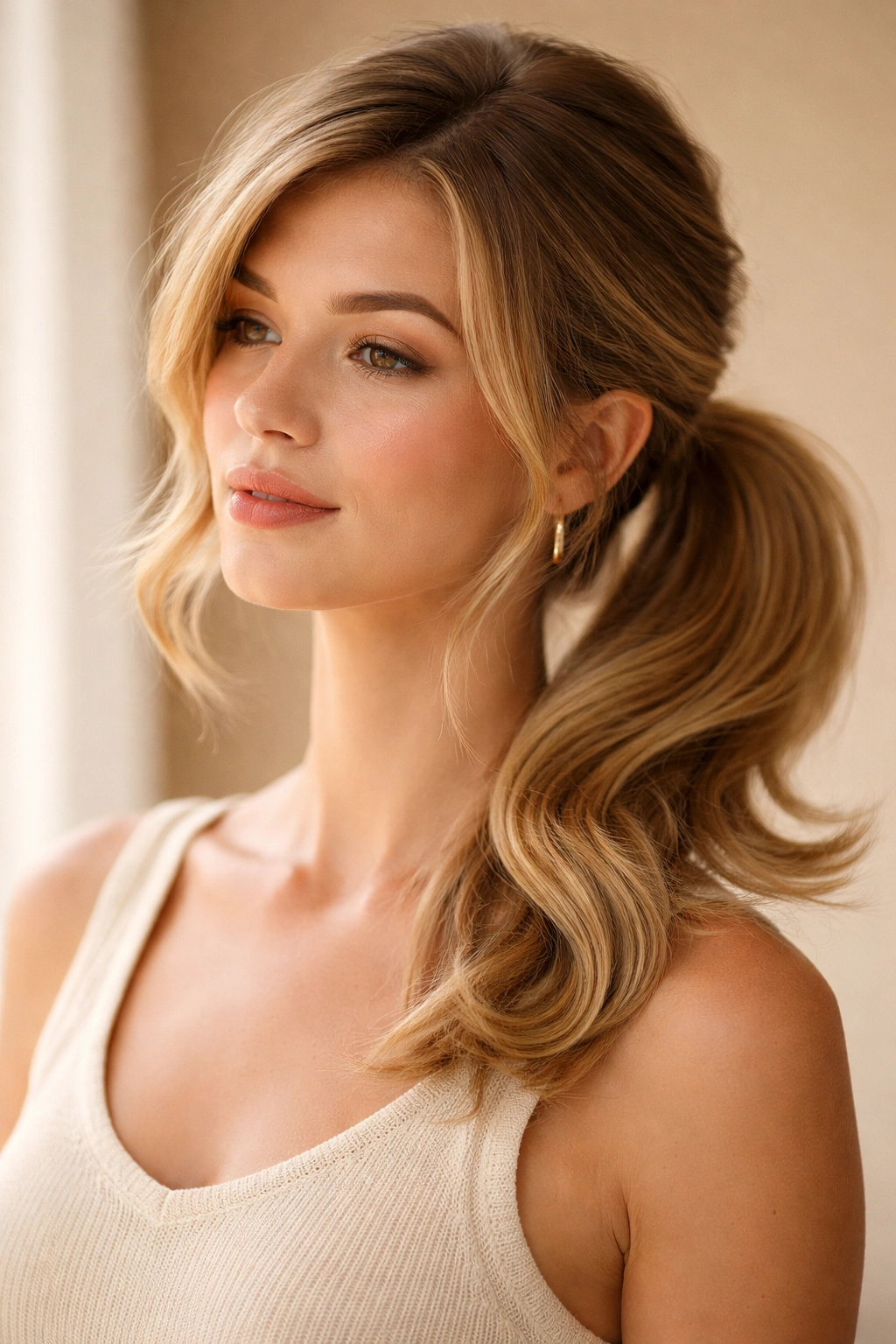
Want the ponytail to feel a little more playful? Flip the ends outward. That small bend changes the entire personality of the style, especially when the rest of the hair stays loose and soft. It feels light, a little retro, and easy to wear.
Use a round brush or a curling iron to turn the last inch or two of the tail away from the neck. If the hair is already wavy, you may only need a quick bend from your fingers and a bit of hold spray. The point is not a perfect curl. It’s a soft little flip at the end.
A side ponytail with flipped ends looks good when the crown stays calm. Too much height on top can make the style feel dressed up in the wrong way. Keep the base low, let the ends turn out, and leave the rest alone. That restraint is what gives it charm.
19. Volume-Crown Side Ponytail
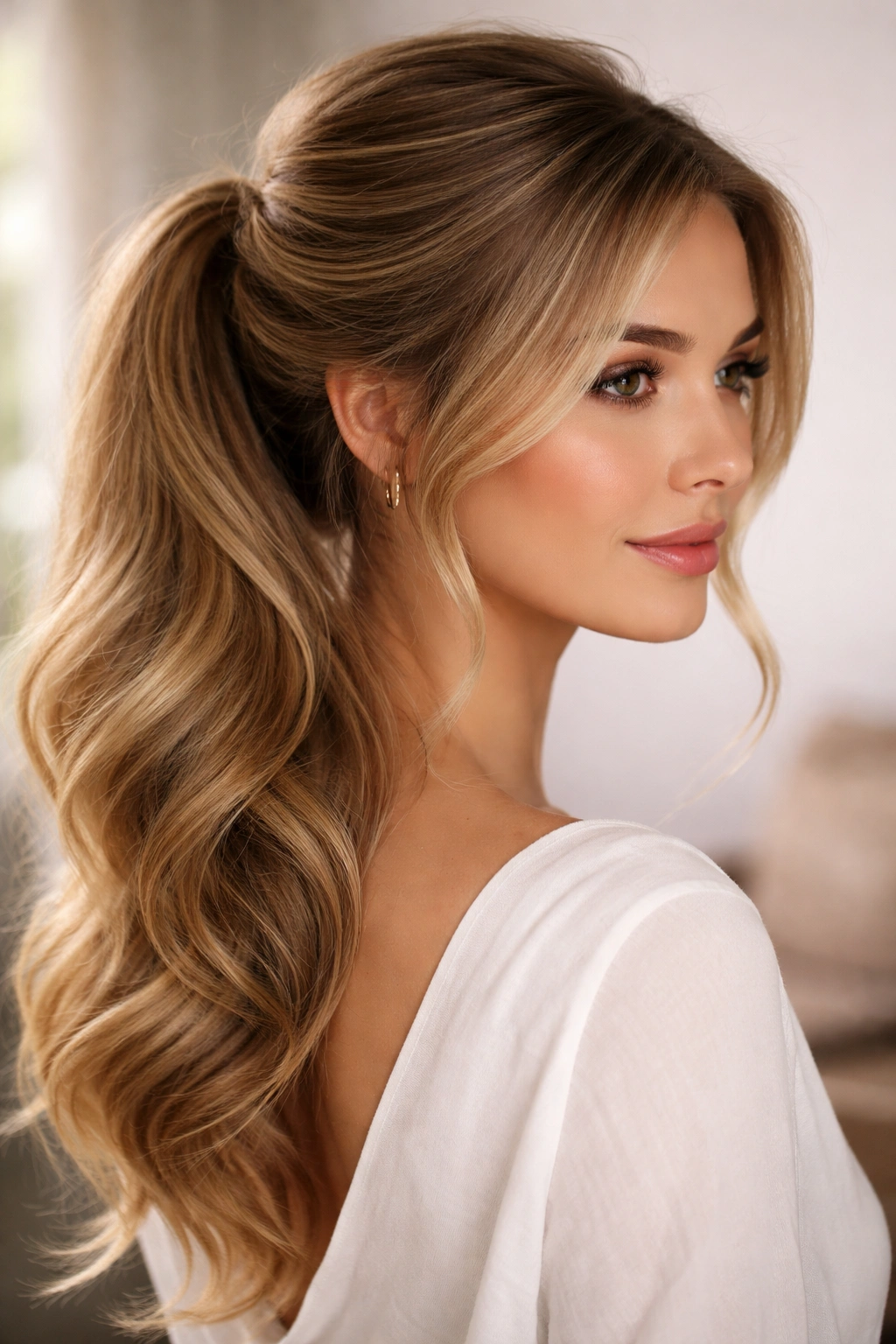
Flat roots can make a side ponytail feel tired, even if the tail itself looks fine. A little volume at the crown fixes that. Not helmet hair. Just a gentle lift that makes the style look fuller and more balanced.
How to Lift the Crown
Backcomb a small section at the crown with a fine-tooth comb, then smooth the top layer over it. A light mist of flexible hairspray helps the lift stay in place without hardening the hair. If you prefer not to tease, flip your head over, shake the roots loose, and gather the ponytail from that angle instead.
This style is especially useful for fine hair or hair that’s been blown flat by a hat, hood, or damp weather. The side placement keeps the volume from looking too obvious. It simply gives the ponytail a better shape. A little lift goes a long way here, and more than that starts to look forced.
20. Scarf-Wrapped Side Ponytail
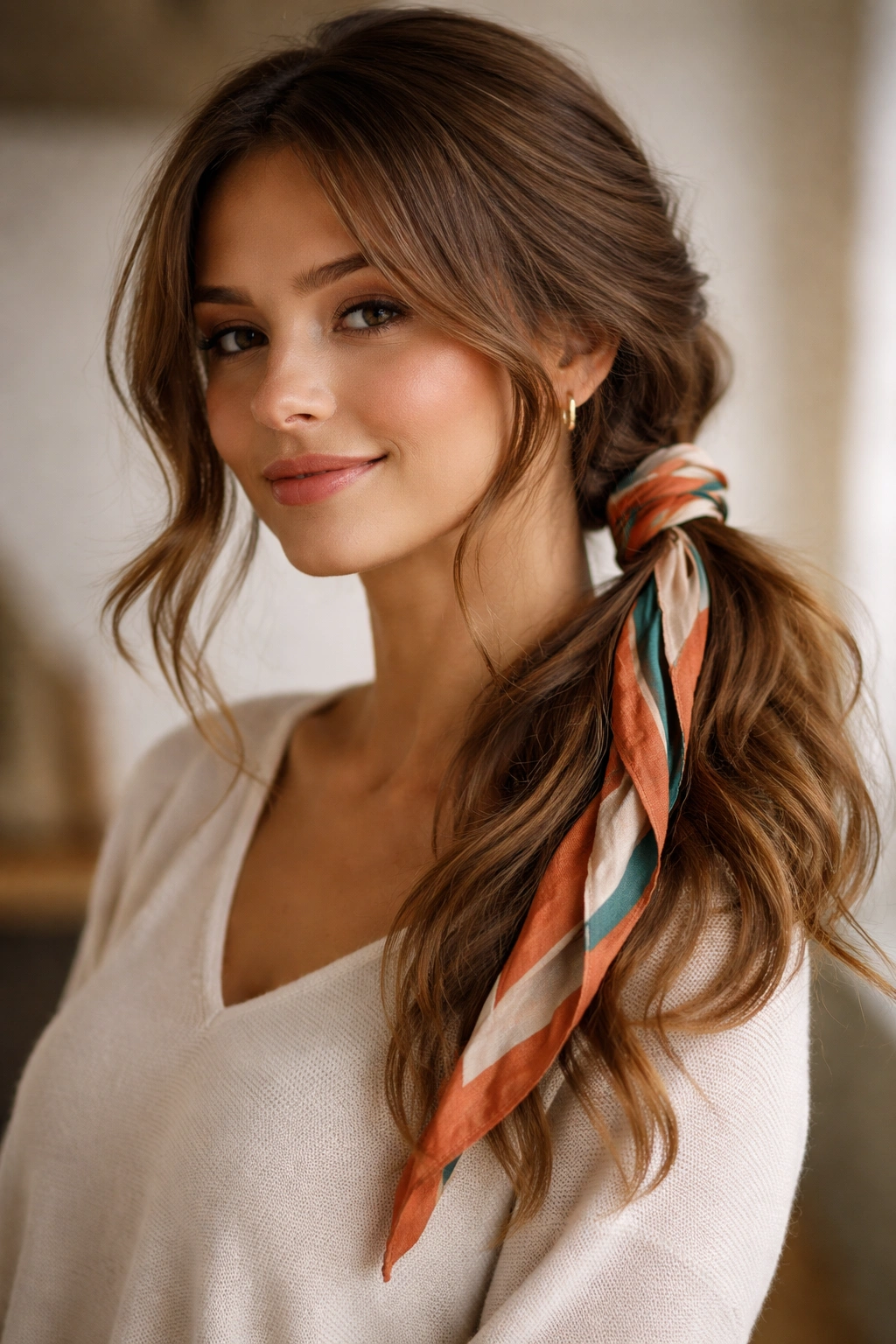
A scarf wrapped around a side ponytail brings in color, pattern, and movement all at once. The style stays casual if the scarf feels like part of your outfit rather than the whole point of it. A small silk or cotton scarf folded into a narrow band usually works best.
Tie the ponytail first, then wrap the scarf around the base and knot it beneath the tail or slightly to the side. If the scarf is long, let the ends trail down with the hair. If it’s short, keep the tails tight so they don’t bunch up. A 1.5- to 2-inch fold is a good starting width for most scarves.
I like this on plain outfits because it does the talking for you without needing much else. Denim, knits, simple tees — all of them work. The hair can stay loose and simple while the scarf adds enough detail to make the style feel finished. No heavy styling required.
21. Second-Day-Hair Side Ponytail
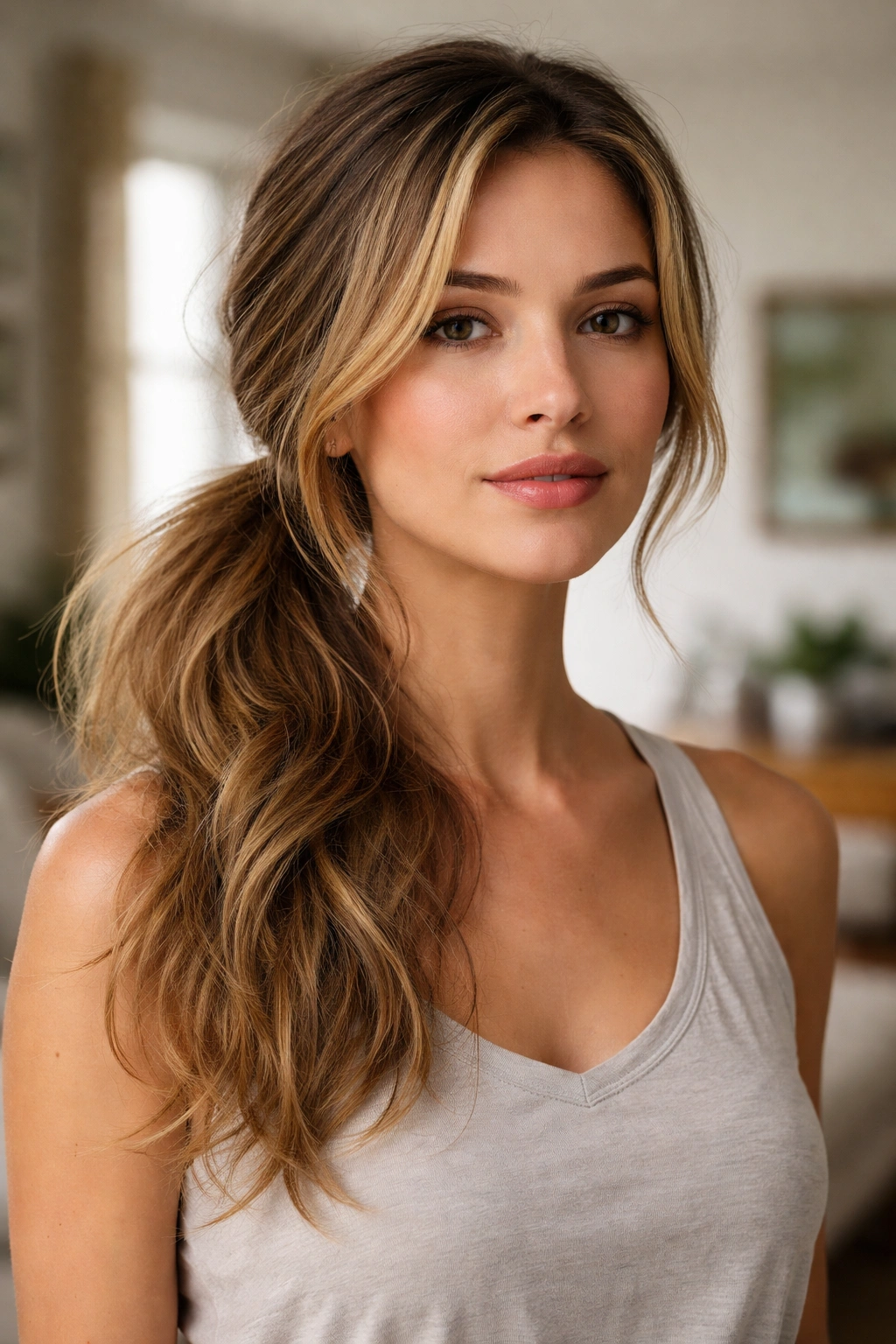
Second-day hair is often the sweet spot for loose side ponytails. It has enough texture to hold the shape, but not so much oil that the hair collapses at the roots. A little dry shampoo at the scalp and a finger comb through the lengths usually does the job.
Gather the hair loosely to one side and don’t smooth every strand back. That’s where people go wrong. The tiny bends and unevenness are what make the ponytail look easy. If the ends feel dry, rub a drop of hair oil between your palms and smooth it only through the last few inches.
This is one of those styles that improves as the day goes on. The ponytail settles, the texture softens, and the face-framing pieces stop trying so hard. I keep coming back to it because it solves the “my hair is not quite clean, but not dirty enough for a wash” problem without much effort.
22. Soft-Pinned Side Ponytail
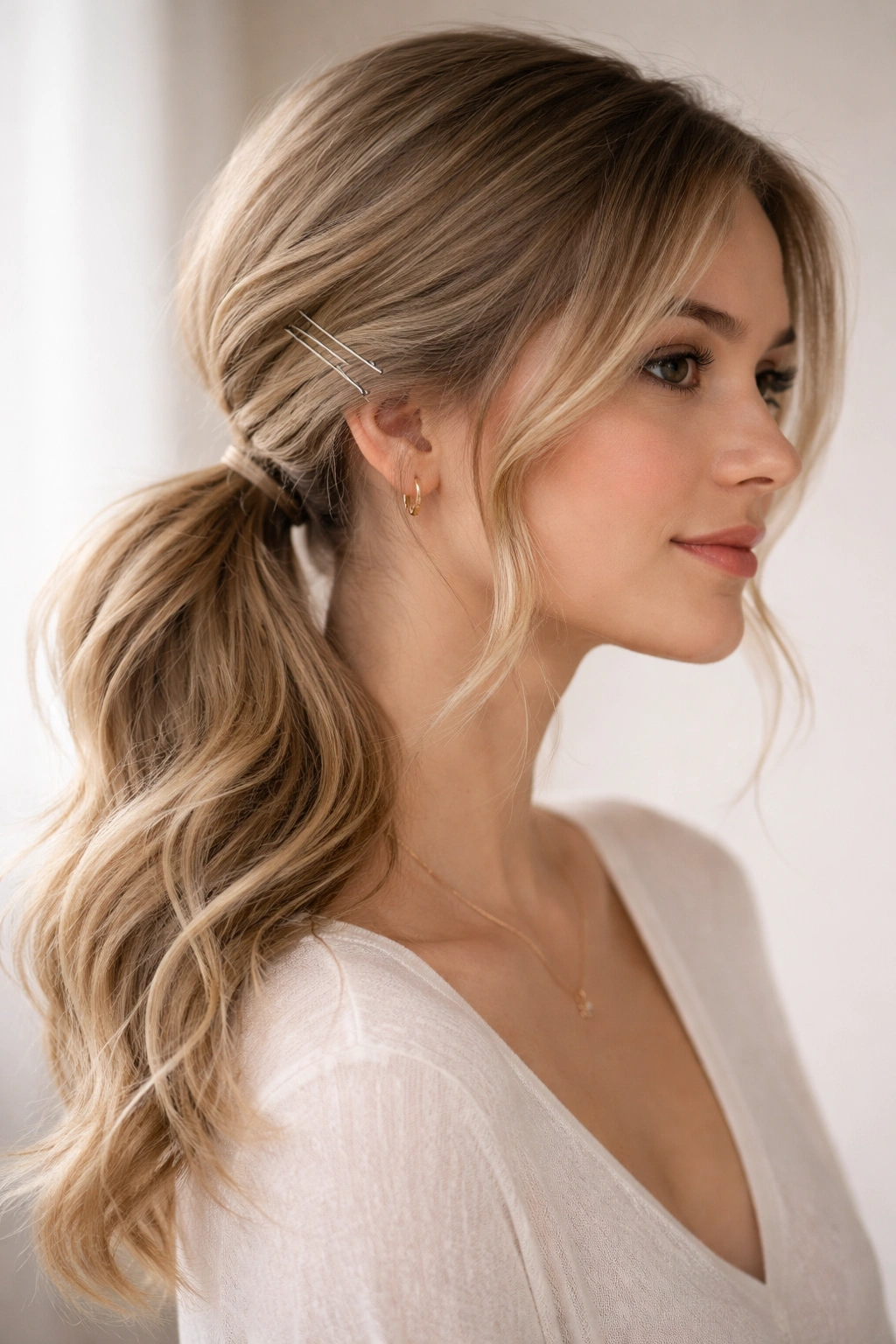
A few bobby pins can make a side ponytail look relaxed in a more controlled way. That sounds contradictory, but it isn’t. The pins catch the loose layers that would otherwise fall out of place, and the style still feels soft because the rest of the hair stays loose.
What to Pin and Where
- Pin short pieces behind the ear in a loose X shape.
- Tuck any awkward layers at the nape into the base of the ponytail.
- Use pins that match your hair color, or keep them hidden under the top layer.
- Leave the front pieces free so the style doesn’t look pinned back.
This version is useful when you want the ponytail to survive a full day without turning messy in a bad way. It works especially well on layered cuts. The pins are support, not decoration. If you can see them too easily, you’ve used too many.
23. Casual Polished Side Ponytail
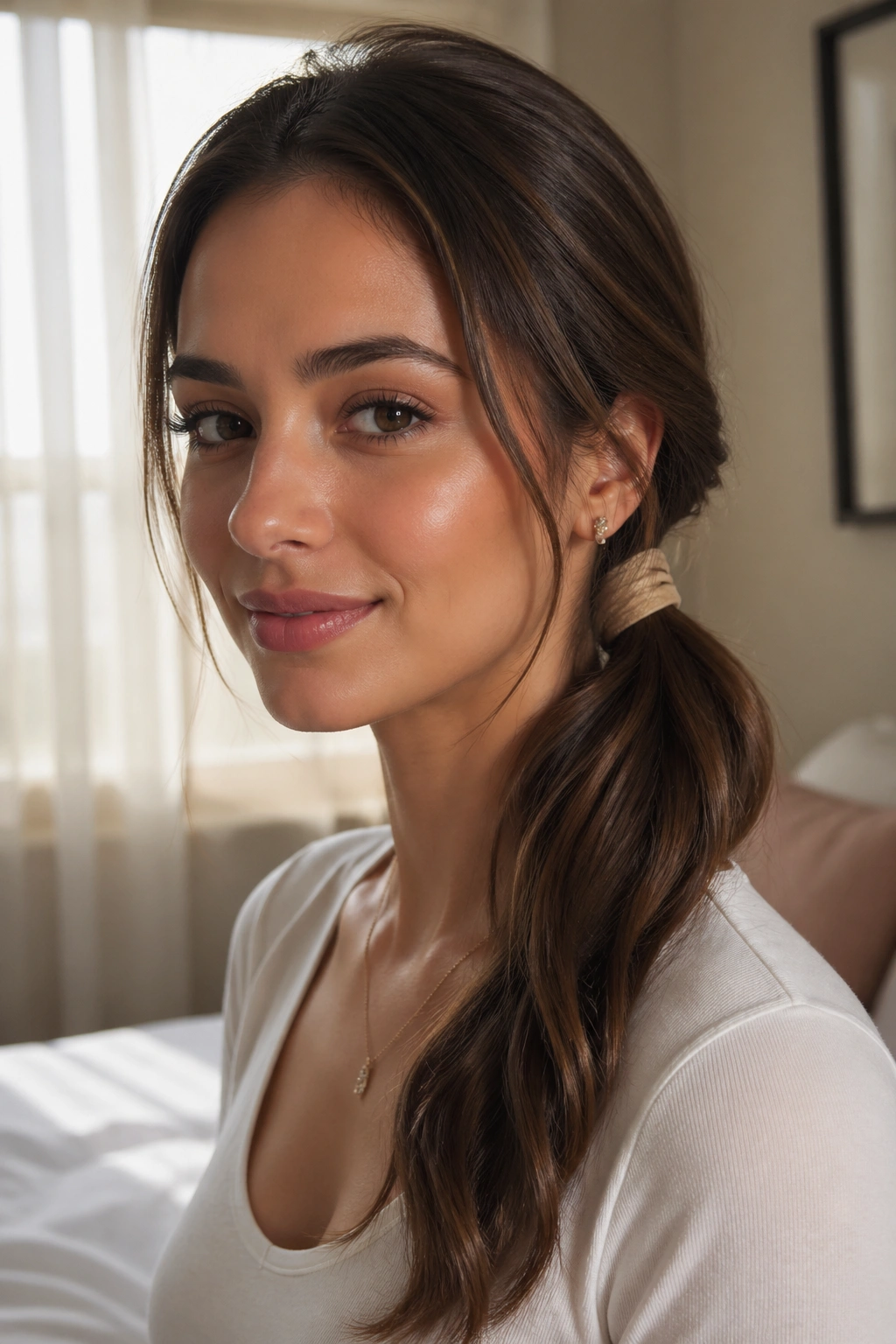
A casual polished side ponytail is the one I’d hand to someone who wants a safe, wearable style that still looks intentional. It has the softness of a loose ponytail, the neatness of a brushed crown, and enough movement in the tail to keep it from feeling stiff. That mix is harder to get right than it sounds, which is probably why it looks good on so many people.
Start with a clean part, smooth the top with your hands, and stop before the hair gets too sleek. Pull the ponytail low and slightly behind one ear, then soften the base with a small wrap of hair or a satin scrunchie. Leave the tail loose, maybe even a little bent at the end. That last bit matters. A side ponytail without movement can look accidental.
If you want one simple rule to remember, keep the crown calm and the tail alive. That’s the whole style in a sentence.
