



Two ponytails can do a lot more than people think.
On natural hair, the twist detail changes the whole mood. A clean part, a little tension at the base, and the right twist size can make the style look sharp instead of childish, which is why twist double ponytails for natural hair show up so often in everyday wear, weekend plans, and dressier looks. Coils and curls add their own lift, too; shrinkage can make the ponytails sit higher and fuller than they look in the mirror.
The trick is not making both sides identical down to the millimeter. It is choosing the right balance of neatness, volume, and comfort. Too tight and your scalp complains by lunchtime. Too loose and the style starts to sag at the crown, especially if the hair is dense, layered, or freshly washed.
A good double ponytail sits somewhere between playful and polished. The first version below is the easiest place to start.
1. Low Sleek Twist Double Ponytails
Low styles have a way of calming everything down. They sit at the nape, keep the profile clean, and make natural hair look intentional instead of busy. If you want a version that works for office days, errands, or a dressed-up dinner, this is the one I’d reach for first.
Why This One Stays Neat
The low placement keeps weight off the crown, which matters if your hair is thick or your edges are sensitive. It also lets the twist pattern show without fighting against gravity. A middle part, two equal sections, and a smooth base are really the whole story here.
A clean part changes everything. Use a rattail comb, not your fingers, and take the time to get the line straight before you touch the rest of the hair. That five extra minutes pays off.
- Works best on stretched or lightly blown-out hair
- Needs 2 snug, snag-free elastics
- Looks best with medium-size twists, not tiny ones
- Sits well under scarves, hats, and coat collars
Tip: keep the hairline soft. A little gel is enough. Too much edge control can turn white if you sweat.
2. High Crown Twist Double Ponytails
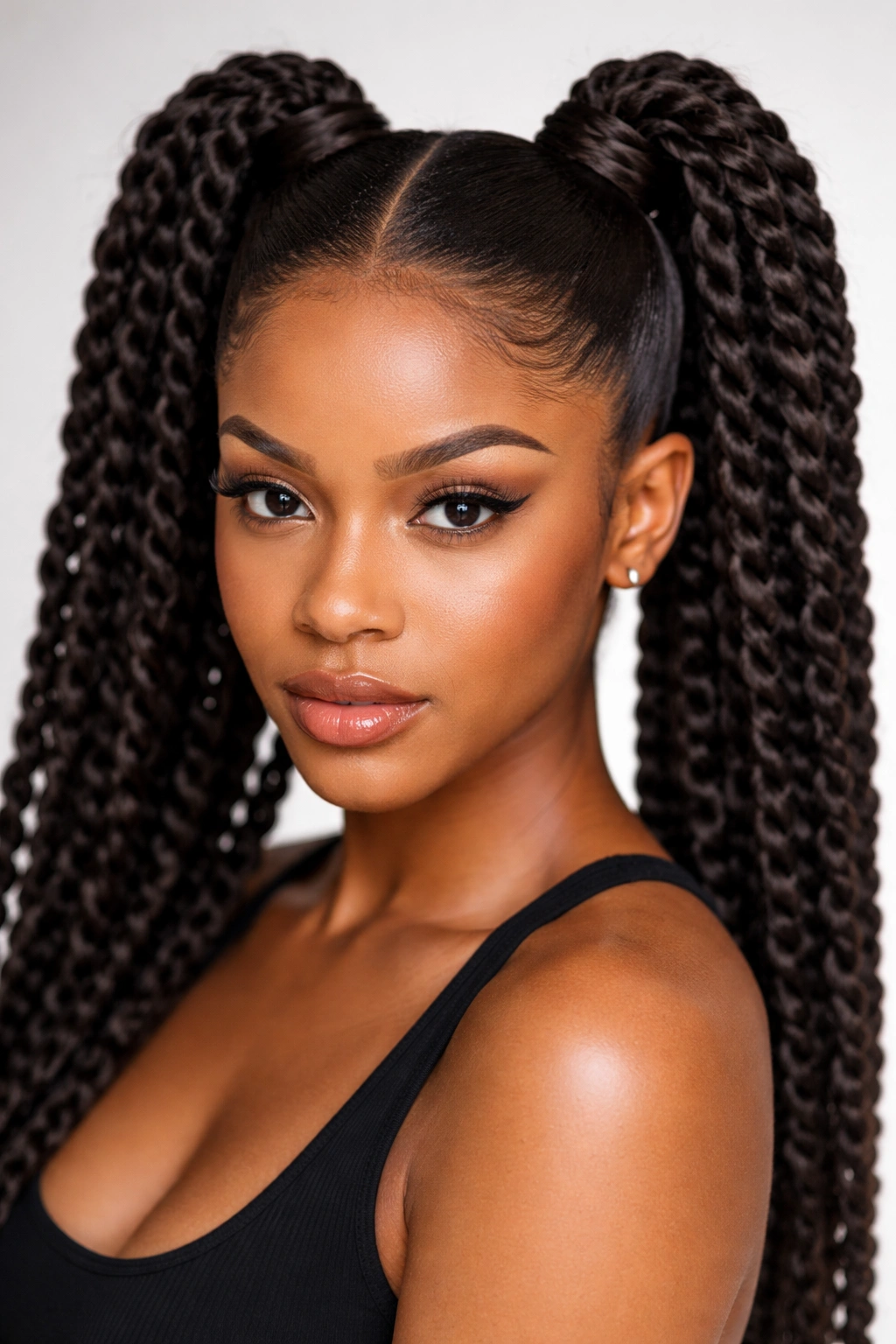
Some styles want height. This is one of them.
High crown double ponytails pull the eye upward and make the face look a little longer, which is useful if your features feel soft and you want more lift. On natural hair, the top placement also lets shrinkage work in your favor. The hair does not have to be bone-straight to look polished; it just needs enough stretch to hold the shape.
The ponytails can be sleek at the roots and fuller through the lengths, or they can be soft all the way through. I like this version when the twists are medium to chunky, because tiny twists can disappear under a high base. A little height gives the whole style energy.
No flat crown.
That is the main warning here. If you pull the hair too tight to force a raised shape, the style stops feeling fun and starts feeling like a headache. Leave the base smooth, yes, but let the ponytails sit where your scalp naturally allows.
3. Chunky Rope-Twist Double Ponytails
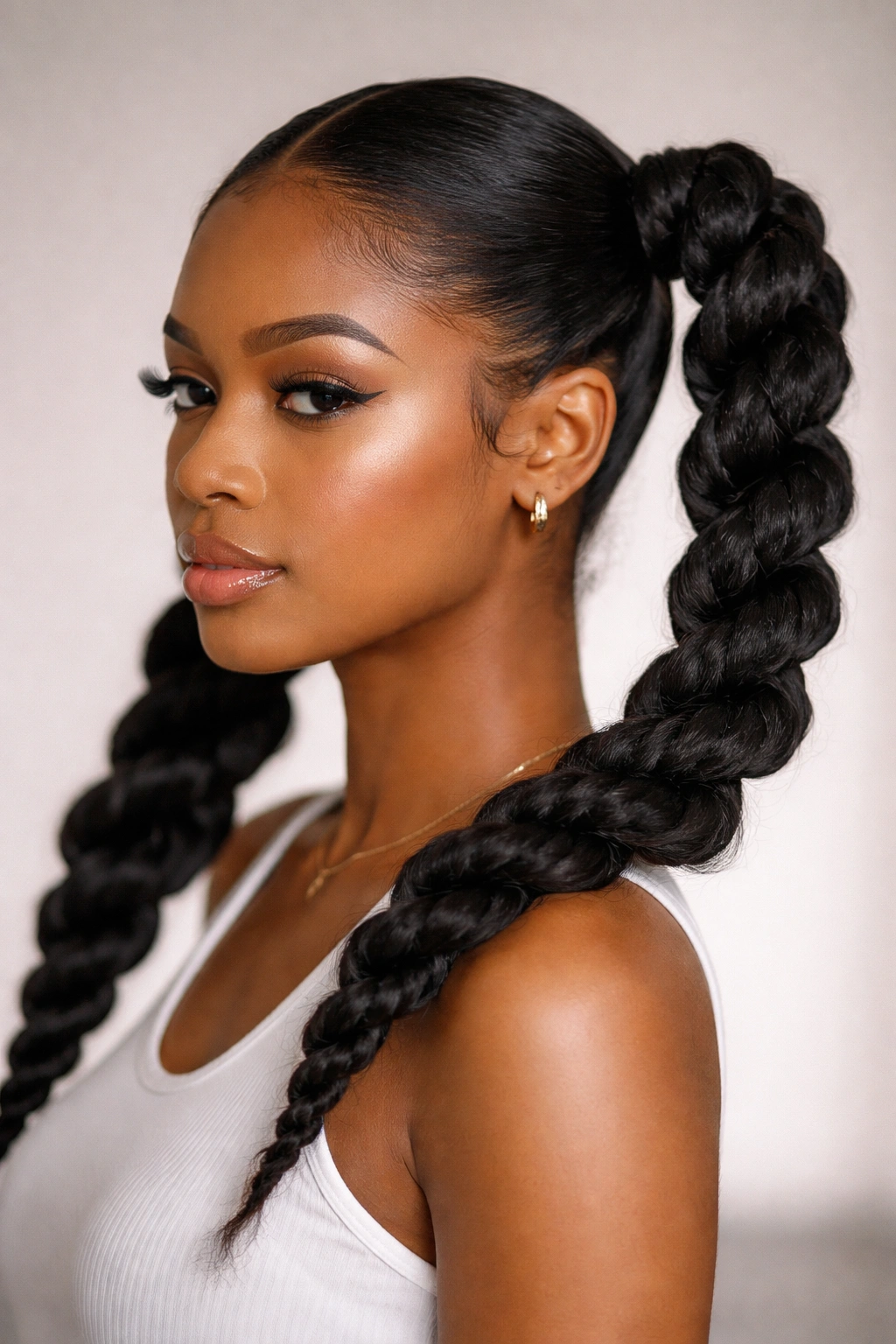
Why do chunky twists look so strong? Because they read from a distance. You see the shape first, then the texture, and that is exactly what makes this style work on dense natural hair.
Chunky rope twists are built with larger sections, so each ponytail has a fuller, thicker outline. The twist pattern shows clearly, and the whole style feels faster to install than a set of mini twists. That matters on busy mornings. Nobody wants to spend forever sectioning hair if the goal is a simple, wearable style.
What Makes the Twist Stand Out
The bigger the section, the more visible the spiral. That sounds obvious, but it changes the final look a lot. With chunky twists, you can keep the ponytails low and neat or push them high for more drama. Either way, they still look structured.
The catch is weight. Heavy added hair can drag the base down and make the scalp feel tired, especially if the sections are too large. Keep the extensions light if you use them, and stop once the ponytails feel full, not heavy. That is the line.
How to Get the Best Shape
- Use sections about 1 to 1½ inches wide
- Keep the roots smooth before twisting
- Twist in the same direction on both sides
- Secure the ends with small elastics if the hair wants to unravel
4. Half-Up, Half-Down Twist Double Ponytails
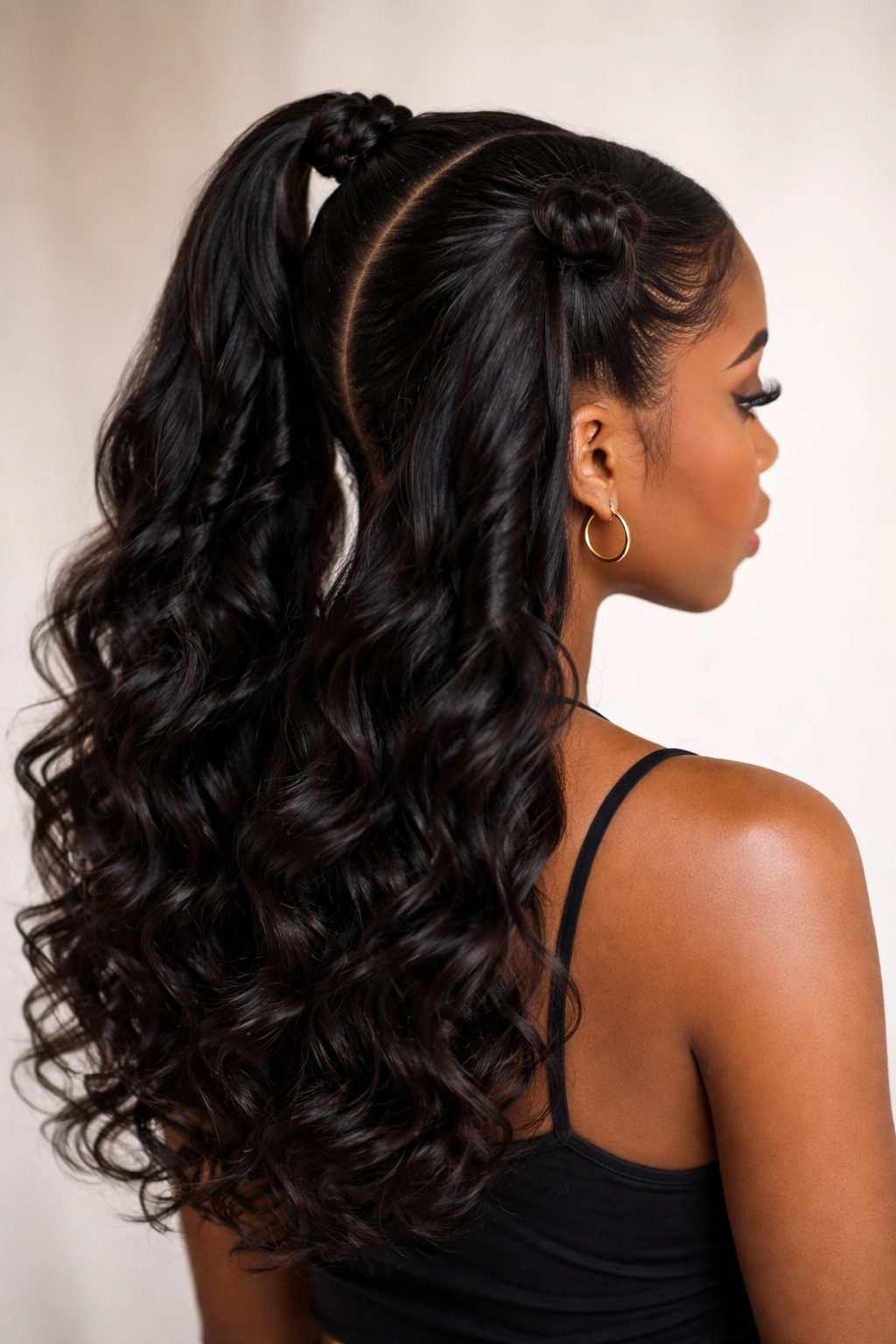
Imagine wanting two ponytails without giving up your length. That is the charm here.
Half-up, half-down twist double ponytails let the top section do the talking while the rest of the hair stays loose. On natural hair, that loose bottom section can be coils, stretched curls, braid-outs, or rod-set ends. The contrast is what makes it interesting. You get the control of an updo and the softness of leaving hair down.
This version is especially good for layered cuts, because the top ponytails can stay neat while the lower lengths frame the shoulders. It also works when your hair is at an awkward growth stage and you want to hide uneven ends. Been there. This style saves a lot of second-guessing.
The one thing to watch is balance. If the top ponytails are too tiny, the style looks like an afterthought. If they are too large, they swallow the loose hair and the whole point disappears. Keep the top sections bold enough to stand on their own.
5. Side-Part Twist Double Ponytails
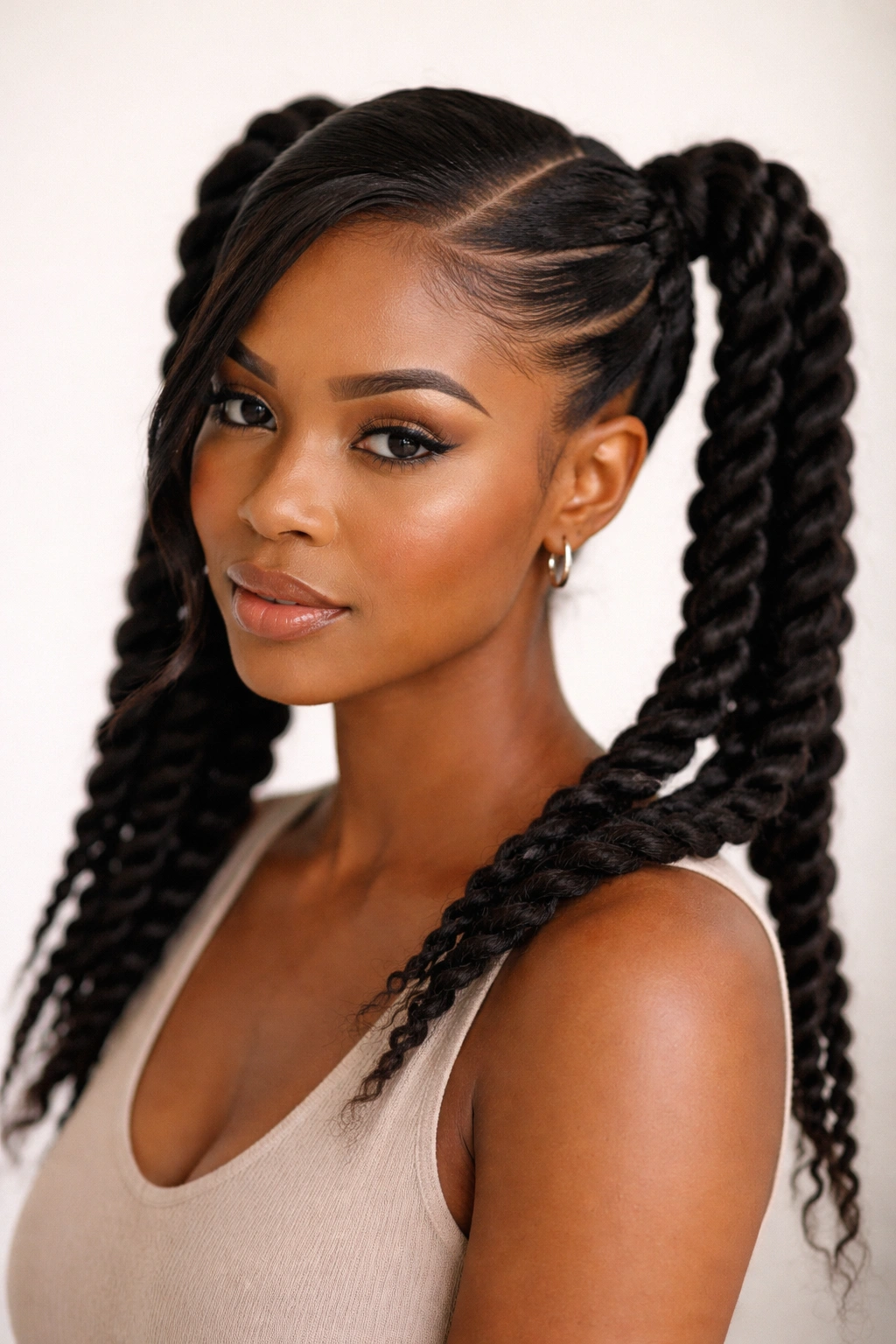
A center part is tidy. A side part is softer.
Side-part twist double ponytails give natural hair a gentler line across the face, which can be flattering if you want less symmetry and more movement. The part itself becomes part of the style instead of just a divider. That sounds small, but it changes the whole shape around the forehead and temples.
I like this version on hair that has a bit of volume at the roots. The side part creates a sweep that looks deliberate, and the ponytails feel less rigid than a straight-down-the-middle look. It also gives you a little freedom if one side of your hairline is fuller than the other. The offset keeps your eye from fixing on the unevenness.
The style does need a clean part, though. A messy side line can make the whole thing look accidental. Use the comb, define the direction, and then leave it alone. Overworking the part is how people end up with frizz before they even start the twists.
6. Center-Part Symmetrical Twist Double Ponytails
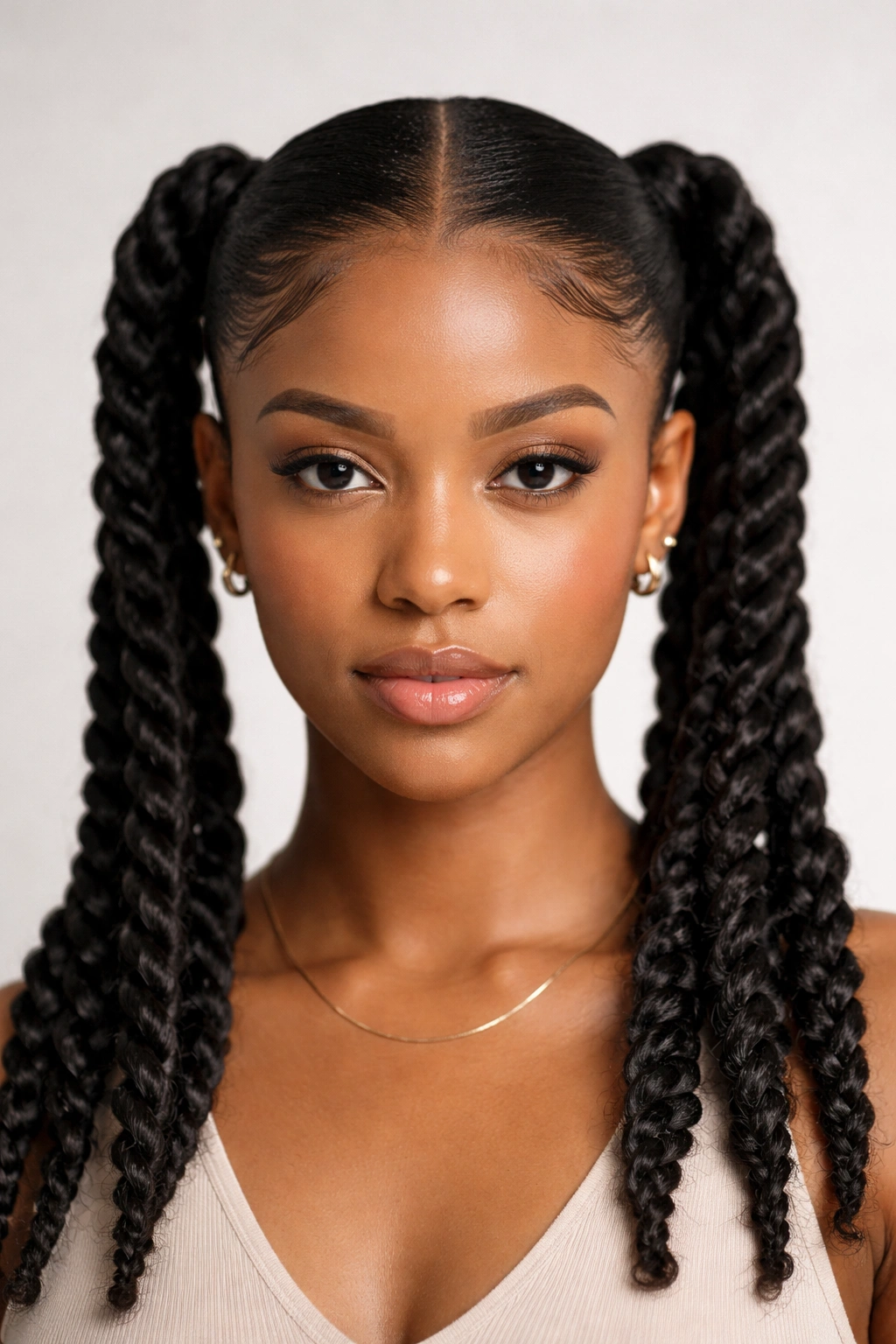
What if you want the neatest version in the room? Go symmetrical.
A center-part setup makes both ponytails feel balanced and deliberate, which is why it works so well for polished looks. On natural hair, a clean middle part also gives the scalp design room to show. If your parting is crisp, the style looks sharper even before you twist a single strand.
Why Symmetry Matters
The eye reads even spacing as calm. That is the whole trick. When the sections on both sides match in size and placement, the ponytails sit like they belong there, not like they were rushed between meetings. That matters more on thick curls, because dense hair can make small differences look bigger than they really are.
Use a little shine gel along the part if your scalp tends to puff up. Not a thick layer. Just enough to press the flyaways down. A heavy product line can flake, and that ruins the clean effect faster than anything else.
One crooked part can throw off the whole look. If you notice the left side is wider, fix it before you twist. Do not hope it disappears later. It won’t.
7. Double Ponytails With Twisted Front Corners
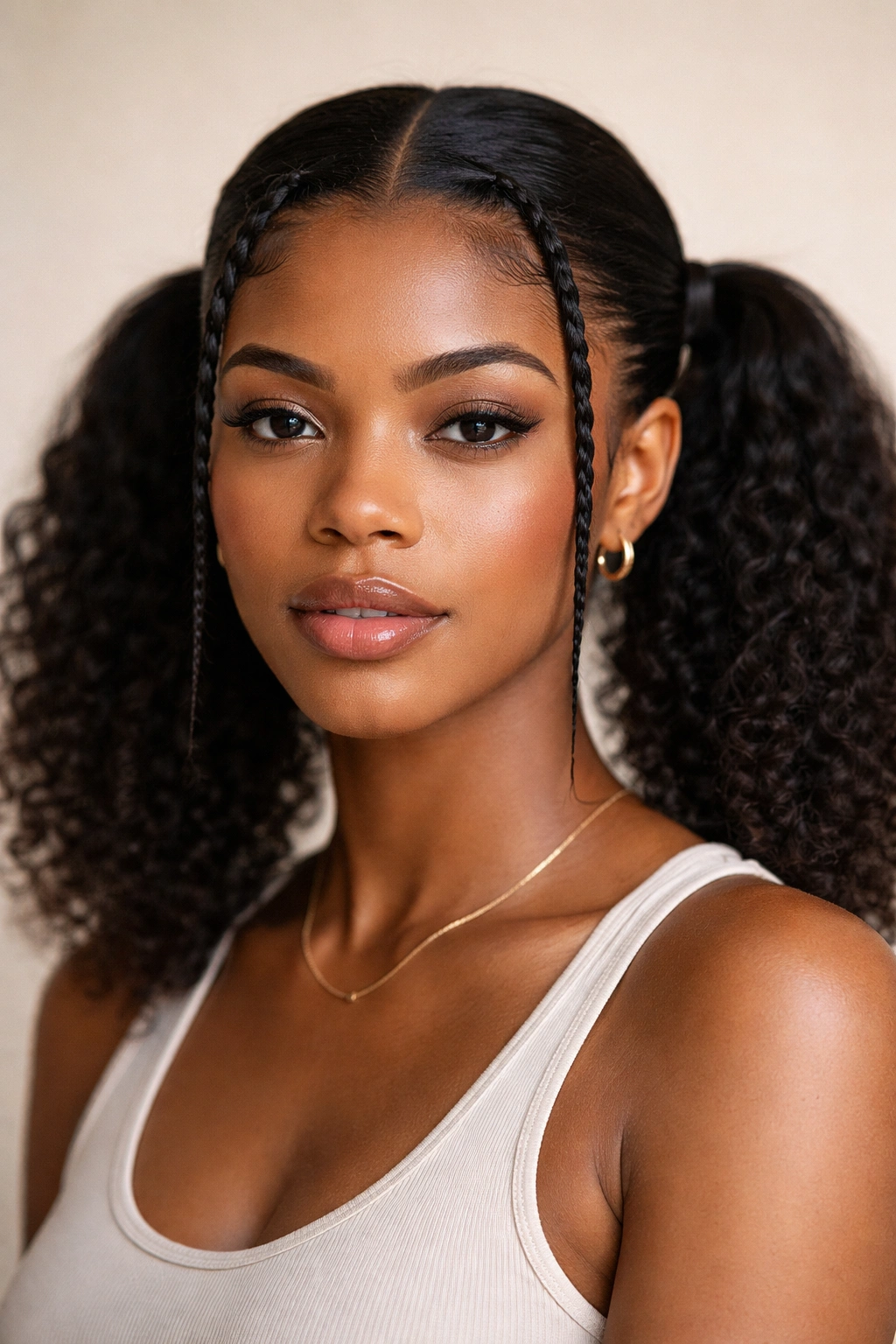
Those tiny twists at the hairline do more than decorate.
Twisted front corners frame the face and keep the front sections from looking flat. On natural hair, they also help hold the style in place because the front hair gets anchored before the ponytails even start. That makes the whole set feel more secure, especially if your edges are soft or your hairline is fine.
The style usually starts with two or four small twists near the front, then those twists feed into the main ponytails. That gives you a little pattern around the face without needing a full braided design. I like it because it adds detail without crowding the head.
Quick Details That Help
- Use small sections at the temples
- Twist toward the back so the corners sweep cleanly
- Keep the ponytail bases low enough to show the front design
- Tuck the ends in if the front pieces are shorter than the rest
This one looks especially good on kids and on adults who want something playful but not loud.
8. Mini Twist Double Ponytails
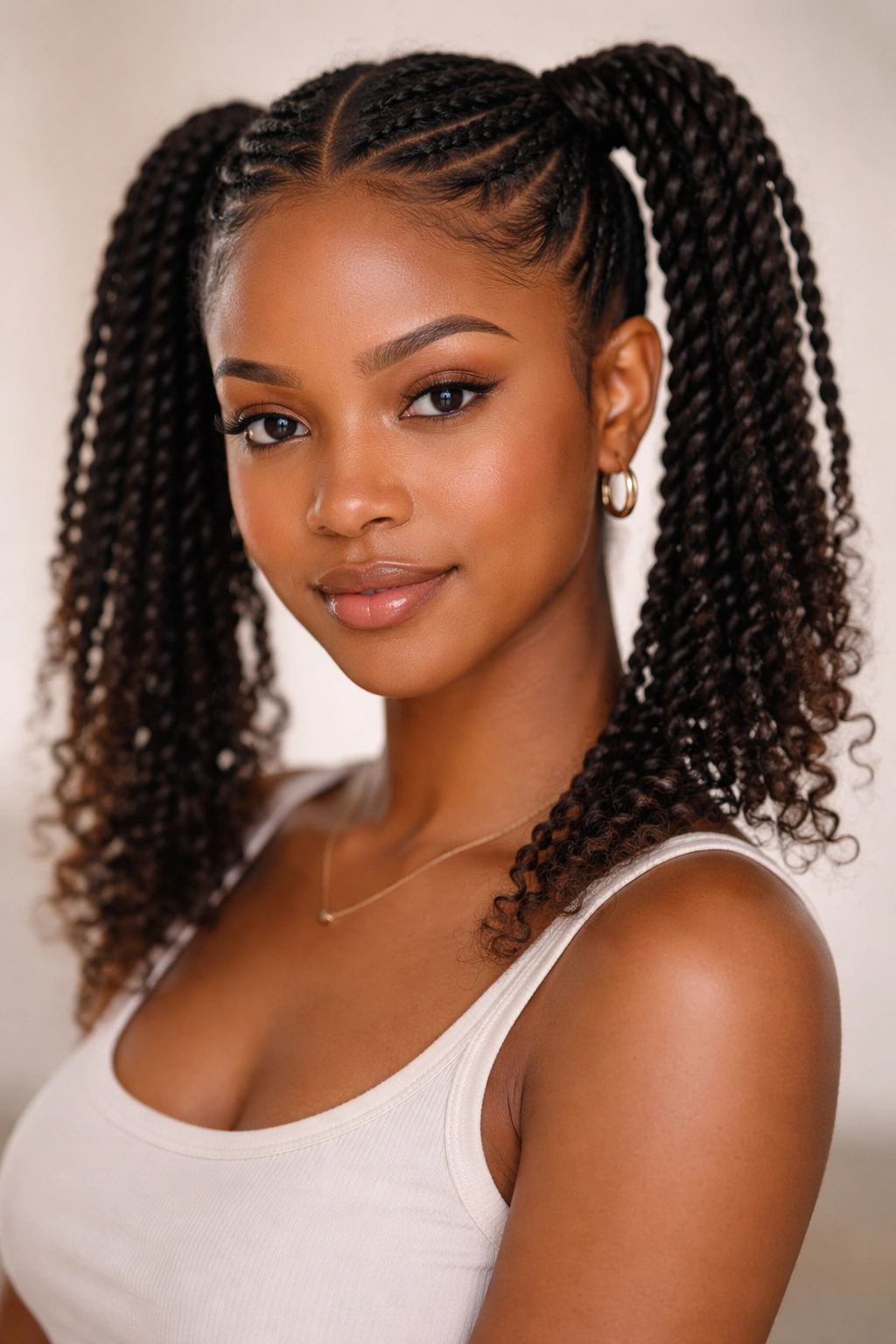
Mini twists have a shy kind of charm.
They do not shout. They whisper. And on natural hair, that can be a better move than going big. Mini twist double ponytails give you a lot of texture with less bulk at the base, which is nice if your scalp gets sore easily or if you prefer a lighter style that can stay in for a while.
The biggest reason people like this version is the movement. Tiny twists sway when you walk, and the two ponytails end up looking airy instead of stiff. Because each twist is small, the style also works well with dense hair that tends to puff outward. The detail stays visible even when the roots get a little fluffy.
They do take patience, though. That is the tradeoff. If you hate sitting for sectioning, this is not the first style I’d pick. But if you like neat parts and a style that still looks good a week later, mini twists are worth the time.
9. Jumbo Twist Double Ponytails
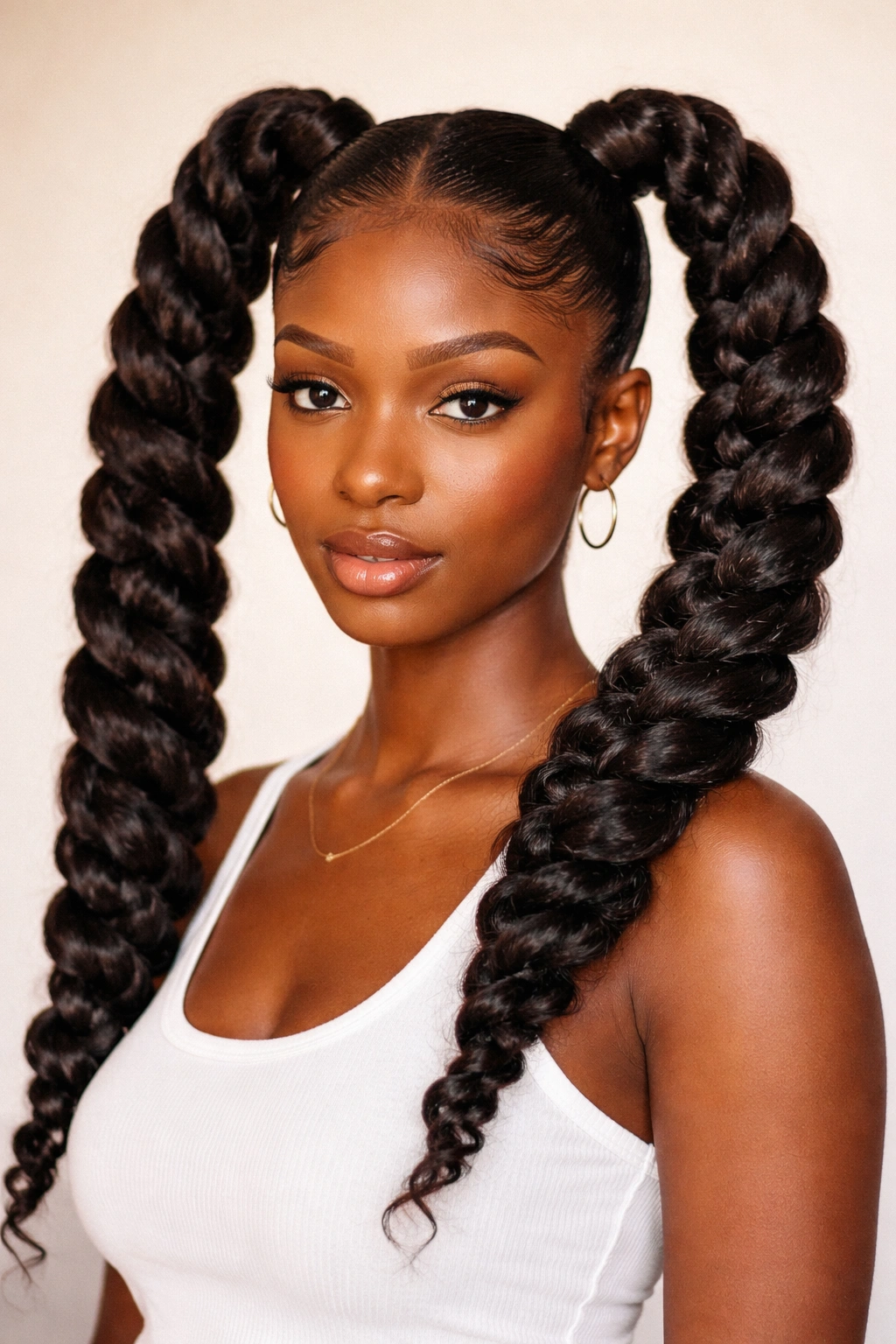
If you want the style to read from across the room, make the twists bigger.
Jumbo twist double ponytails use fewer sections and thicker twists, so the result feels bold without needing a lot of decoration. The shape is the point. On natural hair, that can be a relief. You get a strong silhouette, and the install is faster than doing dozens of tiny pieces.
The best part is how forgiving jumbo twists can be. Small parting mistakes are less obvious, and the style still looks polished even if the sections are not perfectly identical. That is useful when you are working with thick, coily hair that refuses to behave like a ruler.
Do not overload the twists with heavy added hair. Big does not have to mean bulky. If the ponytails drag on the scalp, the style stops feeling strong and starts feeling tired. Keep the shape clean and the ends manageable.
A little frizz is fine here. It gives the twists texture and keeps them from looking stiff.
10. Bubble-Ended Twist Double Ponytails
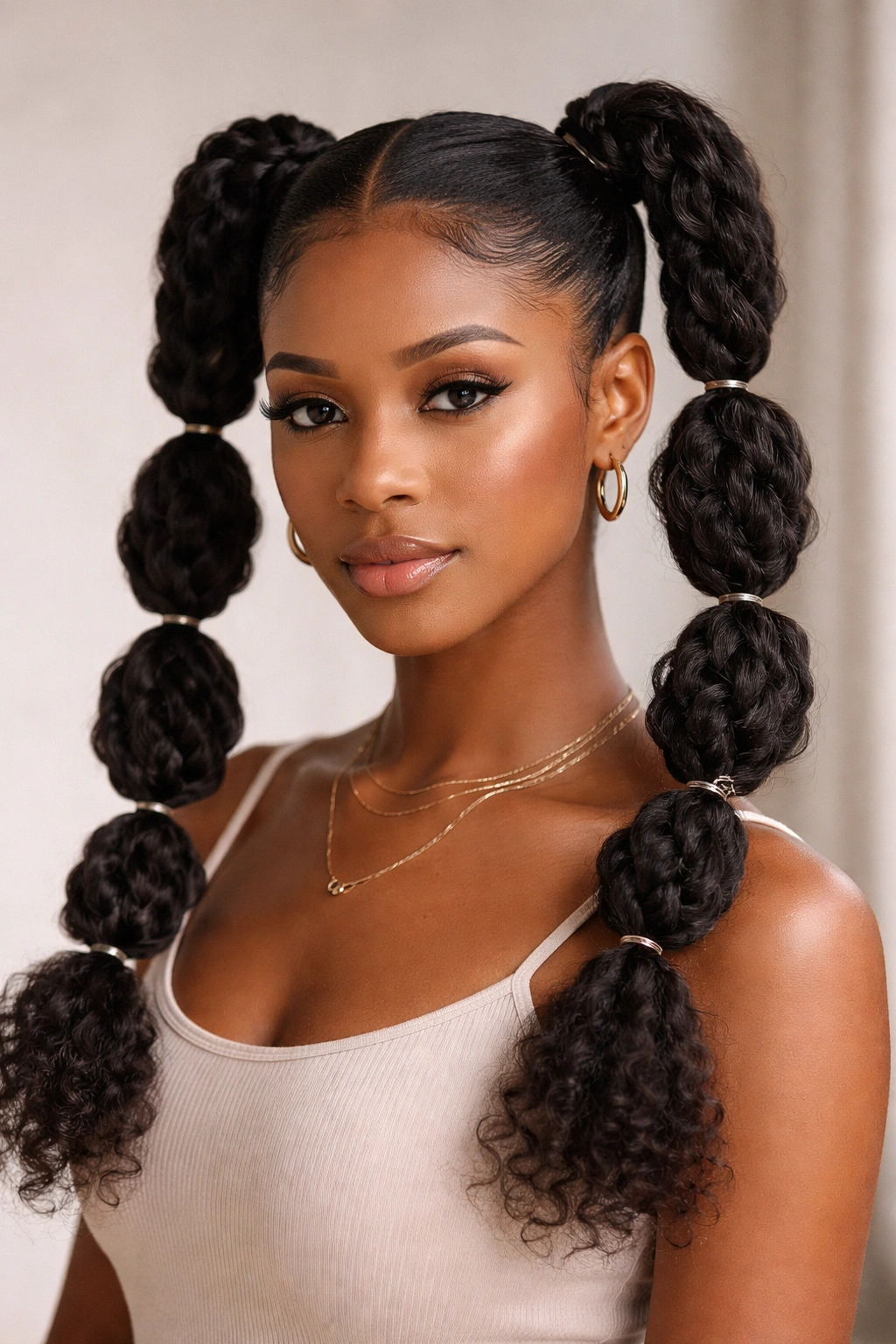
A bubble finish can rescue a style that feels too plain.
With bubble-ended twist double ponytails, the lengths are sectioned off with small elastics every few inches, then gently puffed between each band. On natural hair, that creates a rounded shape that adds movement without asking the curls to do too much. It is a good way to make a simple double ponytail feel more styled.
Why It Works
The bubbles break up the line of the ponytail, so the eye keeps moving. That helps if your hair is long and you do not want everything hanging straight. It also works well when the twists are medium length and need a little visual lift at the ends.
This version is fun, but it still needs discipline. The bands should be snug enough to hold shape and loose enough not to pinch. I like clear elastics for this because they disappear into the hair, but black bands are fine if your hair is dark and you want fewer pieces to manage.
One small thing: do not over-fluff the bubbles. A little puff is enough. If you stretch them too much, the style loses the crisp banded look that makes it interesting in the first place.
11. Crisscross Part Twist Double Ponytails
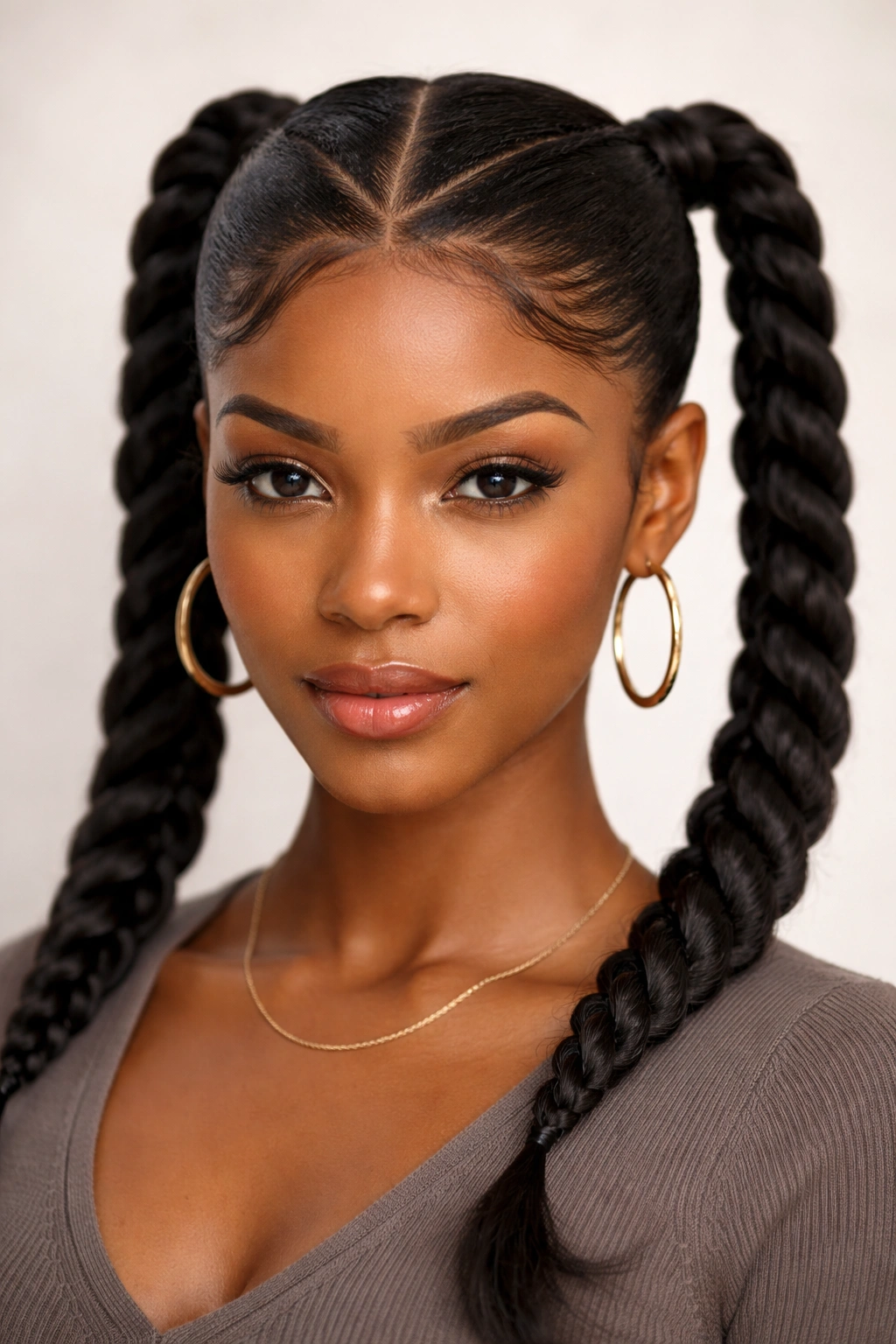
A center part is tidy. A crisscross part is the version with a little attitude.
The scalp design is what makes crisscross twist double ponytails stand out. Instead of straight lines, the sections angle toward each other before they split into the two ponytails. On natural hair, that kind of parting gives the style extra depth, especially when the hair is dark and the part lines show clearly.
I like this on medium to thick hair because the pattern stays visible without needing accessories. The part does the work. If you enjoy styles that look more intricate than they are, this one is a nice trick. It feels detailed, but the actual ponytails can stay pretty simple.
The main thing to watch is spacing. If the crossed sections are uneven, the design gets messy fast. A clean crisscross needs patience and a comb with a sharp tail. Start with the parting first, then build the ponytails after the map is set.
12. Feed-In Twist Double Ponytails
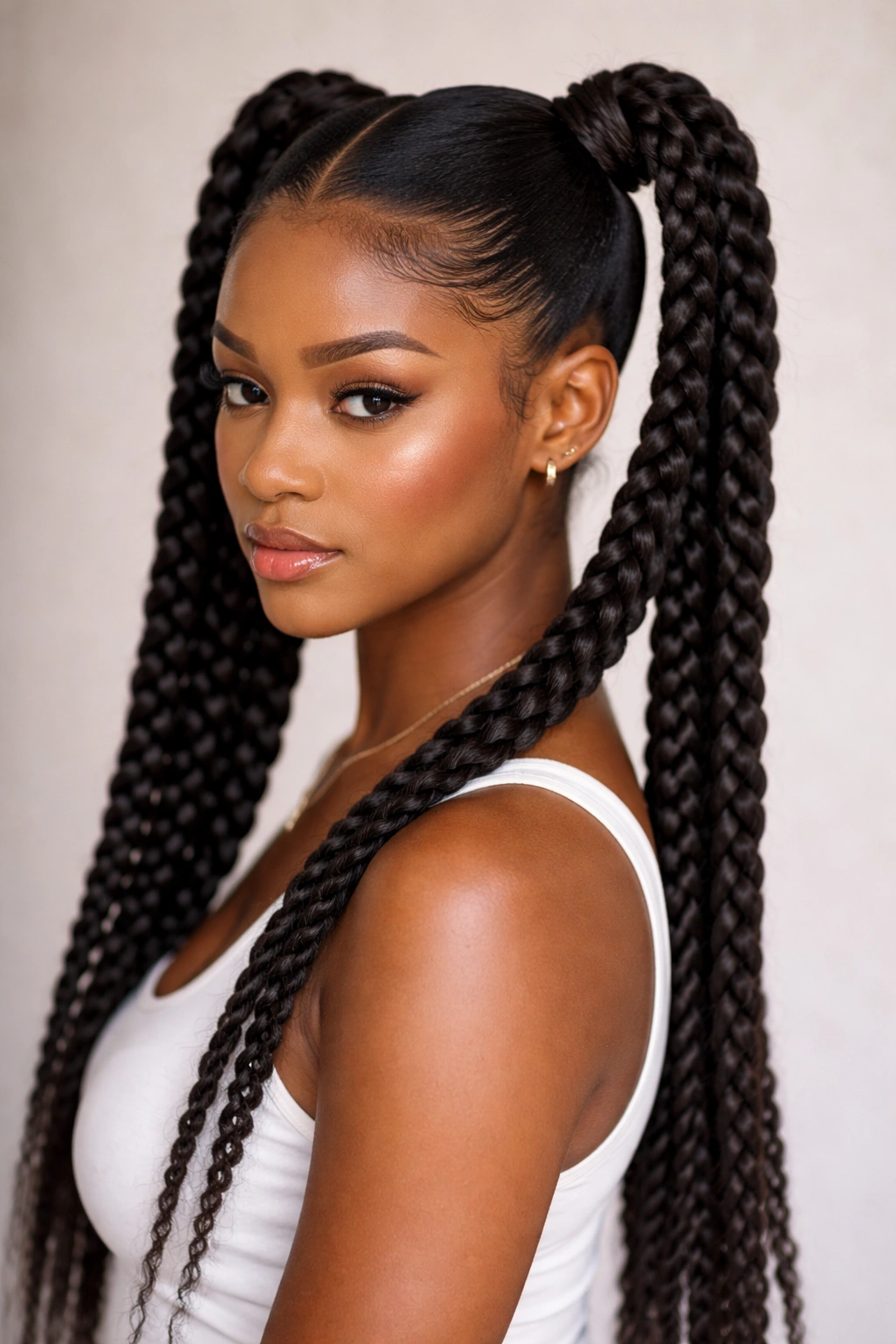
Feed-in twists are all about a smooth start.
Instead of dropping a big bundle of added hair at the root, you add it gradually as you twist downward. That gives feed-in twist double ponytails a cleaner base and a less sudden transition from natural hair to extension hair. On natural hair, the result looks neat and feels lighter at the scalp.
How the Length Is Built
The small start matters. If you add too much hair at once, the base can look lumpy, and the twist may pull unevenly. A gradual feed gives the strand time to settle into the rest of the twist. It also helps the ponytails move more naturally, which is the whole point.
This style is a smart option when you want extra length without a heavy install. It works for shoulder-length hair that needs a little help, and it also works for longer hair that just wants more drama. The finish can be sleek or soft depending on how tight you pull the roots.
If you are doing this on your own head, keep your extra hair pre-separated. You do not want to be fighting a whole bundle while your fingers are already halfway through the twist. That gets messy fast.
13. Wrapped-Base Twist Double Ponytails
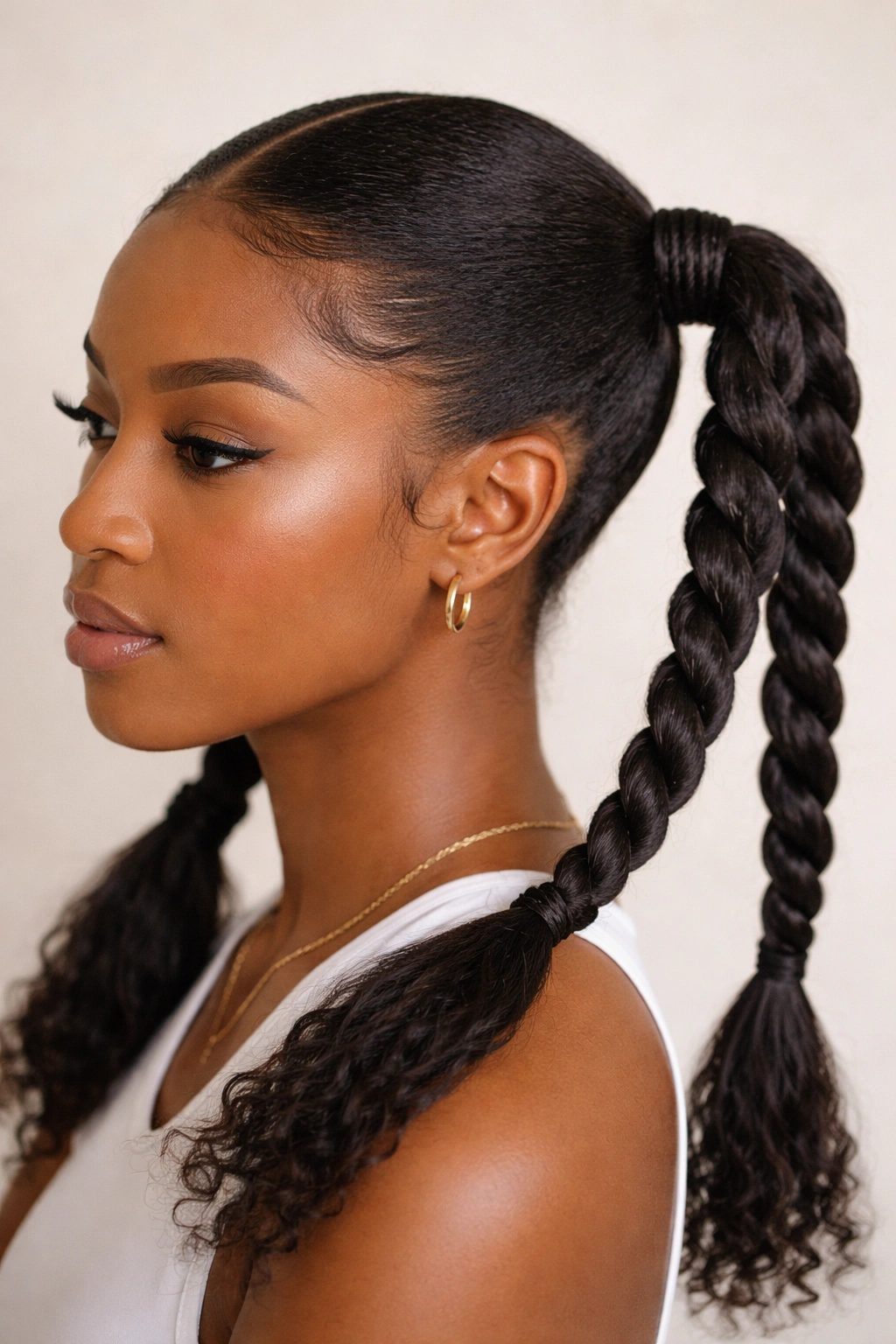
There is something satisfying about hiding the elastic.
Wrapped-base twist double ponytails use a thin strand of hair, or matching extension hair, to cover the band at the root. The finished look feels cleaner because the ponytail appears to grow right out of the part instead of stopping at a visible tie. On natural hair, that little detail can make the style look more finished without changing the actual shape.
The wrap works best when the base is already smooth. If there are bumps under the elastic, the cover-up only highlights them. So the prep matters here more than people think. Brush the hair flat, secure the ponytail, and then wrap one small strand around the base until the band disappears.
A bobby pin can help, but tuck it under the ponytail so it does not poke your scalp. That tiny sting is never worth it.
This version is a favorite when you want the style to read neat from every angle. Front, side, back. It holds up well in photos and in real life, which is not always the same thing.
14. Beaded Twist Double Ponytails
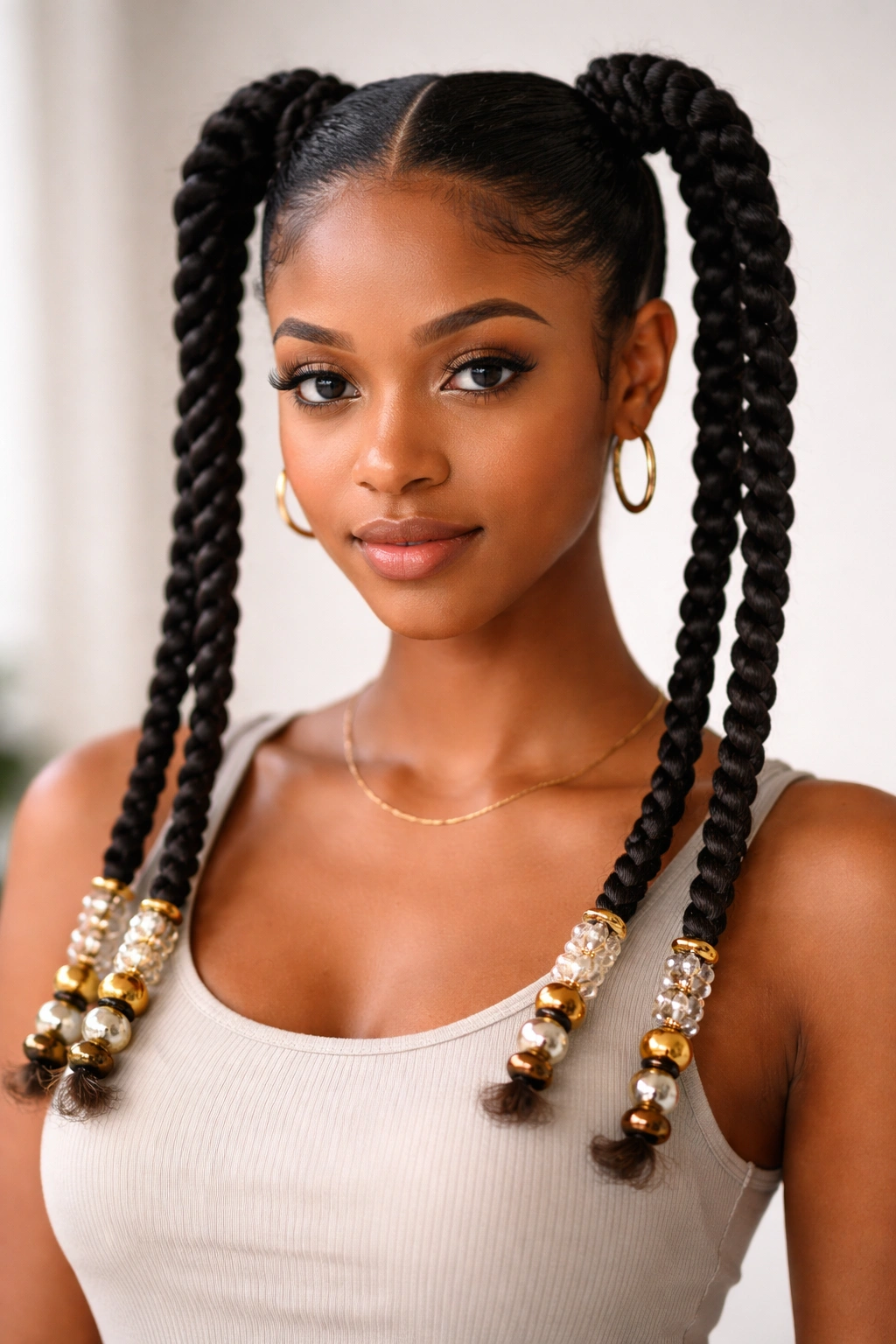
Beads can turn a plain set into something playful, but they need restraint.
Twist double ponytails on natural hair already have movement. Add beads to the ends, and each step gets a little sound, a little swing, a little visual rhythm. The look can lean youthful, ceremonial, or plain fun depending on the bead size and color. Wooden beads feel earthy. Clear beads feel sharper. Metal cuffs change the mood again.
What to Watch For
- Use lighter beads on fine hair
- Place heavier beads lower on the twist, not near the root
- Secure the ends well so the beads do not slide
- Keep the count moderate; two or three per side is often enough
The biggest mistake is overload. Too many beads make the style noisy in the wrong way, and they can tug on the ends if they are heavy. If your hair is fragile, skip the thick glass pieces and go with small plastic or wooden ones instead.
I like this look more on longer twists than on short ones. The movement has room to show up.
15. Curled-Ends Twist Double Ponytails
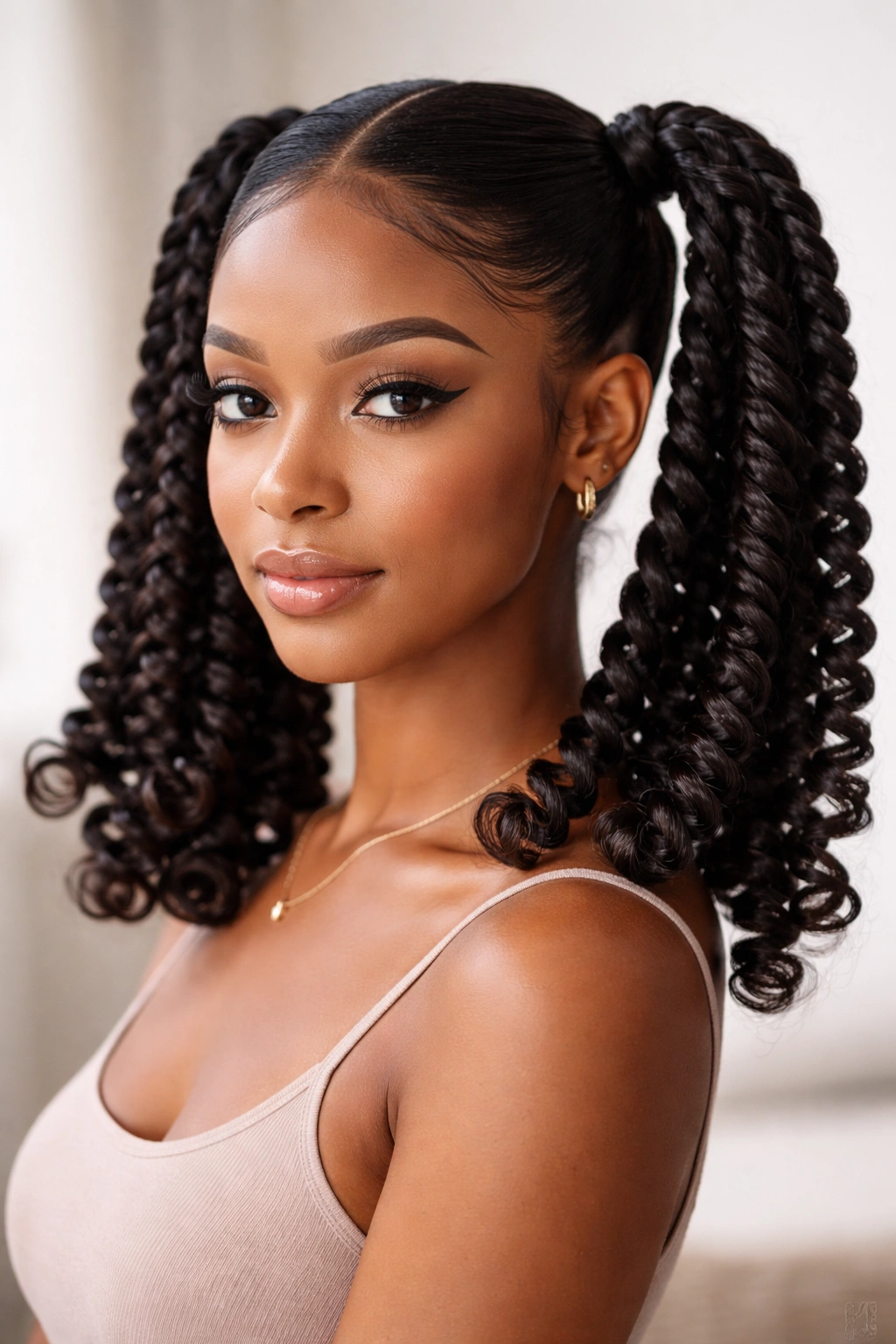
Straight ends are fine. Curled ends are softer.
When you set the ends of twist double ponytails on perm rods, flexi-rods, or small braids that dry into curls, the style gets a rounder finish. On natural hair, that curl at the bottom makes the ponytails feel less sharp and a little more dressed up. It also helps if the twists themselves are sleek but you want the ends to look lively.
The trick is making sure the rods are small enough to give a defined curl, but not so tiny that the ends feel wiry. A medium rod is a good middle ground. If the hair is already stretched, the curls usually hold better because the ends are less bulky.
Humidity matters here. A loose set can puff out before the day is over, especially if the hair is thirsty. A little setting mousse or foam wrap lotion at the ends helps them hold their shape longer. Not a heap of product. Just enough to coat the last few inches.
This is one of those small details that looks more expensive than it is. I mean that in the best way.
16. Stretched Blowout Twist Double Ponytails
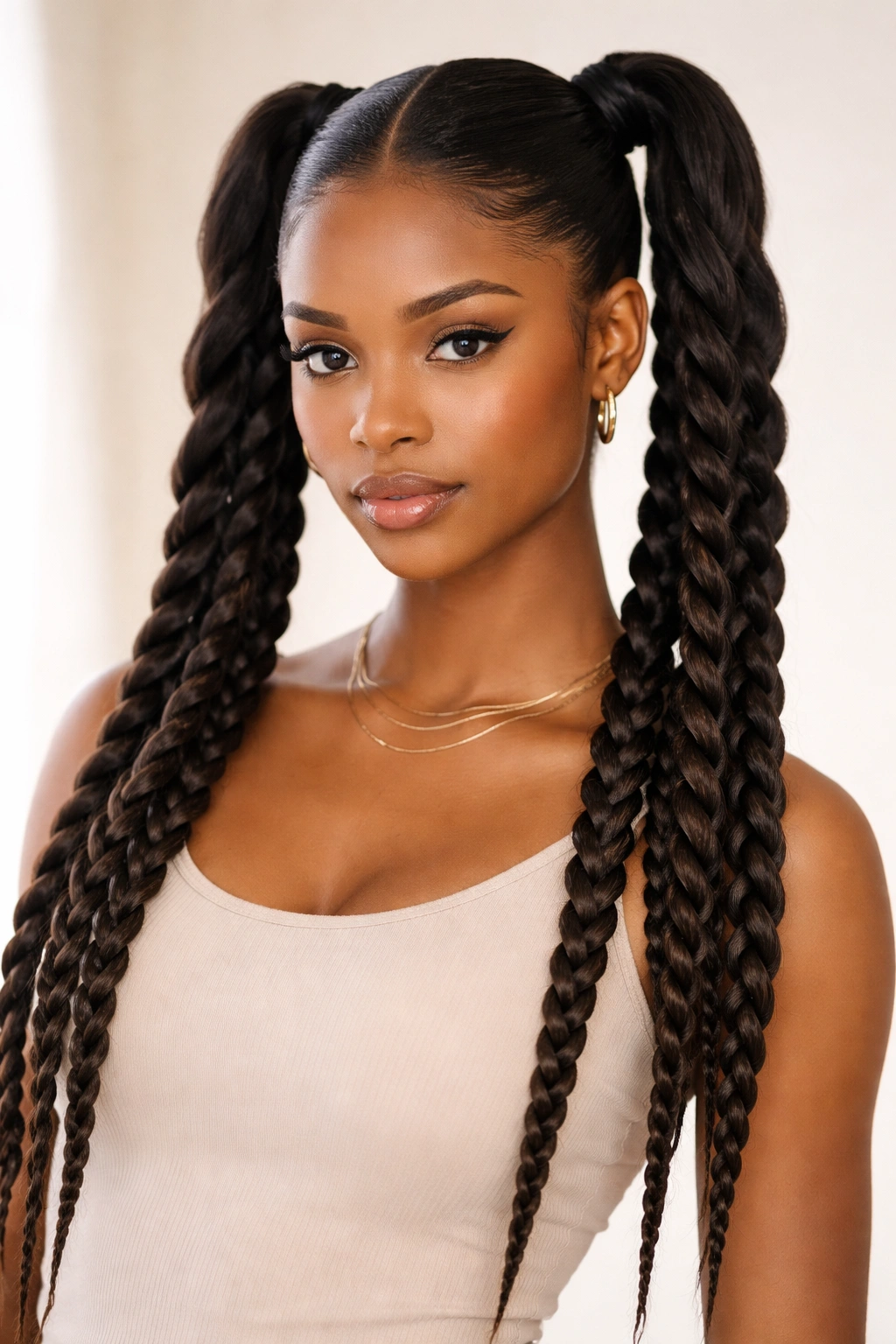
You do not need bone-straight hair for this style to look neat.
A stretched base gives twist double ponytails a longer line and makes the parts easier to control. That can mean a blow-dry on low heat, banding overnight, or stretching with twists before styling. On natural hair, the payoff is immediate: less shrinkage at the root, more visible length in the ponytails, and a cleaner overall shape.
The important part is keeping the stretch gentle. If you are using heat, low settings and a heat protectant matter. If you are avoiding heat, the banding or twist-stretch method works, but it takes planning. Either way, the hair should feel elongated, not flattened into a stiff shell.
This version is especially good if your curls are dense and you want the ponytails to sit lower or hang longer. It also helps the twist pattern stay defined because the strands are easier to separate. If your hair is freshly washed and puffy, it can still work, but the result will look fuller and shorter.
Sometimes that is fine. Sometimes that is the look.
17. Natural Puff-Twist Double Ponytails
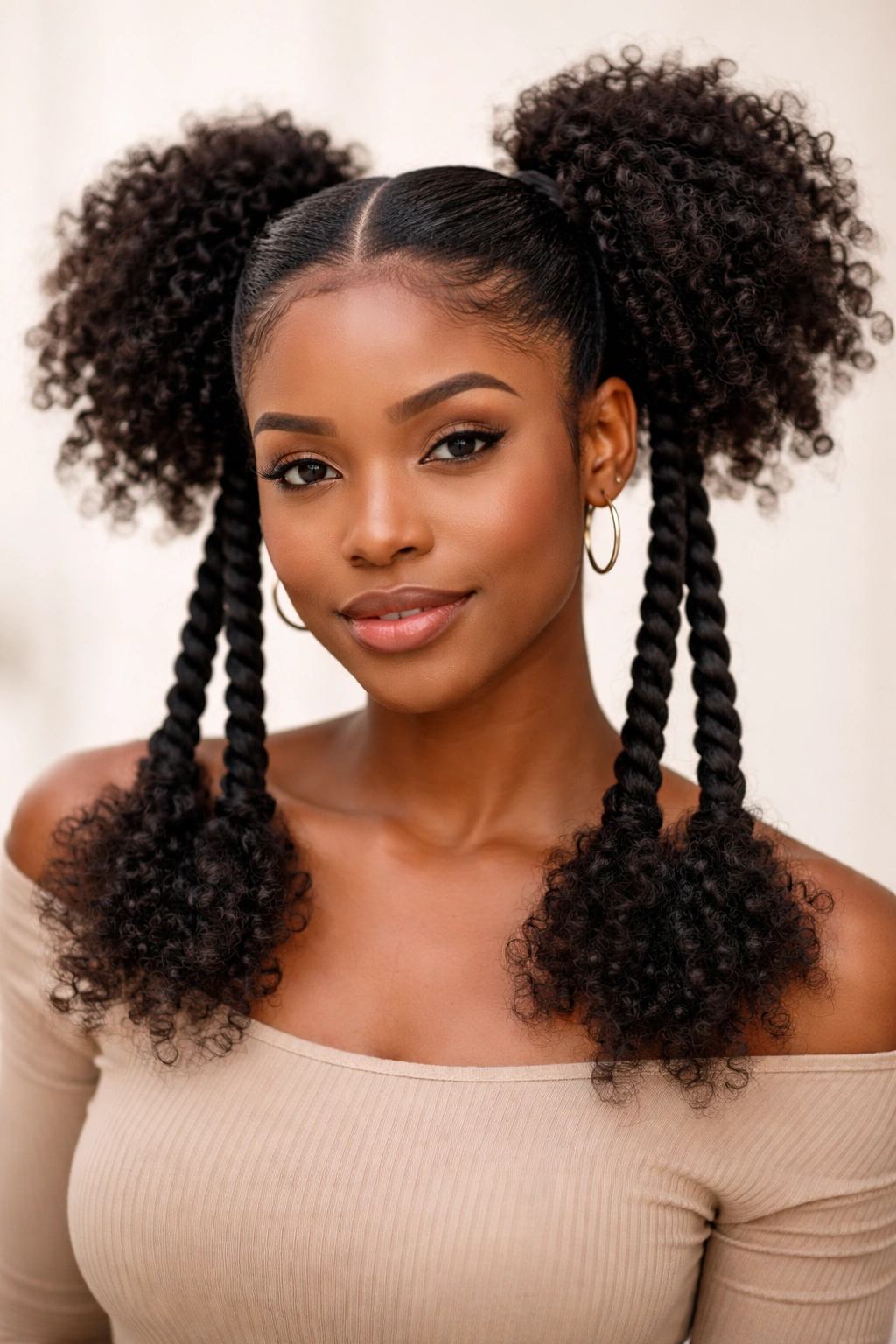
Texture should be allowed to show up.
Natural puff-twist double ponytails keep the ends full and soft instead of forcing them into a sleek finish. That makes the style feel relaxed, which is useful if your hair does not stay smooth for long or if you simply like seeing your curl pattern. On coily hair, the puffs can be round, springy, and full of movement.
When the Texture Is the Point
This version works best when the roots are tidy and the lengths are free. You get the control of the ponytail base and the softness of natural ends. It is a nice compromise for people who do not want a high-tension style but still want something polished enough to wear out.
- Use a light cream or oil on the ends
- Keep the bases snug, not tight
- Let the puff sit where your curl pattern naturally wants it
- Refresh with a little water and leave-in if the ends dry out
The style feels young without looking childish. That is a hard balance to hit, and this one gets close.
18. Braided-Then-Twisted Double Ponytails
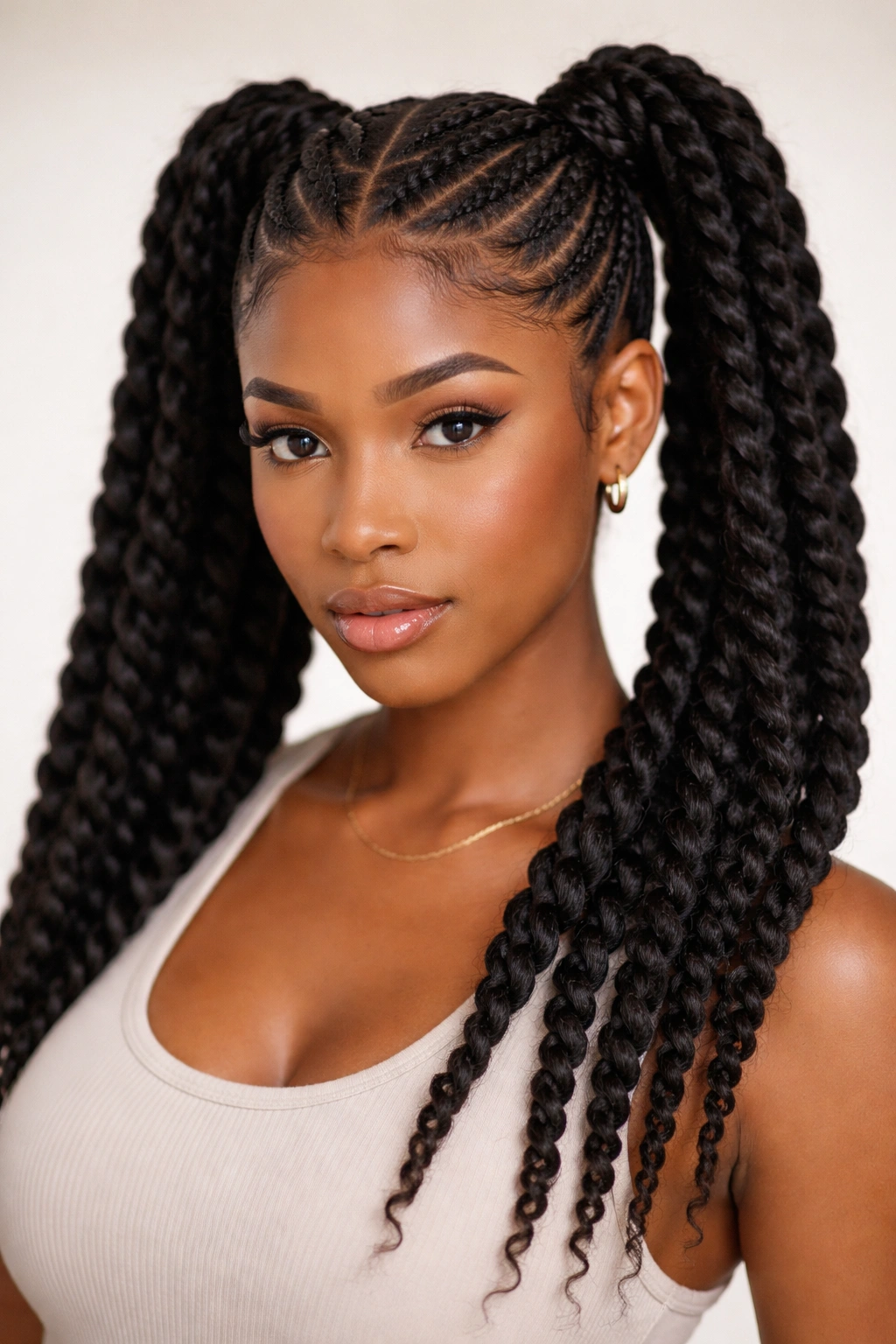
Braids at the base give the style more grip than loose twisting alone.
With braided-then-twisted double ponytails, the front or top sections are braided first, then the lengths shift into twists or ponytails. On natural hair, that helps the style stay put longer because the braid holds tension close to the scalp. It also gives the look a little contrast. The braid reads as structured, the twists read as softer.
I like this version when the hairline needs protection. A braid can hold the front pieces flat without a ton of product, which is useful if gel makes your hair flaky or dry. It also helps when the hair is layered and shorter pieces want to escape. The braid keeps them in line.
The style can lean sporty or dressy depending on the parting. A single braid on each side feels neat. A cluster of smaller braids feeding into the ponytails feels more detailed. Pick one and keep it consistent, because mixing too many patterns makes the head look crowded.
19. Formal Sleek Twist Double Ponytails
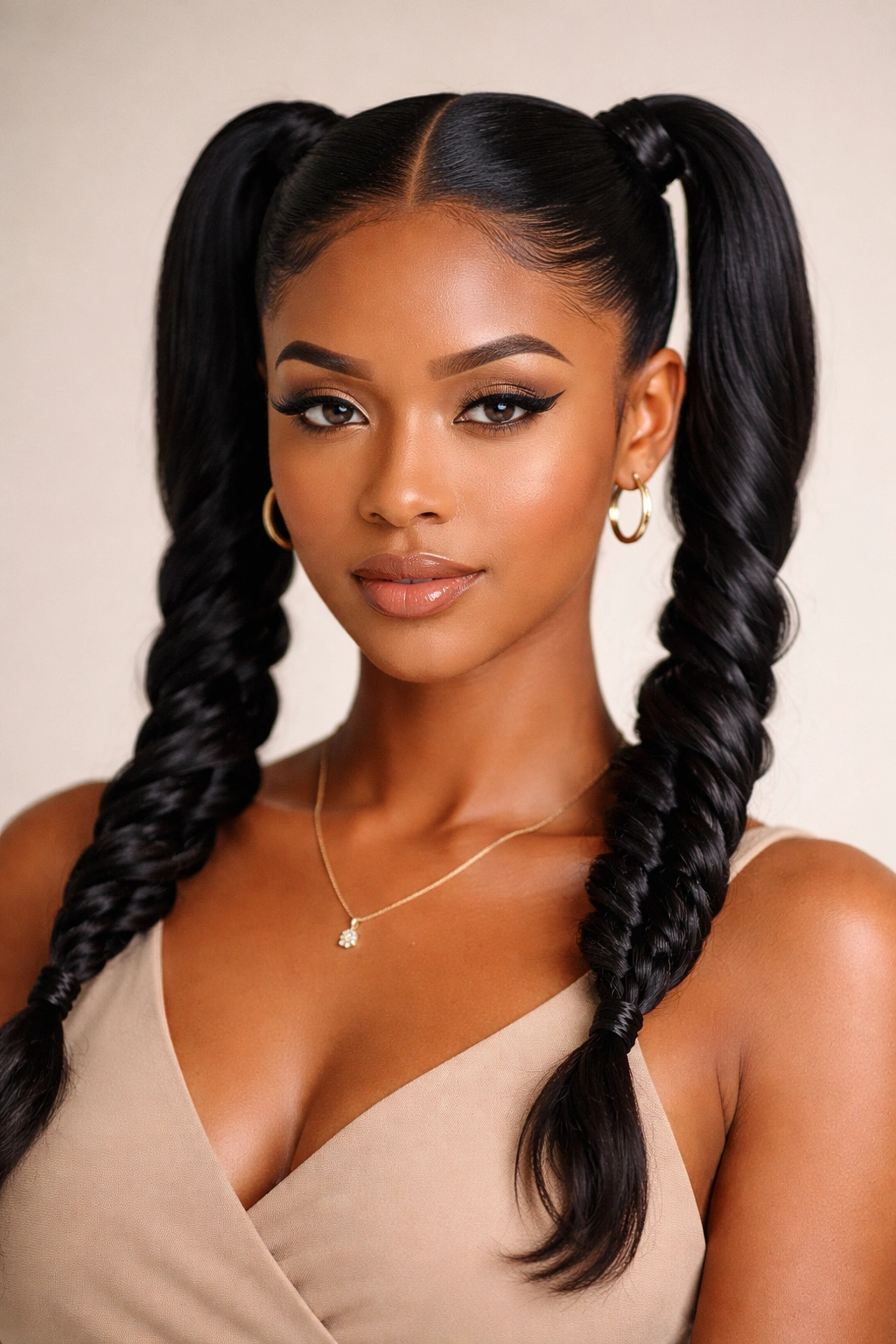
Not every double ponytail has to read casual.
A formal sleek version uses precise parting, smooth roots, and controlled twist size so the style sits cleanly against the head. On natural hair, this can be one of the best ways to wear double ponytails for an event because the shape looks deliberate from the front and the back. It works especially well with statement earrings or a strong neckline.
The finish matters more here than in a relaxed version. A small scarf tied around the hairline for 10 to 15 minutes can help the roots settle. A fine-tooth comb, a light brush, and a gel that does not flake are worth more than a pile of accessories. Keep the ends neat, too. Ragged ends pull the whole look down.
This is one of the few styles where I think less is more. A clean base and a polished twist already do enough. Anything extra should earn its place.
20. Playful High-Low Twist Double Ponytails
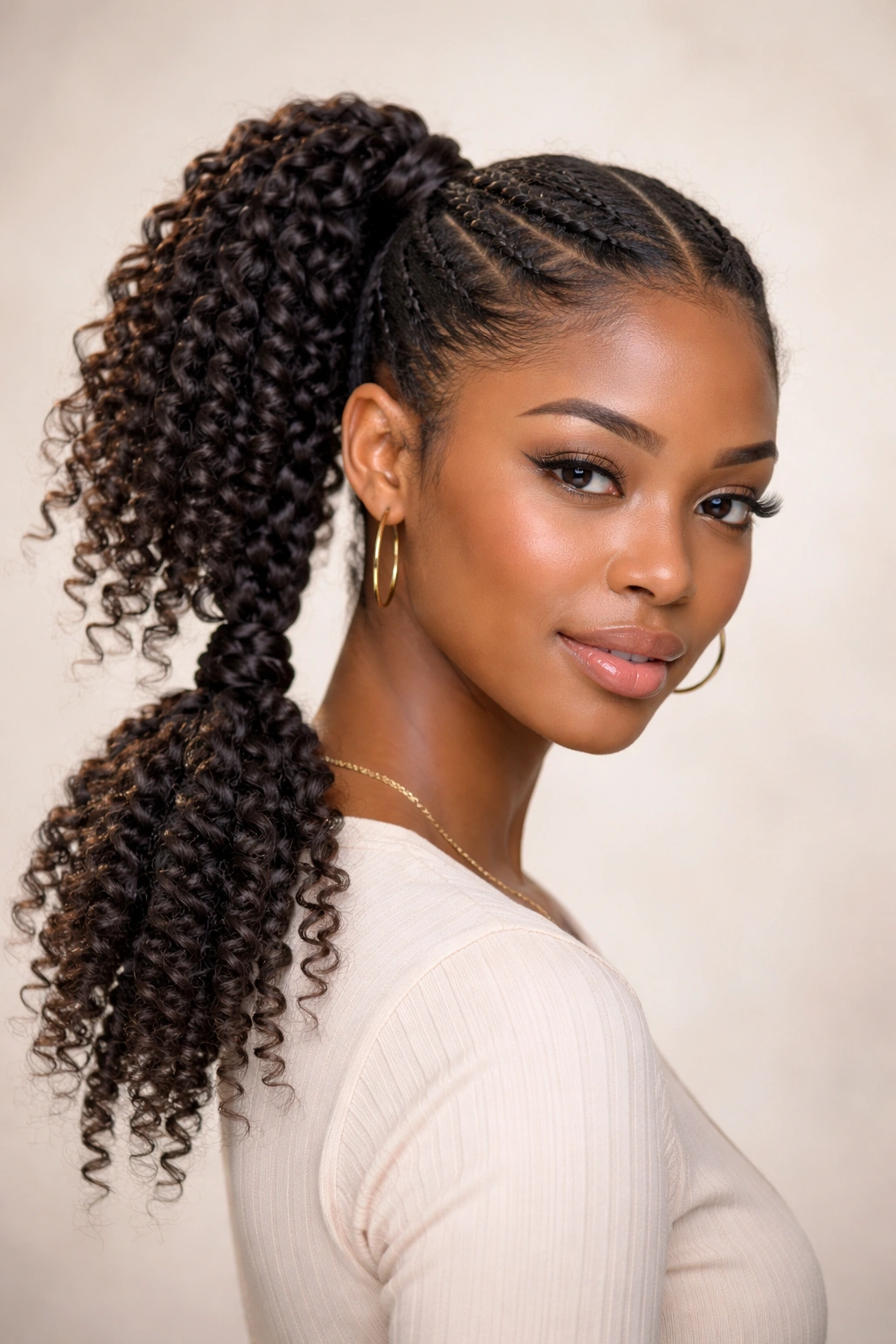
Who says both ponytails have to sit at the same height?
A high-low set gives the style a little motion and breaks up the symmetry in a way that feels fresh. One ponytail can sit closer to the crown while the other rests lower, near the back of the head or side of the nape. On natural hair, that offset can make the shape look more relaxed and less engineered.
The asymmetry works especially well if your hair has a lot of volume. Matching both sides exactly can sometimes make thick hair look boxy. A high-low arrangement softens that. It also gives you room to play with accessories on one side without crowding the whole head.
I would not use this version if you want a very formal, balanced look. That is not the point. This is the style you pick when you want movement and a little personality without doing a full updo.
21. Protective Twist Double Ponytails With Scarf Ties
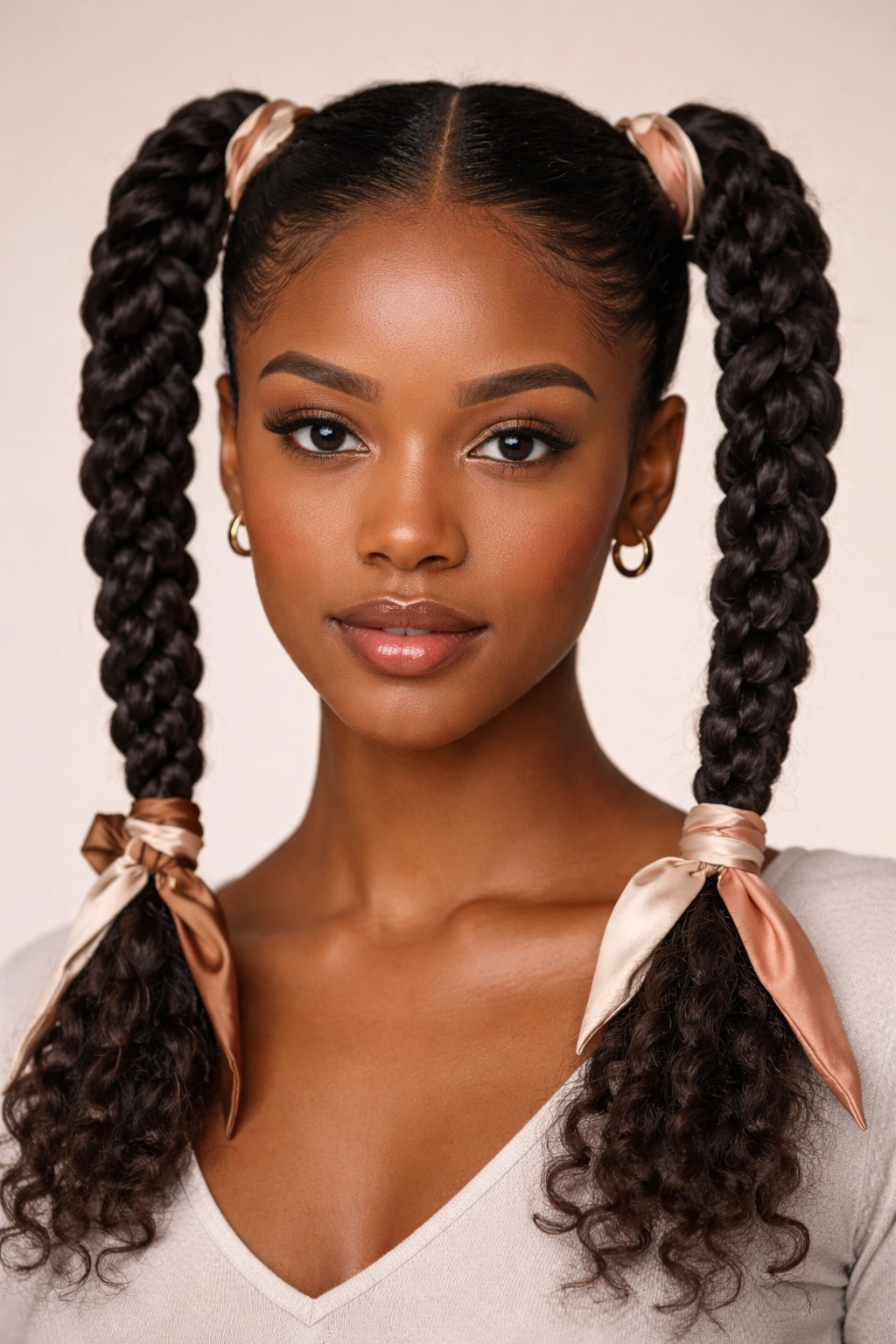
A scarf tie can do more than decorate.
Wrapped around the ponytail bases, a narrow satin or printed scarf lowers friction and hides the elastic at the same time. On natural hair, that matters because the area around the ponytail base is where rubbing happens most. A scarf can also keep the style looking fresh if you are wearing it for several hours or sleeping in it overnight.
Why This Works So Well
Fabric softens the visual line of the style. The ponytails still have shape, but the bases do not look harsh. That is useful if your twists are medium or jumbo and you want something to break up all that texture near the top.
Choose a scarf that is narrow enough not to swamp the ponytails. Big fabric knots can make the head look bulky fast. Satin is a smart pick because it slides less against the hair than cotton does, and it does not grab moisture the same way.
This version feels a little more finished, a little more thoughtful. Not fussy. Just cared for.
22. Workout-Ready Twist Double Ponytails
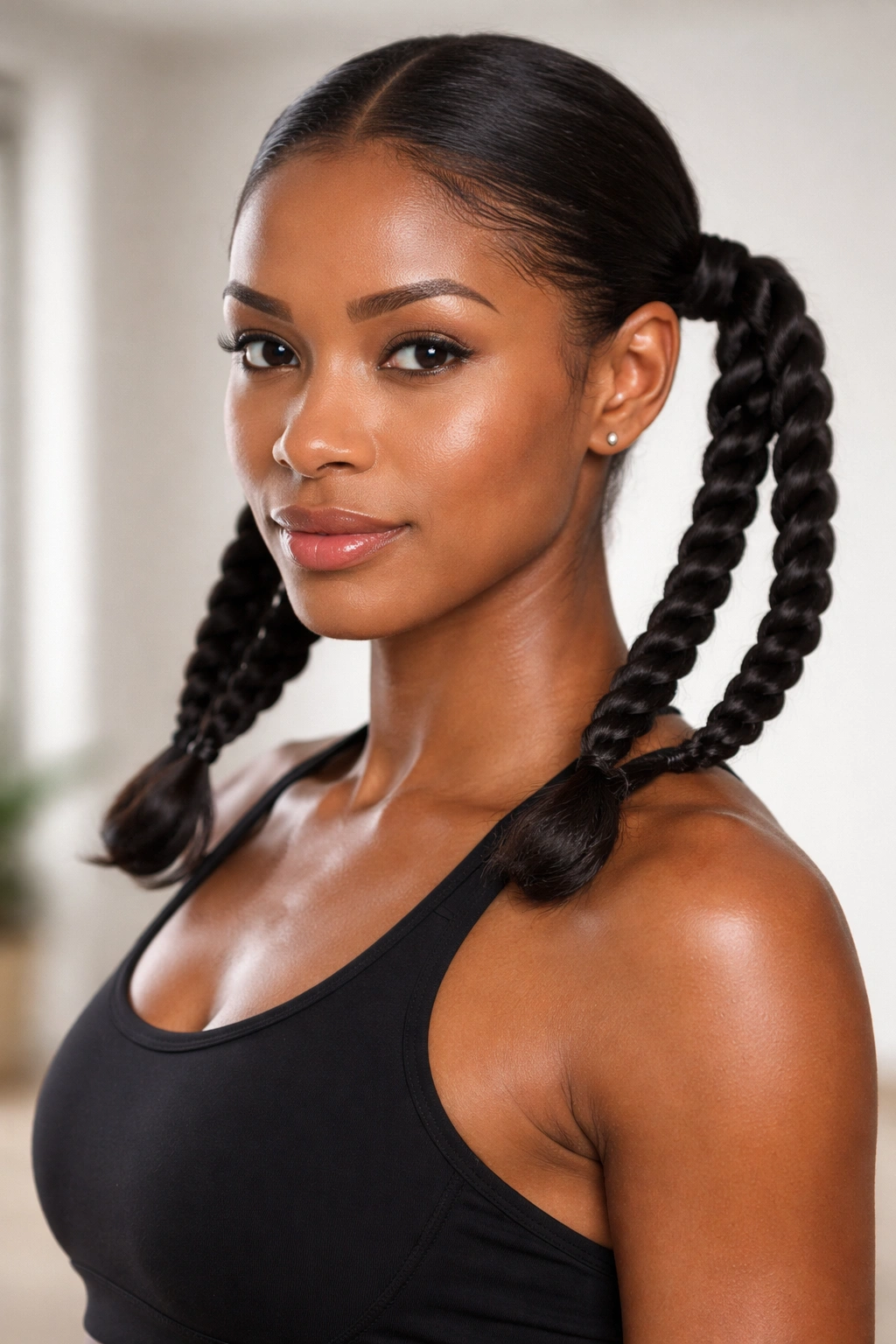
For sweat, movement, and long days, structure matters more than decoration.
Workout-ready twist double ponytails need to stay put, so the bases should sit low or mid-level, not high and bouncy. On natural hair, that usually means snug sections, minimal accessories, and ends that are tucked enough to avoid constant flipping. If the style bounces into your neck while you move, it is too loose.
Practical Details That Help
- Use two strong elastics on each side if your hair is thick
- Keep the ponytails close to the head
- Skip heavy beads and large clips
- Smooth the roots with a light gel or mousse, not a sticky layer
- Tie the edges down for 10 minutes before leaving the house if needed
This is not the place for a dramatic finish. Clean and secure wins. If you run, lift weights, or just live in humid weather, the simpler version will usually hold up better than the fancy one.
And yes, you can still make it look good. Neat does not have to mean boring.
23. Soft Romantic Twist Double Ponytails for Dressy Days
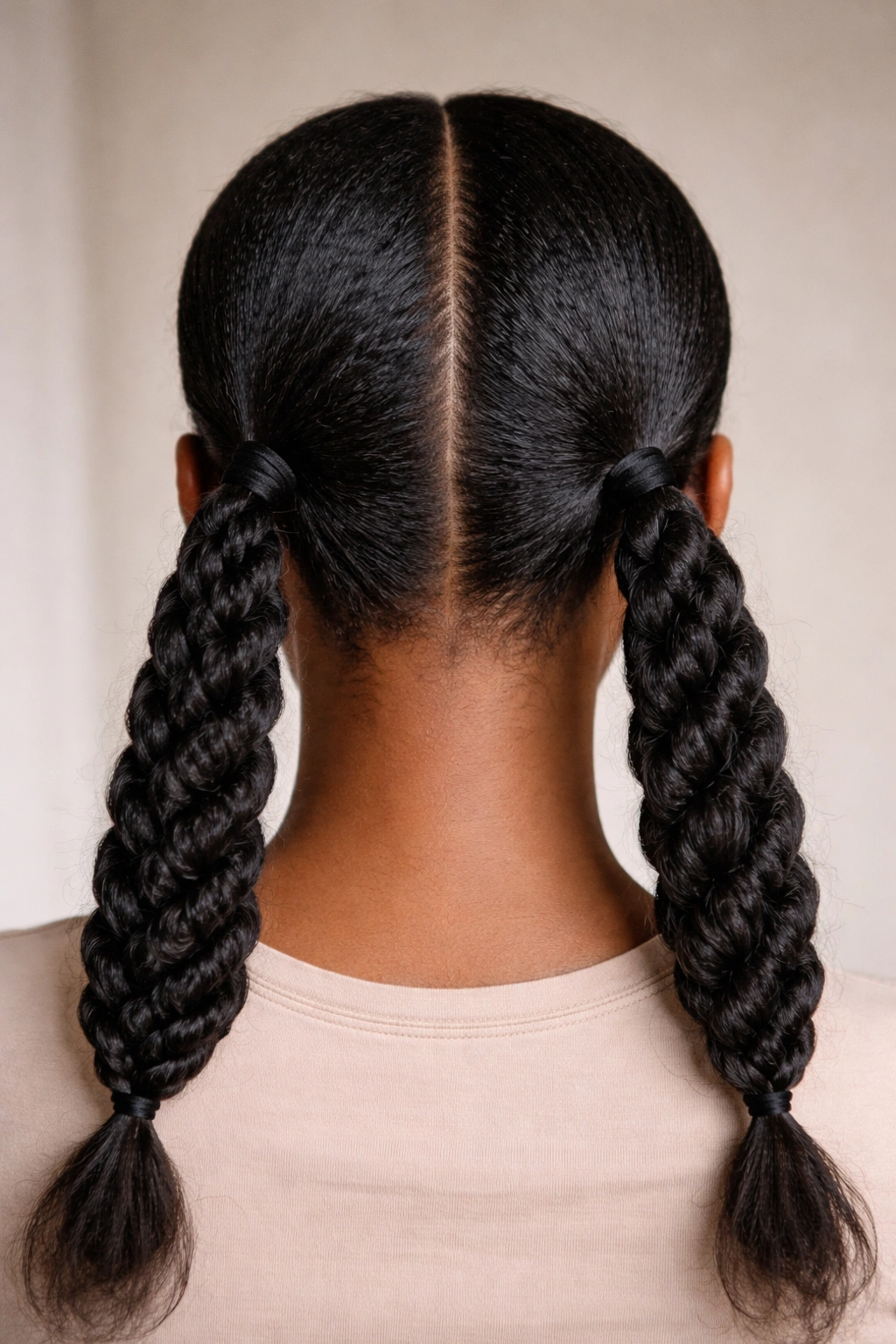
Softness changes everything here.
A romantic version of twist double ponytails leans into loose texture, face-framing pieces, and maybe a slight curl at the ends. On natural hair, that gives the style a gentler outline, which is useful when you want something dressy but not stiff. The parts can stay clean while the rest of the look relaxes a little. That balance is what makes it feel wearable.
I like this version with a side part and lightly wrapped bases. If the ponytails are too rigid, the softness disappears. If the roots are too loose, the style loses shape. The sweet spot is a smooth top with enough movement in the twists to keep things from feeling severe. That is harder to nail than it sounds.
A final thought, and it matters: if the style pulls at your scalp, it is too tight. The prettiest twist double ponytails in the world are not worth a sore head by midday. Let the hair sit where it wants to sit, keep the parts clean, and choose the version that matches your hair’s density instead of forcing it into a picture-perfect shape. That is usually where the best result lives.
