



A good feed-in braid ponytail does two jobs at once: it keeps the scalp neat and gives the front of the style some softness. That front piece matters more than people think. Bangs can pull a ponytail away from “tight and practical” and into something with shape, movement, and a little attitude.
The best versions of feed in braid ponytails with bangs also solve a real styling problem. A high ponytail can make the face look longer. A low one can feel too plain. Bangs—whether swooped, curled, braided, or left wispy—break up that line and make the whole look feel intentional without looking overworked.
Feed-in braids are useful for another reason: they let the braid start small at the hairline and build gradually, which keeps the base flatter and the finish cleaner. That makes the ponytail sit better, especially when extensions are involved or when you want the style to last more than a quick weekend.
The fun part is how much range this style has. You can go polished, sporty, dramatic, soft, or straight-up glamorous with the same basic structure. Some versions ask for just a few cornrows feeding into one ponytail, while others stack pattern, parting, and accessories into a style with real presence.
1. Sleek High Feed-In Ponytail With Side-Swept Bangs
This is the version that looks sharp without feeling severe. The ponytail sits high, the feed-in braids hug the scalp, and the side-swept bangs soften the whole line across the forehead. It’s a smart choice if you like a lifted profile but do not want your face fully exposed.
Why It Works
The high placement gives instant shape. The side-swept bangs do the rest, especially on oval, heart, and square faces where a diagonal line can be kinder than a straight one.
A style like this usually works best when the bang section is kept thin enough to move, but dense enough to read as intentional. Too much hair in the front makes it heavy. Too little and it starts to look like a stray curl rather than a design choice.
- Best when the ponytail base is wrapped with one braid or a small extension piece.
- Looks clean with 4 to 6 feed-in sections leading into the ponytail.
- Pairs well with laid edges, but the edges should not steal the show.
Tip: Ask for the bangs to start slightly off-center, not dead center. That tiny shift changes everything.
2. Low Feed-In Ponytail With Soft Curtain Bangs
Why do curtain bangs work so well here? Because they split the face in a way that feels relaxed instead of rigid. A low feed-in ponytail already carries a calmer mood, so the bangs can breathe a little more and fall around the temples.
This is one of the easiest styles to wear all day. The ponytail sits closer to the nape, so it does not pull as much, and the curtain bangs can be left curled, blown out, or loosely braided at the front depending on how much softness you want.
The nicest thing about this version is that it ages well over the week. Even if a few front pieces loosen, the style still looks deliberate. A low ponytail can handle that kind of imperfection better than a very high one.
If your hairline is sensitive, this is the version I’d pick first. It spreads the visual weight out instead of piling everything onto the crown.
3. Jumbo Feed-In Braids Into a Wrapped Ponytail With Blunt Bangs
A blunt bang changes the whole mood here. The ponytail can be thick, dramatic, and almost sculptural, while the front stays straight and grounded. That contrast is the point.
Jumbo feed-in braids are faster to install than tiny ones, which makes this style a little easier to live with if you want fullness without a marathon in the chair. The wrapped base also hides the join between your own hair and the extensions, which helps the ponytail read as one clean shape instead of a loose bundle.
What to Watch For
Blunt bangs need balance. If the bangs are too thick, the forehead area can feel heavy. If they are too thin, they lose the crisp line that makes the style interesting.
- Best with shoulder-length or longer natural hair for a smoother feed-in base.
- Looks good with straightened bang pieces or flat-ironed extensions.
- Works well when the ponytail is secured with a small braided wrap instead of a visible elastic.
Bold move, but worth it: keep the bangs sharp and let the ponytail do the big talking.
4. Center-Part Feed-In Ponytail With Long Braided Bang Pieces
This one has more structure. The center part gives symmetry, and the long braided bang pieces frame the face in a way that feels neat but not stiff. It’s a clean look, almost architectural, and it suits people who like a style that reads polished from every angle.
The long bang pieces also make the ponytail feel more wearable. Instead of one heavy fringe sitting on the forehead, you get two slim panels that can be tucked behind the ears or left to graze the cheeks. That detail matters on windy days and during long wear, when a bulky front section would start driving you nuts.
If you like protective styles but still want to see your cheekbones, this is a strong pick. The face stays open without being stripped bare.
One small detail: keep the braid size in the front slightly thinner than the ponytail braids. That gives the framing pieces a lighter feel and keeps them from competing with the main style.
5. Curly Bangs With a Braided High Ponytail
Curly bangs are where this style gets playful. A high feed-in ponytail already brings height and energy, and the curls at the front stop it from looking too controlled. The mix of smooth braiding and soft coils gives the style some swing.
This is one of those looks that makes sense if you want motion around the eyes and forehead. The curls can be created from natural texture, flexi rods, or curled extensions, depending on the finish you want. I like this version because it never looks flat in photos or in motion.
The Best Part
The curls can hide a lot. If the front needs a little refresh, a few curls around the fringe area will do more for the look than redoing the whole ponytail.
- Use medium-sized curls so they do not shrink into tiny pieces.
- Keep the braid base smooth so the contrast stays clear.
- A little mousse at the front helps the curls hold their shape.
It’s lively. That’s the whole point.
6. Feed-In Ponytail With Beaded Bang Ends
Beads at the ends of the bang pieces give this style a bit of weight and sound. Tiny movement. A little clink when you walk. Some people love that, and honestly, I get it. It makes the style feel personal in a way that plain braids sometimes do not.
The bangs can be braided as slim front pieces and finished with one or two beads on each end, while the ponytail stays long and smooth behind them. That contrast is nice: the front gets detail, the back stays clean.
This version works especially well with children, festival looks, or anyone who likes accessories but does not want to cover the whole head with them. Beads are the accent, not the whole costume.
Keep the bead count modest. Two or three per front braid is enough. More than that can drag the front pieces down and make them swing into your eyes.
7. Half Cornrow Feed-In Ponytail With Feathered Bangs
A half cornrow feed-in ponytail with feathered bangs has a softer, more lived-in feel than the ultra-sleek versions. The top braids feed into the ponytail, but the front fringe is left light and layered so it moves instead of sitting in one hard line.
This is the style for someone who wants a braid ponytail that does not look too severe. The feathered bangs keep the forehead area airy, which helps if you feel boxed in by heavy front styling. It’s also a good pick for round faces, since the feathered pieces can help lengthen the look visually.
How It Reads
It comes across casual, but not messy. There’s a difference.
The braids at the top should be neat and narrow enough to show parting work, while the bangs should be layered enough to break up the front. If both parts are equally heavy, the style loses its softness and starts to feel crowded.
This one wears especially well with minimal accessories. Sometimes a clean braid and a few wispy front pieces are enough.
8. Side-Shaved Illusion With Long Sweep Bangs
The “side-shaved illusion” is one of those styles that looks bolder than it is. The braids are arranged in a way that makes one side look tighter and cleaner, while the long sweep bangs soften the other side and keep the look wearable.
It’s a good option if you like edge and shape without actually shaving anything. The illusion comes from placement, parting, and the direction of the feed-in braids. A deep side part can exaggerate the difference, while the sweeping bangs keep the face from looking too exposed.
The trick is to keep the bangs long enough to follow the line of the cheekbone. Too short, and the balance gets weird. Too long, and they disappear into the ponytail.
This style has a little attitude. Not loud, not fussy. Just enough.
9. Waist-Length Feed-In Ponytail With Wispy Bangs
Length changes the whole mood here. A waist-length ponytail makes the style dramatic on its own, so the bangs should stay light and wispy. You want enough front detail to frame the face, not so much that the hairline competes with the ponytail.
Long feed-in ponytails are usually the ones people notice first because of the swing. That movement is part of the appeal, especially when the braid is thick, glossy, and finished with a neat wrap at the base. The bangs act like a pause before the long line starts.
Small Details That Matter
- Keep the wispy bangs a little shorter than cheekbone length if you want the face to stay open.
- Use light tension at the front so the hairline does not get too stressed.
- Add a tiny bit of sheen spray to the ponytail only, not the bangs.
A style like this photographs cleanly, but more importantly, it moves well in real life. That matters more than people admit.
10. Crisscross Feed-In Ponytail With Layered Bangs
Crisscross braiding gives the scalp area some pattern, and layered bangs keep the front from looking too geometric. That combination is the whole appeal. You get a braid design with a little tension and a little softness at the same time.
The crisscross lines make the ponytail base feel more finished, almost like the hair was wrapped with ribbon. Layered bangs then break up the front with pieces of different lengths, so the face is framed in a way that feels dimensional without being crowded.
This version is a smart pick if you like detail but do not want extra accessories. The braid pattern itself is the decoration.
I’d keep the bangs on the thinner side here. When the scalp work already has visual interest, the front should not fight it. A few layered pieces around the brow and cheek area do enough.
11. Braided Mohawk Ponytail With Face-Framing Bangs
This one is for people who do not mind a little drama. The braids are raised toward the middle of the head, which gives the ponytail a mohawk feel, and the face-framing bangs soften that bold center line so the whole style stays wearable.
A style like this suits confident shapes. It’s a strong silhouette from the side and a clean sweep from the front. The bangs are the part that keeps it from feeling too hard. Without them, the style can look severe fast.
The Balance
The center section needs height, but not so much height that the profile gets top-heavy. A middle ridge about 1 to 2 inches wide is enough for most people. Bigger than that and the style can start to look bulky.
The front pieces should fall in a curve, not a straight drop. That curve keeps the eye moving and gives the face a softer edge. If you want a style that feels bold but still polished, this is one of the strongest options on the list.
12. Low Bubble Feed-In Ponytail With Straight Bangs
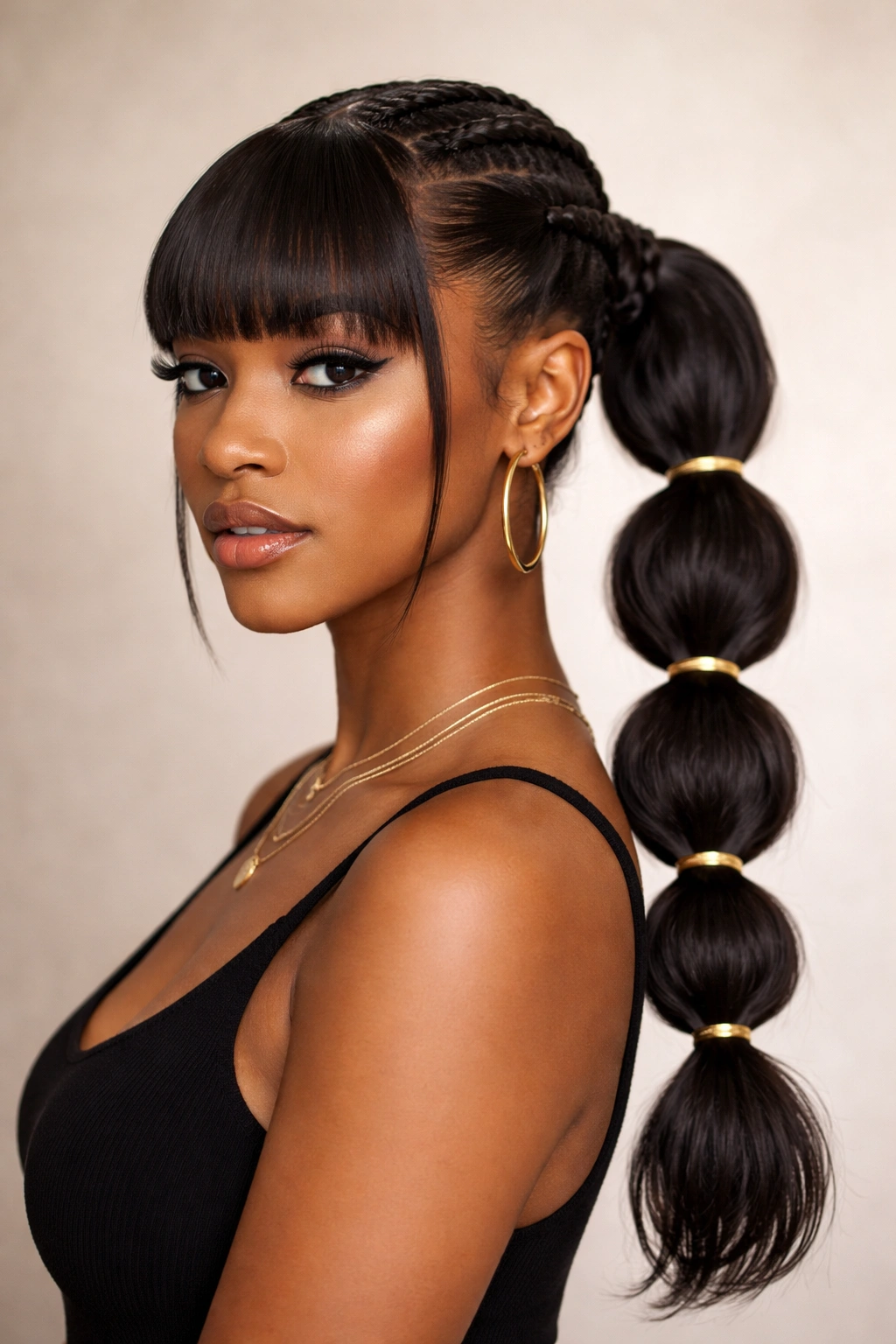
A bubble ponytail already has built-in shape, so pairing it with straight bangs creates a nice contrast. The front is neat and flat; the back breaks into sections. That difference makes the style feel deliberate instead of busy.
The lower placement keeps the ponytail from looking too stiff. Each bubble can be spaced with clear hair ties or wrapped sections, depending on how structured you want the finish. Straight bangs then anchor the look and keep the face line simple.
It’s a good style when you want the ponytail to do more than just hang there. The bubbles add rhythm. The bangs keep it grounded.
If you’re wearing this for a longer stretch, keep the bubbles slightly loose. Tight sections can get annoying after a few hours, especially if the ponytail is thick and heavy.
13. Feed-In Ponytail With a Braided Bang Halo
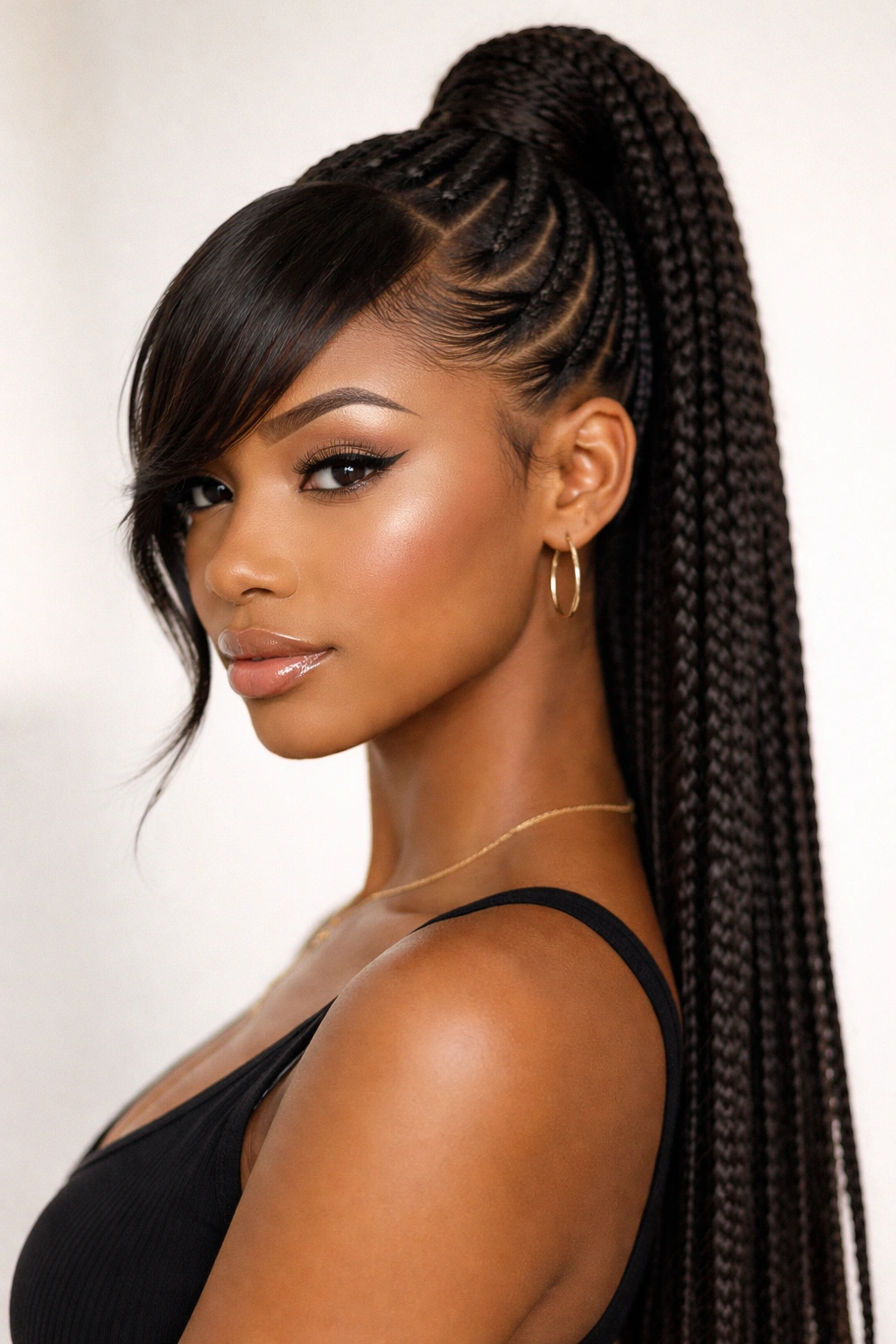
A braided bang halo is softer than it sounds. Instead of one straight fringe, the front is shaped into a curved braid path that frames the forehead like a half crown. The ponytail sits behind it and keeps the whole look from becoming too precious.
This is one of the most polished versions of feed in braid ponytails with bangs. The halo effect gives the front structure, and the ponytail adds length and movement. It’s a good style for formal events, photos, or any time you want the hair to feel finished from every angle.
Why It Stands Out
It changes the forehead line without covering it. That’s harder to do than it sounds.
Use a thin feed-in braid along the hairline, then sweep it into the ponytail base. The halo should look smooth, not stuffed. If the front braid gets too thick, it stops looking like a frame and starts looking like a helmet.
This one works best when the rest of the hair is sleek. Let the pattern stay the main feature.
14. Ponytail With Knotless Feed-In Base and Micro-Bangs
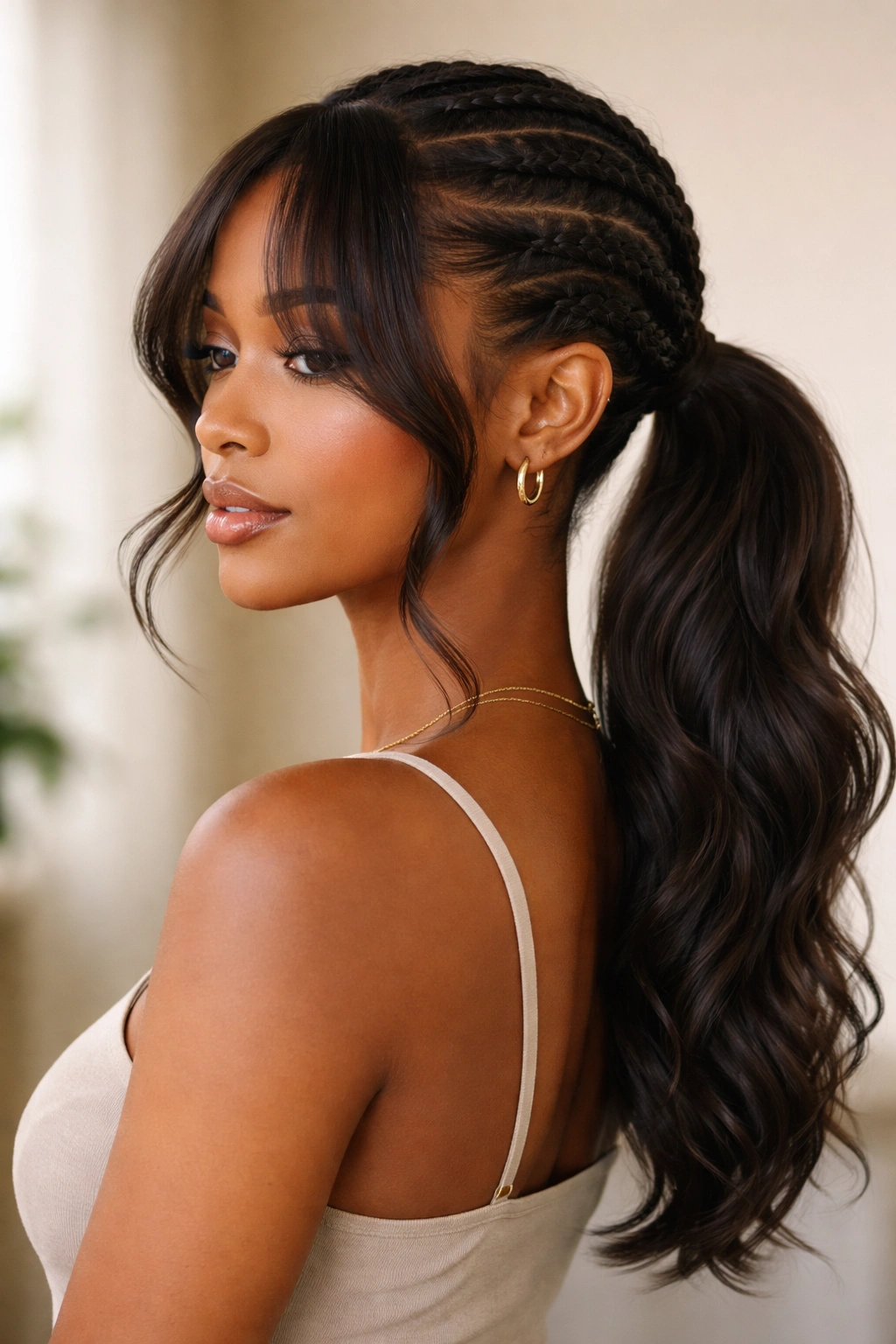
Micro-bangs are tiny, but they make a big difference. They give the style a sharp little front detail without taking over the face. Paired with a knotless feed-in base, they create a ponytail that feels light at the scalp and precise at the front.
Knotless feed-in braids are kinder on the scalp because the braid starts small and builds gradually. That matters if you wear braids often or just hate the heavy tug that some installs create. The micro-bangs keep the forehead open, which balances the neatness of the base.
This is a clean, technical kind of style. Not flashy. Not soft either. It’s for people who like the finish of a straight line and the ease of a protective style.
A tiny fringe needs good parting. If the sections are sloppy, micro-bangs can look accidental. Clean parts keep them looking intentional.
15. Sleek Mid Ponytail With Curled Bangs and Tucked Ends
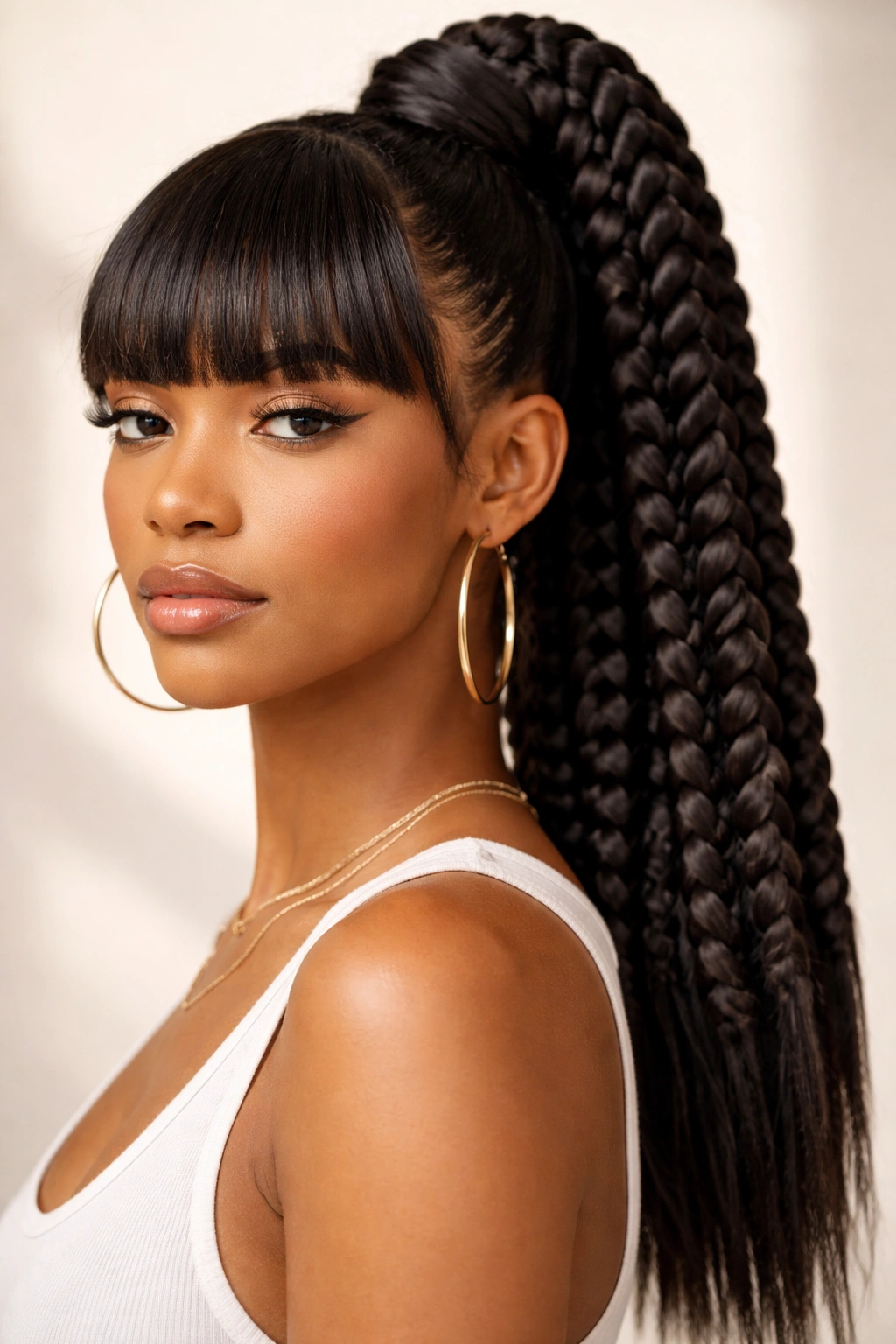
A mid-height ponytail sits in that useful middle ground: not too high, not too low. Add curled bangs and tucked ends, and the whole thing starts to feel softly styled instead of simply braided.
The curled bangs are the best part. They break the straightness at the front and make the face look less rigid. Tucked ends on the ponytail also help if you want the finish to look neat rather than long and loose. Some people leave the tail extended; others tuck or fold it for a shorter shape.
Good for Days When You Want Control
A mid ponytail gives the scalp a break compared with a very high style, and the curls at the front keep it from feeling plain.
- Works well with medium-density hair.
- Looks tidy with 2 to 4 curled front pieces.
- Can be dressed up with a single gold cuff near the base.
This version is one of the easiest to wear to events without feeling overdressed.
16. Stitch Braid Ponytail With Thick Side Bangs
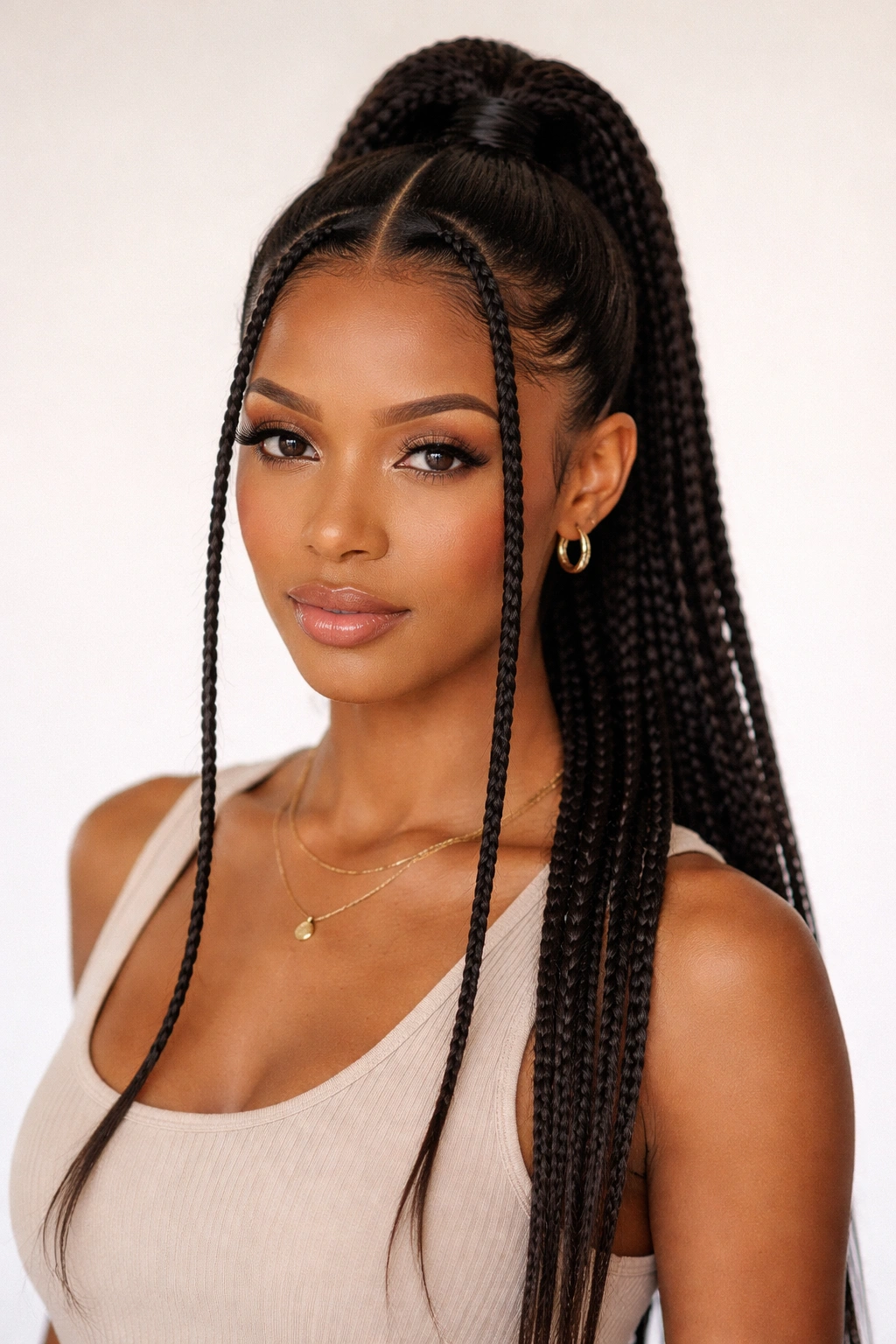
Stitch braids have that clean, lined look people either love right away or grow into. The parting is crisp, the rows are obvious, and the thick side bangs give the style a chunkier front shape that can hold its own against all that pattern.
I like this combination because it feels strong without being overloaded. The stitch pattern does the precise work at the scalp, and the thick bangs keep the face from looking too stripped. It’s a nice balance if you want structure and presence.
The bangs should be thick enough to read as a real section, but still movable. If they are too stiff, they drag the face down. If they are too thin, they disappear into the detail work.
This style is a good match for people who like braids that look engineered. Clean parts. Visible rows. A front piece with enough weight to matter.
17. Feed-In Ponytail With Swoop Bangs and Hair Cuffs
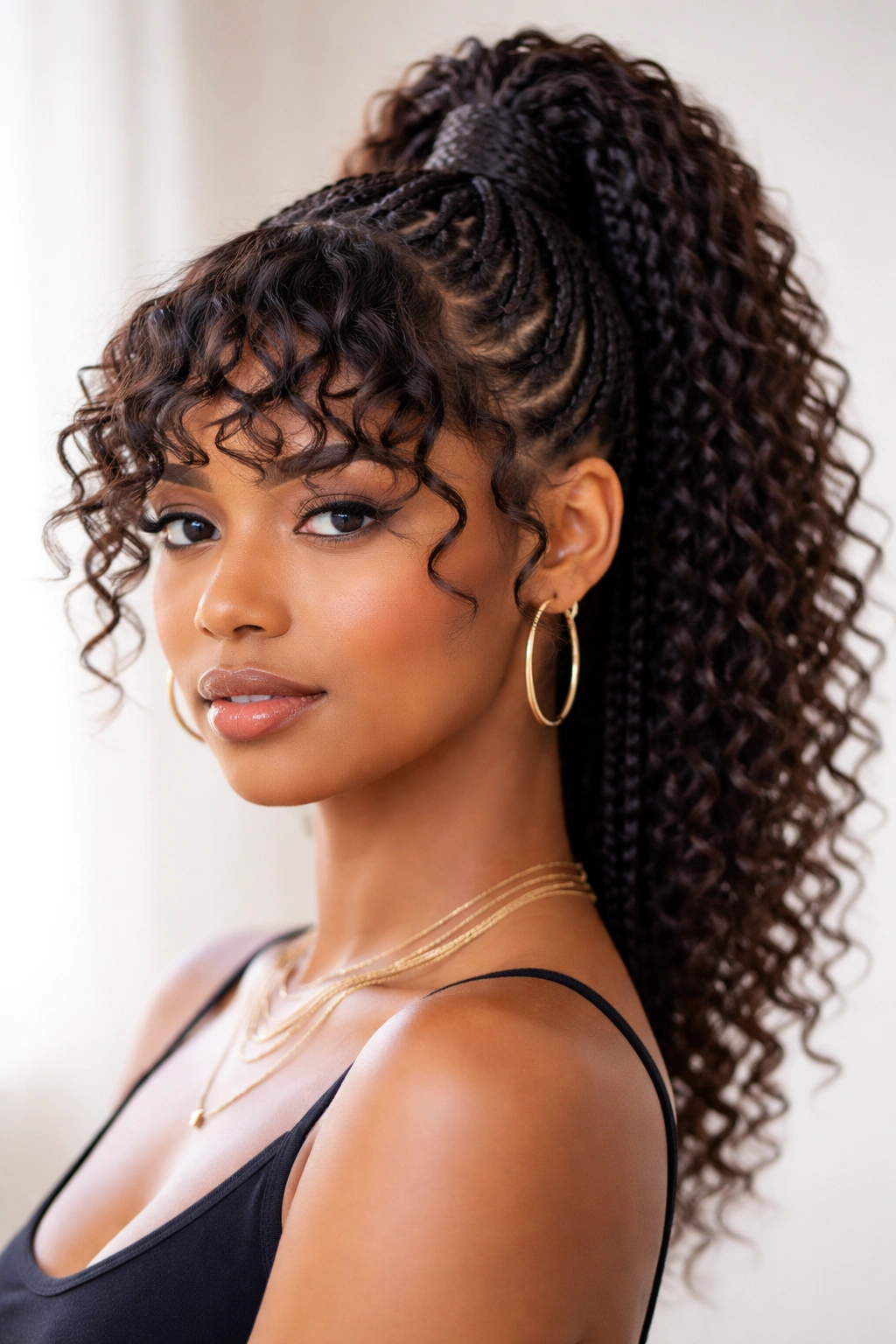
Swoop bangs are one of the easiest ways to soften a ponytail. They curve across the forehead and pull the eye sideways, which makes the whole face look a little more open. Add hair cuffs to the feed-in braids, and the style gets a bit of shine without needing much else.
The cuffs should not be everywhere. A few well-placed pieces near the front or along the ponytail base are enough. Too many can turn the look busy fast. The swoop bangs need room to do their job.
Best Use
This version works when you want a mix of softness and polish. It can go to dinner, work, or a dressed-up casual event without needing a major change.
The swoop should fall in a gentle curve, not a hard diagonal. That makes it easier to wear with glasses, earrings, and high necklines. Small styling choices make a big difference here. Tiny cuff. Clean curve. Done.
18. Double Feed-In Braids Into One Ponytail With Thin Bangs
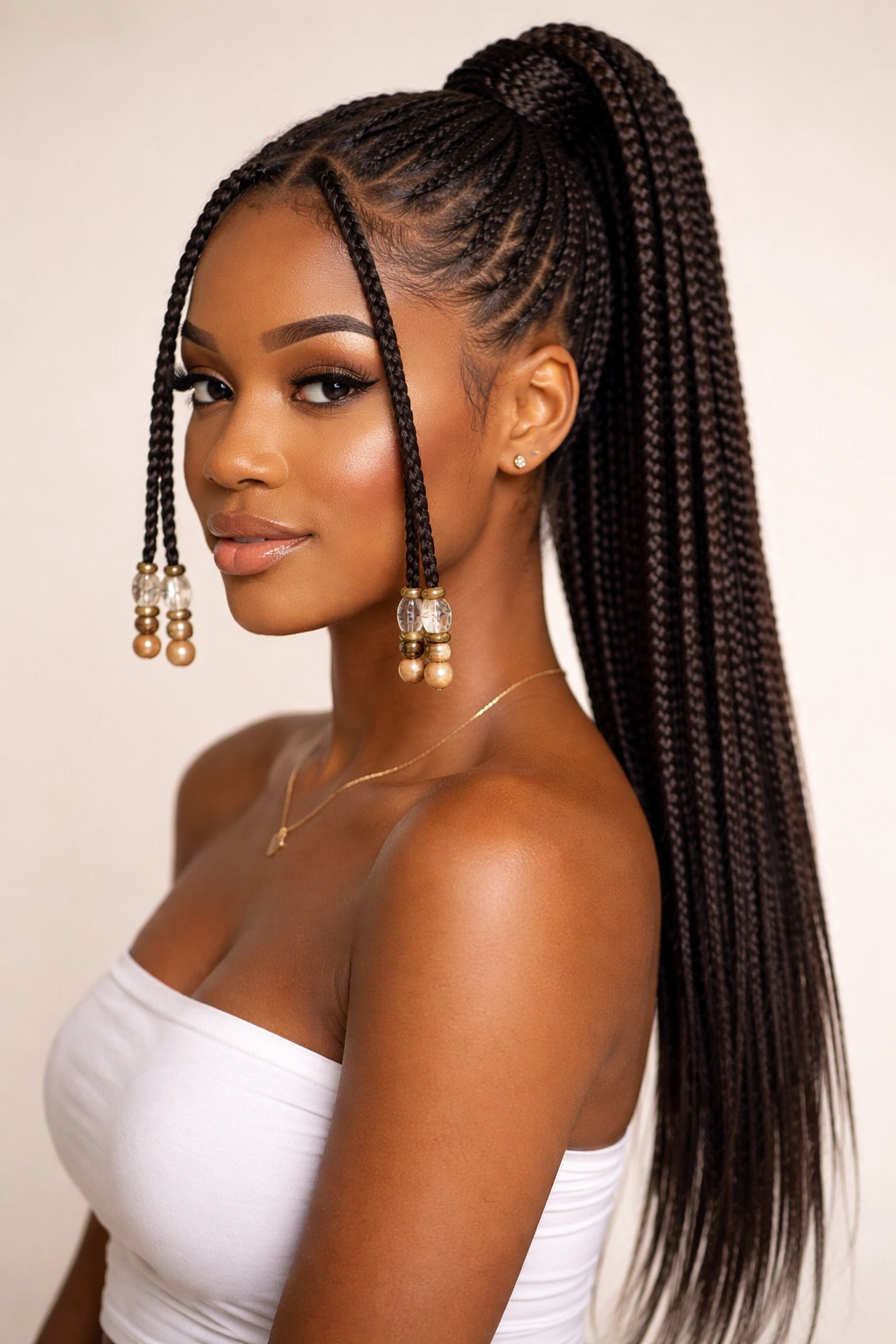
Two feed-in braids leading into one ponytail sounds simple, but the shape is part of the appeal. You get a strong center pull without a crowded scalp, and the thin bangs keep the front from feeling top-heavy.
This is one of the cleaner styles on the list. The look depends on proportion: narrow front pieces, tidy braids, and a ponytail that sits confidently without too much fuss. Thin bangs are useful here because they mirror the small scale of the braid base.
Unlike thicker styles, this one can feel almost minimal if done well. That’s a strength, not a weakness. You can wear bold earrings, a bright lip, or a patterned outfit without the hair fighting for attention.
If you want something neat and easy to read from a distance, this is a good pick. It does not need a lot of extras.
19. High Ponytail With Feed-In Braids and Soft Face Framing
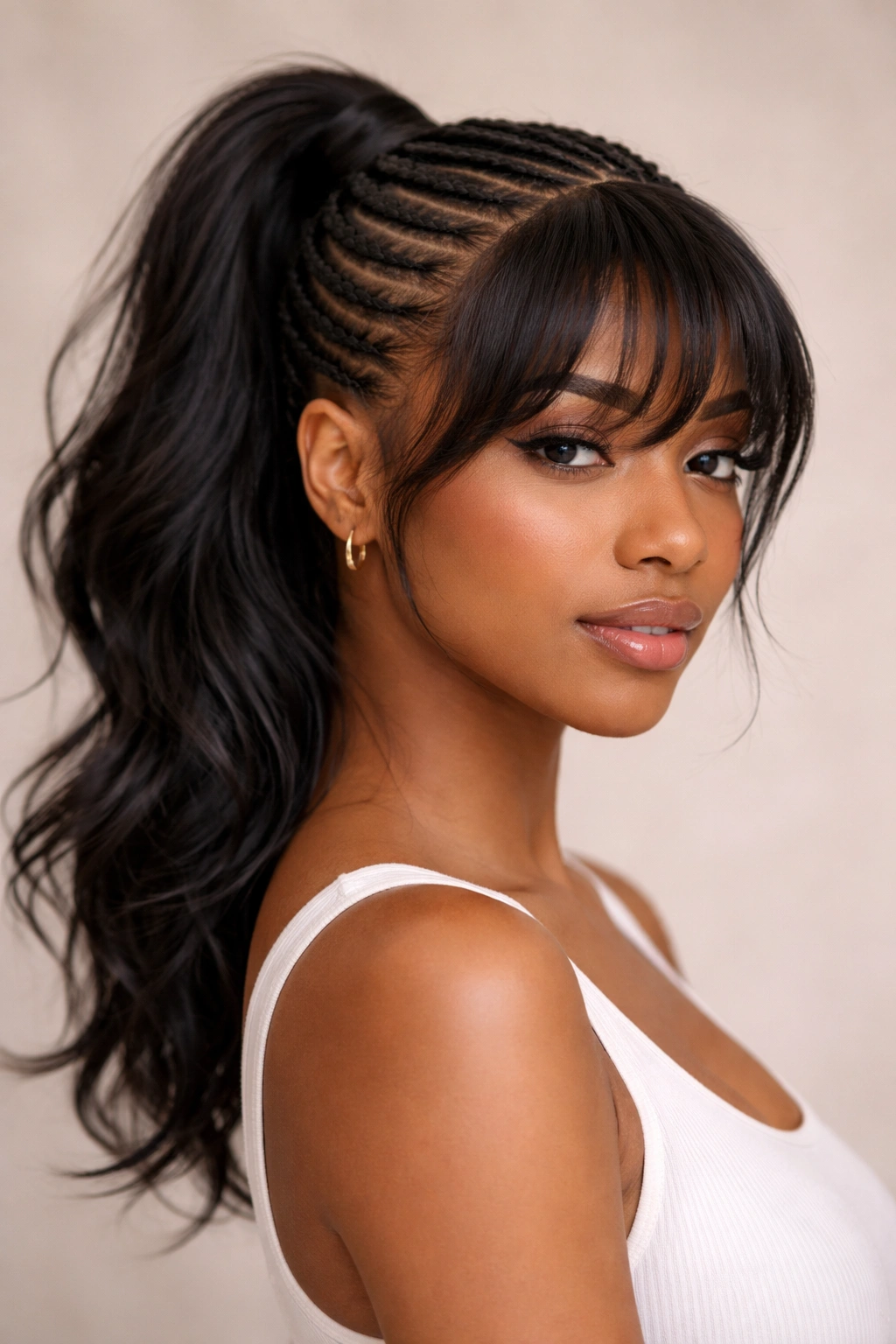
A high ponytail gets a more relaxed feel when the front is left soft. The braids still do the structured work, but the face-framing pieces stop the style from looking too severe. This is one of the more wearable high looks because it balances lift with softness.
The face framing can be loose, slightly curled, or even braided into slim front pieces that fall along the temples. Any of those choices works as long as the front does not become too heavy. The ponytail itself should be the tallest part of the style.
A detail I like here: leave a tiny bit more hair around the temples than you think you need. That extra softness takes the edge off a very high style and helps it sit better on round or long faces.
It’s a clean way to wear height without making the forehead area feel bare.
20. Side Ponytail With Long Braided Bangs
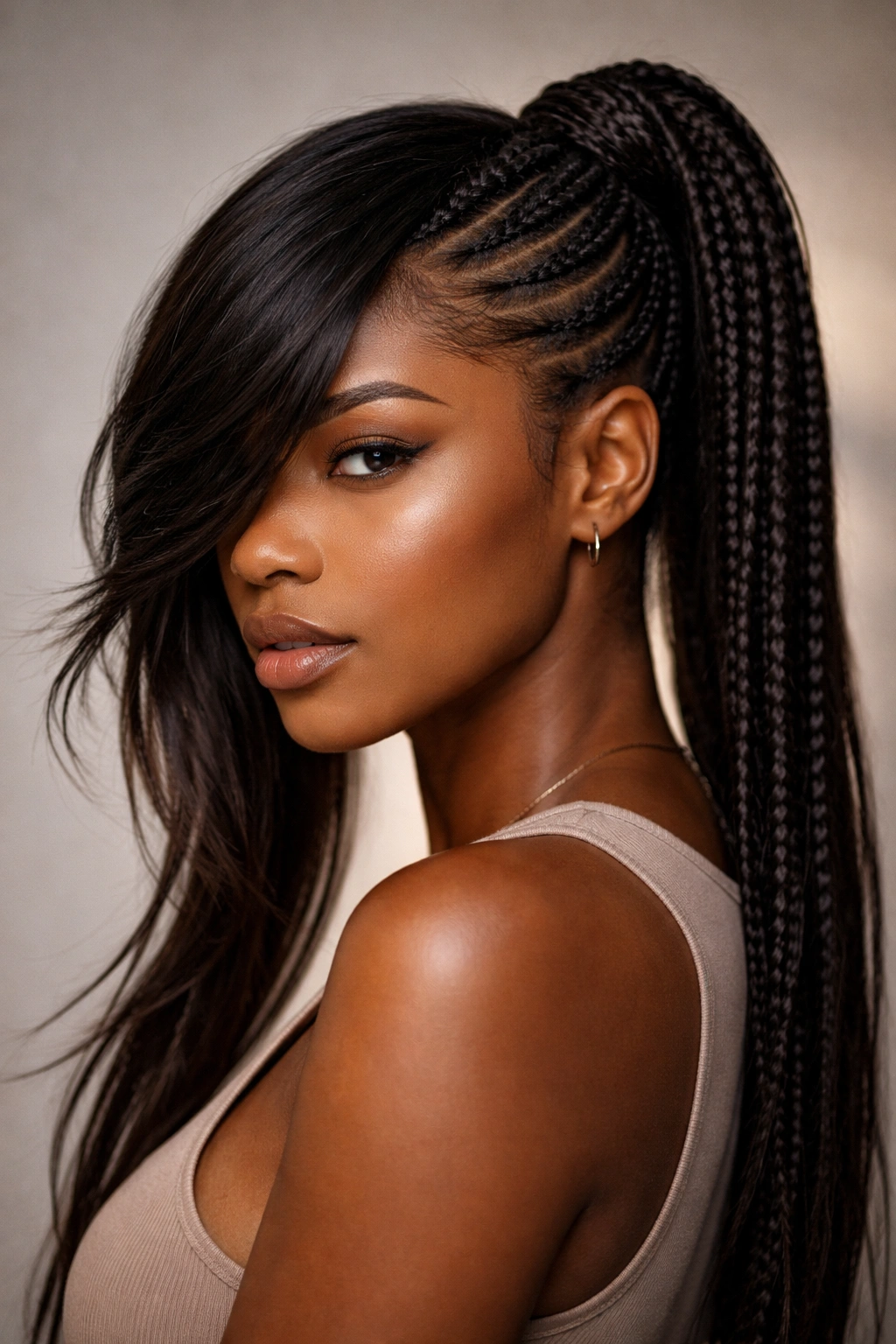
A side ponytail changes the energy immediately. It feels less formal, a little more casual, and often more flattering when you want asymmetry. Long braided bangs complete the look by echoing that diagonal line across the face.
This style works because it keeps everything moving in one direction. The ponytail falls to one side, the bangs sweep to match, and the whole result feels cohesive without needing lots of accessories. If you like side parts and big earrings, this is one of the easiest braid ponytail versions to wear.
How to Wear It Well
The side placement should start just behind the ear or slightly above it. Too low and it looks accidental. Too high and the angle gets awkward.
- Best with a deep side part.
- Long bangs can be braided or left as sleek front pieces.
- A single wrapped section at the base keeps the side ponytail neat.
This one has a softer line than the straight-back styles, and that’s the charm.
21. Feed-In Ponytail With Braided Bang Detail and Loose Ends
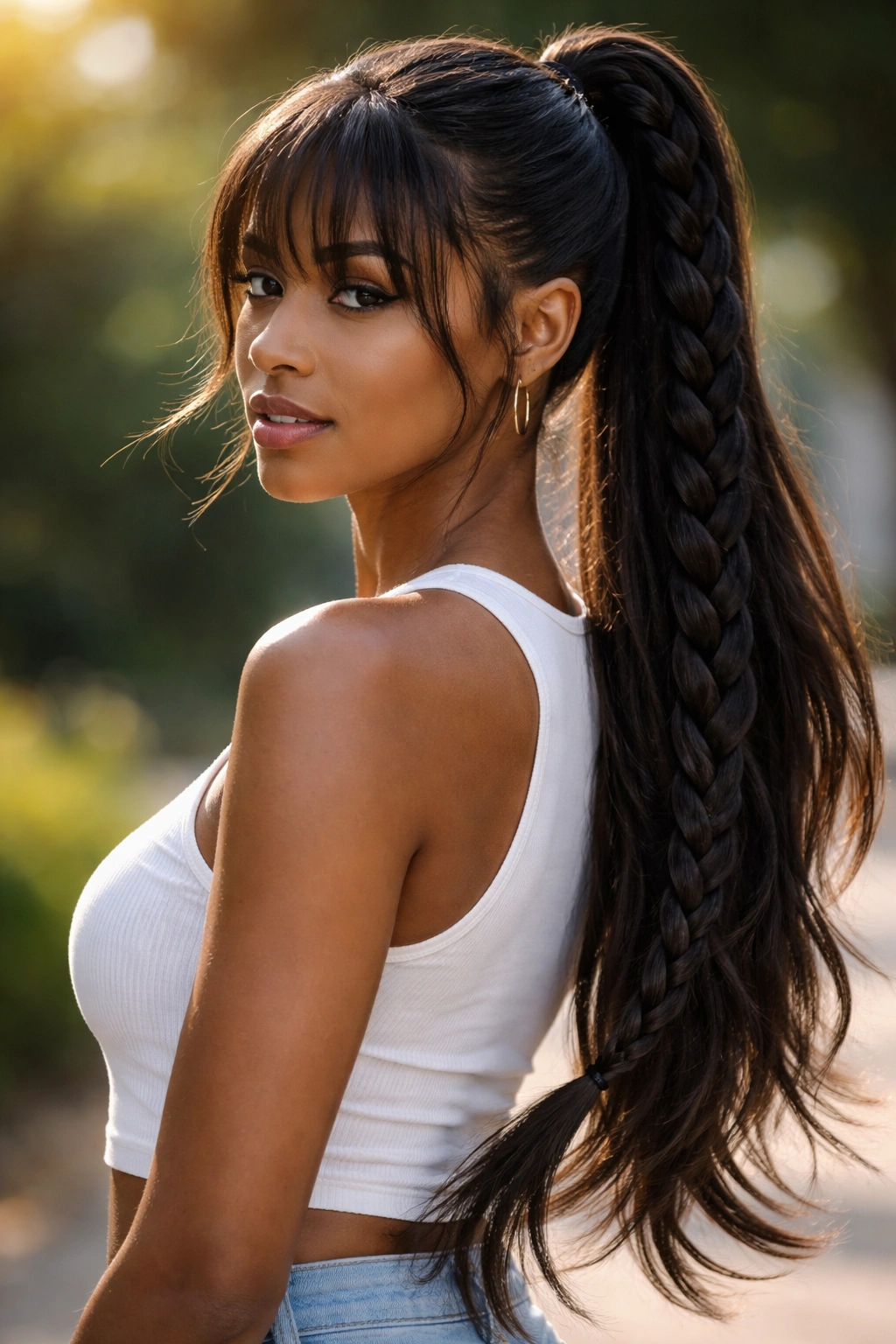
Sometimes the front detail is the star. That’s what’s happening here. The ponytail can stay fairly simple, but the braided bang detail adds enough interest to make the whole style feel finished.
Loose ends on the ponytail keep it from feeling boxed in. You get a bit of movement, a bit of softness, and a front section that looks carefully placed. The braided bang detail can be one thin braid, two small braids, or a curved piece across the brow depending on how much framing you want.
This is a good in-between style. More detail than a plain ponytail, less commitment than a full sculpted front. It’s also easy to adapt if you want to add charms or cuffs later.
The nicest part is how low-stress it feels. There’s room for the hair to shift a little and still look good.
22. Ponytail With Accessory-Heavy Bang Section
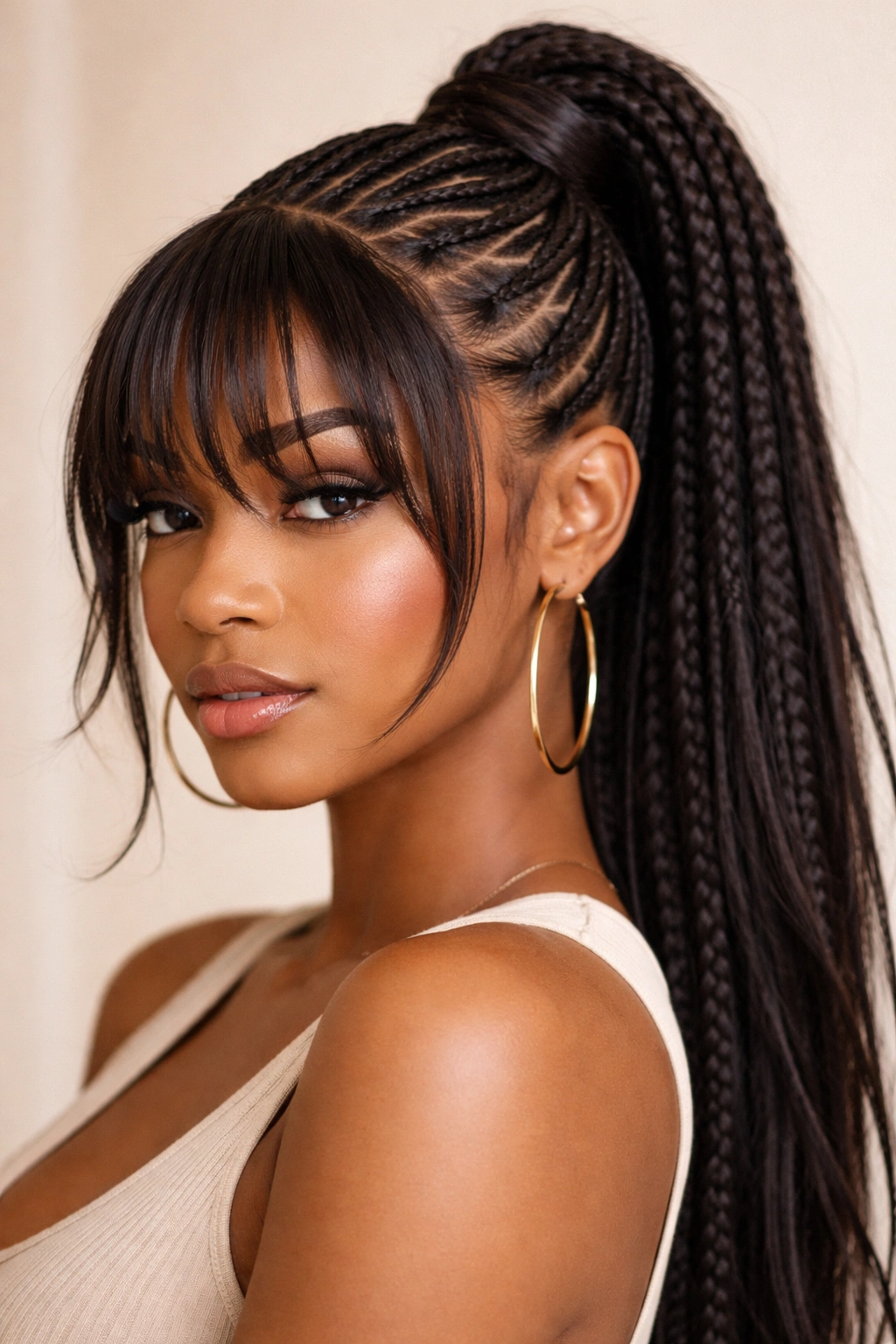
If you like accessories, let the bangs carry them. Not the ponytail. The front section is where clips, cuffs, rings, and beads can do the most without overwhelming the whole look, because that’s the part people see first.
The braid base should stay clean so the accessories don’t fight with a busy pattern. Then the bang section can hold the detail: one side clipped back, a few rings along a front braid, or a small row of cuffs near the temple. It becomes almost like jewelry for the hair.
A Good Rule
Pick one or two accessory types and stick with them. More than that and the style starts to look crowded.
A style like this is useful when you want your ponytail to match an outfit with metallics or strong details. It also works well for photos because the front has enough visual weight to read immediately. The ponytail still matters, but the bangs tell the story.
23. Classic Protective Feed-In Ponytail With Soft Bang Framing
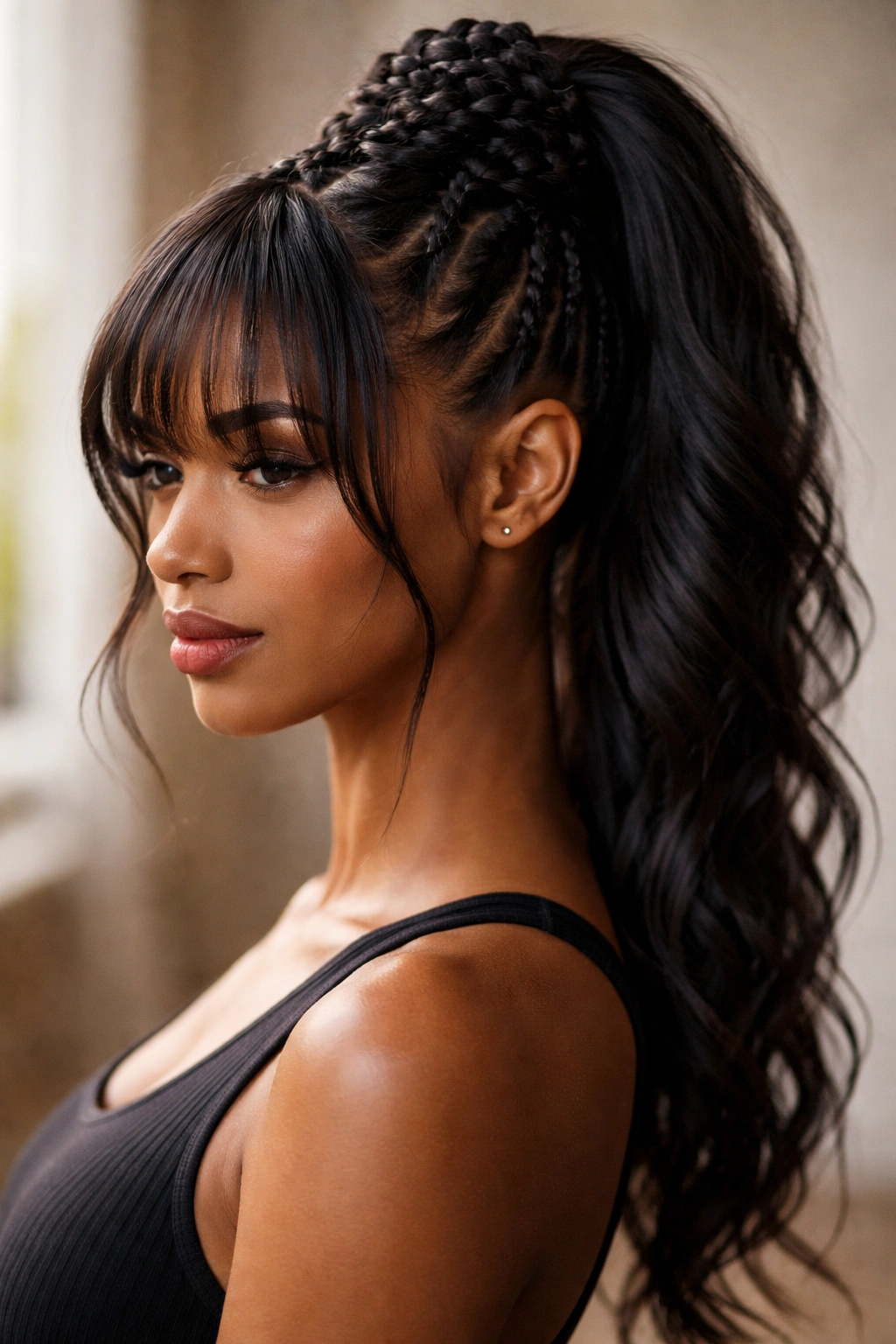
This is the version I’d call the quiet anchor of the whole group. It’s the style you can wear when you want the braid work to stay neat, the ponytail to stay practical, and the bangs to do just enough framing to keep the face open.
Soft bang framing usually means slim front pieces that fall gently around the brow and temple area. Nothing too blunt. Nothing too dramatic. The ponytail can be high, mid, or low, but the front stays soft either way. That makes this style easy to live with when you want something that lasts and still looks thoughtful on day four or five.
It’s also the most forgiving option on this list. If your face shape changes depending on how you wear earrings, glasses, or makeup, soft framing adapts better than a hard fringe. The braid base can stay protective and clean while the bangs keep the mood relaxed.
If you want one version that makes sense in almost any setting, start here. Then, once you know how you like the front to fall, move into the bolder versions above it. That’s the fun part: the same feed in braid ponytail with bangs can wear a dozen different personalities, and this one is the easiest place to begin.
