



A ginger weave ponytail does something plain ponytails often miss: it gives you shape, shine, and thickness in one move. The color helps, sure. But the real magic is the way copper, auburn, rust, and cinnamon tones break up the light so the hair reads fuller from every angle.
That’s why ginger weave ponytails can look expensive even when the styling is simple. A clean base, the right bundle length, and a texture that matches the mood do more work than people think. A 28-inch straight ponytail tells a different story from a shoulder-grazing wave, and a deep red-brown ginger reads differently from a bright copper one.
The mistake I see most often is treating the color as the whole point. It isn’t. If the base is lumpy, the ponytail will look busy instead of full. If the length is too long for the texture, the ends can go stringy. If the shade fights your undertone, the style loses the richness that makes ginger hair look so good in the first place.
The styles below lean in different directions—sleek, soft, braided, curled, wrapped, and everything in between—but they all aim for the same thing: a ponytail that feels bigger, cleaner, and more intentional than a quick tie-back.
1. Sleek High Ginger Weave Ponytail
A sleek high ginger weave ponytail is the fastest way to make the whole face look lifted. The height does a lot of the visual work, and the ginger tone keeps the style from looking flat or severe.
The trick is to place the base high enough that the ponytail sits above the crown, not at it. Too low and the style loses its punch; too high and the scalp can start to feel tight. Aim for a smooth sweep back from the hairline, then wrap a small piece of weave around the base so the tie is hidden. That little wrap matters more than people admit.
Why the height works
A high ponytail changes the shape of the head before you even notice the length. It opens the cheekbones, shows off earrings, and gives the ginger color a clean path from root area to ends. If the weave is straight, the finish looks sharp. If it has a soft bend, it looks fuller.
Use a boar-bristle brush or a soft paddle brush to smooth the hair upward in sections. Don’t drown the hairline in gel; a thin layer at the edges is enough. Too much product makes the roots look wet and can flatten the whole style.
- Best with straight or lightly waved bundles, usually 18 to 26 inches
- Works well when the wrap piece matches the ponytail length and thickness
- Looks strongest when the base sits 1 to 2 inches above the crown
- Helps fine features stand out without making the style feel heavy
Pro tip: Set the front with a satin scarf for 10 to 15 minutes before you leave the mirror. That one pause smooths the edges and helps the base hold its shape.
2. Deep Side-Part Ginger Low Ponytail
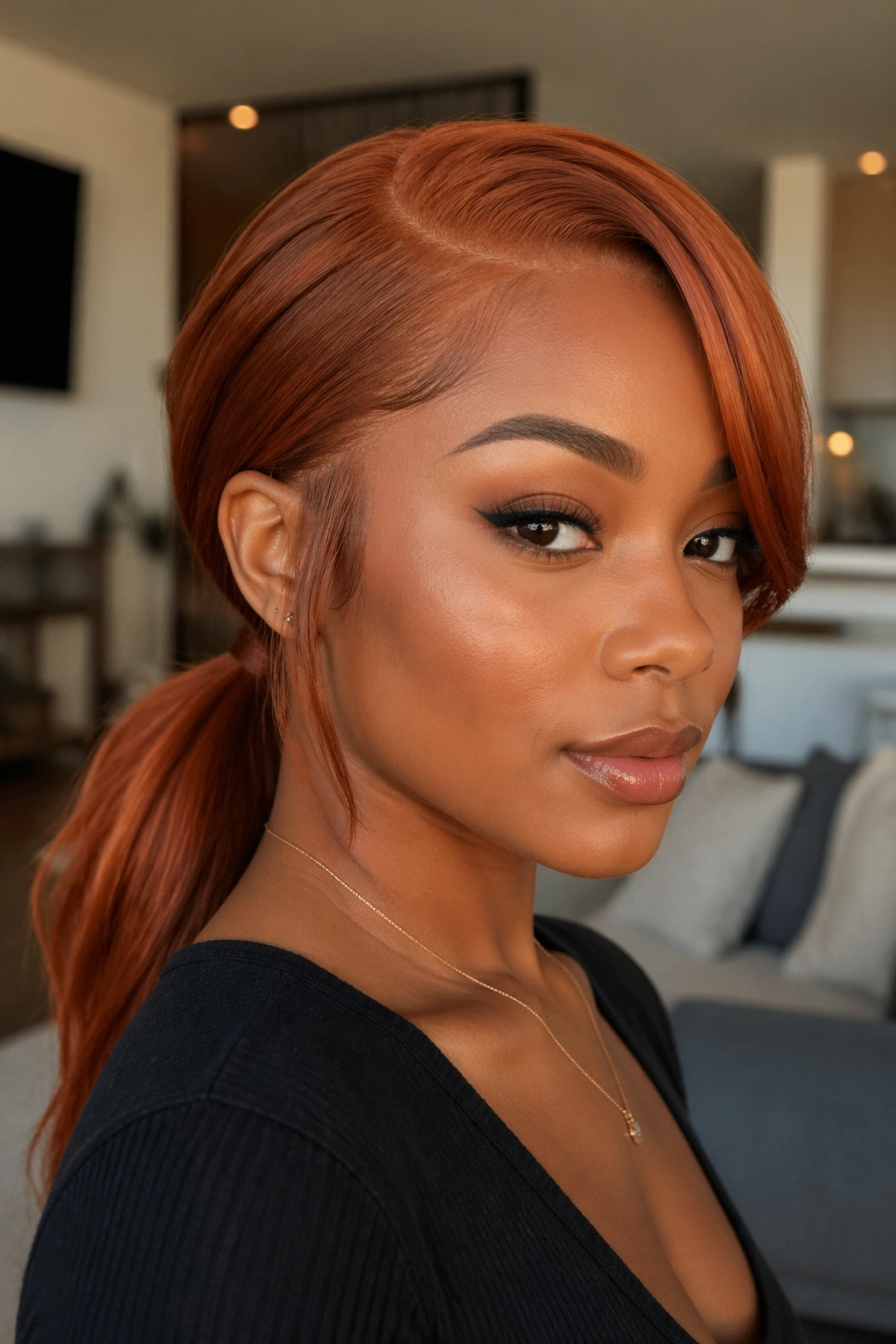
A deep side-part ginger low ponytail is softer than the high version, and that softness is the whole point. It gives you polish without the hard, pulled-back feel that some sleek styles can have.
The part should be deep enough to show the color dimension. I like a side part that starts around the arch of the brow and arcs back cleanly, not a tiny off-center line that looks accidental. From there, bring the ponytail down to the nape and keep the base close to the head. That low placement makes the style feel settled and elegant.
One good thing about this look is how well it works with ginger tones that have depth. Auburn, cinnamon, and copper-brown blends all show movement here because the hair falls in a neat line before it swings at the ends. It is a good choice when you want the color to do quiet work instead of shouting.
The only real downside is that a weak part will ruin it. Take the extra minute. A crisp side part changes everything.
3. Voluminous Curly Ginger Weave Ponytail
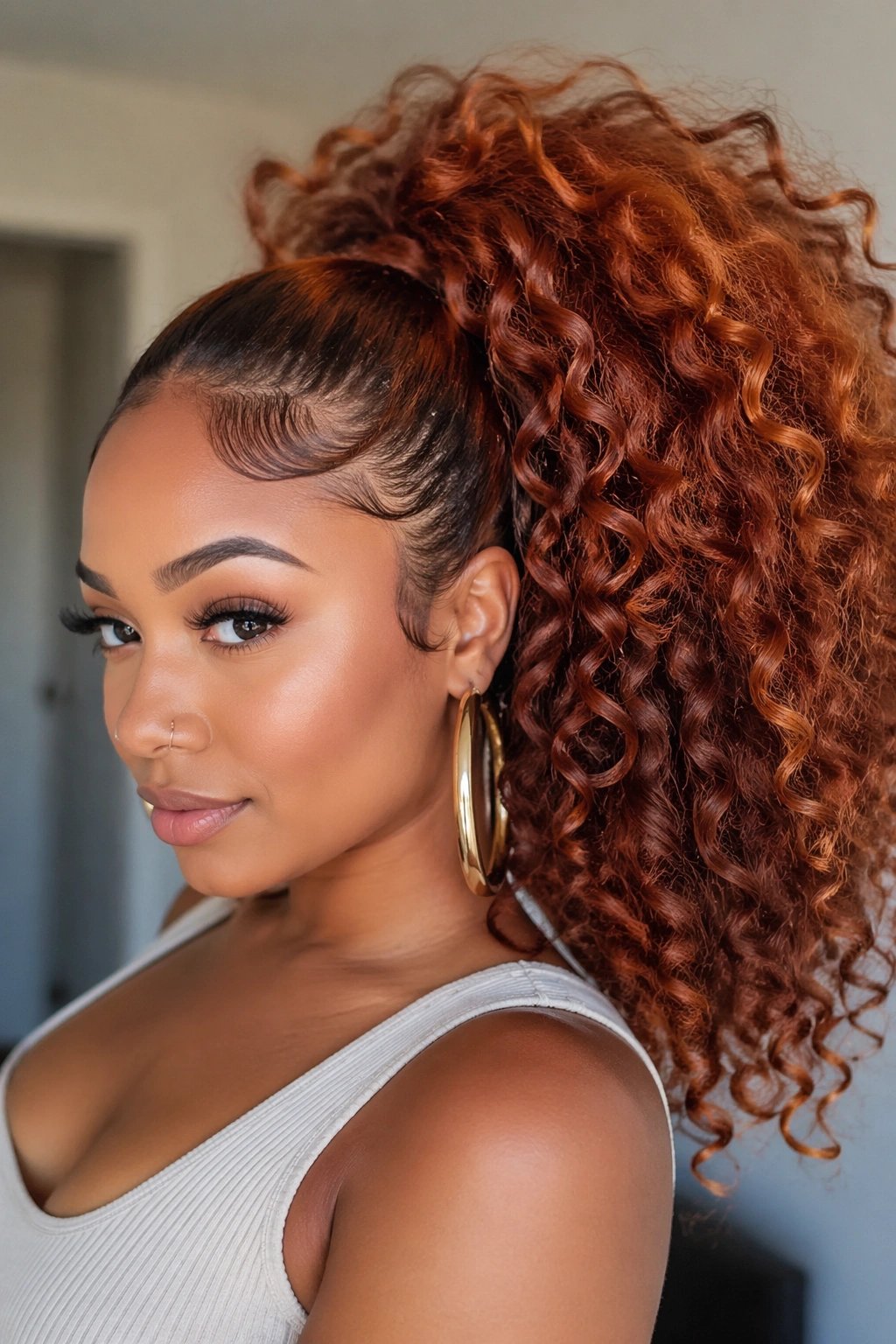
Why does a curly ginger ponytail look so full even when the bundle count is modest? Because curls build volume in layers. The shape widens before it drops, so the style reads thick from the sides and the back.
That’s what makes this one such a strong choice for a fuller look. A loose curl or a deep wave adds air between the strands, and ginger tones love that separation. Copper shows the bends. Auburn softens them. Bright ginger can look almost dimensional when the curls are brushed out lightly and pinned into a high or mid ponytail.
How to keep the curl full, not frizzy
The difference between full and fuzzy comes down to handling. Separate the curls with your fingers, not a paddle brush, and stop once the shape looks airy. If you overwork it, the ends puff out in the wrong way.
- Deep wave, loose spiral, and water-wave textures work best
- 1-inch curling irons make soft bends if the weave is heat-safe
- Finger-separating gives more body than brushing
- A light mist of holding spray helps the shape last without freezing the hair
Use this style when you want texture first and strict polish second. It feels easier on the eye. It also hides a slightly smaller ponytail base better than straight hair does.
4. Extra-Long Straight Ginger Ponytail
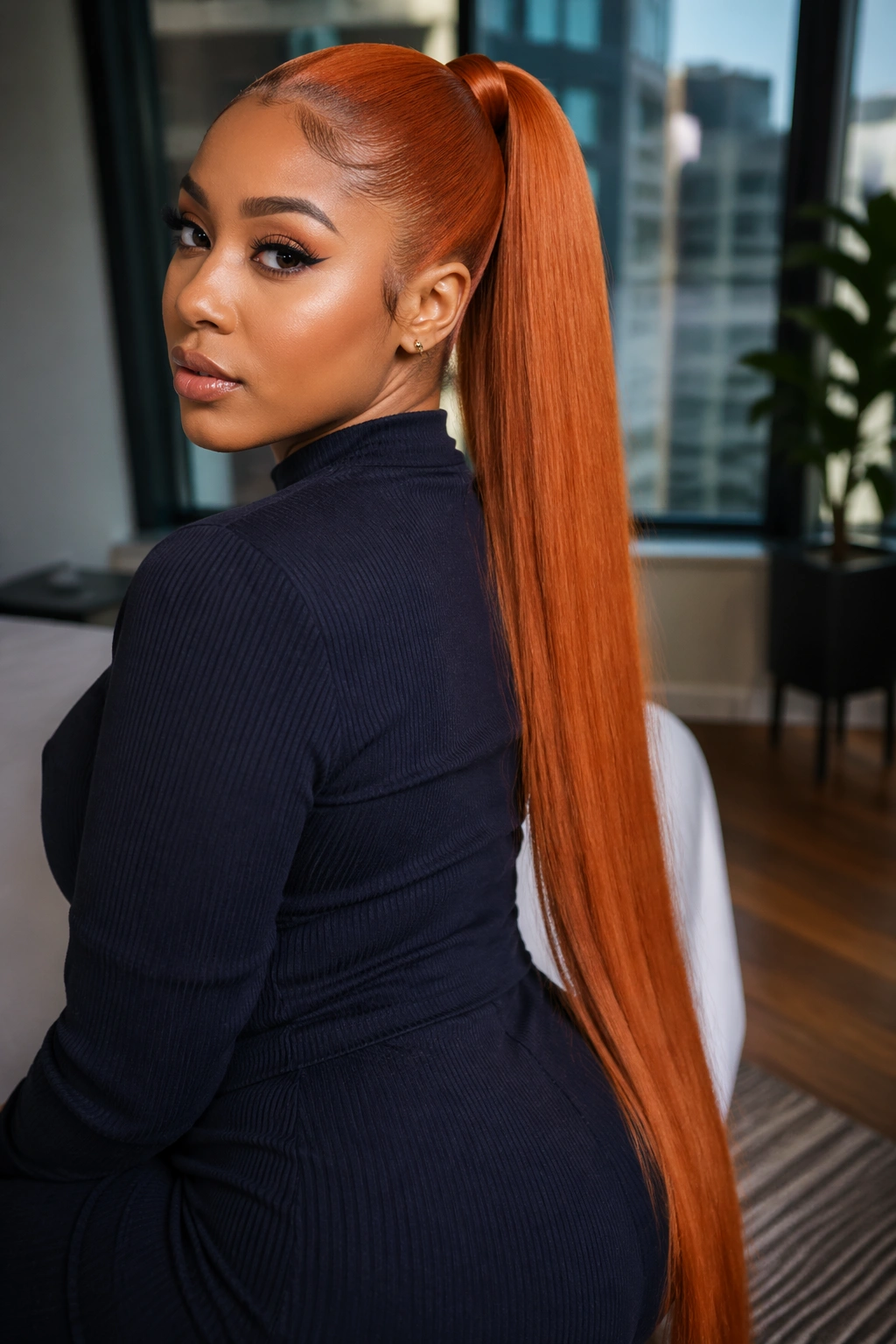
If you want a ponytail that swings against the middle of the back, this is it. An extra-long straight ginger weave ponytail gives drama through length, and the ginger color keeps all that length from disappearing into a single dark shape.
The catch is obvious: long straight hair shows everything. Every bump at the base. Every uneven wrap. Every blunt end that should have been trimmed a little cleaner. So the install has to be neat, and the length has to make sense with the texture. A 30-inch ponytail can look expensive or it can look tired. The difference is in the finish.
Choose this look when you want the ponytail to be the outfit. It pairs well with simple necklines, bare shoulders, and clean makeup because the hair already carries a lot of visual weight. If the weave is human hair, a small pass with a flat iron can keep the length smooth. If it is synthetic, skip the heat and work with the built-in texture.
- Best for people who like a bold swing and strong silhouette
- Needs a secure base so the weight doesn’t tug by the end of the day
- Looks fuller when the ends are blunt rather than wispy
- Works nicely with deep copper or burnt ginger shades
A long straight ponytail can feel a little severe if the part is too sharp. Soften the hairline or add a few face-framing pieces if you want it to read warmer.
5. Bubble Ginger Ponytail
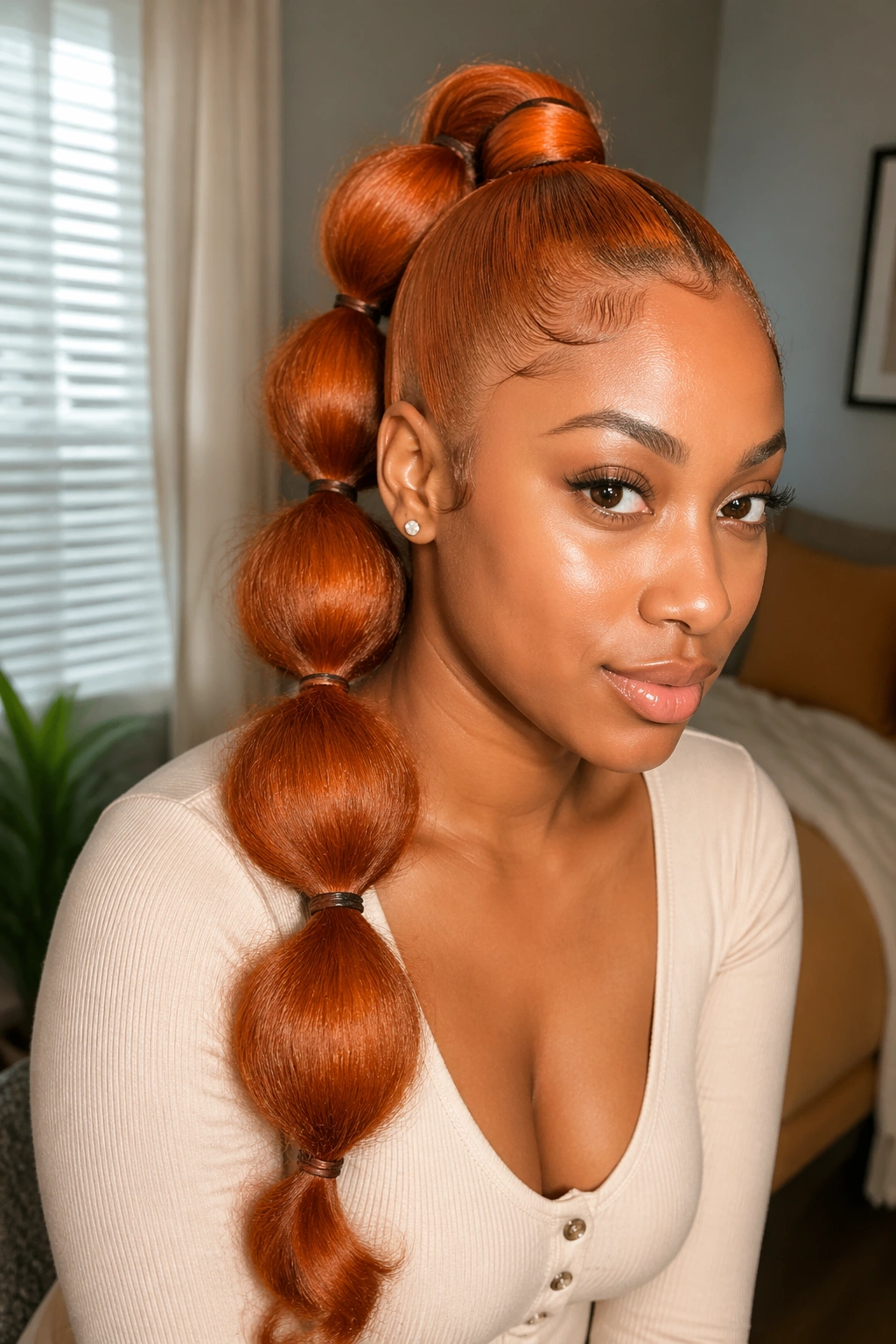
A bubble ponytail is one of those styles that looks playful, but it also does a sneaky good job of making hair appear thicker. Each section bulges a little, so the whole ponytail reads fuller than a single smooth fall.
The ginger color helps even more here. Every bubble catches the eye differently, especially when the shade shifts from copper at the top to a deeper red-brown through the length. You do not need a dramatic ombré for this to work, either. A solid ginger tone still looks rich when the sections are spaced with care.
The spacing matters. Too far apart and the style starts to look skinny between ties. Too close together and the bubbles lose their shape. Three to four inches between elastics usually feels right on long hair, though the exact spacing changes with length and bundle thickness. A few strands wrapped around each elastic make the finish cleaner, but the style still looks good without that extra step.
This is a great option when you want something a little less serious than a sleek ponytail. It has energy. It also photographs with more movement, which is probably why so many people keep coming back to it.
6. Half-Up Ginger Weave Ponytail
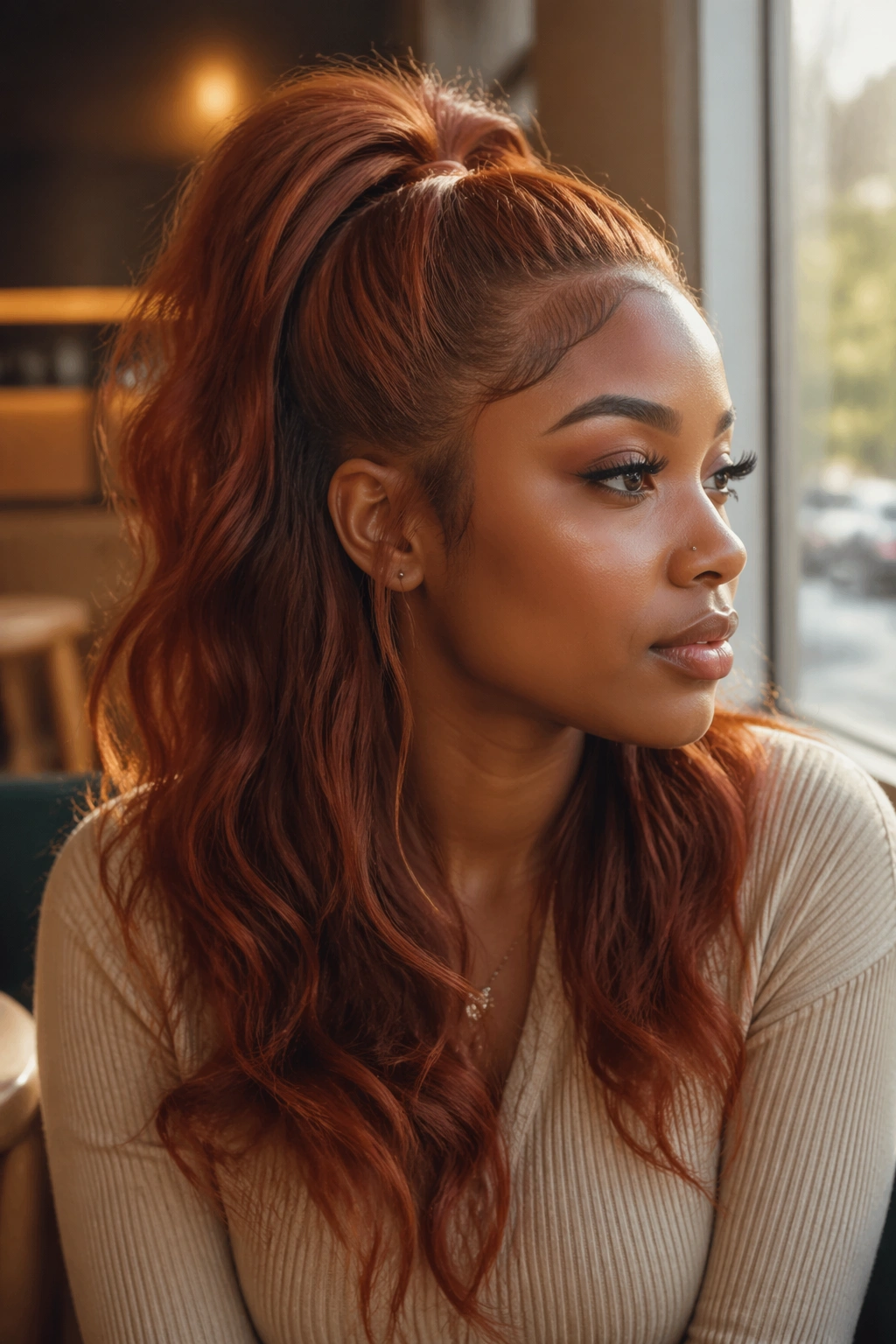
Unlike a fully pulled-back ponytail, the half-up version keeps the lower length visible, which makes the whole style feel bigger from the front. That’s the part most people notice first. Not the back.
This is a smart move when you want the crown lifted but still want hair around the shoulders. A half-up ginger weave ponytail gives you shape at the top and softness below, so the style does not look too severe. It is especially good if the weave has loose waves or a soft curl pattern, because the lower section adds motion when you walk.
I also like this one for medium-density installs. If the full ponytail feels too heavy or too dominant, half-up styling takes pressure off the scalp while still giving the impression of fullness. It can look more balanced on smaller faces, too, since the eye has more than one point to follow.
The cleanest version uses a neat top section gathered at the crown or just behind it, then leaves the rest flowing free. A little color contrast near the top makes the ginger shade stand out, and the lower hair keeps the style from feeling too formal. Easy. Pretty. Not fussy.
7. Braided-Base Ginger Ponytail
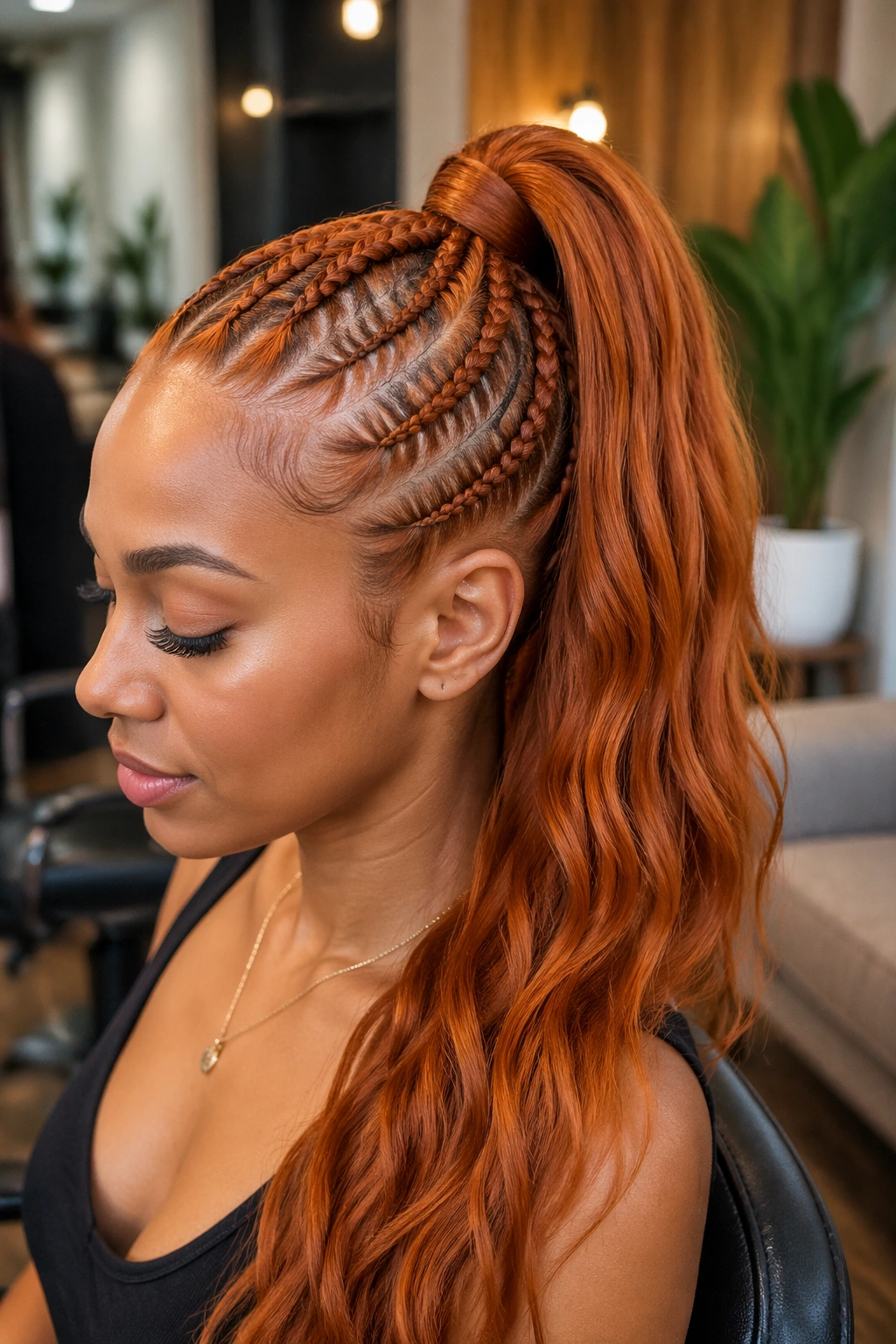
A braided base is the style I reach for when the goal is control, not fuss. It keeps the roots neat, gives the ponytail a stronger anchor, and adds a little texture before the length even starts.
What the braid is doing underneath
The braid is not just decorative. It helps the base lie flatter, which makes the ponytail itself look fuller because the eye sees a clean transition from scalp to length. A single braid into a ponytail gives a smooth, sporty finish. Two braids can make the crown look tighter and more sculpted.
This works especially well with ginger weave ponytails because the braid pattern gives the color some structure. A bright copper braid against a slightly darker length looks intentional. A cinnamon tone looks richer when the braid is neatly defined.
- Best with medium to long bundles
- Good for active days when you need the style to stay put
- Strong choice if you want the base to feel neat without being stiff
- Looks better when the braid is snug, not painful
Do not braid too tightly. That’s the part people regret later. A braid should feel secure, not like a headache waiting to happen. If the scalp is sore before you leave the chair, the style is already too tight.
8. Side Ginger Ponytail With Soft Waves
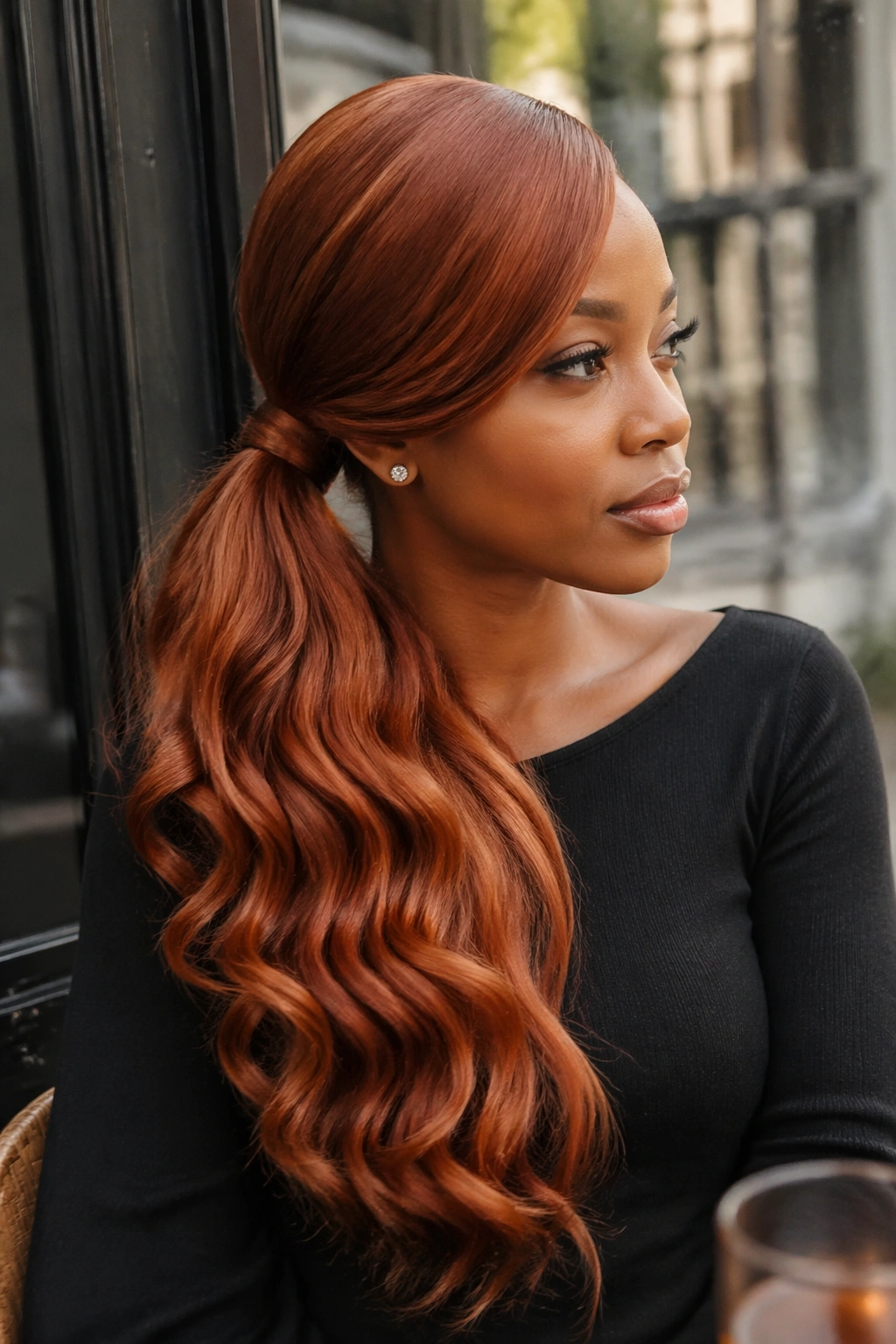
A side ponytail feels old-school in the best way. It has a little red-carpet energy, a little romance, and a lot of room for the ginger color to move across the shoulder.
The shape is what makes it interesting. Instead of centering the ponytail at the back, shift it to one side and let the waves fall over the shoulder closest to the part. That slight angle changes how the length hangs, and it helps the ponytail look fuller because the hair stacks on itself instead of dropping straight down.
This style works nicely when you want the weave to feel a little less structured. Soft waves stop the ponytail from looking too stiff, and the side placement keeps the look from feeling basic. It is a good one for off-the-shoulder tops, long earrings, and any outfit that leaves the neckline open.
I prefer this with a medium part rather than a severe deep part. The style already has enough attitude. You do not need to force it. Keep the front smooth, let the wave pattern do the rest, and give the ponytail enough room to rest naturally across the collarbone.
9. Face-Framing Tendril Ginger Ponytail
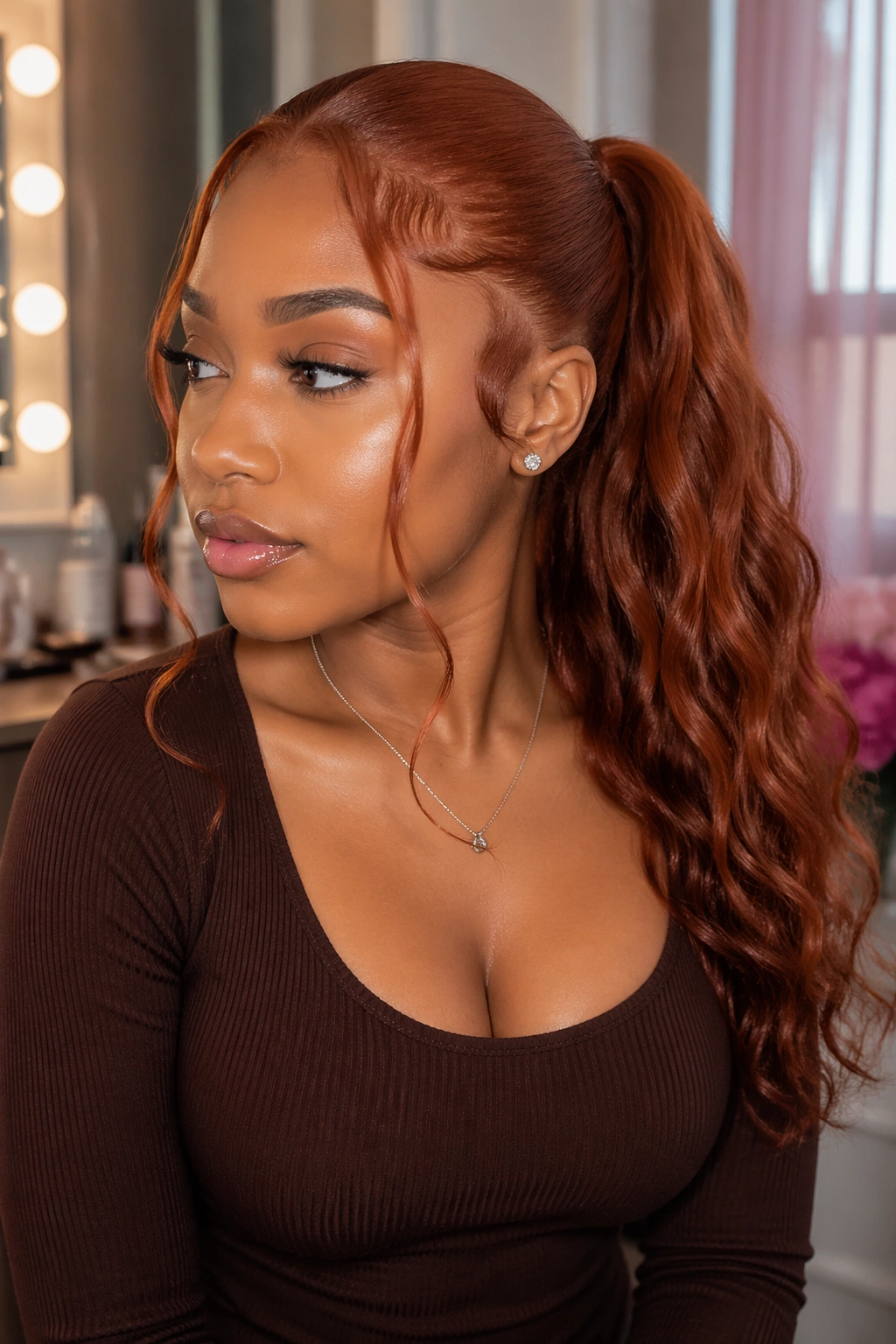
Why do a few loose pieces change the whole ponytail? Because they break up the line between forehead, cheek, and jaw. A pulled-back style can go sharp fast, and face-framing tendrils soften that edge without taking away the fullness.
This is one of my favorite tricks for ginger weave ponytails when the face shape needs a little balance. The tendrils can be curled, bent softly, or left with a gentle wave. A piece on each side is usually enough. More than that starts to look unfinished unless the rest of the style is intentionally messy.
Where the tendrils should sit
The best pieces usually start just below the cheekbone or right around the jaw. Too short and they can flick in odd places. Too long and they stop framing anything. A loose 1-inch section near each temple is often enough to build the shape you want.
A ginger shade makes these front pieces even more useful because the color stands out against skin and makeup. The face gets a soft border. The ponytail stays full at the back. It’s a small detail, but it changes the whole balance of the style.
Use this version when you want your ponytail to feel gentler, not stricter. It is especially good if you wear minimal jewelry or a simple neckline and want the hair to carry more of the look.
10. Layered Flipped-End Ginger Ponytail
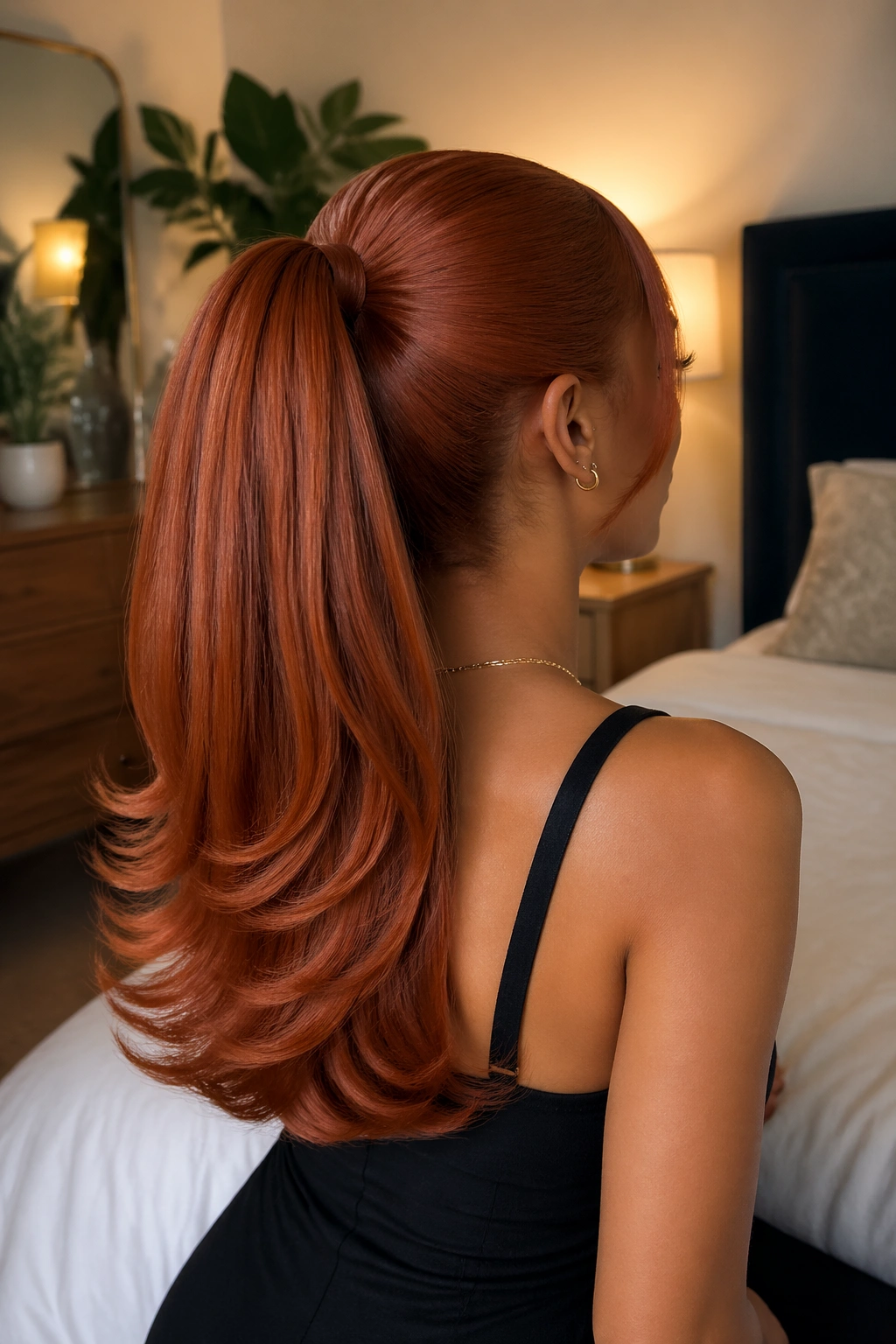
Straight ponytails can go flat at the ends, which is why a layered, flipped-end version earns its keep. The layers give the length movement, and the flip keeps the last few inches from hanging like a curtain.
This is a strong choice when you want a polished ponytail with a little shape at the bottom. Instead of letting the ends fall dead straight, add layers through the lower third and give the tips a soft outward bend. That bend can be subtle. It does not need to look like a pageant curl. A light flip is enough.
The style reads fuller because the ends are doing more than one thing. They flick, separate, and move, which helps the ginger color show itself in different planes. That matters with long straight weaves, where the shade can otherwise blur into one block of color.
- Best with 22 to 28 inch bundles
- Good if you want the length to look styled, not just long
- Works well when the ends are trimmed in a clean line before shaping
- Easier to maintain than a super-curled ponytail
A blunt end can still work here, but layers tend to feel softer. If you want more movement and less weight, this is the one.
11. Ginger Ponytail With Bangs
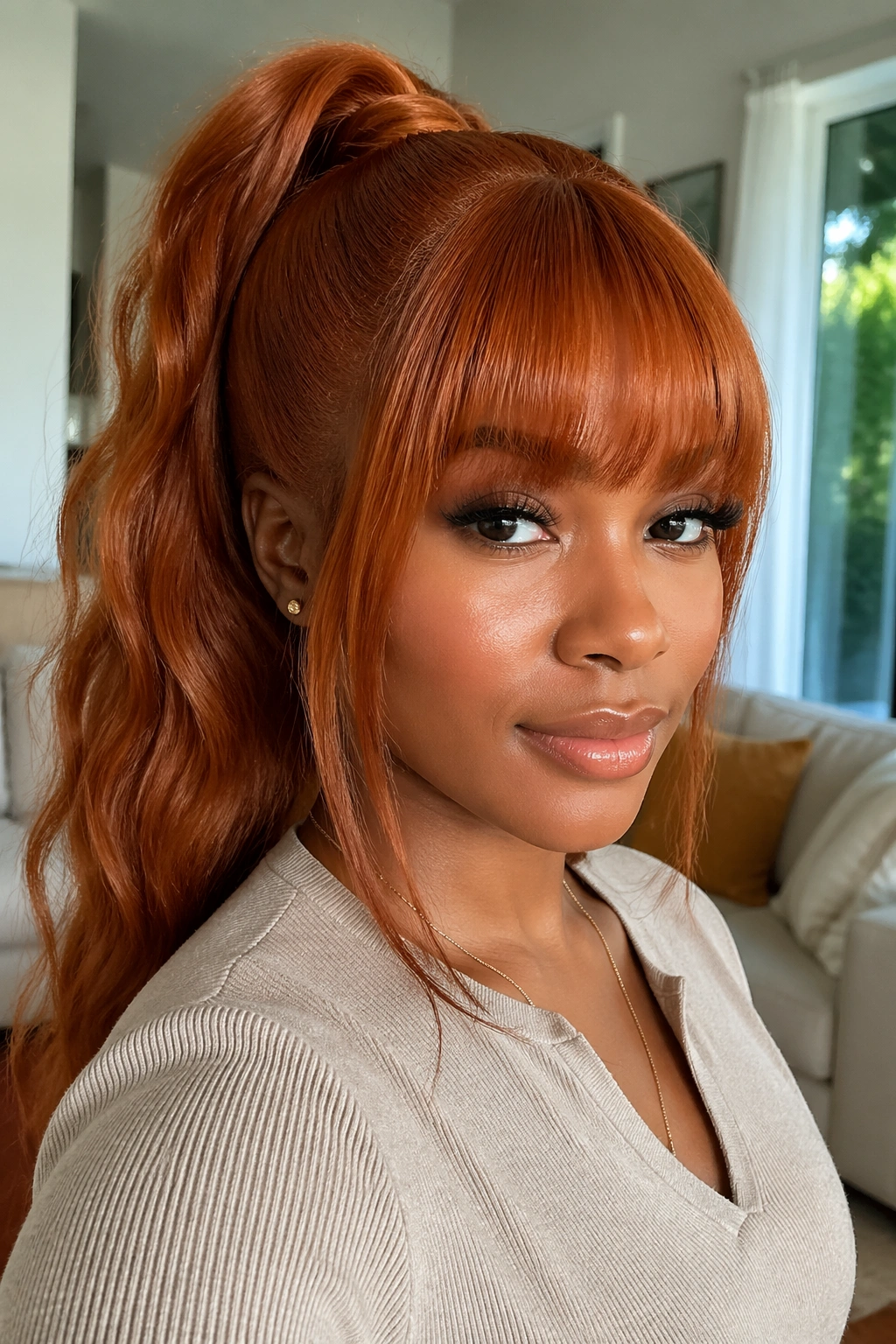
A ginger ponytail with bangs feels more like a haircut and less like a pulled-back style. That’s why it stands out. The bangs give the front of the face a frame, while the ponytail keeps the back full and easy to wear.
Blunt bangs make the style read stronger. Curtain bangs soften it. Side bangs fall somewhere in the middle. I like all three, but they each send a different message. Blunt bangs feel sharper and more fashion-forward. Curtain bangs are easier to wear daily. Side bangs are the quietest choice and the safest if you do not want to commit to a heavy fringe.
The ginger color makes the bangs more visible, which is part of the appeal. A fringe in copper or auburn has enough contrast to hold its own against the ponytail, especially when the rest of the hair is sleek. If the ponytail is curly or wavy, the bangs keep the front from getting too crowded.
This style does ask for more upkeep. Bangs need shaping, and they can separate during the day if the air is humid or the hair is touched too often. Still, I think the payoff is worth it when you want the full look to feel styled from the front, not only from behind.
12. Rope-Twist Ginger Ponytail
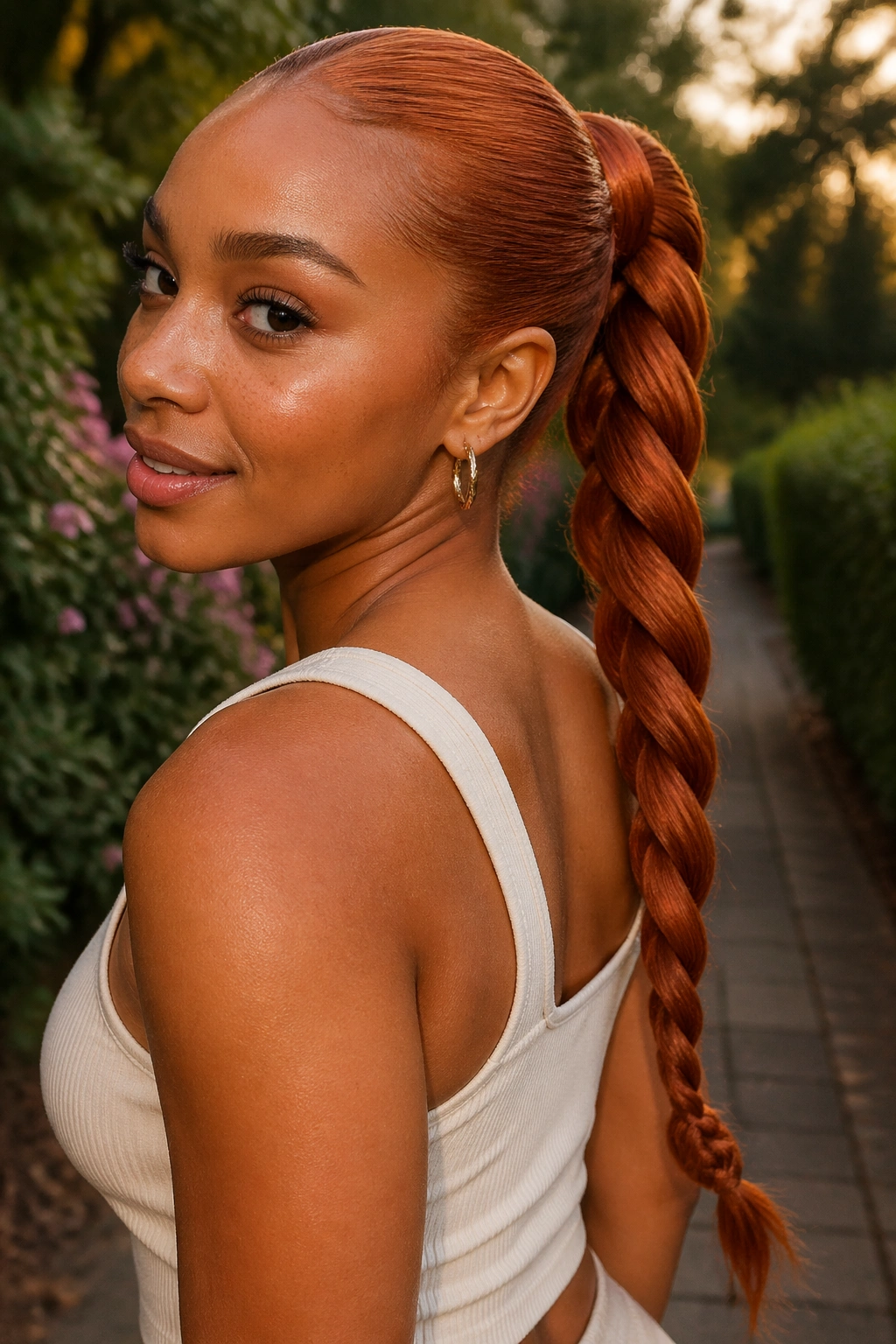
Unlike braids, rope twists keep the line smoother and a little cleaner. That makes them a good match for ginger weave ponytails when you want texture without the heavier, woven look of a full braid.
The method is simple enough, but the finish depends on even tension. Split the ponytail into two equal sections, twist each section in the same direction, then wrap them around each other in the opposite direction so the rope holds. If one side is tighter than the other, the twist starts to skew. That is the part that throws the whole thing off.
How to make the twist stay neat
The texture should look compact, not ropey in a rough way. A light sheen helps, but too much product will make the twist slip and the ginger shade look greasy at the base. Keep the section size even from top to bottom.
- Works best on medium-density ponytails
- Looks sharp with straight or lightly waved lengths
- Good for people who want movement without full curls
- Can be worn high, mid, or low
This style is especially nice when the ginger tone has subtle color shifts. The twist lets the highlights and deeper strands play against each other. It is tidy, but not boring.
13. Gold-Accessorized Ginger Ponytail
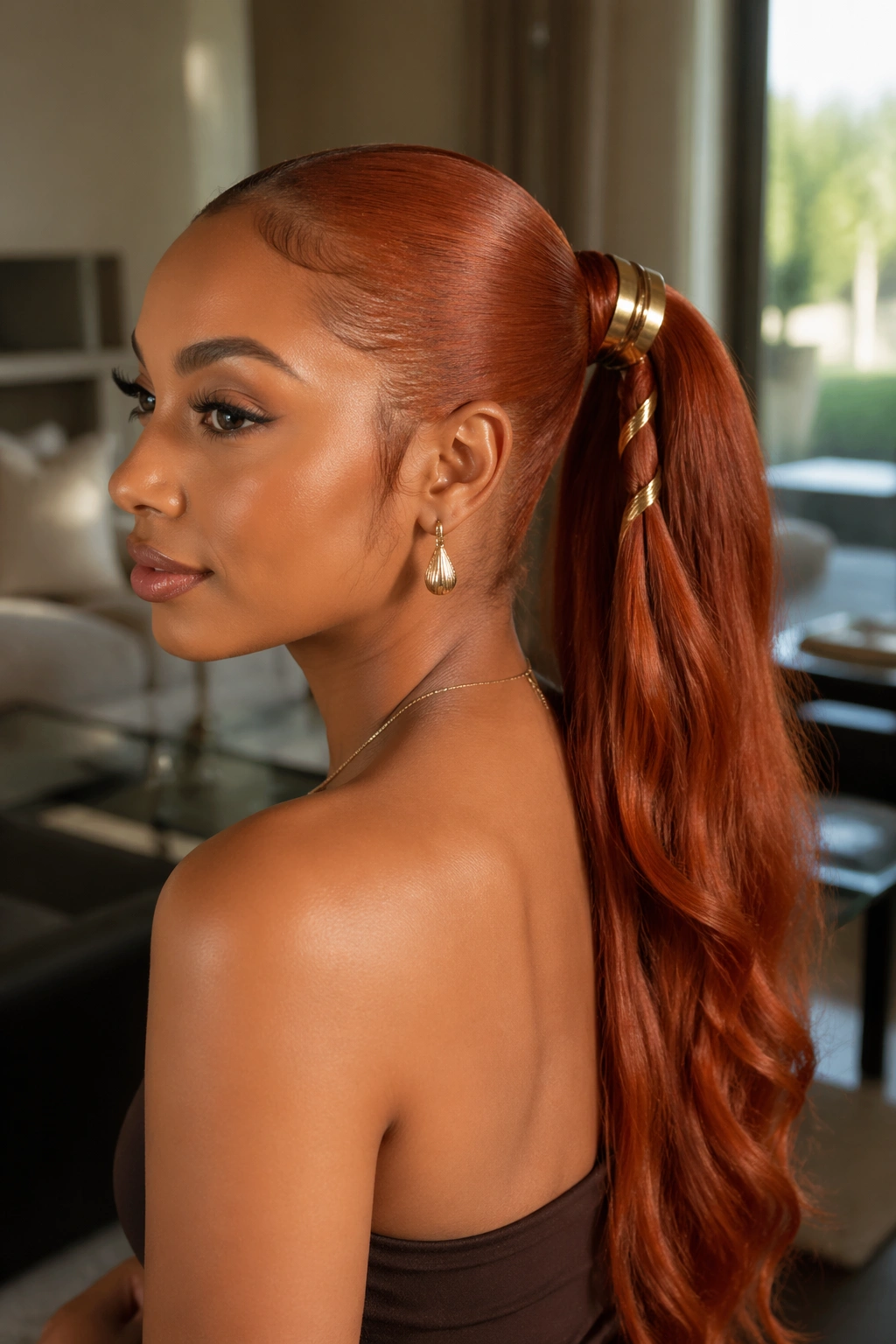
A ginger ponytail can look bare if the base is too plain. A little hardware fixes that fast. Gold cuffs, slim rings, and a narrow ribbon can turn a simple weave ponytail into something that feels finished.
The safest move is to treat accessories like punctuation, not decoration overload. One cuff at the base can be enough. Two or three cuffs spaced down the length work if the ponytail is long and straight. A satin ribbon tied near the wrap adds softness, while metallic rings give the ponytail a firmer, dressier feel.
Ginger and gold pair well because the tones sit in the same warm family. That does not mean you should pile everything on. If the weave is already curly or very thick, too many accessories can make the style feel crowded. Keep the line clean and let the ornament sit where it will be noticed.
This version is handy when you want the ponytail to carry a little more personality without changing the whole shape. It works for events, dinners, photos, or any day when a plain ponytail feels too bare. One small detail, done well, goes a long way.
14. Feed-In Cornrow Ginger Ponytail
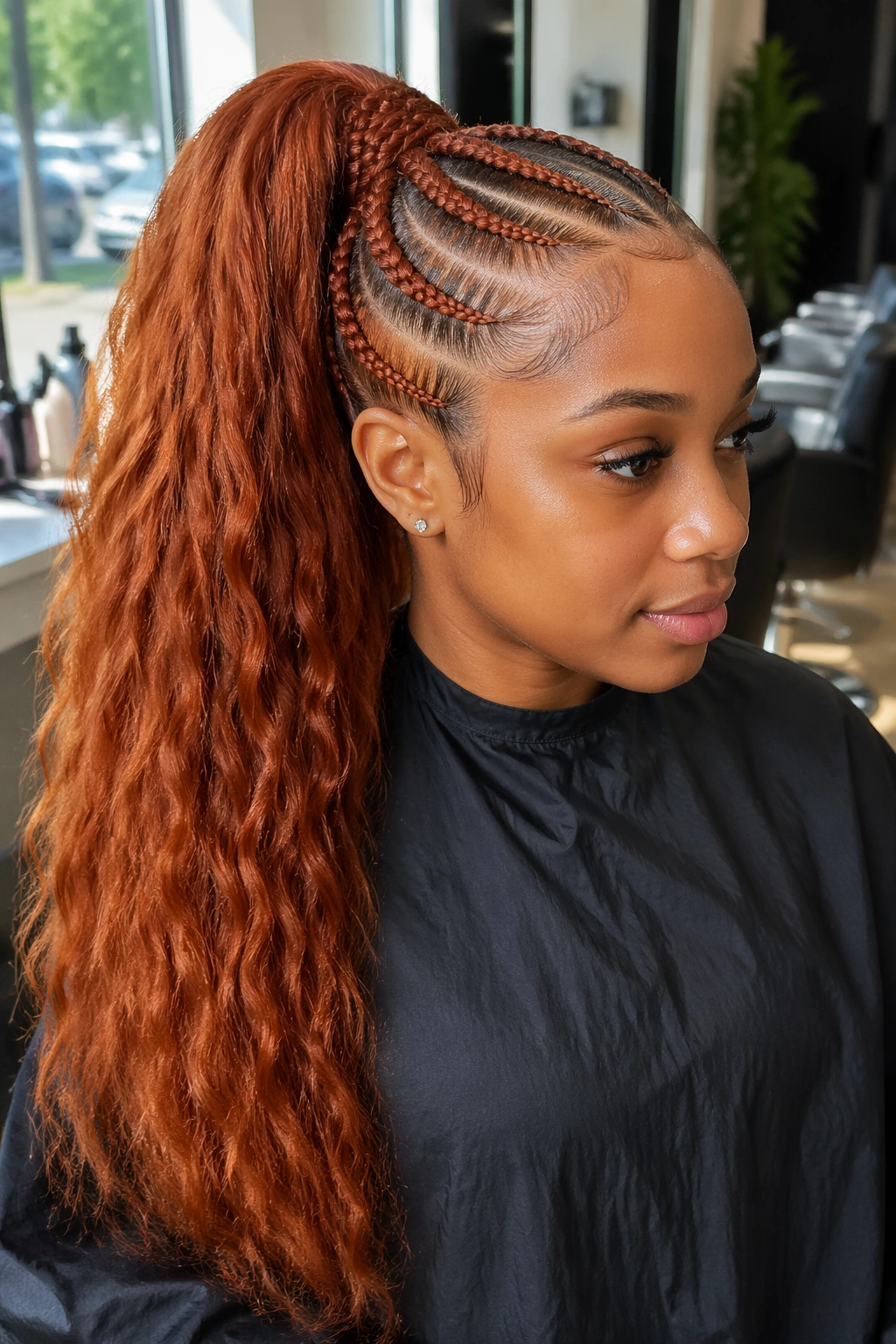
This is the cleanest path to a heavy-looking ginger ponytail. Feed-in cornrows build the base from the scalp upward, so the ponytail starts with structure instead of looking like it was simply gathered and tied.
The visual payoff is strong. The rows guide the eye back to the ponytail, and the smooth base makes the length look thicker by contrast. You can do two braids, four braids, or more depending on the shape of the head and the finish you want. A higher feed-in placement gives more lift. A lower one feels calmer and more grounded.
Why feed-ins make the ponytail look fuller
The braids create a neat path that hides the join between natural hair and weave. That makes the ponytail feel more seamless, and seamless styles usually read fuller because nothing interrupts the line. Ginger shades also look good in this setup because the scalp pattern gives the color a sharper outline.
- Best for a polished, sculpted finish
- Helps heavier ponytails sit more securely
- Can last longer when the rows are kept neat
- Needs careful tension so the scalp does not feel pulled
The tension should be snug, not sore. That distinction matters. If the base hurts, the style will not be fun to wear, no matter how good it looks at the mirror.
15. Soft Body-Wave Ginger Weave Ponytail
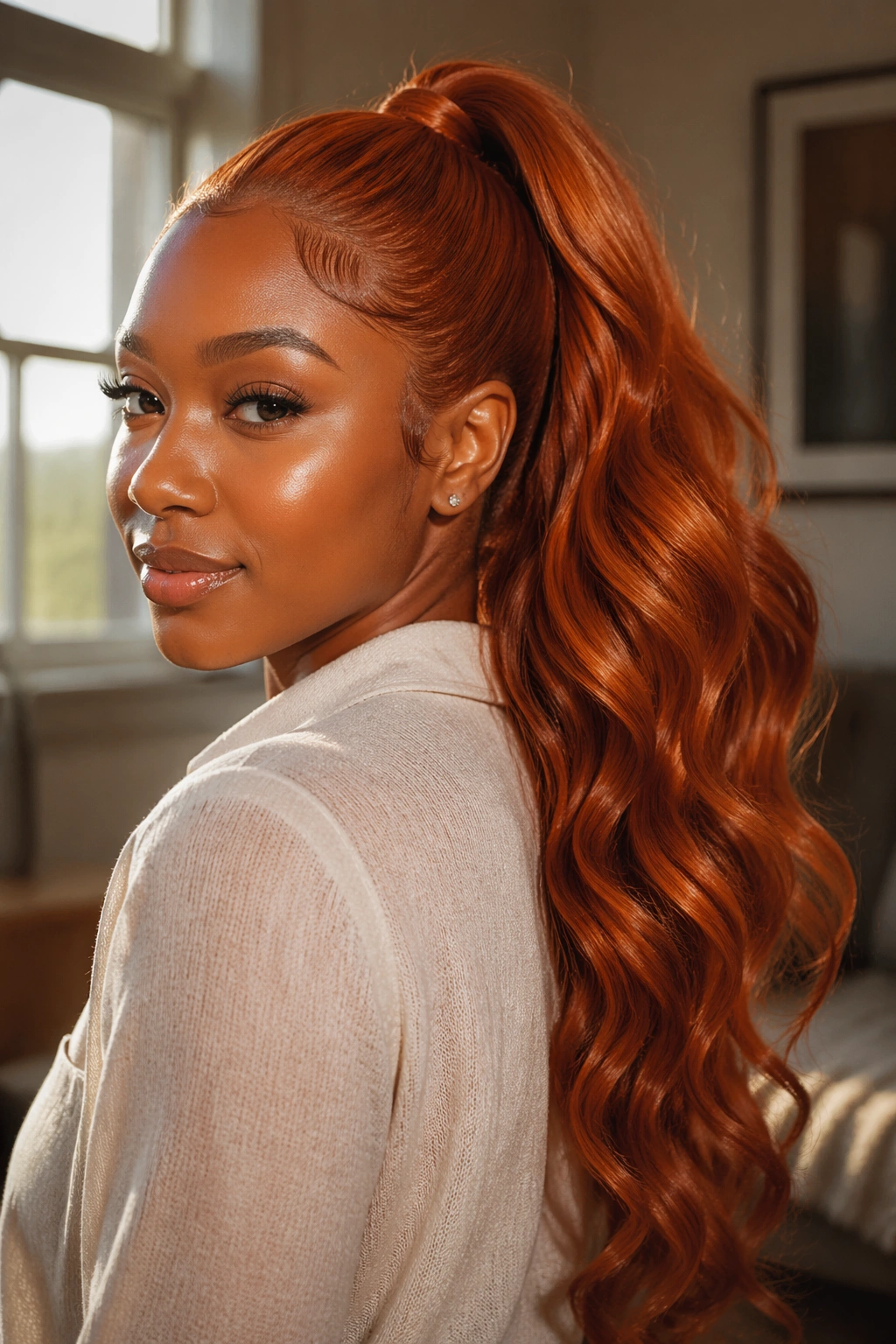
A soft body-wave ginger weave ponytail is what I recommend when someone wants fullness without sharp edges. The wave gives shape, but it does not get as busy as a curl pattern, so the style feels easy to wear.
This is the kind of ponytail that moves naturally when you turn your head. The length falls in a smooth bend, then opens up again toward the ends. That soft motion makes the ginger color look richer because the waves keep shifting the light across the surface. A deep copper shade looks warm here. A red-brown ginger looks grounded and expensive in a quiet way.
It also tends to be one of the easiest styles to live with. You do not have to keep redefining the curl pattern, and you do not need the strict upkeep that comes with a super-sleek straight ponytail. A finger comb in the morning and a quick touch-up at the base are often enough.
If the hair is long, keep the front sections a little softer so the ponytail does not feel too heavy near the shoulders. That small adjustment makes the whole style breathe. And that matters when the goal is a full look that still feels wearable.
The Bottom Line
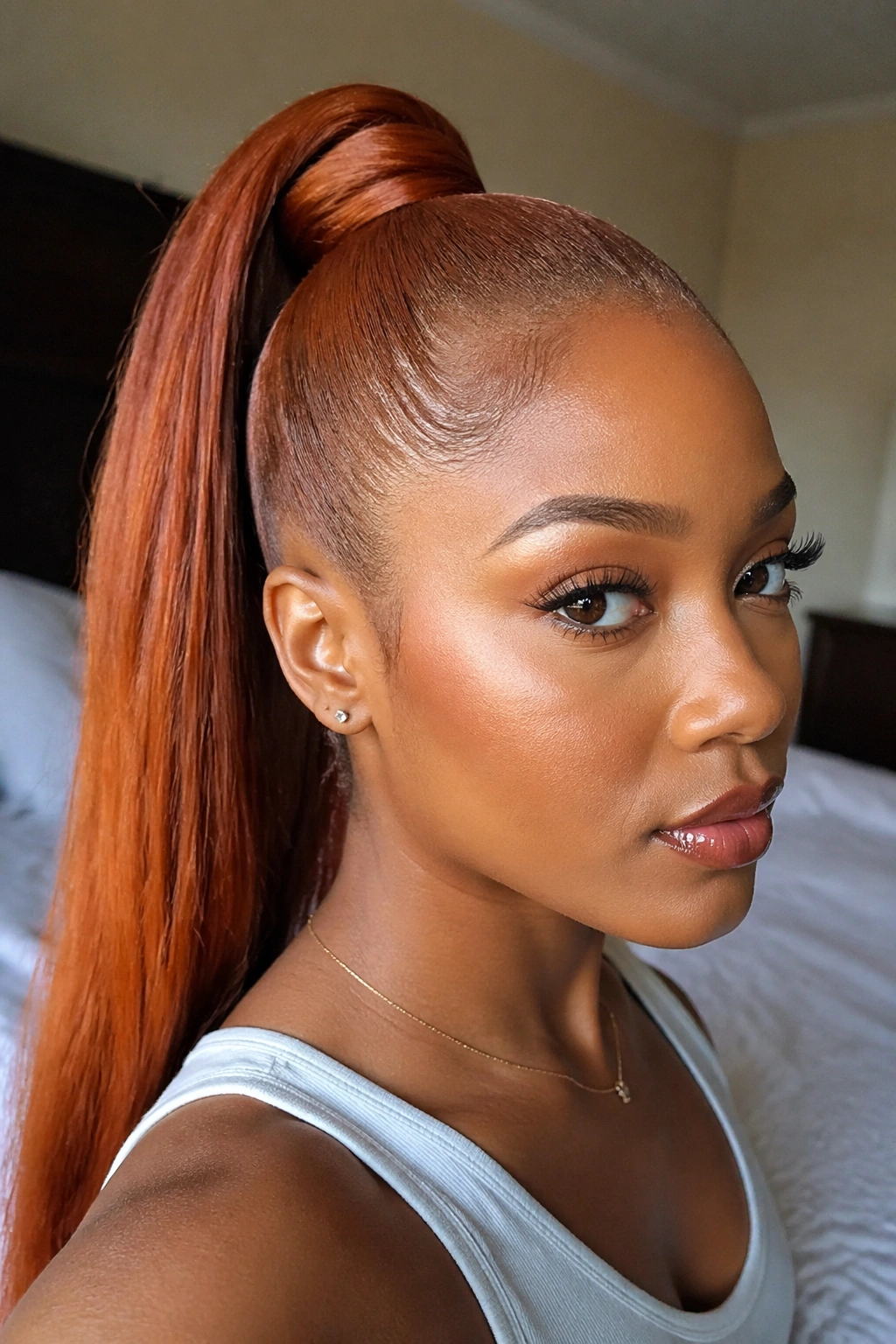
The best ginger weave ponytails do more than sit on the back of the head. They build shape from the base, use texture on purpose, and let the color work with the style instead of carrying it alone.
If you want polish, go sleek, high, or feed-in. If you want softness, choose waves, curls, or tendrils. If you want the ponytail to feel louder and more styled, bubbles, accessories, and flipped ends all have their place.
One thing never changes: the base has to be neat. A clean part, steady tension, and a shade of ginger that suits the mood of the look will do more for fullness than piling on extra hair ever could. That’s the part people notice first, even if they can’t quite explain why.
