



There’s something about kinky braid styles that hits different when you have 4C hair. Not the same as looser textures — the grip is tighter, the definition more compact, the finish bolder. Kinky braids on afro hair don’t just sit there looking pretty. They announce something. And the range of what’s possible once you understand your hair’s natural personality is genuinely staggering.
The problem is that most braid content online is written for a general audience. Generic tips, watered-down technique, photos that don’t actually represent 4C or highly textured hair. So the specifics you actually need — how to handle shrinkage, what products work when your hair fights moisture retention, how to protect your edges while still getting definition — tend to get glossed over. This article goes there directly.
Whether you’re working with a natural length that’s deceptive because of shrinkage, using extensions to add length, or trying to find something that survives humidity and sleep and a full week without unraveling, there’s a kinky braid style here that fits. The 23 options below cover everything from quick single braids to intricate patterns and protective styles that last weeks.
What Makes Kinky Braids Different From Regular Braids
The difference isn’t cosmetic. It’s structural. When you braid 4C or highly textured natural hair, you’re working with coils that have more contact points per inch than straight or wavy hair. That means more friction, better grip, and a finished braid that holds shape without much product at all — but also more potential for tangling and breakage if you’re not careful with prep.
Kinky braids also shrink. A braid installed on stretched 4C hair at 12 inches can look closer to 8 once the hair’s natural coil pattern contracts. That’s not a flaw. That’s texture. But knowing it in advance means you won’t panic when your braids look shorter than expected right after installation.
Extensions used for kinky braid styles are usually textured to match — kinky, wavy, or coarser synthetic fibers rather than silky braiding hair. The matching texture is the whole point. It lets your natural roots blend seamlessly into the extension length, so there’s no visible difference between where your hair ends and the extension begins.
Why Prep Matters More for Kinky Styles
Stretch your hair before braiding whenever possible — not bone straight, but a light blow-dry or banding method brings the coils out of their tightest state so individual sections are easier to part and braid cleanly. De-tangled, slightly stretched, lightly moisturized hair braids faster, holds better, and hurts less. Start there.
Tools and Products Worth Having Before You Start
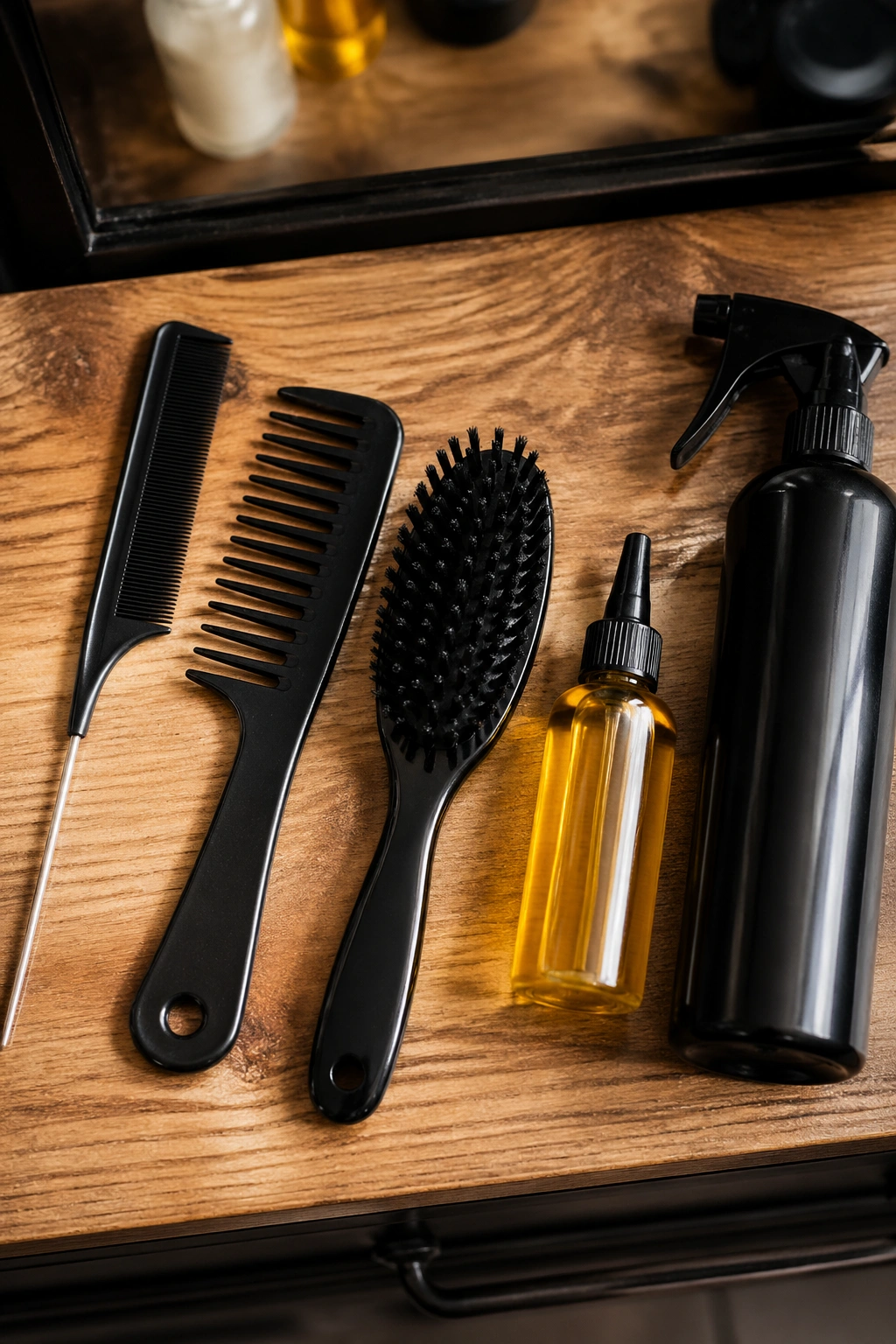
You don’t need a salon’s worth of product. But a few things make a real difference. A rat-tail comb for clean parts. A wide-tooth comb for pre-braid detangling. A soft bristle brush for edges if you want them laid. Lightweight oil — jojoba or grapeseed — for scalp moisture between sessions. A good edge gel if your style calls for neat perimeter work. And a spray bottle with water to re-wet sections as you go.
For products inside the braid, less is usually more with kinky hair. Heavy butters can cause buildup that makes the braid look dull and feel stiff after a few days. A light leave-in — something with water as the first ingredient — applied to damp sections gives you enough slip to braid without weighing the hair down.
If you’re adding extensions, have everything out and organized before you start. Kinky extension hair tangles on itself when it’s loose in a package. Pre-separate it into workable sections before the session begins. This saves significant time.
How to Protect Your Edges During Braiding
Edges on highly textured hair are the most fragile part. The hairline and nape have finer hair that breaks more easily under tension. This is real and worth planning around — not something to ignore in the name of a sleek look.
Keep tension moderate at the root — especially on perimeter braids. If a braid hurts during installation, it’s too tight. Full stop. A mild sting can mean it’s neat; actual discomfort means tension damage is happening in real time. The hair around your edges can take a clean, defined braid without being pulled to its limit.
Use a soft-hold edge gel rather than a maximum-hold formula for styles that involve laying your edges. Hard gels dry brittle and pull at re-moisturization. Apply with a soft toothbrush or edge brush, smooth in one direction, then leave it. Over-manipulating edges is one of the fastest routes to thinning.
Setting Realistic Expectations About Braid Longevity
A well-installed kinky braid style on 4C hair can last four to eight weeks with proper care — that’s a wide range because it depends heavily on your hair’s growth rate, how often you sweat, and your nighttime routine. Sleeping on a satin pillowcase or wrapping in a satin bonnet isn’t optional. Without it, the braids fray at the ends and the roots develop that matted, frizzy look in about half the time.
Touch-up the scalp with a light oil or braid spray every three to four days. Don’t let dryness build up — a dry scalp under braids itches, and itching leads to scratching, which leads to breakage at the root.
Know when to take them down. Six to eight weeks is a general max. Past that, your new growth starts to lock around the base of the braid, and removal becomes painful instead of clean.
1. Jumbo Box Braids With Kinky Extension Hair
Box braids are a permanent entry in the kinky braid hall of fame, and jumbo sizing makes them one of the faster styles to install. The sections are large — roughly 1.5 to 2 inches square — which means fewer braids overall, less time in the chair, and a bold, graphic look once finished.
The key with jumbo box braids on afro hair is using kinky or coarser extension fiber, not silky synthetic. The coarser texture blends with your natural coil so the roots look integrated rather than planted on top. Feed the extension hair in at the root in small amounts rather than folding a thick chunk in — this distributes the weight more evenly and reduces scalp stress.
Best for: Natural hair that needs a longer protective style without hours of installation. Works well when you want something low-maintenance but high-impact.
One detail worth noting: Jumbo braids are heavier than medium or small sizes. If you experience headaches or neck tension in the first 48 hours, try a warm compress and a gentle scalp massage. If the tension doesn’t ease, take them down — that’s your body telling you something.
2. Goddess Braids With a Defined Crown Pattern
Unlike box braids, goddess braids are large, flat braids cornrowed close to the scalp in a distinct pattern. They can travel straight back, curve around the head, or converge in a starburst from the crown. The look is architectural, sculptural — there’s something genuinely regal about a well-executed goddess braid pattern.
What makes this style work on kinky hair specifically is the texture. The natural coil grips the scalp braid and holds it tight without needing gel from root to end. A little pomade on the scalp line gives a cleaner edge, but the body of the braid holds itself.
How to Get the Most From It
Work in sections. Part the design out fully before you braid a single strand — rushing straight into the braid without mapping the pattern is the number one mistake. A rat-tail comb and light tension on each horizontal section as you work forward keeps the braid sitting flat and even.
The pattern can be as simple or complex as you want. Classic straight-back rows. A halo around the head. V-shapes at the nape. The canvas is your scalp, and the geometry is entirely yours.
3. Knotless Braids on Natural Hair
Knotless braids represent a real improvement over the traditional feed-in method for a lot of natural hair textures. Instead of attaching the extension hair with a knot at the base — which creates a hard anchor point that pulls — knotless braids start with your own hair and feed in extension hair gradually down the braid. The result is a gentler install, more natural movement, and less stress at the root.
The tradeoff is time. A knotless install takes longer because you’re adding hair incrementally instead of all at once. But for fine edges or a history of tension damage, it’s well worth it.
The practical difference: With traditional box braids, you can feel a little hard bump at the root. With knotless, the braid starts smooth and moves freely from the scalp. That’s what lets knotless braids swing and look more natural when you move.
For kinky hair, request medium-sized sections to get the best of both worlds — enough volume per braid to look full, but enough braids overall to let the style move nicely.
4. Senegalese Twists in a Kinky Texture
Technically a twist rather than a braid, Senegalese twists earn their place here because they’re often grouped with protective braid styles and the technique requires similar prep. Two sections of extension hair are twisted around each other — no three-strand braiding involved. The result is a smooth, rope-like texture that looks sharp and tapers gracefully toward the end.
The kinky version uses coarser, textured extension hair rather than the silky synthetic typically associated with the style. With kinky Senegalese, the twists have a little body and a rounder profile — closer to what you’d get from twisting your own natural hair but with the added length and density of extensions.
Why It Works
The two-strand structure is forgiving on edges because there’s no over-under braiding tension at the root. Just a clean twist that grips naturally. Senegalese twists also tend to hold their shape at the ends longer than braids because the tapering creates a natural close rather than relying on a seal or dip in hot water.
Expect this style to last four to six weeks with nightly bonnet use.
5. Micro Braids on Afro Hair
Micro braids are exactly what they sound like — very small, very fine braids using thin sections of hair. Each individual braid is roughly the width of a pencil or thinner. A full head of micro braids can take eight to twelve hours to install, which is a significant commitment. But the payoff is a style with extraordinary detail, movement like natural loose hair, and the flexibility to wear them straight, pulled back, or updone.
This is a protective style that gets mixed reviews in the natural hair community, and that’s honest — micro braids on highly coily hair are beautiful, but they require careful section tension management. Too-small sections on 4C hair can stress fine strands. Going with a knowledgeable stylist matters more for micro braids than for almost any other style on this list.
What to Watch For
Check your roots at the two-week mark. If you see significant new growth puffing out from the base, that tension is building. Don’t leave micro braids in beyond six weeks on afro hair. The root growth tangling around the base braid is harder to remove the longer it’s left.
6. Fulani Braids With Beads and Thread
Fulani braids come from the Fula people of West Africa, and they have a distinct look: cornrowed base braids with a central part, side-swept braids framing the face, and decorative elements — metallic beads, cuffs, thread wrapping — woven in as part of the design. The style is culturally specific and visually striking in a way that borrows from a particular tradition rather than just being aesthetic.
On afro hair, the cornrowed sections create a beautiful contrast between the flat, intricate base and the loose hanging braids or twists at the sides. Thread wrapping sections in gold or copper is especially effective against dark natural hair — the contrast is vivid.
If you add beads, make sure they’re not sitting directly at the scalp but slightly down the braid. Beads at the scalp clank against your head at night and can cause breakage at that contact point.
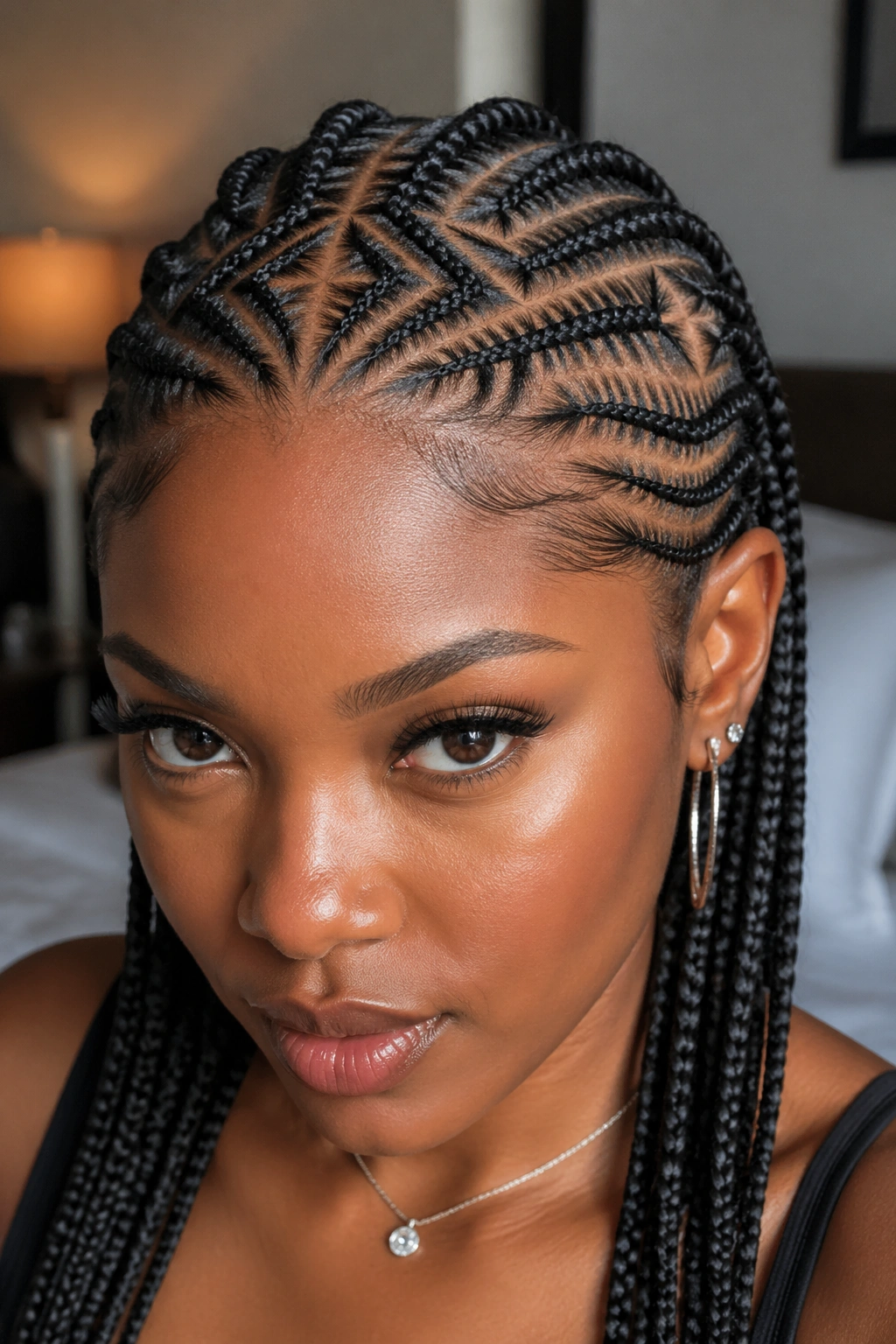
7. Cornrow Patterns With Geometric Designs
Standard cornrows are known by everyone. But geometric cornrow patterns — chevrons, diamonds, honeycomb grids, spiral designs starting from the nape — are a different level of craft. A skilled braider who can execute geometric patterns is creating wearable art, full stop.
The beauty of geometric designs on afro hair is that the coil texture makes the scalp-skin visible between rows, which defines the geometry more sharply than looser textures would. Your scalp becomes part of the design.
What’s realistic: Complex geometric patterns require a stylist who has done them before. Looking at their portfolio is not optional — ask to see photos of geometric work specifically, not just straight-back cornrows.
What to expect: A geometric cornrow style on a full head takes two to four hours depending on complexity. Simple chevrons are faster. A full spiral design from the crown outward can take longer. The finished look stays sharp for two to three weeks before the new growth softens the lines significantly.
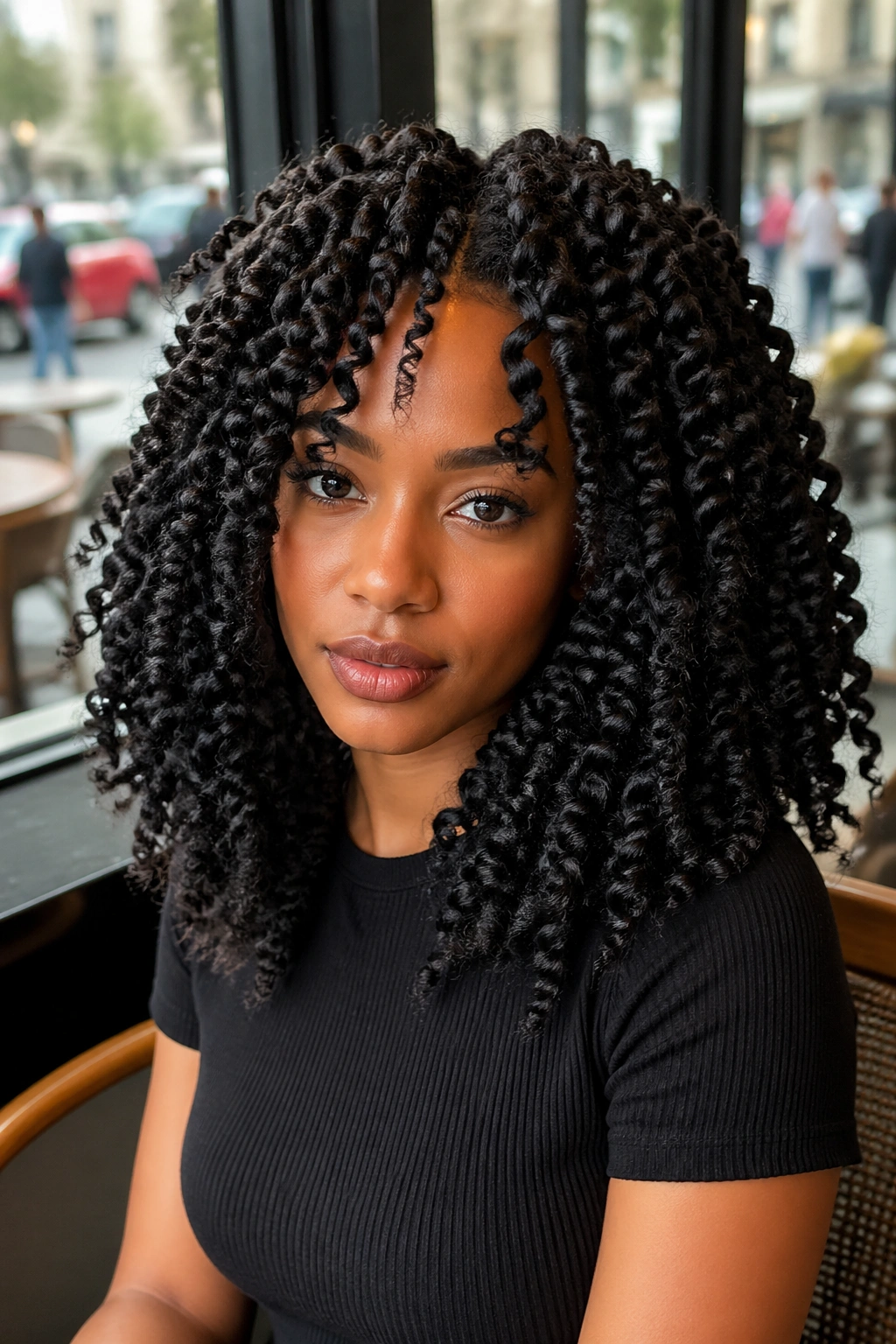
8. Spring Twists (Butterfly Twists)
Spring twists — sometimes called butterfly twists — are a pre-looped extension style that creates a distinctive fluffy, spiraled look. Unlike flat Senegalese twists, these have volume and a soft, cottony texture that mimics natural 4C coils beautifully. The extension hair used is pre-curled into a spring shape, and sections are installed much like Marley twists but with this textured, pre-formed fiber.
The result is voluminous, big-textured, and genuinely one of the most low-manipulation options on this list because there’s minimal braiding involved — the extension hair is looped and twisted rather than braided in. Installation is faster than traditional braids.
Unlike styles where you want exact tension control, spring twists benefit from a slightly relaxed installation — the fluffy volume is the point, and too-tight a base compromises that texture. Don’t seal the ends with hot water (it flattens the spring shape). Just let the curl do its thing.
9. Faux Locs in a Kinky, Distressed Finish
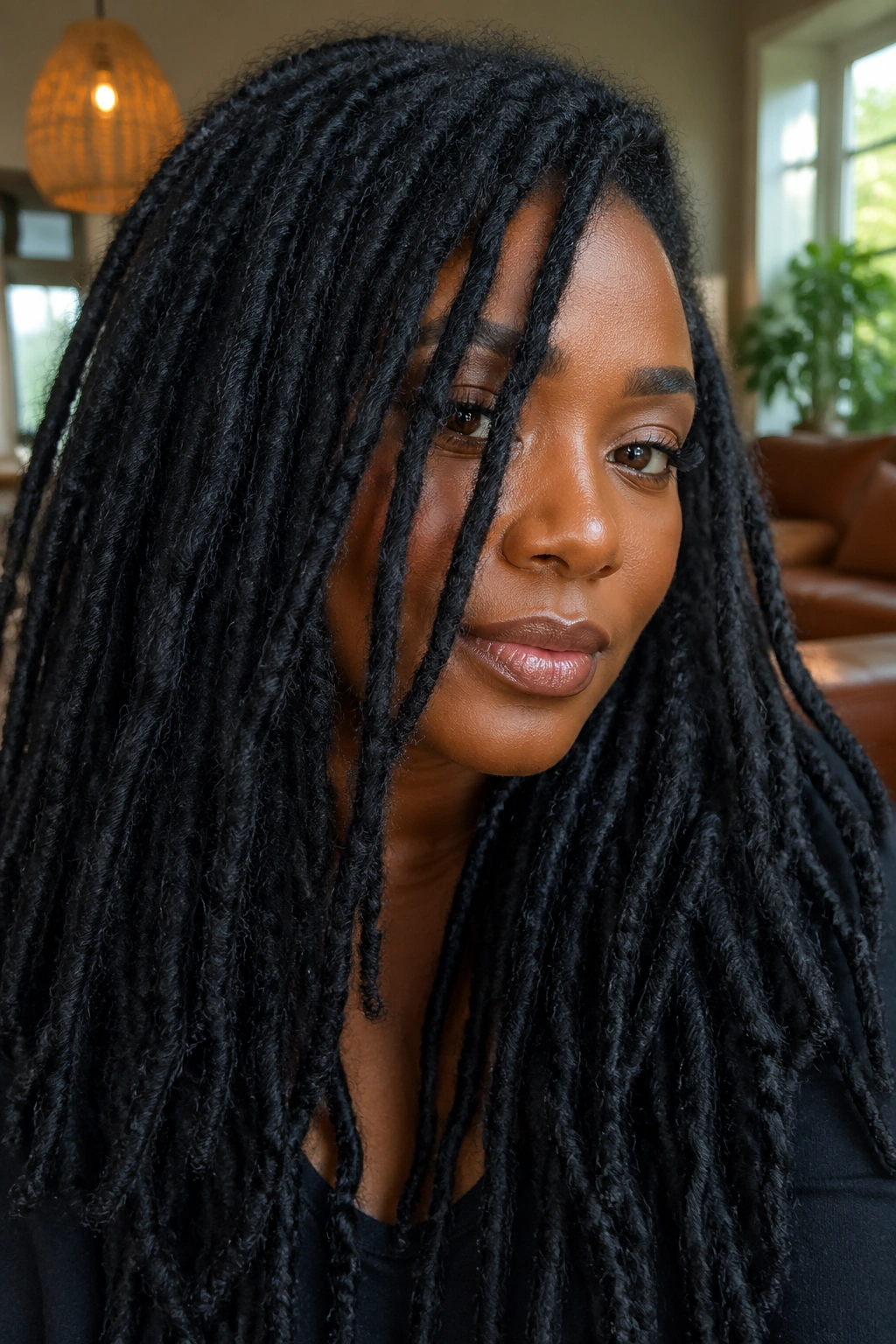
Faux locs are installed to mimic the look of traditional dreadlocks — a thick, wrapped protective style — without the permanent commitment of actually starting locs. Kinky faux locs take this further by using coarser wrapping material that gives the finished loc a natural, lived-in texture rather than a smooth, uniform look.
The “distressed” finish is intentional. Individual sections are loosely wrapped rather than tightly sealed, and the ends are left slightly frayed. This mimics the look of locs that have been growing for a year or two — which is a much more organic result than the perfectly uniform faux locs that dominated certain phases of the style’s popularity.
Who This Is For
Anyone who loves the visual weight and drama of locs but isn’t ready for the permanent commitment. Also genuinely useful if you want a style that reads as “grown” and lived-in from day one rather than freshly installed. The distressed finish hides new growth better than smooth styles, which is a practical advantage if you’re going weeks between touch-ups.
Weight is the one thing to consider. Faux locs are heavier than braids. Scalp sensitivity is worth testing with a smaller installation first.
10. Bantu Knot-Out Braids
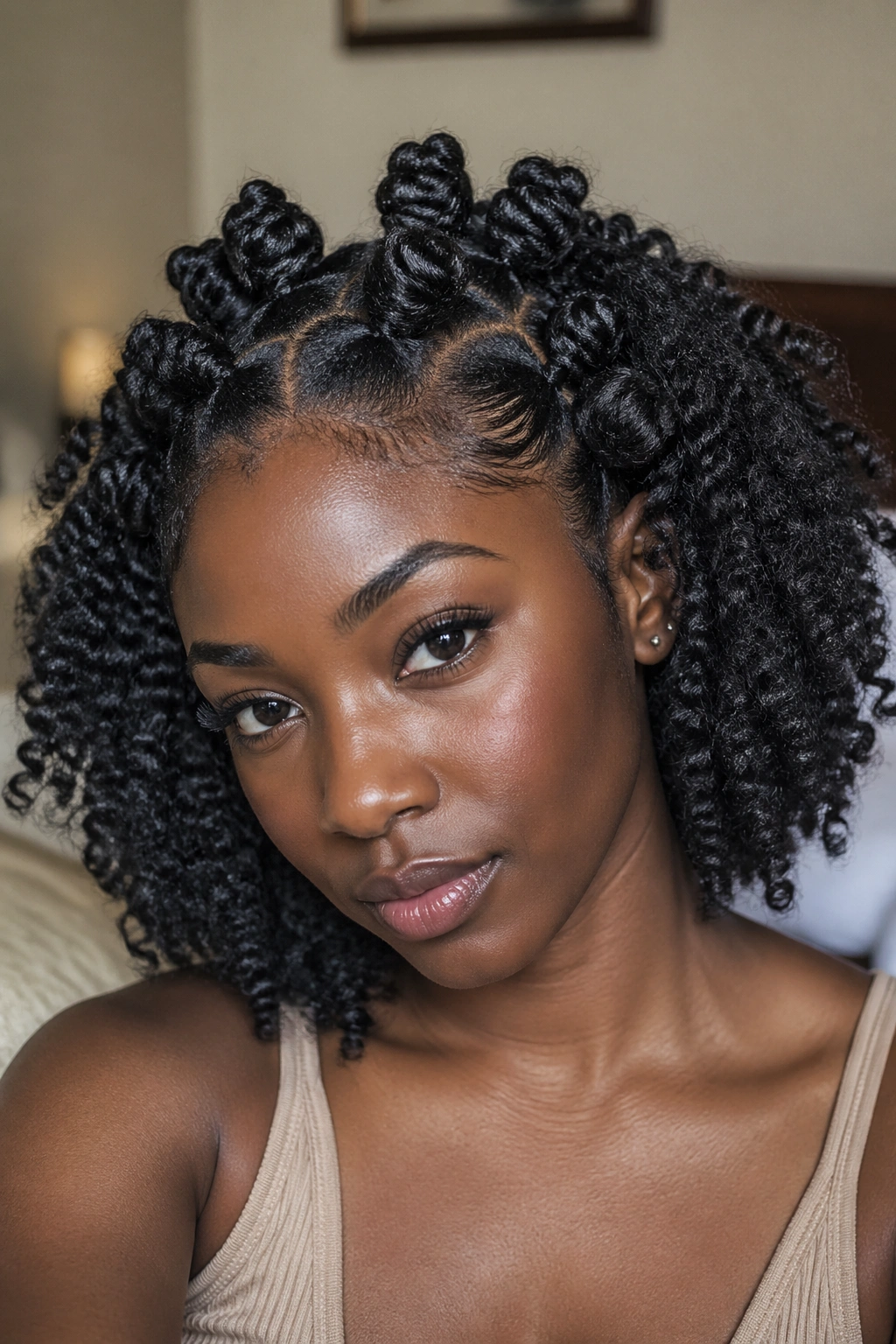
This isn’t a braid as a standalone style — it’s a braid-adjacent technique where you braid sections of natural hair, then coil those braids into Bantu knots to set, then unravel for a defined, textured result. The braiding step gives the final unraveled sections a different texture than a standard knot-out — more angular, more defined, with a crinkle at the strand rather than a pure coil.
It’s a style-within-a-style. And it’s exclusively for natural, unextended hair because the whole point is using your hair’s coil memory to hold the braid texture once unraveled.
Do this on freshly washed, lightly moisturized hair. Let the knots sit overnight — eight to ten hours minimum. The morning unravel is satisfying in the way that peel-off masks are satisfying. Work slowly, don’t rush the separation, and use a tiny amount of oil on your fingertips to keep frizz minimal.
11. Yarn Braids
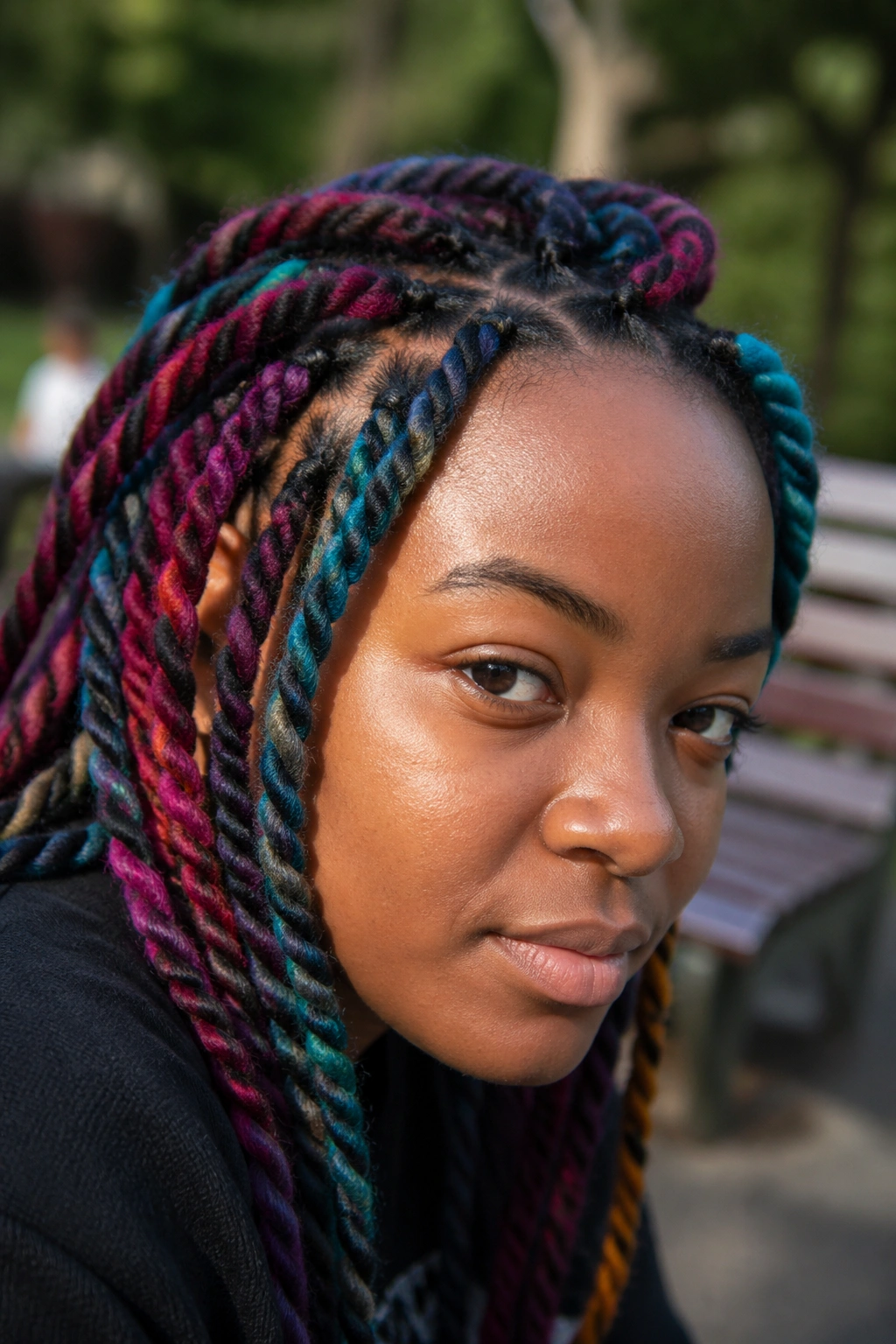
Yarn braids replace traditional extension hair with soft, matte acrylic yarn — typically wool or wool-blend for texture. The result is a chunky, velvety style with a completely different finish than synthetic fiber. Yarn has a natural matte surface that looks closer to real loc or chunky braid texture, and it’s available in every color imaginable, including natural shades that blend with dark hair.
The technique is similar to feeding in traditional extensions — the yarn is folded and knotted at the root, then braided down in three strands. Because yarn is soft and lightweight, these braids are surprisingly gentle on the scalp.
One honest caveat: yarn absorbs water. Swimming and heavy sweating will cause yarn braids to get heavy and slow-drying. If you’re active or sweat heavily at the scalp, this may not be the right style for that period. Otherwise, yarn braids are one of the more creative and affordable options on this list.
12. Lemonade Braids in a Natural Hair Size
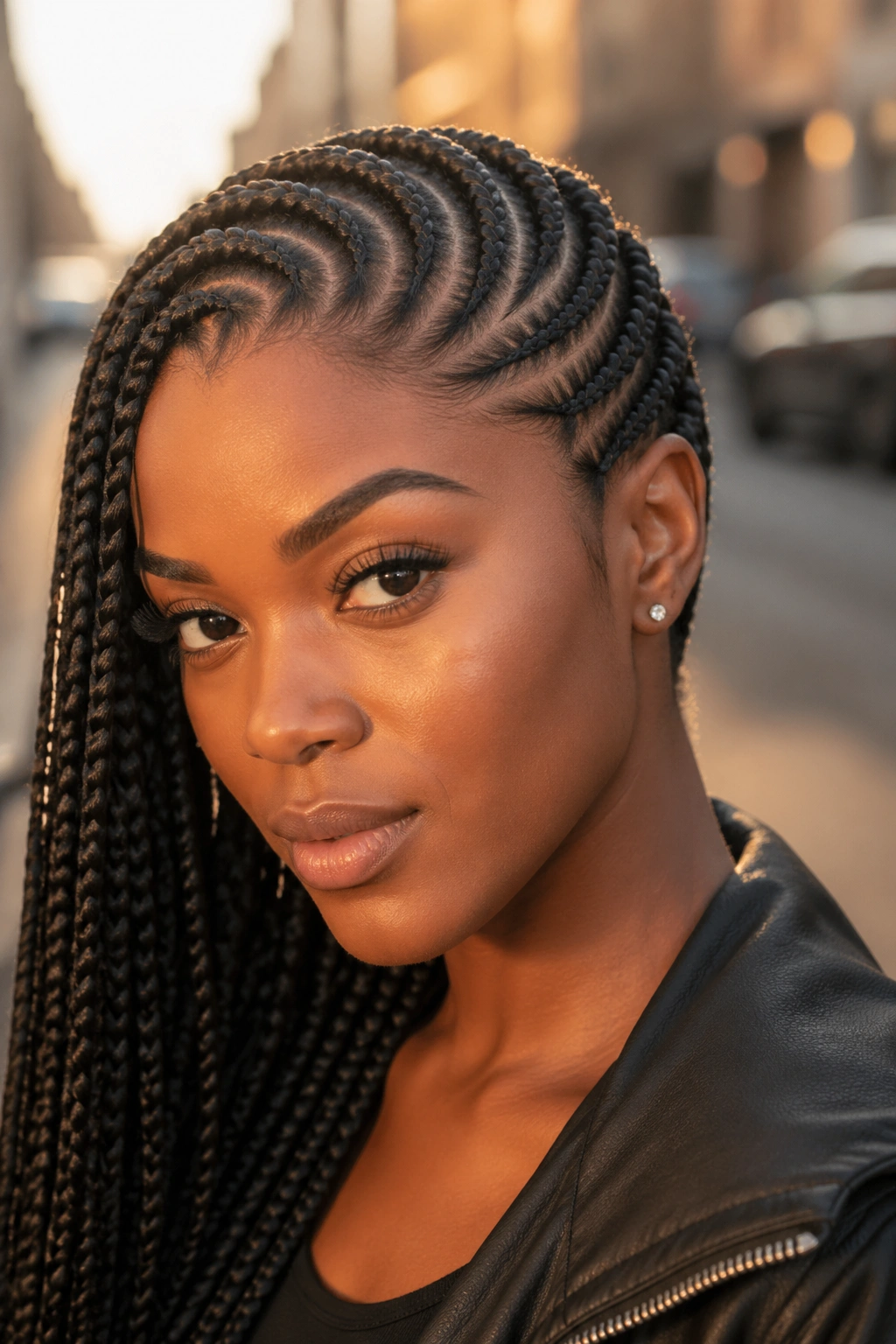
Lemonade braids are side-swept cornrows — all braids starting from one side and sweeping dramatically across the head to the other side. The name comes from a now-iconic visual moment in pop culture, but the style itself is much older and has a long history in West African braiding traditions.
On natural afro hair, lemonade braids have a particular power. The side-sweep reveals the shape of your skull and frames your face in a way that straight-back styles don’t. The braids lie flat and close to the scalp, so there’s no volume at the root — just a clean, directional flow.
Size matters here. Fine, small lemonade braids look intricate and detailed. Medium-sized ones look bold. Large ones look graphic and strong. The choice depends on your face shape and personal taste, but medium-sized braids are the easiest to execute cleanly and the most forgiving in terms of part straightness.
13. Two-Strand Twists as a Protective Set
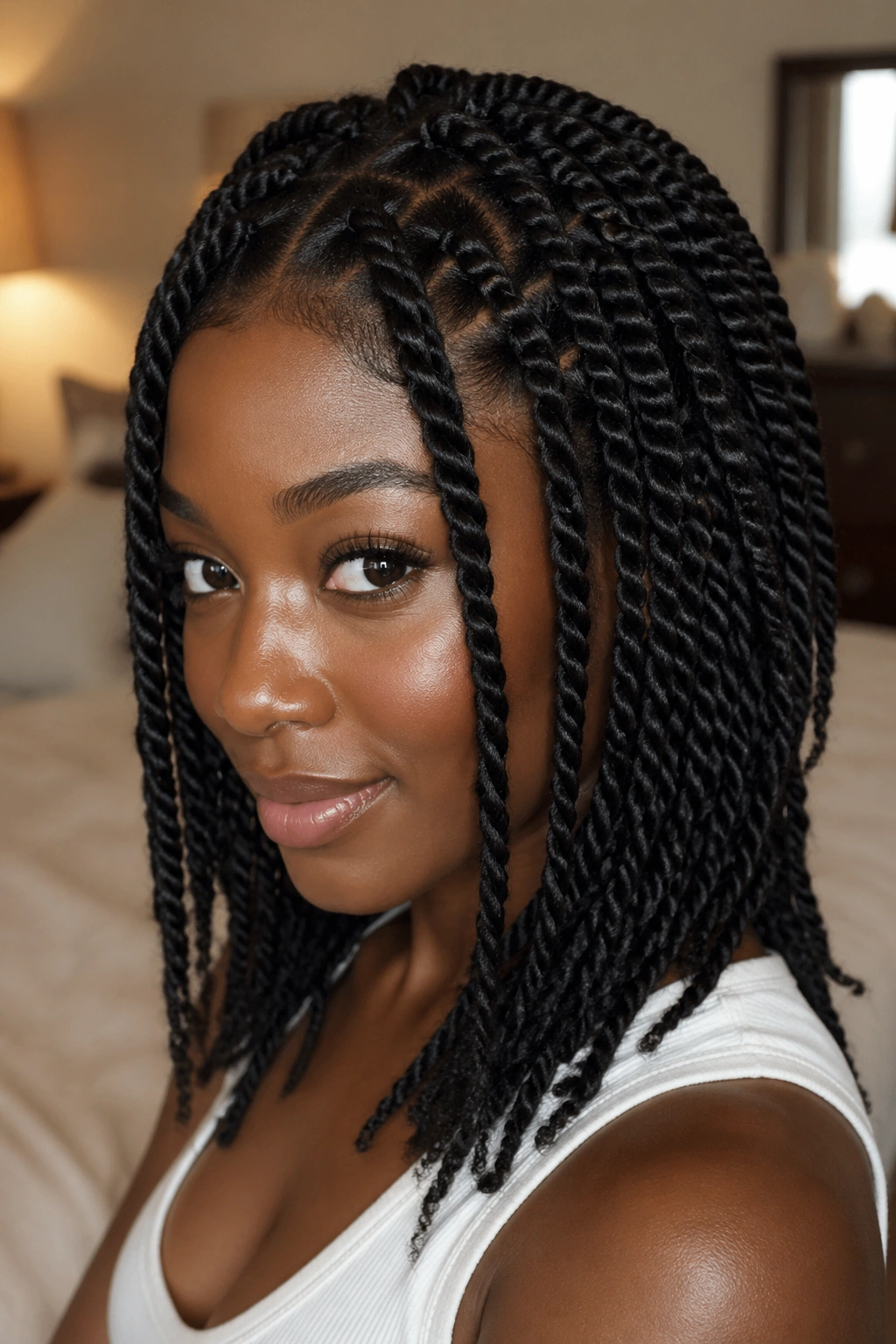
Two-strand twists on afro hair are the essential baseline protective style. Simple, effective, and done entirely with your own hair — no extensions, no tools beyond your fingers and a little moisture. You divide each section into two pieces and twist them around each other until you reach the end.
They work because afro hair’s coil pattern naturally grips itself. Two twisted strands of 4C hair don’t unravel the way looser textures do. The twist holds.
The range is wide. Chunky twists on big sections give volume and a dramatic look. Medium twists look polished and can last a week with proper wrapping at night. Micro twists — small, fine sections — take much longer to install but look closer to individual strands and can last two weeks or more.
The main risk is single-strand knots forming inside long twists. Keeping ends sealed with a little shea butter minimizes this.
14. Invisible Braids (Micro Feed-In)
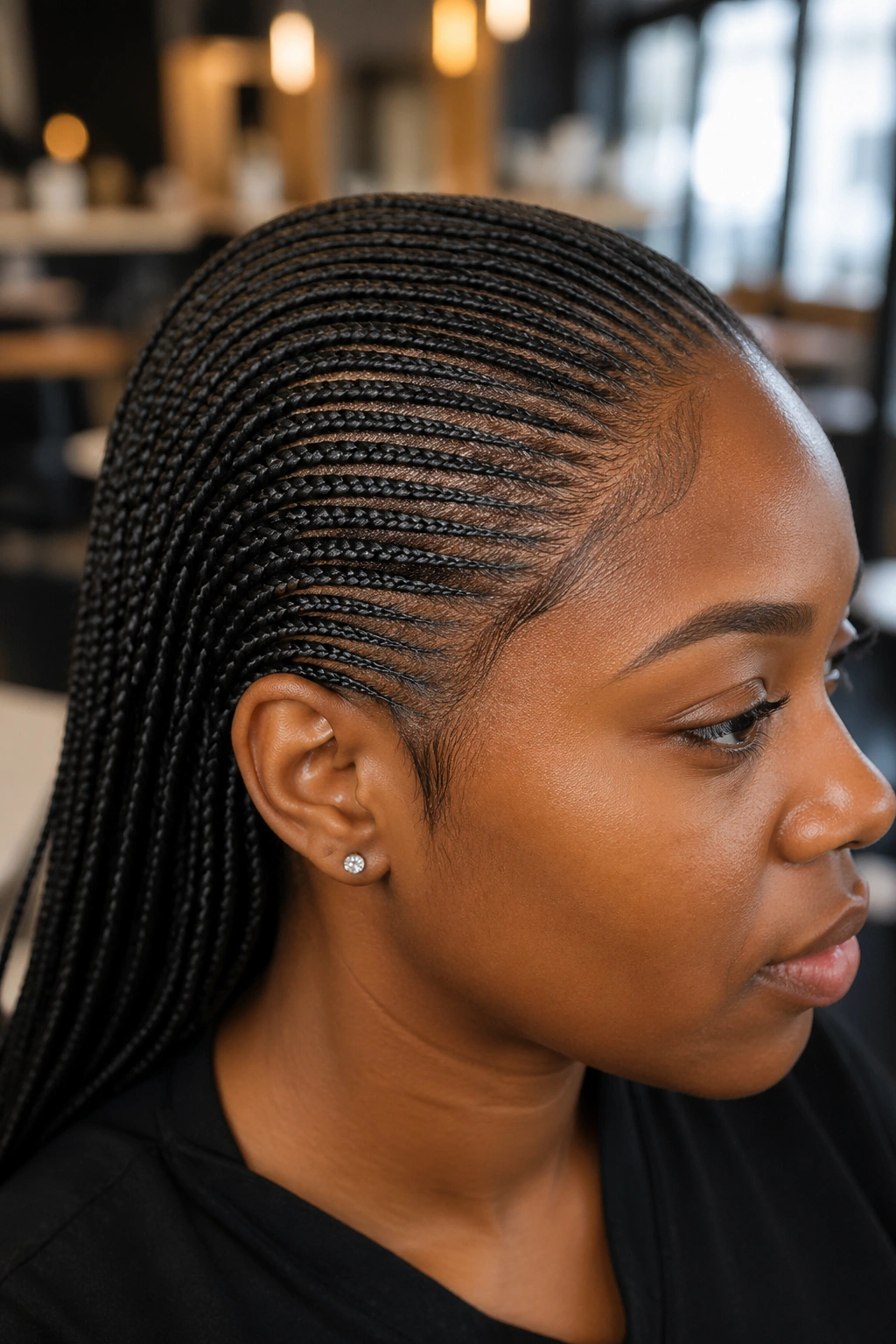
Invisible braids are feed-in braids done with very fine sections and a technique that hides the extension join point. When done well, they look like natural hair growing from the scalp — no visible parting of extension fiber, no visible knot or loop, just a seamless transition from root to braid.
The technique requires a stylist who does this regularly. It’s not impossible to learn at home, but the section size and feeding angle are finicky. Even experienced braiders take longer on invisible braids than on standard feed-in styles.
The result, when done correctly, is worth it for situations where you want a protective style that photographs as natural hair — editorial, professional settings, anywhere the extension work being obvious would feel like a distraction.
15. Braided Bob With Kinky Texture
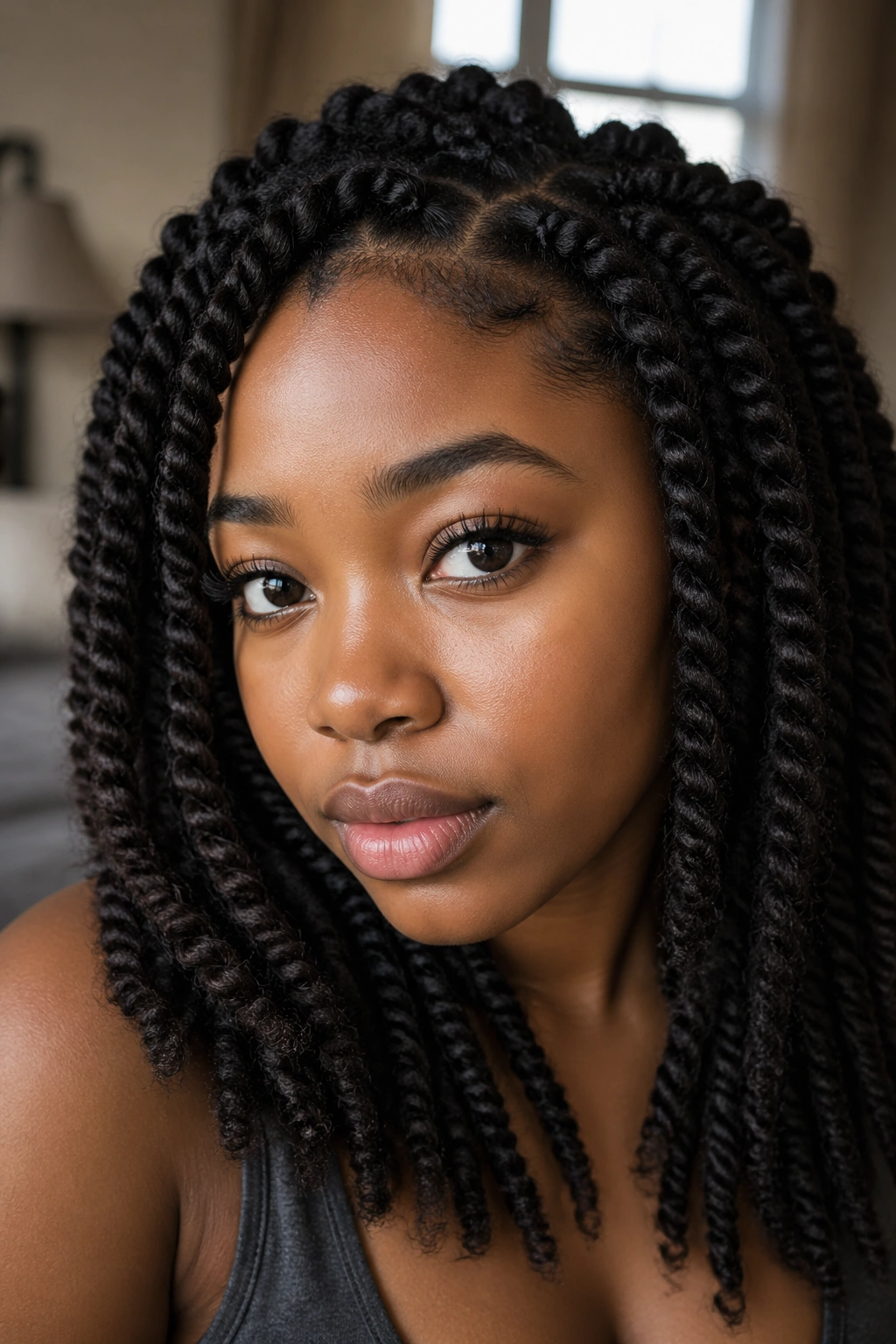
A braided bob uses extensions braided to a medium length — ending around the chin or collarbone — rather than the full-length styles most people default to. For kinky textures, the shorter length changes the silhouette dramatically. The braids have natural weight without the dramatic swing of longer styles, and the bob length suits certain face shapes and personal styles better than length does.
The practical bonus: A shorter braid style puts less weight on the scalp. It’s faster to install. It’s faster to take down. And a well-cut bob of braids — ends trimmed to the same level — looks intentional in a way that random-length braids don’t.
If you’re new to kinky braid extensions, a bob is an underrated starting point. Lower commitment, lower weight, quicker process.
16. Triangle Box Braids
The only real difference between triangle box braids and regular box braids is the parting pattern. Square sections give standard box braids. Triangular sections give triangle box braids — which changes the visual rhythm of the scalp pattern, making it more dynamic and geometric even before you look at the braids themselves.
The parting pattern becomes visible at the roots and creates a deliberate decorative element. When the braids are pulled back, the triangle grid is fully visible and the look is sharply modern.
Triangle parts also distribute scalp stress differently — four corners of a square section versus three corners of a triangle. Some people find triangle parts more comfortable. Others don’t notice a difference. Worth trying if you’ve had scalp discomfort with standard box braids before.
17. Bohemian Box Braids
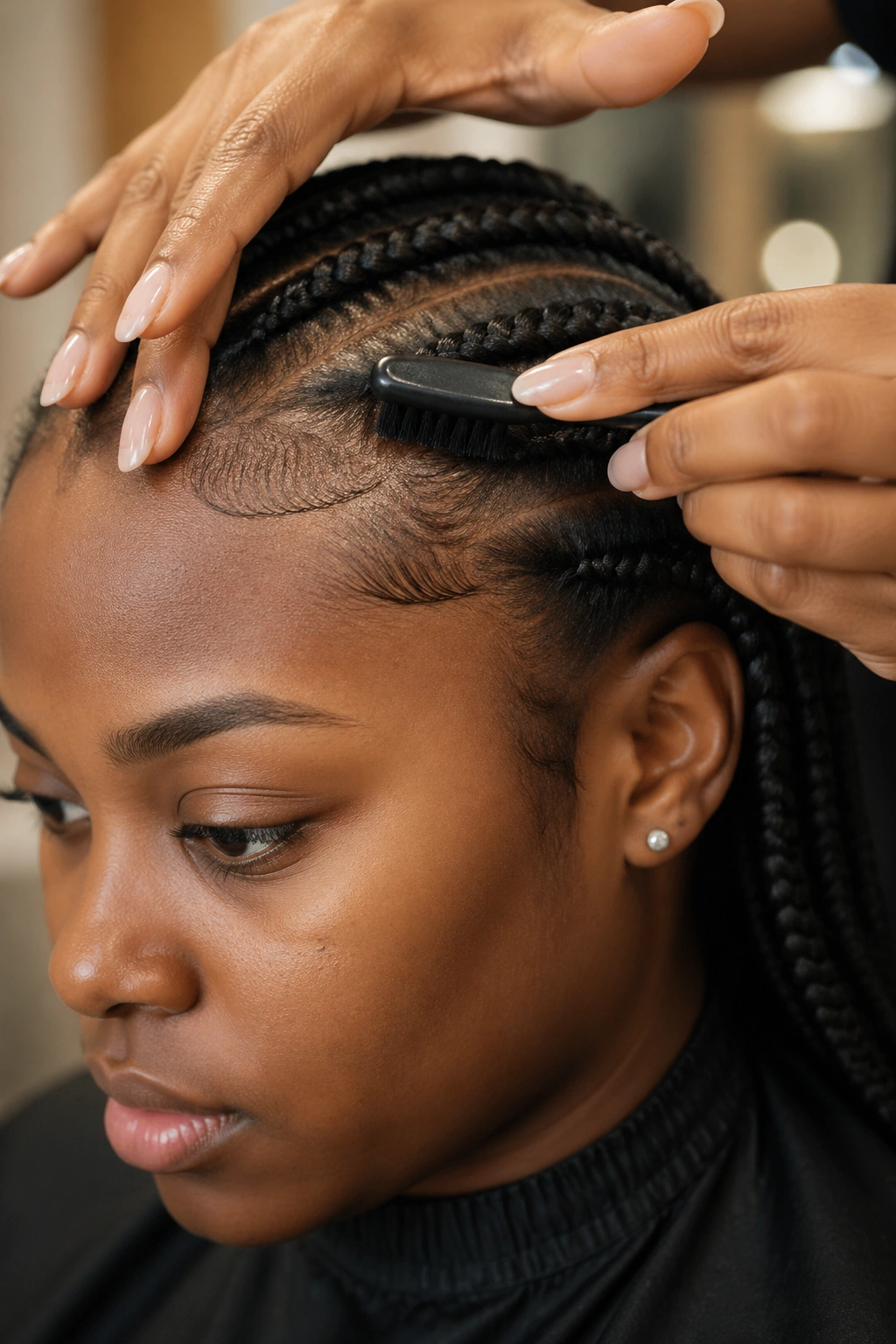
Bohemian box braids mix kinky extension hair with wavy or curly extension hair so that some sections of each individual braid have a wavy, looser texture peeking out. The “boho” effect is deliberate — the braids look intentionally undone and textured rather than precise and uniform.
The contrast between the tightly braided sections and the wave texture breaking through gives the style a romantic, editorial quality. It looks like someone spent weeks growing out natural braids to this perfect in-between state — but it’s installed that way.
How to Use It
Request this look by asking your braider to blend two textures of extension hair within each braid. The wavy pieces should be fed in loosely rather than braided tight — that looseness creates the “peeking” effect. Bohemian box braids work at any length, but they’re most dramatic at shoulder length and below where the wavy sections have room to move.
18. Crochet Braids in a Kinky Afro Texture
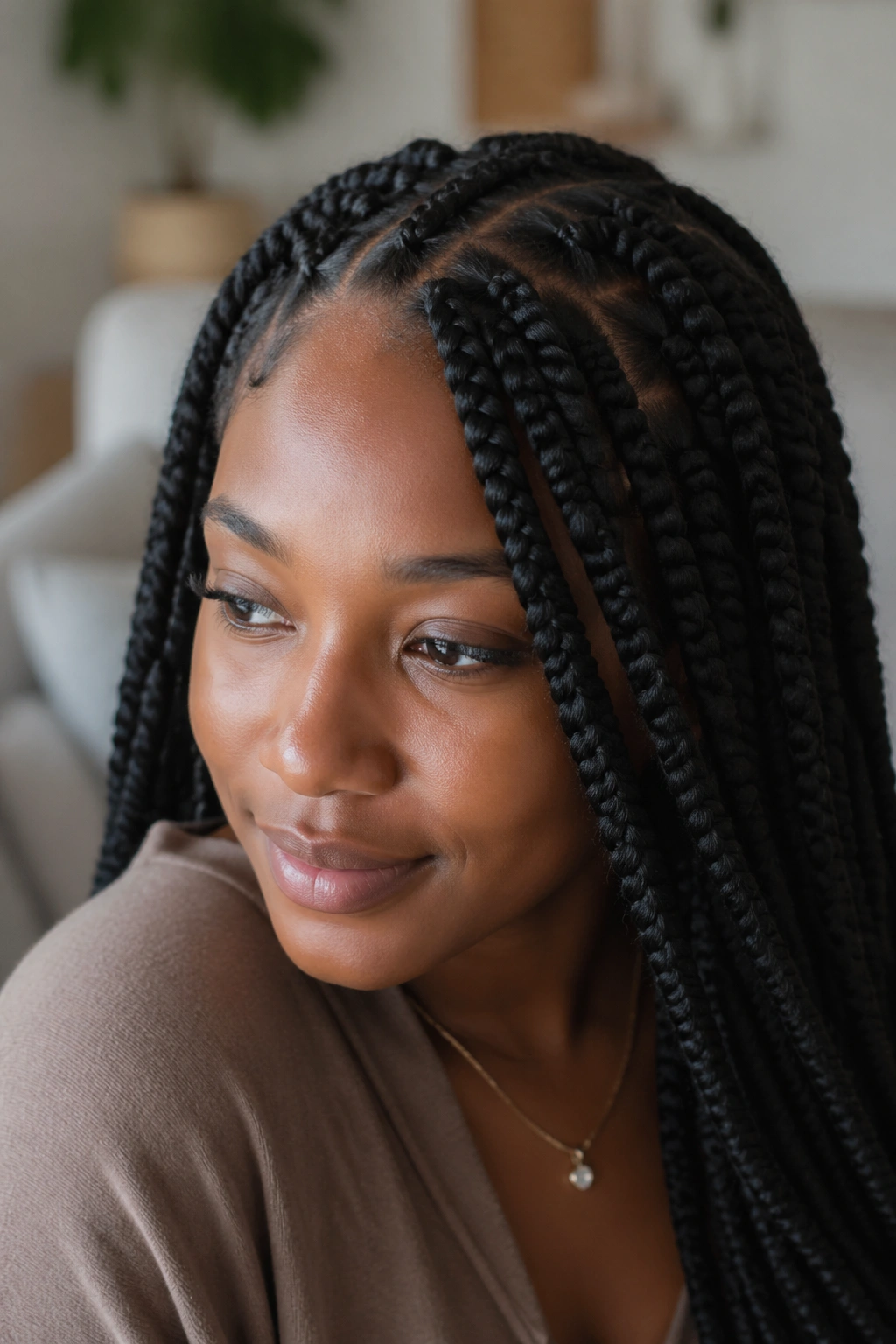
Crochet braids use a different installation method entirely — a cornrowed base is braided flat against the scalp first, then extension hair is attached to those cornrows using a latch hook tool. The extension hair isn’t braided — it’s looped onto the cornrow, then styled or left as-is. For kinky textures, crochet braids are often used to install loose afro hair, kinky twist extension sets, or even crochet loc pieces.
The major advantage is speed. Because the extension attachment is a loop rather than a braid, a full crochet install can take two to four hours compared to eight or more for traditional braids. The cornrowed base is also gentler than individual root braids when done correctly.
The look isn’t as seamless at the root as traditional braids — if you look closely, you can see the cornrow beneath. But worn down or styled up, crochet braids can be virtually indistinguishable from the real thing.
19. Feed-In Braids for Length and Thickness
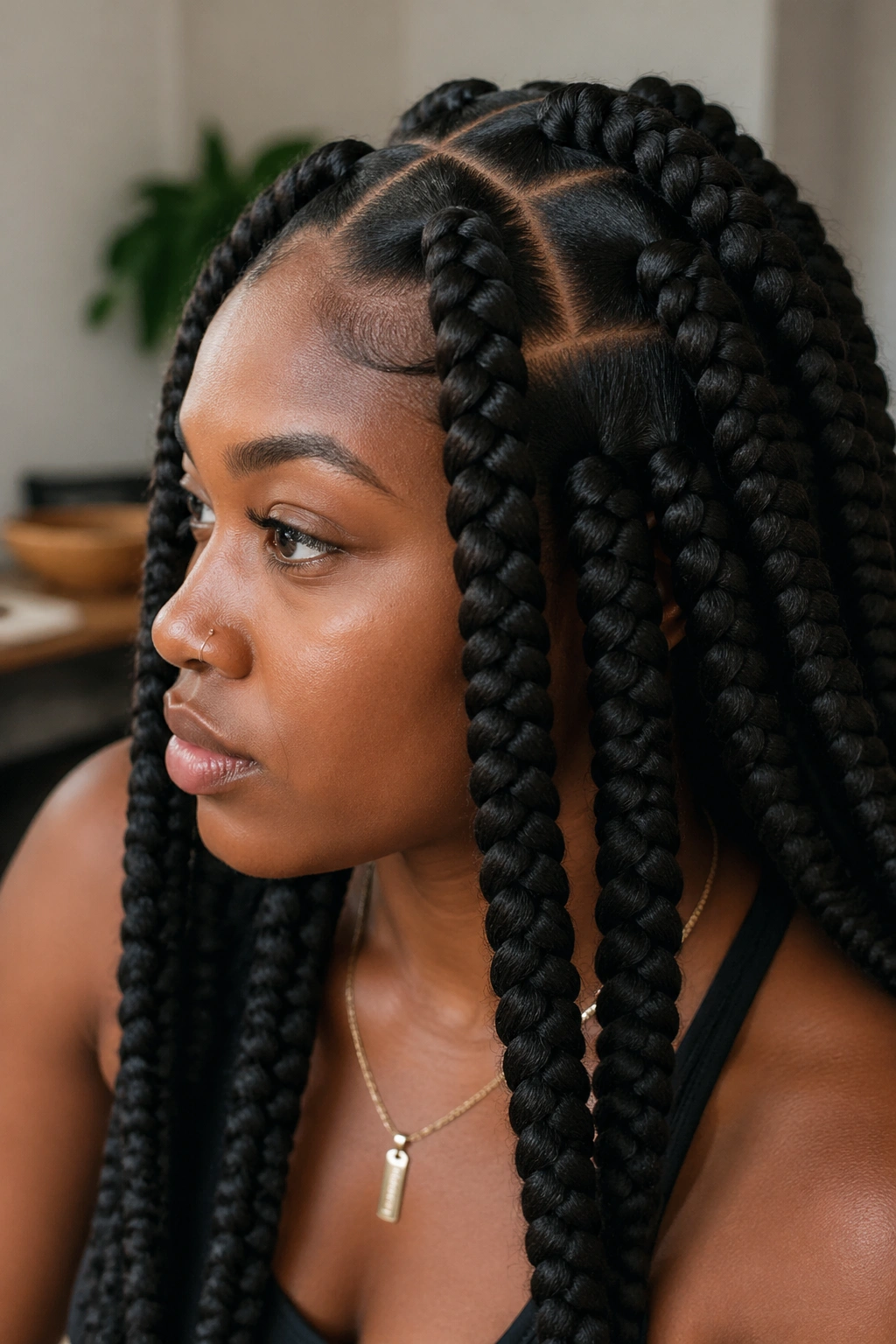
Feed-in braids start with your natural hair and gradually add extension fiber as the braid travels down. Unlike traditional braids where extension hair is added at the very start, the feed-in method creates a taper — the braid starts thin at the root and gets thicker as more hair is added down the length. This eliminates the heavy knot at the root that puts the most strain on individual strands.
On afro hair with significant shrinkage, feed-in braids also allow you to use your natural length as the visible part of the braid near the root — which looks completely natural before the extension takes over lower down. The illusion of natural length is better with this method than any other.
Length and thickness are both customizable. Want a full, thick braid? Add more extension hair per feed. Want something delicate? Use less. This flexibility makes feed-in braids one of the most versatile techniques regardless of your natural hair length.
20. Dutch Braids on Natural Hair
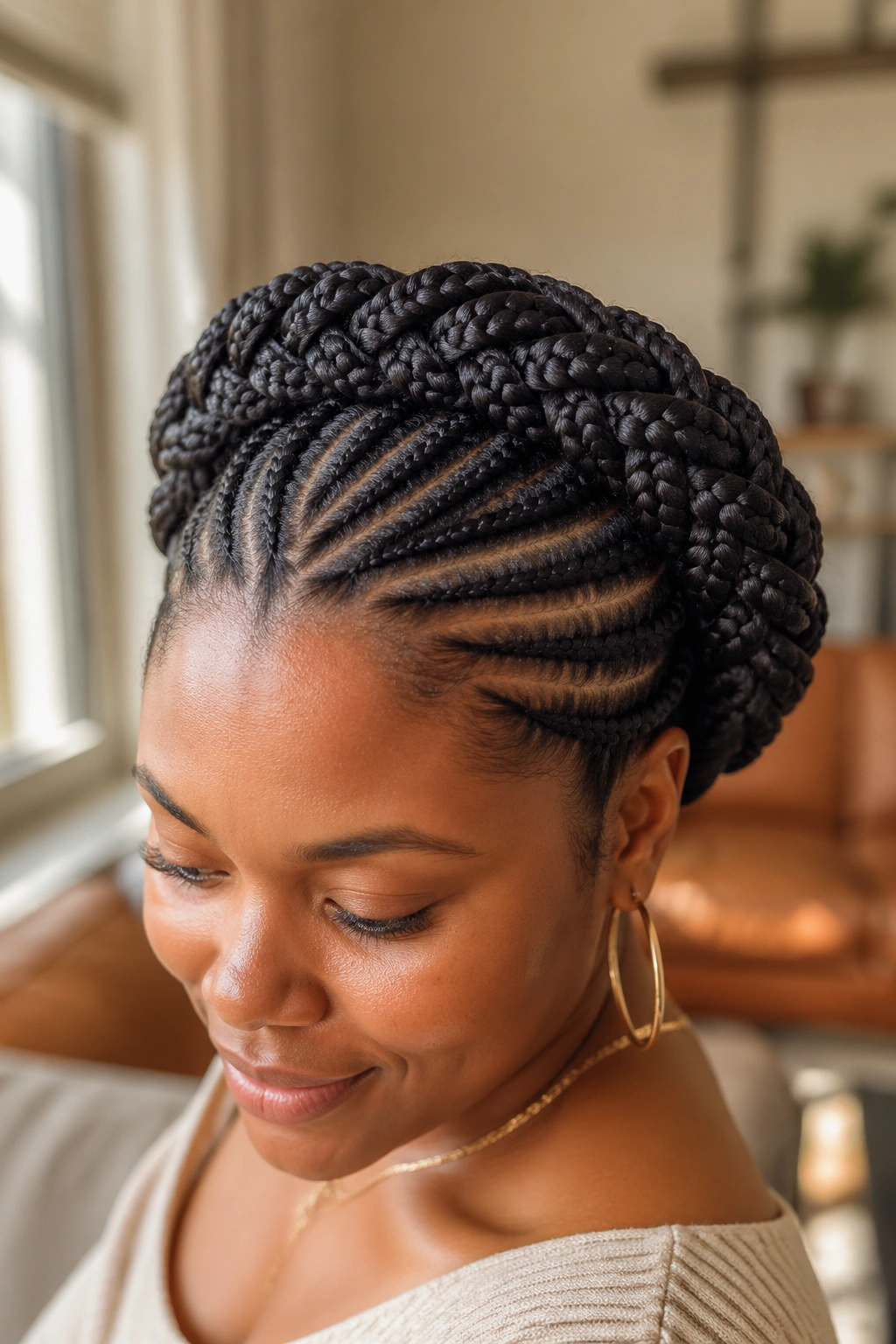
Dutch braids — sometimes called reverse cornrows or inside-out braids — are braided by crossing strands under rather than over. The effect is a braid that sits raised from the scalp, almost like a 3D ridge, rather than lying flat. On afro hair, the raised profile is even more pronounced because the coil texture adds dimension to each strand.
Dutch braids can be done in two standard braids down either side of the head, one central braid from the crown, or in a single large braid covering the whole back. On afro hair, a single thick Dutch braid down the back is a statement piece — the raised center ridge is visually bold and holds for days.
This style works best on hair that’s been lightly stretched. Full-shrinkage 4C hair in a Dutch braid can result in a tighter, rounder braid profile that’s beautiful but harder to execute cleanly. A quick blow-dry on low heat first makes the crossing pattern more manageable.
21. Afro Puff With Braided Crown
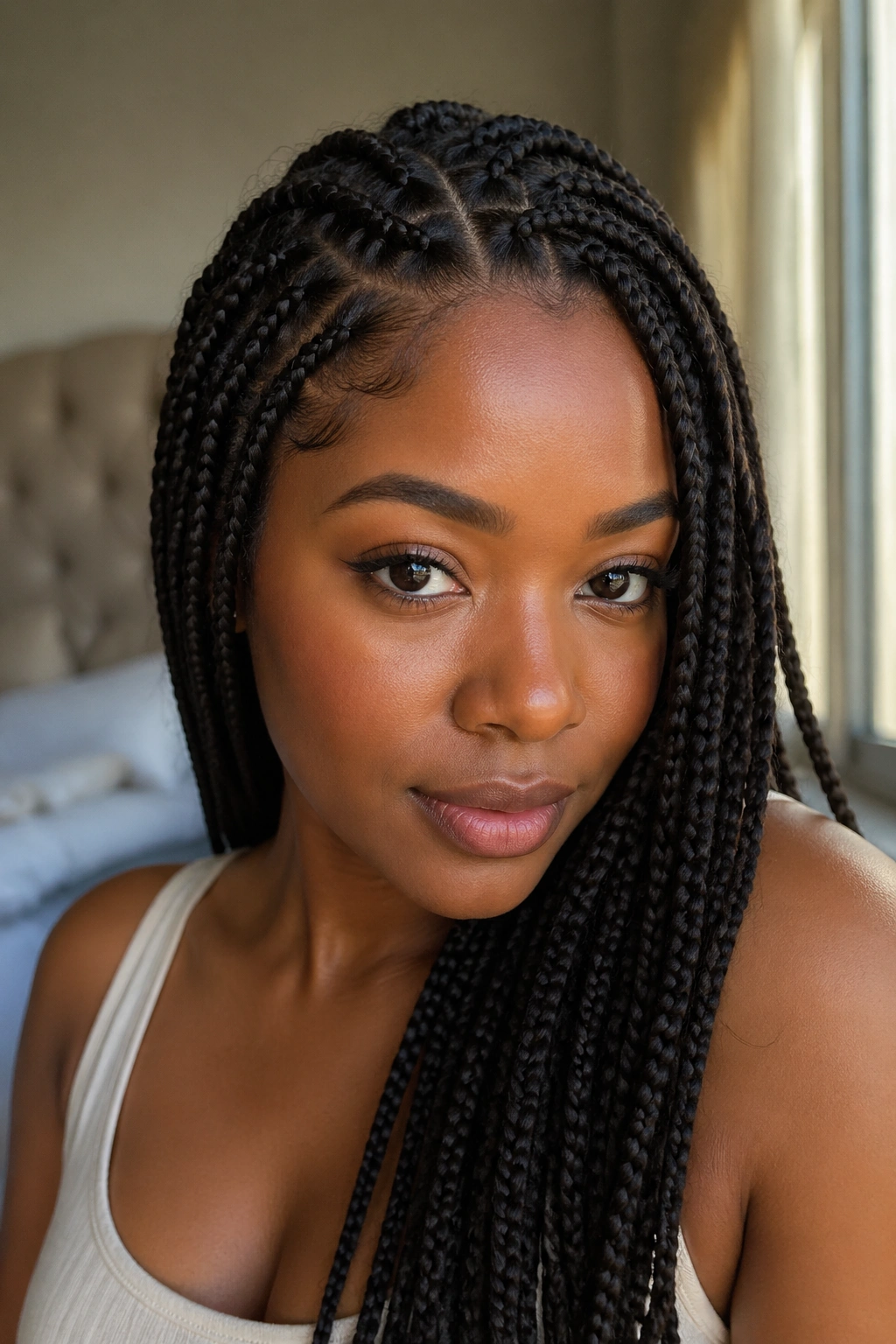
This isn’t a full braid style — it’s a hybrid. The perimeter sections of hair are cornrowed in a halo pattern, usually forward toward the face, and the center crown section is left free as a rounded puff. The braided perimeter gives the puff a clean frame that keeps the edges neat and the overall shape deliberate.
The puff itself should be moisturized with a curl cream or leave-in so it holds its shape and doesn’t dry out while you’re wearing the style. A satin-lined headband over the perimeter braids at night keeps everything tidy.
This is a quick style — assuming your cornrows are already installed, or if you’re doing a simple front braid rather than a full perimeter, the whole thing can come together in under 20 minutes. Honest and easy.
22. Marley Twists
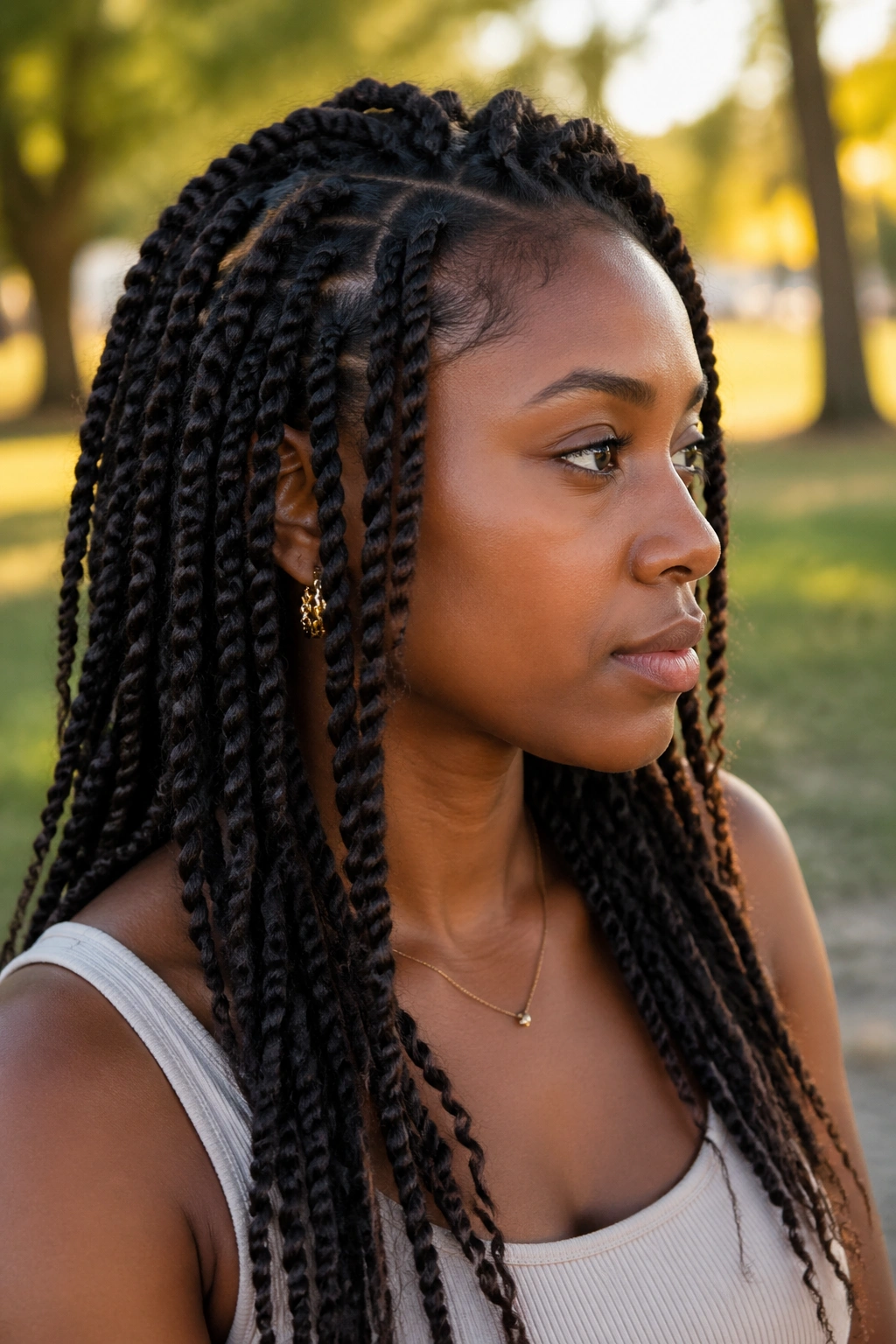
Marley twists use Marley hair — a bulkier, more textured extension fiber that mimics the look and feel of natural afro hair. The twists are two-strand, like standard protective twists, but the Marley fiber gives them a bolder profile and a frizzy, natural texture at the surface. They look like big, healthy natural twists rather than polished extension twists.
The size runs large by default — Marley hair doesn’t lend itself to micro or small twists because the fiber is too bulky. Medium to jumbo-sized twists are the realistic range. At that size, a full head installation takes four to six hours.
Weight is honest to acknowledge here. Marley twists on a full head are heavy. If you have scalp sensitivity or haven’t worn heavy styles before, manage section size and don’t go beyond 20 to 25 twists total to keep the weight distributed.
23. Passion Twists
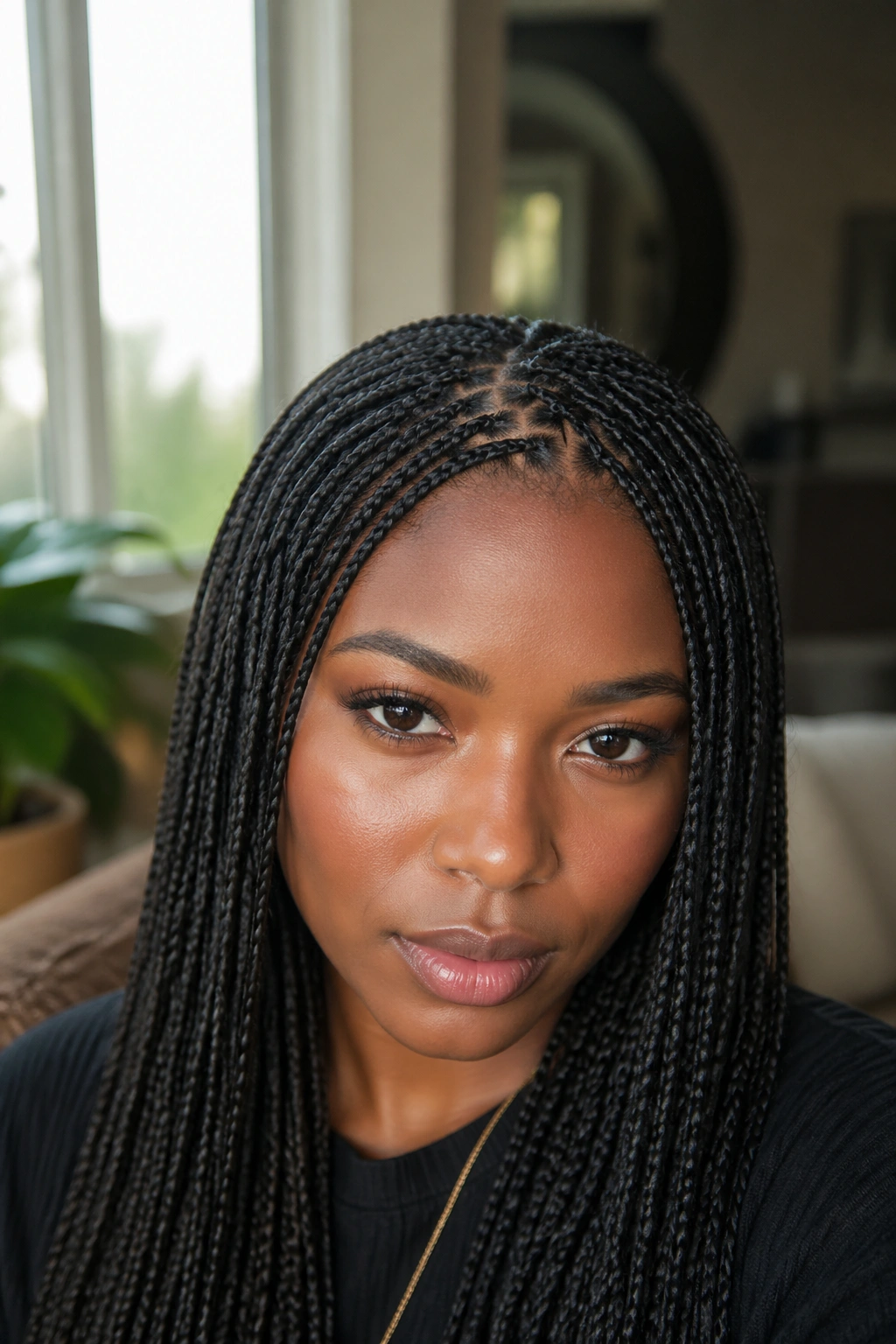
Passion twists end the list because they deserve their own note. A passion twist uses spring/butterfly curly extension hair twisted around your own two-strand twist base. The resulting style has the structure of a twist but the texture of a full, fluffy curl — somewhere between a Senegalese twist and a spring twist in character.
The visual effect is softer than most braids or twists on this list. Passion twists have a romantic, textured look that’s popular for a reason — they’re flattering at every length, they move beautifully, and the ends don’t unravel like standard twists because the spring texture grips itself.
Installation time is medium — faster than braids, slower than crochet. The style lasts three to five weeks with nightly bonnet care. If the ends start to look rough, a quick spritz of water and light finger-smoothing refreshes them without taking anything down.
Keeping Kinky Braids Fresh Between Wash Days
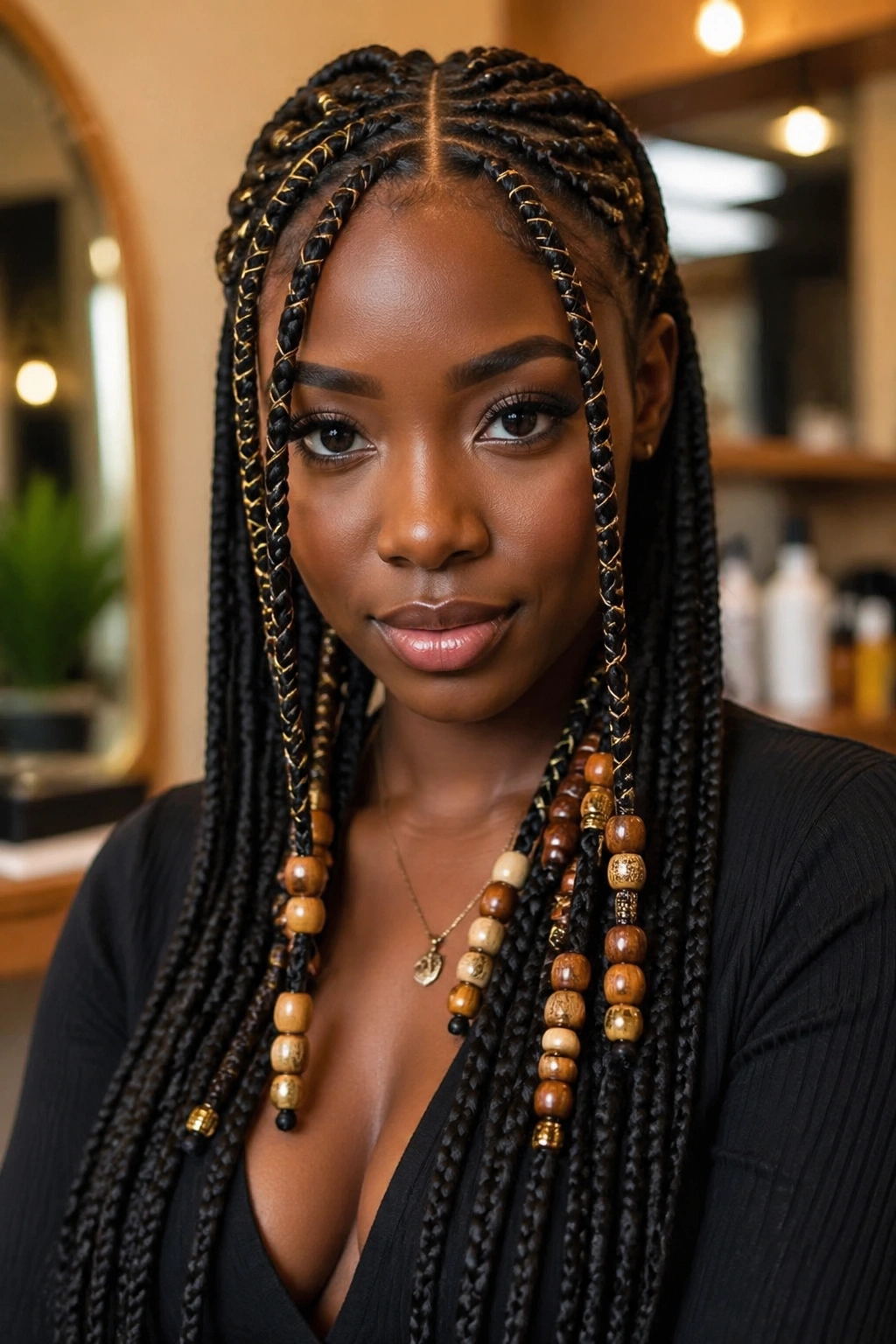
Braid maintenance is where a lot of people lose the longevity they worked to get. The basics: sleep in a satin bonnet every night, oil your scalp every three to four days, and use a braid spray or diluted leave-in to refresh the braid surface weekly.
Washing braids is possible — and necessary for styles you’re keeping in for more than four weeks. Dilute a gentle sulfate-free shampoo with water in a squeeze bottle and apply directly to your scalp between rows. Rinse thoroughly, squeeze excess water out with a microfiber towel, and allow braids to air dry completely before putting them in a bonnet. Going to bed with wet braids causes mildew smell and can cause scalp issues over time.
Don’t let product build up. Heavier products like butters and pomades on the braid shaft attract lint and look dull. Light oil on the scalp and a water-based spray on the braid is enough for daily maintenance.
When to Take Kinky Braids Down
The rule of thumb is four to eight weeks, and within that range, trust your scalp. If you’re experiencing significant itching, tightness, or sensitivity that hasn’t resolved, take the style down regardless of how new it is. A protective style should protect — not damage.
To take down: start from the ends and work upward. For extension styles, carefully cut or unravel the extension fiber before trying to unravel your natural hair. Work in sections. Detangle each section with fingers first, then a wide-tooth comb, before moving to the next.
After removal, clarify with a detoxifying shampoo — especially for styles that involved product — then deep condition for at least 20 to 30 minutes before styling again. Your scalp and strands need that reset.
Choosing the Right Kinky Braid Style for Your Hair
The right style depends on three things: your natural hair’s current health, your lifestyle, and how long you want to commit to the style.
If your ends are fragile or you’ve had recent breakage, opt for styles with minimal root tension — knotless braids, crochet, or two-strand twists on your own hair. If your hair is strong and you want maximum length or density, extension styles with careful feed-in technique are worth the installation time.
If you sweat heavily or are in the water regularly — swimming, rain, intense workouts — avoid yarn braids and any style with very fluffy ends that absorb moisture. Stick to more sealed styles like Senegalese or passion twists.
And if you’ve never done a particular style before? Start with one section — a test braid, or a partial install — to see how your scalp handles the tension and your schedule handles the maintenance before committing to a full head. Kinky braid styles are genuinely some of the most beautiful and culturally rich looks in natural hair, and there are 23 distinct directions you can go. The best one is the one your hair and your life can sustain.
