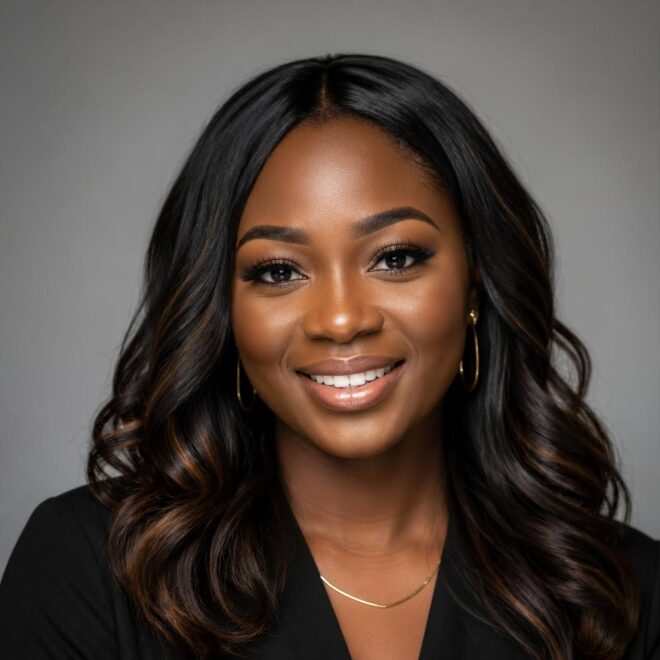


Short hair is not a limitation. That framing — short hair as something you work around, a problem to be solved — is entirely backwards. Afro styles for short hair women are their own category, with their own rules, their own power, and their own visual vocabulary that longer styles simply cannot access. The tightness, the precision, the way a sharp fade interacts with a defined curl pattern at the crown — none of that is possible once hair reaches a certain length.
There’s also the matter of face framing. Short afro styles sit closer to the face than any longer style can, which means the shape of the style and the shape of the face are in constant direct conversation with each other. Getting this conversation right — learning which shapes complement your particular bone structure and hairline — is the real skill of short afro styling, and the women who master it look effortlessly put-together every single day with minimal manipulation required.
This list covers 26 genuine, distinct styles for short afro-textured hair — not 26 minor variations of the same idea. The range goes from the most classic expressions of the natural afro to styles that involve precise cutting, colorwork, editorial accessories, and protective configurations. Hair length ranges from just-past-a-buzz up to a few inches of growth. There is something here for every point in the short hair journey.
Understanding Short Afro Hair Texture and Behavior
Short afro hair behaves differently at different lengths, and understanding this is fundamental before choosing a style. At under an inch of growth — TWA (teeny weeny afro) territory — your hair’s natural curl pattern is under significant compression from the weight of nothing. The curl is tightest, the shrinkage is maximum, and the style options that look polished at this length are very different from the options available at two or three inches.
At two to three inches, the weight of the hair strand begins to allow the curl to open slightly. Defined curl patterns become more visible, twist outs and braid outs become viable as daily styles, and the overall shape of the head reads differently than it did at the shortest lengths. This is often the most dynamic styling range for short afro hair — enough length to play with, short enough to maintain easily.
At three to five inches — the edge of what most people call “short” — you’re approaching the length where some longer-style techniques become possible. Puffs, large twist sets, and some updos start to work here.
How Face Shape Interacts With Short Afro Styles
The relationship between face shape and short afro style is a real consideration, but the rules are far less rigid than styling guides often present them. The basic principle — that width in the hair should complement the narrowest part of the face — is a starting point, not a mandate.
Round faces are often said to benefit from height at the crown — styles that add vertical dimension rather than width. This can be as simple as a slight pick-through at the top of a TWA to create a rounded afro that rises more than it expands sideways. But round-faced women with full, wide TWAs also look stunning, particularly when strong bone structure accompanies the roundness.
Angular or longer face shapes often benefit from width at the sides — styles that expand outward from the temples rather than building height. A low-picked afro that puffs at the sides creates a rounder, softer silhouette.
The most honest advice: try different shapes on your own face rather than following rules. Short afro hair is easier to reshape daily than long styles, which means you have more freedom to experiment with the actual volume and direction of your style each morning.
The Right Products for Short Afro Styles
Short afro hair needs moisture more than it needs hold. The shorter the strand, the more the natural oils produced at the scalp can reach the ends — which is actually an advantage of short hair — but this doesn’t mean short afro hair is always moisturized. Regular washing, environmental dryness, and product buildup all disrupt the moisture balance.
A water-based leave-in conditioner is the foundation product for most short afro styles. Apply it to damp hair after washing, working it through with your fingers or a wide-tooth comb. Follow with a light oil — jojoba, almond, or argan — to seal the moisture in. This two-step moisture-and-seal process is the basis of most short afro routines.
For styles requiring definition — twist outs, braid outs, defined TWA curls — a curl defining cream or a light gel applied to the leave-in-treated sections before the styling manipulation gives the most consistent results. Use less product than you think you need; short hair saturates quickly and too much product makes it look heavy and wet.
For styles prioritizing shape and volume — picked-out afros, blown-out styles — avoid heavy products that weigh the hair down. A light oil applied after shaping is all most volume-based styles need.
26 Afro Styles for Short Hair Women
1. The Classic Low Afro
The foundational short afro — natural hair worn in its natural state, picked or shaped into a neat rounded form that sits close to the head. At very short lengths, the low afro is barely wider than the head itself; at three to four inches of length, it develops visible roundness and presence.
This is the style that everything else builds from. Getting it right requires understanding your particular shrinkage pattern. Pick the hair when it’s completely dry rather than damp — damp picking stretches the curl temporarily and creates a shape that collapses as the hair dries, leading to frustration when the shape you achieved doesn’t last through the day.
Work in small sections when picking, starting at the base and lifting outward and upward rather than pulling directly upward. The goal is to separate and lift the curl clusters without breaking them — broken curl clusters create frizz, while intact clusters create that characteristic soft, full afro texture.
2. The Teardrop TWA Shape
The teardrop variation of the TWA uses a slightly different pick pattern than the classic rounded low afro. Rather than building equal volume on all sides, this shape builds more volume at the crown and back than at the temples and sides, creating a profile that’s wider at the top and narrower at the sides.
From the front, the face shape reads clearly rather than being framed by equal volumes of hair on all sides. The style draws attention upward, which adds visual height. It’s particularly effective for oval and heart-shaped face structures.
The shape maintenance is simple. After washing and moisturizing, use your pick to direct volume upward and backward rather than outward. Define the top first, then clean up the sides by picking less aggressively to keep them lower than the crown.
3. Defined Curl TWA
Rather than a picked-out shape, the defined curl TWA emphasizes the natural curl pattern at every strand. Hair is washed, conditioned, and then a heavy curl defining cream is applied to soaking wet hair while the curls are freshly formed from the water. The hair is left to air dry completely without any picking or manipulation.
The result is a head of tightly defined, individually visible curls rather than a blended afro cloud. Each curl cluster sits as its own distinct, spiraling form. The texture is visually intricate and requires nothing beyond the washing process to maintain.
This style depends heavily on the defining cream’s performance on your specific curl pattern. Finding the right product is usually a one-to-three product trial process. The ideal product sits in the curl cluster, dries to a flexible finish (not crunchy), and doesn’t flake as the hair moves throughout the day.
4. Blown-Out Natural Style
A blow-dryer set on low heat with a diffuser attachment — or a comb attachment for volume — used on freshly washed and conditioned hair creates a stretched, voluminous, soft afro that’s dramatically different from the compact, shrunken version. The blow-out opens the curl and adds significant volume without the chemical straightening process.
At short lengths, even a minimal blow-out creates a visible volume increase. Hair that sits a half-inch above the scalp in its natural shrunken state might rise to an inch and a half after a blow-out using a comb attachment on medium heat.
The key is heat protection applied generously to the hair before any dryer or heat tool touches it. Use a spray or cream heat protectant on damp hair, not dry — on dry hair, heat protectants sit on the surface rather than distributing through the strand. Apply, distribute with fingers, then blow-dry in sections.
5. Flat Twist Out on Short Hair
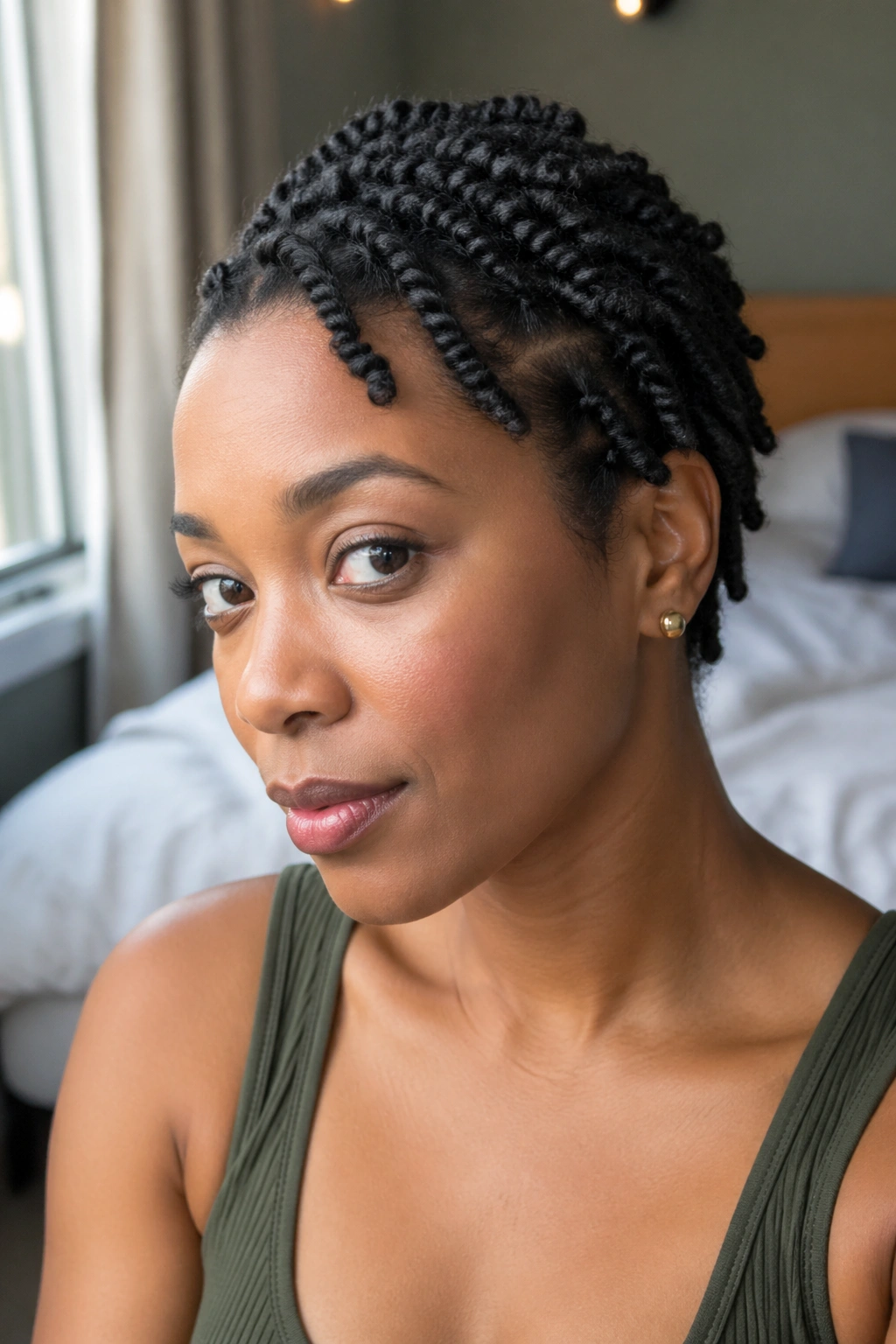
Two-strand flat twists installed on short hair and allowed to dry fully overnight before being carefully unraveled create a defined, stretched curl pattern that’s visible on hair as short as one and a half inches. The technique requires some dexterity because short sections are harder to grip and twist than longer ones.
How to Use It
Divide damp, product-treated hair into sections about the width of your index finger. Flat twist each section against the scalp, twisting backward. The shorter the hair, the smaller each section needs to be for the twist to hold through the drying period. Very short hair — under two inches — may benefit from finger-coiling at the very tip of each section to help the ends hold their shape.
After full drying, gently unravel each twist by rolling it slowly between your fingers and easing it apart. Separate the unraveled sections with your fingers — not a comb — to create volume without frizz.
6. Cornrow Design Styles
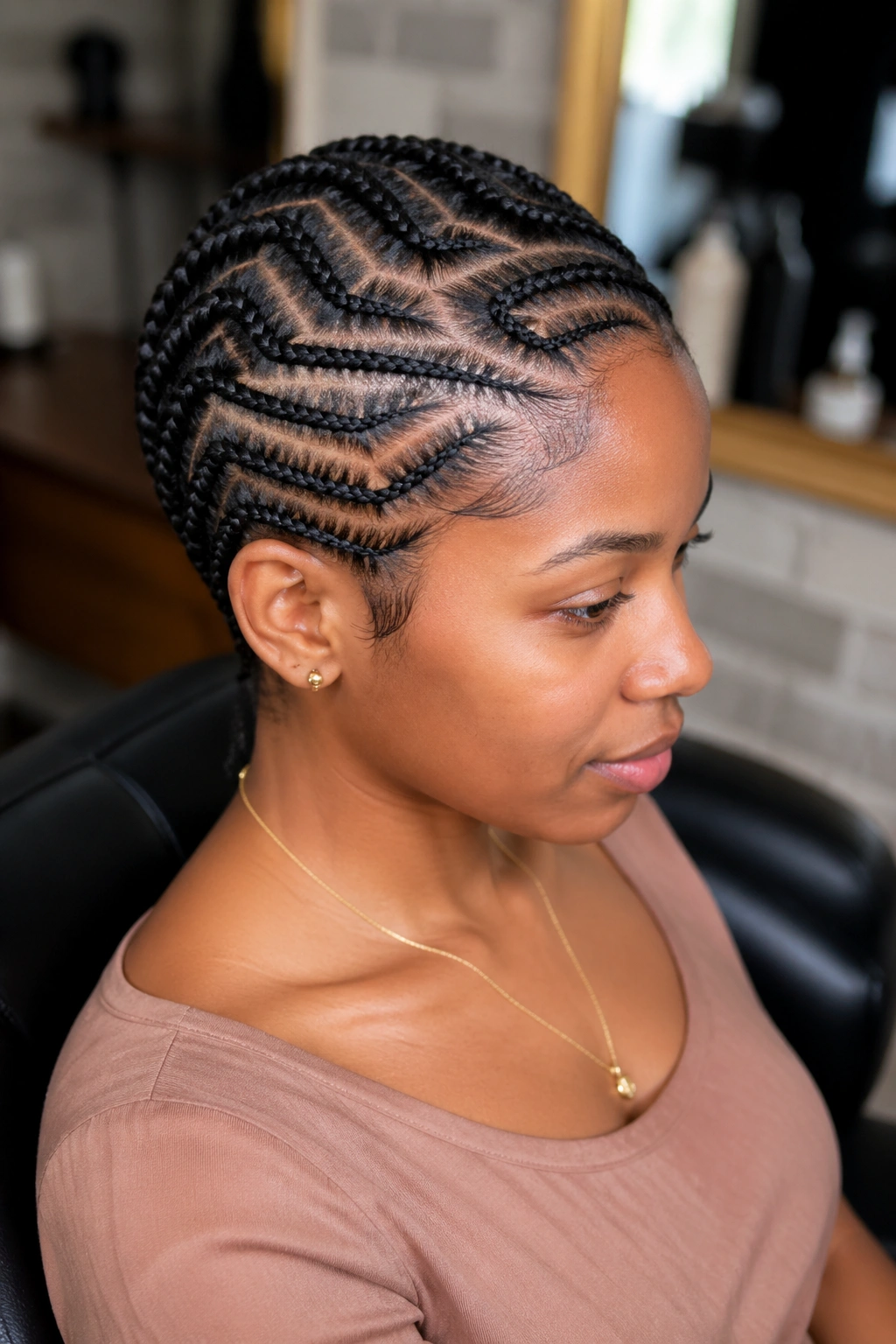
Cornrow designs on short hair — geometric patterns, curved lines, parts shaved into the design — can be as intricate or as simple as the stylist’s skill and your preference allow. Short hair actually shows cornrow work more clearly than longer hair because the braids have nowhere to hide and nothing to get lost in.
A simple cornrow style on TWA-length hair might be four to six straight rows from front to back, finished with a small braid at each end. An intricate style might include curved rows, criss-crossing patterns, or designs that incorporate shaved lines between cornrow sections.
The longevity of cornrows on short hair is usually one to two weeks. The shorter the hair, the more the cornrow loosens as new growth appears at the base. After two weeks, most short-hair cornrow styles start to look grown-out enough to need re-doing.
7. Short Two-Strand Twist Set
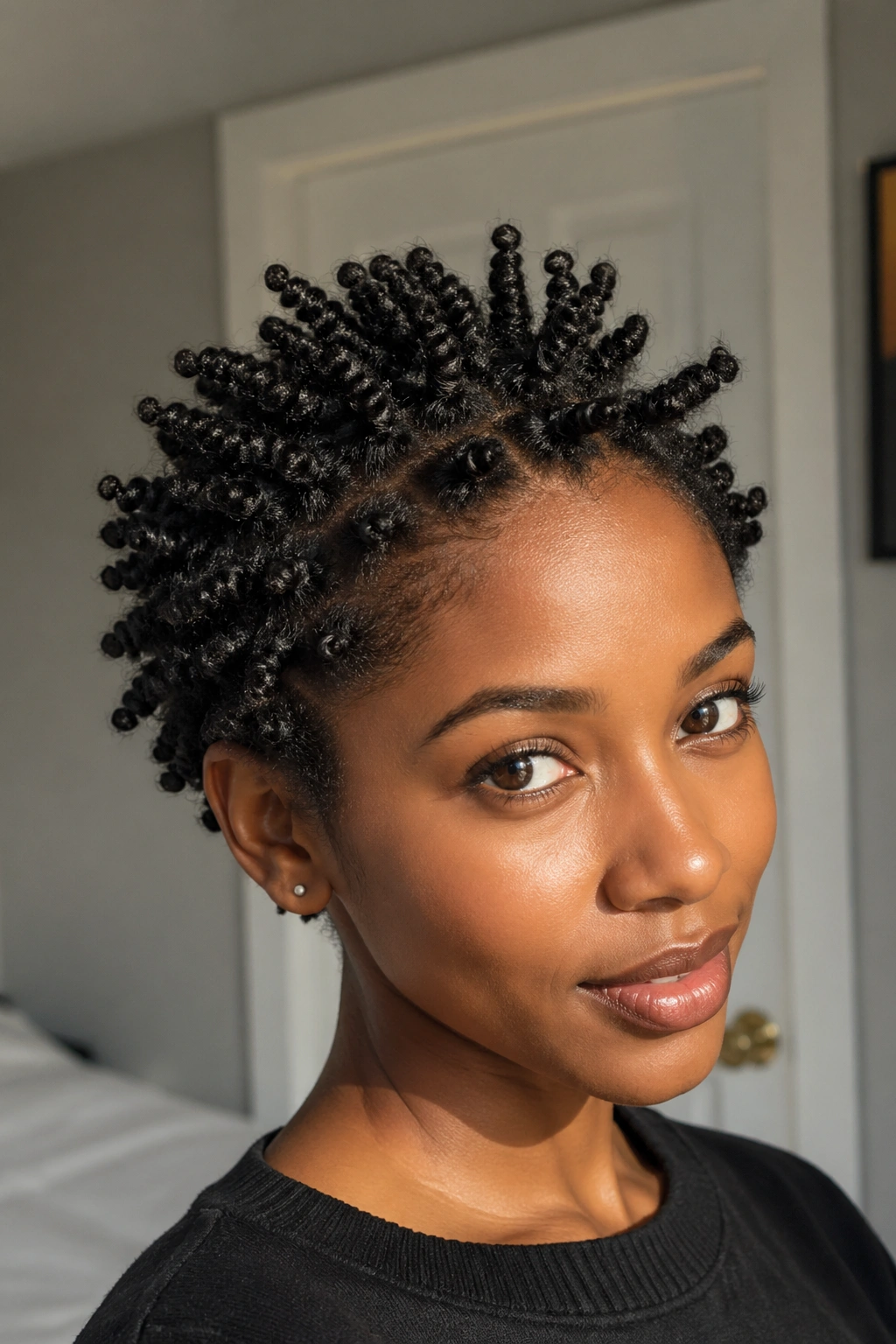
Unlike flat twists, standing two-strand twists on short hair come up from the scalp rather than lying against it. At short lengths, these twists are little upright spirals — each one a small, defined coil that stands independently. A full head of short standing twists has an almost architectural quality.
The trick with short two-strand twists is keeping enough tension at the root to make the twist stand rather than flop. Work on small, consistently sectioned squares. Apply a defining cream to each section before twisting. Twist firmly from the very base upward, and as you reach the last half-inch, twist more tightly and allow the twist to coil against itself at the tip.
Protect them at night with a satin bonnet. In the morning, mist lightly with water and gently re-coil any twists that flattened during sleep.
8. Short Afro Puff
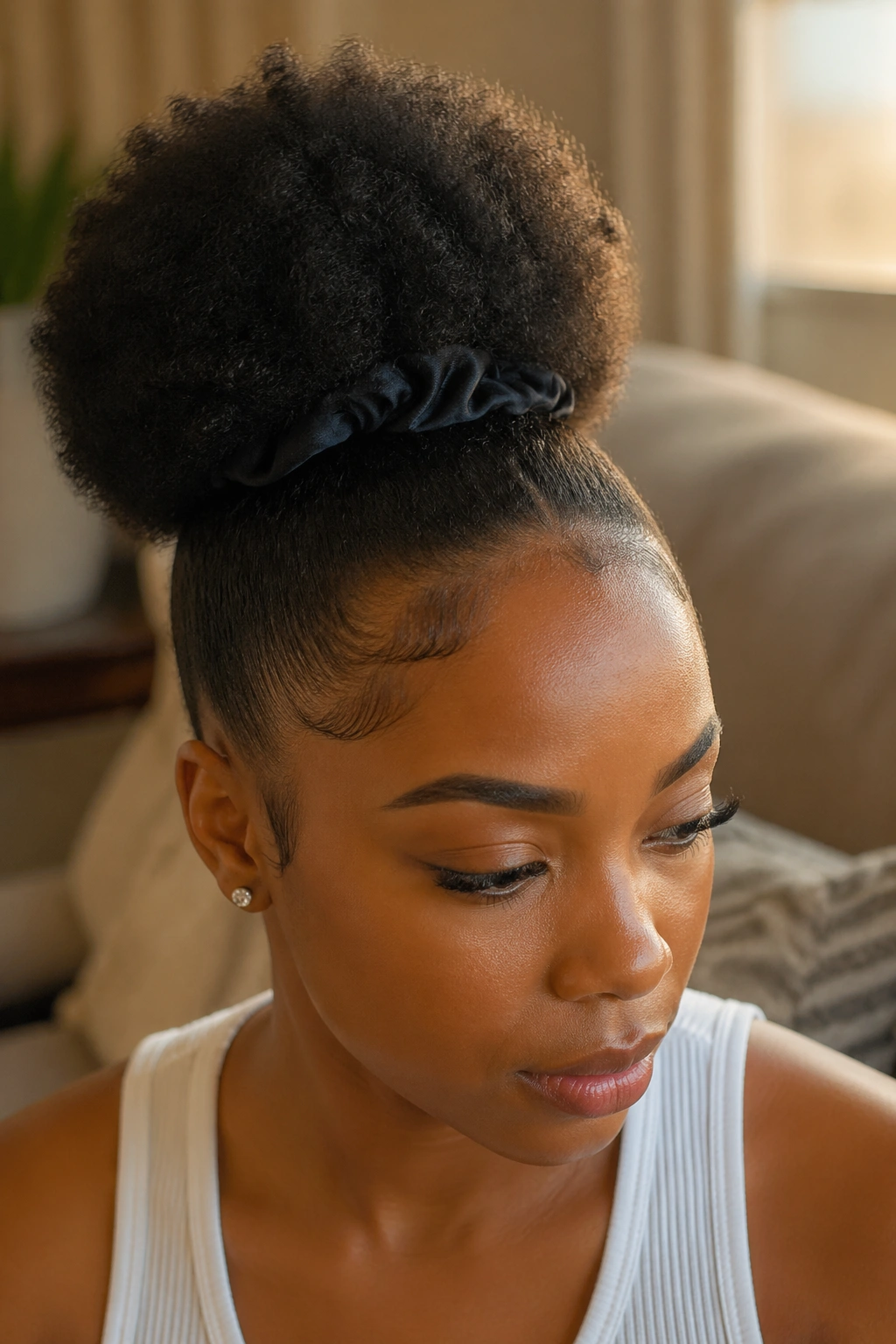
At two to three inches of growth, a classic afro puff becomes achievable. All the hair is gathered at the crown using a satin-lined scrunchie (or a stretchy headband without metal), creating a rounded puff that sits at the top of the head. Simple, iconic, and functional.
The puff requires enough hair to gather, which typically means a minimum of two to two and a half inches in length. Hair shorter than this doesn’t have enough to gather into a meaningful mass. If you’re not quite there yet in your growth journey, a clip-in afro puff extension provides the same look.
For the cleanest puff from short natural hair, apply edge control to the hairline and smooth with a soft brush before placing the scrunchie. The smoothed edges frame the puff and give the style its polished quality.
9. Bantu Knot Style on Short Hair
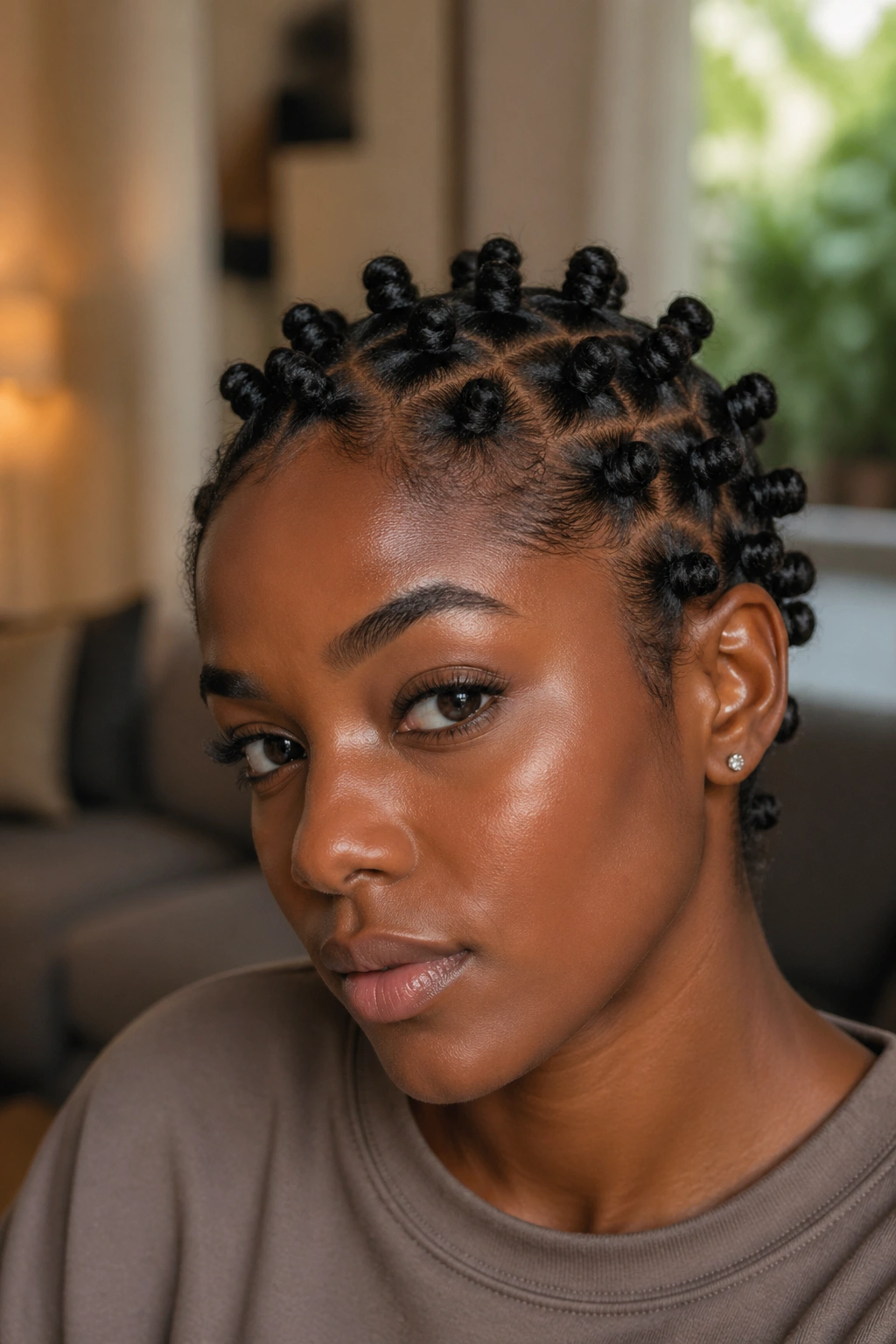
Bantu knots on short hair are smaller than on longer hair — typically the size of a large marble or a small coin — but they work beautifully even at two to three inches of growth. Each small, coiled knot is secured against the scalp by looping the twist around itself and tucking the end under the knot’s base.
On short hair, you might create anywhere from twelve to thirty Bantu knots depending on how small the sections are. Smaller, more numerous knots create a more intricate pattern across the scalp. Fewer, larger knots create a bolder, more graphic effect.
This is also a protective style within a style. Bantu knots tuck the hair ends away inside the knot structure, reducing the exposure of the fragile tips to friction and environmental damage. They make an excellent transitional protective style between other styles.
10. Tapered Afro Cut With Crown Volume
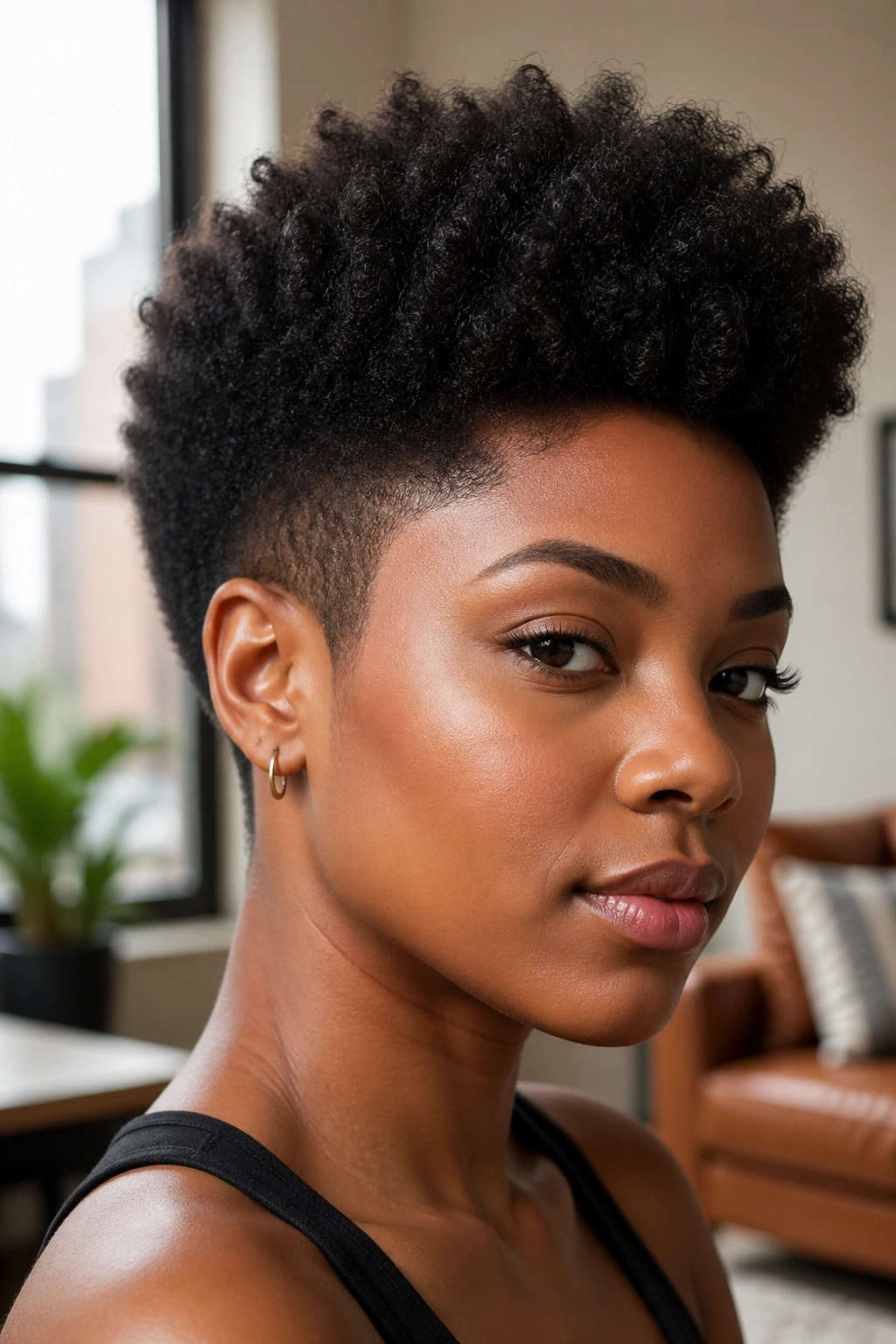
A professional cut that tapers the sides and nape of the natural hair short while leaving the crown section significantly longer creates a deliberate gradient — short-to-long from bottom to top — that gives the afro a shaped, sculptural quality that an unshaped natural growth doesn’t have.
This cut requires a stylist skilled with natural afro texture. The taper should blend seamlessly with the crown section rather than creating an abrupt line. The crown length needs to be enough to pick and style into a defined rounded top.
After the cut, the daily styling is simple: keep the sides smooth with light oil, and pick the crown section into your preferred shape. The precision of the cut does most of the work.
11. Shaved Sides With Natural Top
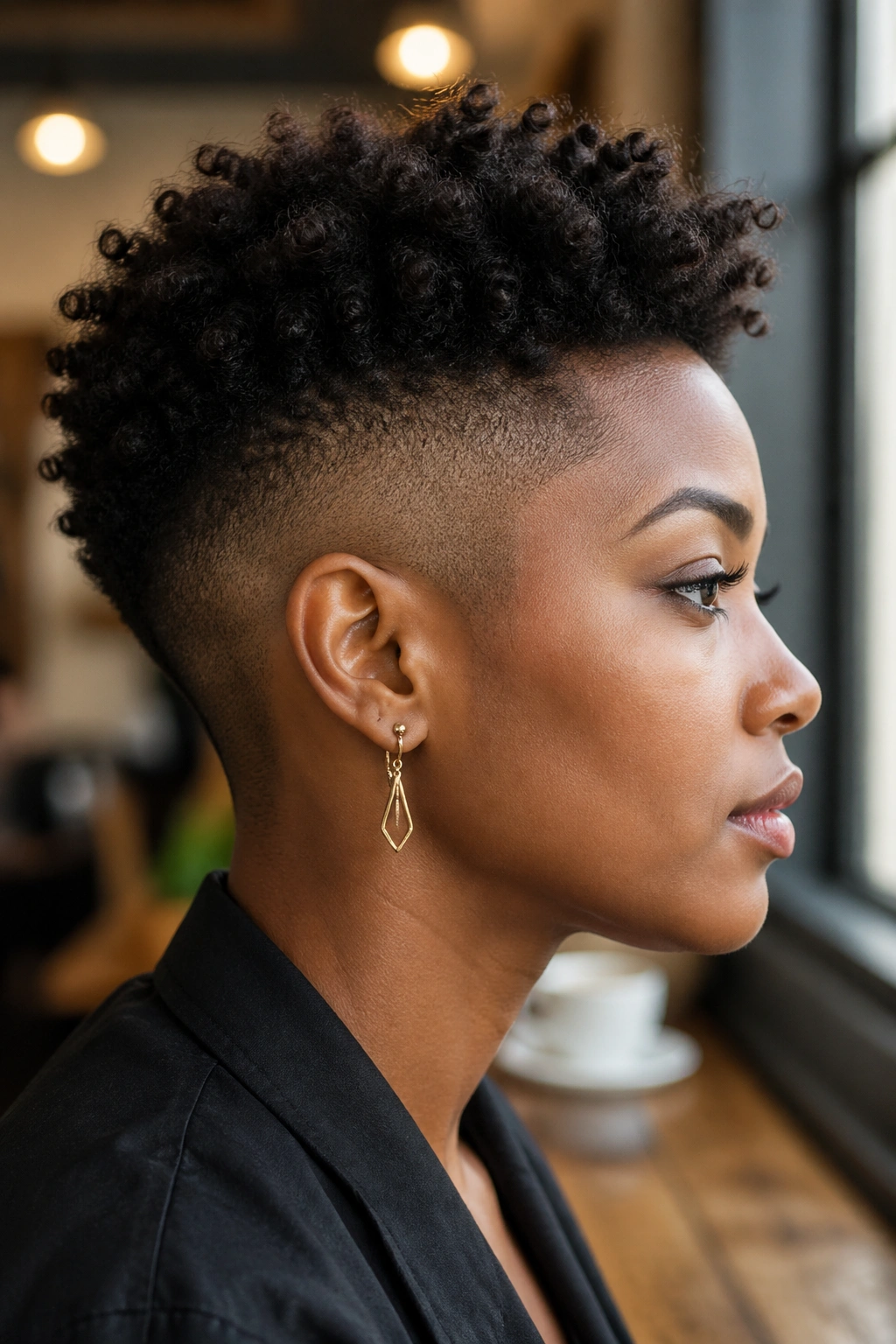
A bold cut that shaves or very closely trims the sides and back of the head — often with a guard 1 or guard 2 clipper setting — while leaving the top natural and full. It’s a more extreme version of the tapered afro and creates a harder, more defined contrast between the shaved section and the natural crown.
The natural top section can be worn in any style: picked out, twist out, defined curls, or gathered into a small top knot. The shaved sides are the style’s signature feature — they read as a deliberate aesthetic statement about shape and contrast.
Care for the shaved section requires nothing beyond clean, moisturized scalp. The natural crown requires the full short afro product routine.
12. Box Braids on Short Hair (With Extensions)
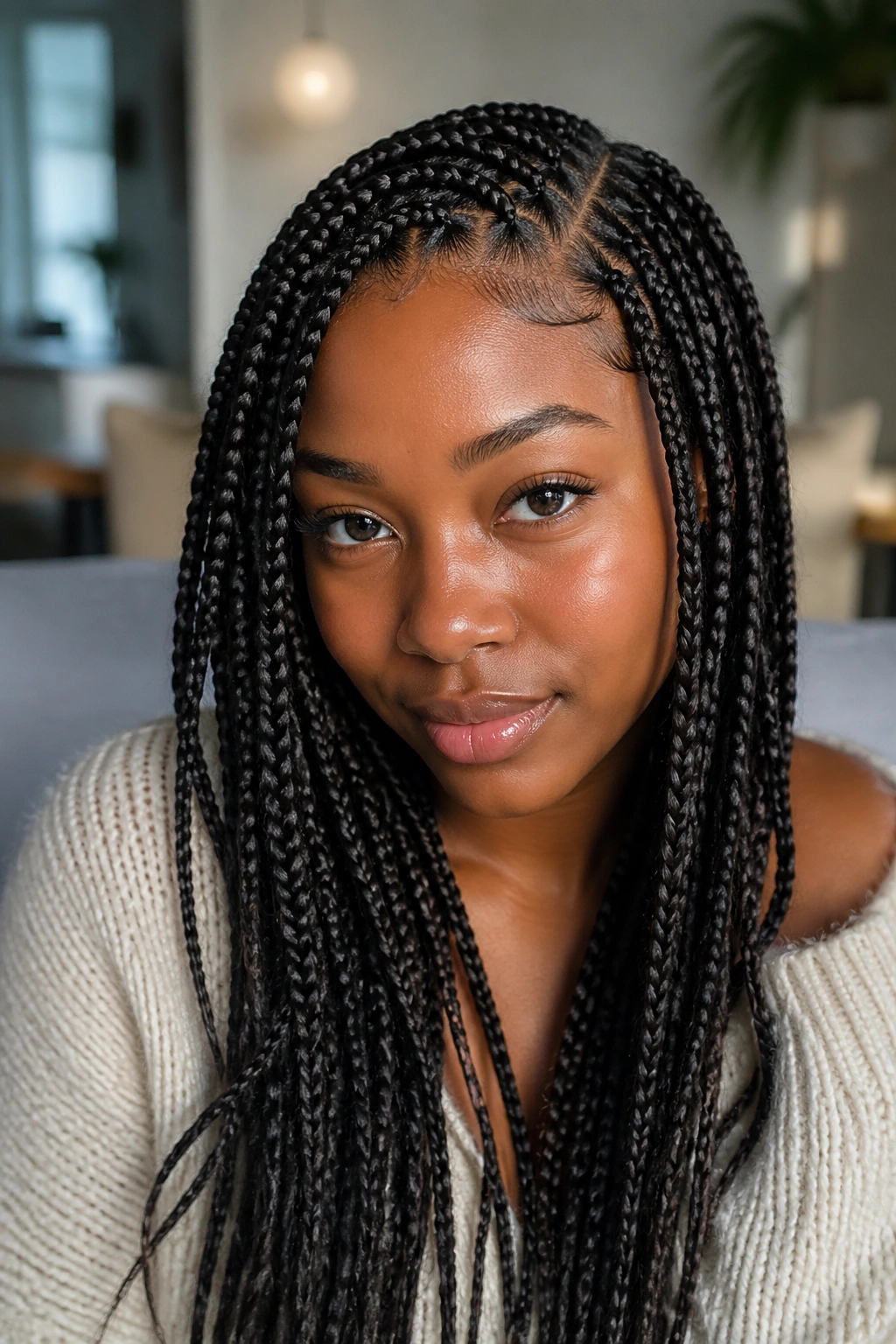
Standard box braids on very short natural hair require extension hair because most short afro hair doesn’t have enough length to hold a braid to a significant length. The extension is knotted at the root section of the natural hair, which creates a braid that appears to start at the scalp and continue as long as the extension length is.
Knotless box braids are better for short natural hair because the knotted method concentrates too much tension at the scalp when the anchor hair is very short. The knotless feed-in technique distributes tension more gradually, which reduces the risk of tension alopecia at the hairline.
Box braids on short hair are protective and versatile, but the installation requires an experienced stylist who understands short hair anchoring. Poorly anchored extension braids on short natural hair slip out within days.
13. Micro Braids on Short Hair
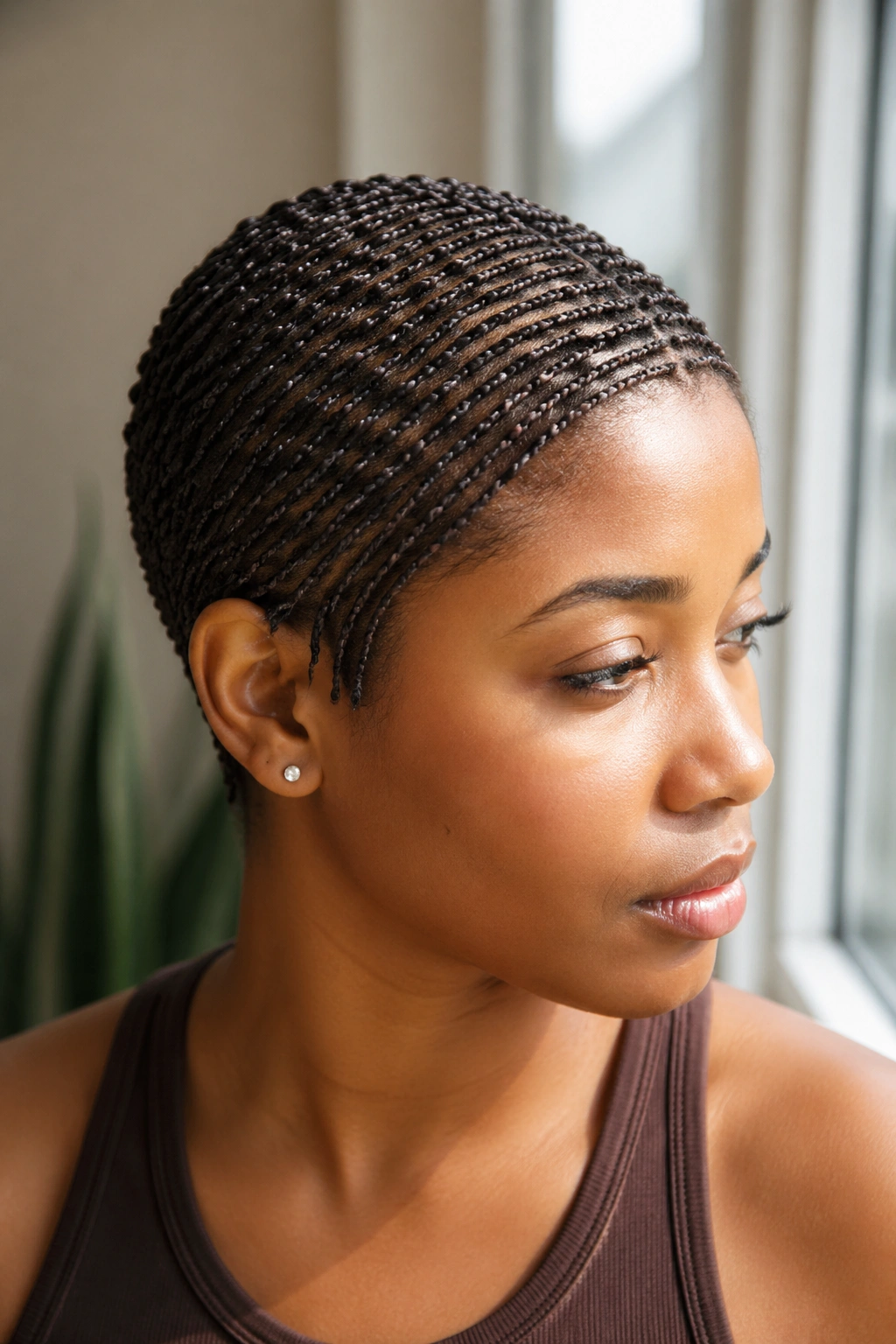
Where box braids are individual chunky-to-medium braids, micro braids are extremely fine, thin braids installed in very small sections. On short hair, they create an incredibly intricate, dense texture — hundreds of thin braids covering the scalp in a unified, detailed pattern.
The installation time is significant. A full micro braid set can take eight to twelve hours. But the longevity is equally significant — micro braids on short hair can be worn for six to eight weeks with proper care, making them one of the longest-lasting styles in this list.
The care commitment is real. Scalp care under micro braids is essential over a multi-week wear, and removal must be done carefully and slowly to avoid breaking the short natural hair at the roots.
14. Protective Two-Strand Twists With Extension
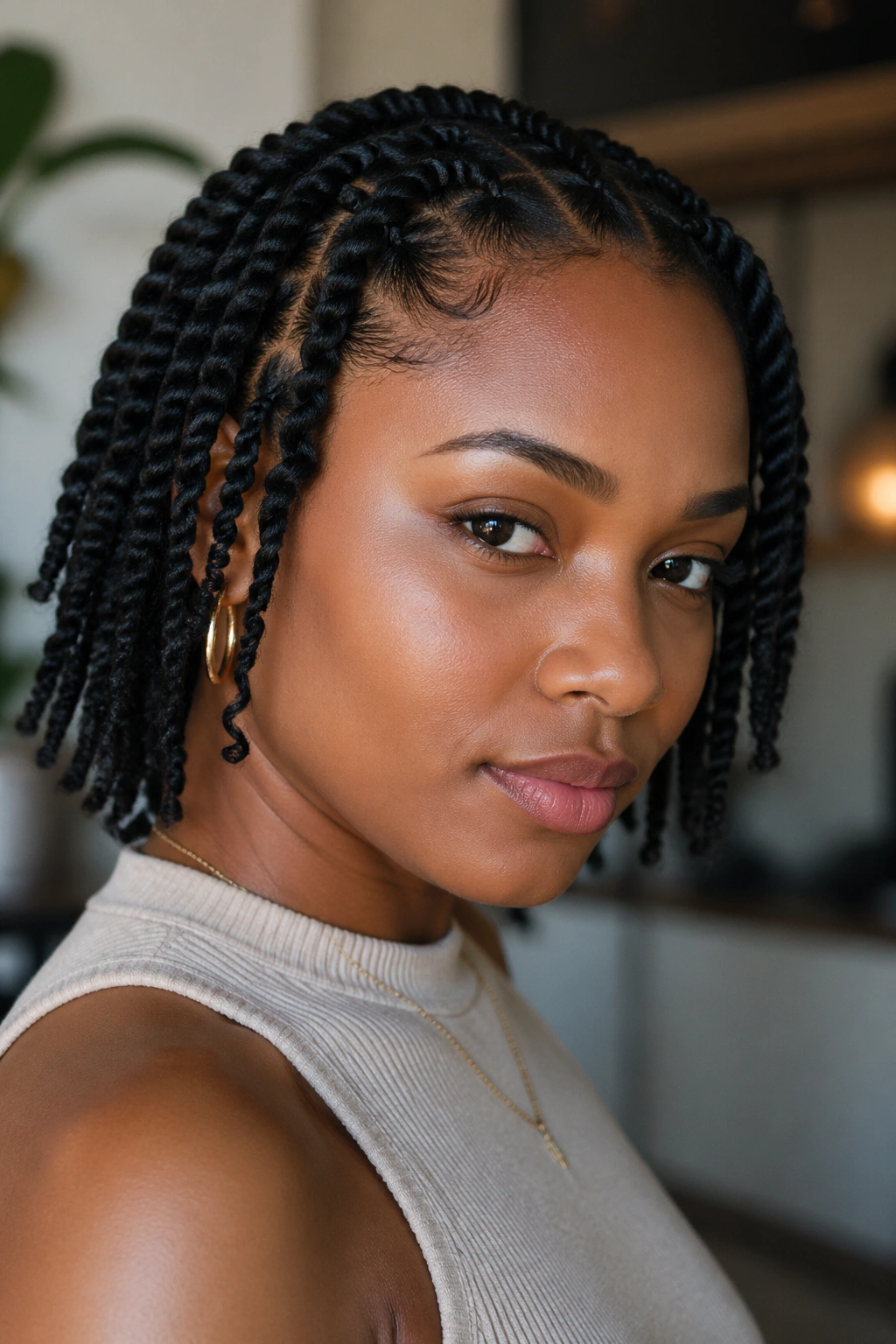
Adding a small amount of extension fiber to two-strand twists on short natural hair allows the twists to hang slightly rather than standing upright, creating a different look than the short standing twists described in style 7. A small amount of Marley or Kanekalon extension hair — just enough to add an inch or two of length — changes the character of the whole style.
These are particularly useful for the in-between stage of a short hair journey — when hair is past the TWA stage but not yet long enough for some styles. The added extension length bridges that gap while keeping the style recognizable as a short style rather than a full extension style.
15. Afro With Cut Design
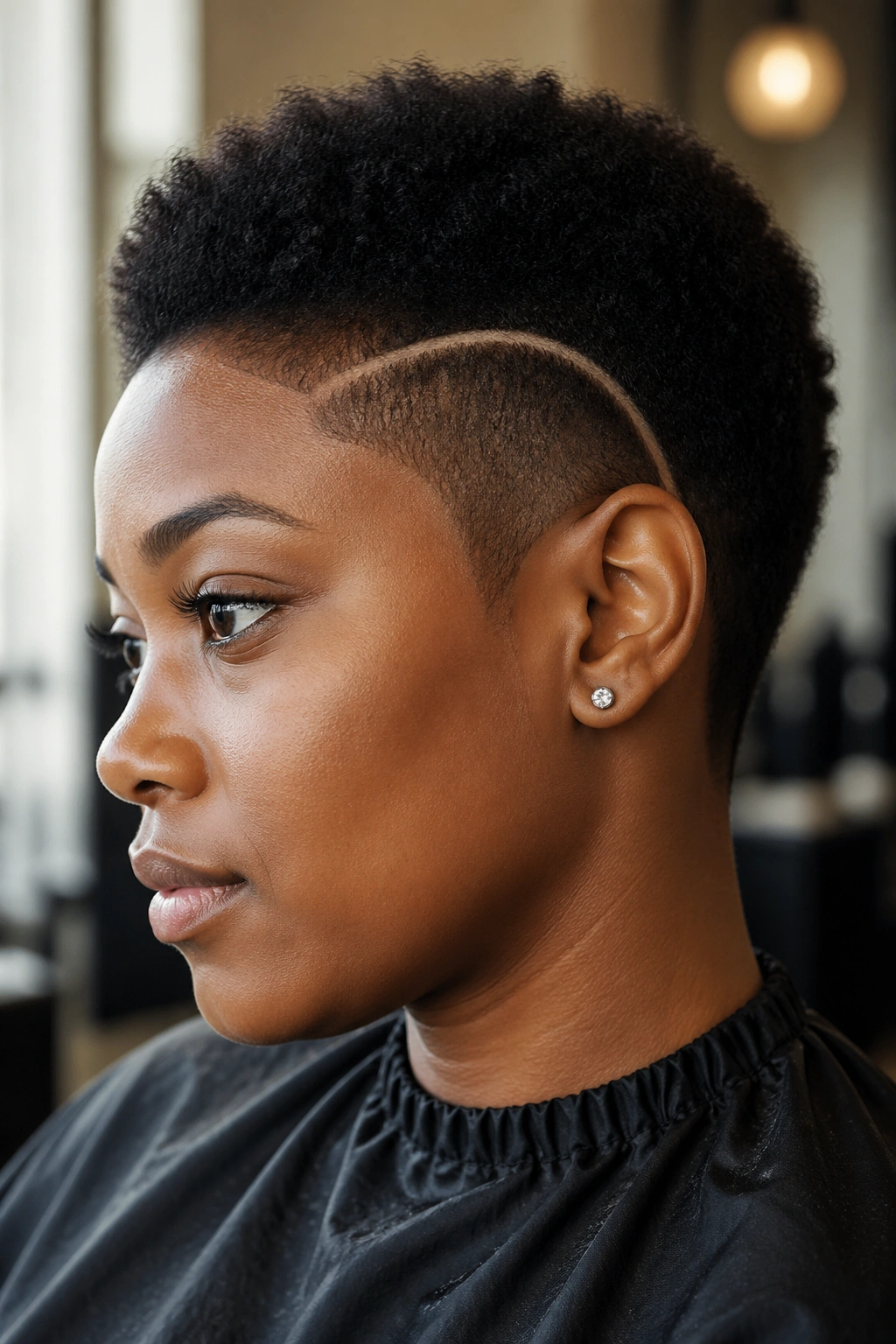
A professional cut that incorporates a design — a geometric shape, a line, a small symbol — shaved or trimmed into the natural hair. Designs are typically cut at the temple, the nape, or along the fade line on tapered styles.
Simple designs — a clean curve at the temple, a thin line along the fade — add personality without requiring elaborate execution. More complex designs — patterns, letters, shapes — are high-commitment pieces that look extraordinary when fresh but need regular salon visits to maintain as the hair grows.
If you’re considering a cut design, start simple. A single clean curve at one temple is more effective and more maintainable than an elaborate pattern that requires re-trimming every week.
16. Crochet Hair on Short Afro Base
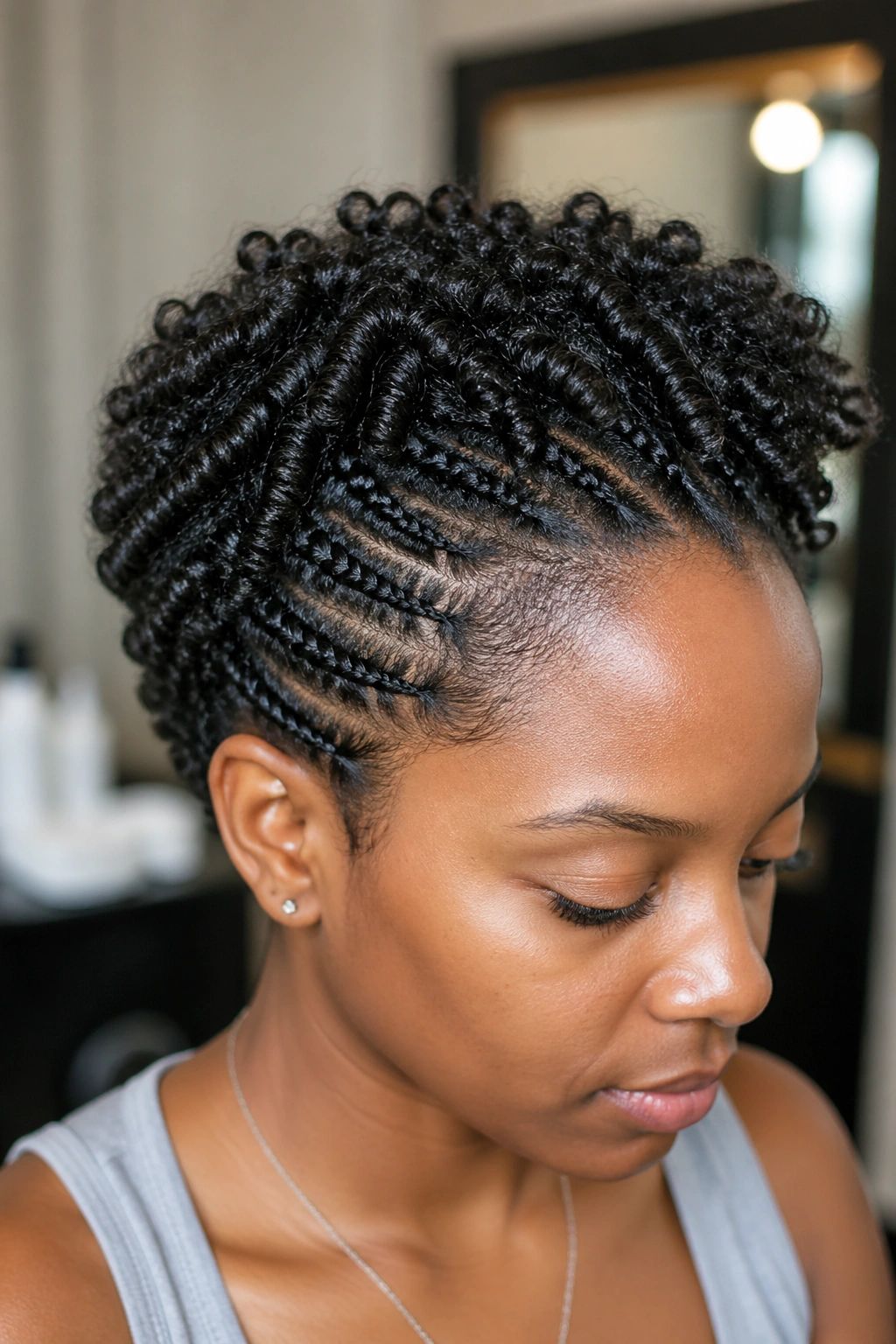
Crochet braided styles — where pre-made extension twists, braids, or curls are looped through a cornrow base using a latch hook — work on short hair as long as the cornrow foundation can be installed neatly. Even very fine, short cornrow rows provide enough anchor for crochet extensions.
The range of crochet extension textures available means you can achieve the look of any extension style from this list — passion twists, faux locs, spring twists — without hand-installing each individual piece. The cornrow base is small enough to install on one to two inches of natural hair, and the crochet pieces hang from that base.
This is one of the most time-efficient full styles for short hair. The cornrow installation takes thirty to forty-five minutes. Crochet looping takes one to two hours. A complete, elaborate-looking style in under three hours total.
17. Short Natural Hair With Bold Color
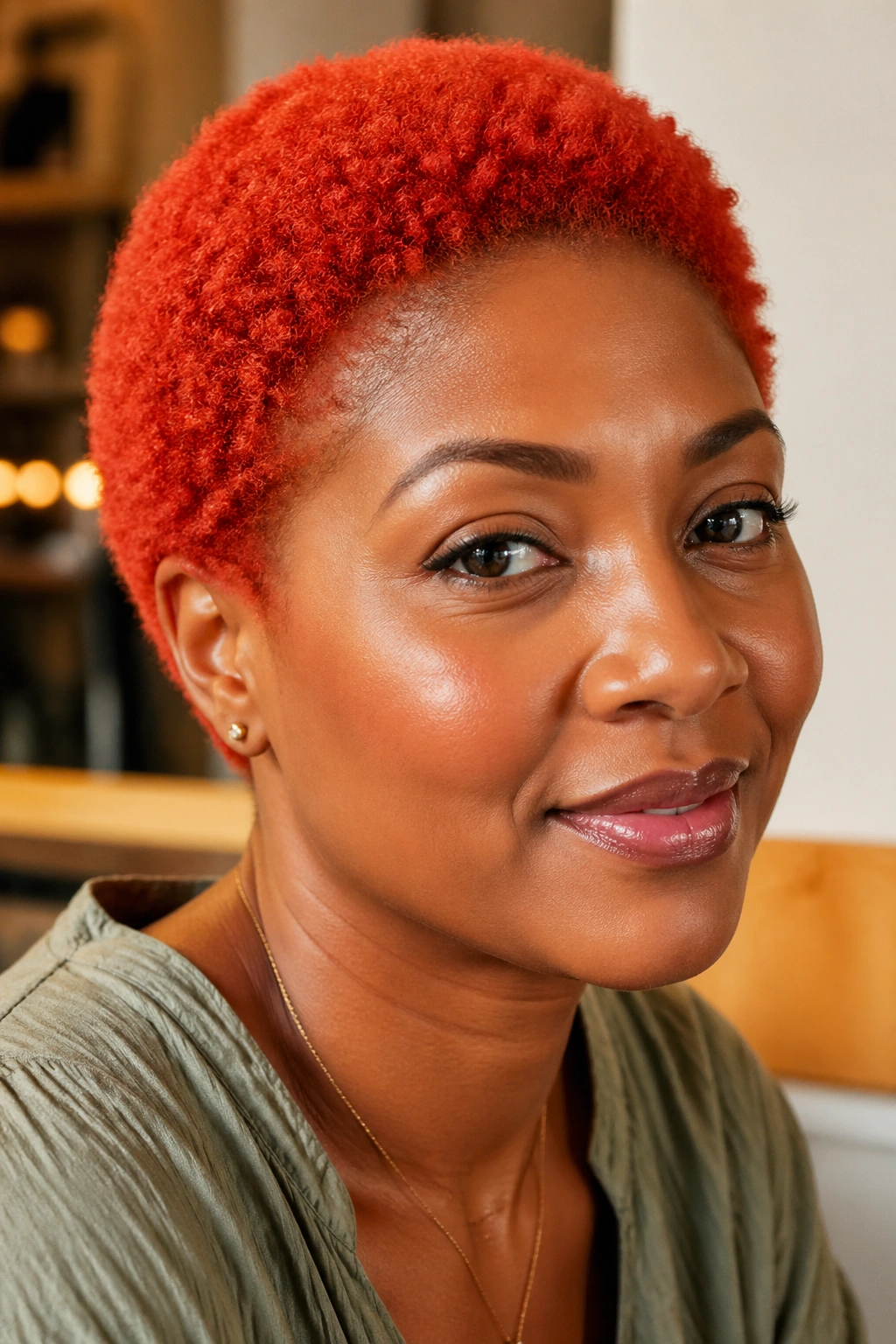
Color as the primary style element — rather than cut or texture — transforms short natural hair into something entirely different from its natural, un-colored state. A bold, single-color dye job on a compact afro creates a style where the color itself is the statement.
Popular choices: vibrant auburn and copper tones that warm against deep skin tones; platinum or ash blonde for maximum contrast; burgundy and wine tones that complement natural brown undertones. The compactness of short afro hair creates an intense, saturated color effect that longer hair can’t match because there’s less total surface area to dilute the color’s impact.
For natural 4C hair, color should always be applied by an experienced colorist. Chemical color processing on highly coiled, fine strands requires careful timing and professional product selection to avoid significant damage.
18. Short Afro With Defined Edges
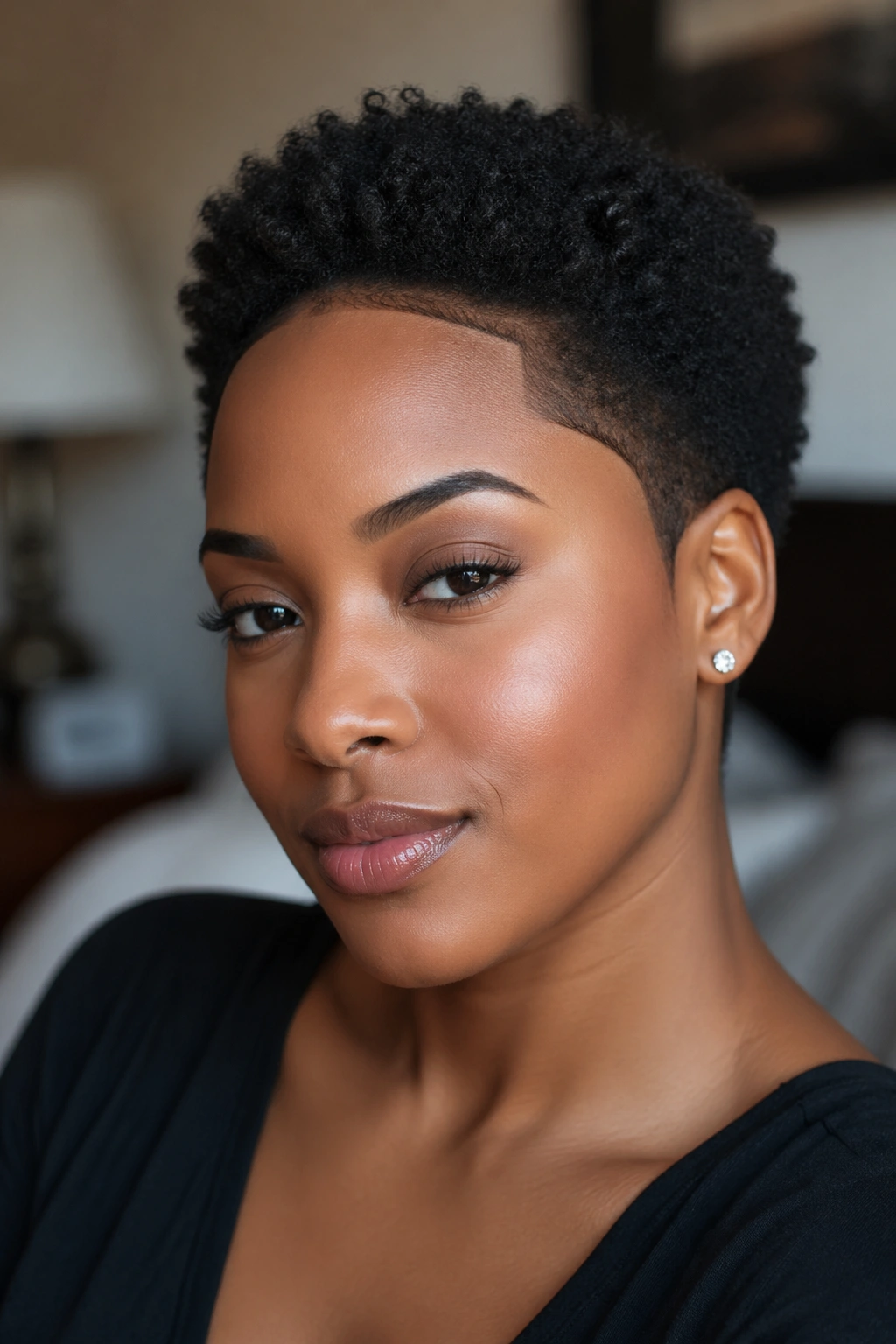
Not a shape style but a finishing style — the defined edge version of any short afro look uses precise edge work at the hairline as the primary distinction. Clean, shaped edges that follow the natural hairline curve, or defined baby hair laid in deliberate swirls, waves, or curves, frame the face in a way that reads as carefully styled even when the rest of the hair is worn naturally.
Edge work on short hair starts with edge control — a product thick enough to hold the fine hairline hairs flat without flaking. Apply a small amount with a soft toothbrush or edge brush and smooth in the direction of the curl pattern. Do not attempt to lay edges that want to grow straight outward; work with the natural direction, just defining and smoothing rather than forcing.
19. The High-Top Afro
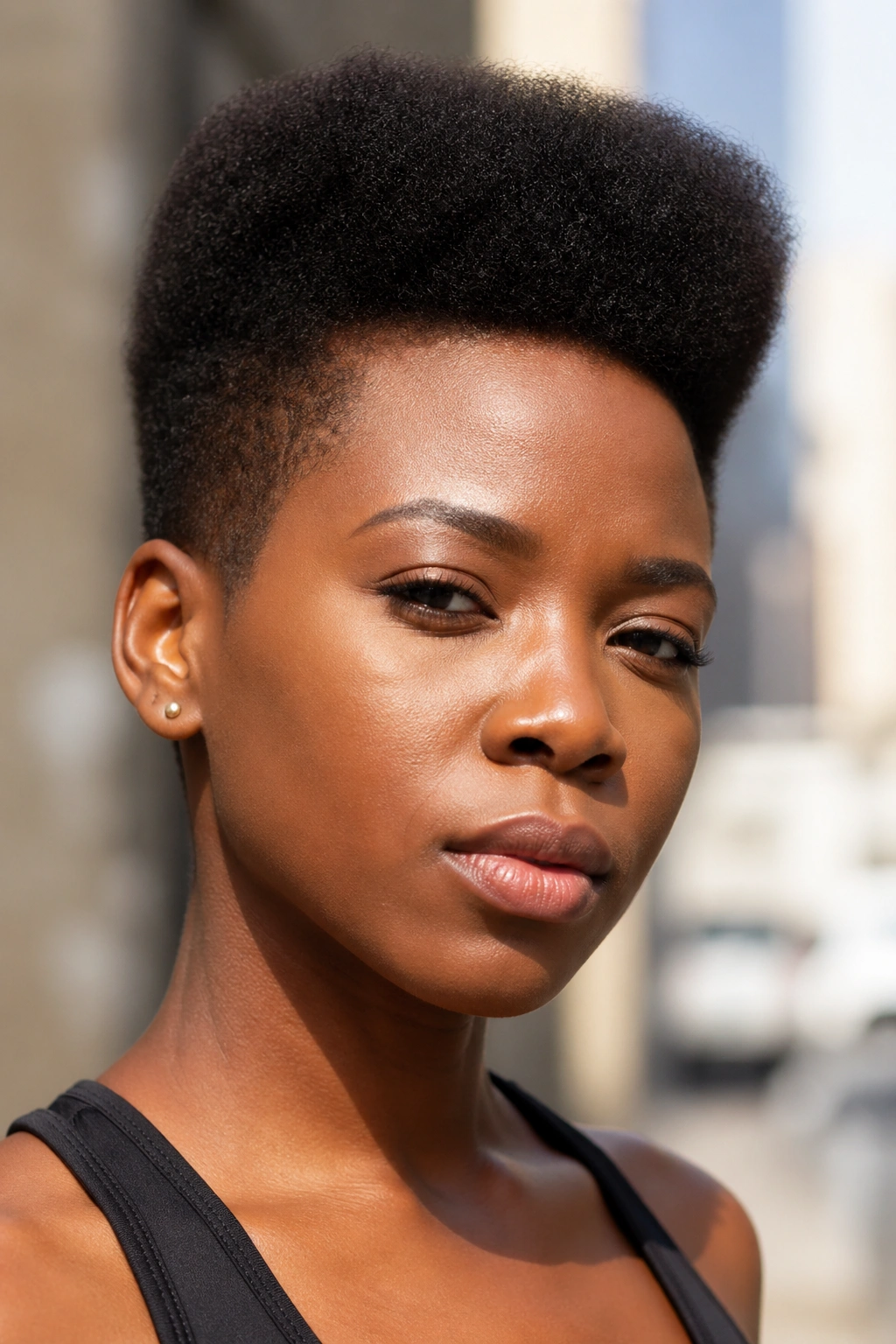
Inspired by the classic flat-top style and given a contemporary natural interpretation, the high-top afro concentrates maximum volume at the crown while keeping the sides and back very short or closely trimmed. The volume at the crown is shaped into a flat or slightly rounded plateau rather than the typical rounded dome.
This cut needs a stylist who understands the geometry of the style. The sides need to be blended precisely with the voluminous crown, and the crown section needs to have enough density to maintain the flat-top shape without constant manipulation.
After the cut, maintaining the high-top shape daily requires a pick and a light oil. Pick the top section upward and outward to maximize the plateau effect, then run a light oil through the picked-out top to keep it moisturized and prevent the dry appearance that picked-out natural hair sometimes develops.
20. Short Twist Out in a Defined Pattern
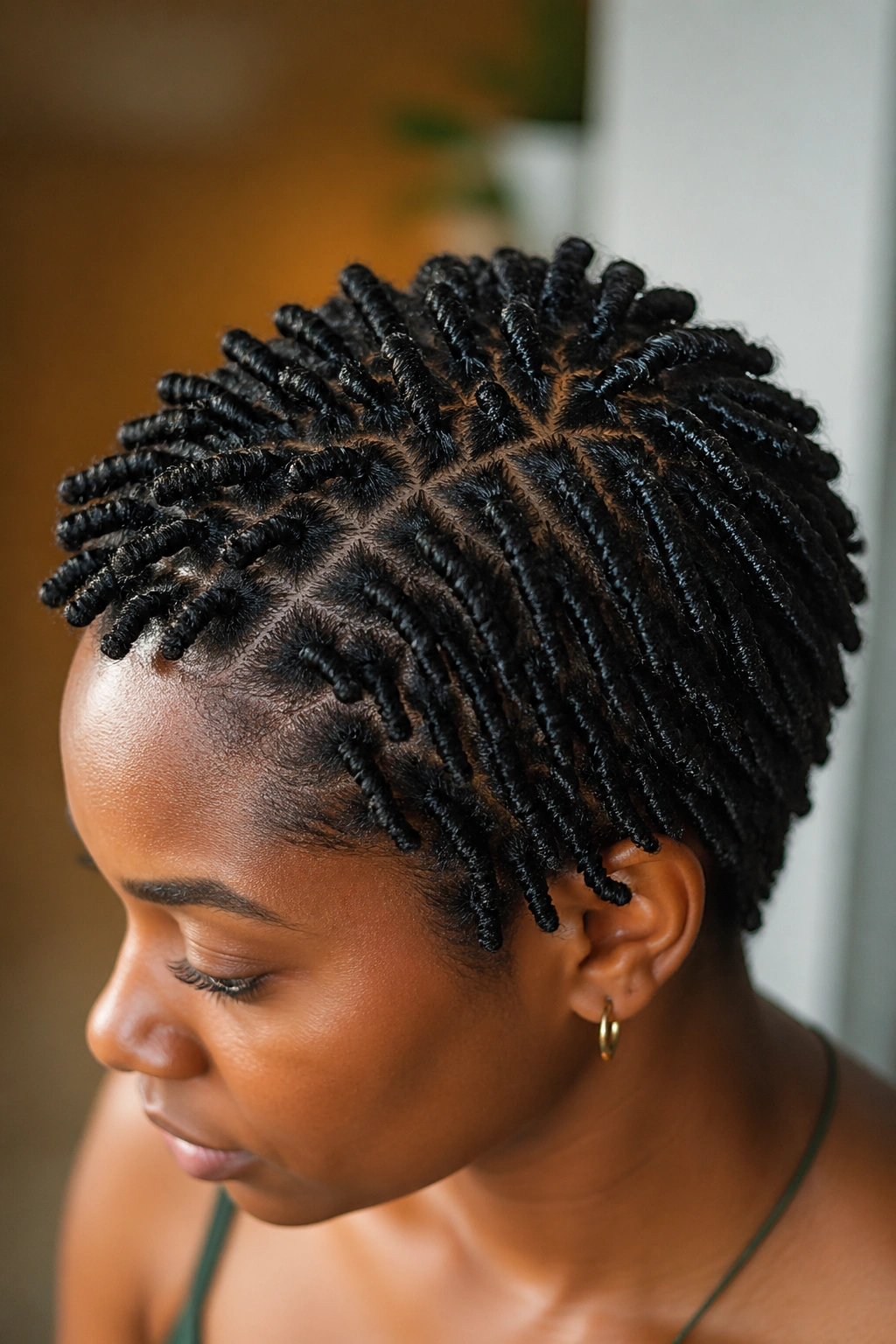
The twist out on short hair — described earlier in its basic form — taken a step further by being set in a deliberate parting pattern. Rather than random sections, twists installed in a precise geometric pattern (diagonal, honeycomb, starburst from a central point) create an unraveled twist out with visible directional flow.
The directional flow is visible in the unraveled curl because the twist was set in that direction. Twists radiating from the crown create a style where all the curls flow outward from the center. Diagonal twists create a style where the unraveled curl sweeps in one direction across the head.
21. Short Hair With Bold Accessories
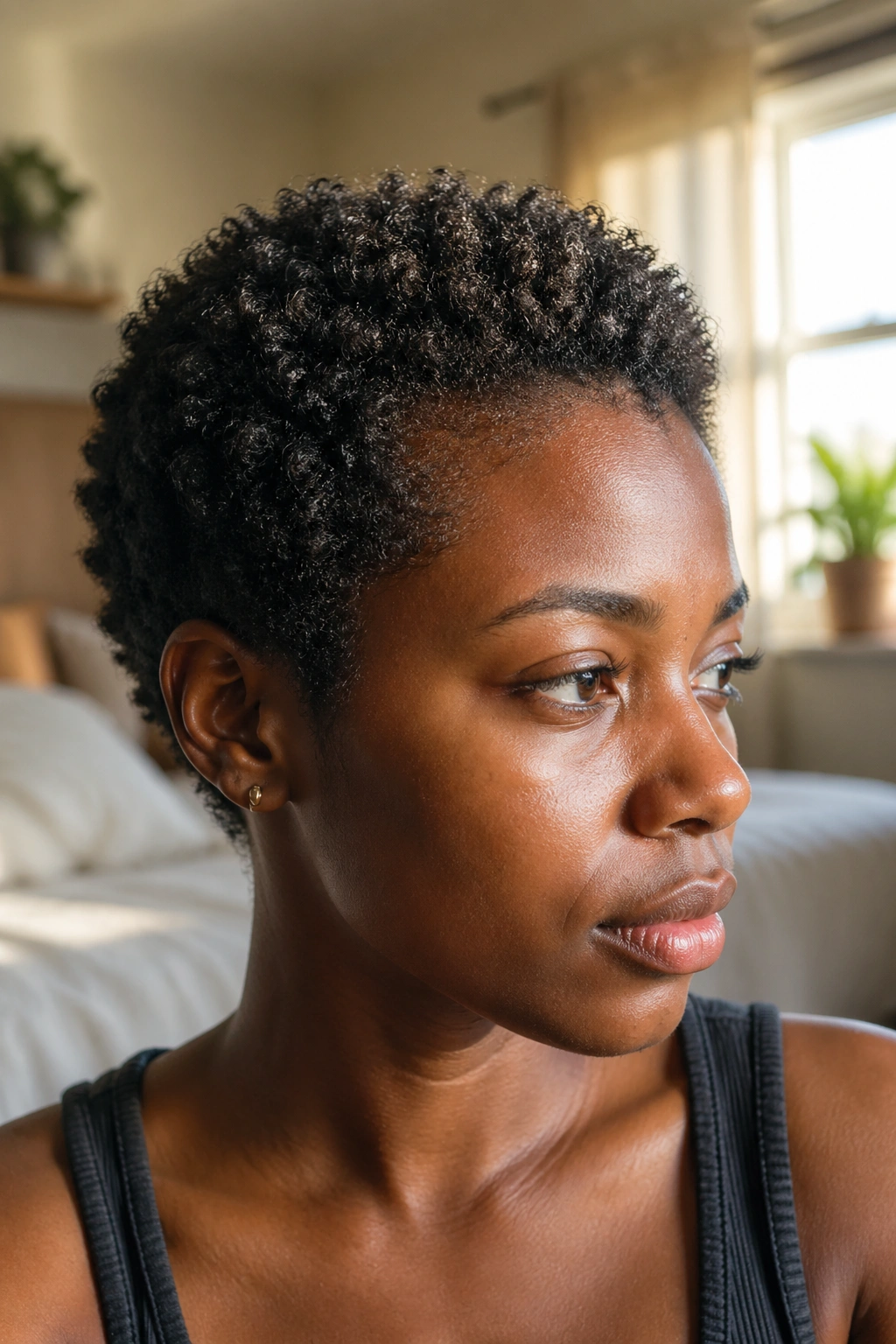
Accessories — oversized earrings, printed headwraps, statement pins, large sculptural clips — have an intensified visual relationship with short hair because there’s no competing volume. A large, geometric earring against the bare nape of a woman with a TWA creates a specific, clean visual that longer hair would obscure.
Understanding this relationship is what makes accessorizing short afro hair so effective. The bare neckline, the visible jaw and ear, the unobstructed hairline — these are visual elements that accessories can respond to directly, creating compositions that are impossible to replicate with longer styles.
22. Protective Flat Twist Set on Short Hair
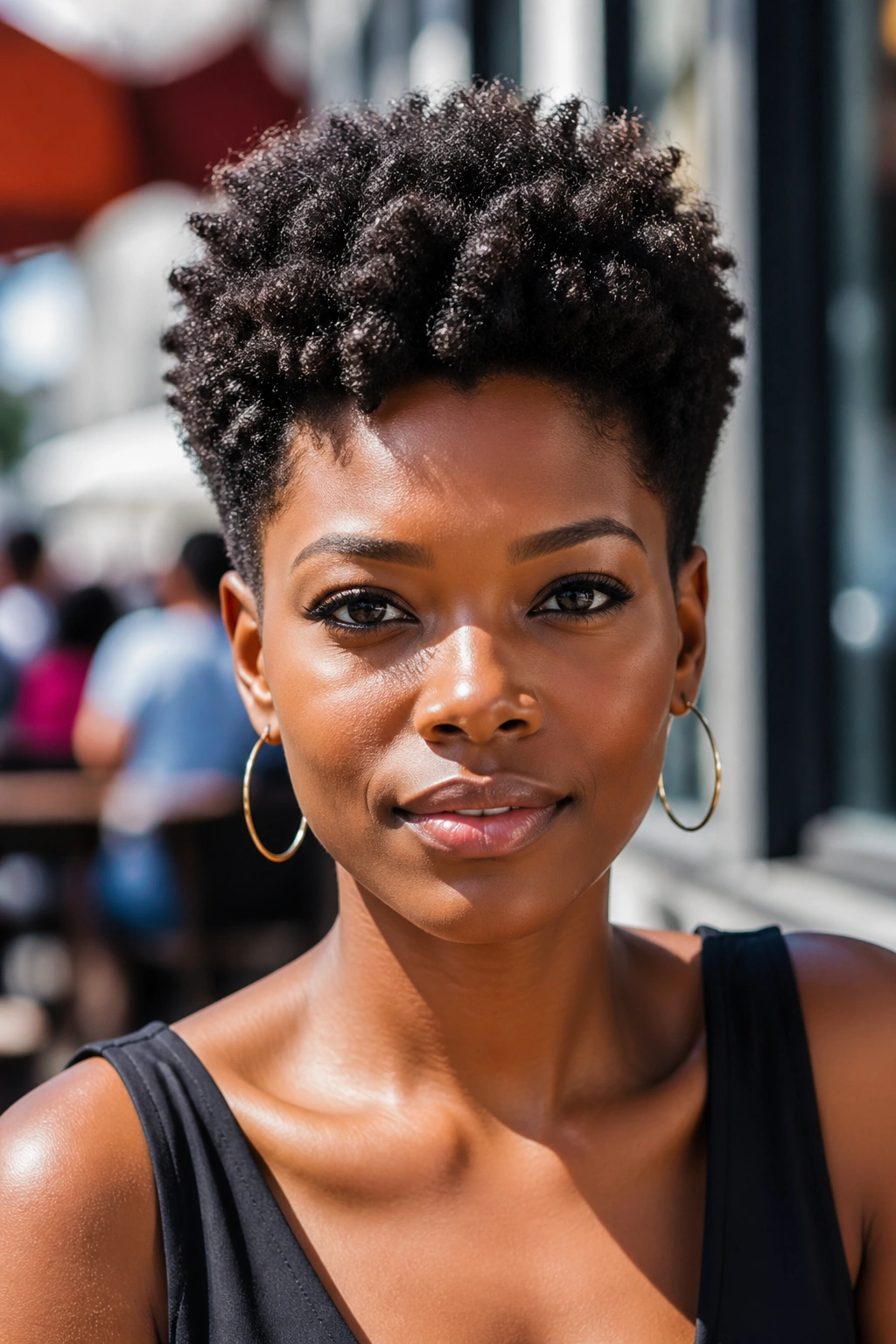
A full flat twist set on short hair — every section of the head flat-twisted against the scalp rather than left as hanging twists — creates a fully protective style where all the natural hair is contained in the braid-like flat twist structure. No ends are exposed, no length is hanging freely.
This is one of the highest-protection styles available for short afro hair. The flat twist structure compresses the hair slightly, which means the style sits very close to the scalp and takes up minimal visual space. It’s less of an aesthetic style and more of a functional protective configuration — worn under head coverings, during athletic training periods, or during intensive scalp treatments.
It can last three to five days before the roots begin to look grown-out enough to require re-twisting.
23. Loc Starter Style
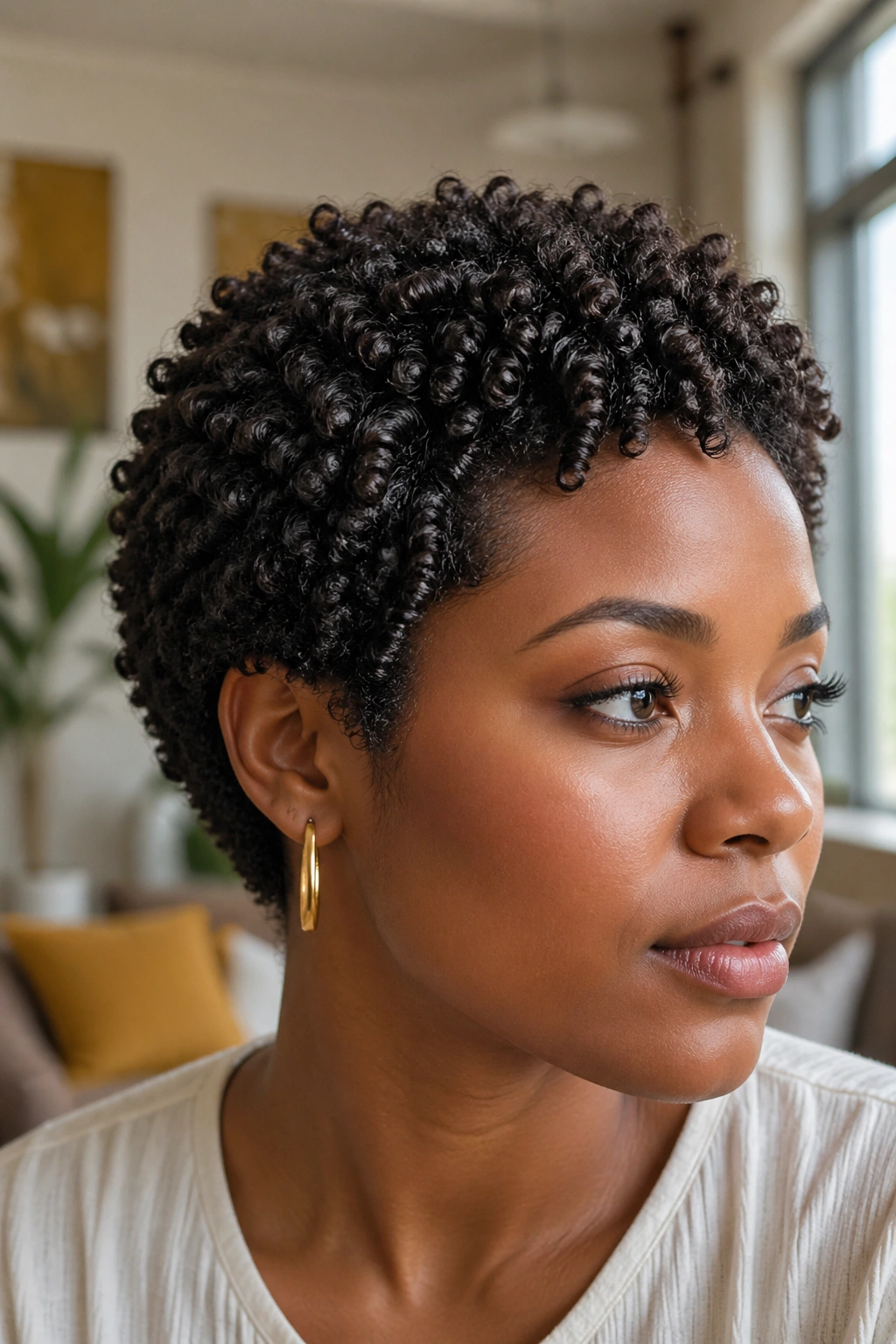
For women beginning their loc journey, short hair in the starter loc phase looks dramatically different from long, mature locs — and the starter phase has its own beauty. Dozens of small, tightly coiled beginning locs sit against the scalp in a dense, textured pattern that reads as clean and deliberate when properly maintained.
Starter locs are maintained with a palm rolling technique — rolling each individual loc between your palms to encourage the coiling formation — and kept moisturized with light natural oils. They require patience above all else; the formation process takes months, and the in-between stage requires commitment to the outcome.
The short starter loc stage is its own style, not just a beginning. Women who embrace it on its own terms rather than constantly comparing it to what it will eventually become often report genuinely loving this phase.
24. Short Braids Into Accessorized Pony
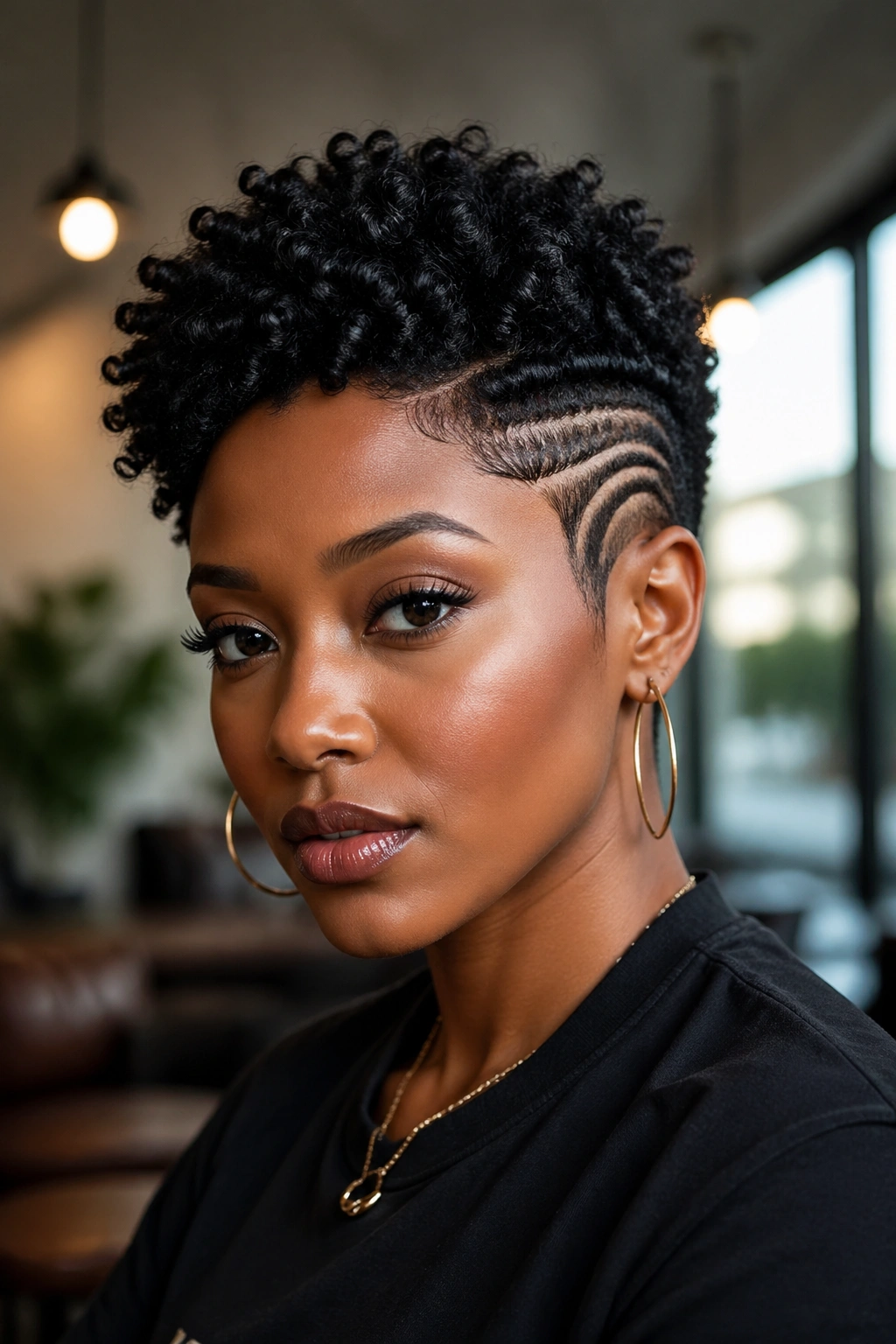
Even at short hair lengths, a combination of cornrows and a small gathered “pony” at the crown or nape — supplemented with a small extension clip if needed — creates a style that reads as a ponytail style without requiring the length typically associated with the look.
The cornrows at the front, sides, and back of the head direct the natural hair toward a central convergence point, where a small gathered section (or an extension) creates the pony. The result works better at three-plus inches of length than at very short TWA length.
25. Bold TWA Statement Look
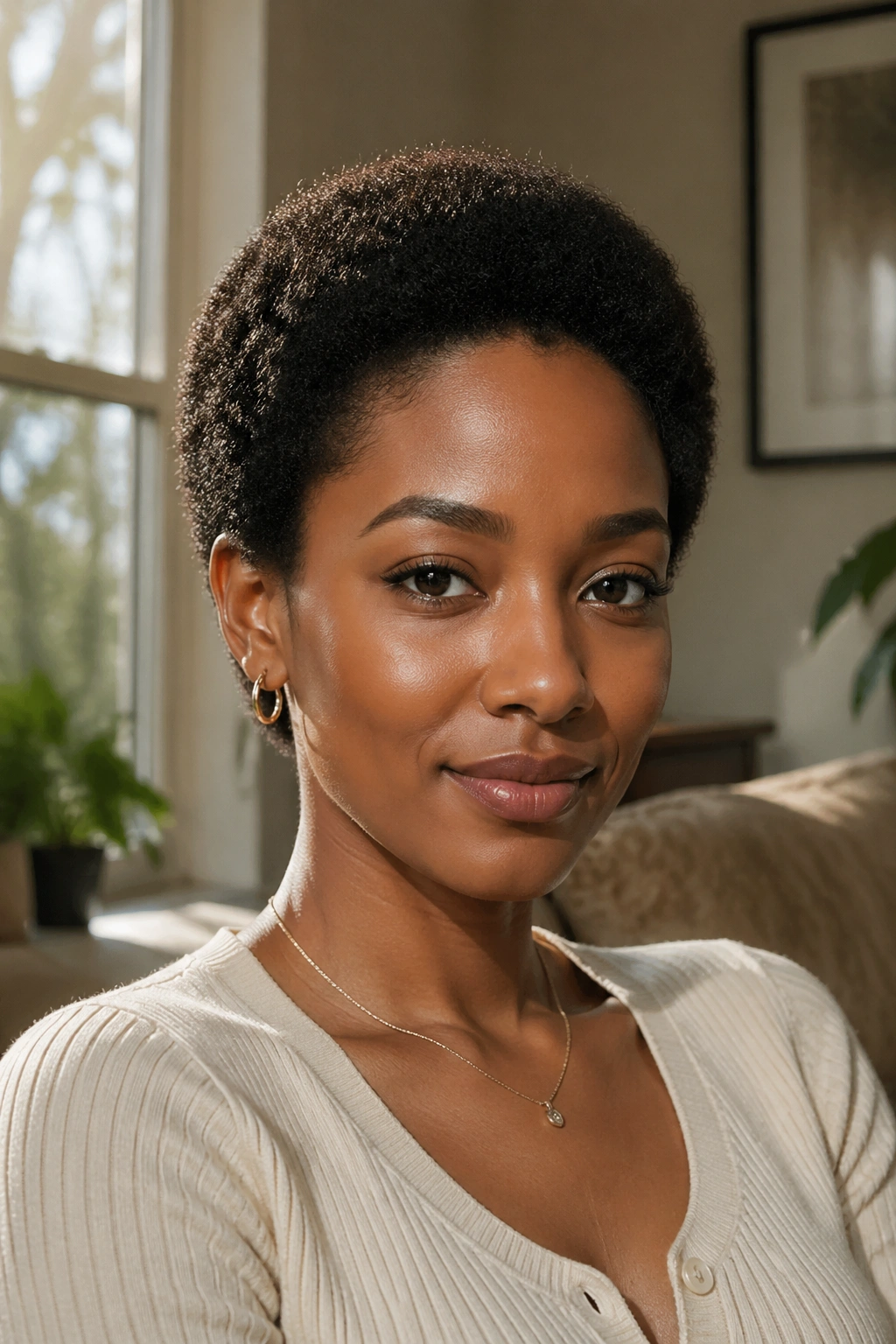
The bold TWA is simply a very short natural afro worn with full commitment and styling intention. At under an inch and a half of length, the TWA is the most revealing of all hairstyle lengths — it shows the skull shape, the hairline, the ears, the neck, and the face without any softening or coverage. This makes it simultaneously the most vulnerable and the most powerful of all short afro styles.
A woman who wears her TWA with full confidence, with strong accessories and deliberate styling choices at the edges and perimeter, is making an undeniable statement. No style in this list requires less product and less maintenance. And none of them requires more self-assurance.
The styling work is all at the edges — defined baby hairs, a clean hairline, well-moisturized scalp showing through the compressed curl. Everything else the TWA does by itself.
26. Short Protective Style With Color Pop
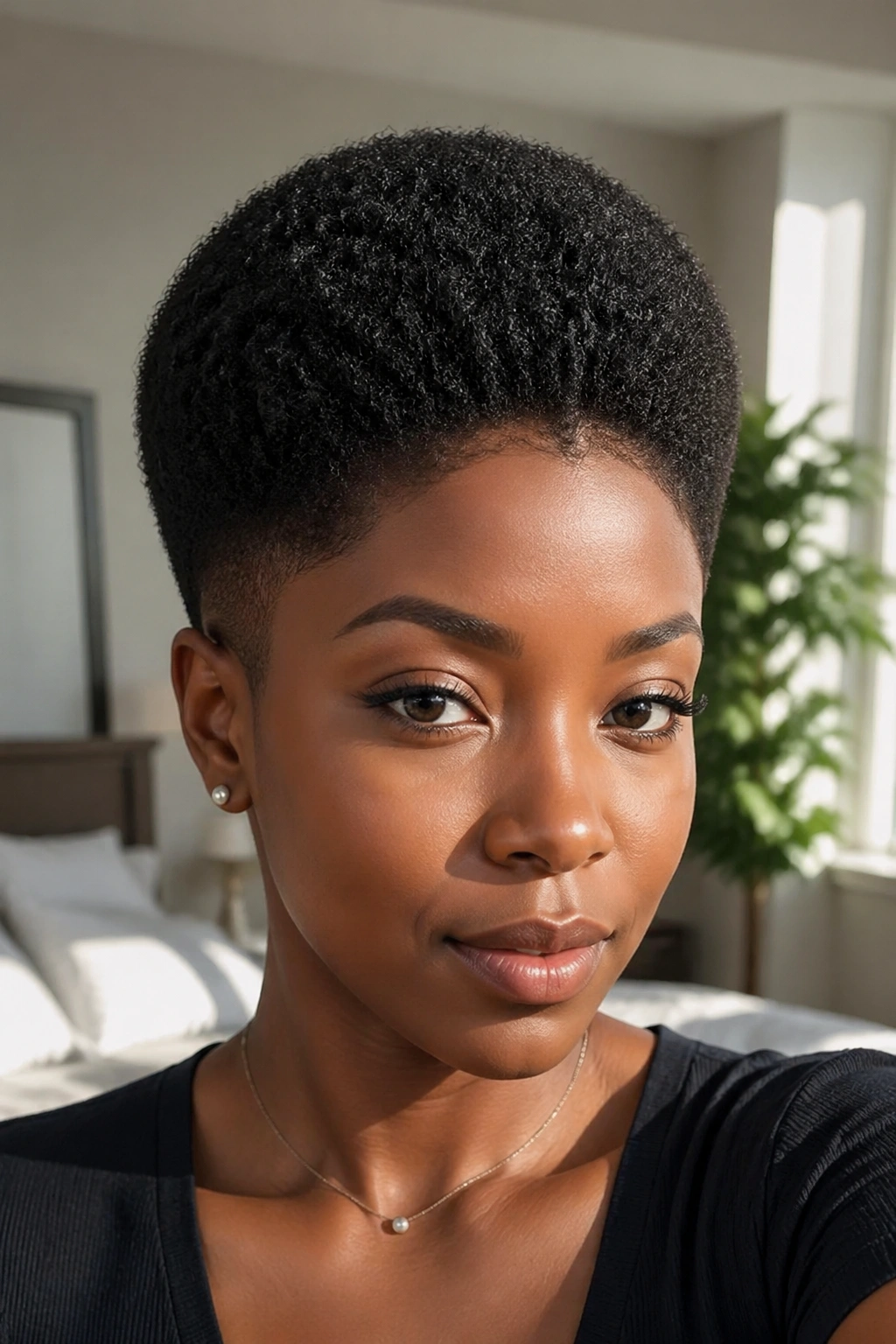
Combining any of the protective styles in this list — flat twists, cornrows, Bantu knots, crochet installs — with a bold color choice applied to the natural hair before styling or woven into the extension elements creates a style where protection and visual expression work together rather than in opposition.
A deep auburn flat twist set on short hair. Platinum micro braids installed on a cornrow base on a two-inch natural. Burgundy crochet spring twists on a minimal cornrow foundation. The combination of short, close-to-the-scalp protective structure with a bold unexpected color creates styles that are genuinely distinctive — and still fully functional as protective configurations.
Scalp Care for Short Natural Hair Styles
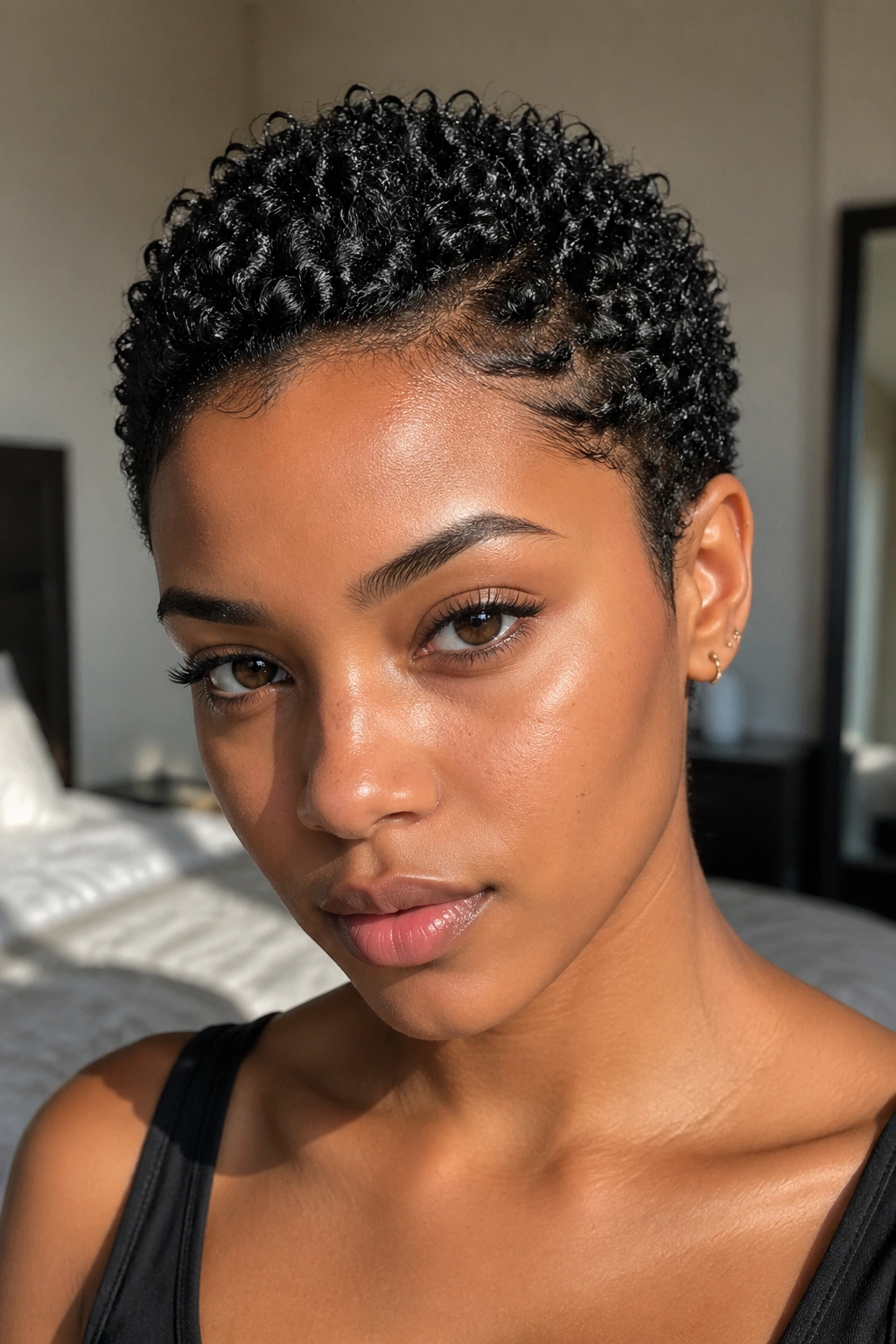
Short hair provides better scalp access than any long style, and this is an advantage you should use actively. The scalp is visible and reachable, which means you can actually address its condition rather than guessing at what’s happening under a mass of hair.
A scalp oil blend — mix castor oil, peppermint oil, and jojoba oil in a one-to-one-to-one ratio — applied directly to the scalp with your fingertips or a dropper bottle once or twice weekly stimulates circulation, adds moisture, and keeps the scalp flexible rather than tight. Massage for two to three minutes per application.
For dry scalp or any irritation, tea tree oil diluted in a carrier oil — five drops of tea tree to one tablespoon of jojoba — addresses microbial issues without stripping the scalp’s natural oil balance. Apply at night, not in the morning, so it has time to work without evaporating during your daily activities.
Trimming and Shape Maintenance
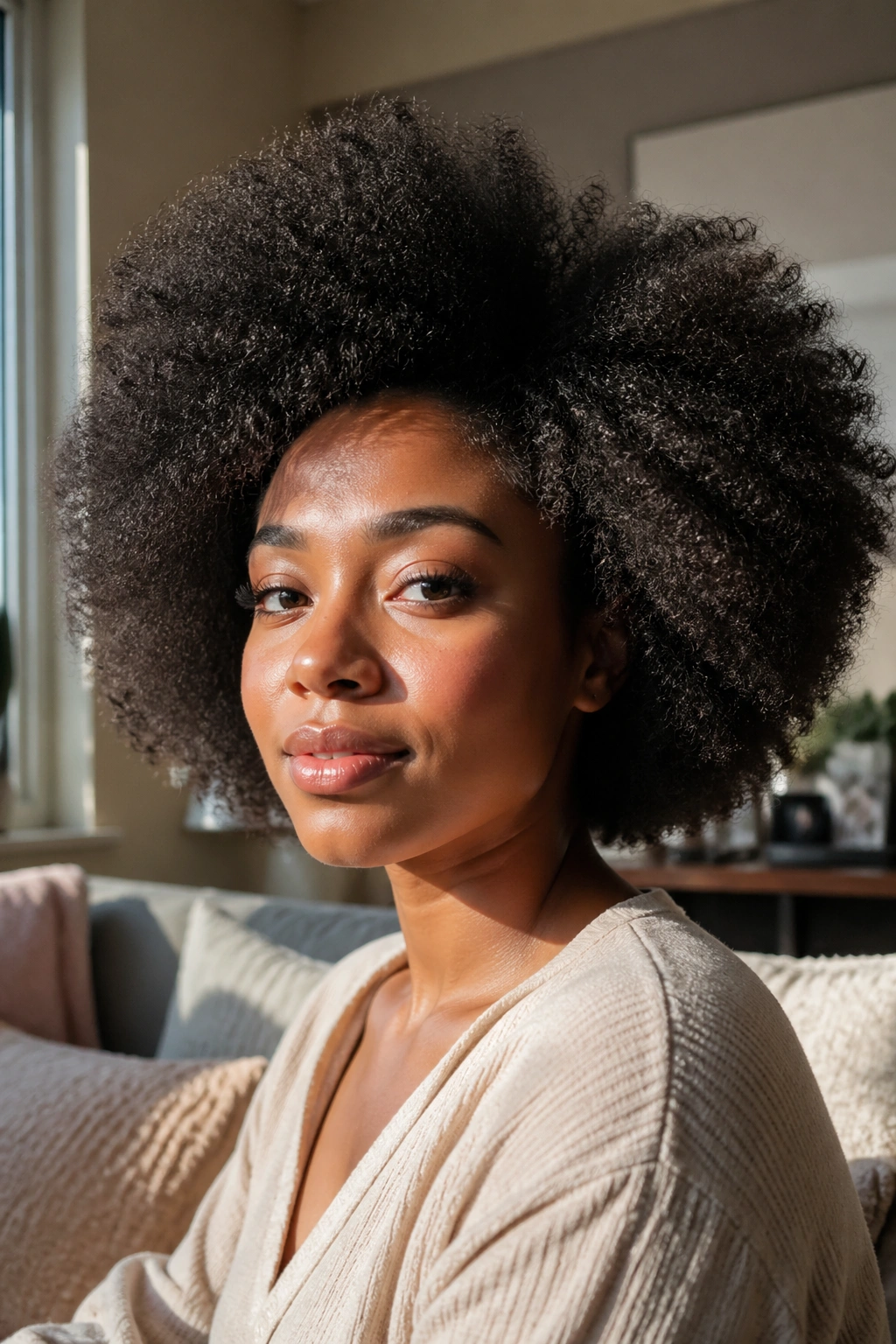
Short afro styles that depend on a specific cut shape — the tapered afro, the high-top, the shaved-sides look — require regular trimming to maintain that shape as hair grows. Unlike longer styles where growth mostly extends the length without significantly changing the shape, growth on a precisely cut short afro gradually fills in the trimmed sections and changes the style’s character.
Most short afro cuts need shape maintenance every three to four weeks, depending on your individual growth rate. Between professional trims, you can maintain the neckline and temple areas at home with a small personal trimmer, keeping the cleaned-up sections from looking grown-out and unkempt while saving full salon visits for the more complex shape work.