



Some days you wake up, look in the mirror, and realize there is exactly zero energy to do hair. A headband is the answer I’ve defaulted to maybe 400 times across the years. It hides a questionable curl day, frames your face in ten seconds, and tells the world you’re pulled together even when the mirror told you otherwise five minutes ago.
But not all headbands are created equal. The wrong one gives you a headache by 11 a.m. or slides off your crown every time you tilt your head. The right one disappears onto your head like it belongs there and stays put until you take it off at night.
These 20 headband looks are specifically chosen for lazy days — which in my definition means days with minimal styling effort, maximum visual payoff. Each one takes under five minutes unless I specifically say otherwise.
Why Headbands Work for Afro Hair
Afro and coily textures have grip. Headbands designed for straight hair often slide because there’s nothing to hold onto. On natural texture, a headband sits in the curls, locks into the coil pattern, and stays exactly where you put it.
That means you can use headbands that would be useless on fine, straight hair. Thin metal bands, silk ribbons, wide fabric wraps, knotted t-shirt strips — all of them work on afro hair because the texture does the holding.
The other advantage is volume. Headbands compress a narrow strip of hair at the top or front of the head while letting the rest of your natural texture breathe. The compression-to-volume contrast is what makes headband looks photograph so well.
Getting a Headband to Stay Put
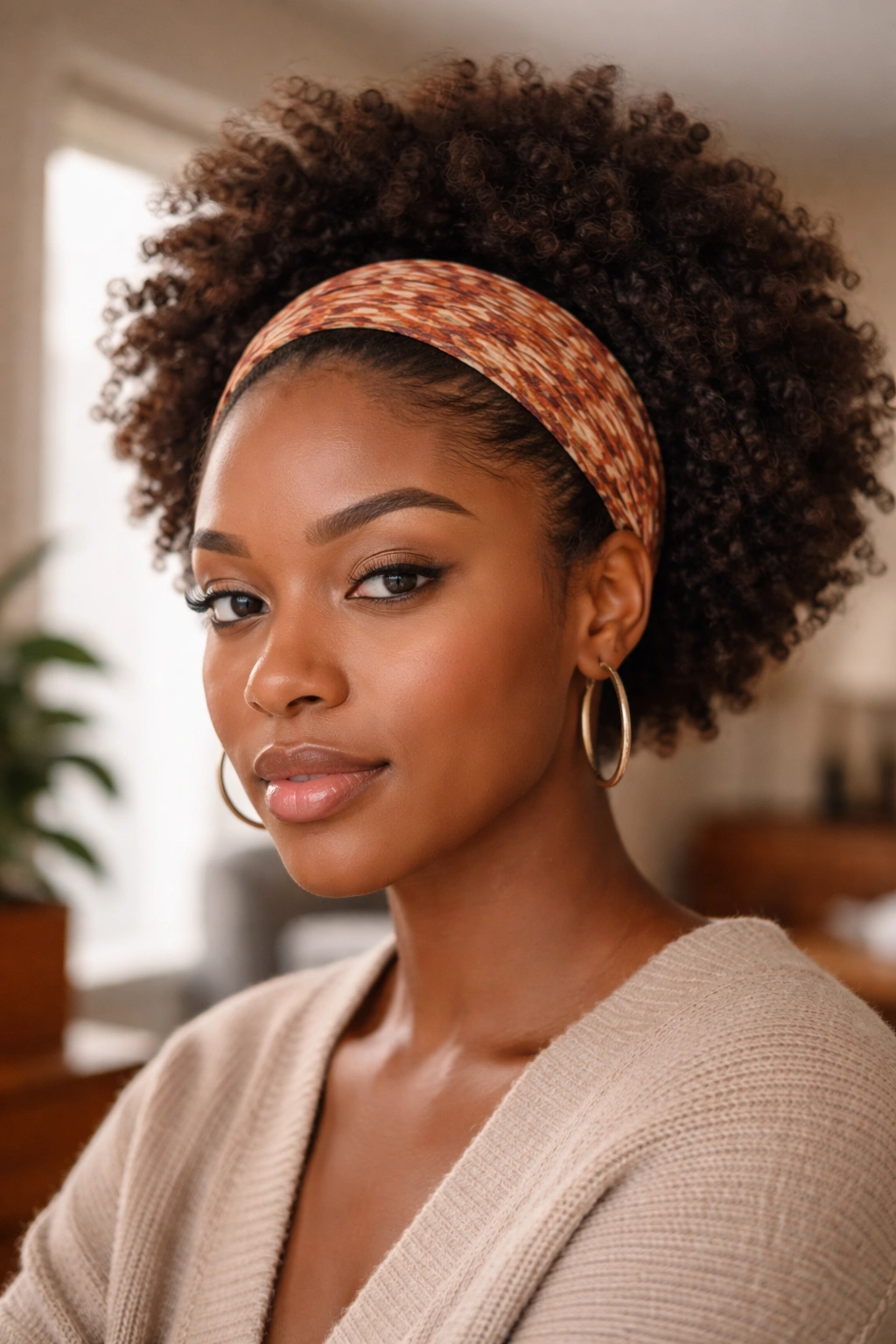
A good headband fit is snug but not tight. Snug enough that you can’t easily push it off your head. Loose enough that you don’t feel it pressing into your temples an hour later.
If a headband slides down over your forehead, it’s too loose. If it gives you a headache, too tight. If it’s perfect, you won’t notice it’s there.
Positioning matters. Most headbands want to sit about an inch back from your hairline, not right on it. Pushing it too far forward causes slipping. Pulling it too far back flattens your crown in a way that looks awkward.
Tools You Don’t Actually Need
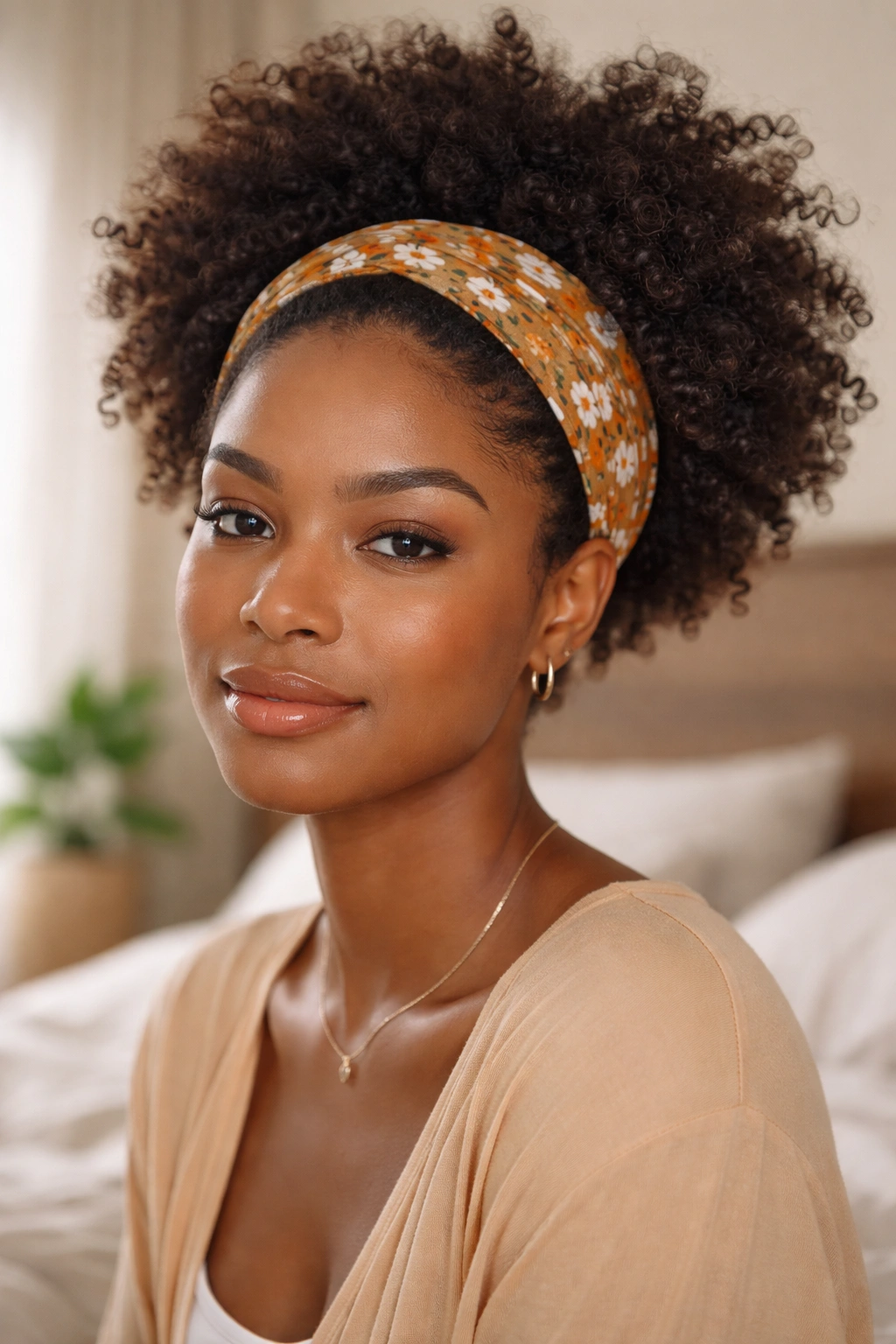
Almost nothing. A handful of bobby pins, maybe. A spritz bottle for reviving any flatness the headband creates. A boar bristle brush if you’re pairing a headband with a sleek front.
Skip the edge gel. Lazy day headbands are specifically for days when you don’t want to mess with edges. The headband covers where edges would show anyway.
Types of Headbands to Have Around
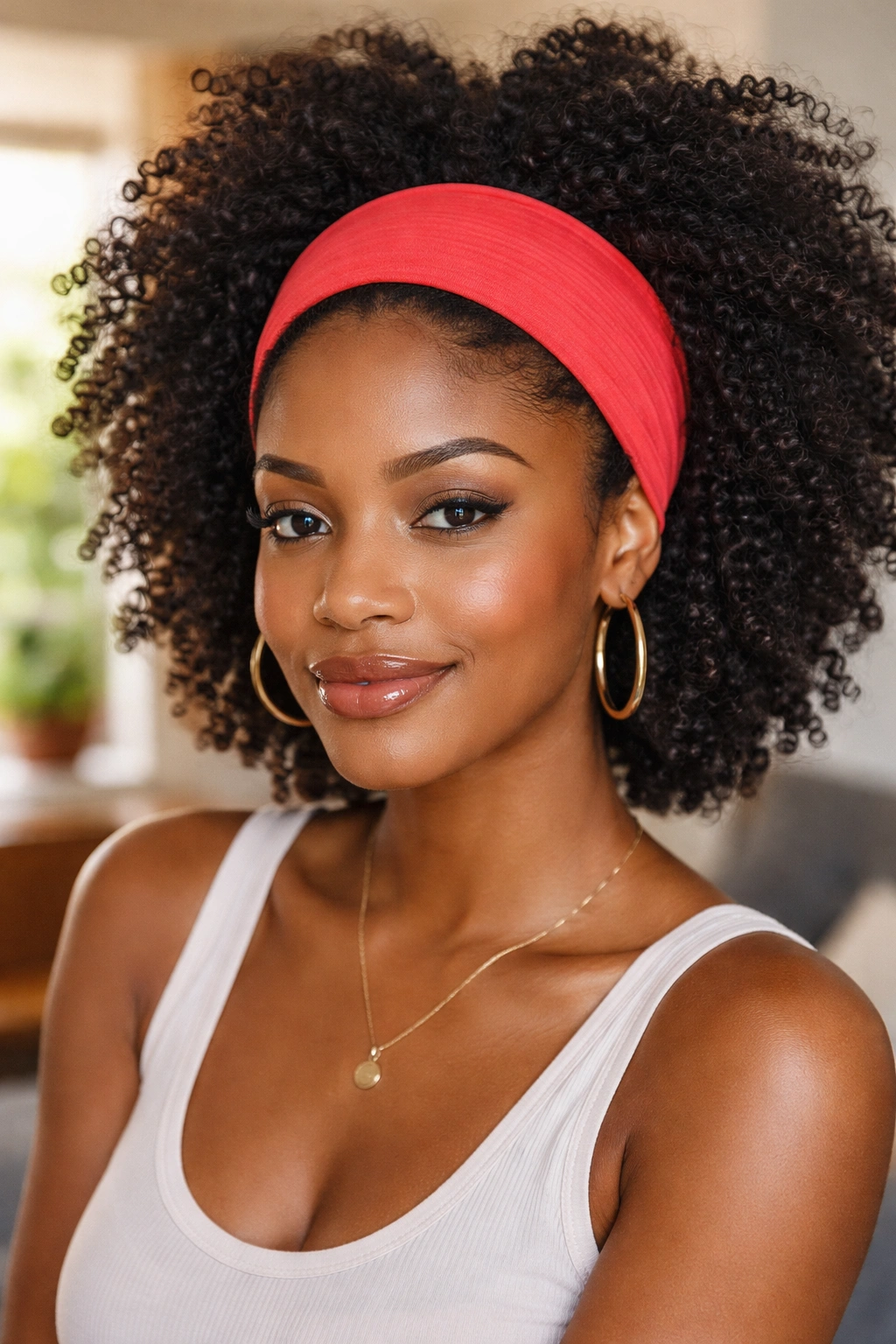
Four basic types cover almost every situation.
- A wide fabric headband (2-4 inches across) for dramatic wraps
- A thin metal or plastic band for subtle face framing
- A silk or satin scarf to tie in custom shapes
- A twisted jersey headband (made from t-shirt material) for everyday comfort
Buy one of each in colors that go with most of your wardrobe — black, cream, a bold pattern, and a solid jewel tone. That’s your starter set.
1. The Basic Wide Fabric Band
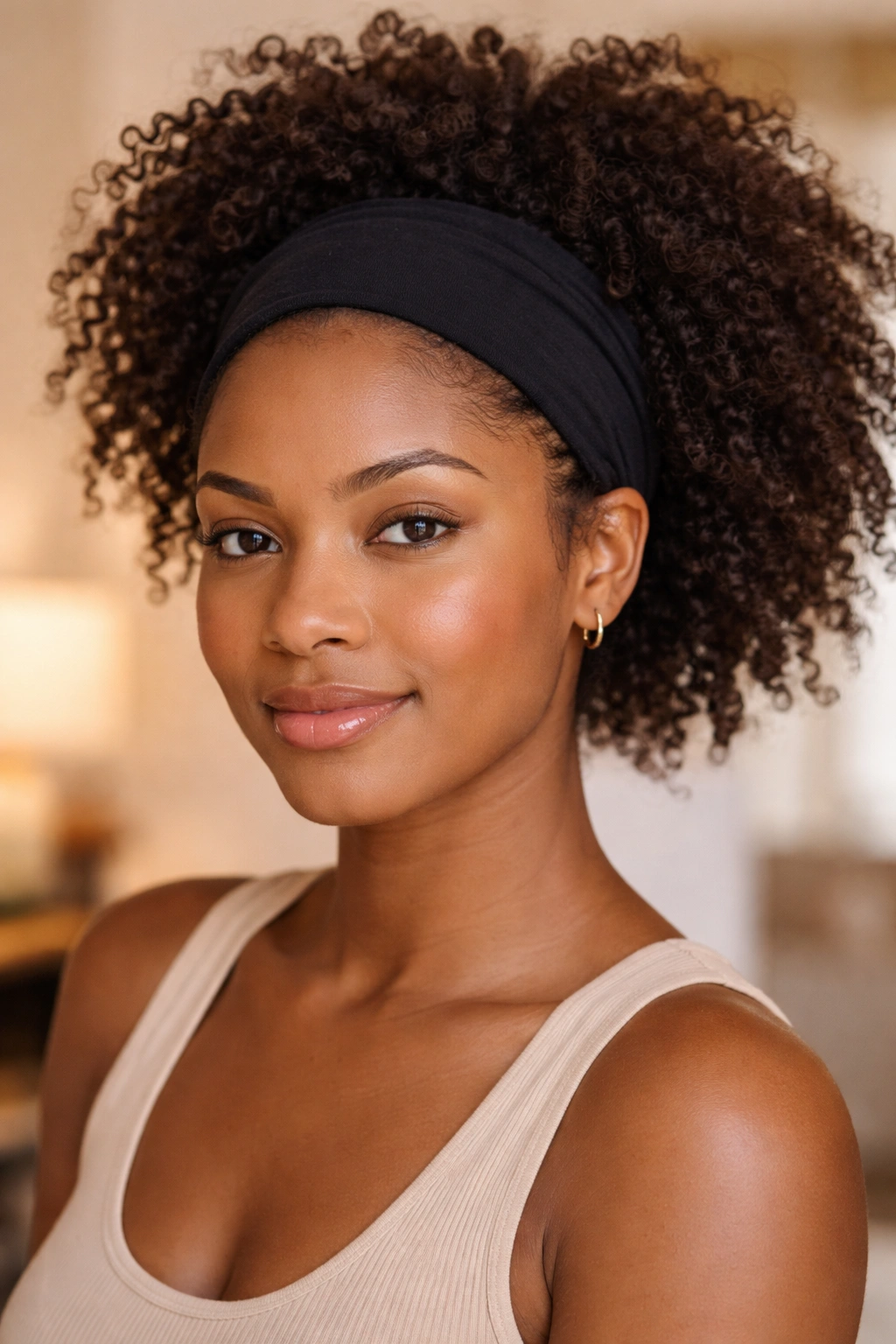
Slip it on. Done. You’re wearing a headband.
Why It Works
The absolute simplest lazy day solution. A wide fabric headband placed about an inch back from the hairline instantly tames the front of your hair while the rest puffs out naturally behind it. No styling required beyond sliding the band onto your head.
- Time: 15 seconds
- Best colors: solid neutrals or small patterns
- Width: 2-3 inches for the cleanest look
- Ideal placement: 1 inch behind the hairline
Tip from experience: Velvet and jersey headbands grip better than smooth satin. On lazy days, grip is everything.
2. Knotted Scarf Turban
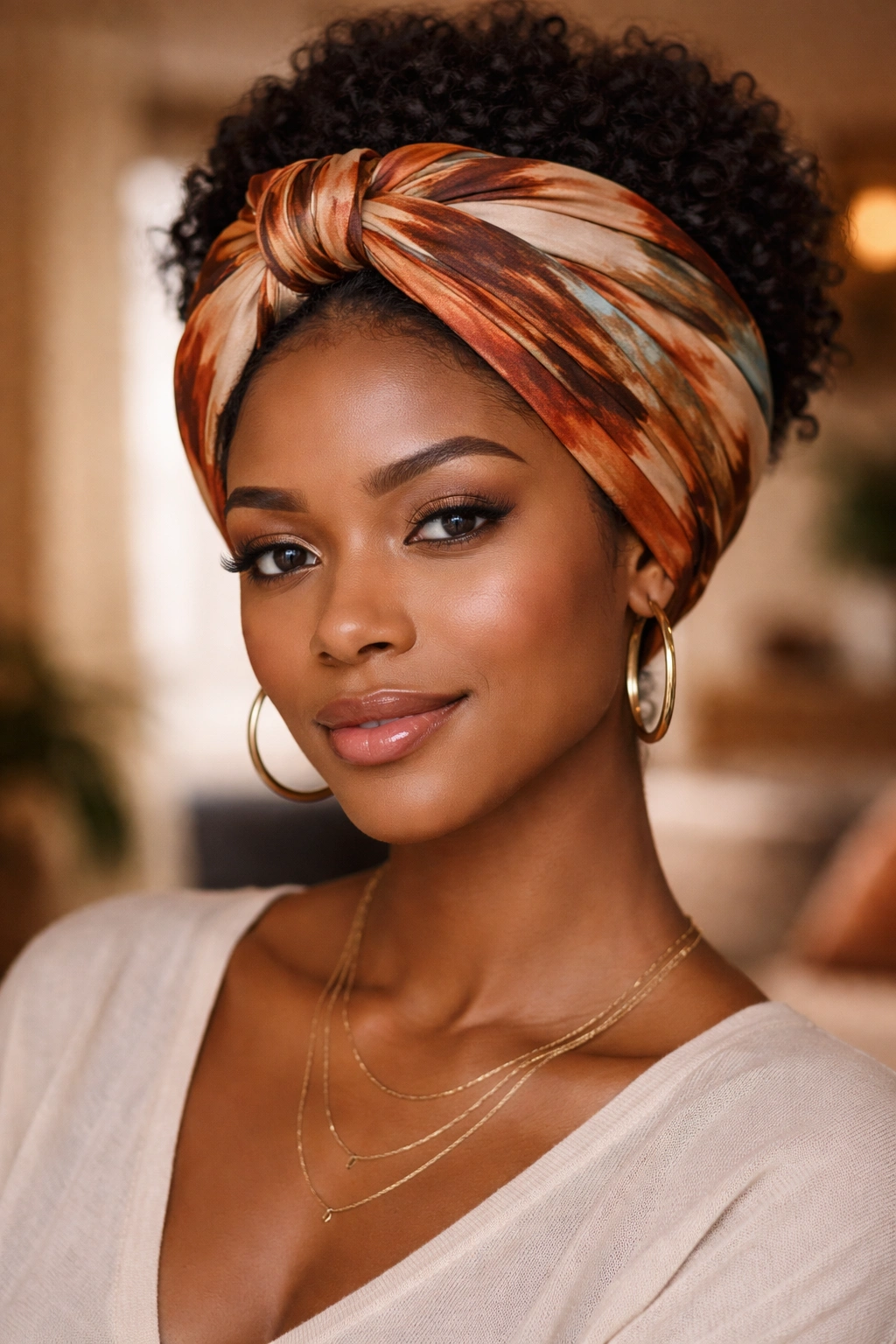
Fold a square scarf into a triangle, place the long edge against your forehead, and tie the two ends behind your head. The top of the triangle falls forward — tuck it up under the band.
The result is a turban-style look that covers most of your crown and lets only the back of your hair show. It’s perfect for days when the crown is a mess and you don’t want to deal with it.
Takes 90 seconds once you know the fold. Most of the time goes into picking which scarf to use.
3. Headband with Visible Puff
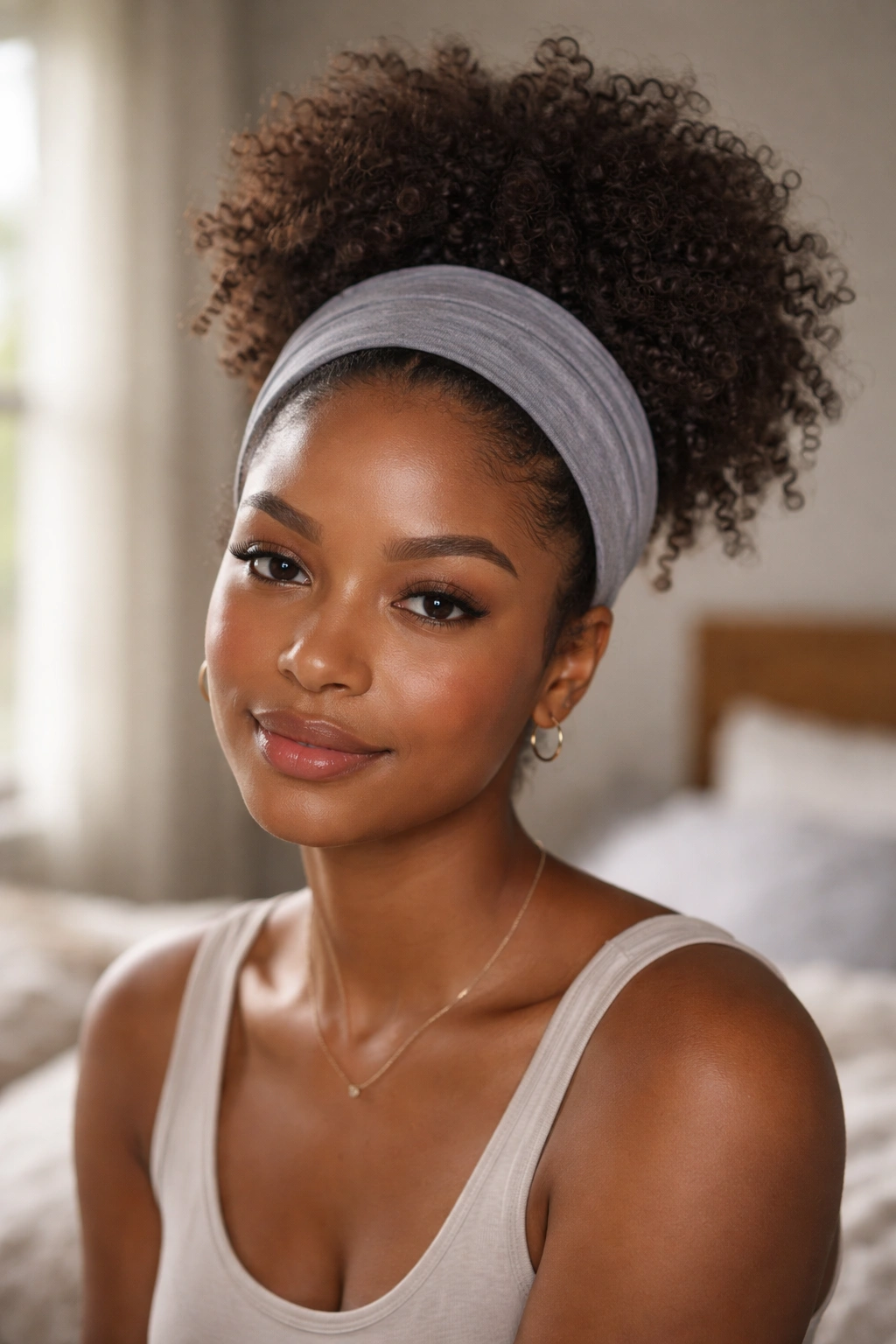
A standard headband positioned to intentionally push the front of your hair up and back, creating a soft rounded puff on top of the head behind the band. The headband is doing the shaping work.
The puff isn’t styled — it happens because the band compresses everything below it while the compressed hair escapes upward. Lazy day magic.
Make sure the puff has enough volume. Fluff briefly with your fingers if it looks flat right out of the band.
4. Silk Scarf Tied in Front
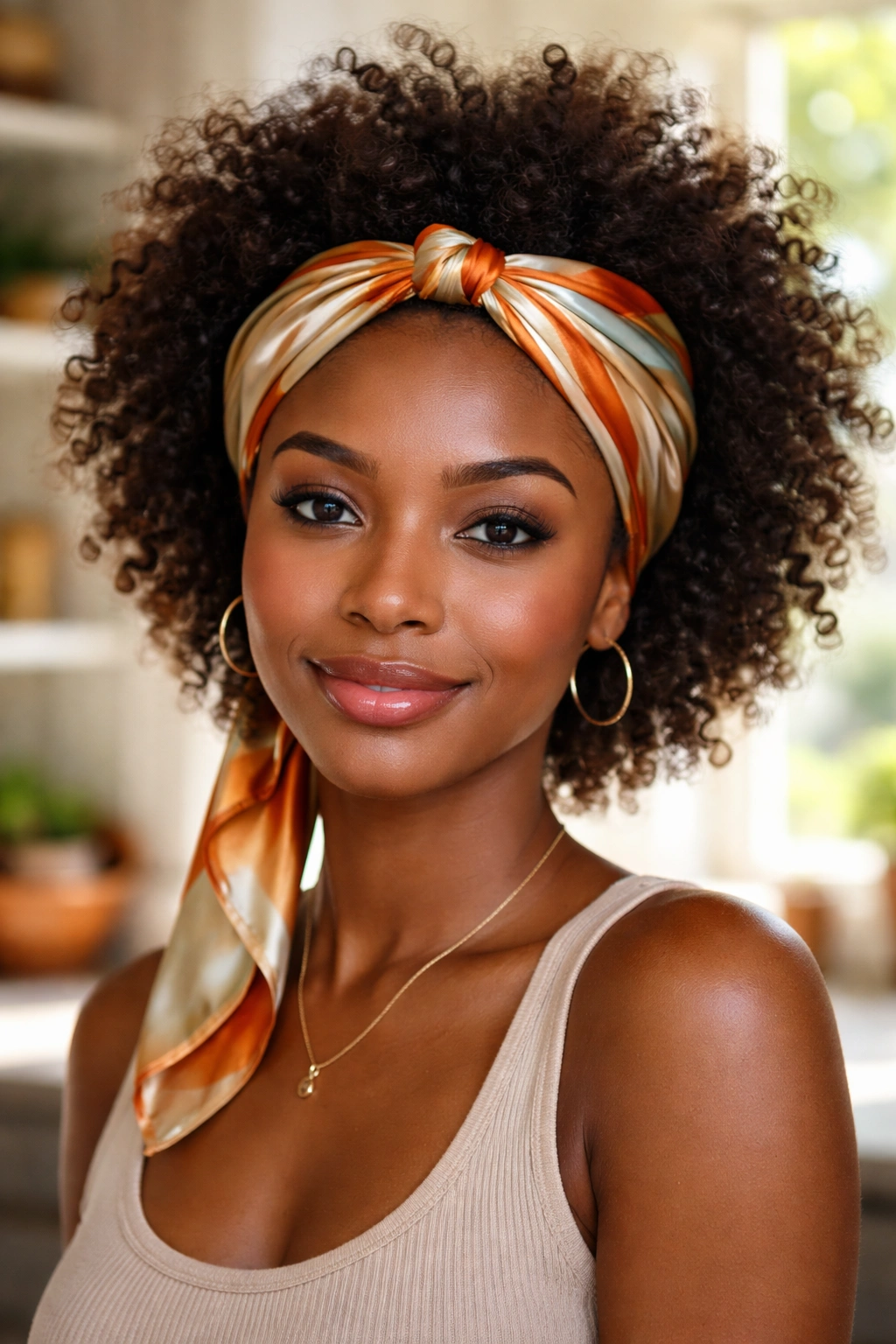
Take a long silk or silk-blend scarf, fold it into a thin rope, and tie it around your head with the knot positioned at the front, directly above your forehead. The knot becomes the decorative focal point.
Unlike most headband looks where the knot hides behind the head, this one puts the knot front and center. It adds interest to the face frame and works especially well with bold-print scarves.
I do this in under a minute on mornings when I’m running late and want something more than a bare band.
5. Double Headband Stack
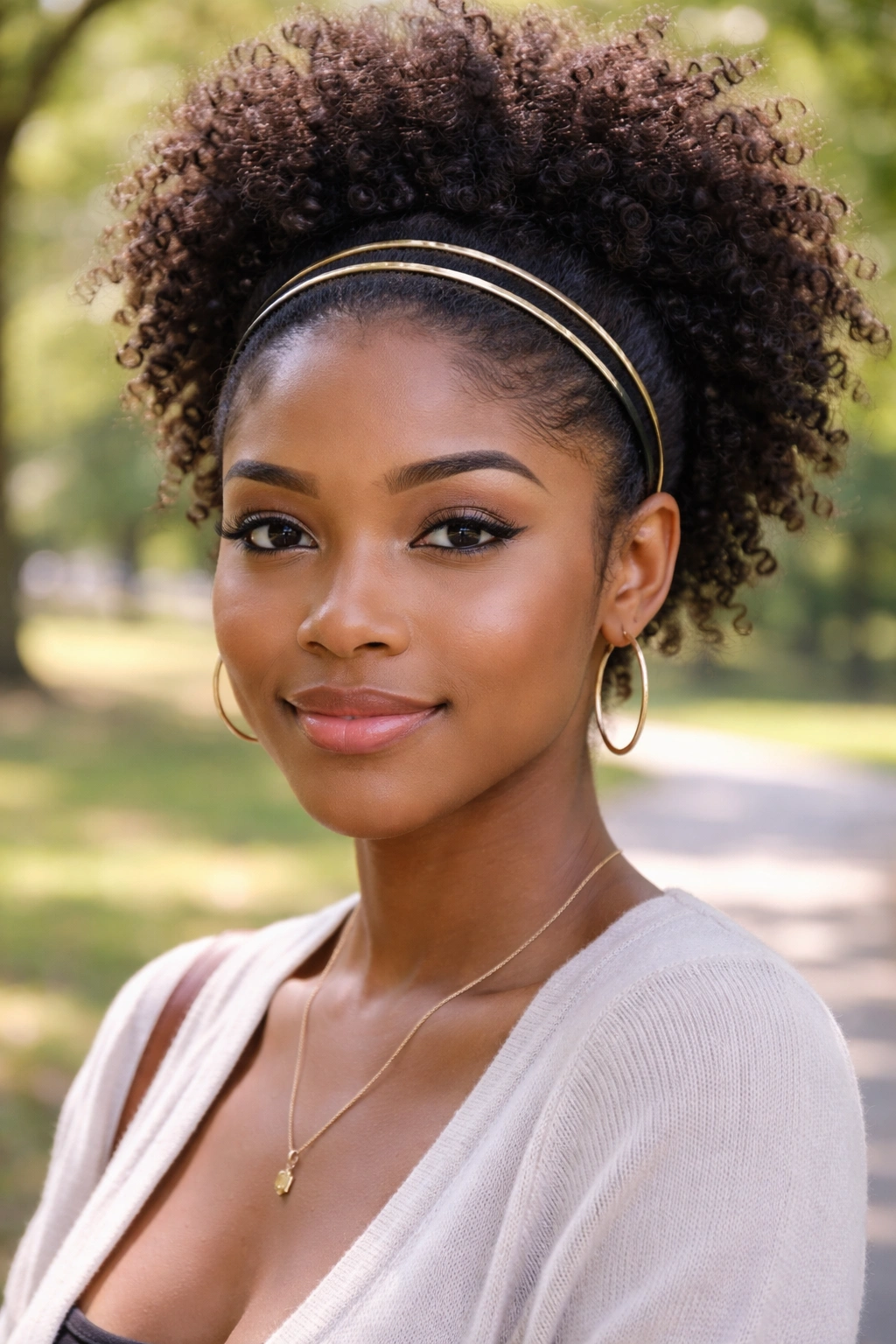
Two thin headbands worn together, spaced about an inch apart. The stacked look creates more visual weight than a single thin band and reads as a deliberate styling choice rather than a slap-it-on move.
Pair a gold metal band with a black elastic band. Or two contrasting colors. Or two identical thin bands for a symmetric effect.
This works best with bands that are visually different enough to create contrast. Two identical bands blend into one visual line unless they’re deliberately touching.
6. Headband with Braided Front
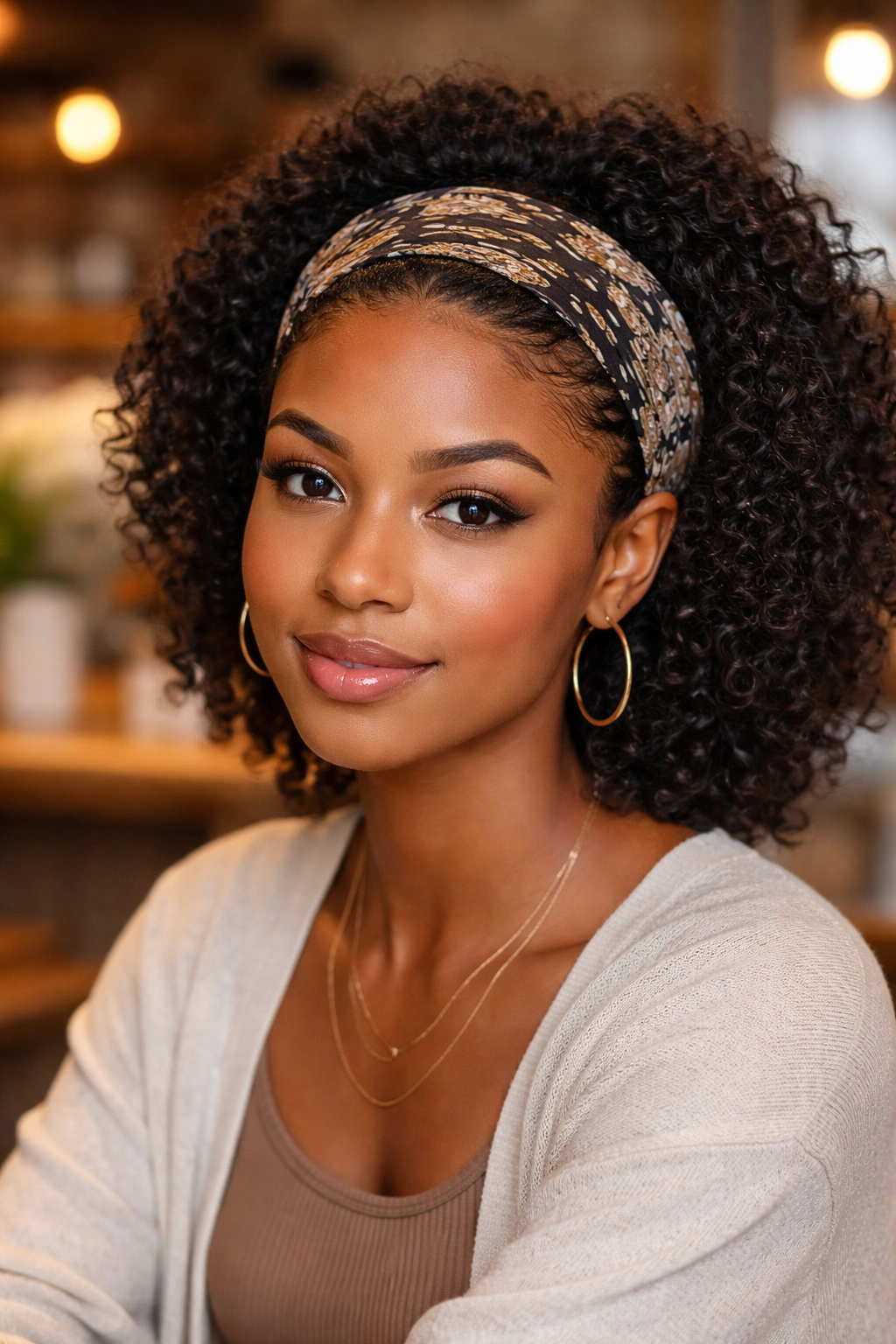
What if you want a headband look with a little more polish? Braid the front inch of your hair into a small three-strand plait before putting on the headband. The braid peeks out under the band and adds texture.
The braid takes 60 seconds. The headband takes 5 seconds. Total effort: still under two minutes, and the look reads as far more styled than a bare headband.
Best for: days when “lazy” has an asterisk next to it — like when you’re meeting someone for coffee or running into the office briefly.
7. Oversized Bow Headband
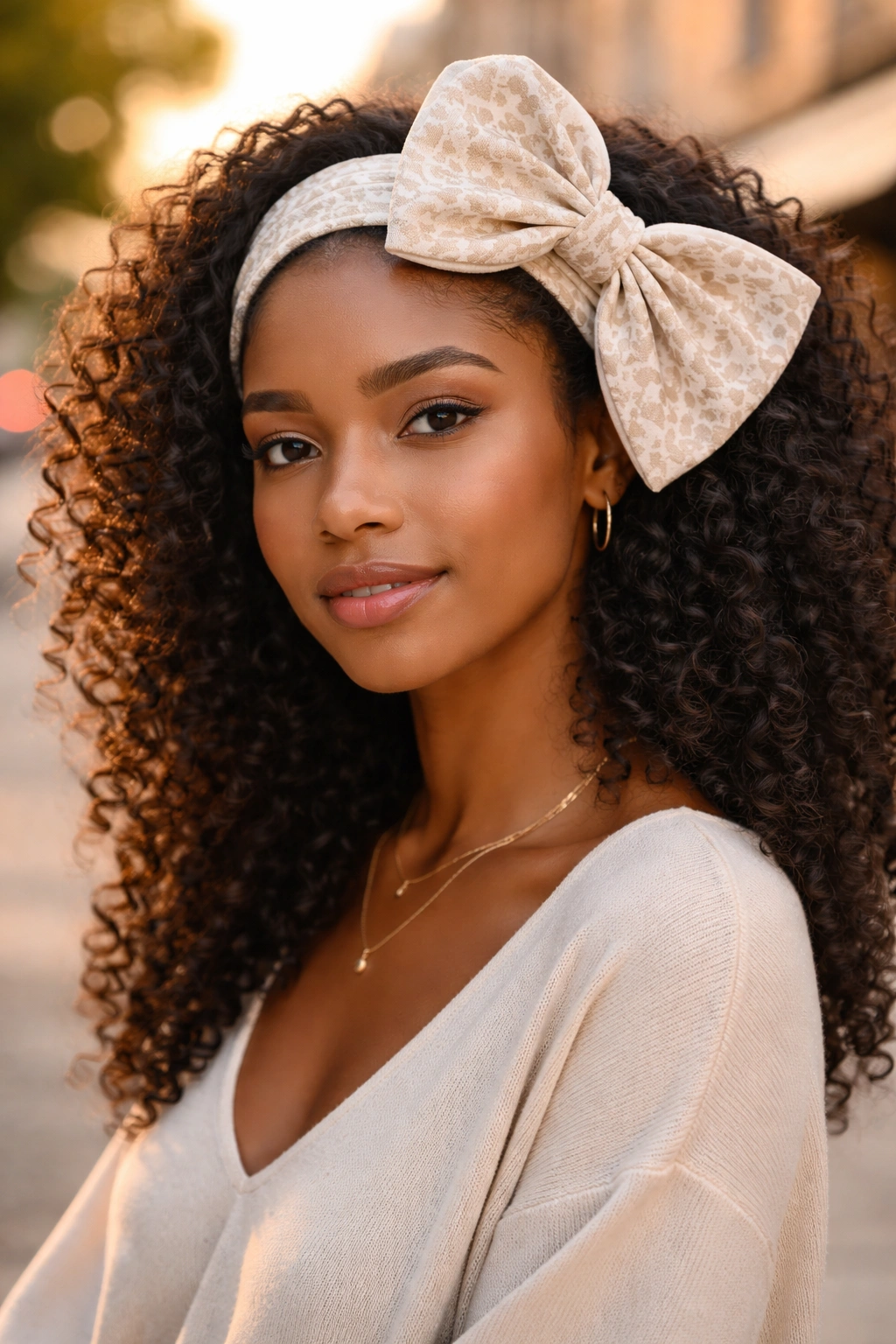
A wide fabric headband with a large decorative bow on one side. The bow becomes the entire focal point of the look, so the rest of your hair can be as raw and unstyled as you want.
The bow placement matters. Slightly off-center — maybe 2 inches from the middle toward one temple — looks more intentional than dead center. Center bows can feel childlike; off-center bows feel grown.
Fabric bows beat plastic ones for comfort. Anything rigid pokes into the scalp by hour two.
8. Athletic Sweatband Style
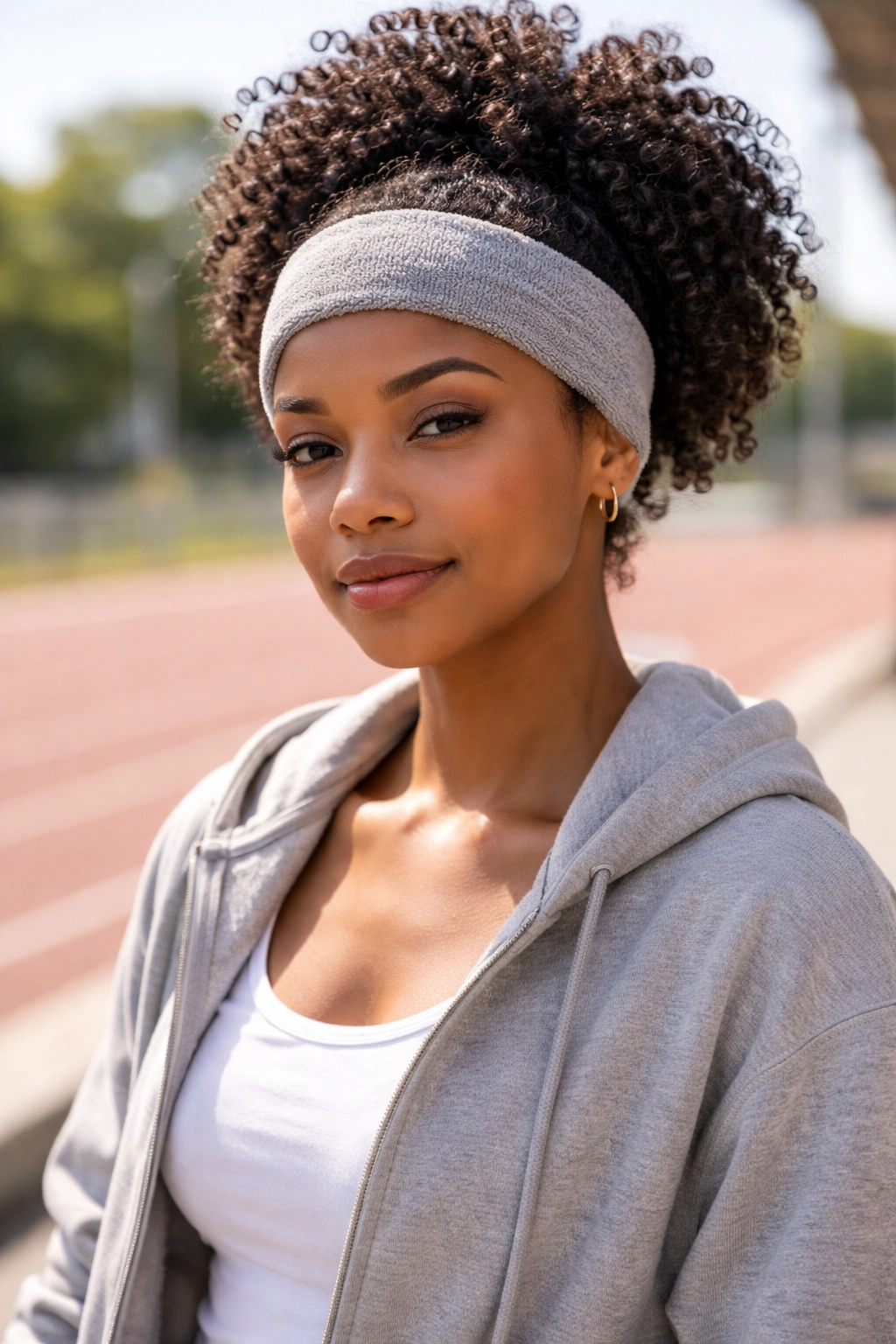
Take a wide athletic sweatband (the kind runners wear) and use it as a fashion headband. Unlike formal fabric bands, sweatbands are terry cloth, stretchy, and absolutely cannot slip.
The look is sporty and confident. Works best with casual outfits — workout gear, jeans and a tee, athleisure. It’s explicitly not for formal occasions.
Why include it? Because on the laziest of lazy days, a sweatband is the most practical option that still looks like a deliberate style choice. Plus it soaks up sweat if you end up exercising, which is a win.
9. Headband with Loose Tendrils
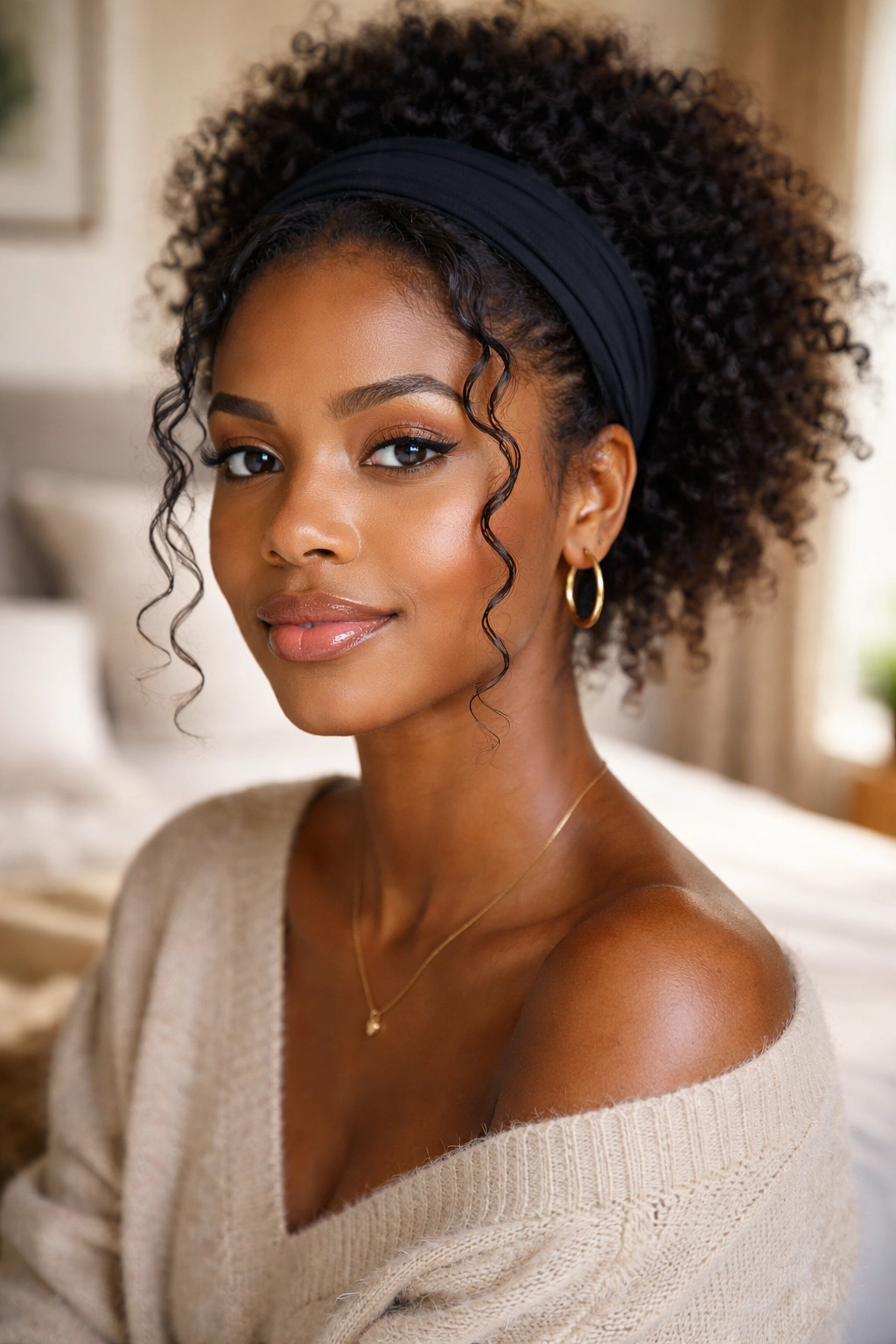
Put on a regular headband, then pull out 3 to 5 small sections of hair around the face — two at the temples, one or two at the sideburns — to soften the look. The tendrils break up the clean line of the headband and add face-framing softness.
The tendrils should be thin. Thick pulled-out sections look messy. Thin ones look romantic.
This is my favorite headband look for days when I want to look slightly dressed up without actually styling anything. Total effort: 30 seconds.
10. Turban Twist with Front Knot
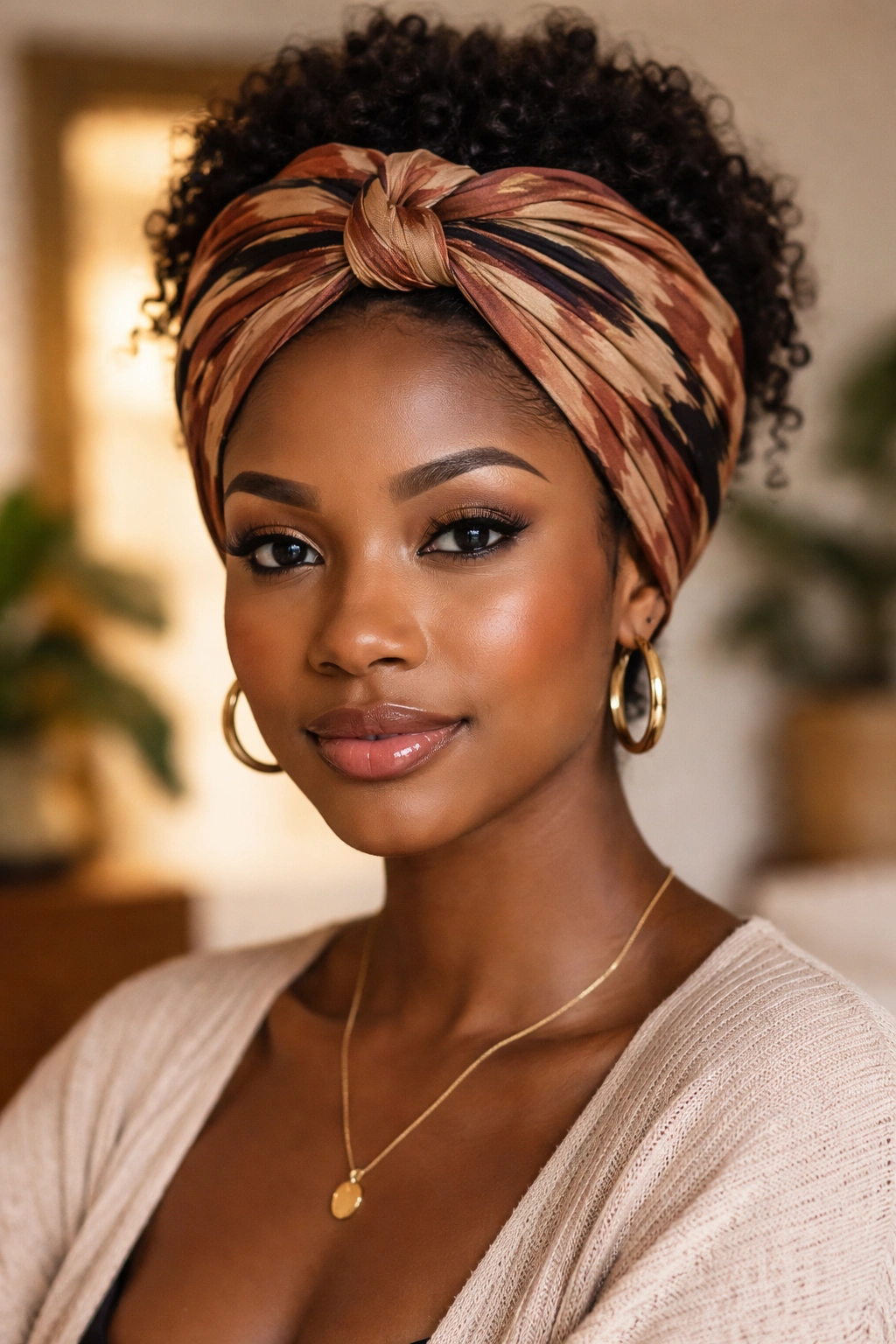
A long rectangular scarf, folded to about 4 inches wide, wrapped around the head twice, with the ends tied in a front knot above the forehead. The double wrap gives more coverage than a single pass, making this one of the best options for hiding a crown-day disaster.
The knot can be loose and soft or tight and compact. Loose reads casual, tight reads polished.
Takes about two minutes once you figure out the wrap order. After you’ve done it three times, you’ll be able to do it in 45 seconds.
11. Wire Headband with Volume Below
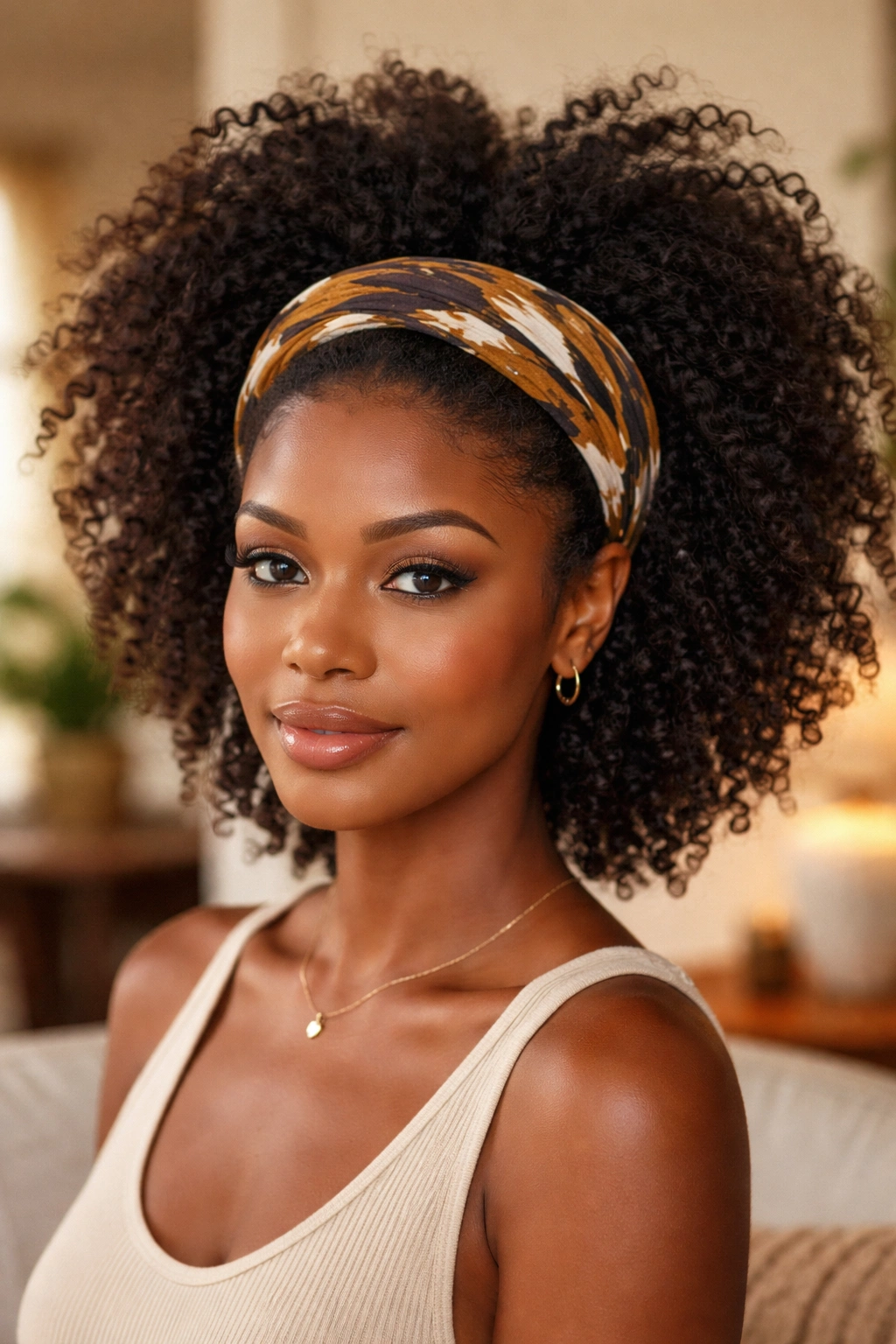
A wire headband — the kind covered in fabric that you can shape and bend — creates a precise line across the top of the head. Below the wire band, your hair explodes in full natural texture with zero additional styling.
The contrast between the rigid wire and the organic texture below is the whole look. The wire is sculptural; the hair is wild. Together, intentional.
Wire headbands come in wrapped fabric, gold or silver metal finishes, or covered in beads. Pick one that stands out against your hair color for maximum visual impact.
12. Low Headband at the Nape
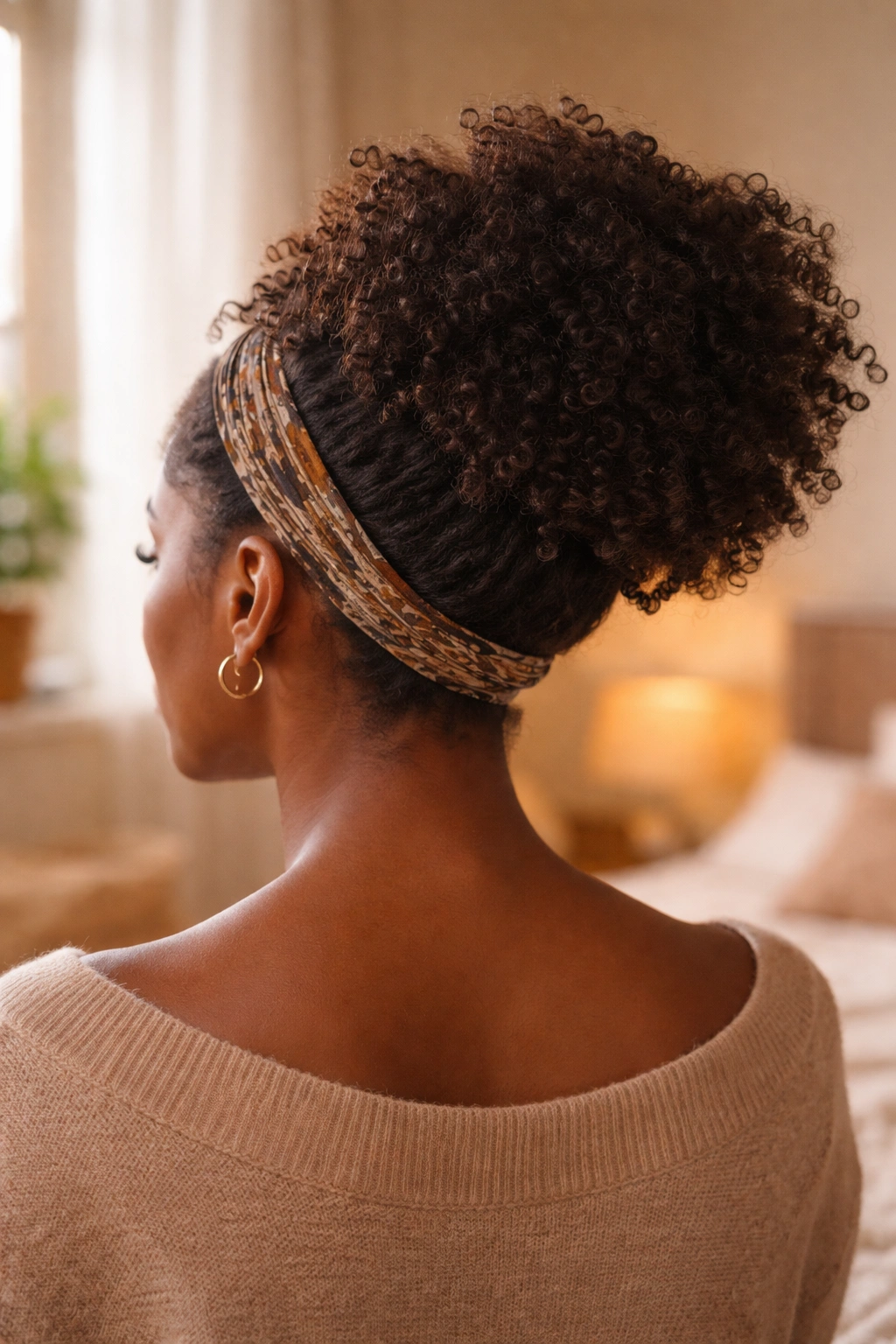
Unlike most headbands that sit on top of the head, this one is placed at the nape of the neck, holding the back of your hair together while the top and crown stay completely free. It’s a reverse headband.
Why would you want this? Because sometimes it’s the back of your hair that’s the problem, not the front. If your nape is tangling and the crown is fine, a low headband addresses the issue without flattening the top.
Pair with a front-heavy style like a puff or a forward-swept bang section.
13. Headband Over a Puff Updo
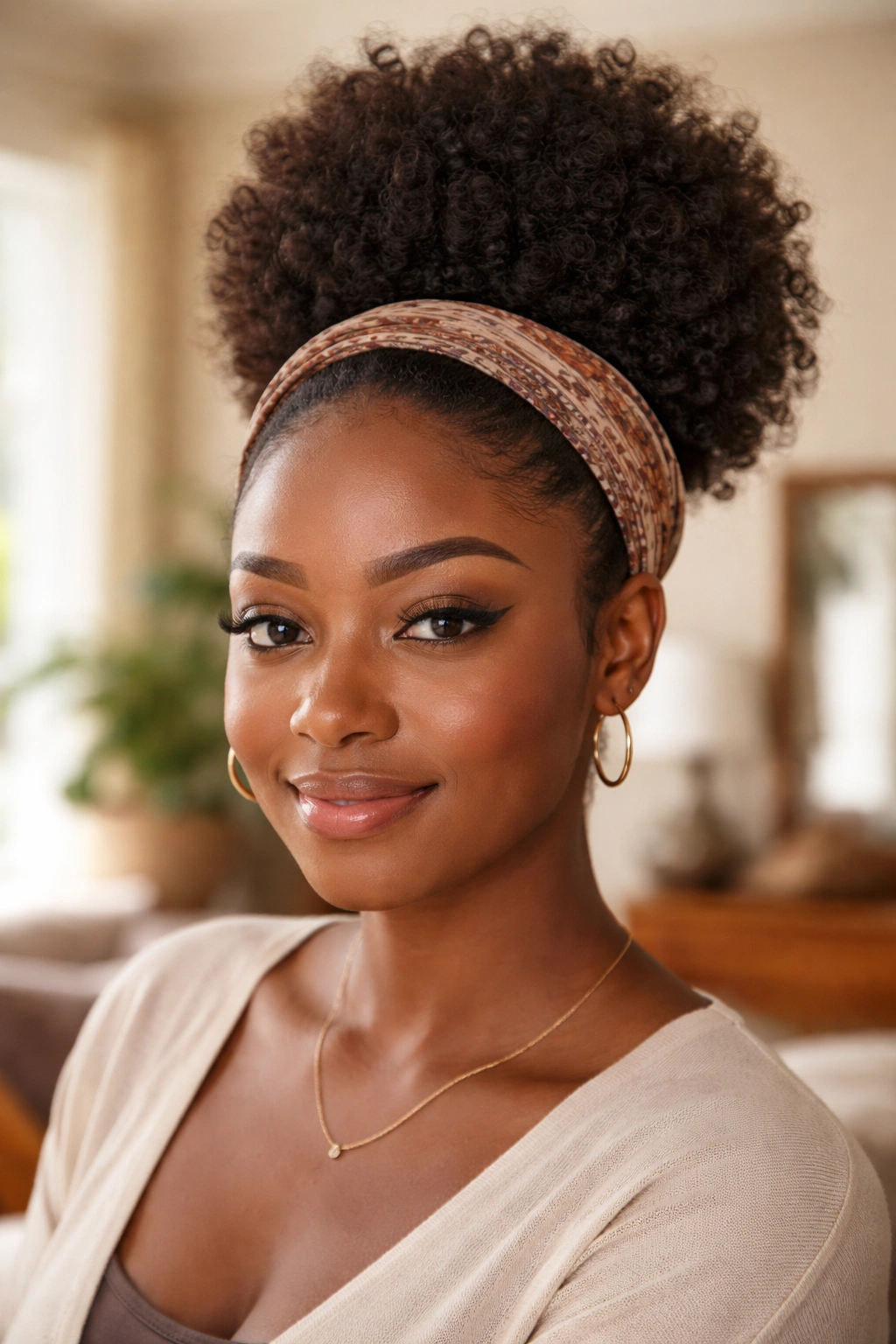
Create the most basic puff at the top of your head — 90 seconds, one scrunchie — then slide a headband over the puff to frame it. The headband sits just in front of the puff, defining where the puff begins.
The headband becomes an architectural element separating the front clean section from the puff behind it. It’s more structured than a bare puff but still counts as lazy by any reasonable standard.
Total setup: 3 minutes. Looks way more labored than that.
14. Elastic Headband with Ties
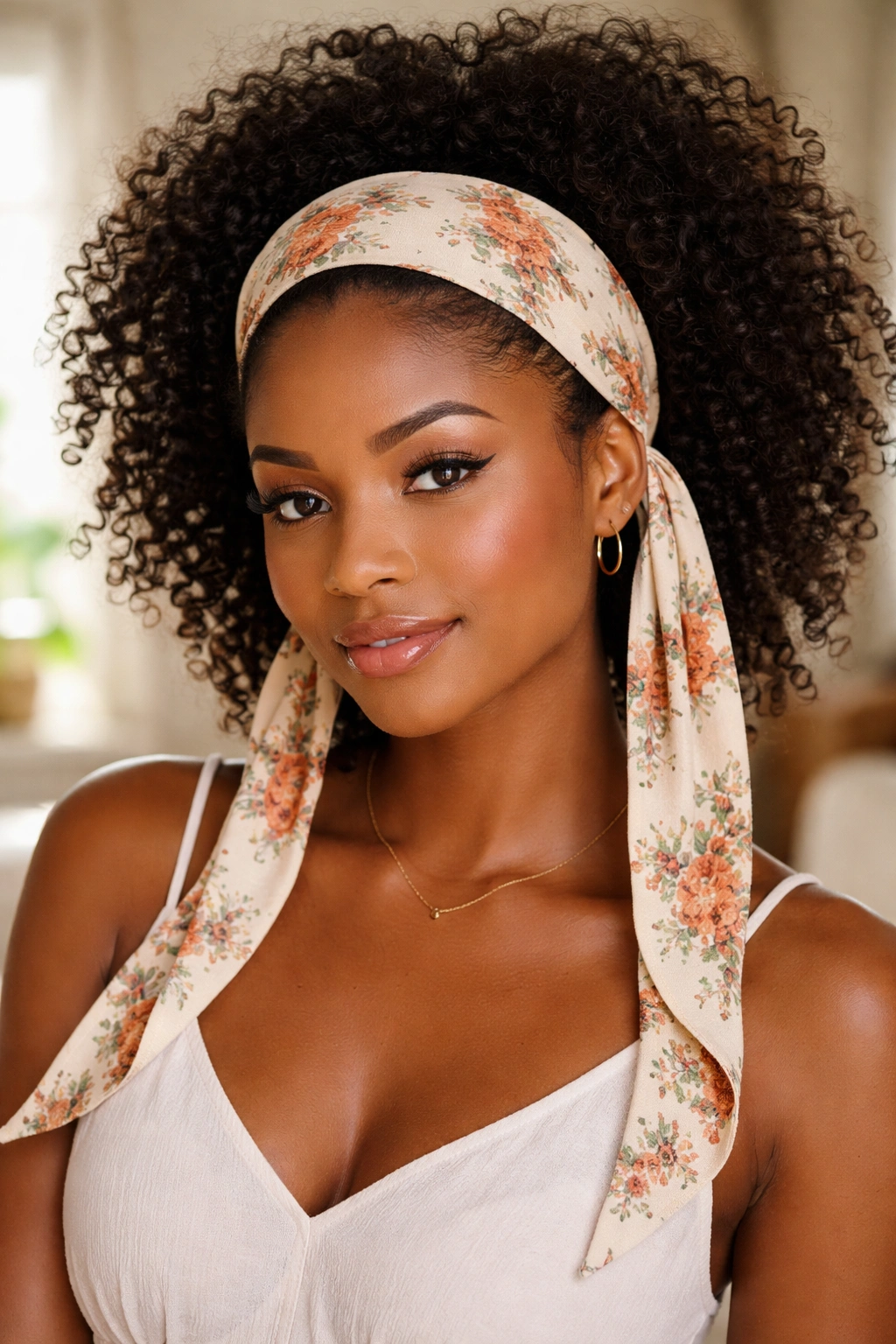
A wide elastic band with decorative fabric ties hanging from either side, either in a bow or as loose tails. The ties add dimension and movement that a flat band can’t.
The ties should be long enough to be visible — at least 6 inches each. Shorter ties disappear and look accidental.
This is one of the best lazy day options for when you want to feel slightly feminine without putting in effort. The ties do all the “feminine” work for you.
15. Headband with Afro Pick Tucked In
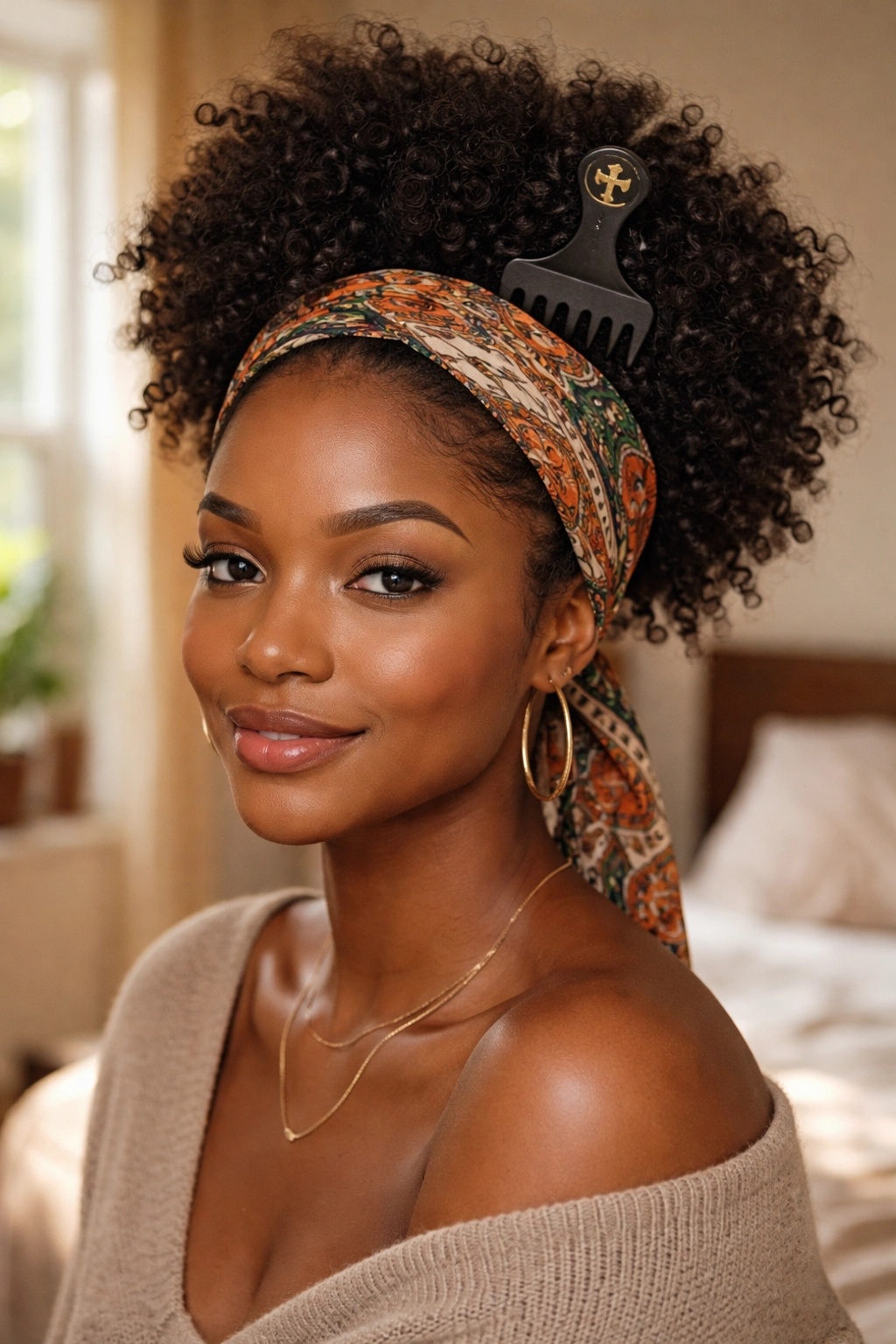
Slide an afro pick into the hair behind a headband, teeth facing down, handle facing up. The pick becomes a visible hair accessory — both functional (you can pick your afro later) and aesthetic.
Traditional black plastic picks work, but decorative ones with gold or wood handles look more polished. Buy a decorative pick specifically for this look. Keep the practical one in your bag.
The cultural reference is intentional. This look nods to a specific history and tradition, and it reads as confident and rooted.
16. Printed Scarf with Matching Puff Color
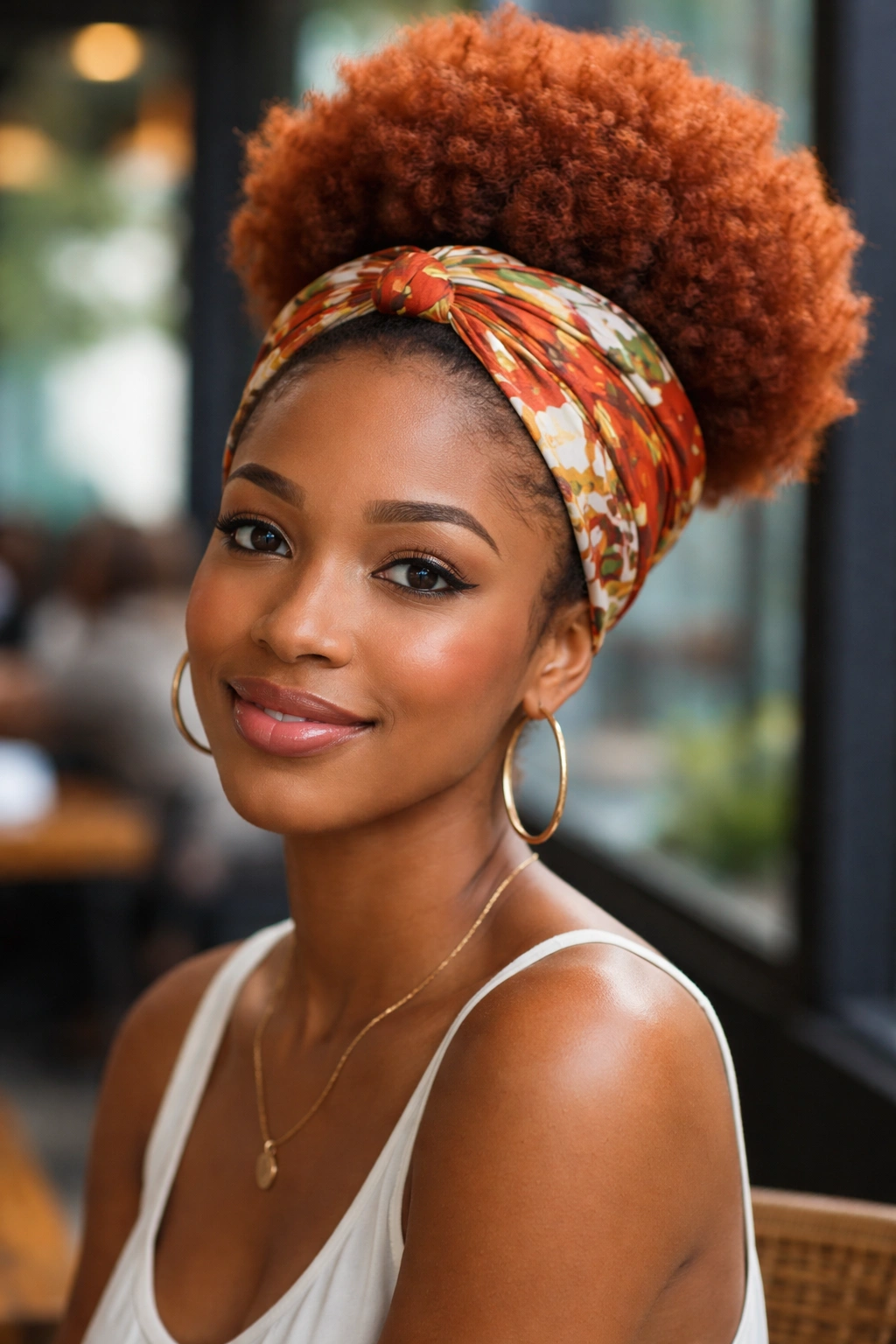
A printed scarf headband where one of the prominent colors in the print matches your puff or hair accessory color. Coordinated, not matched — the scarf pattern pulls in the accent color, and the rest of the outfit echoes it too.
This is about visual cohesion. Without the matching color thread, the headband and the hair can look disconnected. With it, the whole look hangs together as one deliberate styling choice.
Two minutes of effort. Looks like an hour of styling.
17. Velvet Band with Pinned Curls in Front
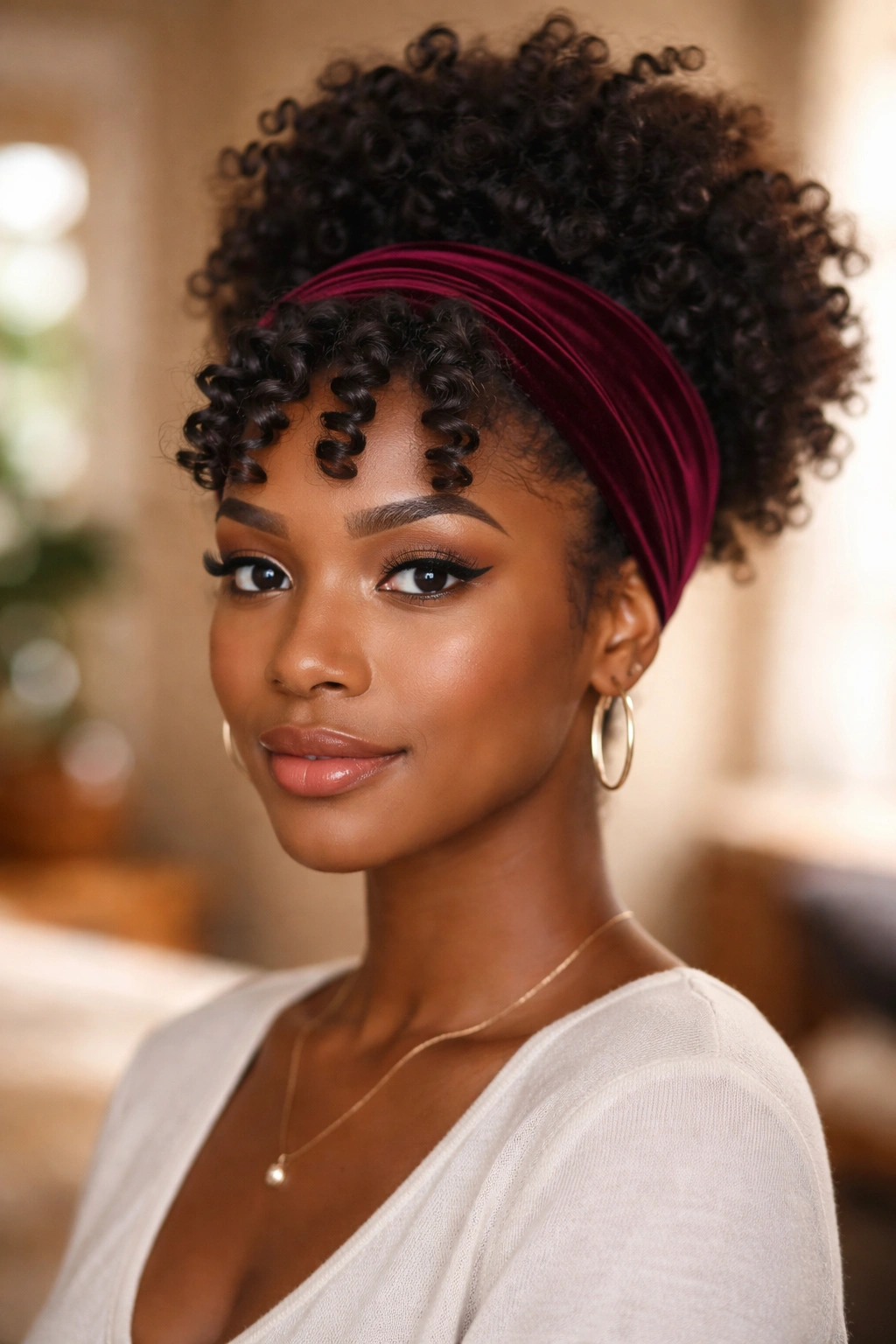
A velvet headband holds everything back, and 3 or 4 small curl sections in front are pinned into small twists that fall back over the band. The pinned curls add texture while keeping the front face frame clean.
Velvet is specifically the right fabric here because it grips better than any other material. A satin or silk band with pinned curls would slide out within an hour. Velvet holds.
Who this is for: date nights, events, occasions where “lazy” is getting a slight upgrade but you still don’t want to spend twenty minutes on hair.
18. Headband with Tail Down the Back
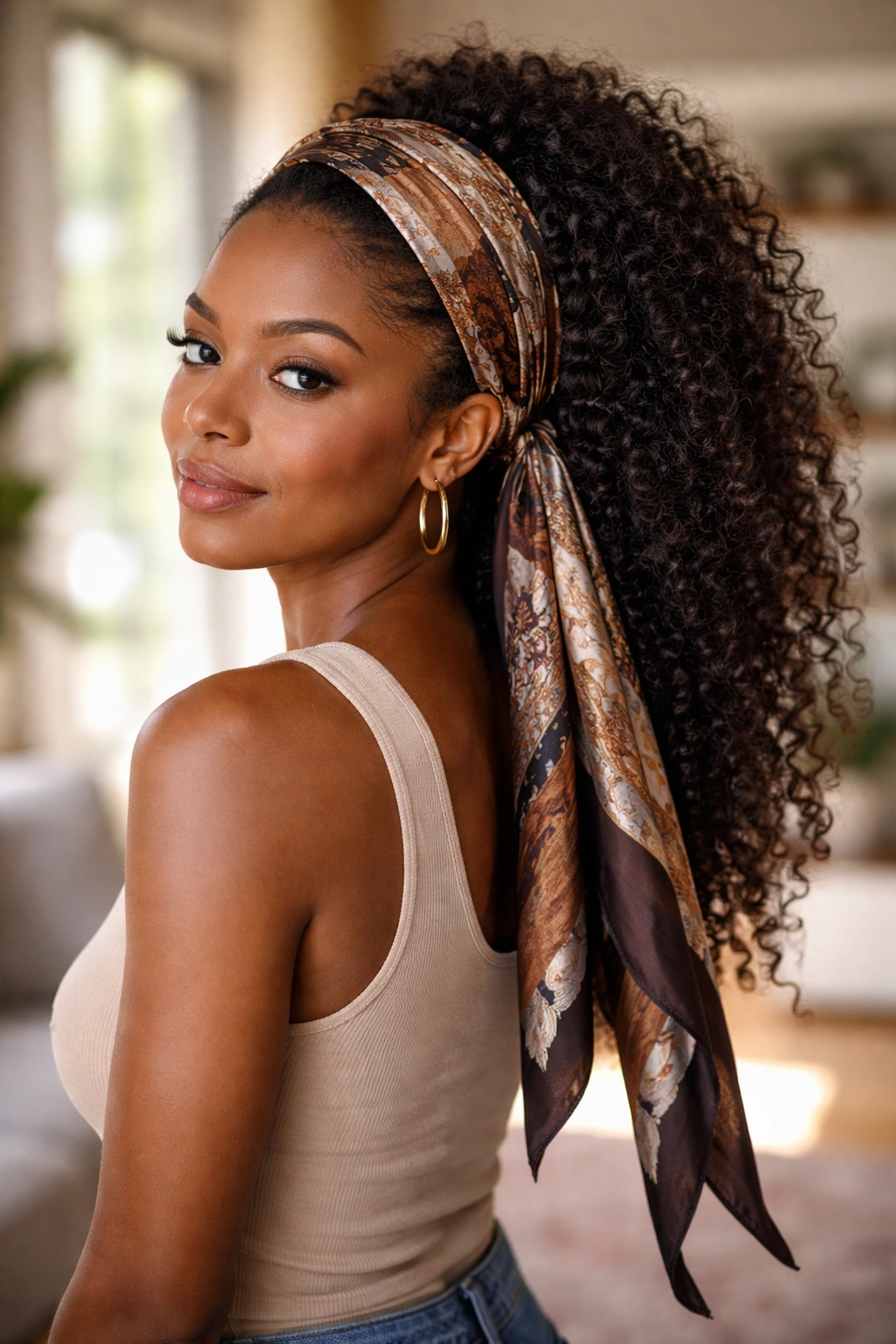
A headband with long ties that extend down the back of the head, forming a decorative tail behind the hair. The ties are usually silk, chiffon, or satin, and they add movement and elegance to even the simplest base.
Tie the band normally at the back of your head, but leave the ends hanging long — 12 to 18 inches — so they fall past your shoulders along with your hair. The tail becomes an accent you notice from behind and in movement.
Excellent for photos. The tail catches light and motion in ways static styling can’t.
19. Minimal Thin Metal Band
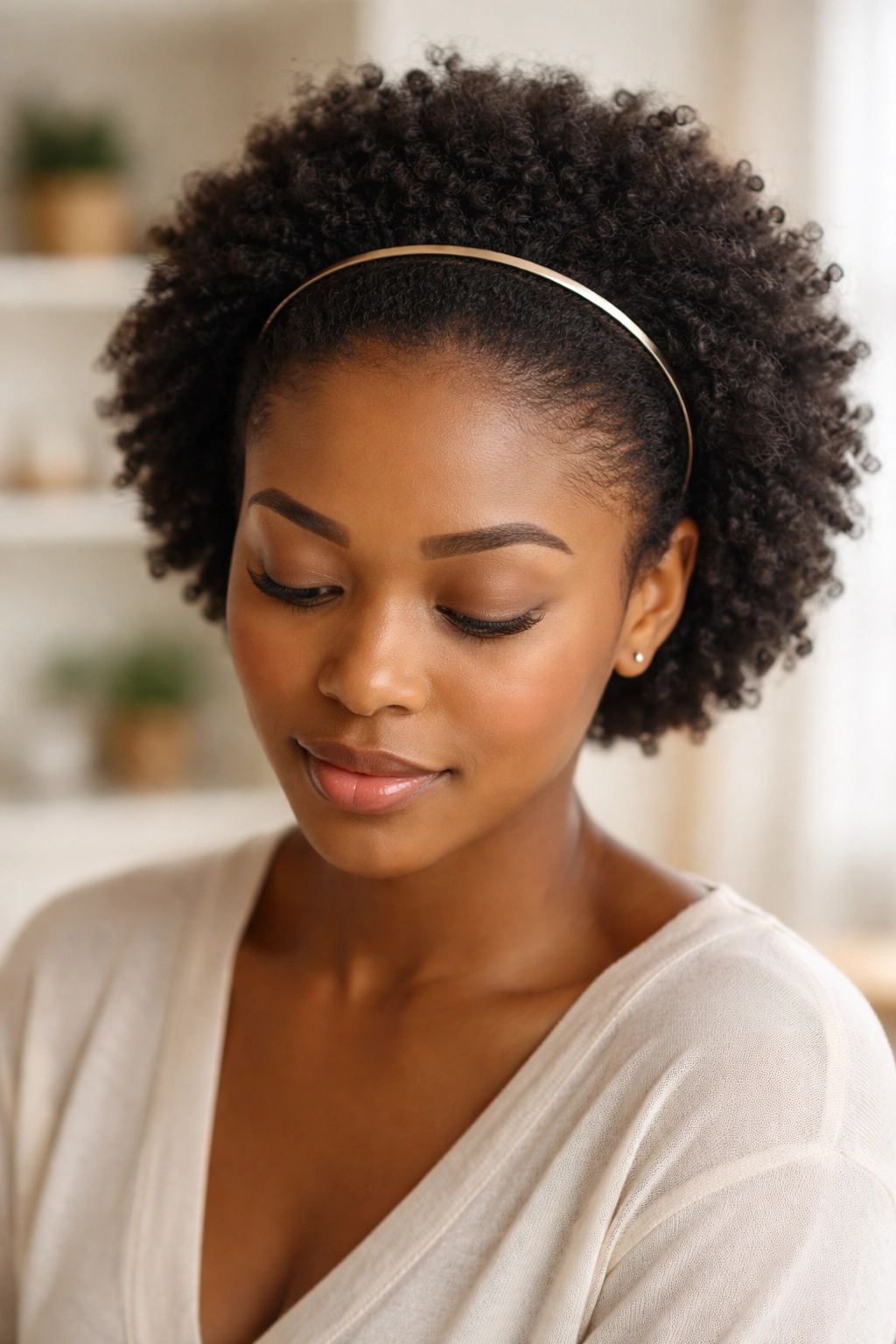
A single thin gold or silver metal band, maybe a quarter-inch wide, placed as a delicate line across the top of the head. The rest of the hair is completely free.
The appeal is restraint. In a world where headbands can be bold and busy, a single thin metal band reads as clean and confident. It’s the least amount of accessory for the most amount of impact.
Works best with shorter to mid-length hair, where the band has room to be seen without being crowded by surrounding volume.
20. Layered Headband and Earring Pairing
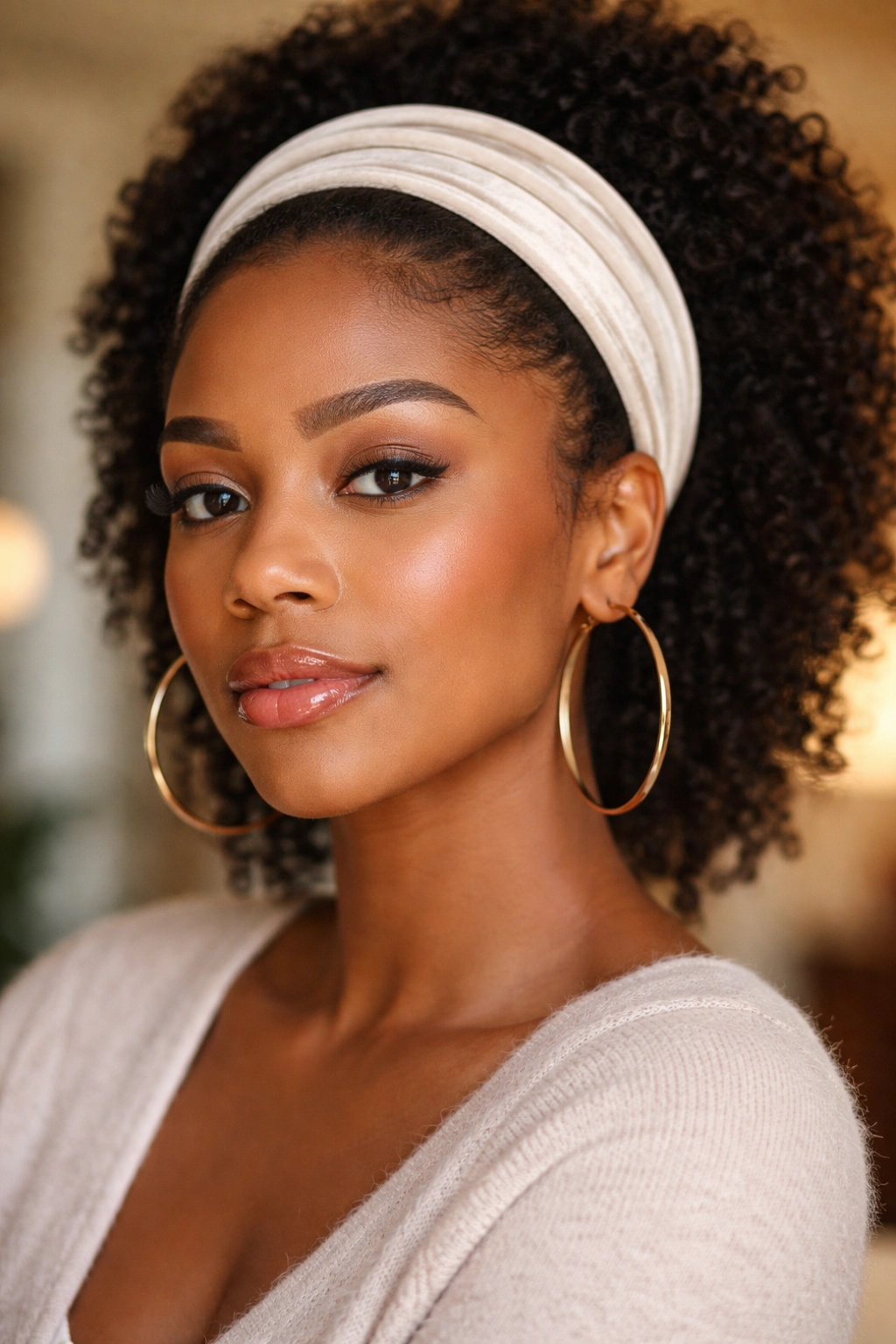
A headband paired with statement earrings that match or complement the band. The headband is the foundation, the earrings are the accent, and together they form a complete styled look.
Who This Is For
- Lazy mornings when you want to feel dressed
- Office-to-dinner transitions
- Anyone who loves accessorizing but hates styling
Pair a cream velvet band with large gold hoops. Or a black-and-gold patterned scarf band with gold drop earrings. The key is picking earrings that share a color, metal tone, or style element with the band.
Tip from experience: Put the earrings on before the headband so you can make sure they’re visible and not hidden by the band or hair. Adjust as needed.
Extending a Lazy Headband Look Through the Day
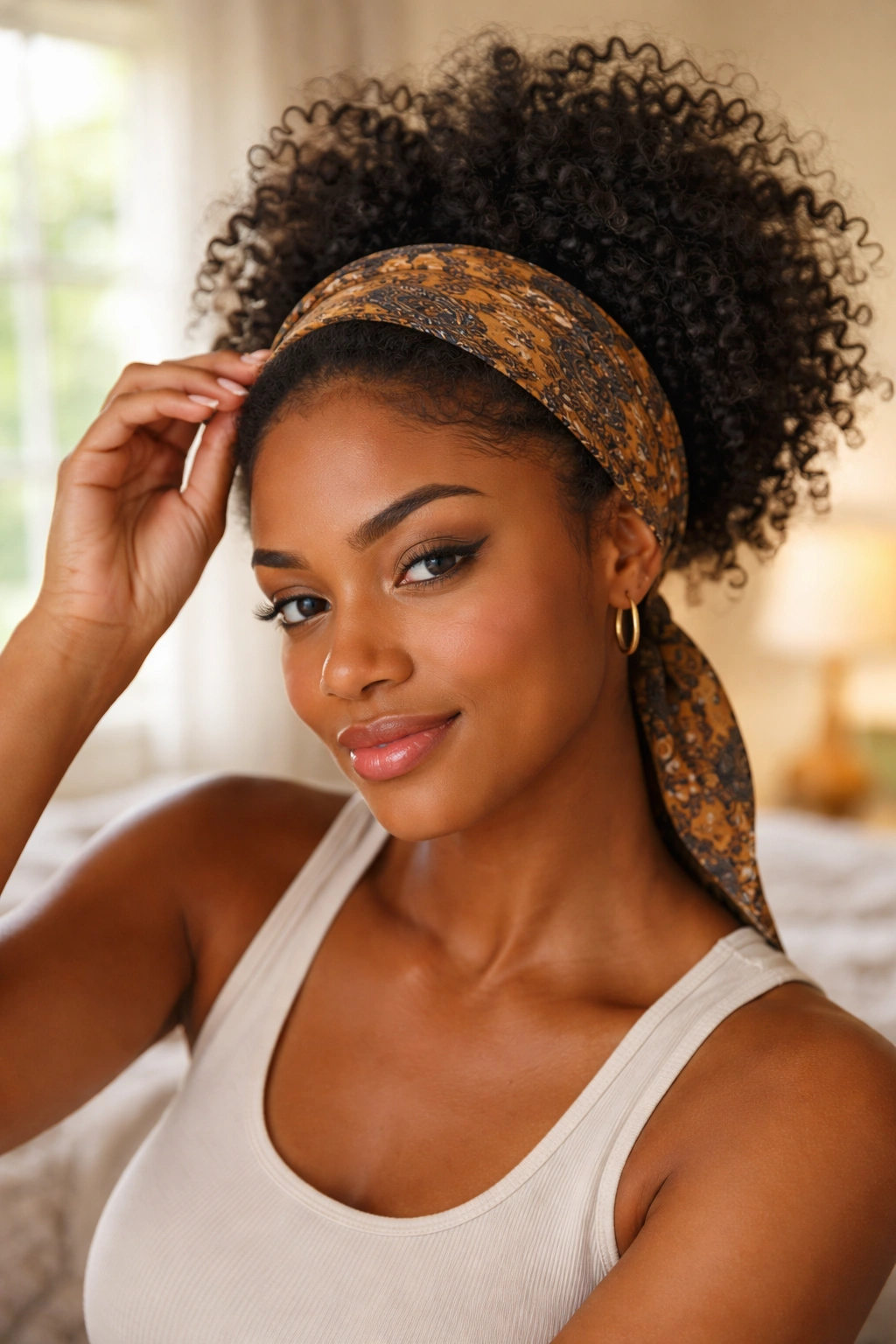
Lazy day headbands aren’t designed to last 14 hours. But with a few micro-adjustments, you can stretch a 5-minute look into a full day.
Midday check: push the headband slightly forward if it’s slipped. Fluff the visible hair at the crown. Re-tie any fabric knots that have loosened.
Evening upgrade: if the day turns into an evening out, add one accessory — a statement earring, a bold lipstick, a necklace — rather than redoing the hair. The headband base handles the transition from casual to dressed with minimal effort.
Headbands That Won’t Slip
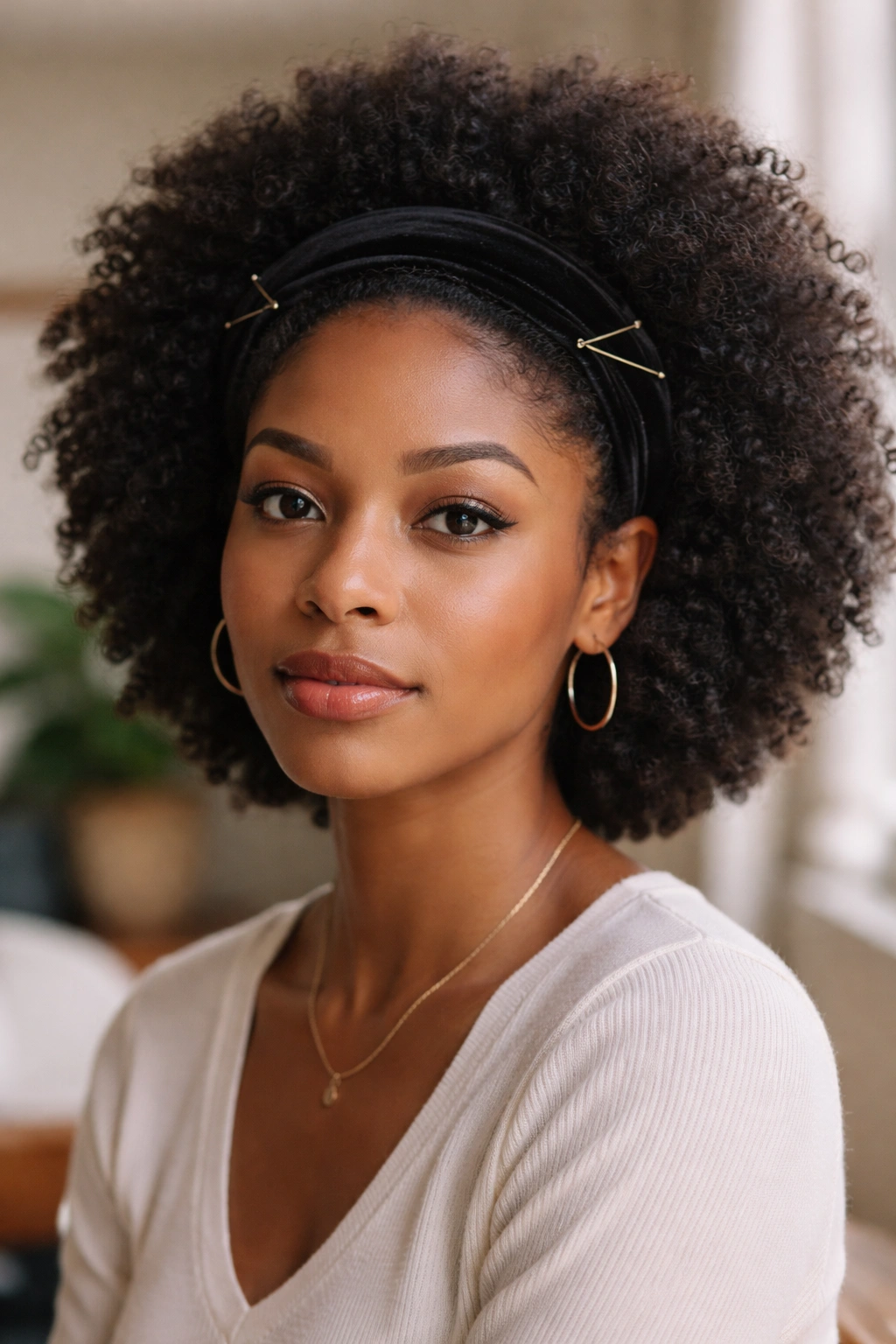
If you’ve ever worn a headband that slipped off your head every three minutes, you know the frustration. The solution is simple: texture grip.
Velvet-covered bands grip the best. Elastic fabric bands with silicone inside grip second-best. Smooth plastic bands slip most.
On afro hair specifically, even a slippery band can work if you secure with two bobby pins — one on each side, crossing through the band and into the hair. Invisible and immovable.
What to Avoid

Too-tight bands. Headaches are not worth looking cute.
Bands that press against your edges. Repeated friction in the same spot can cause traction damage over time. Rotate headband positioning to vary where the pressure sits.
Cheap plastic headbands with teeth. They dig in and break hair.
Matching your headband exactly to your hair color. The band disappears and you just look like you have weirdly smooth roots. Pick contrasting colors for visibility.
The Case for Building a Headband Rotation

Five headbands is all you need for a full lazy day rotation: one bold pattern, one solid neutral, one silk scarf, one velvet band, and one thin metal band. With those five, you can cover any occasion, outfit, or mood.
Store them somewhere visible so you’ll actually use them. A small hook near your mirror, a drawer next to your jewelry, a decorative box on the dresser. Anywhere that puts them in your line of sight on a rushed morning.
I keep mine on a small tray with my earrings. One glance and I know what my hair is going to be.
When Headbands Earn Their Place
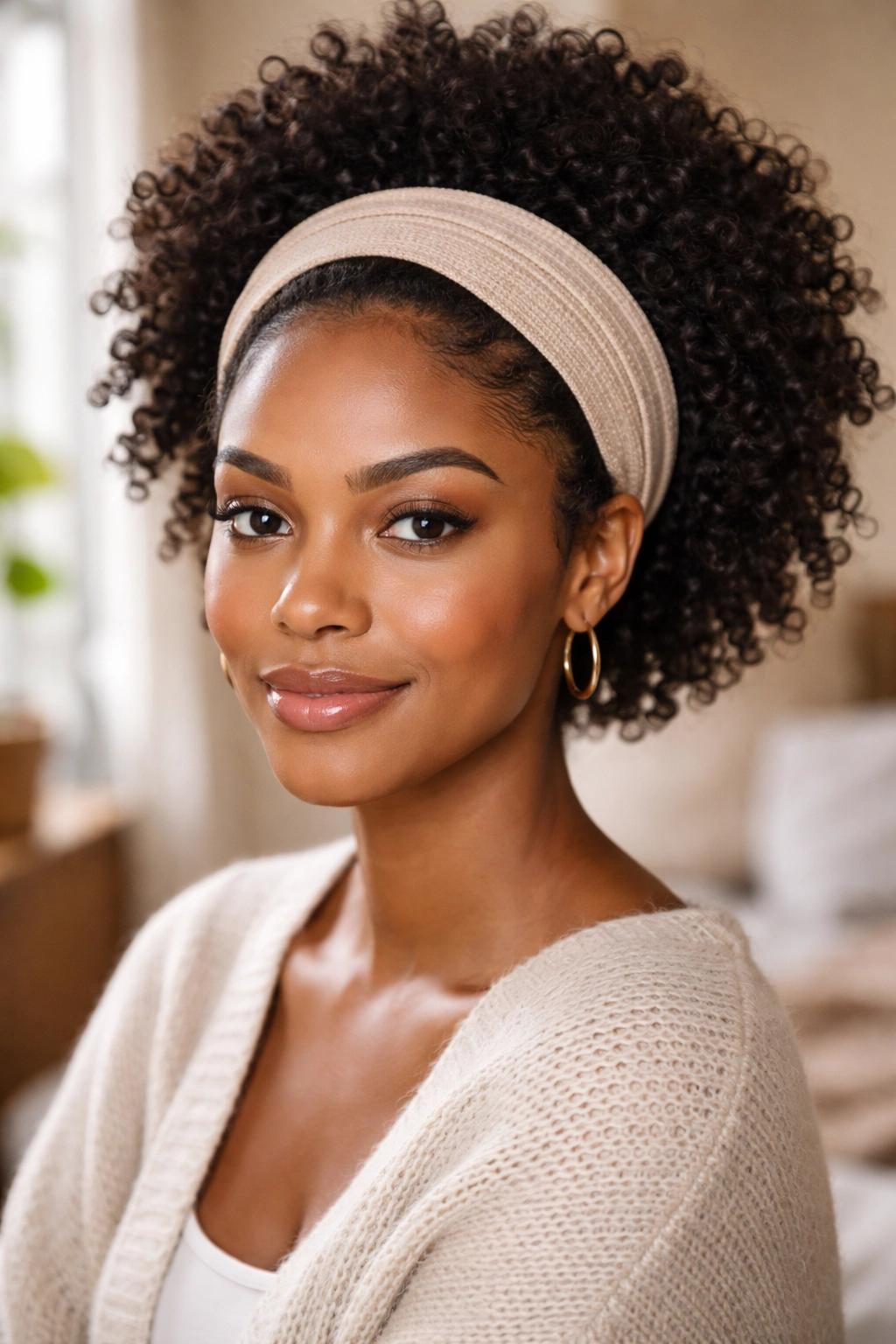
There’s no shame in a headband day. The best stylists I know — the ones who do incredible braided installs, elaborate twist-outs, showstopper wedding hair — also have lazy days when they throw on a velvet band and call it done.
Natural hair doesn’t require you to be on every single day. Some days are for rest, and your hair is allowed to rest too. A headband is just the respectful way of saying “I’m resting, and I’m still here.”
If you’ve been avoiding headbands because you thought they were a cop-out, let this be permission. They’re not a cop-out. They’re a tool. And on the right lazy day, they’re the best tool you’ve got.
Lazy days are going to happen. Low-energy mornings, tired weekends, the occasional “I just don’t want to think about hair today.” A headband rotation takes those days from frustrating to solved in under five minutes. That’s the whole reason the strategy exists.
Pick two or three headbands to buy first. Try them. Adjust. Add more if the rotation is working. Before long, you’ll have a go-to lazy day kit that never lets you down, and your hair will thank you for the days off.
