



A curly ponytail extension can look like a clean style choice or like a last-minute fix. The gap is almost always the same: the curl pattern at the base does not match the tail, or the anchor is too slick for the hair to hold. On curly hair, that mismatch shows fast. The eye goes straight to the seam.
The easiest styles are the ones that respect the hair you already have. A 3B ringlet does not need to be forced into a glassy, pin-straight base, and a coily puff usually looks better with a bit of texture left at the crown. If you have ever watched a ponytail slump because the extension was too heavy, too silky, or too long for the attachment, you already know how unforgiving this style can be.
What saves it is a good match between curl type, density, and base shape. That is why some ponytail extensions blend on the first try while others fight you the whole time. A high pony gives lift. A low wrapped pony gives polish. A bubble pony can hide a mismatch better than a flat tail ever will.
The 23 looks below lean into those differences instead of pretending every curly ponytail should behave the same way. Some are soft and wearable. Some are full drama. A few are the sort of styles that finish an outfit without asking for a complicated routine.
1. High Curly Clip-In Ponytail Extension
A high curly ponytail is the quickest route to bounce. It lifts the curls off the shoulders, shows off the pattern, and gives the whole style a sharper shape than a low tail usually does.
Why it works
The crown sits higher, so the extension has room to move. That matters on curly hair because the spiral needs air, not pressure. If the base is too flat, the tail starts to look stuck on.
A high clip-in ponytail also makes density look fuller than it actually is. The eye reads height as volume. That is a handy trick when your own curls shrink more than you want or when the extension is medium density instead of huge.
- Keep 1/2 to 1 inch of root puff at the crown if your hair is very curly.
- Use a firm elastic first, then attach the ponytail piece.
- Wrap a small coil of hair around the base so the clip sits out of sight.
- If the crown feels tight, stop. Too much tension ruins the shape fast.
Best for: bold everyday looks, gym-to-dinner hair, and anyone who wants the curls to move when they walk.
2. Low Sleek Base with Spiral Ends
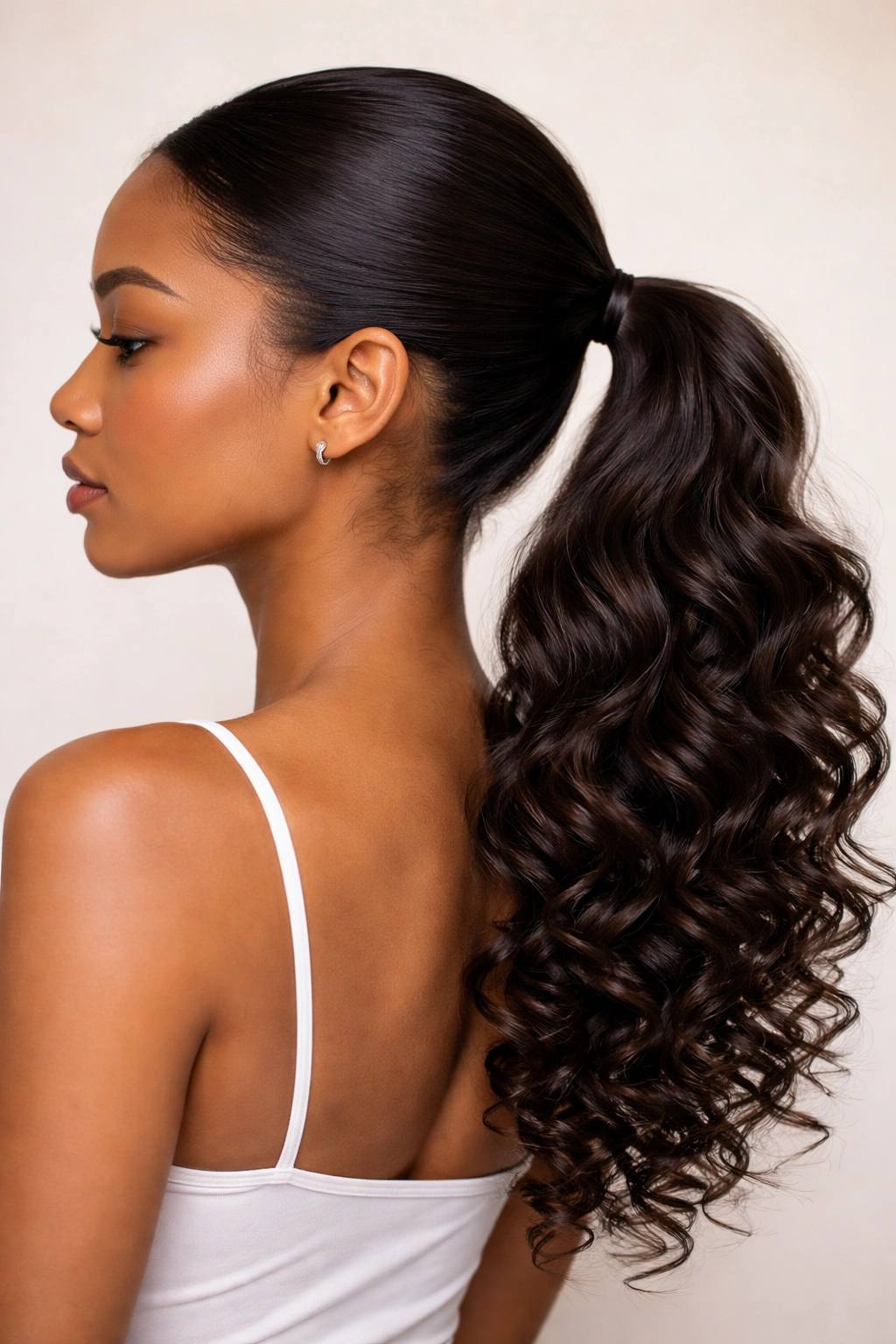
The sleeker the base, the more the curls pop. That contrast is what gives this ponytail its appeal. The front looks neat, almost tailored, while the extension keeps its soft spiral body at the back.
The trick is not making the whole head stiff. Smooth only the top and sides, and leave the tail itself untouched once it’s attached. That split between sleek and curly keeps the style from looking severe. It also helps curly hair blend better, because a little texture near the ears softens the join.
A low pony like this is kinder to fragile edges than a tight high pull. It sits closer to the nape, so the weight is spread out in a calmer way. If your curls frizz at the slightest hint of humidity, this is one of the easiest looks to keep under control.
Use a light gel or cream on the surface, not a thick shell. Thick product can flake around the hairline, and nobody needs that.
3. Mid-Height Bubble Curly Ponytail
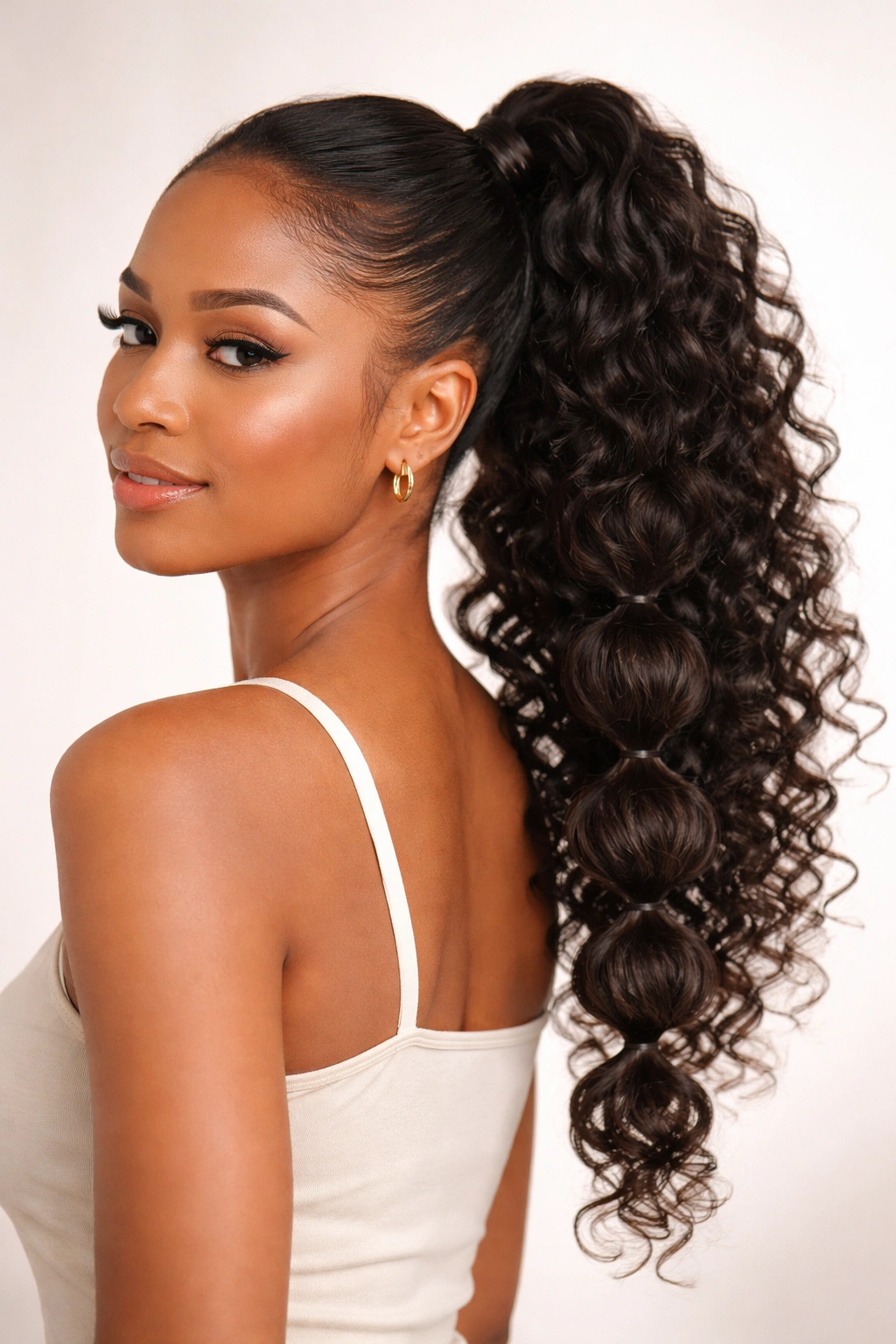
Why does the bubble shape work so well on curly hair? Because it gives the hair little pockets of space instead of forcing one long, flat drop. Each section gets its own shape, and that breaks up any mismatch between your natural texture and the extension.
How to section it
Start with a mid-height pony and secure the extension first. Then place small elastics every 2 to 3 inches down the tail, gently puffing each section until it rounds out. You do not need to make every bubble identical. Slight irregularity looks better with curls anyway.
The bubble style is especially useful when the ponytail extension is long. A very long curly tail can feel heavy and drag the whole style down. Breaking it into sections keeps the shape lively and easier to wear.
If you want the look to feel polished, wrap each elastic with a tiny piece of hair or a narrow cuff. If you want it to feel playful, leave the elastics visible. Both work.
4. Side-Swept Curly Ponytail
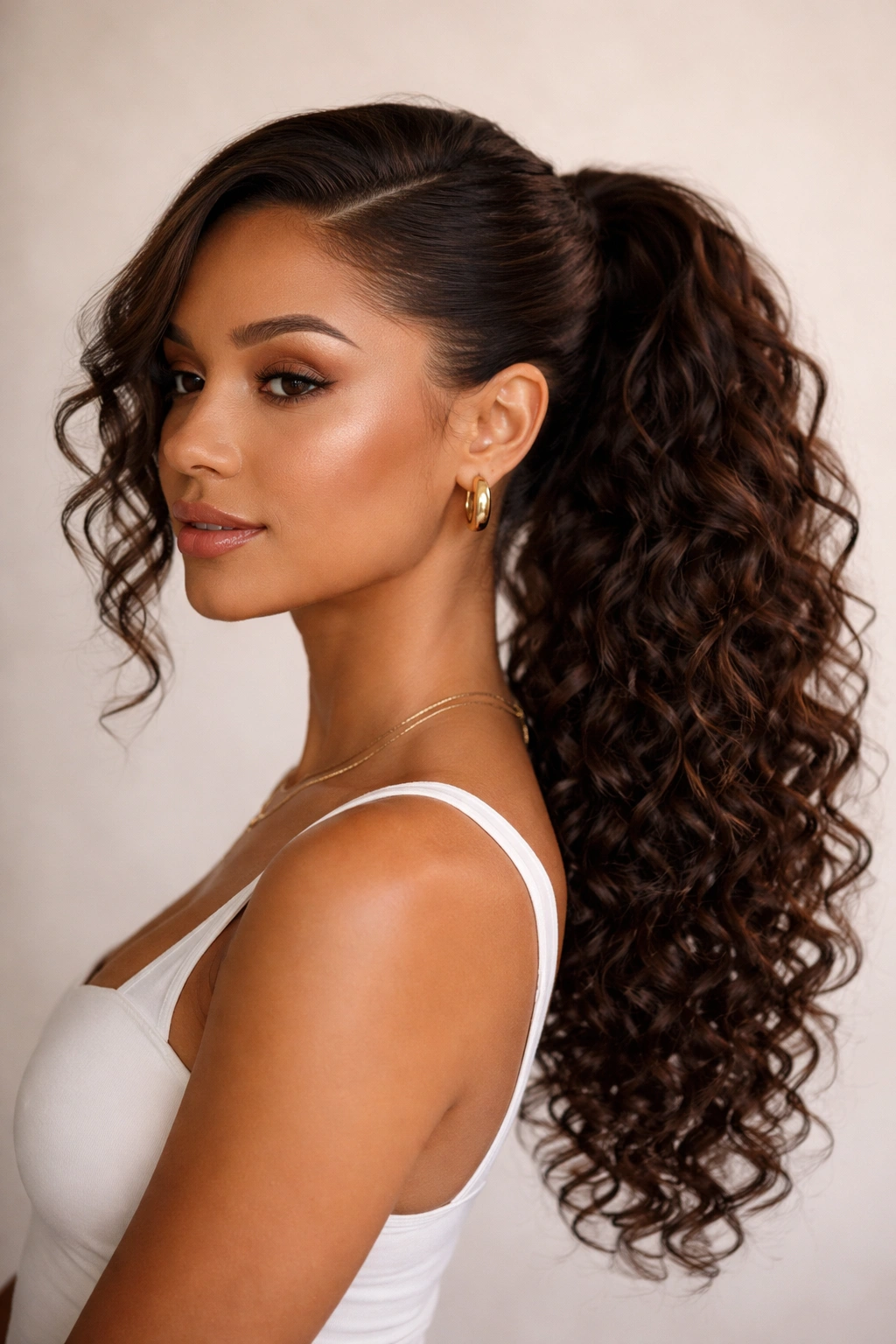
I reach for a side-swept ponytail when I want softness without losing structure. It sits somewhere between romantic and practical, which is a nice place for curly hair to live.
The side part gives the curls a diagonal line, and that line does a lot of work. It takes attention off small differences in texture and draws the eye toward the tail itself. If one side of your hair is looser or shorter than the other, a side-swept pony is forgiving in a way a dead-center style never is.
- Sweep the front section to the heavier side and pin it flat.
- Attach the extension slightly behind the ear, not right on top of it.
- Leave 2 to 3 face-framing pieces loose if the front feels too severe.
- Choose a curl pattern that matches the widest part of your own curl, not only the ends.
Best for: weddings, dinner plans, and anyone who wants the face to look a little softer.
5. Wrapped-Base Ringlet Ponytail
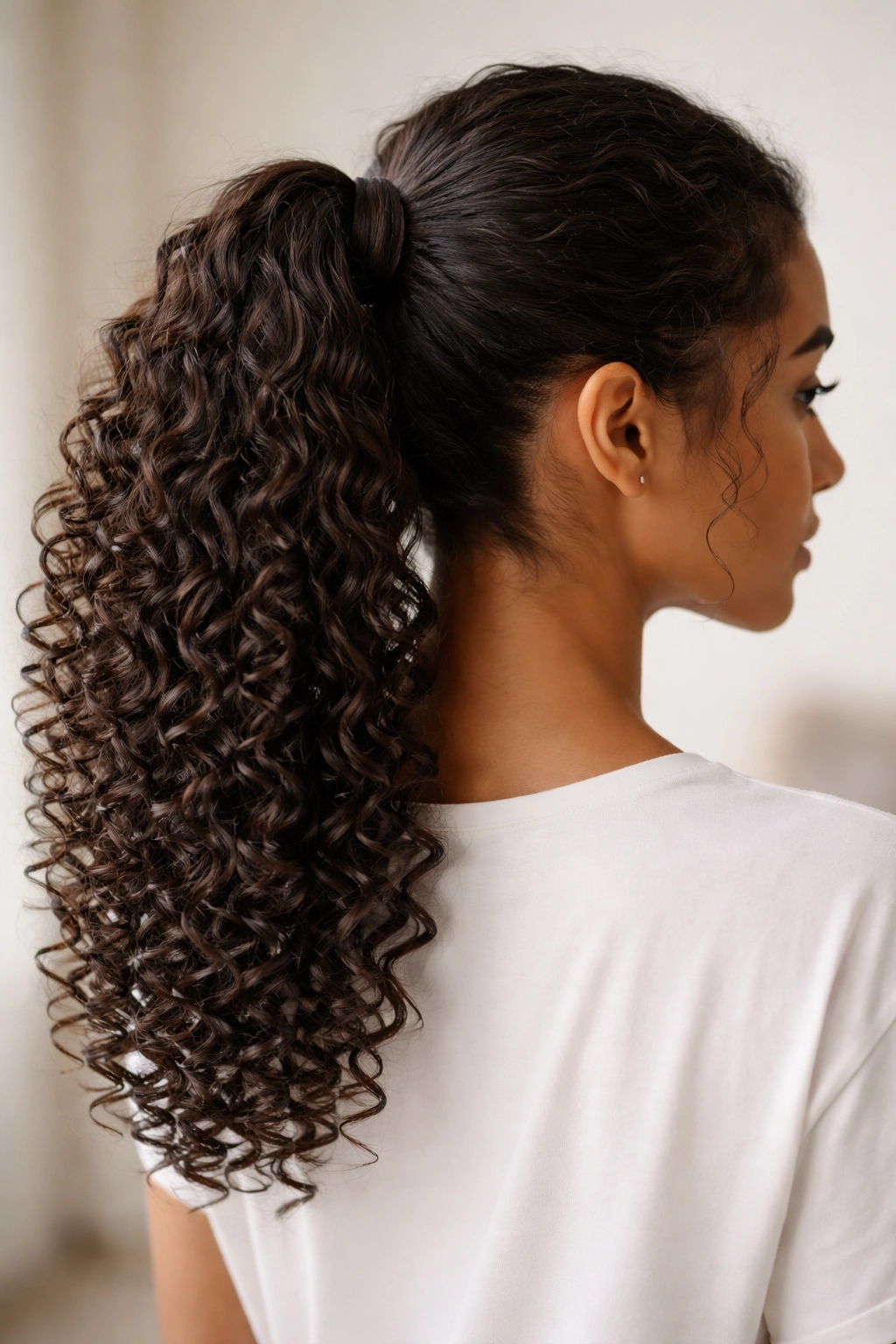
A wrapped base is one of those small details that makes a ponytail look finished. Without it, even a good extension can look a bit obvious at the attachment point. With it, the whole style feels cleaner.
The wrap should be narrow. About 1 inch of hair is enough for most people. Pull that section from underneath the ponytail, smooth it with your fingers or a little cream, then wind it around the elastic and pin it under the tail. The goal is coverage, not bulk.
Ringlet textures work especially well here because the curl pattern hides the seam naturally. You do not need to slick the base hard or flatten the top to the point of stiffness. In fact, a little softness at the crown helps the wrapped section blend into the rest of the hair.
This is the style I would choose for someone who wants the ponytail to look like it belongs on the head, not clipped on after the fact.
6. Half-Up Curly Ponytail Extension
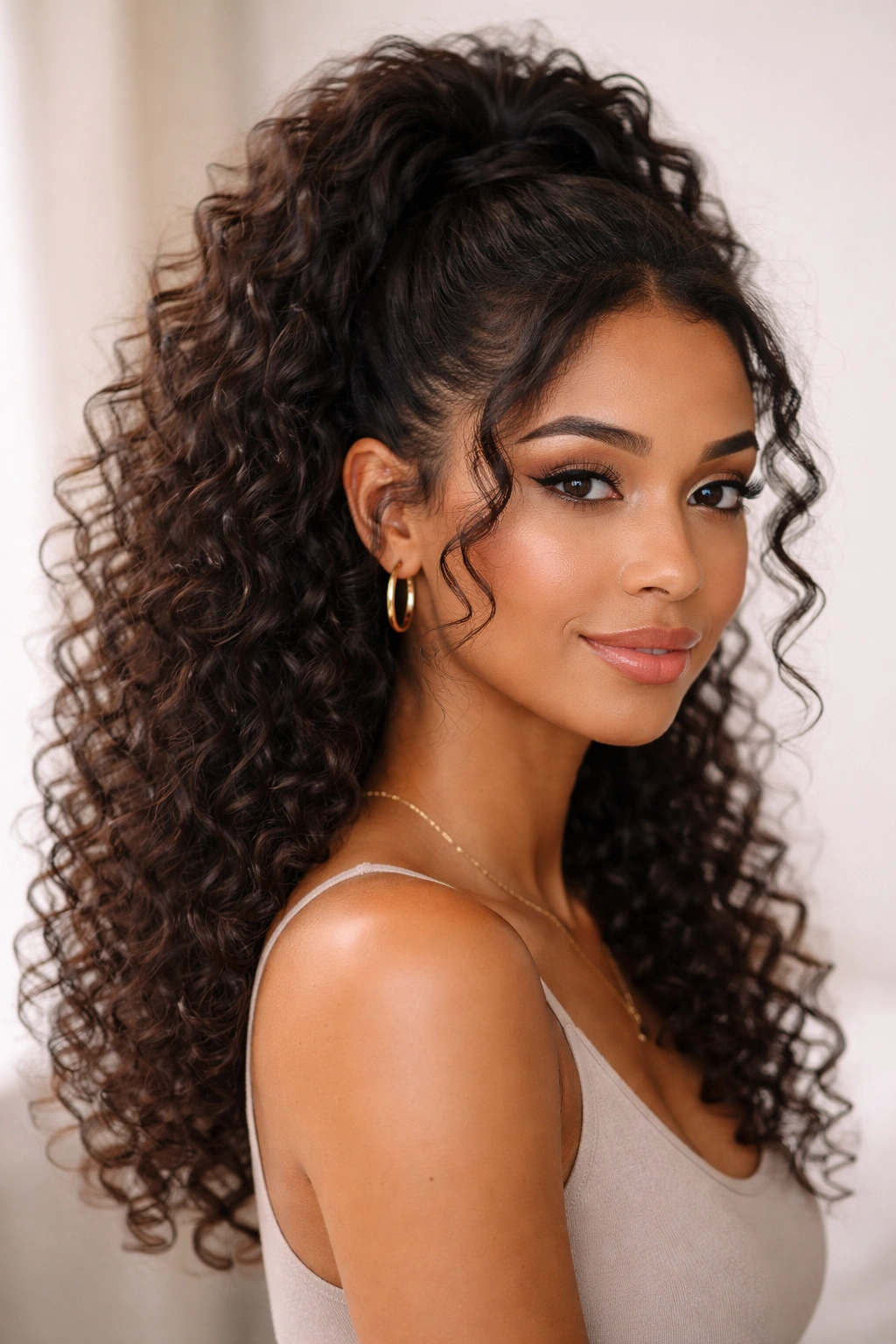
Unlike a full ponytail, the half-up version keeps some of the natural volume at the sides. That changes everything. The look becomes lighter, and the extension only has to carry the top section instead of the whole head.
That makes it a smart pick for shorter curly hair. If your length is uneven or your curls sit at different heights after shrinkage, the half-up style hides that better than a full pullback. It also reduces weight, which matters when the extension is thick or the hairline is delicate.
The front should stay soft. Don’t flatten every strand. A few loose curls around the temples keep the style from looking too tight or too formal. And if the extension is very long, this is where it shines without dragging your roots down.
A half-up curly ponytail feels easy to wear, but it still reads polished. That balance is rare.
7. Voluminous Afro-Textured Ponytail Extension
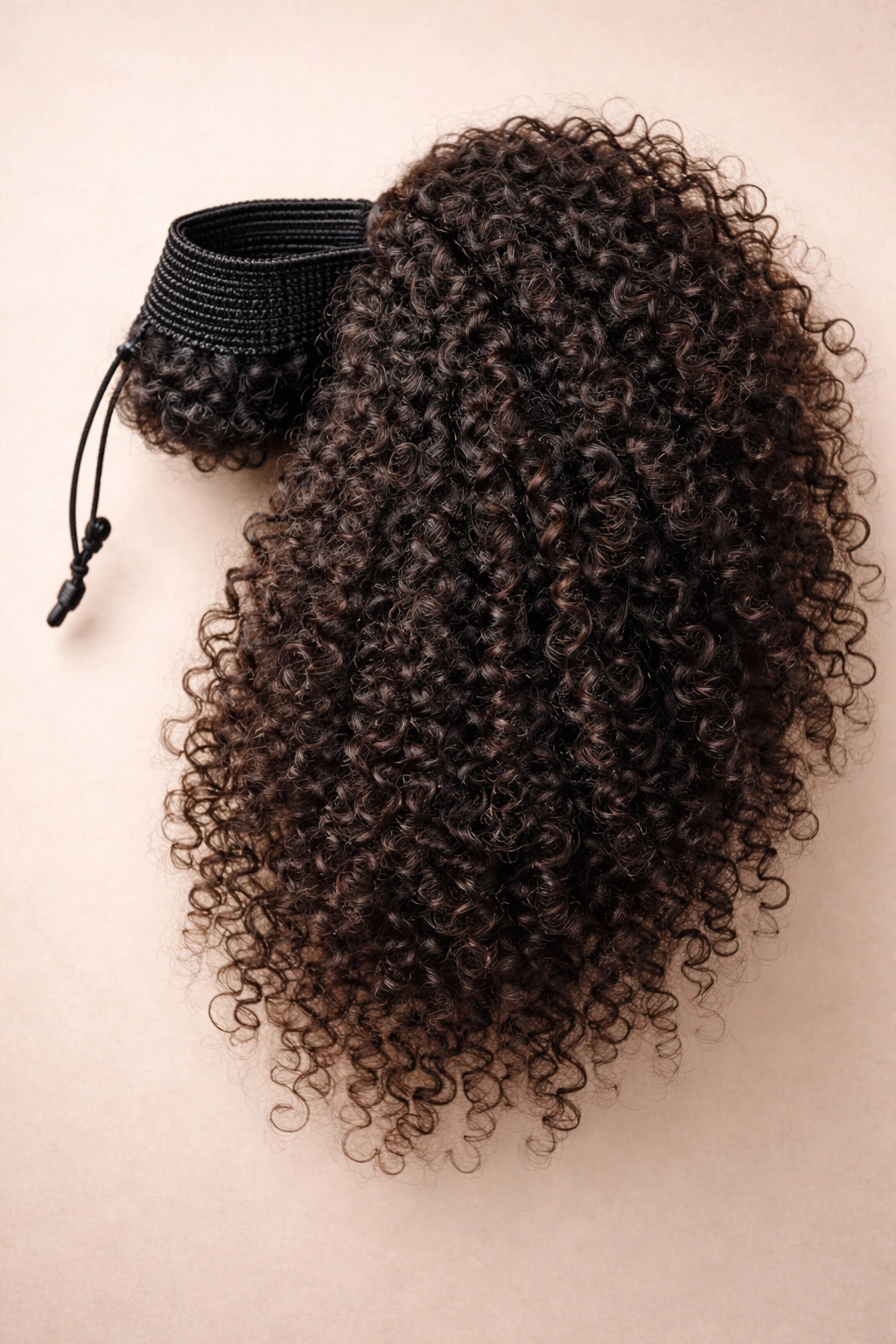
Texture match is everything here. If your natural hair lives in the 4A to 4C range, a ponytail extension with too much shine or too loose a curl pattern can look disconnected in a second.
What to look for
A yaki or afro-textured piece usually blends better than a silky one. The goal is not to hide the hair; it is to let the extension sit in the same family as the curls already on your head.
- Choose a piece with low-to-medium sheen, not a glossy finish.
- Keep the base slightly textured so the pony has grip.
- Mist the tail with water and a little leave-in if it needs reshaping.
- Finger-separate the curls instead of brushing them out.
This style is gorgeous when it is full, but it can tip into too-much territory if the density is wildly bigger than your own hair. Match the volume to your real hairline and head shape. A huge ponytail on a tiny base looks unbalanced fast. Better to build up carefully than to overload the crown.
8. Braided-Base Curly Ponytail
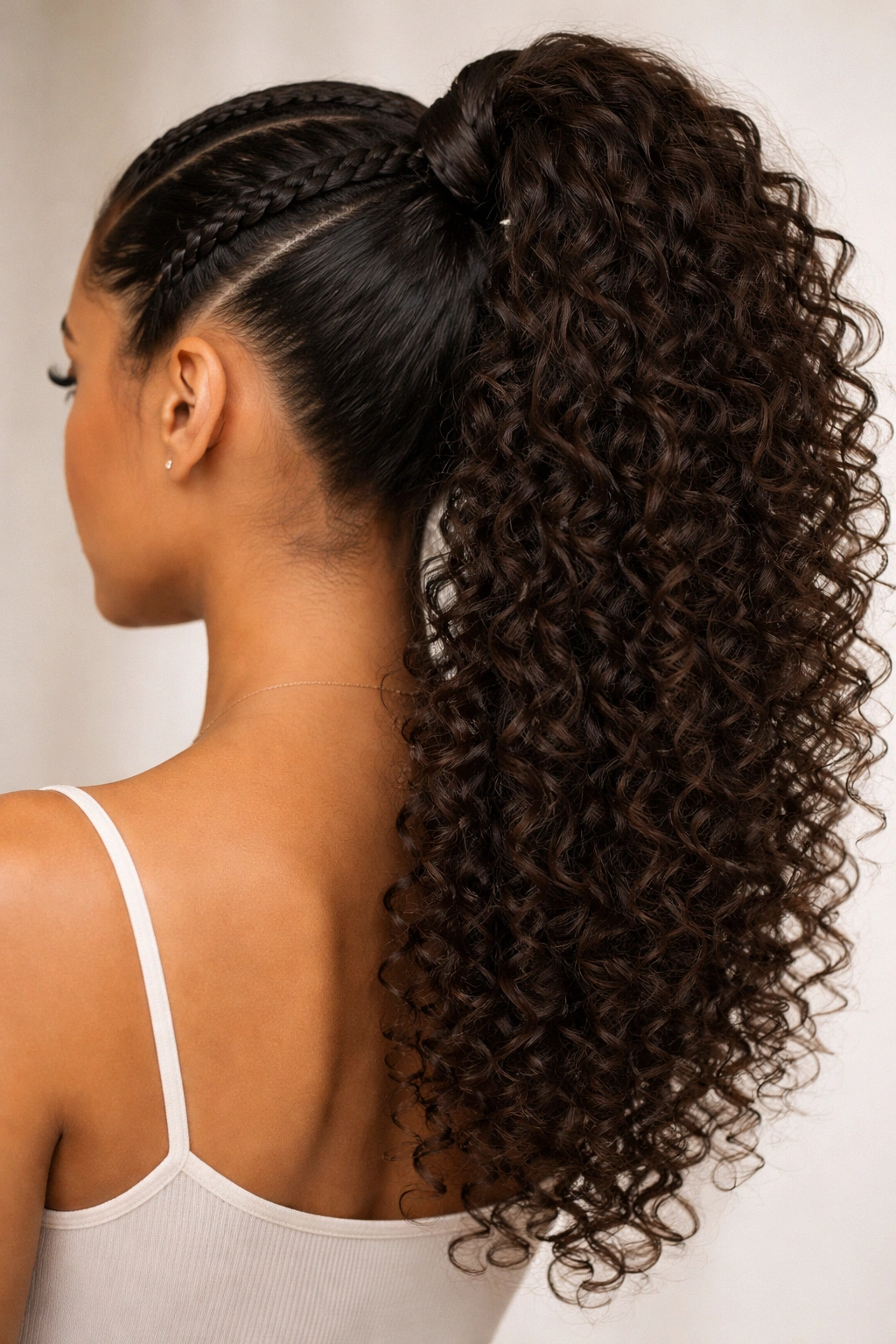
Can the braid matter more than the tail itself? Yes. If the base is secure, the extension can do its job without tugging every time you turn your head.
A braided base helps especially when the ponytail is heavy. Two flat braids leading into a pony anchor the piece more evenly than a single loose tie. That matters if your curls are dense, because the weight of the extension will pull less on one spot.
The style also gives the finished ponytail a more deliberate shape. You get a neat base, then a soft tail. That contrast is clean and easy to wear. If your hairline is sensitive, keep the braids loose enough that you can slide a fingertip under them without pain. Tight braids are not a badge of honor.
This is one of the better choices for long wear days, active schedules, or any time you want the ponytail to stay put.
9. Drawstring Ponytail for Coily Hair
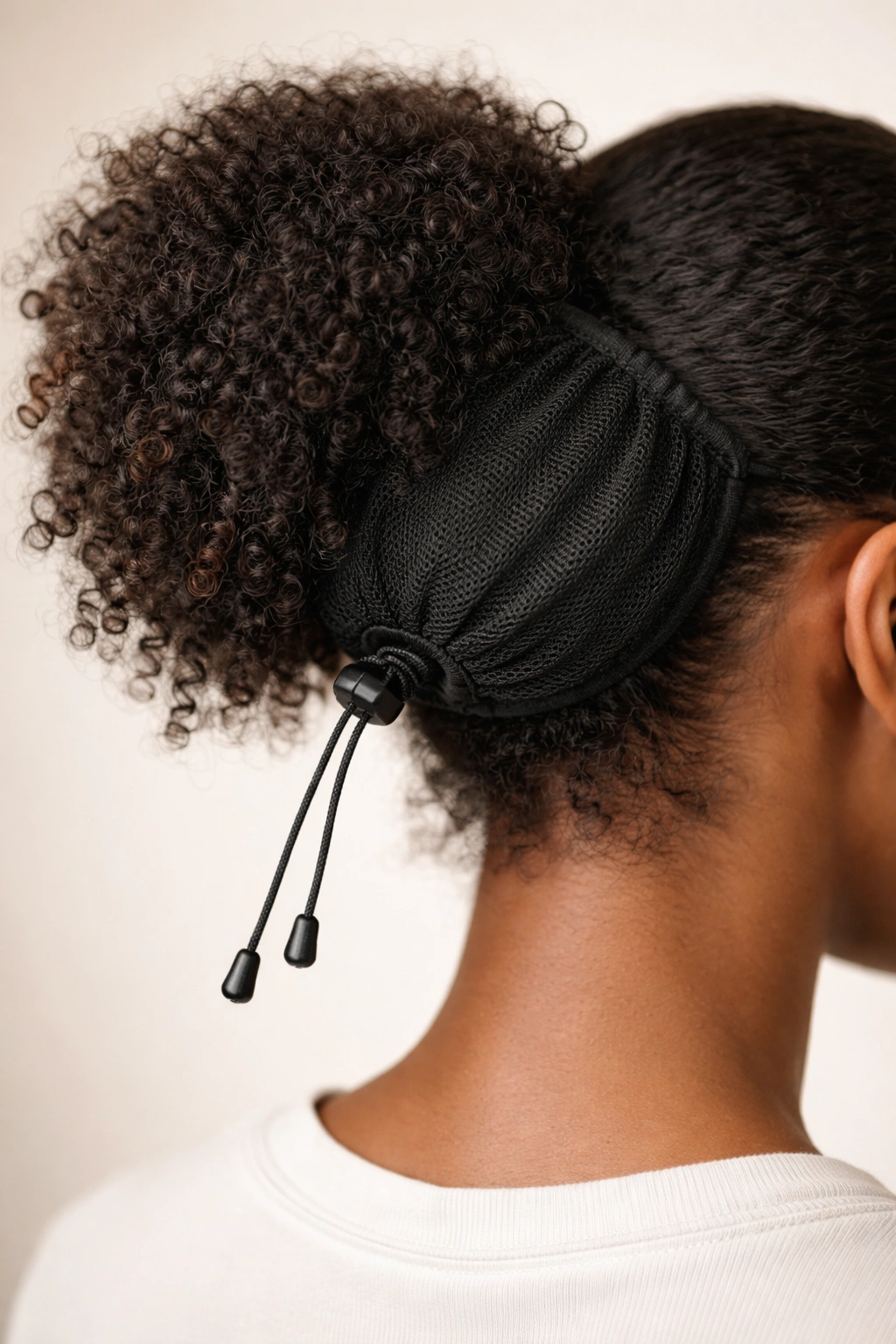
A drawstring ponytail can be a gift for coily hair when the fit is right. The cap hugs the base, the string tightens the piece, and the whole style sits close enough to look intentional.
The fit details that matter
A piece with hidden combs helps, but the real difference is the drawstring tension. Pull it until the base feels snug, not squeezed. If the cap rides up or shifts when you nod your head, it is too loose. If it gives you a headache, it is too tight. Simple.
- Pick a cap with enough room for natural puff at the base.
- Choose a tail density that matches your own volume.
- Keep the crown smooth, but not plastered flat.
- Use bobby pins only where they support, never where they stab.
Drawstring styles are good when you want speed. They can go from plain to finished fast, and they are easy to refresh. If the tail frizzes a little during the day, a mist of water and a touch of cream usually brings it back.
10. Messy Curly Pony with Face-Framing Pieces
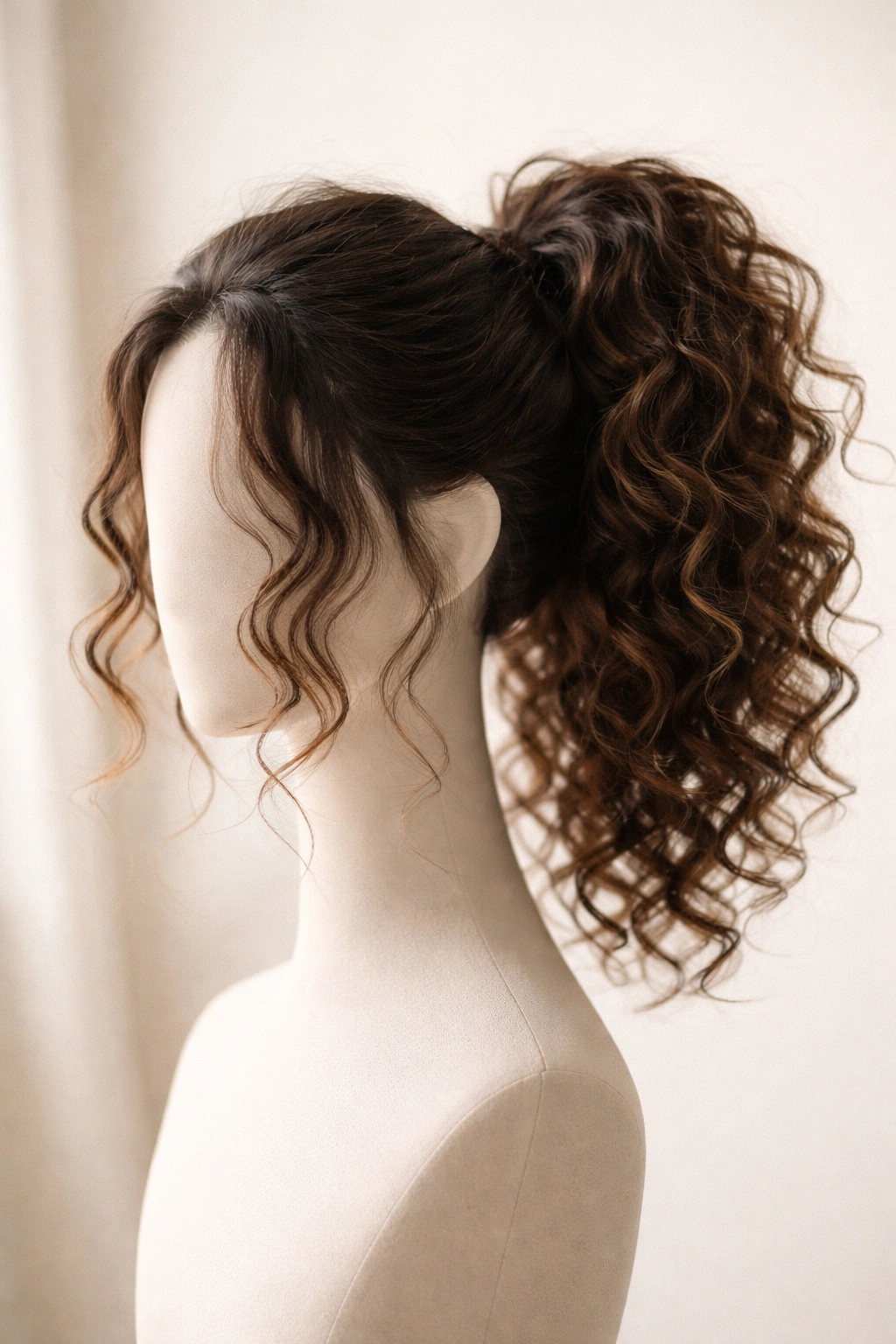
There is a reason this style keeps hanging around. It forgives a lot.
The face-framing pieces do half the work. They soften the edges, hide imperfect blending, and make the ponytail feel less severe. If your own curls are a mix of lengths, the loose front strands help disguise that. They also keep the style from feeling too slick or too formal, which can happen fast with a curly extension.
The messier version is not careless. That is the mistake people make. You still want a defined base and a tail with shape. Just leave a few pieces out around the cheeks and let the curls do their own thing. A light mist and a finger twirl are usually enough.
I like this look when the hair needs to feel lived-in rather than sculpted. It’s the ponytail you wear when you want movement more than precision.
11. High Pony with Curly Bang Piece
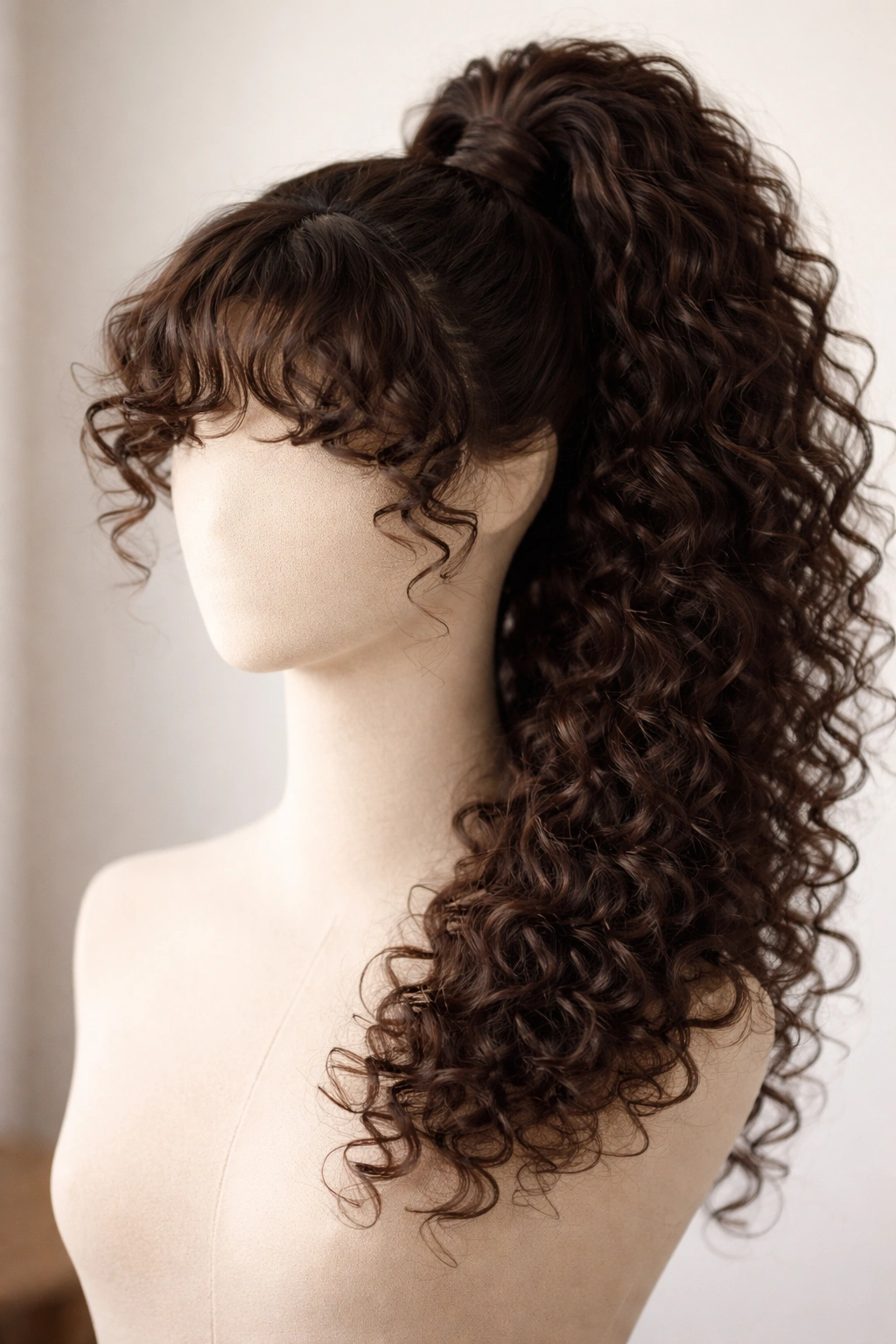
A curly bang piece changes the whole face. It gives the high ponytail a softer start, especially if your forehead feels too exposed with a plain pullback.
The bang piece works best when it is slightly lighter than the tail. Too much density in the front makes the face look crowded. A lighter bang lets the curls sit at the brow without creating a heavy block. If the curls shrink, that lighter density also helps the piece sit in a believable way instead of hovering like a curtain.
This style is a smart test drive for anyone curious about curly bangs without cutting their own hair. You can see how the shape sits, how much forehead coverage you like, and whether the curl pattern feels natural on your face. That is a lot of information from one small piece.
If the bang starts to separate too much, wet your fingers, twist the curls once or twice, and leave them alone. Overhandling makes it puff out in a hurry.
12. Low Side Pony with Deep Part
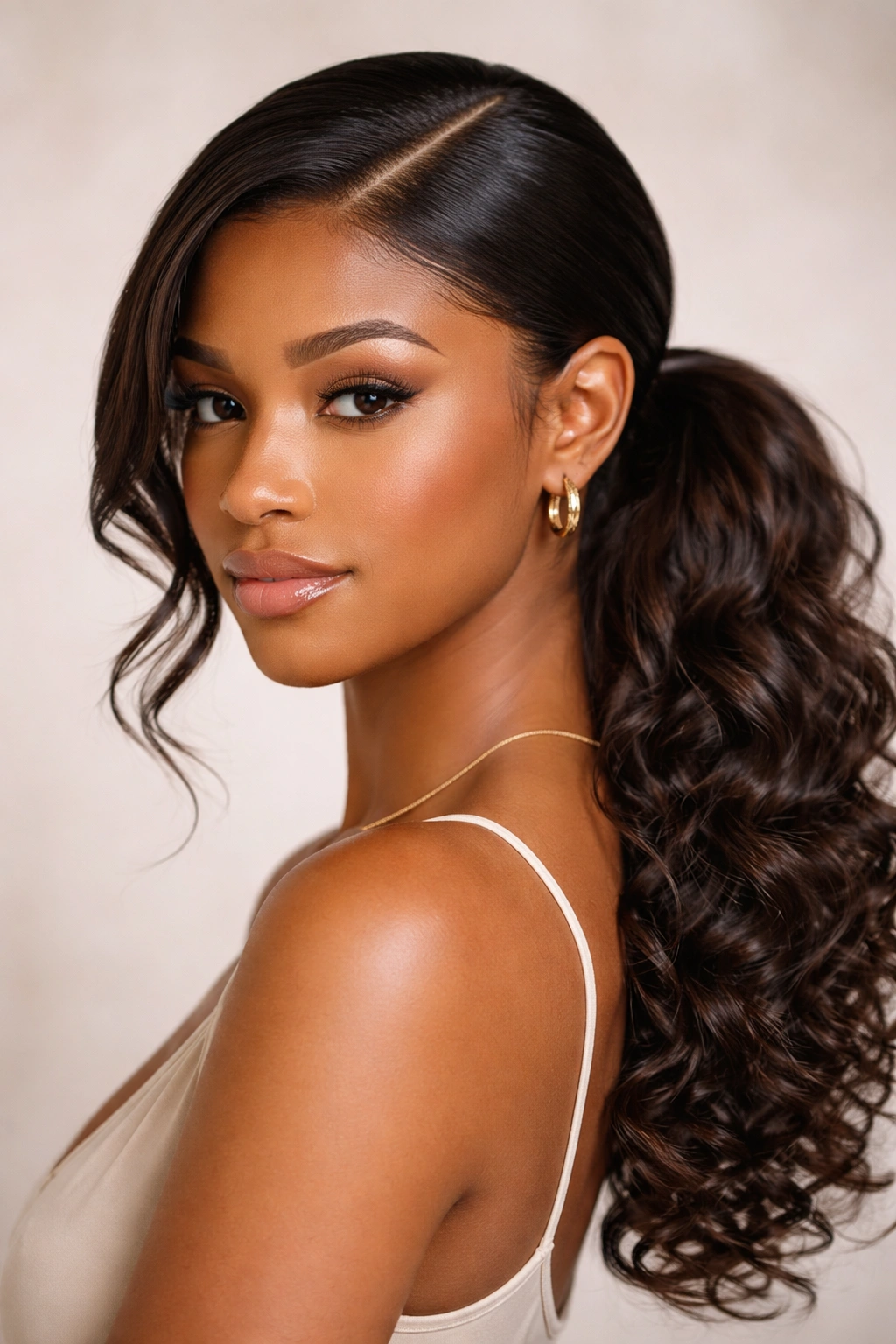
A deep side part changes the whole mood. It gives the style movement before the ponytail even starts.
The low side pony is especially helpful if your face shape benefits from diagonal lines. It pulls the eye across the face instead of straight down the center. That can make the curls feel more fluid and less symmetrical, which is often exactly what curly hair wants.
A deep part also gives you room to hide the extension base. The hair on the heavier side can drape over the attachment point, and that makes the blend easier. Keep the part clean, though. A fuzzy part line can make the whole style look older than it should.
This is a nice option when you want something sleek enough for dressier clothes but not so tight that it feels severe. The curls stay soft. The base stays controlled. Good combination.
13. Ombré Curly Ponytail Extension
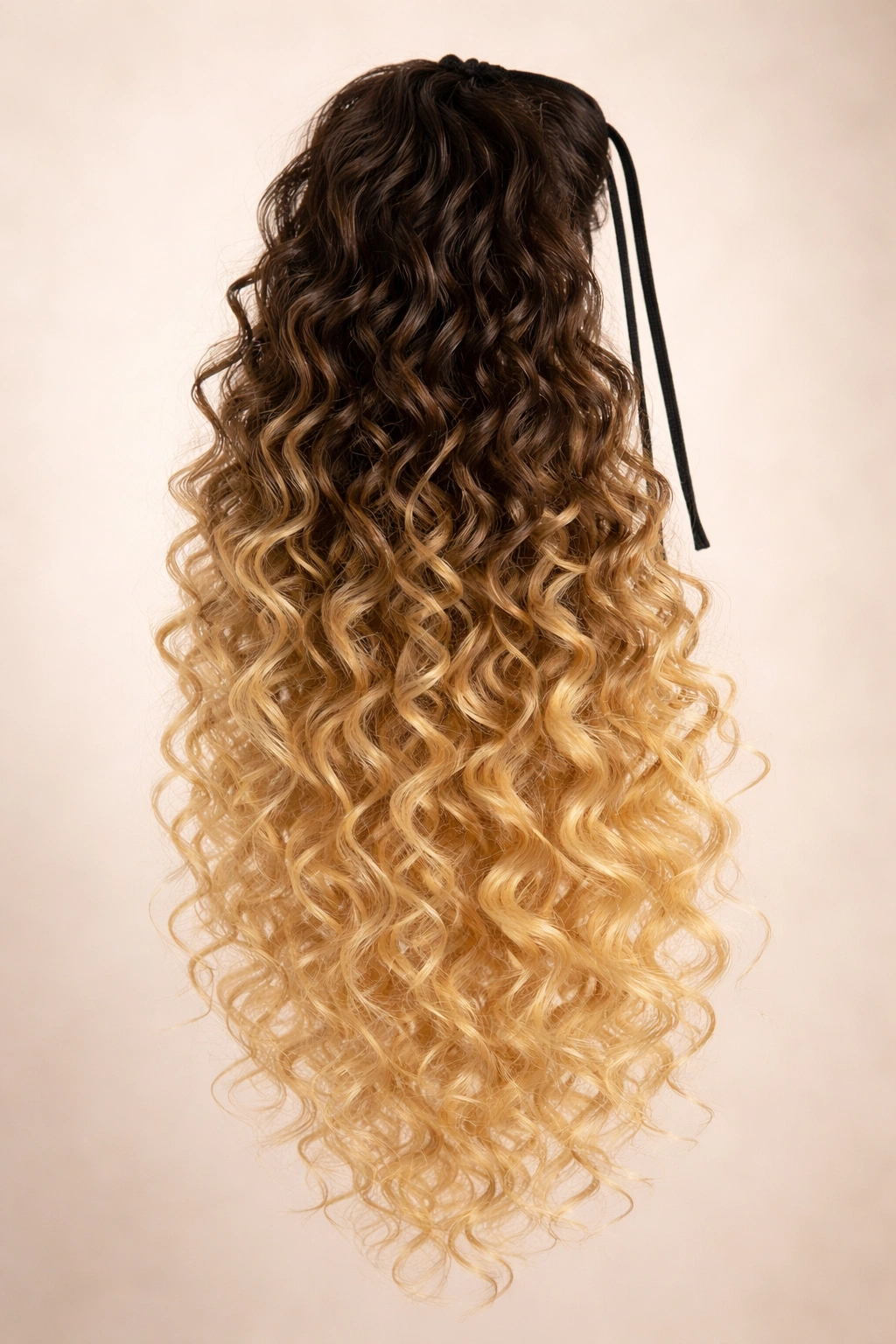
Color can do half the blending work for you. An ombré ponytail extension gives the eye movement from root to tip, so any tiny mismatch in texture is less obvious.
How to place the color
Keep the darker shade closest to the base. Place the lighter pieces toward the outer layer and the ends. That way the color gradient looks natural instead of stripy. If the extension is very layered, fan it out with your fingers before attaching it so the lighter ends don’t clump together.
- Match the root shade to your own hair if you can.
- Let the lighter pieces sit on top and around the face.
- Avoid a harsh line where the colors change.
- Choose curls that hold their pattern after separation, not only in the package.
Ombré works well on curly ponytails because the spirals break up the color bands. Straight hair shows a gradient one way. Curls show it in a richer, less obvious way. That makes this one of the easiest ways to get dimension without extra styling.
14. Waist-Length Curly Ponytail
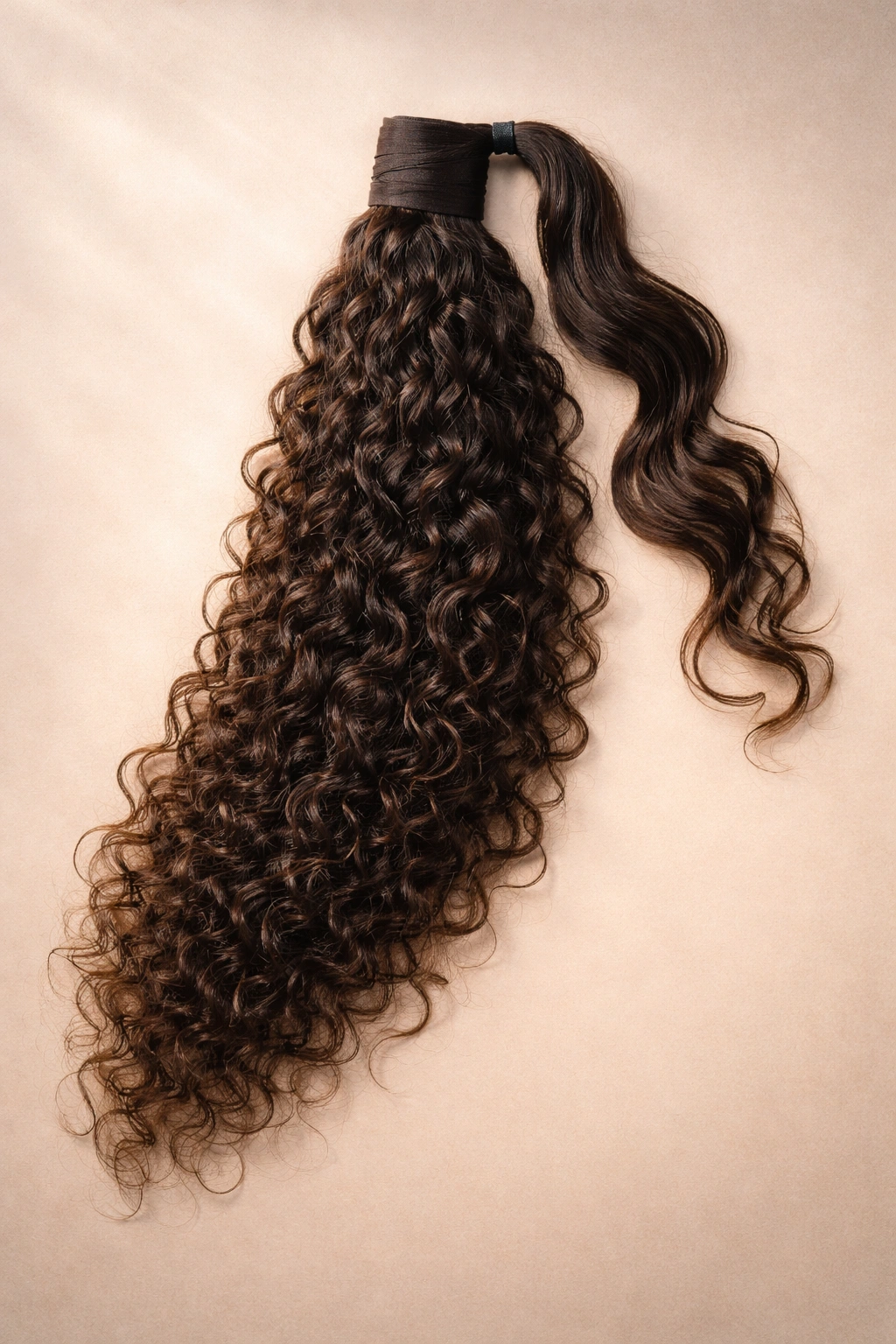
Do you need a ponytail that reaches the waist? Not for every day, no. But when the mood calls for it, nothing else gives the same sweep.
The catch is weight. A very long curly extension can pull at the crown and flatten the base if it is too dense. That is why a lighter long tail is often better than a heavy one. You want length that moves, not length that drags.
This style looks strongest when the base is kept simple. Low pony, clean attachment, one wrap around the elastic, done. Let the tail be the statement. If the extension is human hair, you can refresh the curls with a light mist and a few finger coils. If it is synthetic, make sure the curl pattern already matches what you want before you put it on, because heat will not always be an option.
Long curly ponytails are pure drama. Use them sparingly, and they keep their power.
15. Shoulder-Grazing Curly Ponytail
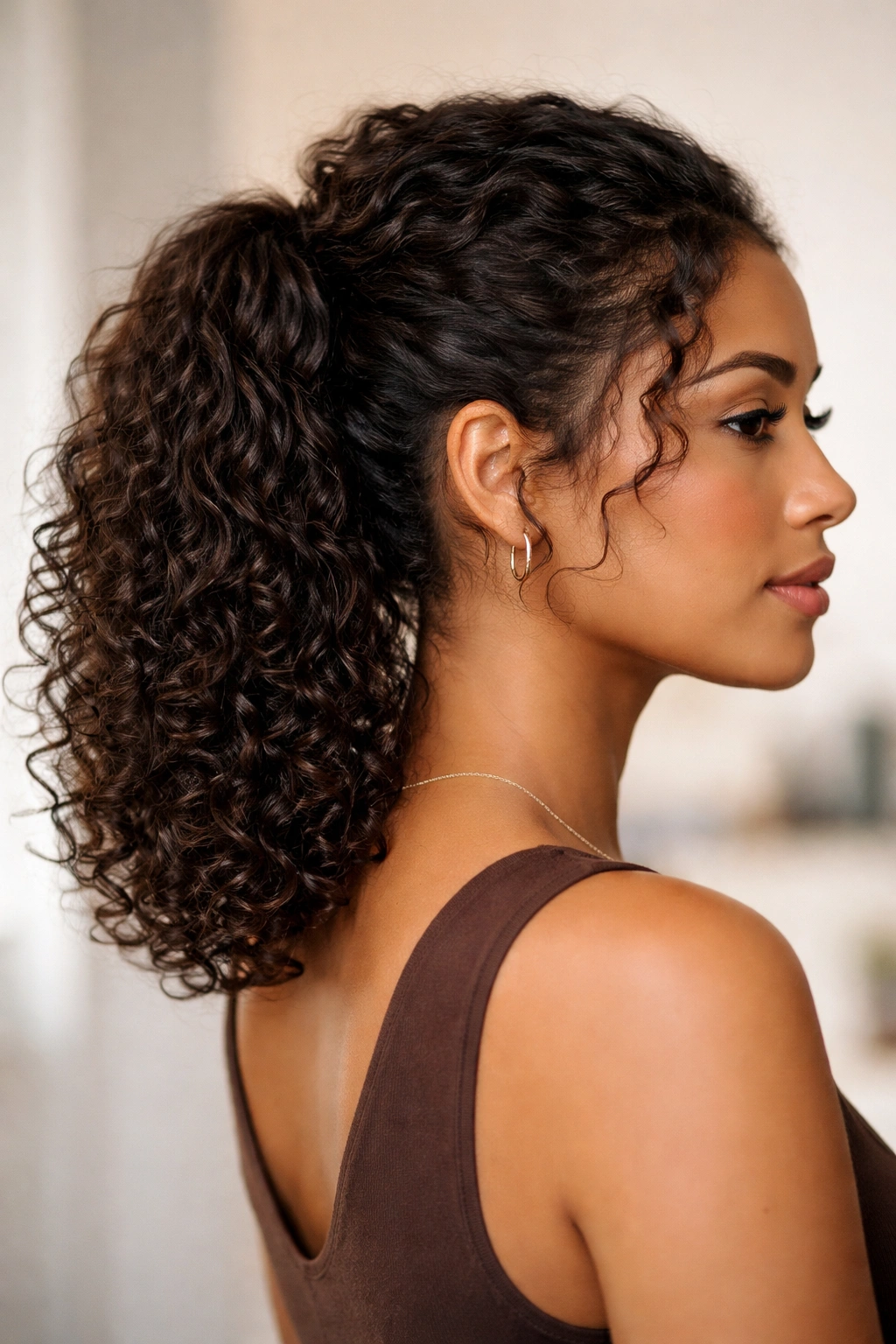
A shorter curly ponytail does not get enough credit. People chase length, then end up with a style that feels bulky and hard to move. A shoulder-grazing tail often looks better because it blends into the head shape more naturally.
That length is also easier on the scalp. Less pull. Less slippage. Less need to baby the base all day. If your natural curls are already medium length, this option can be the most believable one in the whole group. It meets your hair halfway instead of overpowering it.
The shorter tail looks especially good with a textured finish. Keep a little lift at the crown and let the ends bounce at the shoulders. The result feels casual, but not unfinished.
A lot of people overlook this length because it sounds plain. It isn’t. It is the one that tends to get worn again and again.
16. Pineapple Ponytail
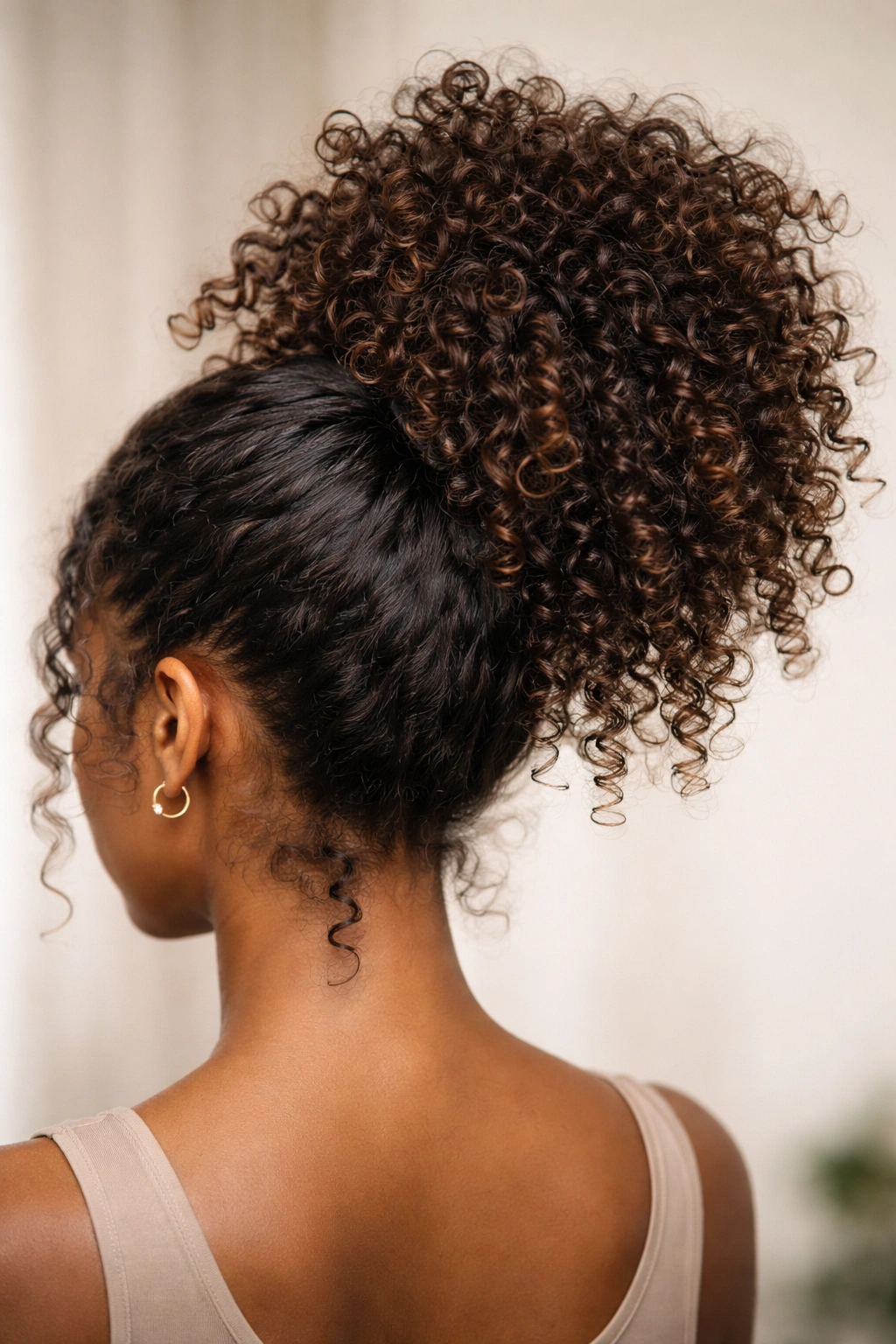
Unlike a tight pony, the pineapple keeps the curl pattern almost untouched. The hair is gathered high and loose, usually with a satin scrunchie or a soft band, so the curls sit on top of the head instead of being crushed flat.
That makes it a smart choice for curly hair that frizzes quickly. You preserve more of the shape, and the extension can blend with less manipulation. The pineapple also works on days when you want to protect the hairline. Nothing about it needs to be rigid.
A proper pineapple ponytail should look airy, not sloppy. Lift the curls, arrange them in a soft mound, and leave some ends free to fall. If the base looks too tight, loosen it. If the tail feels too flat, fluff the top with your fingers.
It is simple. That is the point.
17. Sleek-Then-Curly Contrast Ponytail
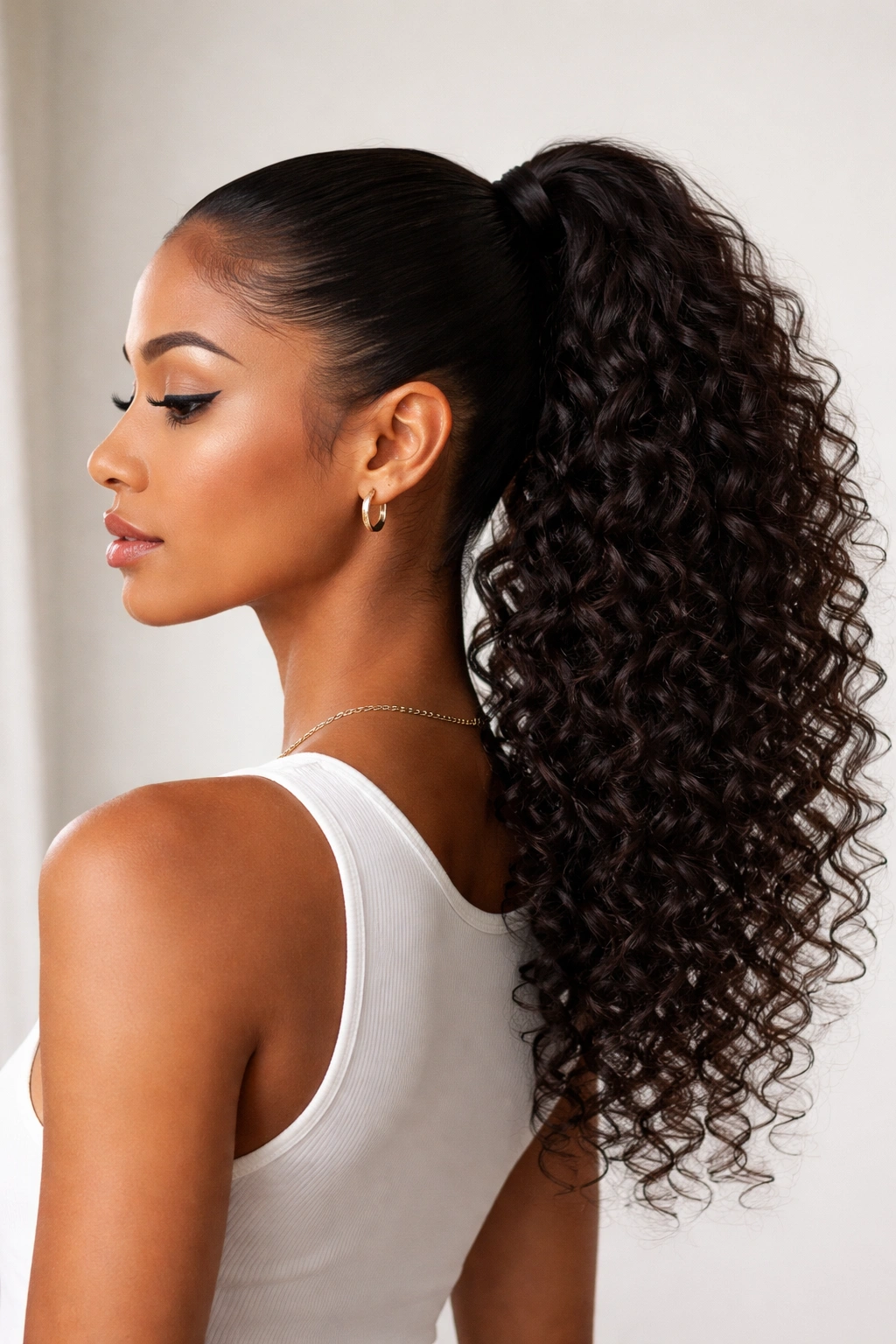
This one is for people who like a little drama but do not want the whole head to look styled in the same way. The front stays smooth. The tail goes big and curly. That contrast is what makes it interesting.
The sleek front should stop before the ponytail starts. Don’t drag gel all the way through the extension, or the curls will lose their shape and look limp by the end of the day. Keep the product on the roots and the surface. Leave the tail to do its own thing.
This style is good when your own hair has mixed textures. A flatter front and a fluffier tail can make the differences feel intentional instead of accidental. It also photographs in a strong, clean line without needing a lot of extra accessories.
If you want the style to read modern without feeling too stiff, this is a solid pick. The contrast does the talking.
18. Double-Secure Clip Ponytail
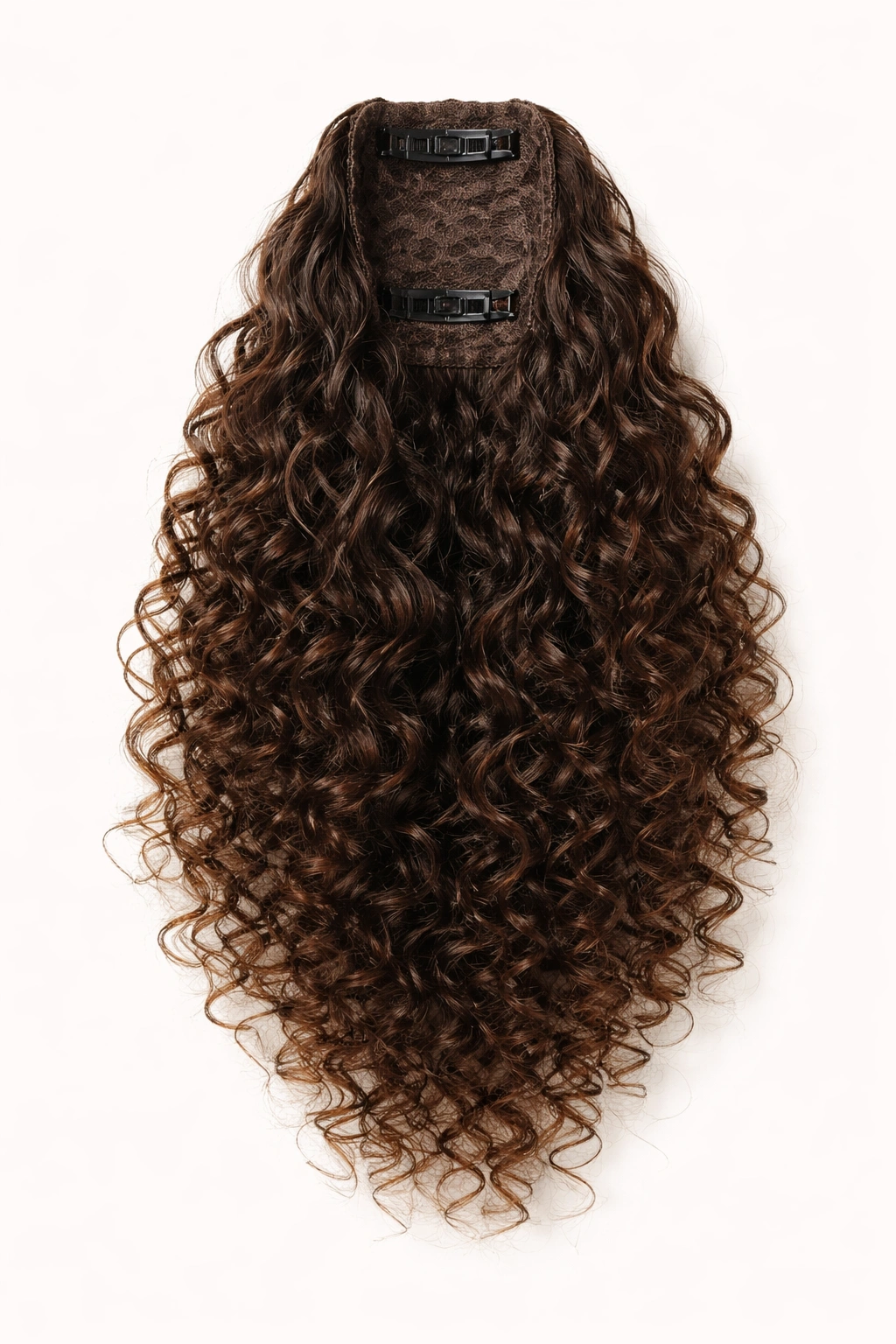
Heavy curls need more than one anchor. A single clip can slide if the extension is dense, long, or attached to fine hair. Two points of contact make the whole thing feel steadier.
What to lock in
Start with a tight elastic at the base. Then place the ponytail extension so one comb sits near the top and another near the bottom. If the piece has a drawstring as well, tighten that after the combs are in place. The order matters.
- Test the base by shaking your head once or twice.
- If the piece shifts, add a second bobby pin under the wrap.
- Do not bury the clips in tiny, fragile sections.
- Keep the crown smooth, but leave enough texture for grip.
This setup is not about overbuilding. It is about spreading the weight. That small change can keep the ponytail from tilting backward, which is a common problem with curly extension pieces that carry a lot of hair.
19. Scarf-Wrapped Curly Ponytail
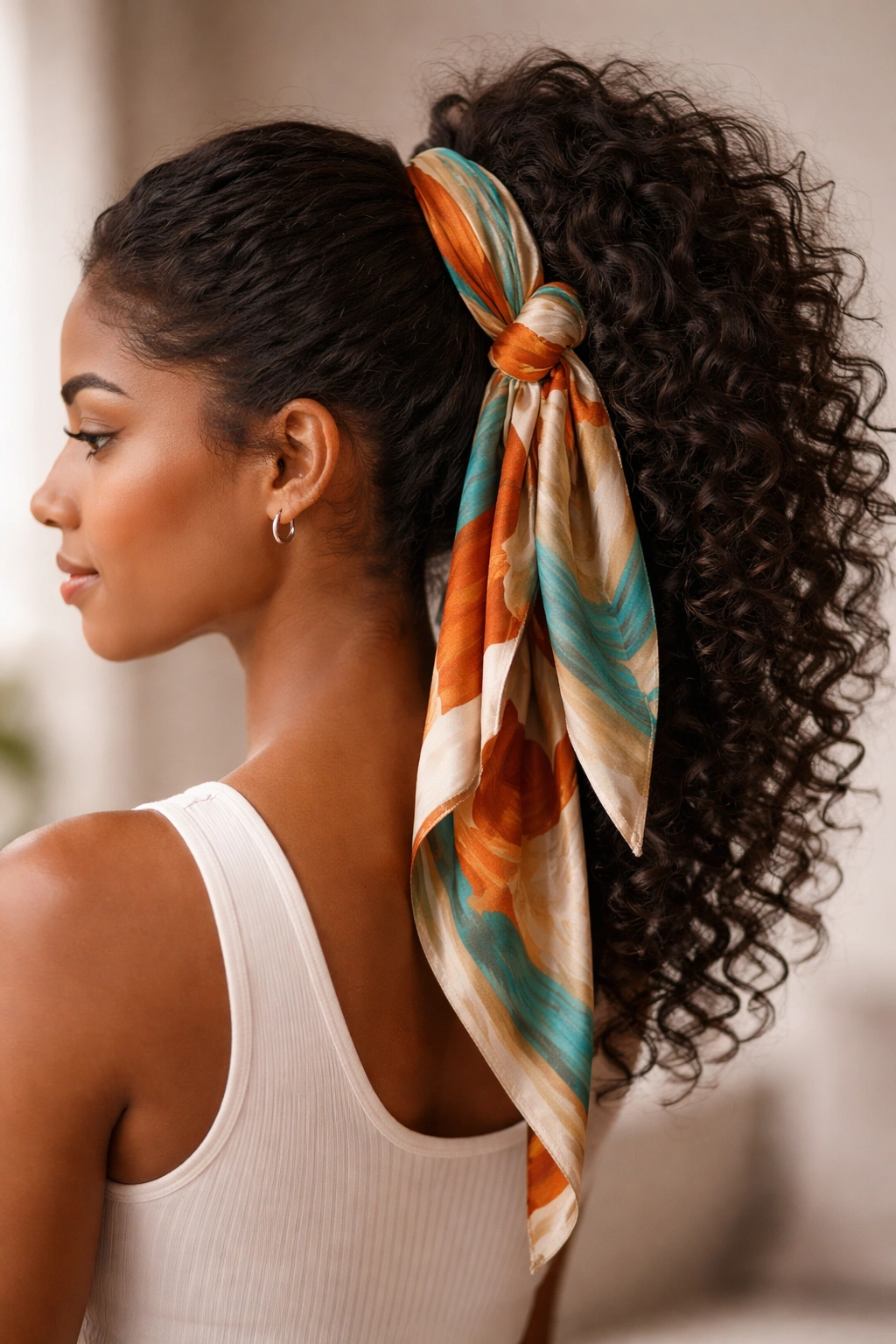
Can a scarf make a ponytail easier to wear? Absolutely. It hides the band, adds color, and lets you control the mood without changing the curl pattern at all.
A scarf works best when it is tied low enough not to squash the curls. A wide knot at the crown can flatten the top and make the ponytail feel crowded. Keep the knot closer to the base or slightly off to one side. A 1.5- to 2-inch wide scarf is usually enough. Anything bulkier can take over.
The look can lean playful or polished depending on the fabric. Cotton feels casual. Satin feels dressier. Printed silk brings the eye up toward the face, which is handy if the extension itself is fairly plain.
This is one of those small changes that makes an old ponytail feel new again. No full restyling. No extra heat. Just a different finish.
20. Wet-Look Curly Ponytail
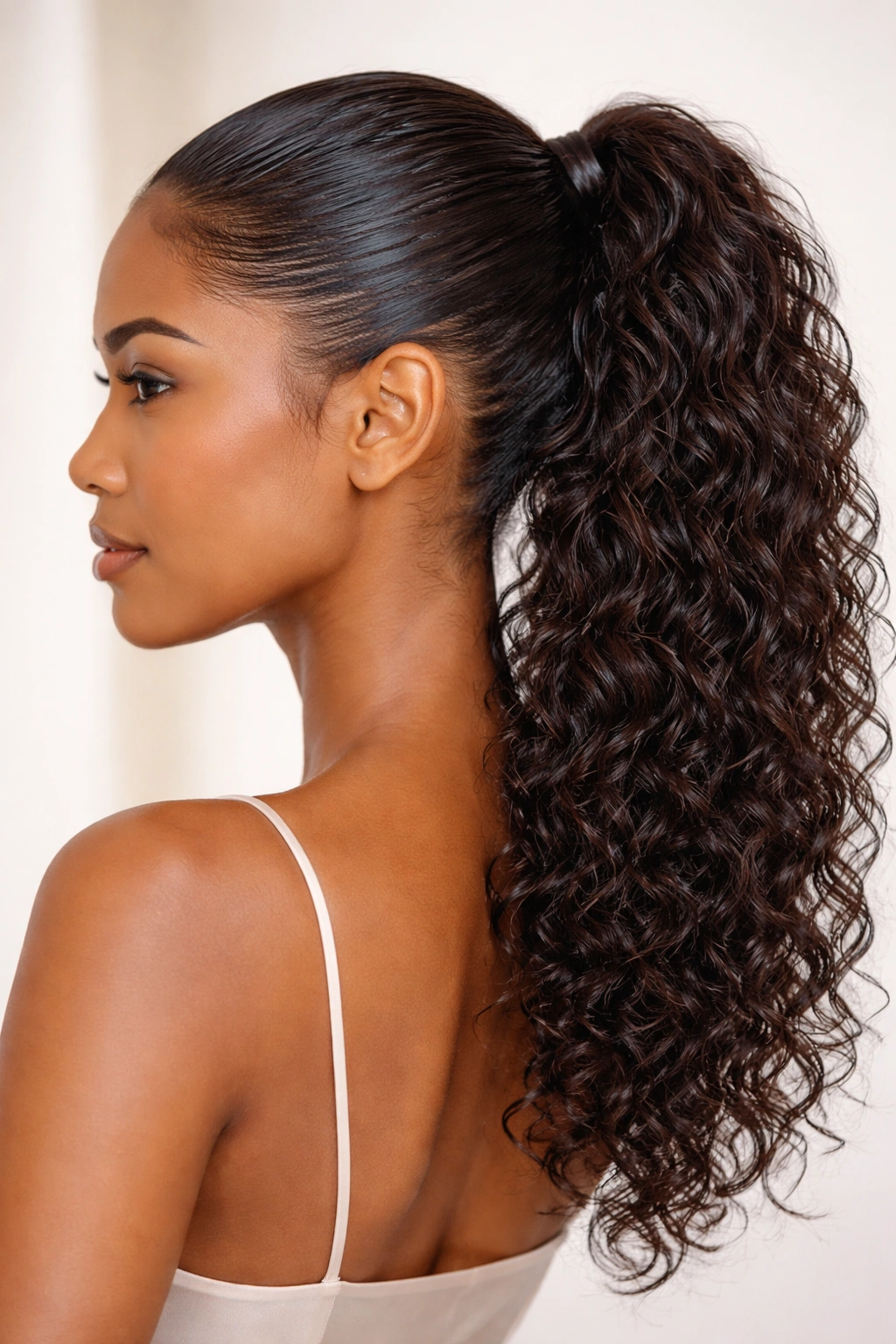
A wet-look ponytail is not actually wet. It just needs the right shine and control so the curls look damp and defined without being crunchy.
The base is the part that matters most. Smooth it with gel or cream until the hair lies close to the head, then leave the tail looser so the curls still move. If the whole ponytail is coated, it starts to look heavy. A little shine goes a long way.
What to watch for
- Use a gel with hold, not only shine.
- Apply it to damp hair so the finish sets cleanly.
- Keep a soft towel nearby to blot excess product.
- Use a tiny amount of serum on the tail ends if they look dry.
This is a strong choice for evening events, especially when you want the face to look sharp. The style has edge. It also shows off curl definition in a way that plain volume sometimes does not.
21. Braided-Front Curly Ponytail
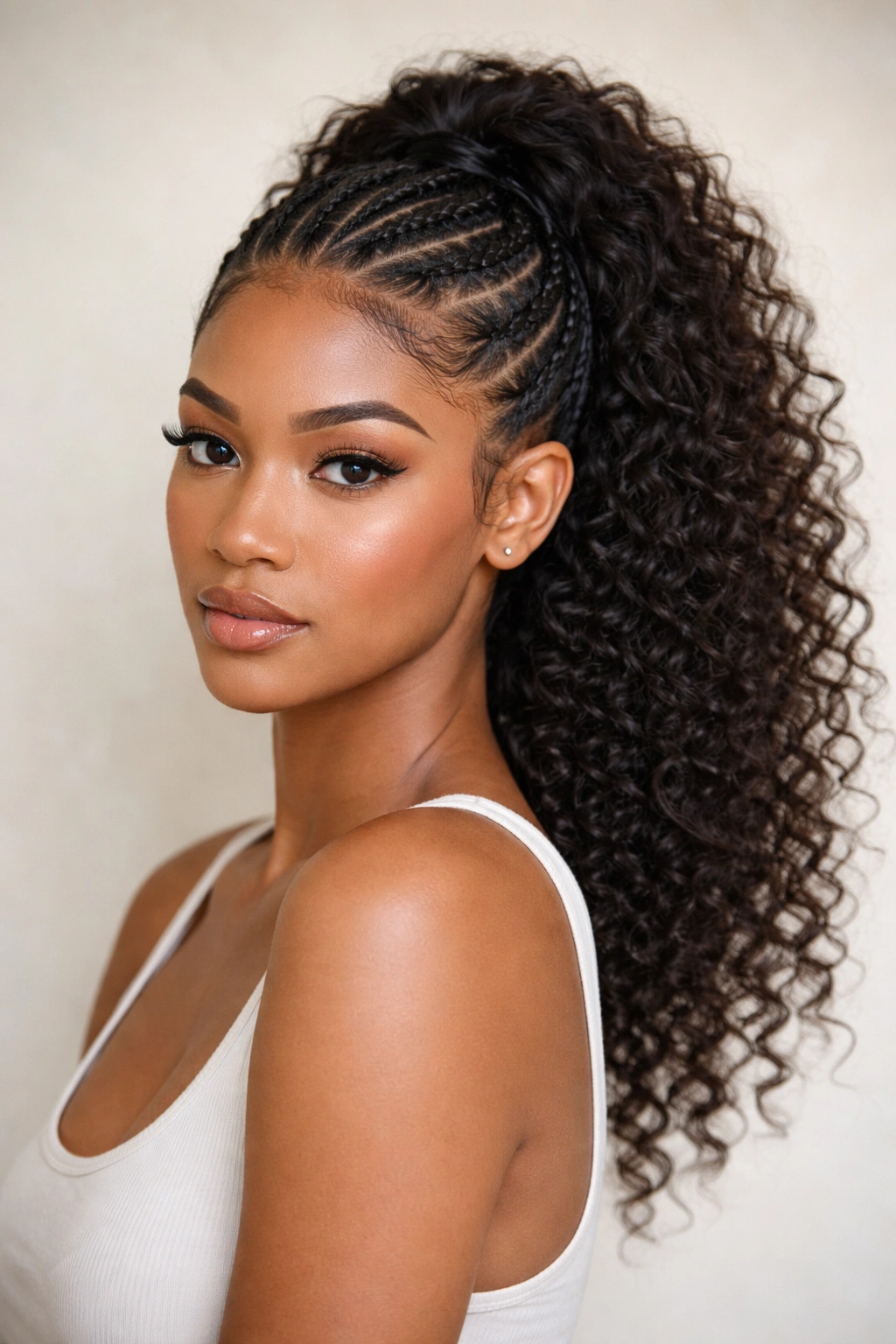
A few slim braids at the front change the shape of the whole hairstyle. They pull the eye back from the hairline and make the ponytail feel more detailed without asking for much extra work.
The braids can be tiny and practical or wider and more visible. Either way, they help control shorter front pieces that tend to escape a ponytail. That is useful on curly hair, where baby hairs and layered curls often refuse to stay in one place for long.
A braided front also gives the extension a stronger visual base. The tail starts after a little bit of structure, which makes the curls feel more intentional. Keep the braid tension moderate. Tight braids can leave the front looking flat and sore.
This style sits in a nice middle ground. Part protective, part decorative, fully useful.
22. Glam Deep Side-Part Curly Ponytail
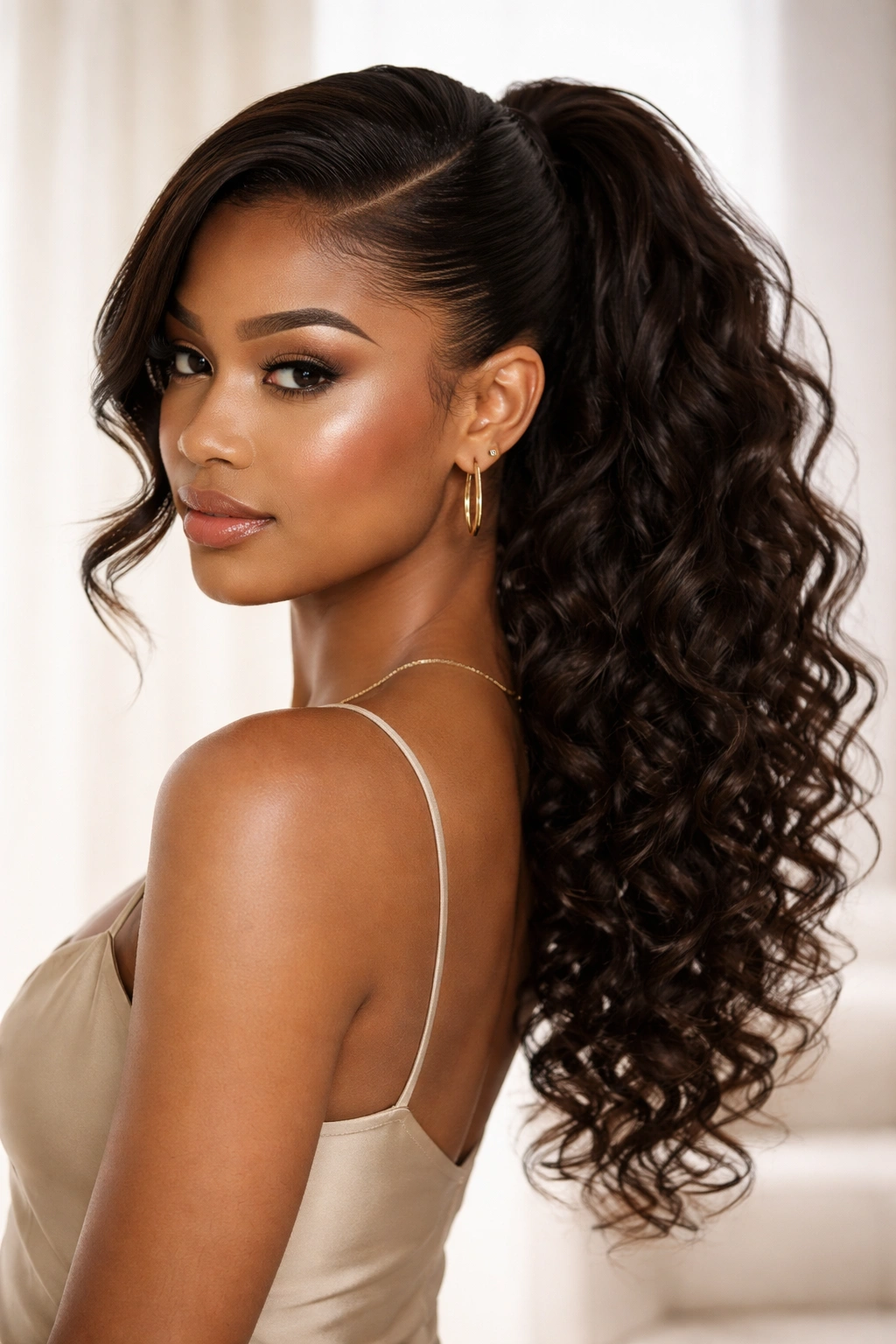
A deep side part gives curly hair instant movement. It creates a long line across the forehead, then lets the ponytail spill to the opposite side with more shape and lift.
This version feels dressier than a center part because the part itself becomes part of the design. The curls fall into a stronger silhouette, and the side sweep helps the tail look fuller at the eye line. If your face is round, square, or heart-shaped, the diagonal line can be flattering without trying too hard.
The finish matters. Keep the side sleek enough to hold the shape, but not so tight that it looks stiff. A little height at the crown gives the style room to breathe. If the extension is very curly, separate the ends lightly so the tail doesn’t clump into one heavy rope.
This is the ponytail you wear when you want the curls to feel formal, but not frozen.
23. Everyday Soft-Volume Curly Ponytail Extension
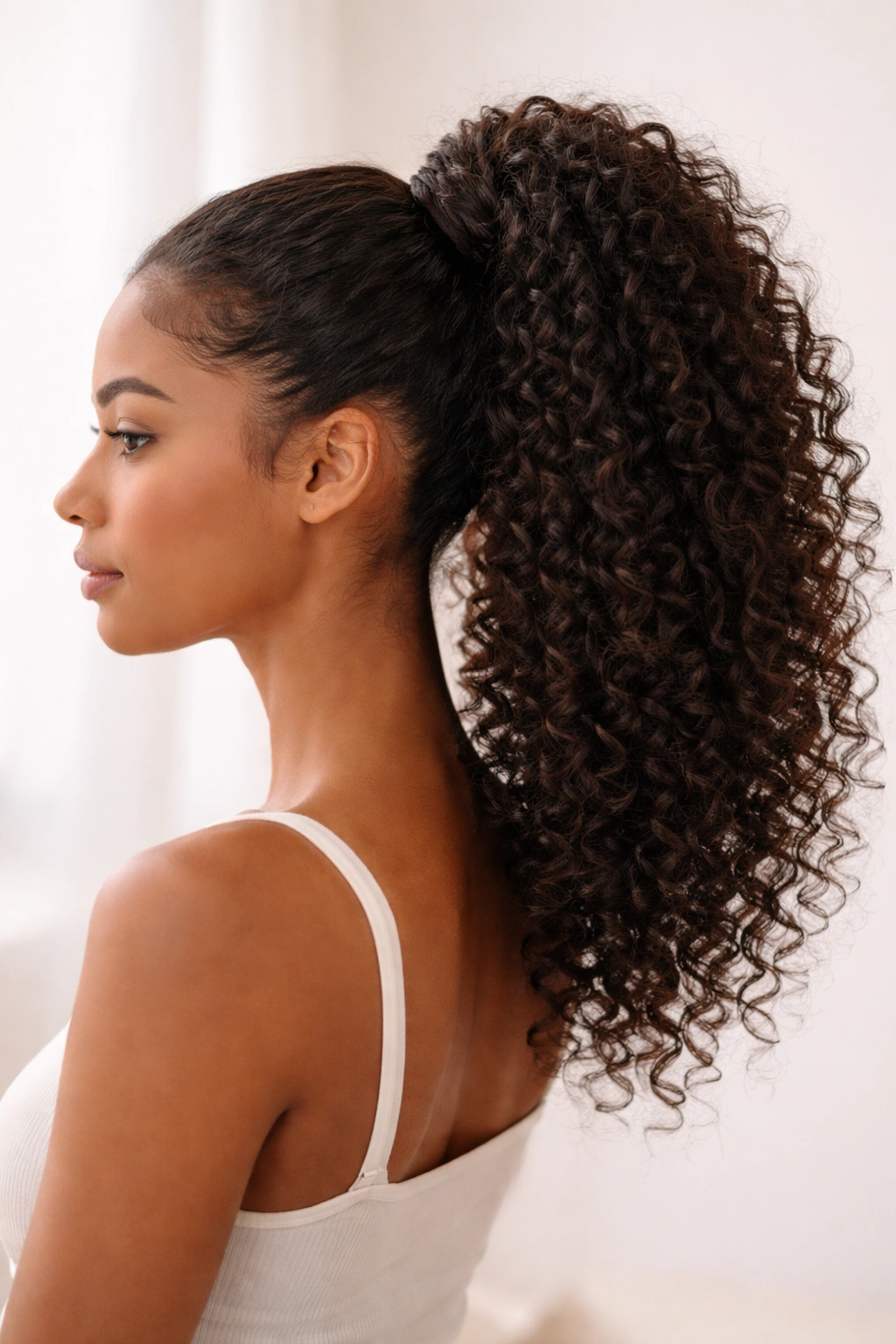
This is the one I’d hand to someone who wants one ponytail that can do almost everything. Not too sleek. Not too huge. Just enough volume to look finished without feeling precious.
Why it stays useful
The shape is forgiving. The base can be slightly textured, the tail can be medium length, and the curls can sit somewhere between loose and defined. That makes it easier to wear with jeans, a blazer, a dress, or a sweatshirt you threw on in a hurry.
- Choose a curl pattern close to your own, not one step away.
- Keep the attachment low enough to stay comfortable.
- Add a small wrap around the elastic if you want a cleaner finish.
- Fluff the tail with your fingers, not a brush.
That last bit matters. Brushes can turn a soft pony into a halo of frizz in a minute. Fingers give you more control.
A good everyday curly ponytail extension should feel like something you can put on without a second thought, then forget about until you catch your reflection. That is the real test. Not drama. Not perfection. Just a style that behaves.
If the curl pattern, base tension, and weight all make sense together, the whole look falls into place fast. And when it does, a curly ponytail stops feeling like an accessory and starts feeling like part of the haircut.
