



A side ponytail can save a formal hairstyle in about ten minutes, which is one reason I keep returning to it whenever a look needs polish without feeling stiff. It gives you asymmetry, a little drama, and enough control to keep hair off the face while still looking soft. That balance is hard to get with a straight-down style, and a full updo can feel severe when the outfit already has enough structure.
The trick is placement. Too high, and the whole thing starts to look playful in the wrong way. Too low, and it can droop unless the base is secured cleanly and the length has some shape. The best elegant side ponytails solve both problems by treating the base like a small piece of tailoring: smooth at the scalp, deliberate at the tie, and flattering from the side angle.
Special-event hair lives or dies on details. A few extra minutes spent on the part line, the wrap, the curve over one shoulder, or the finish on the ends changes everything. A side ponytail can look bridal, black-tie, romantic, or sharply modern, depending on where the weight sits and how much texture you leave in the lengths.
1. Sleek Low Side Ponytail With a Deep Side Part
A sleek low side ponytail is the style I reach for when the outfit is doing most of the talking. It sits close to the head, usually just behind the ear or a touch lower, and the deep side part gives it that formal, slightly old-school line that works with earrings and structured necklines.
Why the deep part matters
A deep part changes the whole mood. It pulls the hair across the forehead and opens one side of the face, which is especially nice if the dress has a single strap or a neckline that already leans one way. Keep the surface smooth with a light serum or cream, then brush the ponytail tight enough that it moves as one piece. Not rigid. Just clean.
The base should sit low and controlled. If you can see little lumps around the crown, the style loses that refined feel fast. A fine-tooth comb and a tiny bit of hairspray on the brush go a long way here.
2. Glossy Side Ponytail With Loose Barrel Curls
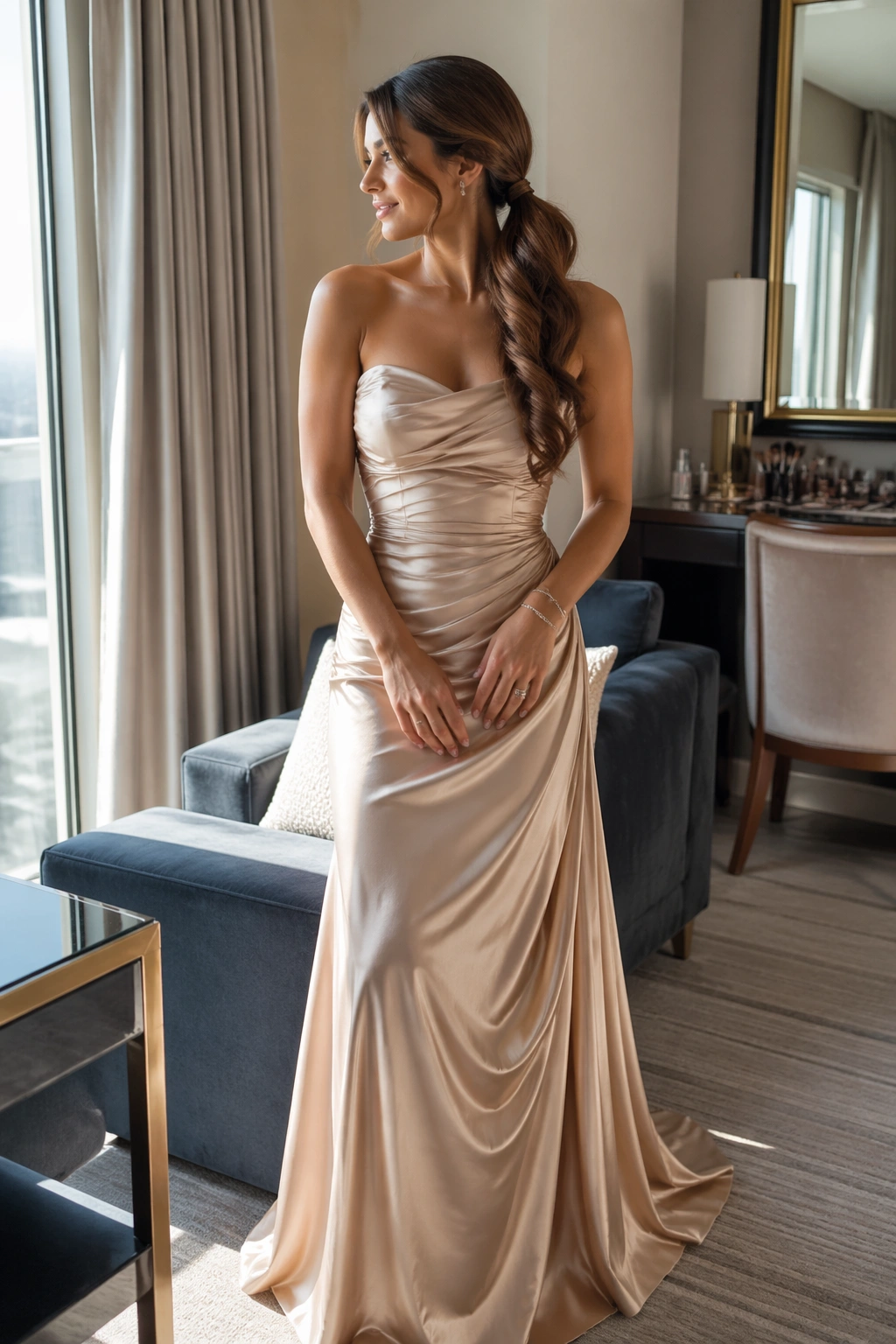
Gloss is the point here. This version leans more romantic than severe, and that makes it one of the easiest elegant side ponytails for weddings, cocktail parties, and dressy dinners where you want the hair to feel soft rather than sculpted.
Loose barrel curls give the tail some body, but the finish should still look deliberate. Curl away from the face, let the curls cool fully, then brush them into wide, smooth waves. If you skip the cooling part, the shape falls apart faster than people expect.
A small amount of shine spray at the mid-lengths and ends makes the hair catch light in a gentler way than heavy oil. Too much product can make the curls collapse. One light mist is enough.
This works best when the ponytail is brought over the shoulder rather than stuffed behind it. You want the curve of the hair to be visible. That’s the whole charm.
3. Wrapped Side Ponytail With a Hidden Hair Strand
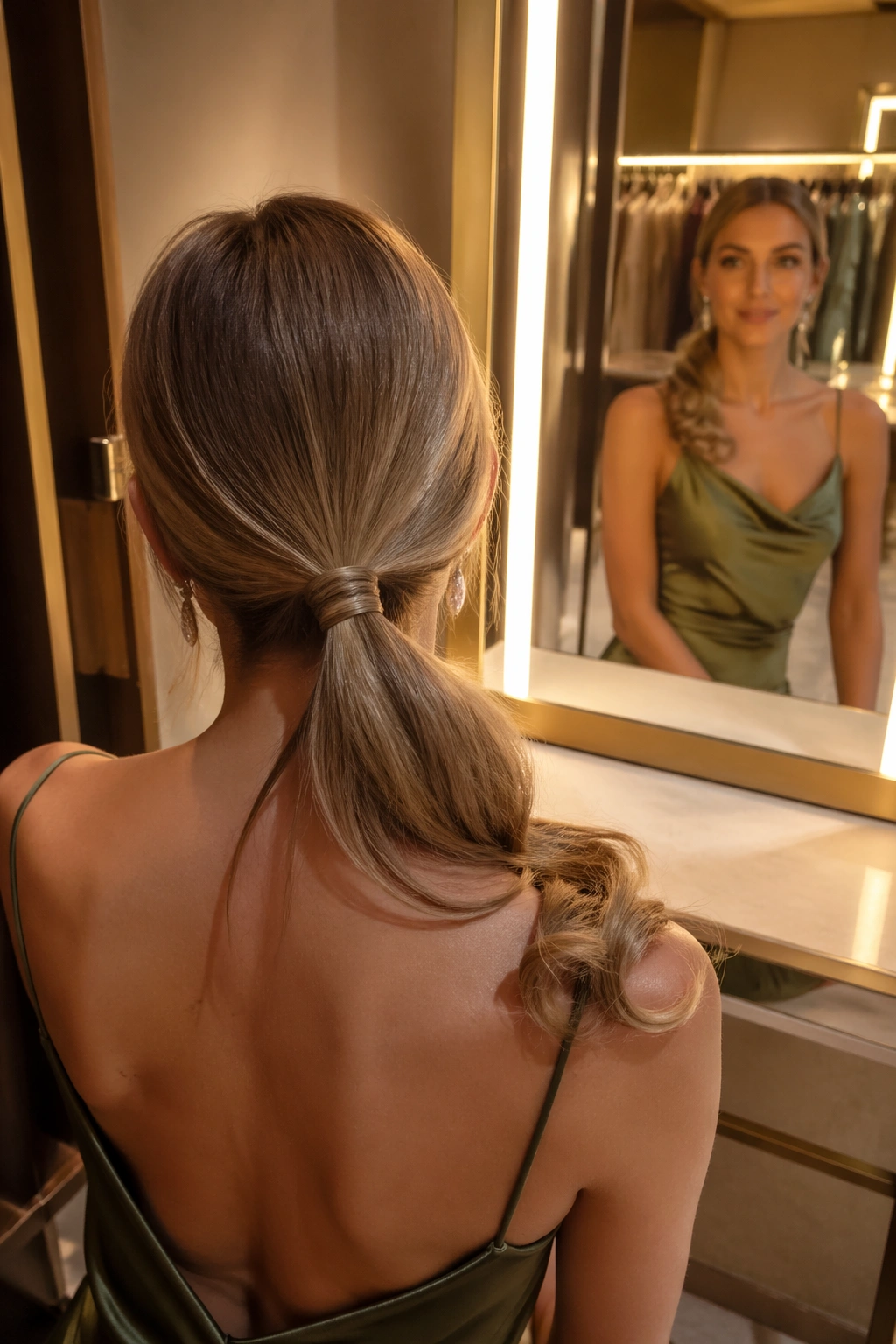
A wrapped side ponytail is one of those styles that looks simple from a distance and expensive up close. The elastic disappears under a strand of hair, and that tiny detail keeps the whole thing from reading like a rushed afterthought.
The wrap should be thin and smooth. Take a strand about half an inch wide, tuck the end under the elastic, and pin it from underneath so the pin stays hidden. If the wrap is too thick, it starts to bulge and looks fussy. If it’s too thin, it can flick loose halfway through the event.
I like this version for satin dresses, beaded tops, or anything with a clean neckline. It gives you polish without needing curls, braids, or extra decoration. A single wrap is enough.
No need to overwork it. Clean hair, controlled part, hidden elastic, done.
4. Braided Crown Side Ponytail for Formal Updos
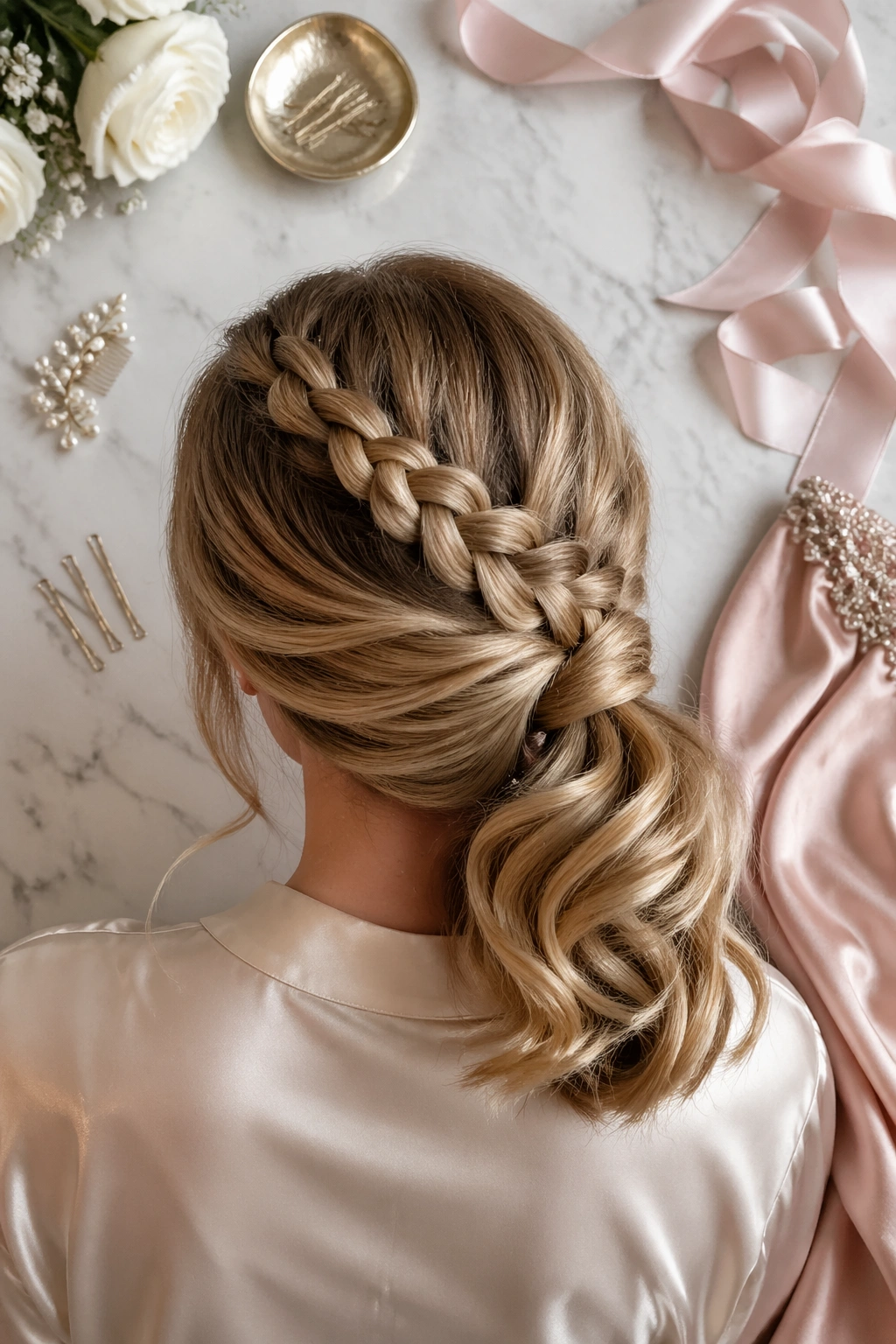
Why does this style work so well at dressy events? Because it gives you the structure of an updo and the softness of a ponytail in one move. A braid starts near the temple, travels along the hairline or crown, and then folds into the side ponytail at the back or just below the ear.
How to keep the braid flat
The braid should sit close to the head. If it puffs out too much, the style starts to look busy. Use small, even sections and keep tension steady as you braid. Once the braid is pinned in place, loosen only the outer edge a little so it has shape without losing its line.
The tail can stay smooth or pick up soft waves. Either way, this style gives you a nice visual path from front to back, which reads beautifully in photos from the side.
It suits long hair best, but medium-length hair can work too if the braid is anchored carefully. This is the one I’d choose for a formal reception where you want the hair to feel thoughtful, not overbuilt.
5. Textured Side Ponytail With Soft Swept Waves
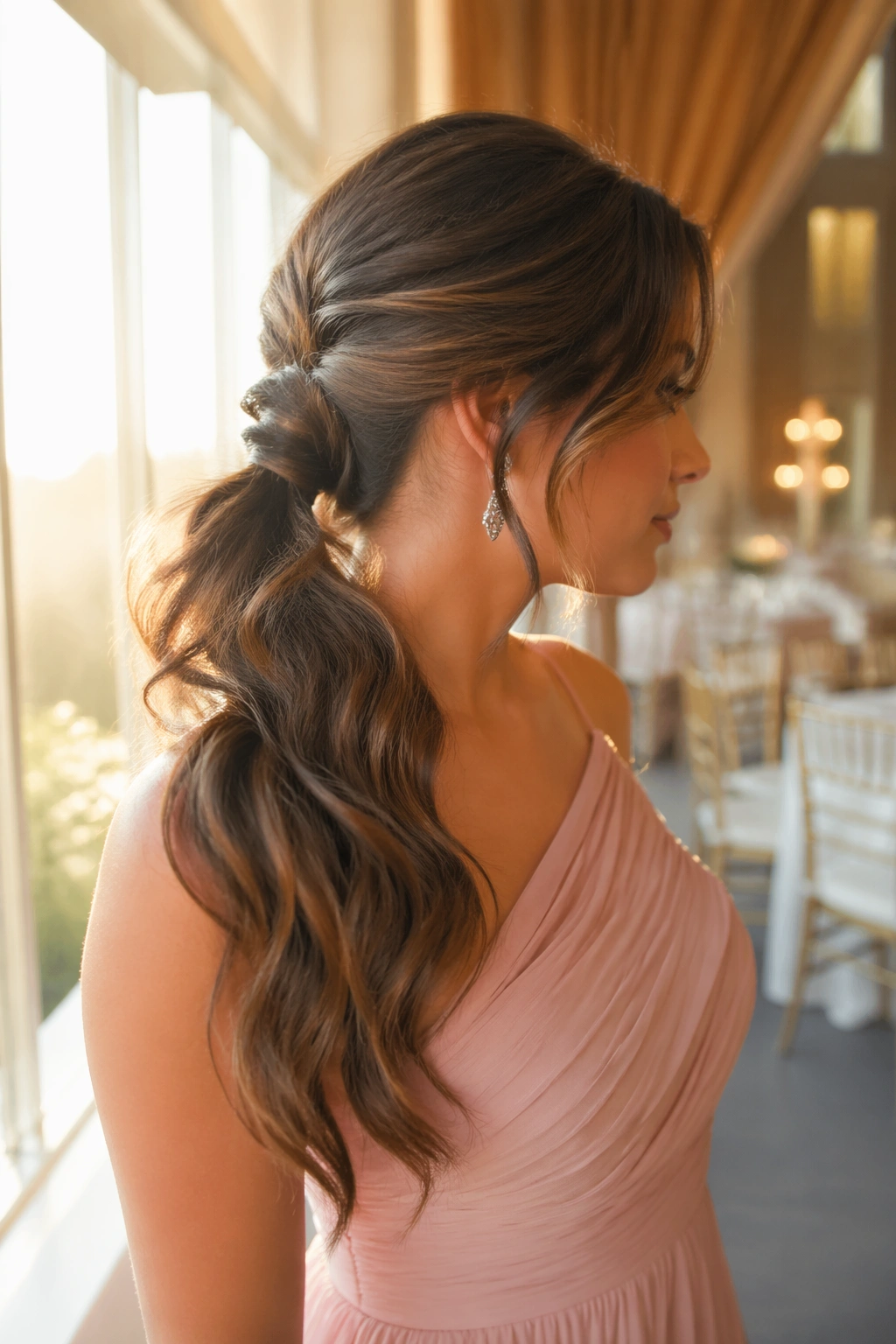
Picture hair that looks like it has already spent an hour at a candlelit dinner, in the best way. That’s the appeal of a textured side ponytail. It’s slightly undone, but still polished enough for a special event, especially if the outfit has lace, draping, or a softer silhouette.
What to do first
Start by adding texture at the roots with a dry spray or a bit of light mousse before blow-drying. The ponytail doesn’t need hard curl. It needs bend. Pull the hair over one shoulder, secure it low and off-center, then finger-comb the waves so they fall in loose sections instead of one stiff block.
A little imperfection helps. A little. Not chaos.
- Leave two face-framing pieces out if the neckline is high.
- Curl only the mid-lengths if your hair is already wavy.
- Mist the ends, not the crown, if you want softness without heaviness.
- Keep the tie hidden with a hair wrap or slim ribbon if the dress is simple.
The style feels best when it moves.
6. Side Ponytail With a Crystal Clip at the Base
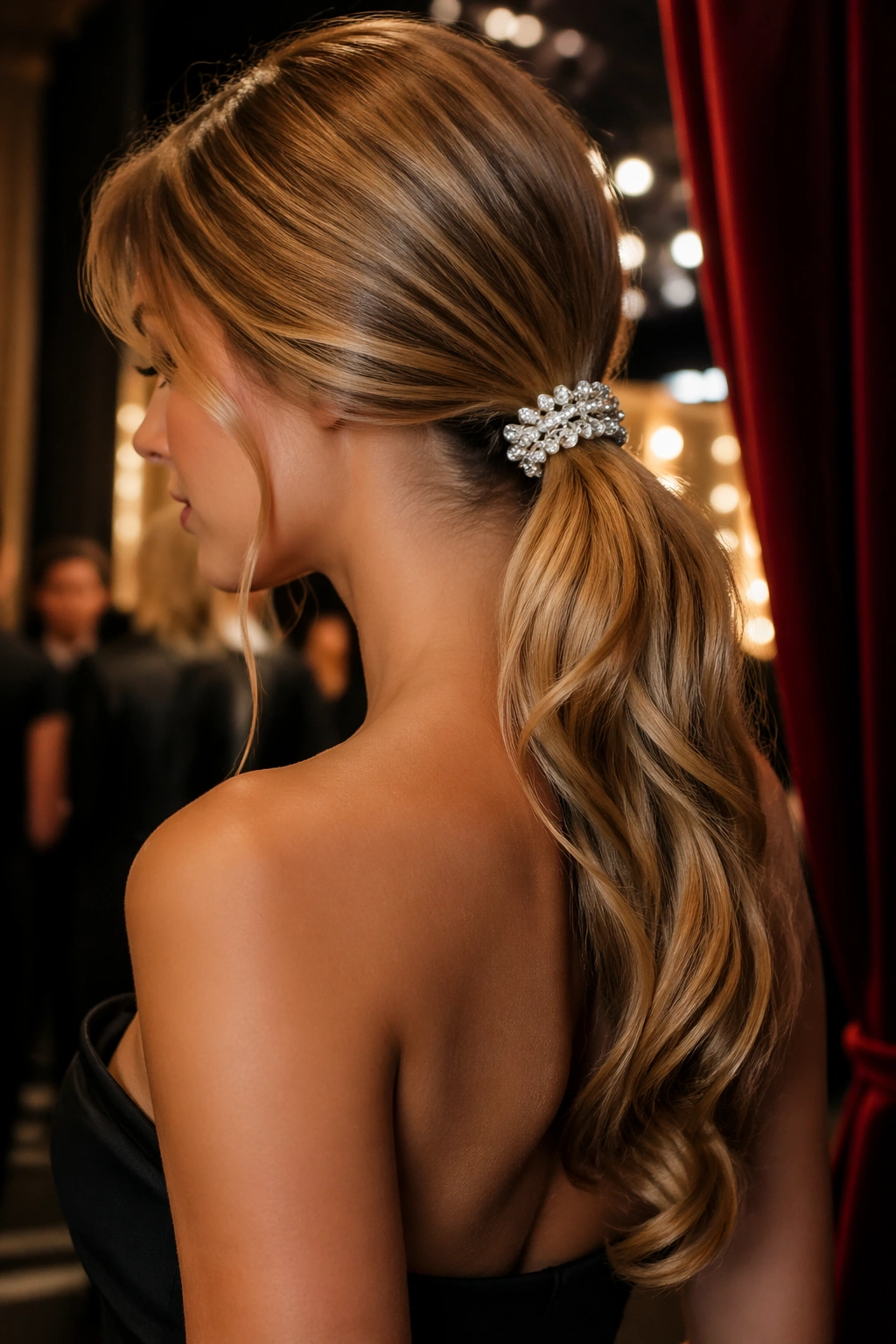
Some hairstyles need a focal point. This is one of them. A crystal clip at the base turns a plain side ponytail into something that looks chosen, not improvised, and that matters when the dress is understated or the event calls for a little shine.
The clip should sit just above the elastic or slightly to the side of it, never swallowed by the hair. If the accessory disappears into the tail, you lose the effect. One strong clip is usually better than three small ones, unless the outfit is already very minimal and you want a lighter touch.
This style pairs well with straight or gently waved hair. Heavy curls can compete with the sparkle. Let the accessory do the work.
It’s especially good when you want the ponytail to act like jewelry. Quiet, but not shy.
7. Old-Hollywood Side Ponytail With Brushed-Out Curls
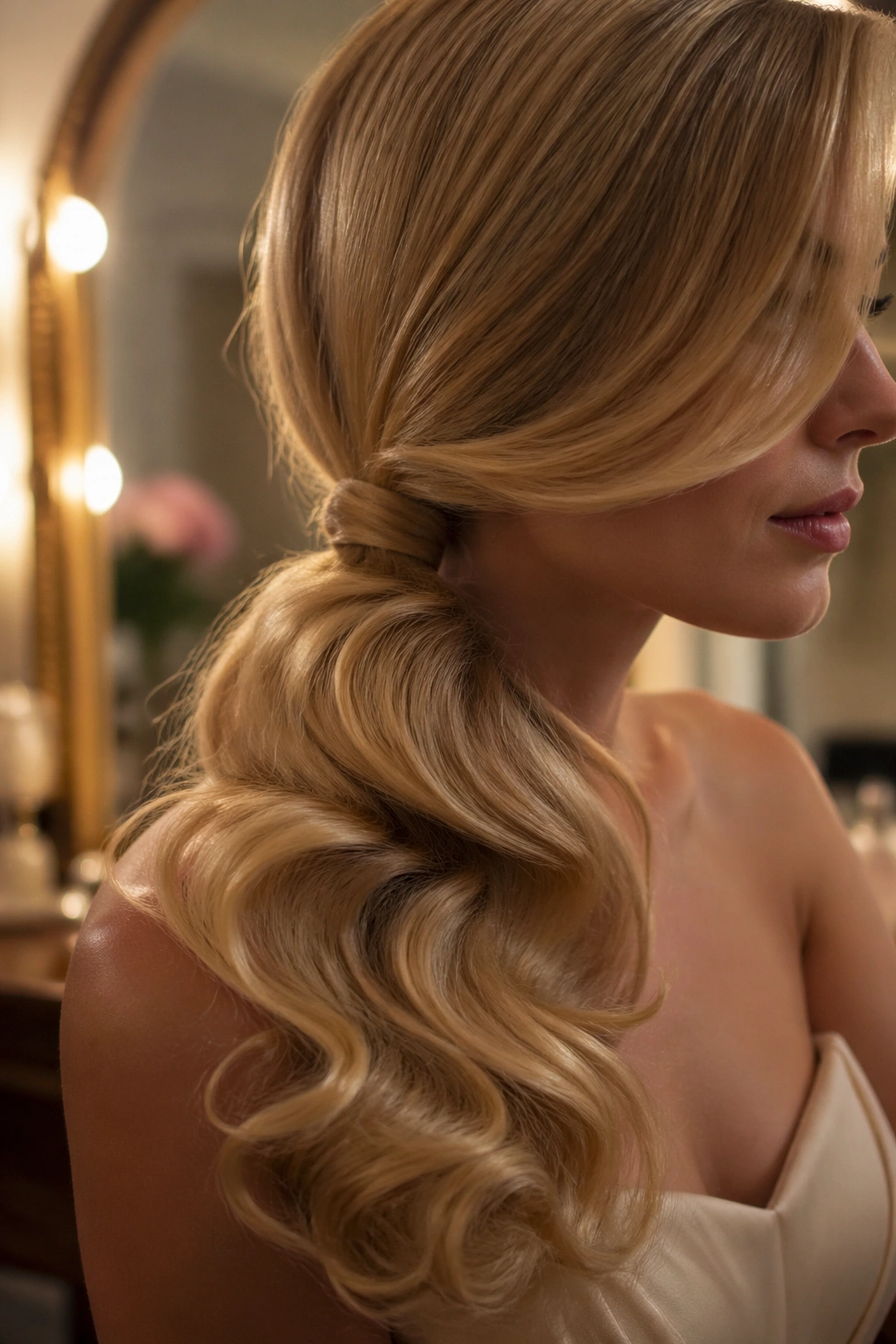
This one has a certain gloss to it that never really goes out of style. The curls are set first, then brushed into broad, soft waves so the ponytail looks rich and full instead of ringleted. The result is polished enough for a gala, but warm enough to feel flattering in person.
The front section is important. Sweep it low and smooth across the forehead, then tuck it into the side shape with a soft bend near the cheekbone. That bend gives the style its vintage line. Without it, the look can feel flatter than you want.
The tail should land over one shoulder and stay full through the ends. If the hair is too freshly curled, wait. Let it cool, brush it, then shape it again. That is where the softness comes from.
A style like this loves satin, velvet, pearls, and classic necklines. It’s a little dramatic. That’s the point.
8. Bubble Side Ponytail With Satin Ties
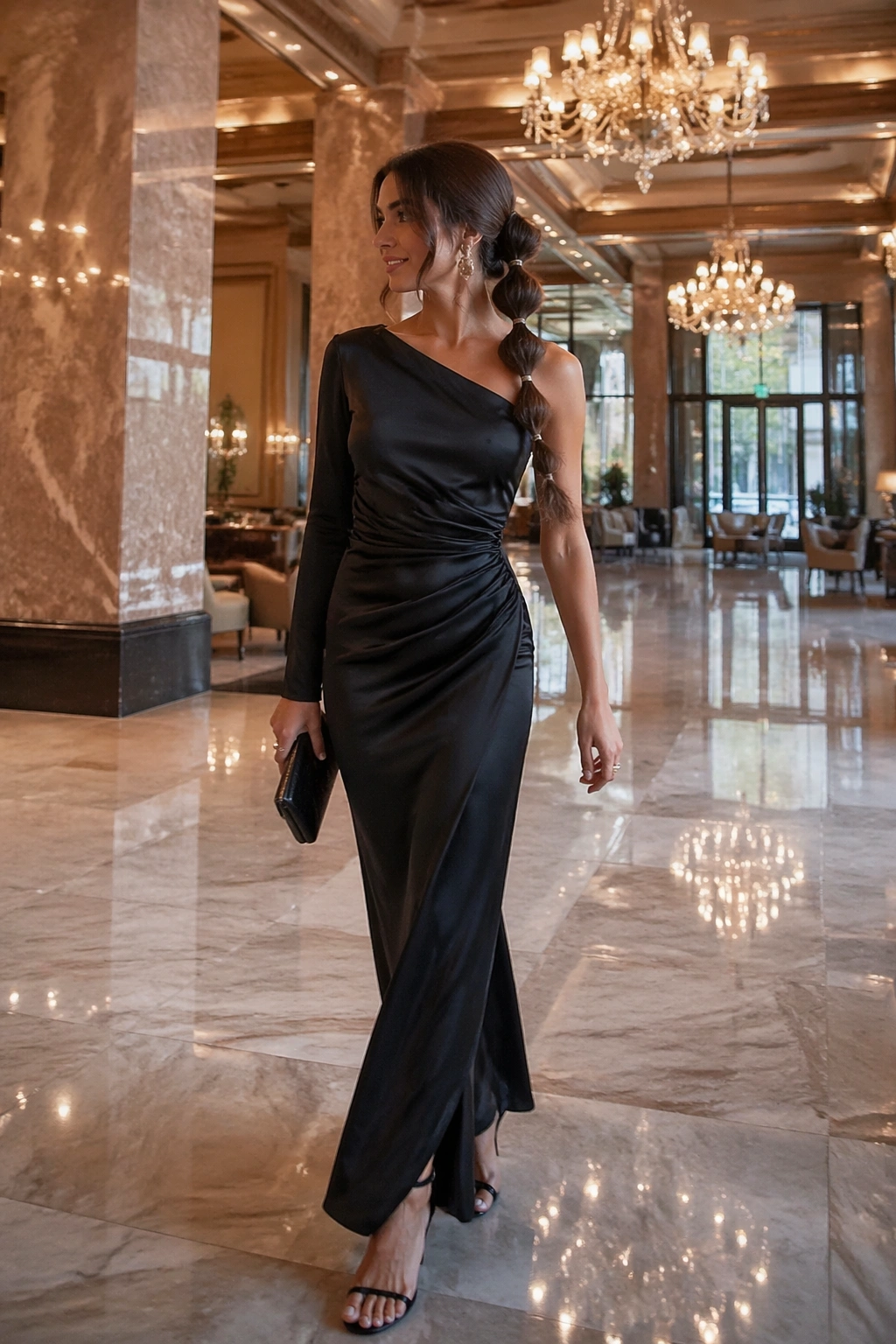
A bubble side ponytail sounds playful, but with the right finish it can look sharp and formal. The key is spacing. Each section needs to be evenly cinched, about 2 to 3 inches apart, with satin ties or small clear elastics hidden under ribbon if you want it to read as elegant rather than sporty.
This is one of the best options for very long hair because the shape stays interesting down the length. It also works well if the outfit has a lot of clean surface area, since the ponytail itself becomes part of the visual texture.
Keep the bubbles full, not stuffed. Gently tug each section outward until it rounds a little. Too much pulling turns the style sloppy. Too little and the bubbles vanish.
I like this on younger formal looks, fashion-forward dresses, and any event where you want something a little less expected without losing polish.
9. Twisted Side Ponytail With a Low Nape Sweep
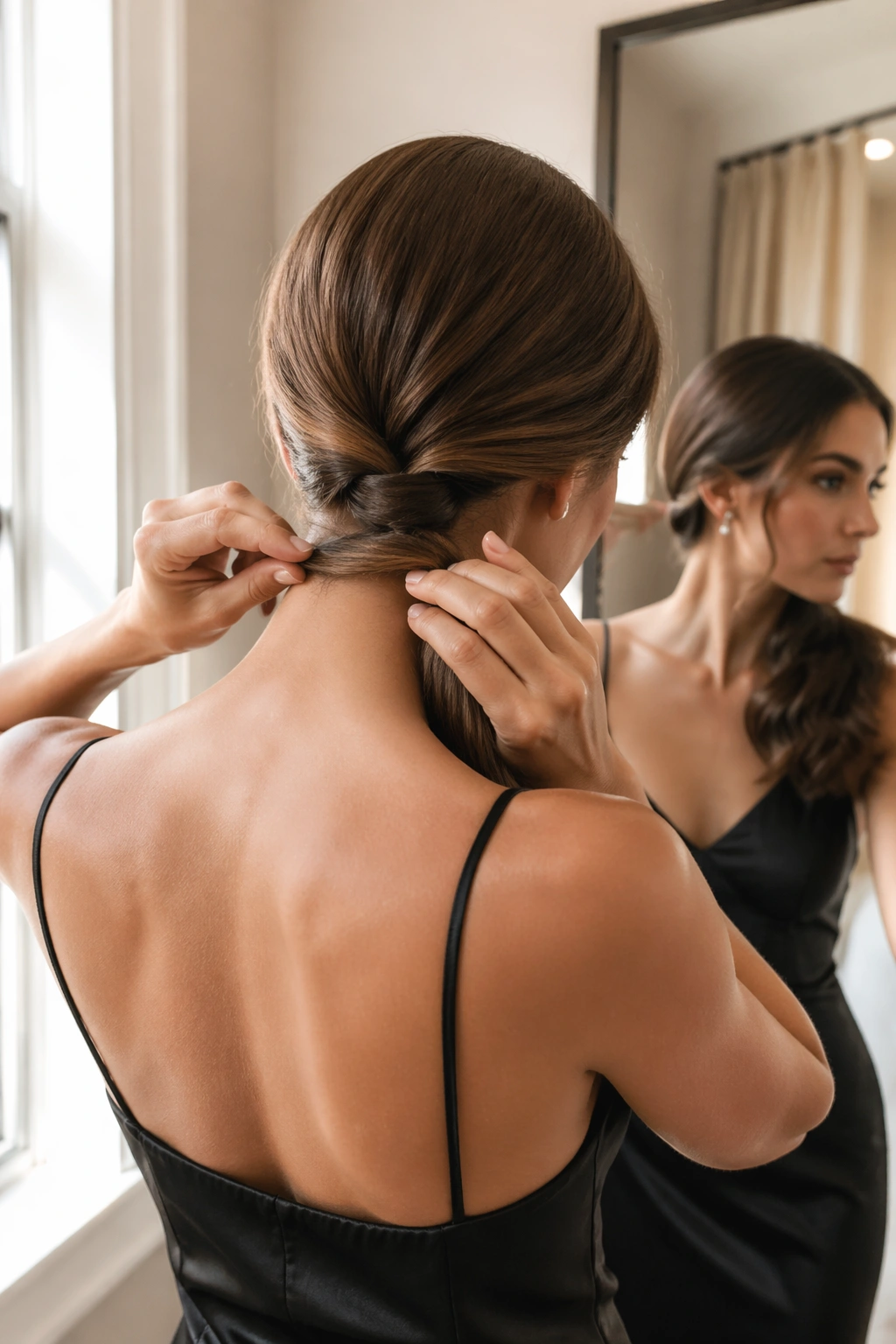
What makes a twisted side ponytail so useful is that it gives structure without needing braiding skills. Two sections twist back from each side, meet near the nape, and then slide into a side ponytail that sits low and controlled.
A small detail that matters
The twist should follow the head shape. If it lifts too far off the scalp, it starts to look bulky. Keep the sections smooth, twist them tightly enough to hold, then pin them invisibly before the tail is secured. You can soften the twists later by gently loosening the outer edge.
This style is a smart pick when the dress has clean lines and you want the hair to echo that. It also works well for medium hair that needs a little help staying put. Twists can hide layers better than a plain ponytail, which is useful if the ends are uneven.
It feels tidy. Not severe. There’s a difference.
10. Side Ponytail That Folds Into a Faux Chignon
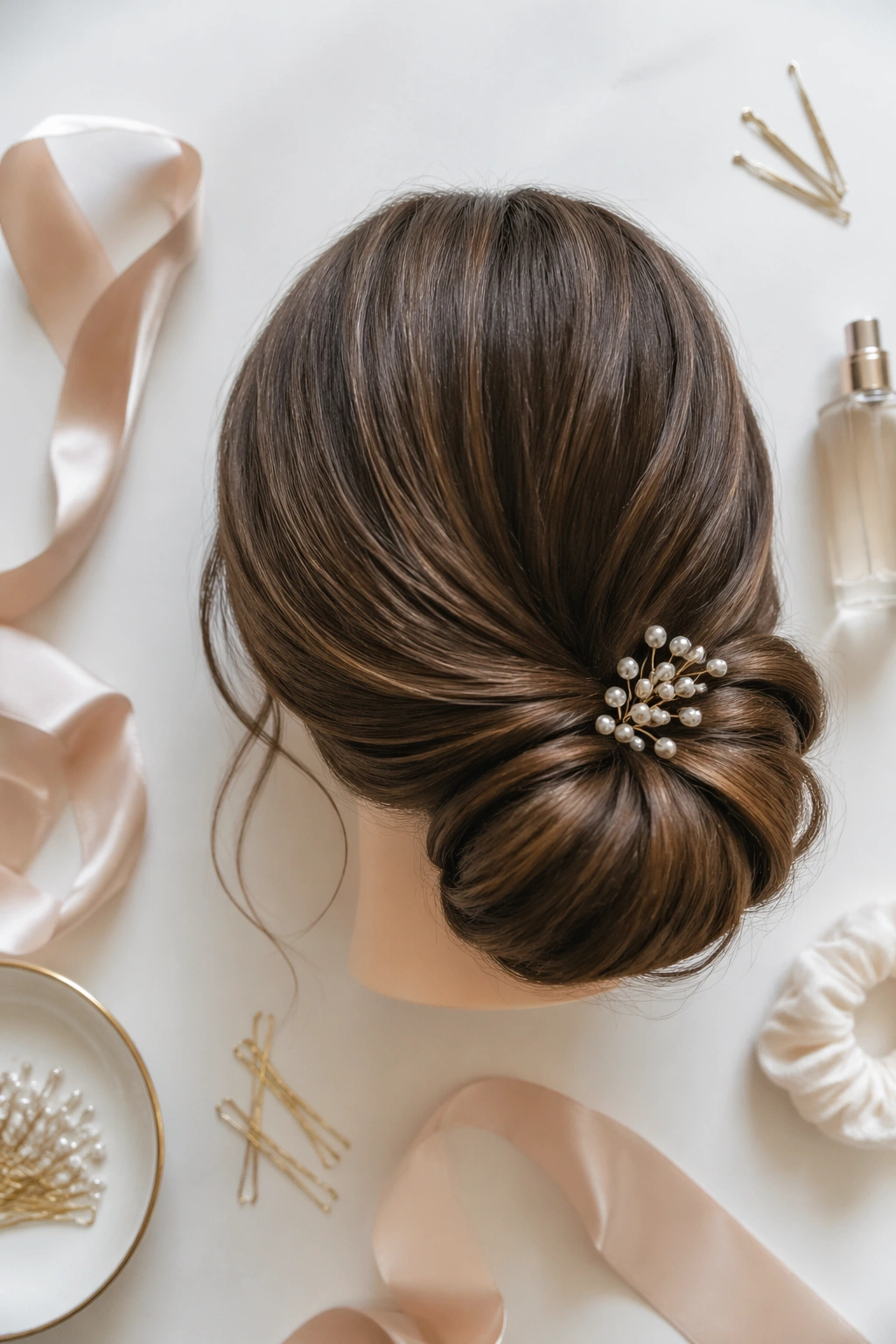
A folded side ponytail gives you the illusion of an updo without losing the swing of a ponytail. The length is looped or tucked under and pinned, so the side shape ends in a soft rolled form rather than hanging straight down.
That makes it a good choice for events where you want your hair off the shoulder but not pinned flat against the head. The shape looks especially nice with high necklines, straps, or dresses that already have movement at the hem.
The trick is balance. Leave enough length loose that the fold looks intentional, but not so much that it collapses. A few hidden pins, some hairspray on the tucked section, and a clean base are usually enough.
This style has range. It can lean bridal, black-tie, or artsy depending on how polished you make the front.
11. Half-Up Side Ponytail With Face-Framing Pieces
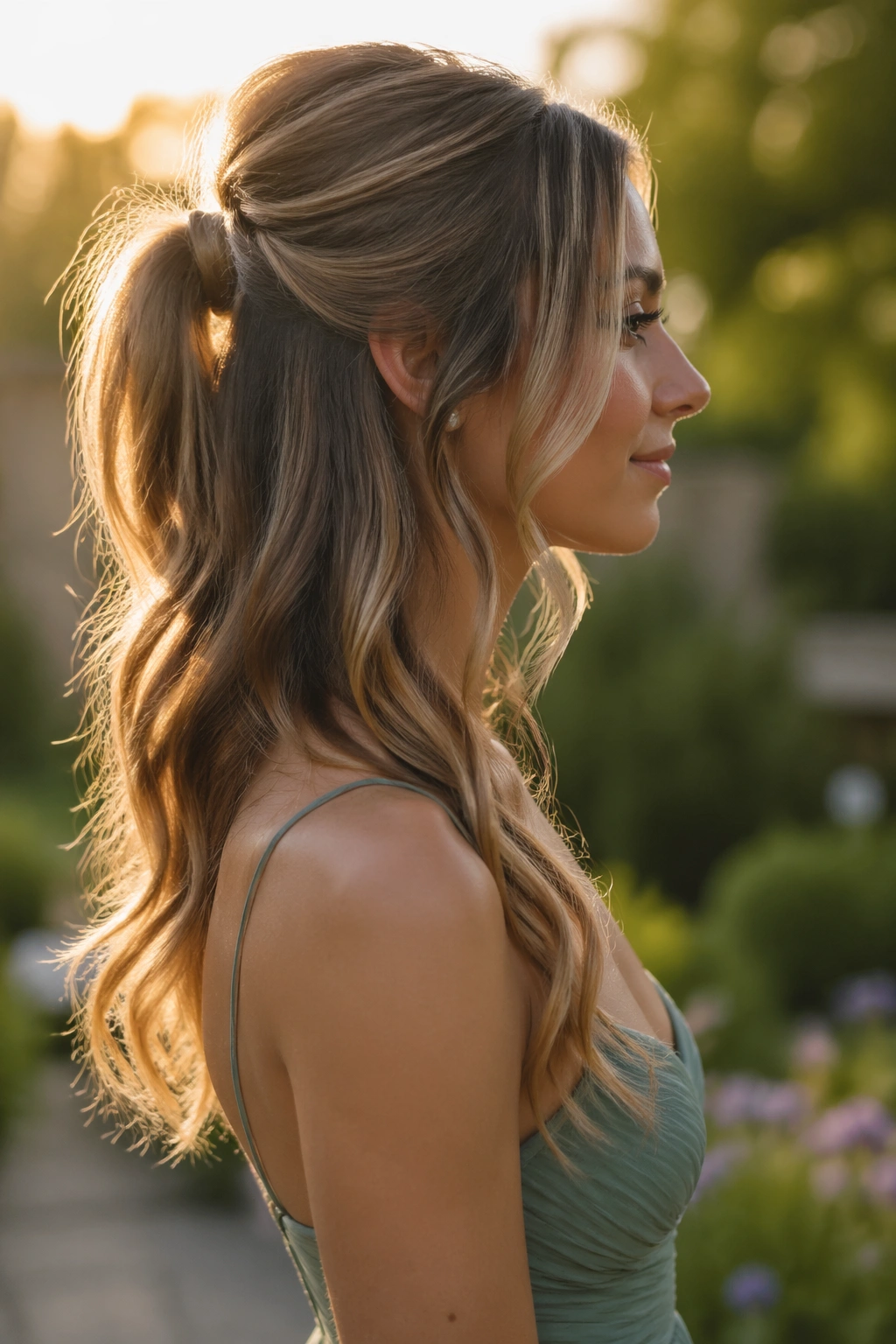
Not every elegant side ponytail has to gather all the hair. A half-up version keeps the top section controlled and lets the lower length stay loose, which gives the style a softer, less formal edge. It’s a good fit for events where full glam would feel like too much.
The face-framing pieces matter here. Leave them long enough to bend around the cheekbones, not so short that they frizz out. Curl them lightly away from the face, then let them rest there. That little movement keeps the style from feeling stiff.
This version also plays nicely with textured or highlighted hair because the contrast between the lifted crown and the loose lower layers shows the color well. If your hair is fine, add a little root lift before you pin anything. Otherwise the top can fall flat by the end of the night.
It’s relaxed, but still dressed up. That mix is harder to get than people think.
12. Bridal Side Ponytail That Works With a Veil
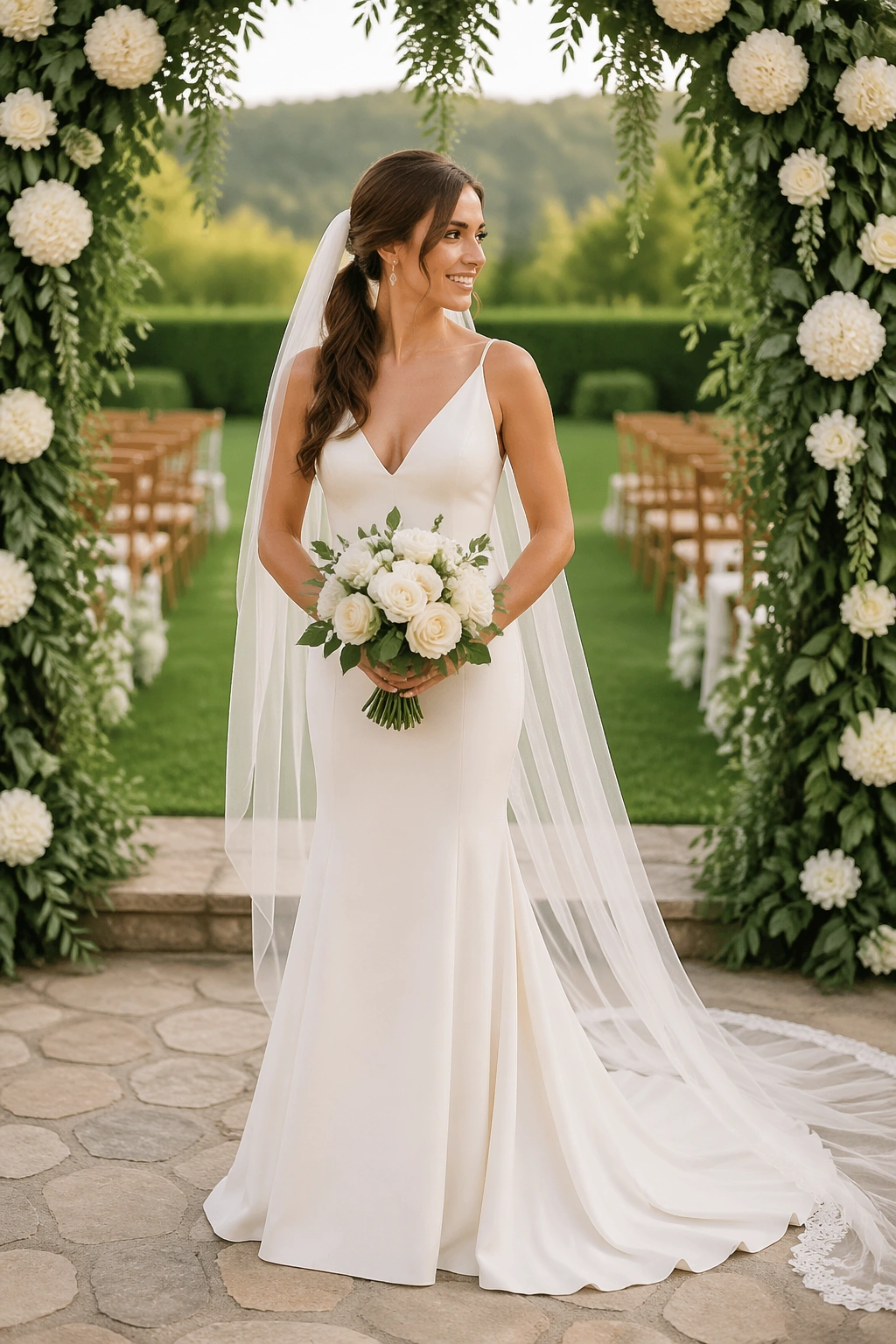
A bridal side ponytail needs one job above all else: hold the veil without fighting it. The hair should be smooth where the comb or pins will sit, and the ponytail itself should be placed low enough that the veil can rest above or just behind it without shifting.
Where to place the veil
The safest spot is usually above the elastic and slightly back from the ear. That keeps the attachment hidden while leaving the ponytail visible from the side. If the veil is heavier, anchor it with a couple of cross-pins rather than relying on the comb alone. Hairpins are boring. They also save the day.
The tail can be curled, waved, or left glossy and straight, depending on the dress. I prefer soft movement for most bridal looks because it keeps the style from feeling boxy in photos.
What to avoid
- Too much volume at the crown if the veil is structured
- A tie that sits too far forward
- Heavy accessories that compete with the veil edge
- Loose layers near the attachment point
Simple wins here.
13. Ribbon-Wrapped Side Ponytail for Cocktail Events
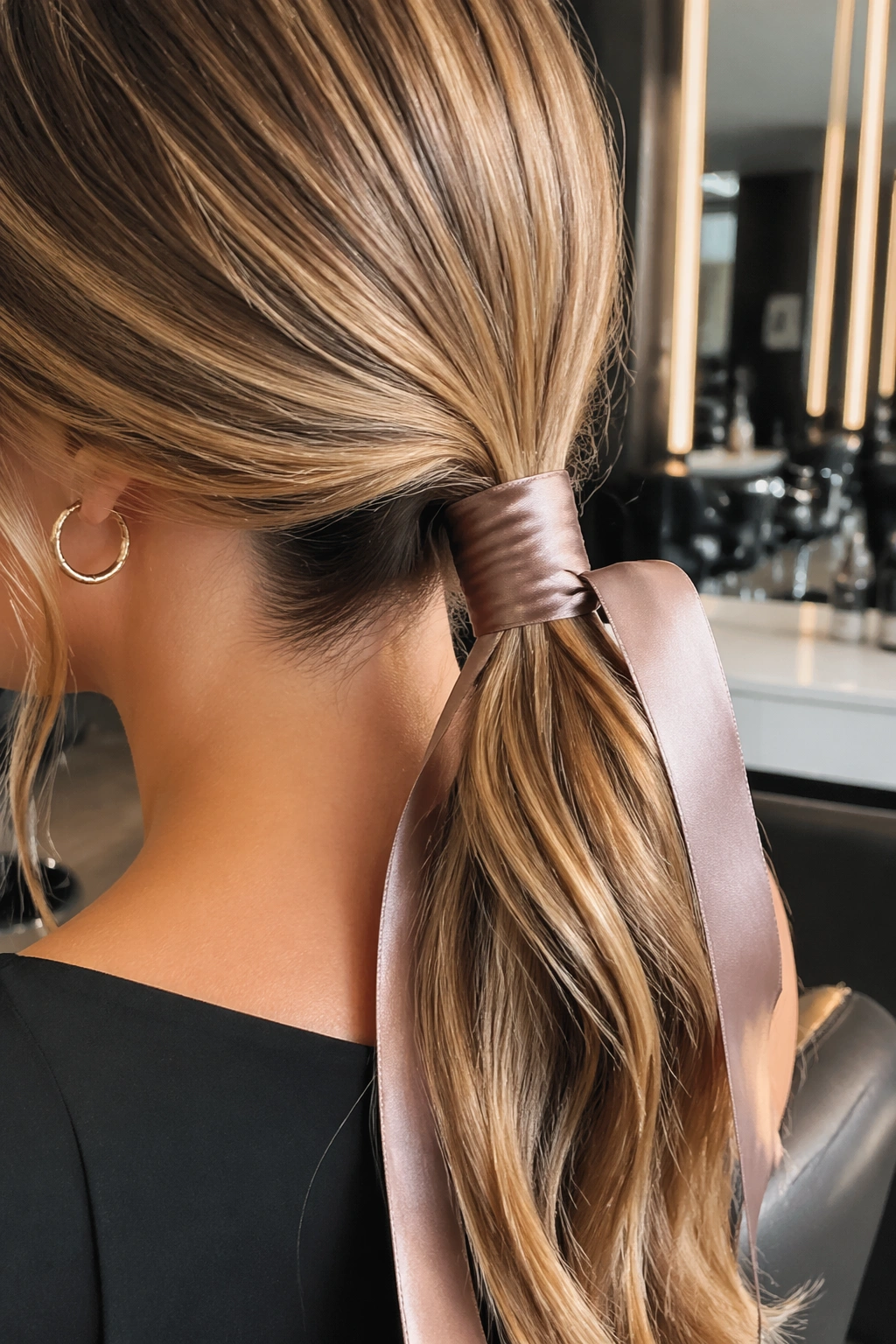
Ribbon changes everything. A silk ribbon wrapped around the base of a side ponytail softens the shape and gives the hairstyle a finished, dressed-up feel without adding weight. It’s one of the easiest ways to make a basic ponytail look event-ready fast.
Choose a ribbon that matches either the dress or one accent color in the outfit. Keep the width narrow if the hair is fine, wider if the hair is thick. The tails can hang long or be tied into a neat bow, though I usually prefer the knot to sit off to the side so the shape stays clean.
This is a smart option when jewelry is minimal and you want one detail to do the talking. It also photographs well from the side because the ribbon adds a line of color right where the eye lands.
Not fussy. Just sharp enough.
14. Side Ponytail With Smooth S-Waves
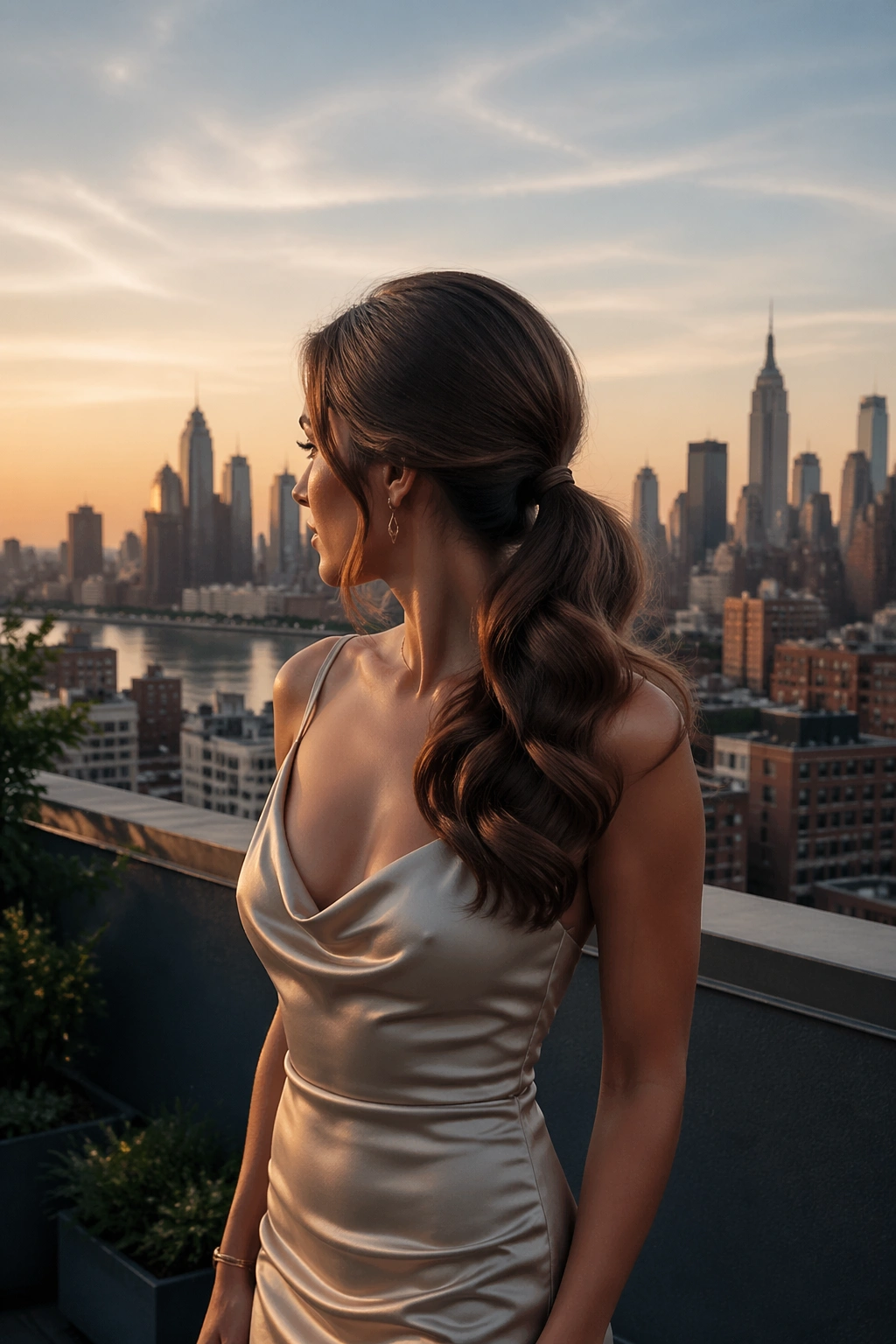
S-waves are the thing when you want the tail to look polished but not curled into obvious spirals. The shape has a softer bend, almost like a ribbon laid over the shoulder, and that makes it a lovely match for satin, silk, and bias-cut dresses.
The wave pattern should start near the face and continue through the length in a gentle, repeating curve. You can make it with a flat iron or a set of rollers, but the result should never look crunchy. Brush it lightly and stop before the shape disappears.
This style is one of my favorites for formal dinners because it feels controlled from the front and fluid from the side. That contrast is the whole appeal.
A tiny bit of shine spray at the end keeps the waves from reading dull under indoor light. Use less than you think. More product usually makes the bends look heavy.
15. Center-Swept Side Ponytail for Minimalist Looks
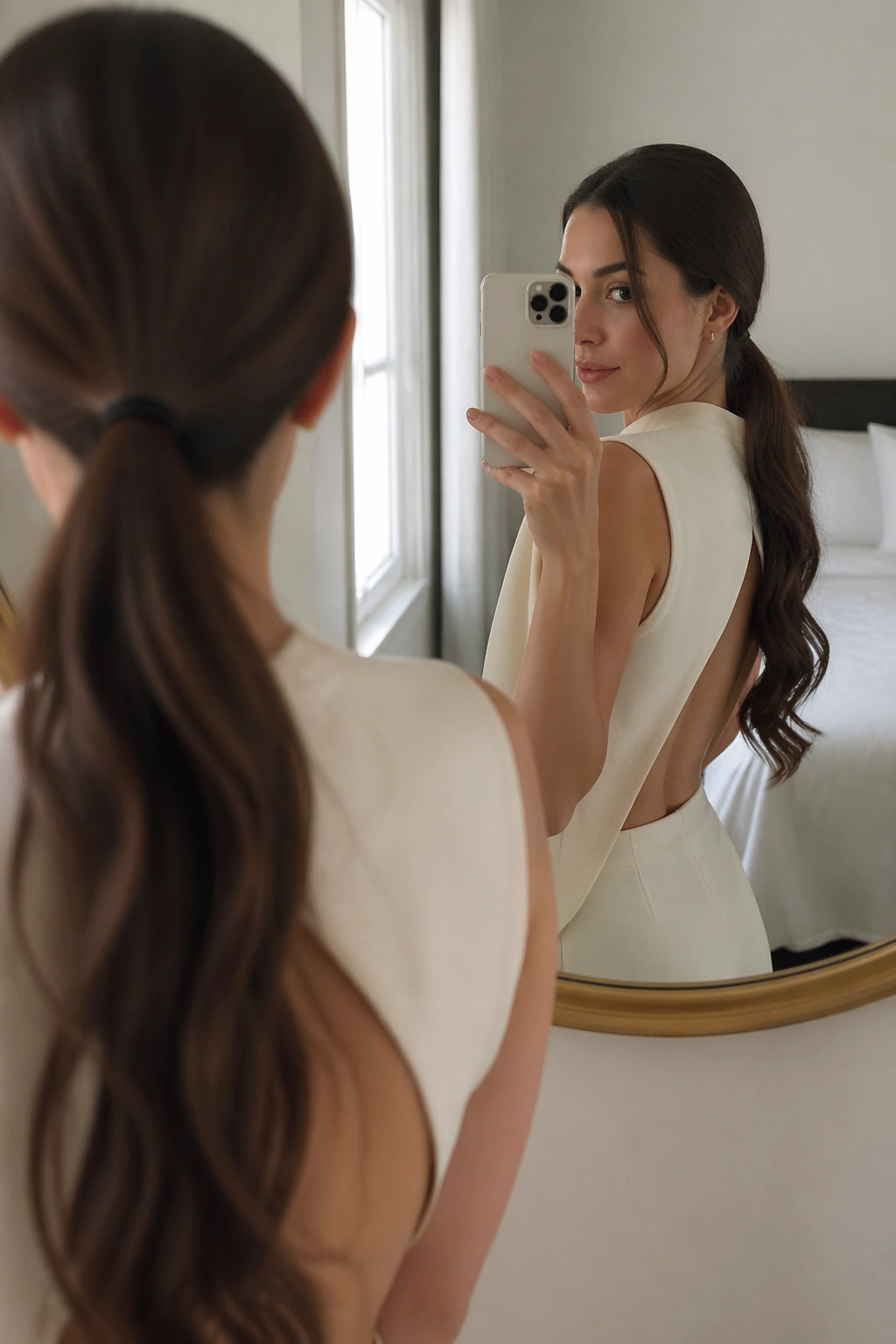
A center-swept side ponytail starts with a center part, then moves the hair cleanly to one side instead of building in extra texture. That gives the style a calm, architectural line that looks especially good with modern dresses and simple jewelry.
Unlike looser side ponytails, this one depends on precision. The part should run straight. The sweep should feel deliberate. The tie should be hidden or nearly hidden, because the beauty of the style comes from its restraint.
It’s a strong choice if your dress has a strong neckline, a sharp shoulder, or a lot of structure already. Adding curls or braids would only distract from the silhouette. Here, less is the point.
The hair should still have movement at the ends. Flat all the way through can look lifeless. Keep the root smooth, the tail soft, and the overall shape clean.
16. Woven Side Ponytail With a Nape Detail
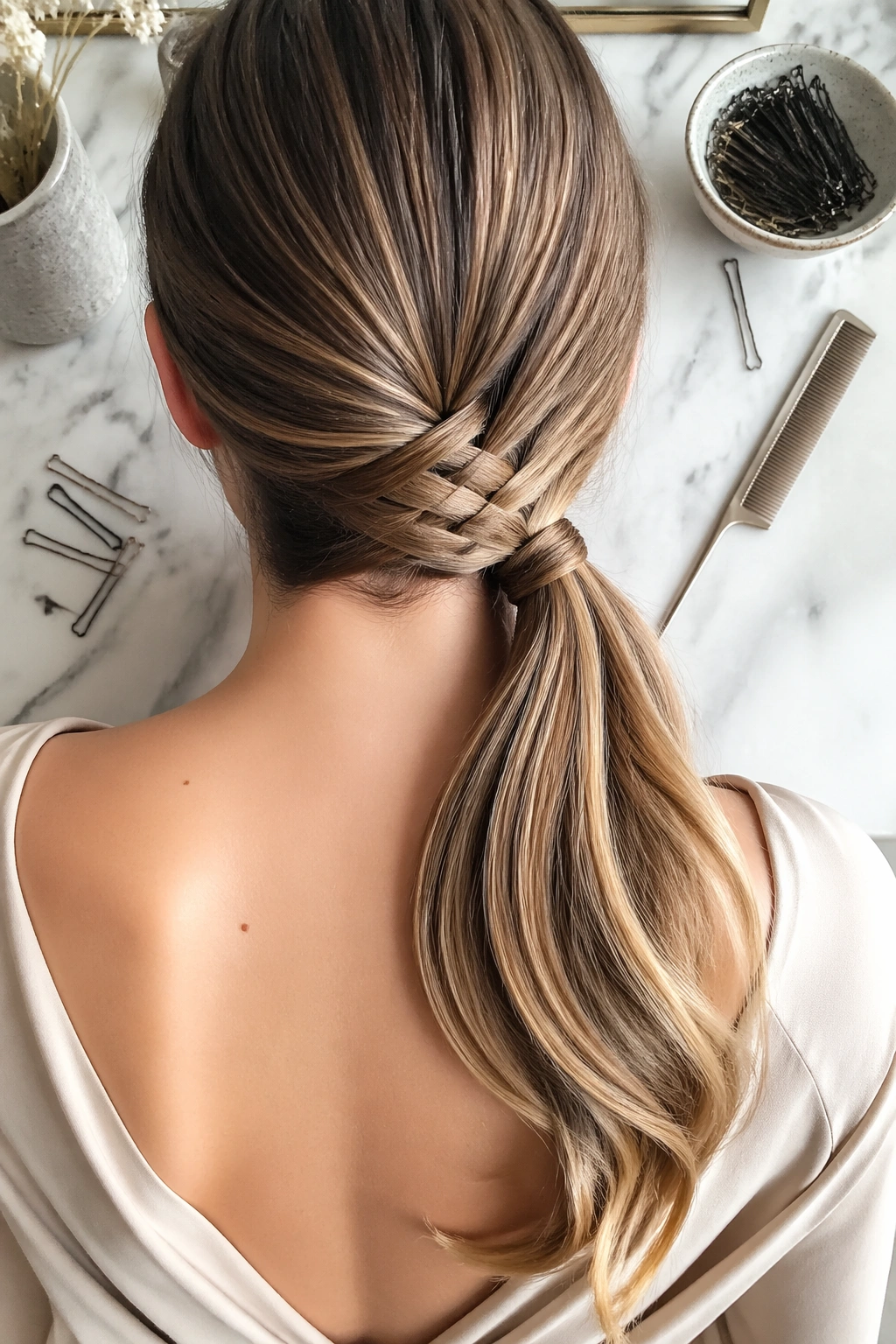
A woven side ponytail is one of those styles that looks more complicated than it is, which is a nice trick for formal events. Small sections from each side are crossed or tucked at the nape, creating a woven band before the ponytail drops to one shoulder.
The best part is the back view. Even if the front stays simple, the nape detail gives people something to notice when you turn. That’s a small thing, but it changes how the hairstyle feels in a room.
Keep the woven section tight and flat. If the pieces start ballooning, the shape loses its line. Once the weave is pinned, the ponytail can stay smooth or take on light waves.
This works especially well with open-back dresses, because the braid-like detail sits right where the fabric opens up. Clean, structured, and a little unexpected.
17. Crown-Volumized Side Ponytail With Lift at the Top
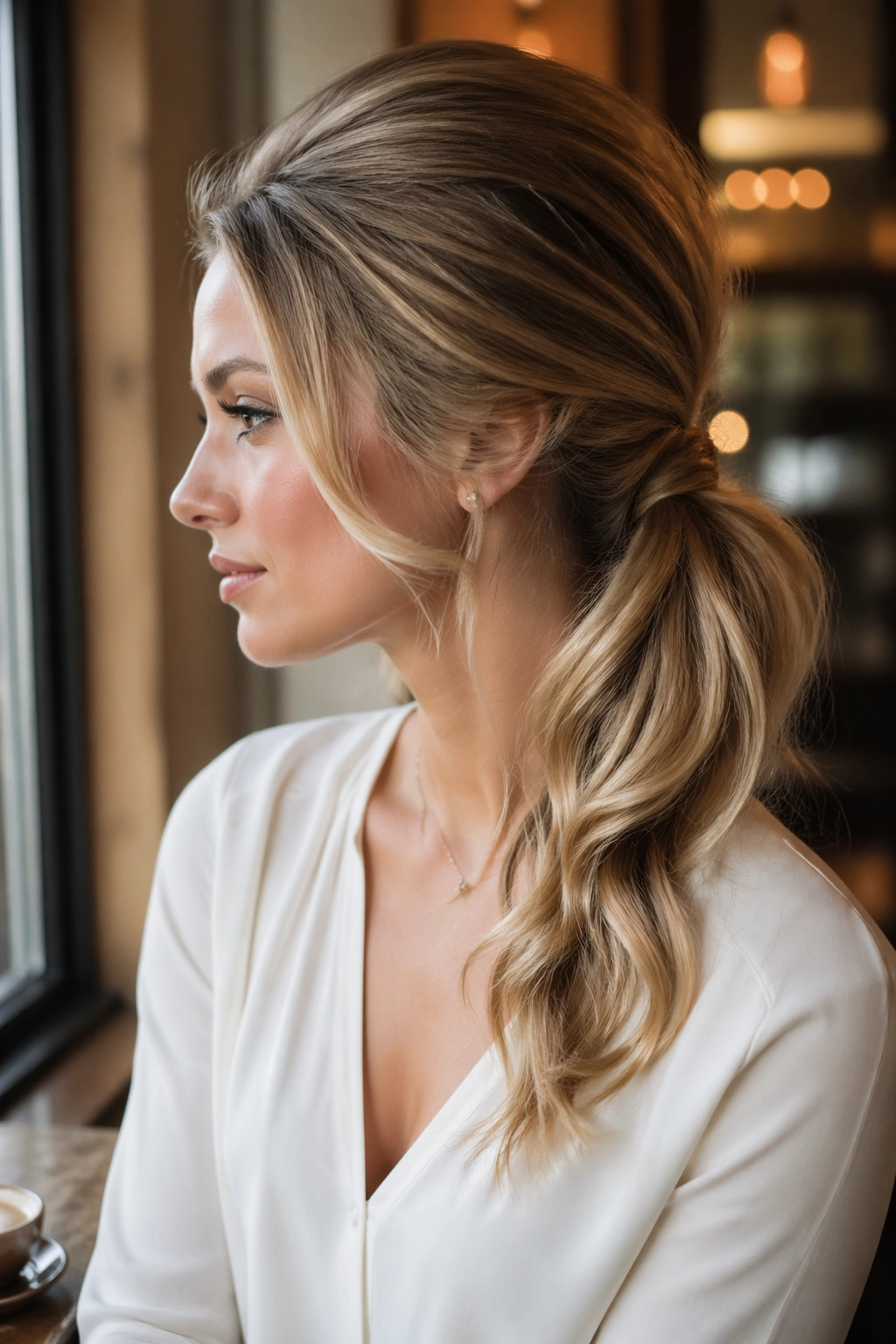
Can a side ponytail be soft and still have height? Absolutely. A crown-volumized version gives you lift at the top of the head while keeping the rest of the style low and side-swept, which is handy when the face needs a little elongation or the dress asks for more presence.
Where the volume should sit
The lift belongs at the crown, not at the sides. Tease lightly at the root or use a volumizing powder, then smooth only the outer layer so the shape doesn’t look messy. If the top is puffed too high, the whole style can start to look dated. Keep it controlled.
This is one of the best choices for fine hair. The extra height helps the ponytail feel fuller, even if the actual length is modest. It also gives the style a more formal profile from the front, which matters more than people realize.
A little height. That’s enough.
18. Sculpted Side Ponytail With Defined Baby Hairs
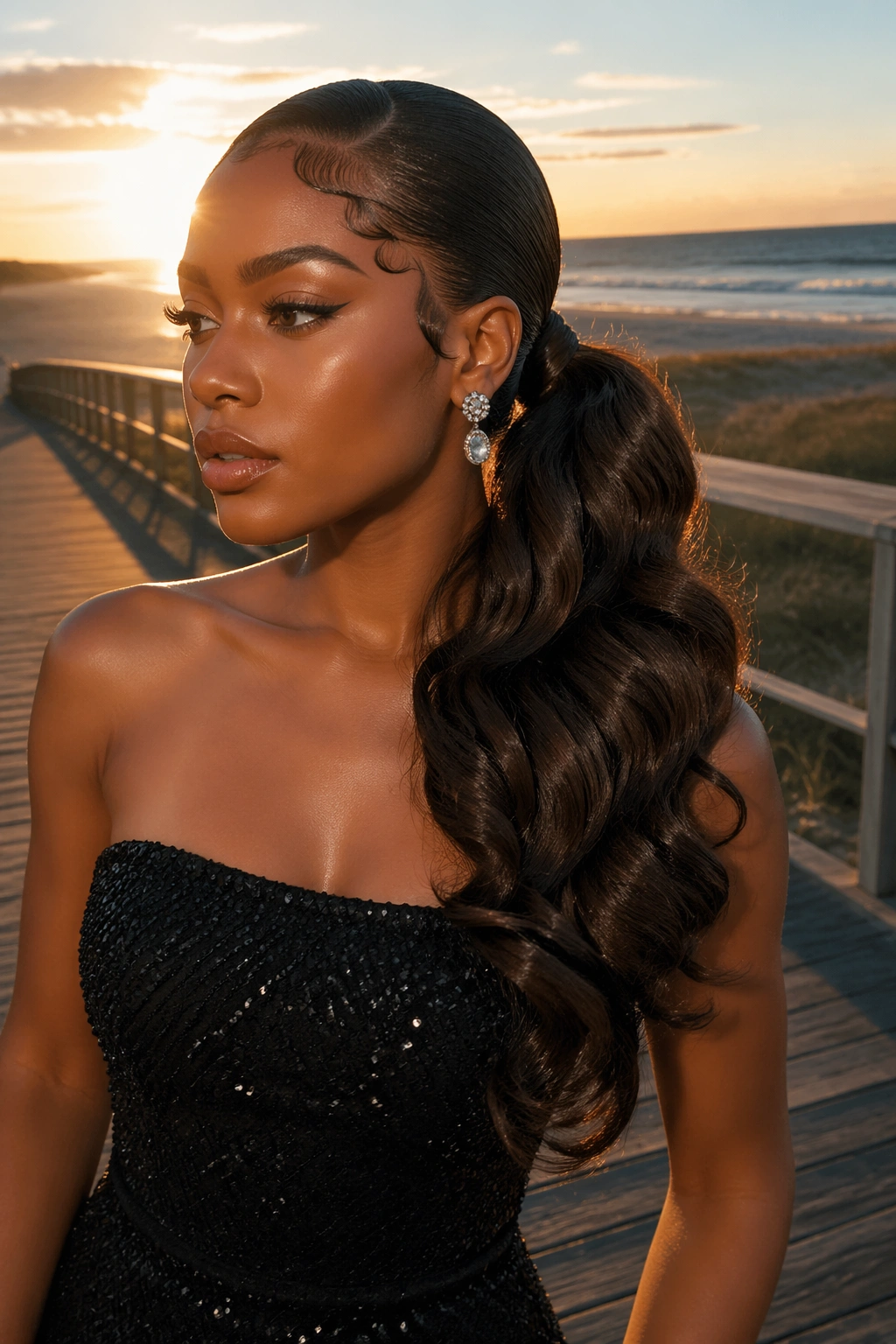
A sculpted side ponytail brings a sharper, more fashion-led feel to special-event hair. The base is sleek, the part is clean, and the baby hairs or edge detail are shaped with purpose rather than left to chance. It’s not a soft style. That’s why it stands out.
The finish needs to be neat around the hairline. Use a light gel or edge product, then guide the fine hairs into small curves or a smooth sweep. Keep the shape close to the head so it doesn’t look painted on. The goal is control, not stiffness.
This version is a strong match for structured gowns, sharp tailoring, and statement earrings. It can look especially good when the dress has strong shoulders or a sculptural neckline, because the hairstyle mirrors that edge.
If you like a softer look, skip this one. If you want precision, it has real impact.
19. Pearl-Pinned Side Ponytail With a Clean Base
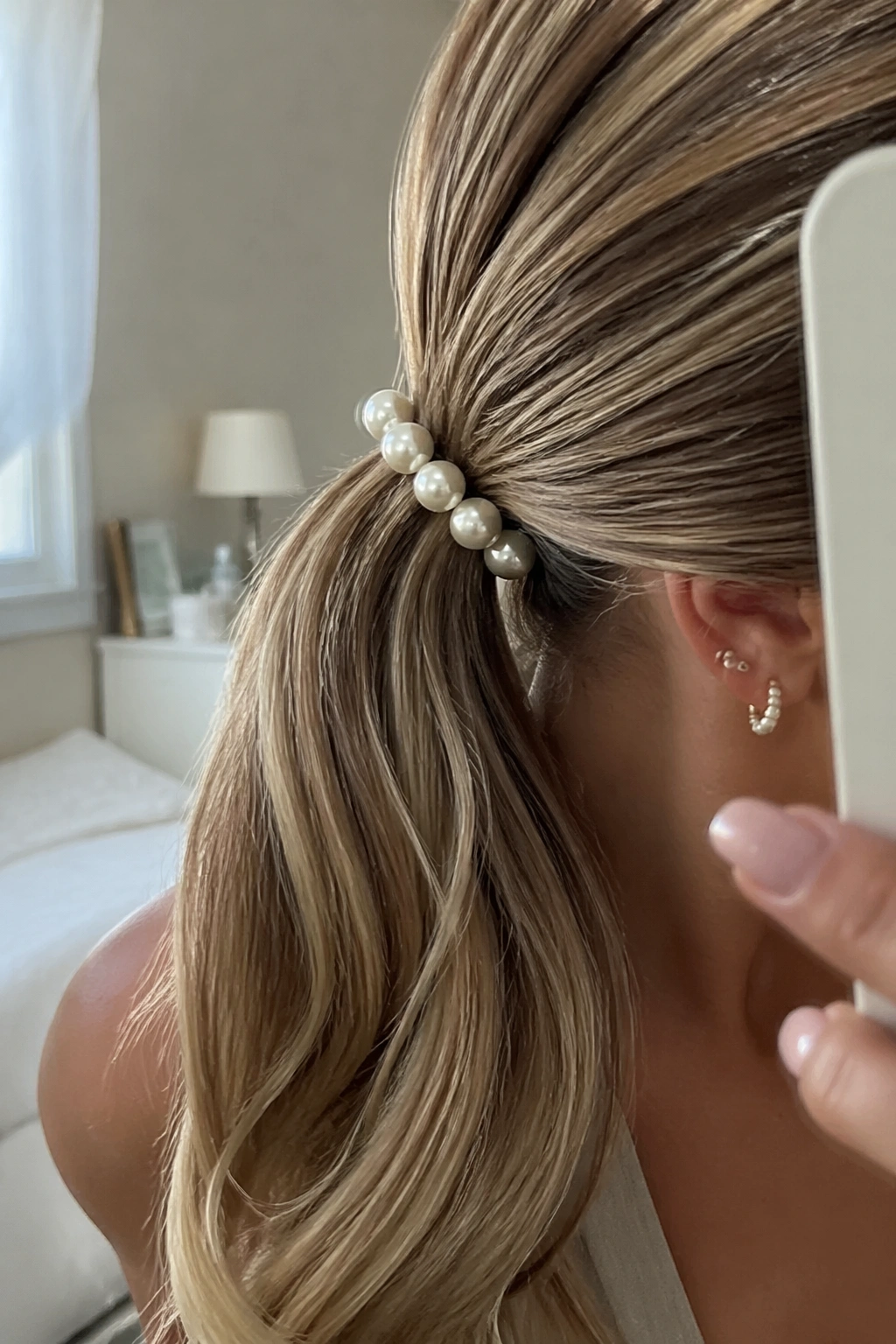
Pearls are one of the easiest ways to make a side ponytail feel dressed up without tipping into costume. A line of pearl pins along the base or near the sweep gives the hairstyle a quiet, formal detail that works with beaded gowns, satin dresses, and classic evening wear.
The base should be clean and smooth so the pins sit neatly. Scatter them randomly and the style can look cluttered. Place them with intention — one cluster near the tie, or a short line following the curve of the head.
I like this version for events where the outfit already has texture but still needs a little lift. Pearls echo that texture without competing with it. That’s the nice part. They’re decorative, but not loud.
This is also a solid choice if you want the hairstyle to feel feminine and polished without adding another color into the mix.
20. Side Ponytail With a Narrow Braid Accent
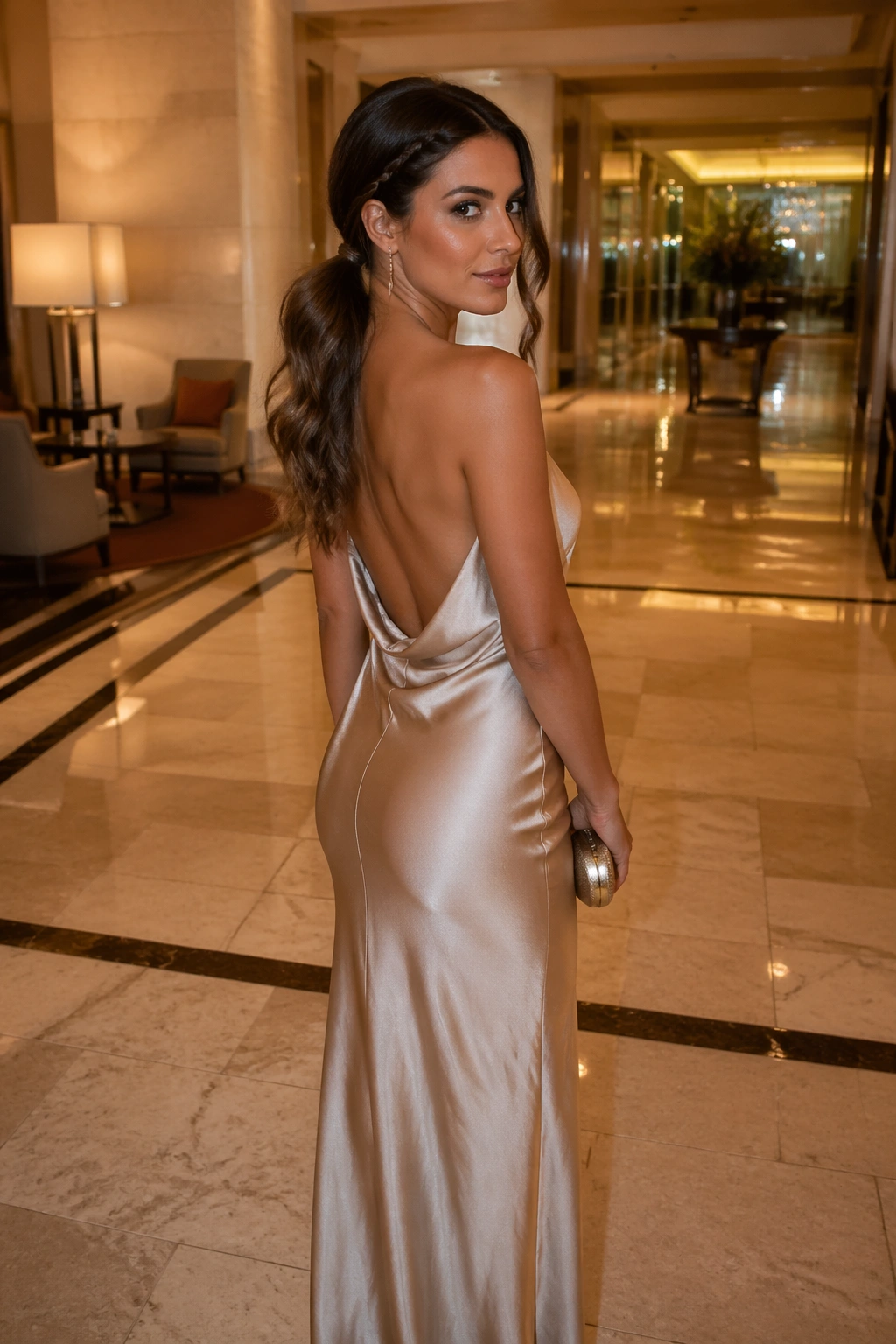
A narrow braid accent is the kind of detail that saves a simple side ponytail from feeling too plain. A single braid along the hairline or just behind the part draws the eye into the style and gives the ponytail some edge without making it look busy.
Where to place the braid
The best placement depends on the part and the neckline. A braid near the temple softens the face. A braid closer to the nape makes the tail feel more structured. Keep it thin, though. A chunky braid can swallow the rest of the style.
- Best for medium to long hair
- Works with straight, waved, or lightly curled lengths
- Looks good with earrings because it doesn’t crowd the face
- Easier to do on hair with a bit of grip than on very silky hair
This is one of those details that reads as thoughtful in person. Not flashy. Thoughtful.
21. Matte-Textured Side Ponytail for Soft Formality
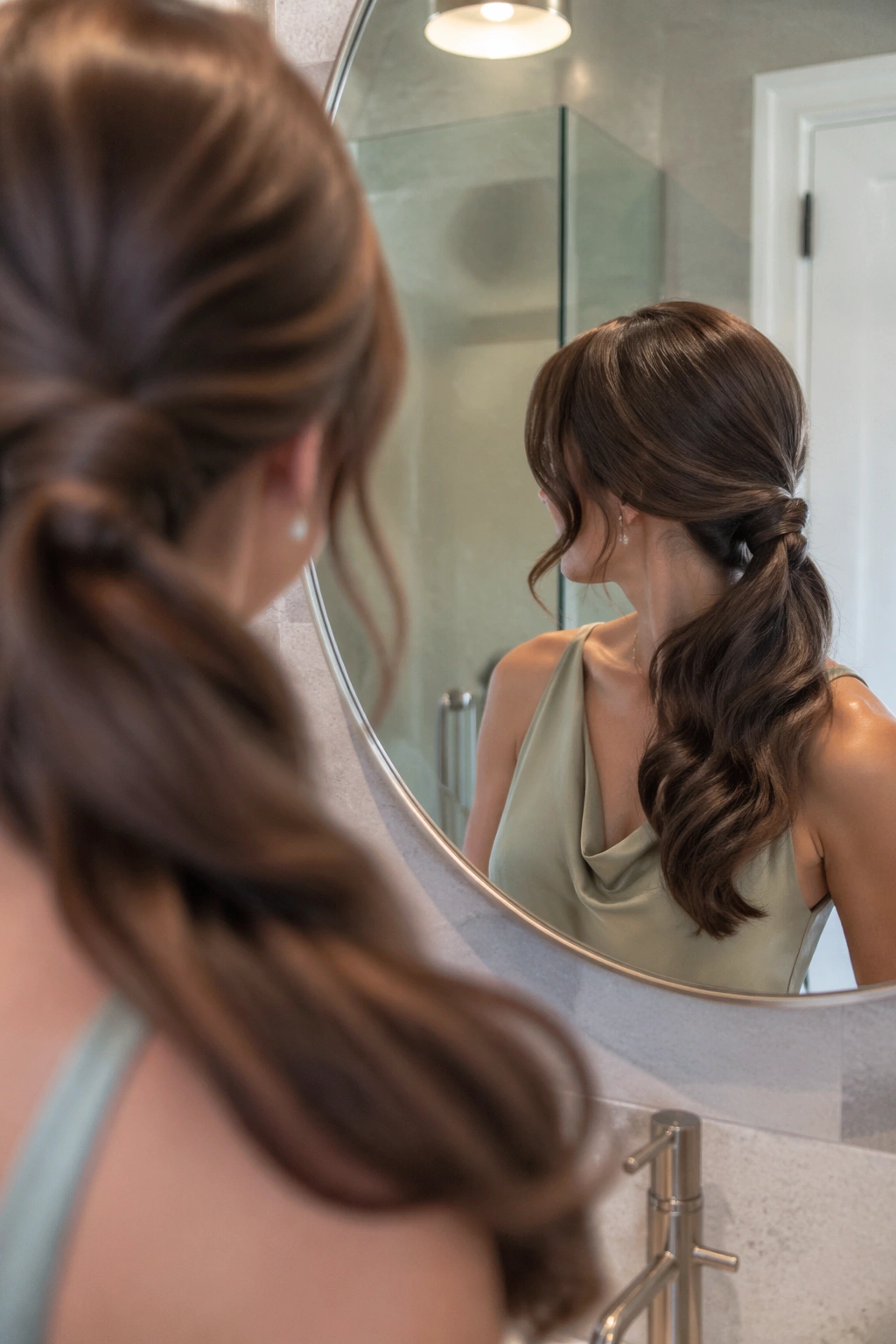
Not every special event hairstyle needs shine. A matte-textured side ponytail feels softer, more relaxed, and a little more modern than a glossy version, which is useful when the dress has volume or the event itself leans less ceremonial.
The texture should look touchable, not dry. Dry texture spray gives grip and shape, but too much can make the ends look dusty. Start with a small amount, then build only if the hair still collapses.
This style is a good match for soft fabrics, draped dresses, and events where you want elegance without too much polish. It’s also forgiving if the hair has a few natural bends or a slight wave pattern. That can work in your favor.
I’d choose this over a glossy ponytail when the outfit already shines. One shiny element at a time is usually enough.
22. Black-Tie Side Ponytail With Pin Curl Ends
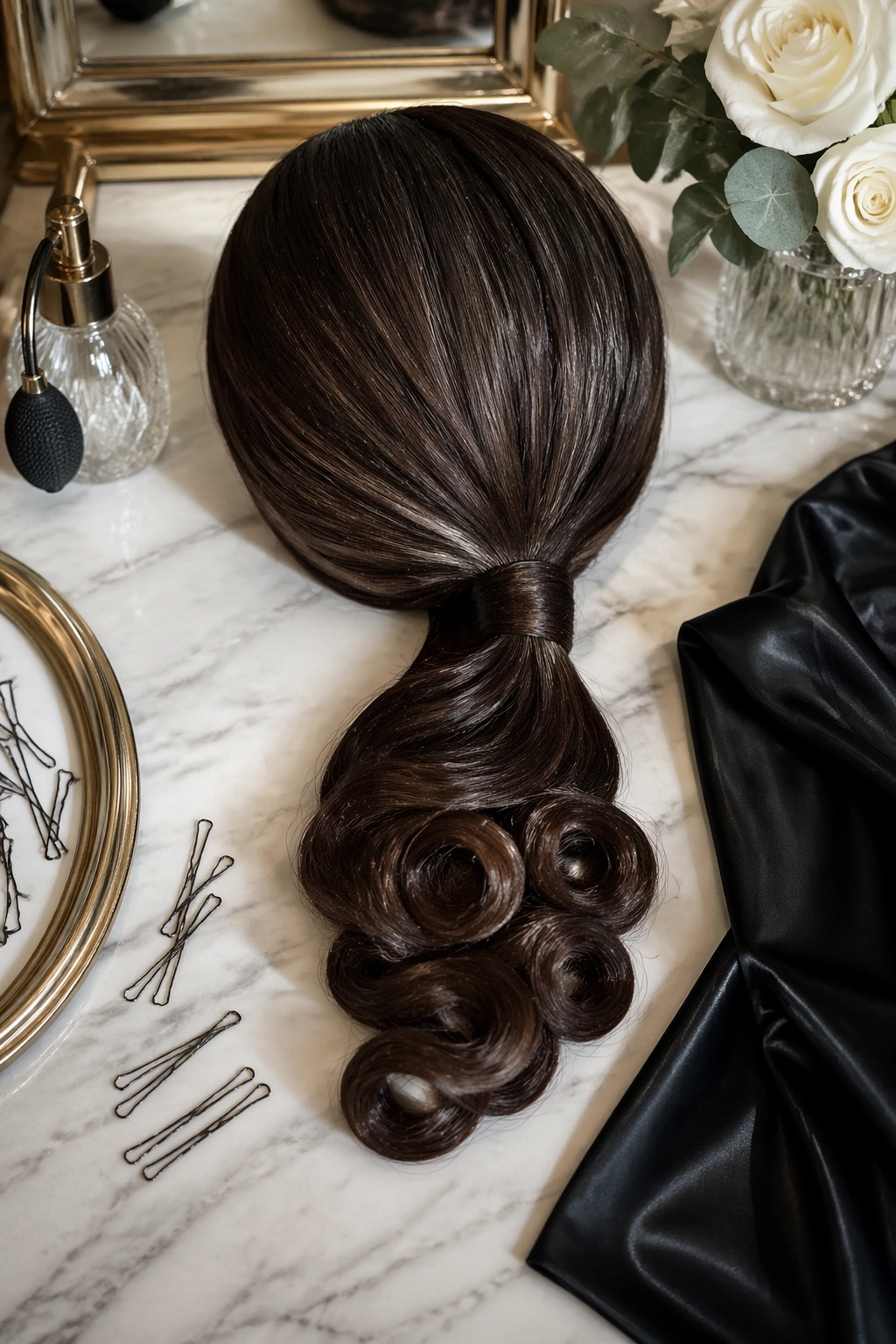
A black-tie side ponytail should feel a little formal from the ends up. Pin curls or carefully tucked loops at the tail give the style a finished shape, and that shape keeps the hair from looking loose or casual under evening lights.
The ends need to be set first, then arranged into a side fall that holds its curve. If the hair is very long, you can tuck the ends under and pin them in a rolled shape. If it’s medium length, a few sculpted curls at the bottom may be enough. The point is control.
This style loves dramatic earrings, strapless gowns, and dresses with a clean neckline. It has a certain discipline to it, which sounds stern until you see how elegant it looks in motion.
It’s a strong choice when you want the ponytail to feel formal enough for a room with chandeliers and too many people in tuxedos.
23. Low Gloss Side Ponytail With Soft, Tucked Ends
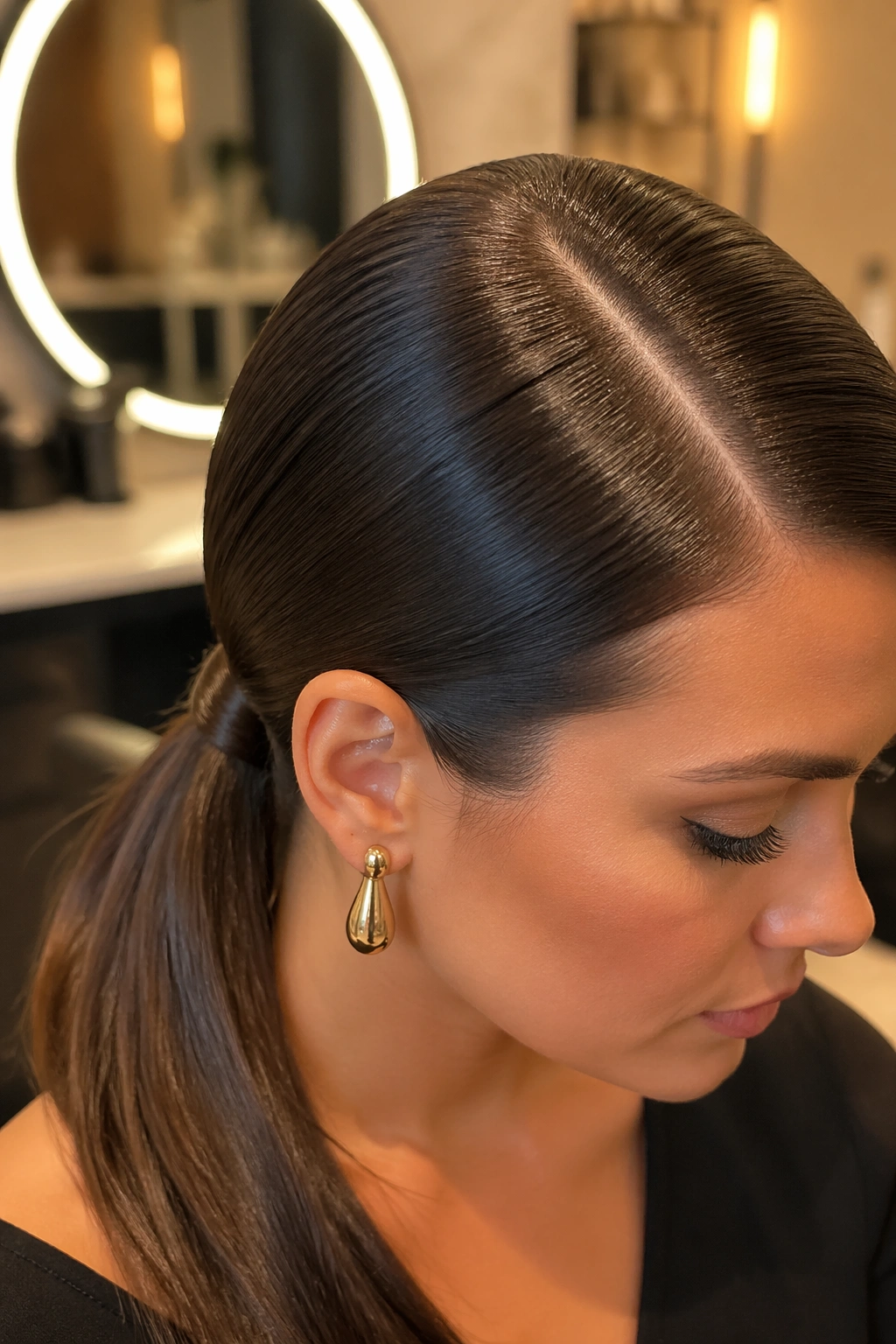
A low gloss side ponytail is the one I’d hand to someone who wants elegance without looking overworked. The surface is smooth, the shine is restrained, and the ends are tucked just enough to look cared for. Nothing is overdone. Nothing shouts.
The placement usually sits low near the nape, then angles gently over one shoulder. A soft wrap around the base keeps the elastic hidden, and a little bend at the ends stops the style from falling flat. It’s the kind of side ponytail that can handle a dinner, a dance floor, and a long night without losing its shape.
If you only try one style from this list, make it this one. It works with a dressy neckline, it flatters most face shapes, and it leaves room for earrings, makeup, or a strong outfit to take the lead. That balance is what makes a side ponytail feel elegant instead of merely neat.
