



Curly hair and ponytails get treated like they’re in a bad relationship, when they really aren’t. The problem is rarely the ponytail itself. It’s the tension, the placement, and the way people pull curls into a shape that fights the pattern instead of working with it.
A good heat-free ponytail keeps the curl texture alive. It can also save your ends from another round of rough brushing, flat irons, and the kind of styling that looks neat for ten minutes and then starts puffing out around the temples. The best versions do not try to erase curls. They frame them.
I keep coming back to the same truth with curly hair: the shape matters more than the slickness. A ponytail that sits one inch higher, or uses a softer tie, or leaves a little root lift alone instead of forcing it flat, can change the whole look. Small moves. Big payoff.
1. High Cloud Puff Ponytail
A high cloud puff ponytail is the style I reach for when curly hair needs height, shape, and a little attitude without heat. It lifts the curls up at the crown, lets the texture stay soft and airy, and keeps the whole look from feeling heavy.
Why It Works
The trick is to gather the hair where the head naturally curves upward, usually about 1 to 2 inches above the crown line. That spot gives the curls a little stage. If you pull the ponytail too tight, the roots collapse and the curls lose that rounded cloud effect. Too loose, and the style slides.
Use a wide satin scrunchie or a coil tie. Both hold curls without leaving a deep dent, which matters more than people think. This is one of those styles that looks best when the hair has some day-two texture and the roots are not freshly washed and slippery.
- Best for medium to tight curls that like volume
- Works well on shoulder-length or longer hair
- Needs only 1 elastic and 1 satin scrunchie
- Looks fuller if you fluff the crown with fingertips, not a brush
Tip: Leave the top section slightly loose, then tug the puff upward by the sides. That gives the ponytail its shape without turning it into a helmet.
2. Sleek Low Ponytail With Curly Ends
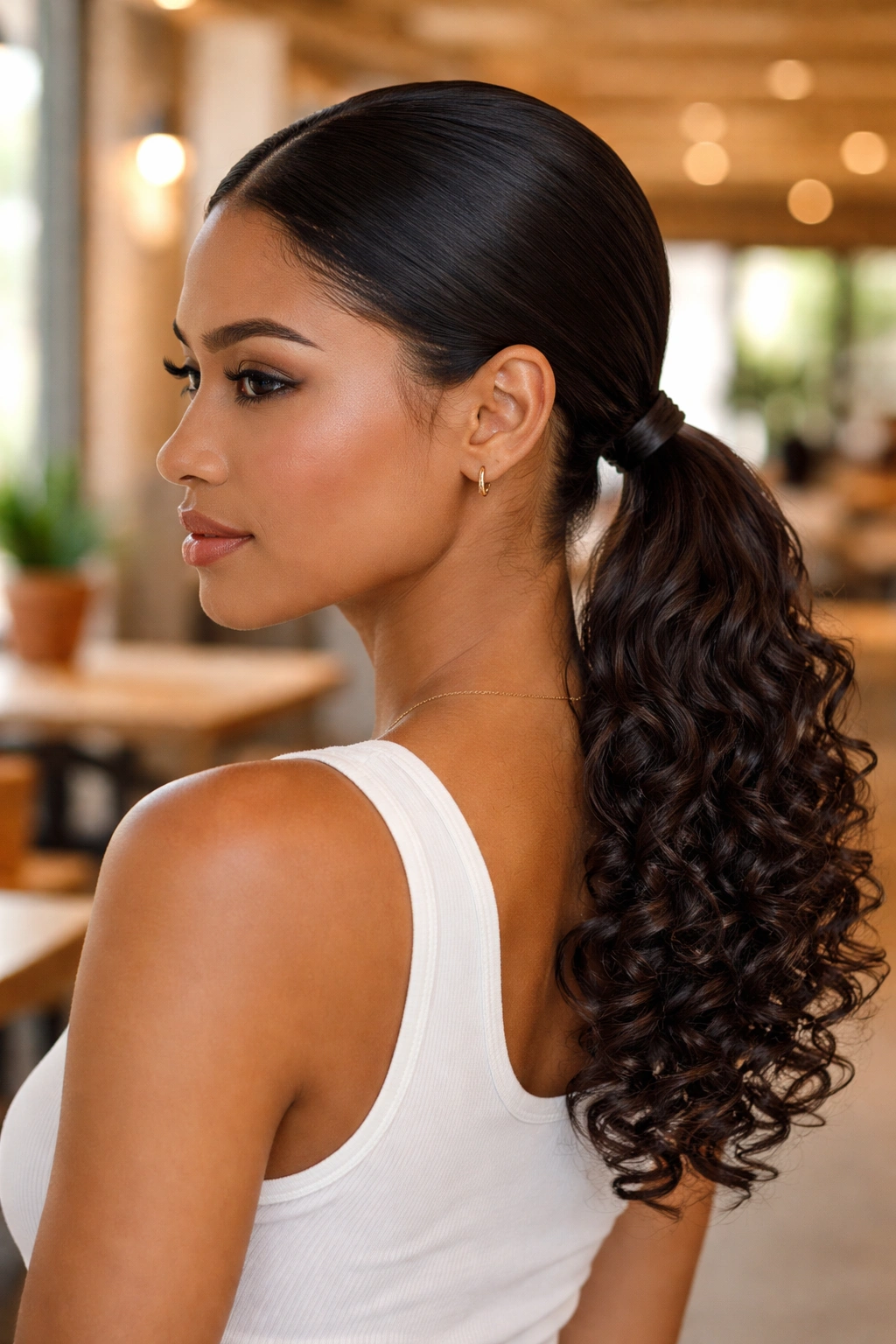
This is the cleanest ponytail look you can do on curly hair without heat. The crown stays smooth, the curls stay visible, and the tail keeps its spring instead of getting crushed.
What makes it work is restraint. You only smooth the front and sides, usually with a little leave-in conditioner or styling gel on your palms, then gather the hair low at the nape. The curls from the mid-lengths down should stay as intact as possible. Do not overbrush them into submission. That road leads straight to frizz.
I like this style when the outfit is sharp or the day needs something a little neater. It feels polished, but it does not ask curly hair to pretend it is straight. A soft wrap of hair around the elastic makes the finish look cleaner, and one or two hidden bobby pins can keep the wrap from slipping.
Use a rat-tail comb only at the roots if you want that smoother top. After that, hands are better. Fingers keep the style from looking overworked.
3. Pineapple Ponytail
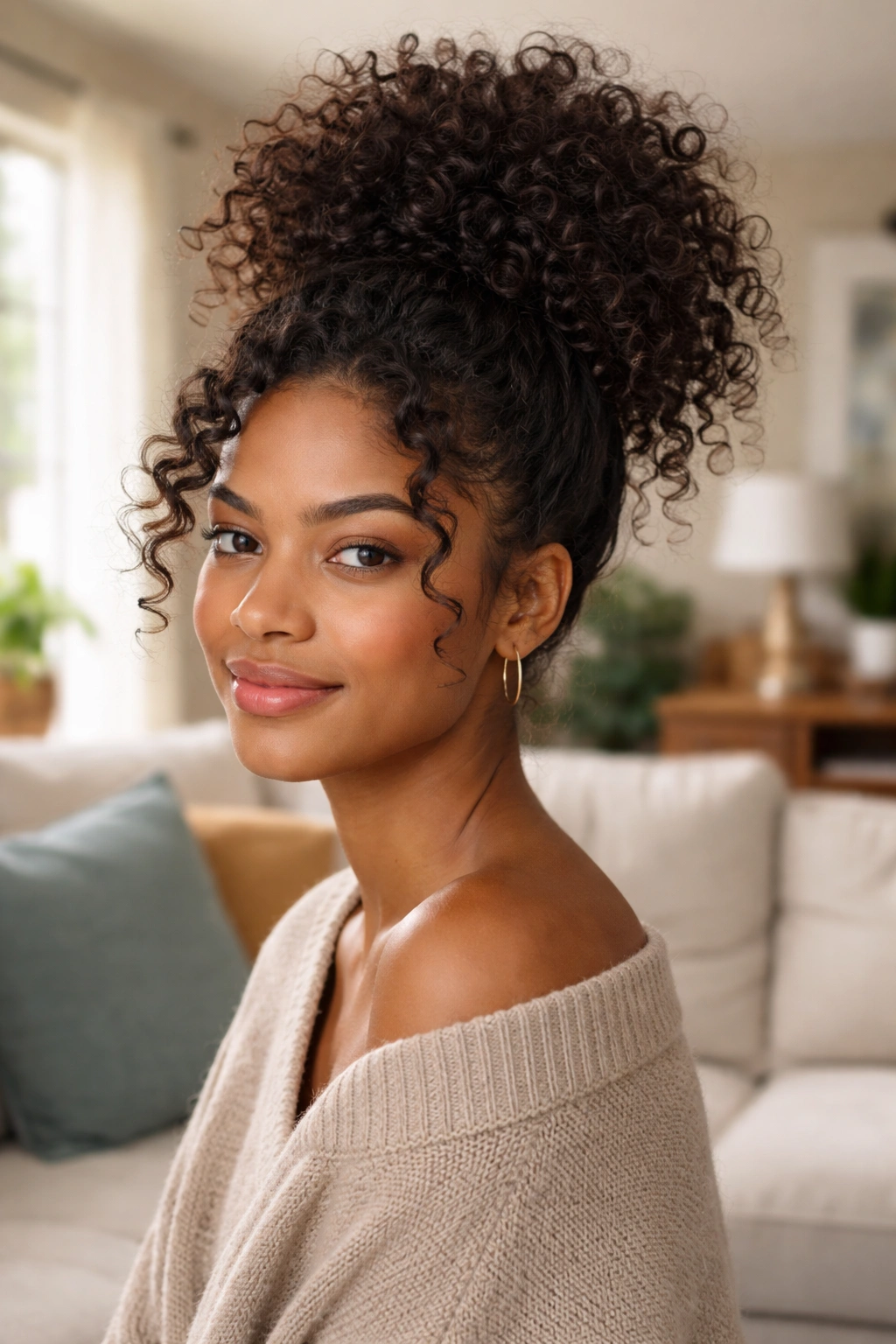
Would you rather protect your curls or flatten them into place? The pineapple ponytail answers that question fast. It sits high, loose, and a little playful, which is exactly why it works so well on no-heat curly hair.
The style is especially kind to curls that lose shape overnight or frizz up when they’re pulled too low. You pile the hair near the top of the head, secure it with a soft tie, and let the curls fall forward and outward. That front-heavy placement keeps the length from being stretched out and helps the curl pattern stay springy.
How to Wear It
Start with dry or mostly dry curls. If the hair is damp, the base can set in a weird dent. Gather the ponytail loosely and stop before the elastic starts tugging at the scalp. The goal is lift, not tension.
- Best for long curls, coils, and waves with plenty of shrinkage
- Great for second-day hair
- Works well with satin scrunchies or a soft coil
- Looks even better when a few front curls are left out on purpose
If you want a style that protects curls and still looks cute enough to wear outside the house, this is the one.
4. Bubble Ponytail With Satin Ties
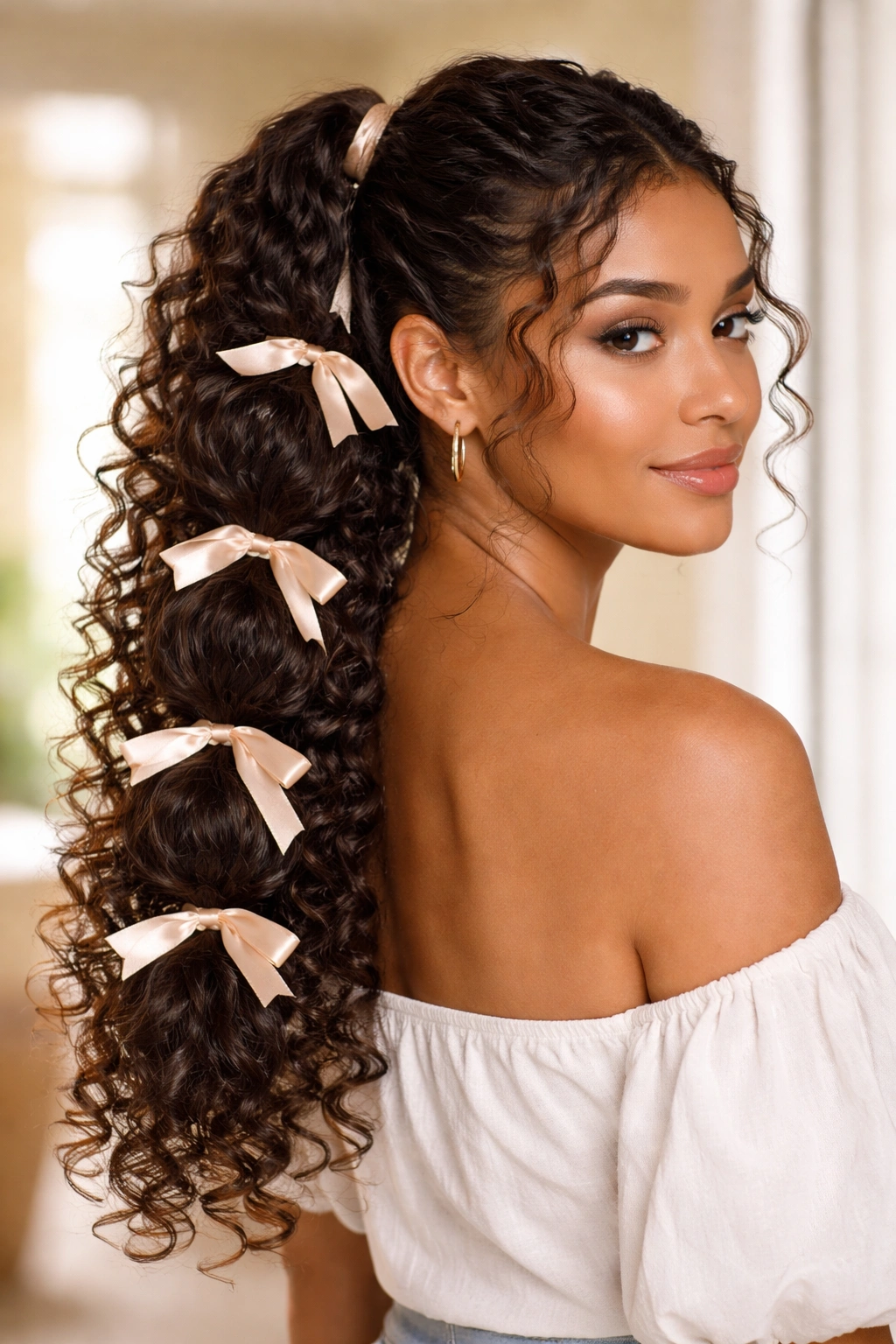
A bubble ponytail gives curly hair a shape that feels fun without being fussy. It turns one long ponytail into a chain of rounded sections, and the natural curl texture makes each bubble look thicker than it would on straight hair.
The style is especially useful when the ponytail itself feels too plain. You secure the base, then add soft ties every 2 to 3 inches down the length. After that, gently puff each section outward until it looks rounded. Don’t yank. The curls do the heavy lifting for you.
- Use 4 to 6 mini elastics, depending on hair length
- Space the ties evenly, usually 2 to 3 inches apart
- Satin or snag-free ties keep the curl ends from fraying
- Works best when the hair has enough length to create at least three bubbles
This is one of those styles that looks more complex than it really is. And that’s part of the appeal. The shape reads as deliberate, but the curls still look free.
5. Side-Swept Ponytail With a Deep Part
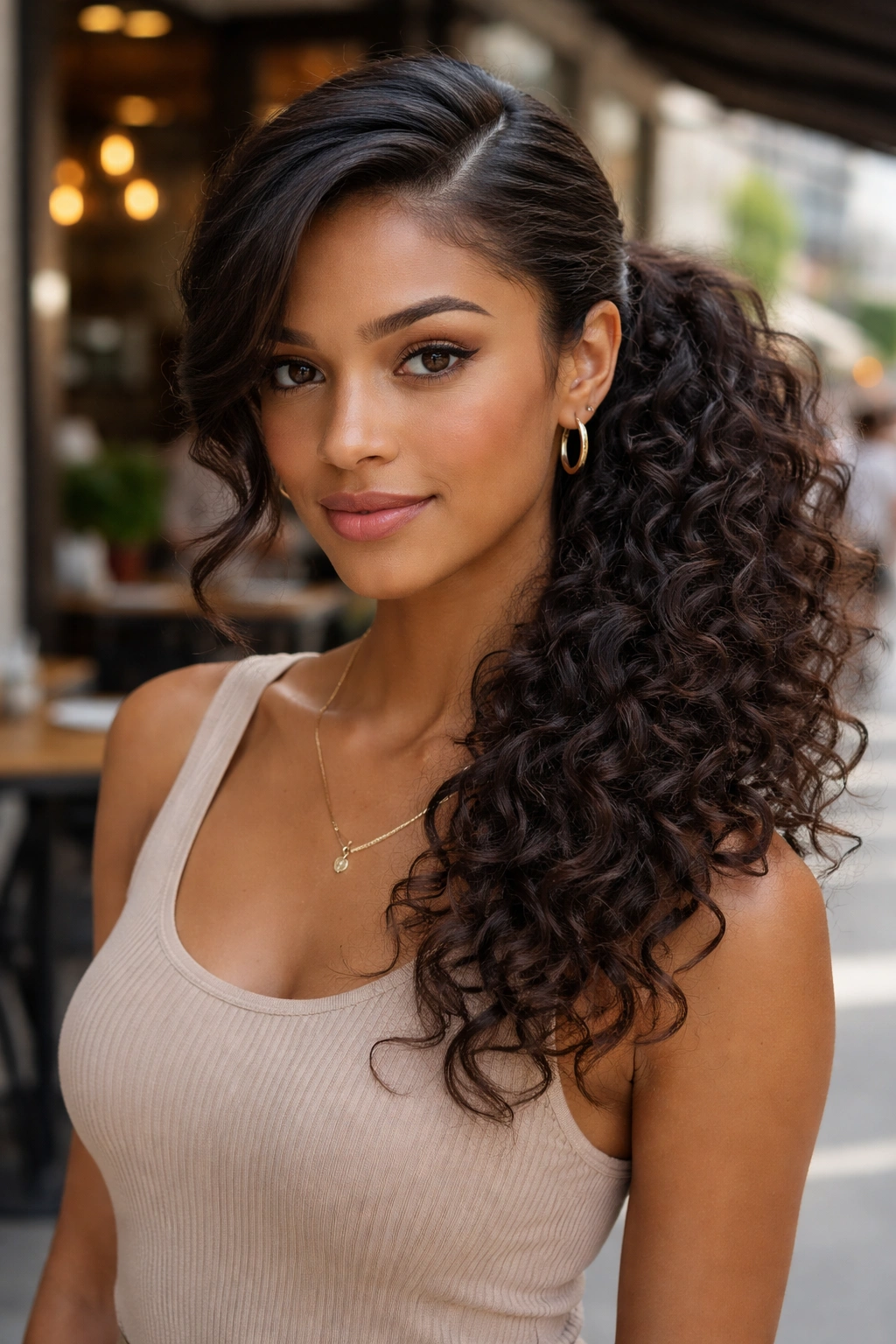
A side-swept ponytail gives curly hair a softer line than the usual center pull. The whole style leans a little, which makes the curls fall across one shoulder in a way that feels easy and flattering.
I like this one because it takes almost no extra skill. You make a deep side part, smooth the crown just enough to keep flyaways down, and gather the ponytail low and to the side. The part does most of the styling work. If your curls are layered, the shorter pieces at the front will naturally frame the face instead of getting trapped behind the ear.
There’s a nice imbalance here. Not messy, not perfect. Just enough off-center movement to make the style feel softer than a standard back ponytail. If the curls are thick, use a larger satin scrunchie so the base doesn’t pinch.
This style is especially good when you want the face to stay open but not stripped bare. One side gets a clean curve. The other side gets a little drama. That’s a nice trade.
6. Braided-Base Ponytail
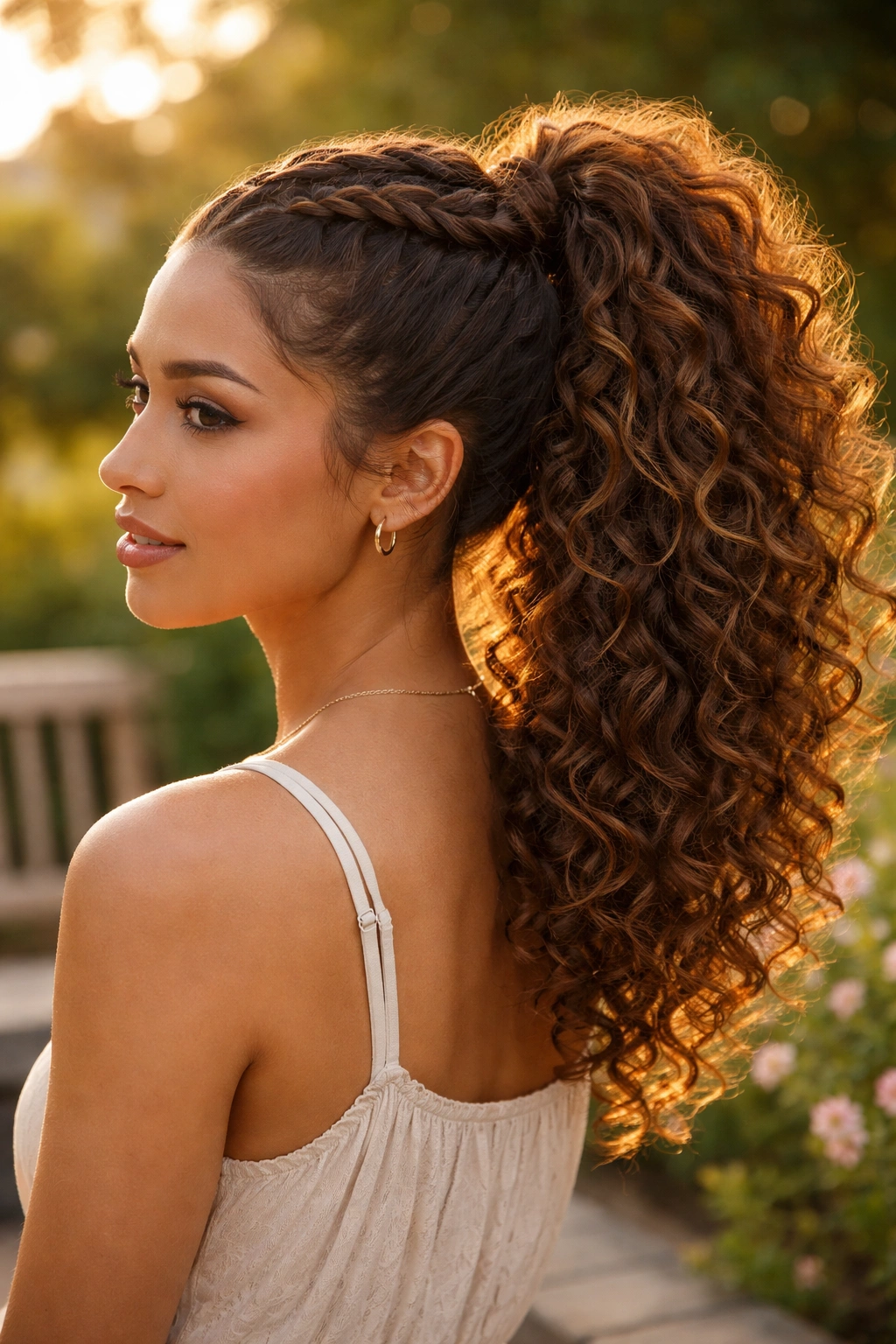
A braided base does more than decorate the ponytail. It gives the style a little grip, helps the top stay secure, and keeps curly hair from slipping loose halfway through the day.
The braid usually starts at the front or crown and runs back toward the elastic. A simple three-strand braid works fine, and a Dutch braid gives even more lift if you want the braid to sit on top of the head. Once the braid reaches the ponytail base, the rest of the curls hang freely.
This is the version I like when the weather is humid or the day is active. The braid acts like a built-in anchor, so the ponytail base does not need to be yanked tight to stay put. That matters. Tight pulling around curly roots can flatten the shape fast.
It also looks good from the side, which a lot of ponytails do not. The braid gives the front some texture before the curls take over. Clean at the top. Loose at the end. Easy to like.
7. Half-Up Curly Ponytail
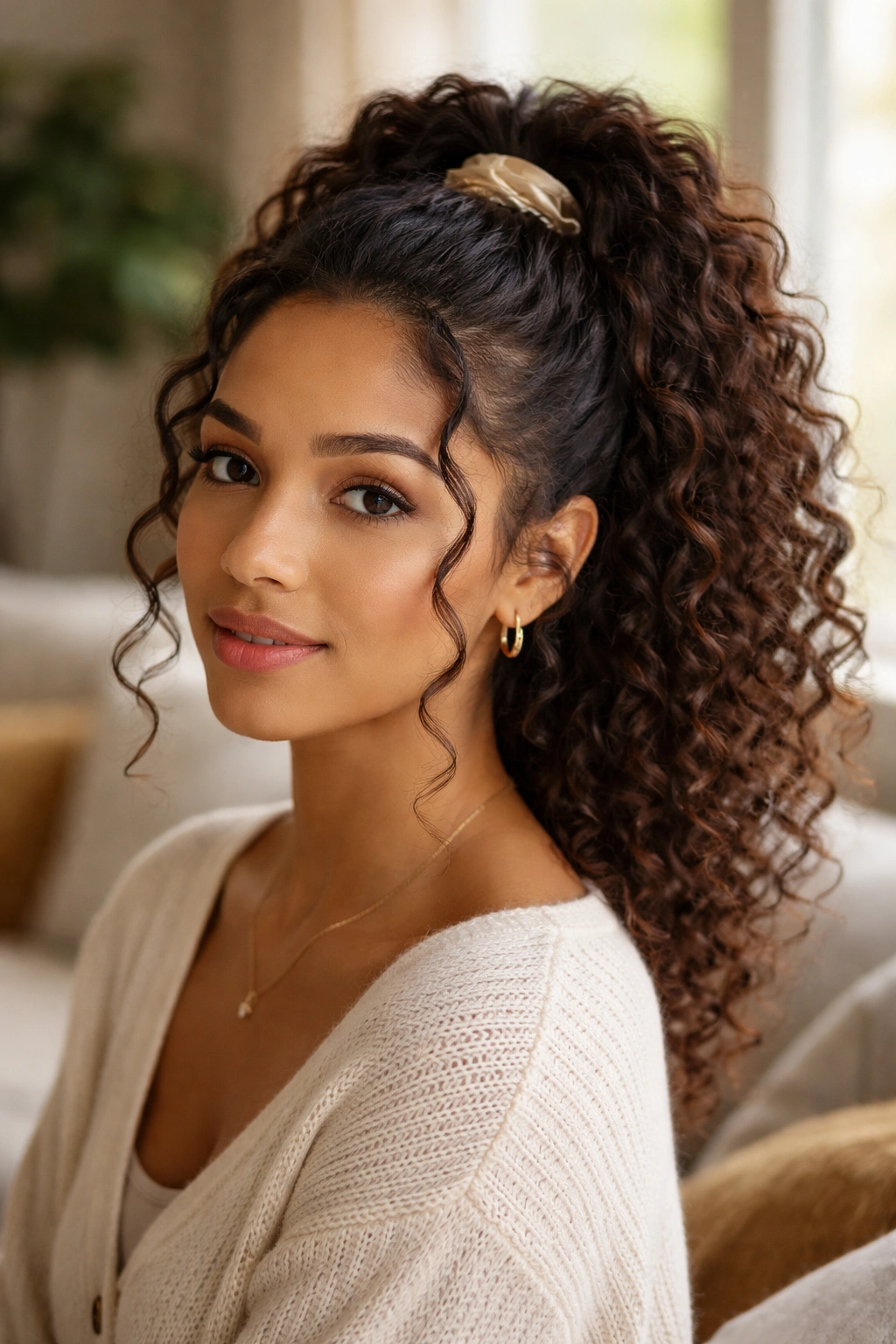
Half-up ponytails are underrated on curly hair because they solve a real problem: getting the front out of the way without sacrificing all the volume. The top section stays controlled, and the rest of the curls keep their shape.
Why It Earns a Spot
The best half-up version starts around the temples and stops before it turns into a tiny topknot. You want enough hair in the top section to lift the crown, but not so much that the lower layers lose their fullness. On curls, balance matters more than symmetry.
This style works beautifully when the hair is medium to long and the curl pattern is uneven from root to end. Pulling only the top half back gives the style a bit of structure while letting the lower section do what curly hair does best.
- Use a small satin tie or spiral elastic
- Leave a few face curls loose
- Place the half-up section at the crown, not too far back
- Smooth only the top layer if needed
Best move: pinch the top section gently after tying it, then lift it half an inch. That tiny adjustment gives the style a better shape.
8. Twisted Crown Ponytail
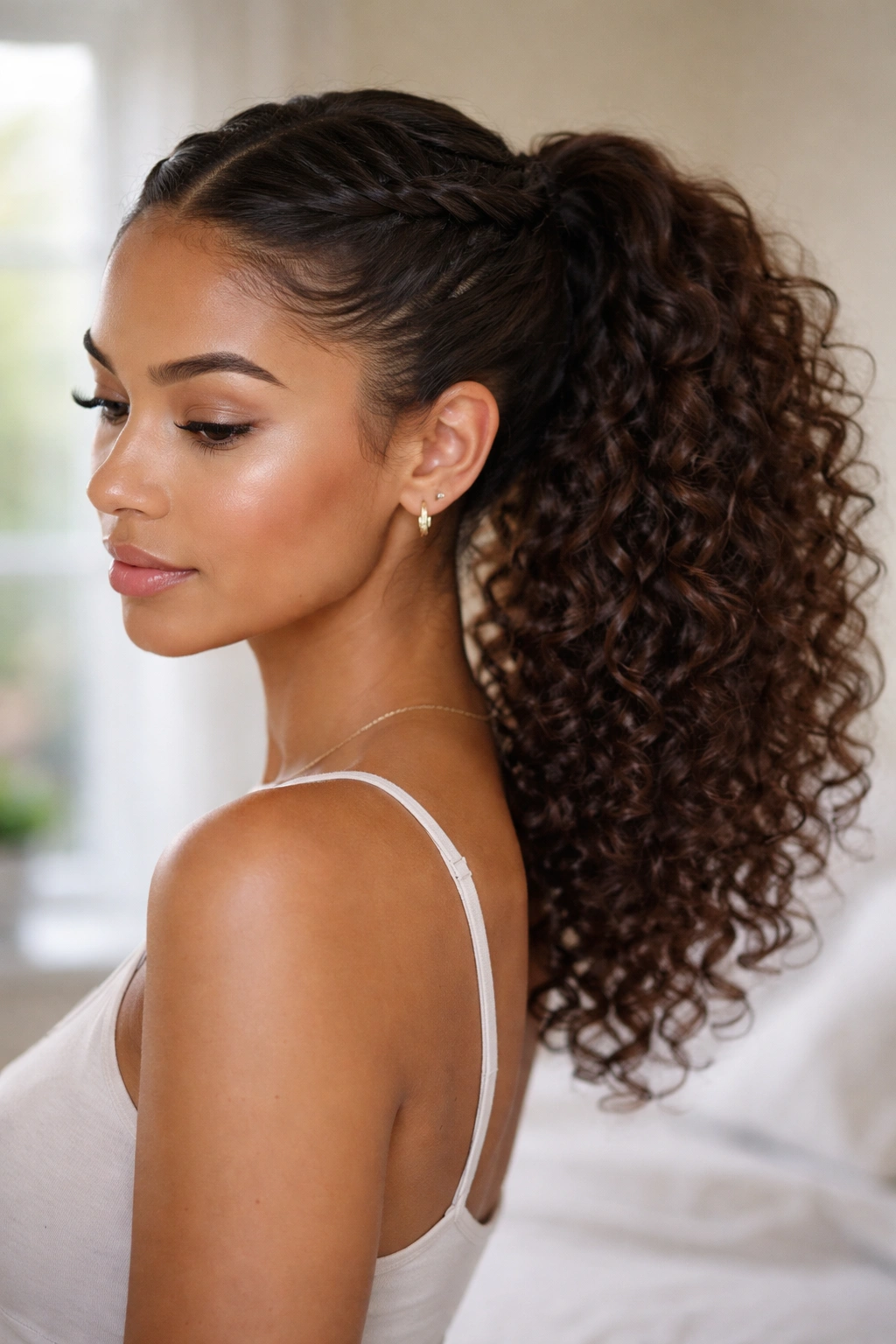
Two twists can do the job of ten bobby pins. That is the whole appeal of a twisted crown ponytail. It keeps the front tidy, gives the hair a sculpted look, and still leaves the curls to hang freely behind it.
You split off a section from each temple, twist each side toward the back, and fasten both into a ponytail. The twists can be flat against the head or a little loose, depending on how much texture you want to show. If your curls are fine, a flatter twist keeps the front from puffing out too much. Thicker curls can handle more lift.
This style sits nicely between casual and dressed-up. It feels intentional, but not stiff. The twist detail also helps hide the elastic, which is a small thing until you notice how much cleaner the whole hairstyle looks.
Use a light hold gel or cream on the twisted sections only. Leave the ponytail itself alone. That separation keeps the front neat and the back soft, which is exactly the contrast that makes this one work.
9. Scarf-Wrapped Ponytail
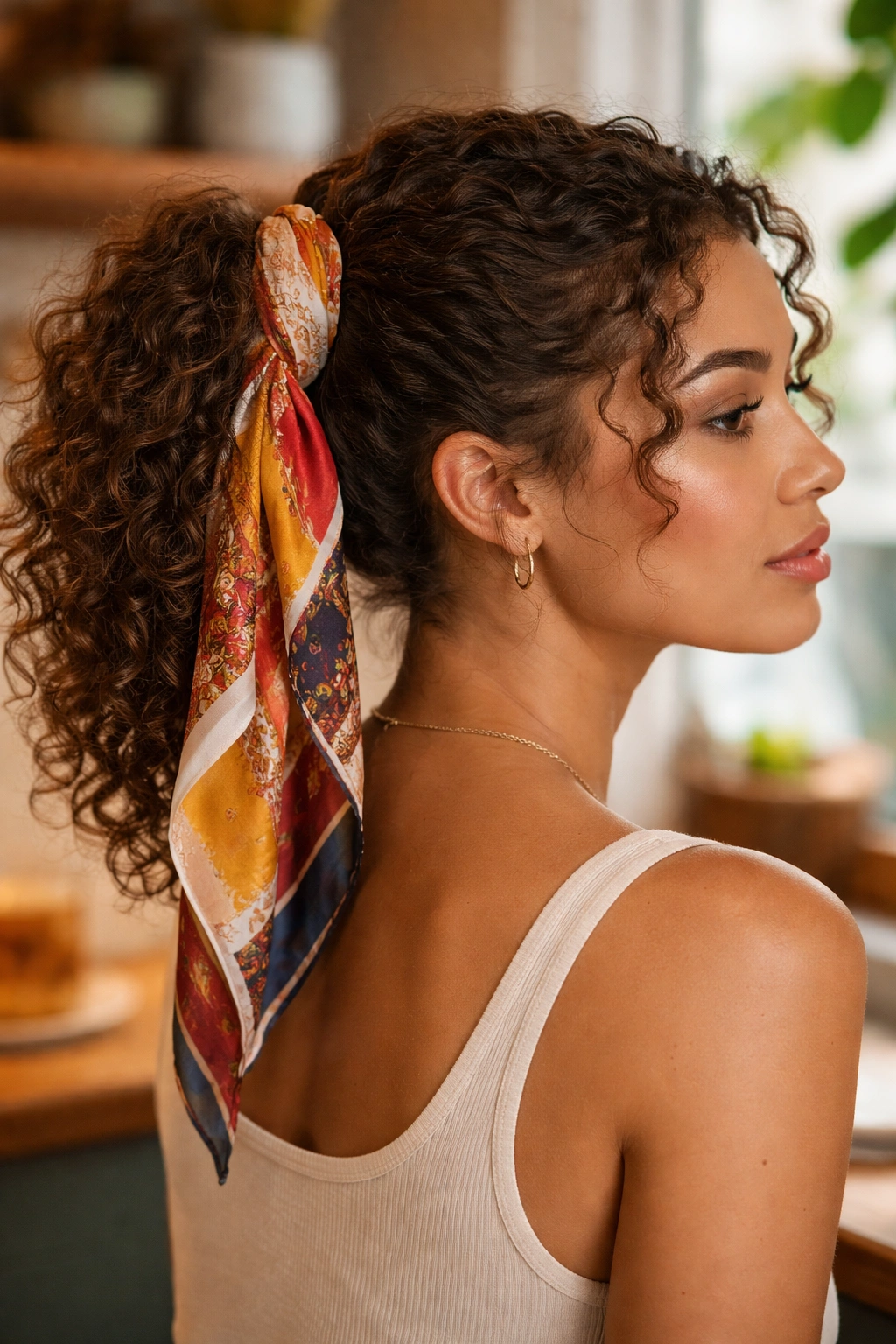
Can a scarf change a ponytail? Yes. On curly hair, it changes the whole mood. A scarf-wrapped ponytail brings in color, protects the base, and makes a simple style feel finished without adding heat or extra tools.
The scarf should sit at the elastic, not overpower the curls. I like a square scarf folded into a long band, tied around the base, and left with short tails or a small knot. If the scarf is too thick, it can swallow the ponytail shape. Too thin, and it slips. A medium-weight satin or cotton-satin blend tends to behave better.
This style is useful on hair that needs a little refresh but not a full wash. The scarf distracts from root frizz and adds a nice visual break between crown and length. It also works on low ponytails, mid-height ponytails, and side ponytails if you want the style to feel less plain.
There’s no need to hide the scarf ends unless you want a more polished finish. Let them hang. That little bit of movement looks good with curly texture.
10. Faux-Hawk Ponytail
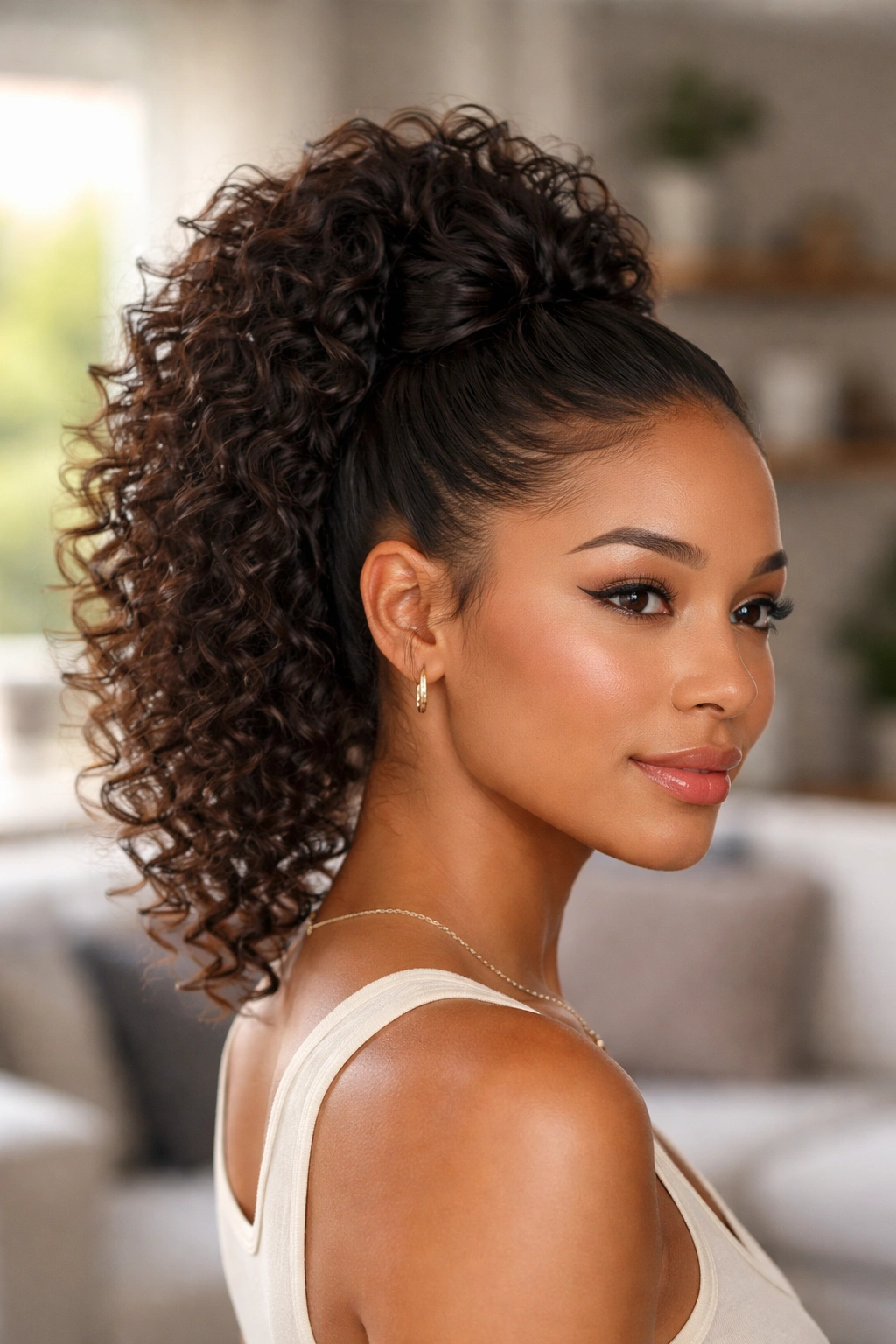
A faux-hawk ponytail gives curly hair a sharper outline than a regular pull-back. The sides stay close to the head, the middle stays lifted, and the whole style has a little edge without needing any heat styling.
Think of it as a central strip of volume. You smooth the sides back, sometimes with clips while you’re working, then gather the curls down the middle into a ponytail. The shape should rise from the forehead to the crown before dropping into the tail. That lift is the point.
- Best for medium to thick curls
- Works well with strong texture at the roots
- Needs 2 to 4 clips to hold the sides while styling
- Looks best when the ponytail base sits at mid-crown
This one is not for people who want soft and shy. It has presence. If the curls are short around the hairline, leave them out instead of fighting them. A few loose pieces can make the whole style feel less severe.
The real win is the silhouette. Curly hair already has body. This style turns that body into shape.
11. Center-Part Volume Ponytail
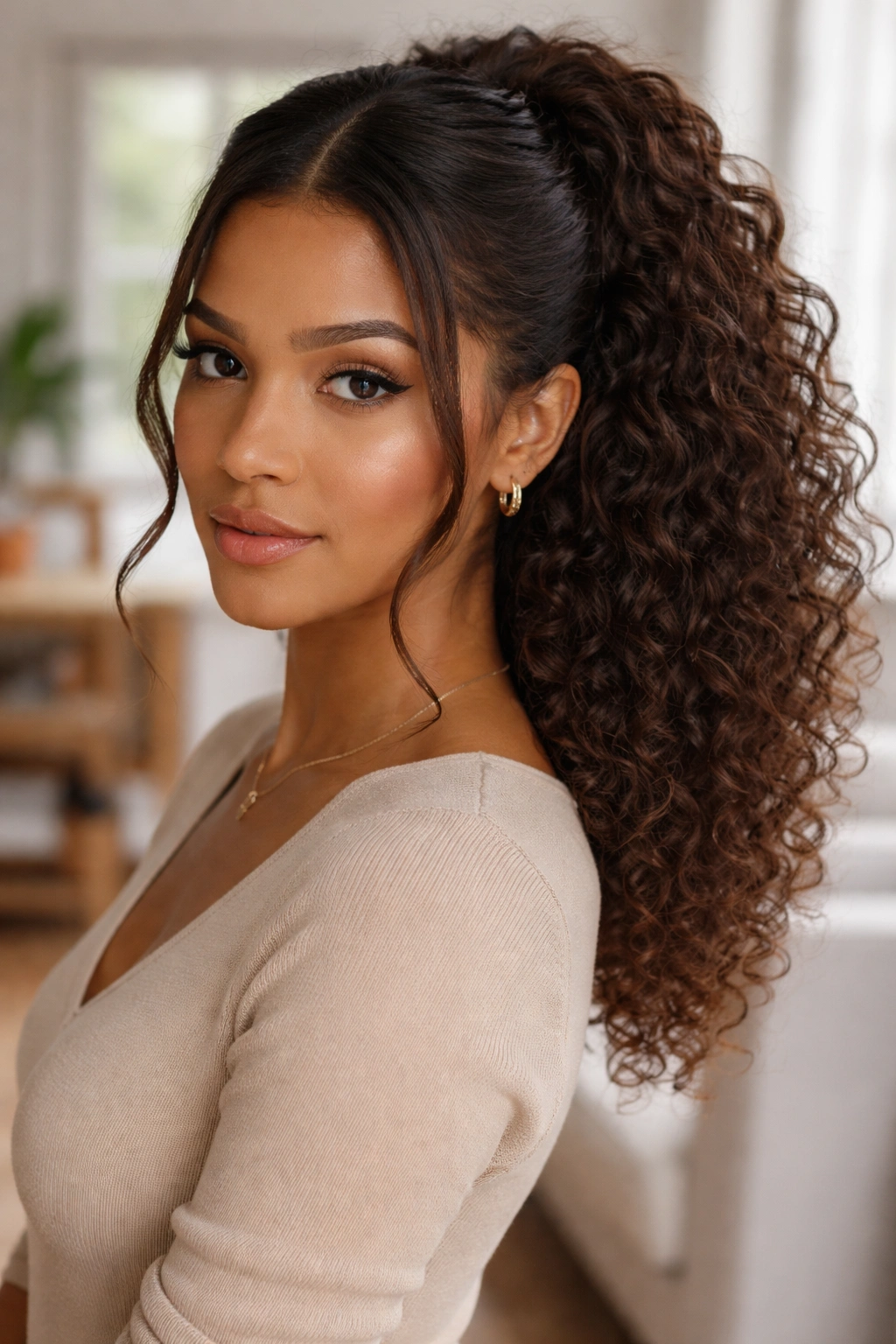
A center-part volume ponytail is proof that you do not need a big styling move to make curly hair look intentional. The part runs straight down the middle, the crown stays lifted, and the ponytail sits low enough to let the length do its thing.
The key is leaving the roots alone. A center part can go flat fast if you press it with too much gel or brush it too hard. I prefer using fingers and a small bit of smoothing cream at the part line, then stopping. The rest is about placement. A mid-back ponytail often works better than a high one here, because the shape stays balanced.
This style is especially good on curls with layers. The front sections fall in a way that frames the face, and the back gathers into a rounded tail that still shows off texture. It can look polished with a blazer or relaxed with a T-shirt. That range is handy.
If your hair has a bit of crown height already, do not flatten it. Use it. That lift is free structure.
12. Low Nape Ponytail With Curly Ends
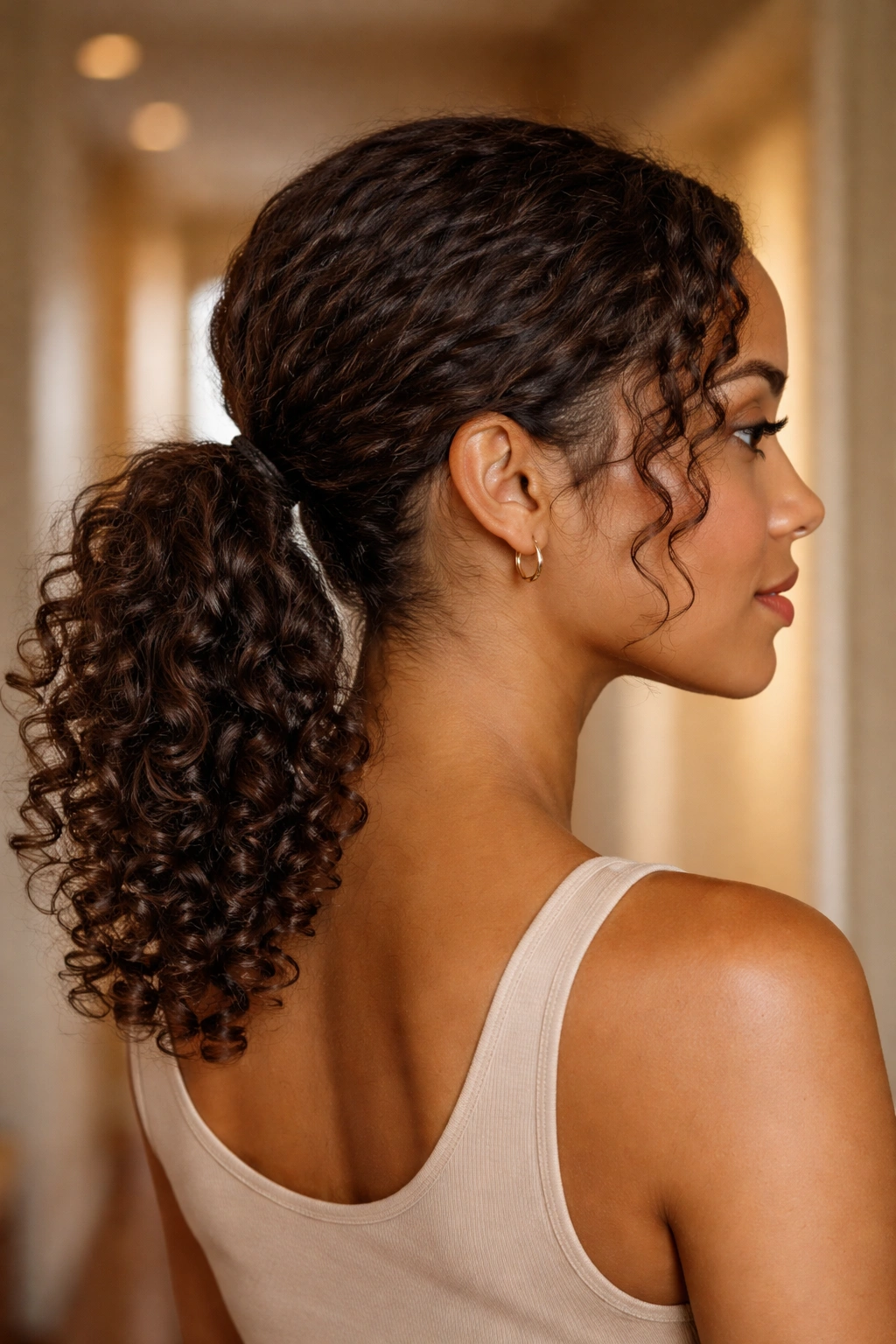
This is the ponytail for people who like clean lines but refuse to give up texture. The top stays controlled, the base sits low at the nape, and the ends stay big and curly.
It works best when the hair is long enough to drape over the neck and shoulders. A low nape ponytail is less about height and more about shape. You smooth only the top layer, gather the hair at the base of the skull, and let the ends fan out in a soft curve. The result feels calmer than a high ponytail and less fussy than a braided look.
I prefer this style when the outfit has a strong neckline or earrings need room to show. The ponytail does not compete with the face. It follows it. A small wrapped section of hair around the elastic makes the finish look neater, but you can skip that if you want the style to feel more relaxed.
This is a good choice for humid days too. Lower placement usually means less tugging at the roots, and that helps the curl pattern stay intact.
13. Double Ponytail Stacked High and Low
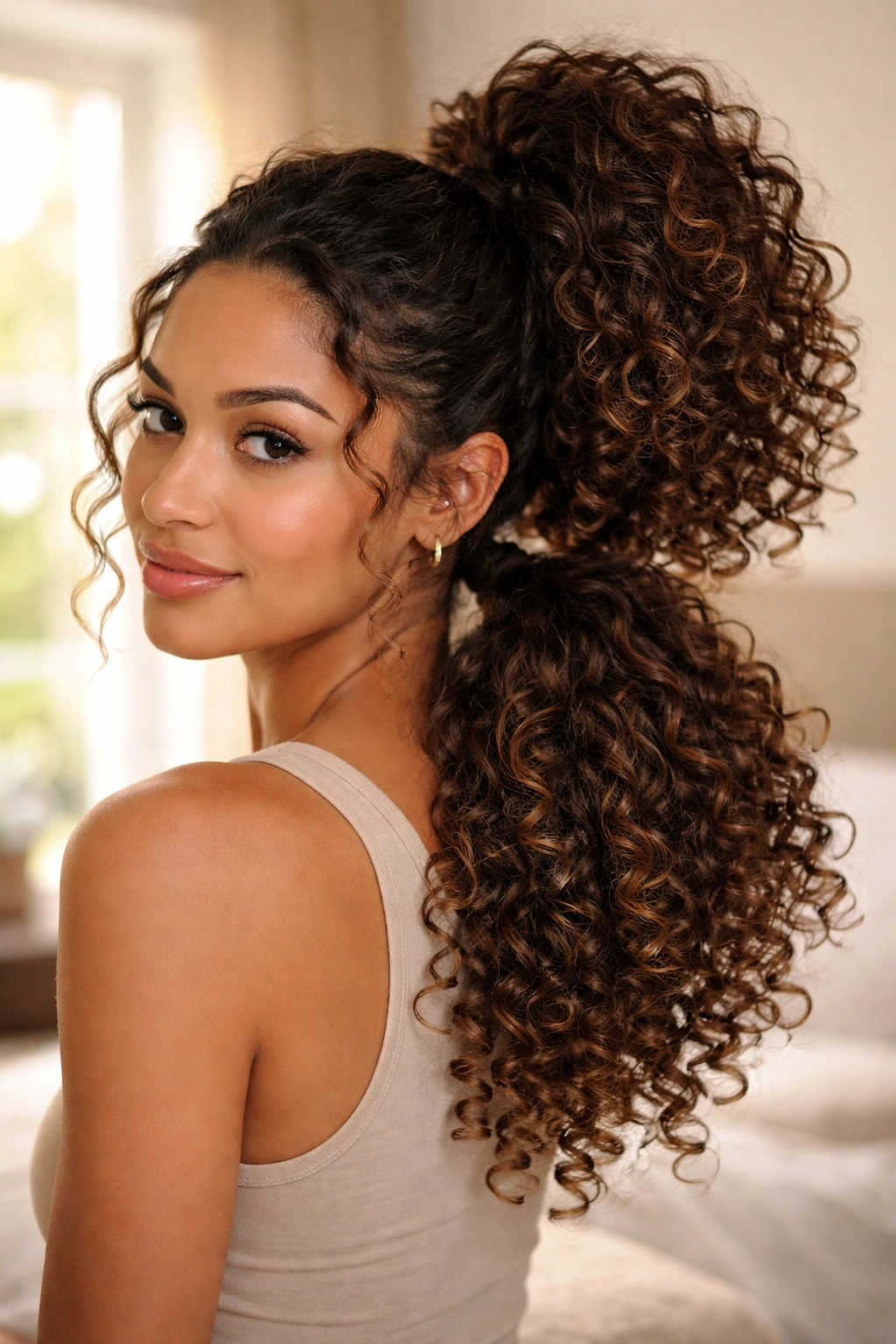
Double ponytails sound playful, but on curly hair they solve a practical problem: weight. When the hair is heavy, one ponytail can sag. Two stacked ponytails help share the load and make the style look fuller.
Why It Helps
You create one ponytail at the crown and another just below it, then let the top layer blend into the lower one. The upper tie supports the shape, while the lower tie catches the length. The curls end up looking thicker and more lifted than they would in one single section.
This is a smart move for long, dense curls that tend to pull downward by midday. It also works when you want a big shape without teasing the roots. Teasing curly hair often makes the texture rough. This does not.
- Use two soft elastics, spaced about 2 inches apart
- Keep the top pony loose enough to avoid a ridge
- Let the lower pony sit slightly behind the first one
- Fluff the join so the two sections blend
Tip: If the line between the two ponytails is visible, pull a few curls over it. That hides the join without extra pins.
14. Messy Gym Ponytail That Still Looks Styled
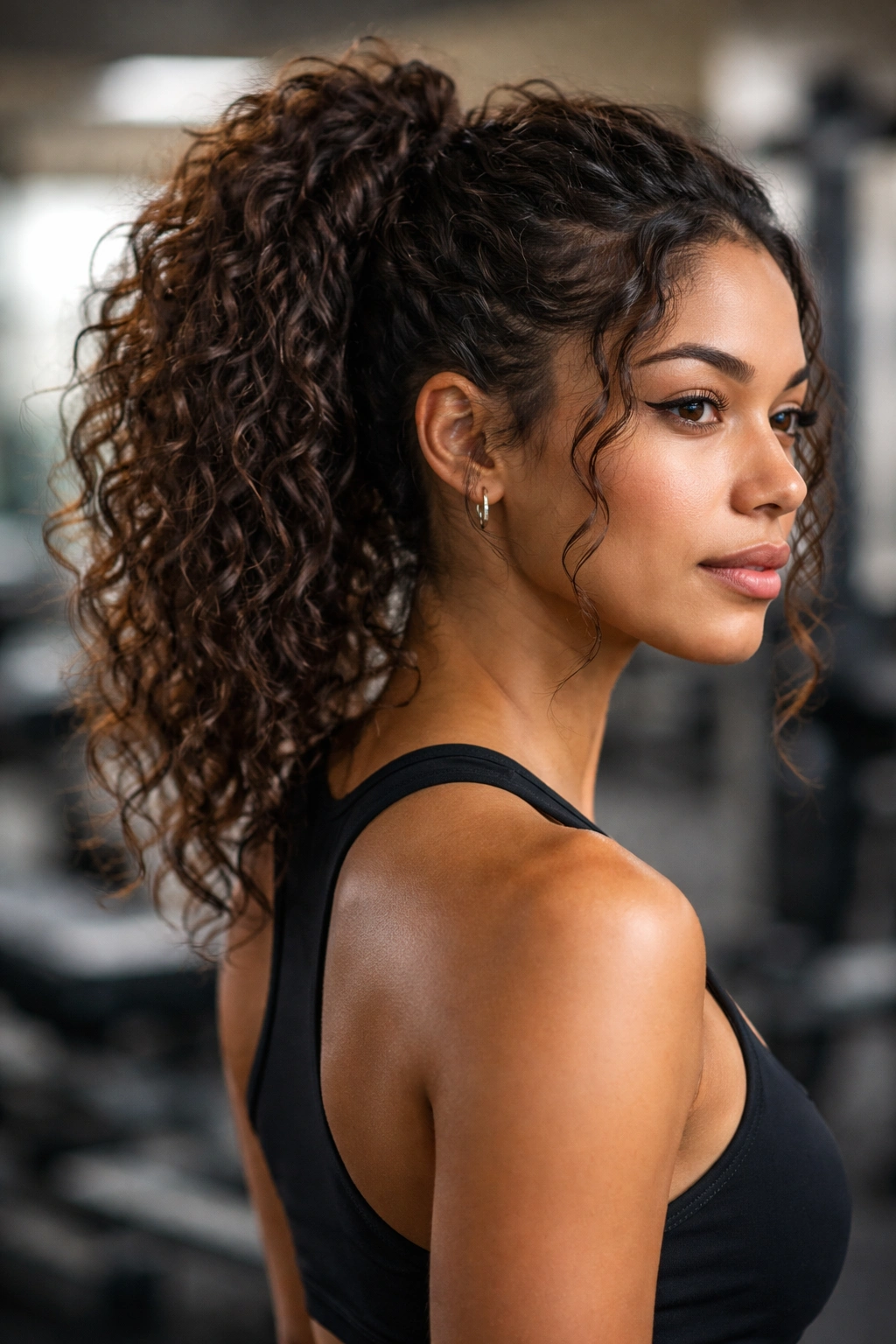
Messy does not mean lazy. On curly hair, a good gym ponytail can look pulled together even when it is loose, damp, and built for movement.
The shape starts higher than a low ponytail but lower than a full puff, usually around the upper back of the head. That placement keeps the curls from bouncing into your face while still letting the ends move. I like this style when the curls are a little compressed from sleep or a scarf. It forgives that. In fact, it often looks better because of it.
A few face-framing curls help a lot here. So does a quick finger-scrunch with leave-in spray on the ends, not the crown. The point is not to make everything pristine. The point is to make the style look lived-in on purpose.
If your curls are especially thick, do not try to force every strand into one clean section. Leave a few pieces out near the temples and the nape. That roughness can read as style, not neglect, if the base is secure and the shape is honest.
15. Curly Ponytail With Face-Framing Tendrils
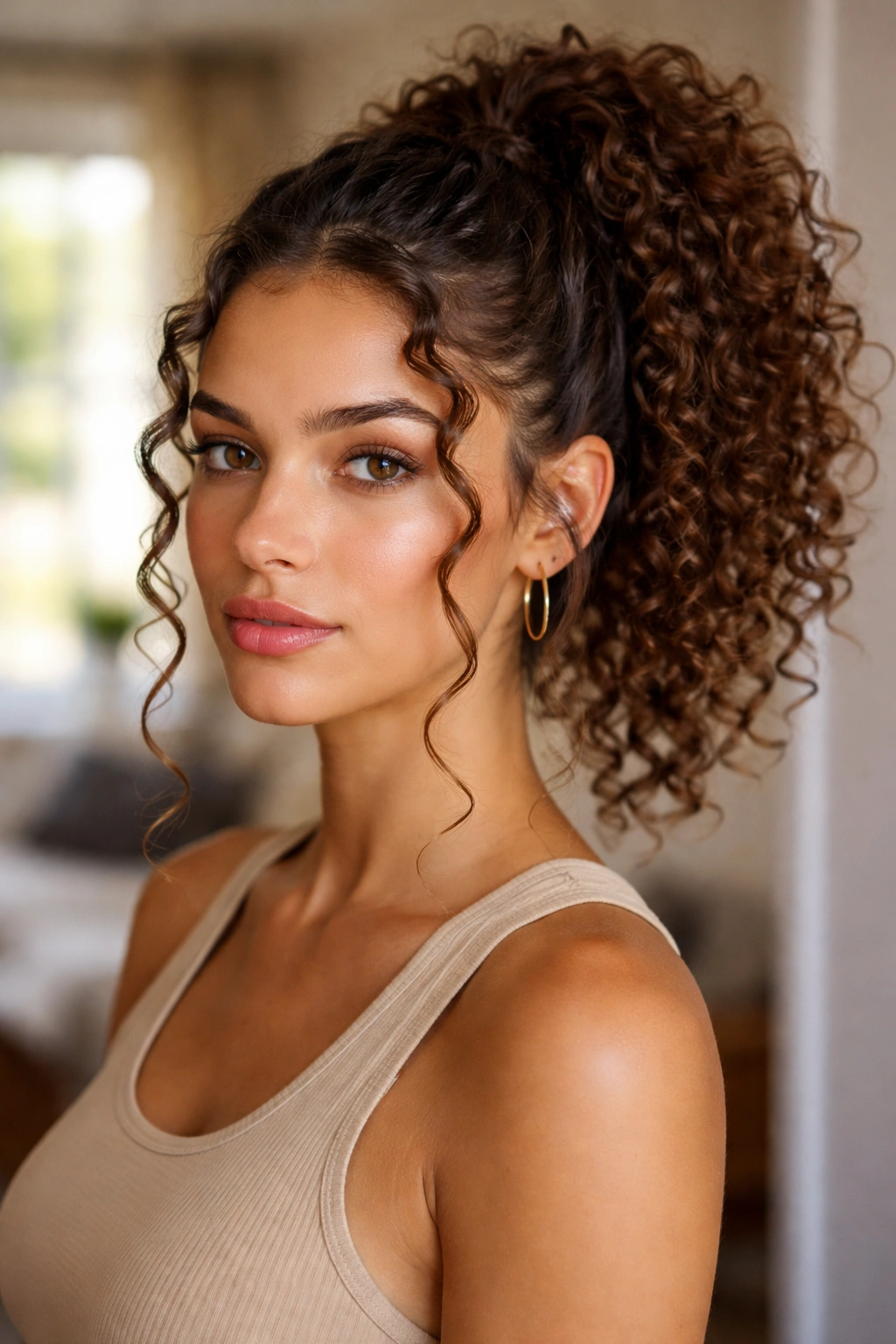
Have you ever pulled your hair back and felt like your whole face disappeared? Face-framing tendrils fix that. They keep the ponytail from looking severe and give curly hair a little movement around the cheeks and jaw.
The trick is to leave out two narrow sections near the temples before you secure the ponytail. Those pieces should be wide enough to curl naturally, but not so thick that they look accidental. Usually a finger-width on each side works. If the curls are tighter, a slightly thicker section gives them more shape.
This style is useful when you want a ponytail that feels soft and a little romantic without going full formal. The tendrils can sit against the cheekbones or curl down near the jawline, depending on length. Leave them alone after you pull them out. Tugging them too much makes them frizz.
How to Use It
Secure the ponytail first, then shape the tendrils with your hands. A dab of curl cream on the ends keeps them from puffing out. That is enough. Don’t overwork it.
16. Rope-Twist Ponytail
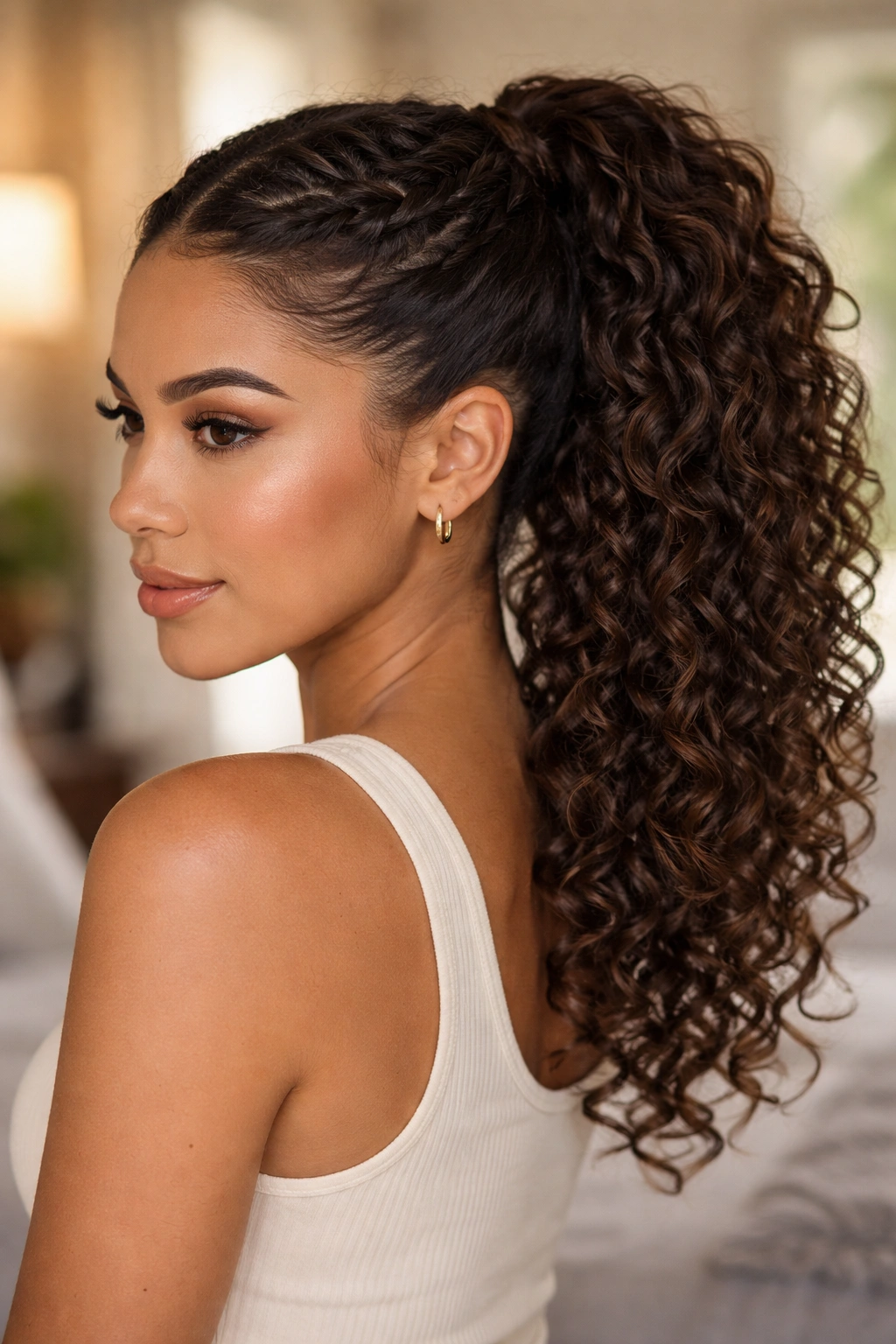
A rope-twist ponytail gives curly hair a clean twist detail without making the style look too stiff. It works by twisting two sections around each other before gathering the hair into a ponytail, so the front reads as textured and controlled.
The rope twist is a nice change from a plain side twist or braid. It feels a little sleeker, but it still lets the natural curl pattern show through at the ends. I especially like it on medium-length curls, where the twist keeps the front tidy and the tail keeps the bounce.
- Use two equal front sections
- Twist each section in the same direction
- Wrap them around each other in the opposite direction
- Secure the twist into a ponytail at the back
This style looks stronger when the twists are snug near the hairline and looser as they reach the base. That contrast keeps it from looking too neat. If the hair is slippery, a small amount of styling cream on the twist sections helps everything hold without becoming crunchy.
It is a quiet style, but not a boring one.
17. Low Puff Ponytail With a Wrapped Base
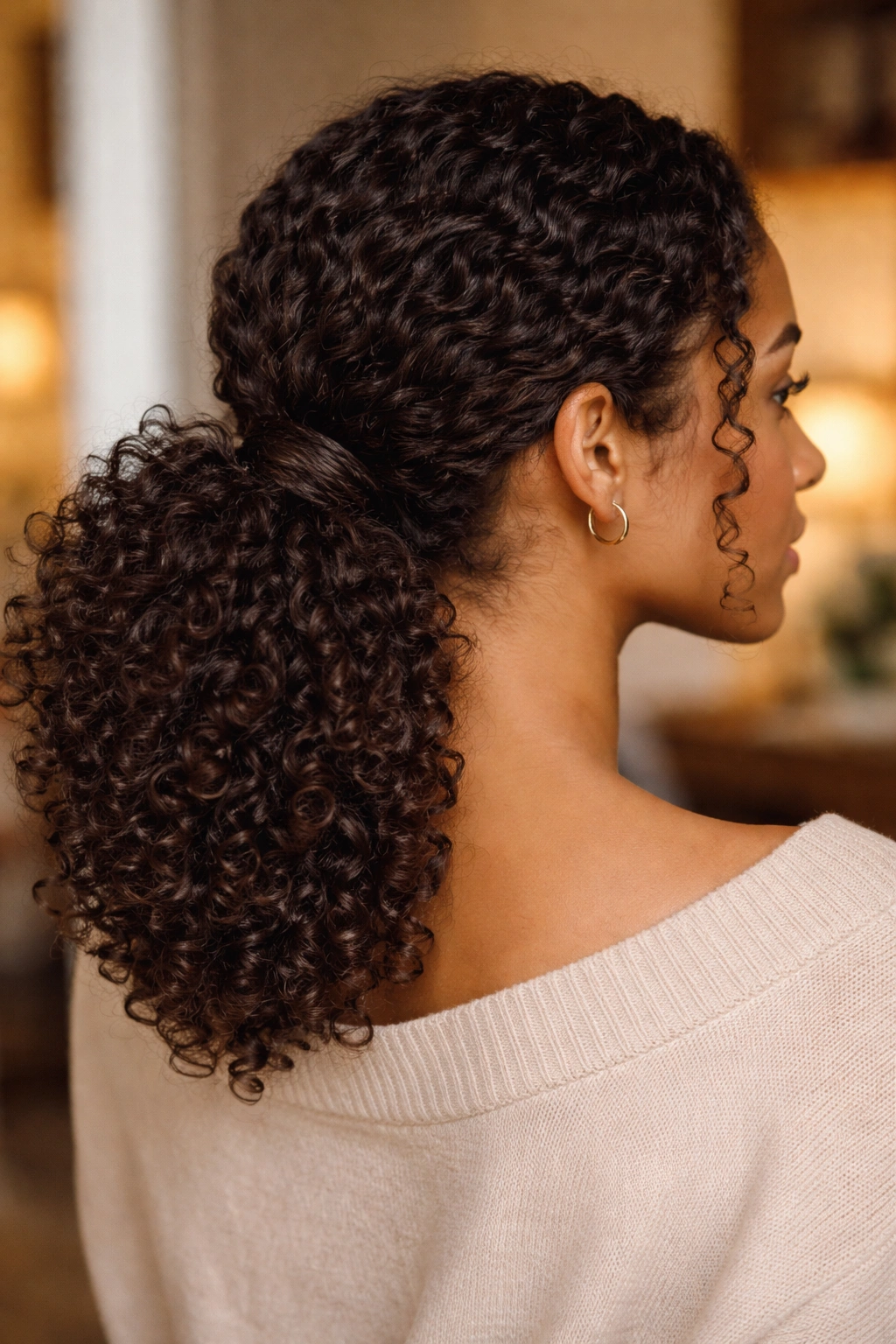
A low puff ponytail has a different energy from a standard low ponytail. It keeps the curls gathered near the neck, but the base stays soft and full, almost like a puff that decided to drape instead of sit upright.
This one is especially flattering when the curls are dense and the crown needs less tension. You gather the hair low, secure it gently, and let the puff spread a little at the base before the curls fall. The shape should feel rounded, not squeezed. If the elastic is too tight, the puff loses its charm.
A wrapped base helps the style look finished. Take a small curl from underneath, wrap it around the elastic, and pin it in place. That tiny detail makes the whole ponytail look more considered. It also hides the elastic, which is helpful when the curls are high-contrast or the tie itself stands out.
I like this style because it respects shrinkage. The curl pattern stays visible, but the silhouette feels grounded. That balance is hard to beat.
18. Side Braid Into Ponytail
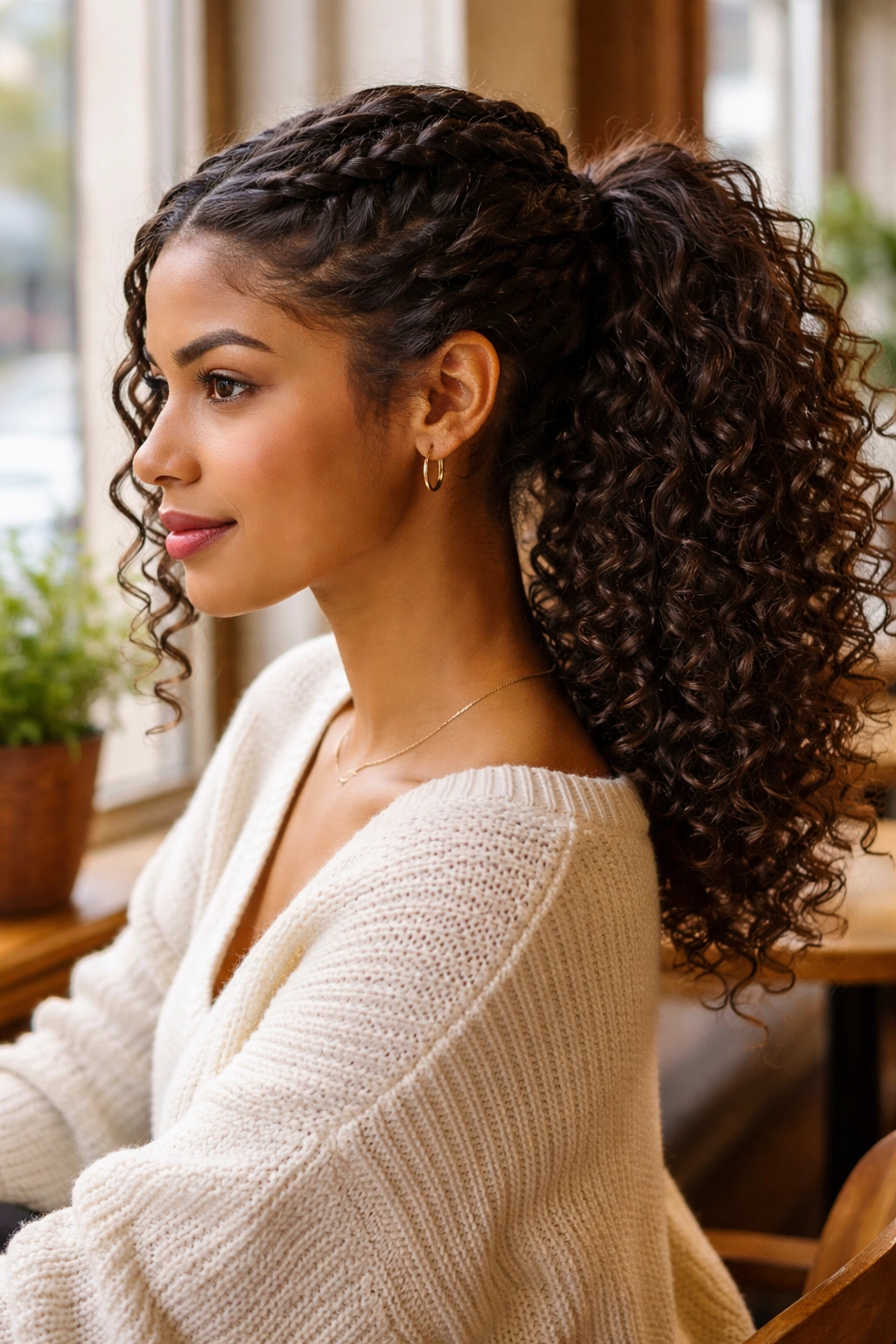
This is the ponytail for people who want texture at the front and fullness at the back. A side braid leads the eye downward, then the ponytail takes over and keeps the rest of the curls loose.
The braid can start near the temple and travel along one side of the head before ending at the ponytail base. A simple braid works. A Dutch braid gives more lift. Either way, the braid keeps the front from falling into the face and adds enough structure that the ponytail does not need to do all the work alone.
This style is especially useful on longer curls because it gives the top half a job. Without the braid, the roots can sometimes look too plain next to a thick tail. With it, the whole style feels layered and deliberate.
It also plays nicely with accessories. A small cuff at the braid end or a narrow ribbon woven through the plait can make the ponytail feel more dressed up without changing the shape much. That part is optional, but it is fun.
19. Pull-Through Ponytail
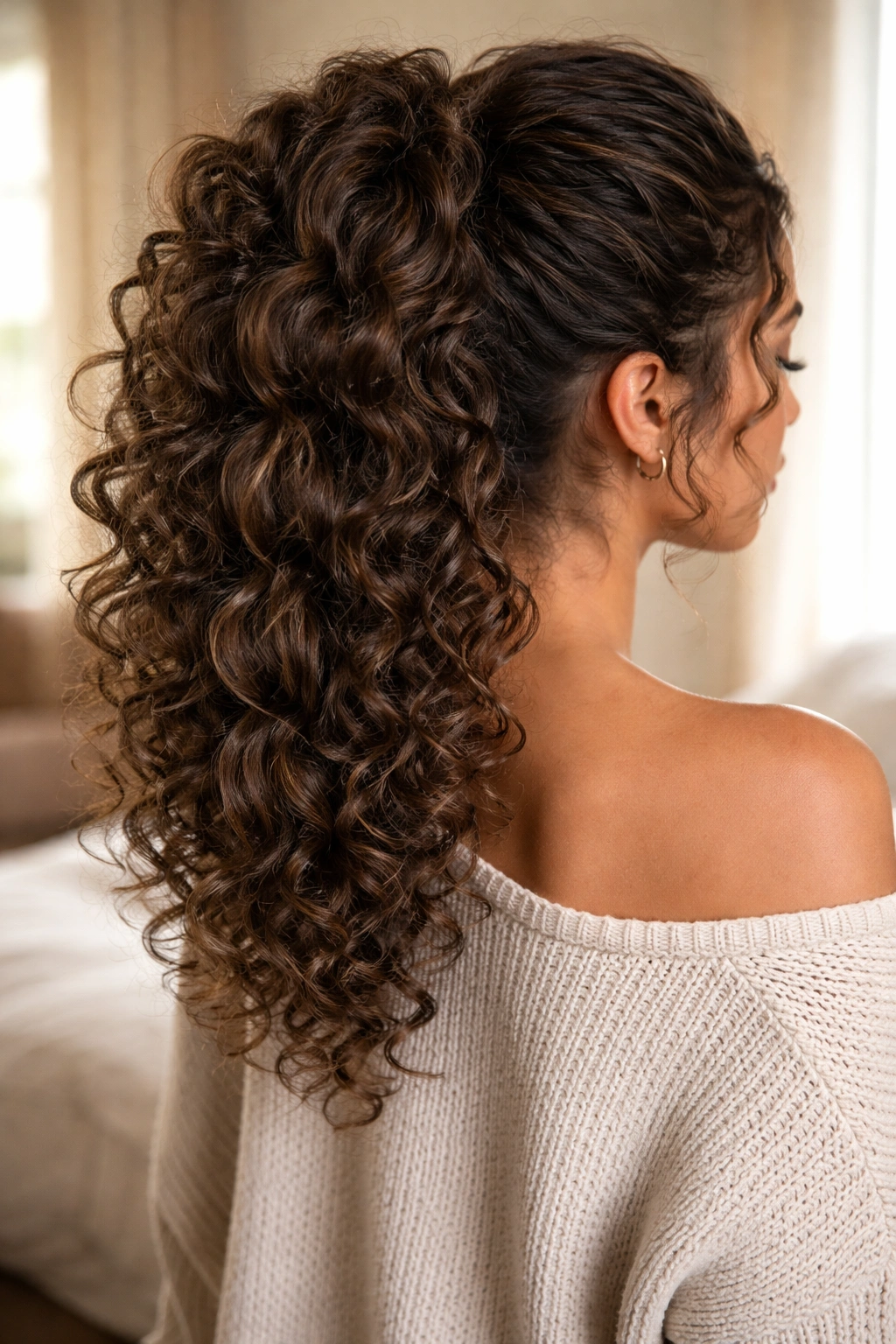
A pull-through ponytail creates the look of extra fullness on curly hair, and that matters when you want volume without teasing the roots. It uses a series of sections tied and pulled over each other, which gives the final shape a stacked, rounded effect.
The best part is that curls make this style easier to fake. The texture hides the joins, so the sections blend faster than they would on straight hair. You don’t need perfect symmetry. You need enough shape to make the ponytail look purposeful.
Why It Stands Out
Start with a small top section, secure it, then add another section beneath it and pull the first tail over the second. Repeat until you reach the bottom. The shape should build like a column of soft loops, not a tight rope.
- Use 3 to 5 clear or matching elastics
- Keep the sections loose to avoid dents
- Gently tug each loop outward once it is secured
- Best on medium to long curly hair
Best move: stop pulling the loops the moment the curl pattern starts to frizz. That is the line.
20. Asymmetrical Ponytail
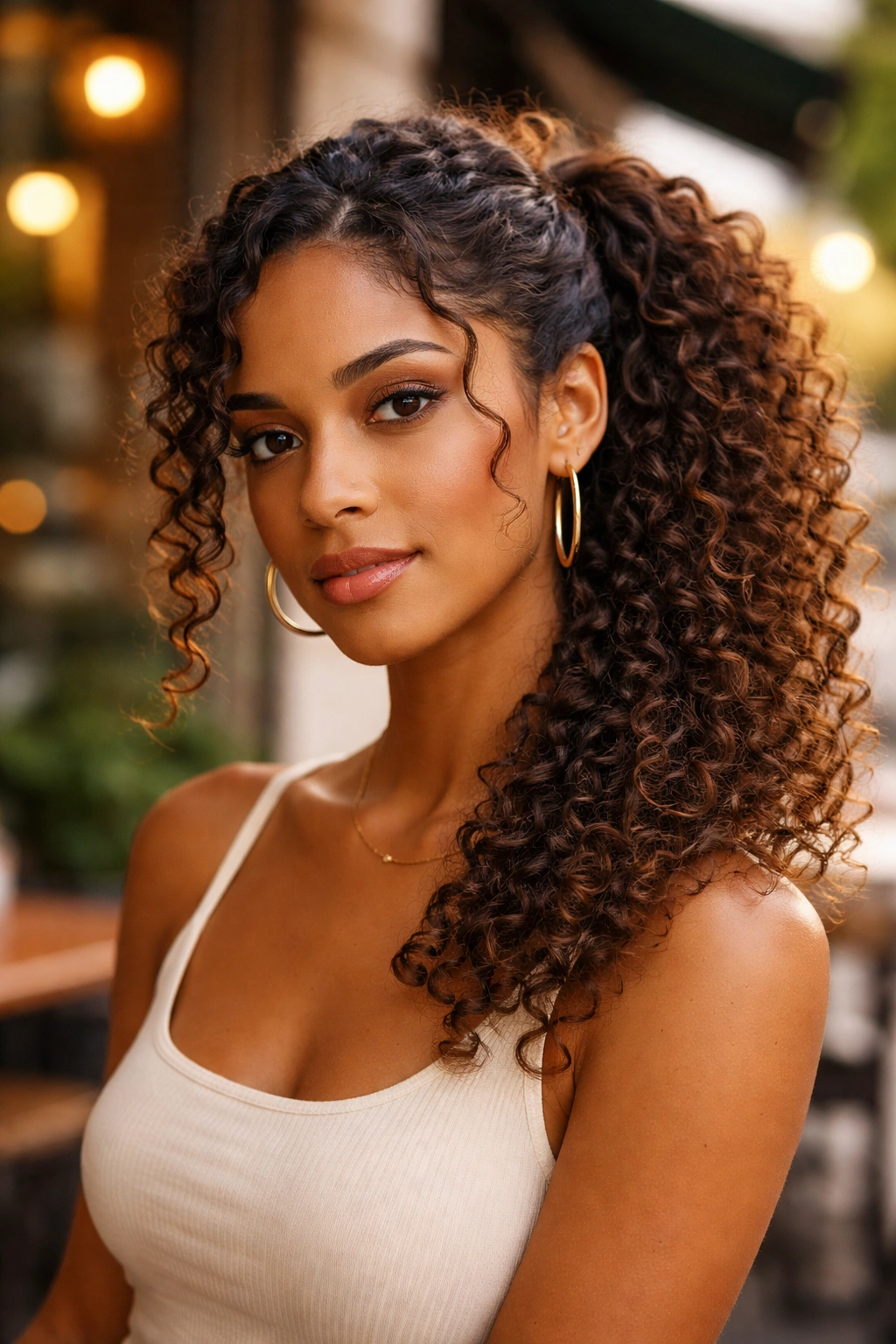
A ponytail does not have to sit in the center to look balanced. In fact, shifting it slightly to one side can make curly hair look fuller and more modern without a single heat tool in sight.
The asymmetry works because it changes the line of the head. A center ponytail can sometimes feel too expected. Move it behind one ear or just off the midline, and suddenly the style has movement. The curls cascade at an angle instead of dropping straight down, which looks softer and more interesting.
I like this look for curls that are layered or cut with face-framing pieces. The side placement lets those pieces fall naturally rather than forcing them into the back. It is also kind to shorter curls around the nape, because they have a place to live instead of being trapped under a tight band.
You can keep the crown smooth or leave it a little puffed. Both work. The side shift is the main event, and it does enough on its own.
21. Crown Puff Ponytail
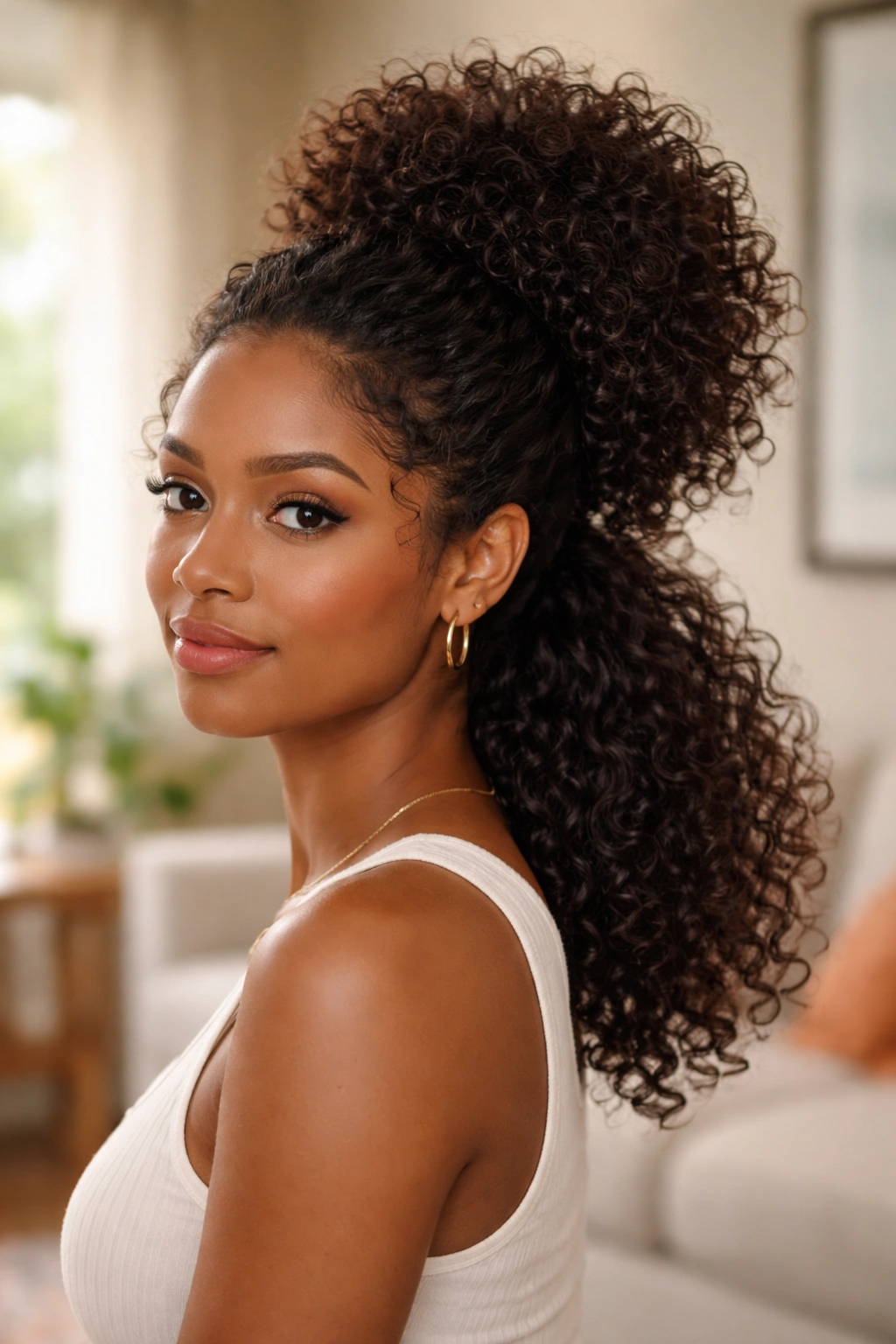
Would you rather flatten the crown or let it rise? The crown puff ponytail chooses lift. It keeps the top section full and airy, then gathers the rest of the curls below it so the style feels broader across the head.
This is not the same as a high cloud puff. The height here is more spread out and less vertical. Think of the crown as a soft dome, with the ponytail sitting just beneath that shape. It flatters curls that need room at the roots and can lose shape if pulled straight back too tightly.
How to Wear It
Use your fingers or a wide comb to lift the crown before you secure anything. Then gather the ponytail at mid-to-high level, leaving the crown slightly raised. A satin scrunchie helps protect the base, especially if the hair is dense.
- Best for rounder face shapes and full curl patterns
- Looks strong on medium to long hair
- Needs light root lifting, not heavy teasing
- Keeps the top from looking flat under the elastic
The final effect is soft, but not sleepy. There’s shape there. You can see it from the front.
22. Banded Stretch Ponytail
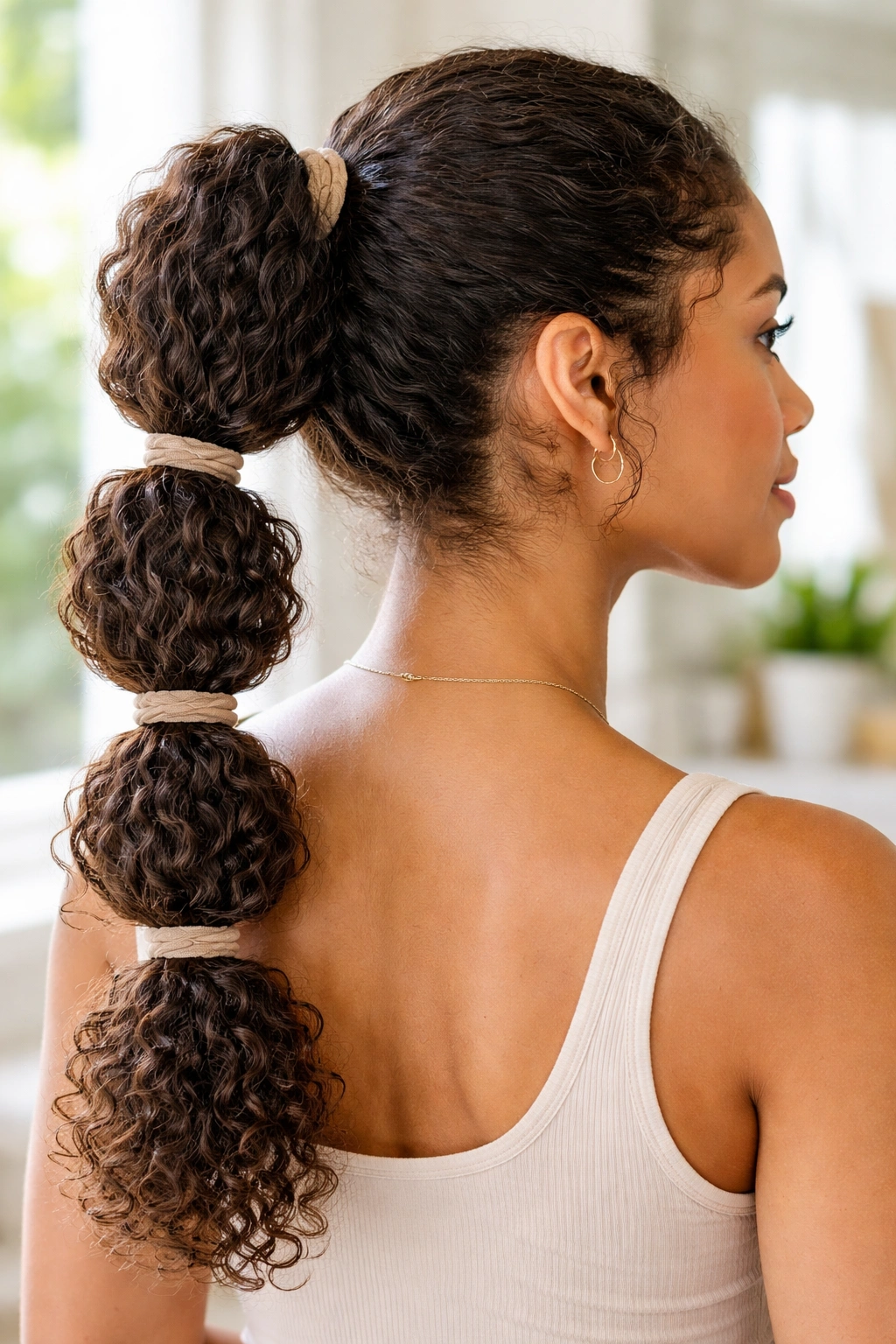
A banded stretch ponytail is a smart no-heat way to show off length on curly hair. The small bands stretch the curl pattern a little at intervals, so the tail looks longer and more segmented without the damage of heat.
The style is especially useful when shrinkage hides a lot of your length. You secure the base, then add small ties every couple of inches down the ponytail. Between each band, the curls can puff outward a bit. The result is structured but still textured.
This one works best when the hair is already detangled and dry, because damp curls can set into odd bends under the bands. Choose soft elastics or snag-free ties. Hard plastic bands are a bad idea here. They catch, and curly hair remembers every catch.
If you want the look cleaner, stretch each section lightly before adding the next band. If you want it more playful, fluff each segment wider. Both versions are valid. The style changes more than people expect with just a small adjustment in spacing.
23. Claw-Clip Ponytail Hybrid
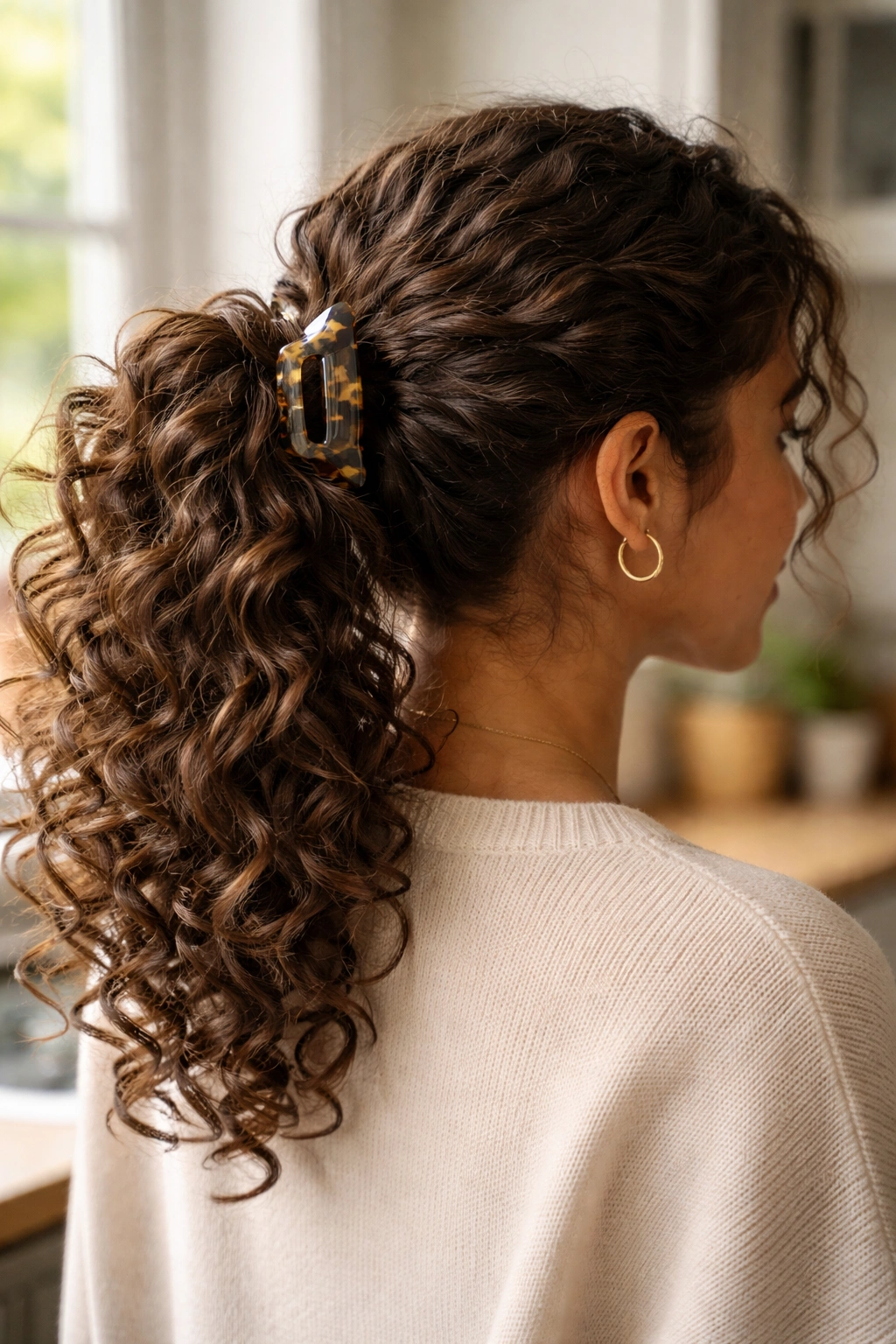
A claw-clip ponytail hybrid is one of those styles that looks casual on purpose. It lets curly hair keep its volume while using the clip to hold the base without a tight elastic mark.
The setup is simple: gather the hair at the back or mid-height, twist it once or twice, then secure it with a claw clip while letting the tail spill out. The curls should not be forced into a tiny loop. They need enough room to spring. If the clip is too small, the hair collapses. If it is too large, the style slides.
I like this for days when you want something quick but not sloppy. It feels a little undone, but not careless. That balance is hard to fake with curly hair, and the clip helps because it removes the need for constant tightening.
Pick a clip with smooth teeth and enough depth to hold the volume of your hair. Curly hair tends to need more room than the clip aisle wants to admit. Slightly annoying. Very true.
24. Sleek Crown, Full Tail Ponytail
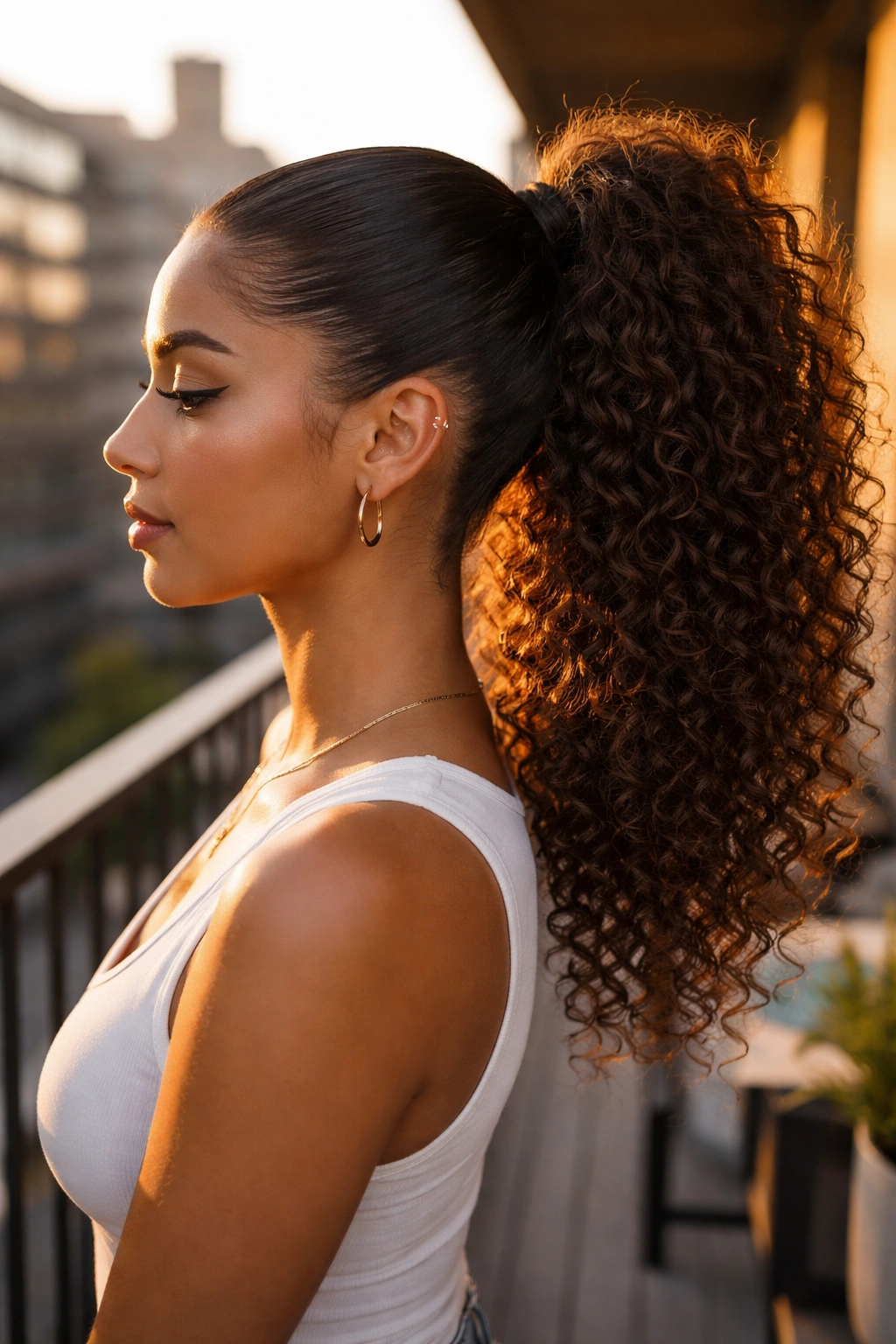
This style is all about contrast. The top stays controlled and close to the head, while the ponytail itself stays big, curly, and full of movement.
It differs from a fully sleek ponytail because you are not trying to smooth the length. Only the crown gets the neat treatment. The tail keeps its texture and volume, which is where curly hair really shines. If the crown is polished and the tail is fluffy, the whole style reads as intentional without looking stiff.
I like this option for outfits that need a cleaner line near the face but still want drama down the back. It also photographs well from the side, where the smooth top and textured tail show up clearly. No need to over-style the tail. Let it breathe.
If the hair has lots of layers, tuck the shortest pieces under the base with a pin or two, then leave the rest alone. That stops the crown from looking fuzzy while keeping the tail open and full.
25. Knotted Scarf Ponytail
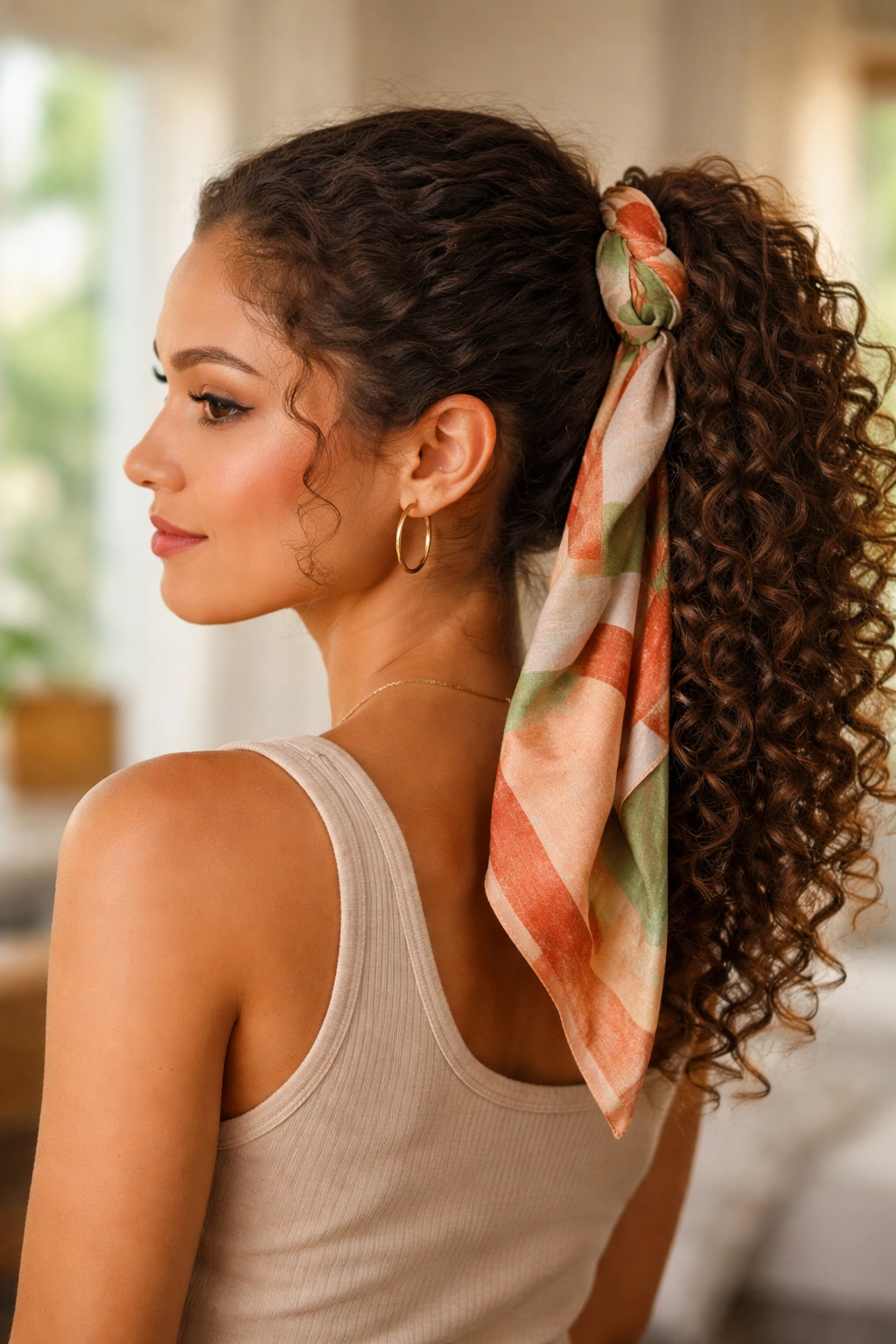
A knotted scarf ponytail has a little more character than a plain wrapped scarf, because the knot becomes part of the style instead of hiding beside it. On curly hair, that detail adds shape without stealing the show.
Fold a scarf into a long strip, tie it around the ponytail base, then knot it once or twice depending on how much length you want hanging. The knot should sit off-center or directly at the base, depending on whether you want the look neat or relaxed. A silk or satin scarf works well because it glides against the curls instead of roughing them up.
Why It Works
The scarf softens the elastic line and gives the ponytail a cleaner finish. It also adds color, which can be helpful when the curls themselves are doing a lot visually. You do not need bright patterns. A deep solid tone can look just as strong.
- Best with mid-height or low ponytails
- Works on washed or second-day curls
- Keeps the base from looking too plain
- Lets the tails move freely
Tip: Choose a scarf with enough length to tie securely, but not so much that it swallows the ponytail shape.
26. Event Ponytail With Pinned Detail
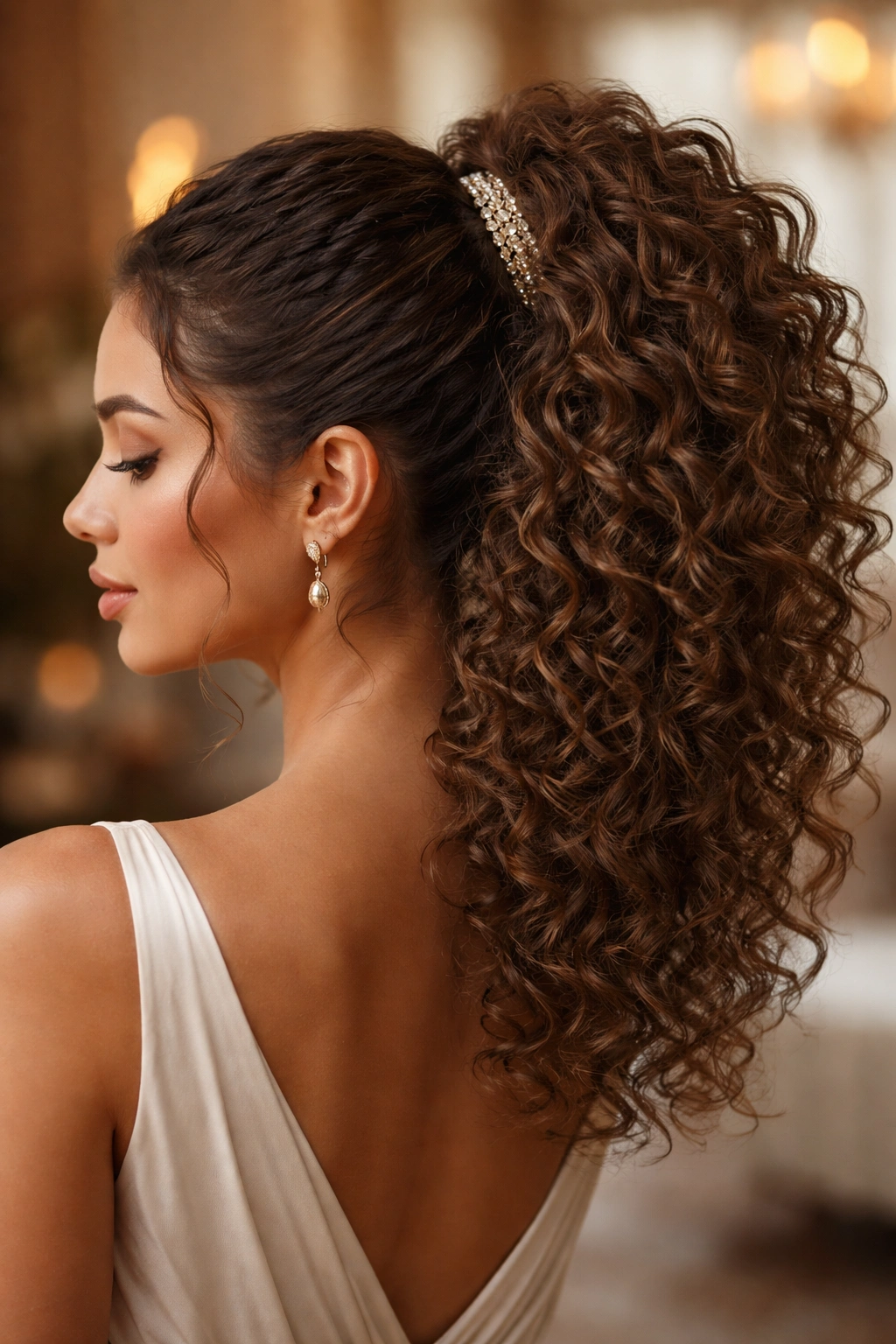
A ponytail for an event should hold up close and still look soft from a distance. This pinned-detail version does that well. It keeps the structure simple, then adds a small set of decorative pins or hair jewelry around the base.
The base can be high, low, or somewhere in the middle. What changes the feel is the detail work. A few pearl pins, a slim metal cuff, or even two crossed bobby pins can turn a basic curly ponytail into something that looks finished enough for dinner, photos, or a more dressed-up room.
The important part is placement. Put the pins where they catch the eye from the front or side, but do not bury them under the curls. They need room to show. If the hair is very dense, use slightly longer pins so they stay visible.
This style is useful when you want elegance without spending half an hour on an updo. Curly hair already has texture. The pins just give it a point of focus.
27. Crystal-Pin Curly Ponytail
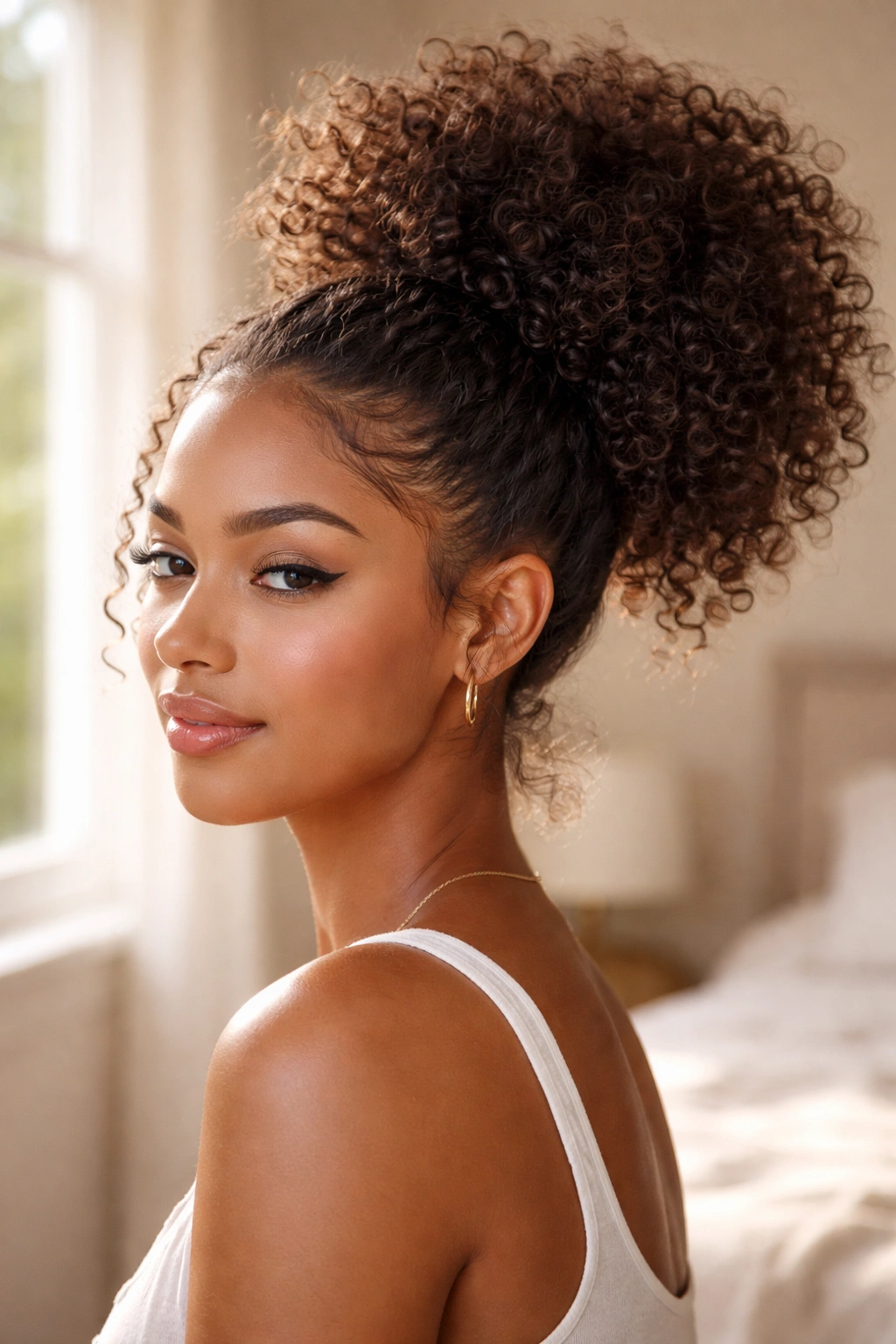
Can a ponytail feel dressy without turning into a full updo? Yes. A crystal-pin curly ponytail does that job neatly, and it works especially well when the curls themselves are already in good shape.
The style starts like a simple ponytail, usually mid-height or low, then gets a few small crystal or rhinestone pins placed around the base or along one side of the crown. I like three to five pins rather than a heavy cluster. Too many can look busy. A small set of pins creates sparkle without burying the curl pattern.
Leave the tail free and let the ends do the moving. That matters more than the decoration, honestly. The shine should frame the curls, not compete with them. If the front needs a little polish, smooth the edges lightly with cream and stop there.
This is the version I would pick when the outfit is already doing a lot and the hair needs to stay readable from across the room. The curls stay the point. The pins just catch the eye on the way there.
