

Curly hair updos for Black women occupy a space that’s uniquely ours — built from cultural tradition, refined through generations of creativity, and shaped by a relationship with hair that’s more layered and more personal than most outsiders ever fully understand. These aren’t just hairstyles. They’re an archive. Every flat twist, every bantu knot, every cornrowed updo carries a history of resilience, artistry, and self-determination that no other community has in the same form.
The Cultural Weight of Natural Hair Updos
Black women’s relationship with their hair has always been political, even when it’s just practical. Wearing natural hair in any public space — in an updo or otherwise — is an act that carries meaning that most people outside the community don’t fully see. The choice to gather your 4C coils into a high puff for a job interview, to wear bantu knots to a formal dinner, to show up to a family event with your hair in a flat-twist updo and no apology in your expression — these choices still feel like statements in many contexts, even when all you’re doing is getting your hair off your neck.
Knowing this context makes the act of choosing a style feel different. It’s not just aesthetics. It’s also self-assertion. The natural hair updo for Black women is a celebration of texture, a rejection of the narrative that our hair needs to be changed to be beautiful, and a form of creative expression that has been innovated by Black women for centuries.
This list of curly hair updos exists in that tradition.
The Spectrum of Black Natural Hair
One of the most important things to understand before diving into updo options is that “Black natural hair” describes an enormous range of textures. The natural hair community encompasses loose, springy Type 3A curls; dense, defined 3C coils; the tight, well-defined loops of 4A; the angular, z-pattern coils of 4B; and the dense, shrinkage-heavy texture of 4C.
Each of these textures creates updos that look and behave differently from one another. A flat-twist updo on 4A hair looks different from the same style on 4C hair — and both are beautiful in their own way. The key is not to force any updo to look like it does on someone else’s hair. Work with your specific texture’s strengths.
This list was written with the full spectrum in mind. Most styles are adaptable across curl types. Where a style works best for a specific texture, that’s noted. But the underlying principle is the same throughout: natural hair, however it grows from your scalp, is the foundation of something gorgeous.
What Makes an Updo Right for Black Natural Hair
The best updos for Black natural hair share a few common characteristics. They work with the hair’s natural curl direction rather than fighting it. They account for the density that most natural textures carry. They use products that enhance rather than suppress the texture. And they consider the reality of shrinkage — the fact that the hair’s actual length may be significantly greater than its visible length.
Moisture is the non-negotiable foundation. Every updo on this list works better — looks better, holds better, comes apart less — when it’s done on properly moisturized hair. Dry, brittle natural hair resists styling and breaks during manipulation. Moisturized natural hair bends, stretches, and shapes cooperatively.
The styling window also matters. Freshly washed natural hair — or hair that’s been refreshed with water and leave-in — is more pliable and easier to work with than hair that’s been dry for multiple days. For any updo requiring flat twisting, braiding, or significant manipulation, working with damp or refreshed hair produces significantly better results.
Products Every Natural Hair Updo Needs
A water-based leave-in conditioner is the starting point. Apply it to damp or freshly refreshed hair, distributing it evenly through every section. This is the moisture layer that everything else is built on.
For styles requiring definition — twist-outs, braid-outs, coil sets — a curl cream with good slip and hold comes next. Something with shea butter, castor oil, or mango butter as a base provides both moisture and a degree of hold.
For styles that need to stay in place for hours — formal updos, wedding styles, work presentations — a strong-hold gel over the cream layer locks everything in. Choose one that doesn’t flake when dry and doesn’t create a white residue visible on dark hair.
Edge control is its own essential product. A good edge control applied correctly can last eight to twelve hours. Apply to damp edges, smooth with a soft brush in the direction you want the hair to lay, and finish with a light hold spray over the top.
1. The High Puff — Quintessential and Irreplaceable
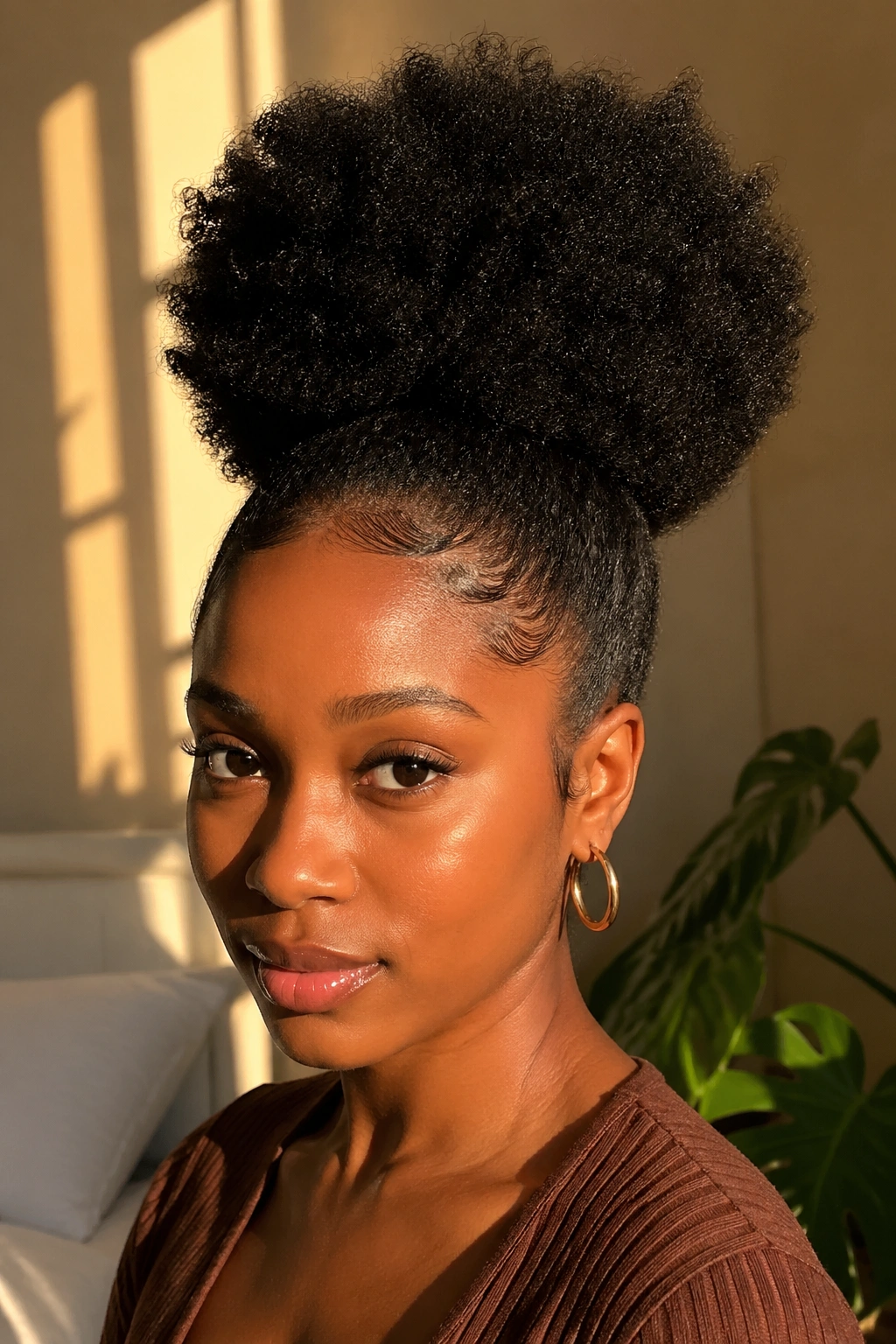
The high puff is the style that has come to symbolize natural hair as a cultural statement. It’s simple, it’s fast, and on Black natural hair — particularly Type 4 textures — it creates a volume and silhouette that’s genuinely iconic.
How to Get This Look
Start with moisturized hair. Apply a leave-in and a light hold cream throughout. Gather all hair upward toward the crown, using your palms to smooth the sides and back. Secure with a large satin scrunchie at the crown — position it as high as possible. Using an afro pick, lift the gathered hair upward and outward from every direction to maximize the puff’s volume. Apply edge control along the hairline and smooth with a brush.
- Use a pick with widely-spaced teeth to lift without disrupting curl clumps
- The smoother the sides and the fuller the top, the more polished the puff looks
- Keep a small travel edge control for mid-day touch-ups
- A wide satin scrunchie reduces the risk of breakage at the gathering point
2. Bantu Knots — Cultural and Striking
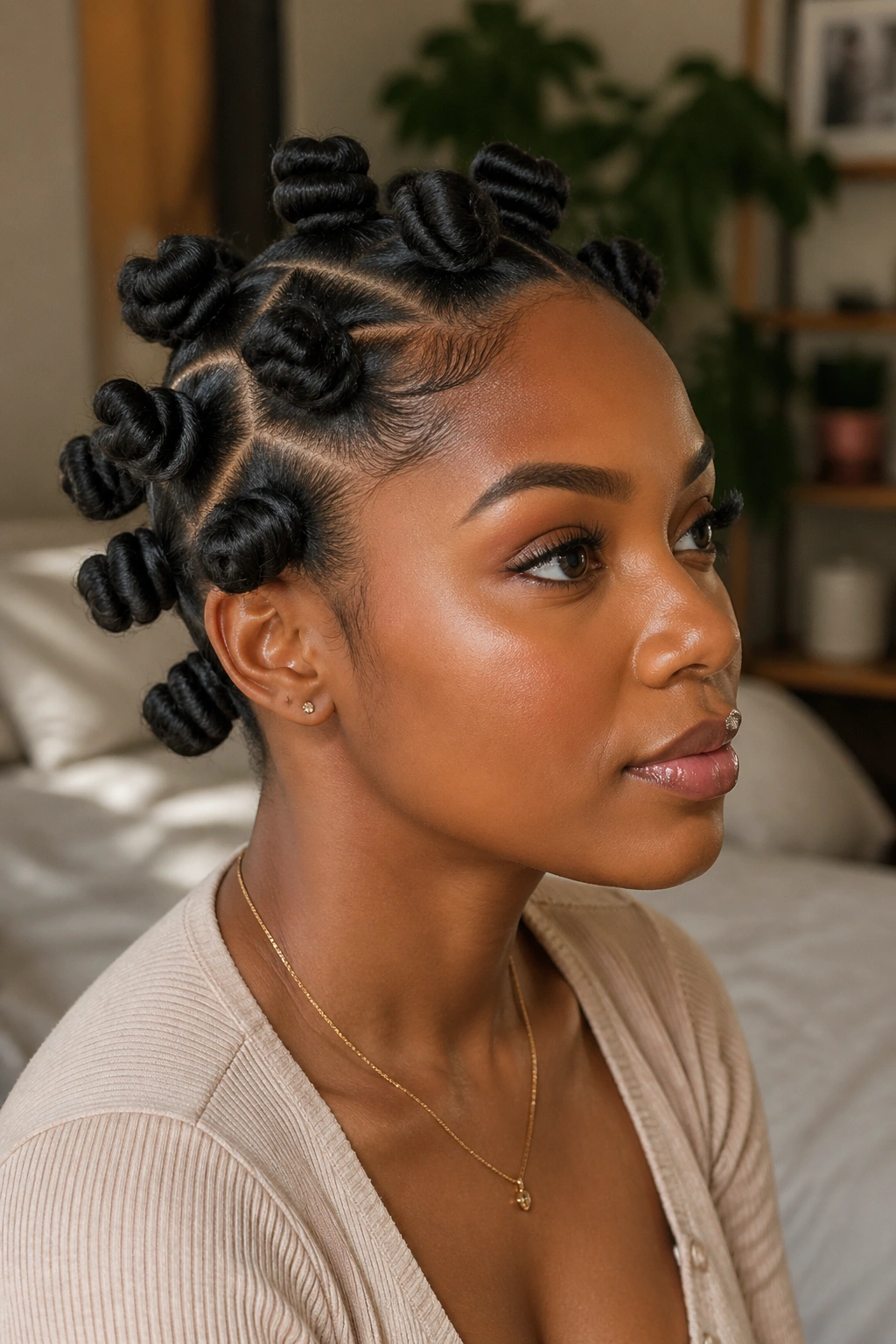
Bantu knots are one of the oldest updos in African hair culture, and they remain one of the most beautiful. Each knot is a small, flat, coiled formation pressed close to the scalp — created by twisting a section of hair tightly and coiling it around itself until it sits flat.
A full head of bantu knots is a sculptural, graphic style that looks like art. It’s also protective, keeping ends tucked and reducing manipulation. For Black women wearing their natural hair, bantu knots carry the additional weight of cultural visibility — they’re a style that says exactly where this hair comes from and exactly who created it.
3. Flat Twist Updo
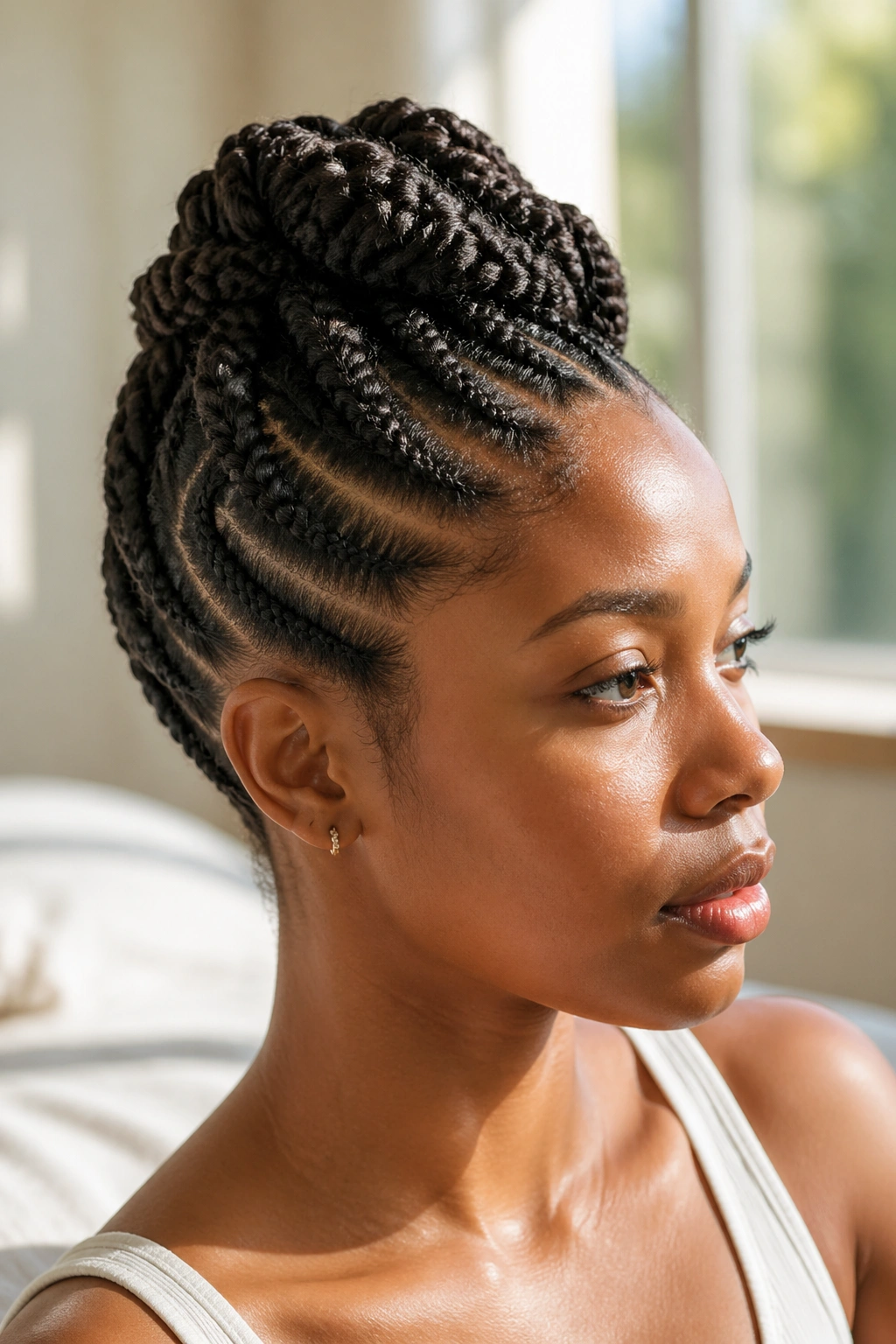
Flat twists are two-strand twists done directly against the scalp — technically similar to cornrows but with only two strands, which makes them gentler and easier to do on yourself at home. A flat twist updo directs all the flat twists upward toward the crown, creating a gathered, structured style with the beautiful textured pattern of the twists visible along the scalp.
The variety of flat twist updo designs is essentially unlimited. Straight parallel rows. Diagonal rows. Converging patterns that meet at the center. A star pattern. Two large flat twists that spiral into each other. The technique is the same; the arrangement creates the design.
4. Cornrow Updo
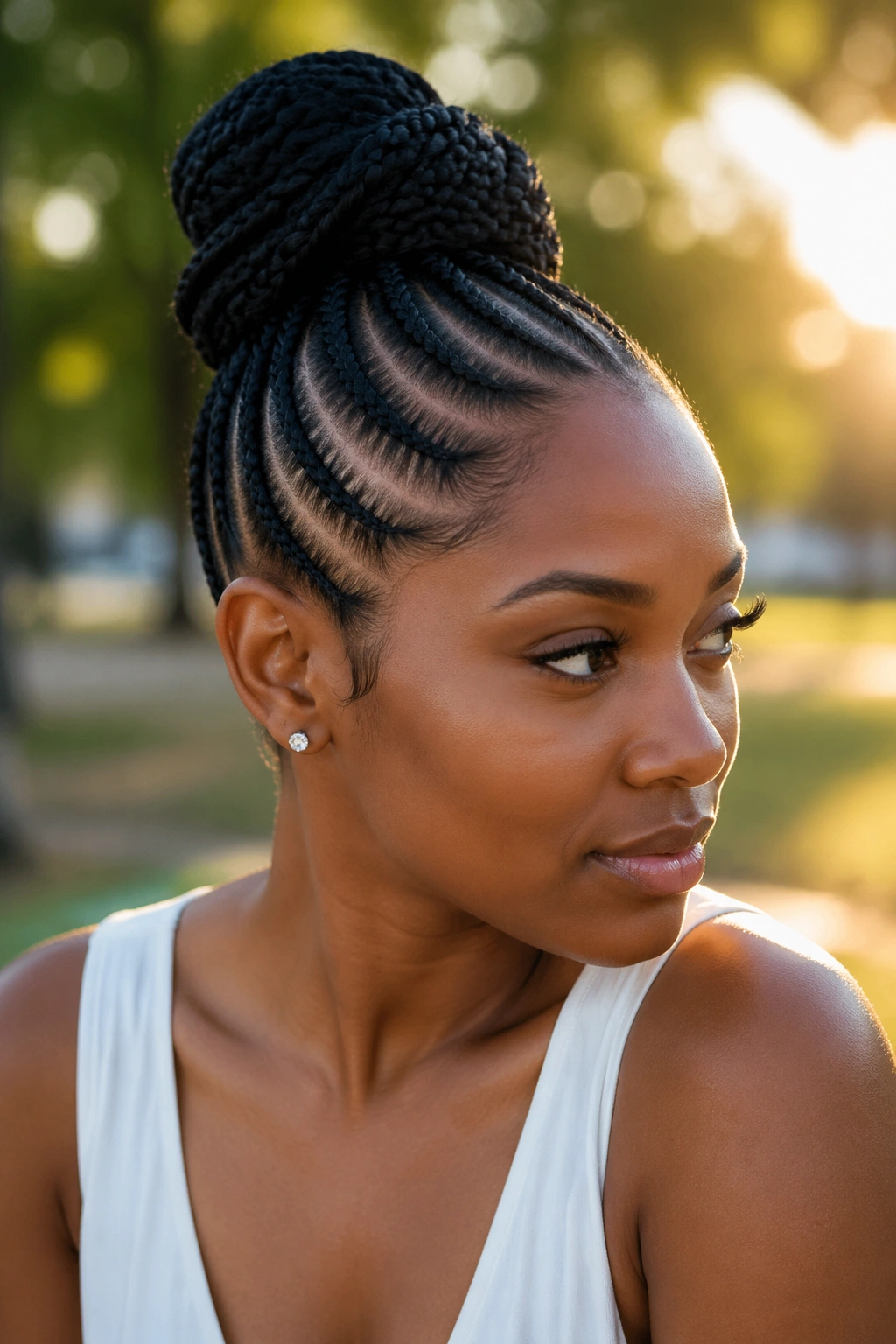
Cornrows running along the scalp in any pattern, directed upward and inward toward a central bun or gathered point — the cornrow updo is one of the most durable and time-tested styles in Black hair tradition. The scalp-flat braiding technique creates a protective foundation that can last weeks at a time while still looking completely styled and intentional.
How to Get This Look
Section the hair into the pattern you want — parallel rows, converging rows, or a curved pattern. Each cornrow begins at the hairline or the starting point of the section and is braided close to the scalp, picking up additional hair with each stitch. All rows are directed toward the crown or a central meeting point, where the remaining hair is either gathered into a bun or the braid ends are pinned.
5. The Braided Crown
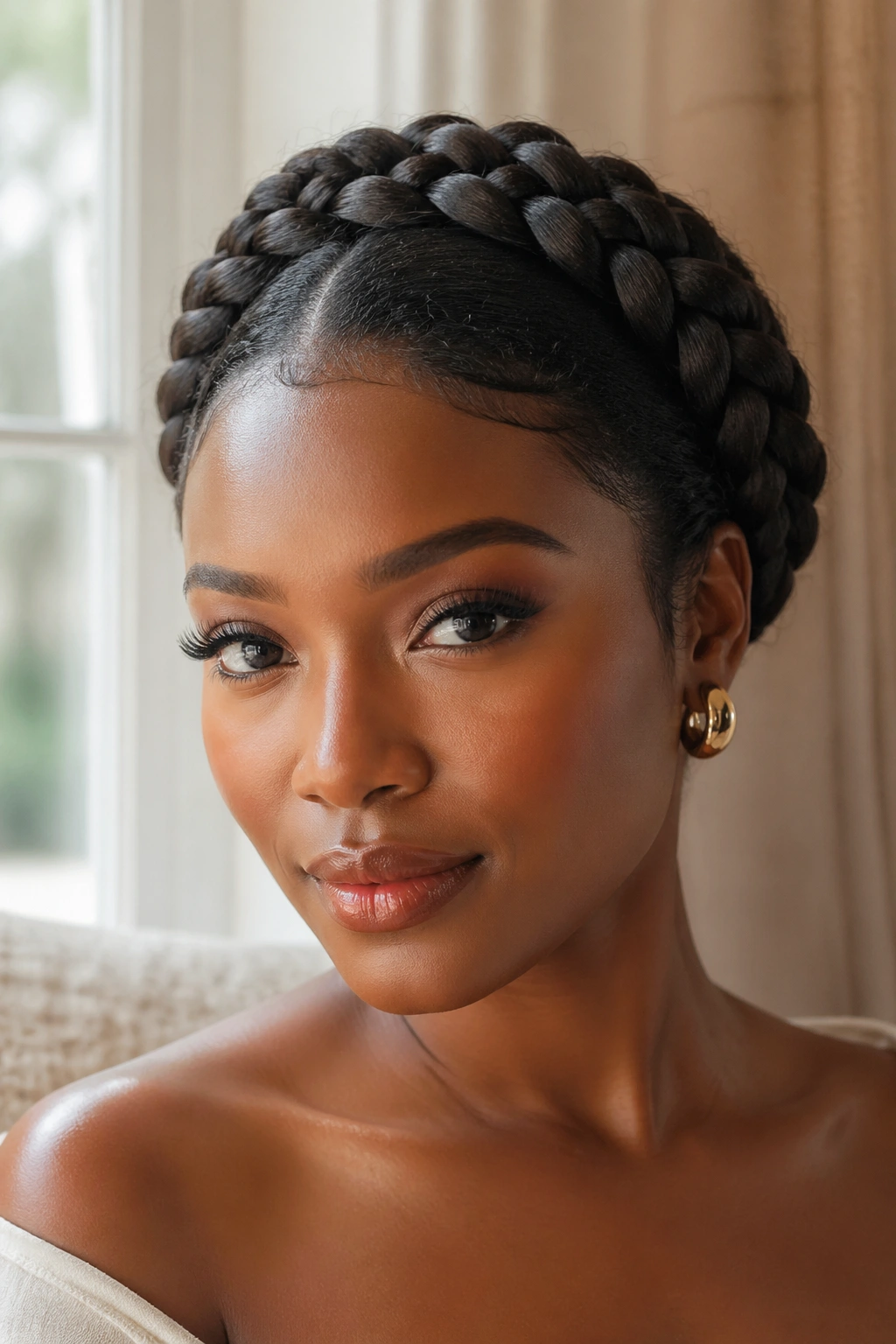
A braided crown — two braids that circle the head like a wreath, meeting at the back — is both regal and deeply rooted in Black hair tradition. The crown structure frames the face beautifully, works for formal occasions and everyday wear alike, and holds its shape remarkably well throughout the day.
This style is appropriate for job interviews, weddings, family events, and regular Tuesdays. It communicates care and intention without requiring a salon.
6. Jumbo Twist Updo
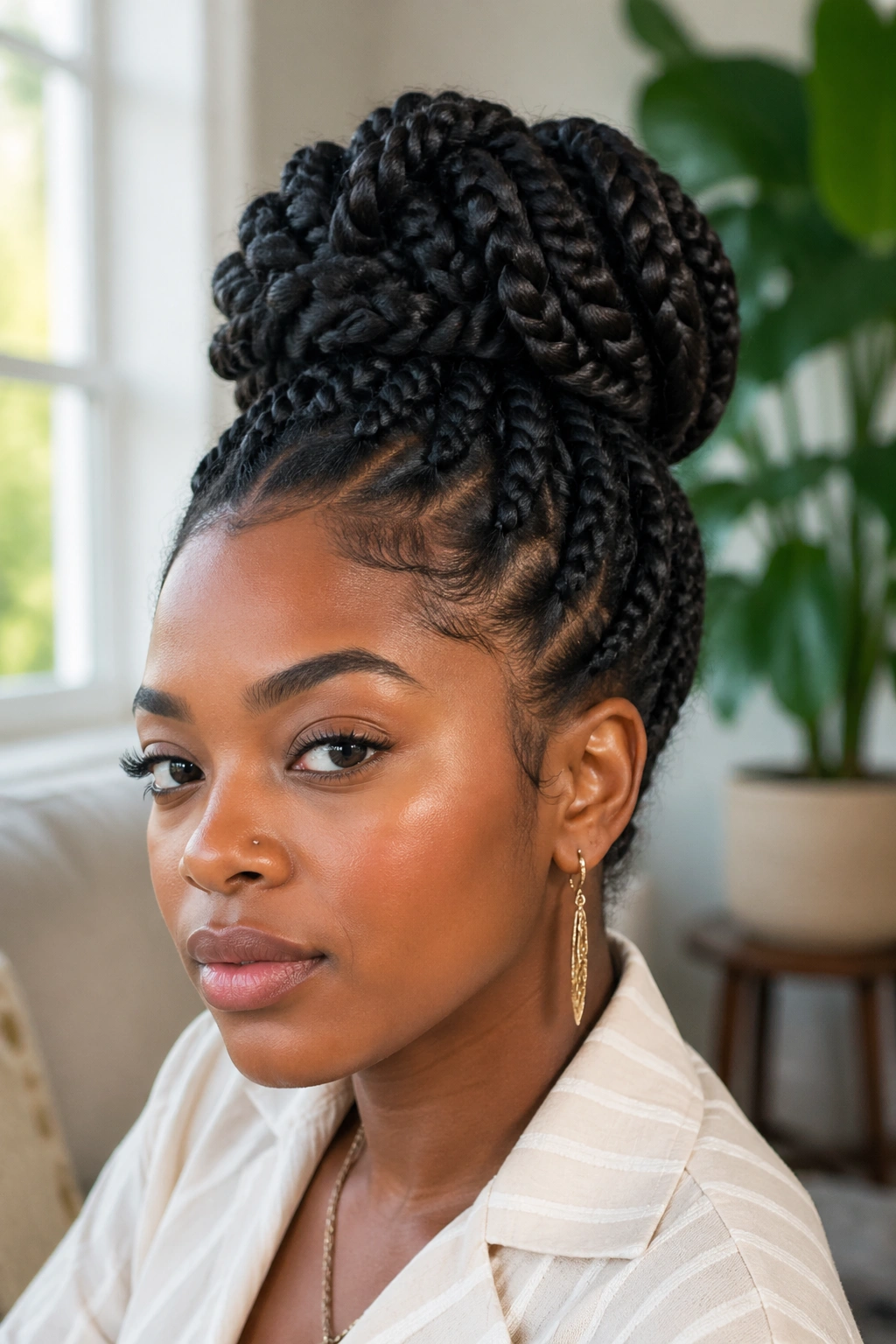
Jumbo two-strand twists — each one made from a substantial section of hair — gathered into an updo create a style where the individual twist texture is visible inside the bun or gathered shape. On Black natural hair, jumbo twists have a beautiful, weighty quality that gives the updo real visual presence.
The size of each twist determines the texture’s visibility inside the updo. Larger twists create a coarser, more graphic pattern; smaller twists create a finer, more detailed texture. Both are beautiful.
7. Locs Updo
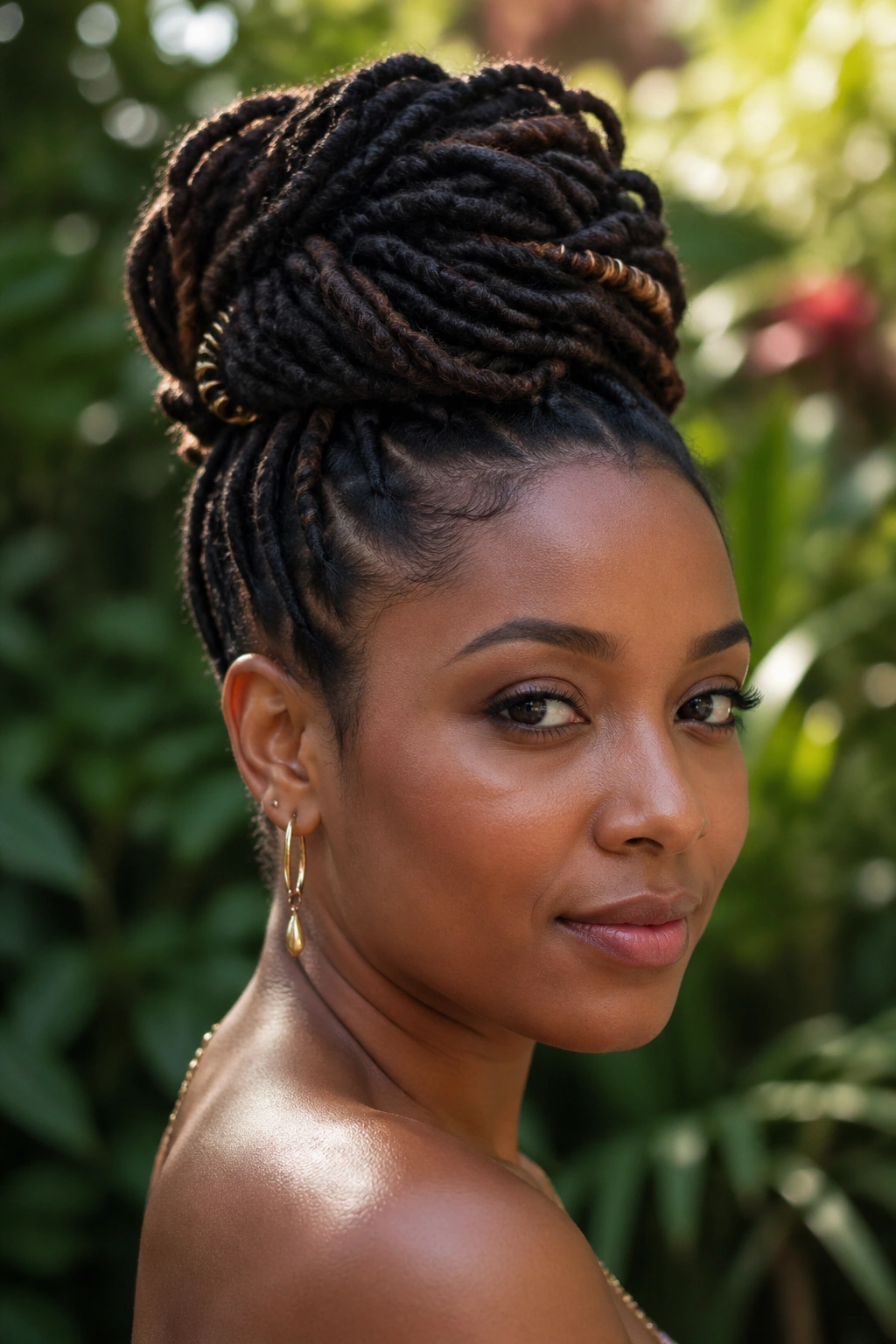
Locs — whether traditional, sisterlocs, or faux locs — create updos of extraordinary variety and power. The structure of the loc itself makes pinning and gathering easier than loose natural hair, and the range of updo styles achievable with locs is enormous: high buns, chignons, twisted updos, braided arrangements, pinned cascades, sculptural abstracts.
For Black women wearing locs, the updo is one of the primary ways the style is refreshed and varied without requiring re-installation. A different arrangement of the same locs is a completely different look.
8. Finger Coil Updo
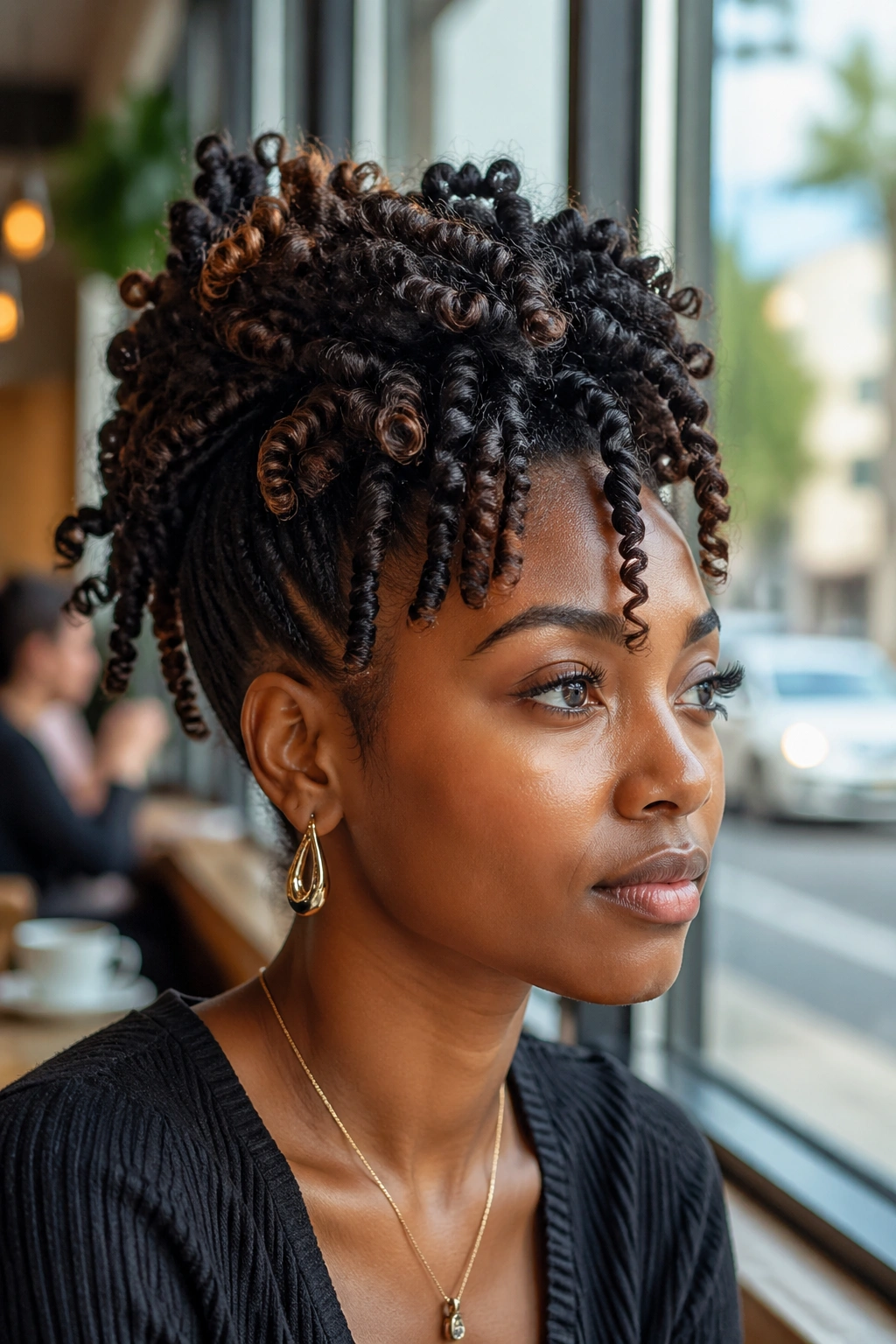
Finger coils — individually formed spirals, each one shaped by wrapping a section of hair around the finger — gathered into a loose updo create a style where each coil remains distinct and visible inside the gathered shape. It’s time-intensive to set, but the result is a textured, richly detailed updo that looks unlike any other.
On 4A and 4B hair especially, finger coils achieve a precisely defined spiral that holds its shape for multiple days. Gathered into an updo, those coils create an interior texture that has genuine depth and movement.
9. Pineapple Updo
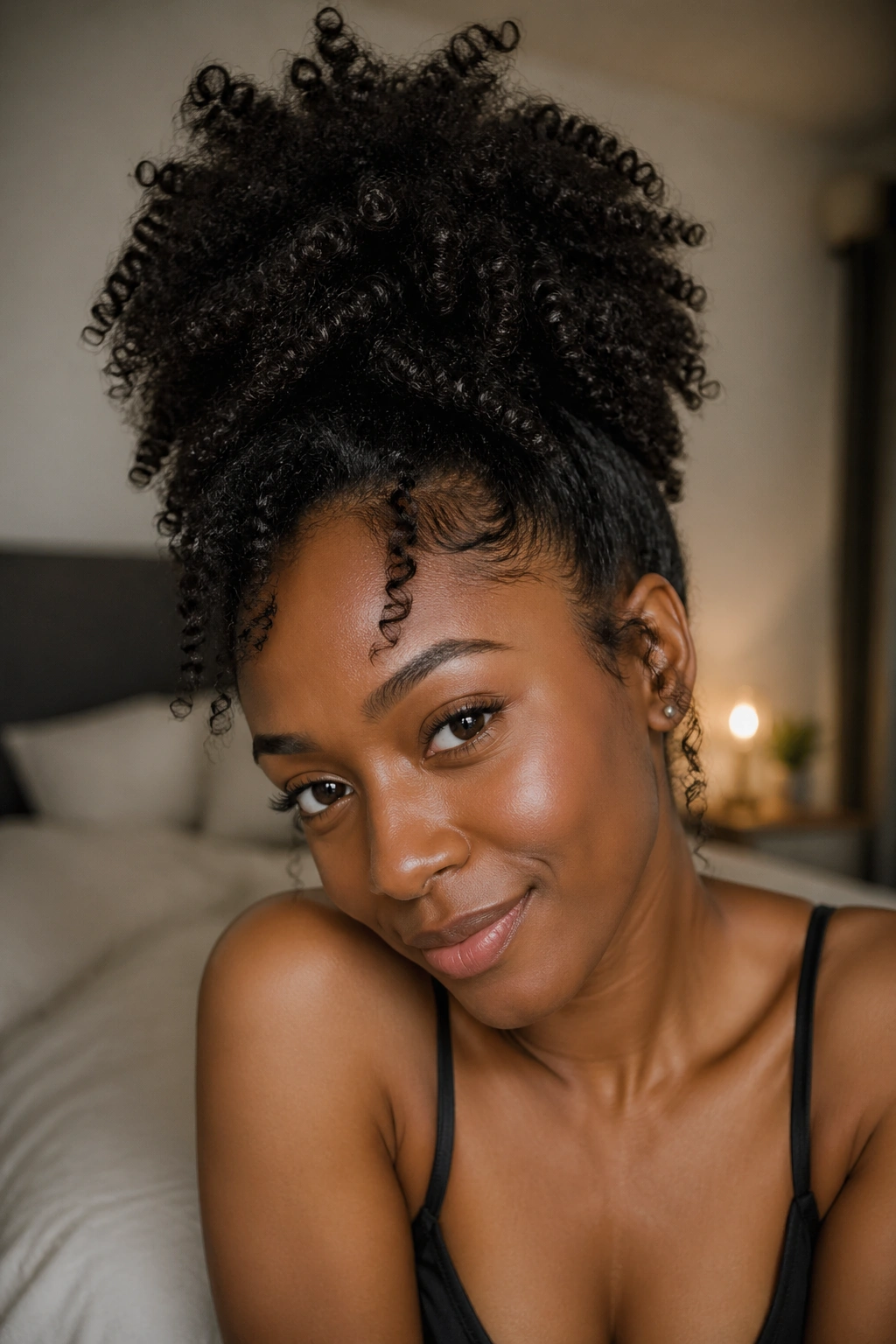
The pineapple — all hair gathered high at the crown in a loose, forward-leaning fashion — is one of those styles that seems too simple to be beautiful until you see it executed well on natural hair. On Black natural textures, particularly 4C, the pineapple creates an extraordinary silhouette: a full, textured crown that sits high above the head and catches light from every angle.
No smoothing required. The pineapple is not a sleek style. It’s all about volume and height, and natural hair provides both without effort.
10. Space Buns With Natural Texture
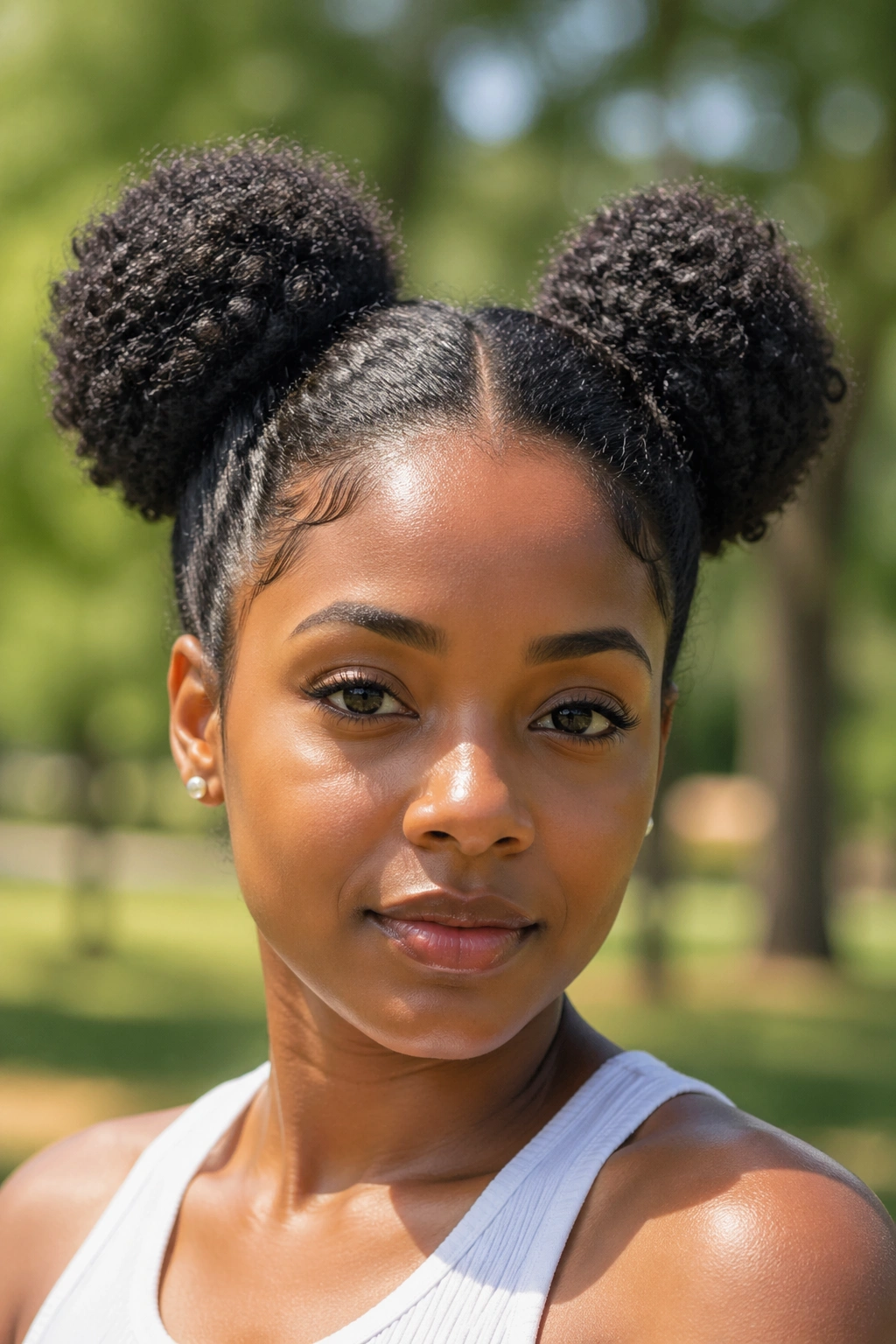
Two buns, high on each side, separated by a center part — space buns look completely different on natural hair than on any other texture. The fullness and density of natural coils makes each bun a substantial, round, voluminous shape. On 4C hair especially, space buns have a scale that commands attention.
Add gold cuffs, rhinestone pins, or matching accessories at the base of each bun for an elevated version. This is a style that’s simultaneously youthful and bold.
11. Slicked-Back Bun With Edges
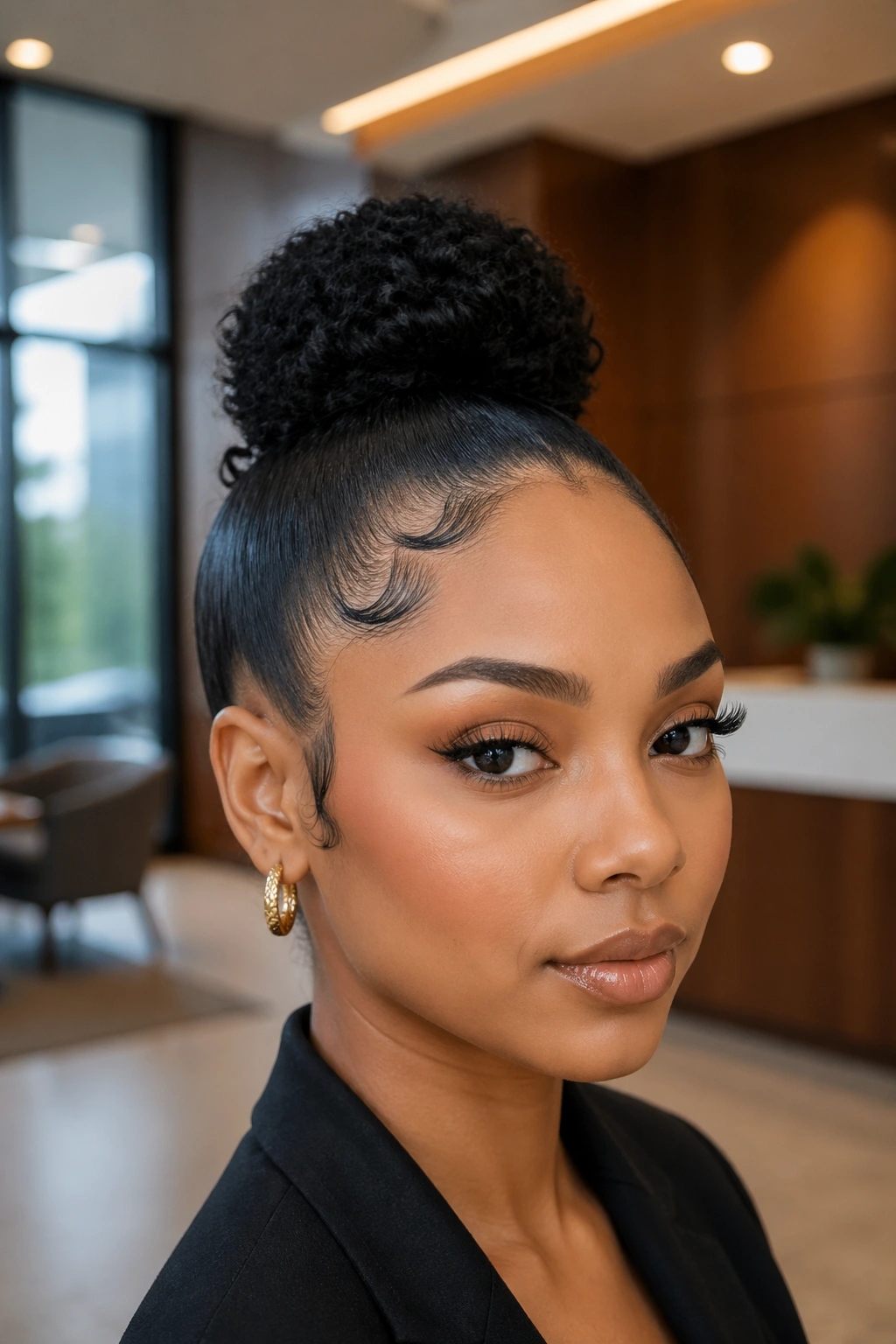
The slicked-back bun — all hair smoothed backward and gathered at the nape or crown, with edges laid flat and glossy along the hairline — is one of the most powerful visual contrasts available in natural hair styling. The ultra-smooth edges meeting the full, textured volume of the bun creates a deliberate tension between control and freedom that’s deeply satisfying.
For Black women with natural hair, this style is often worn in professional settings as a signal: I am fully capable of precision and polish, and my hair demonstrates that.
12. Protective Updo — The Tucked-Ends Puff
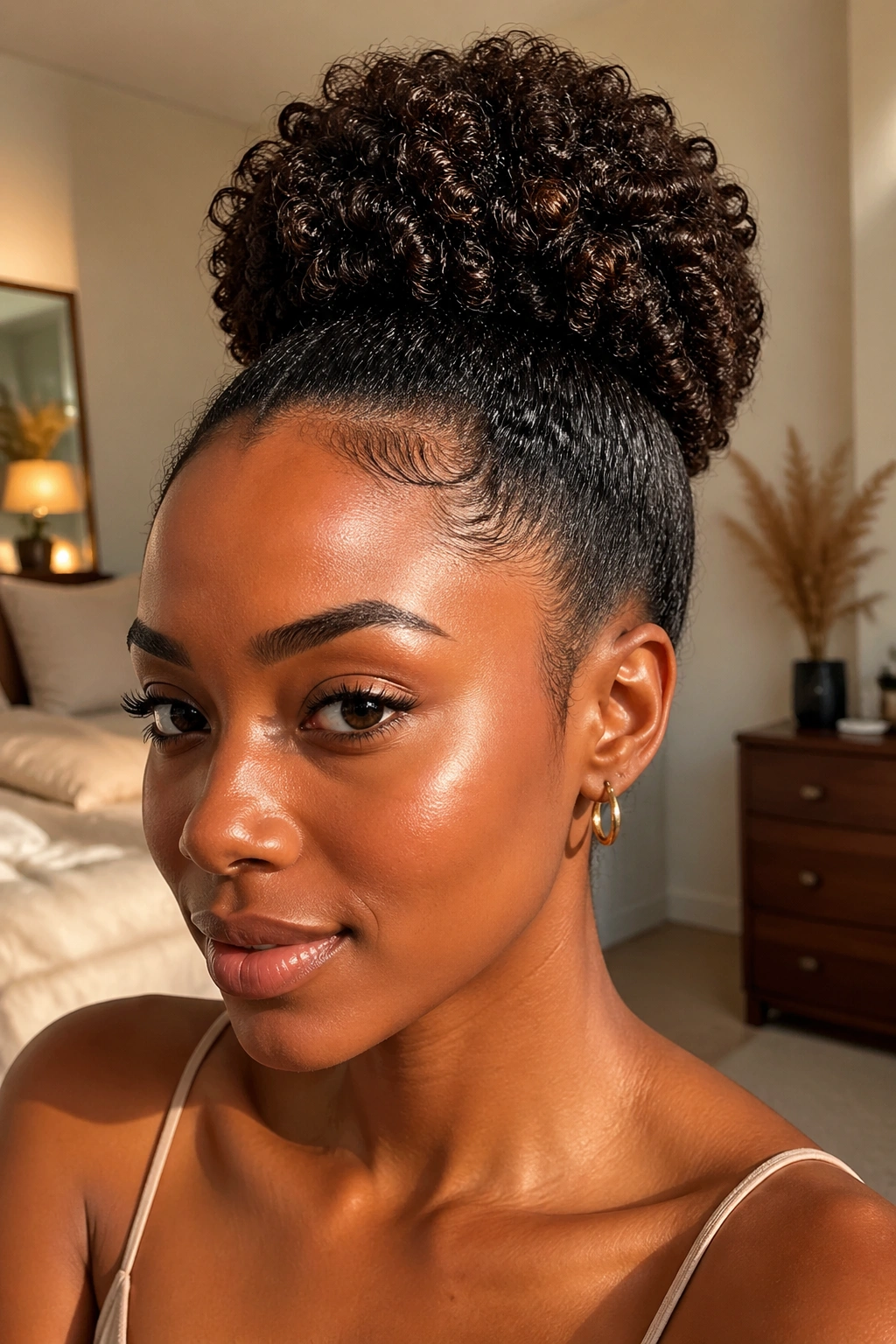
A high puff where the ends are deliberately tucked under rather than left free — creating a rounded, fuller bun shape rather than an open puff. The tucked ends are protected from the environment and from friction, which is one of the key mechanisms for retaining length over time. This updo is both beautiful and genuinely protective.
13. Afro Puff — The Natural Crown
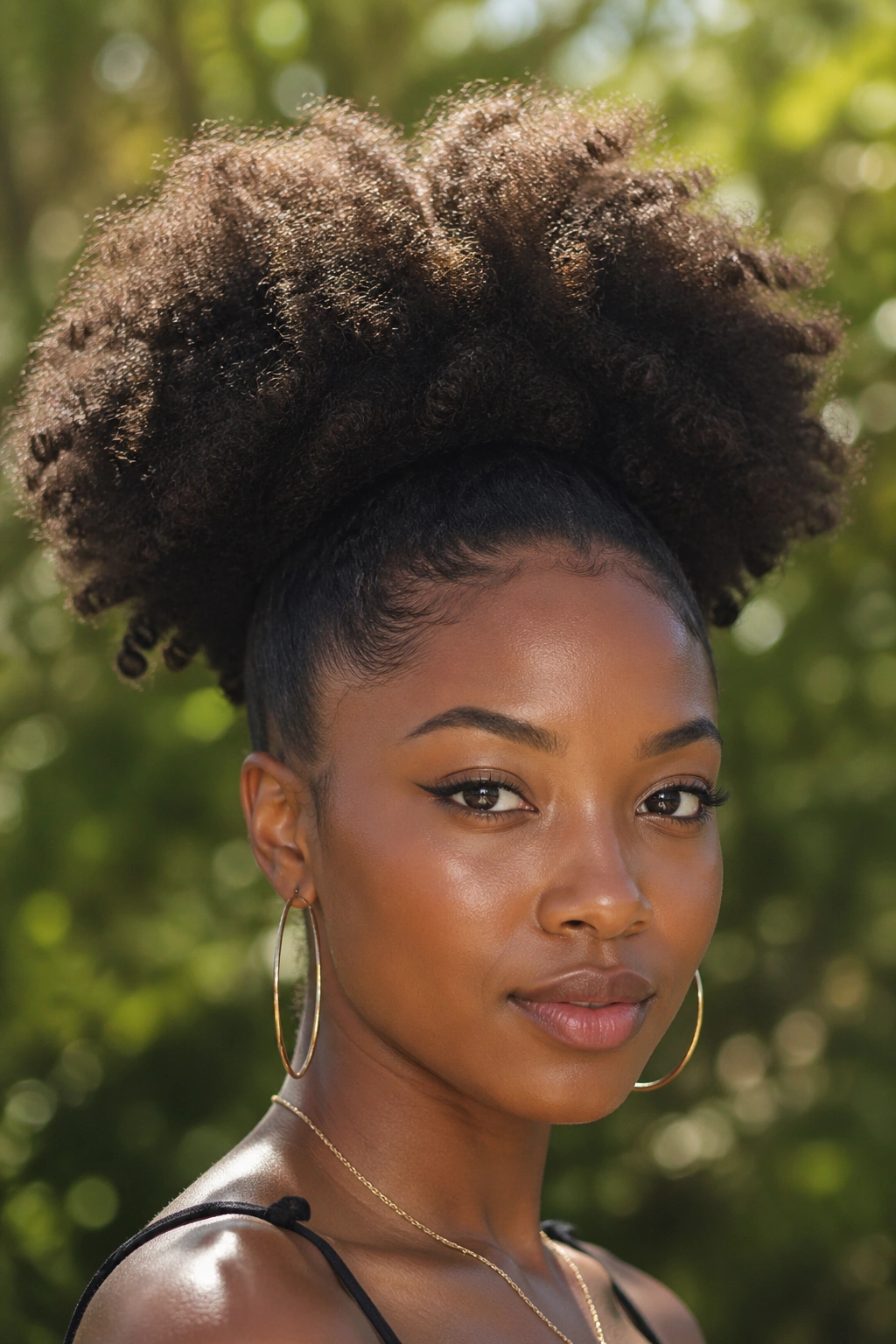
An afro puff differs from a high puff in one important way: the gathering is looser and the puff itself spreads more horizontally, creating a wider rather than taller silhouette. The afro puff is rounder and more expansive — a sphere rather than an upward cone.
This is the style that most powerfully communicates the sheer volume of Black natural hair. There’s nothing hidden about it. The entirety of your texture is on display, radiating outward in every direction.
14. Half-Up Half-Down With Volume
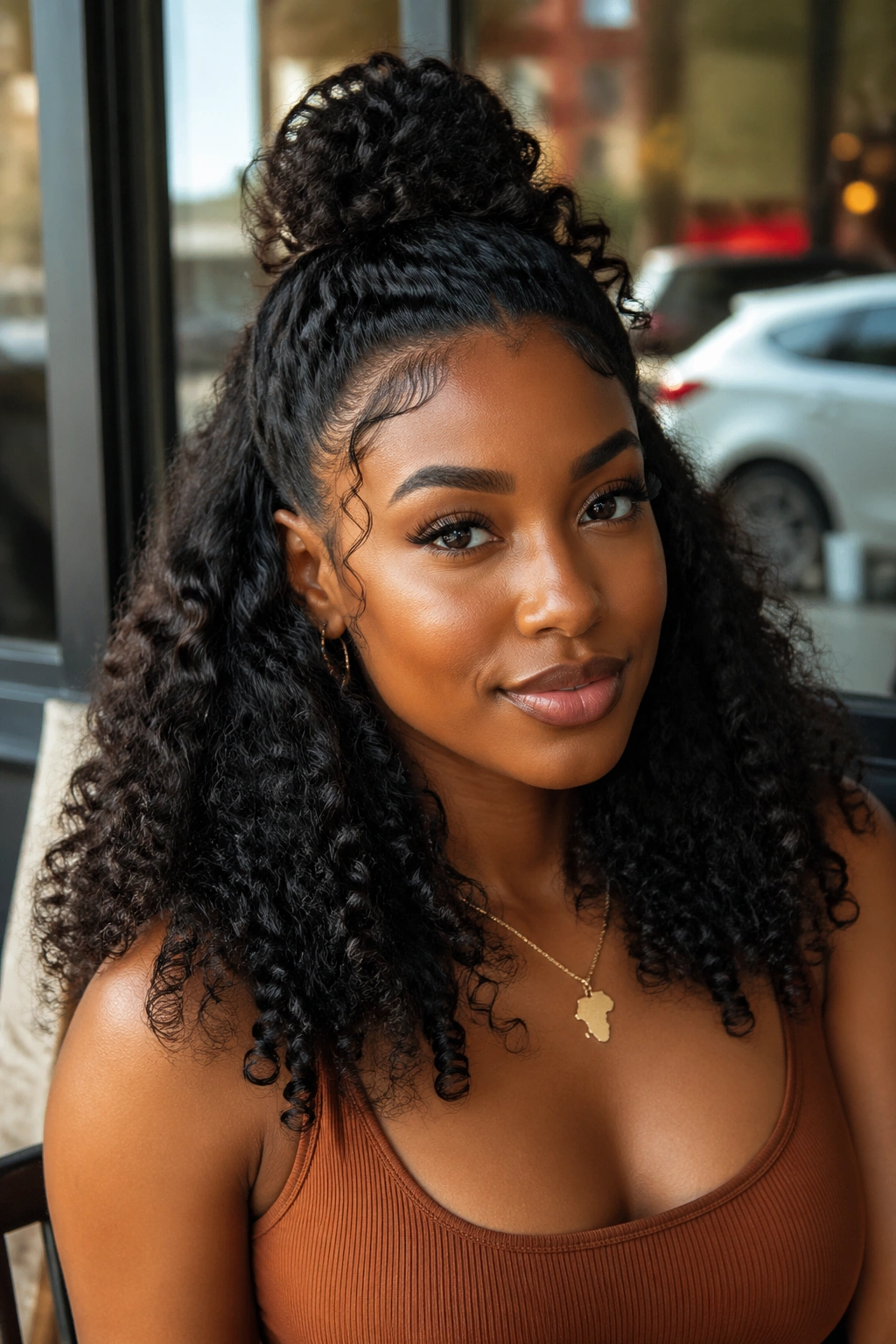
Section the hair from ear to ear. Gather the top half into any updo style of your choice — a small bun, a puff, a twisted section. Let the bottom half fall freely. On Black natural hair, especially at medium to long lengths, the hanging bottom section creates a full, voluminous curtain of defined curls that’s one of the most beautiful things natural hair produces.
How to Get This Look
Apply a curl cream to the hanging section before gathering. Scrunch upward to define the curl clumps. Let dry or diffuse before going out. The defined curls in the hanging section will maintain their shape and provide visual interest for the entire day.
15. Halo Braid
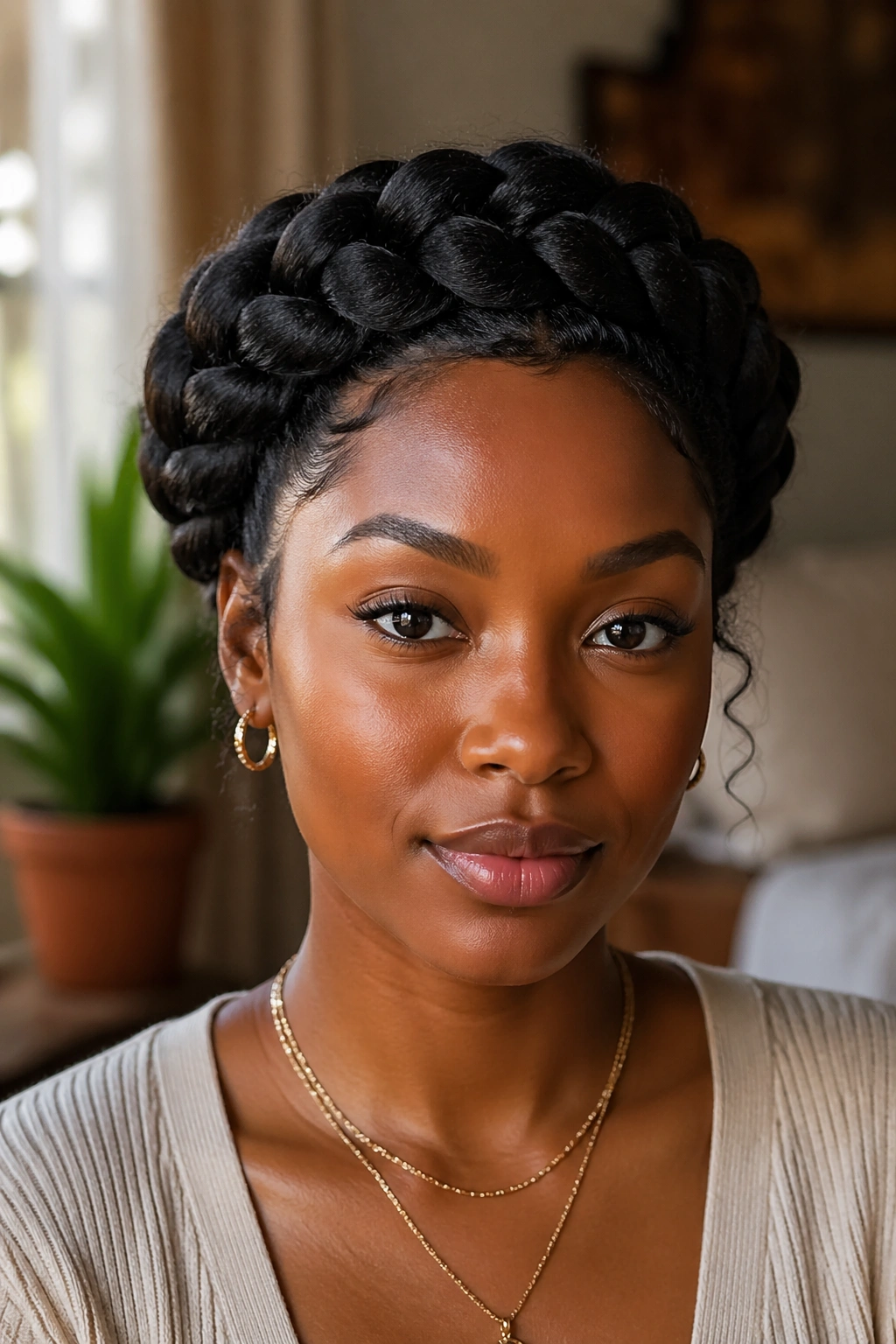
A single braid that wraps around the entire perimeter of the head, from one temple, around the front hairline, to the other temple, and then around the back — creating a continuous halo of braided texture framing the face. The interior hair is gathered or left in a natural state beneath the halo.
This style is regal in a very specific way. The braid crown sits like a queen’s circlet — which is exactly what it is.
16. The Faux Hawk Updo
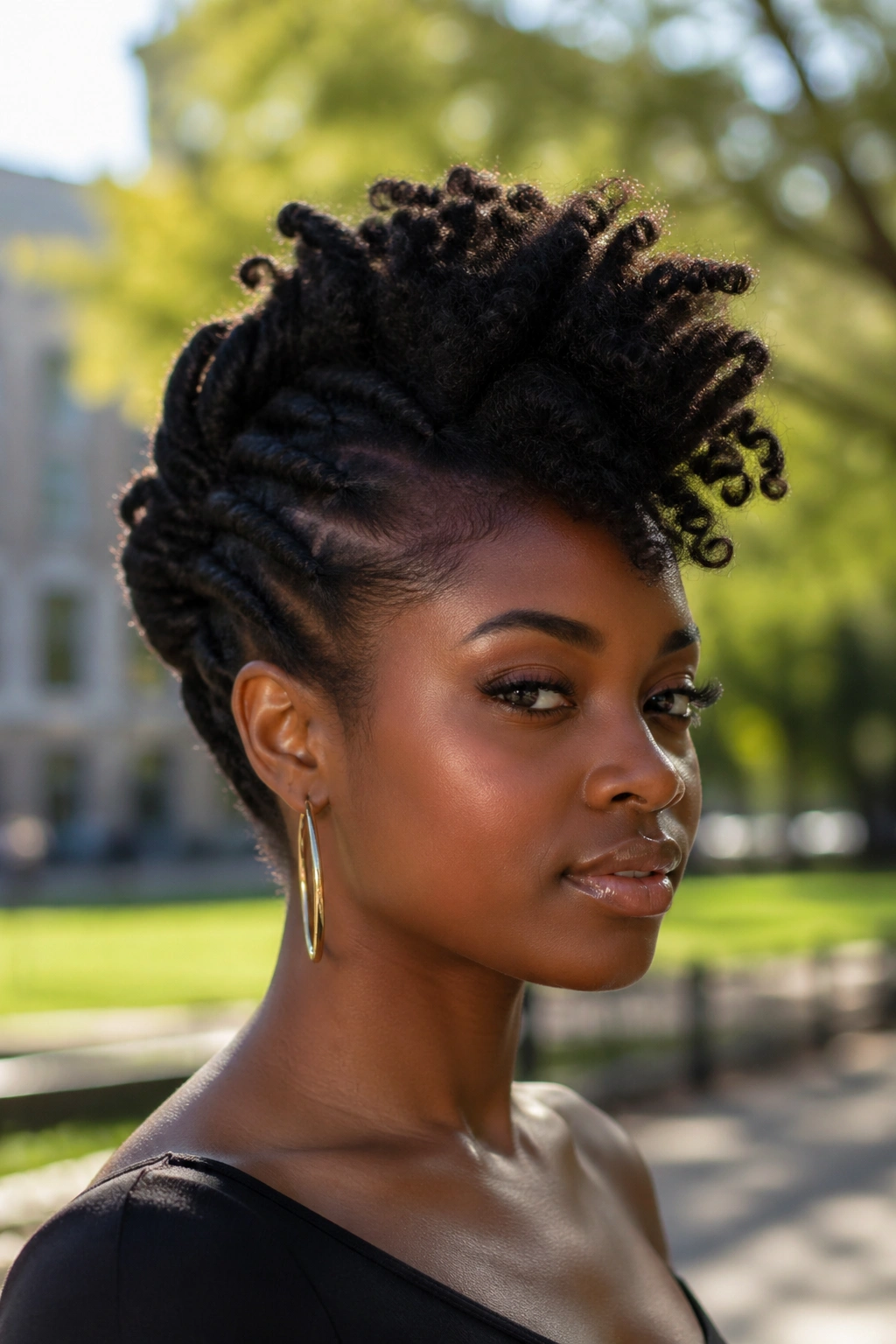
Gather the sides of the hair upward and pin them, leaving the central section — from forehead to nape — standing freely. The faux hawk creates a dramatic crest of natural texture running down the middle of the head. On Black natural hair, particularly 4B and 4C, that central crest has real scale and visual power.
17. Rope Twist Updo
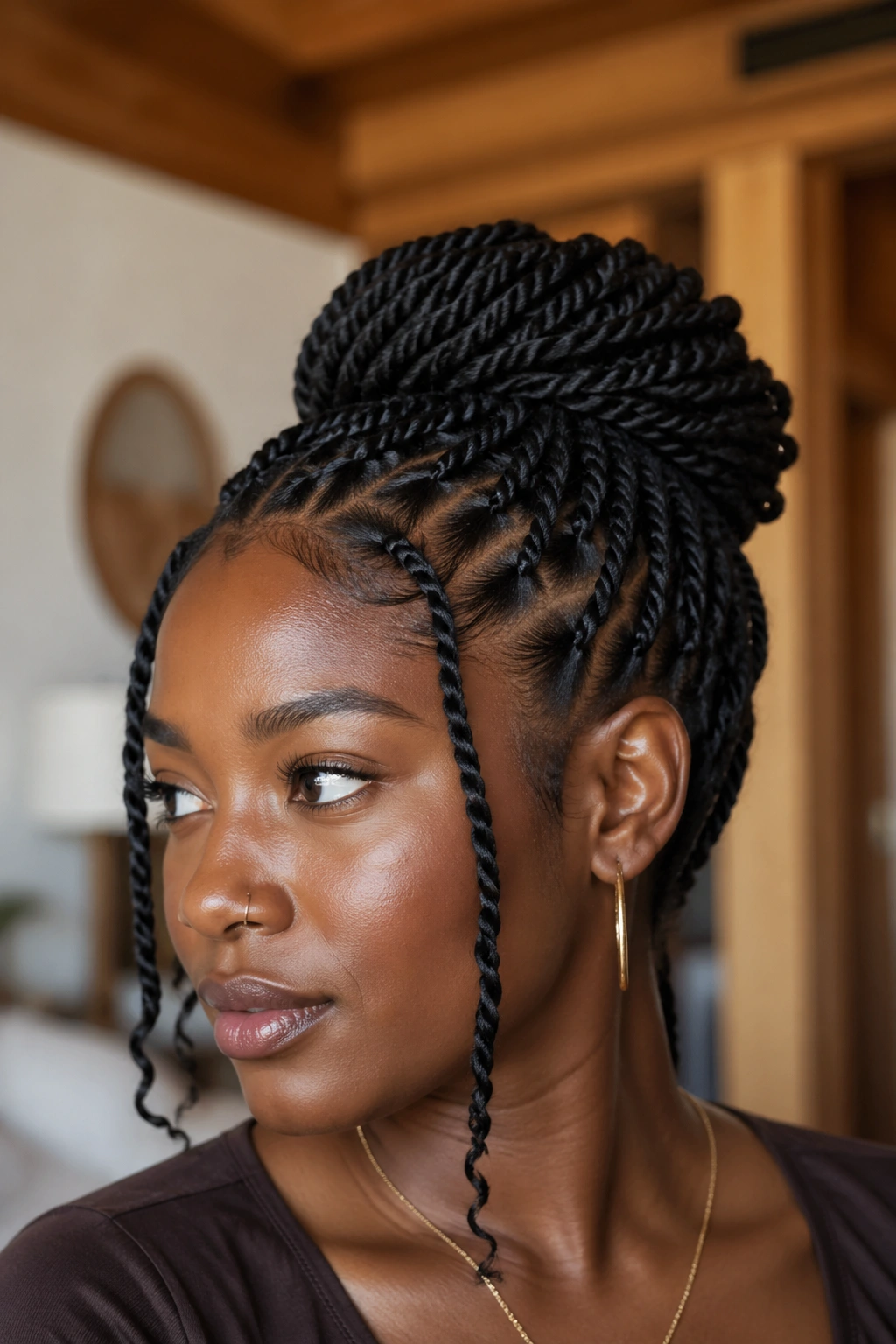
Rope twists — created by twisting each strand in one direction before wrapping them around each other in the opposite direction — produce a tight, rope-like texture that holds its shape longer than standard two-strand twists. Gathered into an updo, the rope twist texture adds visual definition and structural integrity.
18. African Threading Updo
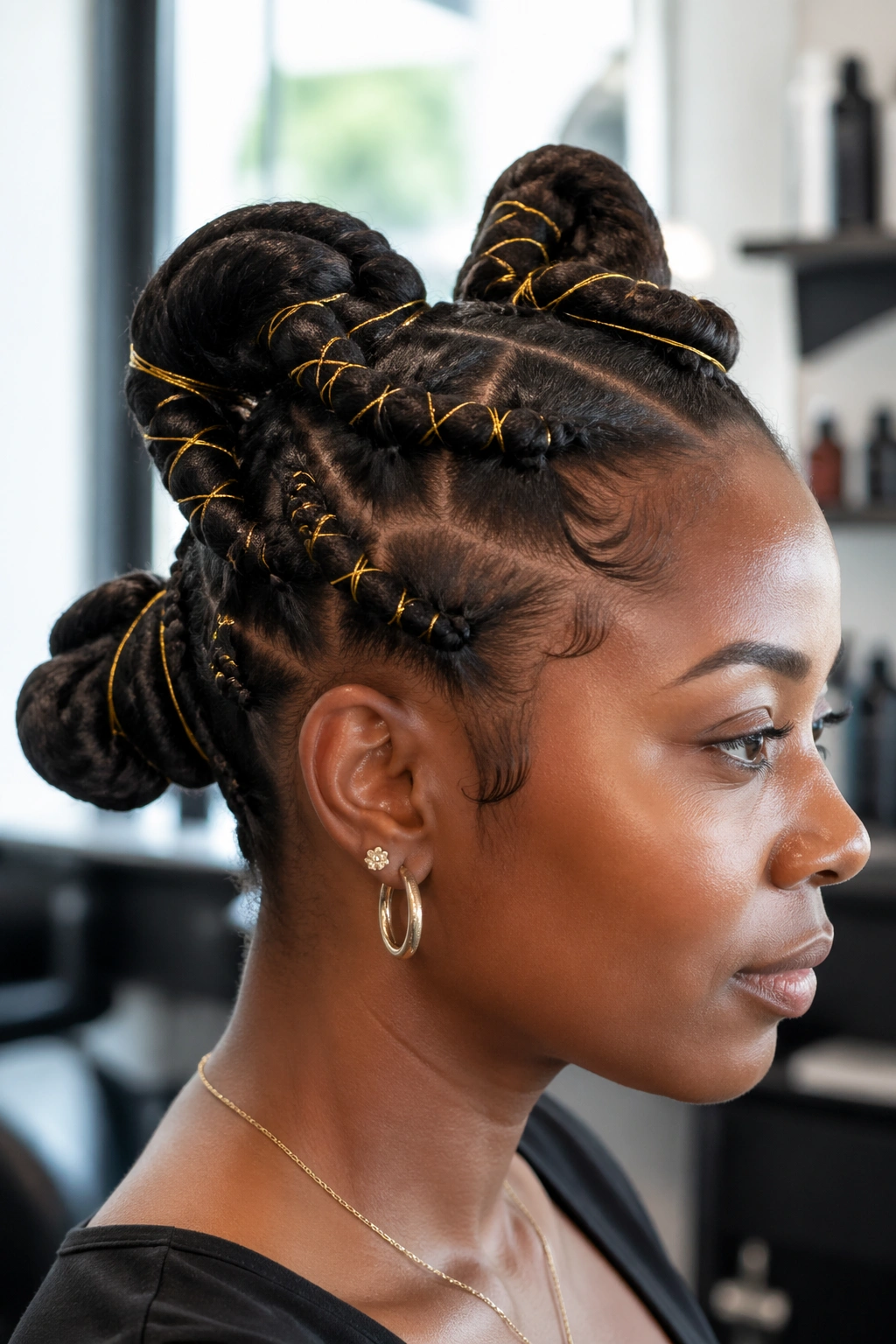
African threading is a traditional hair elongation and styling technique originating from West Africa. Sections of hair are wrapped tightly with black thread, stretching them and setting them in specific shapes. The threaded sections can be directed upward, crossed, folded, and arranged into sculptural updo forms.
This technique protects the hair while styling it — the thread wrapping prevents friction and environmental damage. It also creates a distinctly beautiful visual result: the wrapped sections have a smooth, elongated quality that contrasts beautifully with any loose natural texture around them.
19. Knotless Box Braid Updo
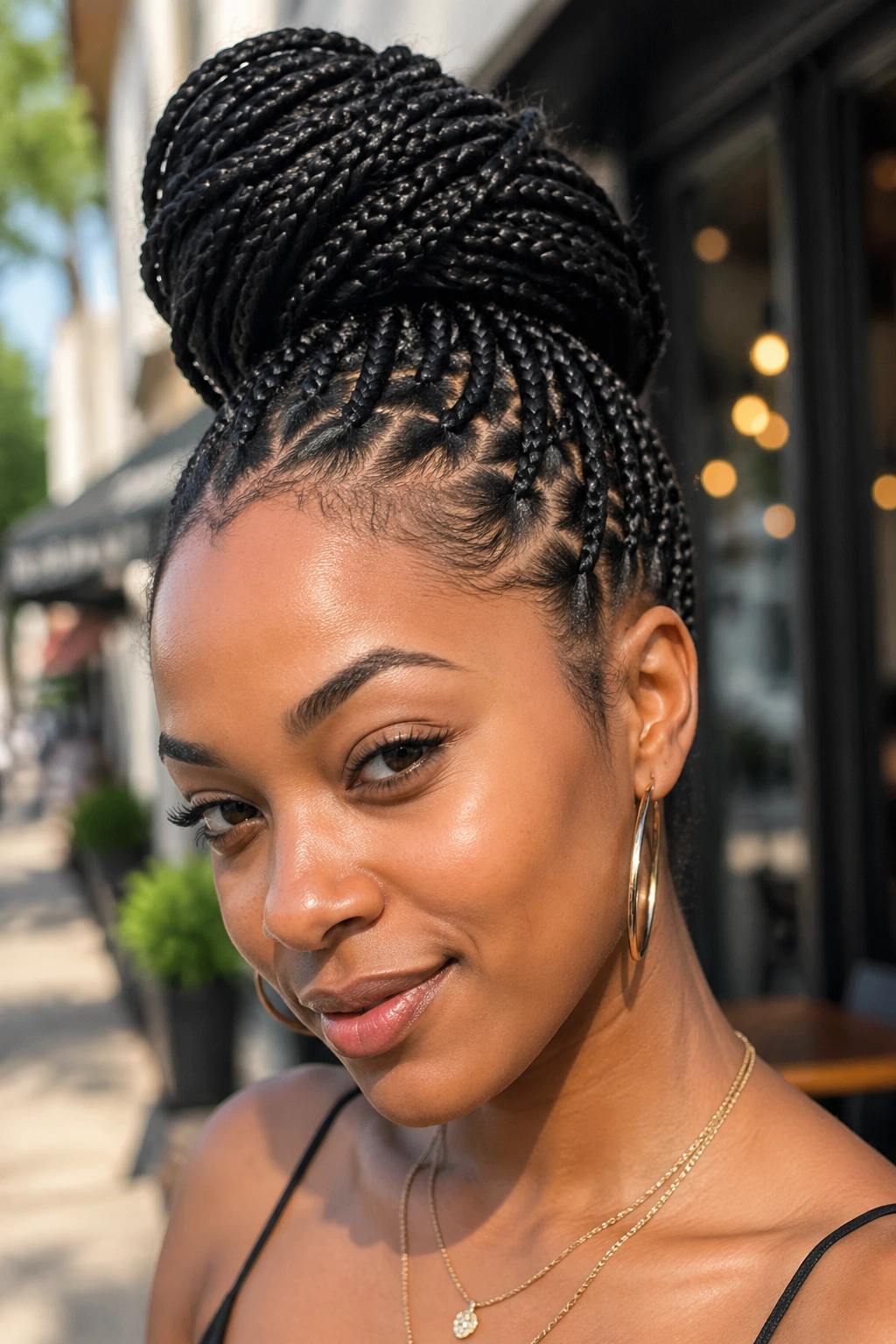
Knotless box braids — installed without the tension-creating knot at the scalp — can be gathered into a stunning array of updo styles. The reduced scalp tension of knotless installation means the braids can be gathered more comfortably than traditional box braids. A high bun of knotless braids on long or medium-length natural hair is one of the most striking protective updos available.
20. Twisted Side Bun
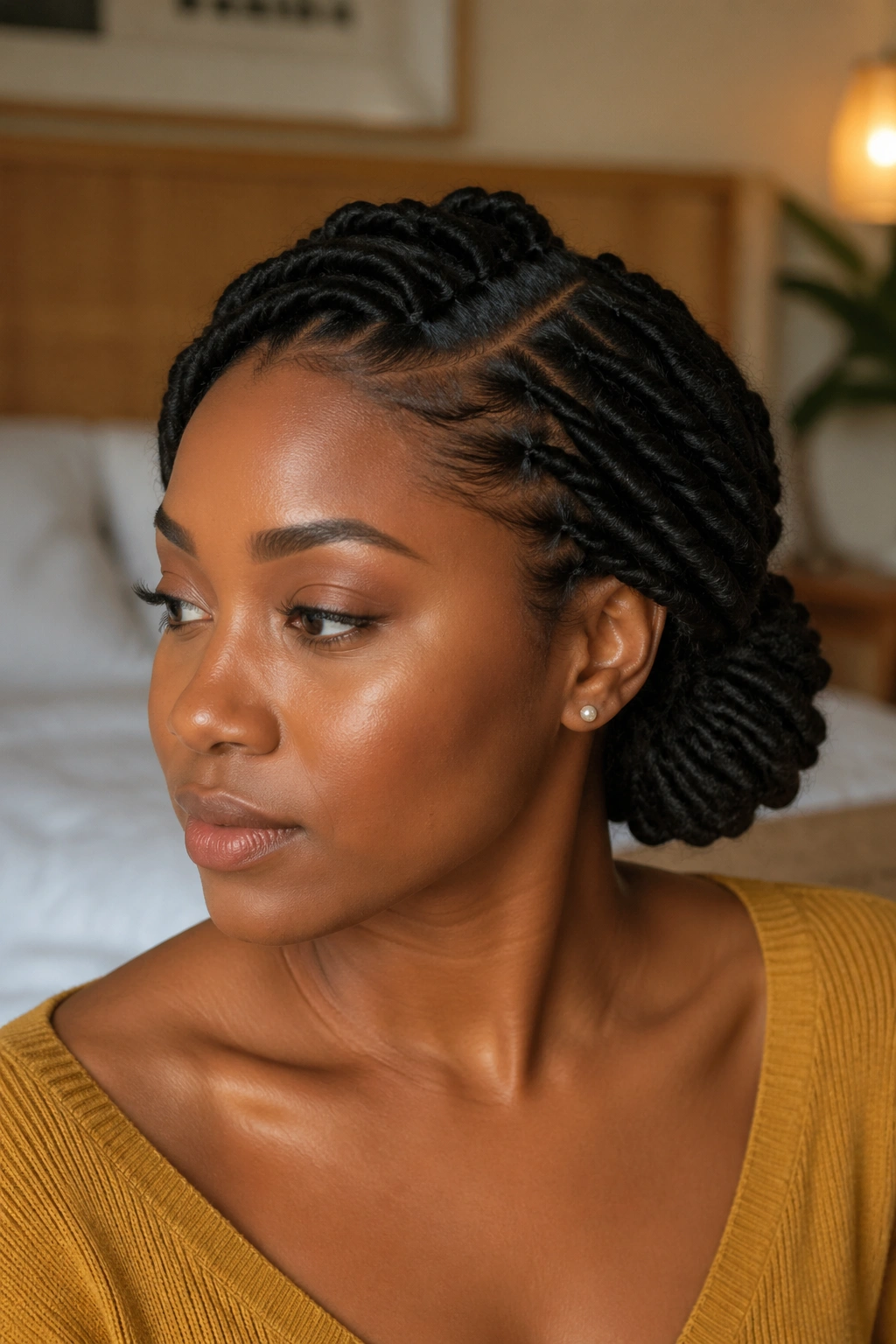
Part the hair deeply to one side. Twist the smaller front section away from the face. Gather all remaining hair to the opposite side and create a low bun behind the ear on that side. The twist in front adds a deliberate detail that makes this simple style look composed and intentional. The asymmetry of the deep part creates visual interest from the front.
21. Coiled Updo
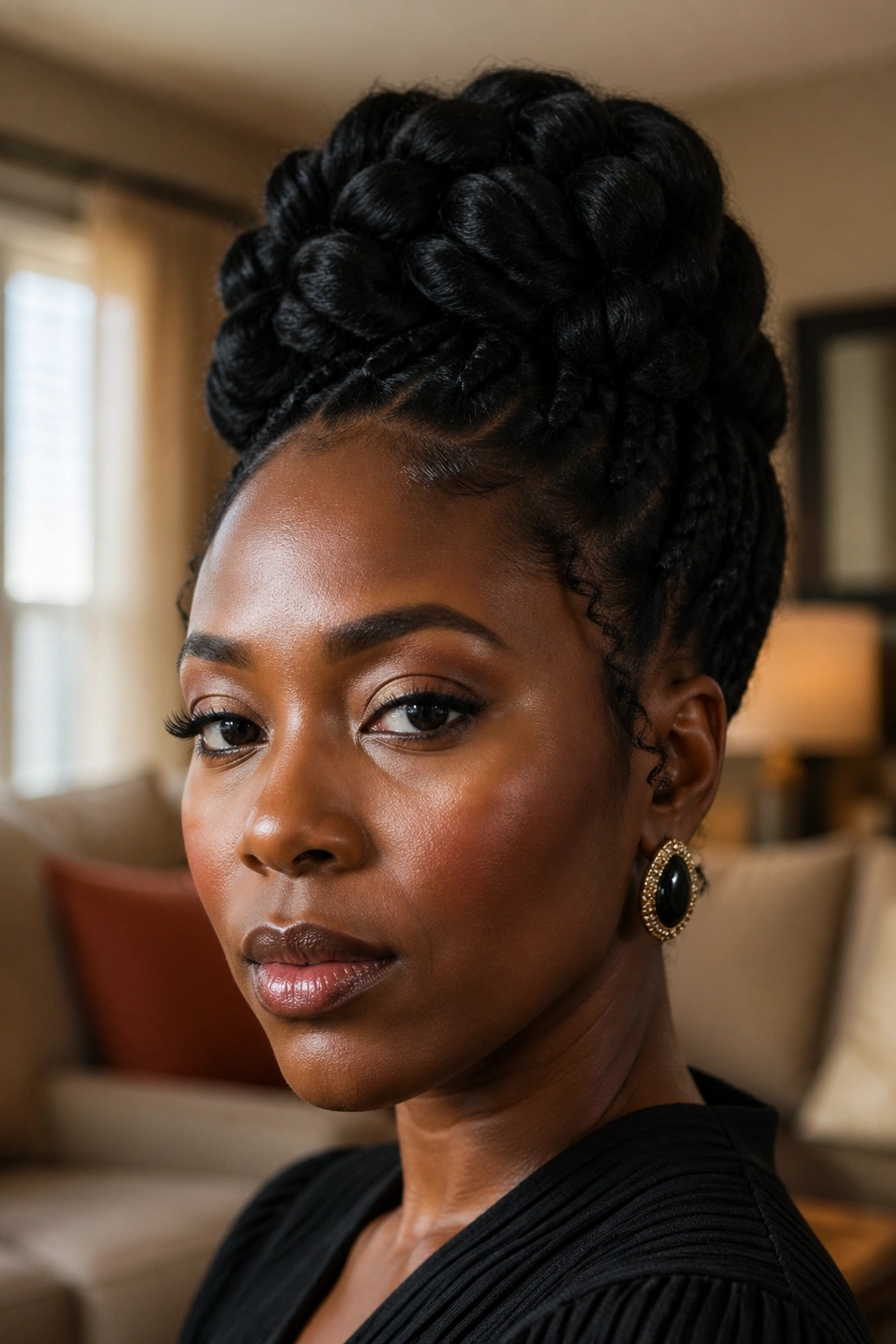
Create individual finger coils throughout the hair, or use a coiling wand to set the coil pattern. Once dried, gather the coiled sections upward and arrange them into a loose, pinned updo — each coil remaining distinct and visible within the arrangement. The coils catch light and create a faceted, jewel-like quality in the gathered style.
22. Braided Updo With Jewelry
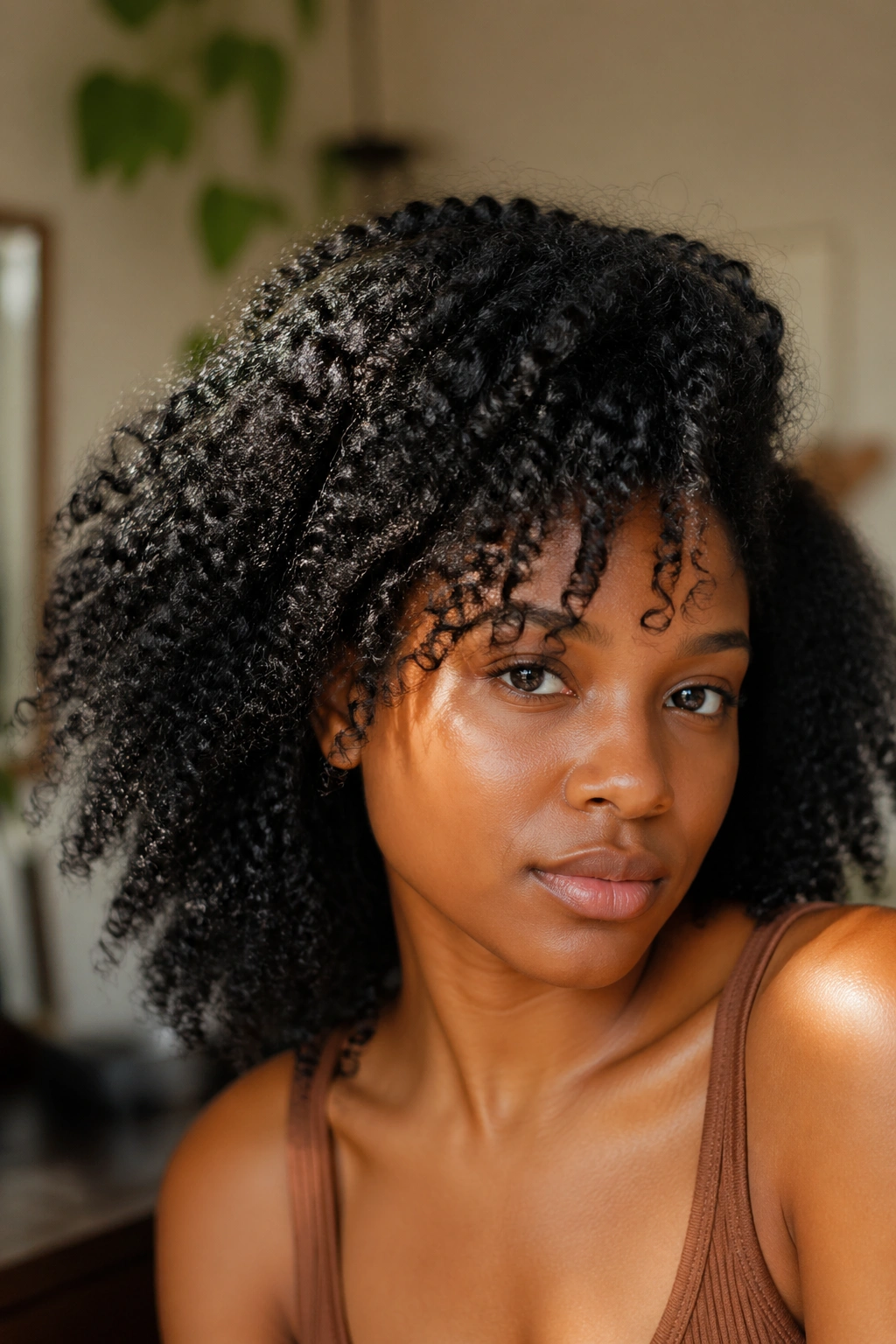
Any braided or flat-twisted updo decorated with hair jewelry — gold cuffs on individual braids, beads threaded onto the braid ends, wire-wrapped accents woven through the braid pattern — transforms into something deeply, visually rooted in African hair tradition while also looking entirely contemporary.
Hair jewelry on braided updos has been worn by Black women across centuries. Wearing it now is both personal style and cultural continuity.
23. Updo With a Crown Accessory
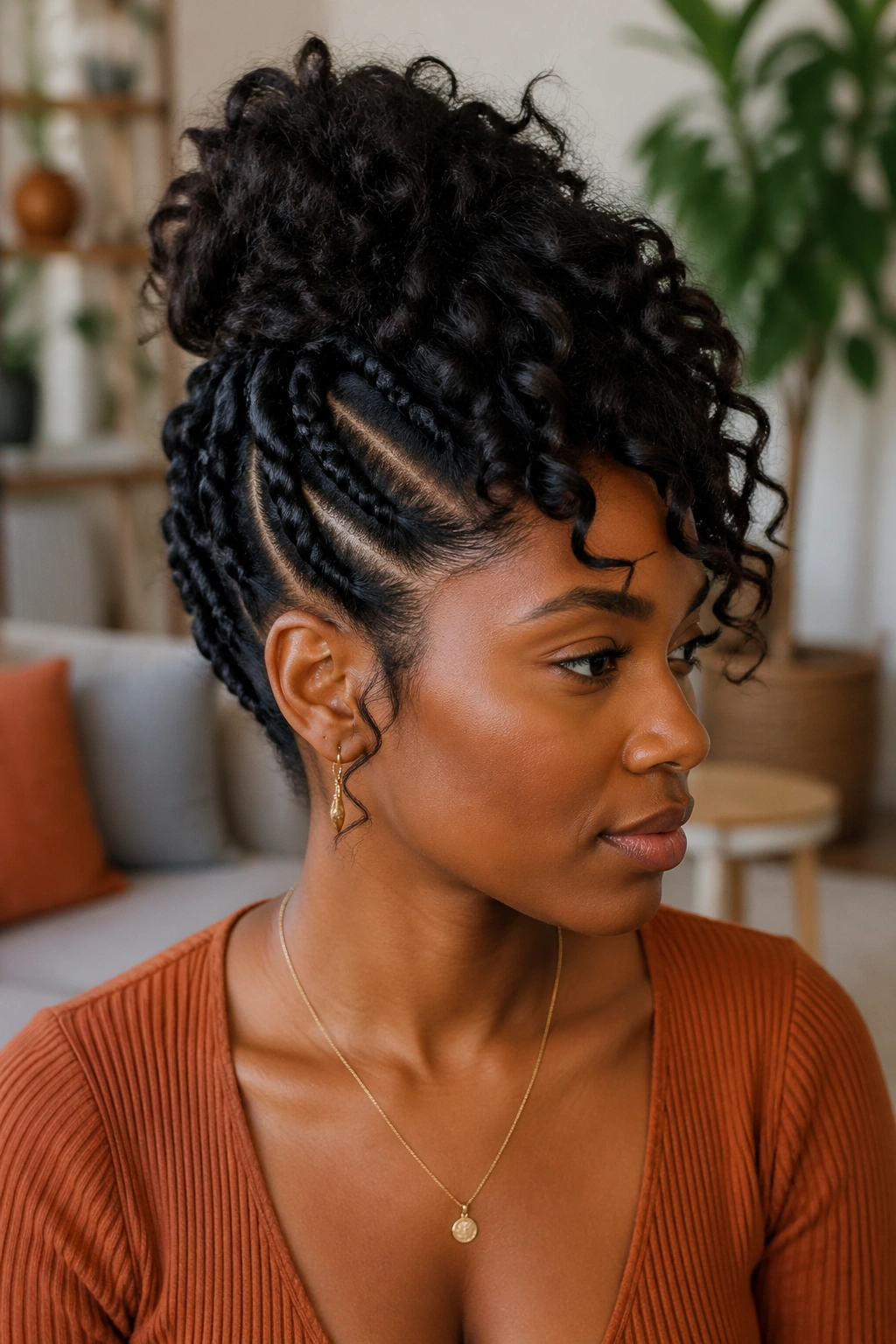
A crown — metal, beaded, leather, fabric — placed along the front of the hairline and resting on top of a natural hair updo is a look that requires zero explanation. The crown sits differently on natural hair than on any other texture: the volume underneath elevates it, the curl texture grips it, and the scale of the style underneath it creates a full, finished silhouette that photographs magnificently.
Crowns aren’t reserved for queens in the ceremonial sense. Every Black woman wearing her natural hair in its full glory is already wearing a crown. The accessory just makes it visible.
24. The Full Afro as Updo
Wait — an afro is an updo? In every meaningful sense, yes. An afro that’s shaped, picked, moisturized, and sculpted is a managed, intentional style where the hair is held up and out by its own density and structure. It requires as much product knowledge, preparation, and finishing skill as any gathered bun.
And on Black natural hair, particularly 4C, a properly shaped full afro is one of the most powerful, most beautiful hairstyles that exists anywhere in the world of hair. It’s structural. It’s political. It’s personal. And it’s an updo in the fullest sense of the word — all the hair up, all the texture on display, all the beauty unapologetic.
25. The Classic Twist-Out Updo
A twist-out set in small sections the night before, unraveled carefully in the morning, then gathered into a loose, romantic updo at the crown or nape. The individual twist-out sections remain visible inside the gathered shape — so instead of a smooth, undifferentiated mass, the updo has visible curl structure, visual depth, and genuine texture.
This is the natural hair updo at its most fundamentally itself. You set your texture, you defined it, you shaped it — and now you’ve gathered it into a style that shows all that work while also wearing it somewhere specific on your head. The twist-out updo is a complete story of what natural hair can do.
Building and Maintaining a Natural Hair Updo Routine
Black natural hair updos require a consistent care routine behind them. The updo itself is the visible result — but the moisture retention, the protective practices, the gentle handling, and the consistent deep conditioning are what make it possible for the updo to look as good as it does.
A weekly or bi-weekly wash and condition day is the foundation. A daily moisture routine — even something as simple as a spritz of water and leave-in conditioner in the morning — keeps the hair pliable and ready to style. A nighttime protection habit — satin bonnet, silk pillowcase, or a loose bun in a satin scarf — preserves each style through the night and extends its life.
The styles available to Black natural hair are not a limited list that you exhaust and then repeat. They’re a living, evolving tradition of creativity — one that Black women have been building and rebuilding for as long as there has been hair to style. Every updo on this list is one thread in that tradition. Your hair, whatever it does, wherever it grows, is another.