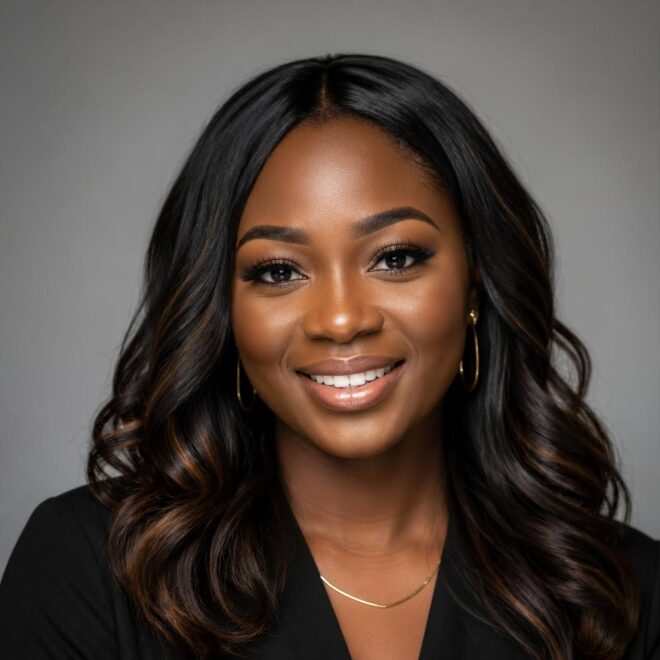

Curtain bangs might be the most universally flattering bang shape that exists — and on curly hair, they go from flattering to genuinely spectacular. The center-parted, face-framing fringe that fans out to the sides like a parted curtain was made for texture. Curtain bangs for curly hair create a soft, romantic frame around the face that’s entirely different from what straight hair can produce — more movement, more personality, and more of a lived-in quality that looks natural even when it took effort to achieve.
What Makes Curtain Bangs Different From Other Bangs
Most bang shapes are either all-in or all-out. A full fringe covers the forehead. Side bangs sweep to one side. Micro bangs are barely there. Curtain bangs occupy a unique middle ground — they’re long enough to blend into the rest of the hairstyle, parted in the middle so they frame both cheeks simultaneously, and tapered at the sides so there’s no harsh line where the bang ends and the hair begins.
That tapered, blended quality is what makes curtain bangs so different from a blunt fringe. They don’t announce themselves as a bang the way a full, dense fringe does. Instead, they ease into the face-framing role gradually, creating softness rather than a statement. On curly hair, the curl pattern at the ends of the curtain bang creates an even softer transition — the curls spiral outward and blend into the side sections of the hair naturally.
For Black women with natural or curly hair, curtain bangs offer something especially valuable: a face-framing option that works with the curl pattern rather than requiring the bang section to be tamed or straightened to look intentional. The curl is the effect. The movement of the curls framing each cheek is the whole point.
Curtain Bangs and Face Shape — A Real Breakdown
Curtain bangs are widely considered one of the most universally flattering bang shapes, and there are solid reasons for that. The center part widens the appearance of narrower face shapes, while the side framing softens the face on wider shapes. But the specifics matter.
Round faces: Curtain bangs with a deep center part and curls that fall toward the cheekbones rather than lying flat create vertical movement that elongates the face visually. Avoid curtain bangs that are too short and wide — they’ll emphasize the width of the face rather than the length.
Oval faces: Almost any curtain bang length and shape works. Oval faces have balanced proportions that allow for flexibility in bang style. Go longer and looser for a romantic look or shorter and springier for something more bold.
Heart-shaped faces: Curtain bangs are particularly flattering here. The wider forehead of a heart-shaped face is partially covered by the bang, and the curls at the sides of the face add visual width at the cheekbones, balancing the narrower chin.
Square faces: Soft, wavy curtain bangs soften the angular jaw and add a gentle, feminine quality. Choose a bang cut with more tapering and layering rather than a blunt edge.
Long faces: Slightly shorter curtain bangs that cover more of the forehead add width and shorten the appearance of the face. Ensure the curls fan outward rather than dropping straight down, which would add even more vertical length.
The Curl Pattern Effect on Curtain Bang Shape
What your curtain bangs actually look like comes down to your curl pattern more than any other factor. Understanding this upfront prevents disappointment and sets realistic expectations for what to request from your stylist.
Loose curls (3A–3B): Curtain bangs on looser curl patterns create soft, flowing ringlets that gently frame the face. These are the most “classic” looking curtain bangs on curly hair — the curl is visible but not springy, so the bangs sit more predictably at a consistent length.
Medium curls (3C–4A): Curtain bangs on medium curl patterns are bouncier and more defined. The spring in these curls means the bangs sit higher than they appear when stretched, and they bounce visibly when the head moves. Stunning, but requires understanding and accounting for shrinkage.
Tight coils (4B–4C): Curtain bangs on tight coil patterns are the most dramatic because the spring is the highest. The bang section coils tightly and may seem shorter than intended. However, styled correctly — with some elongating technique like finger-coiling or a light stretch — these bangs create a uniquely textured, gorgeous frame that’s entirely different from anything a looser curl type can achieve.
Getting the Cut: Dry Versus Wet Cutting
The single biggest factor in a successful curly curtain bang is getting the cut done correctly by someone who understands curly hair. The two main approaches are wet cutting and dry cutting.
Wet cutting shapes the hair while damp and stretched. It’s faster but less accurate for curly hair because the stylist is cutting the hair in its most elongated state — and once the curl springs back, the lengths may be quite different from what was intended.
Dry cutting — cutting the hair in its natural, dry state — gives a much more accurate result for curly hair because you’re cutting the curl as it actually sits and moves. A skilled dry-cutting stylist will shape the curtain bang to fall exactly where you want it once it’s set and dried.
Request a dry cut specifically if you’re getting curtain bangs on curly hair. If your stylist isn’t familiar with or doesn’t offer dry cutting, look for a curly hair specialist in your area.
Products That Keep Curtain Bangs Defined
Curtain bangs need daily attention in a way that the rest of your hair may not. They’re the most visible section of your style, they’re exposed to more touching and environmental factors than the sides and back, and they’re prone to frizz from friction with pillowcases, scarves, and hands.
Curl defining cream applied while the bang section is damp is the foundation product. It defines each curl, adds moisture, and prevents the fuzzy, undefined look that happens when the bang section dries without product.
A light hold gel over the cream gives extra hold and frizz resistance without making the bangs look crunchy or stiff. Apply by raking through the bang section with your fingers.
A small amount of shine serum or light oil on the ends of the curtain bangs adds gloss and defines the curl tips against the skin.
For quick refreshes on non-wash days, a spritz of water or a diluted leave-in conditioner followed by a light application of curl cream and finger-coiling any separated curls restores definition without requiring a full wash.
1. Classic Soft Curtain Bangs on 3B Curls
On 3B hair, curtain bangs create a soft, flowing frame where individual ringlets spiral outward toward the cheekbones. The center part is visible but gentle — not dramatic — and the bangs gradually blend into the side curls without a clear endpoint.
The key is cutting the center of the bang slightly shorter than the sides, so the center section of the fringe sits at or above the eyebrows while the outer sections fall toward the cheekbones. The graduating length creates the curtain shape.
On 3B hair, minimal product is needed. A curl cream and light gel on the bang section gives definition without heaviness.
2. Deep Center Part Curtain Bangs
A deeper center part creates a more dramatic curtain effect where the bang sections sweep more decisively to each side. On curly hair, this deep-parted version is particularly striking because each half of the bang section forms its own curl cluster, falling across each cheek as a defined bundle of spirals.
The Result
A center parting that’s visible from the forehead all the way back through the crown, with curly curtain bangs framing both sides of the face. This is a more deliberate, styled look than the softer organic version.
Use a rattail comb to establish the center part during styling while the hair is damp and pliable.
3. Curtain Bangs With Defined Coil Tips
After styling the curtain bang section with cream and gel, use your fingers to individually coil the very tip of each curl into a tighter spiral. This adds definition and visual interest at the ends of the bang without changing the overall bang shape.
The defined coil tips catch light and create a delicate, jewel-like quality at the ends of the bangs. Against the face, these tiny defined spirals look intentional and elegant.
4. Loose Wave Curtain Bangs
On hair that’s been stretched — by a braid-out, twist-out, or light blow-dry — curtain bangs can be styled into loose, relaxed waves rather than tight curls. The waves are softer and more casual than a defined curl, and they fan outward across the face in a flowing, gentle frame.
This version suits a more relaxed, bohemian aesthetic. The loose wave reads as effortless and natural — like the hair just happened to fall that way.
5. Curtain Bangs on a Wash-and-Go
After a fresh wash-and-go, the curtain bang section gets defined alongside the rest of the hair. As you apply products and define your curls, use your fingers to separate the front section into a center part and encourage each half to sweep toward the sides of the face.
This is the most low-maintenance approach to curtain bangs — you’re not doing anything extra for the bang section, just directing the already-defined curls in the right direction. Works beautifully on 3A through 4A hair where the wash-and-go produces well-defined, clumped curls.
6. Curtain Bangs With a Half-Up Style
Pull the back half of the hair into a half-up bun or ponytail, leaving the curtain bangs free to frame the face. The half-up style keeps the overall look controlled and polished while the curtain bangs do the face-framing work at the front.
The contrast between the pulled-back top and the free-falling curly bangs creates a balance between effort and ease. This is a reliable go-to style for days when you want to look put-together without spending excessive time.
7. Long Curtain Bangs That Blend Into the Hair
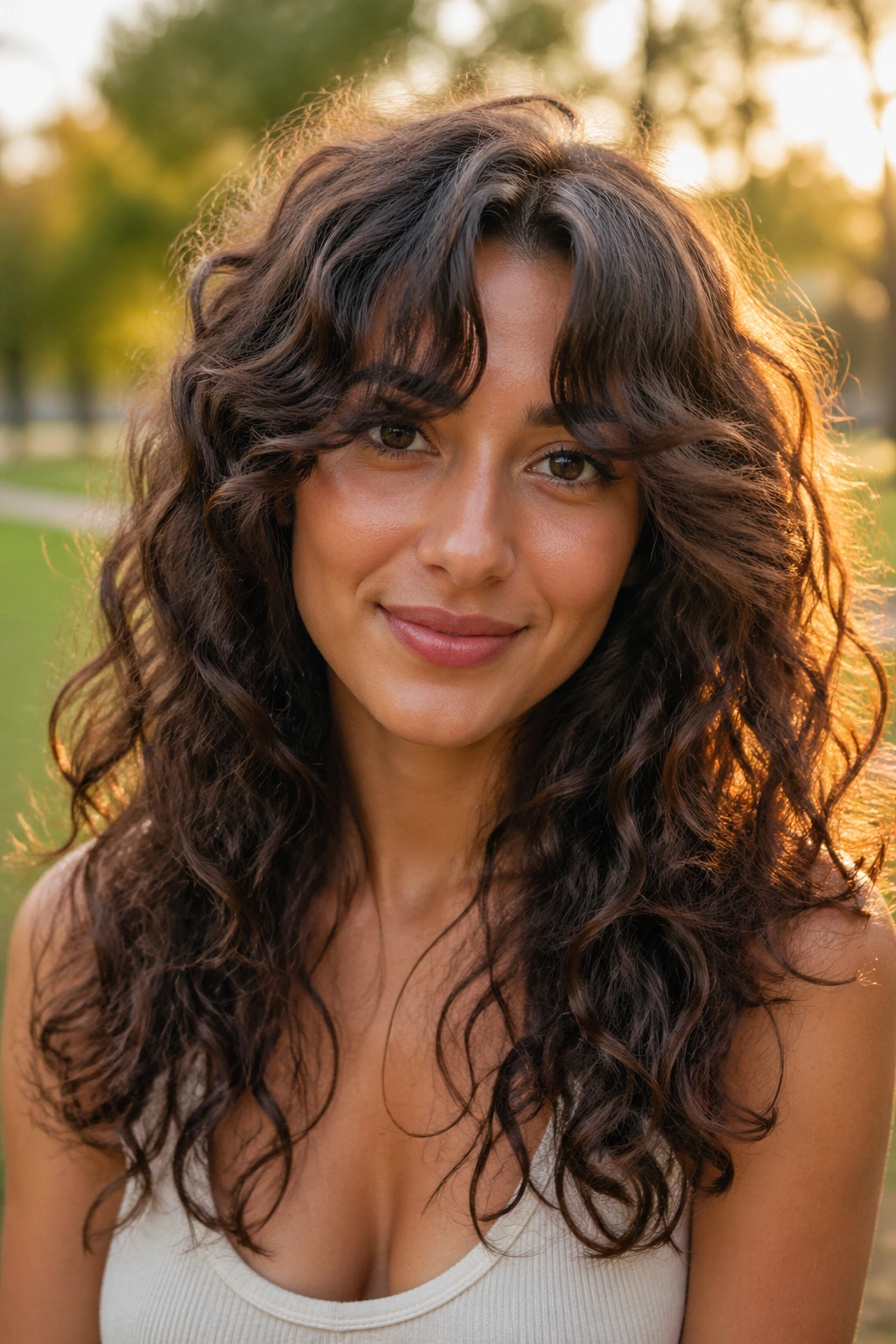
On longer natural hair, curtain bangs can be cut so long that they seamlessly blend into the side sections of the style — so the transition from bang to regular hair is completely imperceptible. The bang section provides face-framing without a visible endpoint.
These long, blended curtain bangs are the most natural-looking option because they don’t read as a distinct “bang” style — they just look like the hair naturally falls forward to frame the face. Which, in a sense, is exactly what’s happening.
8. Textured Curtain Bangs on Type 4 Hair
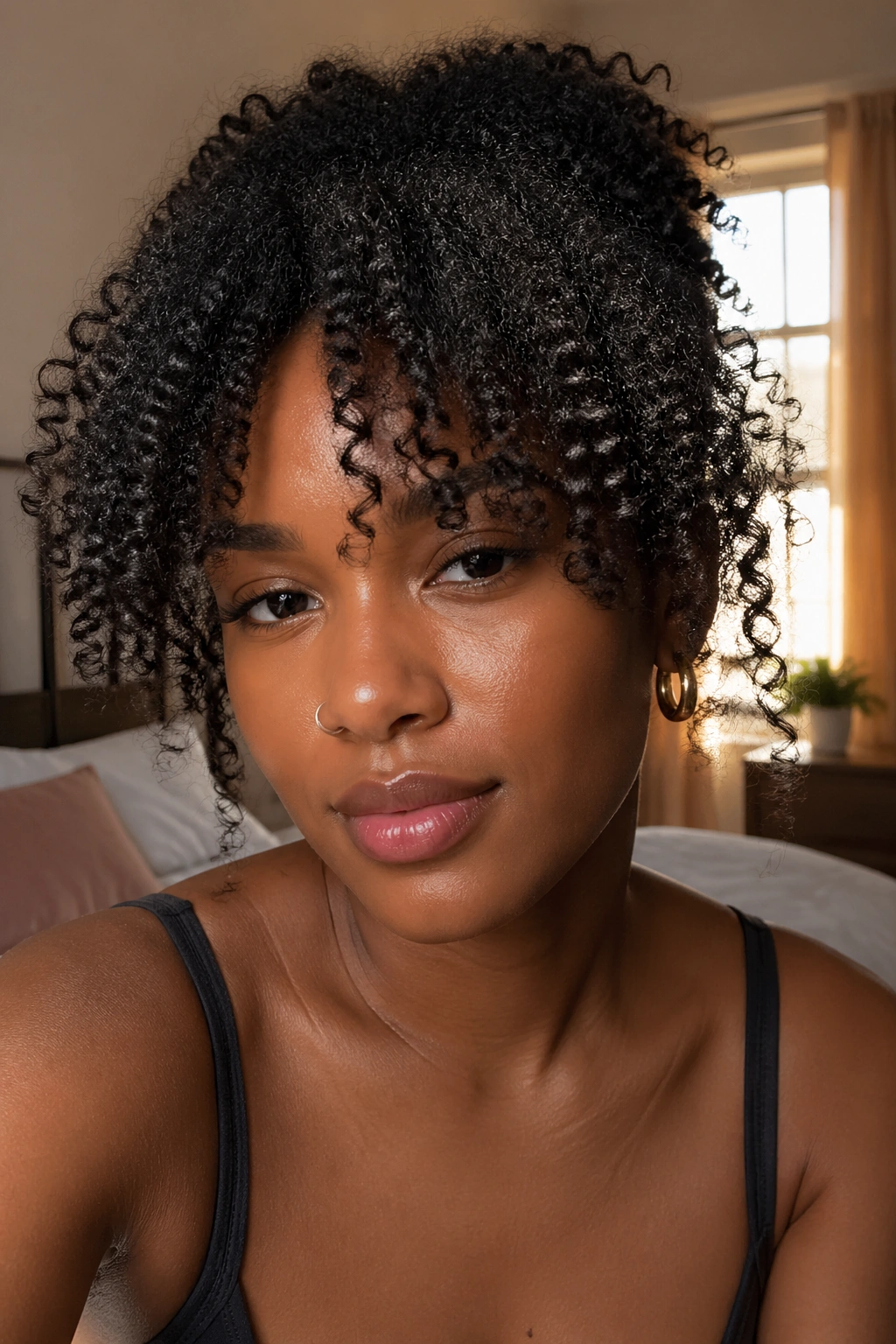
On type 4 hair, curtain bangs take on a distinctly different character from the loose, flowing version on looser curl types. The coils are tight and springy, creating a bang section that rises outward from the face rather than hanging down across it.
Embrace this. The textured, springy quality of type 4 curtain bangs is uniquely beautiful and genuinely distinctive. Use a finger-coiling technique to define individual sections of the bang, allowing each coil to spring forward in its natural direction.
Or. Let the bang section be completely free and unstyled, creating a natural, organic puff-like fringe that’s entirely authentic to the hair’s texture.
9. Curtain Bangs With Laid Edges
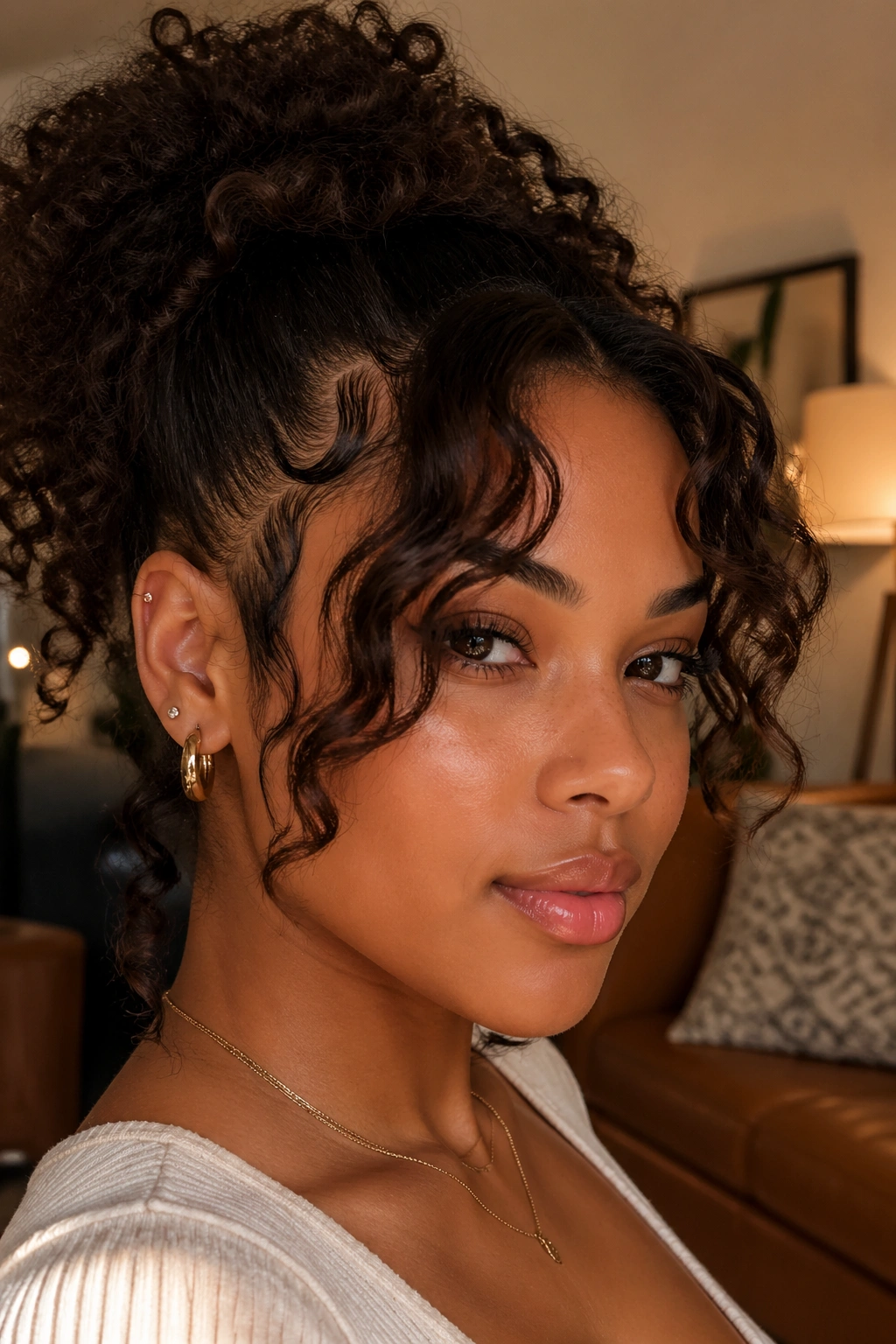
Combine curtain bangs with deliberately styled baby hairs at the temples. After styling the curtain bang section, use edge control and a fine brush to create decorative swoops, waves, or curves at the temples — just below where the curtain bang ends.
The baby hair art and the curtain bang work together to create a complete, detailed front framing system. The bangs frame the upper face; the baby hair art frames the temples and forehead. Together, they create a unified and very styled look.
10. Roller Set Curtain Bangs
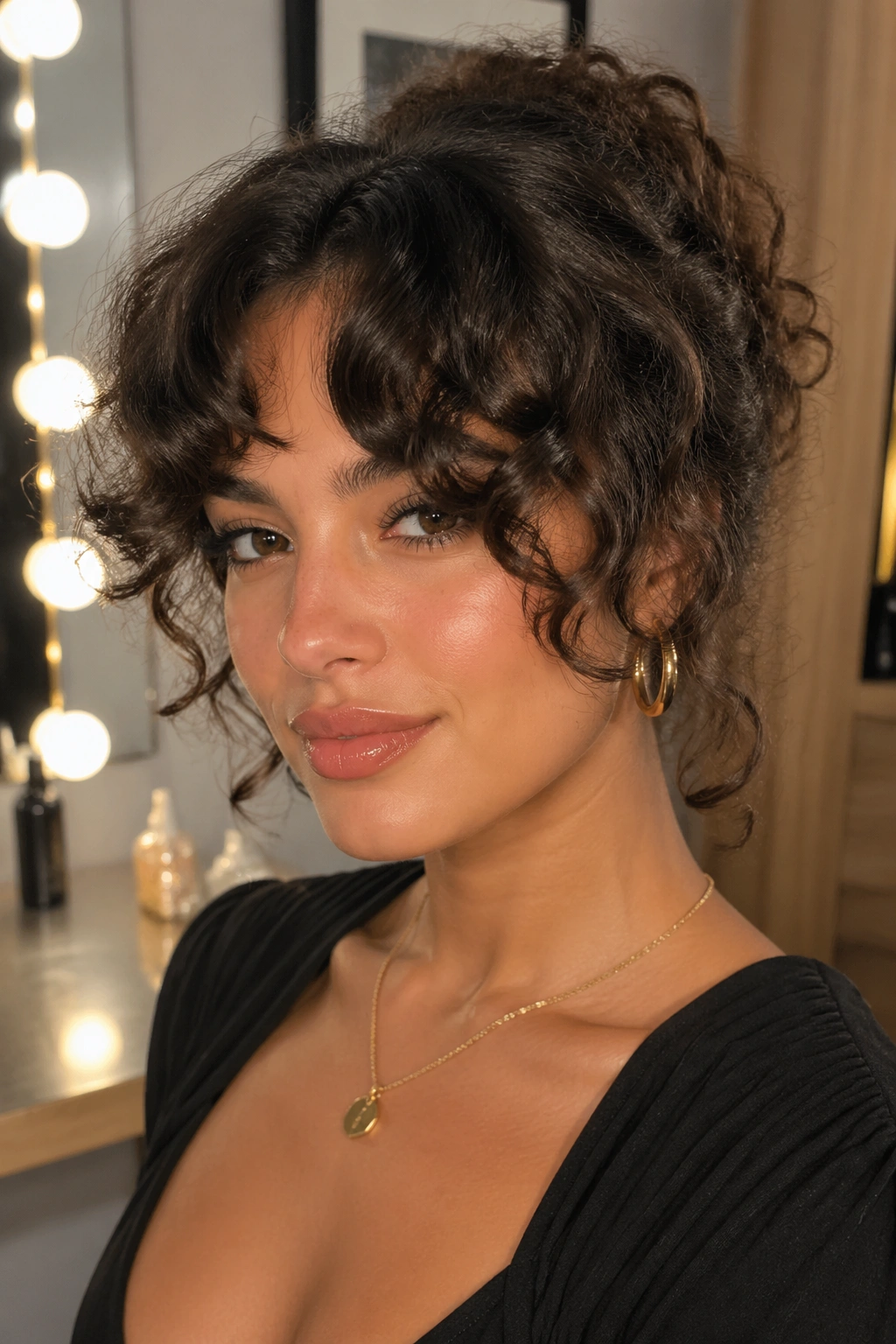
Set the curtain bang section on small to medium rollers while the rest of the hair air-dries or is styled differently. After the roller-set section dries completely, release the rollers for defined, round curls in the bang section that are more precise and uniform than wash-and-go curls.
Roller-set curtain bangs are particularly good for special occasions when you want the bangs to look perfectly defined and hold their shape for hours.
11. Curtain Bangs on a Twist-Out
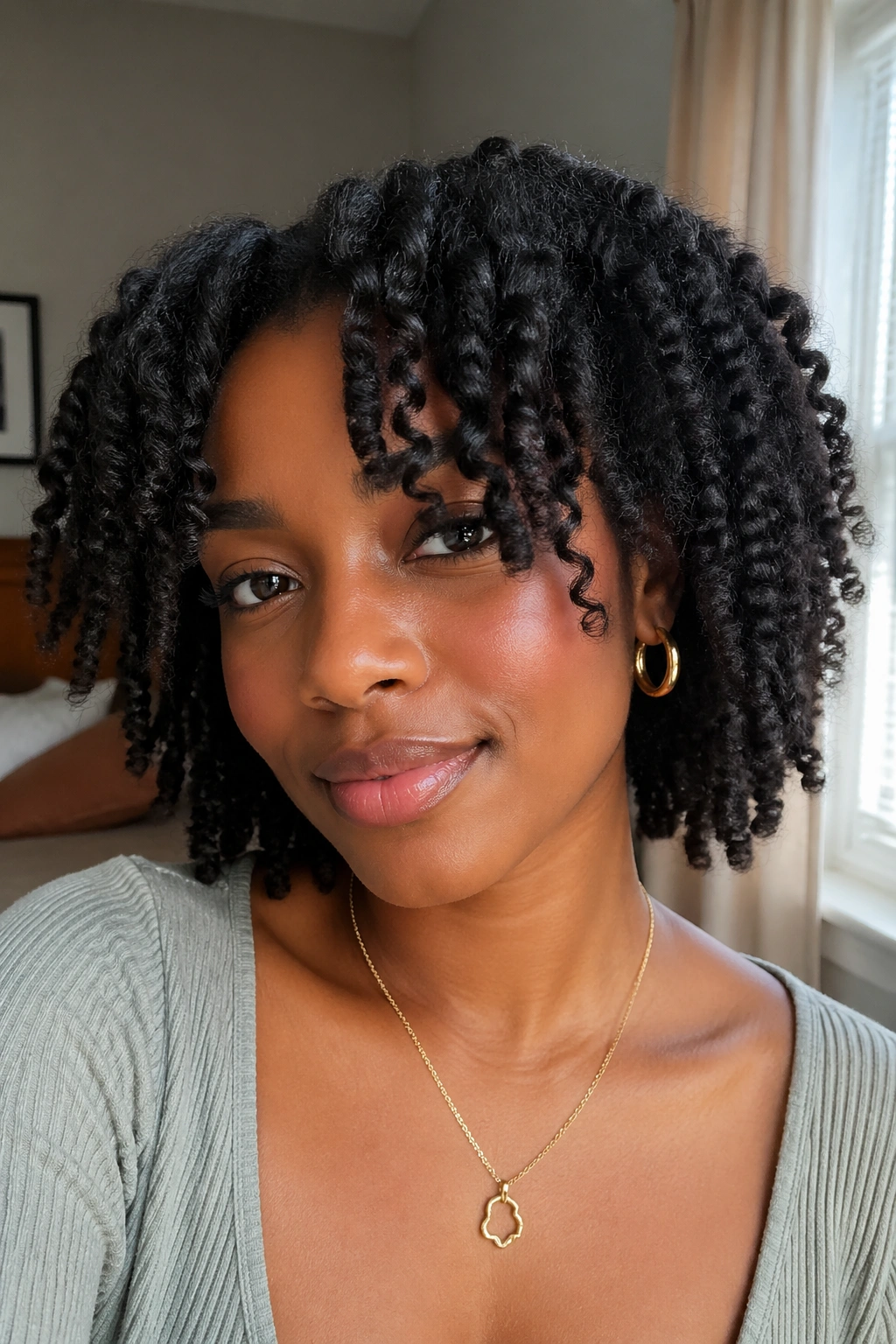
Style the curtain bang section in small twists before doing the same with the rest of the hair. When you release the twist-out, the bang section falls in the twist-out wave pattern and sweeps naturally toward each side of the face if the twists were done in the curtain direction.
The twist-out pattern in the bangs adds texture and visual interest that’s different from a simple wash-and-go curl. On type 4 hair, the twist-out also provides elongation that allows the bang to sit at a more predictable position at the forehead.
12. Curtain Bangs With a Headband
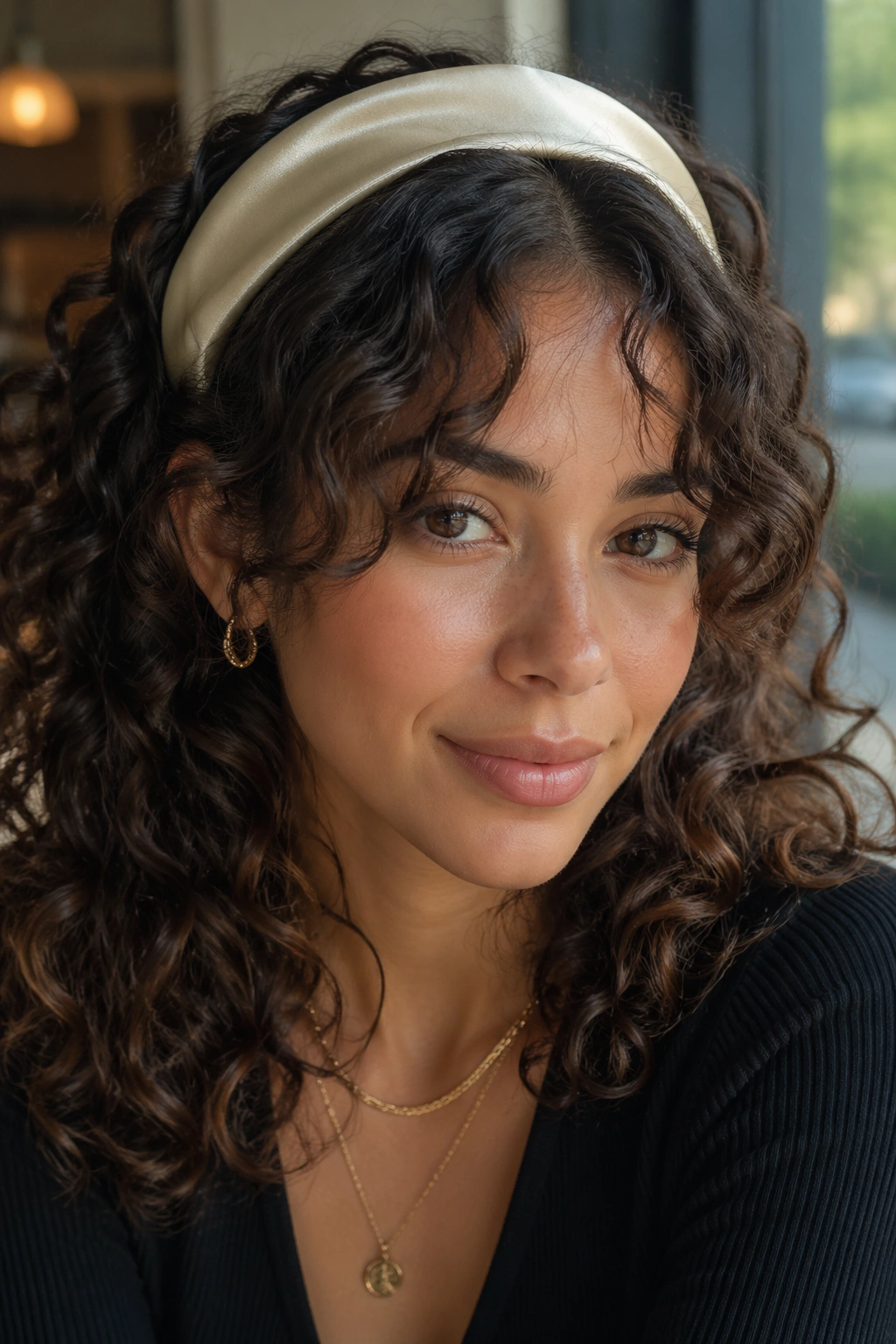
A wide headband placed behind the curtain bangs frames the whole arrangement beautifully. The headband holds the rest of the hair back, the curtain bangs fall forward in front of the headband, and the combined effect is polished and intentional.
A satin or velvet headband in a complementary color adds a luxe quality. A colorful or patterned headband makes the whole look feel playful and styled.
13. Curtain Bangs on a Short Natural Cut
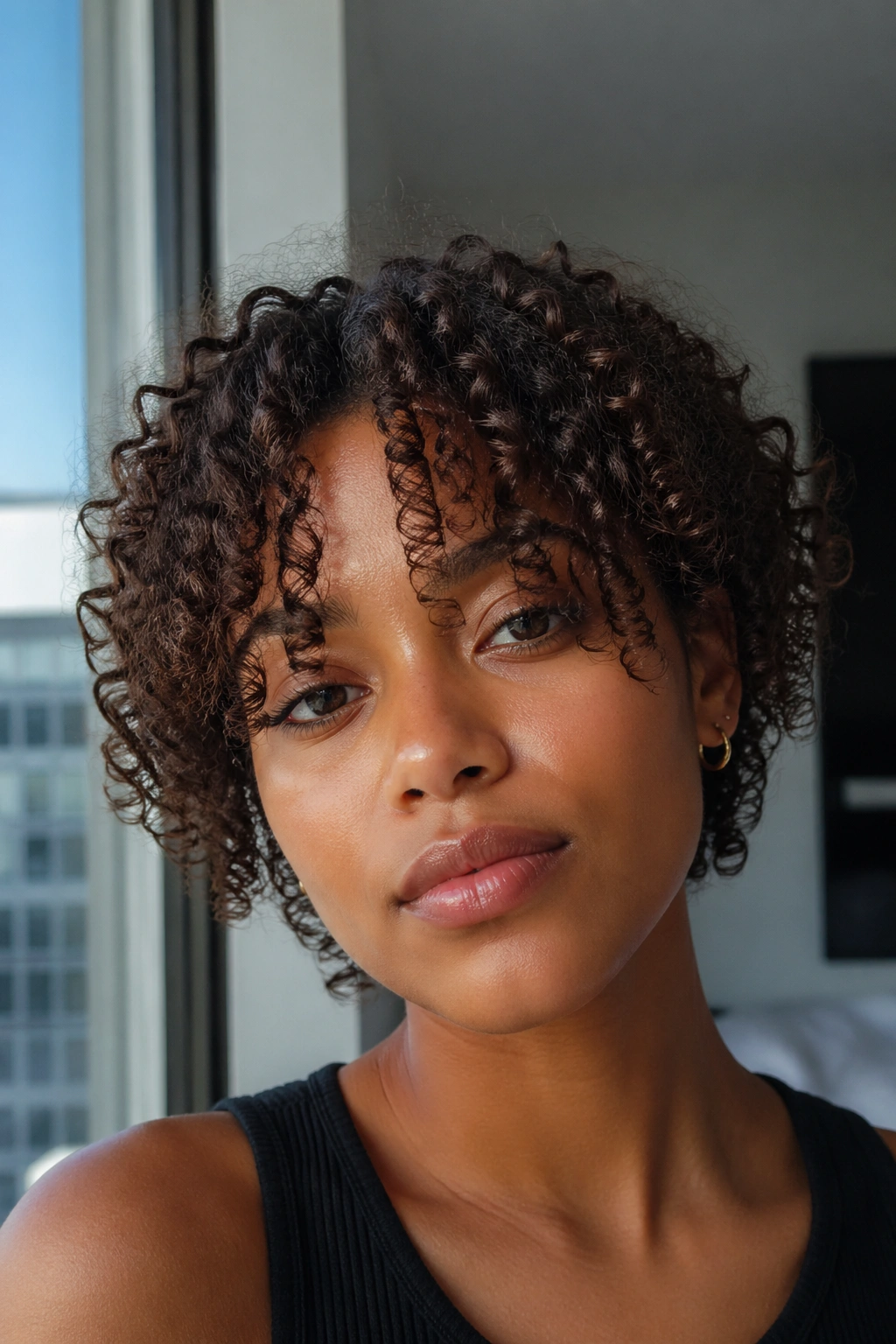
Curtain bangs on a short natural cut — like a TWA or a short curly cut — take on a completely different character than bangs on long hair. The bang section is proportionally larger relative to the overall hair length, which makes the face-framing effect more dramatic.
On short natural hair, curtain bangs transform the front of the style. They create movement and frame where the rest of the style is full and rounded. The combination of short natural hair and curly curtain bangs is genuinely striking.
14. Curtain Bangs Worn Pinned to One Side
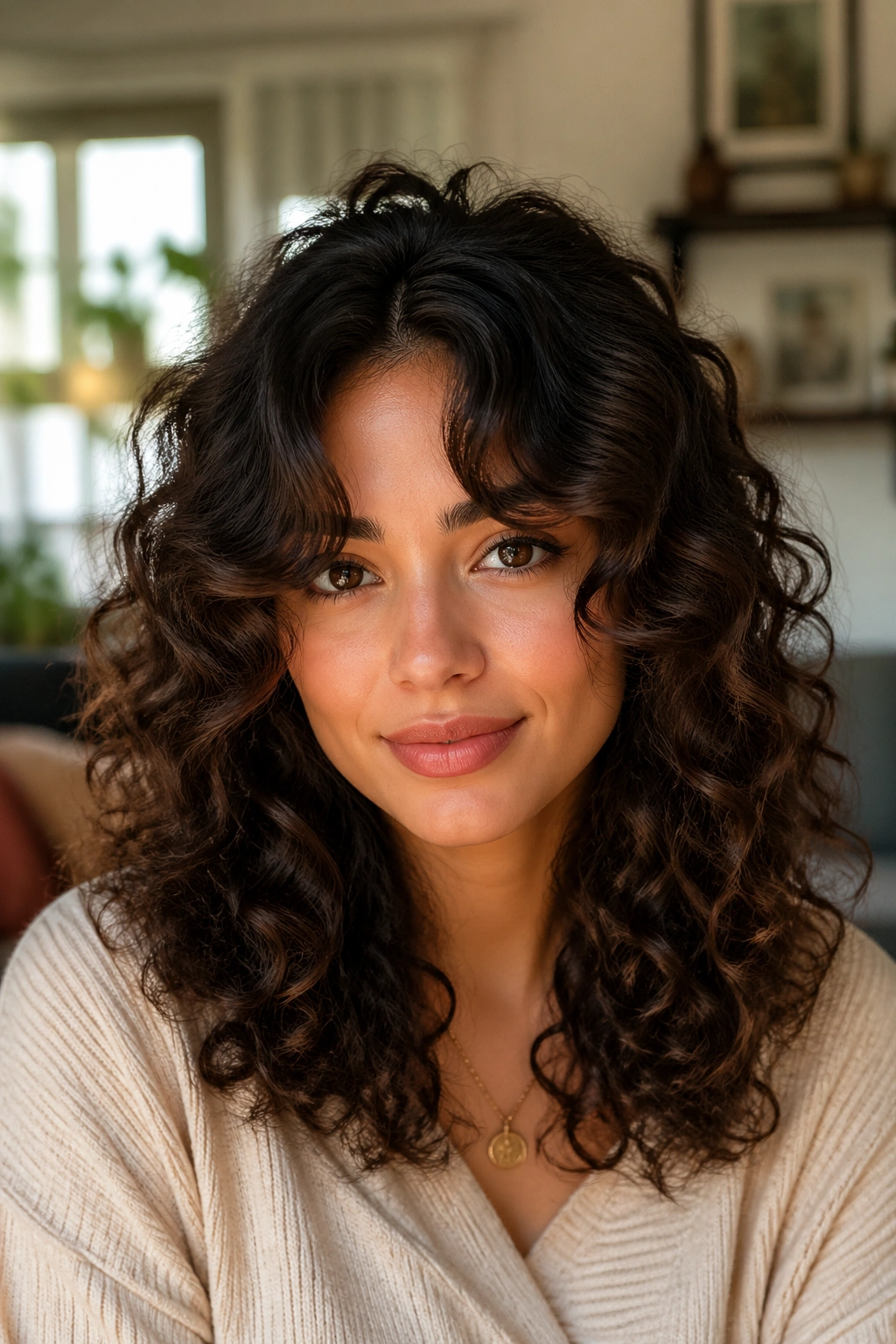
Take the curtain bang and pin one half of it to the side, creating an asymmetric effect where only one cheek is framed. The visible half of the curtain bang hangs freely at one cheek while the other half is tucked back or pinned at the temple.
This variation takes the symmetric curtain bang shape and makes it directional — adding asymmetry that reads as more fashion-forward and editorial than the balanced original.
15. Blow-Dried Curtain Bangs for a Stretched Look
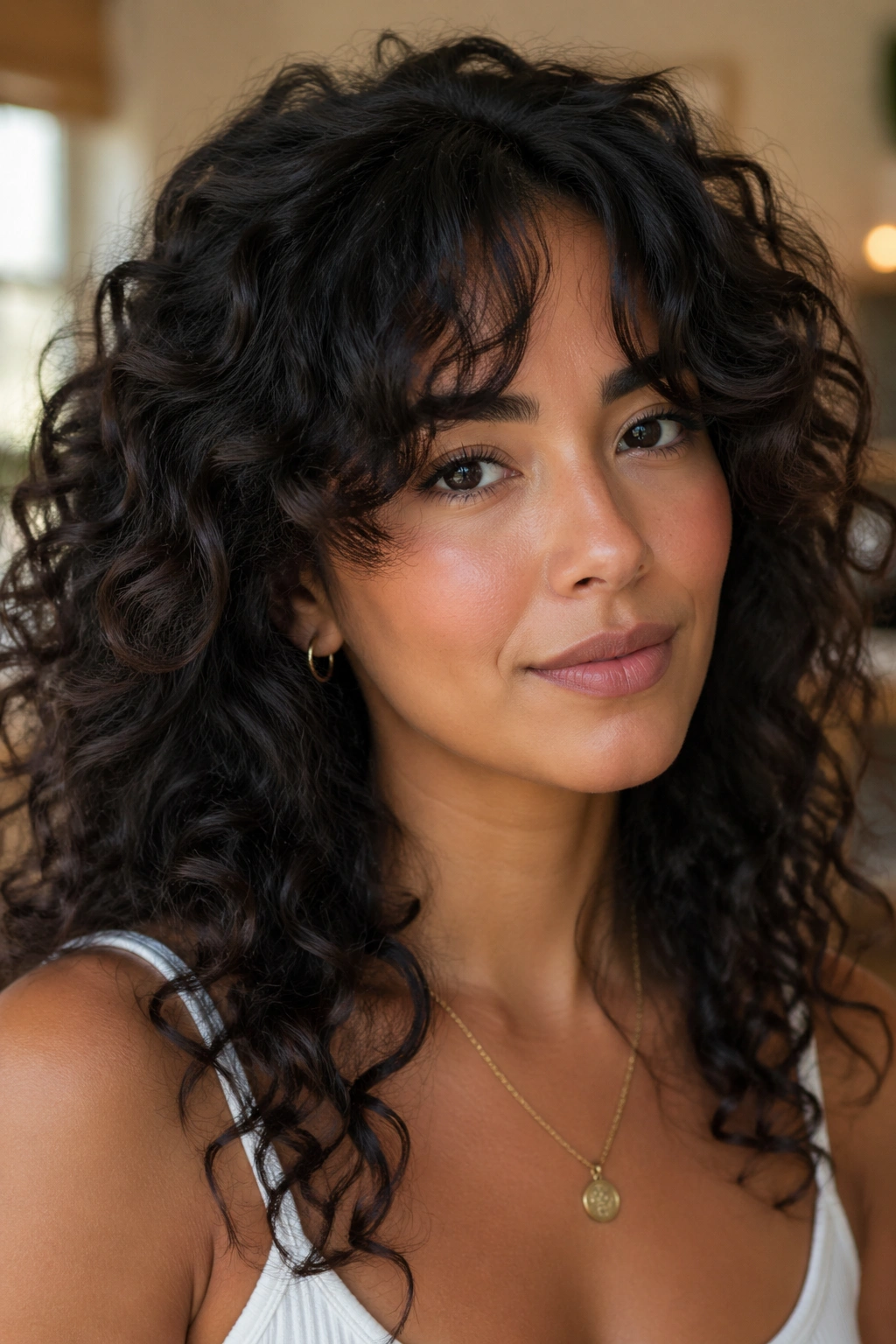
Using a low heat blow-dryer with a concentrator nozzle, blow-dry the curtain bang section downward and outward using light tension. This stretches the curl pattern slightly, giving the bangs more length and making them fall more toward the cheeks rather than springing upward.
The rest of the hair can be left fully natural or diffused. The slightly stretched bang section sits at a different point than the natural curl, creating an interesting variation in texture between the bang section and the rest of the hair.
16. Curtain Bangs With Protective Style Body
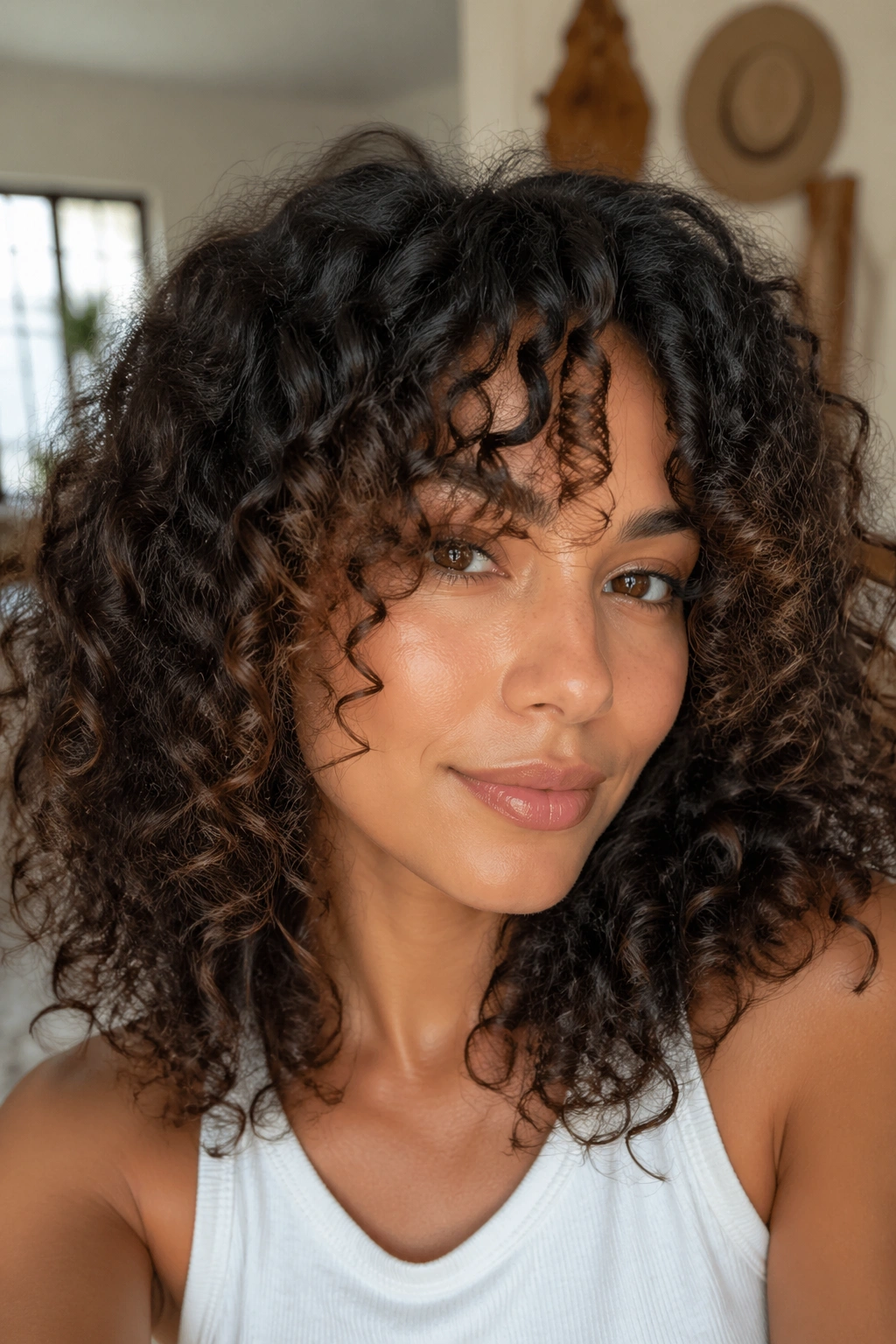
Curtain bangs worn with a protective style on the rest of the hair — braids, twists, a bun — create a look where the bangs are the only free, textured element. The protective style is controlled and contained. The curtain bangs are expressive and free.
This combination is both practical and stylish. The protective style handles the health of your hair while the curtain bangs give the look personality and a point of visual interest.
17. Curtain Bangs Enhanced With a Curling Wand
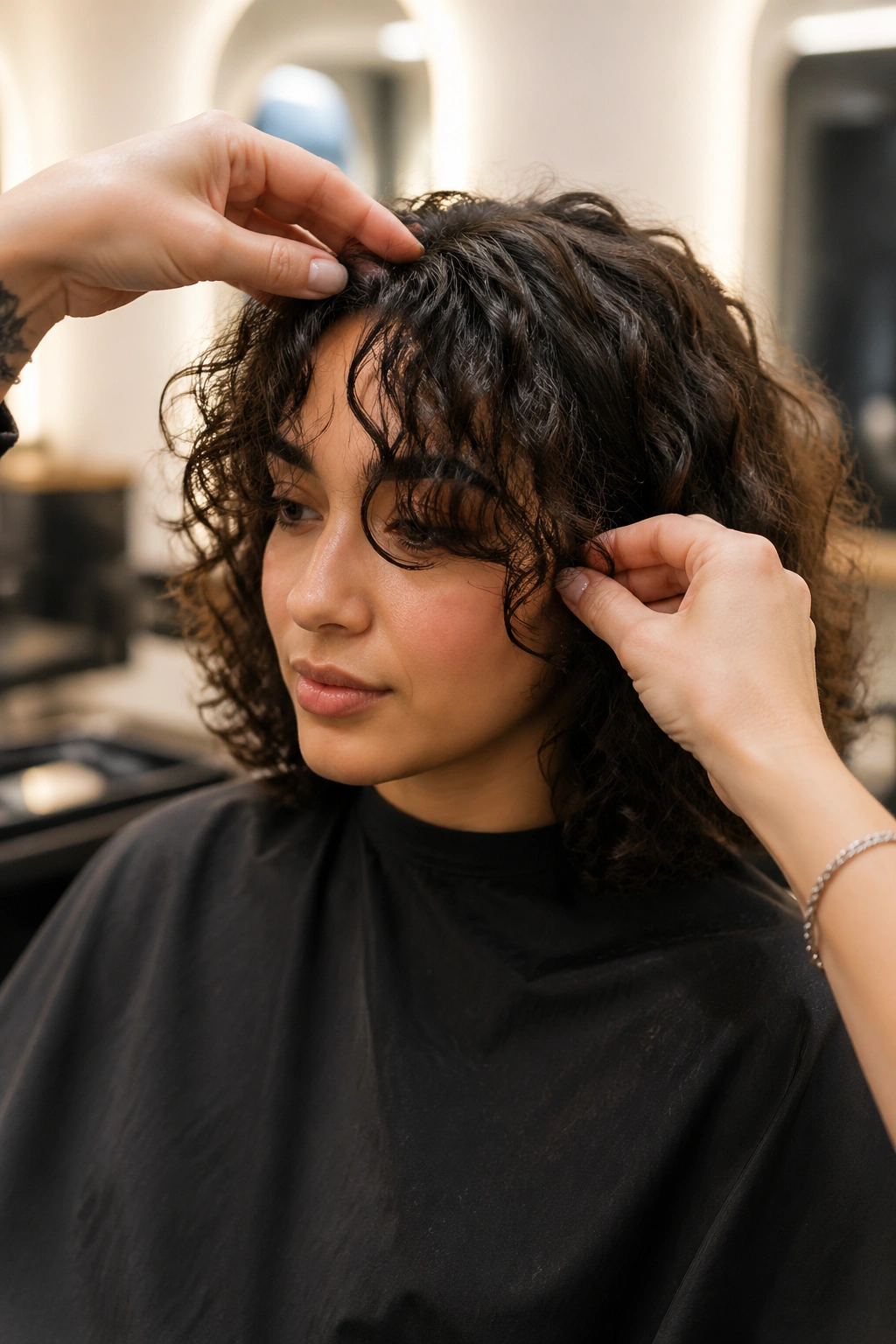
After styling the curtain bangs with curl cream and gel, use a small curling wand on any sections that need more definition or that dried without clear curl shape. Wrap individual sections around the wand briefly for enhanced curl definition, then let cool without touching.
This is especially useful on wash-and-go results where some sections of the bang dried inconsistently. A quick pass with a small wand fixes any undefined sections without requiring a full restyle.
18. Dramatic Long Curtain Bangs Past the Cheekbones
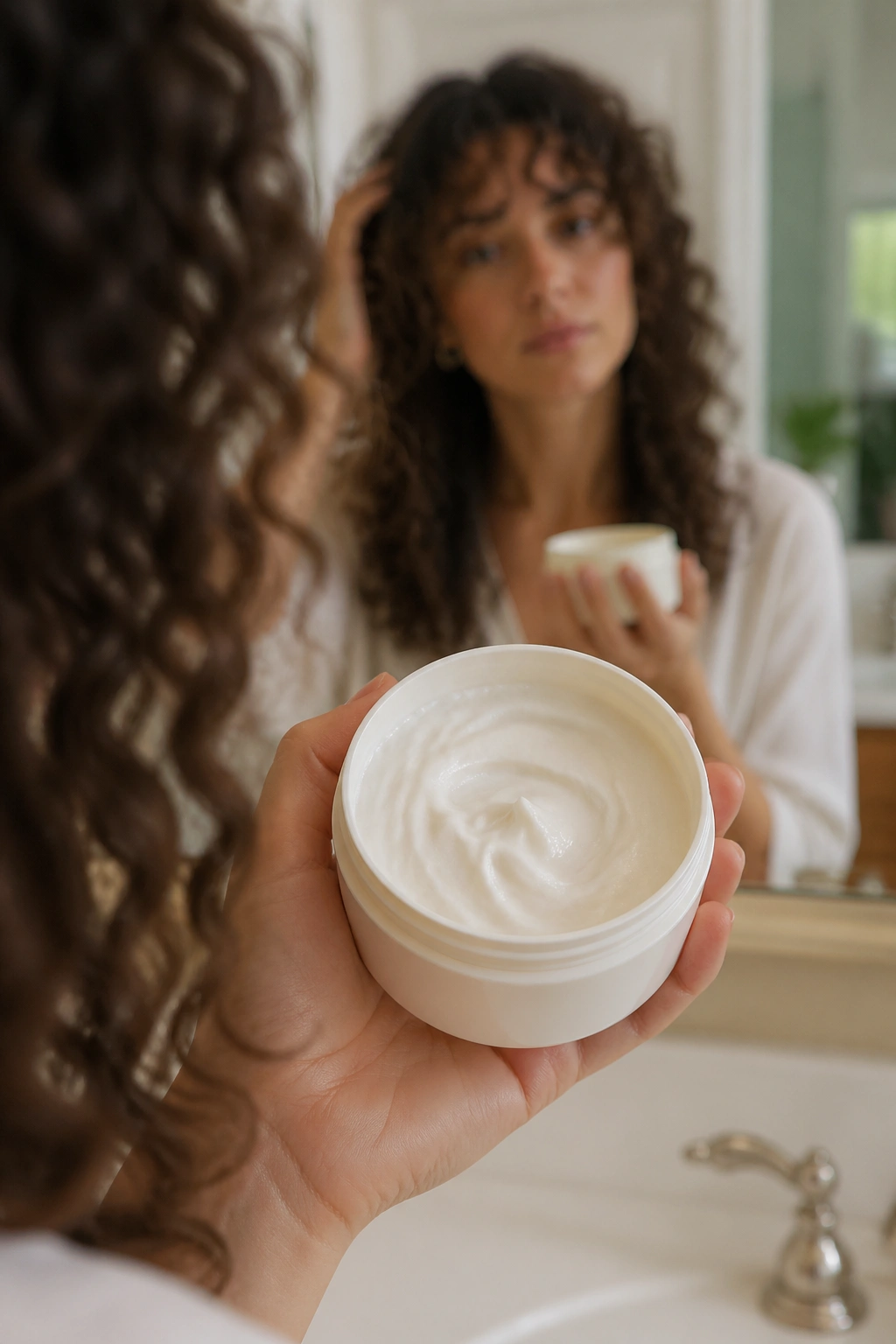
Curtain bangs cut long enough to fall past the cheekbones and toward the chin create a dramatic, almost face-framing curtain effect that significantly alters the face’s apparent shape. These long curtain bangs are less of a fringe and more of a face-framing layer — they move with the head, fall in front of the shoulders on long hair, and create a very romantic, full silhouette.
On naturally curly hair, these very long curtain bangs are perhaps the most effortlessly beautiful interpretation of the style — the curls cascade from the hairline all the way down past the chin, creating a lush, organic frame.
19. Finger-Coiled Curtain Bangs for Maximum Definition
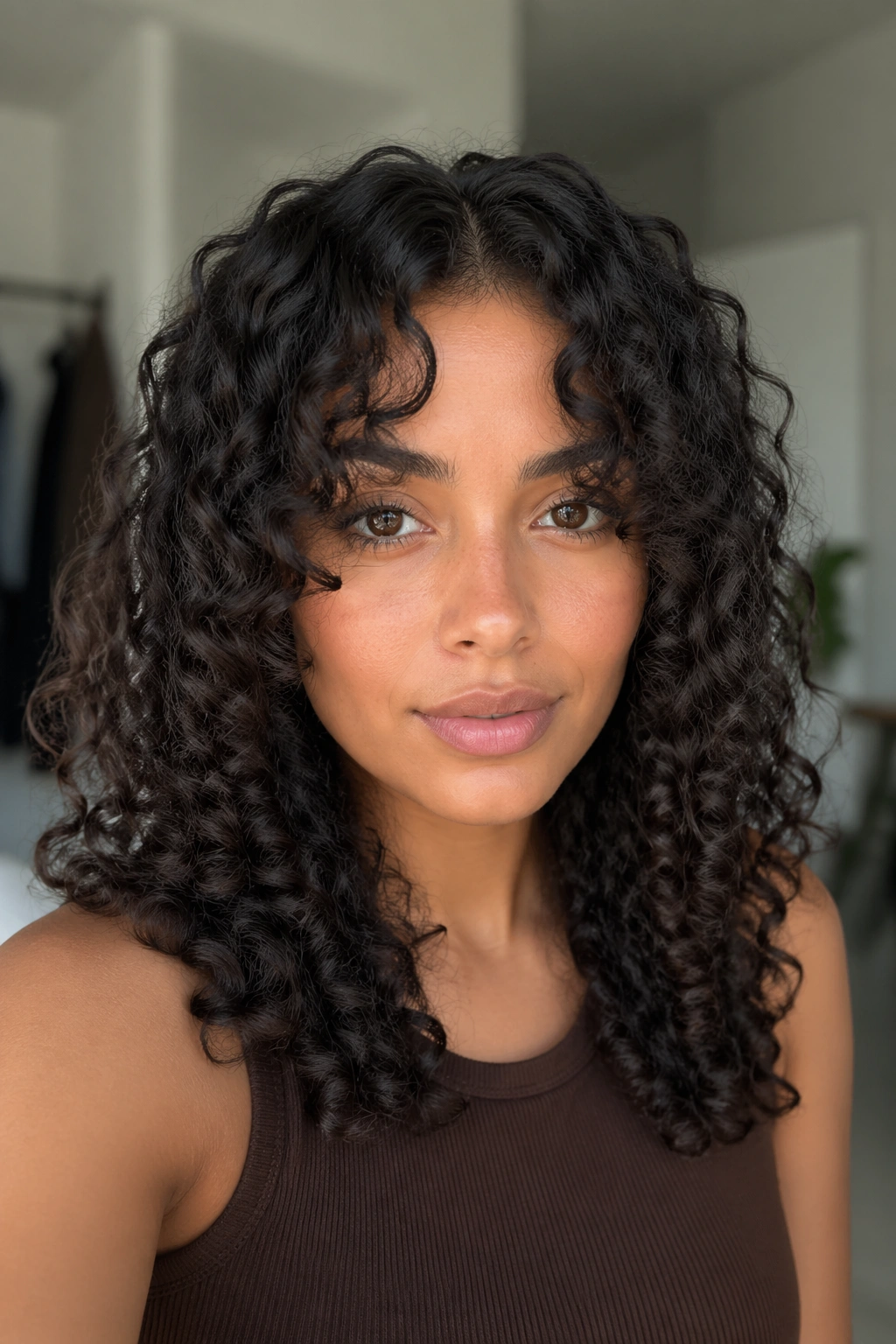
Finger-coiling each individual section of the curtain bang creates the most defined possible version of this style. While the hair is damp and product-saturated, wrap each small section of the bang around one finger from root to tip, hold for a moment, then release. Repeat across the entire bang section.
The result is a bang made up of tightly defined, individually coiled spirals that sit in precise positions across the forehead. This technique is particularly effective on type 4 hair that benefits from the extra definition finger-coiling provides.
20. Curtain Bangs With a Fringe Refresh Routine
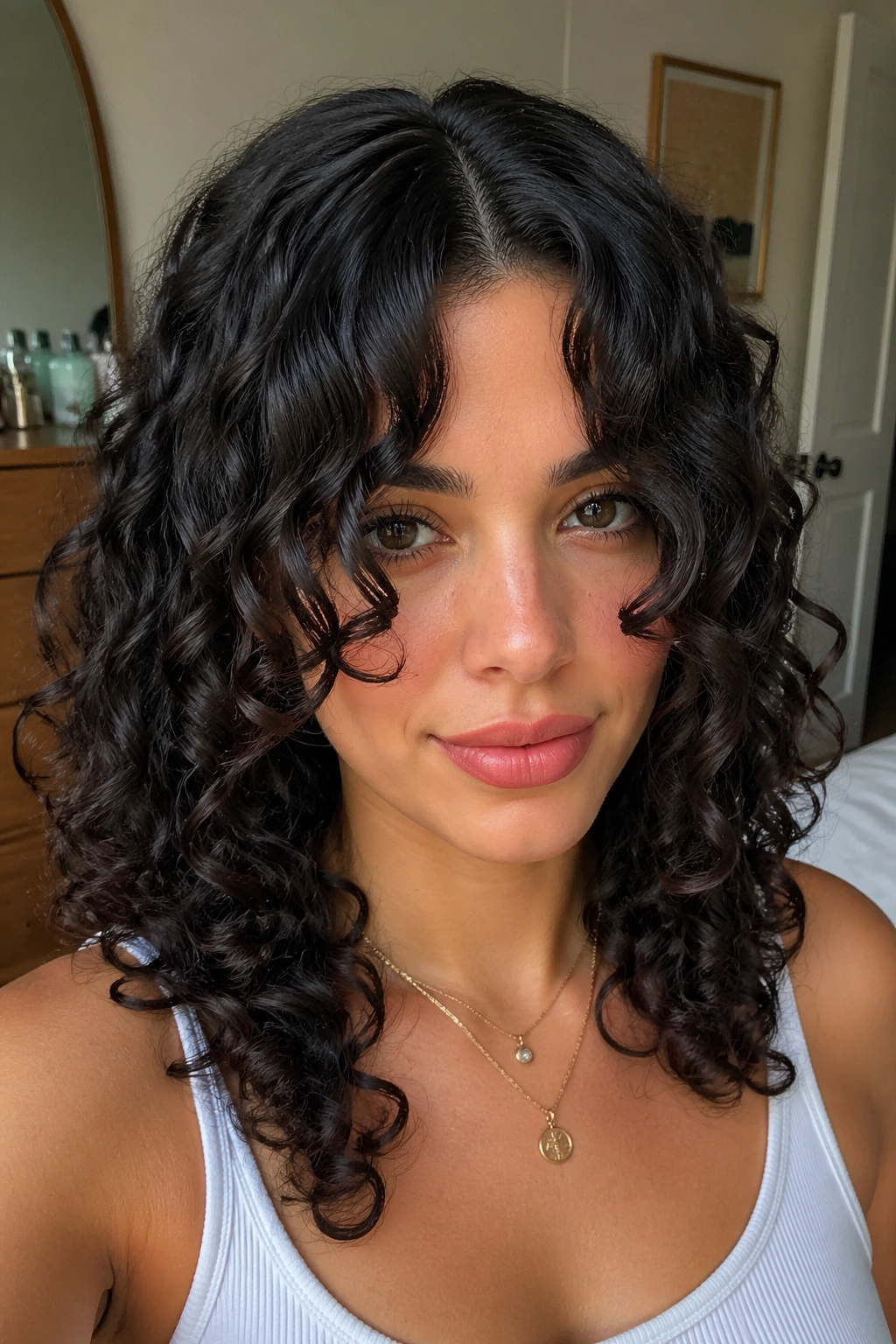
The most important thing about curtain bangs is maintaining them between washes. A simple refresh routine — spritz lightly with water, apply a pea-sized amount of curl cream, finger-coil any sections that lost definition, and air-dry — takes under five minutes and restores the bang’s look without a full wash.
Do this every morning if you’re wearing the curtain bangs down, or at least every time you re-wear a style from the previous day. Fresh-looking curtain bangs are the difference between a style that looks intentional and one that looks like you forgot to maintain it.
21. Statement Curtain Bangs for Special Occasions
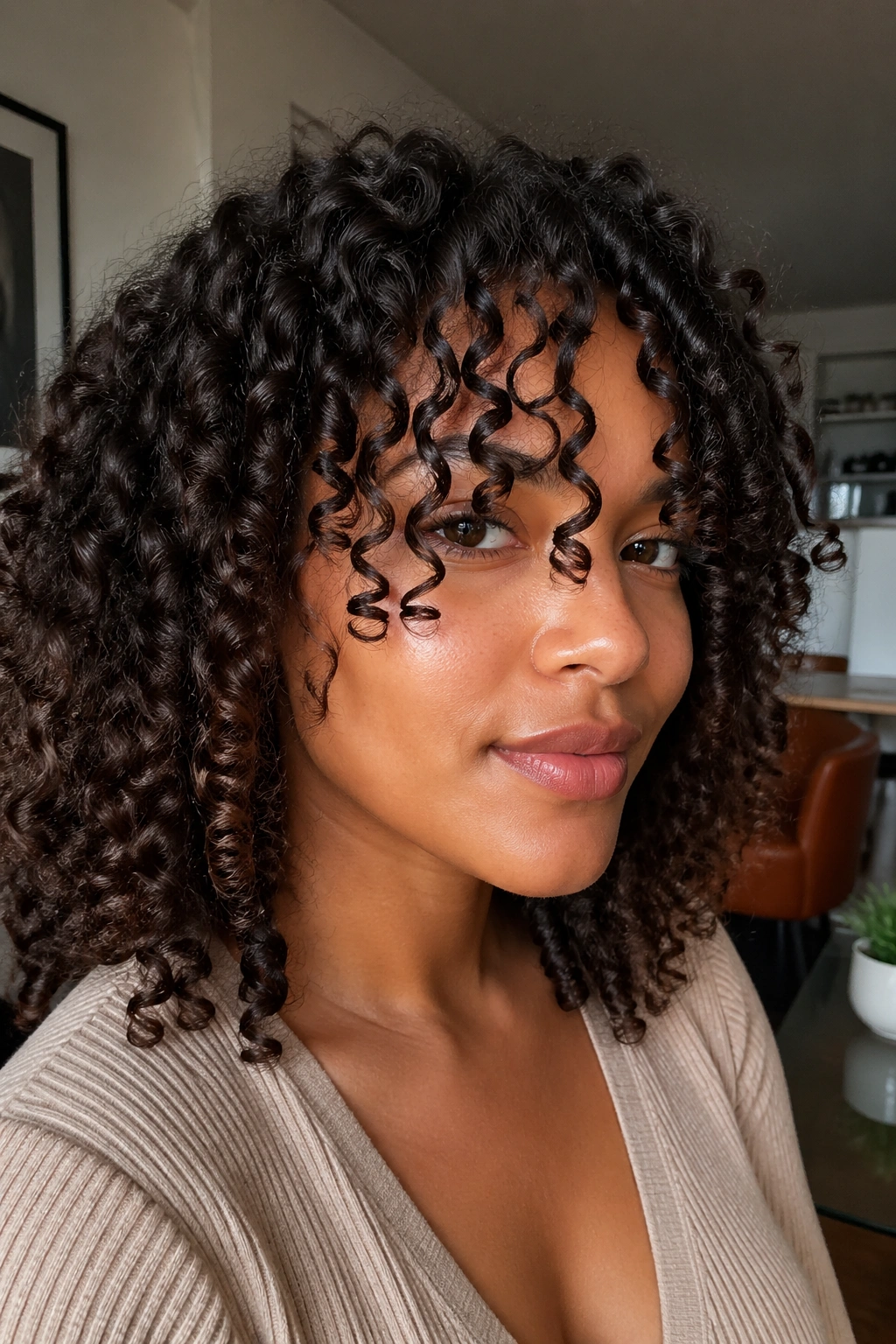
For events, a slightly more effort-intensive version of curtain bangs — with defined roller-set curls, laid edges, and a finishing spray for shine — creates a polished, special-occasion look. The curtain bang is the star, and everything else in the style supports it rather than competing with it.
Choose a hairstyle at the back that keeps the focus on the front framing — a low, smooth bun or a sleek half-up creates a clean backdrop for the statement curtain bangs.
22. Vintage-Inspired Curly Curtain Bangs
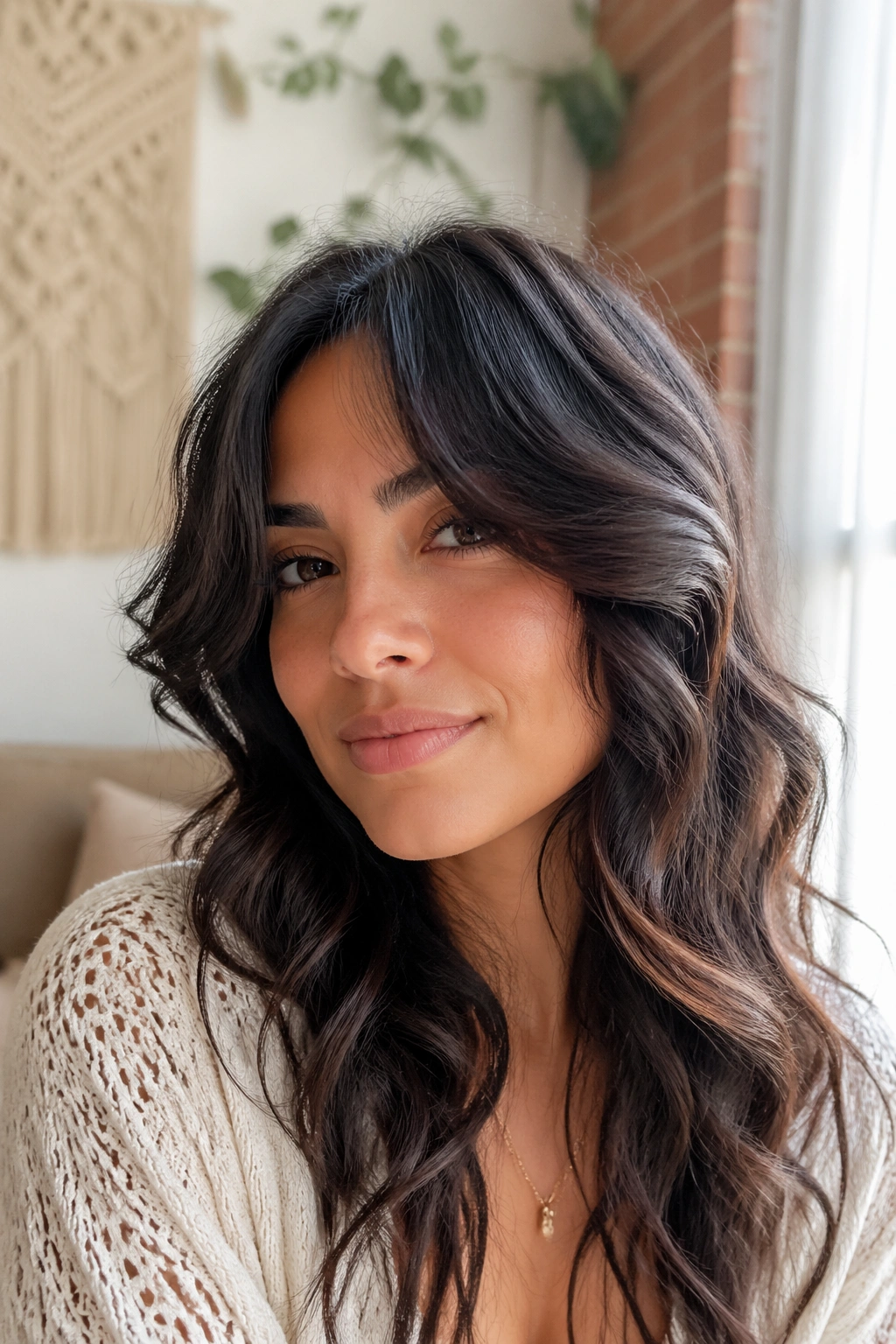
Styled specifically to evoke mid-century glamour, with large, defined curls in the curtain bang section set on medium rollers and released into bouncy, round ringlets. The vintage quality comes from the precision of the curl shape rather than organic, freestyle curl patterns.
Combined with a retro-inspired updo at the back — a chignon, a twisted updo, or a low rolled style — the vintage curtain bangs create a complete look that references classic Black Hollywood glamour with a natural-hair twist.
23. Curtain Bangs on Natural Hair — The Morning Routine
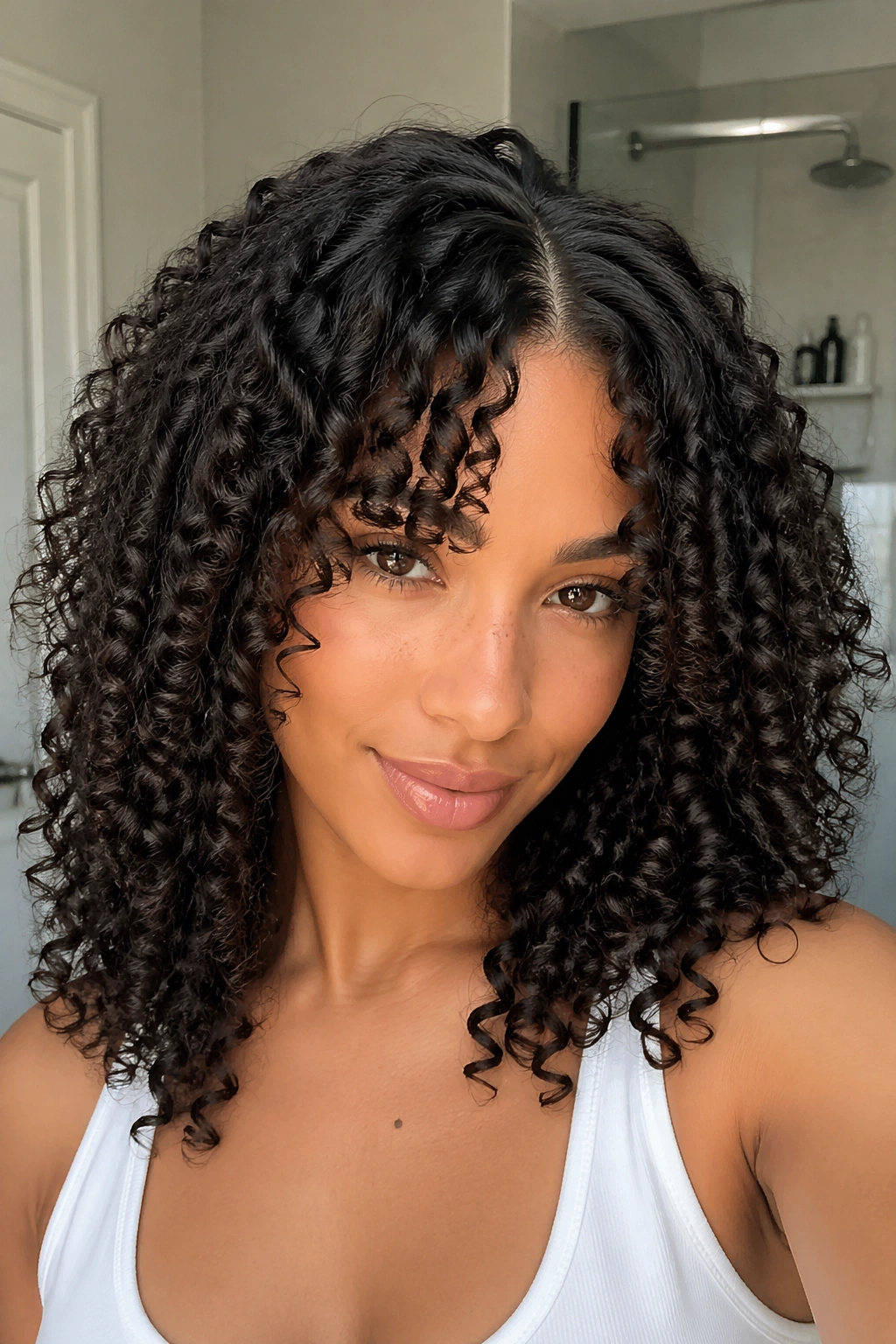
Maintaining curtain bangs on natural hair is about having a reliable morning routine rather than a complicated one. On wash day, style the bangs deliberately with products in the curtain direction. On subsequent mornings, refresh with water and a small amount of cream. On day three or four, if the bangs have lost significant definition, do a quick finger-coiling session on damp sections.
The most important part of the routine is never sleeping without protection. A satin scarf or bonnet wrapped around the bang section and tied at the front preserves the curl shape overnight. Without it, the bangs flatten against the forehead and lose definition within one night of sleep.
24. Curtain Bangs as a Gateway Style
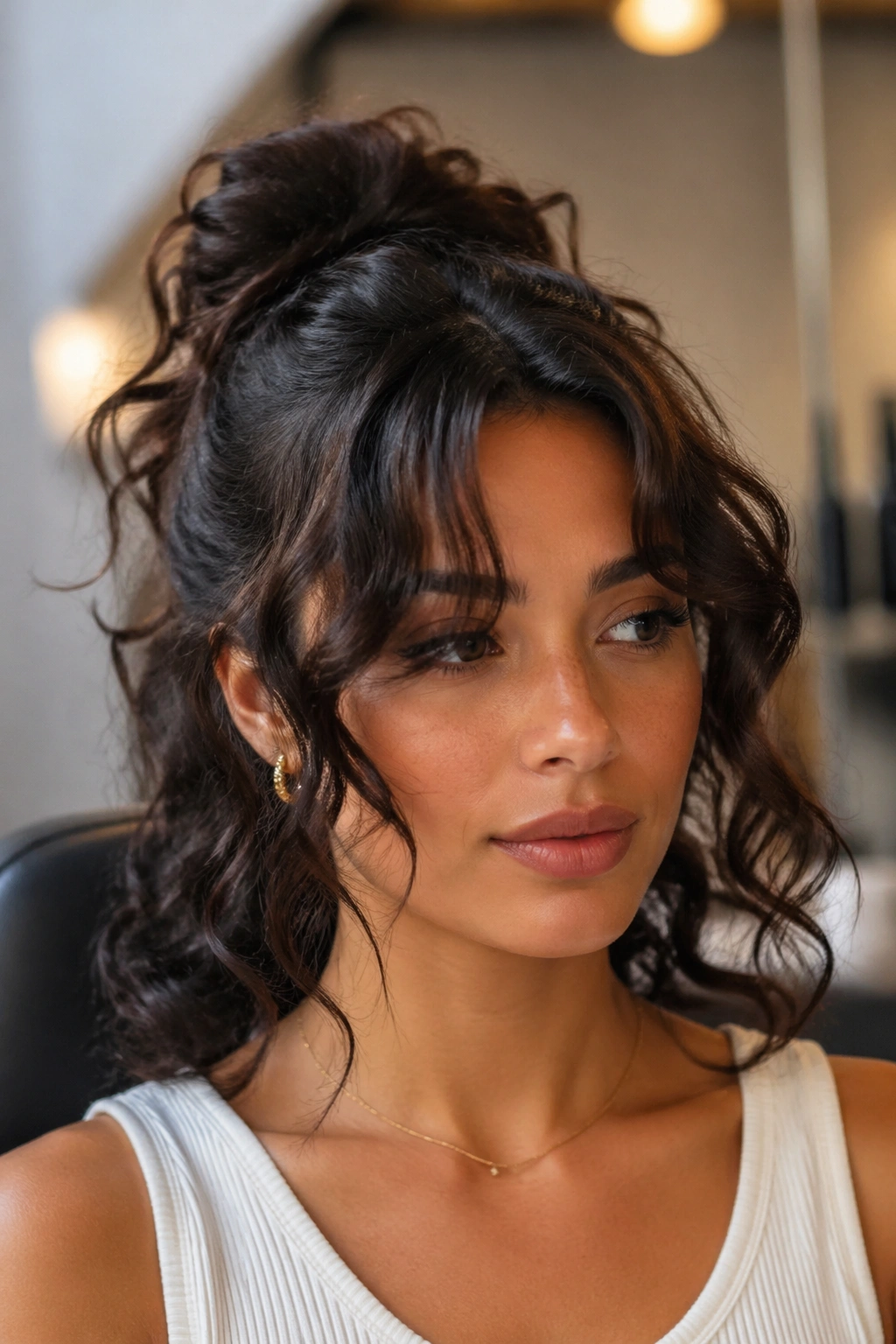
For naturalistas who’ve always wanted bangs but were hesitant to commit, curtain bangs are the ideal gateway style. They’re long enough to pin back if you decide you don’t love them. They blend into the rest of the hair as they grow out rather than requiring an awkward grow-out period. And they’re versatile enough to wear in multiple configurations — parted in the center as true curtain bangs, swept to one side, pinned back completely, or tucked behind the ears — so you’re not locked into one look from the moment they’re cut.
Curtain bangs are a low-commitment style with a high-impact payoff. On natural curly hair, they’re one of the most expressive and beautiful styling choices you can make.