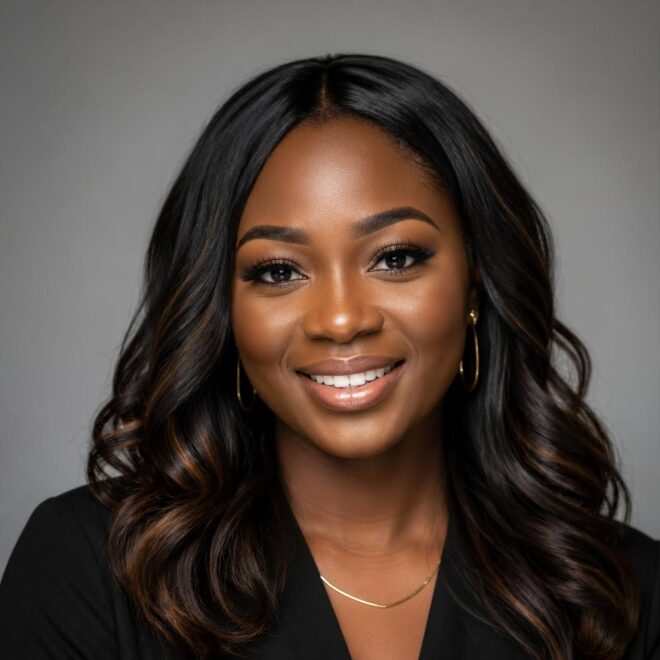


Rod curls on natural hair are one of the most reliable, most consistently beautiful, and most underrated techniques in the entire natural hair styling world. Perm rods, flexi rods, magnetic rods — they all work on the same fundamental principle: wrap your natural hair around a curved surface, let it dry, remove the rod, and reveal a defined, uniform spiral that looks like it came from a professional salon. No heat, no wand, no flat iron. Just the rod, the right products, and the patience to let the hair dry completely. The results speak for themselves.
Why Rod Curls Are a Natural Hair Essential
The appeal of rod curls runs deep for natural hair communities, and it’s not just about aesthetics. Rod curls are a heat-free technique, which immediately makes them gentler on the hair than wand curls, flat iron curls, or any other heat-dependent method. For naturals who are growing out heat damage, transitioning, or simply committed to minimizing heat exposure, rod sets are one of the best ways to get beautifully defined curls without adding any thermal stress to the strand.
But rod curls on natural hair also do something that few other techniques accomplish: they consistently produce defined, uniform spirals across all natural hair types. Type 3A to 4C — every coil pattern responds well to a rod set when the right rod size and product combination are used. The rod imposes the curl shape from the outside, which means the natural hair texture becomes a secondary factor. It’s the technique’s structure that creates the curl, not the hair’s own coil pattern.
This makes rod sets particularly powerful for 4B and 4C naturals whose tight z-pattern can otherwise make it difficult to achieve the defined, elongated spirals that show length and definition.
The Different Types of Rods and What They Do
The rod world has more variety than most beginners realize, and choosing the right type matters.
Perm rods are the classic choice — small, cylindrical plastic rods that come in multiple sizes from tiny (pink, gray) to large (blue, white). They produce very uniform, tight to medium spirals. They work best on shorter to medium-length natural hair.
Flexi rods are foam-covered wire rods that bend to secure the wrapped hair without clips or rubber bands. They’re gentler on the hair and come in larger sizes than traditional perm rods, making them better for medium to long natural hair. They produce a curl that’s slightly softer and more free-looking than a perm rod curl.
Magnetic rods are smooth plastic rods that snap together magnetically to hold the wrapped section. They produce a very smooth, defined curl with excellent uniformity.
The size you choose within each category determines the curl diameter: smaller rod = tighter curl, larger rod = looser, bigger spiral.
Product Strategy for a Perfect Rod Set
Products determine whether a rod set looks polished and defined or frizzy and undefined. Getting the product right is the single most important factor in rod curl success.
The formula that works for most natural hair types: leave-in conditioner for moisture + setting lotion or curl cream for definition + gel for hold and longevity. Apply them in that order to each section before wrapping.
The leave-in provides the moisture base that keeps the hair from drying out as it sets. The setting lotion or curl cream defines each individual strand within the section. The gel provides the hold that keeps the curl in its rod shape after the rod is removed.
The gel is optional for very fine natural hair that gets weighed down easily. But for medium to high-density natural hair, particularly Type 4 textures, the gel is what separates a rod set that lasts three days from one that holds for six.
Common Product Mistakes on Rod Sets
Using too much gel creates stiff, crunchy curls that take forever to soften. Using too little means the curl won’t hold after the rod comes out. The right amount coats each strand without saturating the section — the hair should feel coated and tacky, not dripping wet with product.
Skipping the leave-in conditioner and going straight to gel is a mistake that leads to dry, brittle curls. Natural hair needs moisture locked in before any setting product is applied.
How to Section and Wrap Natural Hair on Rods
Clean, strategic sectioning produces uniform rod curls. Random, inconsistent sectioning produces random, inconsistent results.
Divide the hair into six to eight sections and clip each. Within each section, create subsections that match the diameter of the rod you’re using. For a small perm rod, subsections should be about a quarter inch wide. For a medium flexi rod, about half an inch. For a large flexi rod, up to three-quarters of an inch.
The wrapping technique is critical. Take the product-applied section and place the tip of the hair at one end of the rod. Roll the hair around the rod in a spiral motion, moving up the rod as you wrap. Keep the wrapping tight and consistent — no gaps, no loose sections, no crossed strands. When you’ve reached the root, secure the rod according to its type (clasp the perm rod, bend the flexi rod, click the magnetic rod).
Move to the next section and repeat.
Drying Time — The Non-Negotiable Factor
This is where patience becomes a skill. Rod sets cannot be rushed. The hair needs to be completely, 100% dry before you remove a single rod. Partially dried rod sets produce frizzy, undefined curls that don’t hold their shape and disappoint every single time.
Under a hooded dryer on medium heat: most natural hair types take 45-90 minutes to dry completely. Thick, high-density 4C hair can take up to two hours under the dryer.
Air drying: four to ten hours depending on hair density and length. Many naturals do overnight rod sets — set the rods before bed, sleep in a loose bonnet, and remove in the morning.
The test for dryness: remove one rod and press the curl gently. If it feels cool, doesn’t return to a damp feel, and springs back firmly, it’s dry. If it feels even slightly warm or soft in a damp way, put the rod back and wait longer.
1. Classic Perm Rod Set
The classic perm rod set is the foundation of rod curl styling. It’s the look that’s been a staple in Black natural hair styling and continues to be one of the most reliable ways to get defined, uniform spirals on coily and curly textures.
Work through the entire head in consistent half-inch sections, using small to medium perm rods depending on how tight you want the finished curl. Apply leave-in, setting lotion, and gel to each section before wrapping. Roll from tips to roots, making sure the ends are secured neatly at the tip of the rod first. Clasp the rod at the root.
How to Get Perfect Perm Rod Curls
- Smooth the ends around the tip of the rod first — the ends determine how clean the curl looks
- Roll with even tension throughout — loose wrapping in the middle produces an uneven curl
- Keep each section the same size for uniform curl diameter across the head
- Check one test rod after the dryer time before removing all rods — if it’s not fully dry, add more time
When every rod comes out and the curls are separated gently, the result is a full head of defined, uniform spirals that last beautifully.
2. Flexi Rod Set for Longer Natural Hair
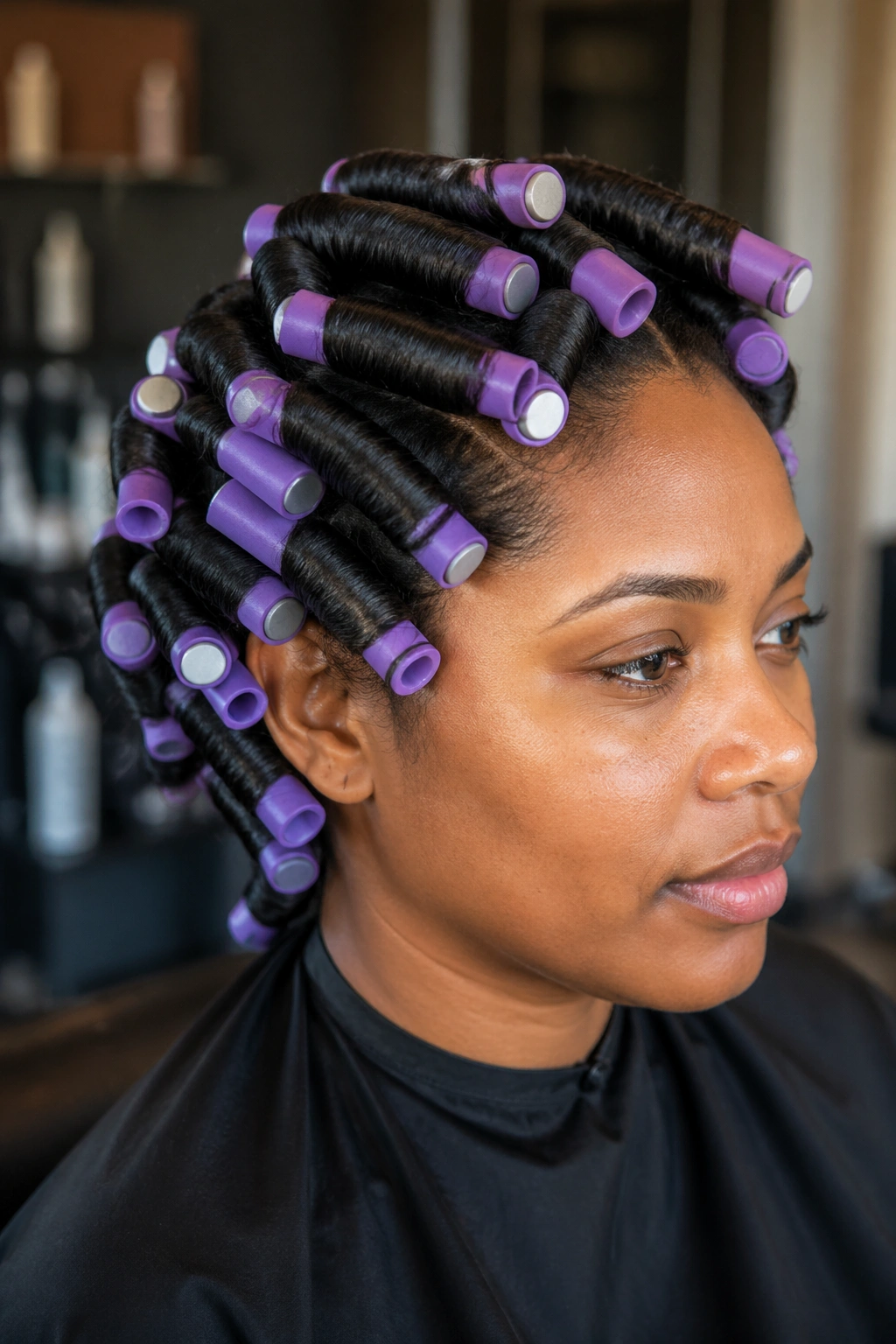
Flexi rods are the better tool for medium to long natural hair precisely because they’re flexible enough to accommodate longer sections without the hair overlapping and tangling. Perm rods work beautifully for shorter hair, but flexi rods become the preferred option as hair grows past the ear.
Use medium to large flexi rods for a soft, romantic spiral on natural hair. Apply the three-layer product combination — leave-in, curl cream, gel — and wrap each section from tip to root. Bend the ends of the flexi rod inward at both ends to secure. Once the full head is set, sit under a hooded dryer for 60-90 minutes.
Flexi rod curls have a slightly softer, more flowing quality than perm rod curls — the flexibility of the rod gives each curl a slight natural variation that looks less uniform and more organic. Many naturals prefer this look.
3. Rod Curls on Wet Natural Hair for Maximum Definition
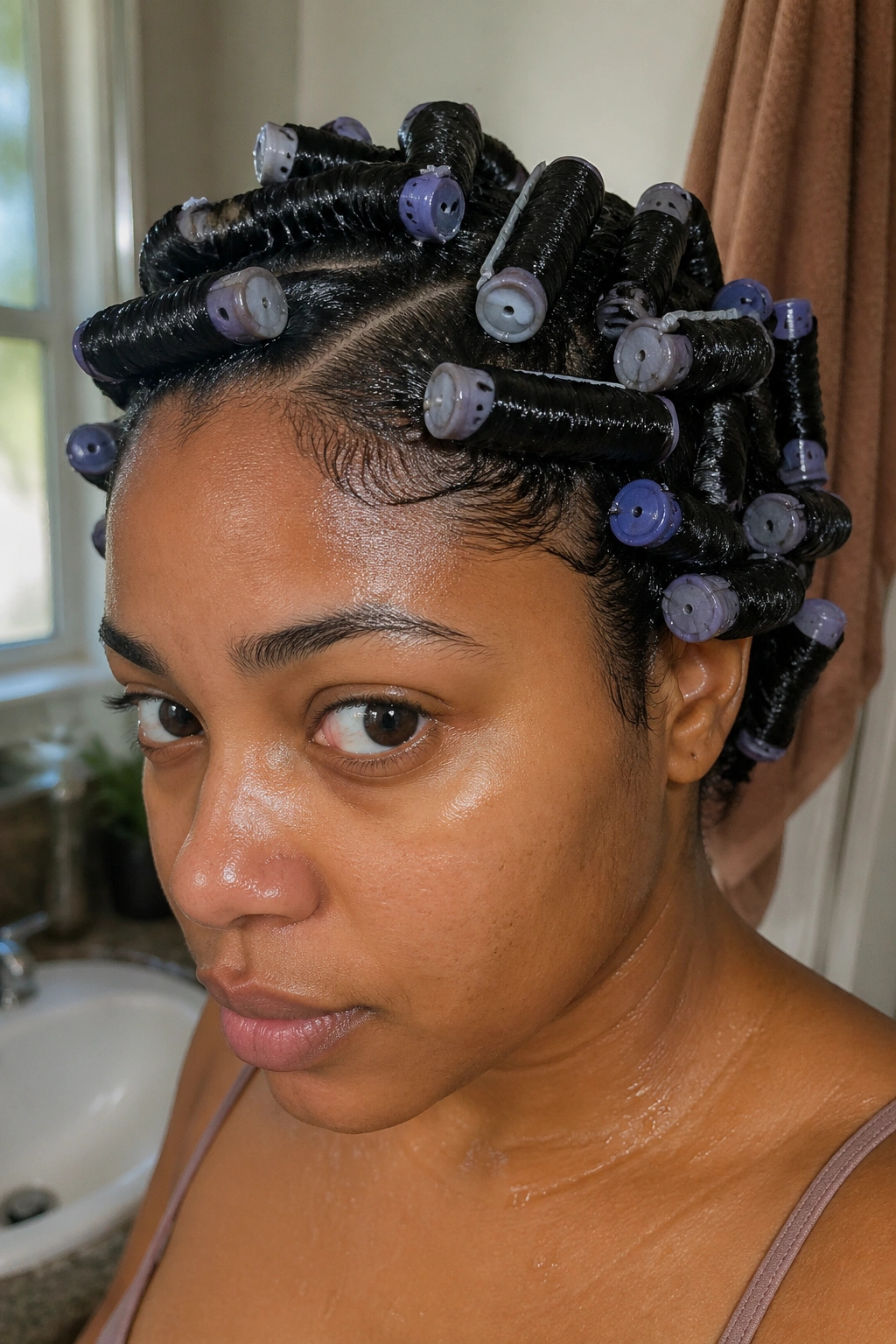
The wettest possible starting state — straight from washing, with the hair completely saturated — gives you the maximum product absorption and therefore the most defined rod set possible. It takes longer to dry, but the definition is worth it.
Apply products to each soaking-wet section. The gel distributes more evenly on very wet hair, coating every strand. The setting lotion or curl cream absorbs deeply into the wet strand. The resulting rod set, once dry, is extremely defined — each spiral is clean, uniform, and holds its shape exceptionally well.
This technique is particularly effective for 4A and 4B natural hair, where the goal is to achieve visible definition in a texture that can sometimes look undefined.
4. Bantu Knot to Rod Curl Hybrid
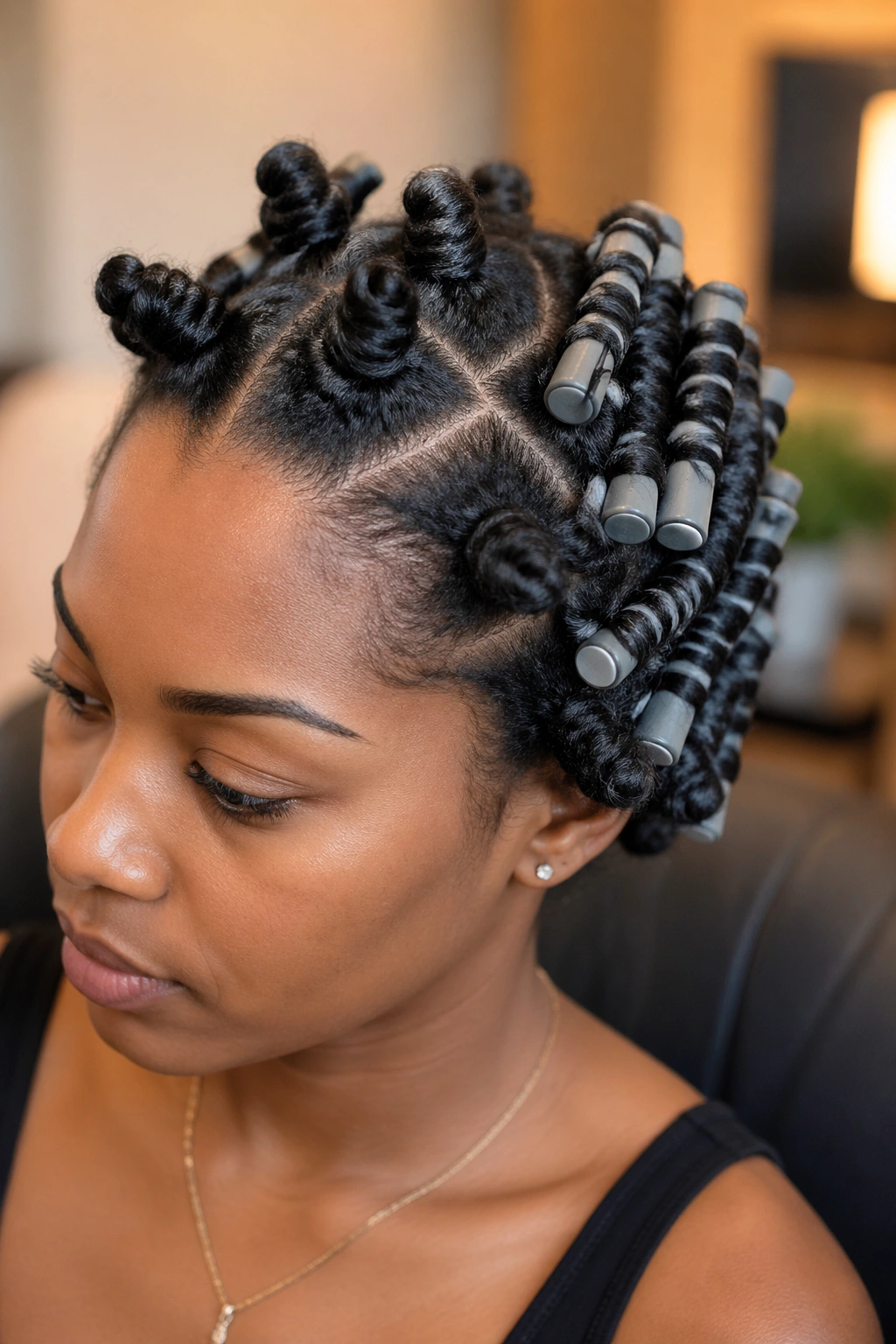
Combining Bantu knots with rod curls sounds like an unusual hybrid, but the combination produces a unique result that neither technique achieves alone.
Do a partial rod set on sections of the hair and leave other sections in Bantu knots. Let both dry completely (under a hooded dryer works well for this). When you remove both the rods and the Bantu knots, you have two distinct but complementary textures in the same style: the defined spiral of the rod curl and the kinky, compressed wave of the Bantu knot out.
Use the rod curl sections at the crown and front for definition and the Bantu knot sections at the back for a different, deeper texture. The result is dimensional and artistically interesting.
5. Rod Curls with Moisture-Rich Products for 4C Hair
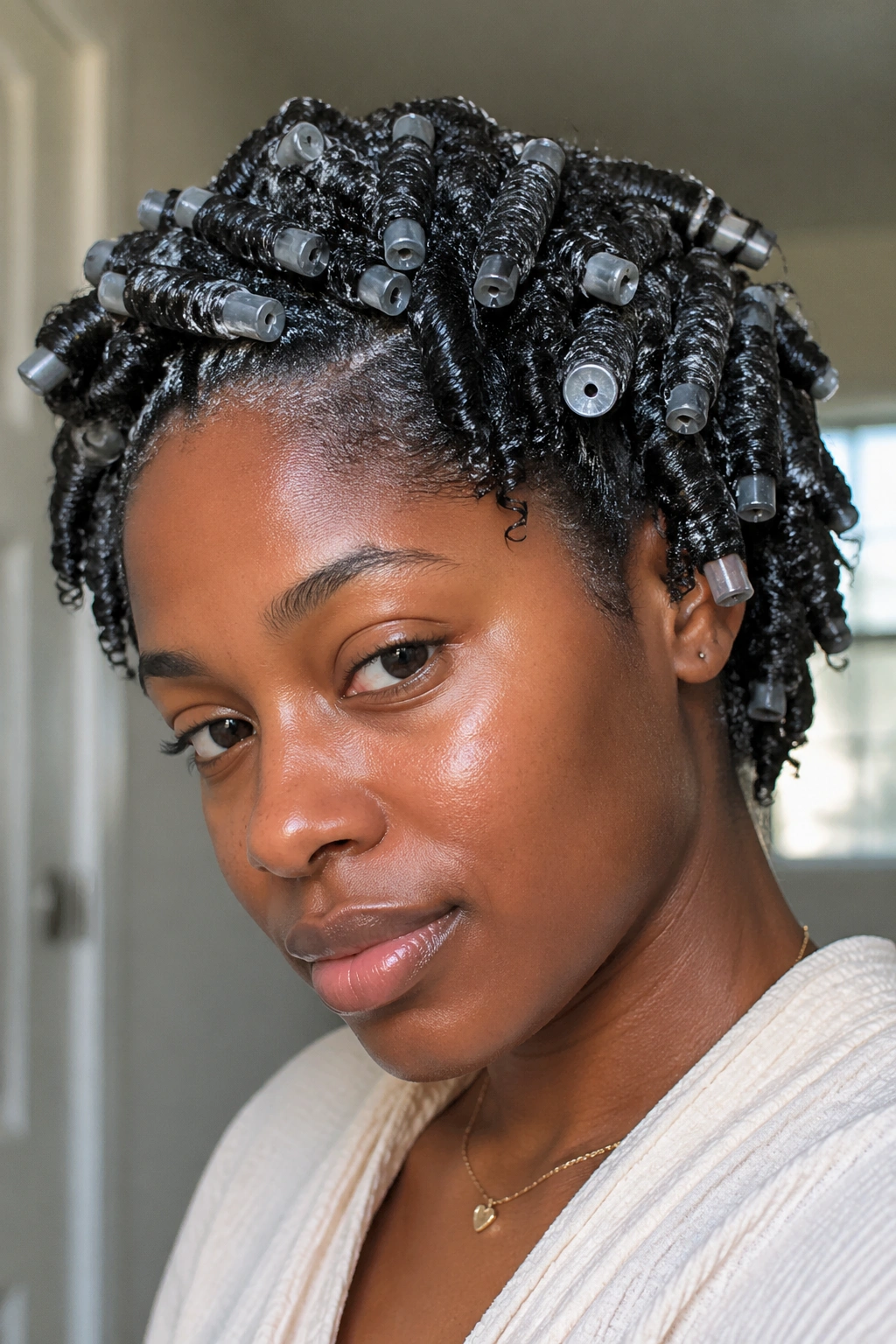
4C hair is the most moisture-thirsty of all natural hair types, and a rod set without adequate moisture tends to produce curls that look defined right after removal but become dry and brittle within a day or two.
For 4C hair specifically, amplify the moisture component of the product stack significantly. Apply a generous amount of leave-in conditioner as the first layer — more than you’d use for looser textures. Add a moisturizing curl cream over it. Then top with a medium-hold gel rather than a firm gel so the curls remain flexible and soft rather than crunchy.
Work on soaking wet hair for the best product absorption. And let the hair dry under a hooded dryer to minimize the time the wet, product-loaded hair is sitting before the set is complete.
6. Large Flexi Rod Set for Voluminous Curls
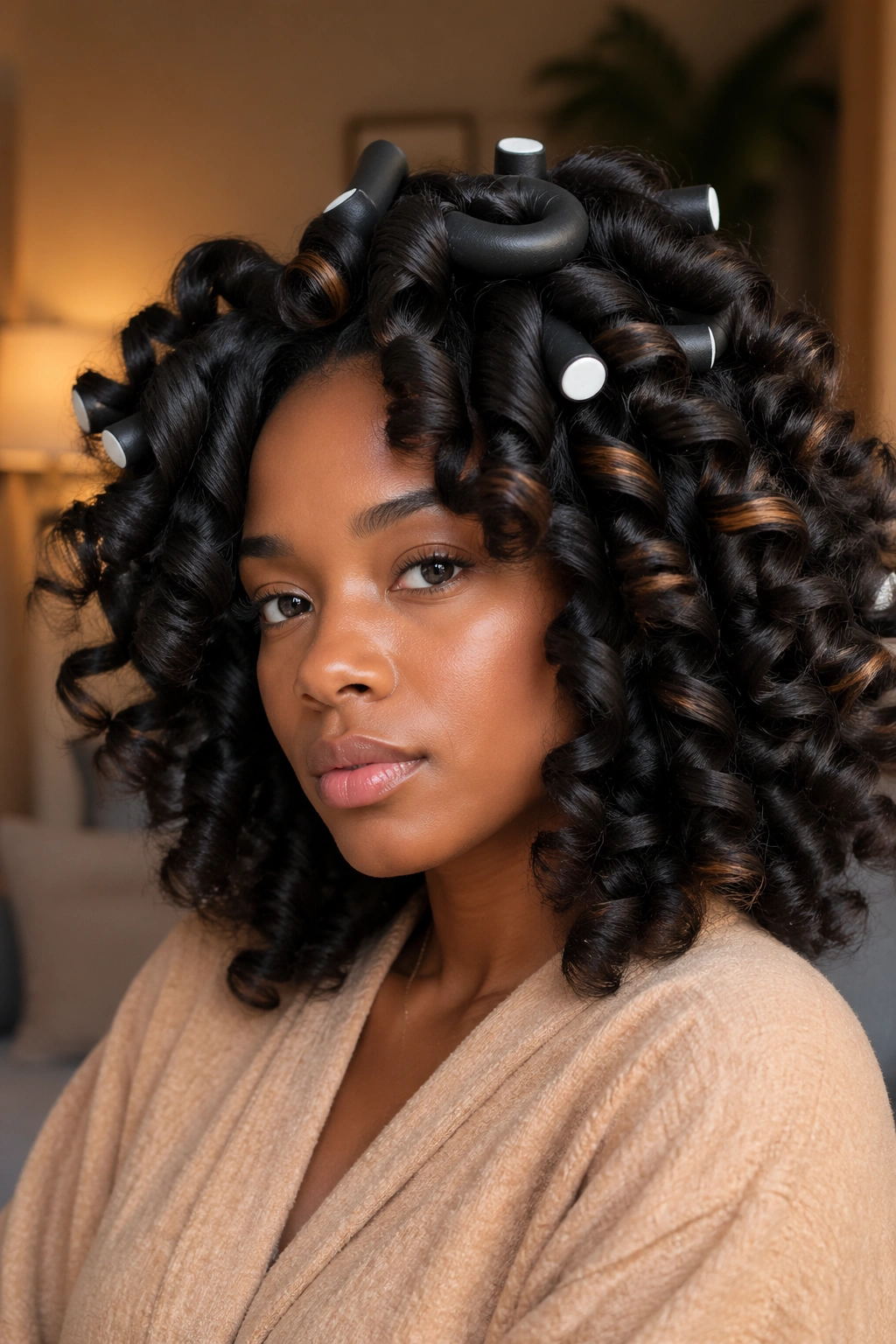
Bigger rods, bigger curls, bigger drama. Large flexi rods — the widest ones in the pack — produce curls that are more like loose spirals or beach waves than tight ringlets. On natural hair, this size creates a voluminous, free-flowing style with serious presence.
Work in larger subsections — half an inch to one inch wide — to match the larger rod size. The bigger sections on a bigger rod produce a broader, more open spiral. Once removed and gently separated, these large flexi rod curls create an impressively full, voluminous style that has movement and drama without the definition of a smaller rod set.
This look works particularly beautifully on high-density natural hair where the volume of strands can fill the larger spiral columns and create a truly show-stopping silhouette.
7. Tension Method Rod Set
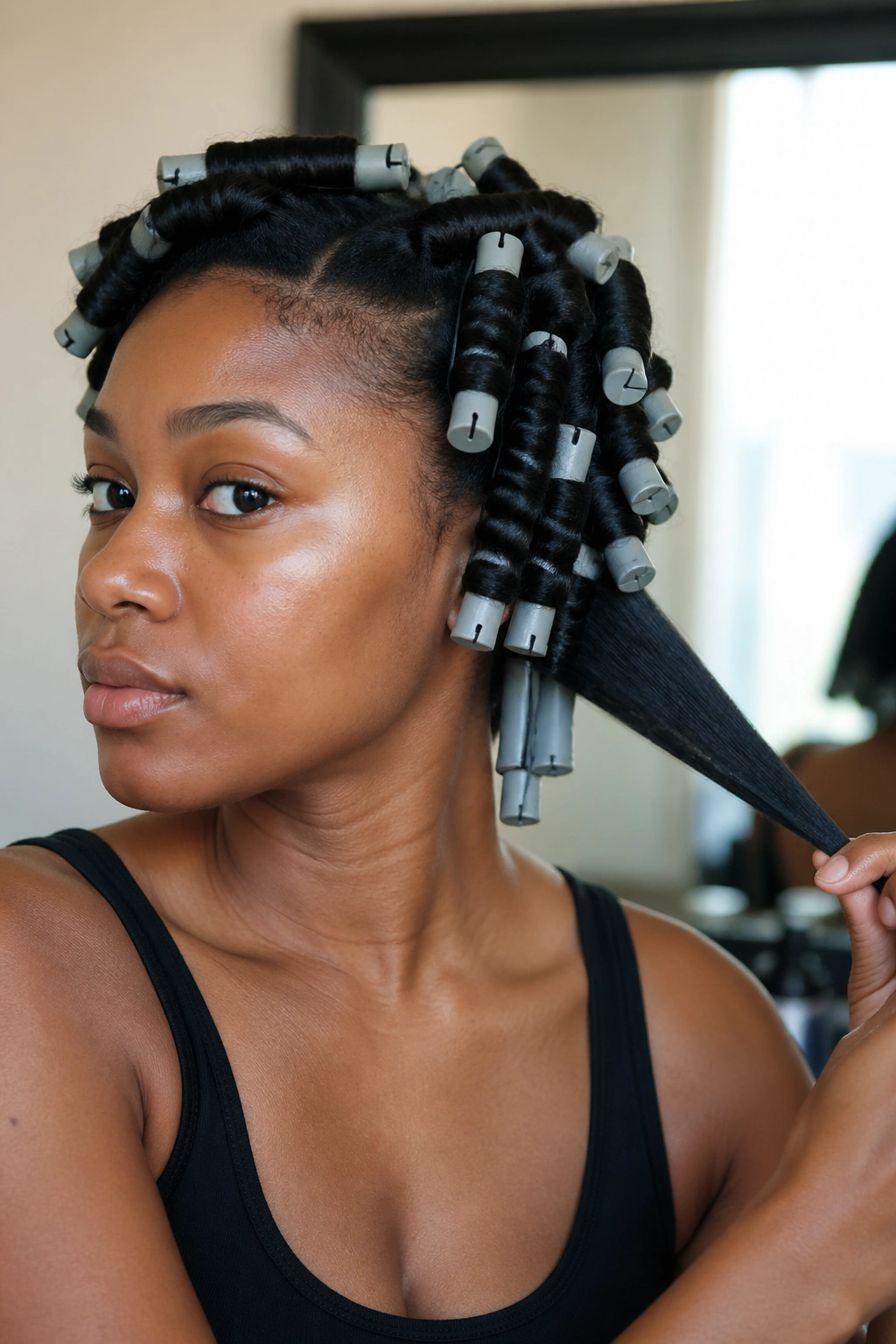
The tension method is a blow-drying technique that stretches natural hair while smoothing the cuticle. When you follow it with a rod set, you get curls on pre-stretched hair — which means longer, more elongated spirals that show more length than a rod set done on unstretched hair.
After washing and conditioning, apply heat protectant. Blow-dry using the tension method: hold the hair section taut at the ends and direct the blow-dryer down the length of the section, moving it slowly. Don’t use a brush — just finger tension. The result is stretched, smooth hair.
Then proceed with your standard rod set on the stretched hair. The resulting rod curls are noticeably longer and more elongated than what you’d get setting directly on natural texture.
8. Mixed Rod Sizes for a Natural-Looking Set
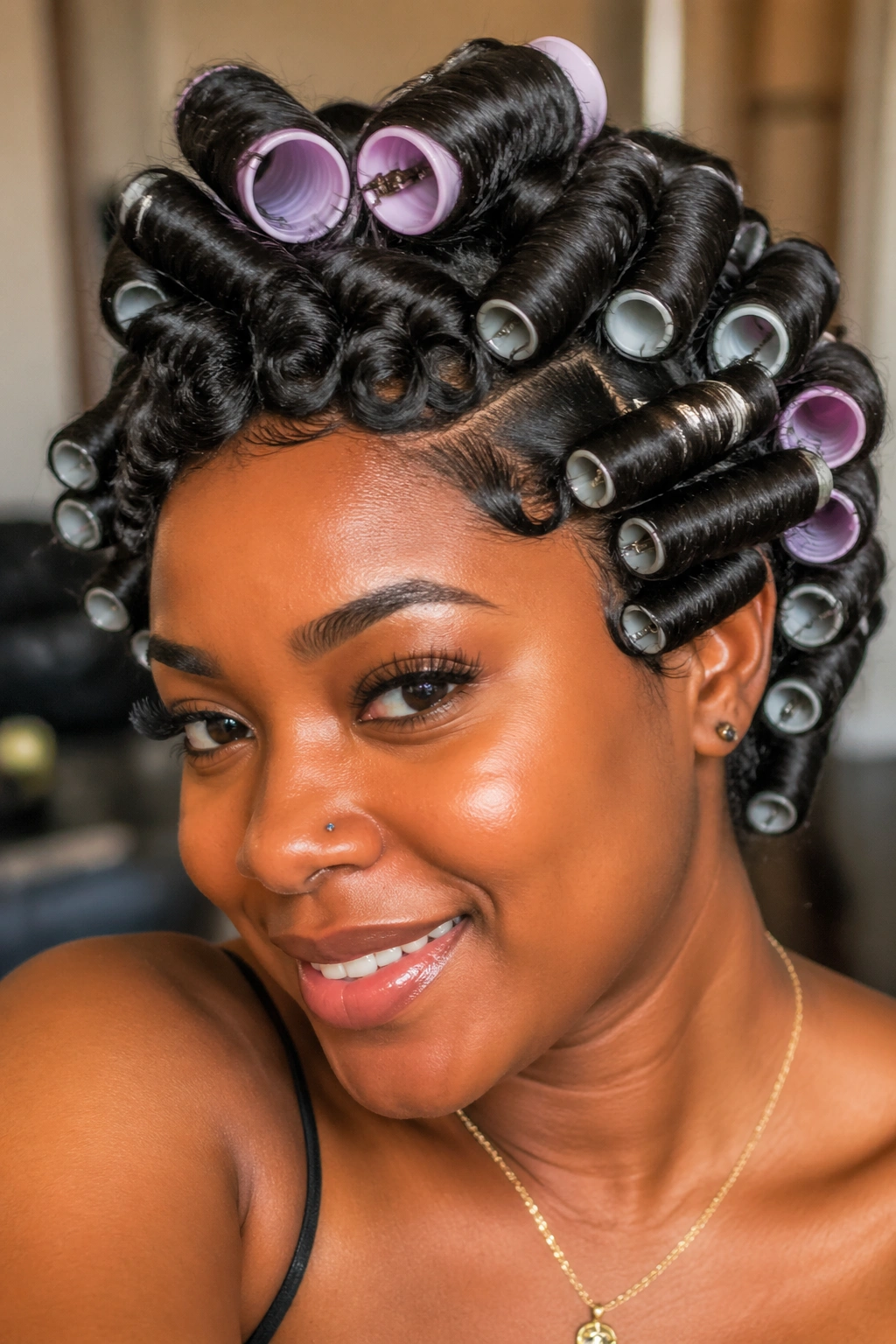
Nature doesn’t produce perfectly uniform curl sizes across the head. Mimicking that natural variation — deliberately, with mixed rod sizes — creates a style that looks less like a set and more like your natural hair having an exceptionally good day.
Use small rods at the nape and at the front sections closest to the face — areas where tight definition looks most intentional. Use medium rods at the sides and crown. Use large rods at the top for volume. The graduated sizes create different curl diameters across the head, which together produce a rich, dimensional look with obvious depth.
This technique works for any natural hair length but looks most dramatic on medium to long natural hair where the length difference between the small and large rod curls is clearly visible.
9. Rod Set on Transitioning Hair
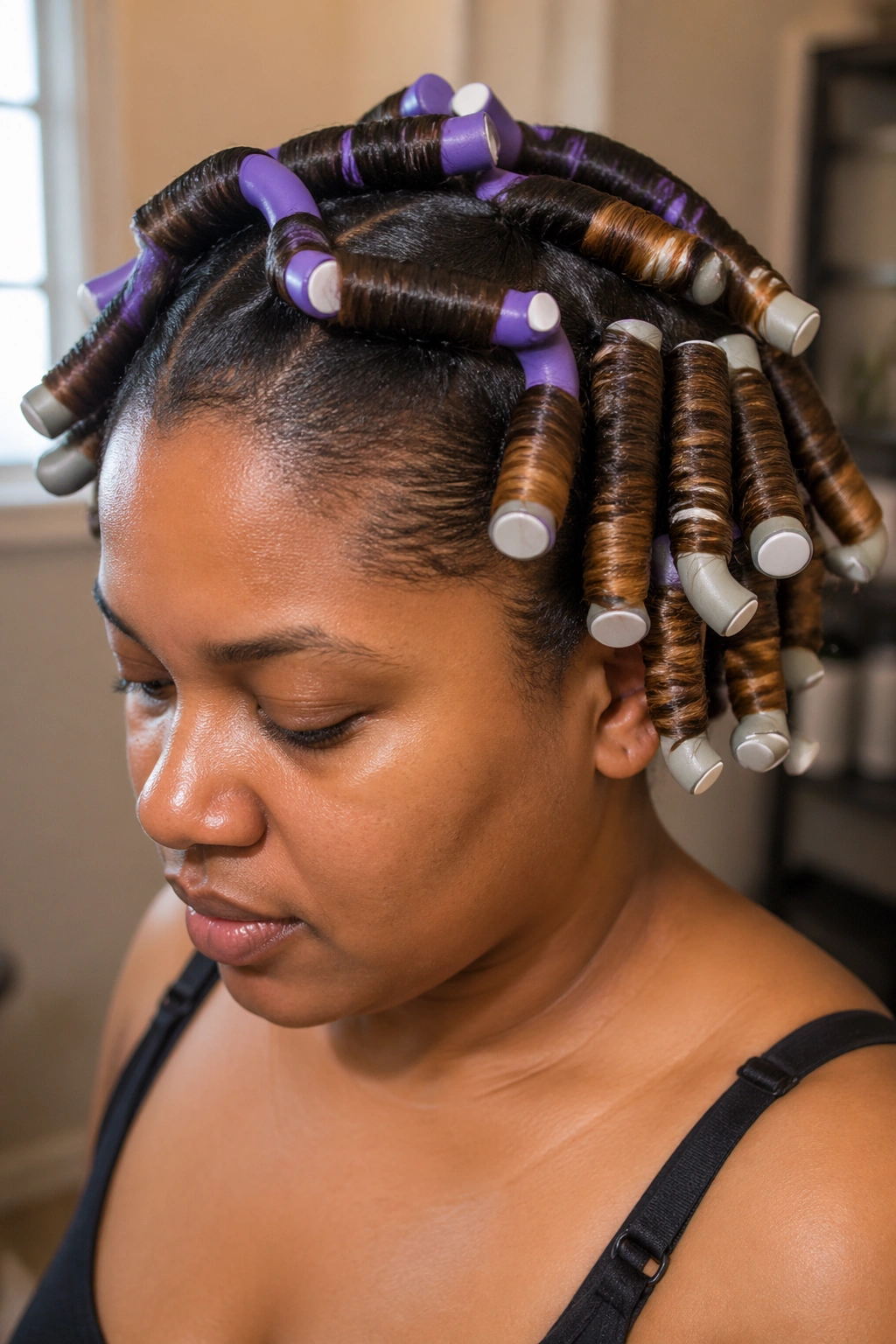
Transitioning natural hair — the combination of natural new growth and previously processed ends — is one of the trickiest things to style consistently. The two textures respond differently to products and techniques, creating an uneven result that can be frustrating.
Rod sets handle transitioning hair better than almost any other technique. The rod imposes the curl shape externally, so it works on both the natural new growth and the chemically processed ends. Use a size that suits the new growth texture and the rod curl will unify the two textures into something cohesive.
Apply a generous leave-in conditioner specifically to the processed ends — they’re more porous and fragile and need extra moisture. Use a slightly smaller rod on the new growth section so the tighter curl there more closely matches the slightly looser curl the rod produces on the processed ends.
10. Rod Curls for a Special Occasion
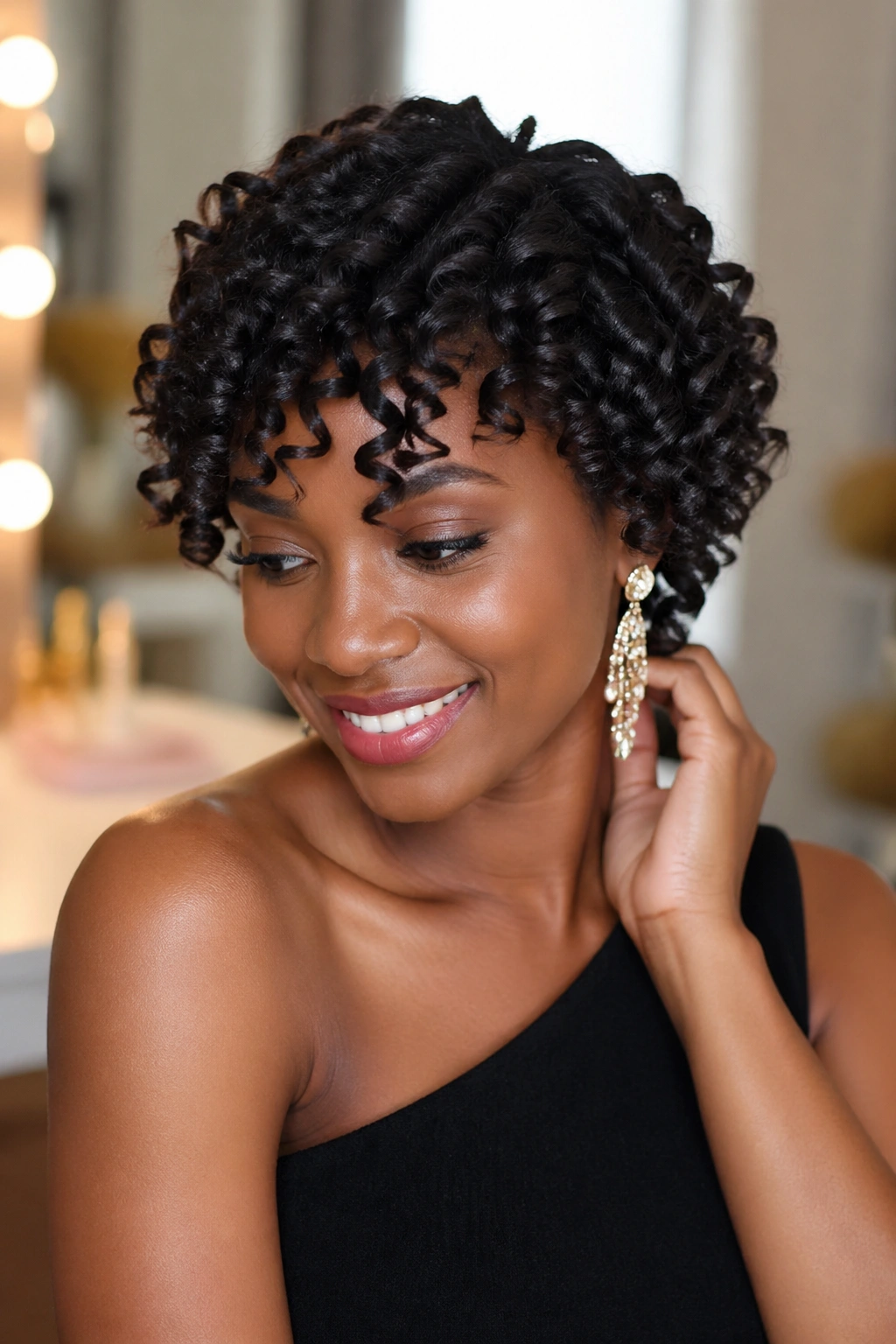
When the occasion calls for your absolute best, a rod set executed with full attention to detail is one of the most beautiful styles a natural can wear. No heat required, no risk of damage on the day itself — just defined, pristine spirals that photograph beautifully.
Use the smallest rod size that suits your hair for maximum definition. Work in the smallest possible subsections — a quarter inch throughout the head. Use the full three-layer product stack and apply everything on soaking wet hair. Dry completely under a hooded dryer. Remove rods when absolutely sure the hair is dry. Separate very gently using oiled fingertips — don’t rush this step.
Finish with a few drops of a high-gloss oil on the surface of the curls to add luminous shine.
11. Rod Curls on Natural Hair at the Bun
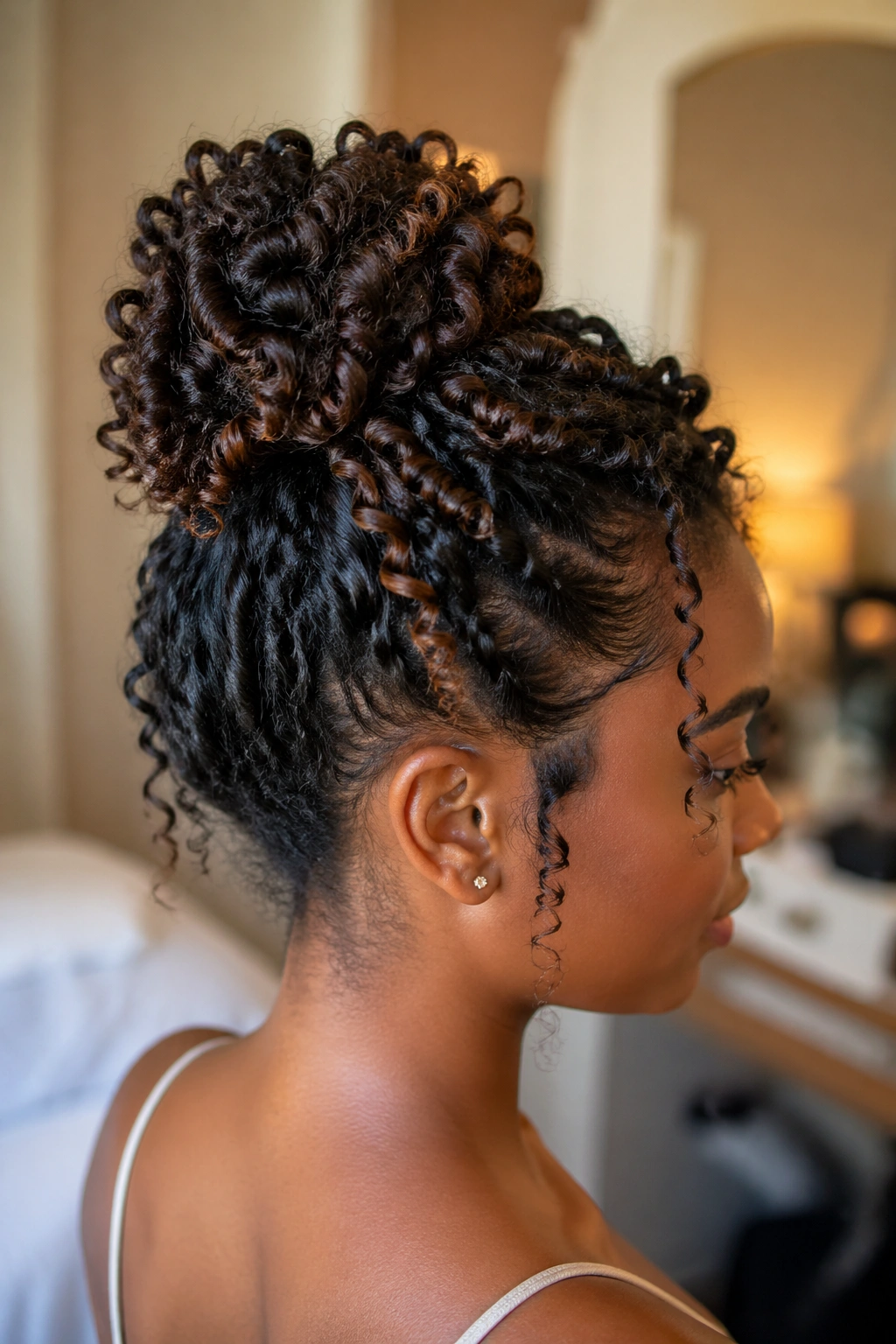
A rod-set hair bun is a protective style hybrid that keeps the length protected while still being polished and defined. Set the entire head on rods and let dry. Once the rods are removed and curls are separated, gather the hair into a loose, textured bun at the nape or crown.
Because the curls hold their shape well, the bun will be full, textured, and dimensional rather than flat and smooth. Secure loosely to preserve the curl pattern — tight elastics will compress and deform the curls at the base. Pull a few individual curls loose around the face and nape.
This is an excellent Monday style on natural hair — done Sunday evening as an overnight rod set, you wake to a style that takes five minutes to complete.
12. Rod Curls Half-Up Half-Down
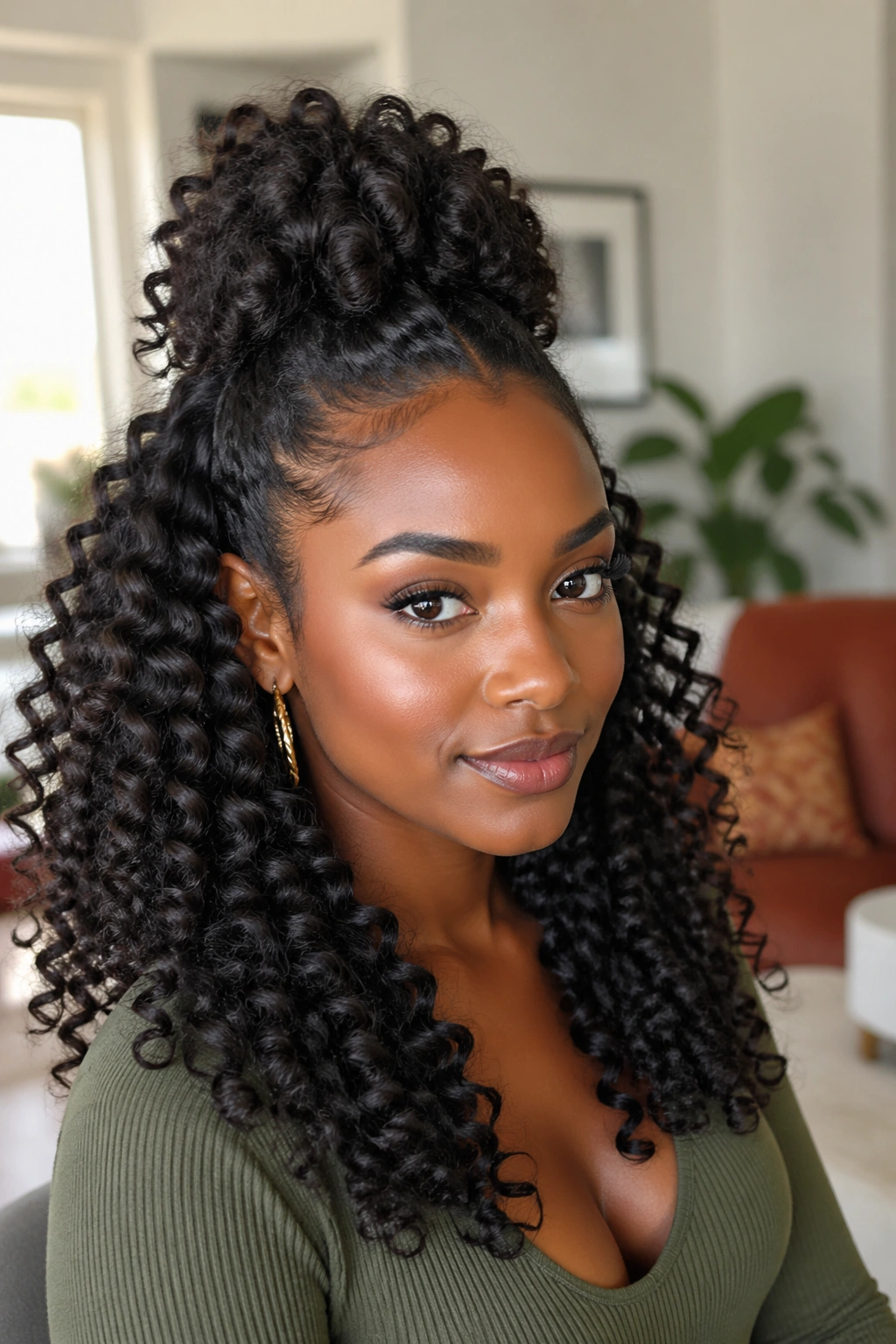
A classic styling format with a natural hair twist. Rod curl the entire head. Once done and cooled, take the top half of the hair — temple to temple — and gather it at the crown. Pin it into a mini afro puff or a loose bun. Leave the bottom half as cascading rod curls.
The juxtaposition of the gathered top and the loose curls below is visually interesting and works for any occasion from casual to formal. The puff adds height and drama to the crown while the rod curls frame the face and neck beautifully.
Try different heights for the gathered section — a very high gathering creates a dramatic, elegant look; a low gathering closer to the nape feels more relaxed and effortless.
13. Rod Curls on a Wash Day Protein Treatment
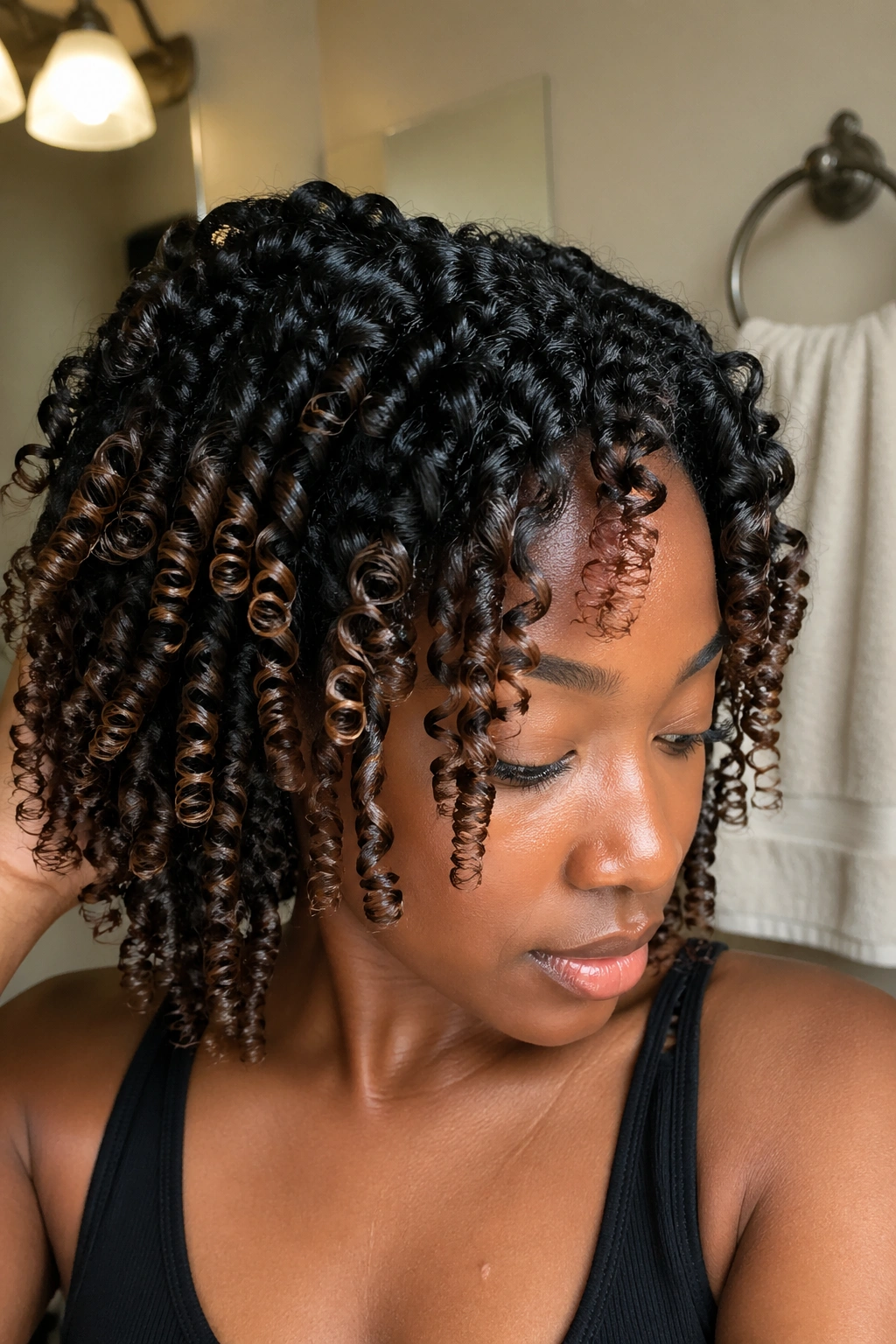
Protein treatments — which strengthen the hair strand and reduce breakage — are a regular part of many naturals’ wash day routines. Following a protein treatment with a rod set is an excellent combination because the strengthened strands hold the curl shape better and the resulting set has more body and longevity than a rod set done without protein.
After your protein treatment, rinse thoroughly and apply a moisturizing conditioner to counter the stiffness protein treatments can leave. Then proceed with your rod set as normal. The protein-treated hair takes the setting product and the rod shape beautifully, producing curls that are firm, defined, and extremely long-lasting.
14. Side-Swept Rod Curl Style
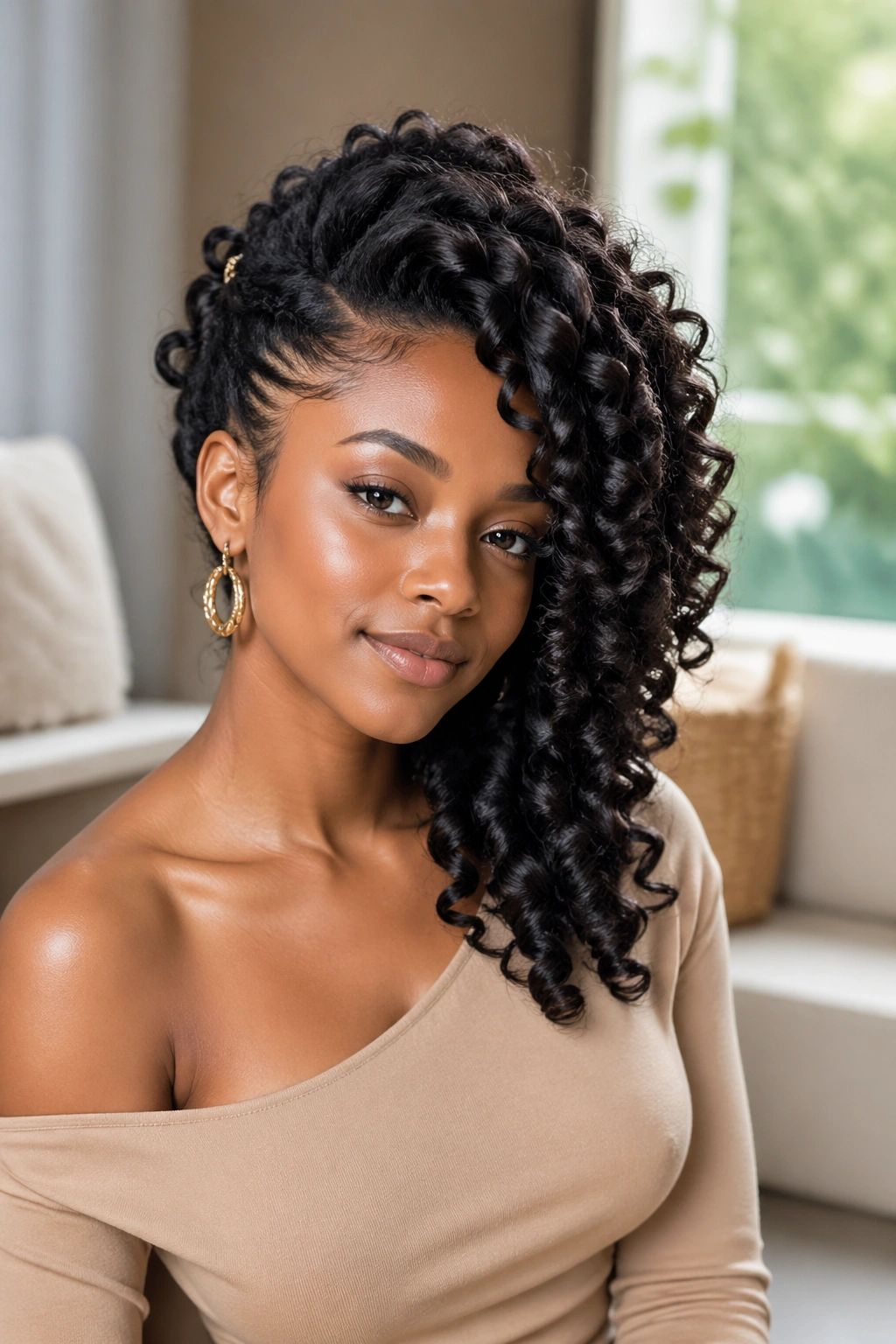
Rod curls don’t have to sit symmetrically on the head. A deliberate side-sweep transforms the uniform rod set into something dramatically different.
After removing rods and separating curls, use your fingers to sweep all the curls to one side — over one shoulder, dramatically and intentionally. Use a few discreet bobby pins on the opposite side to hold the curls in their swept position. On the opposite side, smooth the hair close to the head with a light gel or edge control.
The asymmetry created by the side sweep gives the rod curl set a completely different personality — more editorial, more statement-making, more fashion-forward than the standard full-head rod set.
15. Rod Curls on Natural Hair — Short to Long Length Comparison
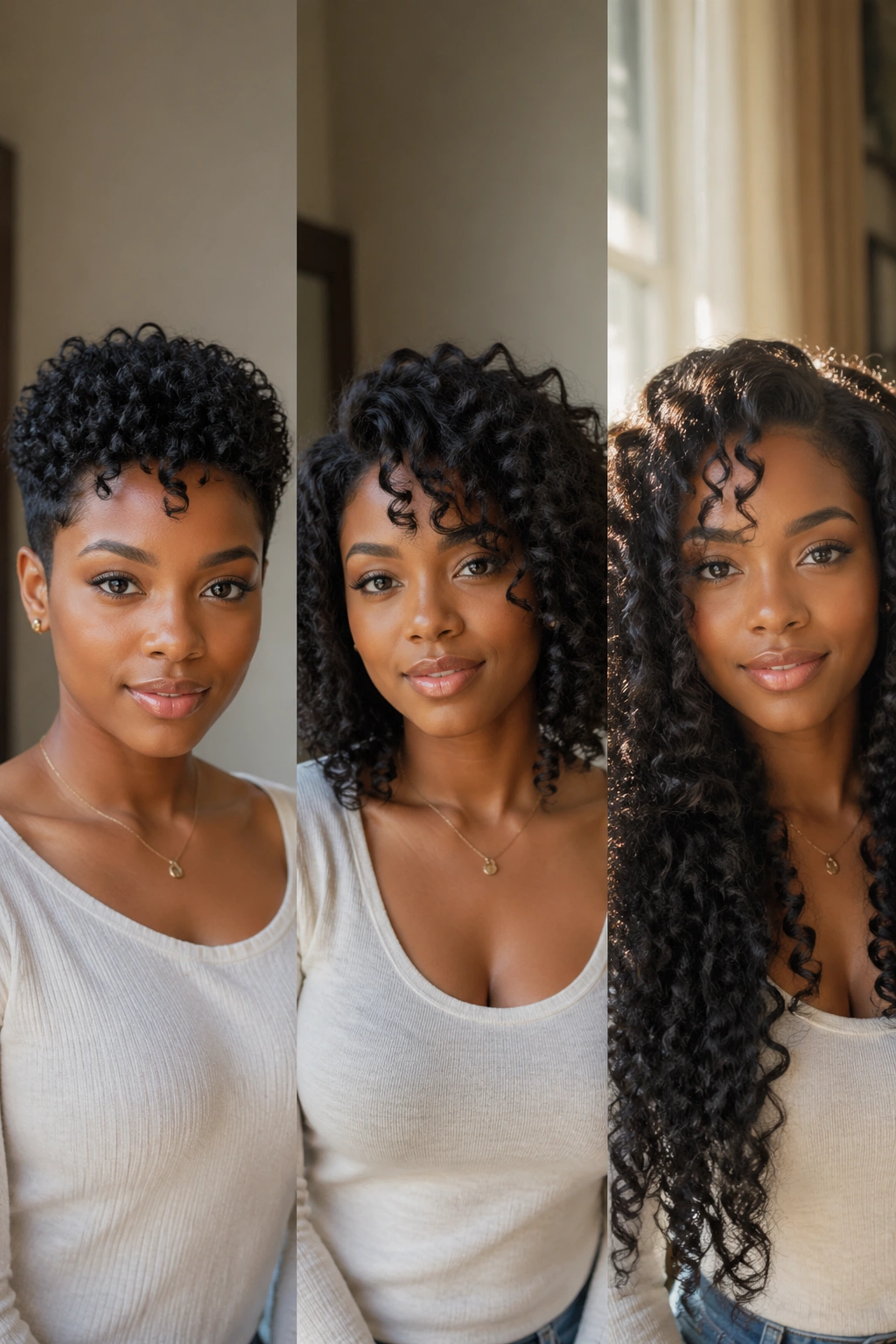
The rod curl technique changes meaningfully based on hair length, and understanding these differences helps you get the best result at whatever length you’re working with.
Short (TWA to ear length): Use small perm rods almost exclusively. Tiny rods on very short hair produce tight, beautiful spirals that give the short style serious definition and personality. The set goes relatively quickly because there’s less hair to wrap.
Medium (ear to shoulder): The ideal length for rod sets. All rod types work. Setting this length takes 45-60 minutes. The finished style shows generous length and definition.
Long (shoulder and beyond): Flexi rods become necessary because perm rods don’t comfortably accommodate the length. Setting takes longer. But long rod curl sets produce something truly spectacular.
16. Rod Curls Maintenance — Extending the Style
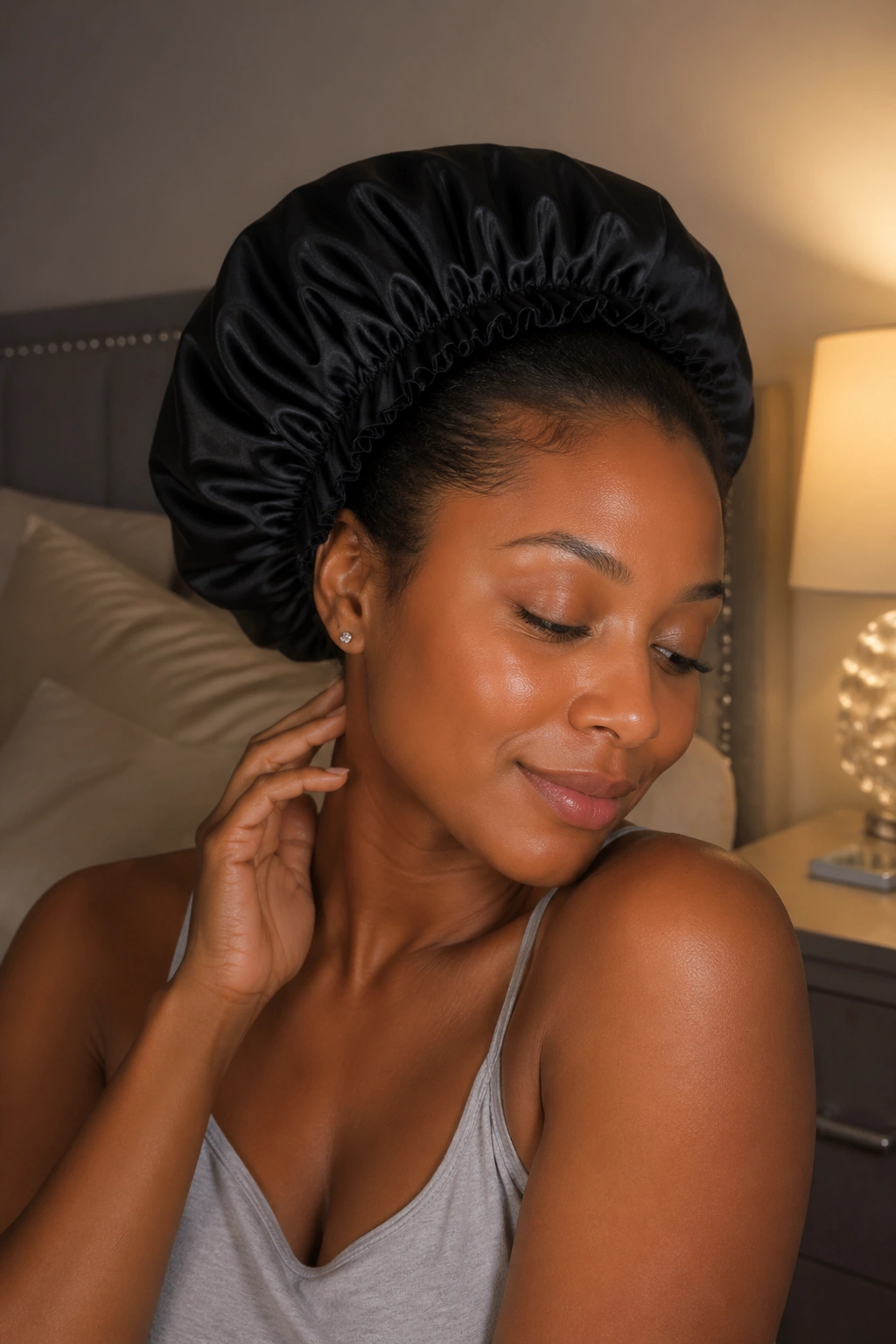
A properly executed rod set on natural hair should last four to seven days with the right maintenance routine. This is what good maintenance looks like.
Every night without exception: pineapple the hair at the top of the head with a soft silk scrunchie and cover with a satin bonnet. This is the single most important maintenance step. Cotton pillowcases and friction during sleep destroy rod curl definition faster than anything else.
Morning routine: release pineapple, gently fluff with fingers, mist any sections that need it with a water bottle. For areas that have completely lost definition, apply a tiny amount of fresh gel and coil with your finger or re-wrap on a rod for that section specifically.
By day four or five, the curls loosen and blend — and many naturals love this evolved, looser version of the style even more than the fresh day-one look.
17. Rod Curls with Braided Front Sections
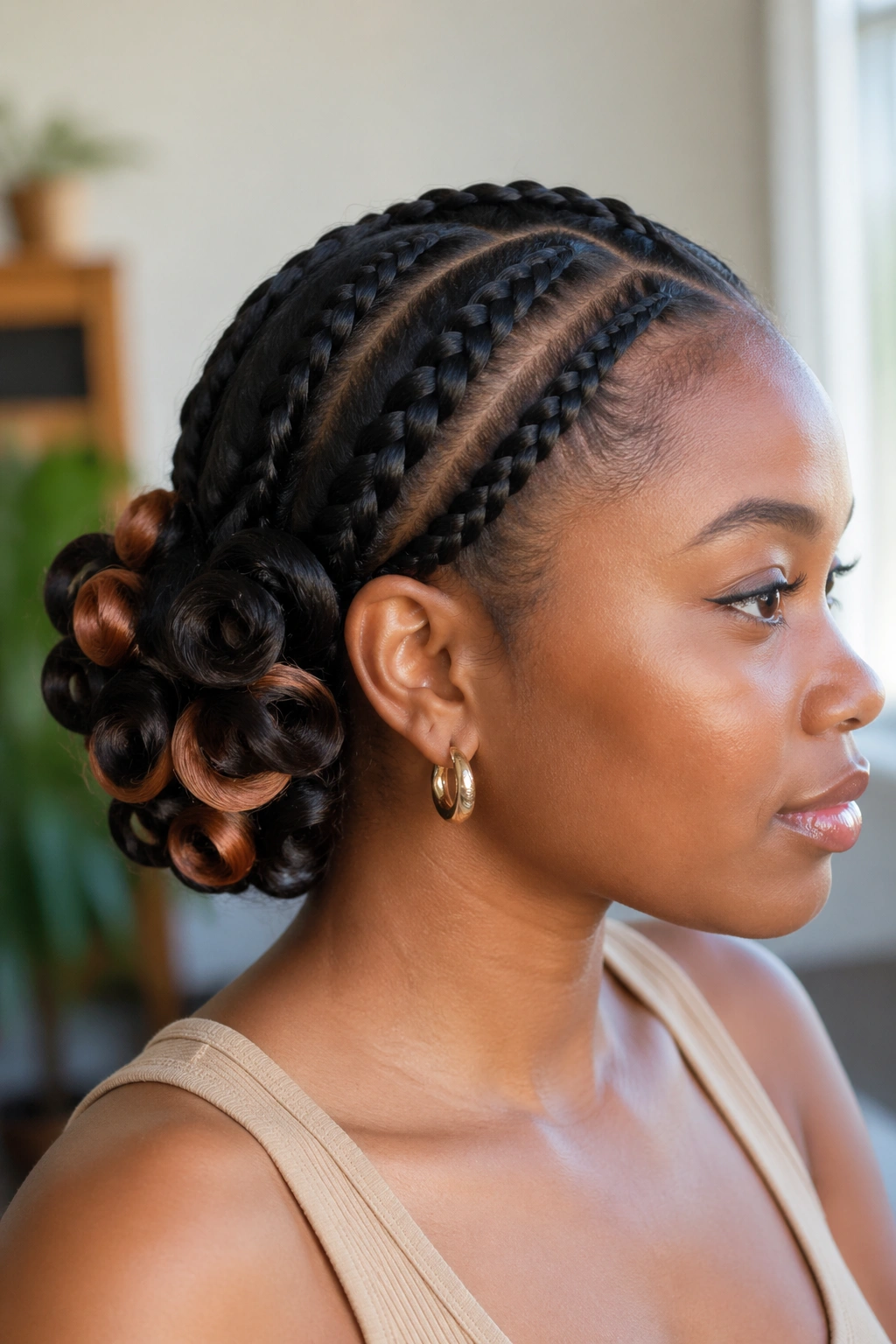
A braided front with a rod curl back and sides is a protective-meets-defined hybrid that’s one of the most practical and beautiful styles in natural hair. The braided sections protect the front strands, while the rod curls show off the hair’s texture.
Take the front two to four sections — from the hairline to just behind the crown — and either cornrow or individual braid them back. Leave the ends loose and coil them in the rod set. For the remaining hair, do a standard rod set. Once dry and rods are removed, the cornrowed front transitions smoothly into the curled back and sides for a style that’s simultaneously neat and free.
This works especially well as a back-to-school or work style where you want definition without flyaways.
18. Rod Curls as a Protective Style
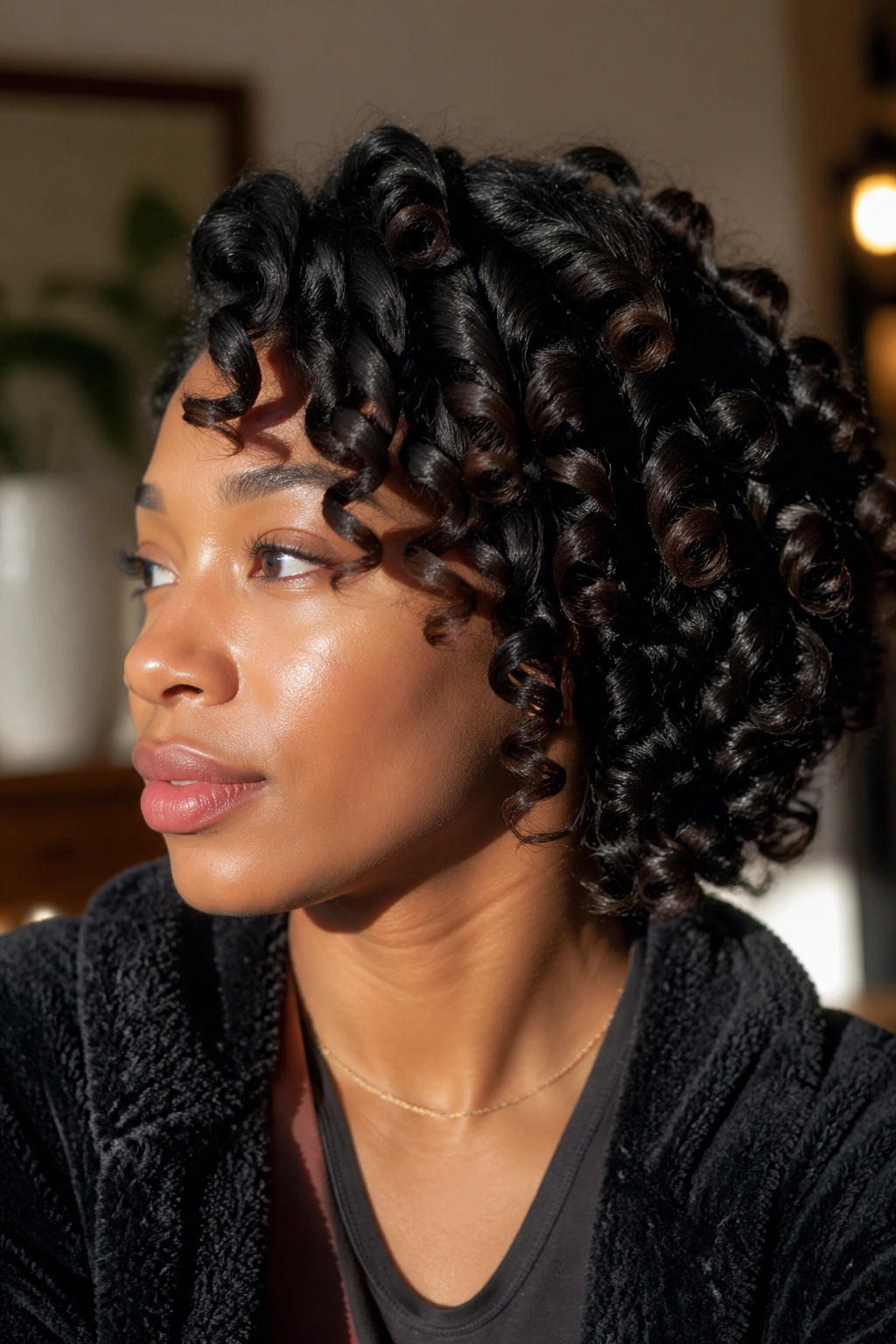
From a technical standpoint, rod curls function protectively when maintained well. The defined curl structure reduces the tangling and daily manipulation that can lead to breakage in unstyled natural hair. The nighttime routine keeps the strands organized and protected from friction.
What makes rod curls genuinely protective is the low-manipulation approach after the initial set: no combing, no brushing, no daily restyling. Light finger separation and misting is all the hair needs between the initial set day and the next wash day. This dramatically reduces the amount of handling the hair receives, which is one of the most important factors in natural hair retention.
The cleaner your technique and the more thorough your nighttime protection, the more protective the rod set becomes.
19. Rod Curls on Natural Hair with a Curl Refresher Spray
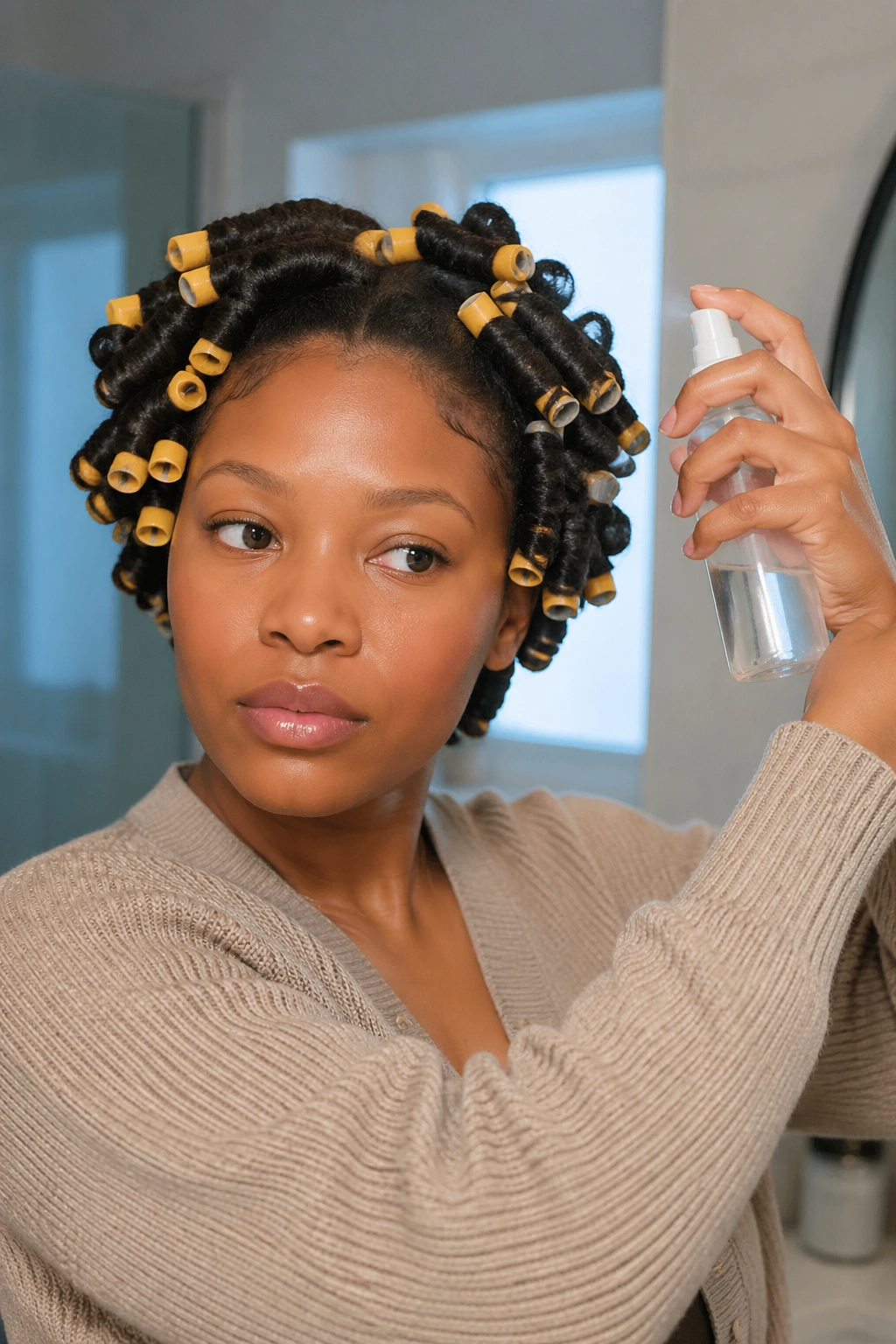
A good curl refresher spray — either commercial or DIY — is the weekly maintenance product that keeps rod curls looking great beyond day three. The formula is simple: water, a small amount of leave-in conditioner, a tiny amount of gel, and a drop of lightweight oil, combined in a spray bottle.
Spray lightly on sections that need refreshing, scrunch from ends upward, and leave undisturbed. The refresher reactivates the product already in the hair and restores some of the definition and bounce that has softened with wear. It’s not a reset — it’s an extension of the original style.
Don’t drench the hair with the refresher. A light mist is sufficient. Oversaturating the hair with refresher spray leads to product buildup that makes the hair feel heavy and look dull.
20. Removing Rod Curls Without Damage
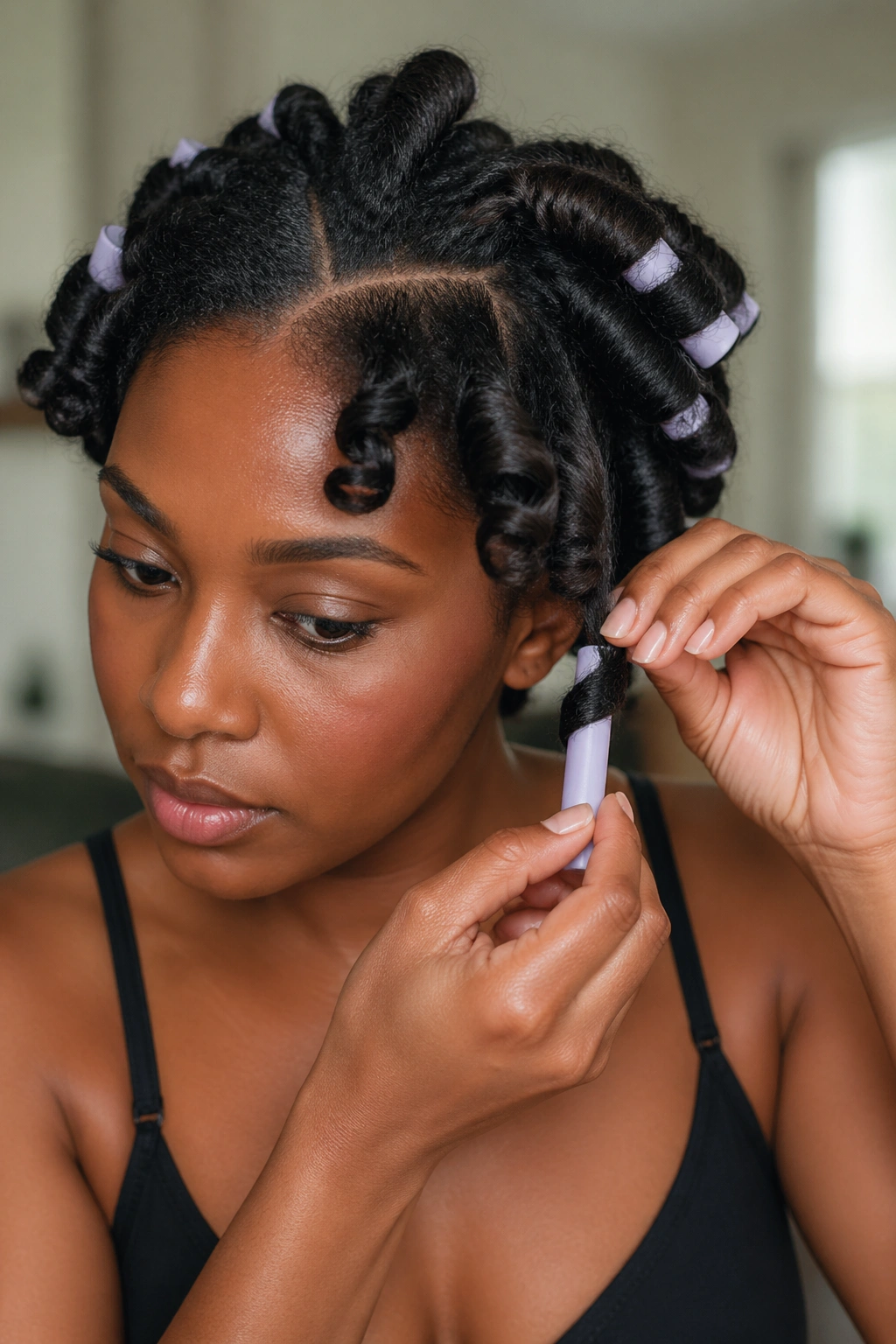
Rod removal deserves as much attention as rod placement. How you take out the rods determines whether the curls are perfectly separated or a frizzy mass.
Work slowly and methodically. Remove one rod at a time, supporting the curl as you unclip or unbend the rod. Don’t yank the rod out — slide it gently downward, allowing the hair to uncoil naturally rather than pulling. Once all rods are out, add a small amount of oil to your fingertips and begin separating the curls very gently from the ends upward.
If sections are matted together, add more oil and take more time. Never pull or force — the curl definition that took hours to create can be lost in seconds of rough handling.
21. Rod Curls Combined with a Twist Out
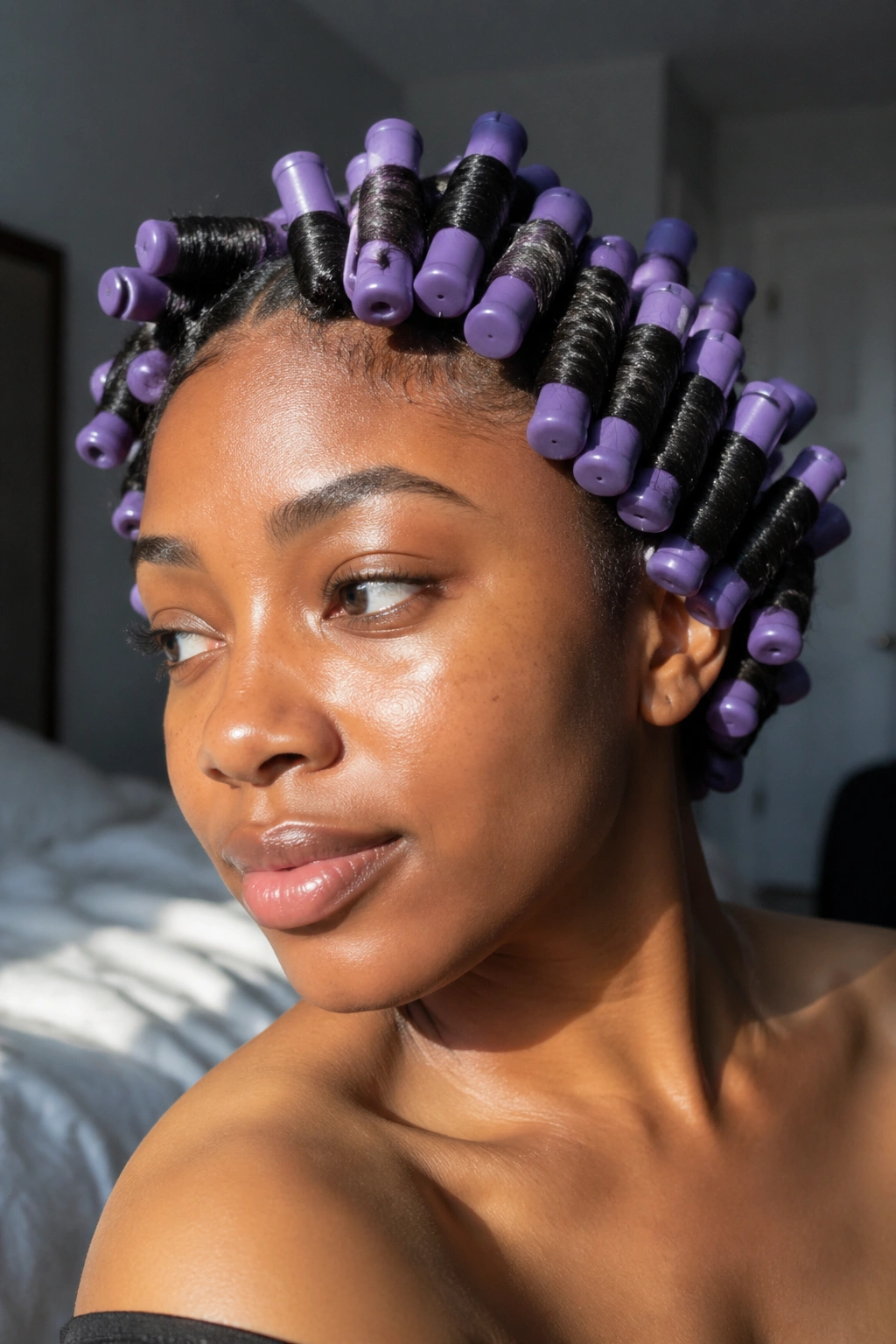
A rod set can serve as the foundation for a beautiful twist-out when the original rod set style starts to evolve and loosen after several days. Instead of washing out the loosened rod set, extend it by twisting the sections.
On day four or five, take the loosened rod curl sections and twist them in pairs — two sections twisted around each other. Leave overnight. Unravel in the morning to reveal a twist-out that has the texture and product base of the rod set beneath it. This gives you a completely different looking style from the same wash day without any product reapplication.
The twist-out from a rod set base has more definition than a standard twist-out because the hair has already been set once and holds pattern better.
22. Rod Curls for Extreme Length Retention
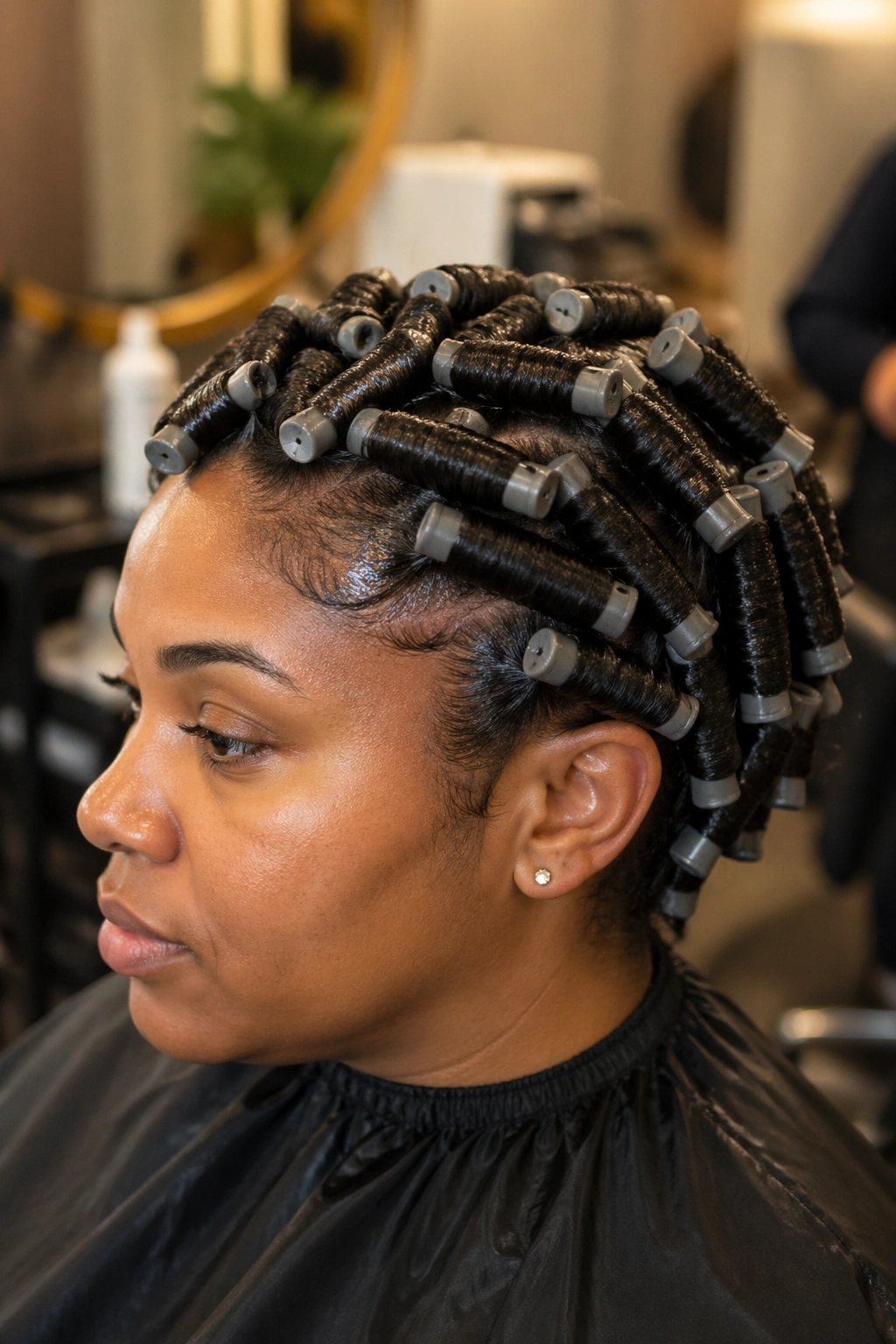
Beyond the aesthetics, rod sets can be a meaningful part of a length retention strategy for natural hair. Low manipulation, no heat, and a style that keeps the hair organized and protected for a full week adds up to significantly reduced breakage over time compared to daily unstyled natural hair or frequent heat styling.
The math is straightforward: a well-maintained rod set means five to seven days of minimal manipulation per wash cycle. Over months, the reduced breakage allows length to accumulate more consistently. Many naturals who track their length progress find that periods of consistent rod setting correspond with periods of visible length gain.
This isn’t coincidence. It’s retention through reduced stress on the strand.
23. Rod Curls on Natural Hair — Complete Beginner’s Checklist
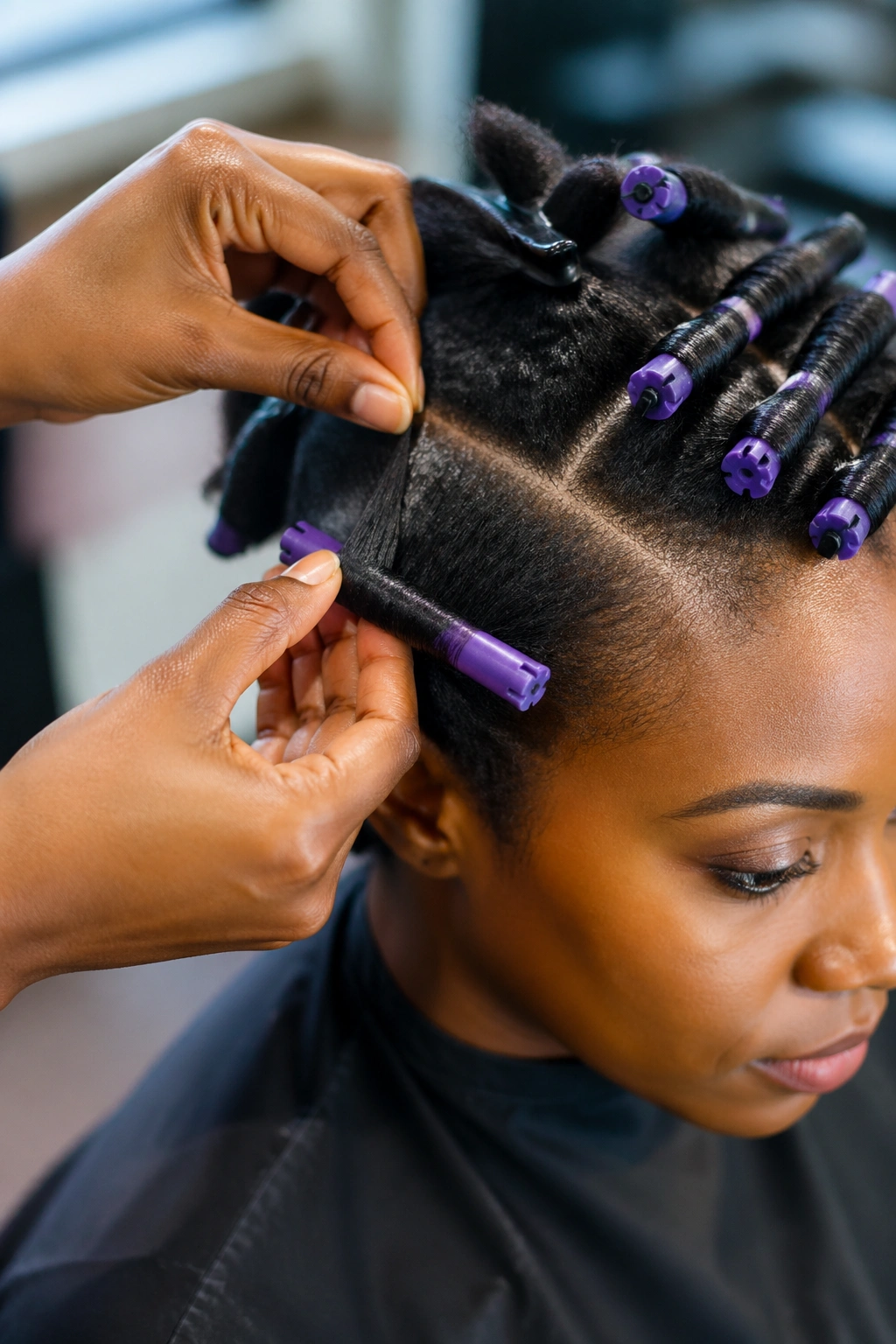
If you’re trying rod sets for the first time, having a clear plan before you start makes the whole process less overwhelming. Here’s what you need and what you do.
Supplies needed: Perm rods or flexi rods in your chosen size, leave-in conditioner, setting lotion or curl cream, medium-hold gel, rat-tail comb, hair clips, hooded dryer (optional but helpful), lightweight oil for separation.
Process: Wash, deep condition, and detangle. Section the hair into manageable parts. Work through one section at a time, applying products and wrapping rods consistently. Dry completely. Remove slowly. Separate gently with oiled fingers.
What to expect: The first rod set takes longer than subsequent ones. The technique is learnable. The results improve with each session as you develop a feel for how your specific hair texture responds to the products and rod sizes you’ve chosen.
24. Building a Healthy Rod Set Schedule
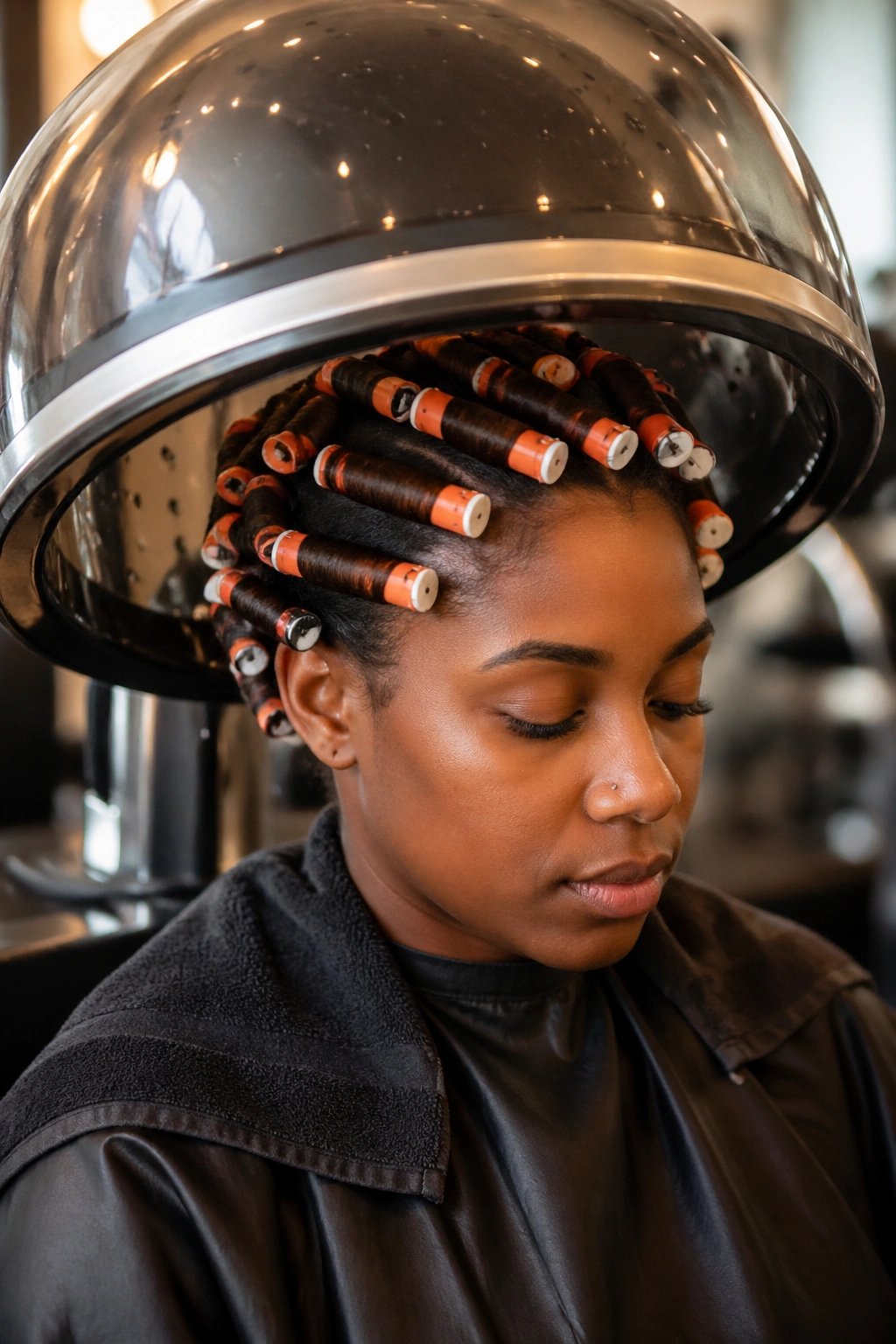
Rod sets are gentle, but any styling technique has its limits. For natural hair health, building a sustainable rod set schedule means giving the hair adequate rest, moisture, and protein between sessions.
Most naturals can comfortably do a rod set every one to two weeks, assuming the wash day includes deep conditioning and the rod set itself was done on properly moisturized hair. If you’re using protein treatments, space them four to six weeks apart, but continue moisturizing deep conditioners on every wash between protein treatments.
Between rod set sessions, keep the hair moisturized with daily or every-other-day moisturizing — liquid, oil, cream layering on the ends in particular. This keeps the hair at a baseline moisture level that makes each successive rod set easier to do and longer lasting.
25. Why Rod Curls Stay Relevant in Natural Hair Styling
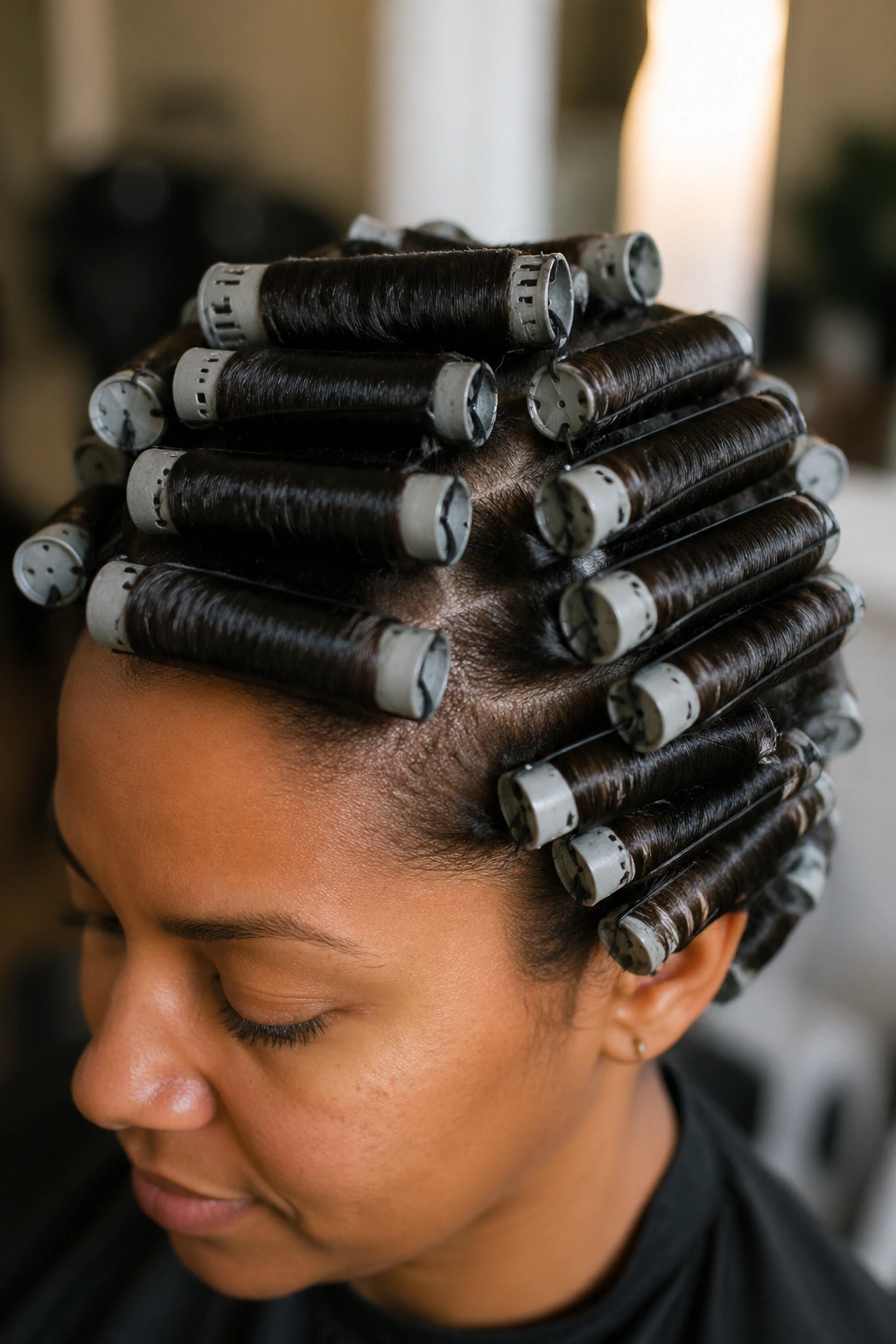
Styling techniques come and go in popularity. Rod curls have stayed for one simple reason: they work. On every natural hair type, from every starting texture, with a forgiving variety of product combinations, rod sets produce consistently beautiful, defined curls without any heat.
The technique has been part of Black natural hair culture for generations — the tools and products have evolved, but the principle is timeless. Roll the hair around a curved surface, let it dry, reveal the curl. It was elegant then and it’s elegant now.
Rod curls are worth learning, worth practicing, and worth making a regular part of your natural hair styling life. Few techniques offer this combination of reliability, gentleness, and sheer beauty. Once you master the set, the maintenance, and the takedown, you’ll have a go-to style that serves you beautifully for years.