



Half up half down styles for natural curls sit in the sweet spot between a full updo and wearing your hair completely loose. They give you the freedom of volume while keeping hair off your face, and they work on every curl type, every occasion, and practically every mood. If you’ve been sleeping on this styling category, it’s time to wake up — because the looks you can create with natural curls in a half up half down configuration are genuinely breathtaking.
What Makes Half Up Half Down Styles Perfect for Natural Curls
Natural curls thrive in half up half down styles for one simple reason: they give the curls room to breathe. When you leave the bottom half of your hair down, your curl pattern gets to show off its full volume, length, and definition. The top half, pinned or gathered, keeps the face clear and adds a sense of intentionality that wearing all your hair loose doesn’t always communicate.
These styles are also incredibly kind to natural hair from a health standpoint. Unlike full updos that can put tension on the entire length of the hair, a half up half down style only gathers a portion. That means less stress on the strands, less manipulation, and less risk of breakage along the hairline. For anyone who’s trying to retain length while still looking polished, this is the styling category to master.
The visual effect is also uniquely flattering. The gathered top section creates height and definition at the crown, while the flowing bottom section adds softness and movement. That combination — structure on top, flow on the bottom — works with your face shape rather than fighting it.
Curl Patterns and What Works Best for Each
Understanding what your curl type brings to a half up half down style helps you get the most out of the look.
Type 3a and 3b curls tend to be loose and springy, with enough weight to fall beautifully in the down section. These curl types are often long enough to show dramatic length when the bottom half is left free. The top section, when gathered, holds its volume without too much product support. The main challenge for looser curl types is frizz — a good anti-humidity serum applied before styling makes a real difference.
Type 3c and 4a curls have the perfect amount of spring and definition for half up half down styles. The curl clusters are tight enough to look defined even when part of the hair is gathered and pinned. These textures tend to shrink significantly, so stretching methods (banding, African threading, or a brief blow-dry on low) can add visible length to the down section before styling.
Type 4b and 4c curls are the densest and most voluminous. A half up half down on these textures creates an almost cloud-like effect in the down section — the hair expands outward with incredible fullness. The key for these textures is moisture. Well-moisturized 4b/4c curls have a beautiful sheen and hold their shape throughout the day. Dry 4b/4c curls look dull and lose definition quickly.
Getting Your Curls Ready to Style
Prep is the foundation of every great half up half down style. Skip it, and even the most creative technique falls flat.
Wash your hair with a moisturizing shampoo, then follow immediately with a deep conditioner. Leave the conditioner on for at least fifteen to twenty minutes — longer if you have time. Rinse with cool water. On day-old wash-and-go hair, a thorough rinse with warm water and a quick conditioning spray is usually enough to refresh without starting from scratch.
Apply your leave-in conditioner to damp, sectioned hair. Work it through each section from roots to ends. Then apply your styling product — a curl cream, a light gel, or a combination of both. Rake or smooth it through your hair, then scrunch upward to encourage the curl formation. Don’t touch your hair while it dries.
Allow your hair to dry completely before styling. This is where most people make a mistake — they start pinning too soon, and the style shifts as the hair finishes drying. If you’re in a hurry, use a diffuser on the lowest heat setting to speed things up. Give yourself at least an extra fifteen to twenty minutes of diffusing time before you start the updo portion.
The Right Products to Use
Products matter more for half up half down styles than for some other natural hair looks, because part of the hair is being gathered and held while the rest hangs free. You need products that do two jobs simultaneously: define the curls in the down section and provide enough hold for the gathered top section to stay in place.
For the down section, go with your regular curl defining routine. A curl cream alone works beautifully for looser curl types. For tighter textures, layering a gel over the cream (the L.O.C. or L.C.O. method) gives longer-lasting definition.
For the gathered top section, you want just a touch more hold than you’d use for loose wear. A medium-hold gel applied only to the top section before gathering it is often enough. Avoid heavy styling products in the gathered section — they can create buildup and weigh the hair down in a way that makes the top section look flat instead of lifted.
Edge control is non-negotiable. A small amount smoothed along the hairline with an edge brush creates a finished, polished look that elevates any half up half down style from “I just pinned some hair up” to “I did my hair.”
Sectioning Techniques for Different Looks
Where you section the hair determines the entire character of the style. Higher sections create more dramatic volume at the crown. Lower sections feel more relaxed and casual.
A traditional half up section runs from temple to temple, gathering the top half of the hair while leaving the bottom half completely free. This is the classic look and works universally.
A deep part section uses a dramatic side part as the dividing line, gathering the hair on one side and letting the other side blend with the down section. This creates an asymmetric effect that’s very flattering.
A mohawk section gathers a strip of hair from forehead to crown while leaving the sides completely down. This creates a bold, architectural look that’s distinctive and bold.
A puff section gathers the crown only — a small, high section — creating a mini puff at the top while leaving most of the hair down. This is the most casual interpretation and also the quickest to execute.
1. Classic Two-Strand Twist Half Up
Two-strand twists at the front of the hair, pulled back and secured at the crown — this is the half up style that never gets old. It’s simple, protective, and works on every single curl type.
Part your hair from temple to temple. Take the front section and divide it into two or four smaller sections. Two-strand twist each small section (divide into two, twist each piece in the same direction, then wrap them around each other). When all front sections are twisted, pull them back and secure them with a fabric-covered elastic or a single large decorative clip at the crown.
How to Finish It
Let the back section flow free. If your twists are fresh, the ends will be pointy — either leave them or apply a small amount of curl cream and coil each tip around your finger. The contrast between the defined twists and the loose curls behind them is the look.
This style lasts for days. Refresh the loose curl section with a water-and-leave-in spray, but leave the twists alone. They’ll stay neat while the down section does its thing.
2. High Puff Half Up on 4c Hair
4c hair makes the most breathtaking high puffs. Full, round, and almost impossibly voluminous — when you gather just the crown section into a high puff, you create a silhouette that’s iconic natural hair energy.
Take the very top section of your hair — crown only — and gather it upward. Secure with a fabric elastic. Don’t pull it into a tight ponytail; leave the curl cluster full and round. Fan out the curl cluster by reaching inside from the bottom and gently lifting. Smooth your edges. Let the rest of your hair fall freely.
The puff sits on top like a crown. Everything below it is movement, volume, and natural texture. This is a five-minute style that looks like you spent twenty.
3. Braided Crown Half Up With Loose Curls
Imagine two cornrows running from the temple along the top of the head, meeting at the crown where they’re pinned or tied together, while the rest of the hair falls in a loose, curly waterfall below. That’s this style — and it’s one of the most photographed natural hair looks for good reason.
Start on one side. Create a single cornrow beginning at the front hairline, adding hair as you move toward the center. Stop when you reach the crown. Repeat on the other side. Where the two cornrows meet at the back, pin them together or secure with a small elastic. The loose hair behind this point hangs freely.
The cornrows are the crown. Dress them up with gold cuffs or leave them bare — either way, the effect is regal.
4. Half Up With Flat Twist
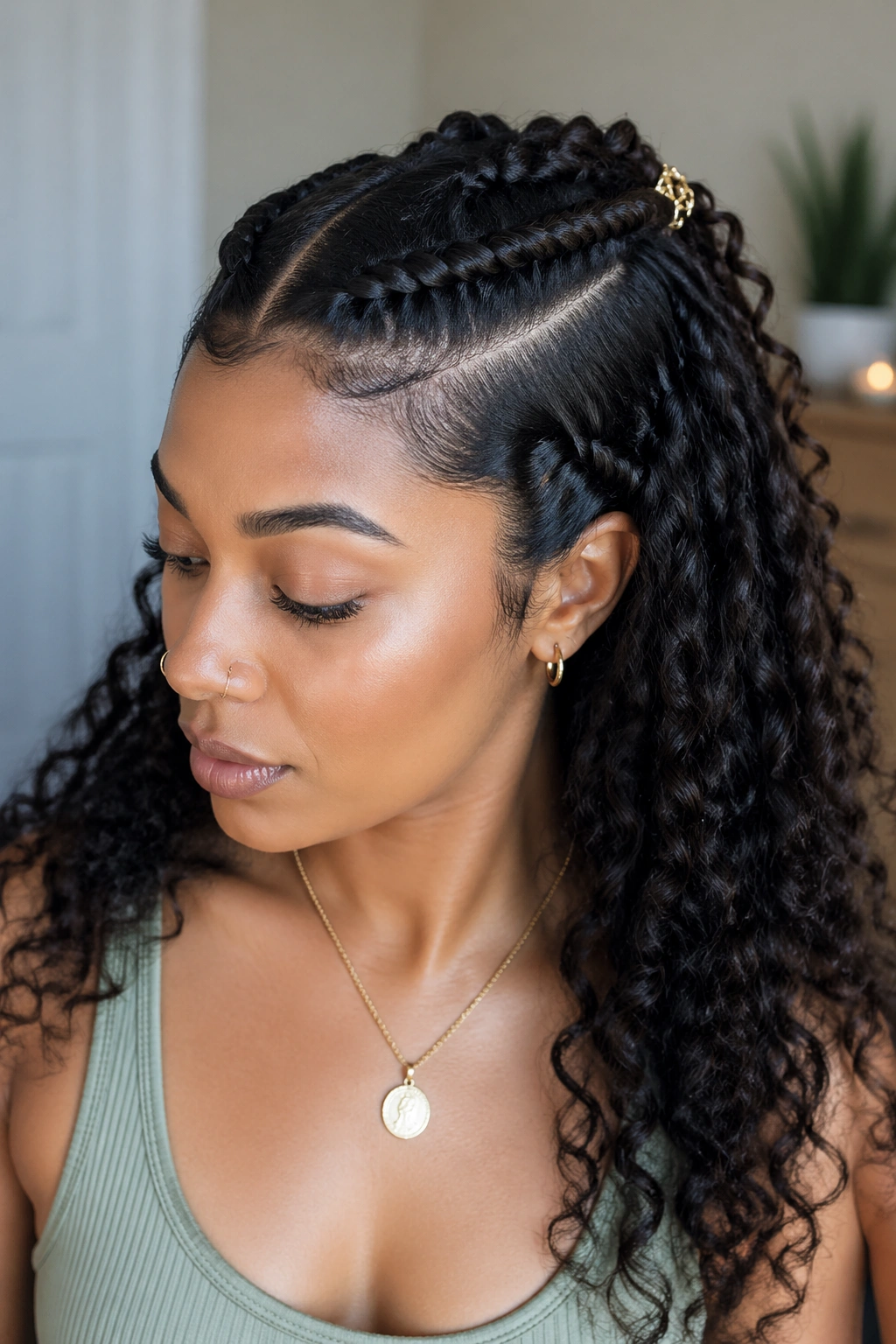
You don’t need to know how to cornrow to get a braided-looking half up style. Flat twists are easier than cornrows and create a very similar visual effect.
Create two flat twists starting from either temple, working them toward the center of the crown. To flat twist: divide a small section into two pieces, twist each piece over the other while adding hair from the scalp as you move backward. Pin the twists together at the crown with a decorative clip or tie them.
Flat twists on natural hair create a beautiful ridge-like texture that catches light differently from every angle. Combine them with well-defined loose curls and you’ve got a style that looks carefully crafted.
5. Half Up Bun With Wispy Pieces
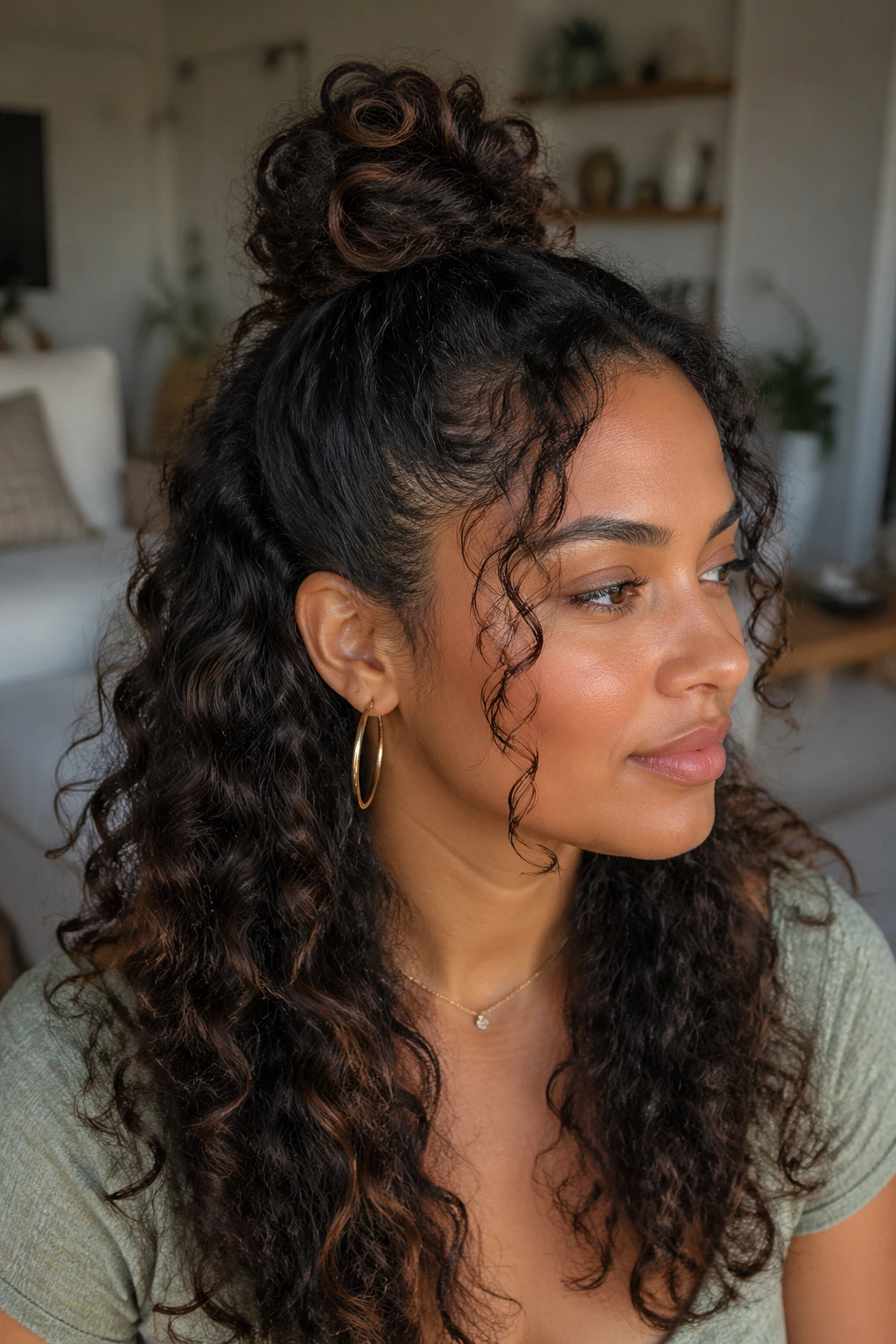
Not every style needs to be perfectly contained. A half up bun with intentional wispy pieces is the relaxed, undone version of the classic half bun — and it’s more flattering than the tighter version for many face shapes.
Gather the top section and twist it loosely into a bun at the crown. Pin it in place, but don’t work too hard at making it neat. Pull a few small sections free at the temples. Let a curl or two escape from the bun itself. These loose pieces soften the whole look.
The wispy pieces at the temples are especially important. They draw the eye forward and create a soft frame for the face that a tight, pin-perfect bun doesn’t provide.
6. Double Buns Half Up
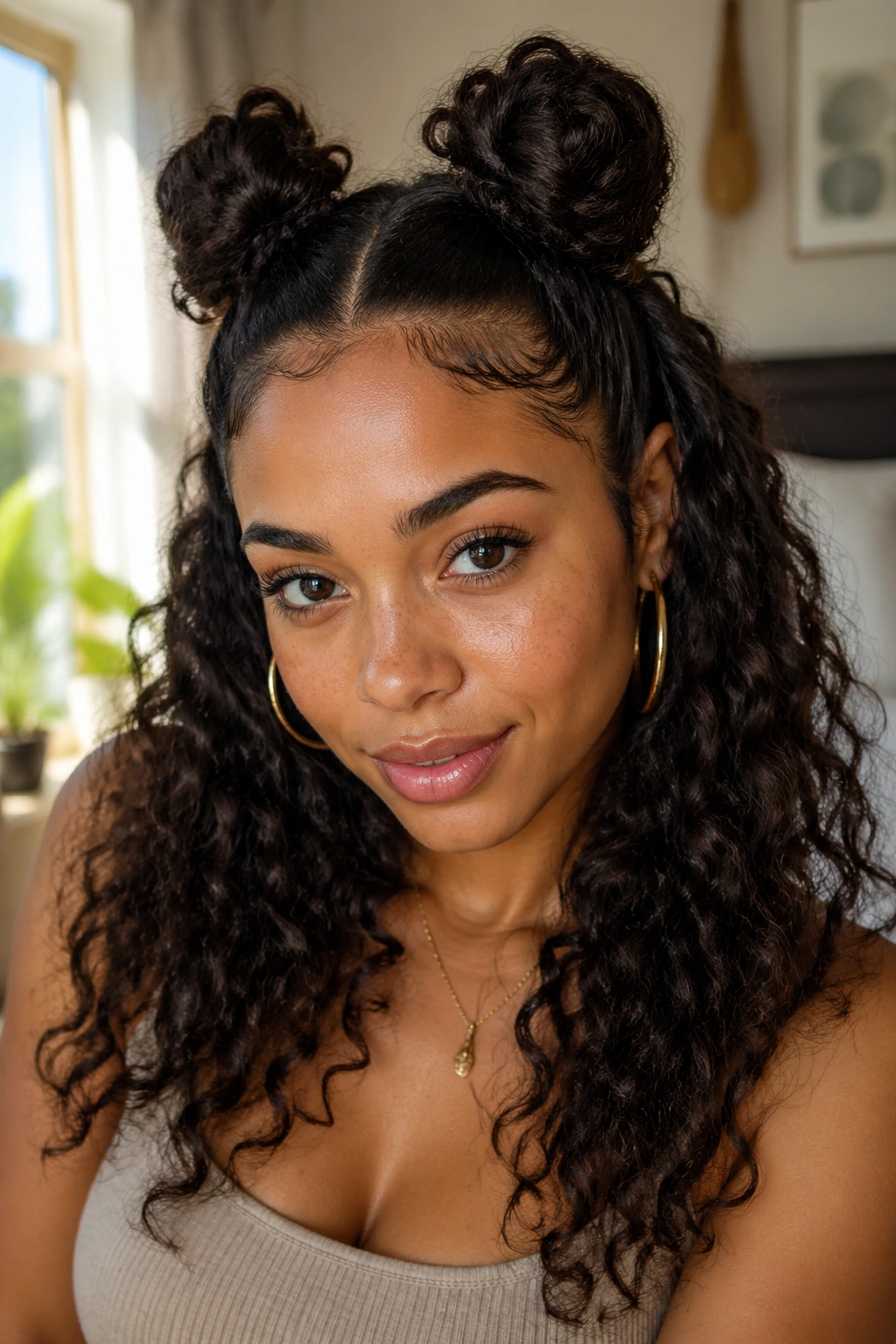
Two small buns sitting side by side at the top of the head, with the rest of the hair flowing freely below — this style is playful, youthful, and surprisingly versatile. It works as well for a day out as it does for a creative event or photoshoot.
Part your hair from the center front to the crown, creating a center part in the top section. Gather each side into a small bun and secure. The buns should sit at the crown, not too high and not too far back. Let the bottom section flow freely.
The key is making the buns equal in size. Uneven buns look messy rather than artful. If your hair is thicker on one side, compensate by gathering slightly less hair on the fuller side.
7. Bubble Ponytail Half Up
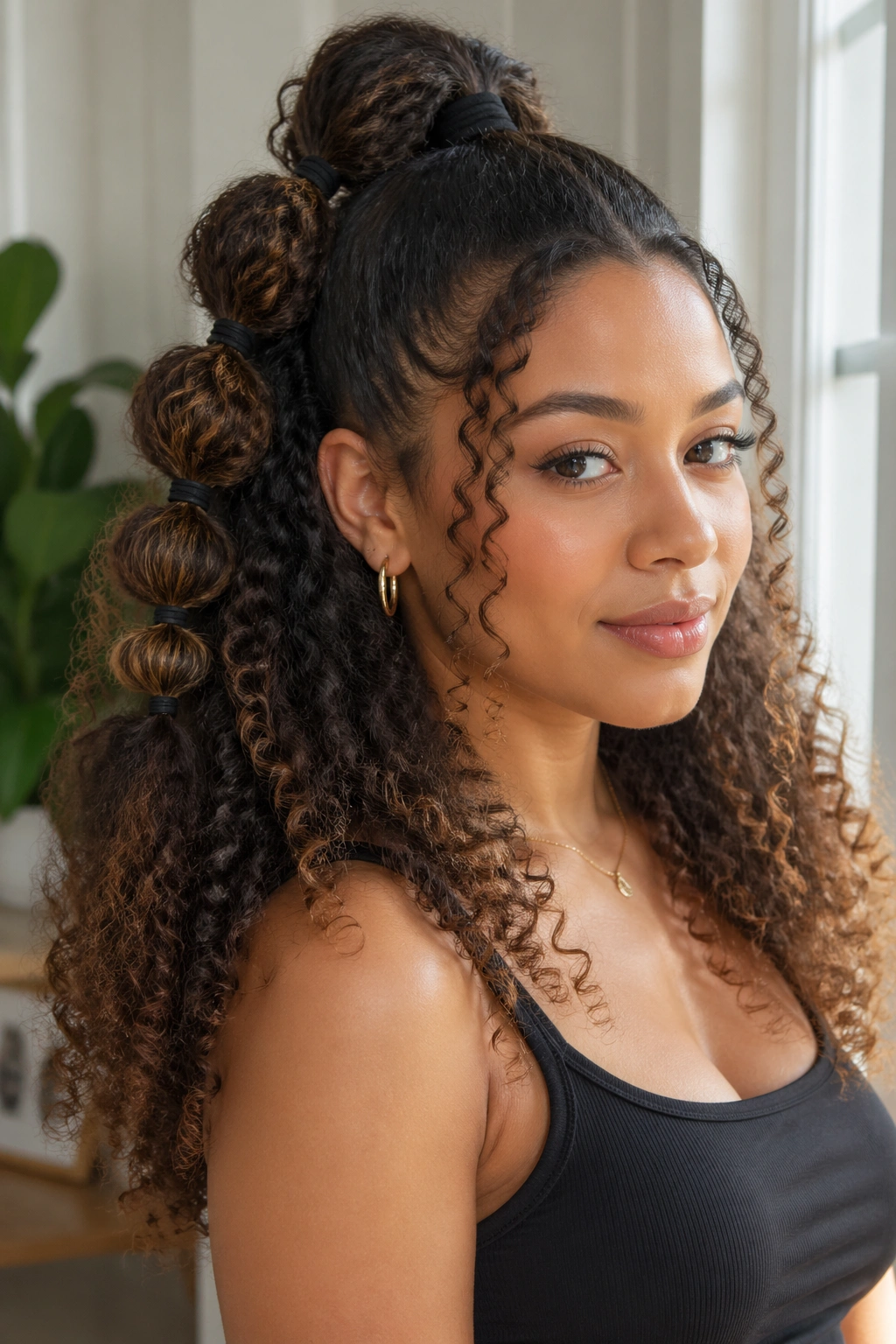
A bubble ponytail uses multiple elastics spaced along a ponytail, with each section puffed outward between the elastics to create a bubble effect. Do this in a half up configuration and you get one of the most playful and dramatic half up half down styles for natural curls.
Gather the top section into a high half ponytail. Add a second elastic about an inch below the first, then gently pull the hair between the two elastics outward so it puffs. Add a third elastic another inch below, puff again. Continue until the ponytail ends. The curly texture of natural hair makes the bubbles look incredibly full and dimensional.
8. Half Up With Scarf Tied at Crown
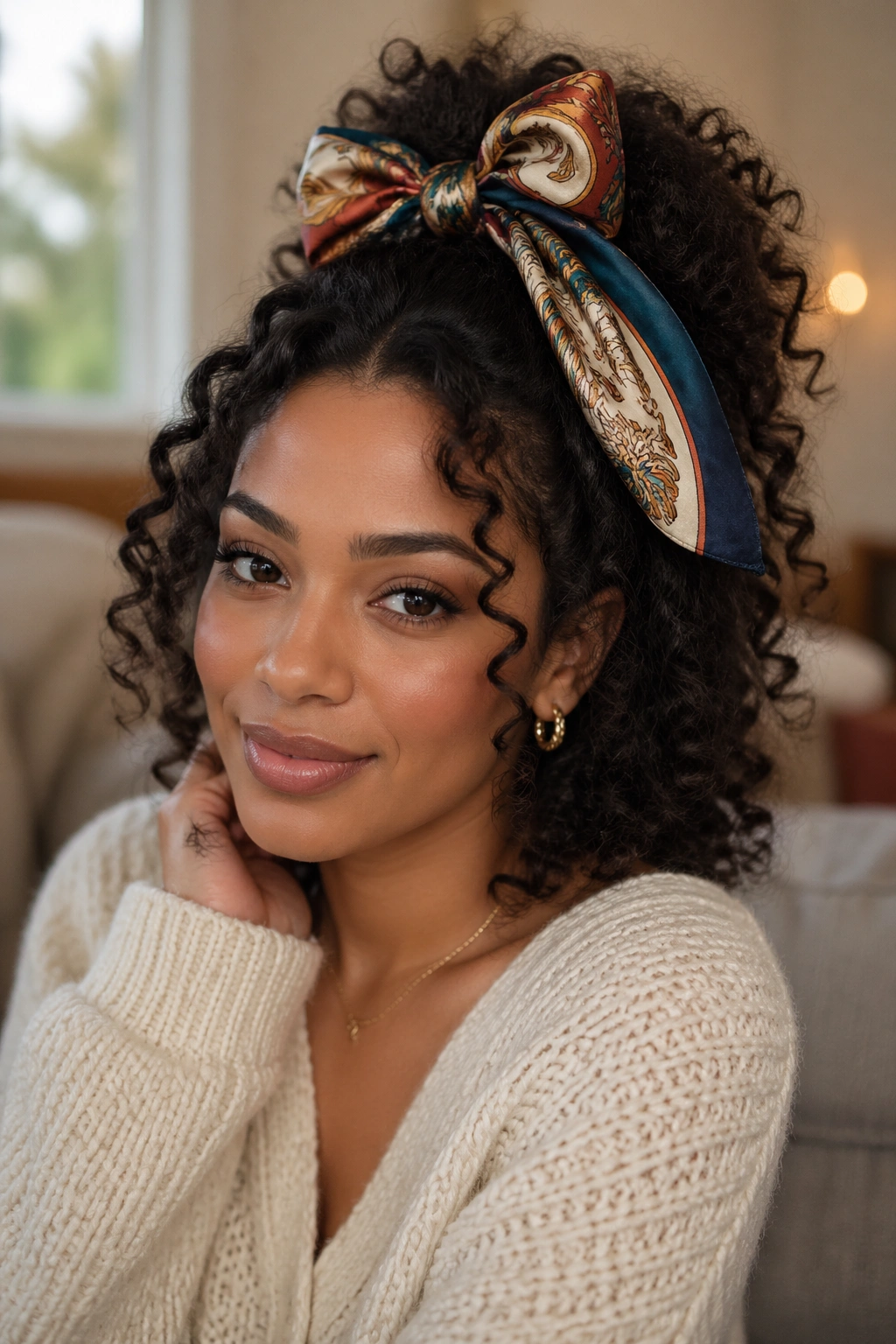
A silk or satin scarf wrapped around the gathered section transforms a basic half up style into a fashion-forward look. The color and pattern of the scarf become part of the style — choose something that works with your outfit or contrasts dramatically with your curl color.
Gather the top section into a half ponytail. Fold your scarf into a long strip, wrap it around the base of the ponytail, and tie it on top in a bow or a knot. The tails of the scarf can hang down among the loose curls or be tucked away for a cleaner look.
This is the style to reach for when you want to refresh a day-three wash and go without starting over.
9. Half Up With Wand Curl Accents
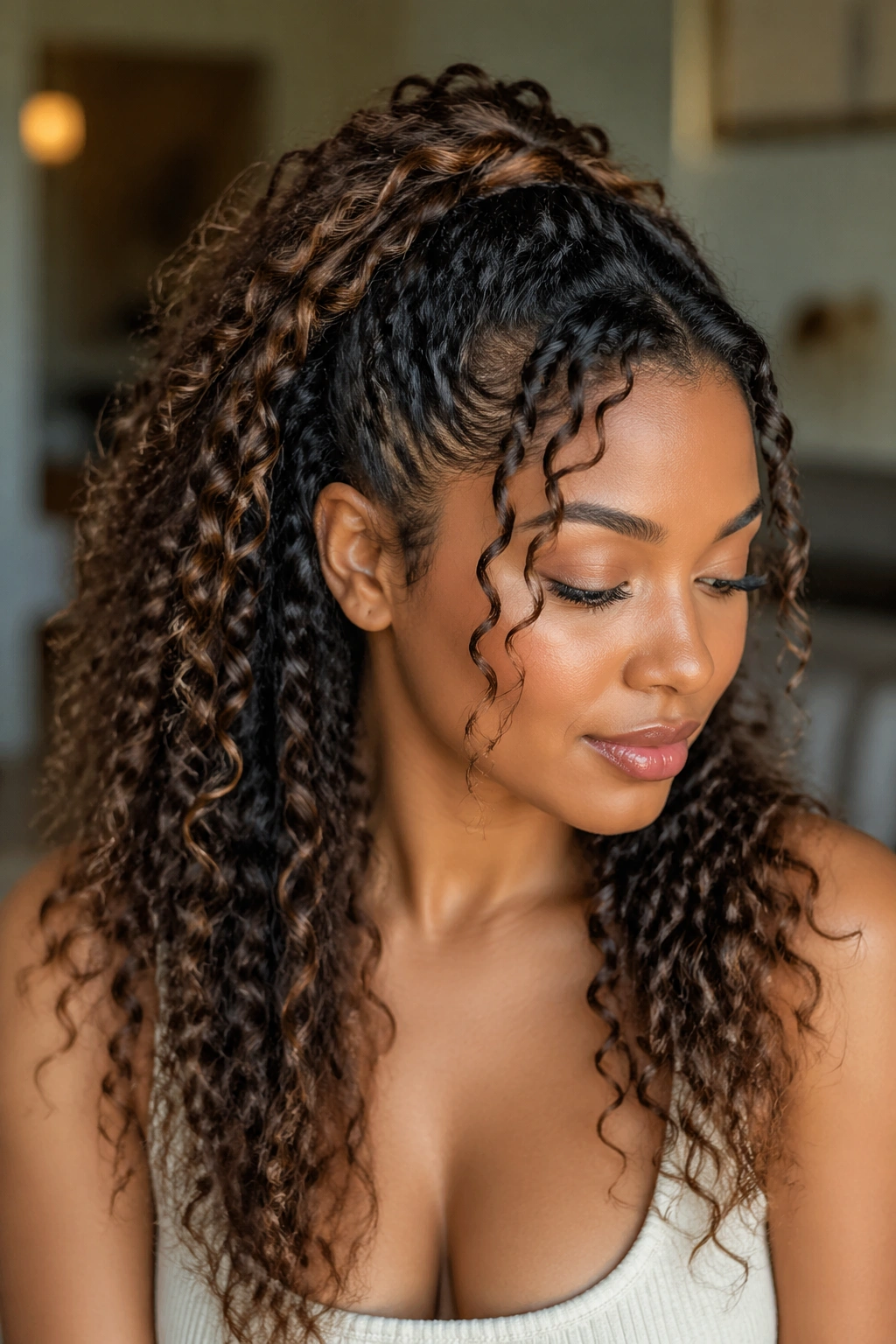
Most of your natural texture stays as-is, but a few sections get wrapped around a wand curling iron to create more defined, elongated spirals that stand out from the rest. This creates visual contrast — your natural curls as the base, more refined curls as accent pieces.
Identify three or four sections of hair in the top section before you gather it. Wrap each one around a 1-inch wand curling iron for eight to ten seconds. Let them cool. Then gather the top section into a half ponytail or half bun, making sure those defined curl pieces are visible at the top. The wand curls add a deliberate, finished quality to an otherwise natural look.
10. French Braid Half Up
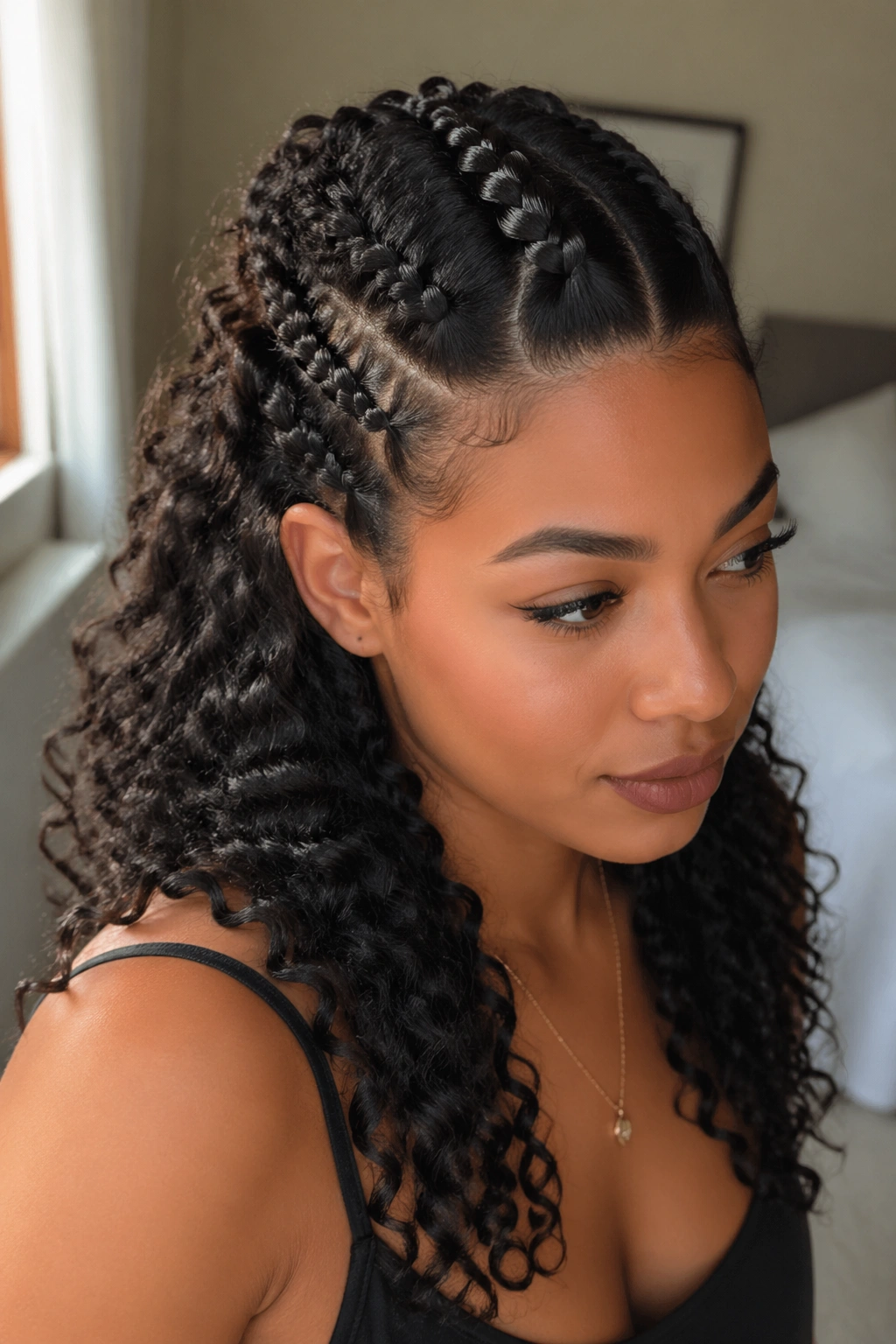
A French braid running from the front hairline to the crown, with the rest of the hair left free — this is one of the most elegant half up half down styles for natural curls. The braid sits flat against the scalp and transitions seamlessly into the loose hair behind it.
Start at the front hairline with a small section. Divide into three. Add hair from each side as you braid backward, French-braid style. Stop at the crown and secure the end with an elastic. Let the loose hair behind the braid flow freely.
This style takes practice. But once you can execute a clean French braid on your own natural hair, it opens up a whole range of half up styling options.
11. Half Up Space Buns
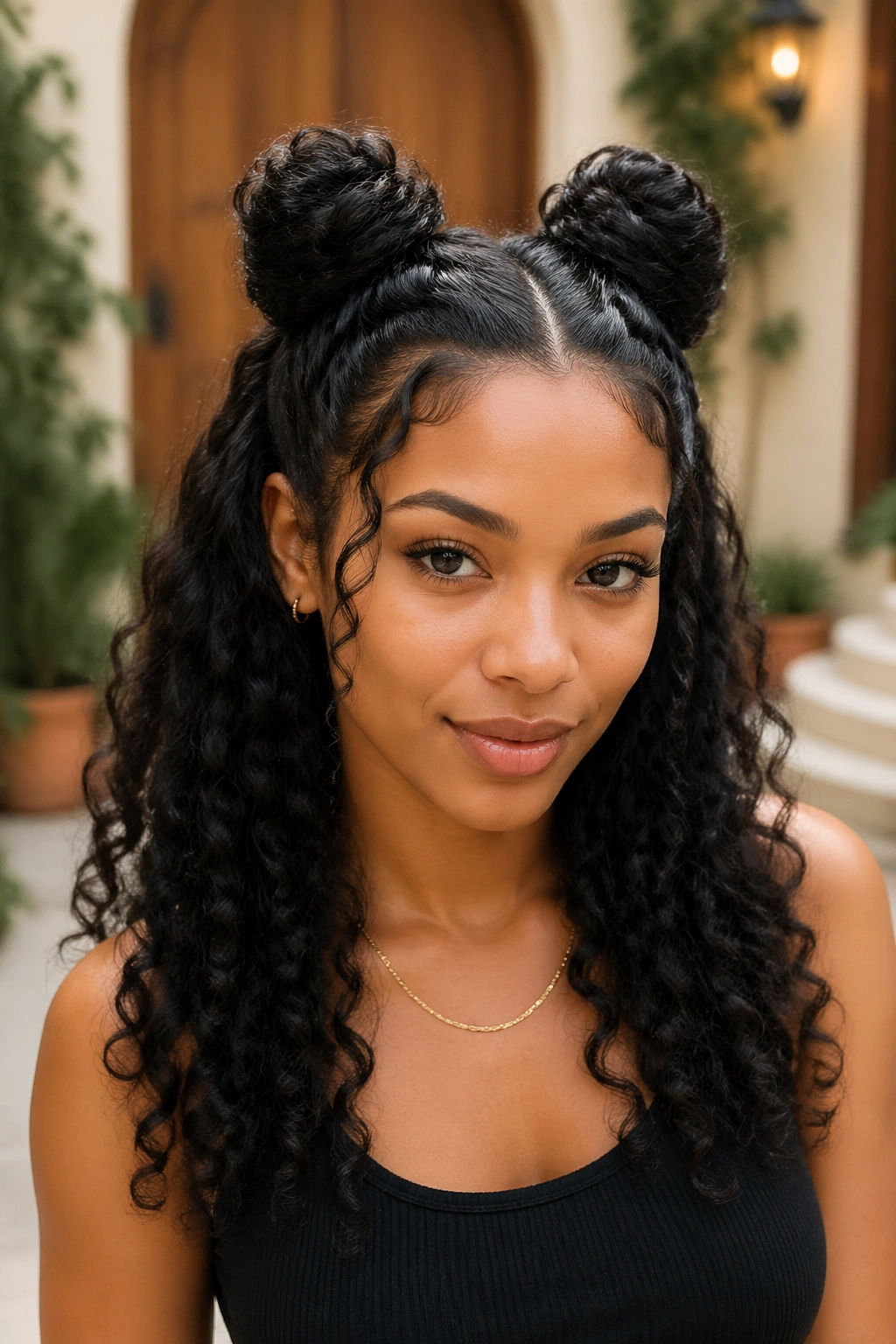
Space buns — two small buns positioned high on either side of the head — are higher and more separated than double buns. They sit almost at the temples, creating a wide, dramatic silhouette at the top of the head.
Part from ear to ear across the top of the head. Gather each front section and twist into a small bun directly above the ear. Secure with an elastic and pins. The bottom section stays free. Edge control along the part and around each bun base creates a polished finish.
This style looks especially striking on 4c hair, where the bun texture contrasts beautifully with the free-falling curl section.
12. Half Up With Braided Headband
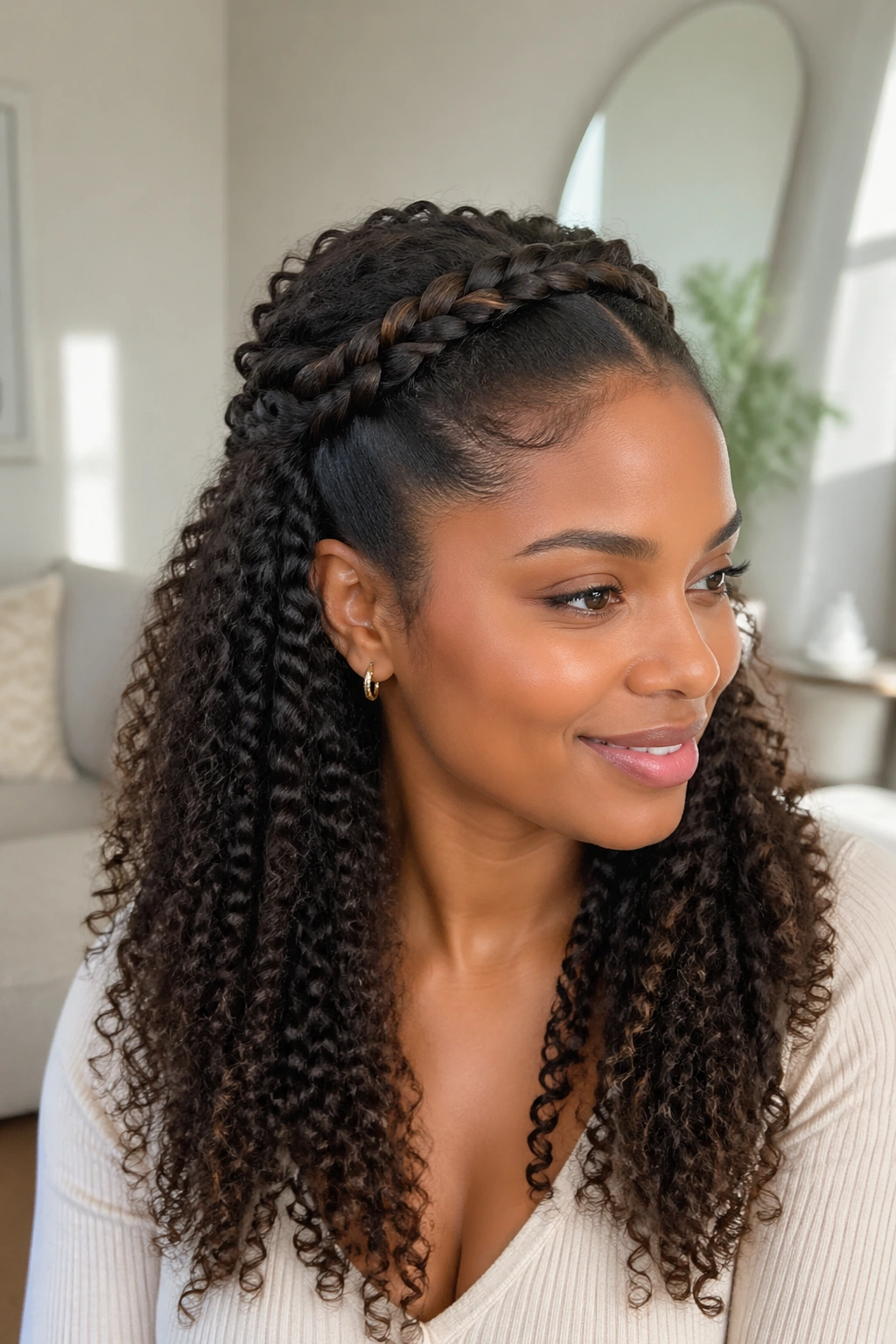
A braided headband is a single braid that runs from one ear, across the top of the head, to the other ear. It creates a headband effect using your own hair — and when the rest of the hair is left down, the braid serves as the “up” portion of a half up style.
Start behind one ear. Take a small section and cornrow (or flat twist) it across the crown toward the opposite ear. Pin the end behind that ear. The braid sits like an accessory across the top of the head. The rest of the hair flows freely behind it.
Dress the braid up with beads, cuffs, or leave it natural. Either way, it looks like a finished, deliberate style.
13. Half Up With Knotted Sections
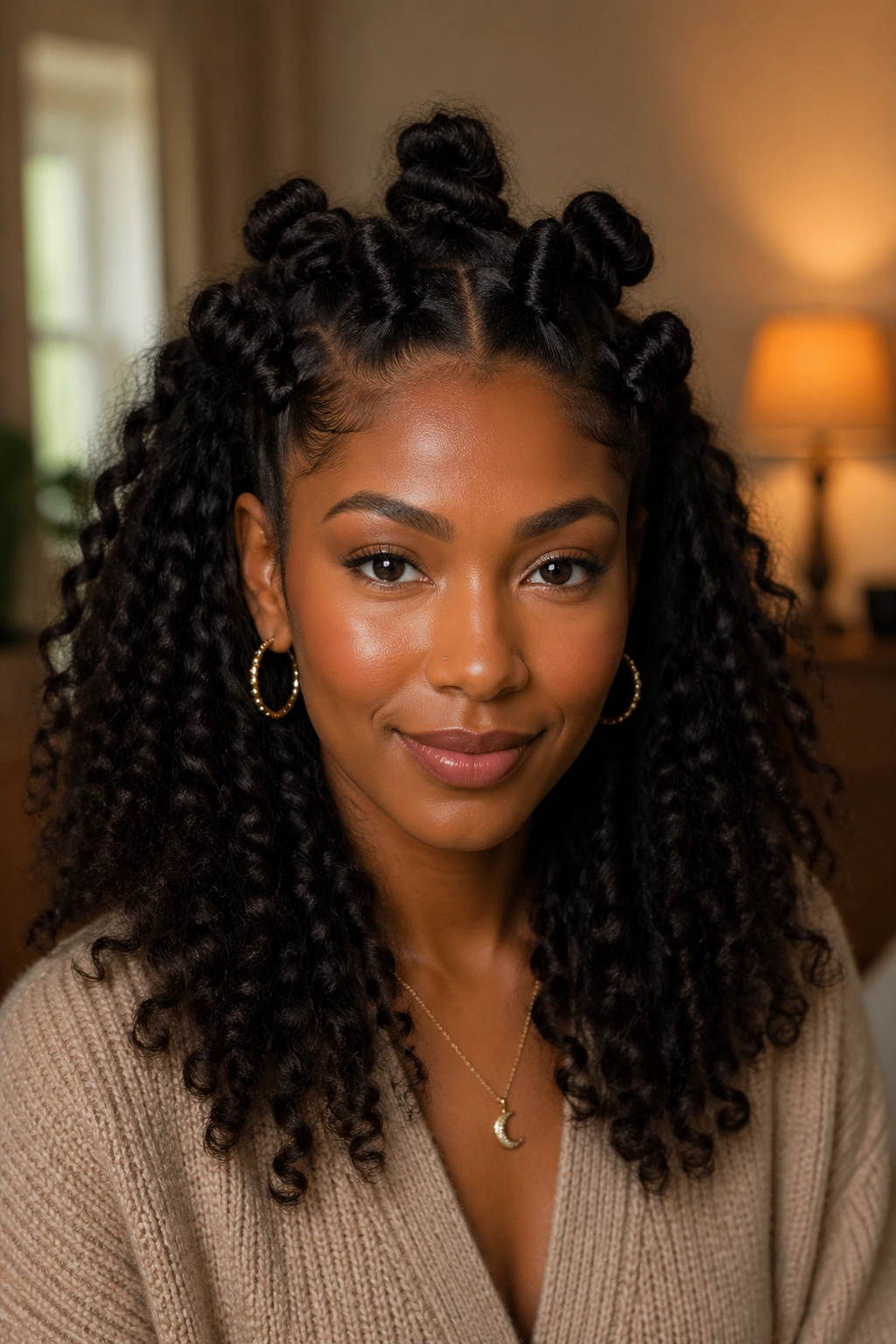
Knots — simple overhand knots tied with sections of hair — create a unique textural element in a half up style. Take four to six sections from the front of the hair, tie each into a knot, and pin the knotted sections at the crown. Leave the rest of the hair down.
Natural hair’s texture makes these knots look sculptural. Each coily knot has a three-dimensional quality that flat hair doesn’t achieve. Vary the tightness of each knot slightly for a more organic, handcrafted effect.
14. Half Up With Accessory Bar
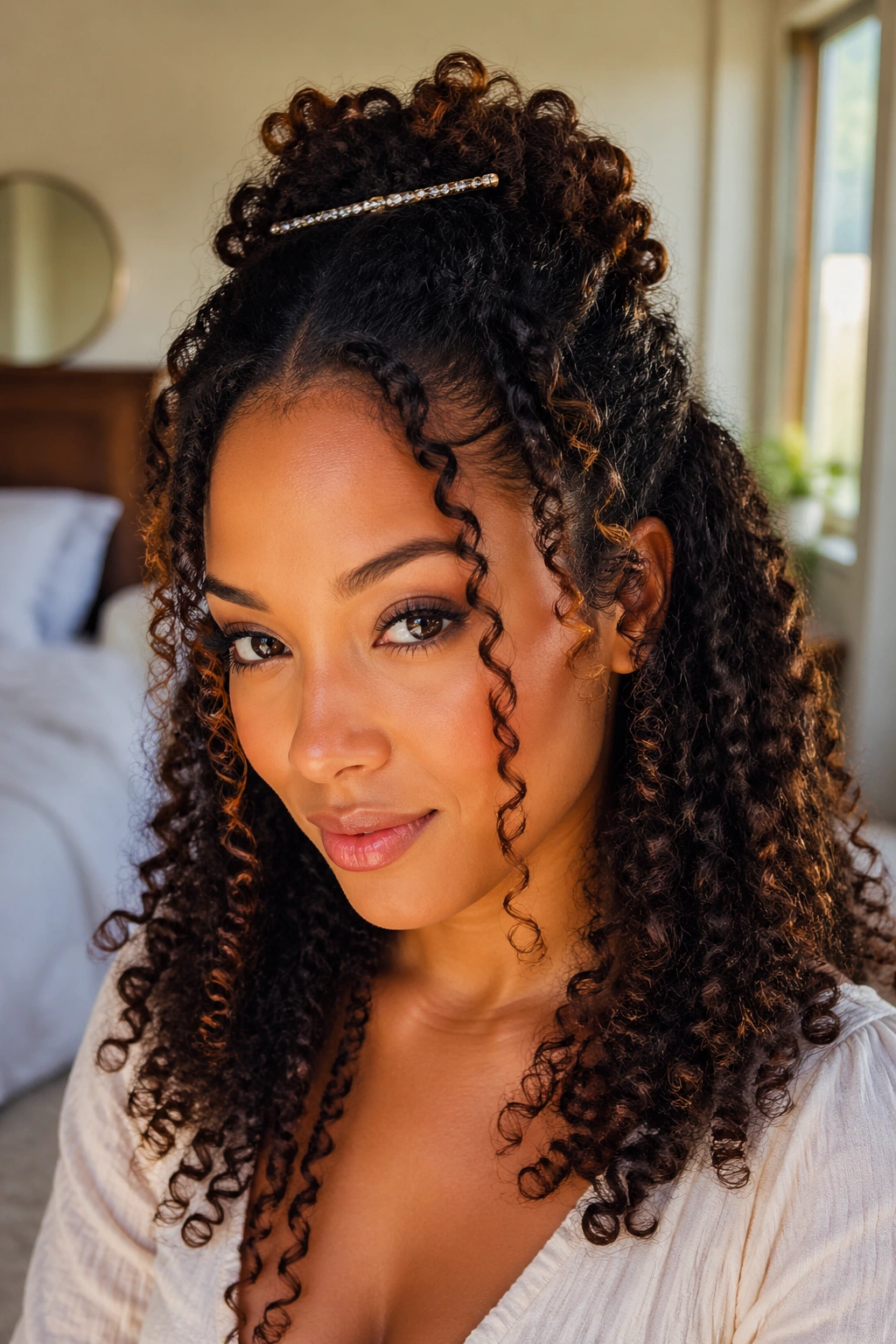
Hair accessory bars — long, jeweled or plain bars that slide through a bun or gathered section — are one of the simplest ways to elevate a basic half up style. No special technique required: gather the top section, twist it slightly, and slide the bar through the gathered section horizontally.
For natural hair, use a bar with enough grip to hold against curl texture. Smooth bars on very coily hair tend to slide out. Look for bars with teeth or texture, or place a small elastic first and then slide the bar through.
15. Half Up With Faux Locs Accent
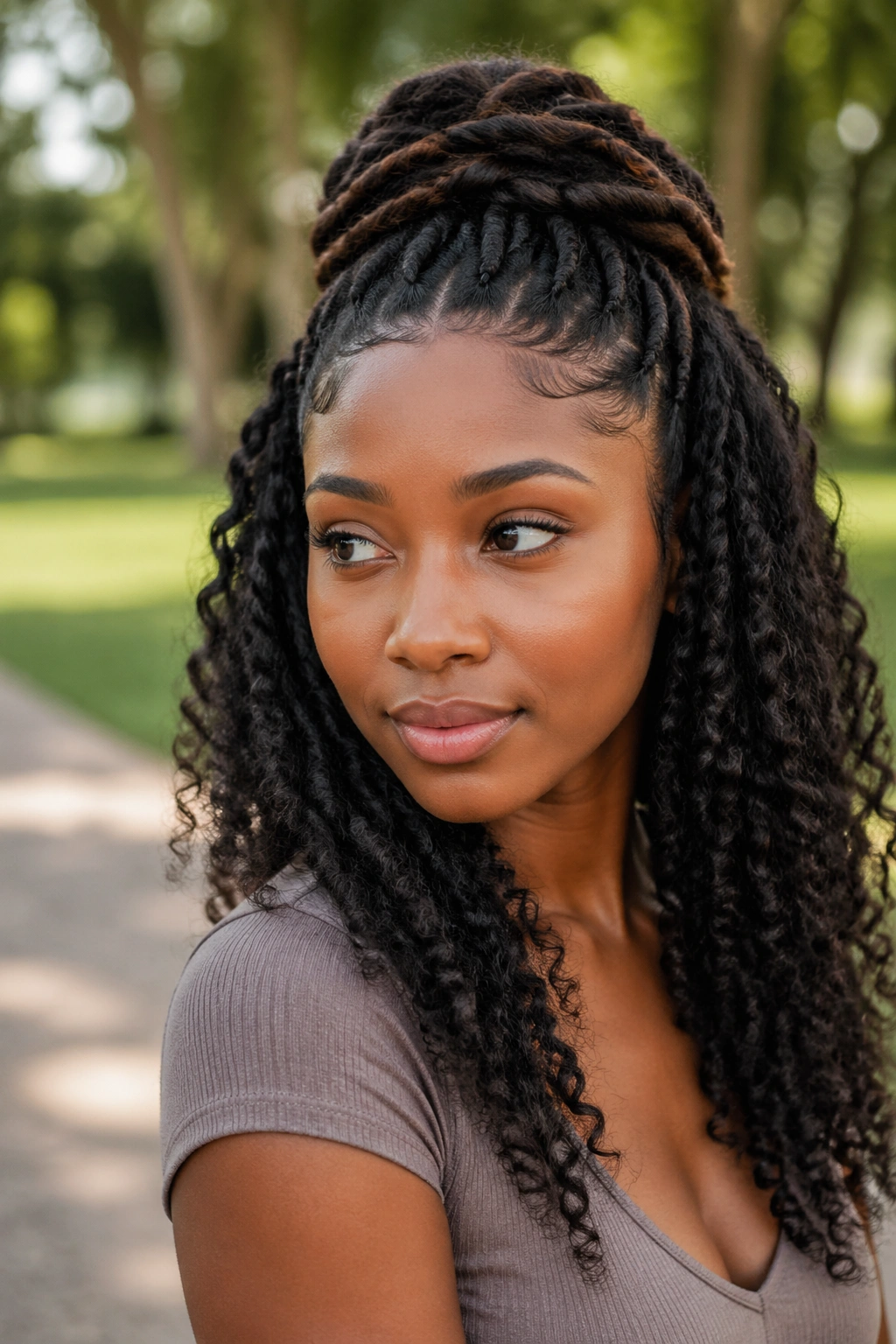
If you wear faux locs or have faux loc extensions, a half up half down style using loc accents creates a stunning textural contrast. Gather a few locs from the front and secure them at the crown, letting the rest hang freely.
The weight of the locs holds the style in place without needing many pins. The contrast between the thick, matte loc texture and the shinier, lighter natural curls behind them is visually compelling — it’s the kind of style that makes you look twice.
16. Half Up With Curly Bang Section
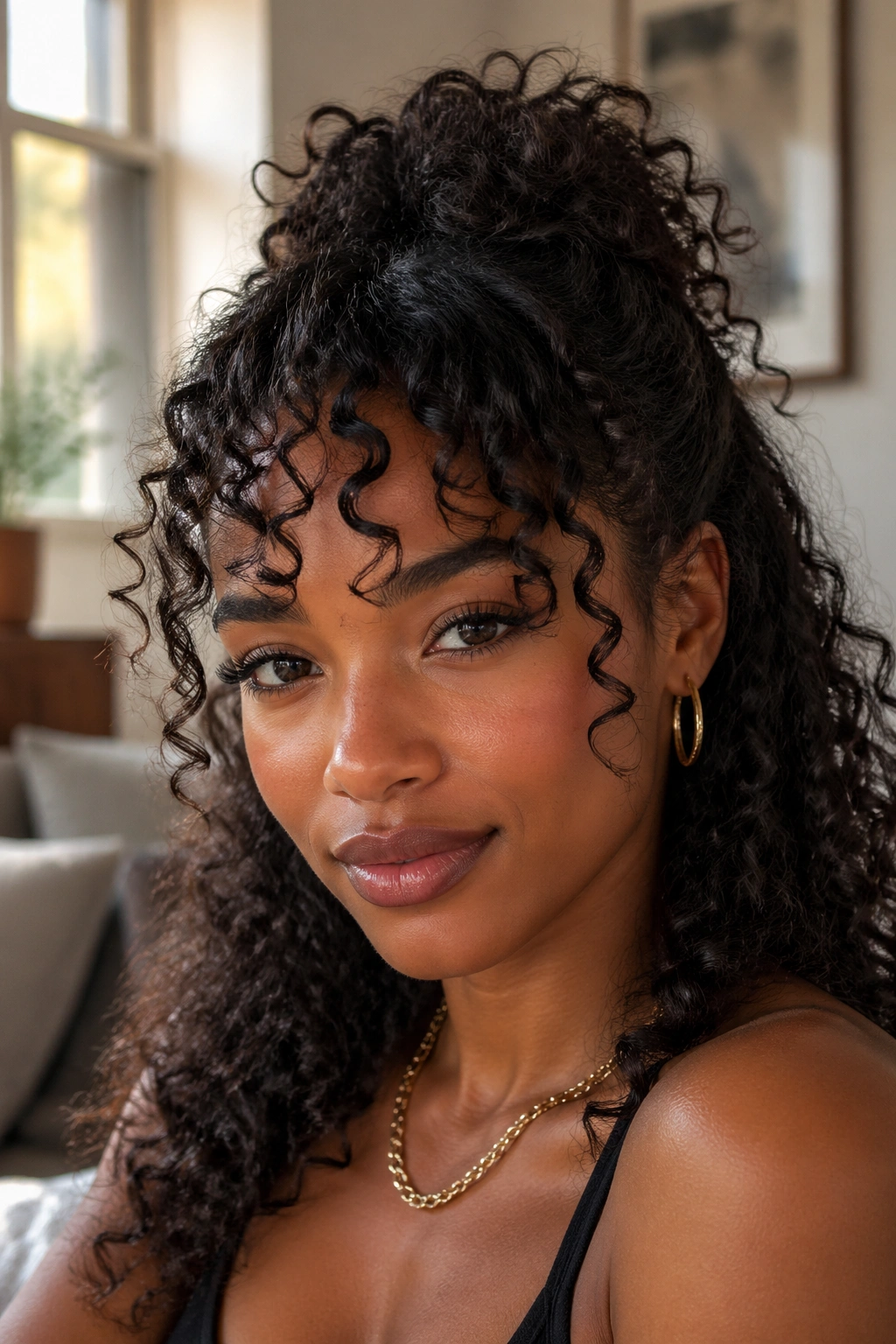
If you have or can create a bang section — even a faux one — leaving it free while gathering the rest of the front hair up creates a very flattering look. The bang section frames the face while the gathered crown section creates height and definition.
For those without natural bangs: take a small section from just behind the front hairline on one side, let it fall forward across your forehead, and pin the rest of the front section back. It’s a simple faux bang that changes the whole feel of the style.
17. Half Up With Pineapple
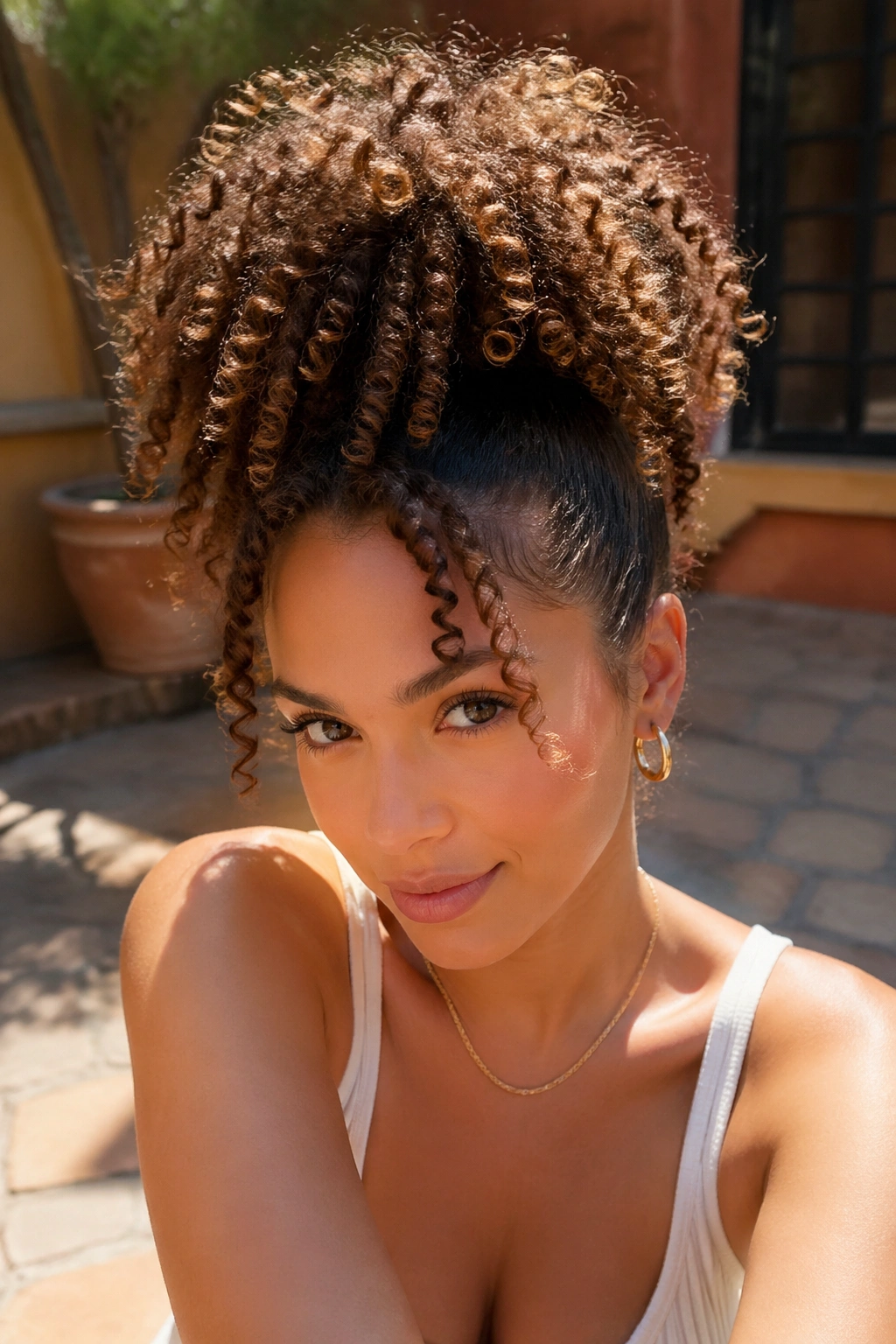
The pineapple — a loose, high ponytail at the very top of the head used for overnight curl preservation — can also serve as an actual style during the day. A daytime pineapple is fuller and more fanned out than the sleeping version, but the structure is the same.
Flip all your hair toward the front. Gather it at the very top of the head and secure loosely with a scrunchie. Fan the curl cluster outward in all directions. The curls cascade forward and downward, creating a full, bohemian look. Adjust the size and position of the scrunchie to control how much of the curl cluster hangs forward versus backward.
18. Braided Half Up With Beads
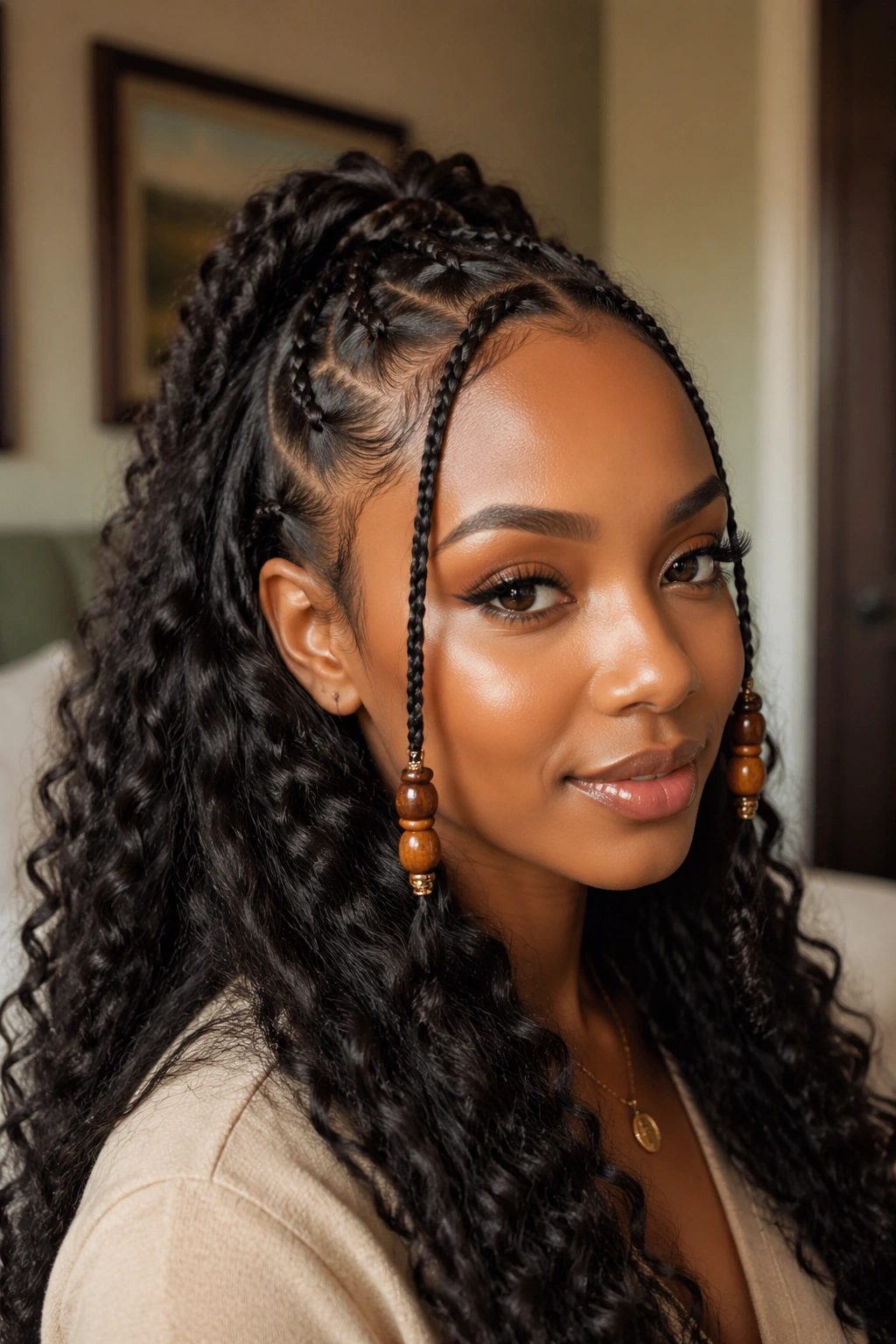
Braids with beads are a timeless cultural practice in African hair styling traditions. For a half up half down style: create two or three thin braids in the front section of the hair, add wooden or metal beads to each braid, and pin the braided sections back at the crown. The beads hang down and catch light as you move.
This style is especially beautiful for children but works for anyone who loves the warmth and visual interest that beads add to a natural hair look.
19. Half Up With Loose Side Braid
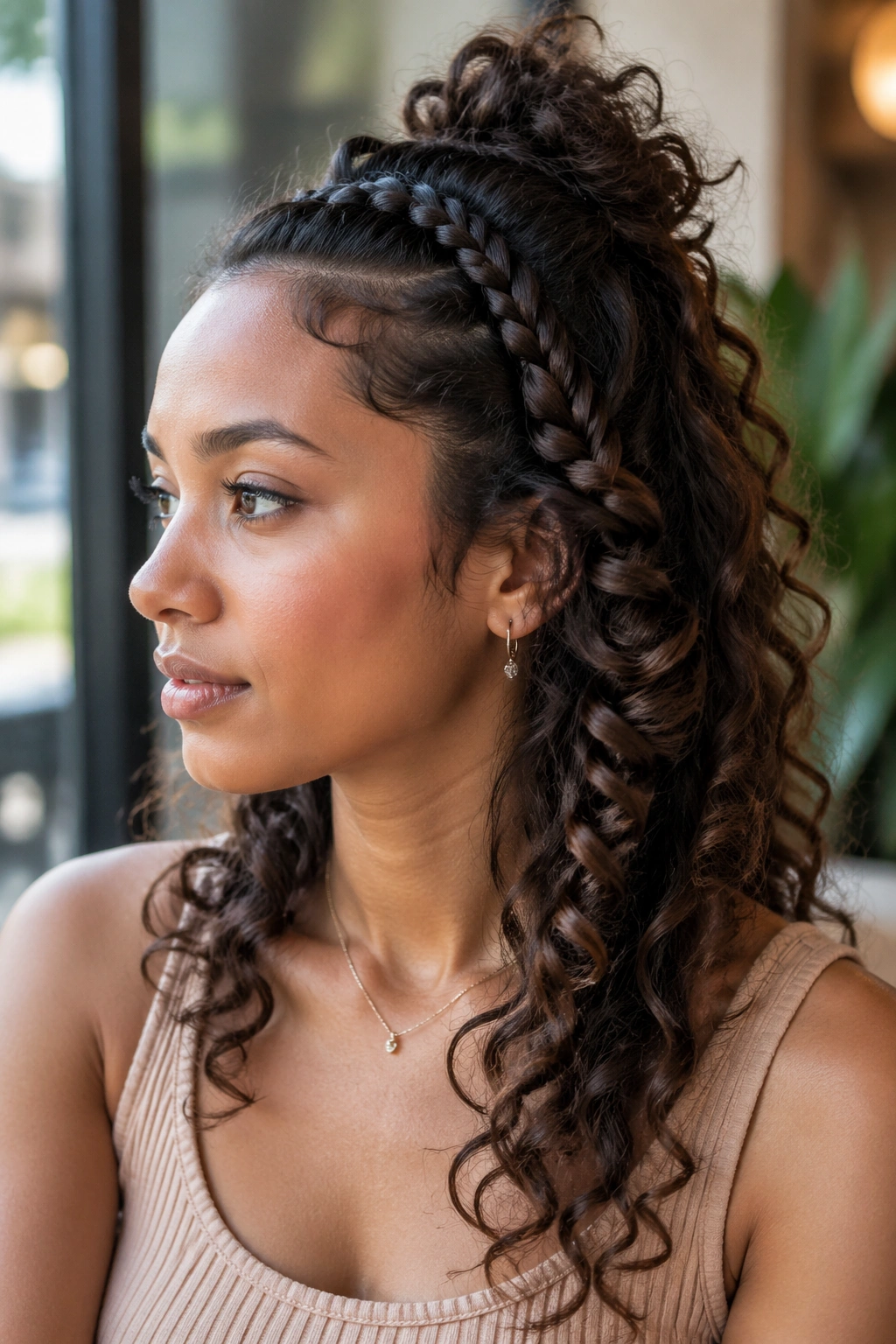
Instead of gathering the top section straight back, take it to one side and loosely braid it before pinning. The loose braid sits against the side of the head while the rest of the hair flows freely — it’s asymmetric, textured, and quietly interesting.
Don’t braid too tightly. A loose, slightly messy braid looks more intentional on natural hair than a rigid one. Leave the braid slightly undone — a few pulled-out sections add to the effect.
20. Half Up With Twisted Crown
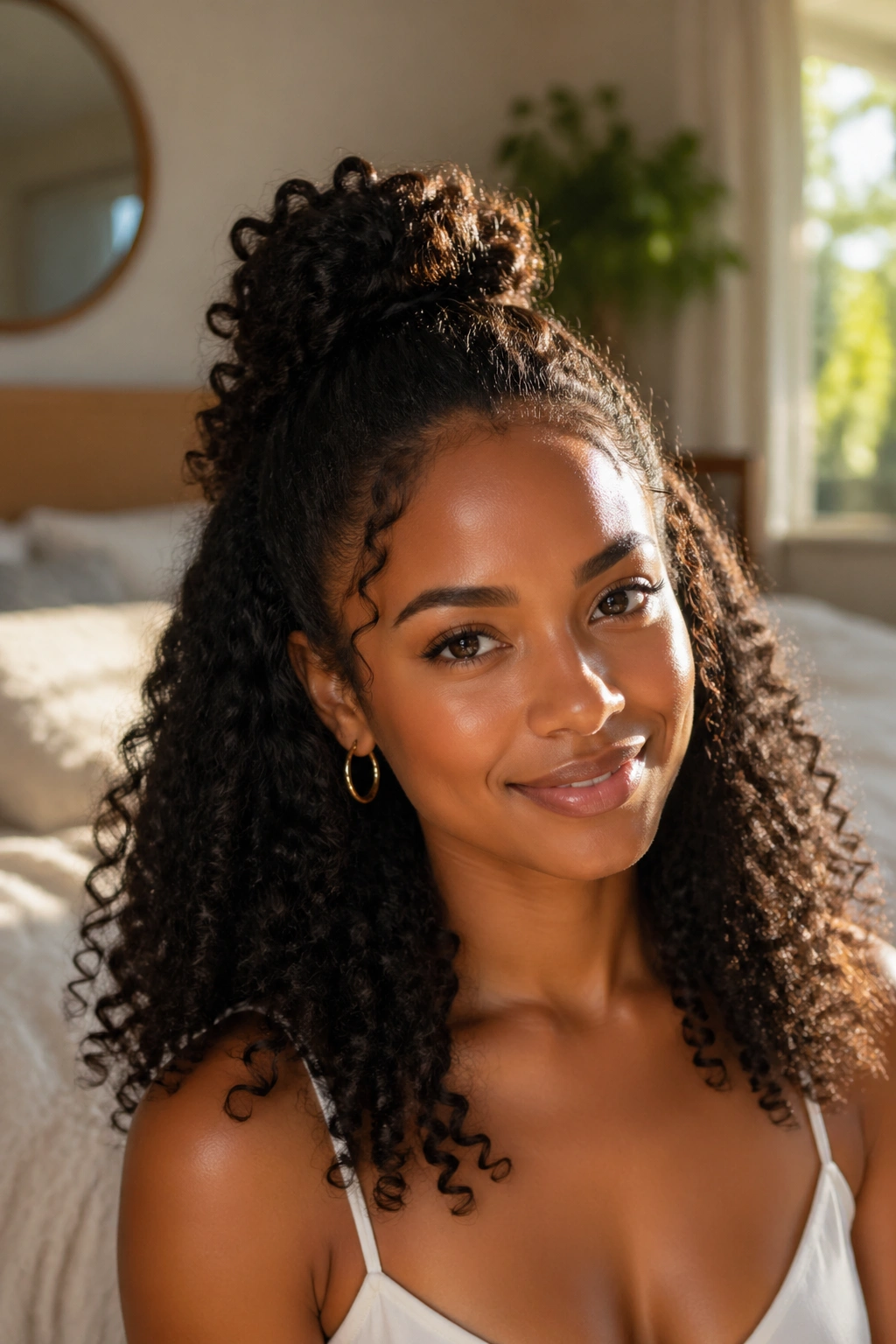
Two twists run from the temples, wrap around the crown of the head, and meet at the center back — creating a crown-like structure at the top while the bottom half of the hair stays free. The twists should be two-strand, using your natural hair rather than extensions.
Pull the two twists firmly across the top of the head and pin them at the crown, overlapping slightly. This creates a wreath or halo effect across the upper portion of the head. Finish the look by defining the loose curls in the down section.
21. Half Up With Bantu Knot Crown
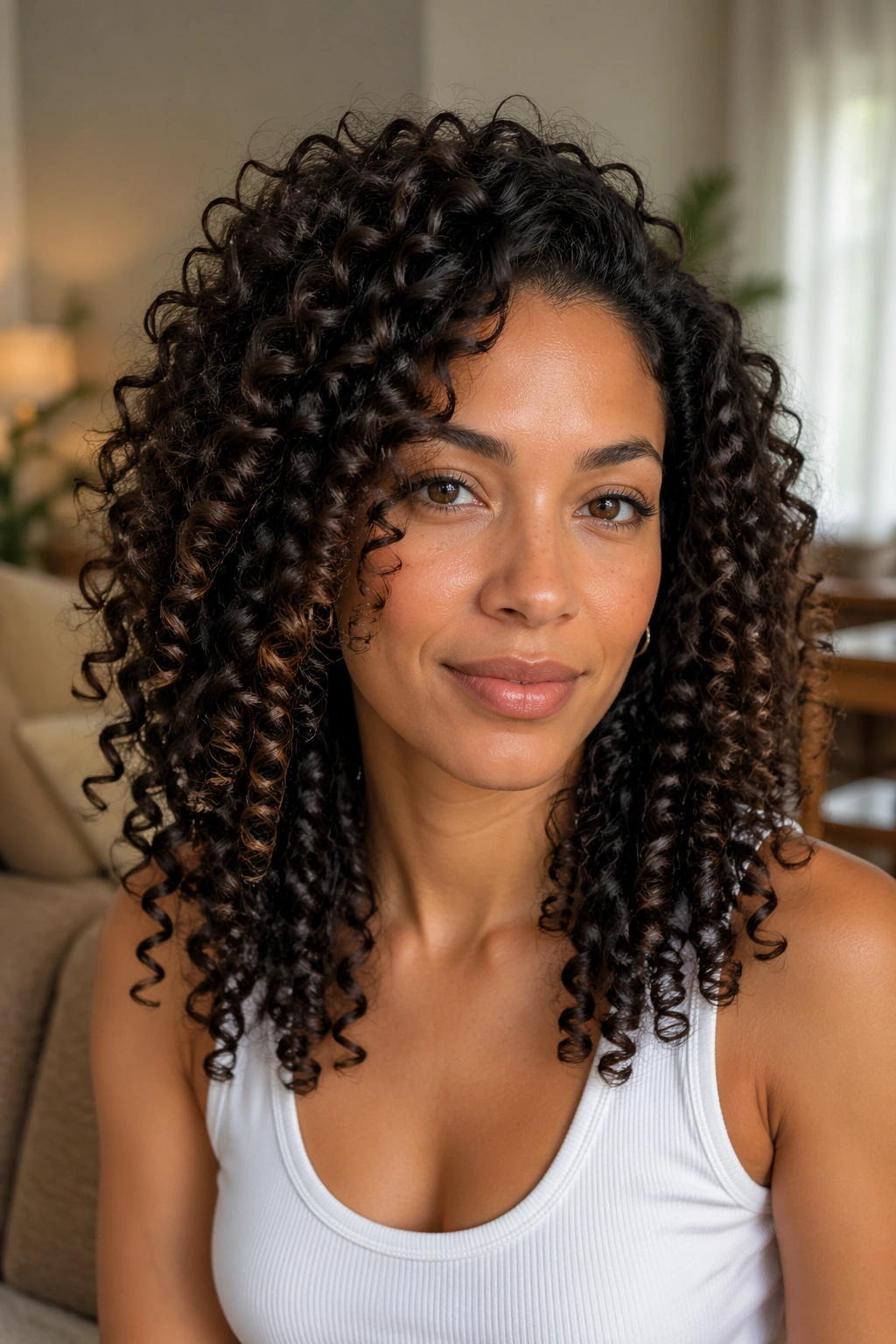
Bantu knots at the crown with loose curls below is one of the most distinctively natural hair looks in this category. The small, coiled Bantu knots at the top create a sculptural, deliberate contrast with the free curls below.
Create six to eight small sections in the top portion of the hair. Two-strand twist each section, then coil it around its own base and tuck the end under. Secure with a pin if needed. The Bantu knots should sit snugly against the scalp. Leave the bottom section completely free.
22. Half Up With Loc Bun
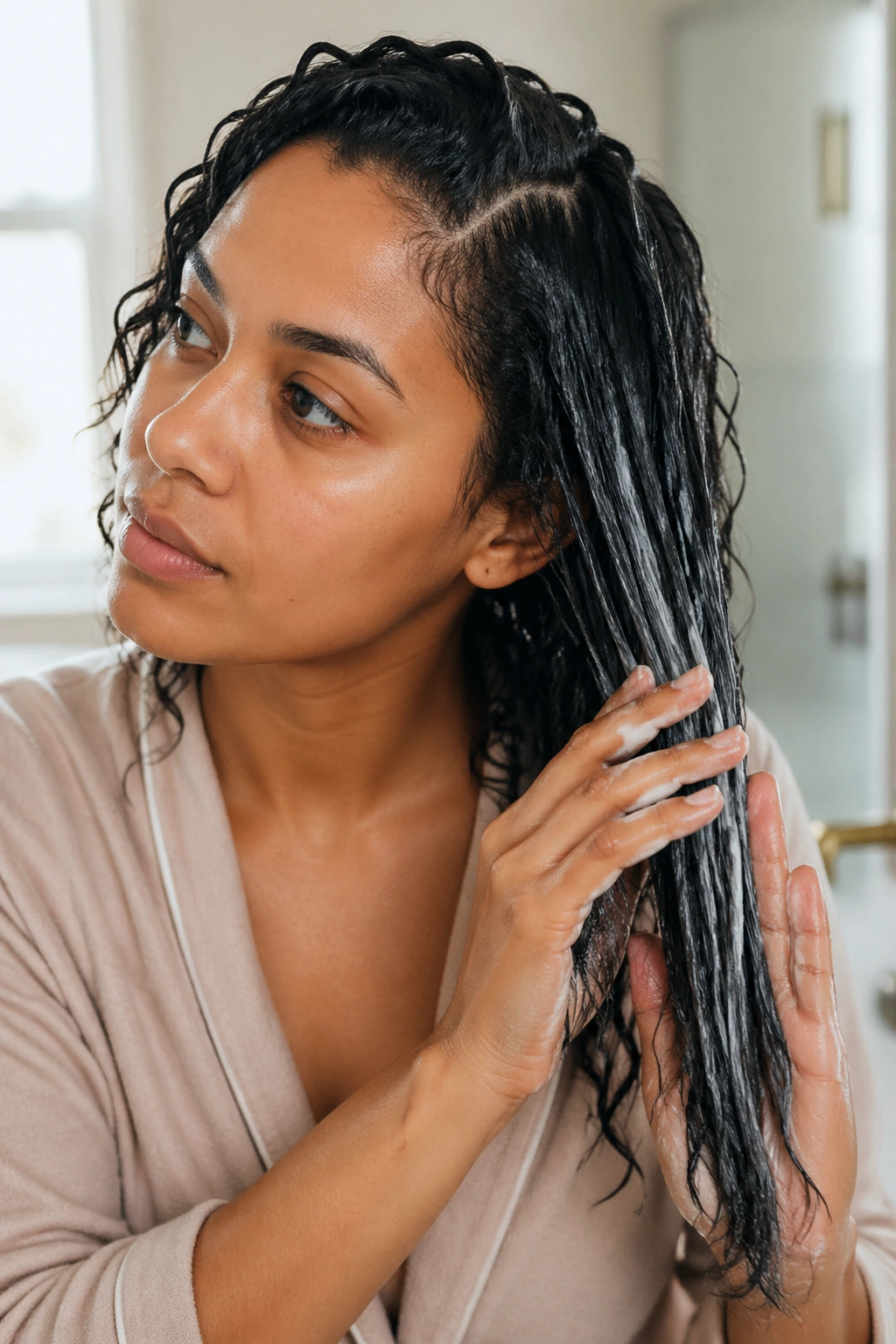
For those with starter locs, mini locs, or long mature locs: a single loc bun at the crown while the remaining locs hang free is a clean, effortless half up style. Gather the crown locs, coil them into a flat bun, and secure with an elastic or loc tie.
The contrast between the neatly gathered bun and the freely hanging locs below creates a structured look without requiring much effort. This style works particularly well for office environments where you want to look professional without a full updo.
23. Half Up With Crochet Curl Extension
Adding a small section of crochet curl extensions to the gathered top section creates a different curl texture at the crown compared to the natural hair below — and the contrast is intentional and beautiful. Match the extension texture as closely to your natural curl type as possible, or go slightly different for a deliberate two-texture effect.
Loop the extension crochet piece around the gathered top section before securing it. The extension curls blend with or complement your natural curls in the gathered section.
24. Full Voluminous Half Up With Side Part
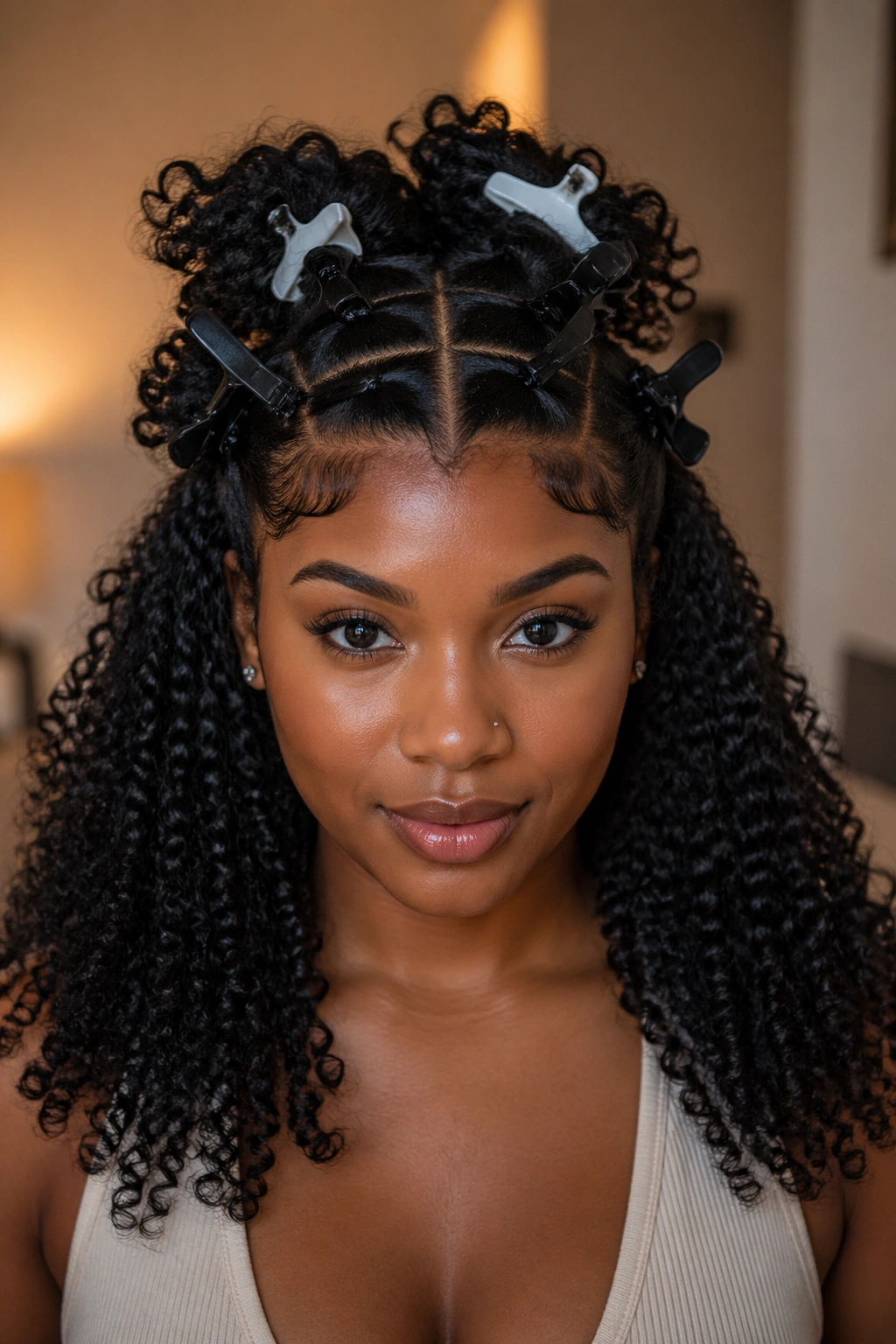
Save the most iconic for last. A deep side part, the front section swept dramatically across the forehead to the other side, and everything gathered into a voluminous half ponytail at the crown — this style is the definition of effortless natural hair glam.
The side part does most of the visual work. Combined with the sweep of the front section across the forehead, it creates a fifties-inspired glamour that feels completely fresh on natural curls. The gathered section at the crown should be large and full, with the curl cluster left loose and voluminous.
Smooth your edges on the parted side for contrast against the voluminous gathered section. This is the half up style you reach for when you want to make an impression.
Protecting Your Ends in Half Up Styles
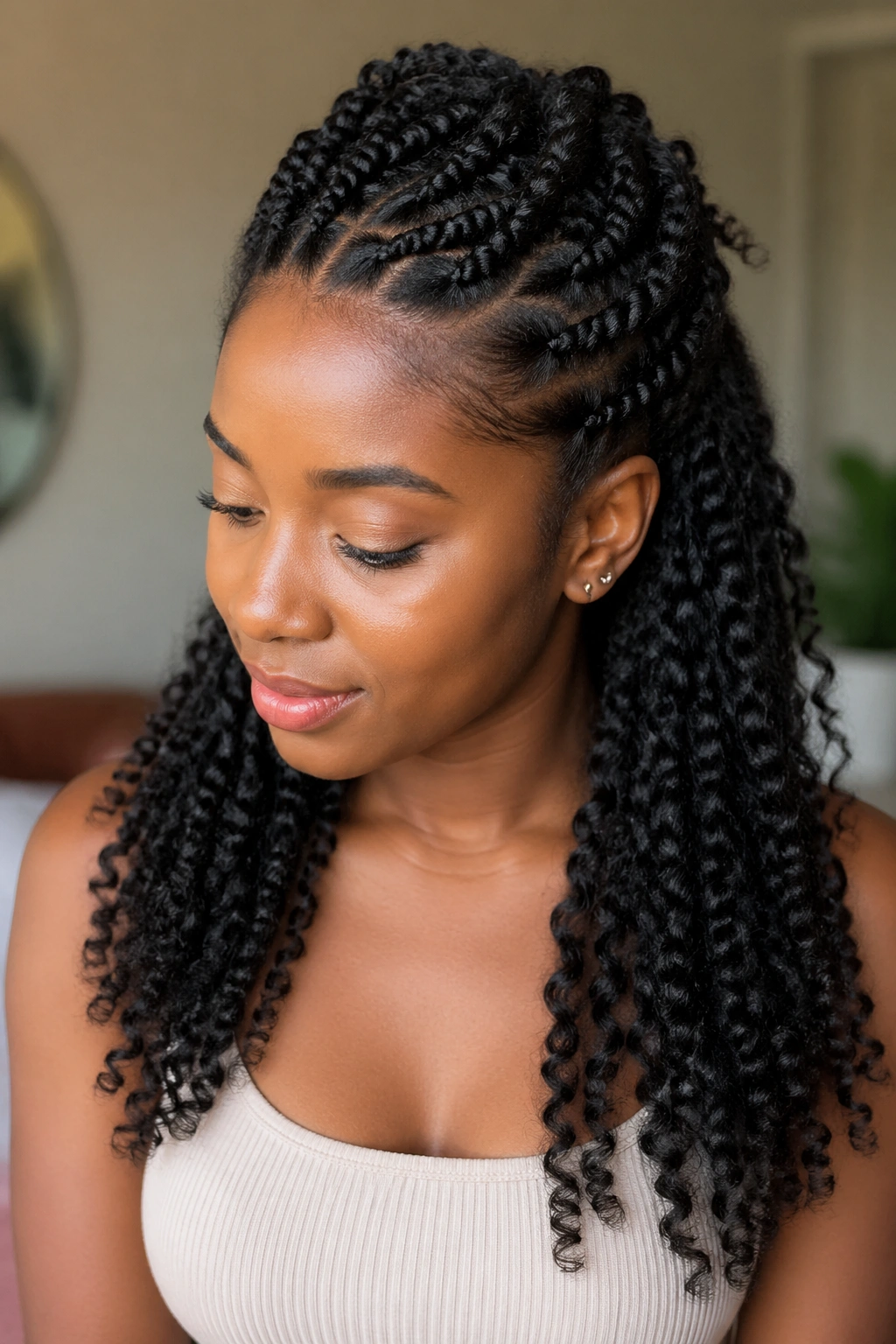
When the bottom half of your hair is always hanging free, the ends are exposed to friction from clothing, seats, and the environment. Protecting ends is essential for length retention.
Before styling, apply a thin layer of a sealing oil to the ends — avocado oil, castor oil, or a light butter works well. This seals the cuticle and reduces friction. If you’re wearing the same half up style multiple days in a row, refresh the ends with a water-and-oil spritz each day rather than leaving them fully dry.
Consider a half up style where the ends of the down section are loosely tucked or bunched — not a full tuck (that becomes a different style) but a loose fold that reduces exposure without hiding the curls completely.
Refreshing a Half Up Style on Day Two and Three
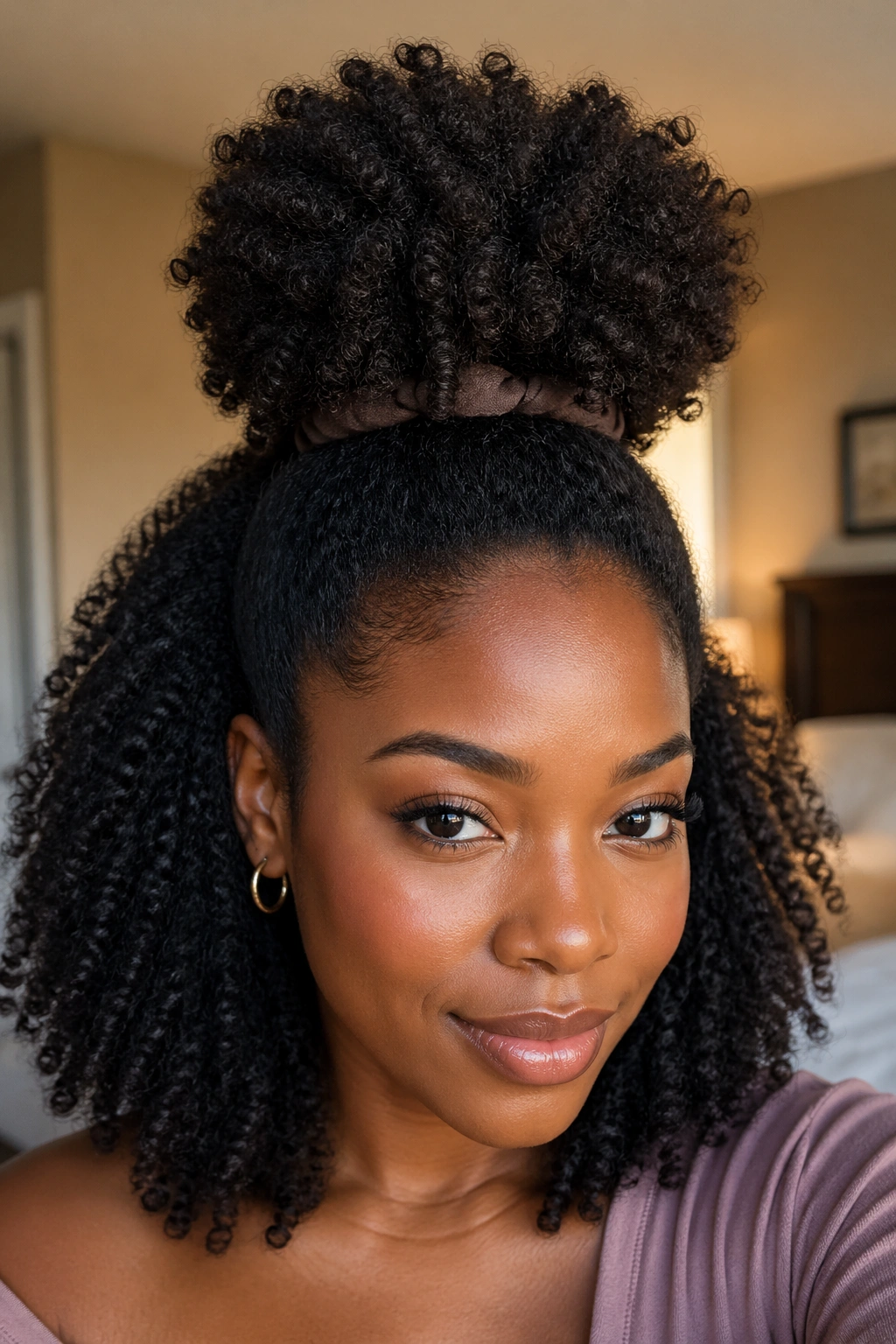
Natural hair half up styles can last several days with proper care. The key is knowing what to refresh and what to leave alone.
The gathered top section usually stays neat longer than the loose bottom section. Focus your refreshing efforts on the bottom half — spritz with a water-and-conditioner mix and scrunch upward. Avoid disturbing the top section unless pins have slipped out.
Re-smooth your edges each morning. This takes thirty seconds and makes the entire style look like it was just done. Use a small amount of edge control and your edge brush.
If the style starts looking tired by day three, add an accessory. A scarf, a clip, or a few gold pins transform a worn style into a fresh one without requiring a full redo.
Choosing the Right Half Up Style for Your Life
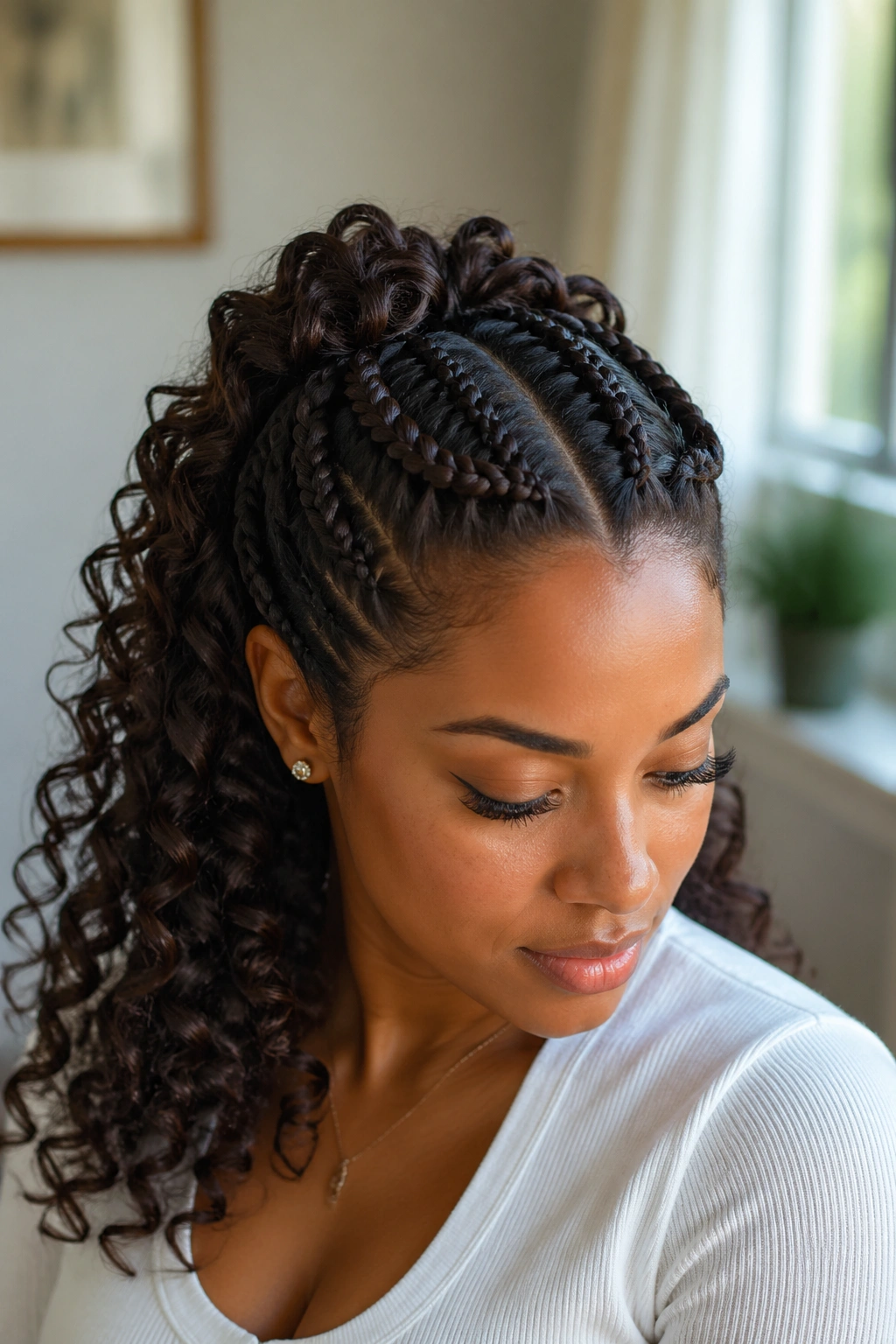
The half up half down look you choose should match your lifestyle as much as your curl type.
For active days — workouts, running errands, being outdoors — choose styles with more structure in the gathered section: flat twists, cornrow crowns, or braided headbands. These stay in place through movement and sweat better than loosely pinned styles.
For professional settings, the more polished interpretations work best: the classic two-strand twist half up, the French braid half up, or a simple smooth half ponytail with defined curls below. These communicate care and intention without looking overdone.
For creative and social occasions, the playful styles shine: bubble ponytails, space buns, scarf-tied half ups, and Bantu knot crowns. These are conversation starters that celebrate natural hair in the most expressive way.
Whatever you choose — your natural curls are already doing the hard work. The half up style is just a way of showing them off.
