



A headband is the most underestimated piece of hair equipment you will ever own. People treat them like accessories, as if they are there just to match an outfit or catch stray ends, when in reality the right headband can transform how an entire afro reads — softening it, sharpening it, elongating it, framing it, or hiding a day-four wash-and-go that never quite came back. I have yet to meet a natural hair routine that could not benefit from at least three different headbands living in a basket somewhere accessible.
The trouble is that most advice about headbands treats them like they are all the same. They are not. A wide satin band does something completely different than a thin elastic wire. A knotted scarf creates a shape no stretchy band can match. And certain materials will wreck your edges in a week if you wear them wrong.
I have been experimenting with headbands on afro-textured hair for years, testing what slides, what pulls, what sits flat, and what actually flatters across different face shapes. The twenty styles I walk through below are the ones that earned a permanent spot in my rotation. Some are dressy. Some are casual. A few solve problems I did not even know I had until the right band taught me.
Along the way I will share what materials to avoid, how to size a headband correctly (most people get this wrong), and which face shapes pair best with which silhouettes. Let us start with the basics.
Why Headbands Work So Well on Afro Textures
The reason a headband sits differently on afro hair than on straight or wavy hair has everything to do with density and grip. Afro hair creates natural friction against fabric. A cotton headband grips coils the way it cannot grip silk-straight strands — which is why the same band slips on one head and holds perfectly on another.
That friction is a gift and a problem. Gift, because the band stays put without tugging. Problem, because wrong materials create drag on your strands and, over time, on your edges. Anything with a rough seam, a rubberized grip strip, or a tight elastic core will break hair at the hairline within a few wears if you are not careful.
The fix is almost always material. Satin-lined bands glide. Soft knit bands cushion. Bands with adjustable closures let you control tension so you are not relying on elastic stretch alone. If there is one rule to follow, it is this: never wear a tight rubberized band over unprotected edges for more than two or three hours at a stretch.
Sizing Your Headband Correctly
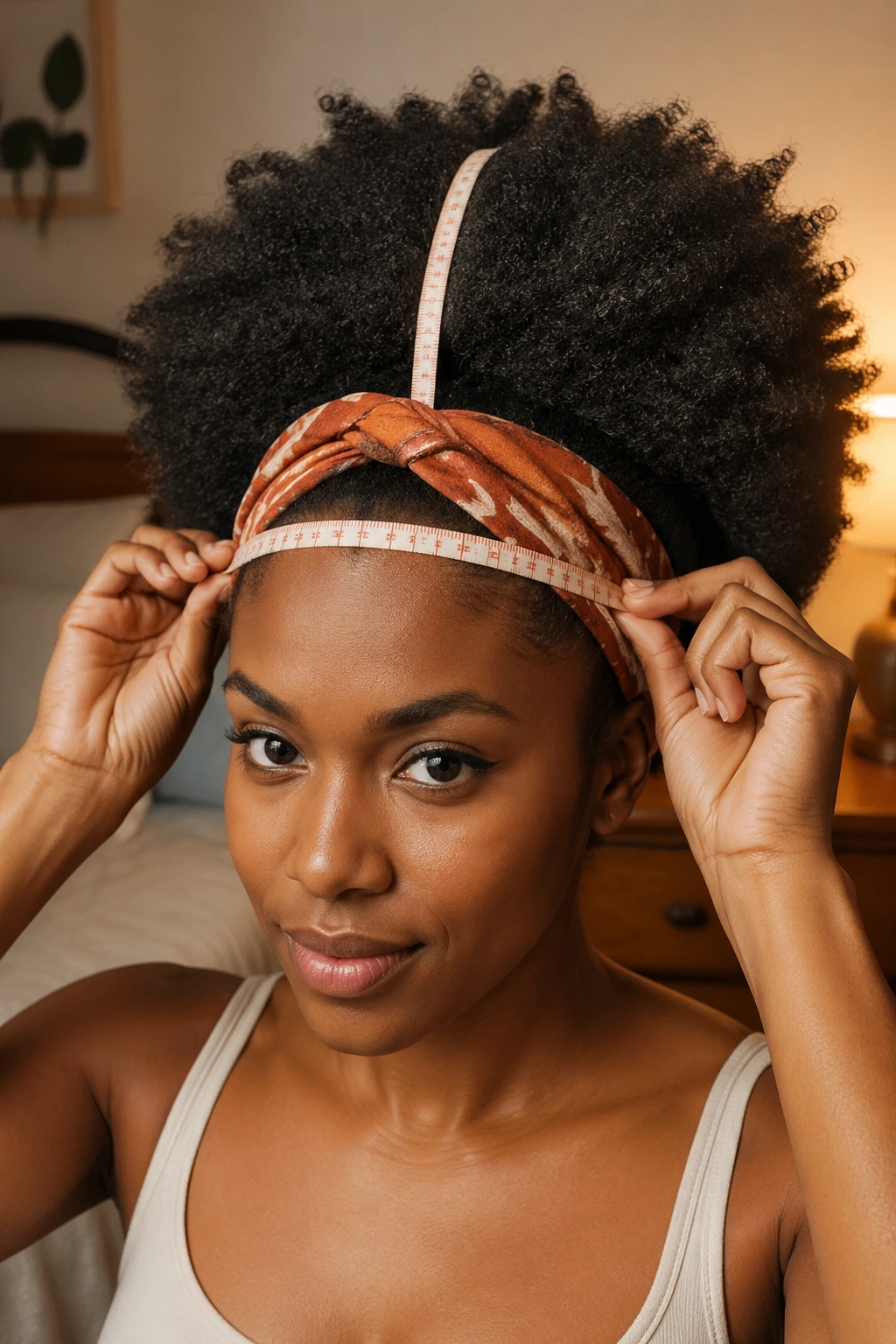
Most headbands are sold as “one size fits most.” That is marketing. A headband that fits a pencil-straight ponytail will slide right off a freshly fluffed afro because the diameter of your hair adds inches to your effective head circumference.
Measure two places. First, measure your actual head at the hairline with a soft tape — most people are between 21 and 23 inches. Then measure again over the fullest part of your afro. The difference is what the headband has to stretch to accommodate. If you are wearing a half-up puff that adds three inches of height, you need a band designed to accommodate that additional span.
For wide hair wraps and scarves, length is more important than circumference. A scarf should be at least 60 inches long to knot comfortably, 70 inches if you like elaborate wraps with tails hanging down.
The Tools That Make Headband Styles Last
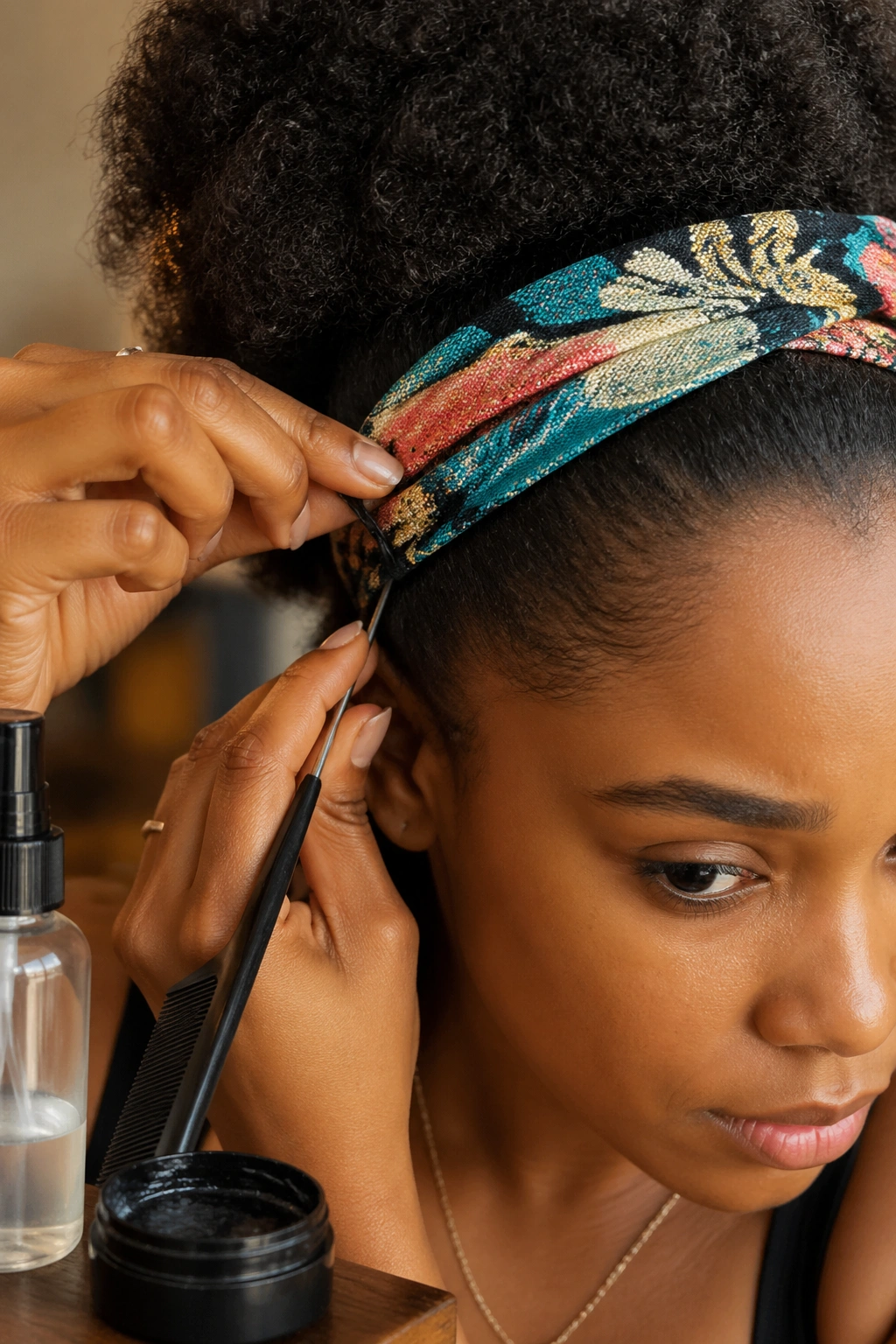
A handful of small items turn a headband from “slides every ten minutes” into “stays all day.” Bobby pins hidden under the band to anchor it against flat sections of hair. Small snap clips at the back to prevent rising. A light mist of water along the grip line to create friction. Edge gel applied before the band goes on, not after.
A tail comb is the tool I reach for most often. Smoothing the front of the hair into the band, parting a section underneath for a strand to fall over the band, or lifting hair behind a headband for volume — all easier with a rat tail.
One more thing. A small hand mirror with a long handle. You cannot see the back of your head with just a wall mirror, and half of any headband style is what is happening back there. Spend eight dollars. Buy the mirror.
Headband Material Basics
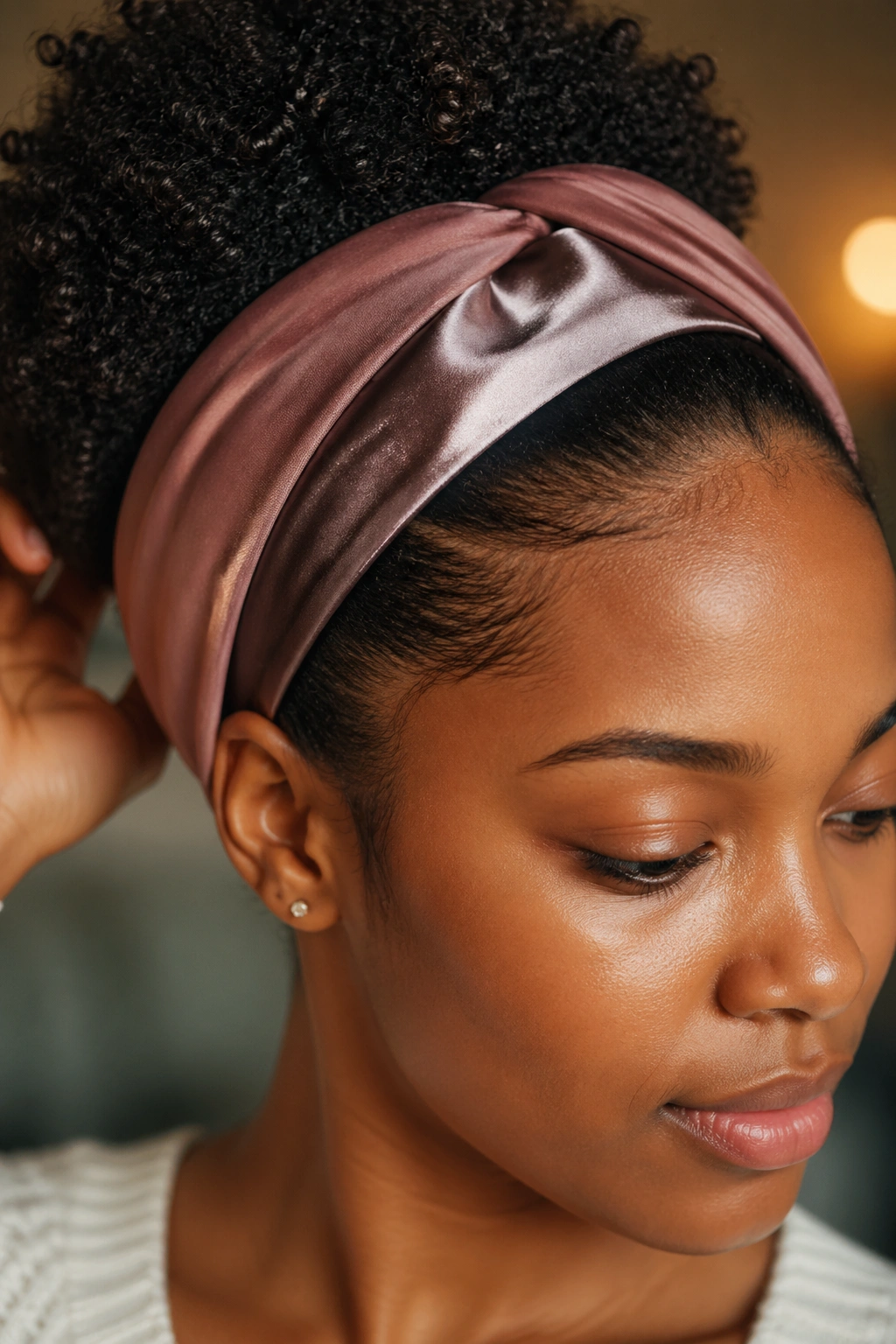
Satin, velvet, soft knit, stretch jersey, silk, cotton wrap, elastic with satin lining, and hard plastic with fabric wrap — these are the main categories worth knowing. Satin and silk are gentlest on strands but slide the most, so they need friction partners. Velvet grips well and looks dressy. Soft knit sits flat and forgets it is there. Stretch jersey is casual-cool and works for all-day wear.
Hard plastic wrapped in fabric — the kind with the stiff C-shape — gives you the most precise shape control because it does not stretch to fit. It either fits or it does not. When it fits, it stays exactly where you put it.
Cotton wraps and head scarves are in a category of their own because they are not just bands, they are canvases. A square of fabric can become twenty different styles depending on how you fold, knot, and drape it.
1. The Wide Satin Band With an Afro Puff Behind
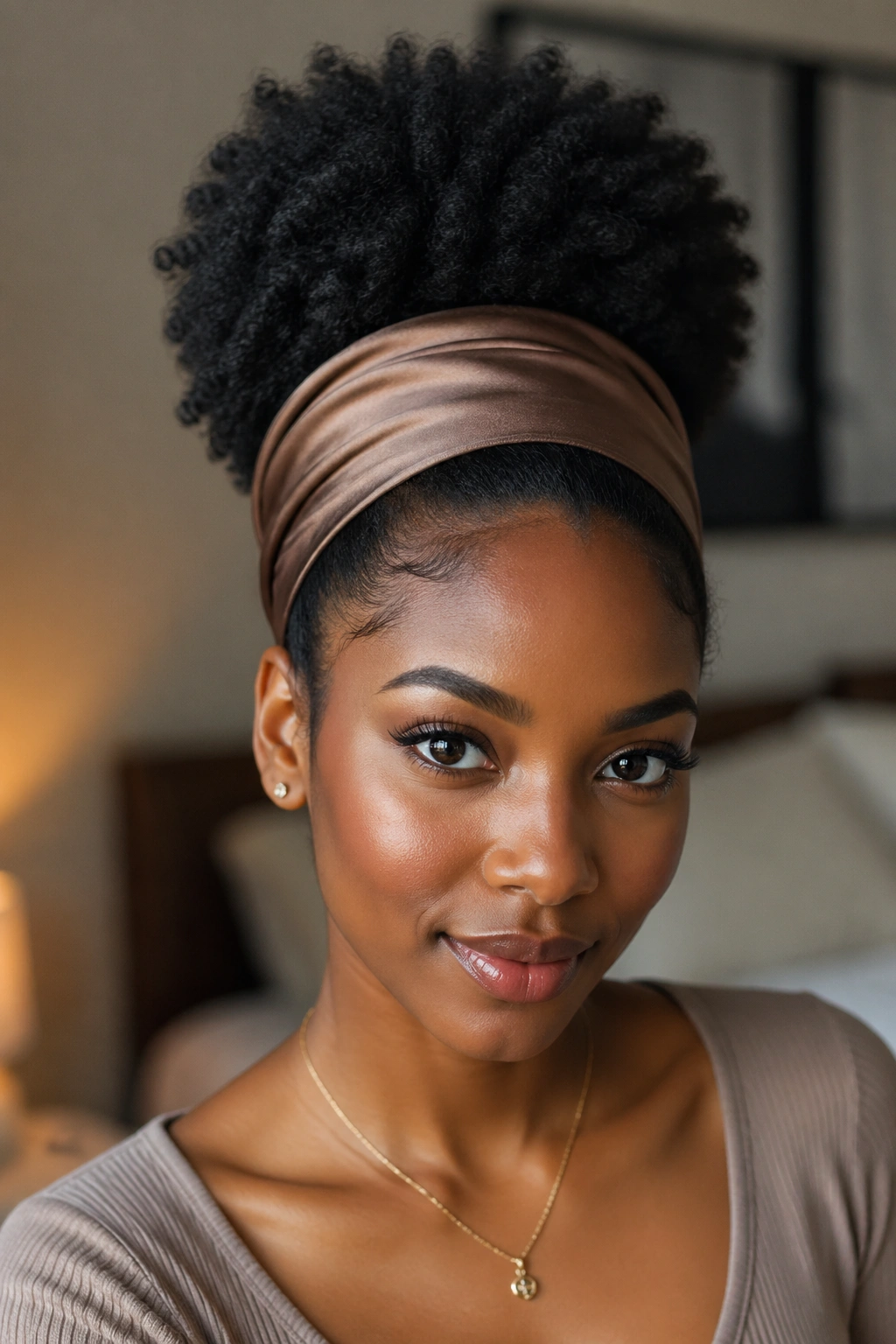
One of the cleanest looks in the category. A wide satin band — roughly three to four inches wide — sits flat across the forehead, and behind it your afro is gathered into a high puff that rises dramatically above the band. The contrast between the smooth satin and the textured afro is where all the visual interest lives.
How to Get the Most From It
The puff has to be taller than the band is wide for the proportions to work. A three-inch-wide band with a two-inch puff behind it reads as cramped. The same band with a five-inch puff reads as elegant.
- Moisturize the front two inches before placing the band to prevent dryness
- Secure the puff with a satin scrunchie underneath, not a regular elastic
- Place the band about half an inch behind the hairline for maximum coverage
- Tip: Use two bobby pins crossed in an X shape underneath the band at the crown to prevent it from sliding back as the day progresses.
2. The Knotted Scarf With Tails Down
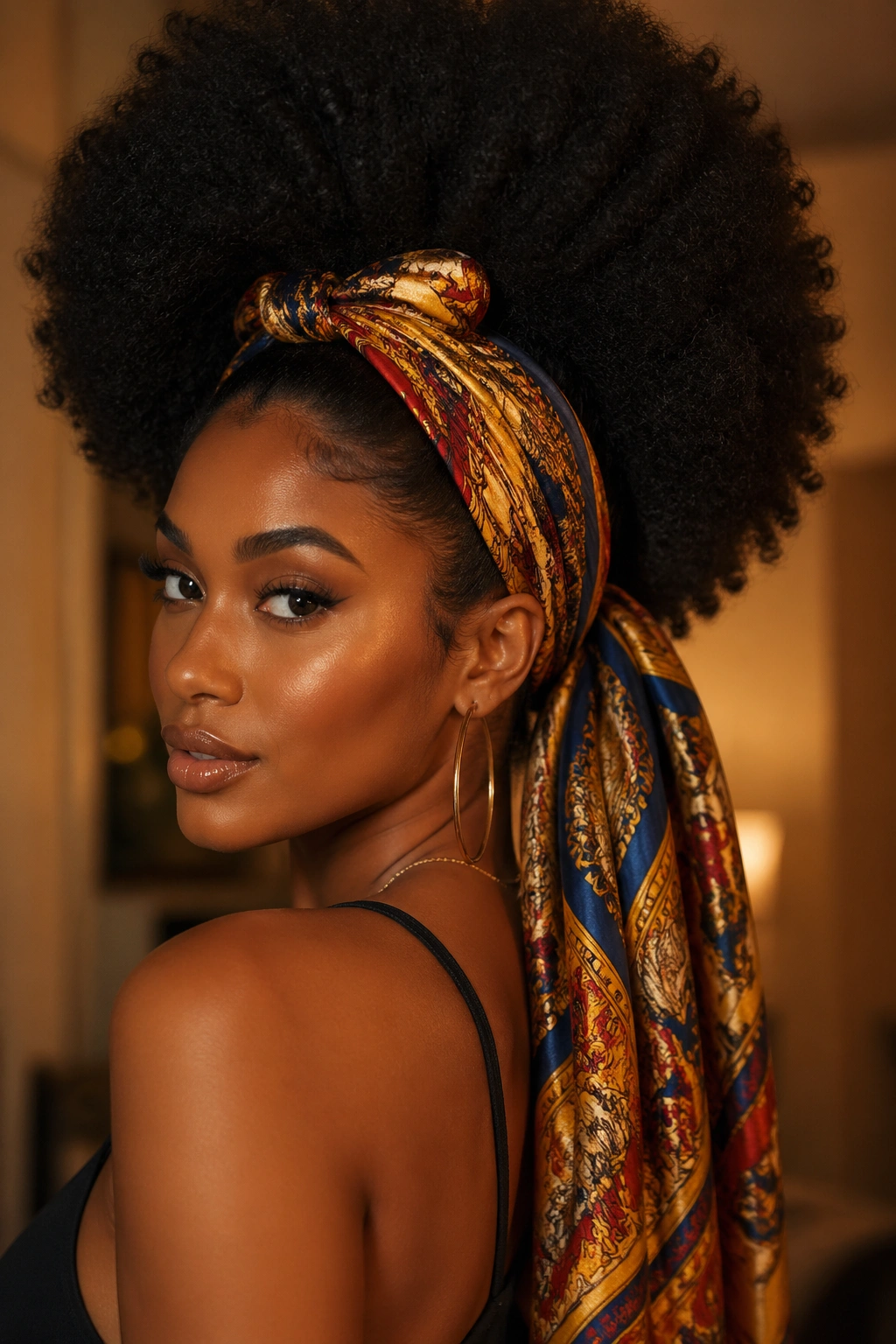
A silk scarf folded into a long rectangle, wrapped around the head, and tied at the top with the tails left to drape down behind the afro. It is old-school Harlem style with a modern twist. Works especially well with long afro hair or a loose twist-out.
The scarf should be at least 60 inches long so the tails reach the middle of your back. Shorter and you get a little knot that looks unfinished. Pick a scarf with a bold print — solid colors work but feel less intentional.
The knot placement changes the whole mood. A knot at the top-center reads as playful. A knot slightly to the side reads as editorial. A knot at the very front, just above the hairline, is a look I see rarely and always notice.
3. The Thin Elastic Wire Band Across a Wash and Go
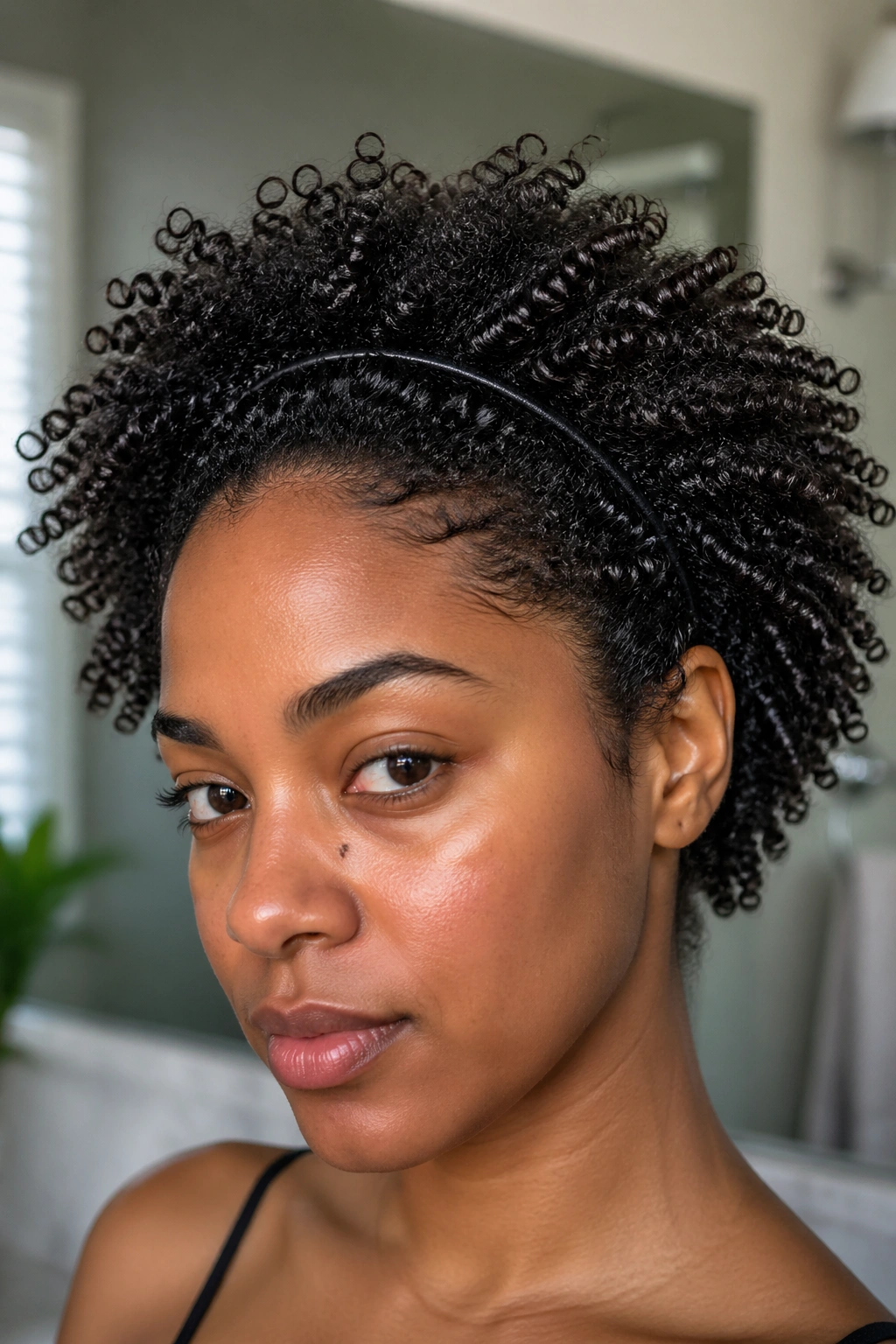
Imagine you have a second-day wash and go that has gone slightly flat. Instead of redefining the whole thing, thread a thin wire-style band — the kind that has a bendable wire inside fabric — across the top of your head and push it back about an inch into the wet-set curls. The band lifts the root section instantly, refreshing the volume without any product.
This is my lazy-day trick. It takes thirty seconds and saves you from reaching for a spray bottle when you do not have the energy.
The wire inside the band lets you bend it to exactly the angle you need. Most pre-shaped bands bend back into their original position throughout the day, but a wire band holds wherever you set it.
4. The Turban Style Full Wrap
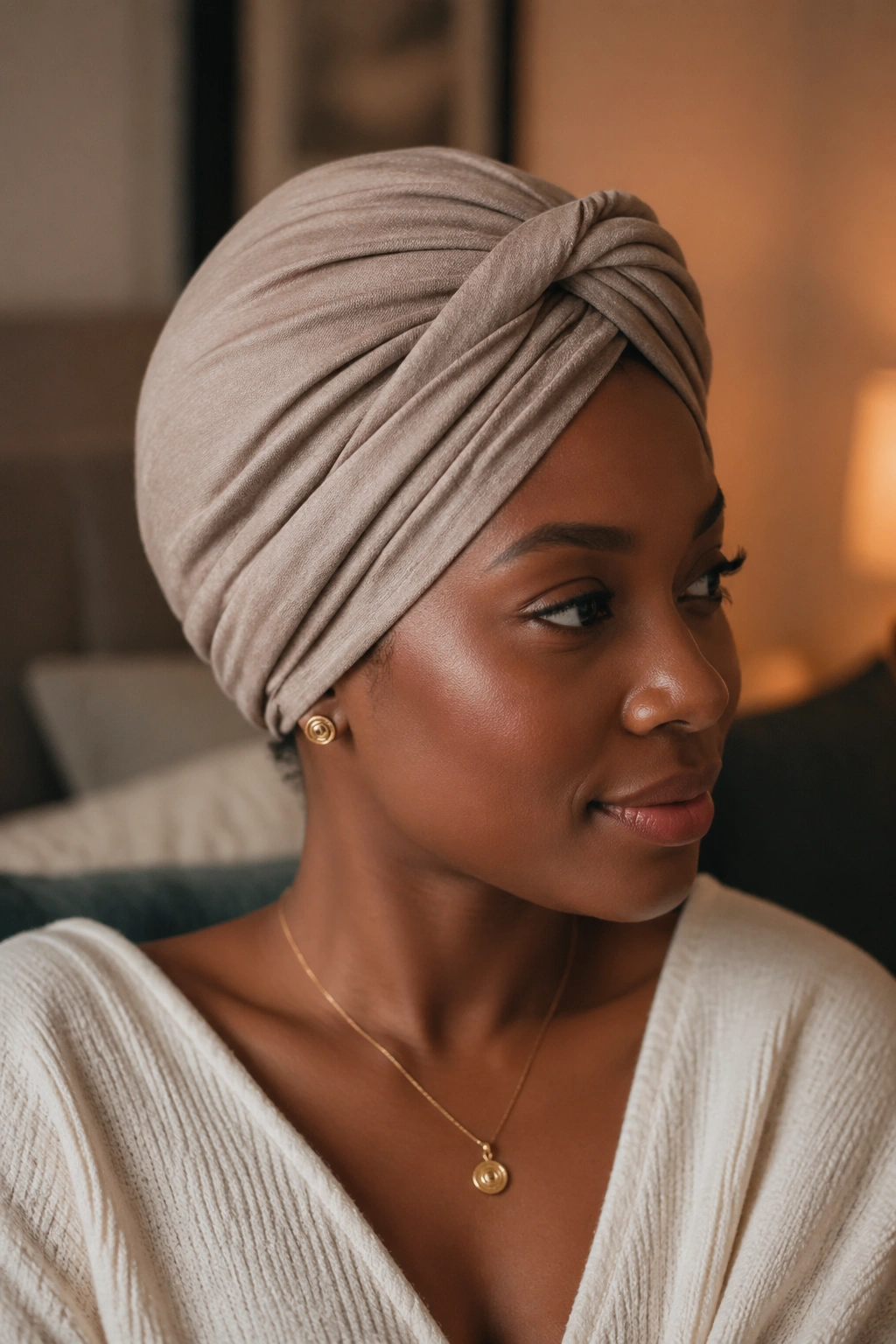
A turban is not a headband, but it belongs on this list. It is the ultimate headband extension — a full fabric wrap that covers the entire crown and often part of the sides, leaving the afro visible only at the nape or not at all. People wear turbans for protection, for style, for faith, for convenience on bad hair days, and for any combination of these reasons.
The key to a turban that looks intentional and not accidental is the fabric choice. Stiff cotton holds shape. Soft jersey clings and drapes. Printed fabrics photograph better than solid ones. Silk looks luxurious but slides constantly and needs pins to stay.
Learn one basic wrap — the criss-cross and tuck — and you can freestyle everything else. The criss-cross is: drape the fabric behind your neck with tails in front, cross the tails over your forehead, wrap them around and tuck the ends. Thirty seconds, looks elaborate, stays all day.
5. The Braided Headband Made From Your Own Hair
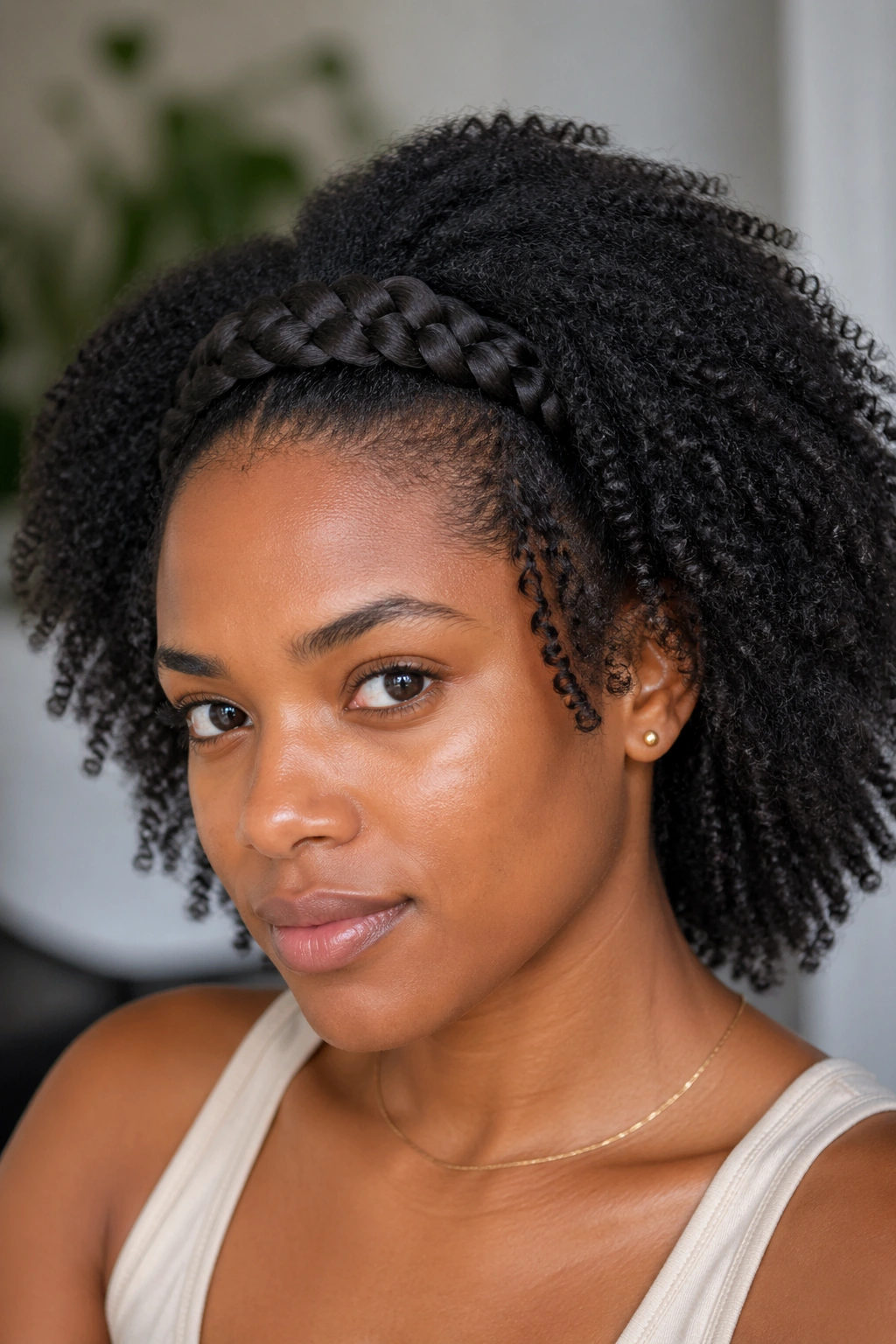
Take a two-inch section of your real hair near the temple, braid it into a standard three-strand braid about six to eight inches long, and pin it across the top of your head like a headband. No actual headband involved. Just your hair looking like an accessory.
This is a niche look, but it is stunning when it works. It requires a certain hair length — at least five or six inches stretched — and a willingness to redo it most mornings. The reward is that it looks completely organic, nothing added, nothing borrowed.
Works especially well if you want a bohemian or festival-ready vibe without committing to a full braided style.
6. The Velvet Band With a Puff Front
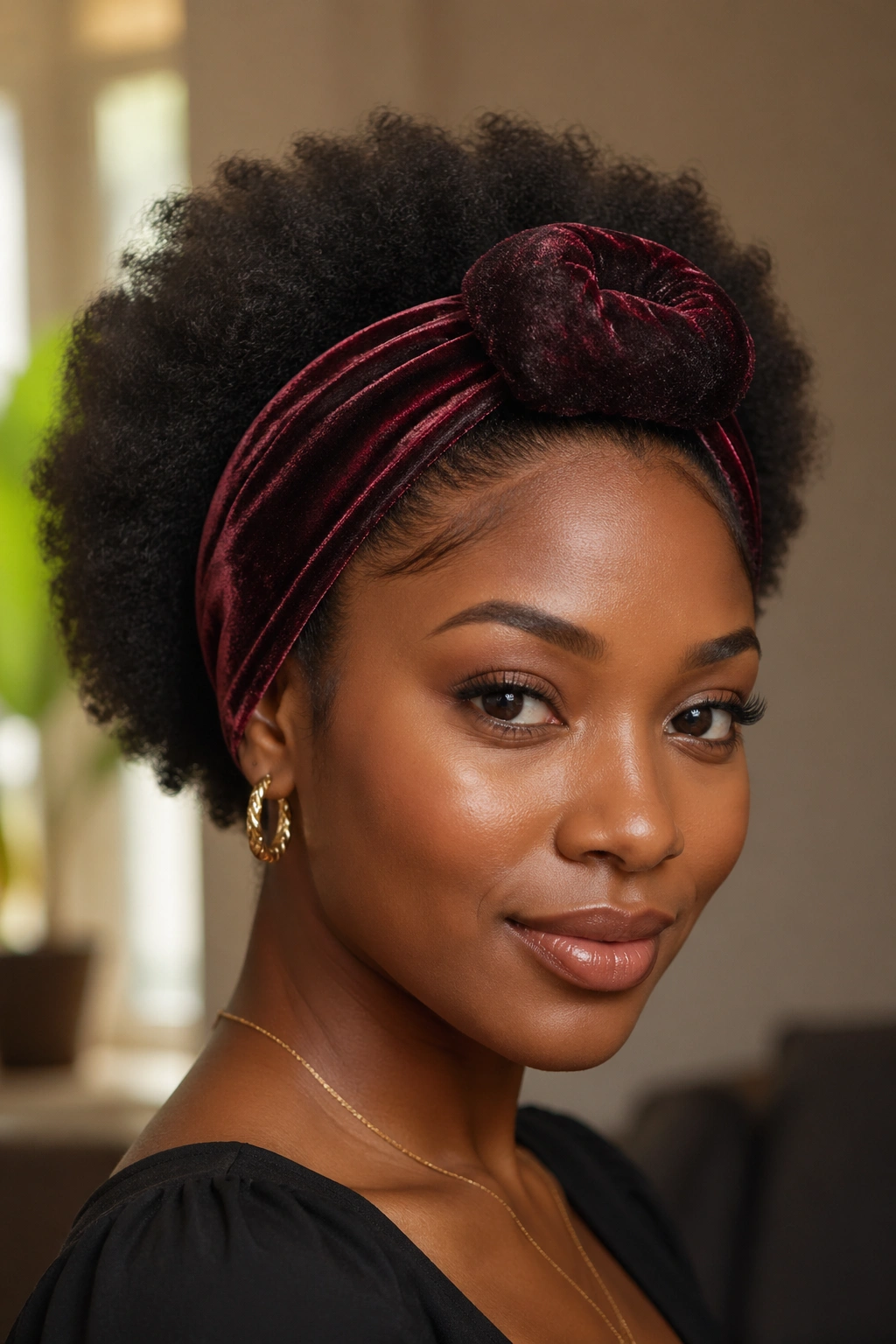
The reverse of the classic puff-behind-band look. Here, the puff sits in front of the band, with the rest of the afro falling behind. The velvet is the background, the puff is the star.
Why It Works
Velvet absorbs light while afro hair reflects it. That contrast creates instant visual depth — your hair stands out against the band instead of blending into it. Most satin bands reflect similar amounts of light as the hair, which can make the whole silhouette flatten.
- Pick a velvet in a deeper tone than your hair color
- Keep the puff section small — about the size of a tennis ball
- Place the band immediately behind the puff section
- Tip: Velvet grips well enough that you rarely need pins, but a single pin at each temple ensures the band does not creep during a long day.
7. The Stretch Jersey Soft Band for Everyday
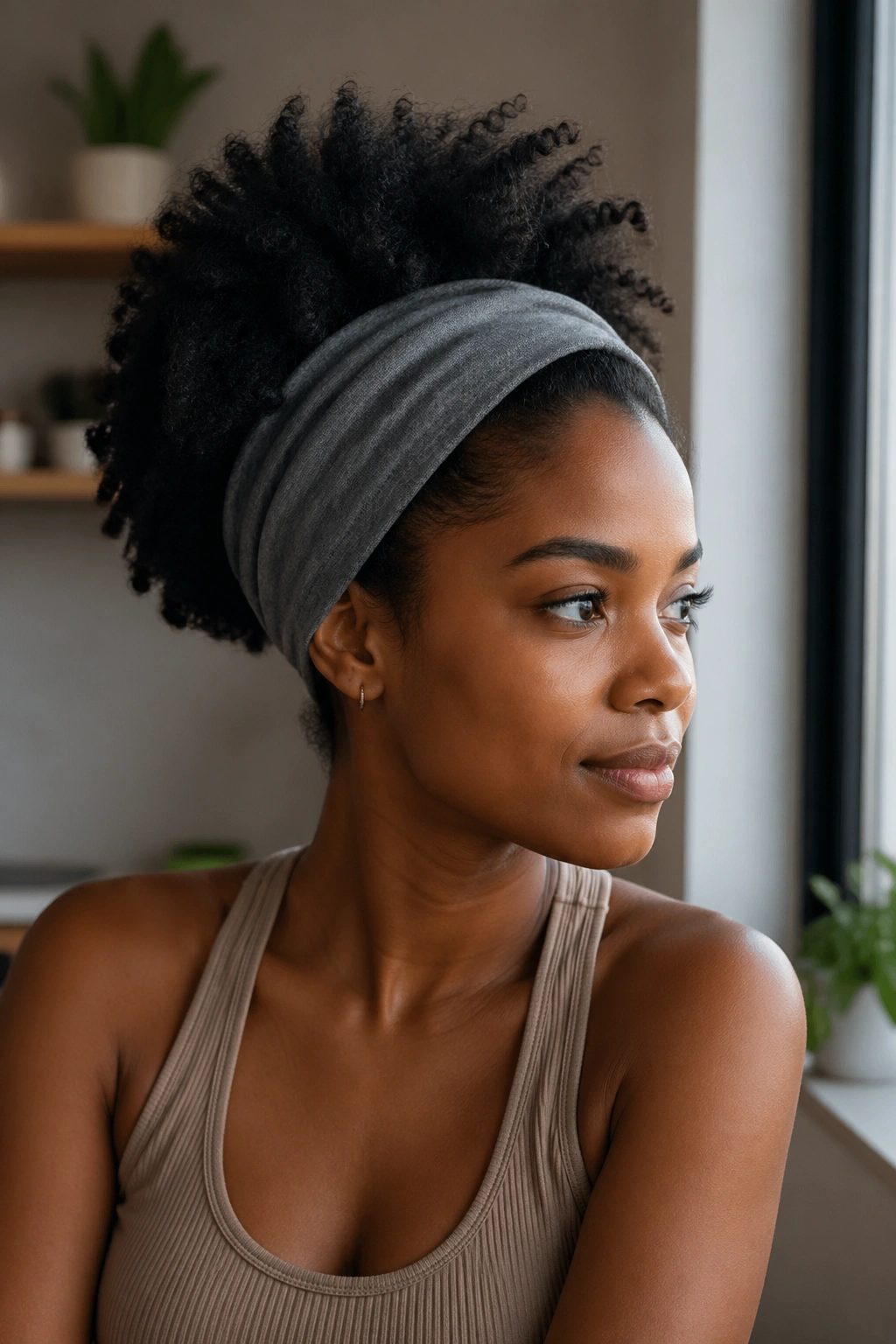
For most people, an everyday band should be stretch jersey. It is the most forgiving material — no slipping, no edge damage, no pulling — and it comes in every color and pattern you can imagine. A good stretch jersey band is one you forget you are wearing by mid-morning.
The right width is between two and three inches. Narrower bands disappear into the hair visually, which defeats the purpose. Wider bands start to feel costume-y for everyday wear.
Look for bands with a wide, flat fabric panel rather than a gathered or elastic-dominant one. Gathered bands leave ridges in your hair and creases on your scalp.
8. The Alice Band Through a Twist-Out
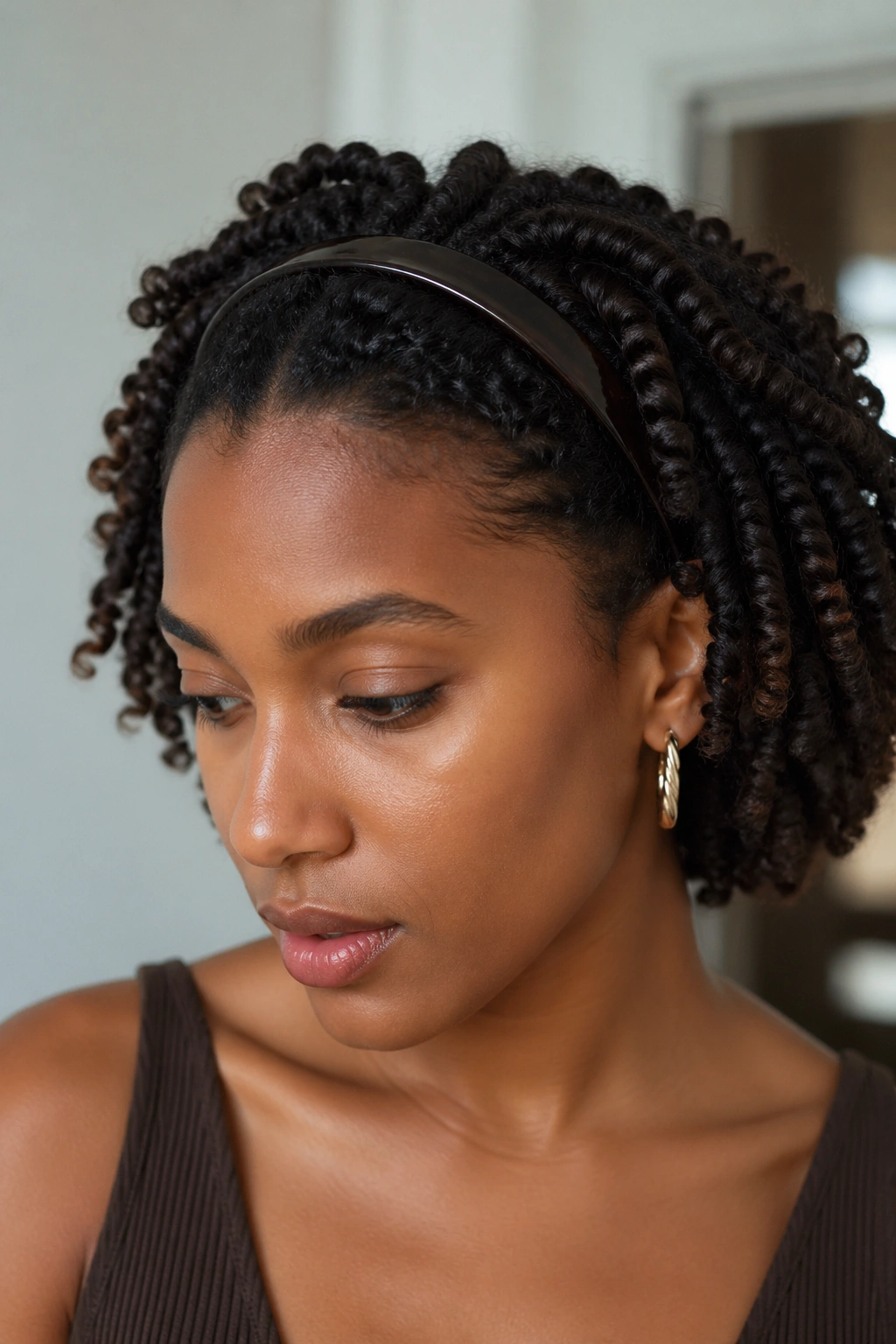
A traditional Alice band — the stiff plastic-wrapped-in-fabric kind — pushed back into a twist-out creates one of the most polished afro looks you can achieve. The band holds the front sections back, revealing your forehead, while the twist-out volume explodes behind.
This look requires a twist-out that has been picked out at the roots but still has defined curls throughout the length. A flat twist-out reads as too tame. A fully fluffed afro has no definition for the band to set against.
The width of an Alice band matters differently from an elastic one. A one-inch Alice band is dainty. A two-inch feels classic. A three-inch starts to read as a crown.
9. The Matching Scarf and Dress Combo
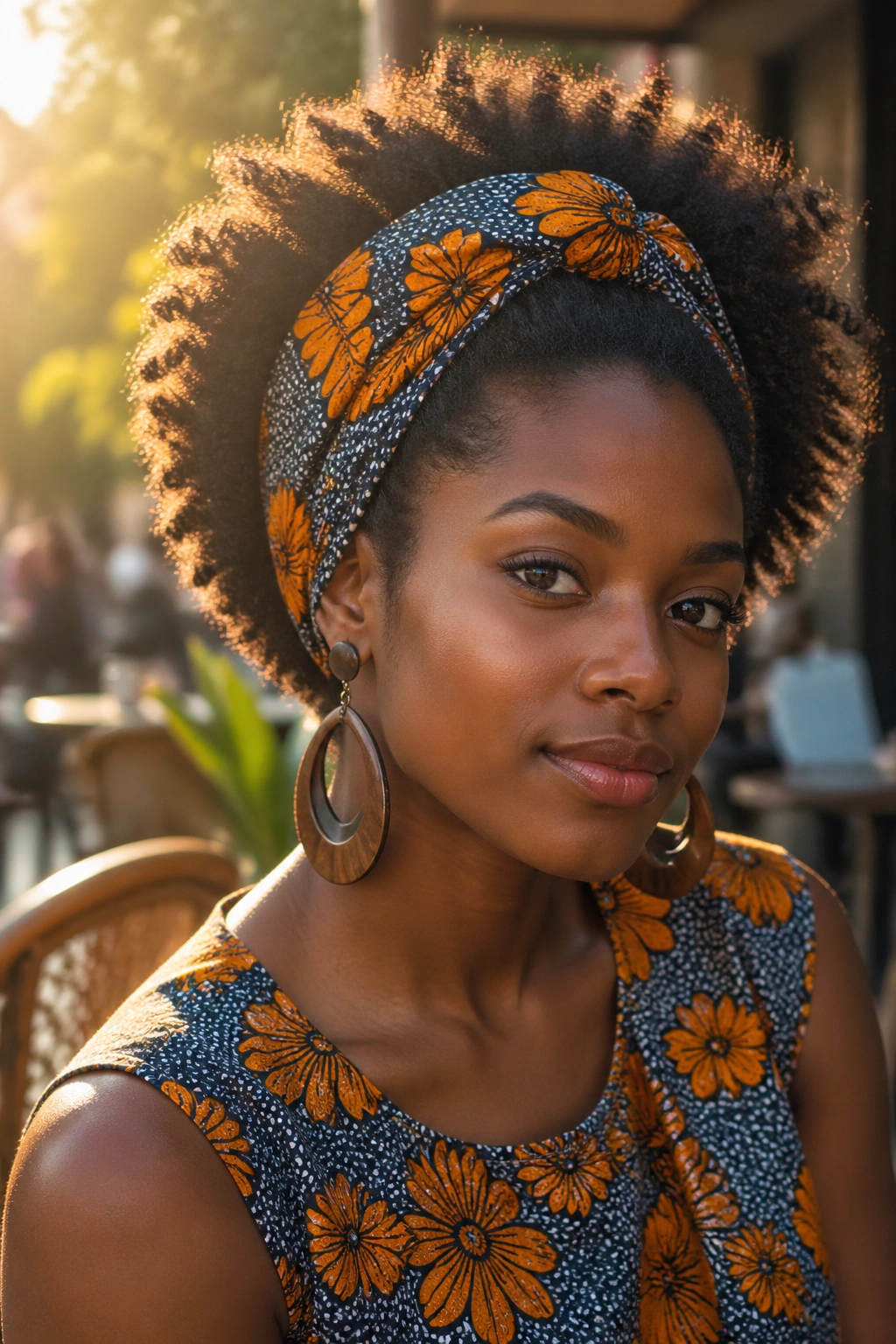
When your headband matches your outfit exactly, the look becomes editorial. A cotton print scarf from the same fabric as your dress, or close enough that they read as a set, elevates the whole thing into something deliberate.
Buy fabric by the yard and have it hemmed into a square scarf to match any outfit you own that catches your eye. Most local tailors will hem a scarf for five to ten dollars.
The trick is balance. A loud outfit needs a simple scarf knot. A simple outfit can handle an elaborate knot. Let one element be the star, not both.
10. The Knotted Front With a Bun Behind
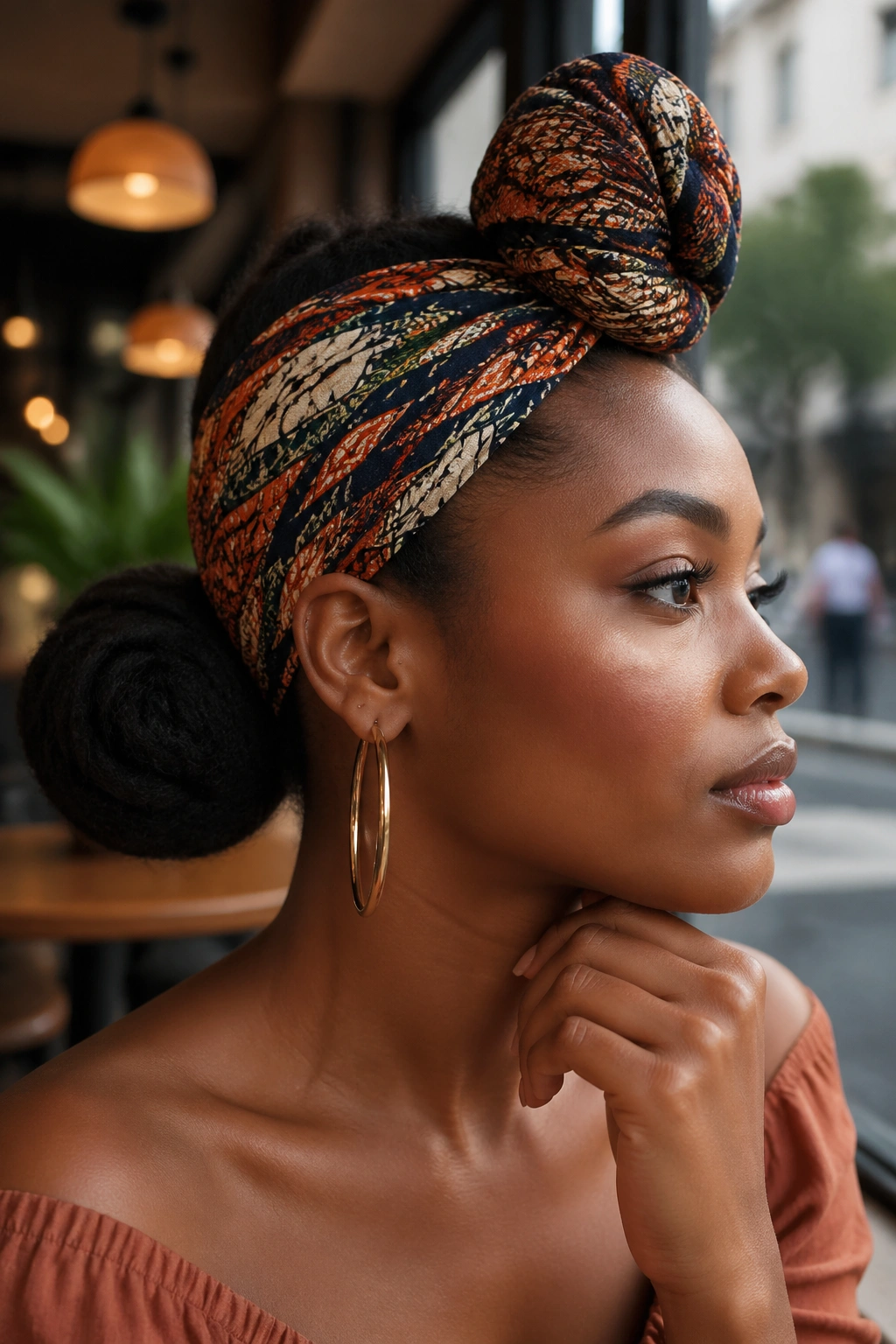
A headband that ties in a visible knot at the front, paired with a low or mid bun sitting at the nape. The knot becomes the focal point — think of it as jewelry. This pairs especially well with larger earrings because all the visual interest lives in the same plane.
Ever wondered why some knots look chic and others look like toddler play? The secret is that the knot has to be tall and compact, not wide and loose. Keep the fabric folded into a thick rectangle, then tie a single overhand knot and pull firmly.
11. The Floral Wreath Band
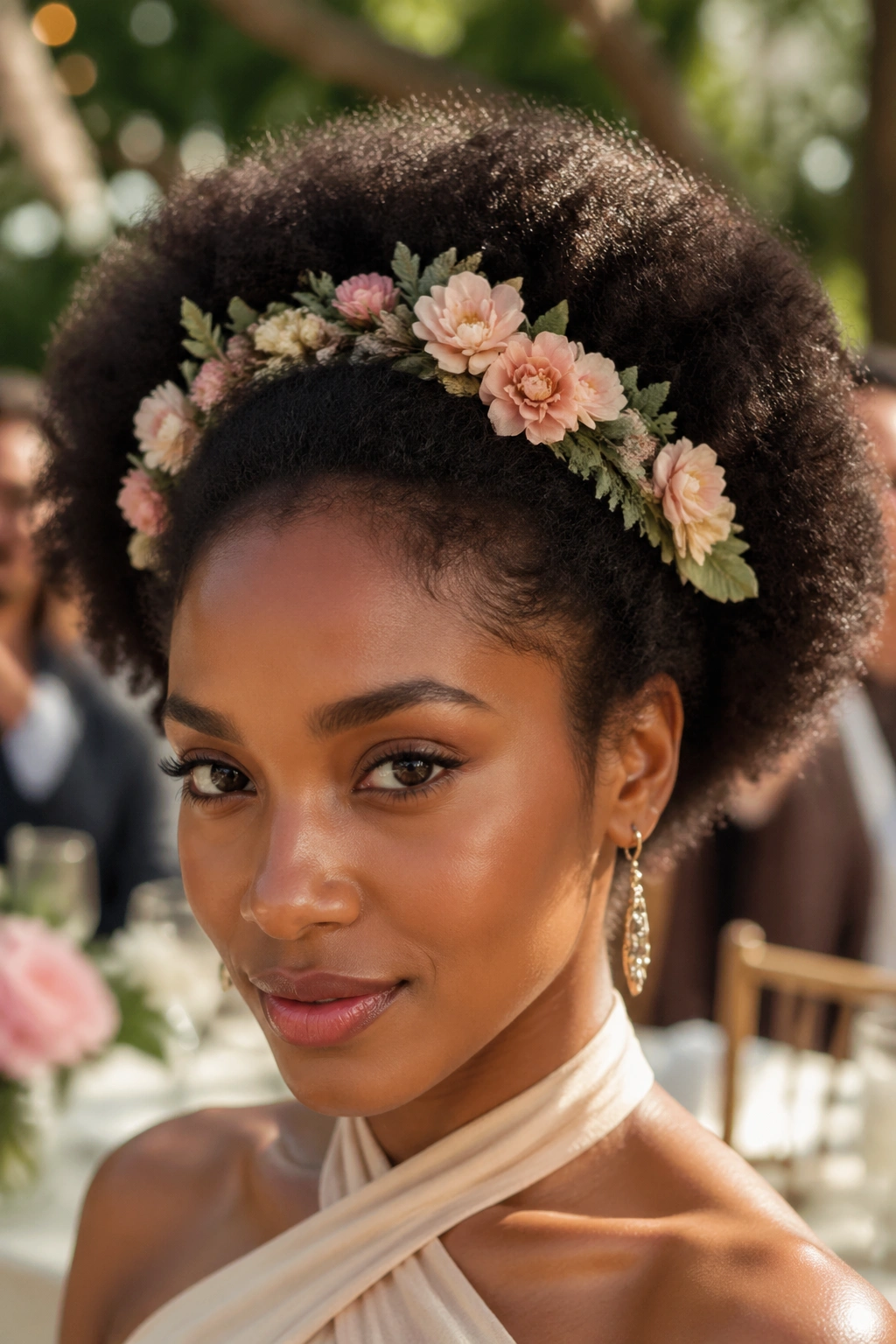
A band made from fabric flowers or real dried flowers attached to a wire or fabric base. Festival energy, wedding energy, editorial energy. Not for everyday, but a dream for the right occasion.
Who This Is For
Anyone attending an outdoor wedding, a garden party, a photo shoot, or any event where you want your hair accessory to do some of the talking. The floral band works against most afro styles, but pairs best with loose twist-outs and wash-and-gos where the softness of the curls matches the softness of the flowers.
Avoid this band if you are going to be outdoors in wind. The flowers catch air and the band becomes a sail, dragging across your scalp.
12. The Sports Band Repurposed
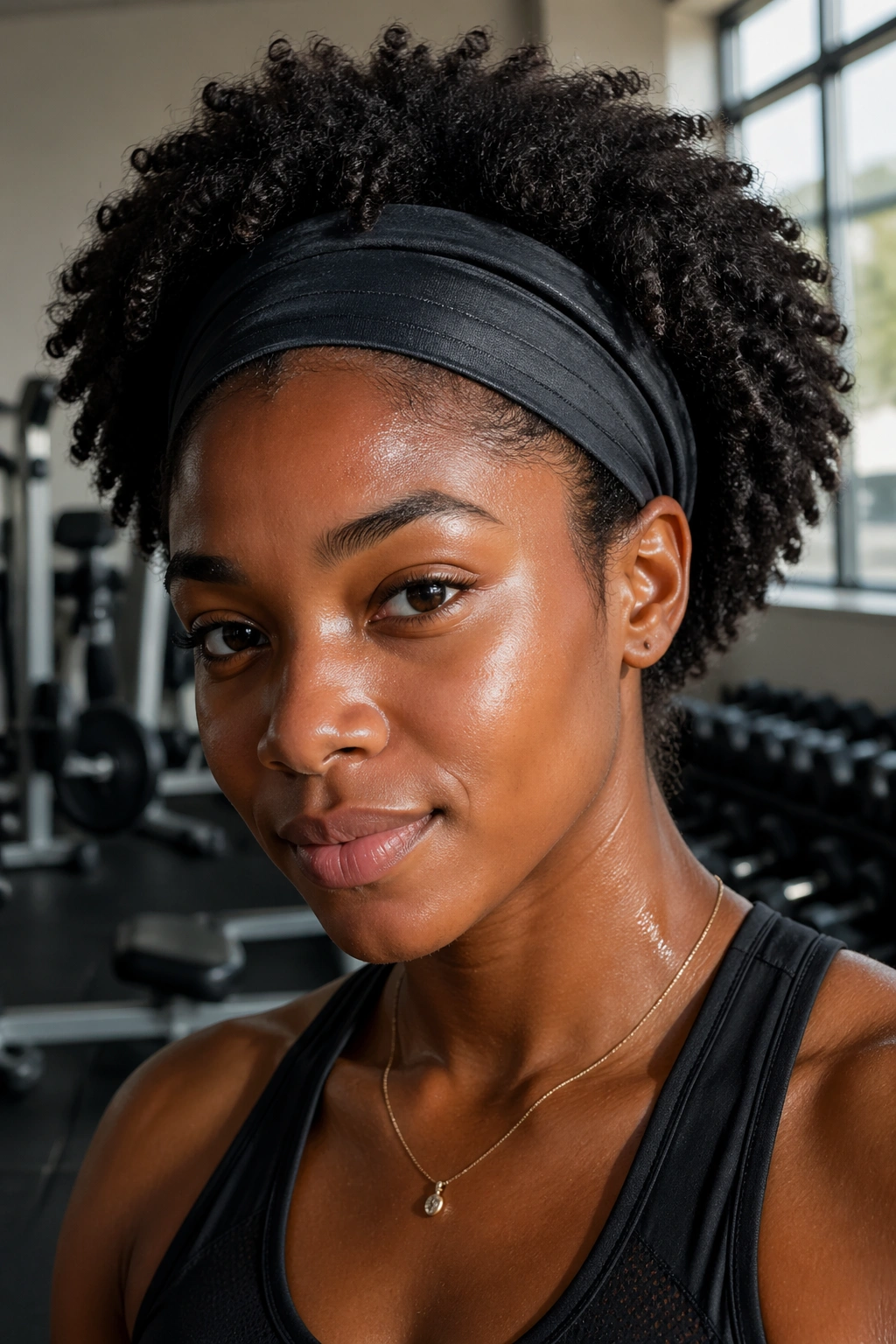
Athletic brands sell wide moisture-wicking bands designed for running, and they are secretly one of the best headbands for natural hair on busy days. They are wide enough to push back a whole front section, grip well without damaging edges, and handle sweat without stretching out.
Pick the ones marketed for thick or curly hair — most brands make a version now. Avoid the thin rubber-backed sports bands that were popular for tennis decades ago. Those are the exact category that shreds edges.
This is a function-first choice. It works best for gym days, errands, and anything where you need to keep your hair out of your face without thinking about it.
13. The Single-Knot Silk Band
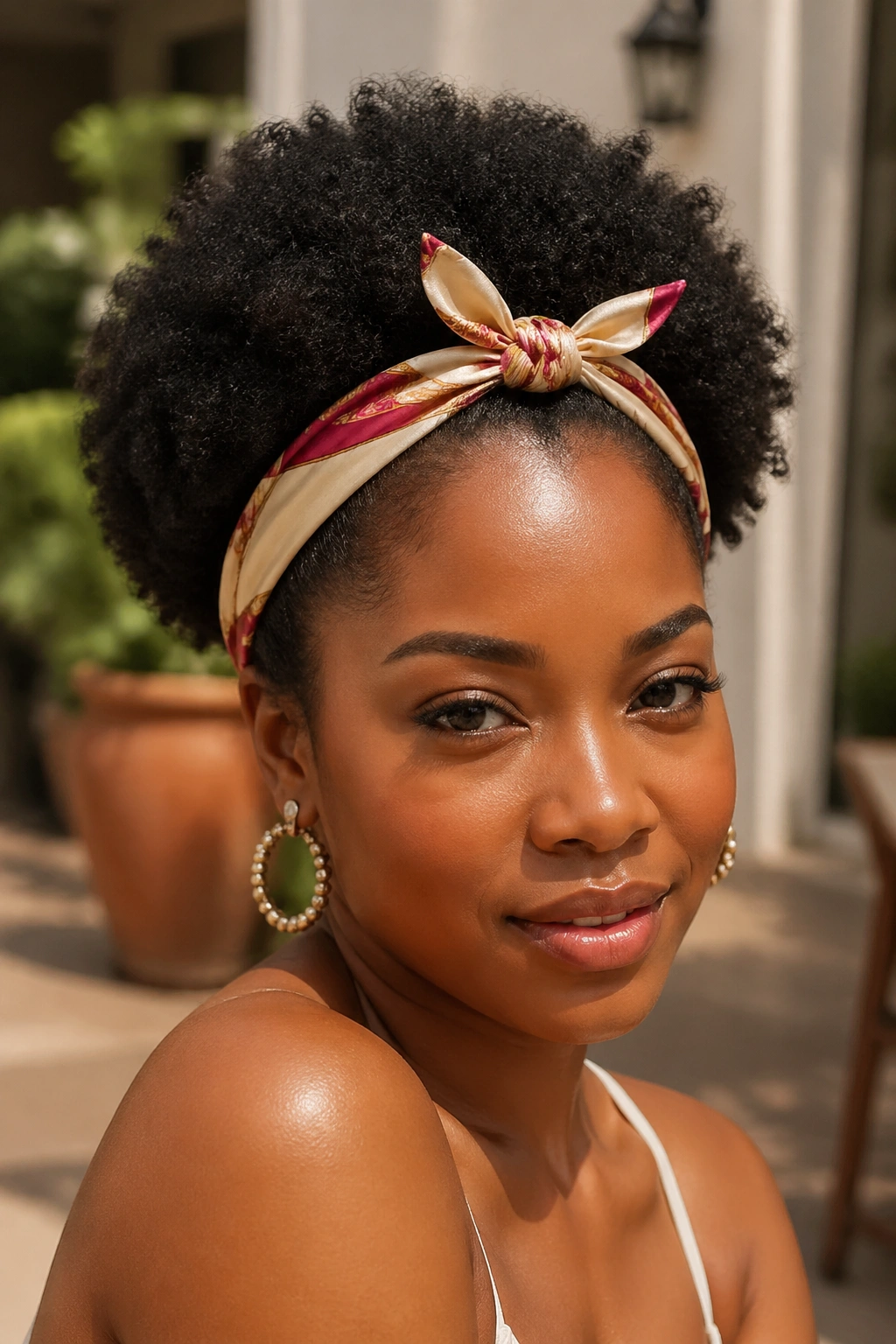
A rectangular silk scarf folded into a thin strip and tied in one knot at the top of the head. The tails are short — just a few inches — and stick up slightly, adding a playful accent. It is one of the fastest styles in this whole list. Under a minute, and you are done.
Silk is the best choice because it holds the knot without sliding and catches light beautifully. A printed silk scarf — paisley, polka dots, something with pattern — reads better than solid silk, which can look flat.
The knot can sit on the center-top or offset to one side. Offset reads as trendier and is the choice I make most often.
14. The Thick Knit Winter Band
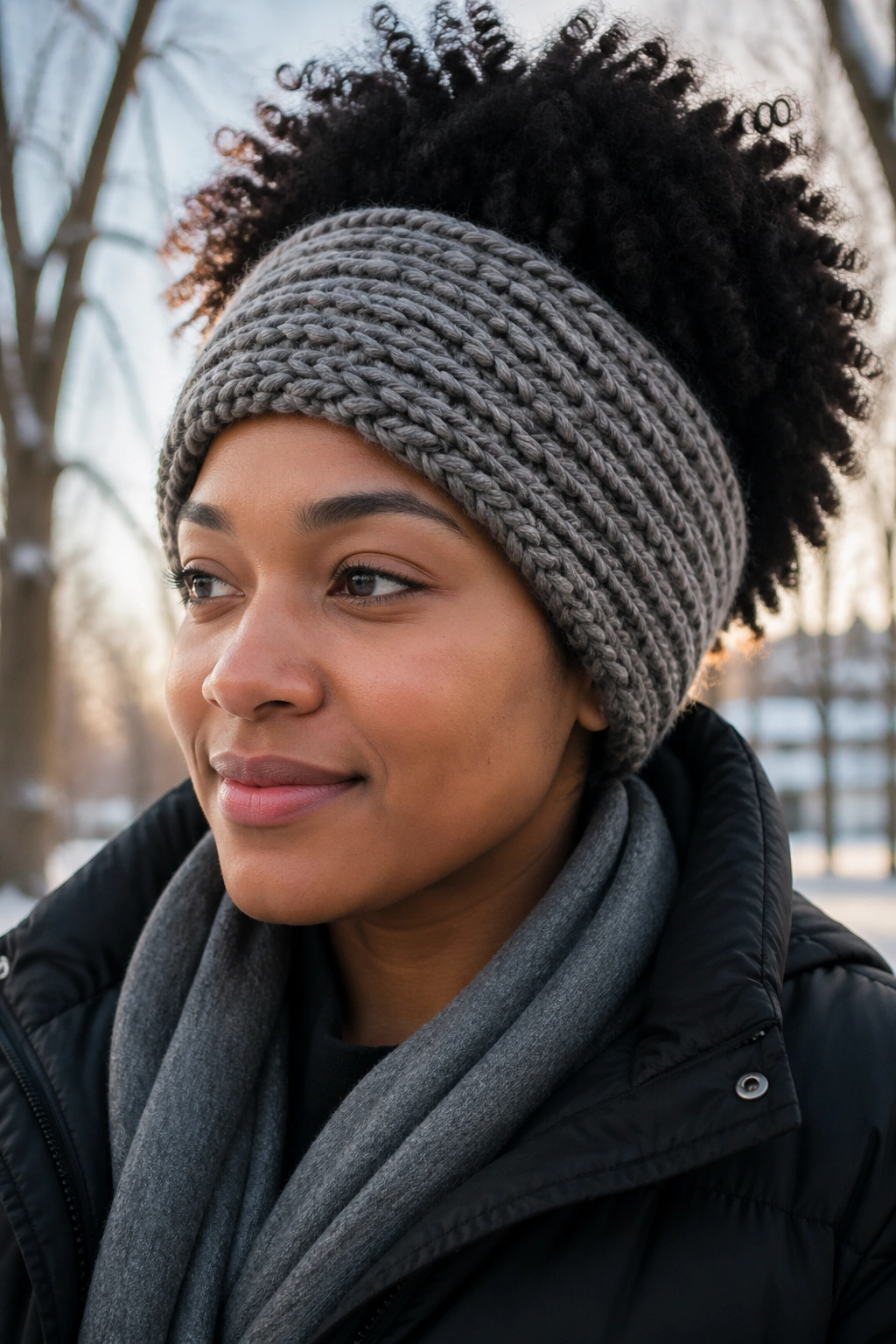
For cold weather, a thick knit band — cable knit, chunky ribbed, or fleece-lined — does double duty as fashion and ear protection. They are bulkier than other headbands, which means they only work with certain afro shapes. Round, voluminous afros above the band compete visually. Flatter styles or buns at the back work best.
Knit bands tend to be loose, so place them lower on the forehead than you would a smaller band. The weight of the knit helps them stay put.
This is the only band category I would recommend for outdoor winter events. Everything else gets uncomfortable in below-freezing temperatures.
15. The Bandana Triangle Fold
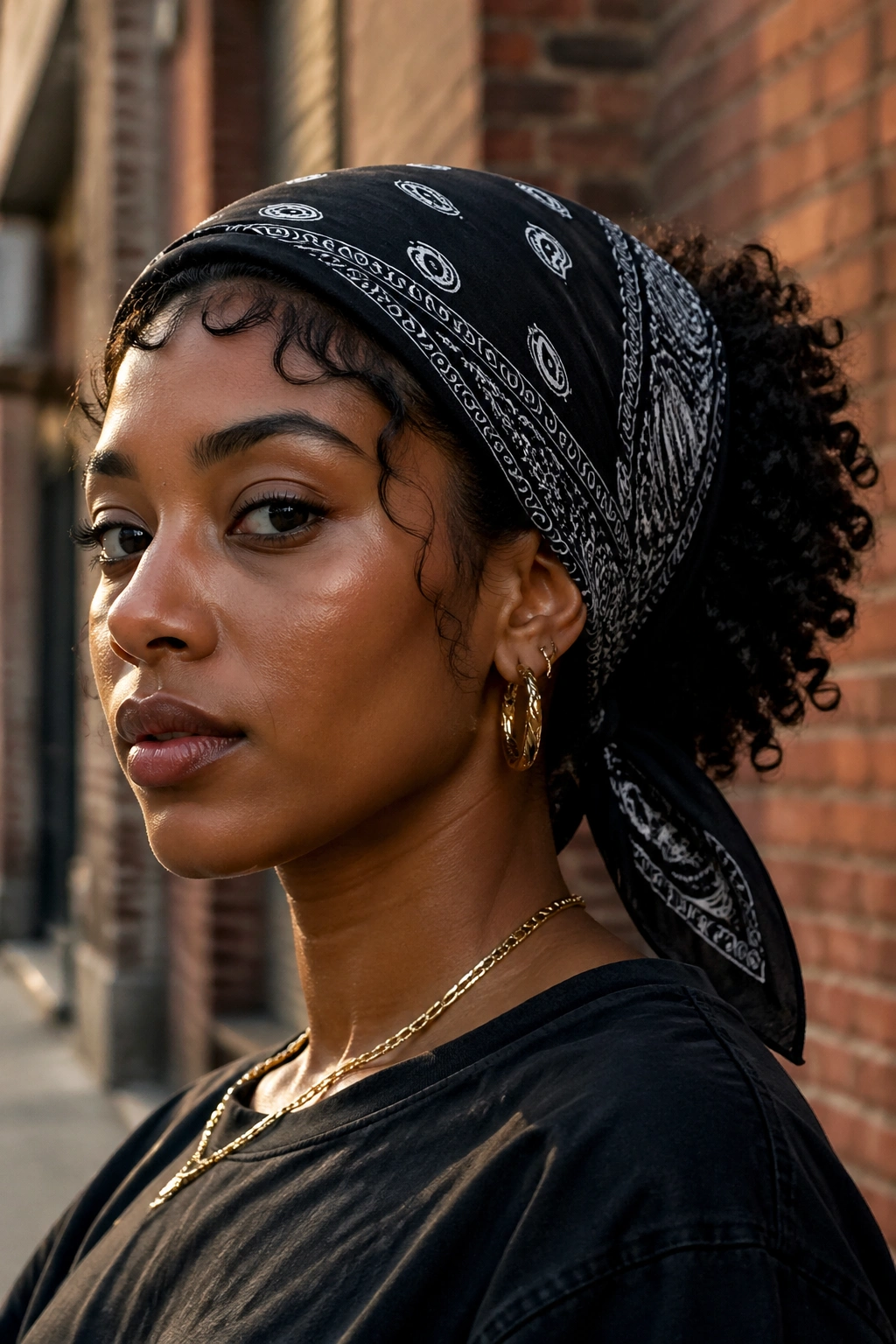
An old-school bandana — a 22-inch square — folded into a triangle and tied at the nape, with the folded edge framing the forehead and the point of the triangle hanging down over the back of the head. Streetwear-cool with a vintage edge.
The bandana has to be real cotton, not the flimsy polyester knockoffs. Real cotton holds a crease, has weight, and looks intentional. Polyester bandanas wrinkle oddly and read as cheap from across the room.
Classic patterns — red paisley, blue paisley, black paisley — all work. But do not overlook solid black cotton bandanas. They are the most versatile piece in this whole list.
16. The Flower-Pinned Band
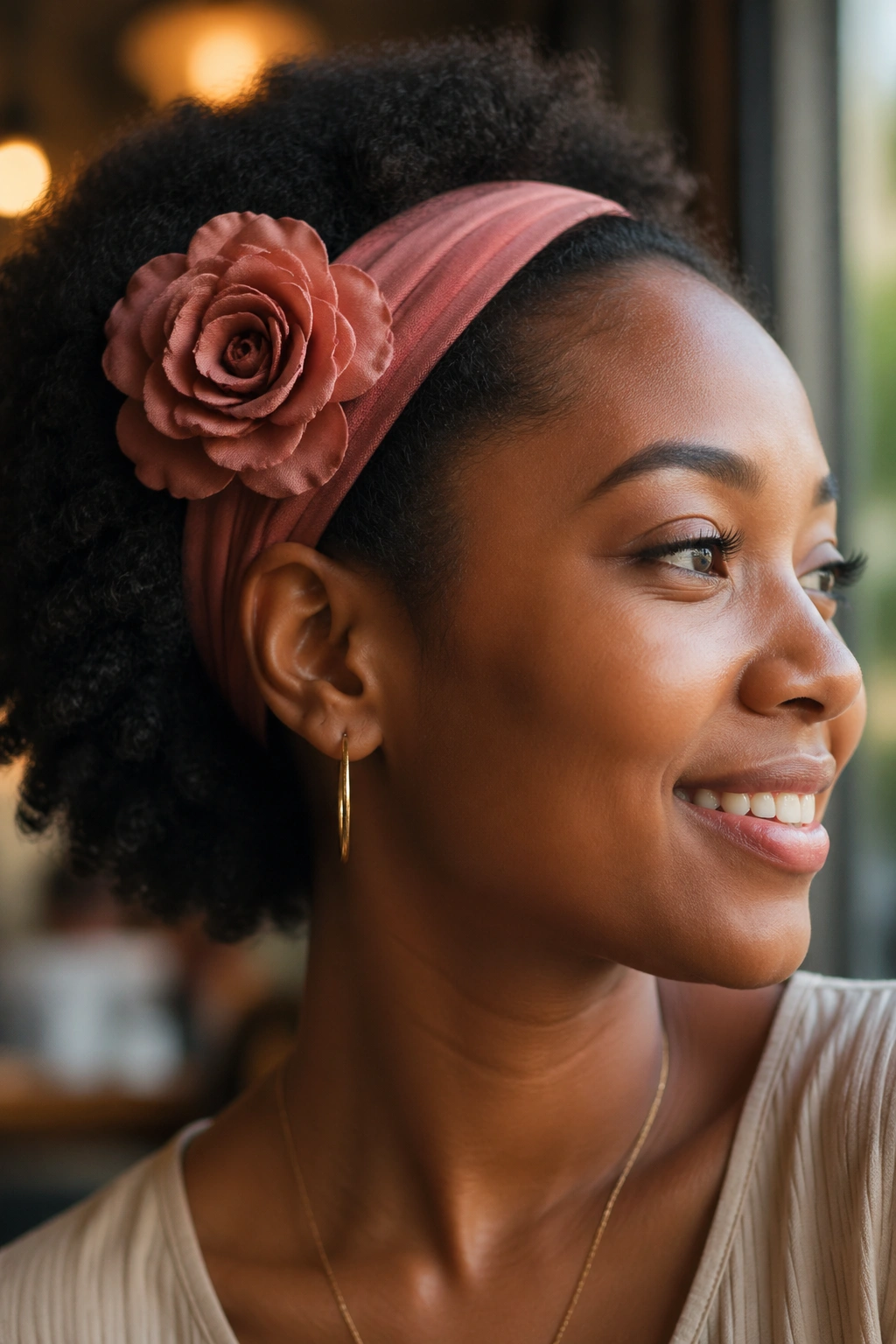
A simple solid-color band with a single large fabric flower pinned to one side, slightly above the ear. The flower is the whole point. The band is just the anchor.
What to Watch For
A fabric flower that is too small reads as a random clip. Too large reads as costume. The right size is about the width of your open palm — big enough to command attention, small enough to feel elegant.
- Pin the flower directly above or just in front of the ear
- Pick a flower color that contrasts with the band rather than matches
- Tip: Invest in two or three good flower pins from a millinery supply shop rather than craft store flowers. The quality difference is enormous and they last years.
17. The Stretchy Wide Lace Band
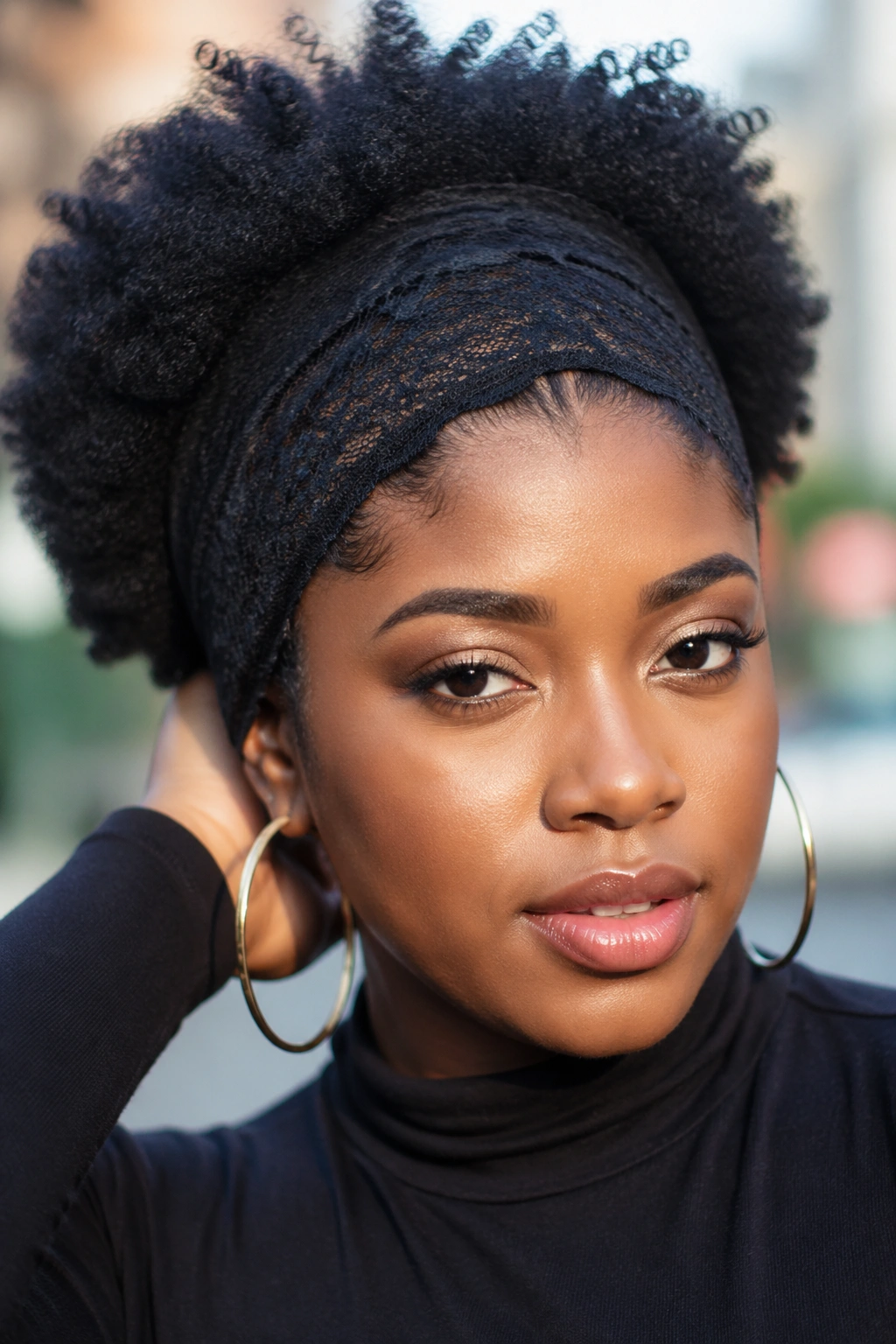
Black lace or white lace stretch bands are a softer, more feminine take on the wide headband idea. Lace creates visual texture that photographs beautifully — the pattern catches light and casts tiny shadows across the forehead.
White lace reads as bridal or spring-event. Black lace reads as dressy-casual and pairs with almost any outfit. Beaded lace is a third category that enters evening-wear territory.
Lace is fragile. It snags on earrings, bobby pins, and rough nails. Handle it carefully and it lasts. Handle it roughly and you will be replacing it within a month.
18. The Gold Chain Band
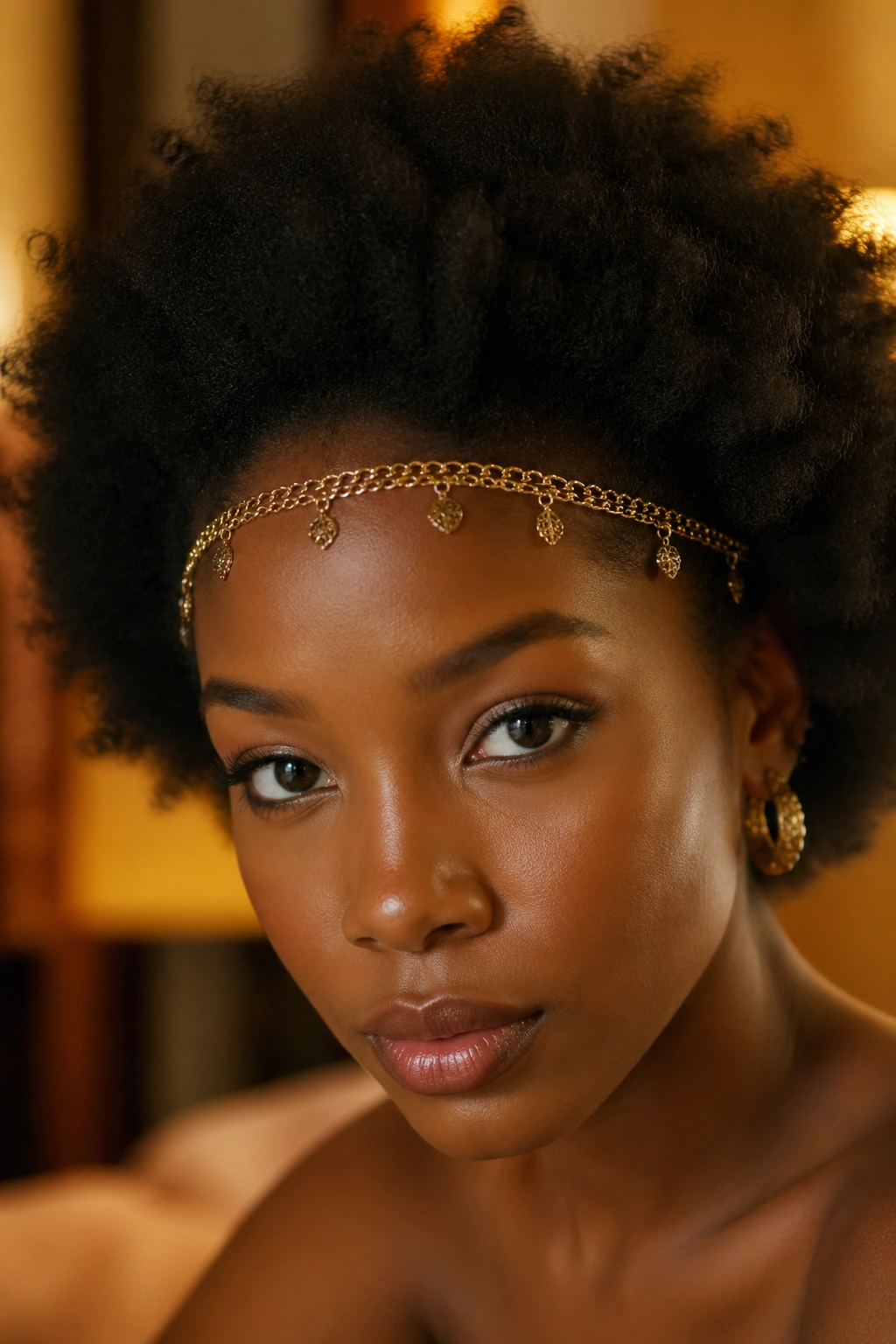
A thin metal chain worn as a headband is either the boldest choice you make or a disaster, with very little room between. When it works, it is stunning. When it does not, it is because the chain is the wrong weight for your hair.
Delicate chains get lost in afro volume. Heavy chains press down and flatten the front of the style. The sweet spot is a medium-weight chain with small decorative elements — small charms, beads, or a single pendant — that sit on the forehead.
Gold reads warmer and more classic. Silver reads cooler and more modern. Rose gold reads playful. Pick based on what jewelry you already own for outfit coordination.
19. The Fabric Crown Headband
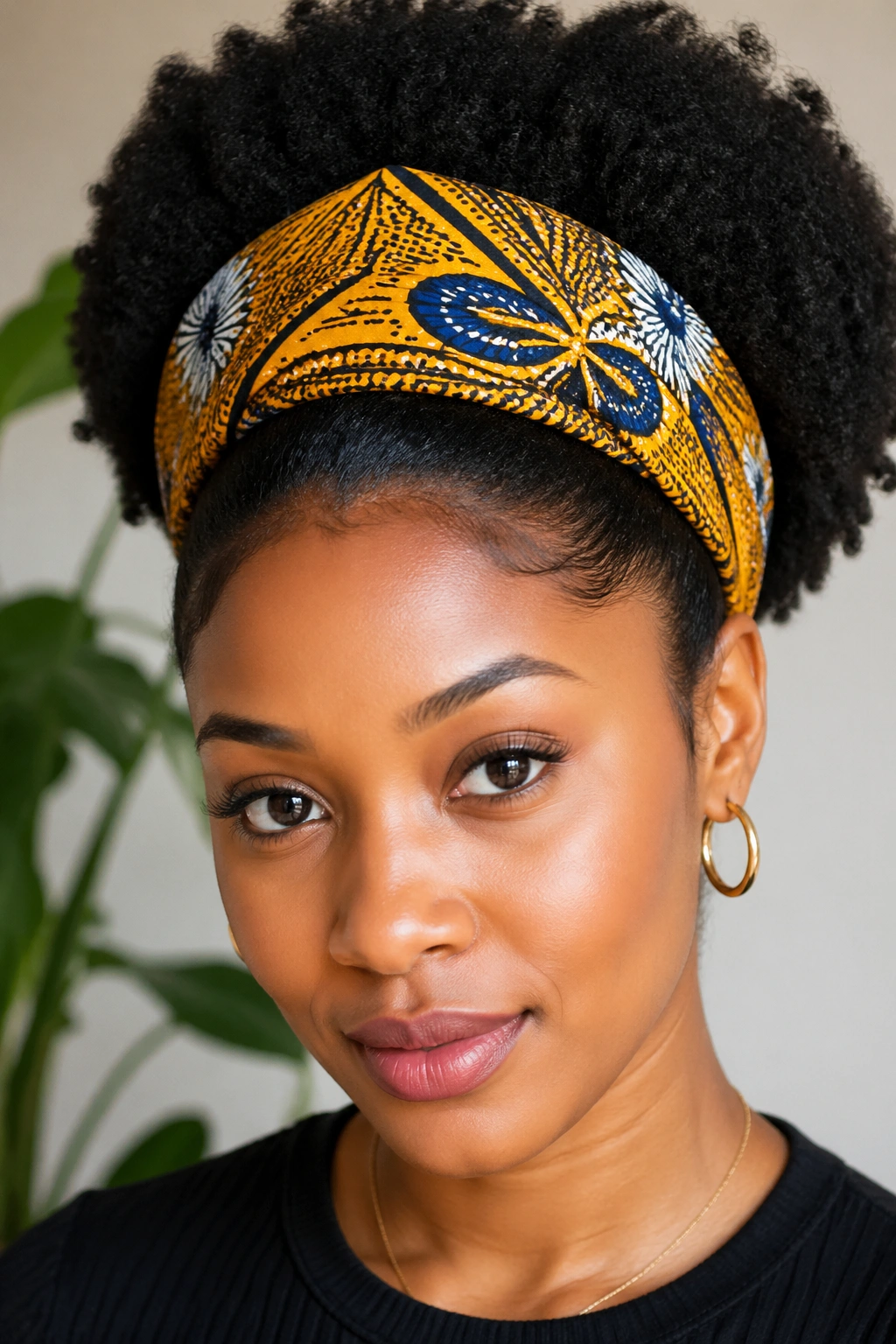
A wide fabric band structured to stand up slightly on the head, creating a visual effect closer to a crown than a headband. It is the most dramatic option in this list that is not technically a hat. Wide, tall, commanding.
This style needs to pair with a simple outfit. A crown band with an elaborate dress reads as costume. A crown band with a plain top and pants reads as intentional and editorial.
Placement matters enormously. Too far back and the crown disappears into the afro. Too far forward and it sits on the forehead like a sweatband. The ideal position is about an inch behind the hairline at the center, with the band curving down slightly toward the temples.
20. The Wired Headscarf With Shape
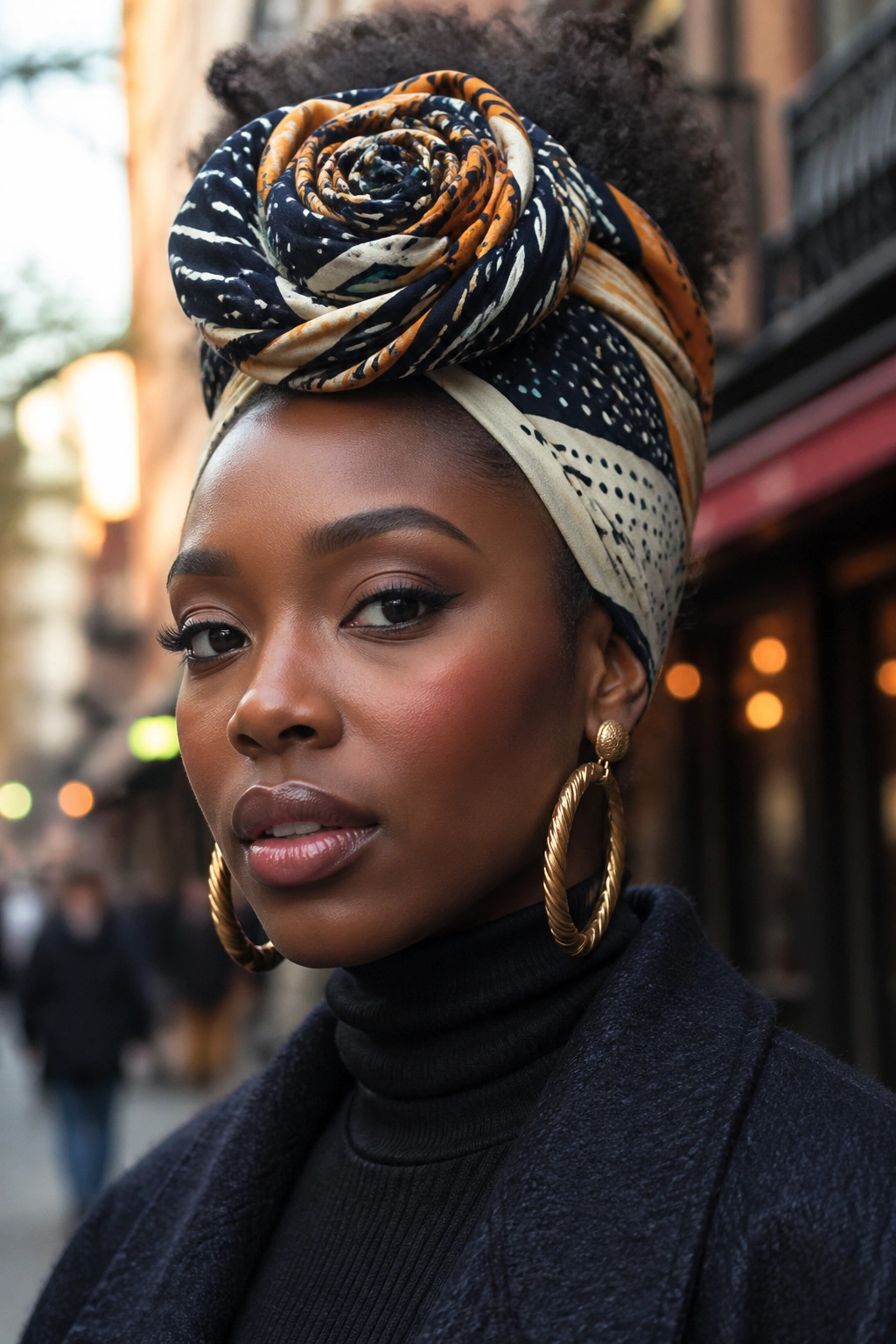
A headscarf with a wire sewn into one edge so you can bend it into any shape you want. These are often called “wire headbands” or “twist scarves” and they are one of the most versatile items you can own. You can tie them into bows, fold them into flat bands, wrap them into turbans, or twist them into coiled rosettes — all with the same piece of fabric.
Pick one with a wire running through the entire length, not just the top edge. Full-wire scarves hold complex shapes. Edge-wire scarves only hold simple bends.
The fabric printed on wire scarves is often cheap cotton blend. It is fine for the shape-holding function, but do not expect it to feel luxurious. If you want luxury, buy a silk scarf without wire and accept that you will need pins and practice to hold shapes.
How to Care for Your Headbands
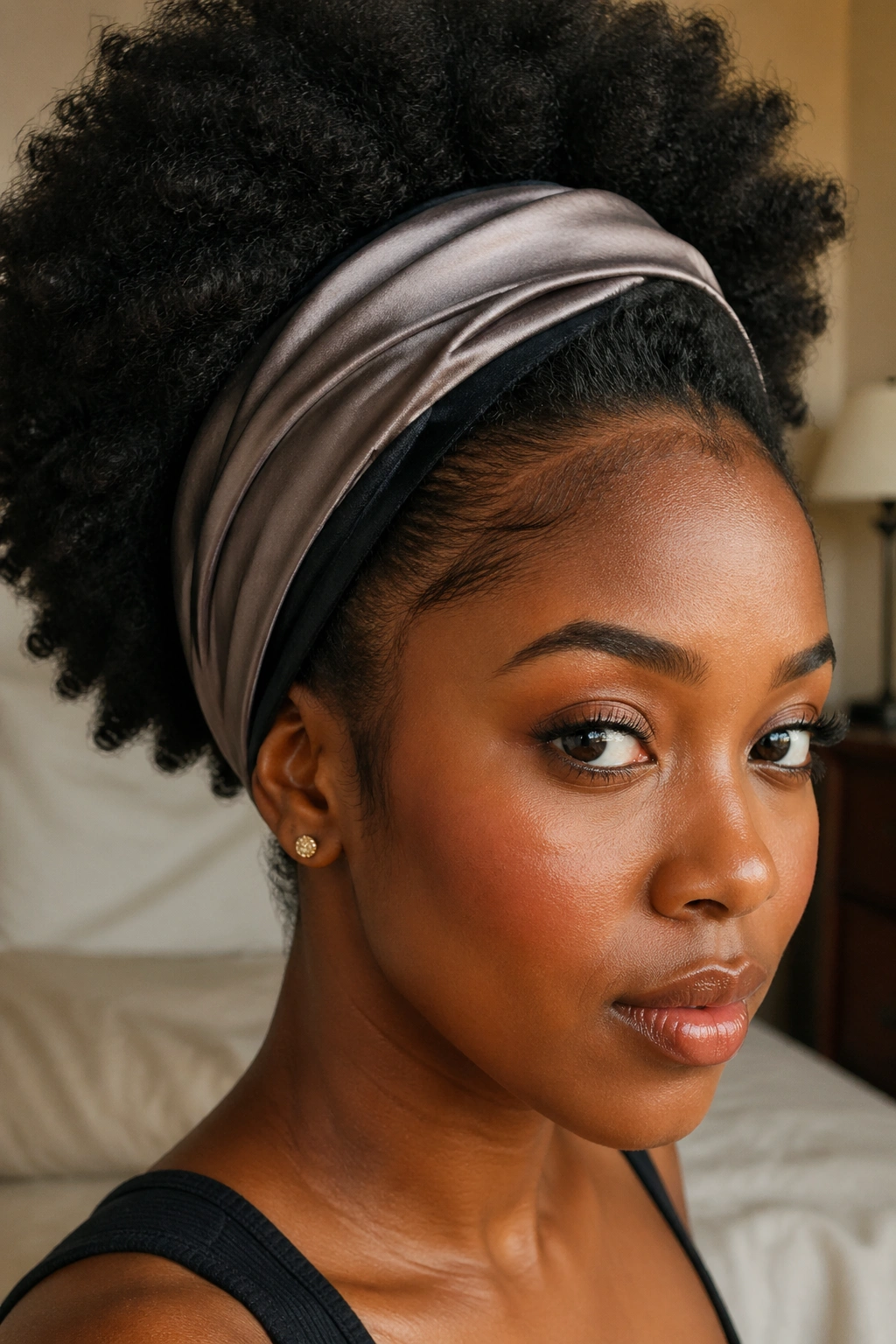
Fabric headbands need hand washing, not machine washing. Elastic degrades in hot water and spins out of shape in a dryer. Wash in cold water with a gentle detergent, press out excess water with a towel, and lay flat to dry.
Satin and silk specifically need to be washed in distilled water if your tap water is hard — mineral deposits dull the sheen over time. It is a small detail that extends the life of a good band from a year to four years.
Store bands flat or on a hook, never crumpled in a drawer. Elastic memory is permanent. A band left crunched up for months will stay crunched even after you iron it.
Common Mistakes That Ruin a Look
Wearing the wrong width for your face shape. A wide band on a small, narrow face overwhelms it. A thin band on a large, round face disappears. Match proportions.
Matching the band color exactly to your hair color. It looks muddled. The band should contrast with your hair, not blend into it. Exceptions: very dressy events where a tonal look is the whole point.
Ignoring the back. The back of your head is visible whenever anyone walks behind you. Check the band in a back mirror before leaving the house.
Skipping the edge-check. Edge gel applied too heavily pushes up against the band and creates a shiny greasy strip that photographs poorly. Apply gel in the morning, wait fifteen minutes, then put the band on.
How to Build a Small Headband Wardrobe
Start with four bands. One wide satin band, one stretch jersey everyday band, one knotted silk scarf, one bandana. Those four cover probably seventy percent of what you will actually wear on any given week.
Add specialty bands over time. The knit winter band comes in when the weather cools. The gold chain comes out for a date night. The floral wreath waits for a wedding.
Do not fall into the trap of buying bands because they look pretty in the store. Think about what outfit you own that needs a band, what occasion you have coming up, and whether you will wear it more than twice. If the answer is no, leave it on the shelf.
Face Shapes and Which Bands Work Best
Round faces balance with taller bands placed higher on the head. The knotted front, the crown band, and the single-knot silk all add vertical interest.
Oval faces work with almost anything. If you have an oval face, pick bands based on outfit and occasion rather than shape.
Square and angular faces soften with rounded, flowing bands. The scarf wraps, the turban, and the satin wide band all add curved lines that flatter sharp jaws and foreheads.
Long faces benefit from wider bands worn lower on the forehead. They visually shorten the face by creating a horizontal line that breaks up the vertical length.
Closing Thoughts on Wearing Headbands Well
A headband is a small thing. It does not have the visual weight of a full hairstyle or the attention of a big accessory. That is exactly why it works — it completes a look without taking it over. The right band on the right day is invisible magic, the difference between a hairstyle that is fine and a hairstyle people stop to compliment.
Collect slowly. Experiment often. And remember that the best headband is the one you forget you are wearing until someone tells you it looks good.
