



There’s a particular kind of confidence that comes with a short afro haircut after 30. It’s not the confidence of proving something — it’s the confidence of having figured something out. Your hair. Your face. Your time. Most women who go short in their thirties say the same thing: they wish they’d done it sooner. Short afro haircuts for women over 30 offer a combination of ease, definition, and raw style energy that longer styles genuinely can’t match.
But “short afro” covers an enormous range. We’re talking everything from a close-cropped TWA that sits right against the scalp to a bold, sculpted shape that adds three inches of height and demands a second glance. The difference between a haircut that just shortens your hair and one that actually works for your face, your texture, and your lifestyle — that’s the whole conversation.
What Makes a Short Afro Work After 30
The math is simple: strong bone structure plus the right cut plus healthy texture equals a short afro that reads as intentional rather than default. After 30, most women have more defined facial features — slightly more prominent cheekbones, a stronger jawline — and short cuts tend to let those features breathe instead of competing with them.
The biggest mistake people make when going short is treating texture as a problem to manage. It isn’t. A 4B coil pattern has a specific amount of volume, spring, and definition — and the cut should work with those properties, not against them. A barber or natural hair stylist who understands coil patterns will shape your cut differently than one who’s just going short for the sake of it.
Maintenance frequency goes up when you’re short, and that’s worth knowing ahead of time. To maintain real shape — especially on cuts with deliberate lines or fade elements — you’re looking at a shape-up every 2-3 weeks. Some women trim monthly and keep a slightly softer edge between visits, which is also completely valid.
The Role of Face Shape in Short Afro Selection
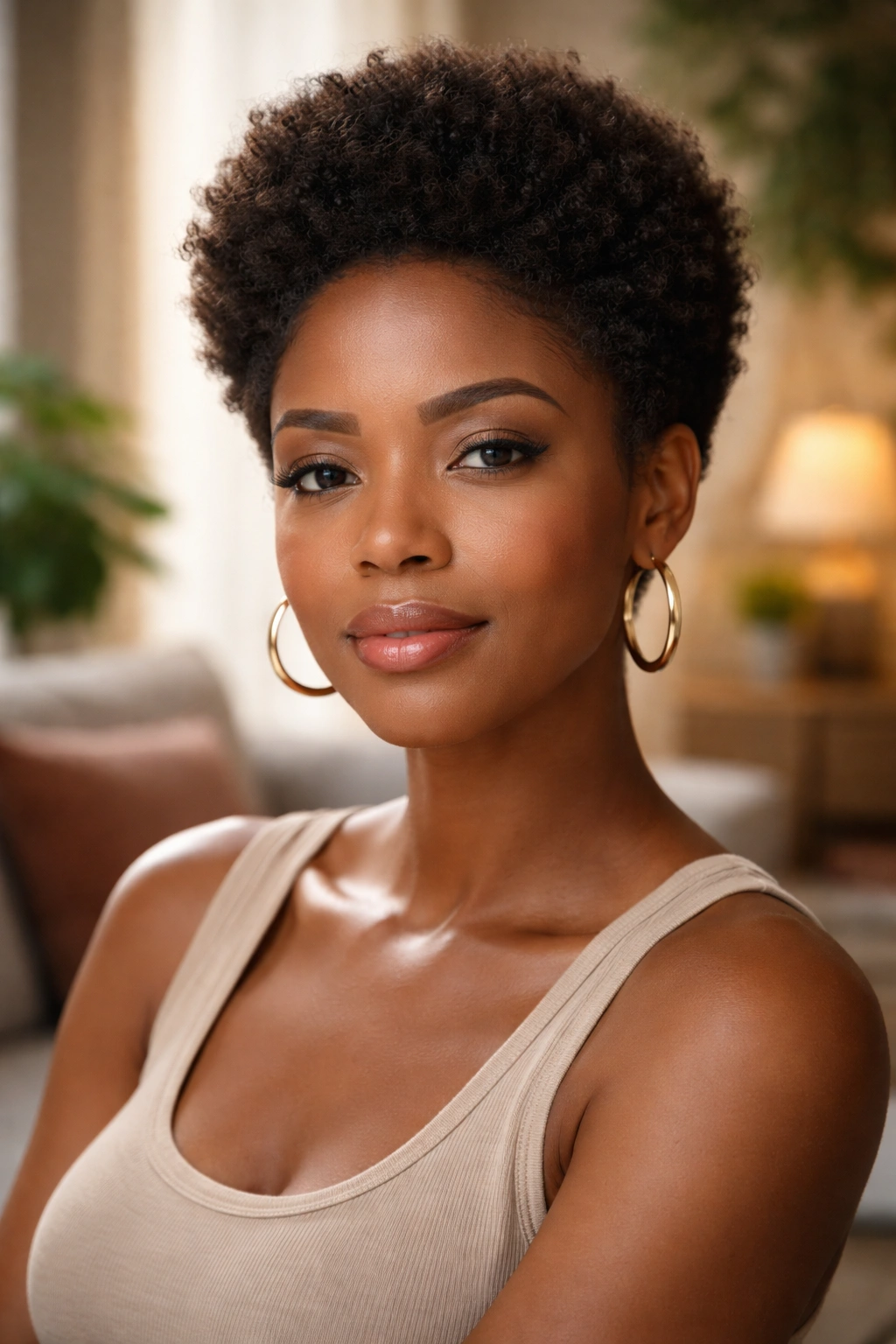
Round faces open up beautifully with height at the crown. Oval faces are genuinely the luckiest — they can carry almost any cut without adjustment. Heart-shaped faces do well with cuts that have width at the sides to balance a narrower jaw. Square faces benefit from cuts with a rounded top and softened sides rather than anything that emphasizes sharp angles.
That said, these are starting points, not rules. Some of the most striking short afros are worn by women whose cuts technically “clash” with their face shape — because fit comes from personal energy, how you carry yourself, and whether the cut actually reflects who you are. Use face shape as a guide when you’re unsure, then trust what you feel.
Texture Prep Before the Cut
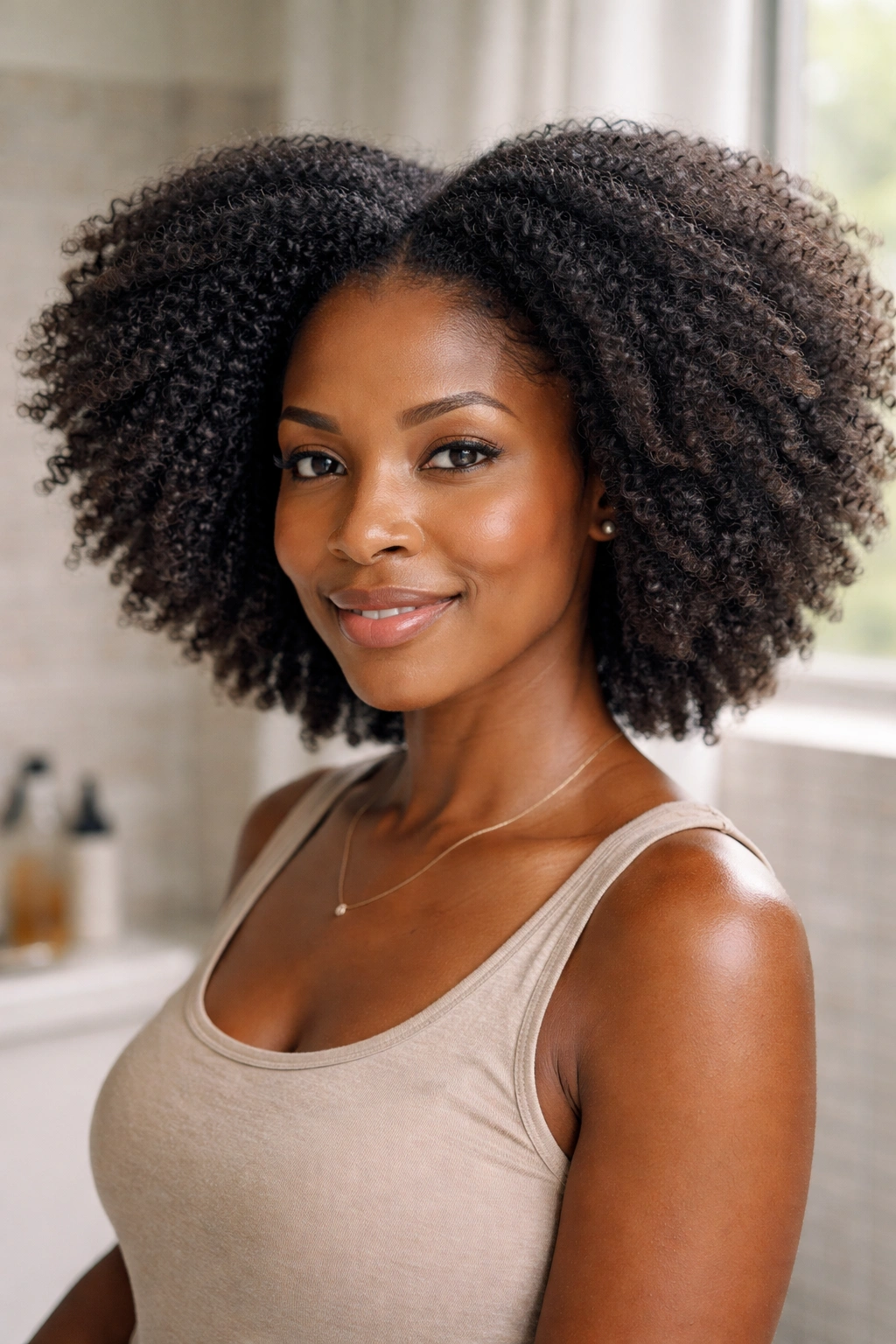
Going in with dry, shrunken hair doesn’t give your stylist an accurate picture of your natural shape and volume. Wash, deep condition, and if possible, go in with stretched or blown-out hair if your stylist asks for it. Some natural hair stylists prefer to cut dry on twist-outs because they can see your natural definition at full length before committing to a shape.
A strong trim on clean, well-moisturized hair always looks better than the same cut on dry, brittle ends. Use a protein treatment at least a week before the cut if you’ve had significant breakage — not the day before, because hair fresh off a protein treatment can feel stiffer than usual.
Tools Every Short Afro Owner Needs
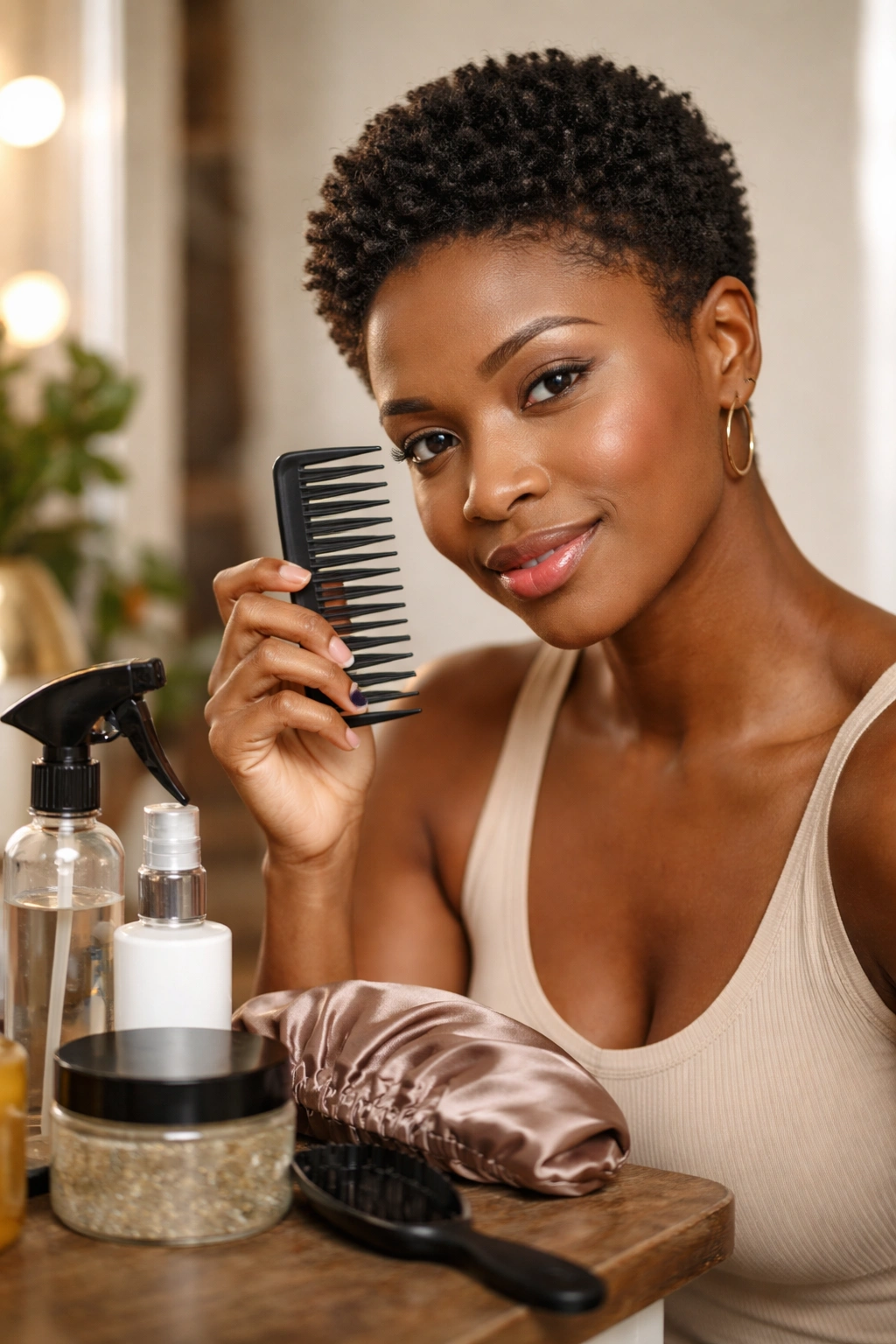
A good wide-tooth comb matters more than most people think — specifically for detangling without disrupting your coil pattern after wash day. Pick the comb with teeth that are wide enough to slide through without snagging but close enough to actually move product through the hair. Most plastic combs with hard, pointed tips are too aggressive on type 4 hair.
You’ll also need a firm-hold edge gel, a soft bristle brush for edge control, a satin-lined bonnet (not a cotton one — the fiber difference matters for retaining moisture overnight), and a lightweight daily spritz with water and leave-in conditioner to re-activate curl definition between washes. Some women swear by a curl refresher spray with glycerin. Others find glycerin too heavy depending on humidity.
A small amount of shea butter or a curl cream warmed between your palms and pressed gently into the hair — not rubbed — keeps the exterior of the coils smooth without disturbing the pattern underneath.
1. The Teeny Weeny Afro (TWA)
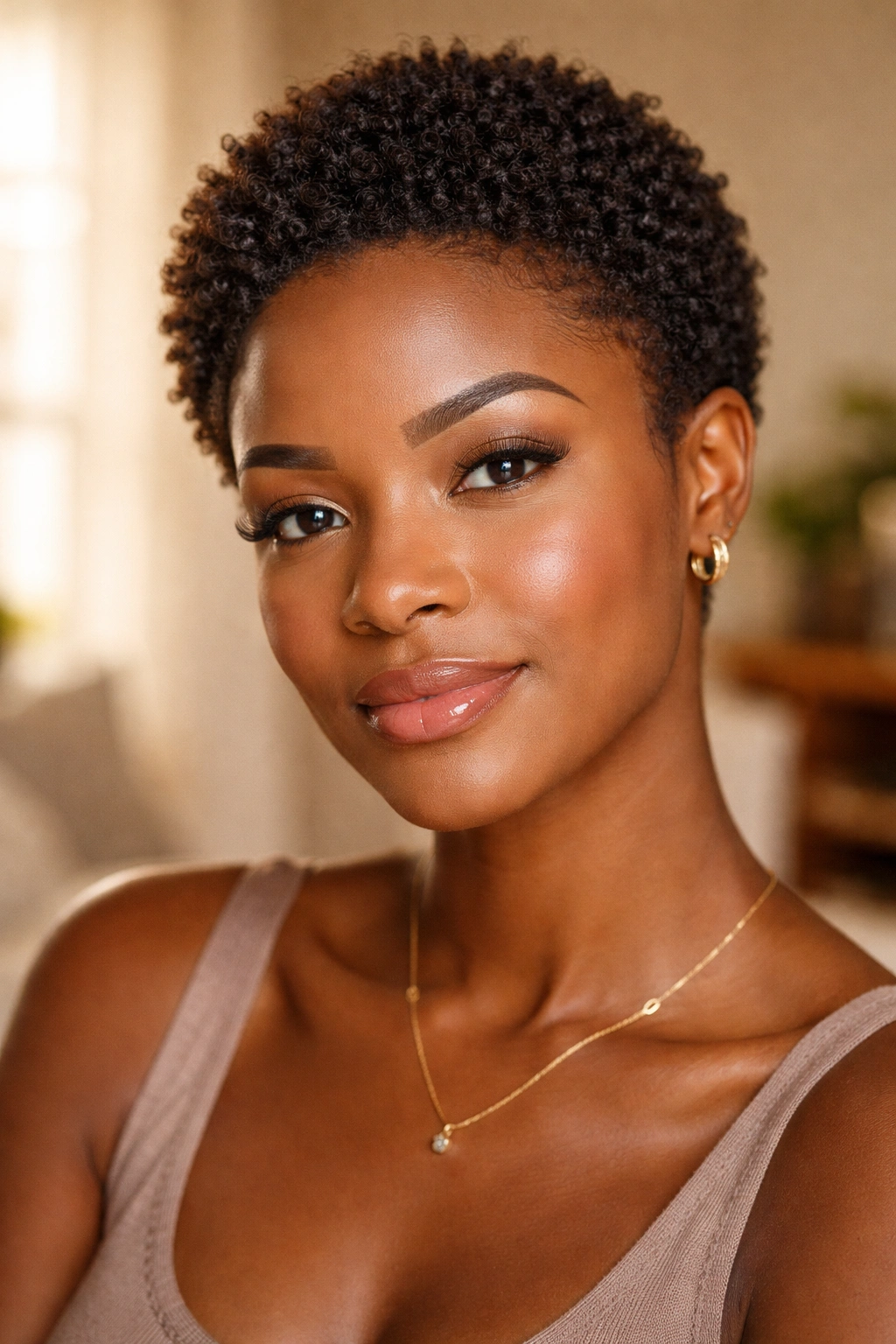
The TWA is the entry point for most women going natural — and it’s also one of the most sophisticated cuts when it’s done right. We’re talking 1 to 2 inches of growth, all around, cut clean and even so the coils sit flush.
Why It Works
At this length, your coil pattern takes center stage completely. There’s nowhere to hide texture or damage, which means the TWA forces you into genuinely good hair habits — moisturizing regularly, protecting at night, avoiding product buildup. The upside: every wash day takes about 20 minutes and your drying time drops to almost nothing.
- Keep the perimeter clean with shape-ups every 2-3 weeks
- Apply a quarter-sized amount of curl cream to damp hair, scrunch gently, don’t rake
- A wide-tooth pick at the crown adds volume without disturbing curl definition
Hot tip: Lay your edges with a medium-hold gel rather than hard-hold — at TWA length, crunchy edges look overdone.
2. The Tapered Natural
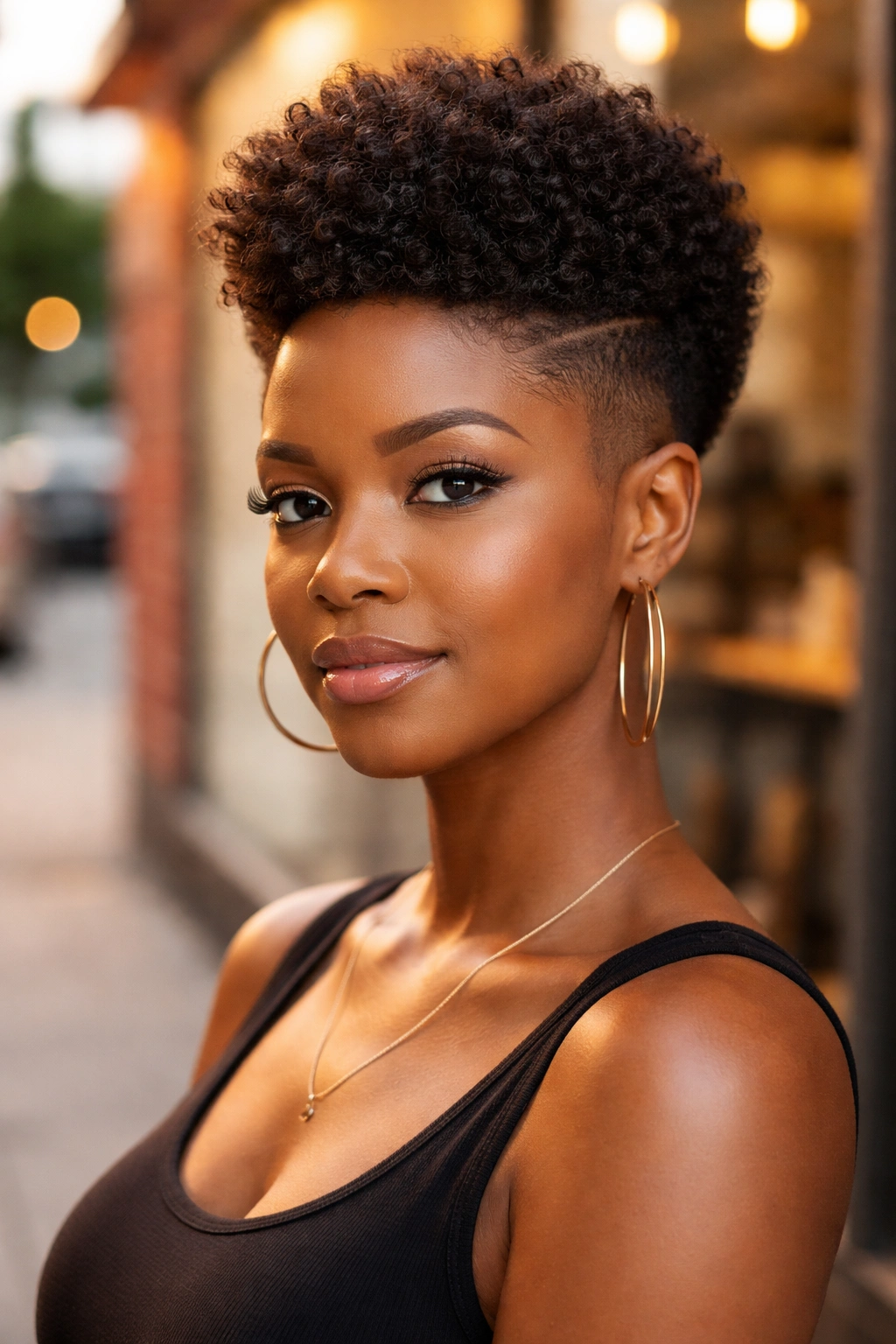
Unlike a TWA that’s uniform all around, the tapered natural has noticeably shorter hair at the sides and back — often faded or cut very close — with more volume retained at the crown. The contrast between close sides and a fuller top creates a striking silhouette without needing braids, extensions, or any added length.
This cut photographs beautifully because the shape reads clearly from every angle. From the front, you see a defined crown with good height. From the side, you see a deliberate taper. There’s an architectural quality to it.
The fade at the sides can go as low as a skin fade or stay as high as a 2-guard — it depends on how dramatic a contrast you want. If you’re new to fades, start higher and go lower as you get comfortable. You can always take more off; you can’t put it back.
Who this suits best: oval and heart-shaped faces, women who don’t mind frequent barbershop or salon visits to maintain that crisp taper line. The shape softens noticeably after 3 weeks and starts to lose definition around 4-5 weeks without a touch-up.
3. The Sculpted High-Top Fade
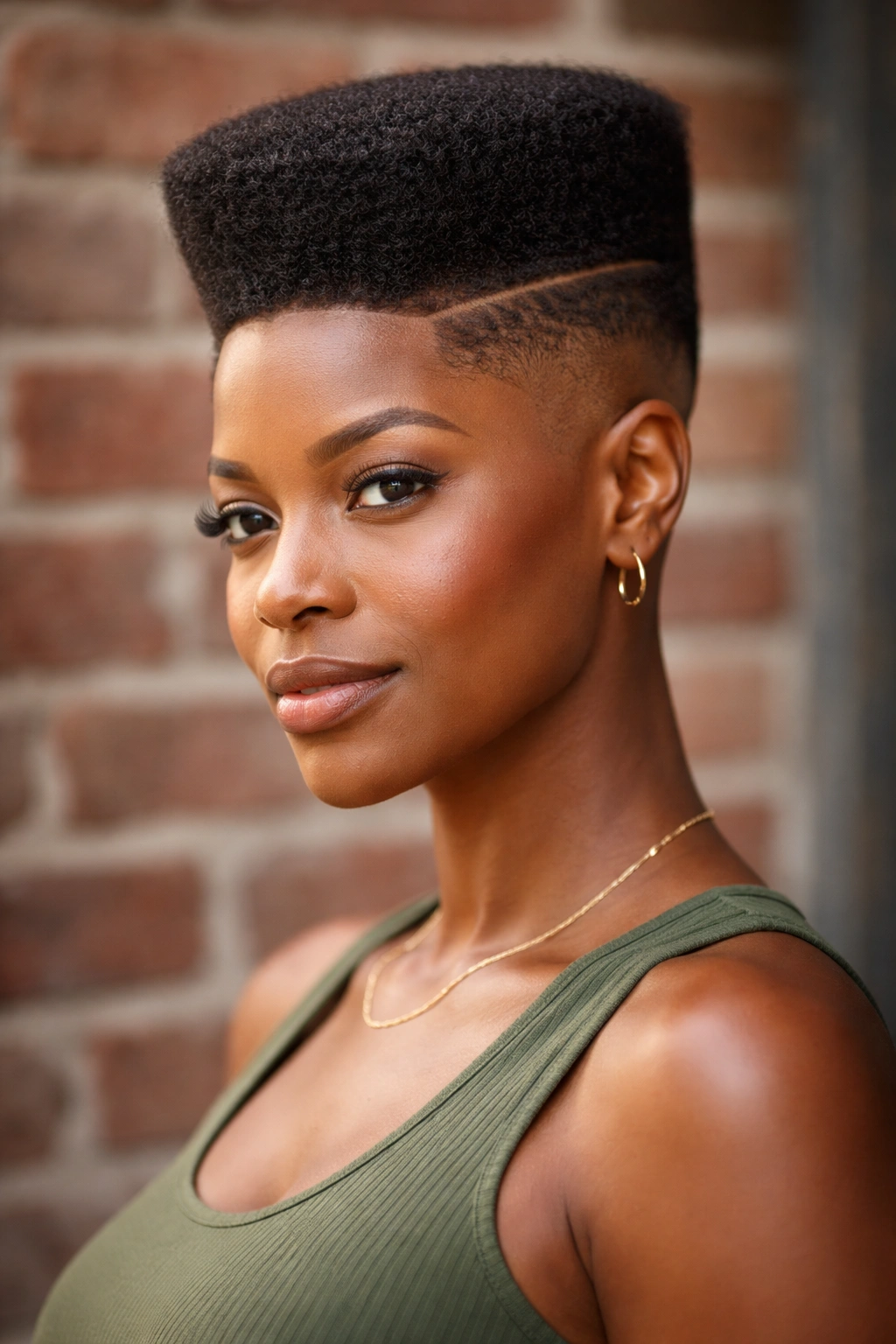
The high-top fade was born from Black barbershop culture and it has aged better than most things from that era — which says everything. The cut keeps maximum height at the crown, flat on top, and cuts clean on the sides. Think of it as architecture for your head.
On natural 4C hair, the flat top isn’t actually flat — it’s the natural compression of the coils creating that geometric effect. The result is a look that’s simultaneously retro and completely fresh.
The flat top is not for every texture. Looser curl patterns won’t hold the shape the same way. If your coils have strong spring and medium density — meaning when you press down on them they bounce back quickly — you’re likely to get a cleaner result. Dense, tightly coiled 4C hair creates the most dramatic flat top.
Maintenance is more demanding here than on a basic TWA because the shape degrades faster when the sides grow in. A 2-week shape-up schedule keeps it sharp.
4. The Short Wash-and-Go Afro
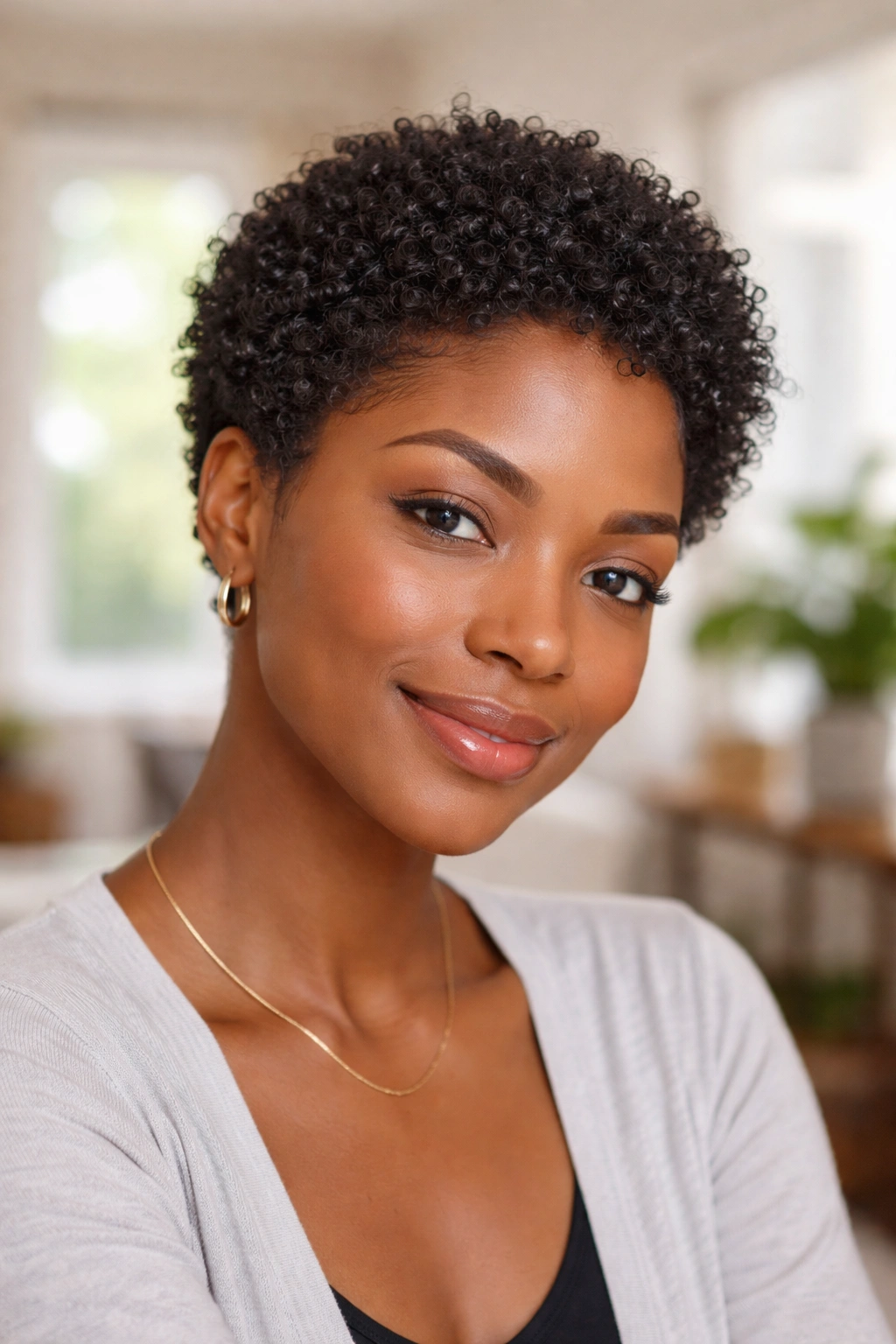
What if your “style” is washing your hair, applying a light curl cream, and walking out the door? That’s a legitimate look and a genuinely freeing one. The short wash-and-go afro is shaped to look intentional at your natural coil’s default state — no stretching, no twisting, no manipulating. Just clean, defined, rounded.
The key is getting the cut right for your specific shrinkage level. If your hair shrinks 70%, your stylist needs to cut it on fully shrunken hair — not stretched — to see where it’ll actually sit in daily life. More than one woman has left the salon with a cut that looked perfect when stretched but vanished into a tiny puff when her coils contracted.
How to Get the Most From It
Apply product to soaking wet hair, not just damp. On very short wash-and-go hair, the window between wet enough and too dry for product absorption is narrow — maybe 90 seconds after towel squeezing. Work quickly and use a product that’s light enough not to create crunch but dense enough to hold clumps.
Ecoslay Orange Marmalade, SheaMoisture Curl Enhancing Smoothie, and TGIN Butter Cream are all solid options at this length.
5. The Short Twist-Out Afro
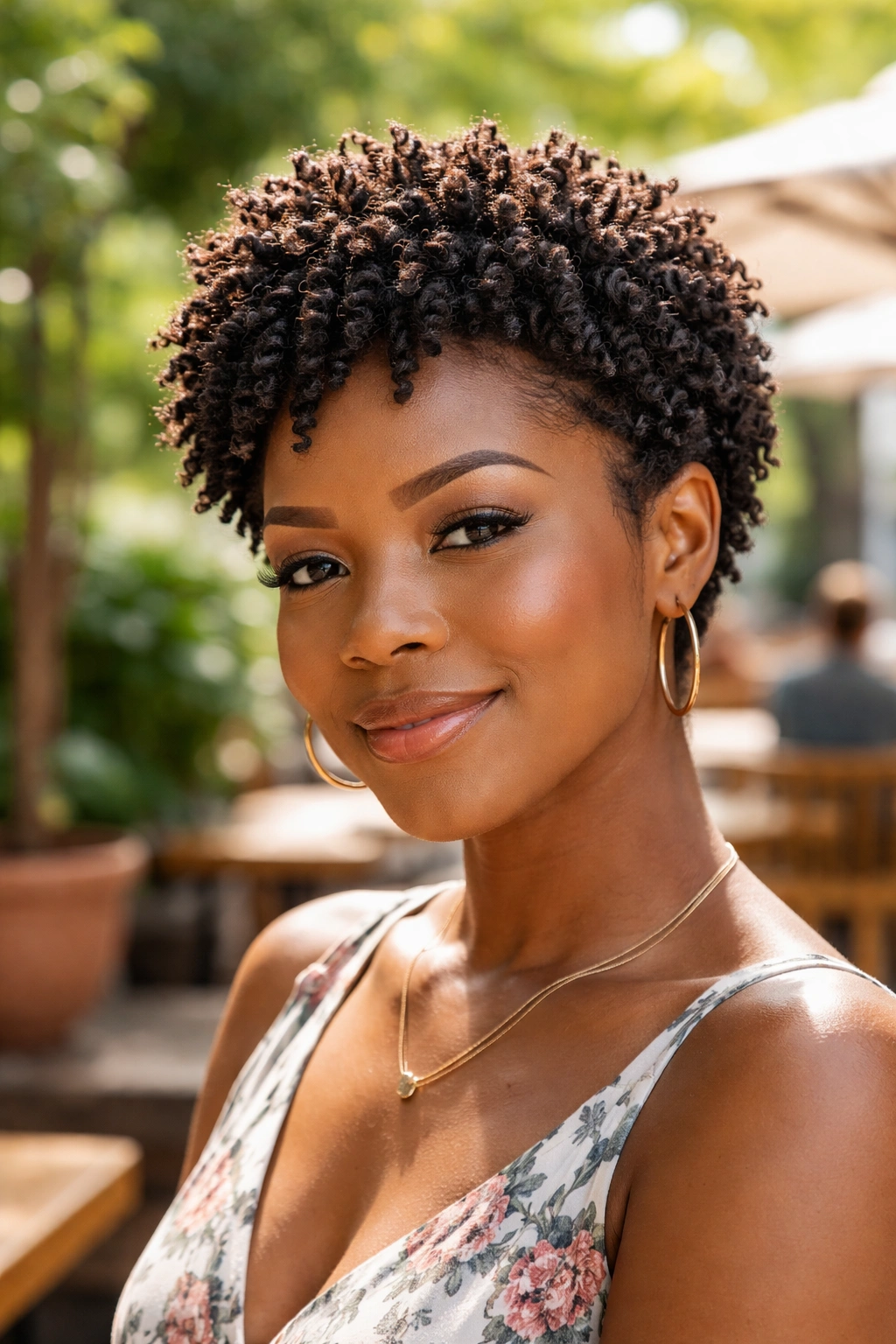
A twist-out on short natural hair gives you definition without length — the coils open into a soft, stretched pattern that sits at a slightly larger circumference than your wash-and-go, creating a bigger, fluffier profile.
On short hair, two-strand twists set the texture beautifully. Part into sections about the size of a thumbnail, apply a small amount of curl cream — literally pea-sized per section — twist all the way to the tip, and give the twists at least 8 hours to set. Overnight is better. Unravel in the morning with dry hands — not damp, not oiled — or the definition breaks apart immediately.
The result lasts about 3 days before it needs refreshing or re-twisting. On days 2 and 3, a tiny amount of a water-based refresher sprayed into your palm and gently pressed into the hair (not sprayed directly on) extends the definition without buildup.
6. The Short Bantu Knot-Out
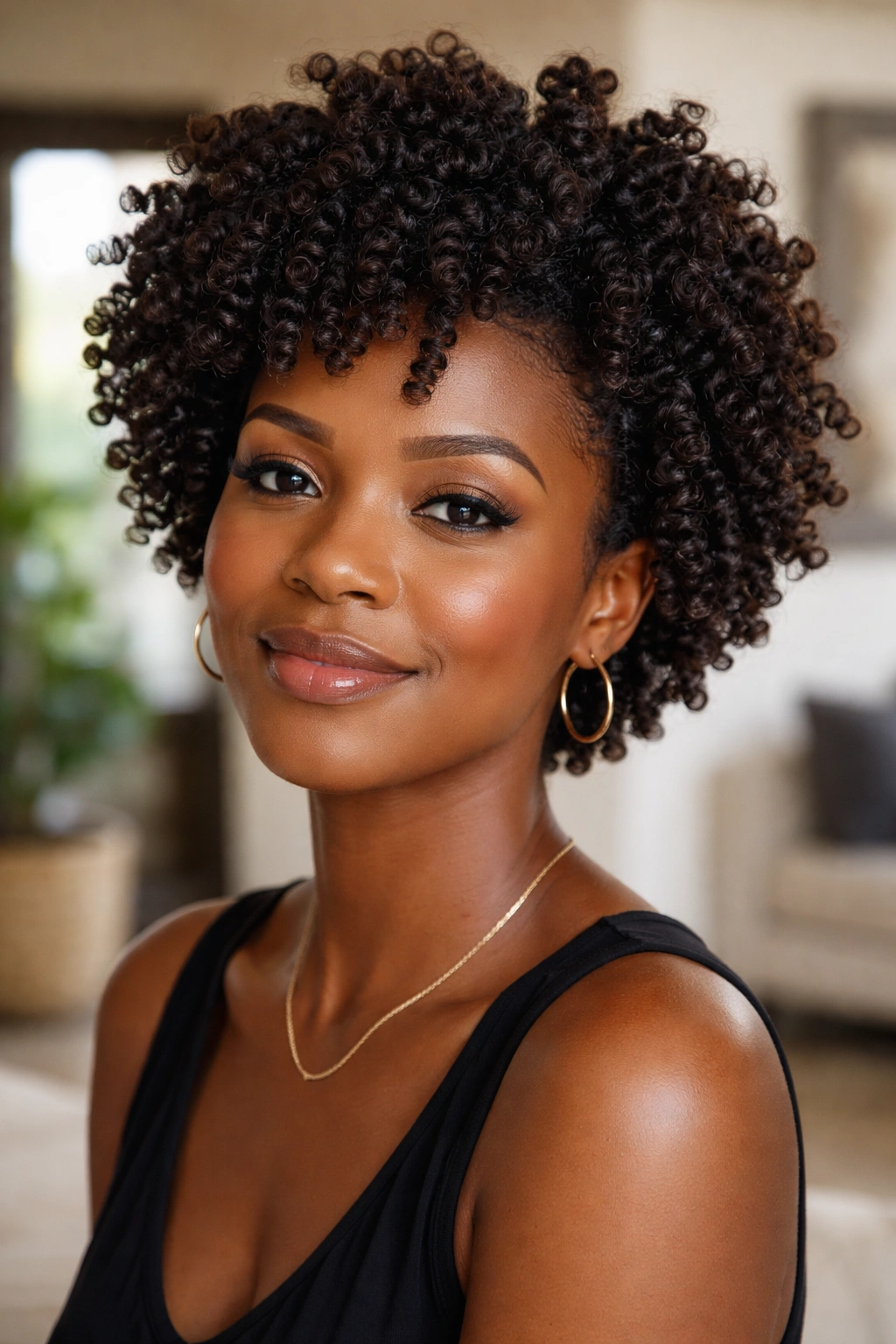
Unlike the twist-out, the bantu knot-out creates a tighter, more spiraled curl when you release the knots. The texture sits differently — more coiled, less stretched, with individual spirals rather than the looser S-pattern of a twist-out. On shorter hair, the result is a dense, voluminous halo.
Create knots on sections that are slightly smaller than for a twist-out — about the size of a dime. Wrap the section around itself, tuck the end under, and sit under a hooded dryer for 20-25 minutes or let it air dry overnight. Release with a small amount of oil on your fingertips to prevent frizz as you separate.
The knot-out tends to hold longer on 4C hair because the tighter curl pattern holds its shape better than looser textures.
7. The Fade with a Natural Top
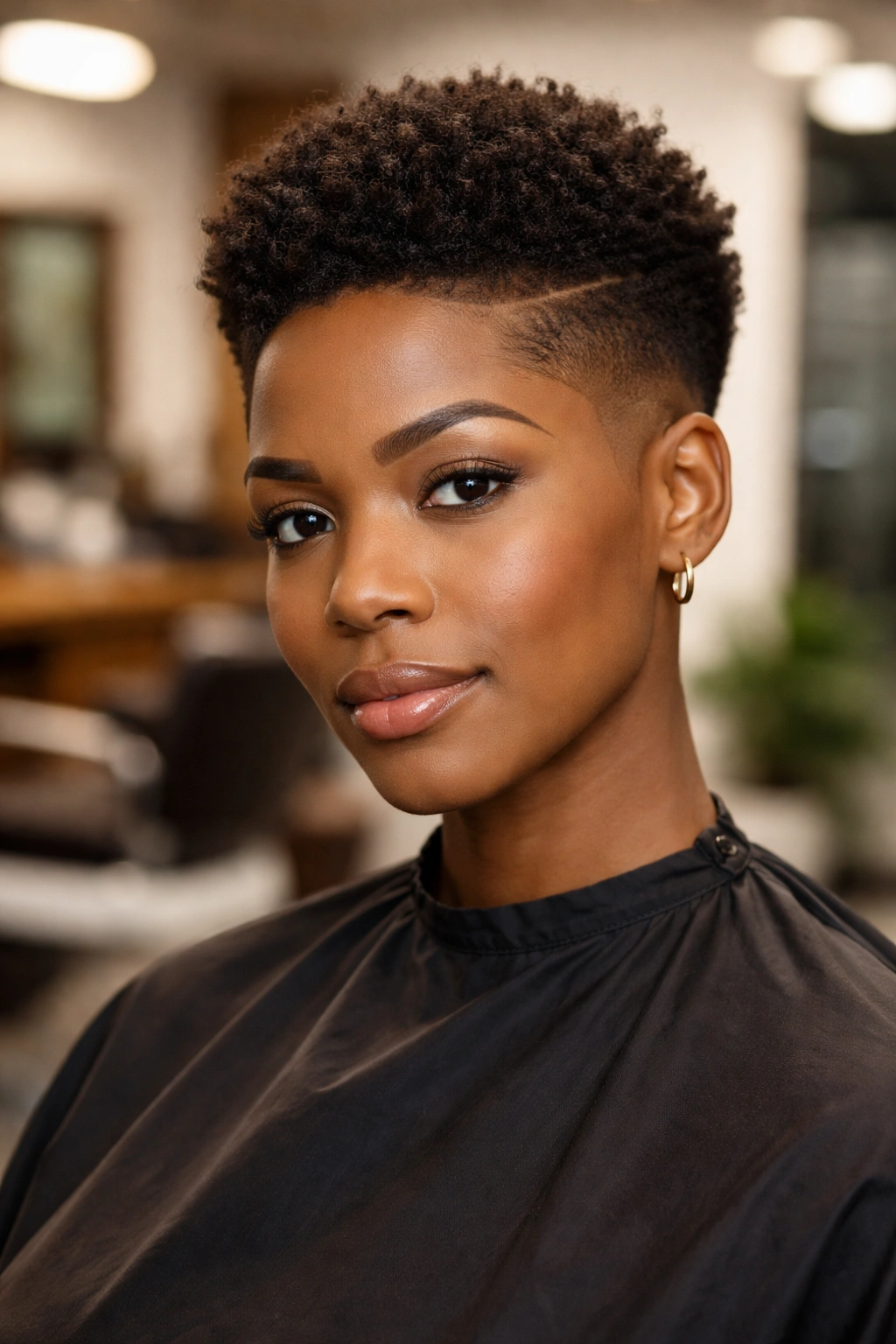
This is the barbershop version of the tapered natural — and the difference matters. Where a tapered natural cut by a salon stylist might have a gradual, soft taper, a barbershop fade is precise. You get a clean line between the faded section and the natural hair above it, often with a hard part or shape-up to sharpen the boundary.
The natural section on top stays at whatever length the client wants — some women keep 2-3 inches, others go bigger. The fade underneath can be as low as a skin fade or stay at a 1 or 2 guard.
Who it’s for: Women who like a clean, graphic look and don’t mind sitting in a barber’s chair. Also excellent for women with fine hairlines who want the fade to mask thin edges along the perimeter — the precision cut draws the eye upward rather than down toward the edges.
8. The Short Puff
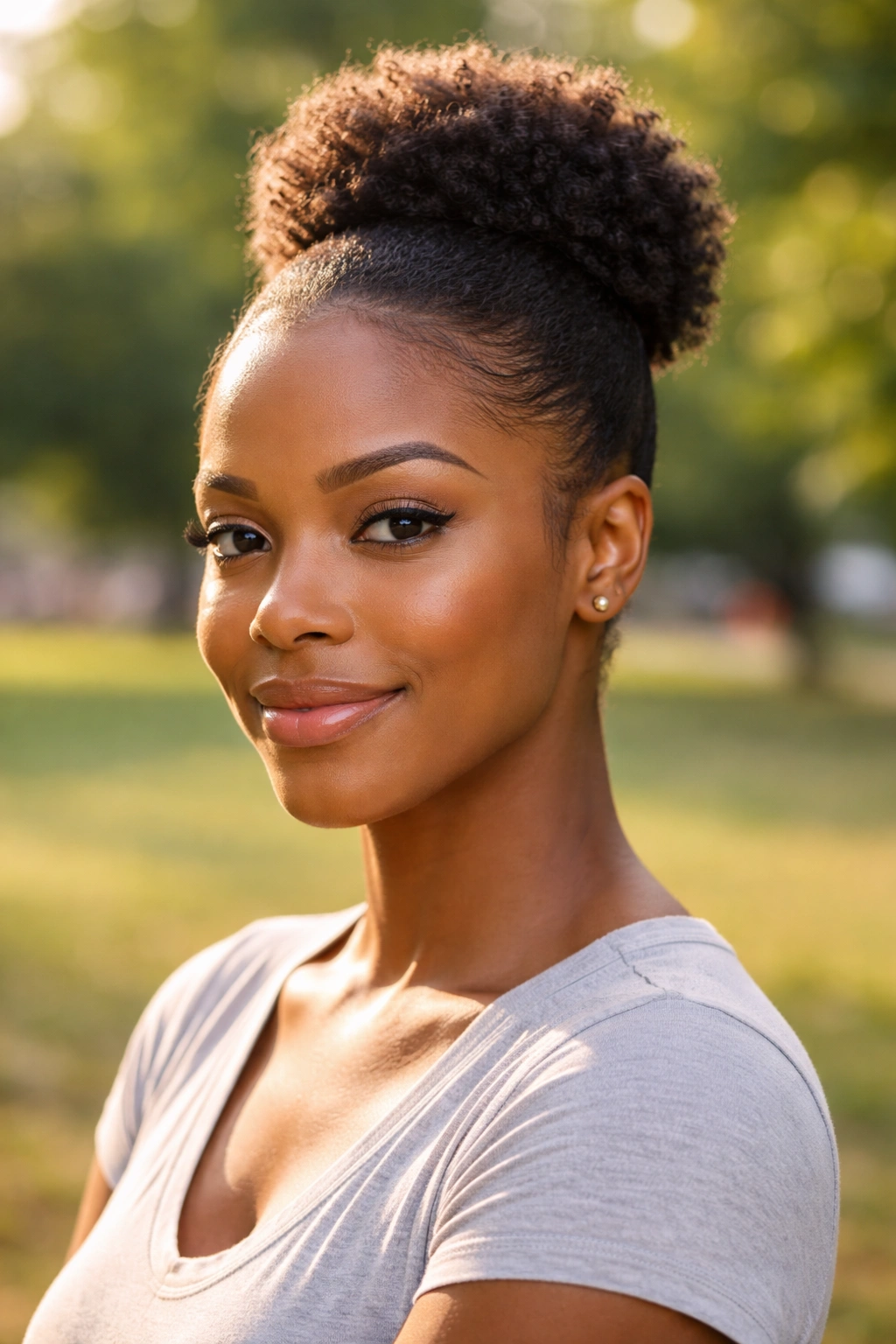
Sometimes a style isn’t about the cut at all — it’s about how you handle what you have. The short puff is less a haircut and more a styling approach: pull your short natural hair into the tiniest possible afro puff at the crown, smooth the sides and perimeter with a firm-hold gel, and let the volume sit concentrated at the top.
On truly short hair, the puff is barely an inch across. But it reads clearly and cleanly, especially when the edges are laid flat and the perimeter is smooth. A satin headband or a thin elastic that doesn’t crease the hair works better than a standard hair tie at this length.
This isn’t a style for thick-handled brushes or wide boar bristle brushes. A small, dense-bristled baby brush or edge brush gives you the control to lay the perimeter without pulling or disturbing the coils.
9. The Rounded Afro
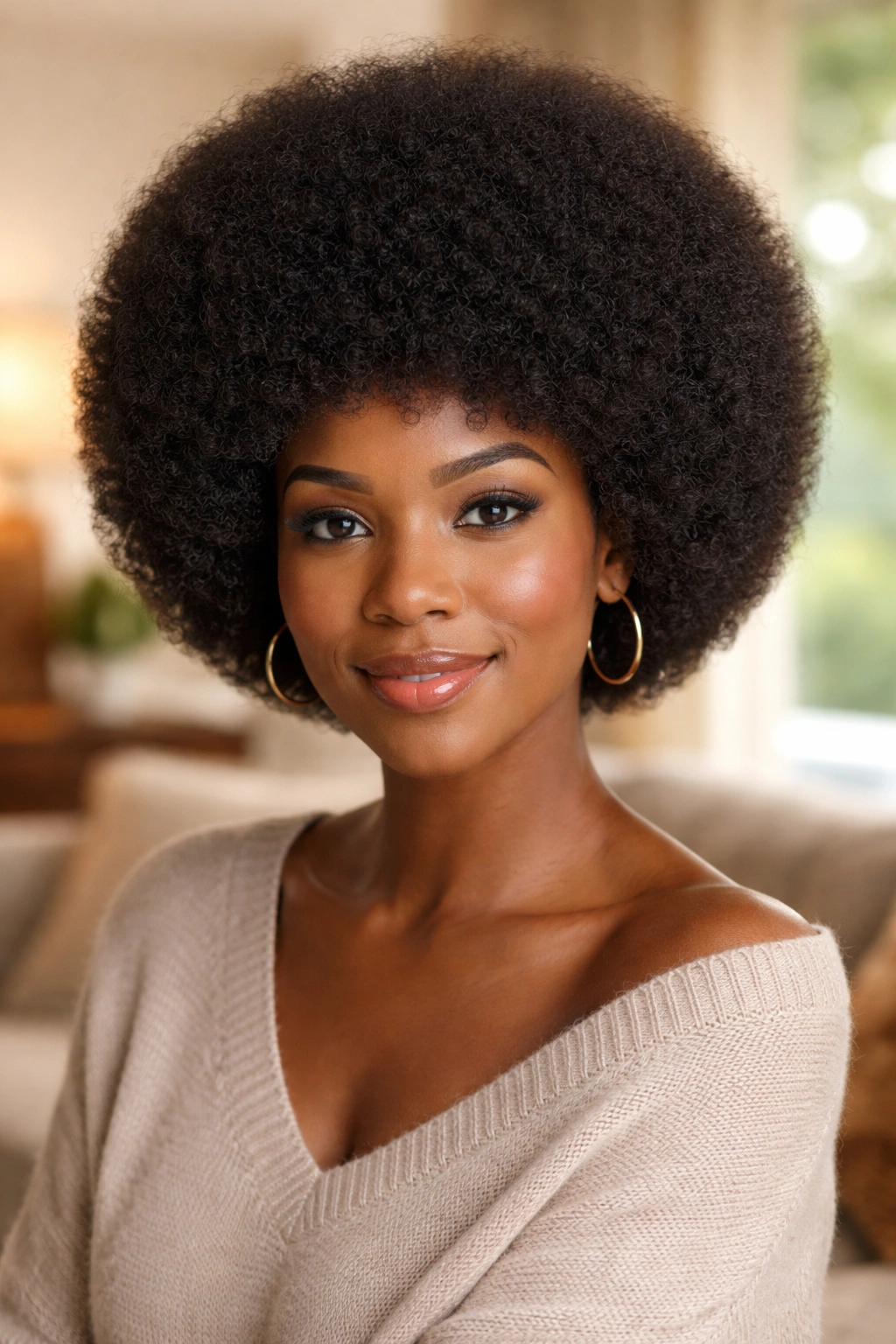
The rounded afro is the classic shape — perfectly spherical, even volume all around, no taper, no fade, just a clean globe. It’s not about length. A rounded afro at 3 inches of growth looks completely different from one at 6 inches, but the principle is the same: the perimeter forms a consistent curve.
Getting this shape at home is harder than it looks. Most people create a flat spot at the crown or lose volume on one side without realizing it. A natural hair salon trim every 6-8 weeks maintains the sphere. Between visits, a pick comb through the hair starting at the roots — not the ends — builds even height without disturbing the curl pattern.
What to Watch For
Buildup kills the rounded shape. Heavy products — thick butters, dense creams, anything that coats the cuticle rather than penetrating — make the exterior of the hair lie flat and compress the overall shape. Clarify monthly with a sulfate-free clarifying shampoo or a diluted apple cider vinegar rinse.
10. The Short Mohawk Afro
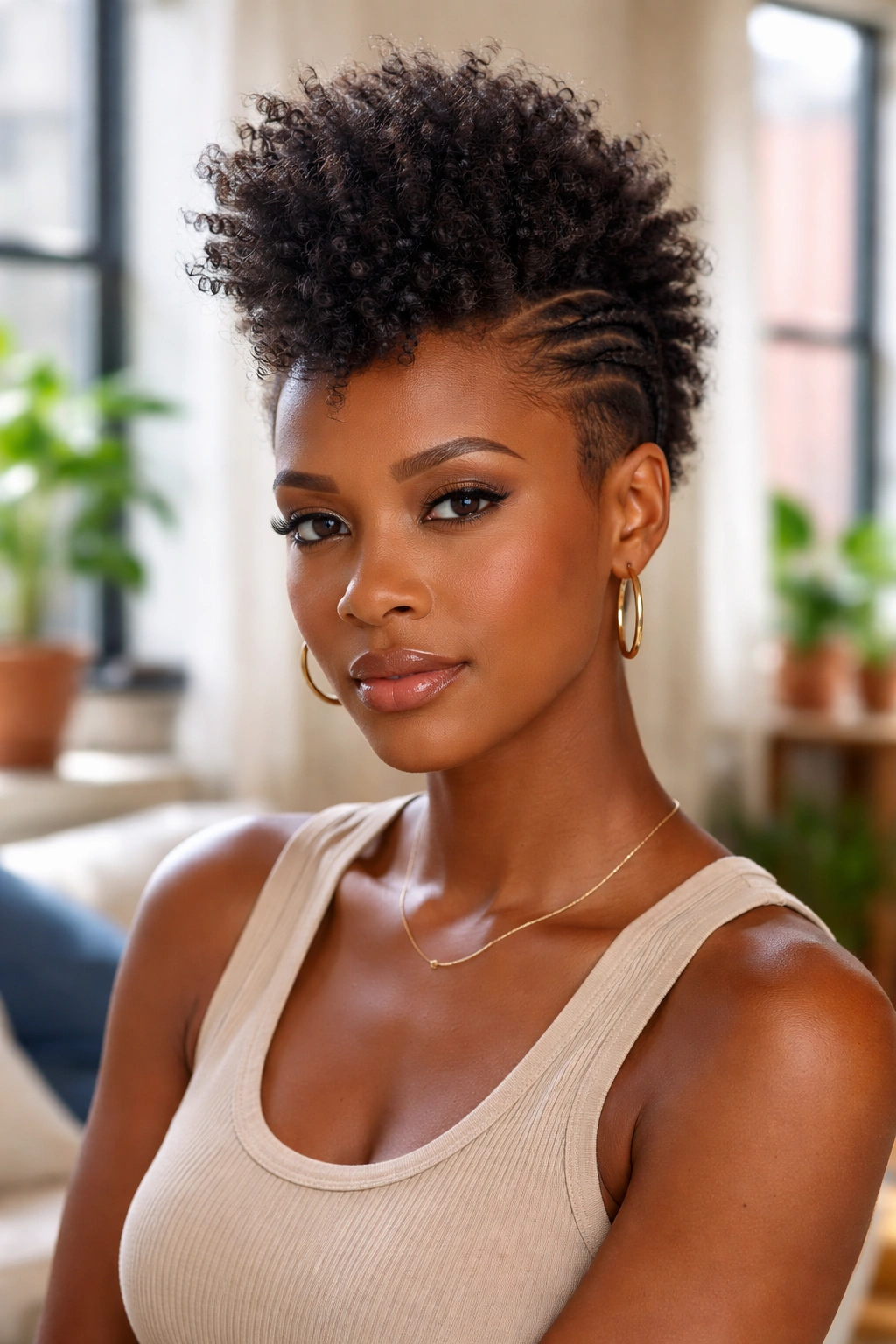
Natural hair has always had a creative relationship with the mohawk silhouette — and on afro hair, the mohawk section in the center tends to have enough spring to stay upright without product assistance. The sides can be braided flat, twisted flat, or faded depending on what level of commitment you want.
The braided-side mohawk takes about 45 minutes to set up and stays neat for a week or more depending on your growth rate. The twisted-side version is quicker — sometimes 20 minutes — but the twist-outs on the sides add texture that can compete with the center section for visual dominance. The faded-side version is the most permanent commitment but creates the cleanest silhouette.
Height in the center is a function of your coil’s natural spring. You don’t need products to make type 4 hair stand up in a mohawk strip — just pick it up gently from the root and it’ll hold.
11. The Short Shaved Side with Natural Top
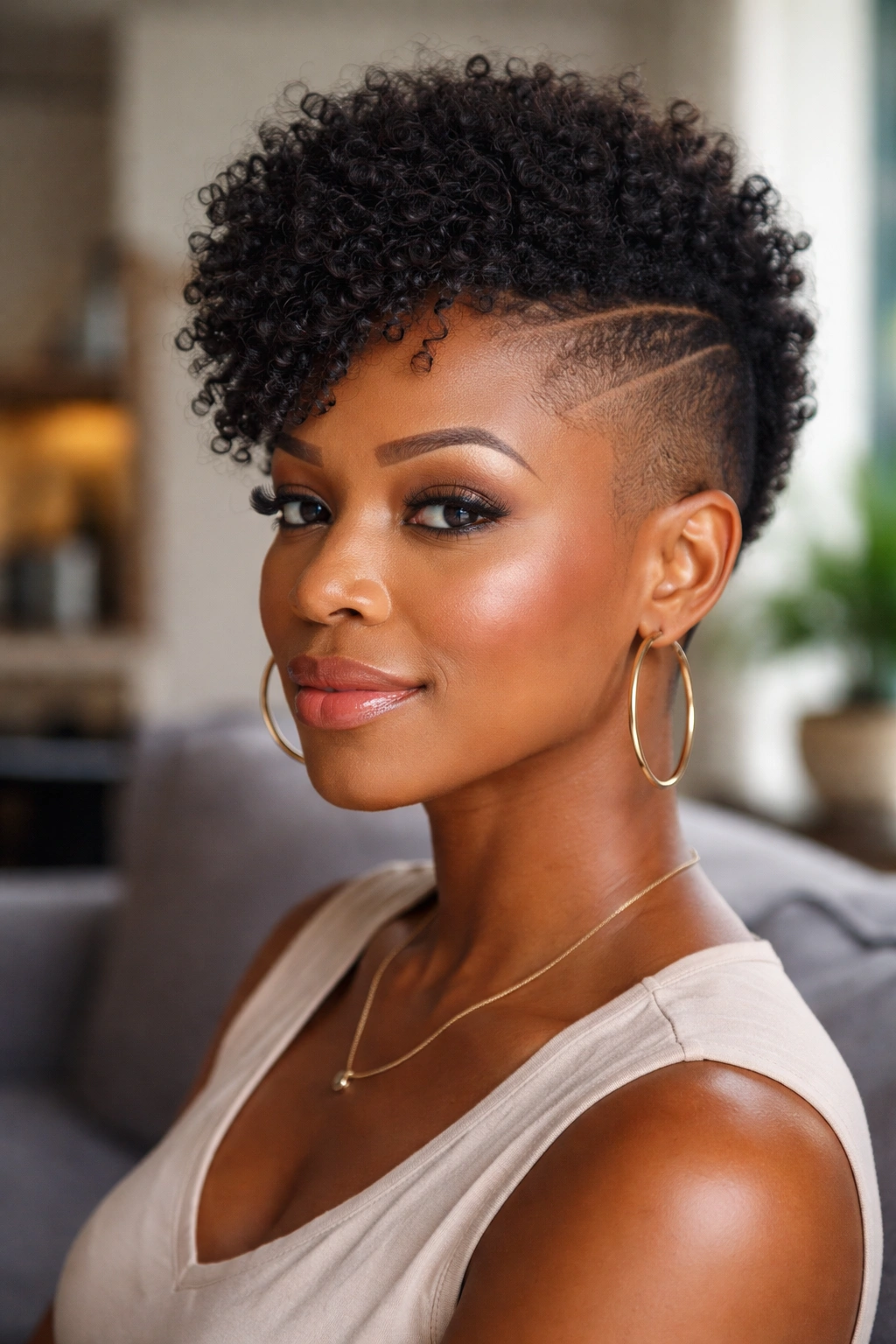
One side is close-shaved or cut very short. The other side keeps full natural volume. It’s an asymmetrical look that reads avant-garde without being impractical — your daily maintenance is essentially just caring for the natural side while the shaved side maintains itself.
The shaved section typically features a skin fade or a very close cut with a 0.5 guard. The natural side stays at 2-4 inches of growth. The visual contrast is part of the appeal. Some women add an etched design into the shaved section — geometric lines, floral patterns, small script — which takes the look from interesting to art.
Growing it out is the only real risk. The side-switching period — when the shaved side is growing but not long enough to style — lasts 3-6 months depending on your growth rate. Plan for it.
12. The Short Coil-Out Afro
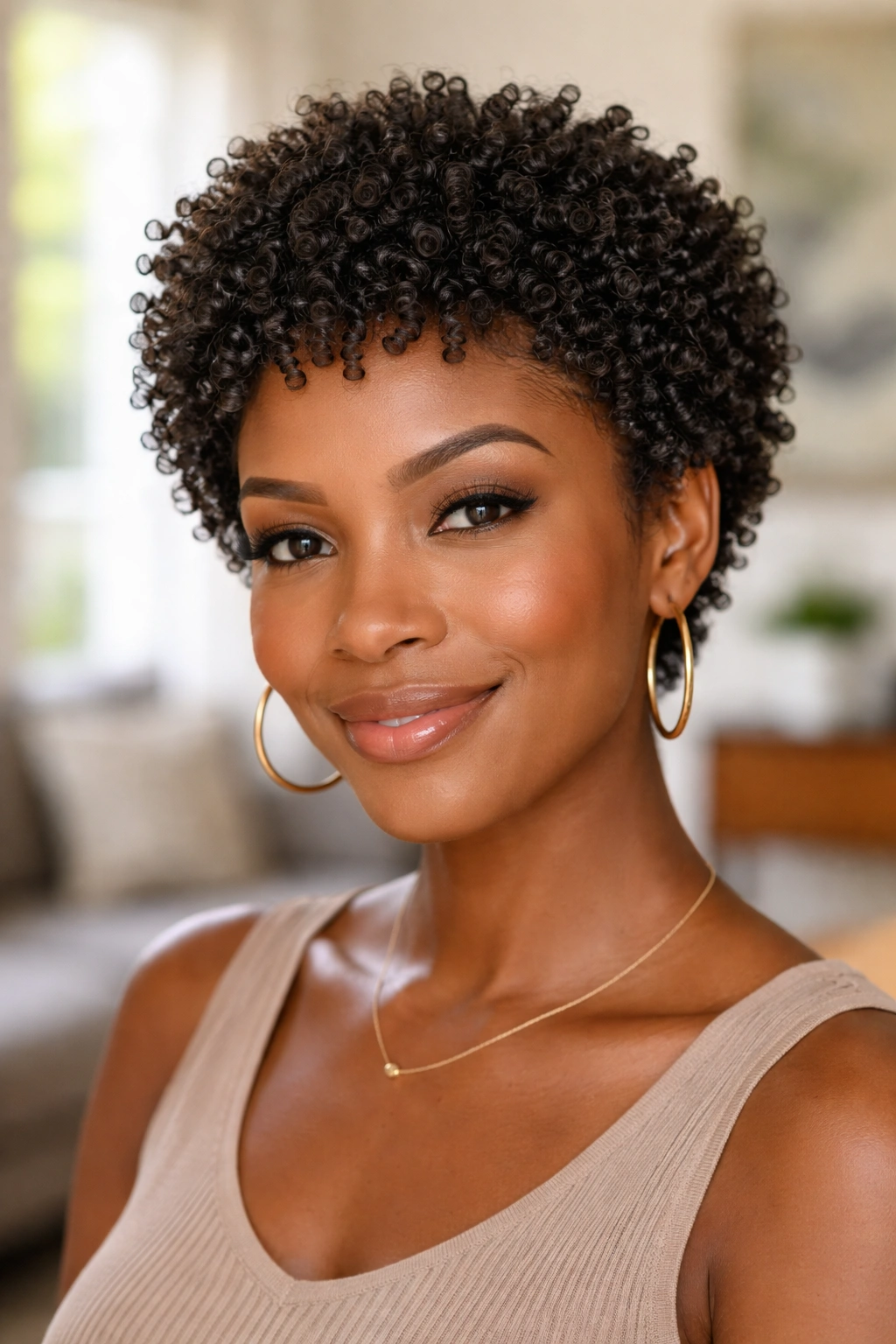
A coil-out uses a defining gel or custard applied to very small sections — sometimes individual curl clumps — to create tightly defined, separated coils rather than a fused frizzy puff. On short hair, this creates a look that’s incredibly detailed up close: you can see individual coils in clean spirals, each one catching light differently.
Apply a medium-hold gel like Aunt Jackie’s Don’t Shrink Flaxseed Elongating Curling Gel or Camille Rose Curl Maker to soaking wet hair in sections about the size of your pinky finger. Don’t separate. Let it dry completely before touching — and “completely” means 100%, not 95%, because the remaining 5% of moisture is what causes frizz when you disturb the clumps.
Result: holds better than a wash-and-go on most textures, lasts 2-3 days with a light refresh.
13. The Close-Cropped Natural with Defined Edges
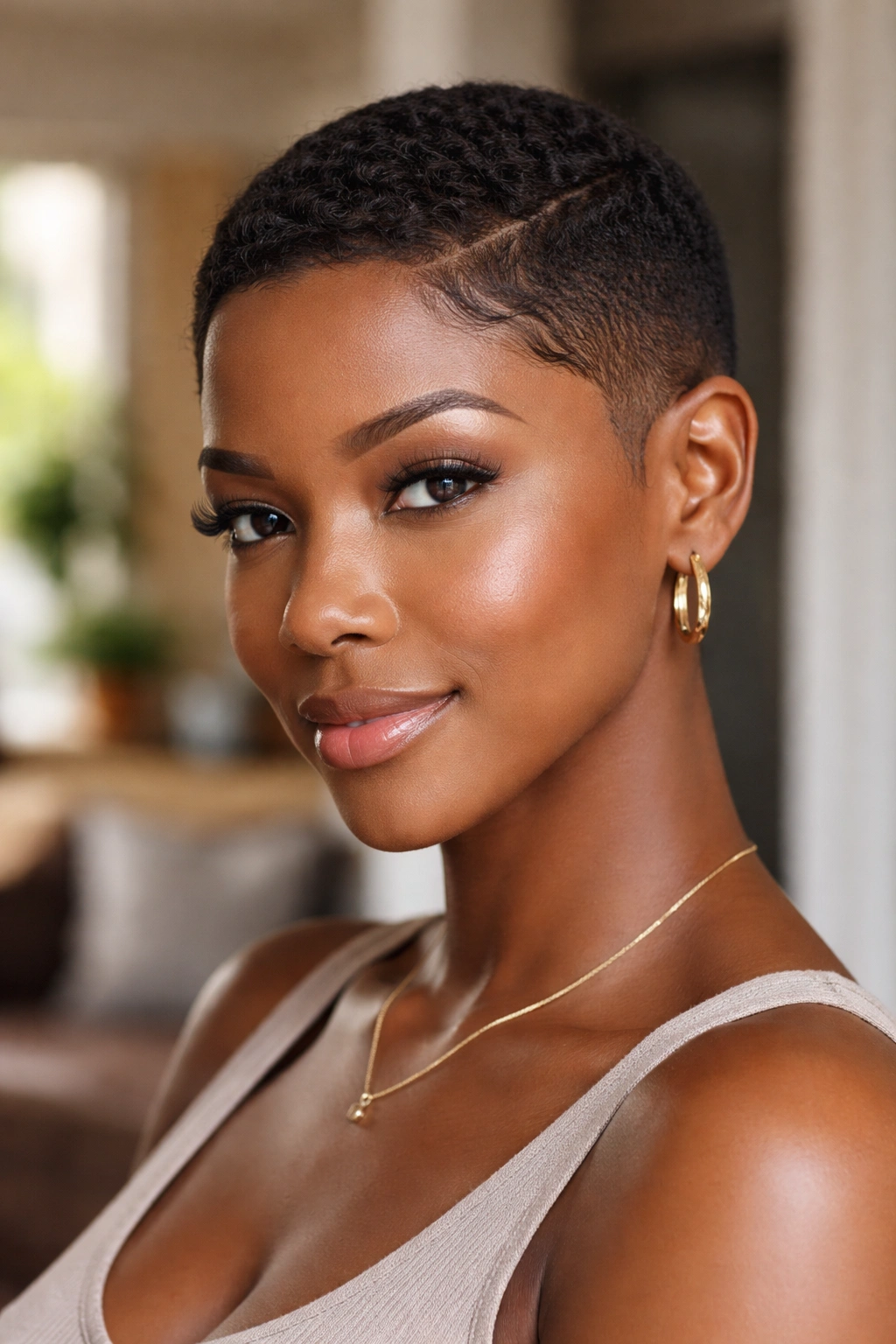
This is the TWA taken to its most intentional conclusion. The hair is cut uniformly short — maybe a centimeter or less — and the entire look’s power comes from the edge work. Baby hairs laid in waves or swoops, a clean hairline shaped with a razor, and precise corners at the temples.
Edge art at this length becomes the main event rather than a supporting detail. The edges are the style. A good edge stylist can create a hairline that looks like it was designed by an architect — curved at the temples, squared at the nape, with a consistent width all the way around.
This works best on women whose natural hairline is relatively dense and even. Sparse baby hairs or an uneven hairline are harder to style into intentional art.
14. The Short Side Part Afro
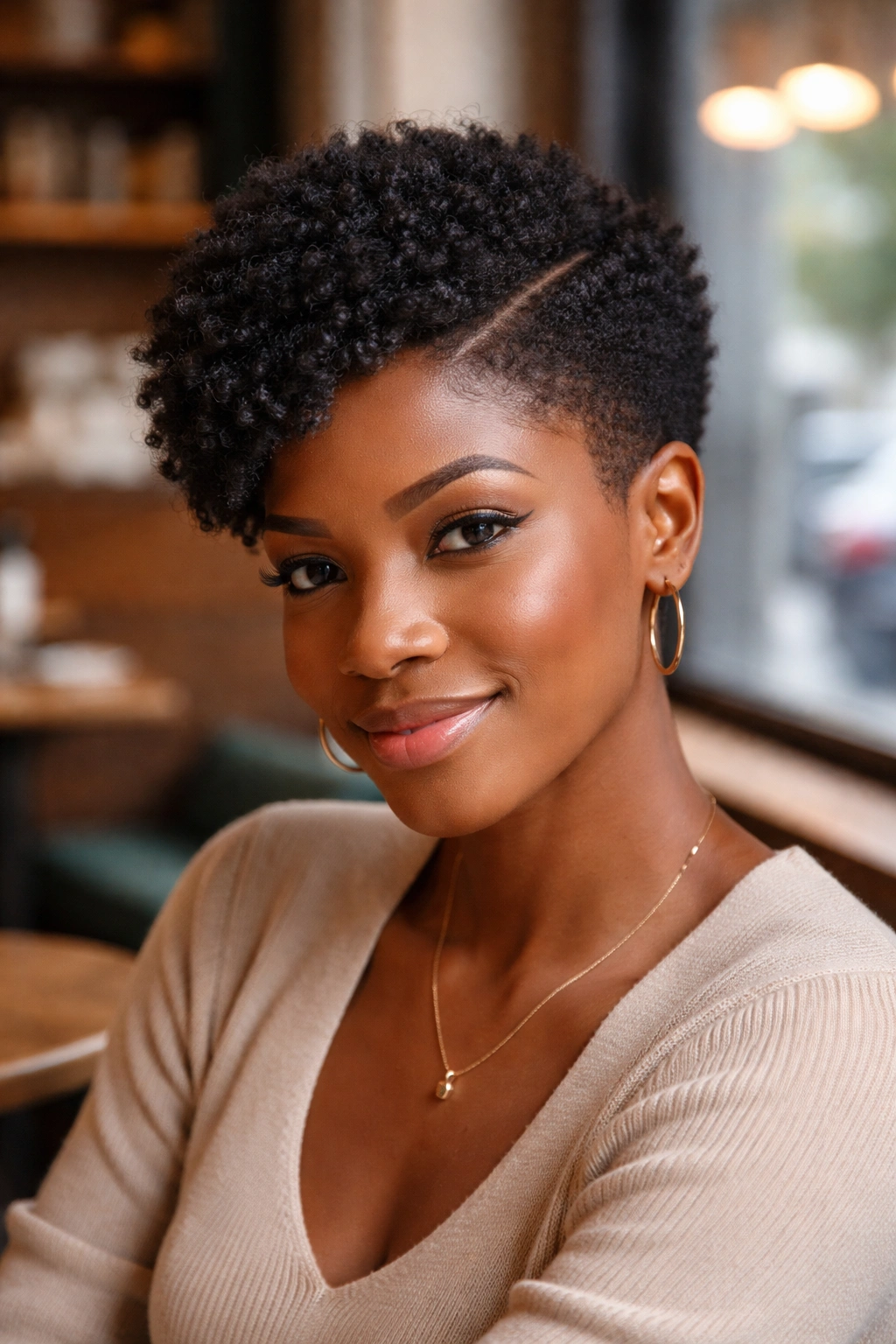
A deep side part on a short afro changes everything about the visual balance. The part creates a diagonal line across the crown, one side sits flatter and closer, the other sweeps outward with volume. The result reads as styled and intentional in a way that a center-part or no-part version doesn’t.
The part is usually kept with a rattail comb and a small amount of edge gel along the line to keep it clean. On 4C hair, the part needs refreshing every 1-2 days as the hair grows and the line blurs. Some women use a small amount of pomade along the part to make it last longer.
15. The Short Finger Coils Afro
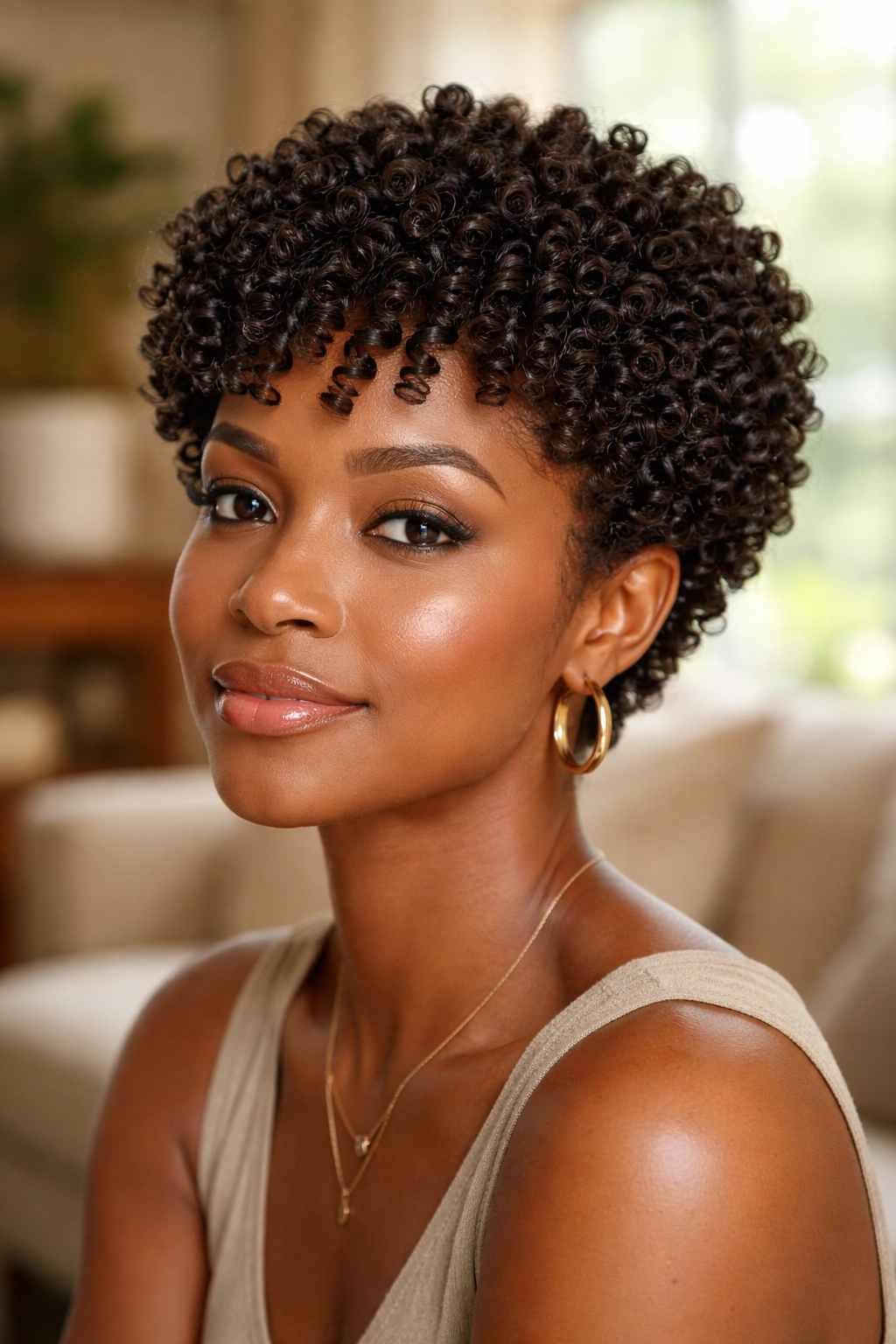
Finger coils take the coil-out technique one step further — instead of relying on the hair’s natural clumping, you physically twirl each section around your finger while wet and with product. The result is a deliberately spiraled coil, perfectly formed, sitting at exactly the angle you placed it.
It takes time. A full head of finger coils on short hair might take 2 hours. But the longevity is significantly better than most other styles at this length — if you sleep on a satin pillowcase and use a light refresher in the mornings, finger coils can last 5-7 days without re-doing.
The catch: re-doing them takes just as long as the first time. For daily schedules with no flexibility, this may be a weekend-only style.
16. The Short Locs (Starter Locs)
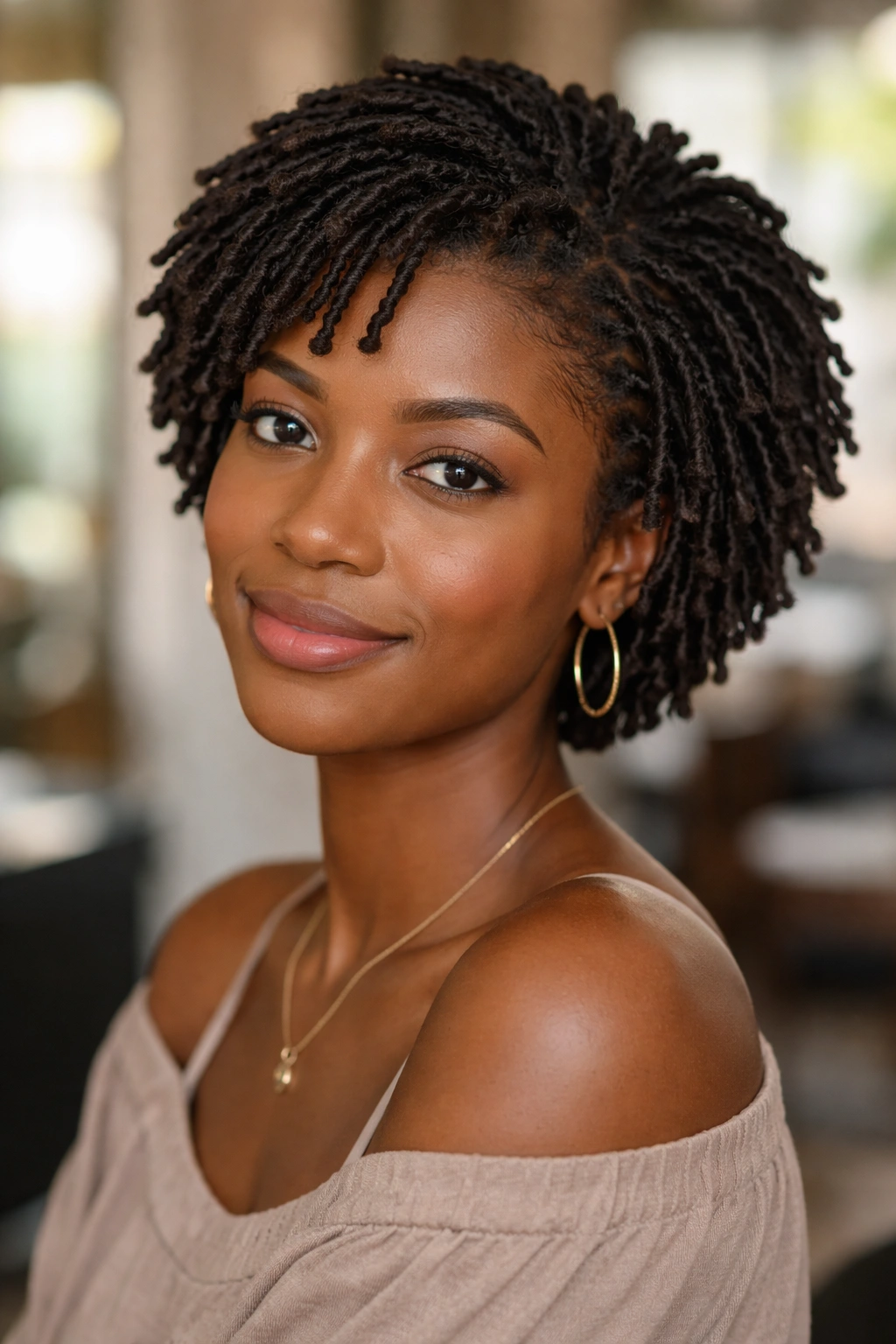
Starting locs doesn’t mean committing to waist-length ropes for the next decade. Many women begin and maintain their locs at a short, deliberate length — particularly the sisterlocks style, which creates very fine, small locs that can be worn in a rounded afro silhouette at medium-short length.
Traditional locs at this stage (the first 6-18 months) are in a “freeform” or actively coiling phase — the hair is still figuring out what it wants to do, and the starter loc stage requires patience with the messiness. Sisterlocks, installed by a certified consultant, give you controlled size and placement from the start.
Neither version requires as much daily manipulation as loose natural styles. The daily routine during the starter phase is mostly misting with water, applying a tiny amount of loc butter at the tips if they’re dry, and avoiding product that causes buildup inside the loc.
17. The Afro with a Hard Part
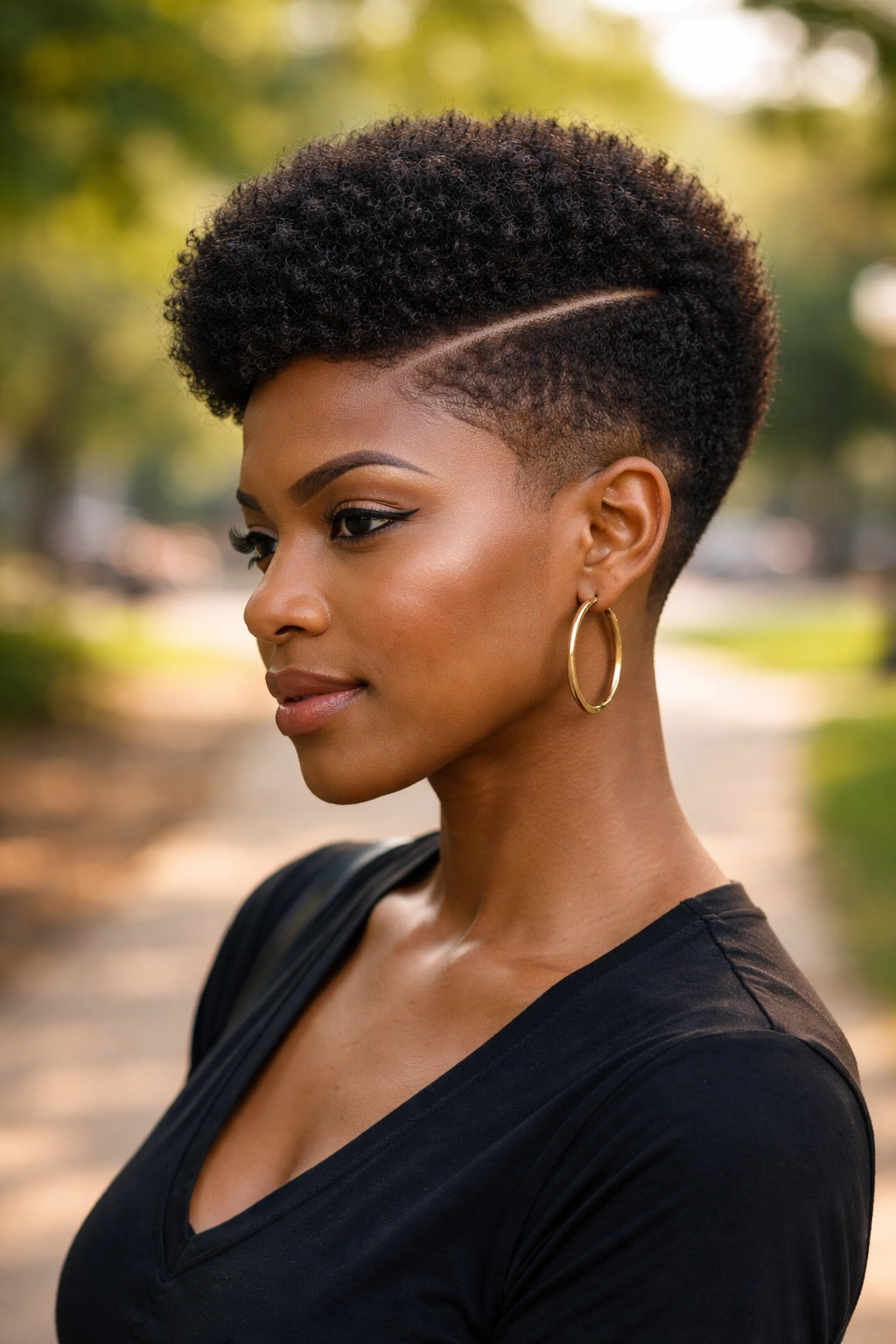
The hard part is exactly what it sounds like: a razor-cut or very precisely carved line through the hair, usually at the side or slightly off-center, creating a graphic, high-contrast divide. On an afro, this line runs through the natural hair and looks almost architectural — very clean against the backdrop of the coils.
Hard parts are done with either a straight razor by a barber or with a very sharp rattail comb and steady hands. They need refreshing every 1-2 weeks because hair grows across the line quickly. The payoff is a look that reads intentionally groomed even without elaborate styling — the line alone signals attention to detail.
18. The Natural Afro with Shaved Designs
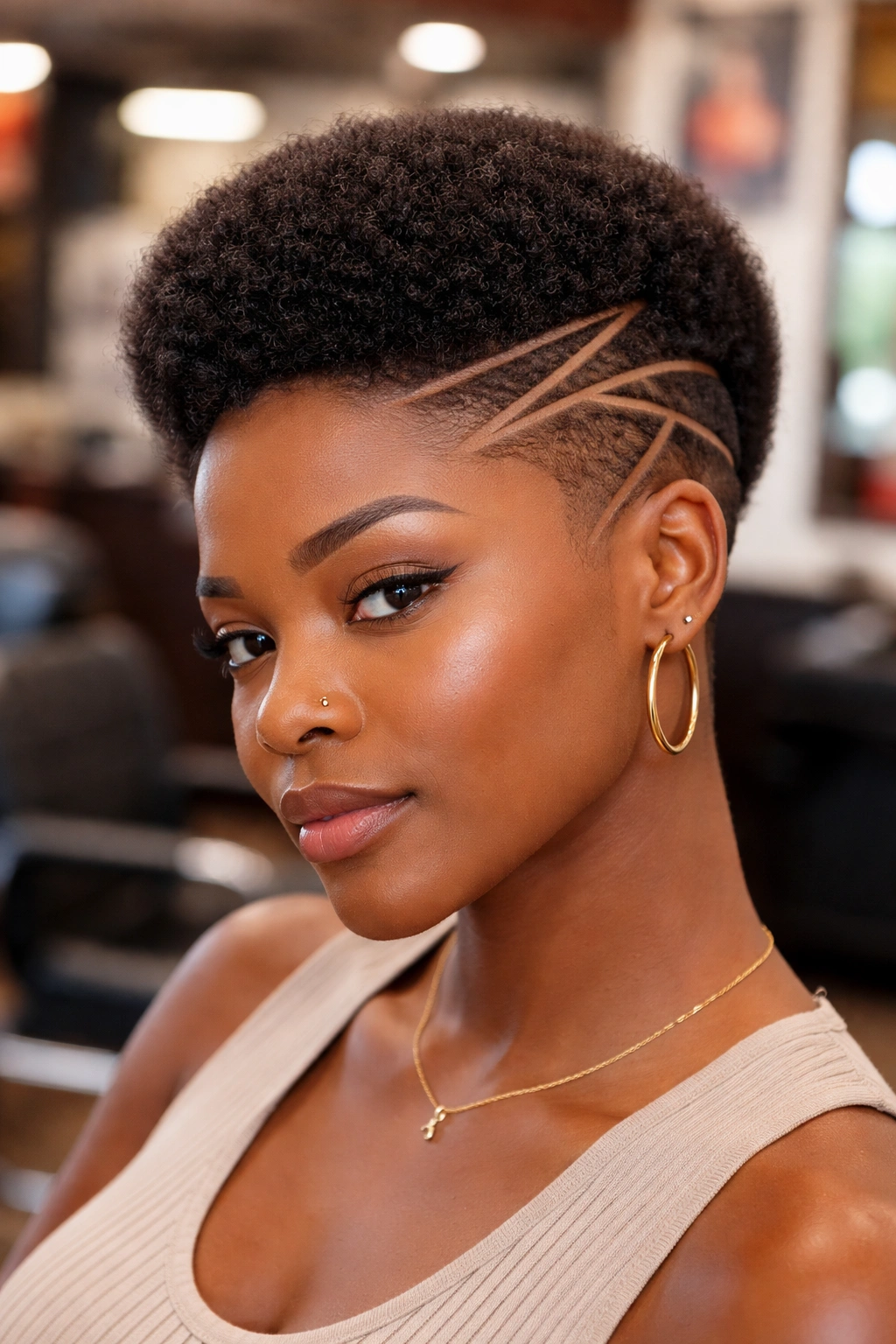
Taking the close-cropped afro one dimension further with shaved or etched designs into the hair. Stars, geometric patterns, flowers, initials, freeform abstract shapes — all of these can be cut into natural afro hair at close lengths. The designs are created using clippers, trimmers, and razor-fine edges.
The design fades as the hair grows, which means this is a maintenance-intensive look if you want it sharp. Realistically, every 2 weeks to maintain precision. But at peak sharpness — fresh from the chair — this is genuinely striking.
Not every barber or stylist has the skill for precise hair art. Ask to see a portfolio before sitting down. This is absolutely not a “let’s try it” situation.
19. The Short Bob-Adjacent Afro

On looser-curl type 3 hair or stretched type 4 hair, a short afro can take on the silhouette of a bob — length that frames the face, slightly longer in the front than in the back, creating a jaw-grazing or chin-grazing effect when the coils are stretched or blown out.
The key word is “adjacent” — this isn’t a blowout bob, it’s a natural afro that happens to have more forward-weighted length. When worn at its natural shrinkage, it sits shorter and rounder. When stretched with a blow dryer on low heat, the front sections frame the face at jaw level.
This cut gives you two distinct looks without two different cuts — the compact, rounded afro for everyday and the more elongated, face-framing look when you want something more formal.
20. The Short Afro with Flat Twist Crown
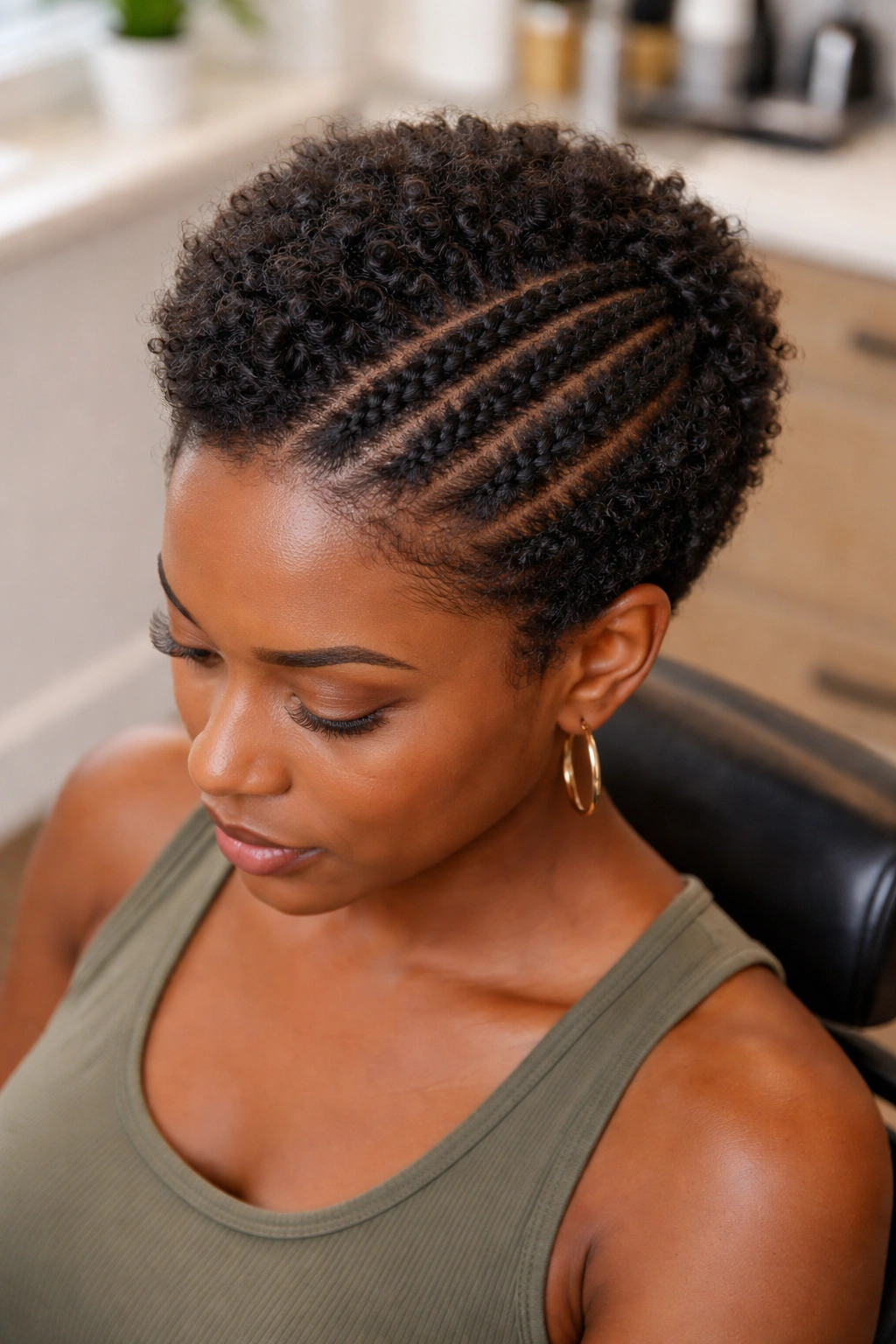
Here’s where styling meets haircut — this one requires both. Keep the hair short all around but leave enough length at the crown (about 2-3 inches) to create flat twists across the top. The sides can be faded or kept at a shorter TWA length, while the crown twists add texture, pattern, and visual interest.
The flat twists at the crown form a graphic, ridged pattern when viewed from above — like cornrows but with a looser, less geometrically perfect structure. They lay closer to the scalp than a regular twist and can be styled in any direction. Two flat twists sweeping backward creates a sleek look. Four flat twists arranged in a star pattern creates something entirely different.
Moisturize the crown sections thoroughly before twisting — about a teaspoon of leave-in conditioner, a small amount of oil, and a light holding cream. Flat twists on dry hair don’t lie flat and tend to have fuzzy edges.
21. The Natural Fade with Length on Top
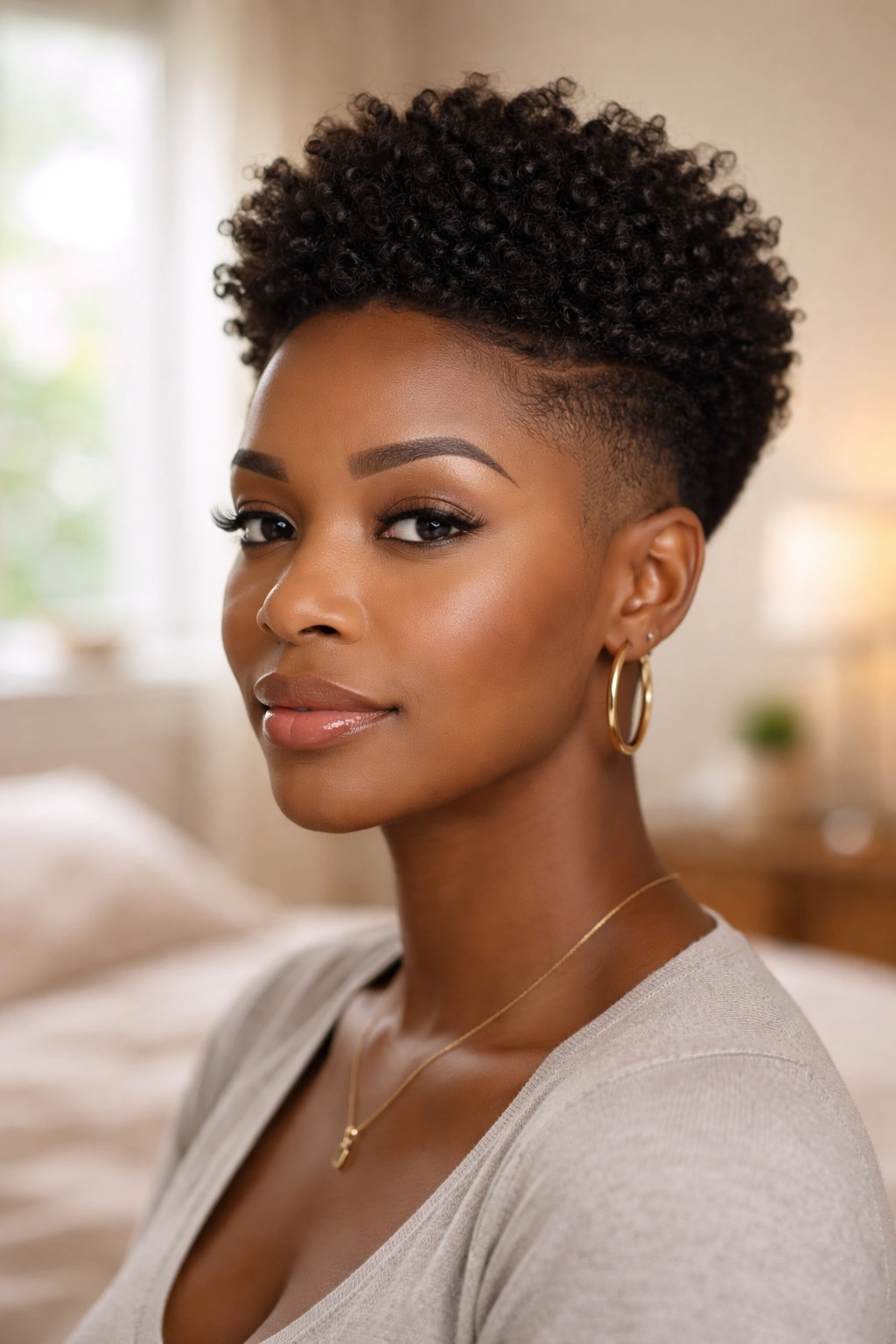
The fade-and-length combination is arguably the most versatile short afro cut on this list — because “length on top” can mean 2 inches or 5 inches, the fade can be high or low, and the whole effect reads differently depending on those variables. At its most understated: a medium fade with 2 inches of natural coils on top, rounded and clean. At its most dramatic: a skin fade with a full 4-5 inch afro on top that gives you genuine height and volume.
The transition between the fade and the natural section is where the skill lives. A blurry, unclear transition looks like the haircut grew out rather than a style you chose. A clean blend or a hard line between fade and natural — that’s a decision, and it reads as one.
For women over 30 exploring shorter afro cuts, this is often where they land after trying a few other options. It’s expressive without being costume-y, requires maintenance but not obsession, and it genuinely photographs beautifully in almost any light.
Maintaining Your Short Afro Over Time
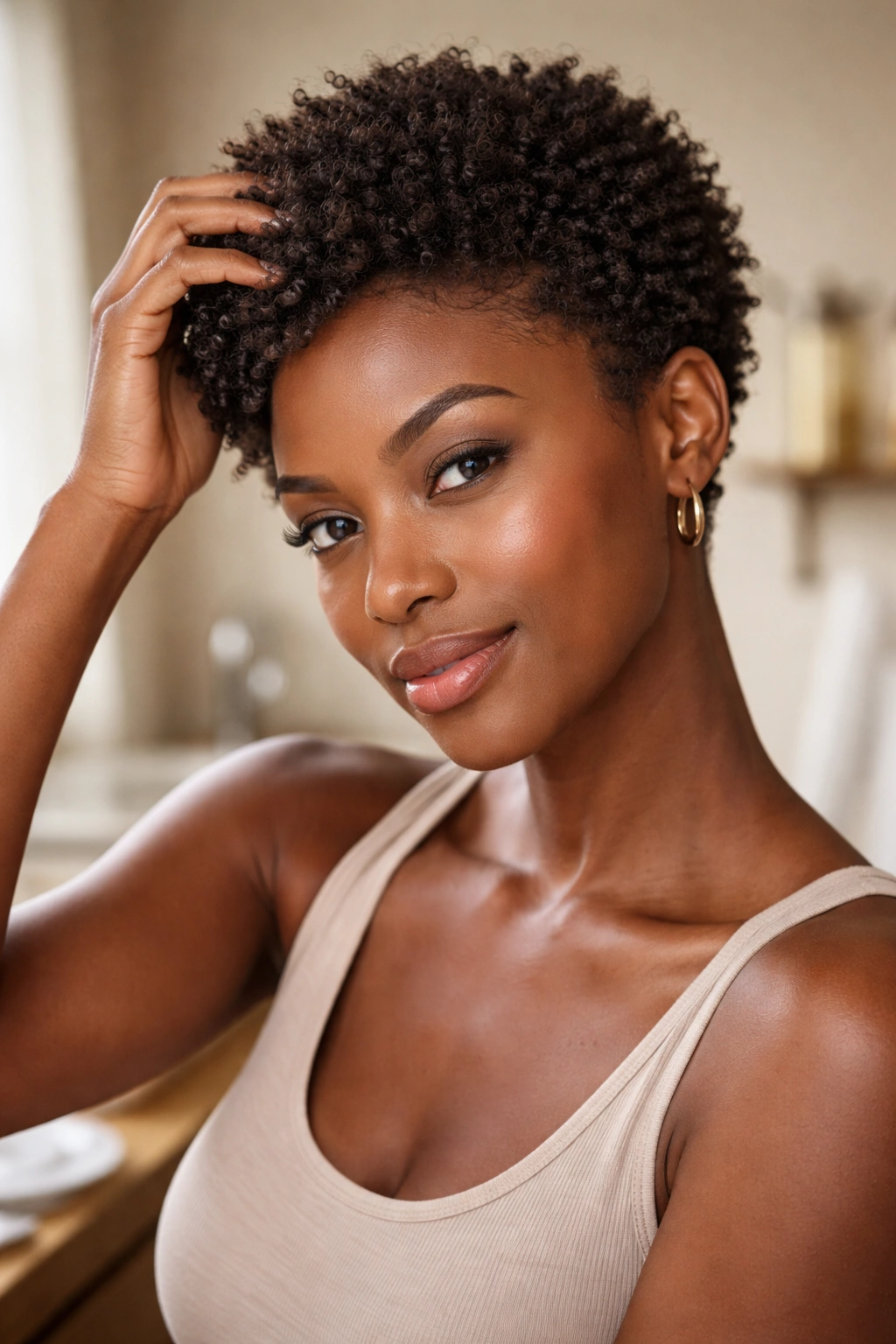
Short afro maintenance is not the same as long natural hair maintenance. The product amounts are smaller — a pea-sized amount of curl cream goes a long way when there’s only 2 inches of hair to cover. But the frequency of application is higher because short hair dries out faster. Daily or every-other-day moisturizing is realistic.
A simple routine: spritz with water in the morning, apply a tiny amount of leave-in conditioner, seal with a small amount of oil or shea butter. In the evening, sleep on a satin pillowcase or in a satin bonnet. That’s it. Weekly wash with a sulfate-free shampoo, monthly clarifying wash to remove any product buildup.
Dealing With Shrinkage on Short Cuts
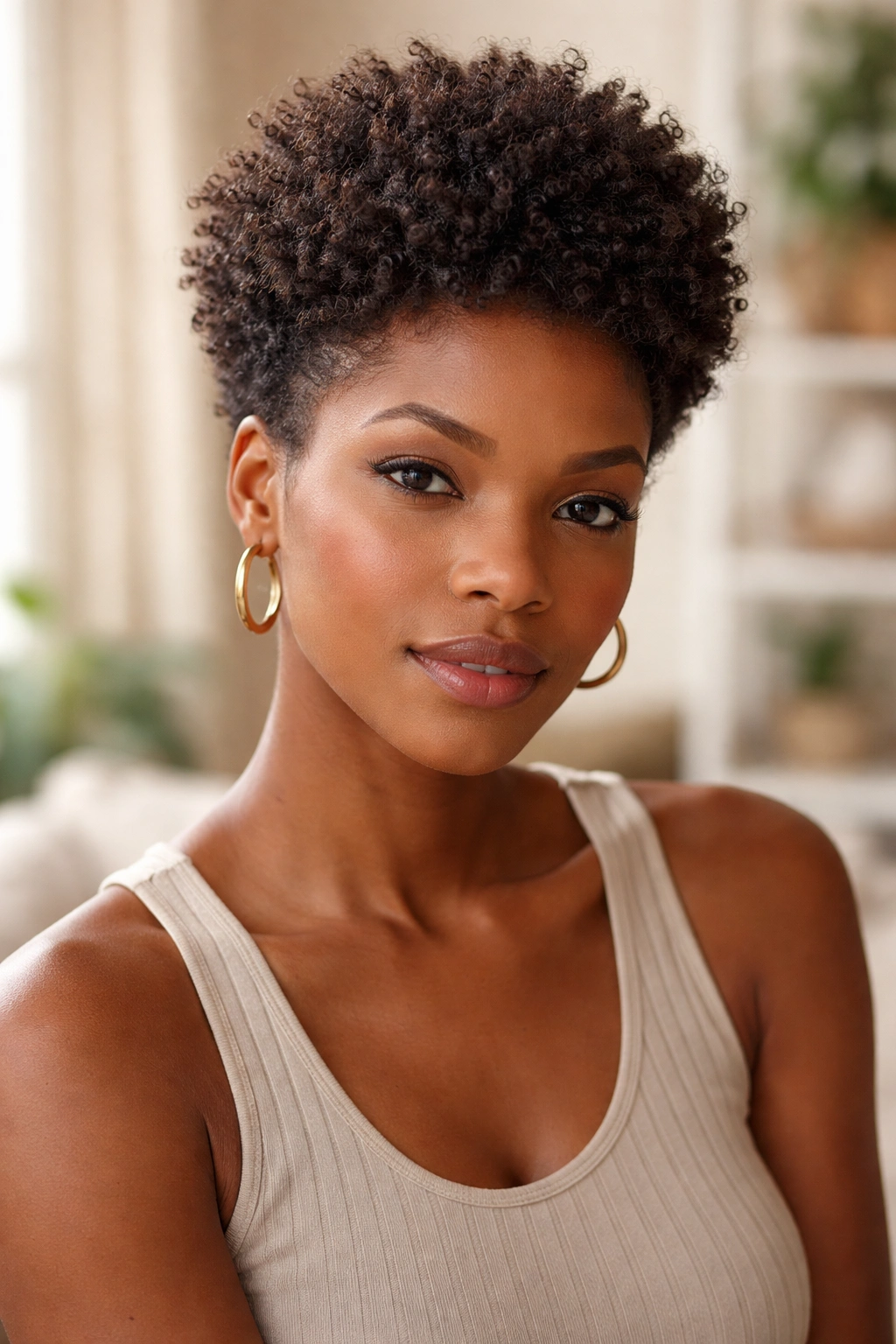
Shrinkage is dramatic on short natural hair — a style that looks like 3 inches at the salon might sit at 1.5 inches by the time your coils have fully contracted after wash day. This isn’t a problem to fix. It’s the nature of type 4 hair, and the most beautiful short afro styles work with shrinkage rather than fighting it.
If you want more visual length, stretching with a diffuser on low heat or African threading on damp hair overnight gives you elongation without heat damage. Braiding damp hair into large two-strand twists overnight and releasing in the morning also stretches without heat. None of these are permanent — the coils return to their natural state at the next wash — but they’re effective for days when you want a different profile.
Common Mistakes With Short Afro Cuts
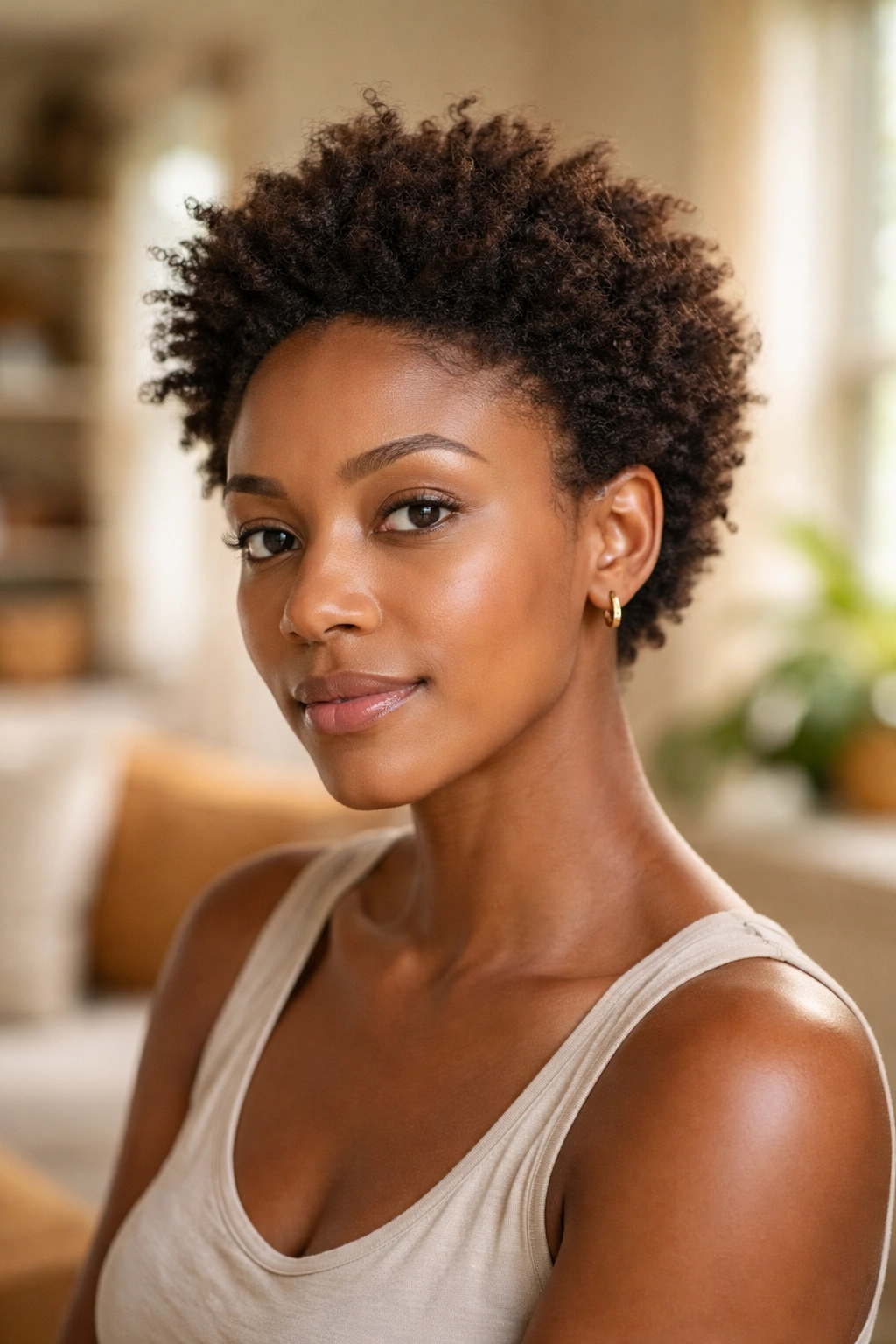
Skipping protein treatments when you’re short is a mistake. Because the hair is closer to the scalp and more visible, any breakage or thinning shows immediately. A monthly protein treatment keeps the cuticle strong. Don’t overdo it — too much protein makes type 4 hair stiff and prone to snapping. Once a month, alternating with a moisturizing deep condition, is the right balance.
Over-manipulation is the other big one. Picking, combing, and touching short natural hair constantly disrupts the curl pattern and causes frizz. Style once, refresh with a little water and product if needed, but resist the urge to keep working it. The hair that looks best is usually the hair that was set up properly once and then left alone.
Knowing Which Cut Is Actually Right for You
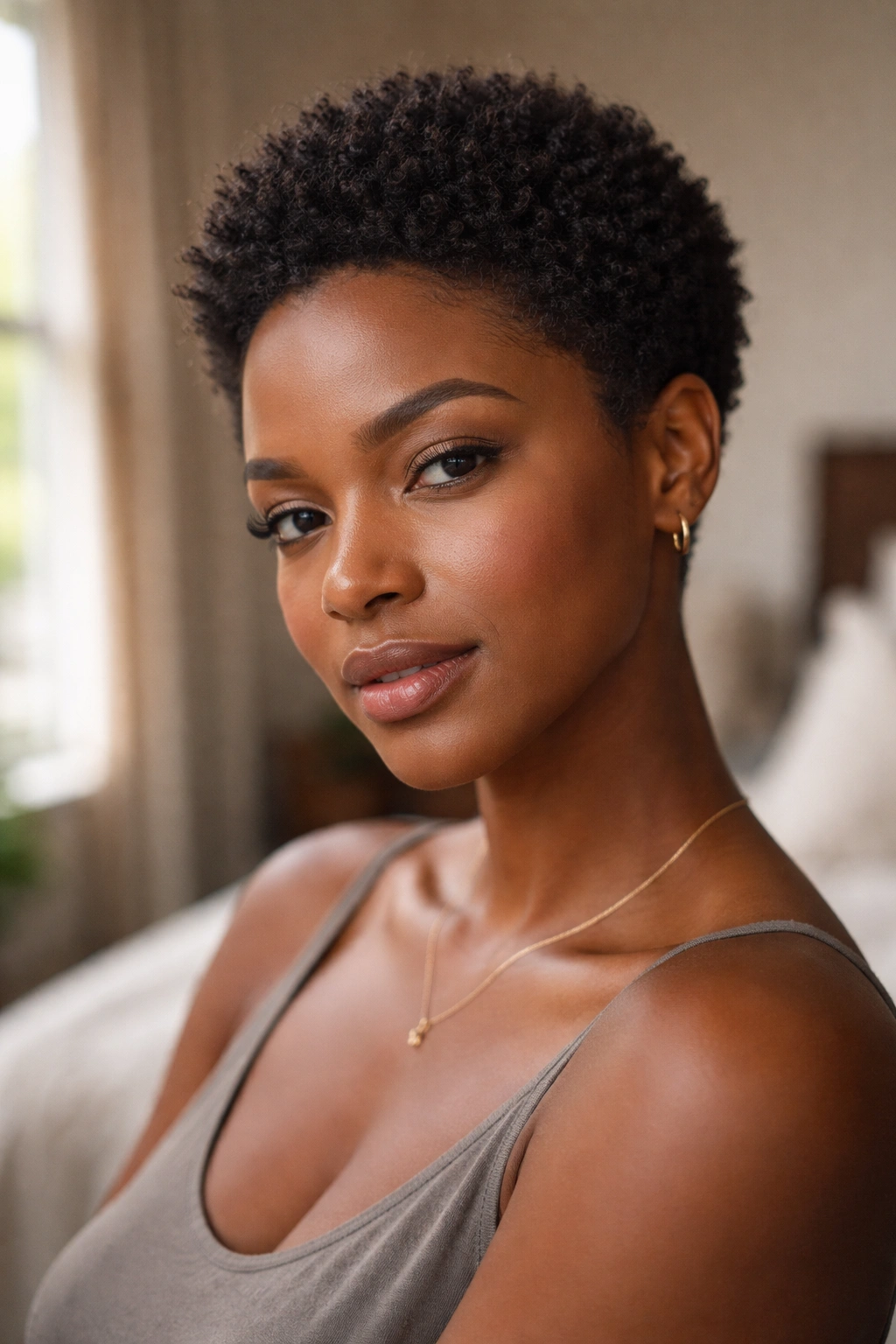
No list replaces sitting in front of someone who understands your texture, your face, and what you do with your hair on a Tuesday morning when you’re running late. Use these 21 options as a vocabulary — a way to articulate what you’re drawn to and why. Bring photos. Talk about your maintenance tolerance. Be honest about whether you’ll actually sit for a shape-up every two weeks or whether once a month is more realistic.
The best short afro haircut for you is the one you’ll actually maintain and wear with confidence. That might be a clean, simple TWA. It might be a sculpted high-top fade. The only wrong answer is a cut you chose because it looked great on someone else but doesn’t fit how you live.
