


Beads on all back cornrows are a love letter to detail. The braids run clean from the hairline to the nape, and the beads turn each braid into something with weight, sound, and a little extra story. Walk through a hallway and you can hear them. Catch the light and you see them. I’ve worn beaded cornrow installs through countless versions, and the lesson holds — beads done right elevate even the simplest pattern into something memorable.
This is a guide to twenty-five different all back cornrow styles with beads. The variations come from bead type, count, color, placement, and how they interact with the braid base. Each one offers a slightly different visual rhythm.
Why Beads Belong on Cornrows
The cultural roots run deep. Beaded braids have been part of African and African-diaspora hair traditions for centuries — used to mark status, age, region, and personal style. Wearing them is a continuation of that lineage, not just a fashion choice.
Beads also add functional weight. They pull the braids straight. A floppy braid hangs limp. A beaded braid hangs with intention. The weight extends the visible life of the install because the braids stay neat longer.
Then there’s the sound. The soft clicking when you walk or turn your head is small and pleasant. Some people find it grounding. Others find it a quiet announcement of presence.
Choosing the Right Beads
The bead size and material change everything.
Small beads, 6 to 8 mm, work for most install styles. They add accent without overwhelming.
Medium beads, 8 to 12 mm, look bolder. They suit longer braids and chunkier cornrow patterns.
Large beads, 12 mm and up, make a statement. They pair best with thick braids and styles where the beads are the focus.
Material matters too. Wooden beads warm with handling and develop a worn-in look. Glass beads catch light brilliantly. Plastic beads are cheapest but read less polished. Metal beads — usually brass or aluminum — add coolness and shine.
How Many Beads to Use
The bead count is a personal choice with practical limits.
A few beads per braid — 2 to 4 — reads as accent. Most braids might have one or two. Some have none.
A medium count — 5 to 8 per braid — fills out the install with consistent texture. The sound is more pronounced.
A high count — 10 or more per braid — creates a fully beaded look. The braids feel heavier. Sleep is harder. The visual impact is at maximum.
For first-timers, start medium. Around 5 beads per braid, evenly spaced.
Tools You’ll Need
- Beads in your chosen sizes and colors
- A bead tool (looks like a wire loop with a handle) for threading
- Small silicone hair bands to secure beads in place
- Scissors for trimming any excess from the silicone bands
- Rat-tail comb for parting
The bead tool is the make-or-break item. Without it, threading beads through small openings is a frustration. With it, the process moves fast.
Prep Notes
The cornrow install comes first. Beads go on after the braids are complete, not during.
Make sure each braid has enough length at the end to bead. About 4 inches of free length per braid is the minimum. Shorter braids only fit 1 to 2 beads before reaching the end.
Plan extra time for beading. A full beaded install adds 1 to 2 hours on top of the cornrow install time.
1. Single Bead per Braid at the End
Why It Works
The minimalist approach. One bead at the very end of each cornrow. Simple, clean, easy to wear.
- Use medium beads, 8 to 10 mm
- Choose a single color for cohesion
- Secure each bead with a small silicone band below
Tip: Test bead weight before committing to a full install. Heavy beads can weigh down individual braids and pull on the scalp.
2. Cluster of Beads at the Tip
Three to five beads stacked at the very tip of each braid. The cluster creates a defined finish that catches the eye.
The beads can match in color or alternate. Matching reads sleek. Alternating reads playful.
The tip cluster is heavier than spread beads. It pulls the braid straight, which is good for posture but can feel weighty after a few hours. Take a day to adjust.
3. Beads Spaced Evenly Down Each Braid
Five to seven beads spaced at regular intervals down the length of each braid. The even spacing creates a rhythm that catches the eye.
Spacing depends on braid length. For mid-back braids, beads about every 4 inches works. For waist-length, every 5 to 6 inches.
The even spacing reads sophisticated. Random spacing reads bohemian. Both are valid; pick by mood.
4. Mixed Color Beads in Patterns
Different colored beads arranged in patterns down each braid. Could be alternating colors (red, blue, red, blue) or repeating sequences (red, red, blue, red, red, blue).
The pattern should be the same on every braid for cohesion. If pattern A is on braid 1, it should be on braids 2, 3, and so on.
Three to four colors is the sweet spot. More gets visually noisy.
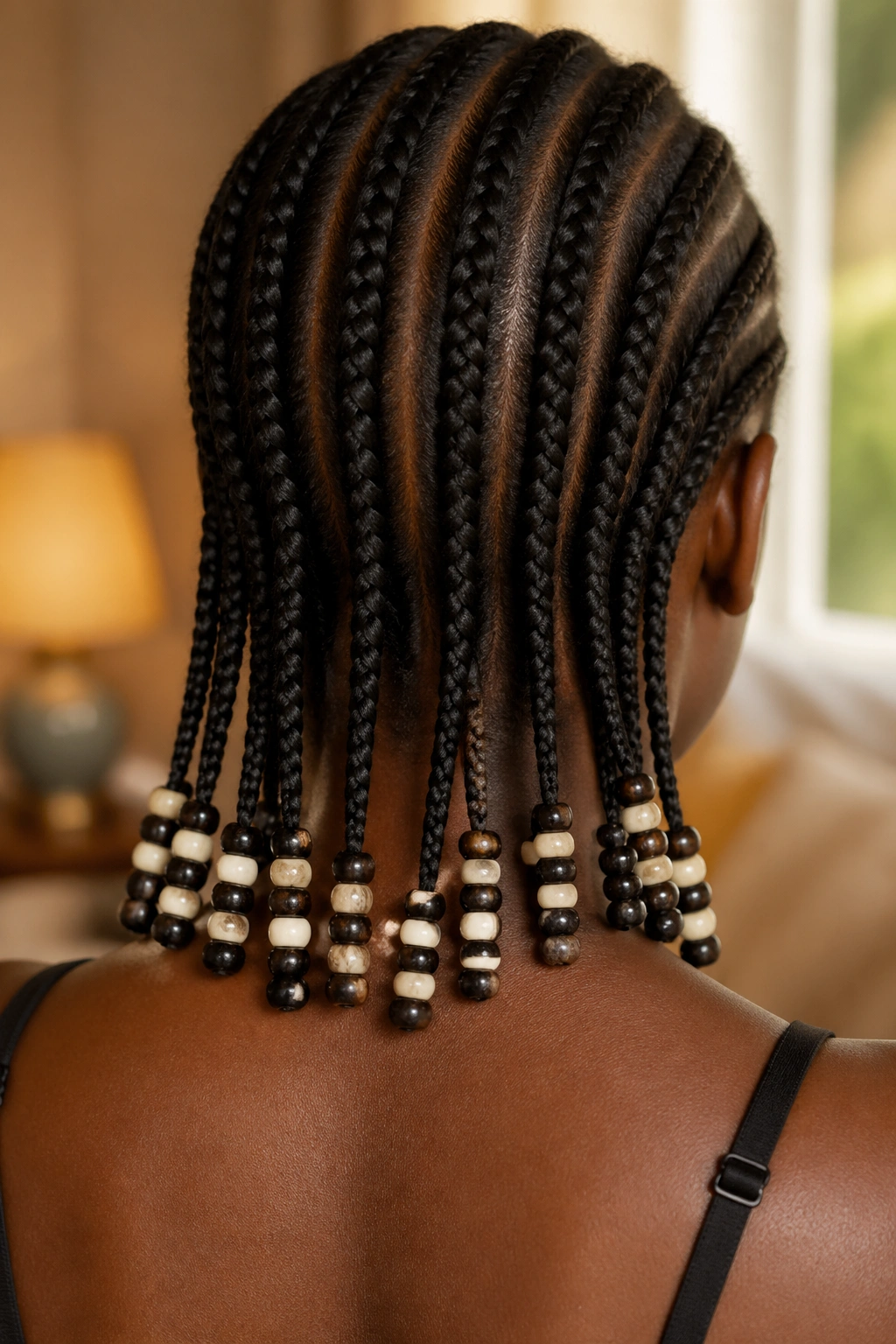
5. Wooden Beads Throughout
What Makes It Different
A full install of wooden beads creates a warm, organic aesthetic. The wood absorbs the natural oil from your scalp and develops a darker patina with wear.
The clack of wooden beads is softer than glass or metal. It’s a more muted sound.
Who This Is For
Anyone drawn to natural materials and a more grounded aesthetic. Wooden beads pair especially well with black, brown, and warm-toned hair colors.
6. Glass Beads with Light Reflection
Glass beads catch and reflect light in ways that wooden or plastic beads can’t. A glass-beaded install looks almost luminous in the right lighting.
Clear or translucent glass beads are most striking. They show the braid hair through the bead, creating a layered visual.
The downside is fragility. Glass beads can chip or break if dropped or knocked hard. Treat them with care during sleep and active wear.
7. Beads Concentrated at the Hairline
Most beads near the front of the braids, fewer toward the ends. The concentration draws the eye to the face.
Place 3 to 4 beads in the first 6 inches of each braid. Then 1 to 2 beads on the bottom half. The visual weight sits up front.
This style suits people who want a beaded look that frames the face rather than hangs heavy at the bottom.
8. Beads at the Bottom Third Only
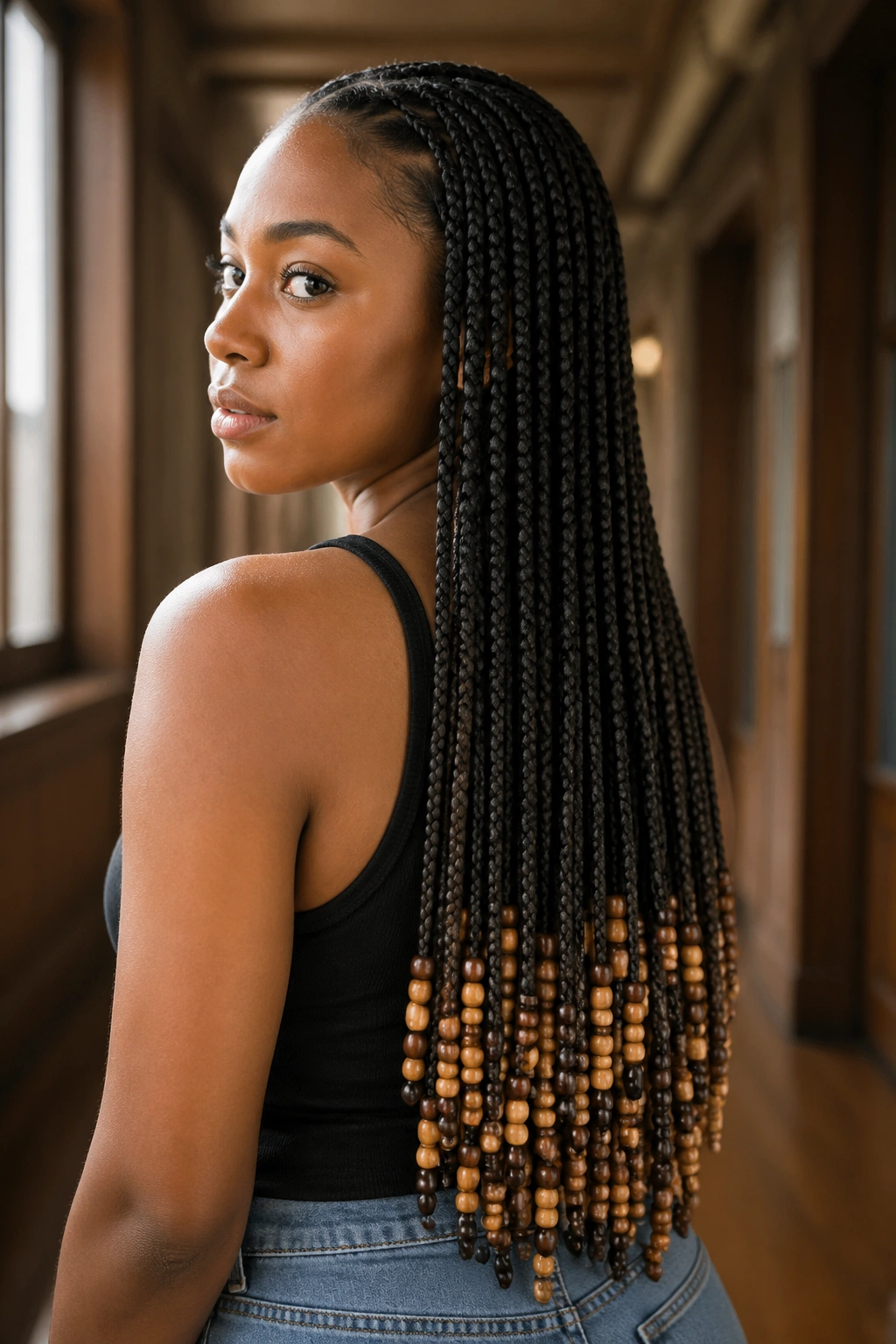
The opposite arrangement — no beads on the top two-thirds of the braids, all beads on the bottom third. The braids look clean for most of their length, then burst into bead density at the ends.
The bottom-third concentration reads more dramatic. The beads cluster together and create real visual weight.
This works best on long braids. The bottom third has to be substantial enough to hold the bead concentration.
9. Single Color Beads in High Density
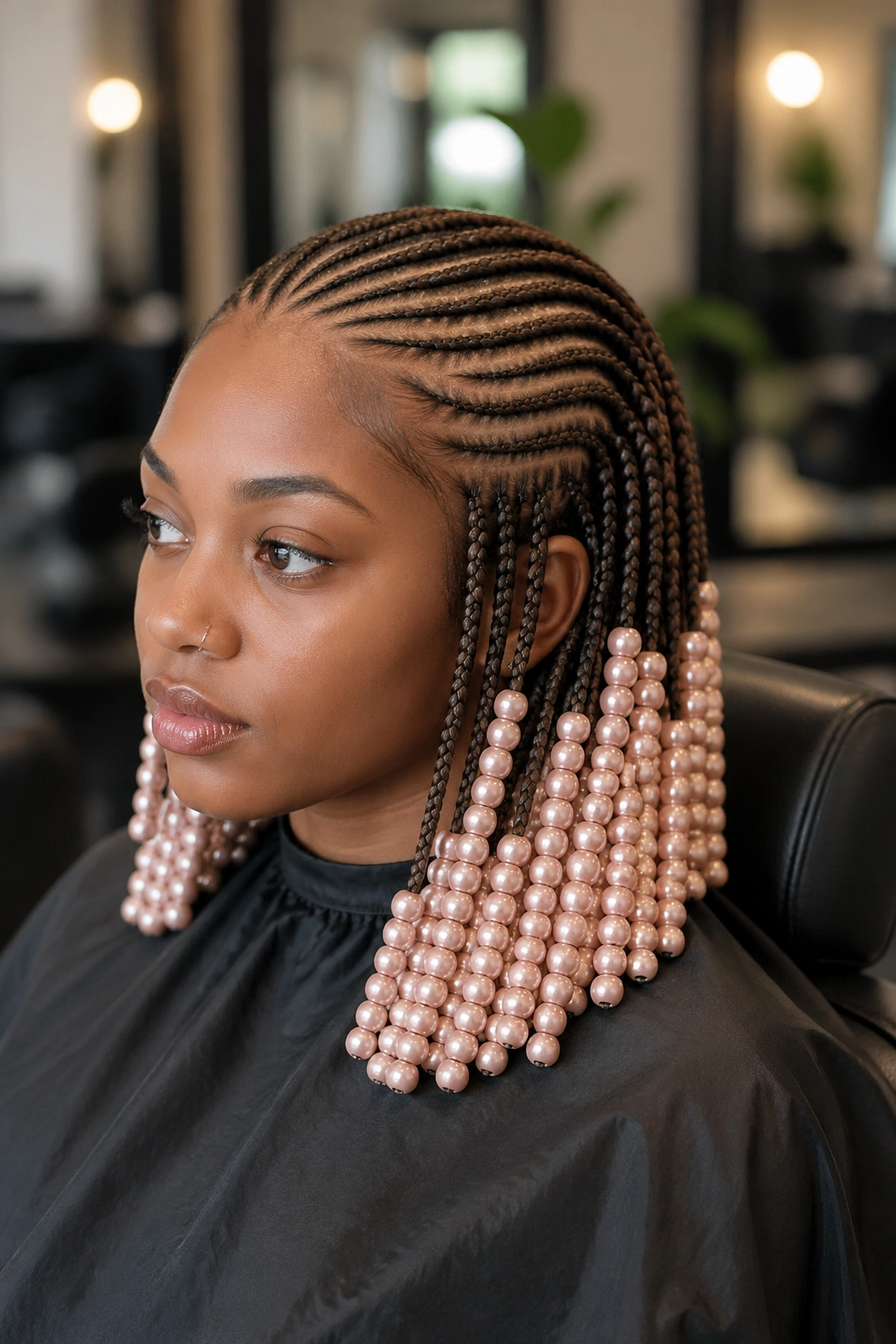
One color of beads, used densely throughout each braid. 10 to 15 beads per braid in a solid color.
The density creates an almost pearl-strand effect. Each braid looks fully decorated.
This is high commitment. The install takes hours of bead threading. The result is striking but demanding to live with.
10. Two-Toned Beads with Gradient
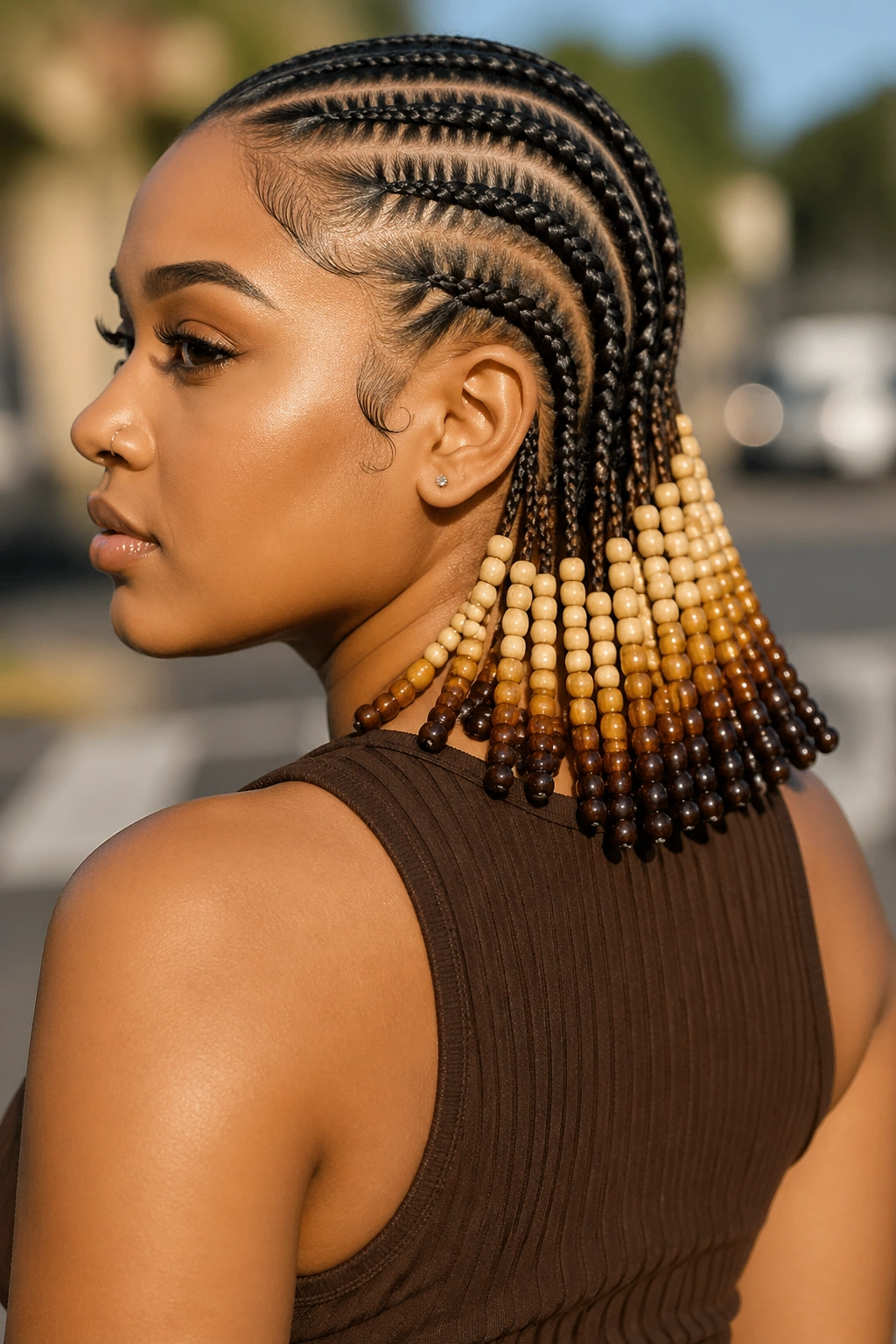
Beads gradient from light to dark down each braid. Lighter beads at the top, darker beads at the bottom. The fade creates depth.
Choose two related shades — light pink to dark pink, light blue to navy, white to black. The gradient reads subtle when the shades are close, dramatic when they’re contrasting.
This style pairs well with ombre hair color. The gradient in the beads matches the gradient in the hair.
11. Beads with Silver Accents
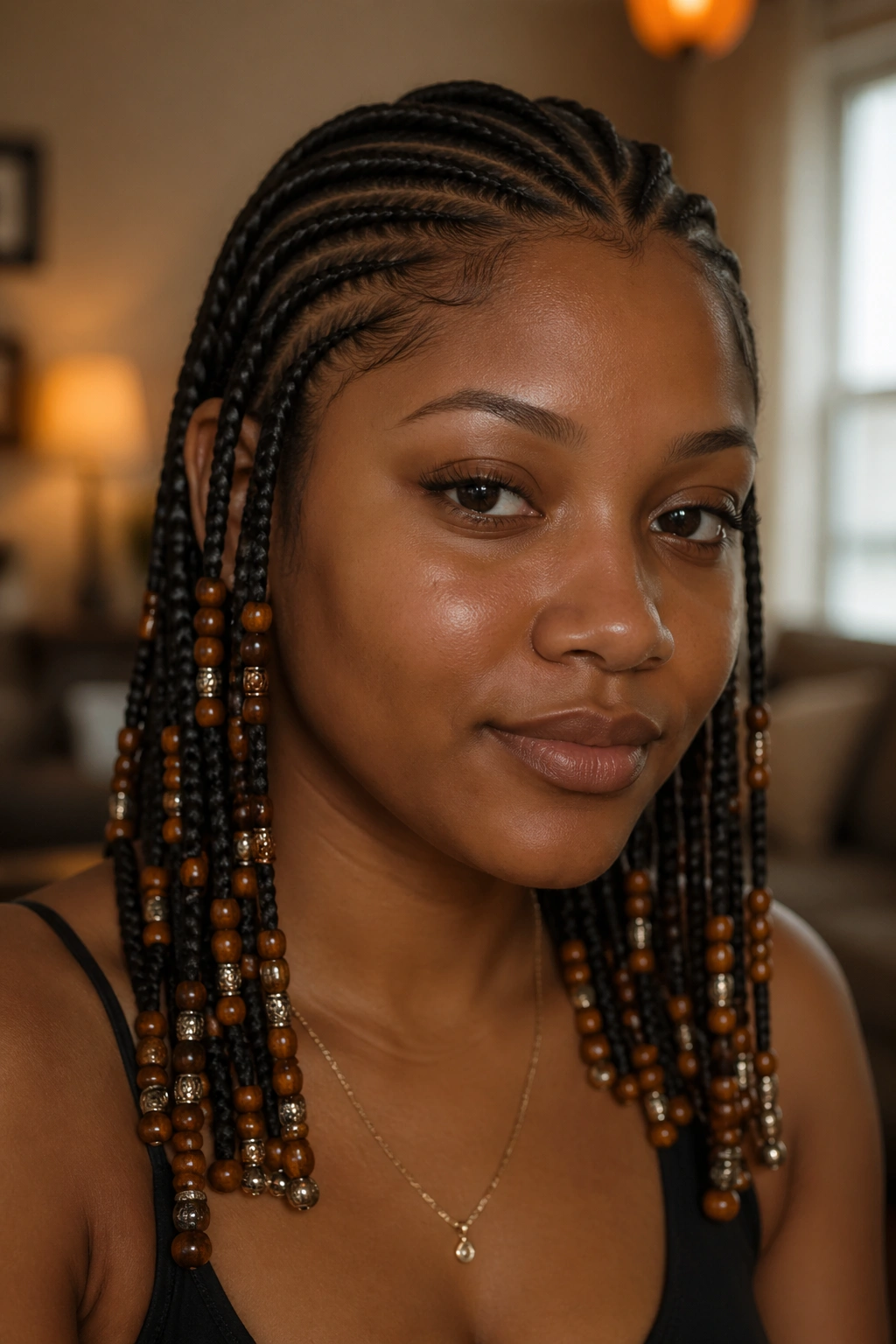
Mostly wooden or colored beads with a few silver beads sprinkled throughout. The silver catches light and adds shine without overwhelming the install.
What’s the right ratio? Roughly 80% main bead color, 20% silver accents. The silver beads should look intentional but not dominant.
How to Wear It
Place silver beads at varying positions on different braids. Not at the same height on each. The randomness reads more natural.
12. Large Statement Beads at Each Tip
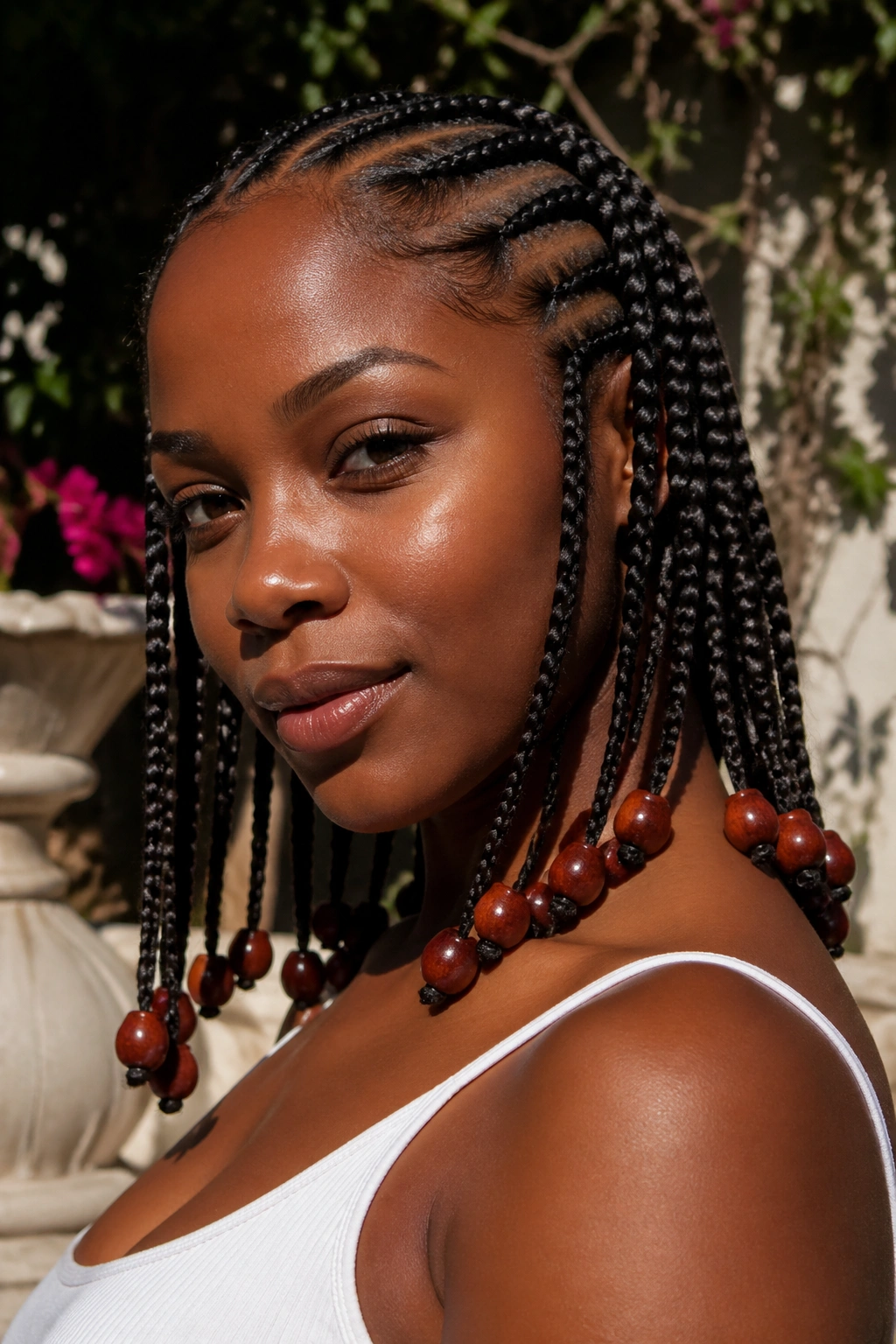
A single large bead — 15 to 20 mm — at the very end of each braid. The tip beads become a unified statement across the install.
Large beads need to be lightweight or the install gets heavy. Wood is lighter than glass. Hollow beads are lighter than solid.
This style reads bold. Each braid ends in a defined point of color and shape.
13. Mixed Bead Sizes Throughout
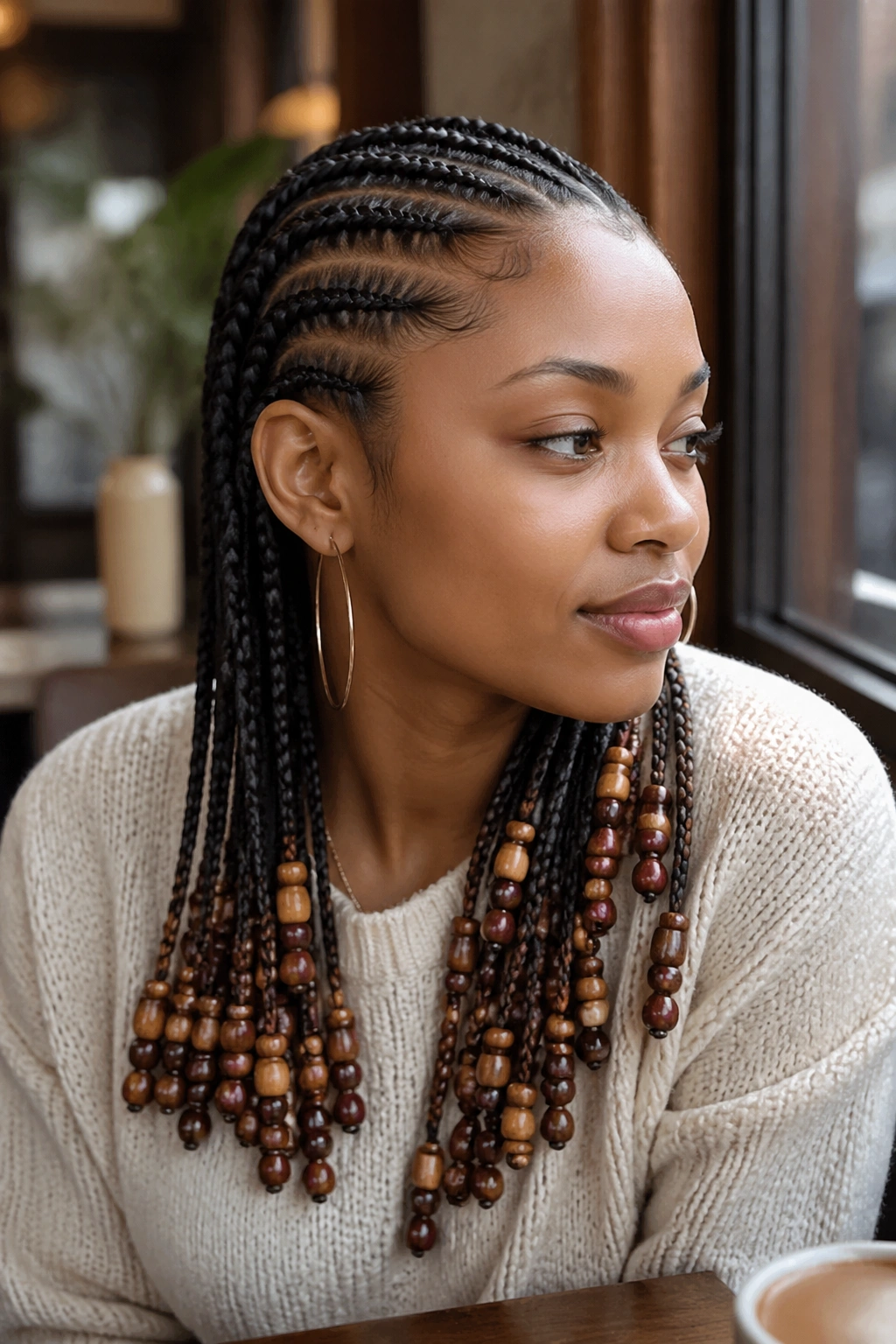
Beads of varying sizes — small, medium, large — interspersed down each braid. The size variation creates visual texture.
The placement should be intentional. Larger beads at certain points (the tip, or two-thirds down) anchor the smaller beads. Random placement looks accidental.
Stick to a single color family even with size variation. Two variables (size and color) create chaos.
14. Beads with Charms
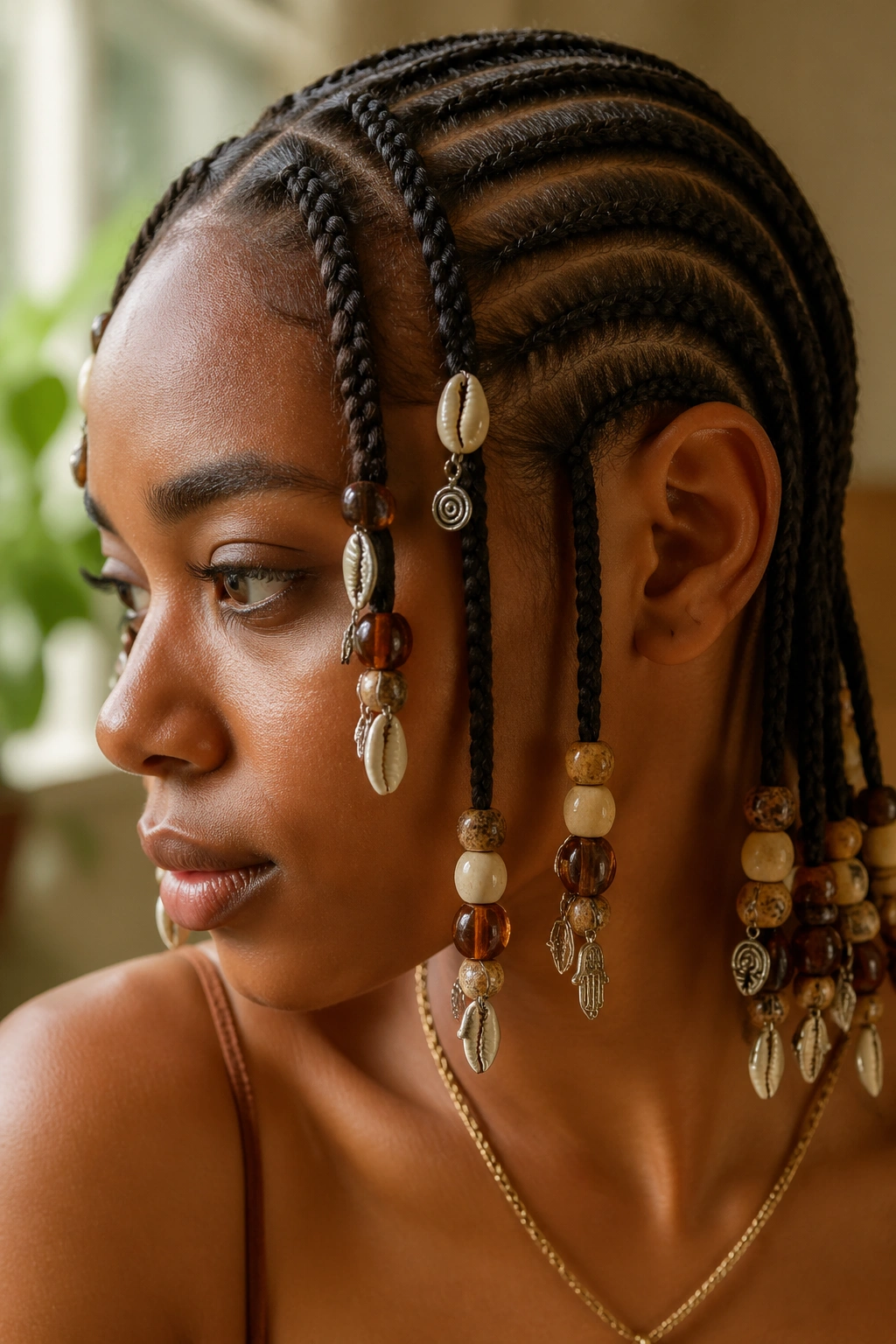
Decorative charms — small pendants, shells, hammered metal pieces — attached to braids alongside beads. The charms add character that pure beads can’t.
Use charms sparingly. One per braid maximum, and only on a third to half of the braids.
Cowrie shells are a popular charm with cultural significance. Small metal coin shapes also work. Avoid anything too heavy or it will pull on the braid.
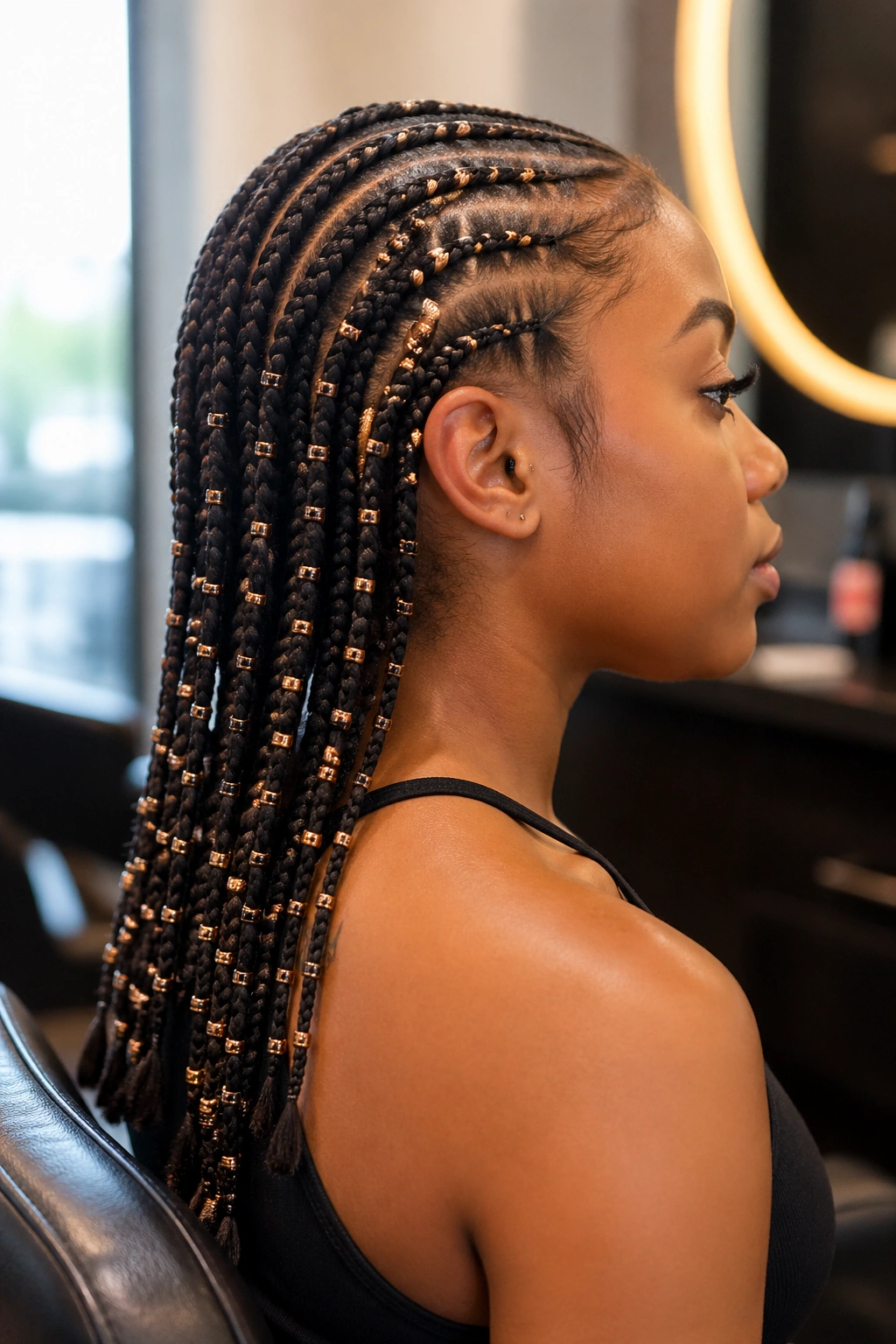
15. Beads with Hair Cuffs
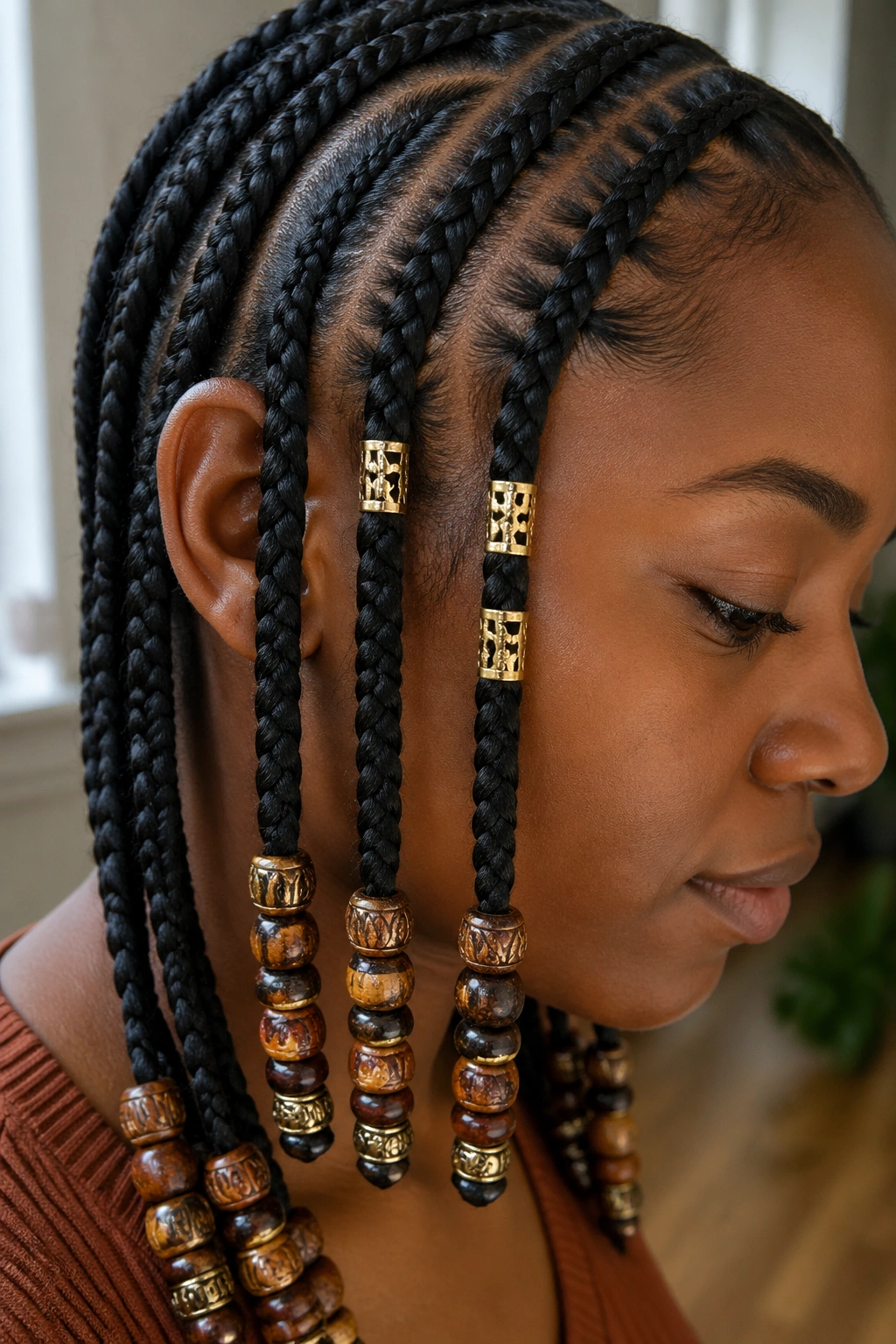
Beads paired with metal cuffs along the same braid. The cuff sits higher on the braid; the beads sit lower.
The combination of metal and bead creates contrast. The cuff is cool and structured. The beads are softer and more textured.
Two or three cuffs per beaded braid is the right count. More starts to look stacked.
16. Cowrie Shells Among the Beads
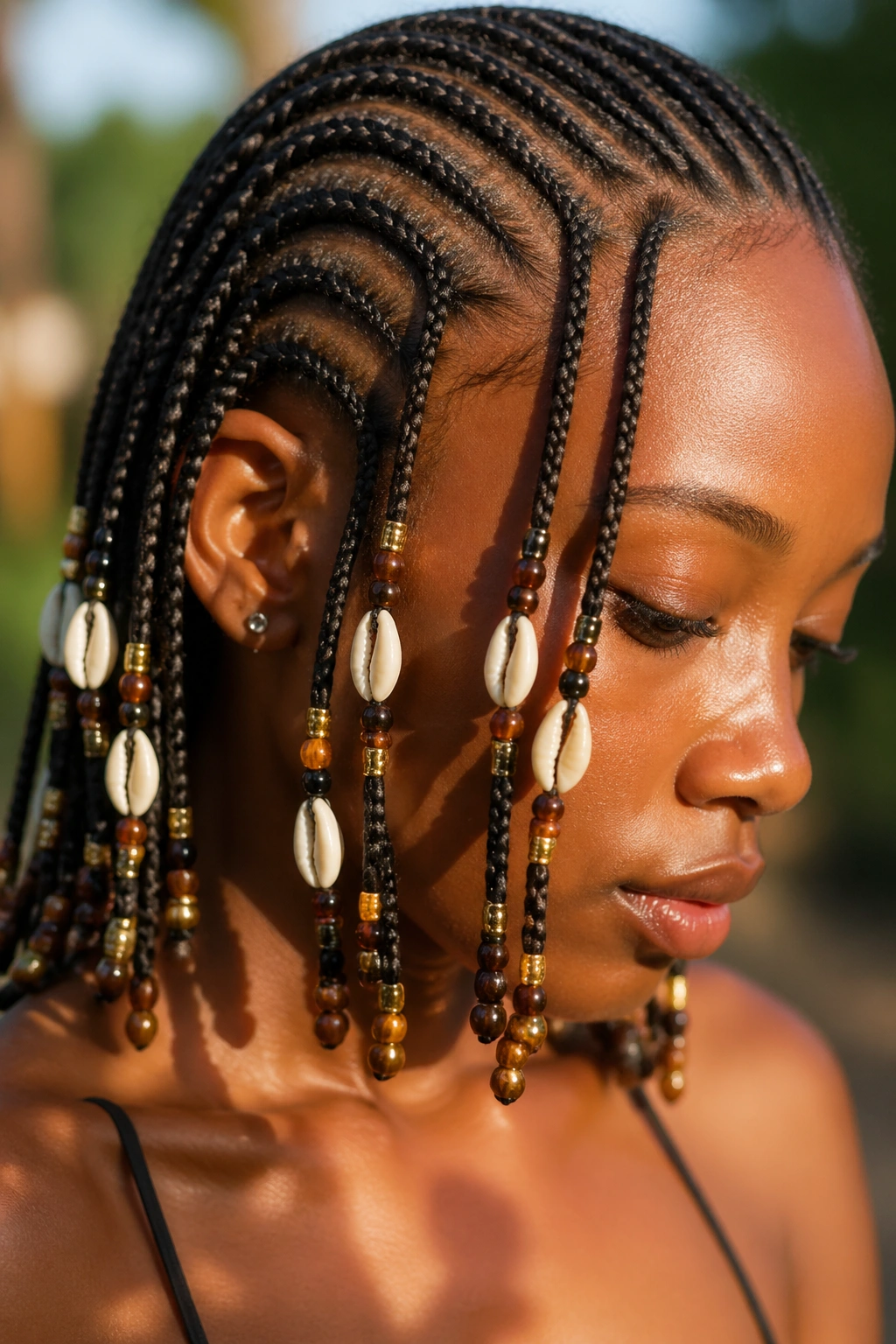
Cowrie shells alongside or instead of beads. The shells reference the cultural origins of beaded hair traditions in West Africa.
Shells are larger and lighter than glass or metal beads of similar size. They sit forward on the braid and catch attention.
Two to three shells per braid, with smaller beads filling the spaces, is a balanced layout.
17. Beaded Braids Half-Up
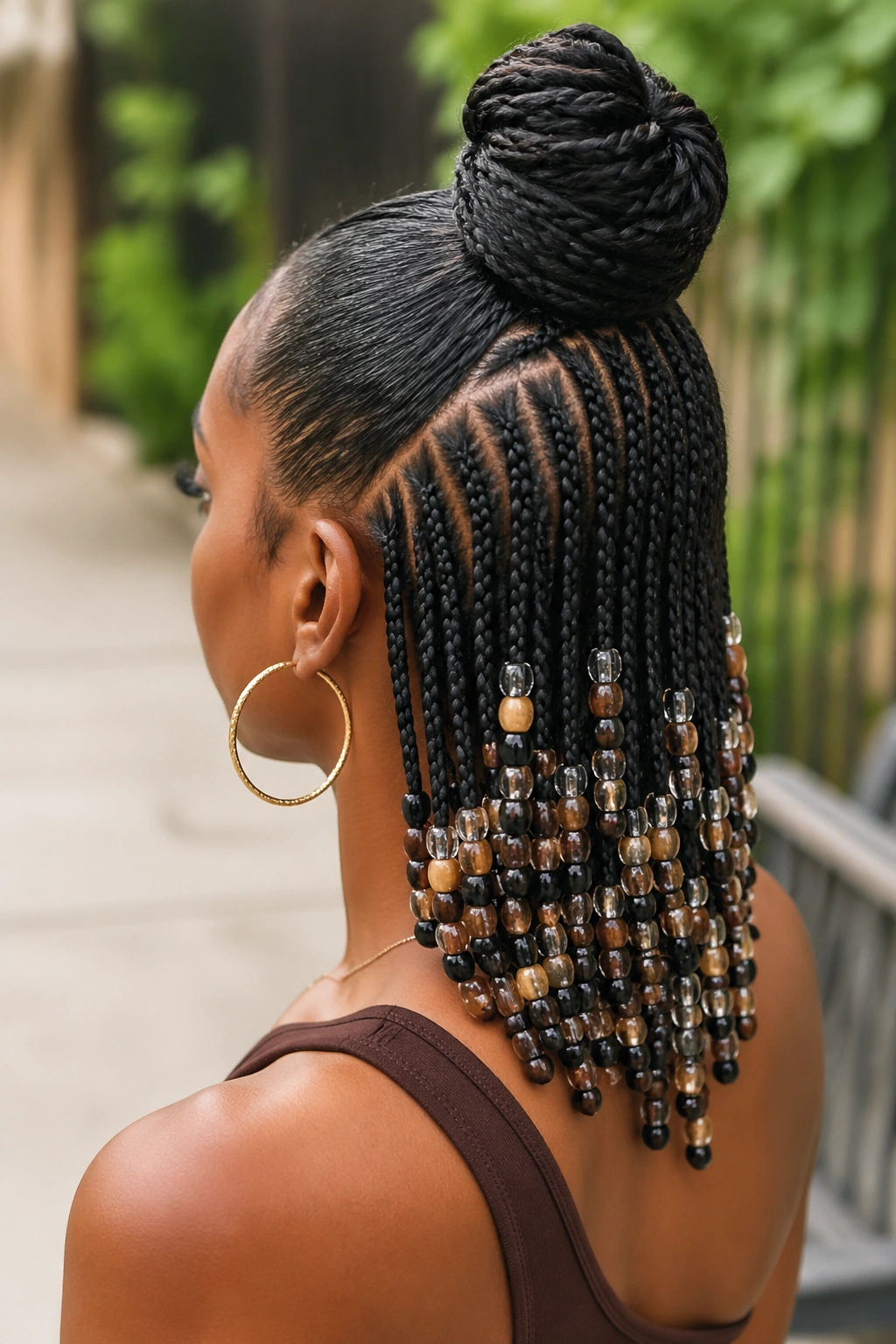
The cornrows are beaded throughout. Then the front half pulls into a high half-up bun, exposing the beaded back braids.
The half-up reveals the beadwork from the back. Photos from behind capture the full effect.
The bun should be smooth and clean — its simplicity contrasts with the texture of the beaded section below.
18. Beads on Front Braids Only
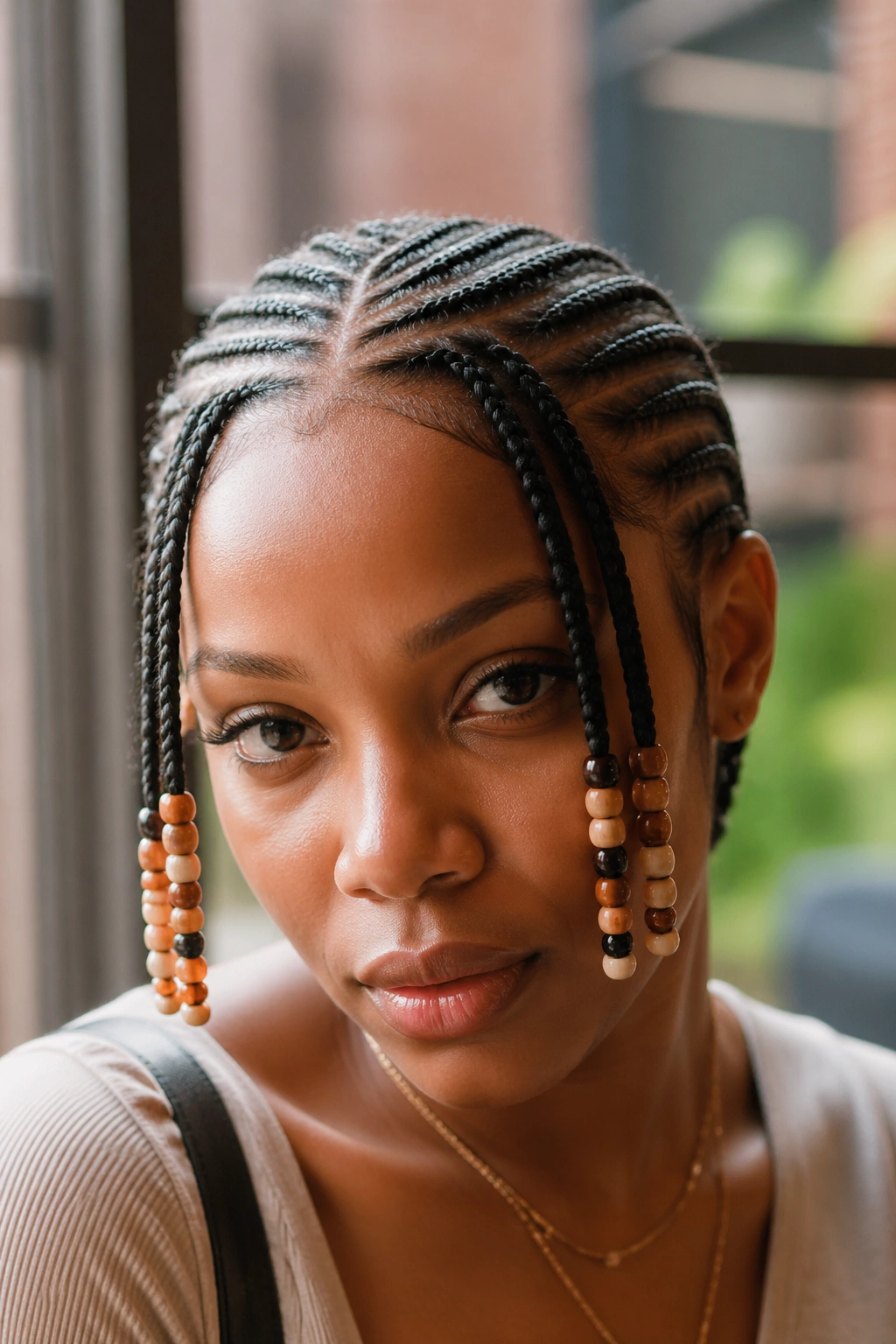
Only the front braids — the ones framing the face — get beads. The back braids stay bead-free.
This puts all the visual focus around the face. Good for outfits where the back of the head won’t be seen often.
The front braids should be heavily beaded if they’re carrying the whole look. 8 to 10 beads per front braid.
19. Beads in Specific Cultural Patterns
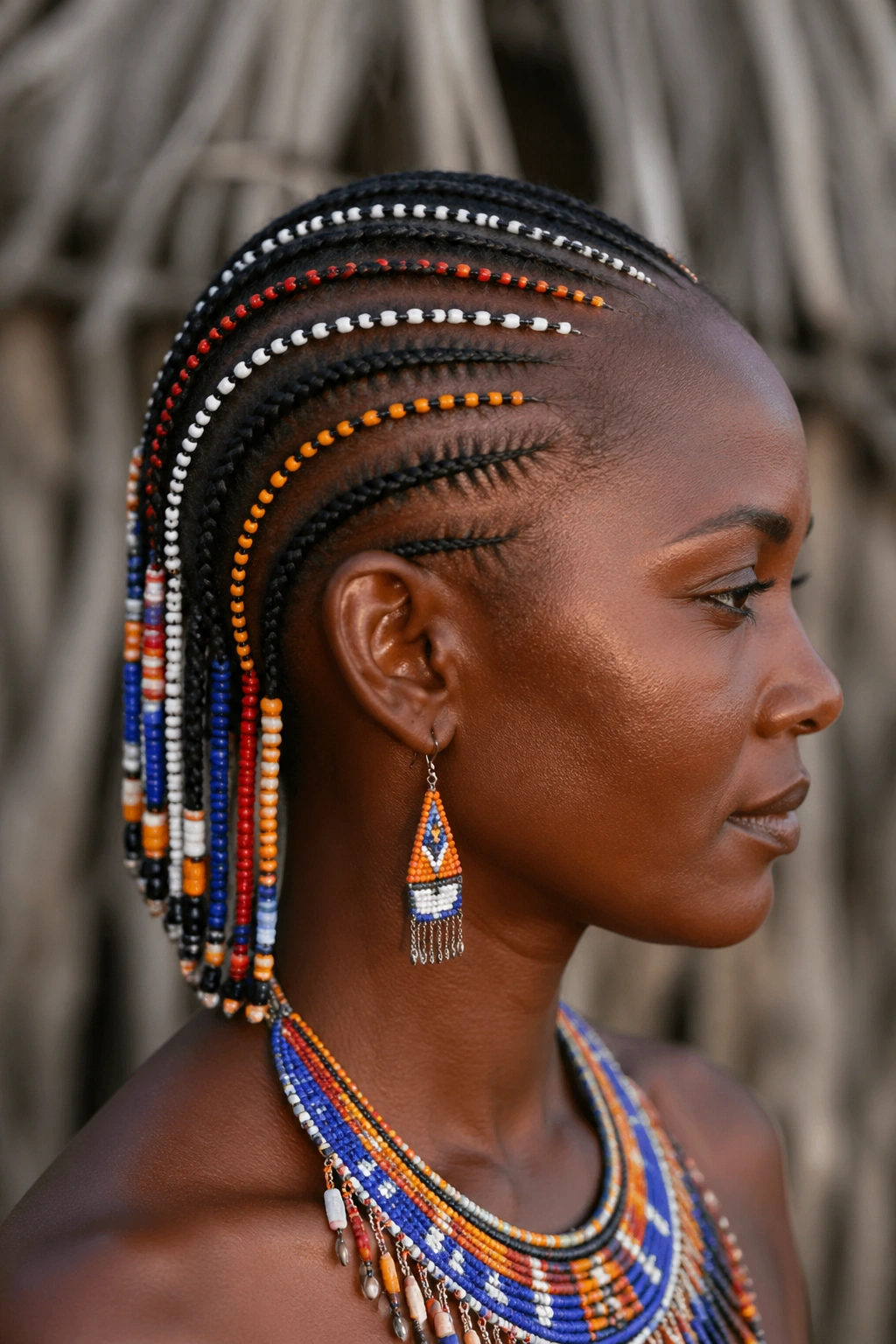
Bead patterns drawn from specific African or Afro-Caribbean traditions. Yoruba bead patterns, Maasai-inspired arrangements, Caribbean carnival color schemes.
Research the tradition before adopting it. Some bead patterns hold cultural significance. Use them respectfully and with knowledge.
When done thoughtfully, these styles connect personal aesthetic to deeper cultural roots.
20. Beads with Color-Coordinated Edge Gel
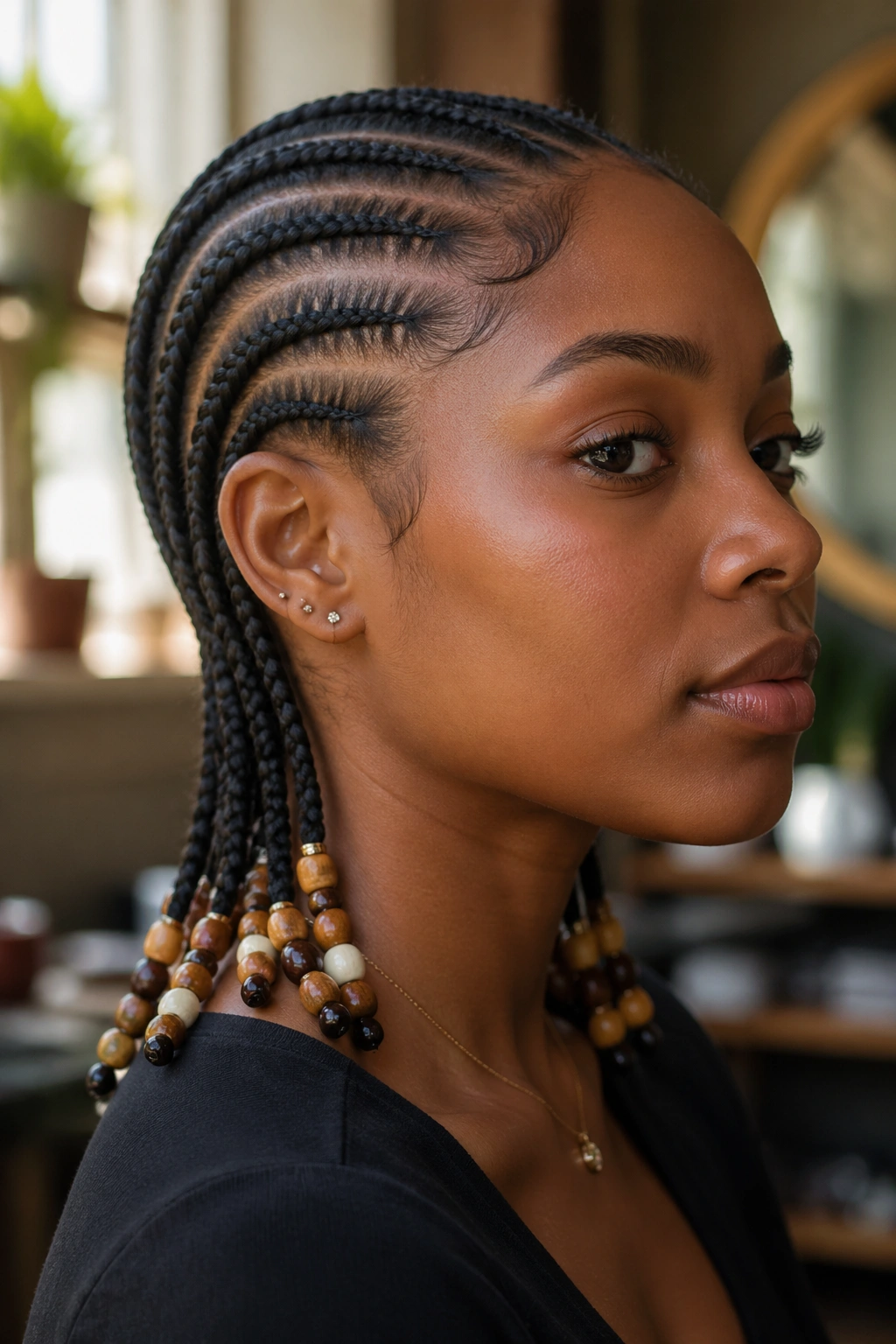
Beads in colored hair, with edge gel that matches one of the bead colors. The coordination ties the look together.
For example, pink beads on dark hair with pink edge gel. Or blue beads with blue edge work. The matching detail reads polished.
Use a colored edge gel from a brand like Ebin or As I Am. Apply with a small brush for clean lines.
21. Beads with Long Cornrows
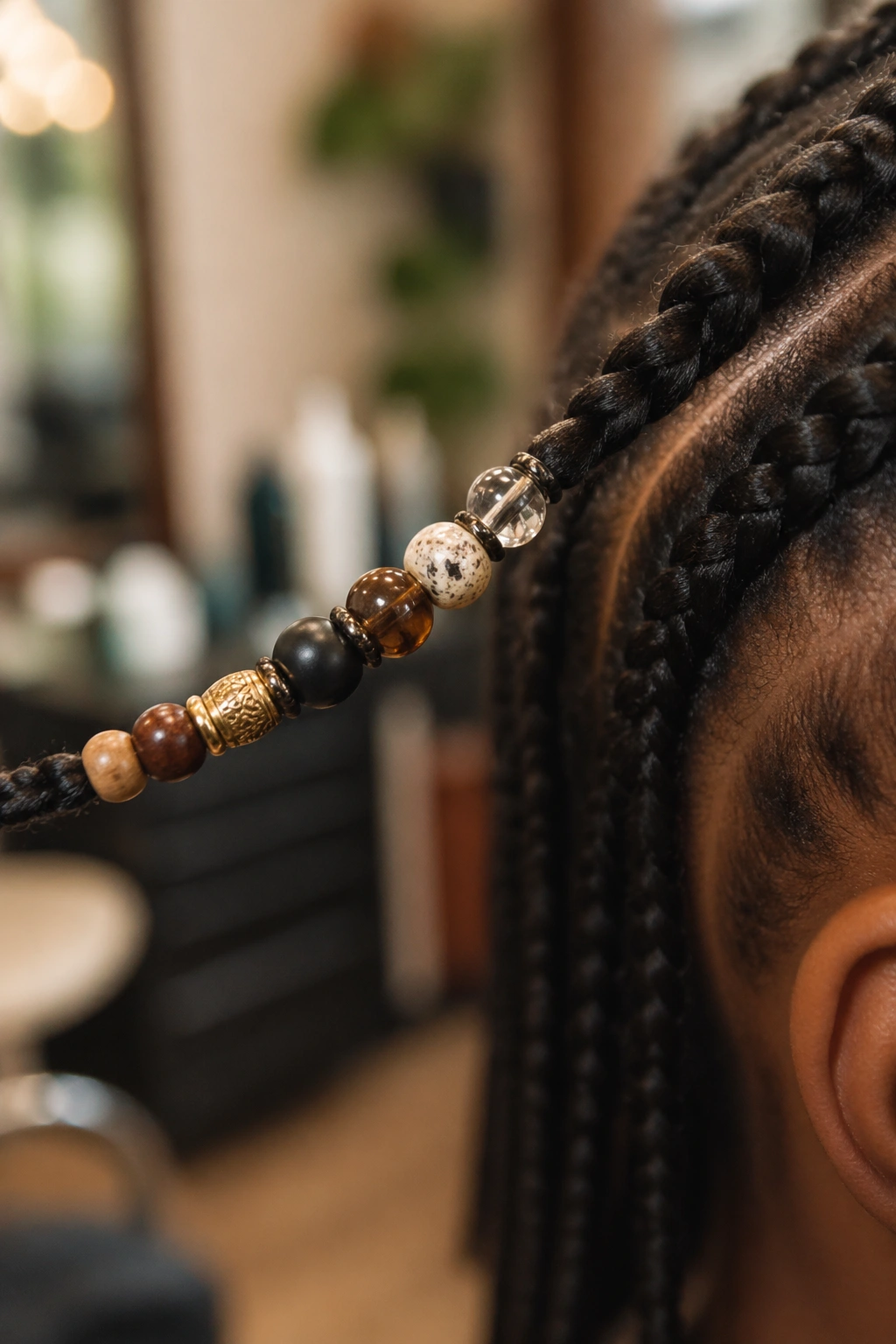
Waist-length cornrows with beads spread throughout. The long length gives more space for bead placement and creates more sound when you move.
Plan for heavy weight. Long beaded braids pull on the scalp. Take a few days to adjust. Sleep with the braids gathered into a loose bun to relieve nighttime pull.
The longer length also showcases more beads per braid — easily 8 to 12 each.
22. Beads with Asymmetric Placement
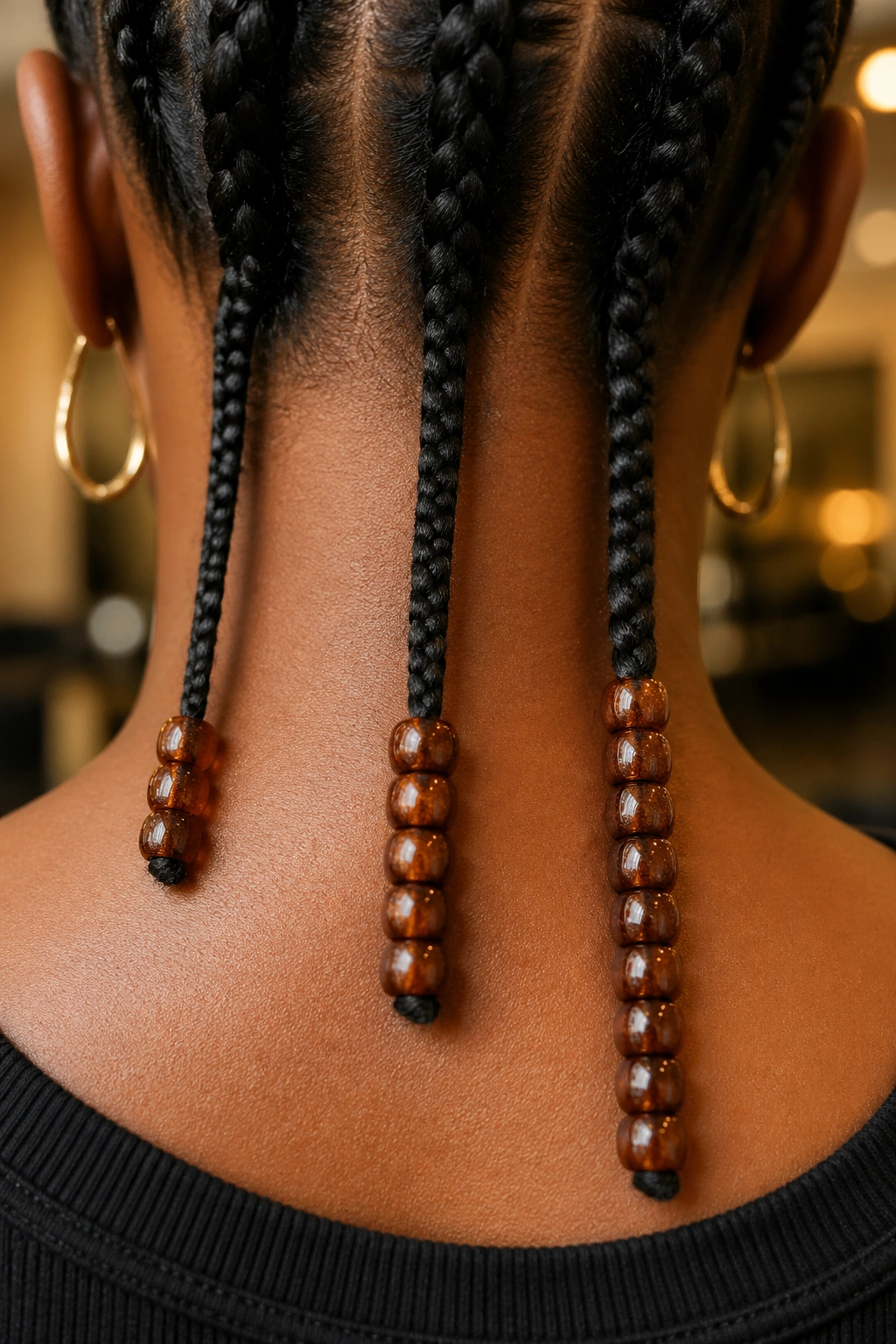
Beads on one side of the head, fewer or none on the other side. The asymmetry creates visual interest and reads intentional.
The beaded side draws attention. The cleaner side reads as a contrast.
This works for outfits with one shoulder bare or one side of the neck more visible. The bead concentration aligns with the visible side.
23. Beads Down the Middle, None on Sides
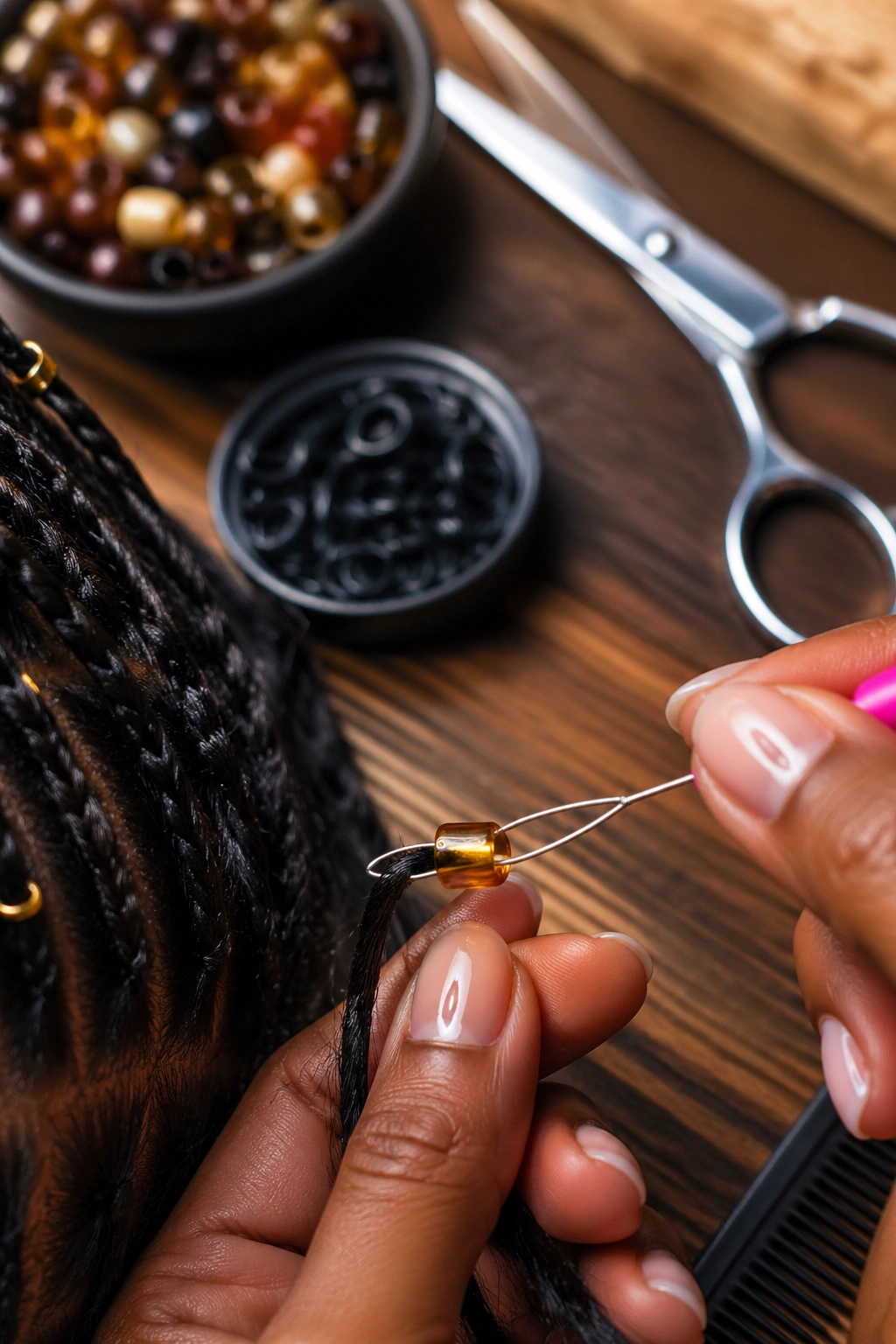
A center column of beaded braids running down the middle of the head, with the side braids unbeaded. The center reads as a beaded mohawk strip.
The center strip is usually 3 to 4 cornrows wide. The bead density on those strips is high — lots of beads on each.
The unbeaded sides keep the look from being overwhelming.
24. Beads with Color and Size Coordination
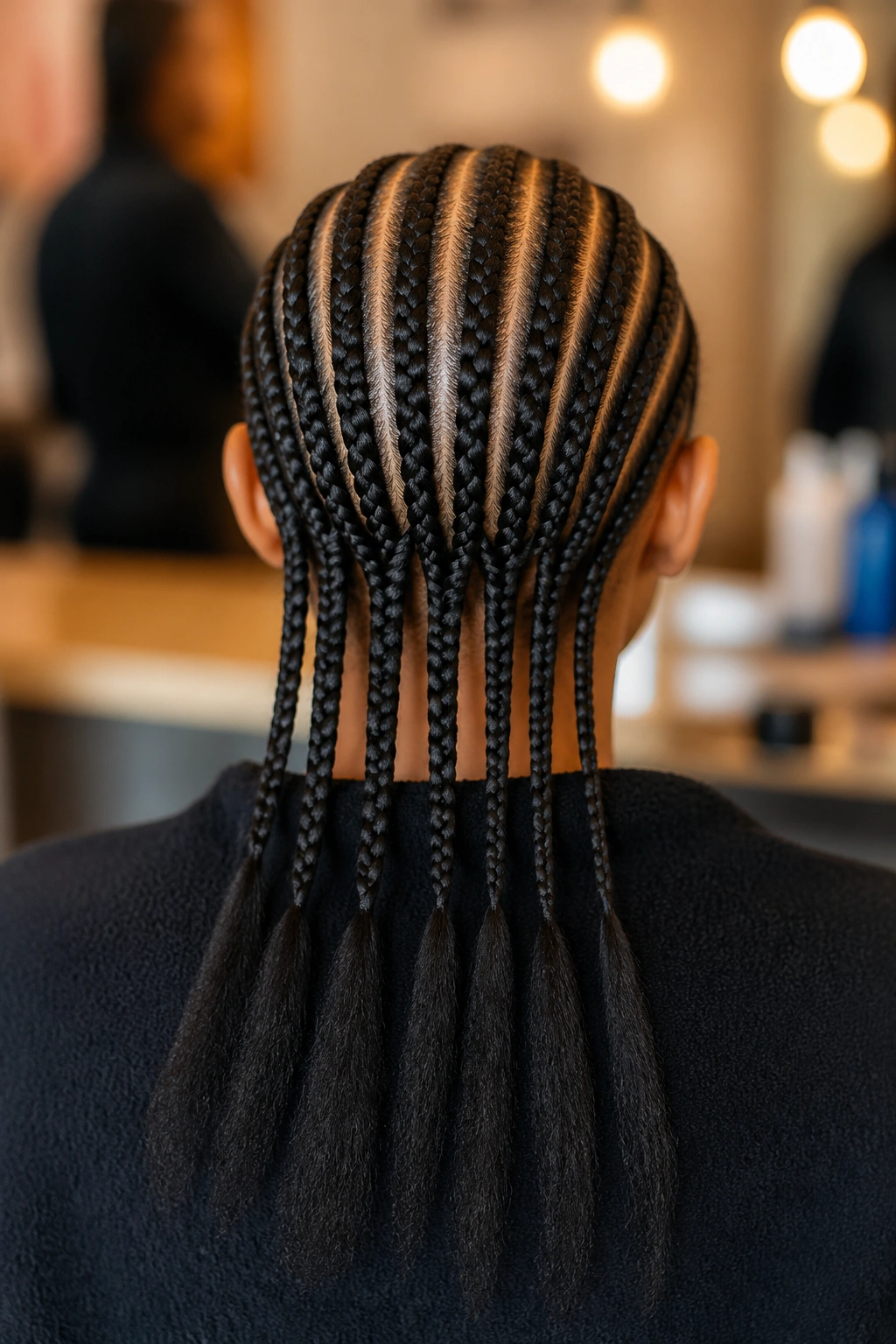
Each color of bead is a specific size. Red beads are large, blue beads are medium, white beads are small. The coordination creates a visual logic.
This level of detail signals that the install was carefully planned. People notice the order even if they can’t articulate it.
25. Beads Throughout with Statement Tips
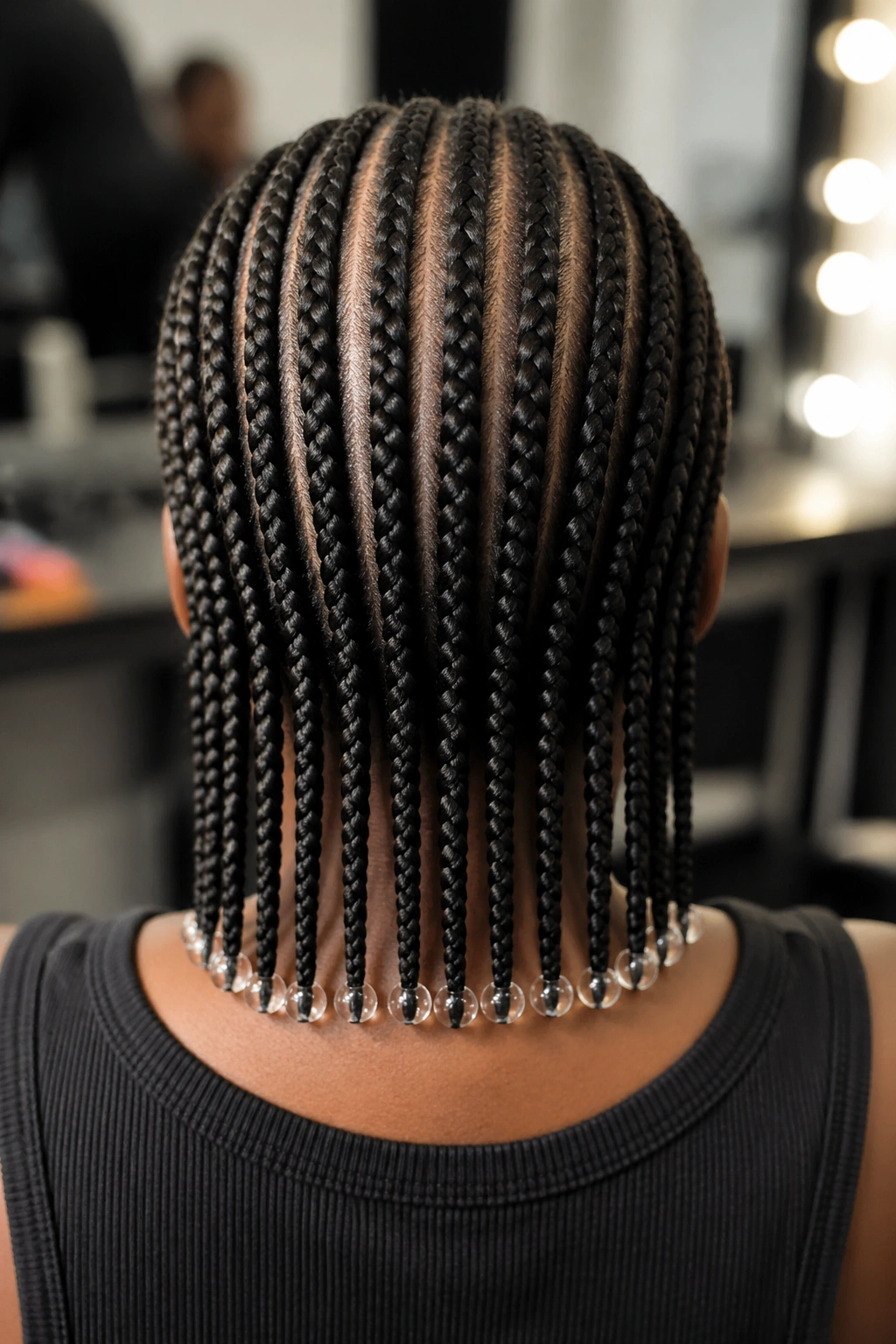
Beads spread evenly throughout each braid, with one statement bead at the very tip. The statement bead is larger or in a contrasting color.
The tip beads become anchors. They’re the visual punctuation at the end of each braid.
This is a sophisticated approach. The install reads as both fully beaded and intentionally finished.
Living with a Beaded Install
Daily life changes a little when you wear beads.
Sleep takes adjustment. Beads against the pillow create pressure points. A satin bonnet helps protect the beads and your scalp.
Showers need care. Heavy beaded braids pull when wet. Wash less frequently — once every 7 to 10 days. Use cool water.
Activities like sports or dancing send the beads flying. Embrace the movement or tie the braids back in a low bun for high-activity moments.
Caring for the Beads Themselves
Beads need their own attention.
- Wipe beads with a damp cloth weekly to remove product buildup
- Check the silicone bands holding the beads in place; replace any that have stretched
- Tighten any loose beads as soon as you notice them
- Store extra beads in a small container in case any fall off and need replacement
Wooden beads benefit from a small amount of natural oil rubbed into them. It conditions the wood and prevents drying.
Sleep Routine
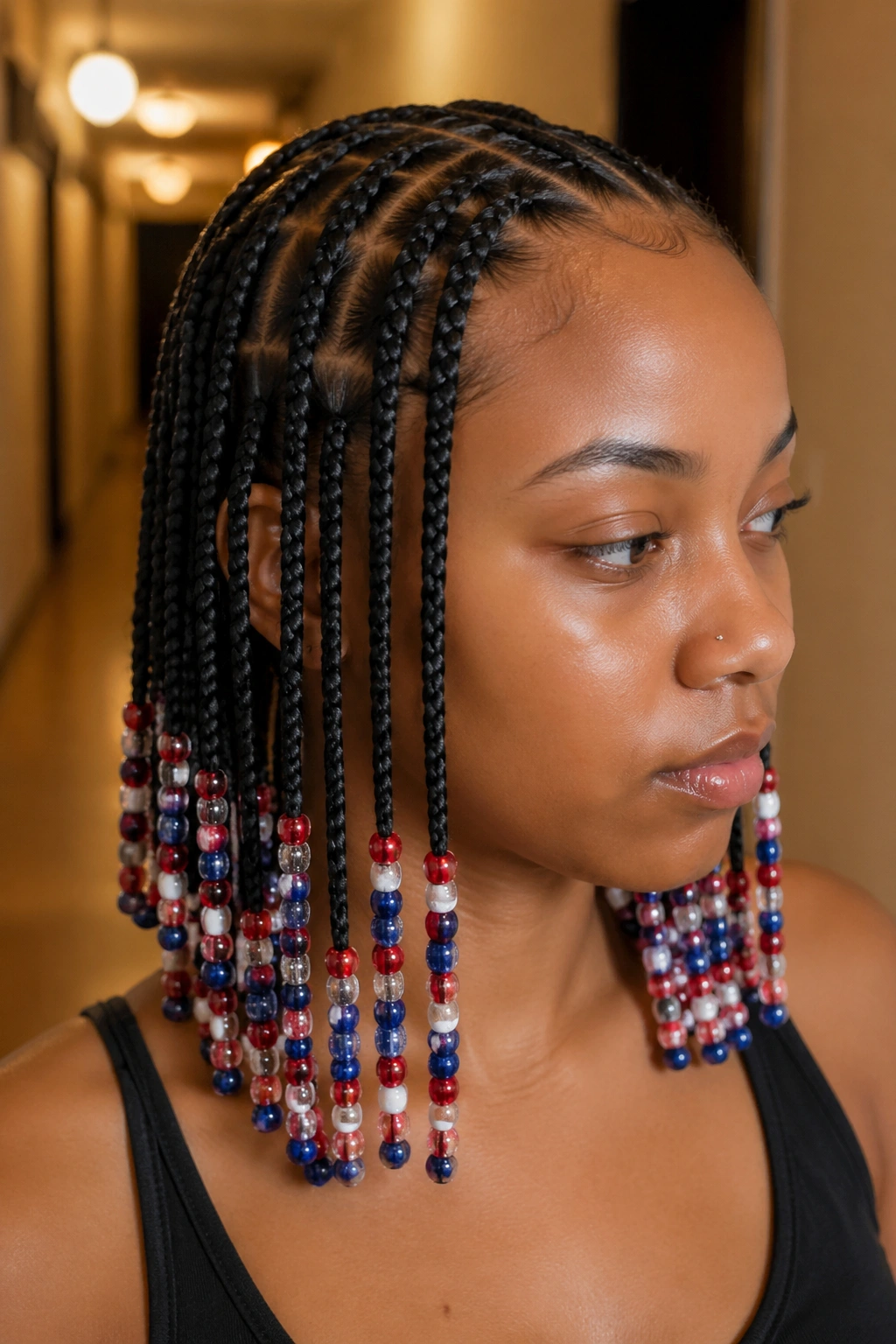
A satin bonnet over the install protects both the beads and the braids. Without a bonnet, beads can catch on the pillow and pull braids loose.
For longer beaded installs, gather the braids into a loose bun at the crown before bonneting. The bun keeps the beaded ends contained and reduces the surface area pressing against the bed.
Side sleepers should rotate sides nightly. One-sided sleeping flattens beads against the pillow consistently and can damage their finish.
Taking Down a Beaded Install
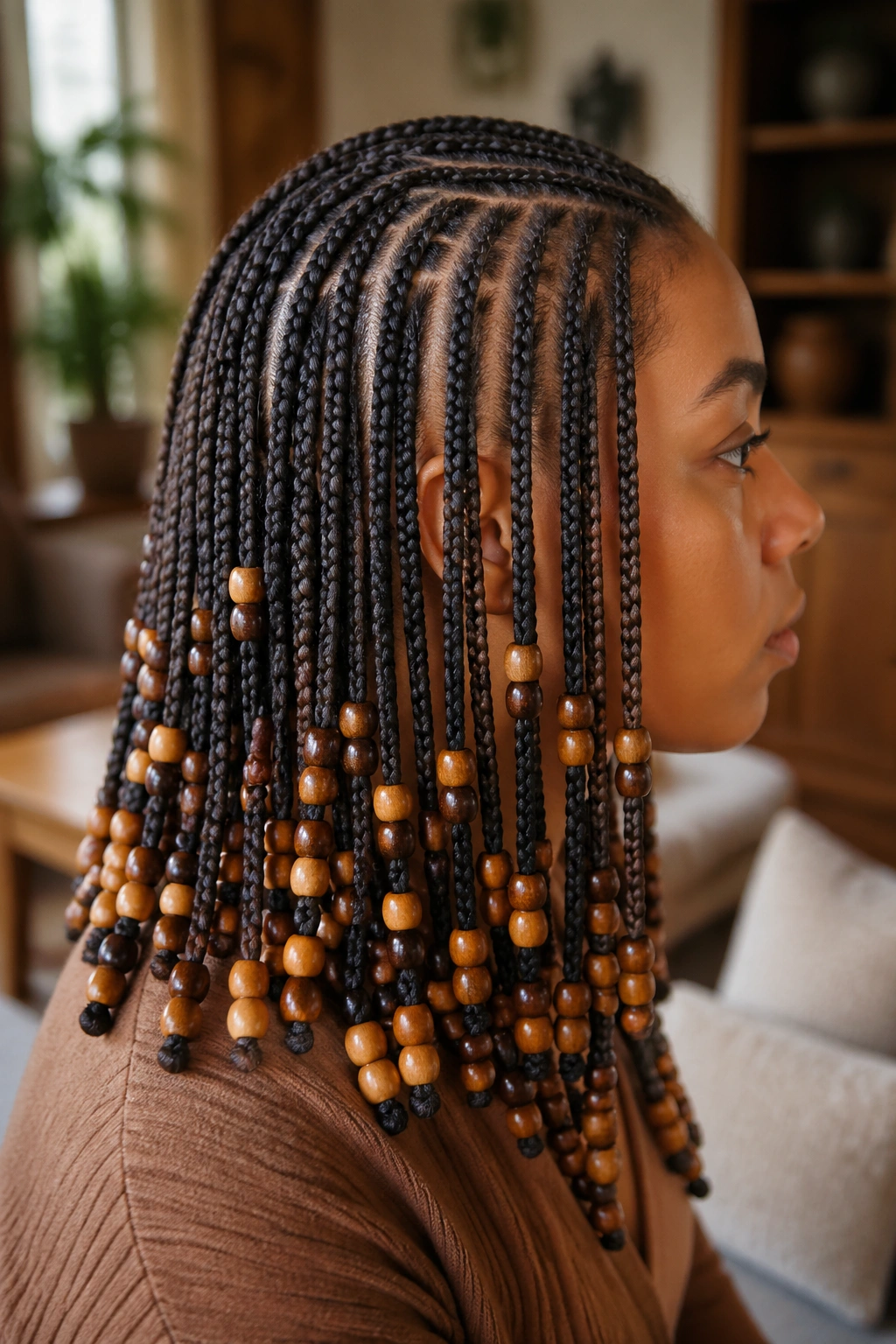
The beads come off first. Cut the silicone band below each bead and slide it off. Save the beads for future use if they’re in good condition.
Once the beads are off, the cornrow takedown follows the standard pattern. Spray with water and conditioner. Unravel from the bottom up. Finger detangle.
Plan extra time for the bead removal — about 30 to 45 minutes for a heavily beaded install.
Picking the Right Style for You
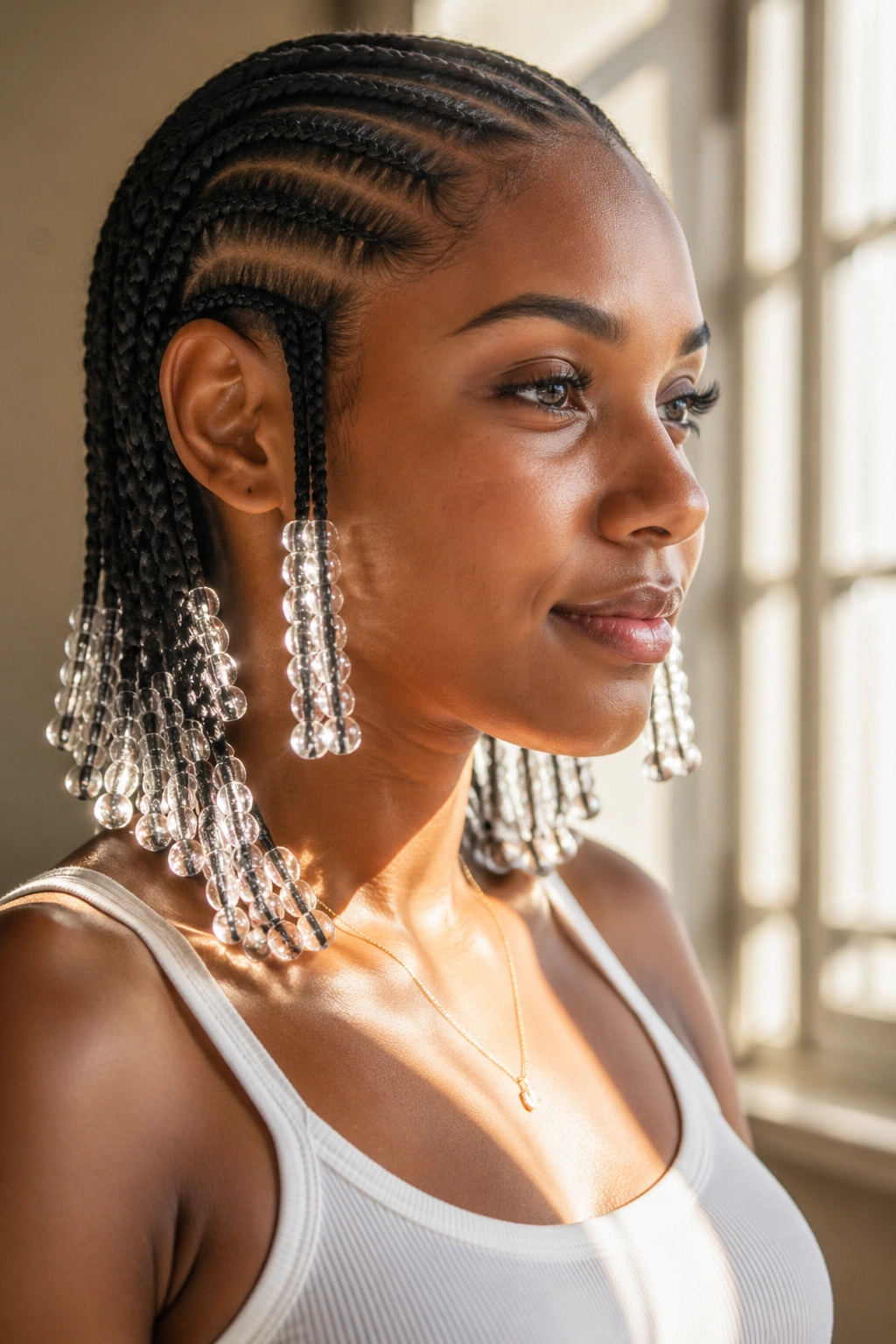
Bead choice depends on lifestyle, budget, and aesthetic preference.
- Active lifestyle: choose lighter beads (wood, hollow plastic) and fewer per braid
- Office or formal environments: subtle bead colors and minimal counts
- Festival or event wear: bold colors, mixed materials, higher density
- First-time bead wearer: start with 3 to 5 beads per braid in a single color
Hair length matters. Short braids fit fewer beads. Long braids carry more.
Scalp sensitivity is a consideration. Heavy bead loads pull on the scalp. People with sensitive scalps should start light.
Mistakes to Avoid
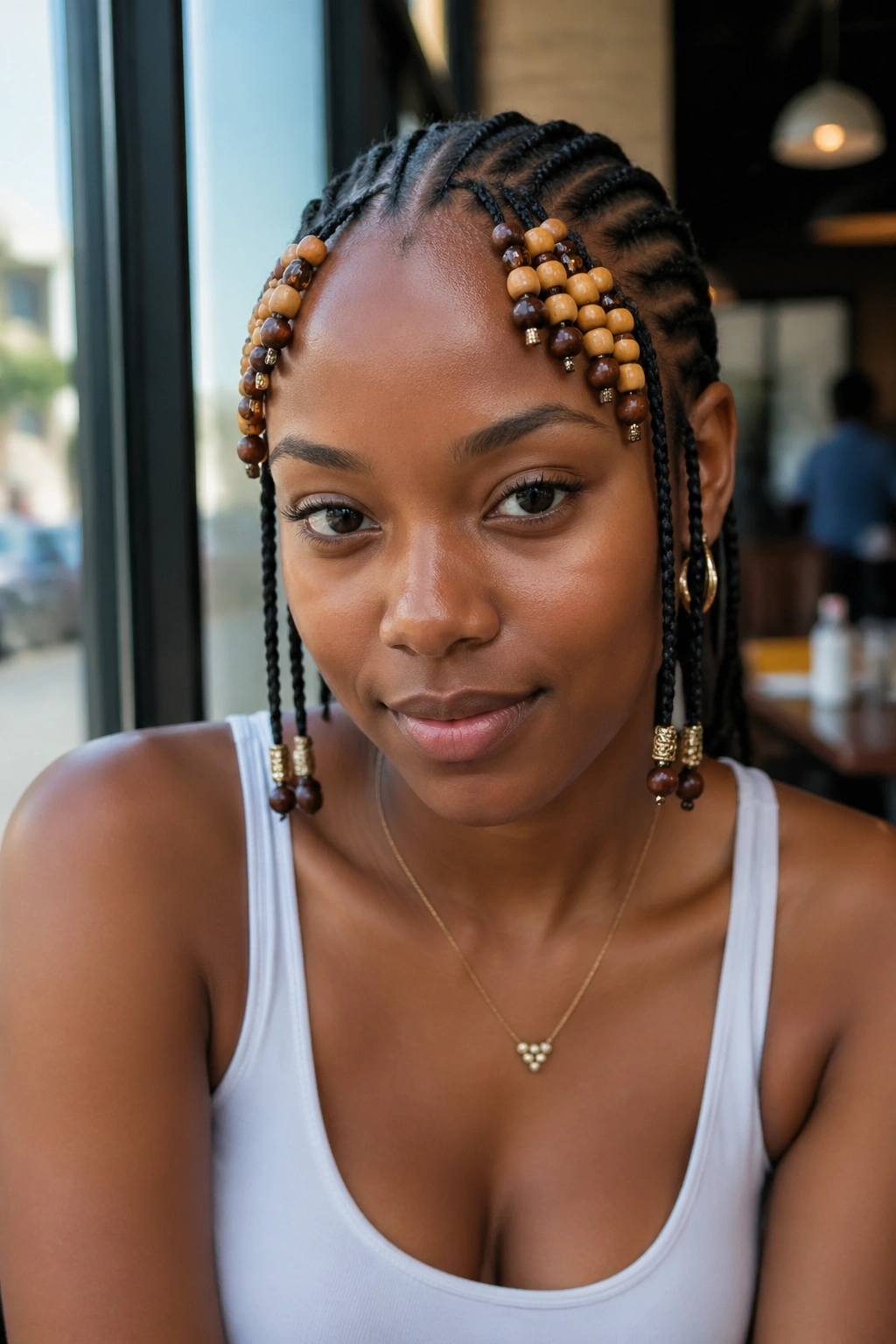
Overloading the braids with beads makes the install painful and damages the braid base. Stay within reasonable bead counts for your braid weight.
Skipping the silicone band lets beads slip off braids. Always secure each bead.
Ignoring bead-related itch or pressure means continuing to wear an install that’s hurting you. If the beads are pulling uncomfortably, remove some.
Using cheap plastic beads on a high-effort install undercuts the whole look. Spend on quality beads — wood, glass, or metal — for installs you want to last.
Forgetting to clean the beads lets buildup dull their finish. Wipe them weekly.
Beaded all back cornrows are a way to wear protective styling that connects to deep tradition while making space for personal expression. The twenty-five versions here cover different bead types, placements, and visual rhythms. Pick the one that fits your mood, your face, and your week ahead. The beads will do their work — adding weight, sound, and a small piece of art to your everyday wear.