



Auburn sits in that space between red and brown where the color reads differently depending on light. In sunlight, it goes almost copper. Under indoor lighting, it settles into a warm chestnut. On cornrows, auburn does something special — it catches the pattern of the braids in a way darker tones don’t, so every twist and part shows up with more definition.
Cornrow styles in auburn have been part of my rotation for a while now. I came to auburn after years of jet black and the occasional burgundy phase. What pulled me in wasn’t just the color but the way it flatters darker skin tones — the warm red undertones make brown skin look sunlit even on cloudy days.
The 22 auburn cornrow styles below cover a full range of pattern density, length, accessory options, and undertones within the auburn family. Because auburn isn’t a single color. It’s a range. True auburn runs orange-red. Dark auburn leans burgundy. Light auburn edges into strawberry or caramel territory. Picking the right shade of auburn for your skin tone matters more than people expect, so I’ll cover that too before the list.
Why Auburn Works So Well on Cornrows
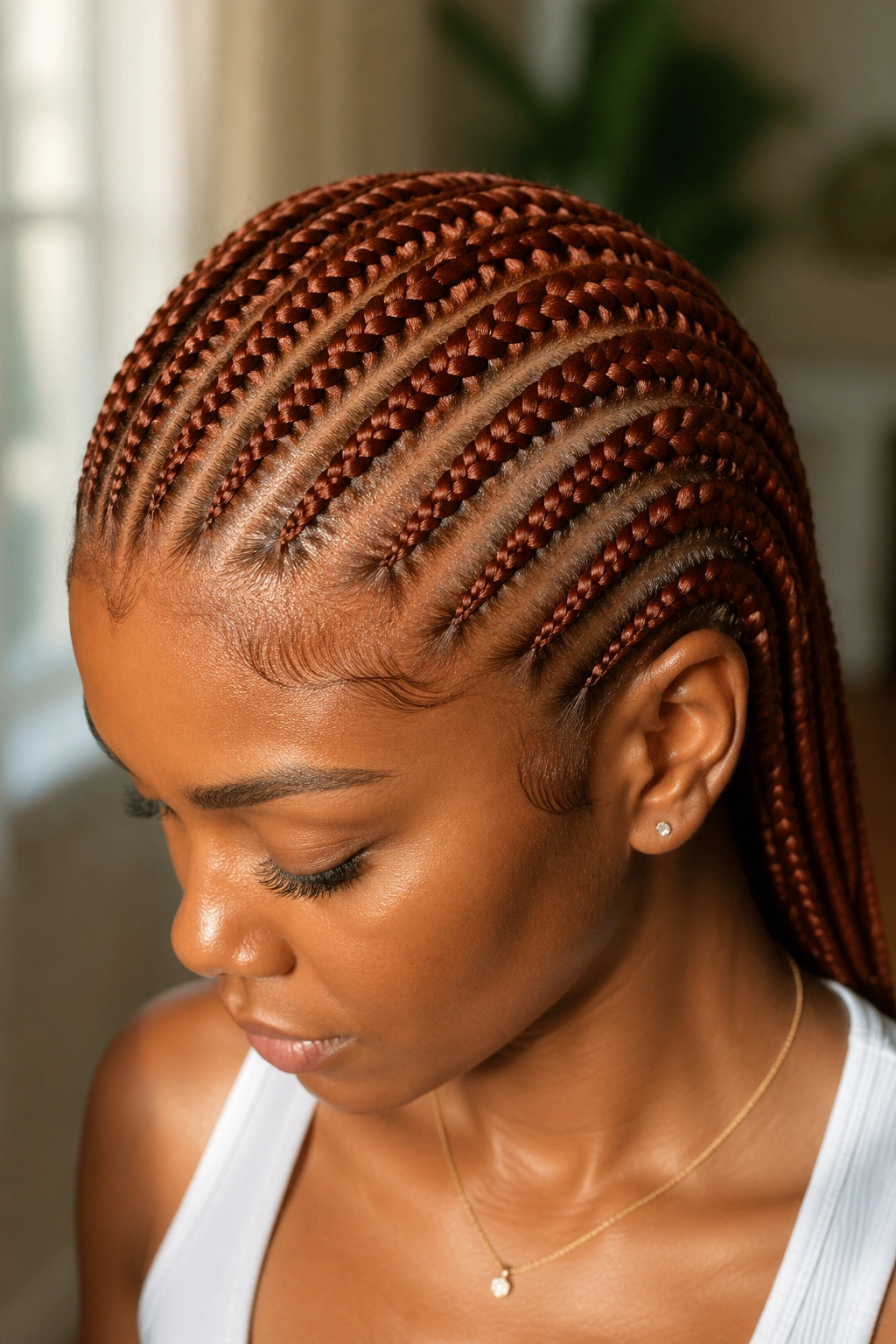
Cornrows rely on clean lines and defined partings for their visual impact. When your hair is a dark single color, those partings can get lost against the scalp. Auburn’s warmer tone creates contrast with the scalp underneath, making every line of the braid pop.
There’s another dimension. Auburn on textured hair develops natural highlights as the kanekalon or natural hair catches different angles of light. Where black cornrows read as monochrome, auburn cornrows read as multi-tonal. You get depth without needing actual multi-tone color work.
The color also photographs beautifully under most lighting conditions. Studio lights tend to wash out darker shades, but auburn holds its character across exposure ranges. For anyone who takes a lot of pictures — events, content creation, even just everyday selfies — this is practical.
Finding Your Auburn Shade
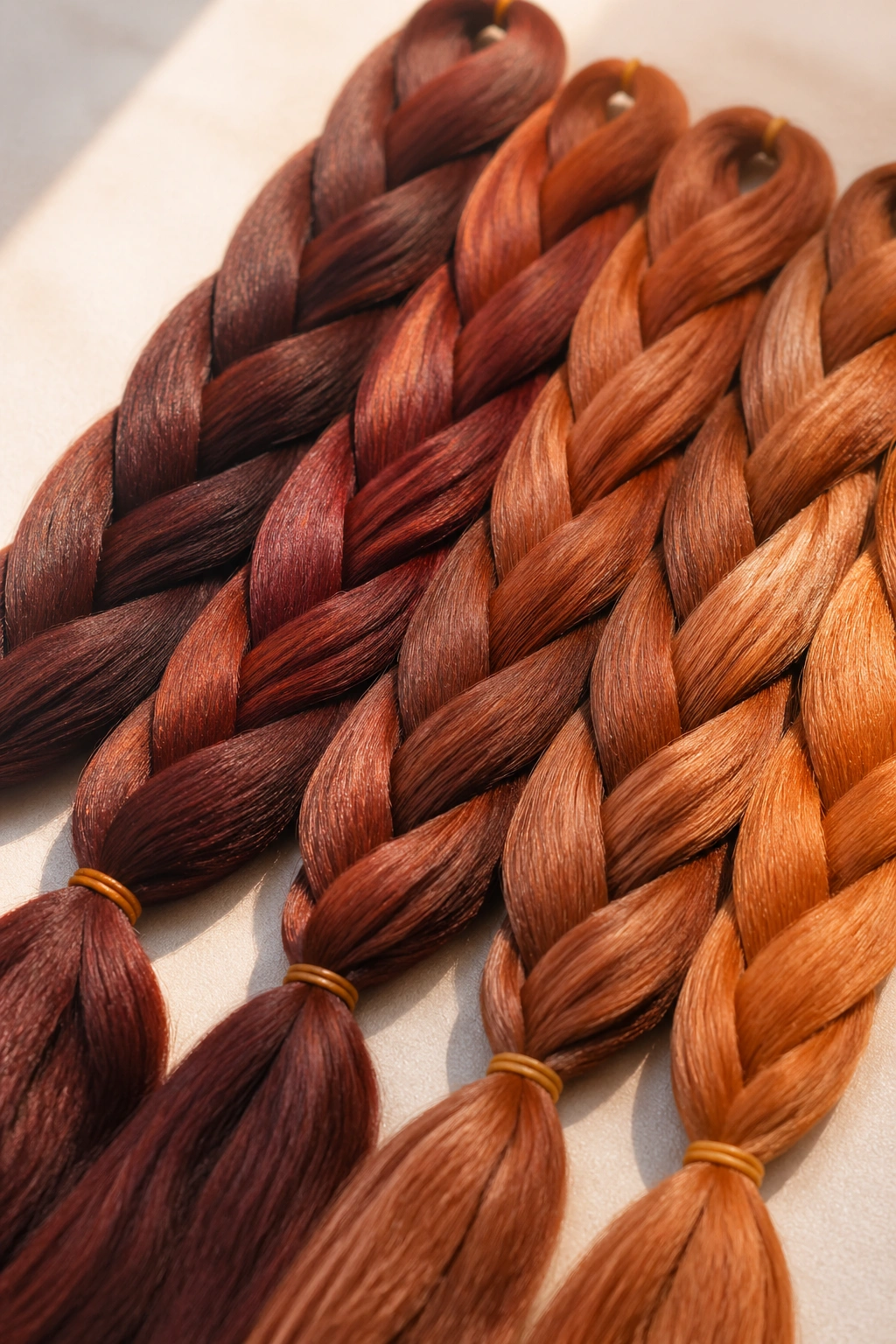
True auburn works on warm undertone skin — the kind with gold or yellow in its base. Dark auburn (closer to burgundy) flatters cool undertones with pink or blue in the base. Light auburn can wash out very fair skin and tends to work best on medium to deep skin tones.
Test a small swatch of kanekalon against your cheek in natural light before committing. If the auburn pulls your skin to look tired or pasty, go warmer or deeper. If it makes your skin look brighter and more even-toned, you’ve found your shade.
Hair color codes to know: 350 is a warm dark auburn with red undertones. 33 runs deeper and more brown-red. 30 is a lighter chestnut with auburn flashes. 130 is vibrant copper auburn. Mix two codes (say, 350 and 33) for a more dimensional look.
Preparing for Auburn Kanekalon Install
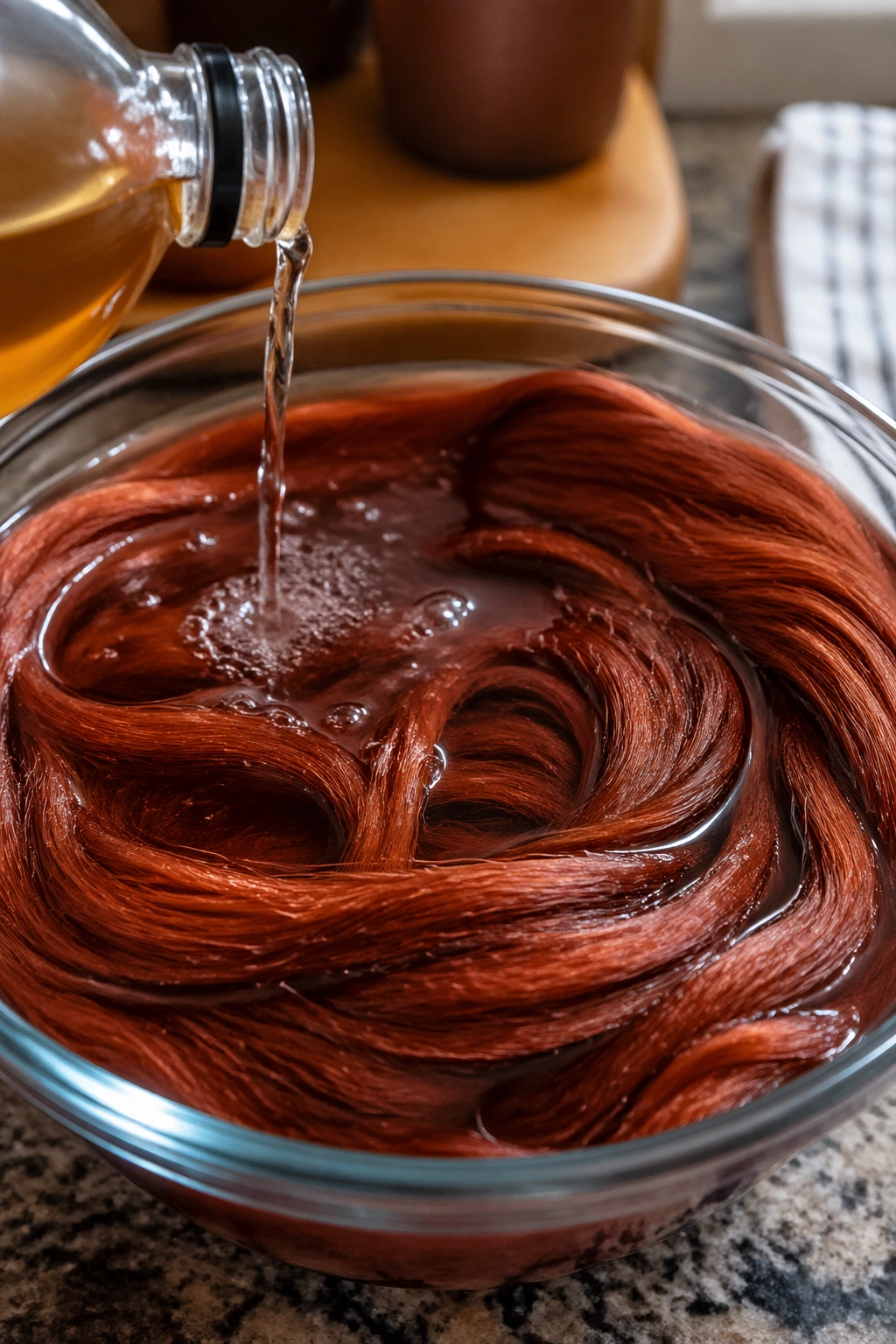
Kanekalon in auburn shades requires the same prep as any other color, with one addition: wash the braiding hair before install. Auburn kanekalon can bleed slightly on the first few wears, especially in humid conditions, and can stain light clothing.
Soak the pre-stretched kanekalon in warm water with a tablespoon of apple cider vinegar for 10 minutes. Rinse, squeeze gently, and hang to dry for several hours. The vinegar sets the color and stops transfer.
Your natural hair gets the usual treatment. Clarifying wash, deep conditioner, tension dry, edge prep. Nothing about auburn color changes the base preparation.
Tools and Setup
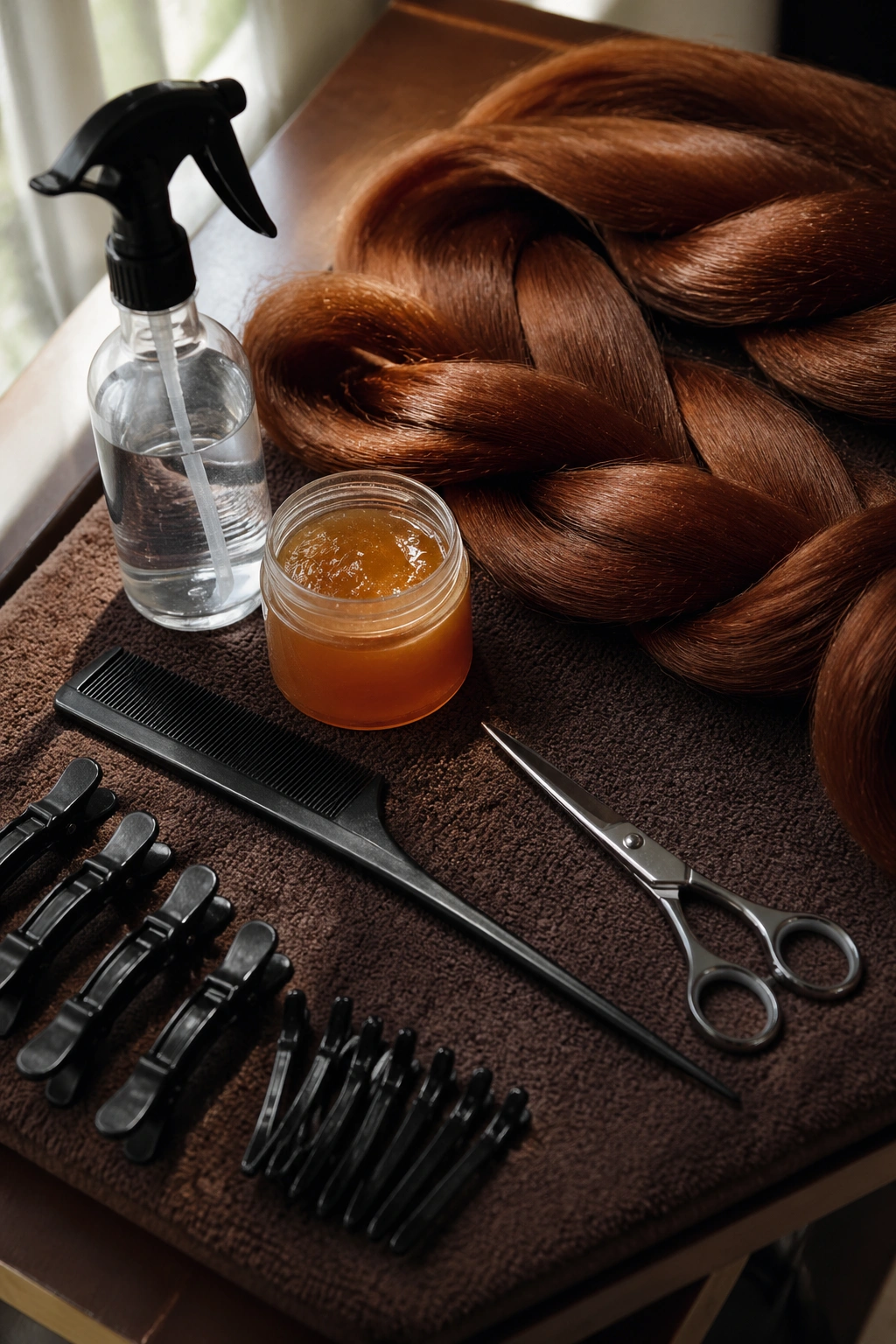
Rat-tail comb, butterfly clips, edge gel, water spray bottle, kanekalon in your chosen auburn shade — the same baseline kit works here. One thing worth noting: auburn kanekalon can be slightly trickier to weave neatly because the warm color hides small imperfections less well than black does. Work in good lighting.
A small pair of hair shears lives in every cornrow kit for cutting kanekalon to length as you work. Have styling products nearby — a light hold mousse for smoothing flyaways, a small brush for edges.
1. Classic Straight Back in Deep Auburn
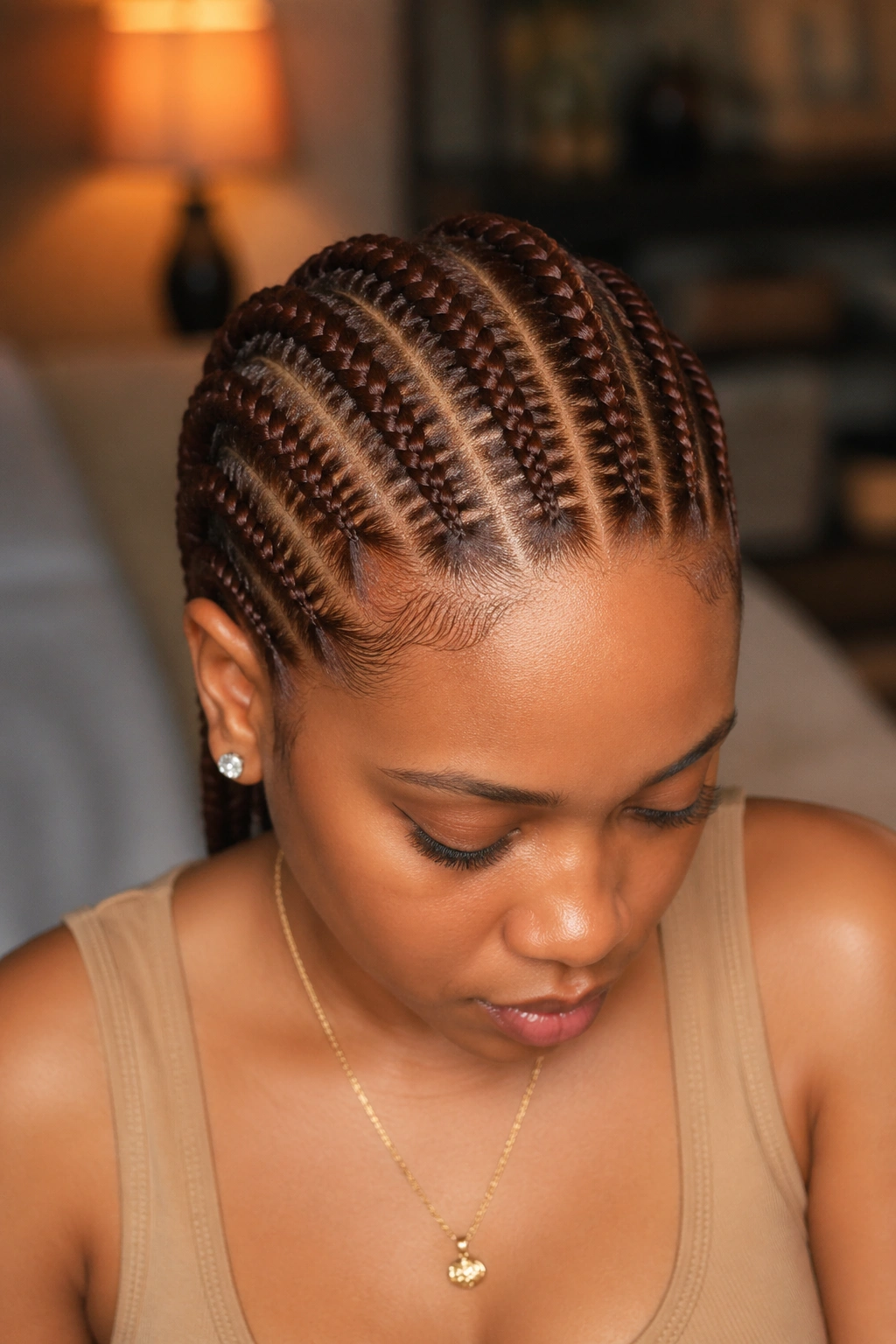
Straight-back cornrows in a deep auburn — something close to the 350 or 33 shade — give you the most immediate payoff for the least complex pattern. Six to eight cornrows running straight from the hairline to the nape, all the same width, with feed-in kanekalon tapered into the ends.
Why It Works
The simplicity of the pattern lets the color do the talking. Deep auburn against darker skin creates a striking monochromatic look that reads polished and clean.
- Medium-width cornrows (1 inch at the base) hold the pattern together
- All cornrows feed in at the same point from the hairline, roughly 1 inch back from the front
- Ends extend 4-6 inches past the nape for a natural tapered finish
- Edges should be smoothed but not slick — a matte finish pairs better with auburn than high-shine edges
Tip: If your natural hair is black and you’re feeding in auburn kanekalon, blend the color by twisting a few black strands of your hair through the kanekalon at the root. This softens the transition and prevents an abrupt color line.
2. Ombre Auburn to Blonde
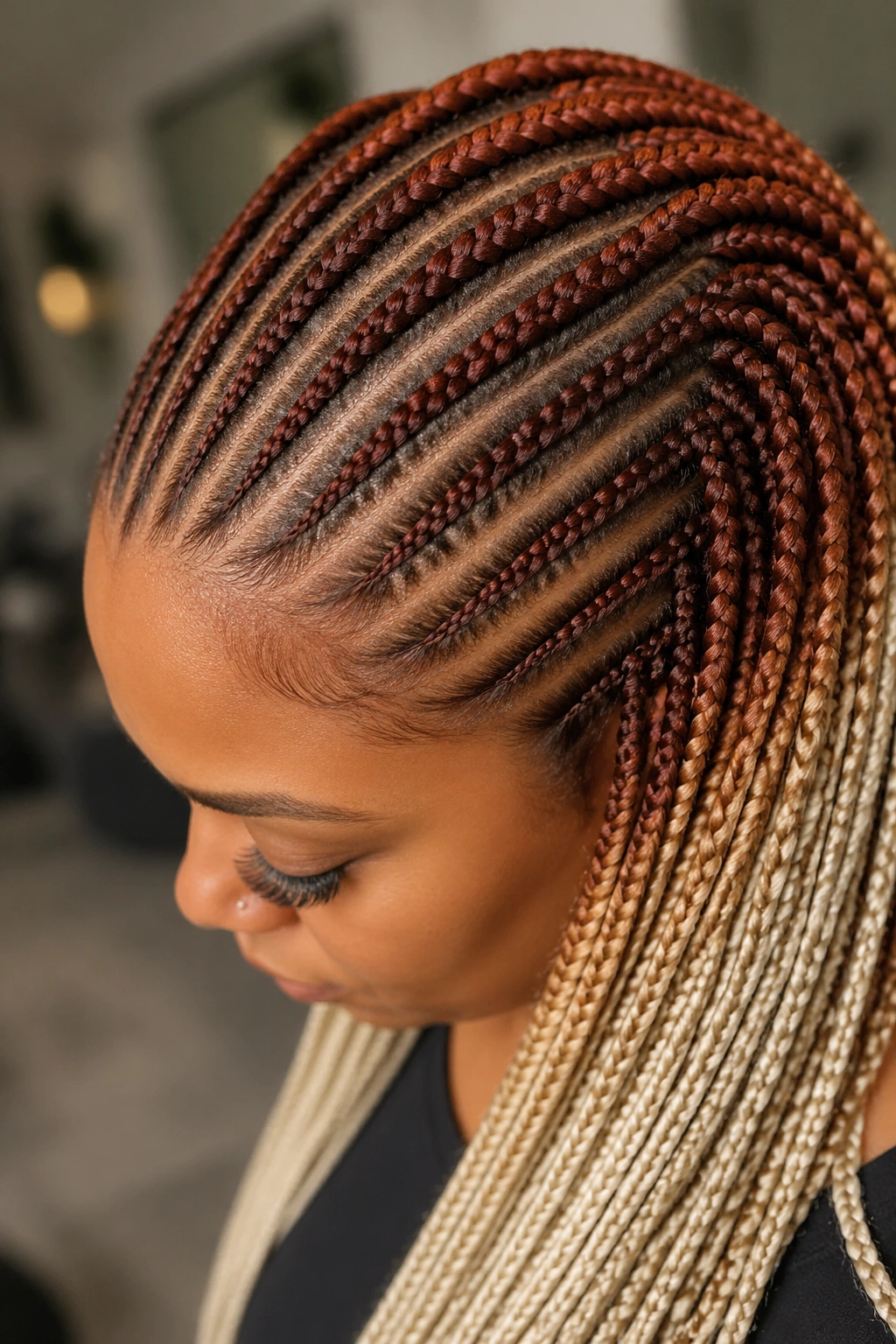
Ombre cornrows transition from one color at the roots to another at the tips. Starting with a deep auburn at the scalp and fading to a lighter shade — butterscotch blonde, honey, or strawberry — creates a gradient that reads warm and modern.
The trick with ombre kanekalon is the transition zone. A clean abrupt color change looks stark. A smooth blend requires kanekalon that’s been pre-dyed with the gradient, or careful layering of two colors during install.
Pre-dyed ombre kanekalon is easier and more consistent. Buy packs that match the gradient you want and check the color change point — usually 2/3 of the way down the strand. Install as you would single-color kanekalon, just making sure the transition point falls at the same distance from your scalp across all cornrows.
Ombre auburn styles photograph especially well because the color contrast emphasizes the braid lines. The gradient reads like movement even when you’re standing still.
3. Stitched Cornrows With Copper Highlights
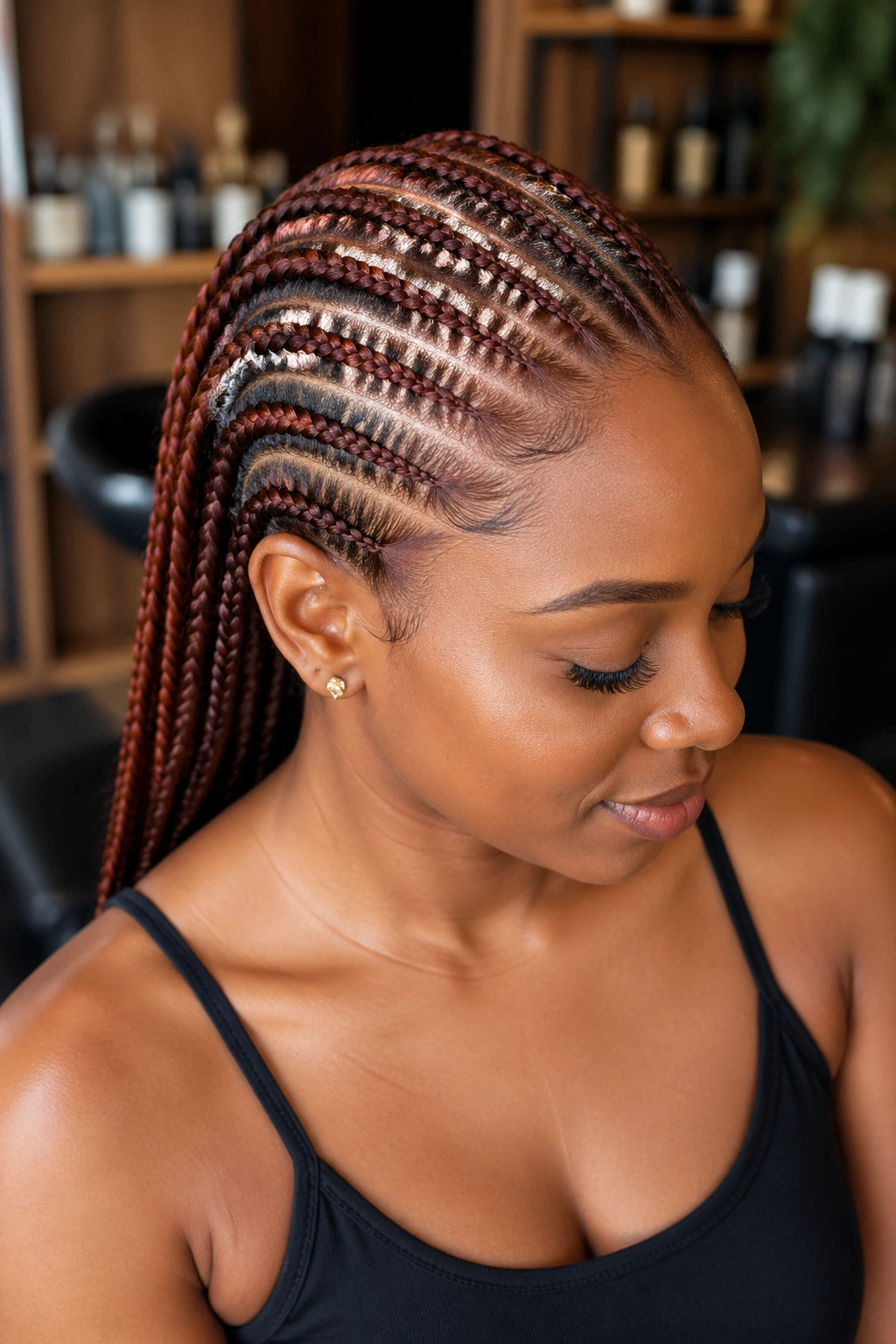
Stitched cornrows — the ones with horizontal ridge lines where kanekalon has been woven in at intervals — in auburn with copper highlights give you definition and dimension. Each stitch line catches light differently than the braid’s main body.
What makes this work is the contrast between the auburn base (darker) and the copper highlight pieces (lighter and more orange). Small strands of lighter copper are added at the stitch points, so the highlights appear to run horizontally across the cornrows rather than vertically.
The stitched look requires experienced braiding. Self-styling this one is tough. Book an appointment with someone who specializes in stitch braids specifically and bring reference photos of the auburn-copper blend you want.
Wear time for stitched cornrows runs 3-5 weeks. The stitch pattern hides new growth better than straight cornrows do, so the style looks fresh longer.
4. Jumbo Auburn Feed-Ins
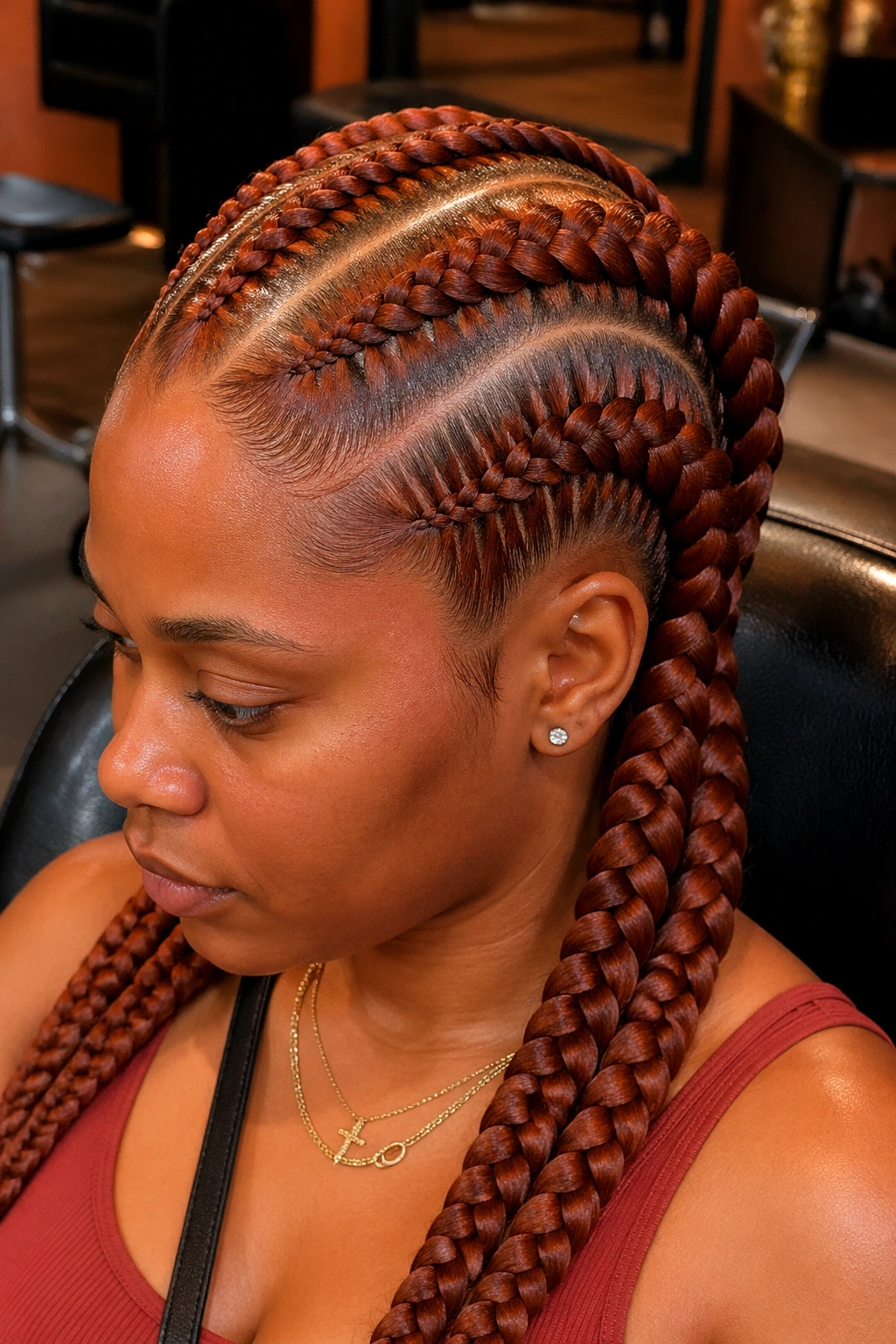
Jumbo feed-in cornrows — wider than traditional cornrows, usually 1.5-2 inches at the base — in auburn give you bold impact with fewer braids. Four to six jumbo cornrows across the whole head is the typical layout.
Jumbos work well for people who want cornrow styling but find smaller patterns too busy. The color becomes the pattern, in a sense. With fewer braids, the auburn reads as a continuous statement rather than a series of small details.
The downside of jumbos is less longevity. Bigger cornrows have more mass pulling on their foundations, so they loosen faster than smaller ones. Expect 2-3 weeks of good wear before reinstall.
For an auburn jumbo install, pick a shade in the middle of the auburn range — not too light, not too dark — so the style reads as intentional color rather than a wash. Shade 350 or a mix of 350 and 33 tends to work well.
5. Heart-Shaped Partings in Auburn
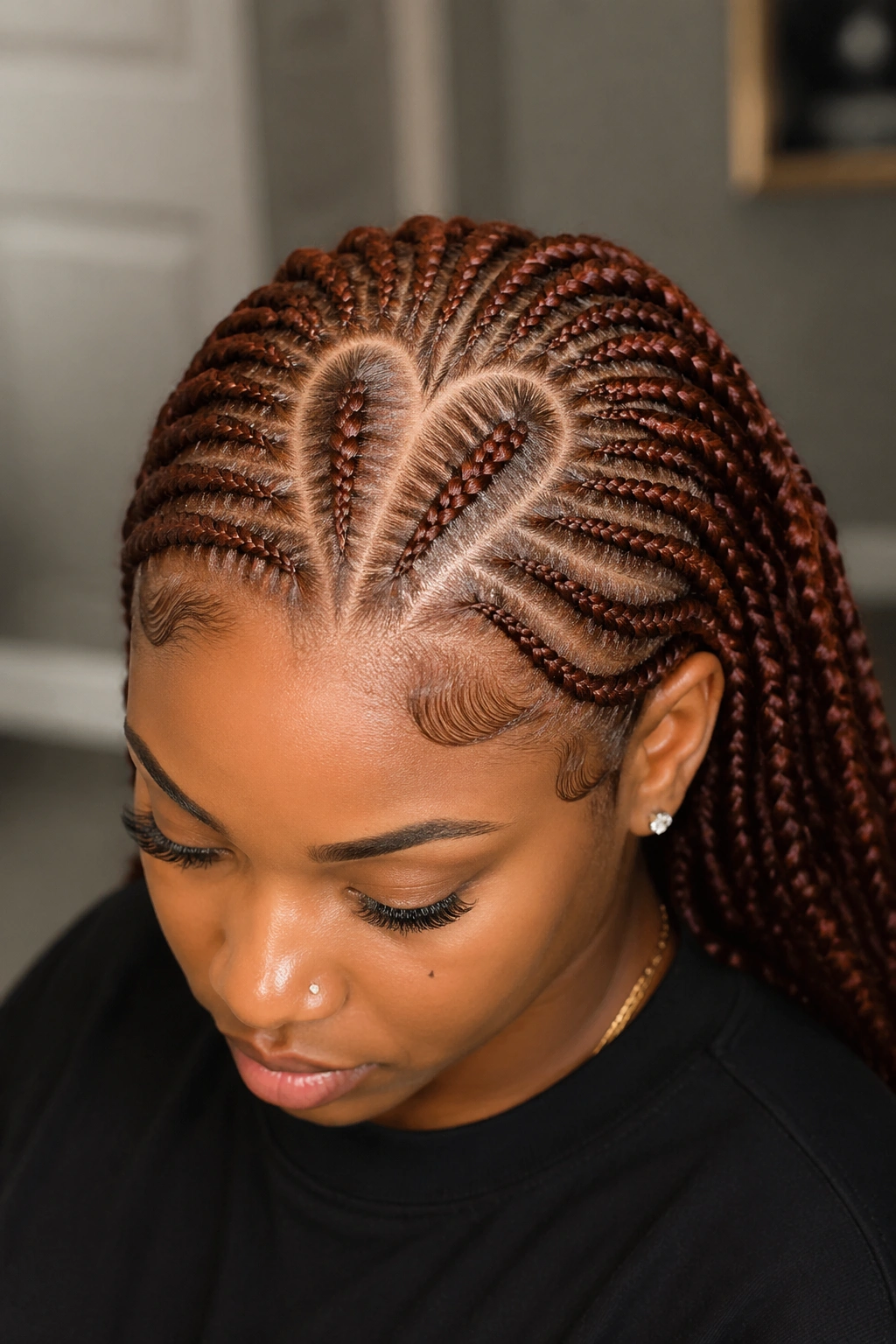
Heart-shaped partings outline a heart on the crown through the cornrow placement. In auburn, the heart’s outline stands out against the scalp, making the design more visually prominent than the same pattern in black.
How It Comes Together
The heart starts at the front center with two cornrows curving outward over each side of the head. At the widest point of the heart — roughly at the ears — the cornrows curve back inward and meet at the crown’s back, forming the heart’s point. Additional cornrows behind the heart feed into a ponytail or bun.
The auburn shade here should be deep enough to contrast with most skin tones. A 350 or deeper works well. Lighter auburn can muddy the heart outline.
6. Fulani-Inspired Auburn With Beads
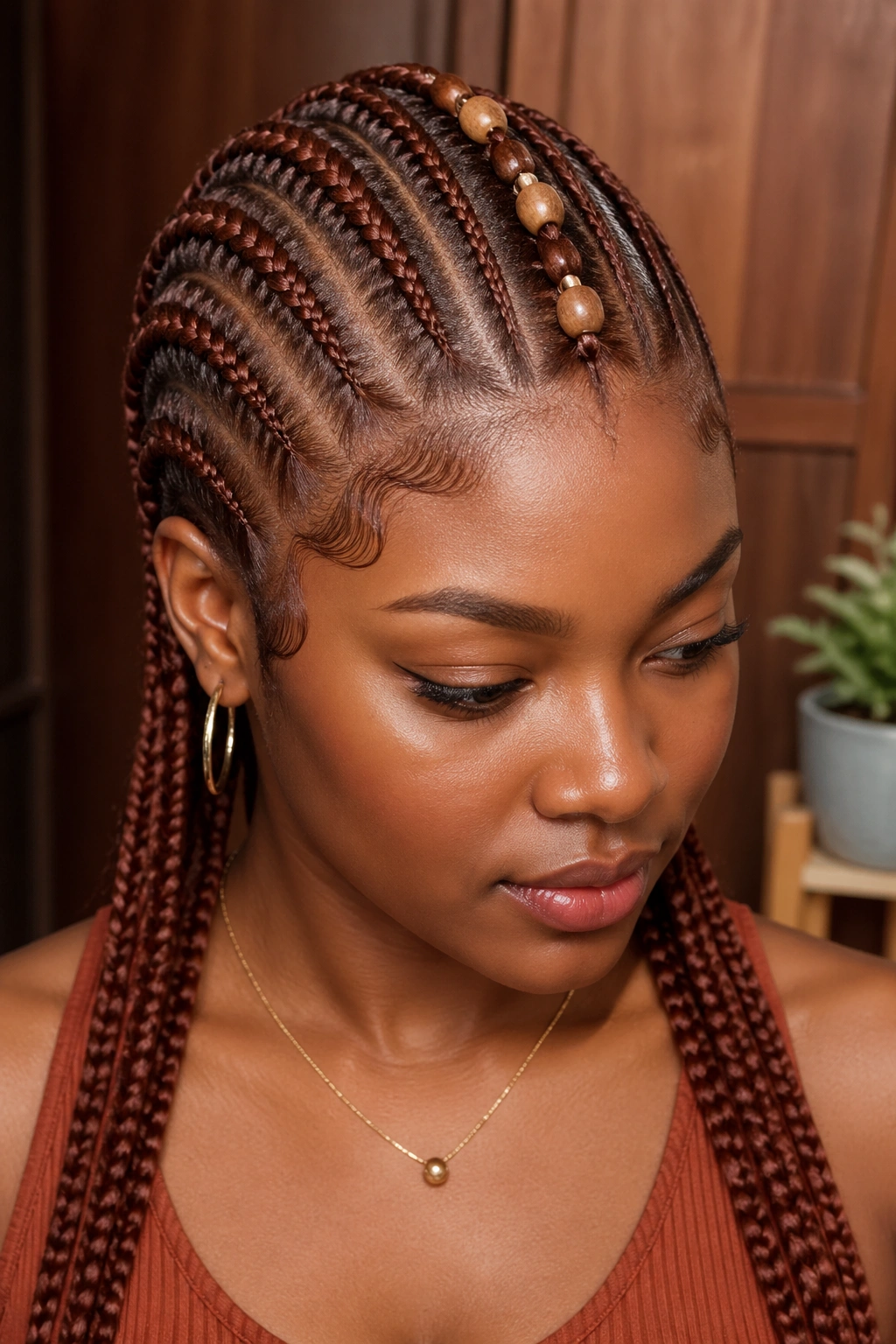
Fulani styling traditionally features a center braid from forehead to crown, often beaded, with side cornrows angling outward. In auburn, the color takes on an almost ceremonial feel — warm and grounded.
The beads should complement the auburn, not fight it. Wooden beads in natural finishes work beautifully. Brass or gold-tone metal beads pick up the warm tones. Avoid silver or cool-toned beads; they clash with auburn’s warmth.
Bead placement matters. Three to five beads on the center braid, spaced 1-2 inches apart starting from about 6 inches down the braid. Don’t crowd them at the top or the style reads heavy.
Side cornrows can be braided in the same auburn or a coordinating shade — a darker auburn for the center and a slightly lighter one for the sides adds dimension without looking like two separate colors.
7. Side Swept Auburn Cornrows
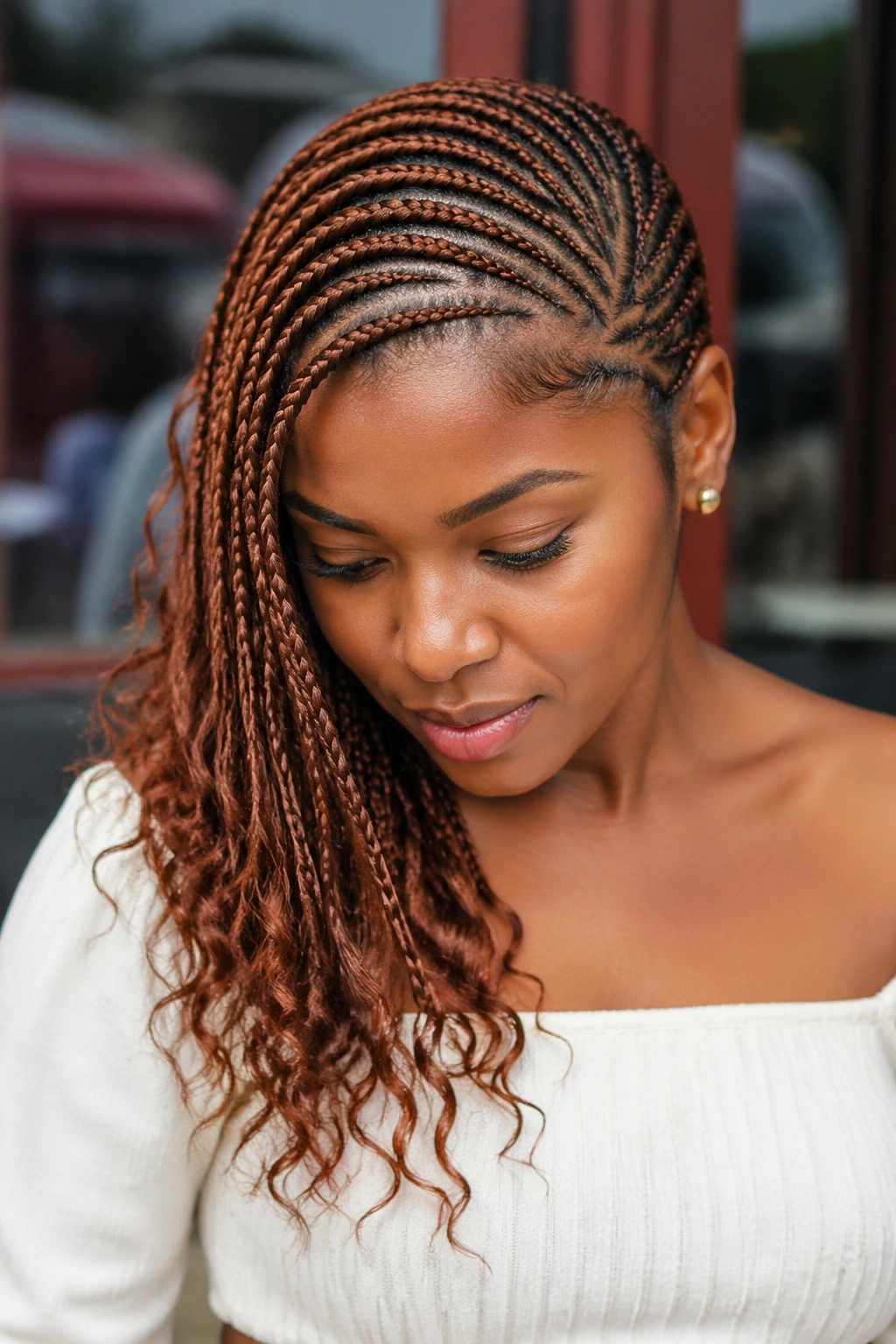
What if the whole pattern sweeps to one side? Side-swept auburn cornrows start at a deep diagonal part from one temple to the opposite nape, with cornrows laid parallel to the part and gathered at the lower shoulder.
The sweep creates asymmetry that flatters round and square face shapes especially. The cornrows angle across the head rather than running straight, giving the color a flowing quality it wouldn’t have with straight-back patterns.
Finish the ends with a soft curl or wave — heat-resistant kanekalon can be gently curled with a flat iron on low heat if you want a styled finish beyond the braid. Auburn with a slight wave at the ends looks effortless without actually being so.
Wear duration for side-swept patterns is similar to straight-back — 3-4 weeks with maintenance.
8. Auburn Goddess Braids
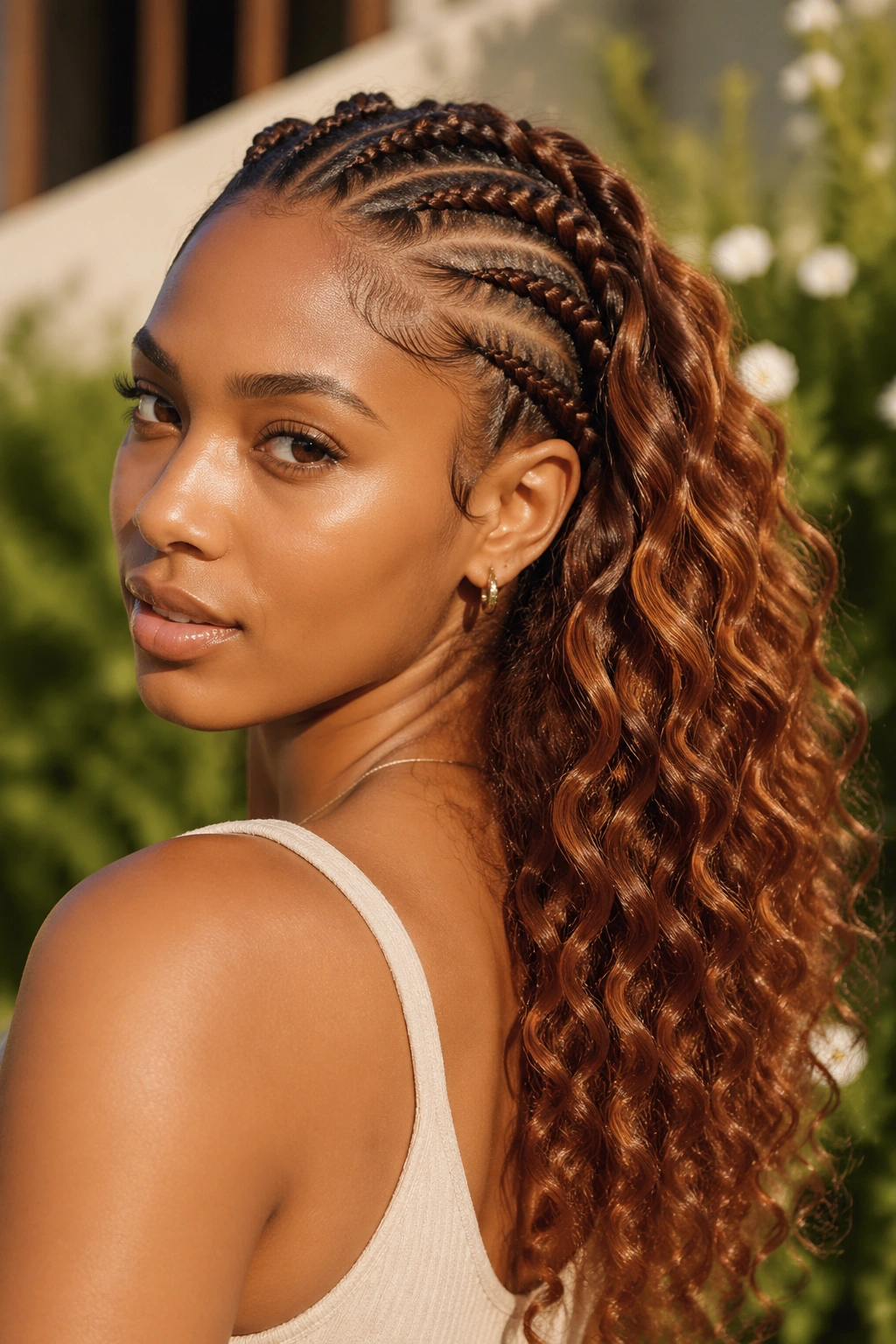
Goddess braids combine cornrows at the scalp with loose, wavy extension hair woven into the ends. In auburn, the contrast between tight braids and loose waves creates texture that reads feminine without being fussy.
The cornrows — usually four to six — run straight back or at slight angles toward the crown. Where they gather at the nape, curly or wavy auburn extensions are added, either through a ponytail holder or woven directly into the braid’s end.
Match the curl texture of the extensions to your natural texture when it reverts. A 3C or 4A-patterned loose bulk hair in auburn blends naturally. Glossy, straight-wavy hair looks obviously artificial next to cornrows.
Goddess braids last 10-14 days comfortably. The loose curly section frizzes faster than pure cornrow styles, so maintenance is more active — a curl reviving spray every other day keeps the waves looking defined.
9. Small Cornrows With Curly Ends
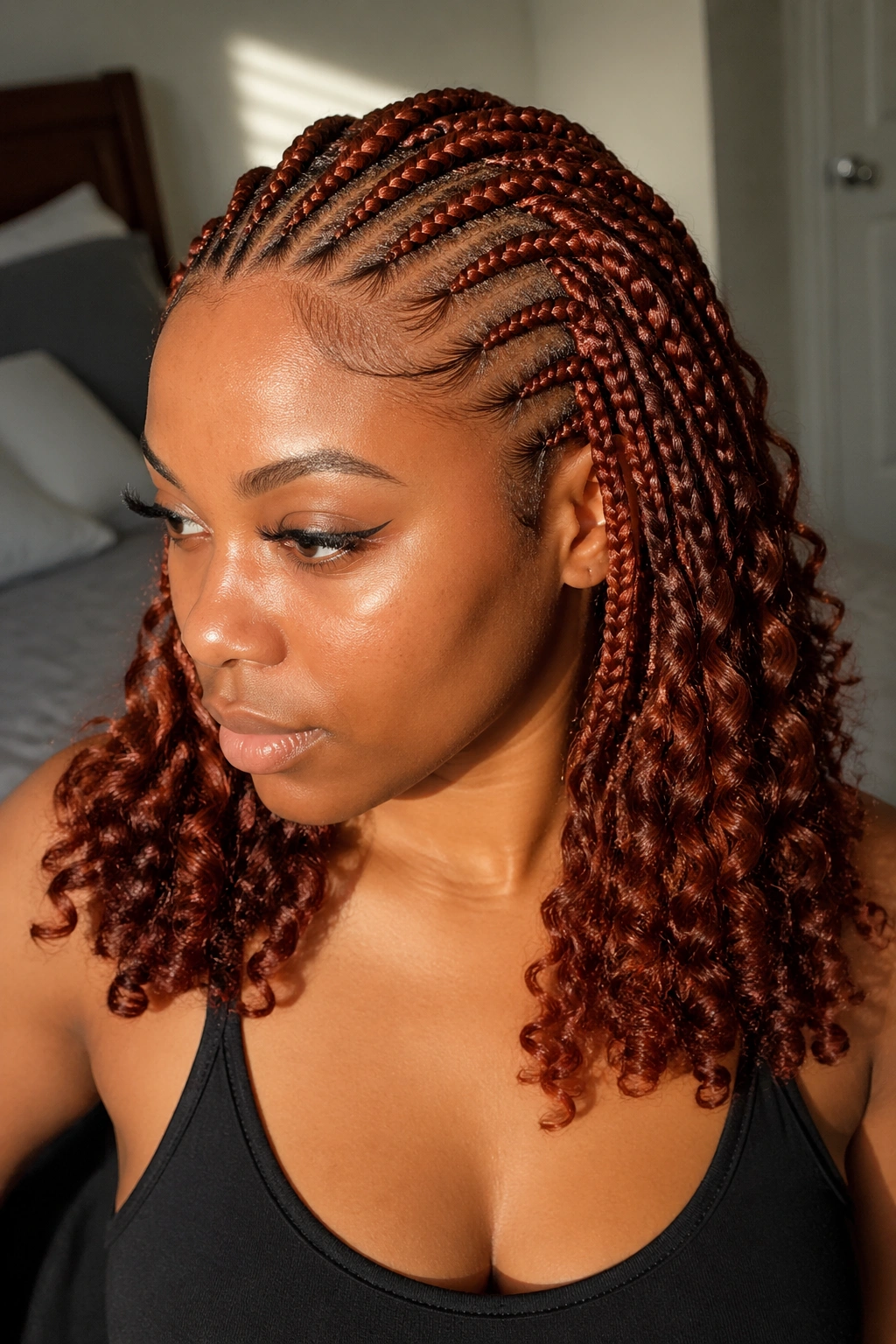
A full head of small, thin cornrows in auburn — maybe 30-40 total — all ending in loose curly auburn extensions. The sheer number of small cornrows gives intense pattern density, and the curly ends soften the overall look.
Small cornrows take longer to install (6-8 hours for a full head) and last longer (4-5 weeks) than larger cornrows. The trade-off is worth it for anyone who wants low-maintenance wear.
The curly ends can be clipped short for a bob-length look or left long for full dramatic fall. Medium length — shoulder to mid-back — tends to balance the style best.
What to Watch For
Small cornrows put more pressure on the scalp at the partings. Make sure your braider isn’t over-tightening in an effort to make the small braids last. Tension pain on day one is a bad sign.
10. Auburn Mohawk Pattern
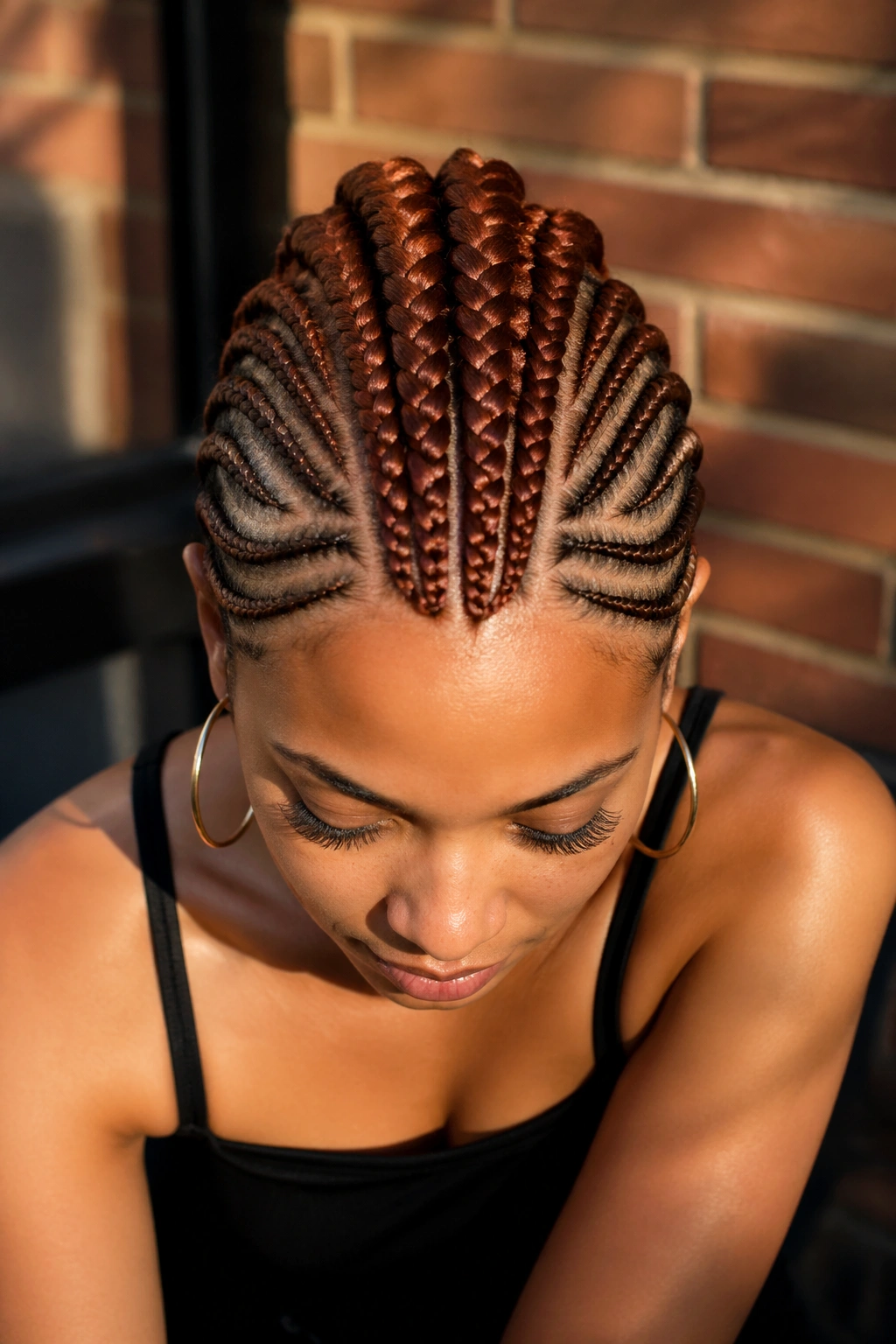
A mohawk cornrow pattern in auburn concentrates visual weight down the center of the head with sides cornrowed flat or shaved short. The auburn color makes the mohawk’s center strip stand out sharply from any shaved or flat-braided sides.
The center strip can be styled various ways — left in cornrows for a clean look, finished with loose curly auburn hair for volume, or bantu-knotted for dimensional texture. Pick based on the occasion.
Mohawk styles flatter long face shapes by adding width perception at the temples (when paired with flat side cornrows) or by elongating visually (when the center strip rises). They’re less flattering on narrow faces where the center height can elongate the face excessively.
Auburn suits the mohawk particularly well because the color carries enough warmth to soften what can otherwise be a harsh silhouette.
11. Auburn With Blonde Streaks
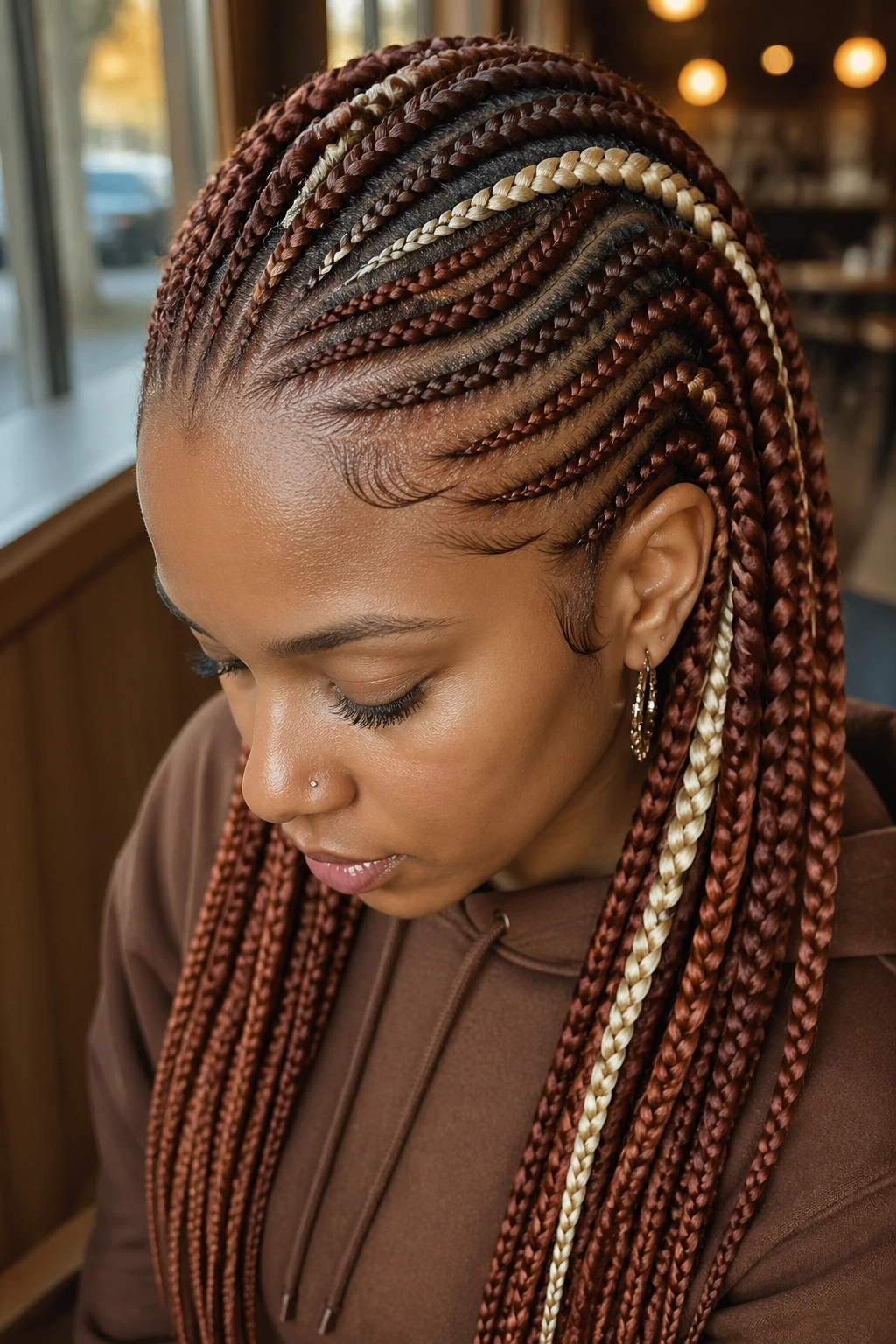
One or two contrasting blonde streaks running through otherwise auburn cornrows add visual interest without committing to full ombre. The streaks can be placed anywhere — along the temple, down the crown’s center, or at the nape.
Pick a blonde that complements the auburn. Honey blonde works with warm auburn. Platinum fights with auburn’s warmth and reads garish. The trick is staying in the same temperature family.
Execute by using two colors of kanekalon. Select the cornrows that will carry the blonde and feed in the lighter color to those specific cornrows. All other cornrows get the auburn kanekalon. The placement should feel intentional — typically 2-3 blonde cornrows among 10-15 auburn ones.
The style catches attention in low-light settings especially. Bar lighting, studio shots, indoor events — the blonde streaks glow against the auburn base.
12. Thick Auburn Cornrows With Cuffs
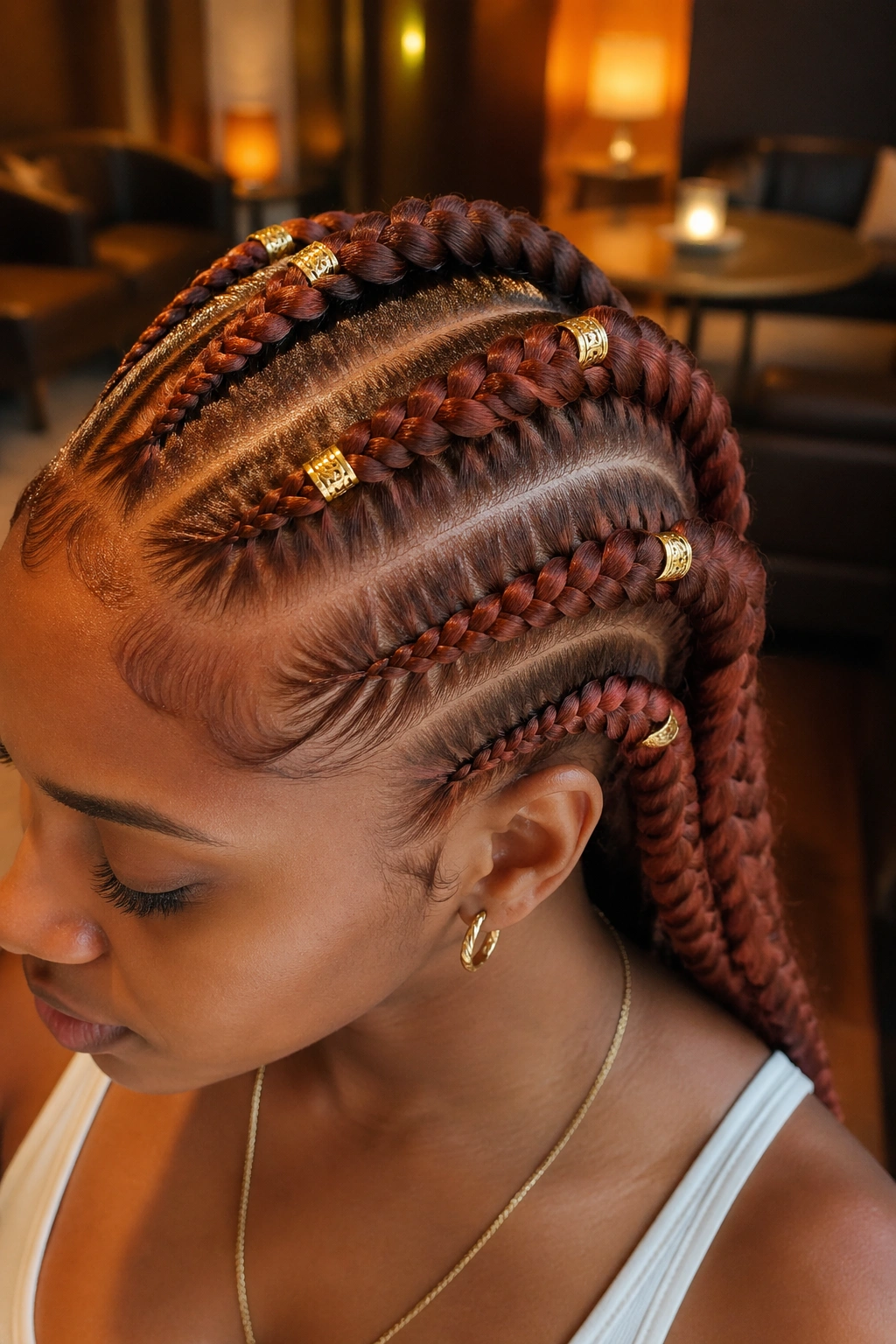
Four to six thick cornrows in auburn, adorned with metallic cuffs along their length. The cuffs are small hollow rings — usually gold or brass — that slide over the cornrow and sit at selected points.
Cuff placement is the art here. Random placement reads chaotic. Too much symmetry reads stiff. Two cuffs per cornrow, staggered so the cuffs don’t line up across the head, tends to strike the right balance.
The cuffs also serve a practical function. They secure loose hairs that might otherwise work free from the braid and keep the ends of cornrows from fraying during wear.
Check the cuff fit before buying a full set. Too loose and they slide down; too tight and they crush the braid. A cuff that stays put with gentle pressure is the goal.
13. Zig-Zag Part With Auburn Dimension
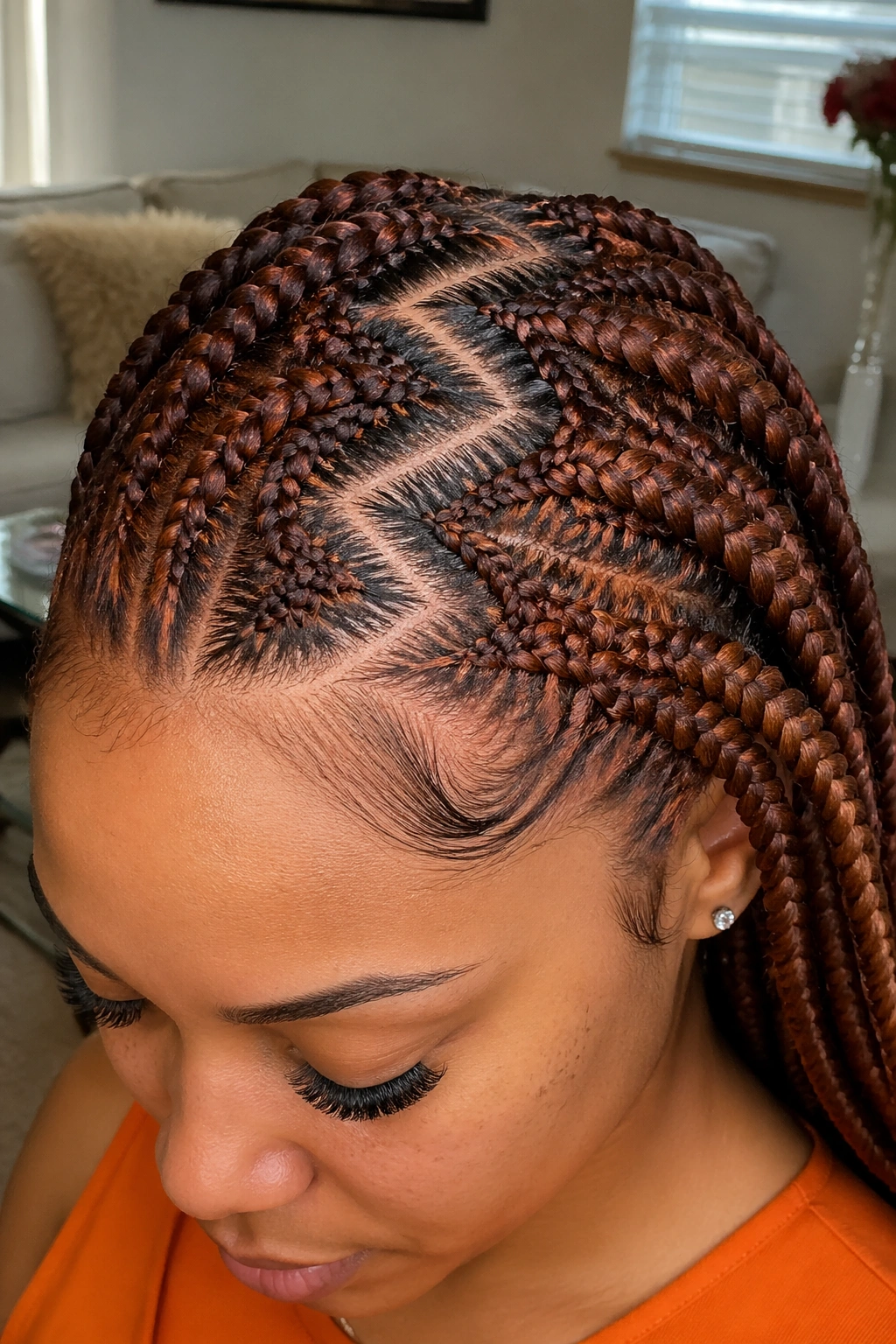
Zigzag parting runs a wavy line down the scalp instead of a straight center part. The auburn cornrows laid on either side of the zigzag create more visual interest than straight parts would.
The zigzag makes the color appear to move. As you turn your head, the wavy parting shifts against the cornrow pattern and creates a dimensional effect.
How to Part Cleanly
Use the rat-tail comb tip to sketch a zigzag from front to back, making each zigzag segment 1-1.5 inches wide. Commit to the line — trying to redo a zigzag part once you’ve started braiding makes the whole pattern look uncertain.
Four to six cornrows per side is the standard layout. Each starts from the zigzag part and curves outward toward the ear before running back to the nape.
14. Auburn Cornrows With Sides Down
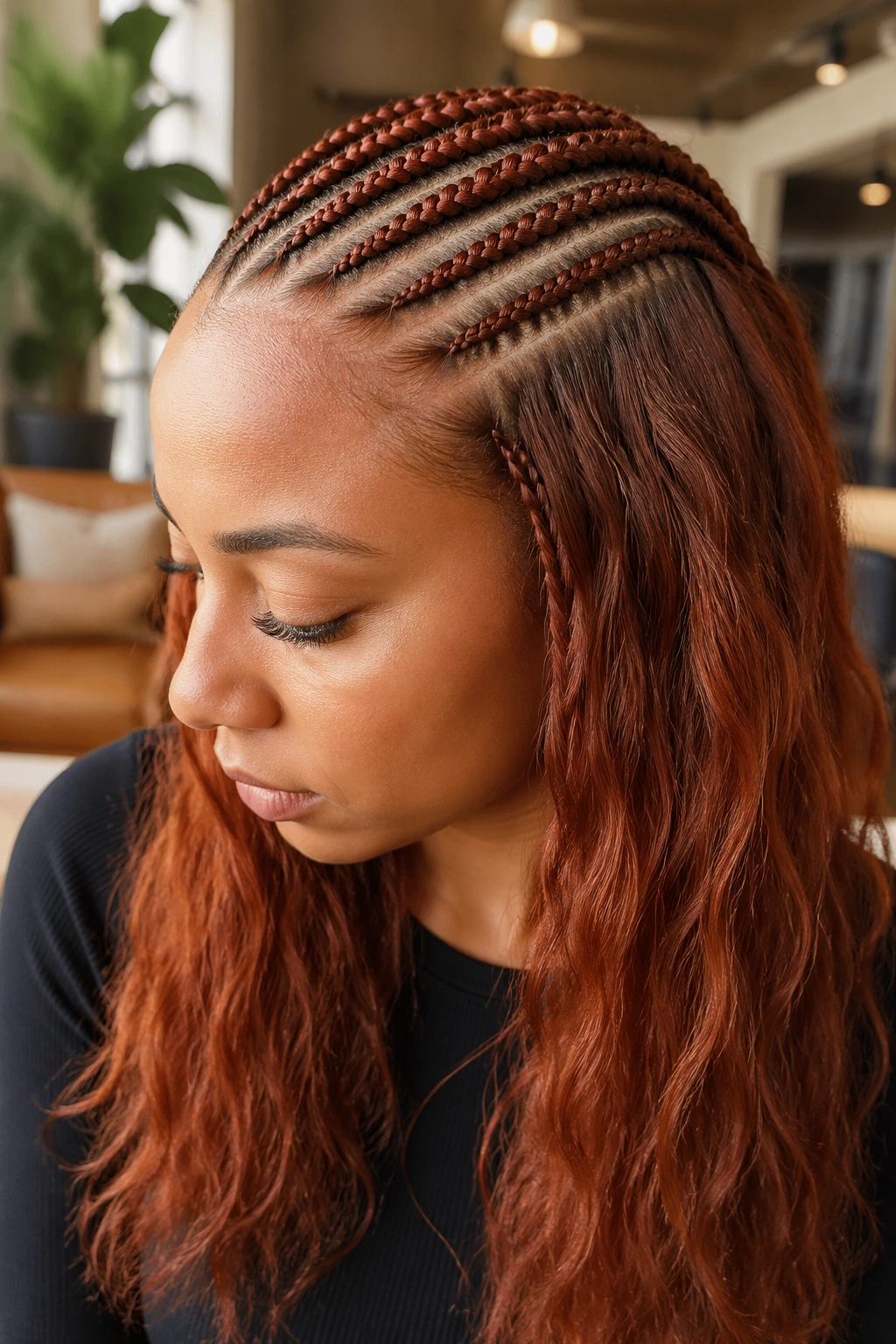
A combination look where the top of the head is cornrowed in auburn but the sides and back remain loose. This works when your natural hair is long enough to blend with the auburn braids or when auburn bulk hair is added to create the loose side sections.
The cornrowed top contains typically 6-8 small to medium cornrows running straight back or at soft angles. Where they meet the back of the head, the cornrows blend into the loose hair rather than tying off visibly.
This style reads softer than full cornrow installs. It works well for settings where full braids might feel too casual — professional environments where you want structure at the top but flow at the sides.
Wear time is shorter than full cornrow styles. Plan for 10 days before reinstall since the loose sections tangle faster than braided ones.
15. Tribal Auburn Pattern
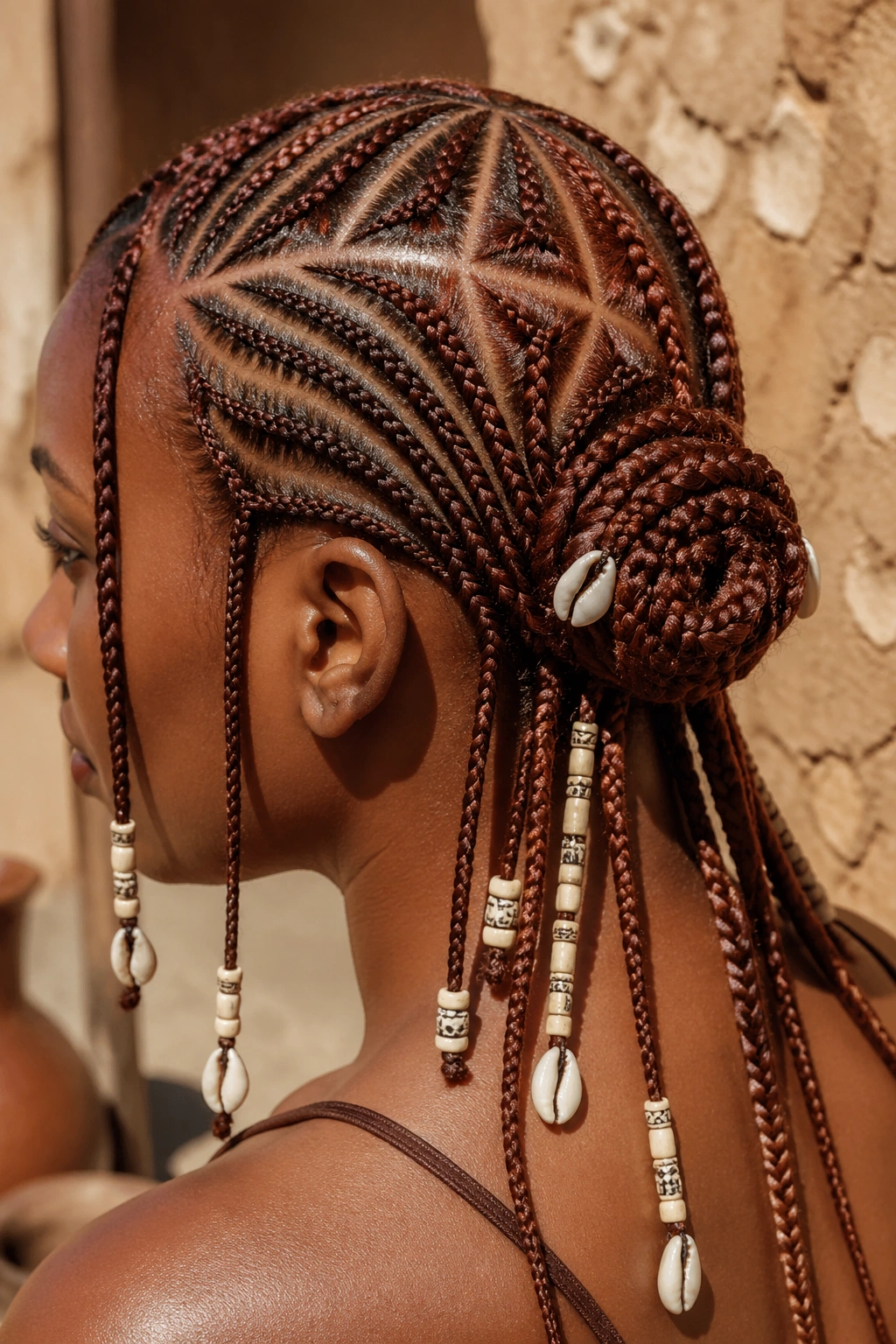
Tribal-inspired patterns draw from West African braiding traditions and feature complex geometric partings, often with beads or cowrie shells. In auburn, these patterns carry the warmth that complements traditional shell and wood accessories.
The pattern might include triangles at the crown, curved cornrows around the ears, and a central knot or bun at the back. Execution requires skilled braiding — tribal patterns are usually done by specialists who understand the geometric logic.
Accessories that work with auburn: cowrie shells (white with dark spots contrast warmly with auburn), bone-colored beads, antiqued brass cuffs, wooden beads in walnut or mahogany tones. Avoid bright silver or neon colors — they clash.
These styles last 3-5 weeks with maintenance and protect the hair well during that time.
16. Auburn Crown Braid
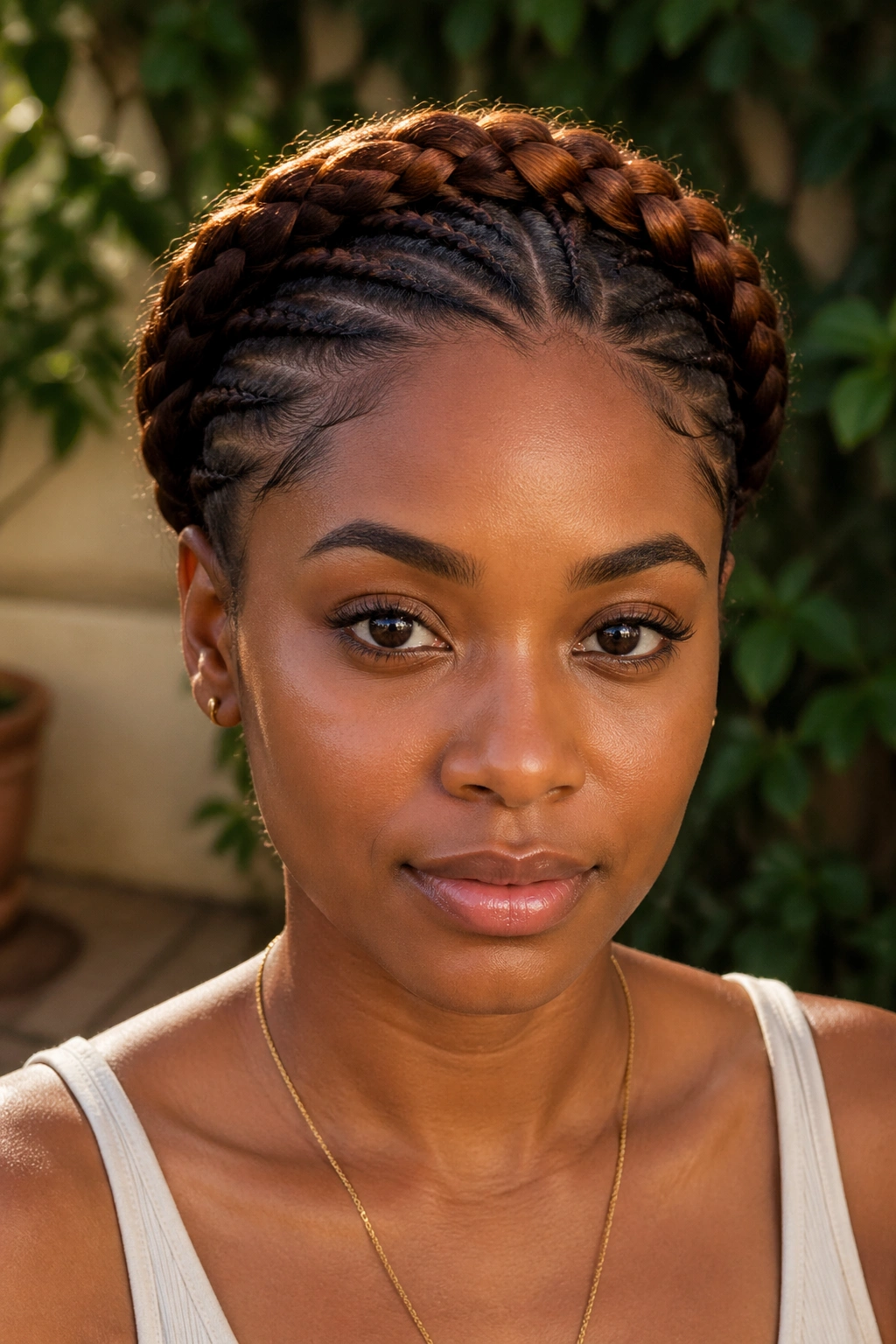
A crown braid traces a single continuous cornrow around the circumference of the head, forming a ring at the crown. In auburn, the ring catches light and creates a natural halo effect.
The crown braid begins at a chosen start point — often the left nape — and feeds kanekalon as it moves around the head. Where the braid returns to the start, it’s tucked under the beginning to create a seamless loop.
The thickness of the crown braid varies with preference. A thicker braid (1.5 inches) reads more dramatic. A thinner braid (3/4 inch) reads more delicate and traditional. Both work in auburn; pick based on your overall style preference.
Pair the crown braid with loose hair at the back for a half-up look, or pair it with additional cornrows below for a fully braided style.
17. Auburn Pineapple Updo
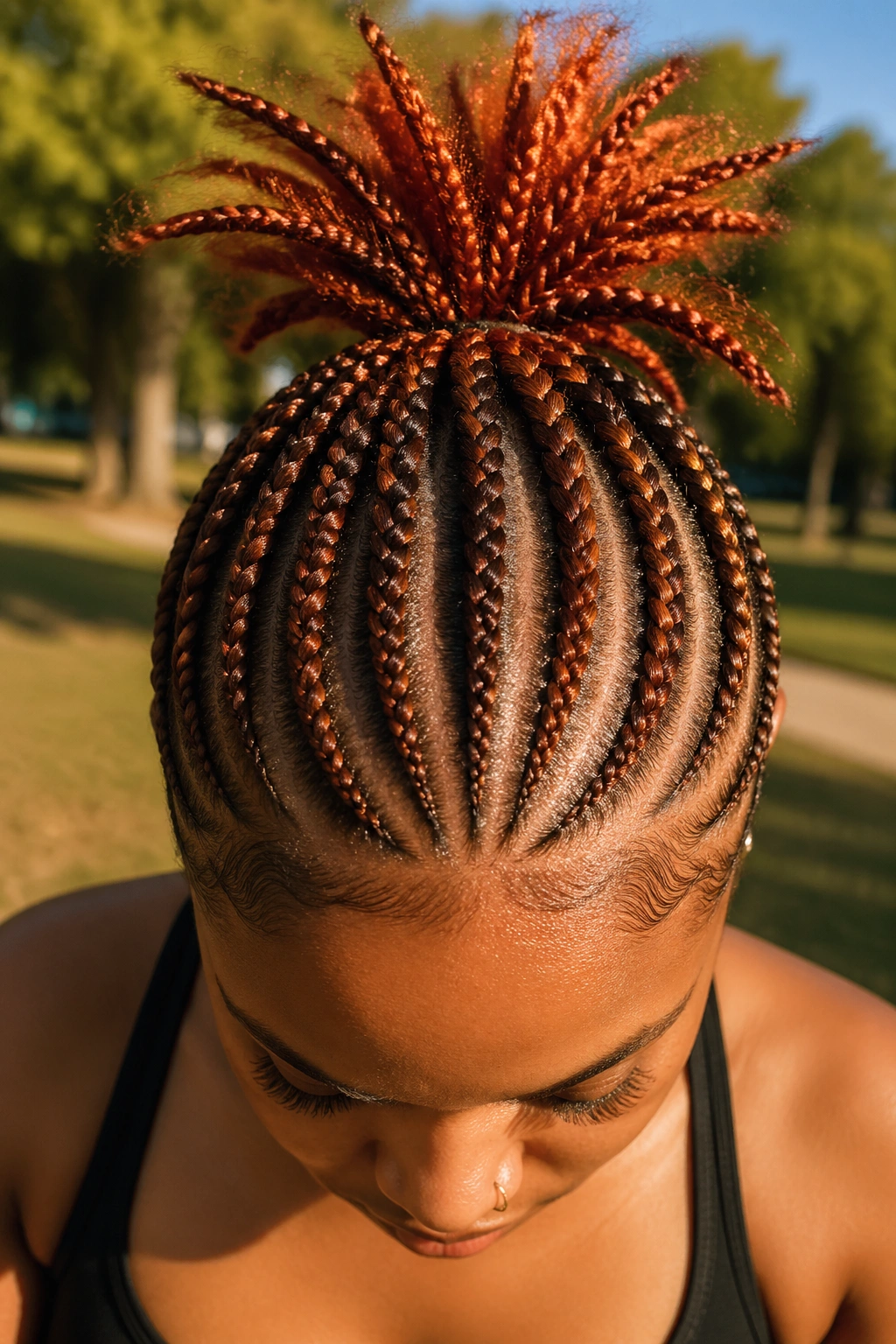
Pineapple-style cornrow updos gather cornrows into a high, fanned ponytail or bun at the crown that resembles a pineapple top. In auburn, the fanned ends catch light across the crown’s full volume.
Ten to twelve cornrows feed into a high crown point. The ends above the ponytail holder are either left loose (for a fanned, textured look) or styled into a bun (for a tidier silhouette). The fanned version is what earns the pineapple name.
This updo sits tall and reads playful without being childish. It works for daily wear, workouts, and social events alike.
The Catch
High updos put extra tension at the hairline where cornrows pull upward. Monitor your edges closely with this style. Any soreness is a signal to loosen or switch.
18. Auburn Cornrows With Burgundy Tips
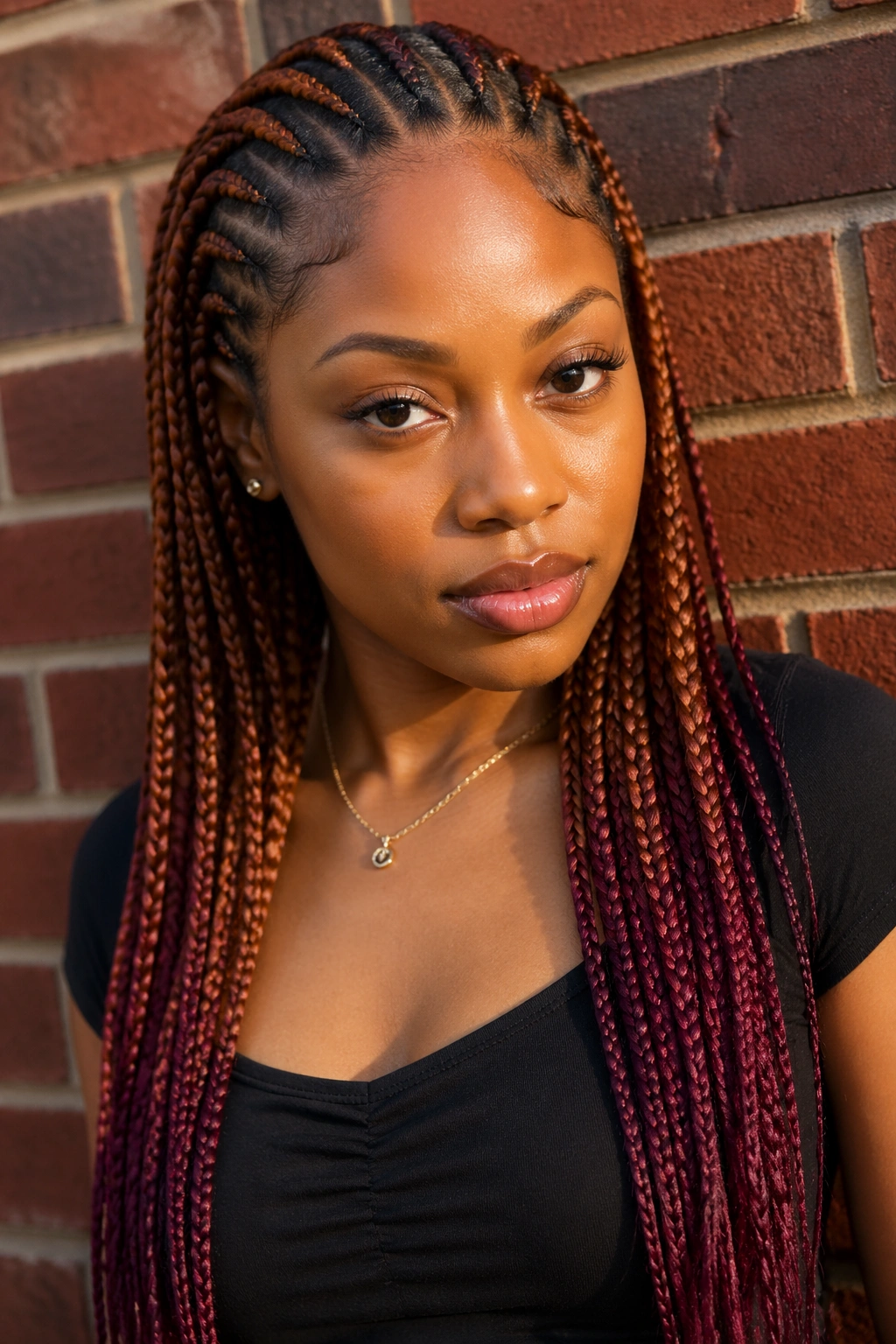
Where ombre blends colors gradually, tipped styles keep the auburn solid along most of the cornrow length but transition to a deeper burgundy at the last 2-3 inches. The contrast is sharper than ombre but still reads intentional.
The tips can be created by dyeing the kanekalon before install (if using single-color kanekalon) or by using pre-tipped kanekalon packs that come with the color transition built in. Pre-tipped is easier and more consistent.
Burgundy tips read especially dramatic on cornrows that are worn long — extending past the shoulders. On shorter cornrow styles, the tips appear less prominent but still add color depth.
19. Geometric Diamond Pattern
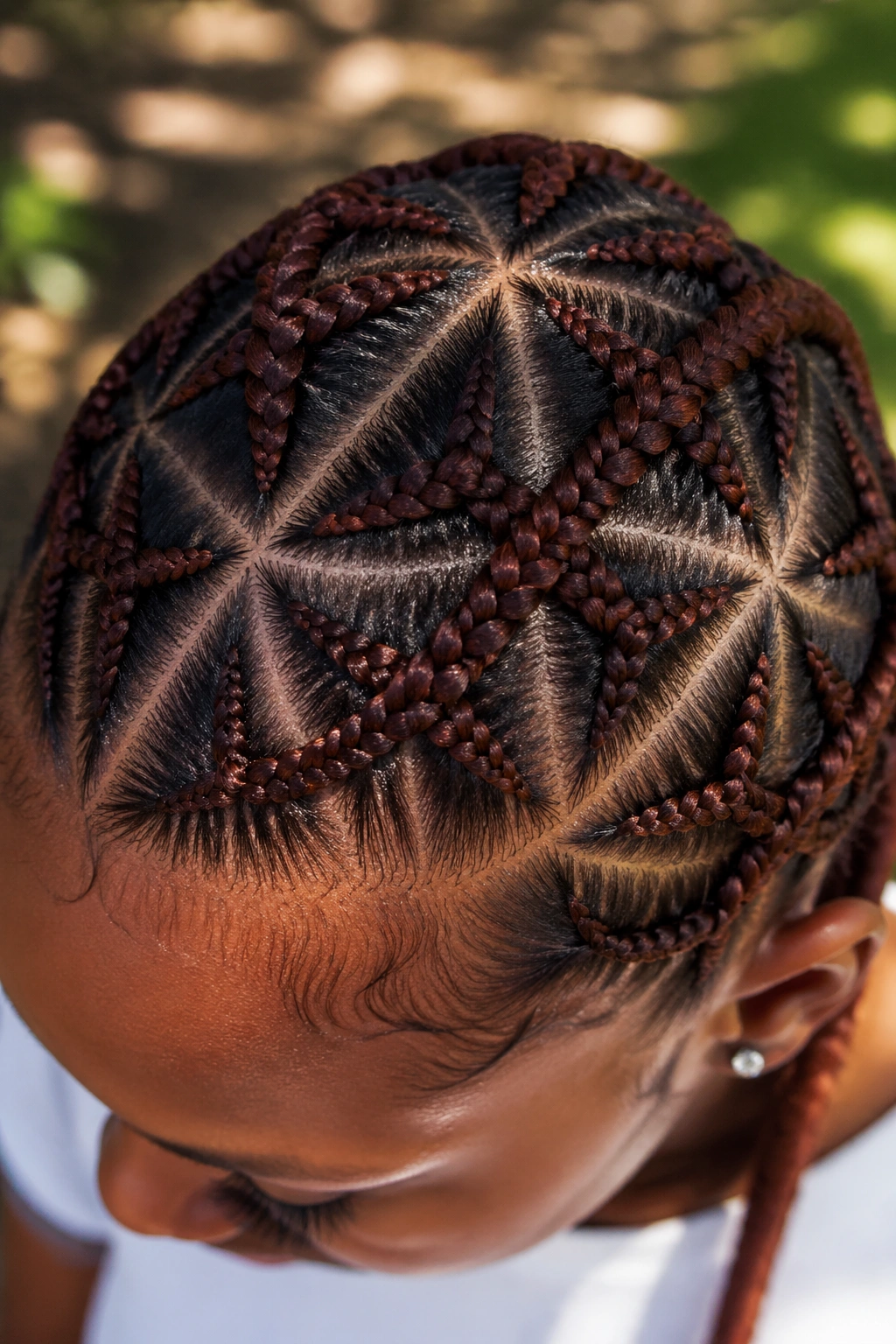
Diamond partings arrange cornrows into repeating diamond shapes across the scalp. Each diamond has four cornrows converging at its center, with the cornrows then running outward to the style’s base or gathering point.
Auburn makes the diamond pattern especially visible. The color’s warmth outlines each diamond with clarity the way black doesn’t always do.
Diamond patterns take longer to install than simple straight-back styles — plan for 5-6 hours minimum with an experienced braider. The precision required for clean diamond shapes means this is not a DIY style.
Once installed, diamonds last 3-4 weeks with good care. The geometric structure hides new growth better than straight patterns.
20. Auburn Half-Up Hybrid
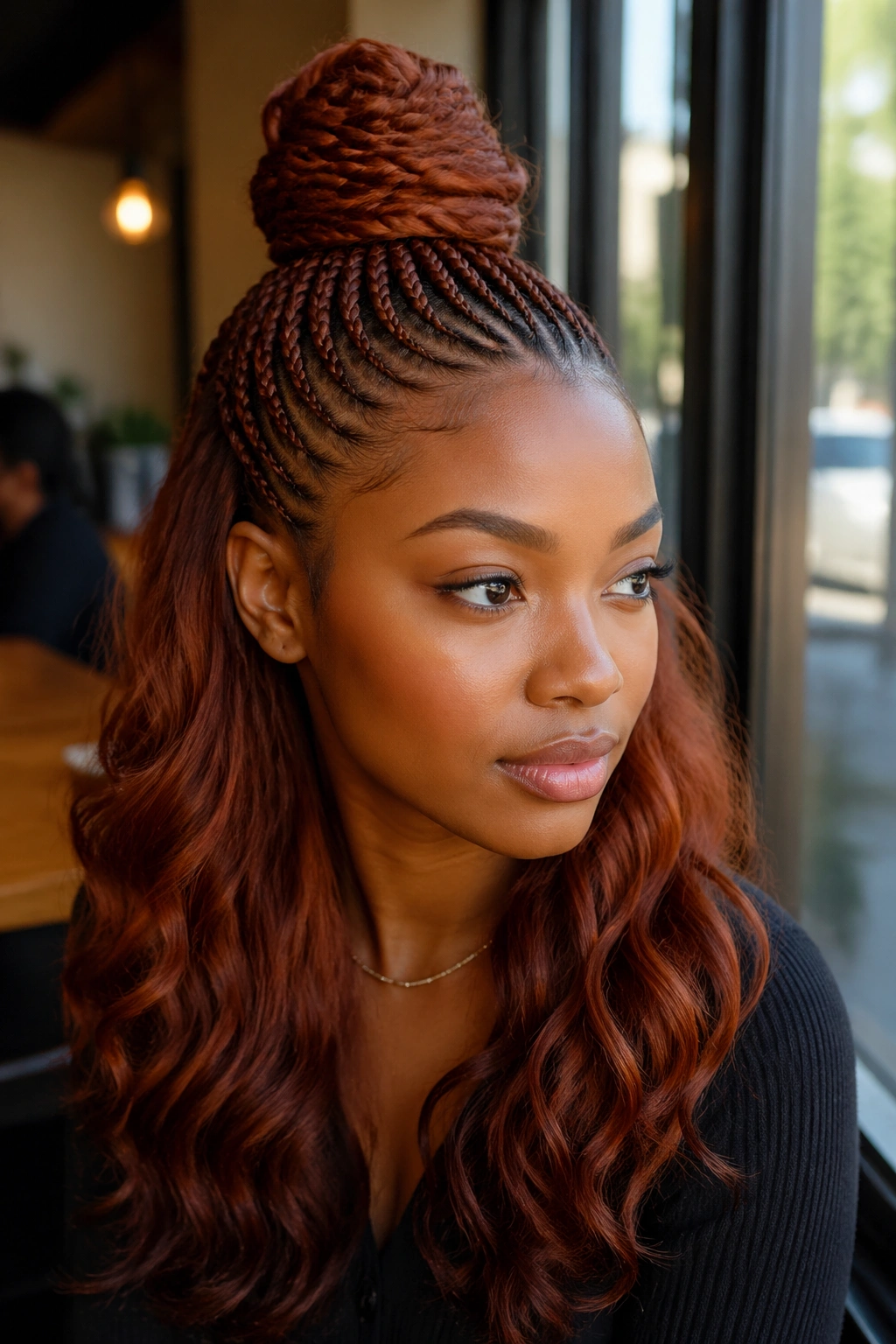
The top half of the hair is cornrowed in auburn and gathered into a small bun or ponytail at the crown. The bottom half is left loose — either natural hair or added wavy auburn extensions.
This hybrid works for events where you want structure at the top but softness at the bottom. It also works when you want cornrow wear but anticipate needing to style the loose hair differently on different days.
The cornrowed top should contain between six and eight cornrows. Fewer looks sparse against loose hair; more creates too heavy a contrast. The gathering point can be a small elastic or a decorative clip.
Wear duration depends on the loose section’s care. The cornrowed top lasts standard cornrow timelines; the loose section needs regular conditioning and styling.
21. Auburn With Feather Accents
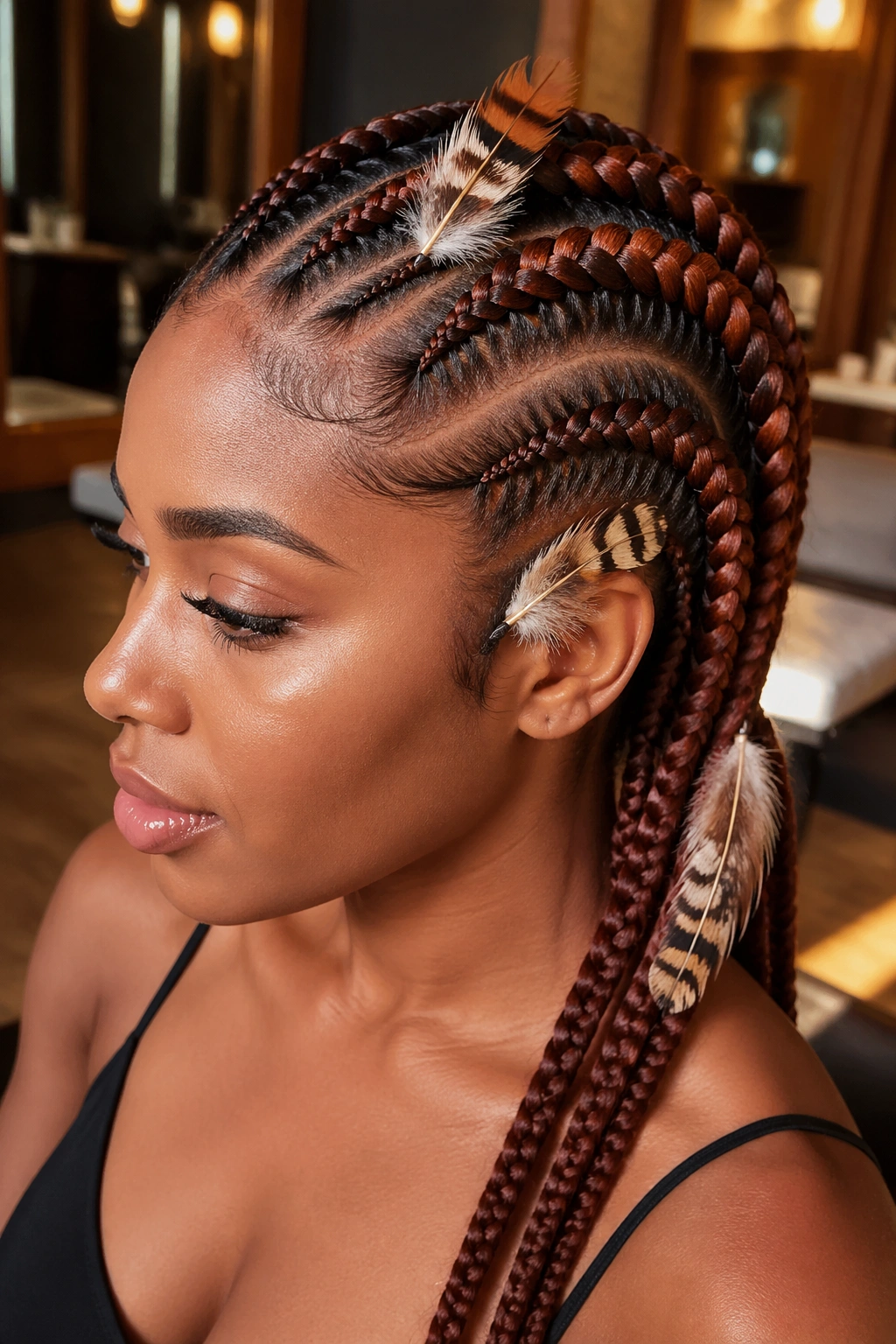
Feather accents are small decorative pieces — sometimes real feathers, sometimes feather-shaped metal or fabric ornaments — attached to selected points along cornrows. Auburn cornrows with warm-toned feather accents read bohemian without crossing into costume territory.
Limit feathers to 2-3 per style. Overusing them makes the look feel forced. Place them at visible points — along the crown, above the ears, at the nape — where they show in normal head positions.
Real feathers require more careful washing (remove them before a wash; store dry between wears). Faux feather accents are more durable but can look plasticky in bright light. Pick based on how long you plan to wear the style.
22. Auburn With Braided Bangs
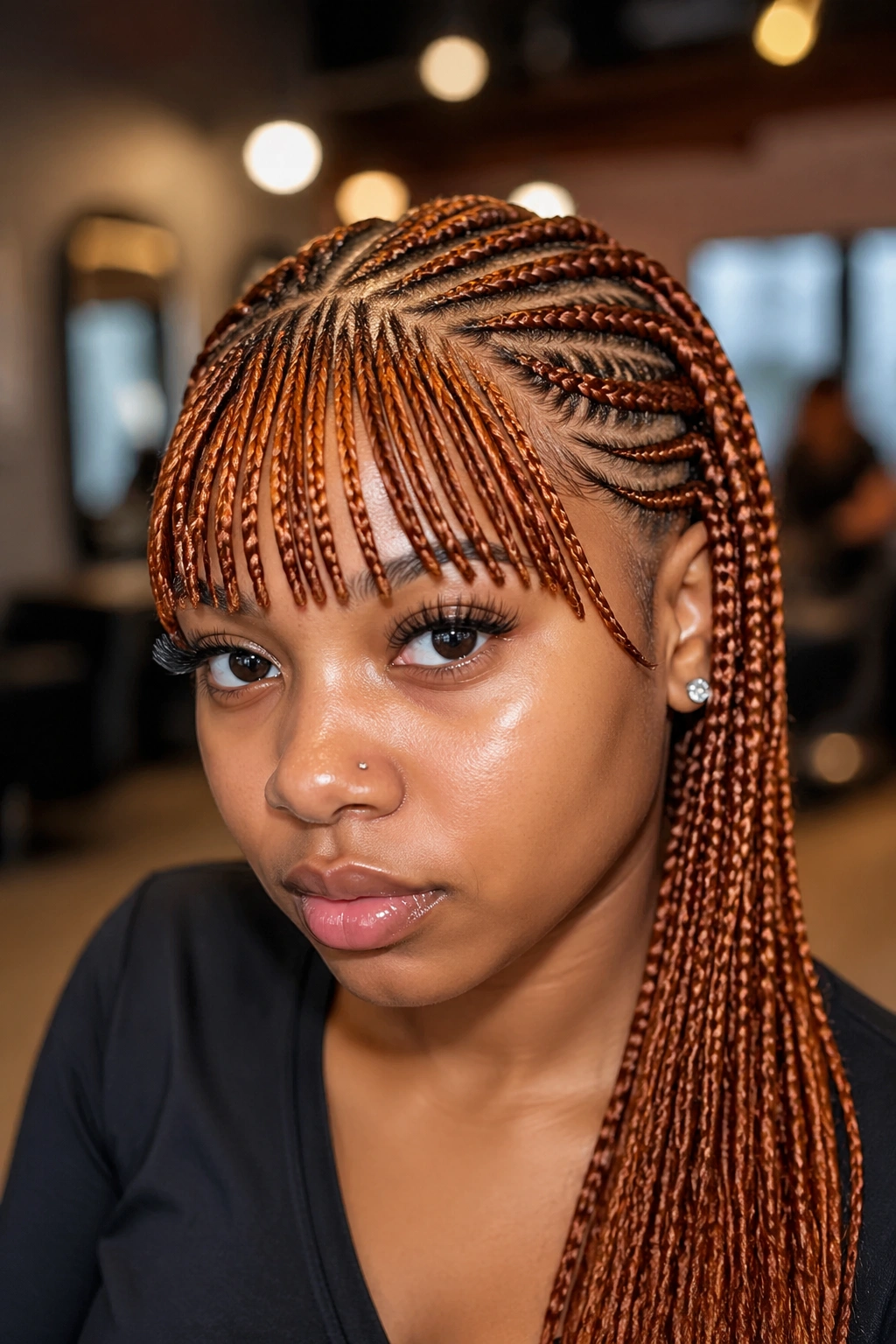
Braided bangs refer to cornrows that start directly at the forehead and curve downward toward the brow line before continuing back. They create a fringed effect without loose bangs that would disrupt the protective styling.
Auburn bangs frame the face with color and structure. The cornrow bang serves as a border between the hairline and the main cornrow pattern, giving the style a defined edge.
Bang length varies. Longer bangs (reaching the brow) read more dramatic. Shorter ones (stopping above the brow) read softer. Both work in auburn; pick based on face proportions.
Who This Works For
Braided bangs flatter people who already like the look of fringe. If you’ve never worn bangs and aren’t sure about facial framing, start with softer curved cornrows near the forehead rather than committing to bang-length cornrows right at the brow.
Color Maintenance During Wear
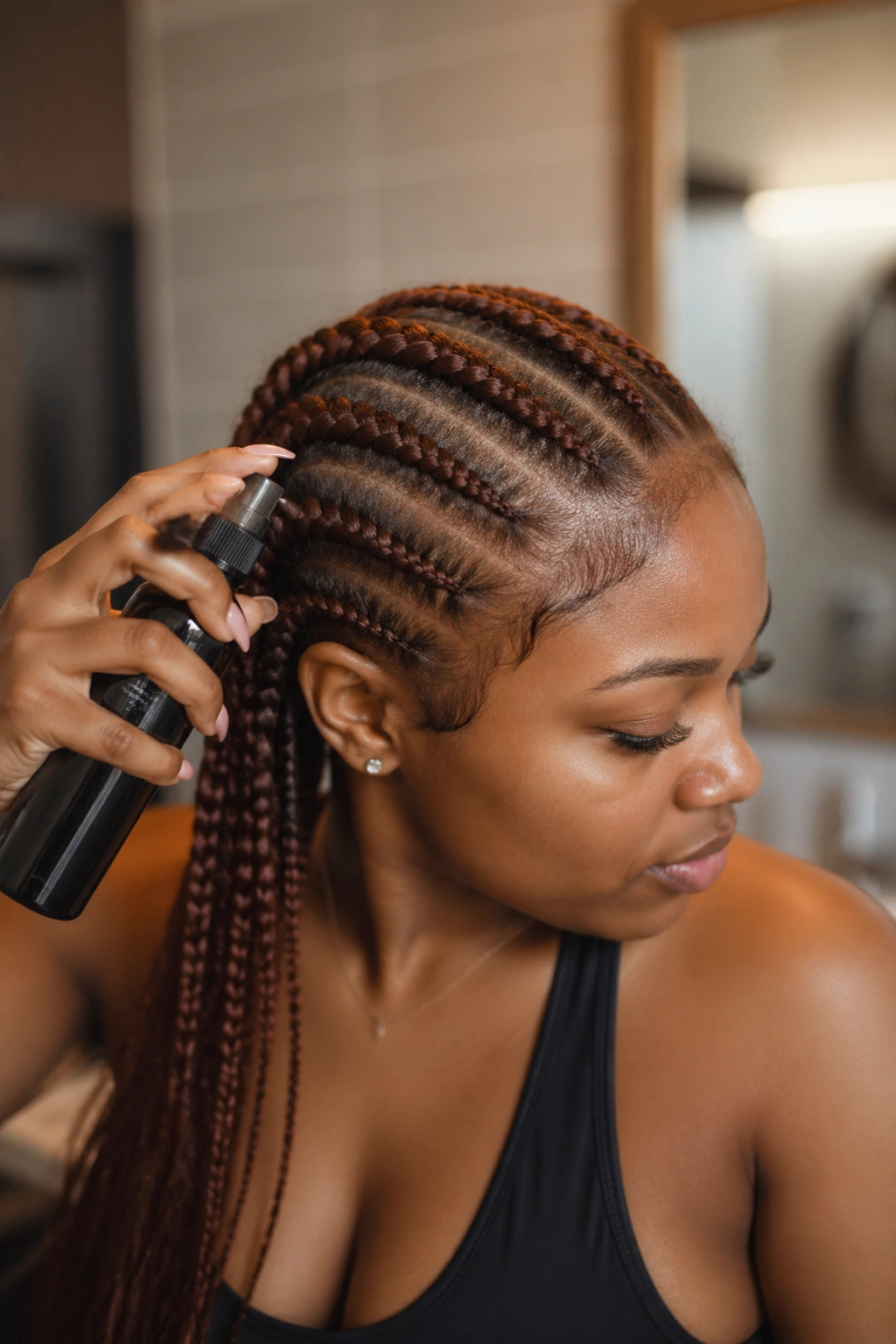
Auburn kanekalon holds its color well through normal wear but can fade with excessive washing. Use sulfate-free shampoos diluted with water for gentler cleaning. Avoid clarifying shampoos during auburn wear; they strip color faster than standard formulas.
Chlorine and saltwater affect kanekalon color. If you swim during an install, wet your cornrows with fresh water before swimming (so they absorb less pool or ocean water) and rinse thoroughly afterward. A protective spray designed for kanekalon adds a barrier.
Sunlight also fades auburn over time. Long outdoor days during summer install can shift the color slightly lighter. This usually reads as a natural gradient rather than damage, but if you want color consistency, a hat or scarf during direct sun exposure helps.
Refreshing Between Full Reinstalls
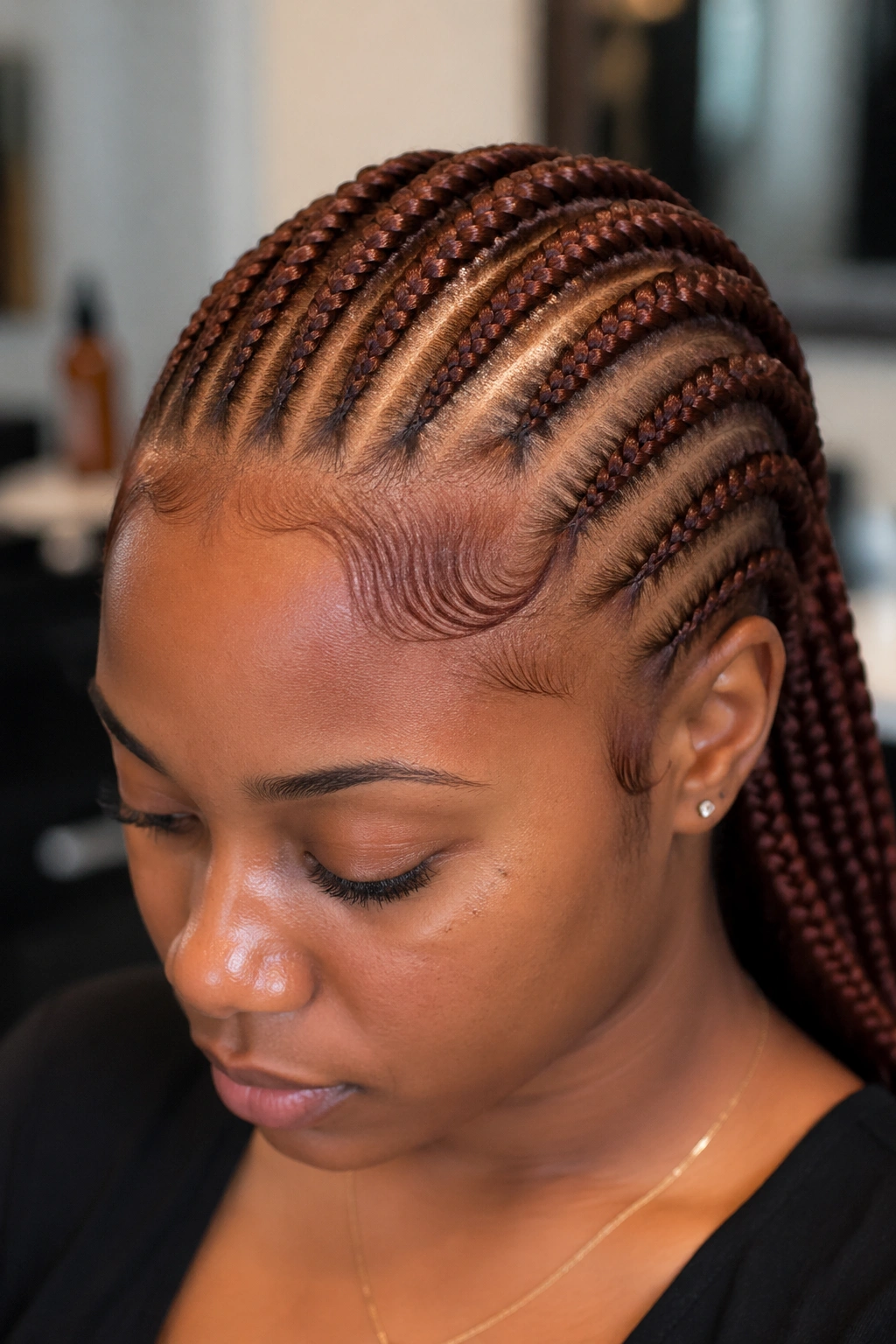
Between installs, you don’t always need to start fresh. A partial refresh — redoing just the front hairline cornrows while leaving the back intact — can extend an install by two to three weeks if the rest still looks clean.
Front refreshes take 1-2 hours instead of a full install. They work best when the back has held up well but the hairline has grown out or fuzzed. Discuss this option with your braider; not every braider offers refreshes.
Edge-up appointments are another option. An edge-up alone — cleaning up the hairline without touching the rest of the braids — can refresh the entire look for 30 minutes of work.
Transition Planning
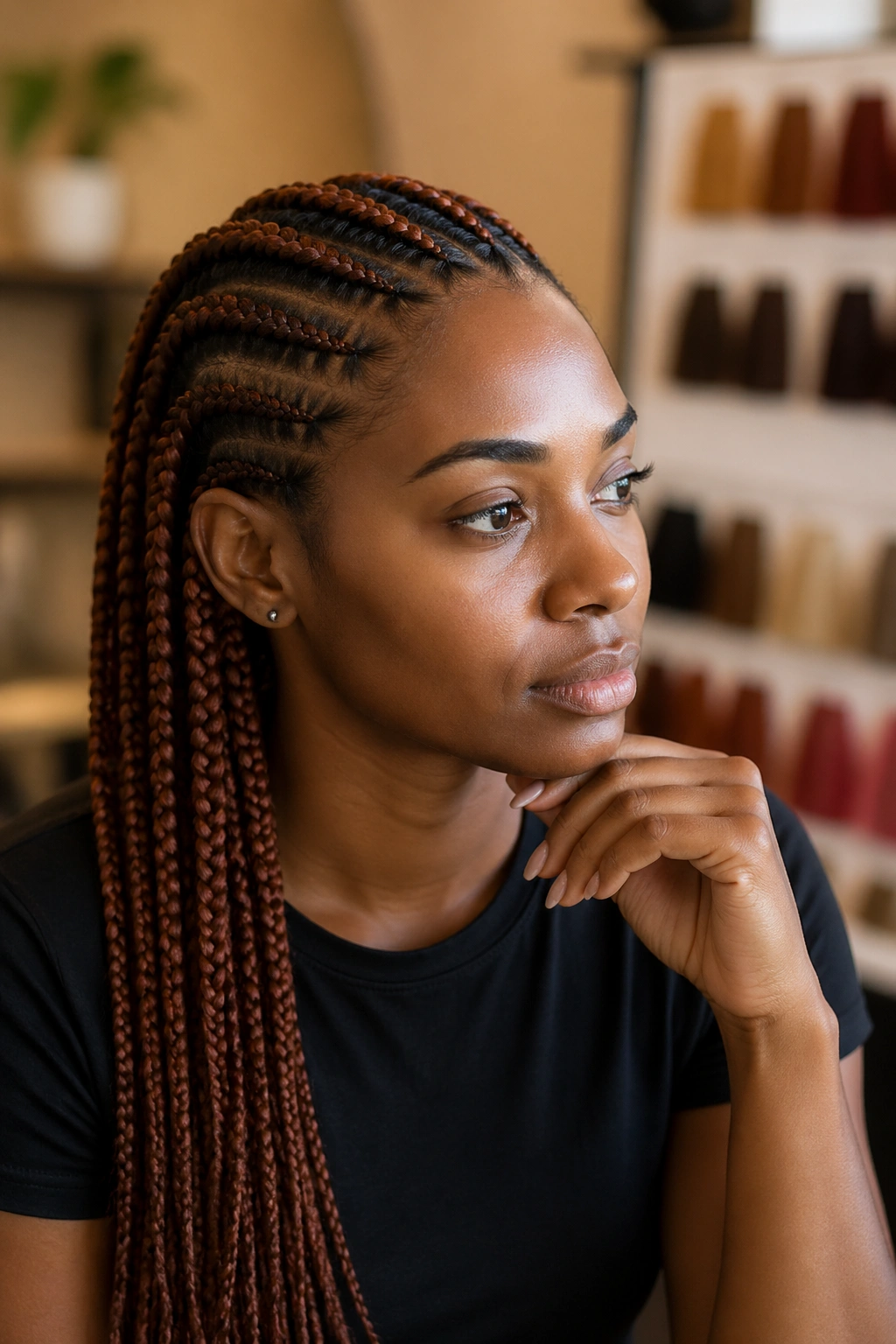
Coming out of auburn? Consider the color transition carefully. Going from auburn to darker shades is easier — just install darker kanekalon next time, or let the auburn natural hair trim out gradually.
Going lighter from auburn can be tricky. Auburn kanekalon leaves warm undertones in the hair shaft even after removal. If you want to go cool blonde or ashy tones, expect an adjustment period where your hair may read warmer than intended.
For a clean transition, plan two intermediate installs between auburn and the new target color. This gives your hair time to release stored warmth from the previous color exposure.
Common Problems and Fixes
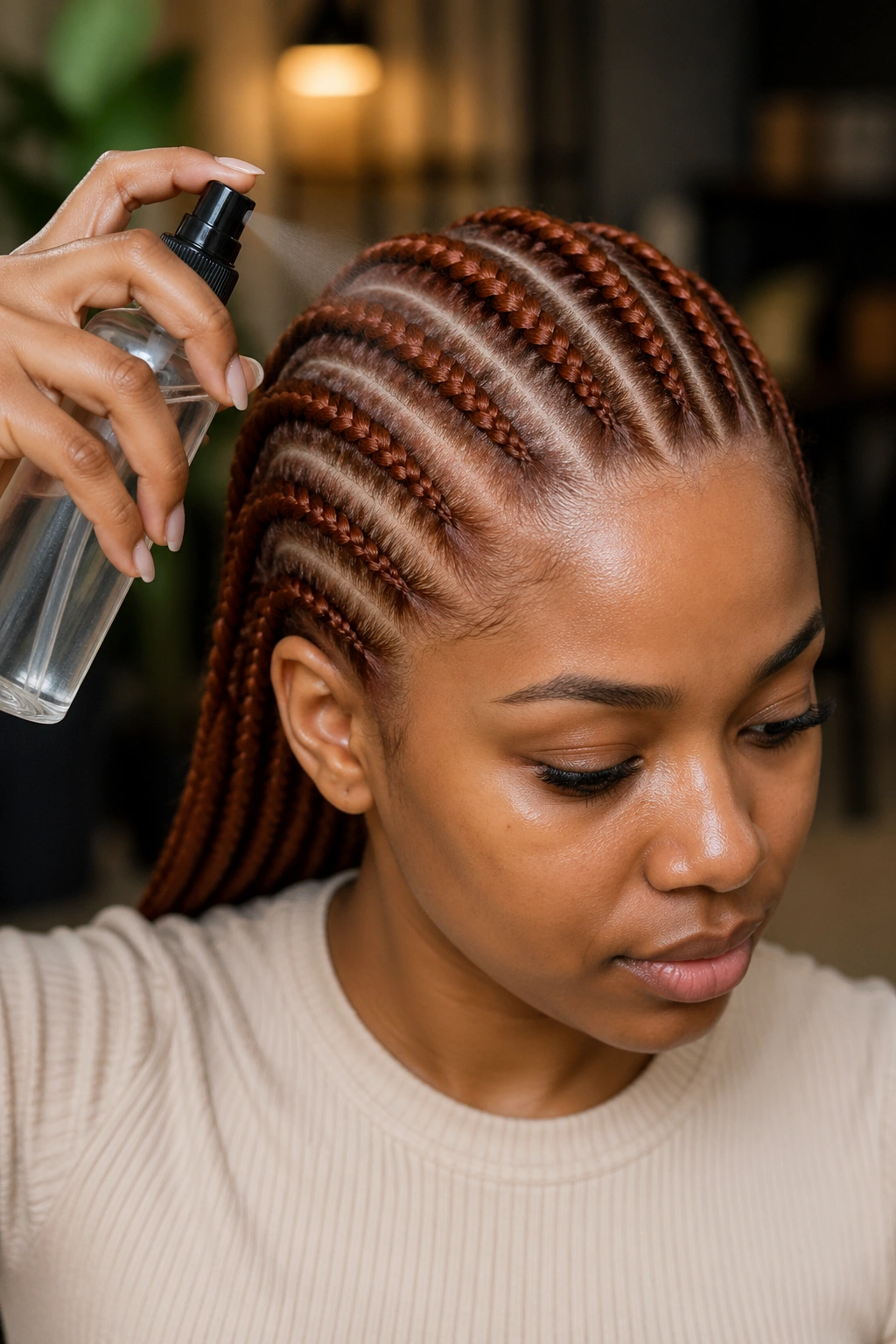
Auburn bleeding onto clothes. Solution: pre-wash kanekalon before install, as covered above. If bleeding still happens, a clear spray sealant on the finished cornrows helps.
Color mismatch with your natural hair. Solution: the first inch of cornrow from the scalp will show natural hair. Work with your braider on a starting twist that blends the auburn kanekalon with your natural shade — or consider dyeing your natural hair a shade closer to the auburn for harmony.
Auburn looking washed out in photos. Solution: warm lighting favors auburn. If possible, take photos in golden hour natural light or under warm-toned indoor bulbs (2700K-3000K). Cool LED lighting can make auburn read flat or orange.
Auburn cornrows are worth trying if you’ve spent years in darker shades. The color brings warmth and dimension that cornrows don’t quite get from other tones, and the range within auburn — deep burgundy to light strawberry — means you can find a shade that fits your coloring specifically. Pick one of the 22 styles above, plan your prep, and commit to the full install period. The color will reward the investment.
