



Not every natural hair moment calls for tight coils and ultra-precise definition. Sometimes the most beautiful version of your hair is loose, free, and flowing — curls that wave and bounce with a relaxed ease that screams effortless rather than intentional. Loose curl styles for natural hair have a particular kind of beauty: they’re romantic, they move freely, and they showcase your hair’s natural texture in its most relaxed, unhurried form. Whether your hair naturally forms loose curls or you’re using techniques to loosen a tighter pattern, these styles offer a softer, more flowing alternative to the defined-curl aesthetic that dominates most natural hair tutorials.
The Loose Curl Aesthetic and Why It Resonates
Loose curl styles occupy a specific space in the natural hair conversation — they’re neither the tight precision of finger coils nor the big, voluminous density of a fully embraced afro. They exist in the middle ground: defined enough to look intentional, relaxed enough to feel effortless.
The appeal of loose curl styles runs deep. They move. They bounce. They have the kind of flow that feels genuinely free — like hair that isn’t trying too hard, that’s just doing what it does without a lot of intervention. For naturals who want visible length and movement without the time investment of a full twist-out or finger coil set, loose curl styles offer a compelling middle path.
Loose curls also show length beautifully. Tight coil styles often experience significant shrinkage — the same hair that finger-coils into small spirals near the scalp can stretch to two or three times that length when allowed to form looser waves and curls. Loose curl styles let you show more of your hair’s actual length without any heat.
But the loose curl aesthetic isn’t just about length or reduced shrinkage. It’s about a particular relationship with your hair — one that involves less manipulation, less fussiness, and more trust in what your hair wants to do naturally when given enough moisture, the right products, and enough time.
Natural Textures That Lean Toward Loose Curls
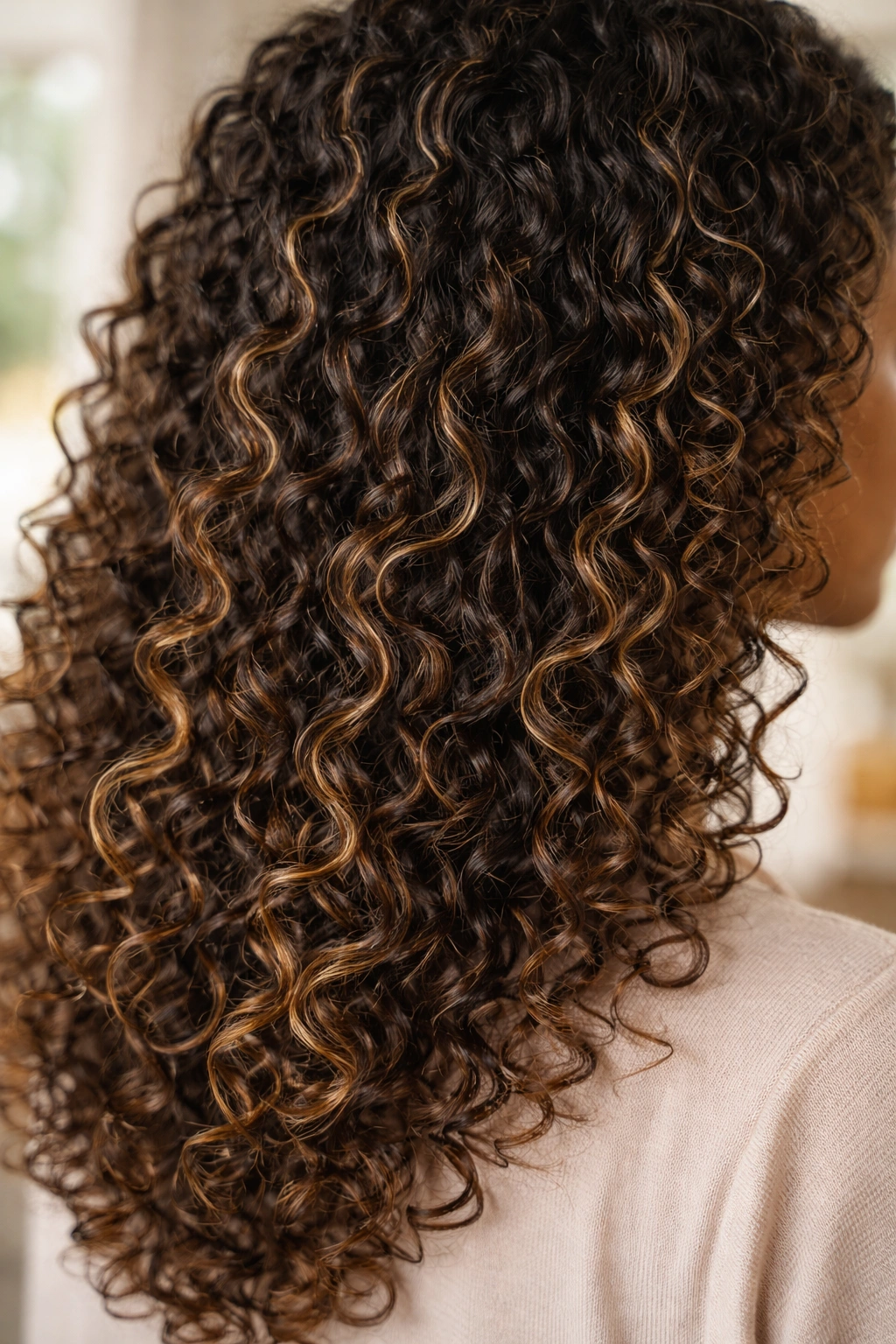
Some natural hair textures naturally form loose curls without much encouragement — but every texture can achieve a loose curl look with the right approach.
3a and 3b textures naturally form loose curls and waves that have the effortless, flowing quality associated with the loose curl aesthetic. For these textures, the challenge is usually maintaining definition rather than creating looseness — getting the curls to clump into defined groups rather than separating into individual strands that look frizzy.
3c textures sit on the border between loose and medium curl patterns. They can lean either way depending on product choices — lighter products encourage the looser, more relaxed end of the pattern, while heavier creams and gels push the curls toward more defined, compact spirals.
4a and above textures can achieve loose curl styles through strategic stretching, lighter product choices, and techniques like braid-outs and twist-outs on stretched hair. The resulting loose curl pattern is a beautiful departure from the tight coil pattern these textures typically show naturally.
Products That Encourage a Loose Curl Pattern
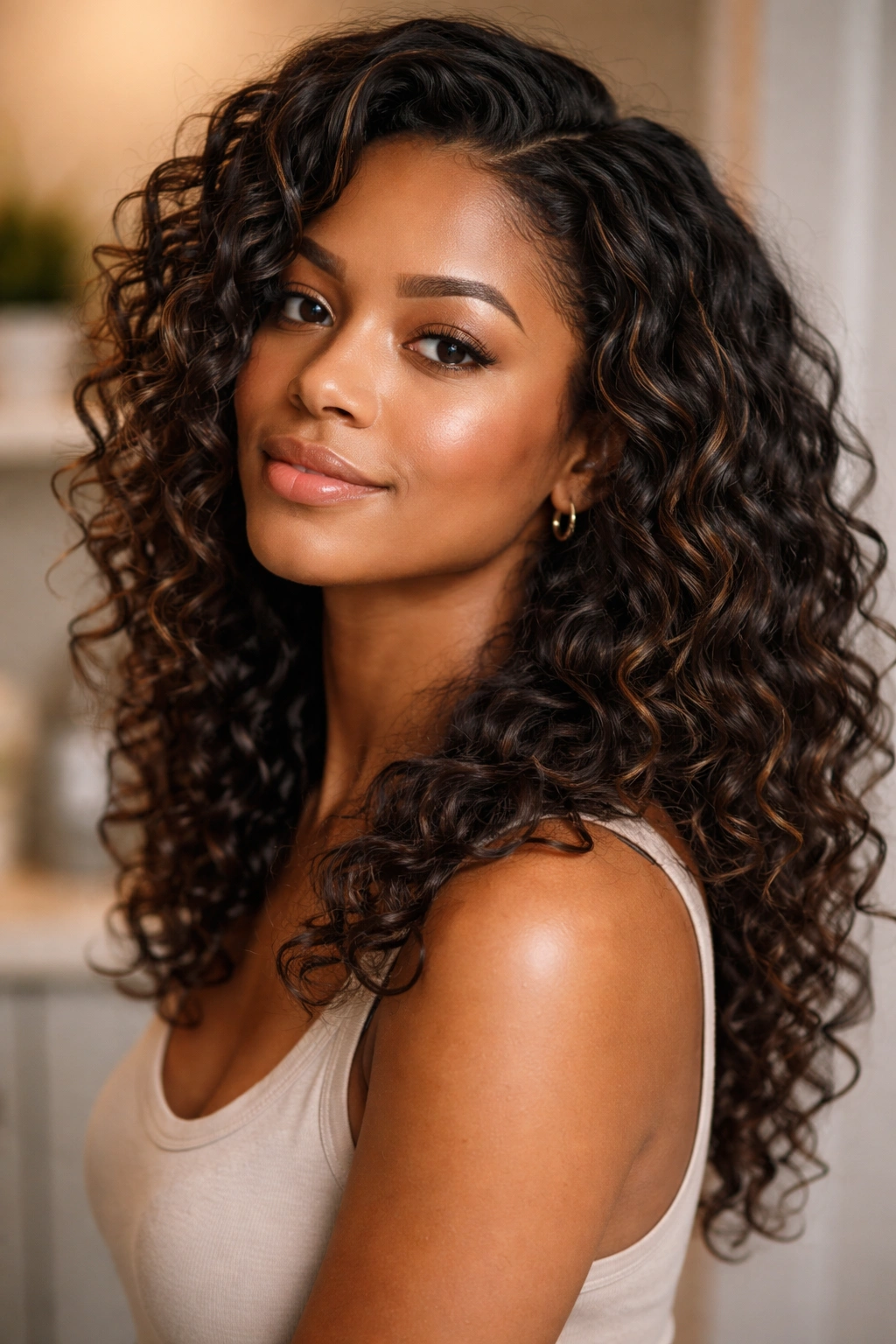
The products you choose have enormous influence over whether your natural curls hang loosely or spring into tight coils. Understanding how product weight affects curl tightness lets you dial in your desired looseness.
Lighter products encourage looser patterns. Lightweight leave-in sprays, fluid curl milks, and light-hold gels allow the hair’s natural weight to pull curls into more relaxed, elongated shapes. Heavy butters, thick custards, and strong-hold gels, by contrast, encourage tighter coiling and more compact definition.
Humectant-rich products — those containing glycerin, aloe vera, or honey — attract moisture from the air and keep curls hydrated and soft. Well-hydrated hair forms looser, more pliable curls than dry hair, which tends to spring into tight, smaller coils as a response to moisture loss.
For the most deliberate loose curl result, try a technique inversion: apply your products in order of weight — lightest first, slightly heavier last — but keep everything on the lighter end of the spectrum overall. A light leave-in spray, a fluid curl milk, and a light-hold mousse or gel will give you definition without encouraging tight coiling.
How to Loosen a Tight Curl Pattern Without Heat
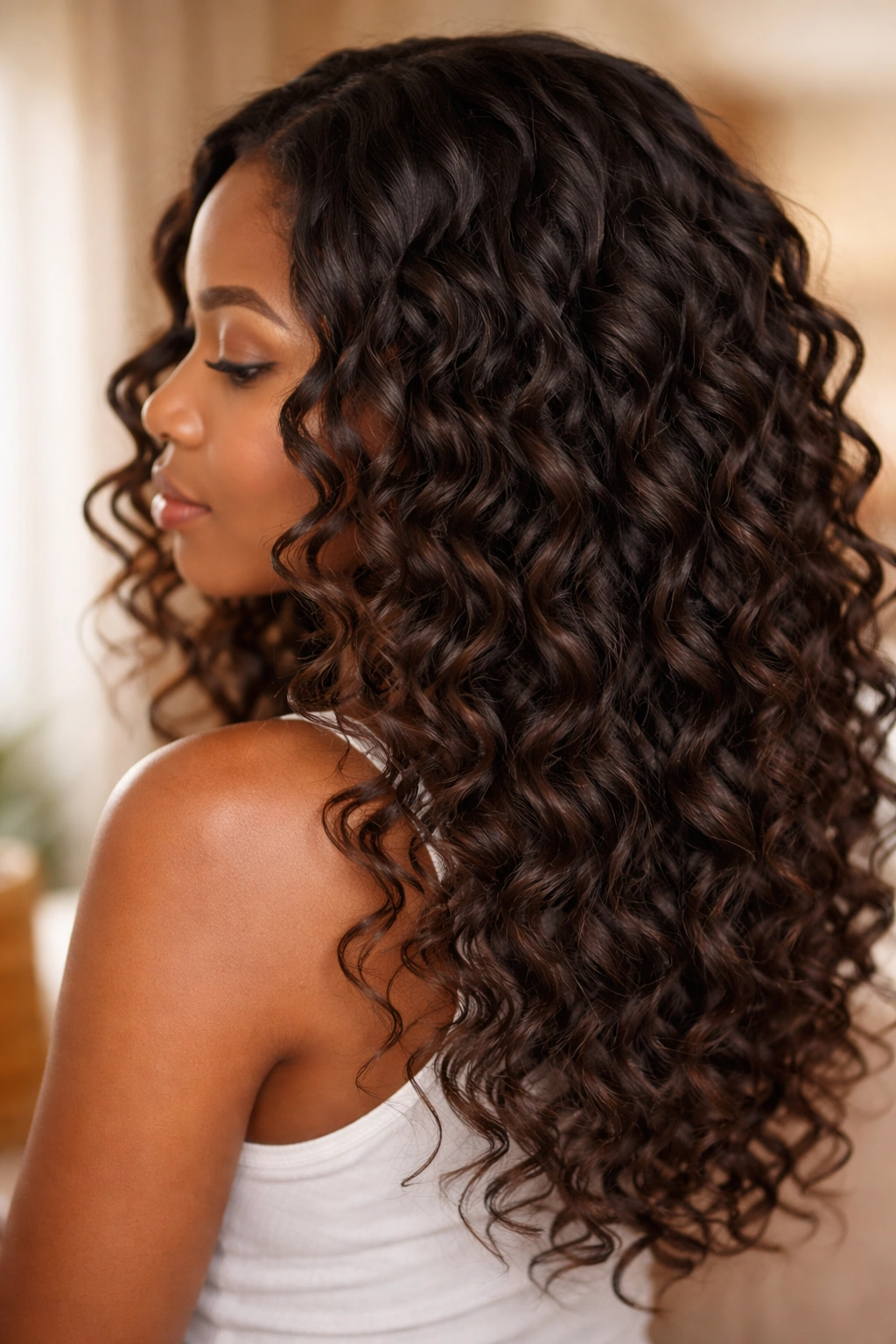
Heat stretching can loosen a curl pattern dramatically — but it also risks heat damage if done frequently or at high temperatures. Fortunately, there are several effective heat-free techniques for achieving loose curl styles on naturally tight textures.
The braid-out on stretched hair is the classic heat-free loosening method. Stretch your hair first using African threading, banding, or simply braiding loosely while wet and allowing to air dry. Then apply products and braid again (more neatly, in defined sections). Unravel the next morning for a much looser curl pattern than you’d get from a braid-out on unstreched hair.
The larger the section, the looser the result. When doing twist-outs and braid-outs, larger sections produce larger, looser curl patterns. A four-section braid-out creates much larger, more relaxed waves than a twelve-section one. Experiment with section size to find the loose curl pattern that suits your personal aesthetic.
Leaving hair in a pineapple or loose bun overnight also gently stretches and loosens the curl pattern — not dramatically, but enough to add some extra length and looseness to an existing style.
The Role of Diffusing in Loose Curl Styling
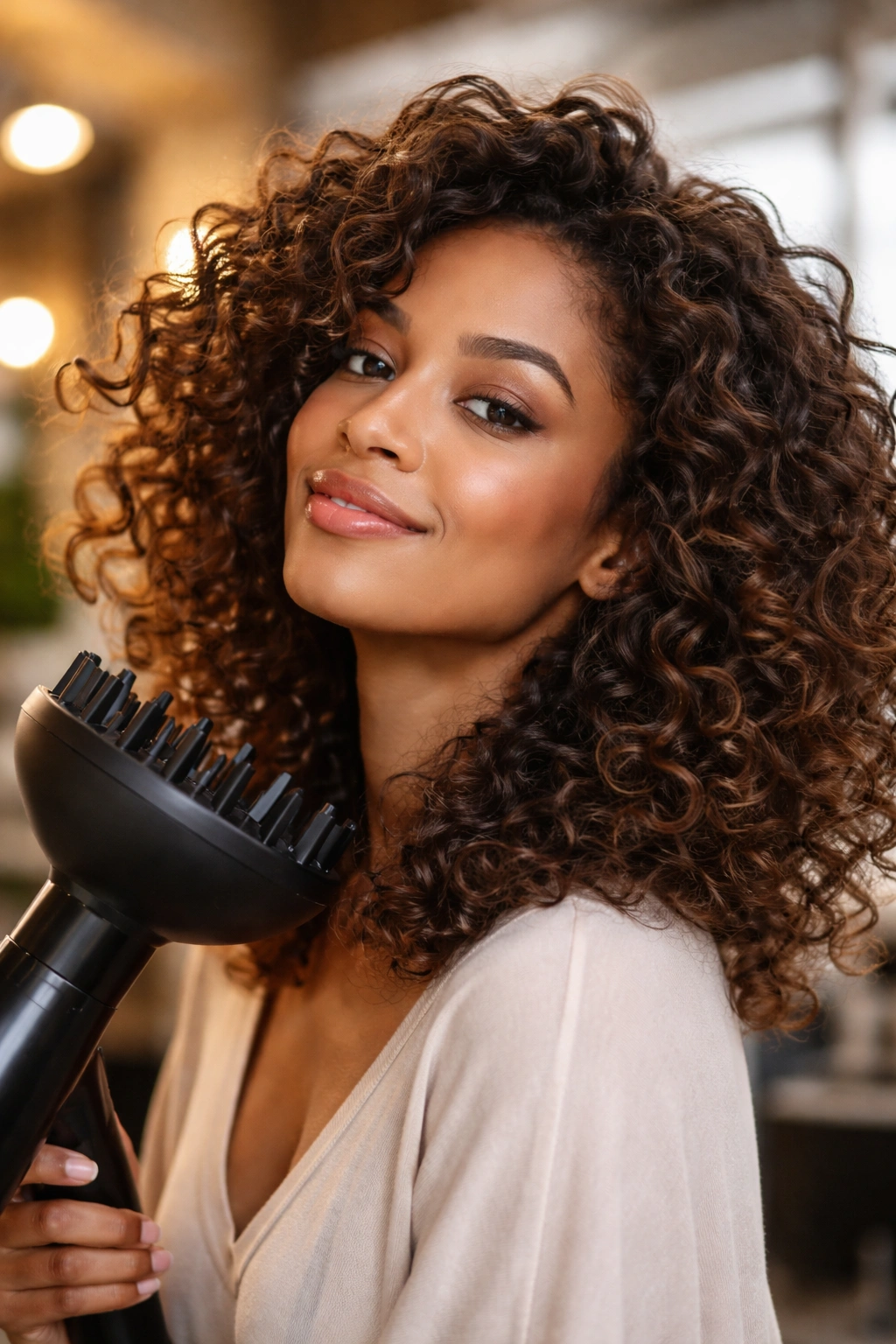
How you dry your hair has a significant impact on how loose or tight your final curl pattern appears. Understanding this gives you additional control over the loose curl aesthetic.
Air drying typically produces tighter curls. As water evaporates from the hair during air drying, surface tension pulls the curl tighter and tighter until the hair is fully dry. The slower the evaporation, the more time this tightening process has to work — meaning air-dried hair often shows more shrinkage than diffused hair.
Diffusing on a medium heat setting speeds up the drying process and reduces the tightening effect of evaporation. The warm air also opens the cuticle slightly, allowing more volume and a slightly looser curl pattern to emerge. Many naturals find that diffusing — particularly lifting sections with the diffuser cup from below — produces a looser, more voluminous curl pattern than air drying alone.
For the loosest air-dried result, try plopping: wrap freshly washed, product-applied hair in a microfiber towel or cotton t-shirt turban and let it sit for fifteen to twenty minutes before air drying. Plopping removes excess water without the tightening effect of ordinary air drying, and many naturals find their curls emerge looser and more voluminous after plopping.
1. Loose Curl Wash-and-Go
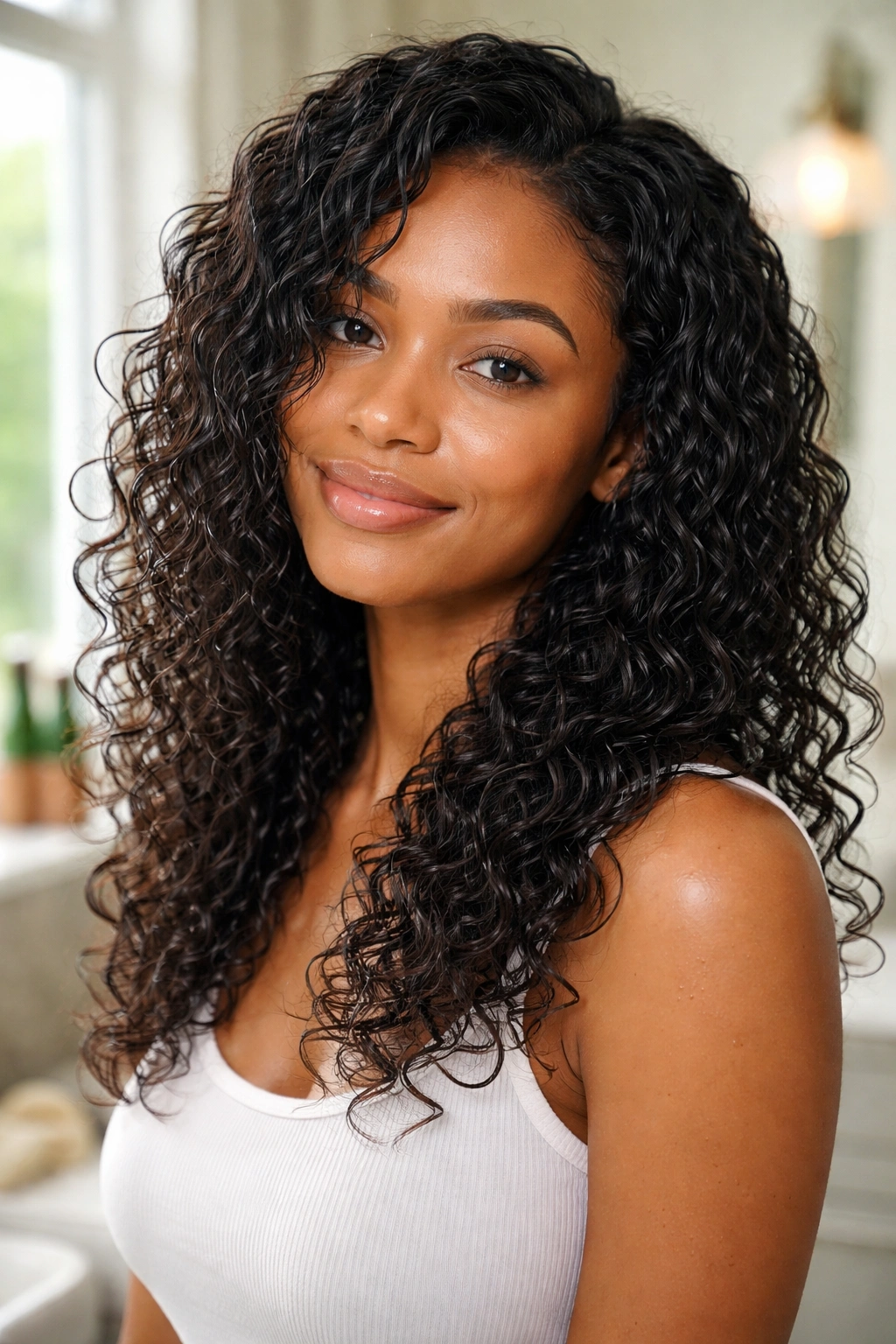
The loose curl wash-and-go is all about product choice and technique. Apply a lightweight leave-in spray to soaking-wet hair, follow with a fluid curl milk rather than a thick cream, and finish with a light-hold mousse or curl jelly. The lightness of these products encourages the hair to hang loosely rather than spring tightly.
Rake products through large sections rather than working in tiny sub-sections — large sections encourage the curls to clump in bigger groups, creating a looser, more relaxed look.
Loose Curl Wash-and-Go Steps
- Use a moisturizing co-wash or gentle shampoo
- Apply lightweight leave-in spray to wet hair
- Layer a fluid curl milk through each large section
- Rake or scrunch with a light mousse for hold
- Diffuse for looser results or air dry for tighter
- Hands off until completely dry
2. Loose Curl Braid-Out
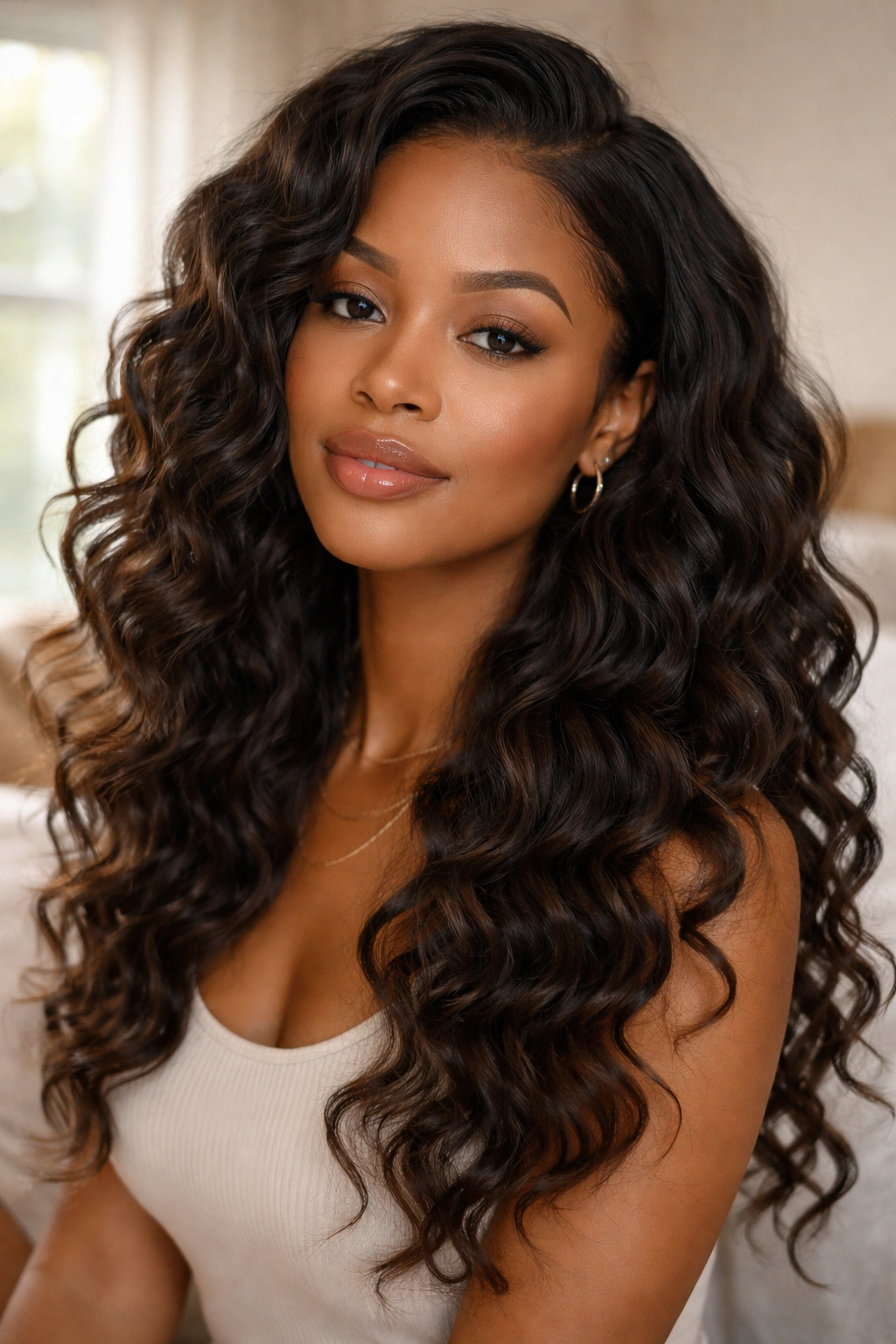
A braid-out is the most effective way to create a loose curl pattern on textures that naturally form tight coils. The braid imprints a wave pattern that opens into large, flowing curls when unraveled.
Braid in large sections — four to eight braids maximum — for the loosest, most wave-like result. Smaller braids create tighter, coil-adjacent patterns. Apply a light cream or curl milk before braiding and let the braids dry completely overnight.
When you unravel in the morning, use your fingers (with a little oil) to separate the wave sections very gently. Aggressive separation creates frizz — gentle, slow pulling is what keeps the loose wave pattern intact.
3. Loose Curl Twist-Out on Stretched Hair
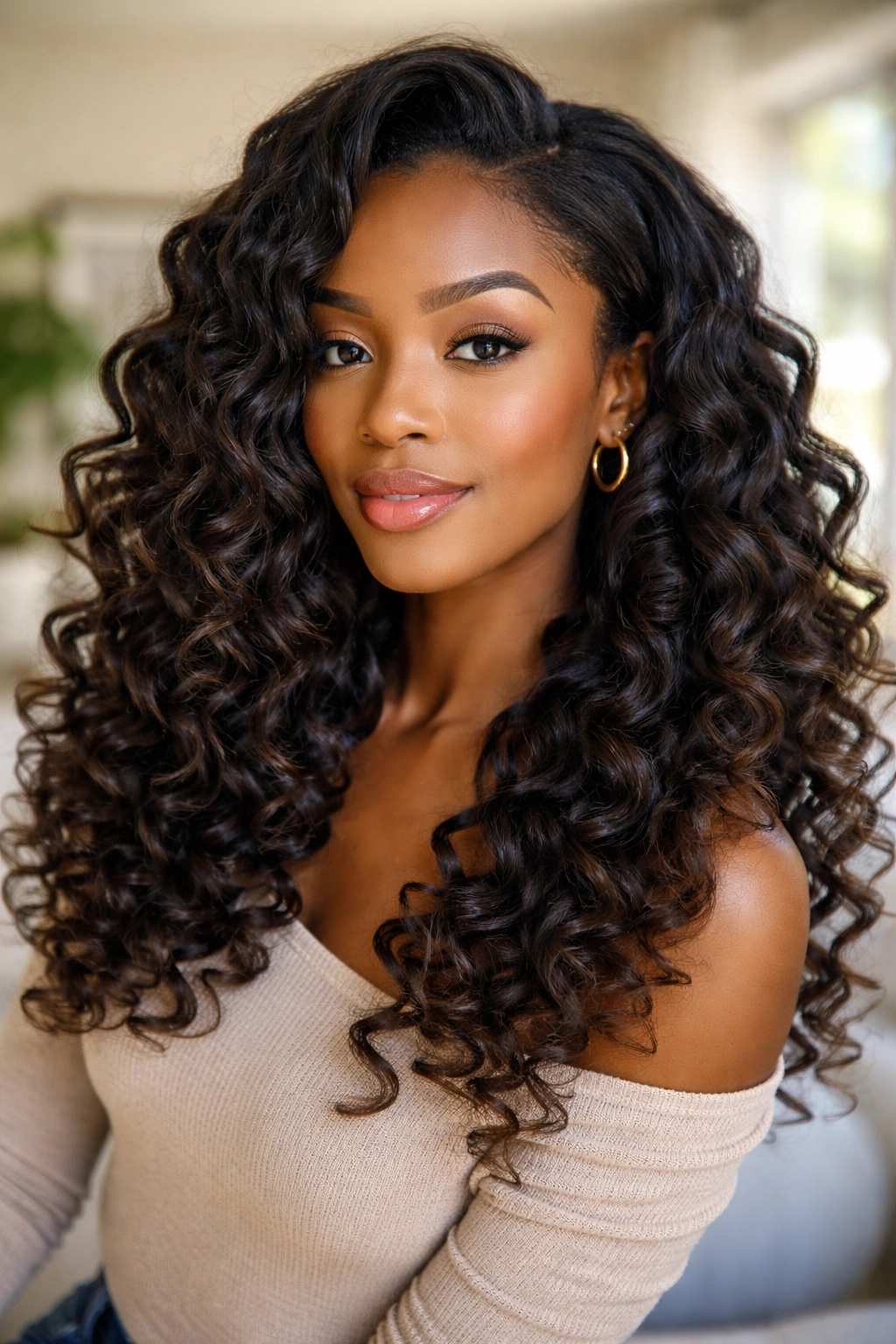
A twist-out done on stretched hair produces significantly larger, looser curls than the same technique on unstreched hair. Stretch your hair using the banding method, then apply products and twist in medium-to-large sections.
The combination of stretched hair and large twists creates the loosest twist-out pattern possible — barely coiled, more of a cascading wave that looks flowing and romantic.
Steps for a Loose Twist-Out
- Stretch damp hair with bands or African threading
- Remove bands once dry
- Apply light leave-in and curl milk
- Twist in large sections from root to tip
- Let dry fully overnight
- Unravel gently with oiled fingers
4. Loose Curl Defined Bob
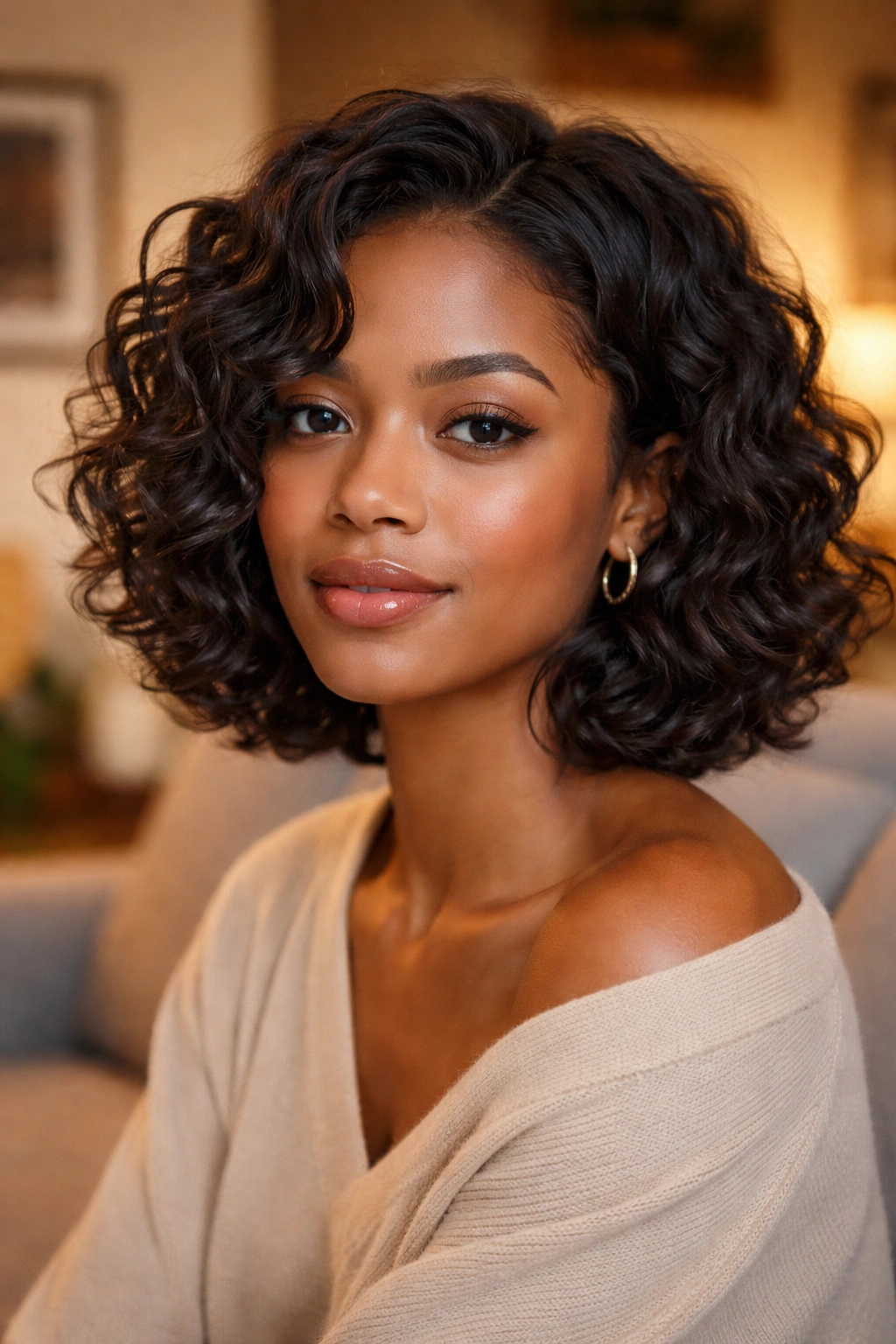
For naturals with chin-to-shoulder length hair, a loose curl bob is one of the most effortlessly beautiful styles available. The curls hang with enough weight to pull into a loose, relaxed wave rather than springing tightly upward.
Apply lighter products to each section and allow the curls to form their own natural groupings rather than shingling for precise definition. The resulting style has a softer, more romantic quality than a precisely defined curl bob.
Diffuse for extra volume that keeps the loose bob from looking flat.
5. Loose Curl Half-Up Style
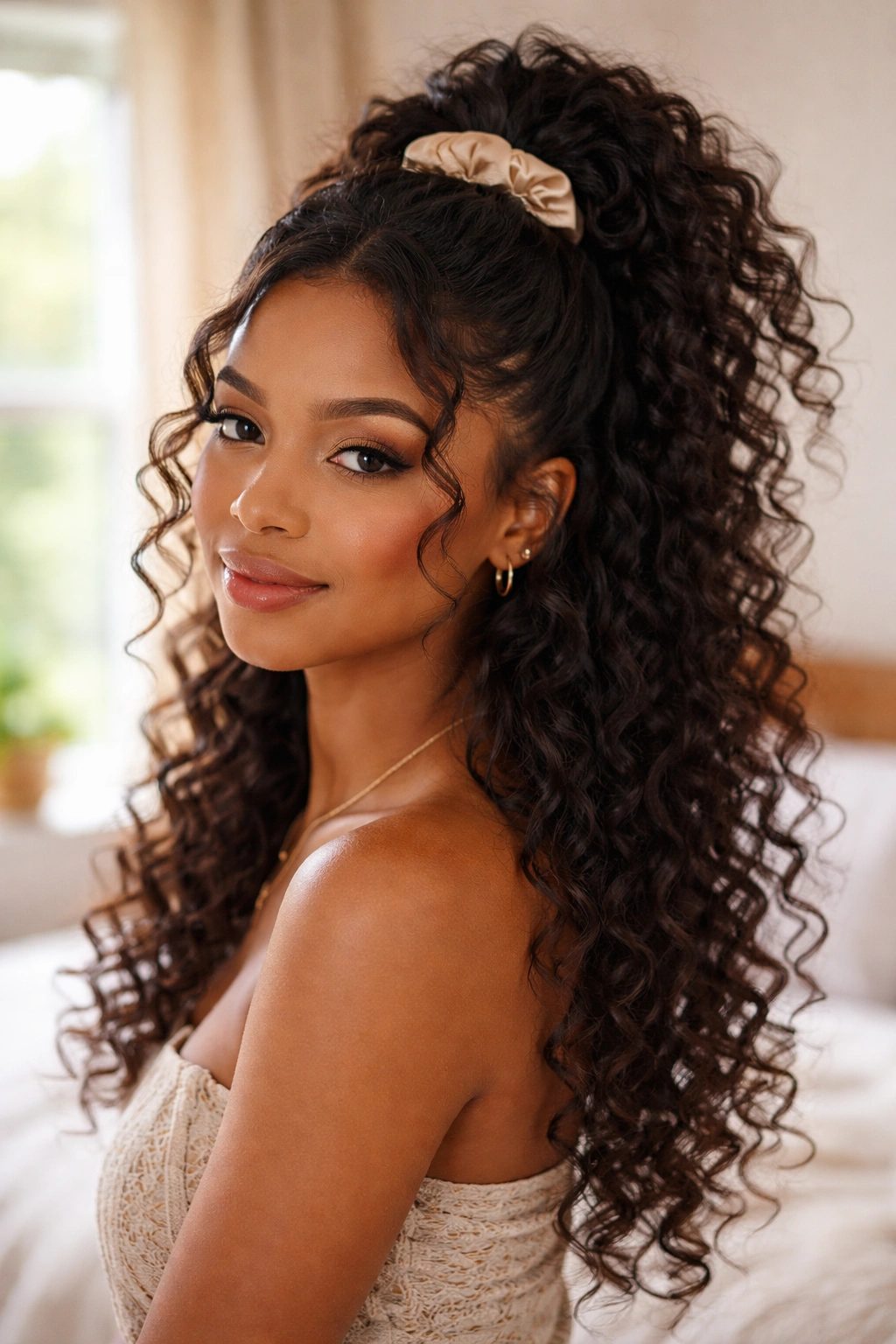
Gather the top section of loose curls into a half-up pony or bun, letting the bottom half hang freely. Loose curls in the free-hanging section have beautiful movement and flow — they swing when you walk and catch light with every step.
Loose Curl Half-Up Styling
- Let loose curl style dry completely first
- Gather top section loosely with a satin scrunchie
- Pull a few loose curls forward at the temples
- Let the lower section hang freely in its natural wave
This works especially well on longer natural hair where the loose curls have enough length to really move and flow.
6. Loose Curl Updo
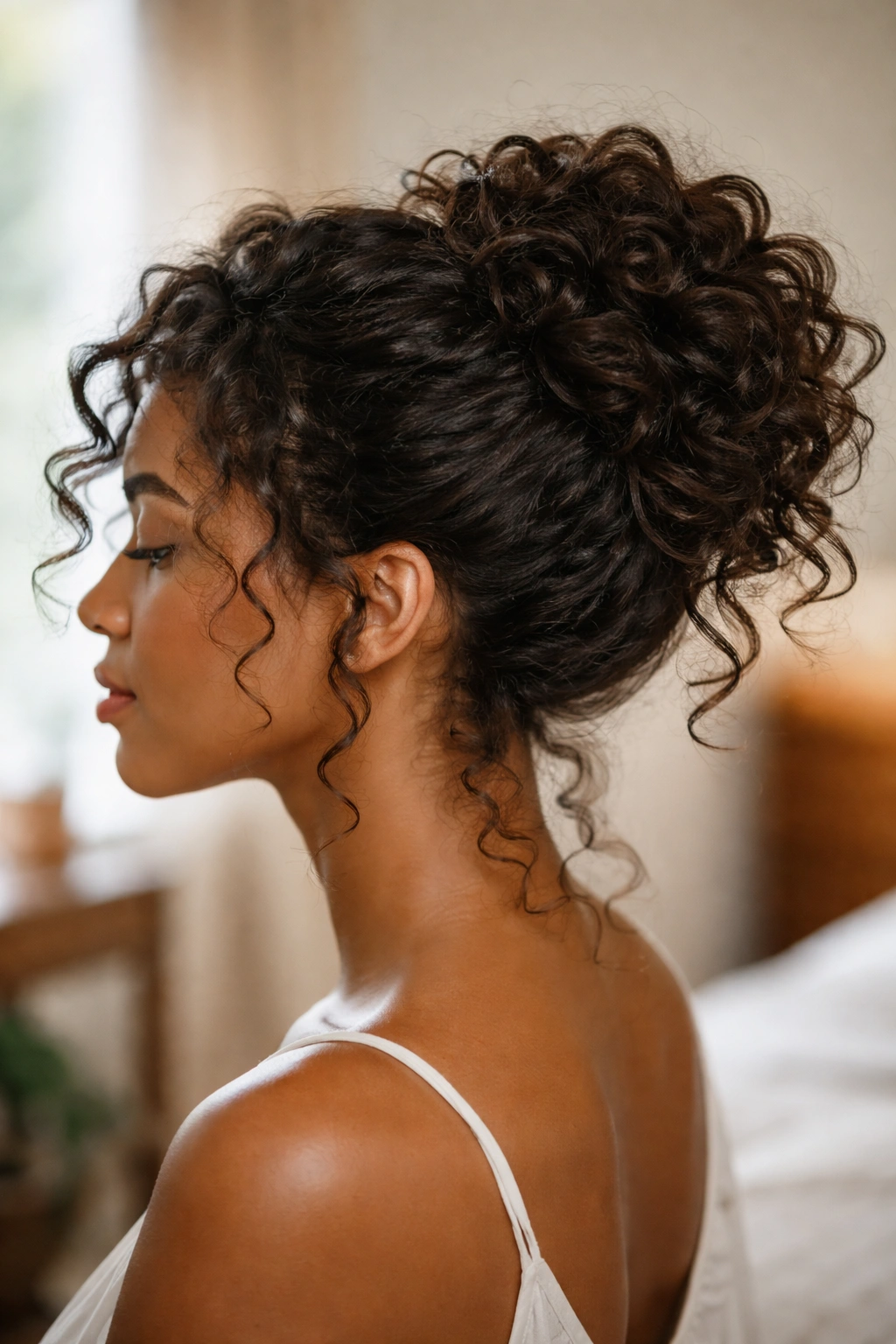
Pin loose curls into a relaxed updo — not tightly swept, but loosely gathered and pinned with curls escaping at the hairline and nape. The loose, flowing quality of the curls makes this updo look effortlessly chic rather than tightly controlled.
Pull individual loose curls forward at the temples and face. Let the nape curls hang. The escaped curls soften the overall look and give it a romantic, flowing quality.
7. Loose Curl Pineapple Style
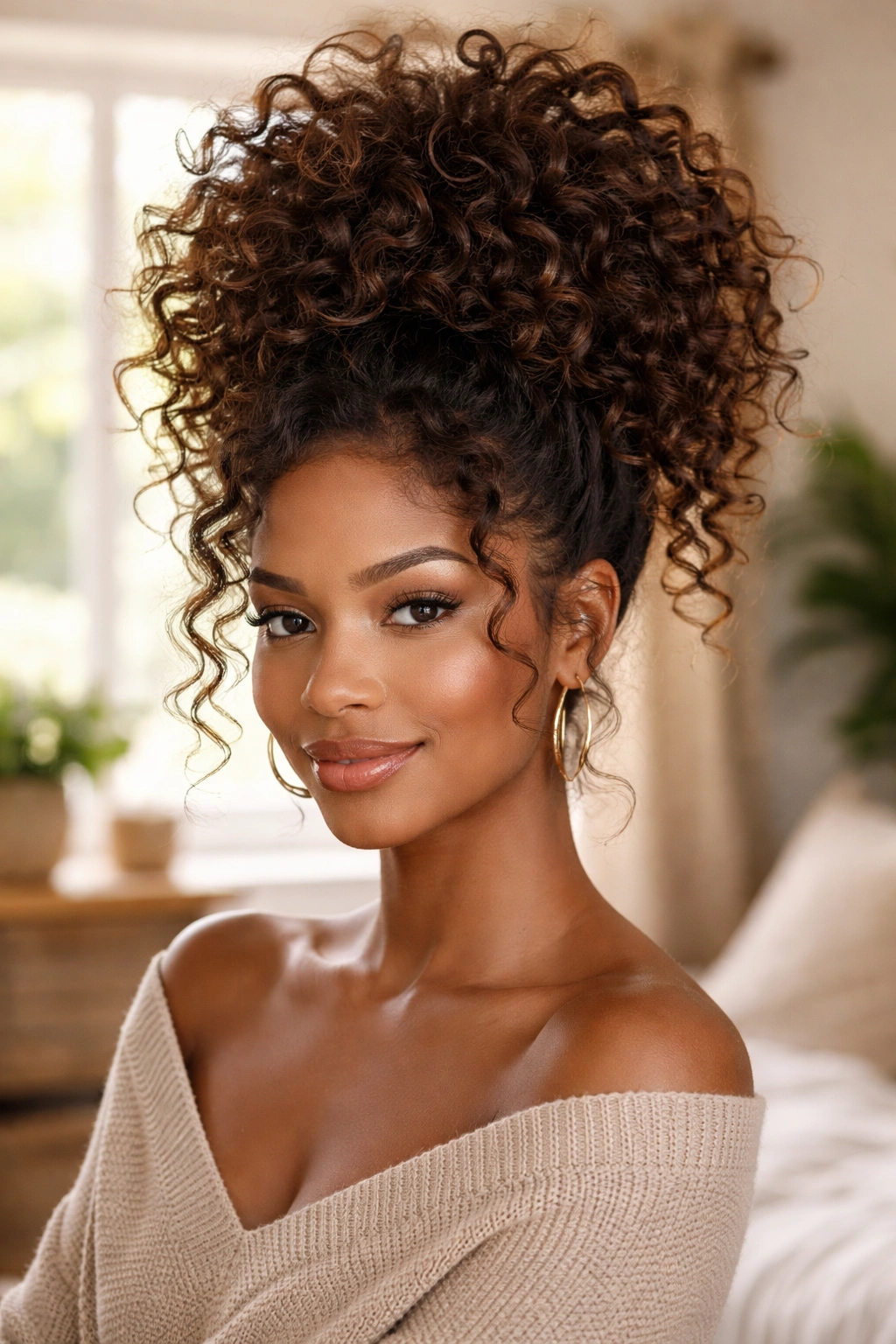
Gather loose curls high at the crown in a deliberately large, generous pineapple shape. The loose curls have enough length and weight to cascade dramatically outward from the gathered base, creating a fountain of flowing waves.
This is one of the most dramatically beautiful natural hair styles for naturals with medium to long loose curl patterns. The volume and movement of the pineapple-gathered loose curls is genuinely stunning.
Use a satin scrunchie — wide enough to gather all the curls without creating a crease — and position it at the very top of the crown for maximum cascade height.
8. Loose Curl Headband Style
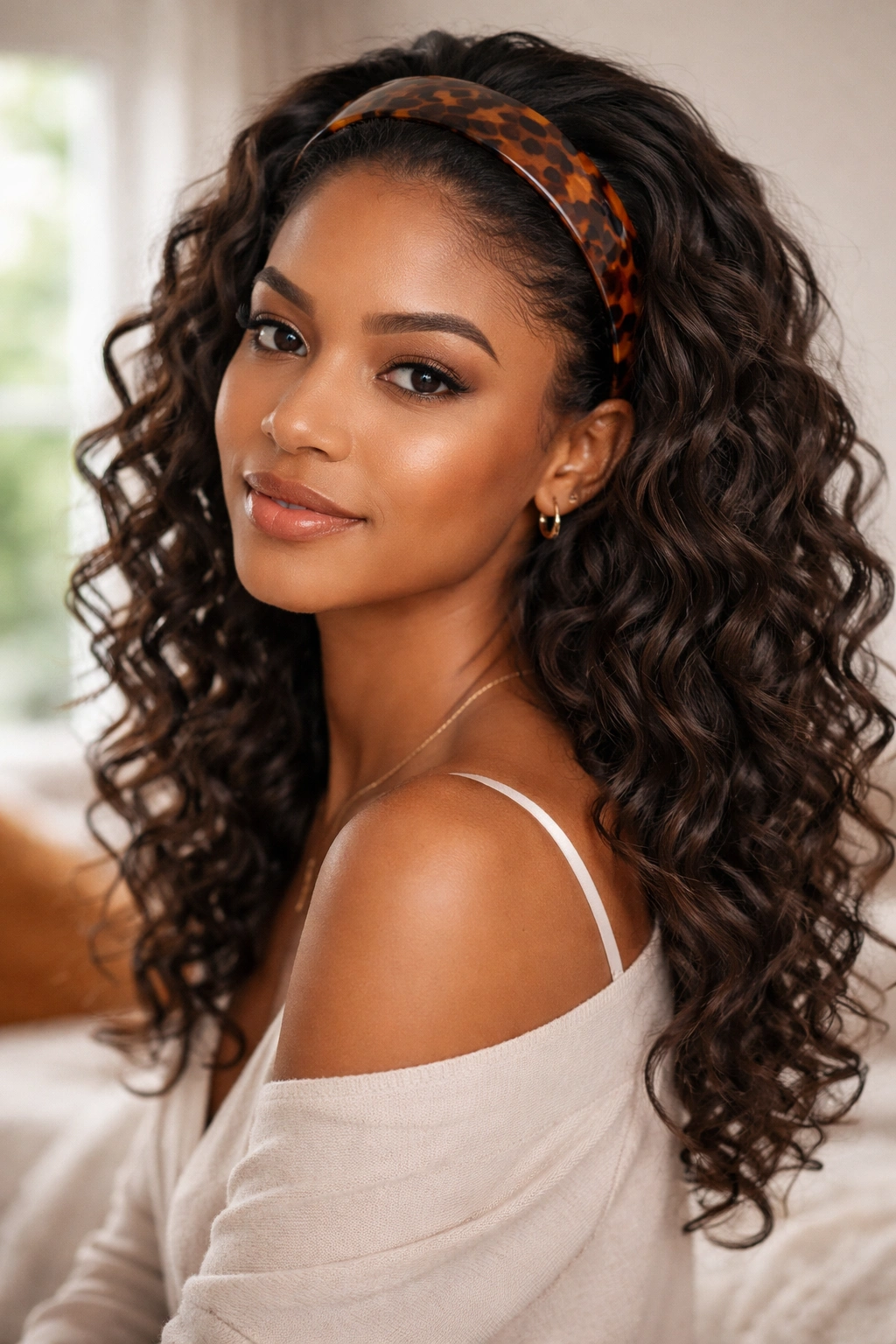
A wide headband pushed back from the hairline creates a beautiful frame for loose curls, holding them back from the face while the waves and curls cascade freely behind the band.
Loose curls suit wide headbands particularly well because the larger scale of the curl pattern proportionally matches the width of the accessory. A wide tortoiseshell band, a velvet headband in a rich color, or a printed fabric band all look beautiful against loose natural curl patterns.
9. Loose Curl Side Sweep
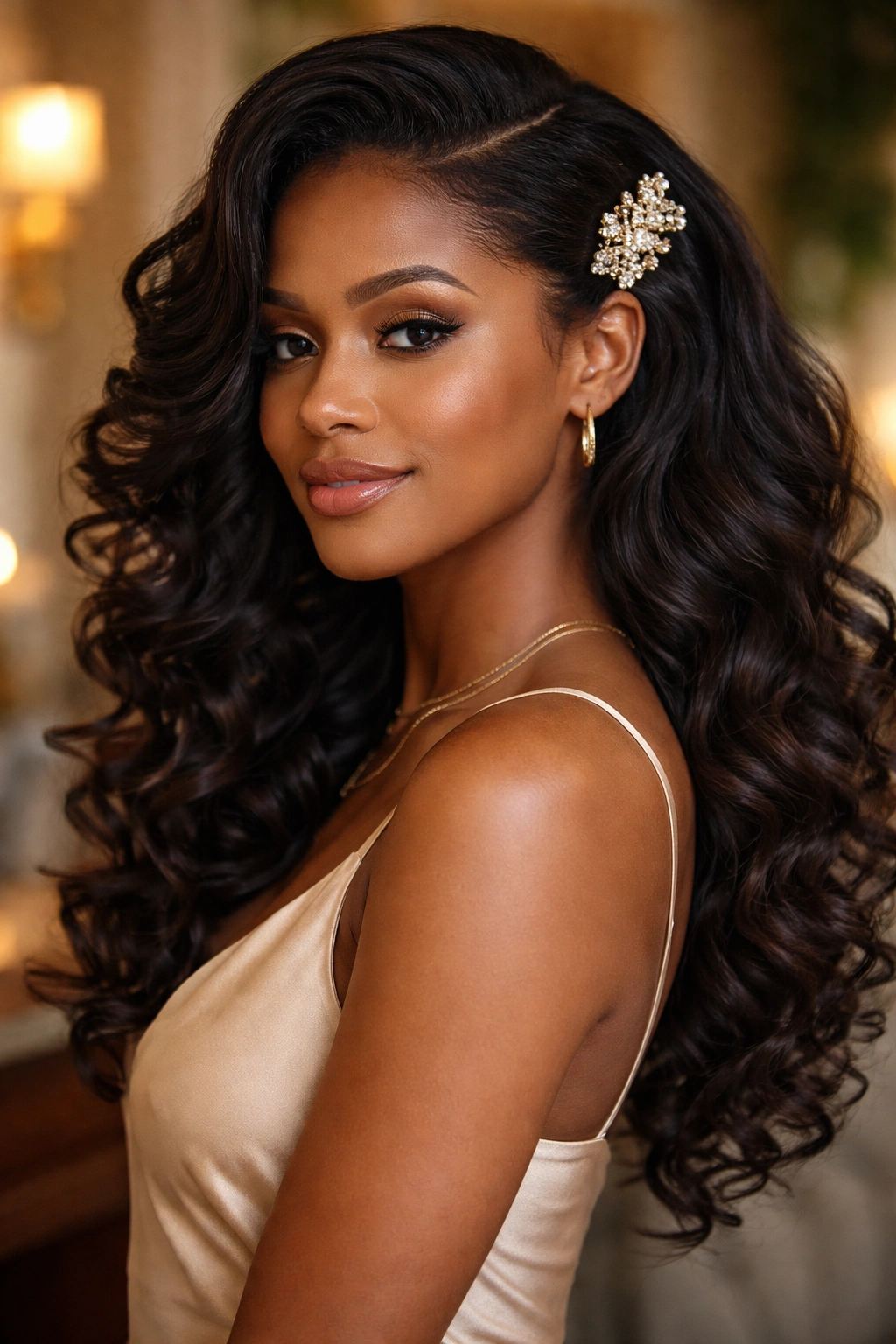
Sweep all your loose curls to one side using your hands and a large-tooth comb, securing them loosely above one ear with a decorative clip or pin. The loose curls cascade in a dramatic side sweep that shows their length and movement beautifully.
This is a genuinely glamorous style — it looks like much more effort than it requires and photographs beautifully from the pinned side.
10. Loose Curl Tapered Style
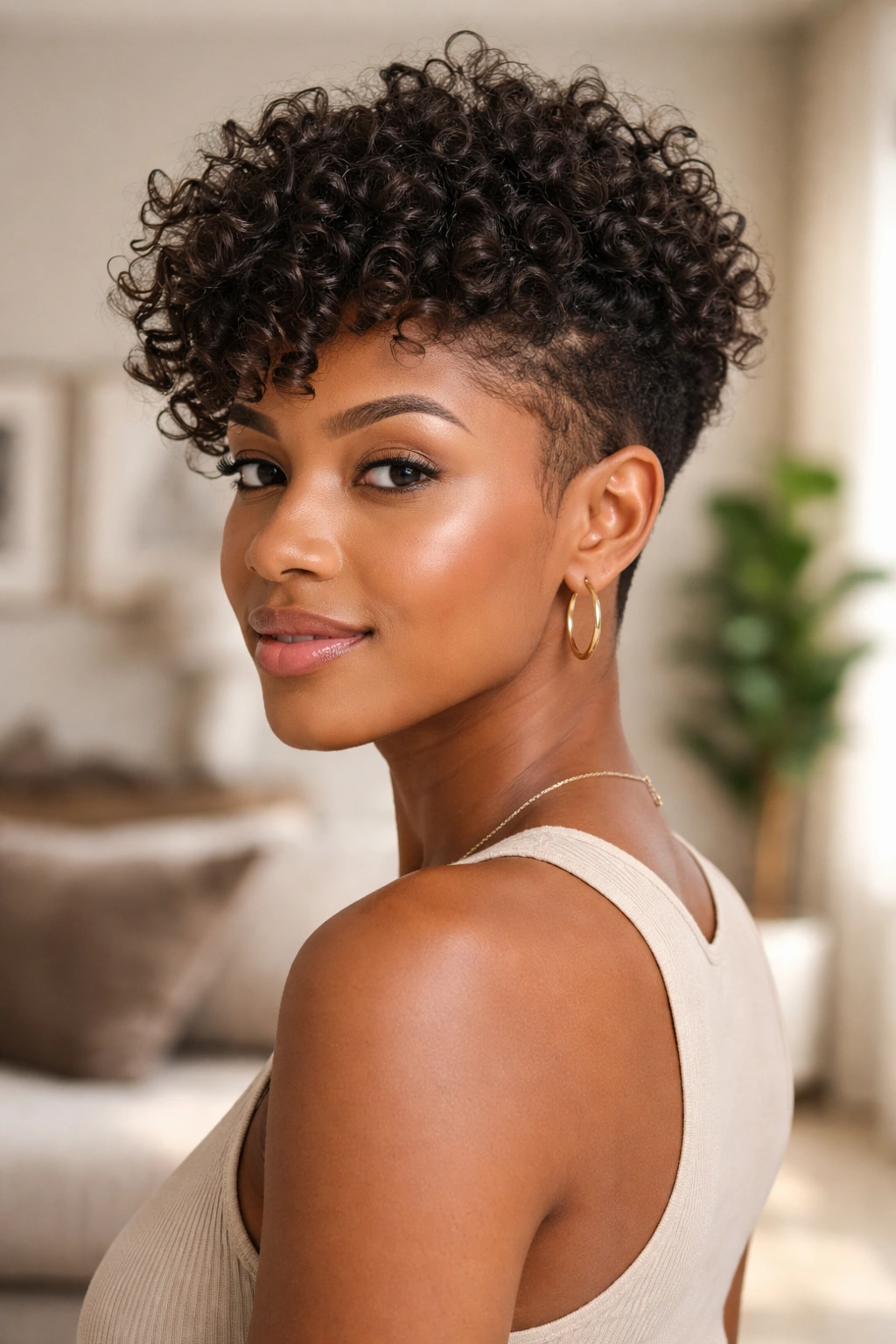
A tapered cut with loose curl definition on the top section creates a silhouette where the curls’ looseness feels especially intentional against the close-cut sides. The contrast between tight, short sides and flowing, loose top curls is graphic and stylish.
Apply lighter products exclusively to the top section to keep the loose curl pattern soft and flowing.
11. Loose Curl Frohawk
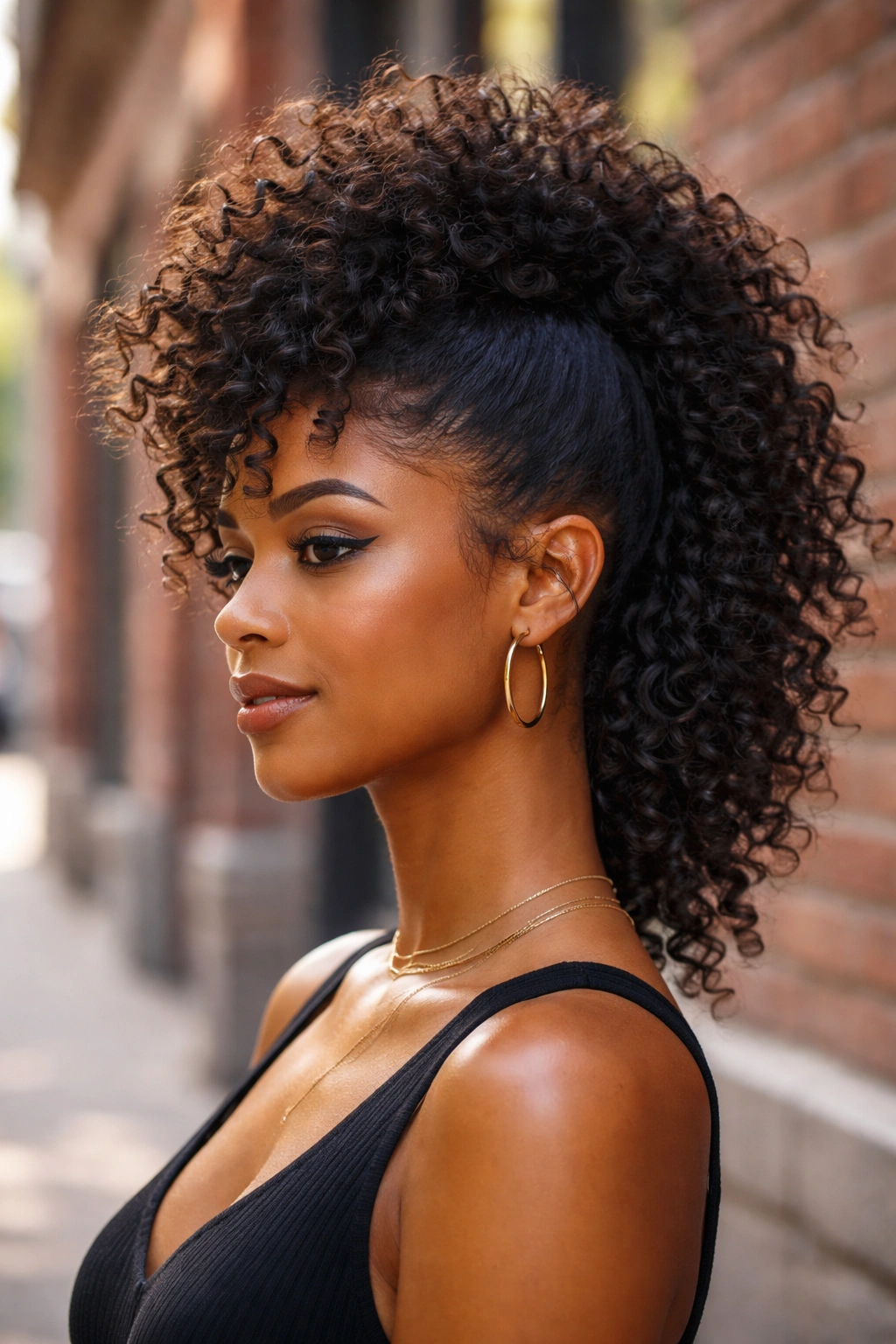
Sweep loose curls upward from the sides toward the center, creating a frohawk where the curls have more flow and movement than a tight-coil frohawk would. The loose curl version of this style is softer and less severe — dramatic in silhouette but romantic in texture.
12. Loose Curl Protective Style Foundation
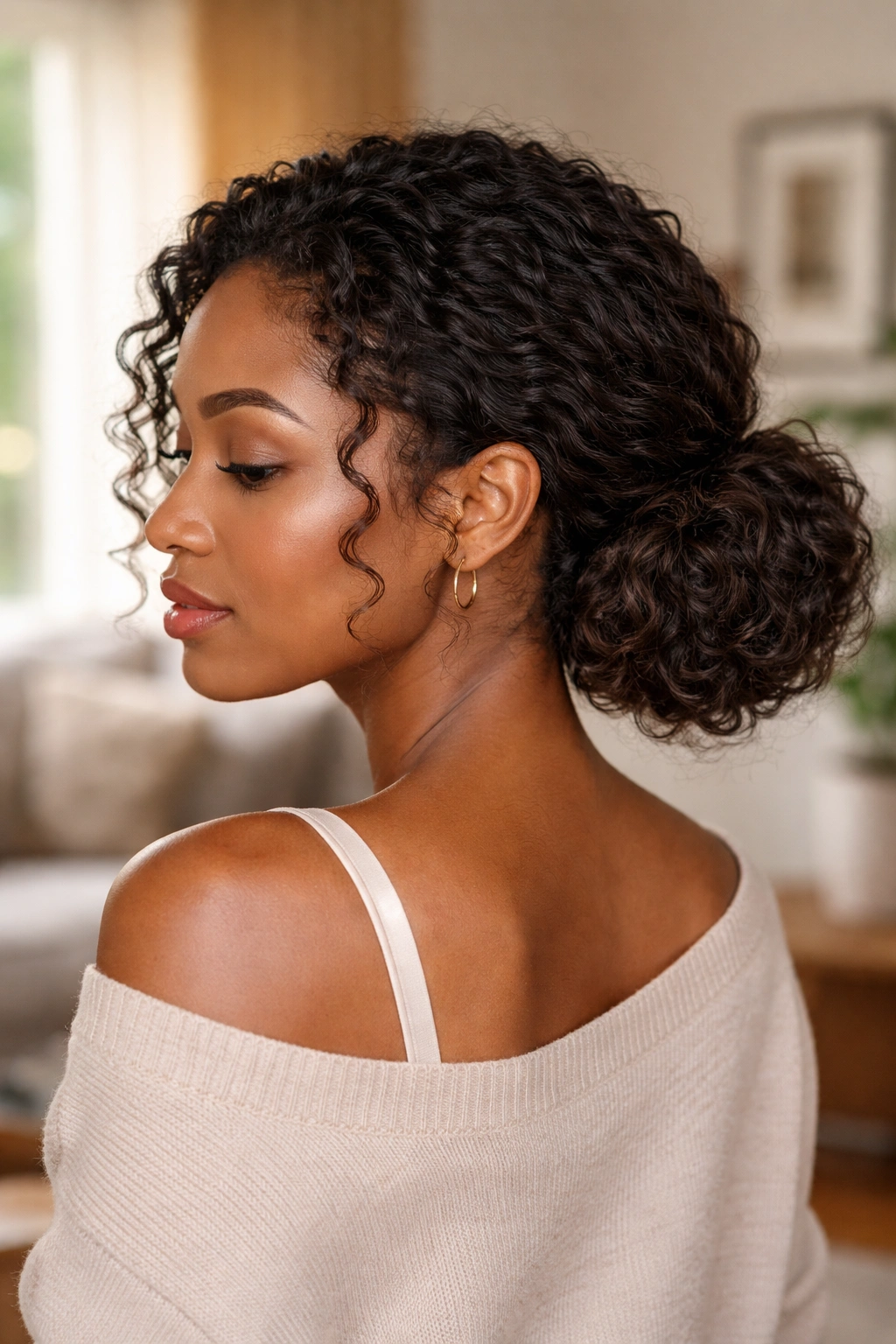
Use a loose curl style as the foundation for a protective style — gather your loose curls into a low bun or loose pony that protects your ends while the flowing hair at the crown and face remains visible.
Loose curl protective styles look deliberate and beautiful — they’re not the “hiding my hair” protective style but the “my hair is styled protectively AND gorgeously” version.
13. Loose Curl High Puff
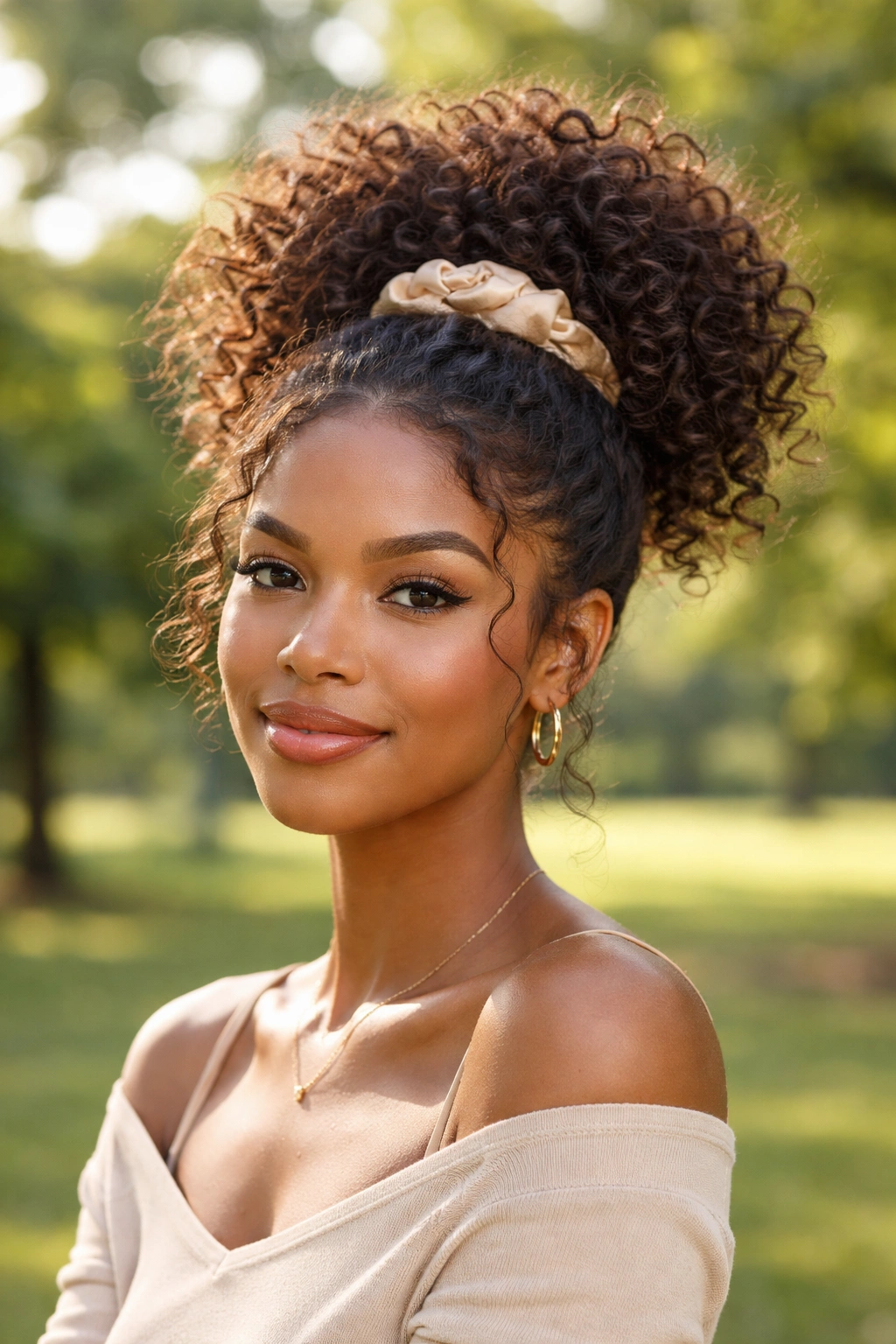
Gather loose curls into a high puff using a satin scrunchie. Loose curls in a puff have a distinctly different look than tight coils in a puff — they’re softer, the edges of the puff are more diffuse, and the overall silhouette is more flowing and gentle.
Use a wide satin scrunchie that doesn’t create a tight line or crease in the loose curl pattern.
14. Loose Curl with Gold Accessories
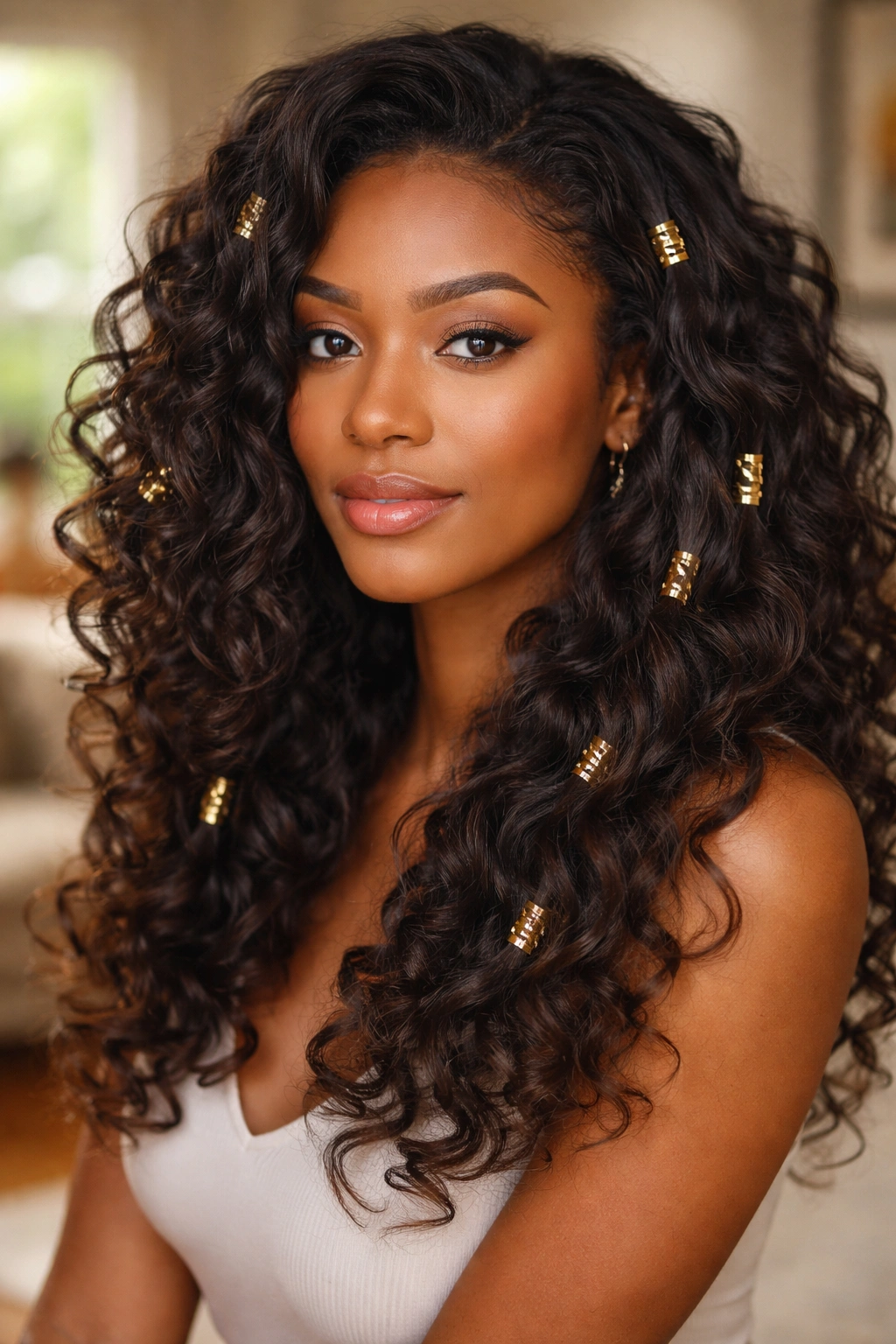
Thread individual gold cuffs or rings onto sections of loose curls — the larger, more relaxed curl pattern means you can slide the cuffs on easily without disturbing the wave. The gold accessories show beautifully against the flowing, loose curl backdrop.
Loose curls are actually an ideal backdrop for accessories because the scale of the curl pattern is large enough to let accessories stand out clearly without getting lost.
15. Loose Curl Second-Day Style
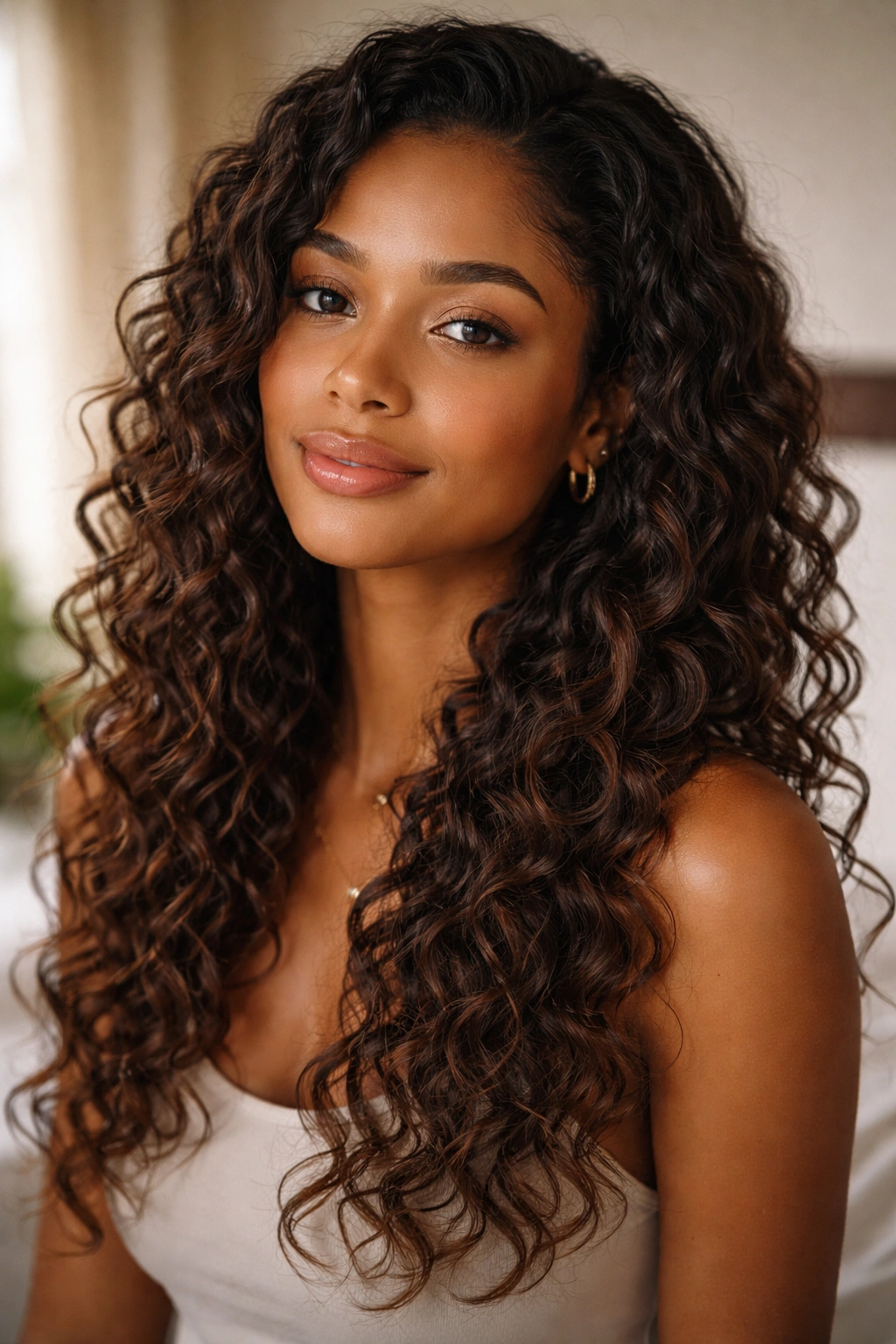
Loose curl styles age particularly gracefully. Day two loose curls — slightly more relaxed and elongated than on wash day — have a beautiful, effortless quality that’s arguably better than the fresh style.
A light mist with a water and leave-in mixture, followed by some gentle scrunching to re-encourage curl formation in any flat sections, is all that’s needed to keep day two loose curls looking gorgeous.
16. Loose Curl Space Buns
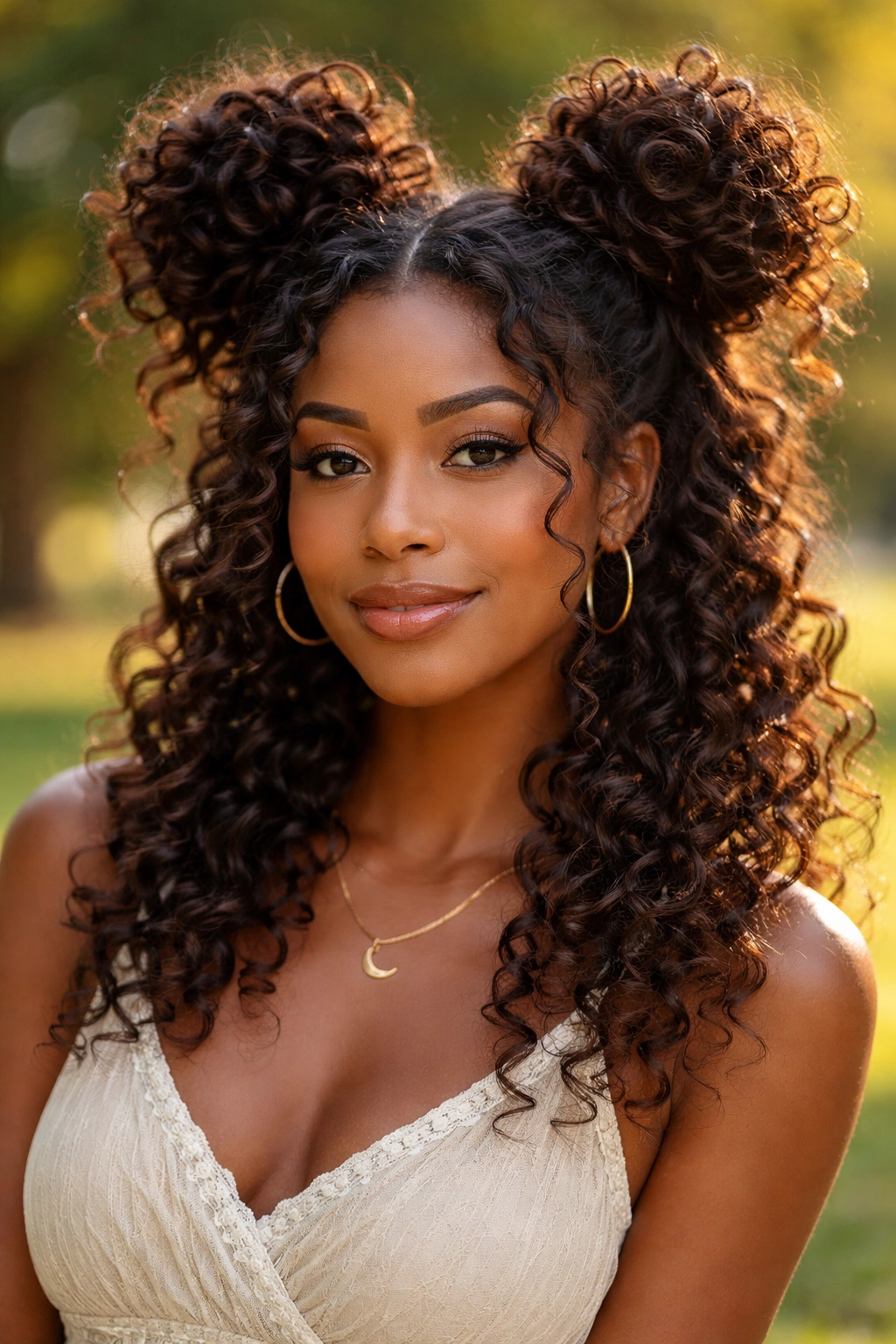
Divide loose curls down the center and create two high, loose buns. The large-scale wave pattern of loose curls creates a textured, flowing halo effect around each bun that’s distinctly different from the compact look of tight-coil space buns.
Loose curl space buns have a bohemian, free-spirited quality that suits a wide range of occasions from casual to festive.
17. Loose Curl Afro
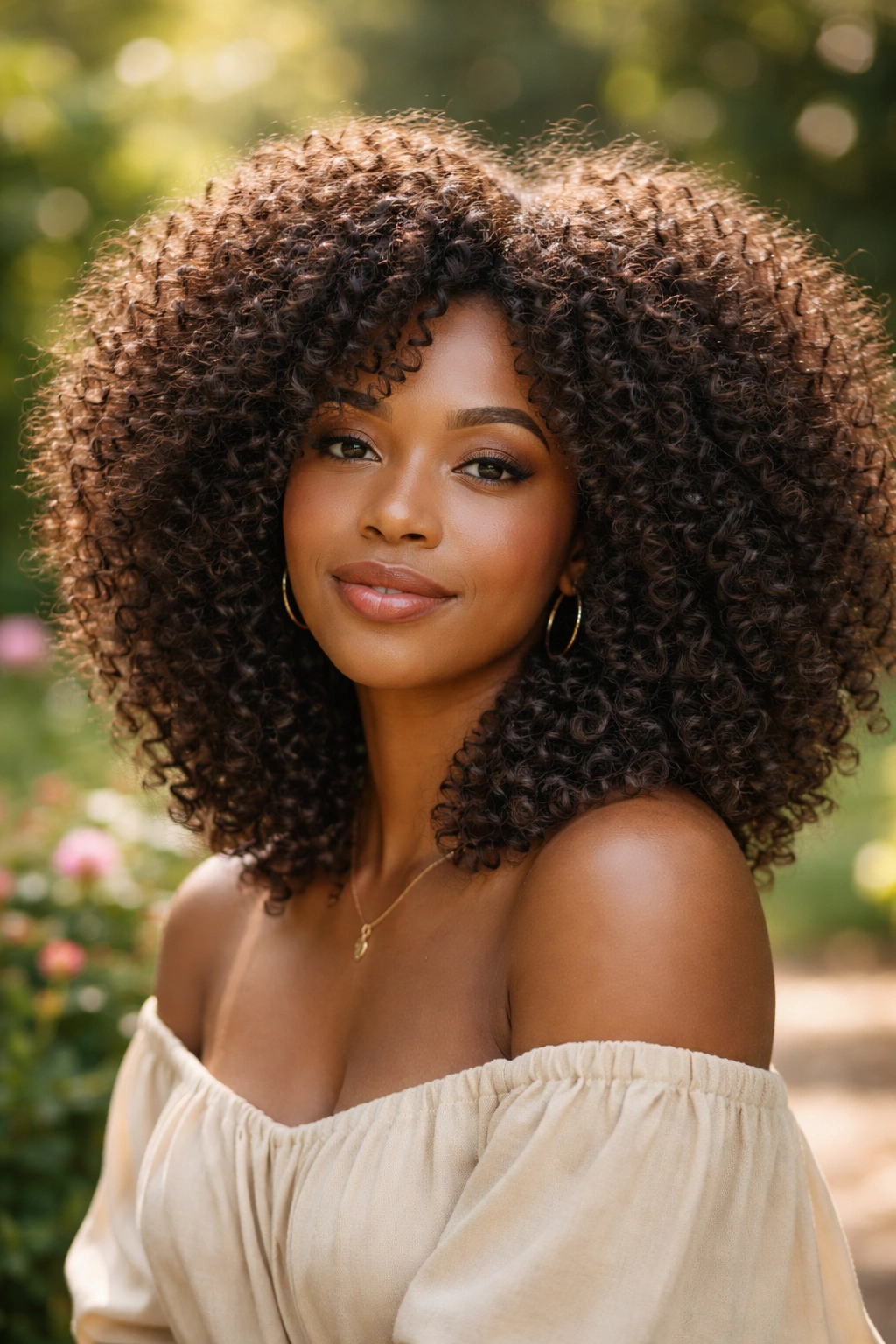
Allow loose curls to air dry into a full, round afro shape with visible wave texture on the surface. Pick gently at the roots with a wide-tooth pick for volume, but don’t disturb the wave pattern too aggressively.
The loose curl afro has a surface texture that’s different from a tight-coil afro — the waves catch light differently and the overall effect is softer and more flowing while still maintaining the bold, volumized afro silhouette.
18. Loose Curl Defined Fringe
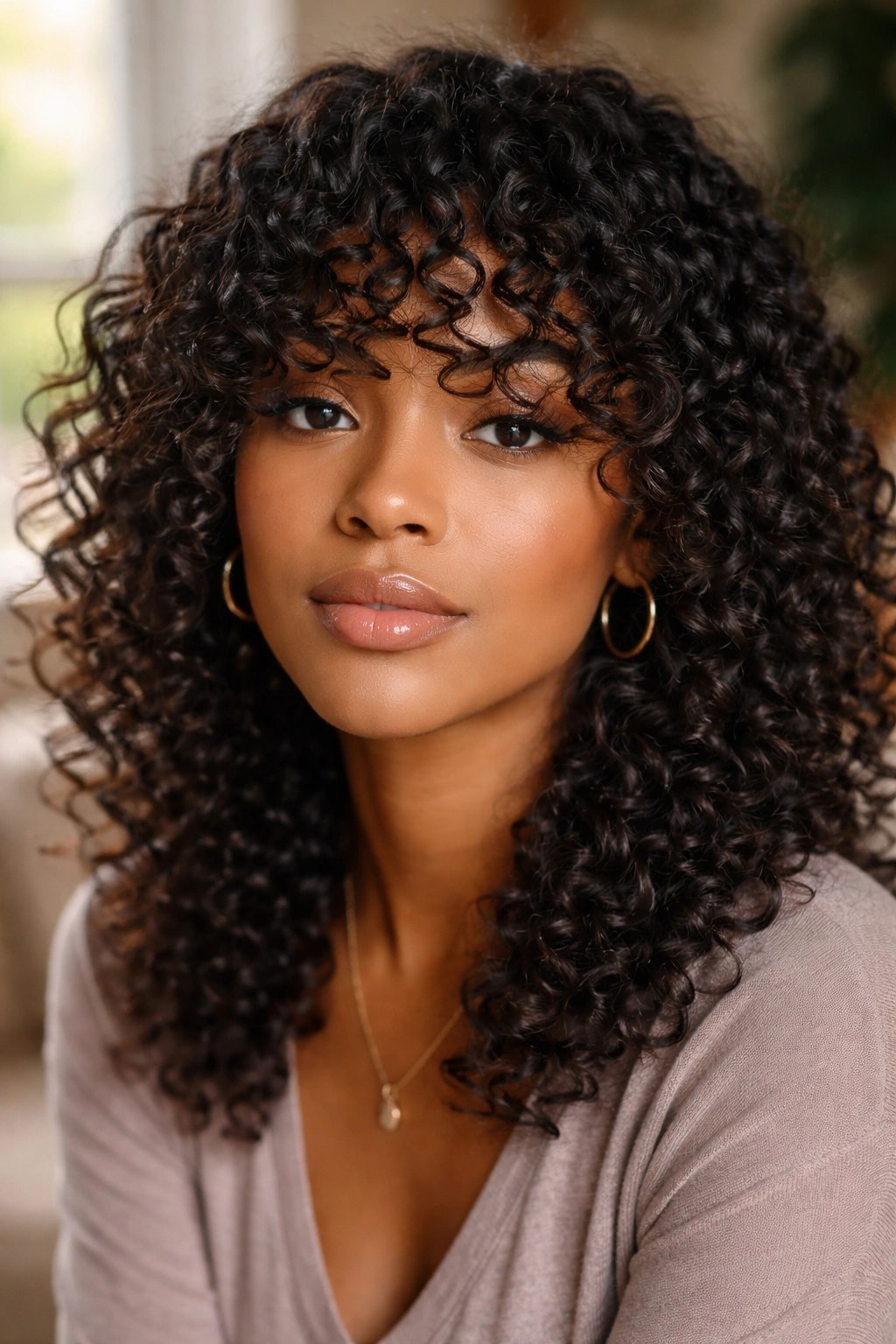
If your loose curls are long enough to fall over your forehead, encourage a few front curls to fall forward as a deliberate fringe. These loose fringe curls should be defined with a little extra product to keep them from frizzing — but not so precisely defined that they lose their loose, romantic quality.
19. Loose Curl Silk Scarf Style
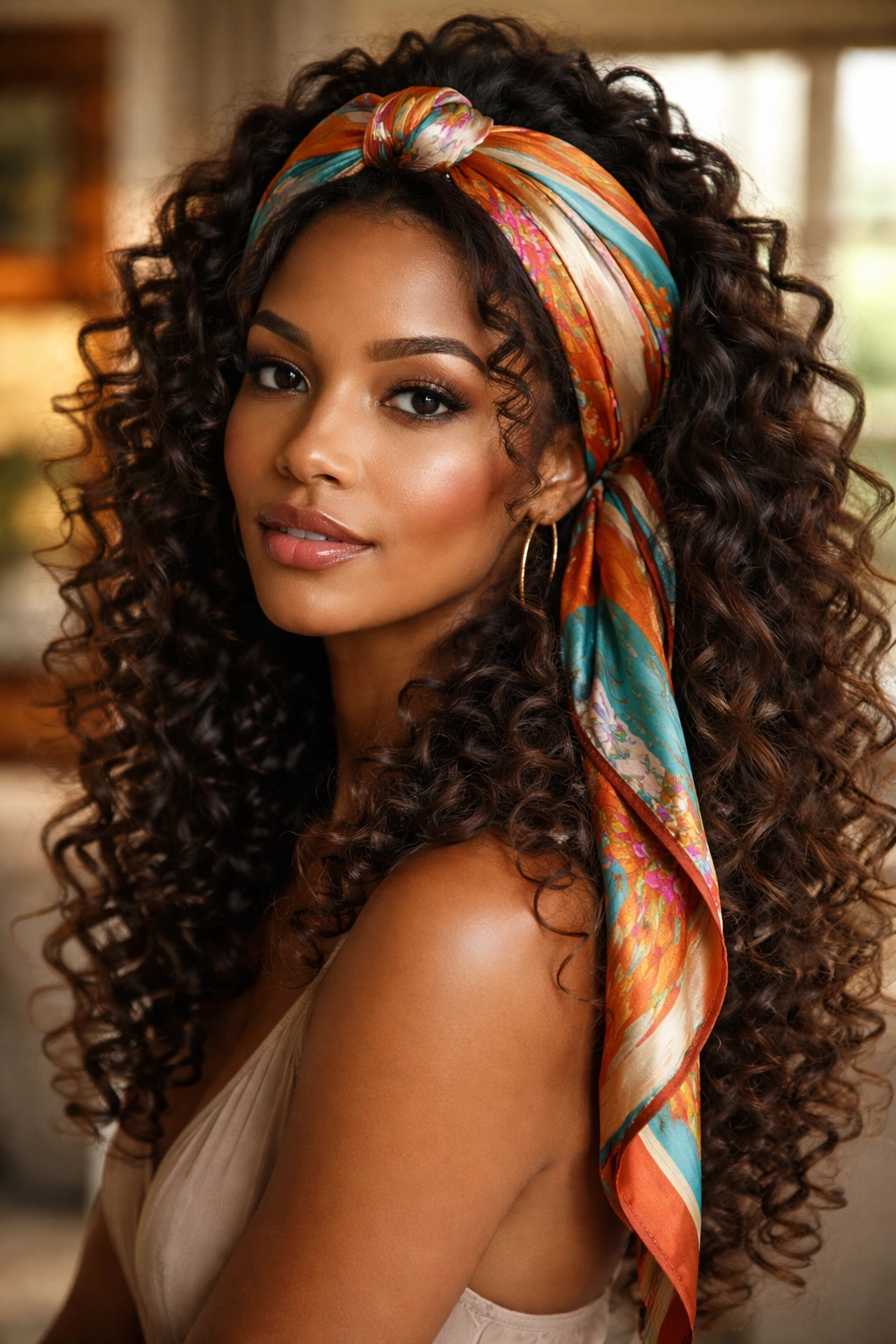
Wrap a silk or satin scarf loosely around the head and tie it in a stylish knot or bow, allowing loose curls to cascade out from the back and sides of the scarf. The scarf becomes part of the style rather than just an accessory — a colorful frame around your natural texture.
Silk scarf styling with loose curls has an iconic, golden-era quality that feels genuinely glamorous without requiring any effort beyond wrapping the scarf.
20. Loose Curl Braided Crown
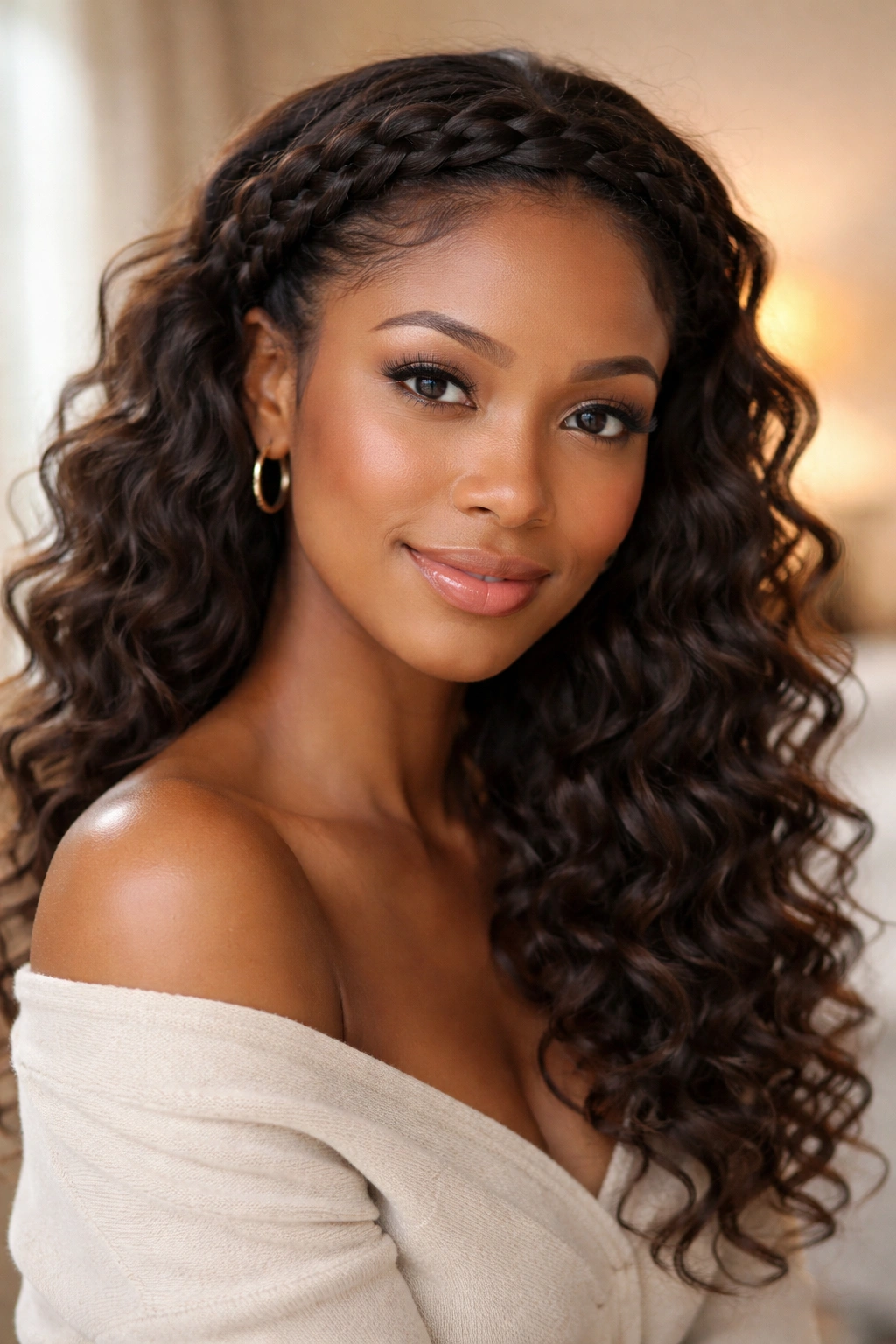
Create a flat braid or twist across the front of the head from ear to ear, pinning it in place, and let loose curls flow freely from behind the crown braid. The braid adds a structured, intentional element to what is otherwise a very relaxed, flowing style.
This combination — structured braid at the front, loose curls behind — strikes a beautiful balance between control and freedom.
21. Loose Curl Pinned Updo Variation
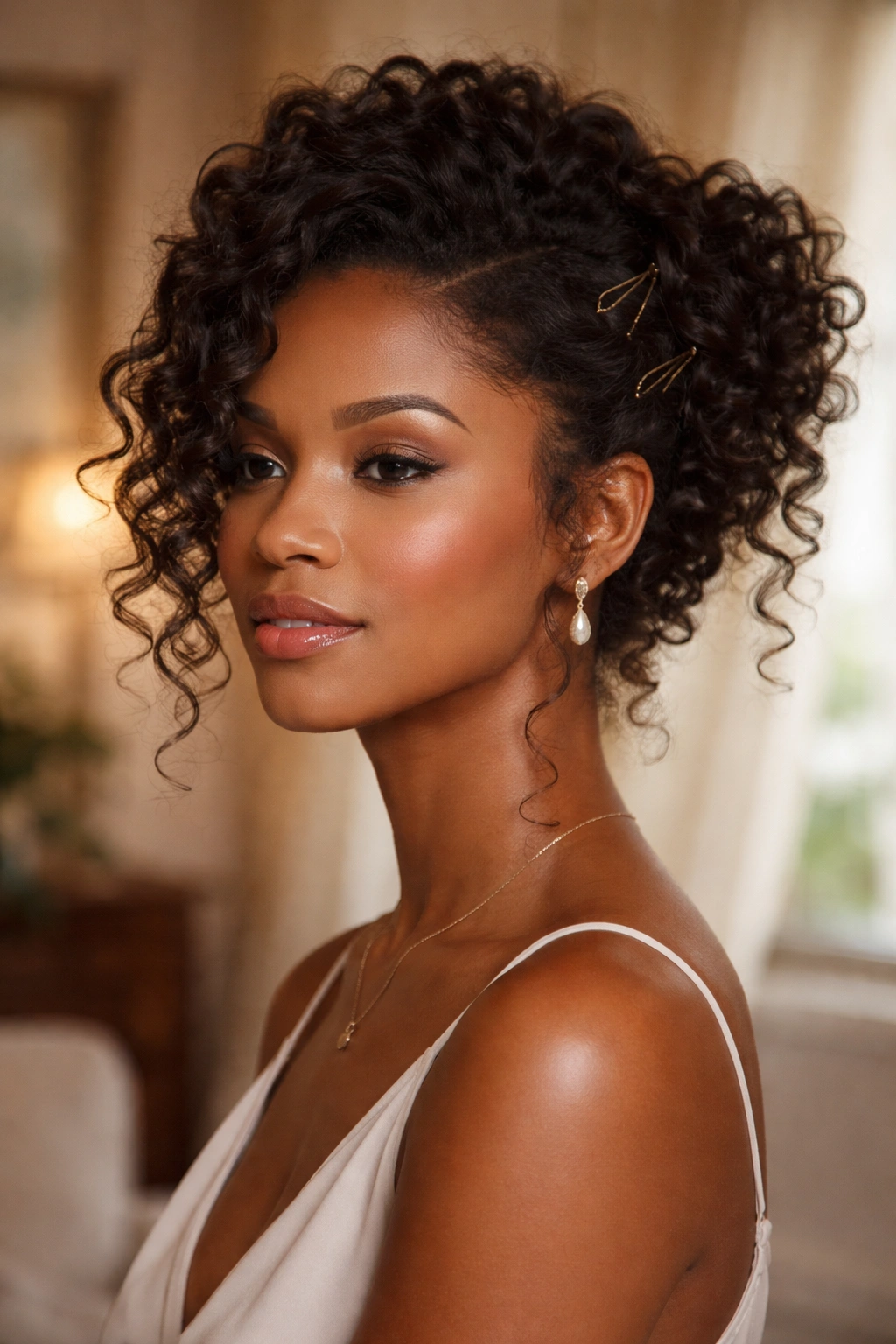
Pin loose curls into an asymmetric updo — gathering more hair on one side than the other, with curls deliberately escaping at one temple. The asymmetry gives the style editorial flair, and the loose curls that escape the pins have a romantic, flowing quality that makes the whole look feel special.
22. Loose Curl Wet-to-Dry Evolution
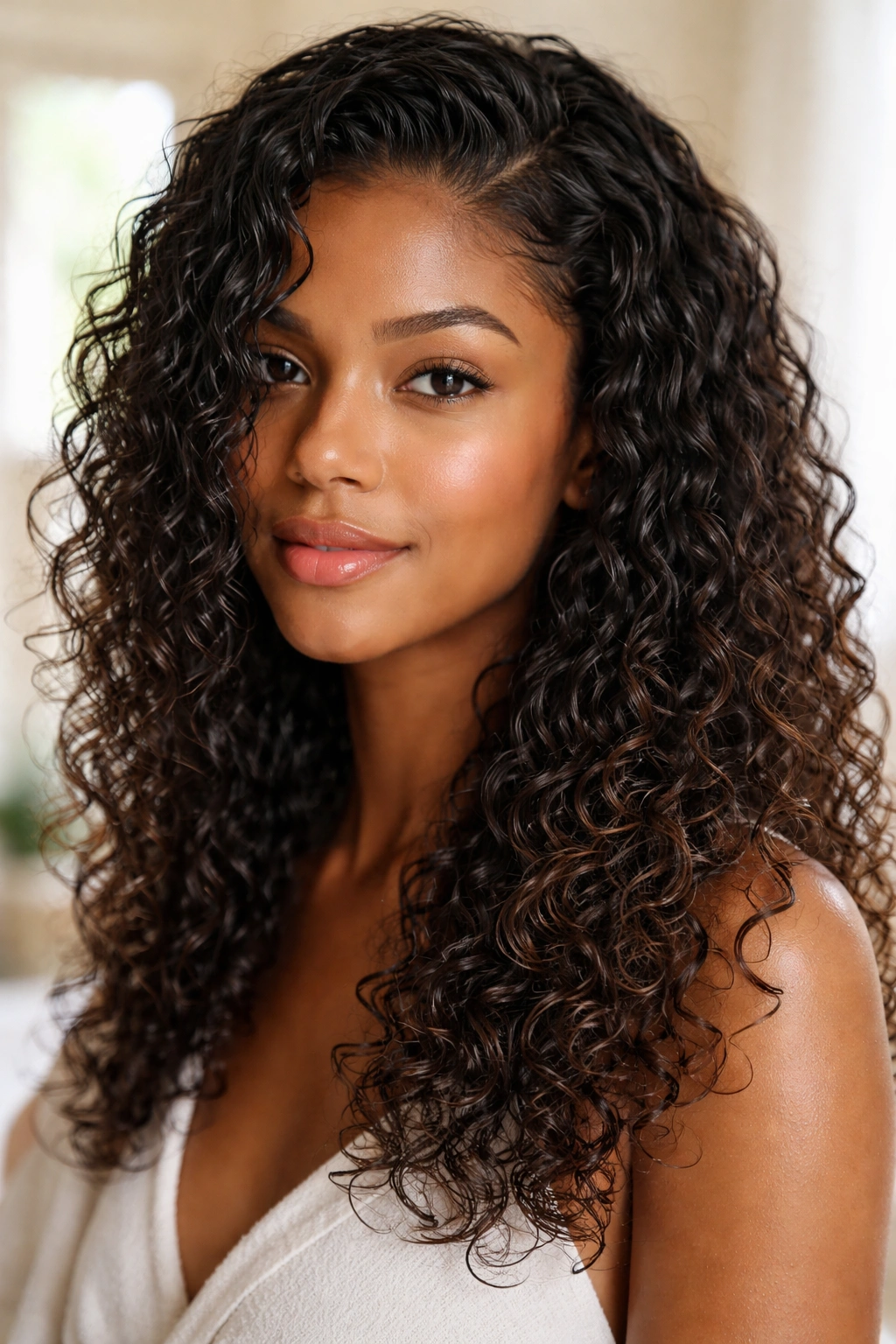
Watch how your loose curls evolve from wet to dry — the style changes character significantly over the drying period. Wet, the curls are defined and clumped. Semi-dry, they begin to separate and gain volume. Fully dry, they reach their final loose, flowing character.
Timing your diffusing strategically can control where on this spectrum your final style lands. Diffusing until about seventy percent dry, then air drying the rest, often produces the most beautiful balance of definition and volume.
23. Loose Curl Overnight Stretch
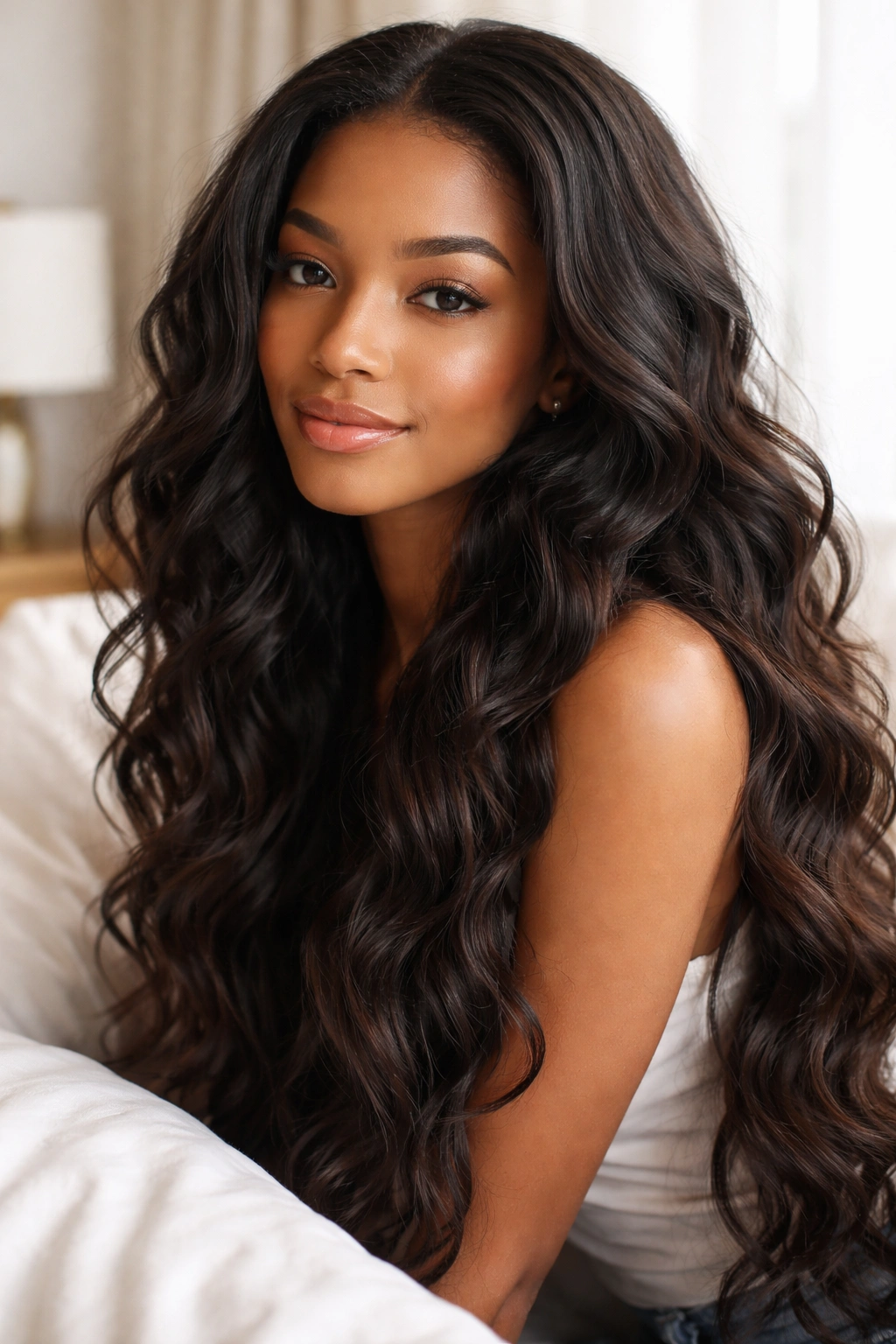
To extend the looseness of a curl pattern overnight without disrupting it, braid damp refreshed hair in two to four large braids before bed and sleep on a satin pillowcase. In the morning, unravel the braids for a loose, flowing wave pattern with more elongation than you’d have without the overnight stretch.
24. Loose Curl Moisturize-and-Go
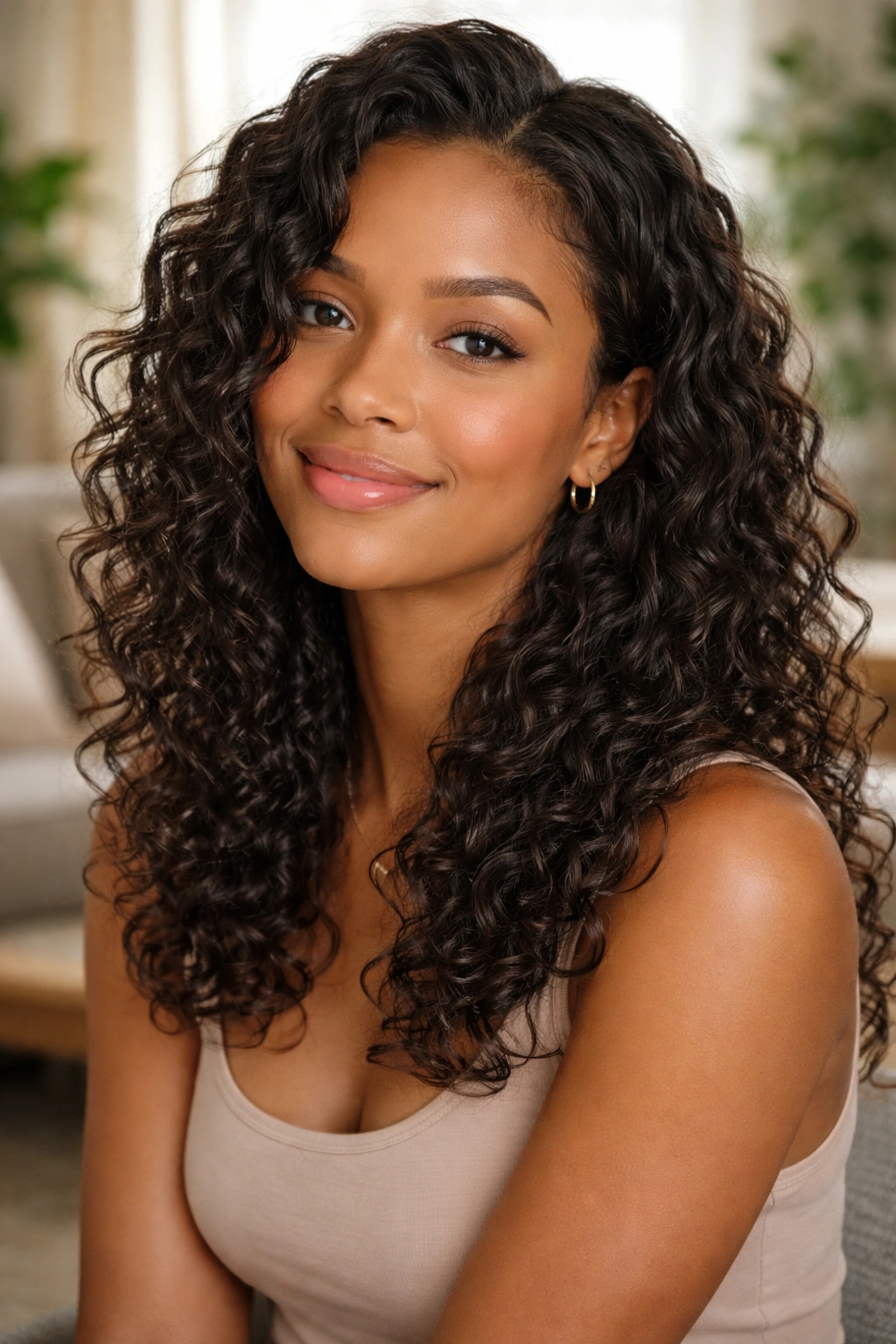
On days when you don’t want a full wash day but your loose curl style needs a refresh, the moisturize-and-go is your answer. Spray each section with a leave-in mix, smooth lightly with your palms, and let air dry without adding any hold products. The result is soft, moisturized loose curls that look refreshed without being heavily styled.
This low-product refresh works beautifully for loose curl textures because the natural curl pattern is relaxed enough to look intentional even with minimal product — tighter textures need more hold to look defined, but loose curls can be beautiful with just moisture.
How to Keep Loose Curl Styles Looking Fresh
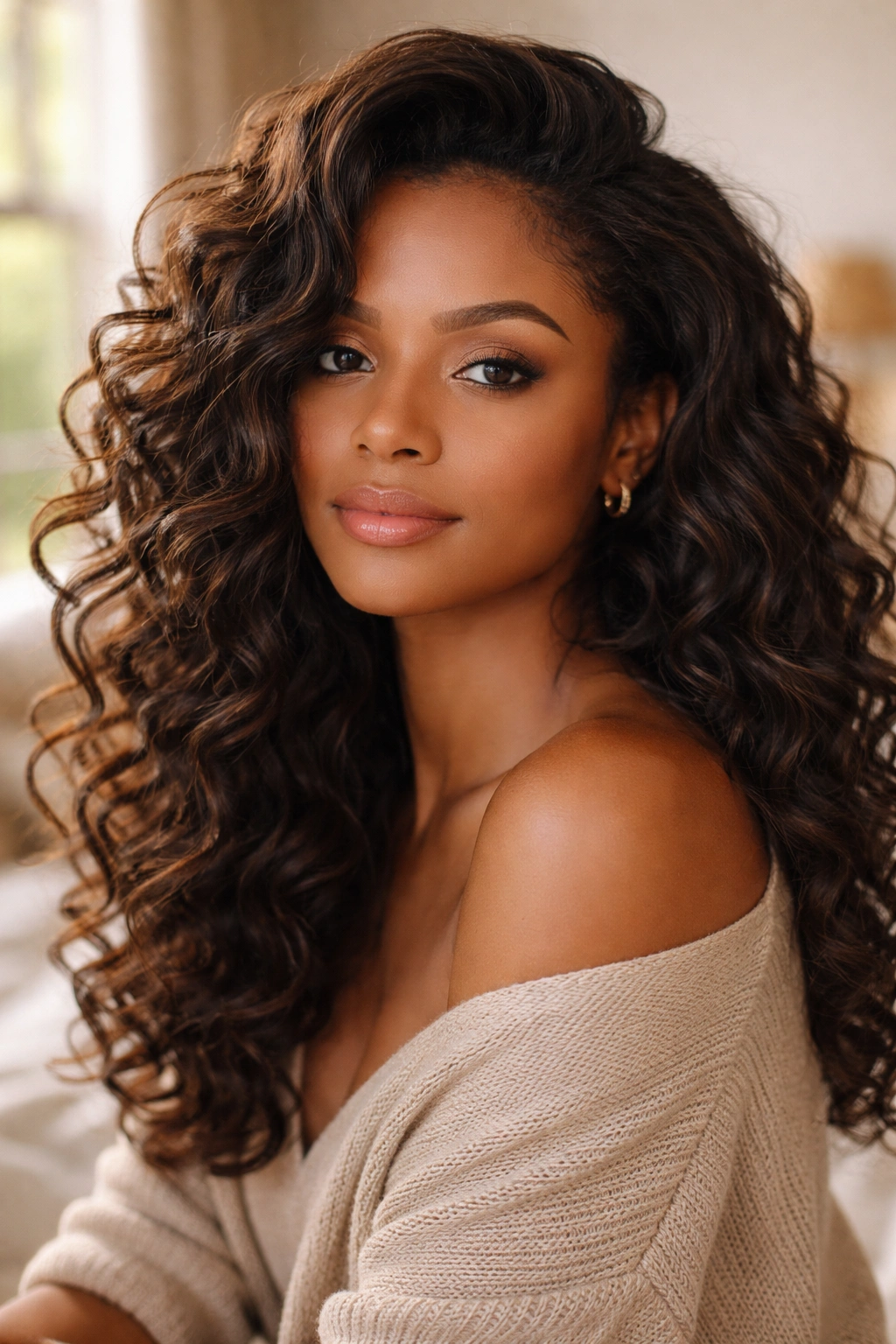
The key challenge with loose curl styles is maintaining that fresh, defined look through days of wear. Loose curls are prone to gaining volume and losing their wave definition faster than tighter curl patterns, which means refresh techniques are especially important.
Avoid touching your hair unnecessarily. Every time your hands run through loose curls, you’re separating wave clumps and introducing frizz. A hands-off approach — pineapple at night, light mist in the morning, done — keeps loose curl styles looking their best for the longest time.
Humidity can be your friend or your enemy depending on your product choices. Glycerin-based products in humid weather keep loose curls defined and hydrated. In dry climates, avoid high-glycerin products that draw moisture from the hair shaft rather than from the air.
Trust the style’s natural evolution. Loose curl styles on days two and three have a lived-in, effortless quality that’s beautiful in its own right. Embrace the progression rather than fighting it — every stage of a loose curl style’s life cycle has its own charm and appeal.
