



Long locs have a way of making a plain ponytail look twice as interesting.
They also make it heavier, and that’s the part people tend to underestimate. A tiny elastic that behaves fine on loose hair can feel like a bad idea once there are several pounds of locs hanging off it, especially if the base sits too high or too tight.
If you’re looking for ponytails for locs with long hair that hold up past the first hour, placement matters more than fancy products. The right style keeps the weight where your scalp can handle it, gives the length room to show off, and still feels like something you can wear without thinking about it every five minutes.
Long locs are generous like that. You can stack them, wrap them, split them, braid them, or let them fall straight down your back, and each move changes the whole mood.
1. Sky-High Sleek Ponytail
A high ponytail is the fastest way to make long locs look sharp. It lifts the face, shows off the length, and turns the tail into the main event instead of the roots. When the base is clean and the bundle is smooth, the whole style looks intentional in a way that never feels forced.
The trick is not pulling everything straight back with brute force. Section the front first, smooth the crown with a light hand, and anchor the ponytail with a snag-free elastic that can handle the weight. If your locs are dense, use two bands close together instead of one stretched-out tie.
How to keep the base neat
- Brush or smooth the hairline first, then gather the locs with steady pressure.
- Place the elastic at the crown, not an inch behind it, or the style will start sliding.
- Wrap one loc around the base if you want to hide the band and add a cleaner finish.
Tip: A sky-high ponytail looks best when the tail is left alone. No over-fussing. Let the length fall.
2. Low Nape Ponytail
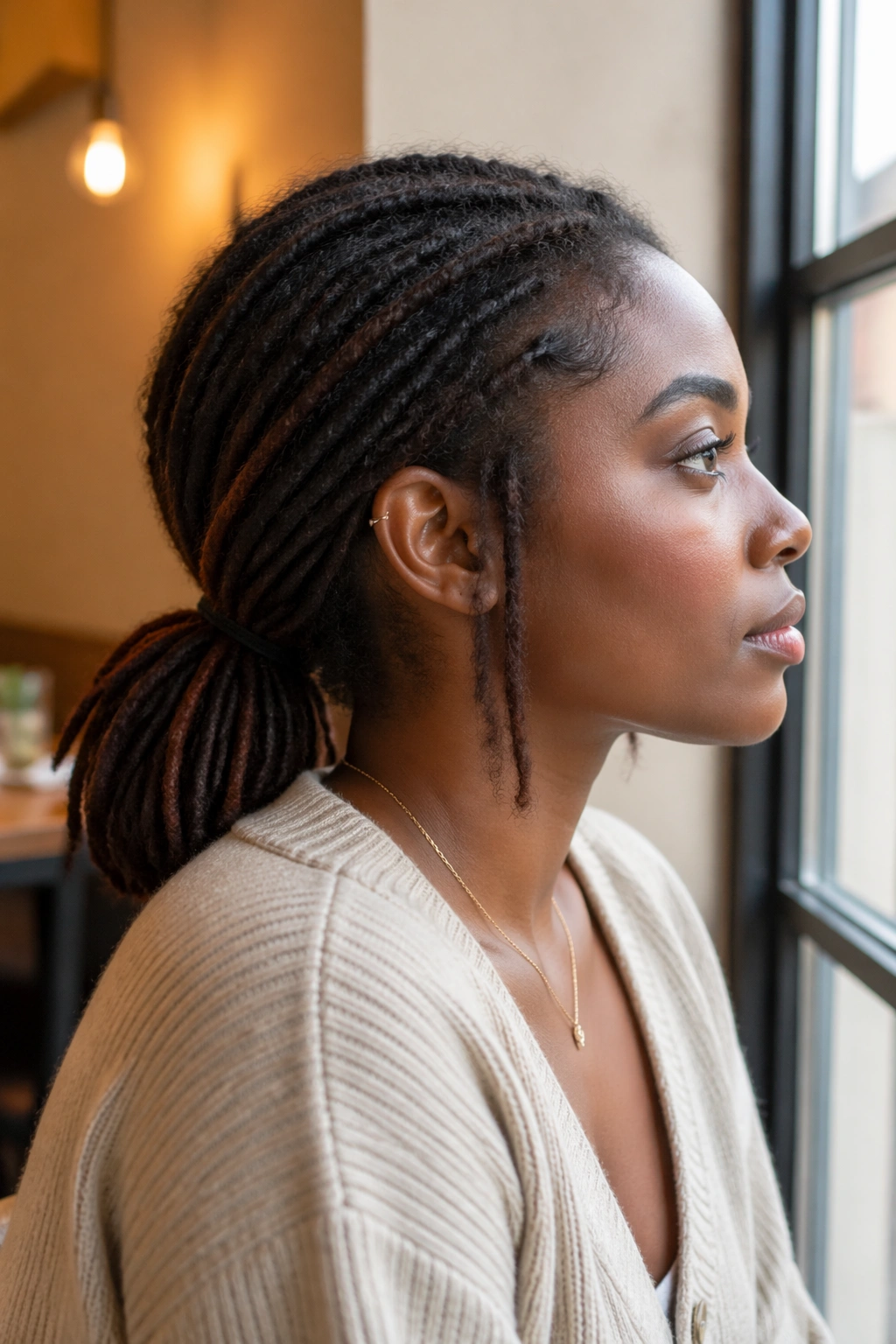
Want something easier on your scalp? A low ponytail at the nape is the one I reach for when the hair has already done enough work for the day. It sits close to the neck, spreads the weight out, and avoids that heavy, top-loaded feeling a high style can give long locs.
The best part is how calm it looks. Not boring. Calm. You can wear it with a clean middle part, a soft side part, or no part at all if you want the whole thing to feel relaxed. The tail hangs low enough to move freely, but it does not whip around every time you turn your head.
A low nape ponytail also forgives a little frizz. That matters. Not every style needs to be glass-smooth to look good, and this is one of the few ponytails where a touch of texture actually helps.
3. Side-Swept Ponytail
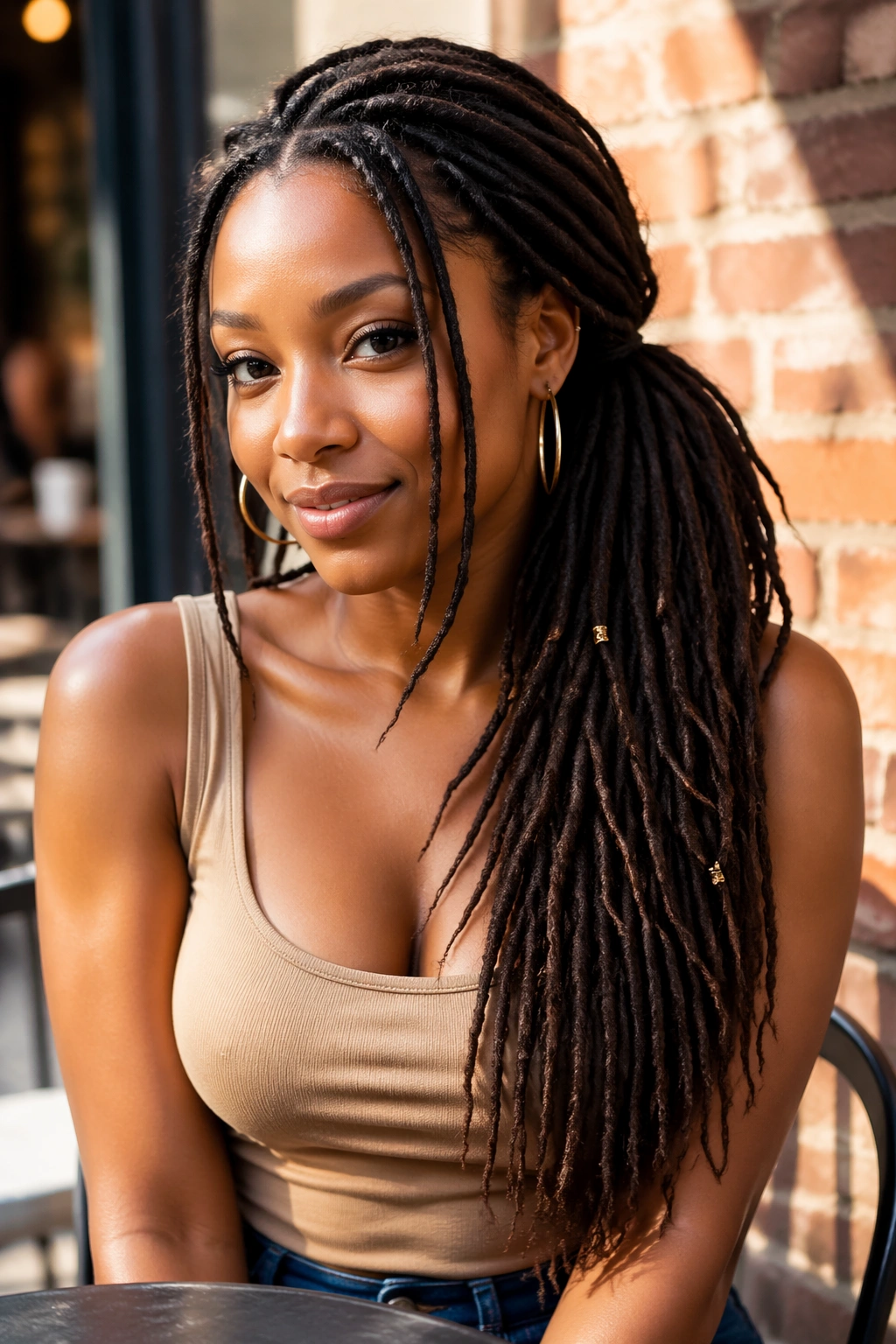
A side ponytail changes the whole mood without changing the tools. Move the base a few inches to one side, let the tail fall over the shoulder, and suddenly long locs feel softer, a little flirtier, and less rigid than a straight-back style.
The asymmetry helps if your locs are thick, because it breaks up the bulk instead of stacking everything in one heavy line. I also like it when the front lengths are different from each other; a side ponytail makes that unevenness look deliberate. The key is to keep the opposite side smooth enough that the look still feels finished.
What makes it work
- Set the ponytail just behind one ear or slightly above it.
- Keep one or two locs loose near the front if you want a softer face frame.
- Use a second small elastic lower in the tail if the bundle feels too heavy.
One smart move: sweep the ponytail to the side your part already favors. It looks more natural and sits better.
4. Mid-Height Everyday Ponytail
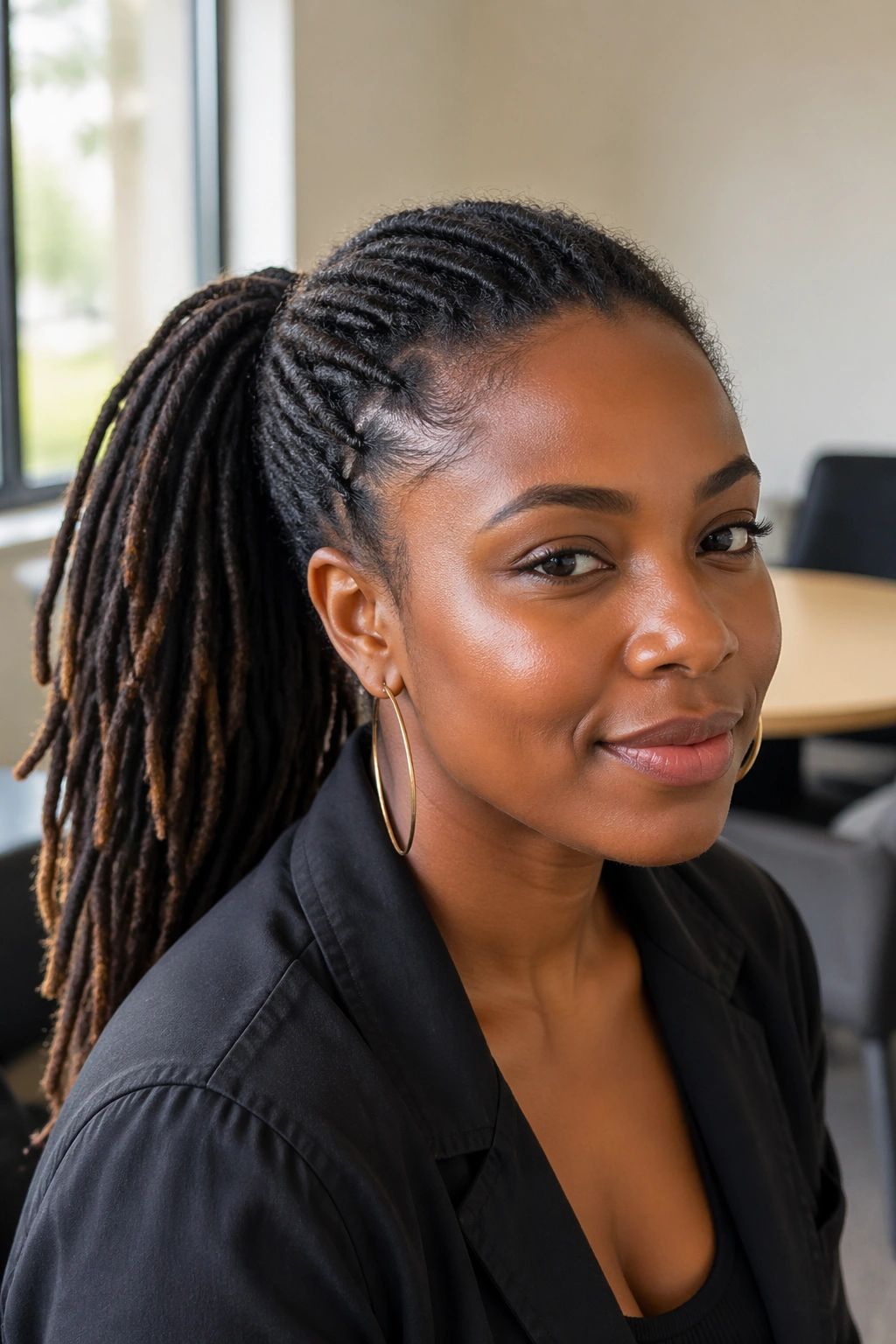
When you need your hair out of the way but do not want the tension of a high pull, mid-height is the sweet spot. The ponytail sits around the middle of the back of the head, which keeps the weight balanced and stops the style from feeling top-heavy.
This is the kind of ponytail that works for long days because it does not ask much from you. It looks neat enough for a polished outfit, but it still reads as casual. Long locs fall nicely from this height too; the tail keeps its length, but the roots get a small break.
No tricks. Just balance.
If your locs are very long, this placement also keeps the ends from dragging down your back as aggressively. That sounds small until you wear the style for six hours and realize your shoulders are happier than they would have been with a high crown pull.
5. Bubble Ponytail
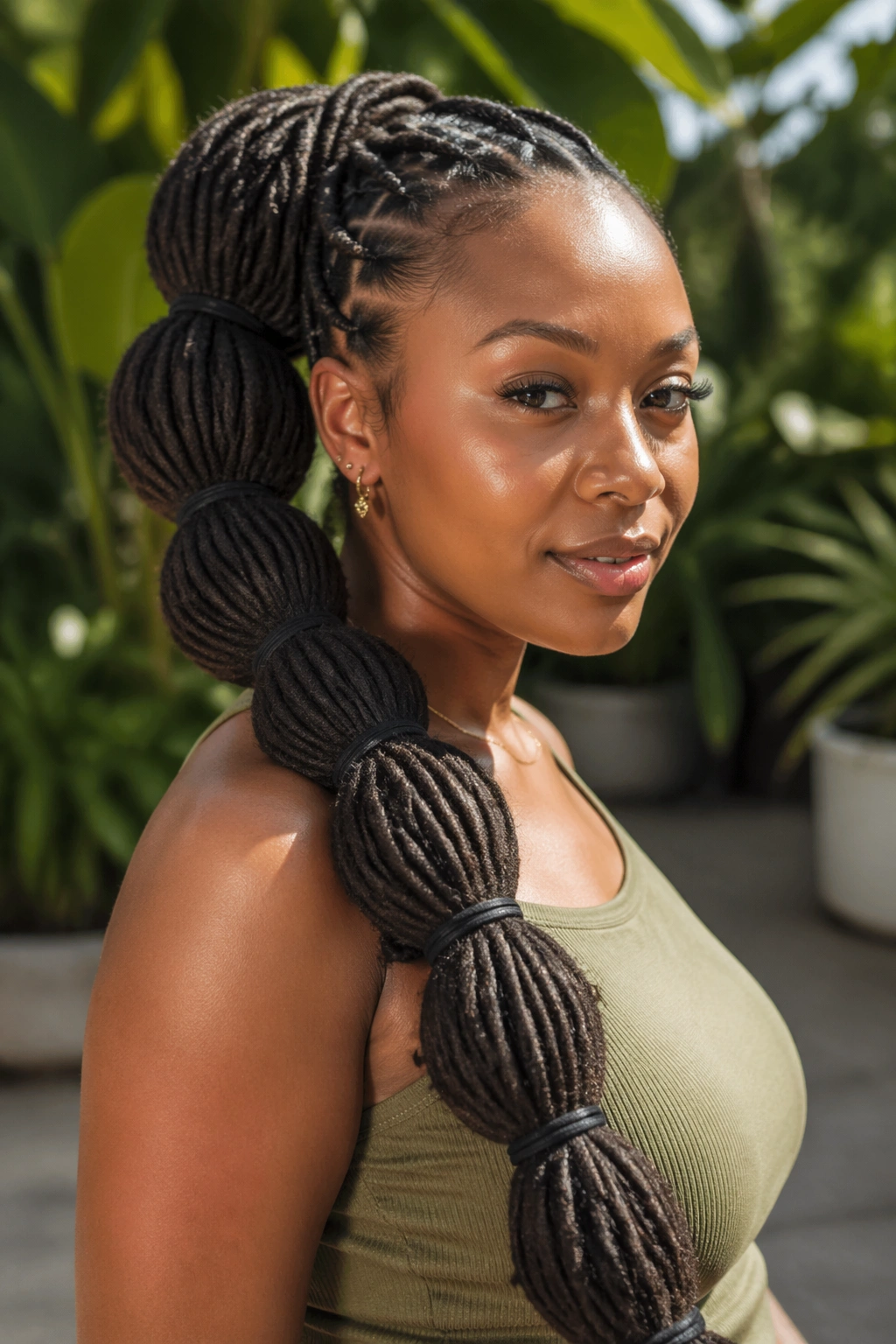
The bubble ponytail is one of those styles that looks more complicated than it is. On long locs, it really pops because the length gives each section room to puff out and show shape instead of just hanging straight.
Start with one ponytail, then add small clear elastics every few inches down the tail. Pull gently on each section between the bands so it rounds out into a bubble. If your locs are thick, space the ties about 3 to 4 inches apart. If they are lighter, you can go a little closer.
Where the bubbles should sit
- Higher bubbles give the style a playful feel.
- Wider gaps between ties make the ponytail look fuller.
- Tighter spacing creates a more segmented, almost sculpted line.
Do not yank the bubbles apart too hard. Long locs already carry weight, and over-manipulating the tail can make the elastics bite.
6. Wrapped-Base Ponytail
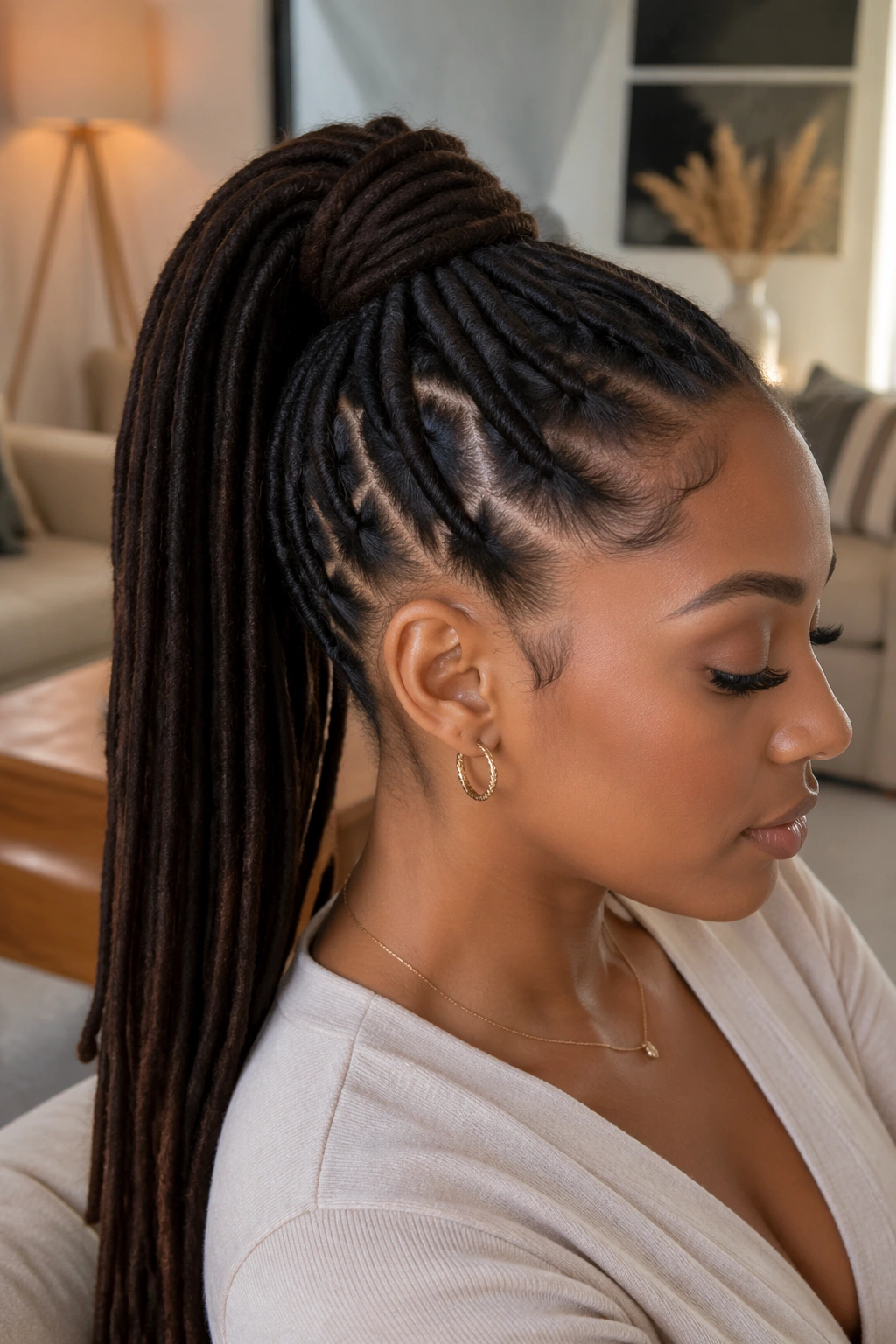
Wrapping the base is the easiest way to make a simple ponytail look finished. It hides the elastic, smooths the transition from roots to length, and gives the whole style a cleaner edge without asking for much extra time.
You can use one loc to wrap the base, or a thin strip of hair-safe wrap if that feels easier. I prefer the loc wrap because it blends in and looks like part of the style rather than decoration added at the last second. Keep the wrap snug, but not strangling the base. That line matters.
The style works especially well with long locs because the tail itself can be plain. The wrapped base gives the eye a place to land, and the rest of the length can fall naturally. It is a neat trick when you want the ponytail to feel dressed up but not fussy.
7. Center-Part Sleek Ponytail
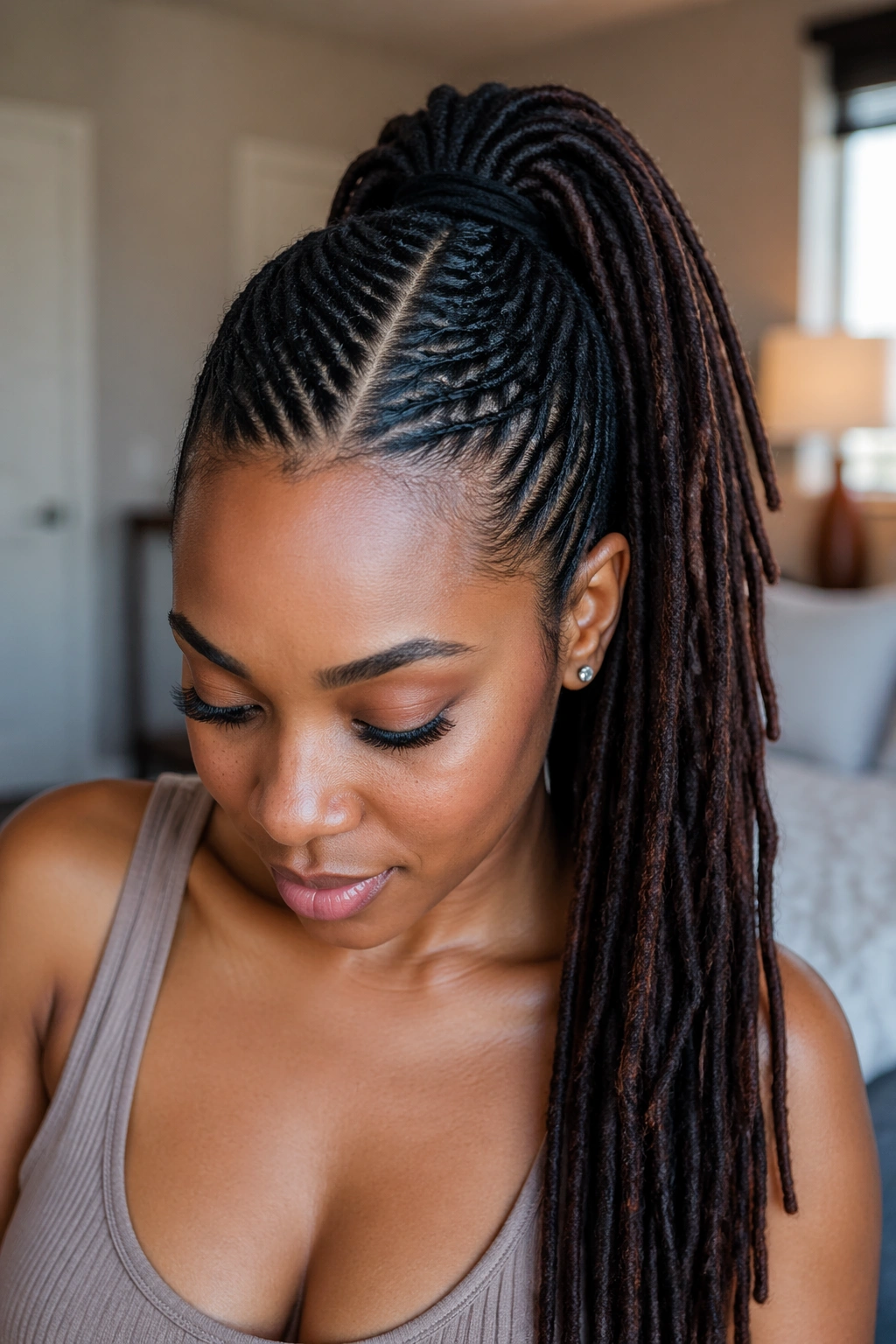
A center part gives long locs a clean runway down the middle. It is one of the simplest ways to make the ponytail feel deliberate, especially when the locs are thick enough to carry a lot of visual weight on their own.
The part should run straight from the hairline to the crown. Don’t wobble it. If the line drifts, the whole style starts to look accidental. Smooth the sides back with a little styling product, but keep the part crisp and the rest of the head fairly flat.
Why the part matters
- A straight part lengthens the face.
- It keeps both sides balanced, which helps with dense locs.
- It makes the ponytail look more polished even when the tail itself is loose.
A center-part ponytail is the style I’d pick when I want structure without a lot of extra pieces. Clean, simple, done.
8. Deep Side-Part Ponytail
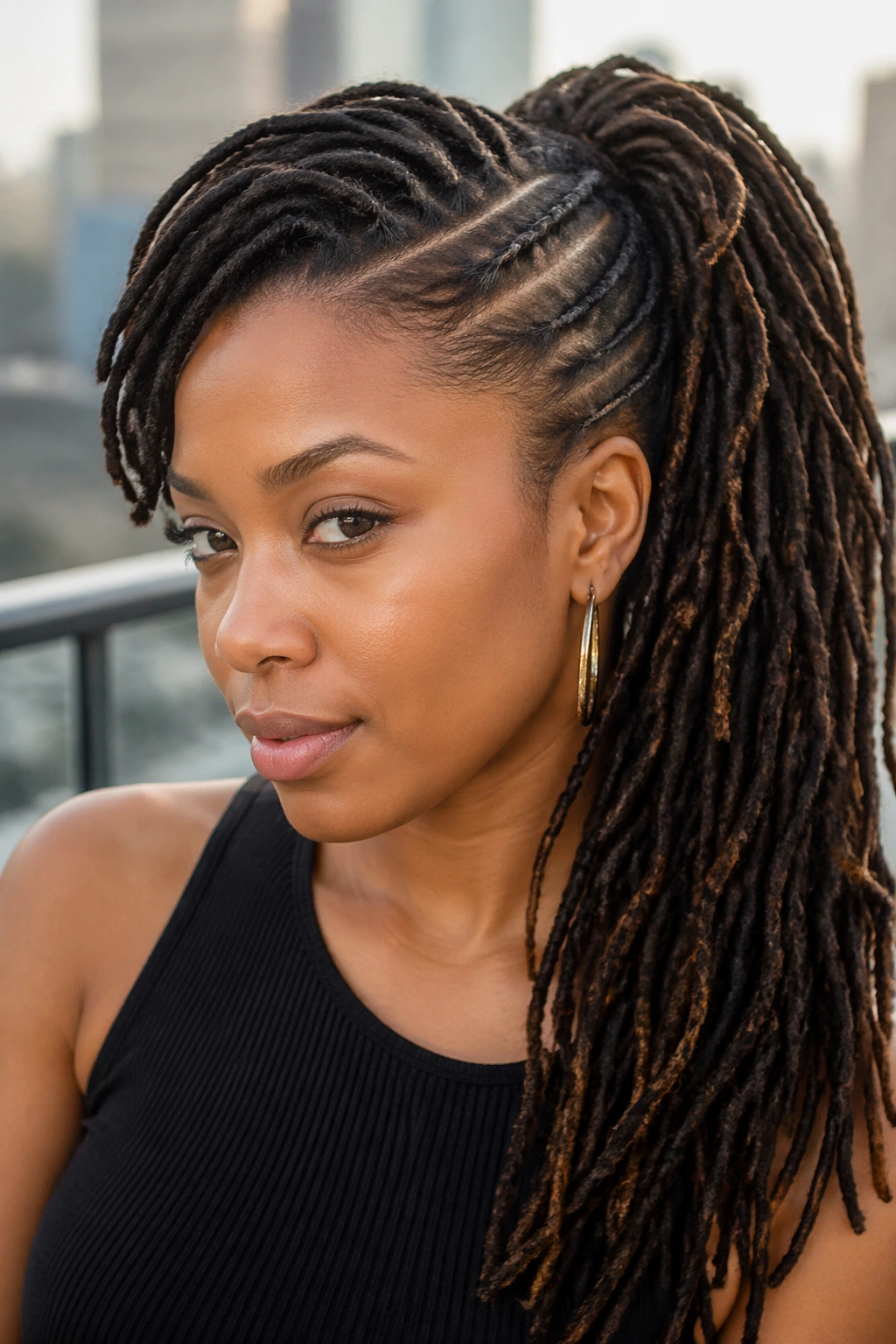
A deep side part changes the whole geometry of the style. Instead of splitting the head evenly, it shifts attention to one side and lets the ponytail follow that line. The result feels a little more dramatic and a little less formal than the center-part version.
This is one of the better ponytails for long locs if you like volume at the front. The deeper part gives the roots a chance to lift on one side, and that lift keeps the ponytail from looking flat against the scalp. It also softens strong facial features in a nice way, especially when the tail is large and heavy.
Keep one side sleek and let the other side carry a bit more body. That contrast is what makes it work. If both sides are equally smooth, you lose the point.
9. Half-Up Ponytail
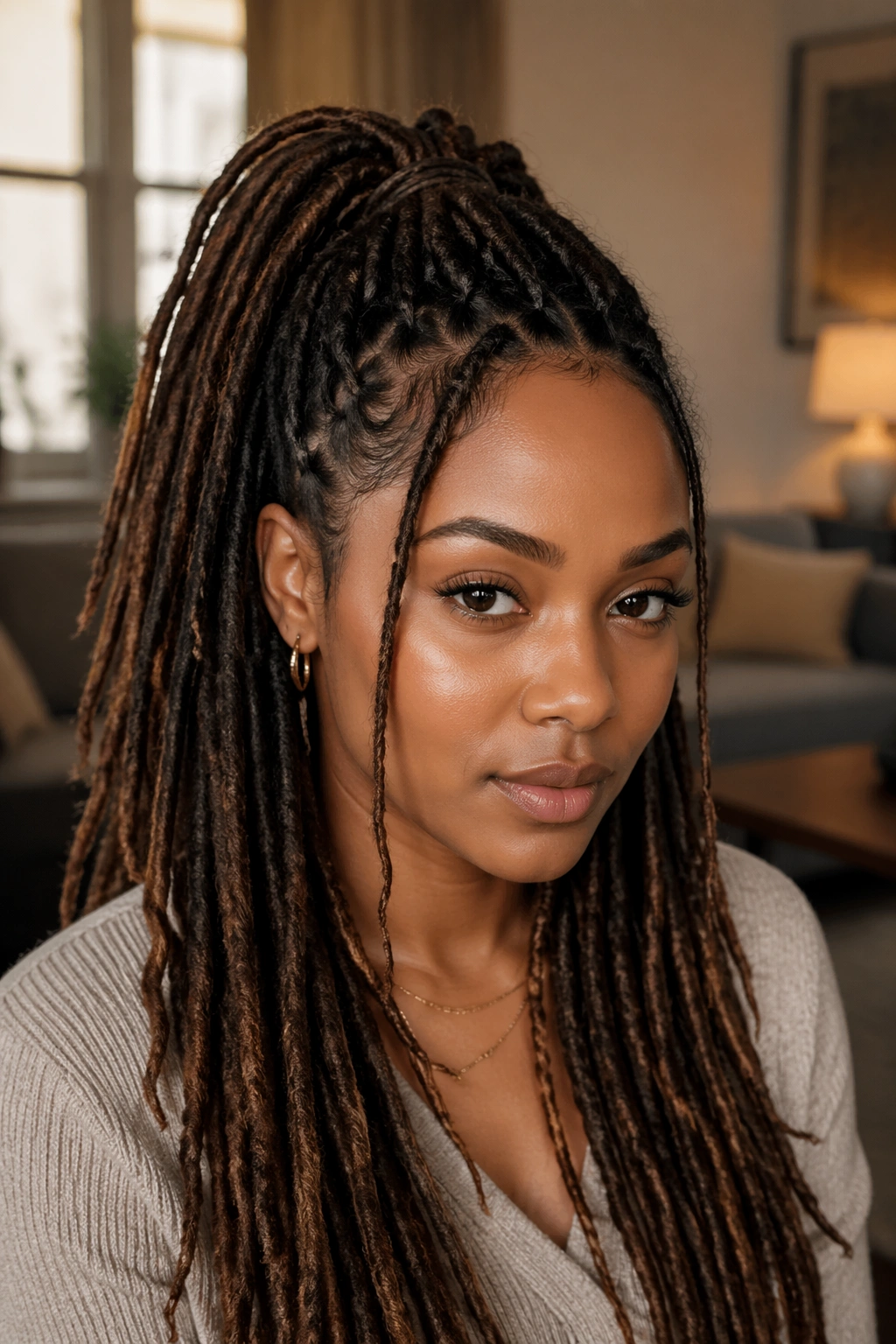
Sometimes you want the front handled and the length still visible. A half-up ponytail does exactly that, which is why I think it is one of the smartest styles for long locs on busy days.
Gather the top section only, usually from temple to temple, and leave the rest down. That small lift at the crown opens the face without removing all the movement from the hair. It also takes some of the weight off the roots, which your scalp will notice by the end of the day.
Small details that help
- Leave a few face-framing locs loose near the temples.
- Keep the top section smooth, but do not flatten it so much that it loses shape.
- Use a soft elastic or a fabric tie so the half-up section does not feel pinched.
The half-up version is easy to dress up or down. That’s part of the appeal.
10. Double Ponytails
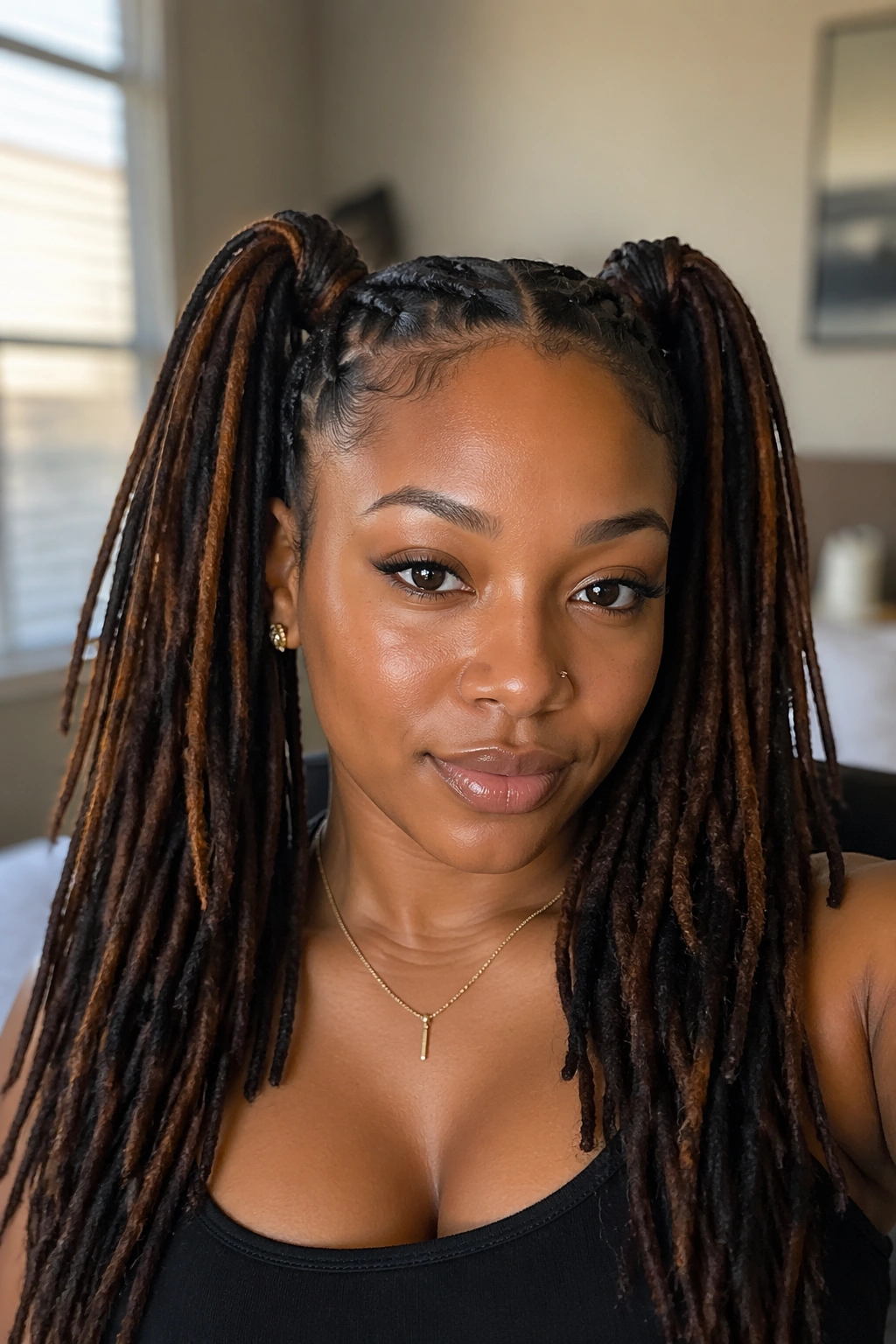
Two ponytails beat one when the bundle is too heavy for a single base. Splitting long locs into two sections gives you a playful shape and spreads the weight more evenly across the head.
You can wear them high, low, or somewhere in the middle. High double ponytails feel youthful and bold. Low double ponytails look a little more relaxed and less costume-like, which matters if you want the style to feel wearable outside of a themed outfit.
The center part between the two sections should stay straight, or the whole look starts to drift. Keep the bases close enough to feel connected, but not so close that they collapse into one another. That spacing is what makes the style read clearly.
And yes, long locs can handle this. They just need room.
11. Mohawk Ponytail
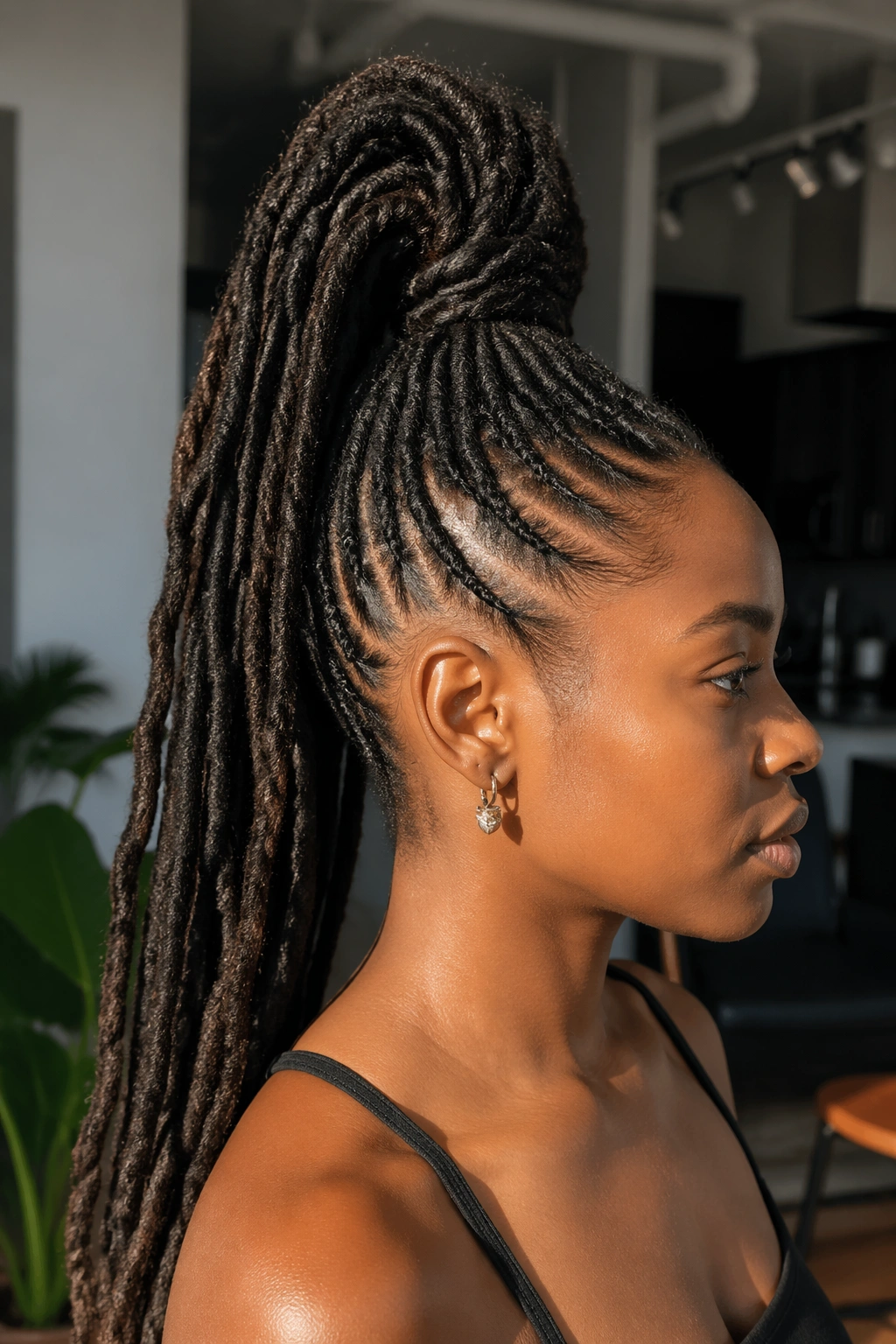
Want a little edge without doing a full updo? A mohawk ponytail gives you that shape fast. The sides get smoothed or twisted upward, while the center strip of locs is gathered into one strong tail down the middle.
That middle line is what makes the style hit. It creates height without forcing the whole head up, and it lets the length fall in a way that feels bold rather than heavy. Long locs are a good match here because the ponytail becomes a clean vertical line.
How to shape the ridge
- Section the hair from temple to temple before you gather anything.
- Smooth the sides toward the center so they sit flat.
- Anchor the center strip high enough that the tail clears the neck.
If you want the style to last, don’t overload the front with product. The shape does the work.
12. Pineapple Ponytail
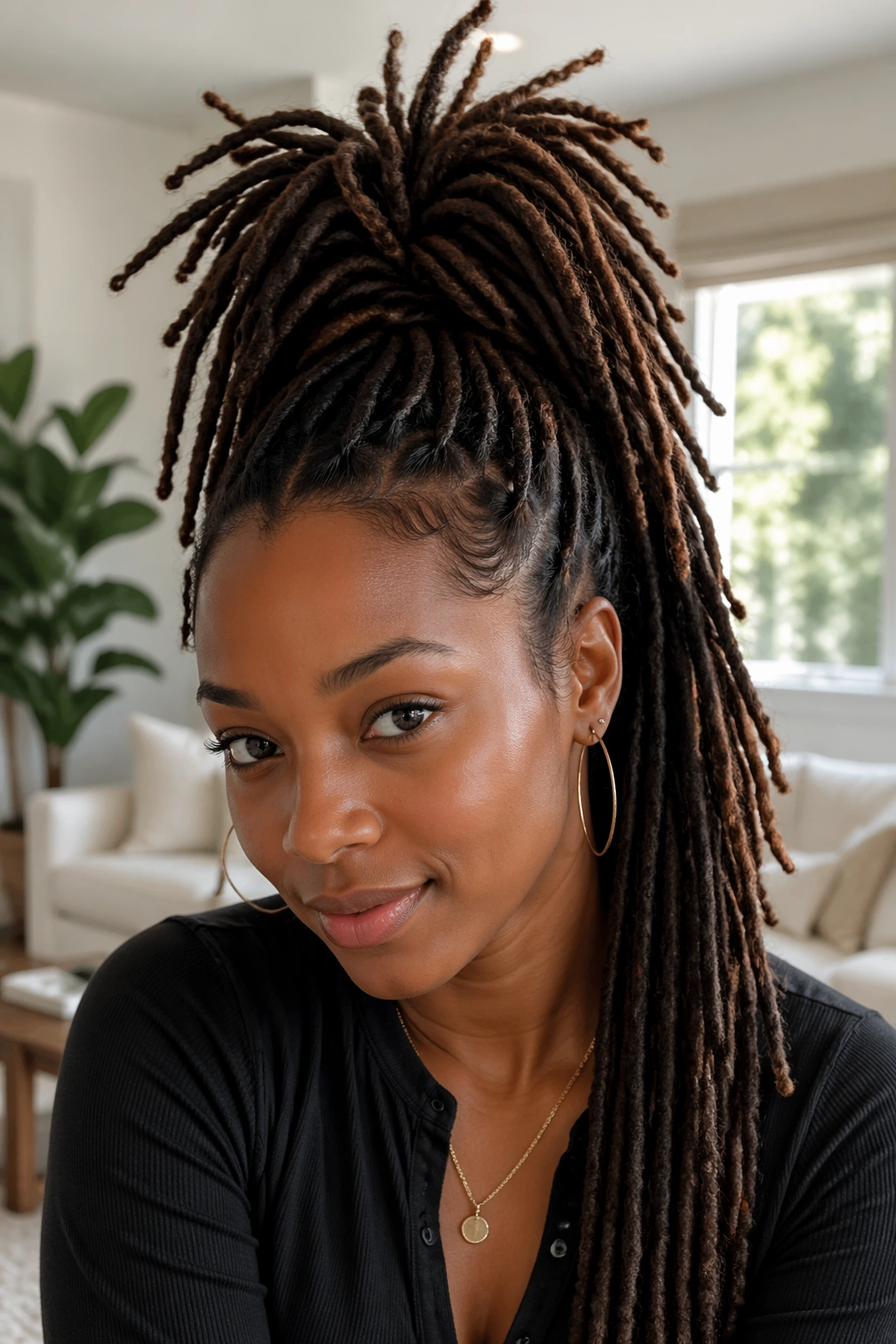
A pineapple ponytail sits high and loose, so the locs fan out instead of hanging tight against the head. On long hair, that creates a fuller shape than you might expect, with the tail rising from the crown like a soft fountain.
The feel is different from a sleek high ponytail. Less tight. Less polished. More volume. That looseness can be a relief when your roots need a break, and it also keeps the style from looking too severe. The whole point is height with room to breathe.
Use a wide elastic or a satin scrunchie so the base doesn’t dig in. If the tail is especially long, let it drape slightly forward over one shoulder or keep it centered down the back. Either way works. The style changes with the angle, which is part of the fun.
13. Braided-Front Ponytail
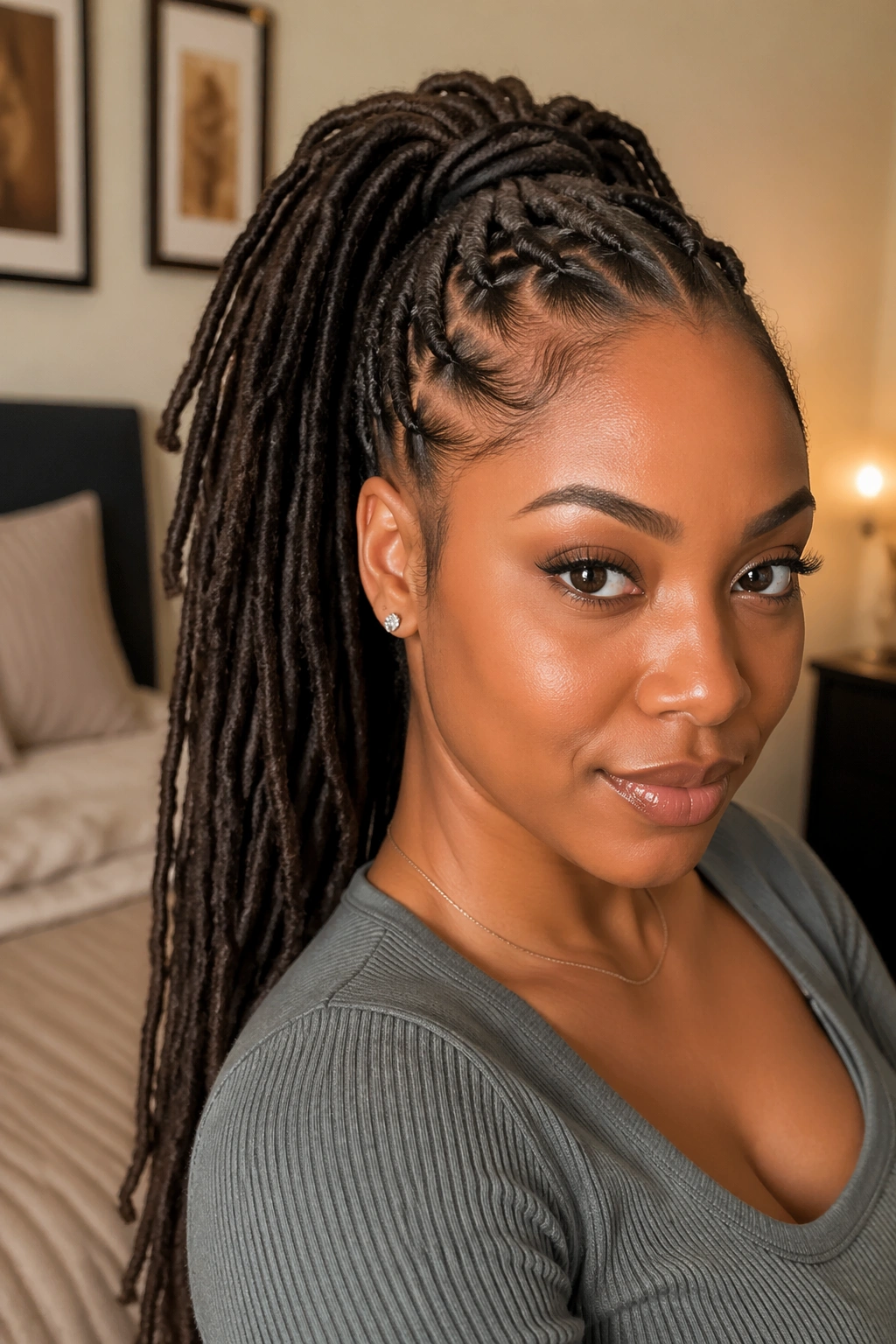
A pair of flat twists or cornrows feeding into the base makes the whole style feel tidier. It also gives long locs a secure anchor at the front, which helps if you move around a lot or just want less hair sitting near the face.
This version is good when the front section has grown out a bit and you want that area to look neat without hiding the length. The braids guide the eye back toward the ponytail, and the rest of the locs can hang loose. Clean front. Full tail. Nice balance.
Where to place the braids
- Start them at the hairline and aim toward the crown.
- Keep the braid tension gentle so the front doesn’t feel tight by noon.
- Gather the locs only after the braids are secured.
This style has real staying power when done lightly. Heavy-handed braiding is not the move.
14. Rope-Wrapped Ponytail
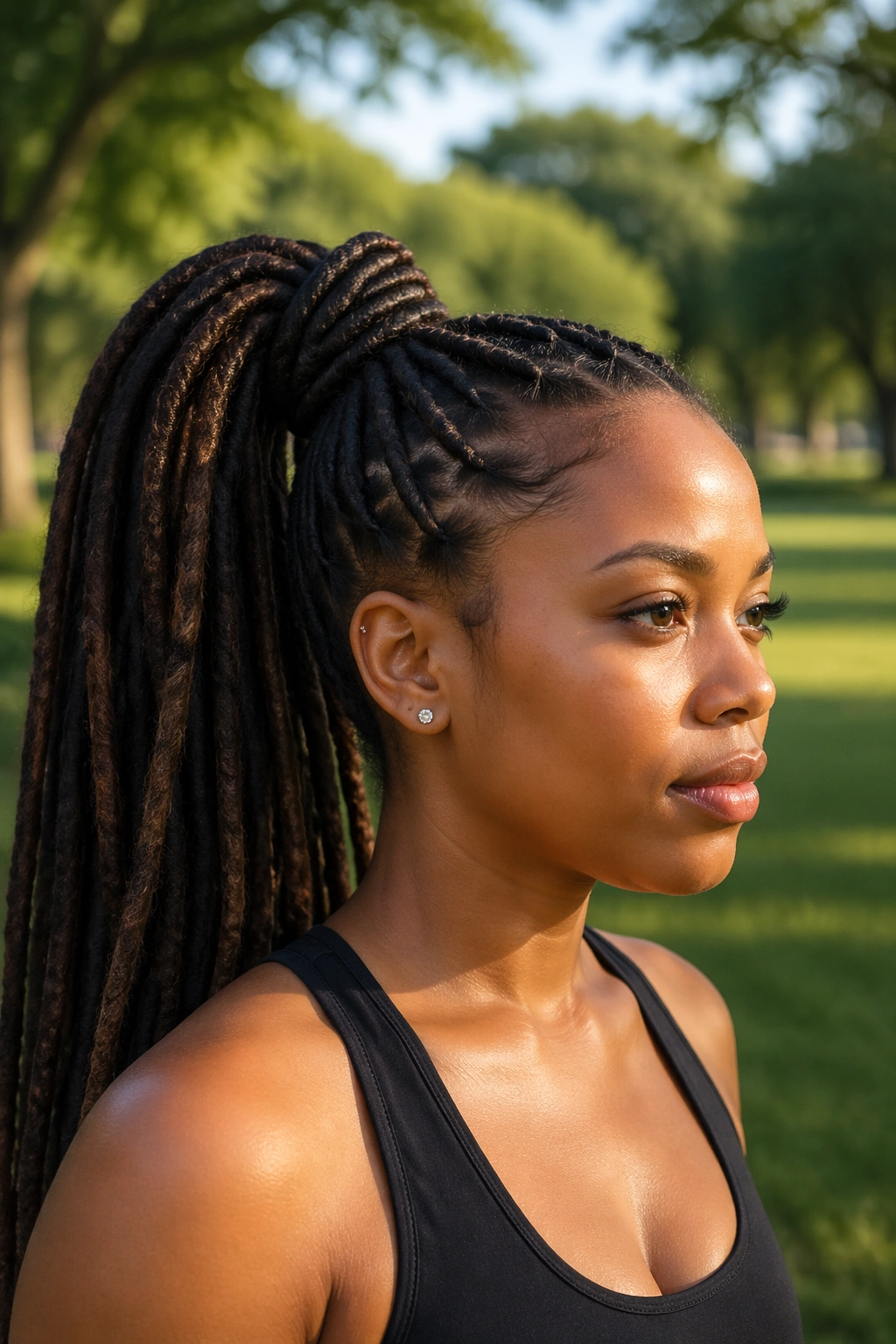
This is not the same as a simple wrap. Rope-wrapping gives the base a spiral look, which adds texture and makes the ponytail feel a little more crafted without turning it into a formal style.
You can use two locs to create the rope effect or twist one longer piece around the base in a clean spiral. The result is subtle, but it changes how the ponytail reads. Instead of a plain band at the base, you get a small line of texture that makes the whole style look finished.
It works well with long locs because the tail already supplies drama. The wrapped base just sharpens the silhouette. If the elastic is visible, the wrap is even more useful; it hides the mechanical part of the style and leaves you with something nicer to look at.
15. Fishtail-Laced Ponytail
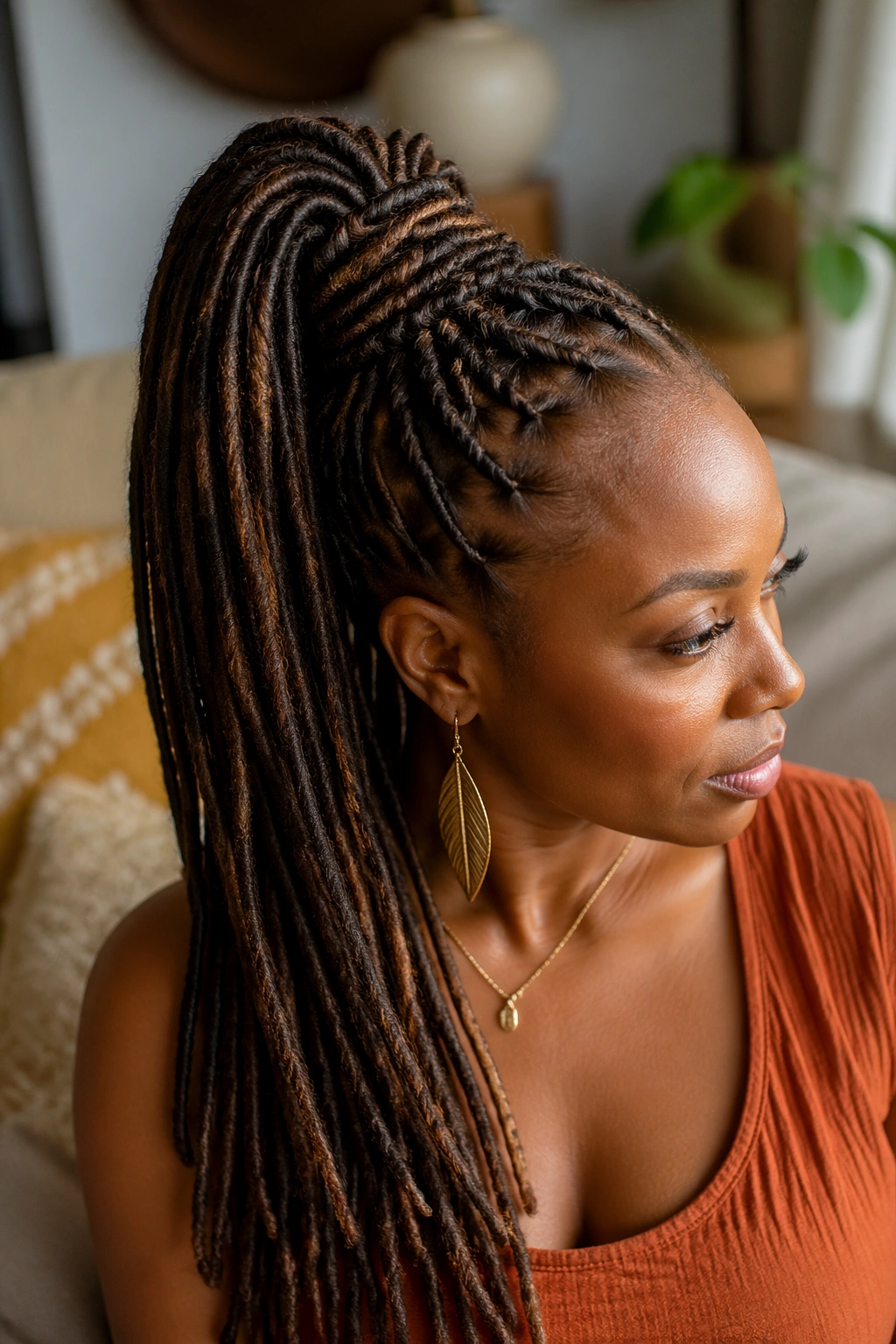
A fishtail detail gives long locs a dressed-up feel fast. It does not have to cover the whole ponytail either. Even a short laced section near the base can make the style look more intentional than a simple pull-back.
The reason it works is texture. Locs already have a rope-like body, so a fishtail element sits naturally inside the look rather than fighting it. I like this version when the ponytail itself is the main shape and the braid is just a refined accent. You can keep it tight near the top and let the rest of the tail hang loose.
If you want the effect without overdoing it, braid only the first 6 to 8 inches of the ponytail and leave the rest straight. That keeps the style readable and stops it from becoming too busy.
16. Curved Swoop Ponytail
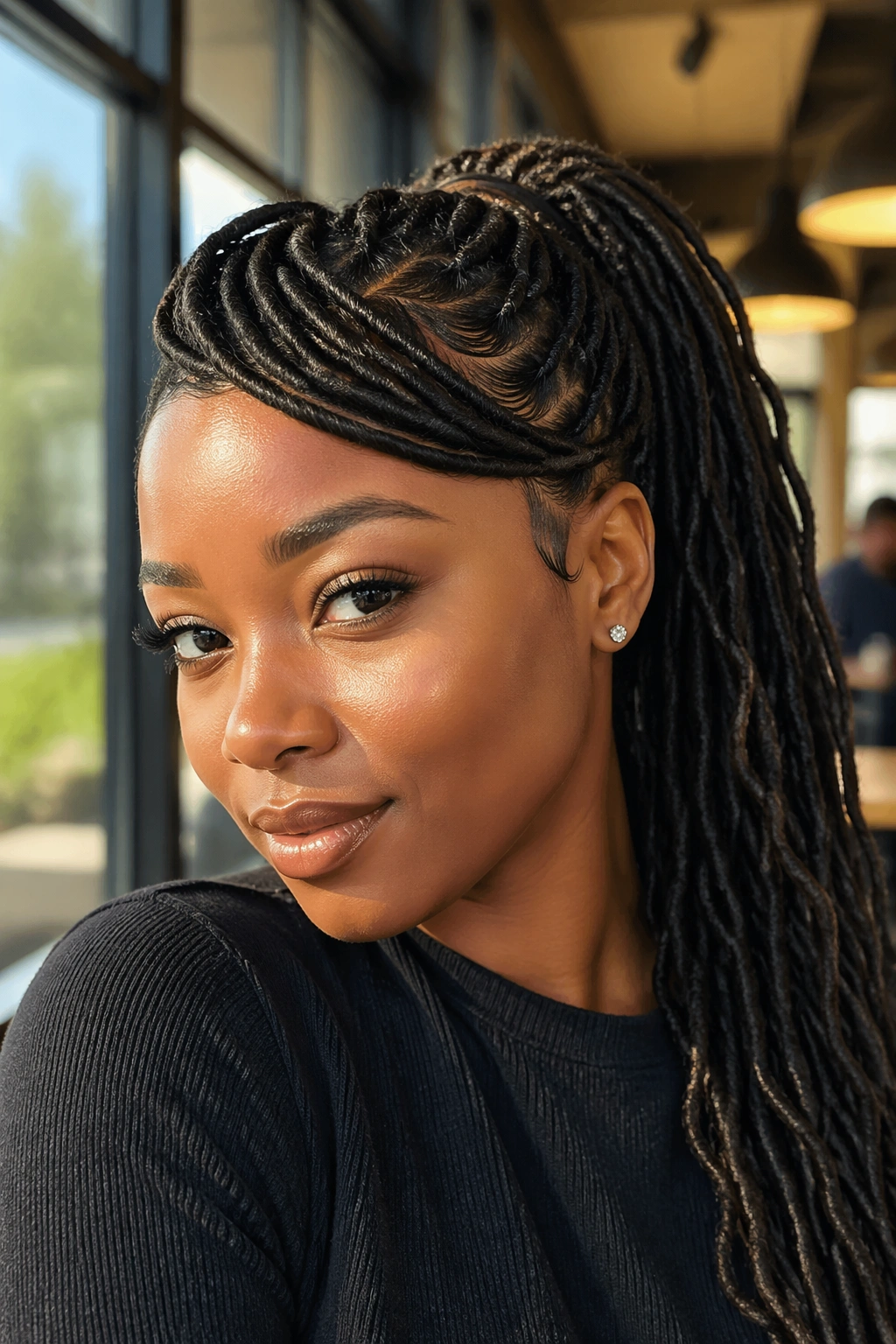
Prefer a softer hairline? A curved swoop ponytail gives long locs a smooth, arcing front that looks a little more styled than a straight-back pull. The curve comes from the temple area and rolls toward the base instead of cutting across the head in a hard line.
That shape helps the ponytail feel more balanced when the locs are long and full. It also makes the face look framed without needing a lot of loose pieces hanging around. The curve itself does the softening.
What the swoop does
- It breaks up a flat front.
- It draws the eye diagonally, which feels less severe.
- It pairs well with a ponytail that sits slightly off center or right at the crown.
Keep the swoop controlled. Too much product and it gets stiff. Too little and the curve fades before you leave the house.
17. Crisscross Ponytail
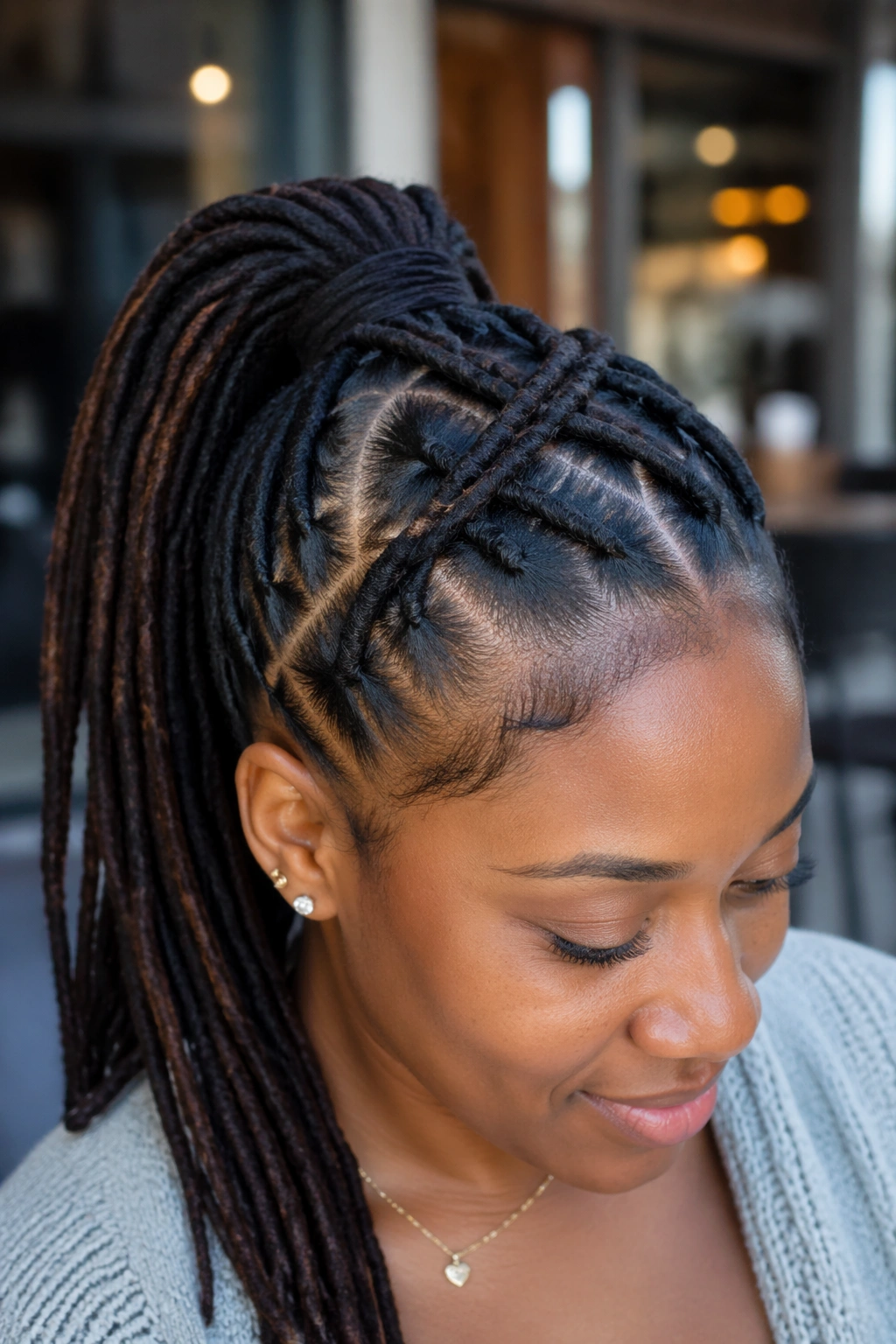
Two sections crossing over the base can make a plain ponytail look far more finished. It is a neat little move, and on long locs it stands out because there is enough length to let the crossing lines stay visible instead of disappearing into the bundle.
You can create the effect by taking two front sections, crossing them behind the ponytail base, and pinning or tucking them before the tail drops. The result is geometric without being fussy. I like it when the ponytail itself is large and heavy, because the crossing detail gives the top half some structure.
No need to pile on extra decorations here. The crossing lines already bring enough visual interest. Keep the rest of the style clean and let that one move do its job.
18. Low Bubble Ponytail
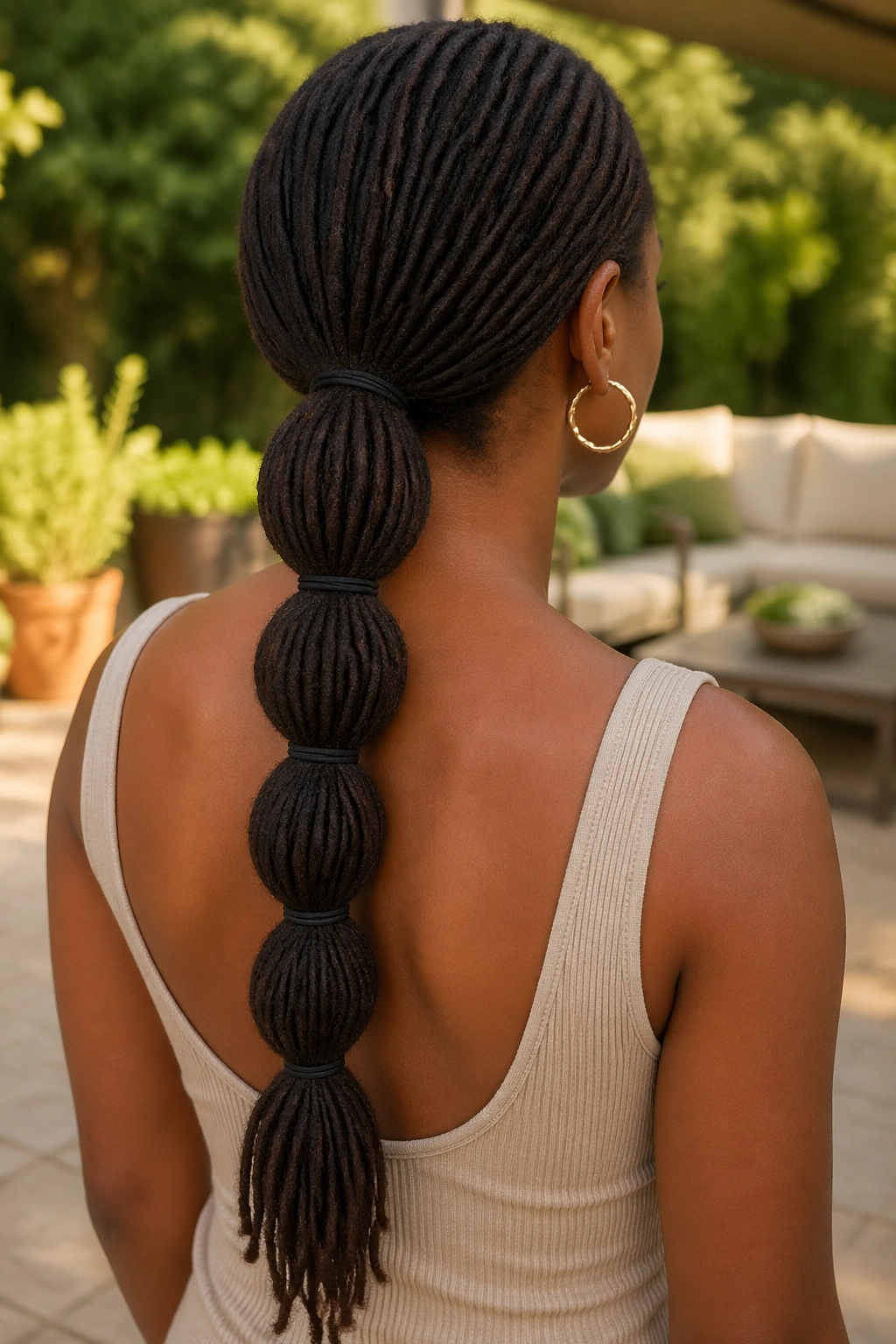
The low bubble ponytail feels calmer than the high version. The bubbles sit against the upper back instead of rising near the crown, which gives long locs a more grounded shape and keeps the style from feeling too playful if you want something a little more grown-up.
Spacing matters here. If your locs are thick, place the elastics about 3 to 5 inches apart. That gives each bubble room to round out without turning the tail into a stack of tight bumps. Gently tug the sides after each tie so the sections puff out evenly.
The low version is also easier to wear against a chair back or under a jacket collar because the bubbles stay lower and more contained. It’s a small comfort, but small comforts matter when the hair is heavy.
19. Tucked-Ends Ponytail
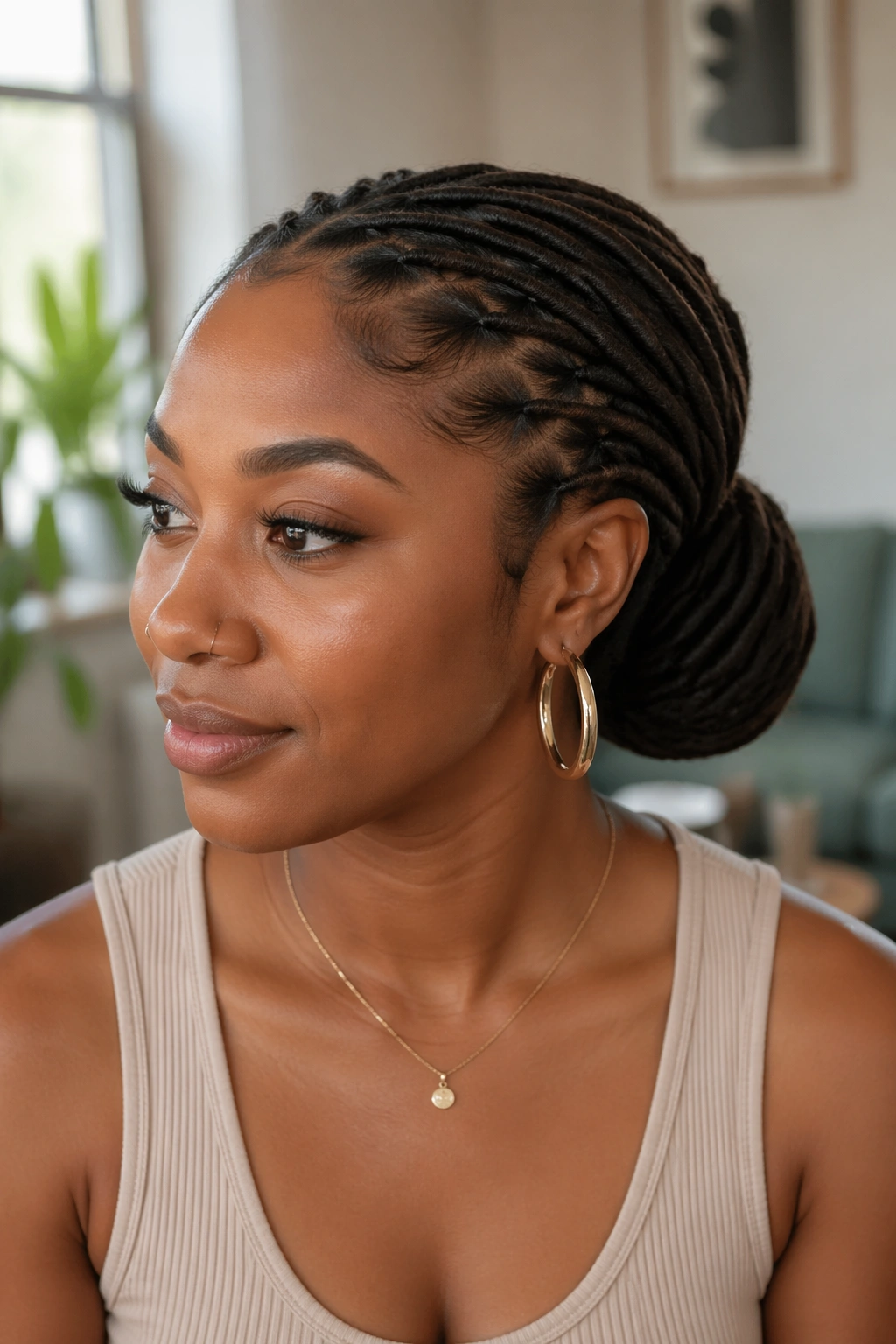
Not every long ponytail needs to hang all the way down. Tucking the ends under changes the silhouette and keeps the length under control when you want the ponytail shape without the full drop.
You can fold the tail back under itself, pin the ends near the elastic, or create a soft roll that keeps the locs stacked instead of free-hanging. The result is neat, compact, and a little more unexpected than a standard ponytail. It also helps if your locs are so long that they get caught on chair backs, straps, or anything else in the way.
This style works best when the base is secure. Once the anchor is solid, the tucked ends stay put and the whole thing reads as deliberate. That is the real charm here. Controlled length.
20. Accessory-Heavy Cuff Ponytail
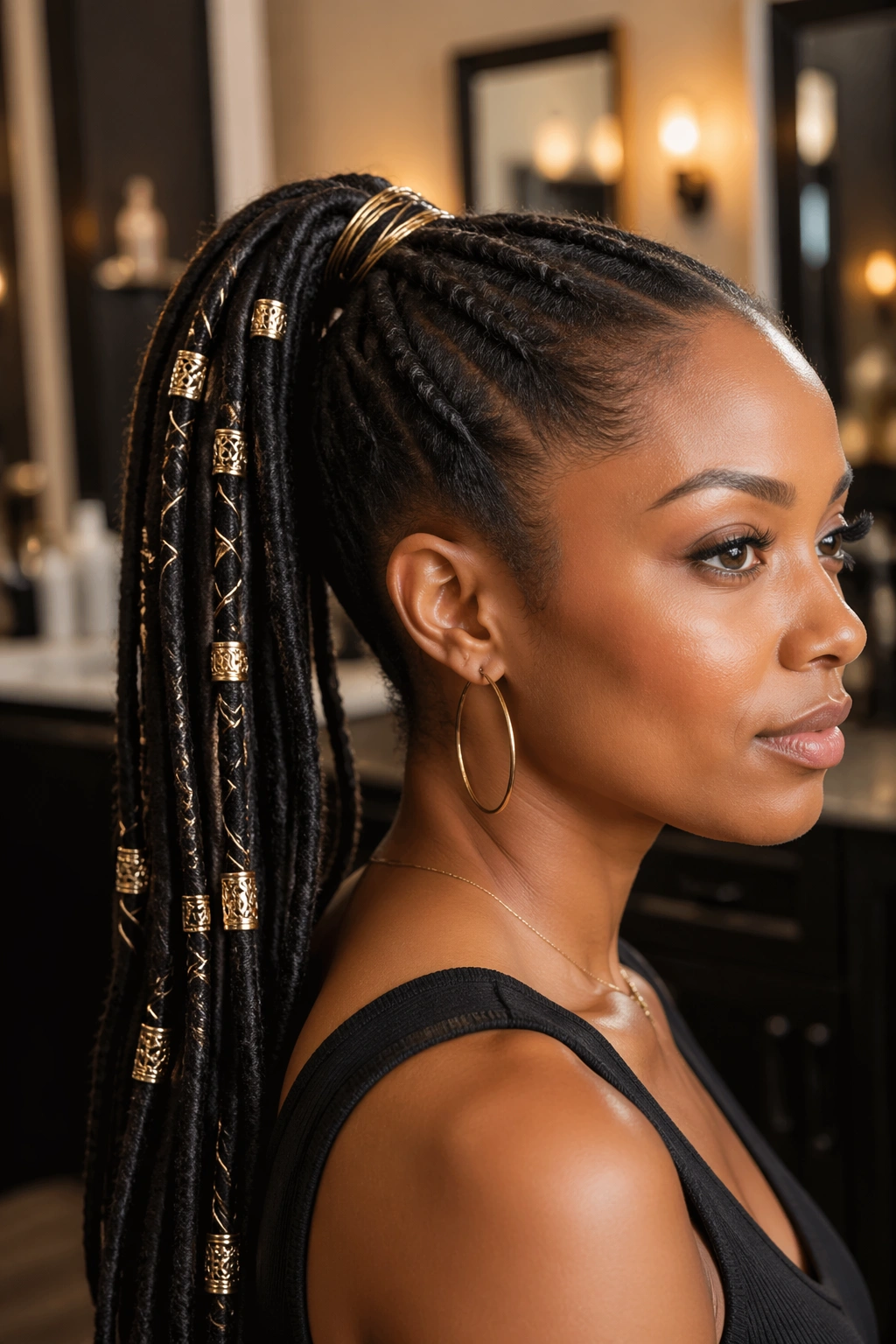
Loc jewelry earns its keep on a plain ponytail. Cuffs, rings, wrapped thread, and slim cords can turn a simple tail into something with texture and personality, especially when the locs are long enough to give the accessories room to spread out.
The trick is spacing. If you put everything near the base, the style gets crowded and starts to feel busy. Spread the pieces down the length instead. Four to eight cuffs on a long ponytail is usually enough to make the look noticeable without turning it into a costume. Heavier pieces should stay lower on the tail so they don’t add pull at the root.
A few small accents go a long way. More is not always better here.
- Use mixed-size cuffs for a less rigid look.
- Place one or two pieces near the bottom to balance the eye.
- Keep the base simple so the accessories have room to stand out.
21. Twisted-Temple Ponytail
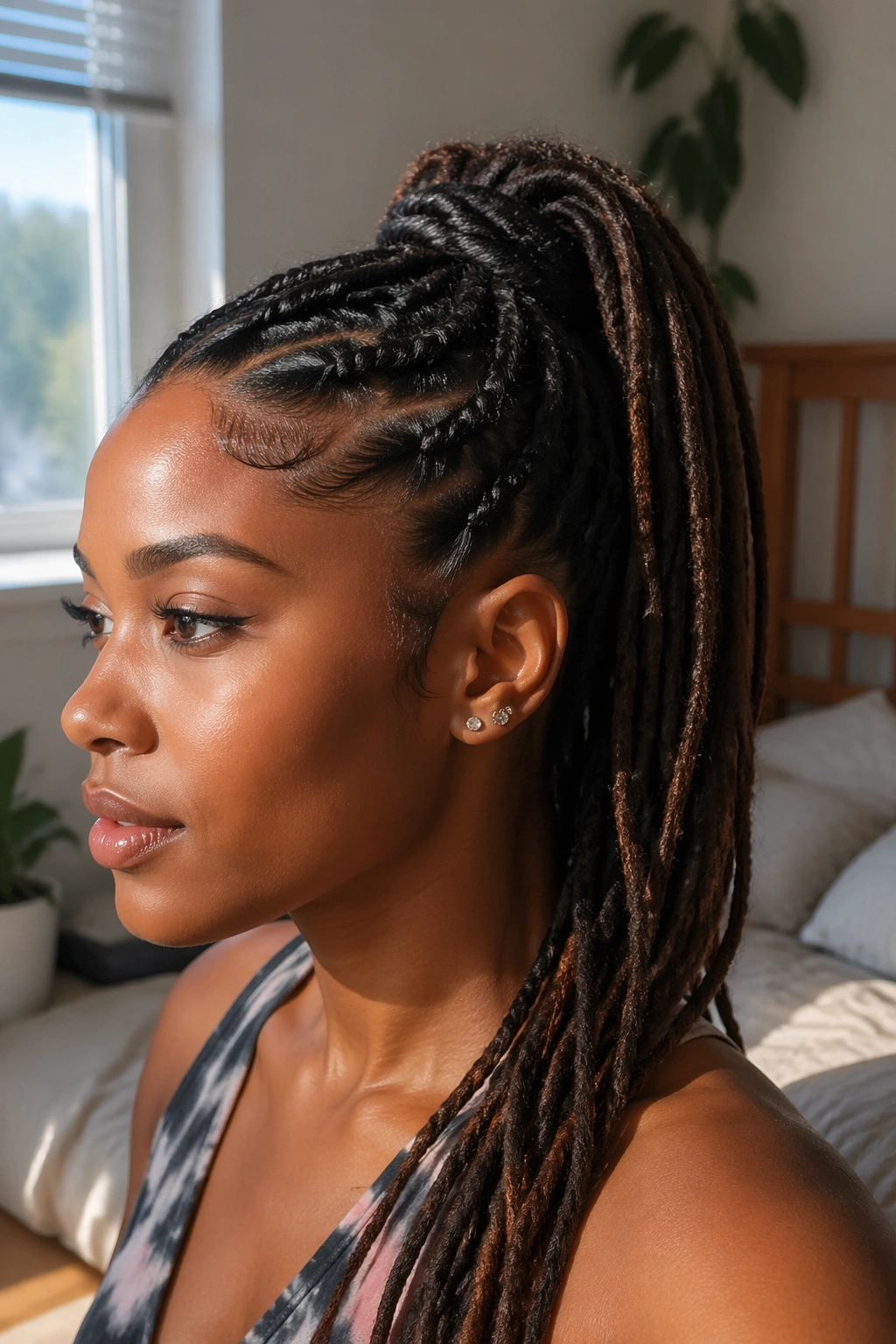
Need something neat around the sides without a full braid? Twisted temples give you that clean edge with less work. Two small twists start at the hairline, move back toward the crown, and feed directly into the ponytail base.
That shape is handy when the front needs help staying in place. It keeps the edges controlled, but it does not flatten the whole style the way a more rigid braid can. Long locs benefit from this because the twists add definition at the top and the ponytail keeps the rest of the length open.
Where the twists sit
- Start each twist near the temples rather than deep in the middle.
- Aim them back at a slight angle so they guide the eye toward the ponytail.
- Stop once they reach the base; don’t pull them farther than they need to go.
The style feels neat without looking overworked. That’s why people keep coming back to it.
22. Folded Ponytail Loop
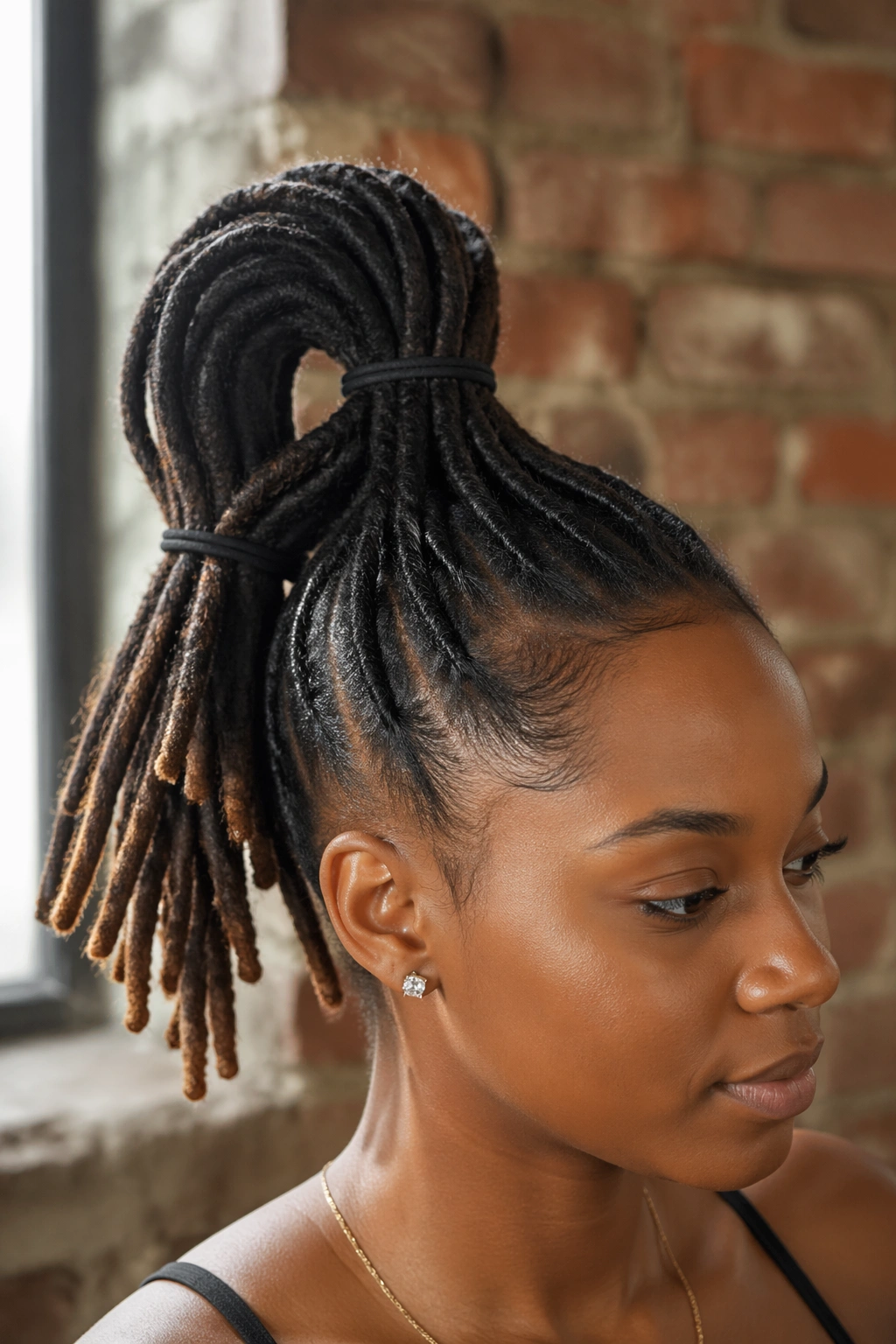
A folded ponytail changes the length without cutting the drama. You gather the locs into a ponytail, fold the tail back on itself, and let the ends peek out just enough to show shape. It is a nice option when you want less swing but do not want to hide the fact that the locs are long.
The loop can sit high or low. High gives it more energy. Low looks softer and a little more relaxed. Either way, the folded shape keeps the tail controlled and stops long locs from hanging in the way all day. If your hair is especially dense, secure the fold with a second elastic so the shape does not slide open.
This one feels practical first and styled second, which is not a bad thing. Practical can look good.
23. Loose Low Ponytail with Face-Framing Locs
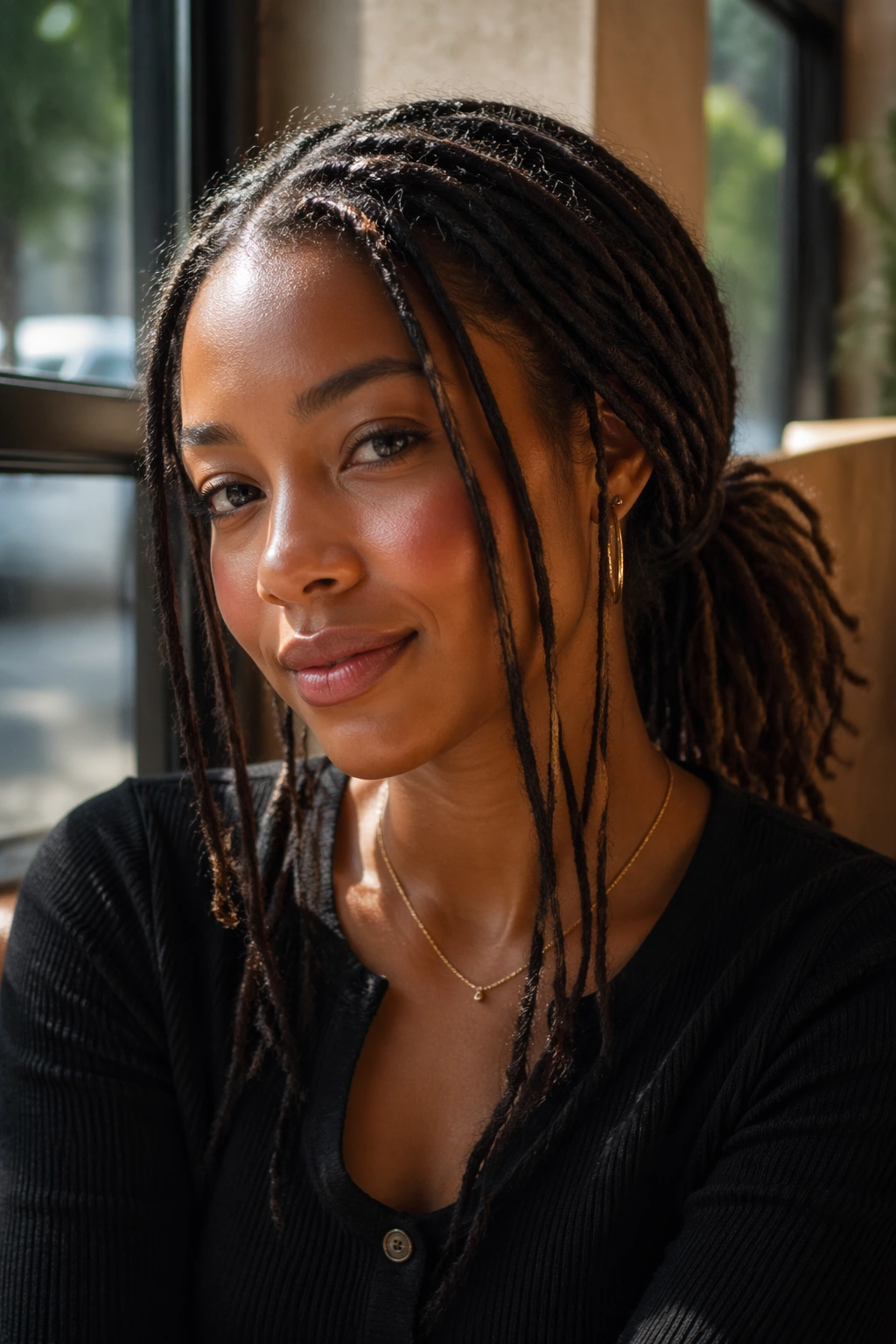
This is the easiest style to keep soft without looking unfinished. You pull the main body of the locs into a low ponytail, leave a couple of pieces loose around the face, and let the front do a little of the work for you.
I like this version when the rest of the hair has already been worn in a tighter shape. The loose front pieces change the mood fast. They break up the straight line of the ponytail and make the look feel less severe, especially if your locs are very long and the tail already has a lot of presence.
A light touch is enough. Smooth the roots, leave the face-framing pieces alone, and stop before the style gets too polished. That unfinished edge is what makes it good. It feels relaxed, but not sloppy.
24. Sporty High Ponytail
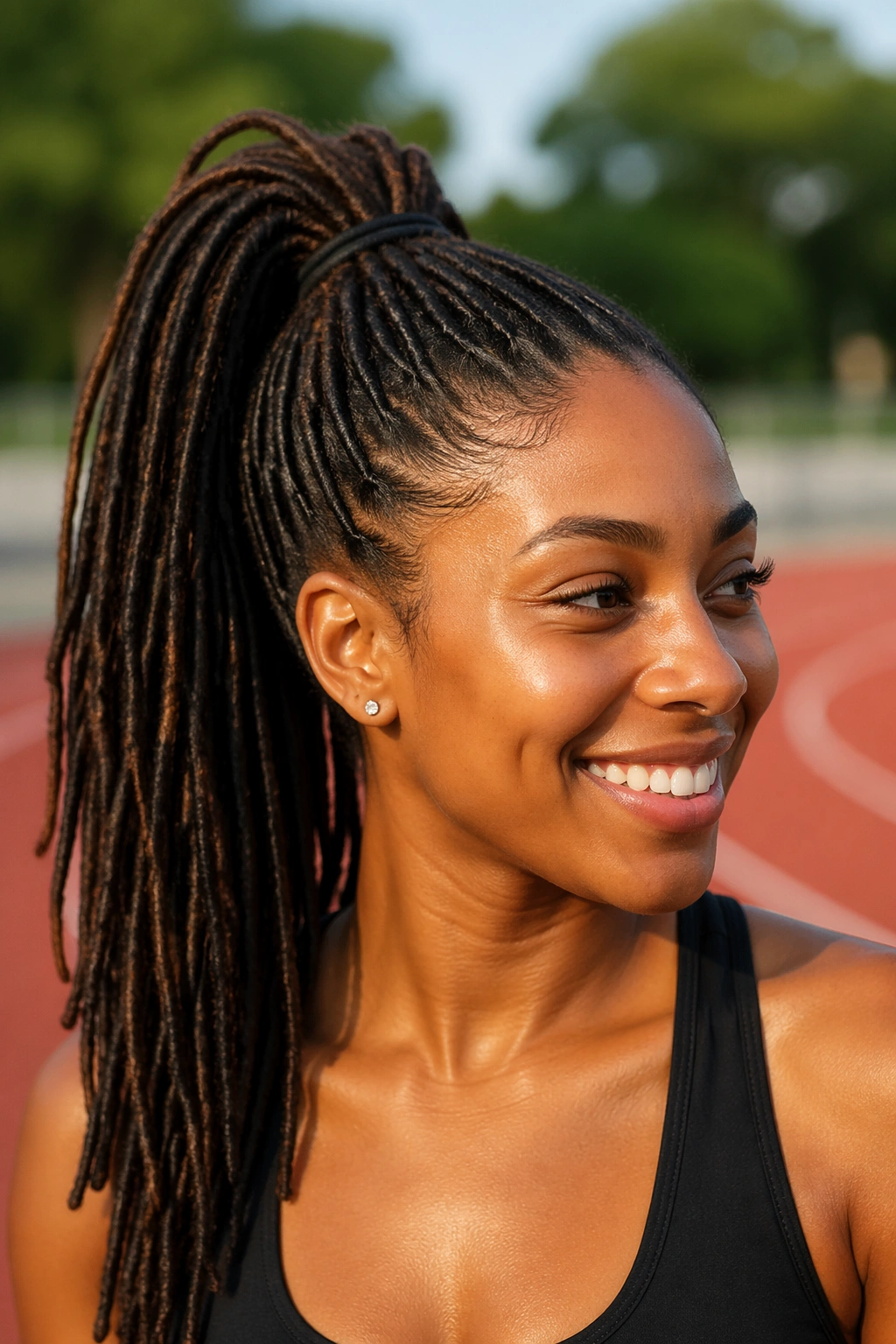
A sporty high ponytail is less about shine and more about staying put. The base is high, the hold is firm, and the goal is to keep the locs secure through movement without making the scalp feel dragged down.
I prefer a strong elastic or a bungee for this one, especially if the locs are long and dense. A little product at the hairline helps, but don’t load the front with so much gel that it turns stiff. The style should feel sturdy, not glued. If you need extra control, a small scarf tied around the base can help keep flyaways down without making the ponytail bulky.
Keep it practical
- Place the base high enough to clear the neck.
- Use a second anchor if the tail feels too heavy.
- Skip loose face pieces if you want the cleanest hold.
This is the ponytail you wear when you want your hair out of the way and still looking good.
25. Floor-Grazing Statement Ponytail
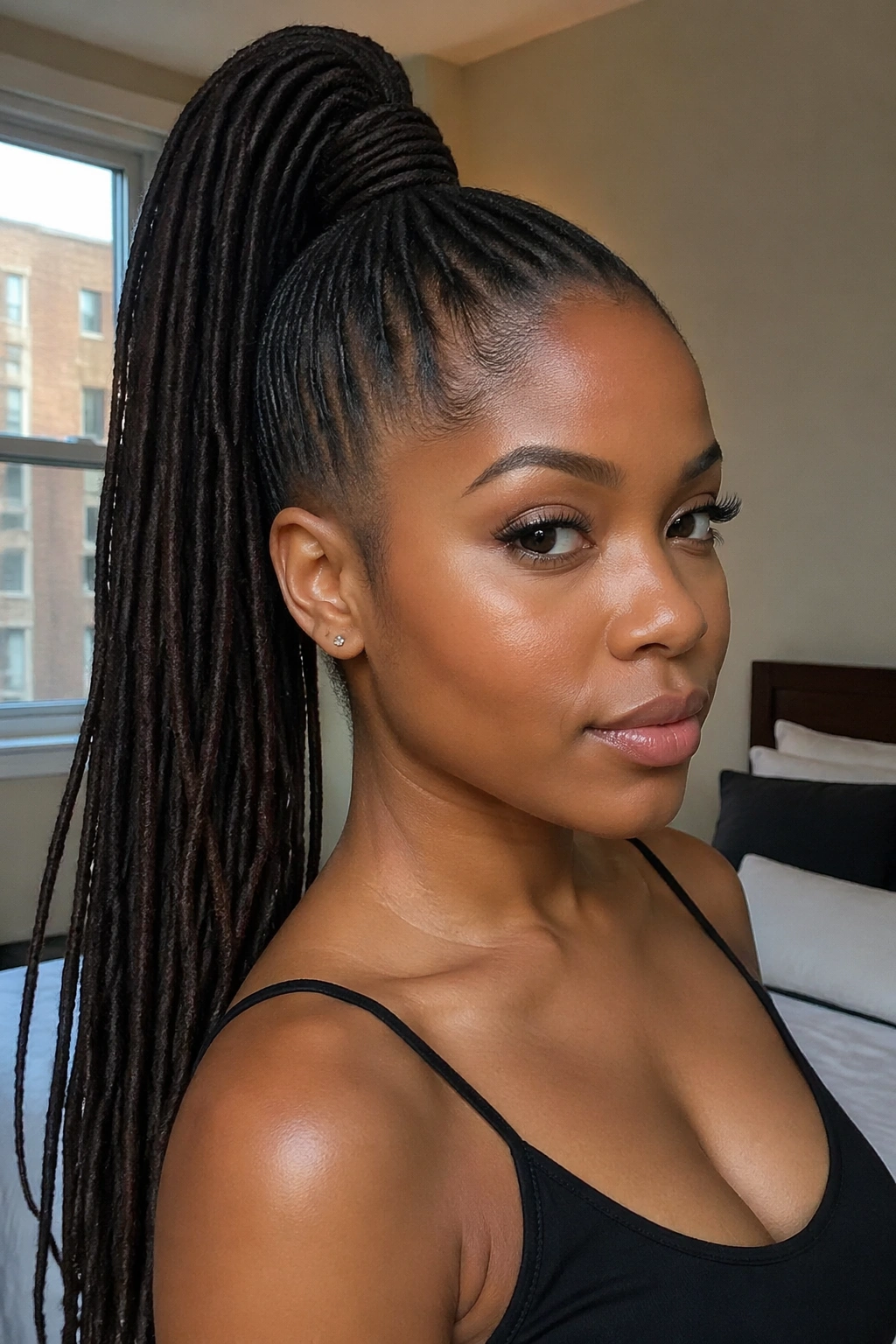
Long locs can do a ponytail that falls almost anywhere you point, and that is half the fun. When the length reaches far down the back, the ponytail starts to feel like a statement piece all by itself, even if the base is simple.
The smartest version is usually a centered base with two anchors spaced about an inch apart. That little bit of reinforcement helps keep the ponytail from sliding as the weight pulls on it through the day. Once the base is locked in, let the tail fall straight or sweep it over one shoulder if you want the length to show from the front.
This is the style I’d save for moments when you want the locs to take up space. Not in a loud way. In a satisfying one. Long, full, and unapologetic. If you’ve got the length, let it show.
