



The best wavy lob haircuts for round faces do one thing better than almost any other cut: they pull the eye downward instead of letting it park at the cheeks. That sounds small, but it changes everything. A lob that lands at the collarbone, with soft waves and a bit of front length, can make a round face look longer, leaner, and more sculpted without trying too hard.
The trick is not “more hair.” It’s placement. Put the shortest layer at the wrong spot and the face looks wider. Move it a few inches lower, open up one side, or let the front pieces skim past the chin, and the whole shape feels cleaner. That is why so many round-faced clients keep coming back to the lob: it gives movement, but it does not swallow the face.
A good wavy lob also lives in the real world. It has to survive air-drying, a rushed blowout, a humid commute, or a night when you cannot be bothered with a curling iron. The cuts below lean into that reality. Some are polished, some are messy, some are soft and subtle. All of them work with waves, not against them.
1. The Collarbone-Grazing Center-Part Lob
This is the safest place to start, and I mean that as a compliment. A collarbone-grazing lob sits low enough to lengthen the face, while a center part draws a clean vertical line right through the middle. That line matters more than people think. It breaks up roundness fast.
Why It Works
Keep the front pieces just below the chin, then let the waves bend softly around the shoulders. You want movement, not puff. The wave should curve, then drop. That is the whole point.
A stylist can keep the layers long and sparse so the ends still feel thick. If the haircut is too layered, the sides can flare out and fight the face shape. That’s not the look.
- Ask for the front to hit the collarbone or a touch lower.
- Keep the part in the center, or only slightly off-center.
- Style with a 1.25-inch wand and leave the last inch of each section straight.
- Use a light root mousse so the sides don’t collapse.
Best tip: tuck one side behind the ear for a few minutes after styling. It trains the front to fall flatter, which helps a round face more than big, bouncy sides ever will.
2. The Deep Side-Part Textured Lob
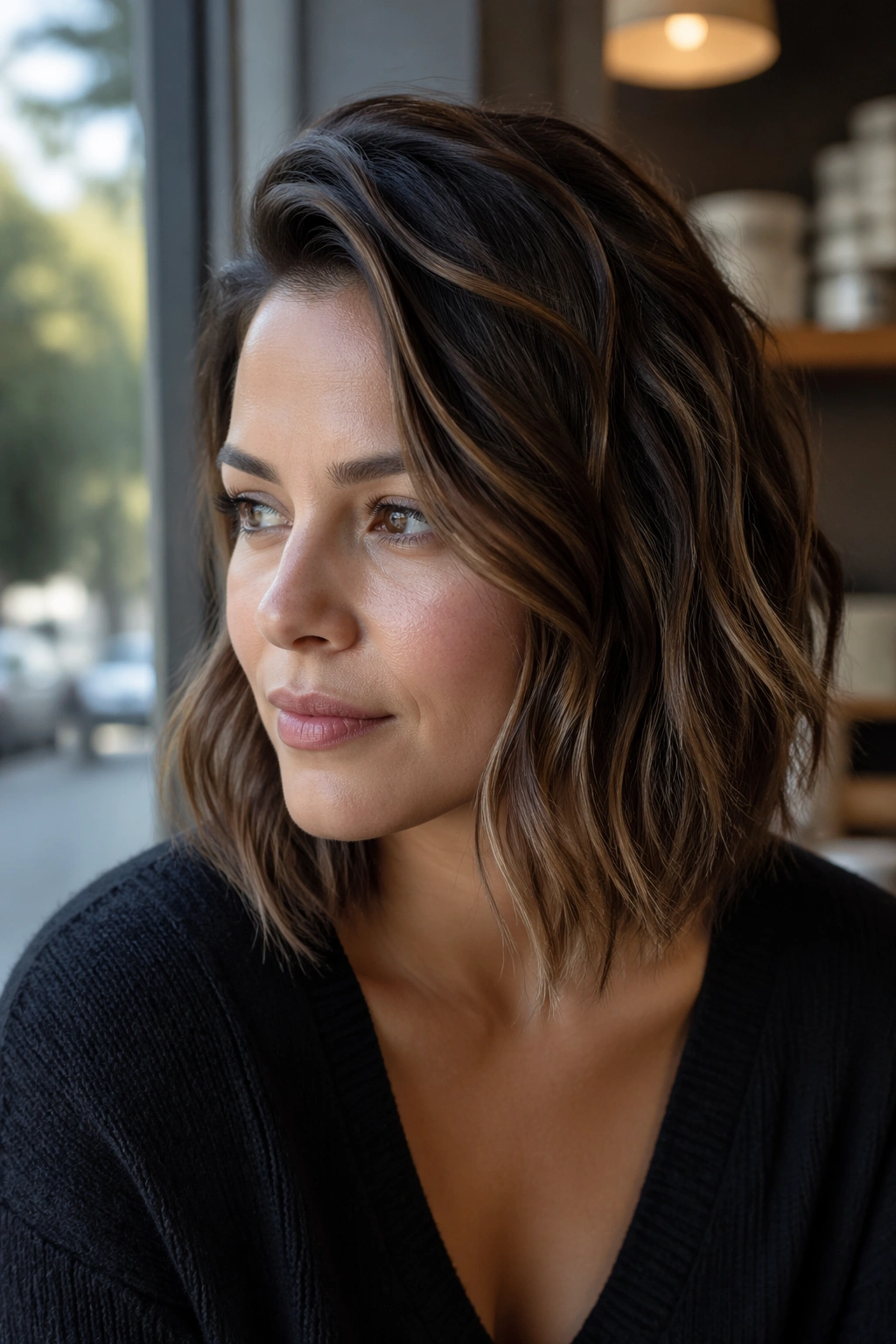
Want sharper angles without a dramatic haircut? Go deeper with the part. A deep side part creates an instant diagonal line across the forehead and cheek area, which is one of the easiest ways to make a round face look less circular.
The texture should be loose and touchable, not crunchy. If the wave is too uniform, the style can start to feel heavy. A few uneven bends near the ends keep the cut alive.
This version works especially well if one side of your hair tends to fall flatter than the other. Let the fuller side sit a little lower and keep the opposite side tucked or pinned back. That small asymmetry changes the shape more than people expect.
A root-lift spray at the crown helps too. Not a mountain of it. Just enough to keep the top from lying flat against the scalp.
3. Curtain Bangs with a Soft Wavy Lob

Curtain bangs are a smart move when you want face framing without committing to a blunt fringe. On a round face, they work best when they start around the cheekbone and open outward instead of sitting high and short across the forehead.
The Sweet Spot
The bang should be long enough to fold back from the center. Too short, and the face can look boxed in. Too long, and it disappears into the rest of the cut.
I like this with medium waves because the fringe blends into the front layers instead of fighting them. That soft connection keeps the whole shape from feeling chopped up.
A round-brush blowout on the bangs makes a big difference. Bend them away from the face, then let the ends cool in that shape. If you skip the cool-down, they fall straight back into the cheeks.
This cut is good for people who want movement near the face but do not want the drama of full bangs. It’s lighter. Easier to live with, too.
4. The Front-Long Angled Lob
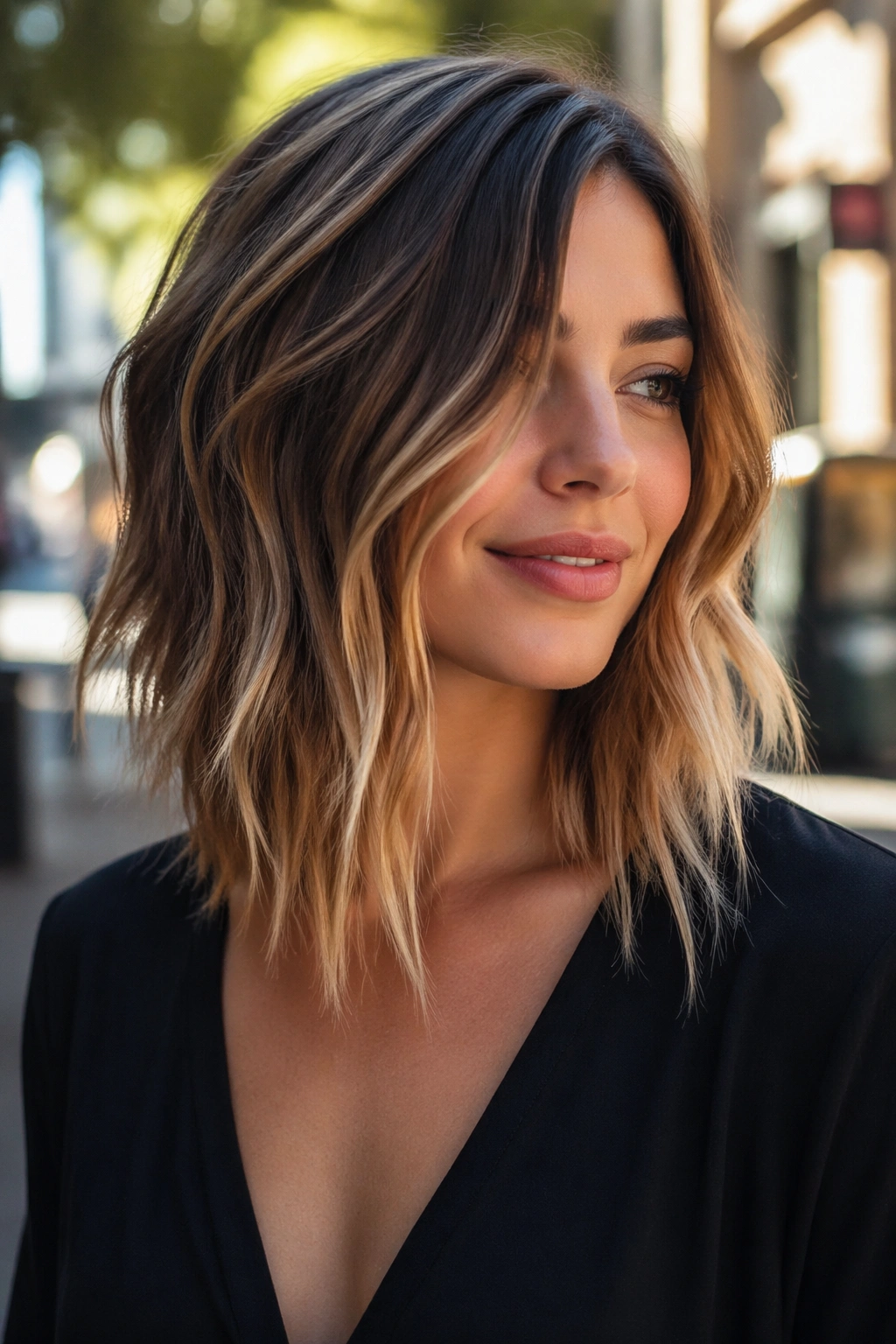
A round face does not need hair that stops at the same spot all the way around. That’s the mistake. An angled lob—shorter in back, longer in front—creates a visual slide from the jaw toward the shoulders, and that helps the face look longer.
The angle does not have to be sharp. In fact, a gentle angle usually reads better with waves. Too steep, and the cut starts looking stiff or dated. Soft is better here.
What you want is a front piece that passes the chin by at least an inch or two. That little bit of extra length changes the balance immediately. The wave in front should fall forward, not out to the side.
One short sentence matters here: keep the front longer than the widest part of your cheek. That’s the cut.
5. The Blunt Wavy Lob with Soft Ends
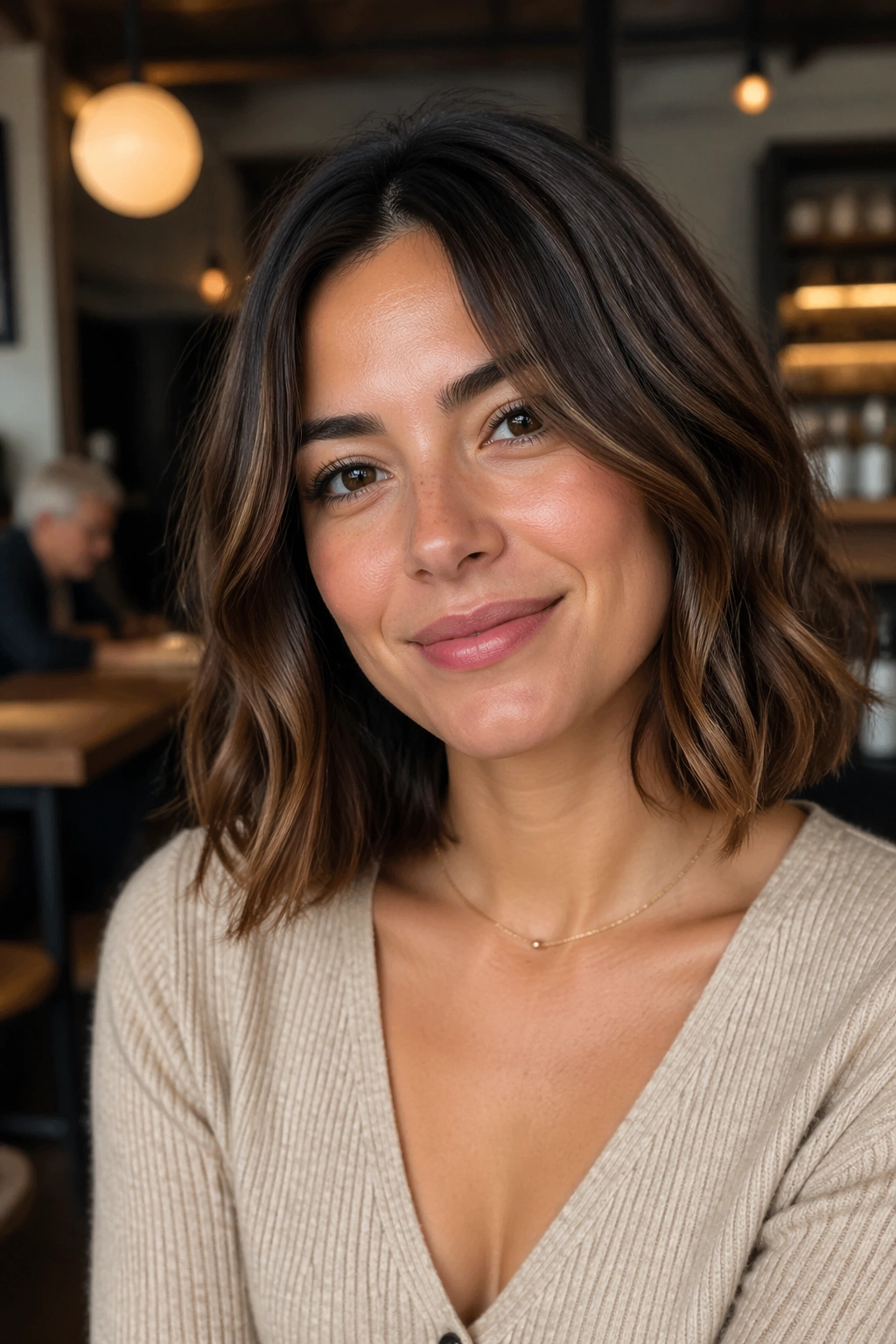
A blunt lob can work on a round face, and it often surprises people. The perimeter gives structure, which keeps the style from puffing out too much. The catch is that the ends need a little softness so the haircut does not feel like a helmet.
The best version sits around the collarbone and carries loose bends through the mids. You want the line to look clean, but not hard. A tiny bit of point-cutting at the ends keeps the edge from looking boxy.
This is one of the better choices if your hair is fine or medium and you hate thin-looking ends. Bluntness keeps the density, and the waves give it life. If your hair is very thick, though, you may need internal removal so the shape does not get bulky.
Simple. Clean. Slightly polished.
6. The Shaggy Wavy Lob
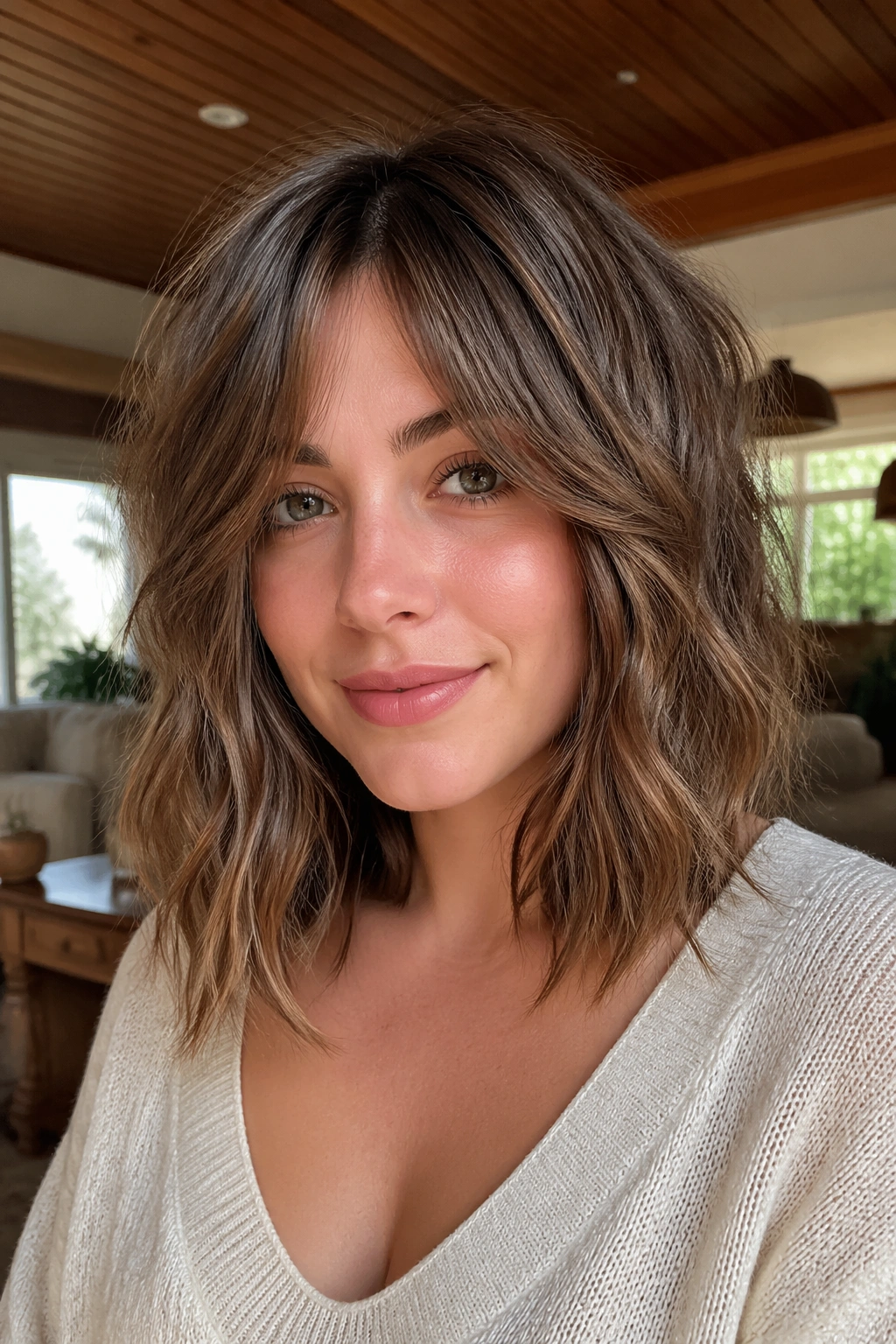
Compared with a blunt lob, a shaggy lob has more attitude and more air between the layers. That extra space is useful on a round face because it stops the shape from sitting in one big circle.
What Makes It Different
The layers should begin below the cheekbones, not right at them. High layers can make the sides balloon, and nobody wants that. Lower layers let the wave fall in broken, flattering pieces.
This style loves medium to thick hair. The texture gives the cut its edge. If your hair is fine, keep the shag lighter so it does not go wispy around the ends.
- Ask for soft, long layers through the mids.
- Keep the top shorter only by a small amount.
- Style with a diffuser or a scrunch-dry technique.
- Finish with a matte spray, not a sticky paste.
Good rule: if the hair around your cheeks starts looking wide, the layers are too high.
7. The Feathered Face-Framing Lob
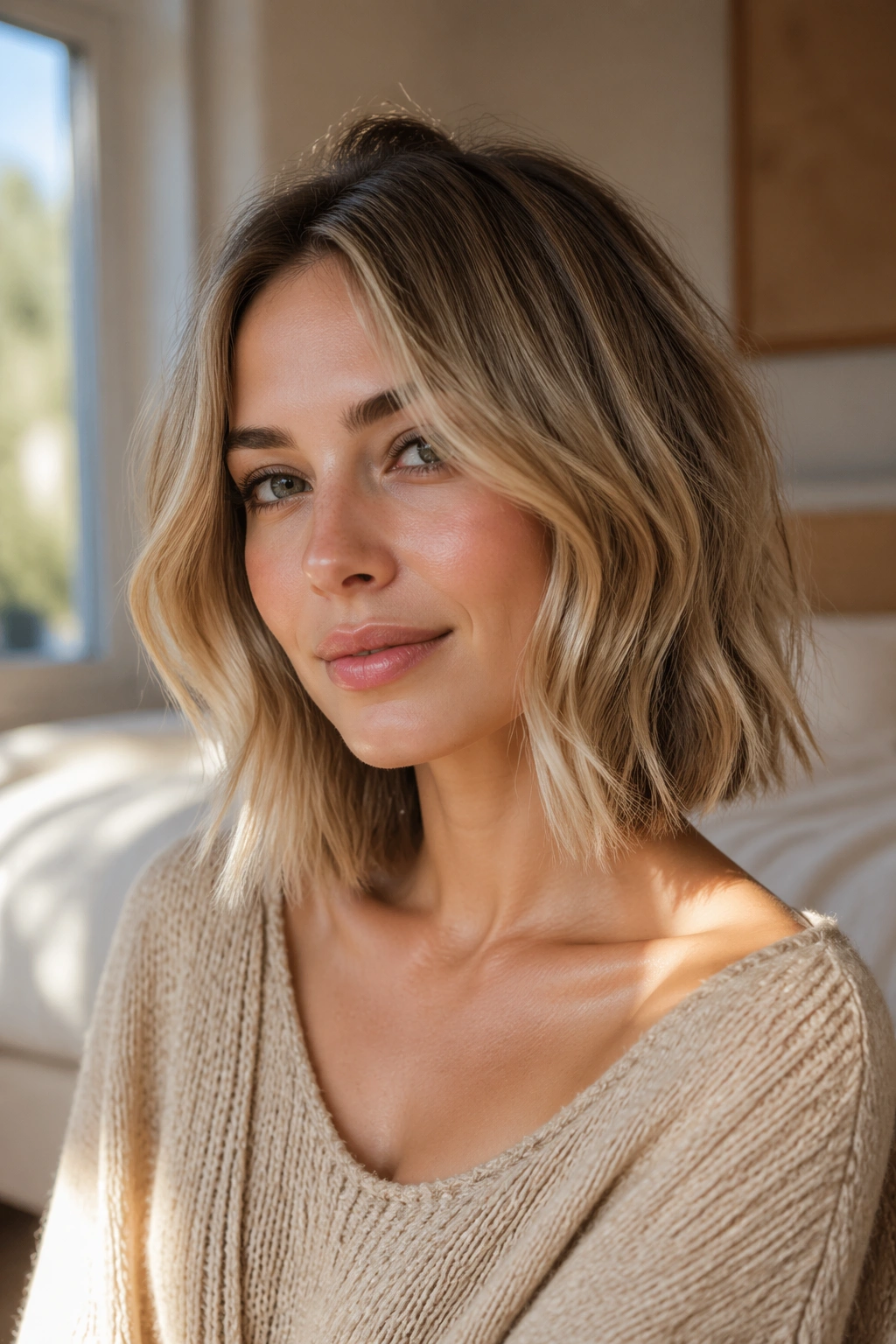
Feathering around the face is one of those old-school ideas that still works when it is done with restraint. On a round face, feathered pieces should start lower than people expect—closer to the jaw than the temples.
That placement matters because it lets the wave fall beside the cheeks instead of ending right on them. Soft, tapered pieces can also make the haircut feel lighter without taking away density from the back.
Why It Helps
Feathering should look like the ends were eased out with scissors, not shredded with a razor. The difference shows. One looks soft; the other can look frayed if the hair is fine.
I prefer this cut on hair with a little natural body. Straight strands can handle it too, but the wave gives the feathering more shape. Add a bend away from the face on the front pieces, and the whole look opens up.
It’s a quiet cut. That’s the point.
8. The Bottleneck Bang Lob
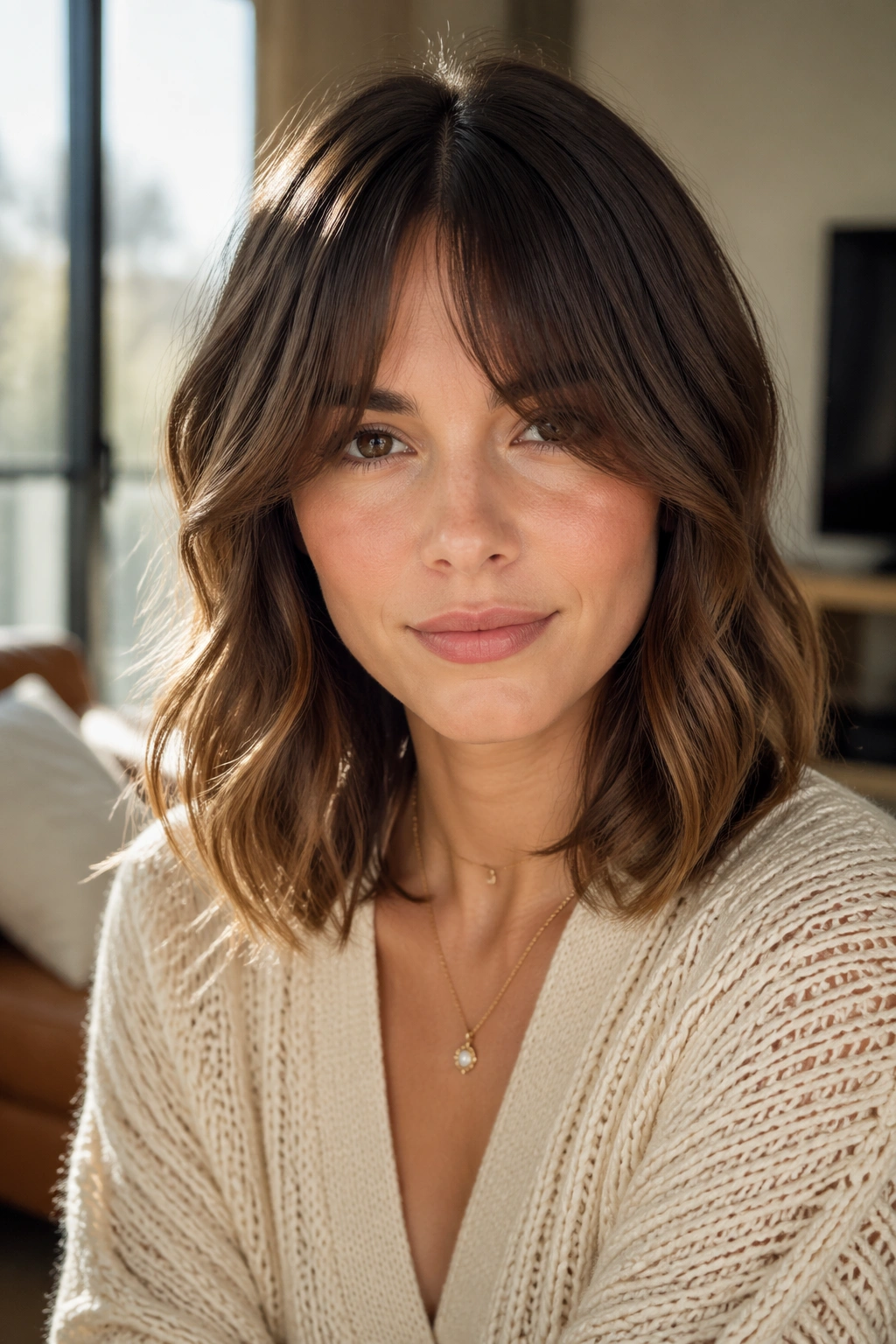
Bottleneck bangs are narrower in the center and a little wider at the sides, which makes them feel gentler than a straight-across fringe. On round faces, that shape is useful because it narrows the forehead without boxing in the cheeks.
The bang should blend into a wavy lob rather than sitting on top of it. If the fringe ends too abruptly, the face can feel chopped in half. Keep the shortest piece around the bridge of the nose and let the sides taper into the cheekbone area.
A round brush and a low heat setting do the heavy lifting here. Dry the center straight, then curve the sides out and away. You do not need perfection. A slight bend is enough.
This cut looks especially good when the waves are loose and broken at the ends. Tight ringlets can make the bang area feel dense, which defeats the whole purpose.
9. The Side-Swept Bang Wavy Lob
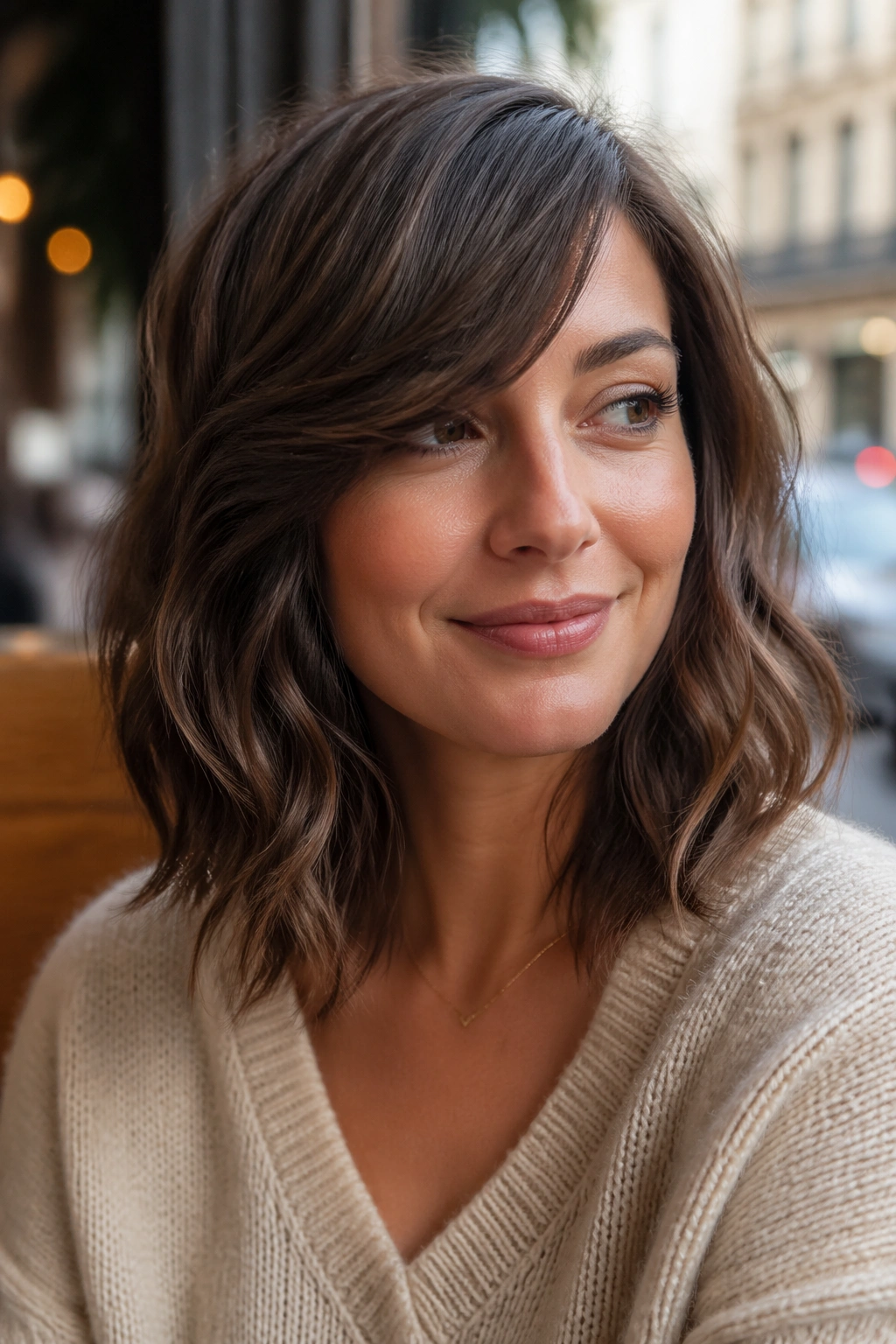
If you already tuck one side of your hair behind your ear, this cut makes that habit look intentional. A side-swept bang creates a diagonal line that pulls attention across the face instead of straight across it, and that diagonal does a lot of work on a round shape.
The bang should stay long enough to blend into the front layers. Short side bangs can look choppy. Long ones fall better, especially when the rest of the lob has a soft wave instead of stiff curls.
A quick note on styling: keep the sweep soft near the temple and fuller through the forehead. That gives the face a little lift without adding bulk right at the cheek.
This is a good choice if you want something a bit romantic, a bit undone, and easy to refresh with a flat iron bend on day two.
10. The Invisible-Layer Lob
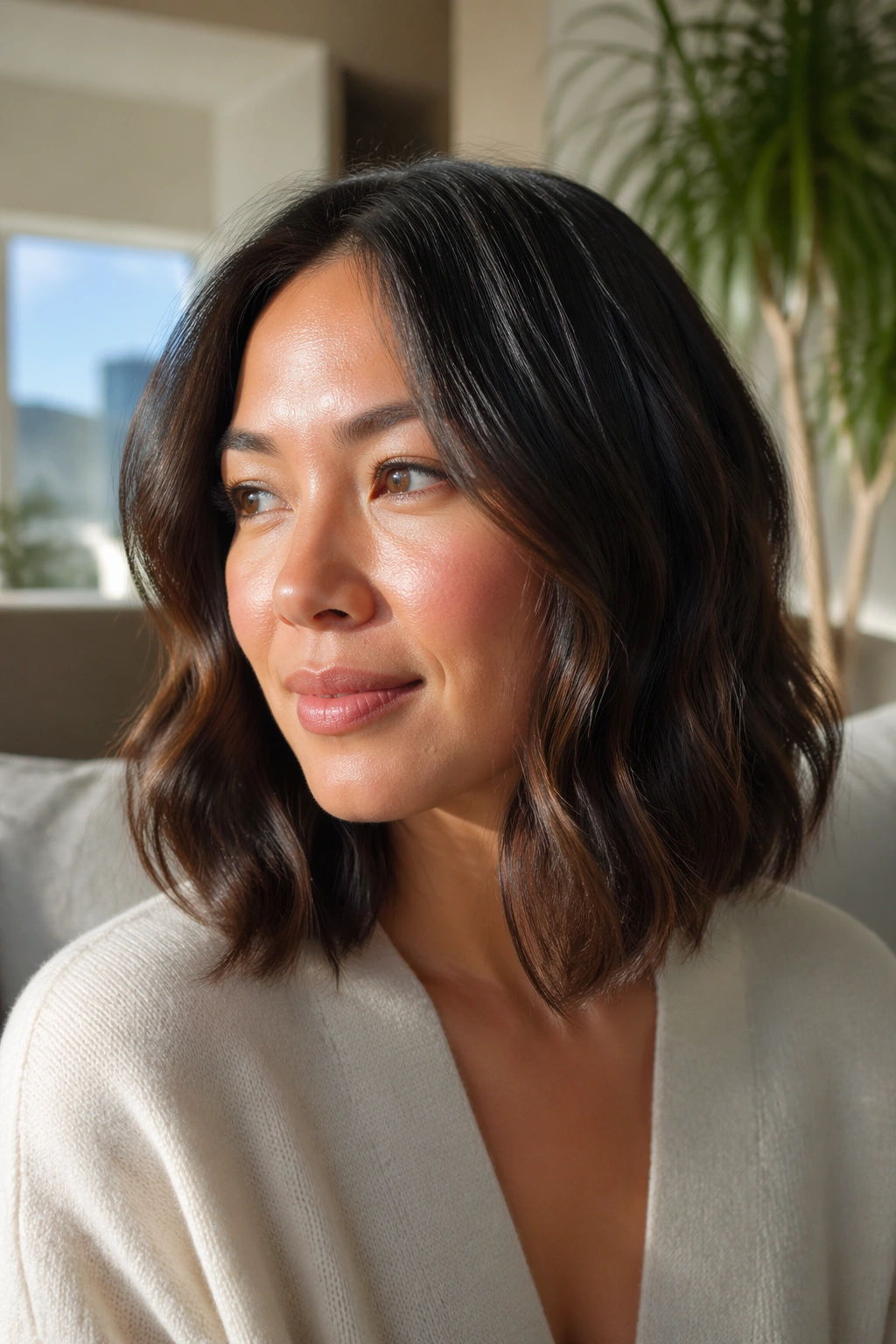
A lot of people think layers automatically mean more width. Not true. Invisible layers—the kind cut inside the shape instead of on the outside—can take weight out of a lob while leaving the perimeter clean.
That is a smart move for round faces because the haircut stays sleek at the edges. The body lives inside the shape, not around the cheeks. It looks fuller, but not puffy.
No chunky steps. Please.
This cut is especially good if your hair is thick, wavy, or prone to triangle shape at the ends. Ask for long internal removal and keep the visible outline smooth. When you style it, use a large barrel or a diffuser with low airflow so the movement stays soft.
It’s a subtle haircut. That’s what makes it useful.
11. The Asymmetrical Lob
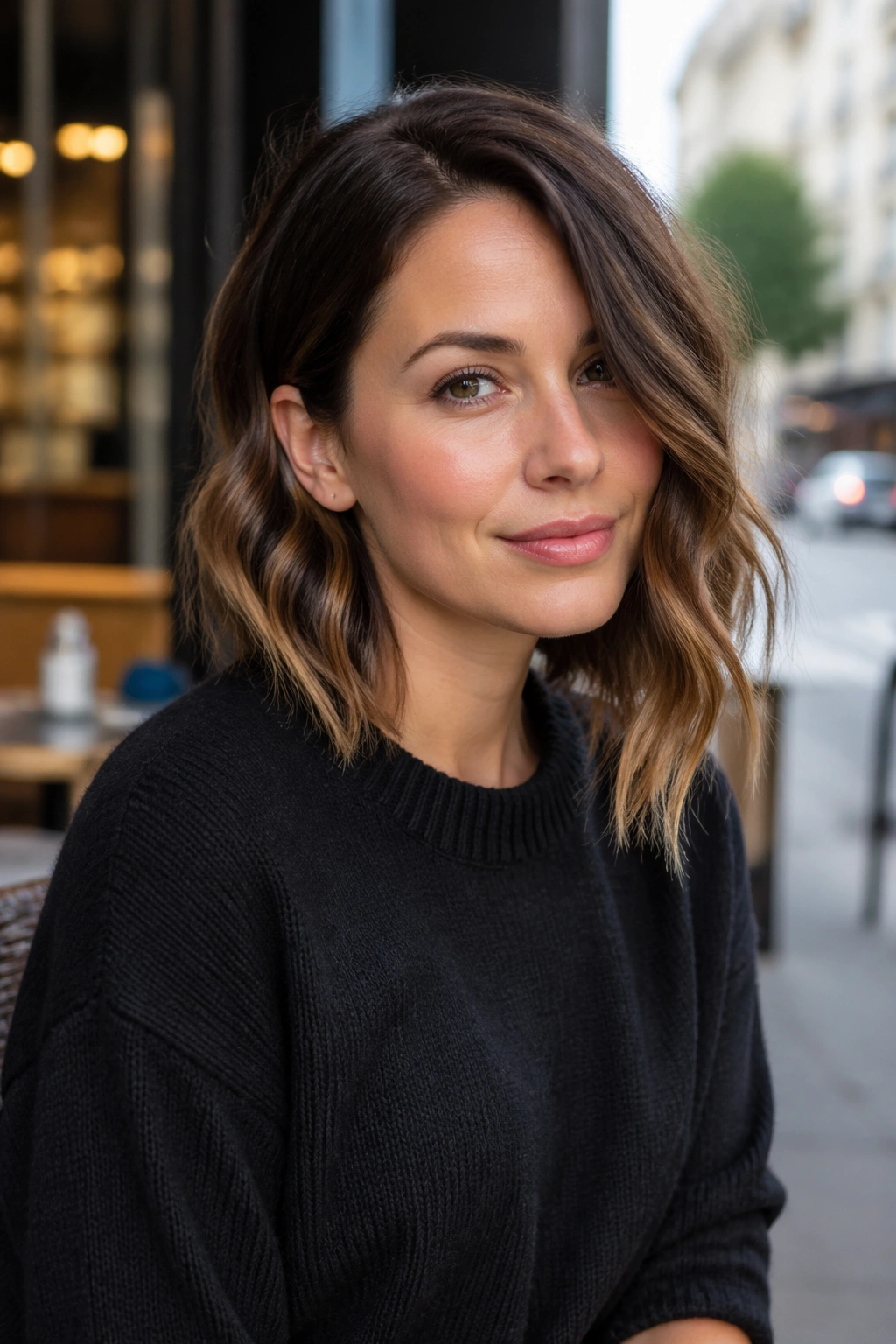
An asymmetrical lob is a clean way to break up symmetry, which is useful when the face itself is already soft and evenly rounded. One side sits a touch longer than the other, and that difference creates a line the eye follows.
The change does not need to be dramatic. Half an inch to an inch is enough. Too much and the cut starts to read as a statement piece instead of an easy haircut.
What to Ask For
- Keep one side slightly longer, usually the side you wear forward.
- Maintain loose waves so the length difference stays visible.
- Ask for soft ends, not a hard edge.
- Leave the shortest side below the jawline.
The nice thing about this shape is that it gives you styling options. You can wear it behind one ear, flip the longer side forward, or let both sides fall naturally. Each version changes the face a little.
12. The Tousled Beach-Wave Lob
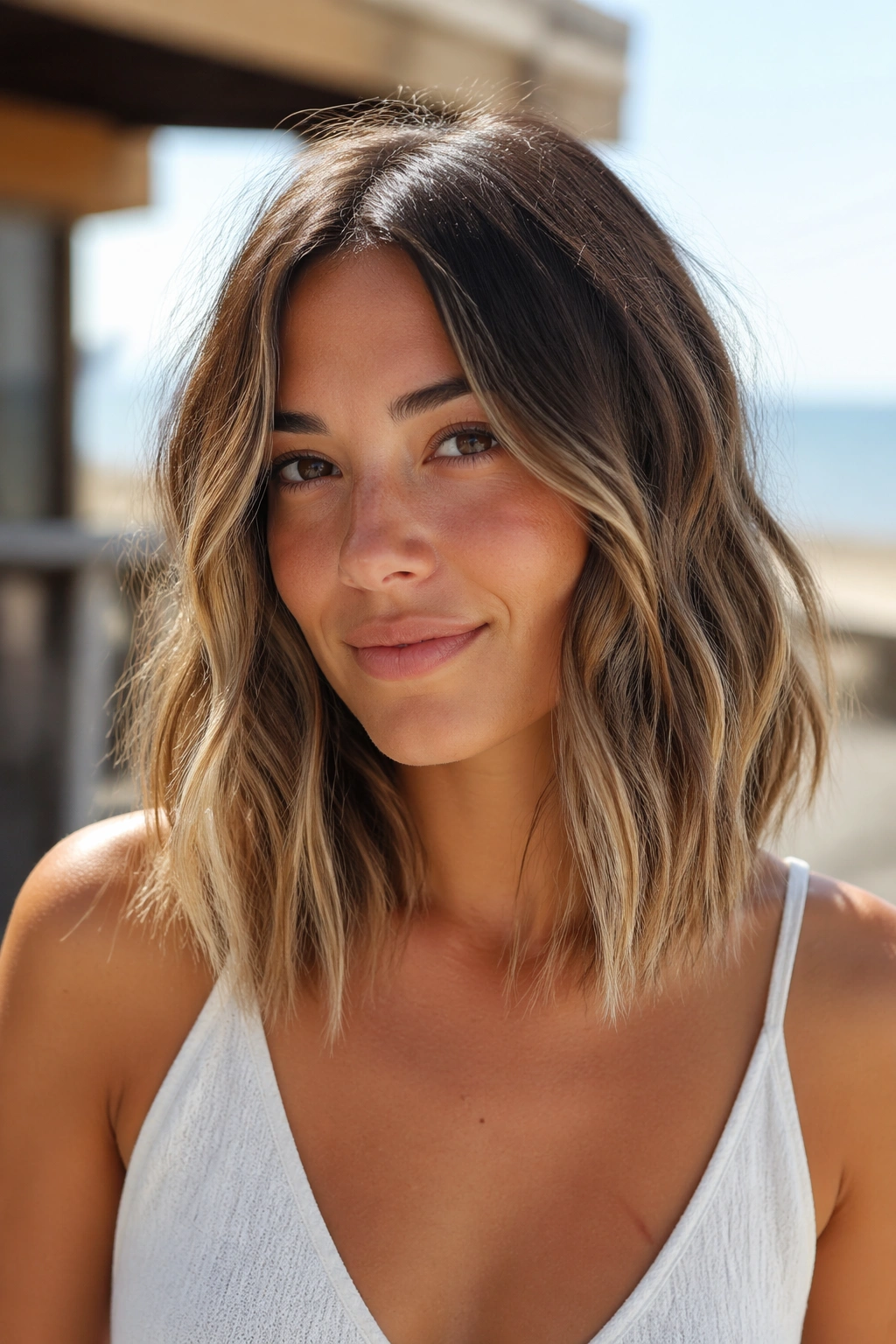
A beach-wave lob sounds casual, but the best version is more controlled than people think. The waves should be loose and broken, not springy. On a round face, that loose pattern keeps the haircut from ballooning at the sides.
The texture works best when the ends stay a little straighter than the mid-lengths. That contrast creates movement without creating a mushroom shape. If you curl every section from root to tip, the face can end up looking wider.
A salt spray can help, but only in a light mist. Too much and the hair gets gritty and stiff. A touch on damp hair, then scrunching with your hands, is enough.
This is the kind of lob that looks best when it is not overthought. Air dry. Twist a few pieces. Leave a few alone. That mix keeps it believable.
13. The Glassy S-Wave Lob
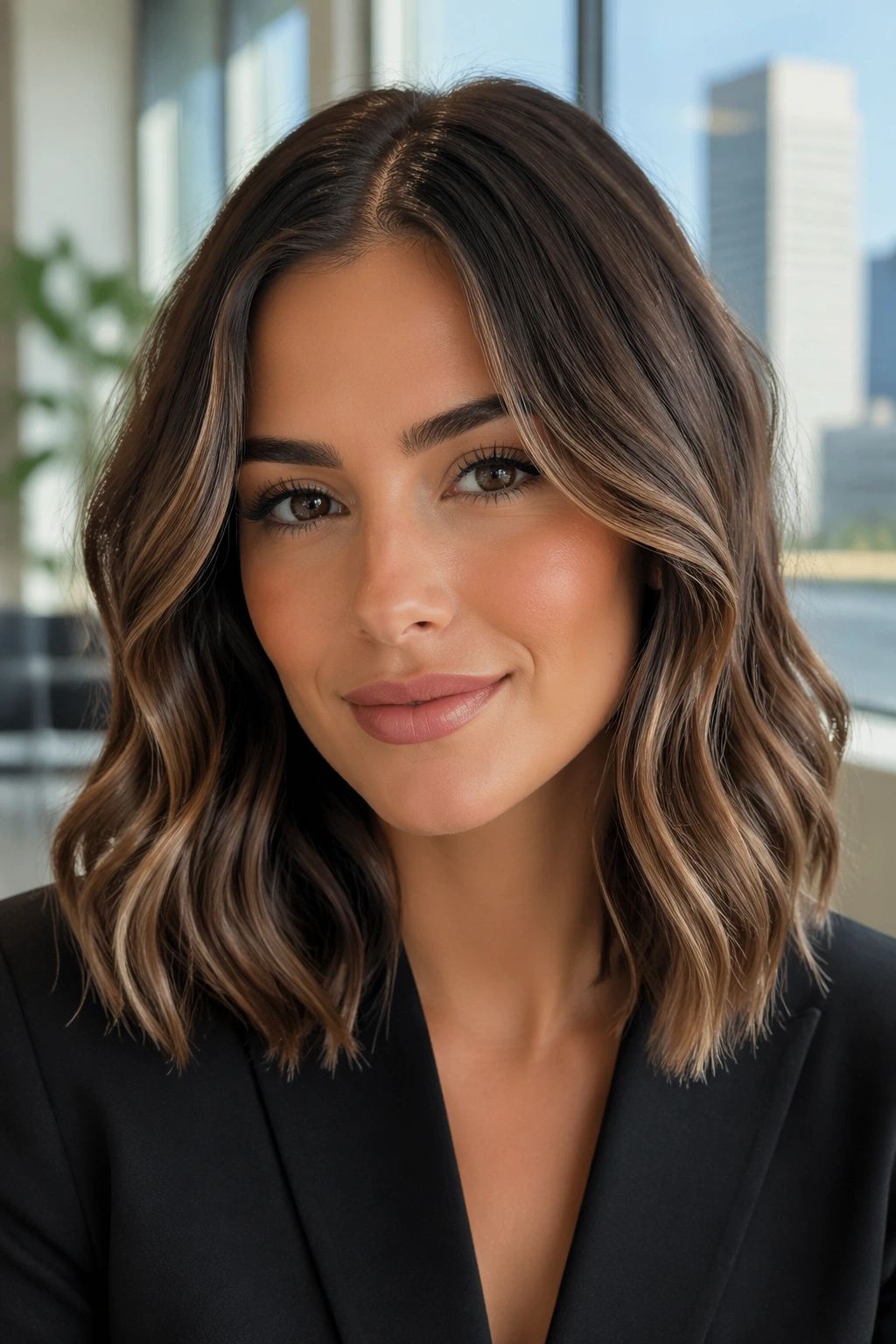
S-waves are smoother and more controlled than beach waves, and they give the lob a cleaner finish. On a round face, that smoothness matters because it avoids the fluffy halo that can happen with tighter texture.
The wave should look like a soft S from mid-shaft to end. Not too wide, not too tight. The shape draws the eye vertically and gives the haircut some polish without making it stiff.
A smoothing cream on damp hair helps the wave hold its outline. After styling, a light shine spray at the mid-lengths can make the shape look deliberate, not flat. The key is to keep the roots light so the crown still has lift.
This one works beautifully for people who like a neater look. It’s calm. Clean. Easy to wear with a blazer, a sweater, or a plain white tee.
14. The Choppy Ends Lob
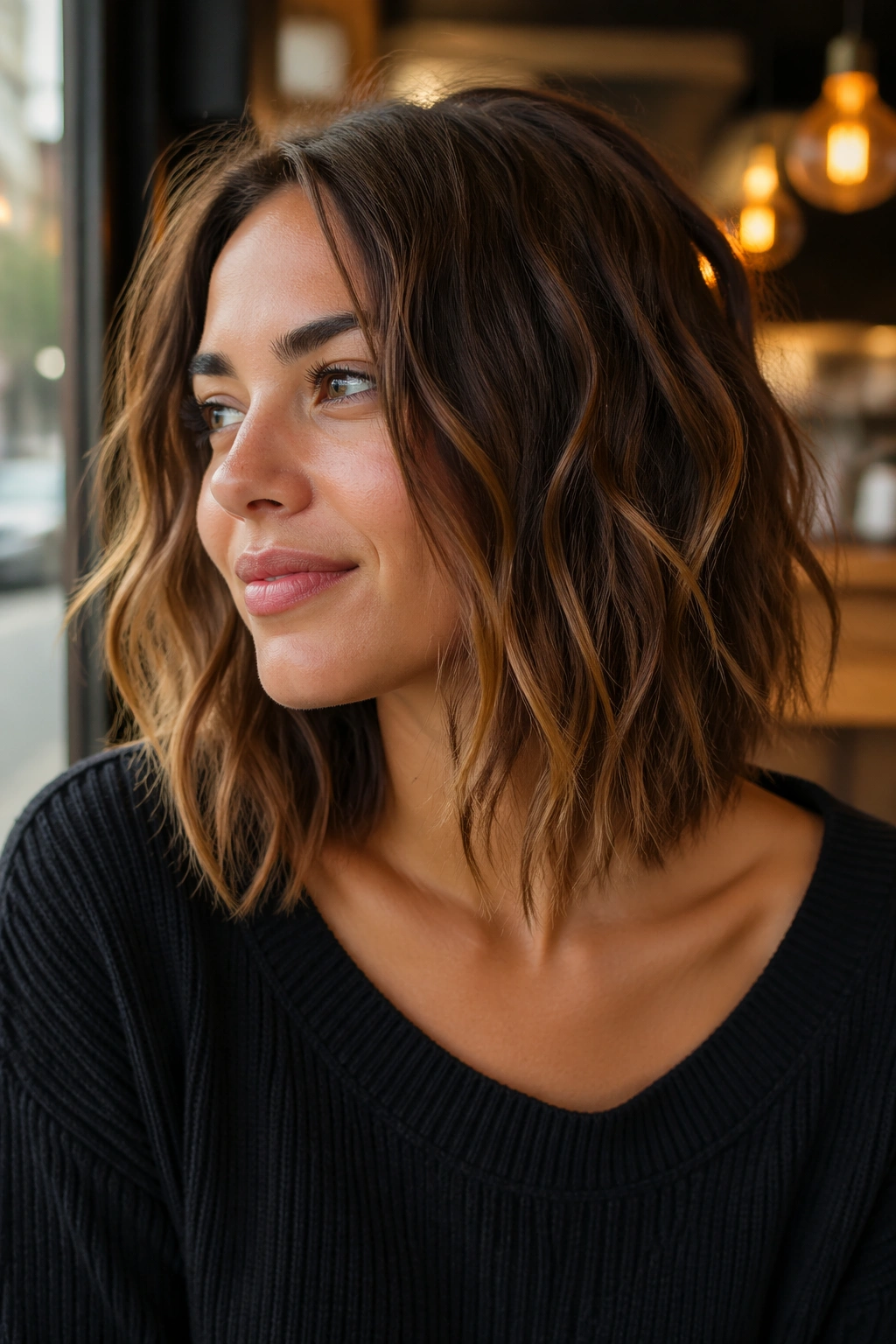
Choppy ends bring movement to a round face fast, because they break up one solid line. If the perimeter feels too heavy, those uneven tips keep the haircut from sitting like a block.
The trick is moderation. A few choppy pieces at the bottom are enough. If the whole cut is shredded, the shape loses strength and can look thin instead of airy.
Use this when the wave pattern is strong and you want to show it off. The bends will land at slightly different lengths, which gives the style a little edge.
The Look to Request
- Keep the main length at the collarbone or below.
- Add texture only at the ends.
- Avoid short layers around the cheeks.
- Style with a bend, not a tight curl.
A small amount of pieceiness goes a long way here.
15. The Soft Wolf-Lob Hybrid
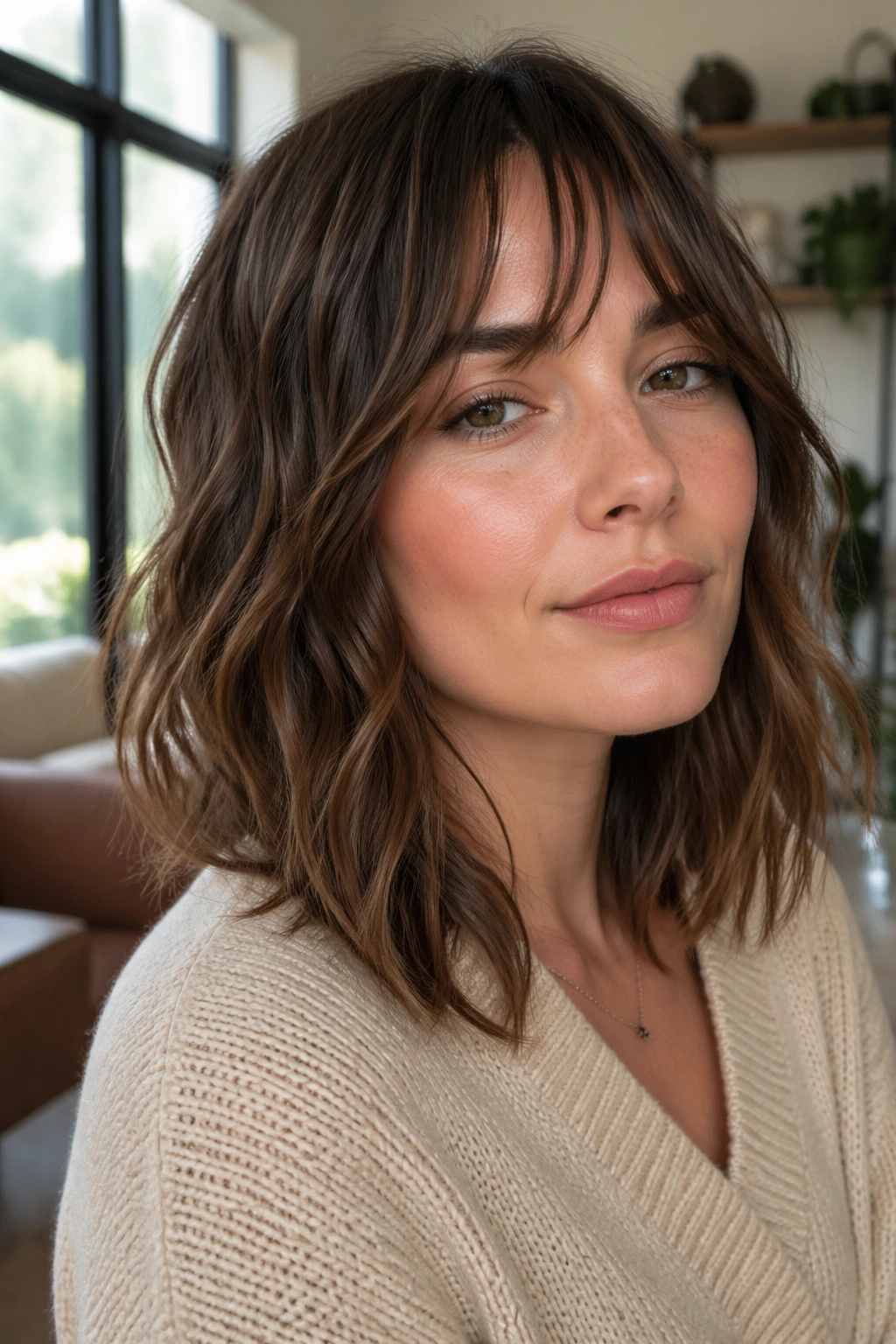
A wolf cut can be too much for a round face if the crown gets too high and the sides puff out. A softer wolf-lob hybrid fixes that. It keeps the loose, airy top layers but calms the shape down where it matters.
Why does it work? Because the top has energy, while the front still hangs longer and flatter. That long front is what keeps the face from looking boxed in.
How to Keep It Wearable
Ask for soft crown layers, not a sharp disconnect. The face-framing pieces should still fall below the chin, and the back should not be chopped so short that it flips out like a mini mullet. That’s the line.
This cut likes natural movement. If your hair bends on its own, you’re in good shape. If it is stick-straight, the texture may not hold the way you want unless you do some styling each morning.
It’s a good choice for someone who wants a little bite without going full shag.
16. The Long Bob with Internal Layers
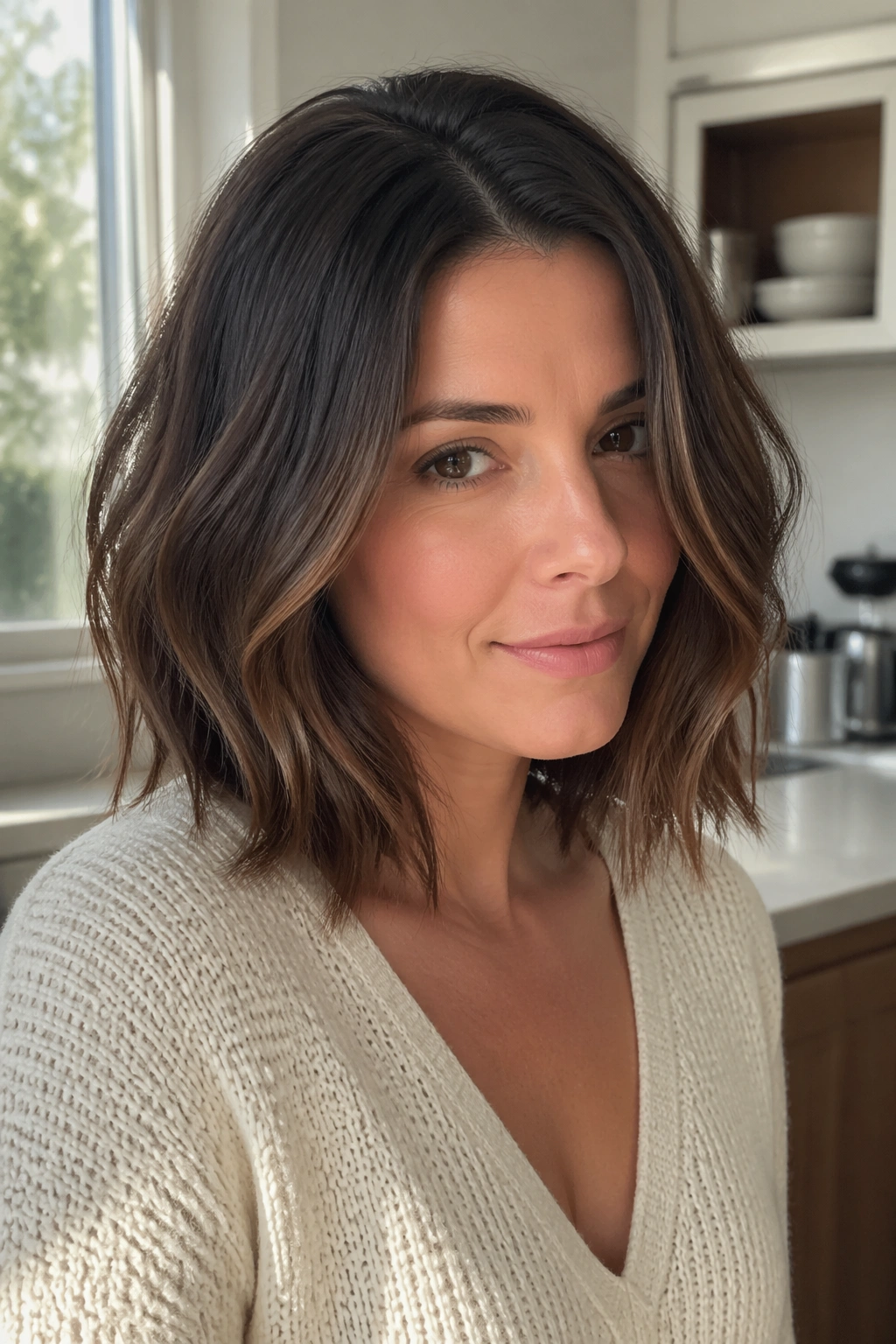
This is the lob for people who want movement but hate a choppy surface. Internal layers live inside the cut, so the outside still looks smooth and tidy. On a round face, that keeps the eye moving down the length of the hair instead of stopping at the sides.
The shape is easy to blow-dry. It falls in a friendly way, which matters on busy mornings. A round brush at the roots and a bend through the ends is enough for most people.
If your hair is thick, the internal layers remove weight without making the ends look stringy. If your hair is fine, keep the layers long and sparse so the cut keeps its body.
This is one of those styles that looks expensive even when it’s not freshly styled. That’s because the structure is doing the work, not a mountain of product.
17. The Balayage-Framed Wavy Lob
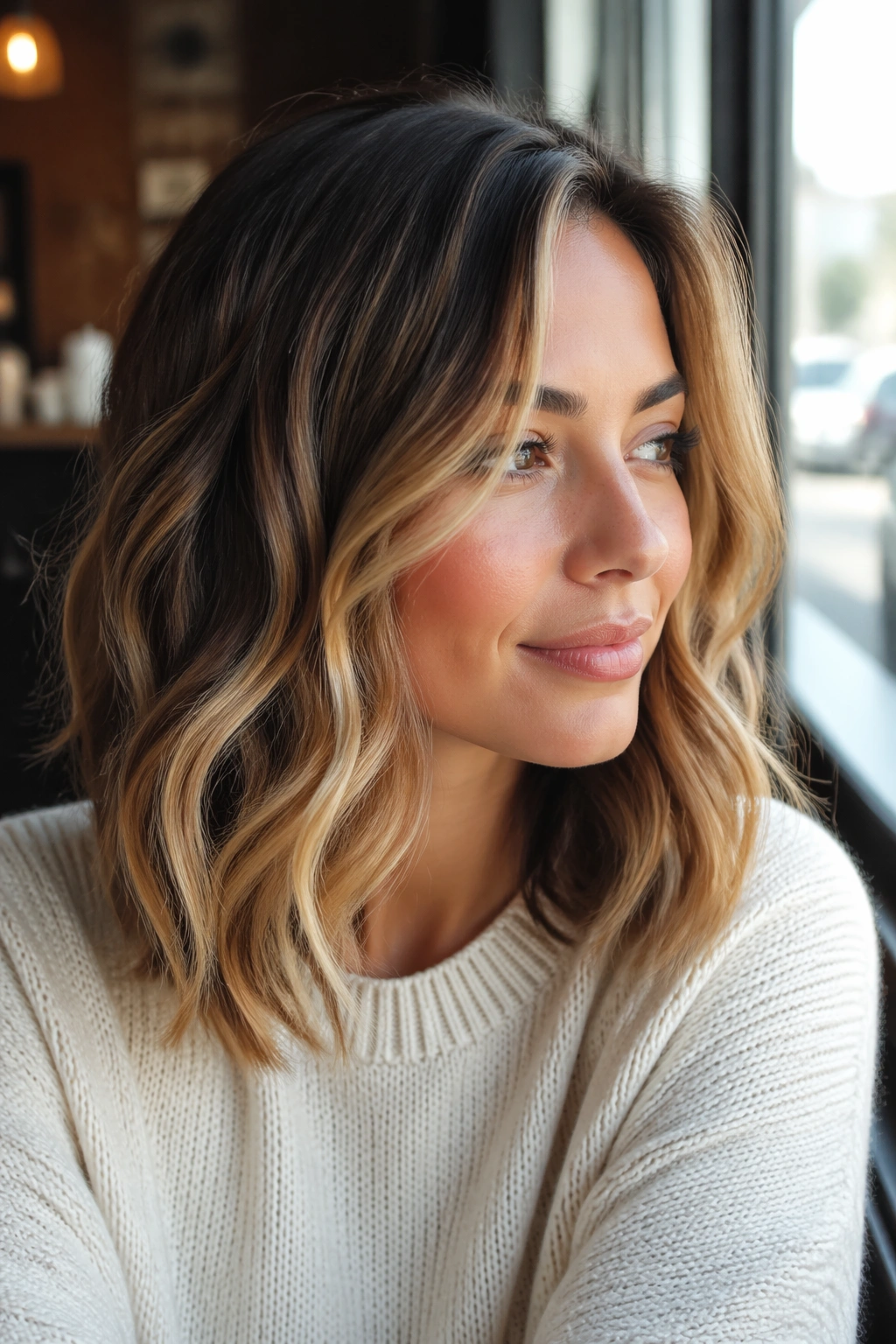
Color is not the haircut, sure, but a little dimension can make the haircut read better. On a round face, brighter pieces near the front can guide the eye vertically and show off the movement in the lob.
The cut itself should still do the main job: collarbone length, longer front pieces, soft waves. The balayage or face-framing highlights simply make the shape easier to see. That matters when the hair is dark, thick, or one solid tone.
Use this if you want the style to look lighter around the face without sacrificing length. The color should follow the cut, not fight it. Bright pieces placed too high can widen the top. Keep them lower and a bit longer.
It’s a small tweak, but small tweaks add up.
18. The Side-Part Hollywood Wave Lob
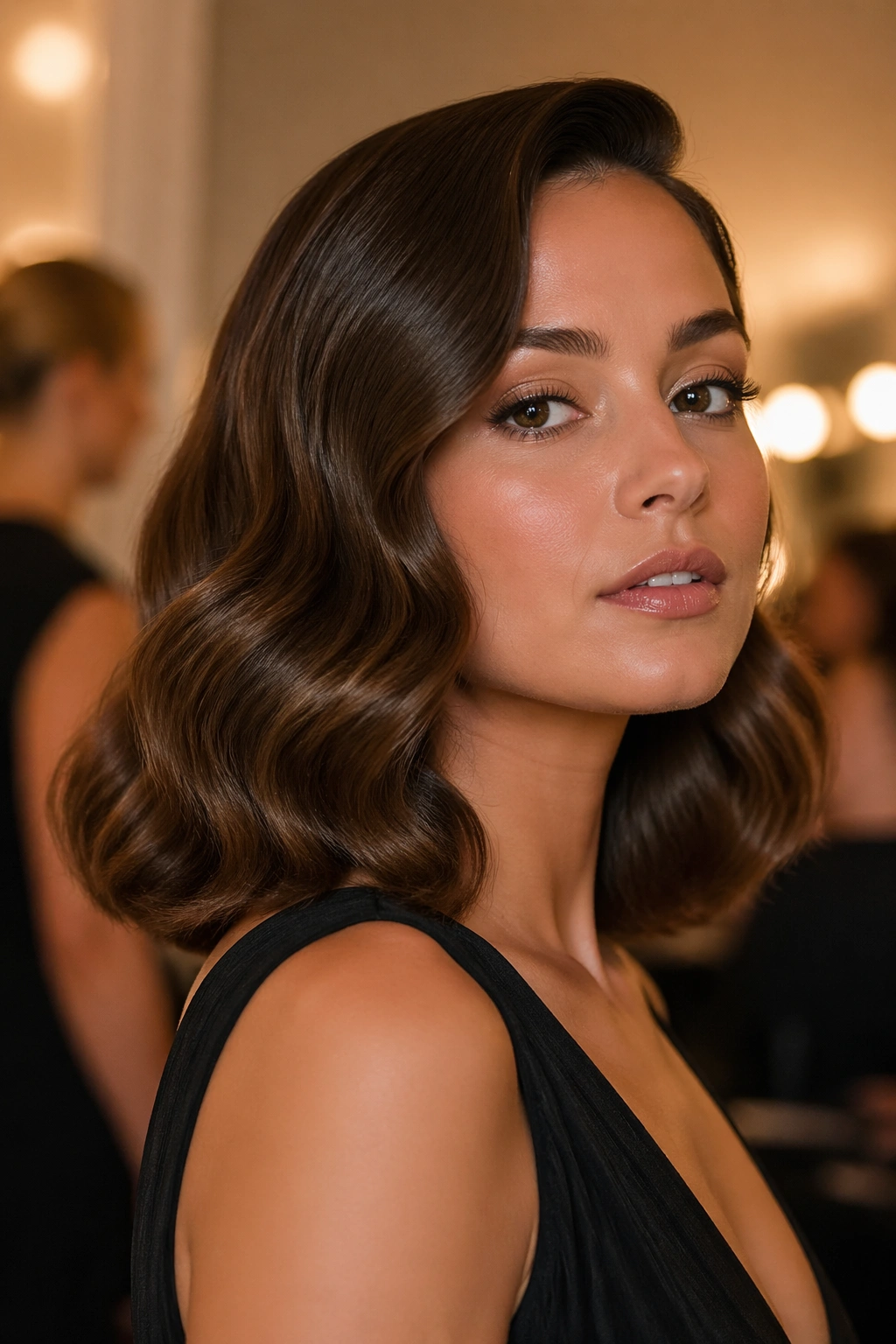
I like this one for round faces when someone wants polish instead of edge. The side part and soft Hollywood waves create a long, elegant line, and the front fall is what does the shaping.
The wave should start below the eyes, not at the temples. That keeps the upper face open. Then let the curve sweep down toward the collarbone in a smooth line. Clean. Controlled. A little dramatic, but not fussy.
A large barrel iron works better than a small wand here. You want broad bends, not tight ringlets. Brush the waves out gently once they cool so they settle into one smooth pattern.
This cut is good for events, dinners, or any day when you want your hair to look done without looking stiff. That balance is harder than it sounds.
19. The Graduated Crown Lob
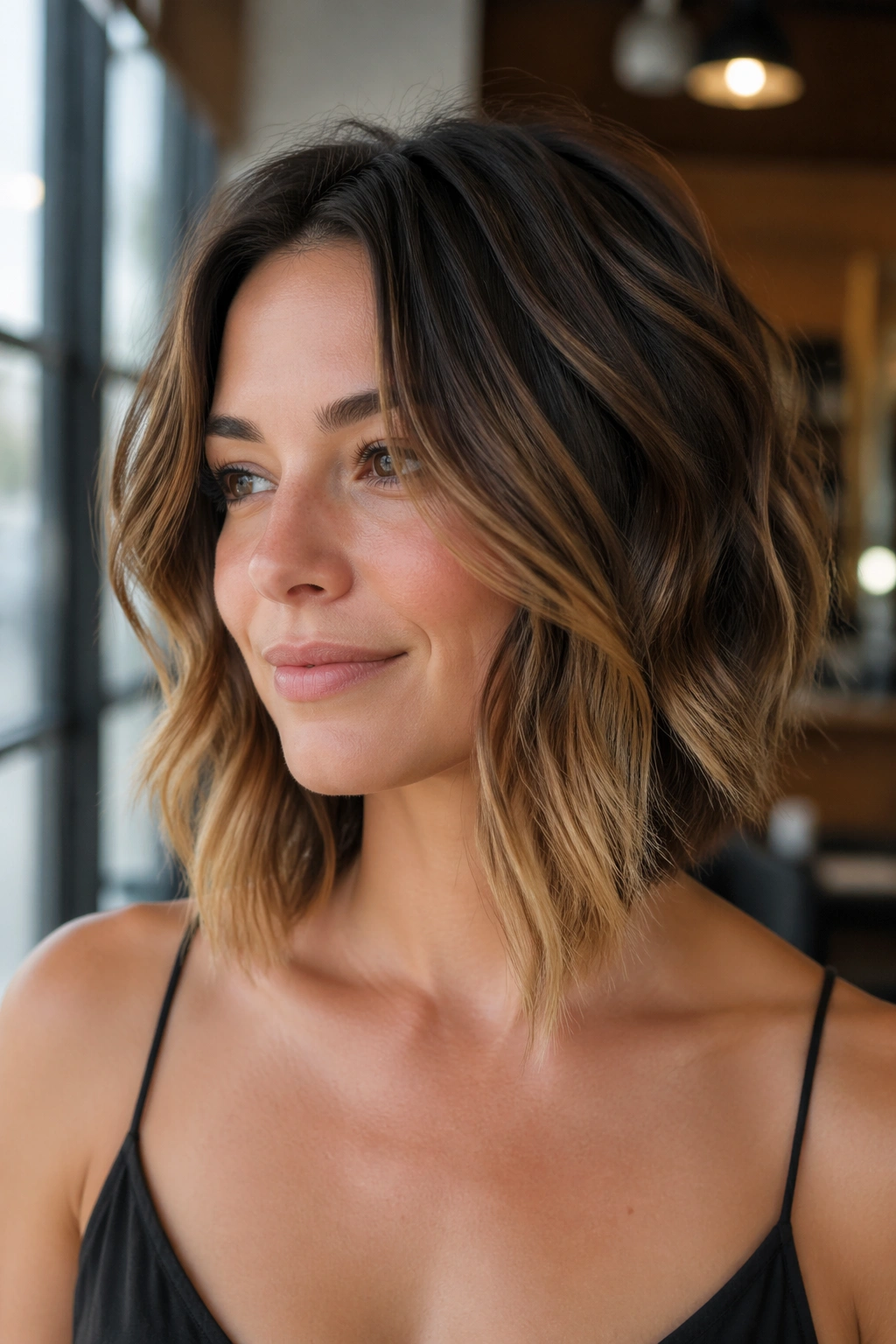
A little graduation at the back can give fine waves some lift without turning the haircut into a wedge. On a round face, that lift helps because it adds height where the face needs it most: above the widest point.
The back should be slightly shorter, but not so short that it kicks out. Keep the line smooth and let the front stay longer. That front length keeps the face open.
This cut is a good fit if your hair tends to lie flat at the crown. A soft root blow-dry and a tiny bit of volumizing spray will make the graduation show. You do not need a lot of product. Too much, and the hair gets stiff.
One short thought: lift at the top, length at the front. That’s the shape.
20. The Razor-Cut Airy Lob
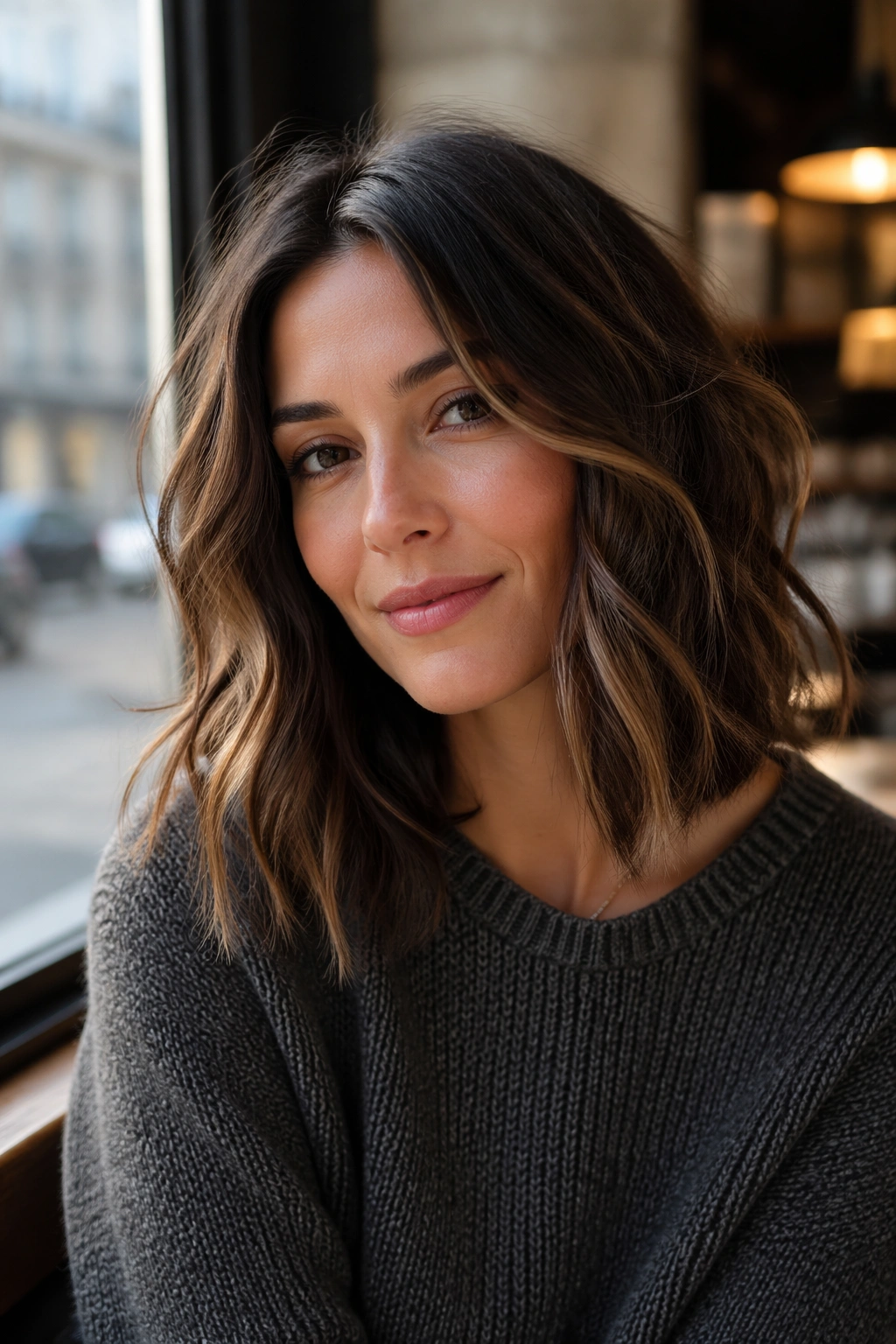
Razor cutting can give a wavy lob a lighter finish, but it has to be used with care. On round faces, the goal is airy movement, not broken ends. A skilled stylist can thin the perimeter enough to stop it from looking bulky while keeping the shape intact.
What to Ask For
- Use a razor only on thick or medium-thick hair.
- Keep the front pieces long enough to pass the chin.
- Avoid heavy razor work around fine ends.
- Style with a soft wave so the texture reads as light, not frayed.
This cut is especially useful if your hair feels too dense when it dries naturally. The razor helps it move. Just not too much. Too much slicing makes the ends look see-through, and that’s a bad trade on a lob.
If you like a slightly undone finish, this one has a lot of charm.
21. The Piecey Middle-Part Lob
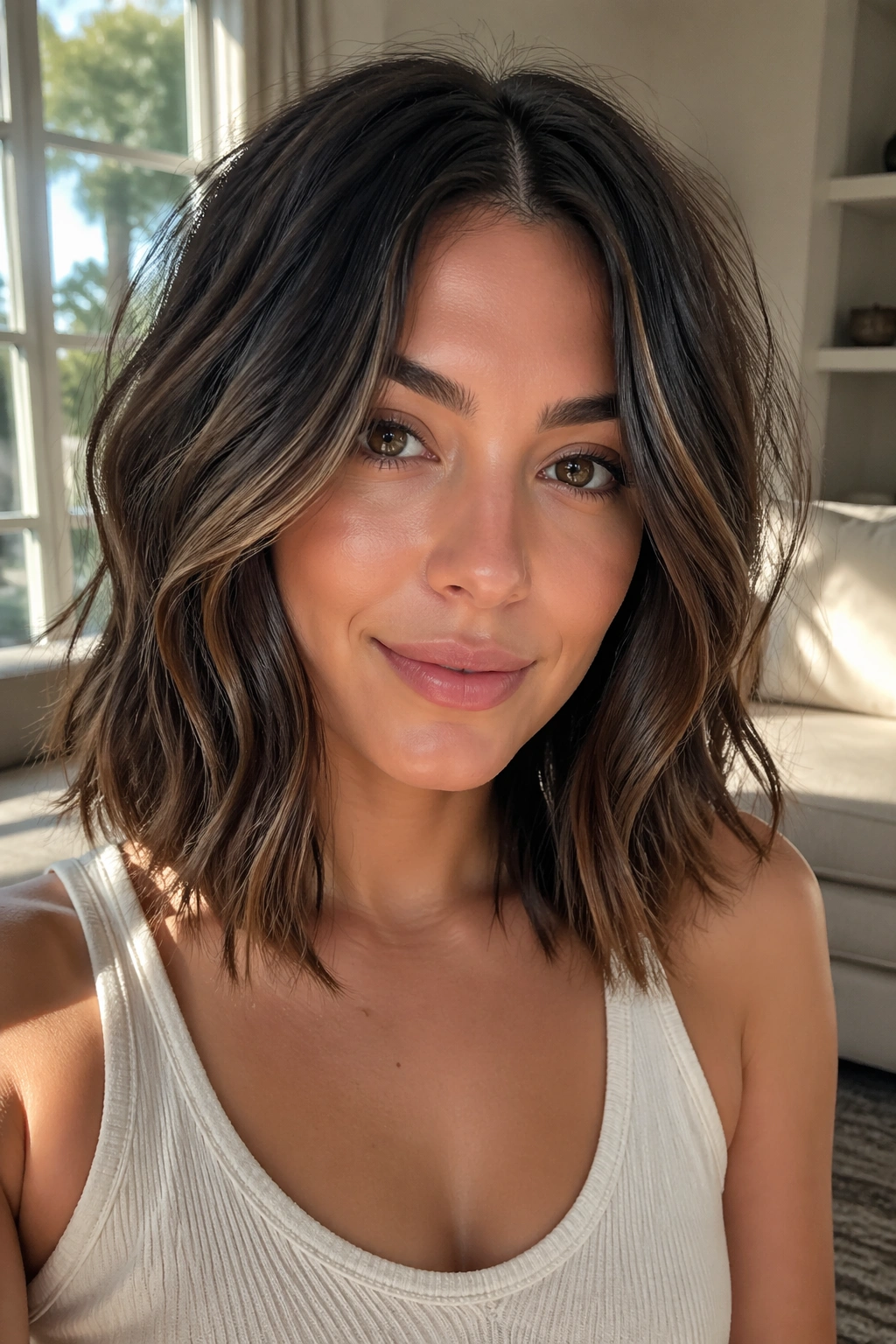
Can a center part work on a round face? Absolutely, if the waves are broken into pieces instead of one big curtain. The middle part gives you symmetry, but the piecey texture keeps the style from going flat or boxy.
Think ribbon-like sections. Not one sheet of hair. The individual pieces should separate around the cheekbones and then drop toward the shoulders. That movement pulls the eye down in a very clean way.
Use a lightweight mousse on damp hair, then twist a few sections while drying. A little finger-combing at the end keeps the shape from looking overdone. You want strands with space between them, not a dense wall.
This style works well when you want balance and softness in the same haircut. It’s neat, but not rigid.
22. The Tucked-Behind-Ear Lob
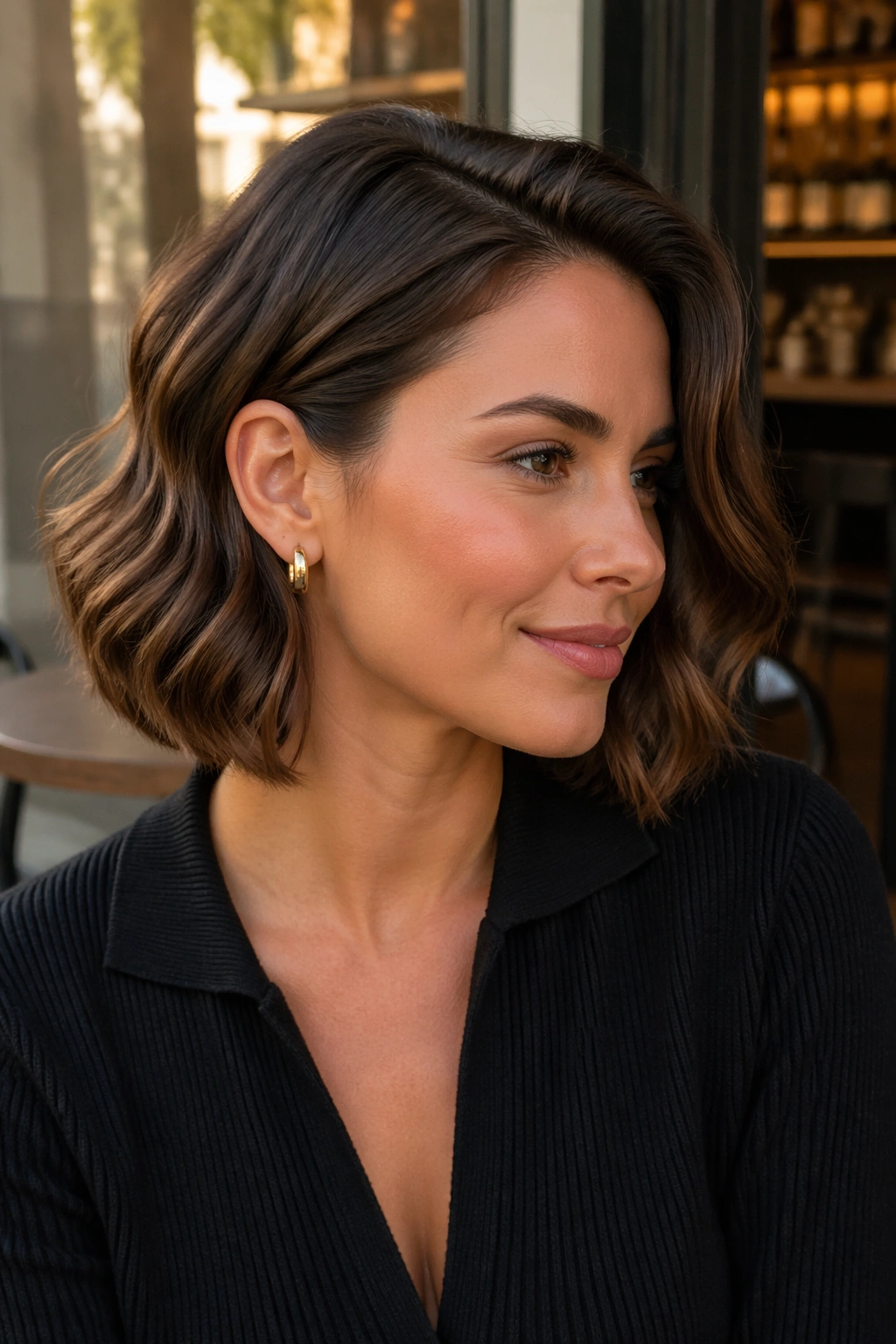
This one is for anyone who likes to tuck one side back and leave the other loose. The haircut needs to support that habit, so the front pieces should be long enough to tuck without springing out.
On a round face, the tucked side opens up the jawline while the loose side keeps length visible. That contrast helps create shape fast. It also makes glasses, earrings, and earrings clips look intentional instead of accidental.
The wave should stay soft near the ear. If the hair is too bulky there, the tuck looks forced. A little bend near the cheek is fine. A puff at the side is not.
A good stylist will leave enough length in front so the cut still looks balanced when one side is pinned back. That detail saves the whole haircut.
23. The Deep U-Shaped Lob
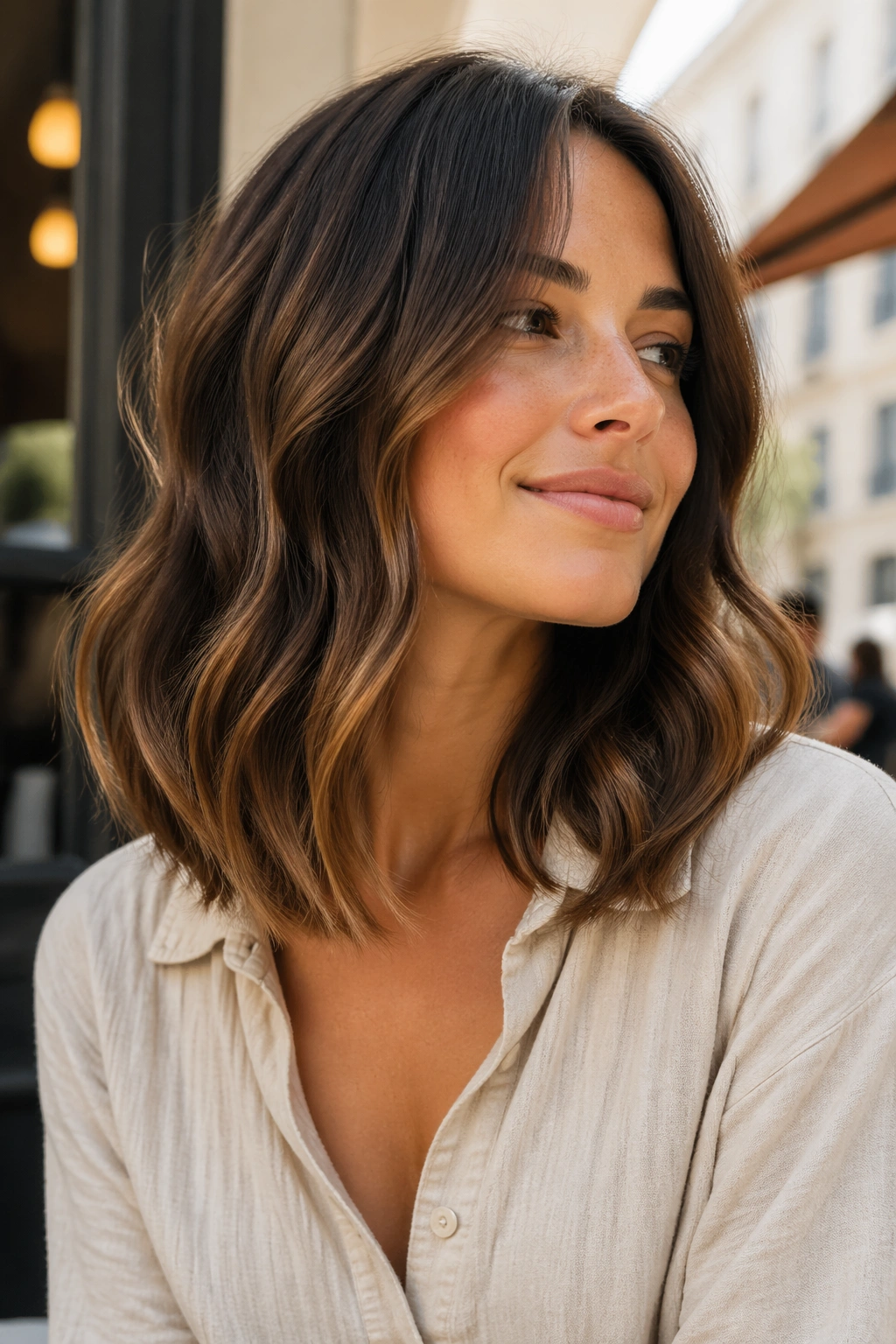
A U-shaped lob has a softer perimeter than a straight line cut. The back sits a touch shorter, the sides fall longer, and the shape curves gently around the shoulders. On a round face, that curve can be helpful because it avoids a hard horizontal stop.
Square corners are the trap. A blunt line at the jaw can make the face look fuller. The U shape softens that edge and keeps the eye moving.
This cut is especially good for thick, wavy hair that needs a little weight removed without losing length. The ends still look full, which is useful. A lot of layered cuts give thickness away too quickly.
If you wear your hair down most days, this is one of the easier shapes to live with. It falls naturally and usually needs less correction than a more angular lob.
24. The Disconnected Lob with Underlayers
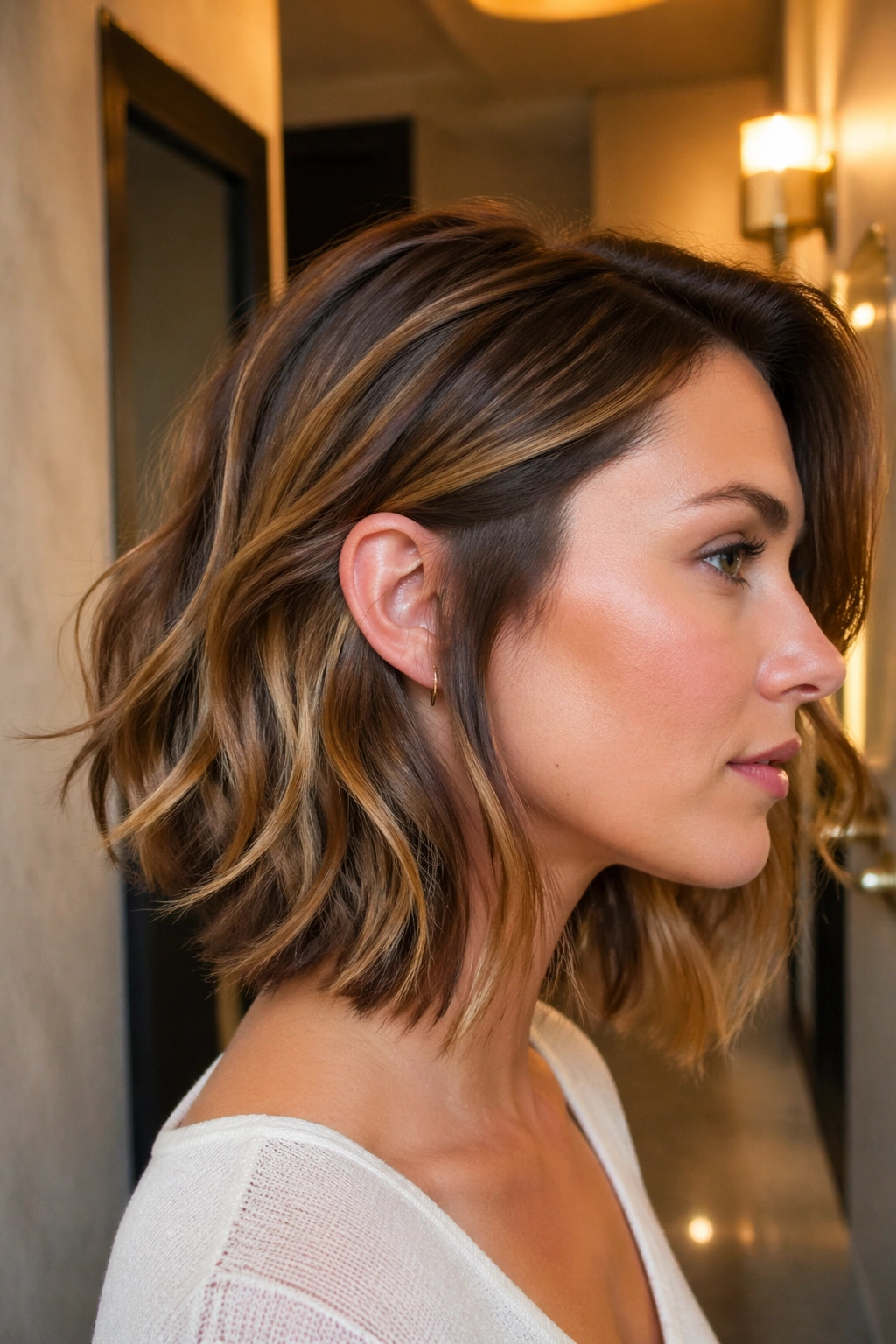
A disconnected lob sounds sharper than it has to be. In practice, it just means the visible top length stays smooth while the underlayers are lighter and shorter. On a round face, that hidden removal helps keep the shape from swelling out at the sides.
The top layer should still fall below the chin. That part matters most. The underlayers do the quiet work underneath, taking bulk away from thick waves or coarse hair.
Why It Helps
This is a good cut for people who love movement but hate triangular hair. The hidden shorter pieces stop the bottom from feeling too heavy, while the surface keeps that clean lob line.
I would not use this heavily on fine hair. There isn’t enough density to spare. But on thick hair, it can make daily styling much easier. Less puff. Less fight.
It’s a practical haircut, which is probably why it sticks around.
25. The Long Curtain Fringe Lob
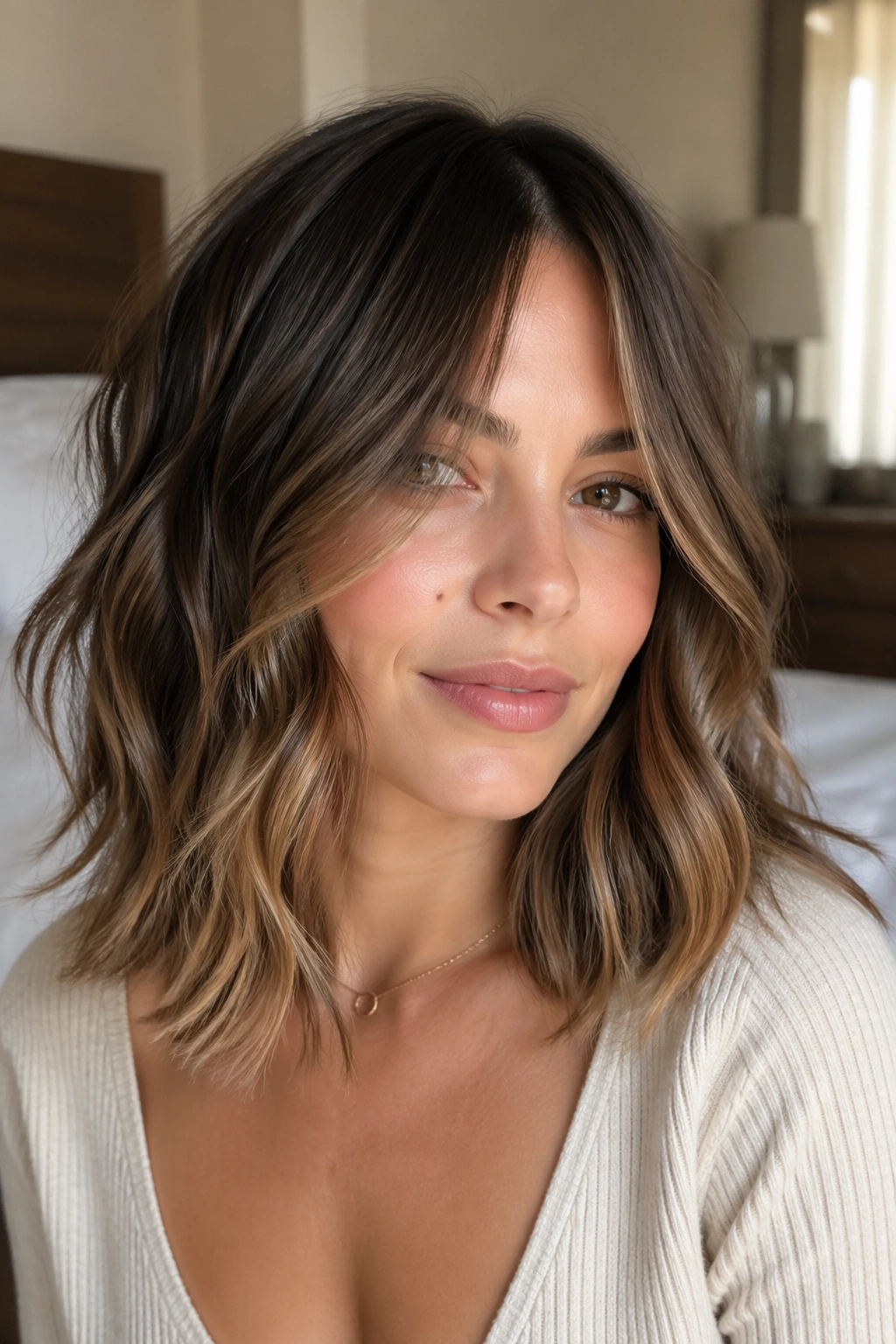
A long curtain fringe is softer than a full bang and easier to grow out, which makes it appealing if you are cautious with fringe. On a round face, the length should brush the cheekbones and fold away from the center in a gentle arc.
How It Falls
The shortest point can sit around the nose or upper cheek, then blend into the lob through the front. That soft bridge is what keeps the haircut from looking chopped. The line should feel fluid.
This cut works well when the hair has a loose wave pattern. The fringe should separate a little, not sit like a single heavy curtain. A round brush can shape it fast, then you can pinch the ends with your fingers once it cools.
If you want face framing without a strict bang, this is a smart middle ground. It gives shape and keeps options open.
26. The Retro Side-Flip Lob
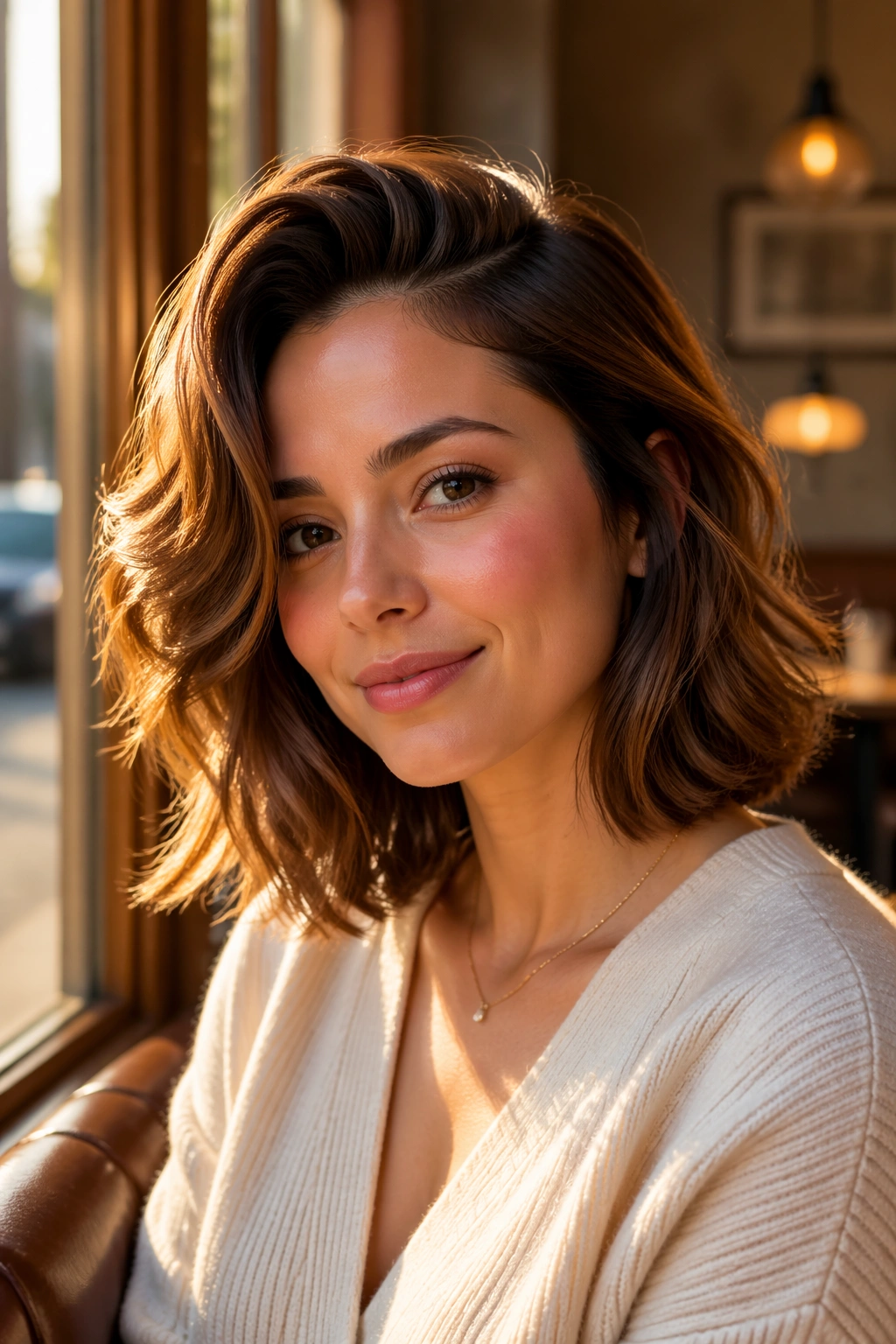
A side flip adds lift where a round face needs it, especially if the hair tends to fall flat at the crown. The flipped front creates an arc across the forehead and cheek area, which changes the shape in a flattering way.
- Create a deep side part.
- Blow-dry the front away from the face.
- Set the front with a large roller or a cool-shot pass.
- Keep the length below the chin so the flip does not widen the face.
The retro feel is part of the charm here. It looks styled, but not stiff. If the wave is too tight, the cut can turn puffy, so keep the bends broad and soft.
This one is good when you want a little personality. It has shape. It has movement. It also gives you a reason to wear a bold lip, which never hurts.
27. The Soft Inverted Lob
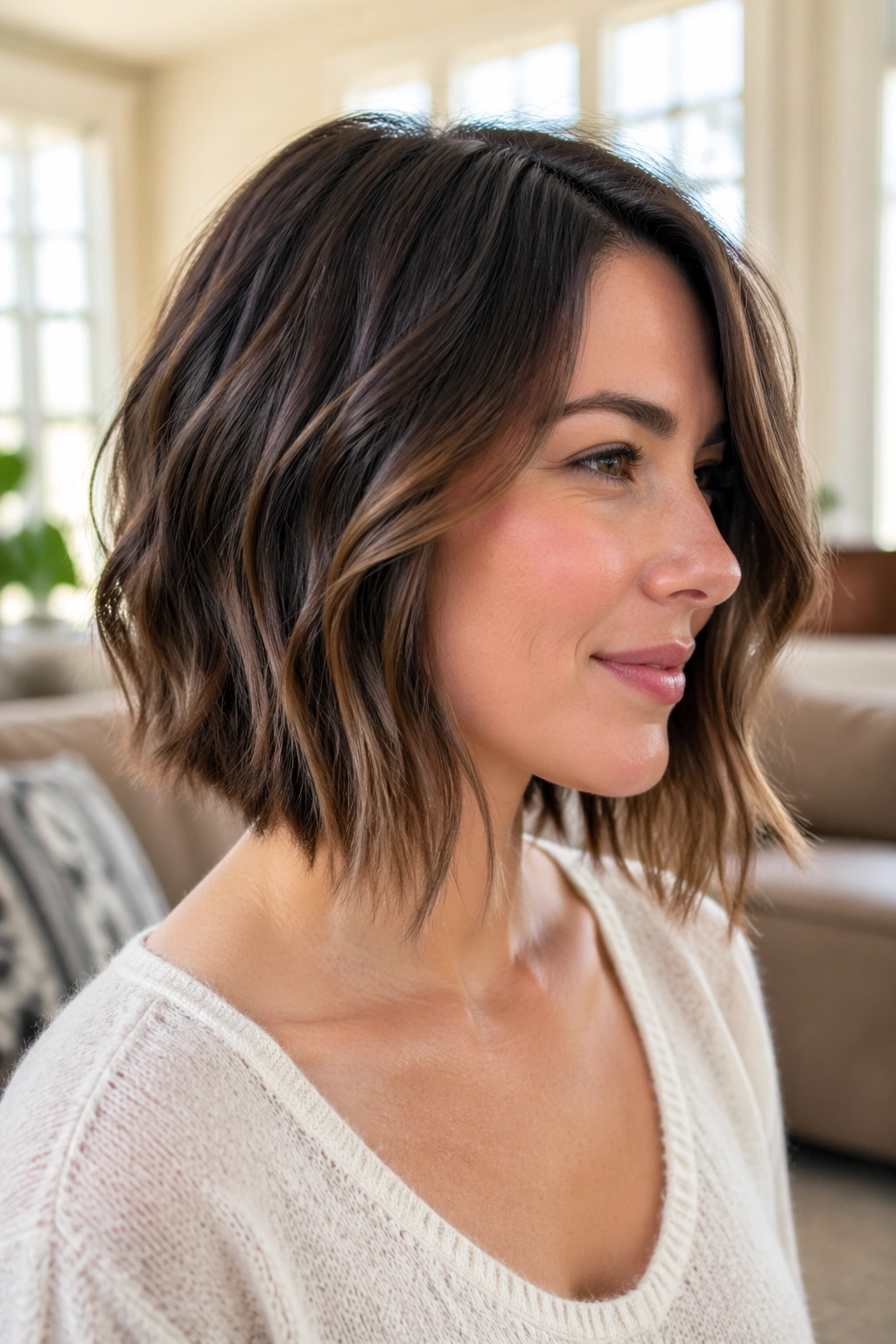
A classic inverted bob can feel too sharp on a round face, but a soft inverted lob is a better fit. It keeps the back a bit shorter and the front longer, yet the angle stays gentle enough to look modern and wearable.
That front length is doing the heavy lifting again. It stretches the face visually and keeps the jaw from feeling boxed in. The soft wave helps the angle melt instead of standing out.
This is a solid choice if you want structure but not hardness. It gives the haircut direction. It also looks good when tucked behind one ear or worn with a deep side part.
If your stylist reaches for the clipper to make the angle dramatic, pull back. The softer version is the one that flatters most round faces.
28. The Rounded-Edge Lob with Movement
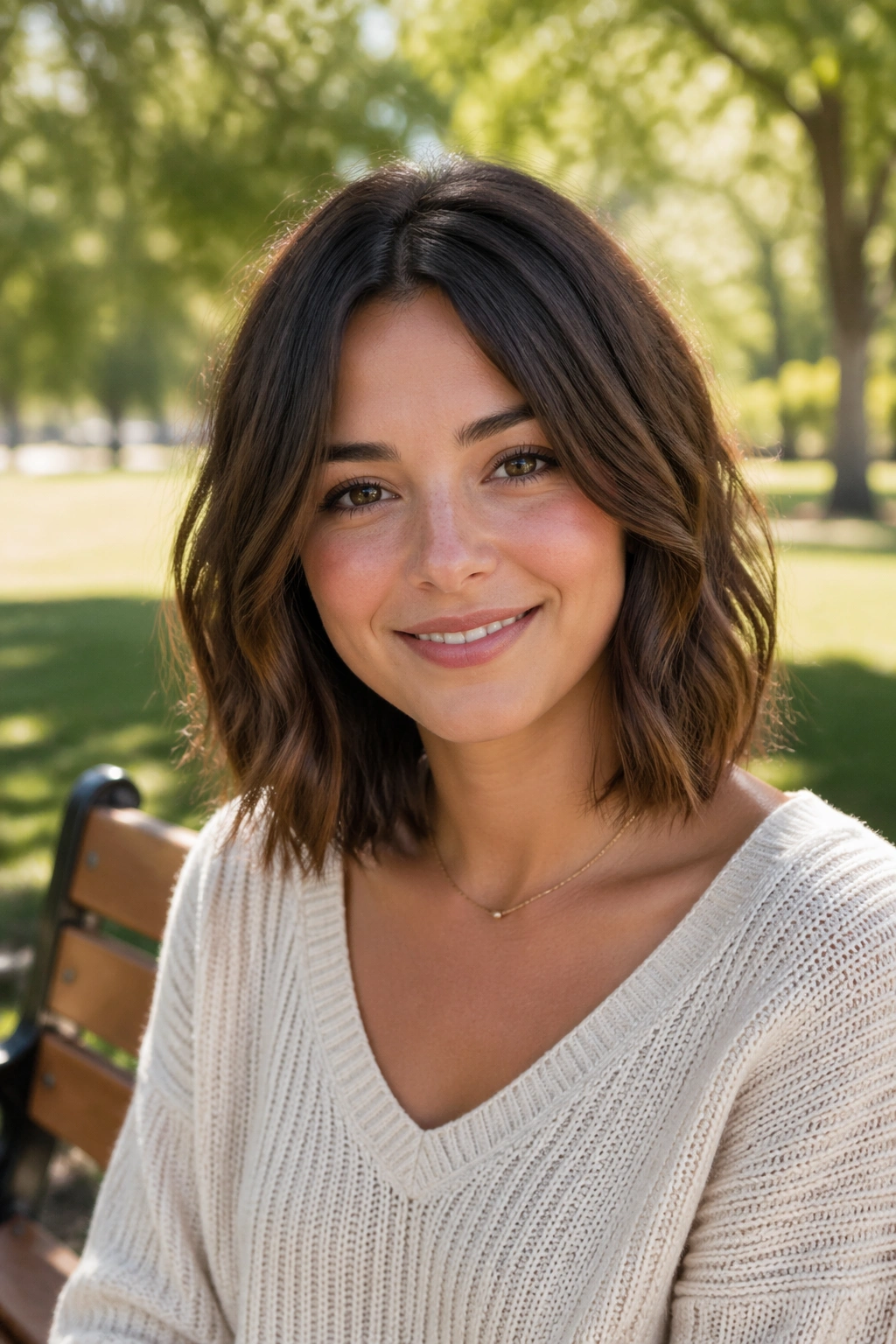
A rounded edge sounds like the wrong idea for a round face, but the face shape and the cut shape do not have to match. In this version, the perimeter curves gently while the length still falls below the chin, which keeps the overall look long rather than wide.
Why It Works
The curve at the edge keeps the haircut from looking boxy. The length keeps the face from looking short. Both things matter. If the lob is too straight, it can look severe. If it is too short and round, it can puff out.
I like this on wavy hair that already has a soft bend. The shape follows the texture rather than fighting it. Ask for movement through the ends, not layers that flare out at the sides.
This is one of those cuts that looks easy because it is. That’s a good sign.
29. The Minimal-Layer Lob for Fine Waves
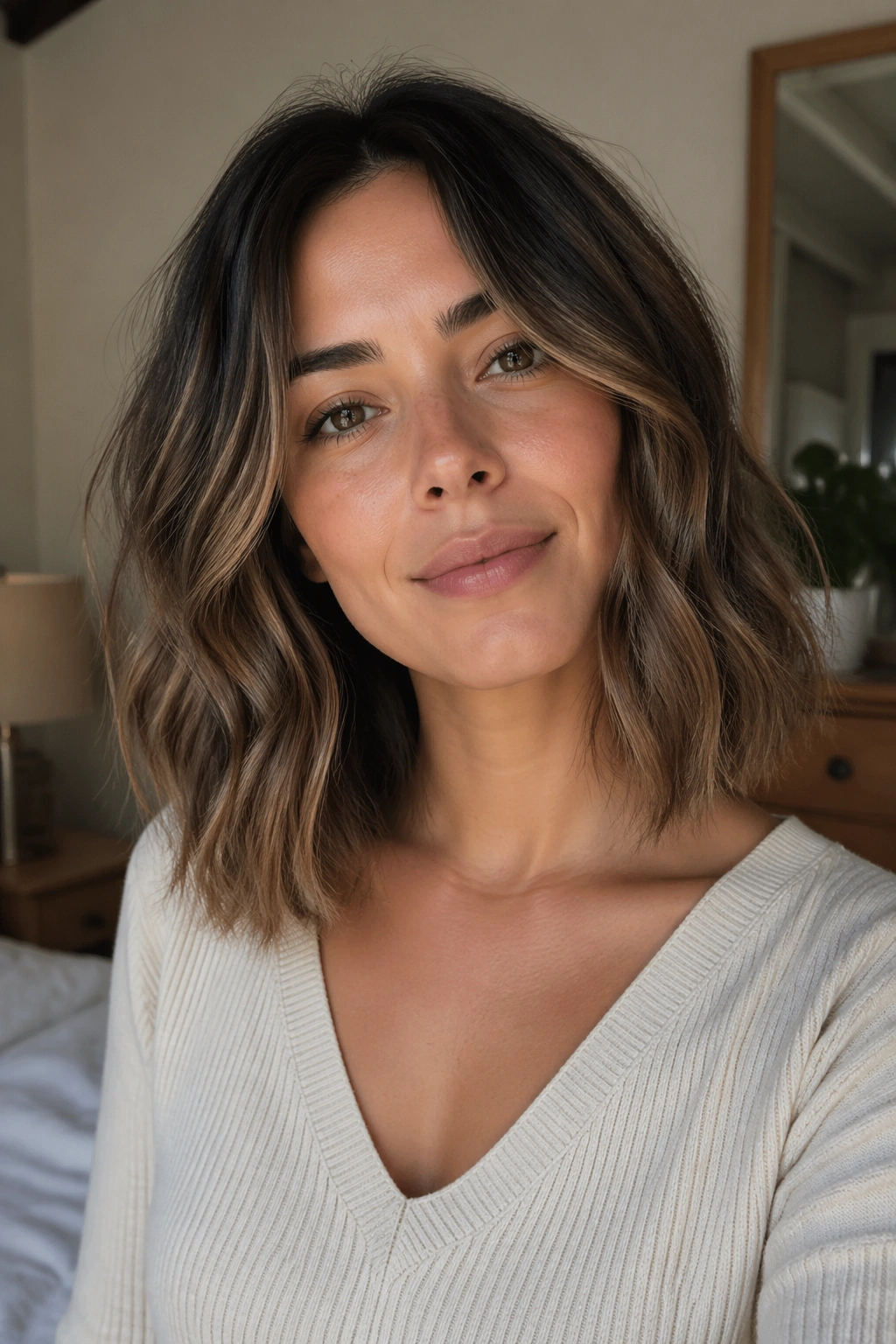
Fine hair can get stringy fast if the layers are too aggressive. A minimal-layer lob keeps enough weight in the ends to make the hair look full, while still allowing the waves to move.
The perimeter should stay clean. That gives the haircut some body. A few tiny layers near the back or under the surface can help the wave lift, but the visible outline needs to stay strong.
A center part or soft off-center part both work here. What you want to avoid is a bunch of short pieces around the cheeks. Those can make fine hair look sparse in exactly the wrong place.
Use a lightweight cream, not a heavy oil. Fine waves need control, but they do not need to be coated down. That’s the line to watch.
30. The Big-Volume Wavy Lob
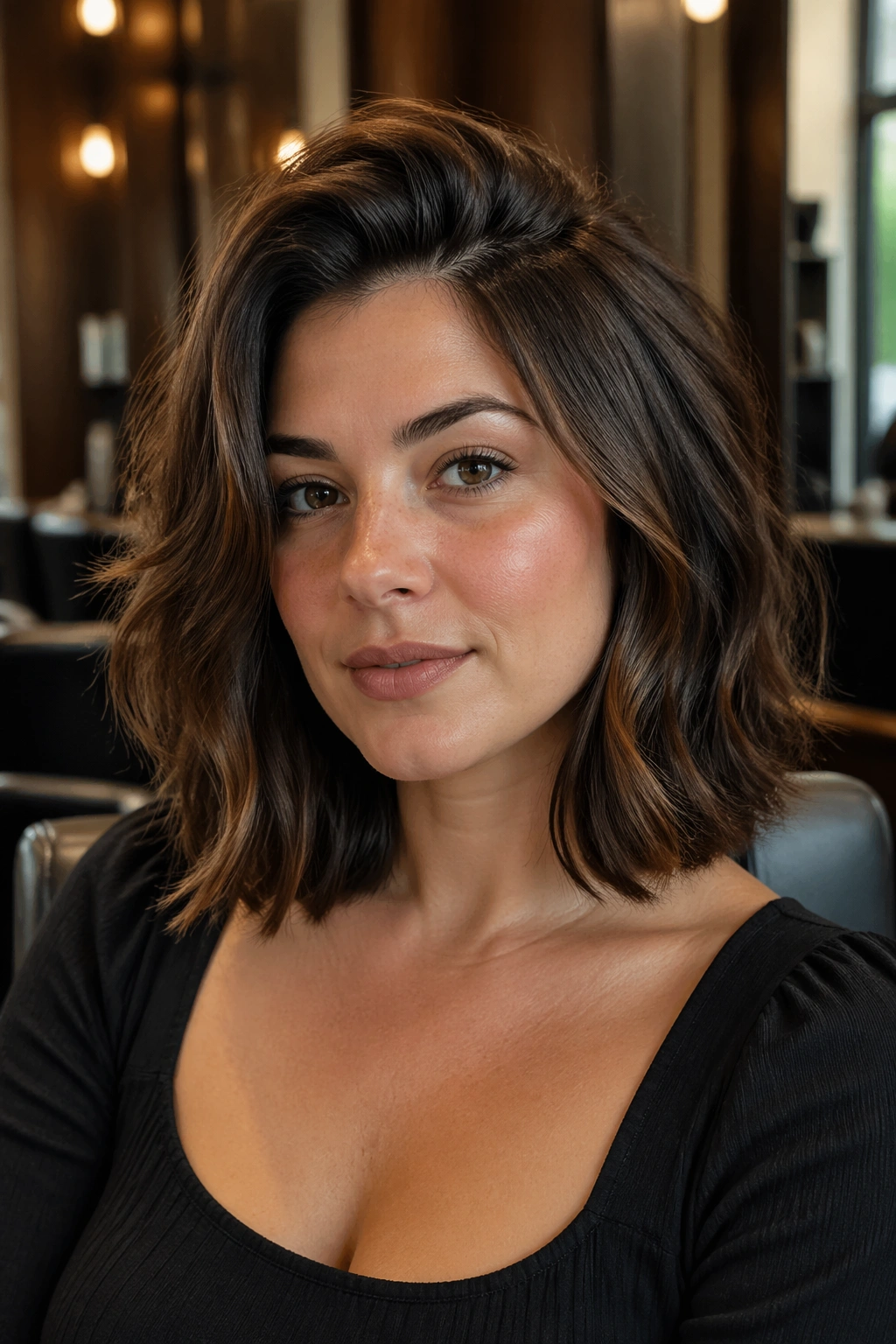
Some people want their lob to feel full and plush, and that can work on a round face if the volume lives at the crown instead of the cheeks. That distinction changes the whole shape.
The length should still clear the chin and ideally brush the collarbone. Then add lift at the roots with a round brush or diffuser. When the top has height, the face looks longer without needing extra length everywhere.
Styling Notes
- Dry the roots up and away from the scalp.
- Keep the sides smoother than the crown.
- Bend the ends inward or straight down.
- Avoid curling the sections around the cheeks too tightly.
A big-volume lob is not the same as a wide one. One lifts. The other spreads. You want the first.
31. The Thinned-Out Lob for Thick Hair
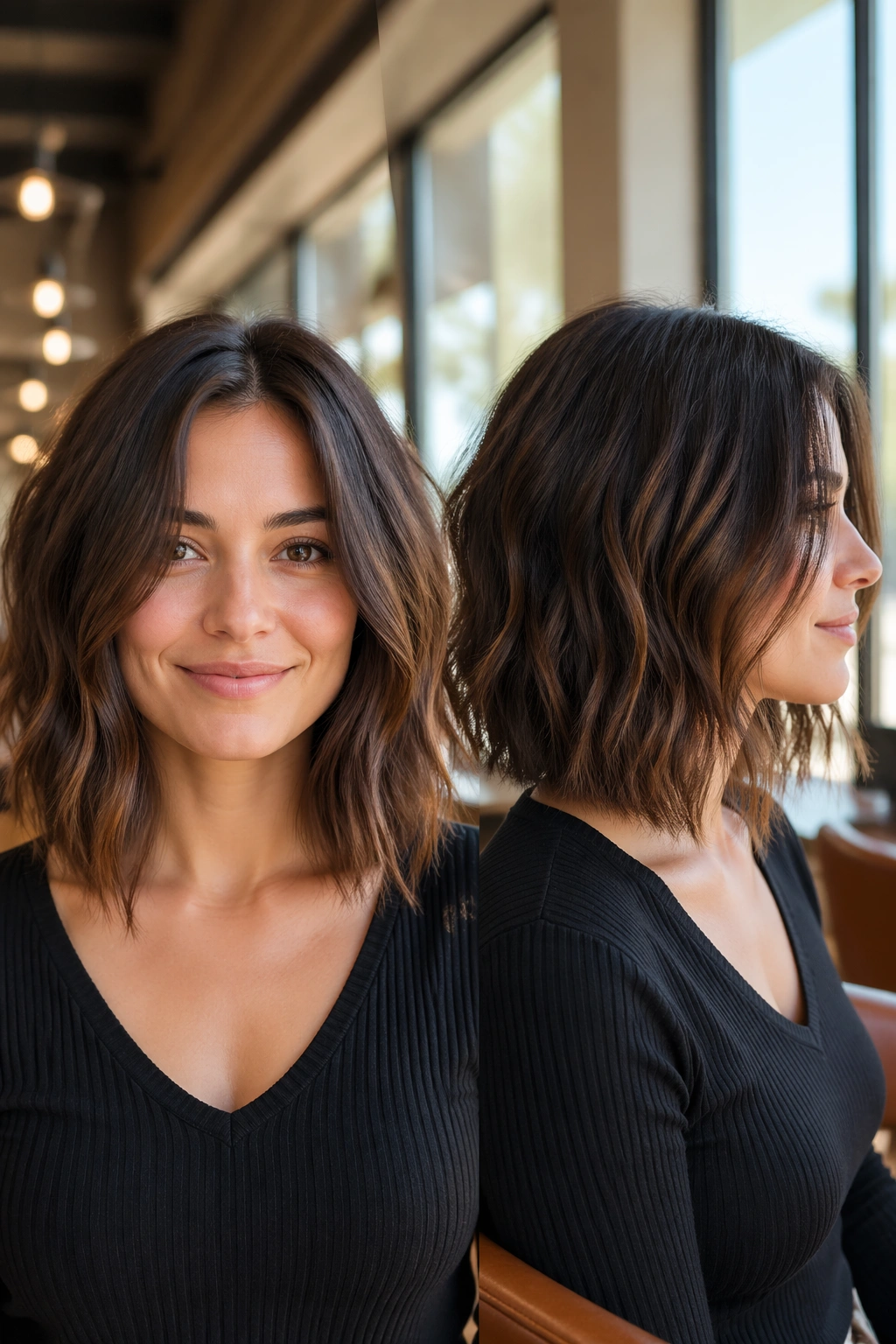
Thick hair needs room to move, but not at the expense of the shape. A thinned-out lob removes bulk from the inside so the outside stays clean. On a round face, that helps the hair fall in a more vertical line instead of kicking outward.
This is where a stylist’s hand matters. The thinning should be targeted, not random. Too much removal at the bottom creates fuzzy ends. Too little leaves the hair heavy and wide.
If your waves are strong, this cut can make styling much easier. The hair dries with less swelling, and the lob keeps its outline better through the day.
It is a workhorse haircut. Not flashy. Very useful.
32. The Shoulder-Skimming Lob with Long Bangs
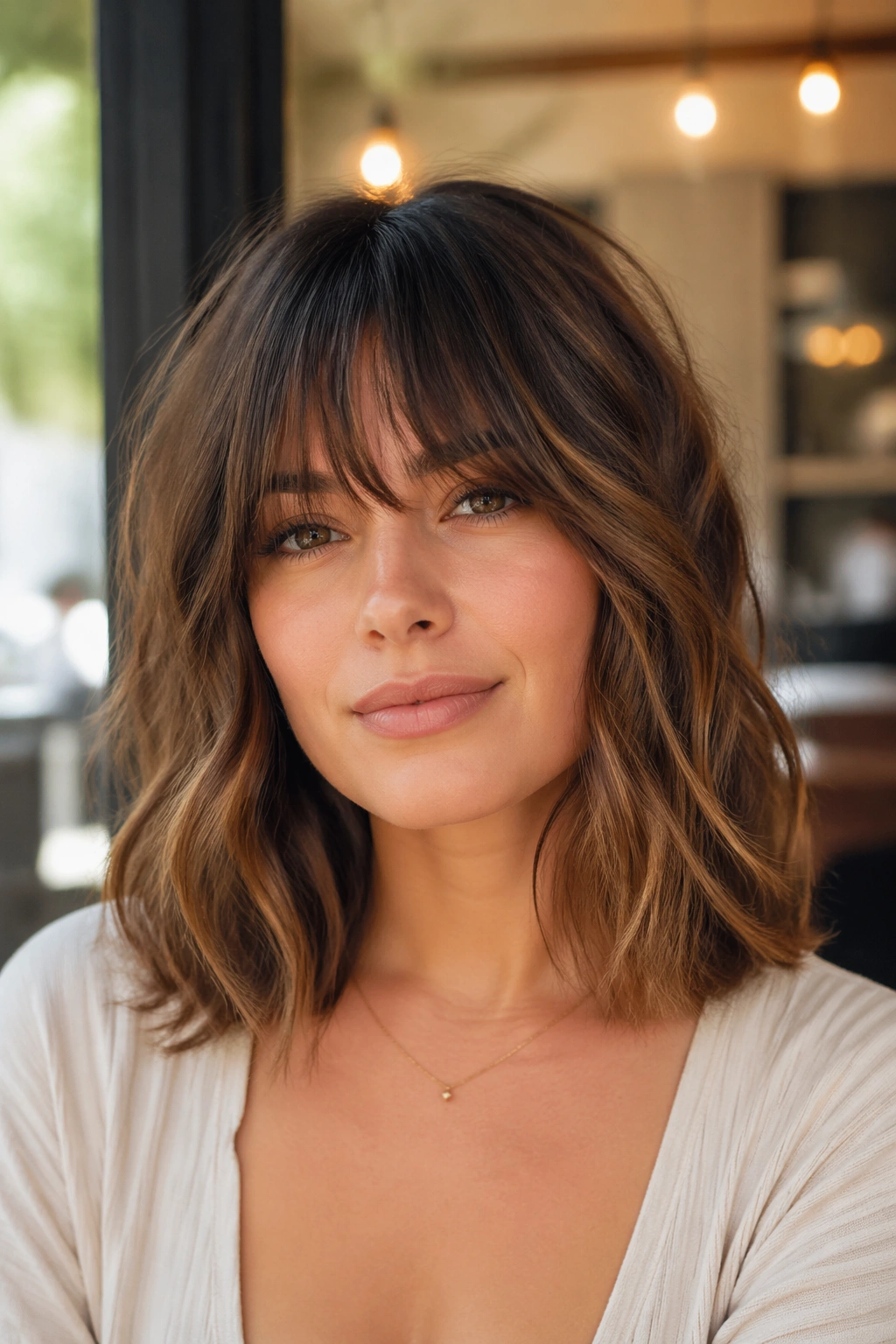
Shoulder-skimming length gives you a little more room to play than a shorter lob, and long bangs keep the front area soft. On a round face, that extra length helps the hair fall below the widest part of the cheeks.
The bangs should be long enough to graze the brows or cheekbones. That way they can be swept to the side, split in the middle, or tucked back. Flexibility matters. A rigid fringe is harder to wear.
This cut is a good option if you like putting your hair in a low clip or half-up style. The extra front length gives you more to work with.
If the shoulders are a little broad, let the front pieces go past them. That prevents the ends from sitting right on top of the face and making everything look broader than it is.
33. The Air-Dry Friendly Wavy Lob
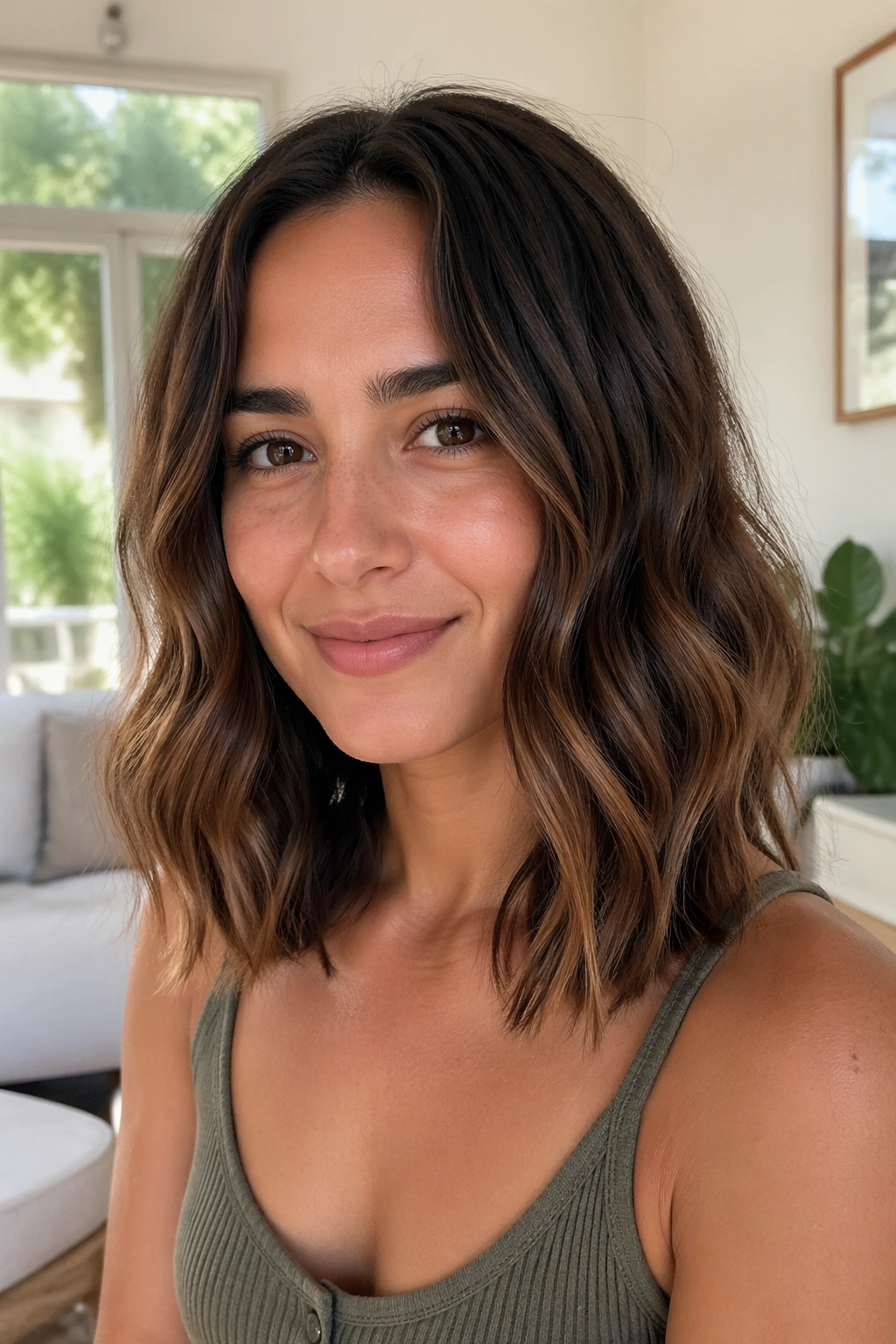
Some cuts look good only after a blowout. This is not one of them. An air-dry friendly wavy lob should follow the hair’s natural bend, keep the front long, and avoid short layers that pop out around the cheeks.
How to Shape It
Let the stylist cut it where your wave naturally lives. If your hair curls tighter near the bottom, the length needs to account for that. If it bends mostly in the mids, the shape should preserve that movement without adding too much lift on the sides.
A little leave-in cream and a scrunch are often enough. Sometimes you do not need more. The haircut does the hard part.
This is a good match for people who do not want to renegotiate with a brush every morning. It dries into something decent on its own. That’s worth a lot.
34. The Root-Lifted Modern Lob

This cut is all about vertical energy. The crown gets lift, the sides stay smoother, and the ends bend just enough to keep the shape soft. On a round face, that balance makes the haircut feel taller instead of wider.
A blow-dry with a lifting spray at the roots helps the top stand away from the scalp. Then use a large brush or a wand to give the ends a slight inward or outward bend. The wave should not explode at the sides. Keep it controlled there.
A modern lob like this is clean enough for work and loose enough for weekends. It does both jobs without asking for much.
If your hair normally collapses flat at the top, this style gives it some backbone.
35. The Low-Maintenance Everyday Wavy Lob for Round Faces
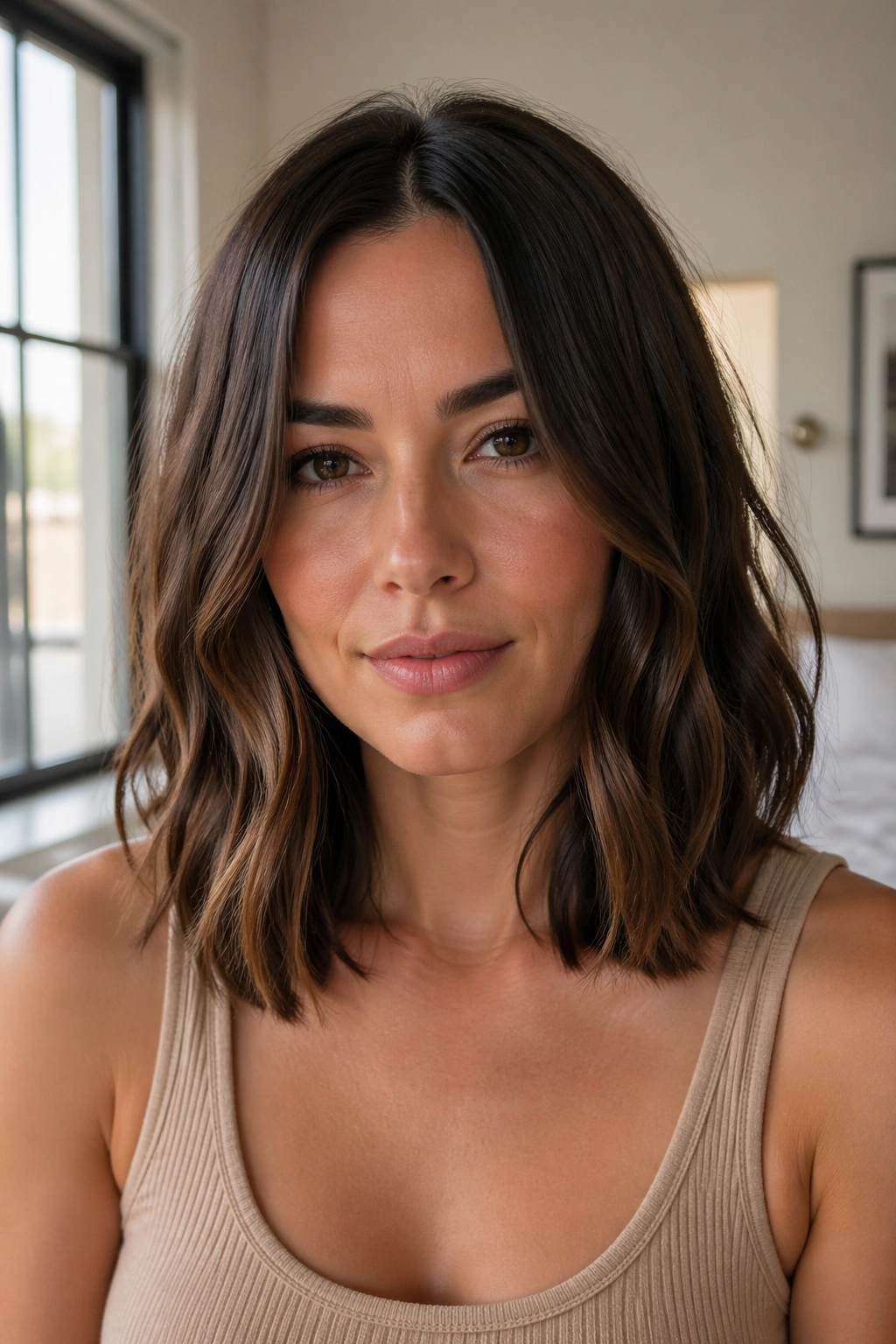
If you only save one cut, make it this one. A low-maintenance wavy lob for round faces should hit the collarbone, keep the front slightly longer, and let the waves sit softly away from the cheeks. That combination is hard to beat because it works on good hair days and average ones.
The shape should be easy enough to air dry, but polished enough to take a quick pass with a wand when you want extra definition. No hard angles. No fussy fringe. Just enough structure to keep the face long and the waves soft.
I’d ask for long layers, a slightly off-center part, and ends that stay full. That’s the recipe. If the haircut is too short in front, it loses its lengthening effect. If it is too layered, the sides can spread out and fight the face shape.
The best part is how forgiving it is. You can wear it tucked, flipped, waved, or barely styled, and it still reads as intentional. That’s the kind of cut people keep for a while because it earns its place.
