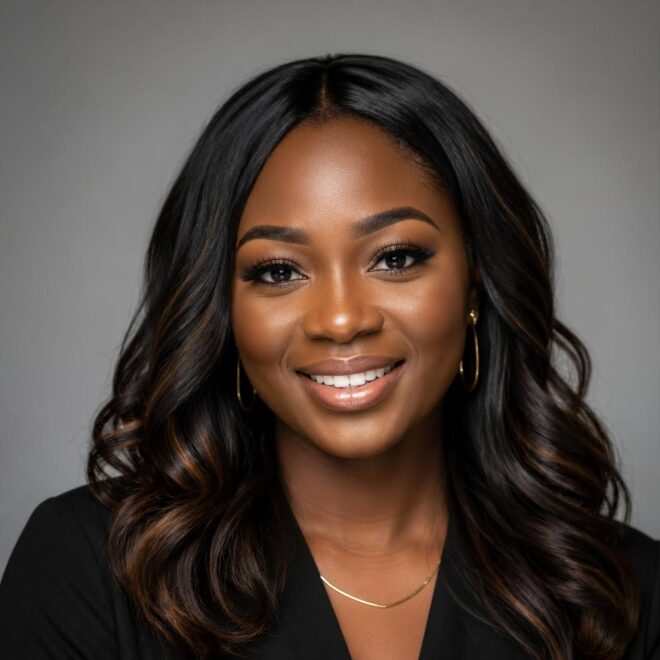


Fine hair can look airy and expensive when the cut does the heavy lifting. Leave it long and one-length, and the same hair can slump flat by lunchtime.
Short wavy haircuts for fine hair work best when the outline is strong and the inside is a little smarter than it looks. You want perimeter, bend, and a bit of lift at the crown — not six layers that disappear once the hair dries. That’s the part most people miss. Fine strands need shape first, texture second.
The other detail that matters is density. Fine hair is about strand thickness, not how much hair you have, so someone with very fine but plenty of hair needs a different cut than someone with fine, sparse hair. One loves a stacked back. The other usually looks better with clean lines and fewer short layers.
Some styles below are polished. Some are messier. A few are a little cheeky. All of them work with fine, wavy hair instead of fighting it.
1. Chin-Length Wavy Bob
This is the cut I reach for when hair needs an instant lift. A chin-length bob stops the waves from dragging downward, so the bend lands where people can actually see it. On fine hair, that matters. If the line sits too low, the wave stretches out and the whole shape goes soft.
Ask for a clean perimeter with a tiny bit of internal texture, not a shredded mess. A 1-inch curling iron or a quick air-dry with mousse is enough; you want the ends to curve, not curl into ringlets. Keep the longest pieces at the jaw, not below it. That one detail keeps the silhouette sharp.
2. French Bob with Soft Fringe

Can a fringe make fine hair look fuller? Yes, if it’s soft and short enough to live with. The French bob works because it keeps the shape compact while the fringe gives the front some weight, which is rare and useful on fine hair.
Why It Works on Wavy Hair
The waves give the cut movement, and the short length keeps the hair from collapsing under its own weight. A soft fringe also breaks up a long forehead line, so the whole style feels denser.
- Ask for bangs that graze the brows, not a heavy curtain.
- Keep the bob at cheekbone or chin length.
- Use a light cream on the fringe so it does not separate.
- Let the waves bend naturally instead of forcing a round curl.
Best move: dry the fringe first, then leave the rest a little undone.
3. Textured Pixie Bob
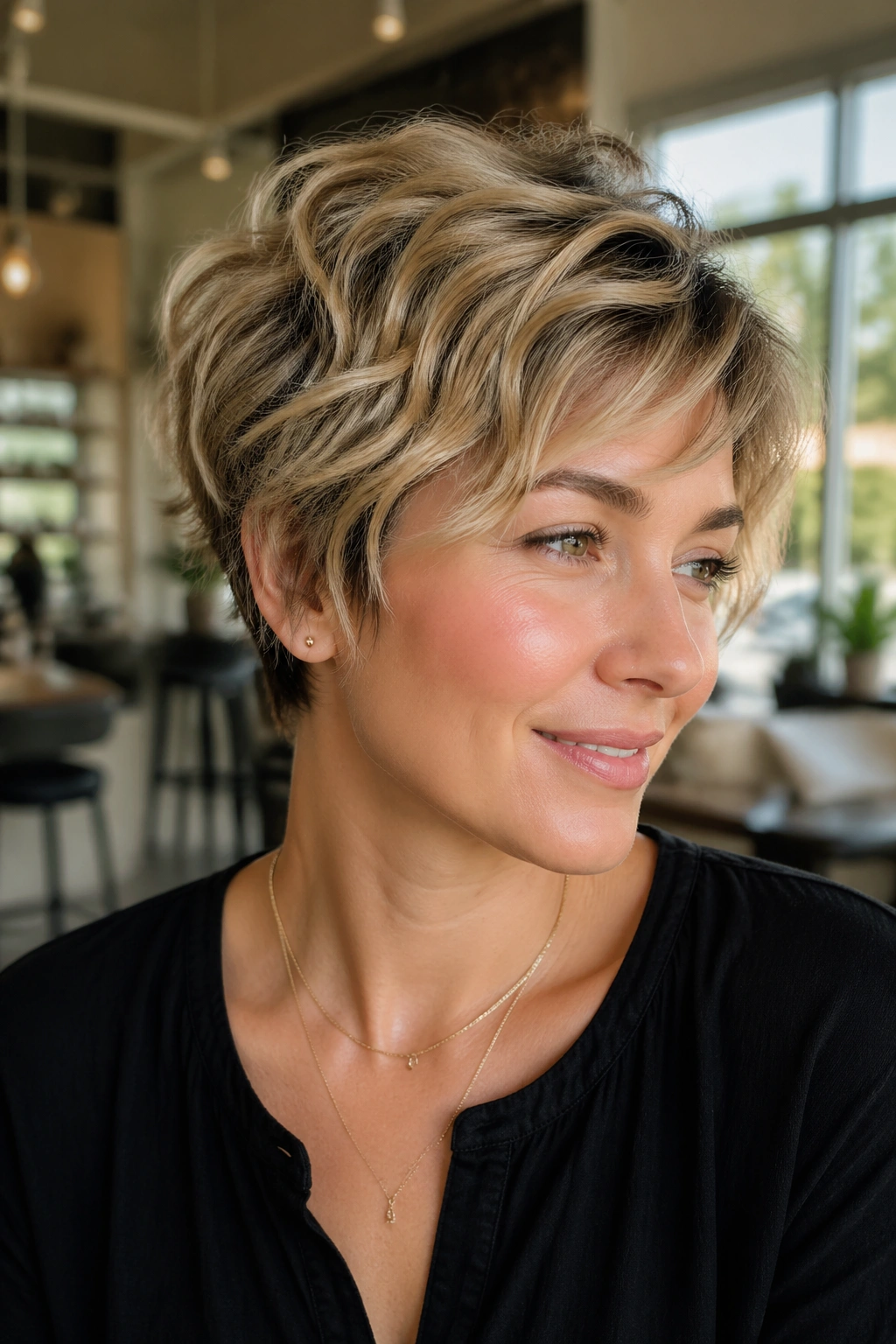
A pixie bob is one of the smartest shapes for fine waves. It gives you the shortness of a pixie with enough length on top to show off movement. That extra top section is the part that saves the haircut from looking too severe.
Ask for softness around the crown and ears, with the nape kept neat. A dab of mousse at the roots and a quick scrunch are usually enough. If your hair goes limp fast, this cut can change that by sheer geometry. It creates the feeling of more hair without asking the strands to do too much.
4. Layered Bixie Cut
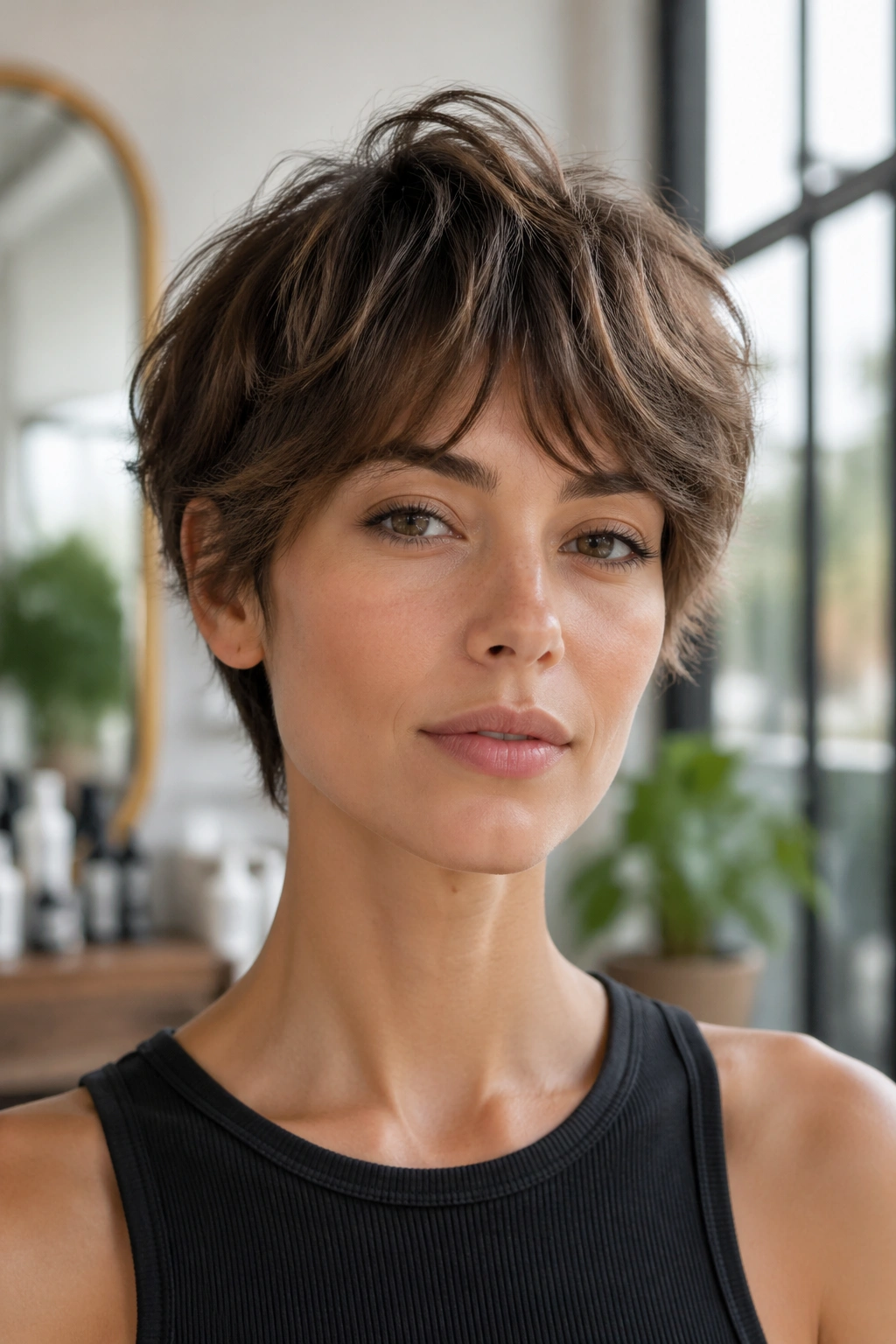
Picture a cut that sits between a bob and a pixie, then make it a little softer. That is the bixie. On fine wavy hair, it removes drag from the ends while leaving enough length for the wave to show up.
What to Ask For
- Shorter sides that tuck nicely behind the ears.
- Longer top layers that can be pushed forward or swept back.
- Soft point-cutting at the ends, not blunt chop lines.
- A little crown lift, but not a tall, helmet shape.
The bixie works because it never asks one section of hair to do all the work. The whole cut shares the load.
5. Stacked Bob with Loose Waves
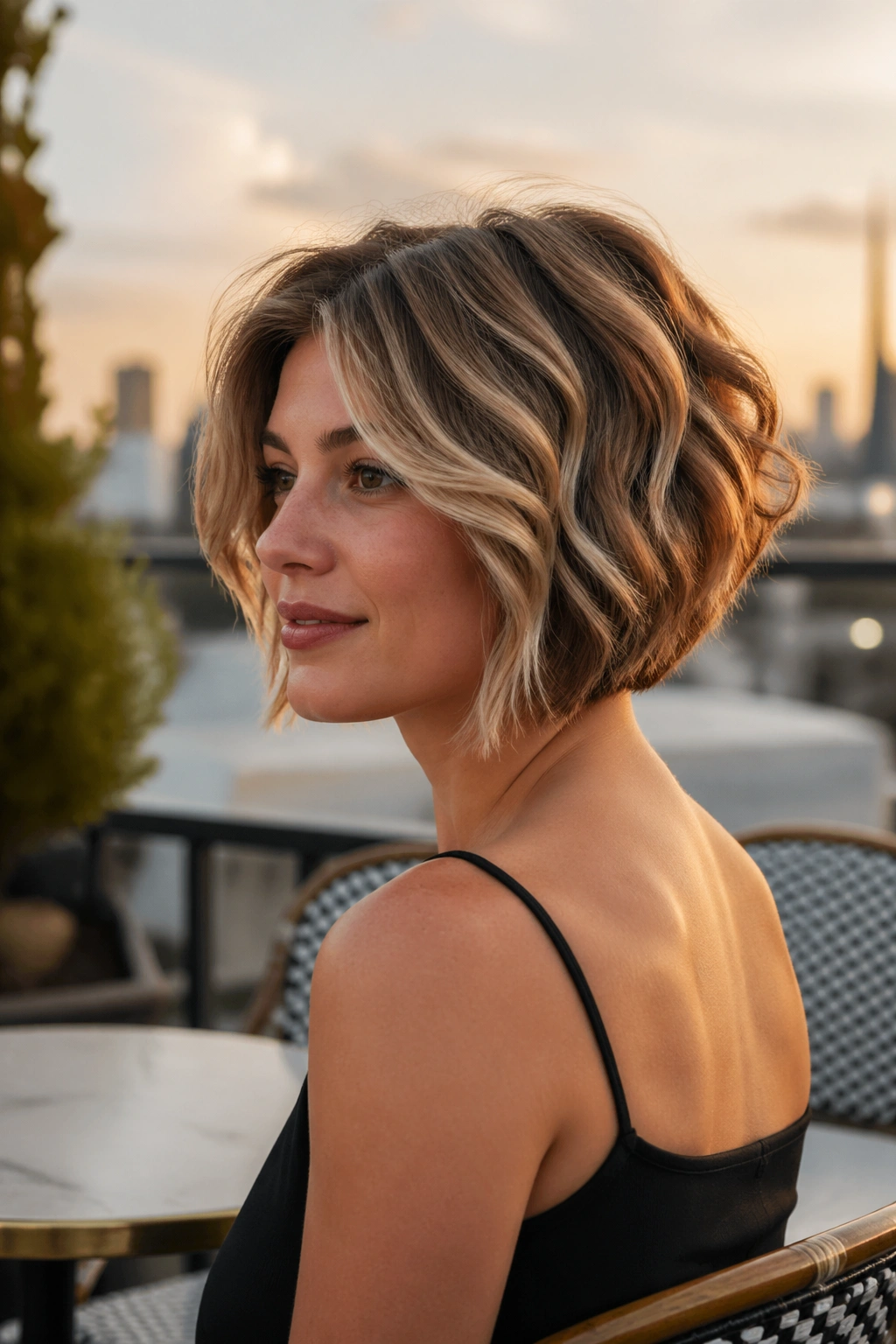
If your crown goes flat, the stacked bob is worth a hard look. The shorter layers at the back create lift where fine hair usually gives up first. Add loose waves, and the back looks fuller without turning bulky.
The catch is balance. Too much stacking and you get that old-school mushroom shape that nobody asked for. Keep the graduation soft and let the front stay a bit longer so the cut doesn’t feel boxed in. A round brush at the roots helps, but you can also air-dry and pinch the top for shape.
6. Asymmetrical Short Bob
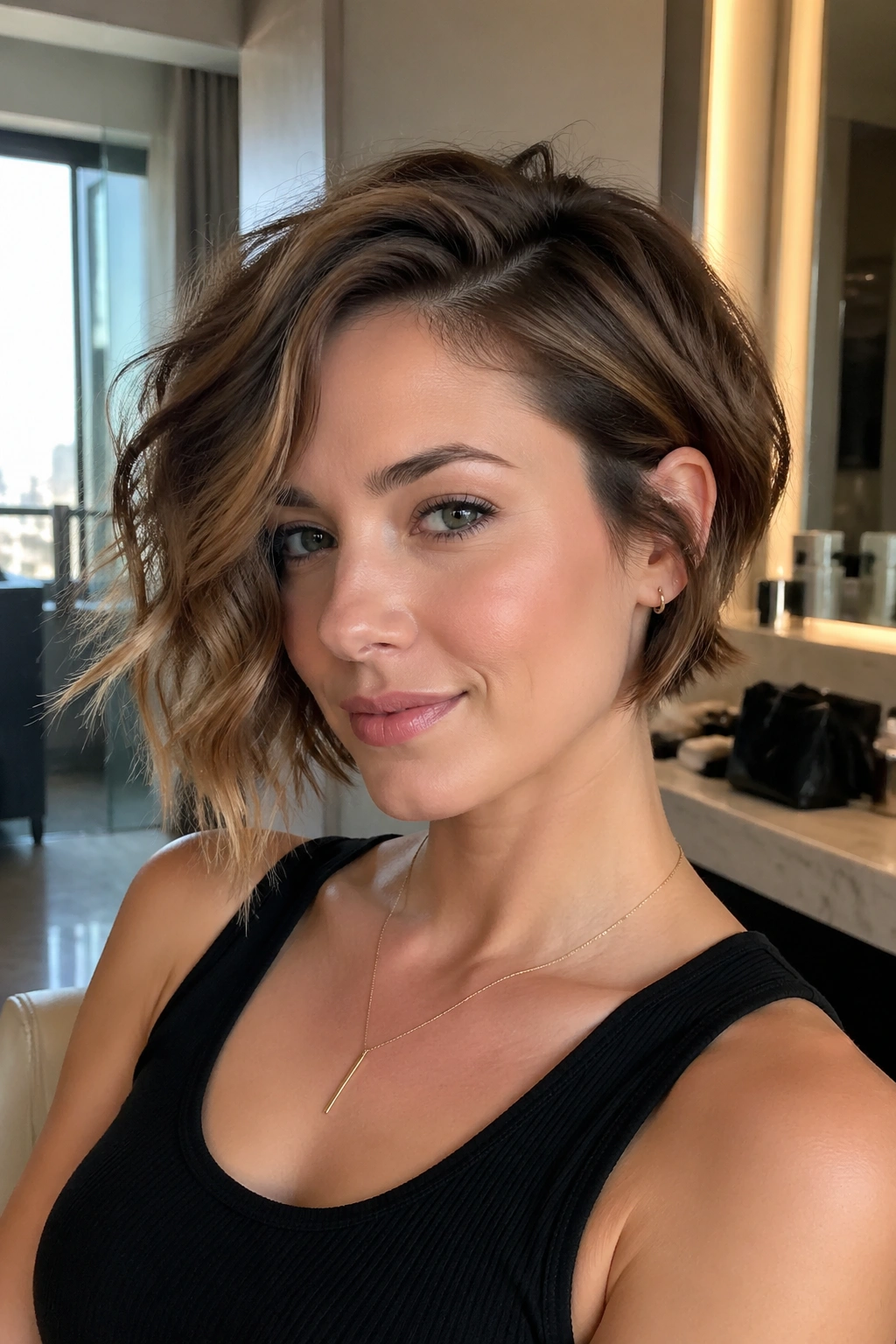
A slight asymmetry can make fine hair look denser because the eye stops reading the cut as flat. One side a half inch longer than the other gives the whole shape a bit of motion, even when the hair is barely styled.
This cut suits wavy hair that likes to separate into loose pieces. The uneven line keeps it from sitting like a cap. Wear it with a deep side part if you want more lift at the top. Wear it center-parted if you want the asymmetry to feel quieter. Either way, the line should stay crisp.
7. Curtain Bang Bob
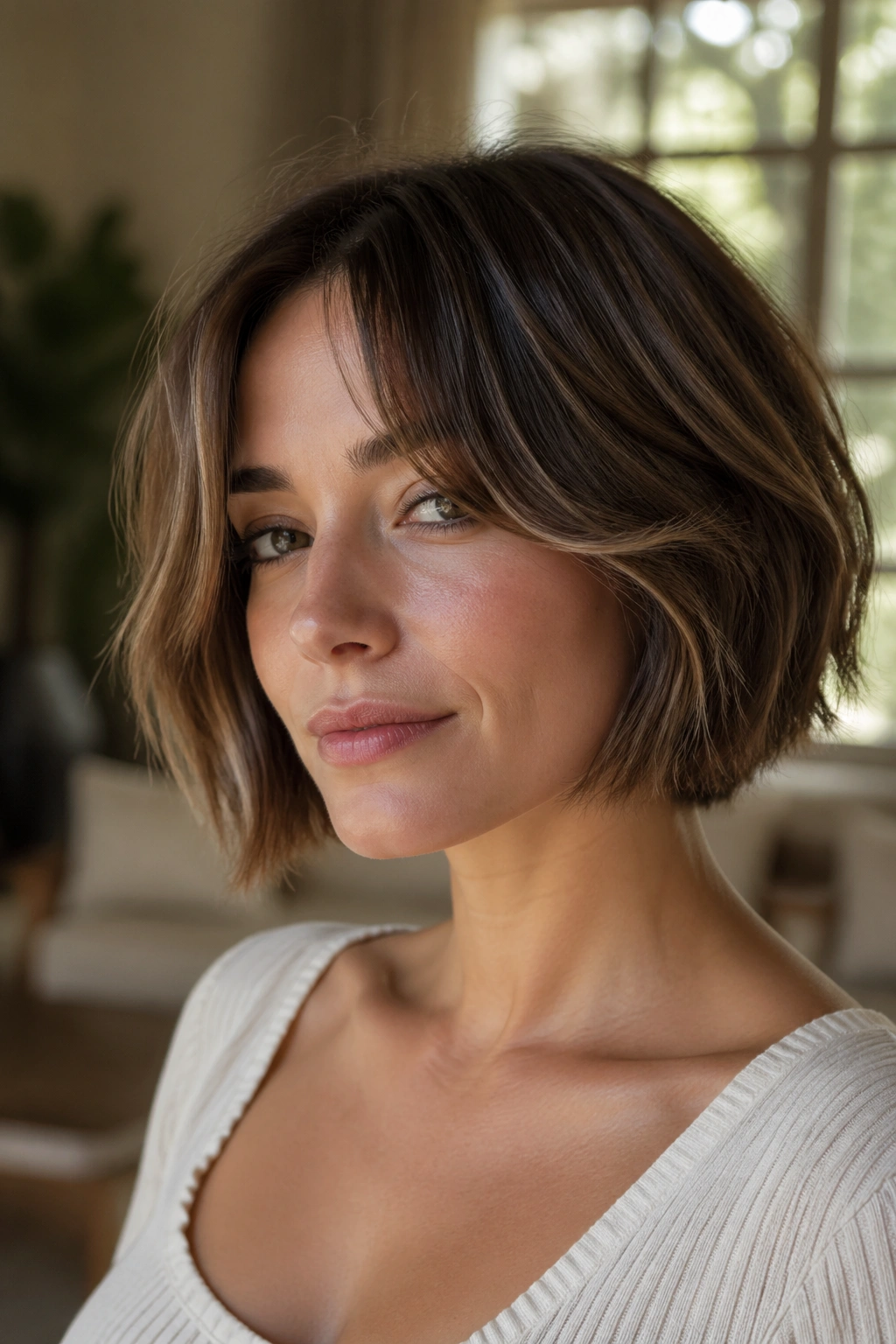
Can curtain bangs work on fine hair? They can, if they’re light and blended properly. Heavy curtain bangs on fine waves often collapse into sad strings. Soft ones, though, frame the face and give the front of the haircut more presence.
How to Wear It
A curtain bang bob looks best when the fringe starts at cheekbone level and opens out gently around the eyes. The rest of the bob should stop around the jaw or just below it.
- Keep the bang section narrow.
- Dry the fringe side to side with a small brush.
- Use a pea-sized amount of cream, not a palmful.
- Let a few pieces fall loose around the temples.
The result feels relaxed, not fussy.
8. Shaggy Crop

This is the cut for someone who wants texture first and polish second. A shaggy crop brings short layers, broken ends, and enough movement to make fine wavy hair look busier than it really is. That’s useful when the hair lies too close to the head.
The trick is restraint. Fine hair can turn stringy if the layers are too short or too many. Ask for choppy movement near the crown and around the cheeks, then keep the ends blunt enough to hold shape. A salt spray or light mousse is usually all it needs. Too much product, and the whole thing collapses.
9. Jaw-Length Blunt Bob
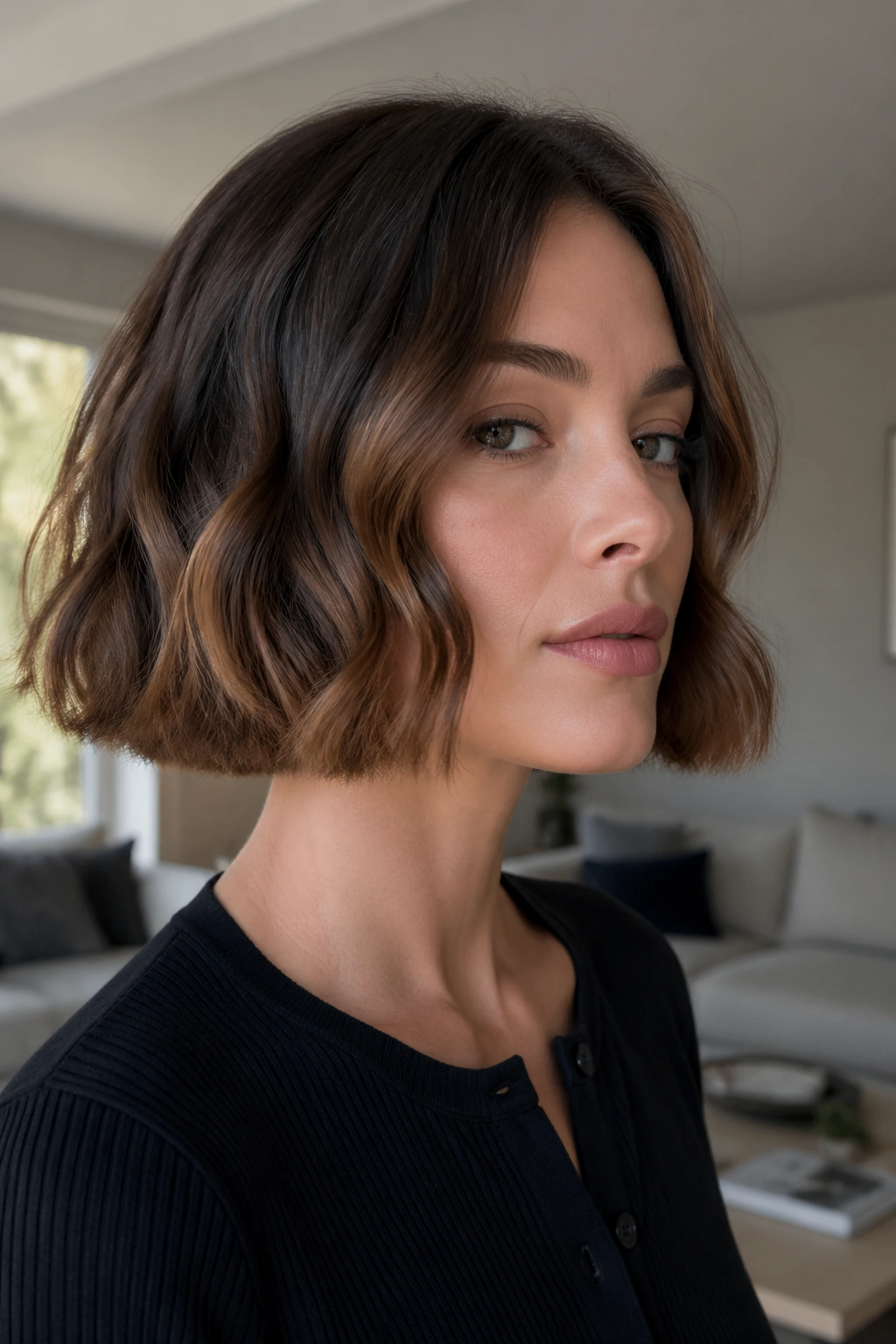
Nope, a blunt bob is not boring. On fine hair, it can be the best cut in the room because the solid line at the bottom makes the ends look thicker than they are. Add a soft wave, and the shape gets body without losing that clean edge.
This cut works especially well if your wave pattern is loose and your hair tends to fray at the ends. The blunt line creates a visual floor, which helps the hair feel fuller. Keep styling simple: rough-dry, tuck a few sections behind the ears, and let the ends do their thing.
10. Rounded Bob with Soft Ends

A rounded bob gives fine waves a little curve through the sides, which makes the hair look fuller from the front. The shape is subtle. It hugs the head without flattening it, and the soft ends keep the cut from feeling stiff.
Think of this as a bob with a gentle arc, not a bubble. The styling should follow that idea too. Use a medium round brush if you blow-dry, or twist the ends with your fingers when the hair is damp. The goal is a soft bend at the perimeter, not a hard curl. That bend is doing a lot of work.
11. Lob with Invisible Layers
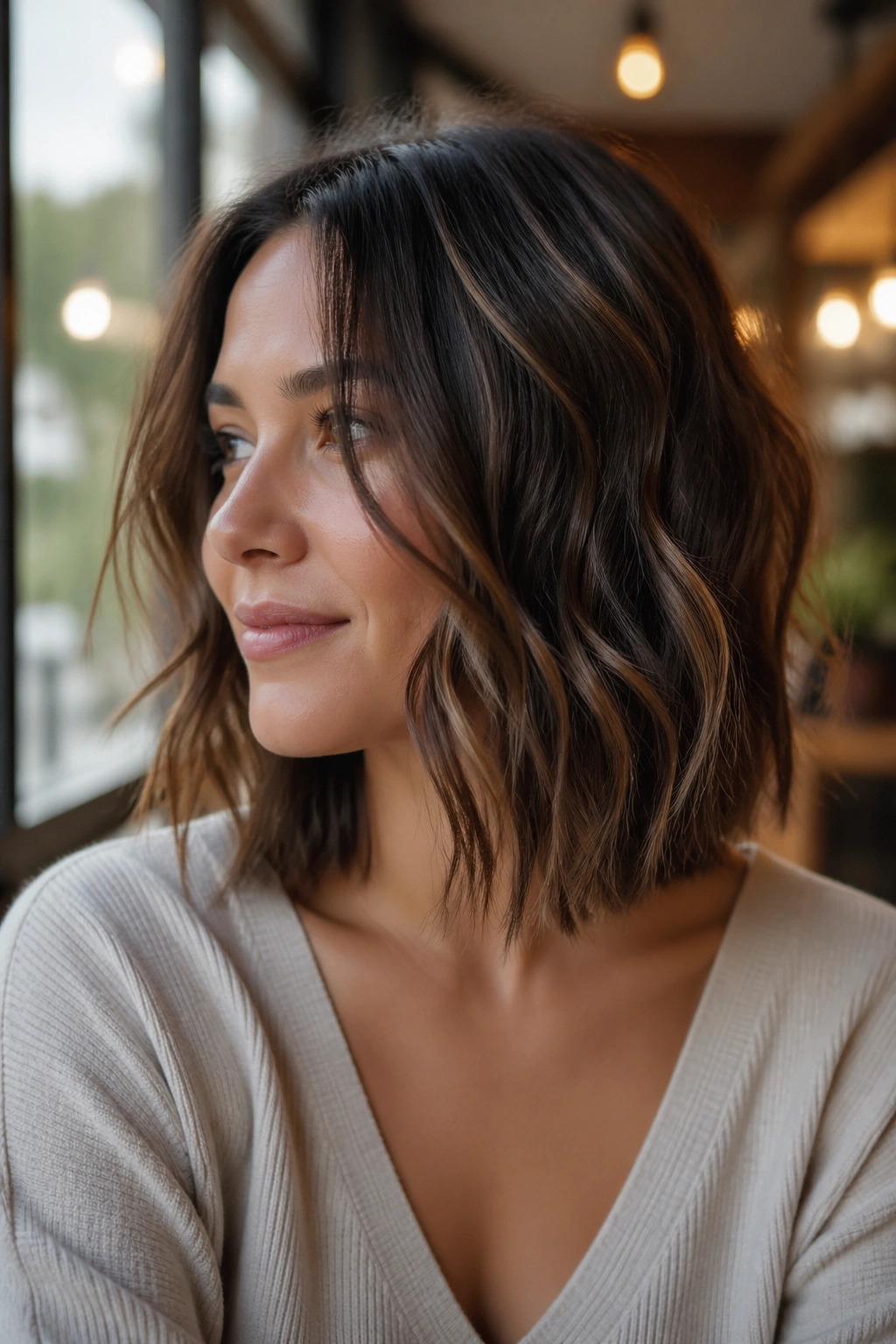
A lob sounds a touch longer than “short,” but for fine wavy hair it earns its place because it keeps weight under control. Invisible layers remove bulk without chopping up the outline, so the hair still reads full.
You want the length to sit around the collarbone or just above it. Any longer, and fine waves start sliding out of shape. Any shorter, and you lose some of the easy movement that makes the lob useful in the first place. Ask for the layers to be blended inside the shape, not broadcast across the surface.
12. Side-Part Wavy Bob
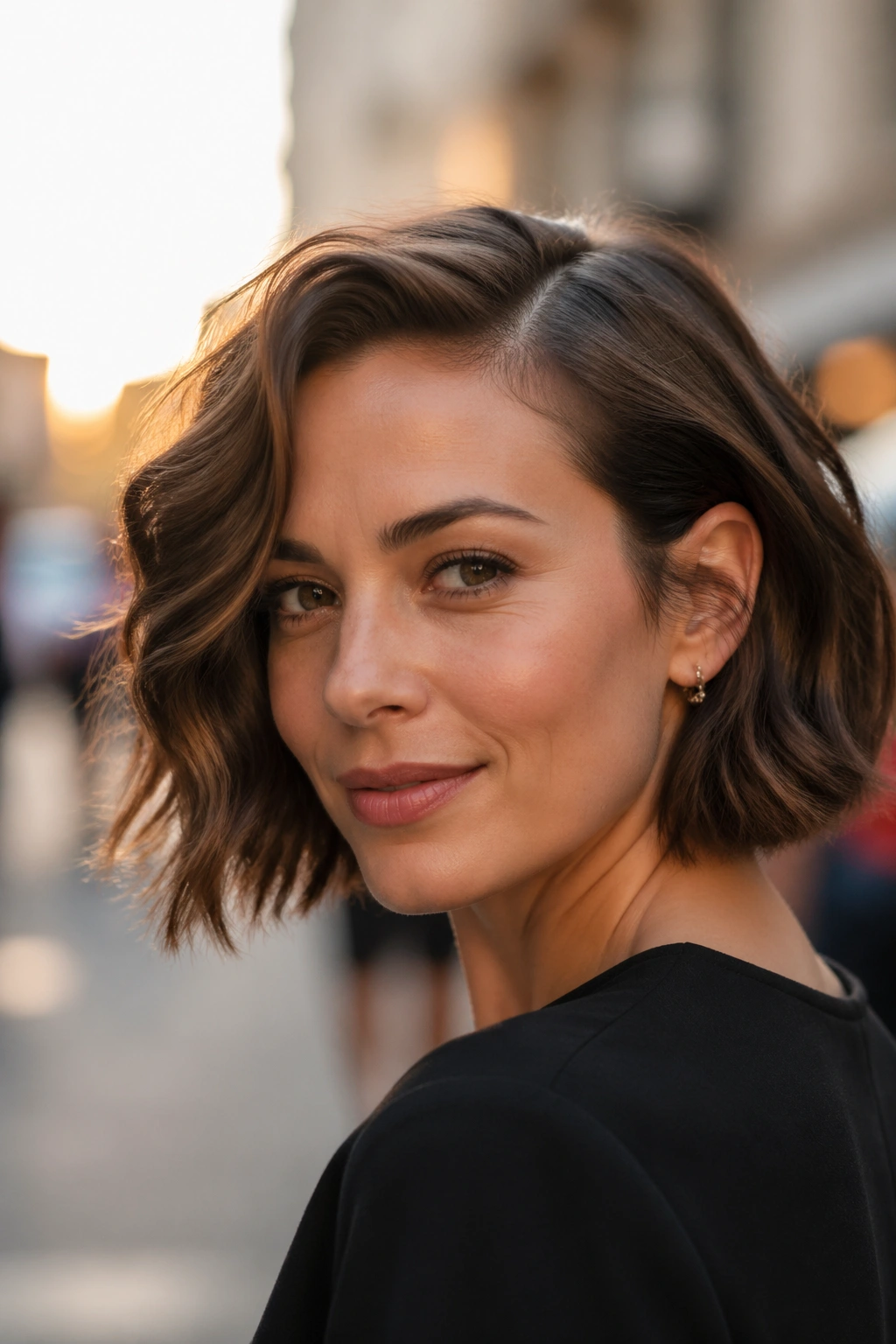
A deep side part is one of the easiest tricks in the book, and I still like it because it works. It lifts the roots on one side and gives fine hair a little height without teasing, spraying, or pretending the crown is bigger than it is.
This bob should stay around jaw to cheekbone length. The side part does the heavy lifting, so the cut itself can stay simple. If your hair has a stubborn cowlick, a side part often behaves better than a center part anyway. Use a root spray at the part line, then scrunch the lengths. Done.
13. Tapered Pixie Cut
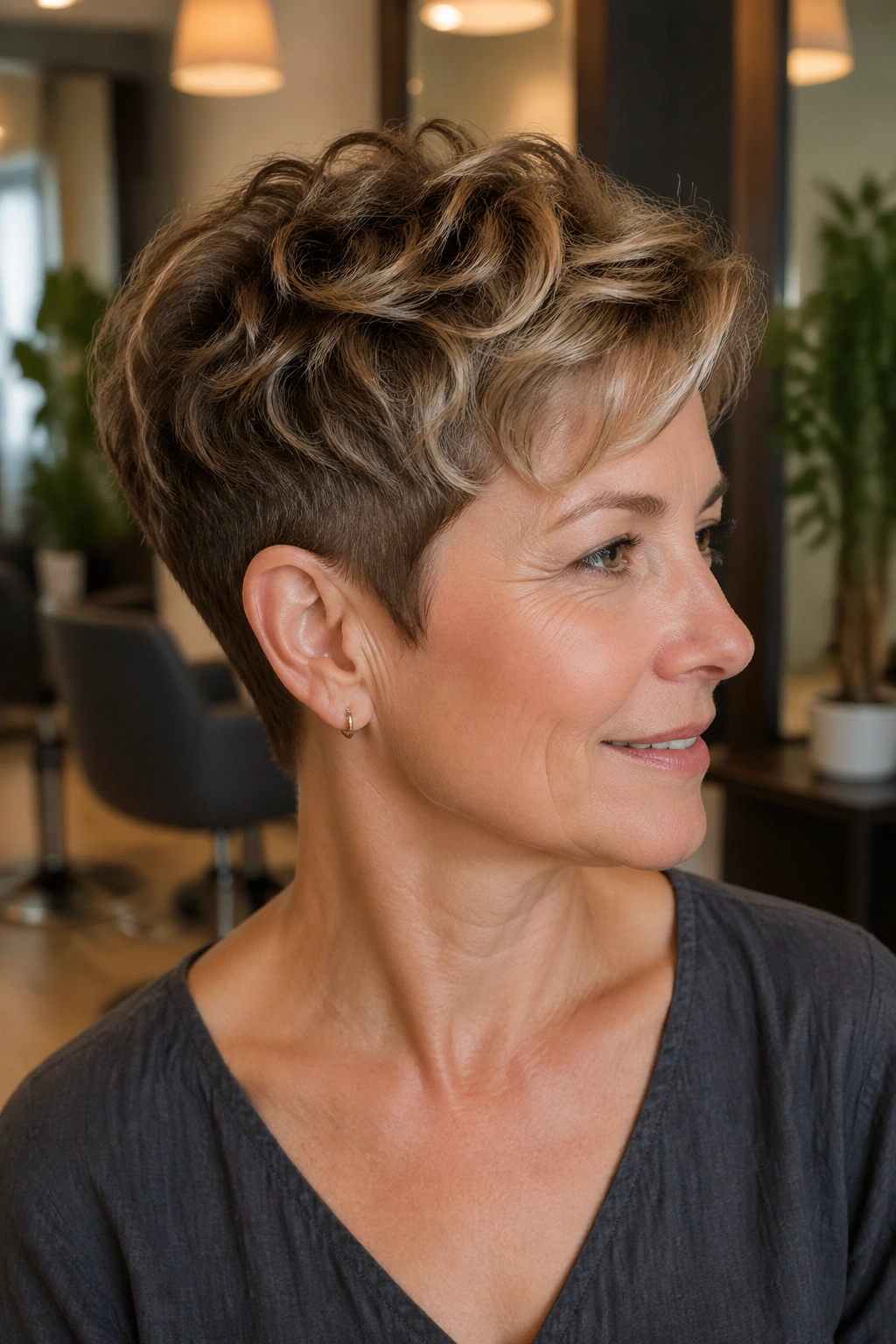
Short on the sides, fuller on top, neat at the nape. That’s the whole logic of the tapered pixie. For fine wavy hair, it gives lift where you want it and removes weight where you don’t. The result feels crisp, not fussy.
Styling Notes
A little styling cream works better than stiff gel. Fine waves need some movement, and hard product makes them look crunchy.
- Blow-dry the top forward first, then up.
- Keep the sides close to the head.
- Leave enough length on top to show wave.
- Trim every 4 to 6 weeks if you want the shape to stay clean.
The cut is short, yes. But it has room for personality.
14. Ear-Length Crop with Fringe

Imagine a crop that sits around the ears and leaves a narrow fringe across the forehead. That shape can look sharp on fine hair because it keeps everything compact. The fringe gives the front a little anchor, which helps the rest of the hair read thicker.
This style suits wavy textures that don’t want much heat. Air-drying works fine. So does a quick pass with a diffuser on low speed. Keep the fringe soft, not dense. If the bangs are too heavy, the haircut loses air and starts to feel flat. That’s the one thing to avoid.
15. Collarbone Shag
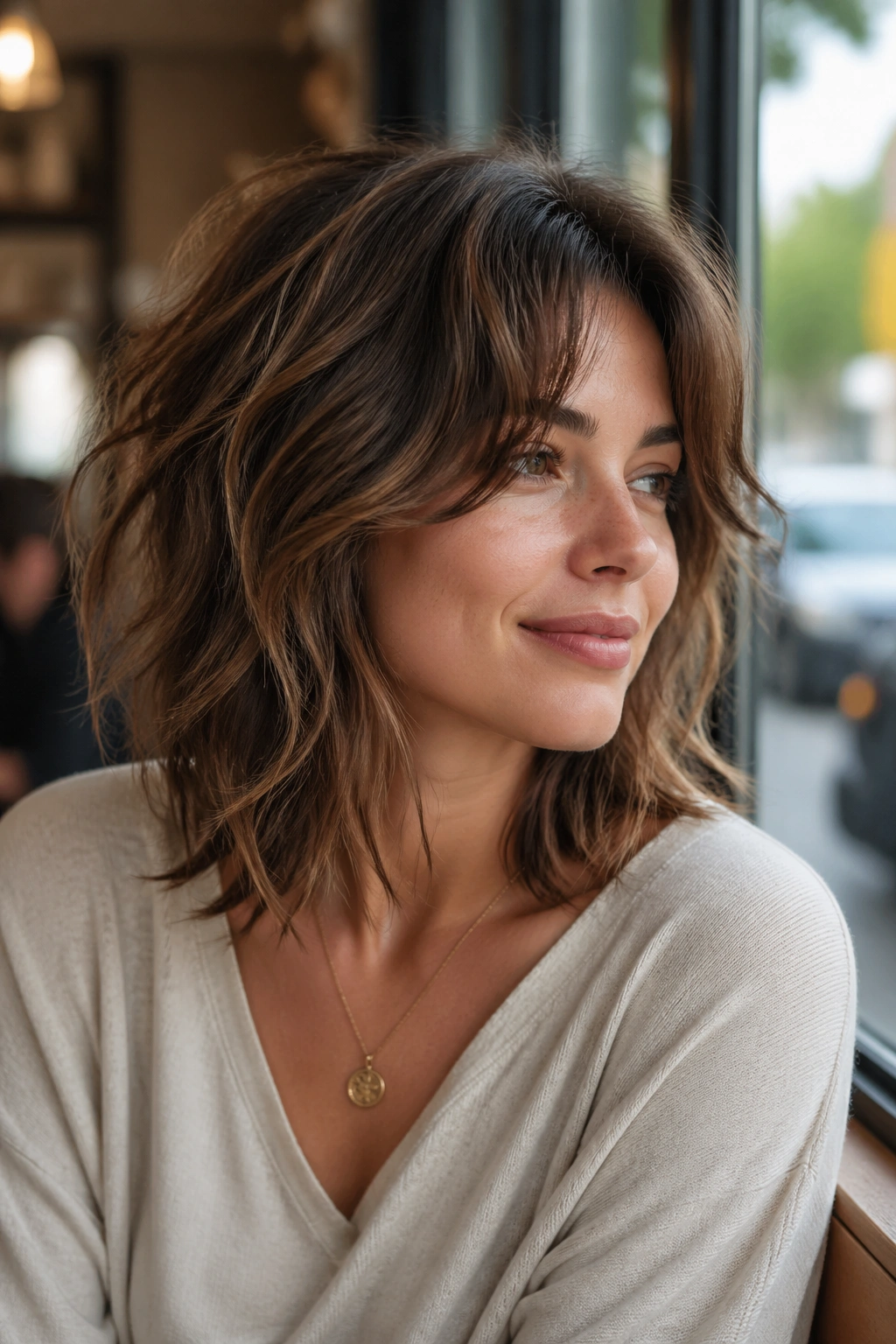
The collarbone shag gives you a little more length while still staying in short-hair territory. Fine waves like it because the layers start low enough to keep the ends from looking wispy, but the crown still gets enough movement to avoid droop.
The best version is not over-layered. You want visible shape around the face and enough weight in the lower sections to keep the hair from flying apart. Use a light mousse and scrunch from mid-length to ends. If you want that casually undone look, this haircut earns it without much drama.
16. Feathered Bob
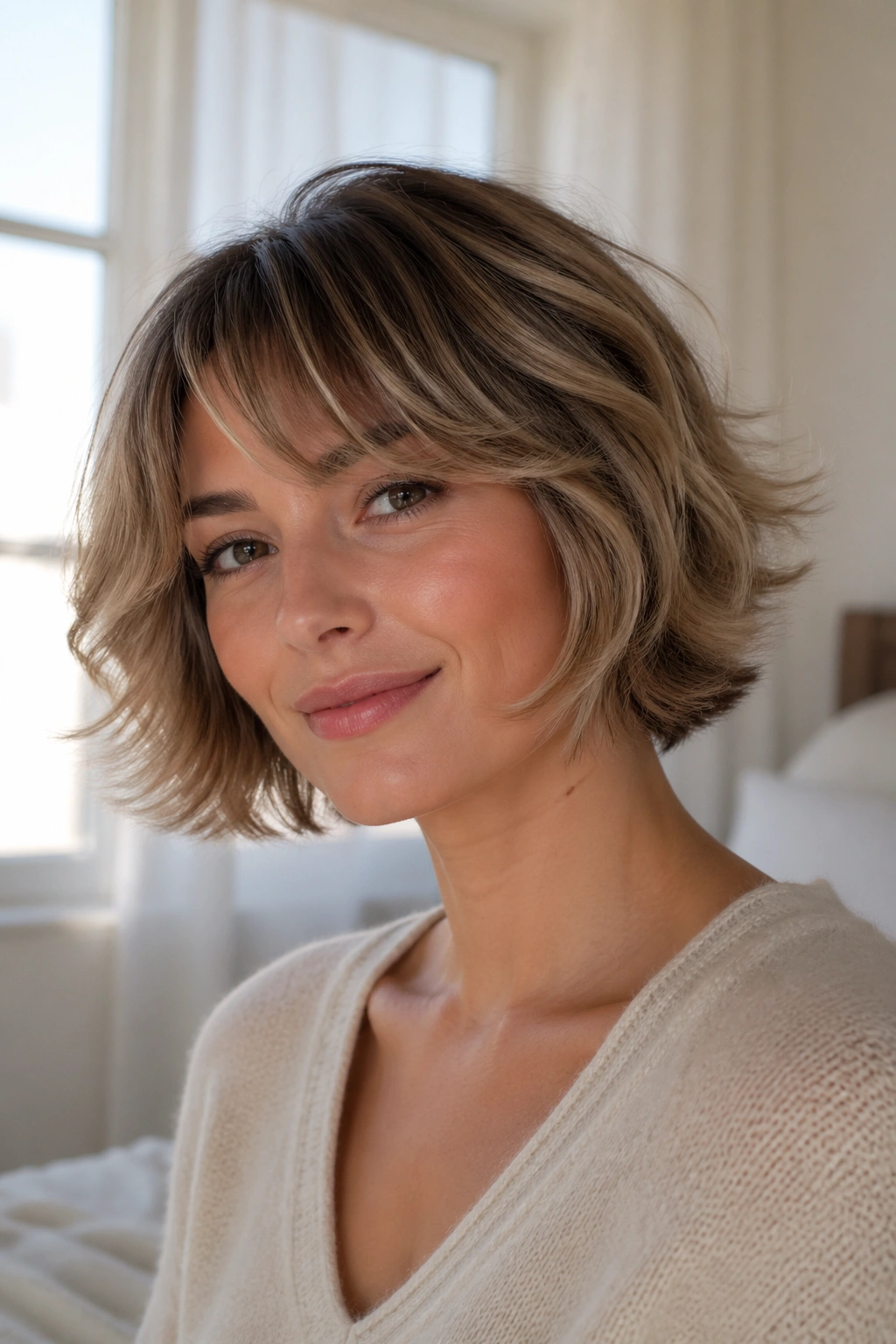
Feathering sounds old-fashioned until you see it on fine wavy hair. Done well, it softens the perimeter and gives the ends a lifted, airy feel that makes the hair seem fuller. Done badly, it turns into fluff. So the cut matters.
Ask for feathering mainly around the face and through the top layers, not all the way through the ends. That keeps the base solid. A small round brush or a quick bend with a flat iron can bring out the movement, but you do not need to curl every piece. The feathering should whisper, not shout.
17. Wavy Mullet Lite
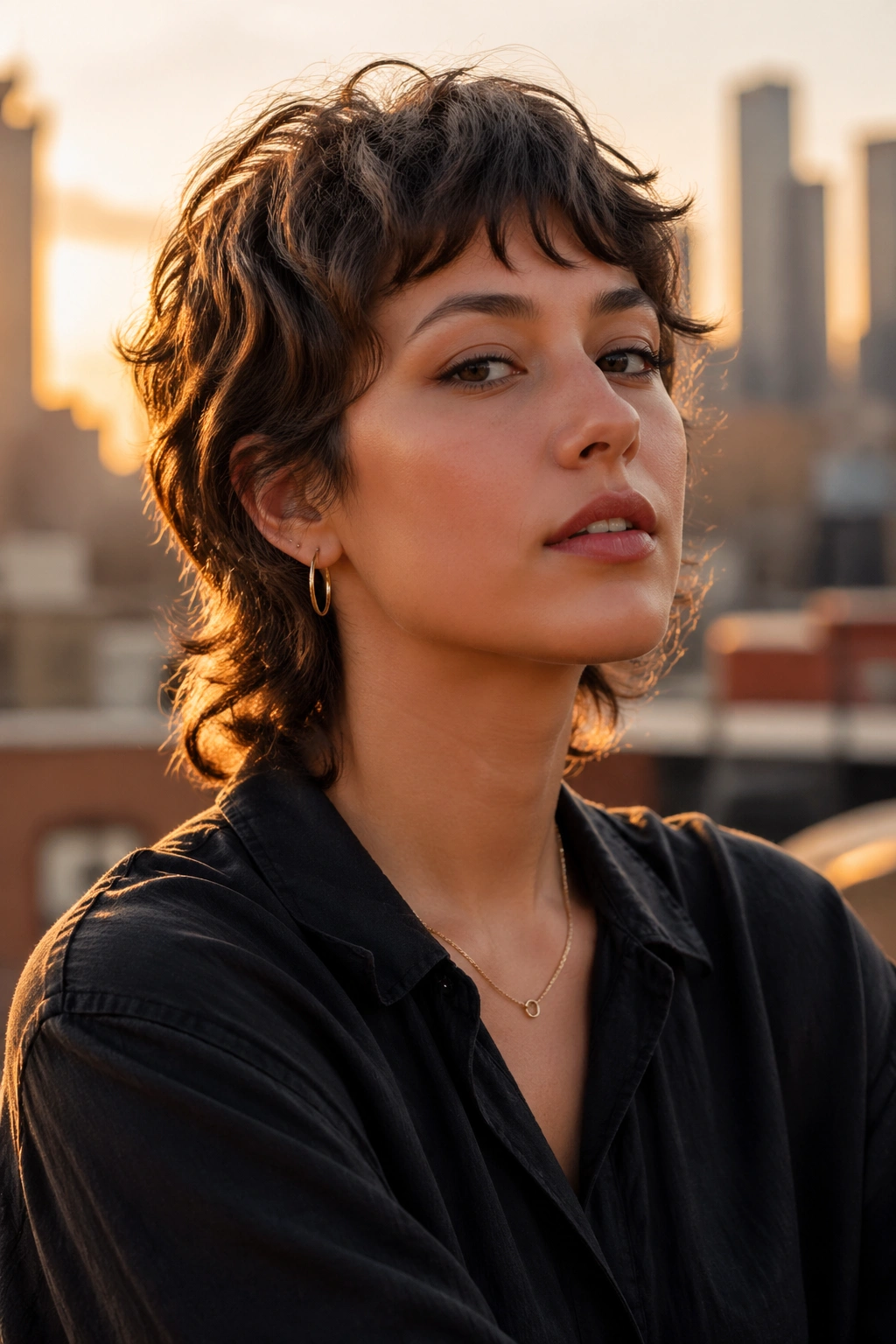
The word “mullet” makes people nervous, which is fair. But the lite version is softer than the name suggests. It keeps the front and crown shorter, then leaves a little extra length in the back so fine waves can swing instead of lying dead.
This cut works best when the layers are blended, not chopped. You want a touch of edge, not a costume. It’s strongest on hair with some natural wave, because the texture fills in the shape for you. If your hair is pin-straight, this one can look thin. With wave, it has a nice bit of attitude.
18. Undercut Pixie
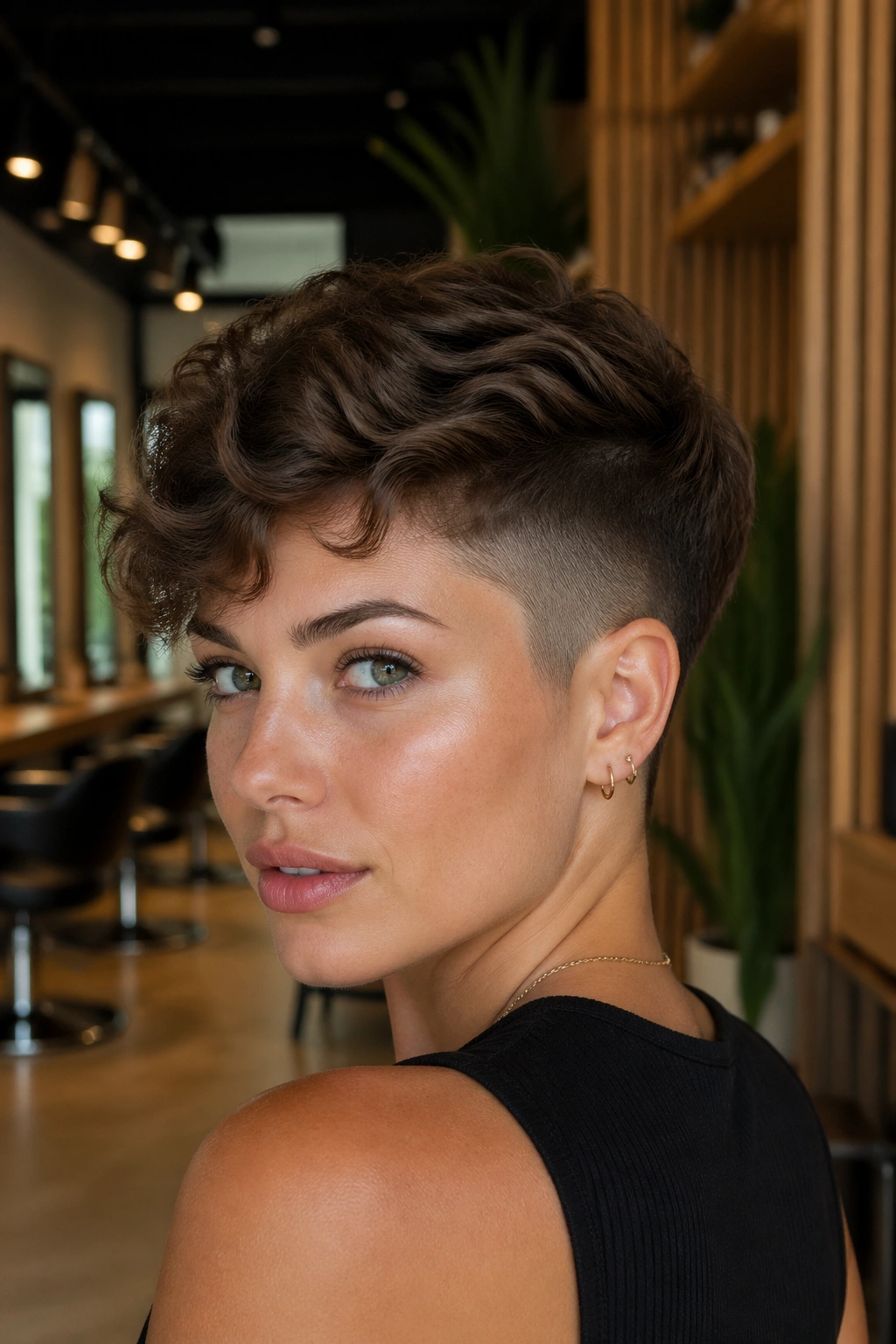
An undercut pixie can be a smart move if your fine hair is also dense and feels puffy underneath. Removing a little bulk at the nape and around the sides lets the top sit higher, which creates the illusion of more hair.
What Makes It Different
This cut is not about softness. It’s about contrast. The short underneath sections make the top look fuller and the wave pattern more visible.
- Best if your hair grows thick at the nape.
- Ask for the undercut to stay hidden when the hair is down.
- Keep the top long enough to finger-style.
- Use a matte paste if you want separation.
If your hair is fine and sparse, skip the undercut. It can expose too much scalp.
19. Curly-Wavy Crop with Long Top
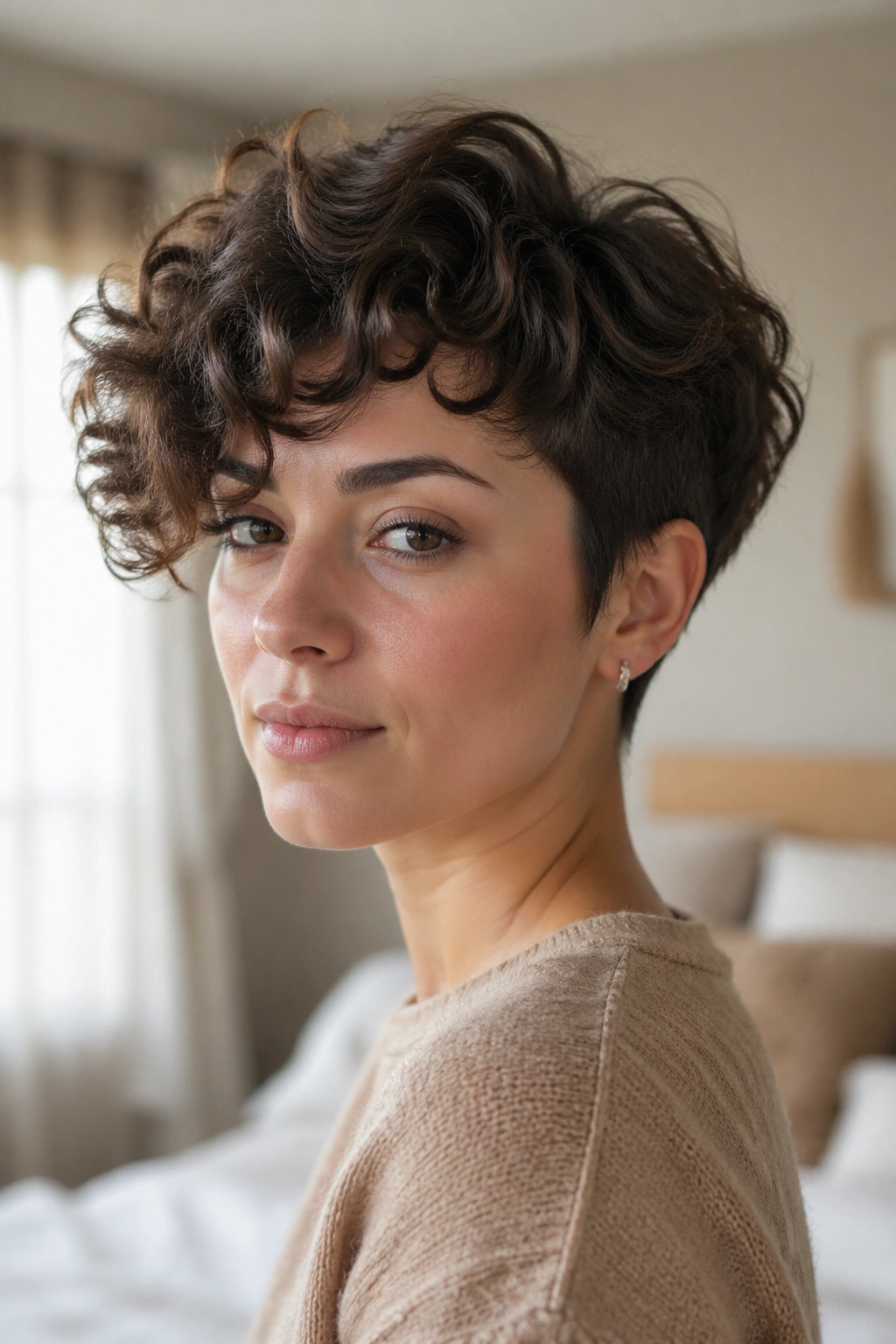
Some hair sits between a wave and a curl, and this crop handles that middle ground nicely. The sides stay short so the shape doesn’t balloon out, while the longer top shows off bends and spirals without pulling the whole haircut down.
The styling routine is simple. Put a little mousse in damp hair, scrunch, then leave it alone. If needed, diffuse on low heat for 5 to 10 minutes until the roots are dry and the top still feels soft. Do not over-dry the ends. Fine texture gets frizz fast when it’s cooked too long.
20. Soft A-Line Bob

An A-line bob gives more length in front than in back, which can make fine hair look heavier where it counts. The front pieces frame the face, while the shorter back keeps the nape from looking dragged down.
This is a good shape if your waves collapse at the ends. The angle creates an illusion of density because the front has a little extra swing. Keep the slope gentle. A sharp A-line can look dated fast, and it can also be harder to wear with natural waves. Soft is better here.
21. Chin-Grazing Layered Cut
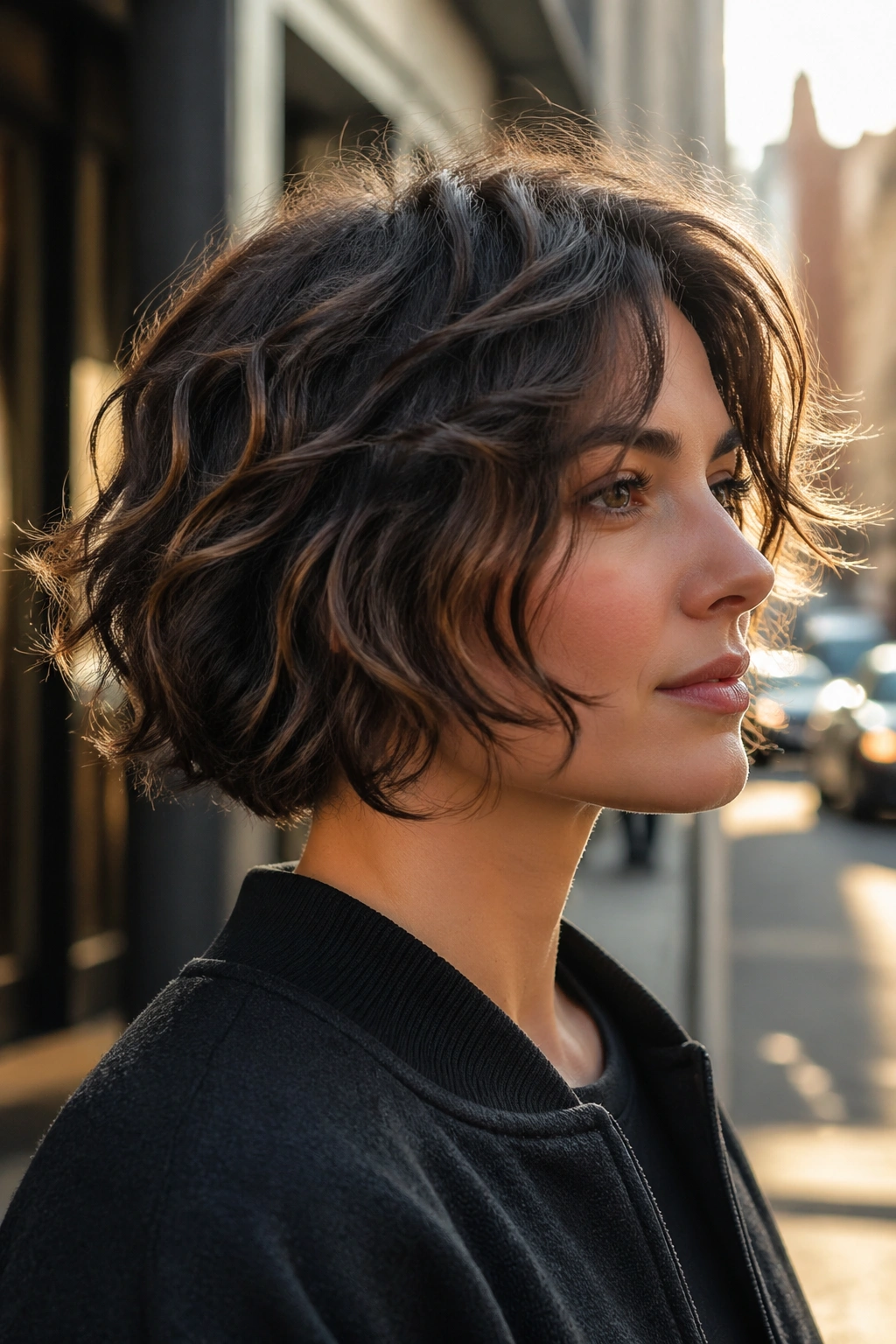
When the cut hits the chin, the wave pattern suddenly makes sense. That’s why this length works so well. It gives fine hair enough structure to feel full, but not so much length that the bend gets stretched out and tired.
How to Style It
Use a tiny amount of foam at the roots, then a light cream through the mids. More than that, and you lose the airy feel.
The layers should start below the cheekbone so the top stays clean. If the layers begin too high, the haircut can turn sparse at the sides. This cut is good with glasses, good with earrings, and good on mornings when you only have 8 minutes.
22. Tousled Italian Bob
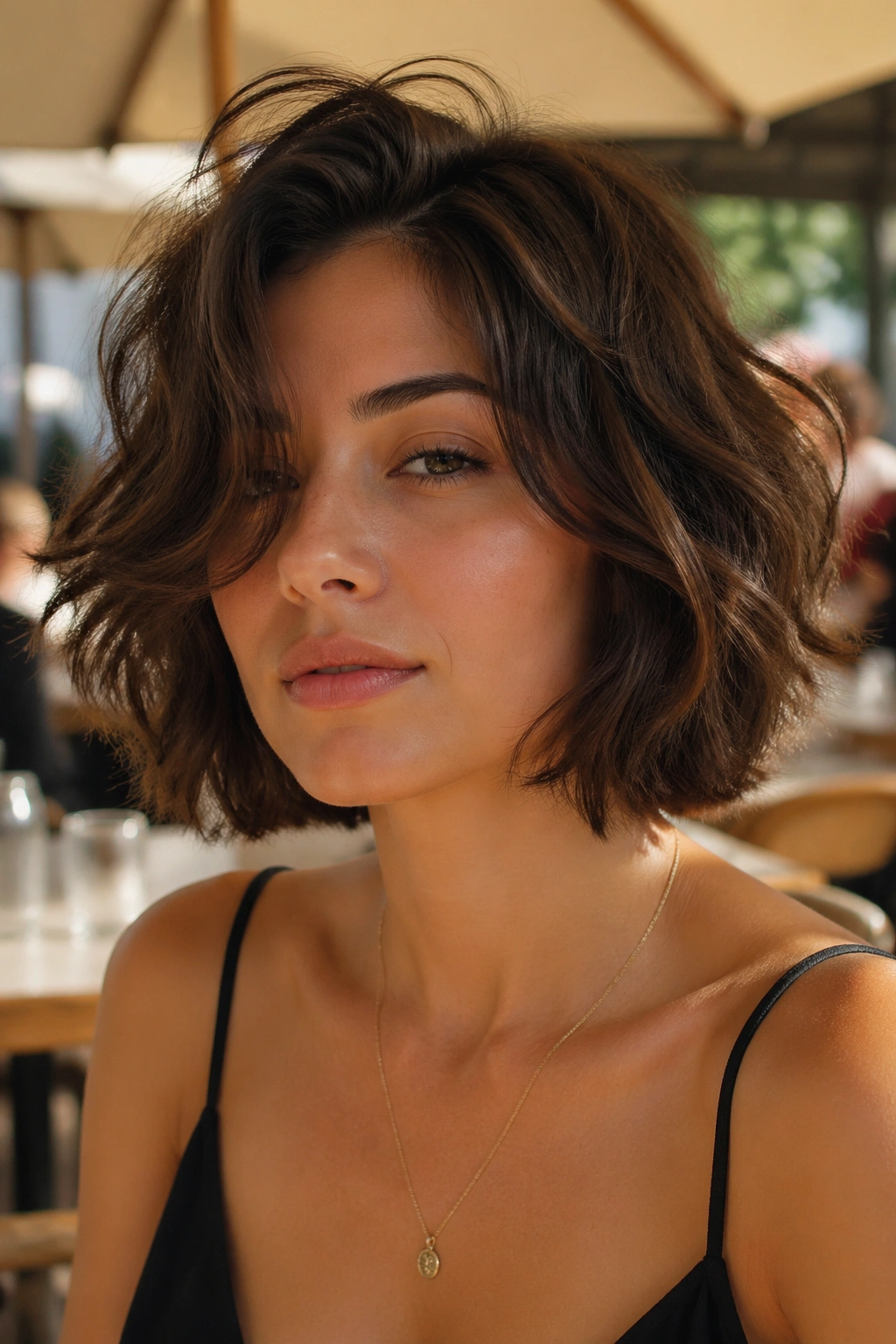
The Italian bob gets its charm from looking expensive without looking forced. On fine wavy hair, the shorter length and clean outline add body, while a loose wave keeps it from feeling stiff. The trick is volume at the roots and softness at the ends.
This version should stay around jaw or upper-neck length. A side part helps, especially if your crown is flat. Use a volumizing mousse at the roots before you dry, then bend a few face-framing pieces away from the face. The result should feel plush, not puffy. That’s a narrow lane, but it’s a good one.
23. Piecey Crop with Micro Bangs
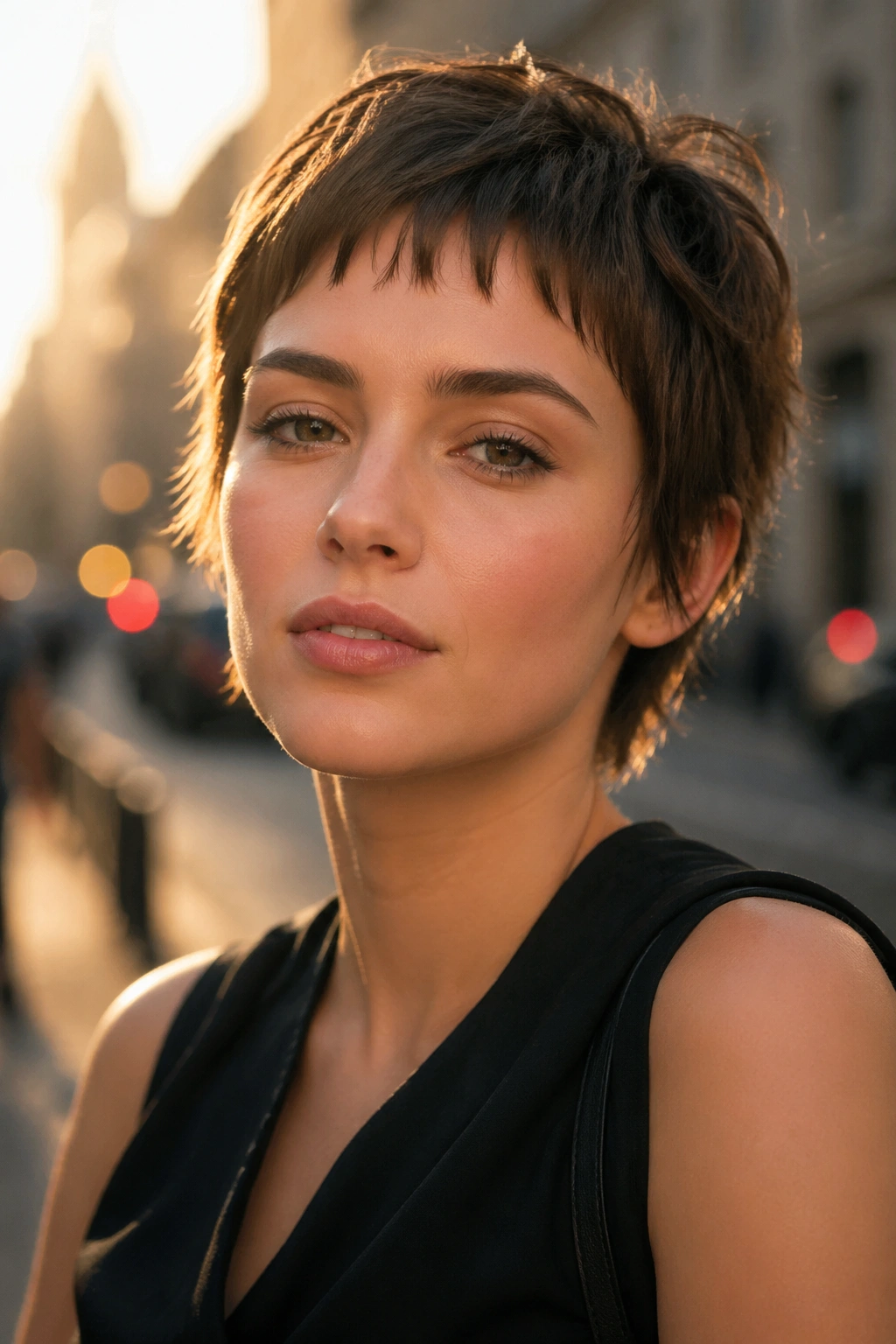
Micro bangs are not polite. That is part of the appeal. On fine wavy hair, they draw attention upward and make the rest of the cut feel fuller because the front is short and light.
Why It Works
A piecey crop with micro bangs removes weight from the fringe area, which keeps the hair from hanging into your eyes. The rest of the cut can then sit with a bit of lift.
- Keep the bangs thin, not thick.
- Let the ends stay broken up.
- Use a wax or paste on the bangs only.
- Leave some softness around the temples so it doesn’t feel harsh.
This one suits people who like a little edge and do not mind regular trims. The bangs need maintenance.
24. Wedge Bob
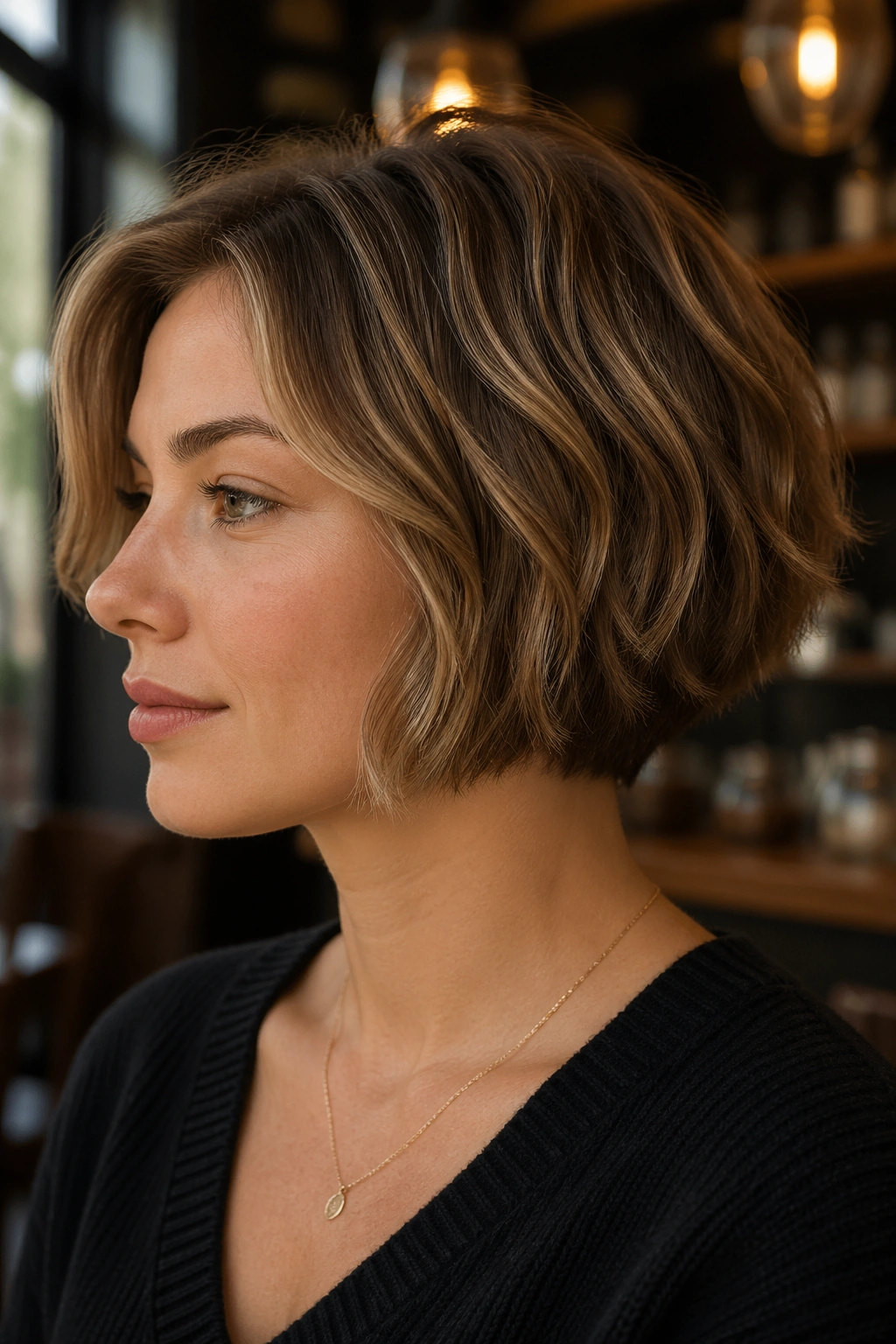
Nope, the wedge bob is not stuck in the past when it’s cut with a light hand. The short stacked back gives fine hair a built-in shape, and the longer sides keep the haircut from looking too severe. On waves, it can feel surprisingly modern.
What makes it useful is the way it lifts the crown without depending on styling tricks. That matters if your hair goes flat in humidity or after a long day. Keep the graduation soft, not bulky, and let the front skim the jaw. A wedge bob should support the wave pattern, not fight it.
25. Razor Cut Bob
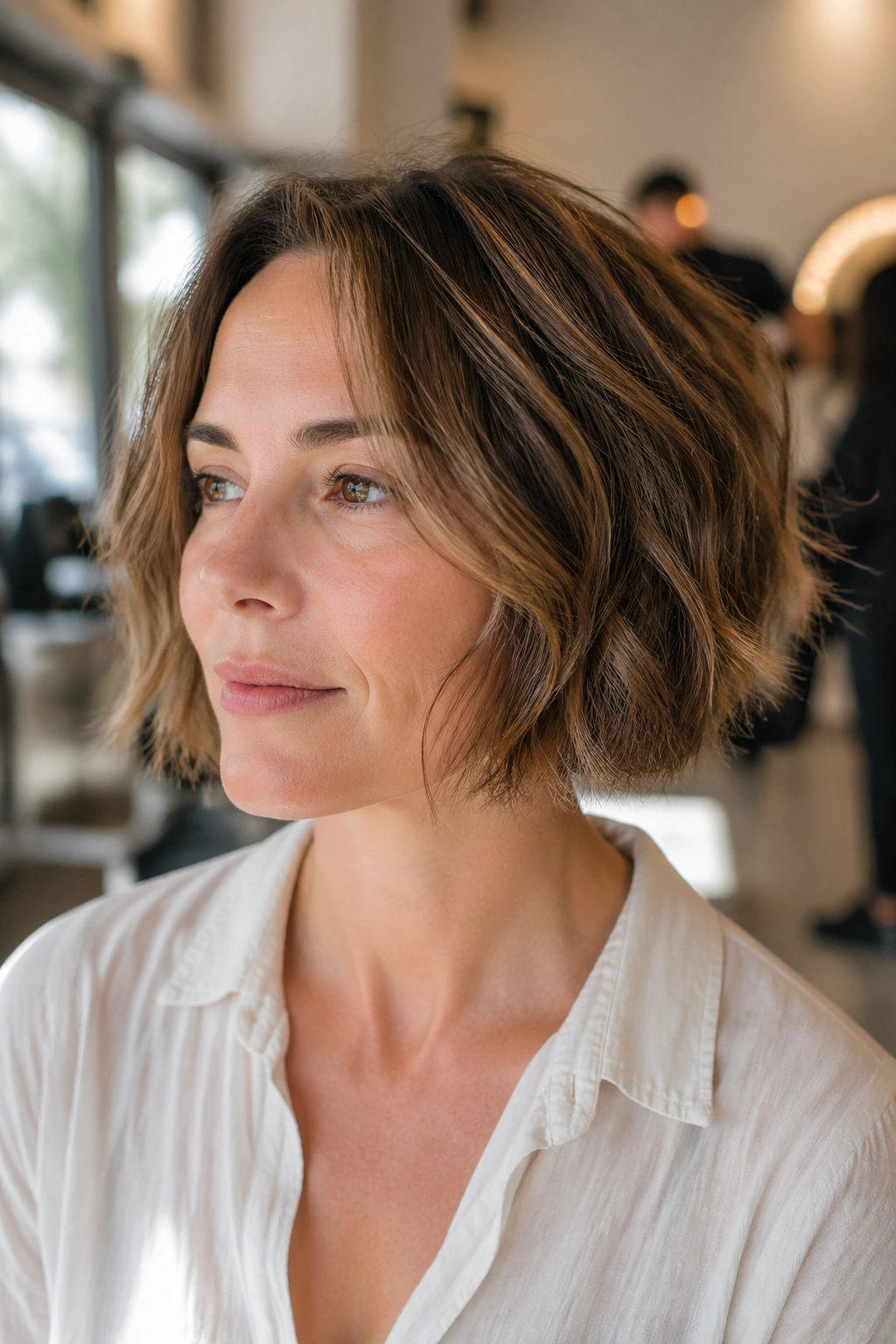
A razor cut can help fine wavy hair move, but only if the stylist uses it carefully. Too much razor work and the ends fray. A light pass through the perimeter and a few interior sections can give the bob a softer edge, which helps the wave sit better.
This cut works best on hair that has some density, even if each strand is fine. If the hair is sparse, the razor can make the ends look threadbare. Ask for texture, not shredding. There’s a difference, and you can see it the minute the hair dries.
26. Sculpted Pixie Bob
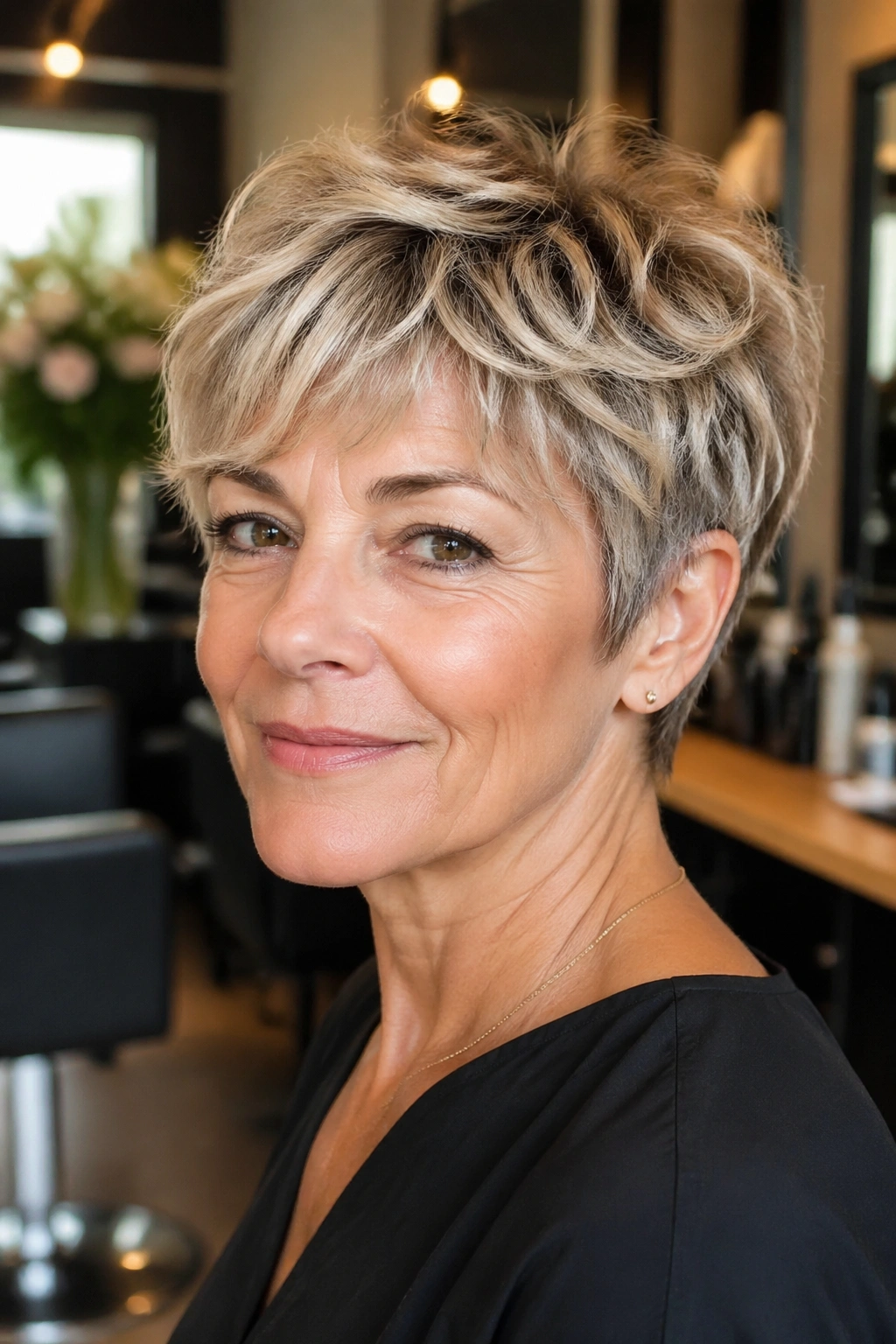
A sculpted pixie bob feels more polished than a bixie, with cleaner lines around the neck and ear area. Fine hair likes that kind of control. It keeps the shape from spreading out and lets the top section hold the wave.
This style is good if you want a short cut that still looks intentional when tucked behind the ears. Use a round brush at the crown or a quick blast of heat at the roots, then finger-comb the lengths. The shape should look close-cropped, not shellacked. That’s the difference between chic and stiff.
27. Wavy Lob with Deep Side Part
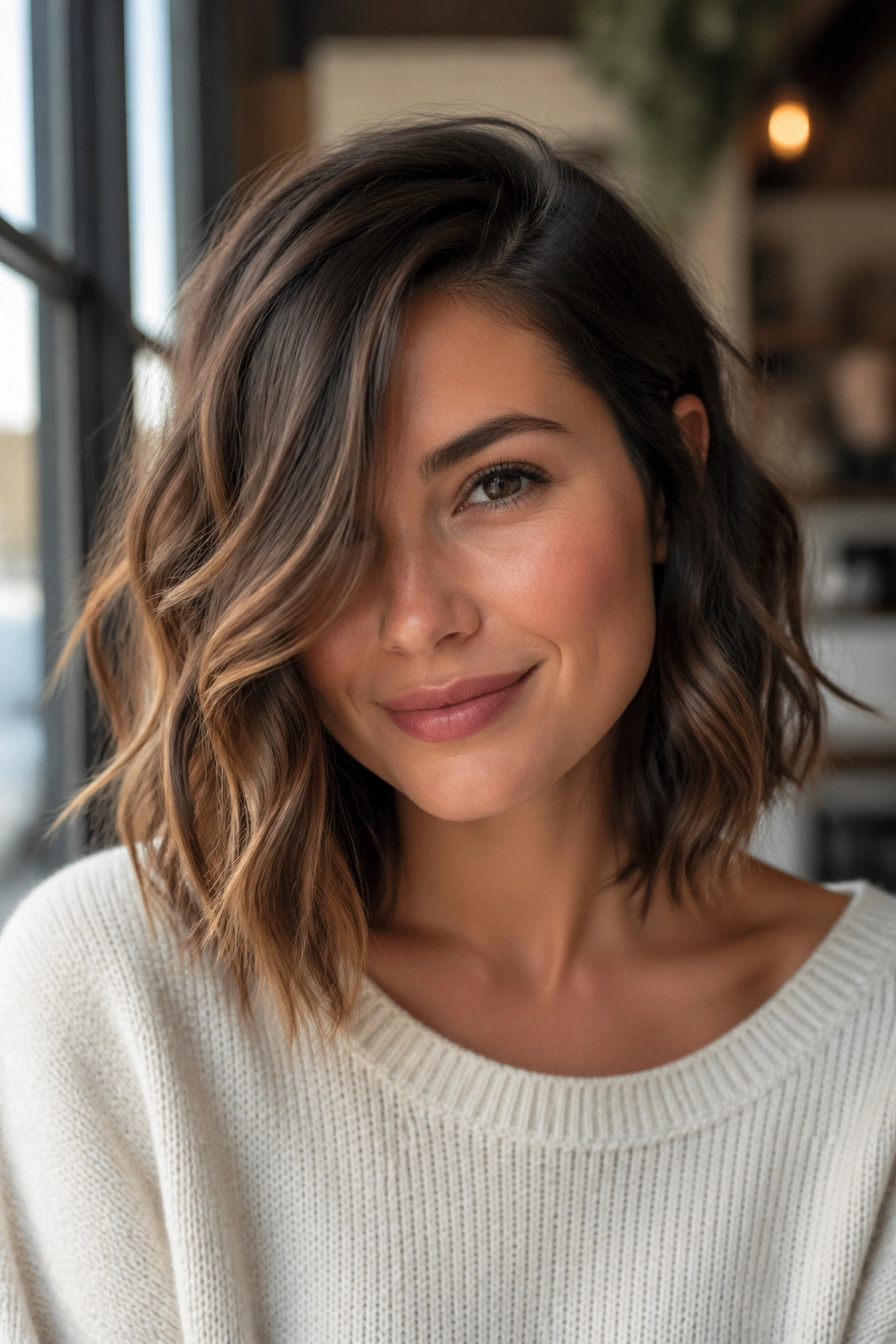
A deep side part on a lob can change the whole feel of the cut. It adds height at the roots, moves weight away from the center, and gives fine waves a little more drama without turning the haircut into a giant style project.
This is the option for someone who wants to keep a bit more length but still needs body. The waves should sit loose around the shoulders, not drag past them. If your hair collapses fast, keep the ends blunt and use the part to build lift. It’s simple, and that’s why it works.
28. Textured Bowl Cut
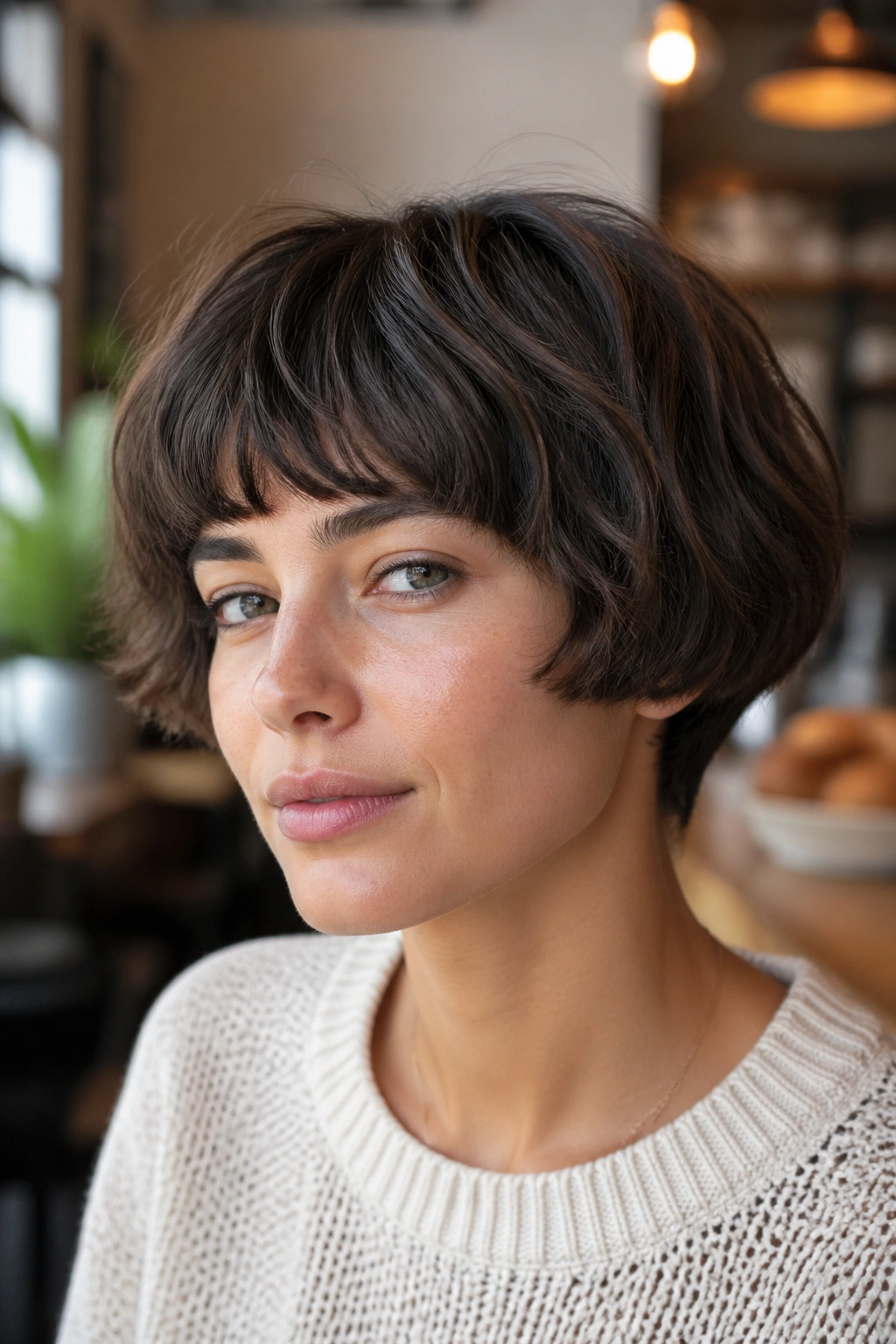
A modern bowl cut is not a helmet. That old mistake is the reason people wince at the name. The better version on fine wavy hair is soft around the edges, with piecey texture so the shape feels lived in rather than sealed on.
What to Watch For
The outline should hover around the cheekbones and ears, with enough movement to break up the circle.
- Avoid a hard, heavy fringe line.
- Keep the underside light.
- Let the top carry a little wave.
- Ask for softened corners near the temples.
This cut looks strongest when the hair has natural bend. Straight fine hair can make it too precise.
29. Short Wolf Cut
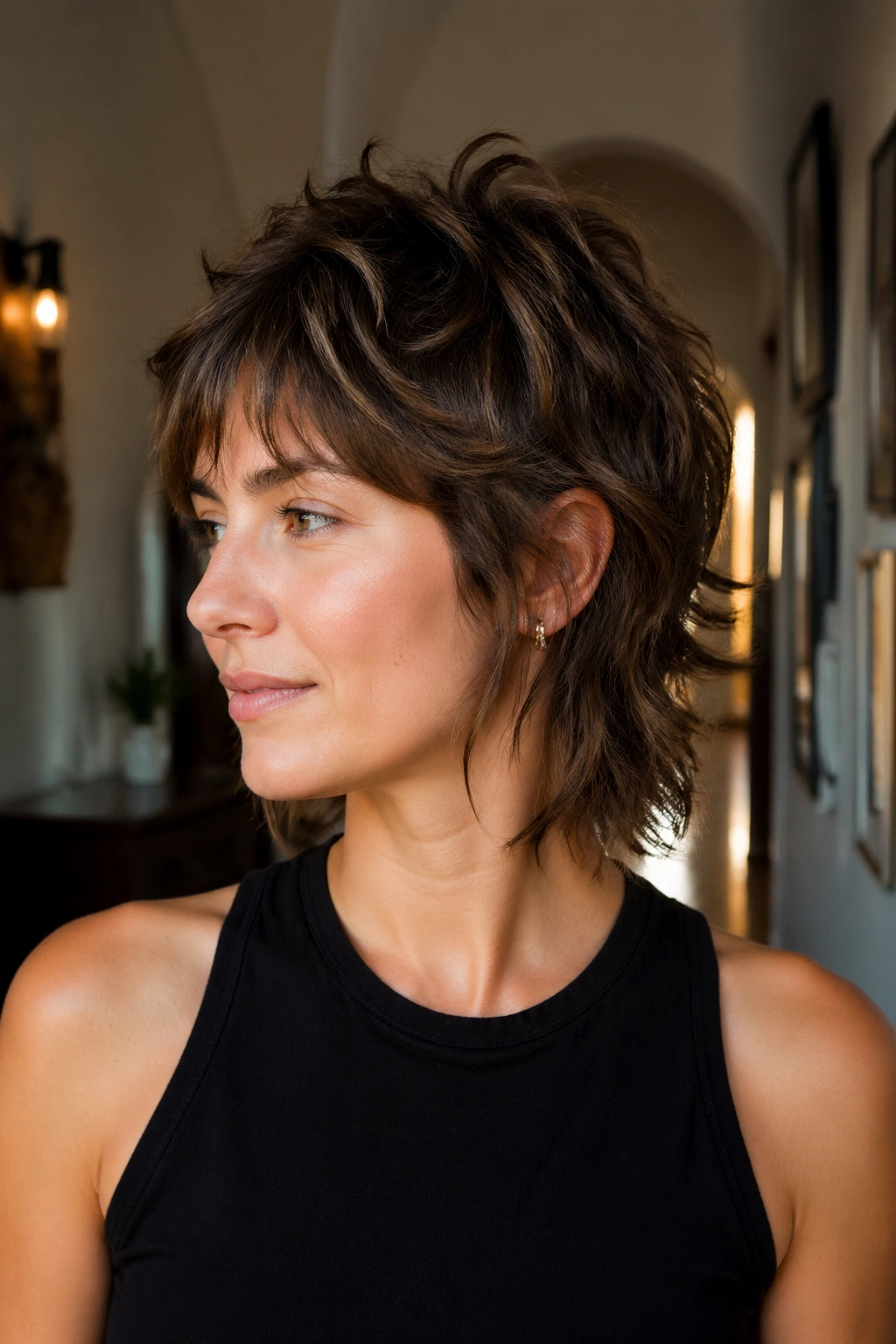
The short wolf cut leans shaggy up top and looser at the ends, which can be a good thing for fine waves. It creates lift near the crown and movement through the lower sections, so the whole haircut feels fuller.
The downside is obvious: too much layering and it puffs out in the wrong places. So keep the shortest layers controlled. Ask your stylist to preserve enough weight at the bottom that the cut still reads as a shape, not a cloud. If you like a little edge and some mess, this one has a lot going for it.
30. Side-Swept Crop
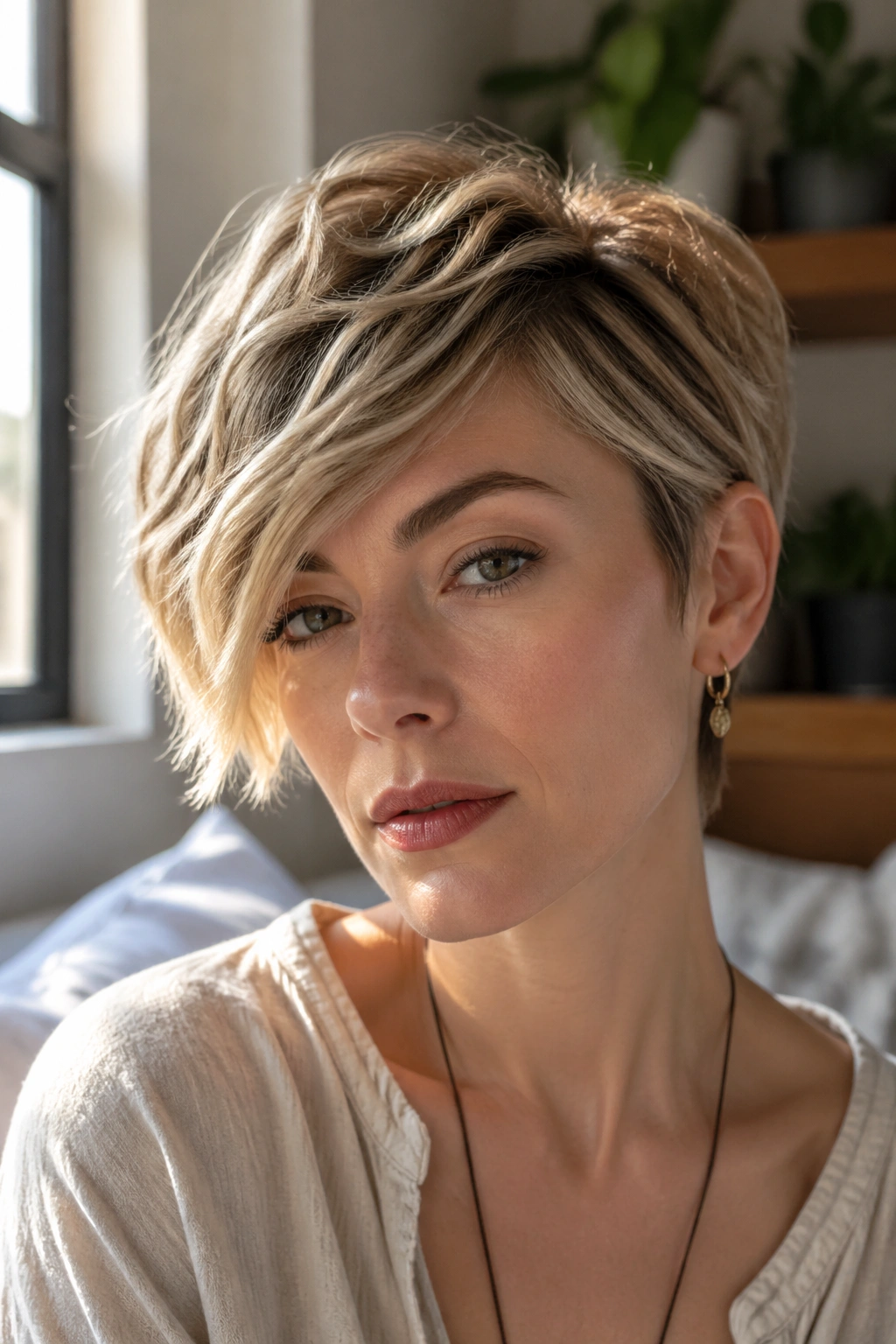
A side-swept crop does one simple thing well: it uses direction to build volume. Hair pushed diagonally across the forehead creates movement at the front and makes fine strands look less see-through.
This cut is a good choice if you want a short style that feels easy to wear on most days. The side-swept fringe can be long enough to tuck away or pin back, which helps on days when your hair refuses to cooperate. Keep the sides close and the top airy. That contrast is what gives it life.
31. Wispy Bang Bob
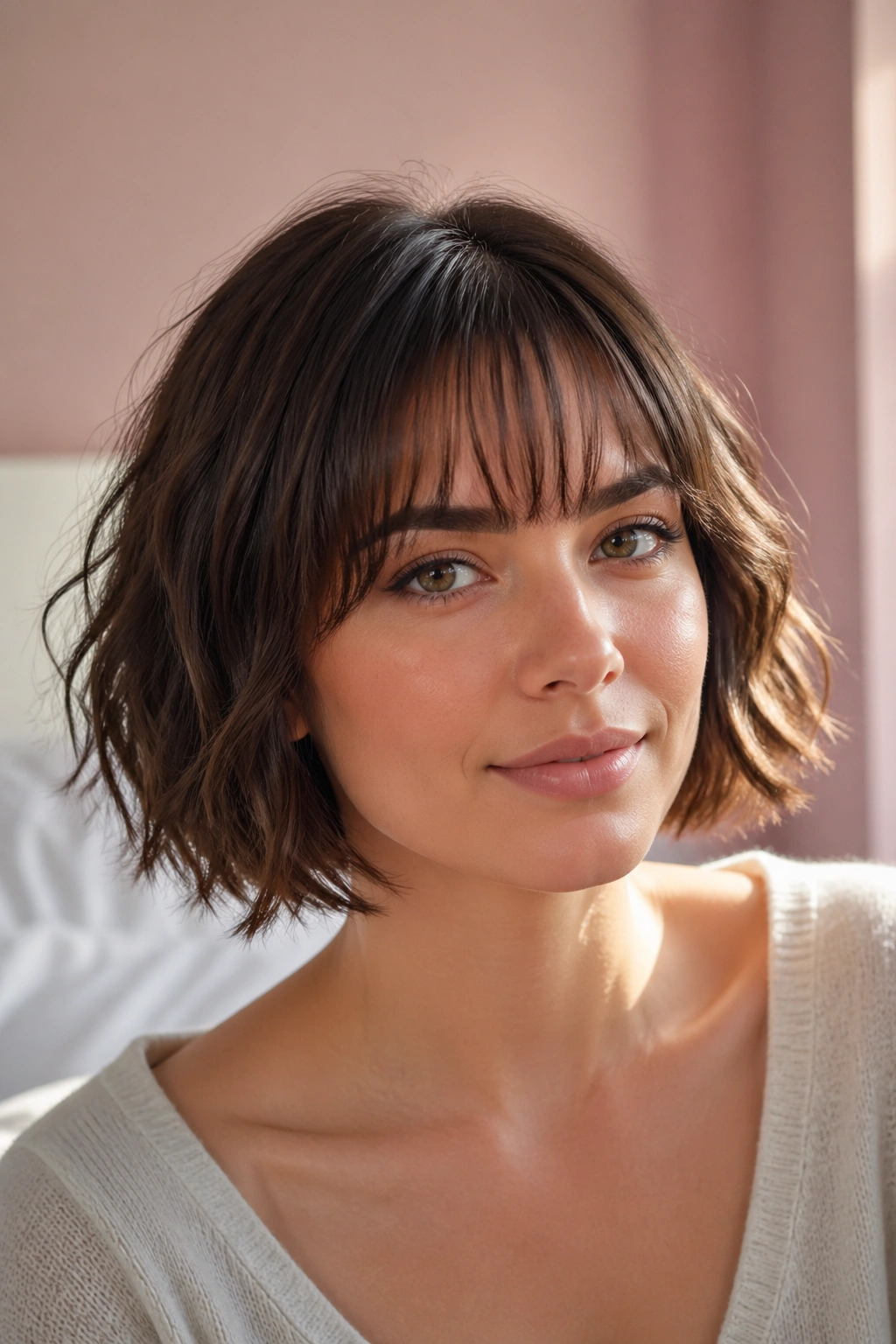
Can bangs be light enough for fine hair? Absolutely, and wispy bangs are the proof. They add softness to the face without taking up too much density at the front, which matters because heavy bangs can swallow a fine-haired haircut.
The bob underneath should stay compact, usually around chin length. The bangs should be narrow and feathery, with little breaks in them so they do not sit like a curtain. This works well if your forehead is something you want to soften, not hide. Subtle is the trick here. Stronger bangs would be the wrong move.
32. Flipped-End Bob
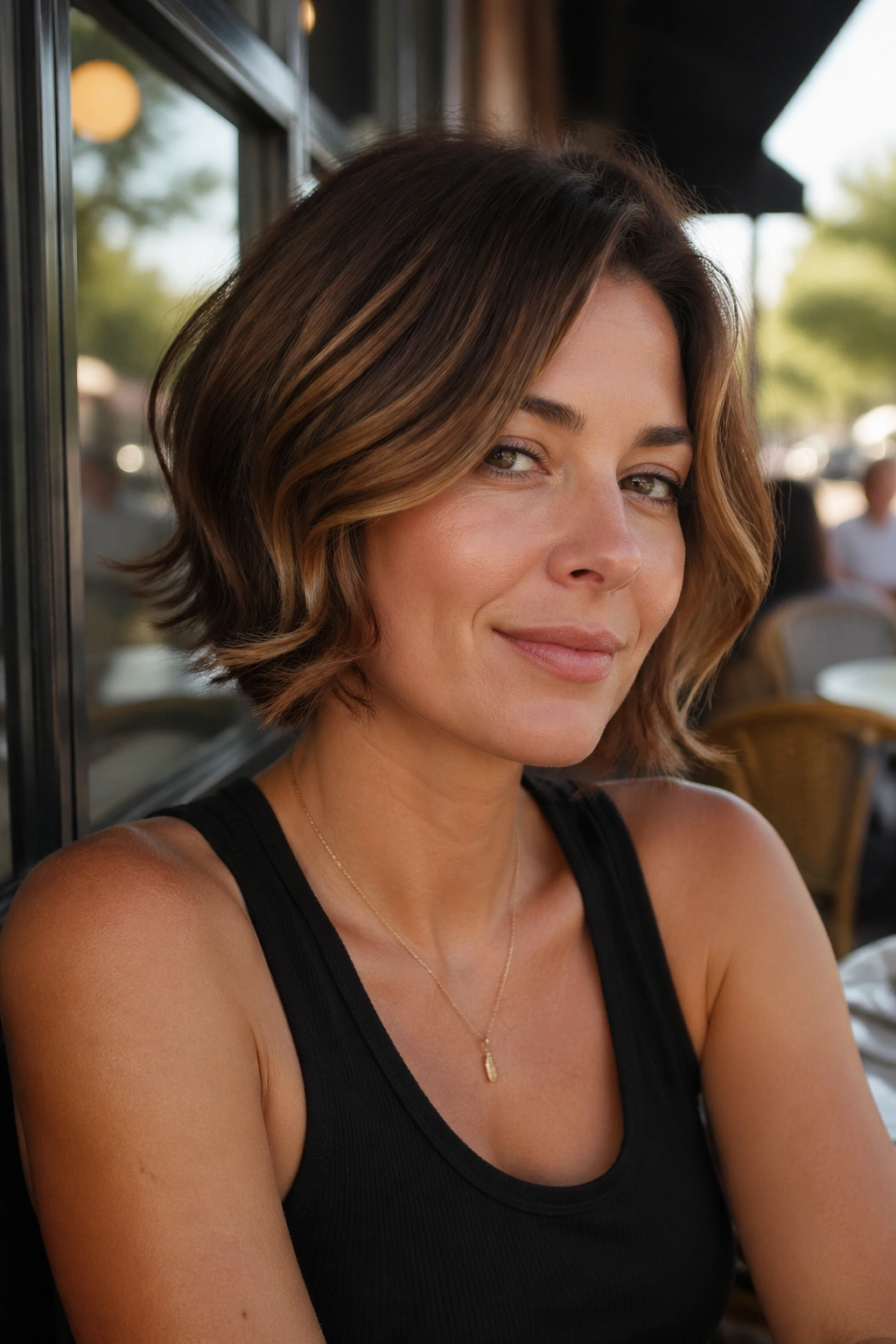
A flipped-end bob gives fine waves a playful edge. The ends turn outward just enough to show shape, and that outward curve keeps the haircut from falling flat against the neck. It also makes the hair seem a touch thicker because the silhouette gets wider at the bottom.
This is one of those styles that looks better when it’s not too polished. A large brush, a little heat, and a quick bend at the ends are enough. If your hair naturally flicks out, lean into it. Fighting that movement usually ends badly anyway.
33. Airy Shag Bob
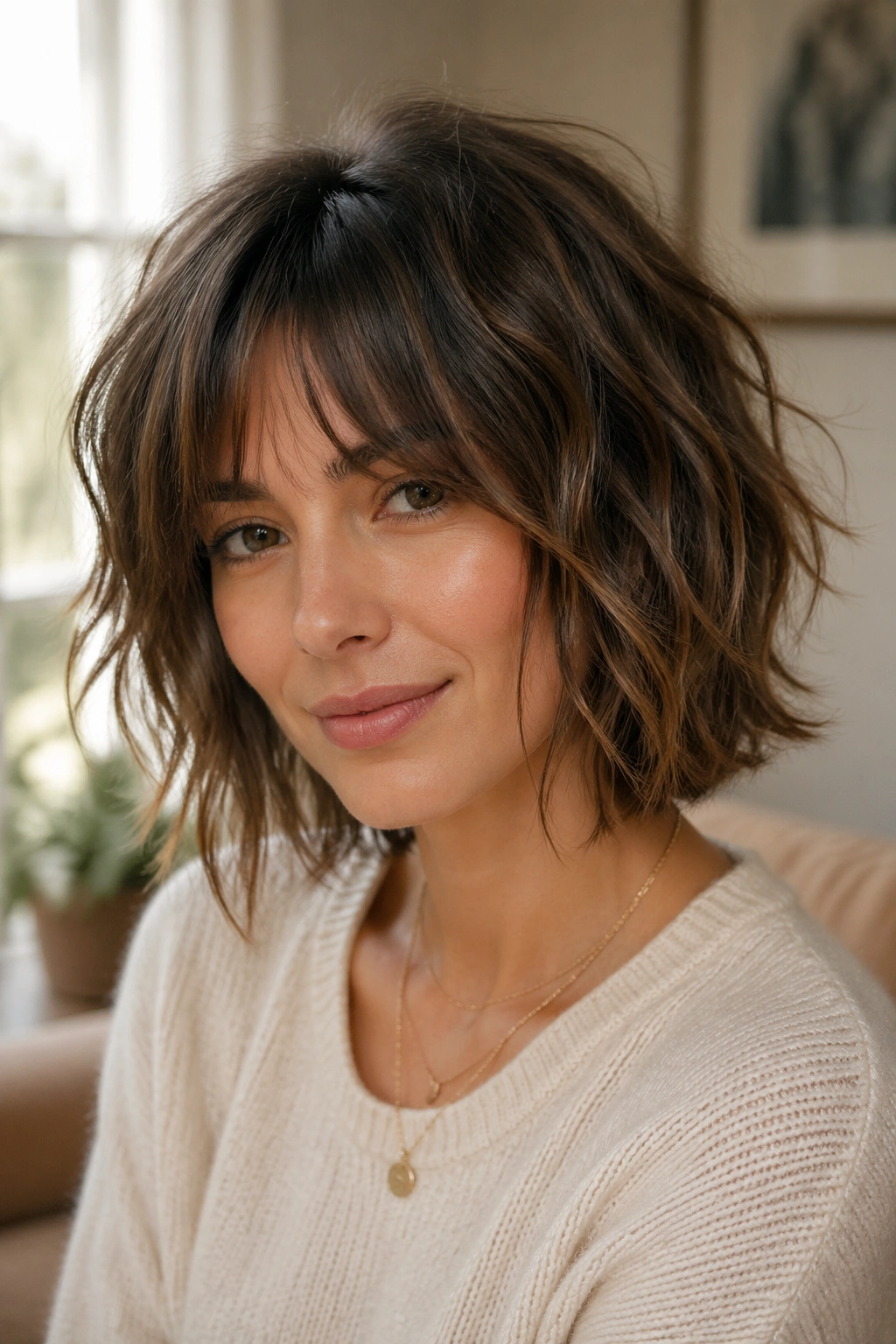
The airy shag bob is softer than the full shag and shorter than a lob, which makes it a useful middle ground for fine wavy hair. The layers create movement, but the bob length keeps the ends from getting stringy.
I like this one for hair that looks limp in winter and puffy in humidity. It balances both problems better than a one-length cut. Ask for face-framing pieces, a little crown lift, and ends that stay lightly textured. Use a mousse, scrunch, and leave some pieces imperfect. Perfect hair can look dead here. Slight mess is the point.
34. Tucked-Behind-Ear Crop

A crop that sits right around the ears sounds plain until you see what it does to fine waves. Tucking one side behind the ear opens the face, shows off earrings, and gives the cut a bit of asymmetry without needing a dramatic shape.
This works especially well when the back is neat and the top has some bend. The hair stays close, which helps fine strands look denser. Keep the side length just long enough to tuck, not so long that it droops. If you wear glasses, this cut plays nicely with the arms of the frames. Small detail. Big difference.
35. Soft Crop with Long Crown Layers
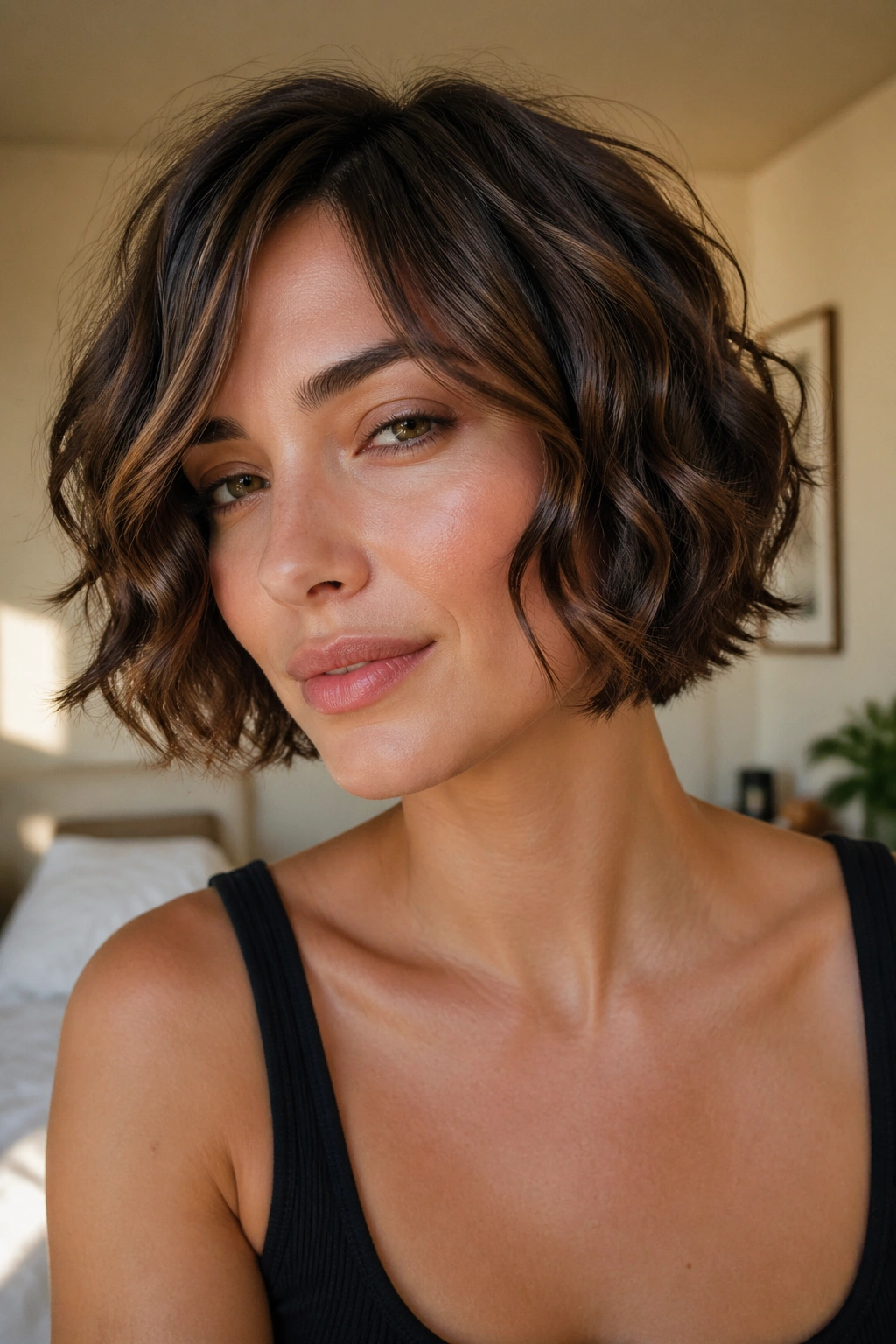
If you want one short style that gives fine wavy hair lift without looking fussy, this is the one I’d send people toward first. The sides stay soft and neat, while the longer crown layers create height and movement where flatness usually shows up.
What to Tell Your Stylist
Be specific. Ask for softness around the ears, length left through the crown, and enough texture for the waves to separate.
- Keep the crown layers long enough to bend, not spike.
- Preserve a clean outline near the neck.
- Avoid too many short layers through the lower back.
- Style with root lift and a small amount of cream through the mids.
It’s the kind of cut that looks good on day one and still looks like hair on day three. That matters more than people admit.