



Bridesmaid hair has one job: survive. It has to look polished in the church aisle, soft in photos, and still make sense after hugs, wind, champagne, and a dance floor that gets less forgiving by the hour. That is why wavy half-up styles keep winning. They hold the hair away from the face, show off the length, and still leave enough movement that the whole look feels alive.
The best versions are never stiff. A little texture goes a long way, and second-day hair usually behaves better than freshly washed strands that slip out of pins. A 1-inch curling iron, a few crossed bobby pins, and a light mist of flexible-hold hairspray can do more than a heavy shell of product ever will. The finish should move when the head turns. That matters.
There’s also a practical reason these styles keep showing up on bridal parties: they flatter almost every neckline and sit well next to earrings, veils, combs, and bouquet photos taken from awkward angles. Tight half-ups can look too formal. Softer ones tend to age better in pictures, which is the quiet little detail people notice later.
Some bridesmaids want a center part and clean lines. Others want braids, twists, or a little crown lift so the style doesn’t flatten by dinner. The useful part is that wavy half-up hair can be adjusted without losing the mood. The first style is the one I reach for when the brief is elegant but not precious.
1. Twisted Crown Half-Up
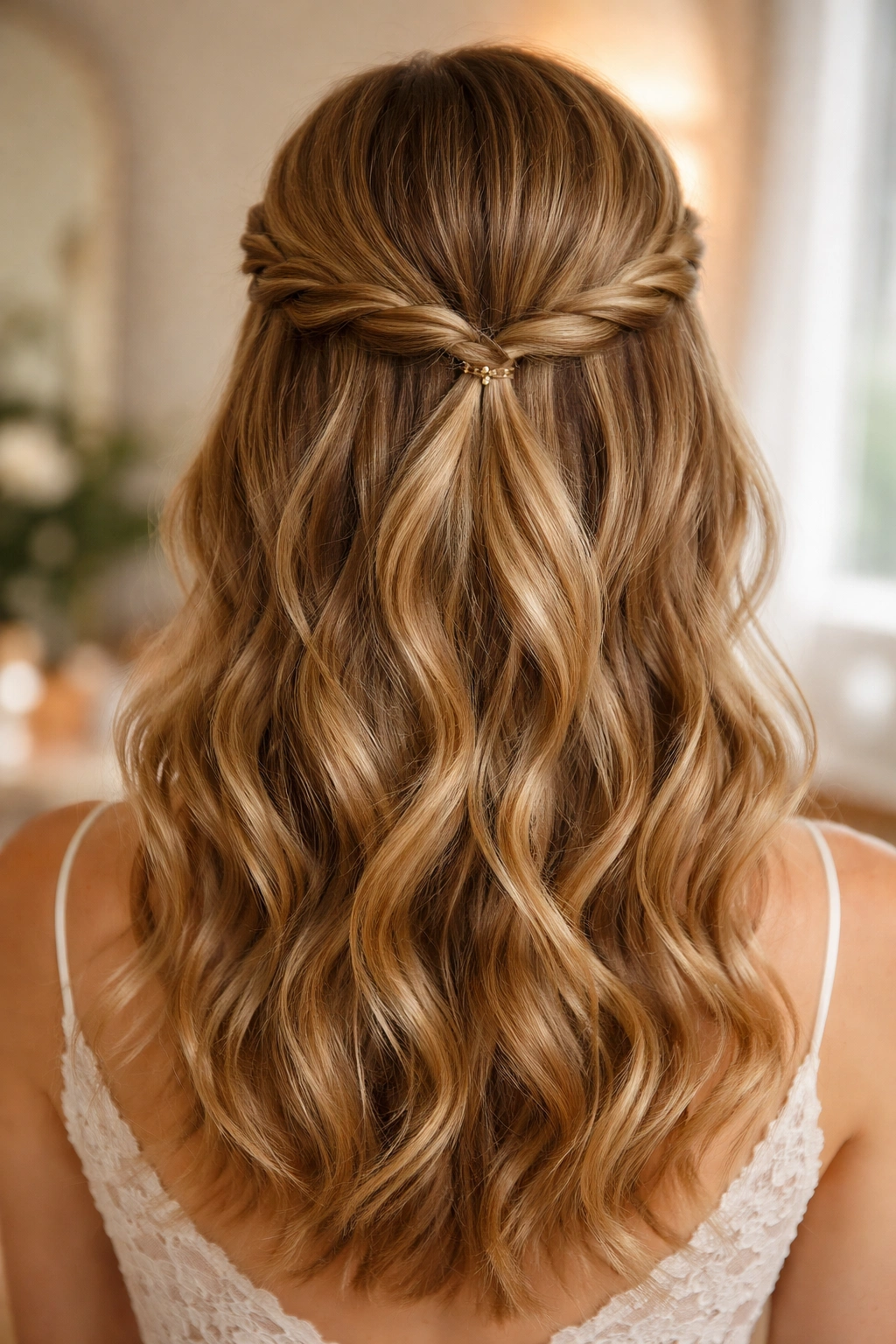
A twisted crown half-up is the safest kind of pretty: no drama, no fussy details, just soft structure sitting above loose waves. It starts with two sections taken from just behind each temple, twisted backward, and pinned where they meet at the back of the head. The waves stay visible from the ears down, which keeps the style from feeling too closed in.
Why it works so well
The twist gives you shape without needing a braid, and that matters when the hair is already wavy. Braids can start to look busy if the dress has a strong neckline or lots of lace. Twists feel cleaner. Use two bobby pins per side, crossed like an X, and hide them under the twist so they don’t flash in photos.
A lot of bridesmaids like this one because it sits nicely on medium-length hair and long hair alike. If the hair is fine, lightly backcomb the crown before twisting. If it is thick, keep the sections narrower than you think you need. Small twists hold better than oversized ones.
Best way to finish it
Keep the ends loose and touchable. A few face-framing pieces near the cheekbones soften the look, but don’t pull them too far forward or the whole style starts to feel messy instead of romantic. Small difference. Big effect.
2. Braided Accent Half-Up
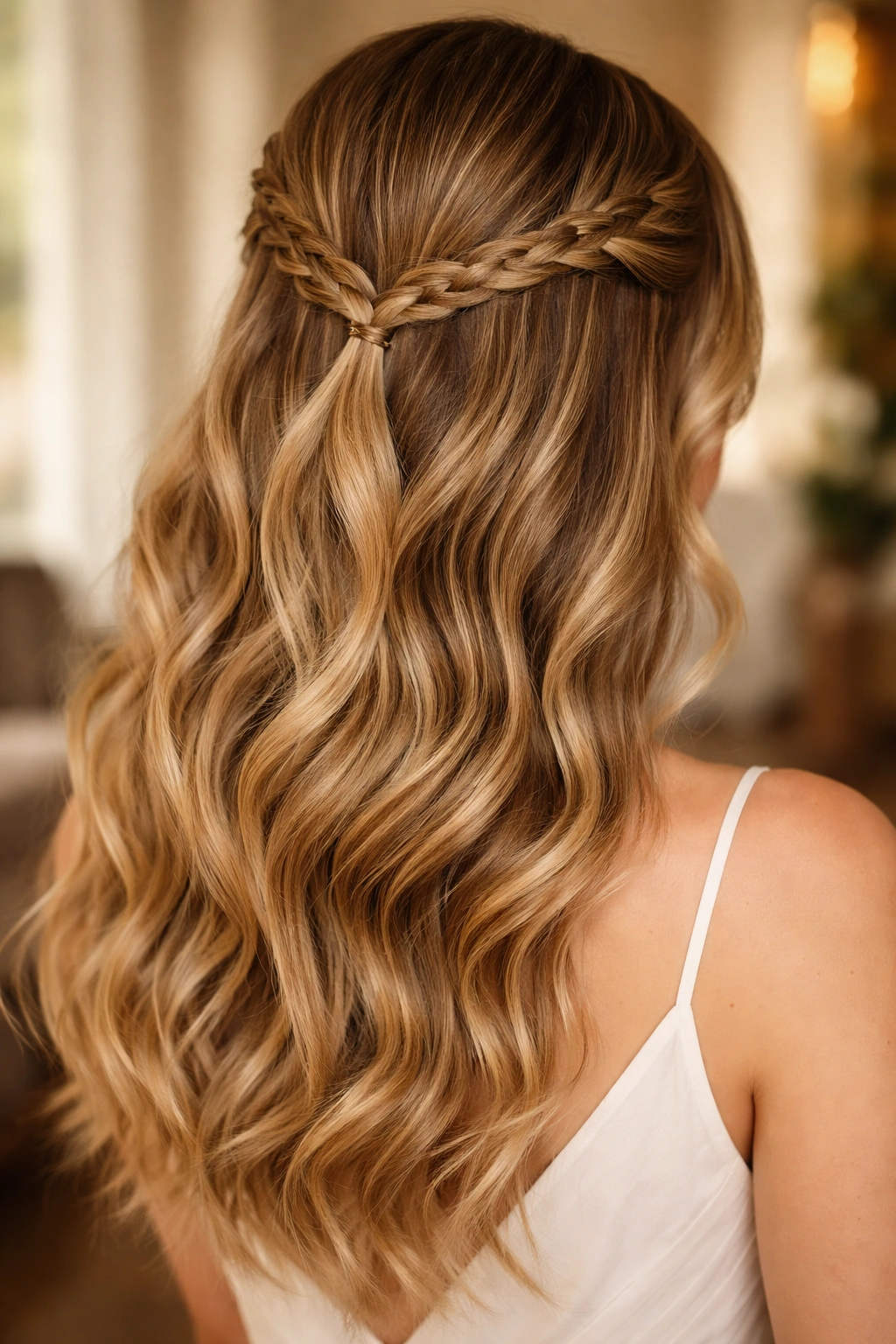
A braided accent half-up has a little more detail than a twist, but it still feels easy on the eye. The sweet spot is a narrow braid started behind the ear or just above it, then pulled to meet the other side at the back. Leave the rest of the hair in loose waves, not polished curls. That contrast is the whole point.
What makes it different
Unlike a full crown braid, this version leaves more of the wave pattern open, so the style keeps its softness. That matters if the bridesmaid dresses are simple and the hair needs a bit of texture to keep up. A 3-strand braid about 1/2 inch wide is enough. Anything thicker can start to dominate the style.
The braid also gives a useful anchor point for pins. If the hair slips, tuck one pin through the braid and one beneath it into the hidden base. That small cross-lock keeps the braid from drifting apart by the end of the night. Do not braid too tight at the scalp. It can pull the face upward in a way that looks sharp in photos.
A good fit for
This style works especially well on medium to long wavy hair with a side part. It likes a little texture spray. It does not need shine serum everywhere — only a tiny bit on the braid ends if they look fuzzy.
3. Pearl-Pinned Middle Part
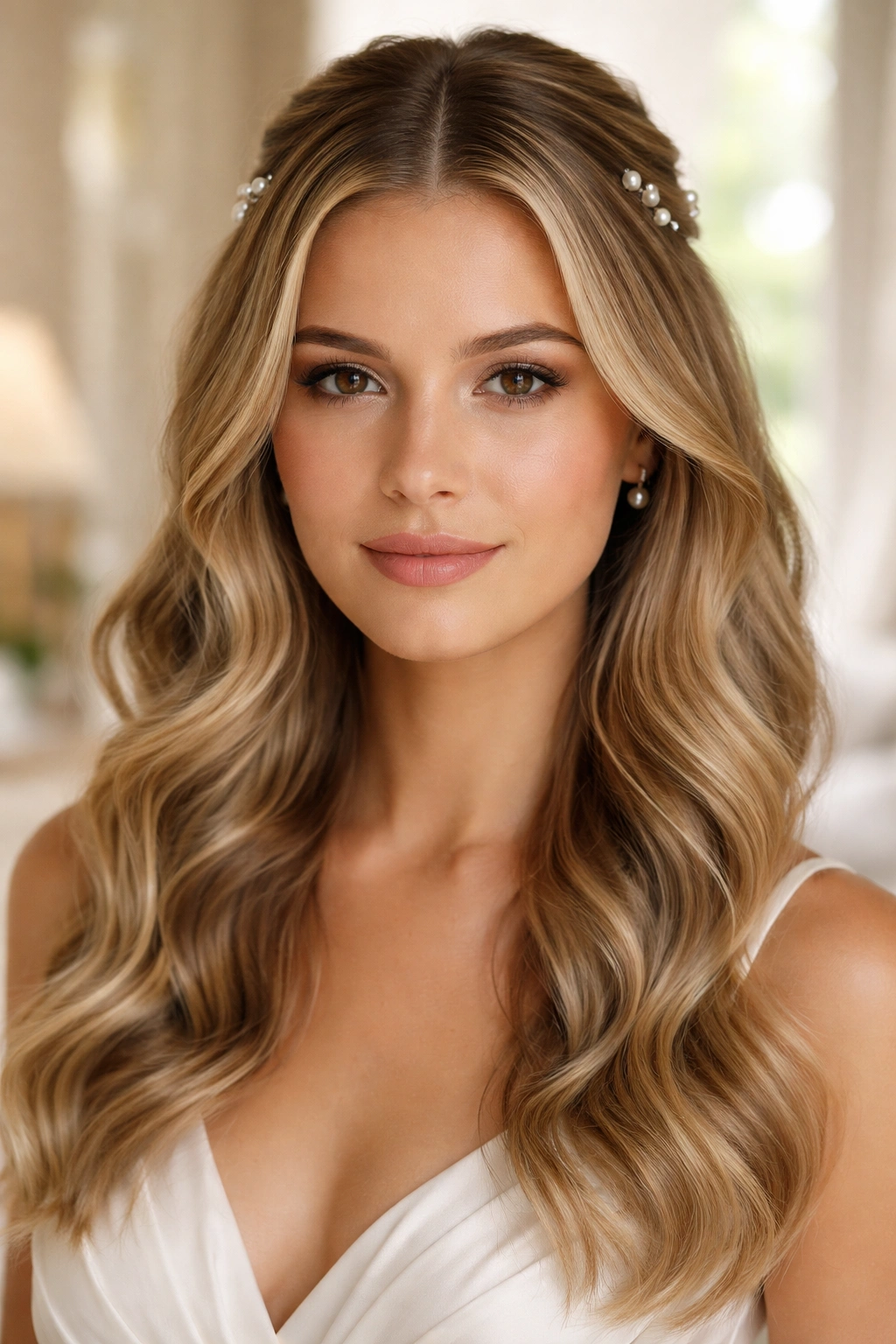
Pearl pins can save a bridesmaid hairstyle that would otherwise feel too plain. A center part with loose waves and three or four pearl pins tucked just behind one temple looks deliberate without trying too hard. It’s the kind of style that lets the dress, the earrings, and the makeup do some of the heavy lifting.
What keeps it from looking flat
The trick is placement. Put the pins in a small diagonal line or a short cluster rather than scattering them randomly. One line of pearls near the part can look modern. Random dots can look like they were placed in a hurry. That’s the difference, and it’s obvious in photos.
This style works best when the crown has a little lift. A few gentle backcombed strokes at the roots are enough. You do not want a big bump. Just enough shape so the top half doesn’t collapse into the part by cocktail hour. If the hair is too silky, mist the roots with dry texture spray first.
How I’d wear it
I like this with a satin dress or anything with a square neckline. The clean center part keeps the face open, and the pearls add just enough brightness near the temple to catch the eye. Quiet, but not boring.
4. Bubble Half-Up for Extra Height
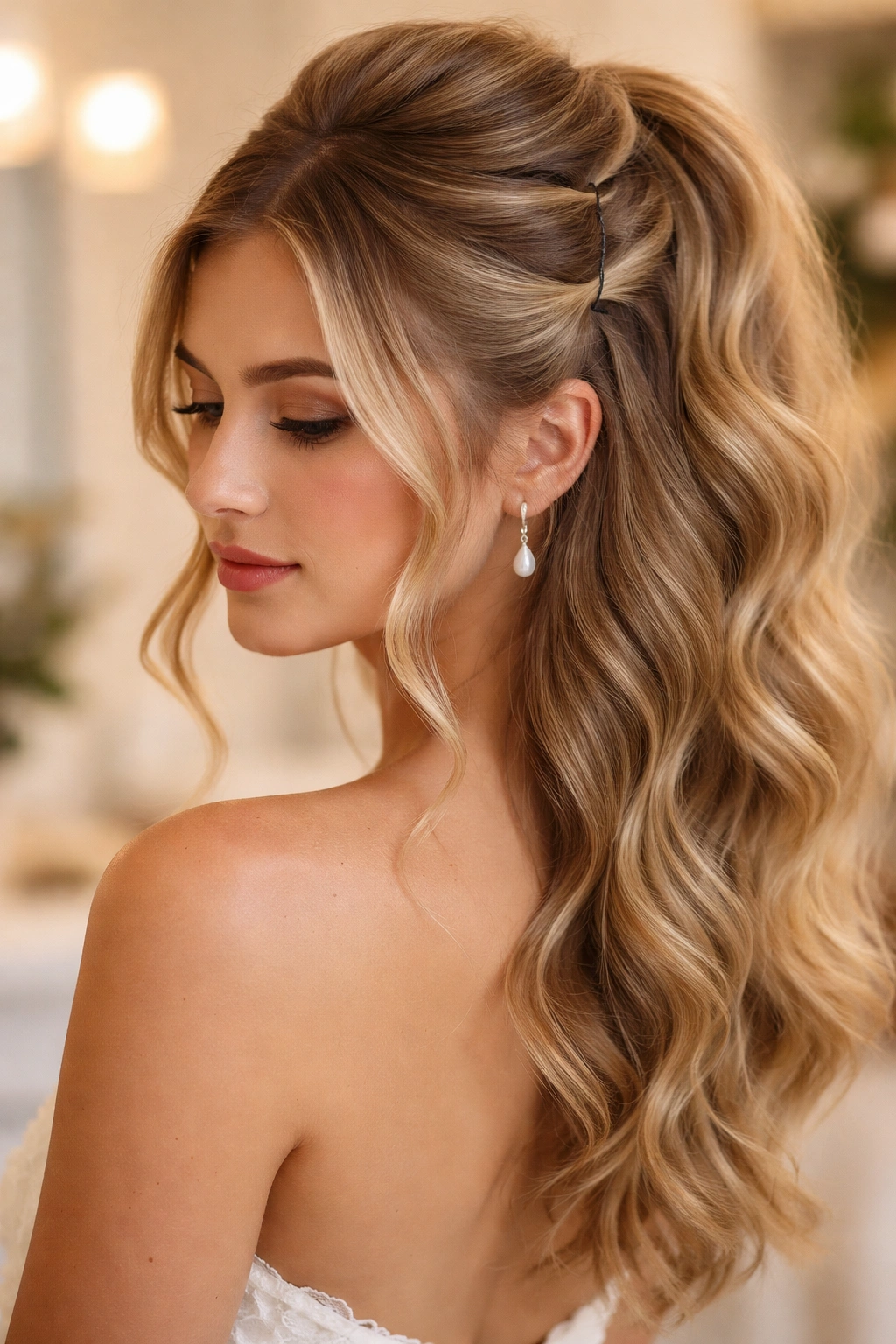
A bubble half-up is a smart choice when the bridesmaids have long hair and want something a little playful without looking childish. The upper section is tied with small clear elastics every inch or so, then gently puffed between each tie to create rounded little bubbles. The loose waves underneath keep it wedding-friendly.
Why it holds attention
The bubble structure gives the top half some shape that lasts, even if the hair is thick or heavy. A normal twist can sink under its own weight. Bubbles have more visual grip. Use clear elastics spaced about 1 inch apart, then pinch each section outward until it looks rounded, not stretched flat.
A lot of people overdo the puffing. Don’t. The bubbles should look soft and full, not like a chain of balloons. If the dress has a lot going on — sequins, beading, a bold neckline — keep the bubbles neat and small. If the dress is plain, you can loosen them a little more. Balance beats volume.
Best for
This style shines on long wavy hair that needs extra control. It also photographs well from the back, which is handy when the bridal party is lined up in a row and the photographer keeps yelling for everyone to turn their shoulders.
5. Low Knotted Half-Up
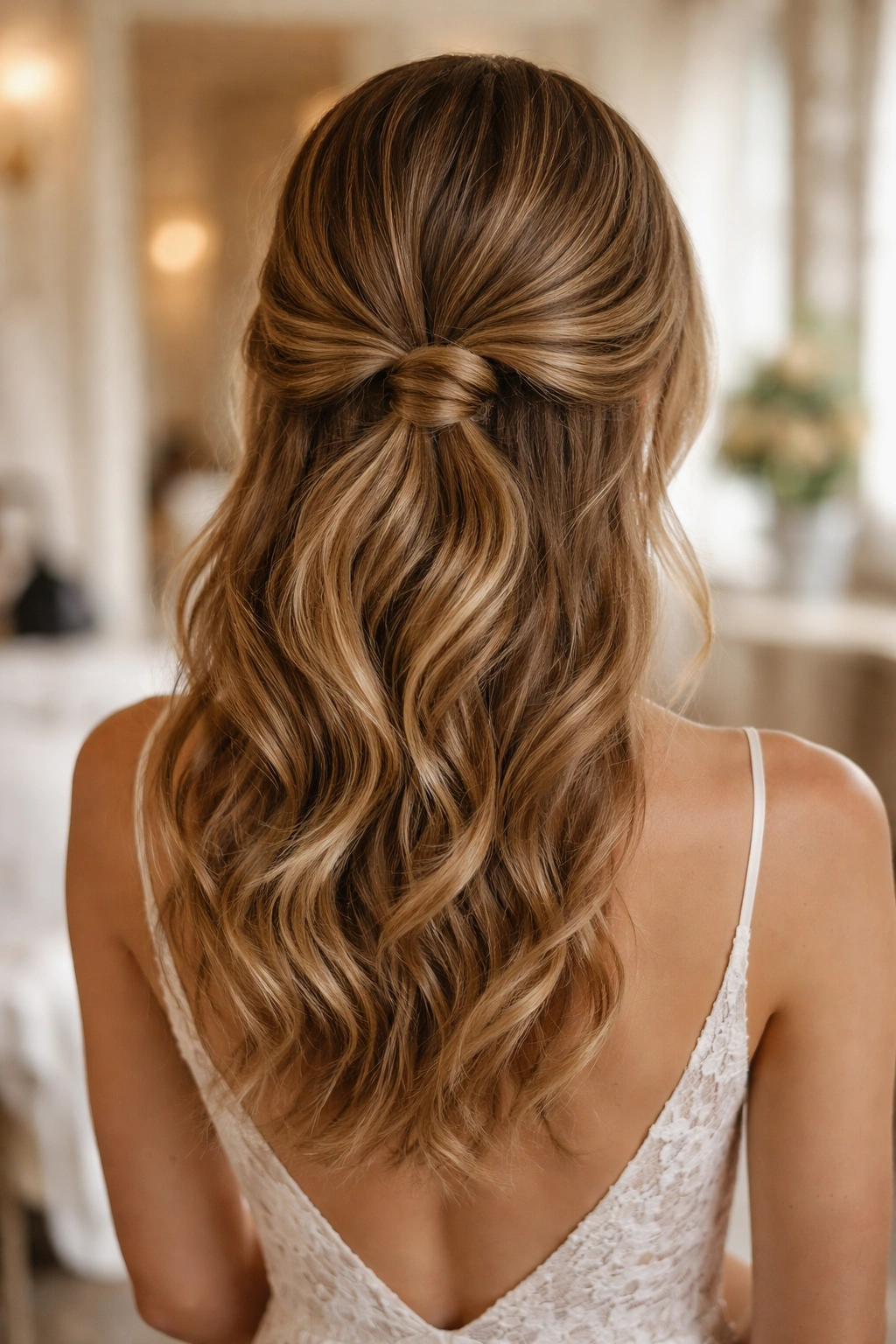
A low knotted half-up sits closer to the nape than most of the other styles, and that lower placement gives it a grown-up feel. Two side sections are brought back and tied into a loose knot, then pinned flat so the knot stays centered. The rest of the hair falls in soft waves below it.
This one is elegant without being fussy. That is why it works for bridesmaid hair so often. A higher knot can look too perched. A low knot feels calmer and pairs well with dresses that have open backs or lower necklines. If the knot is too tight, though, the style starts to lose its softness. Leave the knot slightly loose and tuck the ends under rather than wrapping them hard.
Little detail, big payoff
Use a fine-tooth comb only at the crown if you want a touch of polish. The rest should stay airy. A narrow knot shows off shine in the hair, especially when the ends are left wavy and not curled into perfect tubes. That little bit of irregular movement makes the style feel human.
It is one of my favorites for bridesmaids who dislike anything too obvious. It looks styled. It does not look overworked.
6. Waterfall Braid Half-Up
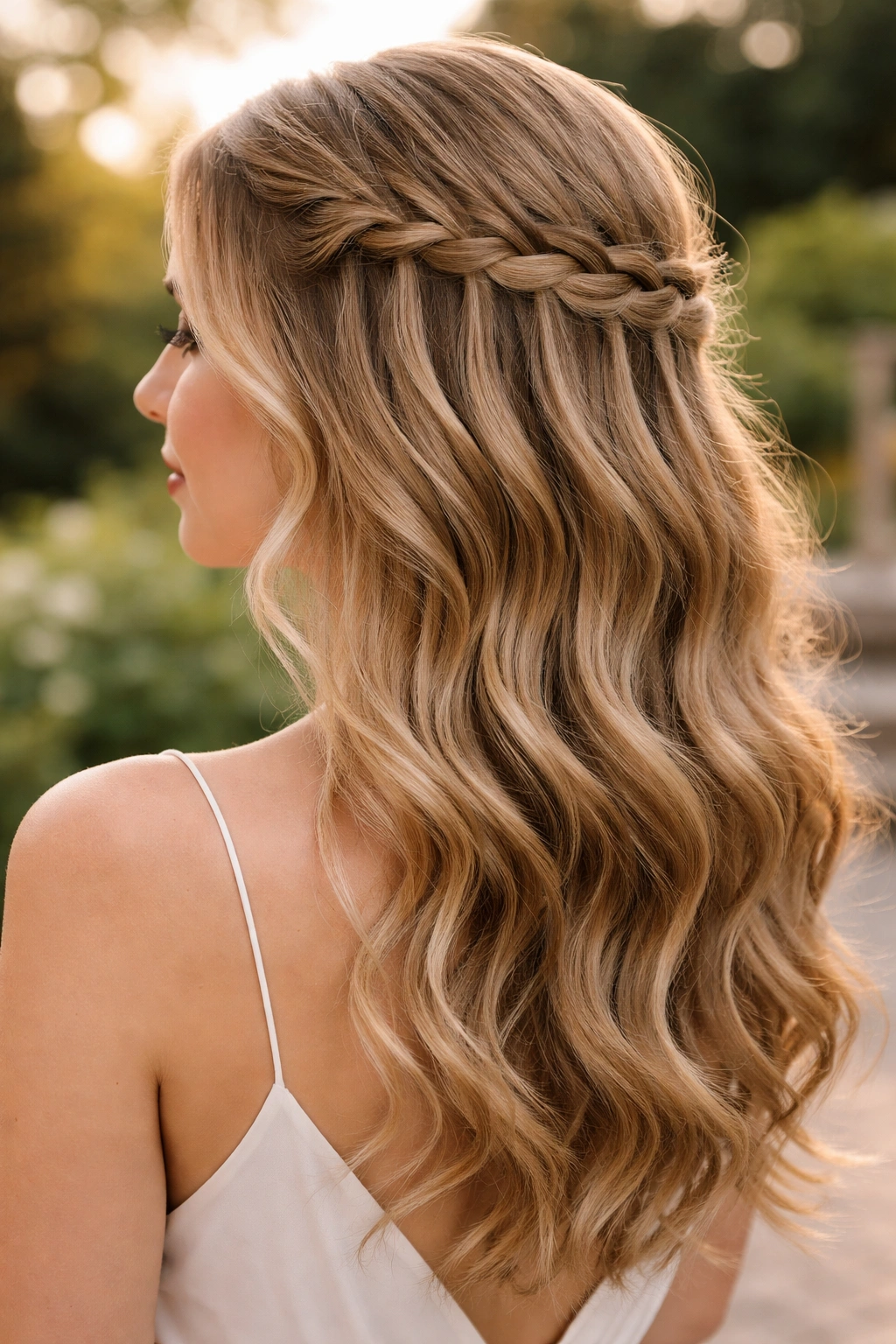
Why does a waterfall braid keep showing up at weddings? Because it gives you detail without blocking the hair underneath. Strands are dropped through the braid as you move across the head, which leaves little ribbons of hair falling through the structure. On wavy hair, that effect gets even softer.
How to keep it pretty, not busy
The braid should sit about 1 to 2 inches above the ears and travel only partway across the head. If you run it too far, the style starts to feel crowded. The waves should be large and loose, not tiny curls. A 1.25-inch curling iron or a wide wand helps here if the hair needs shaping first.
Waterfall braids can fall apart if the hair is too slippery. Texturizing spray at the roots and a tiny amount of dry shampoo through the mids can help the braid grab. Don’t coat the ends, though. The falling strands need movement. Tug the braid very gently after pinning it so it doesn’t look too tight against the scalp.
Best use case
This is the bridesmaid style for anyone who wants something romantic but not bulky. It looks especially nice on longer hair that needs a visual line across the back.
7. Rope-Twist Half-Up
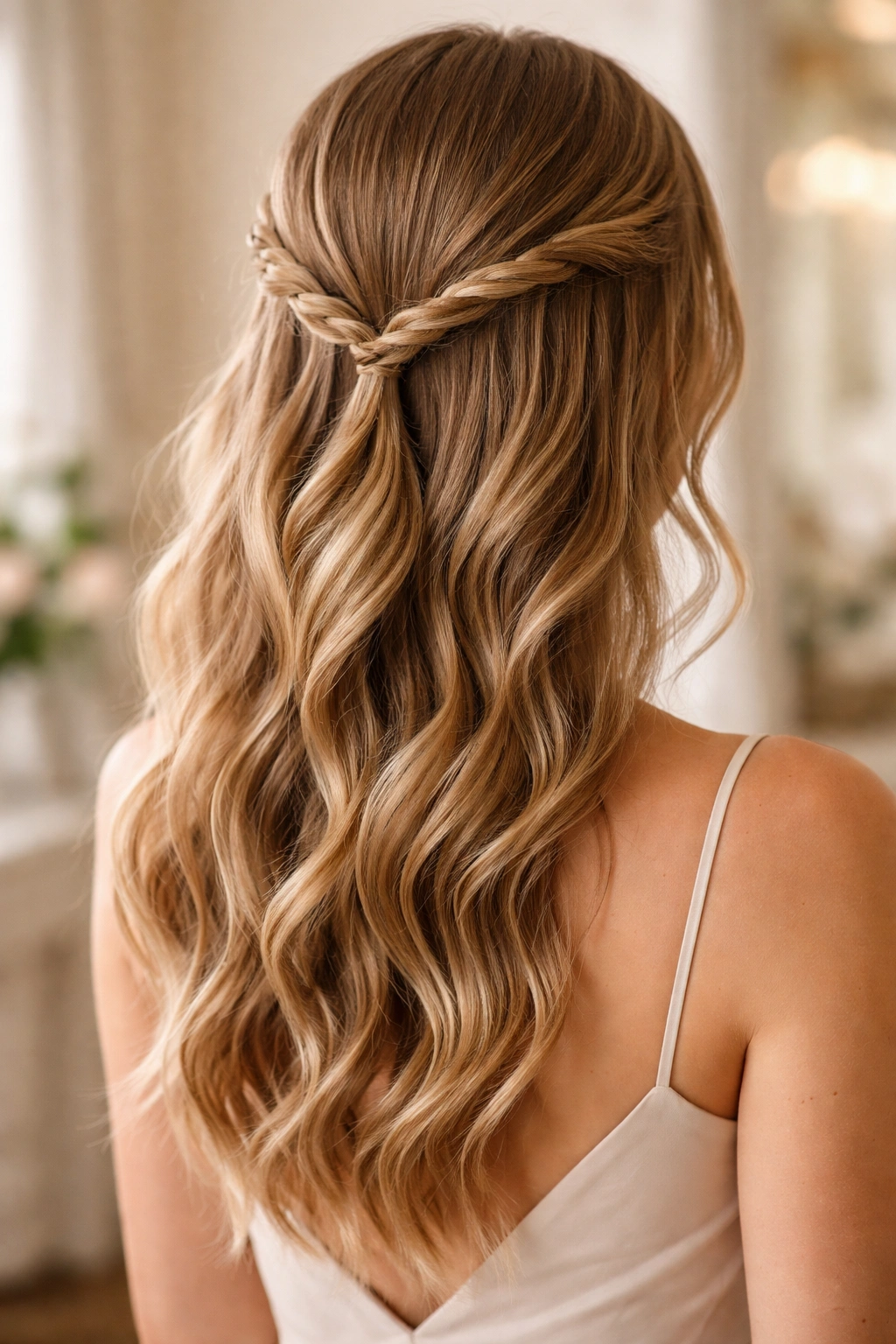
Rope twists are underrated. They look cleaner than braids, take less time, and they handle wavy texture better than people expect. Two sections are twisted in the same direction, then wrapped around each other in the opposite direction to create a rope effect. Pin the two ropes together at the back and let the rest fall free.
Why it suits wavy hair
Wavy hair already has bend, so it doesn’t need a fussy pattern to look styled. Rope twists add just enough shape around the crown to keep the top section controlled. They also hide shorter layers better than a flat braid. That matters on layered hair, where pieces love to slip out around the temples.
Keep the rope sections narrow. About 1 inch wide is plenty for most bridesmaid looks. If the sections are too thick, the twist looks bulky and starts to sit away from the head. Smooth the surface lightly with a brush, then leave the wave through the ends alone. That contrast makes the whole style feel intentional.
One nice thing here: it works with both soft centers and side parts. Not many half-up styles can claim that.
8. Minimal Center-Part Half-Up
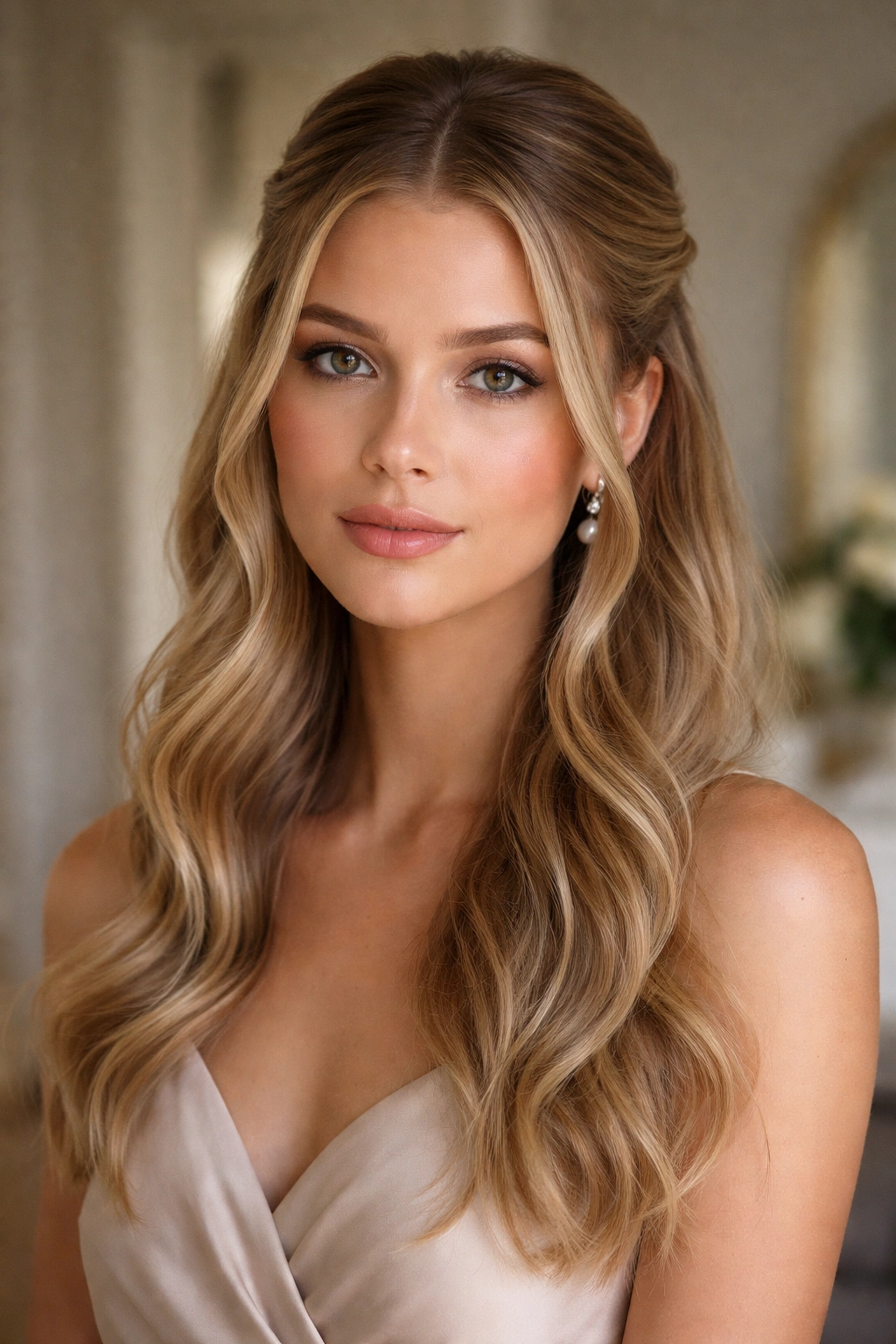
A minimal center-part half-up is for the bridesmaid who wants to look finished without appearing styled within an inch of her life. Take two slim sections from the front, pull them back tightly enough to stay put, and secure them with small pins or a narrow clip at the back. The rest stays loose and wavy.
Why less is more here
The shape is quiet. That’s the point. If the dress has a dramatic sleeve, strong jewelry, or a very structured bodice, this hairstyle gives the look some breathing room. It doesn’t compete. It supports. A small gold pin or a matte barrette can be enough on its own.
The center part works best when the waves are smooth through the top and fuller from mid-length down. If the crown is too fluffy, the style can look a little old-fashioned. Keep the top flat, then let the wave do the work below. Do not over-accessorize this one. One accent is enough.
Who should pick it
Bridesmaids with fine to medium hair often like this because it doesn’t require a lot of volume to look neat. It also pairs well with makeup that has a clean brow and a soft lip. Simple, but sharp.
9. Velvet-Ribbon Half-Up
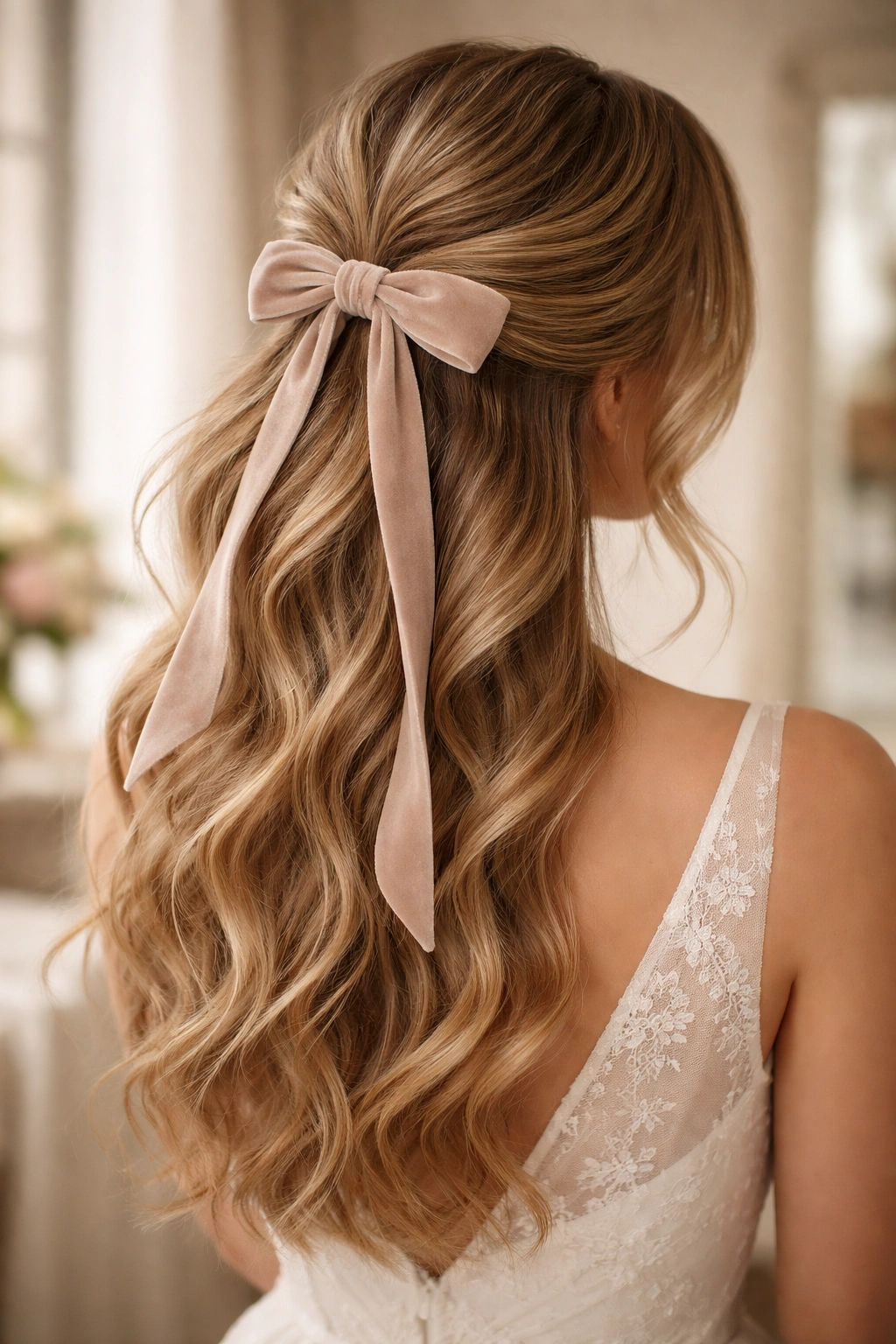
A velvet-ribbon half-up gives soft waves a warmer, more dressed-up feel. Gather the upper section into a loose half pony or knot, then tie a ribbon around the base and let the ends trail. The ribbon becomes part of the hairstyle instead of feeling like an afterthought.
What to watch for
Ribbon width matters. Half an inch to 1 inch is usually enough. Anything wider can swallow the hairstyle, especially on finer hair. If the ribbon is thick velvet, keep the knot or tie area compact so it doesn’t look bulky from the side. A low half-up base tends to suit ribbon better than a very high one.
This style is nice for bridesmaid dresses in satin, crepe, or soft chiffon because the texture contrast feels rich without being loud. Choose a ribbon color that repeats somewhere else in the look — shoes, flowers, jewelry, or the dress trim. That kind of small echo makes the style feel thought through.
A practical note
Velvet can slip on very silky hair. Pin the ribbon ends under the knot or clip them discreetly beneath the upper section. Otherwise they wander.
10. Crystal Comb Half-Up
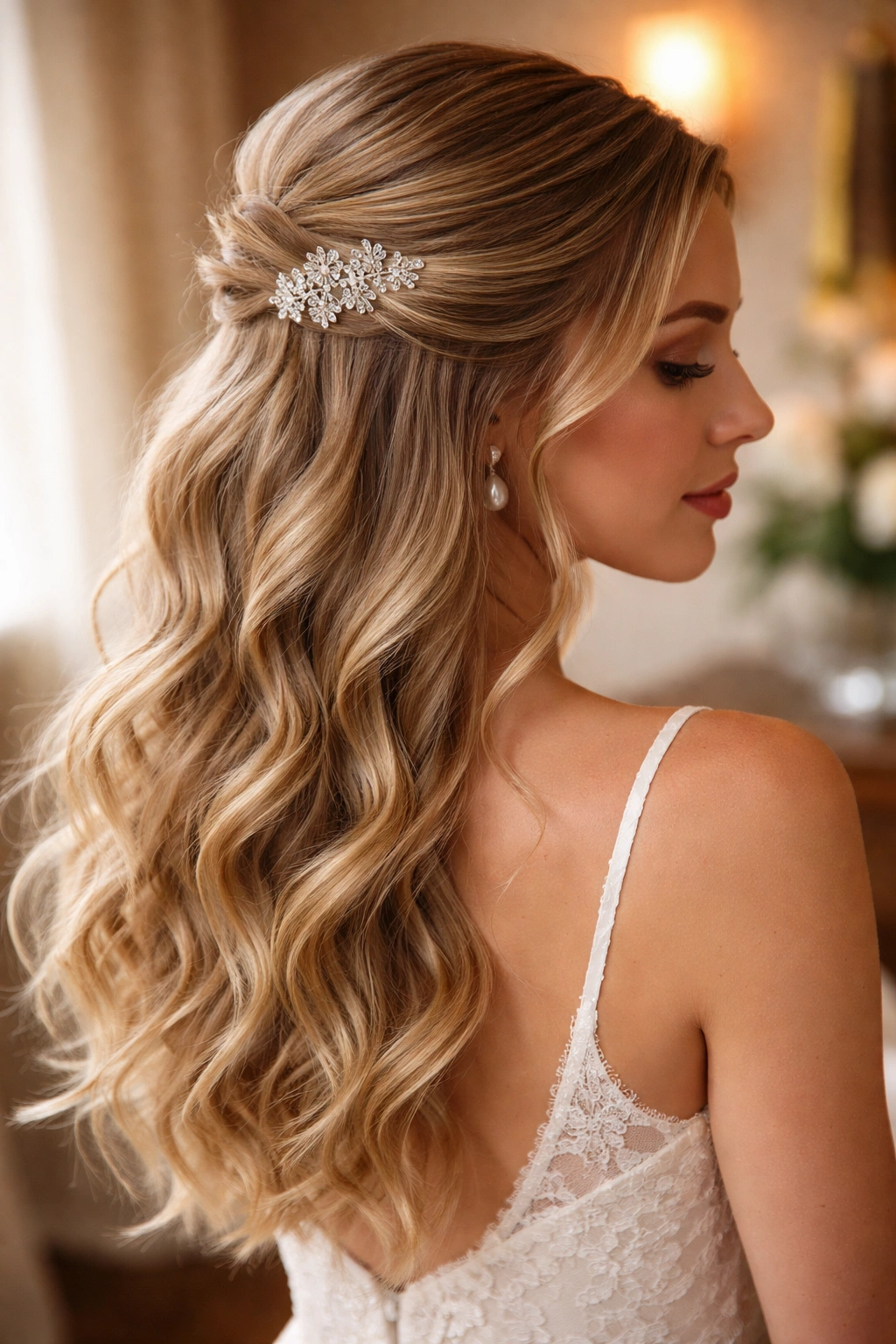
A crystal comb can turn a plain half-up into something wedding-ready in one move. Slide the comb into a twist, a knot, or even a simple pinned-back section at the crown, then let the waves spill below it. The sparkle stays concentrated near the head, which keeps the style classy instead of busy.
Placement matters more than size. A small comb tucked slightly off-center often looks better than a giant one slapped straight in the middle. For thicker hair, a wider comb with stronger teeth helps it stay put. Fine hair usually does better with a lighter comb and two hidden pins underneath for support.
What makes this one easy
You do not need a complicated base. A twist, a mini pouf, or a low half-up tuck all work. The accessory does the decorative work while the waves keep the style soft. If the dress already has beading, pick a comb with smaller stones or fewer crystals. If the dress is plain, a little more shine won’t hurt.
I like this style for bridesmaid groups because it reads beautifully in photos from the side. A comb catches the eye fast. Then the wave line underneath finishes the job.
11. Boho Fishtail Half-Up
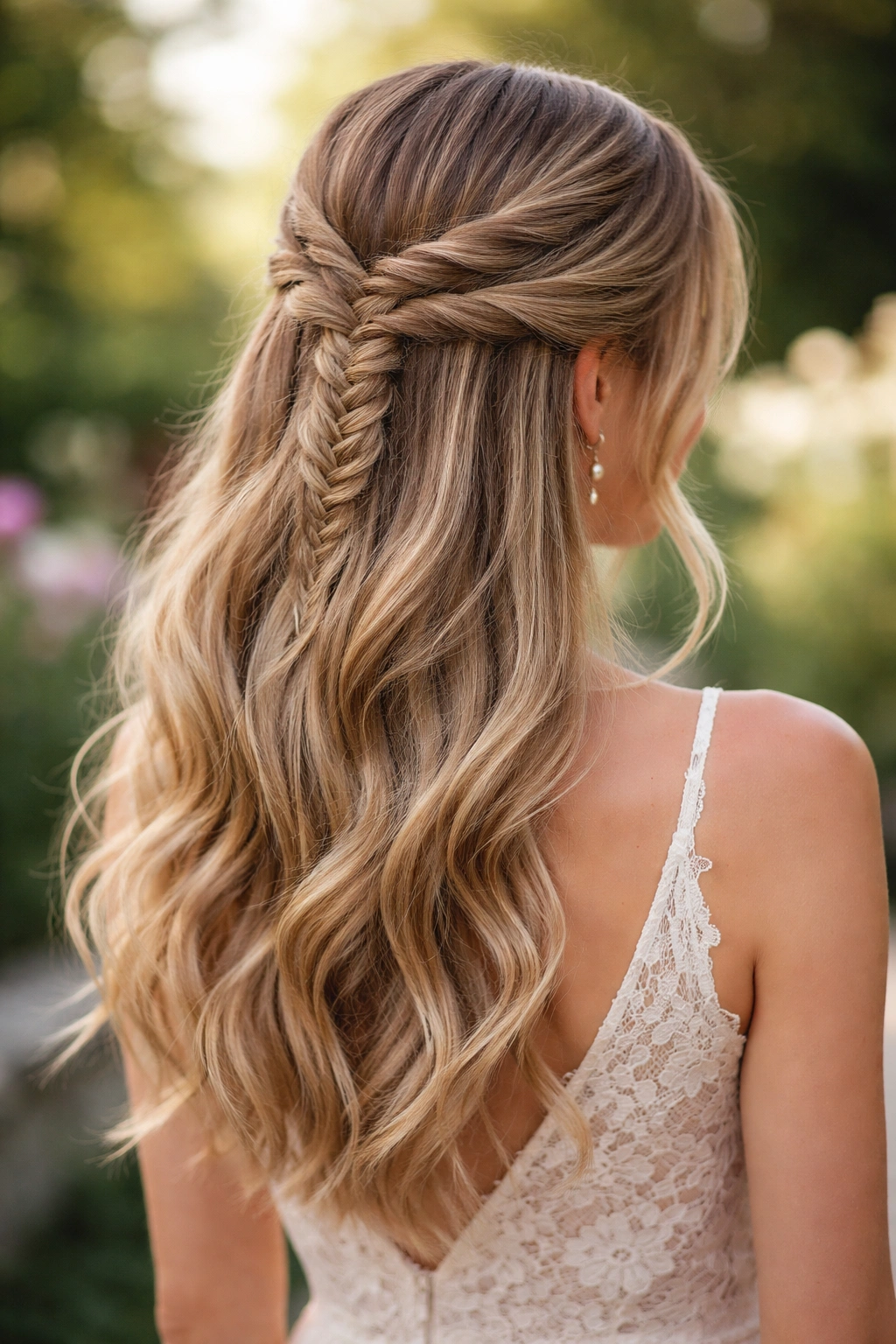
A boho fishtail half-up is the style that looks like it took time, even when the technique is fairly simple once you know what you’re doing. Start a fishtail braid with a small section at the crown or one side, then bring it back and pin it into the half-up section. Let the braid sit loose and slightly stretched.
The texture makes it work
Fishtail braids have a finer pattern than standard braids, so they look good on hair that already has a bit of grit. Wavy hair is perfect for that. After braiding, pull the edges apart 5 to 6 millimeters at a time with your fingertips. The braid should look fuller, but not ragged.
This style pairs well with soft dresses and relaxed bouquets. It also loves a little mist of texturizing spray before braiding. You want enough grip to stop the sections from sliding, especially around the crown where the hair is smoother. Avoid making the braid too perfect. That ruins the whole point.
Best for
Longer bridesmaid hair, especially when the group wants something that feels slightly more relaxed than a classic formal half-up. It has a pretty swing to it.
12. Loose Tendril Half-Up
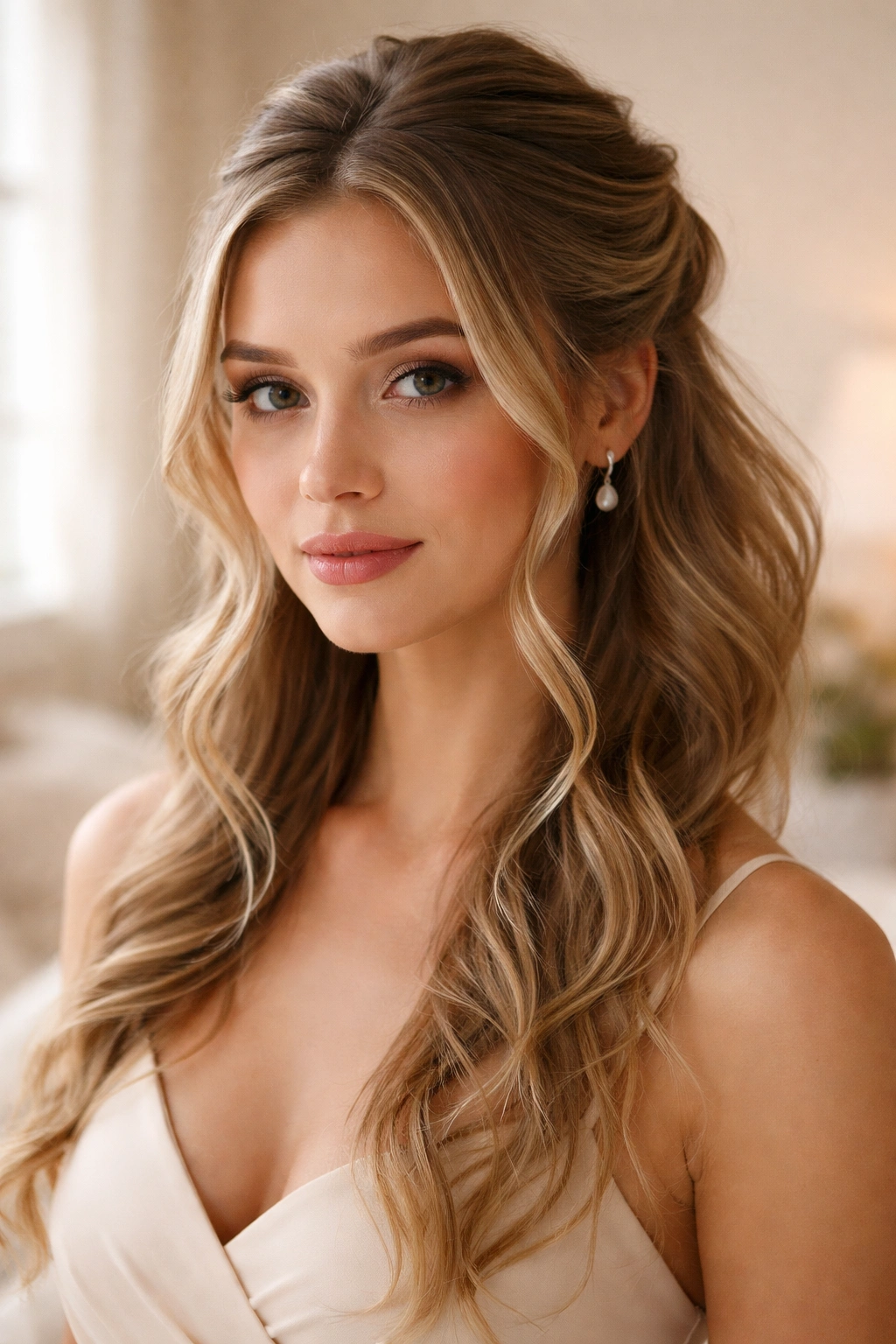
Some styles look good because of what they leave out, and this is one of them. A loose tendril half-up pulls enough hair away from the face to feel styled, then leaves a few soft strands near the temples, cheeks, and jawline. The tendrils keep the look from becoming severe.
Where people go wrong
Too many face-framing pieces and the style starts to read messy. Too few and it can feel stiff. The sweet spot is usually two tendrils on each side, one closer to the temple and one a little lower. Keep them thin enough that they move. Thick pieces can hang there like curtains.
This style is especially nice if the bridesmaid has a softer makeup look or wants the face to appear a little narrower in photos. The waves underneath should stay loose and full. Pin the upper section securely, then relax the front pieces by running a comb lightly through them after they’re curled. Do not flatten the waves with too much serum.
Small opinion
I think this is one of the easiest ways to make a half-up look expensive without actually making it complicated. That sounds blunt. It’s also true.
13. S-Wave Half-Up with Polished Ends
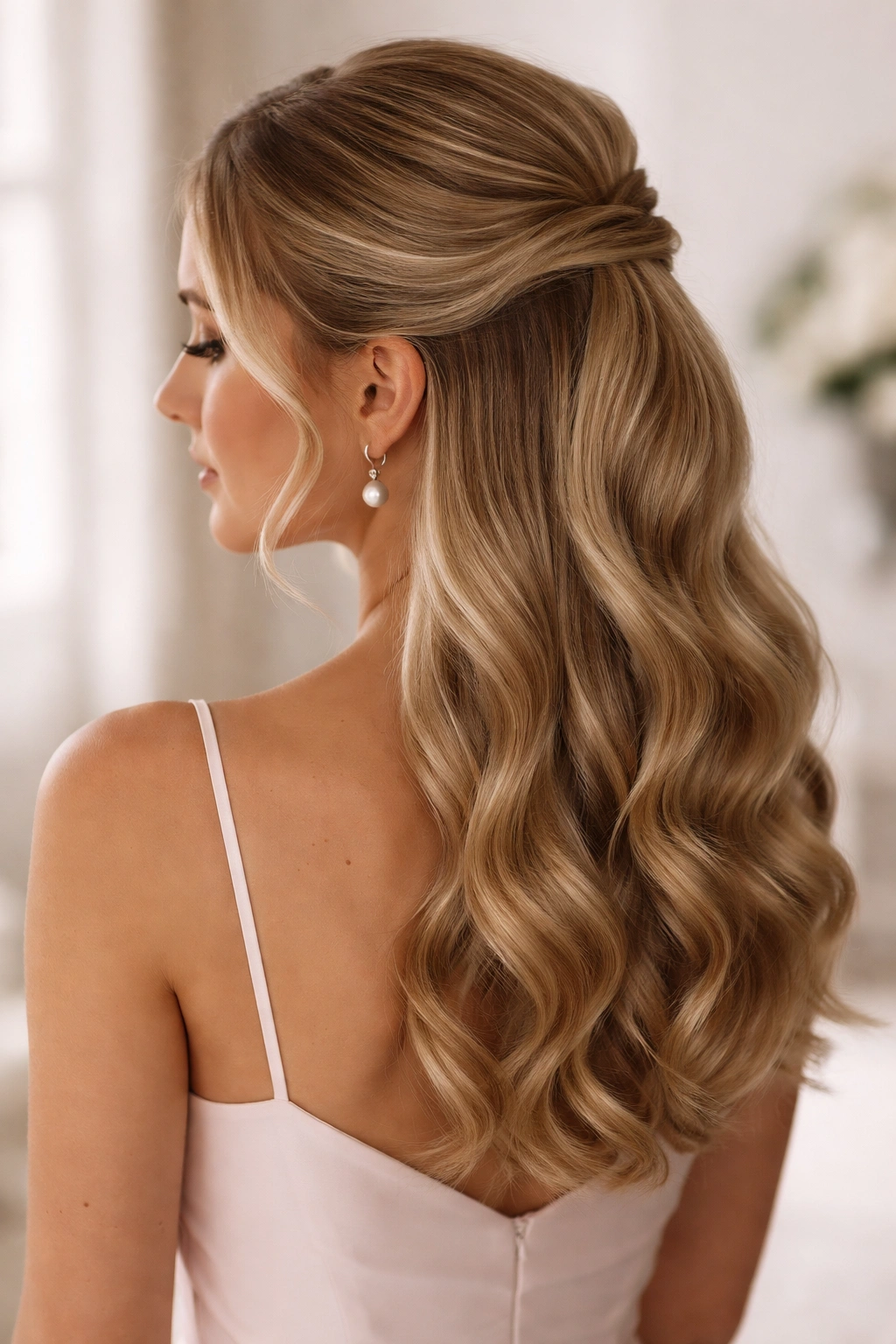
There is a difference between “wavy” and “finished,” and this style lives in that gap. The top section is pinned back cleanly, but the lengths below are shaped into soft S-waves with smooth, polished ends. The effect is sleek at the top and romantic through the bottom half.
Why it feels special
This one works best on hair that can hold a clear wave pattern without frizzing up. A flat iron or large wand can create the bend, then a soft brush smooths the wave into a loose S-shape. The ends should stay tidy, not fuzzy. If they look dry, a drop of serum on the last inch is enough.
Because the top section is tidy, the dress and earrings get more attention. That’s useful when the bridal party is matching but not identical. One bridesmaid might wear a statement earring; another might have a strong neckline. This hairstyle lets those details show.
Keep the root area controlled. If the crown puffs up too much, the style loses its clean line. The whole look is better when the contrast is obvious: neat top, soft bottom.
14. Crown Braid Half-Up
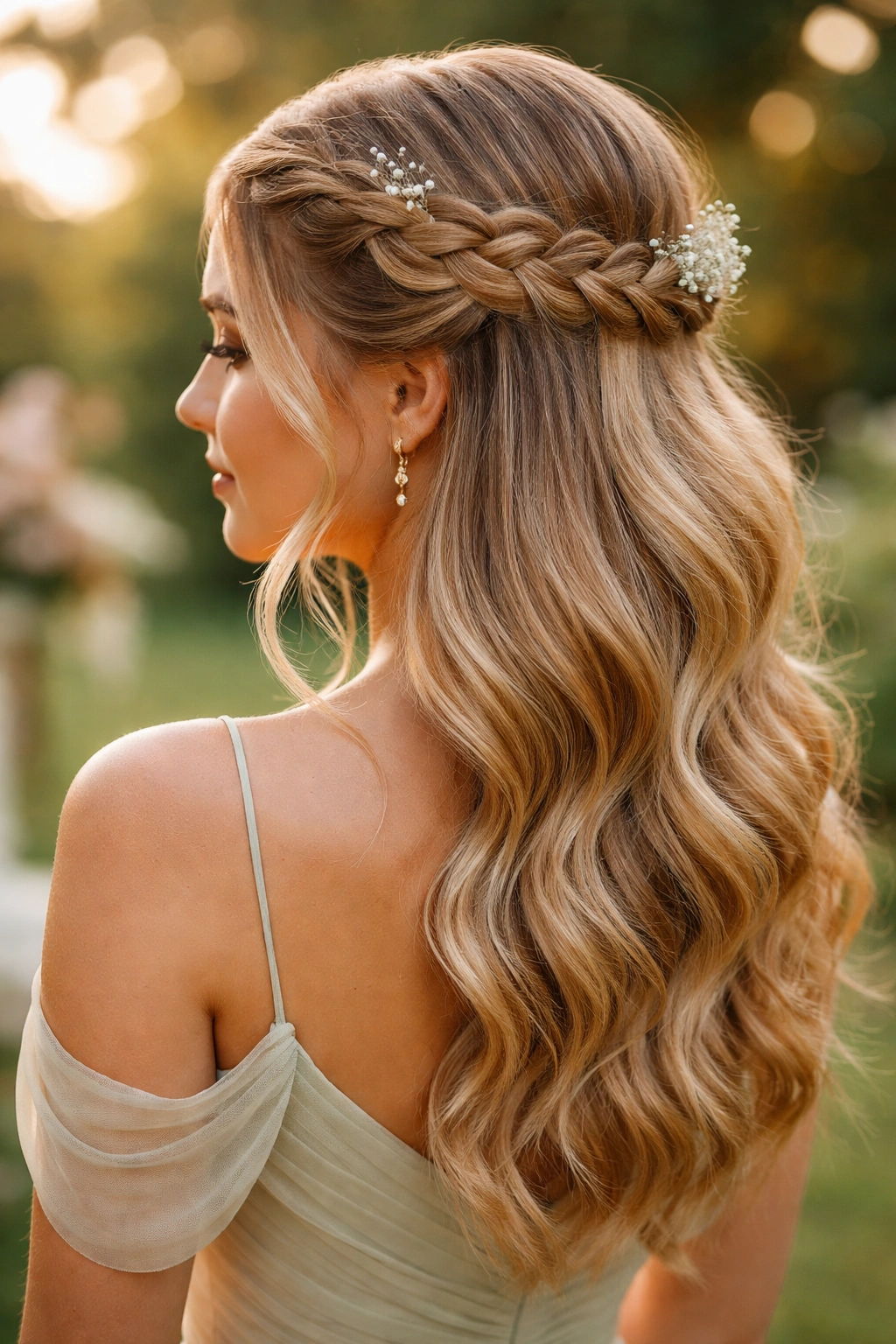
A crown braid half-up wraps the head in a broad band of texture and feels a little more romantic than the average braid. It’s not a full halo braid. It’s a partial crown, usually starting near one temple and running across the top back section before being tucked and pinned. The loose waves below keep it from getting heavy.
Why the shape matters
The braid should sit wide enough to show, but not so wide that it eats the hairline. A braid about 3/4 inch thick is a good place to start. Pull it apart slightly after finishing, especially near the back of the head, so it doesn’t look too compact against the scalp.
This style works beautifully for bridesmaids with long hair and medium density. On very fine hair, the braid can start to disappear unless you build a bit of texture first. A light tease at the roots helps. On very thick hair, keep the braid controlled so it doesn’t become a thick band.
My take
If the wedding leans garden, outdoor, or softly formal, this is one of the strongest picks. It has shape, but it still moves.
15. Mini Braids Across the Back
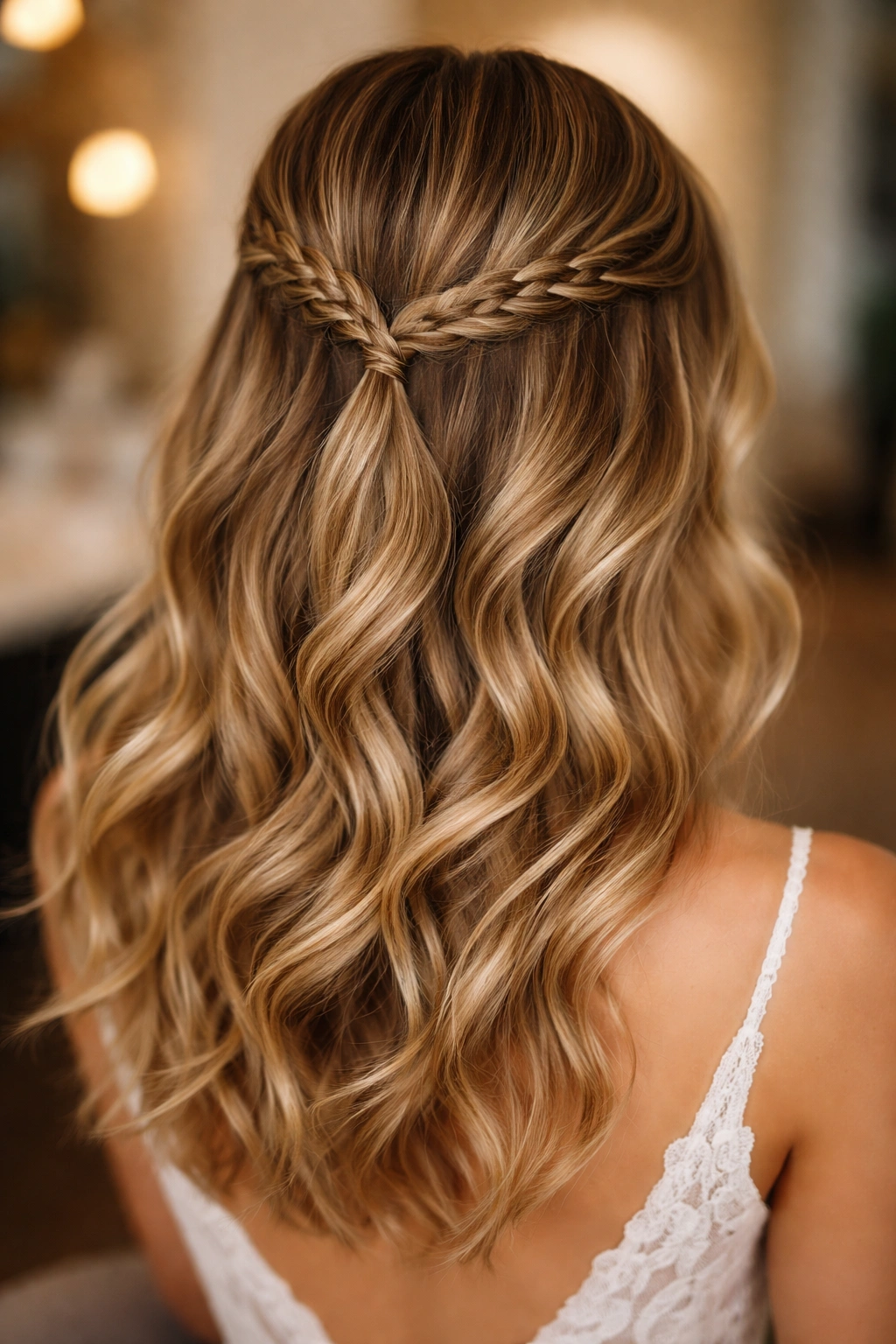
Mini braids are a good answer when the hair needs a little detail but not a full braid story. Make two or three thin braids — think 1/4 inch wide — and weave them into the upper half before pinning everything back. The result is subtle up close and interesting from behind.
Why this works on wavy hair
Wavy strands already have texture, so tiny braids disappear into the overall pattern in a good way. They read as detail, not as a separate hairstyle fighting the waves. That matters when the goal is soft bridesmaid hair rather than something that looks styled for a festival.
You can place the braids symmetrically or let them cluster on one side. Symmetry feels cleaner. Asymmetry feels a little freer. Neither is wrong. I’d choose the placement based on the dress. A clean neckline likes symmetry. A one-shoulder dress usually looks better with the braids drifting to the open side.
A tiny braid can also help anchor shorter layers around the crown. Sneaky. Useful.
16. Floral Pin Half-Up
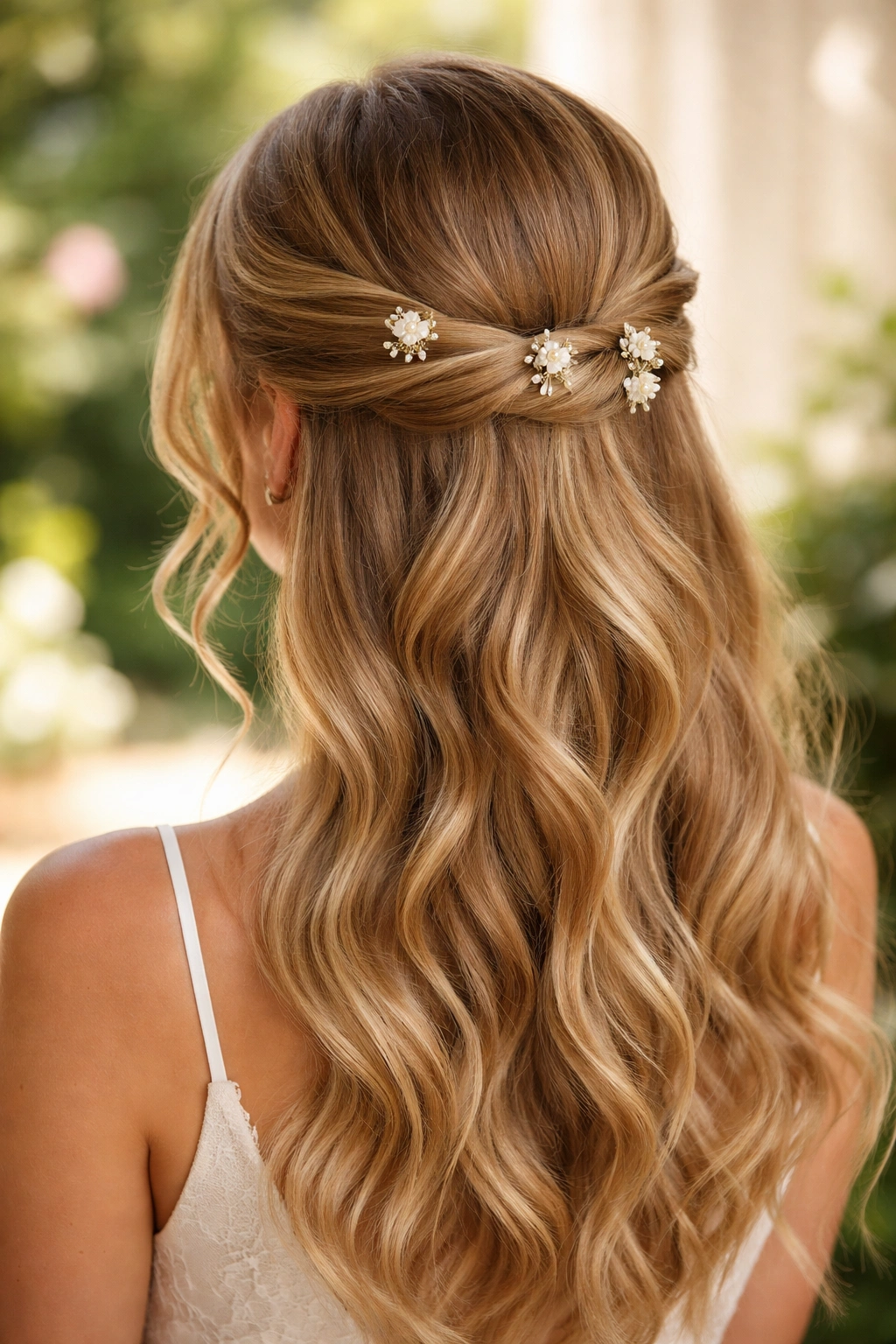
Floral pins are one of those details that can look charming or cheesy depending on how many you use. The answer is usually fewer than people think. Tuck three to five small floral pins into a twist, braid, or half-up knot, then stop. Let the flowers live inside the hair rather than sitting on top of it.
How to keep it classy
Small blooms work better than big ones. Dried flowers can be pretty, but they need to be light enough not to drag the section down. Faux flowers made for hair often stay put better because the stems are designed to pin cleanly. If the bridesmaid’s dress already has texture or color, choose flowers that echo one accent only.
The base should be secure before any flowers go in. Pin the hair first, then insert the floral pieces. Trying to use the flowers as the structure is a mistake. They aren’t the support. They’re the finish.
I like this style best when the flowers are tucked toward the back and side, not right at the part. That keeps the front open and avoids a costume-y look.
17. Barrette Stack Half-Up
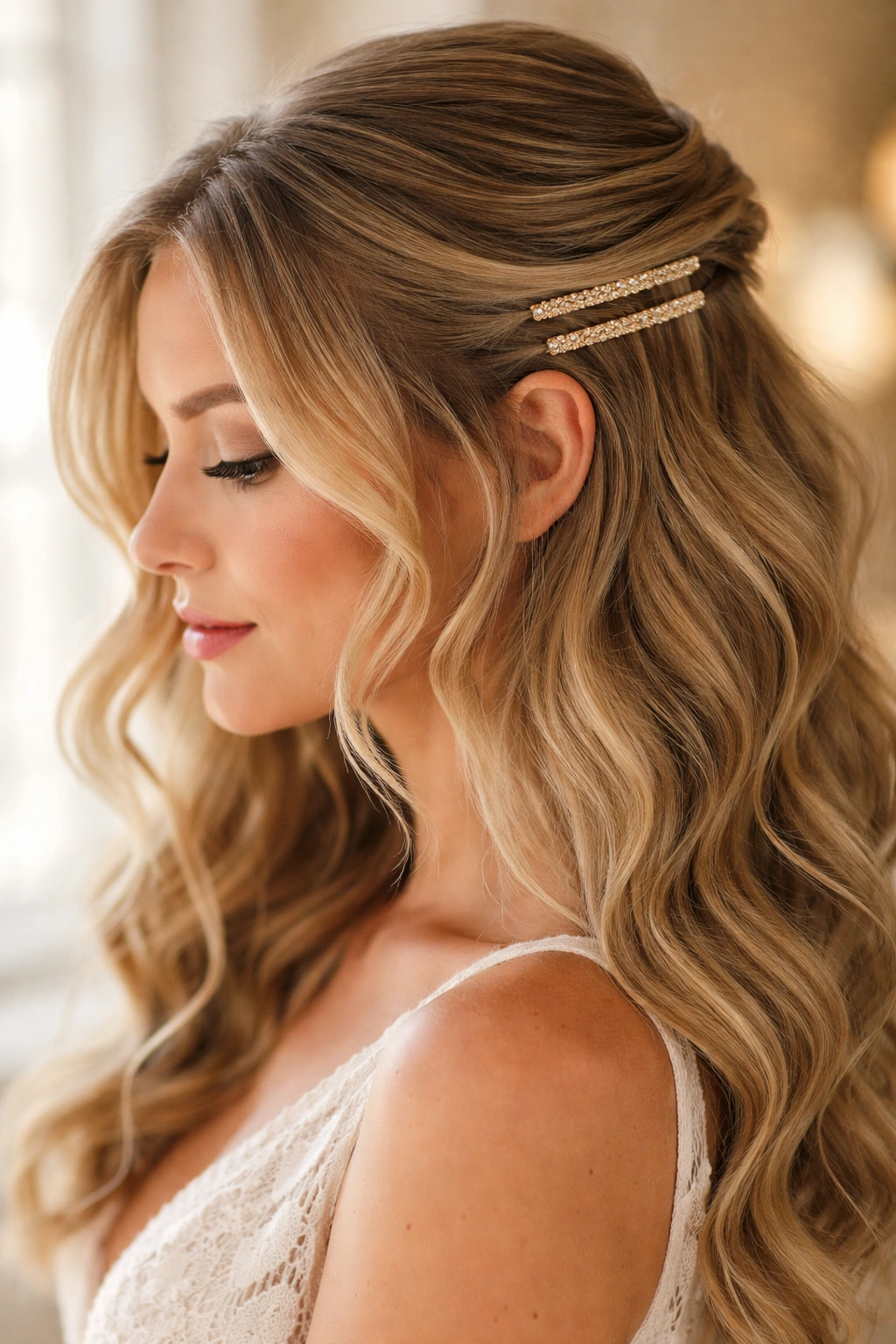
A barrette stack half-up is modern, tidy, and easier to manage than a lot of people expect. Instead of one oversized clip, use two or three slim barrettes stacked vertically or arranged in a short line behind the ear. The loose waves do the softening, while the barrettes give the hairstyle its shape.
Why stacking works
One barrette can feel random. A stack feels designed. Keep the spacing even — about 1/2 inch apart — so the pieces don’t crowd one another. If the metal finish is mixed, make sure the tones still talk to each other. Gold with gold. Silver with silver. Matte with matte, if possible.
This style is especially good for bridesmaids who want something easy to refresh before photos. You can open one clip, smooth the section, and close it again fast. It also works on fine hair, since the clips can catch smaller sections without needing a ton of bulk.
A practical note
If the hair is very silky, lightly crimp the section that sits under the clips or add a spritz of texture spray. Otherwise the barrettes can slide sideways. That’s the annoying part. Easy fix, though.
18. Textured Half-Up Top Knot
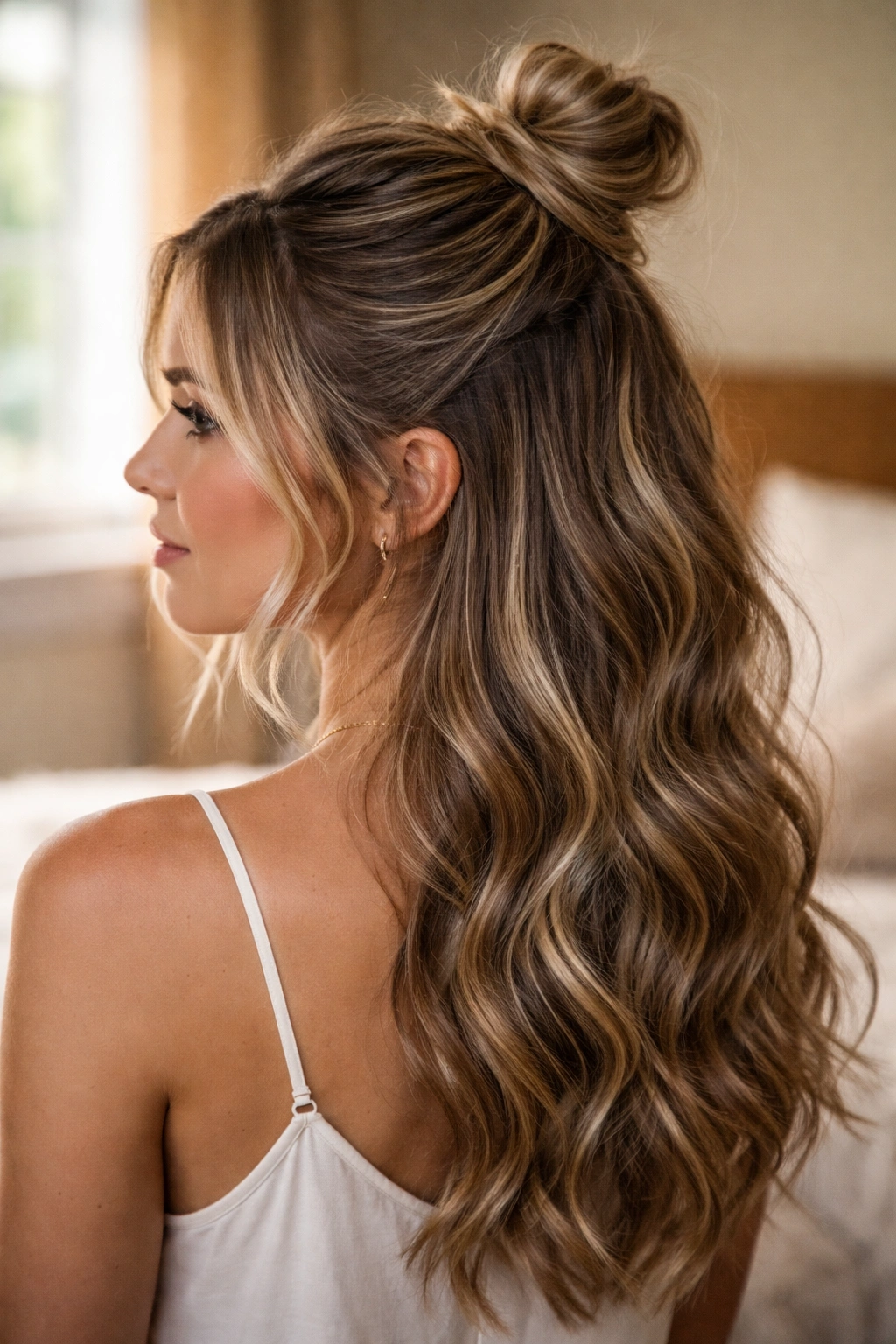
A textured half-up top knot is the more relaxed cousin of the polished knot, and it suits wavy bridesmaid hair that needs extra body. Gather the upper section into a small knot or mini bun at the crown, keep it loose, and pin the edges so the shape stays soft. The lengths below should fall in broad waves.
Why it looks good on thick hair
Thick hair can overwhelm delicate twists. A little knot handles the weight better and gives the top section a clear shape. Keep the knot about the size of a walnut or small plum, not a full bun. If it gets too big, it stops reading as a half-up and starts becoming a different hairstyle entirely.
This one likes a little imperfection. Pull a few tiny pieces free near the temples or around the knot itself. Not too many. Just enough to keep the silhouette from feeling rigid. The waves below should stay loose and visible.
If the bridesmaid wants something that feels a touch more casual while still looking pulled together, this is a strong option. It also holds up well when the party is moving fast and nobody has time for constant mirror checks.
19. Side-Twist Half-Up
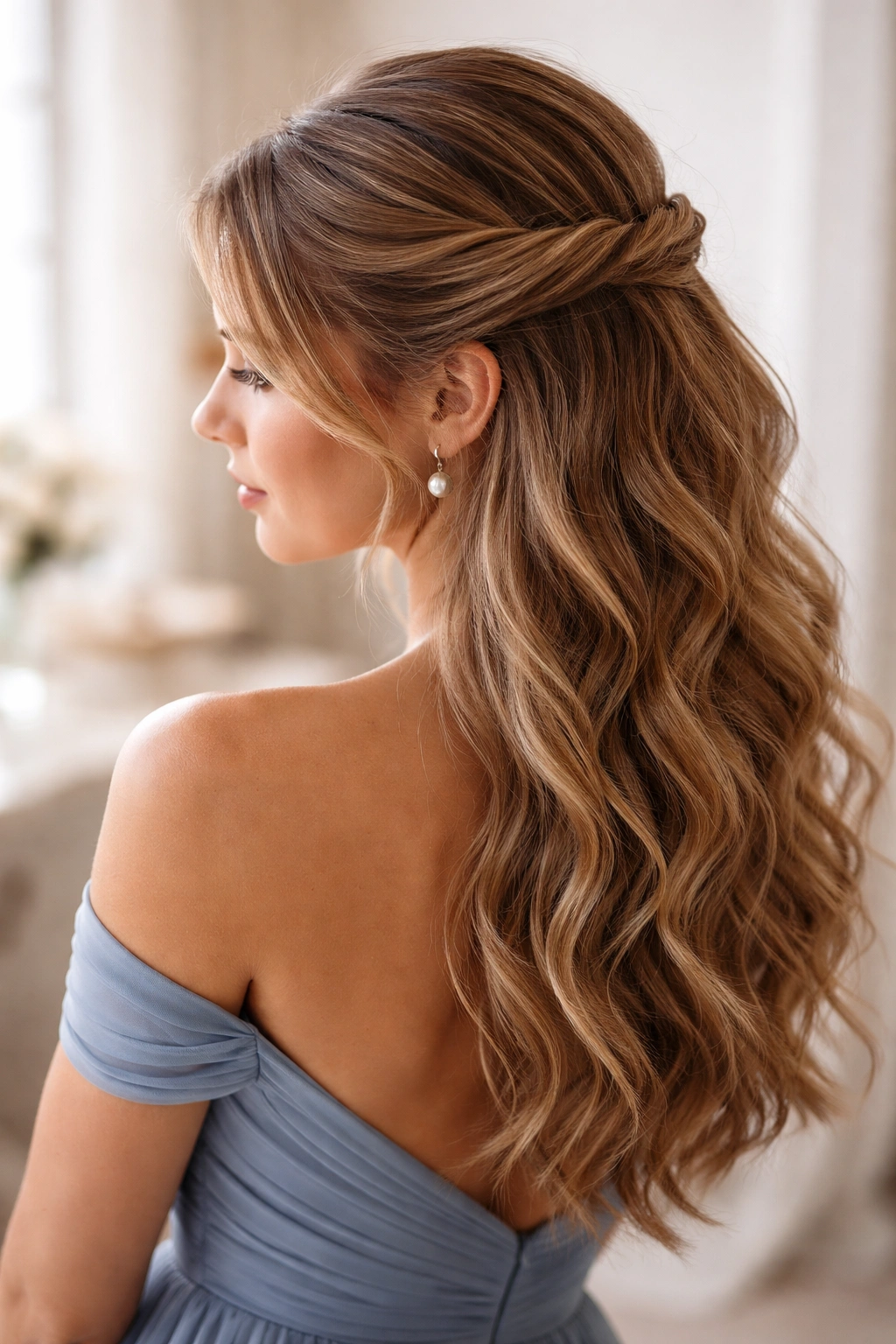
A side-twist half-up gives you movement without symmetry, and that asymmetry can be flattering around the face. One side is twisted back more strongly than the other, then the sections meet near the back or slightly off-center. The waves then fall toward the open side.
Why the off-center feel helps
A side twist works well when the dress has one strap, a draped shoulder, or a neckline that already does some of the visual work. The hairstyle doesn’t fight the clothing. It follows it. I like this style especially on bridesmaids who want something a little softer than a braid but less plain than a simple pinned-back section.
Make the twist slightly larger on the side that needs support. That keeps the style from slipping open. Use a hidden pin under the twist and another at the meeting point. If the hair is layered, leave the shortest pieces out of the twist so they don’t poke up awkwardly.
A small styling note
The open side should still have a little face framing. One wavy piece near the cheek can make the whole look feel more intentional.
20. Soft Bouffant Half-Up
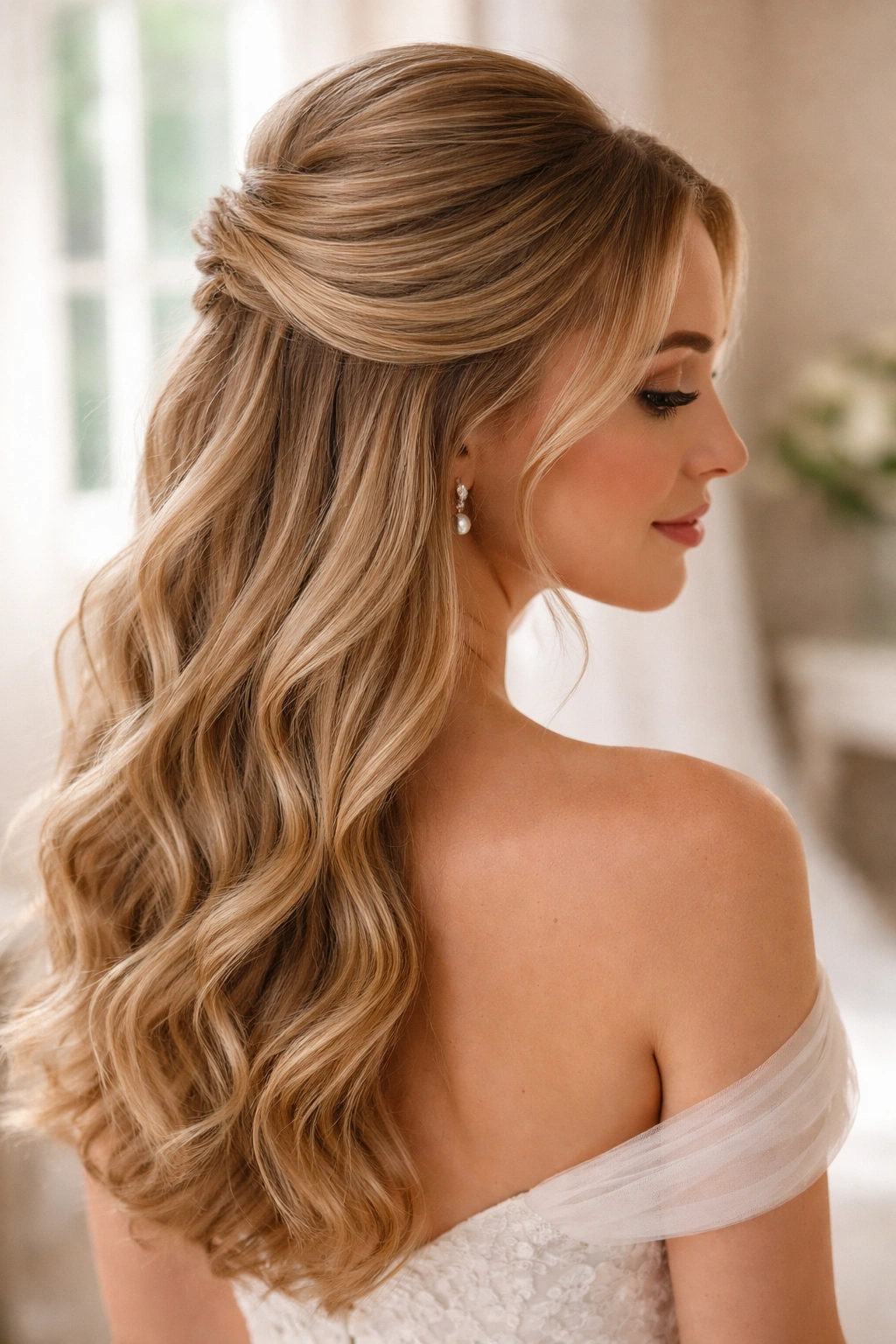
A soft bouffant half-up gives the crown a gentle lift, which is useful when the hair is otherwise prone to lying flat. Backcomb a small section at the crown, smooth the top layer over it, and pin the upper half back so the height stays controlled. The waves below bring the softness back in.
Why a little height helps
Flat crowns can make wavy hair look shorter and heavier than it is. A small bouffant opens the face, lifts the hairstyle, and gives the profile some shape. You do not need the dramatic bump of a retro style. Just enough lift to keep the top from collapsing into the head.
This version works well on bridesmaids with medium or fine hair because the height creates the illusion of more volume. The trick is to keep the teasing small and hidden. If the top looks obviously backcombed, the style gets dated fast. Smooth it with a brush, then pin under the bump rather than through it.
A light mist of hairspray at the roots is enough. Too much spray makes the crown crunchy, and crunch is the enemy here.
21. Half-Up for Short Wavy Bob
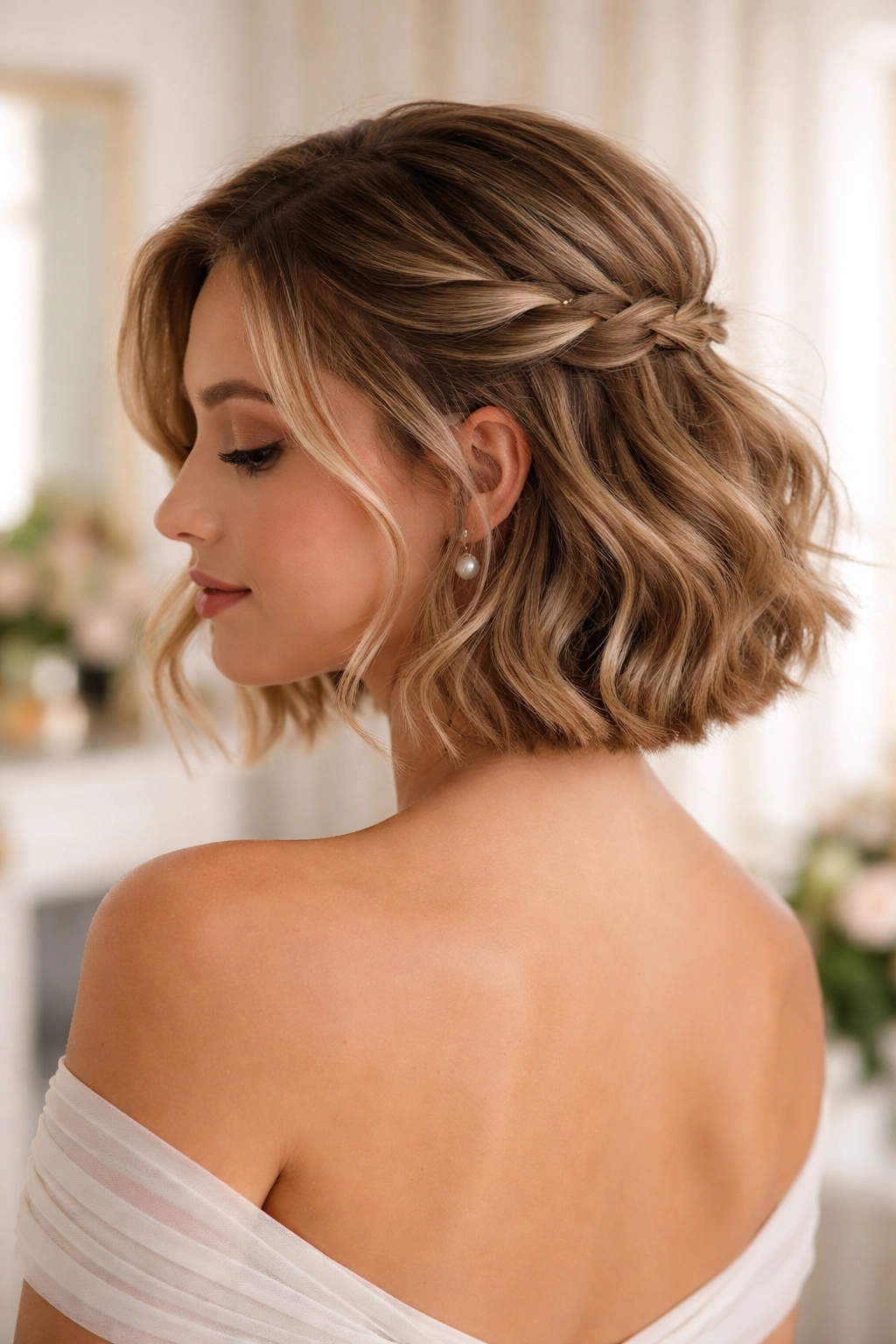
Shorter hair can absolutely wear a bridesmaid half-up. The trick is not to force a long-hair style onto a bob and pretend it’s the same thing. On a short wavy bob, take small temple sections, twist them back, and secure them at the back of the head with slim pins or a tiny clip. Leave the rest of the bob textured and loose.
What changes with shorter length
The style needs precision. Tiny sections look better than big ones because they don’t overpower the cut. If the bob barely reaches the shoulders, keep the pinned-back area narrow and clean. Too much hair pulled back can expose the short layers underneath and make the style fall apart visually.
This is also where accessories help. A small pearl pin, a narrow barrette, or two crossed bobby pins can make the hairstyle feel finished even if the actual section is minimal. Do not chase volume that isn’t there. Work with the cut instead.
I like this for bridesmaids who want movement but also want their shorter haircut to still feel intentional in photos. It can look very chic when the waves are soft and the front is tucked neatly behind the ears.
22. Half-Up for Thick Wavy Hair
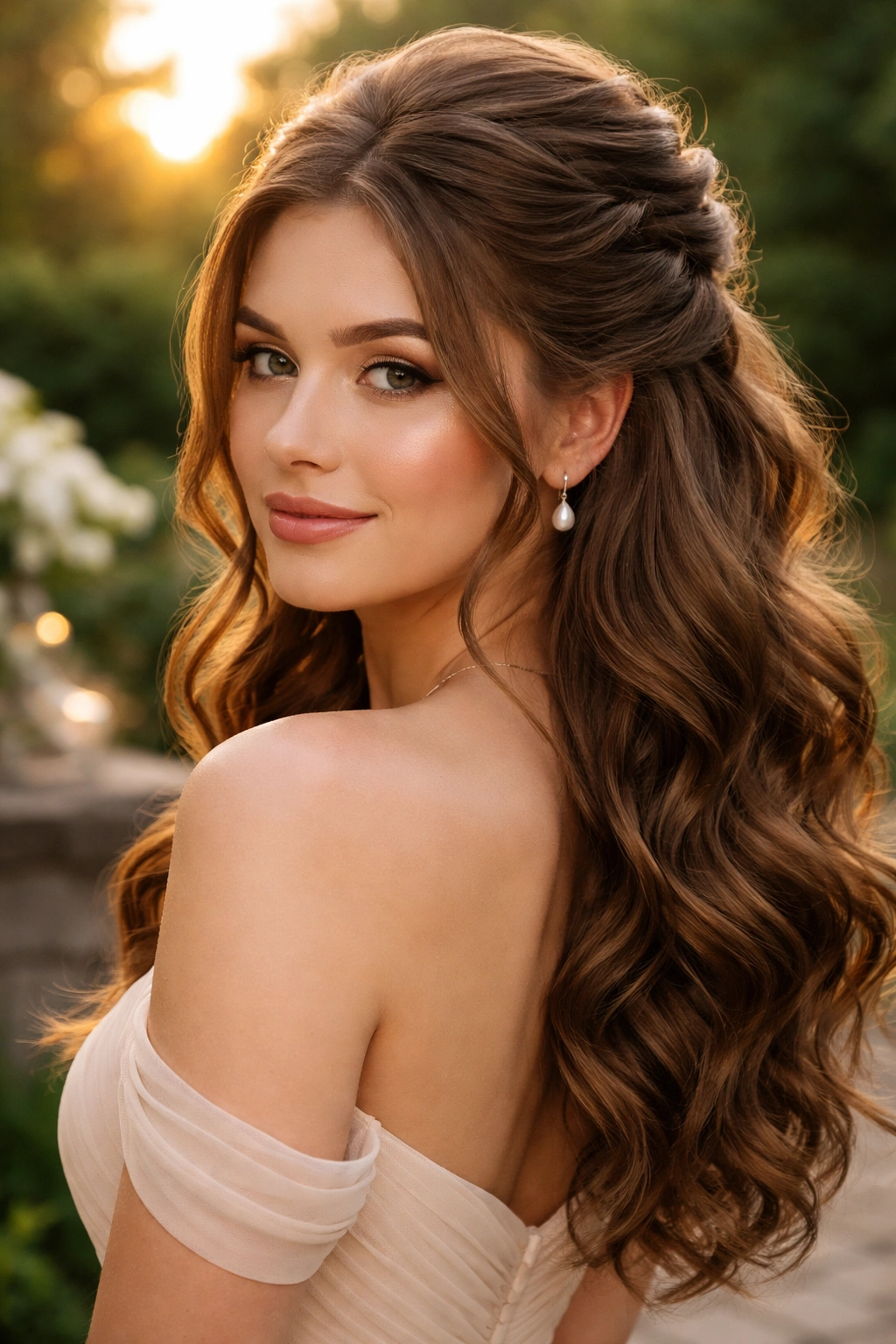
Thick wavy hair needs a different plan. It does not want delicate little sections that disappear under their own weight. It wants structure, clean parting, and pins that mean business. A thicker half-up usually works best when the upper section is divided into slightly broader pieces and secured in two stages.
How to manage the bulk
First, gather the top half in a controlled way. Then use crossed bobby pins or a strong barrette at the base. If the hair is dense, one pin will not be enough. Two pins alone might not be enough either. Think in layers: hold the section, anchor the twist or knot, then lock the loose pieces under it.
A style like a low knot, rope twist, or bubble half-up often behaves better than a tiny braid here because the hair has more mass to support. Keep the waves below from becoming too fluffy by shaping them with large, loose curls rather than tight spirals. The result is smoother and less triangular.
Thick hair looks best when the top is controlled and the ends are left open. That contrast keeps the hair from ballooning outward.
23. Half-Up for Fine Wavy Hair
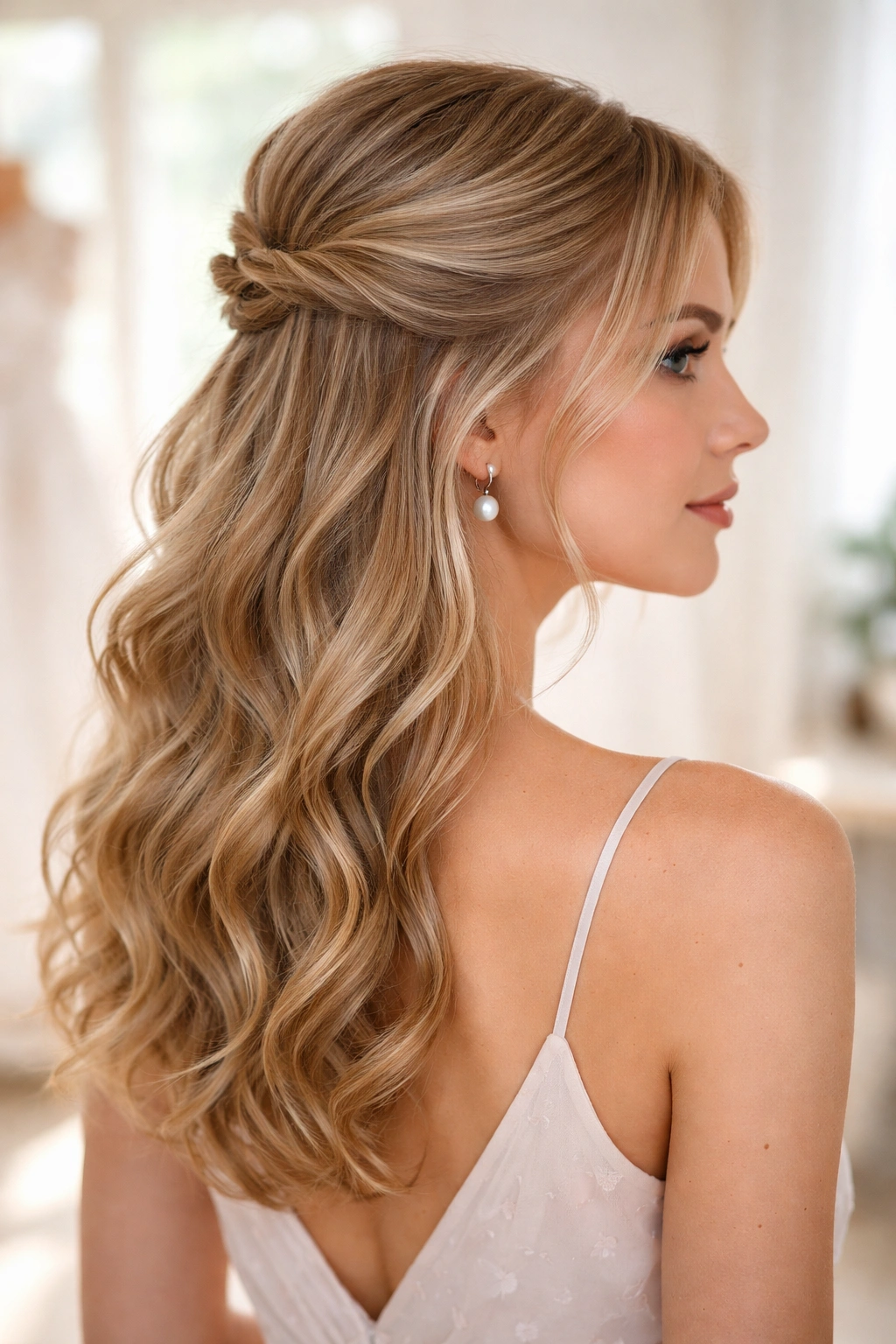
Fine wavy hair can look beautiful in a bridesmaid half-up, but it needs a little help so the style doesn’t go limp halfway through the event. The most useful trick is to keep the upper section smaller and build grip before pinning. Texture spray at the roots, a light tease under the crown, and tiny hidden pins usually do more than heavy products.
Where people go wrong
Fine hair often gets overloaded. Too much serum, too much spray, too much clip. Then it goes flat. Use the smallest amount of product that gives grip, not the biggest amount that promises hold. A thin braid, a tiny twist, or a narrow barrette usually works better than a chunky accessory.
This type of hair also benefits from second-day washing, not freshly washed silkiness. If the roots are too soft, pins slide. If the ends are too soft, the waves lose their bend. A little natural texture gives the hairstyle something to cling to.
One more thing: pull the pinned-back section only as much as the hair can support. Overstretching fine hair makes the scalp show through. That is never the goal.
24. Half-Up for Layers and Face Framing
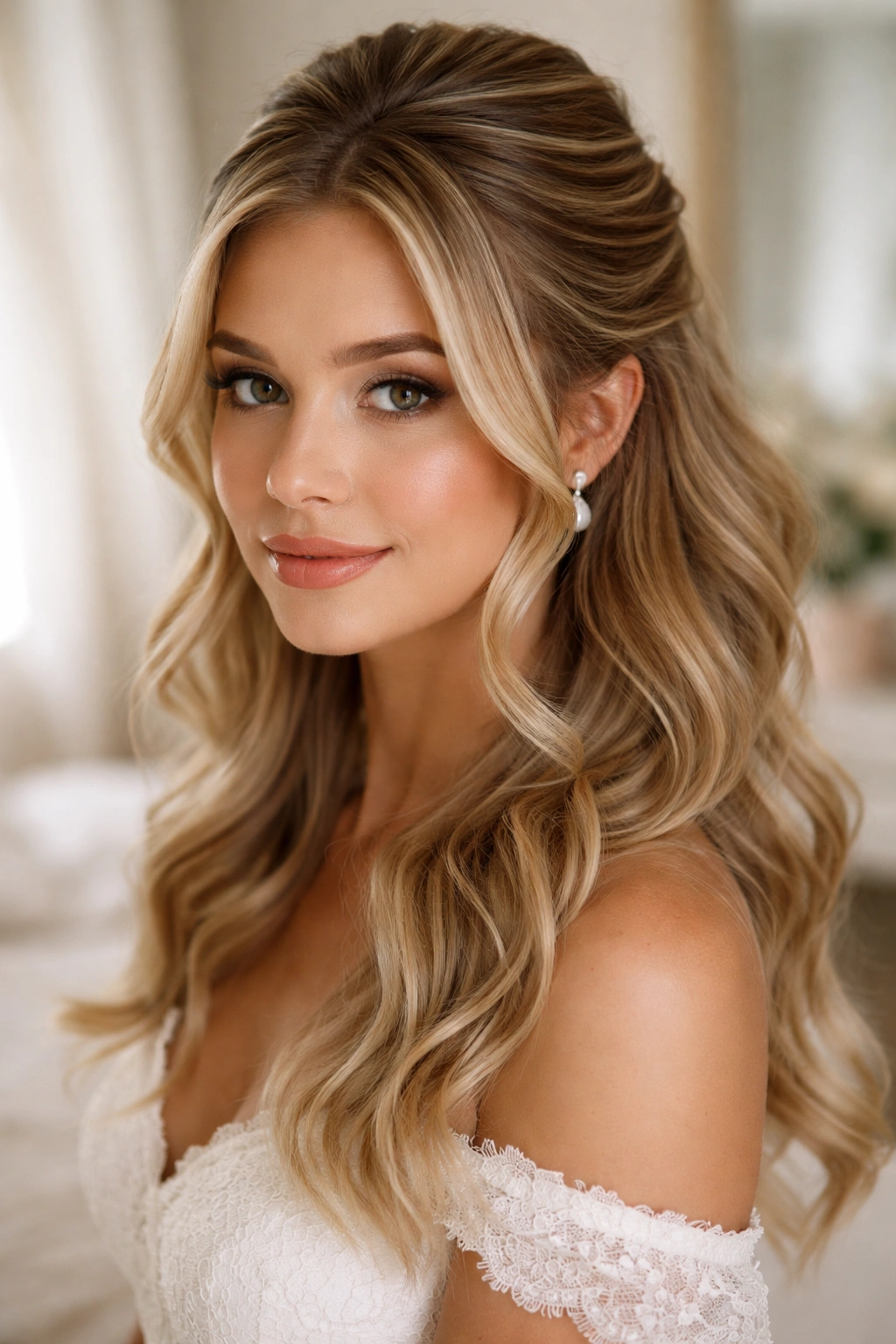
Layered wavy hair can be gorgeous, but the short pieces around the face and crown can misbehave. The answer is not more product. It’s smarter sectioning. Gather the top half in a way that leaves the shortest layers free to blend into the overall shape, then pin the longer top pieces over them so the style looks smooth from the front.
The parts that matter
The crown section should be slightly larger than you think if the layers are very choppy. That gives you enough material to cover the shorter pieces underneath. If a few ends poke out, tuck them under the pinned section instead of trying to flatten them into place. Fighting them usually makes the style worse.
This style is nice for bridesmaids with grown-out layers because it keeps the hair soft around the cheekbones. The key is not to over-polish the front. A little movement around the temples makes the haircut look lived-in rather than unfinished. Use a light touch with the curling iron on the front pieces.
The result is one of those styles that looks casual in motion and neat in still photos. That balance is hard to fake.
25. Dance-Proof Half-Up
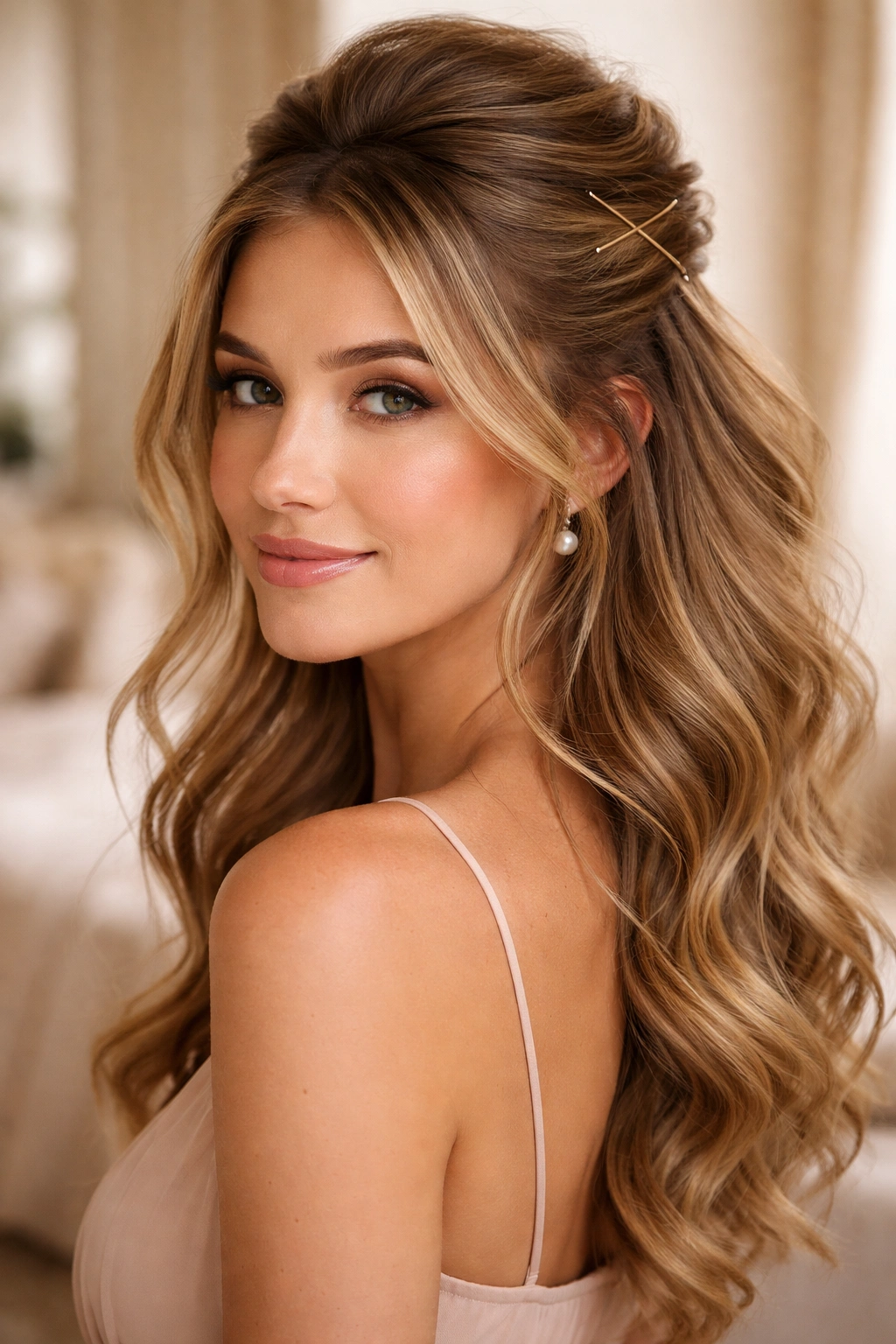
A dance-proof half-up is less about appearance in the first five minutes and more about what happens after six hugs, three wind gusts, and a fair amount of spinning around the floor. Start with texture spray, build a secure half-up base, and lock the section with two pins crossed in opposite directions. Then add a second anchor if the hair is heavy.
What keeps it alive
The style needs three things: grip, anchor points, and restraint. Use an elastics-plus-pin approach for the upper section if the hair is slick. Keep the waves below soft, but don’t let the surface stay too silky near the crown. That is where styles slip first.
This one can be a twist, a knot, a braid, or a combination. The style matters less than the structure. The important bit is that the top section should not depend on a single clip. If one clip opens, the whole thing should still hold. That sounds fussy. It isn’t. It is the difference between a style that lasts and one that needs emergency repairs before cake cutting.
If I had to choose one bridesmaid half-up for maximum staying power, it would be this kind of layered, pinned, textured version. It may not be the flashiest, but it’s the one that still looks good when the night gets messy.
Final Thoughts
The best bridesmaid half-up is the one that matches the dress, the hair texture, and the level of formality without fighting any of them. A clean twist, a braid, a ribbon, or a pinned-back wave can all work; what matters is whether the shape holds and the finish still feels soft from three feet away.
If the hair is fine, build grip first. If it’s thick, use more anchor points. If it’s layered, make room for the shorter pieces instead of forcing them into submission. Hair that looks effortless usually has the most planning behind it. Annoying, maybe. True, absolutely.
And when the bridal party is lined up for photos, the styles that win are rarely the loudest ones. They’re the ones that move a little, stay in place, and still look good after the music starts.
