



Wavy bob cuts for thick hair can look airy, sharp, and expensive when the cut respects the wave instead of fighting it. The wrong bob on dense hair tends to balloon at the sides, hang heavy at the bottom, or turn into a triangle the second you step outside. That is the real trick here.
Thick wavy hair wants shape. Not a fight. Not a helmet. Shape.
The best bob cuts for this hair type work by moving weight around, not stripping it out everywhere. That usually means a blunt perimeter in one place, soft internal layers in another, and a length that sits where your wave pattern actually wants to bend. A chin-length cut on one head can look crisp and easy; on another, it can puff up like a bell. Same haircut. Different result. That is why the details matter so much.
If you’ve ever sat in a chair and heard, “We’ll just thin it out,” you already know the danger. Thin it out too much and thick wavy hair can go frizzy, fuzzy, and oddly flat all at once. The good versions on this list keep the bulk under control while letting the wave do its job. The first one is the cut I recommend most often when someone wants movement without losing the tidy bob shape.
1. Chin-Length Wavy Bob With Invisible Layers
This is the cut I reach for when thick waves need shape fast. It sits right around the chin, which gives the wave a clear place to land, and the hidden layers do the heavy lifting from inside the haircut instead of around the edges. That matters because thick hair can look boxy if the perimeter is too blunt and too wide.
Ask for interior layering, not aggressive thinning. The outside line should still feel clean, but the inside can be opened up so the bob moves instead of sitting like a block. A side part or a soft center part both work here, though a deep side part gives a little extra lift at the crown.
Why It Works
- The chin length keeps the shape compact.
- Invisible layers stop the bottom from ballooning.
- Waves show up as bends, not frizz.
Best move: keep the ends blunt enough to hold weight, then let the layers live underneath.
2. French Bob With Soft Fringe
A French bob on thick wavy hair can look chic in the least annoying way possible. Shorter length, soft bangs, and a bit of natural bend give the whole cut a lived-in feel without making it sloppy. The fringe helps redistribute fullness around the face, which is handy if your hair tends to sit wide at the sides.
The mistake is cutting the fringe too heavy. A thick, straight-across bang on dense wavy hair can turn into a curtain you fight every morning. A softer, slightly broken fringe is easier to style and easier to grow out. Let it sit a little piecey, not perfect.
This cut suits someone who doesn’t mind a little styling. A quick blast with a round brush at the roots, then air-drying the rest, usually does the trick. The result is polished enough for work and loose enough to feel casual. That mix is why I keep coming back to it.
3. Collarbone Wavy Bob for Thick Hair
Why does this length work so well? Because it gives thick waves room to fall without taking away the bob feeling. Collarbone length is forgiving. It hits below the widest part of the jaw, so the ends don’t flare out as easily, and the wave has enough length to make a soft S-shape.
This is the safest bob if you’re nervous about going short. It still reads as a bob, but it behaves more like a controlled lob, which means fewer awkward grow-out moments and fewer bad hair days when humidity shows up. You can wear it with a middle part, a side part, or tucked behind one ear. All three work.
How to style it
- Mist in a light curl cream on damp hair.
- Scrunch, then air-dry until about 80 percent dry.
- Finish with a wide-barrel iron on only the top pieces if needed.
The whole point is to keep the movement soft. No crunchy finish. No stiff shape.
4. Angled Wavy Bob With a Longer Front
A good angled bob is one of the best ways to make thick hair feel lighter without losing structure. The back sits a bit shorter, the front drops longer, and the diagonal line draws the eye down instead of out. That line matters more than people think. It changes how the whole haircut sits on the head.
This version works especially well if your waves are fuller at the crown and denser through the ends. The shorter back reduces bulk where thick hair tends to stack up, while the longer front gives you a sleek edge near the face. It is not a fussy cut, but it does ask for clean sectioning at the salon.
I like this one with a soft bend, not tight curls. If you use a 1-inch iron, wrap only the mid-lengths and leave the last inch out. The ends will look less bulky that way. And yes, that tiny detail changes the whole shape.
5. Blunt Bob With Broken Ends
A blunt bob sounds heavy, and in the wrong hands it can be. But on thick wavy hair, a clean line at the bottom can look expensive if the ends are broken up just a little. Not shredded. Broken. There’s a difference. You want the silhouette to stay solid while the texture keeps it from feeling hard.
This cut is good when you like a crisp shape and do not want layers everywhere. The trick is to keep the perimeter blunt, then soften the last half-inch with point cutting or slide cutting so the edge doesn’t look like a ruler. Thick wavy hair loves that contrast. Strong outline, soft movement.
It also photographs well in real life, which matters more than people admit. In motion, the hair swings with a clean line instead of puffing into a cloud. If your hair is very dense, ask your stylist to preserve weight near the chin and thin only the parts that stick out too far.
6. Curly-Wavy Shag Bob
This is the cut for someone who wants the bob to feel a little wild. Not messy in a careless way. Just less controlled, more lived-in, more willing to bend where it wants. Thick waves can carry a shag bob better than fine hair because there’s enough natural body to support the layered shape.
The shag bob usually has shorter pieces around the crown, more movement through the sides, and a fringe or face frame that breaks up the mass. That’s what keeps it from becoming heavy. If your hair has a stronger wave pattern underneath, this cut lets it show without forcing it into a round shape.
What to ask for
- Layers that start high enough to remove bulk at the crown
- A soft fringe or curtain fringe
- Ends that are textured, not wispy
Tip: if you air-dry, don’t touch it until it’s mostly dry. Thick waves punish fidgeting.
7. Inverted Bob With Crown Volume
An inverted bob gives thick wavy hair a controlled lift at the back. The stacking in the nape creates a neat curve, and the longer front pieces keep the cut from feeling too old-school. Done right, it looks structured without feeling stiff. Done badly, it looks like a helmet. So the shape has to be soft.
This cut is useful when your hair is dense at the back and tends to sit flat on top. The slight graduation through the rear section gives the crown some shape without making the ends explode outward. You can keep the front grazing the jaw or let it drop a bit longer if you want more balance.
It needs maintenance more often than a shaggy bob, though. The stack loses its shape faster than a looser cut, and thick wavy hair will make that obvious. If you want the cleanest version, plan on regular trims and a round-brush blow-dry at the nape.
8. Side-Parted Wavy Bob With Face-Framing Pieces
A side part can save a thick bob that feels too wide. It shifts volume off the center line, gives the top some lift, and lets one side fall a little softer than the other. That asymmetry is flattering on most faces because it breaks up all that density near the cheeks.
Face-framing pieces are the quiet hero here. They do not need to be dramatic. Two or three longer sections around the front, cut to skim the cheekbone or jaw, are enough to make the shape feel lighter and less blocky. On thick wavy hair, those pieces also help the bob move when you turn your head.
Wear this one with a quick bend through the front and a looser finish in the back. It should look touched, not overly styled. If you like a polished side part, tuck one side behind the ear and let the other side keep its wave. Easy. Clean. No fuss.
9. Razor-Cut Textured Bob
Razor cutting can be a blessing or a mess. On thick wavy hair, I like it when it is used sparingly to soften the ends and remove some of that heavy, blunt feeling. The goal is a texture that looks lived-in, not chopped to pieces. If the razor is used too hard, the hair can fray and puff up.
This cut shines on waves that already have a little bend and separation. The razor gives the bob a lighter edge, especially through the front and the lower half of the shape. It works best when the stylist keeps the top section controlled and uses texture only where the hair feels bulky.
I would not choose this if your hair is extremely dry or already prone to frizz. Razor work can make that worse. But if your hair is healthy and dense, the finish can be lovely—soft at the ends, airy through the sides, and easy to shake out with a little mousse.
10. A-Line Bob That Grazes the Jaw
The A-line bob is one of those cuts that looks sharper than it is. Shorter in the back, longer in front, and angled just enough to define the jaw without screaming for attention. Thick waves give it a little softness, which keeps the shape from feeling severe.
What makes it work for dense hair is the control. The forward angle directs weight away from the sides, and the jaw-grazing front keeps the cut flattering even when the wave expands. If you want your hair to look slimmer near the face, this is a strong choice. It creates a clean line without making the whole head look square.
Best styling move? Blow-dry the front pieces smooth, then let the rest keep a little bend. That contrast makes the angle read more clearly. If everything is overly curled, the shape disappears. If everything is pin-straight, you lose the whole point.
11. Air-Dried Wavy Bob With Internal Debulking
This is the cut for people who want to wash, scrunch, and leave. It depends on smart debulking inside the haircut, not on heat styling every morning. The shape stays manageable because the weight has been removed from the places where thick hair usually spreads out too much.
The inside layers should be subtle. Too many layers and the bob starts to look ragged when it air-dries. Too few layers and the ends sit heavy. The sweet spot is a soft, hidden interior structure that lets the wave clump in a nice way. That’s what gives the hair that natural, easy movement people keep trying to fake with product.
A little leave-in conditioner is enough for most heads of hair here. Use too much cream and the shape can collapse. Use too little and the wave may frizz. The middle ground is where this cut shines.
12. Bob With Curtain Bangs
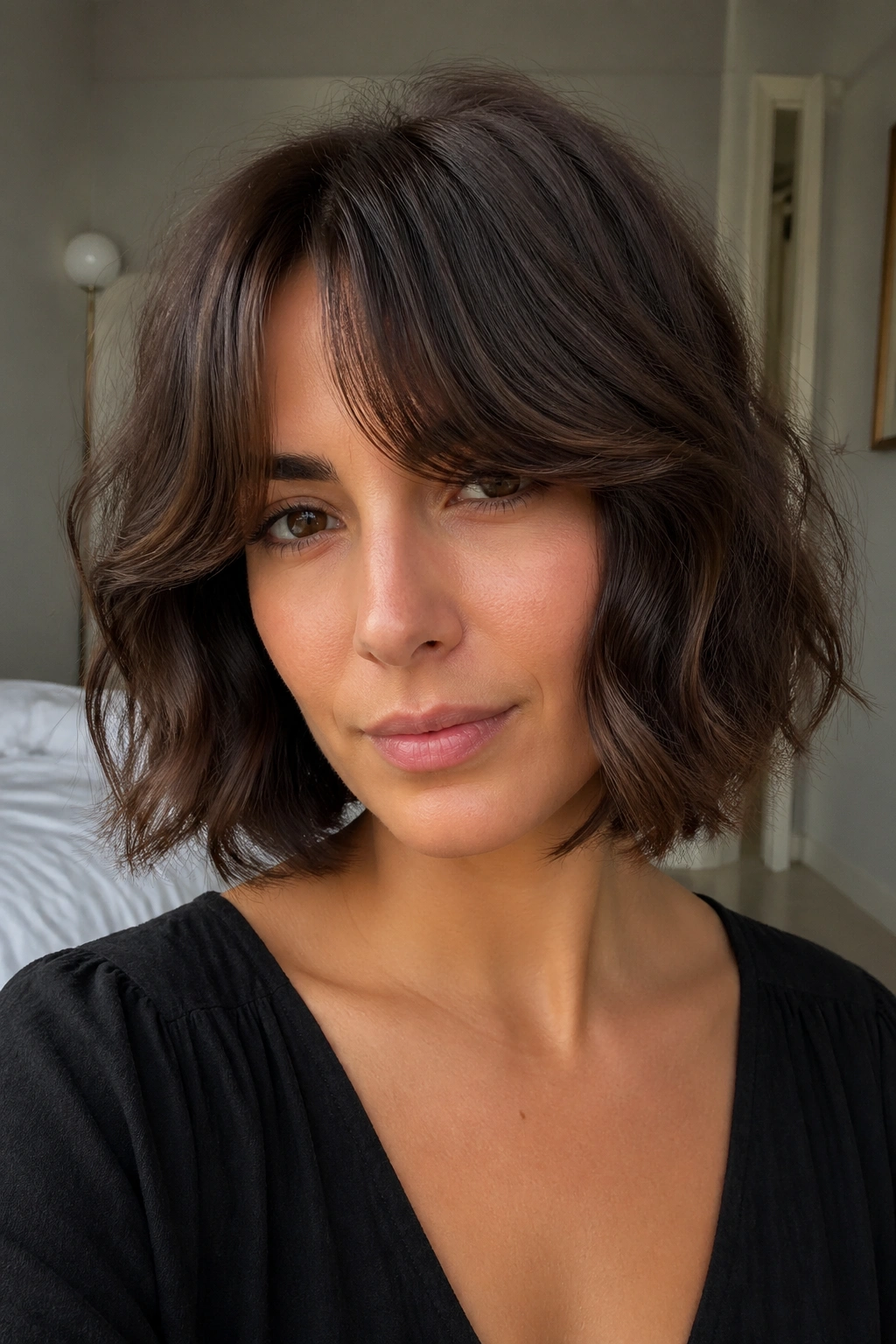
Curtain bangs and thick wavy bobs get along better than most fringe styles. The center split opens the face, the longer sides blend into the bob, and the shape helps break up the density around the forehead. You get softness without sacrificing structure. That is a pretty good trade.
The main trick is keeping the bangs long enough to tuck into the rest of the haircut. Short curtain bangs on thick waves can spring up and become too wide. Longer pieces, cut to hit around the cheekbone or upper lip, are easier to live with. They can be pushed aside on lazy days and still look intentional.
Best features of this cut
- It works with a middle part or a slight off-center part.
- The fringe softens a heavy jawline.
- It grows out more gracefully than blunt bangs.
Pro tip: dry the fringe first. Once it dries in the wrong shape, you’ll fight it all day.
13. Boxy Bob With Soft Movement
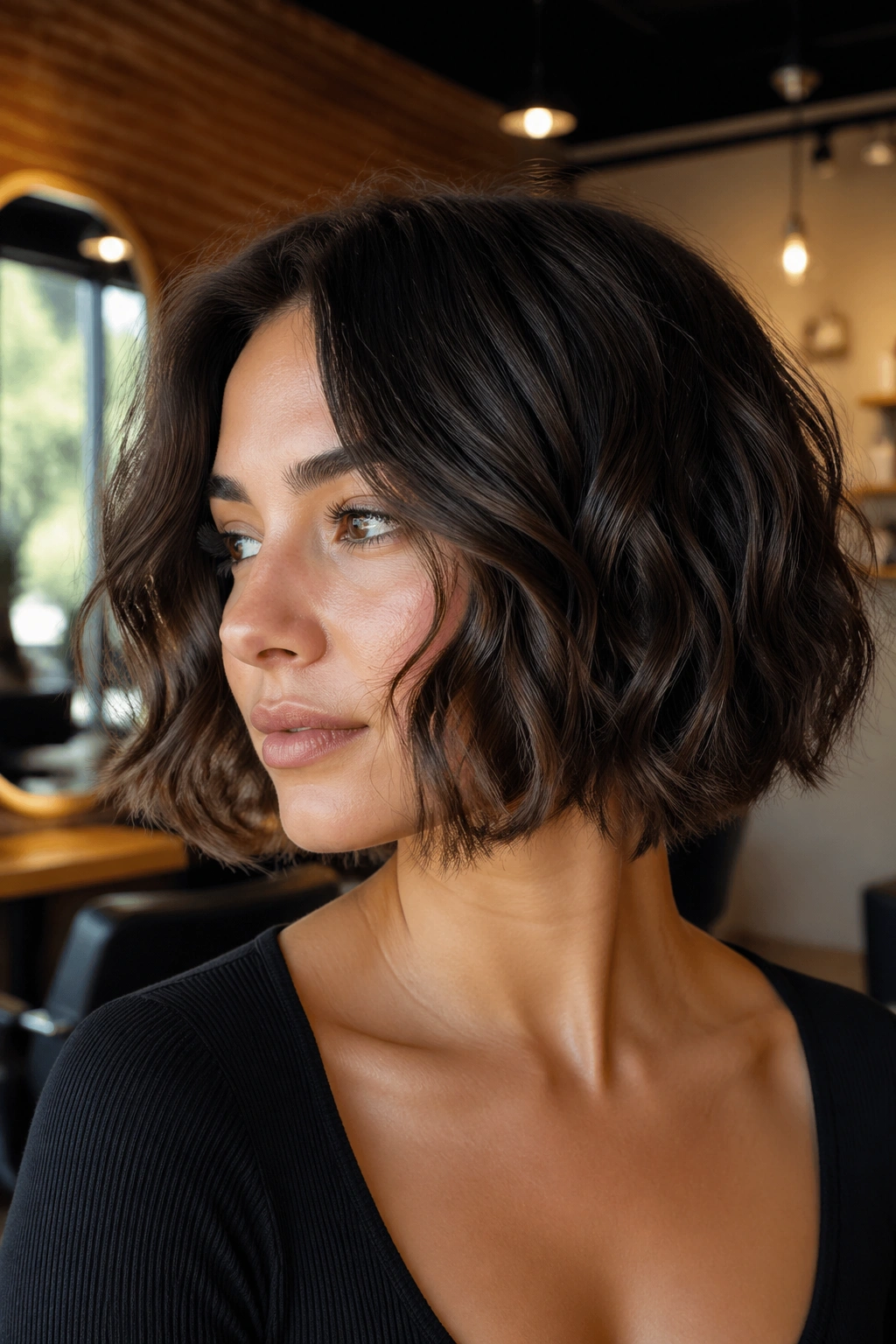
A boxy bob sounds harsh, but on thick wavy hair it can be exactly the right kind of control. The idea is to keep the shape a bit square and grounded, then soften it with wave so it doesn’t look rigid. This is a neat cut for people who want definition and volume to live together.
The boxy outline gives the hair a modern edge. The wave prevents it from looking like a helmet. That contrast can be very flattering on oval and long faces because the width lands where you want it, around the cheeks and jaw, rather than collapsing into the neck.
This one is not for someone who wants a fluffy, undone look. It’s cleaner than that. If you style it with a smoothing cream and a gentle bend through the ends, the result feels deliberate. A little bit architectural. Not cold. Just clear.
14. Layered Micro Bob
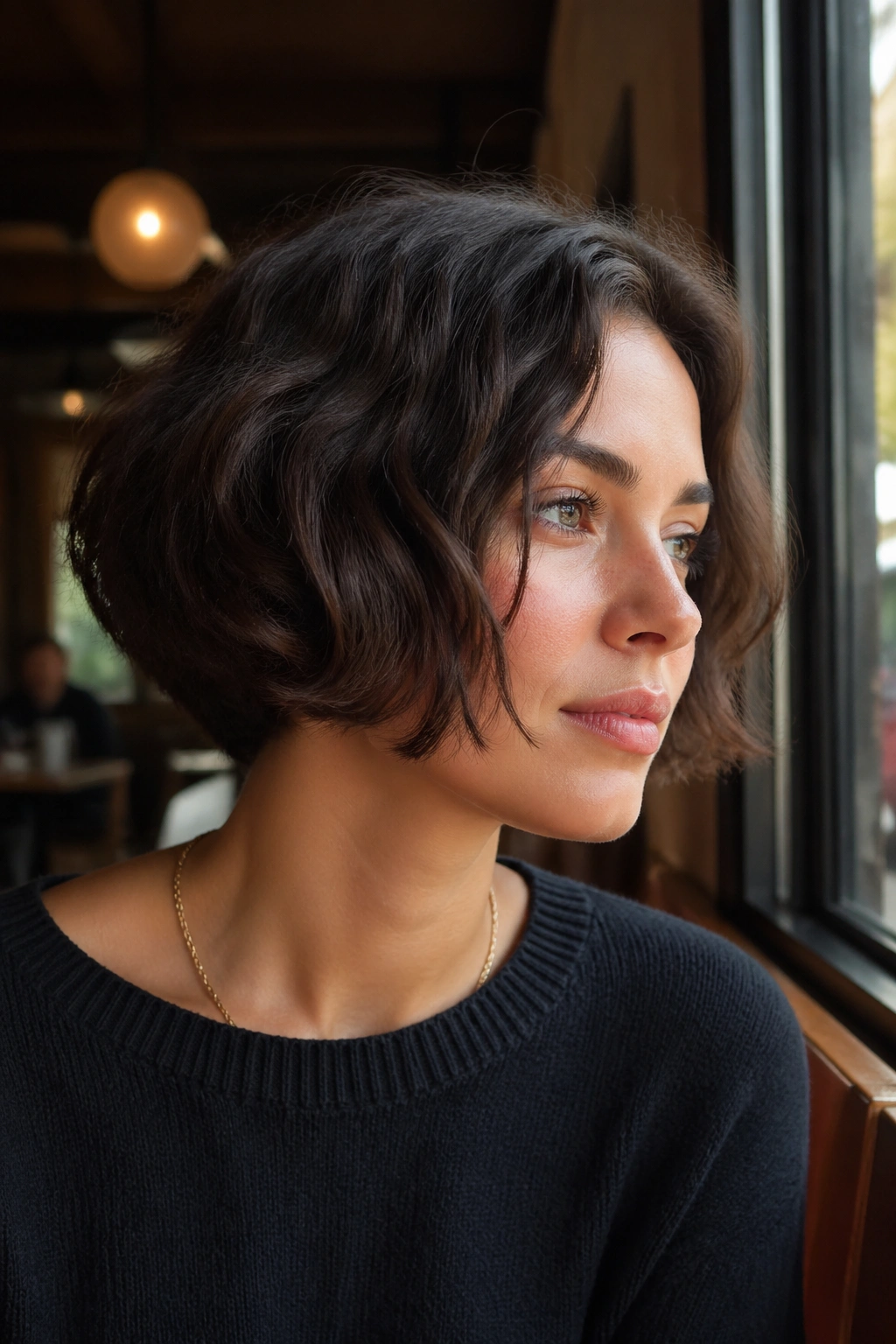
Short bob. Strong personality. The micro bob sits above the jaw or right at it, which sounds bold because it is. On thick wavy hair, though, it can look fantastic if the layers are kept minimal and the wave is allowed to do some of the work. You get fullness, but the length stays compact.
This cut is best for someone who likes exposing the neck and does not mind regular trims. Thick hair grows fast enough that a micro bob can lose its edge quickly. The upside is that it makes dense waves look lively and fresh, especially with a soft side part or a little root lift at the crown.
I would avoid heavy blowouts here. The charm is in the bend and the texture. If you straighten it too much, you lose the shape’s energy. A tiny amount of roughness keeps it from feeling too polished. That roughness is the point.
15. Tousled Bob With a Deep Side Part
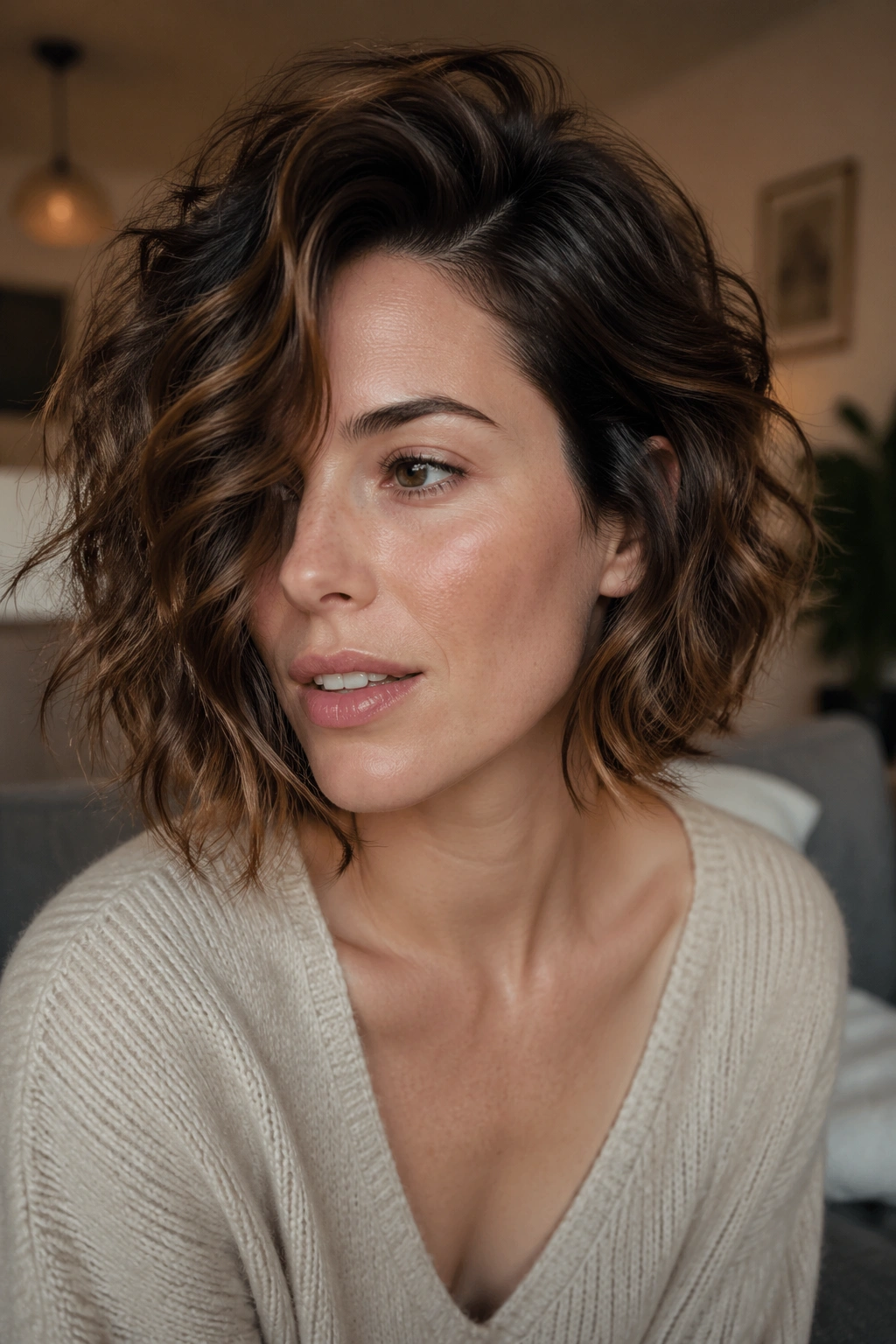
A deep side part gives thick wavy hair instant attitude. It also solves a practical problem: some of the volume gets moved off the center, which makes the haircut feel less wide. When the waves fall across the forehead and over one eye a bit, the whole look gets softer and more flattering.
The tousled finish should not be random. There should still be a plan underneath. Ask for weight removal through the lower third of the cut and keep the top more controlled so the part can actually hold. Then work in a small amount of texturizing mousse or sea-salt spray and scrunch the mid-lengths.
This is one of those styles that looks better after it loosens up. Freshly done, it can feel too neat. After a few hours, it settles into something better. A little messy. A little flattering. A little less like you tried too hard, which, honestly, is often the whole game.
16. Piecey Bob With Long Slices
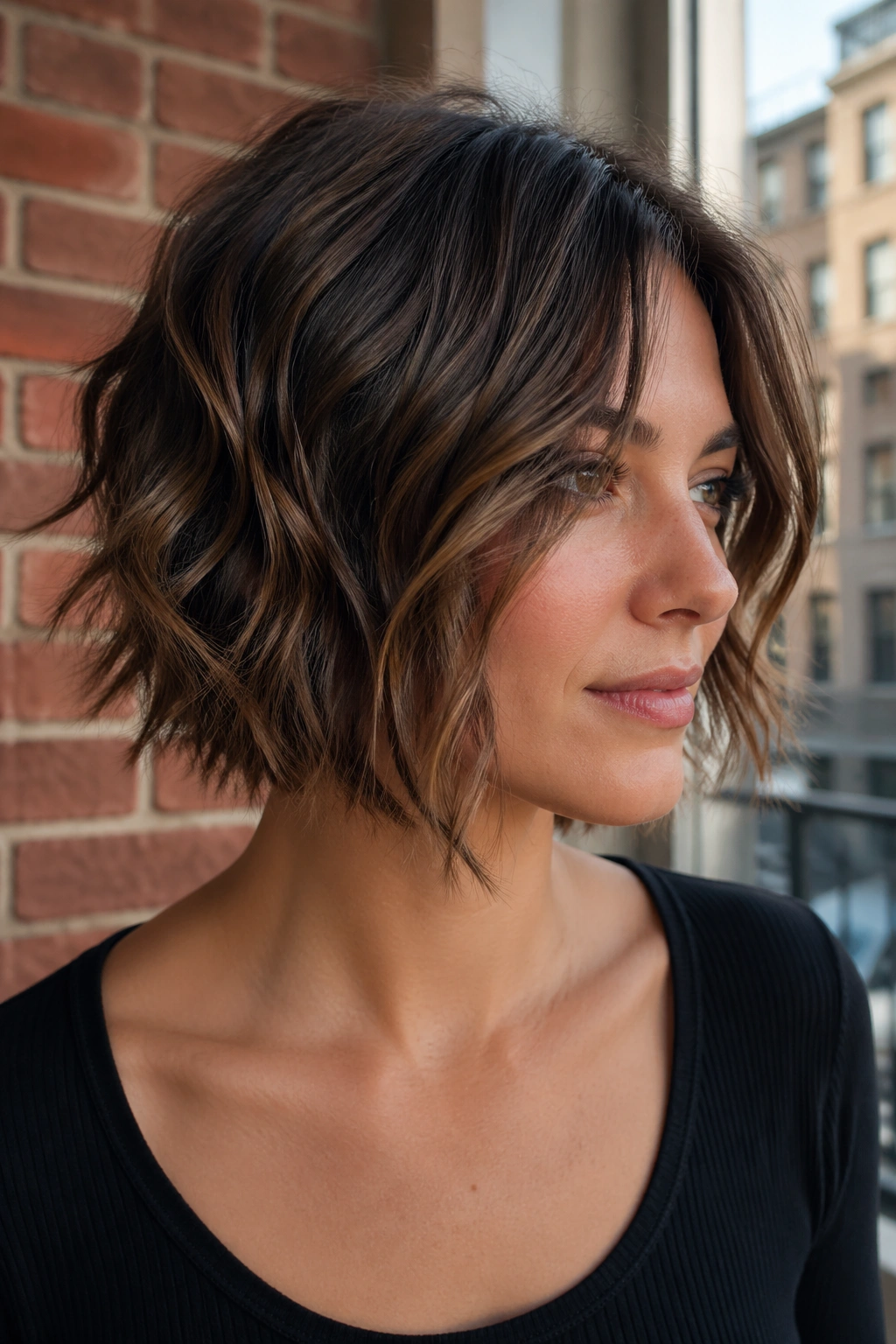
Long slice layers are useful when thick hair needs separation without losing density. Instead of chopping out big chunks, the stylist takes long, narrow sections to create movement. The result is piecey, not puffy. That difference matters a lot on wavy hair because it keeps the curl pattern visible.
This cut works especially well if you like your waves to look defined rather than fluffy. The slices help the hair fall into smaller groups, so the bob has texture that reads clearly even when you are not using much product. It is a smart choice for anyone who wants lightness but still likes a full-looking silhouette.
Keep the styling simple. A lightweight cream, a few scrunches, and maybe one pass with a curling wand on the pieces that misbehave. That is enough. The haircut should do most of the work. If it needs heavy styling every morning, the cut was not balanced well.
17. Wavy Bob With Bottleneck Bangs
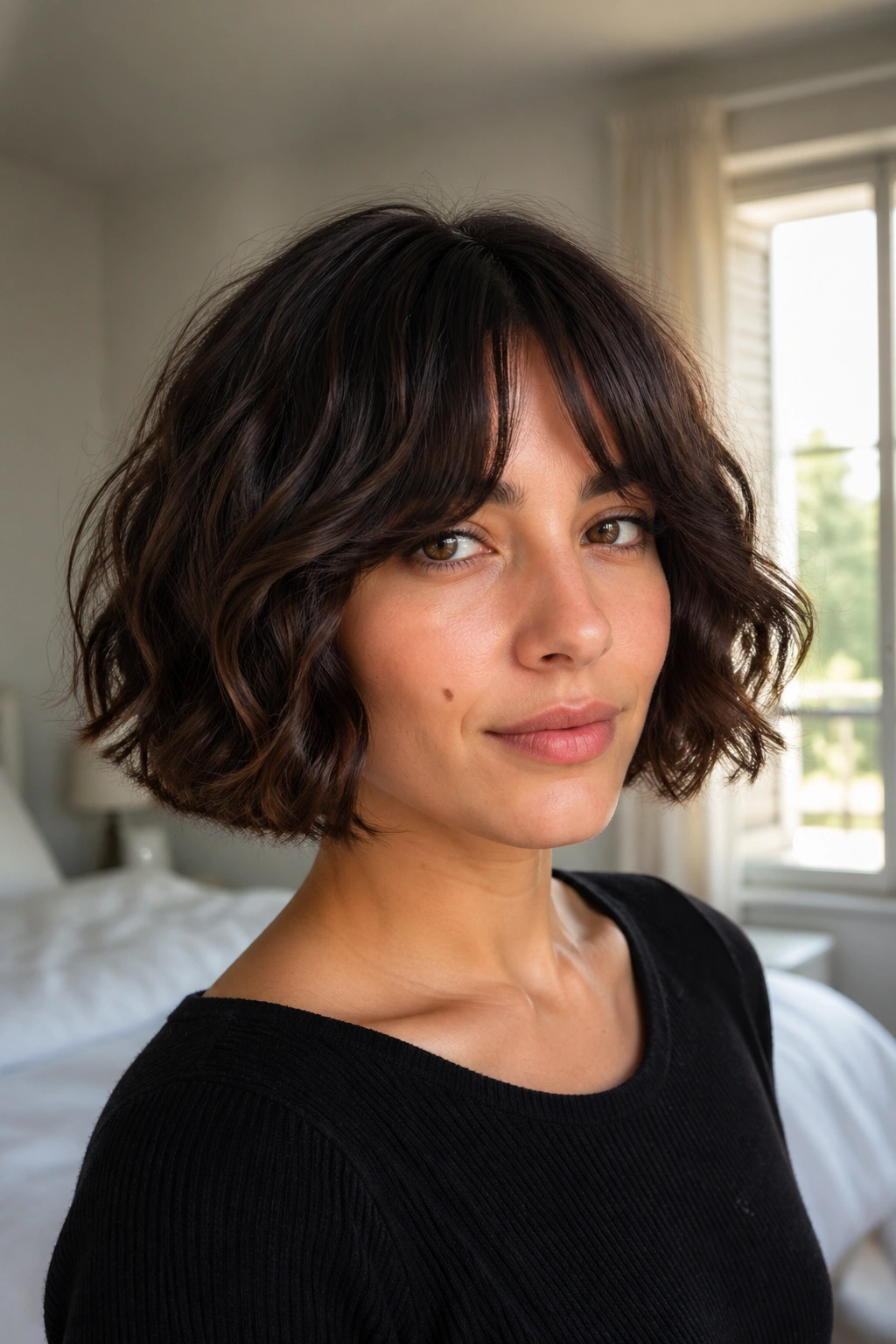
Bottleneck bangs are a nice compromise if you want fringe but hate the feeling of a thick wall across your forehead. They start narrower at the center and open up toward the sides, which makes them easier to blend into a wavy bob. On thick hair, that blend matters. It prevents the top from getting overloaded.
The bob itself can stay at chin or jaw length. The bangs add the interest. I like this pairing because it gives the haircut a little shape around the face without demanding perfect styling every day. A small round brush at the roots, then a quick sweep to each side, is usually enough.
If your waves are very strong at the front, keep the bangs slightly longer. Short bottleneck bangs can spring up and separate in odd ways. Longer ones are easier to control and look less precious when the hair gets a little messy.
18. Graduated Bob for Dense Waves
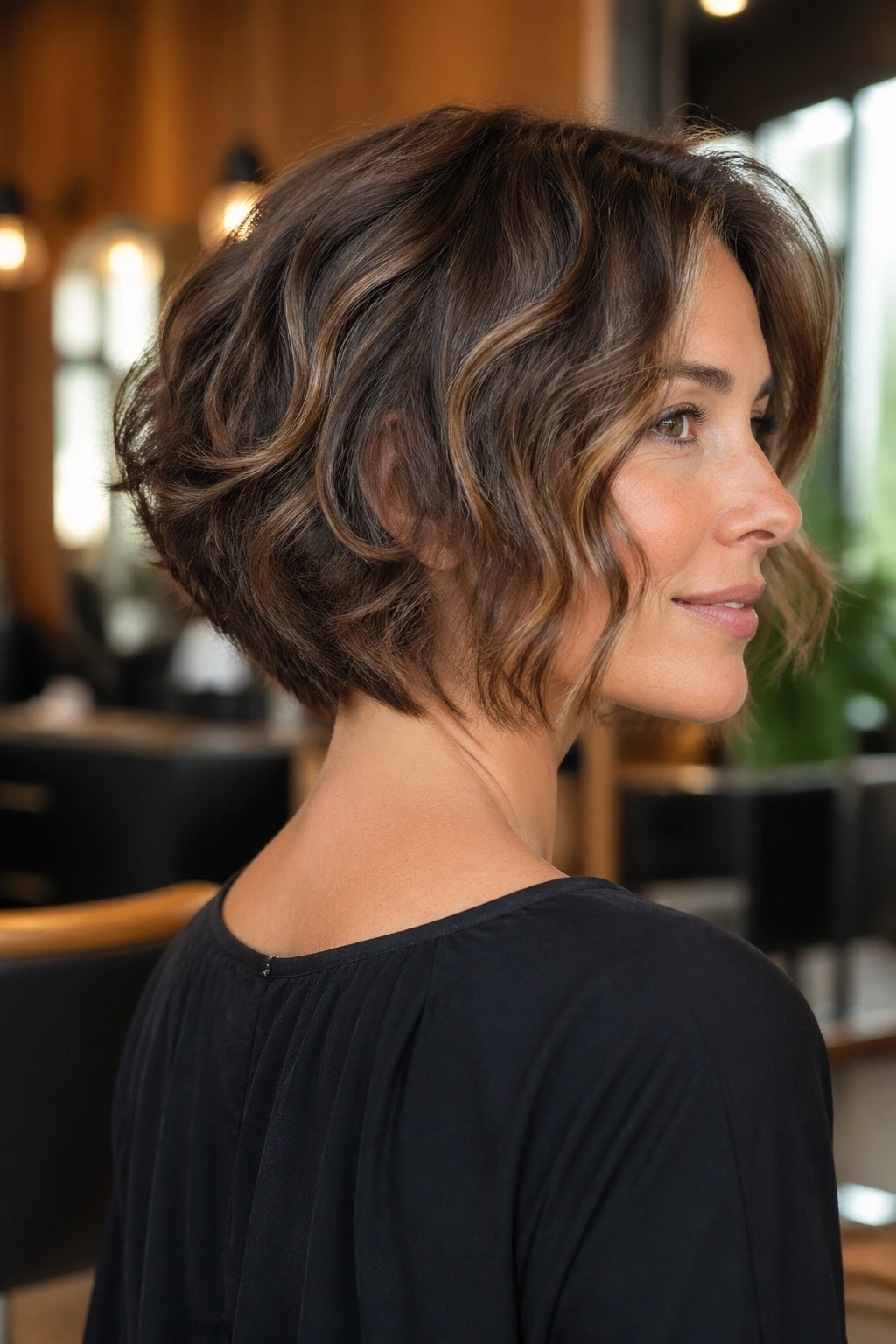
A graduated bob brings structure to thick wavy hair by stacking the back more firmly than the front. The silhouette is tidy, compact, and good at handling weight. It can be the difference between a cut that sits neatly and one that flips out in random places.
This version works best when the graduation is soft, not dramatic. You want enough lift at the nape to keep the haircut from feeling bulky, but not so much that the back looks overbuilt. On dense waves, the goal is balance. A little rise in the rear and a gentle fall toward the face can make the whole shape feel lighter.
A few things that help
- Ask for graduation through the nape, not choppy layers everywhere.
- Keep the front pieces a touch longer to soften the shape.
- Blow-dry the back first so the stack settles properly.
One warning: too much stacking can make thick hair look bottom-heavy when it grows out.
19. Grown-Out Bob With Tucked Ends
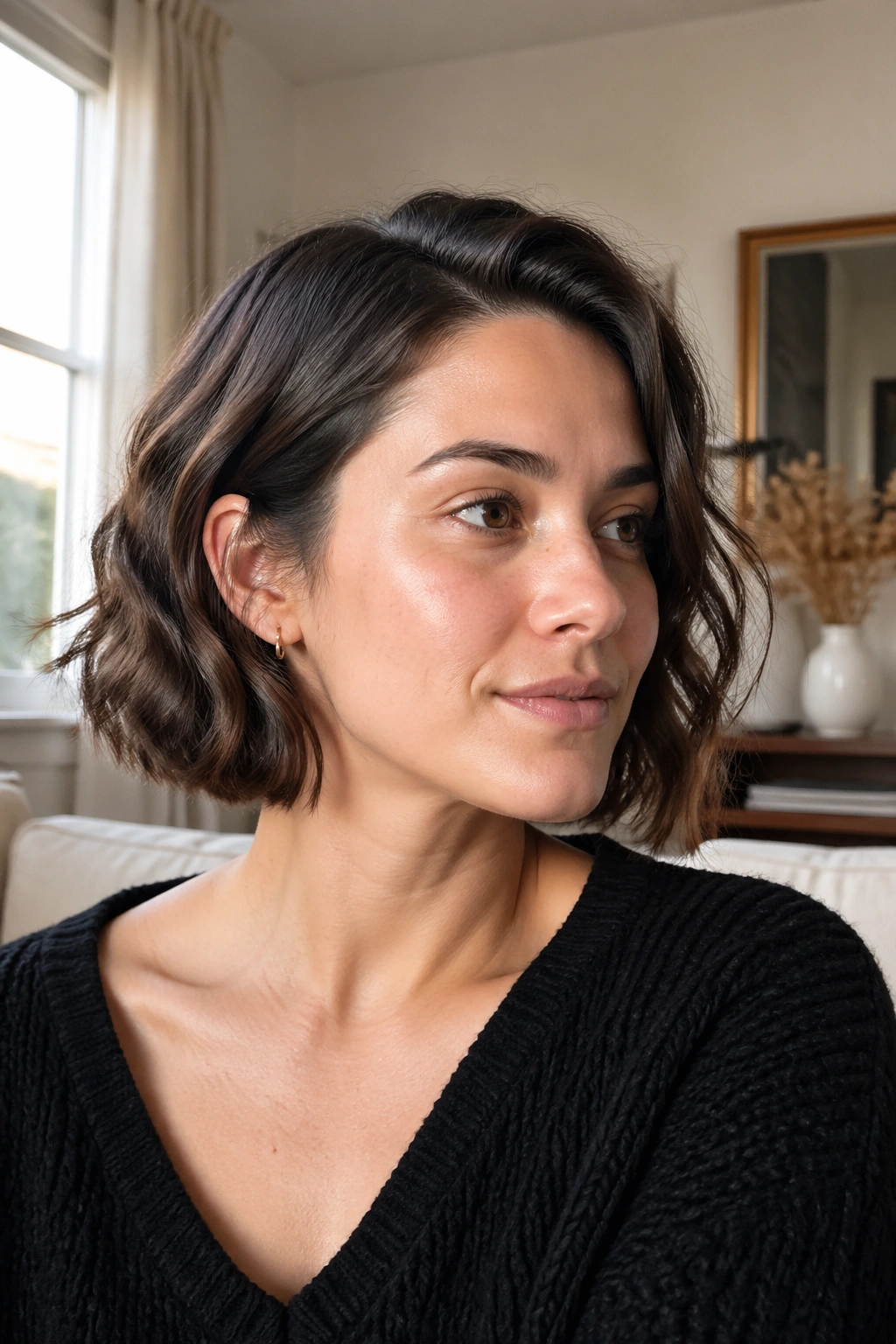
The grown-out bob is underrated. It sits somewhere between a bob and a lob, and the slightly longer ends make thick wavy hair easier to tuck behind the ears, clip back, or wear half-up. That flexibility counts. A lot.
What makes this cut attractive is the ease of it. You still get a shape around the face, but the extra length keeps the hair from puffing too close to the jaw. If your waves are strong, that little bit of length can stop the bob from looking too round. It also gives you room to play with accessories, which some of us like more than we admit.
I think this is one of the most practical cuts on the list. It grows out well, it behaves in humidity better than shorter bobs, and it can be styled with nothing more than a bend at the ends. If you want low drama, this is a good place to live.
20. Collarbone Bob With Subtle Underlayers

Think of this as the softer cousin of the classic lob. The length hits near the collarbone, but the secret is in the underlayers, which take enough weight out to keep the waves from dragging the whole shape down. Thick hair needs that breathing room.
This cut is especially good if your hair has a strong wave pattern underneath but tends to get heavy on top. Subtle underlayers let the wave rise without making the haircut look choppy. The outside still reads as one clean shape, which is why this cut feels polished even when it’s air-dried.
It also gives you more styling options than a shorter bob. You can wear it loose, clip the front back, or give it a bigger bend with a 1.25-inch iron. That extra length gives you room to adjust the mood. Some days you want soft. Some days you want tidy. This cut handles both.
21. Beachy Bob With S-Curve Waves
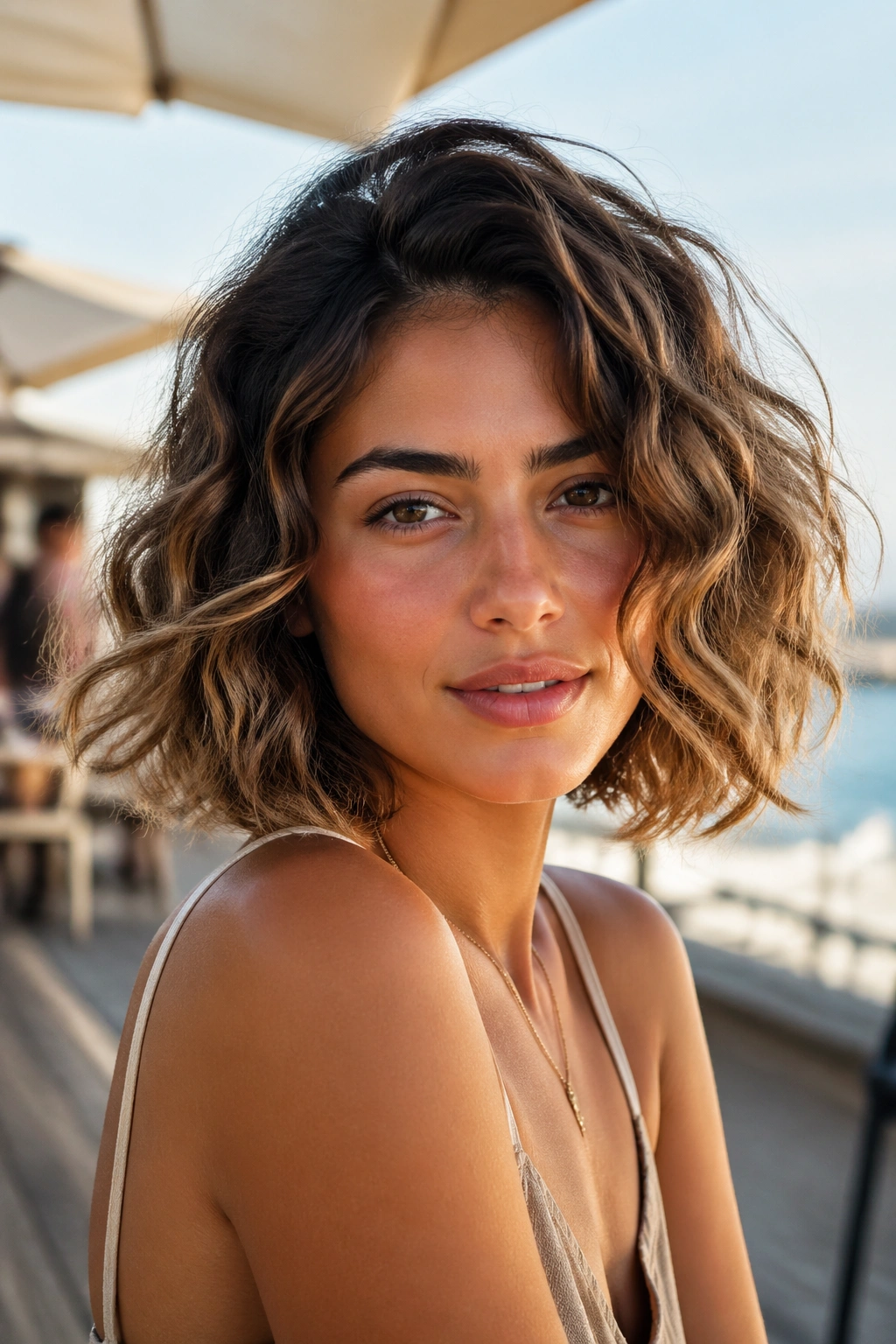
A beachy bob can get sloppy fast if the cut is wrong, but when thick hair is shaped well, it looks easy in the best way. The S-curve wave pattern gives the hair movement from root to end without turning every strand into a curl. That helps the bob stay soft, not puffy.
This version is more about finish than structure, though the cut still needs a solid base. A blunt-ish perimeter with a few internal layers gives the hair enough shape to hold the loose wave. Then you style with a large iron or wand, bending each section in alternating directions so the result feels broken up and natural.
No need to overthink the texture. A touch of dry shampoo at the roots can help if the waves collapse too fast, and a little shine serum on the ends keeps the hair from looking dry. The point is movement. Sun-and-salt energy, minus the actual salt.
22. Rounded Bob With Soft Edges
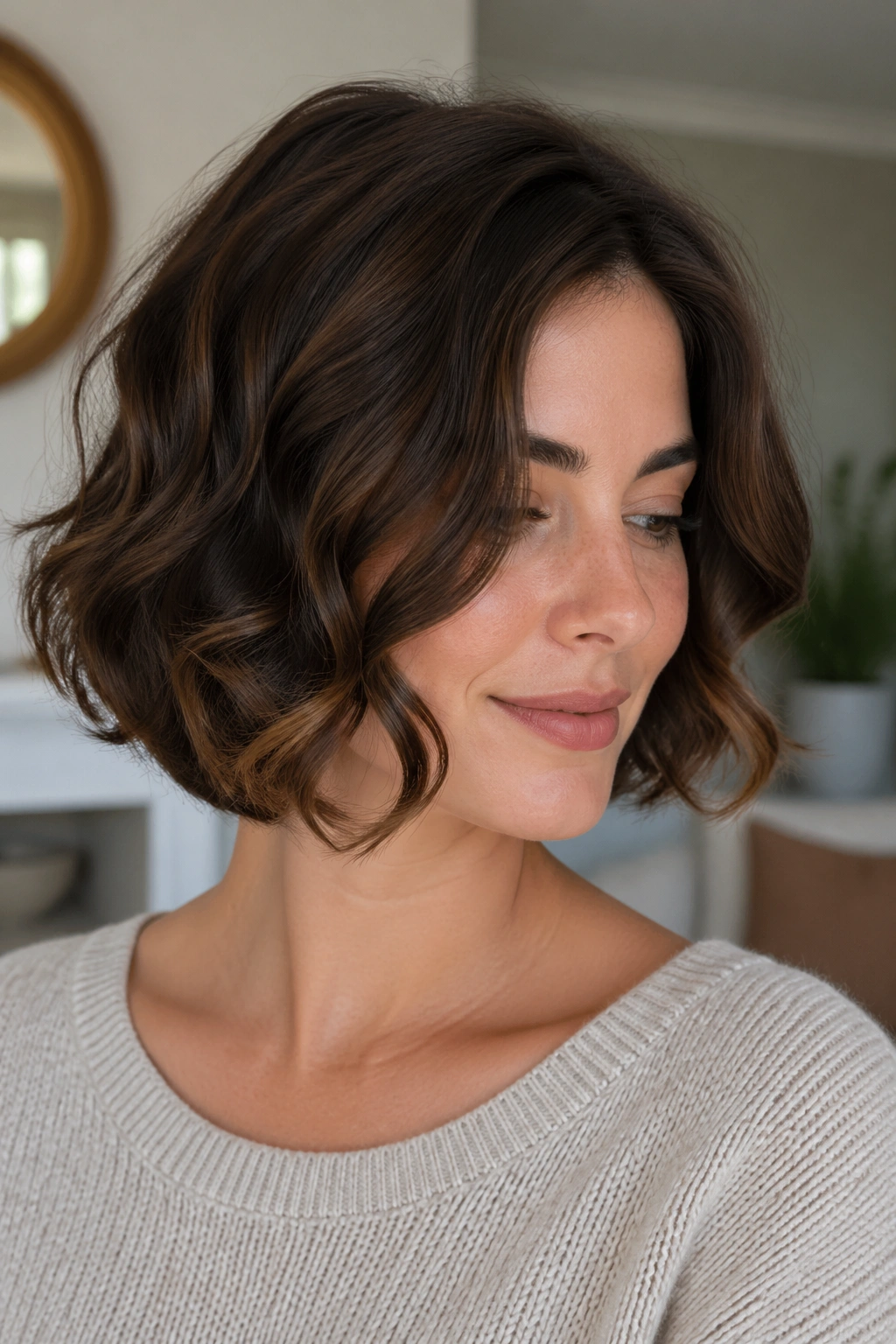
Rounded bobs can be lovely on thick wavy hair because they follow the head shape instead of fighting it. The curve softens the sides, the edges stay gentle, and the overall effect is neat without being stiff. If you prefer a more feminine silhouette, this is a strong option.
What makes the shape work is careful layering at the sides and a little lift near the crown. Too much bulk at the cheek line makes the rounded shape feel old-fashioned. Too much texture makes it lose the curve. The balance sits right between those two extremes, which is where good haircuts usually live anyway.
This cut is especially nice if you often wear earrings or glasses. The rounded line frames the face without crowding it. That sounds small, but it changes how the haircut feels in daily life. Hair should play well with the things you already wear. That part gets forgotten far too often.
23. Jaw-Length Bob With Side-Swept Fringe
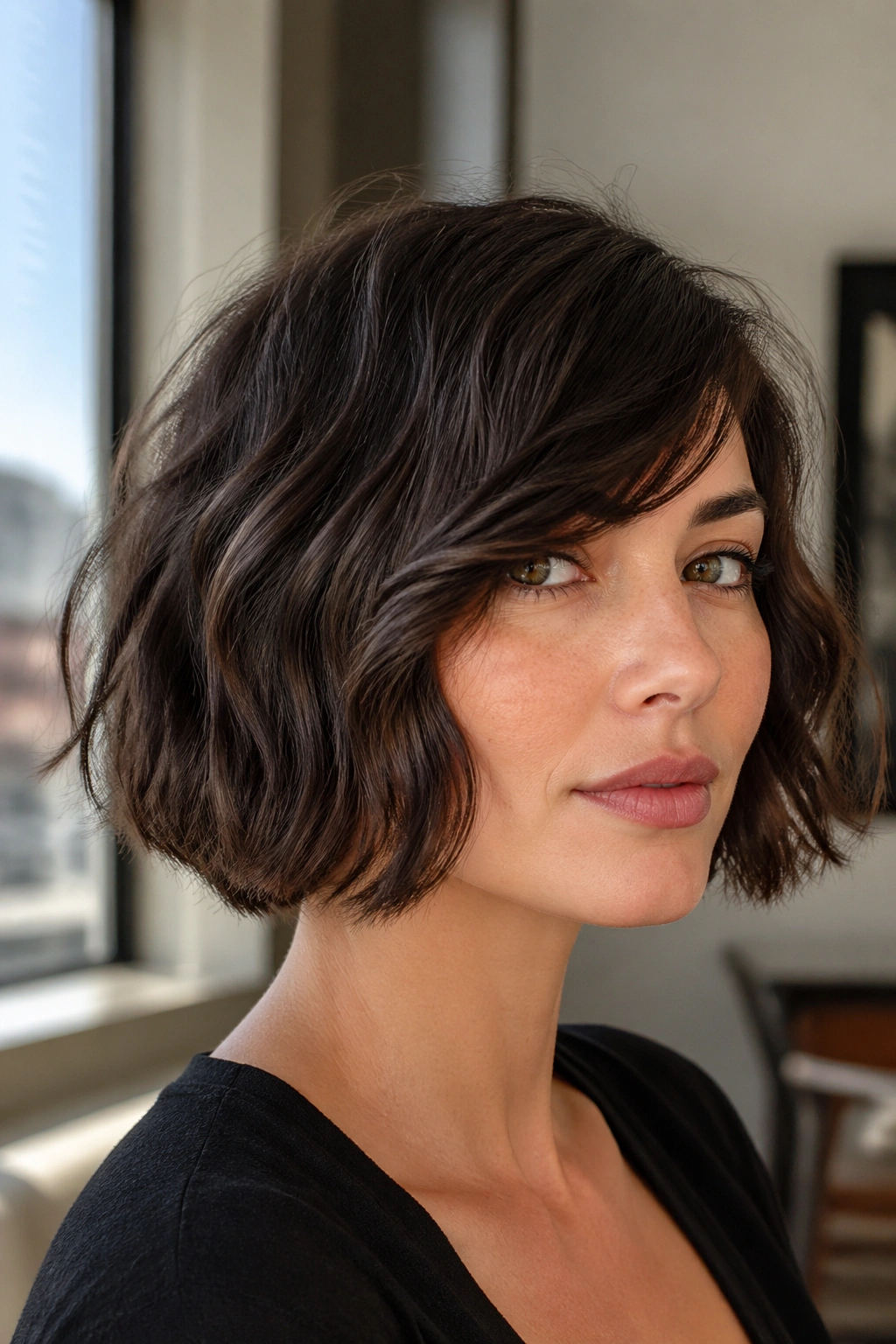
A jaw-length bob is short enough to feel bold and long enough to keep the wave soft. Add a side-swept fringe and the whole cut gets a little more movement around the face, which helps thick hair avoid the dreaded wide-bottom effect. The fringe pulls the eye diagonally. That is good.
This cut works well if your hair is dense through the front and you want to break up the forehead-to-jaw line. Side-swept bangs can be easier to live with than a full fringe because they do not need the same precision every morning. They can fall a little differently and still look fine.
The key is keeping the fringe connected to the rest of the haircut. If it feels chopped off from the bob, the styling gets harder. A soft transition from fringe to face frame lets the hair move as one piece. That is what makes the shape feel effortless, though that word gets overused. Here, it actually fits.
24. Bubble Bob With Movement

The bubble bob is having a quiet moment for a reason: it creates a rounded silhouette that works beautifully on thick hair when the edges are softened. The hair curves inward at the ends instead of sticking out, which gives the whole cut a plush, contained shape. Done right, it feels playful. Done wrong, it feels dated.
For wavy hair, keep the bubble effect subtle. You want the body, not the helmet. A little internal layering and a careful round-brush finish at the ends will help the bob bend under instead of flaring out. Thick hair has enough weight to support this shape, which is why fine hair often struggles with it.
This is one of those cuts that looks especially good when the color has dimension. Highlights show off the curve of the shape. You do not need balayage to make it work, but the bubble line and visible wave pattern play nicely together. The haircut does a lot already.
25. Sleek-at-the-Root Wavy Bob

A bob can be wavy and still look controlled at the root. In fact, thick hair often looks better that way. If the base is smooth and the movement starts lower down, the haircut reads as intentional rather than puffy. That little contrast keeps the style from exploding outward.
This is a useful cut if your hair tends to get frizzy at the crown or around the part. A smooth root area, followed by soft bend through the mids and ends, gives the bob a cleaner outline. It also makes the wave pattern look more defined because there is a clear break between the sleek top and the textured lower half.
You do not need a flat iron for the whole head. Just dry the roots well and keep the rest loose. A bit of anti-frizz cream near the part can help, but do not drown the hair in product. Thick waves hold shape better when they’re light enough to move.
26. Layered Bob With Flipped Ends

Flipped ends can sound retro, and sometimes they are. But on thick wavy hair, a slight flip outward at the bottom can keep the bob from feeling too heavy or too severe. The layers help the curve sit softly instead of sticking out in a hard line.
This cut is nice when you want a bit of personality without a dramatic shape change. The layers lighten the inside, while the flipped finish gives motion at the perimeter. It works especially well on hair that likes to bend naturally at the shoulders or jaw. Fighting that bend is usually a mistake.
A medium round brush and a quick twist of the wrist at the ends are enough here. Do not force a full retro flip if your hair doesn’t want it. A soft bend outward looks better on most people anyway. It feels less costume, more natural.
27. Messy Bob With Broken Texture

Some cuts are polished. This one is not. The messy bob with broken texture is about controlled disorder, and thick wavy hair is one of the few hair types that can make it look deliberate instead of sloppy. The fullness gives the style enough body to survive a rough finish.
The key is broken texture, not frizz. That means piecey separation through the mid-lengths, irregular movement at the ends, and a shape that looks like it has been finger-combed rather than brushed into place. The haircut should support that attitude with long internal layers and a clean enough outline to keep it from going shapeless.
This is a good cut for busy mornings. Scrunch in a light mousse, let it dry, and mist a tiny bit of dry texture spray through the ends if they need help. That’s it. If a style needs 40 minutes to look messy, it is doing too much.
28. Bob With Hidden Nape Layers
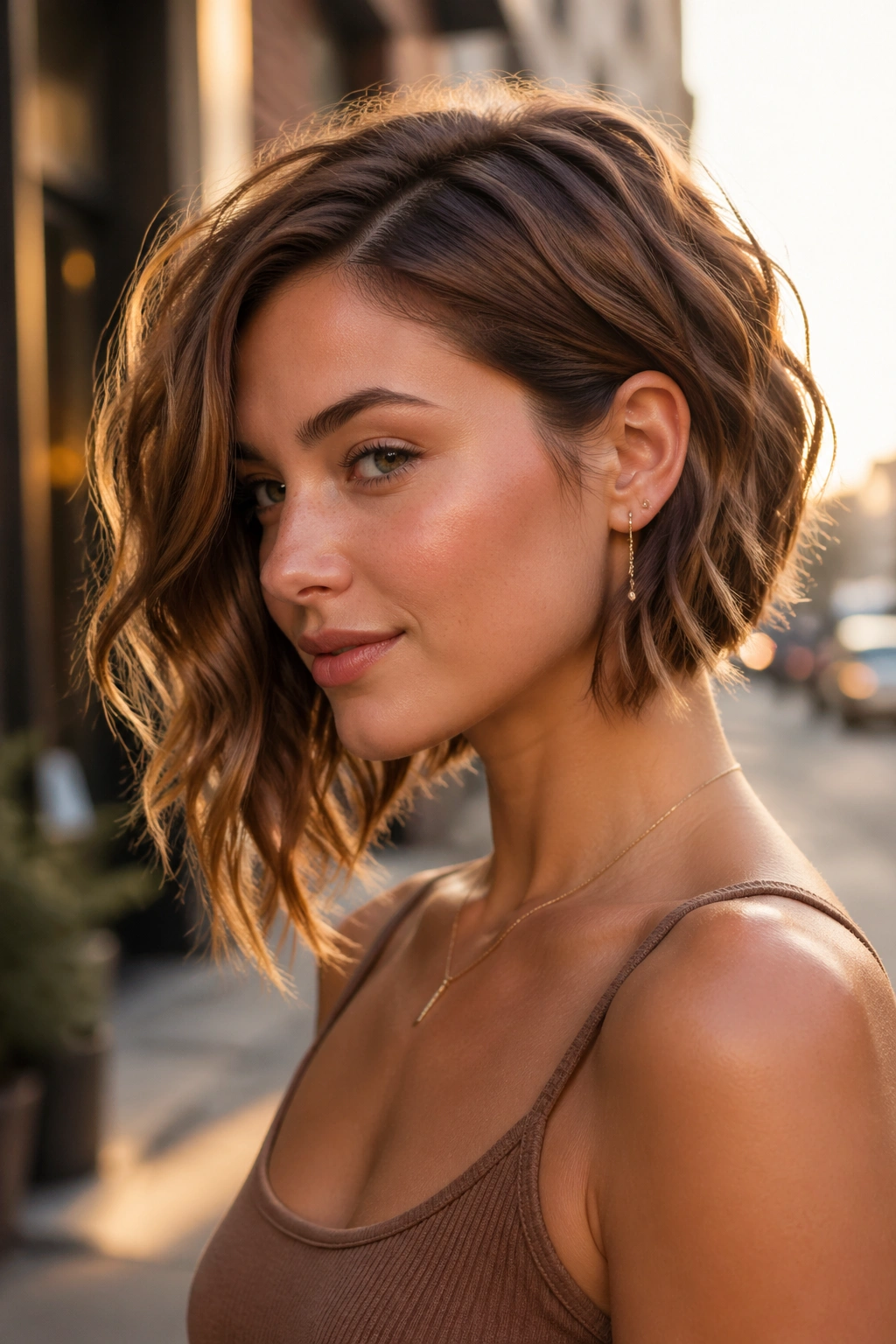
Hidden nape layers are one of my favorite tricks for thick hair. They remove weight where it piles up most, but they stay tucked away so the haircut still looks full from the outside. That keeps the bob from feeling thin or over-styled.
This cut is smart if your hair gets bulky at the back of the neck or if the bottom edge seems to kick out in a weird way. A small amount of structure at the nape can change how the whole cut falls. It is one of those details that nobody notices directly, but everyone notices the result.
The outer line can stay blunt or slightly curved. Either way, the hidden layers do the quiet work underneath. That makes this one a good option for people who want thick hair to feel lighter but don’t want obvious layer marks. Practical haircut. Good payoff.
29. One-Length Bob With Expensive Texture
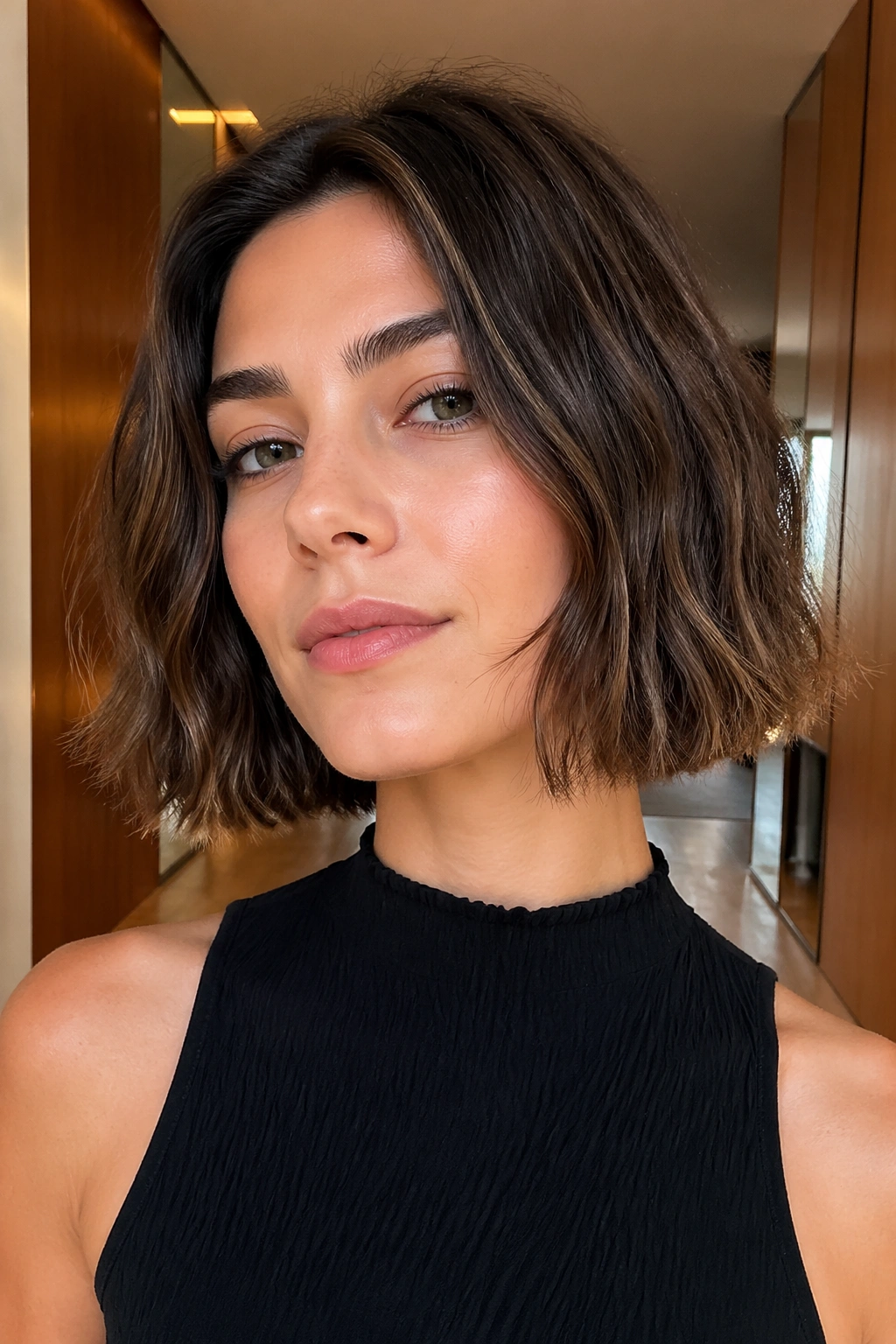
A one-length bob on thick wavy hair sounds simple, and that is exactly why it can be so good. When the line is clean and the texture is healthy, the cut looks rich and deliberate. No choppy layers. No fuss. Just a strong shape with natural bend.
The challenge is making sure the ends do not turn into a shelf. Thick waves can do that if the bob is cut too bluntly or too short at the wrong point. The answer is slight softening at the tips and a length that sits where your wave relaxes. Usually that is around the chin or just below it.
This cut is especially nice if you like a tidy finish. It pairs well with a center part, a low pony, or a deep tuck behind one ear. That said, it only works if the hair is in decent condition. Split ends show fast on a one-length bob. There is nowhere to hide them.
30. Deep Side-Part Lob Bob

The side-part lob gives thick wavy hair room to breathe. It is longer than a classic bob, shorter than a true lob in spirit, and the deep part keeps the top from looking too wide. That balance can be a relief if your hair naturally pushes out at the temples.
I like this cut for people whose waves are stronger from the mid-lengths down. The extra length lets the pattern show without stacking too much volume near the cheeks. You can still wear it in a bob-like way by curling just the ends or letting the wave dry into a loose S-shape.
It is one of the easiest styles to dress up or down. You can pin one side back for a cleaner look, or leave the waves loose for a softer finish. The haircut does not demand a lot. It just needs a bit of direction at the roots and a little patience while it dries.
31. Soft Wolf Bob
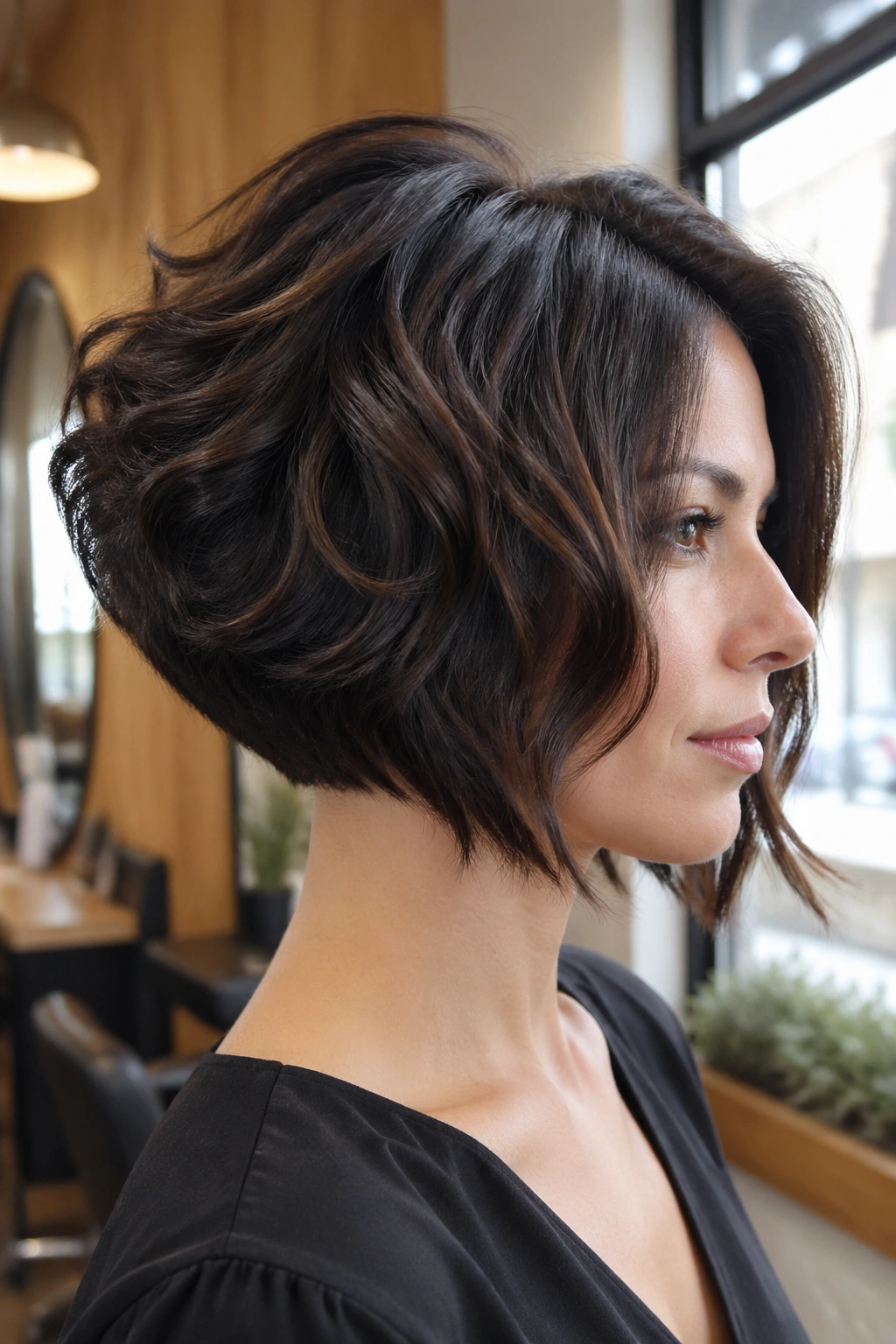
The wolf bob borrows the shag’s edge but keeps the shape shorter and more controlled. On thick wavy hair, that mix can be excellent. You get volume at the crown, texture through the sides, and a lower length that keeps the haircut from turning into a full-on shag.
This cut works best when the layers are soft and the perimeter stays readable. Too many choppy pieces can make thick hair look puffy. The better version has movement around the face, a little lift up top, and enough length in the back to anchor the shape. It is a cool cut without being precious.
Styling is half the fun here. A diffuser helps if you want more definition, but air-drying works too if your wave pattern is cooperative. Keep the product light. Heavy creams can flatten the lift that makes the wolf bob interesting in the first place.
32. Sculpted Bob With Tapered Nape
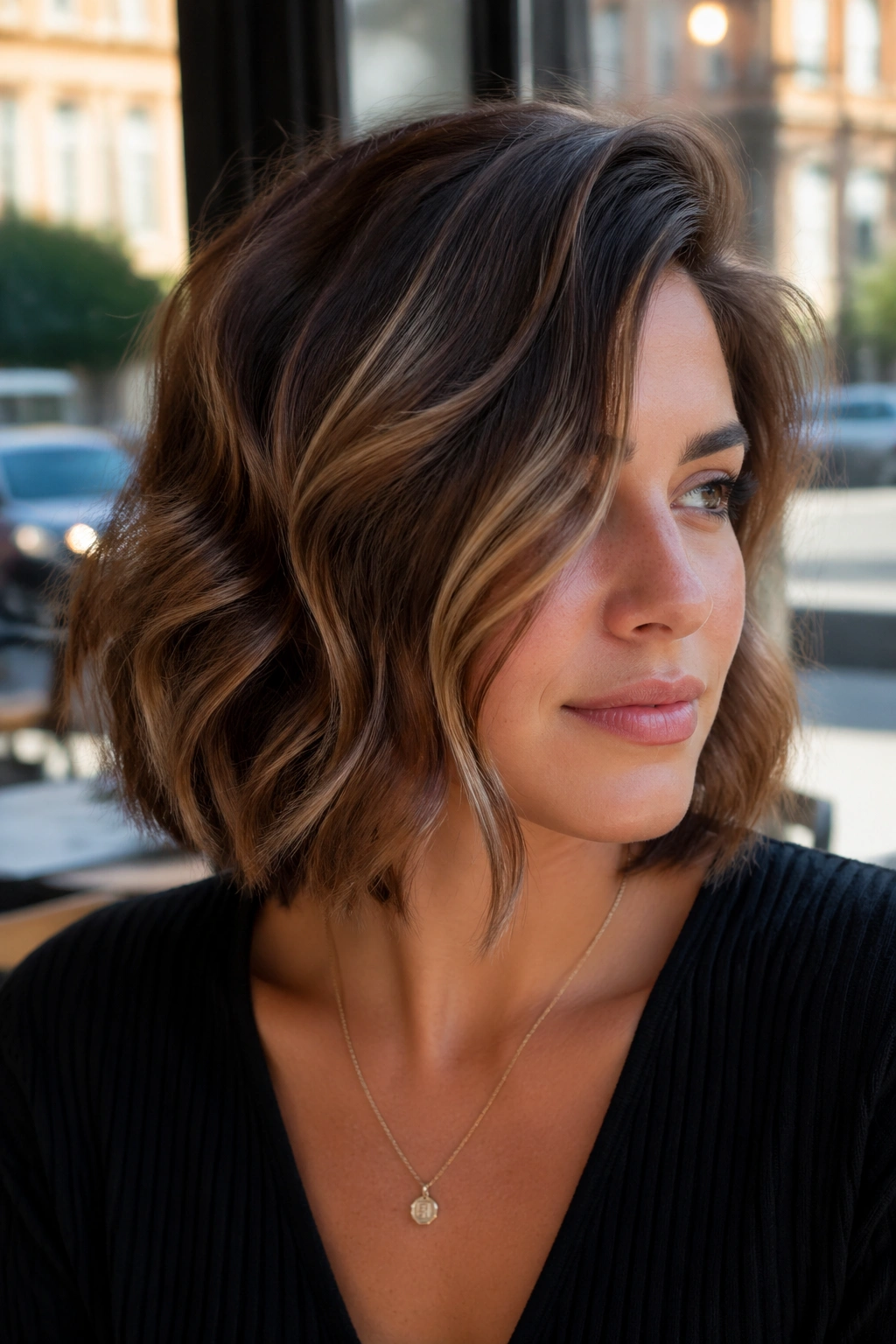
A sculpted bob sounds formal, and it can be. But on thick wavy hair, a tapered nape makes the shape feel tailored rather than stiff. The back is cleaned up, the sides follow the head, and the front keeps enough softness to stop the whole cut from feeling severe.
This style is especially good if your hair bunches at the neck or gets bulky under coats and collars. The tapered nape helps it sit better. That sounds small. It isn’t. Anyone with thick hair knows how much a collar can ruin a nice shape.
I would choose this one if you like your hair neat and controlled. It does ask for maintenance, because the silhouette is part of the appeal. Once it grows out too far, the balance shifts. Until then, though, it gives thick waves a very tidy frame.
33. Shoulder-Length Curved Bob
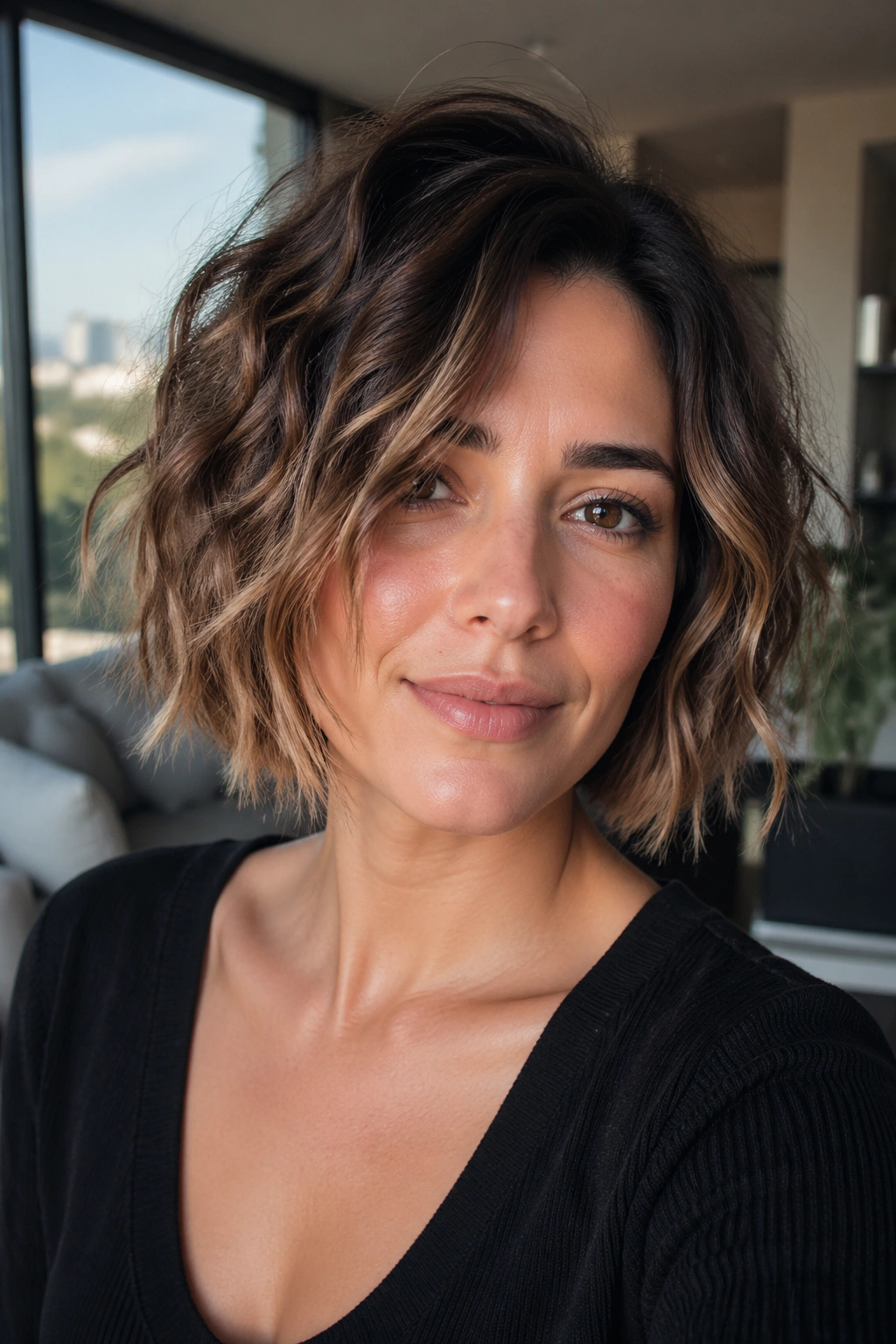
A shoulder-length curved bob sits right on the edge between bob and lob, and that is where a lot of thick wavy hair feels happiest. The length lets the wave settle, while the curve in the cut keeps the ends from sticking straight out. It is graceful without being delicate.
The shape usually works best with longer front sections and a slightly shorter back, though the difference does not need to be dramatic. What matters is the curve. When the hair follows that arc, the bulk spreads out in a more flattering way. You get fullness, but not the mushroom effect.
This is a strong pick if you want something that looks grown-up without feeling severe. It styles quickly, wears well tucked behind the ears, and still gives you enough length for low buns or a clipped-up front. That flexibility is useful. More useful than people think.
34. Choppy Bob With Airy Ends

A choppy bob can go wrong if every section is cut to a different mood. But when the texture is controlled, thick wavy hair can carry that lighter, airier finish nicely. The ends look feathered, the outline stays alive, and the whole haircut feels less heavy than a blunt cut.
This one is best if your wave pattern is loose to medium and your hair gets bulky fast. The choppiness takes some of that mass out of the bottom without making the cut feel thin. It also keeps the hair from sitting in one solid block, which is often the problem with thick bobs that have not been shaped enough.
The trick is restraint. You want movement, not holes. If you can see empty gaps in the shape, it has gone too far. A good choppy bob still looks like a bob from across the room. Up close, you just notice that it moves better.
35. Low-Maintenance Wavy Bob With Long Face Framing

If I had to hand someone one safe, flattering starting point, it would be this one. The length sits a little below the chin, the face-framing pieces stay long enough to grow out cleanly, and the overall shape is forgiving on thick wavy hair. It does not demand perfect styling, which is half the charm.
This cut works because it leaves you room. Room to air-dry. Room to tuck. Room to let the wave expand a bit on humid days without wrecking the line. The front pieces soften the cheeks and jaw, while the back stays tidy enough to feel like a real bob instead of a vague medium cut.
If you want a bob that can survive a busy week, this is the one I’d send you toward first. It is not flashy. It does not need to be. It looks good when it is done carefully, and it still looks good when you are running late and only use a little leave-in cream. That is the kind of haircut people keep for a long time.
