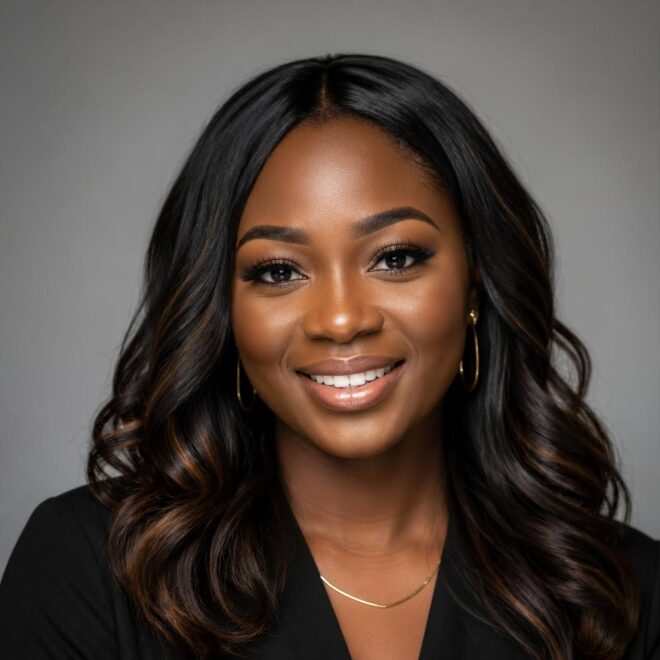


Elegant ponytails for Black women can look simple from across the room and still carry a lot of style up close. The difference usually lives in the details: where the base sits, how clean the part is, whether the roots are stretched or slicked, and how much tension you’re asking the hairline to handle.
A good ponytail does more than pull hair back. It can show off curls, frame the face, make braids look sharper, or let a silk press sit with a little drama instead of hanging flat. A bad one? Tight, lumpy, and forgotten by lunchtime. That’s a bad trade.
Black hair gives you more room to play than people sometimes admit. Coils, twists, braids, locs, pressed lengths, extensions, natural puffs — all of it can live in a ponytail if the shape makes sense for the texture and the finish. The styles below lean polished, wearable, and elegant, but they still leave room for personality. Some are sleek. Some are full. Some are the kind of style that looks calm until the light hits the braid detail and you notice somebody put in the work.
1. Sleek Low Ponytail with a Deep Side Part
A sleek low ponytail with a deep side part has a clean, almost tailored feel. It sits quietly at the nape, which is part of why it works so well with strong makeup, earrings, or a sharp collar. The part does a lot of the talking here. Keep it crisp, brush the roots flat with a light gel or edge control, and wrap a small strand around the elastic so the base doesn’t look rushed.
This style looks especially good on silk-pressed hair, relaxed hair, or stretched natural hair that can lay smooth without fighting back. If your hair is thick, use a strong hair tie and secure the base in two passes. One pass usually isn’t enough. It slips, then the whole mood slips with it.
2. High Puff Ponytail with Soft Edges
Why does a high puff feel elegant instead of casual? Because it lifts the face and lets the texture do the decorating. The shape sits at the crown, so the eye goes upward first, then settles on the fullness. Softly laid edges help, but keep them light. You want polish, not a helmet.
What Makes It Work
The best versions keep the puff rounded and full, not flattened. Stretch the hair first if you want more height, then gather it with a satin scrunchie or a soft band that won’t snag. A pick at the roots can help shape the puff after it’s secured.
- Works well on coily hair with natural volume
- Stays neater when the roots are lightly stretched
- Looks balanced with statement earrings
- Needs only a small amount of edge control
Tip: Don’t pull the ponytail too tight at the base. A little lift reads softer and cleaner.
3. Feed-In Braided Ponytail Down the Back
Feed-in braids give this ponytail structure from the first inch. The lines start small at the scalp, build gradually, and lead into a long tail that feels deliberate instead of bulky. That gradual build is what makes the style look refined. The braid base lays close to the head, and the ponytail length can be straight, curled, or even braided again.
A few gold cuffs or a single wrapped strand can change the mood without crowding the look. Keep the parts clean and symmetrical if you want that crisp finish people notice from across the room.
Quick Notes
- Best when the parts are straight and even
- Add braiding hair slowly for a smoother feed
- Finish the tail with mousse to tame flyaways
- A light scalp oil keeps the roots from looking dry
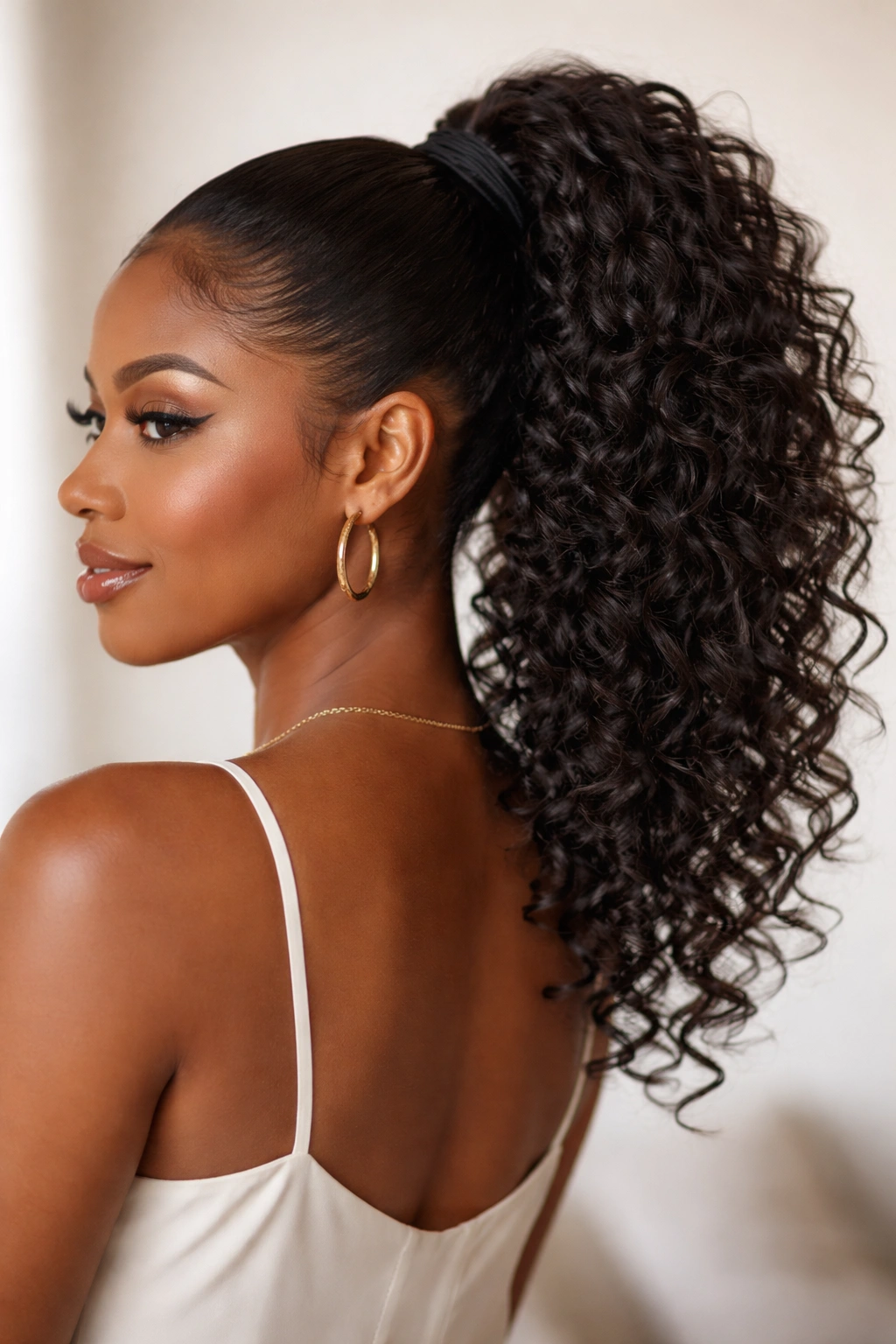
4. Curly Drawstring Ponytail with Loose Ringlets
Picture a sleek base at the crown and a tail full of springy curls that move when you walk. That’s the charm of a curly drawstring ponytail. It gives you volume fast, but the real win is texture blend. When the ponytail hair matches your curl pattern, or at least sits near it, the whole style looks intentional instead of attached.
I like this one for evenings, birthdays, and any outfit that needs a little softness near the face. Wrap the base neatly, then finger-separate the curls after they’re in place. Don’t overpick them. Loose ringlets hold their shape better when you leave some of them alone.
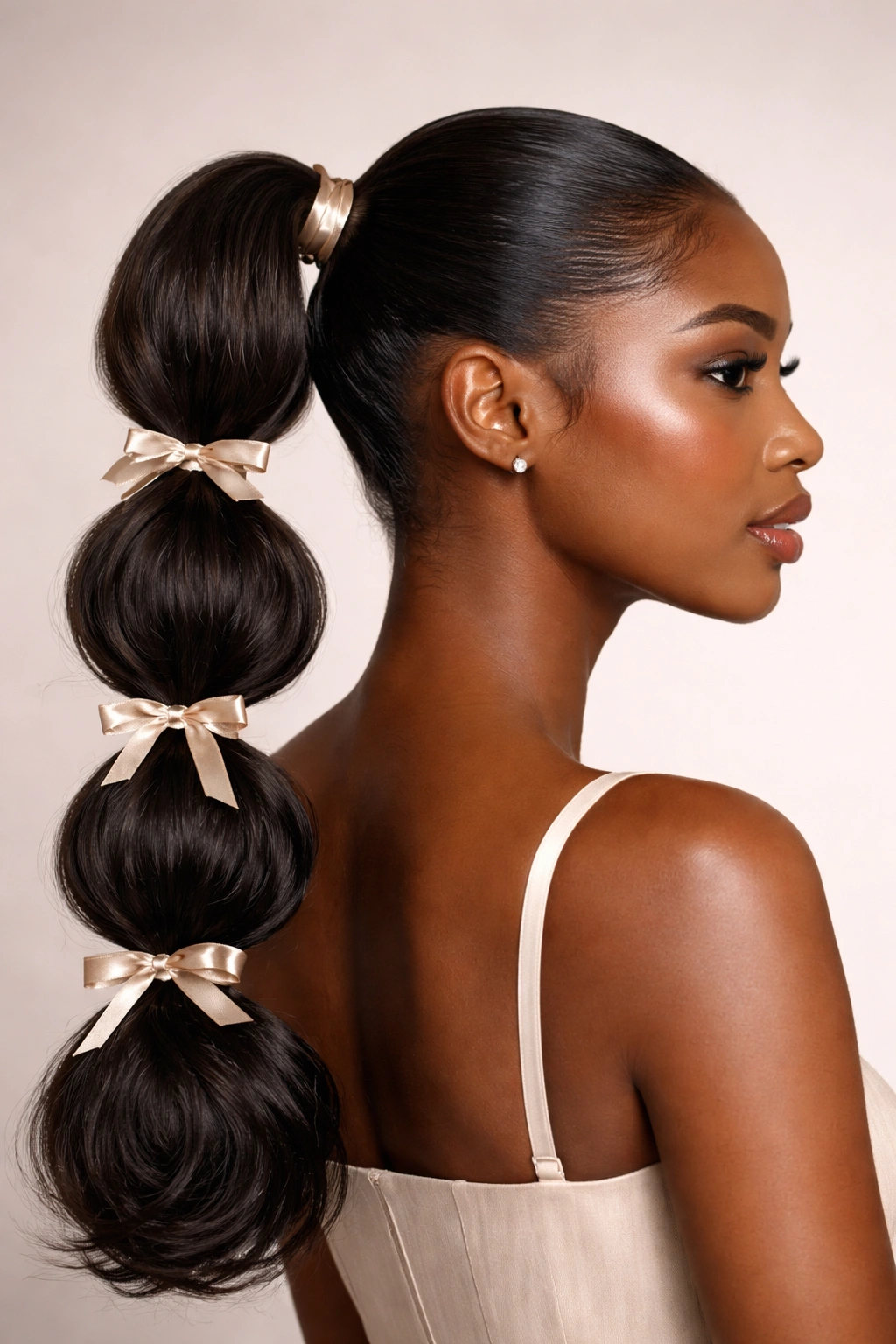
5. Bubble Ponytail with Satin Ties
A bubble ponytail has structure without feeling stiff. Instead of one long fall, the length is sectioned with small bands every few inches, then gently puffed between each tie. On Black hair, that shape can look especially chic when the base is sleek and the bubbles are evenly spaced.
This style works on straightened hair, braided extensions, or a long drawstring ponytail. Use satin ties or clear elastics covered with a small wrap of hair so the sections look clean. The spacing matters. Too close together and the bubbles collapse; too far apart and the style loses the pattern.
A bubble ponytail is one of those styles that looks more complicated than it is. Good thing.
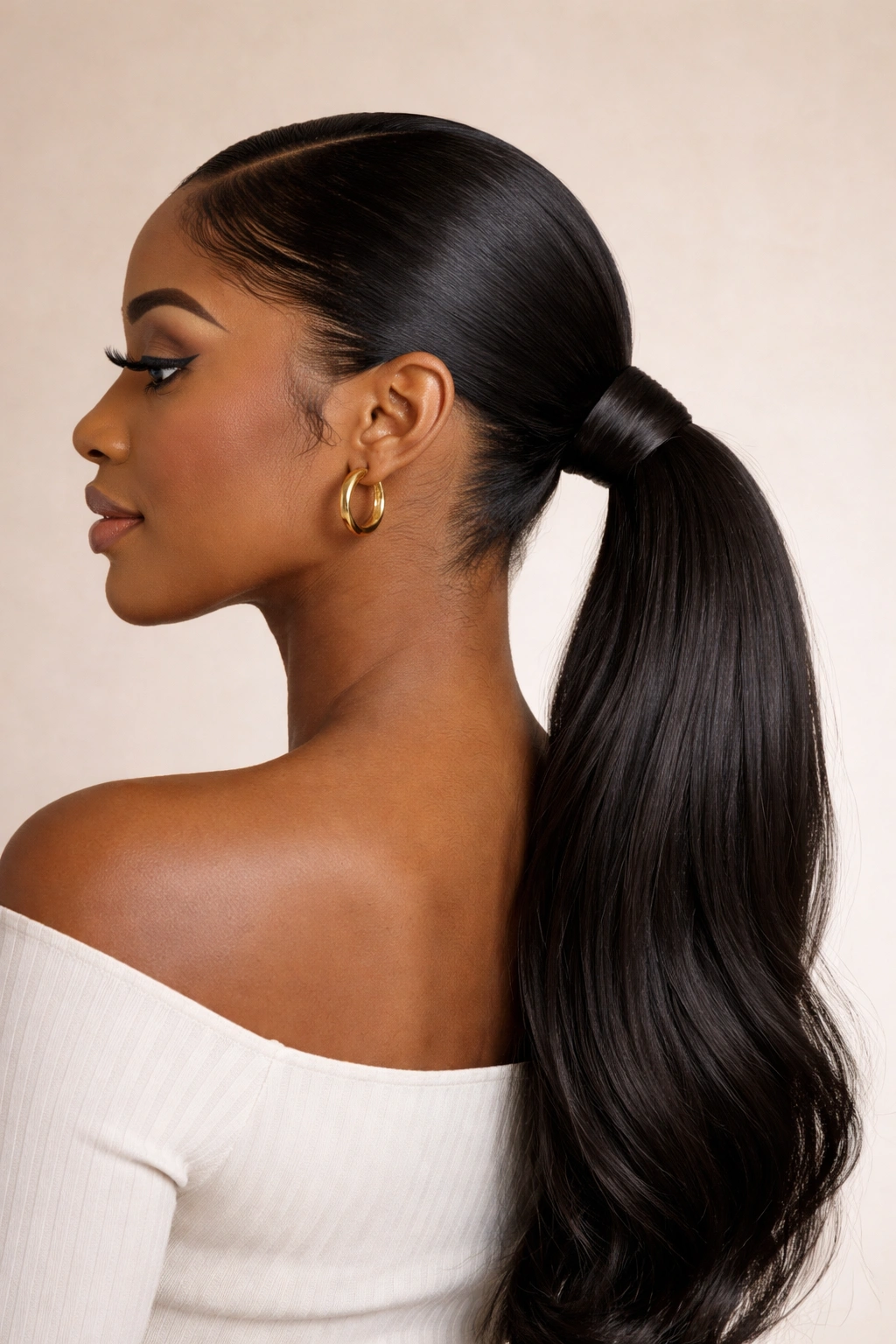
6. Wrapped Low Ponytail with a Smooth Base
A wrapped low ponytail is the style I reach for when I want hair to look finished without looking busy. The base sits low, the crown stays smooth, and a section of hair wraps around the elastic like a neat little ribbon. That wrap is doing more work than people give it credit for. It hides the mechanics.
This one plays well with straight textures, blown-out hair, and long braids that need a cleaner exit point. If your hair is short, use a small piece of extension hair for the wrap and pin it underneath. Keep the wrap snug but not bulky. You want a clean cylinder, not a thick knot.
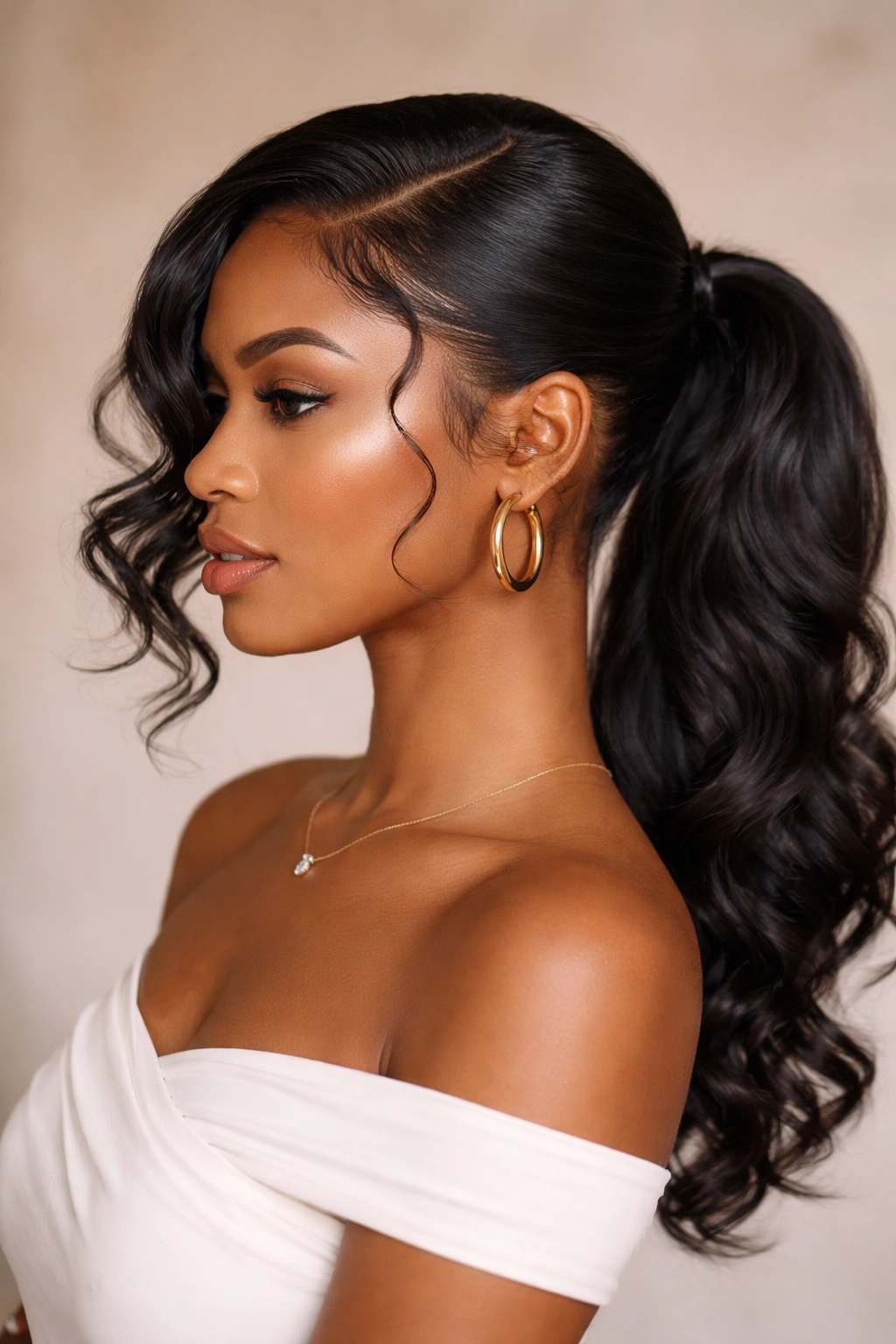
7. Side-Swept Ponytail with Face-Framing Curls
Does a side-swept ponytail flatter almost everyone? Pretty much. The angle softens the face, and the curls near the front keep the style from feeling too severe. That’s the real trick: the ponytail can be sleek, but the front stays a little romantic.
Why It Reads So Polished
A side part gives the style direction. A low or mid-height ponytail keeps it balanced. Then the face-framing pieces do the softening. Curl those front sections with a 1-inch wand or flexi rods so they match the tail instead of fighting it.
- Best with medium to long hair
- Works with pressed hair or curled extensions
- Keep the front pieces loose, not crunchy
- A light shine serum helps the finish
8. Crown Braid Leading into a Ponytail
A crown braid into a ponytail feels ceremonial in the best way. The braid arcs across the top of the head, then disappears into the tail, so the style gets detail before it even reaches the back. It’s the kind of look that can handle a wedding guest dress or a sharp suit without needing extra drama.
The braid should hug the hairline, but not squeeze it. If the braid is too tight at the temples, you’ll feel it long before the night is over. Leave the tail curly, pressed, or braided depending on how formal you want the finish to feel. One style, three moods.
9. Rope-Twist Ponytail with a Tucked Base
Rope twists have a smoother, more sculpted look than regular three-strand braids. In a ponytail, that gives the whole style a little shine and a lot of order. The strands spin around each other in a way that catches the eye without looking flashy.
This is one of my favorite styles for natural hair that’s been stretched or blown out. Two sections are all you need for the twist, and the ends can be pinned, banded, or folded into the tail depending on the length. Keep the base tucked and neat. If the root area looks messy, the twist loses its clean line.
A rope-twist ponytail sits nicely under coats, collars, and scarves too. That matters more than people think.
10. Loc Ponytail Pulled High and Clean
A high loc ponytail has lift, weight, and presence all at once. Locs already bring shape, so the ponytail just needs a clean base and a secure tie. Pulling them high opens up the face and shows off the length in a way that feels confident without trying too hard.
The main thing is support. Locs can be heavy, so use a strong band or a loc-friendly wrap that won’t snap under tension. If your roots are due for a retwist, do that first. Fresh roots change everything. A clean root base makes the whole style look sharper and helps the ponytail sit where you actually want it.
11. Stitch-Braid Ponytail with Long Extensions
Stitch braids are all about line. The scalp sections are straight and defined, and that graphic look carries right into the ponytail. If you like a style that reads crisp from every angle, this one delivers. It can be worn with straight length, curled ends, or a braided tail.
What to Ask For
- Clean, even parts with tight stitching near the scalp
- A ponytail base that sits high, mid, or low depending on face shape
- Extension hair that matches your texture or braid thickness
- A finish with mousse so the braid lines stay neat
A stitch-braid ponytail is a good pick when you want the style to stay put. It can last well because the base is controlled from the start. That’s the whole point.
12. Natural Puff Ponytail at the Crown
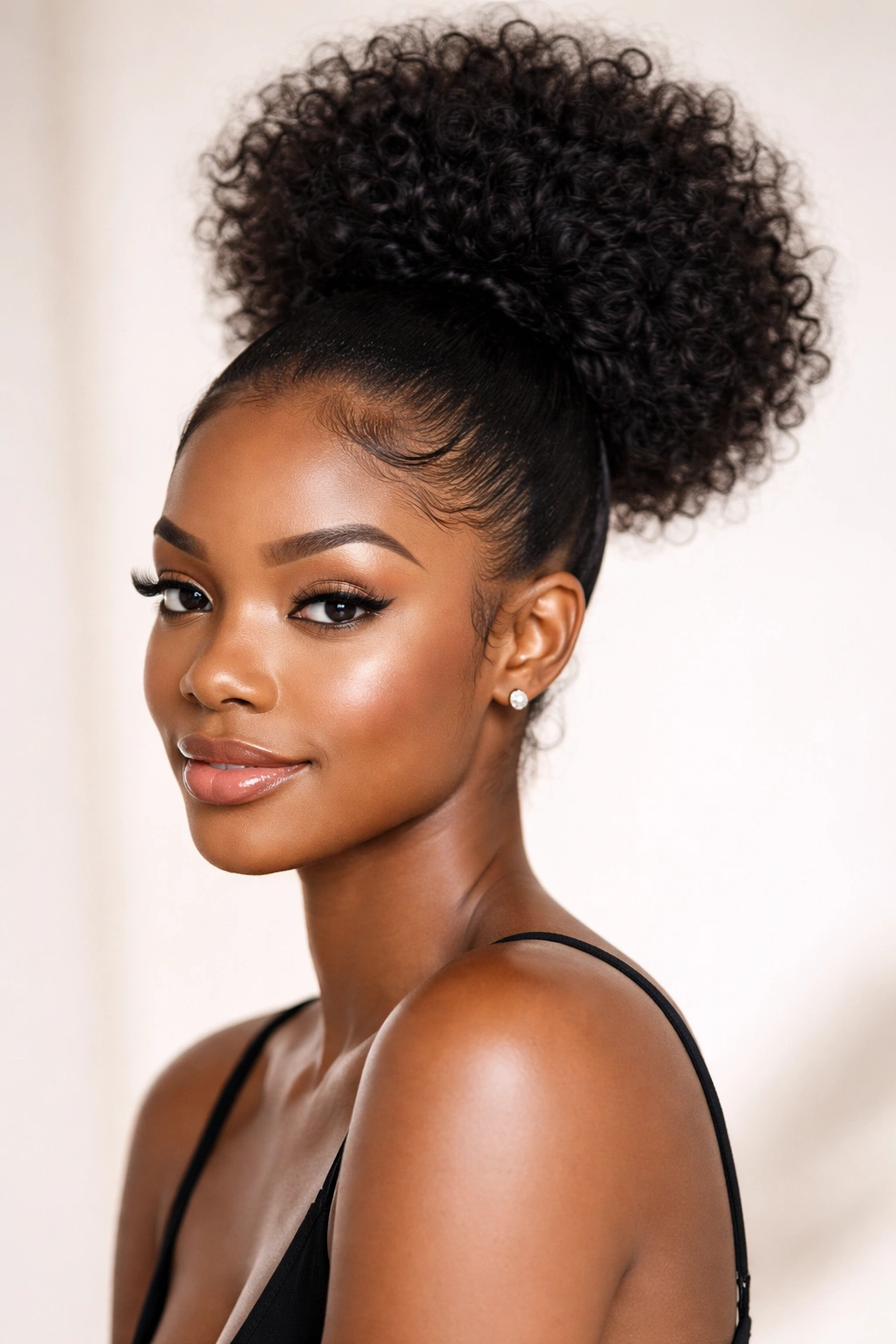
A natural puff ponytail at the crown feels honest in a good way. No added hair is required. No pretending the texture should lie flat when it clearly wants to stand up and breathe. The magic is in the shape: round, full, and placed high enough to open the face.
Stretching the hair first helps the puff look larger and easier to gather. Banding, twist-outs, and blow-drying on low heat all work, depending on how much shrinkage you want to keep. Use gel only where it matters, usually around the edges and the base. The rest should stay soft. A puff looks best when it has movement, not when it’s glued down.
13. Half-Up Ponytail with Loose Curls
Why does a half-up ponytail always feel a little more dressed up? Because it gives you lift at the crown and still lets the length fall free. You get structure up top and softness underneath. That mix is hard to beat.
This style works on curly hair, pressed hair, and sewn-in or clip-in styles too. Pull the top section back cleanly, secure it at the crown, then let the rest sit loose. If the curls at the bottom are tight, break them apart with your fingers rather than a brush. A brush turns them fuzzy fast.
Best Uses
- Date nights
- Dressy brunches
- Formal events where you still want movement
- Hair that needs volume without a full updo
14. High Sleek Ponytail with Curled Ends
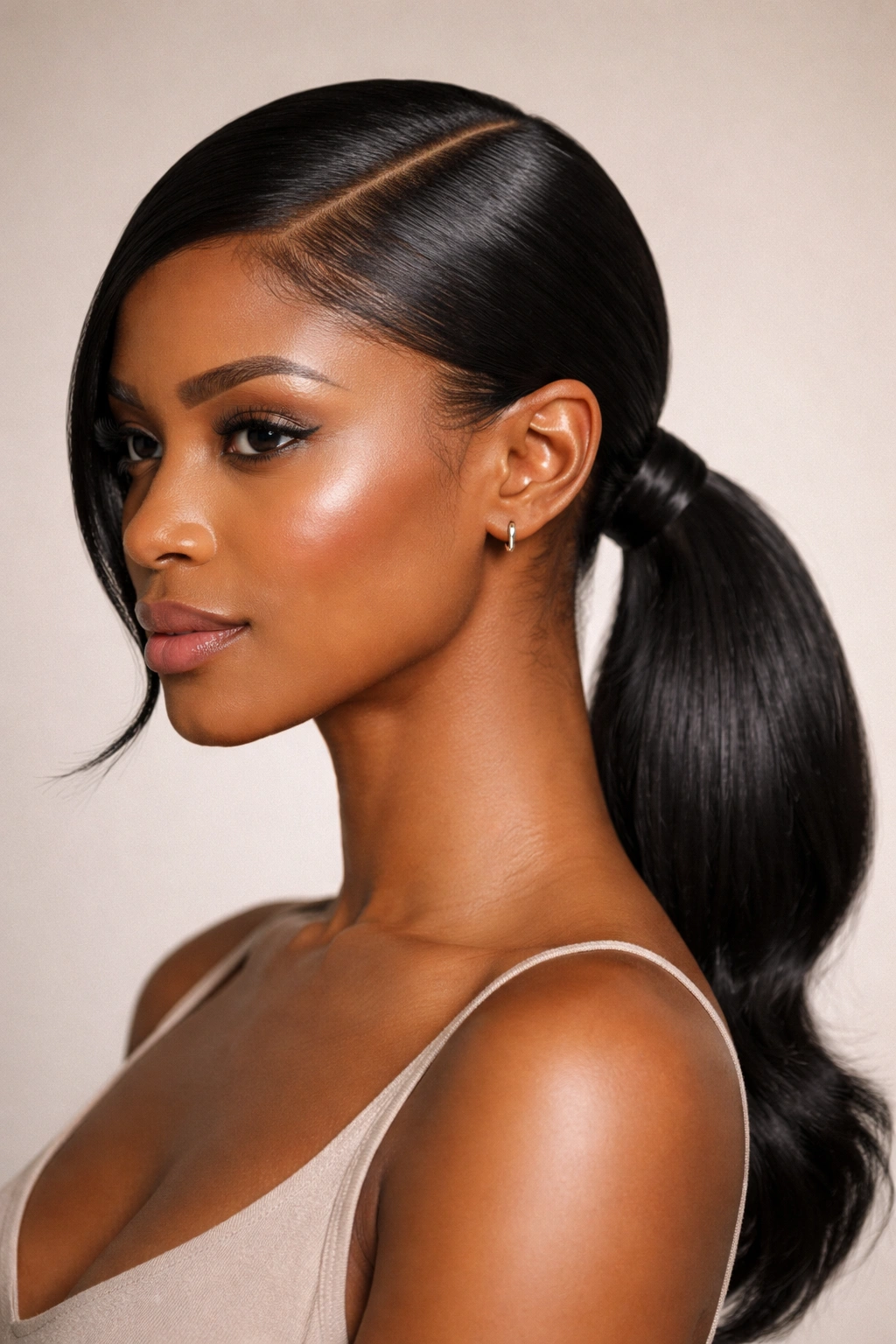
A high sleek ponytail has real presence when the base is smooth and the ends have a soft curl. That bend at the bottom keeps it from looking flat or severe. Straight roots plus curled ends is a good combination on Black hair because it gives the eye two textures instead of one long block.
Keep the front and crown flat with gel, a strong brush, and a satin scarf while the base sets. Then curl the length with a wand or rollers. I prefer a slightly loose curl over a tight ringlet here. Loose ends move better and keep the style from feeling stiff.
15. Low Ponytail with Flipped-Out Ends
There’s something very finished about a low ponytail with flipped-out ends. It has a little old-school polish, but not so much that it feels costume-y. On silk-pressed hair, the flip gives shape. On extended hair, it gives motion.
The roots need to stay calm. If the top is puffy or uneven, the end flip won’t save it. Brush the hair smooth, secure it low, then turn the last few inches outward with a round brush or flat iron. A small amount of shine spray helps, but don’t drench it. Wet-looking ends are a different style entirely.
16. Silk Scarf-Wrapped Ponytail
A silk scarf can turn an ordinary ponytail into something that looks styled on purpose. Wrap it around the base, knot it to one side, or let the ends trail a little if the outfit can handle it. The scarf adds color and softness, and it also keeps the elastic from looking plain.
This style is kind to the hair, too. Silk or satin reduces friction at the base, which matters if you’re wearing the ponytail for hours. Choose a scarf that either matches the outfit or gives it one sharp contrast. Both routes work. A printed scarf against a sleek low ponytail can look especially good with simple earrings and a clean neckline.
17. Faux Loc Ponytail for Extra Length
Faux locs in a ponytail give you length with a lived-in texture that feels rich and full. They’re a smart choice when you want the drama of a long tail without worrying about curls falling flat by the end of the day. The style can be high, low, or side-swept, depending on the shape you want.
A wrapped base keeps the ponytail neat and helps the locs hang evenly. If the install includes a few lighter pieces near the face, even better. That breaks up the weight and makes the style feel less dense. Add cuffs only if the locs can handle them. Too many accessories can start to fight the texture.
18. Four-Cornrow Ponytail with Hanging Length
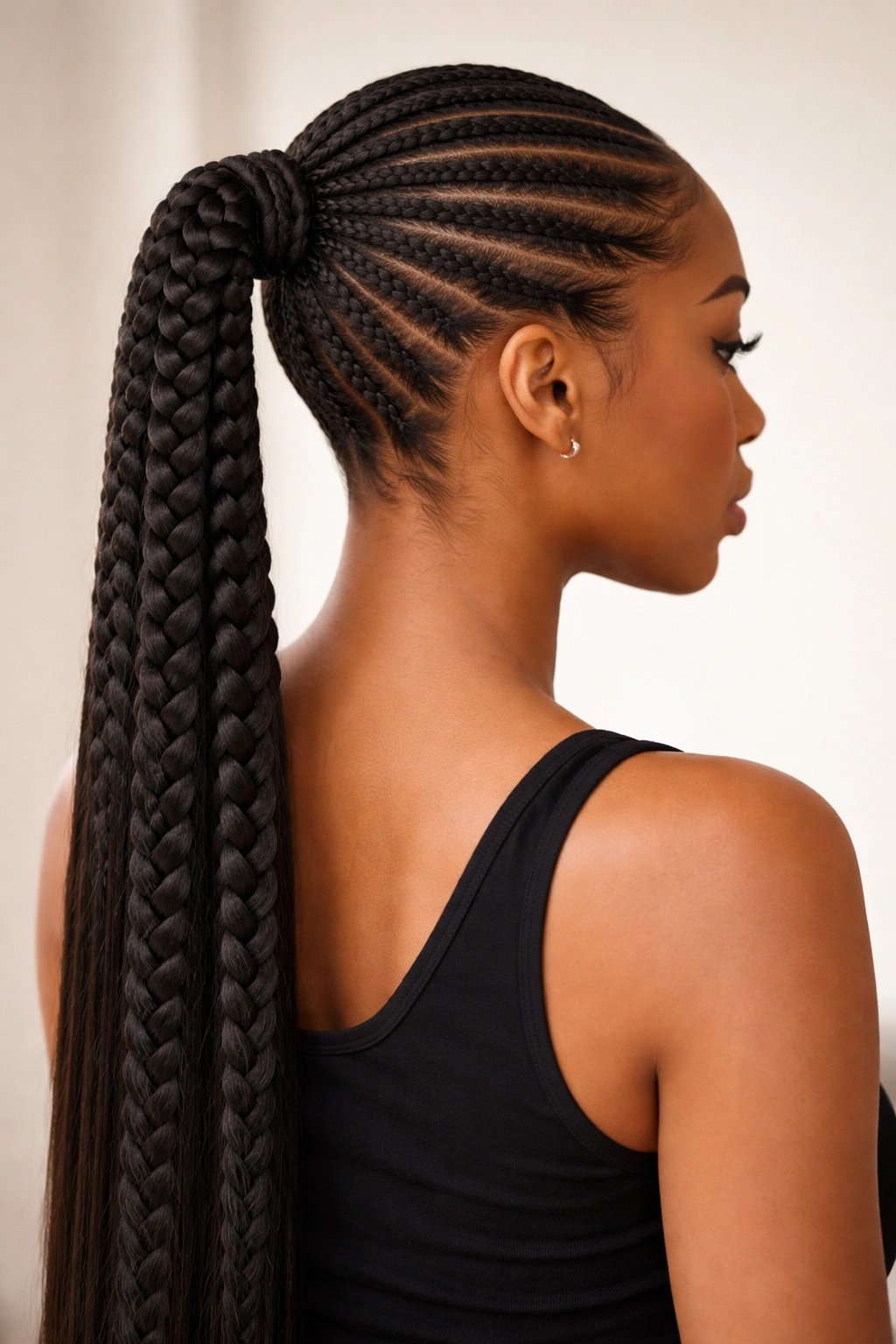
Four cornrows feeding into one ponytail make a neat, graphic shape that stays readable from a distance. The braid count matters here. Four is enough to create structure without crowding the scalp, and it leaves the tail with room to hang cleanly at the back.
What to Ask Your Braider
- Keep the parts straight and evenly spaced
- Ask for a ponytail placement that sits high enough to show the braids
- Choose extension hair that matches the braid thickness
- Finish with mousse and a light wrap around the base
This style works well when you want a clear pattern without a lot of extra fuss. It’s polished, practical, and easy to dress up with one set of cuffs near the ends.
19. Two-Strand Twist Ponytail
Can twists look formal? Absolutely. A two-strand twist ponytail has a softer feel than braids, and that softness is what makes it elegant. The texture is rope-like, neat, and gentle at the same time. If you want something that feels less rigid than cornrows, twists are the right lane.
The ponytail can sit high for lift or low for a calmer shape. If the twists are chunky, let them stay chunky. Thin twists can disappear if you pack them together too tightly. Add a little cream or butter before styling so the hair does not fray at the base. Frizz happens. Less of it is better.
20. Curly Middle-Part Ponytail
A middle part gives a ponytail a calm, balanced look. On curly hair, that balance matters because the texture already brings energy. Put the part in the center, gather the hair back, and let the curls frame both sides of the face before they disappear into the tail. It feels neat without getting severe.
This style works with a curly drawstring ponytail, layered natural curls, or a silk-pressed base with curled ends. The front pieces should be shaped lightly with gel or cream, not plastered down. Keep the ponytail itself full. A middle part can look a little plain if the tail has no body, so give the length some shape with your fingers once it’s secured.
21. Asymmetrical Ponytail with a Swooped Front
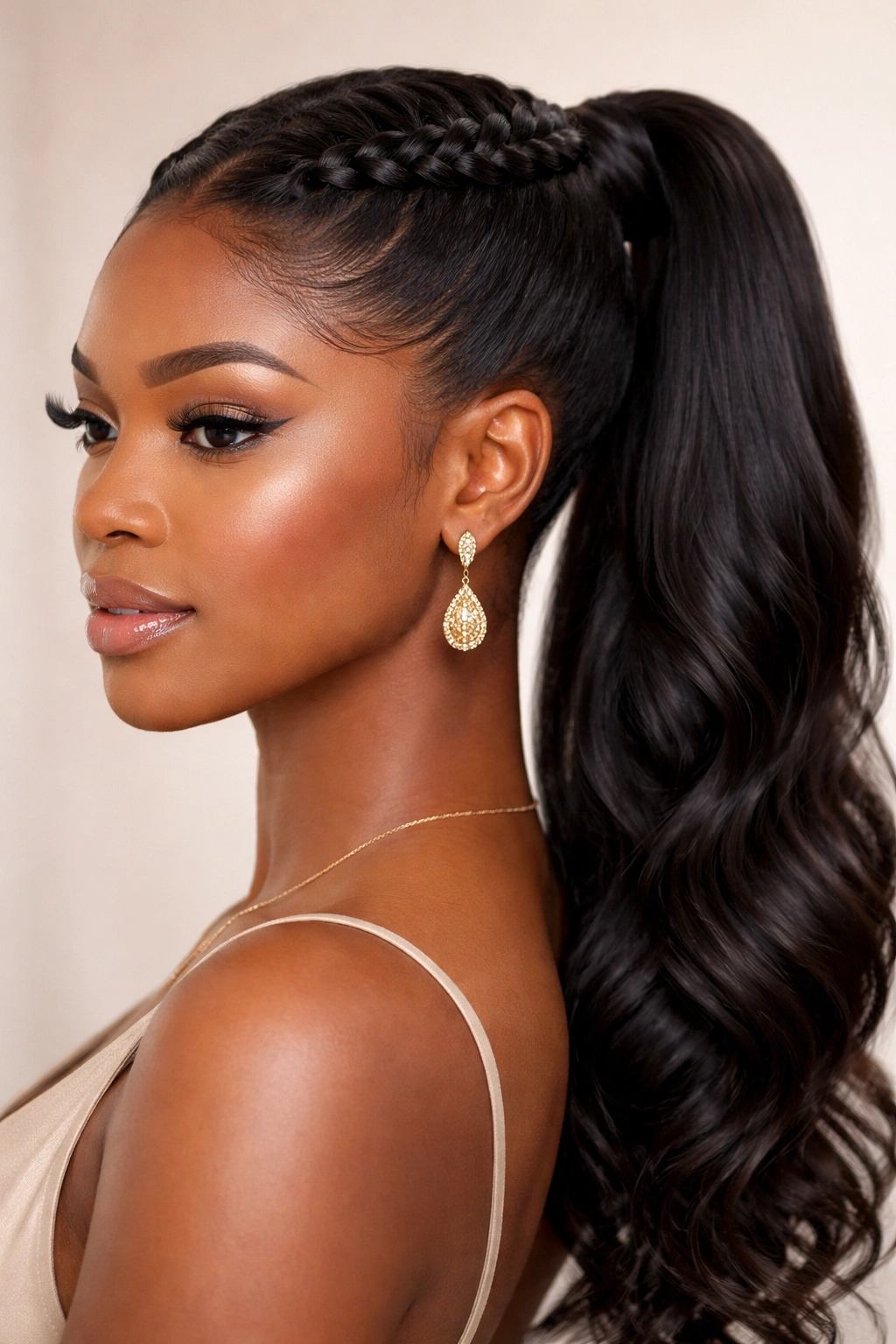
A deep swoop changes the whole attitude of a ponytail. Instead of looking centered and expected, the style leans to one side and gives the face a little drama. That asymmetry is what makes it feel dressed up.
The ponytail can sit low or mid-height, but the front needs to do the work. Sweep one side across the forehead, pin it where it stays soft, and leave the opposite side cleaner. If your hairline is tender, keep the swoop loose. Tight swoops look sharp for a minute, then they start to tug. Not worth it.
This style pairs well with shoulder-baring tops and statement earrings. It also gives you room to keep the back simple.
22. Gold-Cuffed Braided Ponytail
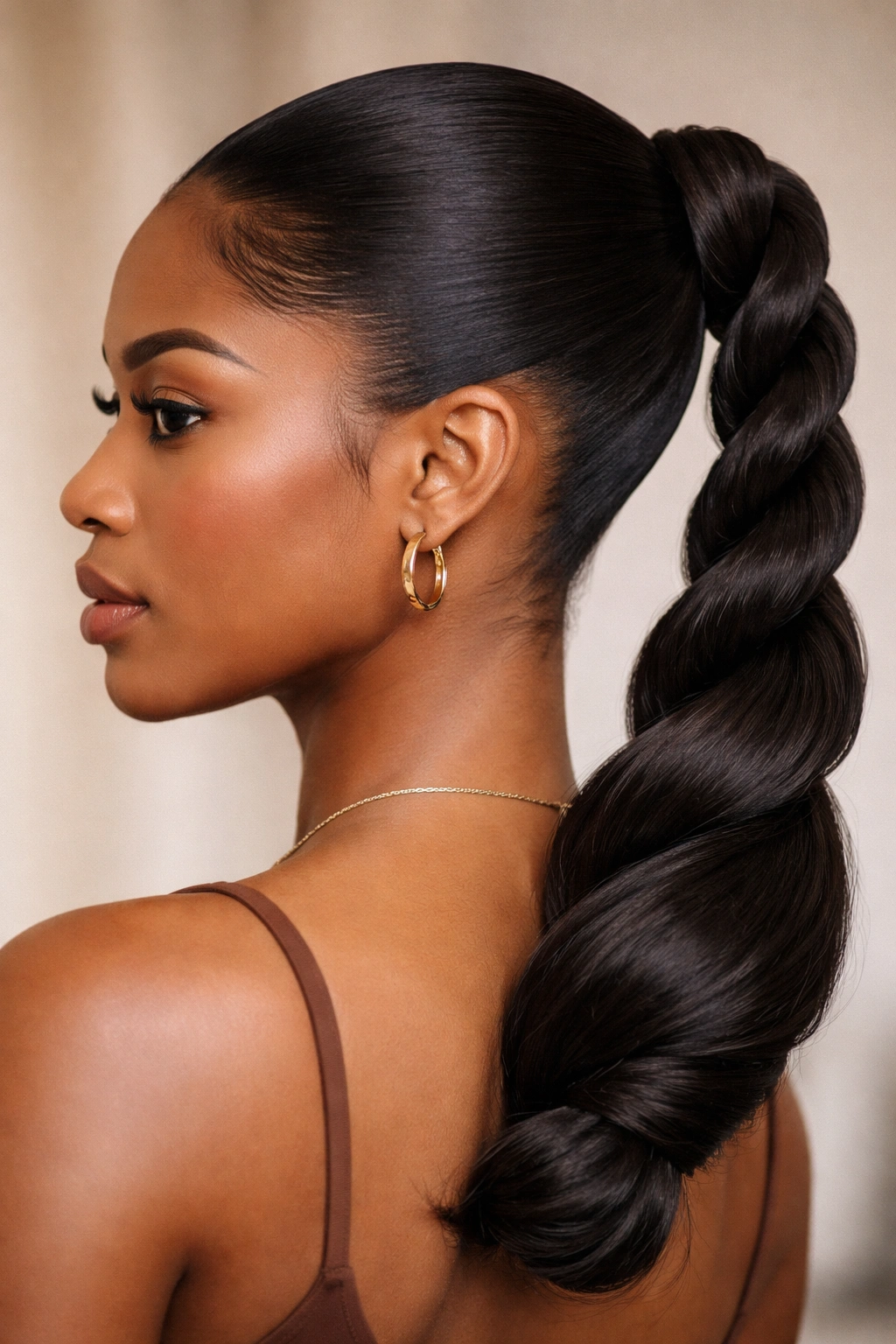
Gold cuffs make a braided ponytail feel finished without adding clutter. One or two cuffs near the base, then a few more spaced down the length, is usually enough. Any more and the braid can start looking crowded. The metal should accent the braid, not compete with it.
This style works on feed-in braids, stitch braids, or a single thick braid hanging from the ponytail base. Keep the braid surface smooth before clipping on the cuffs. Puffy sections can make the accessories sit crooked. I like this style when the outfit is simple and the hair is supposed to carry the detail. It’s jewelry, but for the braid itself.
23. Braided Halo Ponytail with a Low Tail
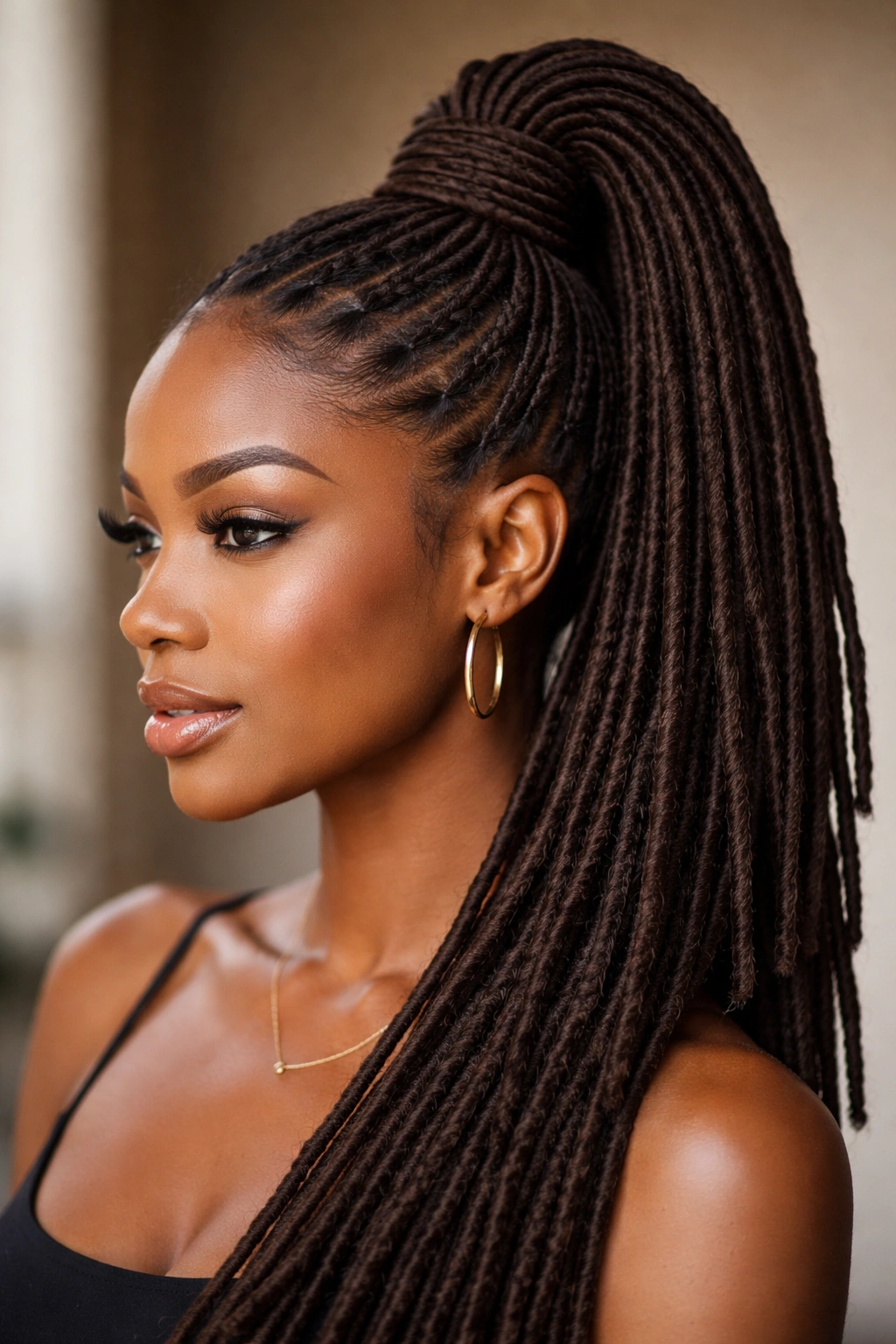
A braided halo ponytail feels ornate in a very controlled way. The braid circles the head like a crown, then ends in a low tail that keeps the style from becoming too heavy at the top. It’s a smart shape when you want elegance and a bit of ceremony.
Why It Stands Out
The halo braid creates a frame around the face, which means the ponytail doesn’t need to do all the work. Keep the braid snug enough to stay put, but leave it smooth at the temples. A low tail helps the style settle.
- Good for medium to long hair
- Works with added braid hair if your length is short
- Looks clean with a simple middle or side part
- Can be finished with curly or straight ends
24. Stretched Natural Ponytail with Big Volume
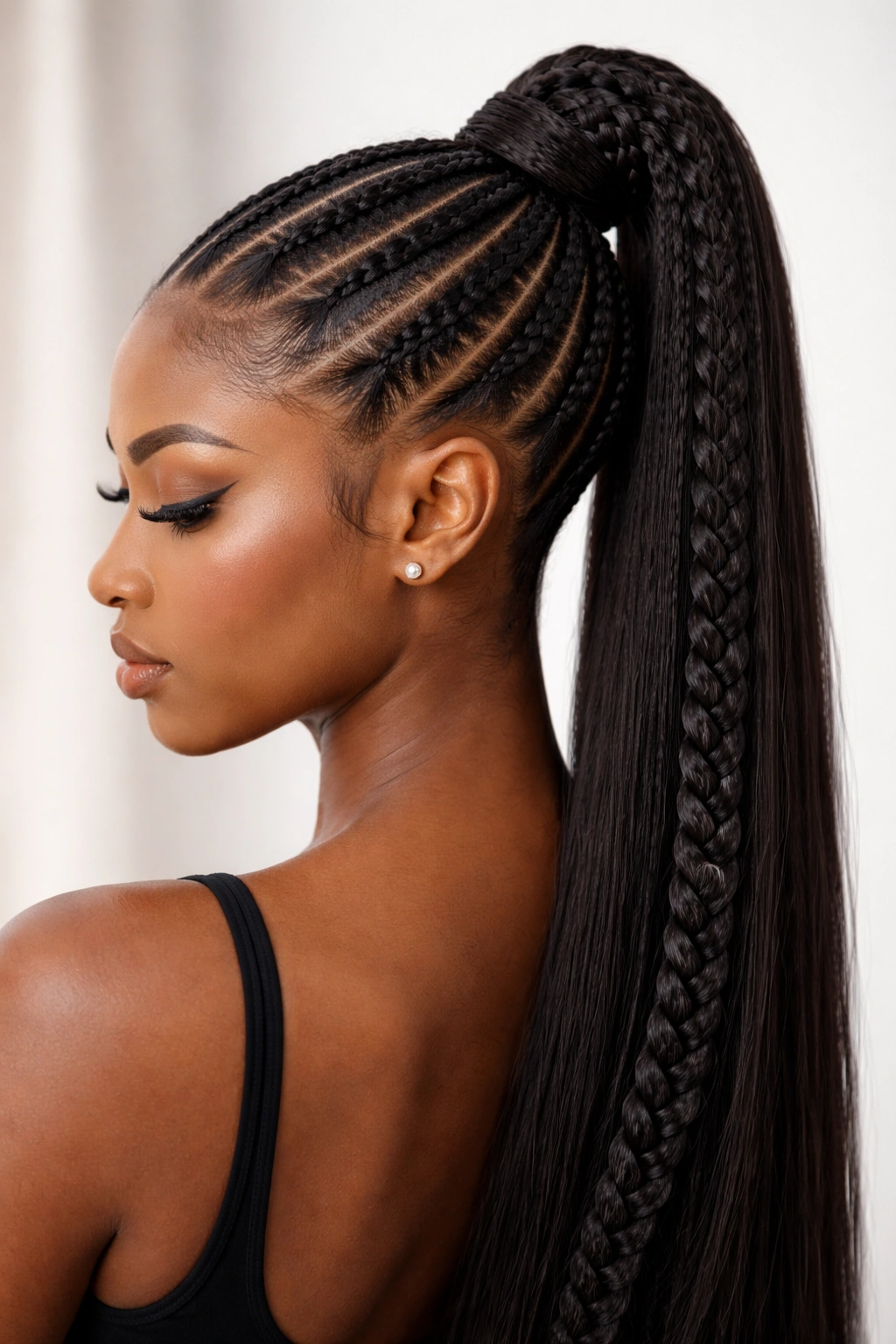
A stretched natural ponytail gives you volume without straightening the life out of your texture. That matters. You still get fullness, but the coils or curls keep their shape, just with less shrinkage. The tail sits big and soft, and the base can be either high or low.
Stretch first if you can. Banding, twist-outs, or a low-heat blow-dry all help the ponytail hold its shape. Then use a pick at the roots to round out the puff, not a brush that flattens everything. The best versions keep the edges neat and the body loose. A stretched ponytail should feel full, not frozen.
25. High Ponytail with Twisted Front Pieces
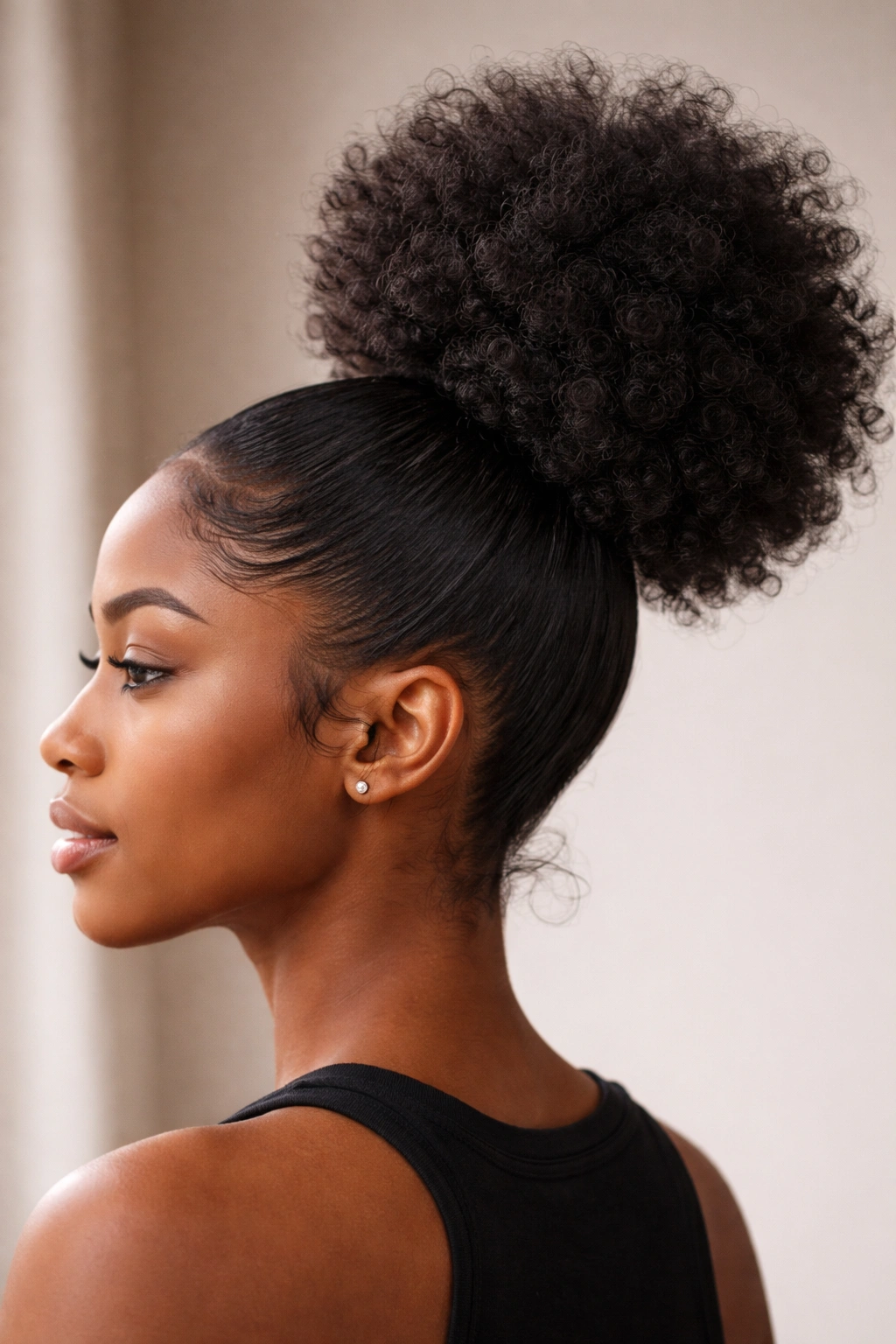
A high ponytail gets more interesting when the front pieces are twisted instead of slicked straight back. Those twists bring texture to the hairline and make the style feel personal. It’s a small change, but small changes matter in ponytails. They’re the difference between “fine” and “oh, that’s nice.”
Twist two sections from the front, pin or wrap them back, and gather the rest into a high tail. This works on natural hair, pressed hair, or extensions. Keep the twists snug enough to stay in place, but not so tight that they flatten the sides of your face. A soft lift at the crown helps the whole style breathe.
26. Silk-Press Ponytail with a Soft Bend
A silk-press ponytail does not need to be bone-straight to look polished. A soft bend at the ends gives the style movement and keeps it from looking too stiff. That bend is where the charm lives. Straight roots, gentle curve, clean base.
Use heat protectant before any hot tools. A rounded brush or a large barrel iron can create that slight curve without turning the ends into curls. Keep the crown smooth and the tail shiny, but don’t overload it with oil. A thin sheen is enough. Too much product makes the hair separate in odd clumps, and nobody wants that.
27. Ponytail with Pearl Pins and Loose Curls
Tiny details can change the whole feel of a ponytail, and pearl pins do that fast. Scatter three or four of them near the base or along one side, then let loose curls fall from the tail. The result feels dressed up without looking overloaded. That balance is hard to get wrong.
How to Keep It Elegant
- Use pearls sparingly so the style stays clean
- Let the curls stay soft, not overbrushed
- Keep the base smooth before adding the pins
- Match the pin placement to the neckline or earrings
This one works especially well for formal events, photos, and any moment when you want the hair to feel a little special without turning it into a full statement piece.
Final Thoughts
The nicest ponytails on Black hair usually have one thing in common: the base is thoughtful. A clean part, a secure tie, and a shape that respects the texture will always beat a style that’s pulled too hard and sprayed too much.
If your scalp feels sore, the style is too tight. If the ponytail looks polished but your edges are protesting, that’s your cue to loosen it and try again. A good ponytail should move when you move. That’s the part that makes it look expensive, even when it took fifteen minutes and a brush you already owned.