

Medium hair and waves can be a little fussy on their own. Put them together with the right shag, though, and the whole shape wakes up fast. Wavy shag cuts for medium hair work because the length is long enough to show movement, but short enough that the layers can actually do something instead of hanging there like dead weight.
That sweet spot matters. Too blunt, and wavy hair turns into a triangle. Too many layers, and it can look frayed at the ends before it ever looks airy. The best shag cuts keep the perimeter soft, then build texture where the wave wants to bend — around the cheekbones, jawline, and crown. Done well, the cut almost styles itself. Almost.
I’ve always liked medium-length shags because they look intentional without looking fussy. A decent blow-dry helps, sure, but a strong cut should still have shape if you air-dry it and run out the door. That’s the real test. If a shag only looks good under perfect salon conditions, it isn’t doing its job.
The trick is matching the cut to the kind of wave you’ve got, the amount of hair on your head, and how much time you want to spend messing with it in the mirror. Some of these cuts are soft and wearable. Some are a little sharper. A few are built for people who want movement first and polish second.
1. Curtain-Bang Wavy Shag
Curtain bangs and a shag haircut are old friends for a reason. The fringe splits down the middle, drops softly at the cheekbones, and gives medium waves a place to land instead of floating around the face.
Why it works
The best version keeps the shortest point around eyebrow level and lets the longer pieces brush the cheek. That shape opens the face without making the front look chopped up. If your waves are loose and bendy, this cut gives them a little frame; if they’re more defined, it makes the front pieces look deliberate instead of accidental.
Ask for long curtain bangs that blend into layers starting near the mouth or chin. Anything shorter can start to feel heavy fast.
Pro tip: Blow-dry the bangs first with a small round brush, then let the rest dry naturally. That one move keeps them from sticking to your forehead.
2. Chin-Grazing Layered Shag
A chin-length front on a medium shag has a bit more attitude. It gives the cut a swingy shape and makes the ends feel lighter without losing the security of medium length.
This version is especially nice if your waves puff out at the sides. The chin-grazing pieces pull the eye downward, which helps the overall shape look longer and less boxy. It also works well on hair that has a little density, because the front can carry some weight while the back stays looser.
- Keep the shortest front layer at or just below the chin.
- Ask for soft internal layering, not chunky steps.
- Use a diffuser on low heat if your waves collapse easily.
- Skip heavy creams at the roots; they can flatten this cut fast.
The cut has a clean outline, but it still feels relaxed. That balance is the whole point.
3. Wolf-Cut Wavy Shag
The wolf cut sits somewhere between a shag and a mullet, and wavy medium hair wears it better than most people expect. The crown gets more lift, the lengths stay a little wild, and the whole thing looks like it has a bit of a grin on its face.
This cut is for people who don’t want neat. A wolf-cut shag likes movement, bends, and a little mess. If your hair naturally clumps into waves, the layers will exaggerate that in a good way. If your hair is flatter, the shorter crown layers create lift that a single-length cut can’t fake.
What makes it different
The shape is more layered at the top than a classic shag. That means less sleek polish, more lift and edge.
How to wear it
Use a pea-sized amount of mousse on damp hair, scrunch upward, and leave the ends alone. The cut does the rest.
4. Collarbone-Length Face-Framing Shag
There’s a reason collarbone cuts are so popular with wavy hair: they sit right where hair likes to flip. Add shag layers, and the movement gets even better.
This version feels softer than a wolf cut and less messy than a full-on choppy shag. The front pieces should start around the cheekbone or just below it, then taper into the length near the collarbone. That keeps the style flattering if you wear your hair down most days, but it still looks good tucked behind one ear.
I like this cut for people growing out a shorter bob. It gives you shape without forcing you into a major reset. The hair touches the collarbone, brushes the shoulders, and bends instead of hanging straight. Easy. Clean enough for work, loose enough for weekends.
5. Bottleneck Bang Wavy Shag
Bottleneck bangs sit flatter at the center and open out as they move toward the temples. On medium wavy hair, that shape softens the forehead and blends beautifully into shaggy layers.
The front does a lot of the work here. A good bottleneck fringe should be narrow near the bridge of the nose, then widen and curve at the sides so the whole cut feels fluid. It’s a smart choice if you want bangs but don’t want the blunt, heavy look that can fight with waves.
You do need to style this one a bit. A quick round-brush bend at the front and a little wave cream through the mid-lengths usually does it. If you let the bangs dry in random directions, they can split awkwardly and look more choppy than chic.
6. Longish Medium Shag
Not every shag needs to look edgy. A longer medium shag keeps the layers subtle, which is exactly why some people end up loving it more than the dramatic versions.
What to ask for at the salon
Ask for light layering below the cheekbones, a soft perimeter, and texture mostly through the mid-lengths. That keeps the shape from puffing up too high. You still get movement, but the haircut doesn’t shout from across the room.
Why it’s so easy to live with
Because the layers are blended instead of dramatic, the cut grows out without getting ugly fast. That matters. A lot. Medium wavy hair can turn frizzy at the ends if the layers are too short, and this version avoids that trap.
It’s a good pick if you want a shag that looks polished on day one and still makes sense six weeks later.
7. Shoulder-Skimming Cropped Shag
A cut that just kisses the shoulders has a built-in bounce. Every time you turn your head, the ends move a little, and that motion is half the appeal of a shag.
This shape works best when the layers are cut to encourage a slight flip at the ends. The top stays airy, the sides stay mobile, and the shoulder length gives the wave a place to gather. If your hair tends to hang heavy, this version removes enough bulk to wake it up without making it too short to tie back.
- Ask for the shortest layers to hit around the lip or chin.
- Keep the back just above the shoulder line if you want movement.
- Use a lightweight leave-in, not a thick cream.
- Refresh with water and a dime-sized bit of gel on day two.
The result feels casual, but not sloppy. That’s the sweet spot.
8. Feathered 70s Wavy Shag
Feathered layers are having a long run for good reason. They look light, they move beautifully, and on medium wavy hair they keep the shape from feeling blunt at the bottom.
This version borrows from the old feathered blowout, but it works now because it’s softened. The ends are not razor-sharp. The layers are not stacked into a helmet. Instead, they taper away from the face and create that breezy, flipped texture people keep trying to fake with hot tools.
The styling difference
A round brush gives this cut a smooth bend, while a diffuser gives it more texture. Choose one based on the day you want.
Best for
Hair that needs movement without losing fullness. If your waves are loose and your ends get stringy, feathering helps.
9. Invisible-Layer Wavy Shag
Some people love layers they can see. Others want the lift without the obvious steps. The invisible-layer shag is for the second group.
The trick is simple: the haircut removes bulk inside the shape while keeping the outside line soft and believable. From the front, it still looks like medium hair. Move your head, and the layers show up in the motion, not in obvious chops. That makes it a strong choice for people who want their waves to look fuller, not shredded.
It’s also a quiet fix for hair that gets triangular when it grows out. The internal layering keeps the mid-lengths from bulking up while the ends stay clean. If you’ve ever wanted a shag that doesn’t announce itself from ten feet away, this is the one.
10. Heavy Fringe Wavy Shag
A heavy fringe can make a shag look dramatic fast. On medium wavy hair, it pulls the whole cut forward and gives the style a stronger face shape.
This cut needs confidence. A dense fringe can look incredible, but it does not forgive lazy styling. You want the bangs cut thick enough to make a statement, then softened at the ends so they don’t form a hard shelf. The waves through the rest of the cut should stay loose and separated.
If you wear glasses, this can be a tricky one. Not impossible. Just tricky. The fringe has to sit just right, or it starts competing with the frames. Ask your stylist to leave enough length to sweep the bangs aside on days when you need a break from the full fringe effect.
11. Side-Part Shag With Soft Waves
A side part changes the whole mood of a medium shag. Same haircut, different body. Suddenly the volume shifts, the fringe falls differently, and the waves look a little more grown-up.
Why the side part helps
If one side of your hair is flatter than the other, a side part uses that imbalance instead of fighting it. The higher side gives lift at the root, and the lower side lets the waves drape across the cheek. That asymmetry can be flattering on square or round faces, because it keeps the eye moving.
How to wear it well
- Part the hair where the root naturally wants to split.
- Direct the front pieces away from the face on the heavier side.
- Keep the layers soft around the temple.
- Use a light spray at the roots, not a stiff volumizer.
It’s a small change, but it can make the entire shag feel new.
12. Razor-Cut Wavy Shag
A razor cut gives wavy hair a sharper edge. The ends look airy, almost sliced, and the whole style takes on a more piecey finish than scissor-cut shags.
That airy finish is the selling point. The razor removes weight in a way that makes medium waves fall apart a little, which sounds bad until you see it. Then it just looks relaxed. You do want a careful hand here, though. Fine or fragile hair can get frayed if the razor work is too aggressive, and over-razoring is a real thing.
The best razor-cut shag keeps the softness at the perimeter and uses the blade mostly to break up bulk. The effect is light, not shredded. If your hair is thick and resists movement, this version can be a huge relief.
13. Beach-Tousled Wavy Shag
What does a beach shag actually need? Not a pile of salt spray and a prayer. It needs a cut that already has texture built in.
This version leaves enough length to look soft, but the layers are cut to bend and separate easily. The styling goal is that slightly wind-stirred look, with pieces that move instead of sitting in one solid sheet. Medium waves are perfect for that because they already have a natural bend. The haircut only has to sharpen it.
Use a sea salt spray through the mid-lengths, then scrunch with your hands and let it dry about 80 percent before touching it again. If you rake your fingers through it too early, you pull the wave apart and lose the texture you wanted in the first place.
Texture notes
- Best on loose to medium waves.
- Loves a matte finish.
- Needs a light leave-in if your hair gets crunchy.
14. Piecey Micro-Layer Shag
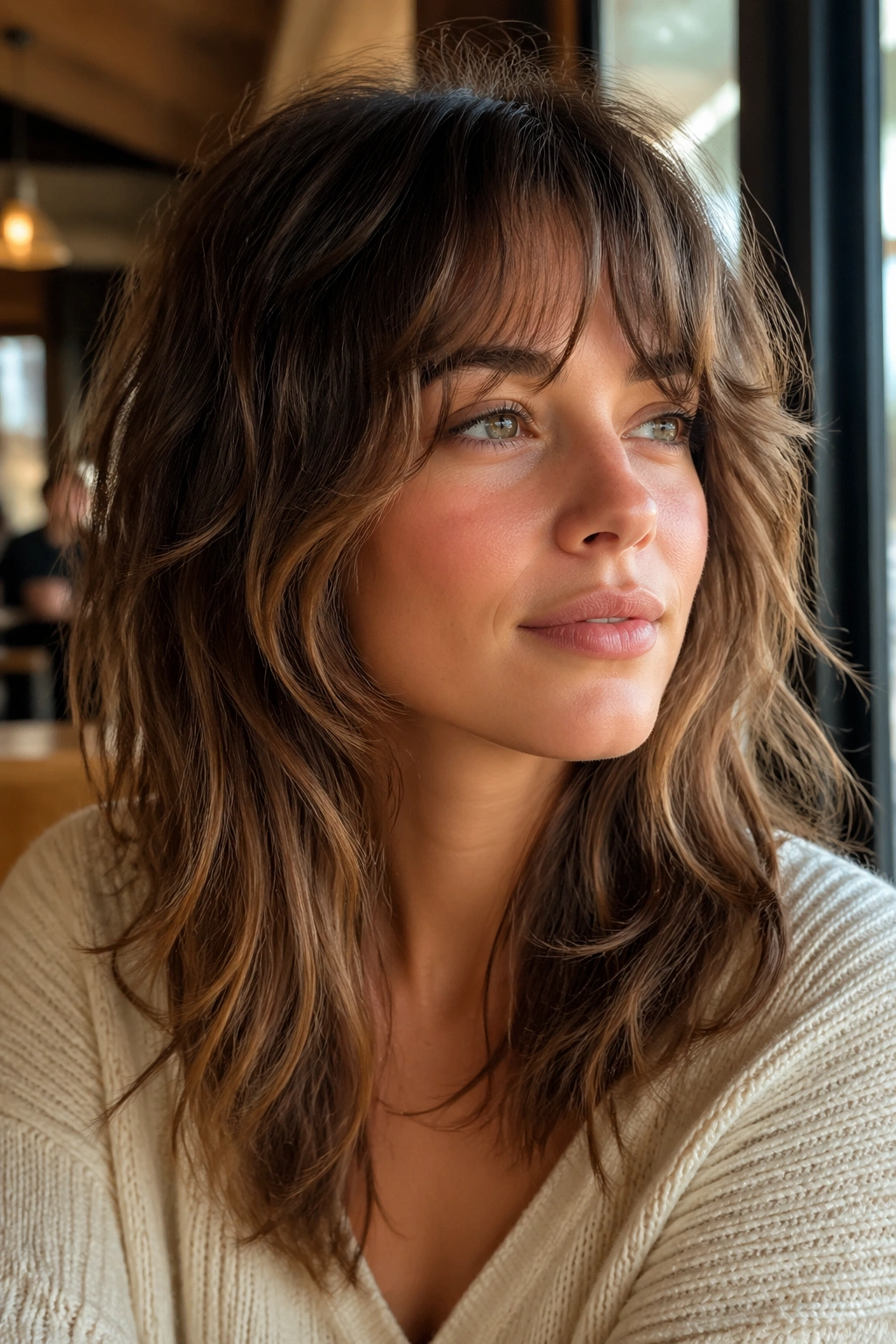
Micro-layers are tiny, and that’s the whole trick. Instead of obvious steps, the cut creates lots of small changes in length that make medium waves look fuller and more active.
This is a very good option for thicker wavy hair that tends to sit in one big block. The micro-layers let the shape move without collapsing. You get separation, but not a jagged outline. And because the changes are small, the cut can still feel wearable, not punky or overdone.
I’d ask a stylist to point-cut the ends and keep the interior layers close together. Too much space between layers makes the cut look slice-y in the wrong way. This one is about finesse. Not drama.
15. Soft Mullet-Inspired Shag

A soft mullet-inspired shag keeps the back a touch longer and lets the front stay airy and face-framing. It sounds bold, but the wearable version is much easier to live with than the name suggests.
The shape works because the crown gets lift while the neck area keeps a little length. On medium waves, that gives a slight forward swing in the front and a looser fall in the back. It’s a good choice if you like the edge of a shag but want something a little more directional than a standard layered cut.
The danger is making the transition too sharp. If the front is short and the back drops off too suddenly, the style can look costume-y. Keep the blend soft, and the cut stays cool instead of theatrical.
16. Deep Side-Swept Bang Shag

A deep side-swept bang can calm down a shag fast. It adds shape around the forehead, hides a cowlick better than blunt bangs, and gives medium waves a softer front line.
Compared with curtain bangs
Curtain bangs split in the middle and frame both sides. Side-swept bangs push the shape one direction, which can be nicer if your face is more angular or if you want a little asymmetry.
What to ask for
Ask for bangs that start longer near the temple and sweep across the forehead without covering the whole eye. Keep the longest end near the cheekbone so it can blend into the layers.
This cut is less high-maintenance than a full fringe, which is worth saying plainly. You can tuck it, pin it, or let it fall naturally on busy days. That flexibility matters when you’re trying to make a shag fit real life.
17. Thick-Hair Wavy Shag

Thick wavy hair needs a shag that removes weight without turning the ends into feathers. That balance is harder than people think.
The best version keeps the perimeter controlled and uses interior debulking where the hair wants to puff. A stylist might remove bulk around the crown, behind the ears, and through the mid-back area, leaving enough substance at the ends so the cut still feels full. If too much is taken out, the shape balloons in humidity. Too little, and the wave gets trapped under its own weight.
- Ask for weight removal inside the shape, not just shorter layers.
- Keep the layers blended near the jaw.
- Avoid over-thinning shears if your hair frizzes easily.
- Finish with a cream that has hold, not only slip.
This is a cut that looks better when it moves.
18. Fine-Hair Wavy Shag
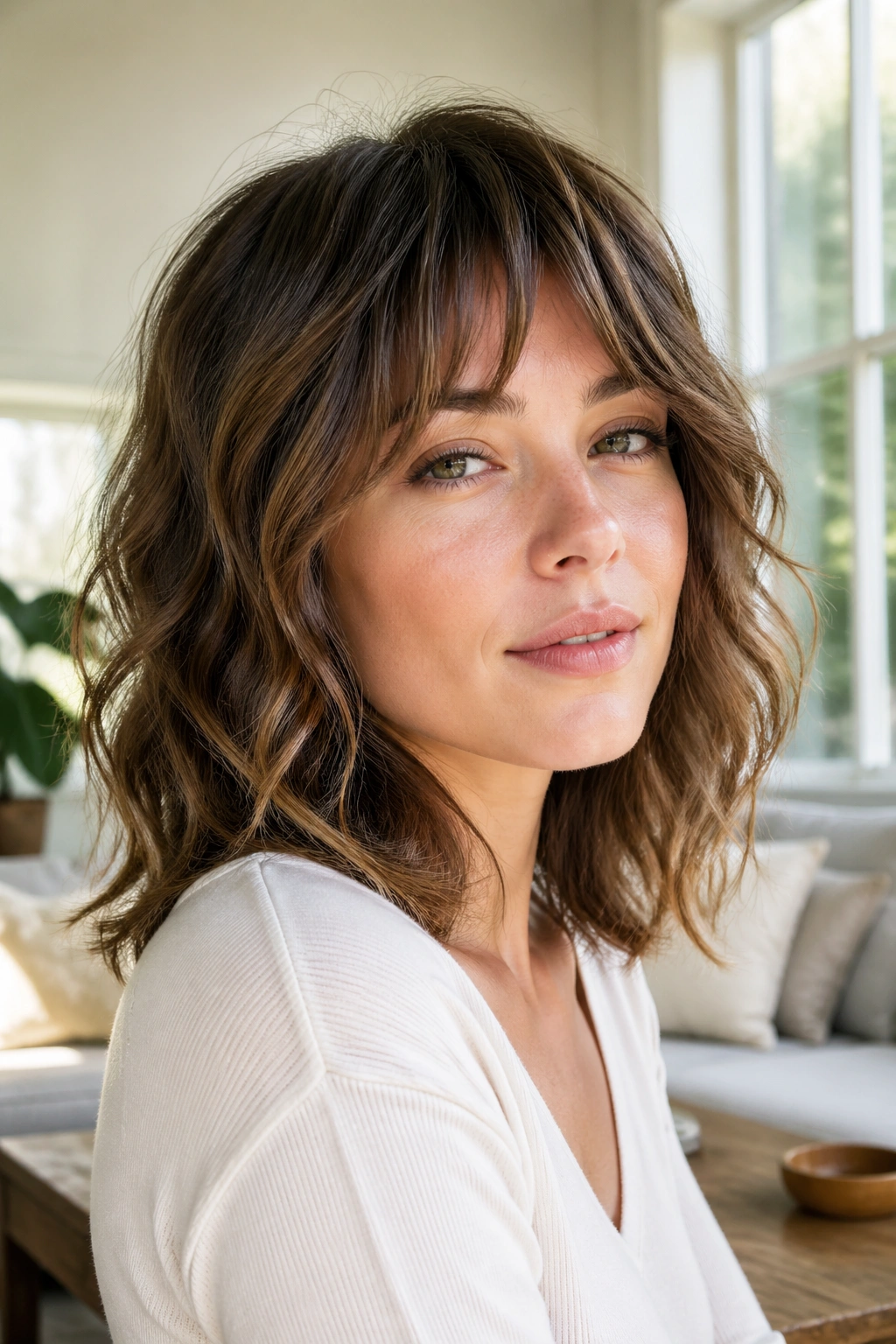
Fine wavy hair can wear a shag, but not every shag. Too many layers can leave the ends looking sparse and the crown looking flat. That’s the mistake people make.
The better approach is a restrained shag with a blunt or softly blunt perimeter and only a few strategic layers around the face. You want lift, yes, but you also need the illusion of density. A shoulder-grazing shape often helps because it gives the ends enough weight to appear fuller than they are.
What to avoid
Skip aggressive texturizing, especially near the bottom. Fine hair loses shape fast when the ends are thinned out too much.
What helps
A root lift spray at the crown, a light mousse through damp hair, and a diffuser on low heat. That’s it. No pile of products required.
19. Air-Dry Wavy Shag
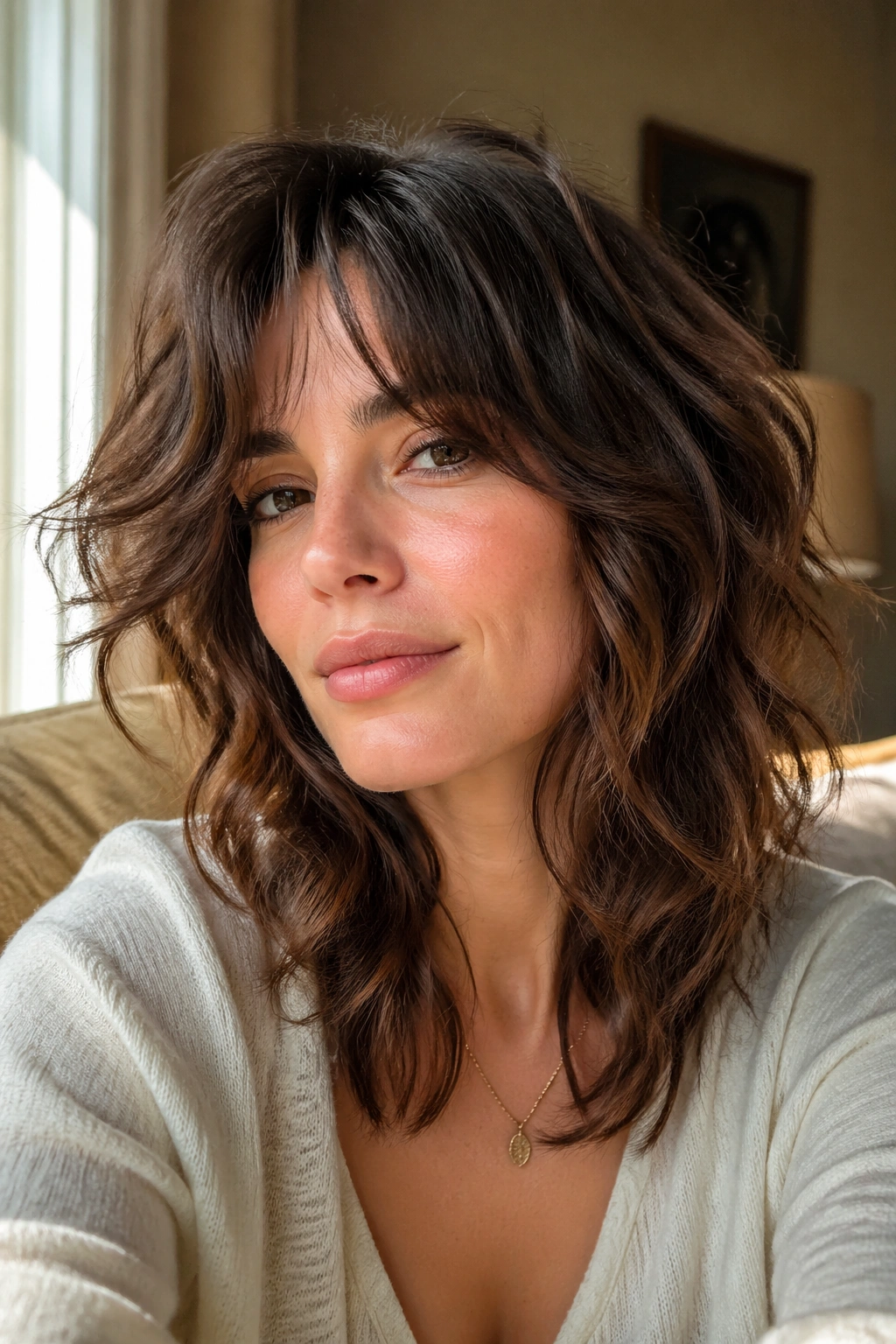
Some shags need a blowout to make sense. This one shouldn’t. The air-dry shag is built for medium waves that form a shape on their own when the cut is right.
The layers need to be clean enough to encourage bend, but not so short that they spring into frizz. Face-framing pieces should sit where your wave naturally curves, usually somewhere between the cheekbone and lip. Then you leave the hair alone. That’s the whole appeal.
Use a leave-in conditioner first, then a small amount of gel or curl cream through the mid-lengths. Scrunch once, maybe twice. If you keep touching it while it dries, you’ll lose the pattern and end up with fluff instead of waves. Annoying, yes. True, also yes.
20. Glossy Polished Shag

A shag does not have to look rough. In fact, medium waves often look richer when the cut has texture but the finish stays smooth.
This version keeps the same layered shape, but the styling is more polished. Think soft bend, shiny ends, and pieces that fall with purpose. A boar-bristle brush or a paddle brush with a round-brush finish on the front can help. A small amount of shine serum on the bottom third of the hair keeps the layers from looking dry or separated in a bad way.
Best for
People who want a shag that works with office clothes, not only denim and sneakers.
Watch out for
Too much oil near the roots. It flattens the crown and kills the volume that makes the cut interesting.
21. Bedhead Wavy Shag
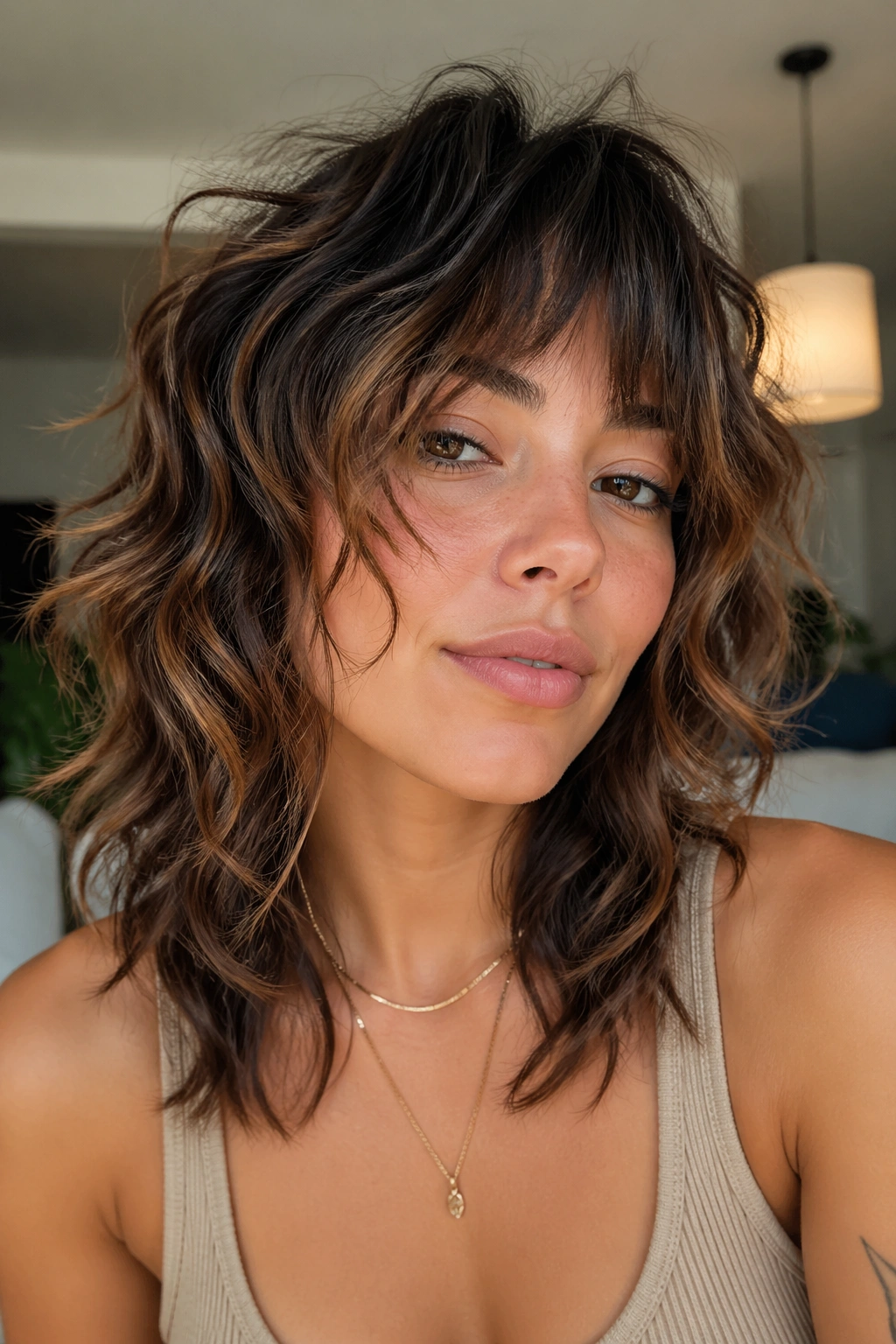
There’s a fine line between bedhead and negligence. A good bedhead shag lives on the right side of that line.
The cut is designed to look a little disheveled on purpose. Layers are placed to break up the outline, and the ends are kept textured enough that the hair doesn’t fall into a neat sheet. Medium waves are perfect for this because they already have built-in chaos. The haircut just organizes it.
A small amount of mousse, a little scrunching, and a few minutes of air-drying are enough for most people. If you want it rougher, twist two or three random sections while the hair is damp and let them dry that way. Undo them later. The result is messy in a good way, not in a “I forgot to brush” way.
22. Curly-Wavy Hybrid Shag
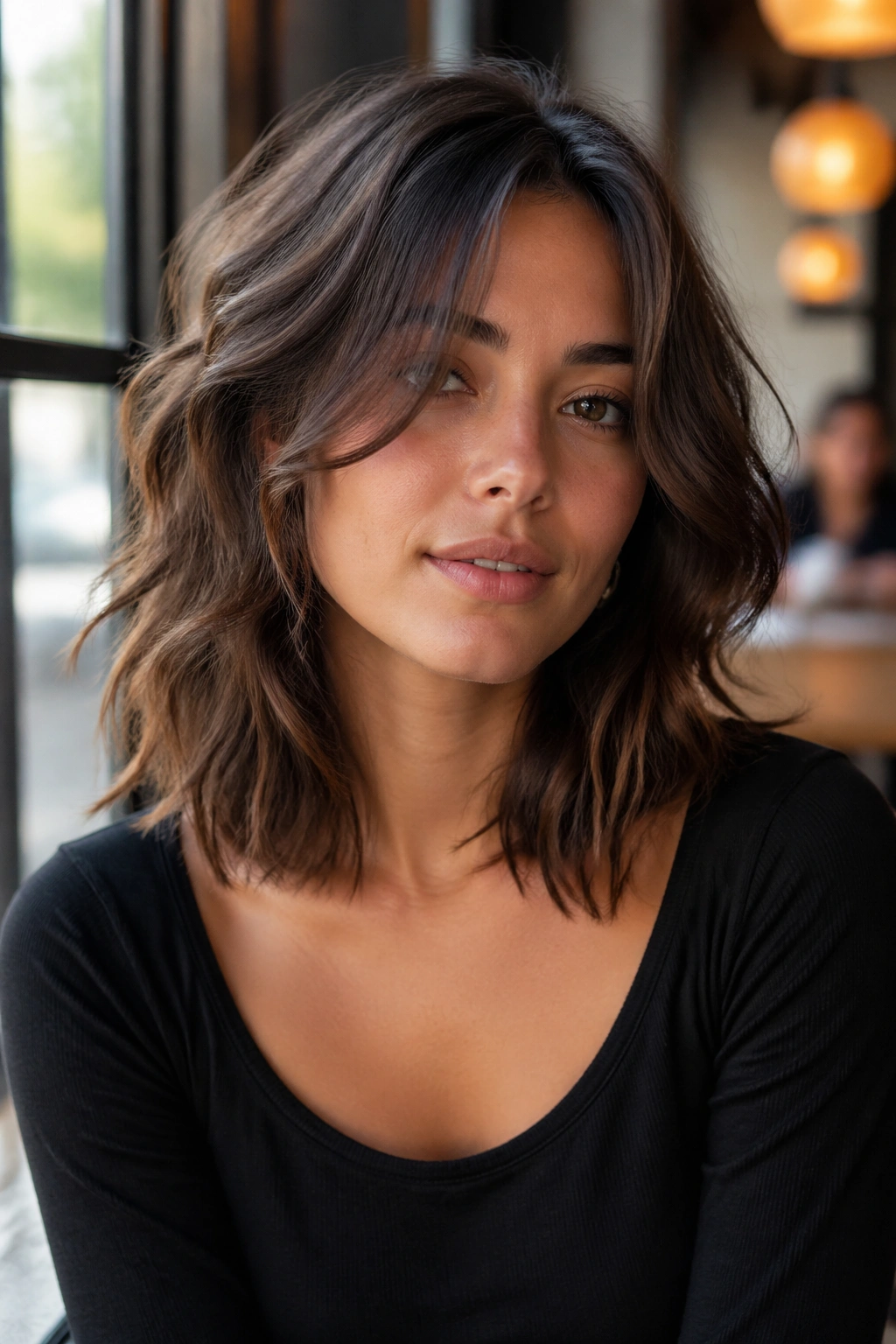
Some heads of hair live between waves and curls. They don’t behave like either one all the time, and honestly, that’s where a shag can shine.
This cut needs to respect the mixed pattern. Shorter pieces around the crown can help the curls pop, while slightly longer layers through the sides let the waves stretch without creating a mushroom shape. If your hair clumps differently from one section to the next, the right shag can make those differences feel intentional.
How to cut and style it
- Cut it dry, or at least mostly dry, so the pattern shows.
- Keep layers rounded, not chopped into obvious shelves.
- Use a diffuser and lift at the roots.
- Separate only the pieces that want separating. Don’t rake through everything.
It’s a good cut for hair that refuses to be one thing.
23. Square-Face Softening Shag
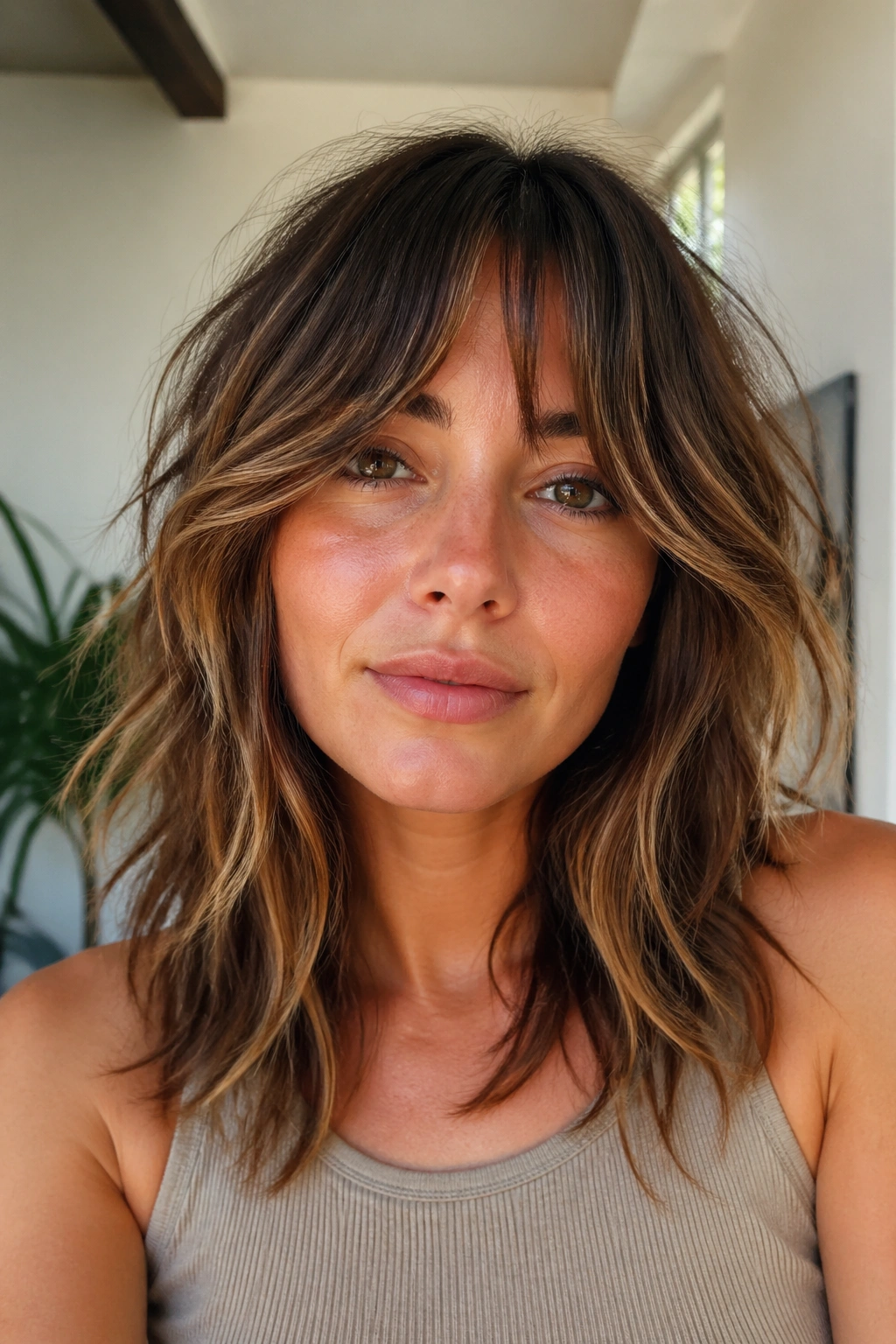
A square face and a rigid haircut can feel like a fight. A soft shag changes the tone fast by breaking up the straight lines around the jaw and temples.
The easiest way to do that is with rounded face-framing layers and a fringe that curves, not cuts straight across. Pieces should land around the cheekbone or below the jaw, not exactly on the jaw, because that can widen the face instead of softening it. A little movement at the crown helps too, but the front matters most here.
This cut is less about hiding angles and more about loosening them. You still want structure. You just don’t want the haircut to mimic the face too neatly. That’s where medium-length shags get interesting, and why they’re so flattering when they’re tailored well.
24. Round-Face Elongating Shag
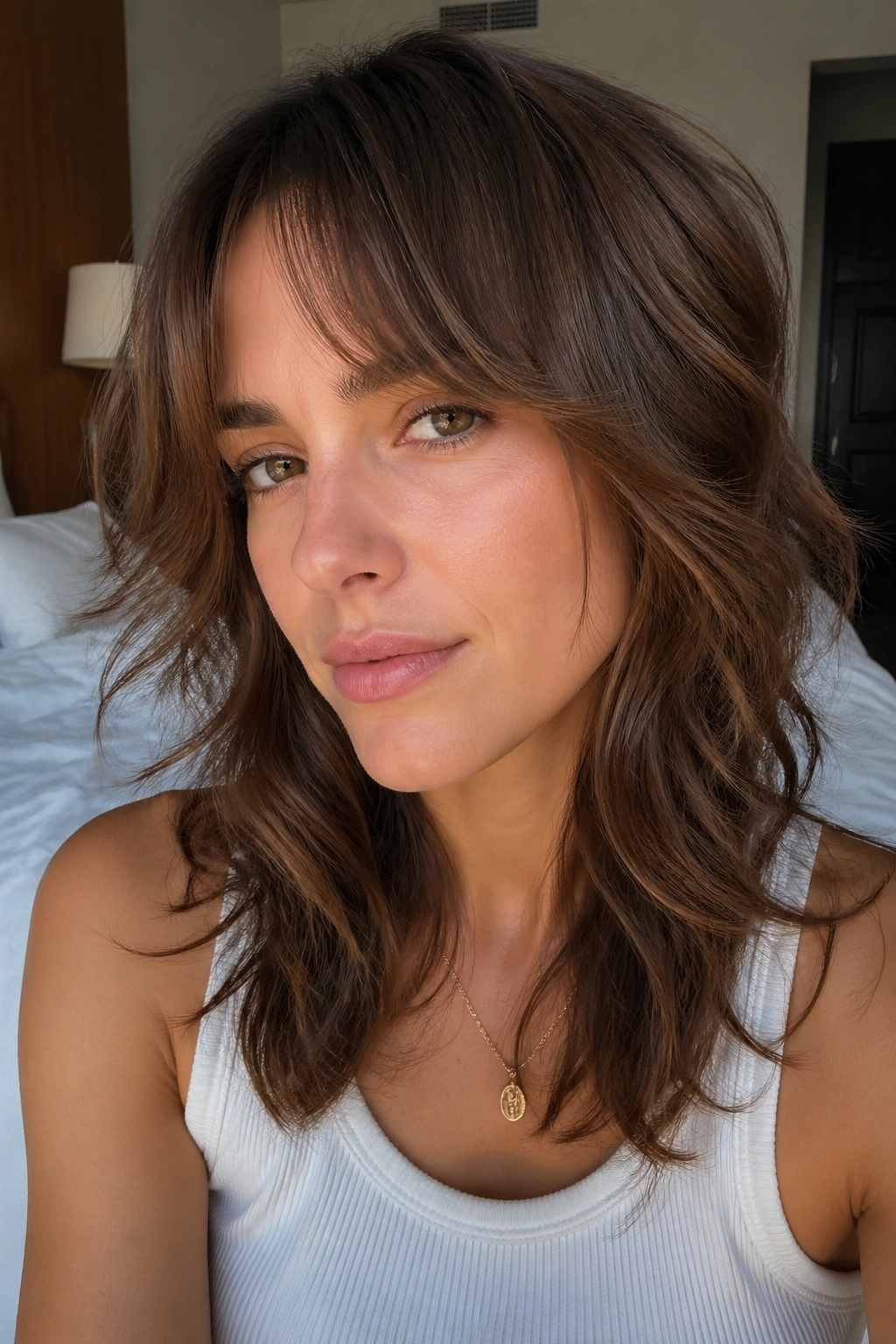
A round face usually looks best with some vertical lift and a bit of length below the chin. A shag can do that without turning stiff or severe.
The shape to ask for
Keep height at the crown, let the sides sit a little sleeker, and leave the longest pieces near the collarbone or just above it. The shorter front layers should start lower than cheek level if you want the face to look less wide.
Why it works
The eye moves upward when there’s lift at the top, then downward when the front pieces drop past the cheeks. That creates a longer line without a harsh angle. Medium wavy hair helps because the wave softens the shape while the layers do the visual work.
Avoid a heavy, blunt fringe here unless you really want that effect. It can shorten the face fast.
25. Oval-Face Balanced Shag
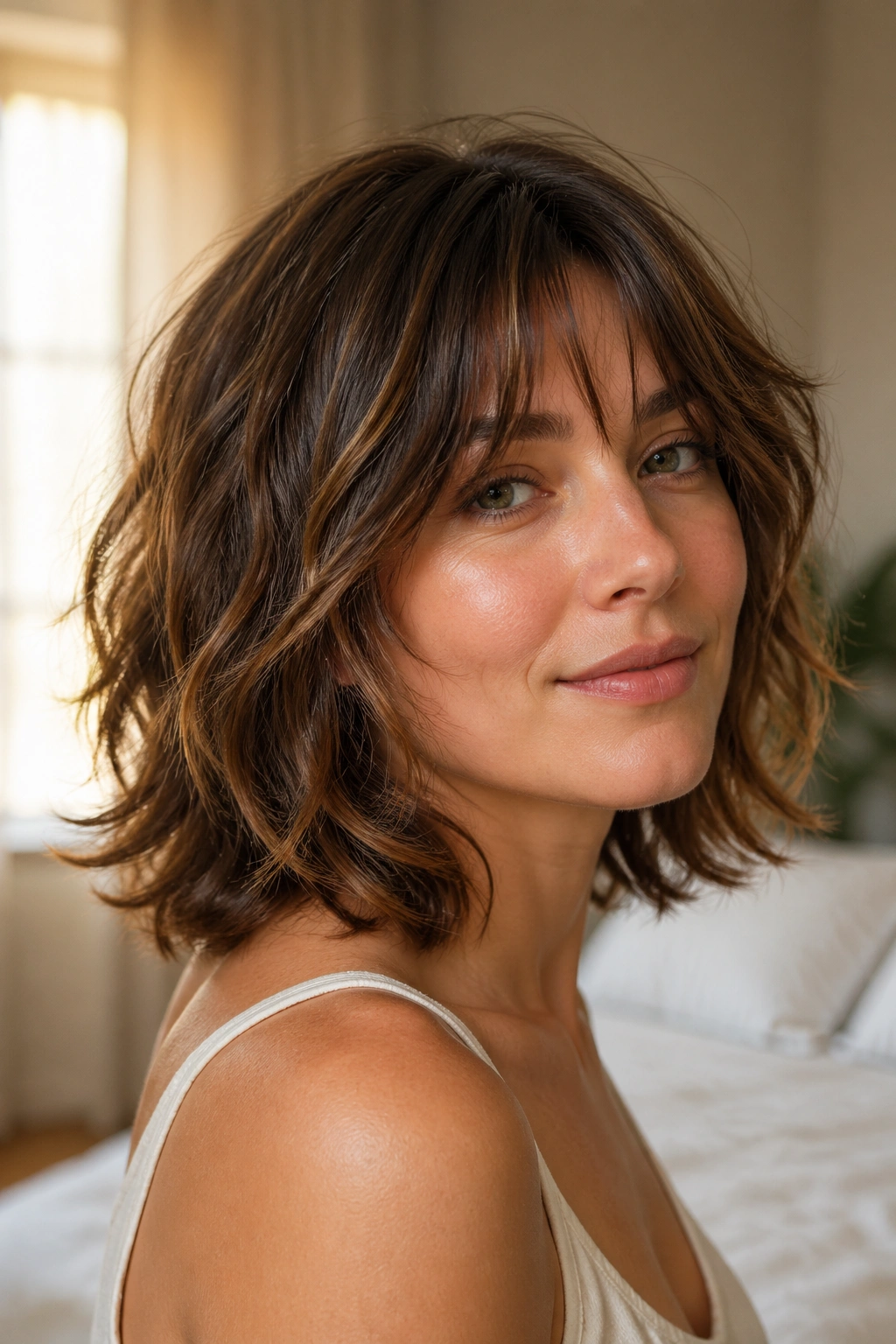
Oval faces have a lot of room to play. That can be a blessing and a trap, because almost any shag can work, but not every shag looks equally interesting.
A balanced medium shag usually keeps the layers even on both sides, with enough movement to frame the face but not so much that the shape gets busy. Curtain bangs, side-swept bangs, or no bangs at all can all work here. The main job is to keep the proportion calm and the waves soft.
- Try cheekbone-length face-framing pieces.
- Keep the crown lightly layered for lift.
- Choose a perimeter that lands around the collarbone.
- Avoid over-texturizing if your waves already separate easily.
This is the face shape that lets the haircut style show through most clearly. Lucky, really.
26. Angled Lob-Shag

An angled lob-shag gives you a little polish at the front and a little lift at the back. It’s the sort of cut that looks deliberate from every angle, which is useful when you want medium hair to feel shaped, not random.
The front pieces are left longer, usually brushing the collarbone or a bit lower, while the back sits slightly shorter. Add shag layers through the top, and the cut starts to move every time you turn your head. The angle keeps it modern-looking without needing a hard edge.
How it reads in motion
The front swings forward. The back stays neat enough to anchor the style. That contrast is what makes it work.
It’s a strong option if you like your hair to feel a little more styled than a traditional shag, but you still want softness and wave.
27. Money-Piece Wavy Shag
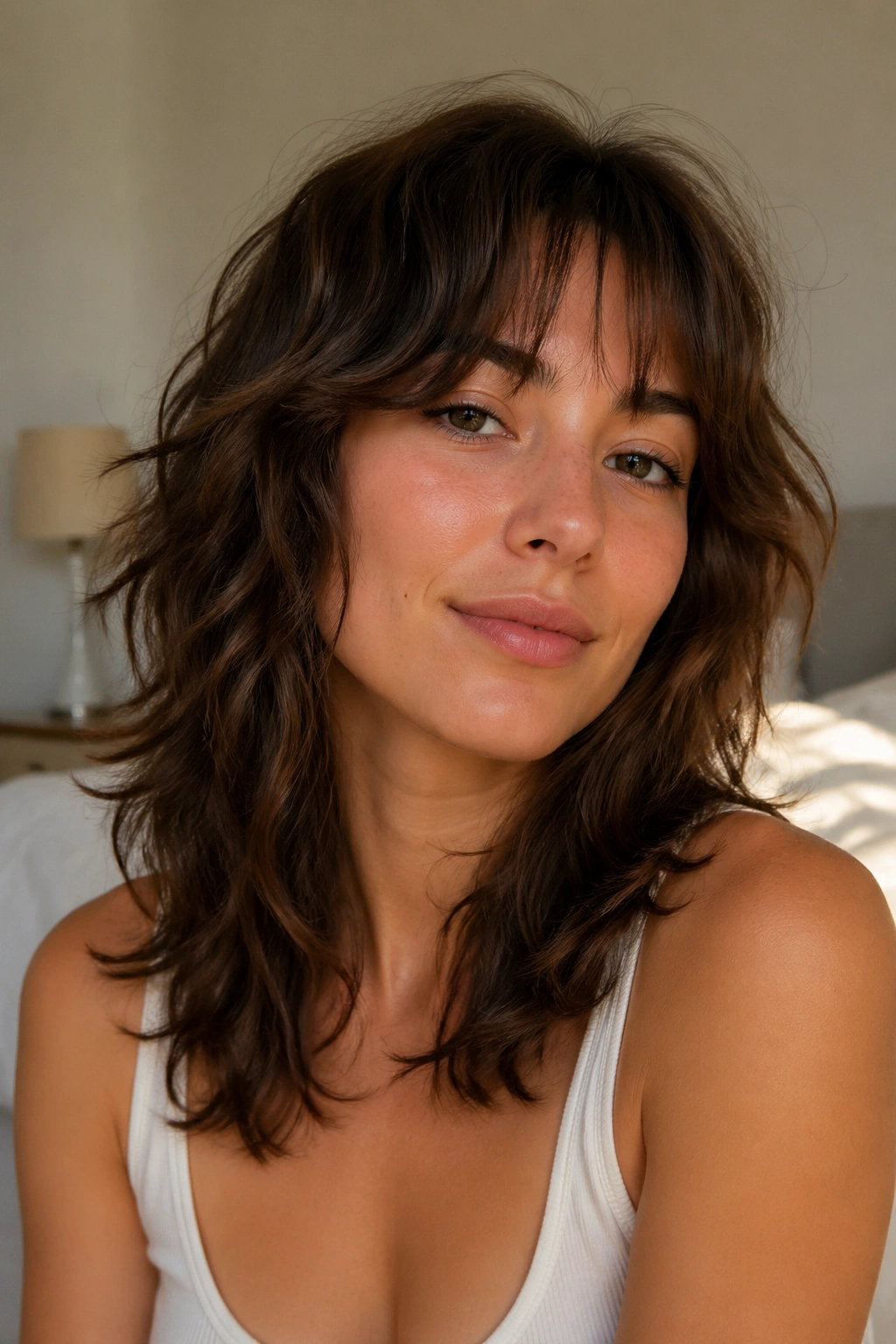
A brighter front can change the whole feel of a shag. Money pieces draw light around the face, and when those front strands sit inside a layered medium cut, the effect is stronger than it looks in a photo.
The haircut itself needs enough front layering to let the lighter pieces move. If the front is too heavy, the color gets buried. If the front is too short, the whole look can feel disconnected. The sweet spot is usually cheekbone to lip length, with the rest of the cut staying softer and more lived-in.
This version works especially well if you want your waves to look dimensional without adding a lot of extra styling. Color plus shape does the heavy lifting here. Keep the front pieces glossy and the rest airy, and the contrast does the rest.
28. Salt-Spray Texture Shag
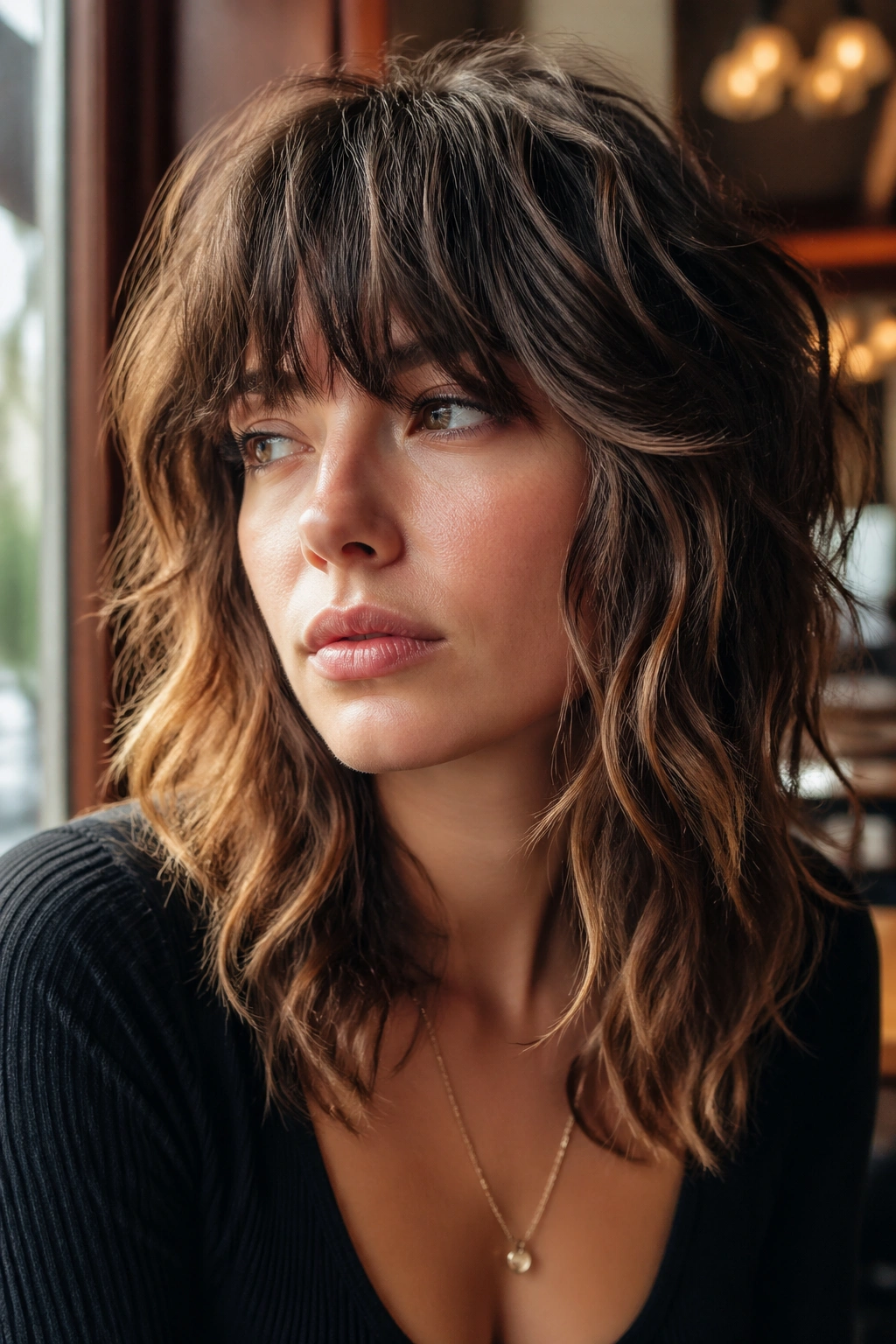
A salt-spray shag is built for texture first. The cut has to be strong enough to survive that slightly rough finish, because salt spray tends to make the hair a little drier and a little more separated.
If your medium waves get limp with cream-based products, this is the cut to try. The layers give the spray something to grab onto, and the result is a more matte, piecey finish. Don’t drown it in product. Two or three spritzes through damp hair is usually enough, followed by scrunching and a loose shake at the roots.
What it needs
- A cut with visible movement.
- A light touch at the roots.
- A conditioner that keeps the ends from feeling straw-like.
The style isn’t sleek. That’s the point. It’s for hair that looks better with texture than with shine.
29. Volume-Crown Wavy Shag
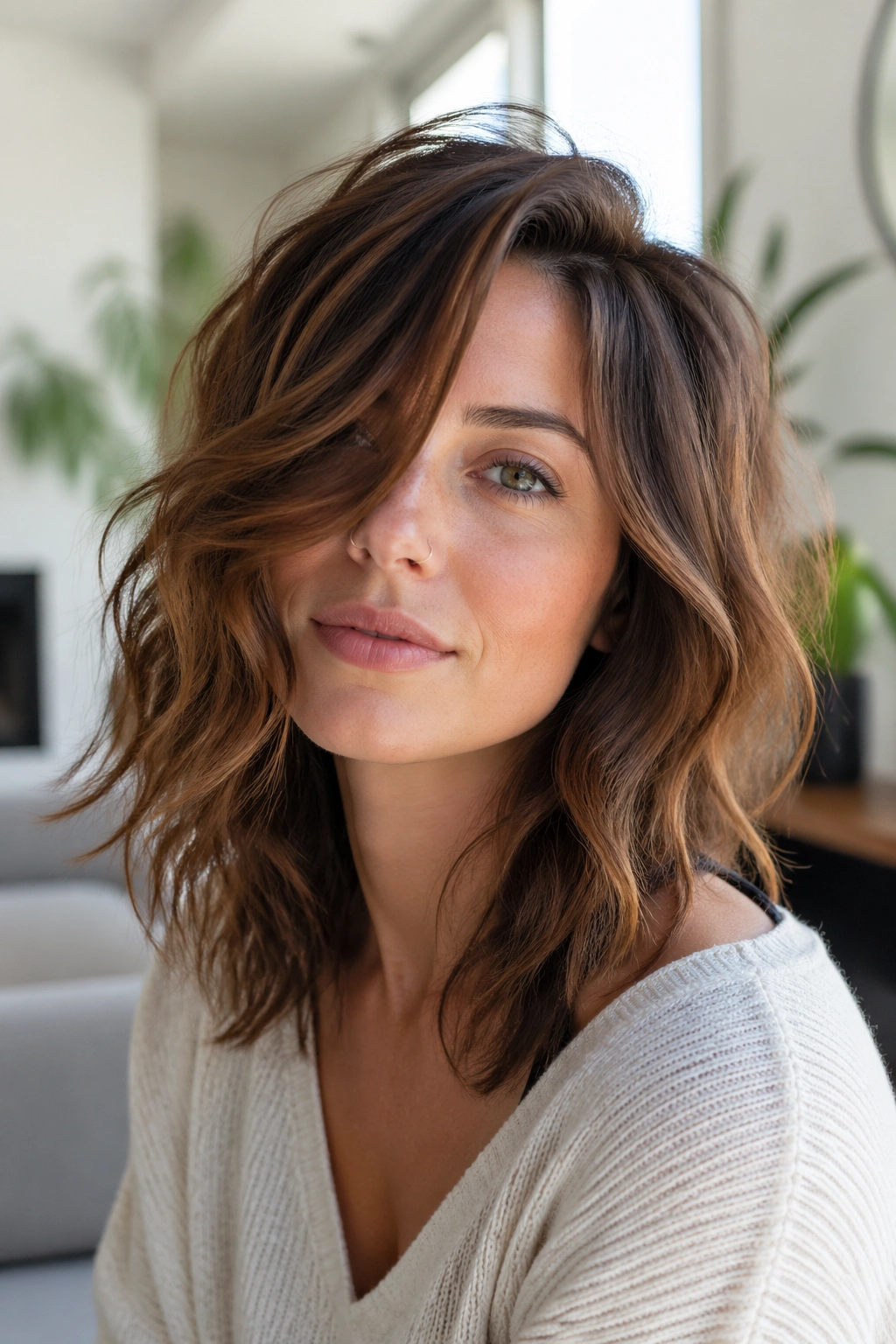
If your roots go flat by lunch, the volume-crown shag is worth a hard look. It puts more of the haircut’s energy at the top, where the lift happens, and lets the rest of the hair fall softer underneath.
That structure keeps medium waves from collapsing into the sides. Shorter crown layers create height, while the lengths stay long enough to keep the cut from puffing outward. It’s a practical shape for people who like body at the root but don’t want the ends to get too light.
What makes it work
The stylist needs to respect the crown, not just the ends. A good crown shape changes the way the whole cut sits.
This version can be a little harder to blow-dry because the top needs attention, but the payoff is real. Your hair feels fuller from the first inch.
30. Everyday Medium Shag

Some cuts are flashy. This one is the workhorse. The everyday medium shag gives you movement, keeps the ends soft, and doesn’t demand a different styling routine every morning.
It usually lands between the collarbone and shoulders, with layers that start around the cheekbone and blend down from there. Nothing too severe. Nothing so long that the shape disappears. If you want a shag that can be worn messy, polished, tucked behind the ears, or tied into a low clip, this is the safest bet.
A light mousse or leave-in, a quick scrunch, and maybe a diffuser on days you care more than usual — that’s enough. The cut carries the shape. You don’t need to fight it.
Final Thoughts

Medium hair gives a shag room to breathe. The length is long enough to keep the cut from feeling too chopped, but short enough that the layers can move and show up in the real world, not only in the salon mirror.
The smartest version is the one that fits your wave pattern and your routine. If you want something easy, start with collarbone length or invisible layers. If you want more attitude, go curtain bangs, wolf-cut energy, or a sharper razor finish. Pick the shape that makes your hair behave better, not the one that looks most dramatic on day one.
One good shag haircut can save you a lot of morning fuss. That alone makes it worth being picky about the details.