
Cut a wavy bob half an inch too short and the whole shape can jump straight up. Anyone with bends, S-waves, or that vague “it’s not curly, but it sure is not straight” texture has seen it happen in the mirror. That spring factor is exactly why lob haircuts for wavy hair keep earning their place in salons: you get movement, shape, and enough length to stop the ends from puffing into a triangle.
The lob sits in a narrow but useful range, usually somewhere between the jaw and the collarbone. That sounds minor on paper. On actual hair, it changes everything. A wavy cut at the chin can feel playful and sharp, while the same cut stretched two inches lower looks softer, heavier, and easier to air-dry.
Wavy hair also exposes lazy cutting fast. If the layers start too high, the crown can mushroom. If the perimeter gets thinned too much, the ends turn wispy and the whole haircut loses its point. The best lobs respect the wave pattern instead of fighting it, and they leave enough substance at the bottom so the shape still looks good on day two, not only five minutes after a diffuser.
That’s where the fun starts, because “lob” does not mean one haircut. It covers clean blunt lines, airy shags, face-framing shapes, angled cuts, soft bangs, heavier Italian-inspired edges, and low-maintenance versions you can scrunch with cream and walk out the door in.
Why Lob Haircuts for Wavy Hair Sit So Well
A good lob gives wavy hair room to bend. Shorter bobs can look fantastic, but they ask more from your texture. Every wave has to land in the right place. A lob leaves enough length for the pattern to stretch out, so the bends look smoother and less accidental.
Weight matters here. Wavy hair often behaves best when the ends keep a little density, especially if your strands frizz at the first hint of humidity. That extra weight at the bottom helps the cut hang instead of ballooning sideways.
There is also a styling payoff. You can air-dry a lob, refine a few front pieces with a 1-inch iron, and call it done. Or you can blow it smooth and add polished bends. Both routes work because the length is flexible, and that is not true of every short haircut.
One more thing: the lob grows out kindly. Six weeks late for a trim? Annoying, yes. Ruined shape? Usually no. That alone makes it a smart length if you love haircuts in theory and hate constant salon visits in practice.
How Density and Layer Placement Change the Shape
Fine wavy hair and dense wavy hair should not get the same lob. They just should not.
Fine texture tends to look fuller with fewer layers and a stronger perimeter. If your ends already look airy, removing more hair through the mid-lengths rarely helps. A one-length or lightly textured lob usually gives the biggest visual payoff.
Thicker waves need a different plan. Too much bulk at the sides can create that shelf-like shape nobody asks for, especially around the jaw. Internal layers—cut inside the shape, not all over the surface—remove weight while keeping the outer line clean.
Shrinkage matters too. A wave that looks loose when wet may bounce up an inch or more once dry. Curl-focused stylists often cut textured hair dry or at least finish-detail it dry for that reason. They want to see where the wave lives, where it splits, and which side insists on doing its own thing.
What to Tell Your Stylist Before the First Snip
Salon language does not need to sound fancy. It does need to be specific.
If you want a lob that still looks good after wash day, say these things out loud:
- Tell them your shortest comfortable length when dry. Wet hair lies.
- Mention how you style it most days. Air-dry, diffuse, round brush, flat iron—each one changes the cut.
- Ask where the weight line will hit. Jawline, chin, clavicle, collarbone. That spot controls the whole mood.
- Say whether you hate bulk or hate thin ends more. Those are two different problems.
- Ask for layers to be placed with your wave pattern, not against it.
- If frizz is a battle, ask about scissor texturizing before agreeing to a razor. Razors can look soft and cool on the right hair, but some wavy textures puff at the ends when overdone.
Bring photos, yes. Bring two or three that show the same shape from different angles. One front-facing photo tells only half the story.
1. Blunt Collarbone Lob With Natural S-Bends
If you want a safe first step into shorter hair, this is the one I would point to first. A collarbone-length blunt lob keeps the ends solid, which makes wavy hair look fuller and calmer at the same time.
The perimeter stays clean, while the wave pattern does the softening for you. That balance is why this cut works on such a wide stretch of textures, from loose 2A bends to stronger 2C waves.
Use a light mousse on soaking-wet hair, scrunch upward, then diffuse until the roots are dry and the ends are still a touch damp. The shape lands best when the front pieces skim the collarbone instead of sitting above it.
Ask for a dense baseline with only minor internal movement, not visible top layers.
2. One-Length Clavicle Lob for Fine Wavy Hair
Fine waves lose body fast when scissors get layer-happy.
A one-length clavicle lob keeps the bottom edge thick, so the haircut looks intentional even when your hair air-dries a little flatter on one side. You still get movement from the wave pattern itself; you do not need a chopped-up cut to fake it.
- Best on: fine to medium density hair that goes limp at the crown
- Length target: right at the clavicle, not two inches below
- Salon note: skip heavy texturizing at the ends
- Styling move: lift roots with mousse, then clip the crown while it dries
This is one of those cuts that looks clean on day one and somehow better on day two.
3. Textured Lob With Invisible Layers
Need more movement without the shag look? Ask for invisible layers. They sit inside the haircut, not on top of it, so you keep the outline of a classic lob while the interior gets lighter and easier to style.
That matters on medium-density wavy hair, where too much weight can make the lower half look sleepy. Invisible layers wake it up.
What makes it work
The top stays smooth, the mid-lengths breathe, and the ends still have enough substance to hold a shape. That combination gives you bounce without the puff.
A curl cream layered under a soft-hold gel helps this cut show off its texture. Rake the product through, scrunch, then leave it alone. Touching it too much while it dries is how you turn “textured” into “frizzy.”
4. Jawline-Skimming Wavy Lob
This cut lives right on the border between bob and lob, and it has attitude. The length hits around the jaw or a hair below it, which puts your cheekbones and neck on display in a sharper way than a collarbone cut ever will.
There is a catch. Stronger waves bounce up, so this shape needs a stylist who respects dry length.
A jawline-skimming lob looks best when the ends stay blunt and the layers stay restrained. Too much chipping at the bottom can make the whole shape stick out. Keep the styling small-scale too: a pea-size cream, a short diffuse session, maybe one twist around a 0.75-inch iron near the front.
Short. Crisp. A little dramatic.
5. A-Line Lob With Longer Front Pieces
An A-line lob angles forward, shorter in back and longer near the face. On wavy hair, that line adds structure before you even style it. The back feels lighter and easier on the neck, while the front keeps the softness people usually want from a lob.
Unlike a blunt straight-across cut, this one gives the wave a direction. Your bends travel toward the chin instead of puffing outward.
If you wear your hair tucked behind one ear or pulled back on one side, the shape shows up even more. Ask for a gentle angle, not a steep stacked bob. About 1 to 1.5 inches of difference from back to front is enough.
Good if you want shape without losing the option to still wave pieces around your face.
6. Asymmetrical Wavy Lob
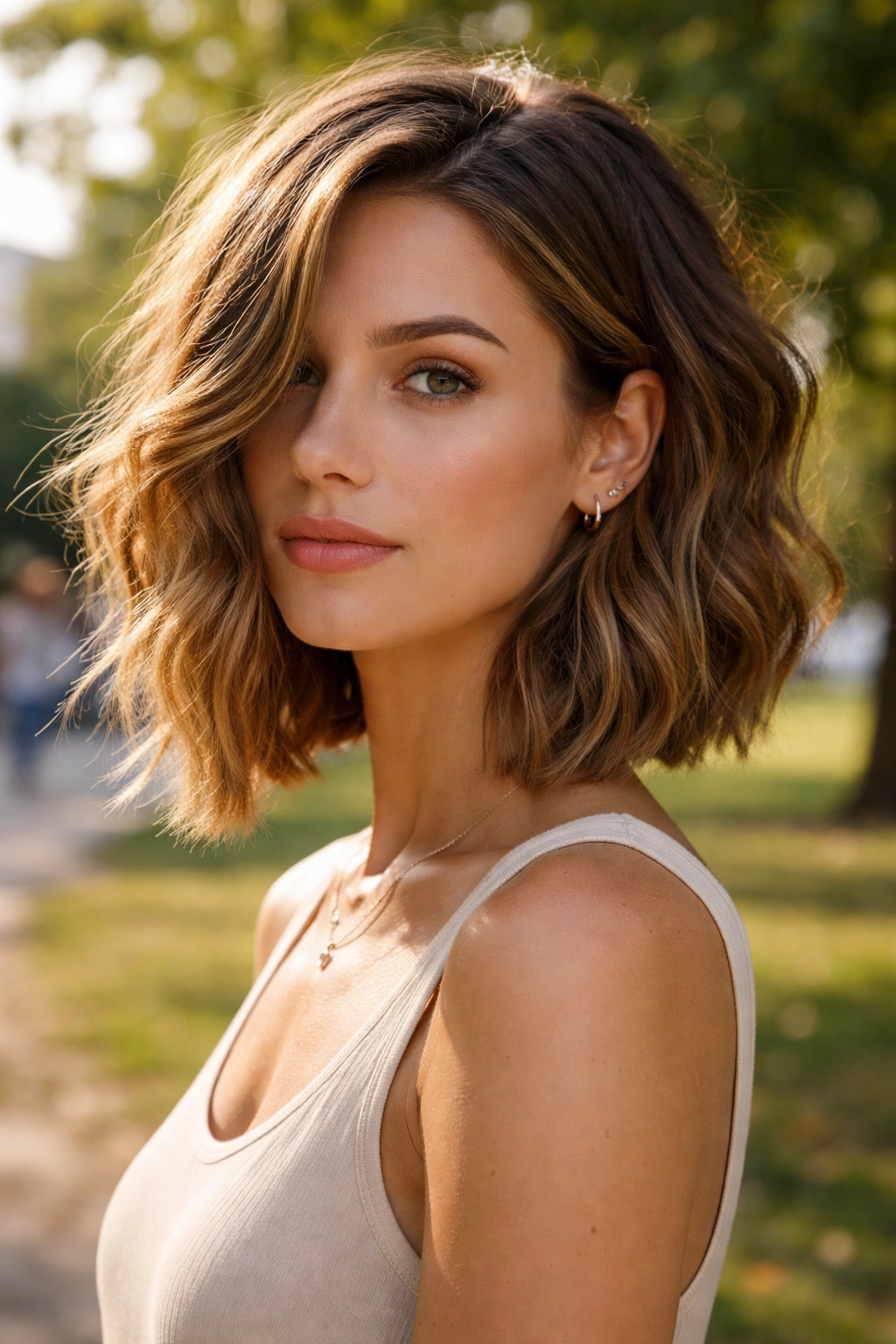
One side longer than the other can sound like a throwback move, but on wavy hair it still works when the difference is subtle. Think intentional imbalance, not costume.
Keep the shorter side close to the jaw and the longer side around the collarbone. That spread gives the haircut tension, and waves soften the geometry so it does not feel harsh.
This cut earns its keep when you always part your hair the same way. Instead of fighting that habit, it uses it. The longer side frames the face; the shorter side opens it up.
Skip heavy bangs here. They compete with the asymmetry. A clean side part and a touch of bend through the ends carry enough visual weight on their own.
7. Deep Side-Part Lob With Root Lift
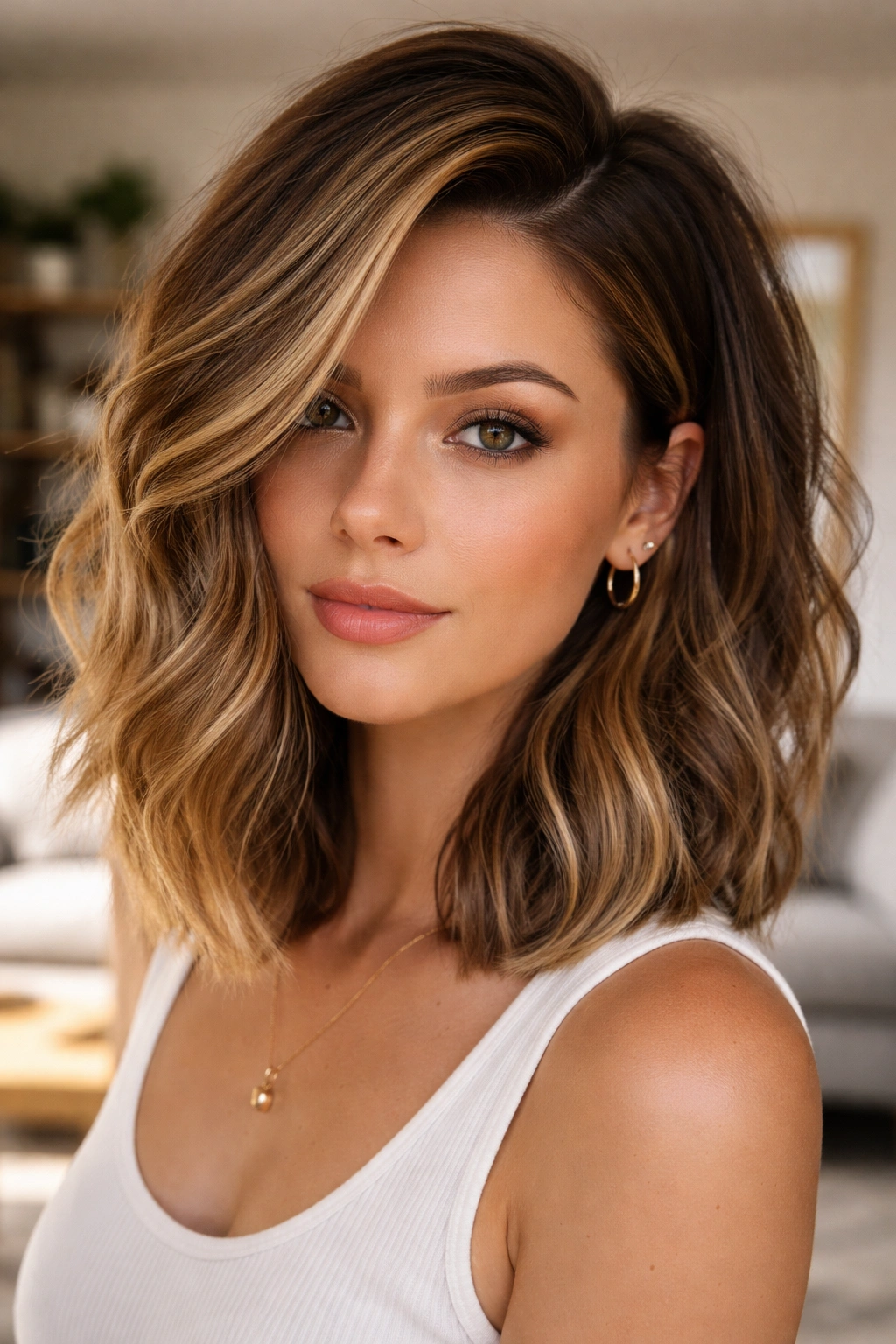
A deep side part can change a haircut more than another inch of length. On a wavy lob, it builds instant height at the crown and gives one side that sweeping, movie-star line people keep trying to recreate with hot tools alone.
- Who likes this cut most: anyone with flat roots and fuller ends
- Best length: chin to collarbone
- Styling trick: part the hair while it is wet, clip the heavier side at the root, then diffuse
- Extra note: trim the front pieces every 8 to 10 weeks so the sweep does not drag the face down
There is something old-school and flattering about this shape, especially if your waves open up away from the face.
8. Center-Part Lob With Soft Face-Framing Pieces
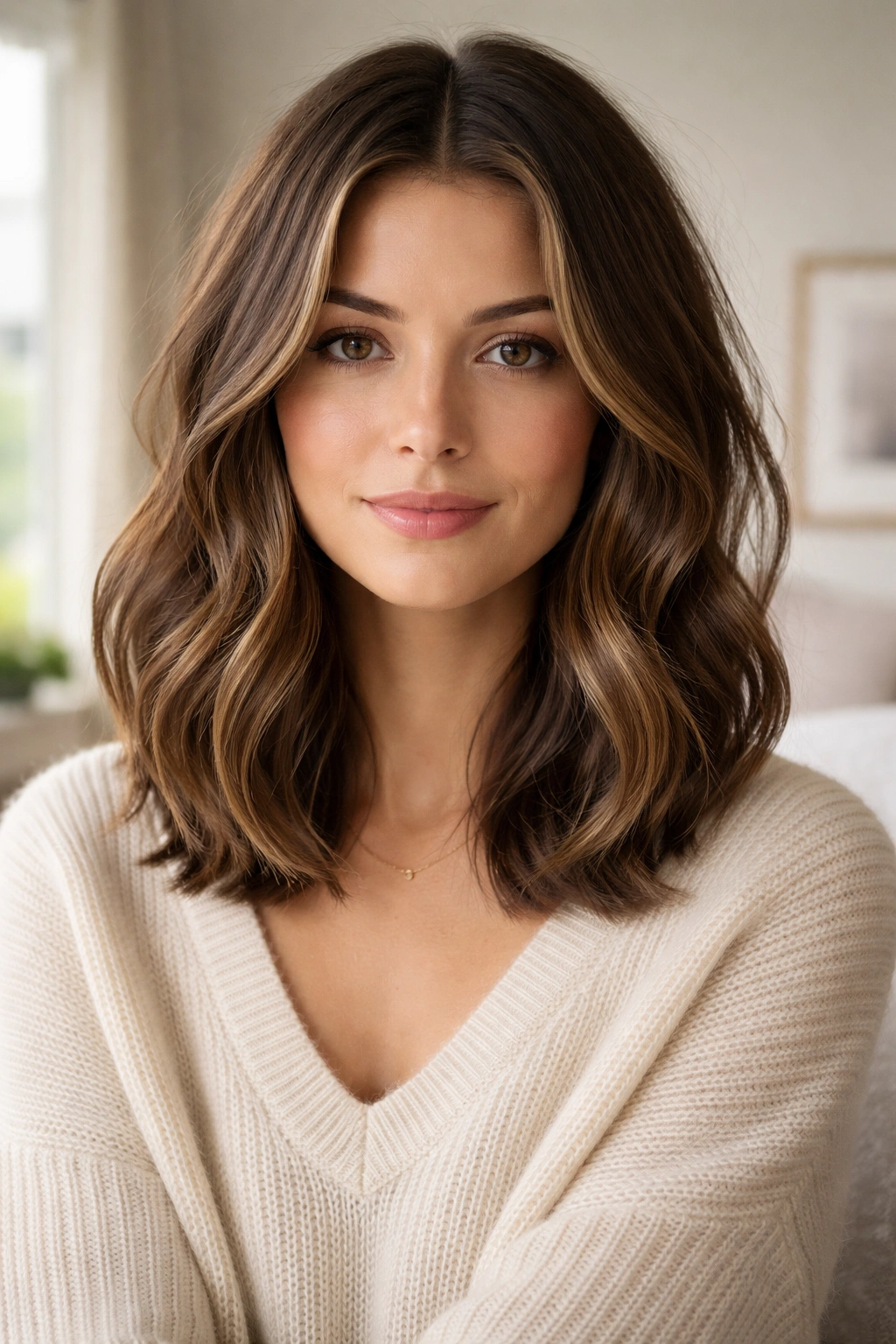
Center parts ask for balance. A wavy lob with soft face-framing pieces gives you that balance without turning the front into a layer explosion.
The shortest pieces should start around the cheekbone or just below it, then melt into the rest of the length. Cut them too short and they spring into accidental bangs. Leave them too long and they disappear.
This shape works well if you wear your waves loose and undone. A center part plus gentle front layers can make the whole haircut sit flatter against the head in a good way—less bulk at the sides, more shape around the face.
Use a cream-gel mix, rake it through, then twist the front sections away from your face while they dry. That one step changes the whole finish.
9. Lob With Curtain Bangs
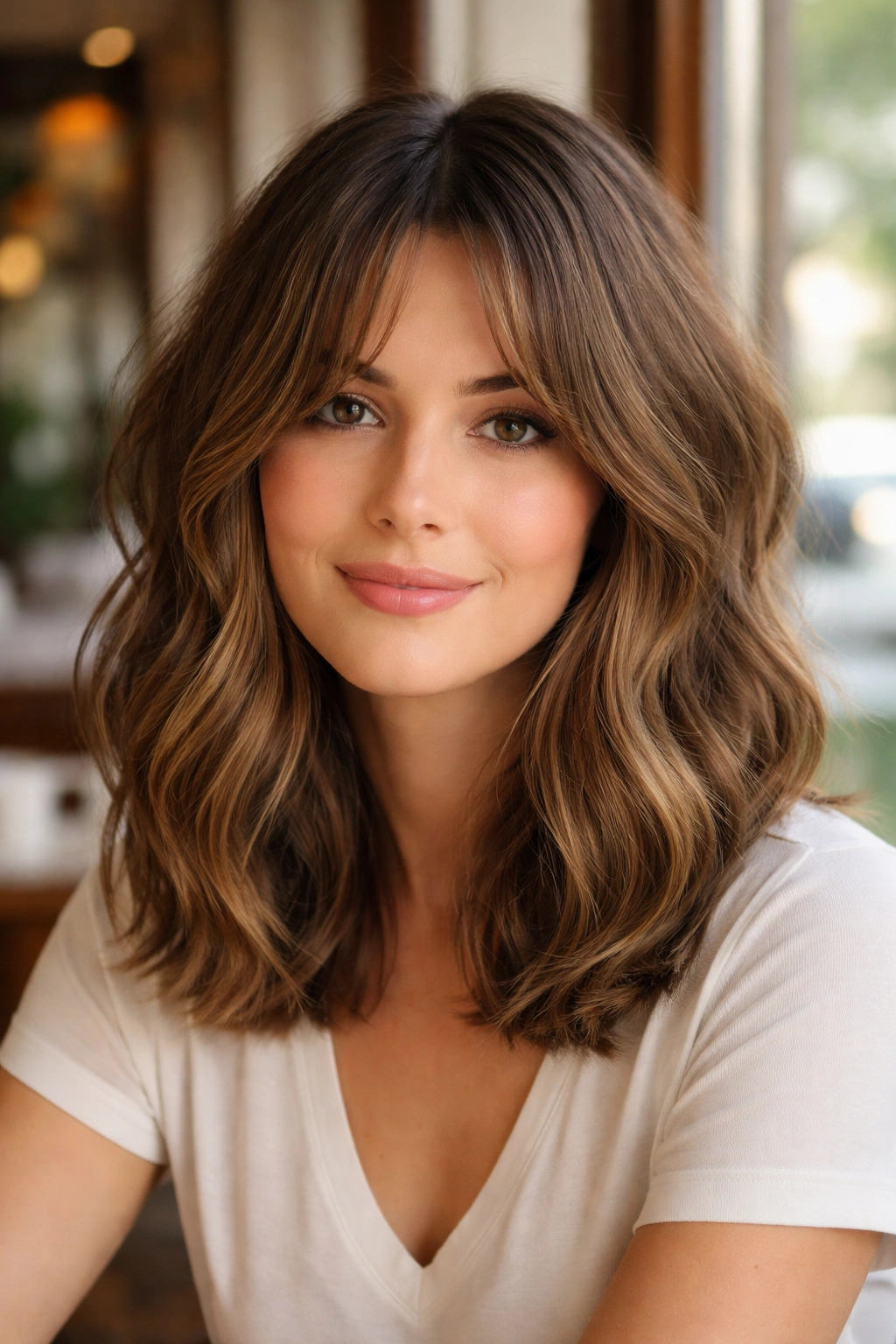
Curtain bangs and a wavy lob can look ridiculously good together when the lengths connect. The bangs should open at the center and blend into cheekbone-length pieces, not sit like a separate haircut pasted onto the front.
Ask for this shape
Tell your stylist you want the fringe to split naturally, with the shortest point between the brows and the longest pieces around the cheekbones. That gives you softness without blocking the eyes.
The rest of the lob can be blunt or lightly layered. I lean blunt if your hair is fine, more texture if it is dense. Dry styling matters here: use a round brush or a medium velcro roller on the bangs, then let the rest of the hair keep its wave.
Curtain bangs sound low effort. They are not. They are worth it anyway.
10. Lob With Bottleneck Bangs
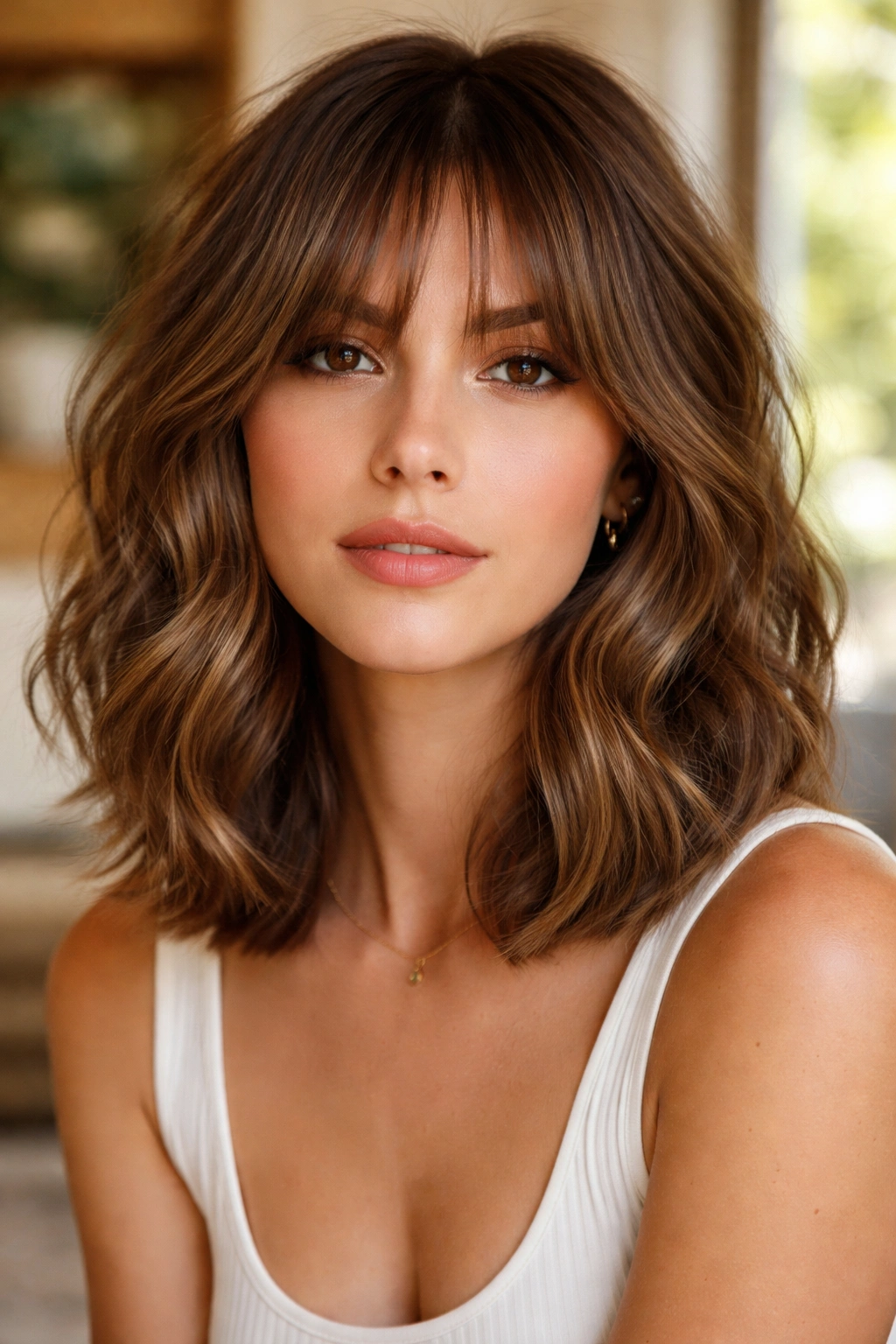
Bottleneck bangs pinch in near the brow, then widen and blend toward the cheekbones. On wavy hair, they give you the softness of fringe with a little more shape around the temples than curtain bangs do.
This style suits people who want movement near the eyes but hate the blunt, heavy feel of a straight fringe. The middle stays light. The outer edges do the framing.
Go easy on shrinkage here. Bangs always spring more than you expect, especially if your front pieces are finer than the rest of your hair. A stylist who cuts them dry will save you a lot of bad mornings.
Pair this bang shape with a collarbone lob and light layers around the face. It looks airy, but not flimsy.
11. Lob With Long Side Bangs
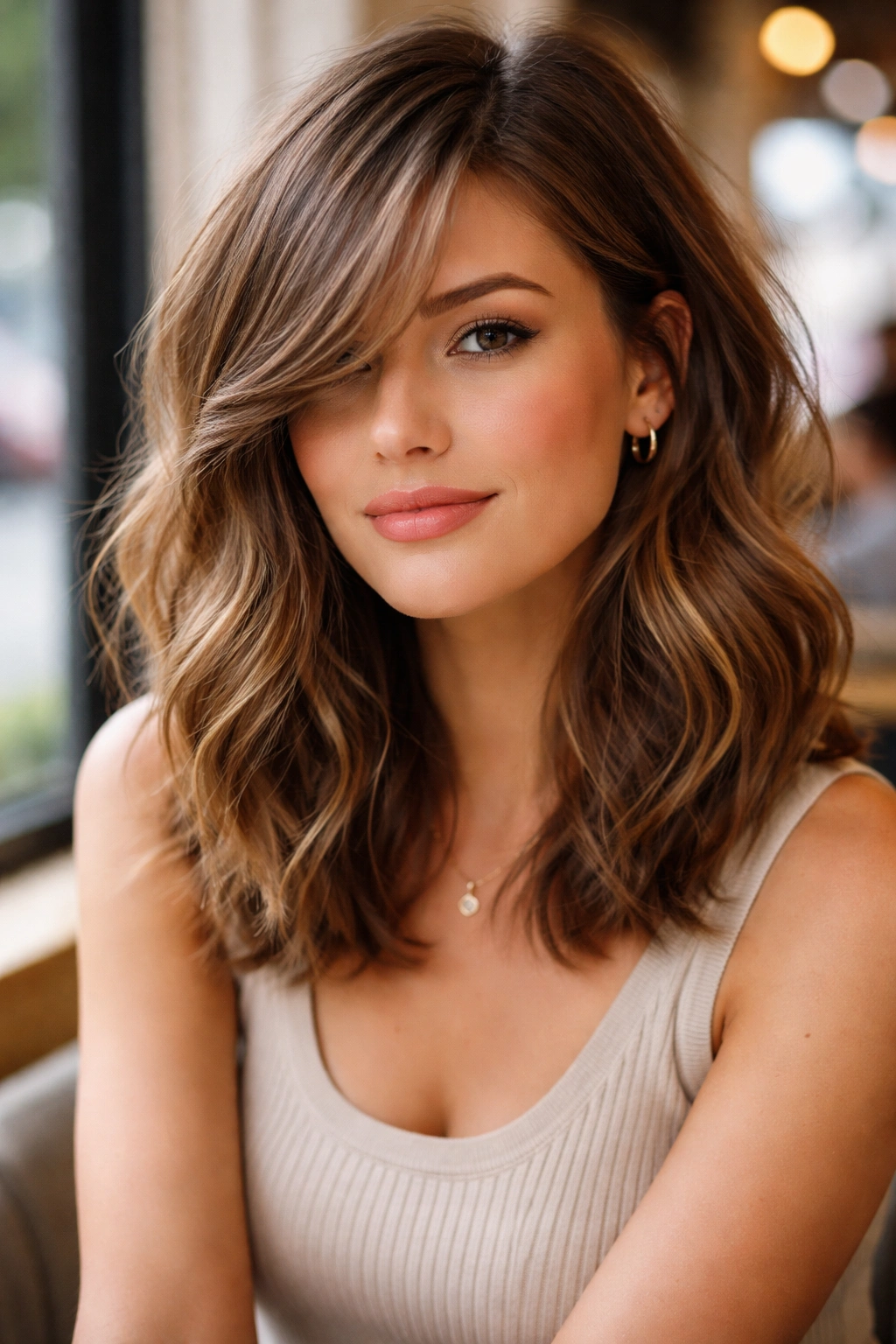
Long side bangs give a wavy lob a softer entrance. They skim across the forehead and cheek, then disappear into the rest of the cut, which makes them one of the easier fringe options to grow out.
- Best on: side parts, oval faces, square jawlines
- Length cue: the longest point should hit between the cheekbone and upper lip
- Product move: a tiny amount of styling cream on the bangs, then blow-dry with a small round brush
- Why people keep choosing it: it frames the face without demanding bang-level maintenance every morning
If your wave pattern bends forward in front, this cut almost styles itself. If it bends backward, train it with clips while damp.
12. French-Girl Lob With Soft Ends
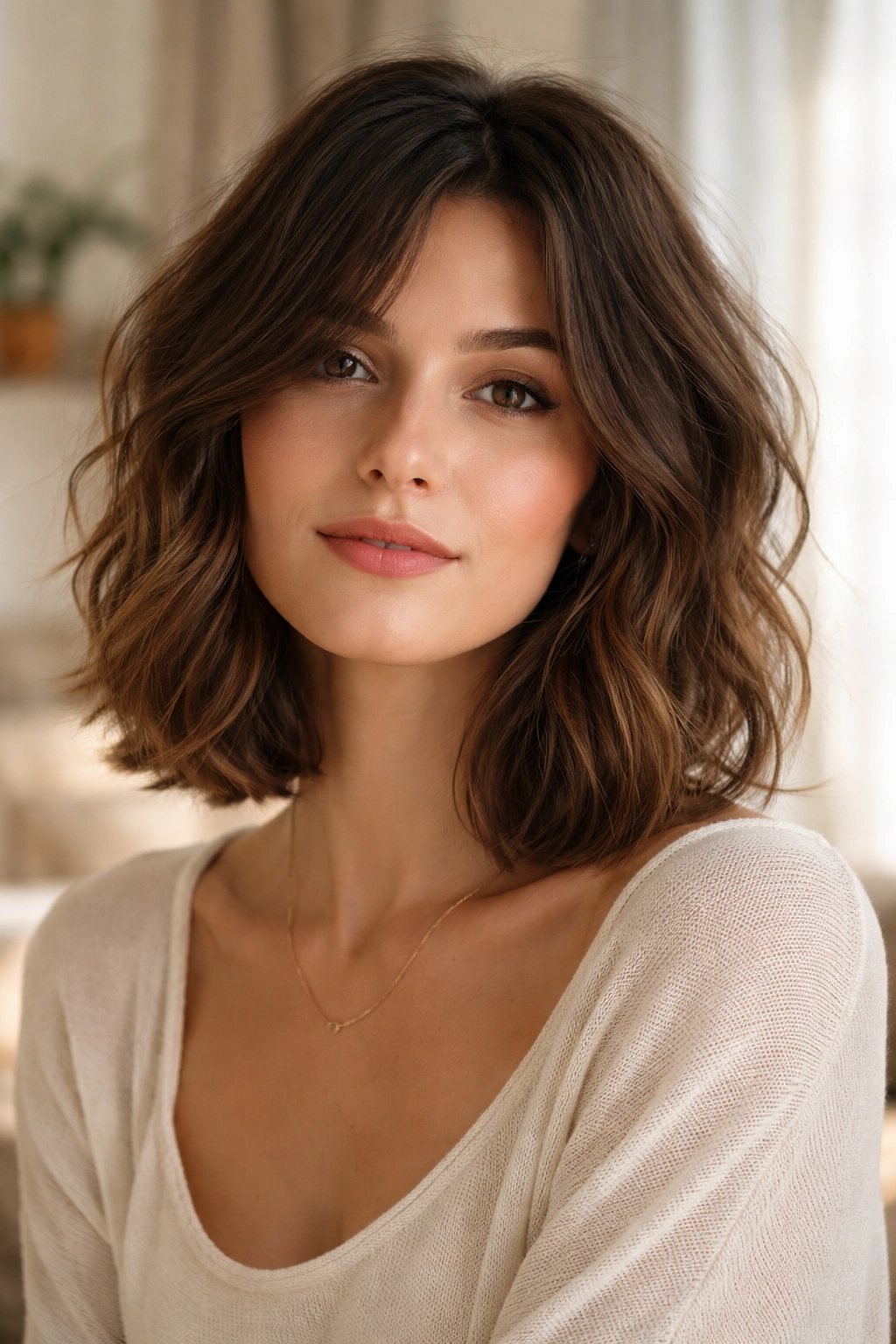
There is a laid-back version of the lob that looks slightly slept-in, not sloppy, and this is it. The length usually lands between the jaw and collarbone, the ends are softened with point cutting, and the whole shape feels lived in from the first week.
The trick is restraint. You do not want layers climbing all over the crown. You want a gentle softness at the hemline and a natural bend that looks like your hair dried that way because it did.
Air-dry cream is the hero product here. Use less than you think. Too much product kills the loose, touchable finish that makes this cut work.
A little fuzz is part of the appeal. Do not polish it to death.
13. Italian Blunt Lob With Full Perimeter
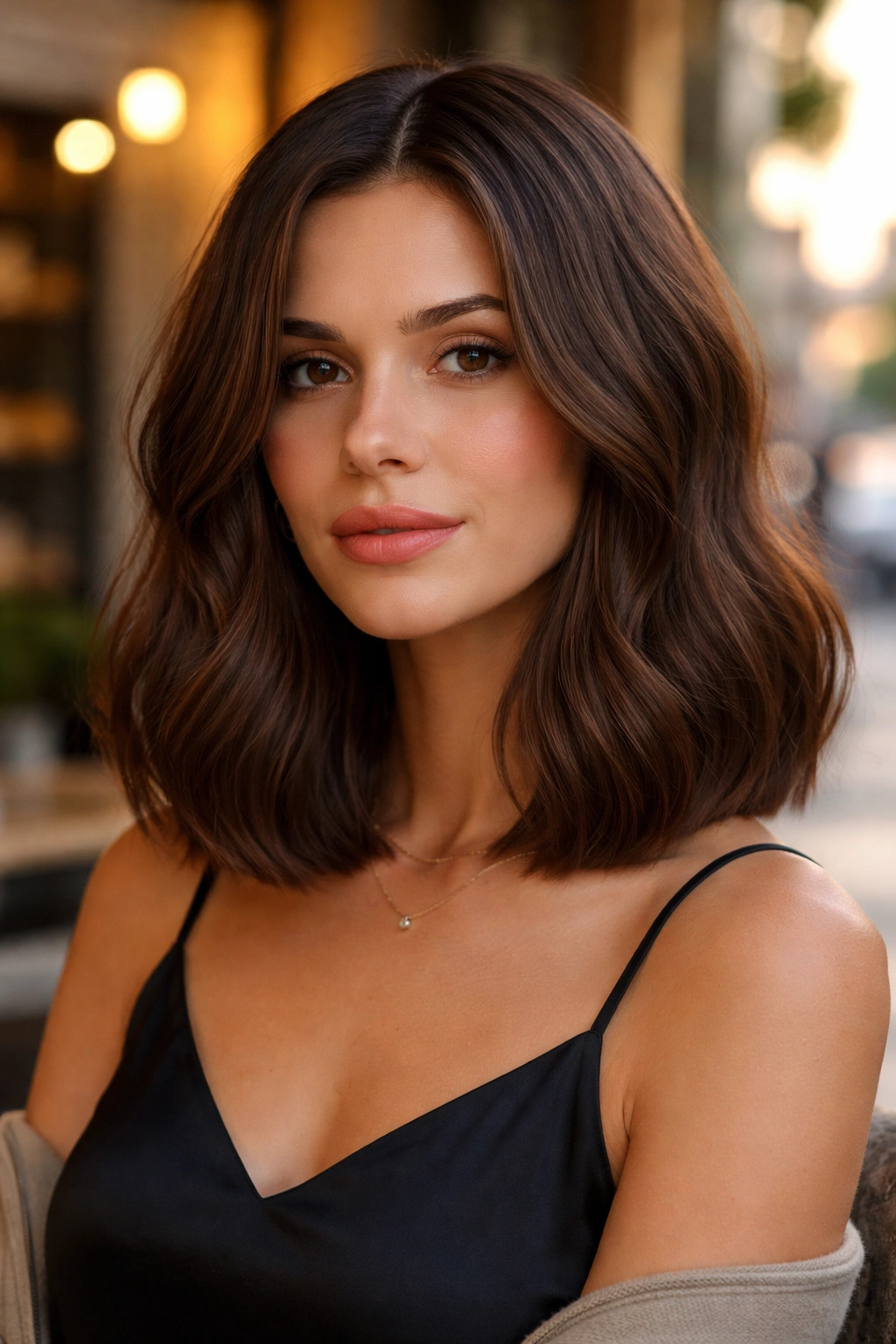
If the French version is airy, the Italian version is heavier, fuller, and more polished. The ends stay dense, the part is often clean, and the shape has more body through the bottom half.
This haircut is a strong match for medium to thick wavy hair that already has natural volume. Instead of chopping the bulk away, it uses that fullness as the feature.
You can wear it with a center part and glossy bends, or rough-dry the roots and let the ends curve on their own. The weight line should sit somewhere between the chin and the collarbone, depending on how much lift your waves have.
When people say their hair looks “expensive,” this is often the shape they mean.
14. Shaggy Lob With Crown Layers
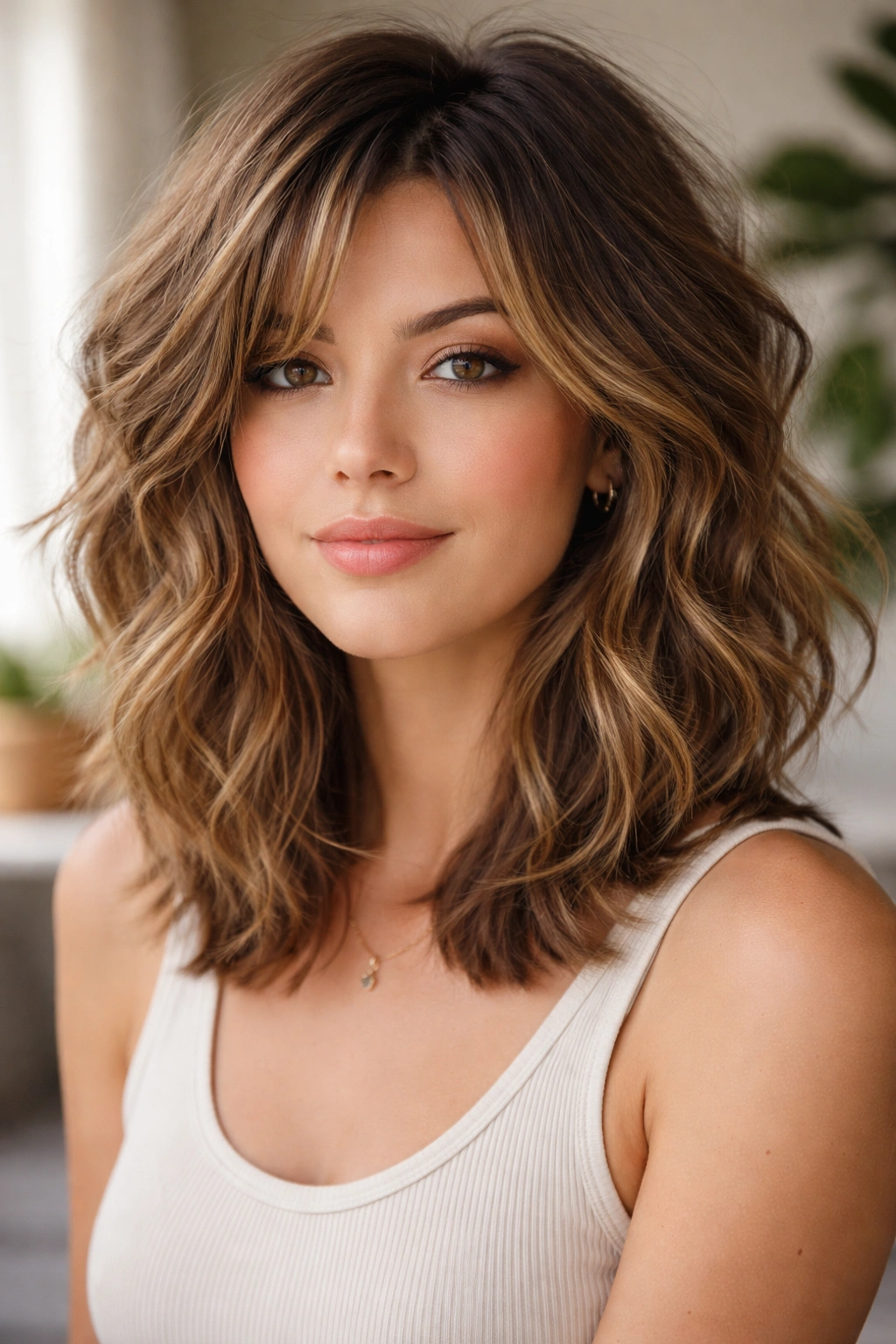
Some lobs want neatness. This one wants air.
A shaggy lob adds shorter layers through the crown and around the face, which gives wavy hair lift and separation. On dense hair, that can feel like freedom. On fine hair, it can feel like you lost half your haircut, so choose carefully.
Styling note
Use a diffuser and tip your head side to side instead of upside down. You want lift, not chaos. Finish with a dry texture spray at the roots, not the ends.
This cut looks better with bend and movement than with polished curls. If your hair has natural grit and you like it a little wild around the edges, a shaggy lob scratches that itch fast.
15. Wolf-Lite Lob
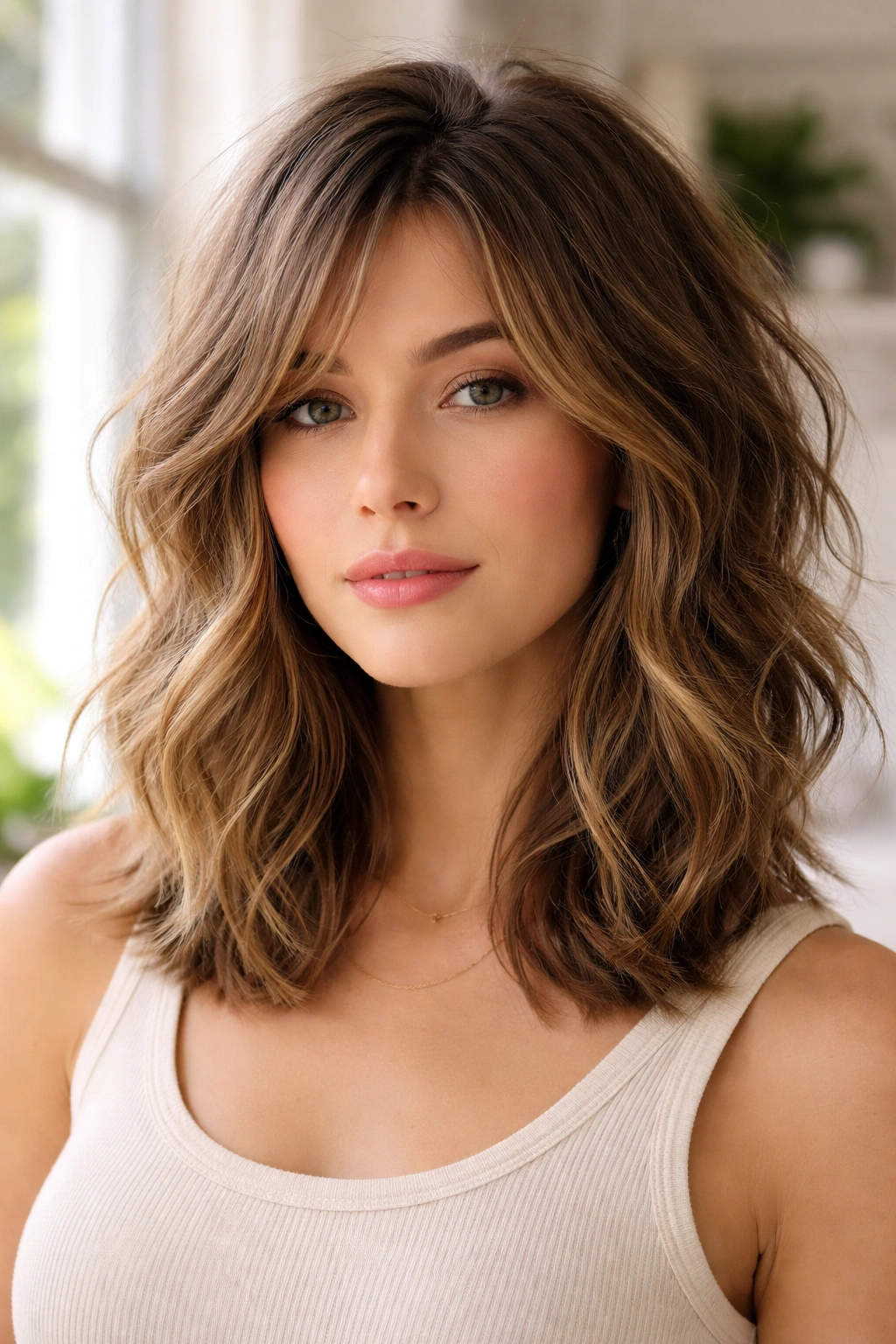
The full wolf cut is a lot. A wolf-lite lob keeps the crown lift and face-framing bite, then tones down the extreme contrast so you still have a wearable long bob.
- Shape: shorter around the crown, longer at the nape and front
- Good on: medium to thick waves with natural body
- Avoid if: your hair is fine and collapses at the ends
- Best styling method: curl cream plus a diffuser, then pinch pieces apart with a touch of paste
This is not the haircut to choose if you want every strand in place. It shines when there is texture, a little fringe movement, and one piece near the temple doing something unruly.
16. Rounded Lob for Tighter Waves
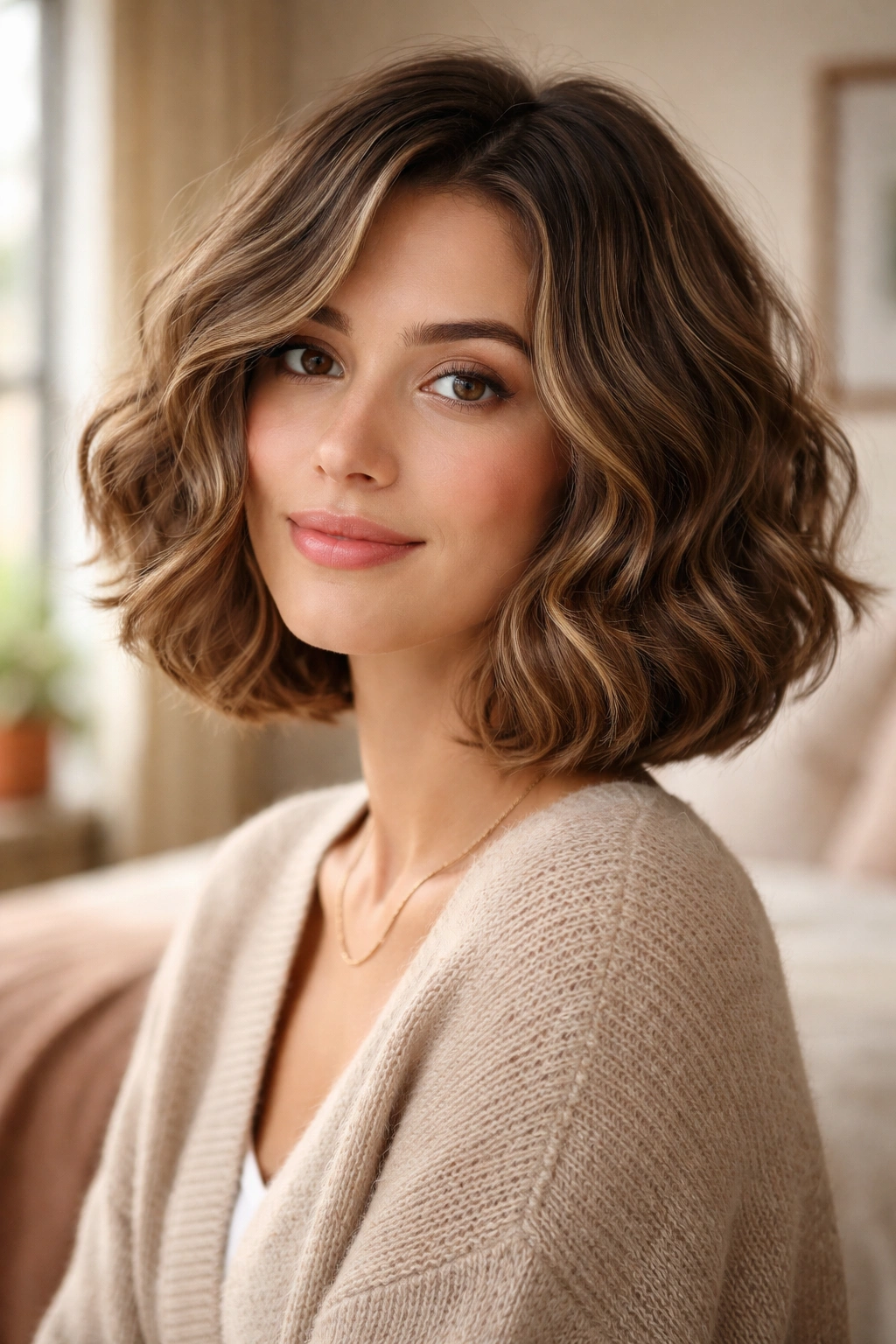
When waves start edging toward curls, a straight-across lob can widen too much at the sides. A rounded lob solves that by shaping the silhouette into a softer curve, taking weight out where needed and keeping enough length below the chin.
You still call it a lob because the length sits in that same territory, but the line is more sculpted. The back and sides are cut to support the curl pattern instead of forcing it into a blunt block.
Dry cutting is a huge help here. Tighter waves reveal their shape only when dry, and guessing on wet hair is how uneven spring happens.
Think cloud-like outline. Not triangle. Big difference.
17. Heavy-Perimeter Lob for Thick Wavy Hair
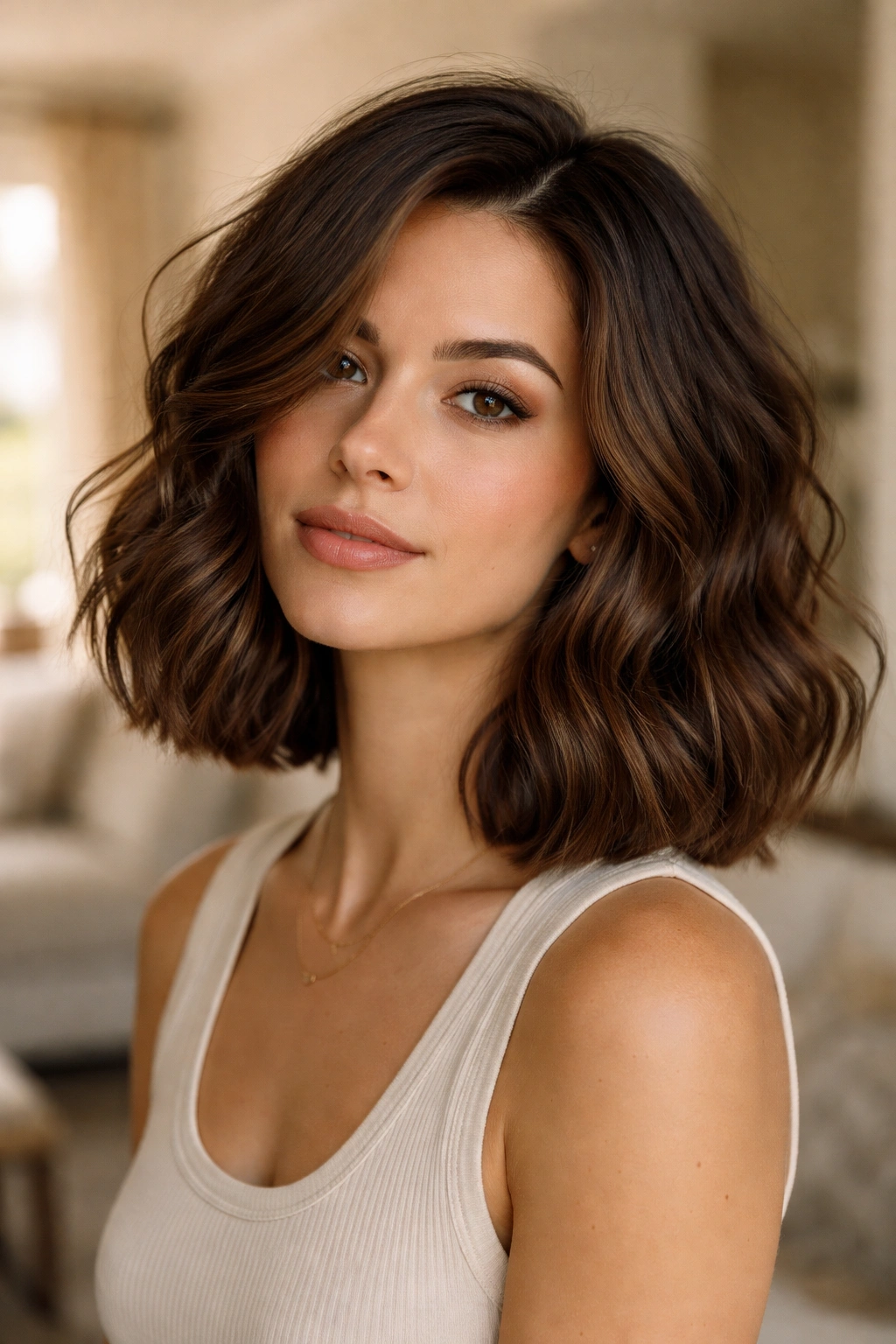
Thick hair does not always need more layers. Sometimes it needs the opposite: a clear, weighty outline that tells the eye where the haircut ends.
A heavy-perimeter lob keeps the bottom line full, then removes only enough interior bulk to stop the shape from swelling. That gives you control without the frayed, over-texturized look thick waves can get after an enthusiastic salon session.
Wear this cut near the collarbone if your hair expands wide. That extra length pulls the whole silhouette down. Add a smoothing cream through the ends and diffuse on low airflow to keep the wave defined.
Dense hair can handle this. It often looks better for it.
18. Debulked Lob With Internal Layering
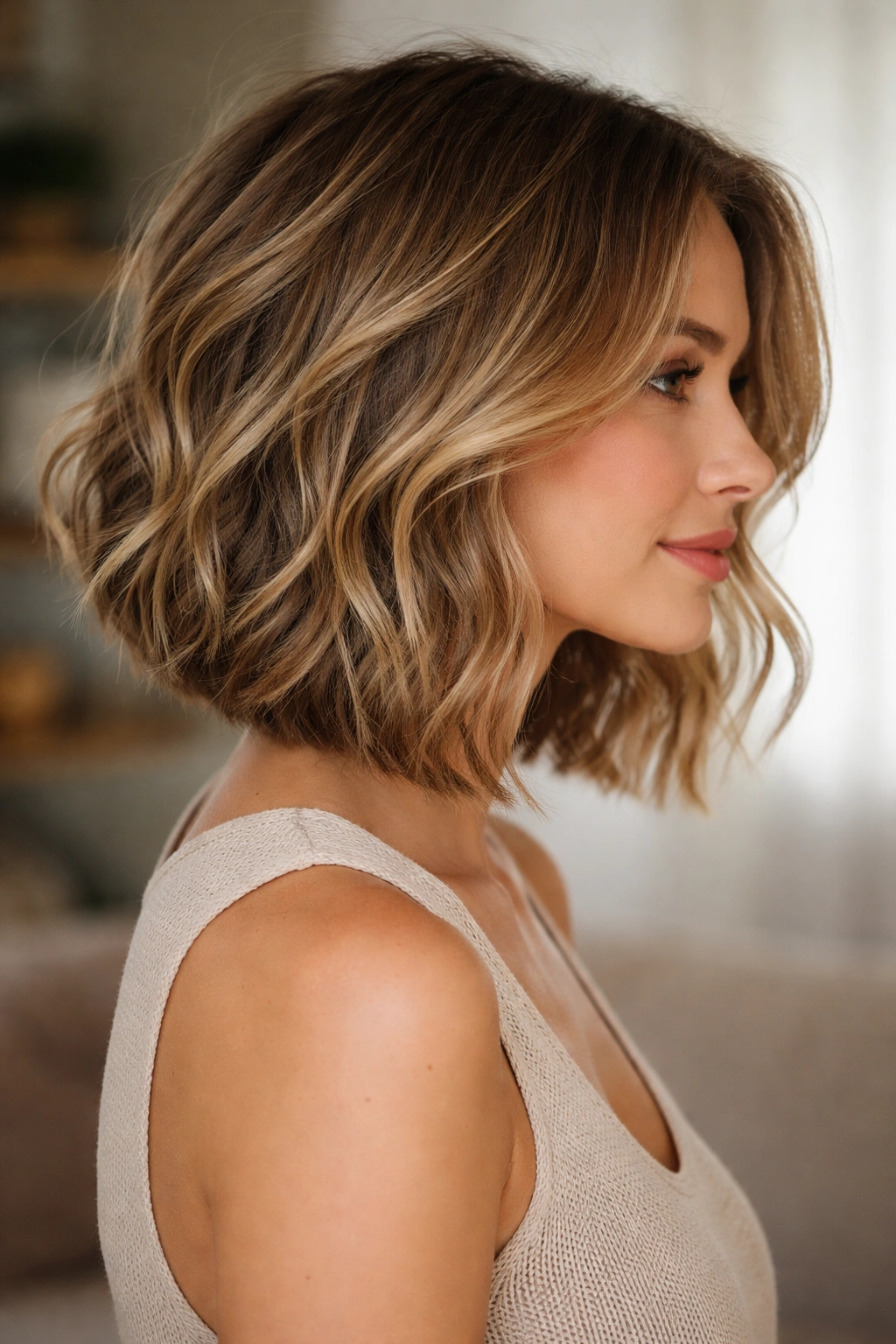
Some thick wavy hair feels like it has a second secret haircut hidden underneath. Internal layering is how you deal with that.
The top stays clean. The stylist removes weight inside the shape, usually around the occipital area and mid-lengths, so the hair collapses into itself instead of pushing outward.
- What you see: a smooth lob shape
- What you feel: less bulk, faster dry time, easier tucking behind the ears
- What to ask for: internal layers, not short top layers
- What to avoid: thinning the last inch of the ends too much
This cut is quiet. You notice it when your hair behaves better, not because the layers scream for attention.
19. Razor-Cut Lob for Loose Waves
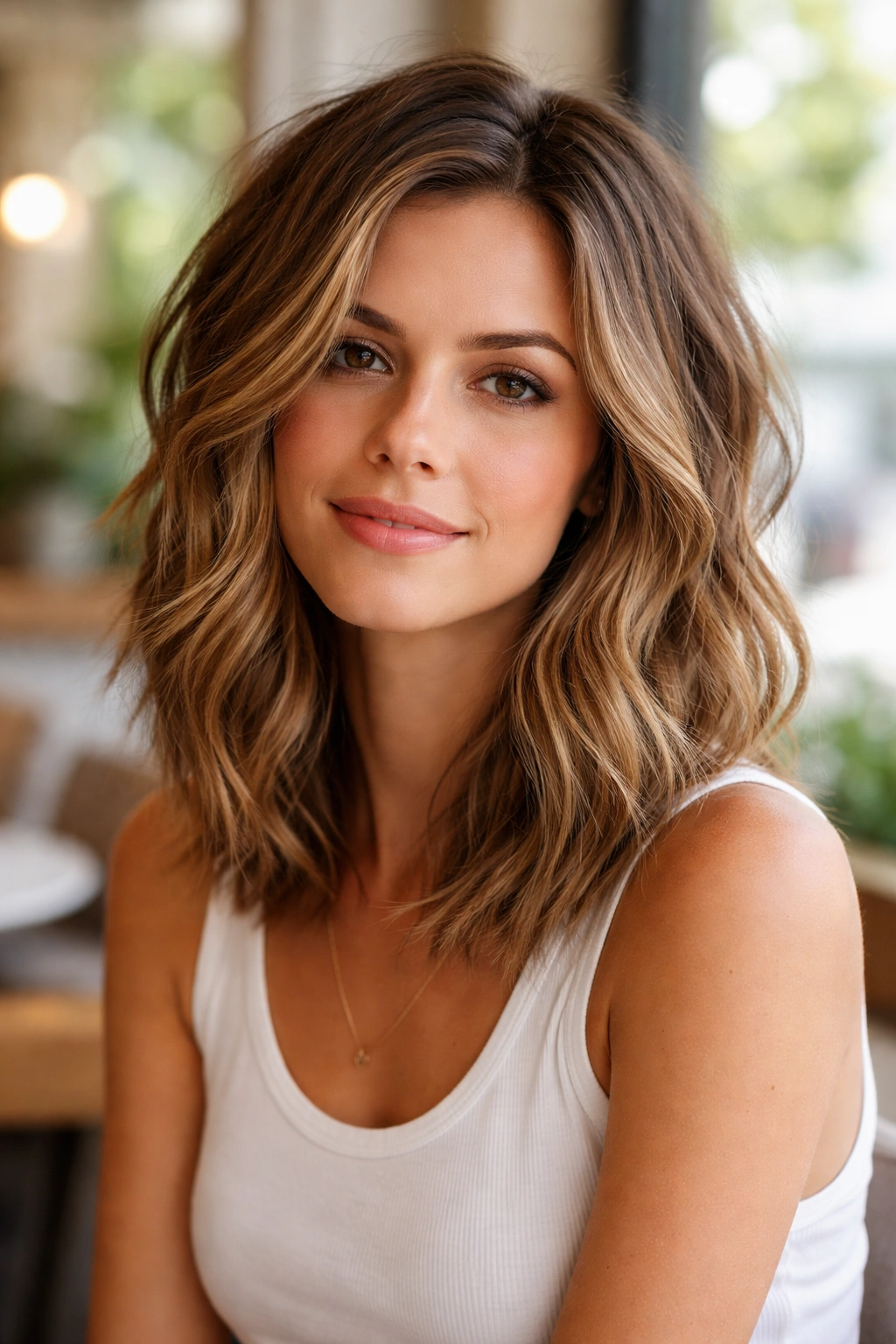
Loose waves can handle a razor when the hair is healthy and the stylist knows when to stop. The finish looks lighter, feathered, and a bit more relaxed than a scissor-cut lob.
Unlike a blunt cut, a razor-cut lob lets the ends break apart in a softer way. That can be gorgeous on 2A or soft 2B hair that needs movement more than control.
Do not choose this if your ends fray fast or your hair turns fuzzy in humid air. A razor can exaggerate both problems. On the right texture, though, it gives that airy, piece-separated finish people try to fake with texture spray alone.
Healthy ends first. Razor second.
20. Scissor-Cut Lob for Frizz-Prone Texture
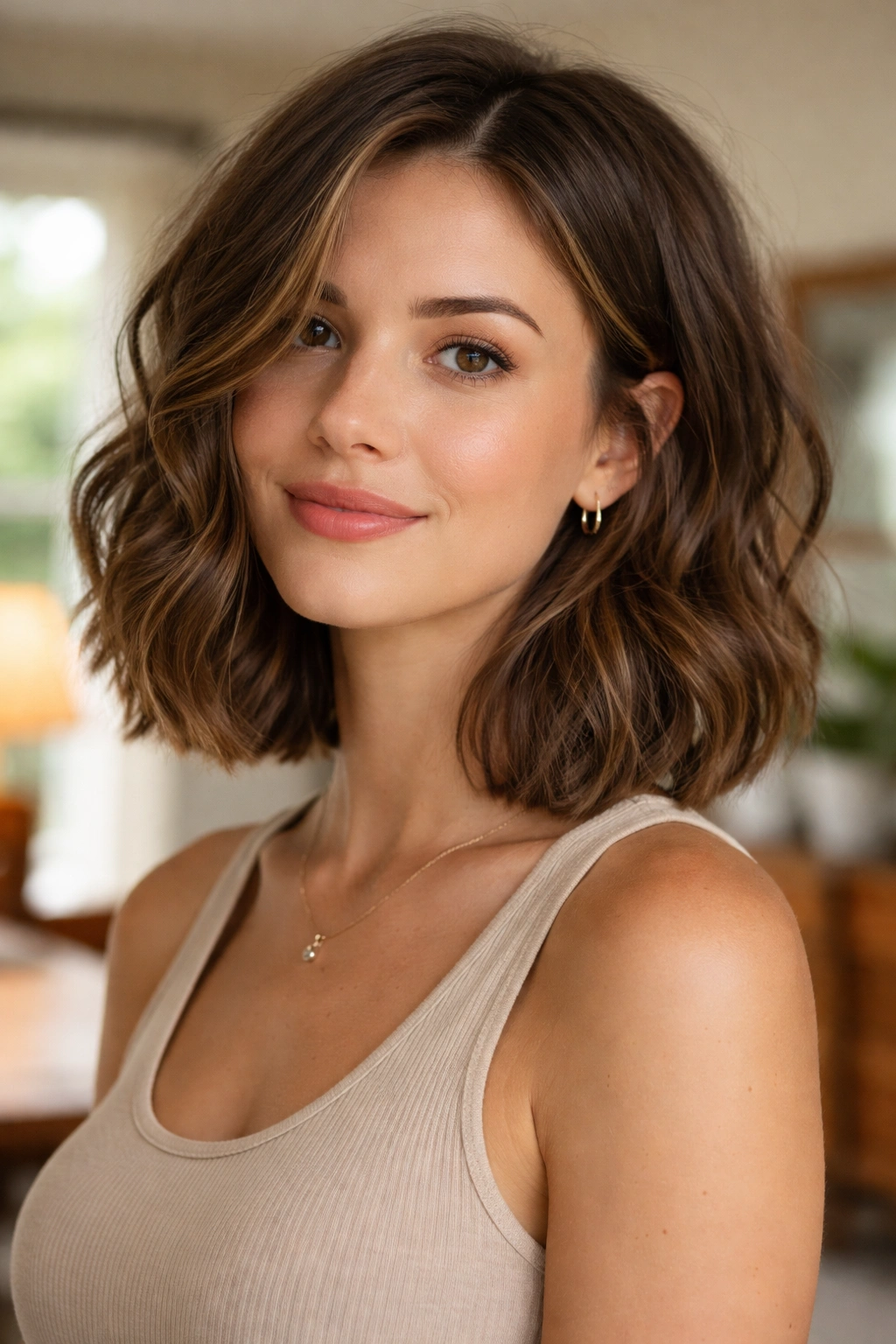
If your hair snarls, fluffs, or loses definition when it is over-texturized, I would steer you toward scissors. A scissor-cut lob keeps the edge cleaner, which often helps frizz-prone wavy hair hold together better.
The cut can still have movement. It just gets that movement from controlled point cutting and internal shaping, not shredded ends.
This matters most on coarse strands or hair that has been colored more than once. Those textures usually need a cleaner finish at the perimeter. Pair the haircut with a leave-in and a low-heat diffuse, and the result looks polished without being stiff.
Not every hair trend needs to land on your head. This is a good place to be picky.
21. Grown-Out Bob Lob
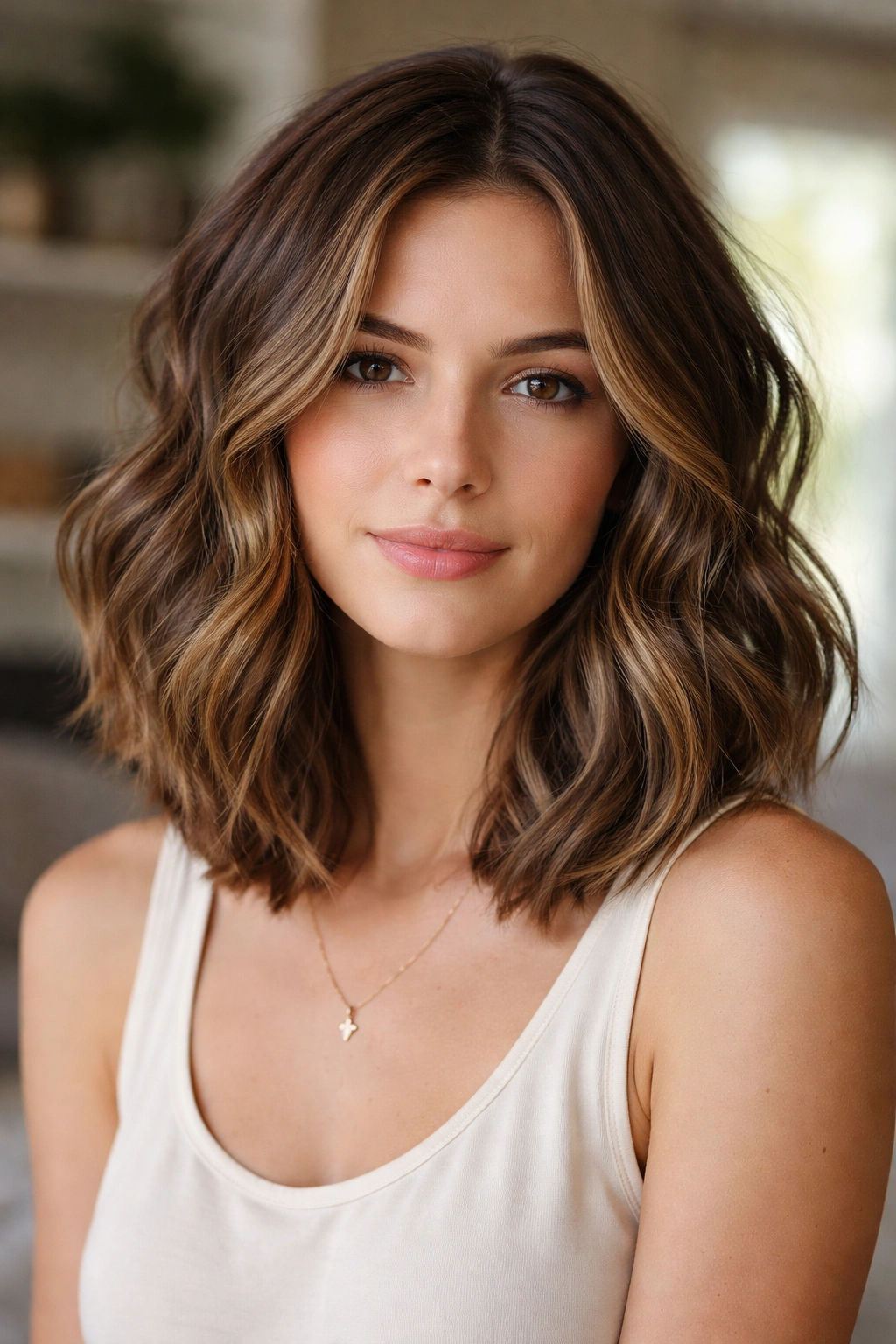
There is a sweet stage between bob and long lob where the haircut looks relaxed, broken in, and oddly flattering. That is the grown-out bob lob.
The front often brushes the collarbone while the back sits a little shorter, and the edges have softened from time and trims. You can ask for that on purpose by starting with a structured bob and letting it stretch, or by cutting a lob with a slightly tucked back line from day one.
This shape suits people who hate fresh-cut sharpness. It looks less “new haircut” and more “my hair fell into place.”
Wave spray works well here, though I would skip anything crunchy. Soft grit beats hard hold.
22. Air-Dried Undone Lob
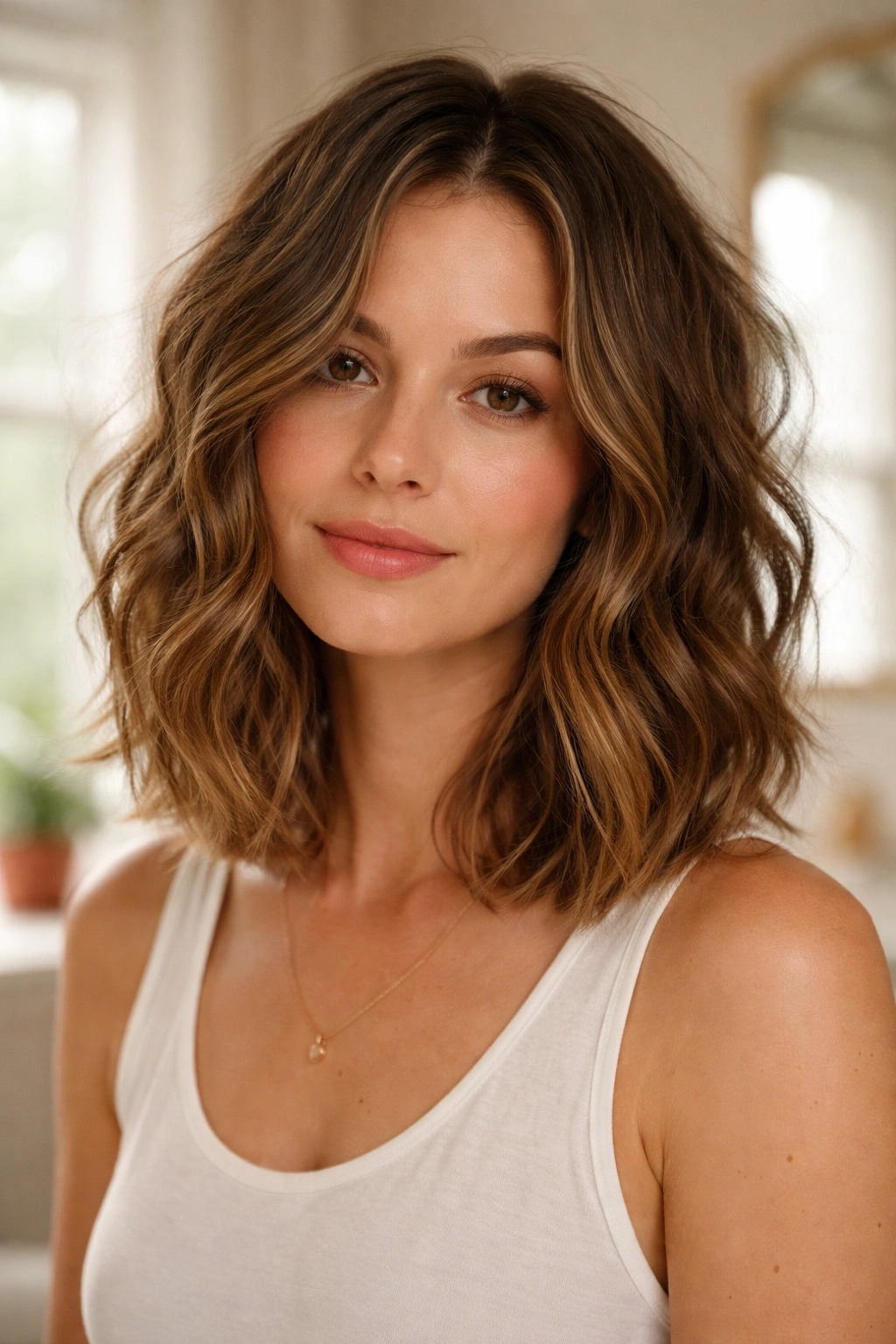
Some haircuts are built for brushes and hot tools. This one is built for mornings when you have twelve minutes and no patience.
An air-dried undone lob relies on a strong shape, a few strategic interior layers, and a product routine that respects your natural wave. The cut should land around the collarbone, where the weight helps the bend settle.
- Use on wash day: leave-in conditioner, then a light gel or cream
- Drying move: scrunch with a cotton T-shirt, then hands off
- Trim rhythm: every 10 to 12 weeks keeps the shape from sagging
- Best for: medium-density waves with some natural bend already present
This one earns more compliments from other women in grocery stores than from anyone else. Make of that what you will.
23. Sleek-Root Tousled-End Lob
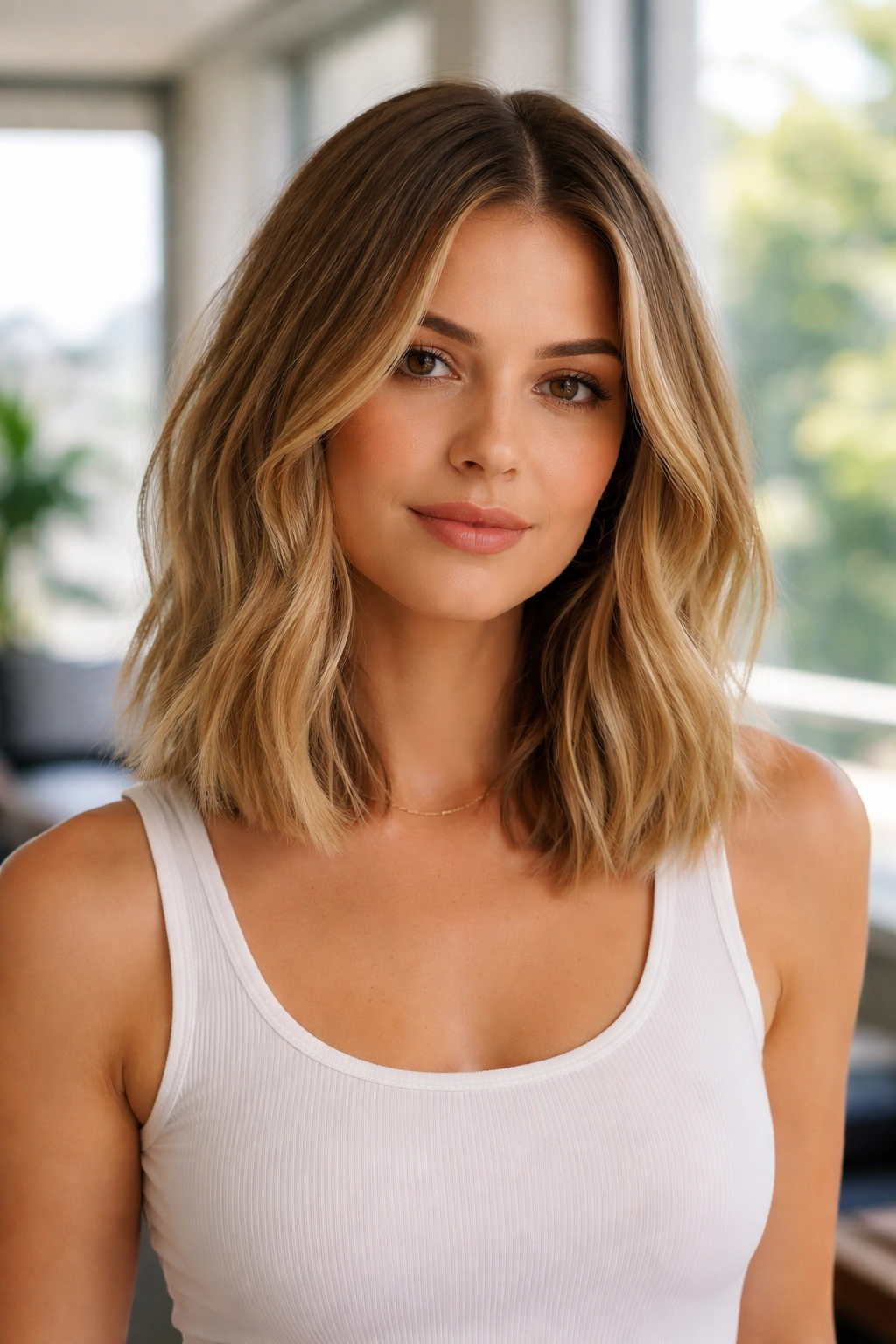
This hybrid finish looks polished at the crown and lived-in through the lower half. You smooth the roots with a brush or dryer, then let the ends keep their wave, which gives the haircut contrast and stops it from feeling too done.
It works best on a blunt or lightly layered lob around the shoulders. If the layers are too short, the sleek-to-tousled shift can look disconnected.
The fastest way to style it is rough-dry the roots with a nozzle, then wrap random mid-length pieces around a 1-inch iron, leaving the last inch out. Break them up with your fingers. You want bends, not ringlets.
Office-ready up top. Weekend at the ends.
24. Old Hollywood Waved Lob
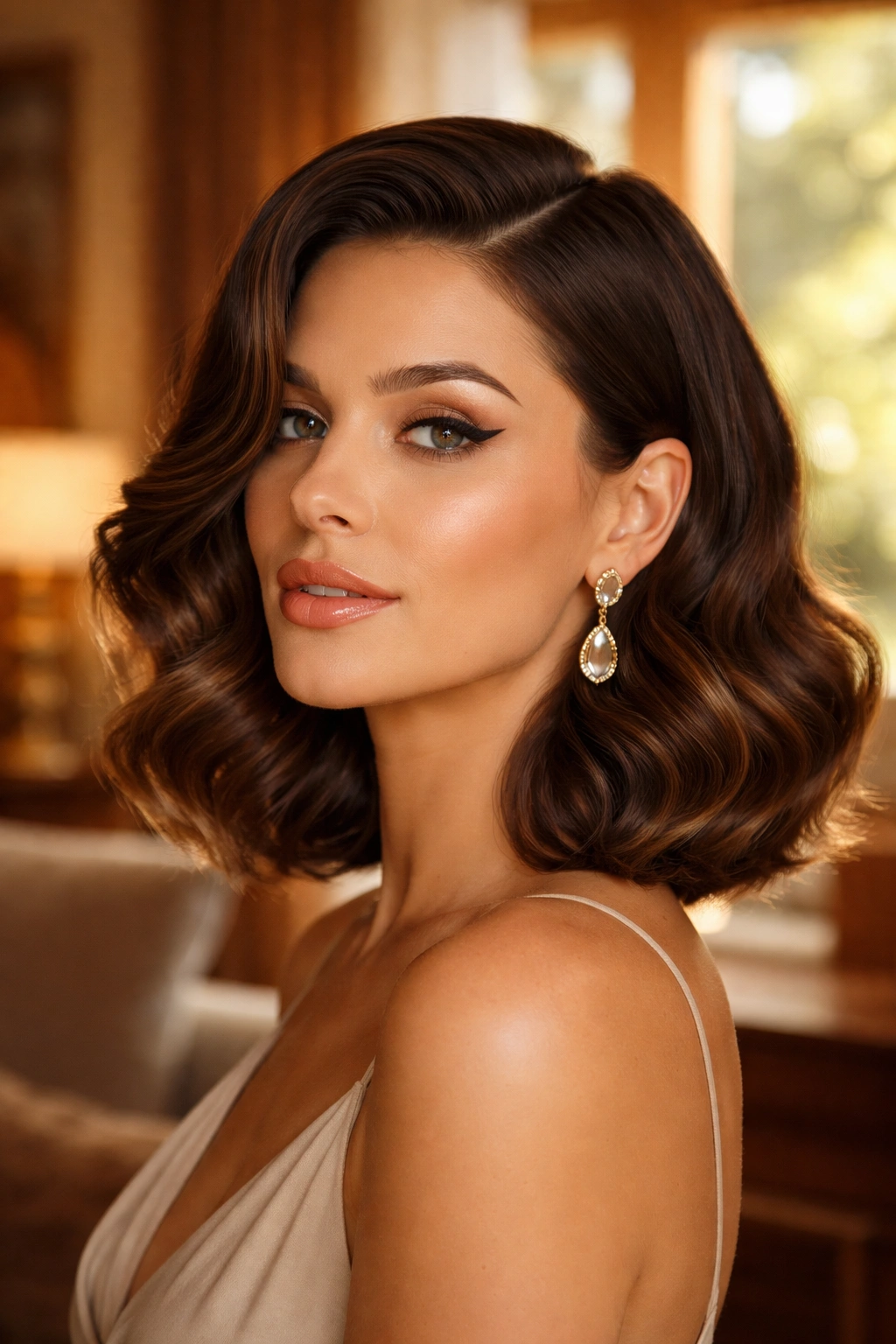
A lob can dress up hard when you want it to. Old Hollywood waves on a long bob look clean, glossy, and sculpted, especially when the haircut has a blunt baseline and minimal layering.
Finish it this way
Create a deep side part, curl the hair in one direction with a 1-inch iron, clip each curl to cool, then brush it out with a boar-bristle brush. Shape the front ridge with clips until the pattern sets.
This styling choice loves collarbone length because the wave has room to form one or two full ridges without turning into pageant hair. Pair it with a heavier perimeter and smooth ends for the strongest effect.
The haircut stays simple. The styling does the drama.
25. Piecey Beach Lob
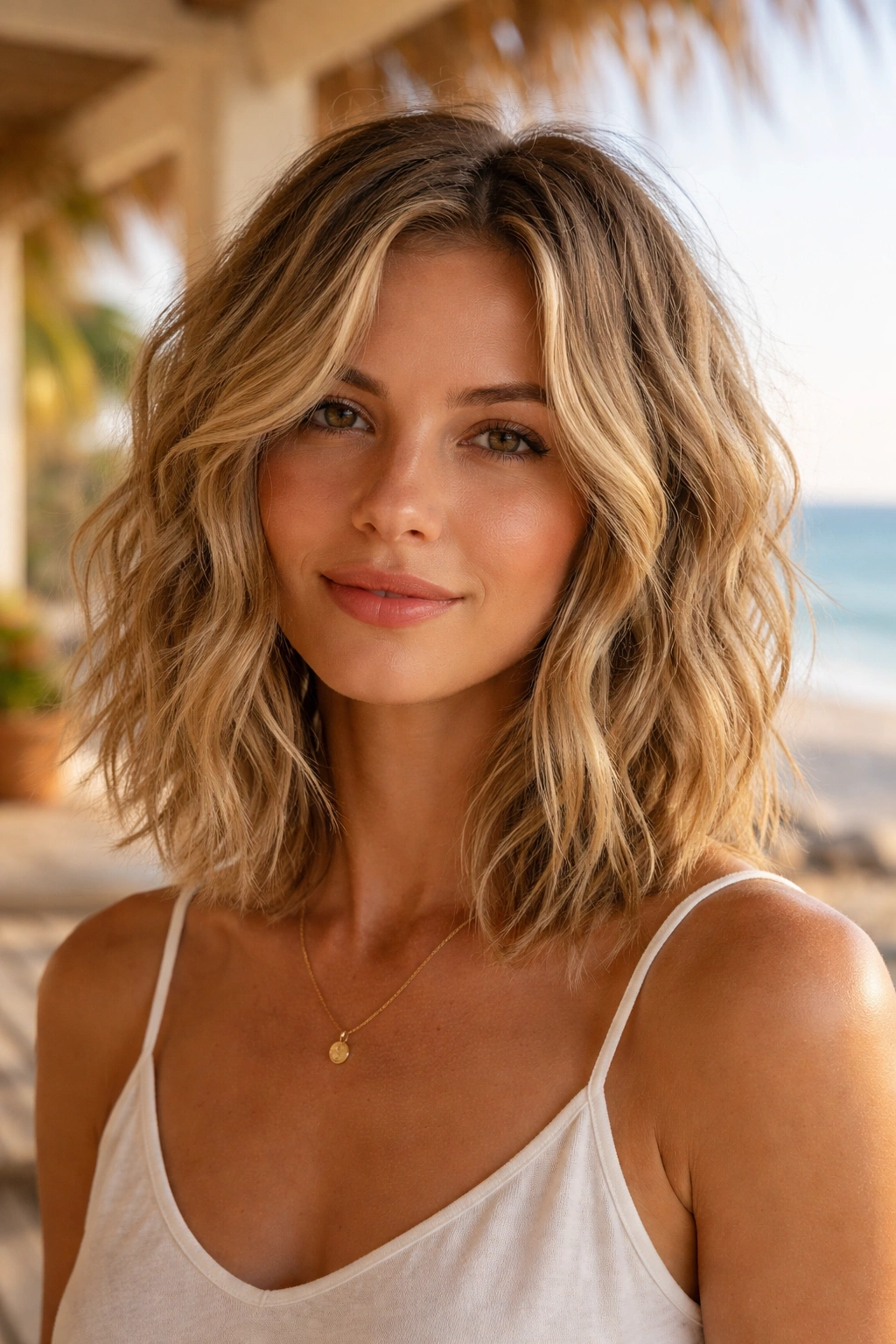
Beachy does not mean fried ends and dry shampoo abuse. A good piecey beach lob still needs shape.
This version sits between the chin and collarbone, uses light texturizing through the ends, and leaves enough density so the pieces separate instead of disappearing. The wave should look salt-kissed, not crispy.
- Cut cue: shattered ends, not shredded ends
- Best tool: 1-inch wand, wrap the mid-lengths and leave the ends out
- Product pair: light sea-salt mist plus a cream underneath so the hair does not feel rough
- Good on: loose to medium waves that need a nudge
There is a fine line between beachy and tired-looking. Keep the ends trimmed and you stay on the right side of it.
26. Flipped-End Lob
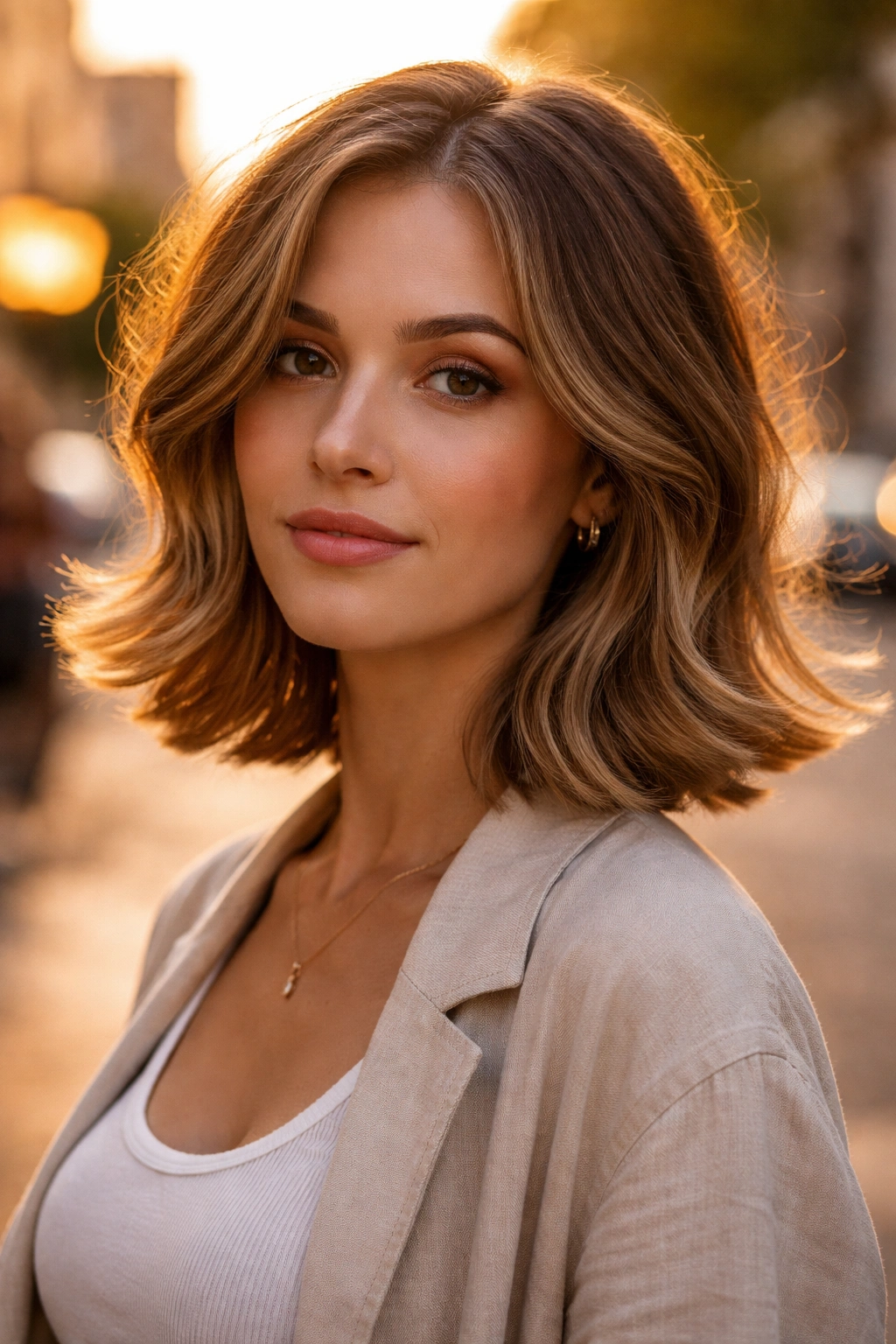
A flipped-end lob gives a wavy cut a retro kick without demanding a full vintage set. The body stays soft, then the last inch turns outward, which lifts the face and makes the haircut feel perkier.
This shape pairs well with a blunt or near-blunt lob because the end flip needs a clear line to show up. If the ends are too chopped, the flip gets lost.
You can create it with a flat iron, a round brush, or even the way your hair already bends if you tuck it behind your ears while drying. The length usually works best at jaw-to-collarbone range. Too long and the flip droops.
A tiny detail, yes. It changes the mood of the whole haircut.
27. Cheekbone Face-Framing Lob
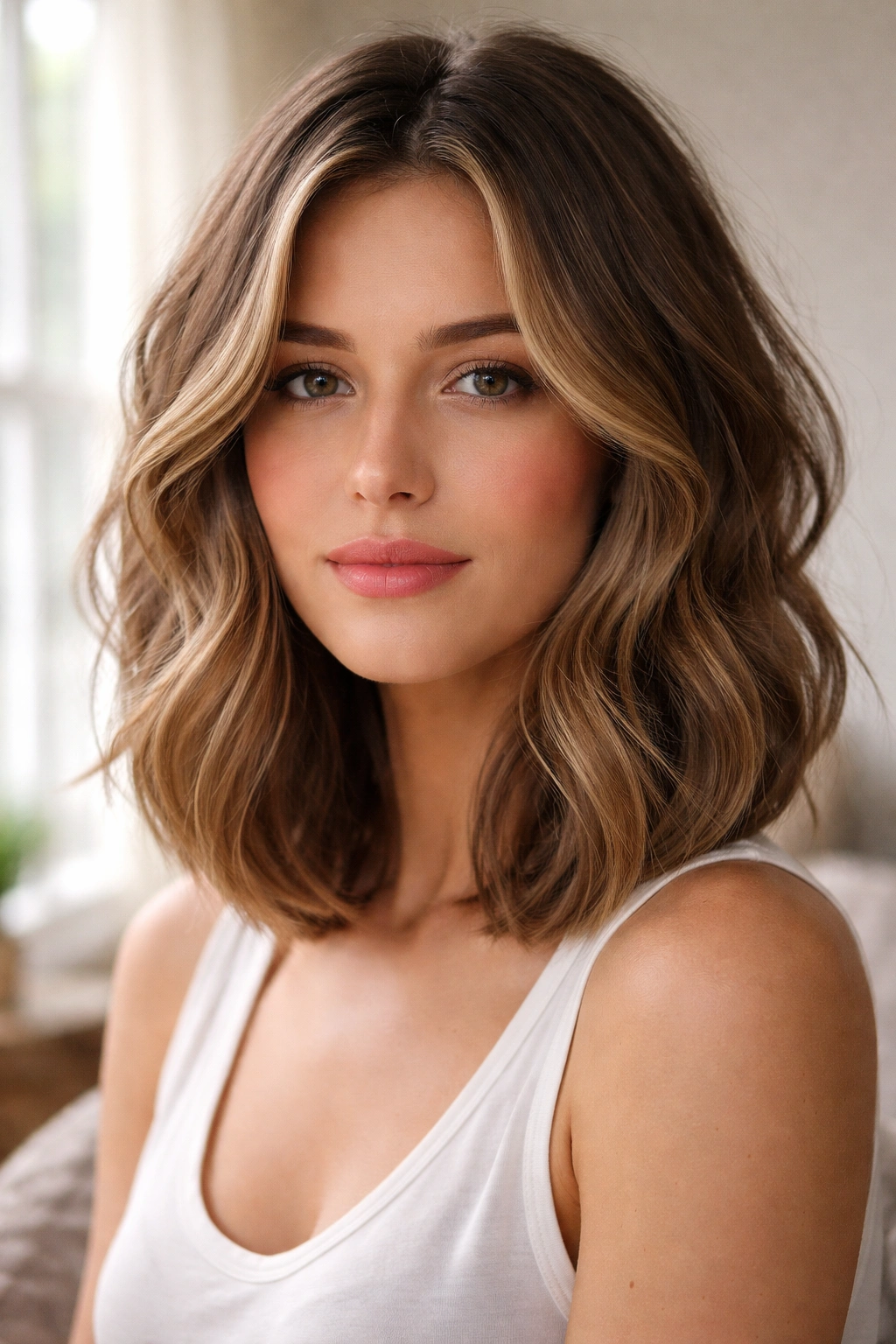
Face-framing can rescue a lob from looking heavy near the front. On wavy hair, pieces that start around the cheekbones and curve down into the cut pull attention upward and give the waves a path to follow.
This is a strong option if your hair tends to bunch at the jaw. By opening space near the cheeks, the shape feels lighter even when the overall length stays the same.
Ask your stylist to blend the frame into the perimeter, not carve out a disconnected ladder of short layers. The front should melt. You should not be able to point to the exact place where one layer starts.
Good face-framing is quiet. Bad face-framing announces itself from across the room.
28. Chin-to-Collarbone Angled Lob
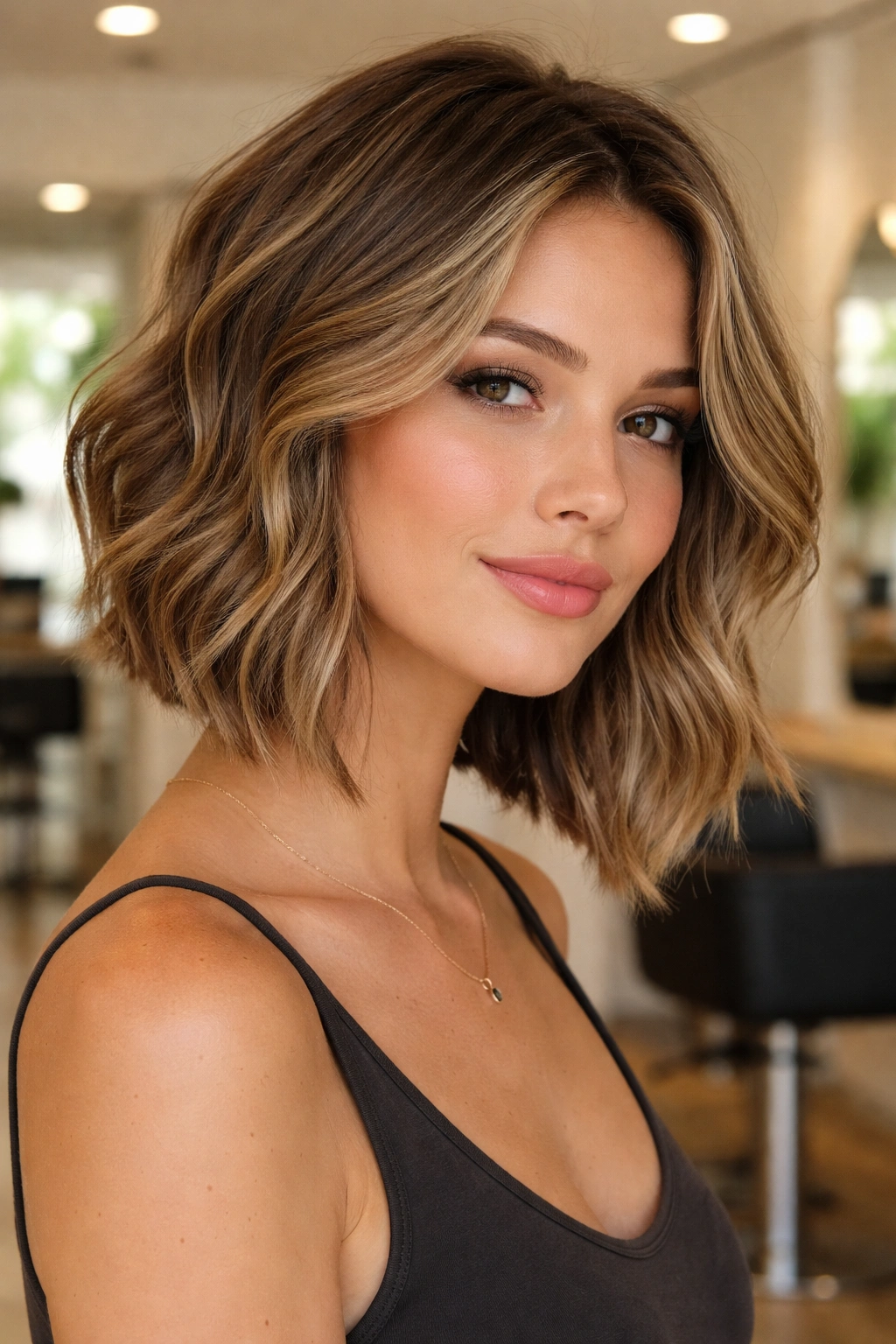
Some of the smartest lobs are not one fixed length. A chin-to-collarbone angle gives you shortness near the face for shape and longer length elsewhere for softness and control.
- Shortest area: around the chin or just below
- Longest area: collarbone or upper shoulder
- Why it helps waves: the front gets lift, the back keeps weight
- Who should try it: anyone torn between a sharper bob and a softer lob
This cut moves beautifully when you turn your head because the lengths reveal themselves in sequence. It also grows out well, which is half the battle with any shorter haircut.
29. Graduated Back Lob
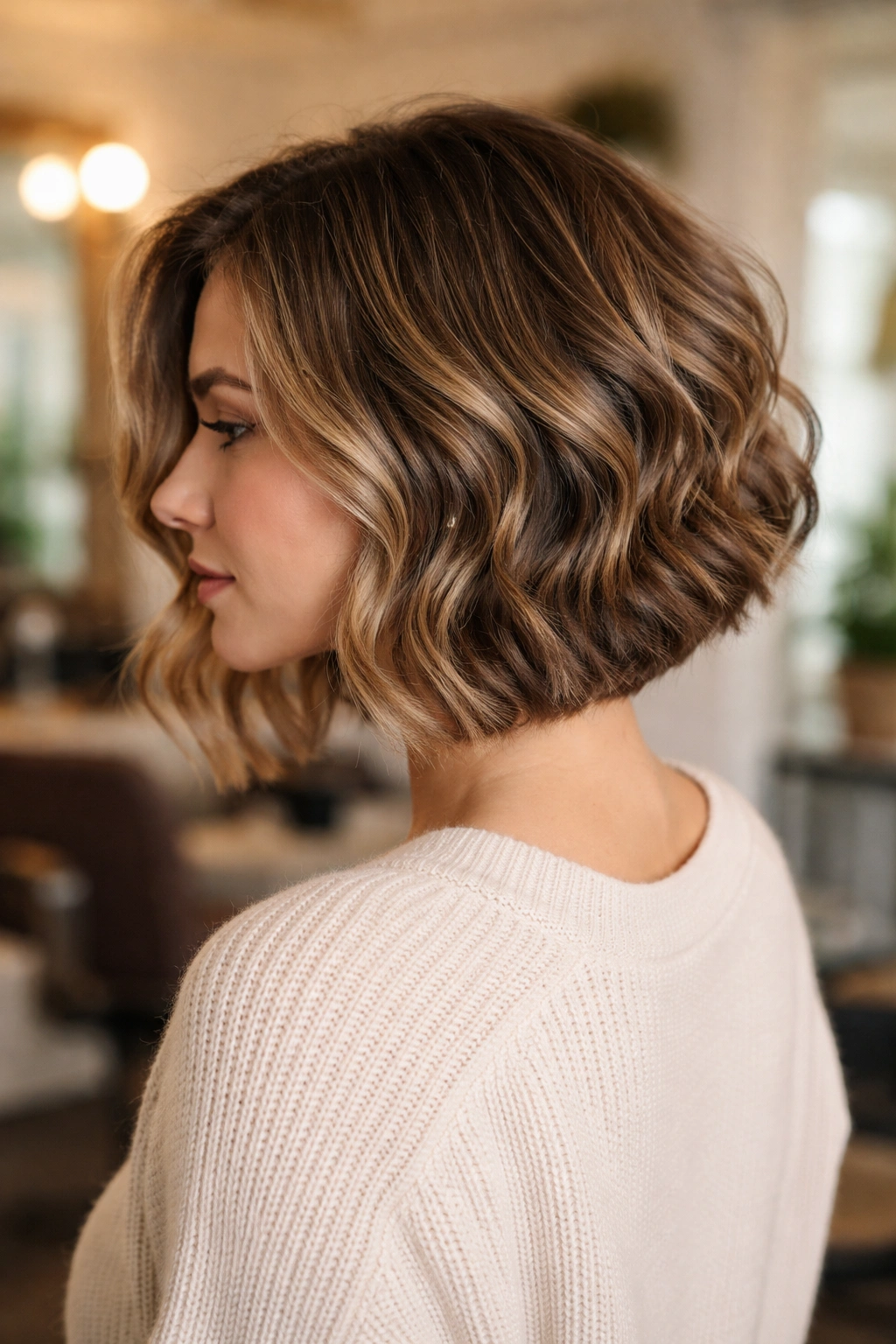
A graduated back has a gently stacked shape at the nape, then stretches forward. On wavy hair, that graduation can remove bulk at the back of the head and make the whole cut feel lighter without sacrificing the front length.
The key word is gently. Too much stacking and you slide into bob territory fast.
This shape suits people whose hair collects mass at the nape or who hate feeling a curtain of hair on the neck. Waves soften the graduation, so the line does not look hard unless you style it that way on purpose.
Pair it with side-swept texture or a tucked front piece. It makes the cut look even more deliberate.
30. Hidden-Layer Lob
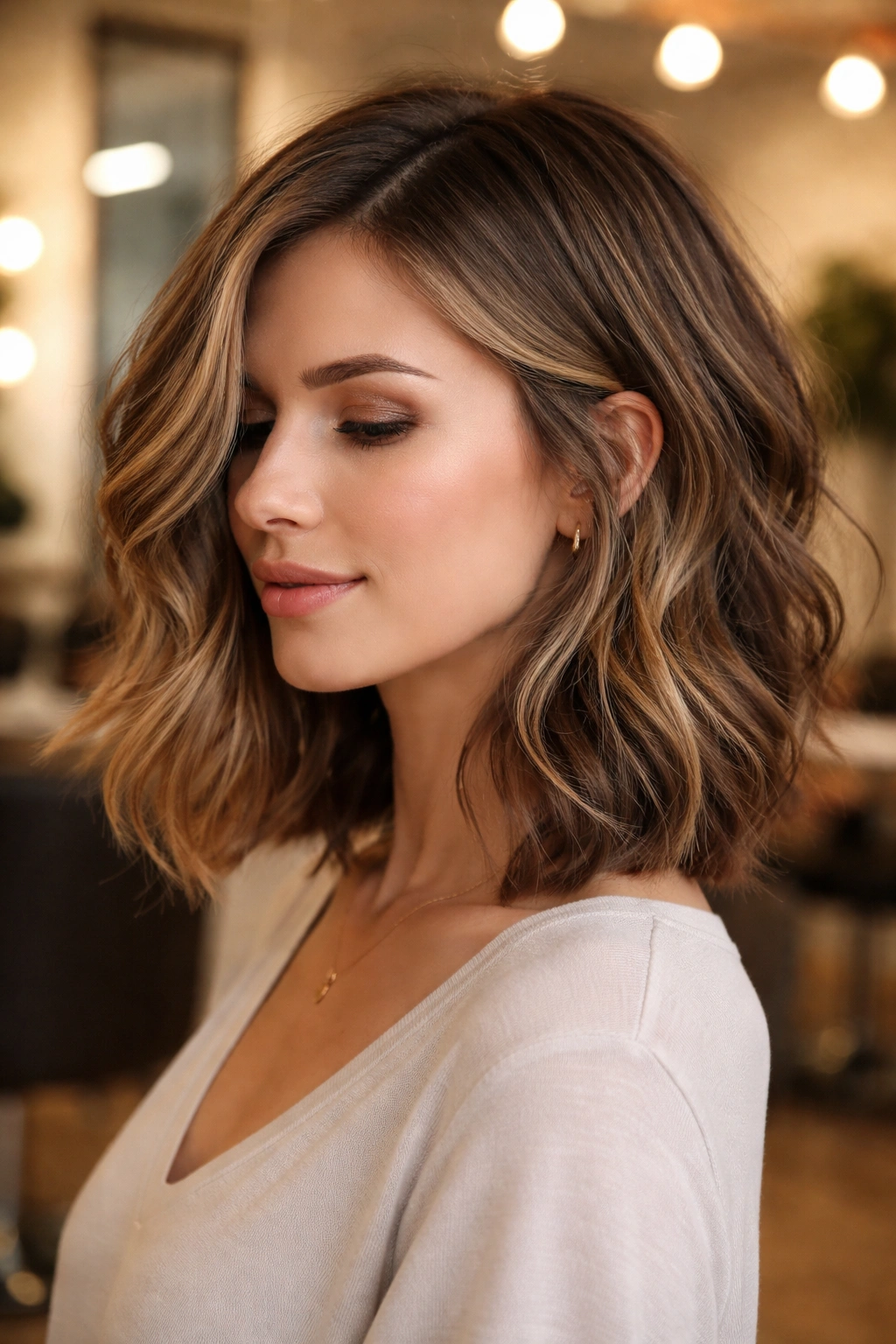
A hidden-layer lob looks polished from the outside, then moves far more than you would expect once you touch it. The interior carries the shape.
Good on hair that feels bulky but still needs a clean outline
Your stylist removes weight underneath the top panel, often around the back and lower sides, while leaving the surface and perimeter mostly intact. The haircut keeps that sleek long-bob appearance, but it dries faster and resists the shelf effect.
This is one of my favorite salon requests for thick wavy hair because the result does not scream “layered haircut.” It just behaves better.
31. Blunt-Front, Soft-Back Lob
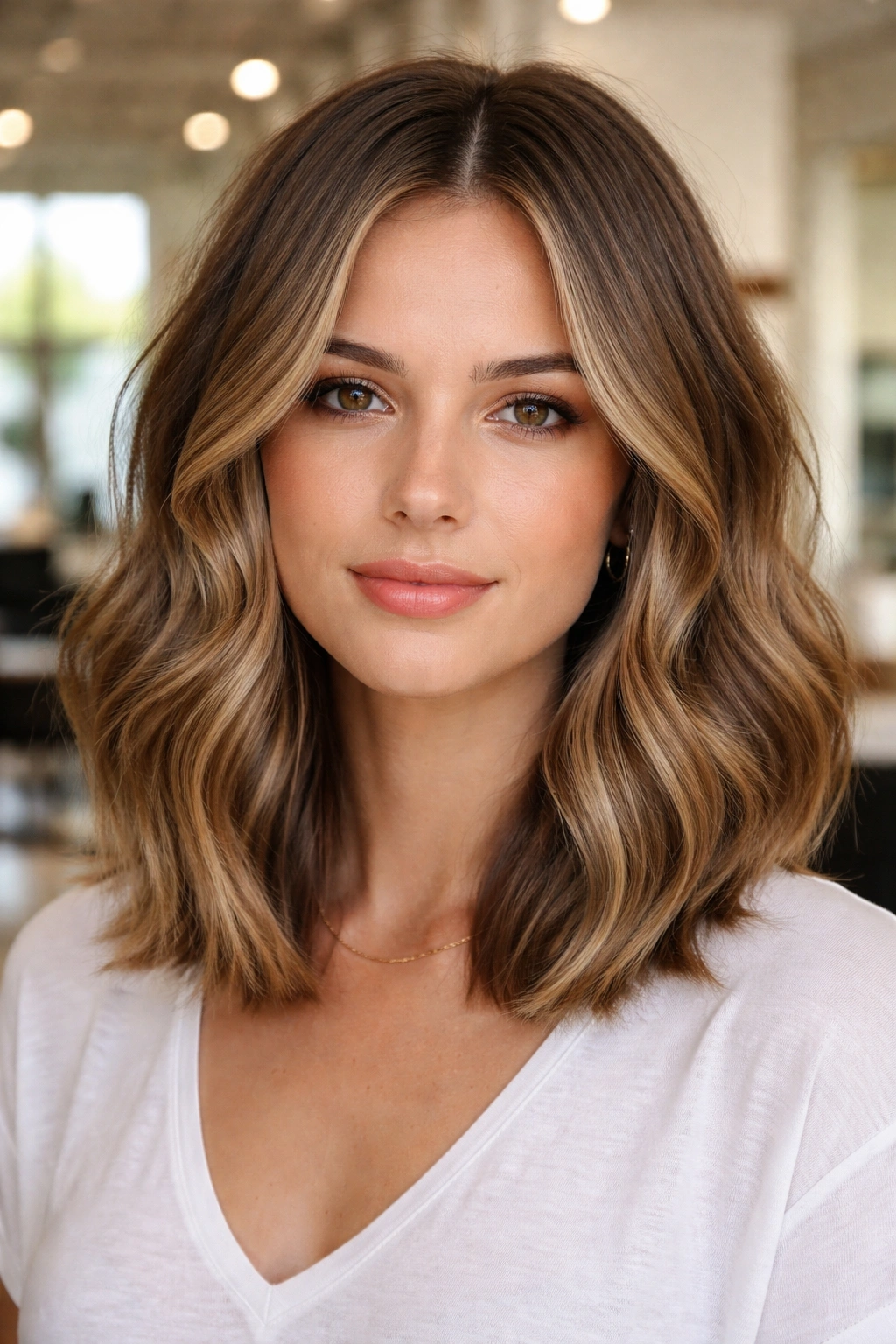
This is a smart compromise cut. The front keeps a strong line that frames the face and makes the lob look crisp, while the back is softened with point cutting or light layering so the shape sits flatter and moves more easily.
You get the visual punch of a blunt lob where people actually see it, right around the face, and a less stubborn feel at the back of the head where bulk can pile up.
Wear it with a center part if you like balance, or tip it to the side for more lift. The cut works on medium to thick waves that need structure up front and mercy in the rear.
Not every haircut needs one rule all the way around.
32. Ear-Tuck Lob With a Long Front Corner
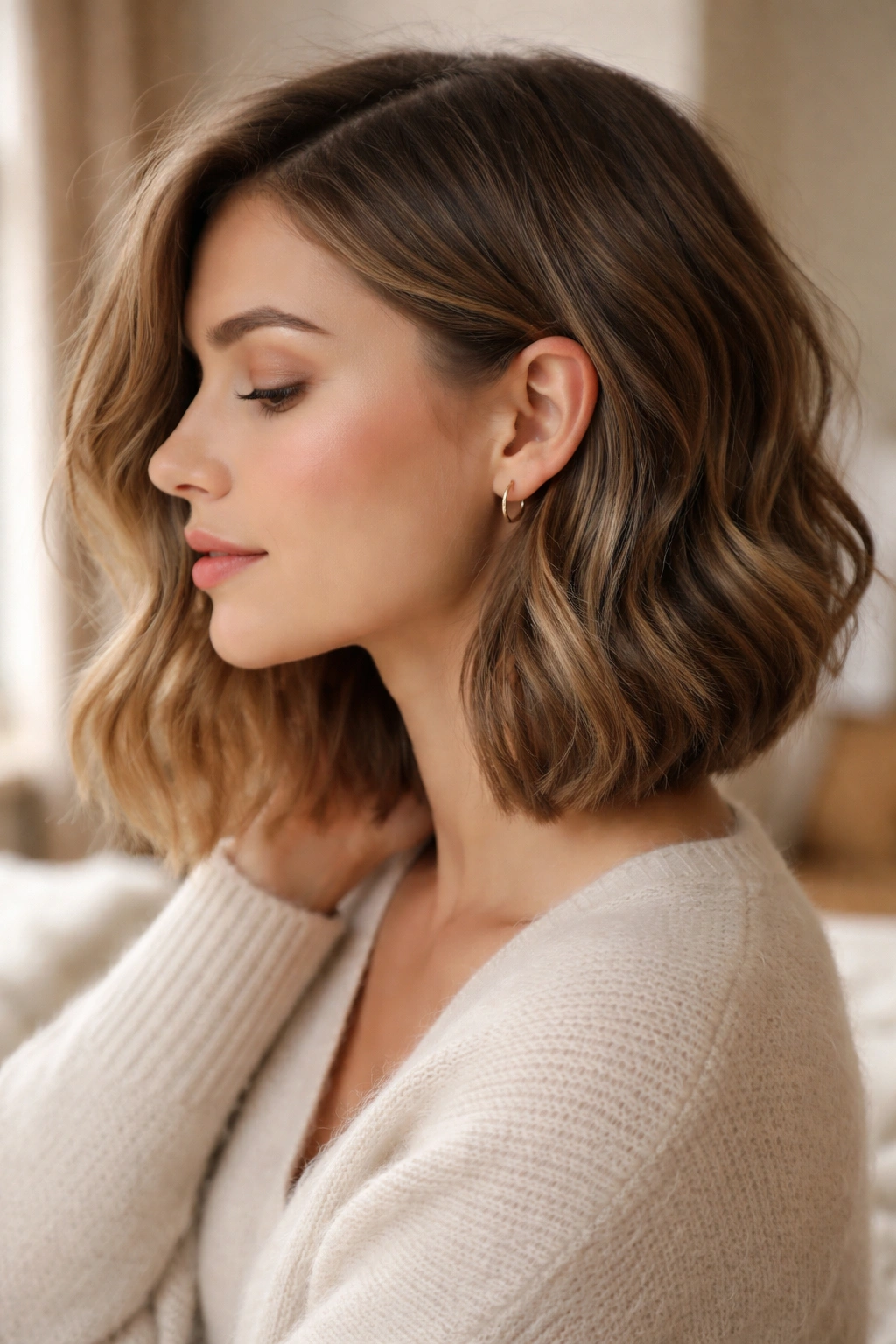
If you are forever tucking one side behind your ear, choose a lob built for it. A long front corner leaves extra length near the face, so once you tuck it, the line still looks intentional instead of chopped short.
- Parting: side or off-center works best
- Front detail: leave one to two longer pieces near the cheek and jaw
- Texture: light wave or undone bend shows the shape best
- Maintenance: trim the corner before it turns into a random long strand
This haircut looks small on paper. In daily life, it changes how your hair falls more than people expect.
33. Soft U-Shaped Lob
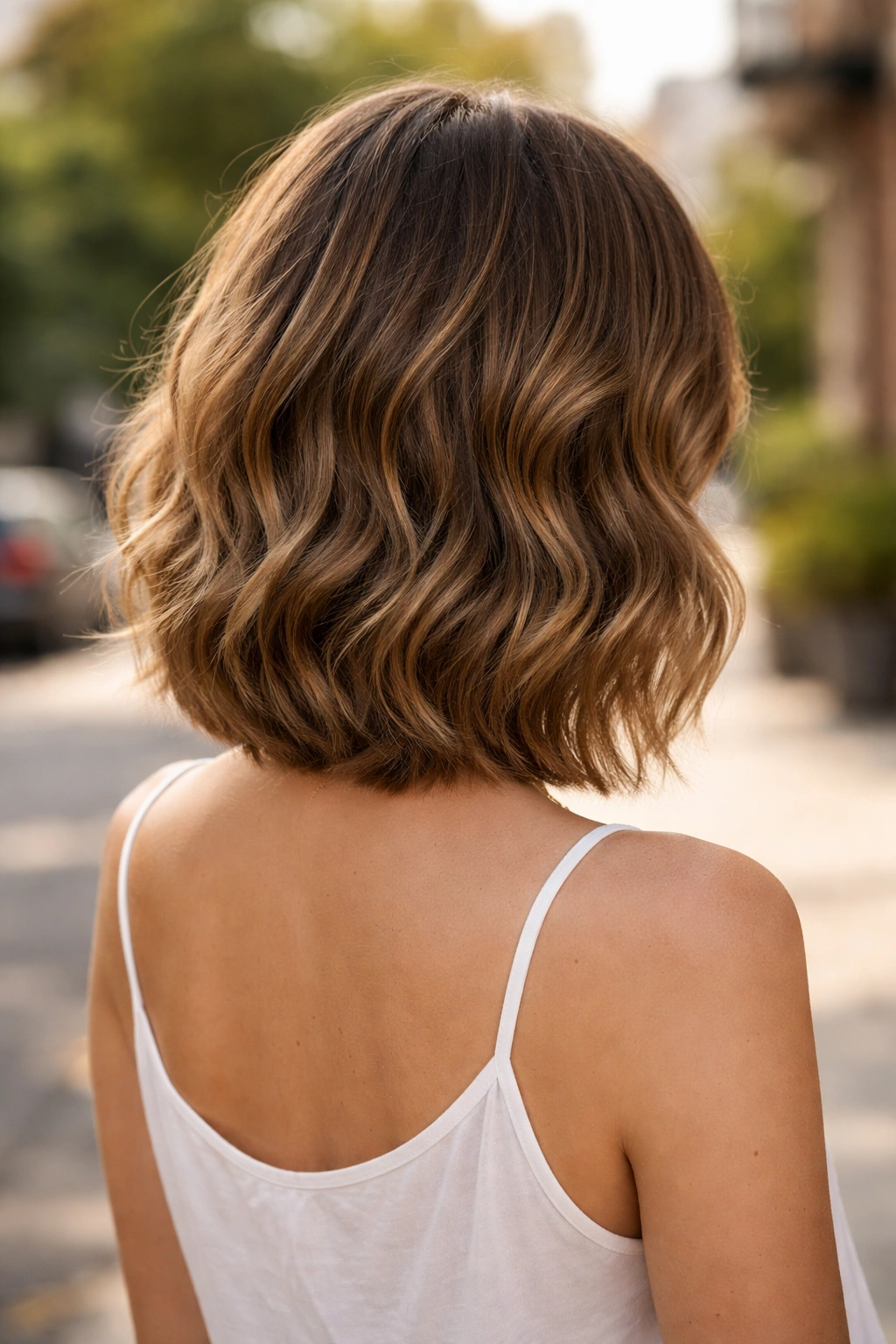
Most lobs are cut straight across or angled. A soft U-shape rounds the hemline so the center back runs a little longer and the sides curve upward. On wavy hair, that curve can look graceful and keep the sides from kicking out too much.
You do not want a dramatic U. That belongs on long layers, not a lob. Keep the shape subtle—just enough to soften the outline.
This version shines on medium-density hair with loose to medium waves. It moves when you walk, and the back keeps a little extra length, which can make ponytails easier too. Small bonus, but a real one.
34. Choppy-End Lob
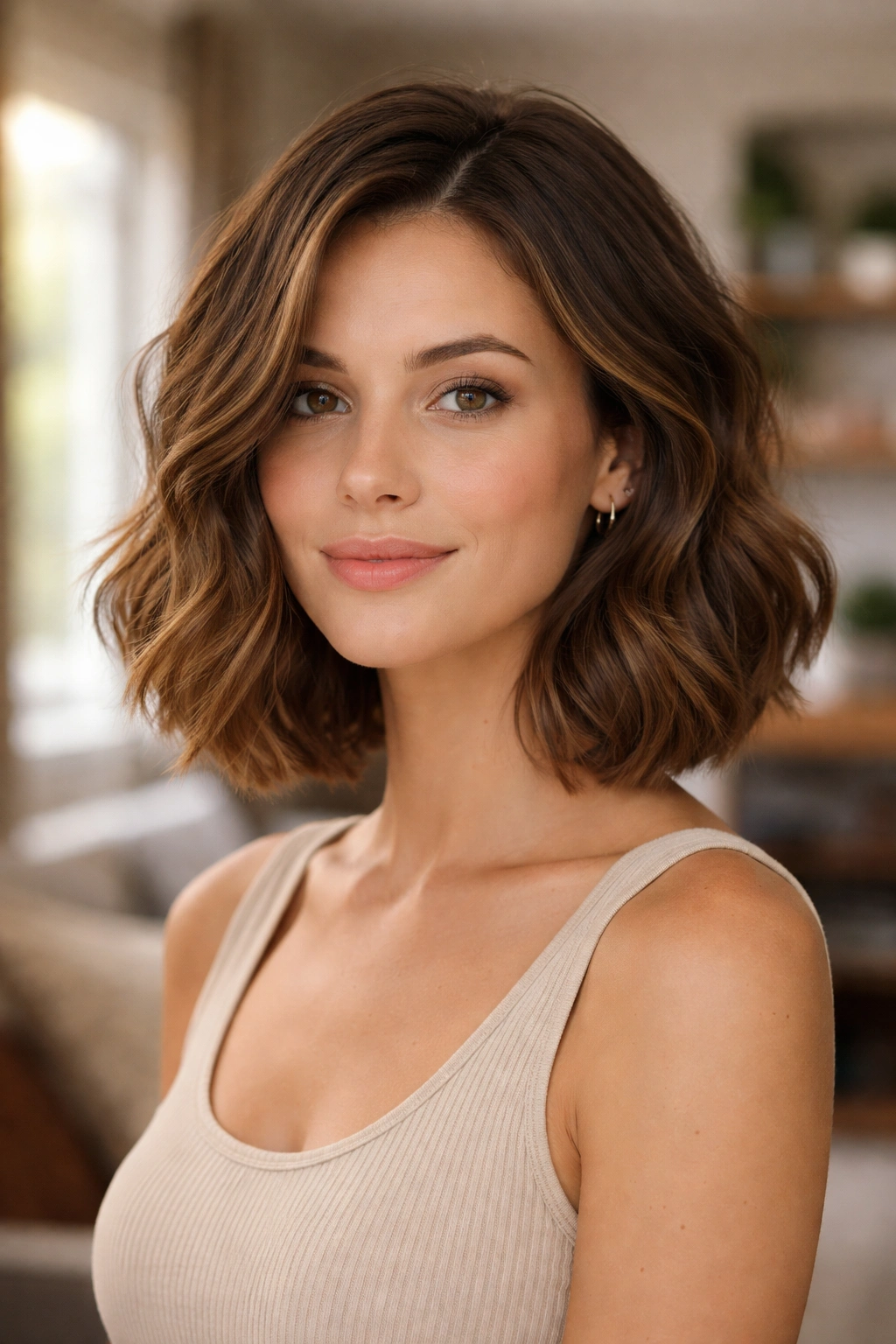
Choppy ends give a wavy lob more separation and a rougher finish than a polished blunt cut. The pieces break apart, catch the wave, and make the whole style feel less precious.
That roughness has to be controlled. If the ends are hacked too high into the shape, wavy hair can turn scraggly fast. Ask for broken texture in the last inch, not random bites taken all through the lower half.
This style works best with a matte product—a texture paste emulsified in your palms, or a dry finishing spray. Shine spray can make it look too soft and erase the point of the cut.
A little edge goes a long way here.
35. Polished Blunt Lob With Minimal Layers
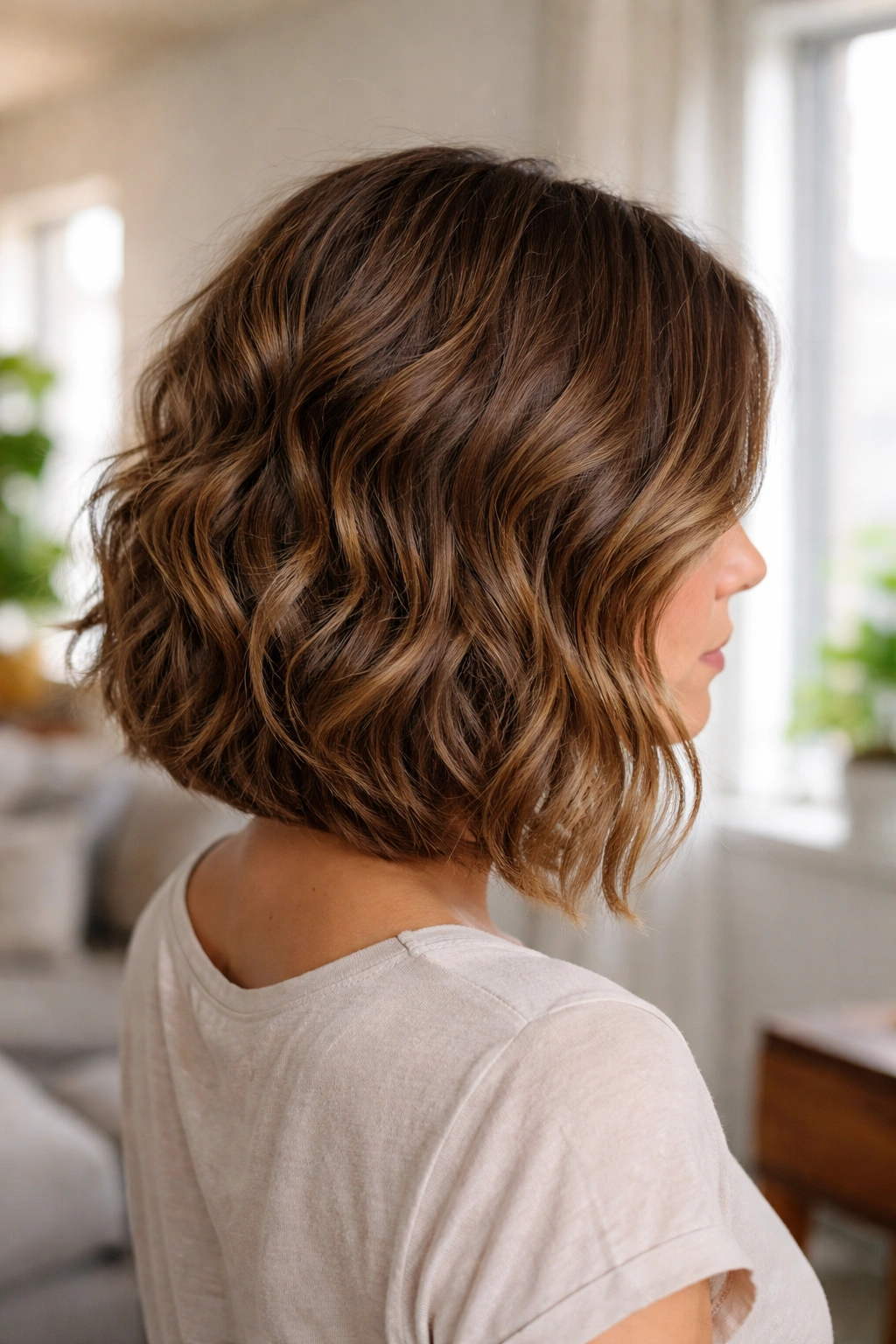
Some wavy hair looks strongest when the cut is almost severe and the texture is the only soft thing about it. A polished blunt lob delivers exactly that.
- Shape: one clear line through the perimeter
- Layers: almost none, maybe a whisper inside
- Length: chin to collarbone depending on your shrinkage
- Styling: smooth the roots, define a few bends, add shine to the ends
This is the haircut I would choose for someone who likes clean clothes, good earrings, and hair that looks intentional with little fuss. The wave keeps it from feeling stiff. The blunt line keeps it from floating away.
36. Internal-Movement Lob With No Surface Layers
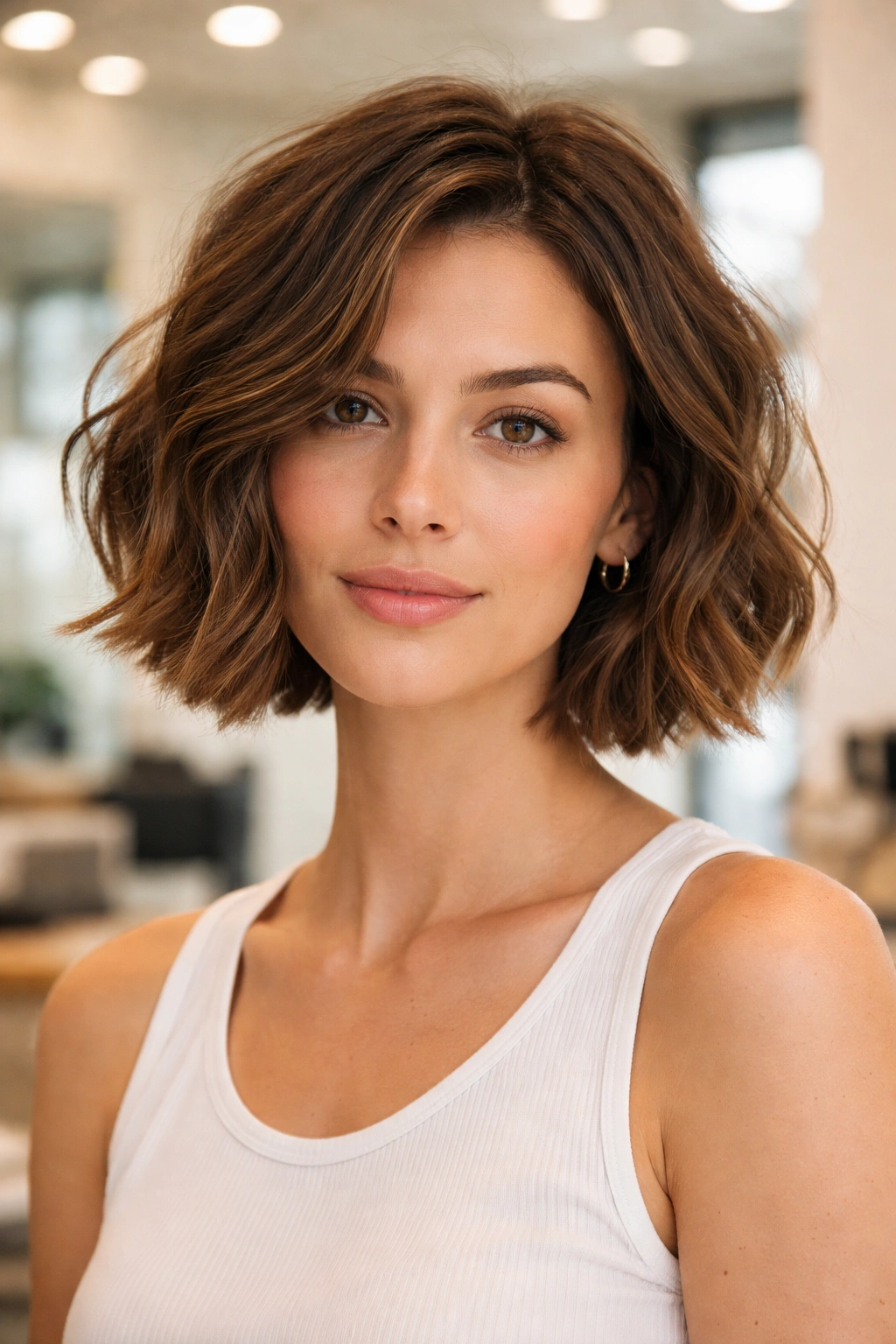
Surface layers can look pretty during the first hour after a salon visit, then start flipping at odd spots once real life happens. An internal-movement lob avoids that by leaving the outer shape alone and doing the work underneath.
Unlike a shag or heavily layered cut, this one keeps the top smooth, which helps in humid weather and on hair that frizzes near the canopy. The motion is there. You just do not see obvious steps.
Ask for movement through the interior and around the lower mids, with the top layer kept long. Then style with a cream-gel combo and low airflow. It sounds subtle. The day-to-day difference is not.
37. Wash-and-Go Lob With Lived-In Texture
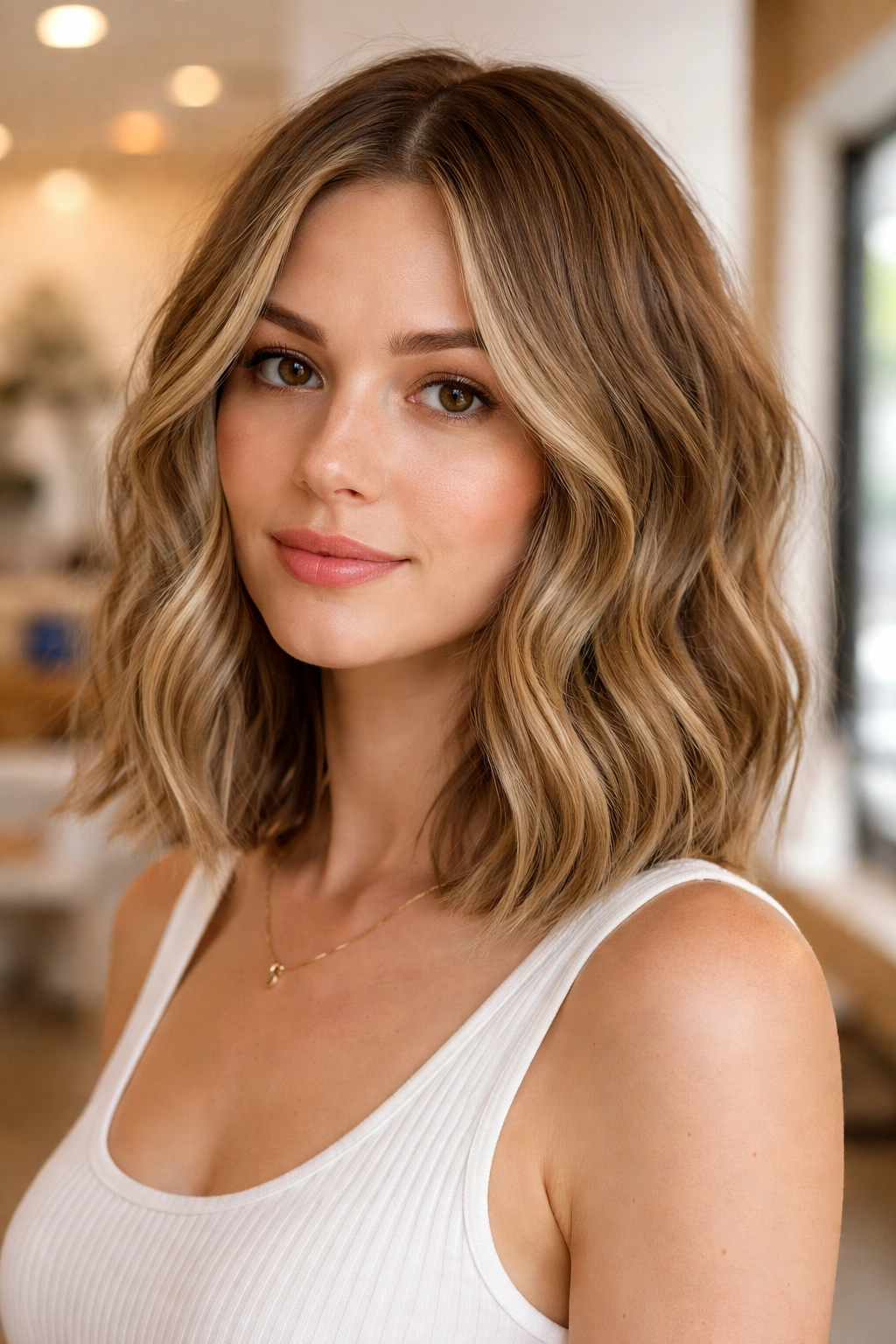
If your hair has a decent wave pattern already, there is no reason to choose a haircut that demands a full routine every morning. A wash-and-go lob should dry into place with product, a scrunch, and maybe ten minutes of diffuser time at most.
The cut usually lands near the collarbone and uses a mix of soft face-framing plus light internal shaping. Nothing aggressive. Nothing that needs a round brush to make sense.
This is the haircut for people who want to look like they thought about their hair without actually thinking about it much after wash day. The trim schedule still matters, though. Once the ends get worn, wash-and-go turns into wash-and-hope.
38. Volume-Boosting Lob for Flat Roots
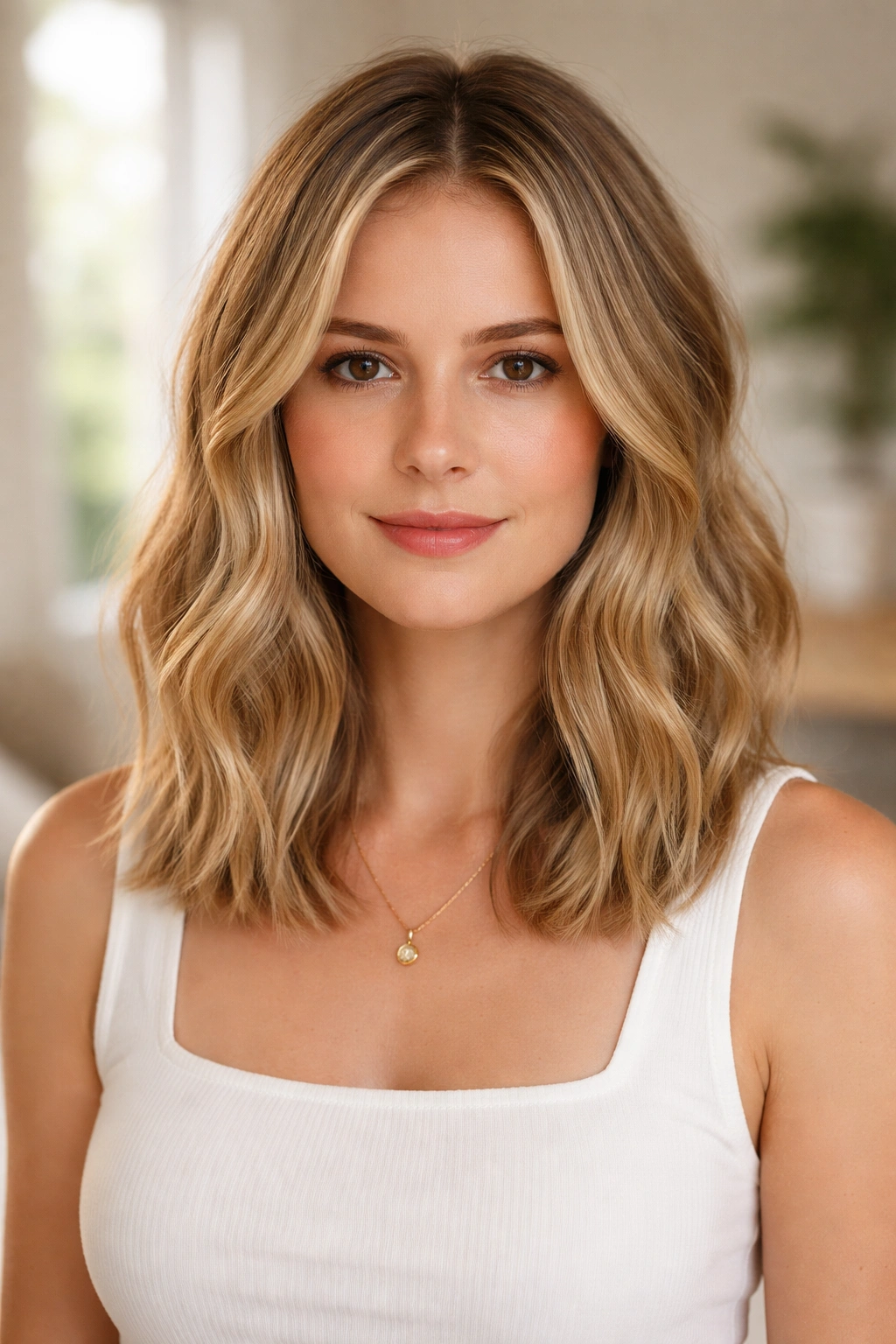
Some wavy hair has bend through the ends but lies close to the scalp, which can make a lob look bottom-heavy. A volume-boosting version tackles that with a shorter crown area, careful part placement, and weight removed where the hair collapses.
- Length target: above the collarbone so the roots are not dragged down
- Layer note: short enough to lift, not short enough to spike
- Drying move: diffuse with clips at the root
- Product: mousse at the crown, lighter cream through the ends
This cut gives you that little bit of height that makes the whole style feel awake.
39. Thick-End Lob for Coarse Wavy Hair
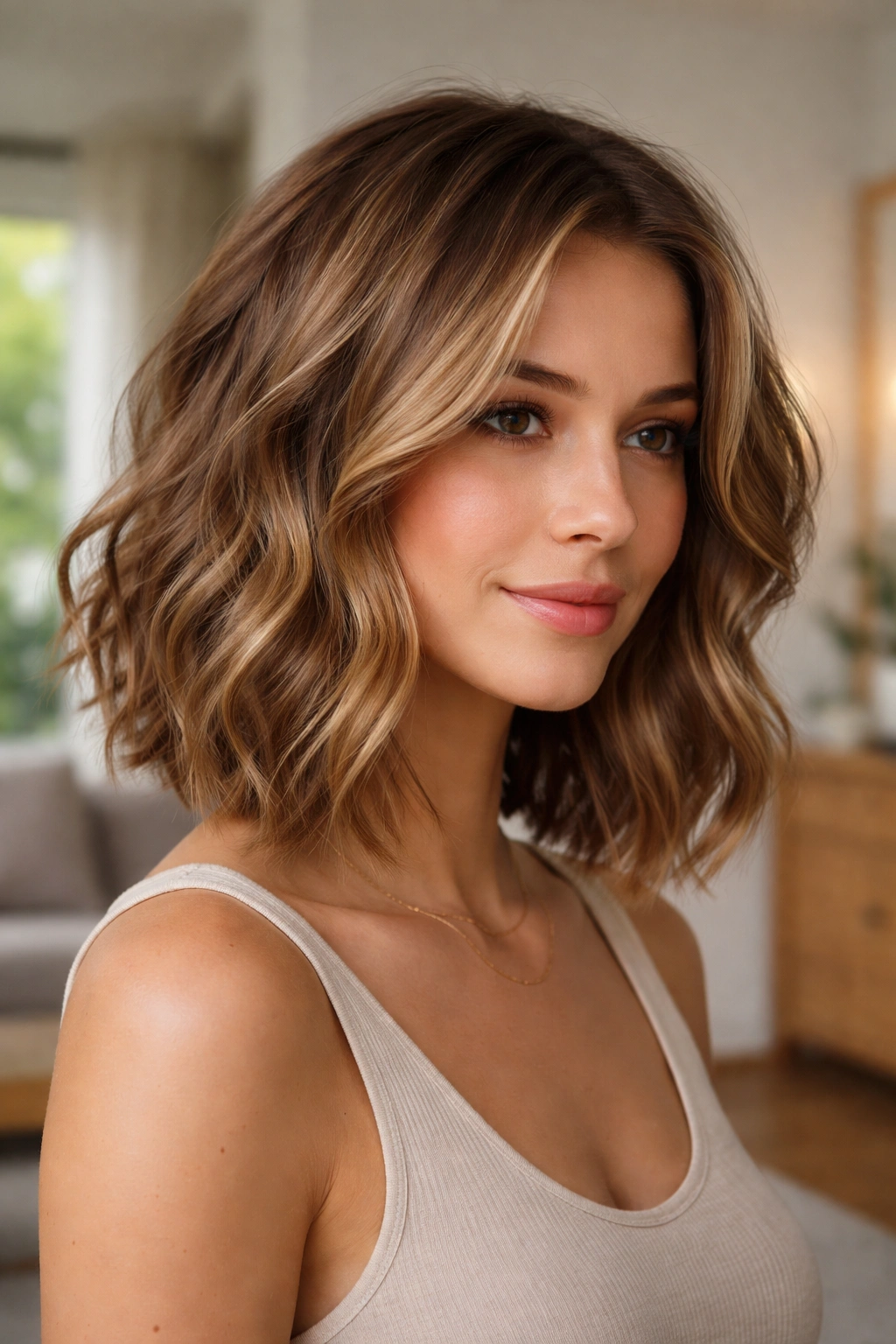
Coarse wavy hair can look glorious with a lob, though it needs a different hand than finer textures. The biggest mistake is over-thinning the ends in the name of “softness.” On coarse hair, that often makes the edge look frayed.
Keep the perimeter dense. Remove bulk from inside if needed. Let the ends stay strong.
This shape works well around collarbone length, where the weight helps the strands settle and the wave pattern stretch. Add a richer leave-in, diffuse gently, and resist the urge to pile on texturizing products. Coarse hair already has presence. The haircut should guide it, not shred it.
40. Minimalist No-Bang Collarbone Lob
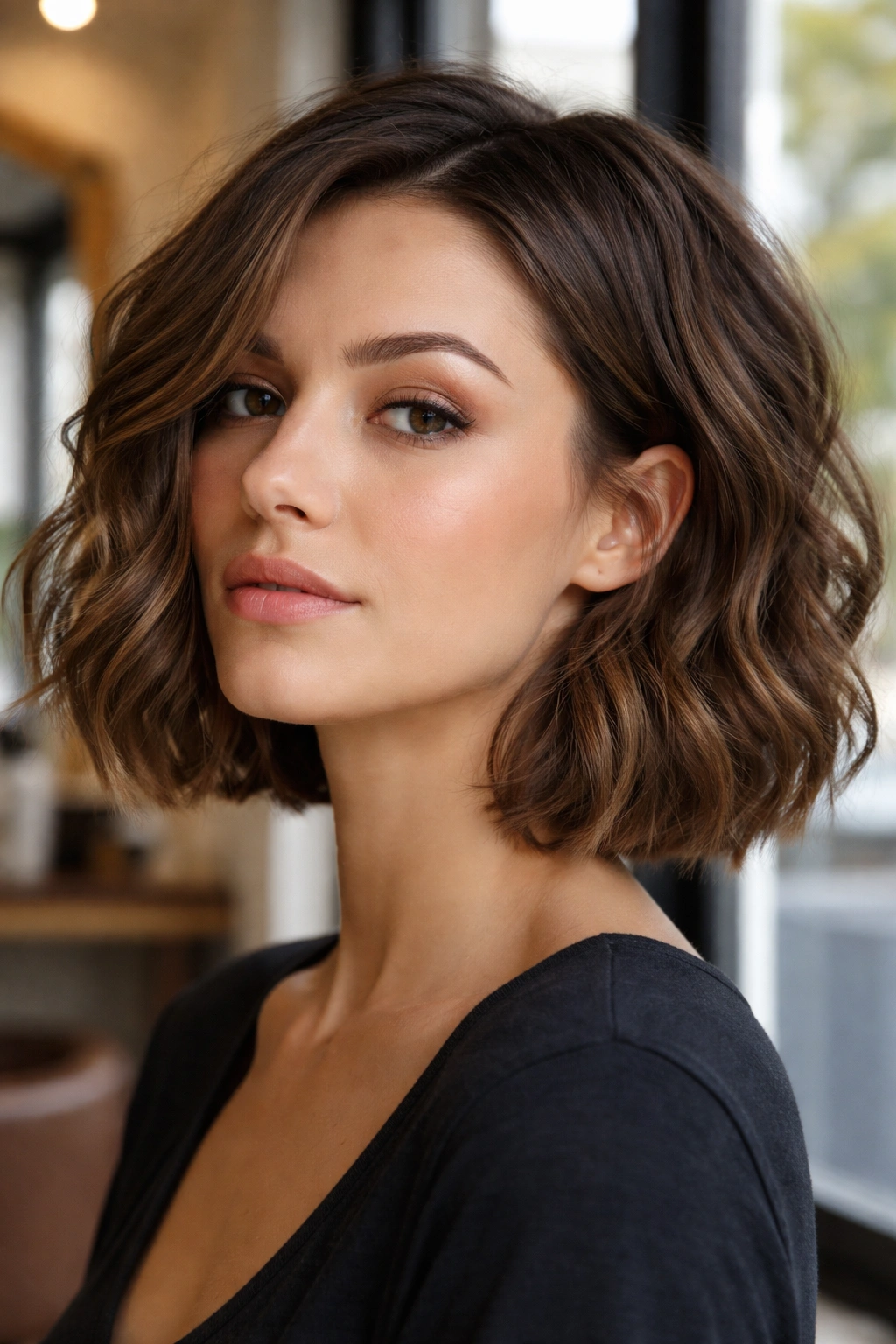
No bangs. No sharp angle. No shag layers. Just a clean collarbone lob that lets the wave pattern speak for itself.
There is a reason this cut keeps coming back. It flatters almost every wardrobe, works with middle parts and side parts, pulls back when needed, and leaves enough length to soften the face without feeling long.
The secret is not the idea. The secret is the execution: keep the baseline solid, shape the interior to suit your density, and trim before the ends start going transparent.
Sometimes the quietest haircut is the one that keeps winning.
Final Thoughts
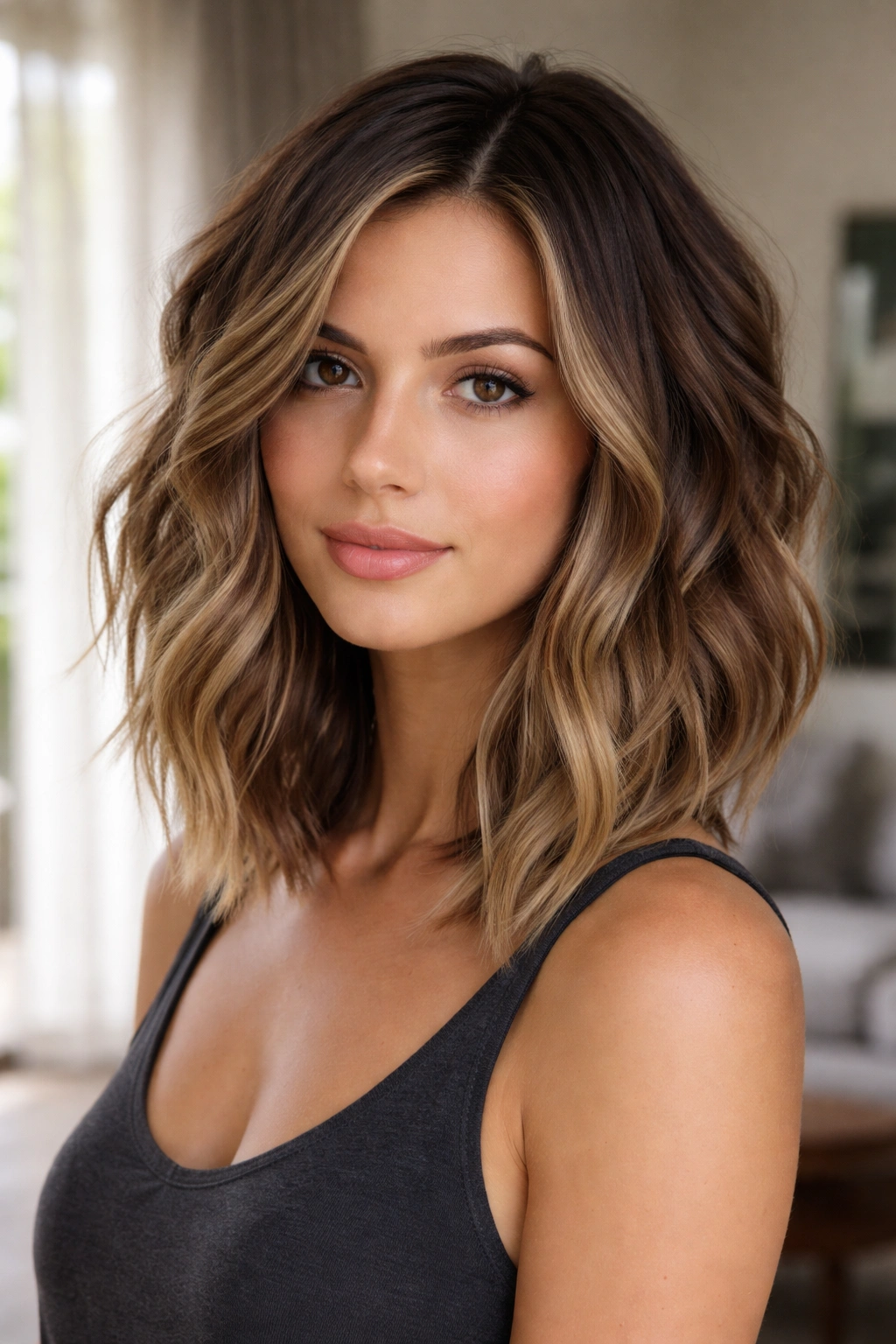
The best wavy lob is not the shortest one, the edgiest one, or the one attached to the flashiest salon photo. It is the one cut with your wave pattern, density, and styling habits in mind. Get those three things right and even a simple long bob can look sharp for weeks.
If you are choosing between two shapes, pay attention to the perimeter first. On wavy hair, the edge of the cut does more work than people think. Heavy ends, softened ends, angled ends, broken ends—they each send the whole haircut in a different direction.
And if your gut says your hair behaves better with a little more length, trust that instinct. Wavy hair has a memory of its own, and the best lobs know when to work with it instead of arguing back.