
A curly mullet can look sharp or sloppy by about two inches. That’s not a joke. When curls spring out around the temples, the back grows faster than you think, and a cut that looked balanced on the chair can turn into a puffed-out shape with no real outline.
The shape matters more than the label. A good curly mullet keeps the top full, gives the back enough length to read as a mullet, and controls the sides so your hair doesn’t balloon around your ears. A bad one does the opposite: blunt edges, too much bulk at the temples, and a back section that never quite gets a chance to show off.
Curly hair makes this haircut better, honestly. You get movement for free, but you also get shrinkage, frizz, and a crown that may do its own thing the minute humidity shows up. The 12 curly mullet hairstyles below each solve a different problem, from flat roots and thick bulk to awkward grow-out and curl patterns that need room.
1. Soft Curly Shag Mullet
A soft curly shag mullet is the version that lets your curls stay themselves. It sits between a shag and a mullet, so the cut feels airy instead of harsh. The edges blend, the crown keeps lift, and the back gives you that longer line without shouting about it.
Why It Works on Loose to Medium Curls
This shape is a sweet spot for 2C, 3A, and softer 3B curls because it uses layers to build movement without stripping away too much weight. Ask for the shortest pieces around the crown to fall near the cheekbone, with the nape left longer so the silhouette still reads as a mullet. That little bit of length in back matters more than people think.
The main trick is to avoid blunt sides. Once the sides are cut too square, the style turns boxy fast. Keep the top airy, keep the sideburn area soft, and let the curls frame the face instead of sitting like a shelf.
Quick Shape Notes
- Ask for blended layers through the crown, not a hard disconnect.
- Keep the side pieces long enough to skim the top of the ear.
- Leave the nape a touch longer than the rest, especially if your hair shrinks a lot when dry.
- Use a lightweight curl cream or leave-in, then diffuse on low if you want extra lift.
Pro tip: ask for the cut to be checked dry. Curly hair can change shape a lot once it dries, and this style lives or dies on balance.
2. Short Curly Mullet With Low Fade
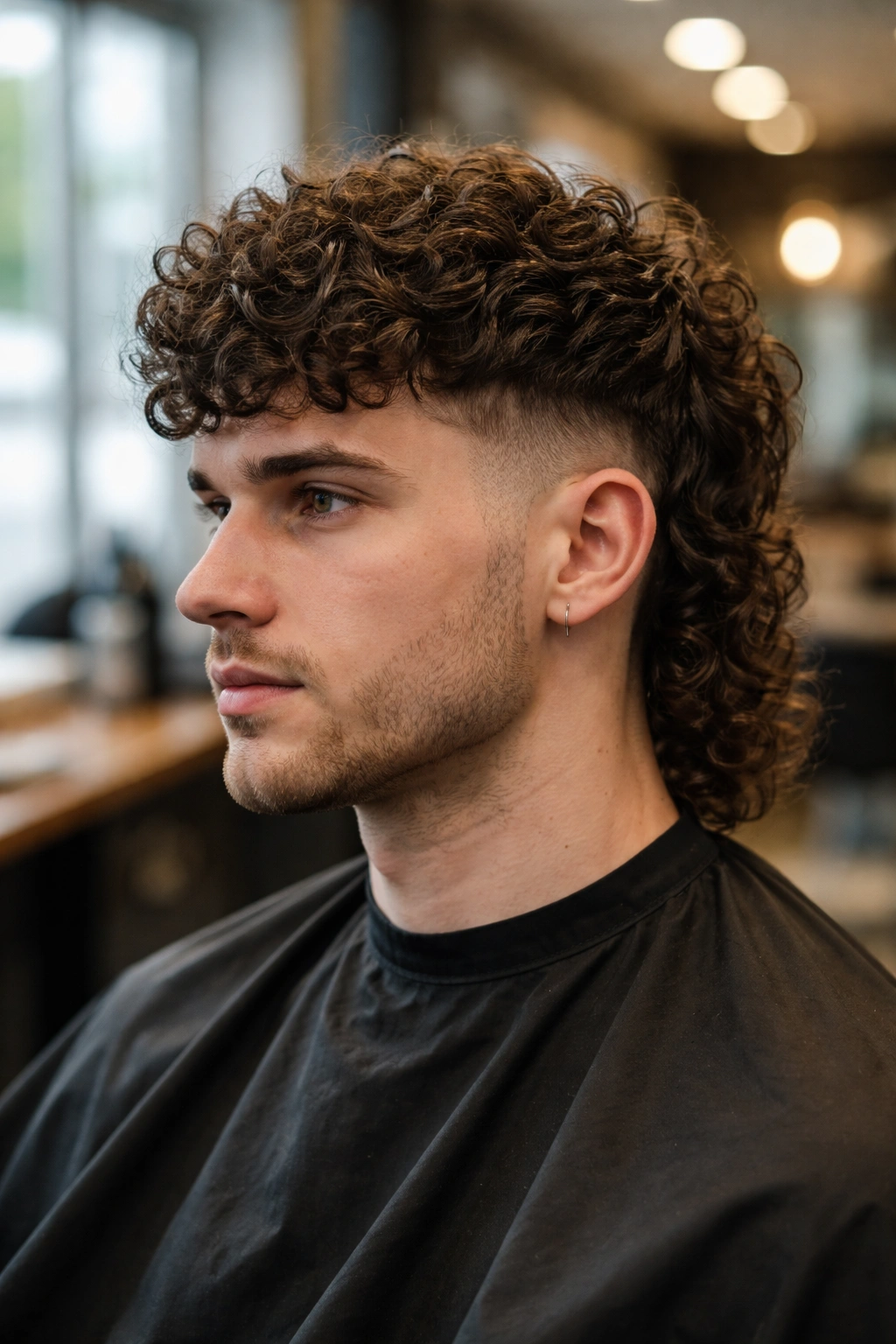
Unlike the shaggy version above, this one feels cleaner around the edges. A short curly mullet with a low fade keeps the top and back textured, but it trims the sides close enough that the haircut looks deliberate the moment you walk out of the chair. It’s a smart choice if you like structure and hate hair brushing your ears all day.
The low fade should start just above the ear, not halfway up the temple. That detail keeps the cut from looking too severe. On curly hair, a fade that rises too high can make the top look mushroomy, especially if your curls are dense or springy.
This version works well for people who want a low-maintenance shape between barber visits. The top can stay around 3 to 5 inches, the back can hang a little longer, and the contrast is enough to make the mullet part visible without turning the whole cut into a costume.
If you’ve got thick curls and you want less bulk near the jawline, this is a strong pick. If your hair is fine and sparse at the temples, I’d go easier on the fade. A tiny bit of softness there saves the whole look.
3. Long Curly Mullet With Feathered Ends
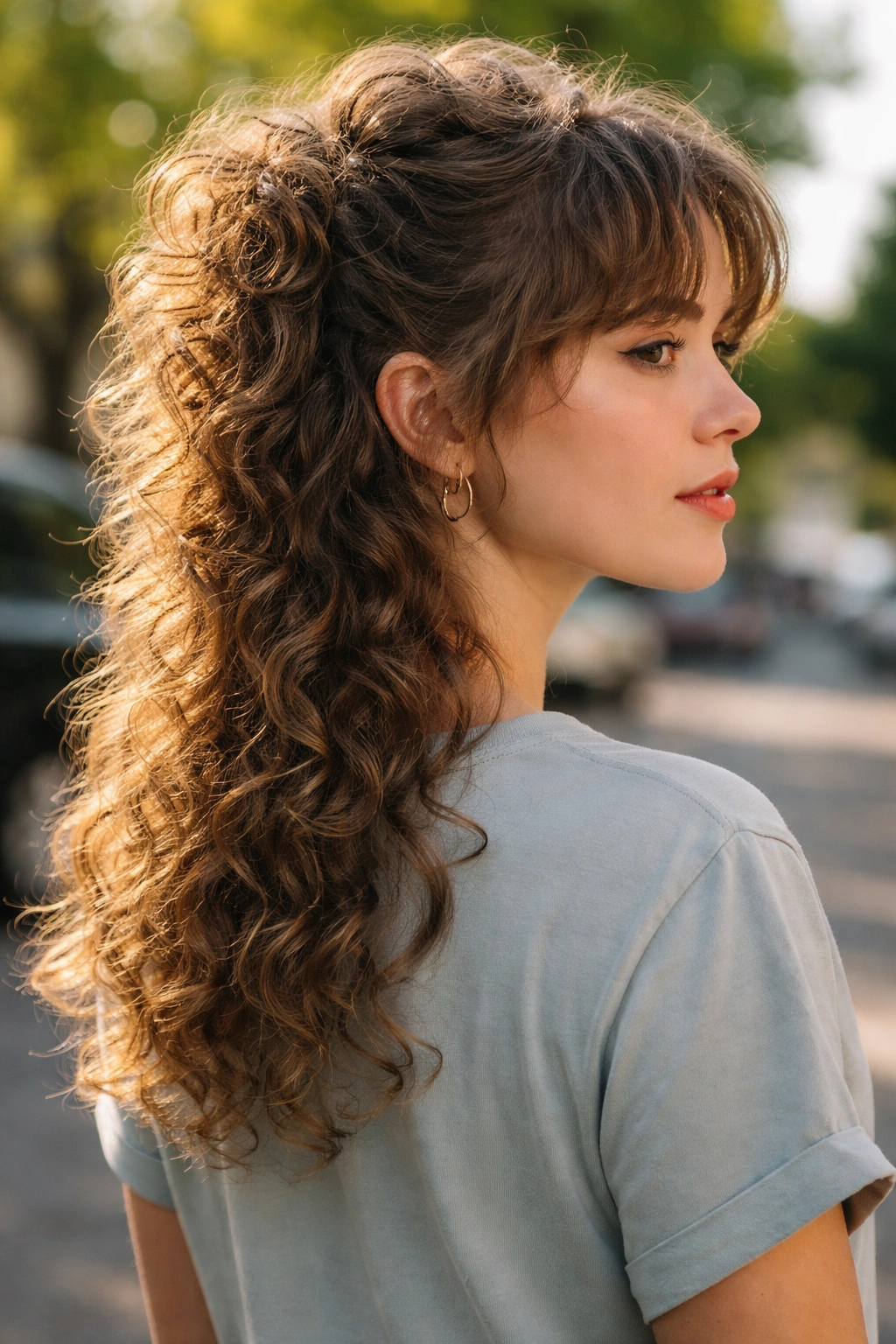
Long curly mullets are where the style gets a little dramatic, and I mean that in a good way. The back sits near the collar or lower, the top still has layers, and the ends are feathered so the cut moves instead of hanging like a wet towel. If you’ve ever watched curls clump into one heavy shape, you already know why the feathering matters.
The danger with long curly mullets is bulk. Too much weight at the bottom makes the whole shape widen, and then the haircut stops looking intentional. Feathered ends solve that by letting the curls separate a bit, which keeps the back light enough to swing.
This version suits people with 3B to 3C curls who like length but want some attitude. It also works for anyone growing out a shorter mullet and trying not to lose the shape in the process. You don’t need a razor-sharp outline here. You need a haircut that still looks good when it air-dries on a busy morning.
One thing worth asking for: internal layers through the back, not just face-framing pieces. That keeps the length from turning into a heavy curtain. And if your curl pattern is uneven, a dry cut helps the stylist see where the weight sits.
4. Wolf Cut Curly Mullet
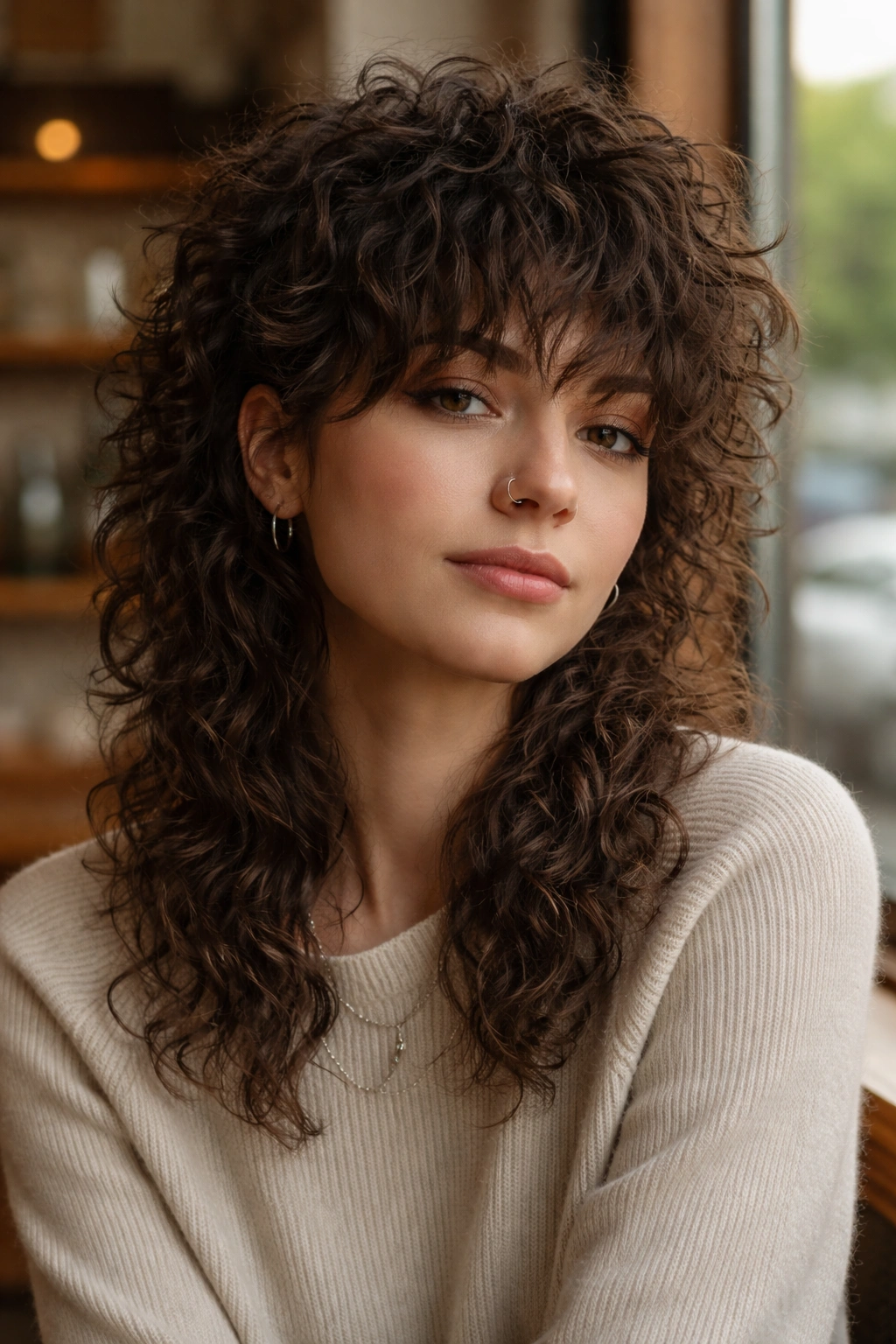
Is a wolf cut just a mullet with better behavior? Sometimes, yes. On curly hair, the two cuts overlap enough that the line between them gets blurry, and that’s part of the appeal. A wolf cut curly mullet gives you the heavy layering of a shag, the shape of a mullet, and a little wildness around the crown.
Where the Wolf Cut Wins
This version is built for volume. The layers start high, often around the cheekbones or even above them, so the curls lift away from the head instead of sitting flat. That makes it a good choice for dense hair that tends to puff out when it’s all one length.
The back still needs to be longer than the front, but not by a huge amount. Think of it as a mullet with more texture and less polish. The result feels loose, messy, and intentional all at once. If that sounds like a contradiction, well, it kind of is.
How to Ask for It
- Keep the crown heavily layered.
- Leave the fringe choppy, not blunt.
- Let the side pieces hit around the cheekbone.
- Avoid over-thinning the ends, or the cut can go frizzy fast.
This is a great style if you like a little edge and don’t mind hair that looks better when it’s slightly undone. A perfect curl day helps, but the cut shouldn’t need one.
5. Curly Mullet With Tapered Sides
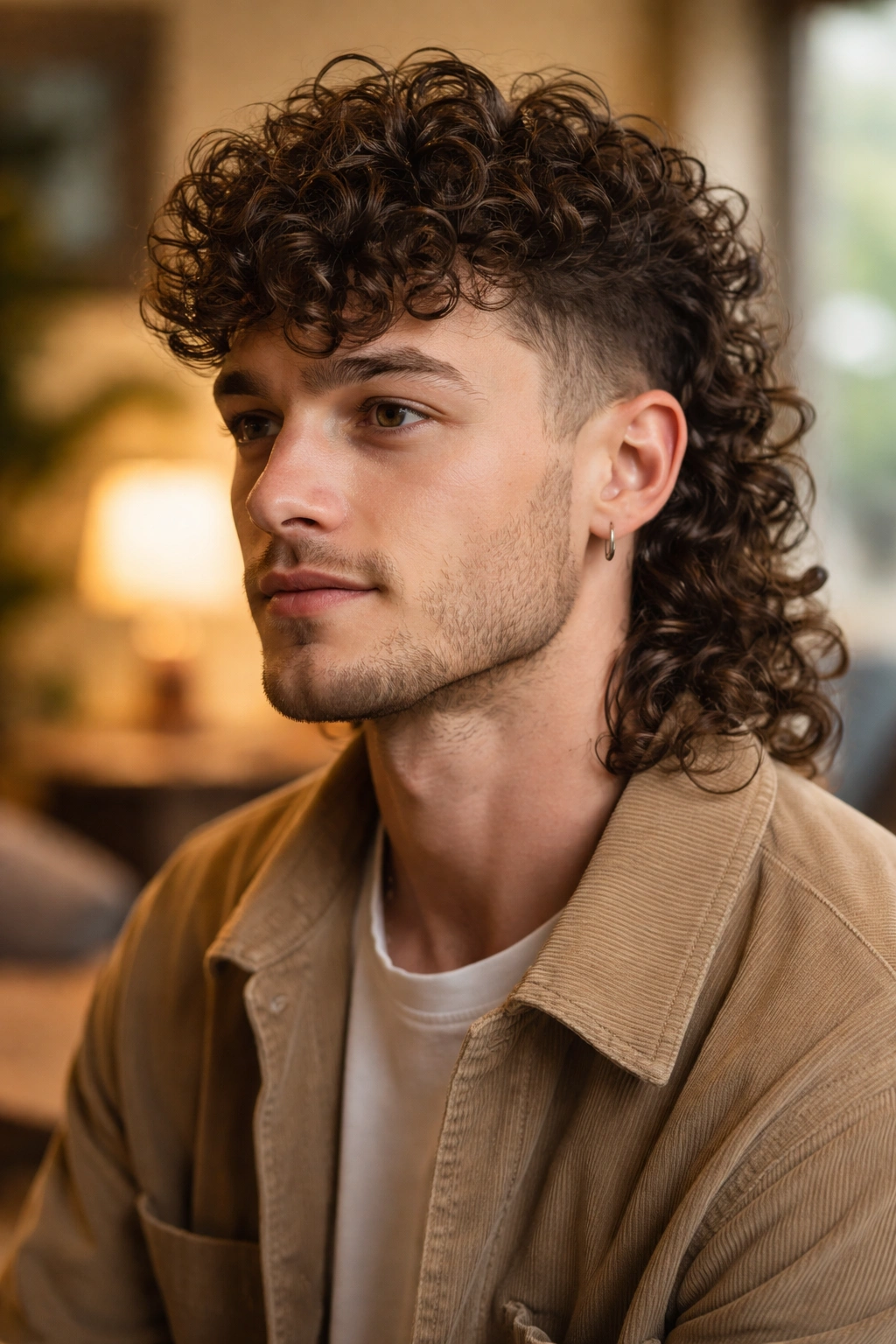
If your hair puffs out at the temples by noon, tapering is the fix. A curly mullet with tapered sides keeps the shape neat around the ears and sideburns while leaving the top and back free to do the curly thing. It’s not as severe as a fade, and that’s the whole point.
Picture a cut that doesn’t swell out at the sides when you put on a hoodie. That’s the real test. The taper should be gradual, so the shape feels clean but not shaved-down. On curls, that softer transition helps the cut grow out in a more graceful way, too.
This works especially well for thick hair that needs some weight removed without losing its outline. The back can stay medium length, the top can keep texture, and the side area can sit close enough to the head that the mullet reads more polished than punk. Not boring. Just controlled.
A good barber or stylist will usually use scissors around the upper side area and a clipper or trimmer lower down, then blend carefully into the curls. If they go too tight near the temple, the top can look oversized. Keep the taper soft, and the rest falls into place.
6. High-Contrast Curly Mullet With Skin Fade
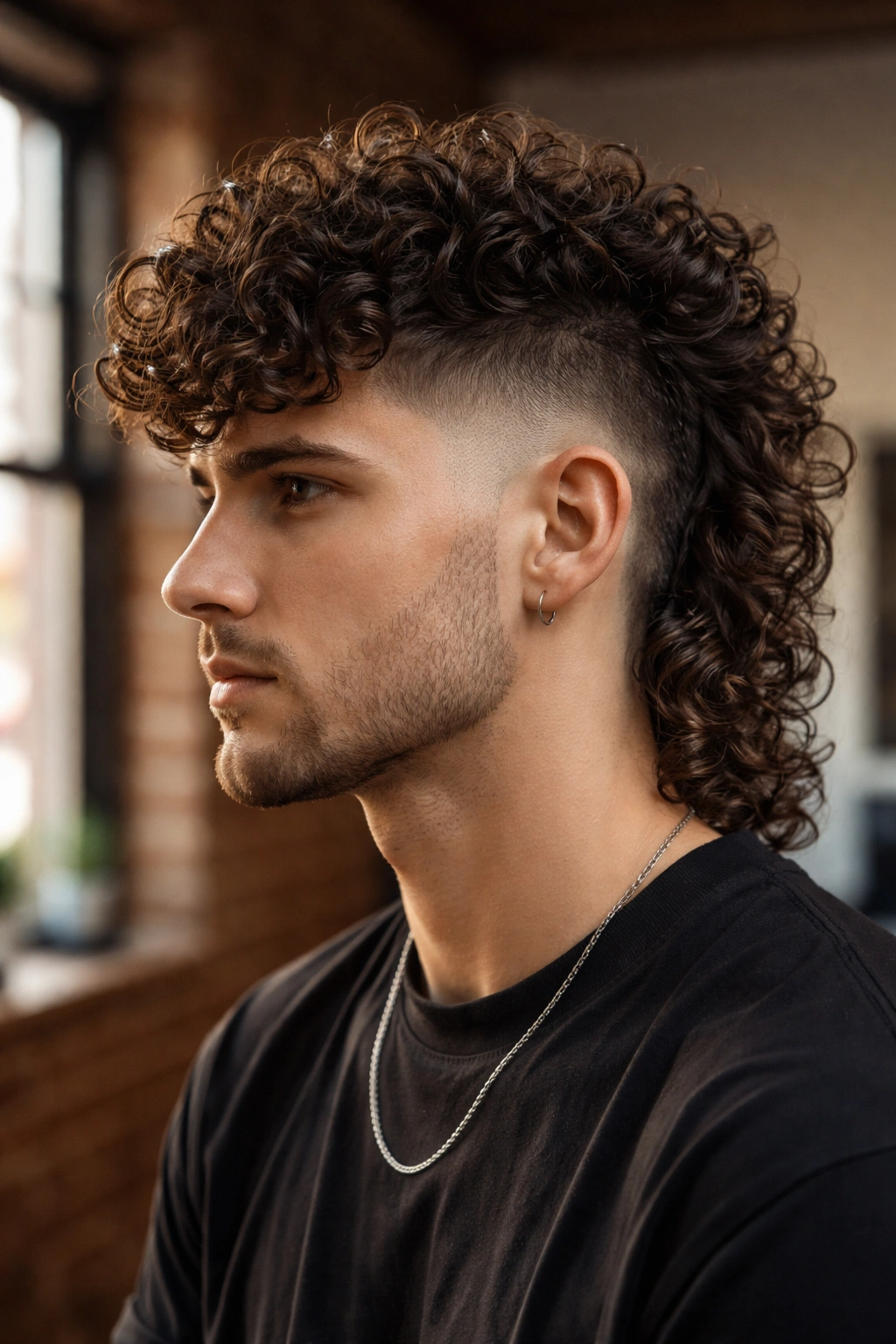
This is the loudest option in the list. A high-contrast curly mullet with a skin fade puts the curls front and center by taking the sides down to the skin or nearly to it. The result is sharp, dramatic, and hard to ignore.
The appeal is simple: when the sides are tight, the top looks fuller. Curly hair already has volume, so the fade makes that texture stand out even more. You get a strong outline around the head, and the back section feels longer because there’s less visual clutter competing with it.
But there’s a catch. A skin fade grows out fast. If you like a haircut that can drift for six weeks and still look fine, this isn’t the one. It also puts more focus on the hairline and scalp, so if those areas are uneven, sparse, or easily irritated, the fade can be more revealing than you want.
Ask for a #0 or #1 at the base and a smooth blend upward if you want the cleaner version of this style. If you want the cut to stay edgy rather than neat, keep the top loose and avoid over-styling the curls into perfect little coils. A bit of separation looks better here anyway.
7. Layered Perm Mullet
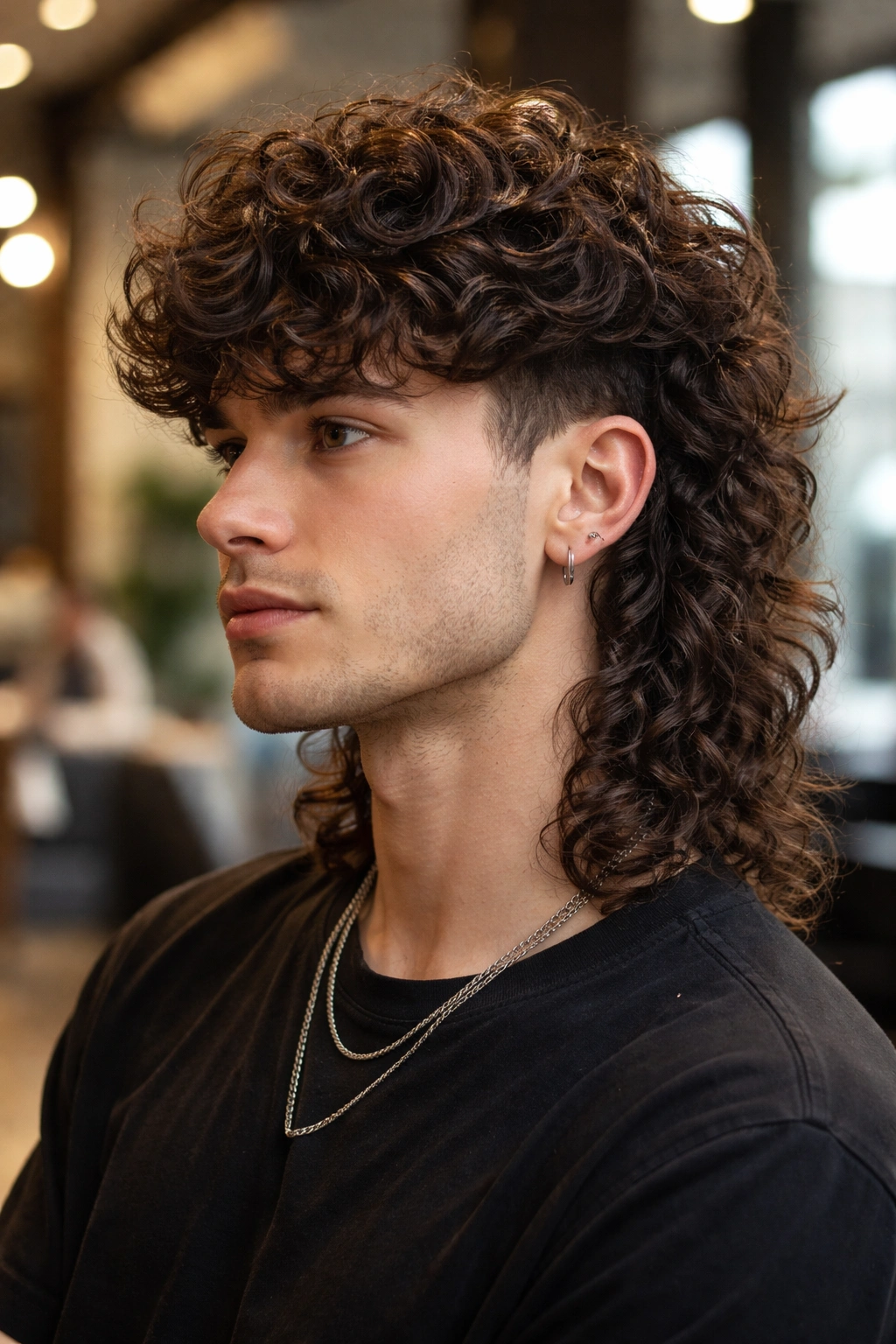
Straight or wavy hair can still wear a curly mullet, and a layered perm is the reason. This version is for people who want the shape but need texture built in from scratch. Done well, it looks lived-in and full of movement instead of stiff or overly processed.
When a Perm Makes Sense
A perm works best when the hair is healthy enough to handle the chemical treatment. If the ends are already fried, lightened, or snapping off, stop there. The haircut can wait. The perm cannot rescue damaged hair, and a mullet shape is unforgiving when the ends look brittle.
Curl size matters too. Smaller rods create tighter curls and more volume; larger rods give you a looser bend that sits closer to a shaggy mullet. If you want something that reads modern and soft, ask for medium rods rather than tiny ones.
What to Tell the Stylist
- Ask for layering after the curl pattern is set so the shape doesn’t go bulky.
- Keep the back long enough to show the curl definition.
- Leave the top soft, not helmet-like.
- Plan for moisture care right away: leave-in conditioner, curl cream, and occasional protein treatment if your hair starts feeling mushy.
This is the version that rewards patience. The first few days can feel a little too curly, and then the shape settles in. That middle stretch is where it usually looks best.
8. Curly Mullet With Curtain Fringe
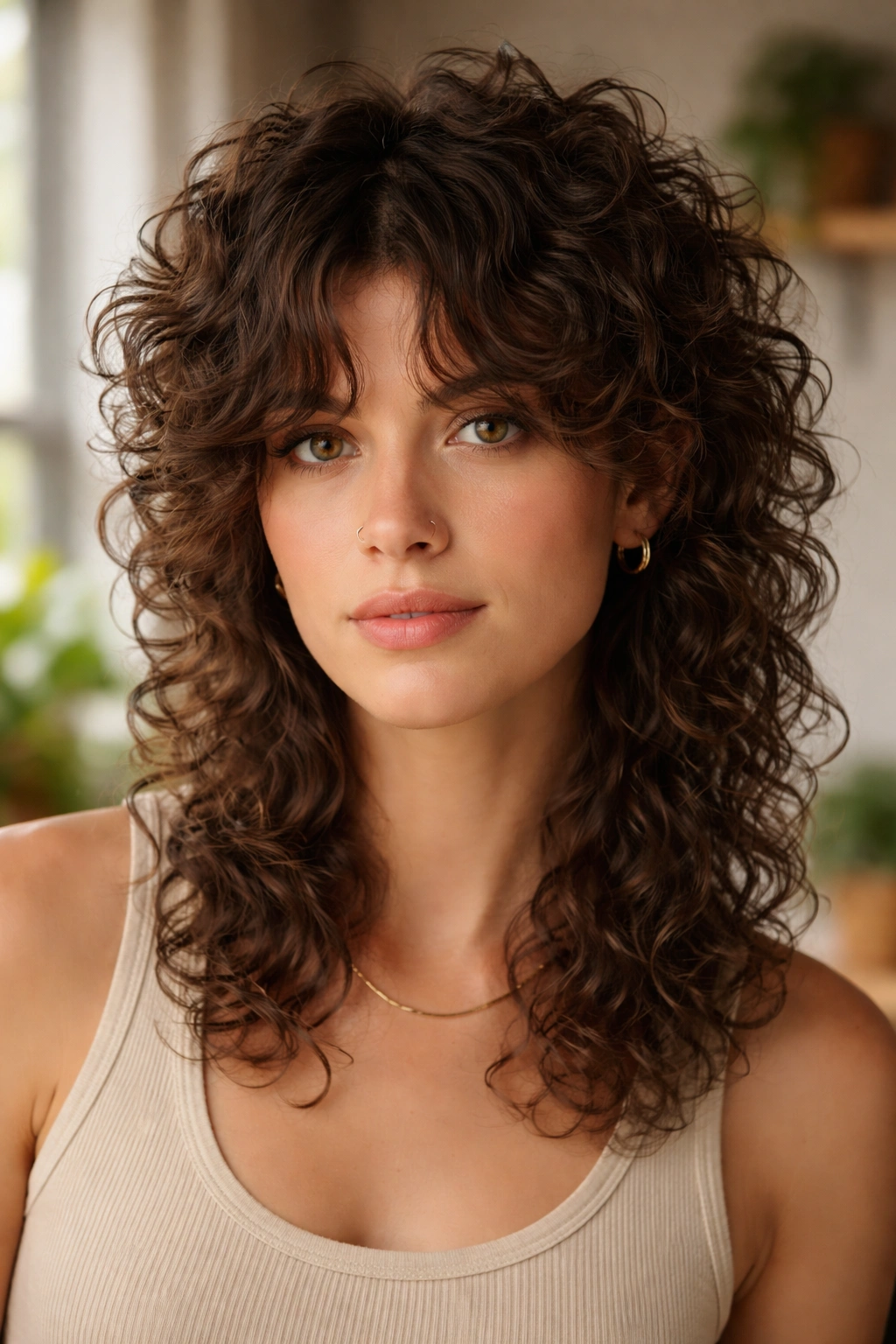
What happens when you split the fringe and let the curls fall where they want? You get a curly mullet with curtain fringe, and it’s one of the easiest ways to soften the whole haircut. The front opens up the face, while the back keeps the mullet shape from disappearing.
The fringe should be cut dry if the curl pattern is unpredictable. Wet curls shrink, and a curtain fringe that looks perfect when damp can jump way too short once it’s dry. A good stylist will leave a little more length than you think you need, then refine the shape after the curls spring up.
This style is especially flattering if you want the mullet but not the sharpness. It works with round faces, longer faces, and anyone who likes face-framing pieces that move instead of sitting still. The split in the middle also gives the cut a little softness around the forehead, which helps if your curls tend to get dense at the front.
Styling Notes
- Scrunch the fringe with a small amount of mousse.
- Push the center section apart while it’s damp.
- Use a diffuser on low heat if you want more lift at the roots.
- Don’t over-brush the front, or the curtain pieces lose their shape fast.
A good curtain fringe takes a little fuss. A bad one needs constant rescue.
9. Messy Curly Mullet Mohawk
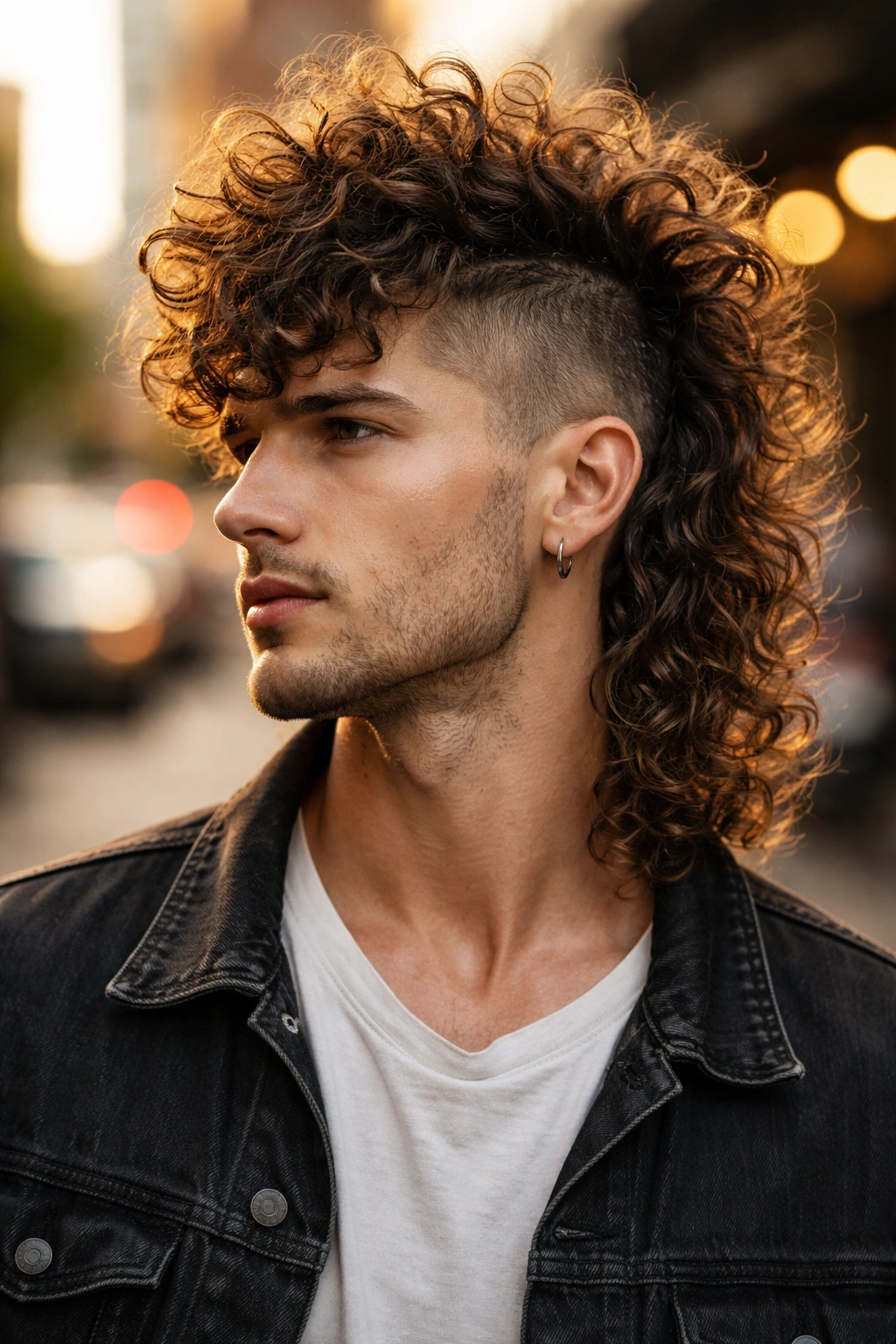
If your curls already pile up down the middle, this cut keeps the drama where it belongs. A messy curly mullet mohawk narrows the sides and leaves the center strip longer, so the hair rises through the top and back instead of spreading wide. It’s bold, but it’s not fussy.
The best version of this haircut does not look molded. It looks a little unruly, almost like the curls found their own place and the haircut simply agreed with them. That looseness is the charm. If you try to make it too neat, it loses the point.
This shape suits thicker curls and dense growth patterns that naturally want height. It also plays well with strong cheekbones and angular faces, because the narrow sides sharpen the outline. On finer hair, though, the mohawk effect can get thin fast unless there’s enough texture on top to hold it up.
A small amount of strong-hold mousse or gel at the root can help the middle section stand up without turning crunchy. Scrunch it upward, then let the ends do their own thing. The beauty here is that a little mess makes the cut look better, not worse.
10. Rounded Curly Mullet for Thick Hair
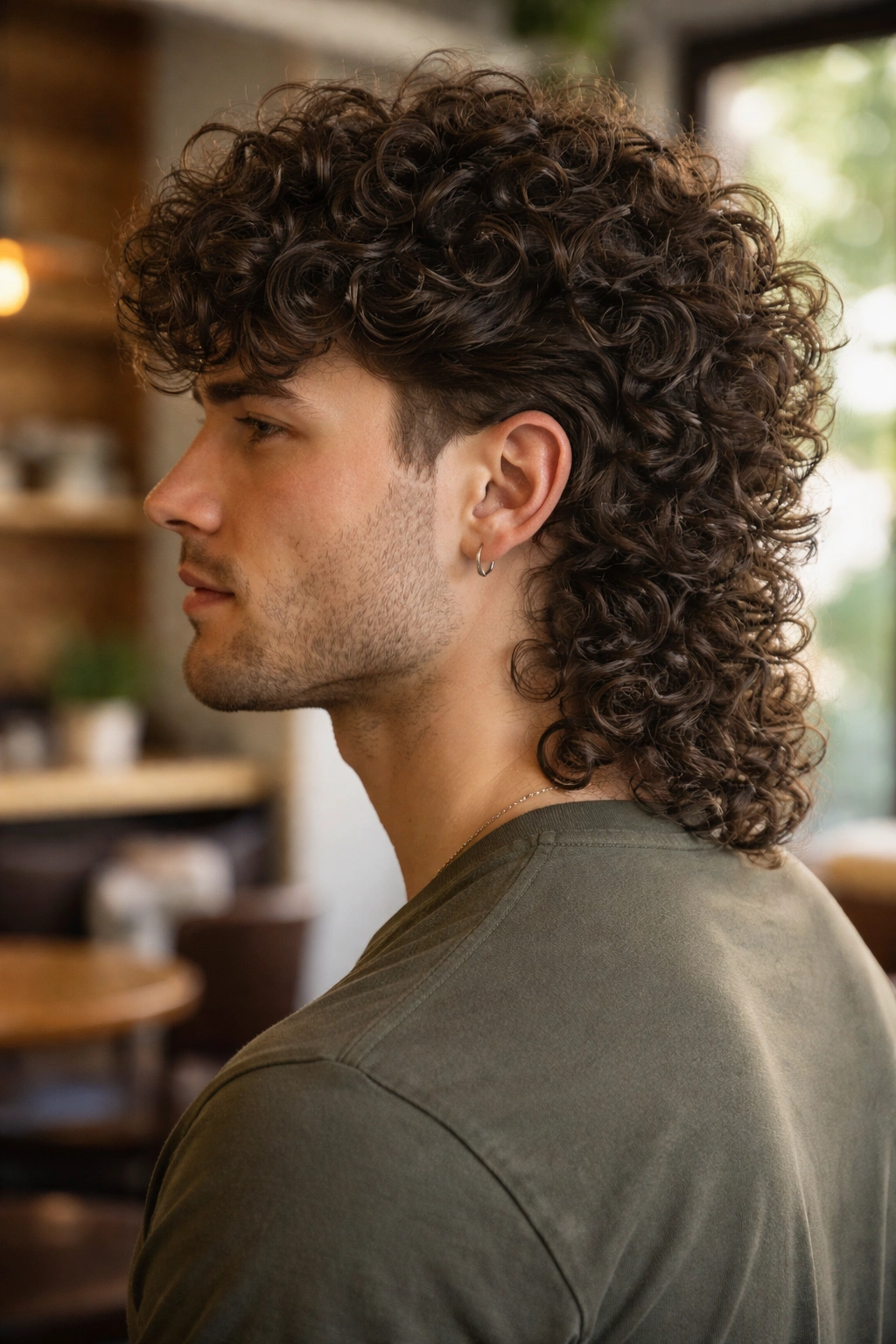
Bulk is the enemy here. Thick curls can turn square fast, and a rounded curly mullet keeps that from happening by taking the corners out of the shape. Instead of building width around the ears and jaw, the cut follows a softer arc from crown to nape.
The rounding usually comes from internal layers and careful weight removal, not from chopping the hair shorter everywhere. That matters. If the stylist hacks away at the ends without planning the shape, the hair can puff up even more. Thick curls need direction, not just less length.
What the Stylist Should Remove
- Extra bulk around the occipital area.
- Heavy side pieces that stick out from the head.
- Uneven weight near the crown that pulls the shape flat.
- Any blunt line at the bottom that makes the back look boxy.
This version is especially good if your hair has a lot of density but not much patience. You can still get movement without spending 20 minutes trying to force the curls into shape. A rounded mullet also grows out better than a hard-edged one, which is a blessing if your hair grows fast.
The finish should feel soft, not fluffy. That’s the difference.
11. Subtle Curly Mullet for Clean, Everyday Wear

A subtle curly mullet is for people who want texture without the full rock-and-roll statement. The back is a little longer, the top still has lift, but the difference between the front and back stays modest. It reads more like a layered curly cut from the front and only reveals its mullet side when you catch the profile.
That discretion is the point. If your office is conservative, if you like your hair to look neat under a jacket, or if you simply don’t want a loud haircut, this is the version to ask about. Keep the sides soft, avoid aggressive fades, and let the length difference stay small enough that the silhouette feels balanced.
It also works well for people who are testing the mullet waters. You can live with this shape without feeling like you made a huge style leap. The curls bring enough personality on their own.
A good way to describe it to a stylist: “Keep it layered and curly, but make the back a little longer so it reads as a mullet, not a shag.” That one sentence usually gets you much closer than asking for something vague and hoping for the best. A subtle cut still needs a plan.
12. Big-Volume Retro Curly Mullet
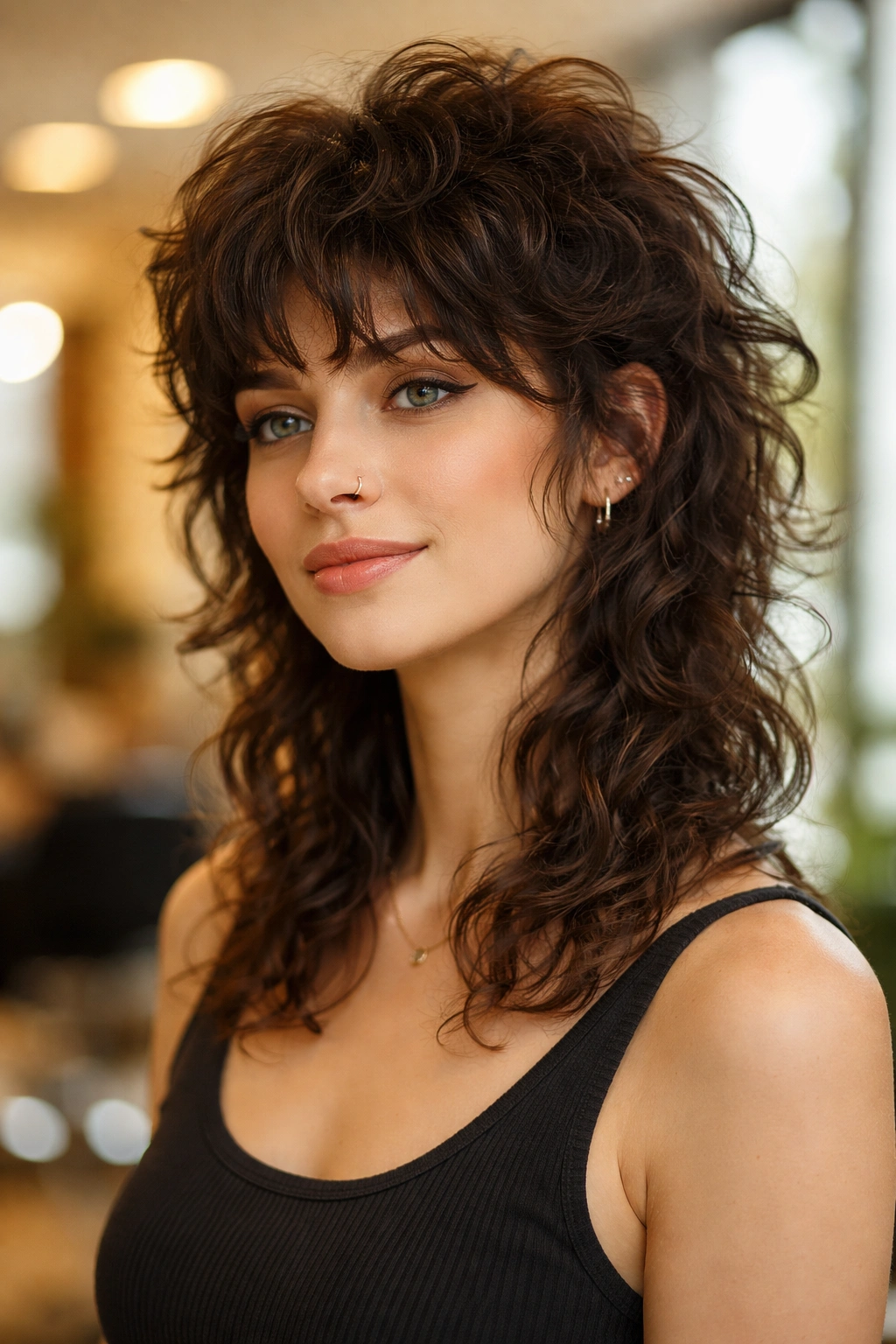
This is the one that looks like it belongs on a stage. A big-volume retro curly mullet leans into height at the crown, width through the curls, and a long, textured back that feels a little nostalgic in the best way. It’s the opposite of subtle, and it knows it.
The shape works because it doesn’t fight volume. Instead, it uses it. The top is lifted with mousse or root spray, the curls are diffused until they’re springy and separated, and the back gets enough length to move when you turn your head. The whole thing has energy. A lot of it.
How to Keep the Shape from Collapsing
- Apply mousse at the roots while the hair is still damp.
- Diffuse upside down for 5 to 7 minutes, then finish right side up.
- Use a small amount of gel on the ends if frizz takes over.
- Avoid heavy oils near the roots, because they flatten the crown fast.
This style is a good match for thick, resilient curls that can hold shape without drooping. It also looks better when you stop trying to tame every strand. A few flyaways are fine here. They actually help.
If the earlier styles felt too polite, this one is the opposite. Big curls, clear shape, and a back that makes the word mullet earn its keep.