



A twist ponytail can look sharp from across a room, but the difference between polished and painful is usually a quarter inch of tension. That sounds fussy until you’ve worn one that pulled at the temples all day.
Twist ponytails for Black women sit in a sweet spot that a lot of styles miss: they can protect the ends, keep the shape clean, and still give you room for length, shine, and movement. I like that they can read dressy without becoming stiff. They also work for a lot of textures, from stretched natural hair to added hair that gives the ponytail more swing.
The small details matter more than people think. Clean parting, a base that doesn’t fight the hairline, and twist sections that match your density will do more for the finished look than a huge jar of edge control ever will. Extensions help when you want length, but they should support the style, not drag it down.
Some ponytails are sleek and tight. Some are soft and full. The best versions respect the hair underneath and still look finished when you turn your head, which is where the good ones usually reveal themselves.
1. High Rope-Twist Ponytail
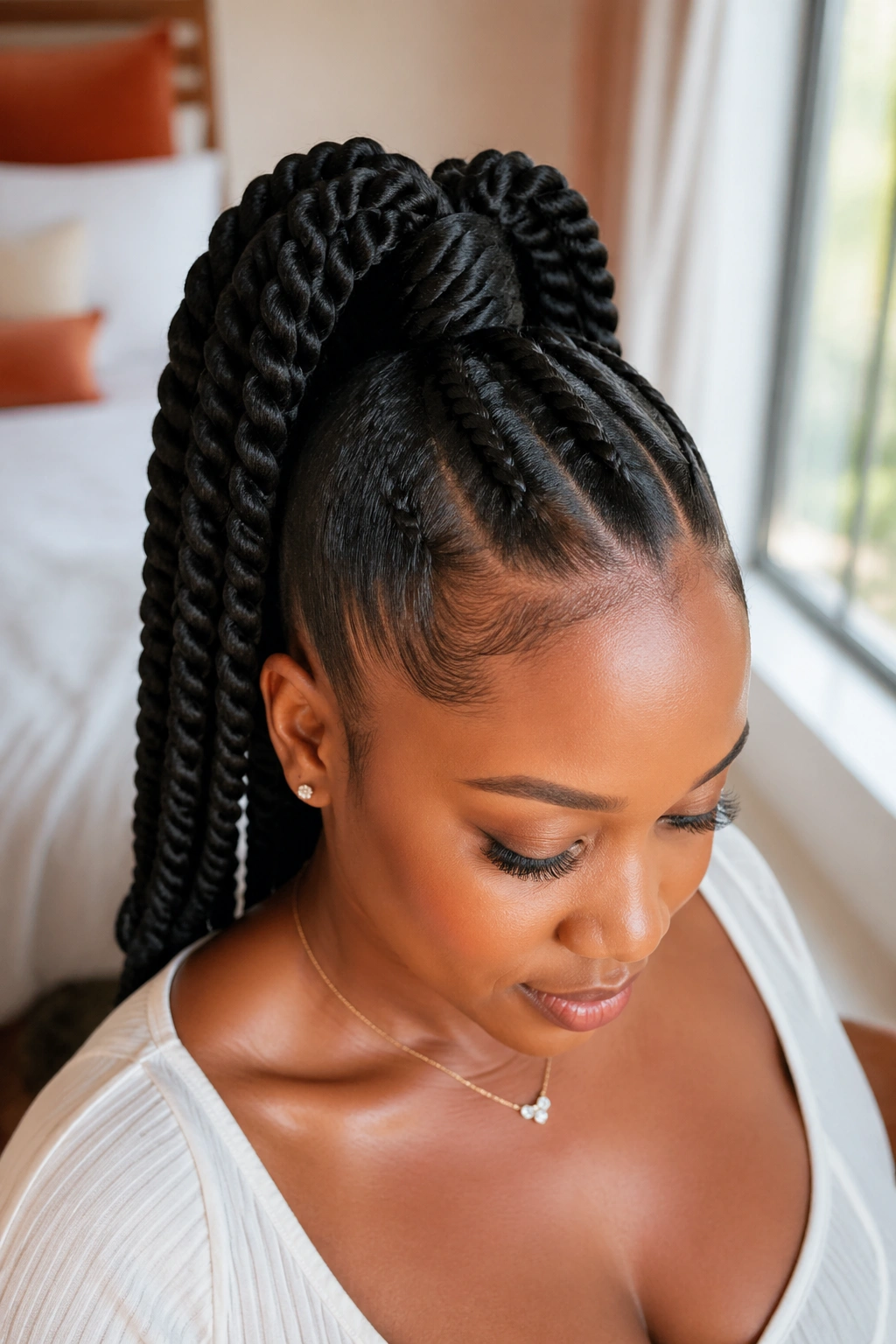
The high rope-twist ponytail is the one I reach for when I want instant lift. It pulls the eye upward, gives the face a little opening, and makes the twists feel more dramatic without needing a complicated base.
Why It Works
A high placement does a lot of the styling for you. It gives the ponytail bounce, and the rope-twist texture keeps the length from looking flat or saggy. If your hair is medium to long, this style can work with your own hair plus a few extension pieces for body.
A clean, high ponytail also makes the parting look sharper. Keep the base snug, not painful, and wrap one small section of hair around the elastic so the finish looks deliberate.
- Use two to four large twists for a thick, swinging shape.
- Leave the front hairline smooth, but not glued down like armor.
- A rat-tail comb helps the part stay crisp.
- Finish with a light mist of shine spray, not a heavy oil.
My favorite tip: if the ponytail feels too bulky at the crown, lower it by half an inch. That tiny change often makes the whole style sit better.
2. Side-Swept Twist Ponytail
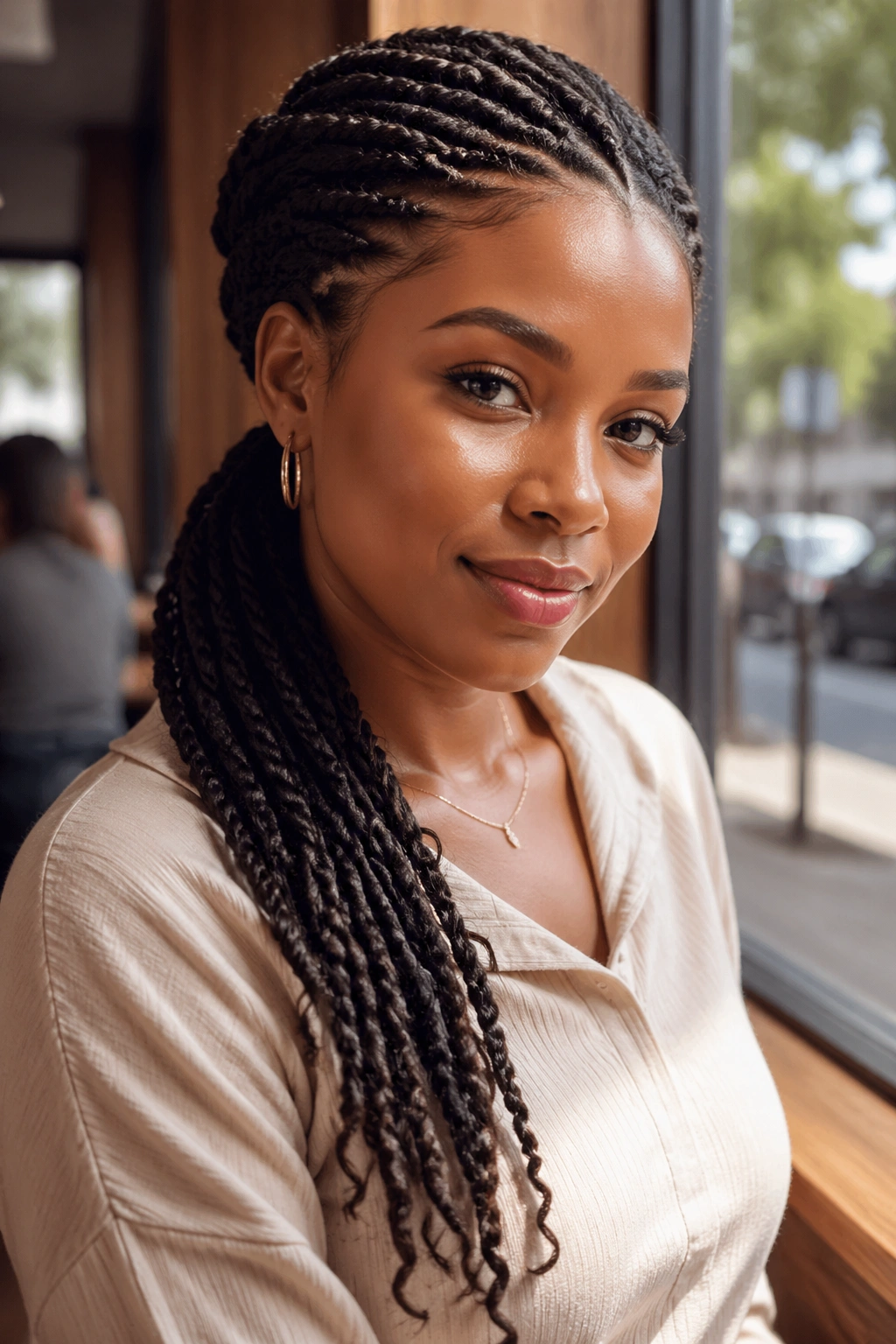
A side-swept twist ponytail softens the face in a way a straight-back ponytail never will. It has a little movement, a little drama, and enough asymmetry to keep the style from feeling predictable.
The best part is the drape. The twists fall over one shoulder and create a longer line across the body, which looks especially nice with hoop earrings, a wide neckline, or a blazer that needs something with shape. I prefer this version when the hairline needs less tension, because the weight is shared more evenly than in a high ponytail.
You can keep the base smooth and gather the twists just behind one ear. That gives the style a relaxed finish without making it sloppy. A few pinned twist ends can keep the shoulder side from slipping around all day.
If you want it to look fuller, build the ponytail with three to five medium twists instead of a dozen tiny ones. Fewer pieces usually read cleaner.
3. Low Nape Twist Ponytail

Want something that can go from office to dinner without changing a thing? The low nape twist ponytail does that job better than almost any other version.
This style sits close to the neck, so it feels more refined than loud. A center part makes it neat, but a shallow side part can soften it if you don’t want the look to feel severe. The twists themselves can stay slim or medium, depending on how much volume you want hanging at the back.
How to Wear It
Keep the base smooth and tuck the elastic just above the nape, where the head starts to curve. That makes the ponytail settle nicely instead of sticking up. If you’re using extension hair, keep the added length long enough to brush the upper back, but not so long that it drags.
- Best with blouses, turtlenecks, and structured jackets
- Works well for medium-density hair
- Easier to refresh with a satin scarf at night
- Looks especially neat with a wrapped base
The low nape version is quiet in the best way. It doesn’t beg for attention. It earns it.
4. Jumbo Chunky Twist Ponytail
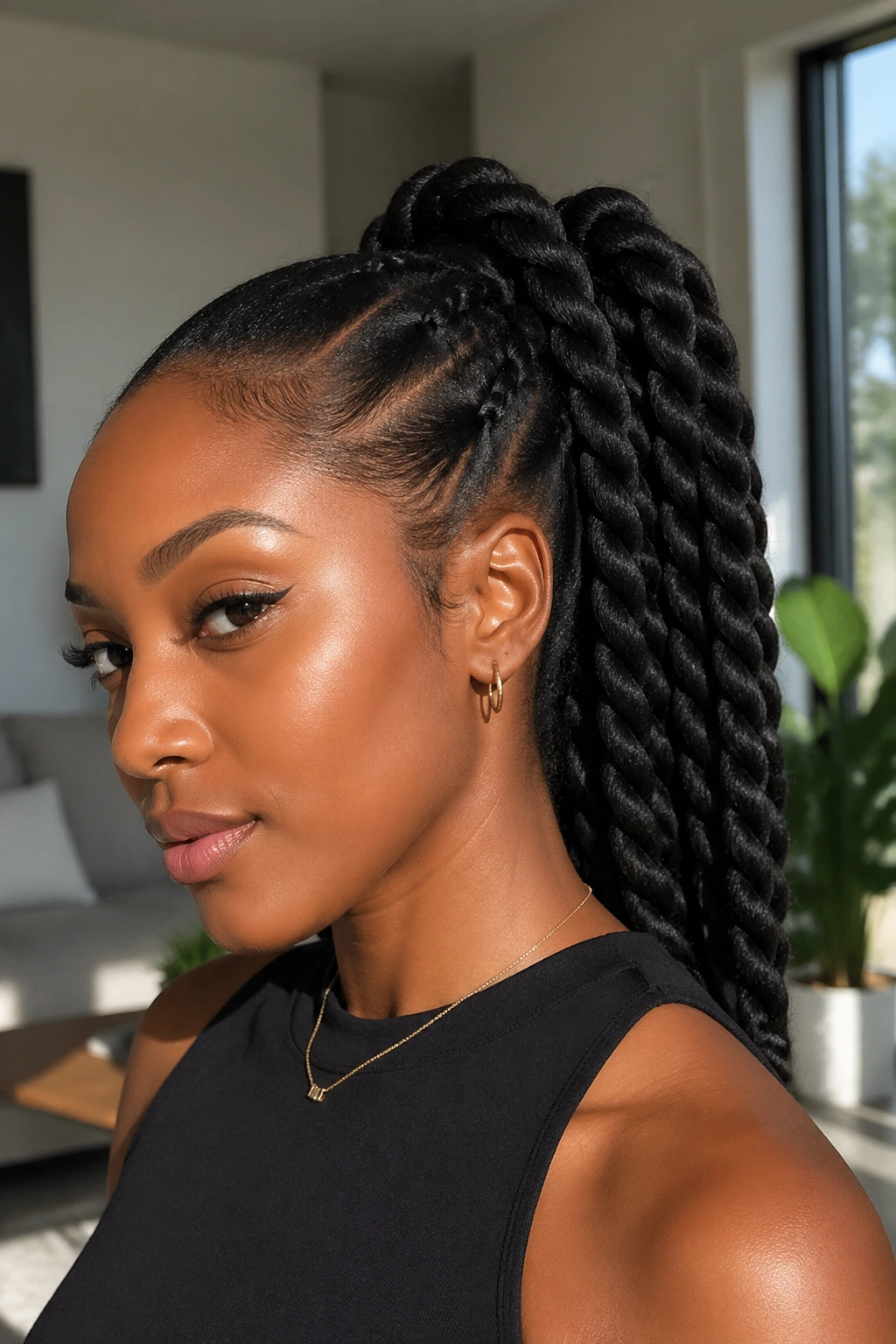
Jumbo twists are for people who want impact without spending an entire day in the chair. Big sections give the ponytail a bold shape, and they hold texture well even when the hair is stretched.
There’s a practical side here, too. Fewer twists means less time, fewer ends to manage, and a ponytail that feels lighter than a style with lots of tiny pieces. That matters if your neck gets tired fast or you wear ponytails often.
The trick is balance. If the twists are too thick, the style can start to look heavy at the base, almost like it’s trying too hard. Keep the root area smooth and let the jumbo pieces hang with some movement. That way the ponytail reads rich, not bulky.
I like this style on thick hair, but it also works with added hair when you want a fuller silhouette. Use six to eight jumbo twists and keep the edges clean instead of overworked.
5. Feed-In Twist Ponytail
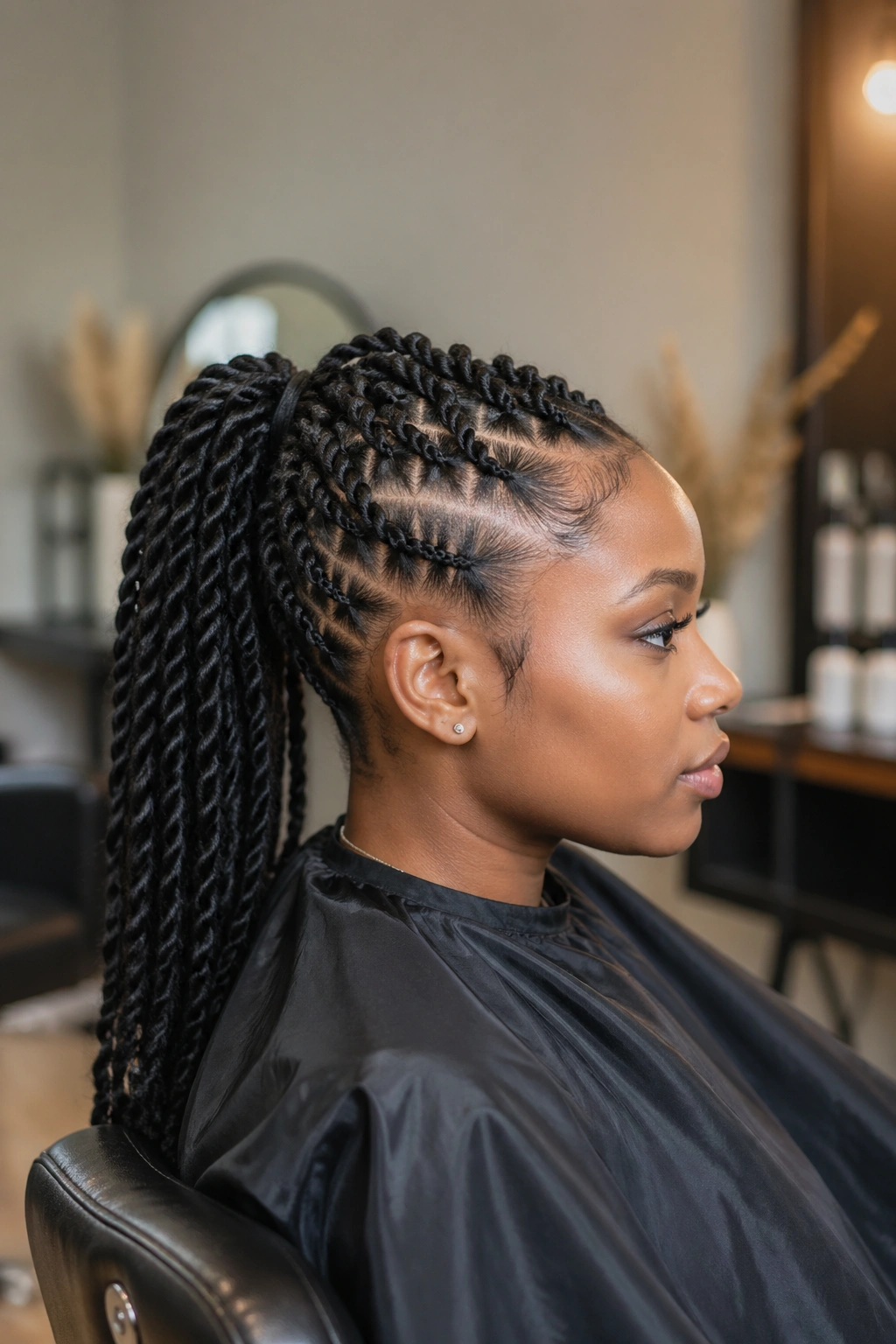
A feed-in twist ponytail has a cleaner scalp line than a loose gathered style, and that’s why it lasts so well. The hair gets added gradually at the root, which makes the base look neat and keeps the ponytail anchored.
The style is a smart choice when you want something that stays put through a long week. It also handles movement better than a ponytail that’s built only from loose hair, because the feed-in sections create a firmer foundation. You can wear it high or low, but I like it best when the braids or twists at the scalp are visible enough to show the structure.
If your scalp is sensitive, this one is worth discussing carefully with a stylist. The tension should feel snug, not sharp. If you can feel every part line pulling when you blink, it’s too tight.
A good feed-in ponytail usually uses small, even sections at the front and slightly larger ones toward the back. That keeps the shape balanced and stops the ponytail from looking lopsided.
6. Half-Up Twist Ponytail for Black Women
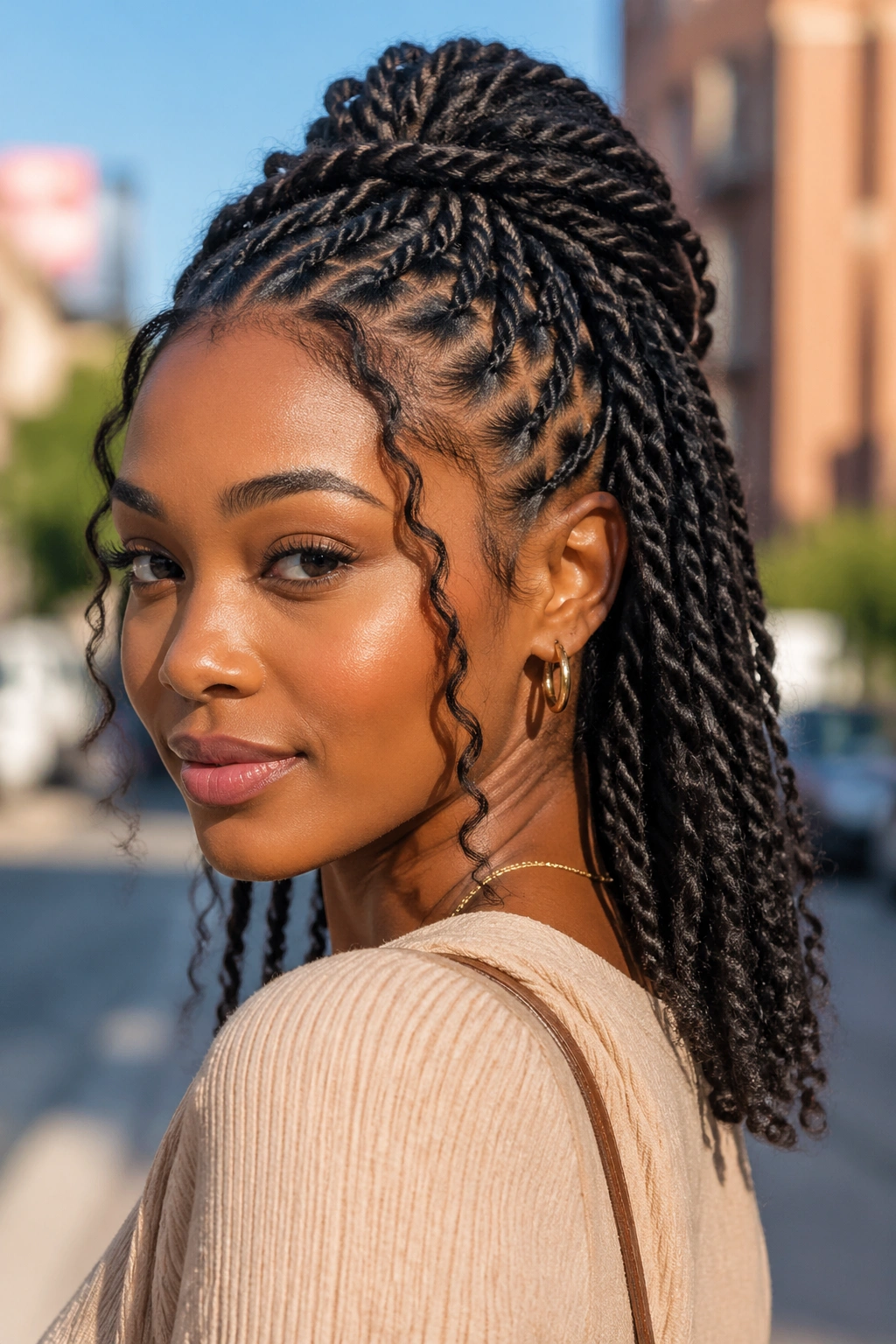
Half-up twist ponytails for Black women are a strong choice when you want length and lift at the same time. You get the neatness of a pulled-back crown and the softness of hair left down underneath.
That mix is the appeal. The top half can be twisted into a ponytail, bun, or knotted base, while the lower section stays loose, curled, blown out, or stretched. It works especially well when the hair is in that awkward in-between stage and you want a style that uses the length you have without hiding it completely.
The shape also lets you play with proportion. Tighten the top too much and it feels severe; leave a little softness around the hairline and it turns more romantic. A few loose curls around the face help, but don’t overload it. One or two tendrils are usually enough.
This version is a good pick for layered hair, because the half-up section controls the shorter pieces while the rest keeps movement. It looks intentional, which is half the battle.
7. Braided Crown into Twist Ponytail
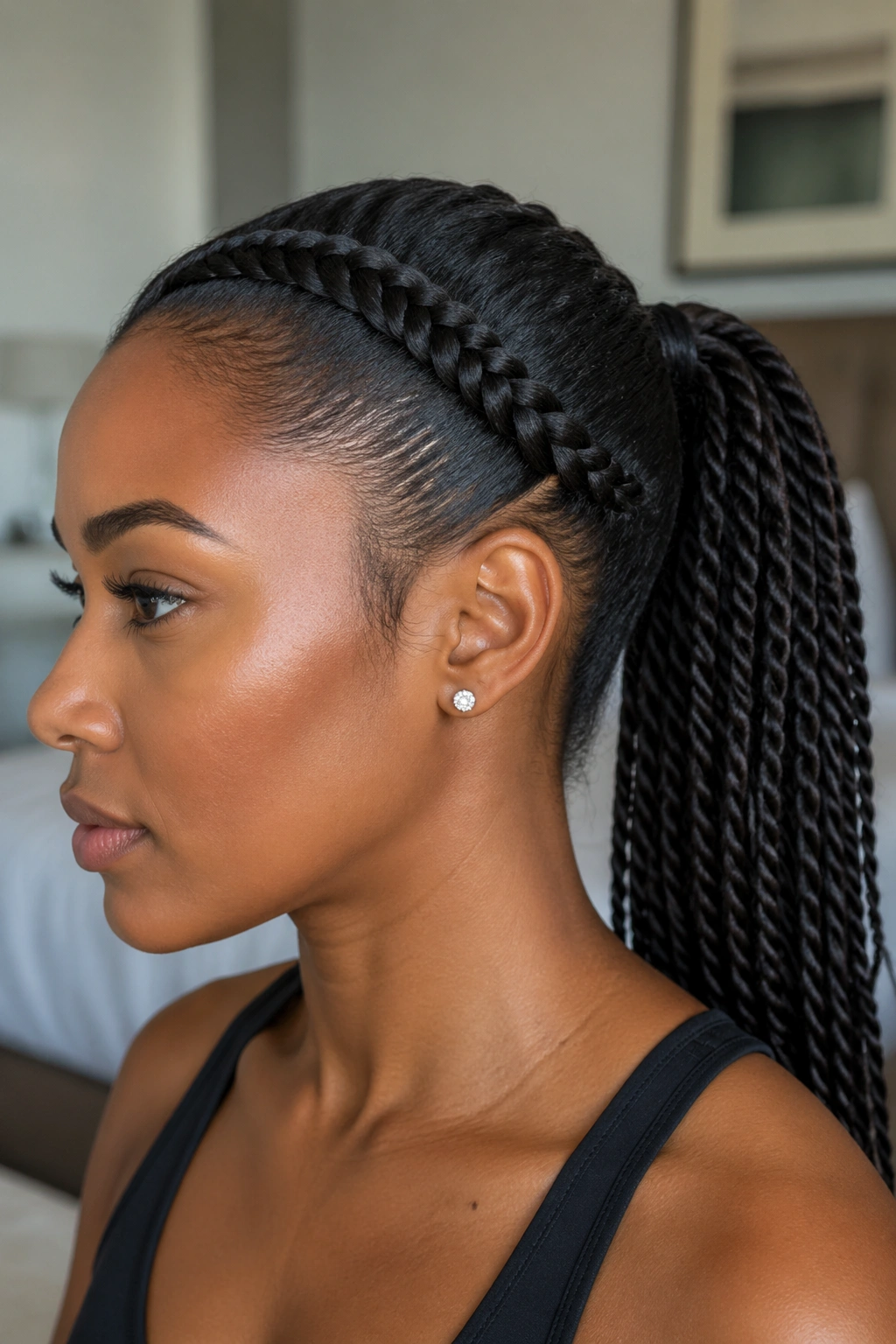
A braided crown into a twist ponytail brings structure to the front and motion to the back. That combination is why it reads more dressed up than a plain ponytail, even before you add accessories.
Start with a crown braid or two slim cornrows that curve from the front hairline toward the back. Then gather the rest into twists that drop from the ponytail holder. The braid acts like a frame, and the twists do the softer work. It’s a nice balance.
What Makes the Crown Work
The crown should be slim. If it gets too wide, the style starts looking heavy up top and the ponytail loses its clean line. Keep the braid close to the scalp and let the rest of the hair stay fuller.
- Best with medium-length to long hair
- Nice for formal events and photos
- Works with pearls, cuffs, or a simple metal pin
- Looks strongest when the crown braid is symmetrical
A small detail matters here: make sure the crown braid ends are hidden under the ponytail base. Exposed ends can make the whole style look rushed.
8. Flat-Twist Ponytail
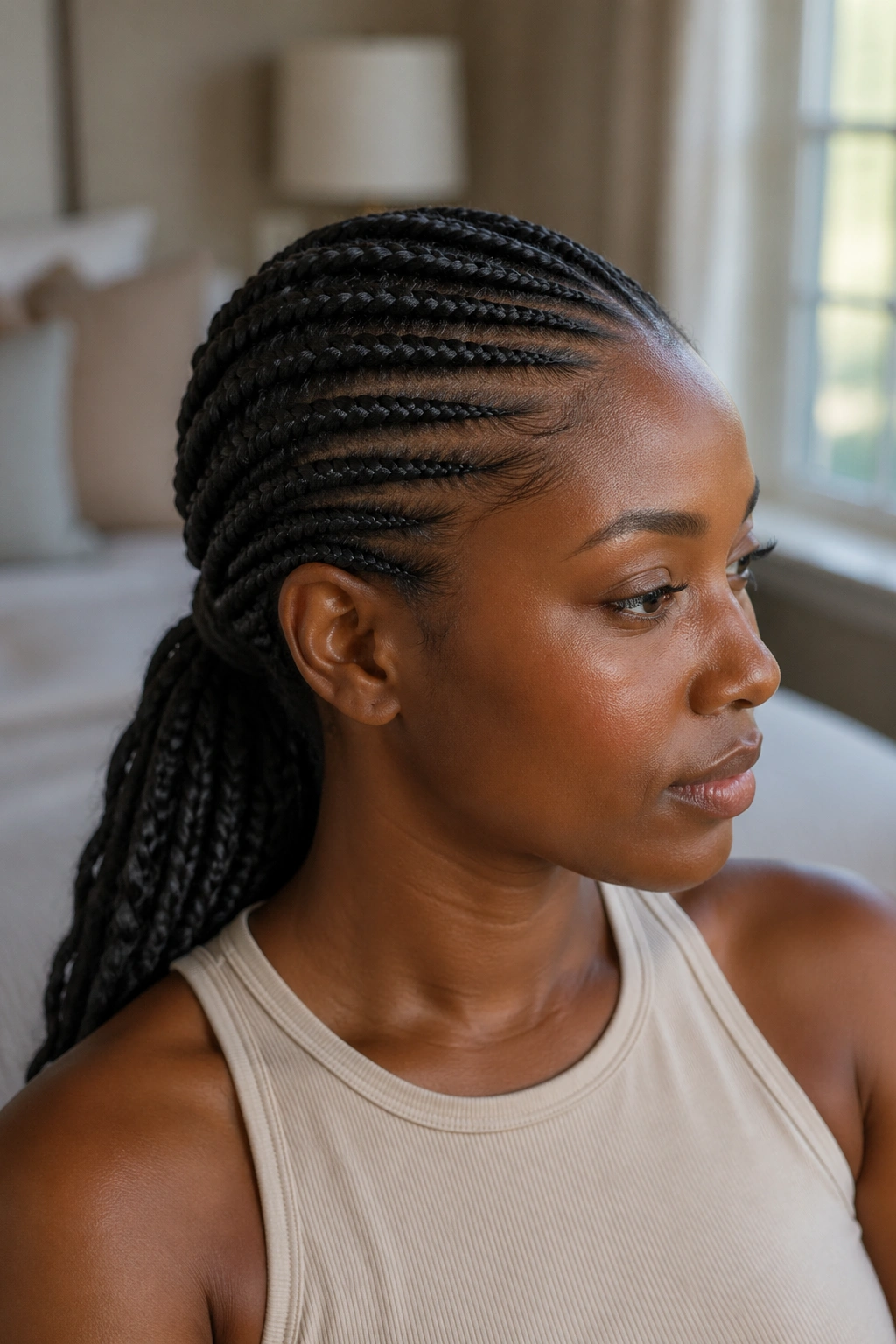
Flat twists are kinder to the scalp than many people expect. Because the hair is twisted close to the head instead of built into a thick braided ridge, the style can feel lighter and flatter at the root.
That matters if your edges are picky or your scalp hates heavy tension. A flat-twist ponytail gives you a tidy front with less bulk than boxier styles. It also lays well under scarves and hats, which is handy if you need the style to keep working after the first day.
I like this look on natural hair that’s been stretched a bit. The twists sit better when the hair has some length to grab. If the strands are too slippery, a setting mousse gives the pattern more hold without turning it crunchy.
A flat-twist ponytail is not flashy. That’s the point. It’s the style you choose when you want clean lines, low fuss, and a shape that still behaves after a long shift, a commute, or a full day of errands.
9. Bubble Twist Ponytail
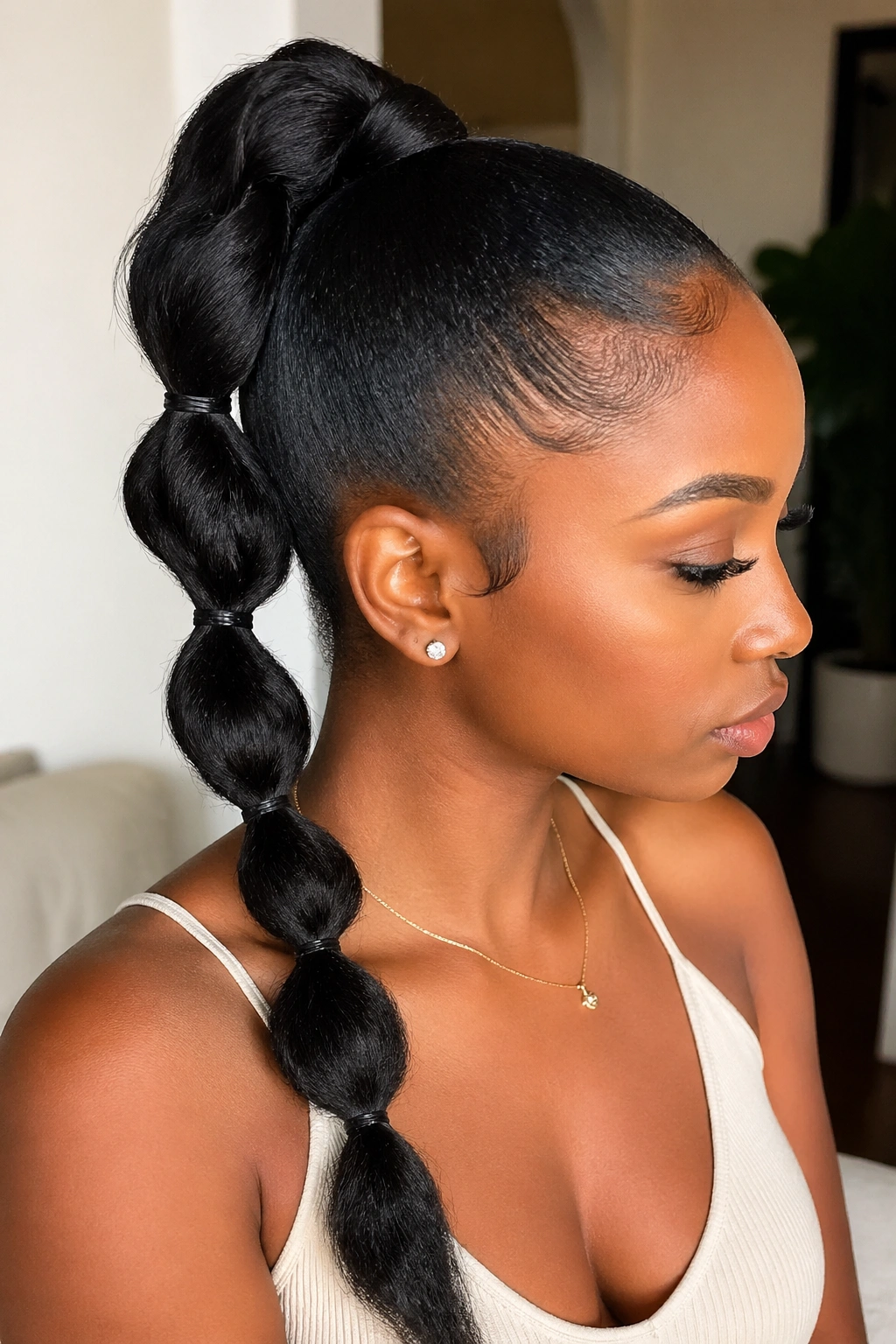
Bubble styles do one simple thing really well: they break up length so the ponytail looks fuller and more playful. On twist ponytails, that little segmented shape gives the style a bit of attitude.
Think of the ponytail as a chain of sections, each secured with small elastics every 2 to 3 inches. The twists sit between the elastics and puff slightly, which creates the bubble effect. It’s an easy way to turn one long ponytail into something with rhythm and texture.
How to Get the Shape
Use clear elastics or ones close to your hair color so the bubbles do the work. If you want each section to look rounder, gently tug the sides after each elastic is in place.
The style works best when the ponytail has some length. Shorter pieces can still do it, but the bubbles won’t read as clearly. I’d also avoid making the elastics too tight; they should hold the shape, not slice into the twist.
This one is fun without being childish. That sounds odd, maybe, but it’s true.
10. Curly-Ended Twist Ponytail
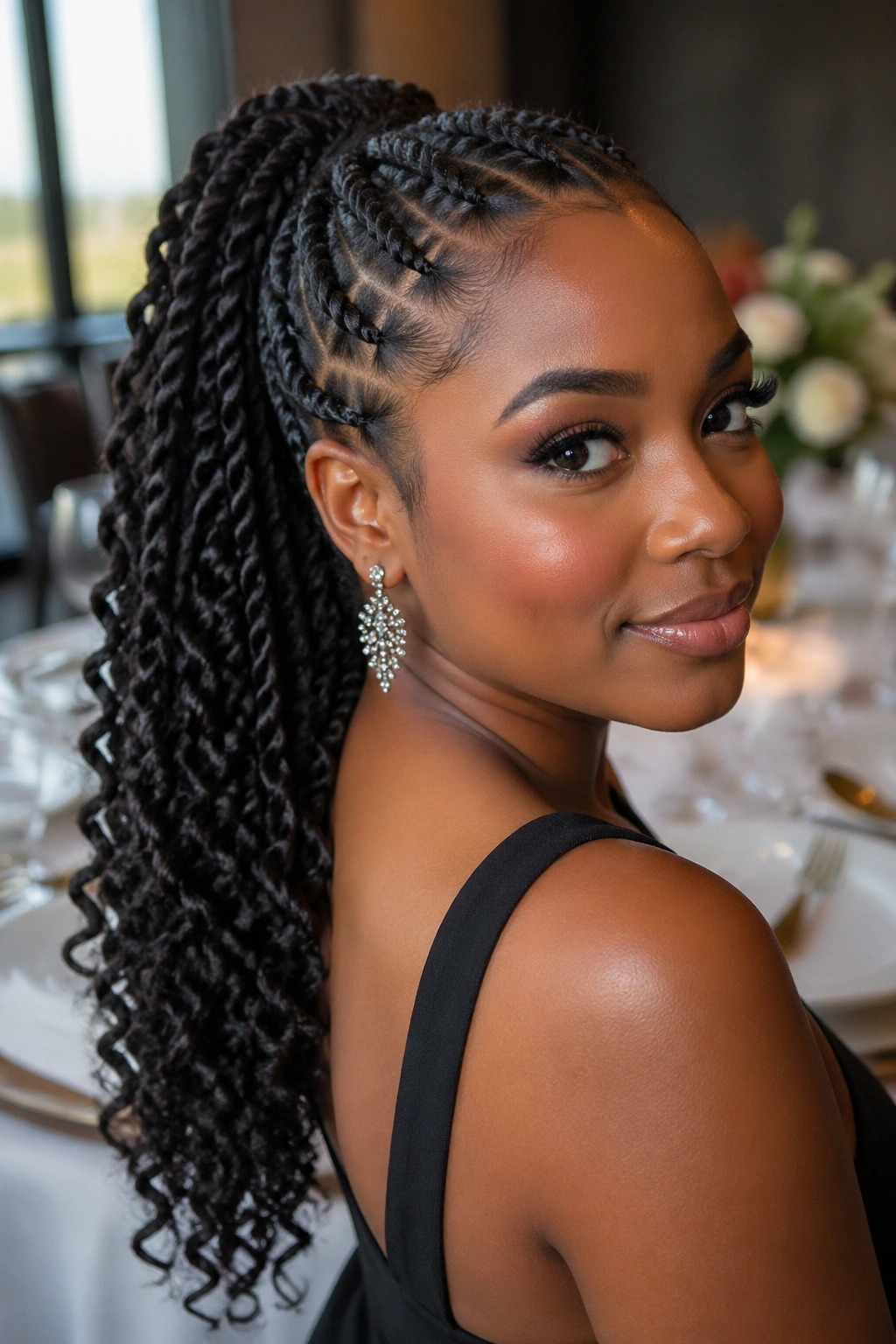
A twist ponytail with curly ends has a softer finish than one that stops bluntly. The curls make the style feel more romantic and keep the end from looking stiff or heavy.
The best version starts with twists that are neat through the length and then switch into curls at the bottom. You can set extension hair on flexi rods or use natural curl patterns if your own hair is long enough. A little steam or a light mousse set can help the ends keep their shape.
This style works beautifully for dinners, weddings, and any event where you want the ponytail to feel finished without looking severe. The curl at the end also gives movement when you walk, which is a small detail that makes a difference in person.
Keep the curl size consistent. If the ends get frizzy or uneven, the style loses the clean line that makes it appealing. A quick finger coil on the last inch can help.
11. Sleek Middle-Part Twist Ponytail
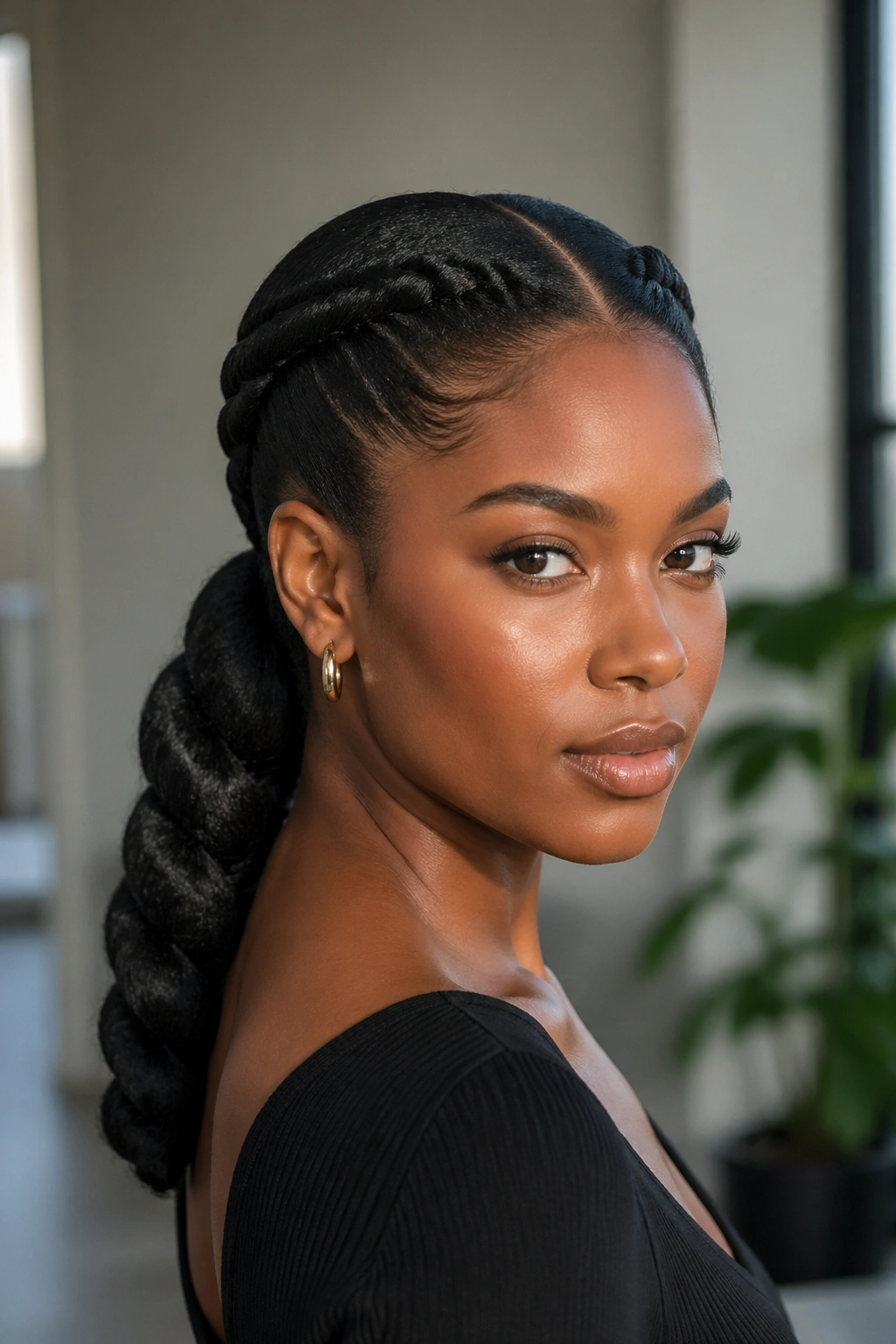
A center-part twist ponytail gives symmetry a starring role. It looks calm, precise, and polished in a way that feels almost architectural.
The center part is the anchor. Once that line is crisp, everything else settles into place. The hair on both sides should mirror each other closely, which is why this style suits people who like neatness and do not mind a little prep time. A smoothing brush and a light gel at the root help, but the product should not pile up.
I like this style on long faces because the symmetry balances the shape. That said, it also works on rounder faces when the ponytail sits a touch lower and the twist length drops past the shoulders. The key is not to build too much height at the crown.
A middle part can be unforgiving if the parting is crooked. Take your time with it. The pay-off is a ponytail that looks calm from the front and expensive from the side.
12. Asymmetrical Side-Part Twist Ponytail
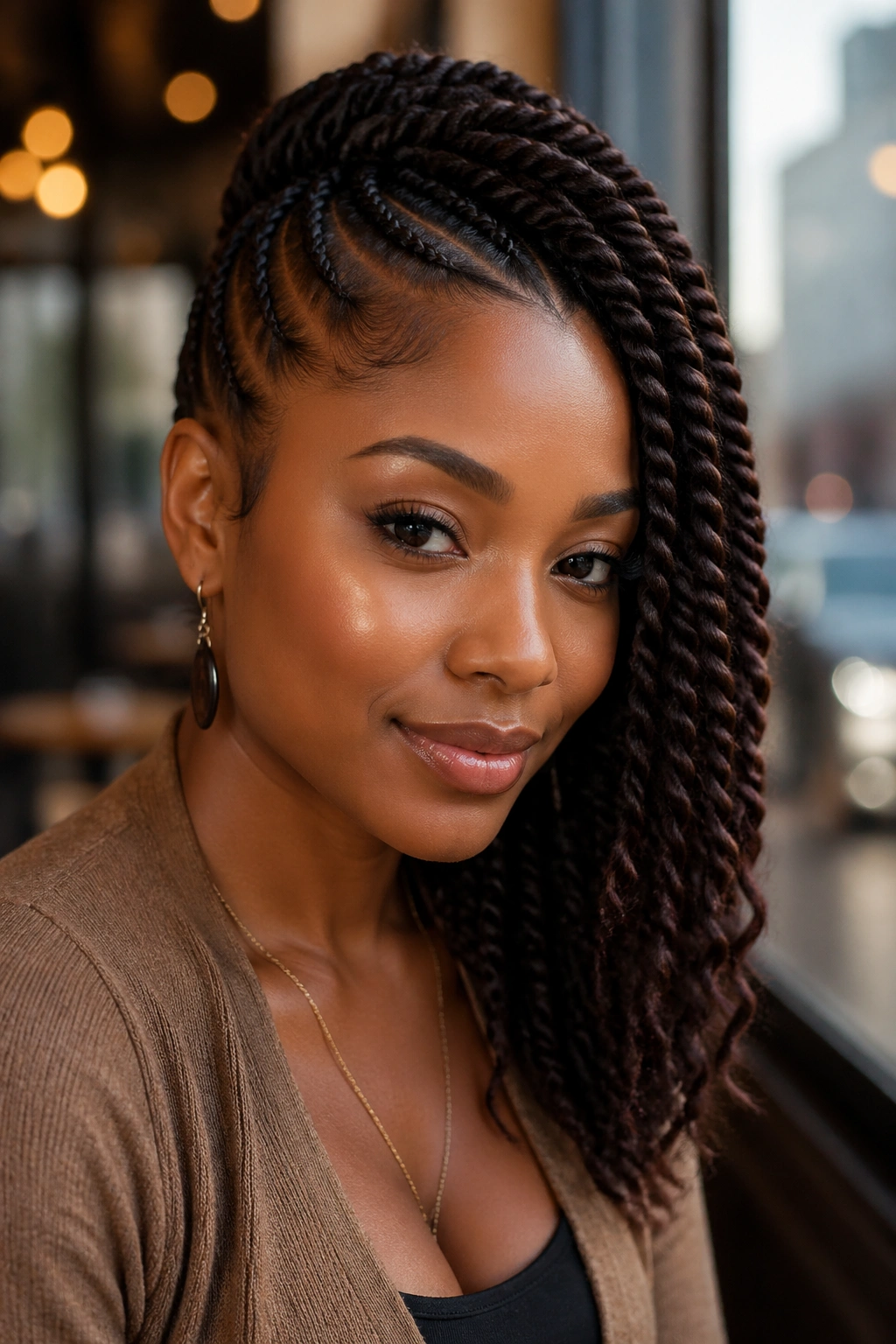
Asymmetry gives a twist ponytail personality fast. One side sits higher or fuller, the part angles more sharply, and the whole style feels a little more editorial without becoming hard to wear.
This is the version I’d choose when a standard center part feels too expected. A deep side part makes the face feel longer on one side and softer on the other, which can be flattering if you want movement around the forehead. The twist ponytail itself can stay simple; the parting does the heavy lifting.
You can make the asymmetry obvious or subtle. A slight shift in the base is enough for some people, while others want one side slicked closer to the scalp and the other side built with a little more volume. Both work. The difference is in the mood.
If you wear bold earrings or a strong lip, this style gives them room to breathe. It’s a good match for people who like clean hair with one small twist — literally.
13. Waist-Length Extension Twist Ponytail
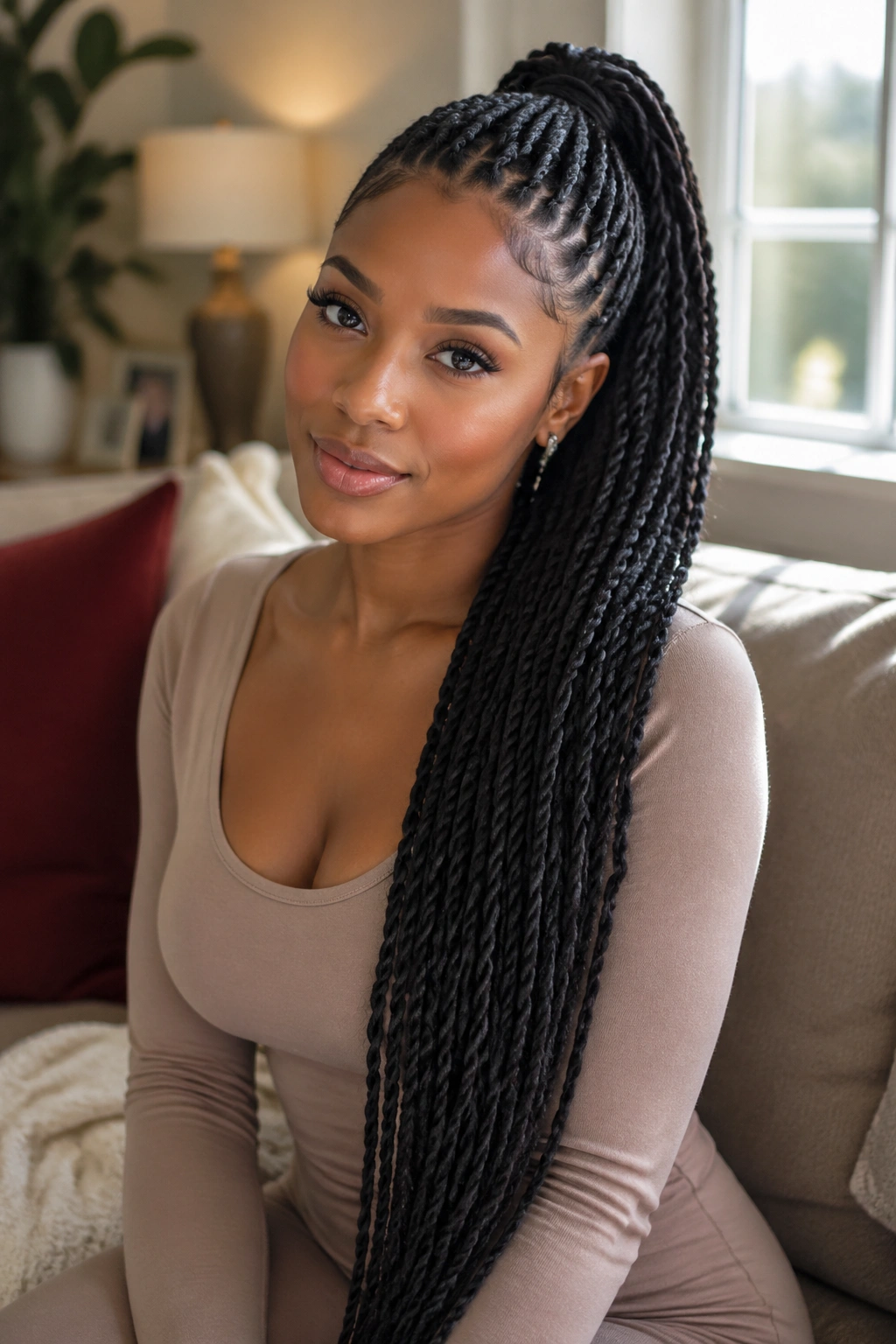
Waist-length twists are all about presence. They move when you move, and they make even a simple outfit feel more finished.
Long extension hair can be gorgeous here, but weight matters. A ponytail that looks full in the mirror can feel much heavier after a few hours if the base is too tight or the extensions are too dense. I’d rather see a well-balanced length than a ponytail that drags at the scalp.
What to Watch For
Use enough extension hair to keep the twists smooth through the length, but not so much that the ponytail becomes stiff. A bungee cord or strong elastic under the base helps support the weight better than a tiny hair tie.
- Best for special events and photo-heavy days
- Needs careful nighttime wrapping
- Works well with layered ends for movement
- Can feel heavy if packed too tightly
The style looks best when the twists swing. If they sit like rope, they’ve probably been overloaded.
14. Short Natural-Hair Twist Puff Ponytail
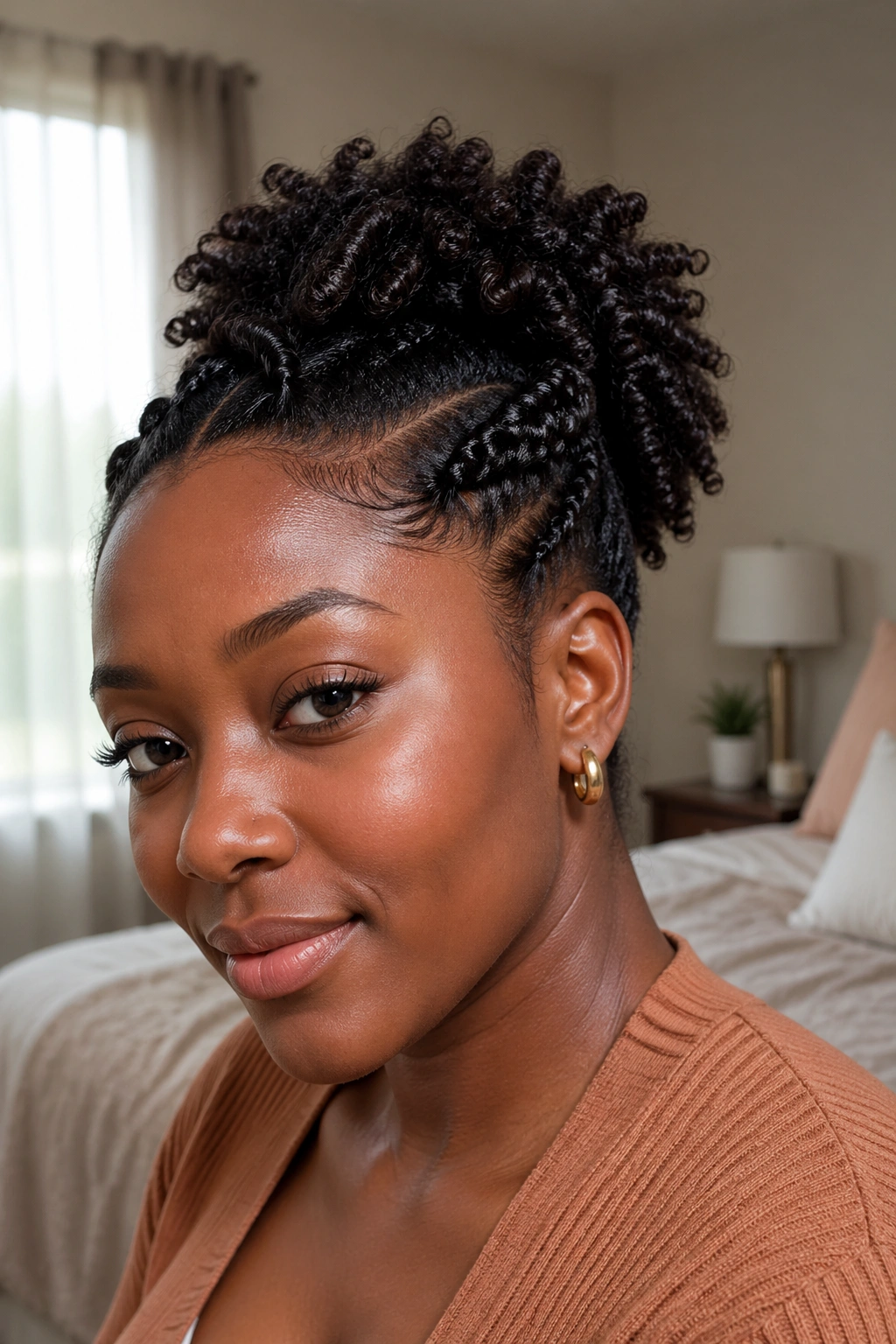
You do not need extensions for a twist ponytail to look good. A short natural-hair twist puff can be just as striking, and sometimes it’s better because it keeps the hair closer to home.
This style works well when the hair is short to medium and the goal is shape rather than length. Small twists or two-strand sections can be gathered into a puff at the back or the crown, giving the ponytail a soft, rounded finish. It feels casual, but it still looks deliberate.
The texture is the point. Let the coils stay visible instead of trying to smooth every bit of personality out of them. A light cream or foam can help the hair hold its shape, and a soft elastic keeps the puff from shrinking too much.
I like this version because it respects short hair instead of hiding it. That alone makes it worth wearing.
15. Knotted Wrapped-Base Twist Ponytail
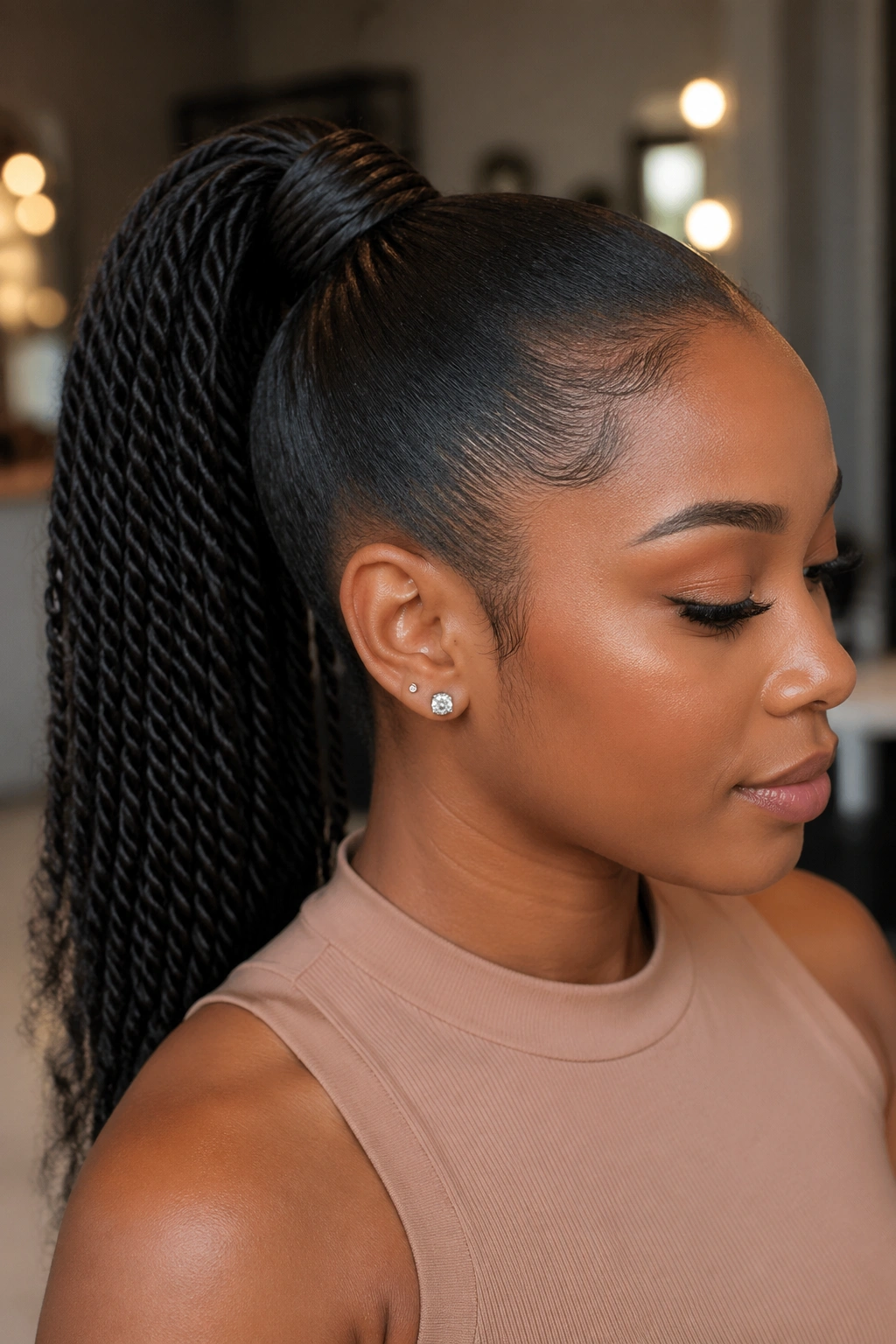
A wrapped base fixes the one thing that can make a pretty ponytail look unfinished: a visible elastic. It’s a small move, but it changes the whole shape.
To get the look, take a small strand from underneath the ponytail, wrap it around the base several times, and pin it under the back. That hides the tie and gives the ponytail a smoother transition from scalp to length. If you like sleek finishes, this is a useful habit.
Simple Wrapping Trick
Keep the wrap strand thin. If it’s too thick, the base starts looking bulky and the neat line disappears. A pin tucked into the underside usually holds better than one stabbed straight through the middle.
This style works with high, low, and mid-height ponytails. It also makes a twist ponytail look more finished when you do not want extra accessories. No beads, no scarf, no cuffs. Just a clean base and good shape.
Sometimes the quietest detail is the one people notice first.
16. Color-Pop Twist Ponytail
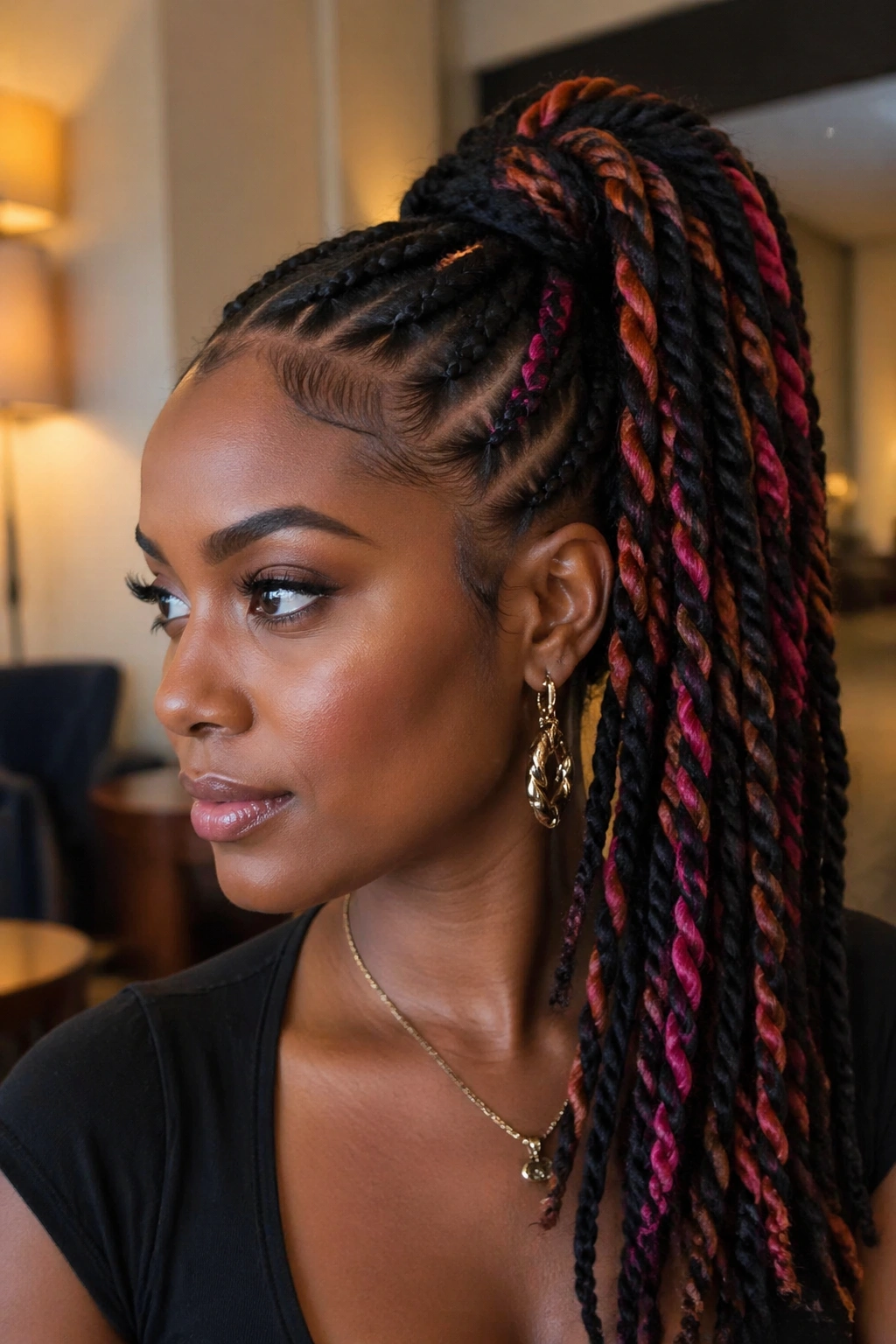
A twist ponytail with color in it can go from plain to memorable fast, but the trick is choosing a shade that looks like it belongs there. Burgundy, copper, honey blonde, and soft auburn usually read well against dark hair.
You do not need an all-over color change. A few colored pieces woven through the twists can give dimension without taking over the style. That’s the part I like most. It adds interest while keeping the ponytail wearable for everyday life.
If your natural hair is deep brown or black, a warm highlight tone can soften the whole look. Cooler shades, like ash brown or silver-gray, can push it in a more fashion-forward direction. Both are fine. The question is how much contrast you want.
Try to keep the rest of the style simple when the color is doing the talking. A clean base and neat twists let the shade stand out without fighting for attention.
17. Scarf-Wrapped Twist Ponytail
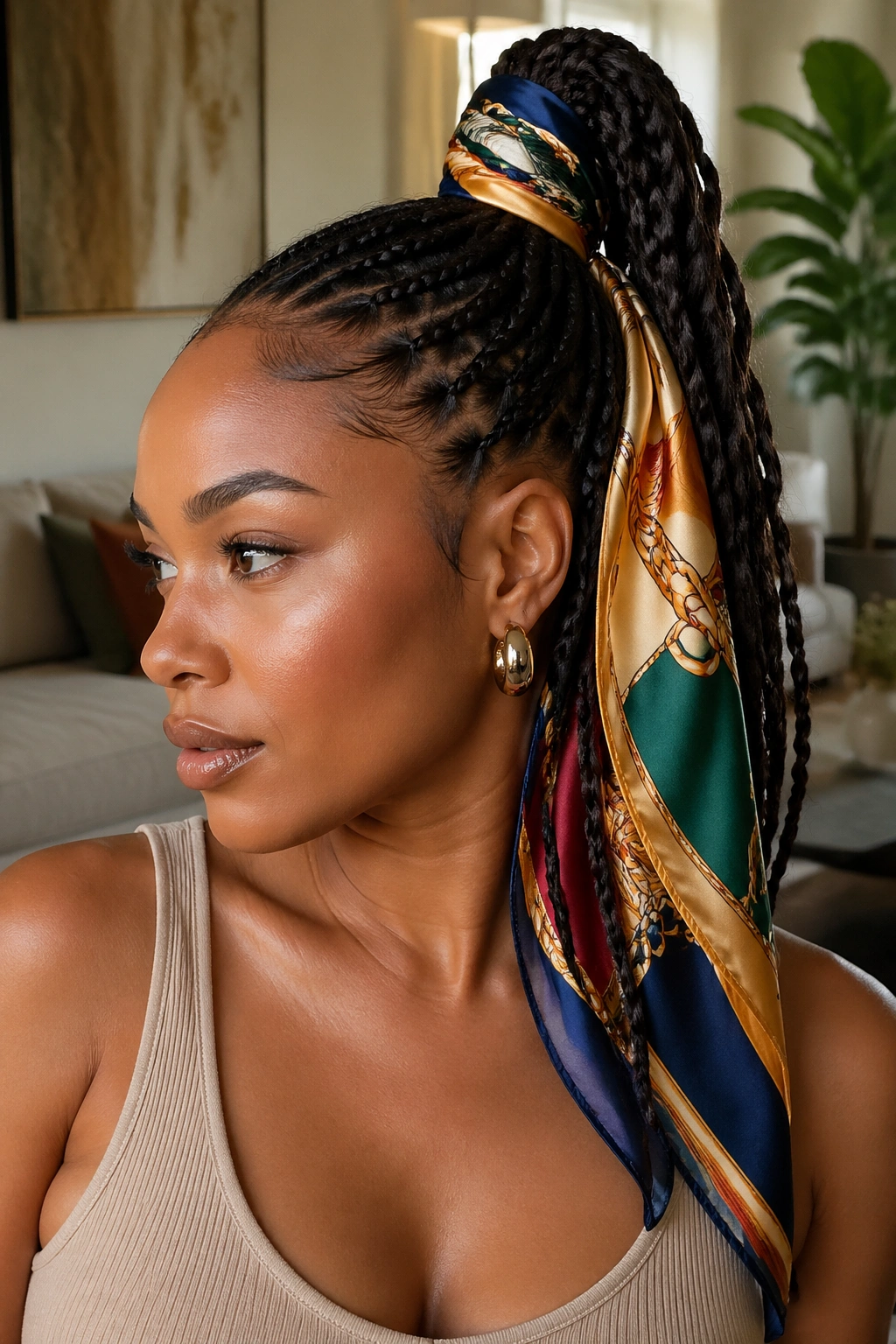
A scarf-wrapped twist ponytail does two jobs at once: it gives the style color and hides the part of the base that might be growing out. That makes it one of the easiest ways to stretch a look for another day or two.
The scarf can sit around the ponytail base, wrap across the crown, or tie into a bow at the nape. Silk or satin works best because it glides instead of rubbing. Cotton scarves tend to snag the hair and make the finish look rough faster than you’d expect.
This style is useful when the twists still look good but the roots need help. A scarf covers a lot without making the ponytail feel hidden. It also lets you change the mood of the style with one swap: bright print, neutral tone, narrow band, wide fold.
A scarf can rescue a style, but it can also hide a rushed base. That’s why I like it best as an accent, not a cover-up.
18. Beaded Twist Ponytail for Black Women
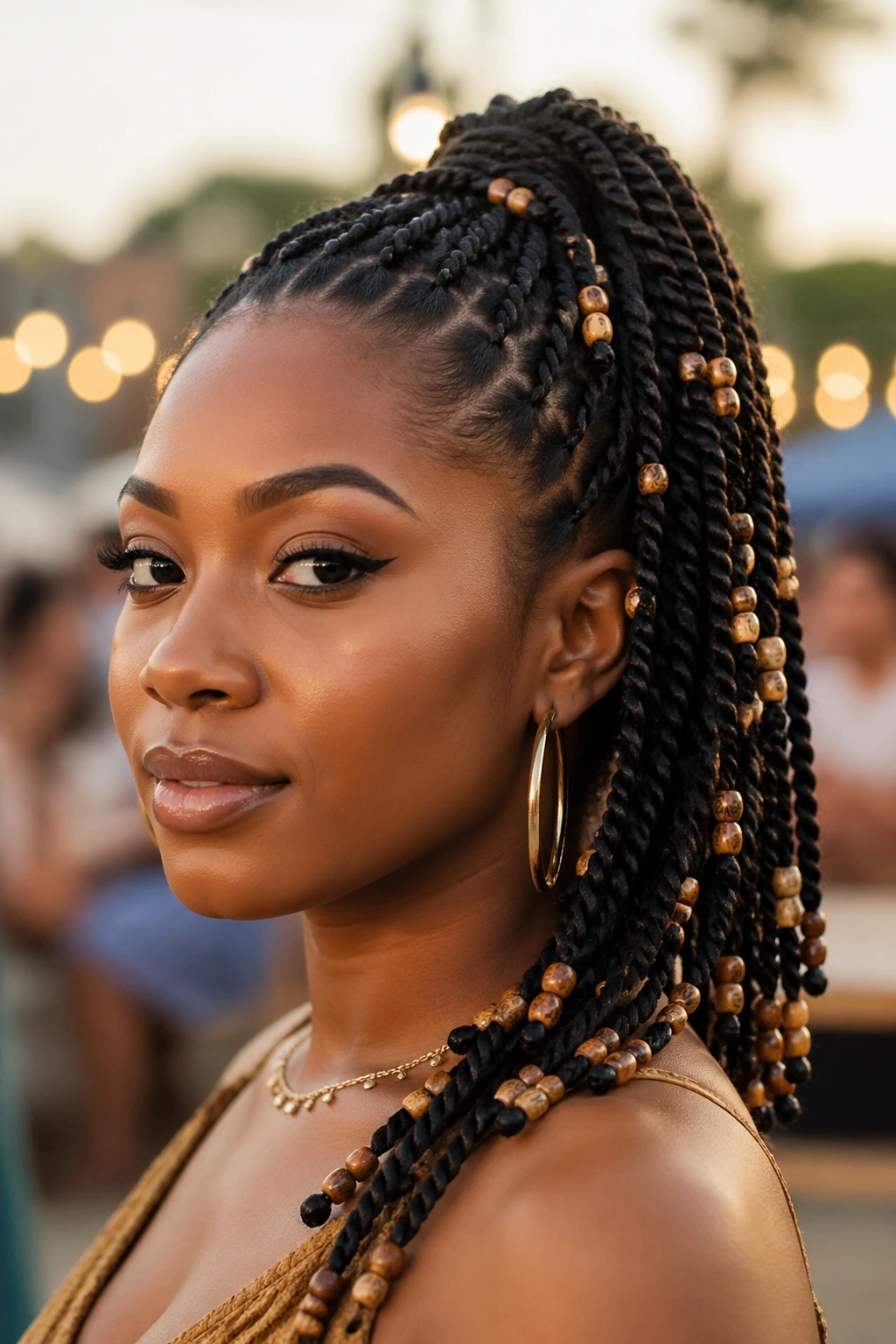
Beads give a twist ponytail sound, movement, and a little memory. Every step makes them click softly, and that sensory detail changes the whole feel of the style.
They work especially well on medium to long twists. You can place beads on the ends for a playful finish or keep them near the base for a more grounded look. I’d keep the count moderate — too many beads start to weigh the twists down, and the ponytail loses swing.
A Few Smart Choices
Pick beads that do not snag the hair shaft. Smooth plastic, wood, or coated metal is usually easier to manage than anything with rough edges. Also, match the bead hole to the twist thickness so you’re not forcing hair through a tight opening.
- Great for special occasions and festivals
- Best when the twists are well sealed at the ends
- Use small rubber stops if the beads slide
- Keep the total weight reasonable
Beads are not subtle. That’s fine. They’re supposed to be heard a little.
19. Mohawk-Inspired Twist Ponytail
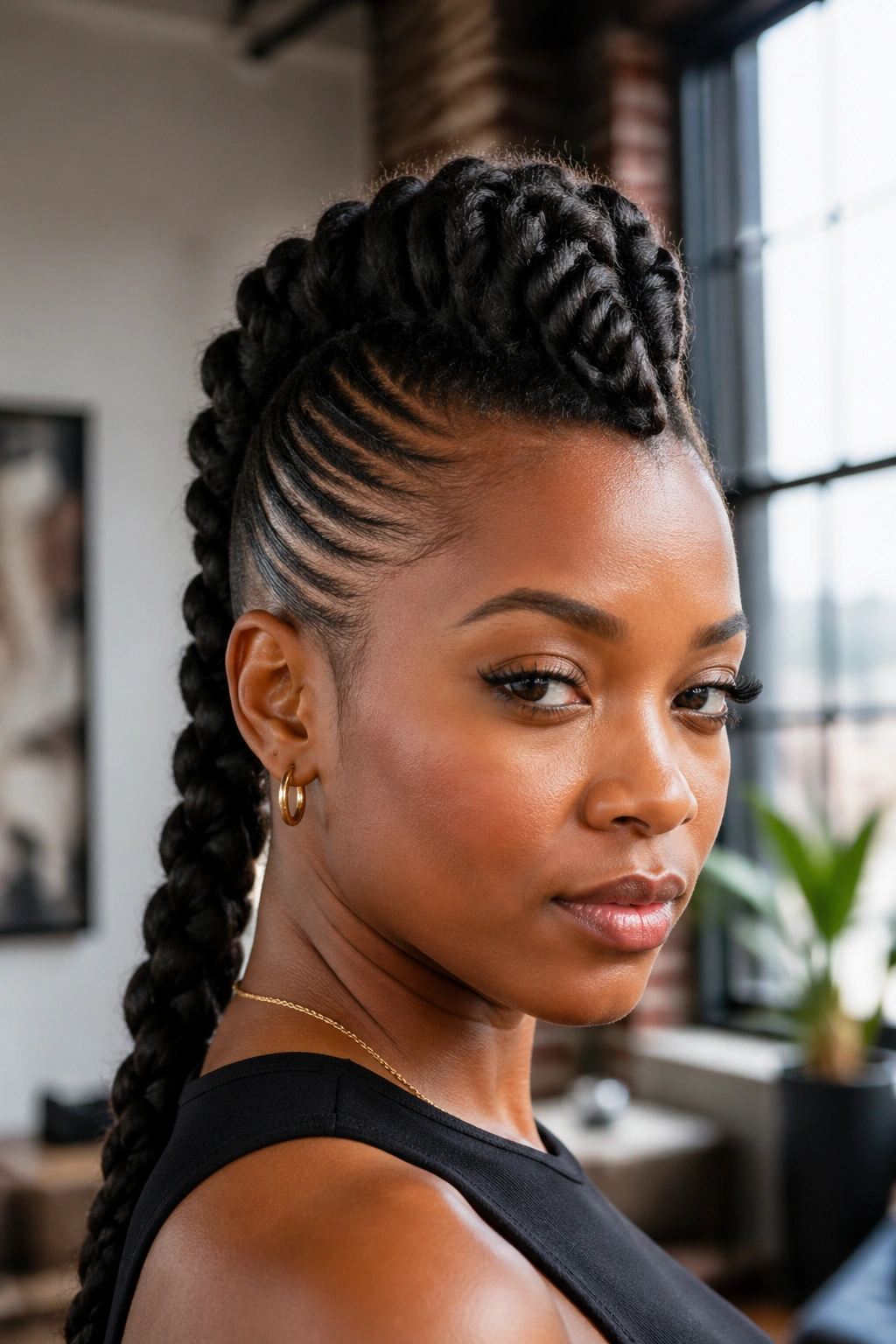
A mohawk-inspired twist ponytail turns the center of the head into the main event. The sides stay sleek and low, while the middle gets height, texture, and movement.
This style feels bolder than the average ponytail because it borrows the shape of a mohawk without fully committing to it. The middle can be built from twists, braided rows, or a lifted ponytail base, and the contrast against the flattened sides makes the whole thing pop. It’s a strong choice when you want structure with edge.
Why It Reads Strong
The side panels should be smooth and close to the scalp. That contrast is what makes the top ridge look intentional. If the sides are puffy, the silhouette loses its line and the style becomes less sharp.
- Works best with clean parting on both sides
- Needs secure pins under the ridge
- Looks good with statement earrings
- Can be worn high for drama or lower for balance
I’d keep the makeup or outfit simple when the hair is this bold. Let the silhouette do the talking.
20. Low Braided-to-Twist Ponytail
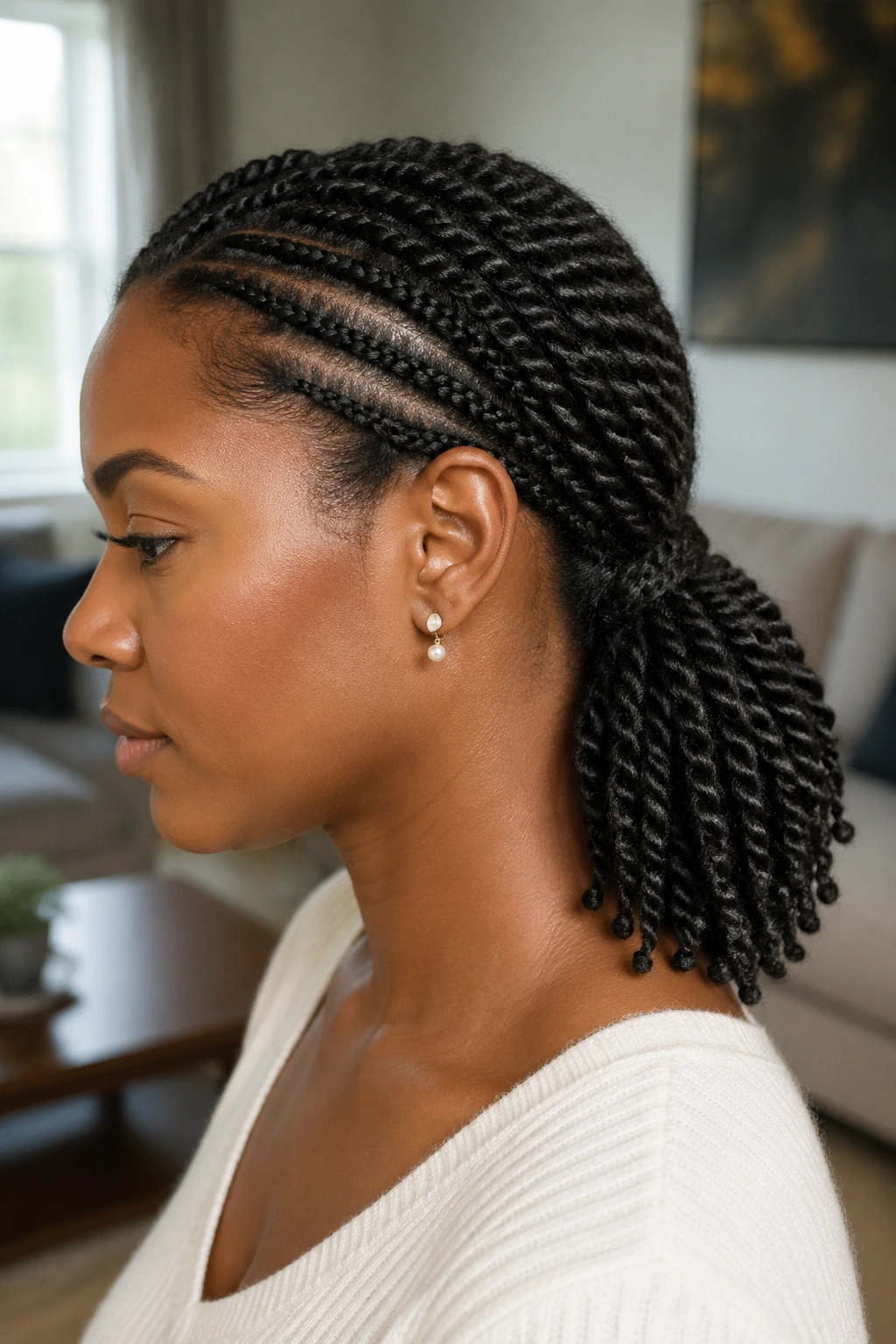
A low braided-to-twist ponytail is a smart fix for hair that’s layered or uneven at the ends. The braid gives the base control, and the twist length gives the ponytail movement.
This mix of textures also makes the style feel more detailed than a plain low ponytail. The braids near the scalp can be narrow and precise, then transition into thicker twist pieces once the ponytail starts. That keeps the look from feeling flat at the root.
I like this on hair that needs a little help staying gathered. The braided section catches shorter layers better than loose twists do. It also holds through a full day without much fuss, which is a nice bonus if you’re not in the mood to keep touching your hair.
Keep the braid-to-twist transition smooth. A rough jump from one texture to the other can make the style look split in half instead of blended.
21. Wedding Twist Ponytail
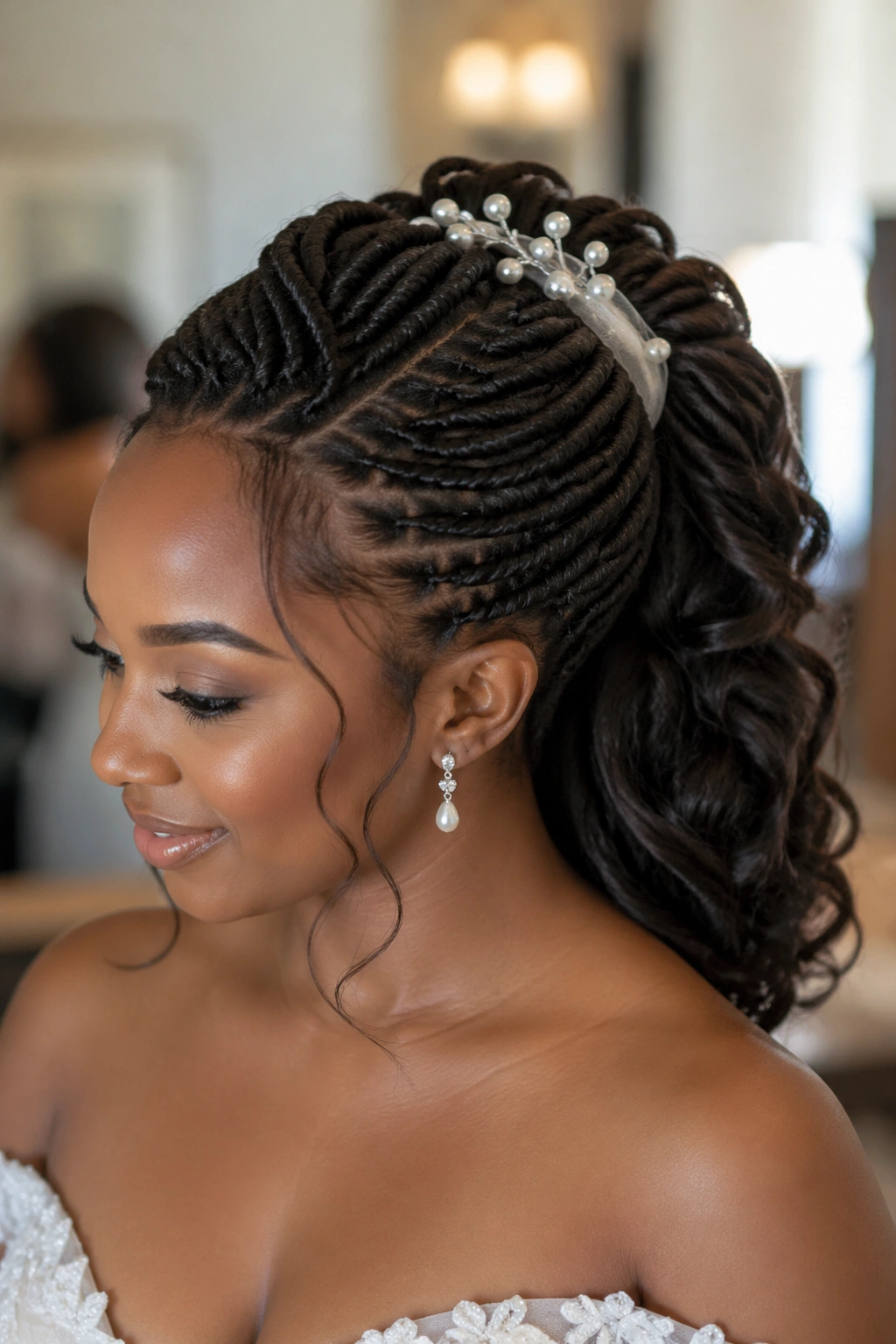
Can a ponytail feel formal enough for a wedding? Absolutely, if the base is clean and the finish is soft.
A wedding twist ponytail usually sits low or mid-height, with a polished crown and a little romance in the length. The twists can be curled at the ends, pinned with pearls, or wrapped with a delicate strip of fabric. Nothing has to be heavy. In fact, too much decoration makes the style look crowded.
How to Keep It Soft
Keep the front smooth, but leave room for a gentle part and a few face-framing pieces if they suit the dress. If the neckline is detailed, a lower ponytail tends to look better because it doesn’t compete with the gown. If the dress is simple, a fuller twist ponytail can carry more of the look.
- Best with soft curls at the ends
- Works nicely with pearls, combs, or tiny pins
- Should stay comfortable for long wear
- Looks clean in both indoor and outdoor settings
A wedding ponytail should feel calm, not stiff. That’s the sweet spot.
22. Gym-Friendly Twist Ponytail
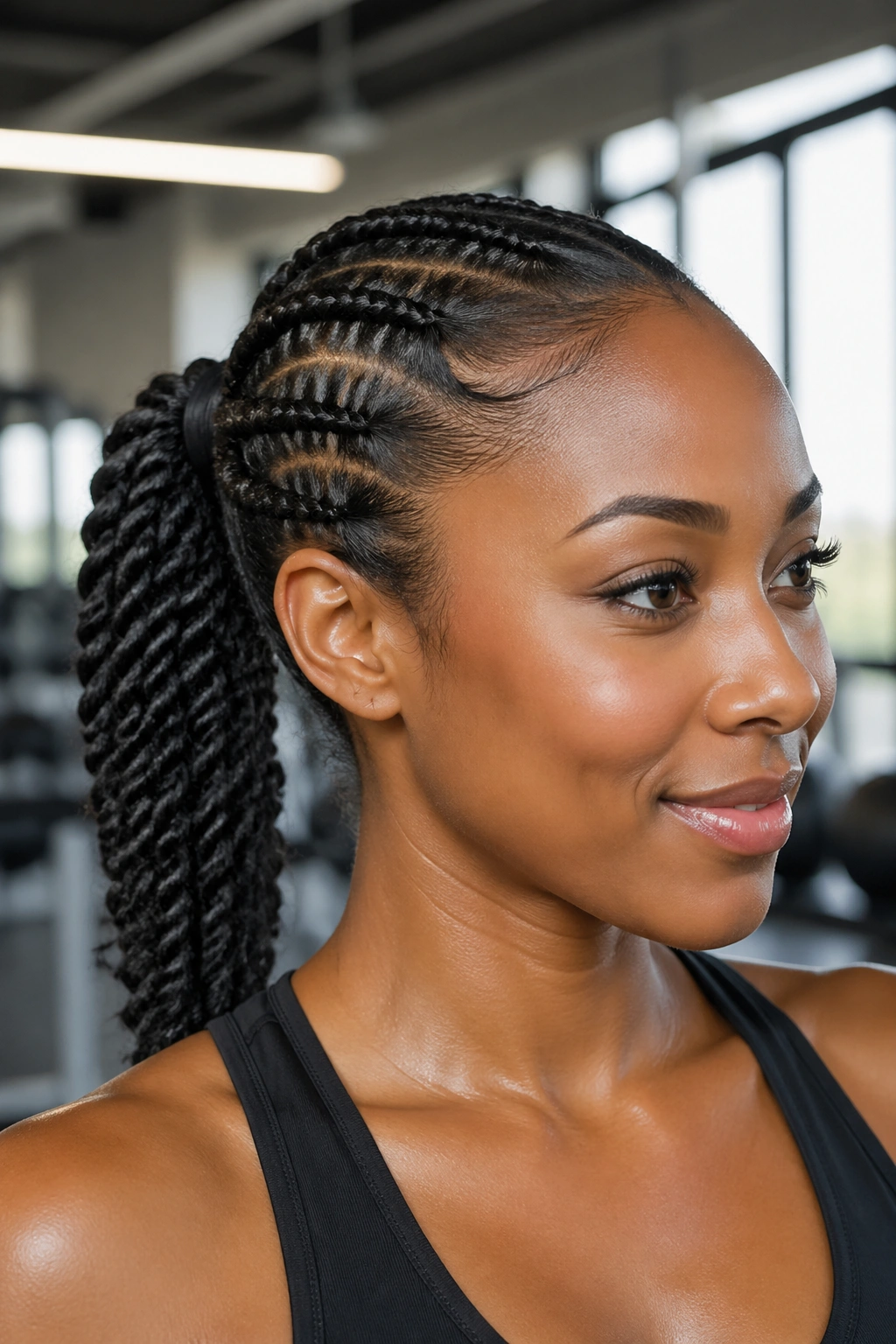
A gym-friendly twist ponytail needs to stay put when you move and still look decent when you’re done. That sounds basic, but plenty of ponytails fail at one of those two jobs.
The base should be secure enough for movement without being tight enough to leave a headache. A low or mid ponytail is usually safer than a high one for workouts because it won’t bounce as much. Braided roots or flat twists help too, since they keep the hair smoother against the scalp and cut down on flyaways.
Sweat changes everything. A style that looks neat before warm-up can puff up fast if the root is overloaded with thick cream or greasy edge gel. Keep products light and use a satin wrap after you’re done if you want the twist pattern to last into the next day.
- Choose secure elastics that do not slip
- Keep the base close and simple
- Skip heavy oils before exercise
- Refresh with a scarf, not more product
The best gym ponytail is one you forget about while you’re moving.
23. Faux Loc Twist Ponytail
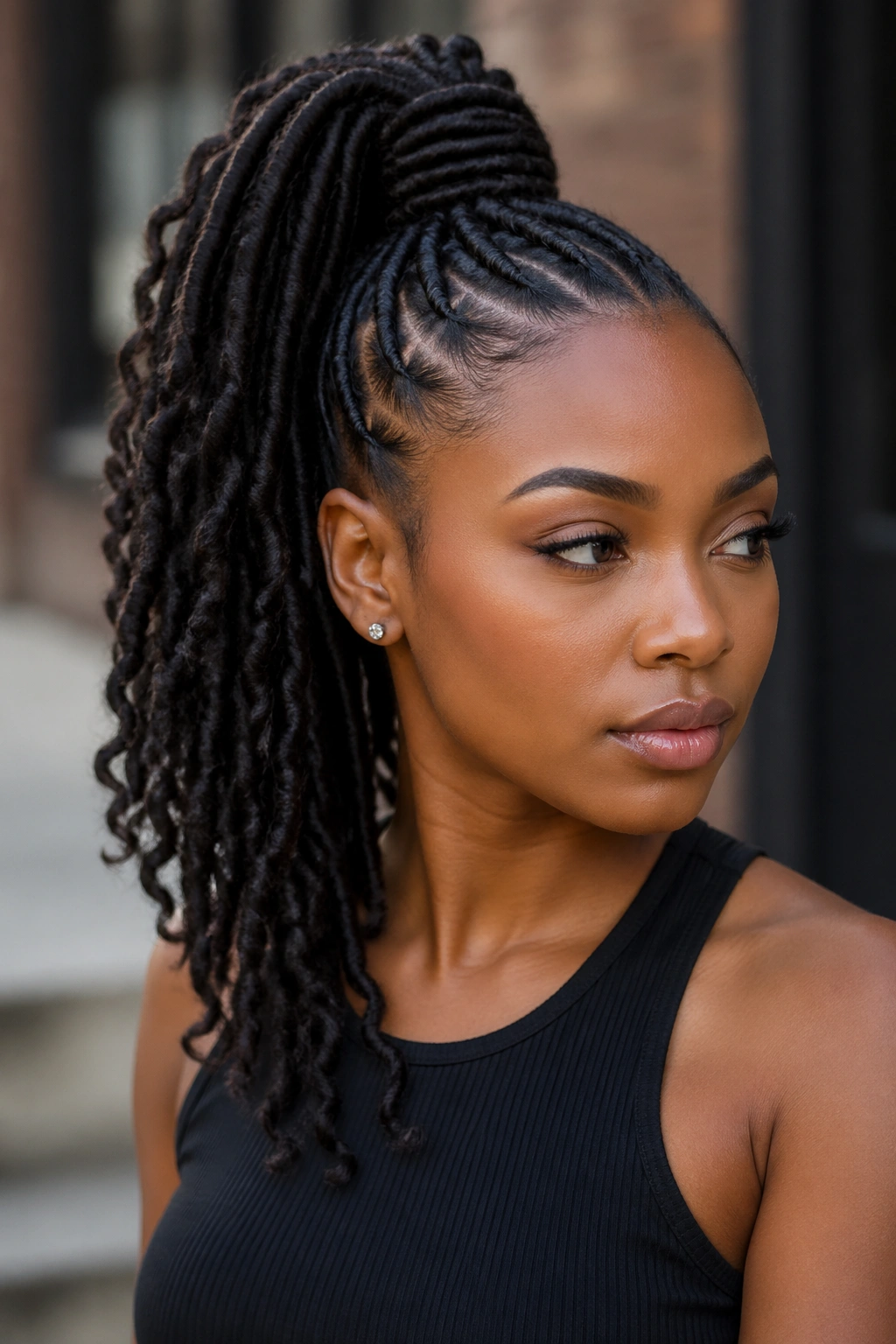
A faux loc twist ponytail has a heavier, more textured feel than a standard two-strand version. It borrows the look of locs while keeping the ponytail shape lifted and tidy.
This style is useful if you want something with presence that can stay in for a while. The wrapped texture gives the ponytail body, and the loc-inspired sections tend to hold their form well. That said, the weight can creep up fast if you add too much hair, so balance matters more here than in slimmer twist styles.
The finish is more grounded than glossy. I like that about it. It reads rich and tactile, not over-slicked. If you want extra polish, a wrapped base and a few cuffs can sharpen the look without taking away the texture.
This one suits people who like a little edge in their hair and do not mind a style that feels substantial on the head.
24. Twist Ponytail with Curled Bangs for Black Women
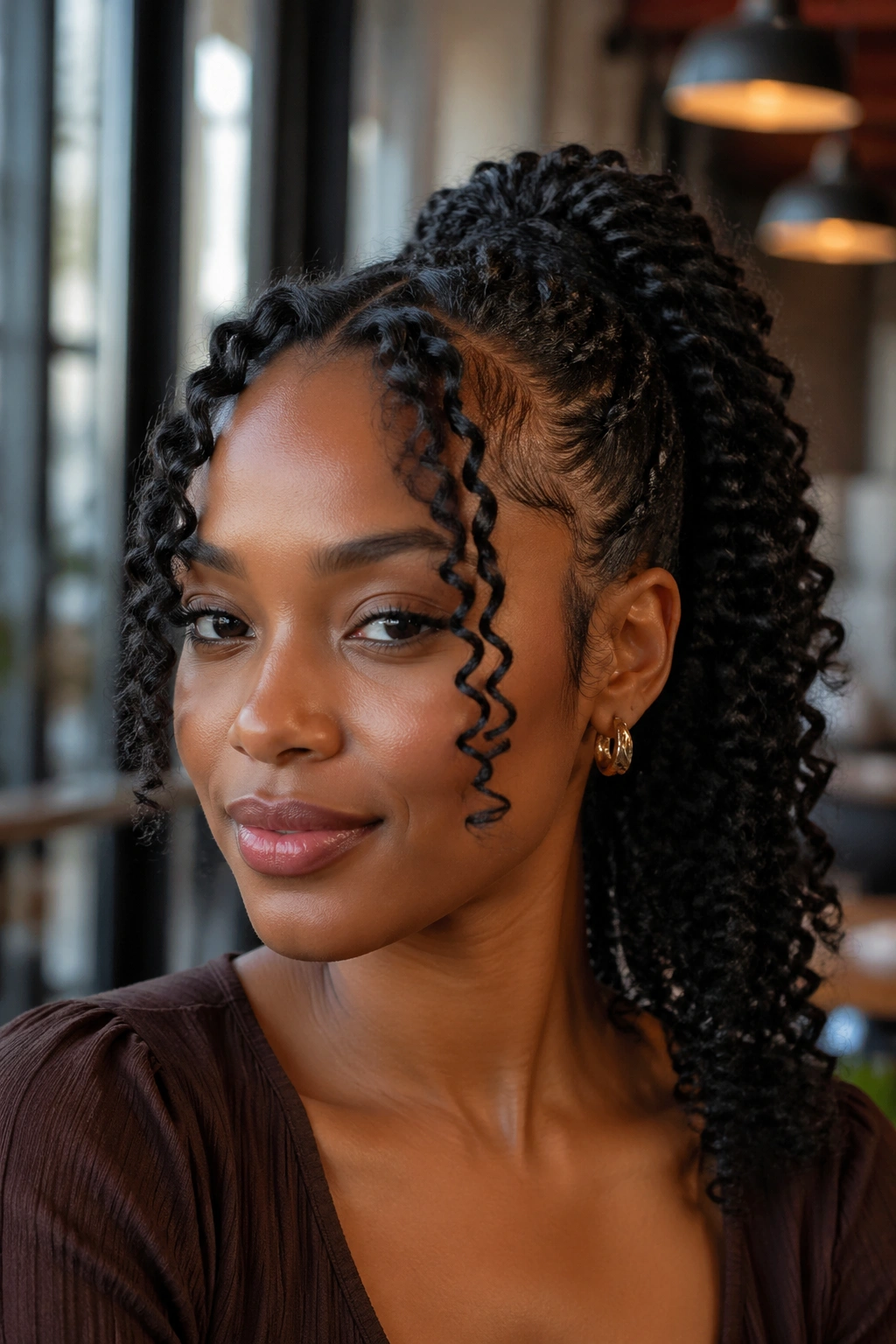
Face-framing curls change a twist ponytail faster than almost anything else. They soften the forehead, add movement near the cheeks, and make the whole style feel less severe.
The ponytail can be sleek or textured, but the curled bangs or tendrils are what pull the eye forward. Keep them light. Two or three pieces around the front are often enough. Too many curls can make the hair look busy, especially if the ponytail already has a lot of texture.
This is a good style when you want your face to stay visible. It also works well with side parts, because the curls can mirror the direction of the part instead of fighting it. If the curls fall too long, trim or set them a bit shorter so they stay away from the lips and eyes.
A small curl near the cheekbone can do more than a heavy front section ever will.
25. Wrapped Low Twist Ponytail
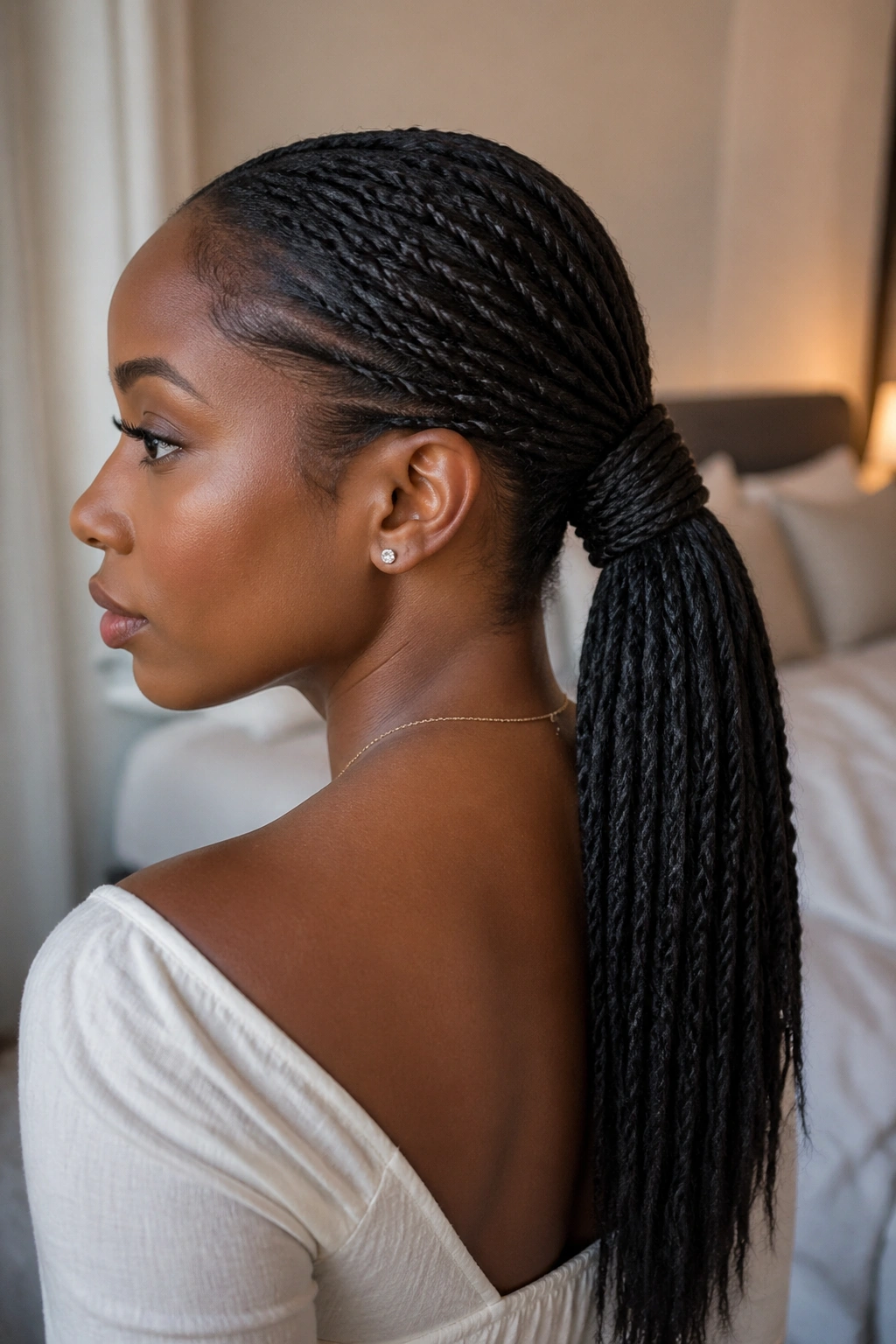
The wrapped low twist ponytail is the one I keep coming back to when I want something clean, controlled, and easy to live in. It sits low, hides the elastic, and lets the twists do the work without extra noise.
The shape is simple, but that simplicity is the point. A low base keeps tension manageable, the wrapped section makes the finish look neat, and the twists can be long, short, chunky, or slim depending on the mood. If you’re deciding between styles and want the safest bet, this is the one I’d pick first.
Why I Keep Coming Back to It
It doesn’t fight your outfit. It doesn’t fight your face shape. And it doesn’t need a pile of accessories to feel finished. That kind of restraint is rare, honestly.
- Works for workdays, dinners, and travel
- Easy to refresh with a satin scarf at night
- Looks strongest with a clean part and smooth base
- Can be worn with natural hair or extensions
The best twist ponytail is the one that stays in place without making your scalp angry. This version usually gets that balance right, and that’s why it earns a permanent spot in the rotation.
