
Orange and red box braids have a way of looking expensive even when the style itself is straightforward. The color does most of the talking, but only if you give it some structure. Copper reads softer, scarlet comes in hot, burgundy sits deeper, and that tiny shift in tone changes the whole mood.
That’s the part people miss. They pick a bright color and stop there. But the really good orange and red box braids usually have a plan: where the dark root starts, how the shades blend, whether the braids are jumbo or tiny, and whether the finish is glossy, curly, blunt, or wrapped with accessories. Those details matter more than most people think.
I’ve always liked warm braid colors because they do two jobs at once. They bring energy to the face, and they still behave like a protective style when they’re installed with clean parting and a sensible size. A good set of braids should look bold from across the room and still make sense up close.
The styles below use that idea in different ways — soft ombré, split color, flame tips, bob lengths, beads, curls, and a few shapes that change the whole feeling of the color. The smartest versions all do one thing well: they use color like a shape, not a costume.
1. Copper-to-Cherry Ombre Box Braids
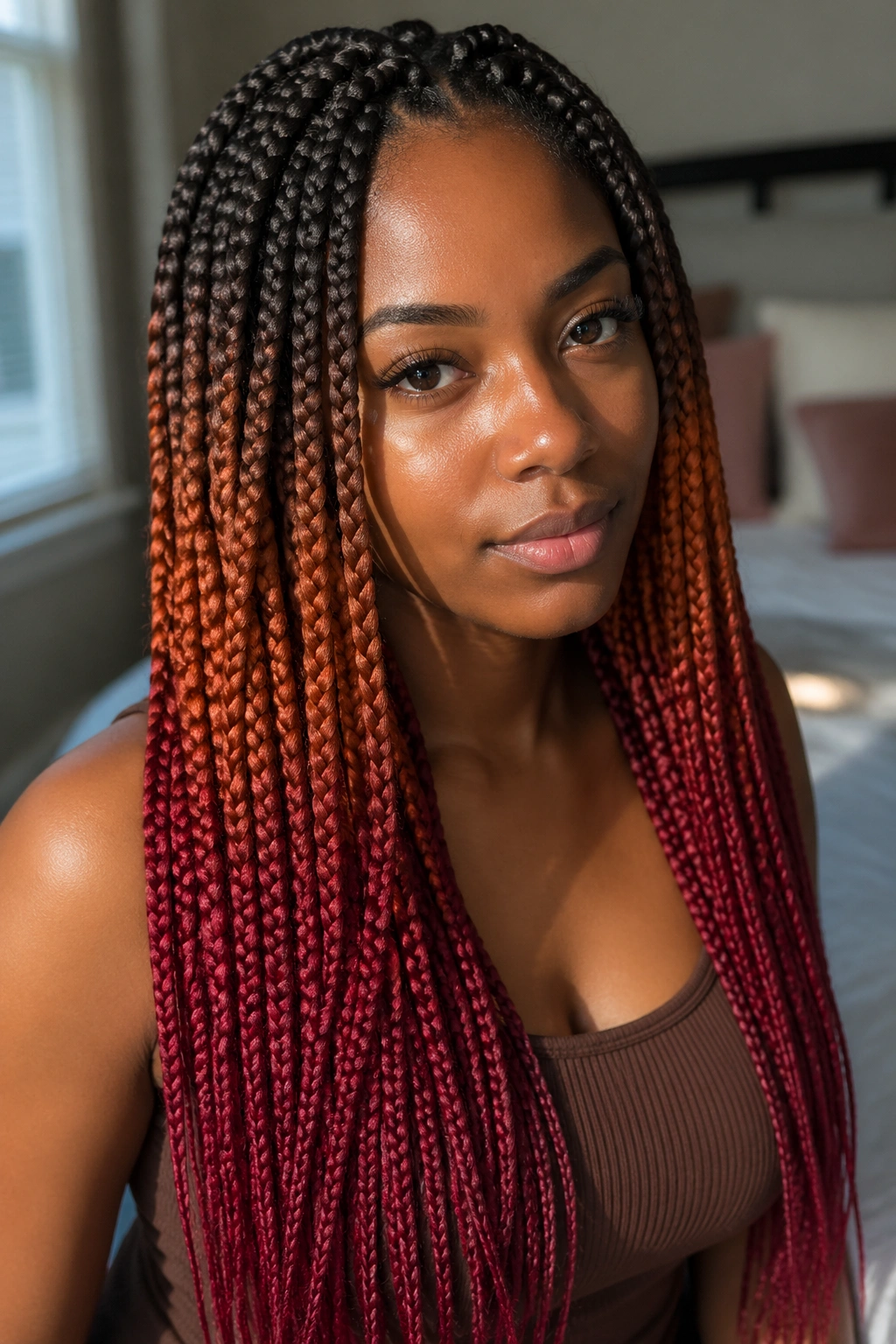
If you want the easiest way to make orange and red box braids look polished, start dark at the root and let the color melt downward. That slow fade does a lot of heavy lifting. It keeps the look wearable, and it gives the braids that warm, glowy finish people always save to their camera roll.
I like this version best on medium and long braids because the color has room to move. A 2- to 3-inch natural root, then copper through the middle, then cherry or deep red at the ends, makes the whole style feel intentional instead of loud. The shift should be visible, but not harsh. No stripey lines. No weird color break.
Why It Works
The ombré effect softens grow-out, which is useful if you want the style to last. It also flatters almost every braid size, though it looks especially good on medium parts where the gradient can actually be seen.
- Ask for dark roots, copper mids, and cherry ends.
- Keep the transition smooth, not blocky.
- Use pre-stretched braiding hair so the blend lays flatter.
- Wear it with a middle part if you want the colors to frame the face evenly.
Pro tip: If you like makeup, this style loves a warm brown lip and a little gold highlight. It’s a small thing, but it makes the braids look even richer.
2. Split-Dye Box Braids with a Clean Center Line
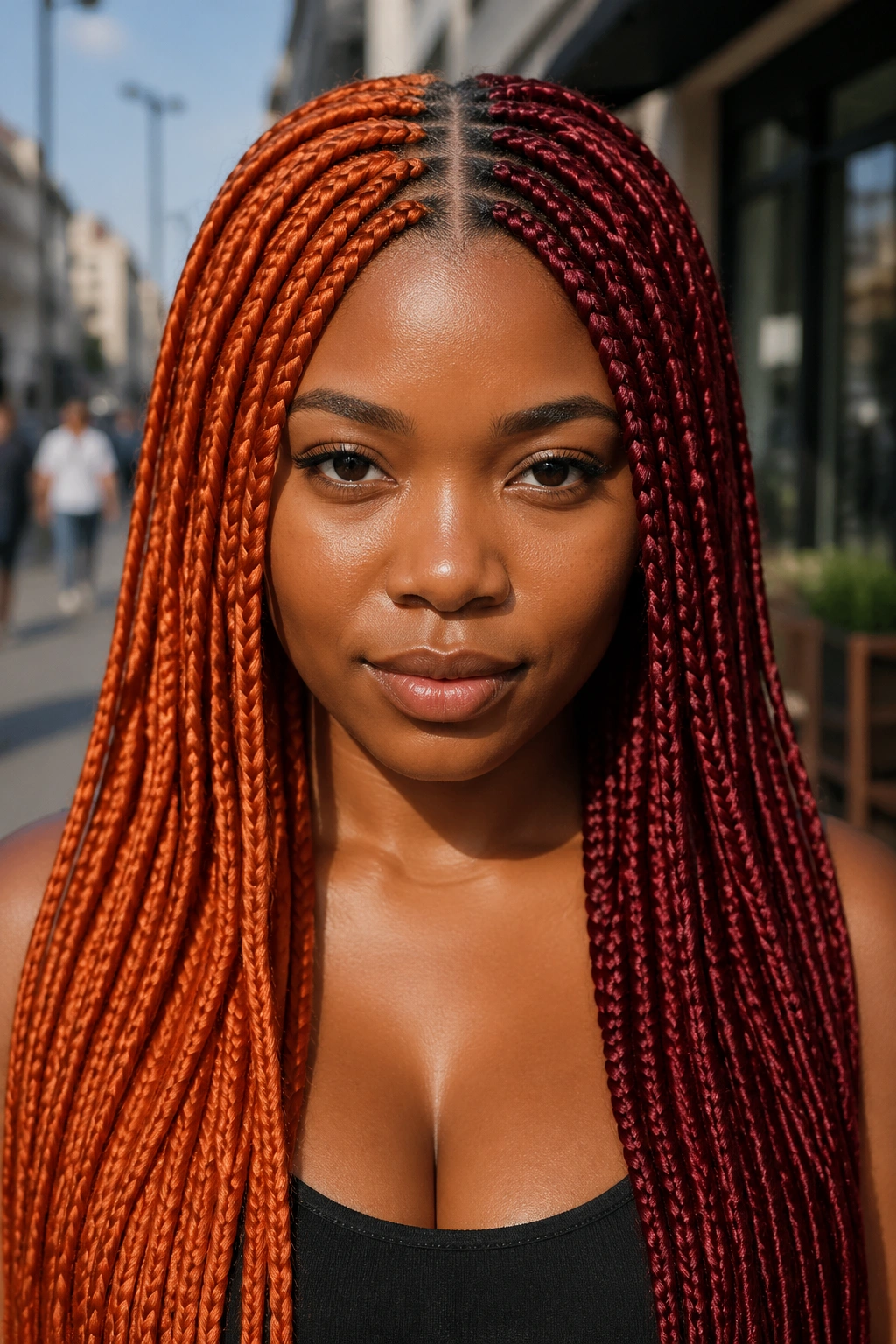
Split-dye braids are not shy. One side orange, one side red, divided right down the middle, gives you a clean graphic look that feels sharp from every angle. It’s the kind of style that looks simple in theory and very deliberate in real life.
The key is the line. If the middle part is crooked or the two colors are too close in value, the whole effect gets muddy. But when the part is straight and the shades are distinct — say tangerine on one side and deep cherry on the other — the style does exactly what it should. It looks bold without needing extra decoration.
This is the version I’d pick if you like strong makeup, statement earrings, or really plain clothes. The braids become the outfit. You do not need much else.
It also photographs cleanly because each side has a job. One side brings the heat; the other gives it weight. That contrast is what keeps split-dye from looking childish. It feels graphic, not gimmicky.
3. Flame-Tip Box Braids with Dark Roots
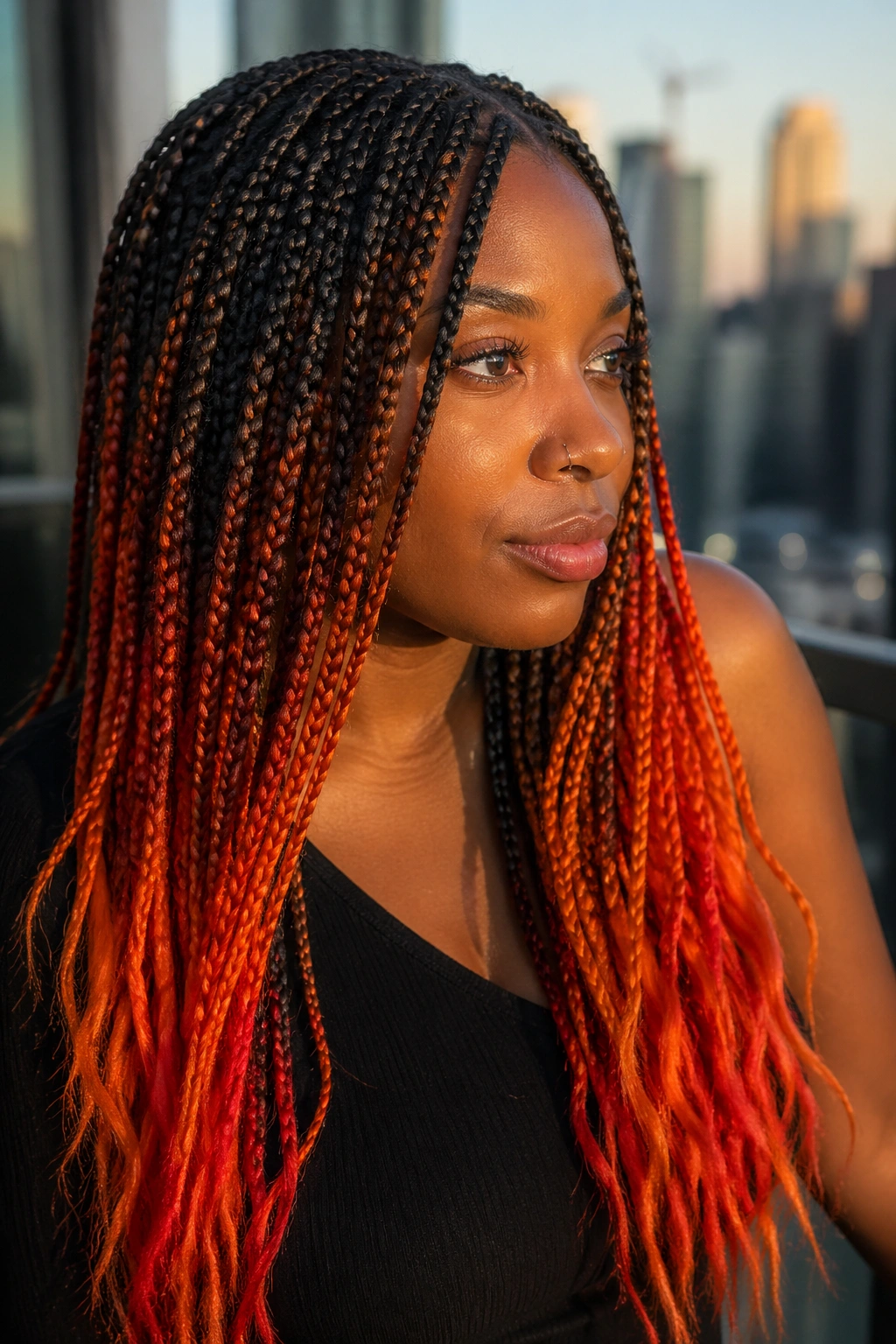
Picture black roots that suddenly flare into tangerine and scarlet ends. That’s the whole appeal here. The dark base keeps the style grounded, and the color at the tips gives you the drama where it counts.
This look works especially well on small to medium braids because the tips have more movement. A few inches of black at the scalp, warm red through the lower half, and a brighter orange right at the ends can look almost like a flame pattern if the colors are placed carefully. The trick is not to crowd the palette. Too many shades and it starts to look busy.
What Makes It Different
The dark root makes it easier to wear for more than a weekend. You can keep the style neat with a little braid mousse and a satin scarf, but the real advantage is visual. The eye goes straight to the ends, so the color feels lively even when the braids are tied back.
- Best on waist-length or mid-back braids.
- Looks cleaner with a slight side part or clean middle part.
- Works well with matte finish hair if you want the tips to stand out more.
- Needs regular re-twisting around the roots so the dark base stays neat.
One thing I’d skip: overly shiny braiding hair. It can make the orange look plastic instead of rich.
4. Knotless Sunset Braids
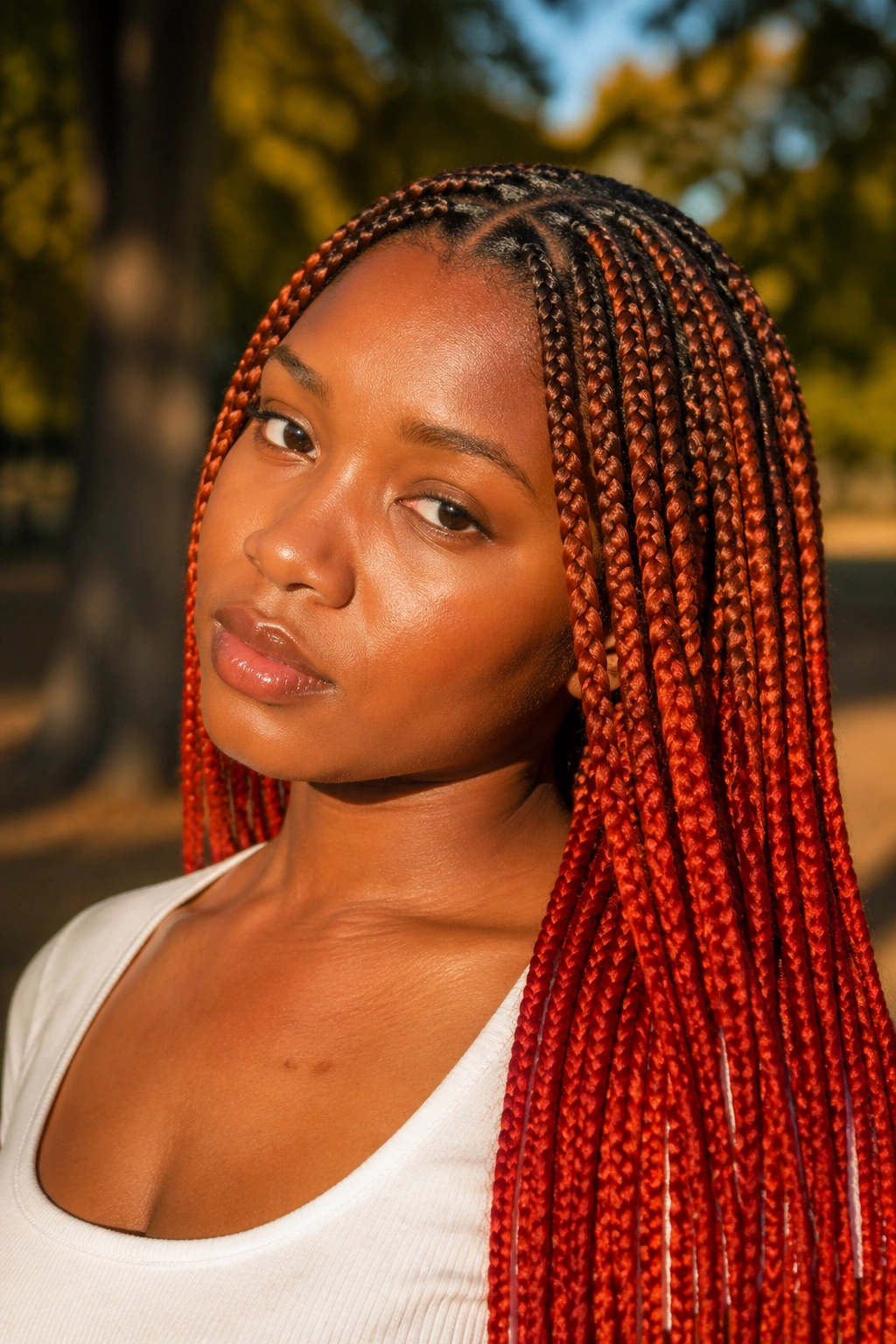
Want the color without the bulky root? Knotless orange and red box braids are the move. They sit flatter at the scalp, feel lighter on the head, and give the color more of a flowing, sunset-like shape from top to bottom.
The best part is how the braids move. Knotless braids already have that softer, more natural fall, and warm colors make the movement easier to see. When the palette shifts from copper near the top to red-orange through the length, the braids feel almost painted on. Not delicate. Just smoother.
The Parting Matters
Clean parts matter more with knotless styles because the scalp is more visible. Tiny zigzags and uneven sections show up fast. Keep the parting neat and ask for braid sizes that match your head shape, not just a photo you saw online.
The Finish Matters
A light braid mousse and a low-hold wrap at night will keep the style from puffing up at the ends. I’d also keep the baby hairs simple. Knotless braids already have enough visual movement; you do not need heavy styling around the hairline.
This is one of those styles that looks expensive in a quiet way, which I know sounds funny for orange and red hair, but it’s true.
5. Jumbo Braids in Rust and Tangerine
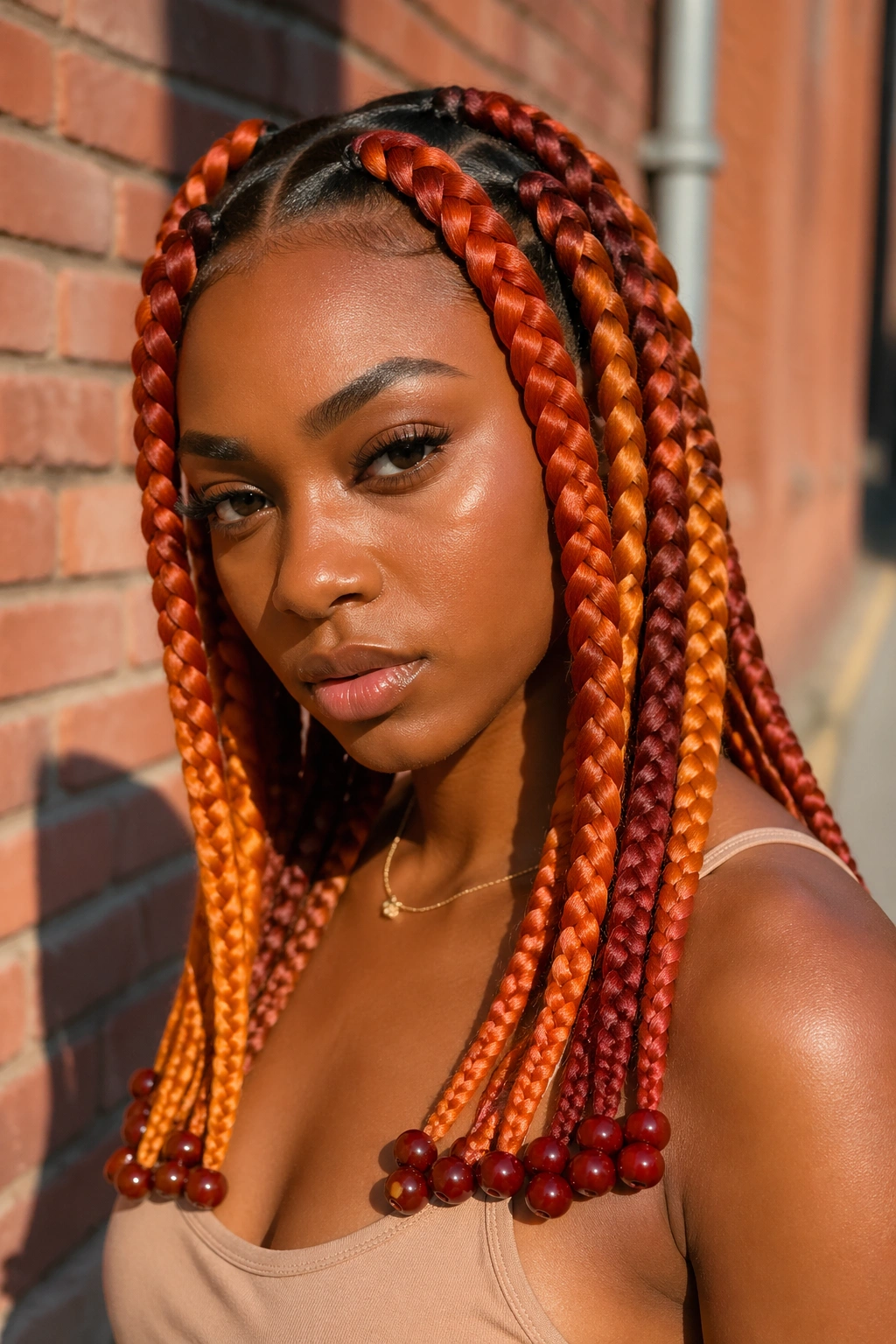
Unlike tiny braids, jumbo braids turn orange-red color into big, readable stripes. That’s the whole point. You can see the shade change from across the room, and you don’t need extra length or accessories to make it work.
I like this style when the client wants speed, impact, and a little less install time. Eight to twelve jumbo braids total is usually enough to make the shape feel full without becoming heavy. Rust, tangerine, and a touch of cherry on the ends can look especially good on bigger plaits because each braid becomes its own color block.
Jumbo braids also let you play with direction. Pull a few forward. Sweep them over one shoulder. Tie them into a half-up knot. The color shifts every time the braids move, and that movement is half the fun.
If you’re nervous about bright red, this is a friendly place to start. Big braids make the color feel more sculptural and less overwhelming. They also age well, which is nice, because jumbo styles can show frizz sooner than smaller ones.
6. Shoulder-Length Paprika Box Braids
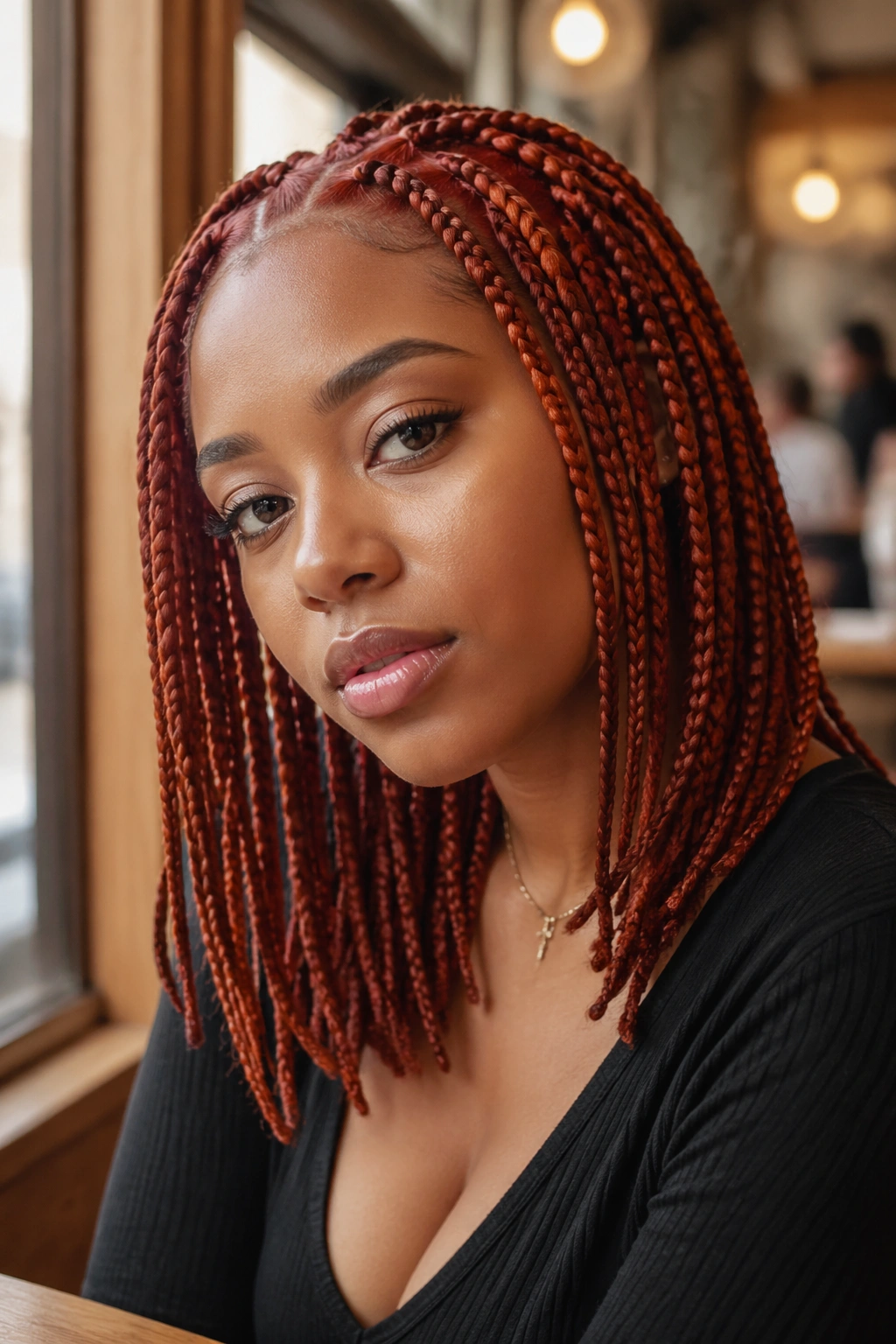
Why do shoulder-length braids feel punchier than waist-length ones? Because the color lands faster. There’s less hair to dilute the shade, so paprika, rust, and burnt orange read as richer and more concentrated.
That shorter shape also keeps the style practical. You can tuck it behind your ears, wear it under a jacket collar, and forget about hair getting trapped under a seatbelt. Small thing. Huge relief. The whole look feels lighter on the neck, which matters more than people admit.
What to Ask Your Braider
- Keep the length around the shoulders or just below.
- Use medium parts so the braids don’t look too busy.
- Ask for a darker root if you want the color to feel less intense.
- Choose a paprika tone if you want warmth without going full neon.
What to Wear With It
This length plays nicely with hoop earrings, turtlenecks, and clean necklines. I’d avoid anything too fussy around the shoulders, because the braids already do enough.
Shoulder-length orange and red box braids are a good choice if you want the color to lead and the shape to stay simple. Sometimes that’s the smartest move.
7. Triangle-Part Orange and Red Braids
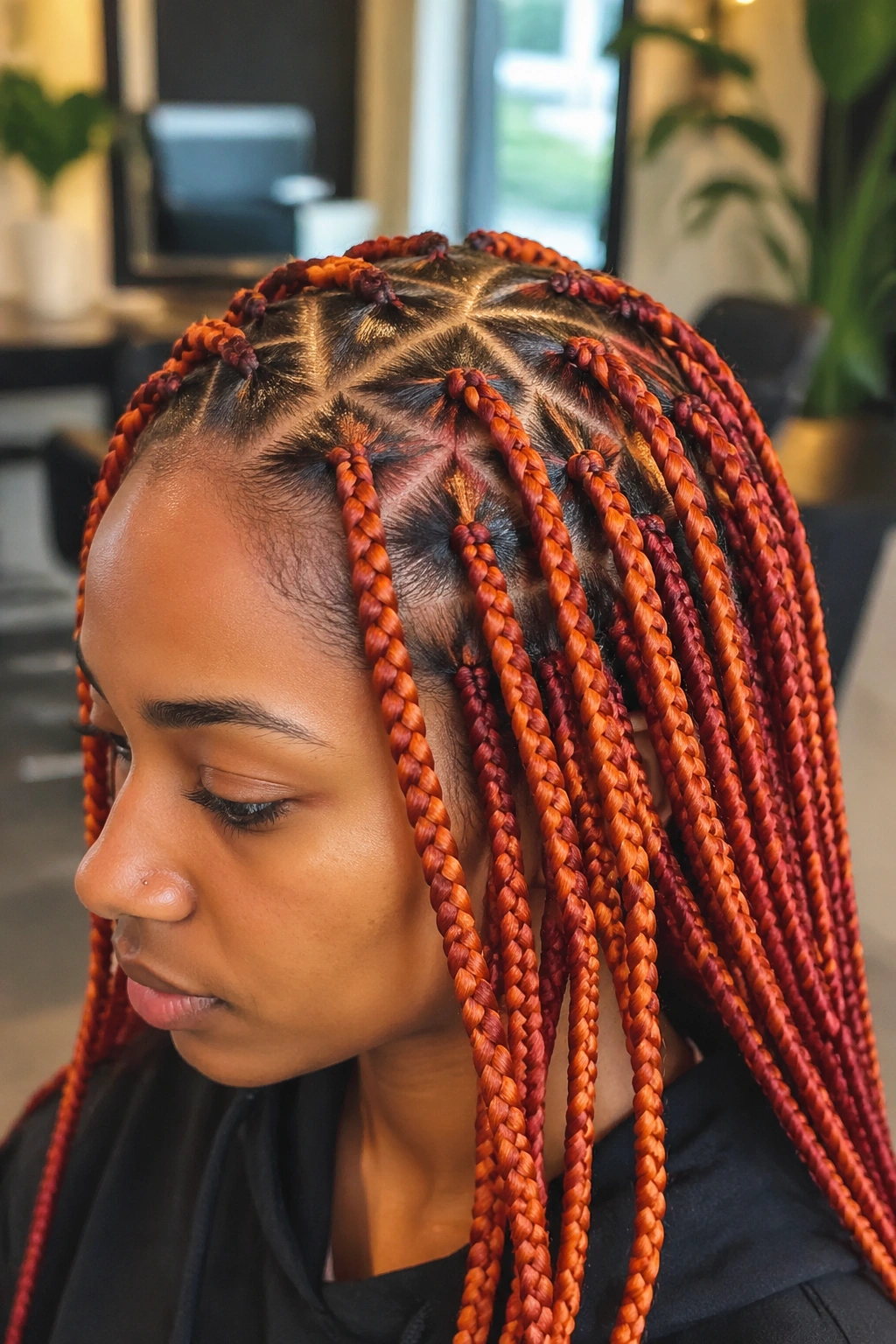
Triangle parts change the whole mood of warm-colored braids. A regular square grid feels expected. Triangle parts make the style look sharper, more custom, and a little more expensive without adding any extra hair.
The geometry matters because orange and red are already visually loud. When you pair those shades with triangle parting, the braid pattern becomes part of the look instead of just a hidden base. Clean sectioning is non-negotiable here. Sloppy parts ruin the effect fast.
Quick Details That Make a Difference
- Medium-size braids show triangle parts best.
- Keep the scalp lines crisp with a pointed rat-tail comb.
- Use a lighter orange on the top rows and deeper red below if you want subtle movement.
- Add cuffs only after the parts are set, not before.
This style feels especially good on someone who likes structure. It’s bold, yes, but it’s not chaotic. The triangle pattern gives the eye somewhere to rest, which is useful when the hair color itself is doing a lot.
One more thing: if you’re the type who likes hair to look neat even from the back, this is your friend. Triangle parts hold their personality as the style grows out.
8. Braids with Curled Ends in Ember Shades
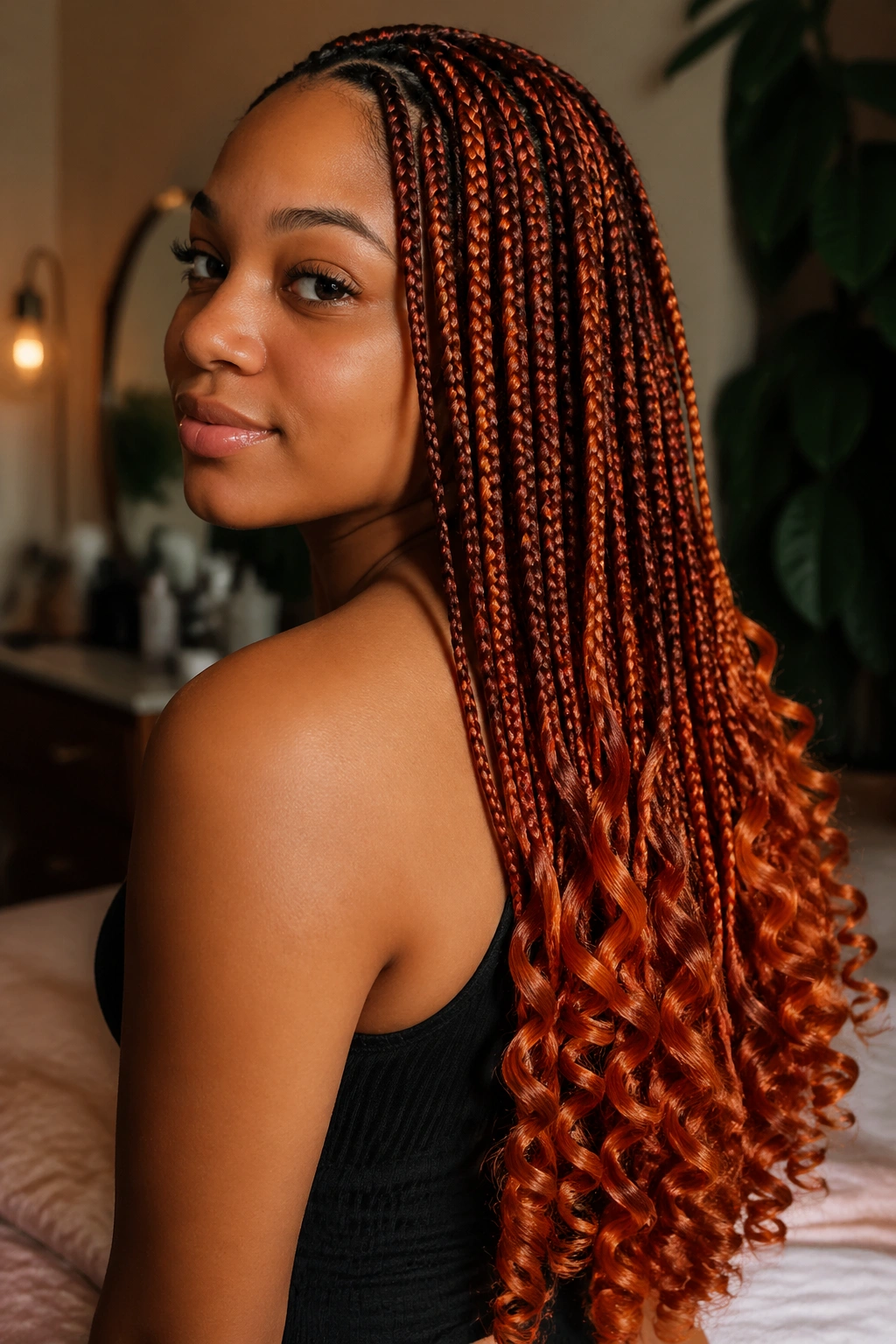
The ends are where this style gets soft. Instead of blunt braids that stop cold, curled tips in ember shades — orange, red, cinnamon, even a little copper — give the whole look a gentler finish. It’s less severe. More playful.
This works especially well when the braids are long enough to show the curl pattern, usually mid-back or longer. If the ends are curled with flexi rods or dipped carefully in hot water, the shape stays bouncy instead of drooping. That bounce makes the color feel lighter, too. Straight ends can make red look harder. Curled ends break that up.
How to Keep the Curl
Use mousse on the ends, not near the roots. Too much product at the scalp makes the braids stiff and dull. At night, wrap the hair loosely so the curl pattern doesn’t get crushed flat under a tight scarf.
I also like this version when the braids are worn half-up. The curls spill out from the top section and give the style a softer outline. If you want the color to feel romantic instead of fiery, this is the easiest route.
It’s one of my favorite looks for people who like warm color but don’t want the hair to feel severe.
9. Gold Cuffs and Copper Thread
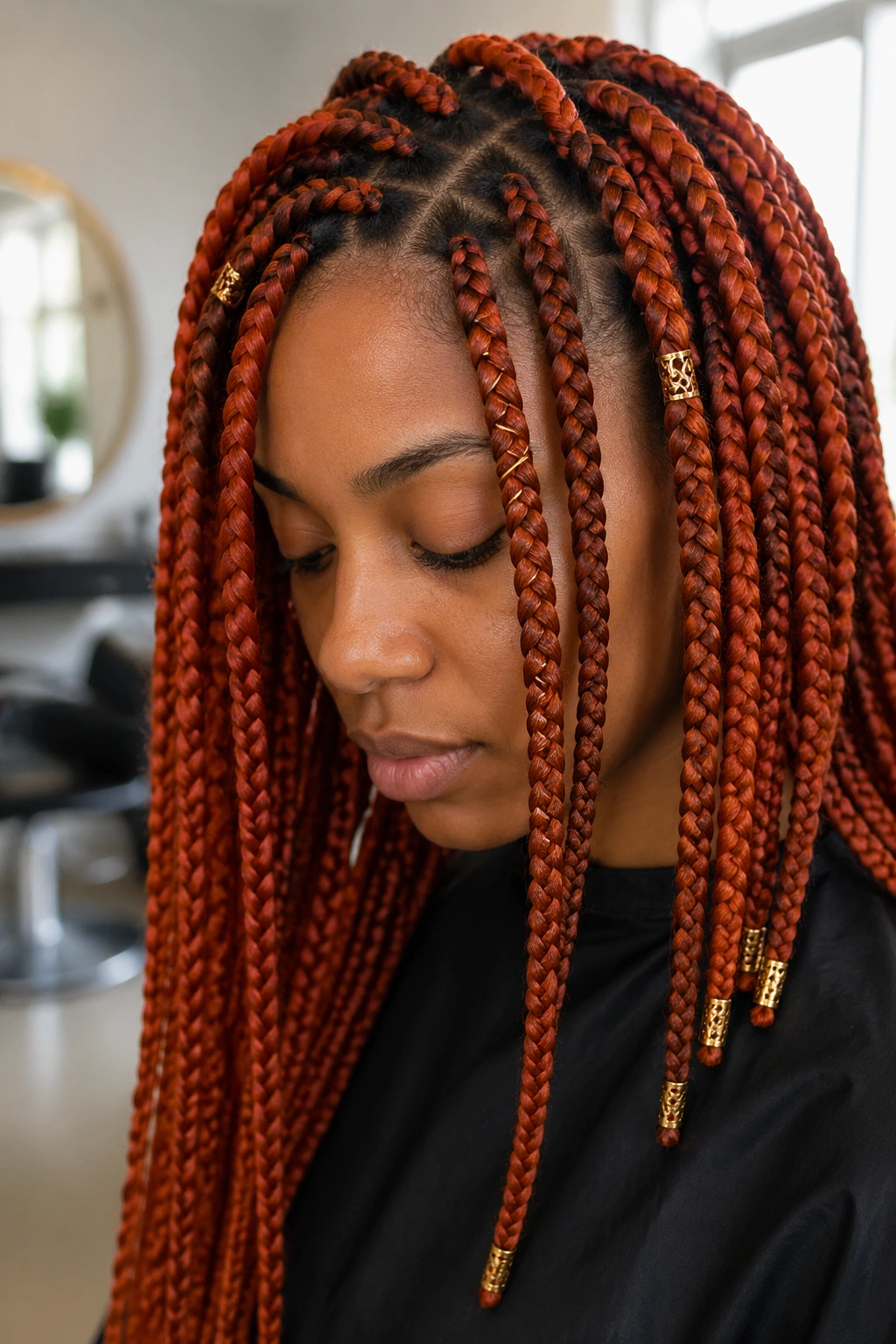
Sometimes the color does not need more color. It needs metal.
Orange and red box braids with gold cuffs and thin copper thread can look finished in a way that plain braids sometimes don’t. The accessory work catches the eye, but it also helps break up long lengths so the warm tones don’t flatten out into one big block. That matters with bright hair. A little spacing helps.
I prefer this on medium or long braids, especially if the colors are close together — copper, rust, auburn, cherry red. The accessories give each section a small break. A few cuffs near the face and one or two halfway down the length is usually enough. Too many and the hair starts clinking like jewelry. Not my favorite.
Copper thread works best when it’s wrapped neatly around one or two braids rather than all of them. That keeps the style from tipping into costume territory. Gold cuffs near the ends can make the warm shades feel richer, almost like jewelry for the hair itself.
It’s a simple trick. It just works.
10. Half-Up High Ponytail Fire Braids
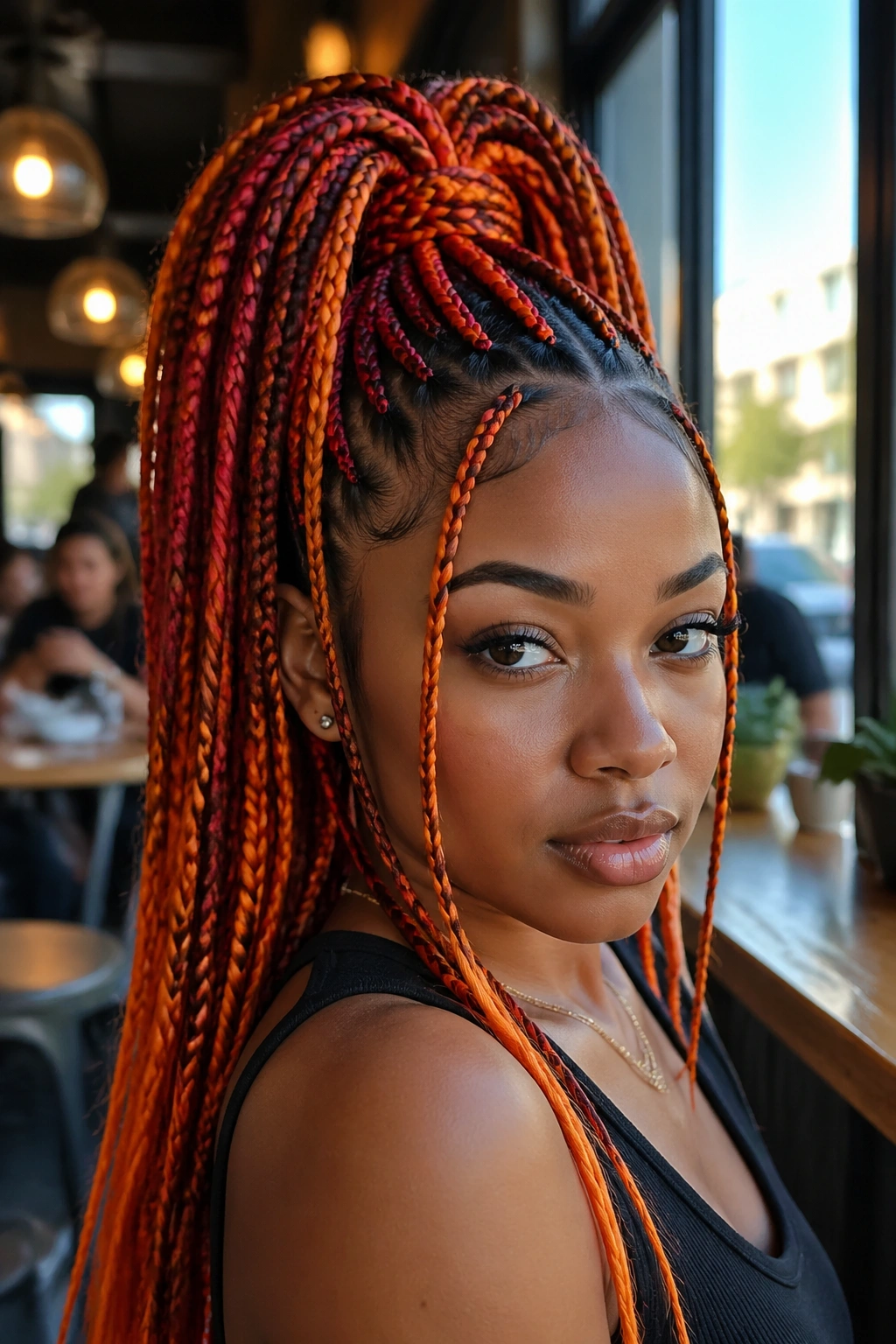
If you want the color to show from every angle, pull the top half up. A high half-up ponytail lifts the warm tones off the shoulders and turns the braids into a kind of moving crown. The orange and red show more clearly when they’re not hiding under your back.
This style has a lot of attitude without being hard to wear. It works on long braids, medium braids, and even a braided bob if the top section has enough length to tie. I like it when the colors are mixed through the whole head, not just on the ends, because the ponytail gives you a chance to see the full blend at once.
- Keep the base tight enough to hold, but not so tight that the scalp feels tugged.
- Wrap one braid around the ponytail base for a cleaner finish.
- Leave two or three face-framing pieces down if you want a softer look.
- Use edge control sparingly; too much can make the hairline look chalky.
This is the style I’d choose for a concert, a dinner, or any day you want the braids to feel a little louder. Not in a bad way. Just with more presence.
11. Feed-In Braids with Rust and Scarlet Panels
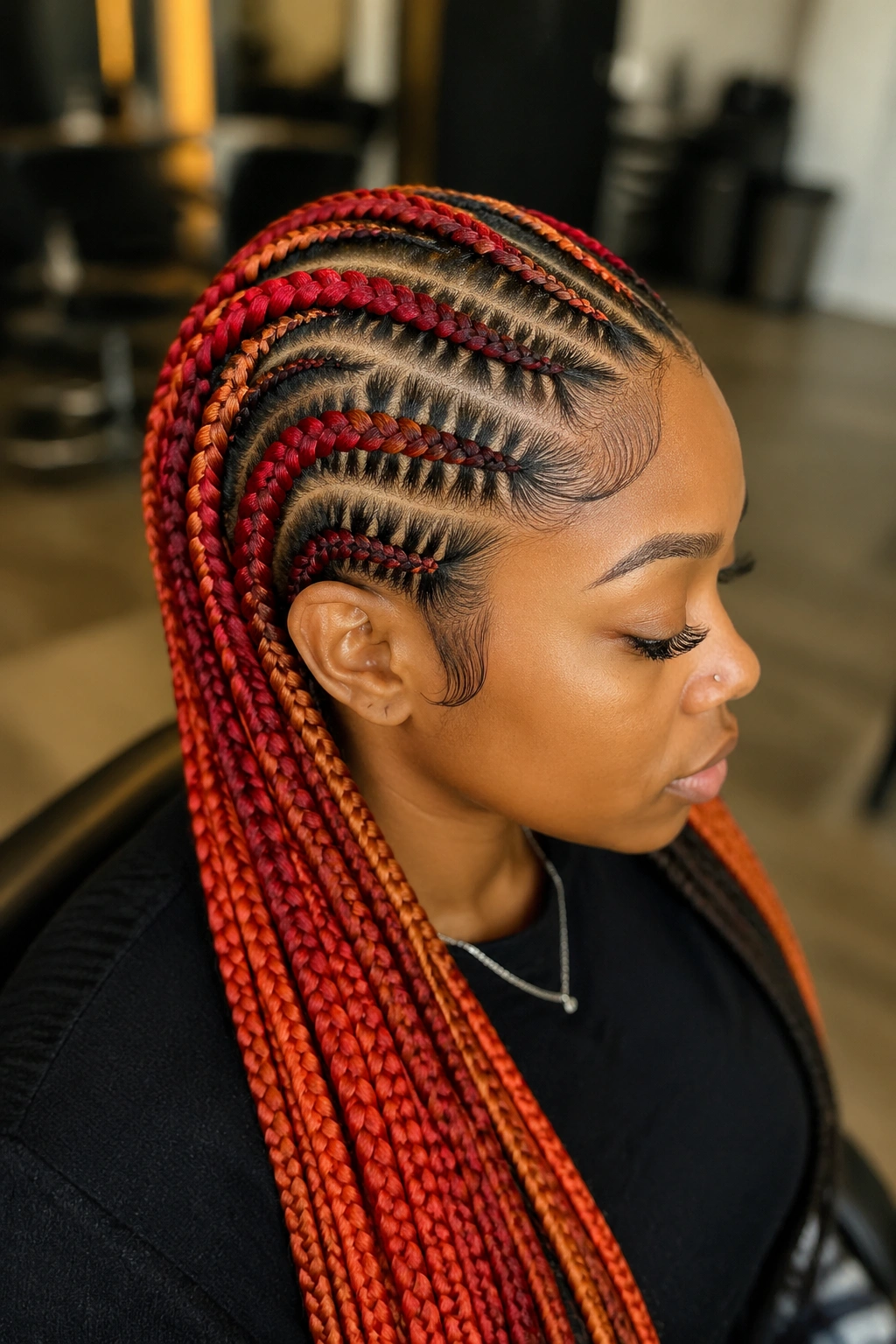
Feed-in braids are the neatest way to wear bold color if you hate a heavy root. The braiding hair gets added gradually, which makes the scalp look cleaner and the braid base feel flatter. When you add rust and scarlet panels into that structure, the result is controlled but still bright.
This style is especially nice if you want color placement, not just color everywhere. You can alternate warm panels through the head, keep a natural base, or put the red only in certain rows so the style has rhythm. It looks deliberate. That’s the word.
Best For
People who want a light-feeling install. People who wear braids for a while. People who do not want the crown area to feel bulky after a long day.
What to Avoid
Heavy product at the base. It makes feed-in braids slip faster and can dull the color near the scalp. Also, don’t overstuff the panels with too many shades. Rust and scarlet are enough when the parting is crisp.
I like feed-in braids for anyone who wants movement without chaos. The hair still makes a statement. It just does it neatly.
12. Braided Bob in Orange-Red Gradient
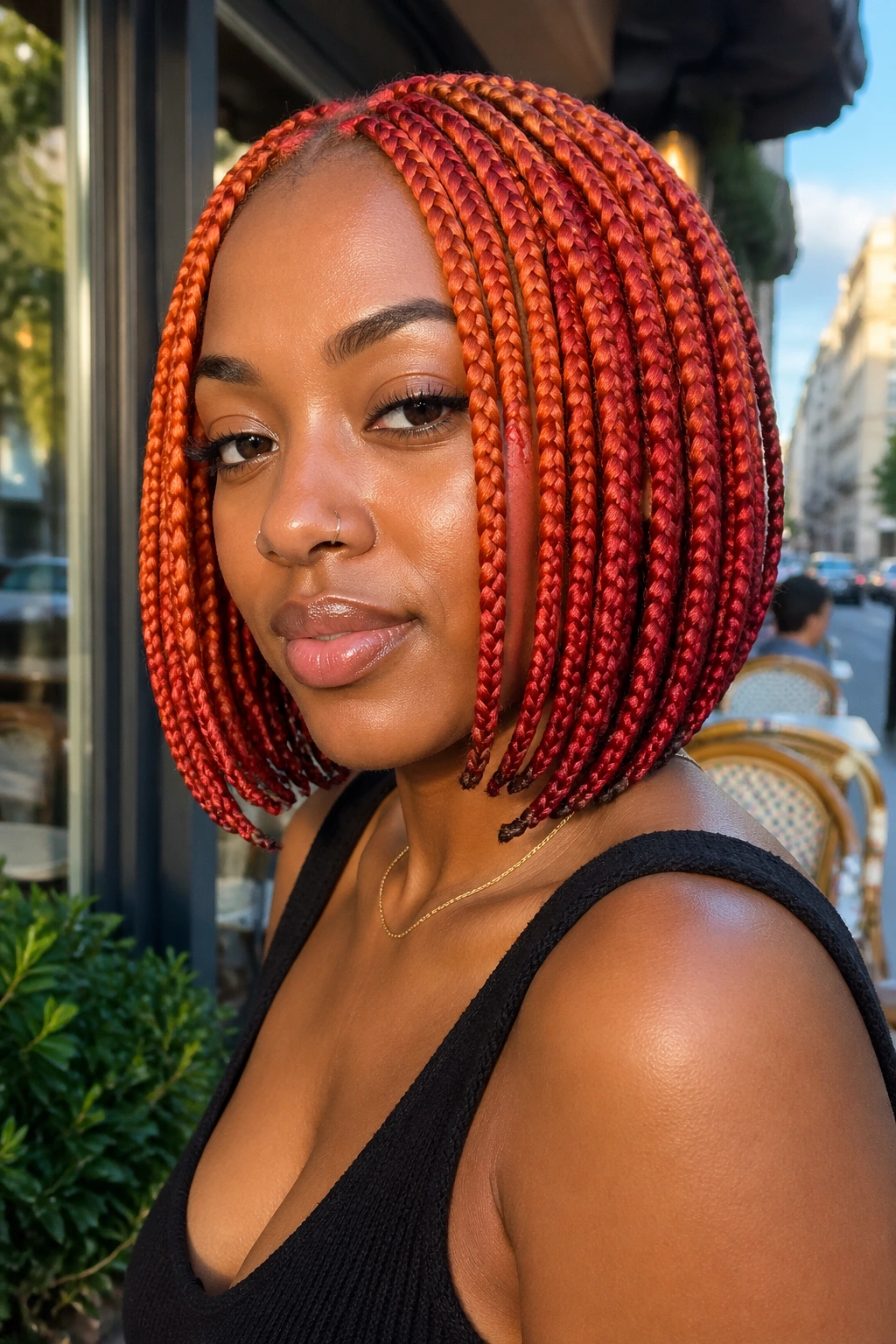
A bob makes warm braid color hit harder. There’s nowhere for the eye to wander, so the orange-red gradient lands fast and clean. Short braids also feel fresher on the neck, which is useful if you hate hair brushing your shoulders all day.
This is one of the styles I recommend most often for people who think bright braids will be too much. A bob cuts the drama down to size. The color still pops, but the shape keeps it grounded. If you want a look that feels stylish without becoming high-maintenance, this is a solid pick.
Blunt ends give the bob more edge, while slightly tapered ends soften it. I prefer a clean line if the color is very vivid — tangerine, paprika, cherry red — because the shape and color balance each other out. If the shades are deeper, a softer bob can look more relaxed.
It also pairs well with bold earrings, which is a nice bonus. The hair stays out of the way enough for people to actually notice the face.
13. Side-Part Braids with Burgundy Roots
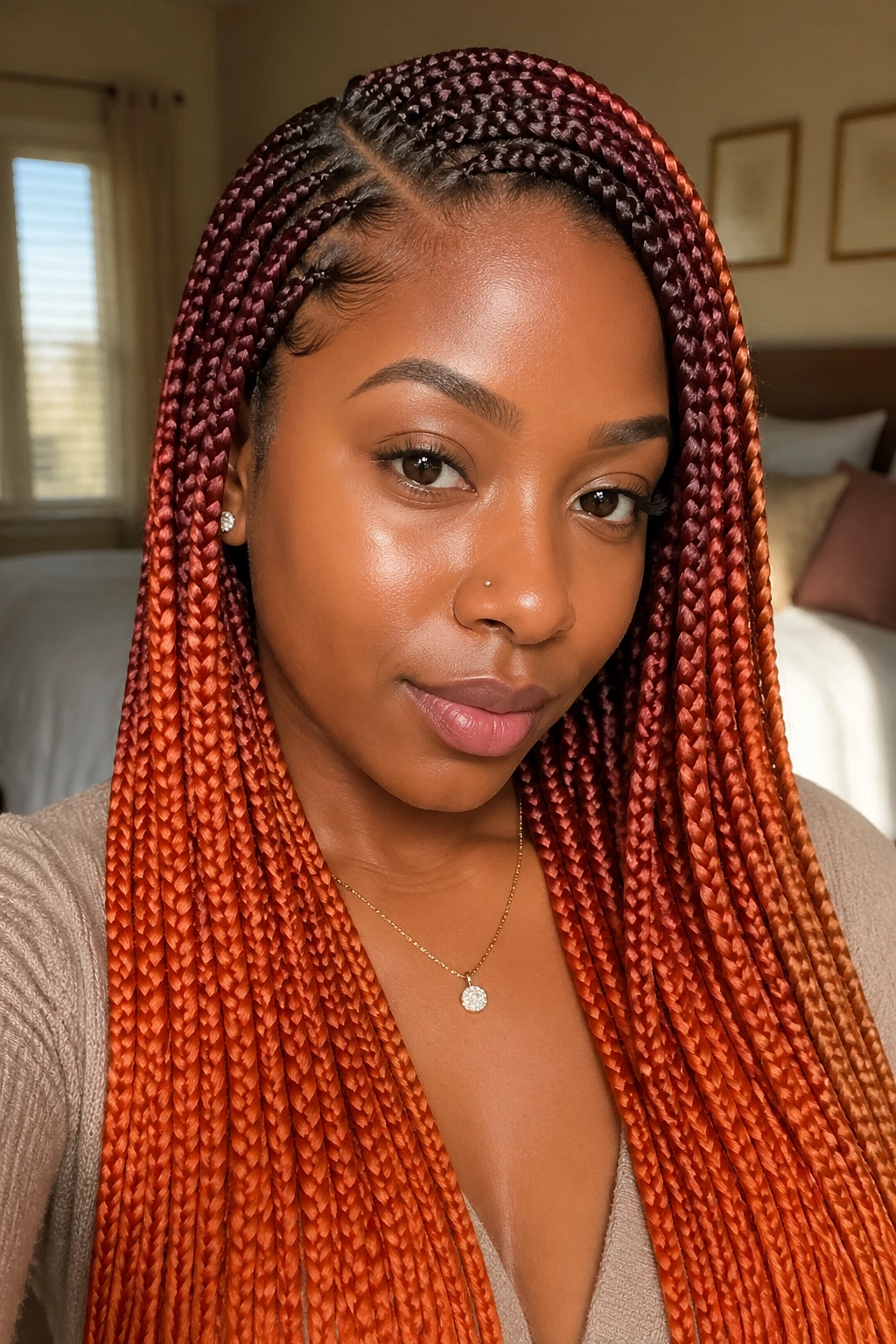
Can red still feel subtle? Yes, if you anchor it with burgundy. A side part with burgundy roots and brighter orange through the lengths gives you warmth without the shock of a full copper head.
This is a smart choice for anyone who wants the style to read rich instead of loud. Burgundy sits closer to natural hair depth, so the transition into orange feels smoother. A deep side part helps, too. It shifts the whole style just enough to make the color look intentional, not random.
Why Burgundy Helps
It acts like a bridge between dark hair and bright hair. That means the style grows out more softly, and the color looks more expensive in person because the contrast is managed instead of all at once.
You can keep the orange concentrated on the lower half of the braids or let it show in scattered sections near the front. I’d avoid putting the brightest shade right at the roots unless you want the scalp area to dominate the look.
This version is a little more restrained than some of the others, and that’s exactly why I like it. Not every warm braid needs to shout.
14. Boho Box Braids with Flame Face-Framing Pieces
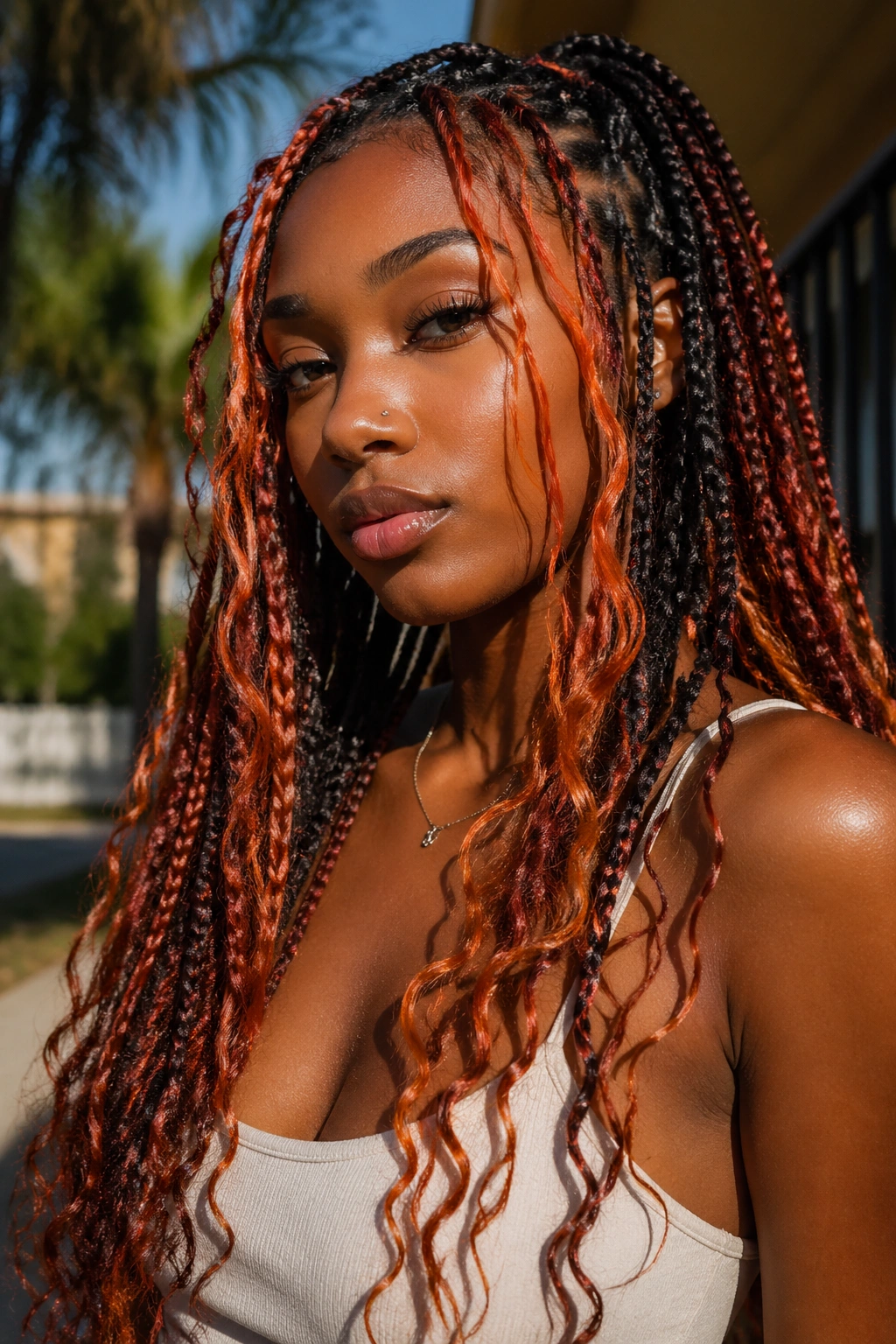
A few loose curls can take a serious braid style and make it feel lived-in. Boho box braids with flame-colored face-framing pieces do that beautifully. The curls soften the edges, and the warm colors keep the whole thing from looking too sweet.
What matters here is balance. If the braids are already long and full, the loose pieces should be sparse, not crowded. Two face-framing pieces on each side is usually enough. Those curls catch the eye near the cheekbones, which is exactly where you want them. They brighten the face without stealing the whole show.
How Much Curl Is Too Much
If every braid has a loose curl hanging off it, the style gets messy fast. Keep the boho pieces selective. A few around the front, maybe a few hidden deeper in the length, and that’s enough.
This style works especially well with orange-red blends because the curls make the color feel softer at the edges. The effect is less like a clean uniform and more like hair with some movement in it. I prefer that. It feels a bit more human.
A satin bonnet matters here. Loose curls frizz faster than blunt ends, and warm shades show frizz in bright light.
15. Two-Tone Braids That Tie the Whole Palette Together
When you cannot pick between orange and red, alternate them on purpose. One braid copper, the next cherry, then back again. That kind of rhythm gives the whole head a checkerboard feel without becoming too busy, especially if the parts are neat and the braid size stays consistent.
This is the style for people who want the colors to feel playful but still controlled. You get contrast without committing every strand to an ombré or a split-dye. I like it best on medium-length braids because the color changes are easy to see, but they do not overwhelm the shape.
You can also soften the pattern by adding a darker base braid here and there. That breaks up the brightness and keeps the look from reading flat. If you want the palette to feel balanced, let one shade lead. The other should support it, not fight for the spotlight.
That’s the trick with orange and red box braids, really. Pick a dominant tone, keep the parting clean, and let the color do its job. The boldest styles are usually the ones with the most restraint.